


2025/08/07 - 2025/08/07
27位(同エリア932件中)

旅熊 Kokazさん
- 旅熊 KokazさんTOP
- 旅行記1910冊
- クチコミ854件
- Q&A回答102件
- 1,692,633アクセス
- フォロワー750人
この旅行記のスケジュール
2025/08/07

この旅行記スケジュールを元に
MOMAT コレクション〔国立東京近代美術館 所蔵作品展〕(2025.7.15-10.26)
https://www.momat.go.jp/exhibitions/r7-1
2.大正の個性派たち
- 旅行の満足度
- 5.0
-

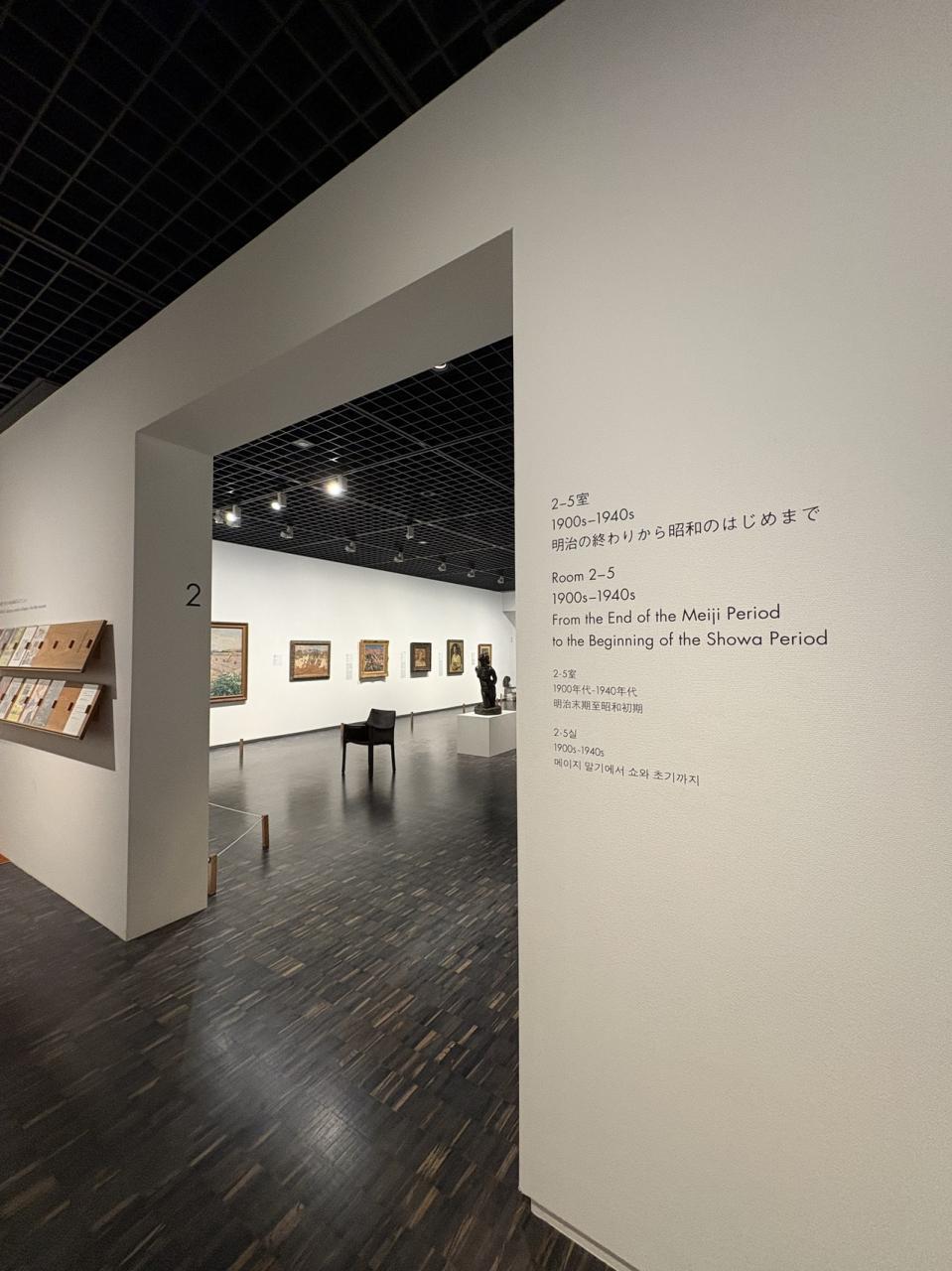
2-5室
1900s-1940s
明治の終わりから昭和のはじめまで
Room 2-5
1900s-1940s
From the End of the Meiji Period to the Beginning of the Showa Period東京国立近代美術館 美術館・博物館
-
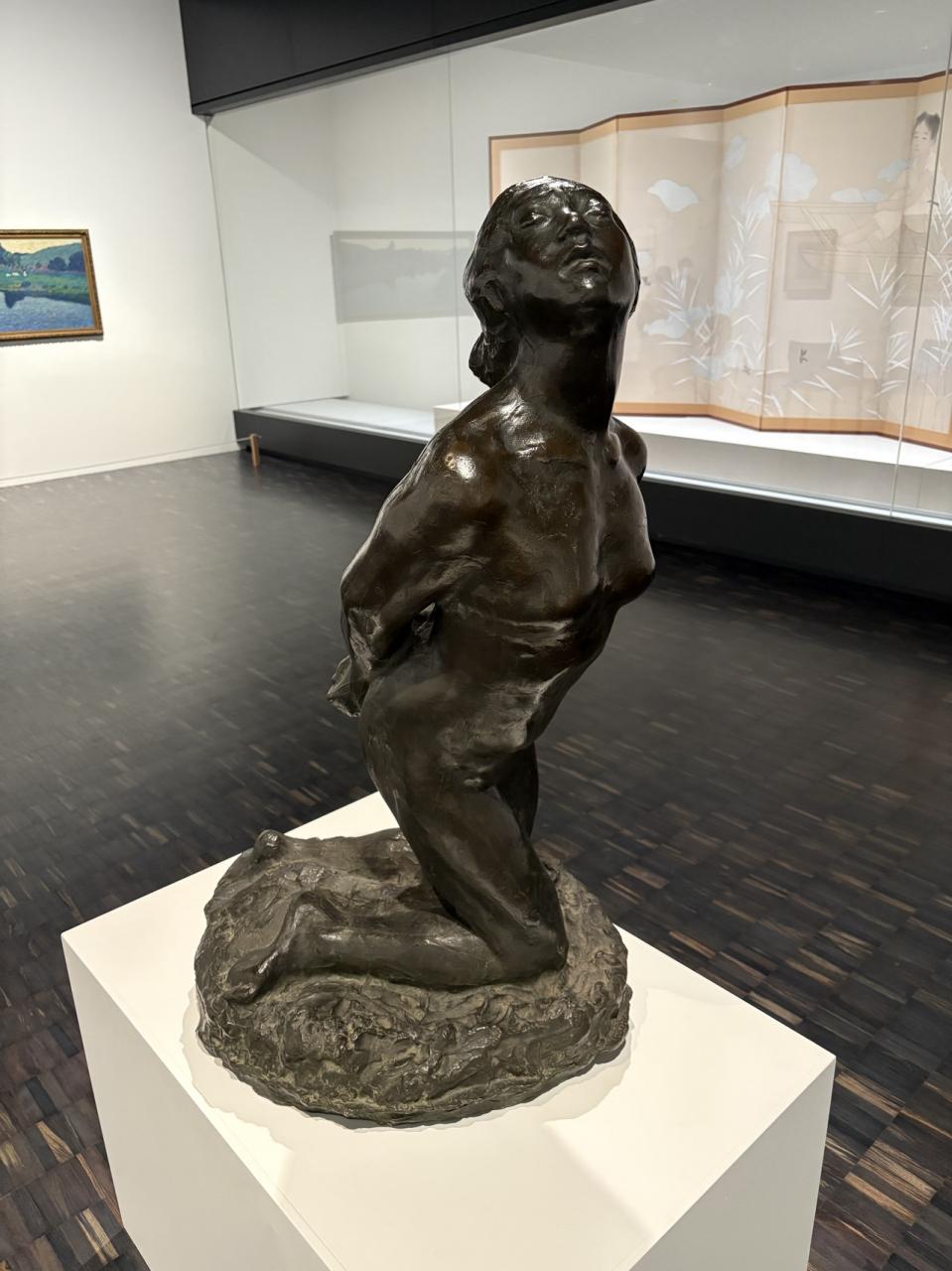
荻原守衛
OGIWARA, Morie
1879-1910
女
Woman
1910 明治43年
ブロンズ bronze
文部省管理換
Transferred from Ministry of Education
頭の中でけっこうです。ポーズを真似してみてください。両膝をつき、胴体を右にひねり、顔はさらに右にひねって上を向く。身体全体が螺旋を描いて上昇する作りになっているのがわかります。守衛はフランスの彫刻家、オーギュスト・ロダンの影響を日本にもたらした作家の一人です。ダイナミックなひねりの運動がその最大の特徴です。
ちなみに守衛は、新宿中村屋の女主人、相馬黒光(1876-1955)をひそかに慕っていたと伝えられます。遺作となったこの作品には、黒光の面影があるとも言われます。
Take a minute and try to imagine how you might imitate this kind of pose. Put both knees together, twist your torso to the right, and twist your face even further to the right as you point it upward. This makes it clear that the figure's entire body has a rising spiral form. Ogiwara helped increase the French sculptor Auguste Rodin's influence in Japan. The defining feature of this work is its dynamic twisting movement. Incidentally,
Ogiwara was apparently secretly in love with Soma Kokko (1876-1955), the proprietress of the Nakamuraya bakery-cum-culture salon in Shinjuku. The woman in this posthumous work is also said to bear a strong resemblance to Soma. -
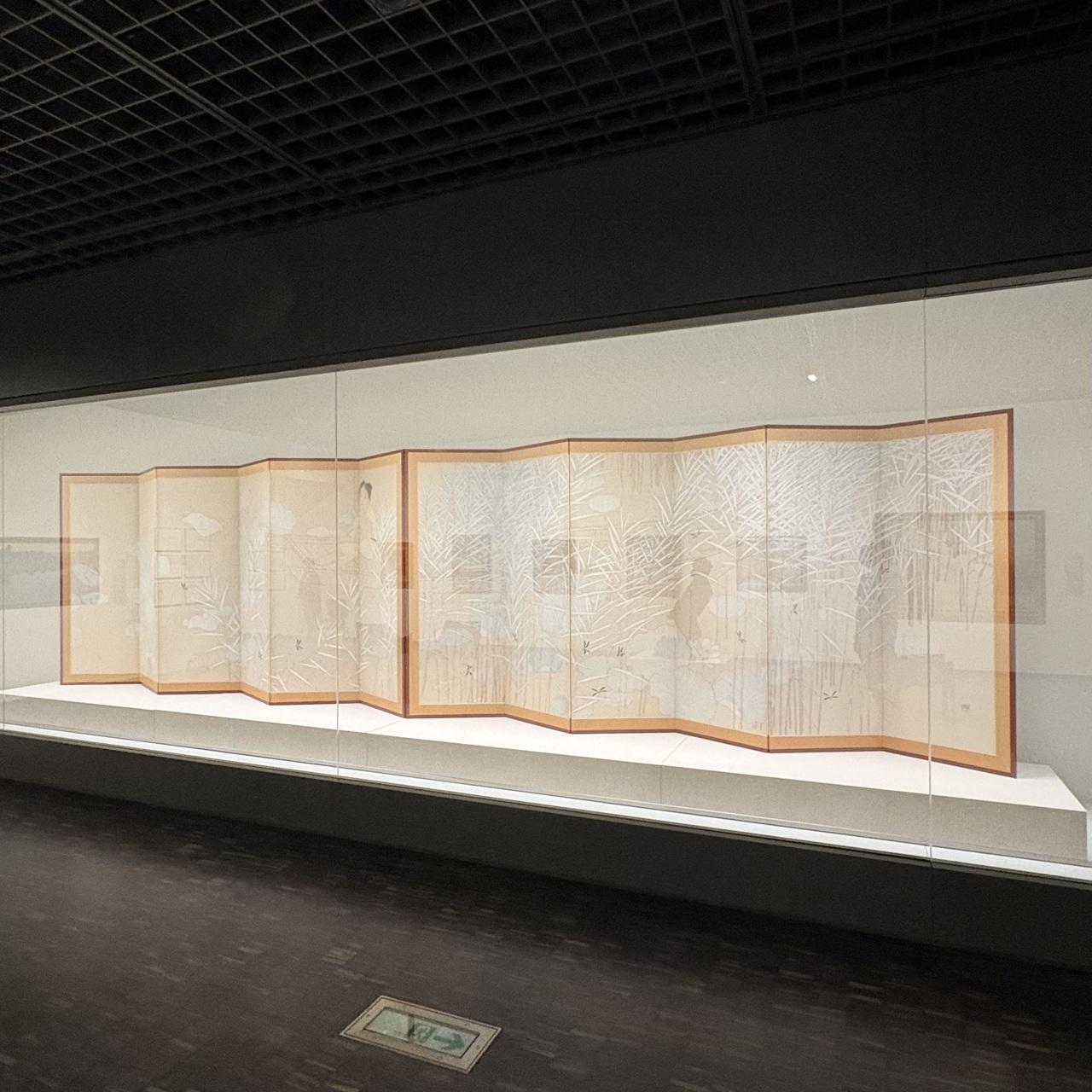
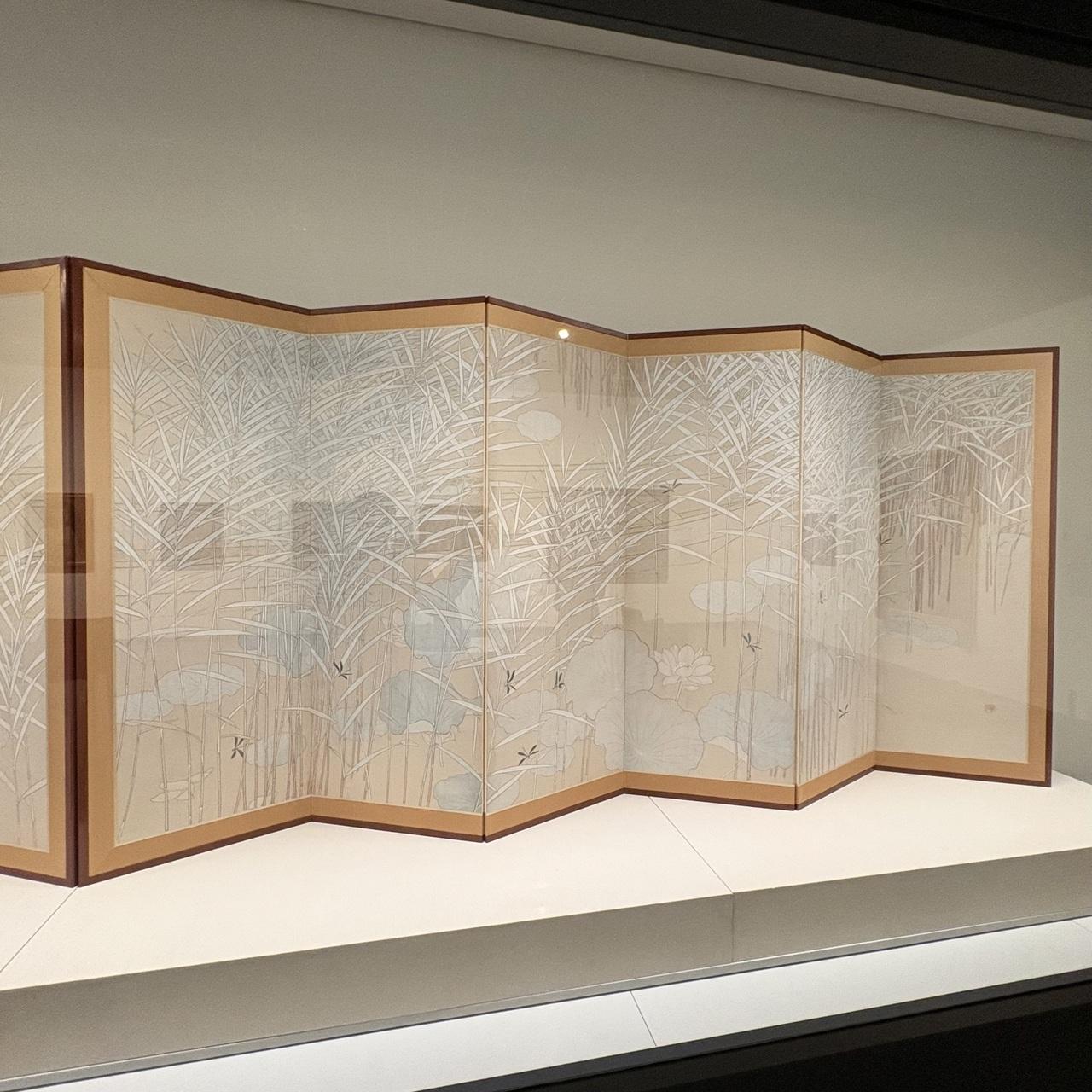
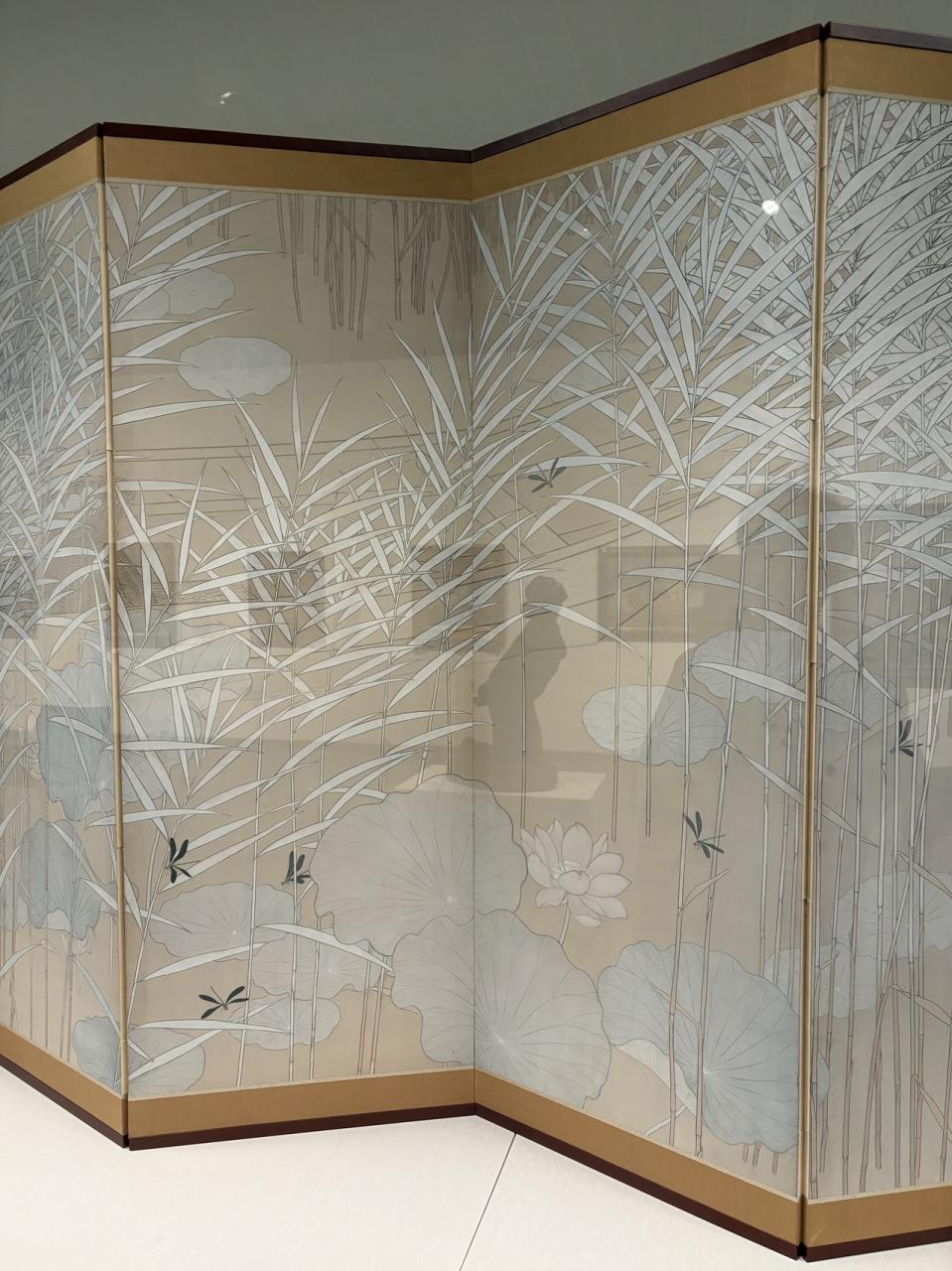
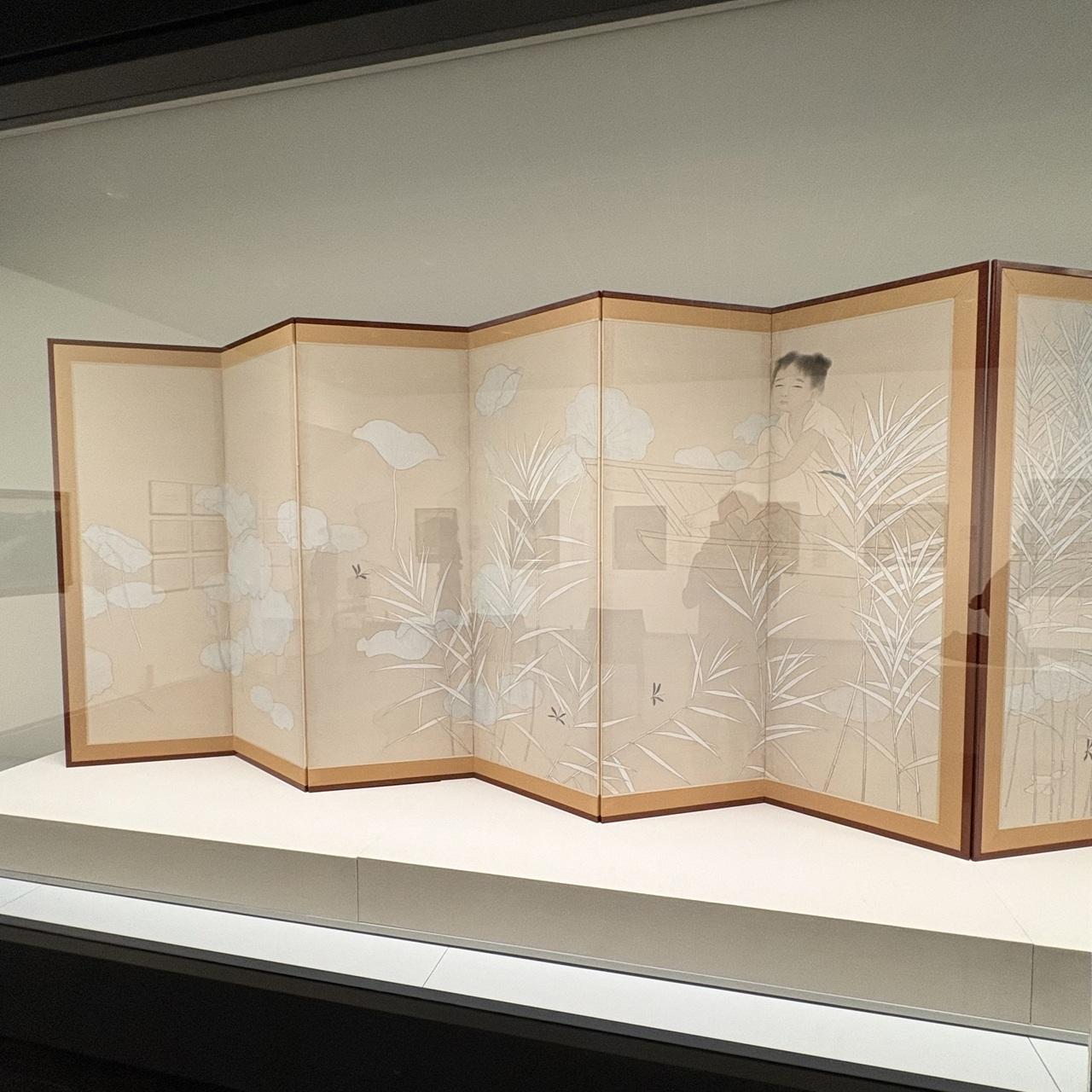
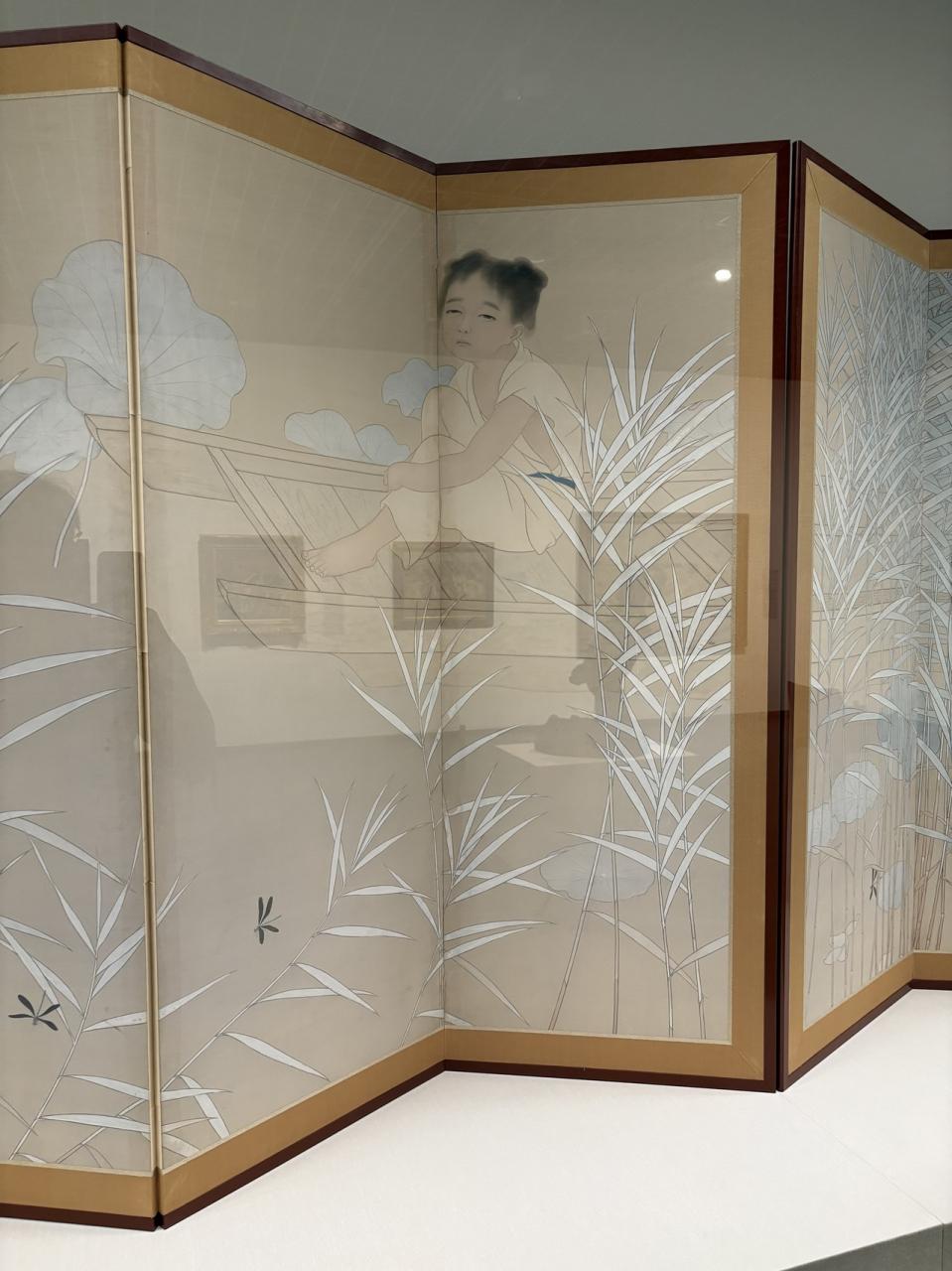
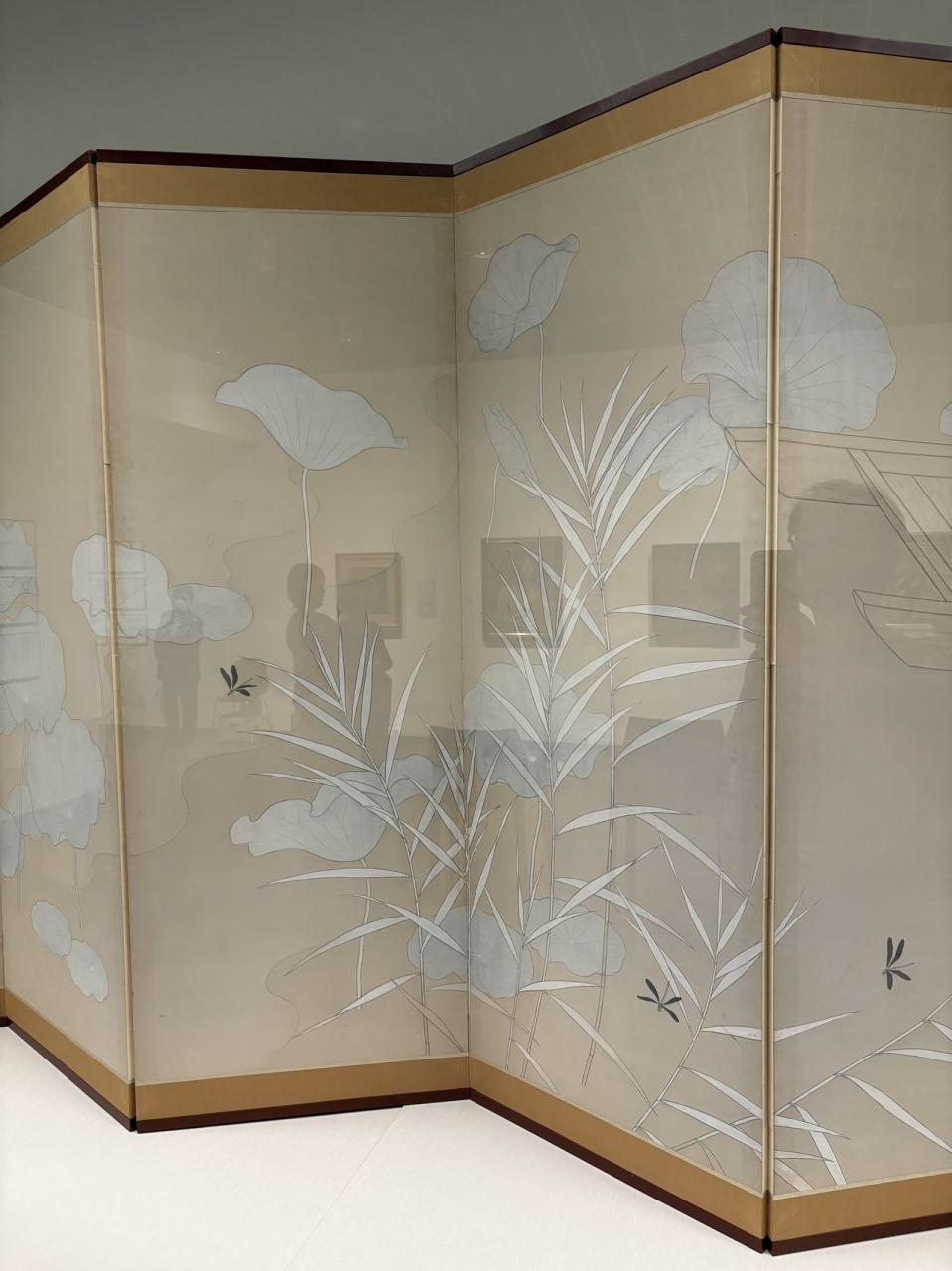
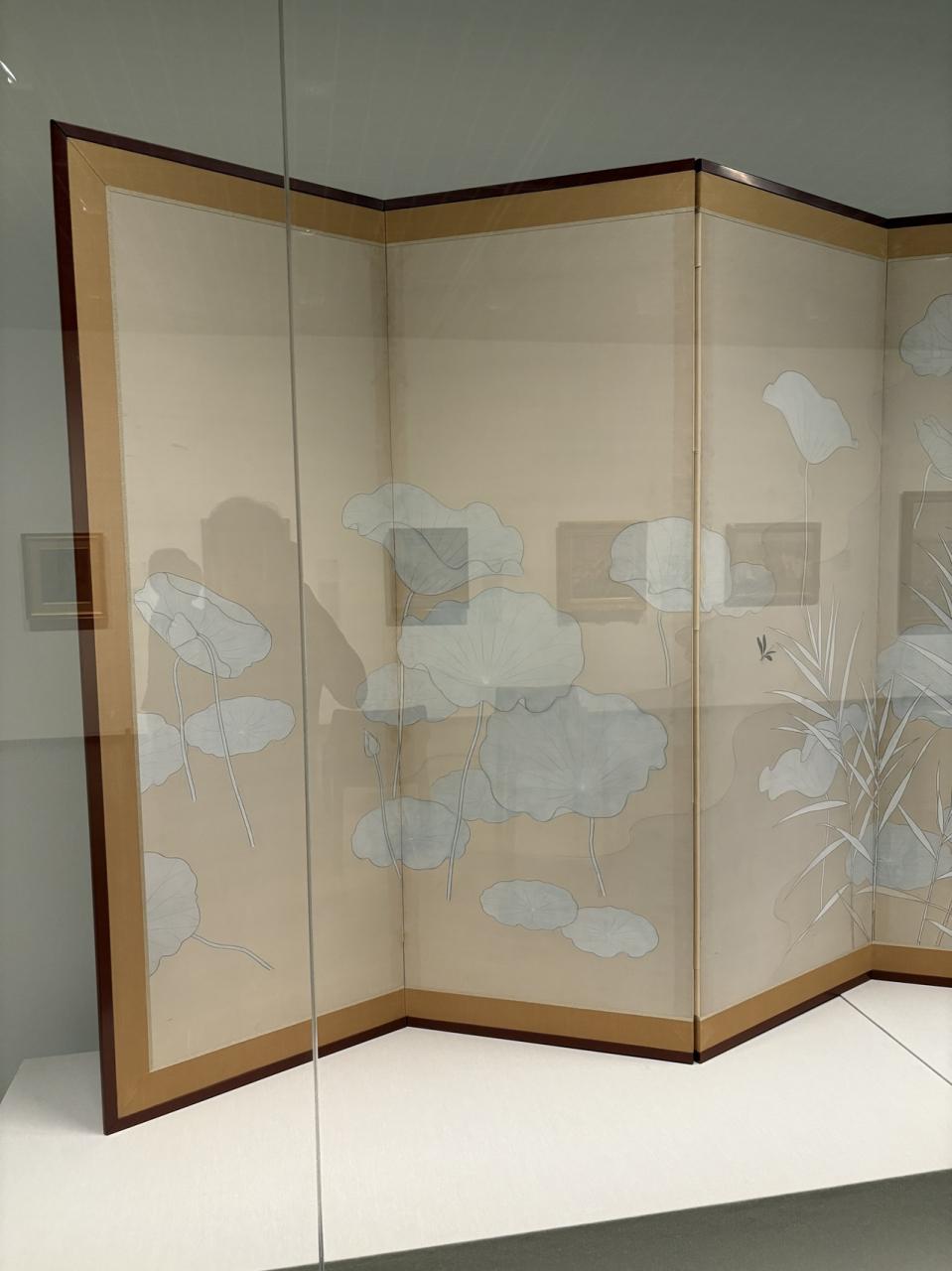
菊池契月
KIKUCHI, Keigetsu
1879-1955
鉄漿蜻蛉(おはぐろとんぼ)
Damselflies
1913 大正2年
絹本彩色 color on silk
文部省管理換
Transferred from Ministry of Education -
-
-
-
-
-
-
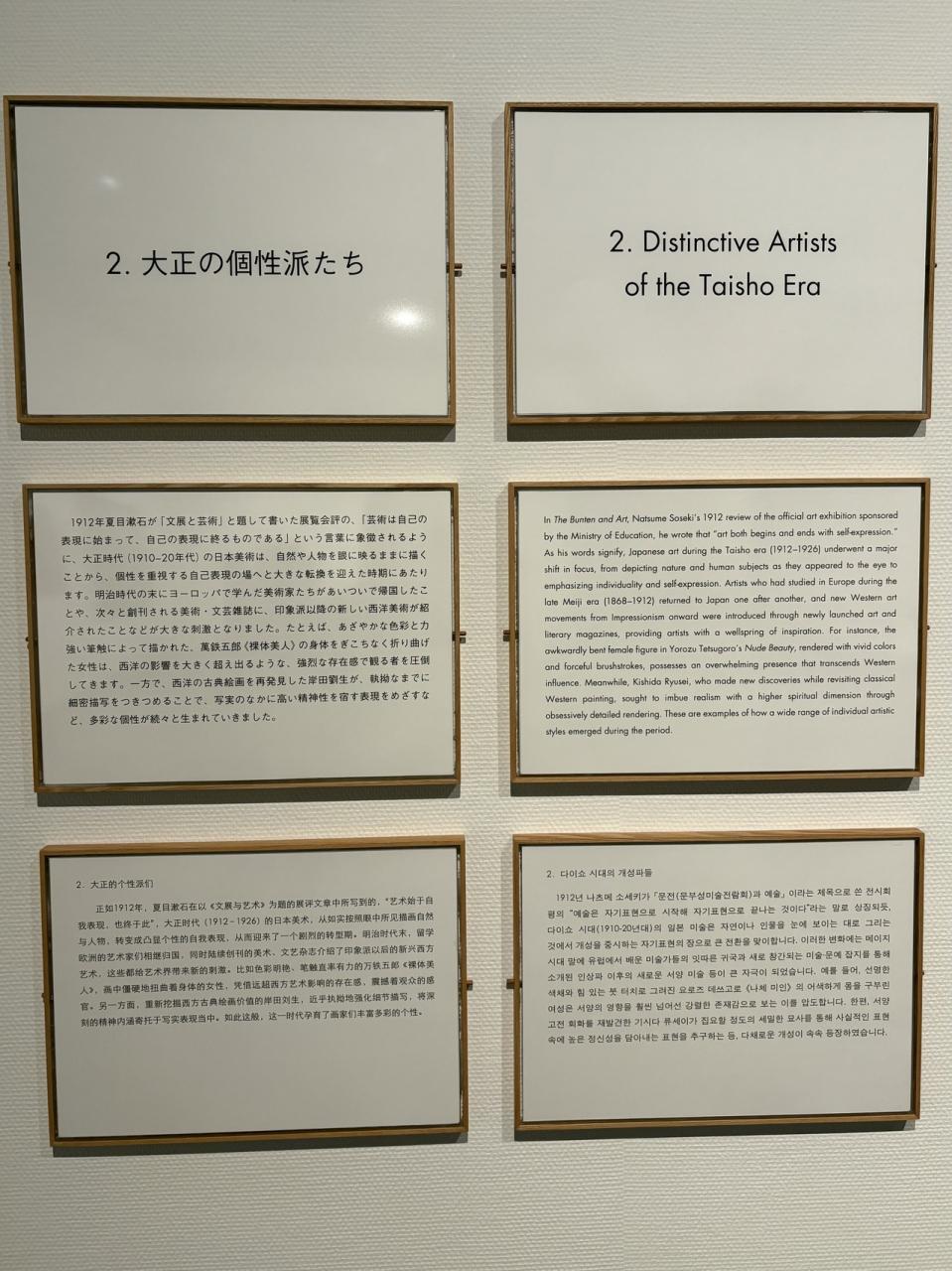
2. 大正の個性派たち
1912年夏目漱石が「文展と芸術」と題して書いた展覧会評の、「芸術は自己の表現に始まって、自己の表現に終るものである」という言葉に象徴されるように、大正時代(1910-20年代)の日本美術は、自然や人物を眼に映るままに描くことから、個性を重視する自己表現の場へと大きな転換を迎えた時期にあたります。
明治時代の末にヨーロッパで学んだ美術家たちがあいついで帰国したことや、次々と創刊される美術・文芸雑誌に、印象派以降の新しい西洋美術が紹介されたことなどが大きな刺激となりました。
たとえば、あざやかな色彩とカ強い筆触によって描かれた、萬鉄五郎(裸体美人)の身体をぎこちなく折り曲げた女性は、西洋の影響を大きく超え出るような、強烈な存在感で観る者を圧倒してきます。一方で、西洋の古典絵画を再発見した岸田劉生が、執拗なまでに細密描写をつきつめることで、写実のなかに高い精神性を宿す表現をめざすなど、多彩な個性が続々と生まれていきました。
2. Distinctive Artists of the Taisho Era
In The Bunten and Art, Natsume Soseki's 1912 review of the official art exhibition sponsored by the Ministry of Education, he wrote that "art both begins and ends with self-expression." As his words signify, Japanese art during the Taisho era (1912-1926) underwent a major shift in focus, from depicting nature and human subjects as they appeared to the eye to emphasizing individuality and self-expression.
Artists who had studied in Europe during the late Meiji era (1868-1912) returned to Japan one after another, and new Western art movements from Impressionism onward were introduced through newly launched art and literary magazines, providing artists with a wellspring of inspiration.
For instance, the awkwardly bent female figure in Yorozu Tetsugoro's Nude Beauty, rendered with vivid colors and forceful brushstrokes, possesses an overwhelming presence that transcends Western influence. Meanwhile, Kishida Ryusei, who made new discoveries while revisiting classical Western painting, sought to imbue realism with a higher spiritual dimension through obsessively detailed rendering. These are examples of how a wide range of individual artistic styles emerged during the period. -
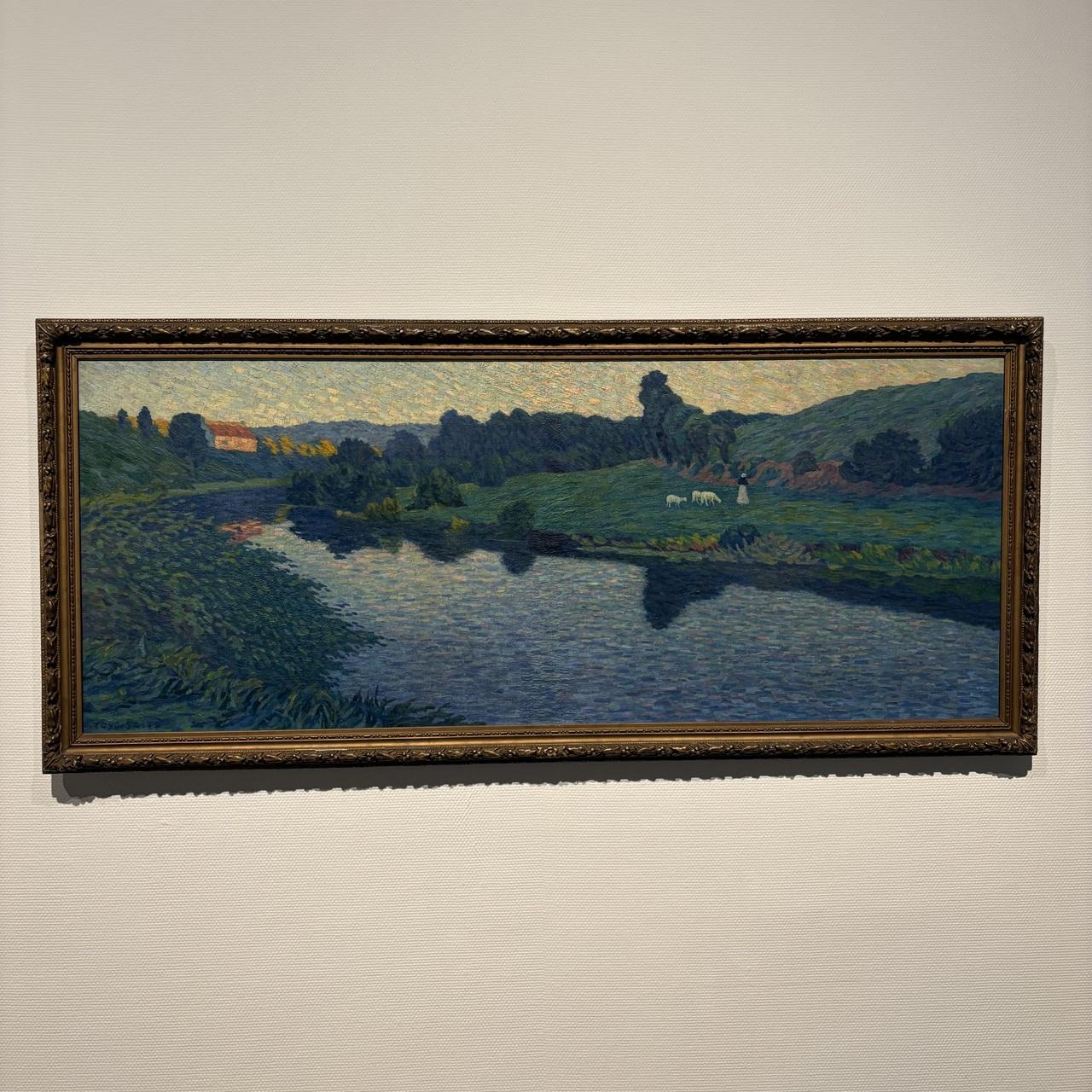
紊藤豊作
SAITO, Toyosaku
1880-1951
夕映の流
Stream in the Evening Glow
1913 大正2年
油彩・キャンバス oil on canvas
文部省管理換
Transferred from Ministry of Education
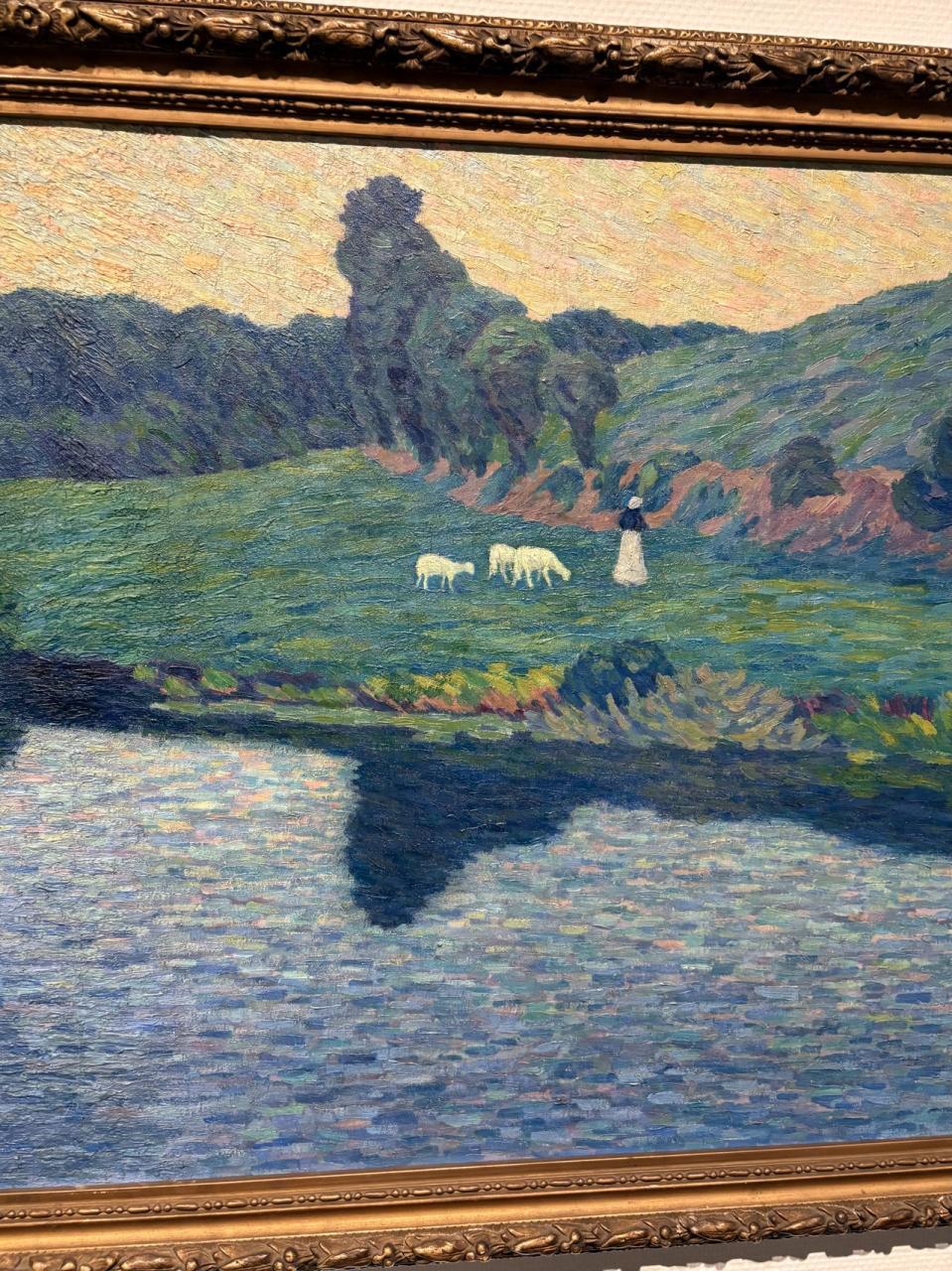
東京美術学校で黒田清輝に、渡仏後はラファエル・コランに学んだ斎藤でしたが、平明な外光派絵画から離れ、新しい表現を新印象派的な点描画法に求めました。しかし斎藤がもっとも強く影響を受けたのは情感の表現と結びついたアンリ・マルタン(1860-1943)の点描表現でした。したがって、新印象派といってもスーラら新印象派の理知的、科学的な色調分割とは違います。
実際、この作品においても、短い筆触を併置する点描表現は、装飾性を加味し、ゆるやかに流れる川の水面が、夕陽を浴びて静かに輝くさまを情感豊かに謳いあげるのに効果をあげています。
After studying under Kuroda Seiki at the Tokyo School of Fine Arts and under Raphael Collin during his time in France, Saito moved away from the forthright clarity of plein-air painting and sought a new mode of expression in pointillism like that of the Neo-Impressionists. Saito was most influenced by the pointillistic style of Henri Martin (1860-1943), which he saw as expressing "profound atmosphere and limitless emotion that bound the picture together as a whole," in contrast to the rational, scientific color separation of Seurat and others.
In this work as well, stippling with short, distinct brushstrokes creates a decorative quality, and the effect is of a richly poetic paean to the gently flowing river, its surface glowing peacefully in the light of sunset. -
-
重要文化財
IMPORTANT CULTURAL PROPERTY
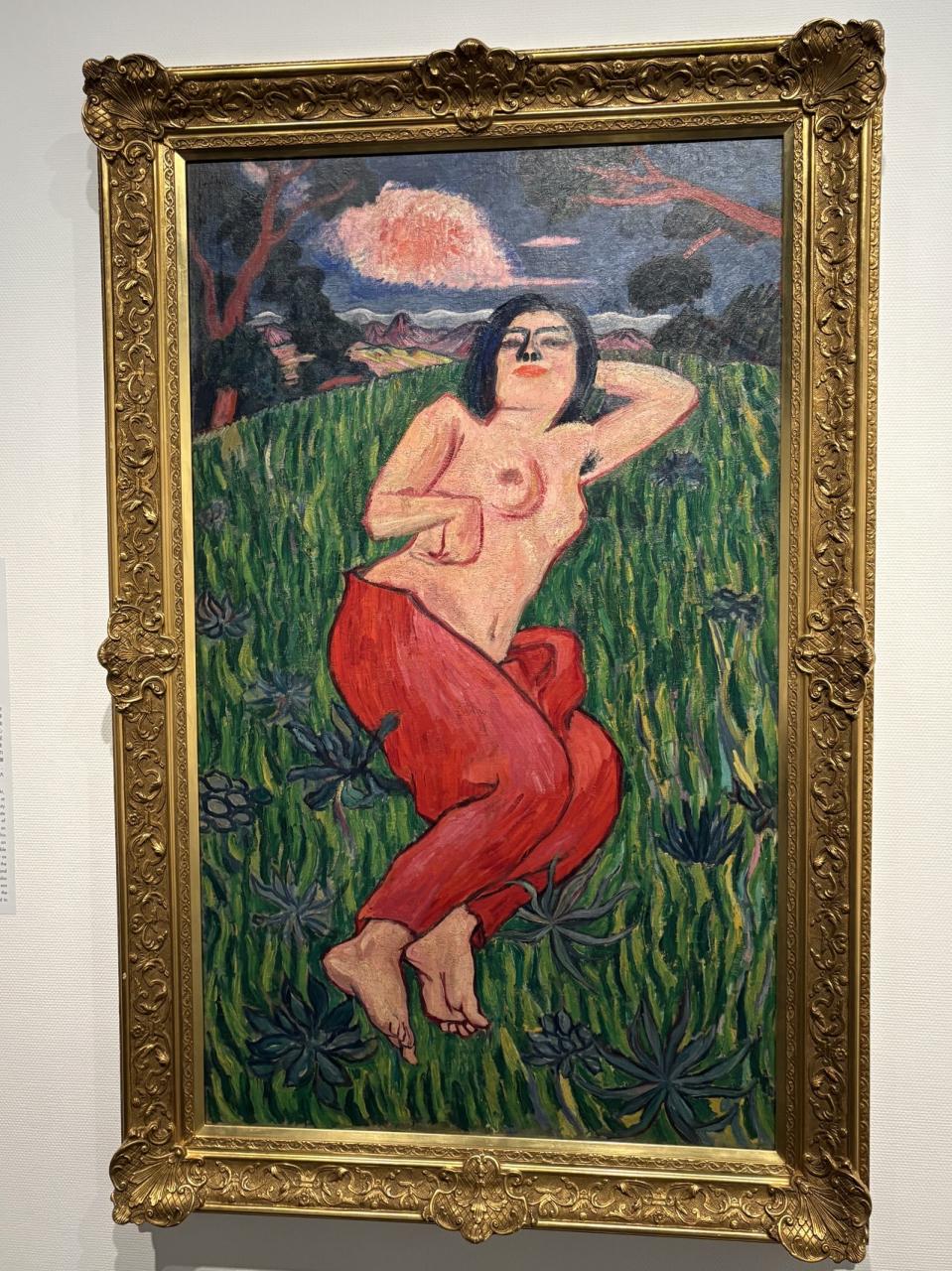
萬鉄五郎
YOROZU, Tetsugoro
1885-1927
裸体美人
Nude Beauty
1912 明治45年
油彩・キャンバス
oil on canvas
八木正治氏寄贈
Gif of Yagi Masaharu
新婚のよ志夫人をモデルに描かれた、東京美術学校(現・東京藝術大学)の卒業制作です。「草原に寝そべる半裸の女性」は、教師である黒田清輝らが得意とした画題でした。しかし反抗心いっぱいの学生だった萬は、同じ画題を、手足を不器用に折り曲げ、真っ黒な鼻の穴と腋毛を見せる姿で描きました。ファン・ゴッホなどの影響を示す日本で最初期の作例として、また個性を尊ぶ大正時代の幕開けを飾る作品として、重要文化財に指定されています。卒業制作の大出世です。
Depicting the newlywed Yorozu's wife Yoshi, this painting was the artist's graduation work at Tokyo School of Fine Arts (now Tokyo University of the Arts). The subject matter, "a half-nude woman sprawled out in a meadow," was one of his teacher Kuroda Seiki's specialties. But as Yorozu was a rebellious student, he depicted his wife with her hands and feet bent in an awkward position, jet-black nostrils, and visible underarm hair. The painting was designated as an Important Cultural Property as it is one of the first examples of the influence of van Gogh and other post-Impressionists on Japanese art. It also marks the advent of the Taisho Period, an era that was notable for a heightened respect for the individual. For a graduation work, it proved to be a quite success. -
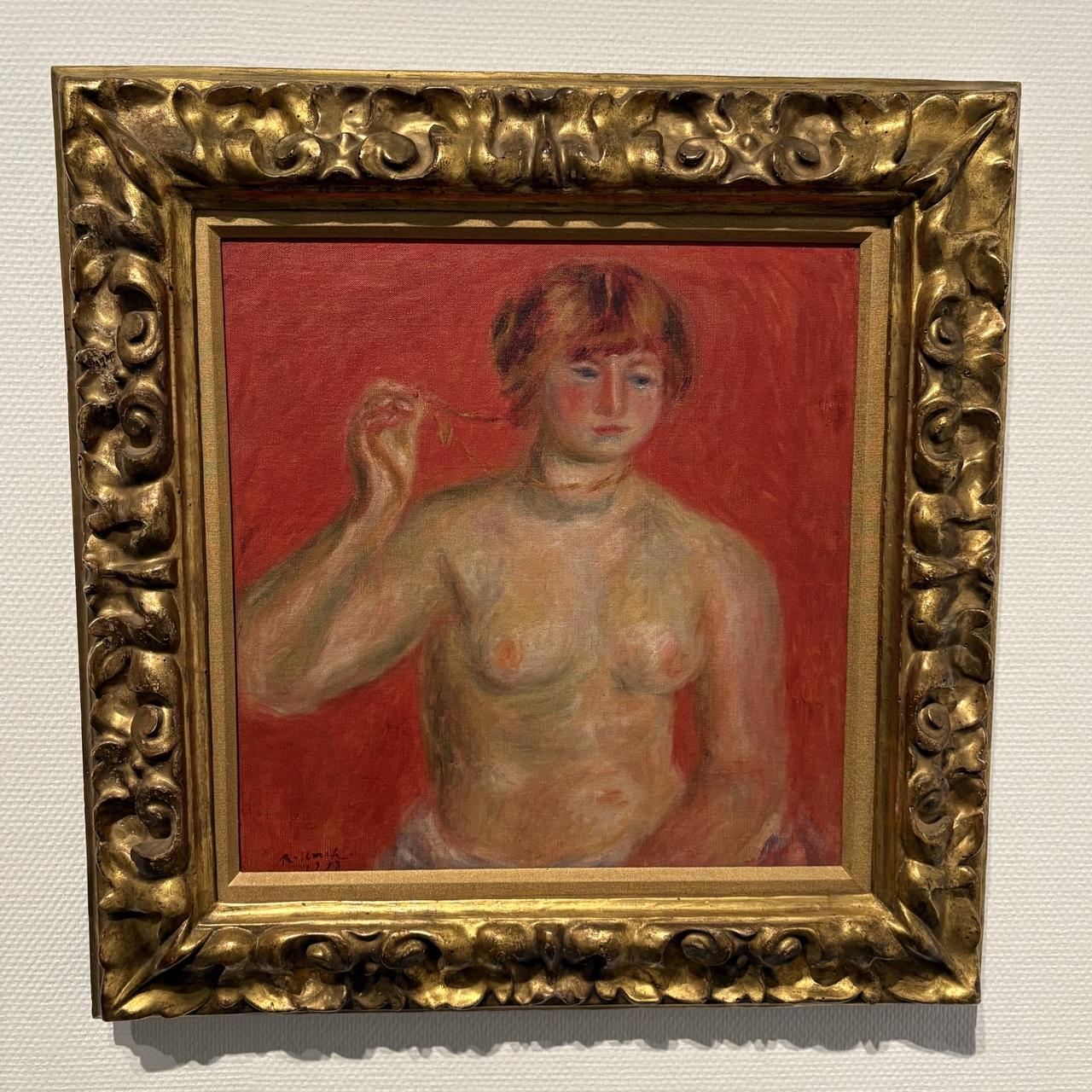
梅原龍三郎
UMEHARA, Ryuzaburo
1888-1986
黄金の首飾り
Gold Necklace
1913 大正2年
油彩・キャンバス oil on canvas
作者寄贈
Gift of the artist
「黄金の首飾り」という題名ですが、最初に目をひくのはむしろ、裸婦の背景に塗られた赤ではないでしょうか。フランスでルノワールに師事した梅原は、ルノワールから「君は色彩を持つ、デッサンは勉強で補うことのできるものだが、色彩はタンペラマン(体質)によるものだ、それがあるのがはなはだよい」と褒められたそうです。そう言われてみると、この赤は、ルノワールの影響から脱した後年の作品にも、しばしば効果的に用いられていることに気づかされます。
Despite the title, the first thing that attracts the viewer's attention is the red backdrop behind the nude figure. Umehara, who studied with Renoir in France, apparently received these words of praise from the French painter: "You have a good sense of color. You can supplement your drawing skills by studying, but color is rooted in temperament, so having that is a great thing." With this in mind, we see that Umehara did indeed make effective use of this red in later works after he had distanced himself from Renoir's influence. -
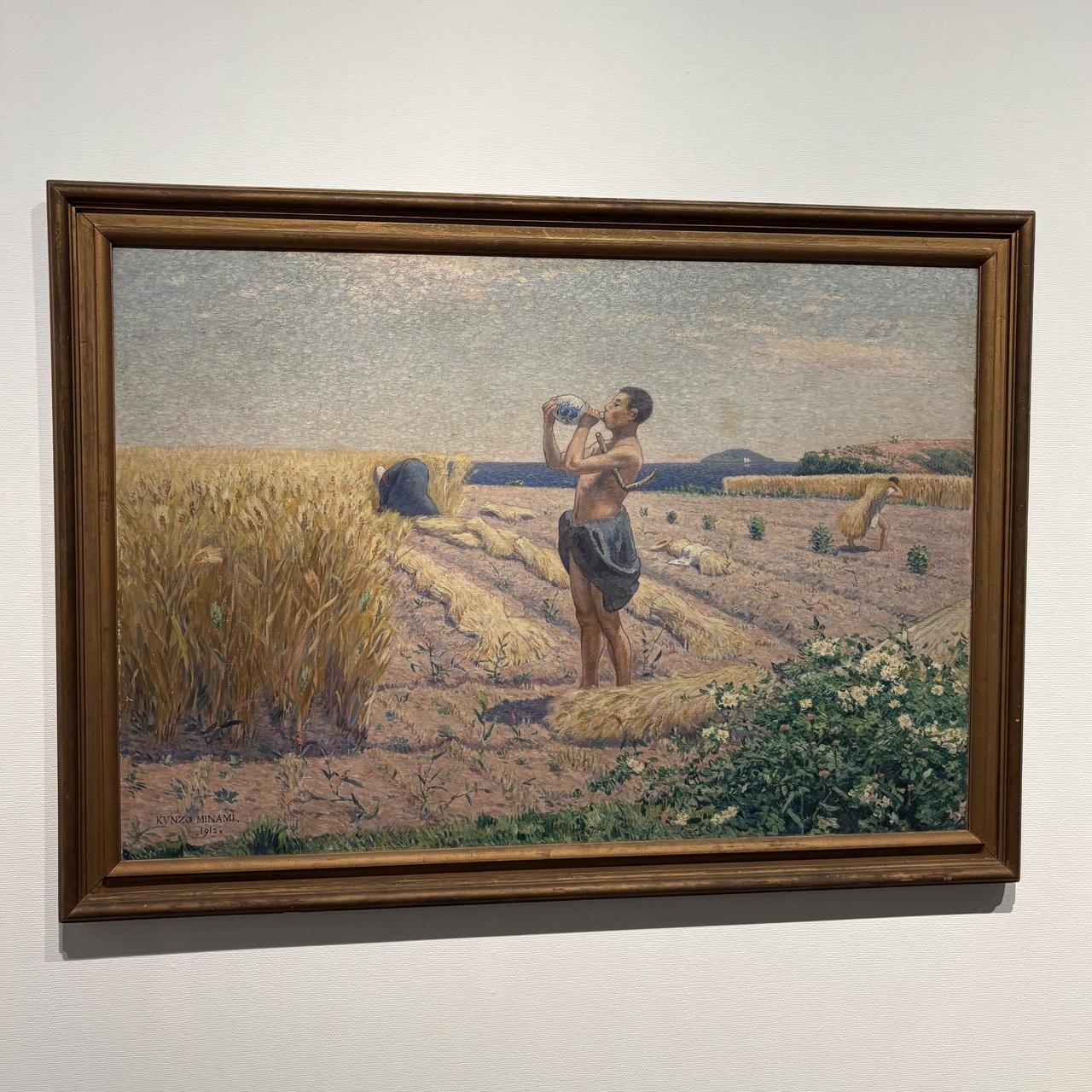
南薰造
MINAMI, Kunzo
1883-1950
六月の日
One Day in June
1912 明治45年
油彩・キャンバス oil on canvas
文部省管理換
Transferred from Ministry of Education
故郷の瀬戸内海沿岸地域に取材した、初夏の麦の刈入れ時の光景。画家自身は、照りつける日差しのもと、水で喉をうるおす農民の姿を通して、「一種の疲れたびを出そうとした」と述べています。しかし点描派風の細かいタッチ、簡略化された構図、人物や徳利の輪郭線などには、平明で装飾的な画面構成への志向がうかがわれます。南が自然とそこに生活する人の自然主義的な描写を超えて、写実と装飾性の融合を目指していたのがわかります。
This scene shows a wheat harvest in early summer, which Minami saw in his hometown in a coastal area near the Seto Inland Sea. The artist stated that in his depiction of a farmer drinking water under the dazzling sun, he wanted to portray "some kind of sense of exhaustion." However, the fine pointillist brushstrokes, simplified composition, and contour lines around people, water jugs and so forth show a tendency toward planar, decorative composition. It is evident that apart from Minami's naturalistic depiction of the landscape and the people inhabiting it, he sought to fuse the realistic and the decorative in this work. -
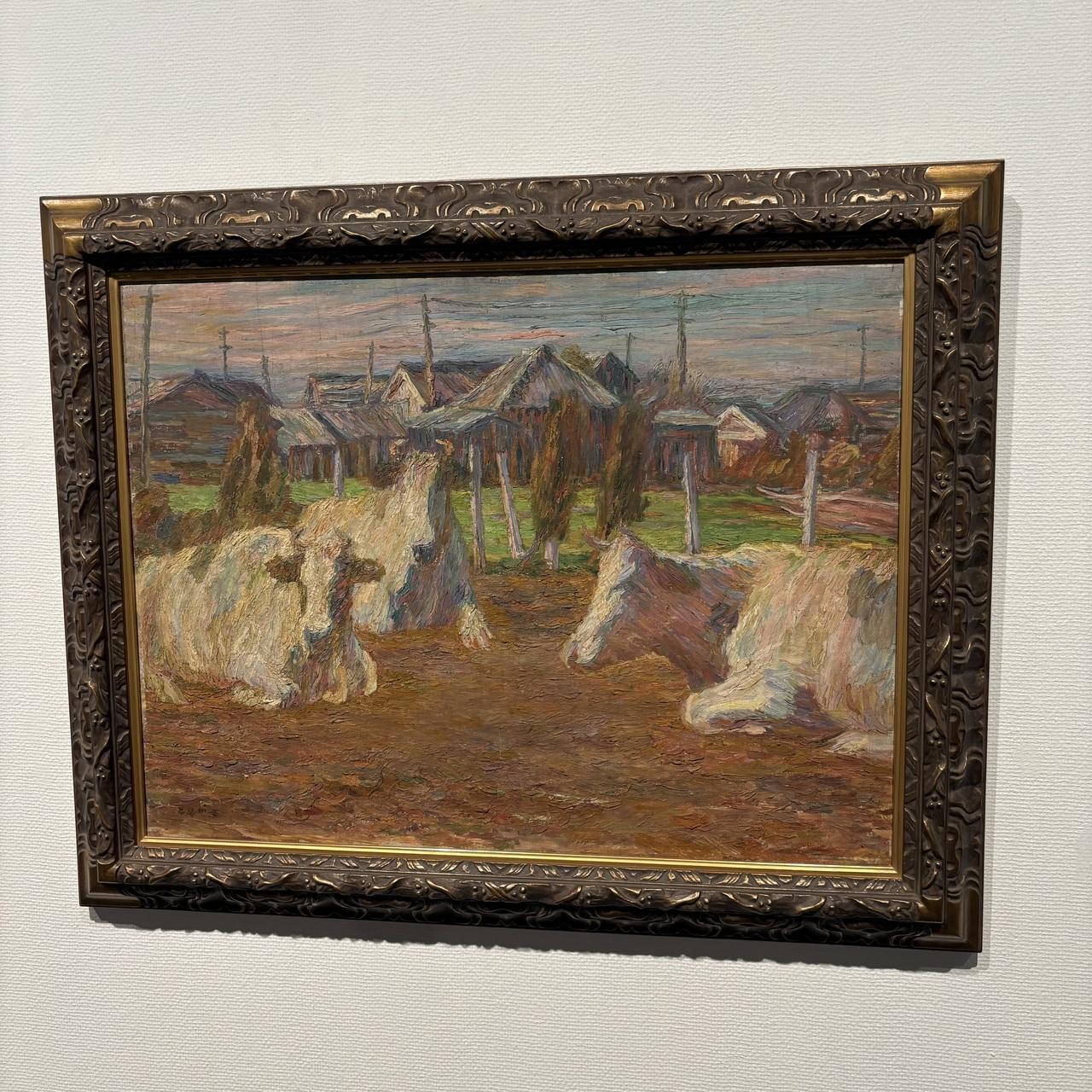
坂本繁二郎
SAKAMOTO, Hanjiro
1882-1969
三月頃の牧場
Dairy Farm about March
1915 大正4年
油彩・キャンバス
oil on canvas
購入
Purchased -
中村彝
NAKAMURA, Tsune
1887-1924
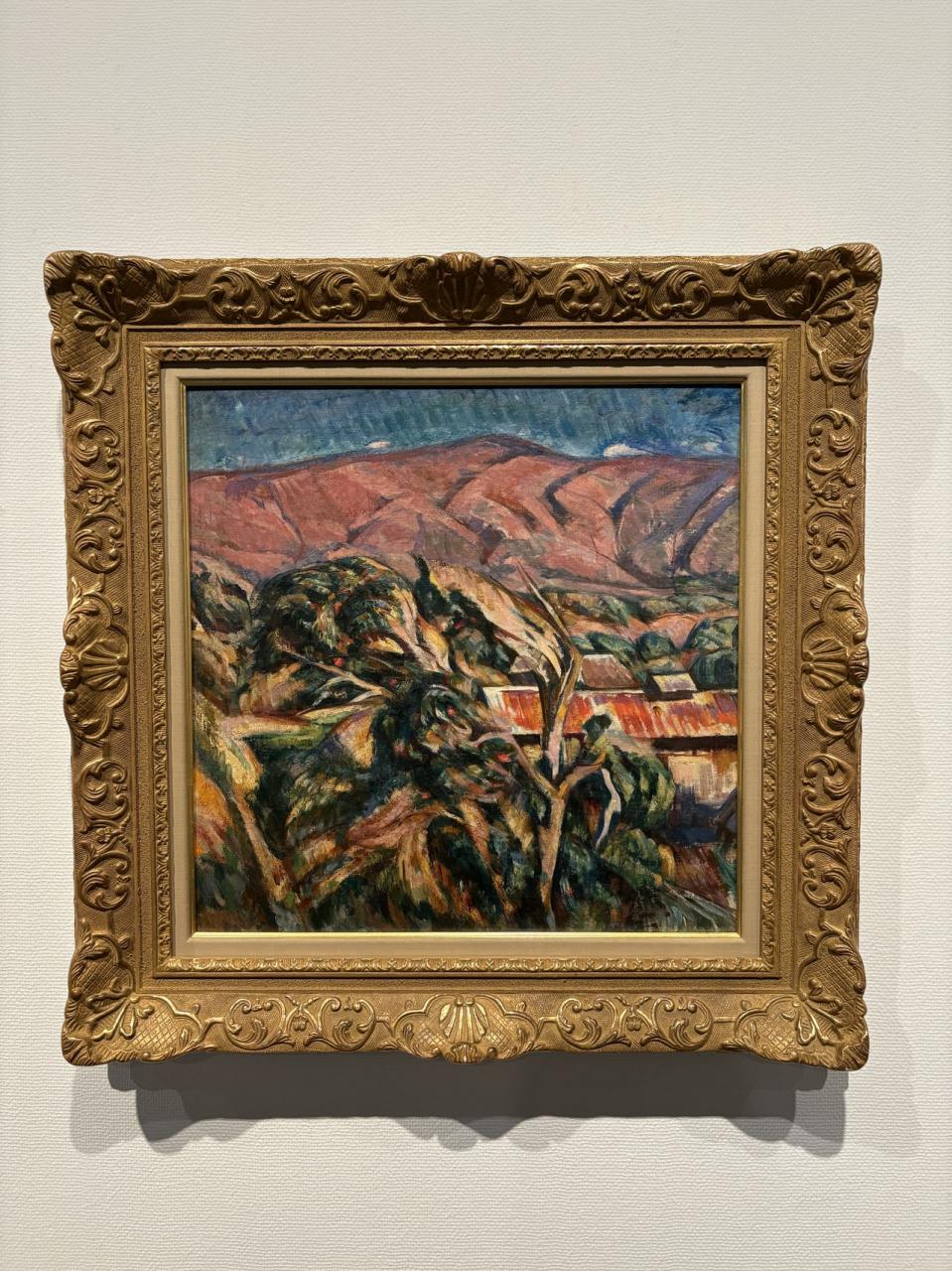
大島風景
Landscape, Island Oshima
1914-15 大正3-4年
油彩・キャンバス ail on canvas
購入
Purchased
中村屋奥のアトリエで制作していたは、創業者で相馬夫妻の長女、俊子に恋をします。後子との結婚を願うも、相馬夫妻に断られた※。伊豆大島へ渡ったのは傷心と結核を癒すためでした。セザンヌが描いたサント・ヴィクトワール山を思い起こさせる画面。手前の椿の大樹は、葬の感情を反映するかのように激しく揺れ動いています。結局、この地の気候は身体に合わず、1915(大正4)3月に帰京。翌年下落合に完成したアトリエで新たな生活のスタートを切りました。
Nakamura Tsune, who worked in a studio in the rear of the Nakamuraya salon, was in love with Soma Toshiko, the eldest daughter of the salon's founders Soma Aizo and his wife Kokko. Though he asked for her hand in marriage, the Somas rejected Nakamura's proposal. He subsequently moved to the island of Izu Oshima to nurse his broken heart and recover from tuberculosis.
This painting recalls Cézanne's depiction of Montagne Sainte-Victoire. The camellia tree in the foreground is shaking intensely, seemingly reflecting the artist's emotional state. In the end, finding the local climate unsuitable, Nakamura returned to Tokyo in March of 1915. The following year he began a new life in a studio that he had built in Shimo-Ochiai. -
重要文化財
IMPORTANT CULTURA PROPERTY
中村彝
NAKAMURA, Tsune
1887-1924
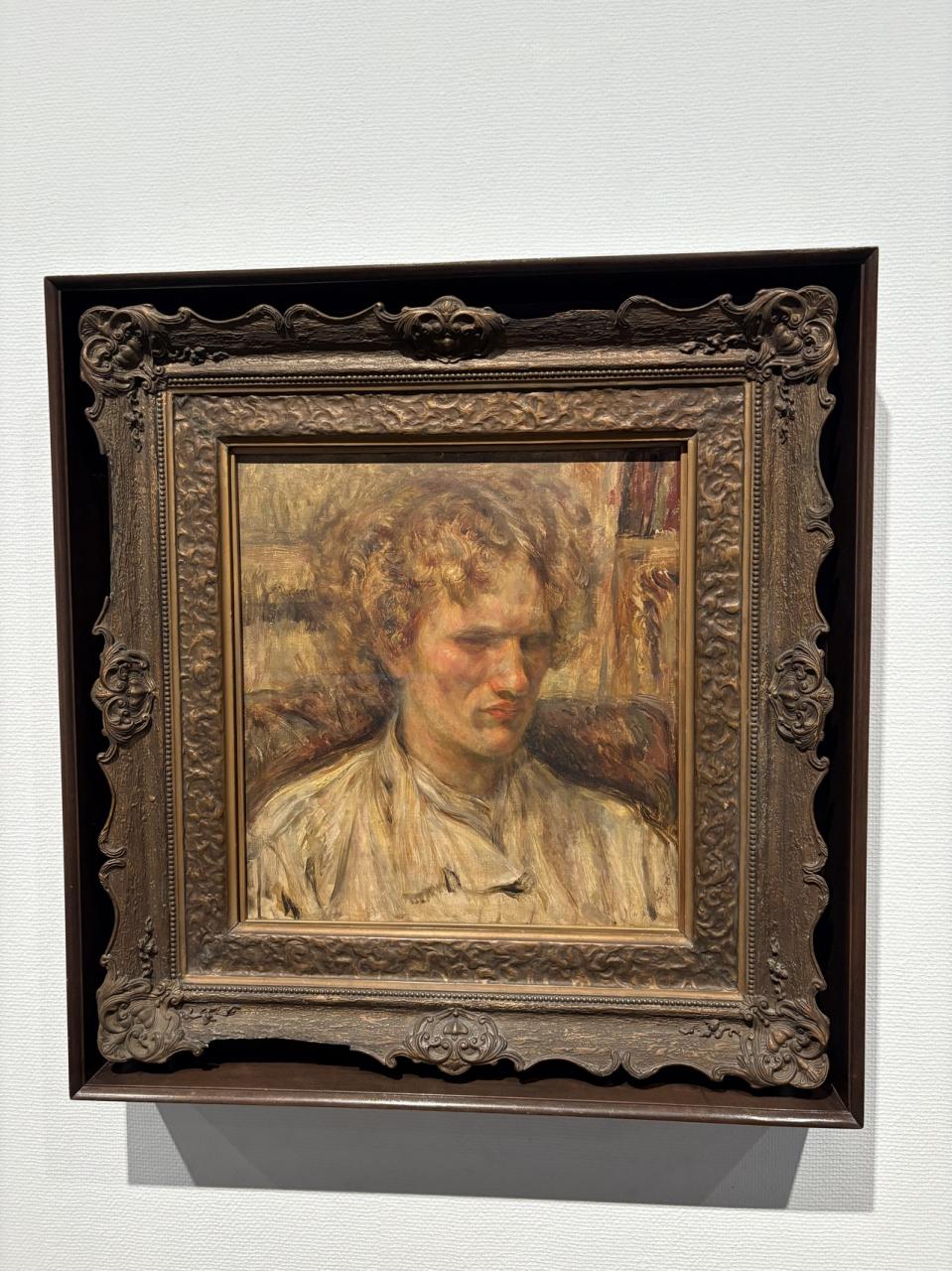
エロシェンコ氏の像
Portrait of Vasilii Eroshenko
1920 大正9年
油彩・キャンバス oil on canvas
大里一太郎氏寄贈
Gif of Osato Ichitaro
モデルはヴァシリー・エロシェンコ (1890-1952)。現在のロシア連邦に生まれたウクライナ人で、盲目の文筆家、詩人、音楽家として活動しました。日本では、文化人が集うことで知られた新宿中村屋に一時身を寄せました。この作品は、森のアトリエで、友人の画家、鶴田吾郎とともに制作されたものです。明暗がドラマティックな鶴田版に比べ、ルノワールに傾倒した薬の作品は、柔らかい茶の濃淡で全体がまとめられています。しかし、手前は比較的くっきり描き、背景はぽかすなど、写真のピントの要領で細かい調整を行い、彫りの深いモデルの顔や頭の量感をしっかりと描き出しています。
The model for this work was Vasilii Eroshenko (1890-1952), a blind writer, poet, and musician who was Ukrainian born in Russia in 1889. In Japan, he took refuge for a time in the Nakamuraya bakery in Shinjuku where many cultural figures gathered. Nakamura created this work in his studio along with his friend, the painter Tsuruta Goro. Compared to the dramatic contrasts in Tsuruta's version, the overall tone of this work is set by the soft brown shading, suggesting Nakamura's great admiration for Renoir. On the other hand, he makes exacting adjustments (akin to the focus of a camera lens) such as depicting the foreground more distinctly than the obscured background, and clearly portrays the model's finely-chiseled features and his bulky head. -
河野通勢
KONO, Michisei
1895-1950
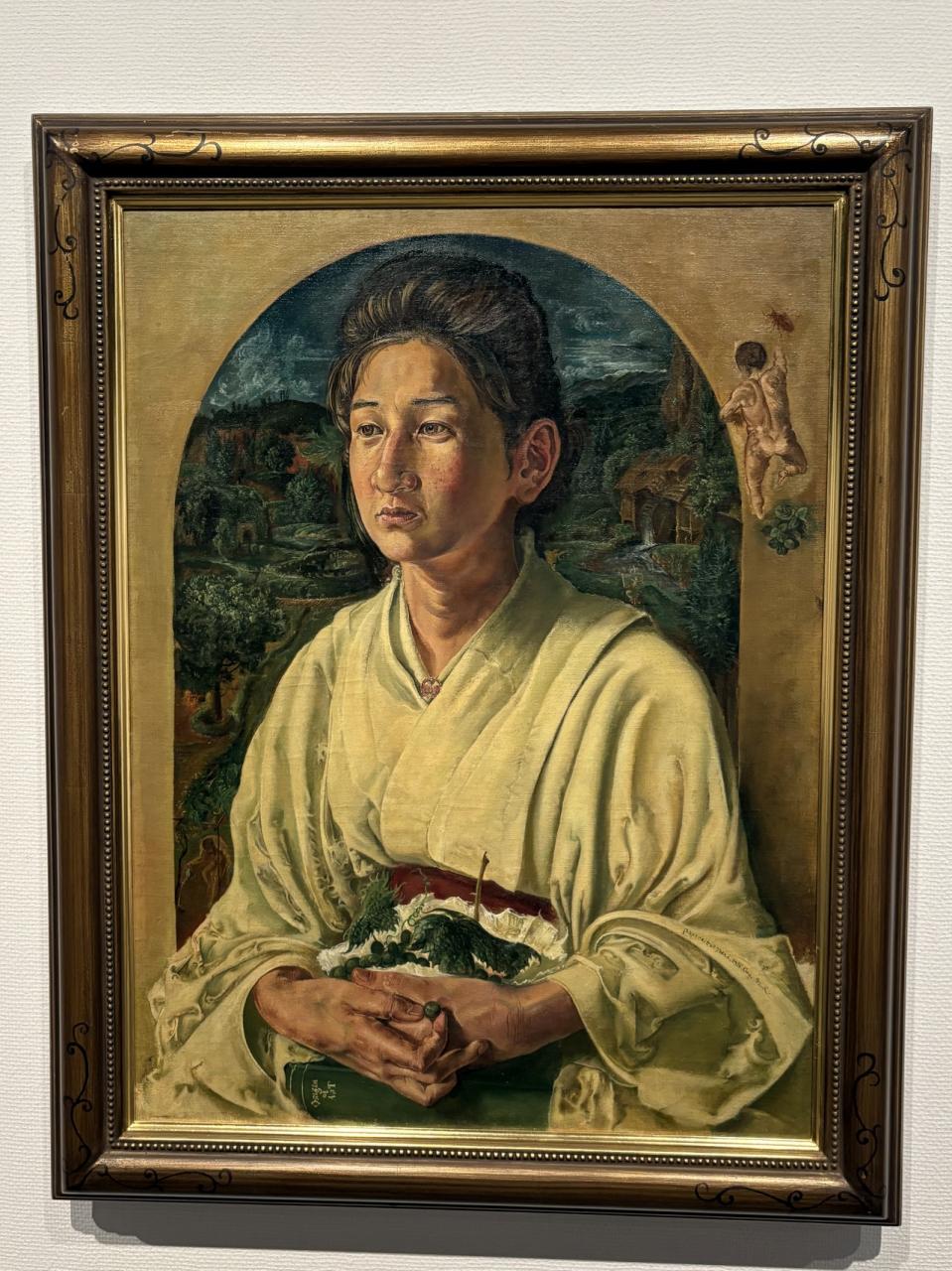
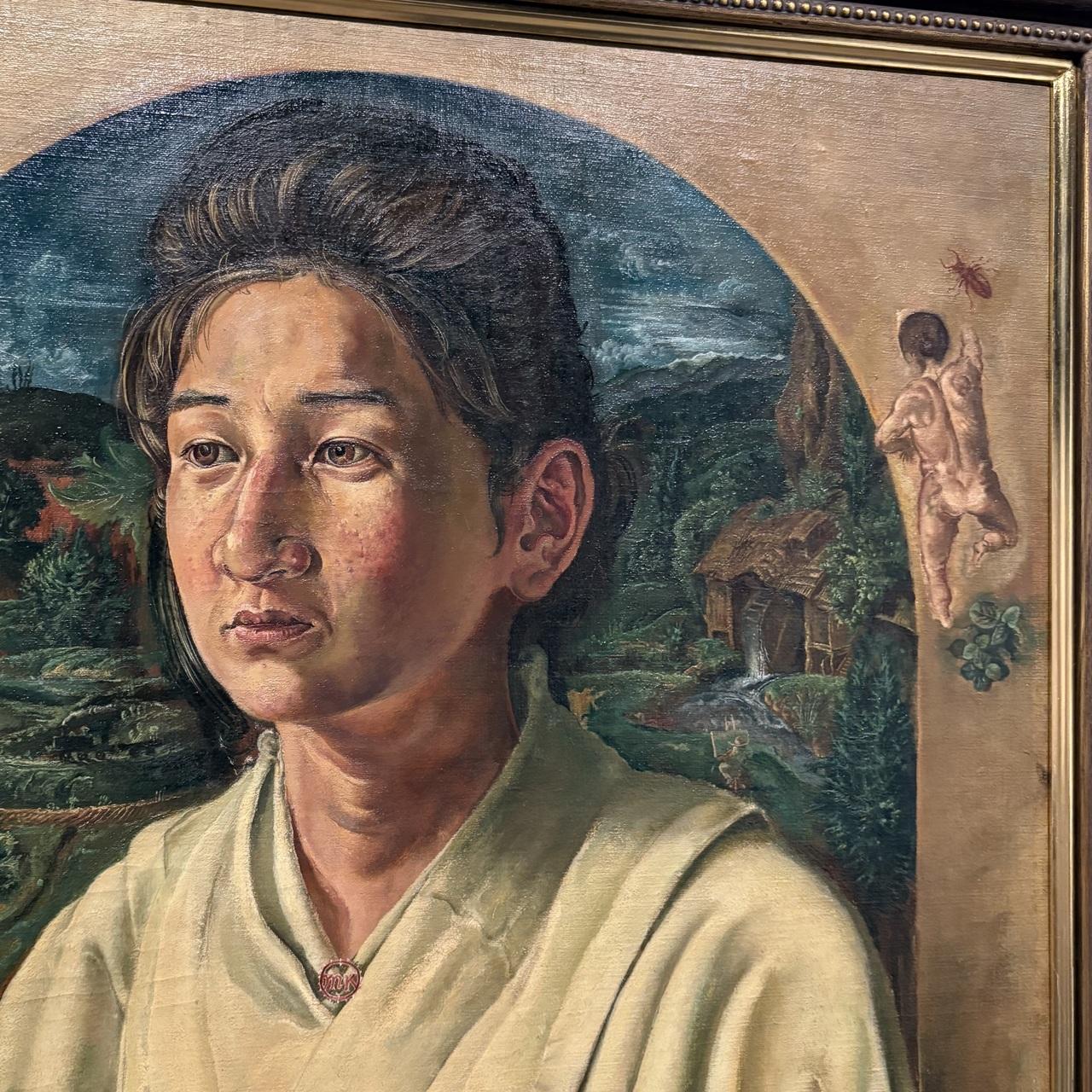
好子像
Portrait of Yoshiko
1916 大正5年
油彩・キャンバス oil on canvas
購入
Purchased
河野通勢は、美術教師でのちに写真館を営んだ文河野次郎のもとで、父が取り寄せた画集等を通じて西洋古典絵画を知り、影響を受けました。
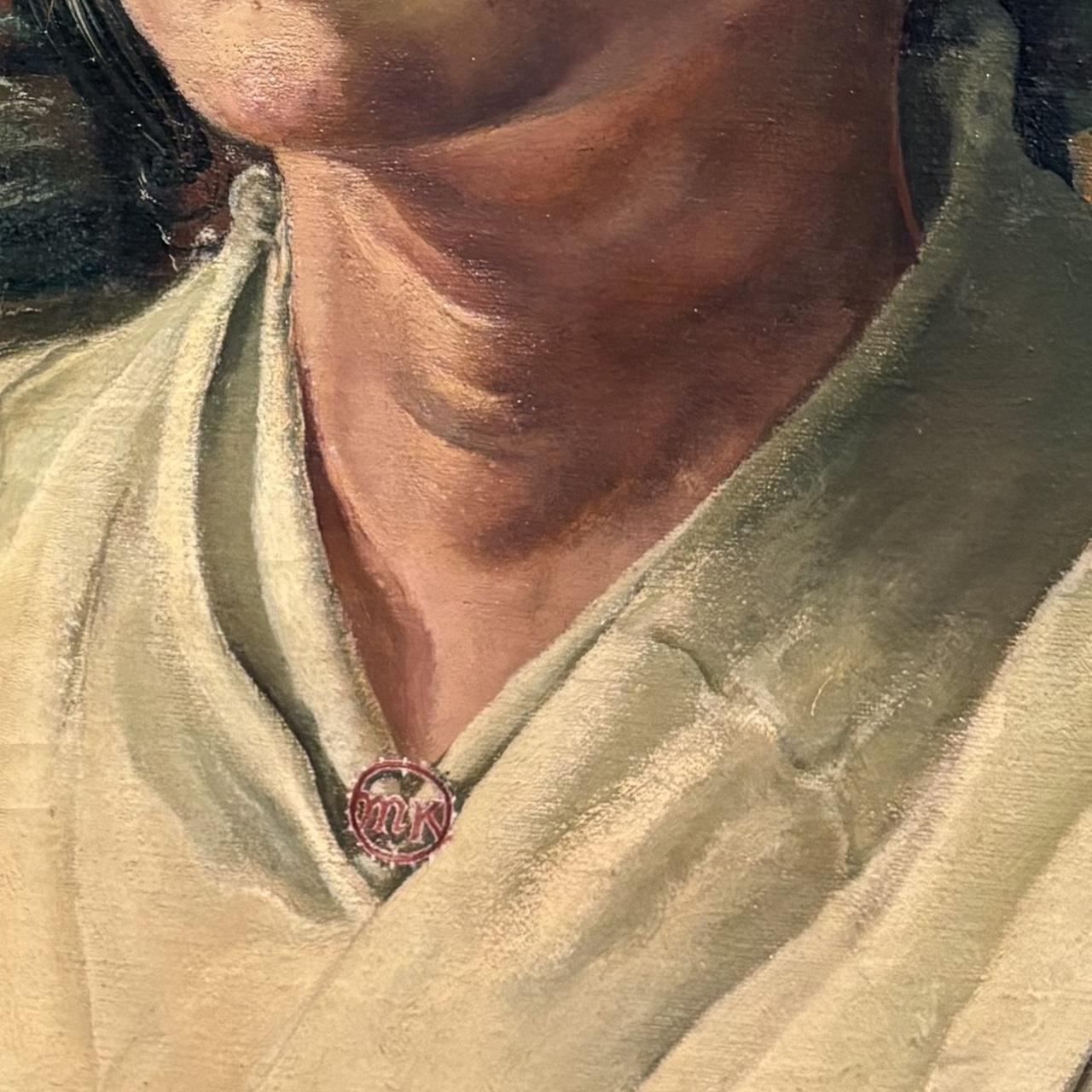
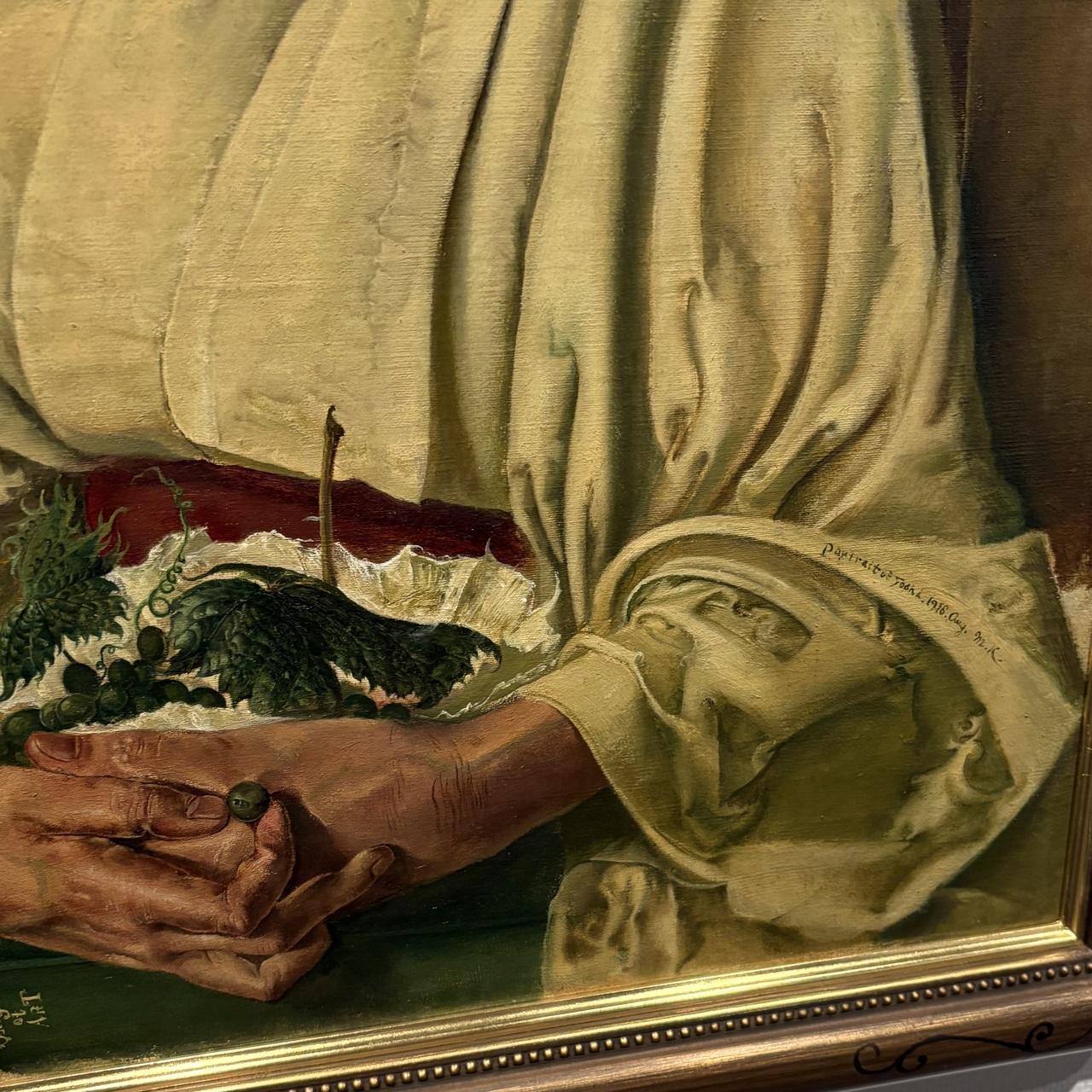
『芸術の起源』という本の上にぶどうの実と若葉をかかえた女性は、首に画家のイニシャルを彫ったペンダントをかけて、遠くを見つめています。<好子像>は、通勢が想いを寄せる女性をモナリザに見立てて描いた作品です。長野時代に描かれ、背景には長野の田園風景が拡がっています。そこには白煙をあげる汽車やイーゼルに向かう画家の姿、ぶどう棚に水やりをする男性なども見え、街々の葉など細部を執拗に描写する表現が特徴的です。
Kono Michisei was introduced to Western classical painting through art books and other materials acquired by his father, Kono Jiro, an art teacher who later ran a photography studio.
In Portrait of Yoshiko, a woman holds a cluster of grapes and young leaves atop a copy of the book The Origins of Art. Around her neck hangs a pendant engraved with the artist's initials, and she gazes off into the distance. Kono painted this with a woman he admired in mind, drawing inspiration from the Mona Lisa in her depiction.
Produced during the artist's time in Nagano, the painting features a sweeping view of the rural landscape in the background. Details include a train puffing white smoke, a painter at his easel, and a man watering grapevines. The work is characterized by its painstaking attention to detail, particularly in the rendering of leaves and other natural elements. -
-
-
-
岸田劉生
KISHIDA, Ryusei
1891-1929
自画像
Self-Portrait
自画像
1914 大正3年
油彩・キャンバス oil on canvas
杉本健吉氏寄贈
Gilf of Sugimoto Kenkichi
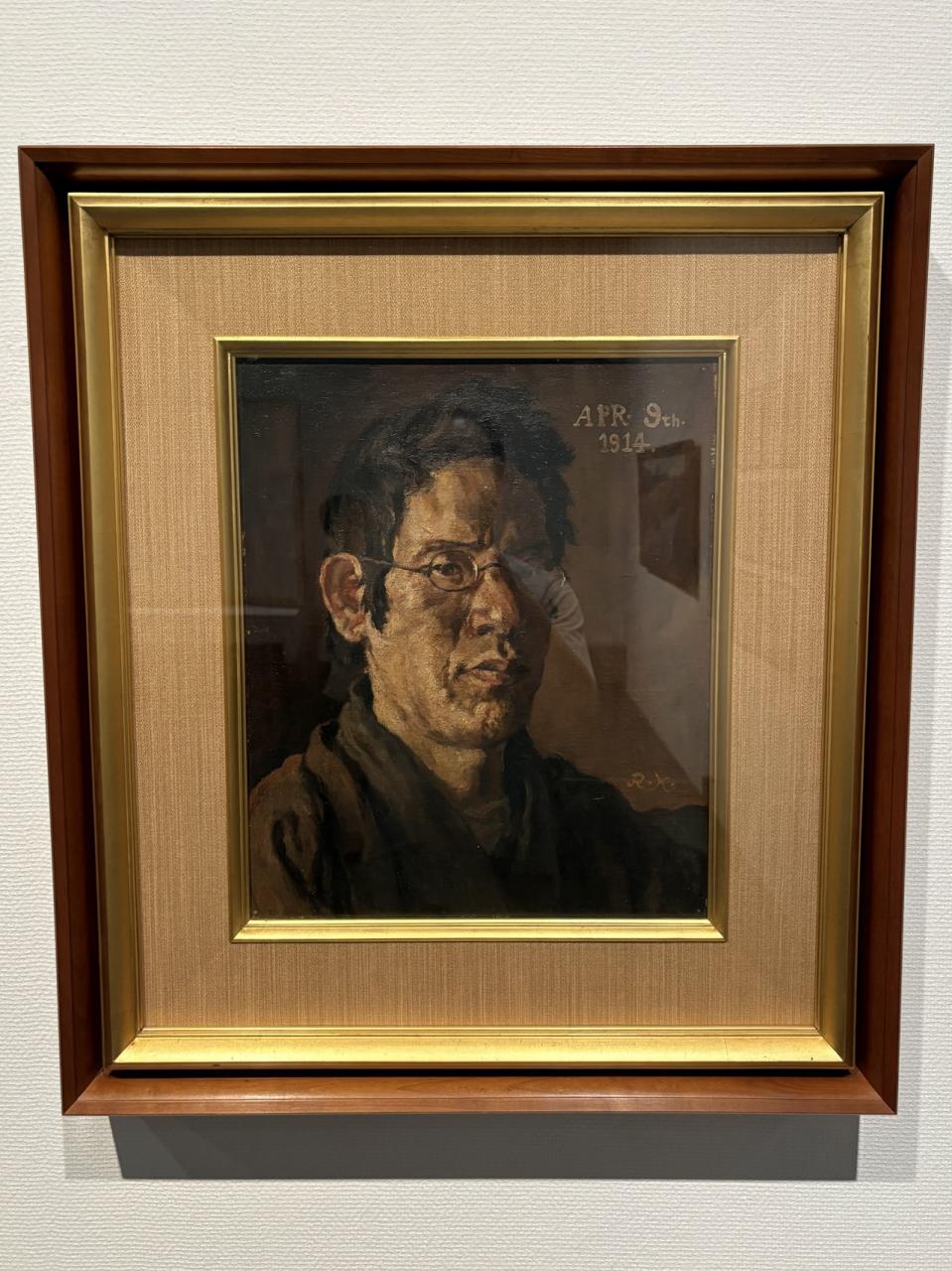
この作品が描かれたのは1914(大正3)年4月9日。長女、麗子が生まれる前日です。22歳だった劉生は、制作中、妻、業のうめき声にいら立ち、怒鳴りつけたといいます。成長した麗子は、数えで5歳から16歳まで劉生のモデルをつとめました。
This work was made on April 9, 1914, the day before the artist's oldest daughter, Reiko, was born. Kishida, 22 at the time, was apparently irritated by his wife Shigeru's moans as he was trying to work, and yelled at her. Reiko served as the artist's model from the age of 5 to 16.


利用規約に違反している投稿は、報告する事ができます。
-
前の旅行記

MOMAT コレクション〔国立東京近代美術館 所蔵作品展〕(2025.7.15-10.26)1.ハイライト ...
2025/08/07~
神田・神保町
-
次の旅行記

MOMAT コレクション〔国立東京近代美術館 所蔵作品展〕(2025.7.15-10.26)3. 岸田劉生「...
2025/08/07~
神田・神保町
-

MOMAT コレクション〔国立東京近代美術館 所蔵作品展〕(2025.7.15-10.26)1.ハイライト ...
2025/08/07~
神田・神保町
-

MOMAT コレクション〔国立東京近代美術館 所蔵作品展〕(2025.7.15-10.26)2.大正の個性派...
2025/08/07~
神田・神保町
-

MOMAT コレクション〔国立東京近代美術館 所蔵作品展〕(2025.7.15-10.26)3. 岸田劉生「...
2025/08/07~
神田・神保町
-

MOMAT コレクション〔国立東京近代美術館 所蔵作品展〕(2025.7.15-10.26)4.山と渓谷 "...
2025/08/07~
神田・神保町
-

MOMAT コレクション(2025.7.15-10.26)5.1930年代の絵画:現実の彼方へ、幻影の手前で...
2025/08/07~
神田・神保町
-

MOMAT コレクション(2025.7.15-10.26)6.1940年 "ハリー・K・シゲタ(重田放二)フ...
2025/08/07~
神田・神保町
-

MOMAT コレクション〔国立東京近代美術館 所蔵作品展〕(2025.7.15-10.26)7.戦後の女性画...
2025/08/07~
神田・神保町
-

MOMAT コレクション(2025.7.15-10.26)8.ジャンクとポップ "日比野克彦 LABYRIN...
2025/08/07~
神田・神保町
-

MOMAT コレクション〔国立東京近代美術館 所蔵作品展〕(2025.7.15-10.26)9.山村雅昭「ワ...
2025/08/07~
神田・神保町
-

MOMAT コレクション(2025.7.15-10.26)10.アルプのアトリエ/絵画と目的 "山口華楊、洋...
2025/08/07~
神田・神保町
-

MOMAT コレクション(2025.7.15-10.26)11.揺れる境界 "石川真生、基地を取り巻く人々"
2025/08/07~
神田・神保町
-

MOMAT コレクション〔国立東京近代美術館 所蔵作品展〕(2025.7.15-10.26)12.ヨコ軸・タ...
2025/08/07~
神田・神保町
-

東京国立近代美術館 "新収蔵&特別公開 コレクションにみる日韓" (2025.7.15 - 10.26) "...
2025/08/07~
神田・神保町
旅行記グループをもっと見る
コメントを投稿する前に
十分に確認の上、ご投稿ください。 コメントの内容は攻撃的ではなく、相手の気持ちに寄り添ったものになっていますか?
サイト共通ガイドライン(利用上のお願い)報道機関・マスメディアの方へ 画像提供などに関するお問い合わせは、専用のお問い合わせフォームからお願いいたします。
この旅行で行ったスポット






フォートラベル公式LINE@

おすすめの旅行記や旬な旅行情報、お得なキャンペーン情報をお届けします!
QRコードが読み取れない場合はID「@4travel」で検索してください。
\その他の公式SNSはこちら/



旅行記グループ MOMAT コレクション〔国立東京近代美術館 所蔵作品展〕(2025.7.15-10.26)
0
23