


2025/12/11 - 2025/12/11
40位(同エリア2914件中)

旅熊 Kokazさん
- 旅熊 KokazさんTOP
- 旅行記1926冊
- クチコミ854件
- Q&A回答102件
- 1,709,249アクセス
- フォロワー752人


この旅行記スケジュールを元に
モーリス・ユトリロ展を鑑賞に新宿へ
- 旅行の満足度
- 5.0
-

秋の新宿
-
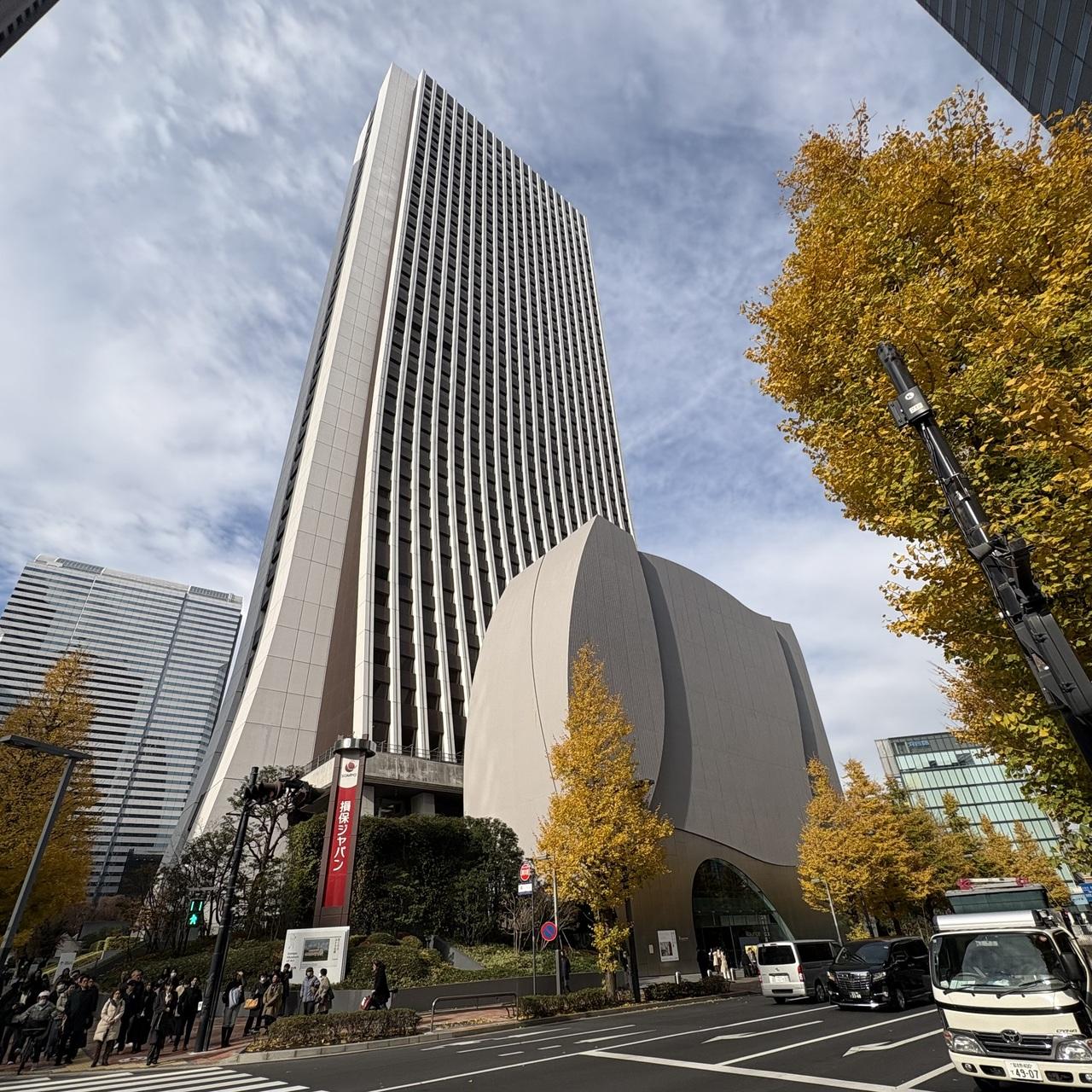
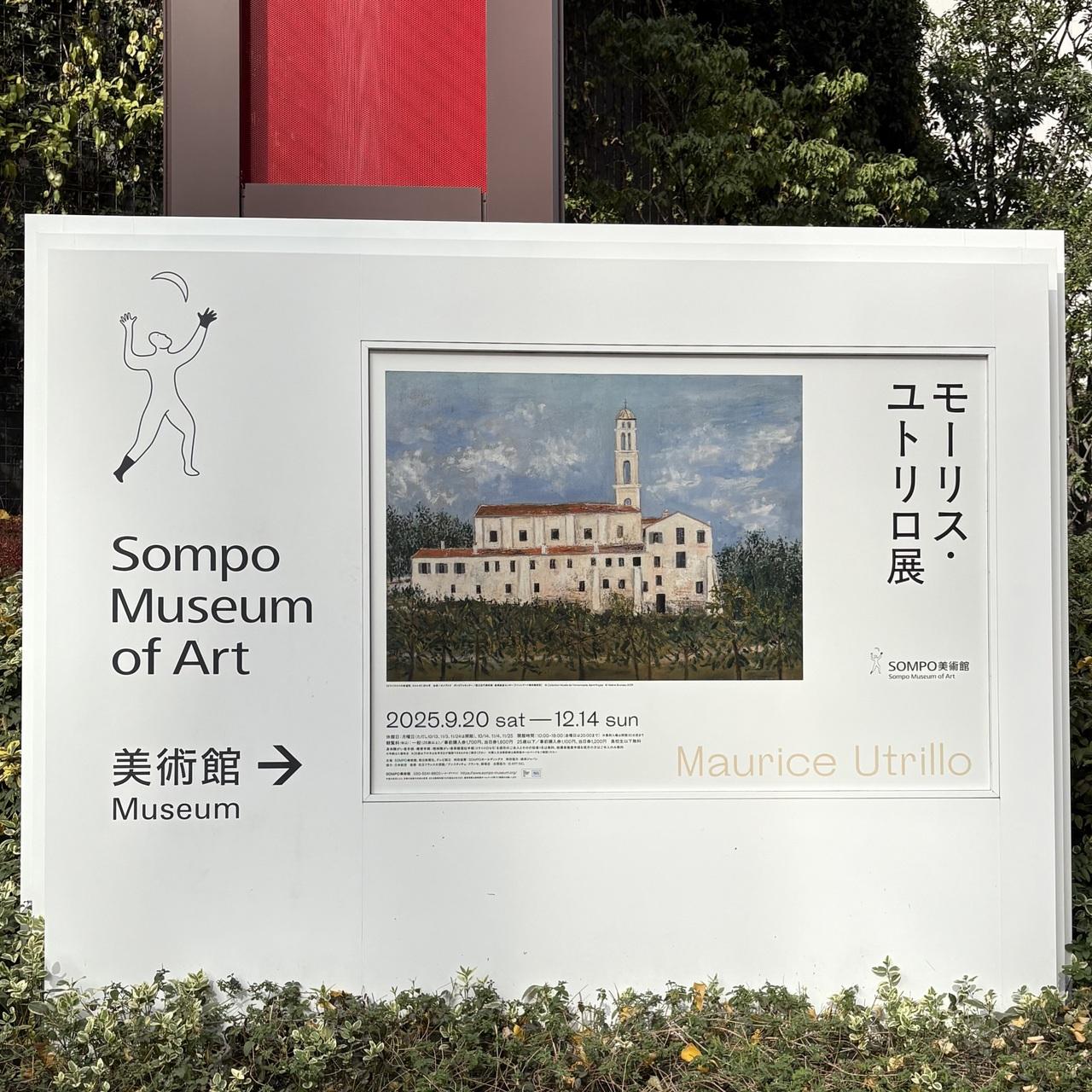
"SOMPO美術館"
SOMPO美術館 美術館・博物館
-
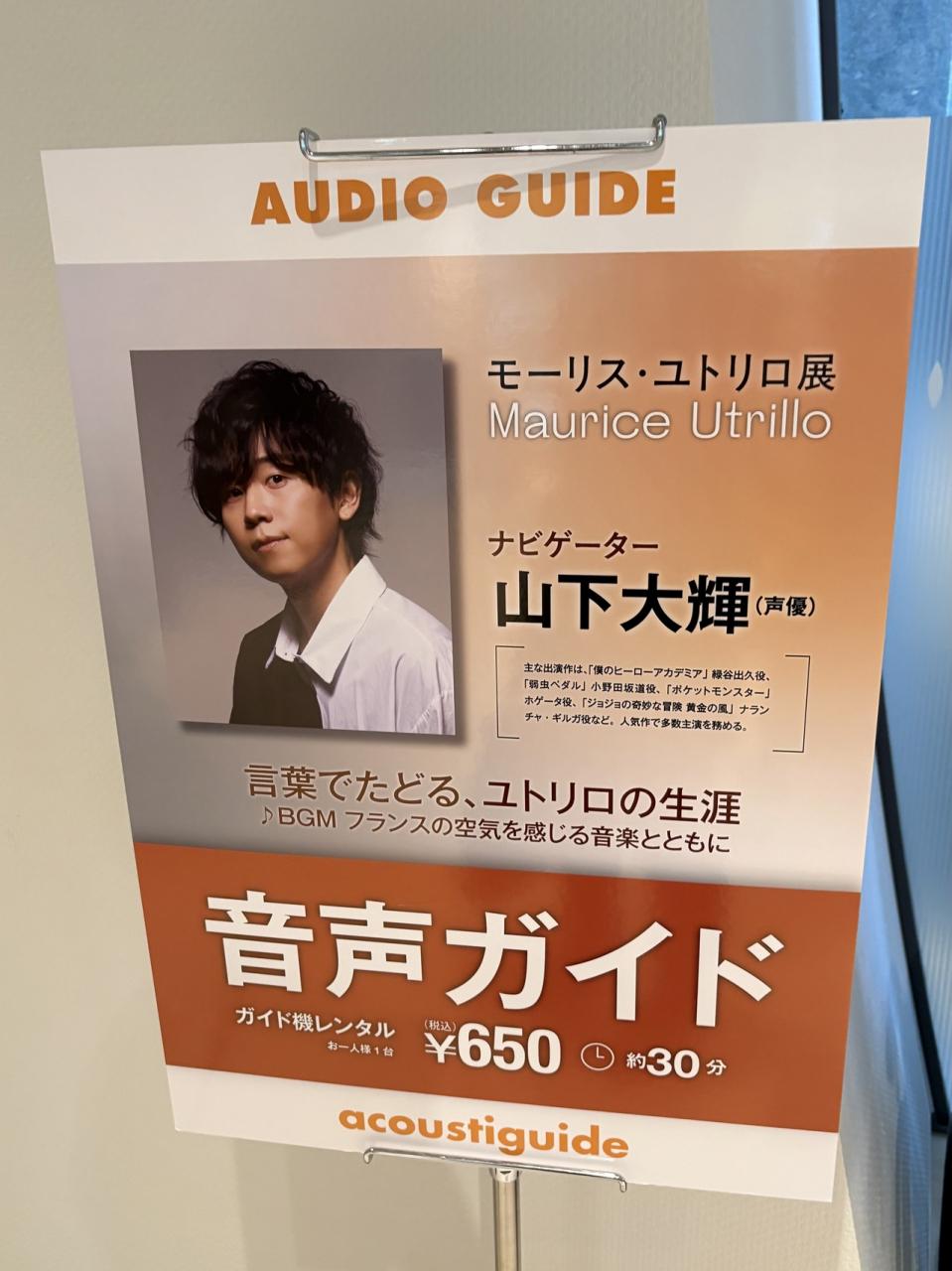
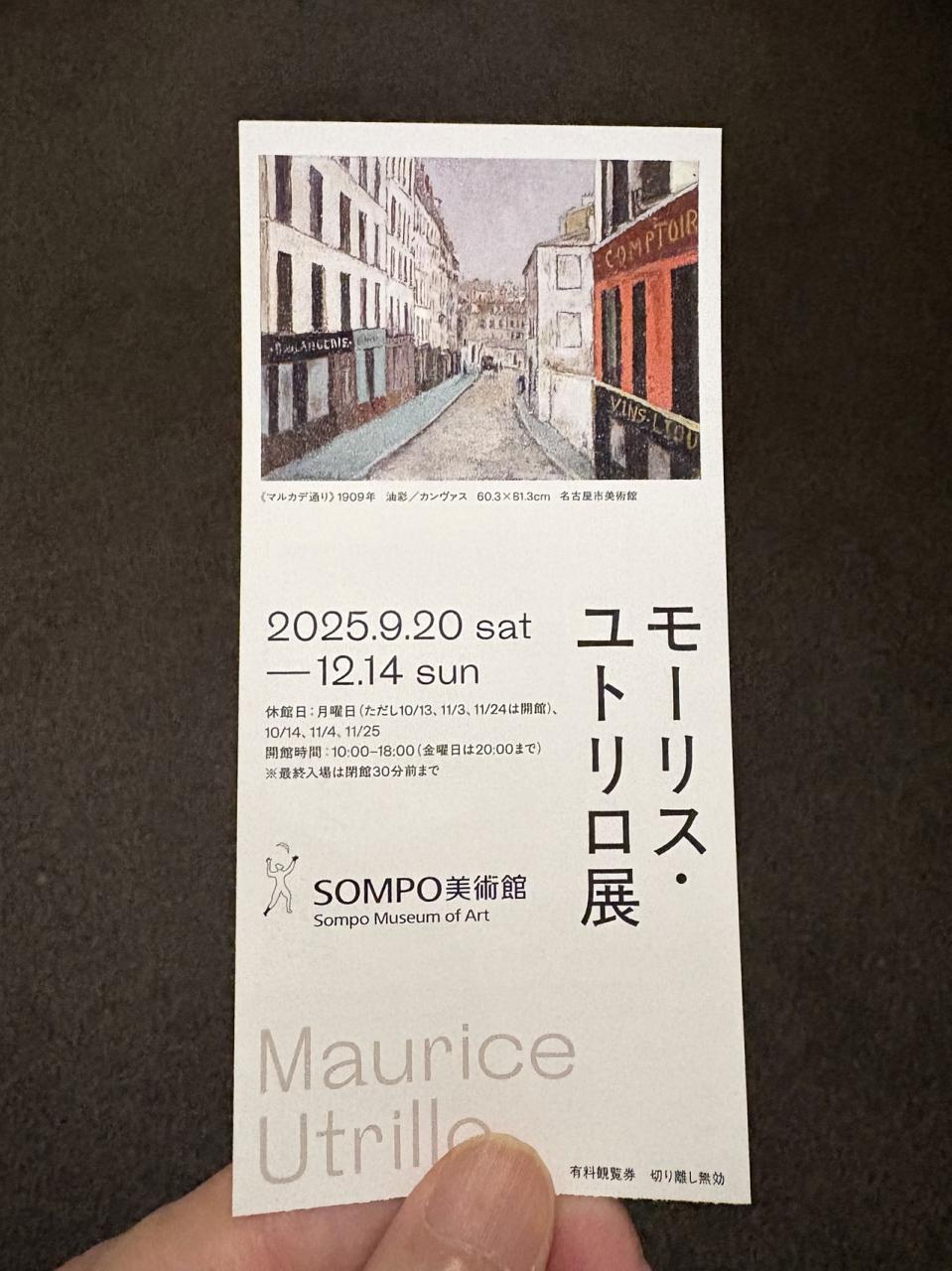
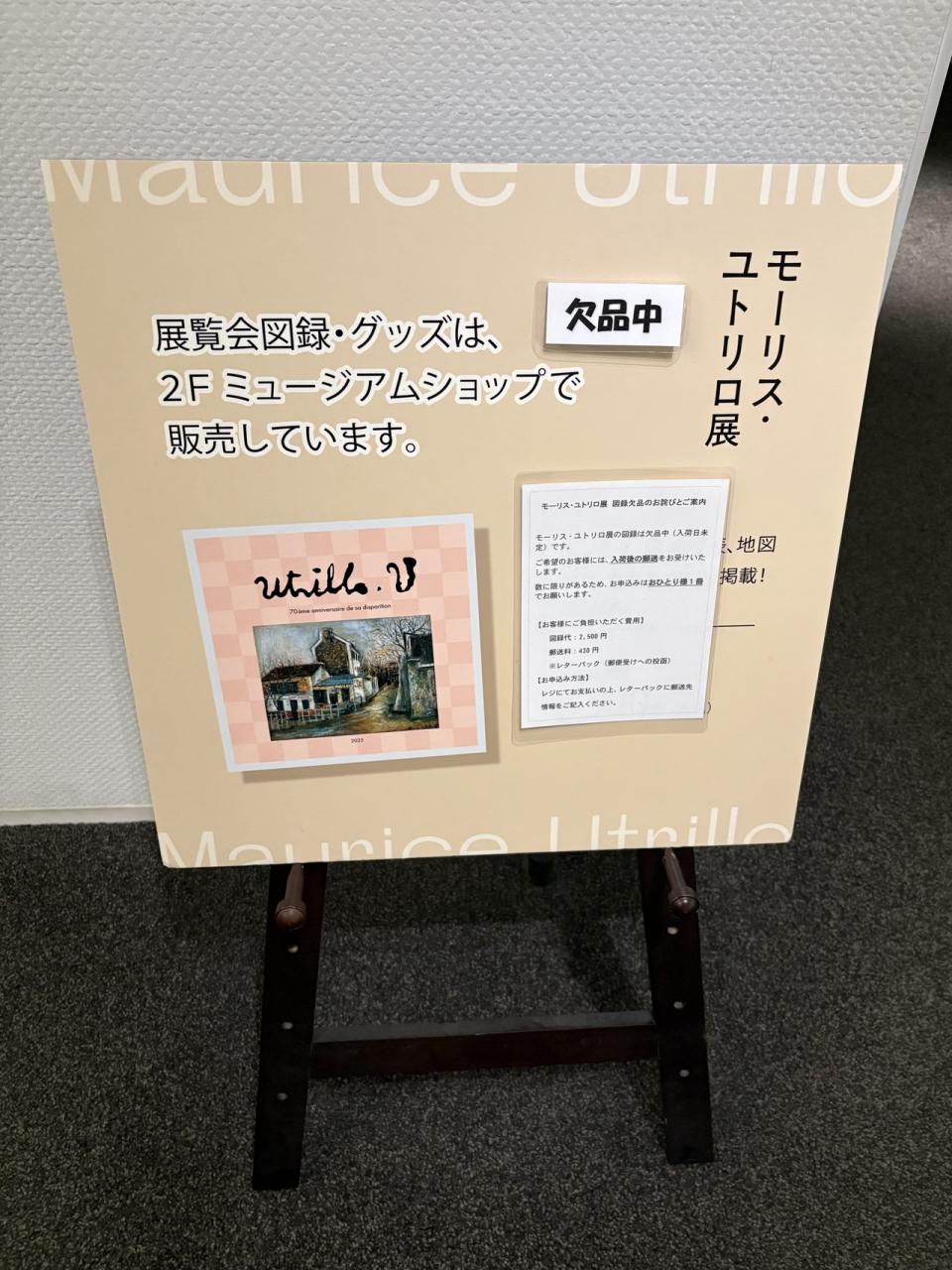
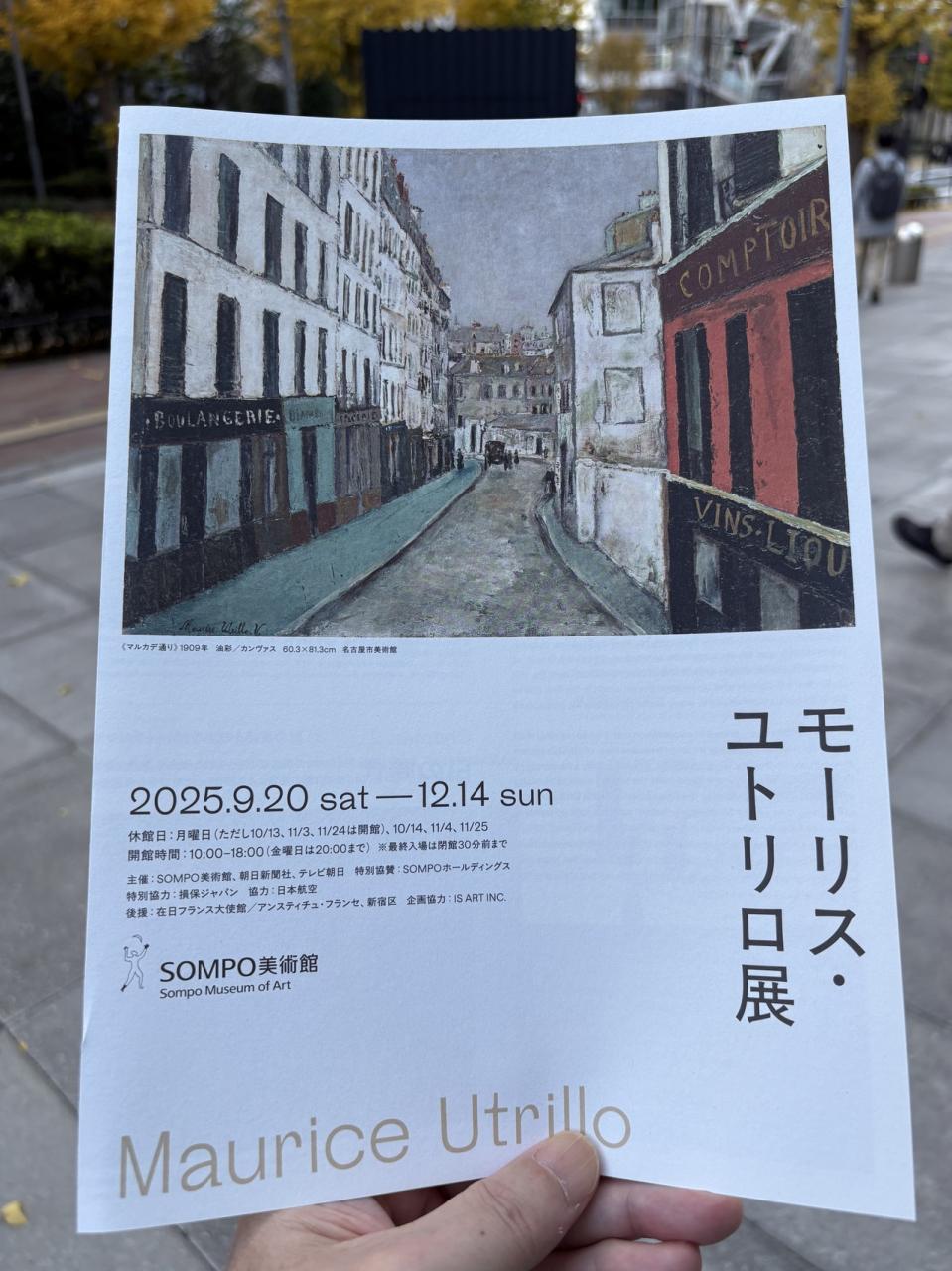
モーリス・ユトリロ展
2025.09.20(土)- 12.14(日)
20世紀初頭のパリの街並みを描いたことで知られる風景画家モーリス・ユトリロ(1883-1955)は、生まれ育ったモンマルトルや暮らした郊外の風景を数多くの油彩画に残しました。画家としての歩みには、母シュザンヌ・ヴァラドン(1865-1938)をはじめとする家族との複雑な関係や、幼少期からのアルコール依存といった要素が絡み合い、独自の世界観を築き上げています。波乱に満ちた人生を送りながらも、20世紀前半の美術界を席巻したこのエコール・ド・パリの画家は、とりわけ日本において現在もなお根強い人気を誇っています。
本展は、フランス国立近代美術館(ポンピドゥセンター)の協力のもと、同館所蔵の《モンマニーの屋根》(1906-07年頃)や《ラパン・アジル》(1910年)を含む作品約70点と、アーカイヴを管理するユトリロ協会から提供された資料を通して、その全貌に迫ります。アルコール依存症の治療の一環として絵筆をとった「モンマニー時代」、さまざまな素材を用いて白壁の詩情を描き出した「白の時代」、そして鮮やかな色彩を駆使した「色彩の時代」をたどりながら、ユトリロが確立した唯一無二の様式と、彼が愛した風景の詩情を感じていただける展覧会です。
https://www.sompo-museum.org/exhibitions/2024/mauriceutrillo/ -
-
-
-
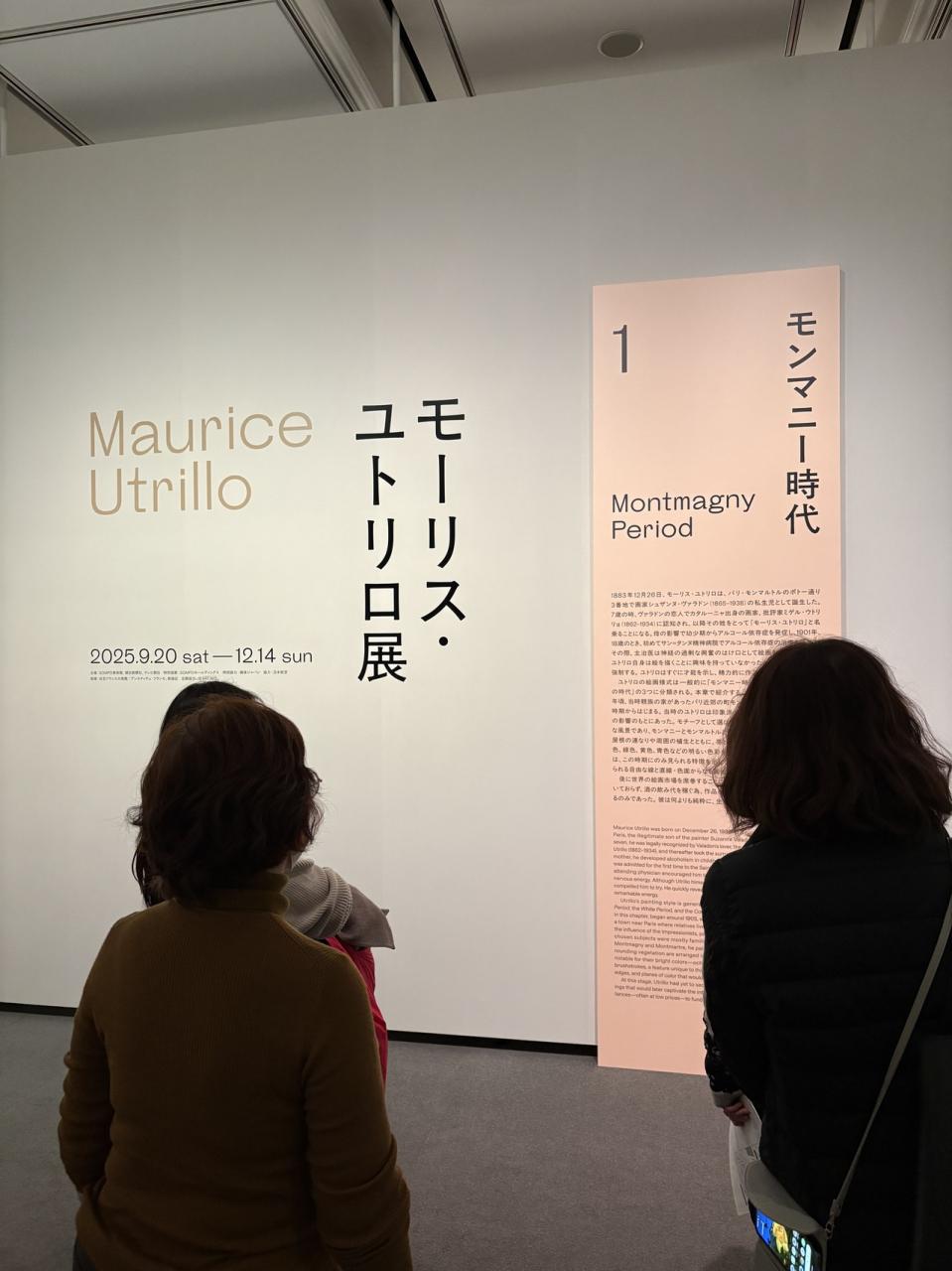
1
モンマニー時代
Montmagny Period
1883年12月26日、モーリス・ユトリロは、パリ・モンマルトルのポトー通り3番地で画家シュザンヌ・ヴァラドン(1865-1938)の私生児として誕生した。7歳の時、ヴァラドンの恋人でカタルーニャ出身の画家、批評家ミゲル・ウトリリョ(1862-1934)に認知され、以降その姓をとって「モーリス・ユトリロ」と名乗ることになる。母の影響で幼少期からアルコール依存症を発症し、1901年、18歳のとき、初めてサン=タンヌ精神病院でアルコール依存症の治療を受ける。その際、主治医は神経の過剰な興奮のはけ口として絵画制作を奨励した。ユトリロ自身は絵を描くことに興味を持っていなかったが、母は彼に絵画を強制する。ユトリロはすぐに才能を示し、精力的に作品を制作した。
ユトリロの絵画様式は一般的に「モンマニー時代」、「白の時代」、「色彩の時代」の3つに分類される。
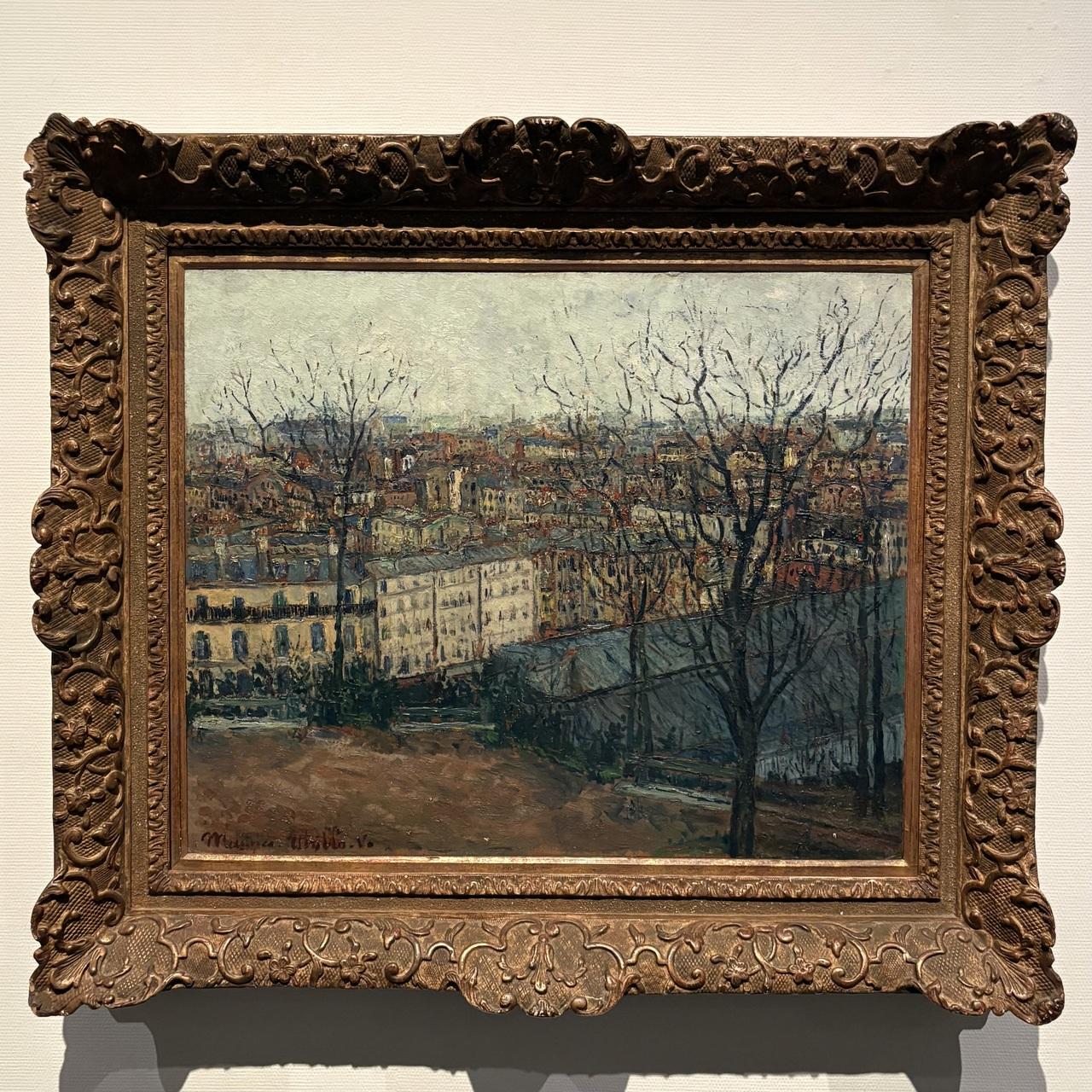
本章で紹介する「モンマニー時代」は、1905年頃、当時親族の家があったパリ近郊の町モンマニーとパリを往復していた時期からはじまる。時のユトリロは印象派の画家、特にシスレーとピサロの影響のもとにあった。モチーフとして選ばれたのは主に画家にとって身近な風景であり、モンマニーとモンマルトルという小高い丘から眺めた風景を、屋根の連なりや周囲の植生とともに、帯状に積層する構図で描いた。黄土色、緑色、黄色、青色などの明るい色彩を細かい筆触で積み重ねる作品群は、この時期にのみ見られる特徴を示しており、その後の「白の時代」で見られる自由な線と直線・色面からなる画面とは異なっている。
後に世界の絵画市場を席巻することになるユトリロには当時まだ画商はついておらず、酒の飲み代を稼ぐ為、作品を買ってくれる身近な人々に安価に売るのみであった。彼は何よりも純粋に、生きる為に絵を描いていたのである。
Maurice Utrillo was born on December 26, 1883, at 3 rue du Poteau in Montmartre, Paris, the illegitimate son of the painter Suzanne Valadon (1865-1938). At the age of seven, he was legally recognized by Valadon's lover, the Catalan painter and critic Mique Utrillo (1862-1934), and thereafter took the surname "Maurice Utrillo." Influenced by his mother, he developed alcoholism in childhood, and in 1901, at the age of eighteen, he was admitted for the first time to the Sainte-Anne Psychiatric Hospital for treatment. His attending physician encouraged him to take up painting as an outlet for his excessive nervous energy. Although Utrillo himself had little initial interest in painting, his mother compelled him to try. He quickly revealed a natural gift and began producing work with remarkable energy.
Utrillo's painting style is generally divided into three phases: the Montmagny Period, the White Period, and the Colorful Period.
The Montmagny Period, introduced in this chapter, began around 1905, when he divided his time between Montmagny-a town near Paris where relatives lived ?and the capital. At that time, he was under the influence of the Impressionists, particularly Alfred Sisley and Camille Pissarro. His chosen subjects were mostly familiar views: from the elevated vantage points of Montmagny and Montmartre, he painted scenes in which rows of rooftops and surrounding vegetation are arranged in horizontal bands. Works from this period are notable for their bright colorsochre, green, yellow, blue-built up in fine, layered brushstrokes, a feature unique to this phase and distinct from the freer lines, straight edges, and planes of color that would characterize his later White Period.
At this stage, Utrillo had yet to secure the backing of an art dealer, and the paintings that would later captivate the international art market were sold only to acquain-tances-often at low prices-to fund his drinking. Above all, he painted simply to live. -
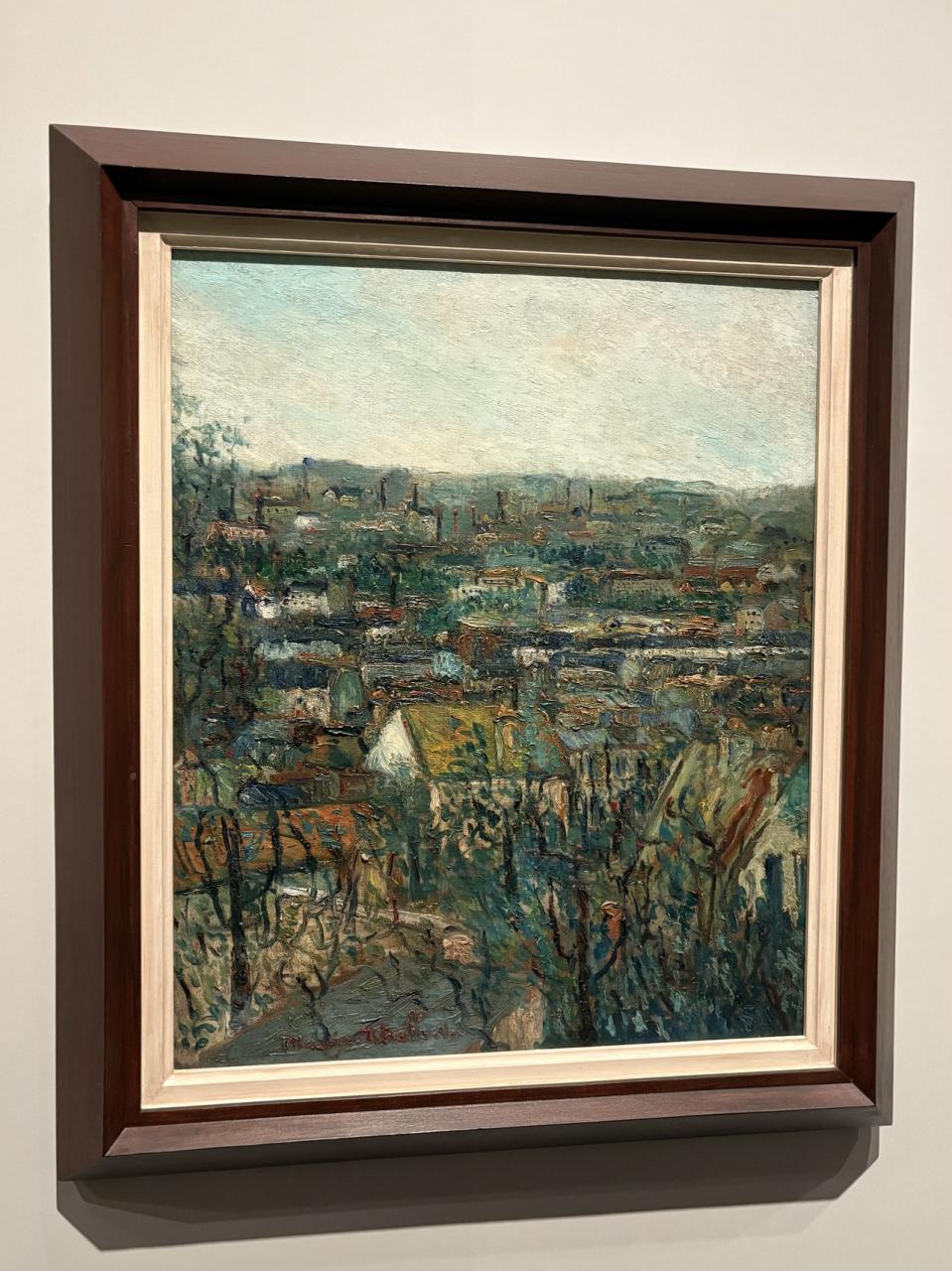
1
モーリス・ユトリロ
モンマニーの屋根
Toits à Montmagny
c. 1906-07
油彩・カンヴァス
oil on canvas
パリ・ポンピドゥセンター/国立近代美術館・産業創造センター
Centre pompidou, Paris - Musée national d'art moderne /
Centre de création industrielle
セーヌ河岸やモンマニーの風景を多く描いた画業最初期「モンマニー時代」の典型的な作例である。
パリ近郊の小さな町モンマニーは、1896年にヴァラドンと結婚したポール・ムジスが邸宅を構えた地であり、若きユトリロはこの地とモンマルトルとを行き来する。葡萄畑や果街園に囲まれた長閑な地を描いた本作において、画家は、俯瞰して捉えた屋根の連なりとその合間に繁茂する木々との一体感を、緑を基調とする色彩の調和と印象派を思わせる動きのある筆触によって表している。画面全体を覆う緑の中に、オレンジ、黄、青を散りばめつつ、また筆触の大きさや動きによっても確かな空間的奥行きを生み出している点からは、ユトリロ独自の色彩感覚と空間構成の力量がうかがえる。
This work is a representative example from the earliest phase of Utrillo's career, known as the Montmagny Period, during which he frequently painted views of the Seine riverbanks and the landscapes of Montmagny.
This small town on the outskirts of Paris was where Paul Mousis, who married Suzanne Valadon in 1896, had established his residence, and the young Utrillo would travel back and forth between there and Mont-martre. In this painting, which depicts the tranquil countryside surrounded by vineyards and orchards, the artist conveys a sense of unity between the clustered rooftops seen from an elevated viewpoint and the trees flourishing between them. This is achieved through a green-dominated palette in harmonious balance, enlivened by the vibrant brushwork reminiscent of the Impressionists. The scattering of orange, yellow, and blue within the pervasive green, along with the variation in the size and movement of the brushstrokes, creates a convincing sense of spatial depth, revealing Utrillo's distinctive sense of color and his skill in spatial composition. -
5
モーリス・ユトリロ
モンマルトルのサン=ピエール広場
から眺めたパリ
Paris vu du square Saint-Pierre à Montmartre c. 1908
油彩・厚紙で裏打ちされたカンヴァス
oil on canvas mounted on cardboard
八木ファインアート・コレクション
Yaghi Fine Art Collection -
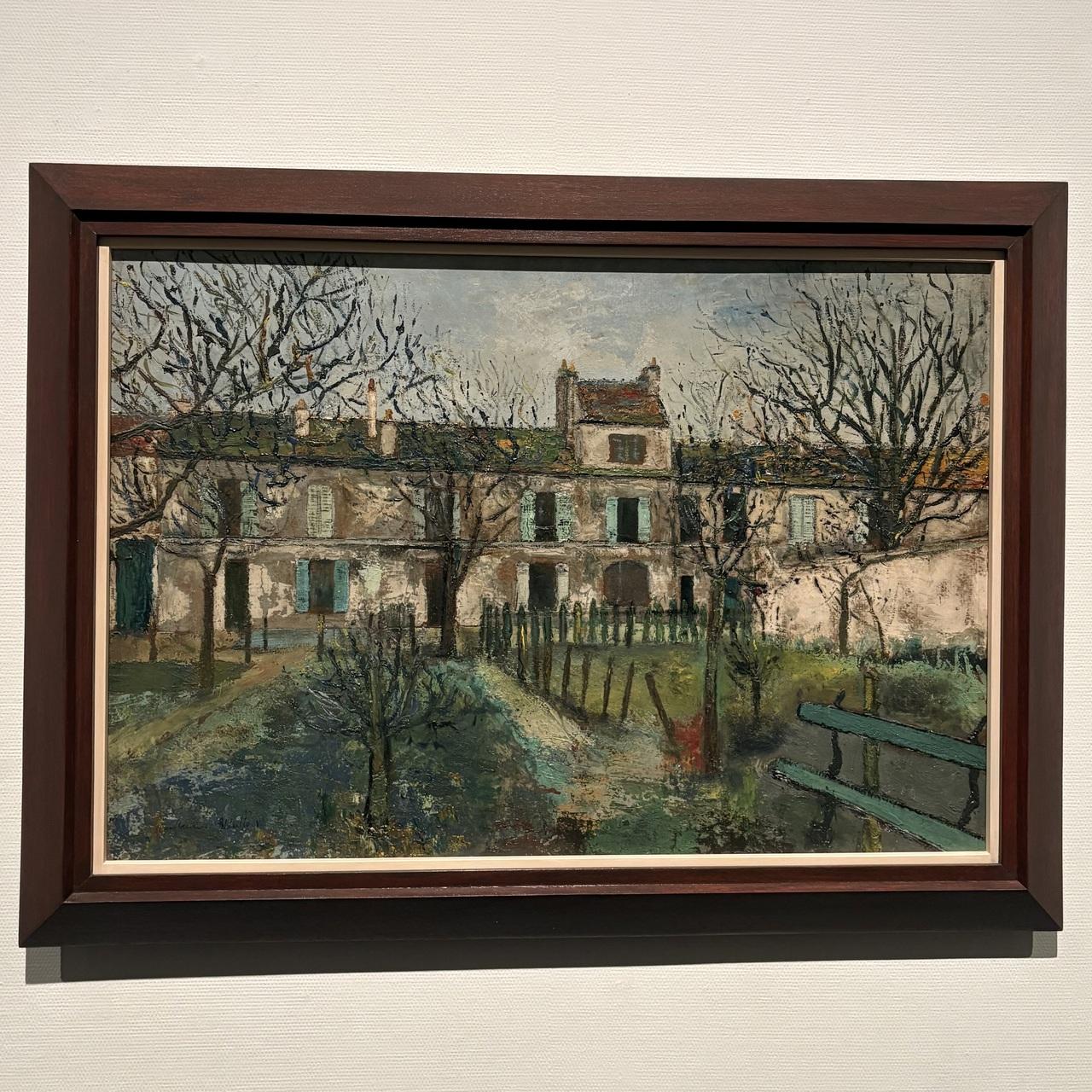
8
モーリス・ユトリロ
ヴィルタヌーズの城
Château de Villetaneuse
c. 1908-09
油彩・厚紙
oil on cardboard
パリ・ポンピドゥセンター/国立近代美術館・産業創造センター
Centre pompidou, Paris - Musée national d'art moderne /
Centre de création industrielle
14世紀に起源を持ち19世紀後半には取り壊された城に付属していた建物と、その前に広がる庭を描いたと考えられる。
画面手前のベンチや柵、塀、花壇などが急速に後退し、また画面を横断する建物が右へ向かうにつれてわずかに最数する描写は、この場所に立つ画家の視覚体験を観る者に追体験させるような、有機的な奥行き空間をこの画面にもたらしている。しばしば印象派の影響が指摘されるこの時期にあって、その痕跡は確かに建物と空に重なる枝の細かな筆触に認められるものの、全体の色調は暗く沈み、鈍色の空にも陽光は感じられない。むしろ強調されるのは、庭全体に漂う静まりかえった気だるい雰囲気と、黒く塗りつぶされた空虚な窓が暗示するうら寂しさである。
This work is thought to depict a building once attached to a castle dating back to the fourteenth century, demolished in the late nineteenth century, together with the garden spreading out before it.
The rapid recession of the bench, fence, wall, and flowerbeds in the foreground, combined with the slight convergence of the building as it extends to the right across the picture plane, creates an organic sense of depth?one that invites the viewer to share in the artist's own visual experience of standing at the site. Although traces of Impressionist influence-often noted in works from this period-are indeed visible in the delicate brushstrokes of branches overlapping the building and sky, the overall tonality here is dark and sub-dued, with no suggestion of sunlight in the dull, greyish sky. Instead, what is emphasized is the hushed, languid atmosphere pervading the garden, and the desolate mood evoked by the blackened, empty windows. -
2
モーリス・ユトリロ
サン゠ドニ運河
Saint-Denis Canal
1906-08
油彩・紙
oil on paper
石橋財団アーティゾン美術館
Artizon Museum, Ishibashi Foundation, Tokyo
エコール・ド・パリの日本への紹介者として知られる福島繁太郎(1865-1960)によって1929年以前に日本へもたらされた作品。ブリヂストン美術館(現・アーティゾン美術館)を設立した石橋正二郎の絵画コレクションに最初期に加わった作品のひとつであり、今日のユトリロについての評価とは異なる文脈、すなわち、印象派作品の収集の一環として購入された経緯が確認されている。
パリ北東のラ・ヴィレットからはじまり郊外のサン=ドニへと至る運河を主題としたこの風景画は、1910年前後にはじまる「白の時代」の直前に制作された。均質化された筆触の塗り重ねと、運河、建築物、空がつくる層構造によって構築された風景は、カミーユ・ピサロ(1830-1903)の影響のもとにあったことを伝えている。
This work was brought to Japan before 1929 by Shigetaro Fukushima (1865-1960), known for introducing the artists of the École de Paris to Japan. It was among the earliest paintings to enter the collection of Shojiro Ishibashi, founder of the Bridgestone Museum of Art (now the Artizon Museum), and was acquired in a context quite different from the way Utrillo is appreciated today-specifically, as part of a broader effort to collect Impressionist works.
Depicting a scene along the canal that begins in La Villette in northeast Paris and extends to the suburb of Saint-Denis, this landscape dates from just before the onset of Utrillo's White Period around 1910. The evenly applied, layered brushstrokes and the tiered structure of canal, buildings, and sky reveal the influence of Camille Pissarro (1830-1903). -
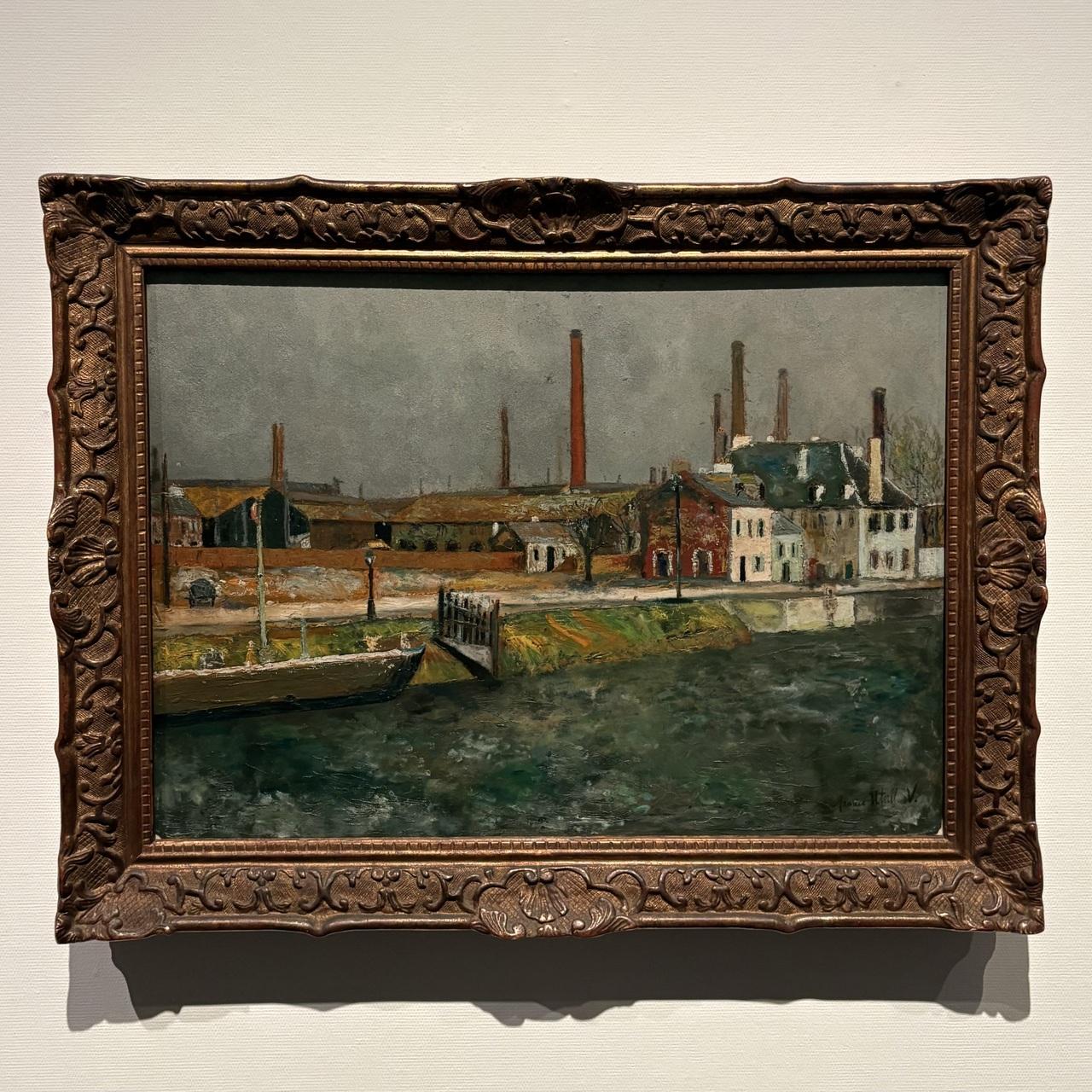
14
モーリス・ユトリロ
パリ郊外ーサン=ドニ
Banlieue de Paris - Saint-Denis
1910
油彩・厚紙
oil on cardboard
公益財団法人大原芸術財団
大原美術館
Ohara Museum of Art, Ohara Art Foundation, Kurashiki
旧福島太郎コレクション。
エコール・ド・パリの作家を体系的に論じた福島の『エコール・ド・パリ』(1948-51年、新潮社)の中に収録された、ユトリロについて解説する草で、本作の図版が使用されている。福島は本作について、「私が初めてパリに行った時分(1921年頃)には所謂モンマニー時代のものや白の時代のものは、画商のウインドーに見かけなかった。見かけるものは当時の近作で、線の堅い、色彩の鮮明なもの[「色彩の時代」の作品]であったが、これ等のものには私は興味が更になかった」、「純粋の色彩を並べるばかりが美しいハルモニーではない。渋い彩によっても美しいハルモニーが作れる。ユトリロはそのよき一例である」と述べている。
Former Shigetaro Fukushima Collection: an illustration of this work appears in the chapter on Utrillo in Fukushima's École de Paris (Shinchösha, 1948-51), a study in which he systematically discussed artists of the École de Paris. Regarding this paint-ing, Fukushima wrote: "When I first went to Paris (around 1921), I never saw works from what is called the Montmagny Period or the White Period in the windows of art dealers. What I saw were more recent works of the time, with rigid outlines and vivid colors [Colorful Period), but I had no interest in these at all." He continued: "A beautiful harmony is not created solely by placing pure colors side by side. A beautiful harmony can also be achieved with subdued tones. Utrillo is an excellent example of this." -
2
白の時代
White Period
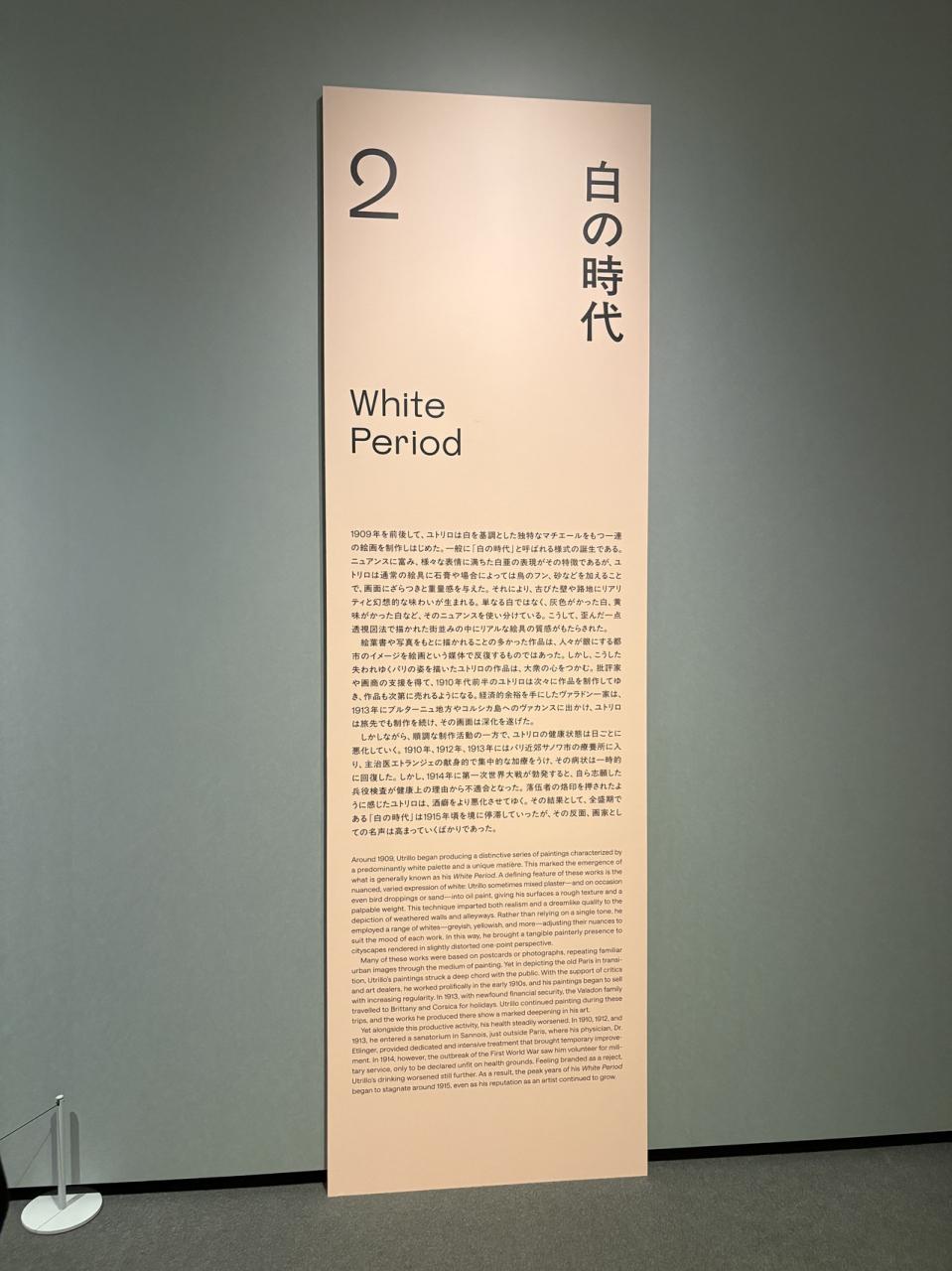
1909年を前後して、ユトリロは白を基調とした独特なマチエールをもつ一連の絵画を制作しはじめた。一般に「白の時代」と呼ばれる様式の誕生である。ニュアンスに富み、様々な表情に満ちた白亜の表現がその特徴であるが、ユトリロは通常の絵具に石膏や場合によっては鳥のフン、砂などを加えることで、画面にざらつきと重量感を与えた。それにより、古びた壁や路地にリアリティと幻想的な味わいが生まれる。単なる白ではなく、灰色がかった白、黄味がかった白など、そのニュアンスを使い分けている。こうして、歪んだ一点透視図法で描かれた街並みの中にリアルな絵具の質感がもたらされた。
絵葉書や写真をもとに描かれることの多かった作品は、人々が眼にする都市のイメージを絵画という媒体で反復するものではあった。しかし、こうした失われゆくパリの姿を描いたユトリロの作品は、大衆の心をつかむ。批評家や画商の支援を得て、1910年代前半のユトリロは次々に作品を制作してゆき、作品も次第に売れるようになる。経済的余裕を手にしたヴァラドン一家は、1913年にブルターニュ地方やコルシカ島へのヴァカンスに出かけ、ユトリロは旅先でも制作を続け、その画面は深化を遂げた。
しかしながら、順調な制作活動の一方で、ユトリロの健康状態は日ごとに悪化していく。1910年、1912年、1913年にはバリ近郊サノワ市の療養所に入り、主治医エトランジェの献身的で集中的な加療をうけ、その病状は一時的に回復した。しかし、1914年に第一次世界大戦が勃発すると、自ら志願した兵役検査が健康上の理由から不適合となった。落伍者の烙印を押されたように感じたユトリロは、酒癖をより悪化させてゆく。その結果として、全盛期である「白の時代」は1915年頃を境に停滞していったが、その反面、画家としての名声は高まっていくばかりであった。
Around 1909, Utrillo began producing a distinctive series of paintings characterized by a predominantly white palette and a unique matière. This marked the emergence of what is generally known as his White Period. A defining feature of these works is the nuanced, varied expression of white: Utrillo sometimes mixed plaster?-and on occasion even bird droppings or sand-into oil paint, giving his surfaces a rough texture and a palpable weight. This technique imparted both realism and a dreamlike quality to the depiction of weathered walls and alleyways. Rather than relying on a single tone, he employed a range of whites-greyish, yellowish, and more-adjusting their nuances to suit the mood of each work. In this way, he brought a tangible painterly presence to cityscapes rendered in slightly distorted one-point perspective.
Many of these works were based on postcards or photographs, repeating familiar urban images through the medium of painting. Yet in depicting the old Paris in transi-tion, Utrillo's paintings struck a deep chord with the public. With the support of critics and art dealers, he worked prolifically in the early 1910s, and his paintings began to sell with increasing regularity. In 1913, with newfound financial security, the Valadon family travelled to Brittany and Corsica for holidays. Utrillo continued painting during these trips, and the works he produced there show a marked deepening in his art.
Yet alongside this productive activity, his health steadily worsened. In 1910, 1912, and 1913, he entered a sanatorium in Sannois, just outside Paris, where his physician, Dr. Etlinger, provided dedicated and intensive treatment that brought temporary improve-ment. In 1914, however, the outbreak of the First World War saw him volunteer for military service, only to be declared unfit on health grounds. Feeling branded as a reject. Utrillo's drinking worsened still further. As a result, the peak years of his White Period began to stagnate around 1915, even as his reputation as an artist continued to grow. -
11
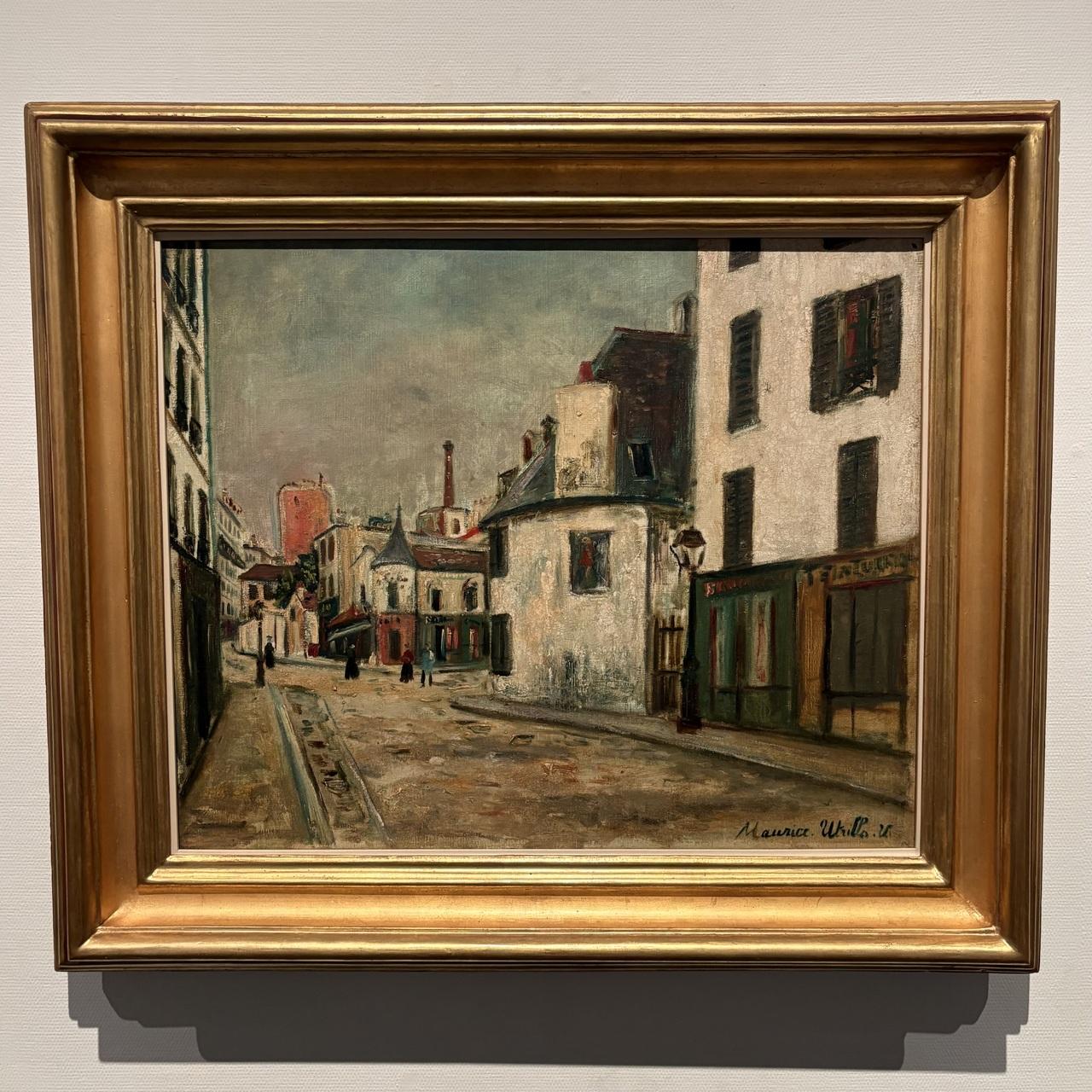
モーリス・ユトリロ
マルカデ通り
Rue Marcadet
1909
油彩・カンヴァス
oil on canvas
名古屋市美術館
Nagoya City Art Museum
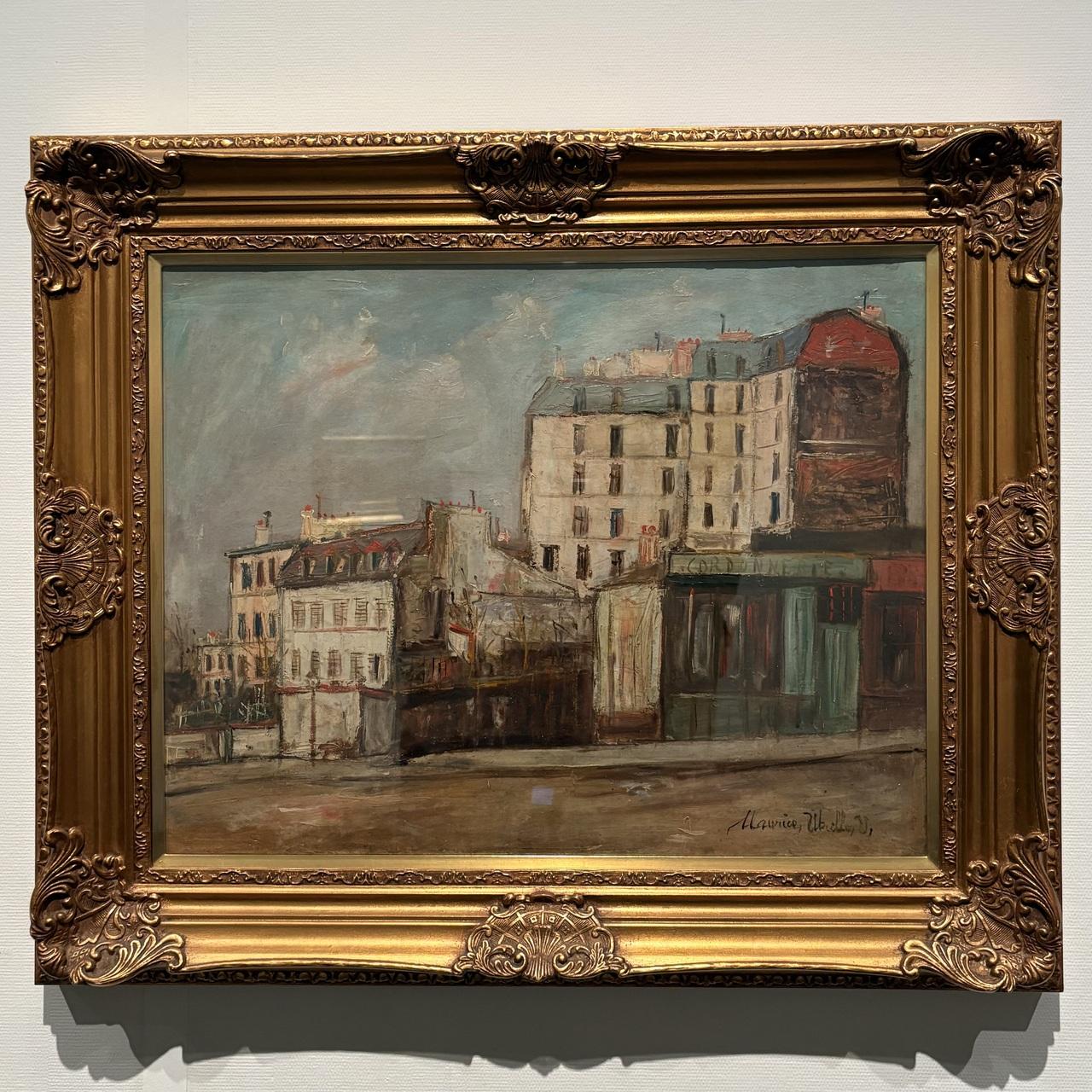
ゆるやかに下る道の形状にあわせて、描かれる左側の建物の一階部分も少しずつ動的に段差を描く構造を示している。道は途中で左に向かって湾曲し、ユトリロの他の多くの作品と同様、視線は絵画空間内にとどまることを強いられる。
マルカデ通りはパリ18区に位置し、中世の時代に定期市(ラテン語でmarcadus)が開かれていたことに関連して名付けられた。道端に得む二人組や、中央に描かれる馬車の街者などの人物は、概して、ユトリロにとっての人物像が街の景色を活性化させるための二次的な要素であることを示し、ここでは画面の奥に押し込まれているようでもある。
画面内に描かれる文字は、「COMPTOIR」(カウンター)、「VINS・LIQU[EUR]」(ワイン・リキュール)など、酒や食事に関する店舗の看板で占められている。
In keeping with the gentle downward slope of the street, the ground-floor levels of the buildings on the left are depicted with a rhythmic series of steps. The road curves to the left midway, and? as in many of Utrillo's works-the viewer's gaze is compelled to remain within the pictorial space.
Rue Marcadet, located in Paris's 18th arrondissement, takes its name from the Latin marcadus, referring to a periodic market once held there in the Middle Ages. Figures, such as the pair standing by the roadside and the carriage driver in the center, are generally secondary elements in Utrillo's compositions, serving to animate the streetscape; here, they seem pushed toward the back of the scene.
The inscriptions depicted within the picture-such as COMPTOIR ("counter") and VINS? LIQU(EUR) ("wine, liqueurs")-are almost entirely shop signs related to alcohol and food. -
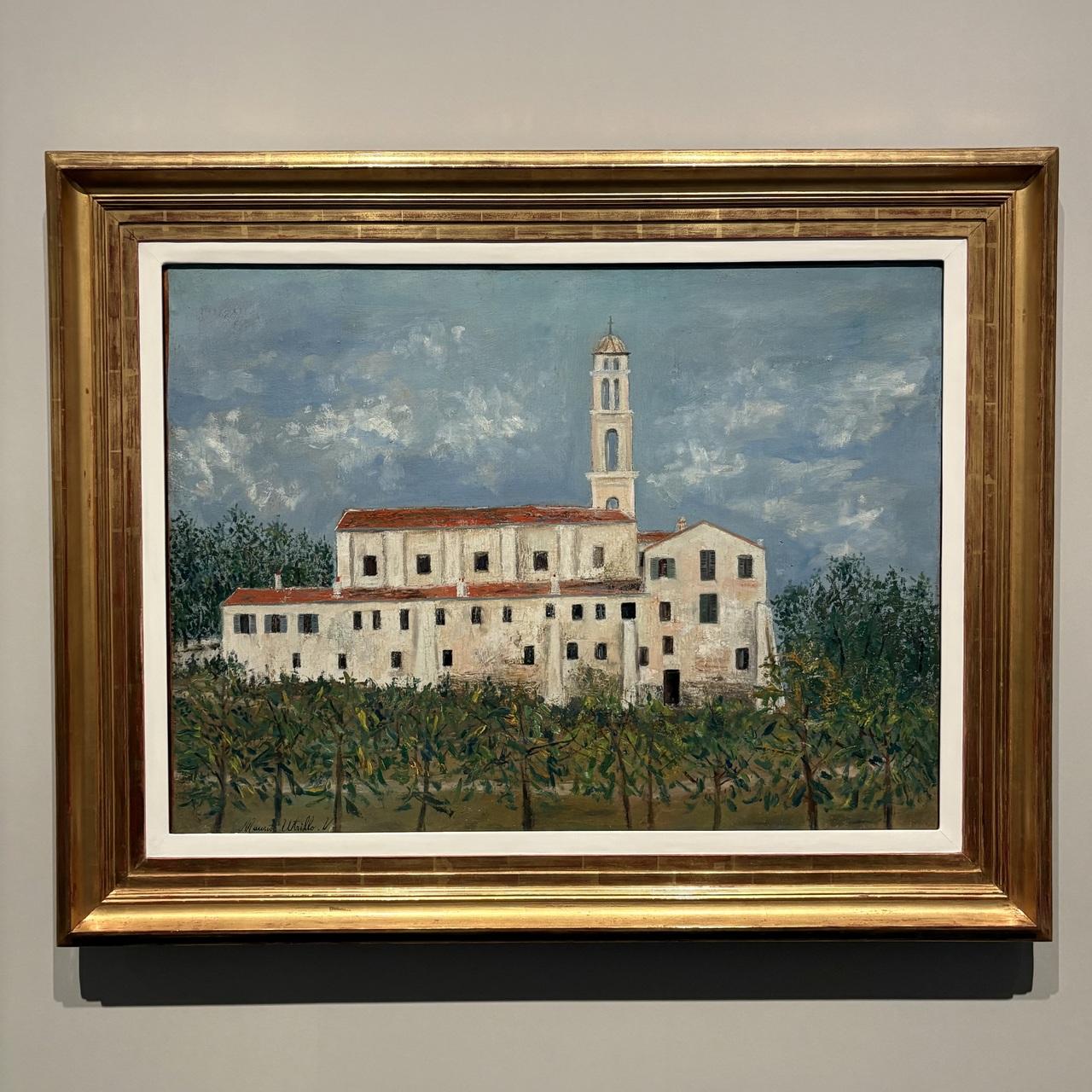
38
モーリス・ユトリロ
ピエイクロスの修道院、コルシカ
Le couvent de Piedicroce en Corse
1914
油彩・カンヴァス
oil on canvas
パリ・ポンピドゥセンター/国立近代美術館・産業創造センター
アノンシアード美術館(サン=トロペ)寄託
Centre pompidou, Paris - Musée national d'art moderne /
Centre de création industrielle
On deposit at the Musée de l'Annonciade, Saint-Tropez
コルシカ島ピエイクロス、オレッツァの聖フランシスコ修道院を描いた本作で、ユトリロは建築物を平面的に構成しょうと試みている。1913年の春、ユトリロはヴァラドン、ユッテル、そして友人とともに、コルシカに約半年間滞在した。フランス本土に暮らす人々にとって、コルシカは異国情緒あふれる地であり、ユトリロもその風景を楽しんだようだ。しかし、わずかな例外を除き、この地でも彼は絵葉書をもとにモンマルトルの風景を描くこともあったという。本作では壁に穿たれた窓が画面上に不規則なリズムを生み出している点が特徴的である。単純な形をわずかに変化させながら反復し、面を構成する様式で描かれ、建物の存在感やモニュメントが屹立している感覚をさほど感じさせない反モニュメンタルな造形が目指されている。
In this depiction of the Franciscan Monastery of Orezza in Piedicroce, Corsica, Utrillo experiments with rendering architecture in a planar manner. In the spring of 1913, he spent roughly six months on the island with Suzanne Valadon, Miguel Utrillo, and their friend. For people living on the French main-land, Corsica was a place rich in exotic allure, and it seems Utrillo also took pleasure in its scenery. Nevertheless, with only a few exceptions, he is said to have continued painting Montmartre scenes from postcards even while there. In this work, the windows puncturing the wall create an irregular rhythm across the picture surface. Simple forms are repeated with slight variations, building up the surface in a way that emphasizes planar construction. As a result, the architecture is presented with little sense of mass or monumental presence. reflecting an intentional pursuit of an anti-monumental form. -
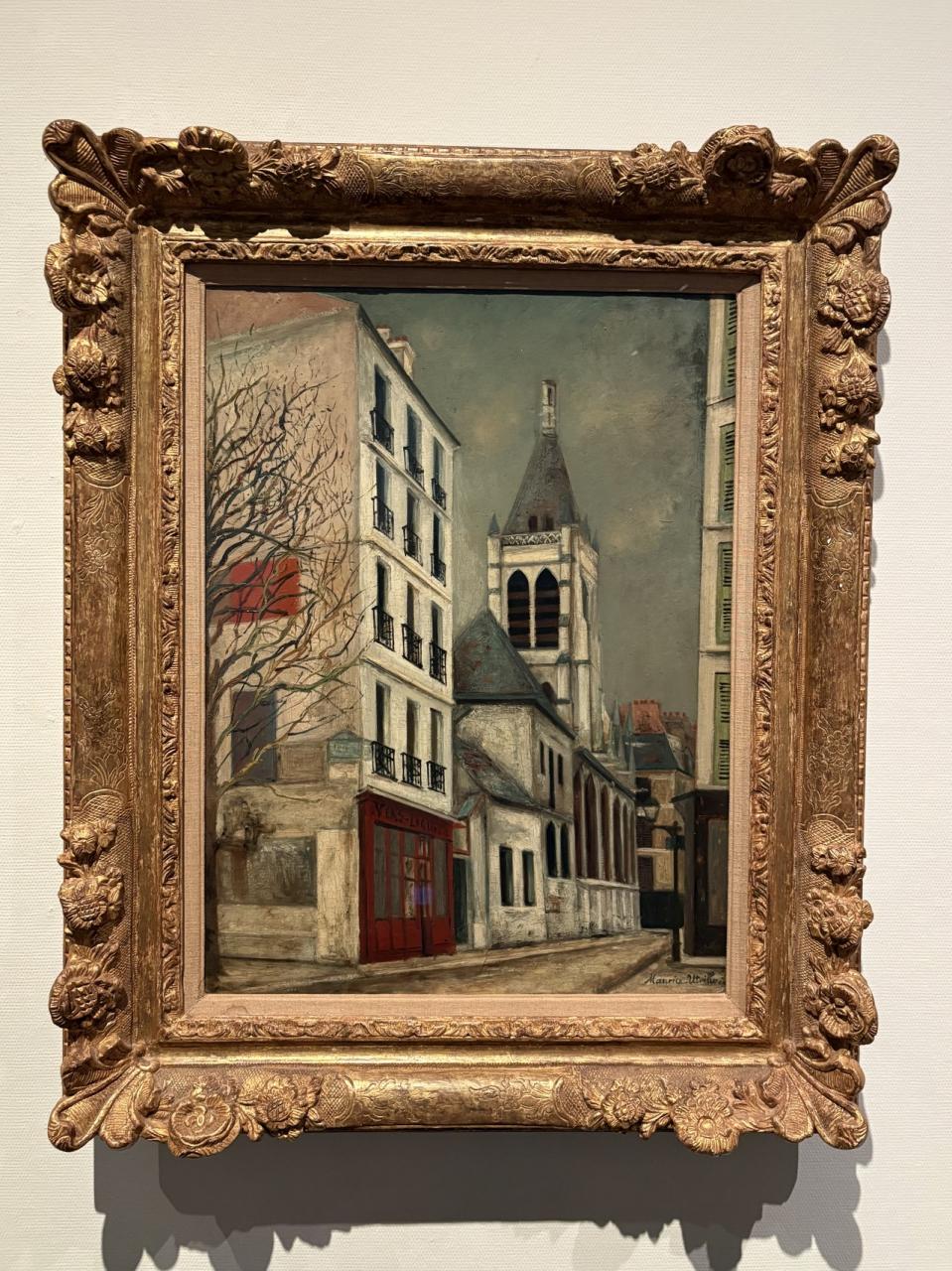
23
モーリス・ユトリロ
パリのサン=セヴラン教会
Eglise Saint-Séverin à Paris c. 1910-12
油彩・厚紙
oil on cardboard
八木ファインアート・コレクション
Yaghi Fine Art Collection
セーヌ川の左岸、カルチェラタンにあるこの教会は、聖セヴランのために建立された教会として6世紀にその起源を持つ。定規とコンパスを用いて描かれた本作は、規則正しく整然と引かれた直線によって構成され、建物の白い壁、教会の青い屋根、店の茶色いショーウィンドウ、黄土色の道など、大部分が絵具を丹念に塗り込めて仕上げられている。一方、黒く細い線で描かれるバルコニーの柵や波打つ線で表現される木は、ほとんど自動的に反復する画家の手の動きを感じさせるほどに簡略化され、その下の建物の表層を覆っているに過ぎない。こうした軽やかな筆致はこの画面にある種の単調な平面性を与え、さらには静まり返った街角の寂しさをも強調している。
Located on the Left Bank of the Seine in the Latin Quarter, this church traces its origins to the 6th century, when it was founded in honor of Saint Séverin. Executed with the aid of a ruler and compass, the composition is built from regularly and precisely drawn straight lines. The white walls of the build-ings, the blue roof of the church, the brown shop windows, and the ochre-colored street are all meticulously finished with carefully applied paint. By contrast, the balcony railings, drawn in thin black lines, and the trees, rendered with undulating strokes, are so simplified as to suggest the almost automatic repetition of the artist's hand, serving merely to overlay the surfaces of the buildings below. Such light, abbreviated brushwork imparts a certain monotonous flatness to the composition, while at the same time heightening the sense of quiet desolation in this street corner. -
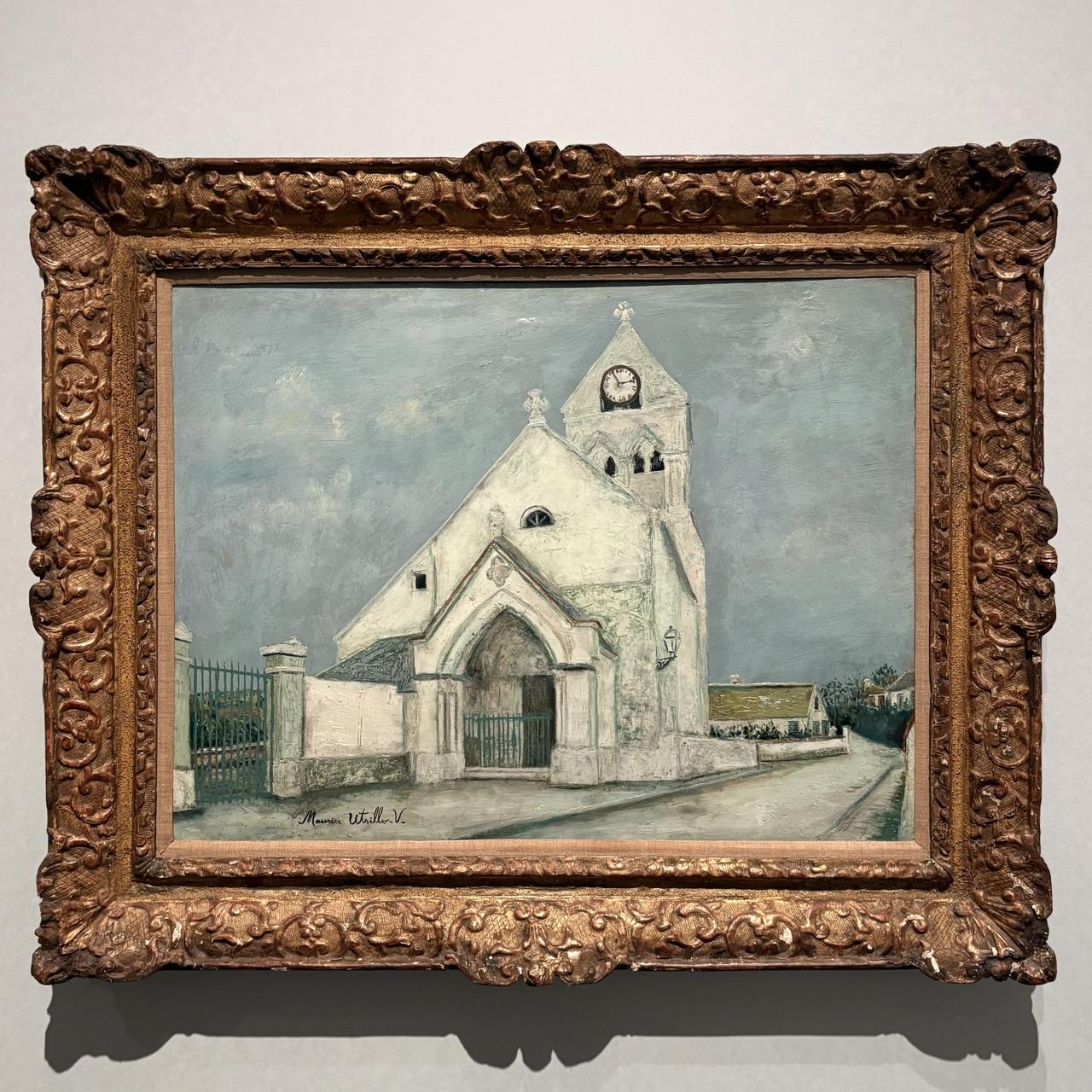
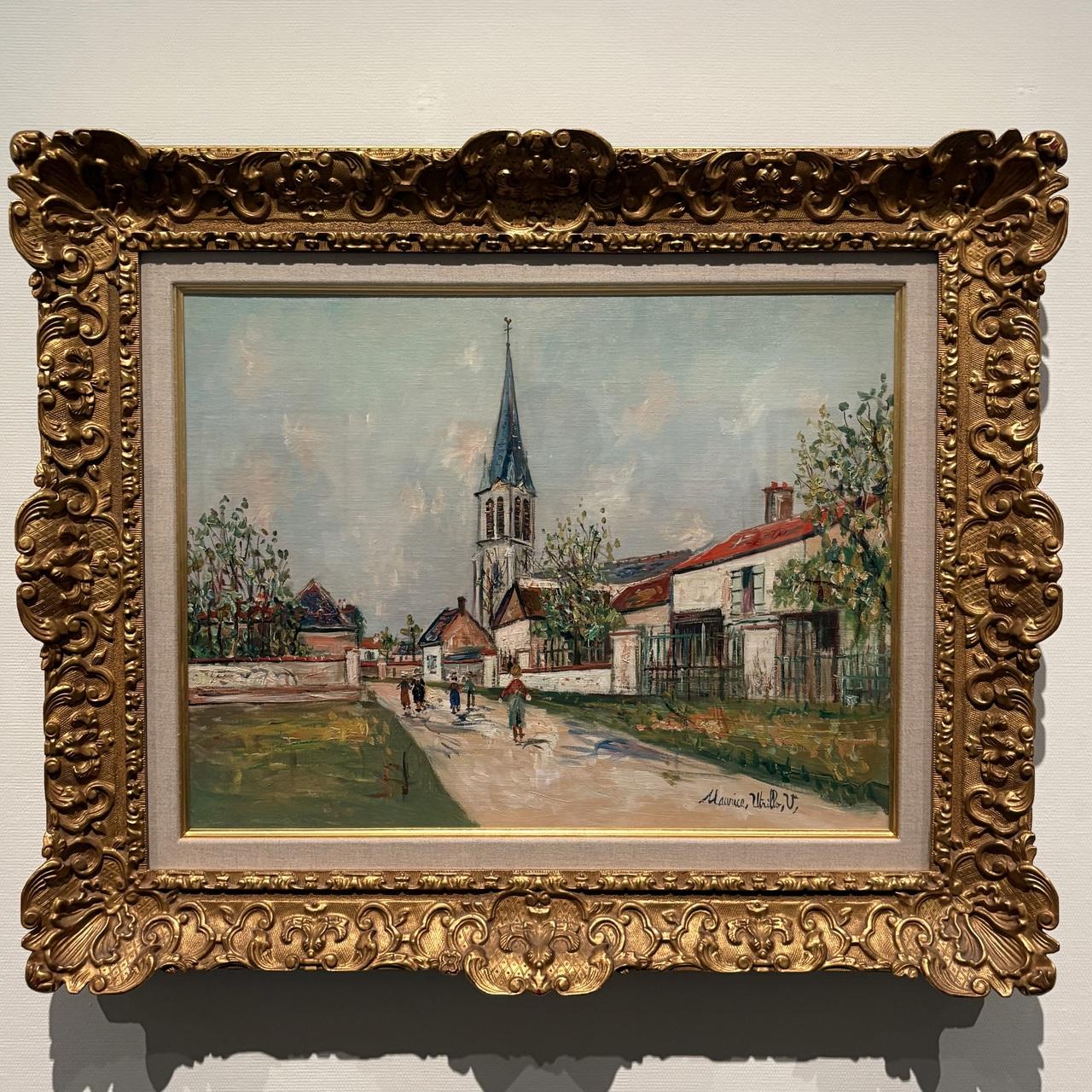
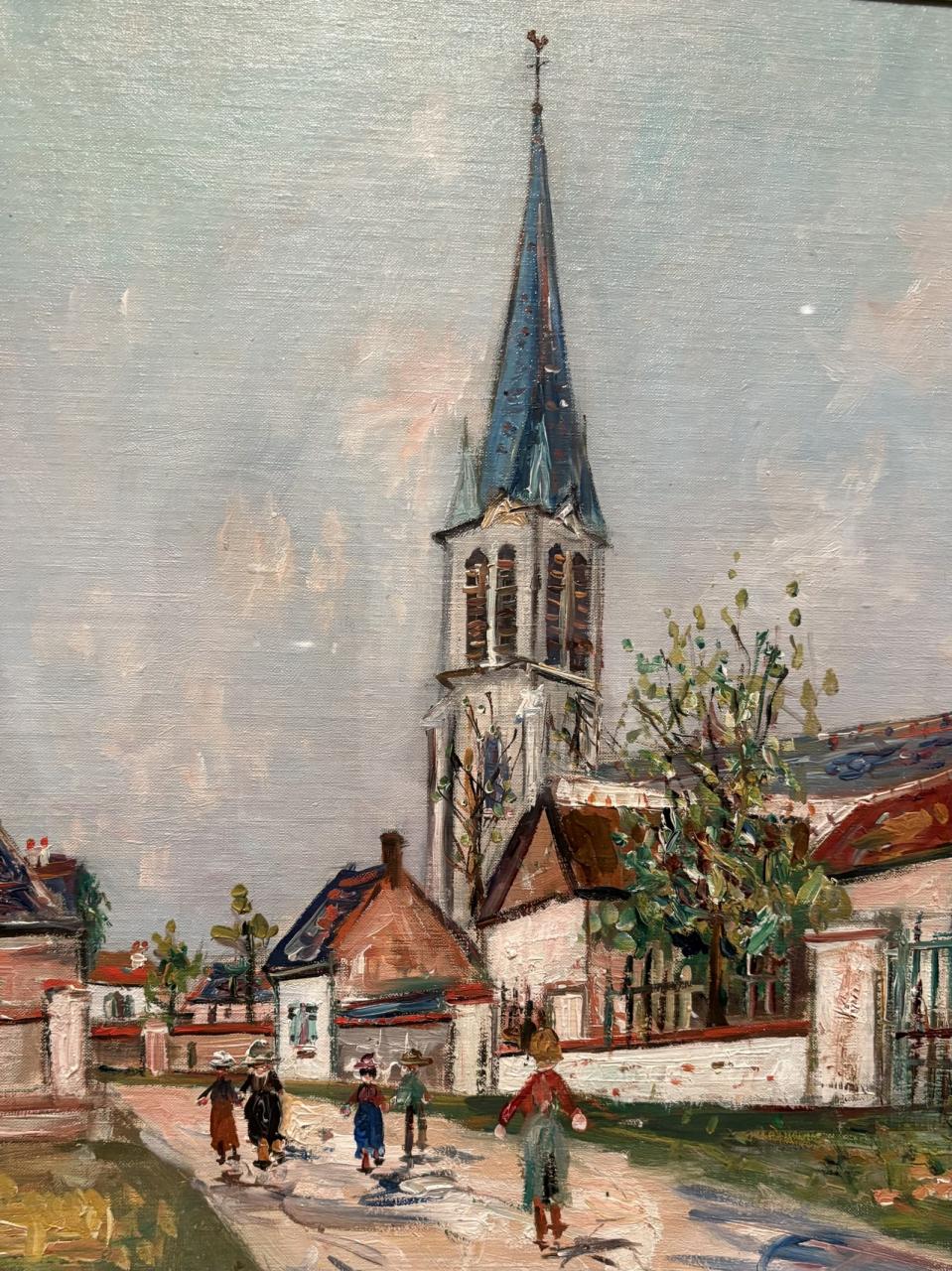
30
モーリス・ユトリロ
「可愛い聖体拝受者」、トルシー=アン=ヴァロワの教会(エヌ県)
Petite Communiante, église de Torcy-en-Valois (Aisne)
c. 1912
油彩・カンヴァス
oil on canvas
八木ファインアート・コレクション
Yaghi Fine Art Collection
くすんだ青空の下、白い壁の小さな教会が画面中央に静かに佇んでいる。人物の姿は描かれず、画面全体が静寂に浸っている。建物の輪郭にはやや硬質な描線が見られるが、白を基調とした柔らかな色調とマチェールが、画面に澄んだ印象を与えている。タイトルはヴァラドンの聖体拝領の日に夢に出た少女に由来するが、画面に姿を現さない聖体拝受者ーイエスの血と肉を初めて受け取る白装束を着た少女は不在であり、白く小さな教会の姿に重ね合わされている。その不在が観る者の想像力を喚起し、作品に象徴主義的な深みを与えている。
Beneath a muted blue sky, a small white-walled church stands quietly at the center of the composition. No human figures are depicted, and the entire scene is steeped in silence. While the building's contours are delineated with somewhat firm lines, the white-based soft tones and matière lend the work a clear, luminous impression. The title refers to a girl who appeared in a dream on the day of a First Communion of Valadon, yet the communicant-the girl dressed in white who receives the body and blood of Christ for the first time-remains absent from the image, her presence instead evoked through the figure of the small white church. This absence stirs the viewer's imagination, imparting a symbolistic depth to the work. -
50
モーリス・ユトリロ
サン=ディディエの教会、ネイロン(アン県)
Eglise Saint-Didier, Neyron (Ain)
c. 1917-18
油彩・板
oil on wood
八木ファインアート・コレクション
Yaghi Fine Art Collection
東部アン県の小村ネイロンにあるサン=ディディエ教会を描いた作品。ユトリロが城に軟禁されていた小村サン=ベルナールからは約20キロほど離れている。ユトリロはモンマルトルの都市風景で知られているが、この作品では画家のもう一つの主戦場である地方のゴシック教会建築に焦点を当てている。教会の白い壁面には、ユトリロ特有の厚塗りの技法が用いられ、地面の黄土色は盛り上がるように描かれている一方、真正面からの構図と人影の少なさ、建物の中庭に閉じ込められた視線により、内省的な雰囲気が醸し出されている。斜めになった三角屋根は教会の厳粛なる存在感を脱臼させているようでもある。「白の時代」が終わり「色彩の時代」に入ったこの時期、空には薄いピンク色が使用され、建物にはやや緑がかった色彩が多用されている。
This work depicts the Church of Saint-Didier in the small village of Neyron, in the Ain department of eastern France. located about twenty kilometers from Saint-Bernard, the village where Utrillo was kept under a form of house arrest in a château. While Utrillo is best known for his urban views of Montmartre, here he turns to another of his principal subjects: provincial Gothic church architecture. The church's white walls are rendered with his characteristic thick impasto, while the ochre of the ground is built up in raised strokes. The frontal composition, sparse human presence, and the way the viewer's gaze is enclosed within the church's courtyard together create an introspective atmosphere. The slightly tilted triangular roof seems almost to dislocate the solemn presence of the church. By this time, the White Period had ended and the Colorful Period had begun; the sky is tinted with pale pink, and the building is infused with tones of green. -
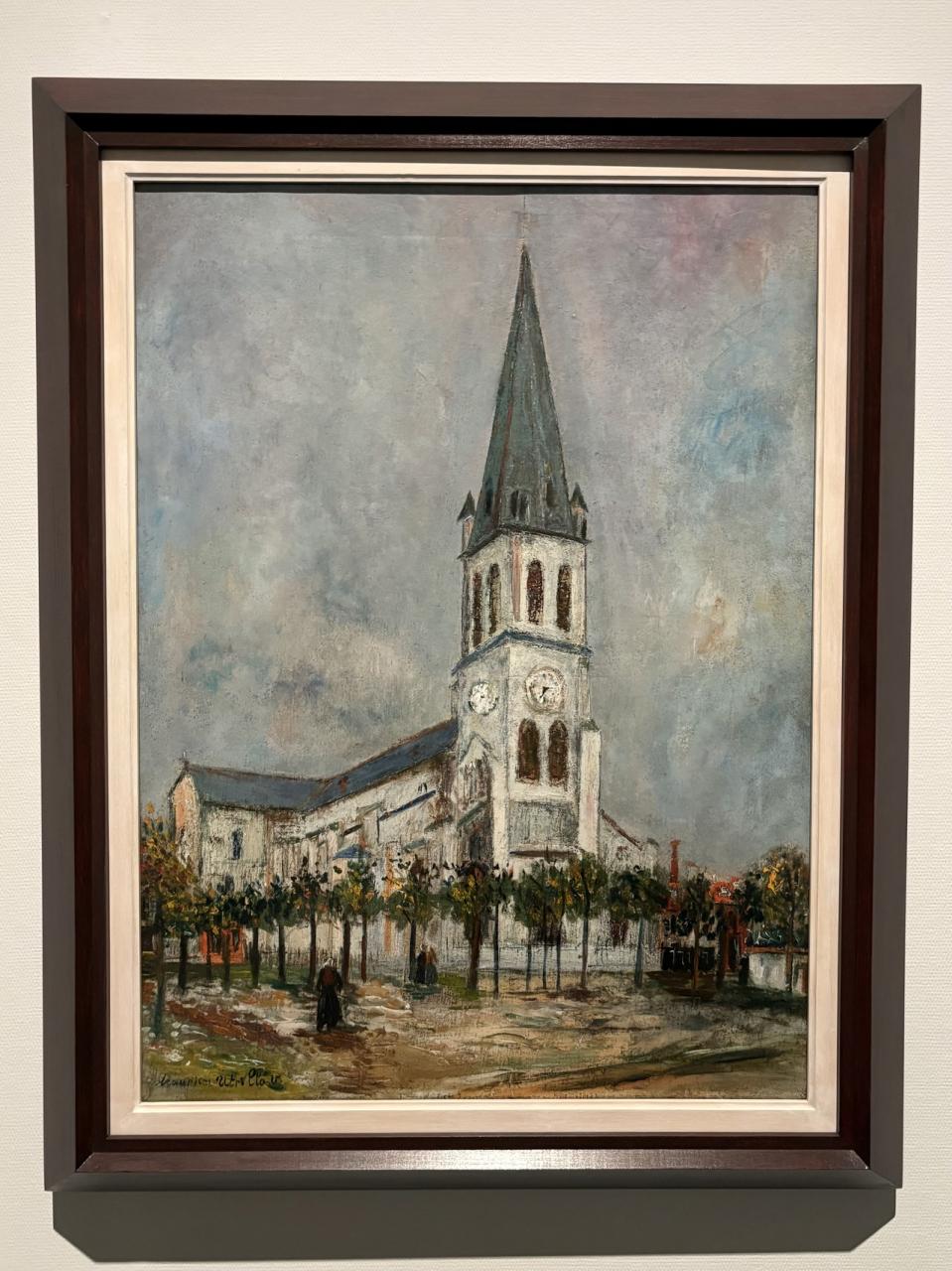
51
モーリス・ユトリロ
郊外の教会
Eglise de banlieue
c. 1920
油彩・カンヴァス
oil on canvas
パリ・ポンピドゥセンター/国立近代美術館・産業創造センター
Centre pompidou, Paris - Musée national d'art moderne /
Centre de création industrielle
1920年はユトリロにとって色彩の時代へと至る「第二過渡期」であり、「豊穣な緑の時代」として徴づけられる。15年の徴兵検査失格に由来する健康状態の悪化から、本作に先立つ16年のほとんどをヴィルジュイフの療養所で過ごしたユトリロは、制作をほぼやめ、色彩は暗さを増していった。さまざまな緑が潤沢に使用される一方、鮮やかさや構図の厳密さという観点で、ある種の退行をみせているこの時期、ユトリロはピクピュスとサン=タンヌの精神病院の入退院を繰り返し、コルトー街のアトリエで母から監禁される生活を送っていた。また友人モディリアーニがこの世を去ったという事実も、この様式の変化と関係があるのかもしれない。この後、ユトリロはサン=ベルナールの城館へ移され軟禁生活を送る。
The year 1920 marked what is often referred to as Utrillo's
"second transitional period" on the way to his Color Period, also characterized as his "Period of Abundant Greens." Following his rejection from military service in 1915 on health grounds, Utrillo's condition deteriorated, and in 1916?just prior to this work?he spent nearly the entire year in the sanatorium at Villejuif, producing almost no paintings and adopting a darker palette. In this phase, while a profusion of greens was used, there was also a certain regression in terms of vividness of color and compositional rigor. Utrillo was repeatedly admitted to and discharged from the psychiatric hospitals of Picpus and Sainte-Anne, and lived under confinement by his mother in her studio on Rue Cortot. The death of his friend Modigliani during this period may also have played a role in the shift in his style. Soon afterward, Utrillo was moved to the château in Saint-Bernard, where he would live under house arrest. -
-
-
13
モーリス・ユトリロ
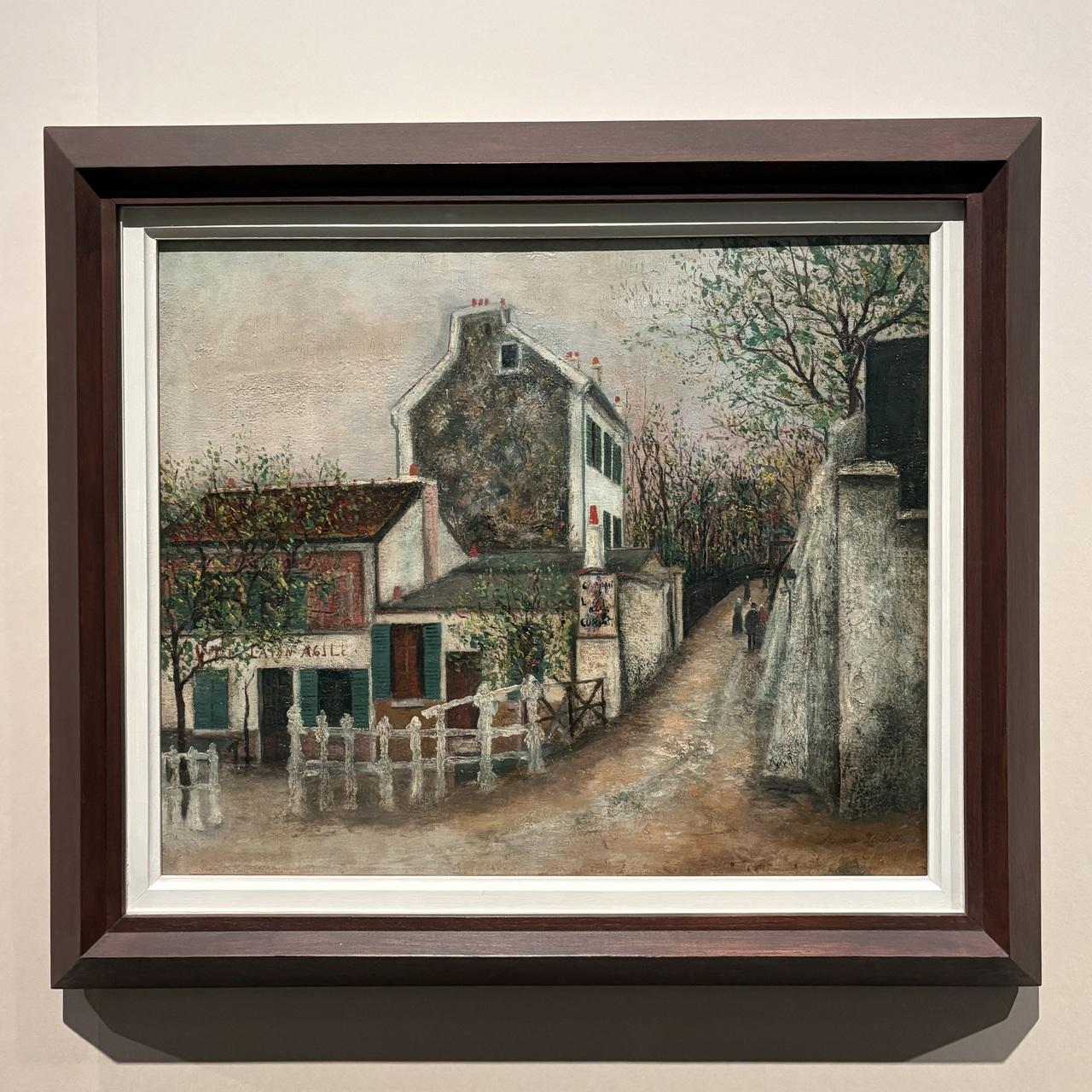
ラパン・アジル
Le Lapin Agile
1910
油彩・カンヴァス
oil on canvas
パリ・ポンピドゥセンター/国立近代美術館・産業創造センター
Centre pompidou, Paris - Musée national d'art moderne /
Centre de création industrielle
「跳ね兎」を意味するこのキャバレーの経営者フレデはヴァラドンの知人であり、その縁からユトリロ自身も足繁<通った。絵葉書をもとに繰り返し描いたこのモチーフには多数のヴァリエーションが存在するが、本作はその中でも最初期の作例にあたる。本作が制作された年、ユトリロはパリ近郊のサノワでアルコール依存症の治療を受け、制作意欲を取り戻し、画家としての評価は高まりつつあった。本作では、建築物の輪郭線が明確に引かれ、線的な遠近法が試みられている。しかし、ニュアンスに富んだ黄土色の積み重ねによって生み出された、迫り上がるような建物横の小径や空、木々、さらには押し込まれるように描かれた人物の表現によって、画面にはわずかな歪みが生じ、独特な絵画空間が生み出されている。
Meaning "The Nimble Rabbit," this cabaret was managed by Frédé, an acquaintance of Suzanne Valadon, through whom Utrillo himself became a frequent visitor. Based on a postcard and painted repeatedly in numerous variations, this motif is here represented in one of its earliest examples. In the year this work was produced, Utrillo was undergoing treatment for alcoolism in Sannois, near Paris; there he regained his desire to paint, and his reputation as an artist began to grow. In this work, the architectural outlines are clearly drawn, and an attempt at linear perspective is evident. Yet the nuanced lay-ering of ochre tones used for the narrow path rising beside the building, the sky, and the trees—as well as the compressed depiction of figures-introduces a slight distortion to the scene, resulting in a uniquely constructed pictorial space. -
49
モーリス・ユトリロ
モン=スニ通り
La rue du Mont-Cenis
c. 1916
油彩・カンヴァス
oil on canvas
パリ・ポンピドゥセンター/国立近代美術館・産業創造センター
Centre pompidou, Paris - Musée national d'art moderne /
Centre de création industrielle
モンマルトルの丘の北側からサン・ピエール教会の西側にかけて、南北に長く延びるモン=スニ通り。ユトリロが生涯にわたって何度も描いたこの通りには、ヴァラドン、ユッテル、ユトリロがよく通った元警察官セザール・ゲイが経営する店「カス=クルート」や、20代の頃にその店の女将マリ・ヴィジエに夢中になった居酒屋「ラ・ベル・ガブリエル」(美しきガブリエル)、ベルリオーズの家、ミミ・パンソンの家など、画家にとって馴染みの場所がいくつも集まっていた。画面右手には、高低さまざまな建物が並び、黄、緑、ピンク、青といった配色が、愛天の空と通りを彩る色彩と共に、この画面に華やかな雰囲気を与えている。「白の時代」から「色彩の時代」への移行に位置付けられる本作は、1937年、フランス国家の買上げとなった。
Running north-south along the northern slope of Montmartre to the west side of the Church of Saint-Pierre, Rue Mont-Ce-nis was a street Utrillo painted many times over the course of his career. It was home to several places familiar to the artist:
Casse-Croûte, the shop run by former policeman César Gay, which Utrillo, Valadon, and Utterl often visited; the tavern La Belle Gabrielle, whose proprietress, Marie Vizier, captivated the young Utrillo in his twenties; as well as the houses of Berlioz and Mimi-Pinson. On the right side of the composition, buildings of varying heights line the street, their yellows, greens, pinks, and blues combining with the colors of the cloudy sky and the street itself to give the scene a festive atmosphere.
Positioned between Utrillo's White Period and his Colorful Period, this work was purchased by the French state in 1931.
49 -
-
48
モーリス・ユトリロベル・ガブリエルの酒場、サン=ヴァンサン通り、モンマルトル
La Belle Gabrielle, rue Saint-Vincent, Montmartre
c. 1916
油彩・パネル
oil on panel
個人蔵
Private collection -
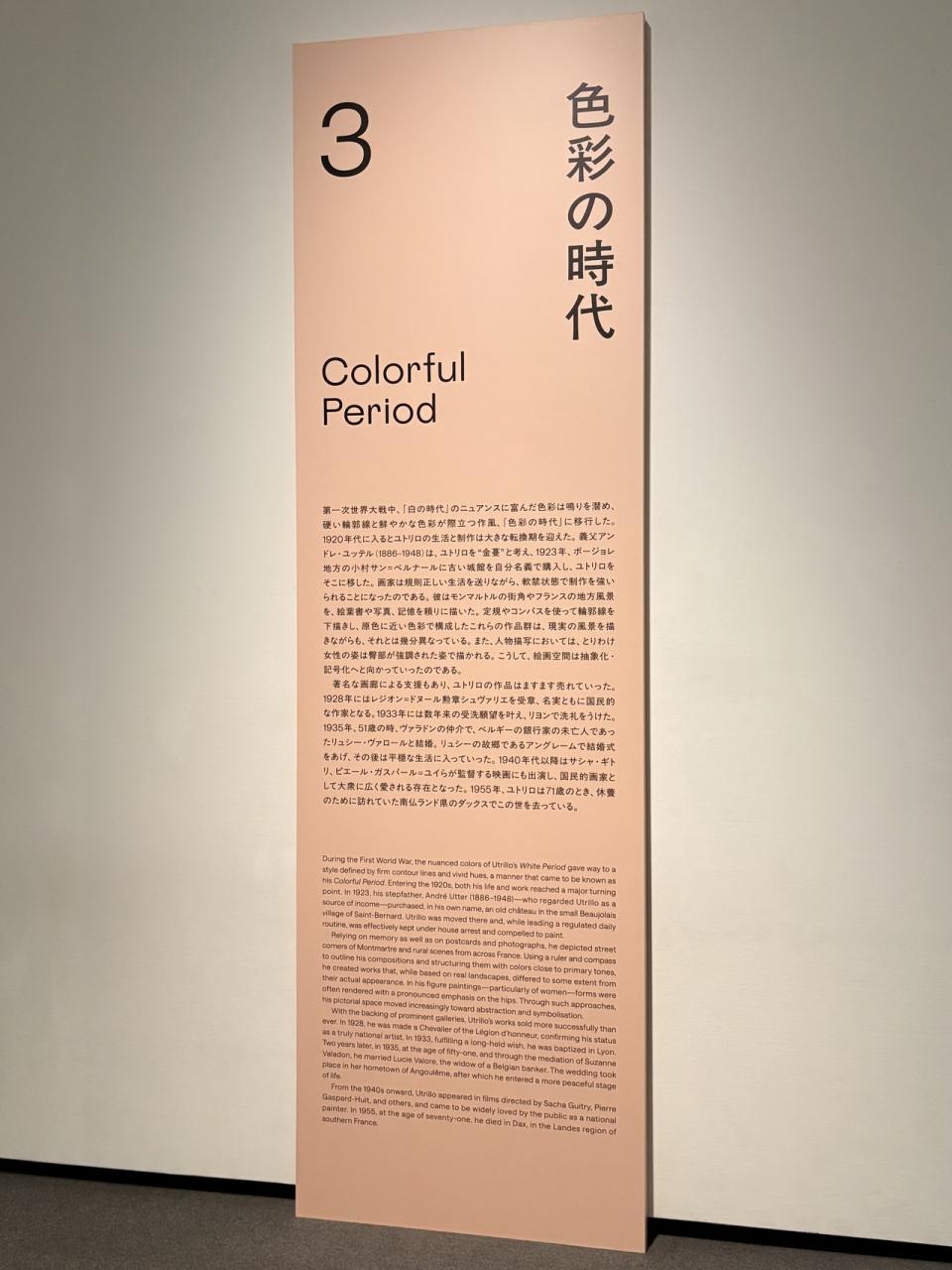
3
色彩の時代
Colorful Period
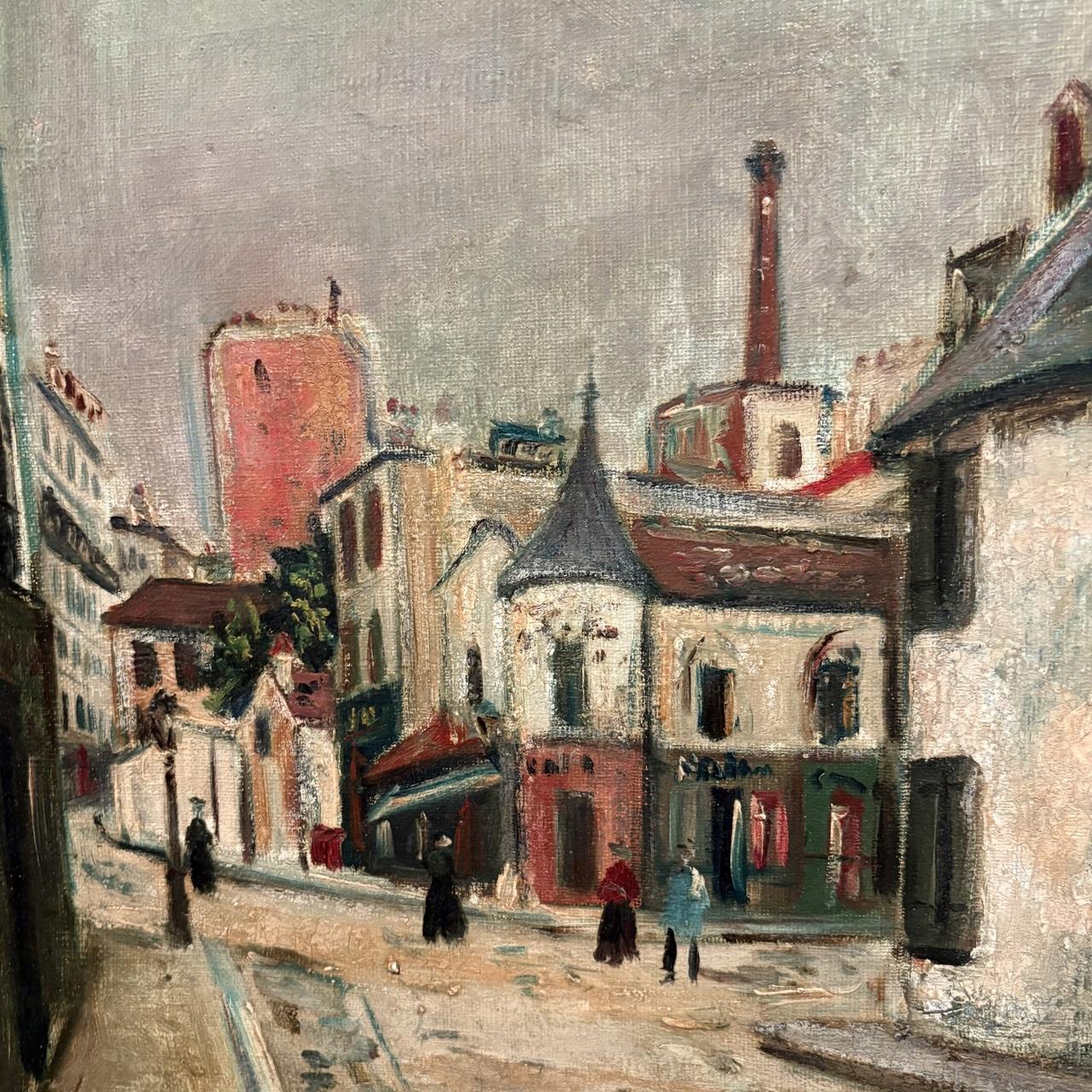
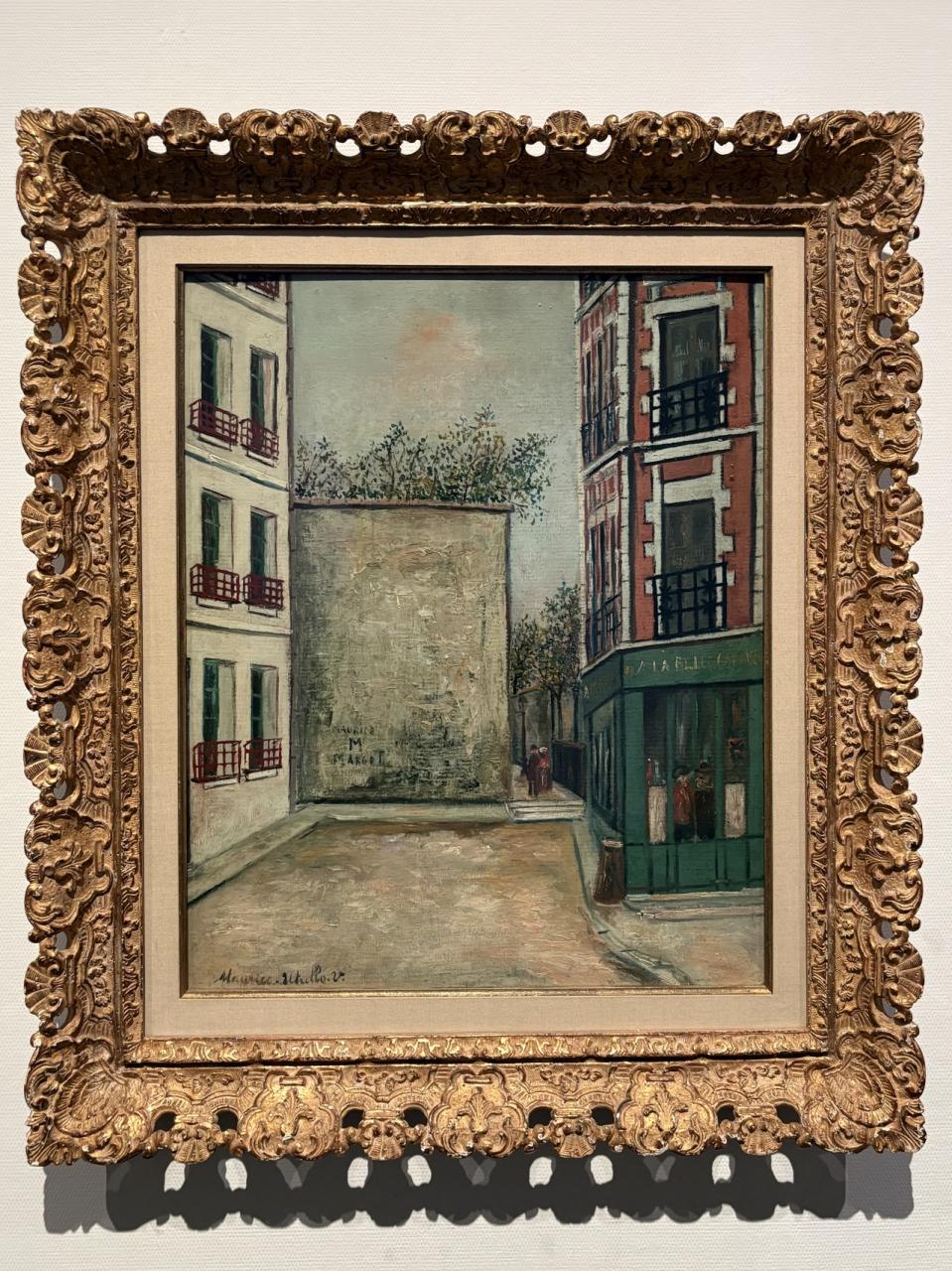
第一次世界大戦中、「白の時代」のニュアンスに富んだ色彩は鳴りを潜め、硬い輪郭線と鮮やかな色彩が際立つ作風、「色彩の時代」に移行した。
1920年代に入るとユトリロの生活と制作は大きな転換期を迎えた。義父アンドレ・ユッテル(1886-1948)は、ユトリロを“金”と考え、1923年、ボージョレ地方の小村サン=ベルナールに古い城館を自分名義で購入し、ユトリロをそこに移した。画家は規則正しい生活を送りながら、軟禁状態で制作を強いられることになったのである。彼はモンマルトルの街角やフランスの地方風景を、絵や写真、記憶を頼りに描いた。定規やコンパスを使って輪郭線を下描きし、原色に近い色彩で構成したこれらの作品群は、現実の風景を描きながらも、それとは幾分異なっている。また、人物描写においては、とりわけ女性の姿は腎部が強調された姿で描かれる。こうして、絵画空間は抽象化・記号化へと向かっていったのである。
著名な画廊による支援もあり、ユトリロの作品はますます売れていった。1928年にはレジオン=ドヌール勲章シュヴァリエを受章、名実ともに国民的な作家となる。1933年には数年来の受洗願望を叶え、リヨンで洗礼をうけた。1935年、51歳の時、ヴァラドンの仲介で、ベルギーの銀行家の未亡人であったリュシー・ヴァロールと結婚。リュシーの故郷であるアングレームで結婚式をあげ、その後は平穏な生活に入っていった。
1940年代以降はサシャ・ギトリ、ピエール・ガスパール=ユイらが監督する映画にも出演し、国民的画家として大来に広く愛される存在となった。1955年、ユトリロは71歳のとき、休養のために訪れていた南仏ランド県のダックスでこの世を去っている。
During the First World War, the nuanced colors of Utrillo's White Period gave way to a style defined by firm contour lines and vivid hues, a manner that came to be known as his Colorful Period.
Entering the 1920s, both his life and work reached a major turning point. In 1923, his stepfather, André Utter (1886-1948) ?who regarded Utrillo as a source of income-purchased, in his own name, an old chateau in the small Beaujolais village of Saint-Bernard. Utrillo was moved there and, while leading a regulated daily routine, was effectively kept under house arrest and compelled to paint.
Relying on memory as well as on postcards and photographs, he depicted street corners of Montmartre and rural scenes from across France. Using a ruler and compass to outline his compositions and structuring them with colors close to primary tones. he created works that, while based on real landscapes, differed to some extent from their actual appearance. In his figure paintings-particularly of women-forms were often rendered with a pronounced emphasis on the hips. Through such approaches his pictorial space moved increasingly toward abstraction and symbolisation.
With the backing of prominent galleries, Utrillo's works sold more successfully than ever. In 1928, he was made a Chevalier of the Légion d'honneur, confirming his status as a truly national artist. In 1933, fulfilling a long-held wish, he was baptized in Lyon Two years later, in 1935, at the age of fifty-one, and through the mediation of Suzanne Valadon, he married Lucie Valore, the widow of a Belgian banker. The wedding took place in her hometown of Angoulême, after which he entered a more peaceful stage of life.
From the 1940s onward, Utrillo appeared in films directed by Sacha Guitry, Pierre Gaspard-Huit, and others, and came to be widely loved by the public as a national painter. In 1955, at the age of seventy-one, he died in Dax, in the Landes region of southern France. -
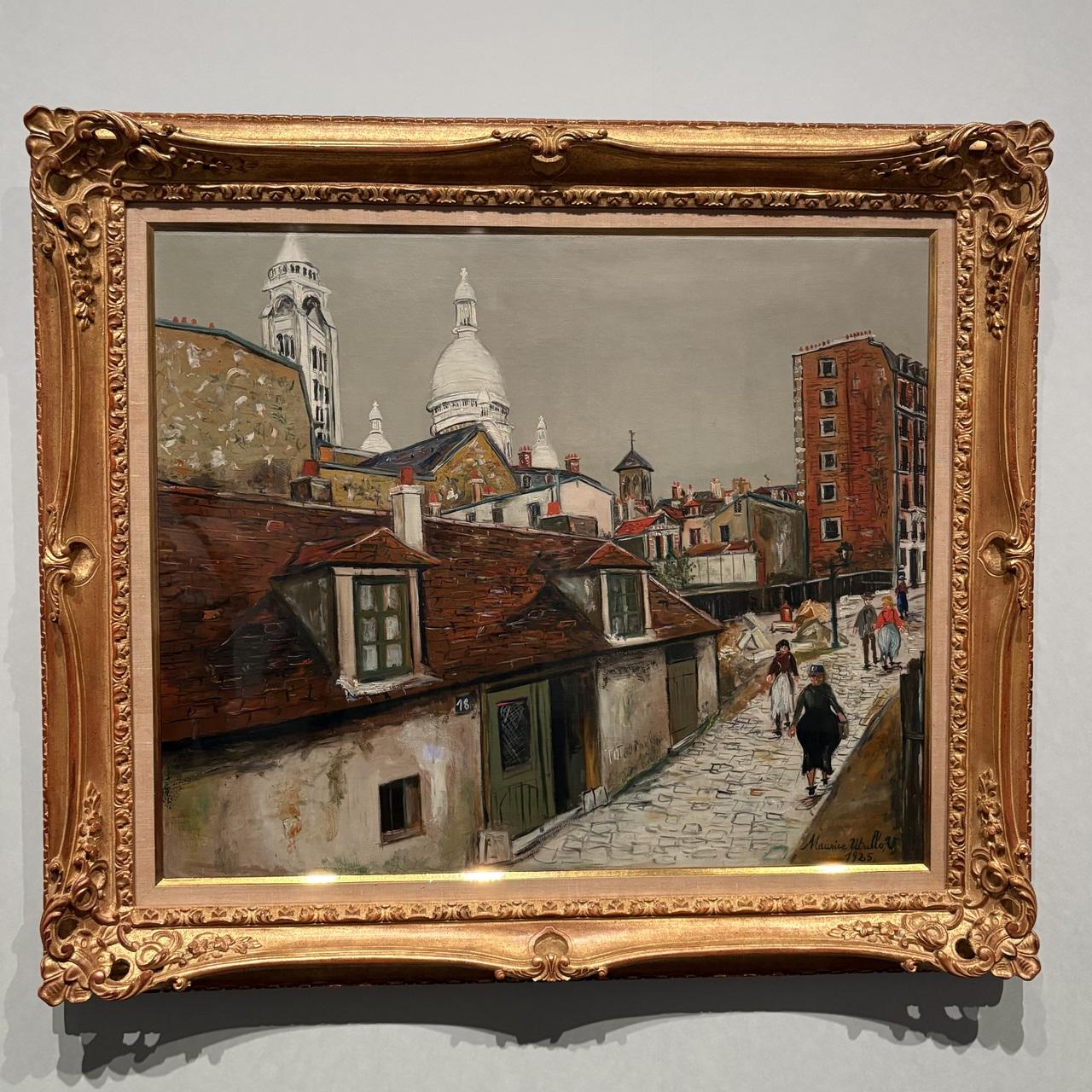
55
モーリス・ユトリロ
モンマルトルのミミ=パンソンの家とサクレ=クール寺院、モン=スニ通り
(モンマルトルのサクレ=クール寺院)
Maison de Mimi-Pinson et Sacré-Cœur, rue du Mont-Cenis, Montmartre ou Sacré-Cœur de Montmartre
1925
油彩・カンヴァス
oil on canvas
SOMPO美術館
Sompo Museum of Art
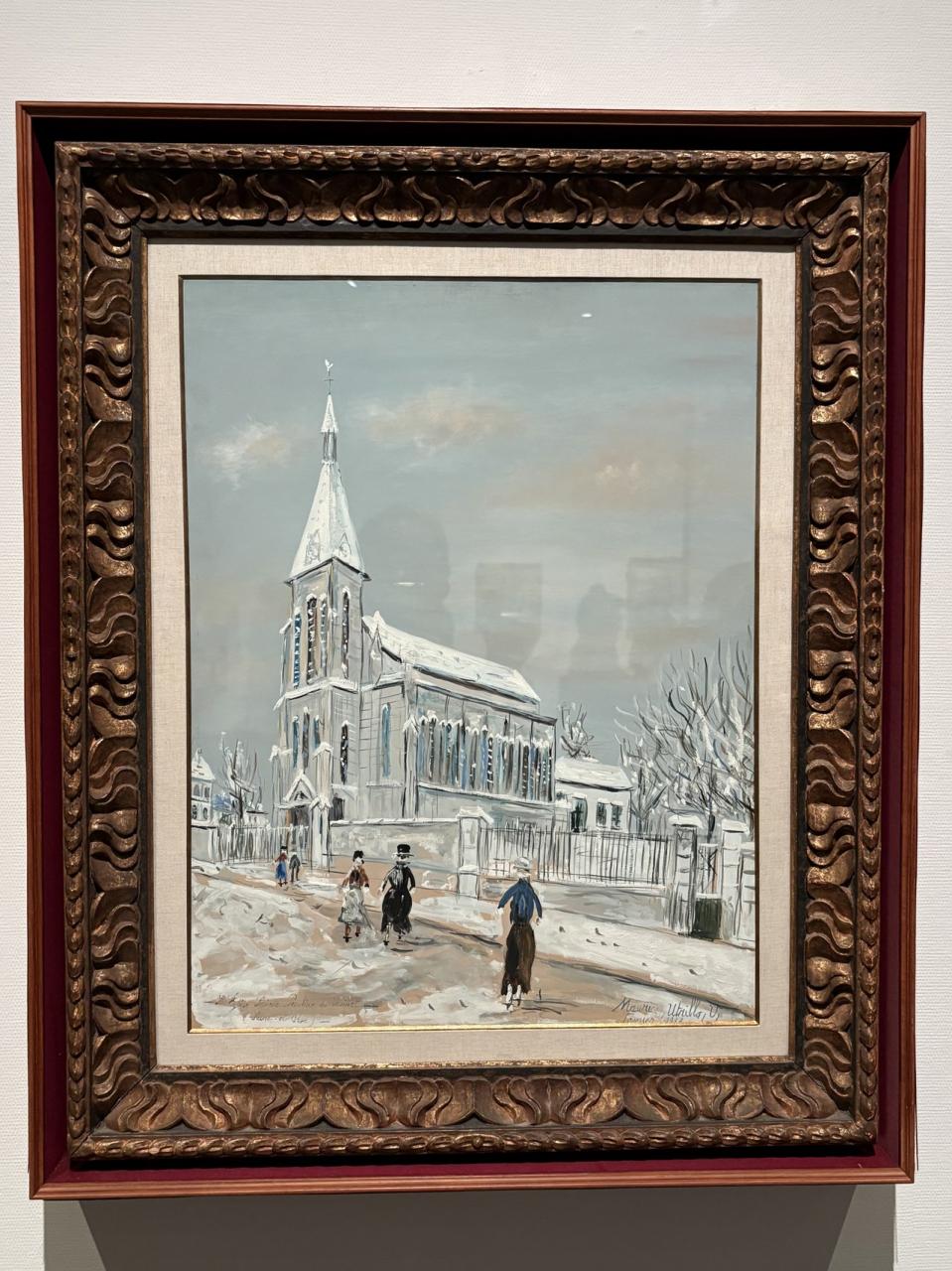
ミミニパンソンは、作家アルフレッド・ド・ミュッセの作品に登場する架空のお針子であるが、後にモンマルトル地区モンニスニ通り18番地の建物が彼女の住居とされ、名所となった。画面右下に記された献辞は、リュクサンブール美術館を経てフランス国立近代美術館の学芸部長を務めたロベール・レイに宛てられたものである。レイは本作と同年にユトリロのモノグラフを出版しており、本作はその記念として贈られたものと推定される。本作の前年にはベルネーム=ジュヌ画廊と契約をし、ユトリロの名声は日に日に高まっていた。「色彩の時代」に属し、分厚い輪郭線に縁取られた色面と、チューブから直接絞り出したかのような鮮やかな色彩によって、どこか非現実的な都市風景が構成されている。写真家のウジェーヌ・アジェが撮影した写真をもとに制作されたと考えられる本作では、遠景にモンマルトルの新しいシンボルとなったばかりのサクレ=クール寺院(1919年献堂)が妙に写実的に描かれ、白の豊かな諸調が際立つ。
1920年代以降の作品にしばしば登場する、画面右下に見られるような尻の大きな女性の描写については、ユトリロのミソジニー(女性嫌悪)を反映したものと解釈されることが多い。しかし、名所写真という記号化されたイメージを反復し、それを自身の表現として確立したユトリロにとって、女性の身体もまた同様に記号として描かれるのは自然な帰結であったと捉えることもできるだろう。
Mimi-Pinson is a fictional seamstress who appears in the works of Alfred de Musset, but the building at 18 Rue Mont-Cenis in the Montmartre district later came to be identified as her residence, becoming a local landmark. The dedication in the lower right of the composition is addressed to Robert Rey, who served as a curator at the Musée du Luxembourg and later Head of the Curatorial Department at the Musée national d'art moderne. Rey published a monograph on Utrillo in the same year as this work, and it is presumed that the painting was presented to him in commemoration of that event. The year before, Utrillo had signed a contract with the Galerie Bernheim-Jeune, and his fame was growing by the day. Belonging to his Colorful Period, the work constructs a somewhat unreal urban scene through planes of color outlined with thick contours and the vivid hues that seem to have been squeezed directly from the tube. Considered to be based on a photograph by Eugène Atget, the work features in the background the Basilica of Sacré-Cour-dedicated in 1919 and newly established as a symbol of Montmartre-ren-dered with striking realism and a rich range of white tonalities.
The depiction of the large-hipped woman in the lower right, a figure that appears frequently in works after the 1920s, is often interpreted as a reflection of Utrillo's misogyny. However, considering that Utrillo repeatedly reproduced and codified landmark photographs into his own expressive vocabulary, one might equally regard his treatment of the female body as a natural extension of his manner of turning subjects into symbols. -
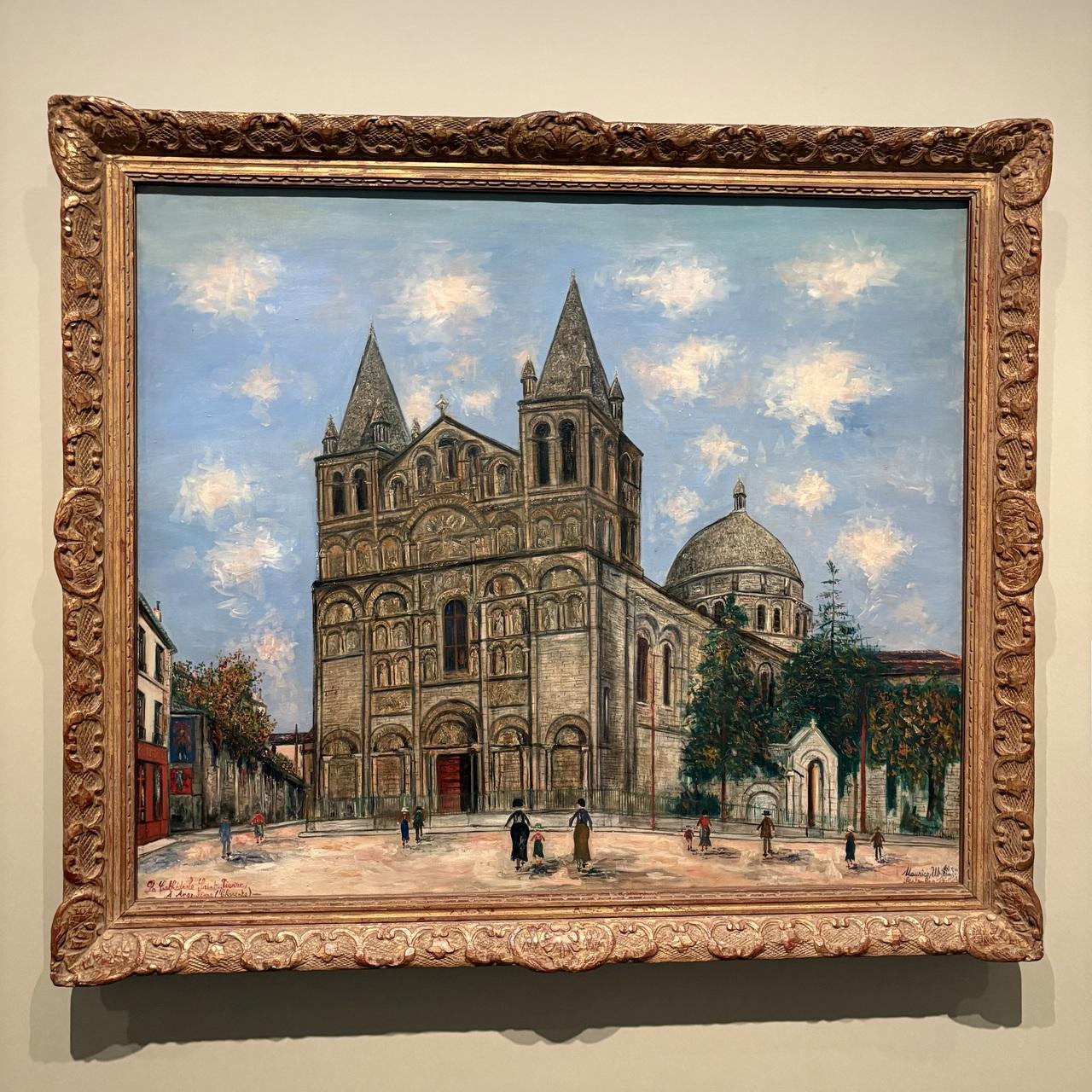
64
モーリス・ユトリロシャラント県アングレム、サン=ピエール大聖堂
La Cathédrale Saint-Pierre à Angoulême,
Charente
1935
油彩・カンヴァス
oil on canvas
公益財団法人ひろしま美術館
Hiroshima Museum of Art
1935年、ユッテルと離別し病に伏したヴァラドンは、病院から旧知のベルギーの銀行家の未亡人、リュシー・ポーウェルを呼び、ユトリロと結婚させようと画策する。二人は結ばれ、フランス西部アングレームにあるリュシーの家に落ち着き、平穏な生活を送る。ユトリロ51歳の時のことである。
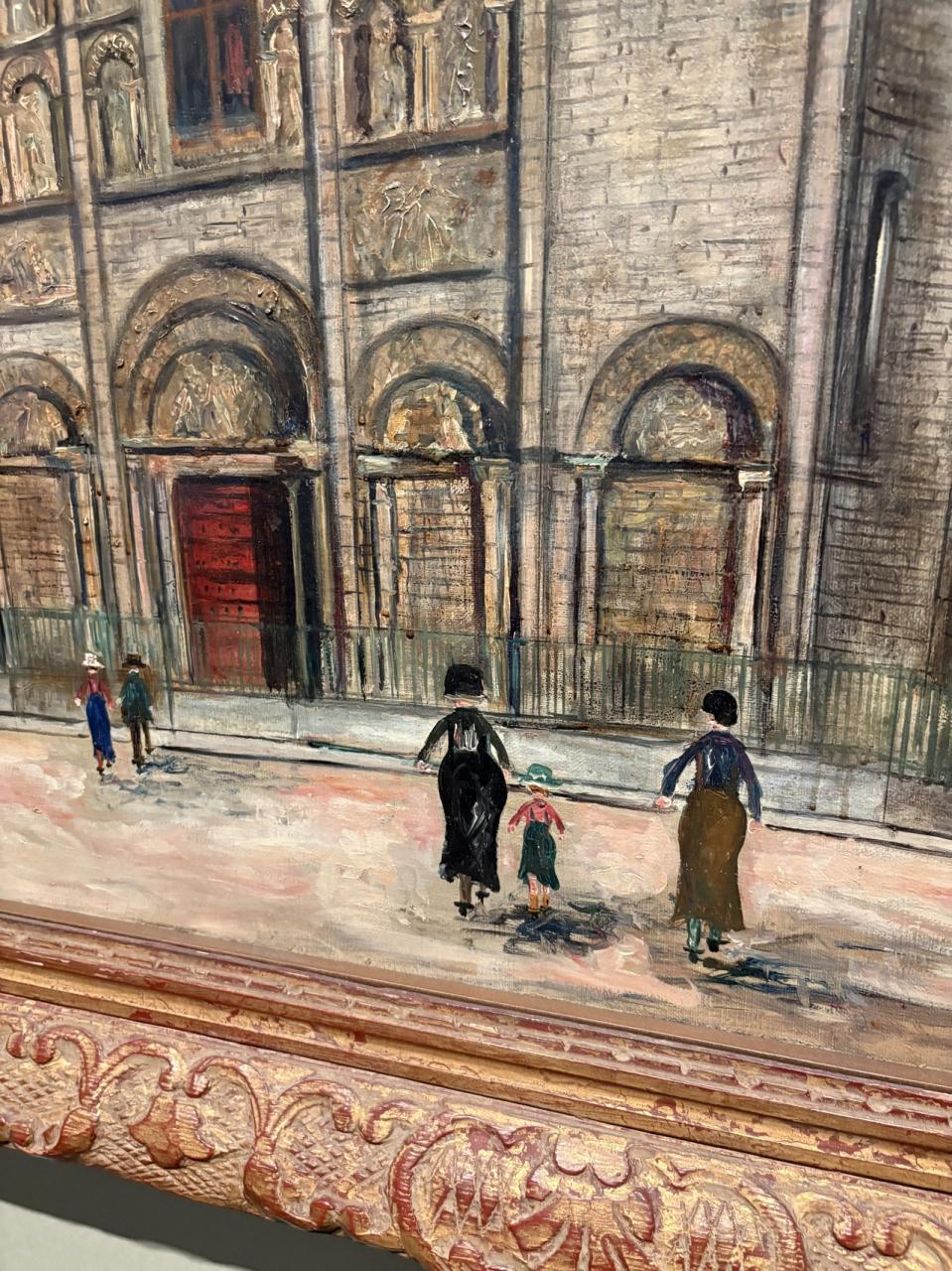
ユトリロはしばしば教会を描き、その多くは陰鬱な雰囲気のなかに待んでいるが、結婚の同年にアングレームの街の象徴である教会を描いた本作では、明るい画面が展開されている。まるで書割のように平面的に展開される空と、画面から垂直に立ち上がる教会のファサードにみられるように、「色彩の時代」の彩度の高い色彩と、モニュメンタルであると同時にプリミティブでもある描写が詰め込まれた作品である。
In 1935, separated from Utter and bedridden with illness, Suzanne Valadon summoned an old acquaintance, Lucie Pauwels, the widowed wife of a Belgian banker, from her hospital bed, with the intention of arranging her marriage to Maurice. The two were wed, and settled into Lucie's home in Angoulême, in western France, leading a peaceful life together. Utrillo was fifty-one at the time.
Churches were a frequent subject for Utrillo, and many are depicted amid somber atmospheres. However, in this work-painted in the year of his marriage and depicting the church that is a symbol of Angoulême-a bright, luminous scene unfolds. The sky rises vertically like a stage backdrop, mirroring the vertical ascent of the church façade within the composition. The work is filled with the high-chroma colors characteristic of the Colorful Period, combined with a style that is both monumental and primitive in its depiction. -
-
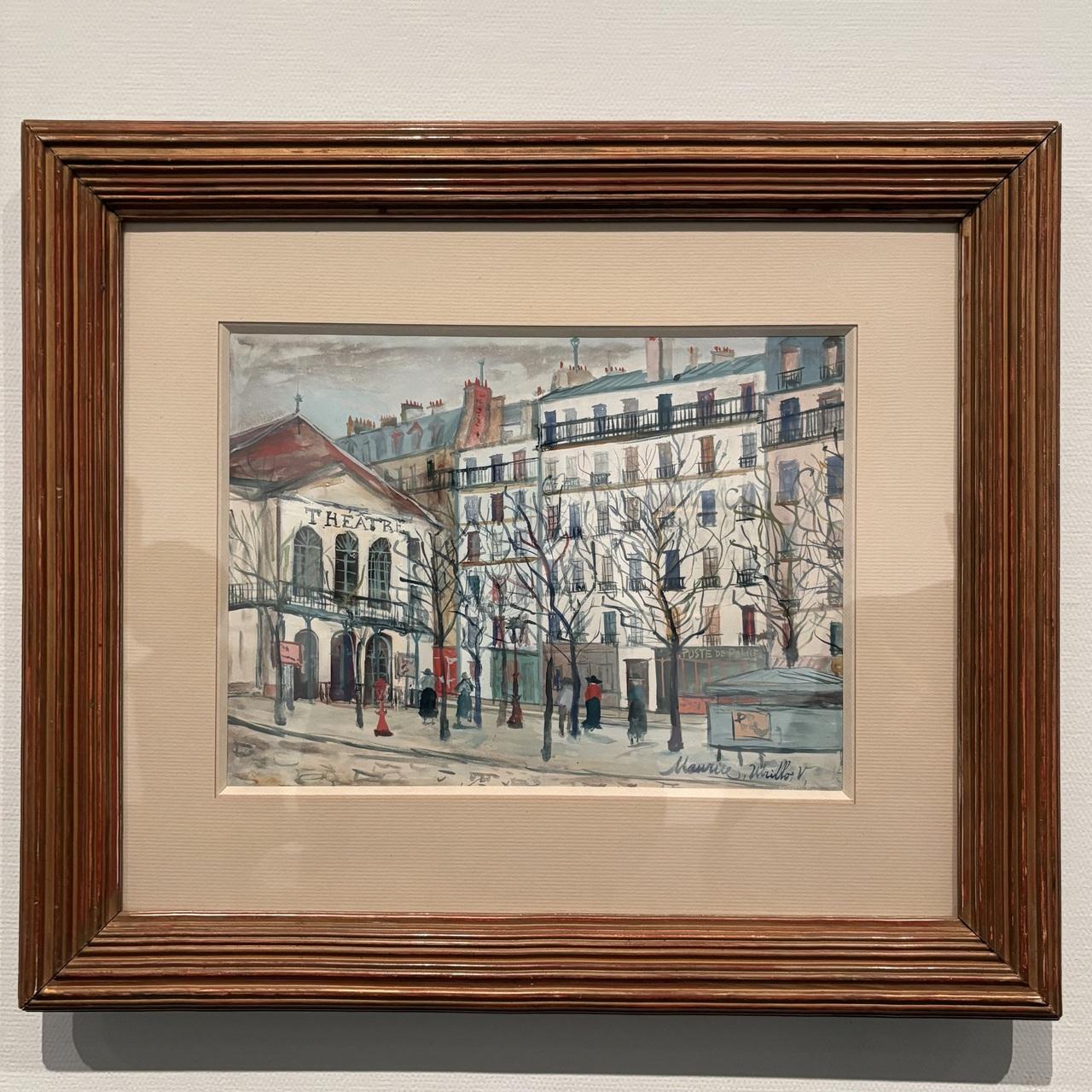
57
モーリス・ユトリロ
アトリエ座
Le théâtre de l'Atelier
1926
水彩、グアッシュ・紙
watercolor and gouache on paper
パリ・ポンピドゥセンター/国立近代美術館・産業創造センター
Centre pompidou, Paris - Musée national d'art moderne /
Centre de création industrielle
ロシュショアール通り付近、18区に位置するアトリエ座の支配人に倣って命名されたシャルル・デュラン広場。
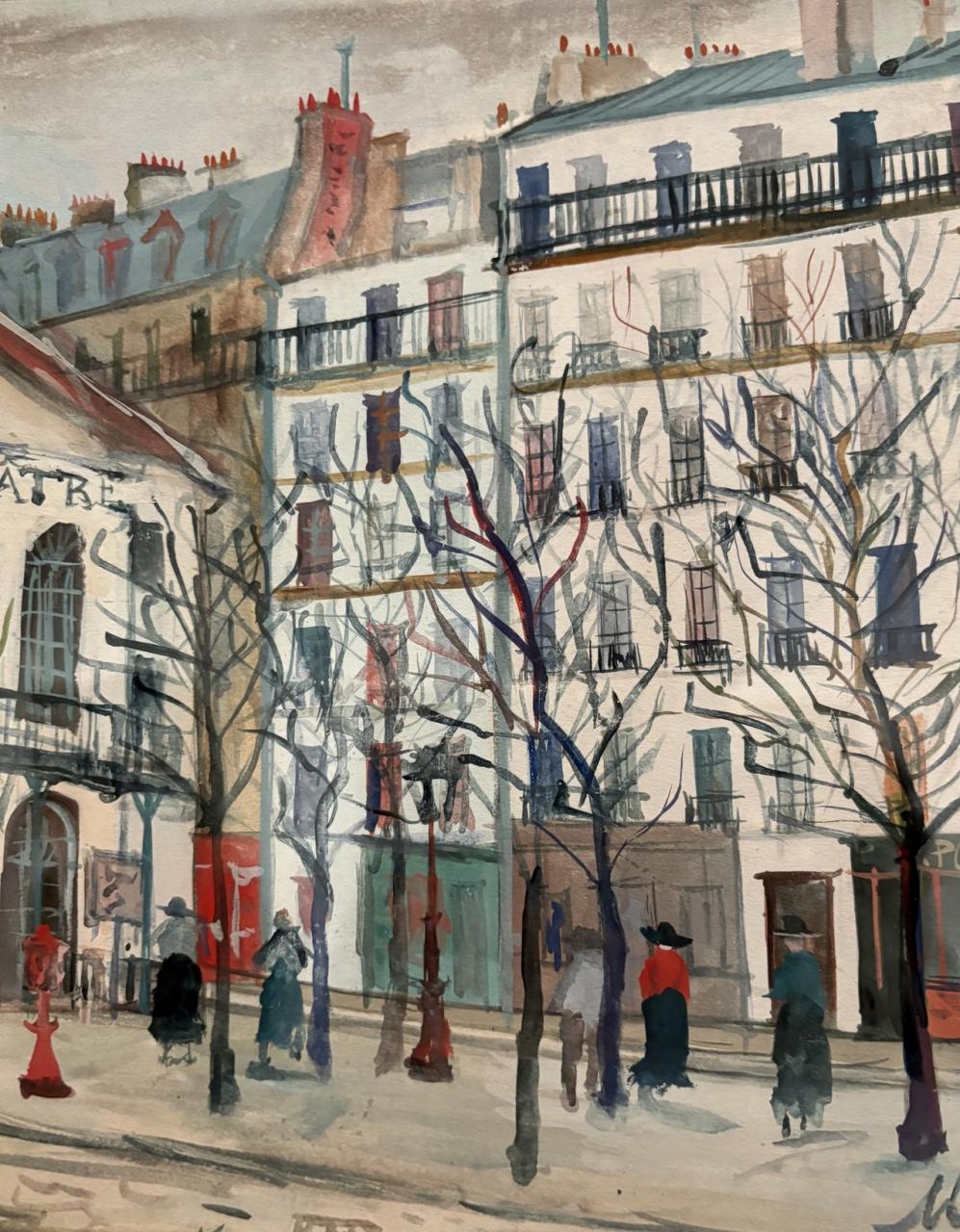
アトリエ座とその前庭、樹木と人物が描かれた本作では、他のユトリロ作品のように明確な消失点は設定されておらず、樹々の線描と劇場の窓枠の線描が同一の様式で表現されるなど、オールオーヴァーな平面的画面が展開されている。初期の擁護者であったアドルフ・タバランは、ユトリロが制作するグアッシュ作品について、「油彩のテクニックとほとんど変わらない。油彩と同様に、表現主義の鋭敏さがあるし、ある種のディティールの繰り返しには魅力が感じられる」と述べている。ユトリロが舞台芸術と接した機会は2回あり、そのうちの1回では本作と同年の26年、ロシアのディアギレフ・バレエ団によって演じられた「バラバオ」の舞台装置とデザインを担当している。
Place Charles Dullin, near Rue de Rochechouart in the 18th arrondissement, was named after the director of the nearby Théâtre de l'Atelier.
Depicting the theatre, its forecourt, trees, and figures, this work, unlike many of Utrillo's paintings, contains no clearly defined vanishing point. The line drawing of the trees and that of the theatre's window frames are executed in the same manner, creating an all-over, planar surface. Adolphe Tabarant, one of Utrillo's early supporters, remarked of his gouache works: "They hardly differ from his oil paintings. Like the oils, they possess an Expressionist acuity, and there is a certain charm in the repetition of specific details." Utrillo's contact with the performing arts occurred on two occasions: one of these was in 1926, the year this work was painted, when he designed the stage sets and décor for Barabau, performed by Serge Diaghilev's Ballets Russes. -
-
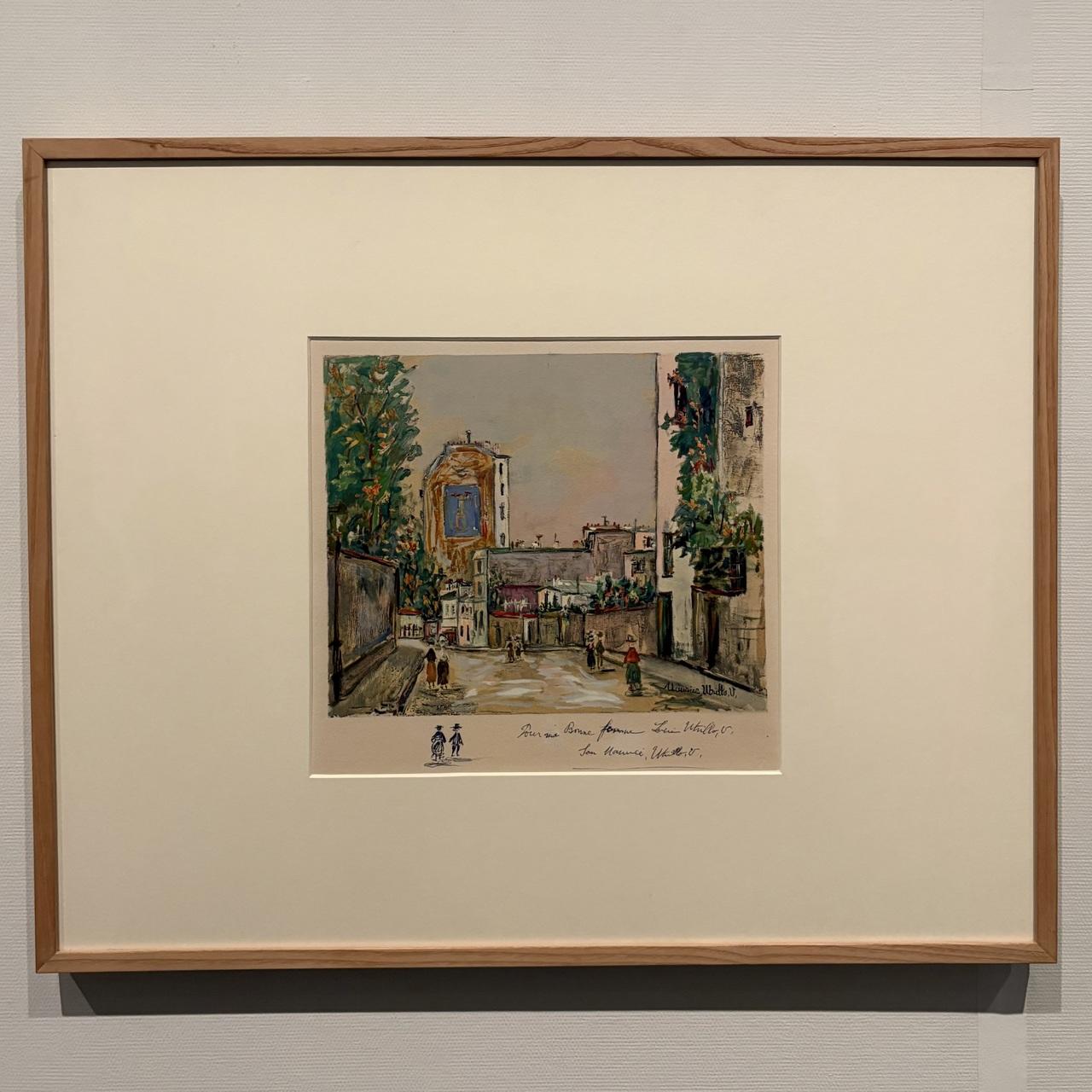
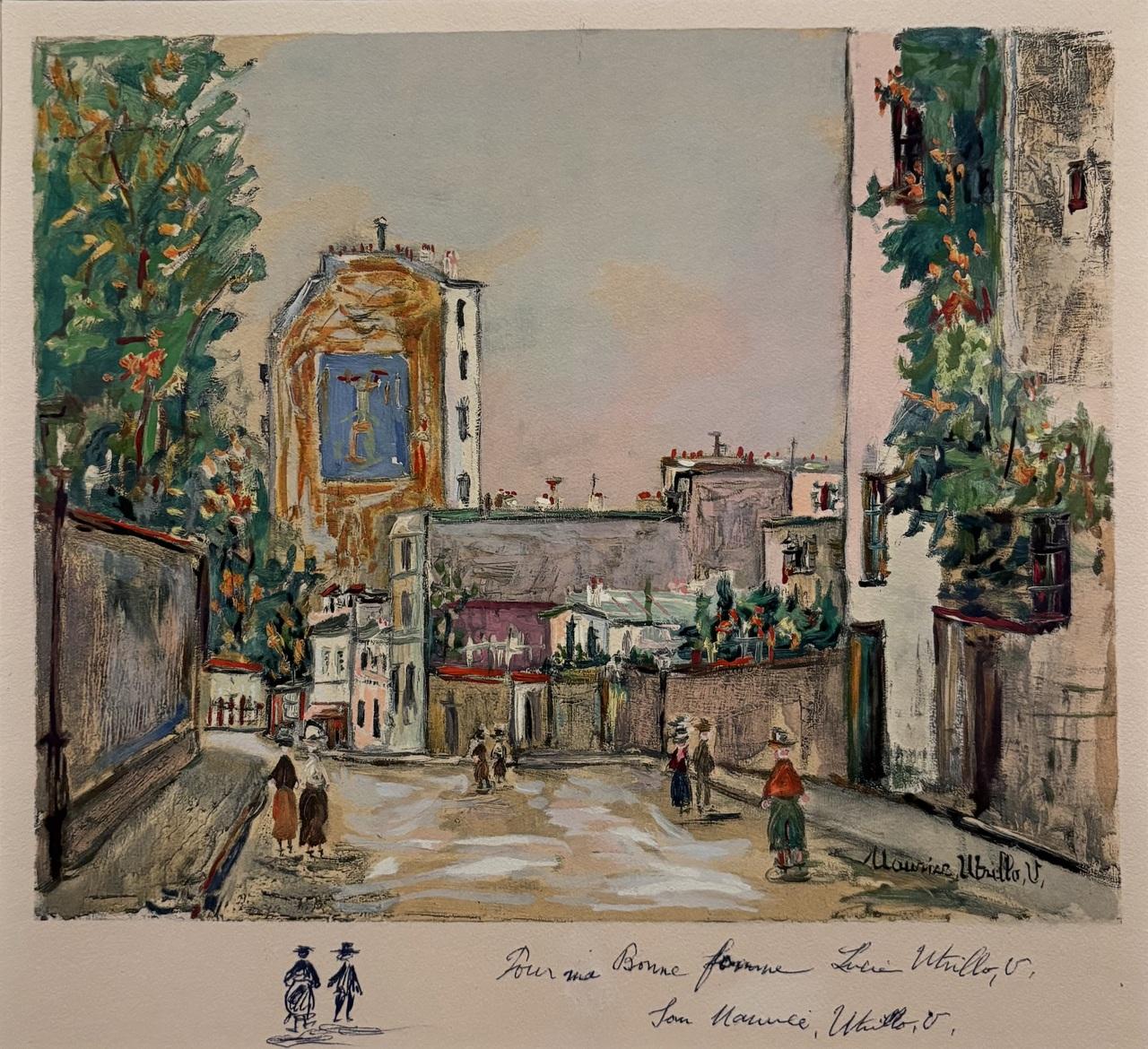
58
モーリス・ユトリロ
モンマルトルの眺め
Vue de Montmartre
1926
グワッシュで彩色されたリトグラフ・紙
lithograph heightened with gouache on paper
パリ・ポンピドゥセンター/国立近代美術館・産業創造センター
Centre pompidou, Paris - Musée national d'art moderne /
Centre de création industrielle -
-
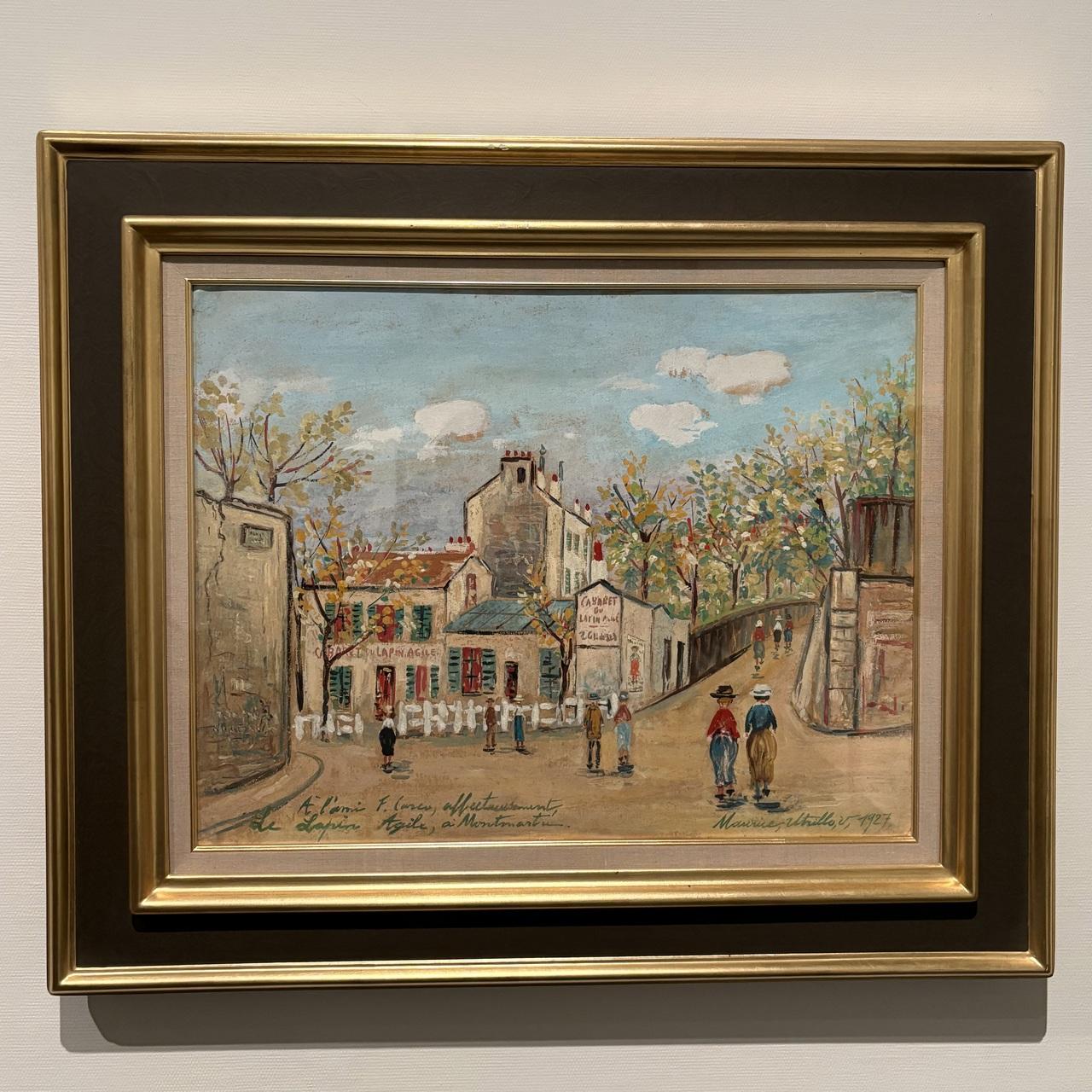
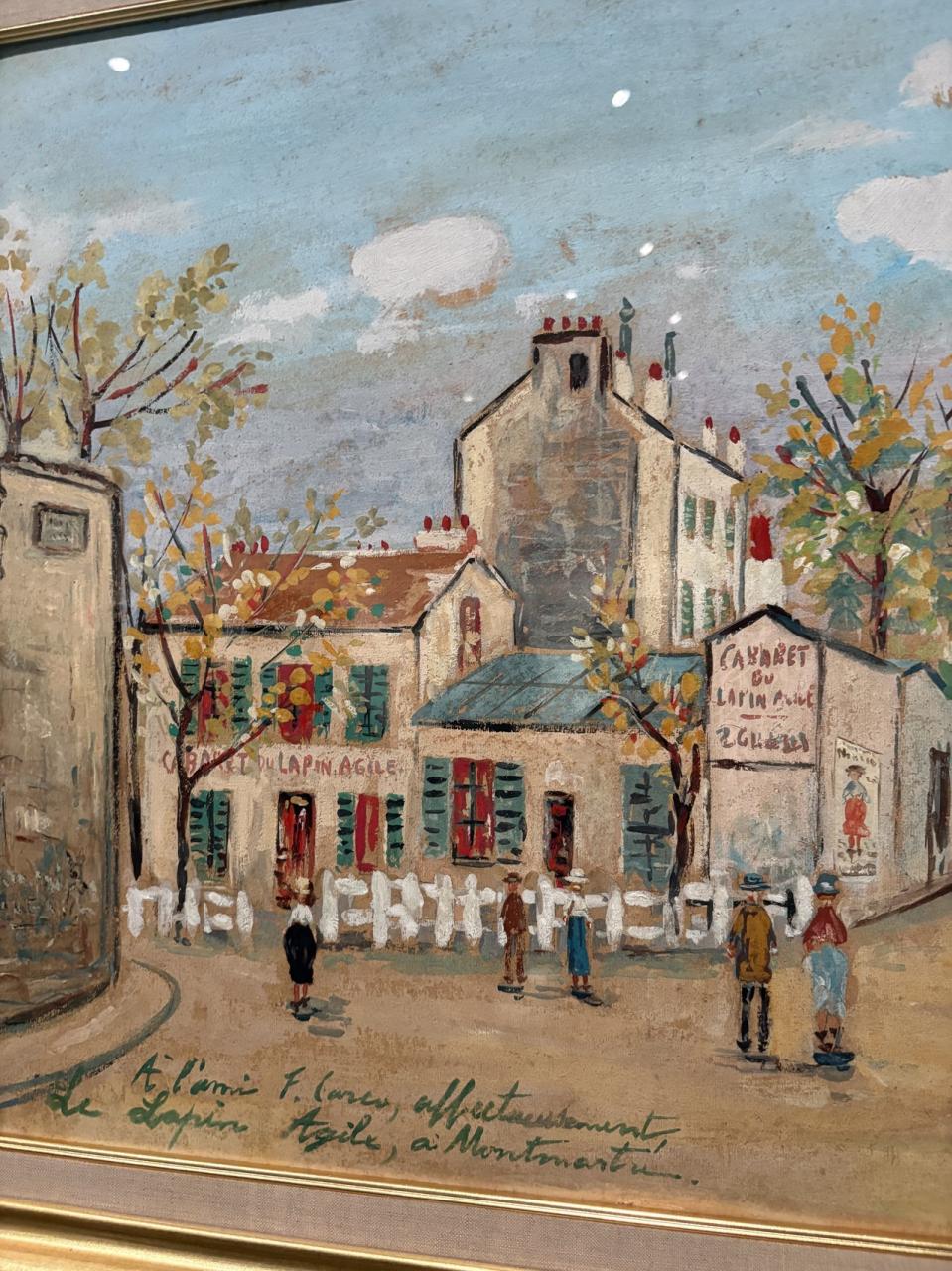
60
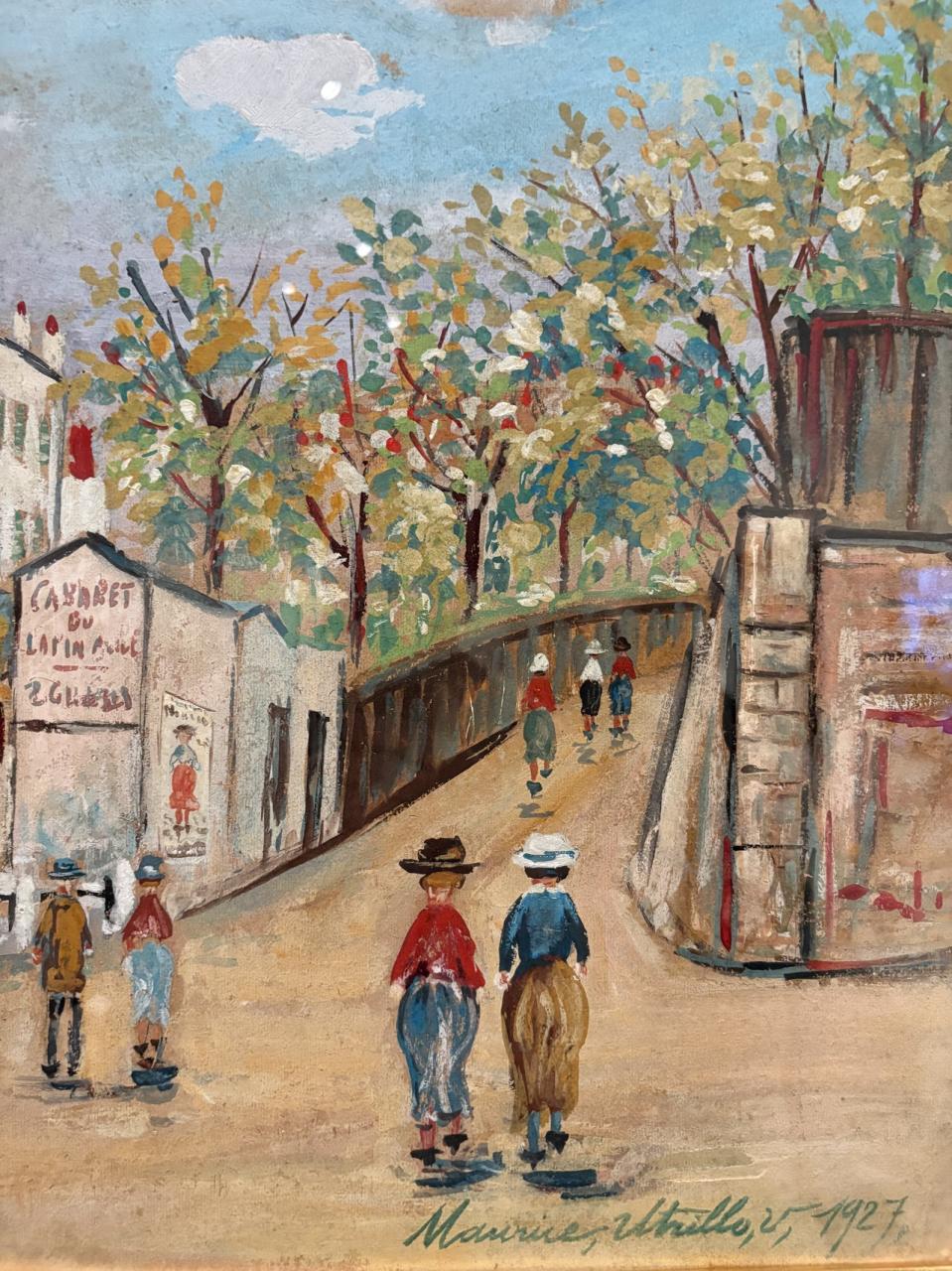
モーリス・ユトリロ
ラパン・アジル、
サン=ヴァンサン通り、モンマルトル
Lapin Agile, rue Saint-Vincent, Montmartre
1927
グワッシュ・厚紙
gouache on cardboard
個人蔵
Private collection -
-
-
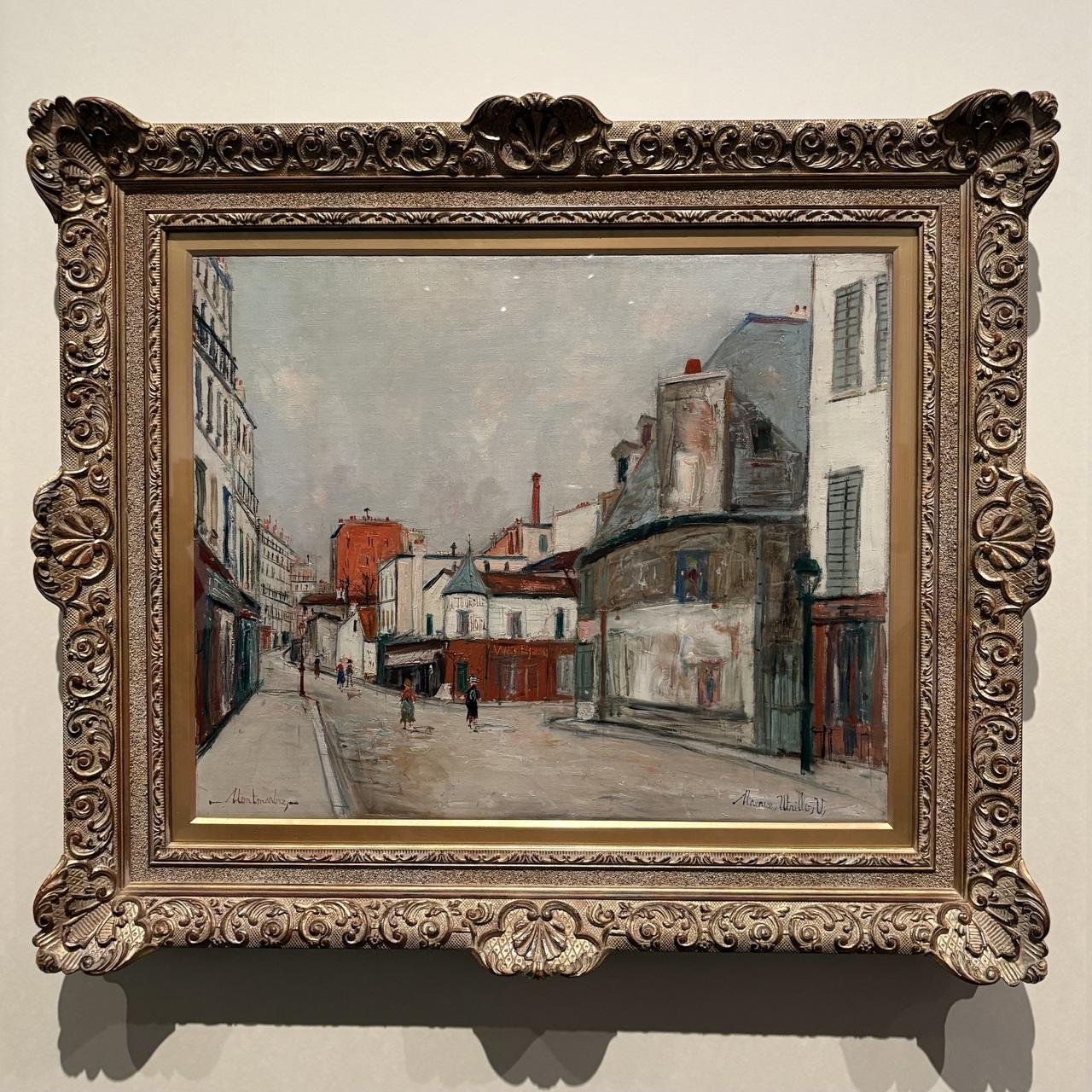
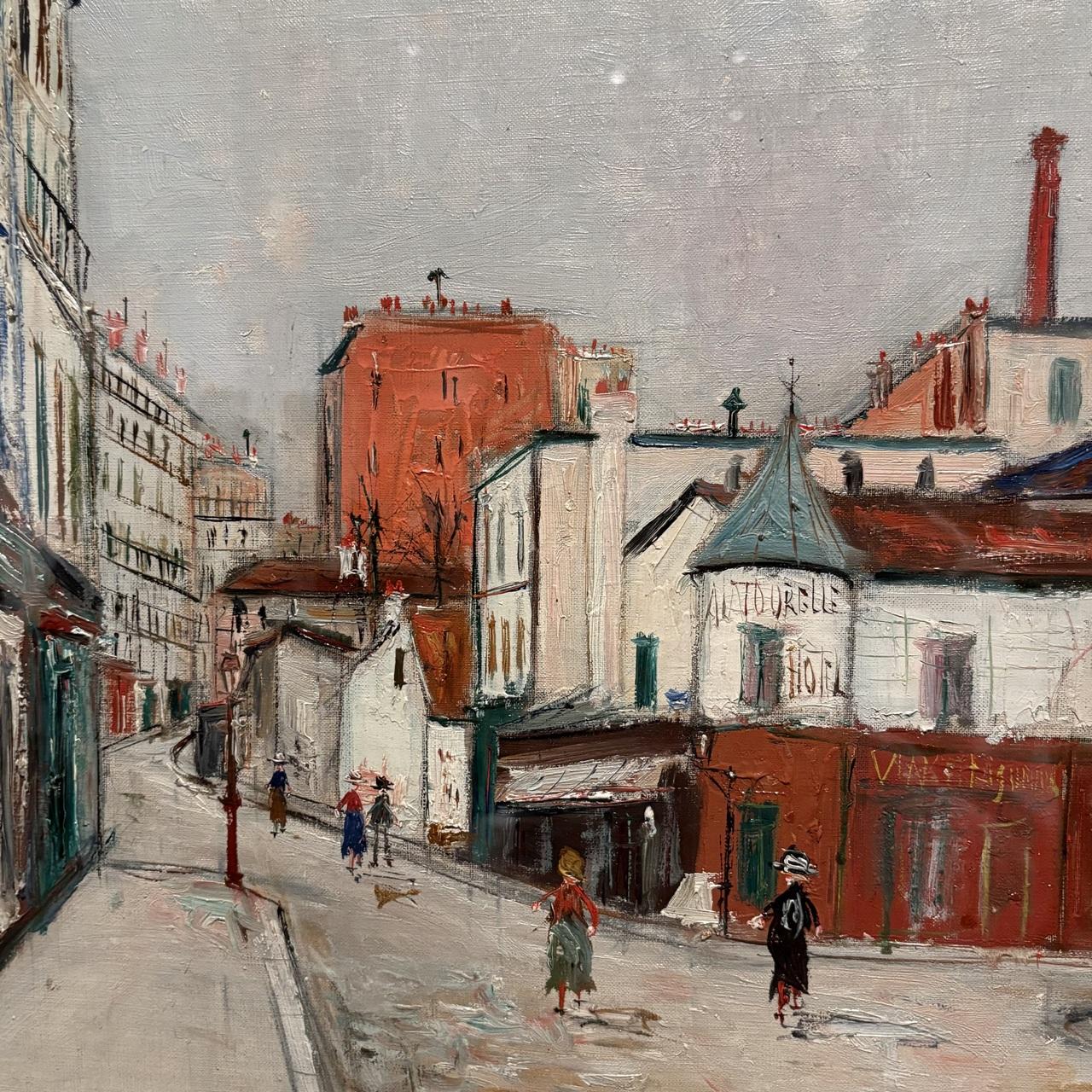
66
モーリス・ユトリロ
モンマルトル、トゥレルのカフェ
Le Café de la Tourelle, Montmartre c. 1935
油彩・カンヴァス
oil on canvas
個人藏(協力:翠波画廊)
Private collection (with the collaboration of SUIHA Gallery) -
-
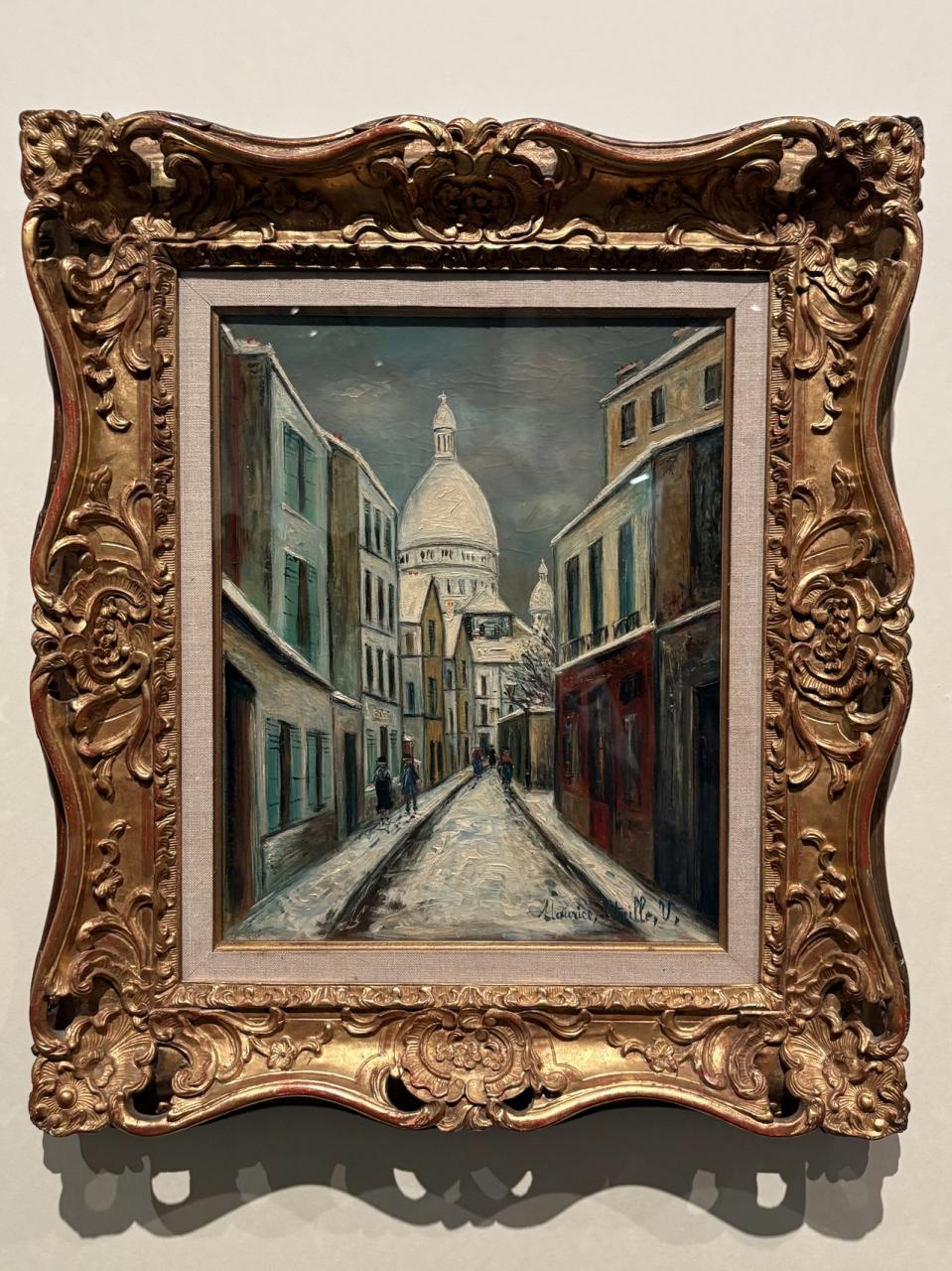
62
モーリス・ユトリロ
雪のサン=リュスティック通り、モンマルトル
Rue Saint-Rustique sous la neige, Montmartre
1933
油彩・厚紙
oil on cardboard
個人蔵
Private collection
サン=リュスティック通りは、テルトル広場の北側、ノルヴァン通りと並行するように東西に走る狭い通りである。
緩やかにカーブを描くこの細い路地は、通りの向こう端が見渡せるような見通しの良い場所ではないが、画家はそうした特徴を構図にうまく生かし、建物の向こう側に突如現れるサクレ・クール寺院の真っ白なドームをシンボリックにこの画面に登場させている。モンマルトルの入り組んだ通りを選しながらふと上を見上げた時にドームを目にした、そんなユトリロの視覚体験が反映されているのかもしれない。画面手前の建物が色とりどりの色彩で描かれ、ドームの白さを際立たせている。
Rue Saint-Rustique is a narrow street running east-west just north of Place du Tertre, parallel to Rue Norvins.
This gently curving lane does not afford a clear view to its far end, yet Utrillo skillfully incorporates this characteristic into his com-position, introducing the brilliant white dome of the Basilica of Sacré-Cour as a symbolic element that appears suddenly beyond the buildings. It is perhaps a reflection of the artist's own visual experience while strolling through Montmartre's winding streets and glancing upward to catch sight of the dome. The buildings in the foreground are painted in a variety of colors, enhancing the striking whiteness of the dome. -
65
モーリス・ユトリロ
ボワシエール・エコールの教会と
通り(イヴリヌ県)
Eglise et rue principale, La Boissière Ecole (Yvelines)
c. 1935
油彩・カンヴァス
oil on canvas
個人蔵(協力:翠波画廊)
Private collection (with the collaboration of SUIHA Gallery) -
-
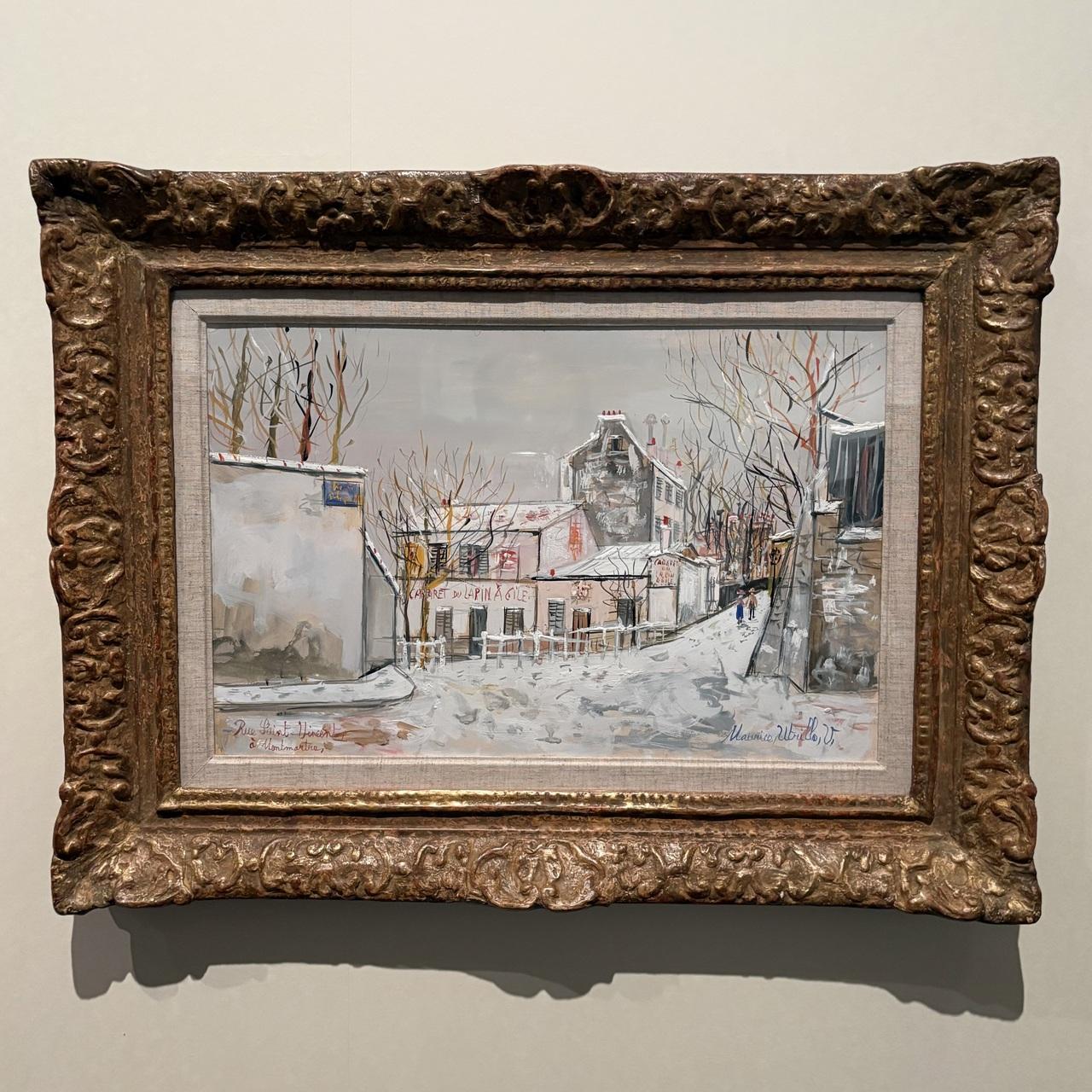
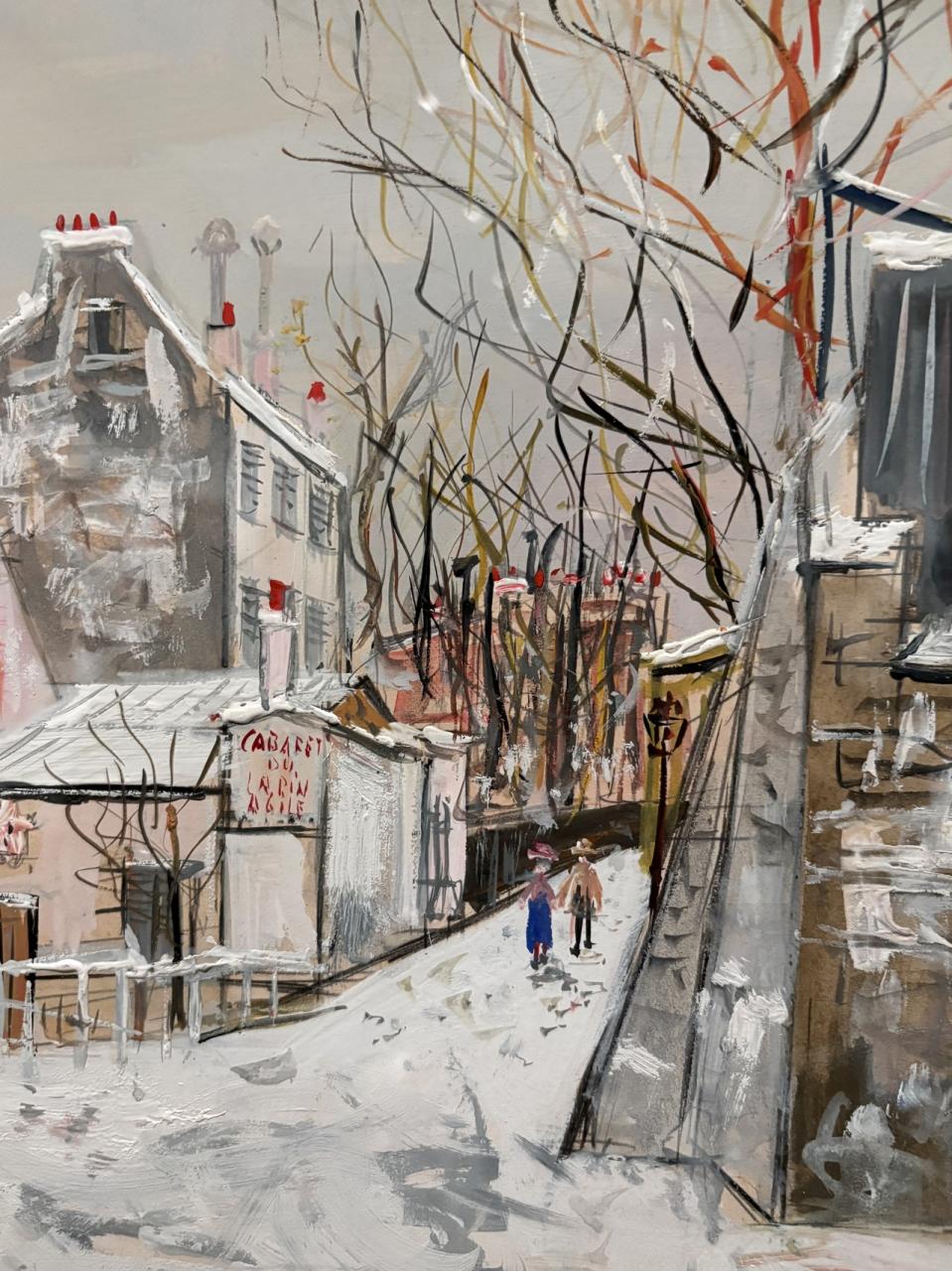
67
モーリス・ユトリロ
サン=ヴァンサン通り、雪のラパン・アジル、モンマルトル
Rue Saint-Vincent, Lapin Agile sous la neige,
Montmartre
c. 1936-38
グワッシュ・紙
gouache on paper
個人藏(協力:翠波画廊)
Private collection (with the collaboration of SUHA Gallery) -
-
68
モーリス・ユトリロ
雪のヴェジネ、聖ポリーヌ教会
Le Vésinet sous la neige, Eglise Sainte-Pauline
1938
グワッシュ・紙
gouache on paper
個人蔵
Private collection
1937年に妻リュシーと移り住んだル・ヴェジネの西の端にある聖ポリーヌ教会は、20世紀に入ってから建設された比較的新しいネオ・ゴシック様式の教会である。
一面雪に覆われた教会を通りのこちらから捉えた本作は、グァッシュで描かれることによって油彩とは異なる軽やかな仕上がりの印象で、雪の白さがより一層強調される。画面全体が白い色調によって支配されているがゆえに、教会や木々、塀や柵を表す線的要素の存在が際立ち、他方で、灰色がかった水色で塗り込められた薄曇りの空の描写が、単調な風景にわずかなニュアンスを加えている。通りを歩く人物像は、画業後半にしばしば登場するほとんど記号化された添景モチーフである。
Located at the western edge of Le Vésinet, where Utrillo moved with his wife Lucie in 1937, the Church of Saint-Pauline Is a relatively recent building in the Neo-Gothic style, constructed in the early 20th century.
Depicting the snow-cov-ered church from across the street, this work-executed in gouache?has a lighter, more airy finish than oil, further accentuating the whiteness of the snow. The overall domInance of white in the composition makes the linear ele-ments-representing the church, trees, walls, and fences-stand out all the more. At the same time, the overcast sky. painted in a greyish blue, introduces subtle nuance to an otherwise uniform winter scene. The walking figure along the street is a nearly codified accessory motif that appears frequently in the later years of Utrillo's career. -
72
モーリス・ユトリロ
ラヴィニャン通り、モンマルトル
Rue Ravignan, Montmartre c. 1940-42
油彩・カンヴァスに貼られた厚紙
oil on cardboard mounted on canvas
個人蔵
Private collection
パリ・モンマルトルの南西斜面に位置するラヴィニャン通りを描いたもので、同構図の作品がニューヨーク・メトロポリタン美術館にも所蔵されている。この通りの13番地には、パブロ・ピカン、ホアン・グリス、ヴァン・ドンゲンら前衛芸術家が集ったアトリエ「洗濯船」があり、ユトリロにとっても芸術的なインスピレーションの源だった。しかしながら、彼はこの場所を、名もなき建物や古びた商店に焦点を当てて描いている。特に、パレットナイフを使って厚く塗られた白い壁面は、建物の老朽した様子を強調し、街角を歩く人の姿もなく、物悲しい雰囲気を醸し出している。ユトリロ独自の色彩感覚と、複層的な構成力により、モンマルトルの歴史と日常が簡素ながらも堅固な輪郭線で描かれている。
This view of Rue Ravignan, located on the southwestern slope of Montmartre, depicts a street that also appears in a work held by the Metropolitan Museum of Art in New York. At No. 13 stood the Bateau-Lavoir, the legendary atelier where avant-garde artists such as Pablo Picasso, Juan Gris, and Kees van Dongen gathered-and which served as a source of artistic inspiration for Utrillo himself. Yet here, he turns his gaze not to the famous names or the building's storied history, but to anonymous structures and timeworn shopfronts. The thickly applied white walls, rendered with a palette knife, accentuate the dilapidation of the architecture. With no figures populating the street, a quiet melancholy pervades the scene. Utrillo's distinctive sense of color and layered compositional approach convey both the history and the everyday life of Montmartre, articulated through firm, unyielding contour lines. -
-
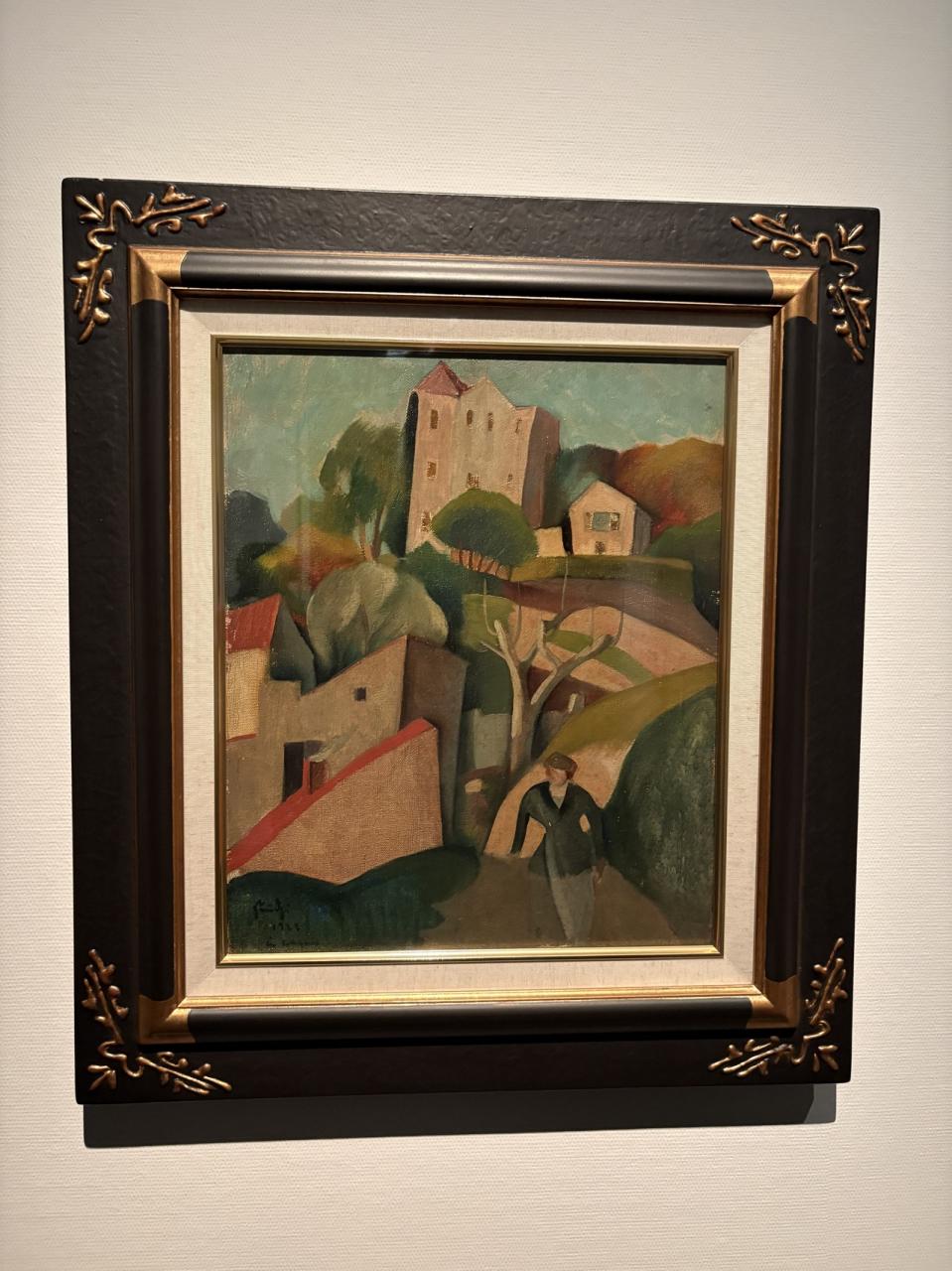
東郷青児
Seiji Togo
南仏風景
Landscape of South France
1922
油彩・カンヴァス
oil on canvas
SOMPO美術館(陽山美術館より寄託)
Sompo Museum of Art (on loan from Yozan Museum of Art) -
東郷青児
Seiji Togo
ムードンの風景
Landscape of Meudon
1922
油彩・カンヴァス
oil on canvas
SOMPO美術館
Sompo Museum of Art -
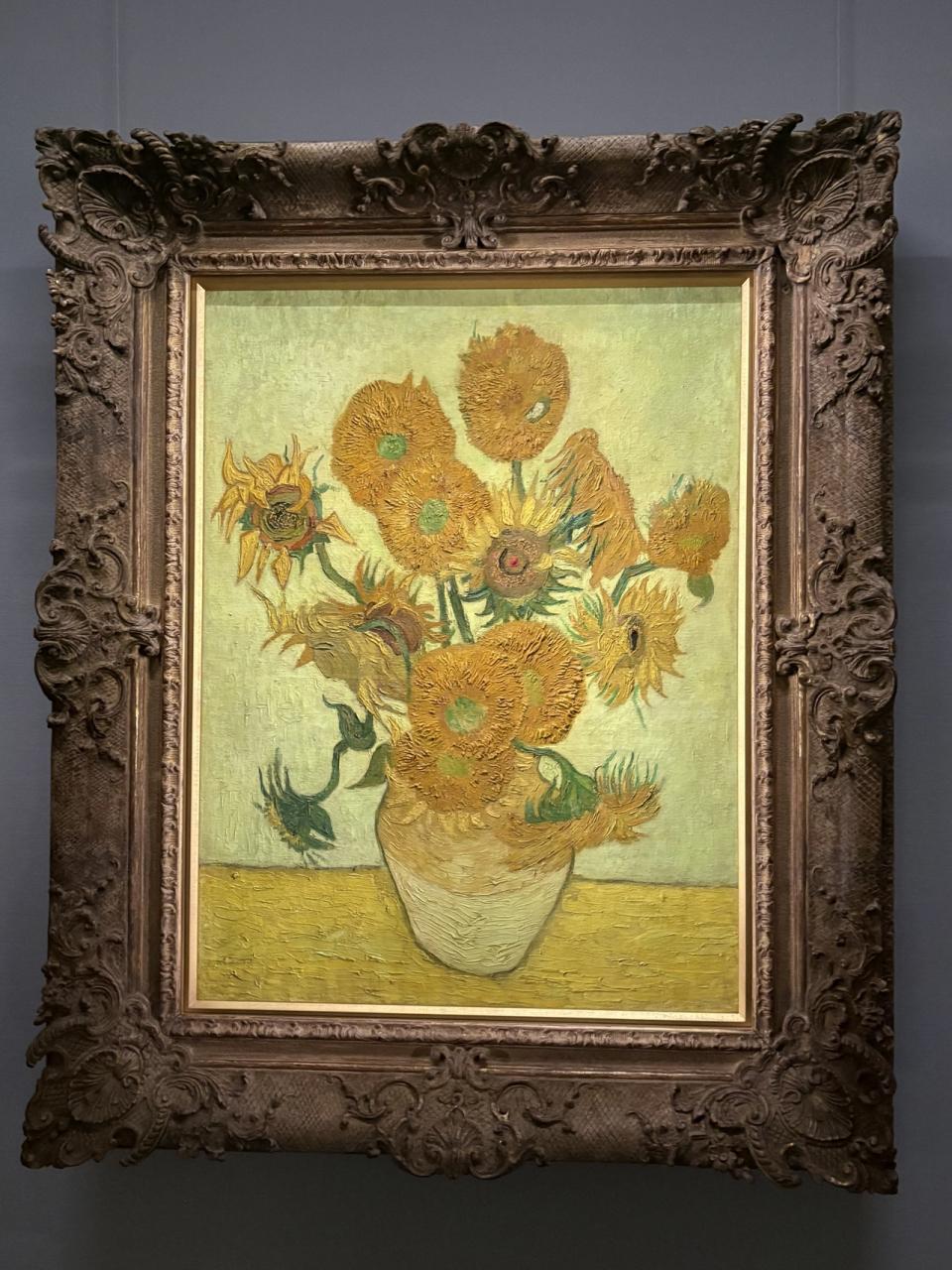
フィンセント・ファン・ゴッホ(1853-1890)
ひまわり
1888年
油彩/カンヴァス
SOMPO美術館
Vincent van Gogh (1853-1890)
Sunflowers
1888
Oil on canvas
Sompo Museum of Art
1888年2月、パリから南仏のアルルに移ったゴッホは、その年の8月、ゴーギャンの到着を待ちながらくひまわり>の連作に取り組み始めた。ゴーギャンの部屋を「ひまわりの花」で飾ろうとしたのである。ゴッホは7点の「壺に生けたひまわり」を描いたが、この作品は、現在ロンドンのナショナル・ギャラリーが所蔵するくひまわり)をもとに描いたと考えられている。ロンドンのものと比べると全体の色や筆遣いに違いがみられ、ゴッホがくひまわり)の連作を通じて色彩や明度、タッチの研究を行ったと考えられる。
In February 1888, Van Gogh moved from Paris to Arles in the south of France, and in August of that year, while waiting for the arrival of Paul Gauguin, he began to work on a series of paintings of sunflowers. His aim was to decorate Gauguin's room with sunflowers. Van Gogh painted seven versions of the motif of "sunflowers in a vase," which are believed to have been based on the painting Sunflowers currently in the collection of the National Gallery in London. Compared to the painting in London, however, there are differences in the overall colors and brushwork of the paintings in this series, and it is thus believed that throughout the Sunflowers series Van Gogh was studying the effects of color, lightness, and touch. -
-
-
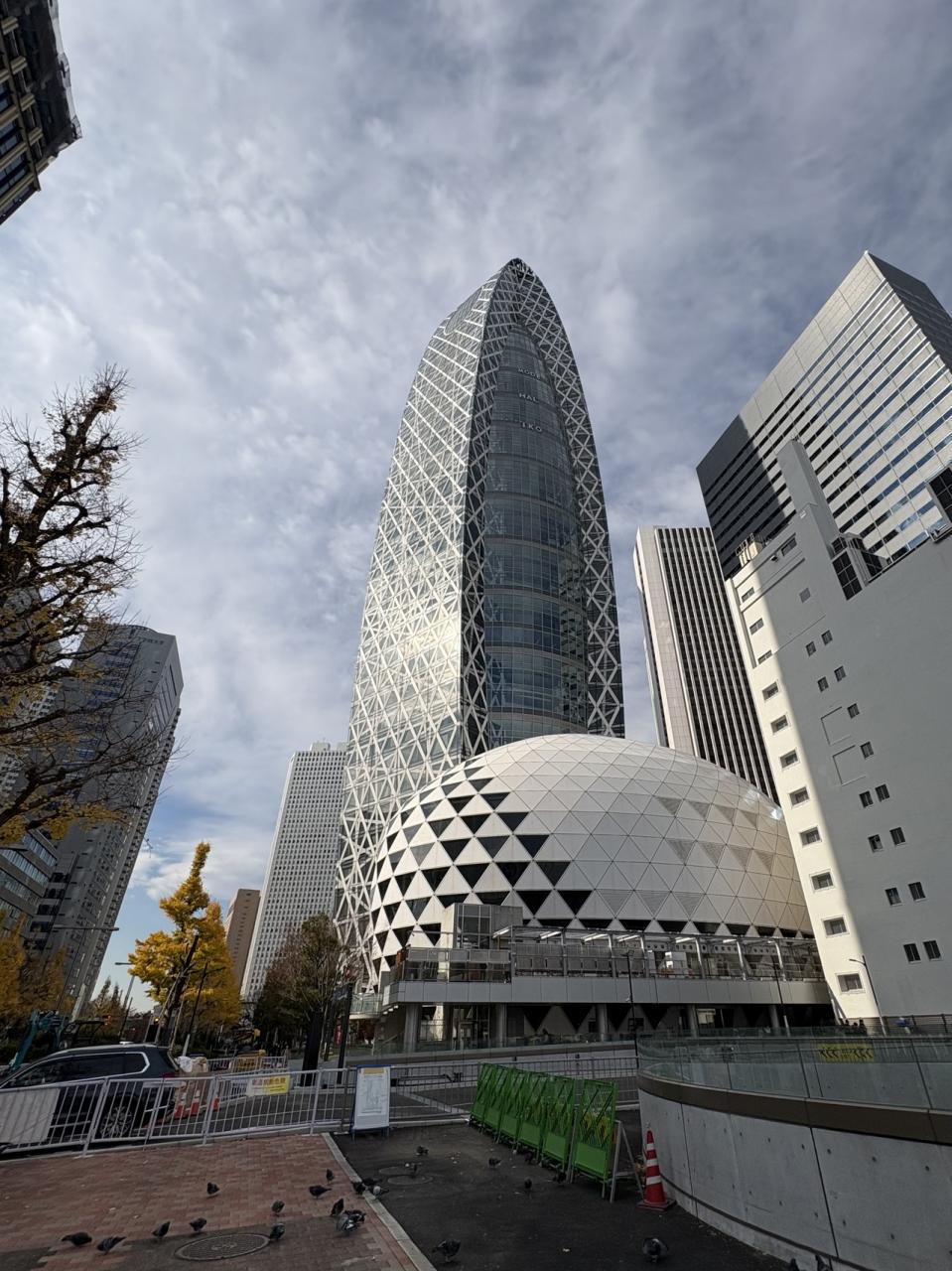
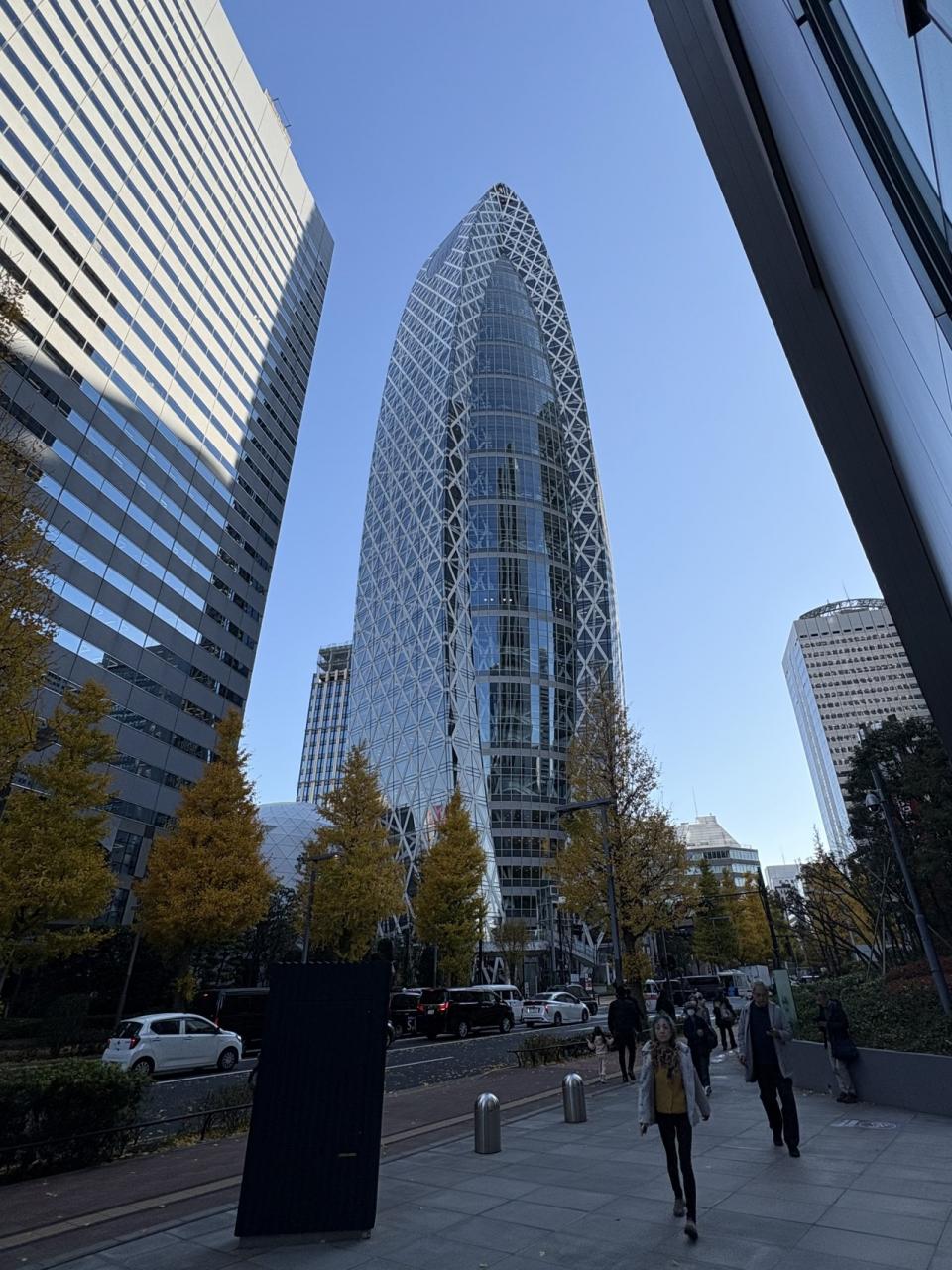
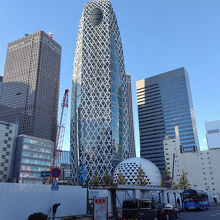
東京モード学園コクーンタワー 名所・史跡
-
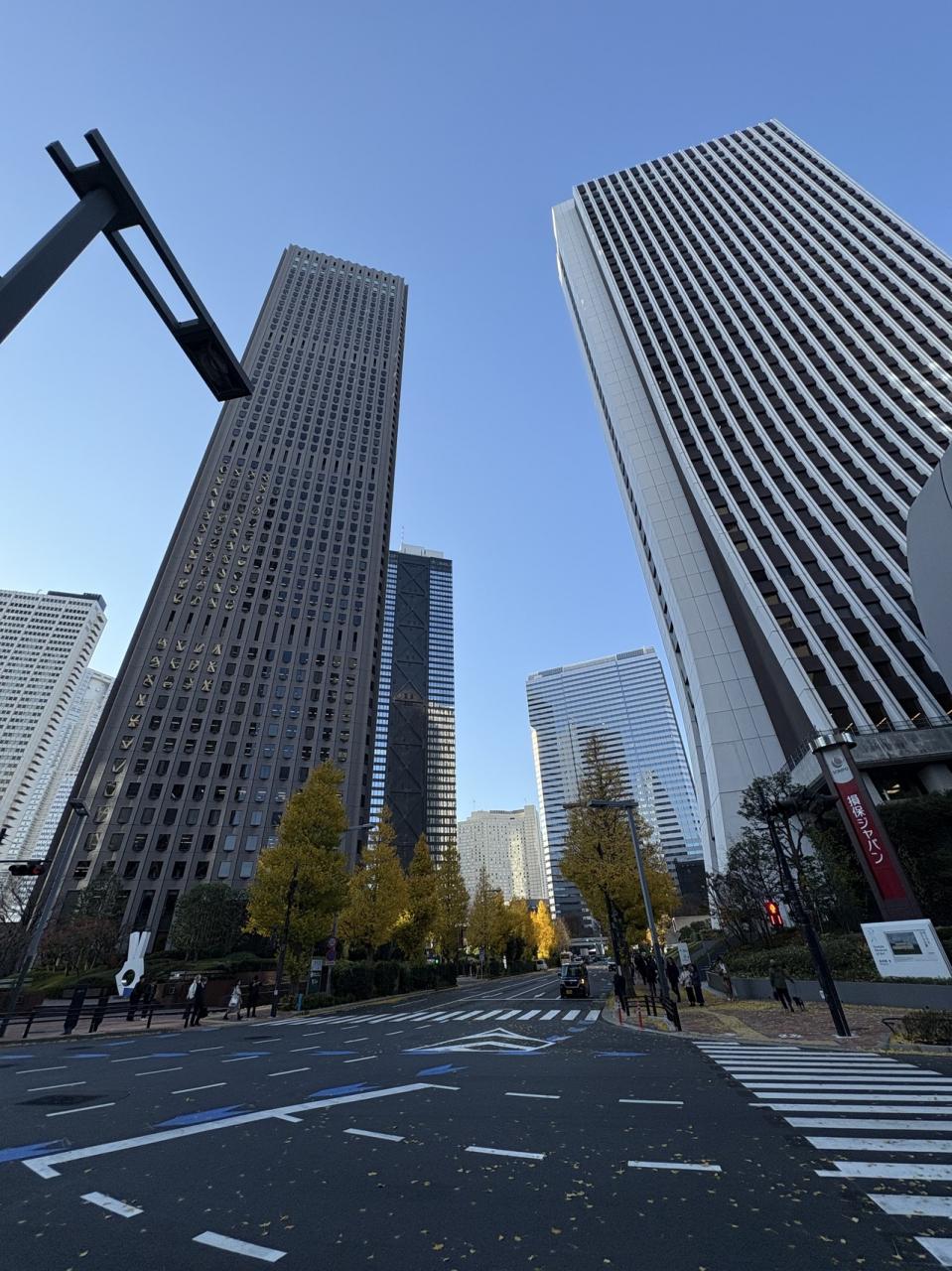
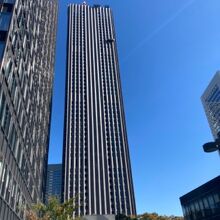
新宿センタービル 名所・史跡
-
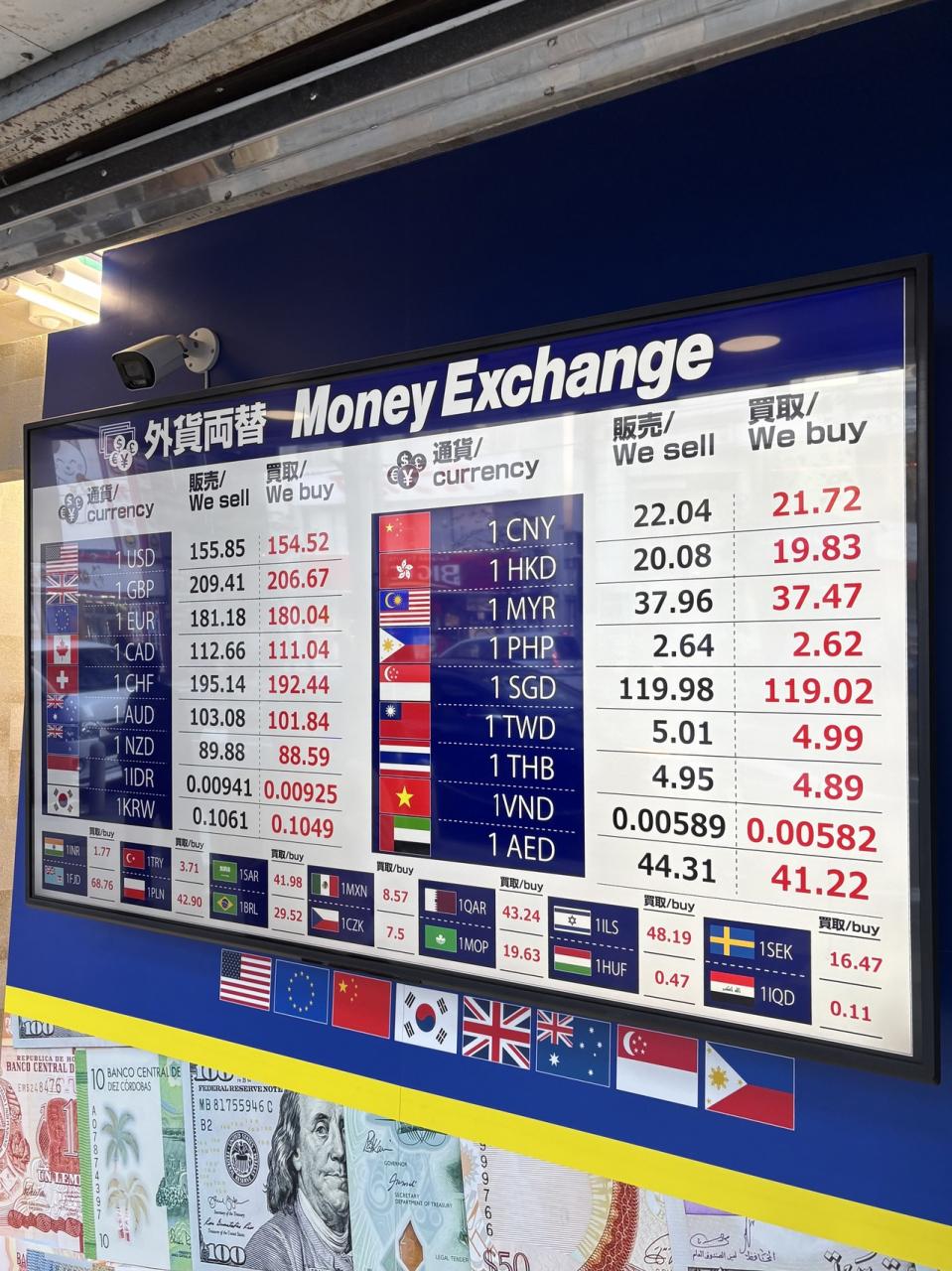
高市円安止まらず・・・
新宿 思い出横丁 名所・史跡
-
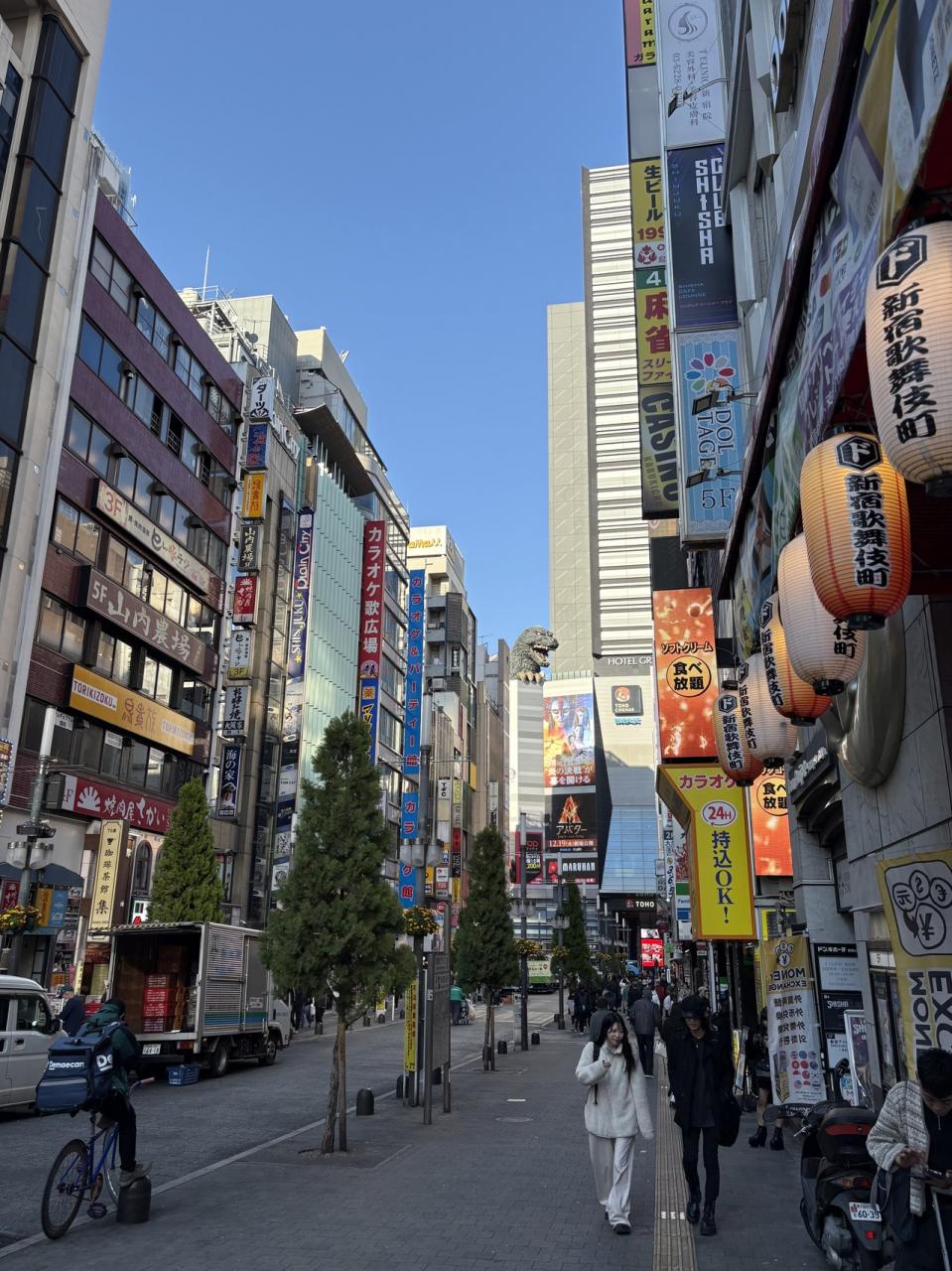
このゴジラはいつ現れたんだろう・・・?
歌舞伎町 名所・史跡
![14<br />モーリス・ユトリロ<br />パリ郊外ーサン=ドニ<br />Banlieue de Paris - Saint-Denis<br />1910<br />油彩・厚紙<br />oil on cardboard<br />公益財団法人大原芸術財団<br />大原美術館<br />Ohara Museum of Art, Ohara Art Foundation, Kurashiki<br />旧福島太郎コレクション。<br /><br />エコール・ド・パリの作家を体系的に論じた福島の『エコール・ド・パリ』(1948-51年、新潮社)の中に収録された、ユトリロについて解説する草で、本作の図版が使用されている。福島は本作について、「私が初めてパリに行った時分(1921年頃)には所謂モンマニー時代のものや白の時代のものは、画商のウインドーに見かけなかった。見かけるものは当時の近作で、線の堅い、色彩の鮮明なもの[「色彩の時代」の作品]であったが、これ等のものには私は興味が更になかった」、「純粋の色彩を並べるばかりが美しいハルモニーではない。渋い彩によっても美しいハルモニーが作れる。ユトリロはそのよき一例である」と述べている。<br /><br />Former Shigetaro Fukushima Collection: an illustration of this work appears in the chapter on Utrillo in Fukushima's École de Paris (Shinchösha, 1948-51), a study in which he systematically discussed artists of the École de Paris. Regarding this paint-ing, Fukushima wrote: "When I first went to Paris (around 1921), I never saw works from what is called the Montmagny Period or the White Period in the windows of art dealers. What I saw were more recent works of the time, with rigid outlines and vivid colors [Colorful Period), but I had no interest in these at all." He continued: "A beautiful harmony is not created solely by placing pure colors side by side. A beautiful harmony can also be achieved with subdued tones. Utrillo is an excellent example of this."](https://cdn.4travel.jp/img/tcs/t/pict/src/88/65/87/src_88658713.jpg?1765703666)
![11<br />モーリス・ユトリロ<br />マルカデ通り<br />Rue Marcadet<br />1909<br />油彩・カンヴァス<br />oil on canvas<br />名古屋市美術館<br />Nagoya City Art Museum<br /><br />ゆるやかに下る道の形状にあわせて、描かれる左側の建物の一階部分も少しずつ動的に段差を描く構造を示している。道は途中で左に向かって湾曲し、ユトリロの他の多くの作品と同様、視線は絵画空間内にとどまることを強いられる。<br /><br />マルカデ通りはパリ18区に位置し、中世の時代に定期市(ラテン語でmarcadus)が開かれていたことに関連して名付けられた。道端に得む二人組や、中央に描かれる馬車の街者などの人物は、概して、ユトリロにとっての人物像が街の景色を活性化させるための二次的な要素であることを示し、ここでは画面の奥に押し込まれているようでもある。<br /><br />画面内に描かれる文字は、「COMPTOIR」(カウンター)、「VINS・LIQU[EUR]」(ワイン・リキュール)など、酒や食事に関する店舗の看板で占められている。<br /><br />In keeping with the gentle downward slope of the street, the ground-floor levels of the buildings on the left are depicted with a rhythmic series of steps. The road curves to the left midway, and? as in many of Utrillo's works-the viewer's gaze is compelled to remain within the pictorial space. <br /><br />Rue Marcadet, located in Paris's 18th arrondissement, takes its name from the Latin marcadus, referring to a periodic market once held there in the Middle Ages. Figures, such as the pair standing by the roadside and the carriage driver in the center, are generally secondary elements in Utrillo's compositions, serving to animate the streetscape; here, they seem pushed toward the back of the scene. <br /><br />The inscriptions depicted within the picture-such as COMPTOIR ("counter") and VINS? LIQU(EUR) ("wine, liqueurs")-are almost entirely shop signs related to alcohol and food.](https://cdn.4travel.jp/img/tcs/t/pict/src/88/65/87/src_88658715.jpg?1765703666)





利用規約に違反している投稿は、報告する事ができます。
旅行記グループ
国内の美術館・博物館巡り その4
-

2025.9.20~12.14 "モーリス・ユトリロ展@SOMPO美術館"。"風景画の中の人物の後ろ姿" が...
2025/12/11~
新宿
-

マチュピチュ展【その1】"フクロウの神" @ 森アーツセンターギャラリー(2025.11.22~2026.3...
2026/01/12~
六本木
-

マチュピチュ展【その2】"シャーマンの変容" @ 森アーツセンターギャラリー(2025.11.22~2026...
2026/01/12~
六本木
-

マチュピチュ展【その3】"アイ・アパエックの顔を表した埋葬用仮面" @ 森アーツセンターギャラリー(2025...
2026/01/12~
六本木
-

マチュピチュ展【その4】"トカゲのモザイクの耳飾り" @ 森アーツセンターギャラリー(2025.11.22~...
2026/01/12~
六本木
-

マチュピチュ展【その5】"神話の豊穣の場面が描かれた儀礼用の杯"@ 森アーツセンターギャラリー(2025.1...
2026/01/12~
六本木
-

マチュピチュ展【その6】"戦闘と捕虜の捕獲" @ 森アーツセンターギャラリー(2025.11.22~2026...
2026/01/12~
六本木
-

マチュピチュ展【その7】"チムー帝国の装身具一式" @ 森アーツセンターギャラリー(2025.11.22~2...
2026/01/12~
六本木
-

マチュピチュ展【その8】"神格化された祖先とネコ科動物をモチーフにした冠" @ 森アーツセンターギャラリー(...
2026/01/12~
六本木
-

マチュピチュ展【その9】"カエルがモチーフの首飾り"@ 森アーツセンターギャラリー(2025.11.22~2...
2026/01/12~
六本木
-

マチュピチュ展【その10/完】"インカのキープ"@ 森アーツセンターギャラリー(2025.11.22~3.1...
2026/01/12~
六本木
-

"塩谷亮 刻を描くリアリズム" (@佐藤美術館 2026.1.8 ~2.15) で、初めて "写実絵画" を...
2026/01/28~
信濃町・千駄ヶ谷
-

2026.2.9 国立西洋美術館① "オルセー美術館所蔵 印象派 室内をめぐる物語"。"エドガー・ドガ《家族...
2026/02/09~
上野・御徒町
-

2026.2.9 国立西洋美術館② 常設展(その1)"ラビニィア・フォンターナ 《アントニエッタ・ゴンザレス...
2026/02/09~
上野・御徒町
-

2026.2.9 国立西洋美術館③ 常設展(その2)"ダフィット・テニールス(子)《聖アントニウスの誘惑》"
2026/02/09~
上野・御徒町
-

2026.2.9 国立西洋美術館④ 小企画展 "Black Lines Speak 物語る黒線たち ~デュー...
2026/02/09~
上野・御徒町
-

2026.2.9 国立西洋美術館⑤/完 常設展(その3)"ヴィルヘルム・ハンマースホイ《ピアノを弾く妻イーダ...
2026/02/09~
上野・御徒町
-

"スウェーデン絵画展" の後、"藝大アートプラザ"・"上野動物園" へ。京都市動物園の長男ゴリラ "ゲンタロ...
2026/04/12~
上野・御徒町
-

お嬢と行く "スウェーデン絵画 北欧の光、日常のかがやき" 2026.1.27~4.12 @ 東京都美術館
2026/04/12~
上野・御徒町
-

2026年2月7日~5月24日 お嬢と行く "クロード・モネ ~風景への問いかけ" @アーティゾン美術館
2026/04/29~
丸の内・大手町・八重洲
-

"アンドリュー・ワイエス展" の後、"藝大アートプラザ" へ。"佐治真理子《佇む -玉しめ-》" が、いい感...
2026/05/16~
上野・御徒町
-

お嬢と行く"アンドリュー・ワイエス展 ~境界に立つとき、心が動き出す。~" 2026.4/28~7/5 @ ...
2026/05/16~
上野・御徒町
-

2026.7.12① 上野の森美術館 "大ゴッホ展"。撮影可能だったのは、"夜のカフェテラス" 1点のみ・・...
2026/07/12~
上野・御徒町
-

2026.7.12② "大ゴッホ展"の後、東京国立博物館 "アイルランド チェスター・ビューティ・コレクショ...
2026/07/12~
上野・御徒町
-

2026.7.12④ "大ゴッホ展" の後、SOMPO美術館 "山口華揚展"。《青柿》は、諏訪湖のほとり"北...
2026/07/12~
新宿
-

2026.7.12 ⑤・完 "大ゴッホ展" の後、"東京オペラシティ" でクラシック鑑賞 。恵比寿の "ル・...
2026/07/12~
東京
旅行記グループをもっと見る
コメントを投稿する前に
十分に確認の上、ご投稿ください。 コメントの内容は攻撃的ではなく、相手の気持ちに寄り添ったものになっていますか?
サイト共通ガイドライン(利用上のお願い)報道機関・マスメディアの方へ 画像提供などに関するお問い合わせは、専用のお問い合わせフォームからお願いいたします。
この旅行で行ったスポット

もっと見る
新宿(東京) の旅行記






フォートラベル公式LINE@

おすすめの旅行記や旬な旅行情報、お得なキャンペーン情報をお届けします!
QRコードが読み取れない場合はID「@4travel」で検索してください。
\その他の公式SNSはこちら/


旅行記グループ 国内の美術館・博物館巡り その4
0
55