


2025/08/07 - 2025/08/07
30位(同エリア934件中)

旅熊 Kokazさん
- 旅熊 KokazさんTOP
- 旅行記1915冊
- クチコミ854件
- Q&A回答102件
- 1,700,927アクセス
- フォロワー753人
MOMAT コレクション〔国立東京近代美術館 所蔵作品展〕(2025.7.15-10.26)
https://www.momat.go.jp/exhibitions/r7-1
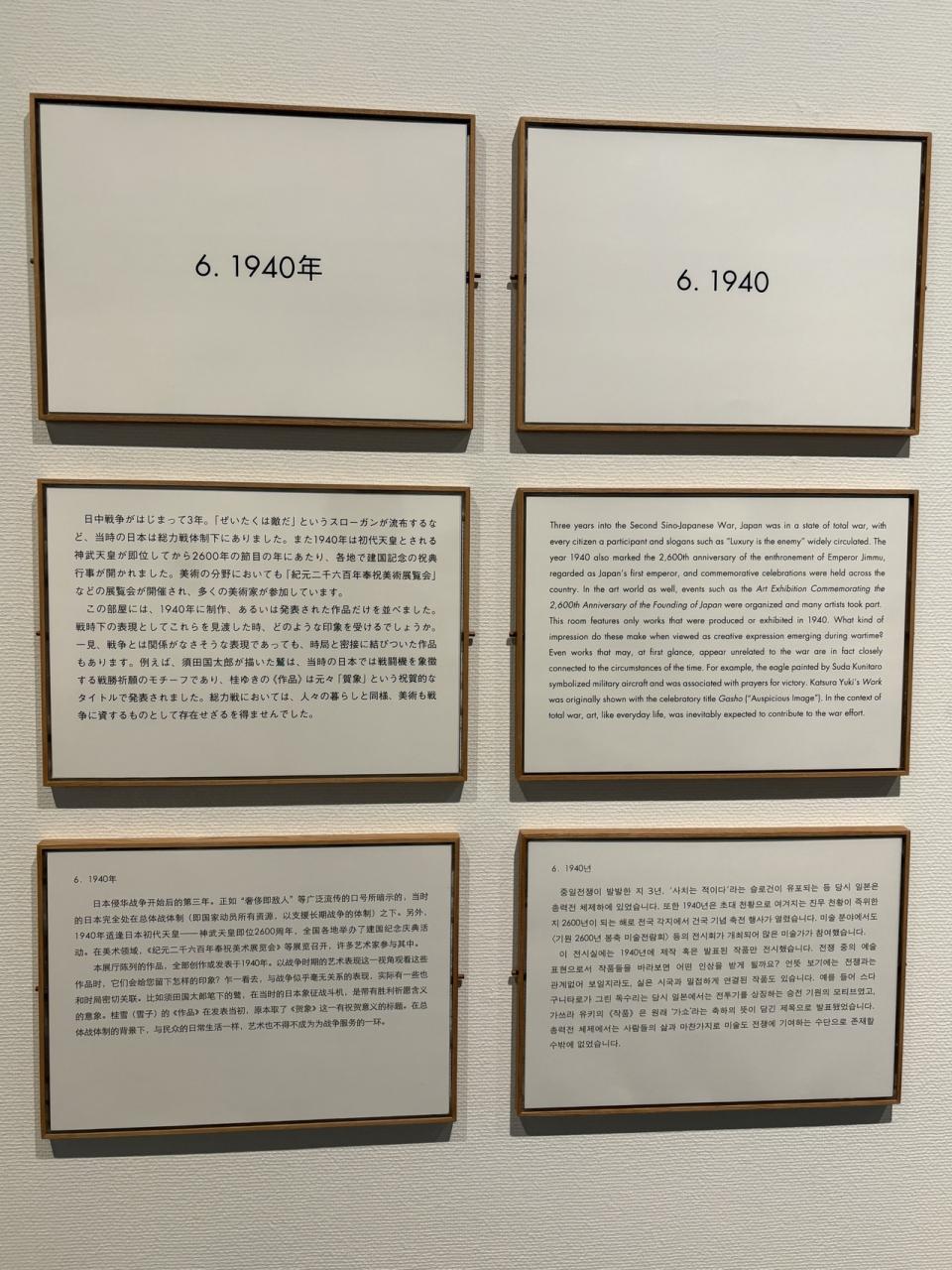
6.1940年
- 旅行の満足度
- 5.0
-

6. 1940年
日中戦争がはじまって3年。「ぜいたくは敵だ」というスローガンが流布するなど、当時の日本は総力戦体制下にありました。また1940年は初代天皇とされる神武天皇が即位してから2600年の節目の年にあたり、各地で建国記念の祝典行事が開かれました。
美術の分野においても「紀元二千六百年奉祝美術展覧会」などの展覧会が開催され、多くの美術家が参加しています。この部屋には、1940年に制作、あるいは発表された作品だけを並べました。
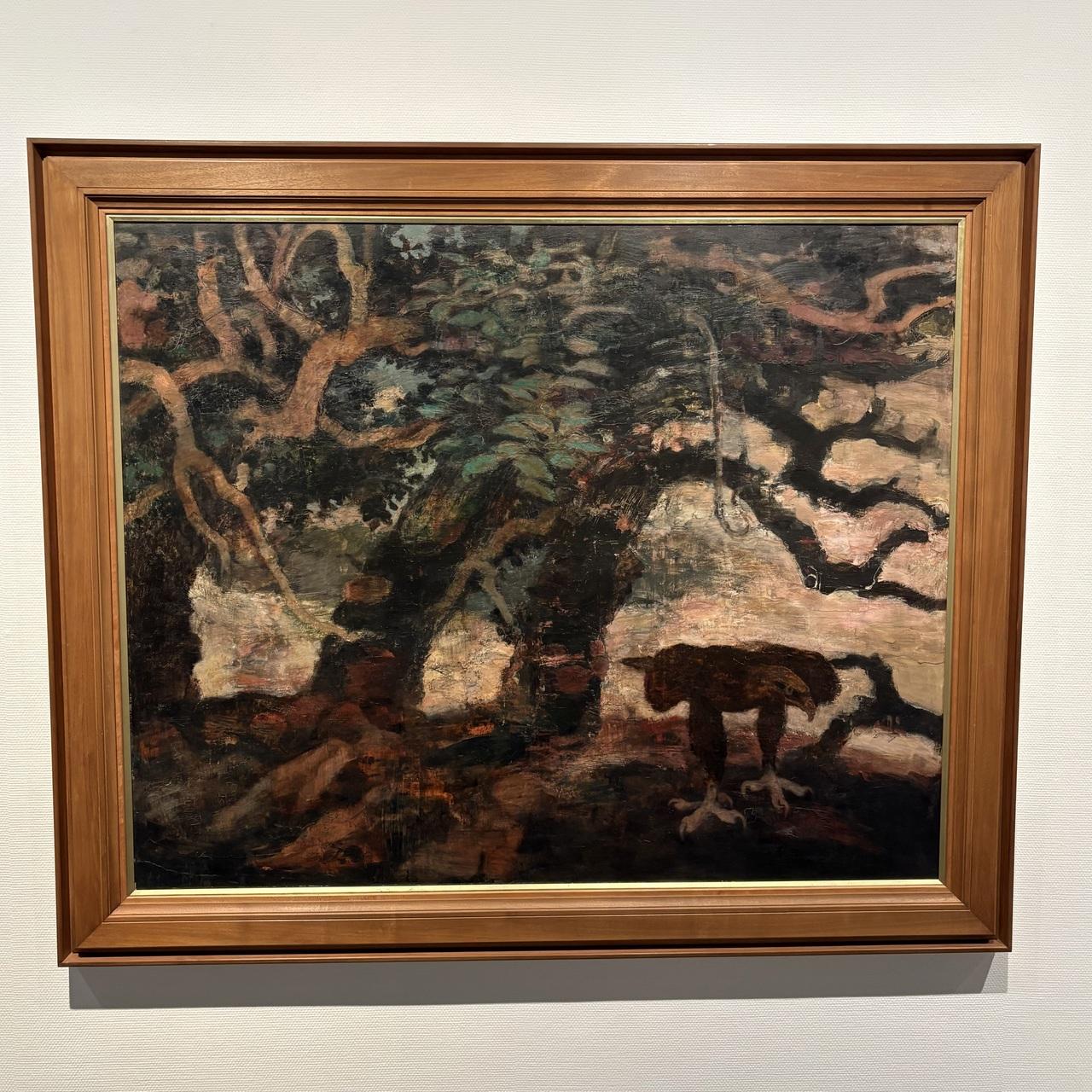
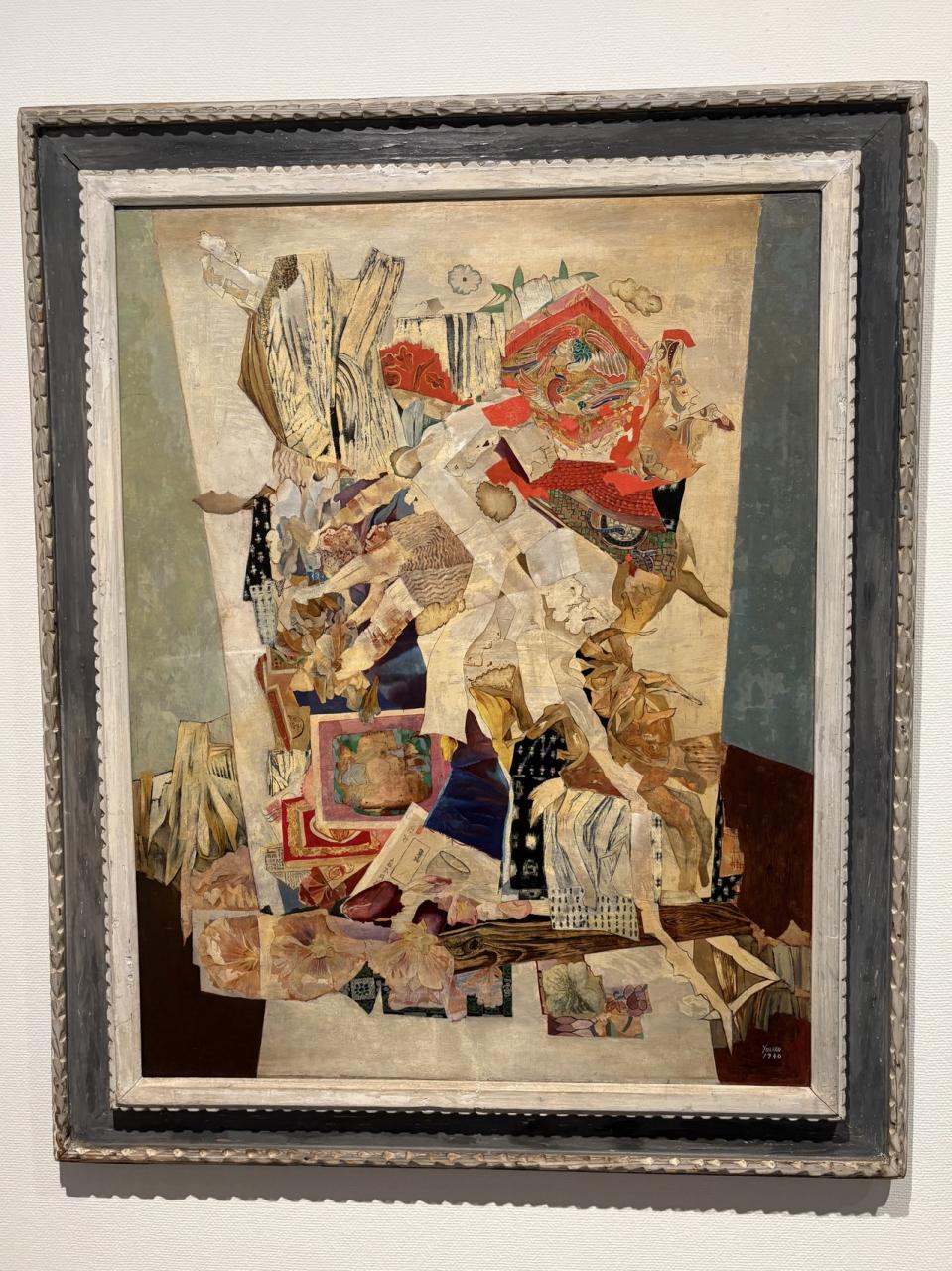
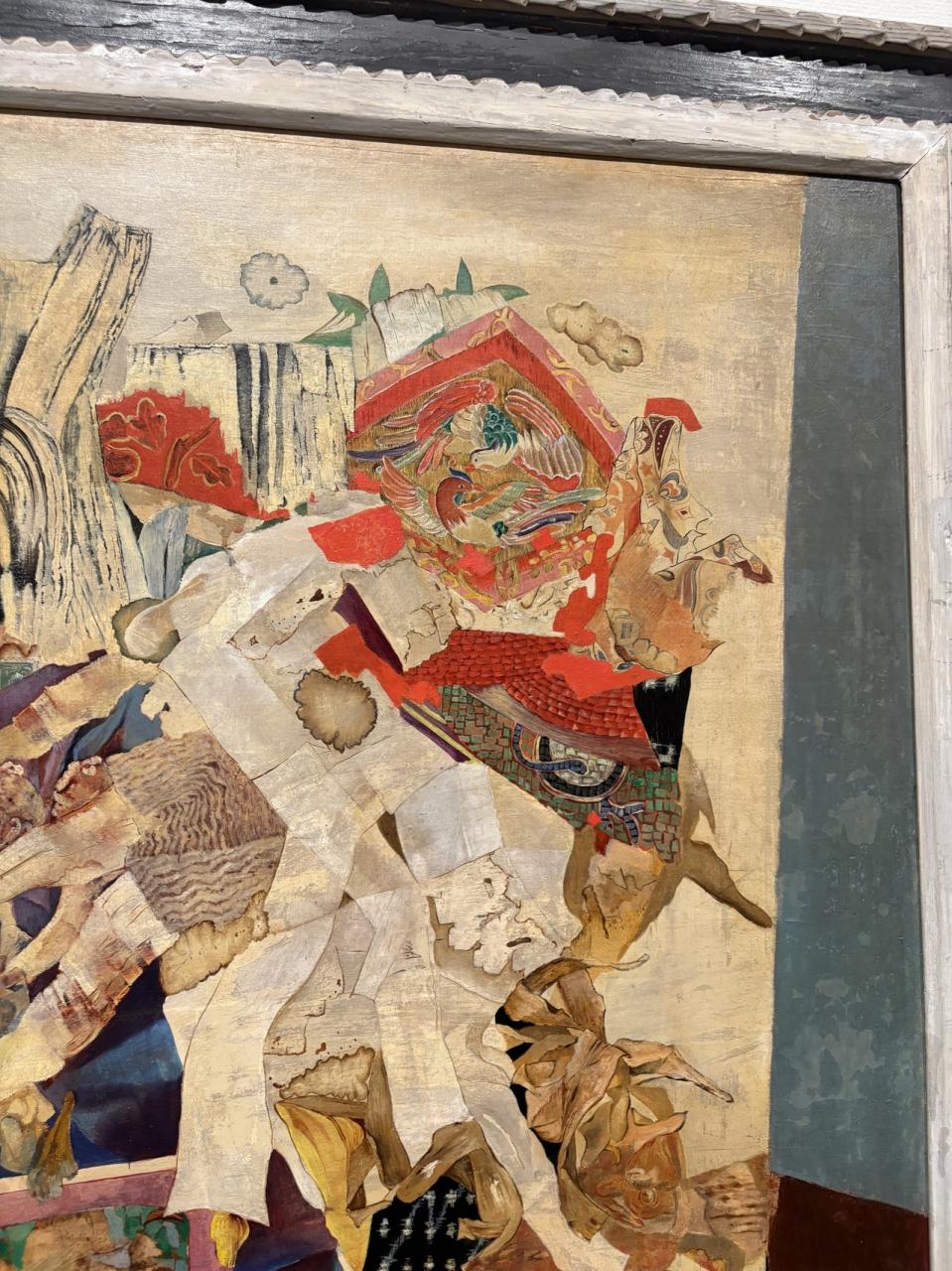
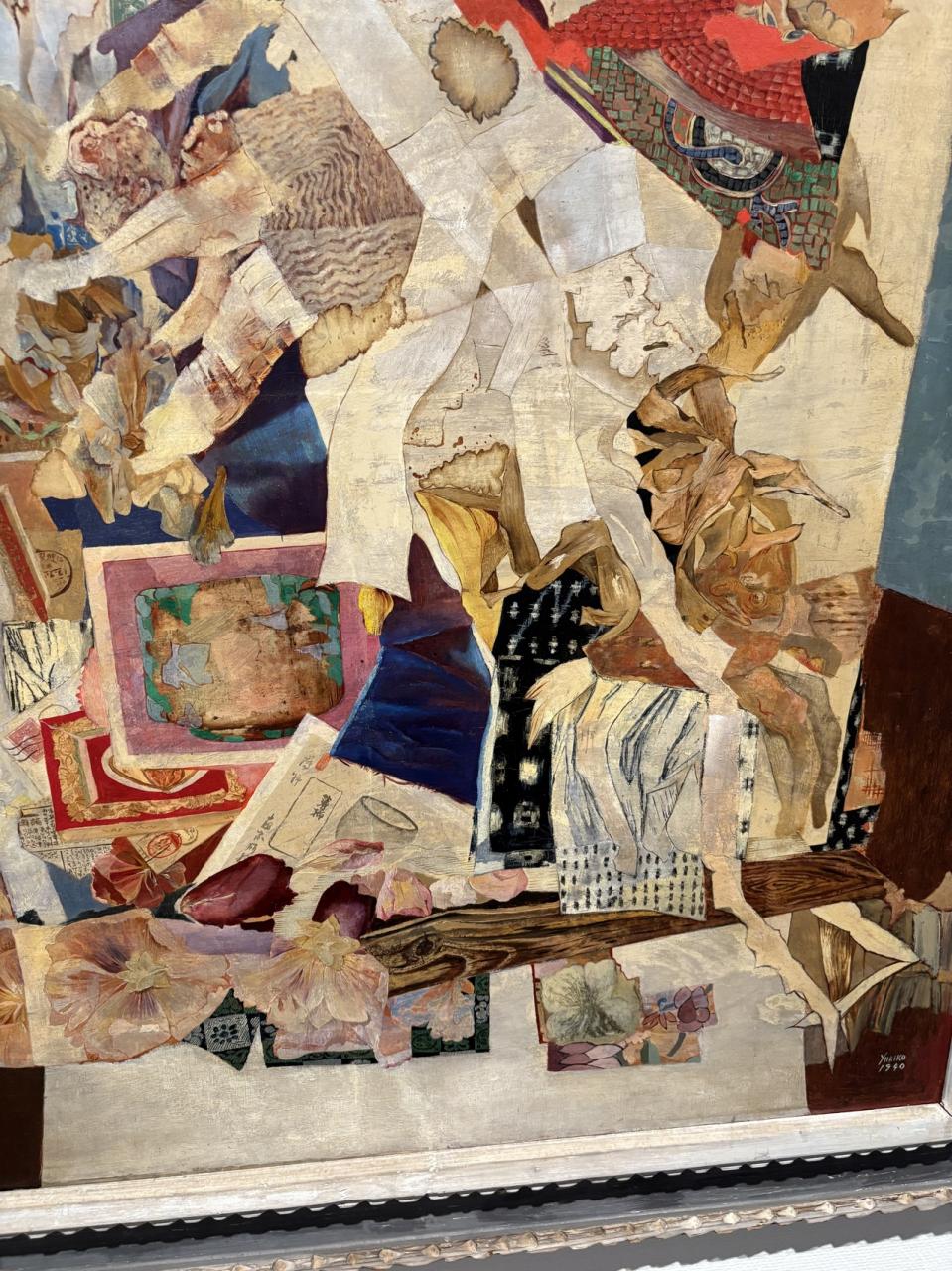
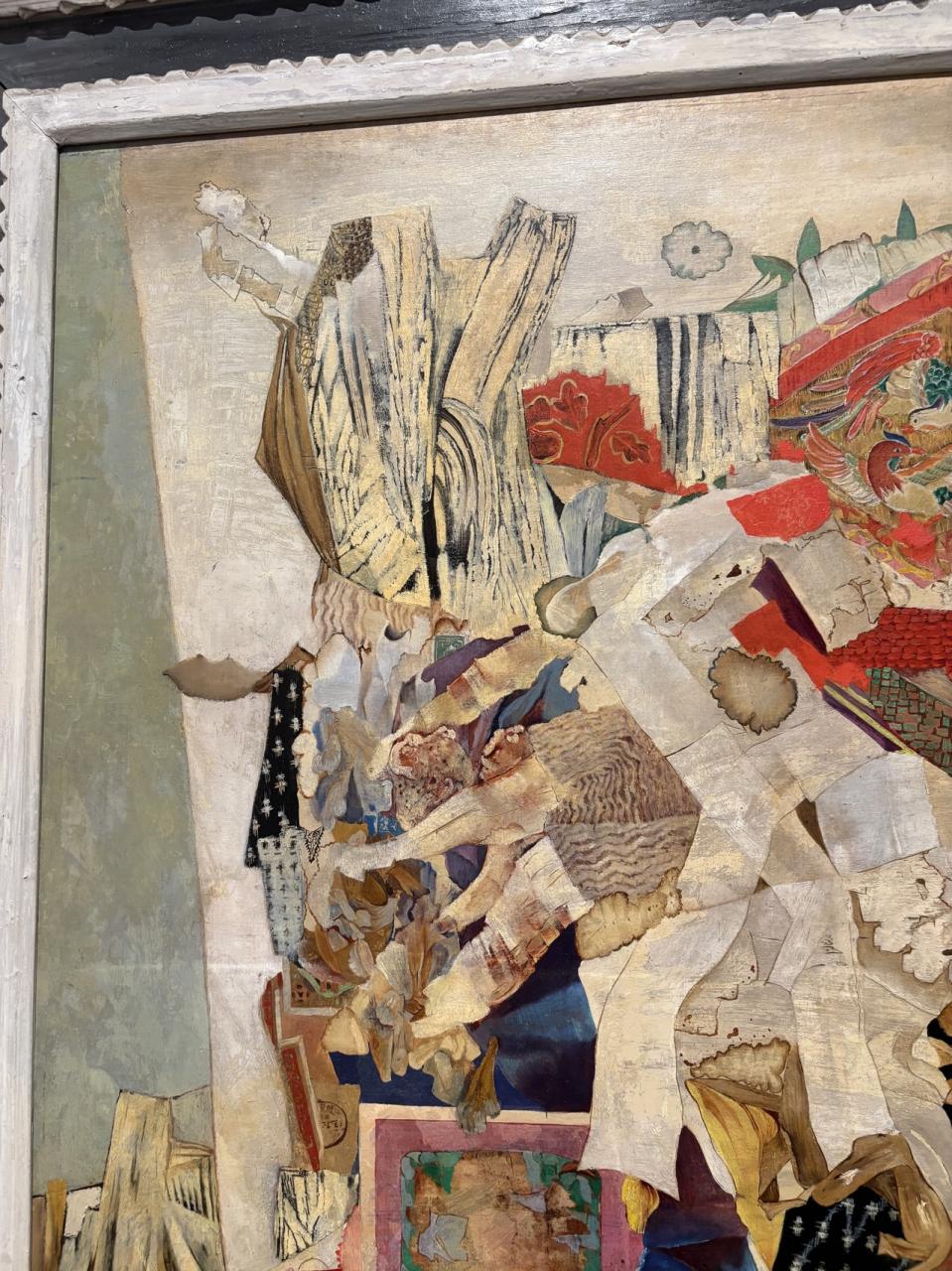
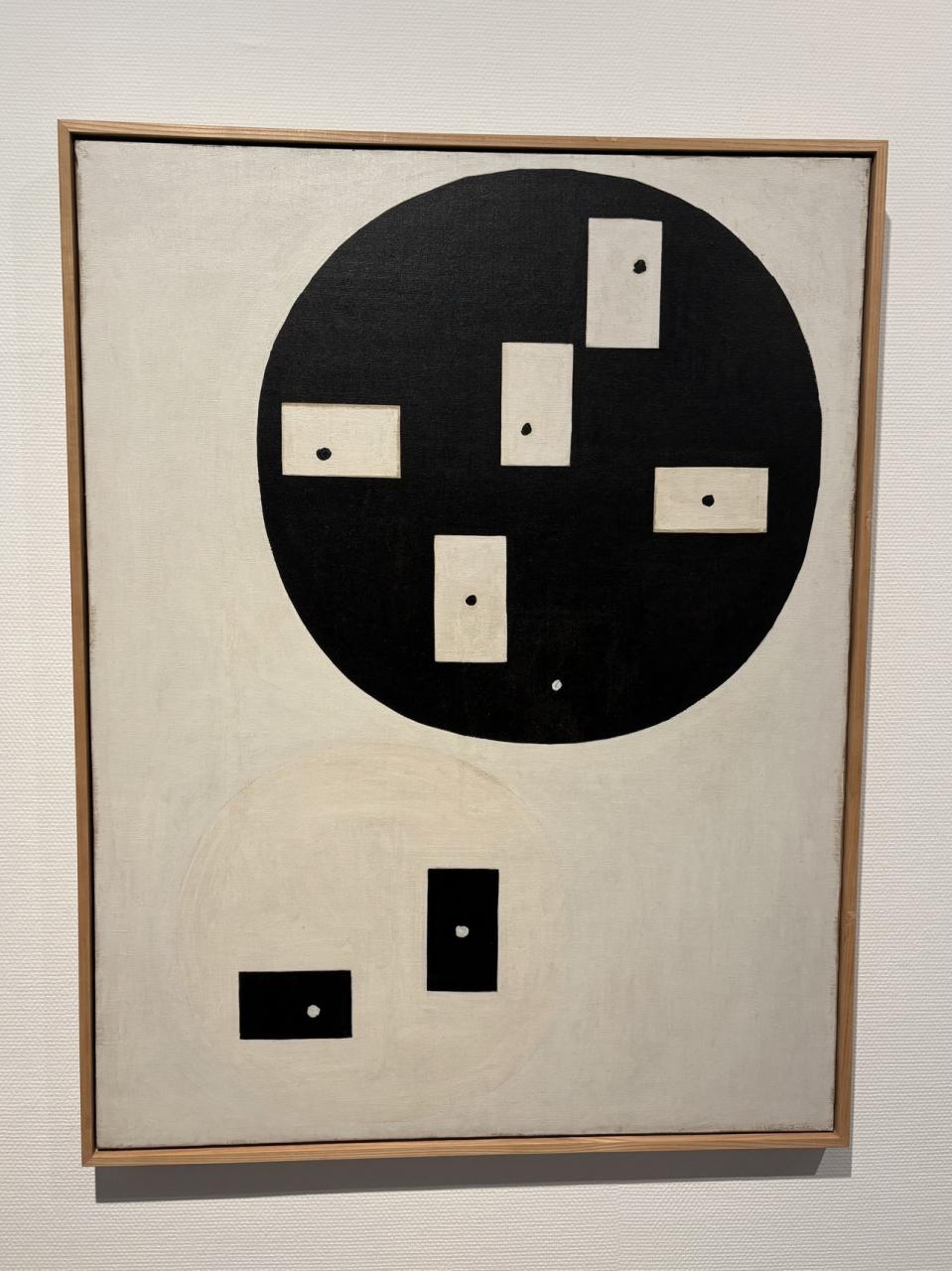
戦時下の表現としてこれらを見渡した時、どのような印象を受けるでしょうか。一見、戦争とは関係がなさそうな表現であっても、時局と密接に結びついた作品もあります。例えば、須田国太郎が描いた鷲は、当時の日本では戦闘機を象徴する戦勝祈願のモチーフであり、桂ゆきの<作品>は元々「賀象」という祝賀的なタイトルで発表されました。総力戦においては、人々の暮らしと同様、美術も戦争に資するものとして存在せざるを得ませんでした。
6. 1940
Three years into the Second Sino-Japanese War, Japan was in a state of total war, with every citizen a participant and slogans such as "Luxury is the enemy" widely circulated.
The year 1940 also marked the 2,600th anniversary of the enthronement of Emperor Jimmu, regarded as Japan's first emperor, and commemorative celebrations were held across the country. In the art world as well, events such as the Art Exhibition Commemorating the 2,600th Anniversary of the Founding of Japan were organized and many artists took part.
This room features only works that were produced or exhibited in 1940. What kind of impression do these make when viewed as creative expression emerging during wartime? Even works that may, at first glance, appear unrelated to the war are in fact closely connected to the circumstances of the time. For example, the eagle painted by Suda Kunitaro symbolized military aircraft and was associated with prayers for victory. Katsura Yuki's Work was originally shown with the celebratory title Gasho ("Auspicious Image"). In the context of total war, art, like everyday life, was inevitably expected to contribute to the war effort.東京国立近代美術館 美術館・博物館
-
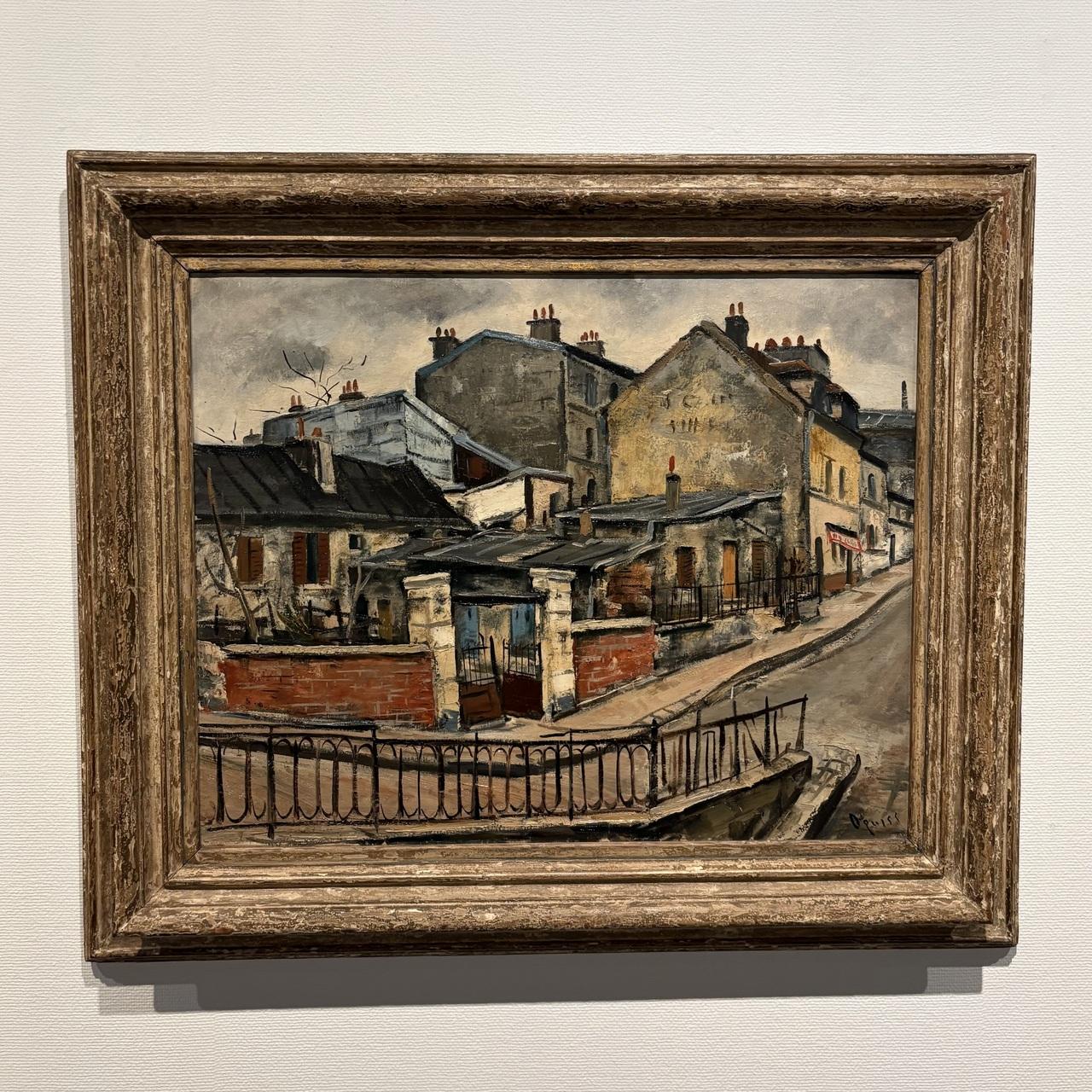
紀元二千六百年奉祝美術展覧会
Art Exhibition Commemorating the 2,600th
Anniversary of the Founding of Japan
荻須高徳
OGISU, Takanori
1901-1986
モンマルトル裏
Back Street of Montmartre
1940 昭和15年
油彩・キャンバス
oil on canvas
文部省管理換
Transferred from Ministry of Education -
紀元二千六百年奉祝美術展覧会
Art Exhibition Commemorating the 2,600th
Anniversary of the Founding of Japan
須田国太郎
SUDA, Kunitaro
1891-1961
歩む鷲
Walking Eagle
1940
昭和15年
油彩・キャンバス oil on canvas
文部省管理換
Transferred from Ministry of Education -
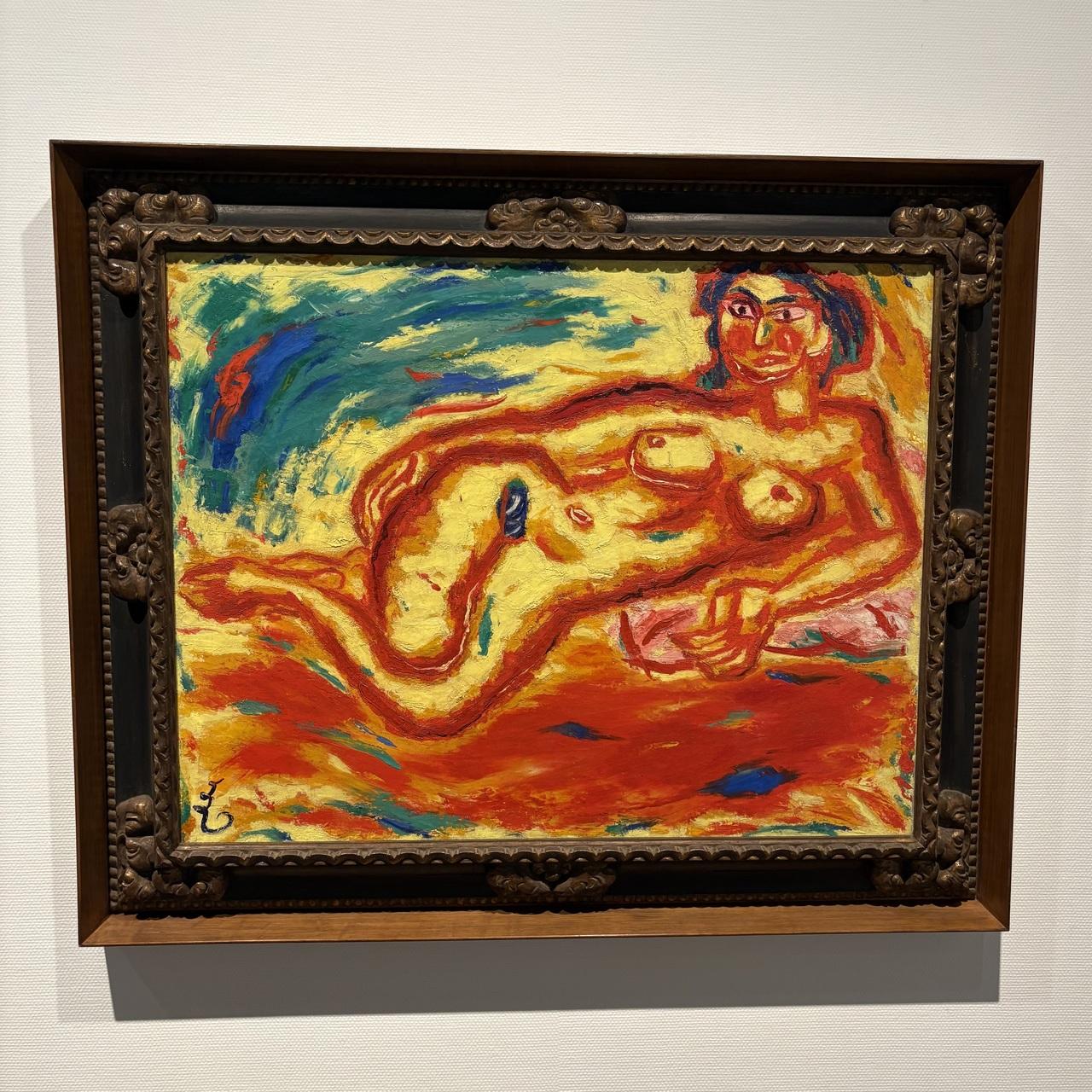
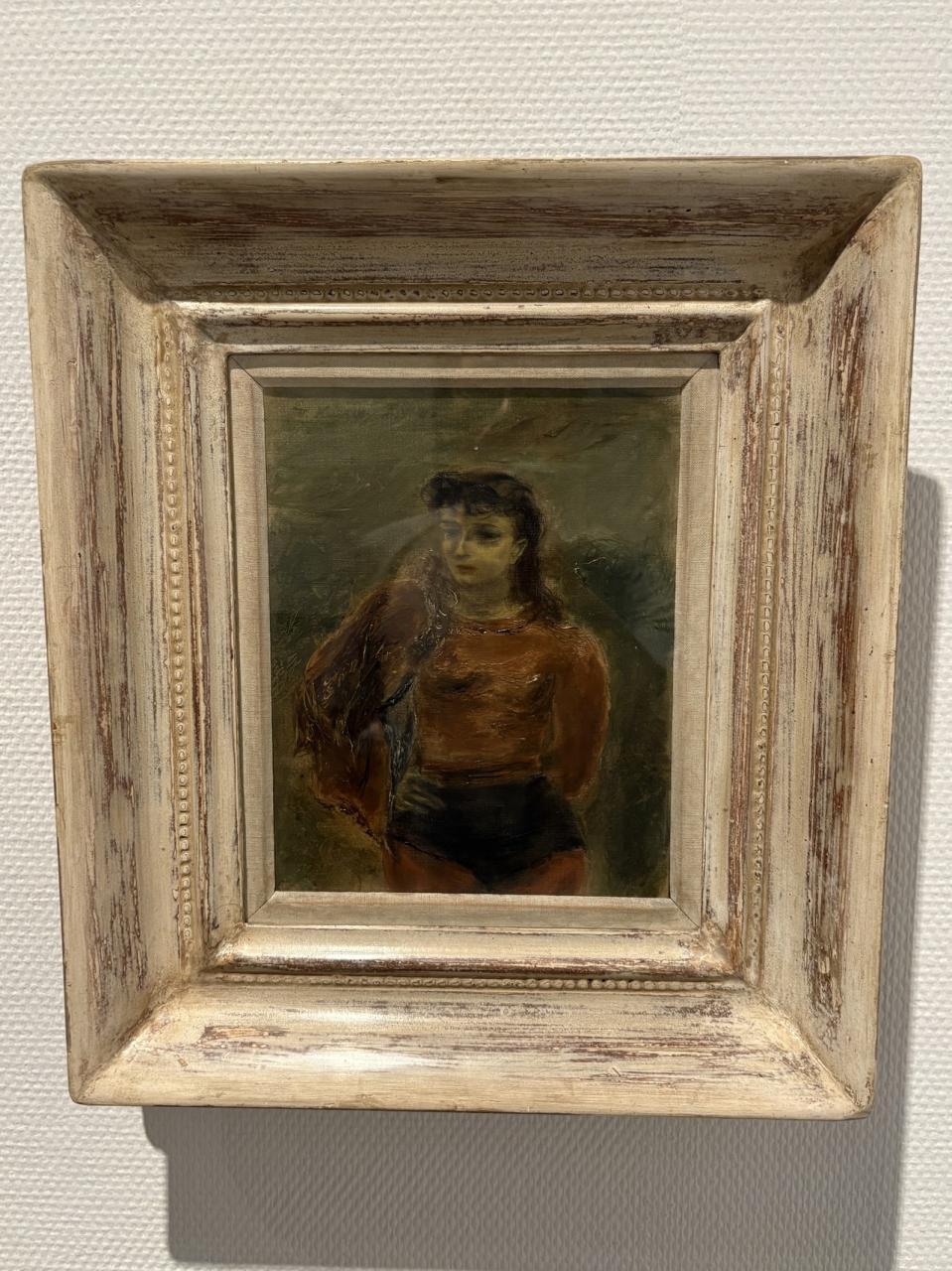
紀元二千六百年奉祝美術展覧会
Art Exhibition Commemorating the 2,600th
Anniversary of the Founding of Japan
里見勝蔵
SATOMI, Katsuzo
1895-1981
女
Woman
1936 昭和11年
油彩・キャンバス oil on canvas
購入
Purchased -
紀元二千六百年奉祝美術展覧会
Art Exhibition Commemorating the 2,600th
Anniversary of the Founding of Japan
桂ゆき (ユキ子)
KATSURA, Yuki (Yukiko)
1913-1991
作品
Work
1940 昭和15年
油彩・キャンバス oil on canvas
購入
Purchased -
-
-
-
第27回二科展
The 27th Nikaten
大沢昌助
OSAWA, Shosuke
1903-1997
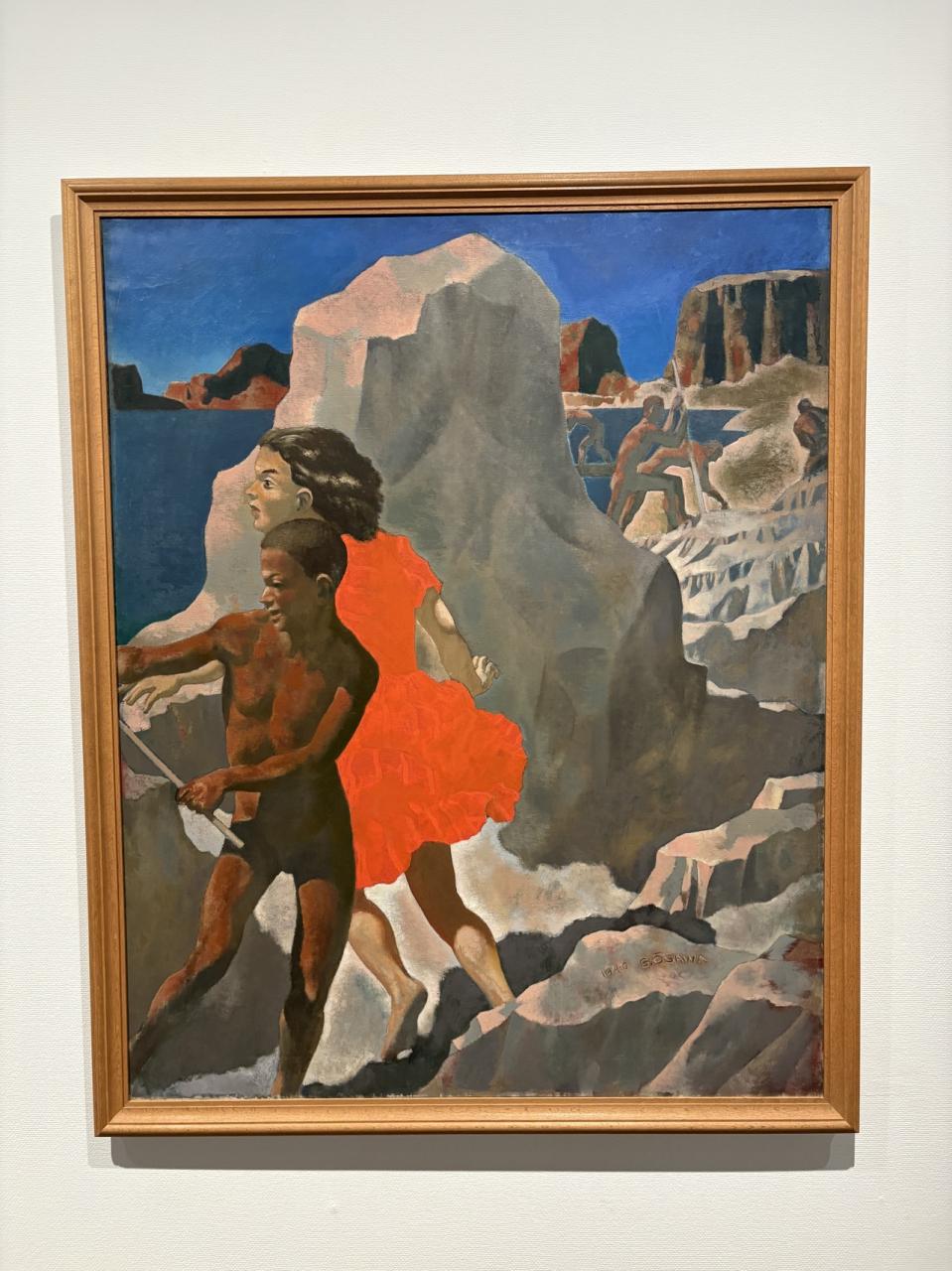
岩と人
Men and Rocks
1940 昭和15年
油彩・キャンバス oil on canvas
作者寄贈
Gift of the artist
強い日差しが、巨大な岩に暗い影を落とし、その一方で少女のワンピースの朱色を引き立てています。左の少年、そして岩の向こうにいる男たちは、いずれも古典的な均整のとれた体付きをしていますが、棒を持って何をしているのでしょうか。中央の巨岩は見る者の視線を阻み、私たちはその向こうで何が行われているかを知ることができません。また少年少女は左のほうに視線を向けていますが、画面の外に何がいるのかも気になります。この作品は、登場人物の視線と見る者の視線の交錯を軸とした巧みな構図によって、私たちの想像力をかきたてるのです。
The brilliant sunshine casts a huge boulder partially into dark shadow while accentuating the bright vermilion of the girl's dress. The boy on the left and the men in the distance beyond the boulder all have classical, well-balanced physical proportions, but what might they be doing with those rods? The massive rock in the center blocks the viewer's line of sight, and there is no way to know what is going on. The boy and girl are looking to the left, and we cannot help wondering what lies outside the picture. This painting stirs the imagination with a carefully crafted composition based on the intersection of the figures' and the viewer's gazes. -
第4回自由美術展
The 4th Jiyu-bijutsuten
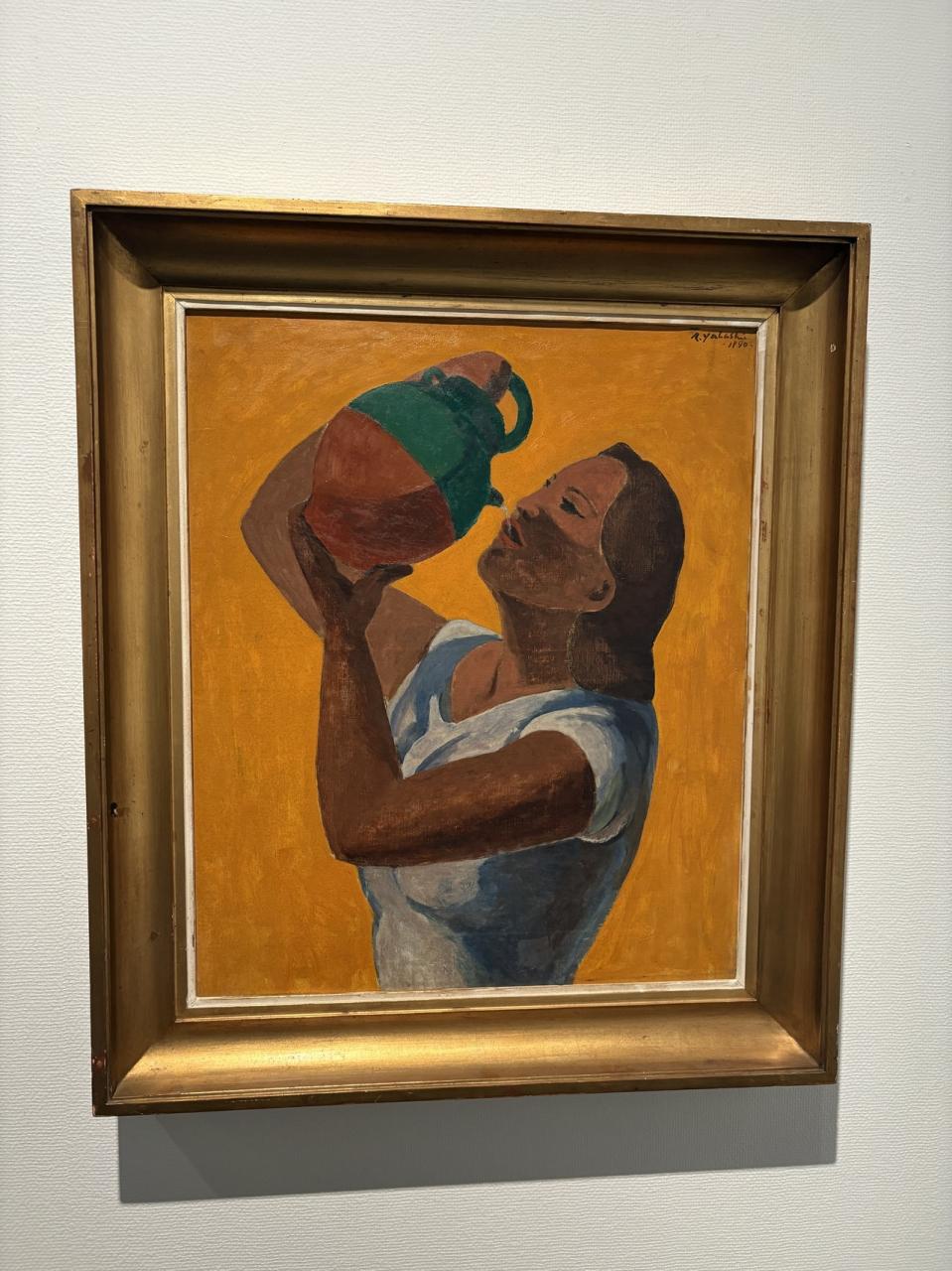
矢橋六郎
YABASHI, Rokuro
1905-1988
水を飲む女
Woman Drinking Water
1940 昭和15年
油彩・キャンバス oil in canvas
購入
Purchased -
-
第1回美術文化協会展
The 1 st Bijutsu-bunka-kyokaiten
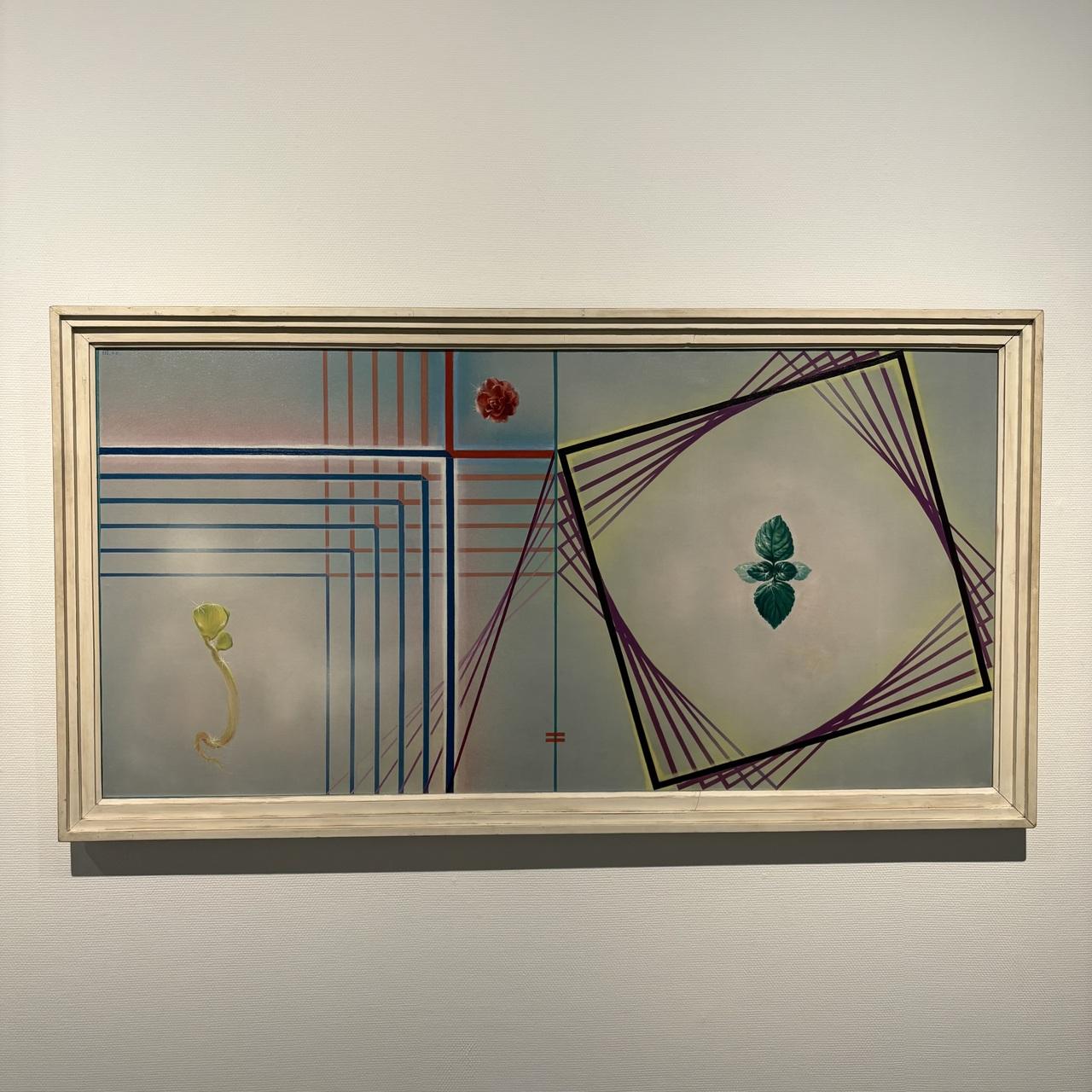
北脇昇
KITAWAKI, Noboru
1901-1951
(A+B)2 意味構造
Structure of the Meaning (A+B)2
1940昭和15年
油彩・キャンバス oil on canvas
北脇かね氏寄贈
Gift of Kitawaki Kane
ピタゴラスの定理をご存じでしょうか。
直角三角形の直角である頂の対辺の平方は、他の二辺の平方の和に等しいというもの。数式で書けばa2+b2=ことなります。本作は、この定理に発想を得て組み立てられています。画面は二つの正方形で構成されており、両者が接する辺を移動する点を基点に、右は内接する正方形が回転し、左は格子状に四分割された矩形の関係が変化していきます。
そこに植物の発芽、花、葉のイメージを加えることで、飛躍があるかもしれませんが、数式が表現する構造と植物の生長の摂理との関連を示唆しているのです。この絵を完成させたときに北脇は「数学が絵になった」と叫んだと伝えられています。
Are you familiar with the Pythagorean theorem?
It states that the square of the hypotenuse (the side opposite the right angle) is equal to the sum of the square of the other two sides. In writing, this is expressed as: a?+b2=c?. Kitawaki was inspired by the theorem to create this work. The picture is composed of two squares and by moving the datum point along the side that adjoins the squares, the inscribed square on the right turns, and the one on the left changes into a lattice-style rectangle divided into four parts.
Though it might seem like something of a leap, by adding sprouts, flowers, and leaves, Kitawaki suggests the relationship between the structure, expressed by the numerical formula, and the dispensation of plant growth. Apparently, on completing the work, Kitawaki shouted, "I made mathematics into a picture!" -
-
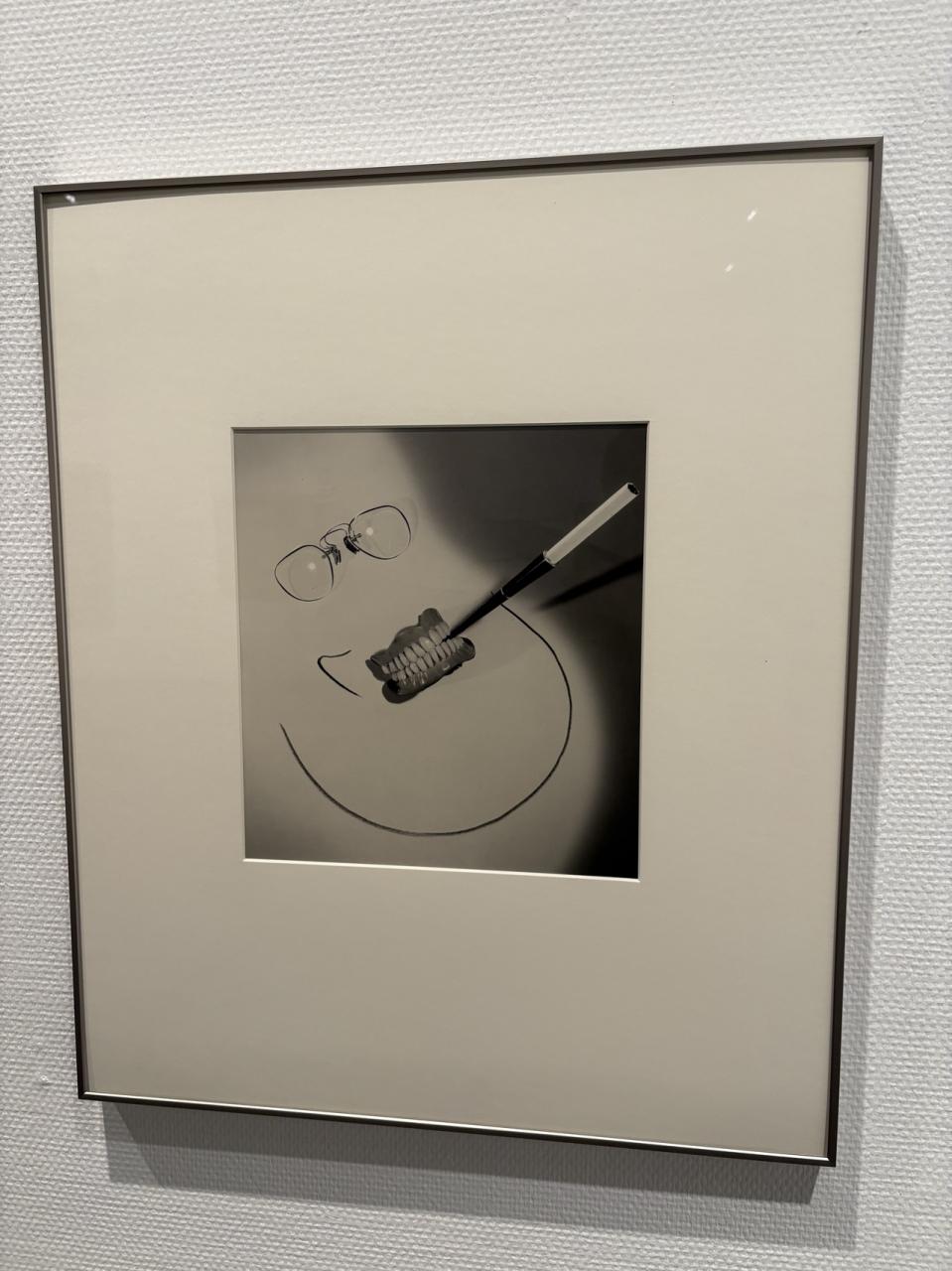
ハリー・K・シゲタ(重田二)
Harry K. Shigeta
1887-1963
フォト・カリカチュア、F.D. ローズヴェルト
Photo-Caricature, F. D. Roosevelt
1940 昭和15年
ゼラチン・シルバー・プリント gelatin silver print
重田信子氏寄贈
Gift of Shigeta Nobuko
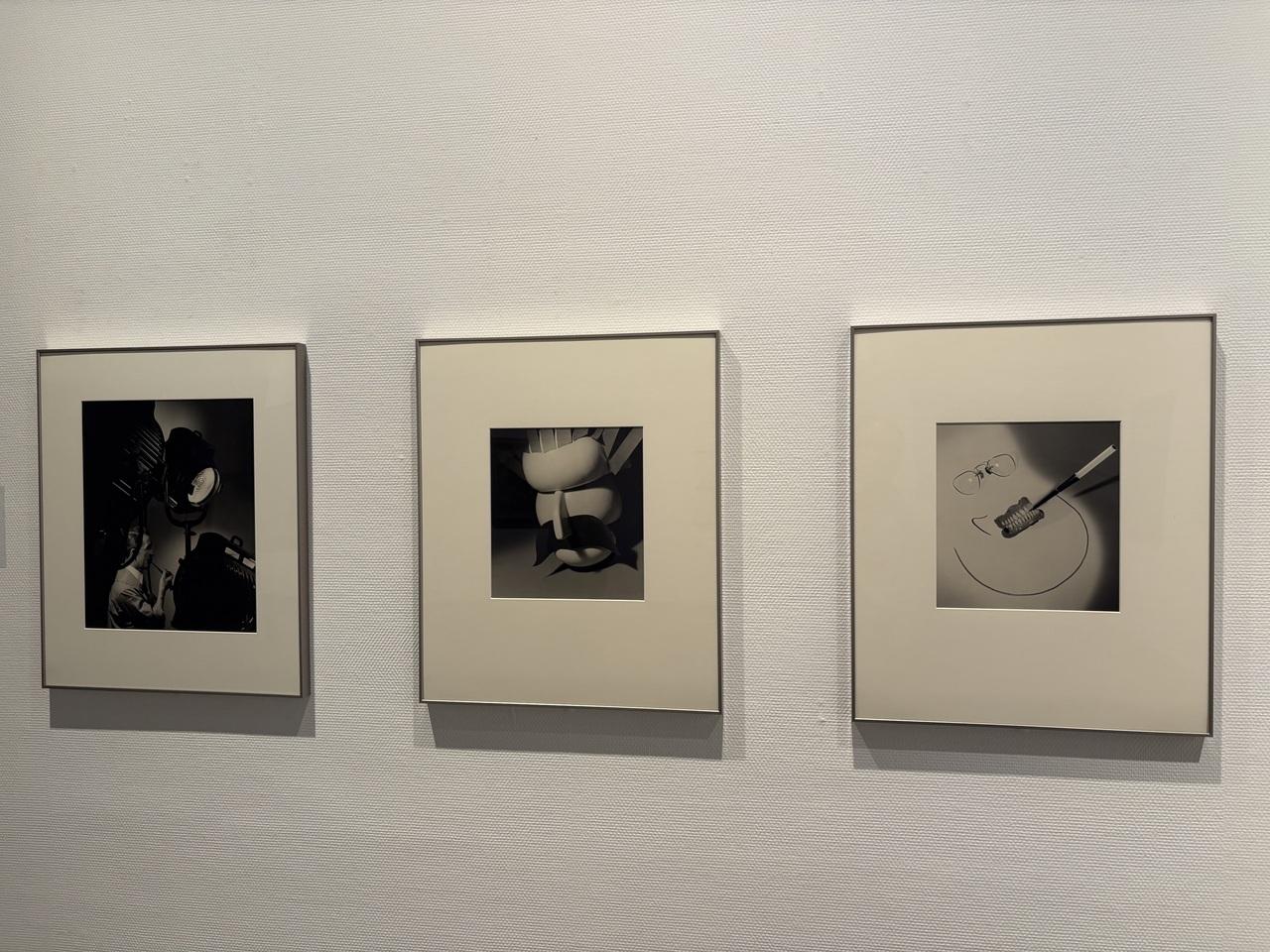
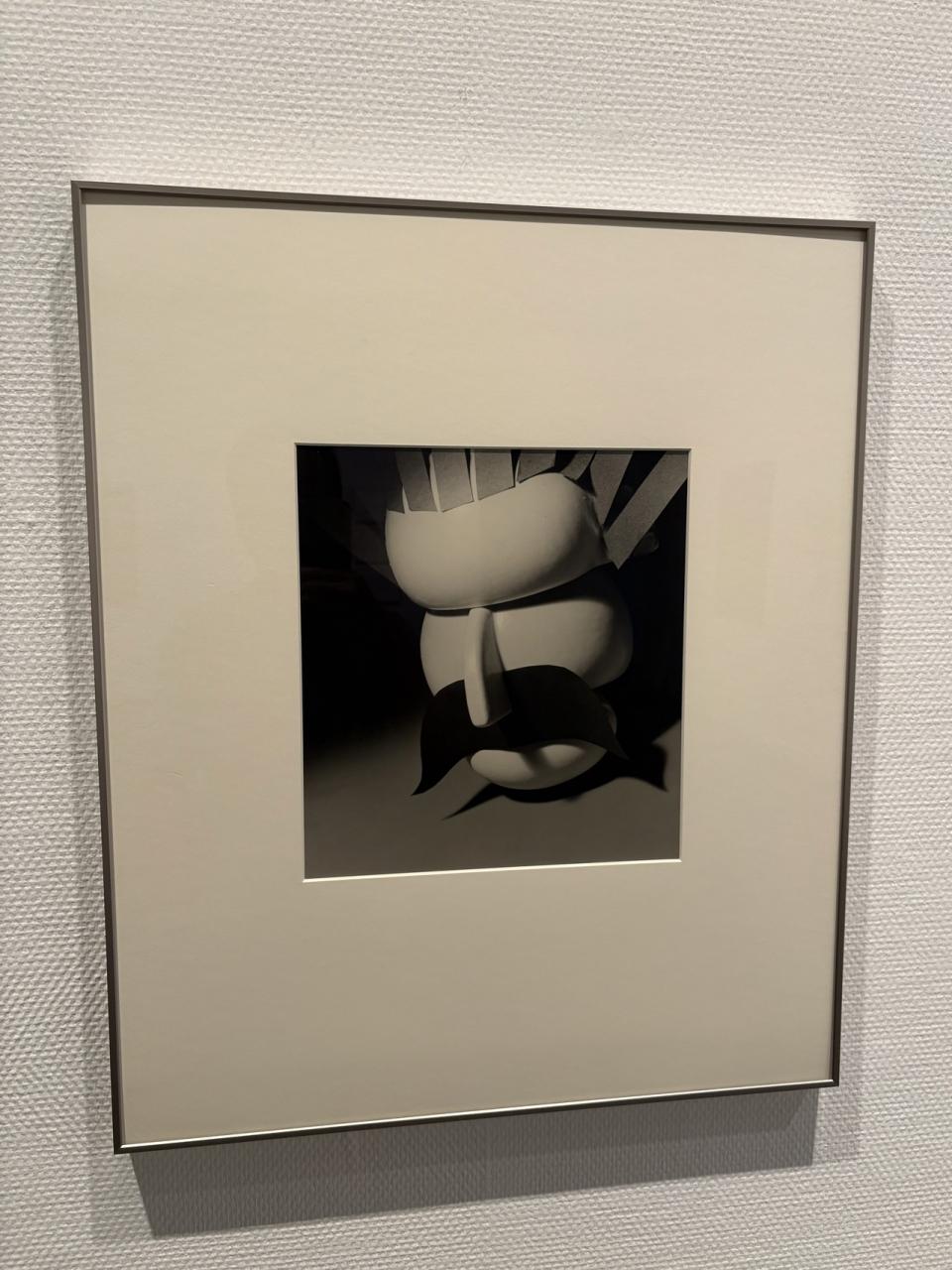
第二次世界大戦が始まると、シゲタは連合国と枢軸国のリーダーを風刺する作品を発表しました。入れ歯や卵など身近な物を使い、それぞれの人物の特徴を誇張しています。
シゲタは15歳で渡米し、商業写真家としてアメリカで活躍しましたが、1941年の日米開戦により彼自身の状況も一変します。在米日系人が続々と強制収容所に送られるなか、知人らの嘆願により収容所入りは免れたものの、戦時中は日本人として多くの制約を受けました。
Soon after the US entered World War II, Shigeta exhibited satirical works portraying the leaders of both the Allied and Axis powers, with familiar objects such as dentures and eggs used to exag gerate their traits.
Having moved to the US at the age of 15, Shigeta had a successful career as a commercial photographer. However, his situation changed dramatically following the out break of war between Japan and the US in 1941. While many people of Japanese descent in the US were sent to internment camps, Shigeta was spared thanks to petitions from acquaintanc-es. Nonetheless, as a Japanese national, he faced numerous restrictions during the war. -
ハリー・K・シゲタ(重田放二)
Harry K. Shigeta
1887-1963
フォト・カリカチュア、スターリン
Photo-Caricature, Stalin
1940 昭和15年
ゼラチン・シルバー・プリント gelatin silver print
重田信子氏寄贈
Gift of Shigeta Nobuko -
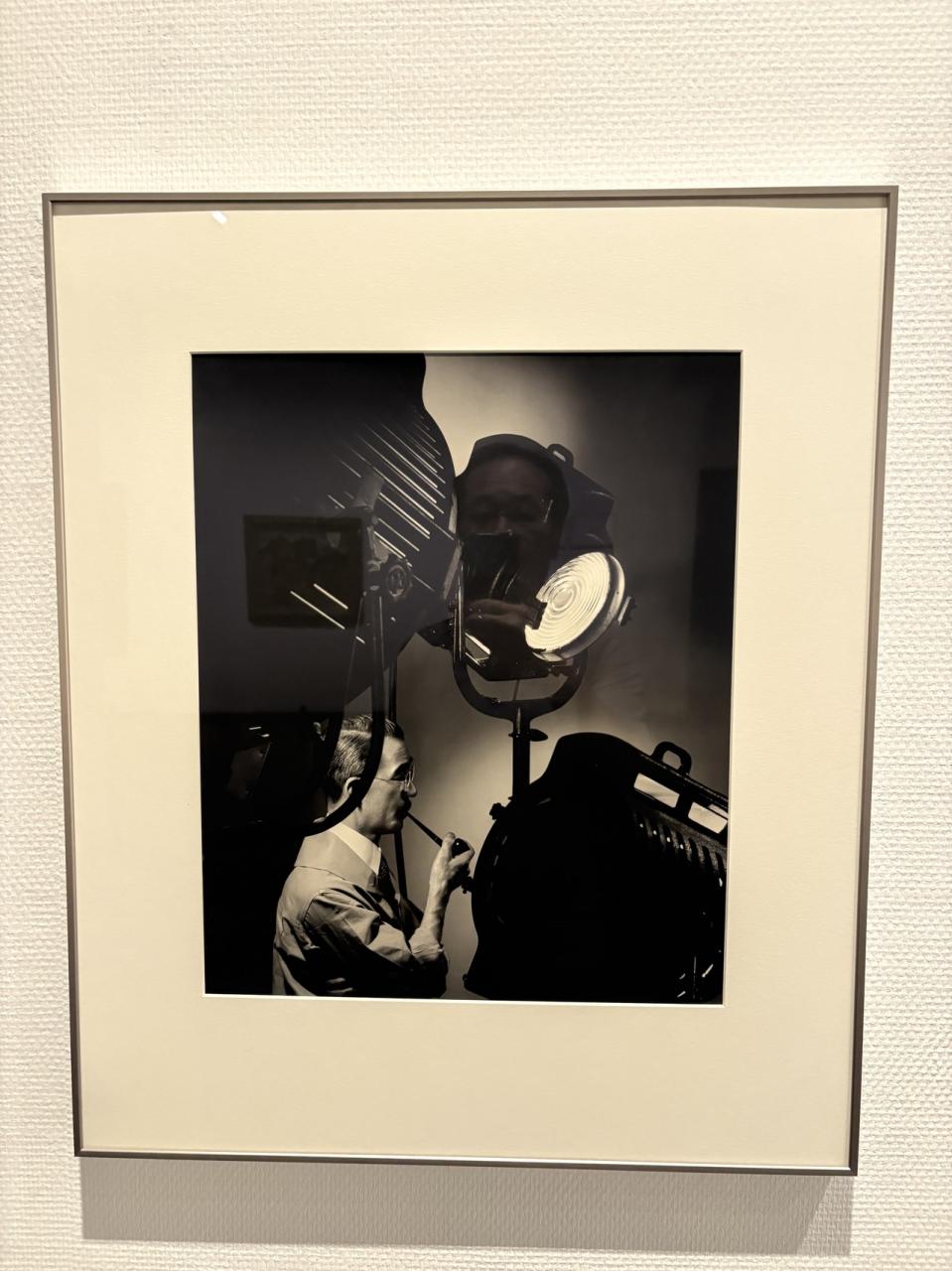
ハリー・K.シゲタ(重田欣二)
Harry K. Shigeta
1887-1963
自画像
Self-Portrait
1940 昭和15年
ゼラチン・シルバー・プリント gelatin silver print
重田倍子氏寄贈
Git of Shigeta Nobuko -
-
第2回九室会展
The 2nd Kyusitsukaiten
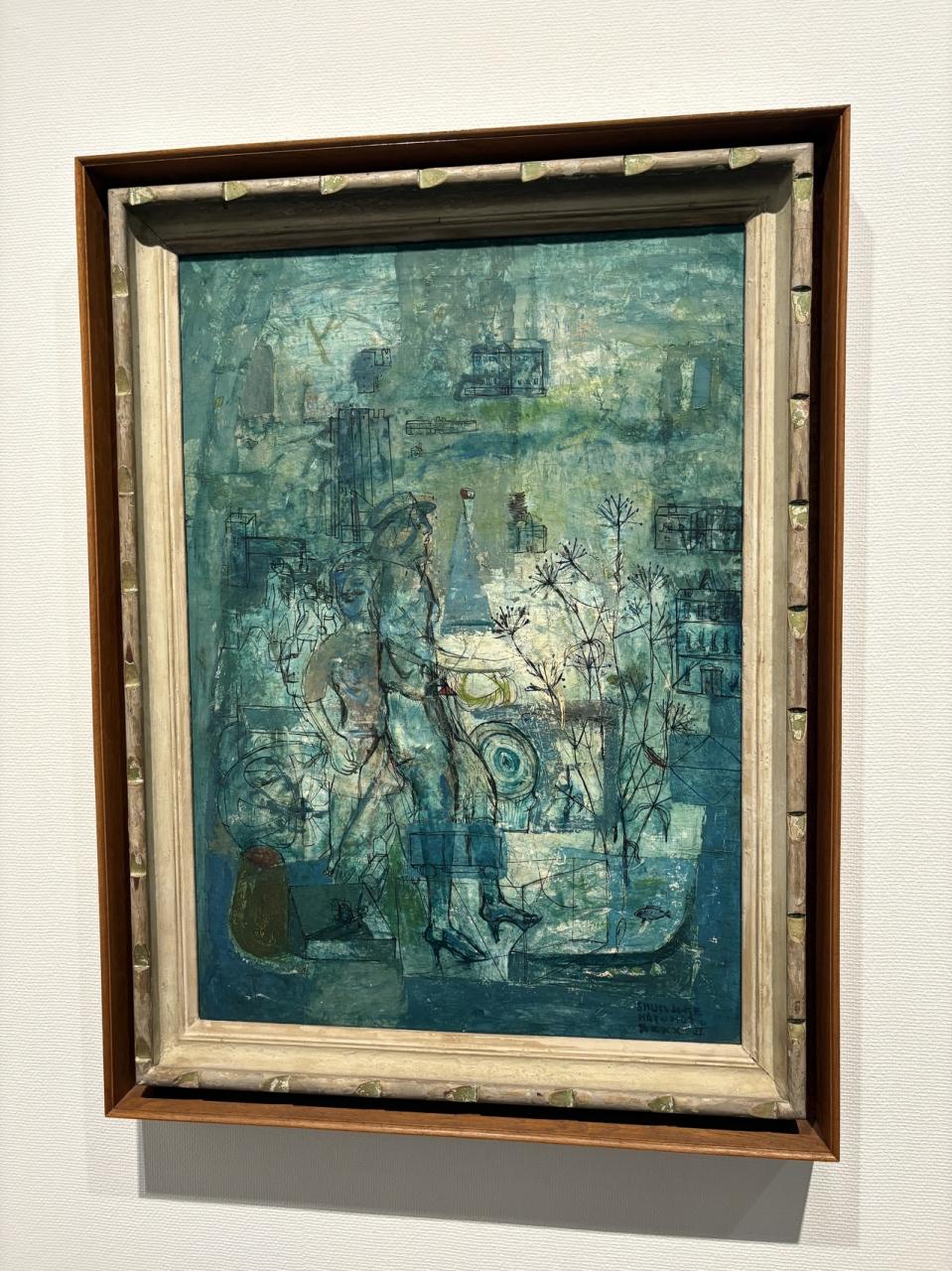
松本竣介
MATSUMOTO, Shunsuke
1912-1948
黒い花
Black Flowers
1940 昭和15年
油彩・板 oil on board
購入
Purchased
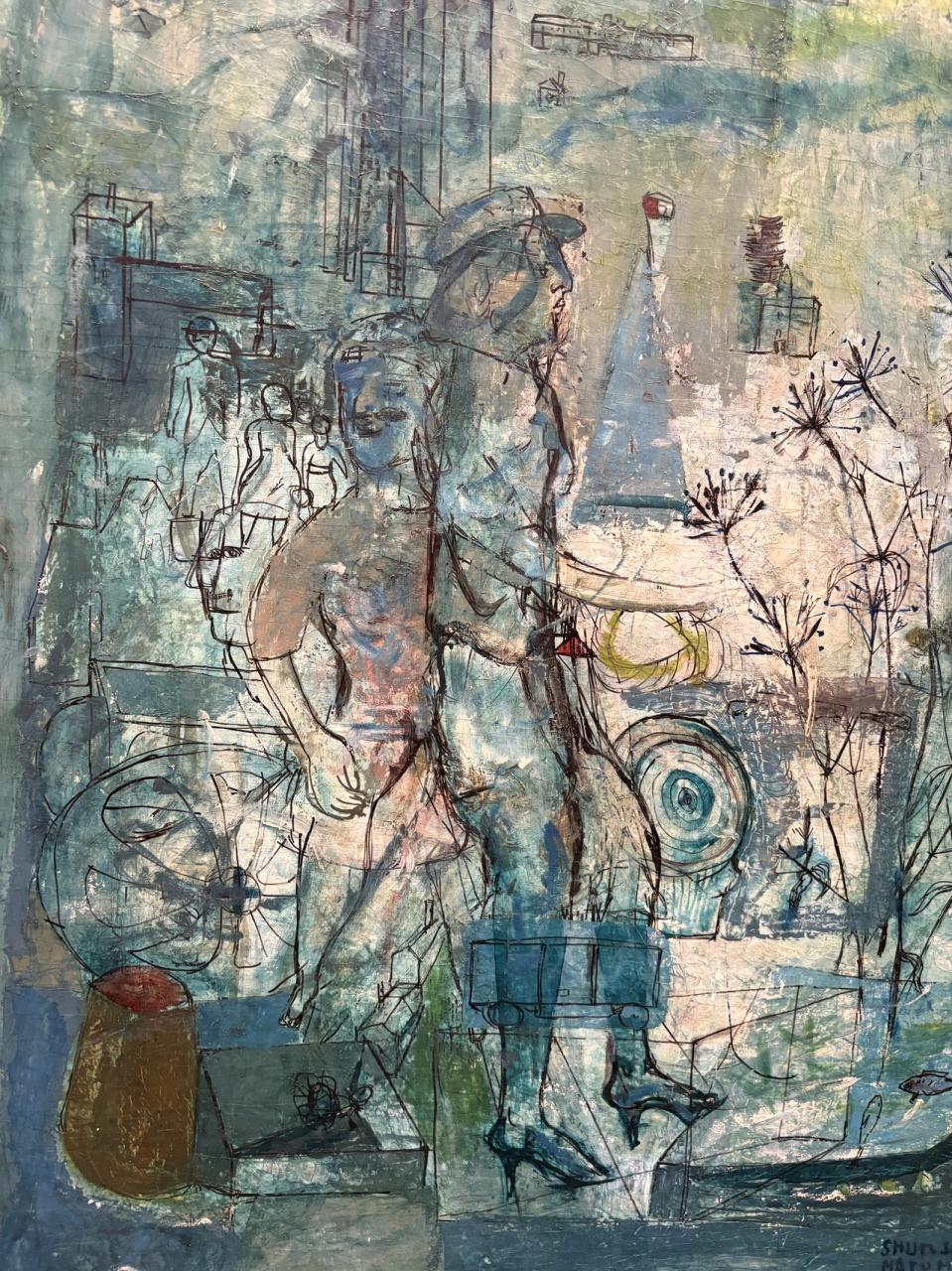
青の印象的な作品です。この色彩の深みはどのようにできているのでしょう?
よく見ると、白、青、緑などが、薄塗りで透明に何度も重ねられていることがわかります。そして特徴的なのは線です。輪郭線を描いてから、その中に色を塗るのではありません。色面の上に、線が引かれているのです。これによって、線と色面との間にも、ひとつの層が形成されます。いくつもの層の重なりが画面に深みをもたらし、それにより都会の人々の心理的な距離感も生み出されています。
This work is distinguished by its blue color. How did Matsumoto achieve such a depth of color?
A close look reveals countless thin, transparent layers of white, blue, and green. The lines are another distinctive feature of the work. Matsumoto did not start by painting the outlines and then fill them in with color. He painted lines on top of a plane of color. By doing this, he created a layer between the lines and the plane. The overlapping layers imbue the picture with a sense of depth as well as creating a sense of psychological distance between the people in the city. -
-
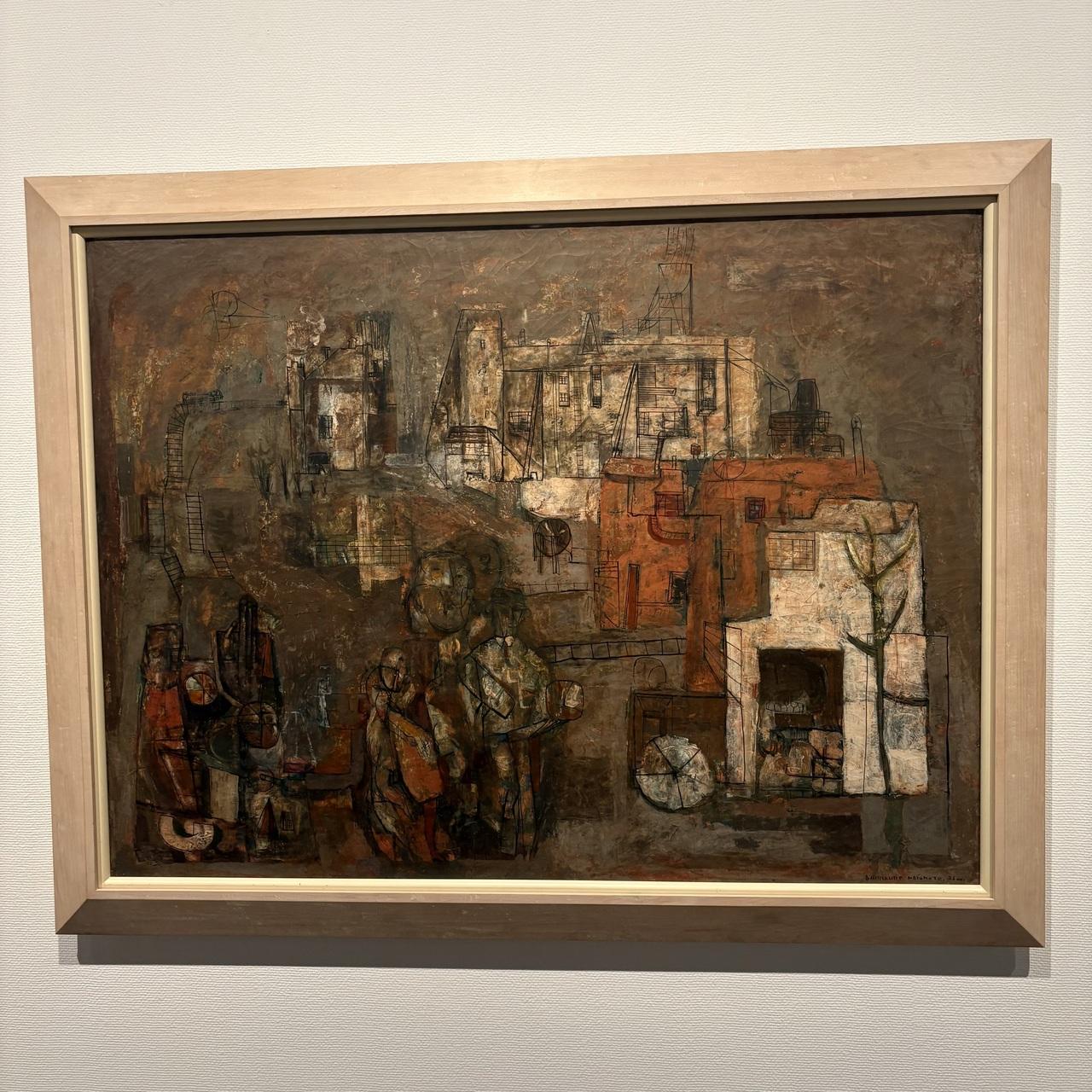
第2回九室会展
The 2nd Kyusitsukaiten
松本竣介
Matsumoto Shunsuke
1912-1948
N駅近く
Scene near N Station
1940 昭和15年
油彩・キャンバス oil on canvas
購入
Purchased
画面中央の人々は、半透明に重なり合うように描かれています。とくに頭部のいくつかは複合して丸いかたまりとなって、画面のあちこちにある車輪のような形と呼応していることに気づかされます。都会という機械の一部分として、人々が組み込まれてしまったかのようです。松本竣介は、この作品を発表したグループ「九室会」の機関誌に、戦時下にあって個人が社会の鋳型にはめられていくことへの違和感を綴った文章を寄稿しています。
The people in the middle of this picture are depicted as translucent, overlapping figures. Several of their heads are combined into a round mass, creating a resonance with the wheellike shapes that are scattered around the picture plane. It seem as if the people have been incorporated into the urban machinery. Matsumoto showed this work in the Kyushitsu-kai exhibition and also contributed a text to the group's newsletter in which he decried the wartime tendency to force individuals to conform to social norms. -
この旅行記のタグ


利用規約に違反している投稿は、報告する事ができます。
-
前の旅行記

MOMAT コレクション(2025.7.15-10.26)5.1930年代の絵画:現実の彼方へ、幻影の手前で...
2025/08/07~
神田・神保町
-
次の旅行記

MOMAT コレクション〔国立東京近代美術館 所蔵作品展〕(2025.7.15-10.26)7.戦後の女性画...
2025/08/07~
神田・神保町
-

MOMAT コレクション〔国立東京近代美術館 所蔵作品展〕(2025.7.15-10.26)1.ハイライト ...
2025/08/07~
神田・神保町
-

MOMAT コレクション〔国立東京近代美術館 所蔵作品展〕(2025.7.15-10.26)2.大正の個性派...
2025/08/07~
神田・神保町
-

MOMAT コレクション〔国立東京近代美術館 所蔵作品展〕(2025.7.15-10.26)3. 岸田劉生「...
2025/08/07~
神田・神保町
-

MOMAT コレクション〔国立東京近代美術館 所蔵作品展〕(2025.7.15-10.26)4.山と渓谷 "...
2025/08/07~
神田・神保町
-

MOMAT コレクション(2025.7.15-10.26)5.1930年代の絵画:現実の彼方へ、幻影の手前で...
2025/08/07~
神田・神保町
-

MOMAT コレクション(2025.7.15-10.26)6.1940年 "ハリー・K・シゲタ(重田放二)フ...
2025/08/07~
神田・神保町
-

MOMAT コレクション〔国立東京近代美術館 所蔵作品展〕(2025.7.15-10.26)7.戦後の女性画...
2025/08/07~
神田・神保町
-

MOMAT コレクション(2025.7.15-10.26)8.ジャンクとポップ "日比野克彦 LABYRIN...
2025/08/07~
神田・神保町
-

MOMAT コレクション〔国立東京近代美術館 所蔵作品展〕(2025.7.15-10.26)9.山村雅昭「ワ...
2025/08/07~
神田・神保町
-

MOMAT コレクション(2025.7.15-10.26)10.アルプのアトリエ/絵画と目的 "山口華楊、洋...
2025/08/07~
神田・神保町
-

MOMAT コレクション(2025.7.15-10.26)11.揺れる境界 "石川真生、基地を取り巻く人々"
2025/08/07~
神田・神保町
-

MOMAT コレクション〔国立東京近代美術館 所蔵作品展〕(2025.7.15-10.26)12.ヨコ軸・タ...
2025/08/07~
神田・神保町
-

東京国立近代美術館 "新収蔵&特別公開 コレクションにみる日韓" (2025.7.15 - 10.26) "...
2025/08/07~
神田・神保町
旅行記グループをもっと見る
コメントを投稿する前に
十分に確認の上、ご投稿ください。 コメントの内容は攻撃的ではなく、相手の気持ちに寄り添ったものになっていますか?
サイト共通ガイドライン(利用上のお願い)報道機関・マスメディアの方へ 画像提供などに関するお問い合わせは、専用のお問い合わせフォームからお願いいたします。
この旅行で行ったスポット





フォートラベル公式LINE@

おすすめの旅行記や旬な旅行情報、お得なキャンペーン情報をお届けします!
QRコードが読み取れない場合はID「@4travel」で検索してください。
\その他の公式SNSはこちら/




旅行記グループ MOMAT コレクション〔国立東京近代美術館 所蔵作品展〕(2025.7.15-10.26)
0
21