


2025/08/07 - 2025/08/07
32位(同エリア934件中)

旅熊 Kokazさん
- 旅熊 KokazさんTOP
- 旅行記1915冊
- クチコミ854件
- Q&A回答102件
- 1,700,916アクセス
- フォロワー753人
MOMAT コレクション〔国立東京近代美術館 所蔵作品展〕(2025.7.15-10.26)
https://www.momat.go.jp/exhibitions/r7-1
8.ジャンクとポップ
- 旅行の満足度
- 5.0
-

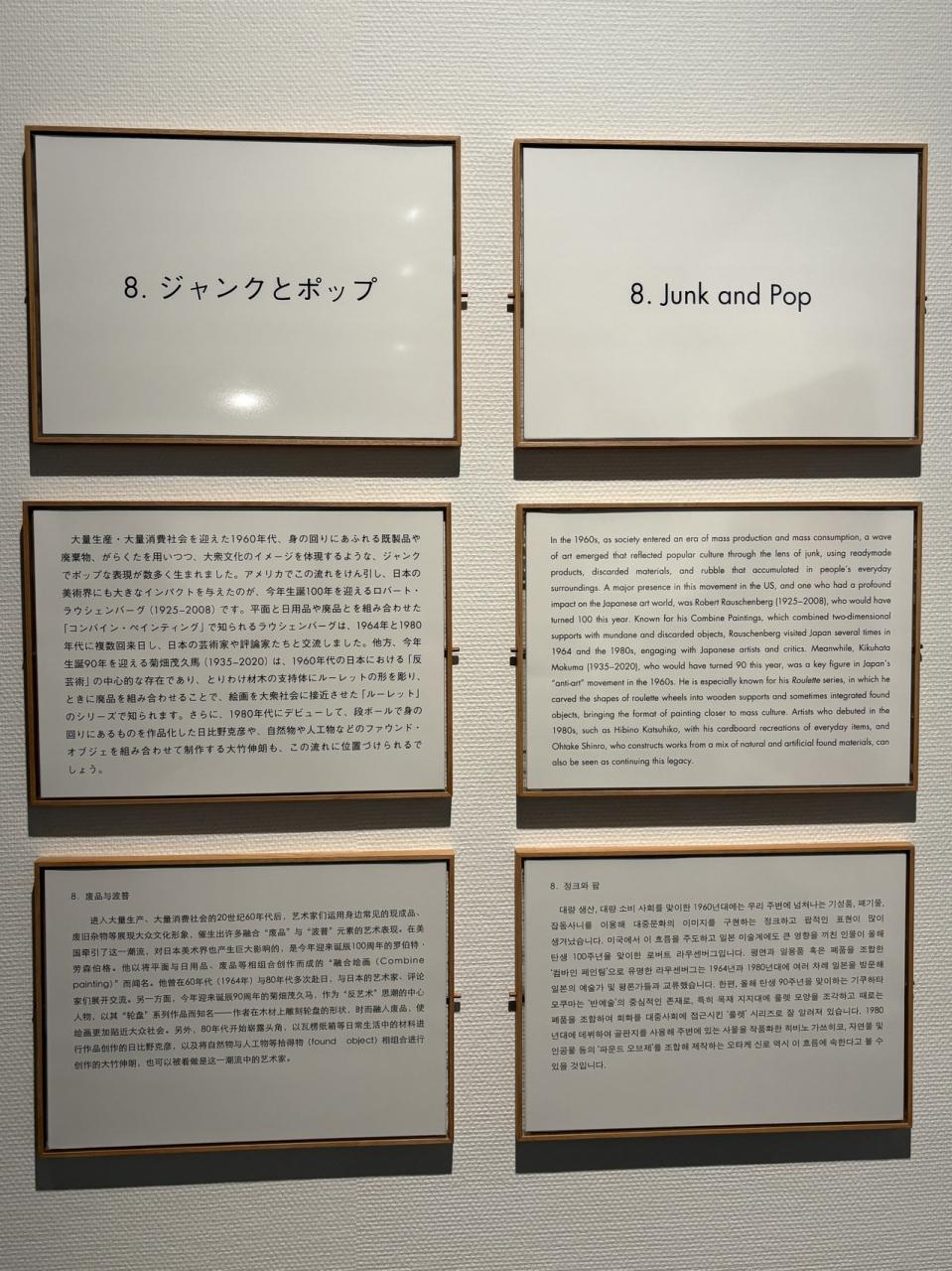
8. ジャンクとポップ
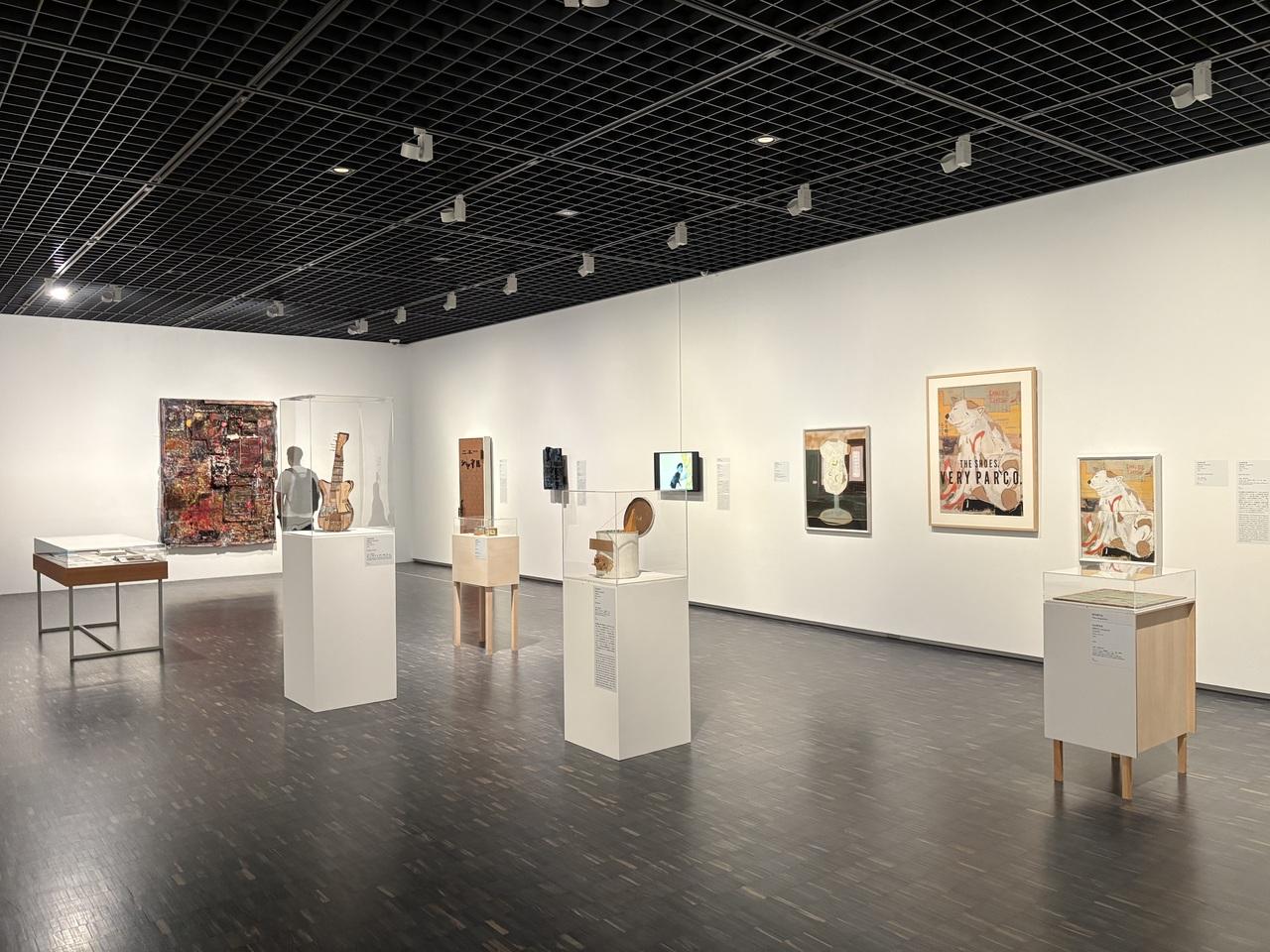
大量生産・大量消費社会を迎えた1960年代、身の回りにあふれる既製品や廃棄物、がらくたを用いつつ、大衆文化のイメージを体現するような、ジャンクでポップな表現が数多く生まれました。
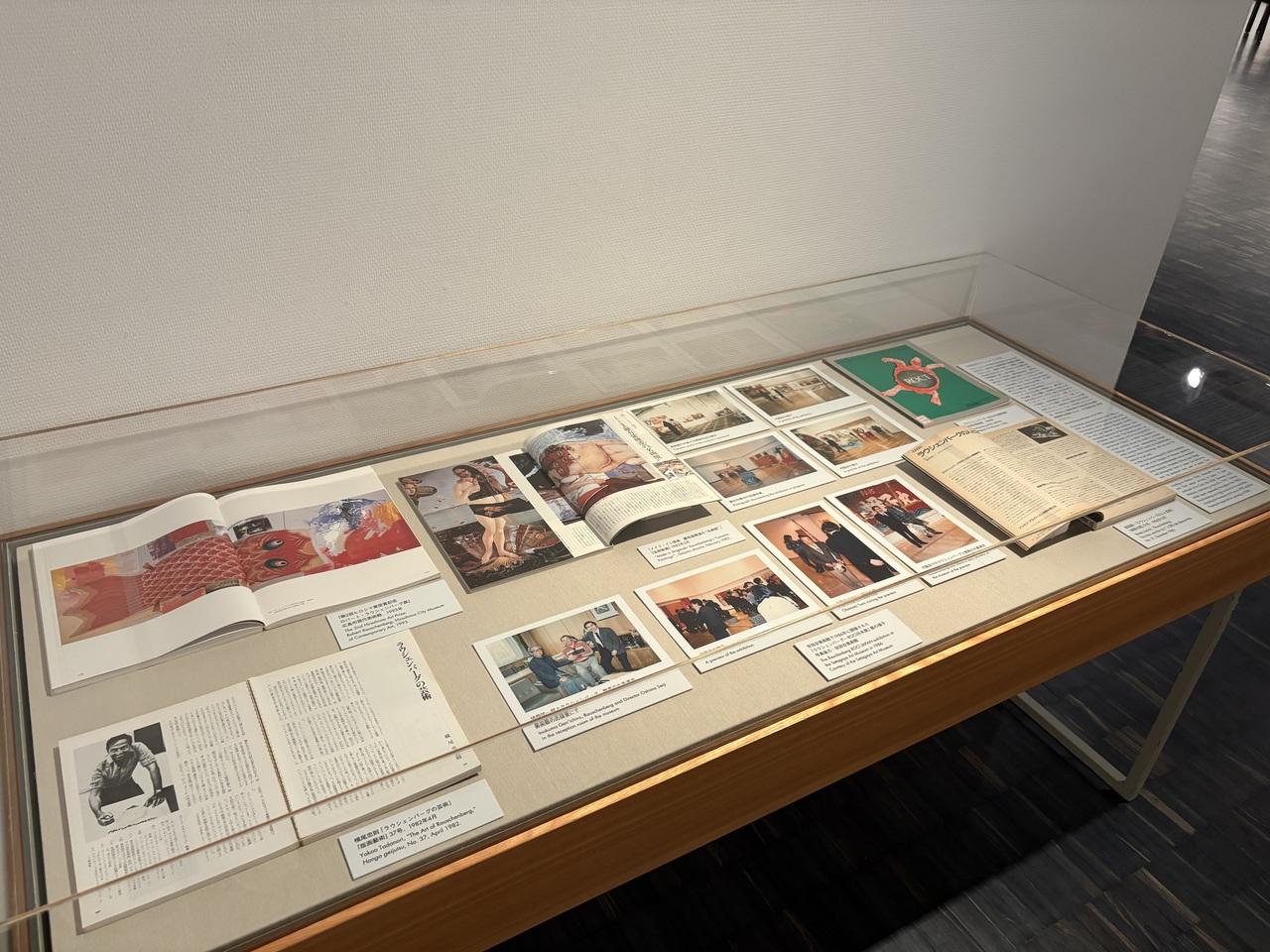
アメリカでこの流れをけん引し、日本の美術界にも大きなインパクトを与えたのが、今年生誕100年を迎えるロバート・ラウシェンバーグ (1925-2008)です。平面と日用品や廃品とを組み合わせた「コンバイン・ペインティング」で知られるラウシェンバーグは、1964年と1980年代に複数回来日し、日本の芸術家や評論家たちと交流しました。
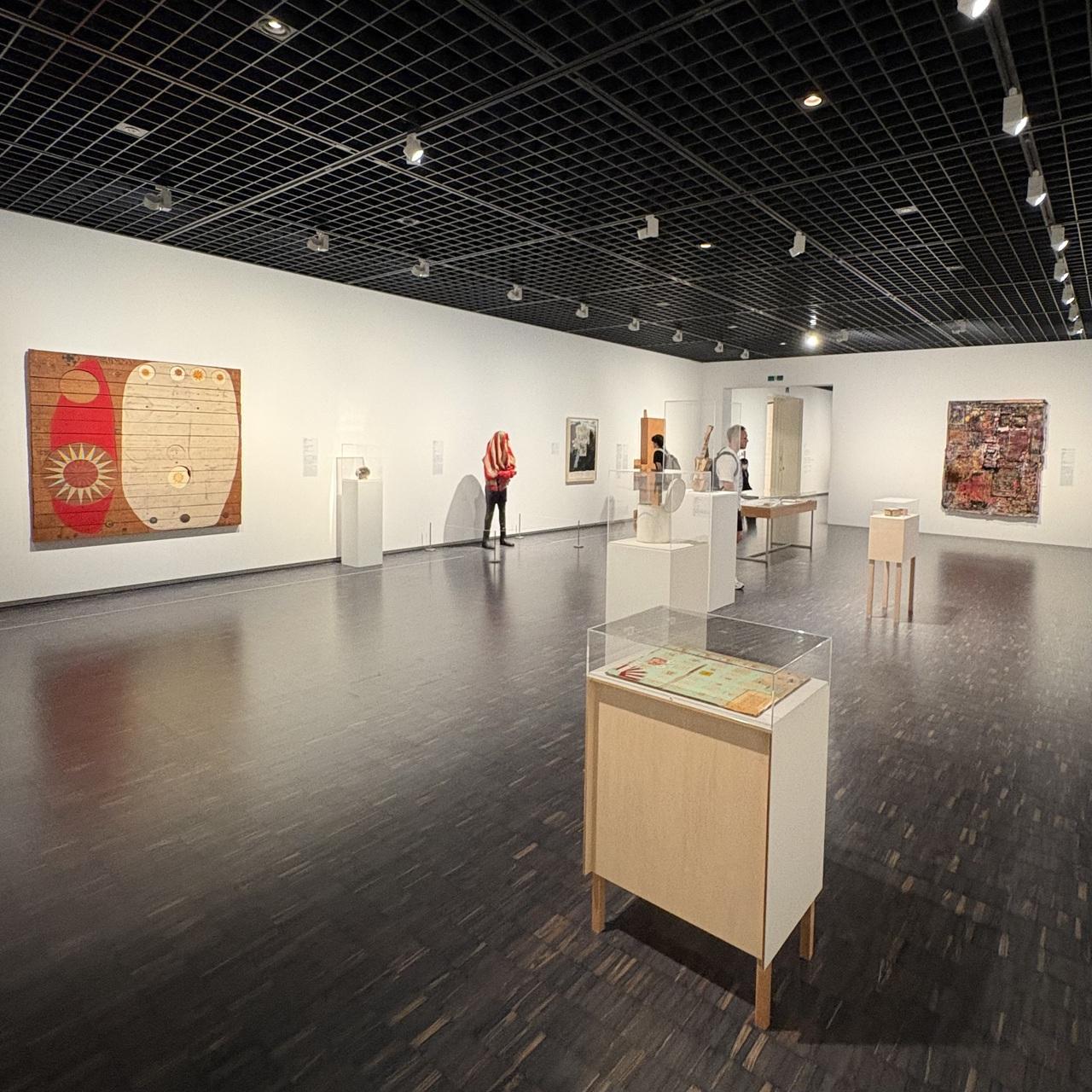
他方、今年生誕90年を迎える菊畑茂久馬(1935-2020)は、1960年代の日本における「反芸術」の中心的な存在であり、とりわけ材木の支持体にルーレットの形を彫り、ときに廃品を組み合わせることで、絵画を大衆社会に接近させた「ルーレット」のシリーズで知られます。さらに、1980年代にデビューして、段ボールで身の回りにあるものを作品化した日比野克彦や、自然物や人工物などのファウンド・オブジェを組み合わせて制作する大竹伸朗も、この流れに位置づけられるでしょう。
8. Junk and Pop
In the 1960s, as society entered an era of mass production and mass consumption, a wave of art emerged that reflected popular culture through the lens of junk, using readymade products, discarded materials, and rubble that accumulated in people's everyday surroundings.
A major presence in this movement in the US, and one who had a profound impact on the Japanese art world, was Robert Rauschenberg (1925-2008), who would have turned 100 this year. Known for his Combine Paintings, which combined two-dimensional supports with mundane and discarded objects, Rauschenberg visited Japan several times in 1964 and the 1980s, engaging with Japanese artists and critics.
Meanwhile, Kikuhata Mokuma (1935-2020), who would have turned 90 this year, was a key figure in Japan's "anti-art" movement in the 1960s. He is especially known for his Roulette series, in which he carved the shapes of roulette wheels into wooden supports and sometimes integrated found objects, bringing the format of painting closer to mass culture. Artists who debuted in the 1980s, such as Hibino Katsuhiko, with his cardboard recreations of everyday items, and Ohtake Shinro, who constructs works from a mix of natural and artificial found materials, can also be seen as continuing this legacy. -
-
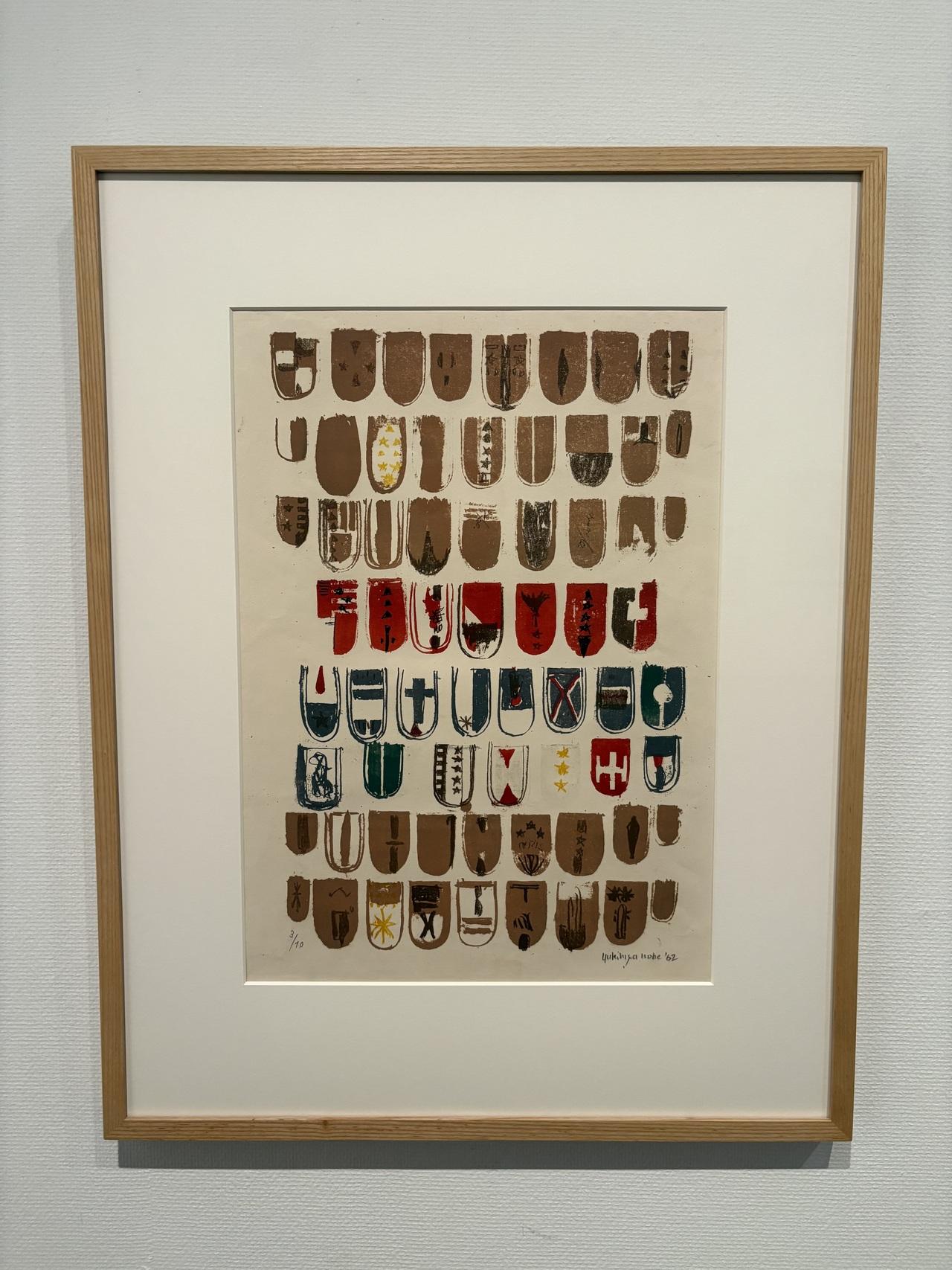
磯辺行久
ISOBE, Yukihisa
1936-
作品 62-23
Work 62-23
1962 昭和37年
リトグラフ
lithograph
購入
Purchased -
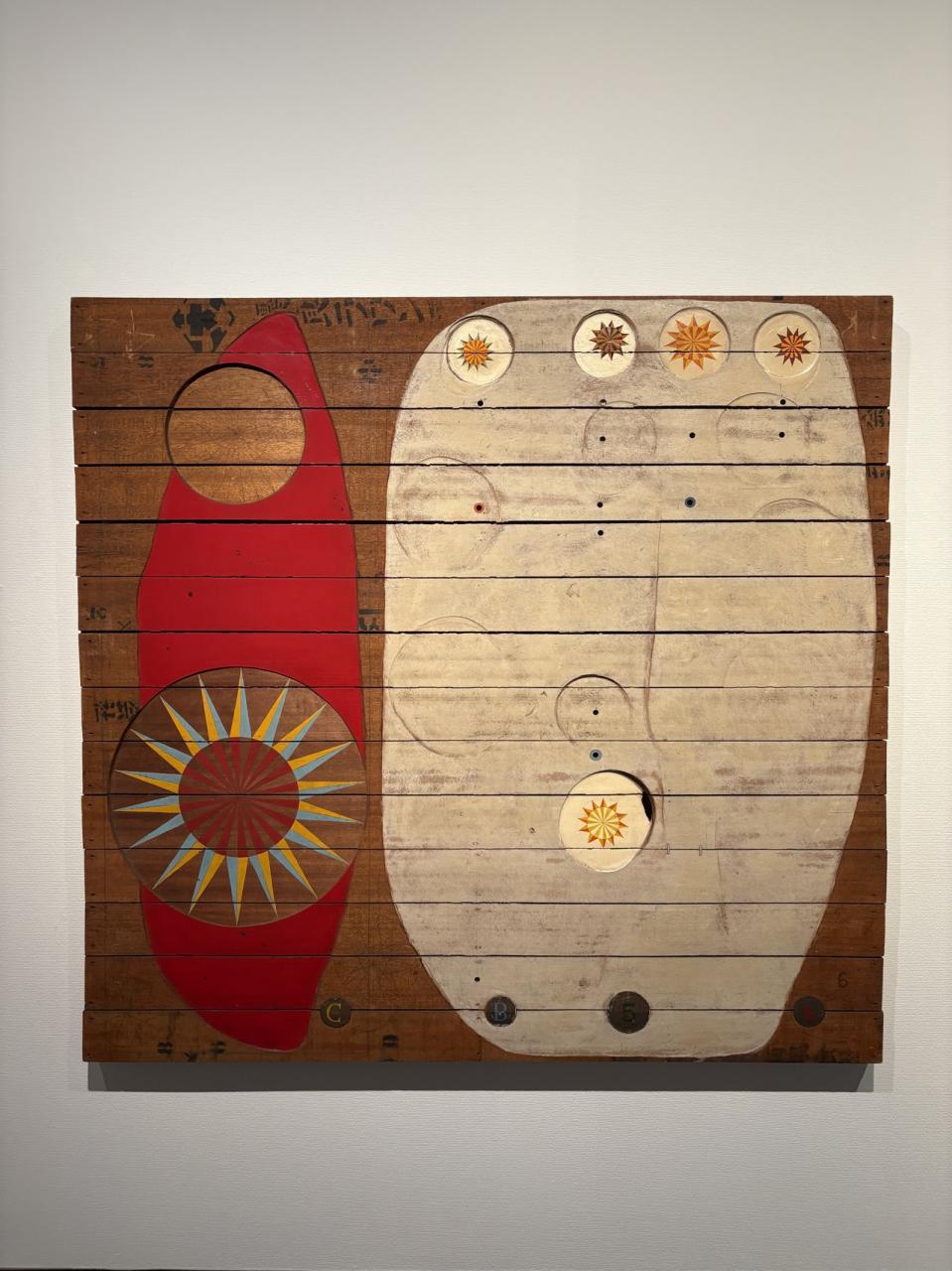
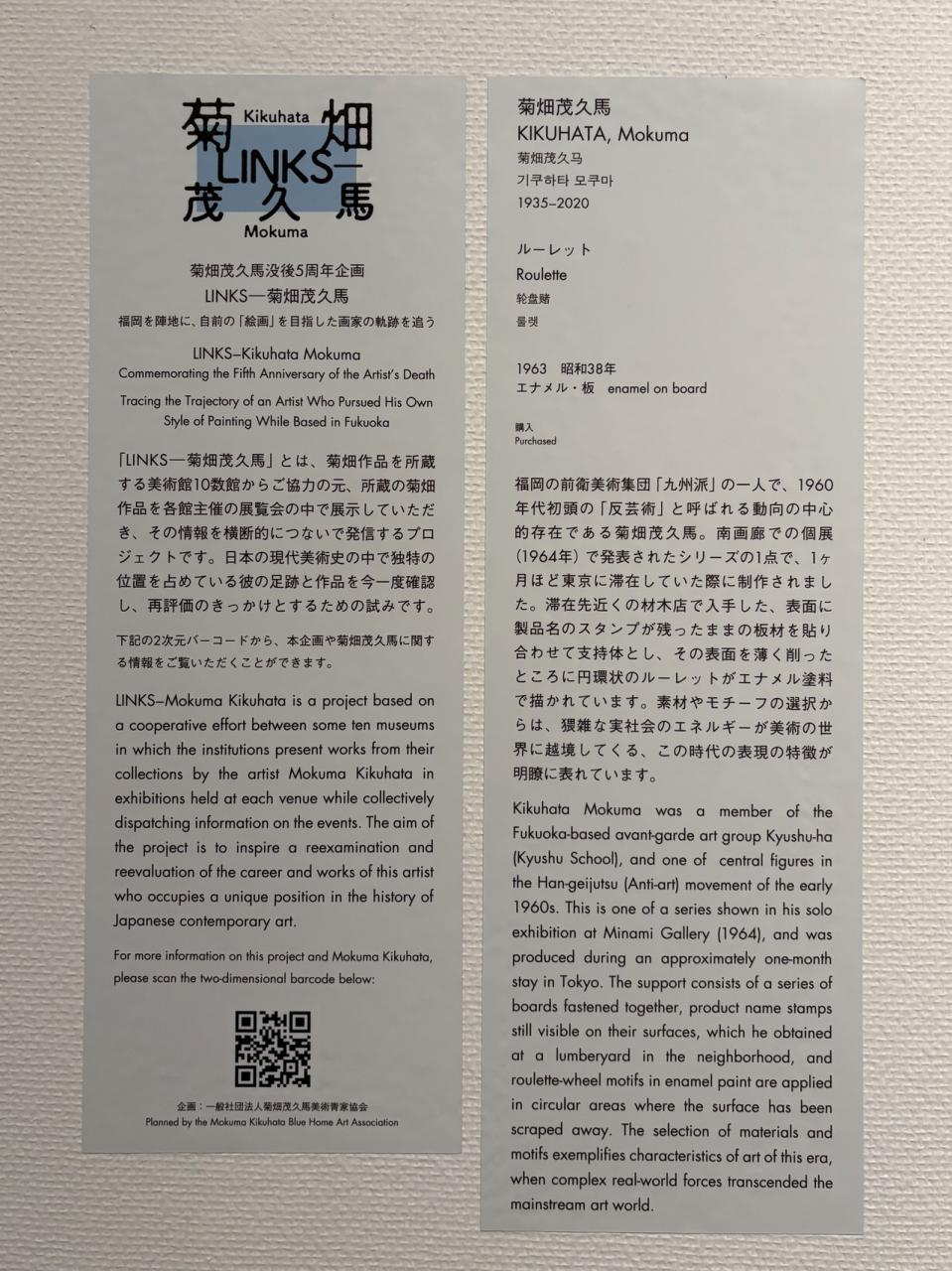
菊畑茂久馬
KIKUHATA, Mokuma
1935-2020
ルーレット
Roulette
1963 昭和38年
エナメル・板
enamel on board
購入
Purchased
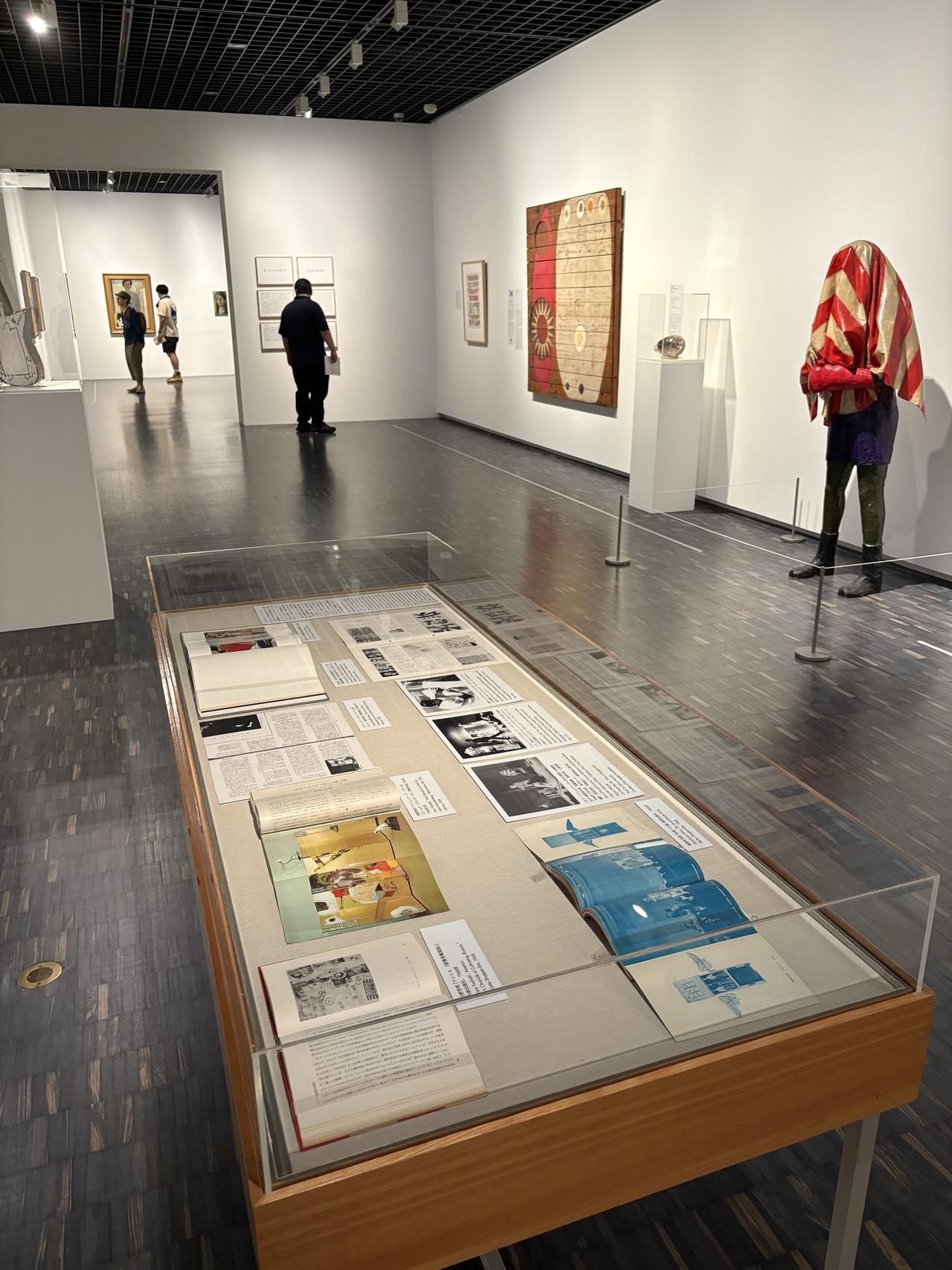
福岡の前衛美術集団「九州派」の一人で、1960年代初頭の「反芸術」と呼ばれる動向の中心的存在である菊畑茂久馬。南画廊での個展(1964年)で発表されたシリーズの1点で、1ヶ月ほど東京に滞在していた際に制作されました。滞在先近くの材木店で入手した、表面に製品名のスタンプが残ったままの板材を貼り合わせて支持体とし、その表面を薄く削ったところに円環状のルーレットがエナメル塗料で描かれています。素材やモチーフの選択からは、猥雑な実社会のエネルギーが美術の世界に越境してくる、この時代の表現の特徴が明瞭に表れています。
Kikuhata Mokuma was a member of the Fukuoka-based avant-garde art group Kyushu-ha (Kyushu School), and one of central figures in the Han-geijutsu (Anti-art) movement of the early 1960s. This is one of a series shown in his solo exhibition at Minami Gallery (1964), and was produced during an approximately one-month stay in Tokyo. The support consists of a series of boards fastened together, product name stamps still visible on their surfaces, which he obtained at a lumberyard in the neighborhood, and roulette-wheel motifs in enamel paint are applied in circular areas where the surface has been scraped away. The selection of materials and motifs exemplifies characteristics of art of this era, when complex real-world forces transcended the mainstream art world -
-
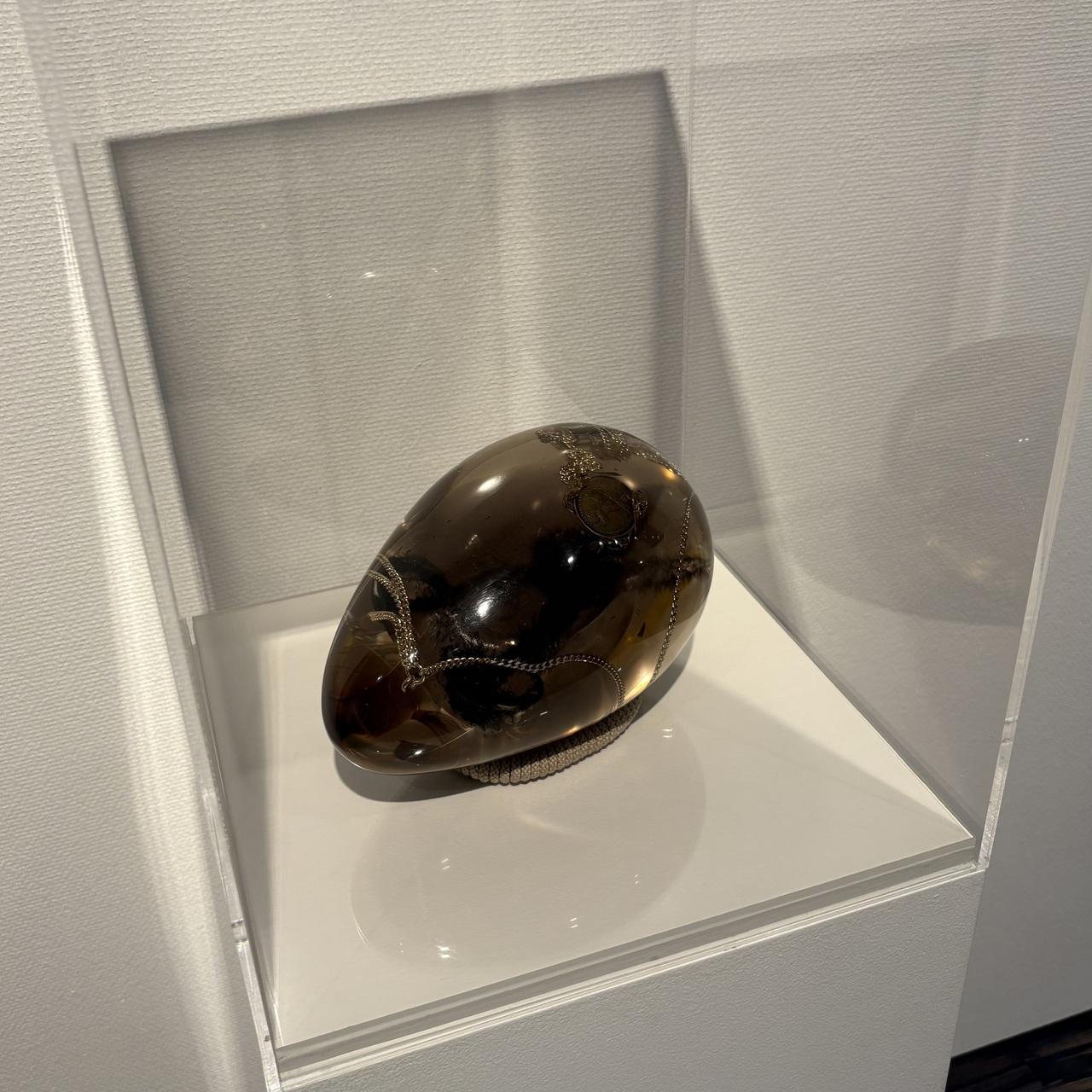
中西夏之
NAKANISHI, Natsuyuki
1935-2016
コンパクト・オブジェ沈む鋏
Compact Object: Sinking Scissors
1968 昭和43年
ポリエステル掛脂、他 polyester resin, etc.
購入
Purchased
ハサミや鎖、針や糸、水準器、砂、カミソリの刃、洗濯バサミなどなど。ゴミ箱の中身を詰め込んだような、もしくは、ある時代の一瞬を閉じ込めたカプセルのような、卵です。中西はこの日常の詰め合わせを、街中や電車の車内などの日常空間に再び持ち込むパフォーマンスを行っています。台座に鎮座する彫刻ではなく、圧縮した世界を手に持って持ち運ぶというところに、彼のひとつの意図があったようです。
Scissors, chains, a needle and thread, a carpenter's level, sand, razor blades, clothespins ... this egg-shaped object seems to be packed with the contents of a garbage can. Or is it a time capsule, capturing a fleeting moment during a certain era? Nakanishi staged performances by bringing these clusters of everyday objects into public spaces, such as in the streets and on trains. His intent seems to have been to carry a microcosm of the world in his hands rather than to produce a sculpture that sits on a pedestal. -
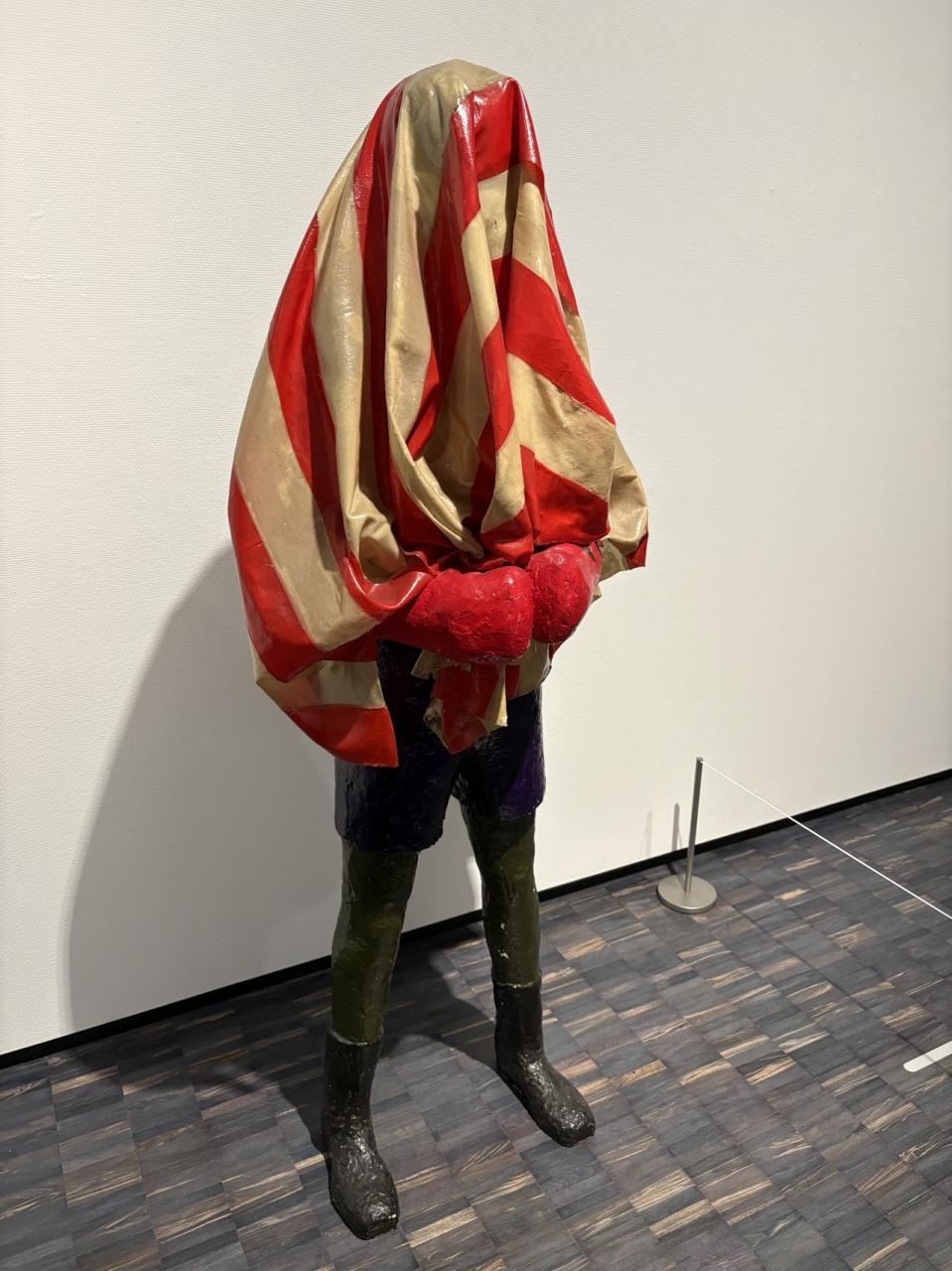
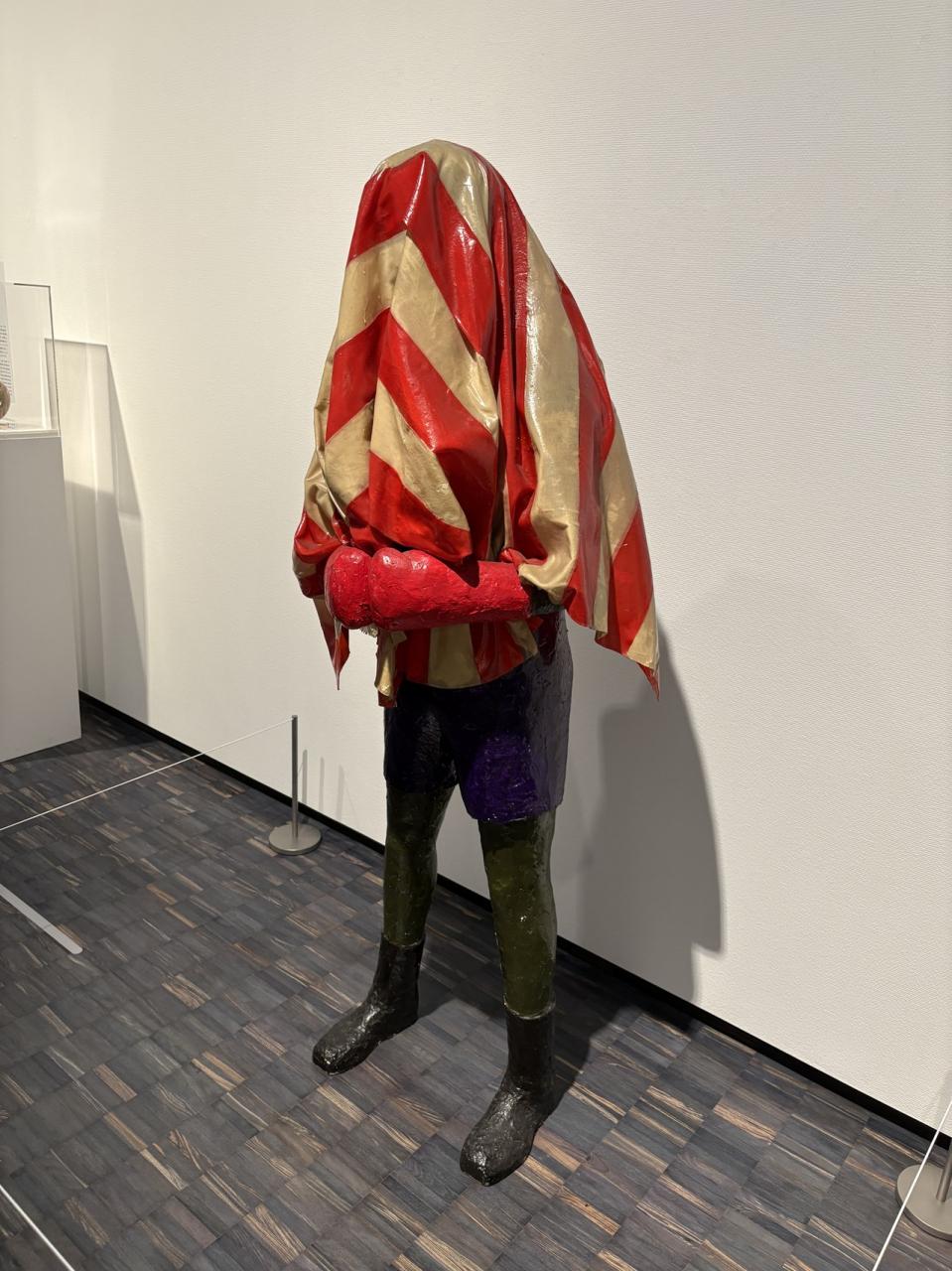
小島信明
KOJIMA, Nobuaki
1935-2024
ボクサー
Boxer
1968 昭和43年
FRP、ラッカー FRP and lacquer
作者寄贈
Gift of the artist
ボクサーがかぶる布を見て、星条旗や、おめでたい場で使う紅白幕を連想する方もいらっしゃるでしょう。鮮やかな色彩とラッカーによるつやつやの質感は、「彫刻」というときの味わいとかけ離れた人工的な印象です。工業的な要素を取り込むことは同時代のポップ・アートの典型的な特徴。ただしもともとこの作品は、作者自身が会場に突っ立っているというナンセンスでアナーキーなパフォーマンスから展開して作られたものでもあります。
For some viewers, the boxer's garment may evoke the American flag or the red-and-white striped banners appearing on auspicious occasions in Japan. The vivid color and glossy texture of the lacquer creates an artificial impression far removed from what is conventionally associated with "sculpture." Incorporation of industrial elements was a typical feature of Pop Art of the 1960s. However, this work grew out of what was originally a nonsensical and anarchic performance in which the artist himself stood in the venue. -
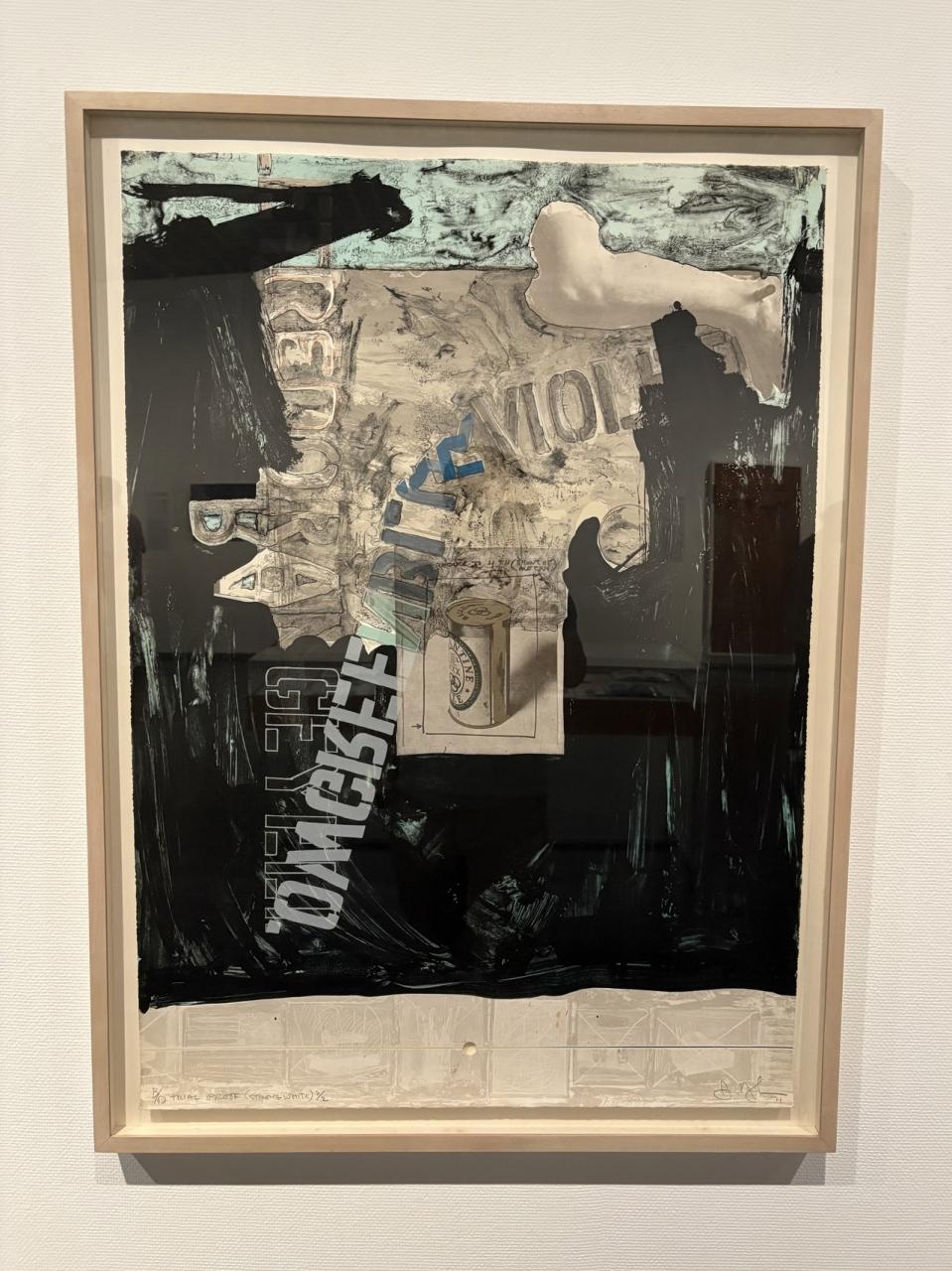
-
ジャスパー・ジョーンズ
Jasper Johns
1930-
デコイ
Decoy
1971 昭和46年
リトグラフ lithograph
寄託
Long term loan -
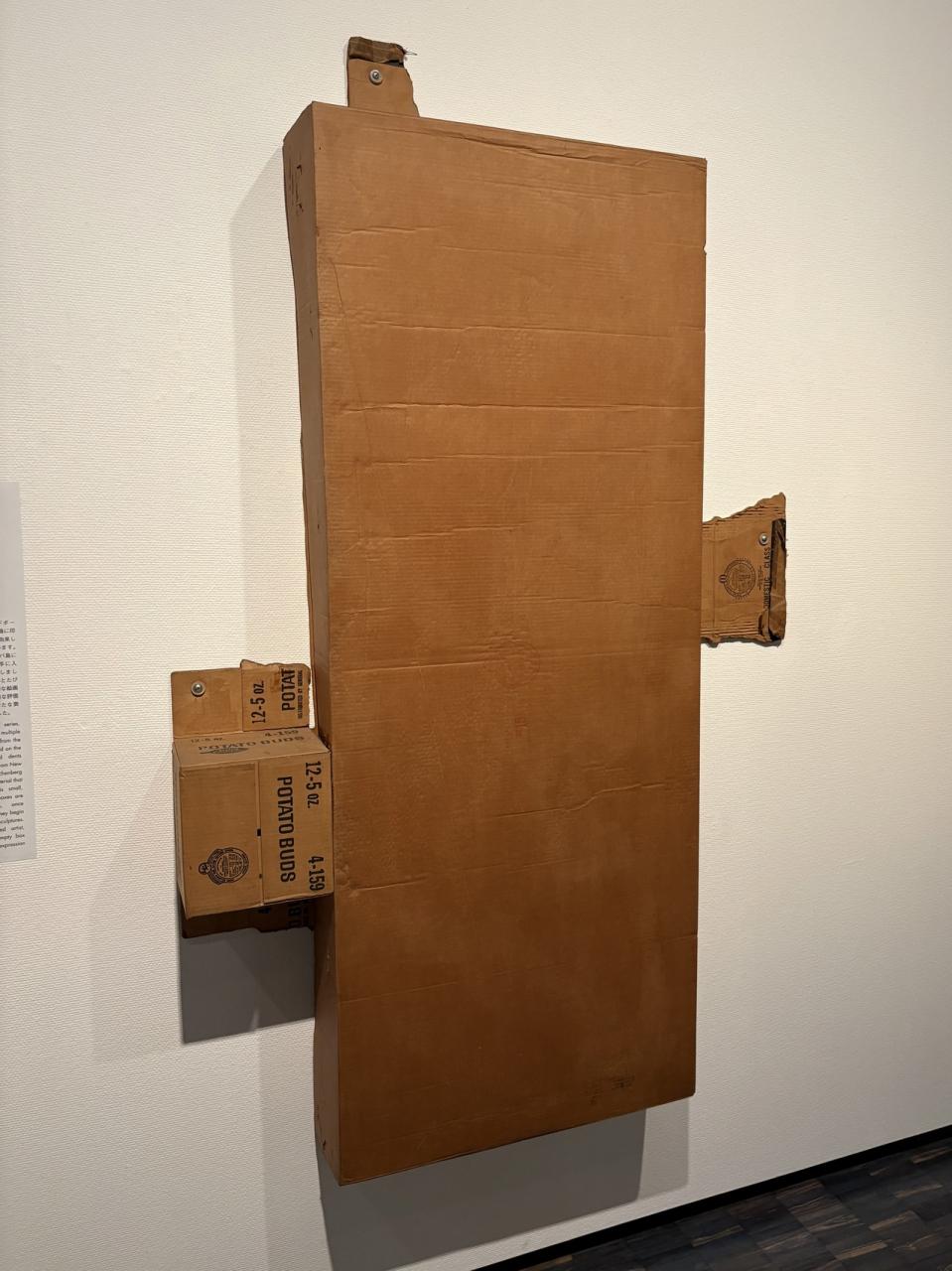
ロバート・ラウシェンバーグ
Robert Rauschenberg
1925-2008
ポテト・バッズ
Potato Buds
1971 昭和46年
段ボール corrugated cardboard
購入
Purchased
複数の段ボールを切り貼りした<カードボード)シリーズの一点です。タイトルは、箱に印刷されたマッシュポテト粉末の商品名に由来しており、傷や凹みもそのまま残されています。
ニューヨークからフロリダ州キャプティバ島に移住したラウシェンバーグは、島でも手に入りやすい素材として、段ボールに注目しました。どこにでもあるただの箱ですが、ひとたび向きを変え、壁に掛けられると、抽象的な絵画や彫刻らしく見えてきます。既に国際的な評価を受けていた芸術家は、新天地での新たな表現への期待を、汚れた空き箱に込めました。
This work is part of the Cardboard series, produced by cutting and assembling multiple pieces of cardboard. The title is taken from the brand of instant mashed potatoes printed on the box, which has its scratches and dents
intentionally left intact.
After relocating from New York to Captiva Island in Florida, Rauschenberg turned his attention to cardboard, a material that was readily available even on this small, secluded island. Though cardboard boxes are utterly ordinary and ubiquitous, once repositioned and mounted on a wall, they begin to resemble abstract paintings or sculptures. Already an internationally renowned artist, Rauschenberg imbued this soiled, empty box with his aspirations for new creative expression in a fresh environment. -
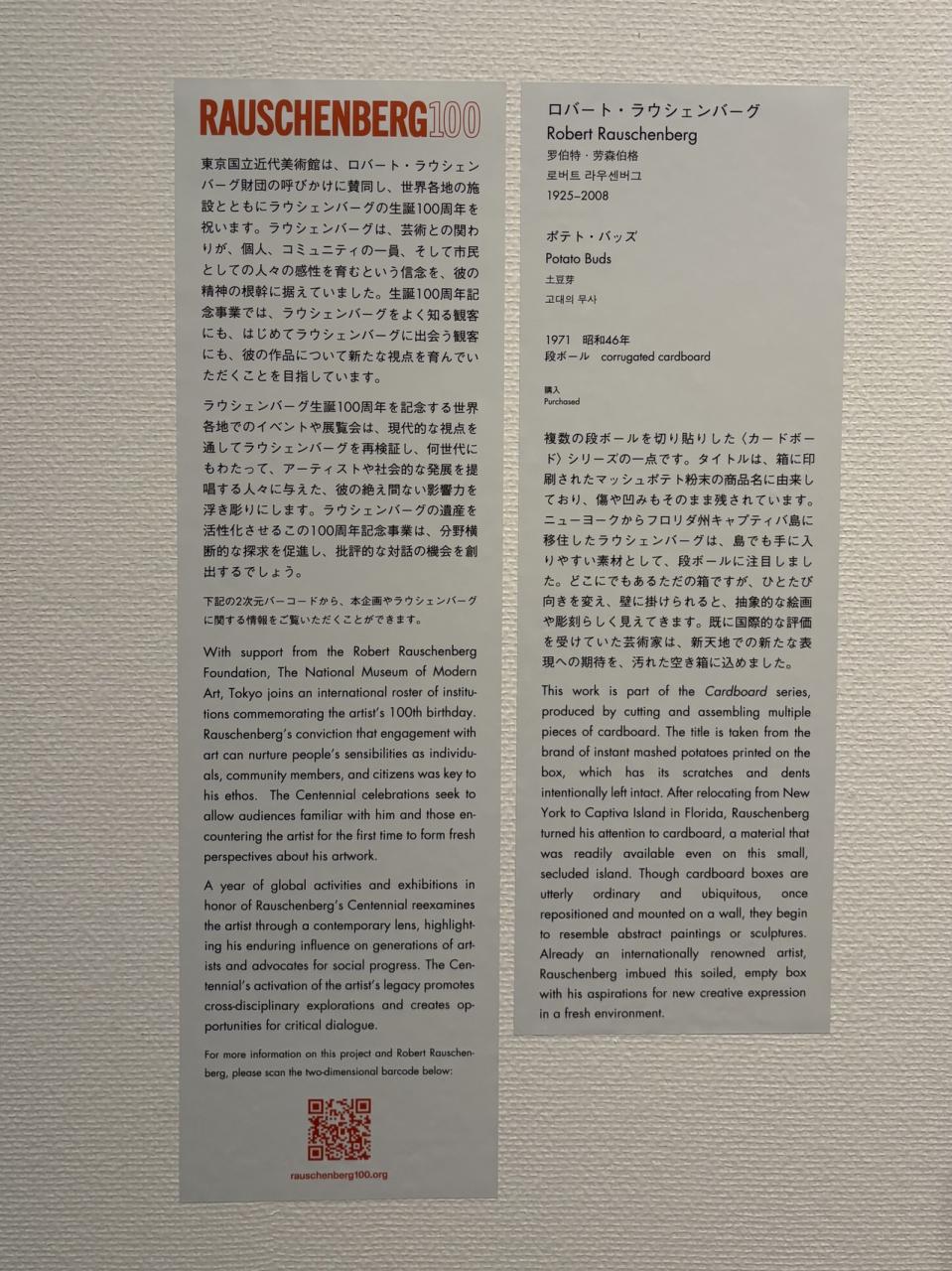
RAUSCHENBERGIOO
東京国立近代美術館は、ロバート・ラウシェンバーグ財団の呼びかけに賛同し、世界各地の施設とともにラウシェンバーグの生誕100周年を祝います。
ラウシェンバーグは、芸術との関わりが、個人、コミュニティの一員、そして市民としての人々の感性を育むという信念を、彼の精神の根幹に据えていました。生誕100周年記念事業では、ラウシェンバーグをよく知る観客にも、はじめてラウシェンバーグに出会う観客にも、彼の作品について新たな視点を育んでいただくことを目指しています。
ラウシェンバーグ生誕100周年を記念する世界各地でのイベントや展覧会は、現代的な視点を通してラウシェンバーグを再検証し、何世代にもわたって、アーティストや社会的な発展を提唱する人々に与えた、彼の絶え間ない影響力を浮き彫りにします。ラウシェンバーグの遺産を活性化させるこの100周年記念事業は、分野横断的な探求を促進し、批評的な対話の機会を創出するでしょう。
下記の2次元バーコードから、本企画やラウシェンバーグに関する情報をご覧いただくことができます。
With support from the Robert Rauschenberg Foundation, The National Museum of Modern Art, Tokyo joins an international roster of institutions commemorating the artist's 100th birthday.
Rauschenberg's conviction that engagement with art can nurture people's sensibilities as individu-als, community members, and citizens was key to his ethos. The Centennial celebrations seek to allow audiences familiar with him and those encountering the artist for the first time to form fresh perspectives about his artwork.
A year of global activities and exhibitions in honor of Rauschenberg's Centennial reexamines the artist through a contemporary lens, highlighting his enduring influence on generations of artists and advocates for social progress. The Centennial's activation of the artist's legacy promotes cross-disciplinary explorations and creates opportunities for critical dialogue.
For more information on this project and Robert Rauschen-berg, please scan the two-dimensional barcode below: -
-
日比野克彦
HIBINO, Katsuhiko
1958-
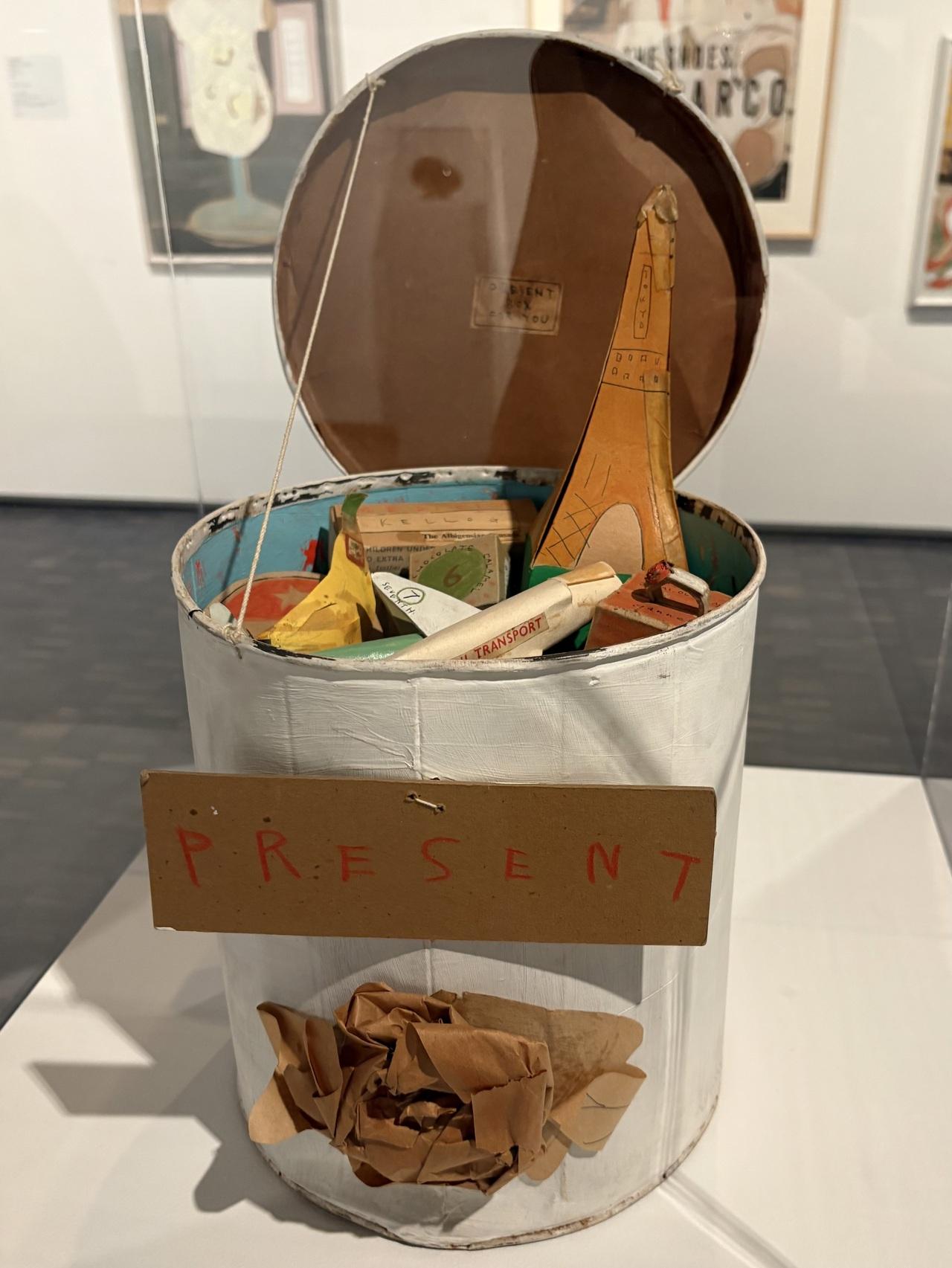
PRESENT BOX
1982 昭和57年
厚紙、紙、アクリリック、色鉛筆、インク、オブジェ(アイスクリーム容器)、その他
cardboard, paper, acrylic, color pencil, ink, object (Ice cream container) , etc.
購入
Purchased
東京藝術大学の卒業制作として制作された立体作品。容器には、米軍基地で購入したというアイスクリームの箱が使われています。その中には、紙で作られた東京タワーや飛行機、指輪、バナナ、小などがぎっしり。日比野は時の雑誌でしばしば「図工少年」と呼び称されましたが、大量消費を憂うことなく、身の回りにある品や生活を彩るものを、自分の感覚を頼りに、ポジティブに作品化していったその手法は、1980年代の消費空間の中で、理想的な自己表現のひとつとして圧倒的な支持を集めました。
This three-dimensional work was produced as Hibino's graduation project at Tokyo University of the Arts. The container, an ice cream tub reportedly purchased at a US military base, is filled to the brim with miniature objects crafted from paper, including Tokyo Tower, airplanes, rings, bananas, and small boxes. Al the time, magazines often described Hibino as "a boy who loves crafts." but his approach - transforming everyday items and familiar objects into cheerful works shaped by his own intuition, rather than lamenting mass consumerism - was widely embraced amid the consumer culture of the 1980s as an ideal form of self-expression. -
日比野克彦
HIBINO, Katsuhiko
1958-
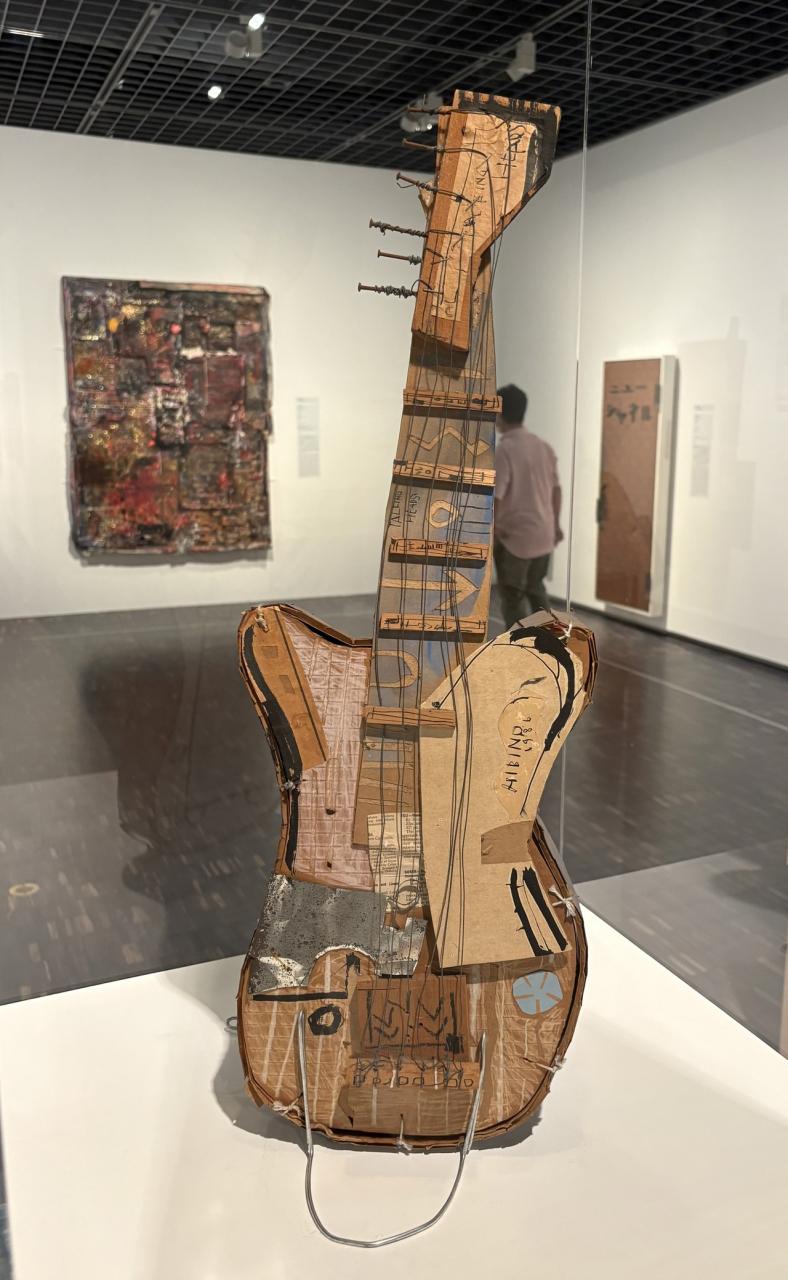
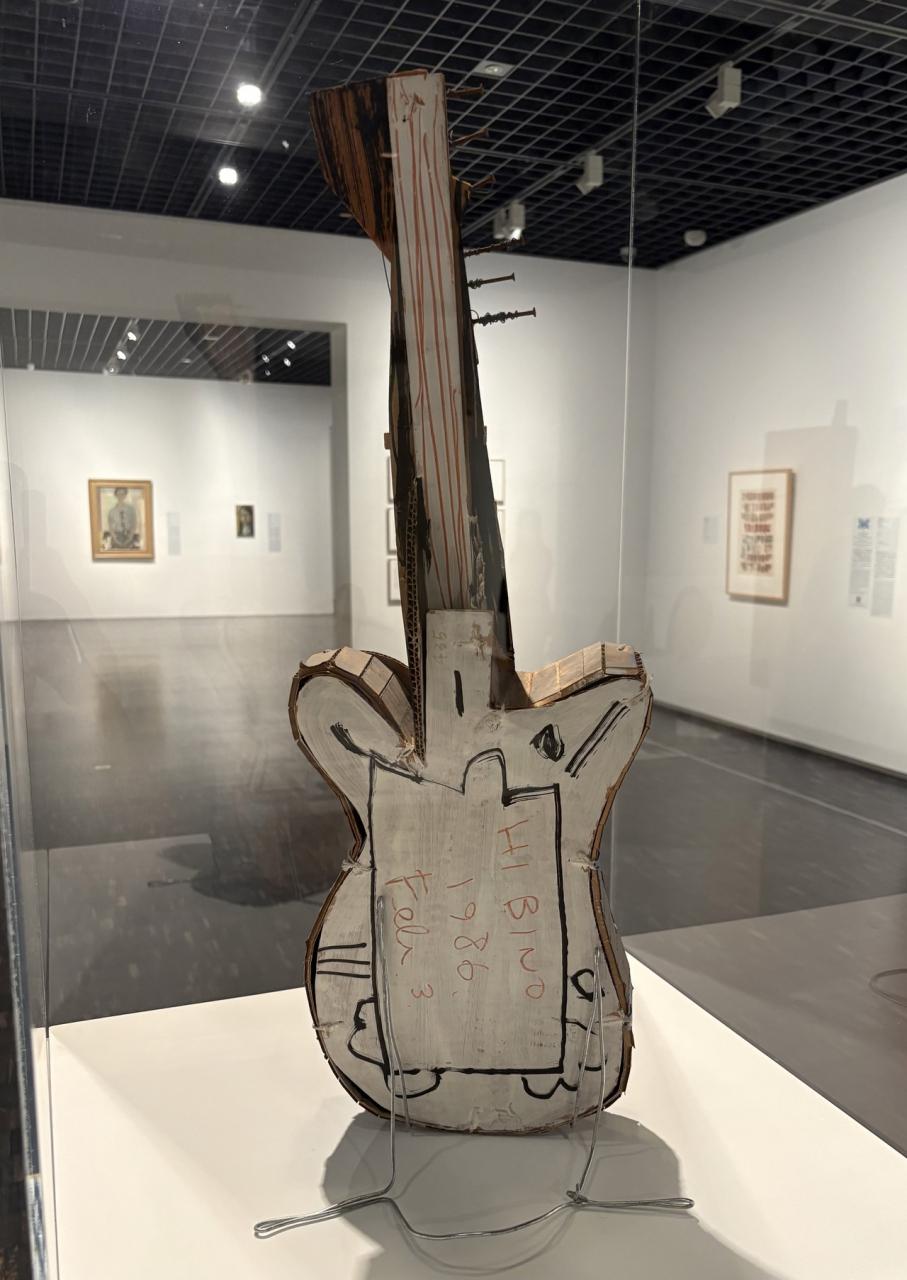
ELECTRIC GUITAR
1986 昭和61年
段ボール、厚紙、紙、木、金属、新聞紙、針金、釘、風糸、アクリリック、墨、インク、パステル、その他
corrugated cardboard, cardboard, paper, wood, metal, newspaper, steel wire, nail, kite string, sumi, ink, pastel, etc.
購入
Purchased -
-
日比野克彦
HIBINO, Katsuhiko
1958-
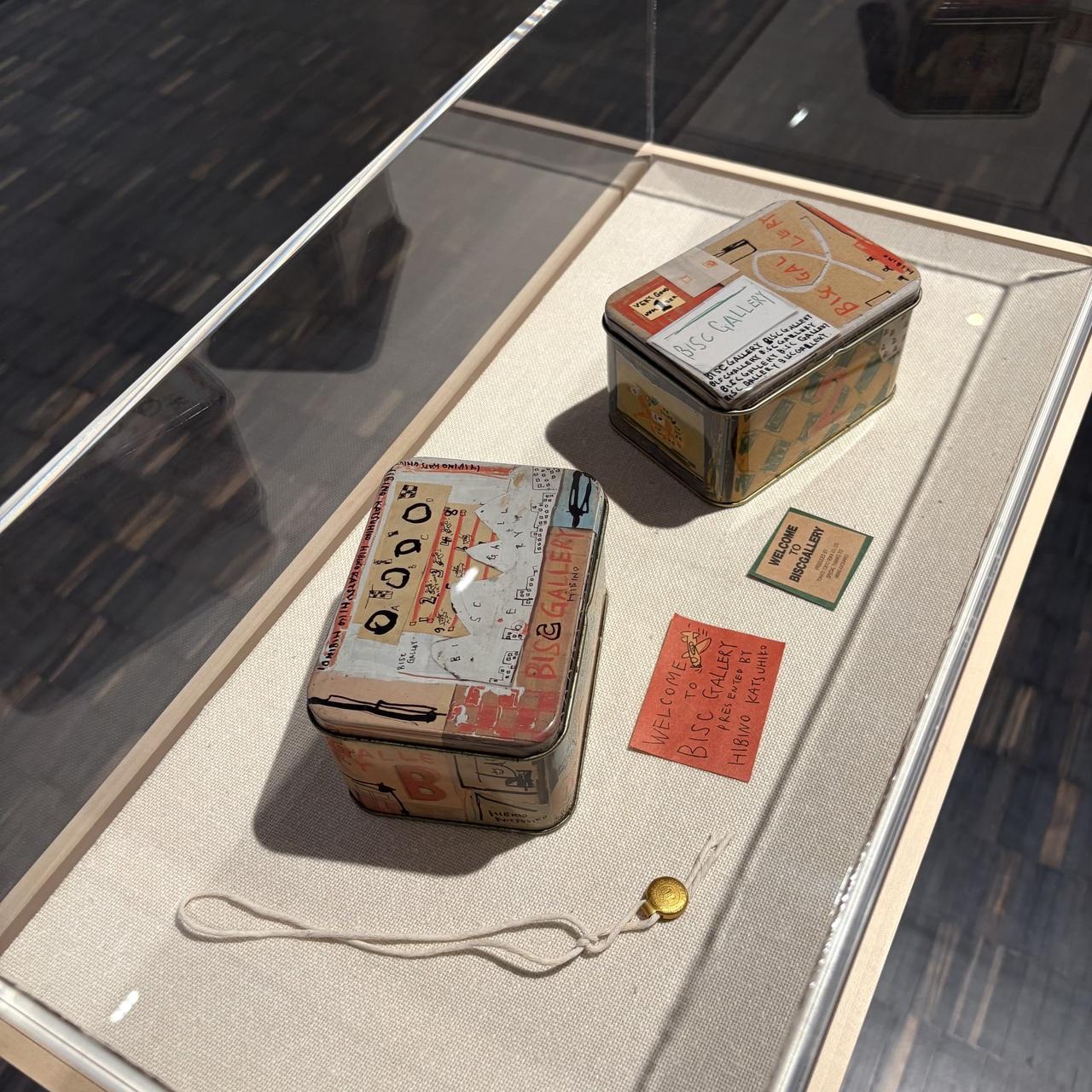
BISC GALLERY
1985 昭和60年
金属缶 2点 2 metal boxes
株式会社ヒビノスペシャル寄贈
Gift of Hibino Special -
-
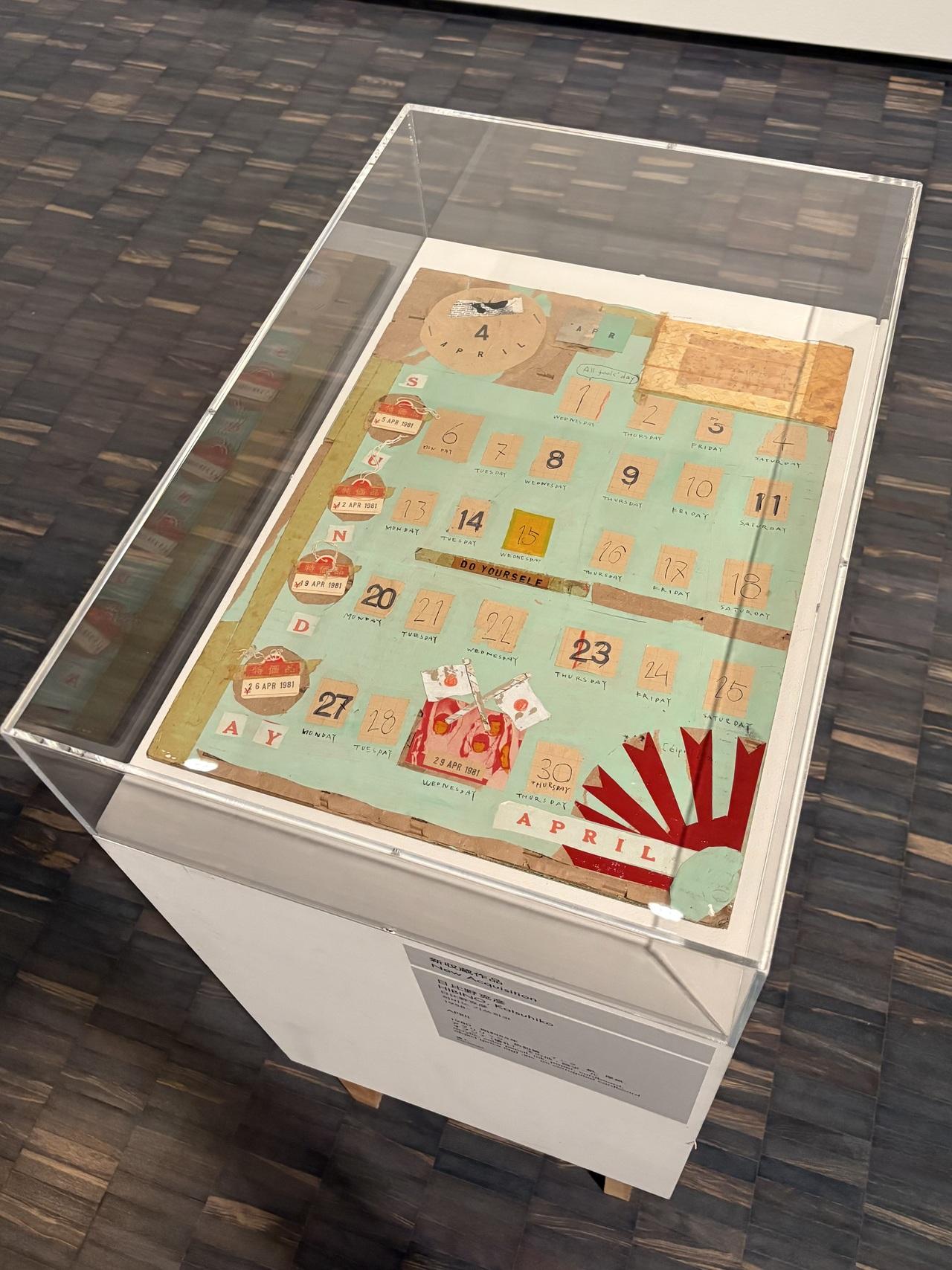
新収蔵作品
New Acquisition
日比野克彦
HIBINO, Katsuhiko
1958-
APRIL
1980 昭和55年
アクリリック、色鉛筆、インク、紙、厚紙、オブジェ(値札)、その他・段ボール
acrylic, color pencil, ink, paper, cardboard, object (price tag) ,elc. on corrugated cardboard
購入
Furthased -
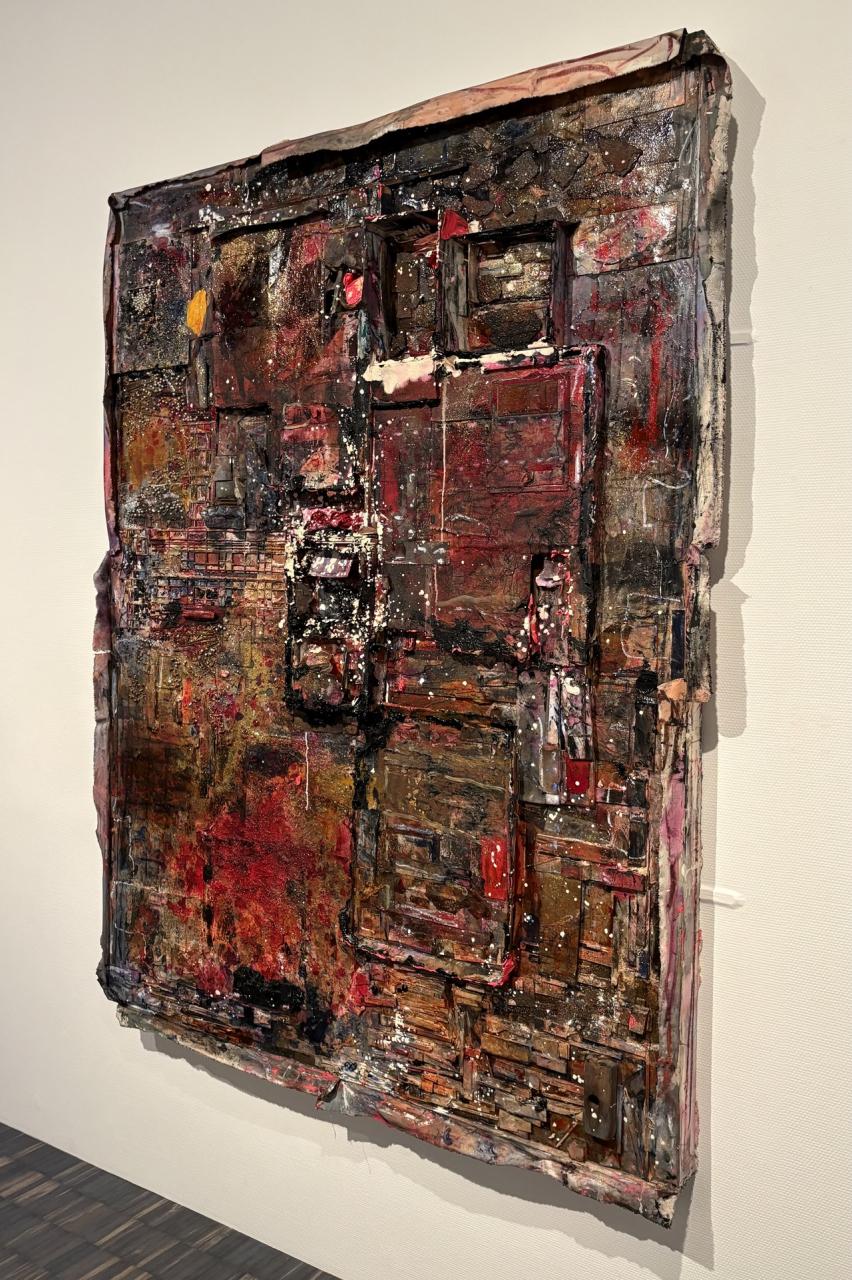
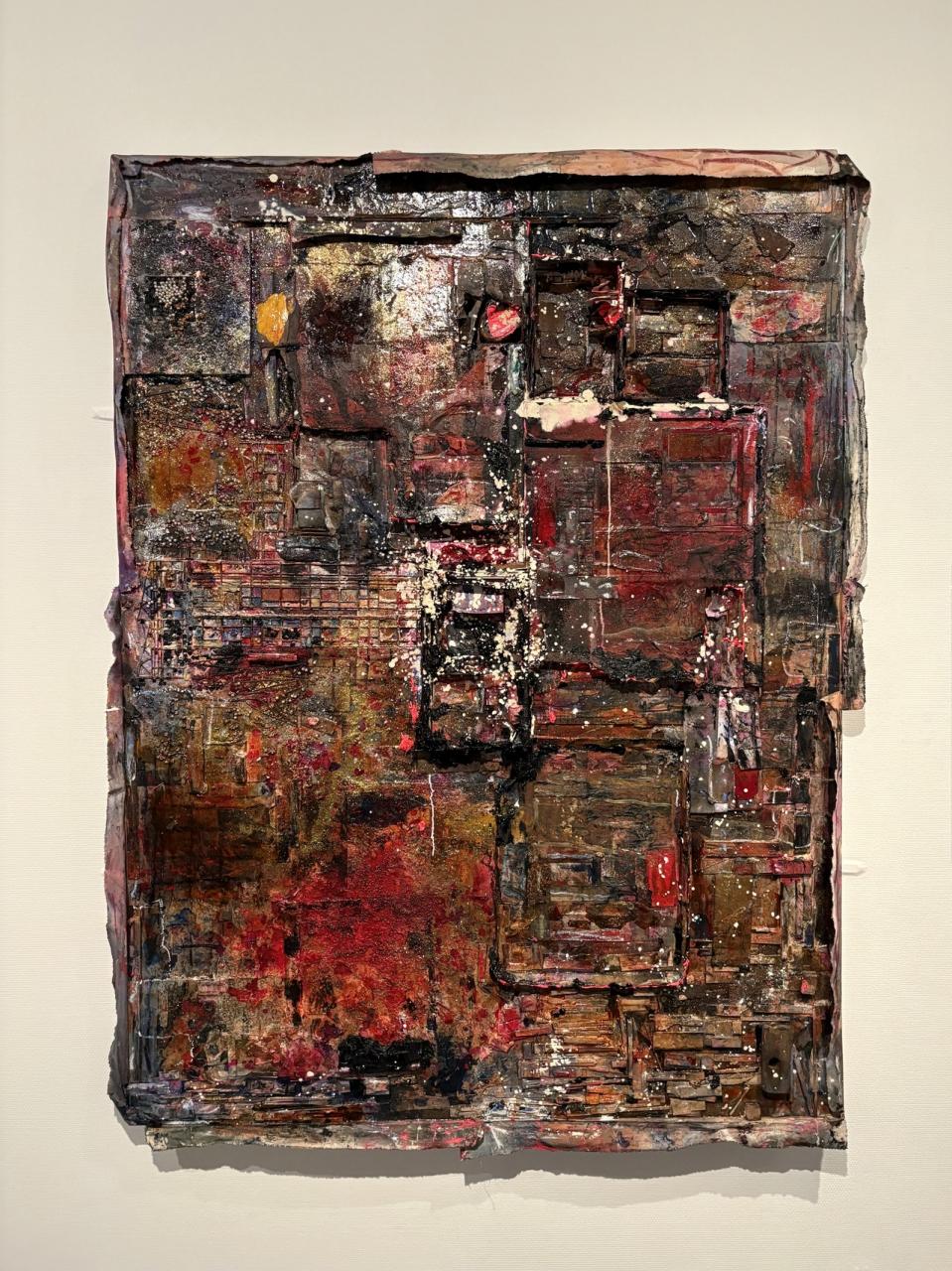
新収蔵作品
New Acquisition
大竹伸朗
OHTAKE, Shinro
1955-
残景O
Mnemoscape 0
2022 令和4年
油彩、アクリリック、グワッシュ、油性ガラス用塗料、掛脂、オイルスティック、木炭、鉛筆、その他・板
Oil, acrylic, gouache, oil-based paint for glass, resin, oil-stick, charcoal, pencil and etc. on board
購入
Purchased
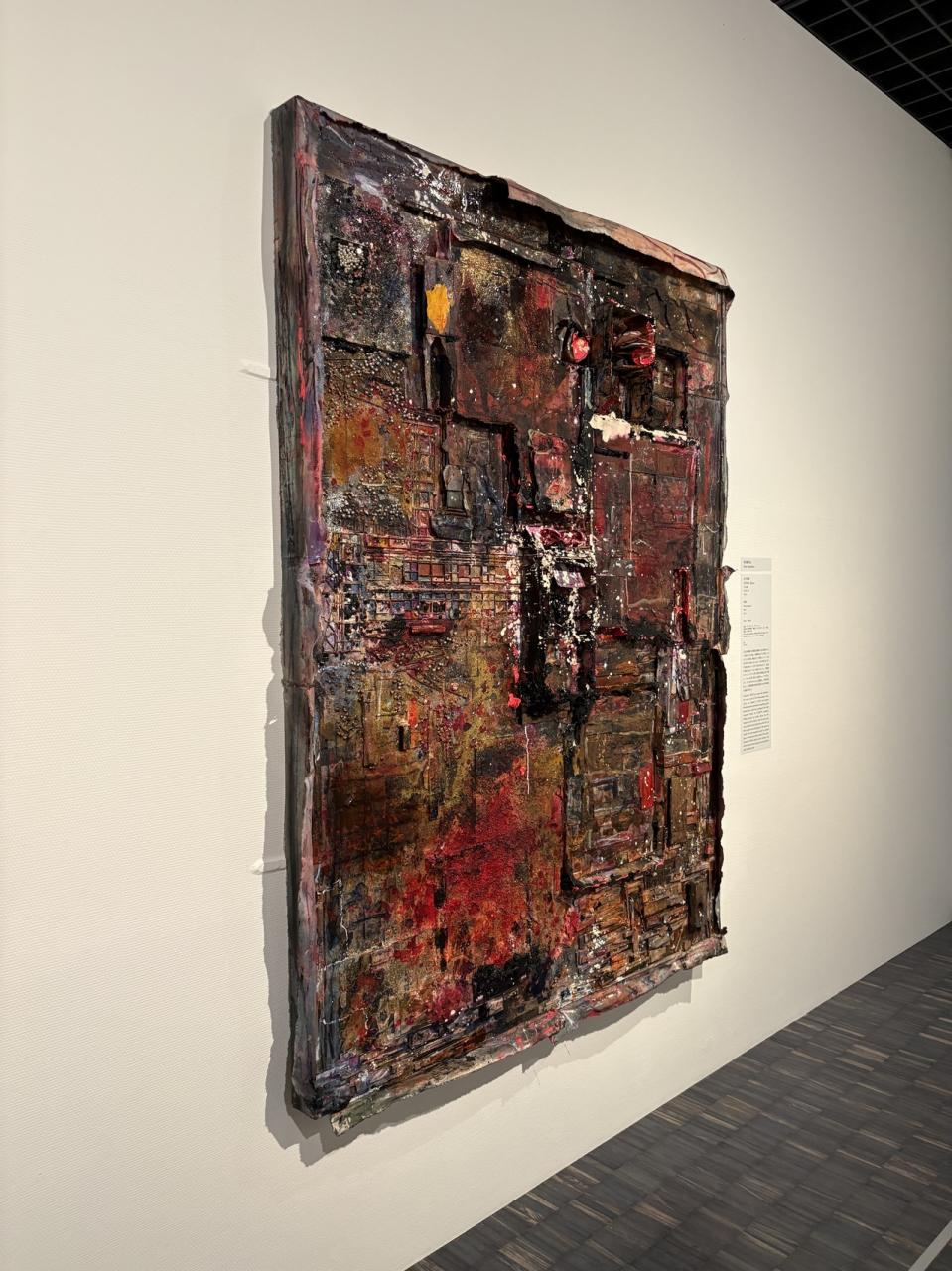
2022年開催の大規模な個展のための新作として制作された作品。建築物のように段ボールなどを立体的に構成する「残景」シリーズは2019年から始まりましたが、コロナ禍で小ぶりの作品が続いていた中での大作に対して、起点の意味を込めて「O」と題されました。半透明のステンドグラス用の塗料が画面全体を覆い、中心には使い終えた絵具チューブが見えます。散りばめられた人工真珠は、作者の拠点にして全国有数の真珠生産地である宇和島を連想させます。
Produced in 2022 for a major solo exhibition, this work is part of the Mnemoscape series, which was initiated in 2019 and features three-dimensional constructions resembling architectural forms made from cardboard and other materials. During the COVID-19 pandemic, Ohtake focused on smaller pieces, but this large-scale work marked a return to more ambitious production and includes the number 0 in its title to signify a new starting point. The surface is coated with semi-transparent paint for stained glass, with spent paint tubes visible in the center. Scattered artificial pearls evoke Uwajima, the artist's home and one of Japan's most productive pearl cultivation sites. -
-
-
新収蔵作品
New Acquisition
大竹伸朗
OHTAKE, Shinro
1955-
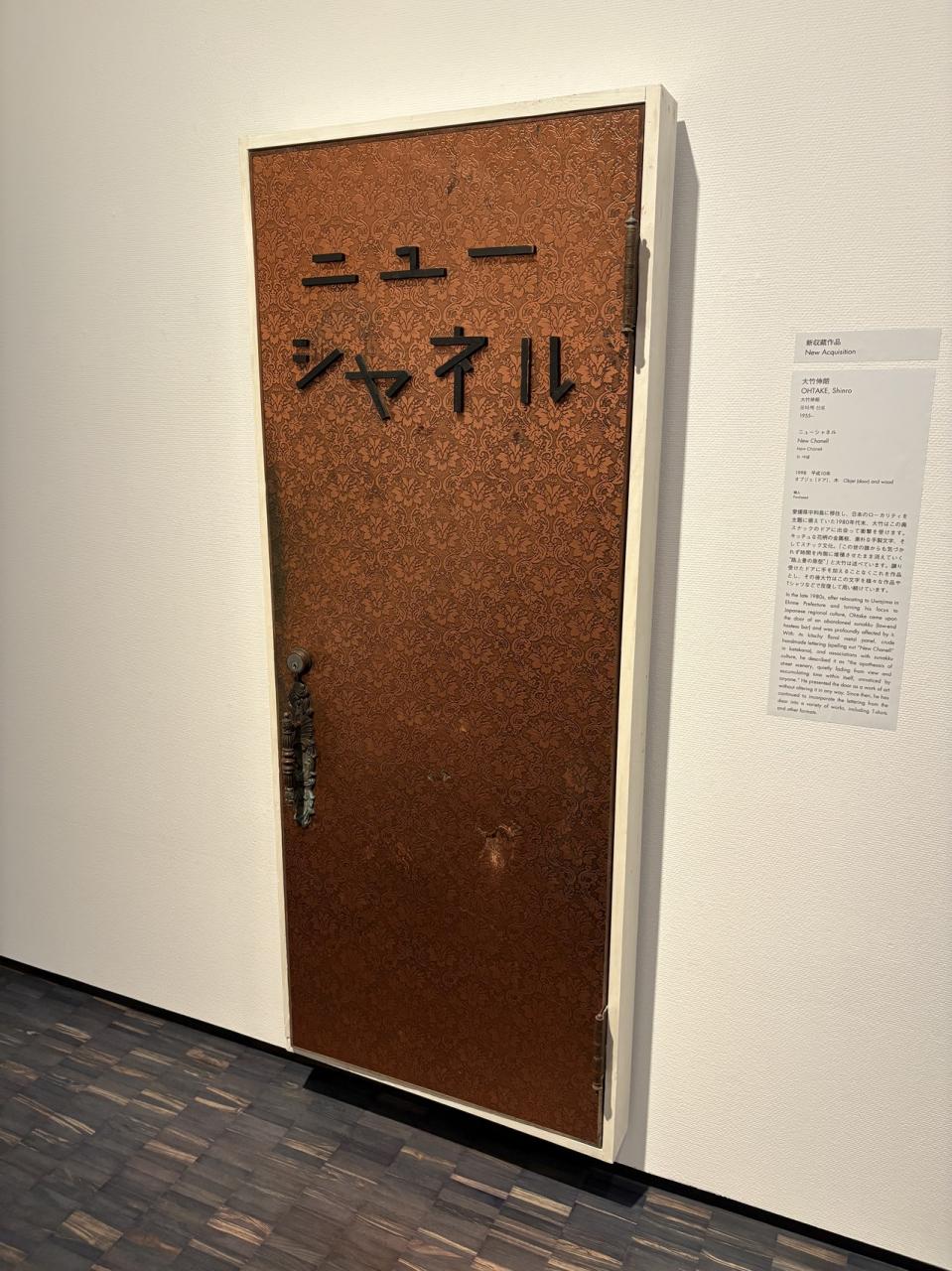
ニューシャネル
New Chanell
1998 平成10年
オブジェ(ドア)、木
Objet (door) and wood
購入
Purchased
愛媛県宇和島に移住し、日本のローカリティを主題に据えていた1980年代末、大竹はこの廃スナックのドアに出会って衝撃を受けます。
キッチュな花柄の金属板、素朴な手製文字、そしてスナック文化。「この世の誰からも気づかれず時間を内側に堆積させたまま消えていく“路上景の原型”」と大竹は述べています。譲り受けたドアに手を加えることなくこれを作品とし、その後大竹はこの文字を様々な作品や
Tシャツなどで反復して用い続けています。
In the late 1980s, after relocating to Uwajima in Ehime
Prefecture and turning his focus to Japanese regional culture, Ohtake came upon the door of an abandoned sunakku (low-end hostess bar) and was profoundly affected by it.
With its kitschy floral metal panel, crude handmade lettering (spelling out "New Chanell" in katakana), and associations with sunakku culture, he described it as "the apotheosis of street scenery, quietly fading from view and accumulating time within itself, unnoticed by anyone." He presented the door as a work of art without altering it in any way. Since then, he has continued to incorporate the lettering from the door into a variety of works, including T-shirts and other formats. -
大竹伸朗
OHTAKE, Shinro
1955-
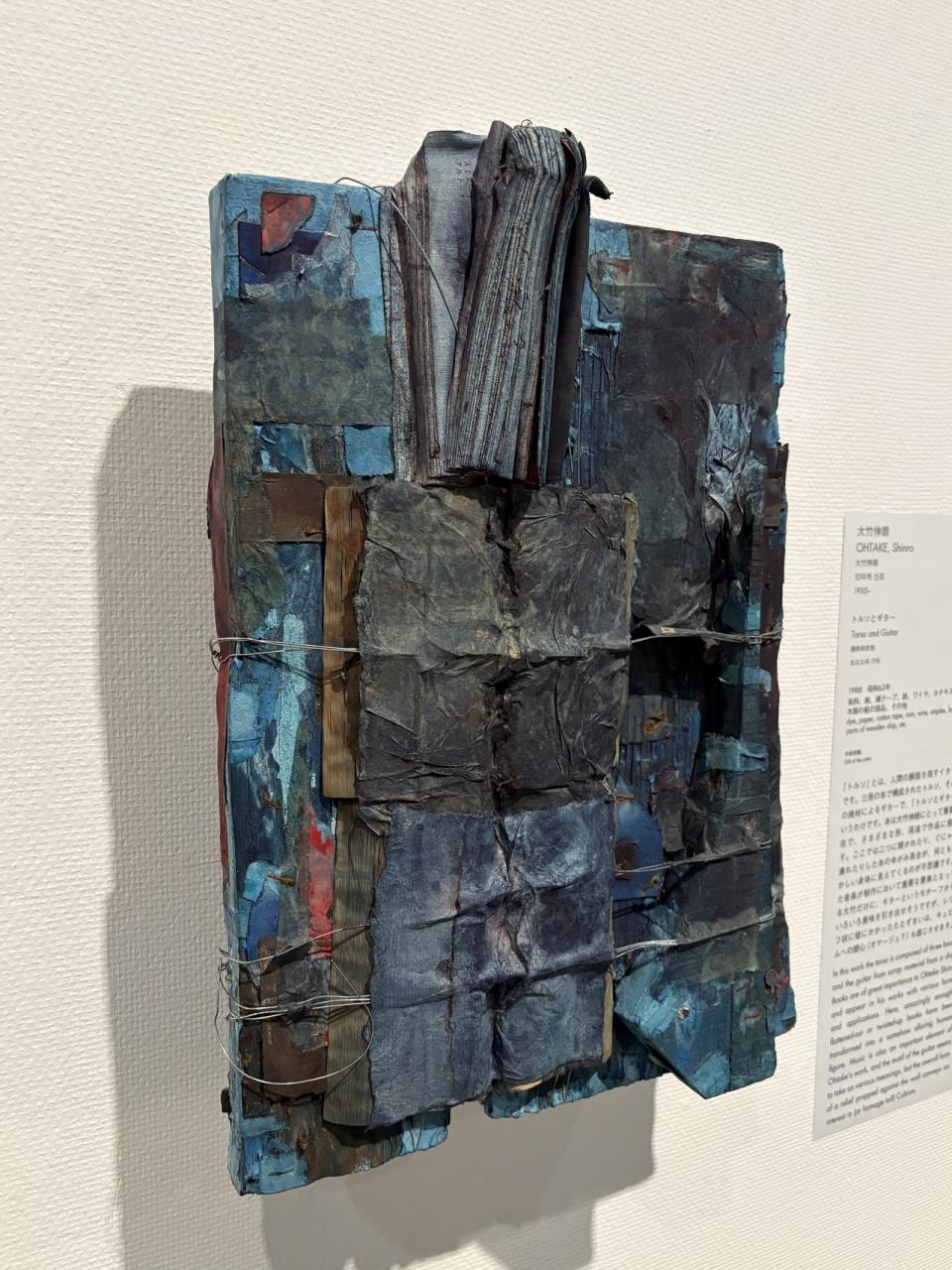
トルンとギター
Torso and Guitar
1988 昭和63年
染料、紙、綿テープ、鉄、ワイヤ、ホチキス、本、木製の船の部品、その他
dye, paper, cotton tape, iron, wire, staples, book, parts of wooden ship, etc.
作者寄贈
Gift of the artist
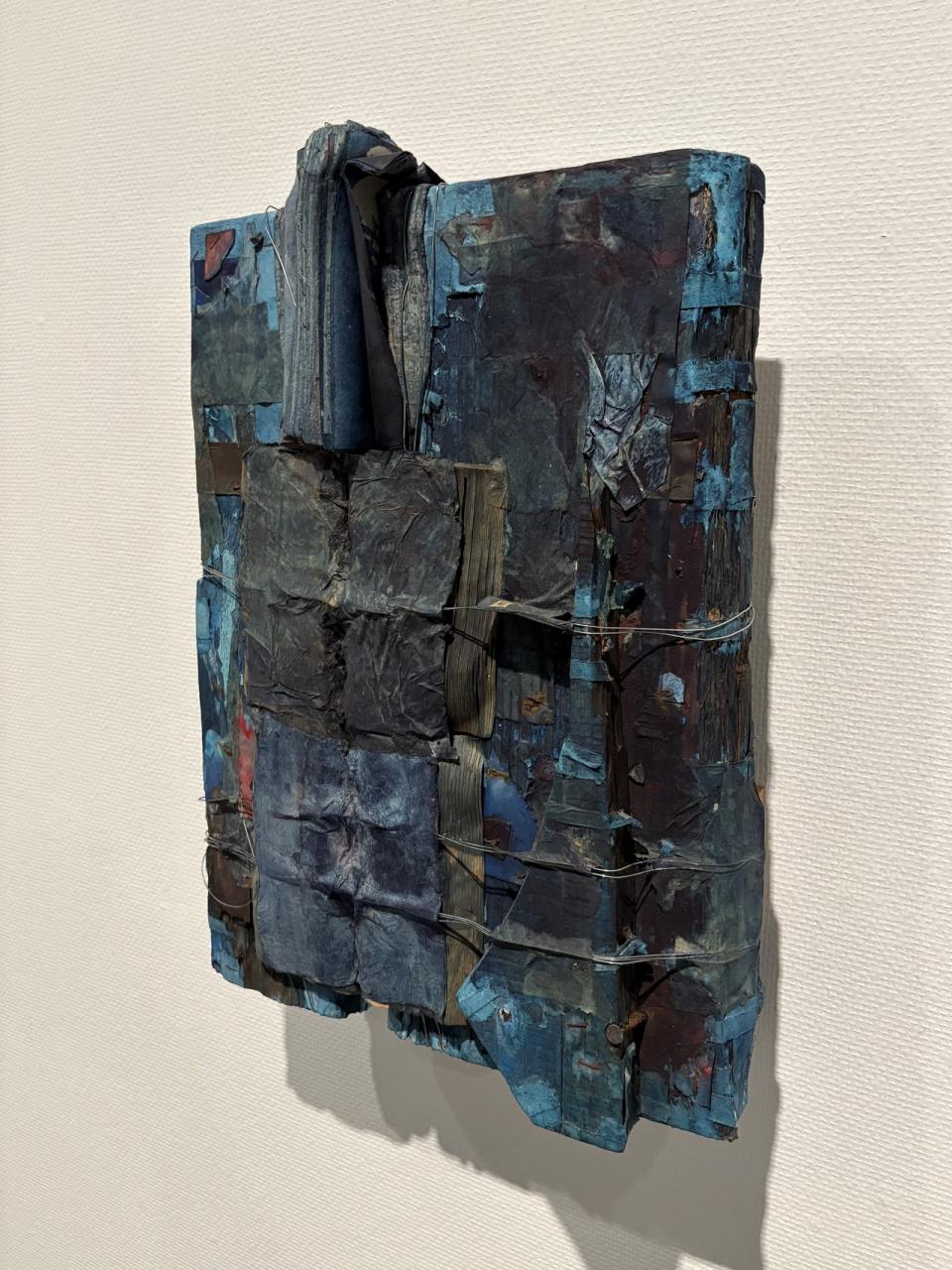
「トルン」とは、人間の胴部を指すイタリア語です。三冊の本で構成されたトルン、それに船の廃材によるギターで、「トルンとギター」というわけです。本は大竹伸にとって重要な存在で、さまざまな形、用途で作品に現れます。ここでは二つに開かれたり、ぐにゃりと潰れたりした本のゆがみ具合が、何とも艶めかしい身体に見えてくるのが不思議です。また音楽が制作において重要な要素となっている大竹だけに、ギターというモチーフからもいろいろ意味を引き出せそうですが、レリーフ状に壁にかかったたたずまいは、キュビスムへの関心(オマージュ?)も感じさせます。
In this work the torso is composed of three books and the guitar from scrap material from a ship.
Books are of great importance to Ohtake Shinro and appear in his works with various forms and applications. Here, amazingly enough, flattened-out or twisted-up books have been transformed into a somehow alluring human figure. Music is also an important element of Ohtake's work, and the motif of the guitar seems to take on various meanings, but the overall form of a relief propped against the wall conveys an interest in (or homage to?) Cubism. -
-
新収蔵作品
New Acquisition
日比野克彦
HIBINO, Katsuhiko
1958-
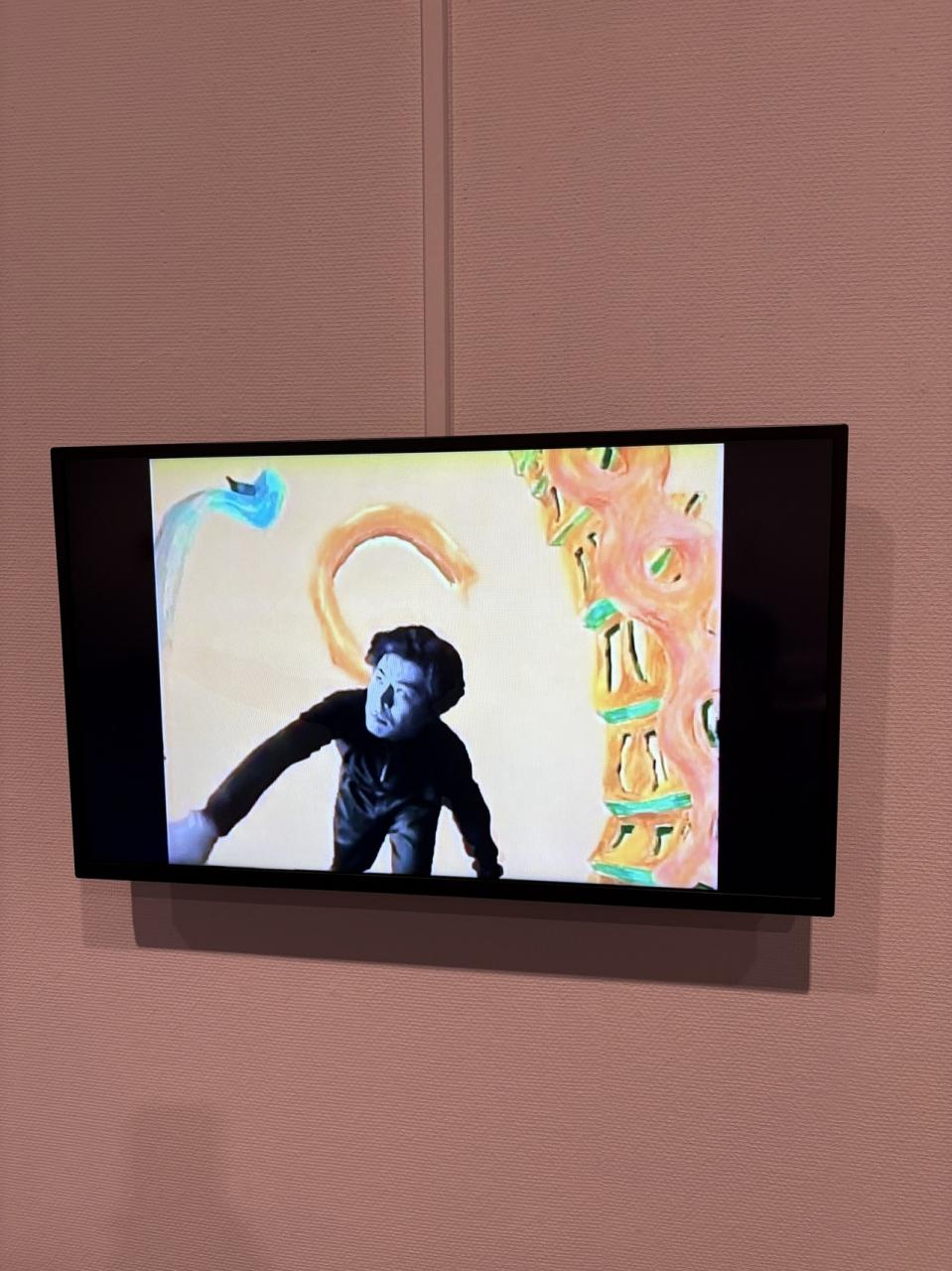
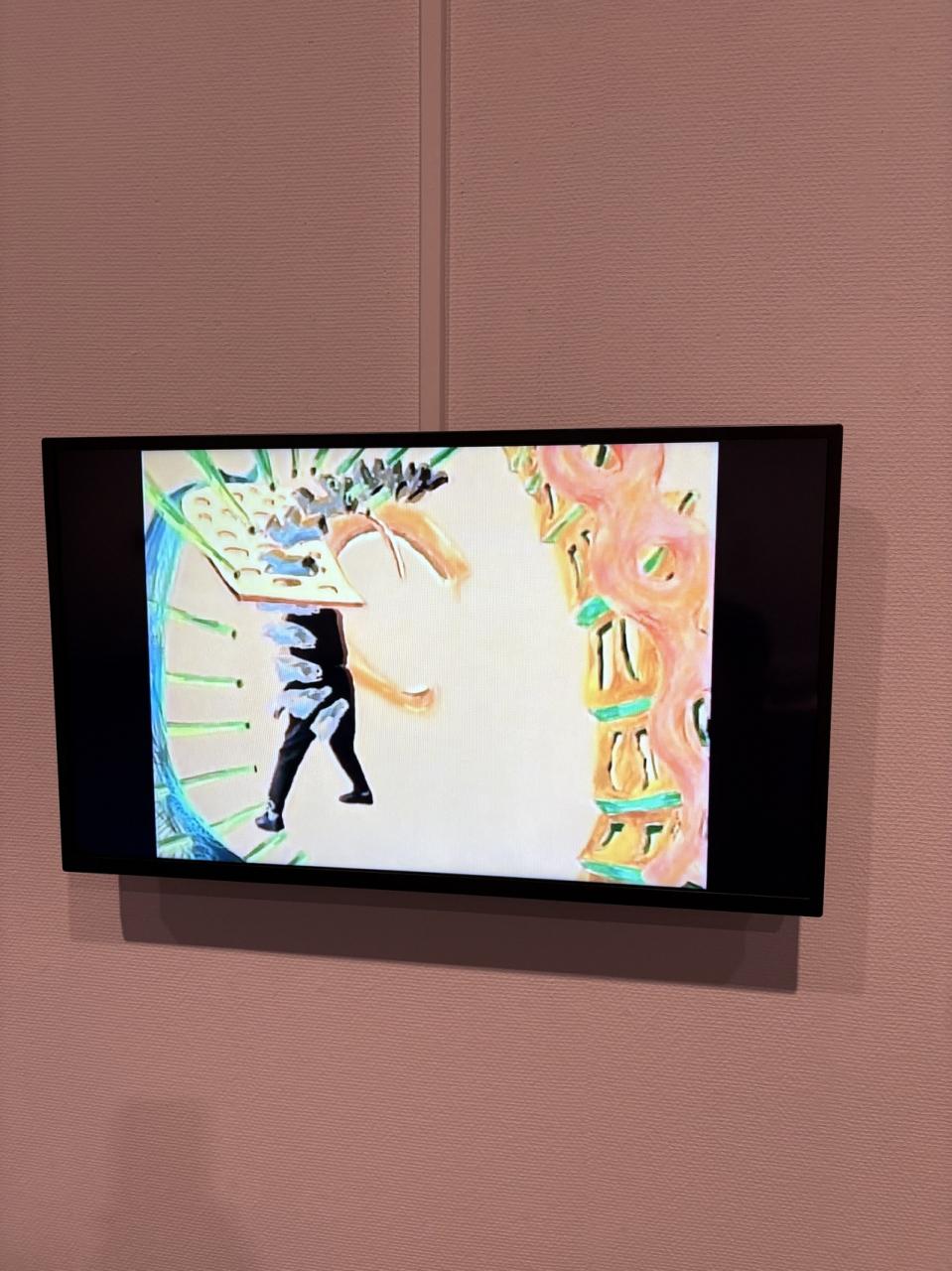
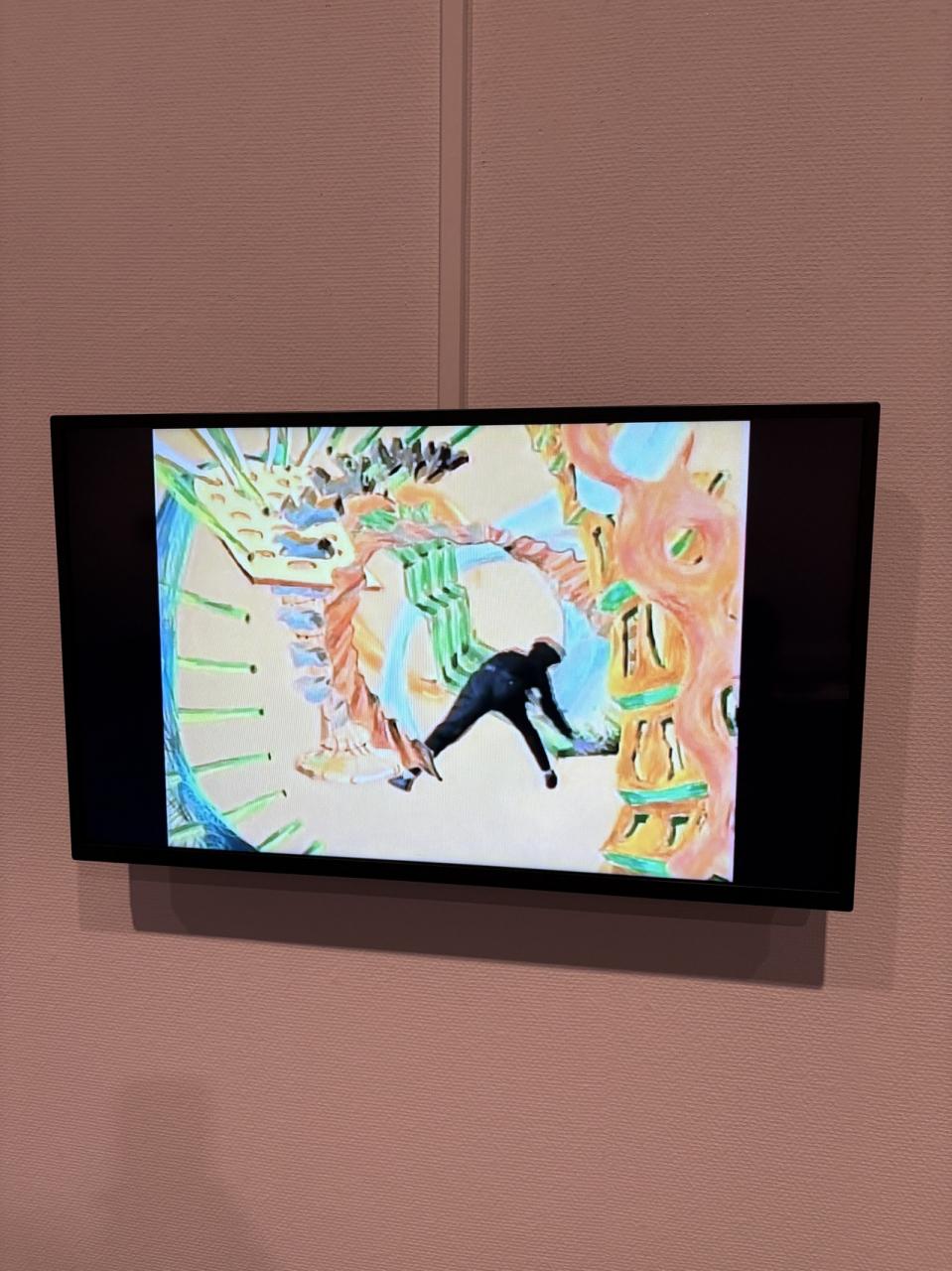
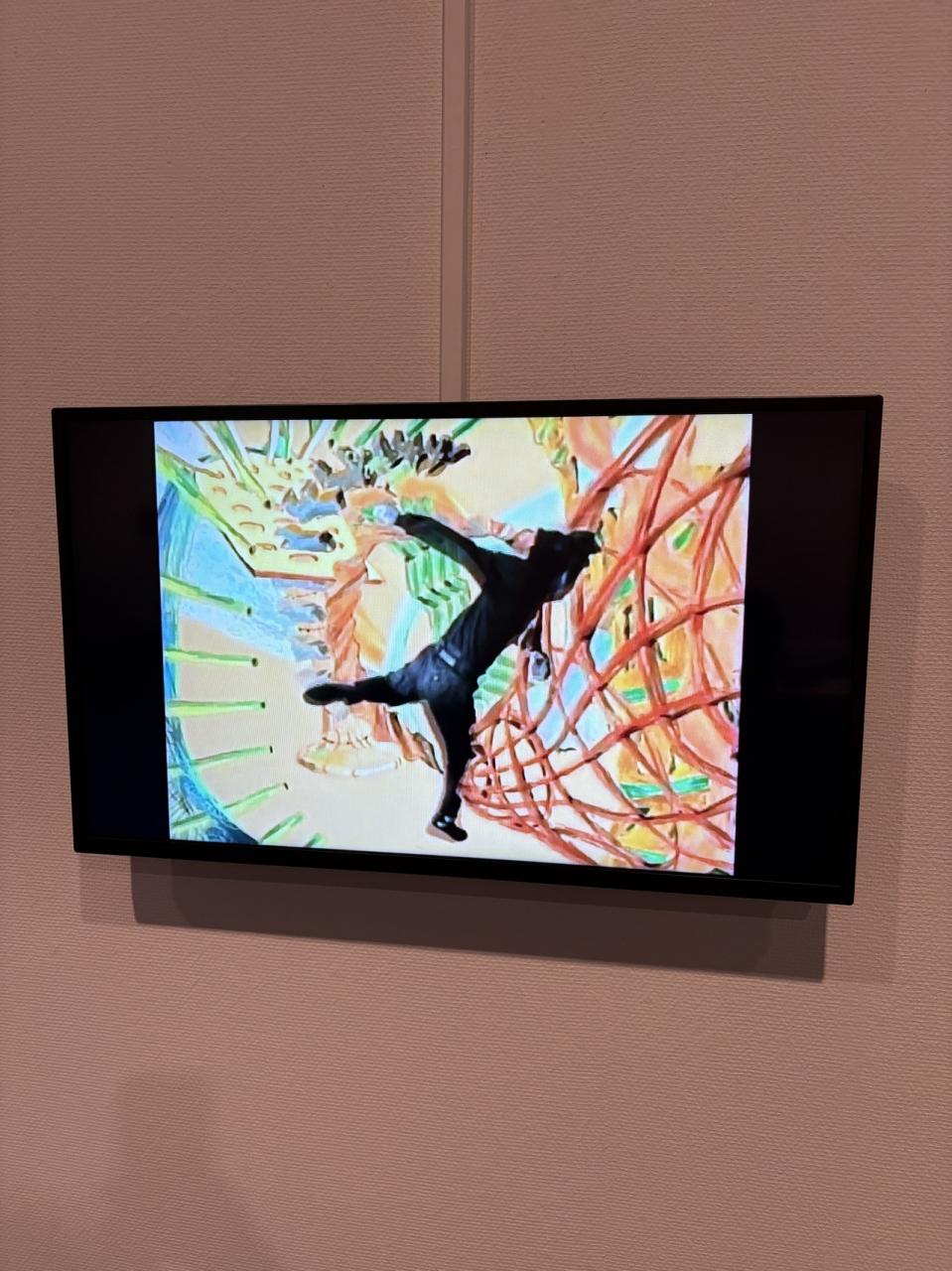
LABYRINTH
1989 昭和64/平成元年
ヴィデオカラー サウンド 30秒
video, color, sound, 30”
購入
Purchased
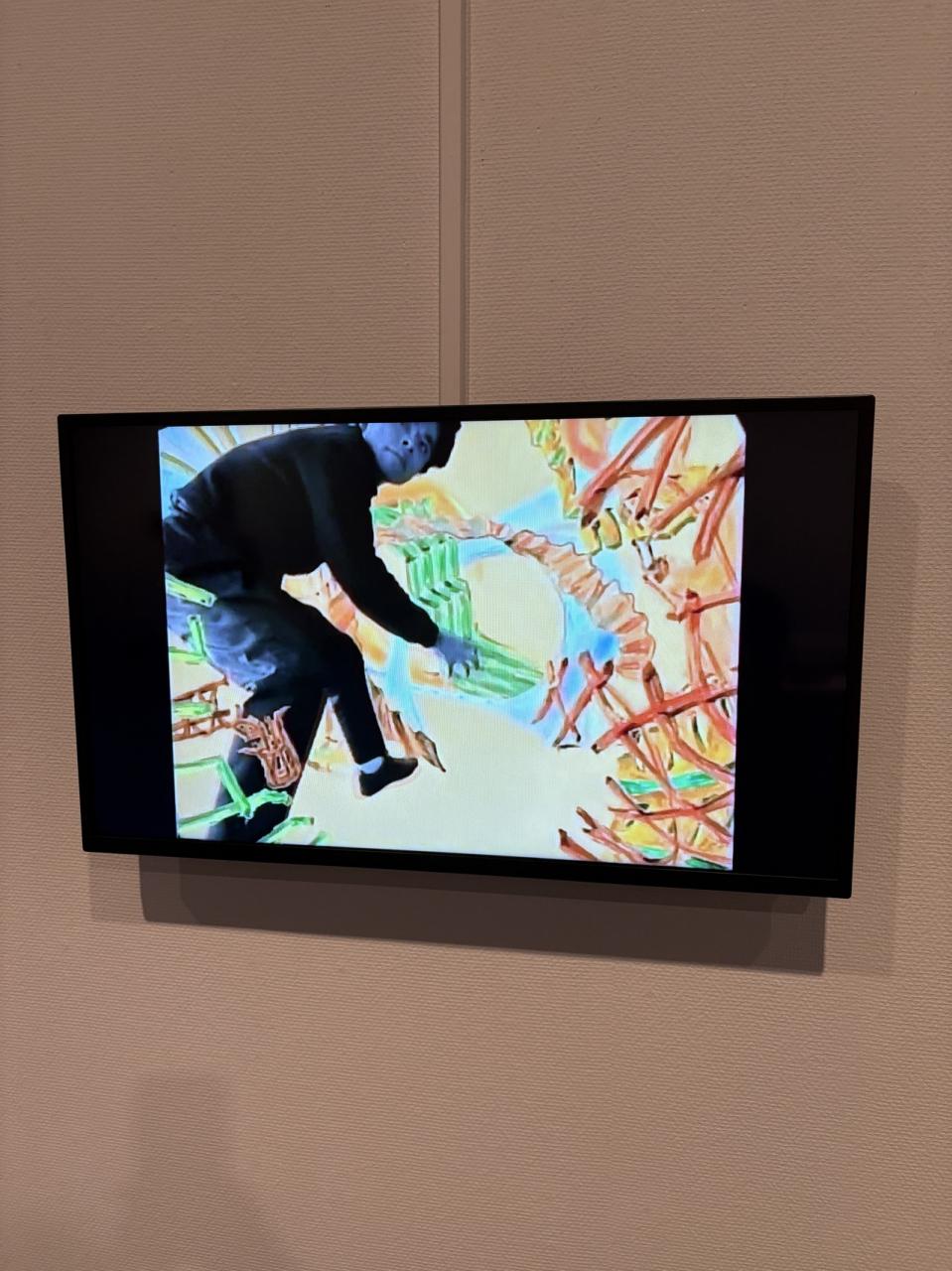
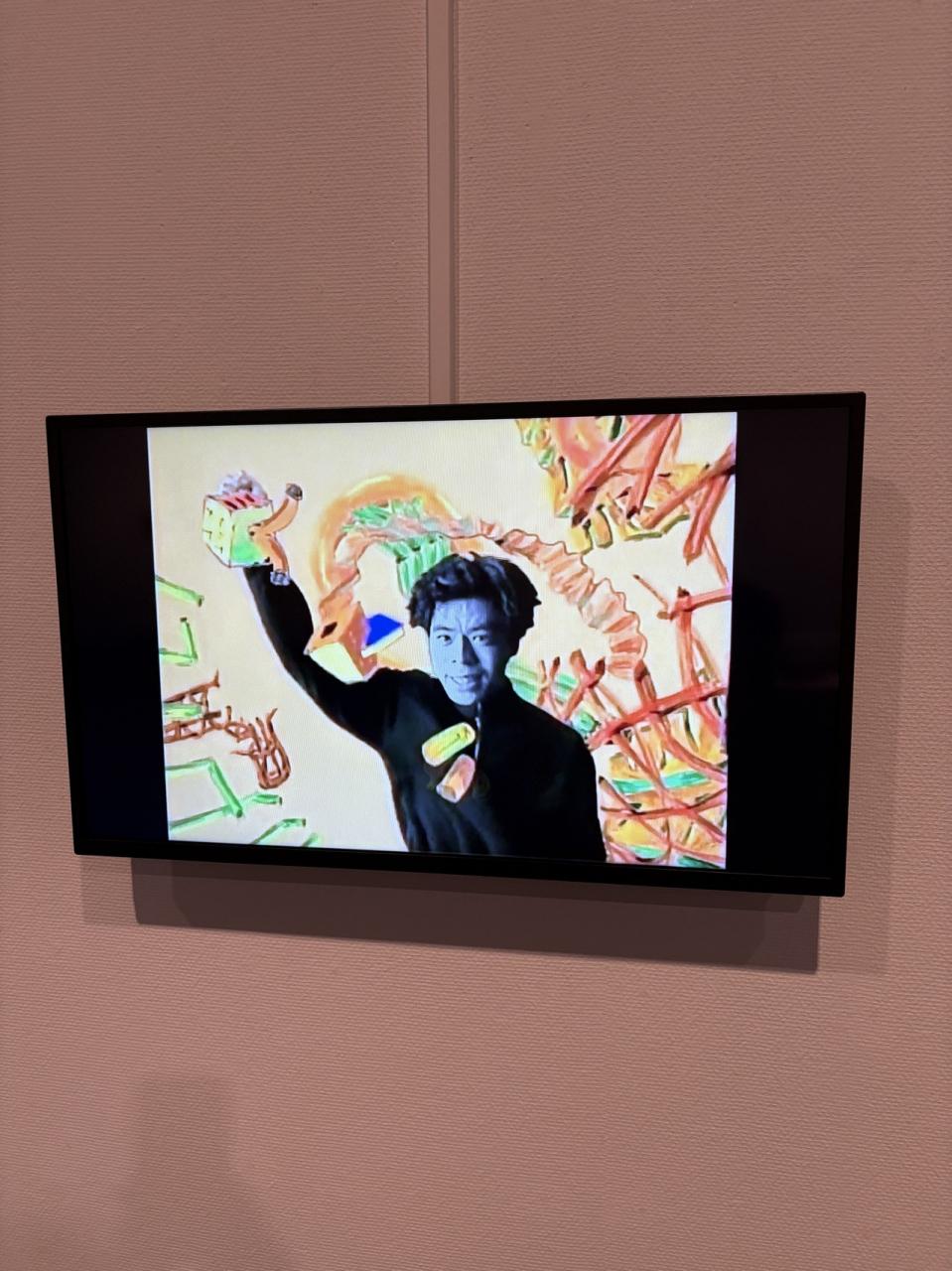
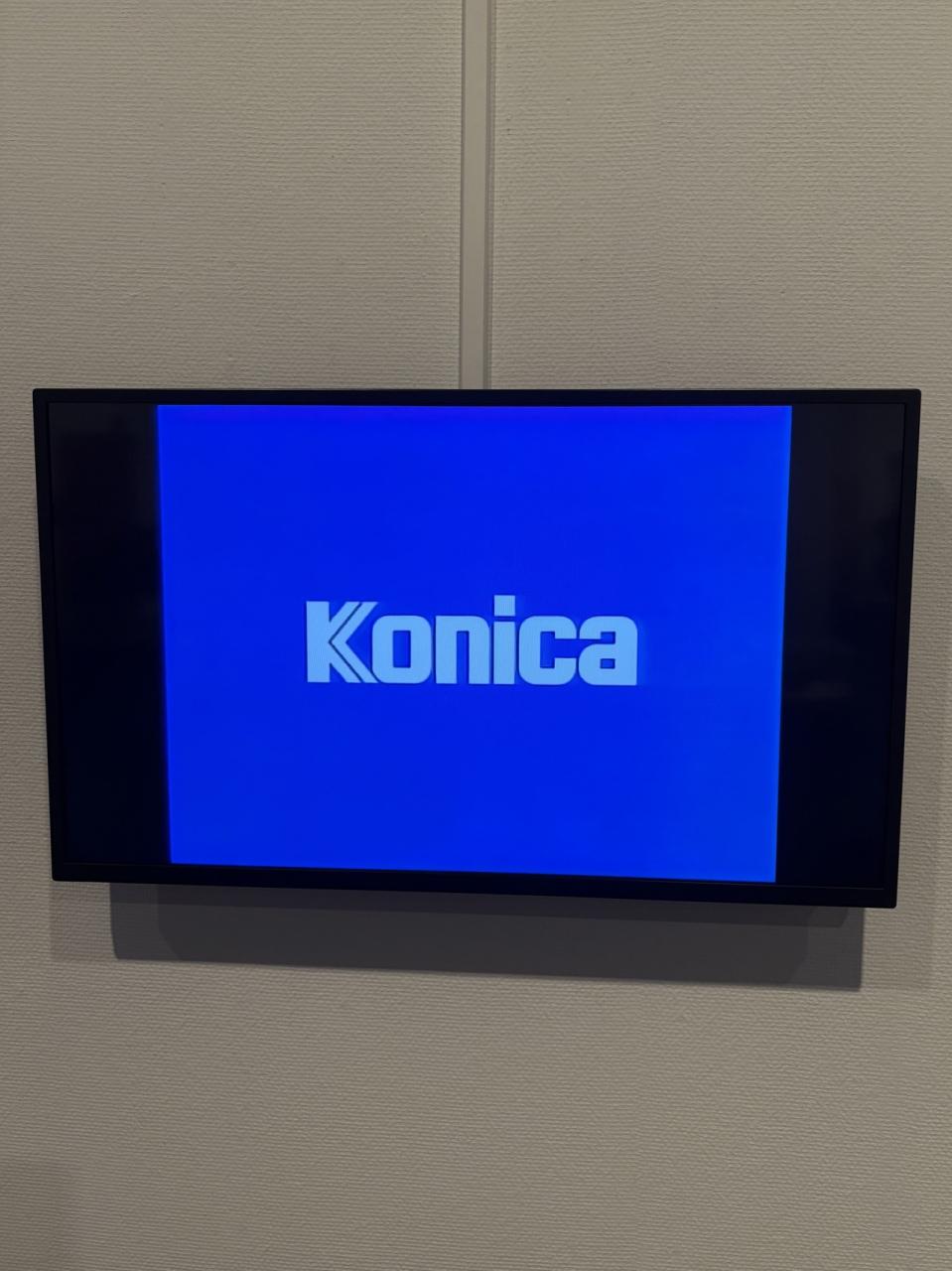
この映像は、日比野がパッケージデザインを手がけたコニカのビデオテープ「H'ART GALLERY」のテレビコマーシャルのために制作されました。
当時の最新技術であるイギリスのクォンテル社のペイント・ボックスによる線描と日比野の身体パフォーマンスが融合したヴィデオ・パフォーマンスでもあります。日比野の手から絵具がほとばしり、空中に自由自在に絵を描いているかのような映像は、テレビを通して当時もっとも多くの人の目に触れた日比野の表現と言えるでしょう。
This video was created as a television commercial for Konica's H'ART GALLERY videotape brand, for which Hibino also designed the packaging.
It also functions as a video performance, fusing Hibino's physical gestures with line drawings produced using Paint Box, a digital imaging system from the UK-based company Quantel that was state-of-the-art at the time. In the footage, paint seems to spray from Hibino's hands, as if he were drawing freely in midair. Broadcast on television, this work became the most widely seen example of Hibino's art during that era.
https://www.youtube.com/watch?v=KQEWtvjrIdI -
-
-
-
-
-
-
-
日比野克彦
HIBINO, Katsuhiko
1958-
SEWING SCHOOL
1983 昭和58年
アクリリック、墨、色鉛筆、段ボール、紙、その他・段ボール
acrylic, sumi, color pencil, corrugated cardboard, paper, etc. on corrugated cardboard
購入
Purchased -
-
日比野克彦
HIBINO, Katsuhiko
1958-
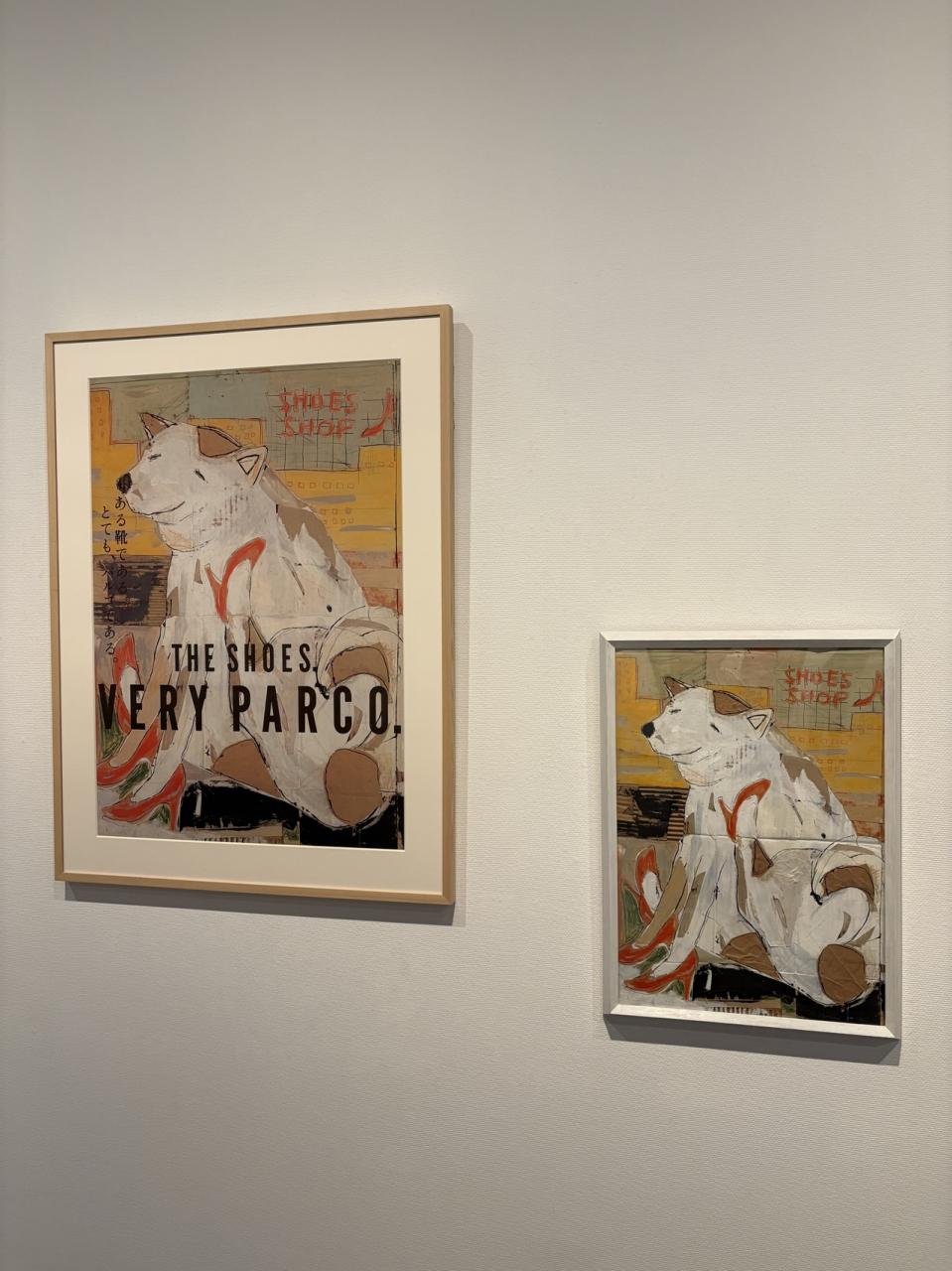
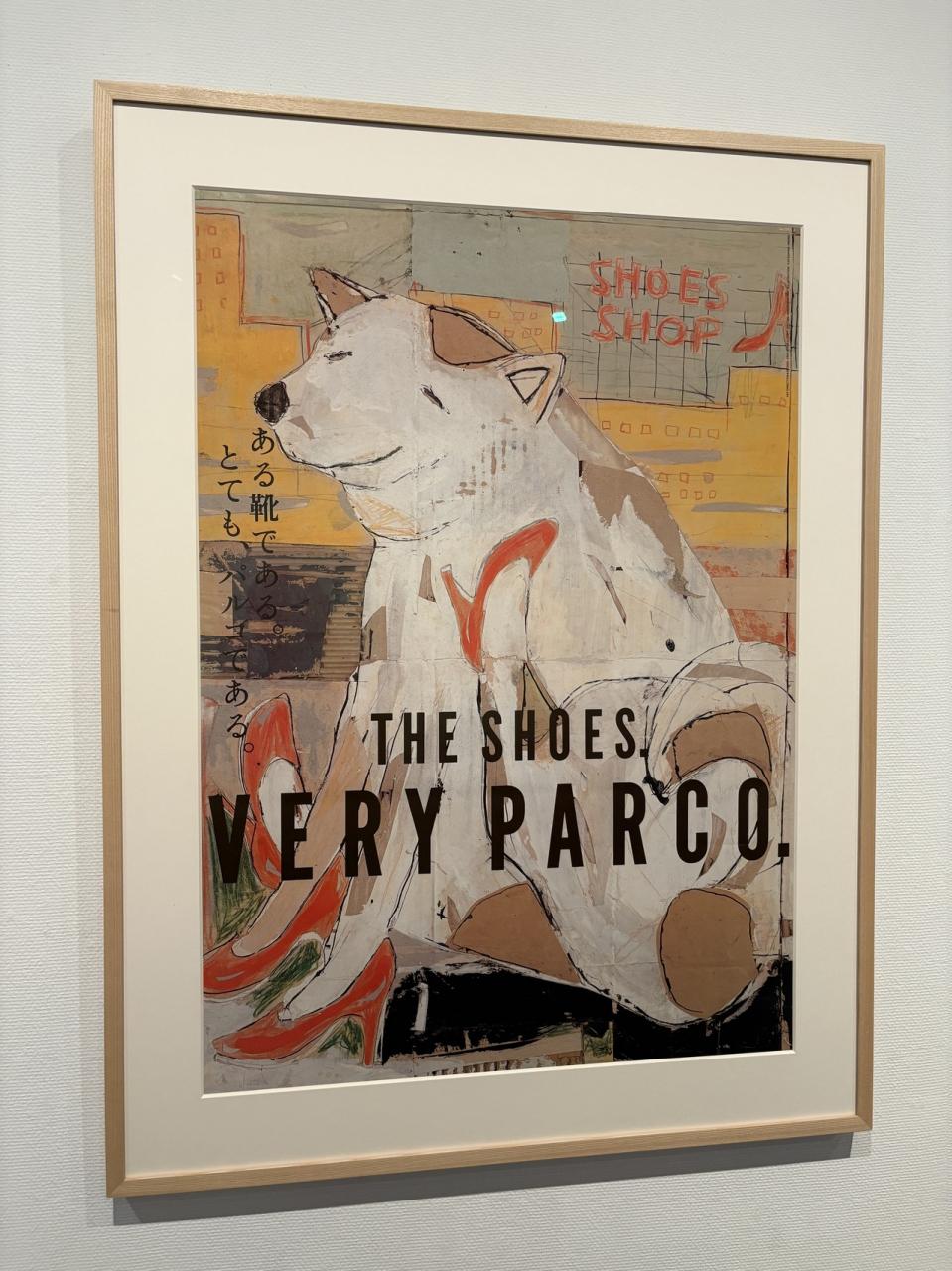
THE SHOES. VERY PARCO.
1984 昭和59年
オフセット ofset
購入
Purchased -
日比野克彦
HIBINO, Katsuhiko
1958-
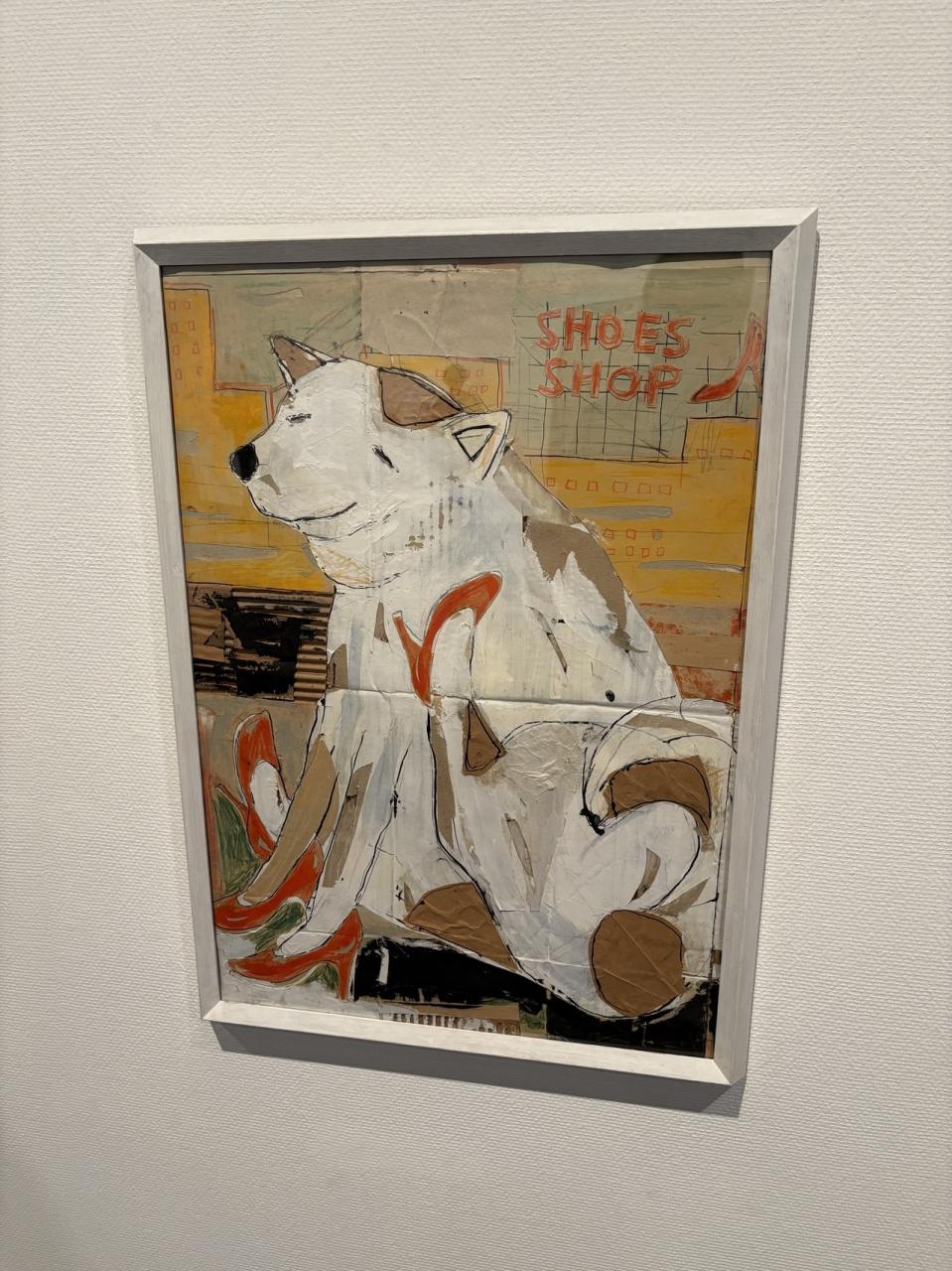
RED HIGH HEELS
1982 昭和57年
アクリリック、色鉛筆、鉛筆、インク、紙、厚紙、その他・段ボール
acrylic, color pencil, pencil, ink, paper, cardboard, etc. on corrugated cardboard
購入
Purchased
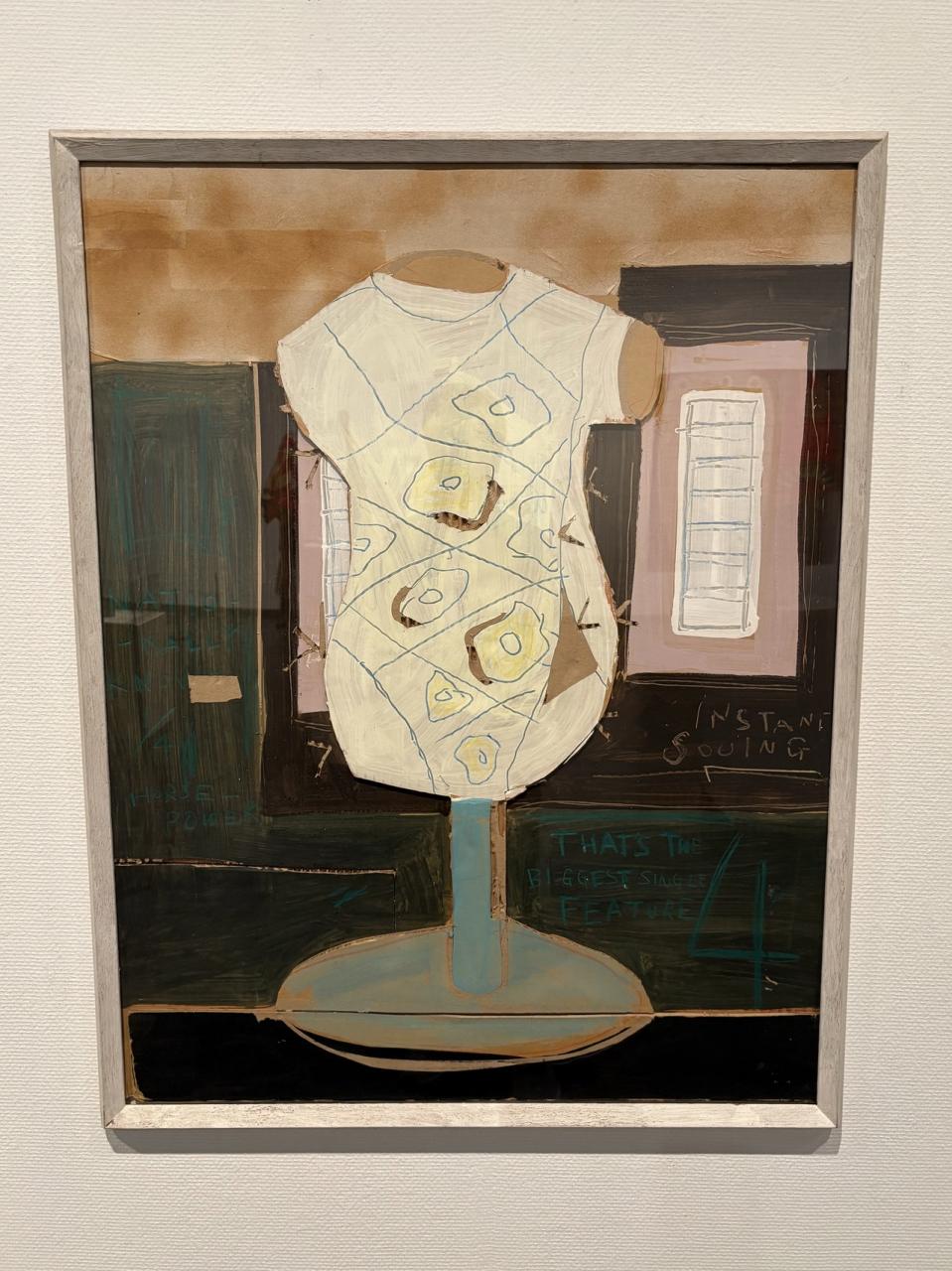
東京藝術大学美術学部デザイン科に在学中の1982年、段ボールを使った平面作品で第3回日本グラフィック展大賞を受賞し、注目を集めた日比野は、自身の作品制作と並行して、舞台美術やパフォーマンス、パブリックアート、企業広告、商品デザイン、店舗装飾、雑誌の表紙や本の装丁、挿絵など幅広いジャンルで活躍しました。
赤いハイヒールを履いて微笑む犬の表情がなんとも愛らしいこの作品は、アートディレクターの石岡瑛子の依頼で、パルコのポスターのために制作されたものです。
While studying in the Department of Design at Tokyo University of the Arts, Hibino attracted attention in 1982 when he won the grand prize at the 3rd Nippon Graphics Exhibition for his two-dimensional works made with cardboard.Alongside his art practice, he has been active in a wide range of fields, including theatrical scenography, performance, public art, corporate advertising, product design, store displays, magazine covers, book design, and illustration.
This charming work, featuring a smiling dog in red high heels, was created for a PARCO department store poster at the request of the art director Ishika Eiko. -
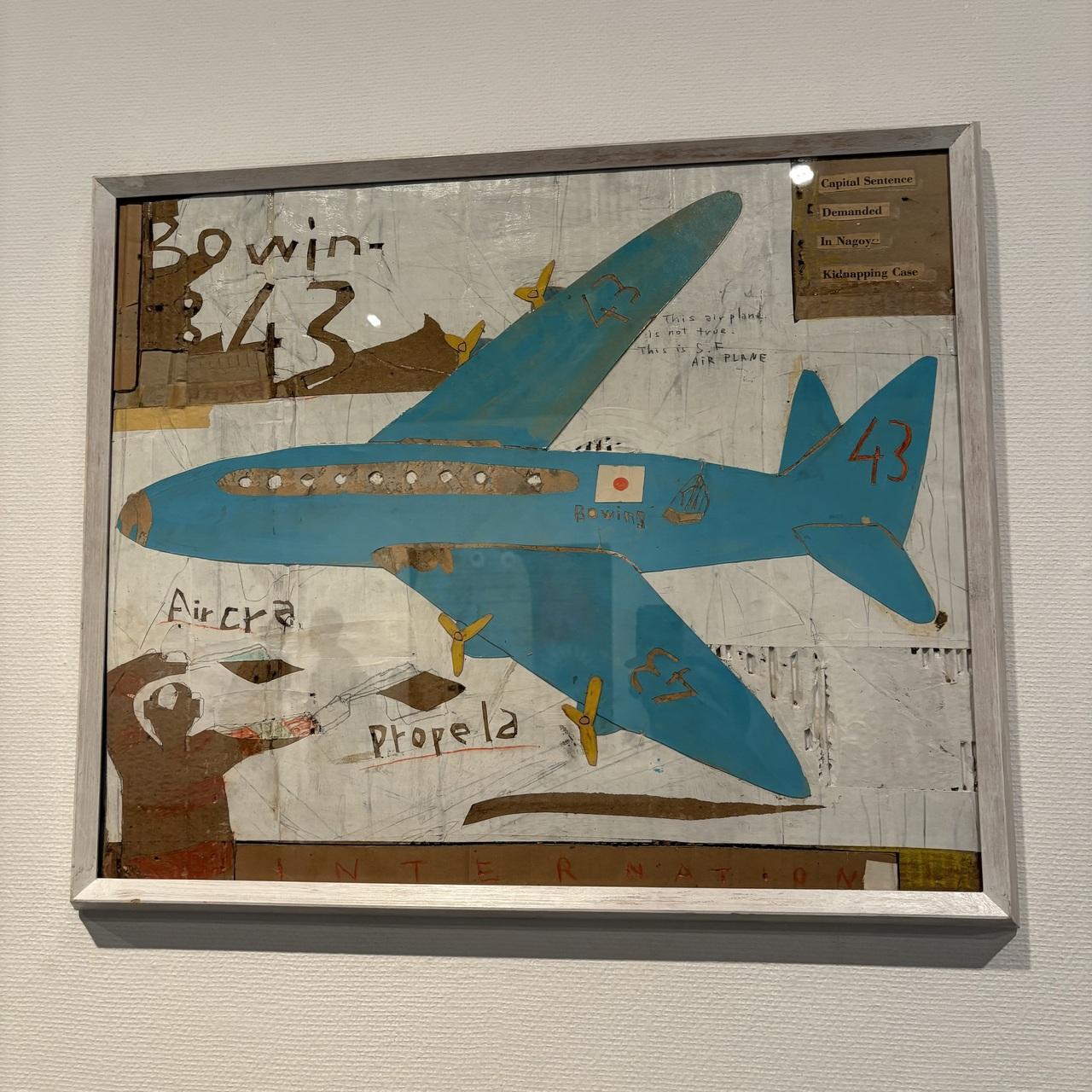
新収蔵作品
New Acquisition
日比野克彦
HIBINO, Katsuhiko
1958-
BOEING
1981 昭和56年
アクリリック、色鉛筆、鉛筆、インク、紙、厚紙、その他・段ボール
acrylic, color pencil, pencil, ink, paper, cardboard, etc. on corrugated cardboarc
購入
Purchased -

この旅行記のタグ


利用規約に違反している投稿は、報告する事ができます。
-
前の旅行記

MOMAT コレクション〔国立東京近代美術館 所蔵作品展〕(2025.7.15-10.26)7.戦後の女性画...
2025/08/07~
神田・神保町
-
次の旅行記

MOMAT コレクション〔国立東京近代美術館 所蔵作品展〕(2025.7.15-10.26)9.山村雅昭「ワ...
2025/08/07~
神田・神保町
-

MOMAT コレクション〔国立東京近代美術館 所蔵作品展〕(2025.7.15-10.26)1.ハイライト ...
2025/08/07~
神田・神保町
-

MOMAT コレクション〔国立東京近代美術館 所蔵作品展〕(2025.7.15-10.26)2.大正の個性派...
2025/08/07~
神田・神保町
-

MOMAT コレクション〔国立東京近代美術館 所蔵作品展〕(2025.7.15-10.26)3. 岸田劉生「...
2025/08/07~
神田・神保町
-

MOMAT コレクション〔国立東京近代美術館 所蔵作品展〕(2025.7.15-10.26)4.山と渓谷 "...
2025/08/07~
神田・神保町
-

MOMAT コレクション(2025.7.15-10.26)5.1930年代の絵画:現実の彼方へ、幻影の手前で...
2025/08/07~
神田・神保町
-

MOMAT コレクション(2025.7.15-10.26)6.1940年 "ハリー・K・シゲタ(重田放二)フ...
2025/08/07~
神田・神保町
-

MOMAT コレクション〔国立東京近代美術館 所蔵作品展〕(2025.7.15-10.26)7.戦後の女性画...
2025/08/07~
神田・神保町
-

MOMAT コレクション(2025.7.15-10.26)8.ジャンクとポップ "日比野克彦 LABYRIN...
2025/08/07~
神田・神保町
-

MOMAT コレクション〔国立東京近代美術館 所蔵作品展〕(2025.7.15-10.26)9.山村雅昭「ワ...
2025/08/07~
神田・神保町
-

MOMAT コレクション(2025.7.15-10.26)10.アルプのアトリエ/絵画と目的 "山口華楊、洋...
2025/08/07~
神田・神保町
-

MOMAT コレクション(2025.7.15-10.26)11.揺れる境界 "石川真生、基地を取り巻く人々"
2025/08/07~
神田・神保町
-

MOMAT コレクション〔国立東京近代美術館 所蔵作品展〕(2025.7.15-10.26)12.ヨコ軸・タ...
2025/08/07~
神田・神保町
-

東京国立近代美術館 "新収蔵&特別公開 コレクションにみる日韓" (2025.7.15 - 10.26) "...
2025/08/07~
神田・神保町
旅行記グループをもっと見る
コメントを投稿する前に
十分に確認の上、ご投稿ください。 コメントの内容は攻撃的ではなく、相手の気持ちに寄り添ったものになっていますか?
サイト共通ガイドライン(利用上のお願い)報道機関・マスメディアの方へ 画像提供などに関するお問い合わせは、専用のお問い合わせフォームからお願いいたします。






フォートラベル公式LINE@
おすすめの旅行記や旬な旅行情報、お得なキャンペーン情報をお届けします!
QRコードが読み取れない場合はID「@4travel」で検索してください。
\その他の公式SNSはこちら/




旅行記グループ MOMAT コレクション〔国立東京近代美術館 所蔵作品展〕(2025.7.15-10.26)
0
38