


2025/08/07 - 2025/08/07
32位(同エリア934件中)

旅熊 Kokazさん
- 旅熊 KokazさんTOP
- 旅行記1915冊
- クチコミ854件
- Q&A回答102件
- 1,700,956アクセス
- フォロワー753人
この旅行記のスケジュール
2025/08/07

この旅行記スケジュールを元に
MOMAT コレクション〔国立東京近代美術館 所蔵作品展〕(2025.7.15-10.26)
https://www.momat.go.jp/exhibitions/r7-1
4.山と渓谷
- 旅行の満足度
- 5.0
-

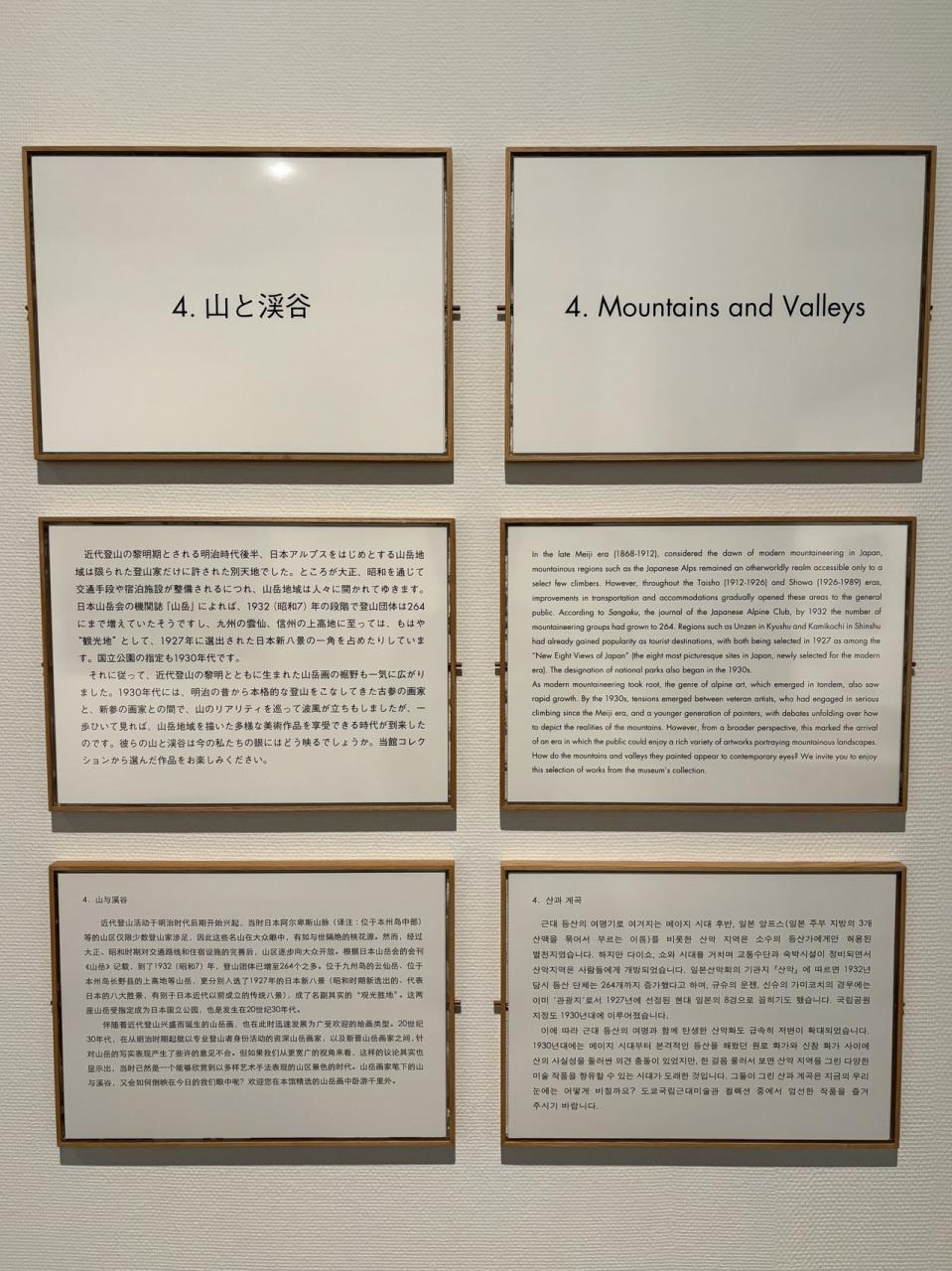
4. 山と渓谷
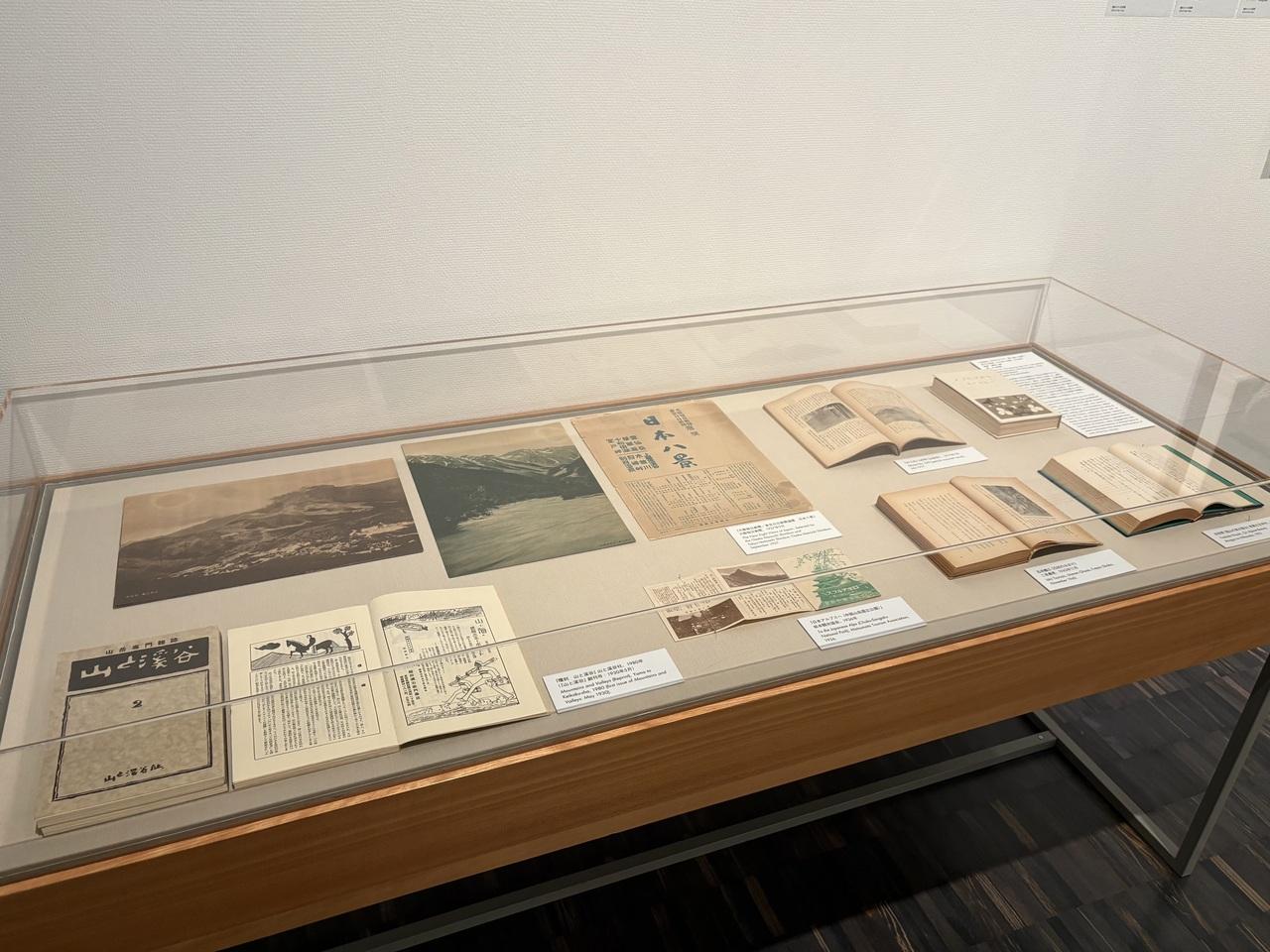
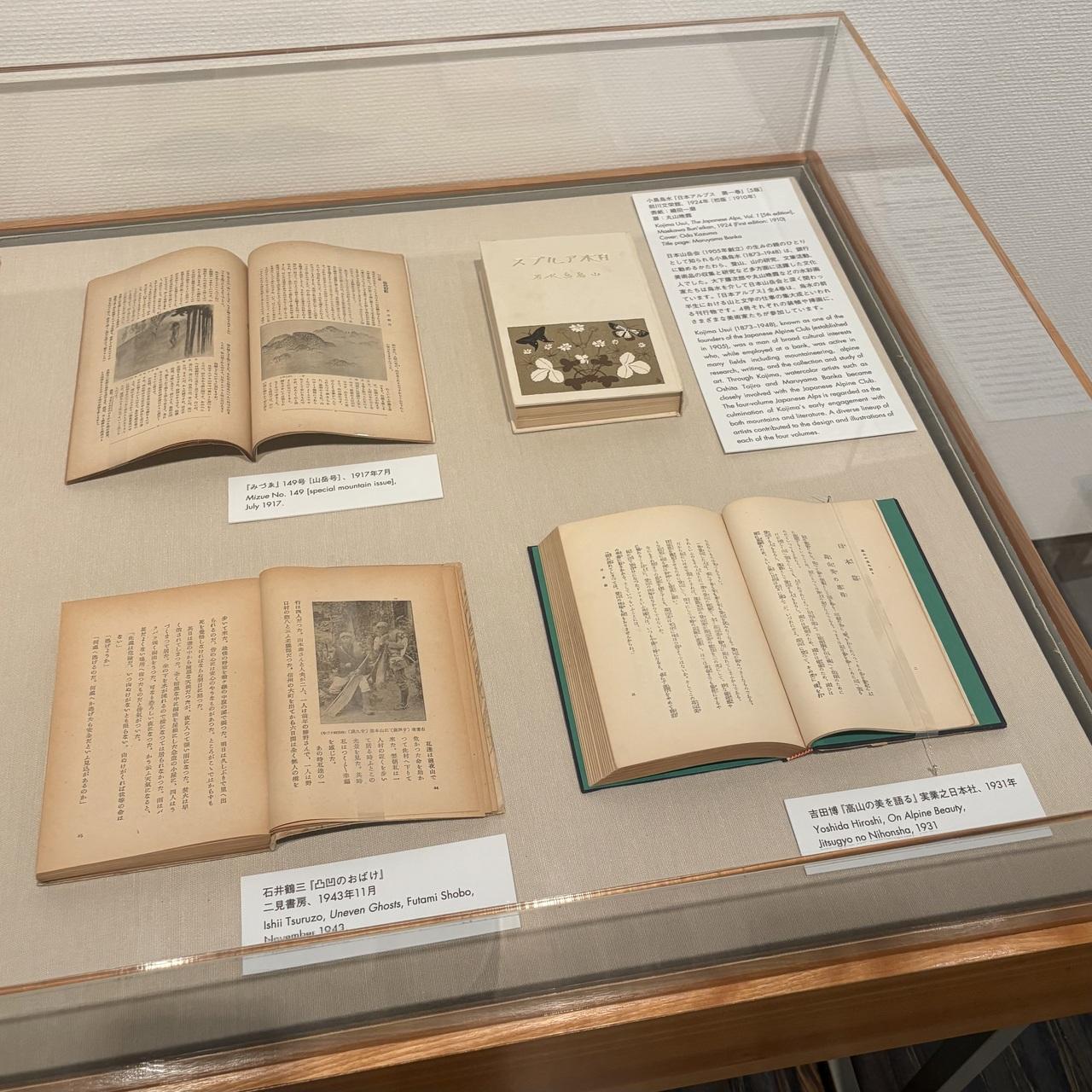
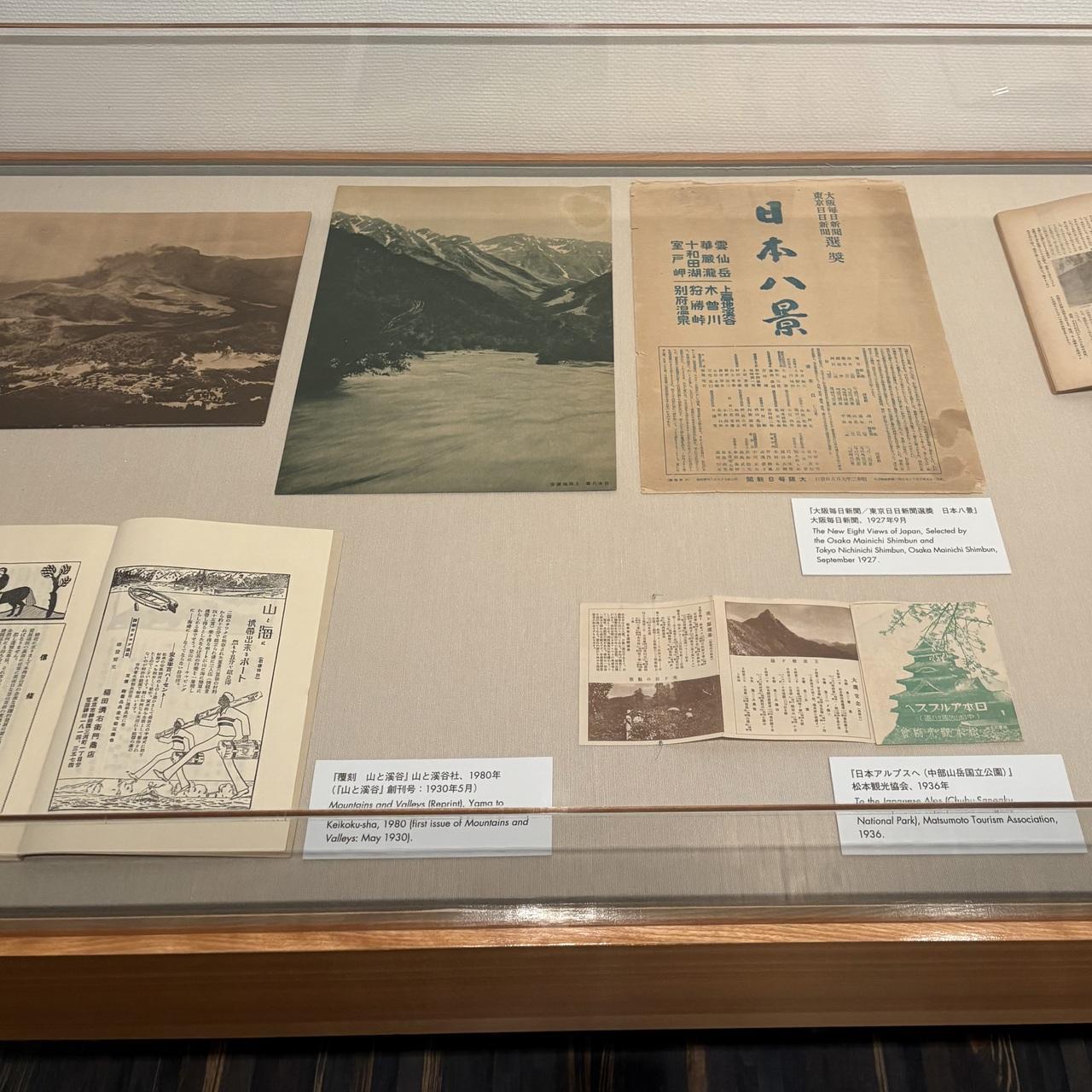
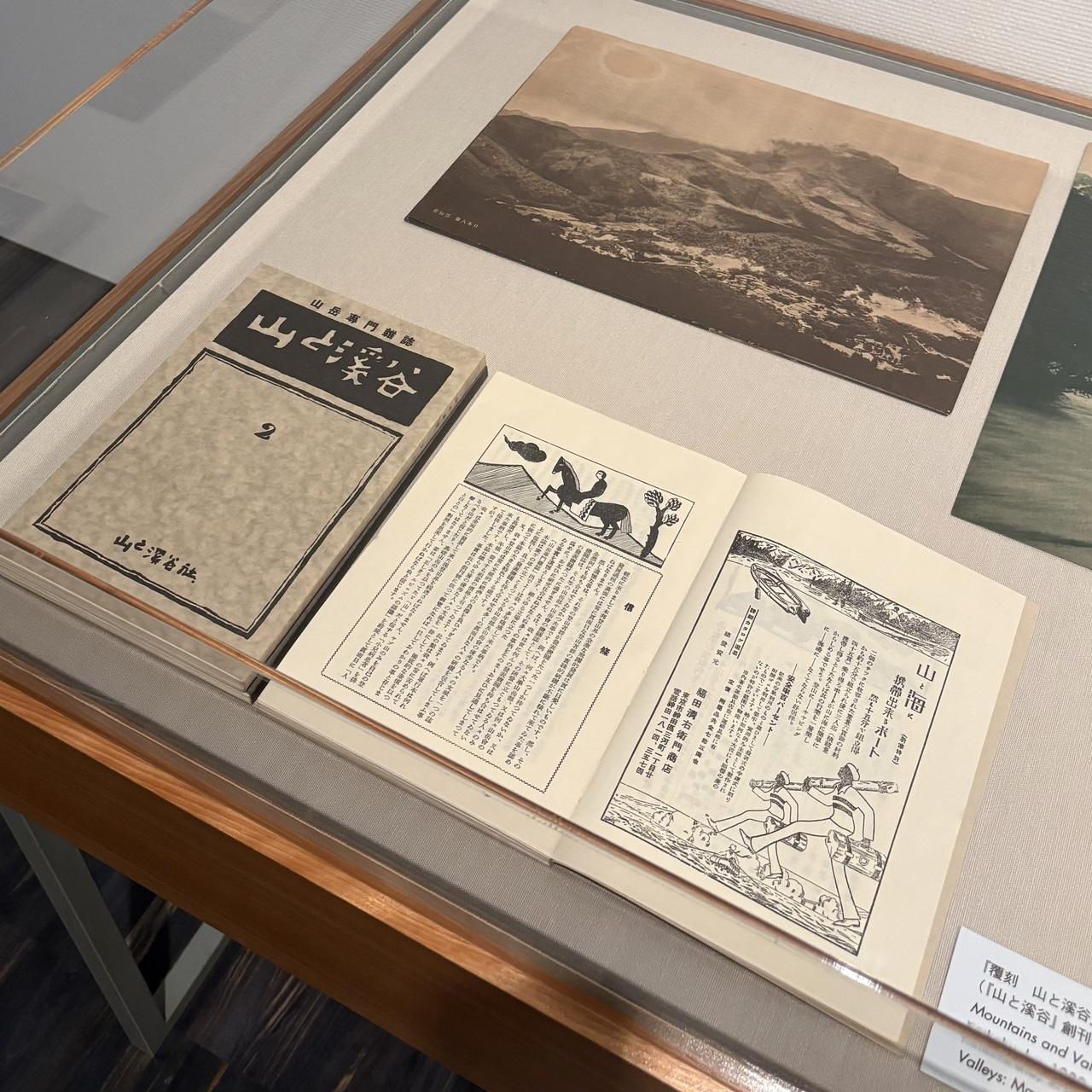
近代登山の黎明期とされる明治時代後半、日本アルプスをはじめとする山岳地域は限られた登山家だけに許された別天地でした。ところが大正、昭和を通じて交通手段や宿泊施設が整備されるにつれ、山岳地域は人々に開かれてゆきます。
日本山岳会の機関誌「山岳』によれば、1932(昭和7)年の段階で登山団体は264にまで増えていたそうですし、九州の雲仙、信州の上高地に至っては、もはや"観光地”として、1927年に選出された日本新八景の一角を占めたりしています。国立公園の指定も1930年代です。
それに従って、近代登山の黎明とともに生まれた山岳画の裾野も一気に広がりました。1930年代には、明治の昔から本格的な登山をこなしてきた古参の画家と、新参の画家との間で、山のリアリティを巡って波風が立ちもしましたが、一歩ひいて見れば、山岳地域を描いた多様な美術作品を享受できる時代が到来したのです。彼らの山と渓谷は今の私たちの眼にはどう映るでしょうか。当館コレクションから選んだ作品をお楽しみください。
4. Mountains and Valleys
In the late Meiji era (1868-1912), considered the dawn of modern mountaineering in Japan, mountainous regions such as the Japanese Alps remained an otherworldly realm accessible only to a select few climbers. However, throughout the Taisho 1912-1926) and Showa (1926-1989) eras, improvements in transportation and accommodations gradually opened these areas to the general public.
According to Sangaku, the journal of the Japanese Alpine Club, by 1932 the number of mountaineering groups had grown to 264. Regions such as Unzen in Kyushu and Kamikochi in Shinshu had already gained popularity as tourist destinations, with both being selected in 1927 as among the "New Eight Views of Japan" (the eight most picturesque sites in Japan, newly selected for the modern era). The designation of national parks also began in the 1930s.
As modern mountaineering took root, the genre of alpine art, which emerged in tandem, also saw rapid growth. By the 1930s, tensions emerged between veteran artists, who had engaged in serious climbing since the Meiji era, and a younger generation of painters, with debates unfolding over ow to depict the realities of the mountains. However, from a broader perspective, this marked the arrival of an era in which the public could enjoy a rich variety of artworks portraying mountainous landscapes. How do the mountains and valleys they painted appear to contemporary eyes? We invite you to enjoy this selection of works from the museum's collection.東京国立近代美術館 美術館・博物館
-
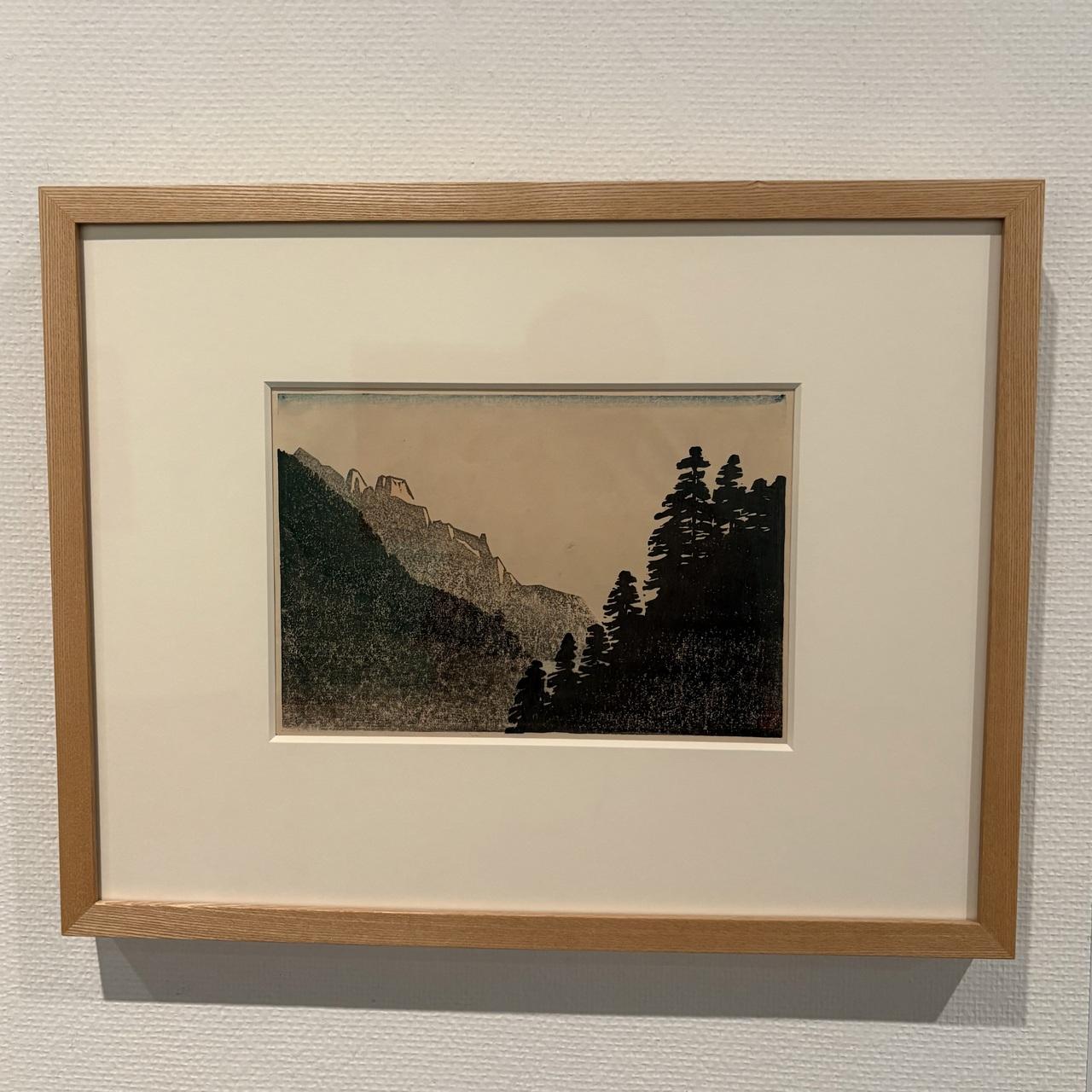
石井鶴三
ISHII, Tsuruzo
1887-1973
山嶽
Mountains
c.1925 大正14年頃
木版(多色)
color woodcut
恩地のぶ氏寄贈
Gift of Onchi Nobu
石井は1919(大正8)年に日本山岳会に入会しましたが、すでに何度も日本アルプスに登っていた強者でした。1909(明治42)年には北ア、翌年に南アルプスへ、ろくに道もない時代に天幕代わりの油紙を携えて登ったことを語っています。本作は自画自刻自摺の創作版画です。遠くの山の特徴的なかたちを石井は気に入っていたようで、左右を反転し縦長の構図にした別の作品も制作しています。
(石井鶴三「旅の追懐」「凸凹のおばけ」所収、二見書房、1943年)
When Ishii joined the Japanese Alpine Club in 1919, he was already a seasoned climber who had made multiple ascents in the Japan Alps. He recalled crossing Harinoki Pass in the Northern Japanese Alps to reach Mt. Tateyama in 1909, climbing Mt. Yari from Mt. Eboshi Pass with Yamamoto Kanae the following year, and venturing into the Southern Japanese Alps the year after that, all at a time when trails were virtually nonexistent, and he carried oiled paper to make a makeshift tent.* This print is an original woodcut that Ishii designed, carved, and printed himself. He seems to have been particularly fond of the distinctive silhouette of the distant mountain, as he also produced another version of the same scene in a vertical format with the composition reversed.
*Ishii Tsuruzo, "Reminiscences of Travel," in Uneven Ghosts, Futami Shobo, 1943. -
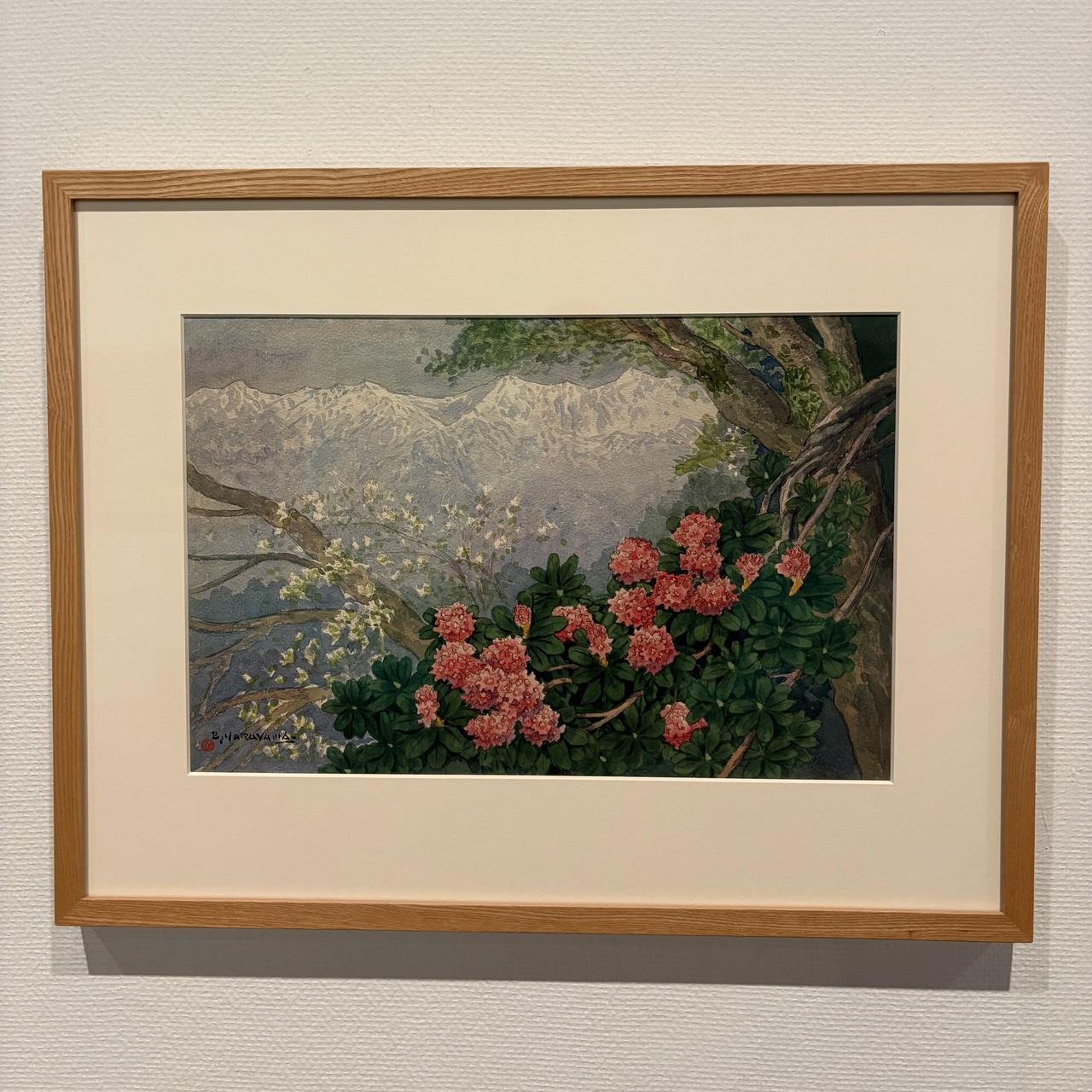
丸山晩霞
MARUYAMA, Banka
1867-1942
ヒマラヤ山と石楠花
The Himalayas and Alpine Roses
1924 大正13年
水彩、鉛筆・紙
watercolor and pencil on paper
文部省管理換
Transferred from Ministry of Education
晩霞は写生旅行先で出会った吉田博に感化されて水彩画をはじめたといいます。その水彩画が緑となって小島鳥水と知り合い、彼が中心となって創立した日本山岳会に入会します。鳥水は晩霞を親友と呼び、その作品を自室に掛け、「言州の自然が、これほど鋭敏な神経を働かして、私に迫つたことはない」と絶賛しました。
それから十数年が経ち、いささか古風となった写実様式ですが、鳥水を魅了したみずみずしさは当時においても健在でした。
(小島烏水「州と風景画」「日本アルプス 第二巻」前川文栄閣、1911年)
Maruyama is said to have been inspired to take up watercolor painting after meeting Yoshida Hiroshi during a sketching trip. Through his interest in watercolor, he got to know Kojima Usui and eventually joined the Japanese Alpine Club, of which Kojima was a central founding member. Kojima regarded Maruyama as a close friend, hung his paintings in his own room, and praised him highly, writing, "The natural beauty of Shinshu has never moved and affected me with such refined sensitivity.
* More than a decade later, while Maruyama's style of realism may have come to seem somewhat old-fashioned, the freshness that had once captivated Kojima remained unmistakably alive.
*Kojima Usui, "Shinshu and Landscape Painting," in Japan Alps Volume 2, Maekawa Buneikaku, 1911. -
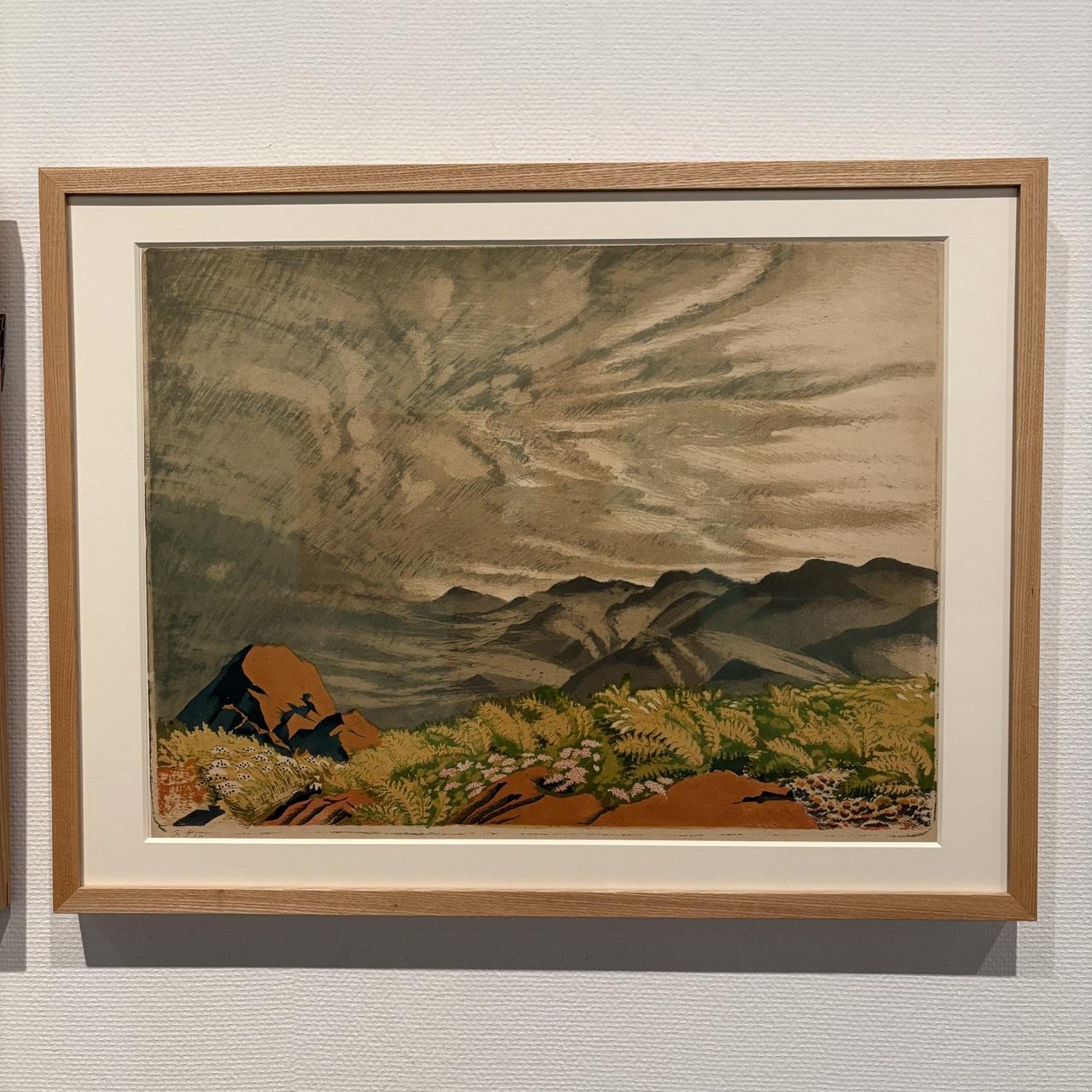
織田一磨
ODA, Kazuma
1882-1956
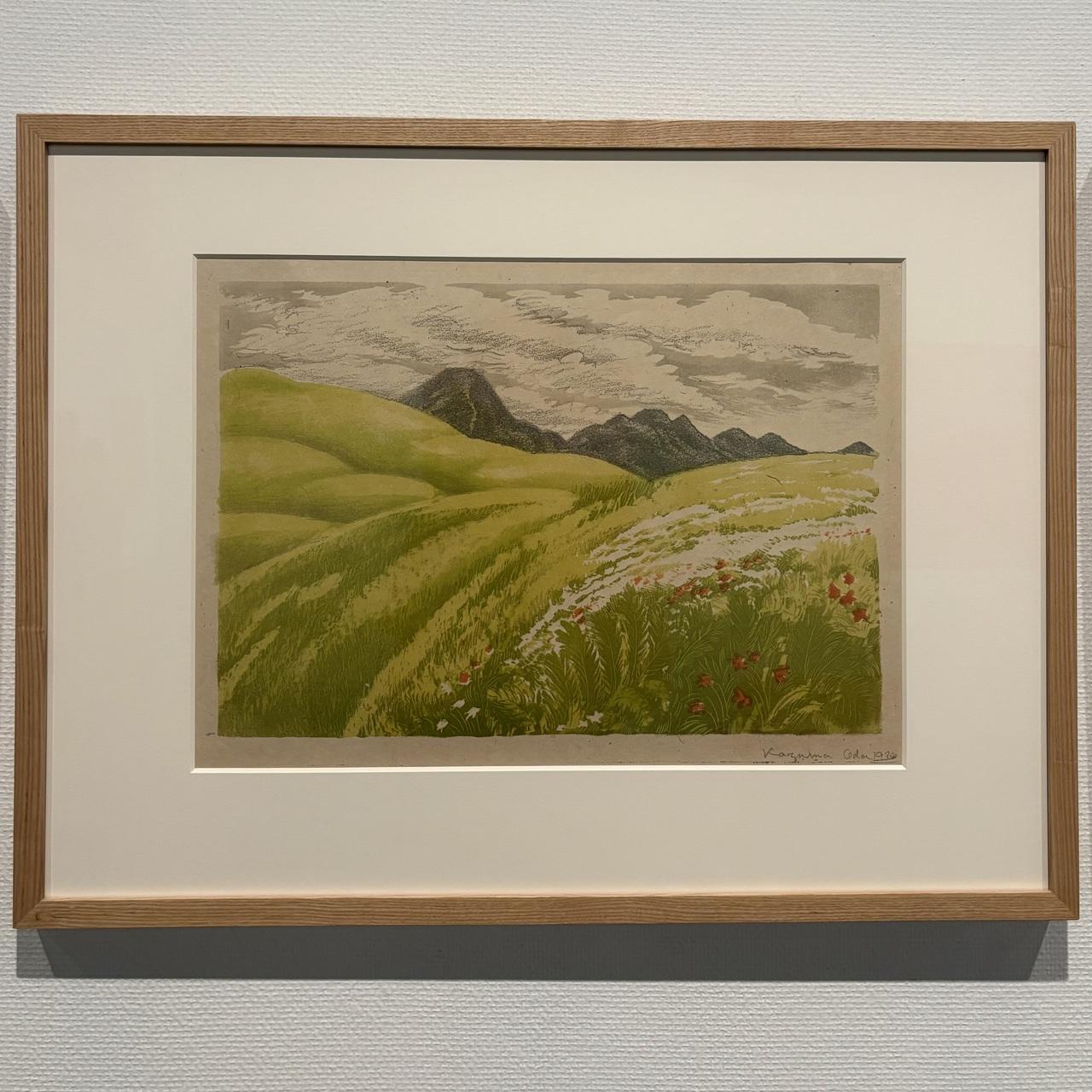
山頂雨後
Summit of a Mountain Just After the Rain
1936 昭和11年
リトグラフ lithograph
織田ユキエ氏寄贈
Gift of Oda Yukie
都市風俗を描いた石版画で知られる織田は、1933(昭和8)年に右手に神経痛とリュウマチを患い、その養生のために山歩きをはじめたといいます。
山行の詳細は不明ですが、実感をともなう気象や光の具合をとらえたく山頂雨後>、<徳沢の夕暮>等の作品から、彼が実際に山へ出向いて取材をしたことが推察されます。ただし、あまり高い山には登らず、吉田博が言うところの「展望美」を中心としたようです。併せて一部を紹介する『日本名山画譜』は6輯全18点からなり、1934年から1938年にかけて制作されました。
Oda, known for his lithographs depicting scenes of urban life, reportedly took up hiking in 1933 to recuperate from neuralgia and rheumatism affecting his right hand.
While the specifics of his mountain excursions are unclear, works such as Summit Just After the Rain and Tokusawa at Sunset capture weather and light with such immediacy that he evidently conducted firsthand research in the mountains. However, he appears to have focused primarily on what Yoshida Hiroshi called "the beauty of panoramic vistas" rather than scaling particularly high peaks. His portfolio Japan's Famous Mountains, presented here in part, consists of 18 works released in six installments between 1934 and 1938. -
織田一磨
ODA, Kazuma
1882-1956
『日本名山画譜』より 3.信州ハヶ嶽立科山
3. Mt. Tateshina in the Yatsugatake Range, Shinshu from Japan's Famous Mountains
1934 昭和9年
リトグラフ lithograph
織田ユキエ氏寄贈
Gift of Oda Yukie -
織田一磨
ODA, Kazuma
1882-1956
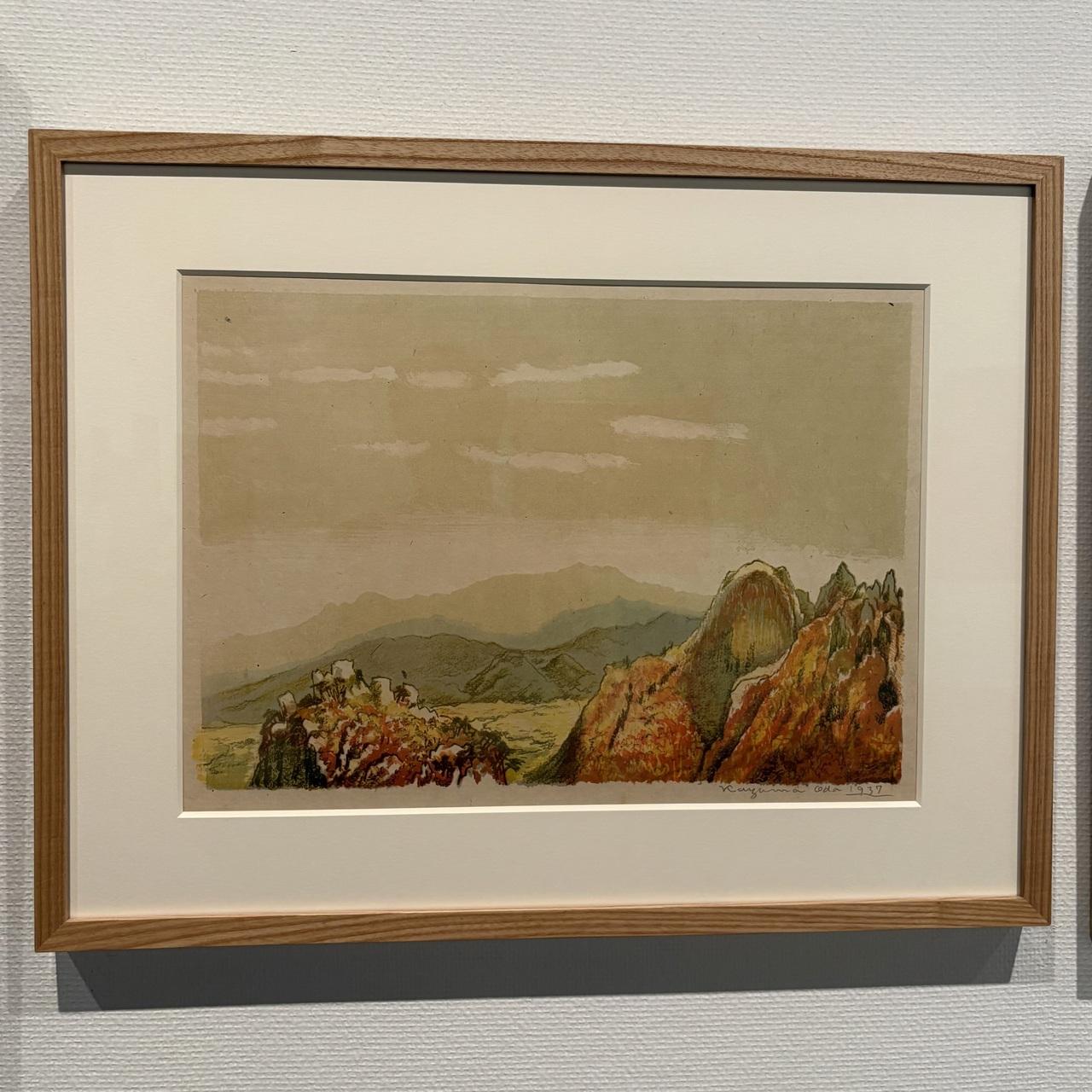
『日本名山画譜』より 13.妙義山
13. Mt. Myogi from Japan's Famous Mountains
1937 昭和12年
リトグラフ lithograph
織田ユキエ氏寄贈
Gift of Oda Yukie -
織田一磨
ODA, Kazuma
1882-1956
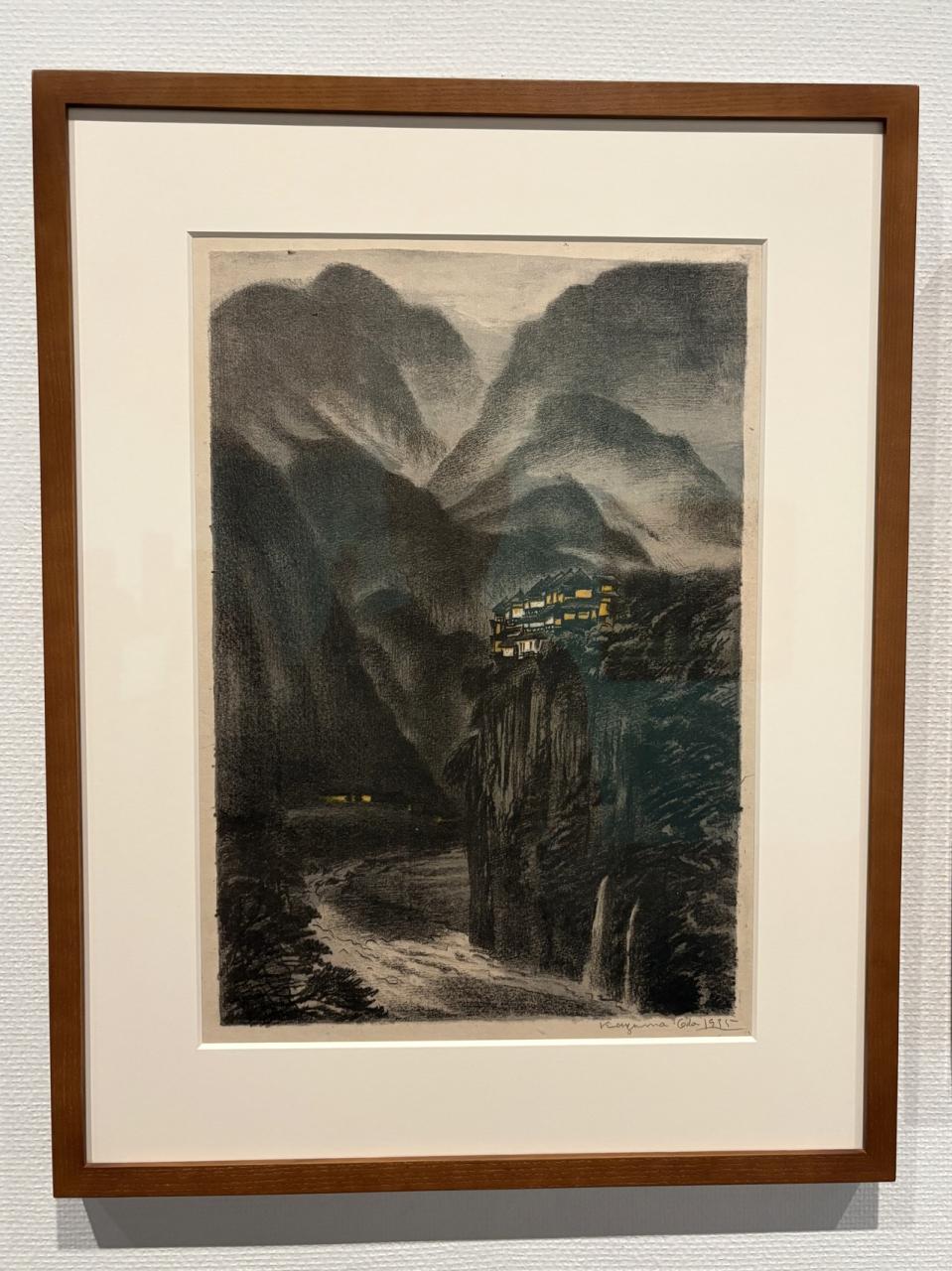
「日本名山画譜』より 8.黒部宇奈月温泉夜景
8. Unazuki Hot Springs in Kurobe at Night from
Japan's Famous Mountains
1935 昭和10年
リトグラフ lithograph
織田ユキエ氏寄贈
Gift of Oda Yukie -
武内鶴之助
TAKEUCHI, Tsurunosuke
1881-1948
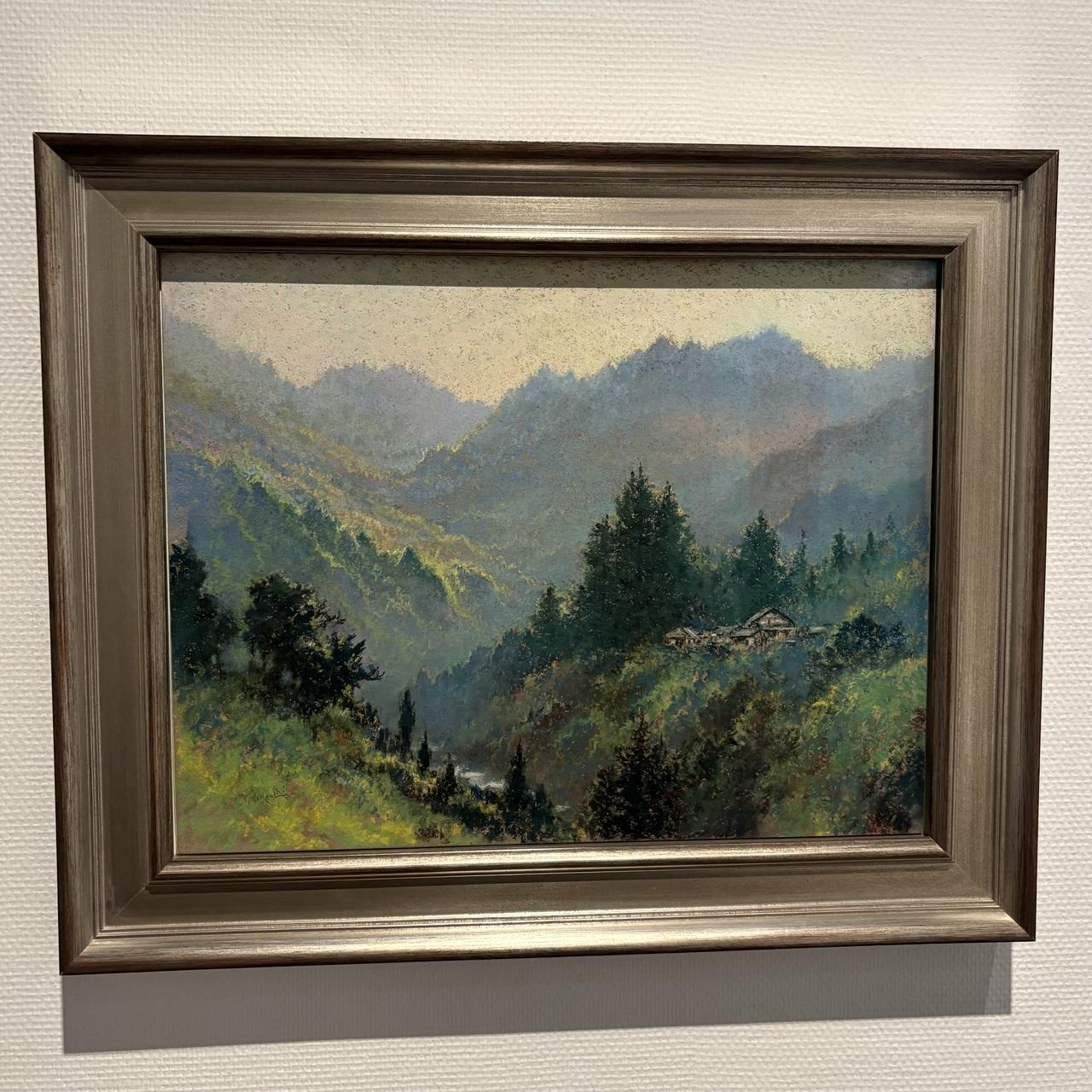
千曲川上流の朝
Morning of the Upper Stream of the Chikuma
1932 昭和7年
パステル・紙 pastel on paper
東京国立博物館管理換
Transferred from Tokyo National Museum -
吉田博
YOSHIDA, Hiroshi
1876-1950
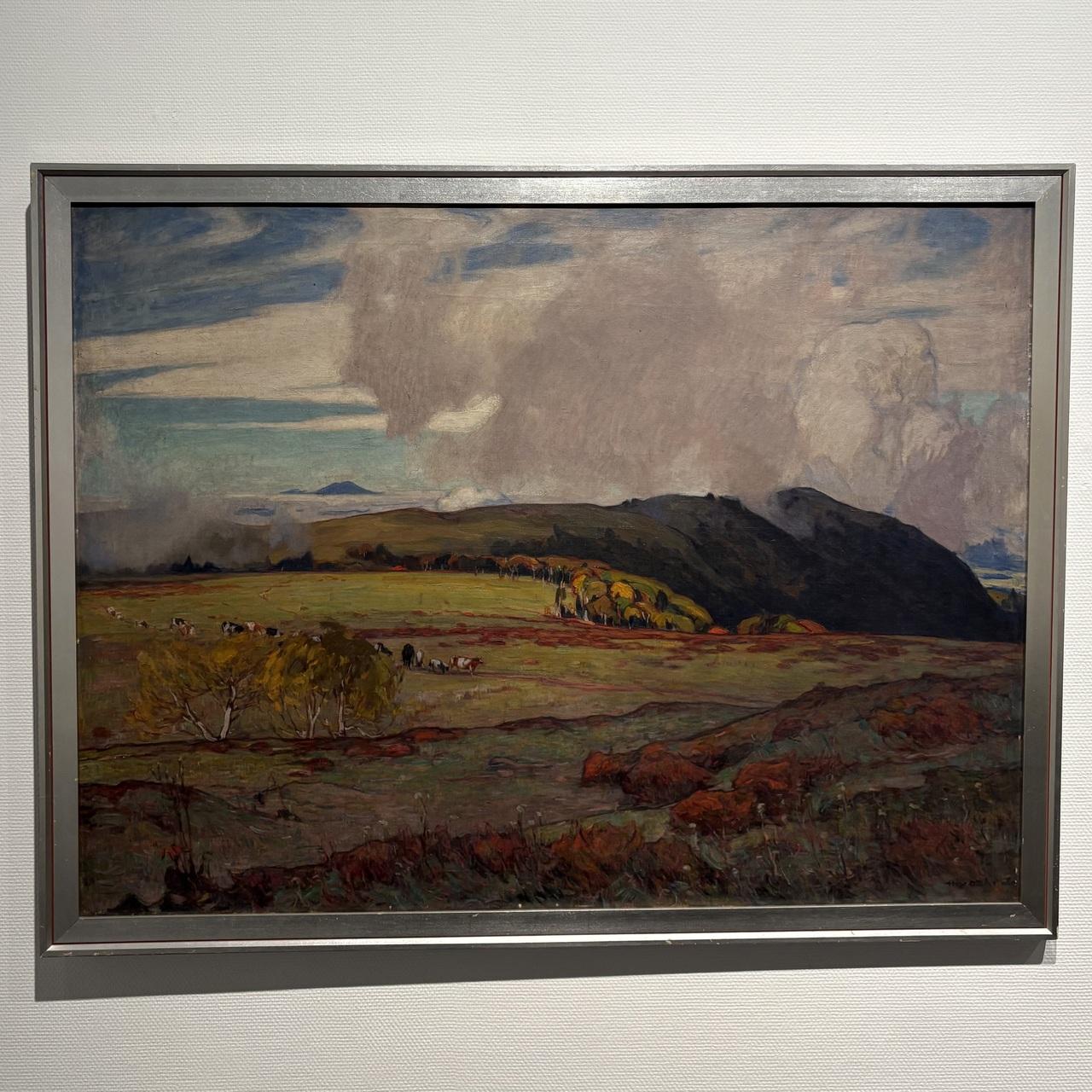
高原の牧場
Ranch on Plateau
1920 大正9年
油彩・キャンバス
oil on canvas
吉田ふじを氏寄贈
Gift of Yoshida Fujio
吉田は山岳画の重鎮です。彼が言うには、高山の美には「展望美・裾野美」、「断崖・湖水」、「高原・動植物」、「山巓(さんてん)美」があり、それらをキャンバスに再現することは「無上の喜び」でした。
うち、「展望美」の例として美ヶ原高原から見た北アルプスを挙げ、美ヶ原を「初夏の候には一面に躑躅(つつじ)が咲き乱れ」、「牧馬の群がその躑置だけを避けて草を食んでゐる」と描写しています。本作はおそらく美ヶ原の北西、焼山のレンゲツツジ群生地あたりから王ヶ鼻、美ヶ原、遠くに蓼科山を望んだ初秋の光景と思われます(確証はありません)。
(吉田博「高山美の感得」「高山の美を語る」実業之日本社、1931年)
Yoshida was a towering figure in the field of alpine art. He placed alpine beauty in several categories - "panoramic vistas and foothills," "cliffs and lakes," "highlands with flora and fauna," and "summits" - and called the process of capturing these on canvas his "supreme joy."
As an example of "panoramic vistas," he cited the view of the Northern Japanese Alps from the Utsukushigahara plateau, describing it as "a sea of blooming azaleas in early summer" where "herds of horses graze on the grass, carefully avoiding only the azaleas."* This painting is thought to depict an early autumn scene as viewed from the rhododendron-covered slopes of Mt. Yakeyama (northwest of Utsukushigahara), looking toward Ogahana, Utsukushigahara, and Mt. Tateshina in the distance, though this cannot be confirmed
*Yoshida Hiroshi, "Appreciating Alpine Beauty," in On Alpine Beauty, Jitsugyo no Nihonsha, 1931. -
安井曽太郎
YASUI, Sotaro
1888-1955
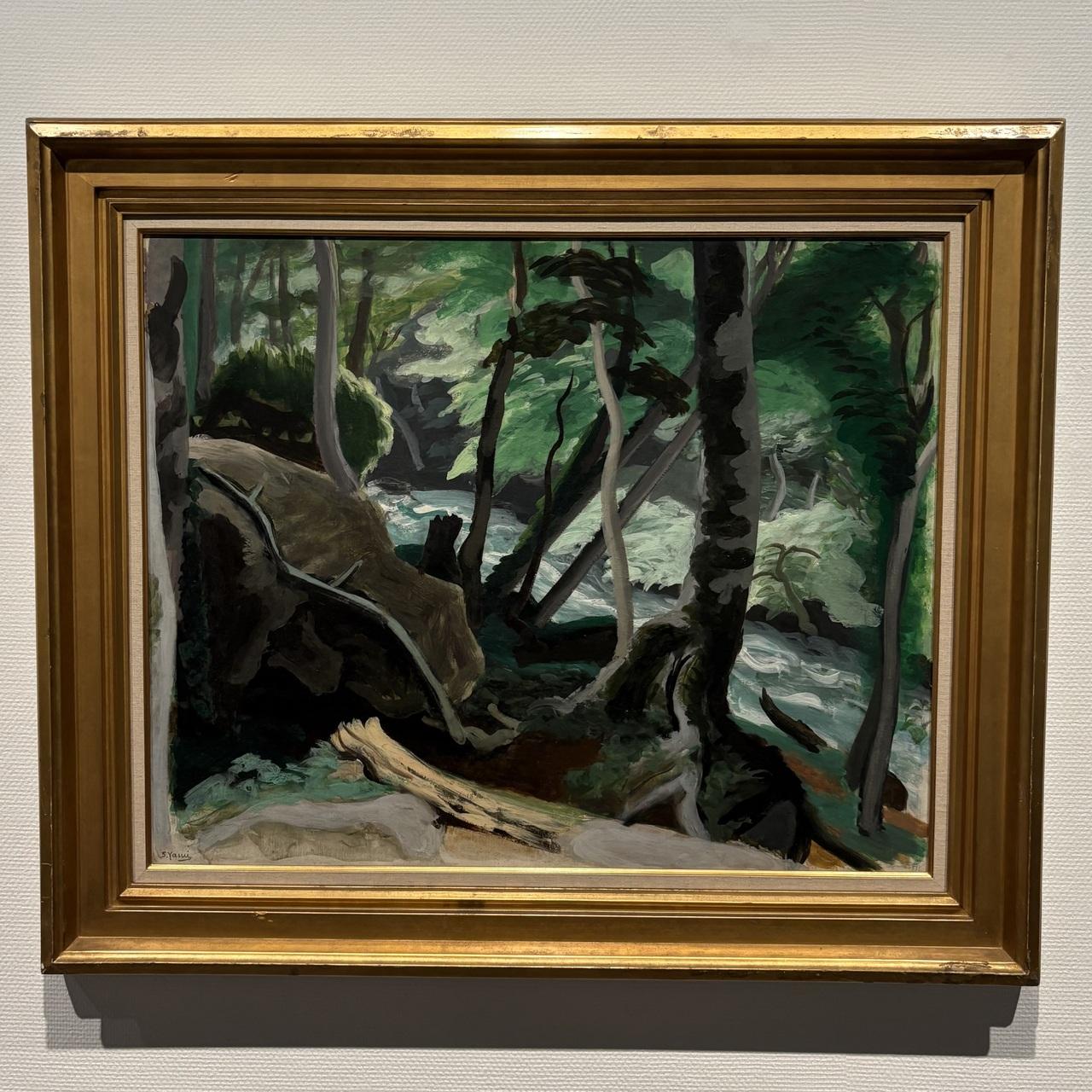
奥入瀬の溪流
Oirase Stream
1933 昭和8年
油彩・キャンバス oil on canvas
文化庁管理換
Transferred from Agency for Cultural Affairs
安井が青森県の十和田湖と奥入瀬を訪れたのは1932(昭和7)年のことです。奥入瀬では「かな自分のそばから景色がはじまっているので、前景、中景、後景の変化に苦心しました」と言っています。本作を見ると、確かに、線遠近法を使わず平板となった画面の中で、明(前
景)、暗(中景)、明(後景)と切り替えるなど、なかなかチャレンジングです。ちなみに安井が十和田を訪問したのは、国立公園協会に招かれたためで、34年には日本で最初の国立公園が誕生し、36年には十和田も指定されました。
In 1932, Yasui visited Lake Towada and Oirase Stream in Aomori Prefecture. Of the trip, Yasui wrote, "Because the scenery began almost right beside me, I had trouble dealing with the difference between the foreground, middle ground, and background." In looking at the work, one senses these rather challenging circumstances in the shift between bright (foreground), dark (middle ground), and bright (background). It is also interesting to note that Yasui's visit to the lake was the result of an invitation from the National Park Association of Japan. The first national park was created two years later in 1934, and the Towada area was also designated as one in 1936. -
-
-
-
この旅行記のタグ


利用規約に違反している投稿は、報告する事ができます。
-
前の旅行記

MOMAT コレクション〔国立東京近代美術館 所蔵作品展〕(2025.7.15-10.26)3. 岸田劉生「...
2025/08/07~
神田・神保町
-
次の旅行記

MOMAT コレクション(2025.7.15-10.26)5.1930年代の絵画:現実の彼方へ、幻影の手前で...
2025/08/07~
神田・神保町
-

MOMAT コレクション〔国立東京近代美術館 所蔵作品展〕(2025.7.15-10.26)1.ハイライト ...
2025/08/07~
神田・神保町
-

MOMAT コレクション〔国立東京近代美術館 所蔵作品展〕(2025.7.15-10.26)2.大正の個性派...
2025/08/07~
神田・神保町
-

MOMAT コレクション〔国立東京近代美術館 所蔵作品展〕(2025.7.15-10.26)3. 岸田劉生「...
2025/08/07~
神田・神保町
-

MOMAT コレクション〔国立東京近代美術館 所蔵作品展〕(2025.7.15-10.26)4.山と渓谷 "...
2025/08/07~
神田・神保町
-

MOMAT コレクション(2025.7.15-10.26)5.1930年代の絵画:現実の彼方へ、幻影の手前で...
2025/08/07~
神田・神保町
-

MOMAT コレクション(2025.7.15-10.26)6.1940年 "ハリー・K・シゲタ(重田放二)フ...
2025/08/07~
神田・神保町
-

MOMAT コレクション〔国立東京近代美術館 所蔵作品展〕(2025.7.15-10.26)7.戦後の女性画...
2025/08/07~
神田・神保町
-

MOMAT コレクション(2025.7.15-10.26)8.ジャンクとポップ "日比野克彦 LABYRIN...
2025/08/07~
神田・神保町
-

MOMAT コレクション〔国立東京近代美術館 所蔵作品展〕(2025.7.15-10.26)9.山村雅昭「ワ...
2025/08/07~
神田・神保町
-

MOMAT コレクション(2025.7.15-10.26)10.アルプのアトリエ/絵画と目的 "山口華楊、洋...
2025/08/07~
神田・神保町
-

MOMAT コレクション(2025.7.15-10.26)11.揺れる境界 "石川真生、基地を取り巻く人々"
2025/08/07~
神田・神保町
-

MOMAT コレクション〔国立東京近代美術館 所蔵作品展〕(2025.7.15-10.26)12.ヨコ軸・タ...
2025/08/07~
神田・神保町
-

東京国立近代美術館 "新収蔵&特別公開 コレクションにみる日韓" (2025.7.15 - 10.26) "...
2025/08/07~
神田・神保町
旅行記グループをもっと見る
コメントを投稿する前に
十分に確認の上、ご投稿ください。 コメントの内容は攻撃的ではなく、相手の気持ちに寄り添ったものになっていますか?
サイト共通ガイドライン(利用上のお願い)報道機関・マスメディアの方へ 画像提供などに関するお問い合わせは、専用のお問い合わせフォームからお願いいたします。
この旅行で行ったスポット






フォートラベル公式LINE@

おすすめの旅行記や旬な旅行情報、お得なキャンペーン情報をお届けします!
QRコードが読み取れない場合はID「@4travel」で検索してください。
\その他の公式SNSはこちら/





旅行記グループ MOMAT コレクション〔国立東京近代美術館 所蔵作品展〕(2025.7.15-10.26)
0
14