


2025/08/07 - 2025/08/07
44位(同エリア934件中)

旅熊 Kokazさん
- 旅熊 KokazさんTOP
- 旅行記1918冊
- クチコミ854件
- Q&A回答102件
- 1,701,073アクセス
- フォロワー753人
MOMAT コレクション〔国立東京近代美術館 所蔵作品展〕(2025.7.15-10.26)
https://www.momat.go.jp/exhibitions/r7-1
12.ヨコ軸・タテ軸
- 旅行の満足度
- 5.0
-

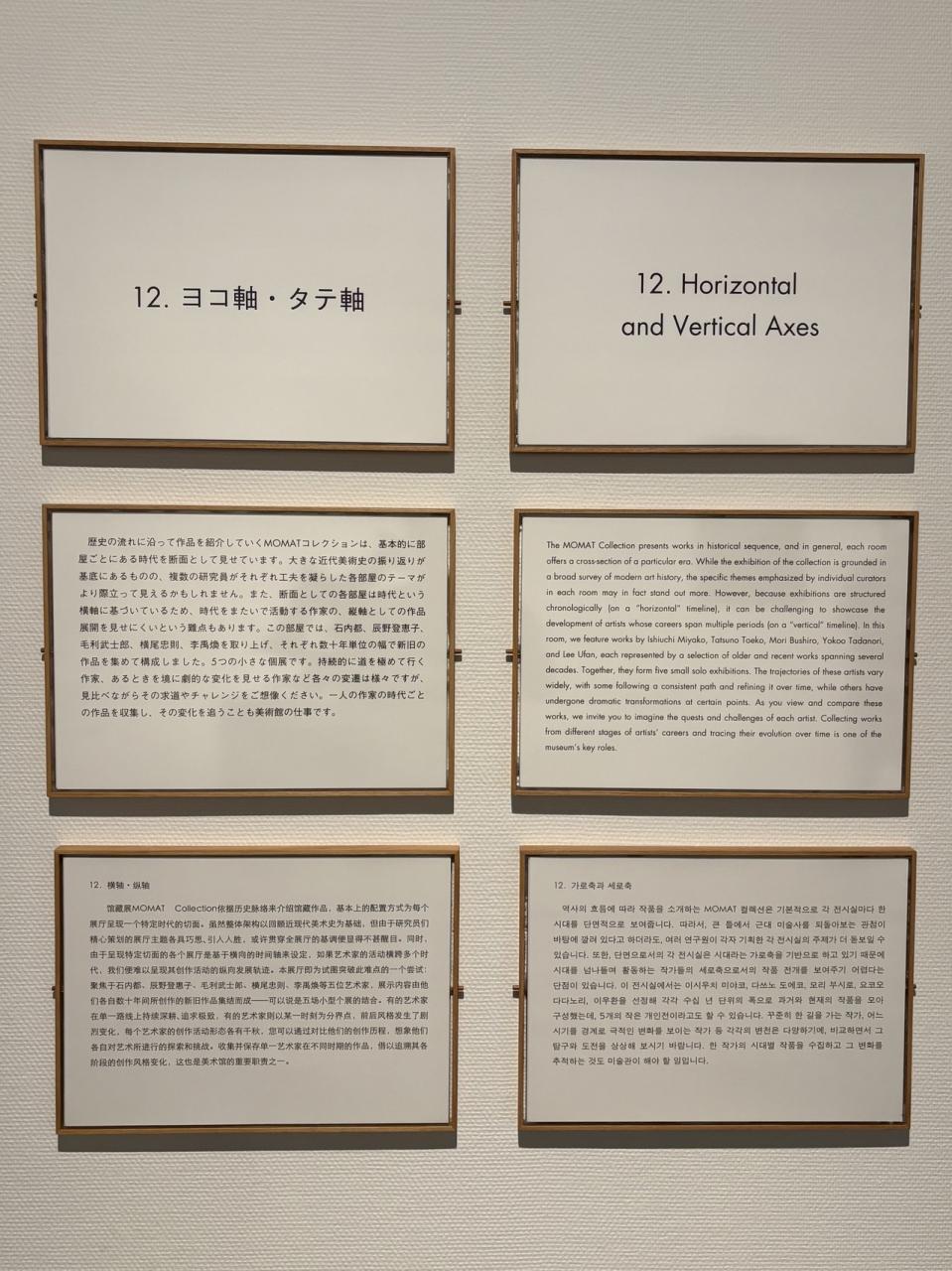
12. ヨコ軸・タテ軸
歴史の流れに沿って作品を紹介していくMOMATコレクションは、基本的に部屋ごとにある時代を断面として見せています。
大きな近代美術史の振り返りが基底にあるものの、複数の研究員がそれぞれ工夫を凝らした各部屋のテーマがより際立って見えるかもしれません。また、断面としての各部屋は時代という横軸に基づいているため、時代をまたいで活動する作家の、縦軸としての作品展開を見せにくいという難点もあります。
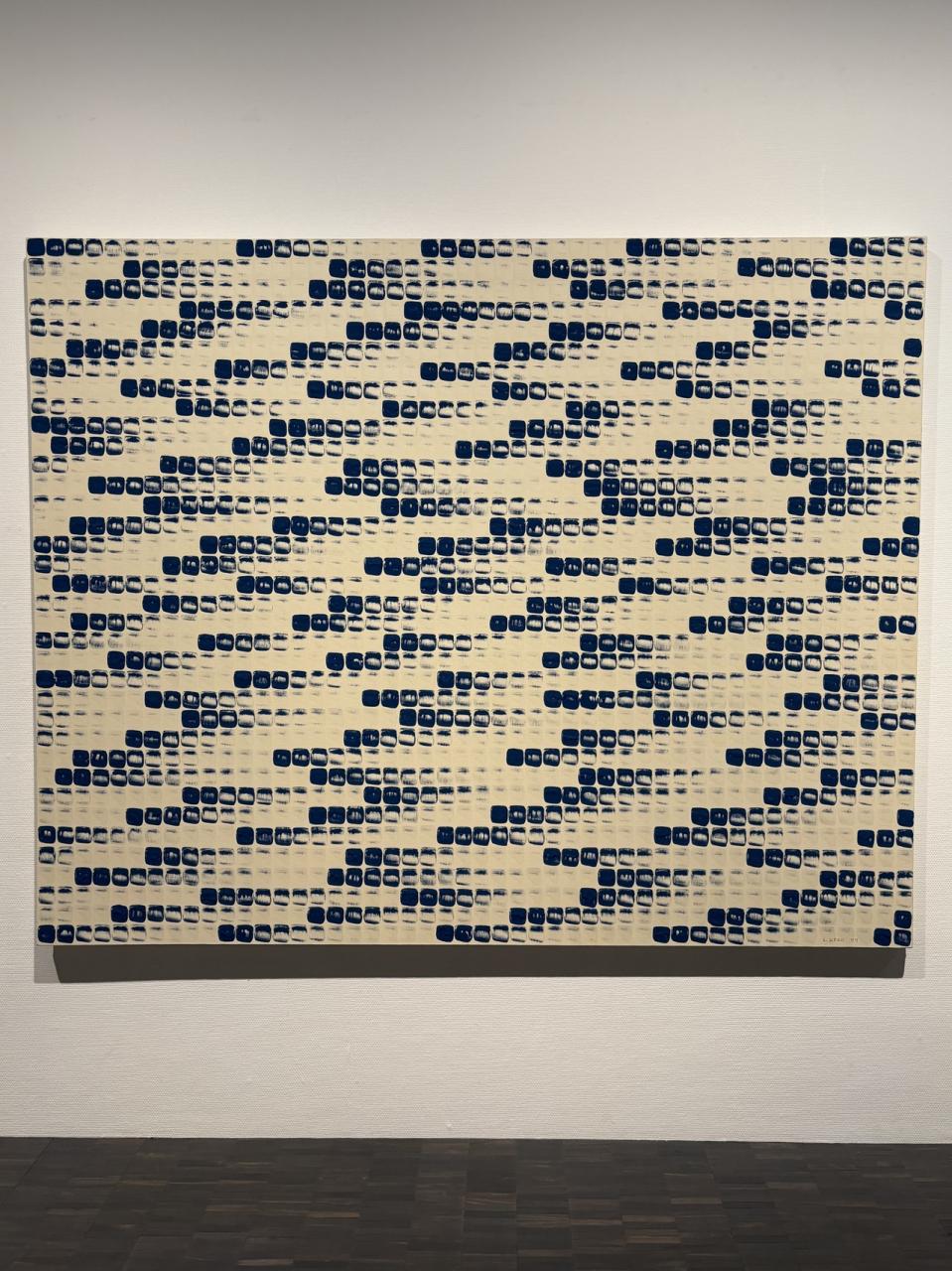
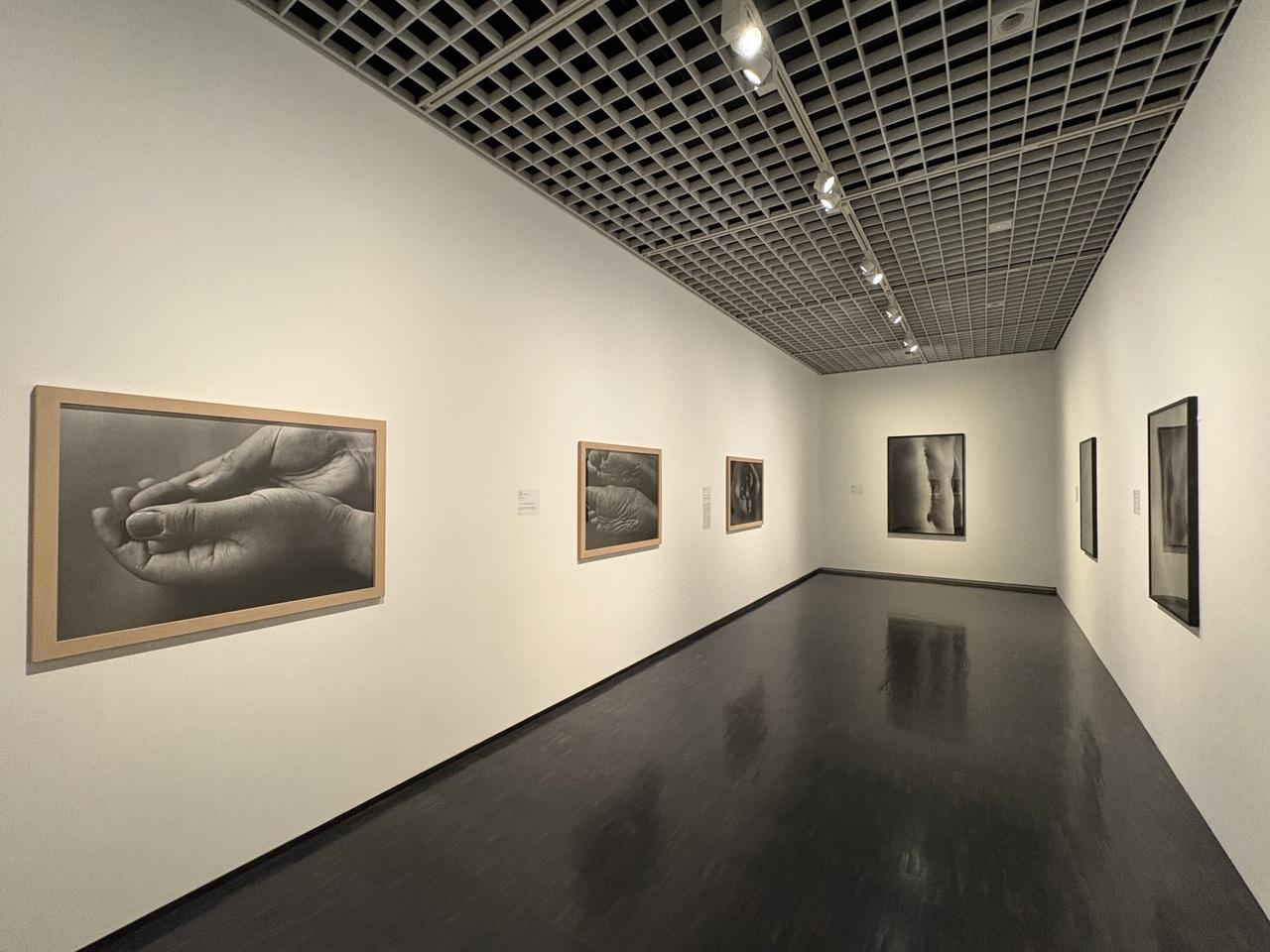
この部屋では、石内都、辰野登恵子、毛利武士郎、横尾忠則、李禹換を取り上げ、それぞれ数十年単位の幅で新旧の作品を集めて構成しました。5つの小さな個展です。持続的に道を極めて行く作家、あるときを境に劇的な変化を見せる作家など各々の変遷は様々ですが、見比べながらその求道やチャレンジをご想像ください。一人の作家の時代ごとの作品を収集し、その変化を追うことも美術館の仕事です。
12. Horizontal and Vertical Axes
The MOMAT Collection presents works in historical sequence, and in general, each room offers a cross-section of a particular era.
While the exhibition of the collection is grounded in a broad survey of modern art history, the specific themes emphasized by individual curators in each room may in fact stand out more. However, because exhibitions are structured chronologically (on a "horizontal" timeline), it can be challenging to showcase the development of artists whose careers span multiple periods (on a "vertical" timeline).
In this room, we feature works by Ishiuchi Miyako, Tatsuno Toeko, Mori Bushiro, Yokoo Tadanori, and Lee Ufan, each represented by a selection of older and recent works spanning several decades. Together, they form five small solo exhibitions. The trajectories of these artists vary widely, with some following a consistent path and refining it over time, while others have undergone dramatic transformations at certain points. As you view and compare these works, we invite you to imagine the quests and challenges of each artist. Collecting works from different stages of artists careers and tracing their evolution over time is one of the museum's key roles. -
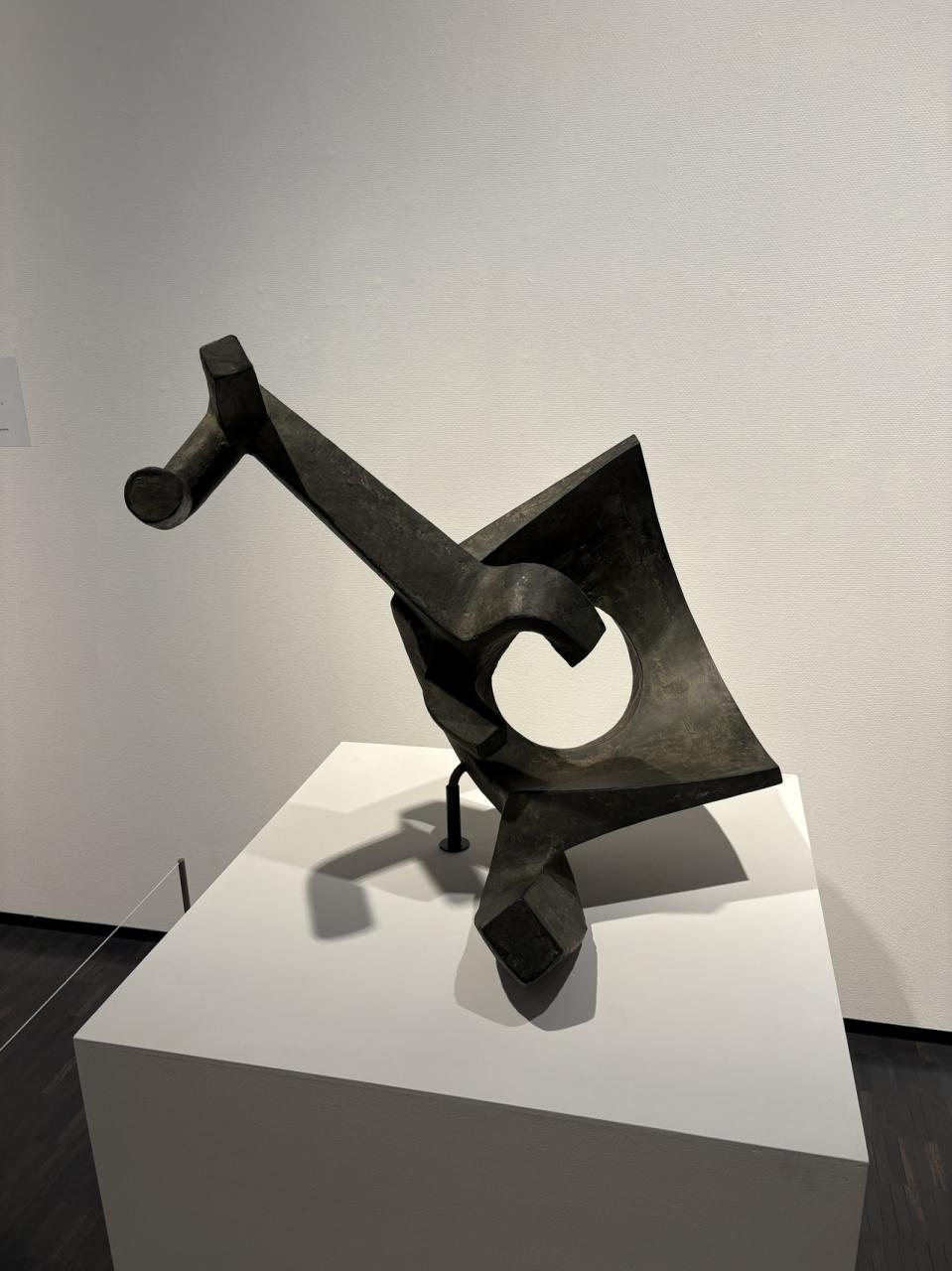
毛利武士郎
MORI, Bushiro
1923-2004
作品
Work
1956 昭和31年
ブロンズ bronze
購入
Purchased
1950年代、毛利武士郎は有機的かつ原始的な性格を帯びた作品、細い鉄線を用いた抽象的な構成彫刻をはじめ、多方向へと造形的展開を見せます。用いる素材も石膏、鉄、陶、ブロンズ、セメントなど実に多様です。それらの表現の共通項を挙げるとすれば、情緒の排除と、素材の物質性への強いこだわりでしょう。ブロンズによるこの<作品>は、マッス(量)とヴォイド(空隙)の関係に関心が向けられた抽象的な彫刻ですが、二つのパーツの組み合わせは骨格の結合を想起させ、機械化された人体へのアナロジーをうかがわせるものでもあります。
In the 1950s Mori Bushiro's work developed in many directions, including pieces with an organic and primitive look, and abstract sculptural compositions employing fine iron wires. He also used a wide range of materials such as plaster, iron, ceramic, bronze and cement. What these works seem to have in common is the elimination of emotional factors and a strong commitment to material properties. In this abstract bronze sculpture, he focused on relationships between masses and voids, but the two parts are joined in a manner recalling the joints of a skeleton, and analogies to a mechanized human body are evident. -
-
毛利武士郎
MORI, Bushiro
1923-2004
無題(大6点シリーズ 1)
Untitled (Series of Six Large Pieces, I)
1981 昭和56年
石音、グラファイト plaster and graphite
毛利保子氏寄贈
Gift of Mori Yasuko -
毛利武士郎
MORI, Bushiro
1923-2004
無題(大6点シリーズ 10)
Untitled (Series of Six Large Pieces, X)
1981 昭和56年
石膏、グラファイト plaster and graphite
毛利保子氏寄贈
Gift of Mori Yasuko -
毛利武士郎
MORI, Bushiro
1923-2004
彼の/地球への/置手紙 その1
The Letter / to the Earth / He Left Behind I
1998 平成10年
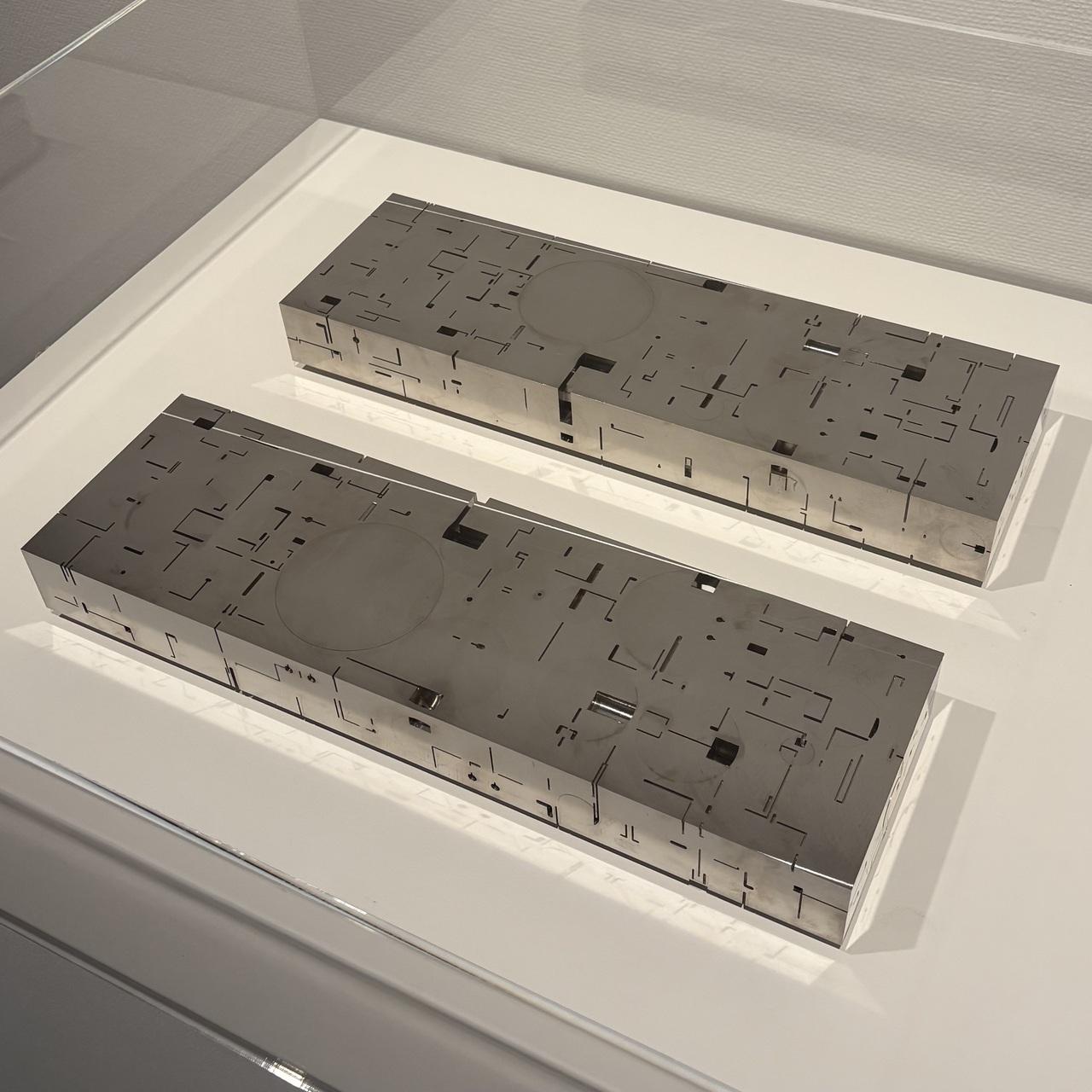
ステンレススチール stainless steel
購入
Purchased
1989(昭和64年/平成元)年頃より始まった、毛利武士郎晩年の新展開を代表する作品です。
完全な線対称を成す二本のステンレス製の直方体は、コンピューター制の工作機械によって精巧に加工されています。ステンレスを円や直線などの幾何学形態にくり抜き、そのくり抜かれた溝や空洞に同形のステンレスや鋼鉄が埋め込まれています。作品内部へと視線が入っていくことを拒む凹凸のない完全な直方体という形状や、ピカピカの表面の反射は、見る者の安易な感情移入を退け、あたかも内部の秘匿性=手紙を暗示しているかのようです。
This work represents a new development in the late career of Mori Bushiro, which began circa 1989.
Two stainless steel prisms with perfect linear symmetry have been finely machined with computer-controlled machine tools. Geometric shapes such as circles and straight lines are carved out of the stainless steel, and stainless steel or steel with the same form is embedded in the resulting grooves or cavities. The perfectly even and smooth forms of the prisms preventing the gaze from penetrating the work's interior, and the reflections off their shiny surfaces, repel any attempt by the viewer to relate to the work on a simple emotional level, as if implying the secrecy of its contents (as the "letter" of the title suggests). -
辰野登恵子
TATSUNO, Toeko
1950-2014
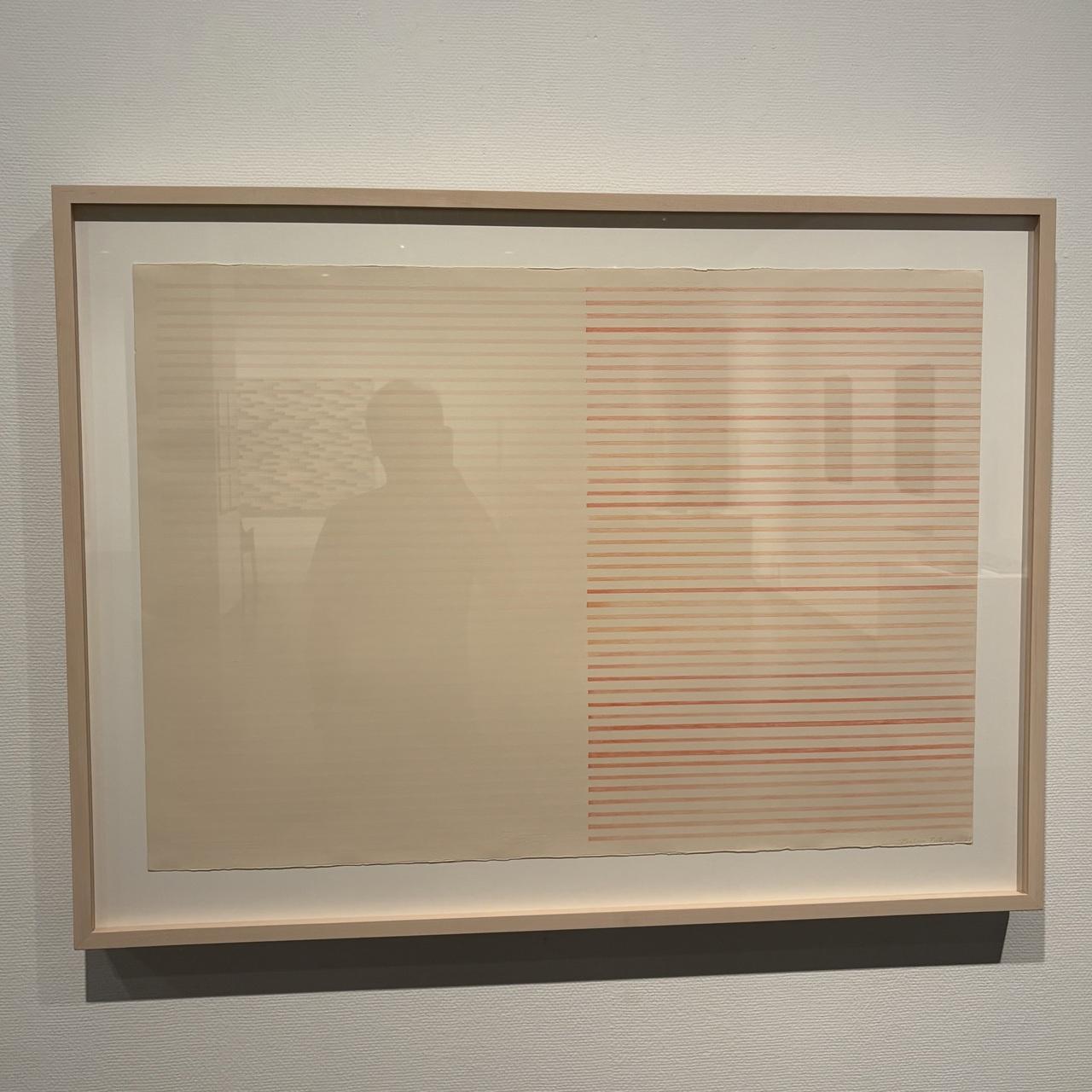
WORK 77-16-1
1977 昭和52年
赤鉛筆、シルクスクリーン・紙
red pencil and silkscreen on paper
作者寄贈
Gift of the artist -
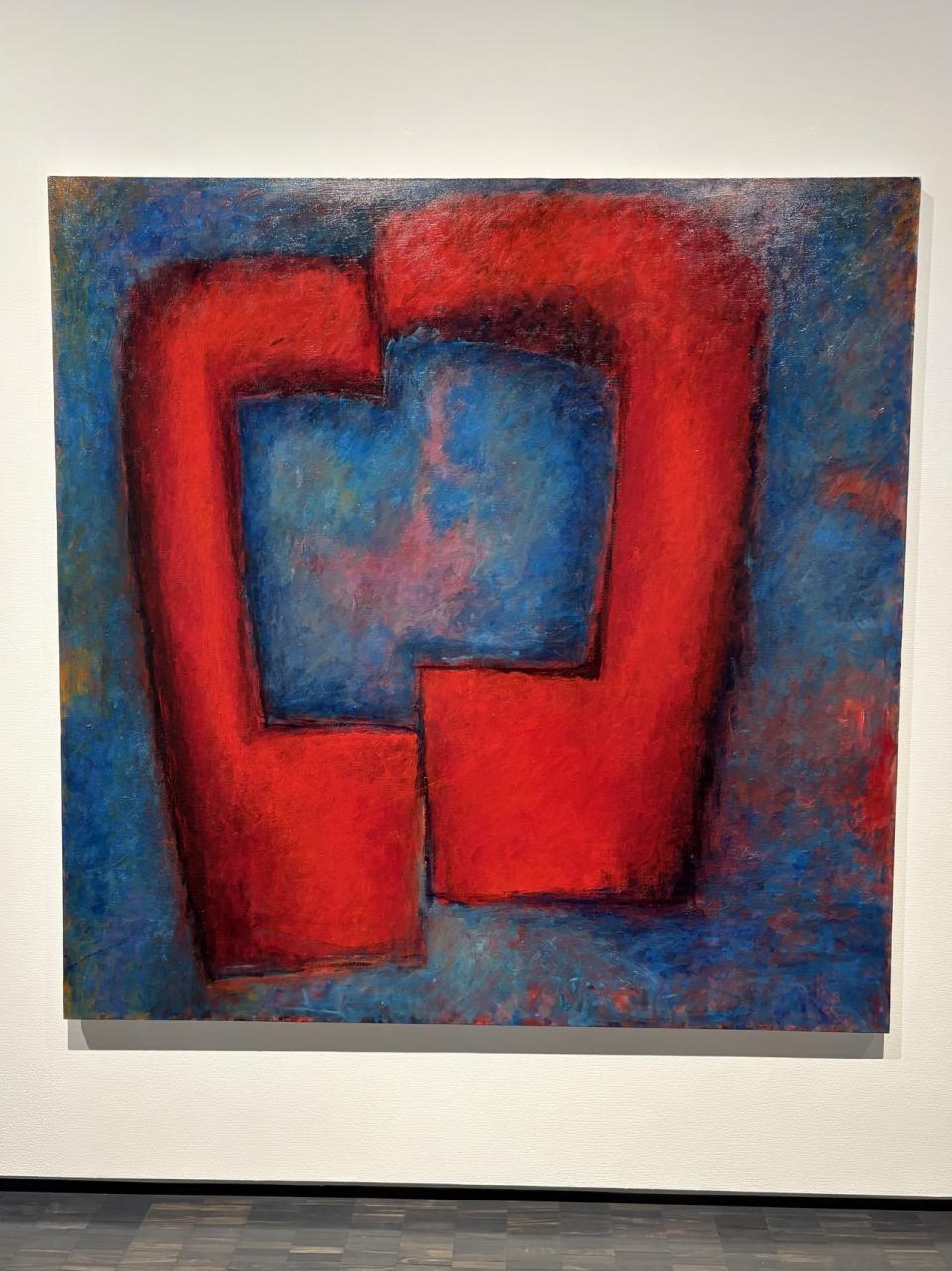
辰野登恵子
TATSUNO, Toeko
1950-2014
Work 84-P-1
1984
昭和59年
油彩・キャンバス ail on canvas
購入
Purchased
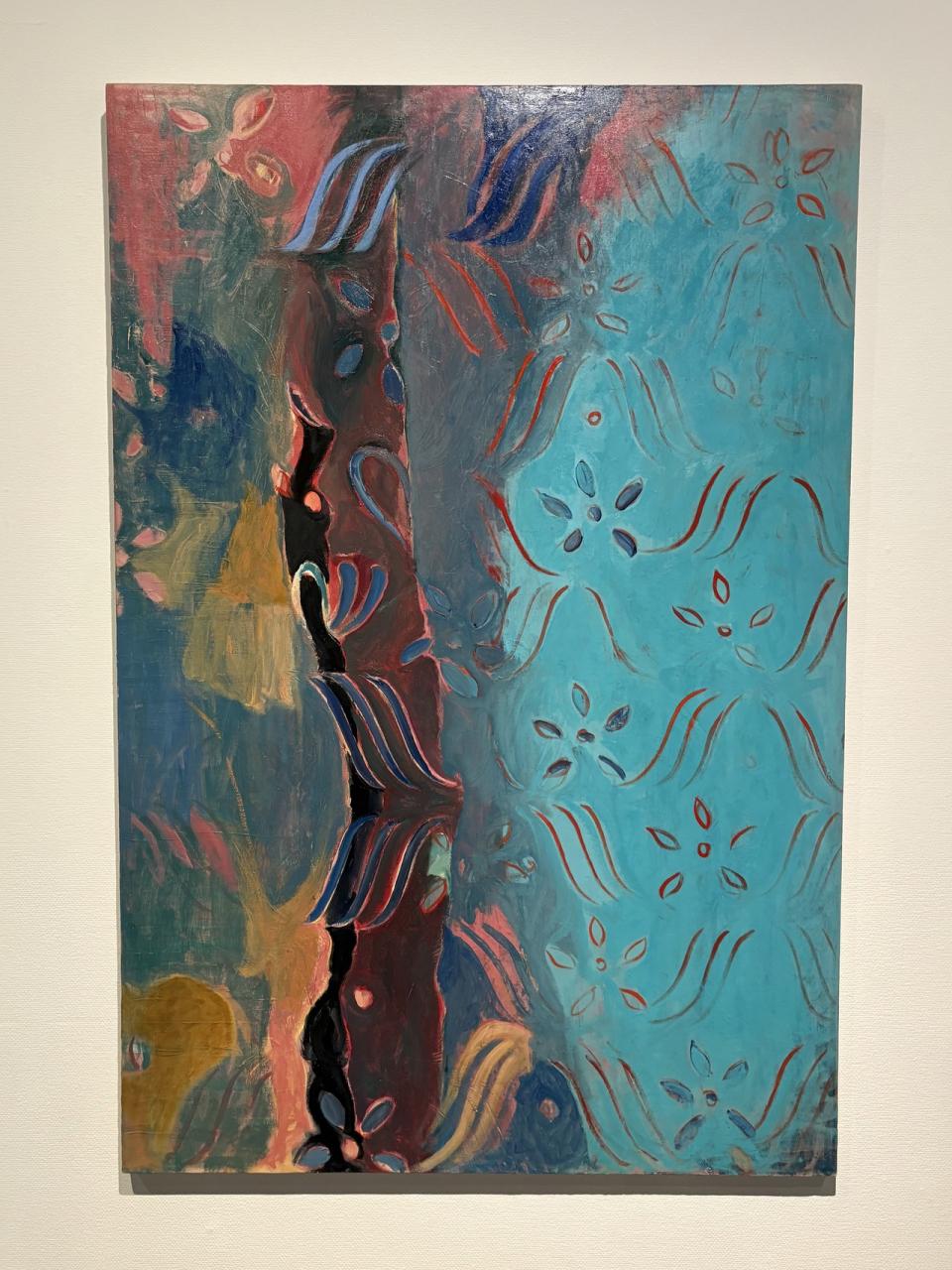
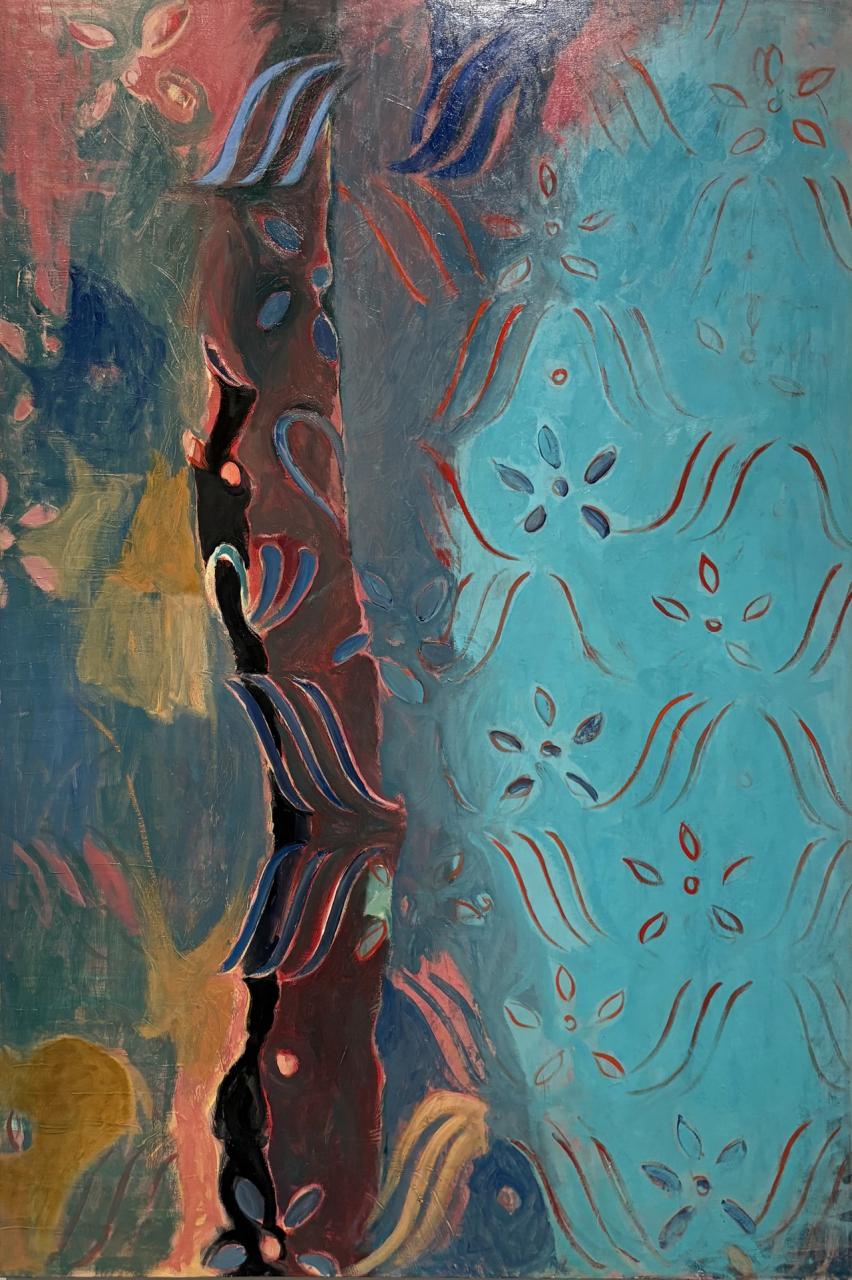
本作に見られる花模様のモティーフについて、辰野登恵子はこんな言葉を残しています。「ある写真家が撮ったニューヨークの鋳鉄製の階段の、羽目板のくりぬき模様の写真に基づいています。写真集で見たものに惹かれて、それを自分なりにアレンジして作った模様で、現物は見ていません」(『与えられた形象 辰野登恵子 柴田敏雄』より)。花模様は描くための一種の口実で、関心があったのは「連続性」、そしてその「連続性の遮断や断絶」であったそうです。画面右半分の、線的な花模様、中央やや左に走る暗い帯の部分の、やや実体的な花模様、そして左端の、地の色面とまじりあうような大胆な筆触による花模様、こういった模様の連続と変化とに注目してご覧になってみてください。
Tatsuno Toeko said of the floral-pattern motif in this work: "It is based on a photographer's shot of the hollowed out siding of a cast iron staircase in New York. I saw it in a photo book and was drawn to it, and made my own arrangement of this pattern, although I have not seen the actual thing" (from Given Forms TATSUNO Toeko SHIBATA Toshio). It seems that the floral pattern provided a kind of pretext for figuration in painting, and the artist had an interest in "continuity" and the "interruption or disconnection of continuity." Note both the consistency and change in patterns in this painting: the linear floral pattern on the right half, the somewhat three dimensional floral pattern in the dark band running vertically to the left of center, and the floral pattern rendered in bold brushstrokes that melts into the background colors on the far left. -
-
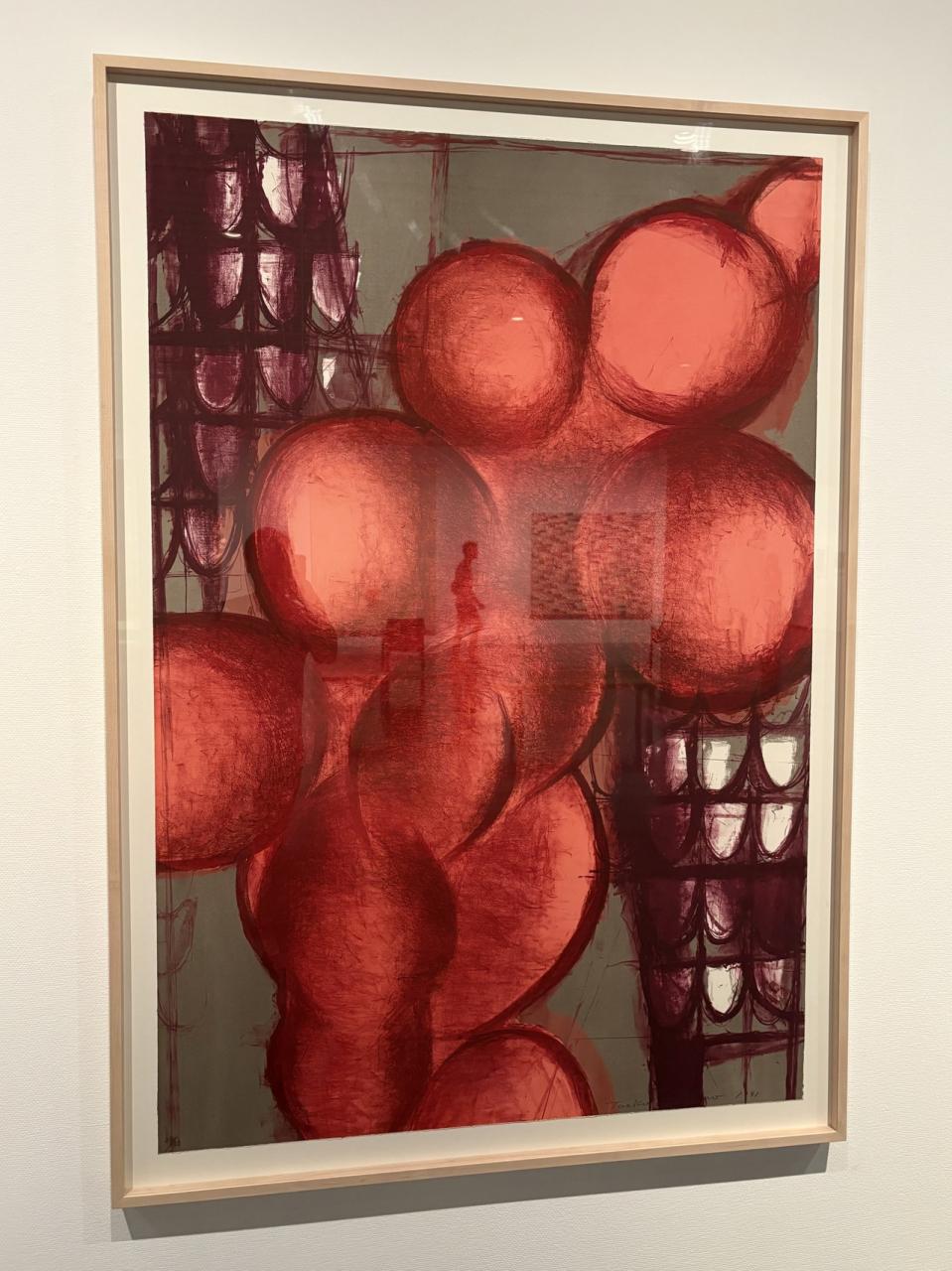
辰野登恵子
TATSUNO, Toeko
1950-2014
May-7-91
1991 平成3年
リトグラフ lithograph
シロタ画廊寄贈
Gift of Shirota Gallery -
辰野登恵子
TATSUNO, Toeko
1950-2014
UNTITLED 95-9
1995 平成7年
アクリリック・キャンバス acry lic on canvas
購入
Purchased -
新収蔵作品
New Acquisition
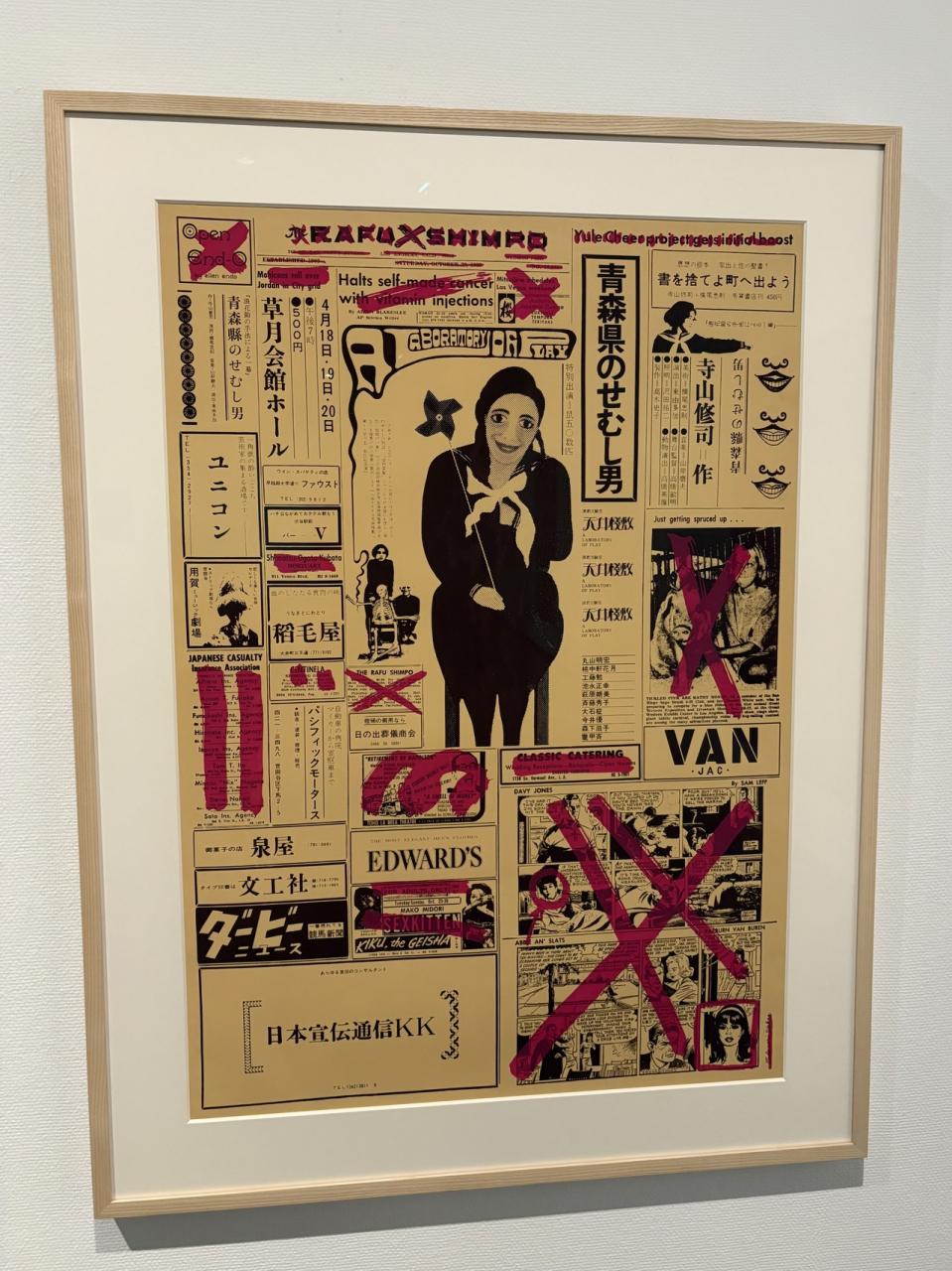
横尾忠則
YOKOO, Tadanori
1936-
青森県のせむし男(天井桟敷)
The Hunchback of Aomori Prefecture (Tenjo Sajiki)
1967 昭和42年
シルクスクリーン silkscreen
作者寄贈
Gift of the artist -
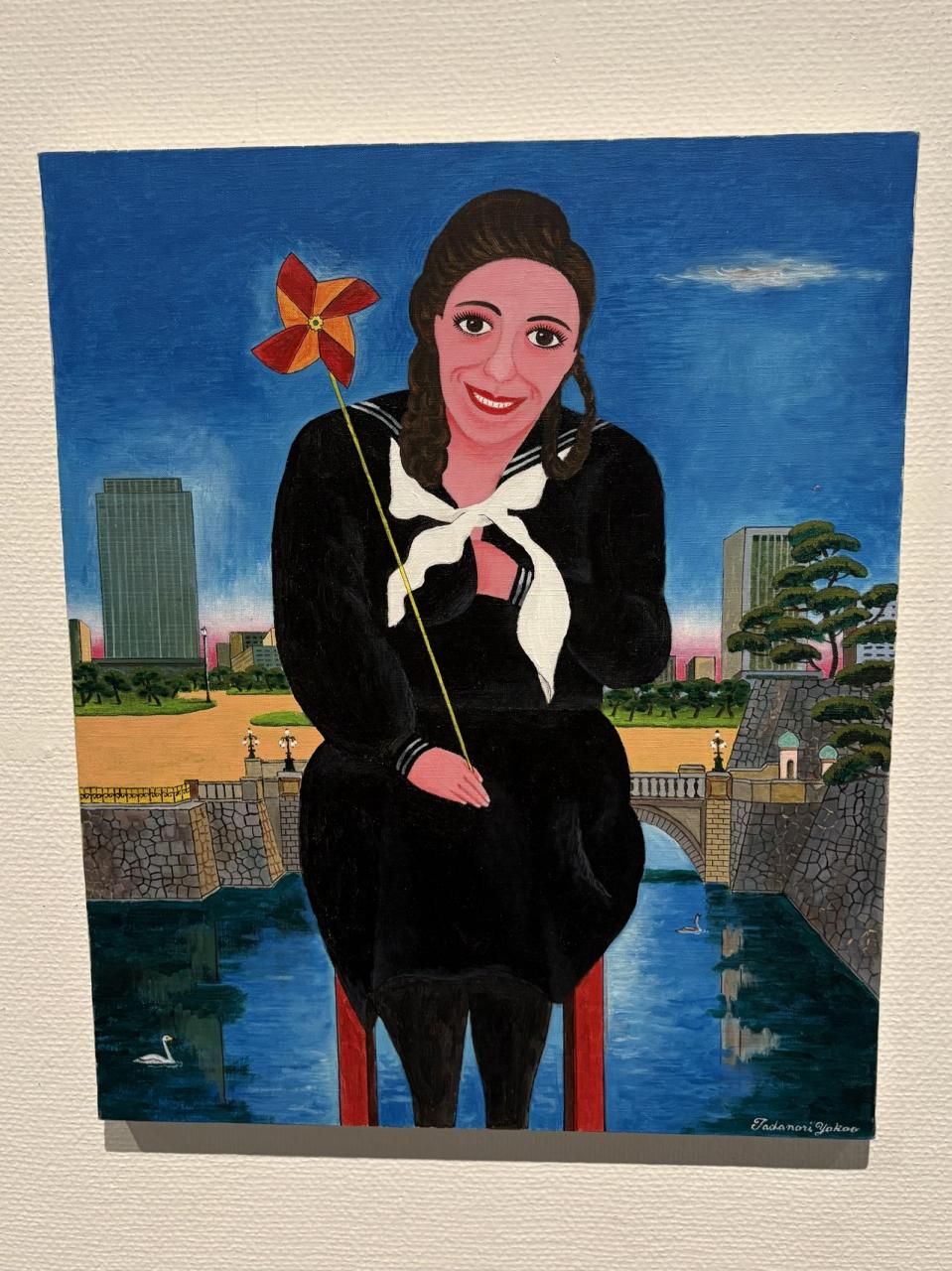
新収蔵作品
New Acquisition
横尾忠則
YOKOO, Tadanori
1936-
かざぐるま 2004
Pinwheel 2004
2004 平成16年
アクリリック・キャンバス acrylic on canvas
作者寄贈
Gift of the artist -
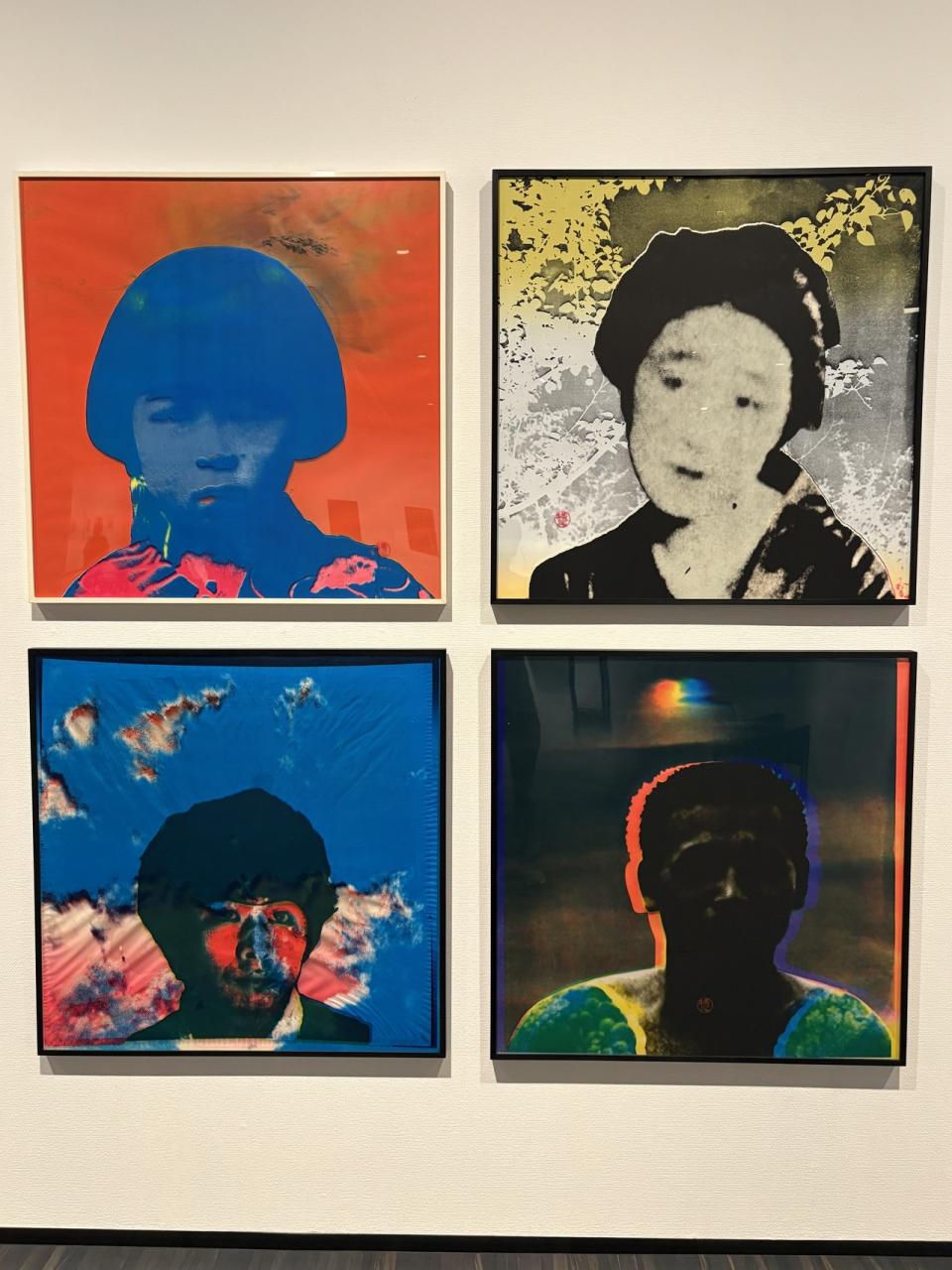
横尾忠則
YOKOO, Tadanori
1936-
風景 No.1女の子
Landscape No.1 Girl
1969 昭木44年
シルクスクリーン・紙、アクリルフィルム、アクリル板
silkscreen on paper, acrylic films and acrylic sheet
風景 No.16 自画像
Landscape No.16 Self-Portrait
1969 昭和44年
シルクスクリーン・紙、アクリルフィルム、アクリル板
silkscreen on paper, acrylic films and acrylic sheet
風景 No.3 お葉さん
Landscape No.3 Oyo-san
1969 昭和44年
シルクスクリーン・紙、アクリルフィルム、アクリル板
silkscreen on paper, acrylic film and acrylic sheet
風景 No.17 入れ墨男
Landscape No. 17 Tattooed Man
1969 昭和44年
シルクスクリーン・紙、アクリルフィルム、アクリル板
silkscreen on paper, acrylic films and acrylic sheet
購入
Purchased -
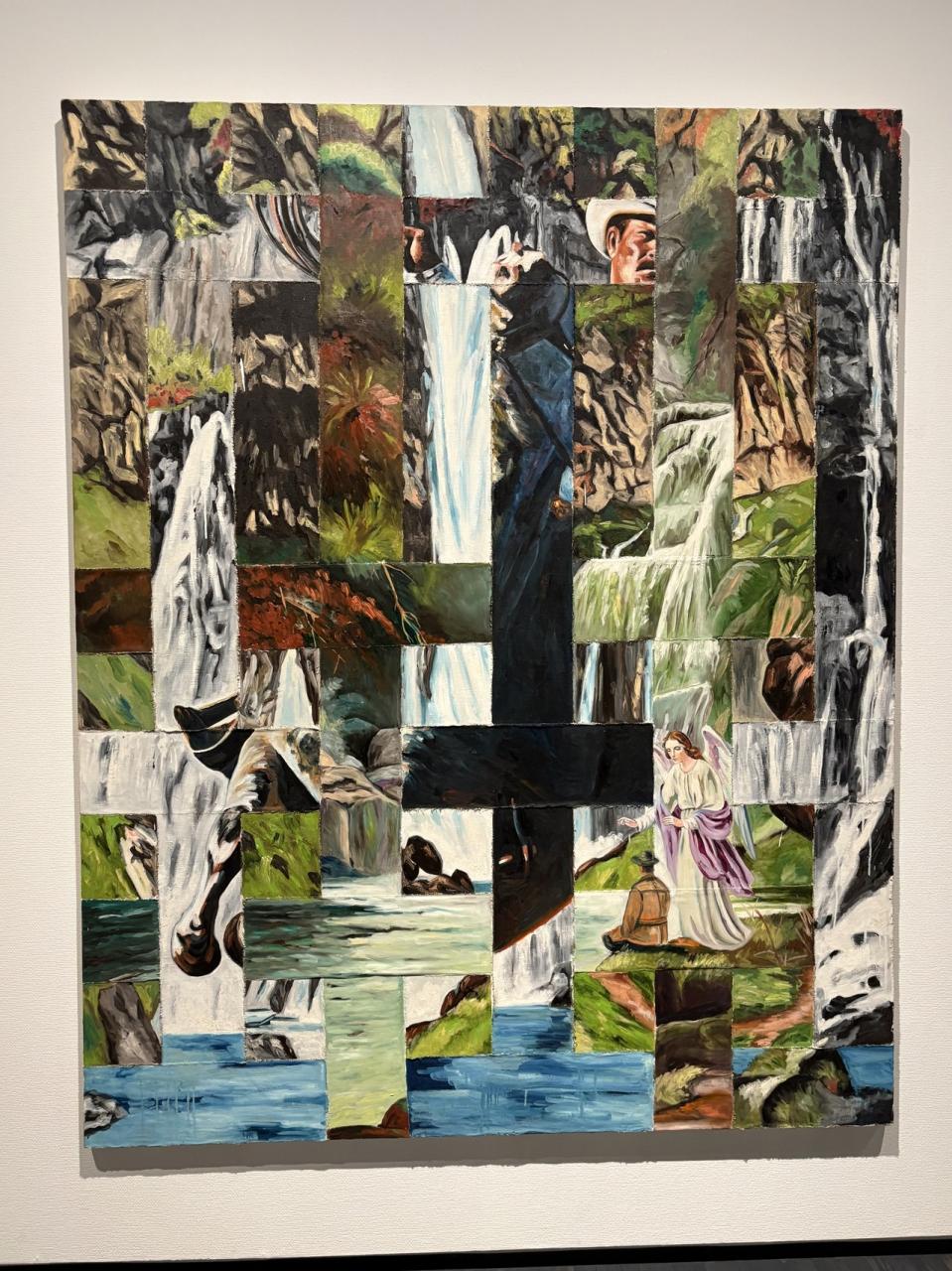
新収蔵作品
New Acquisition
横尾忠則
YOKOO, Tadanori
1936-
見えざる助力者
Sustainer from the Back Yard
1989 昭和64/平成元年
油彩、布・キャンバス oil and cloth on canvas
作者寄贈
Gift of the artist -
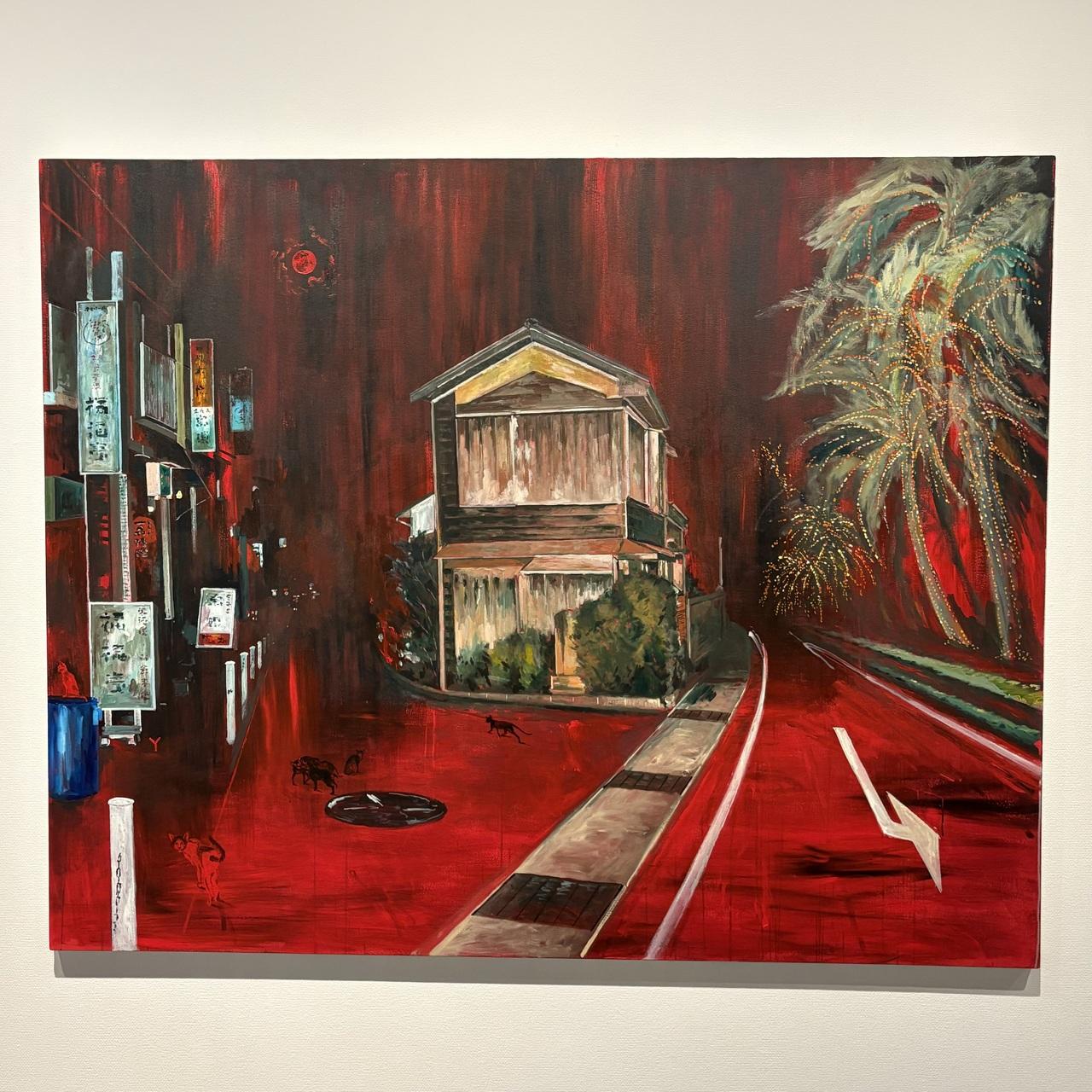
横尾忠則
YOKOO, Tadanori
1936-
宮崎の夜一眠れない家
A House in Miyazaki—A House with No Sleep
2004 平成16年
アクリリック・キャンバス acrylic on canvas
購入
Purchased
横尾の絵画の代表的なシリーズであるY字路は、故郷である兵庫県西脇の懐かしい場所を写したはずの写真が、見知らぬ風景に見えたことをきっかけに始まりました。
本作はその変奏の一つで、2004年の宮崎県立美術館での滞在制作で発表されました。イメージは公募で選ばれた写真から引用されたものです。飲食店の看板が並ぶ左手の道と、電飾のついたヤシの木が並ぶ右手の道は、どこへ続いているのでしょう。現実離れした不穏な赤色も相まって、虚実がないまぜになった空間が現れています。
Yokoo Tadanori's Y-junctions, one of his best-known series of paintings, began with a photograph of what he believed to be a nostalgic spot in his hometown of Nishiwaki, Hyogo Prefecture, which instead appeared to him as an unfamiliar landscape.
This painting is one of many variations of the series, and was exhibited during a residency at the Miyazaki Prefectural Art Museum in 2004. The image is based on a photograph selected through a call for submissions from the public. The road on the left lined with restaurant signs, and the road on the right lined with illuminated palm trees-where do they lead? The dreamlike and disturbing shade of red heightens the effect of this space in which truth and fiction are inseparably mixed. -
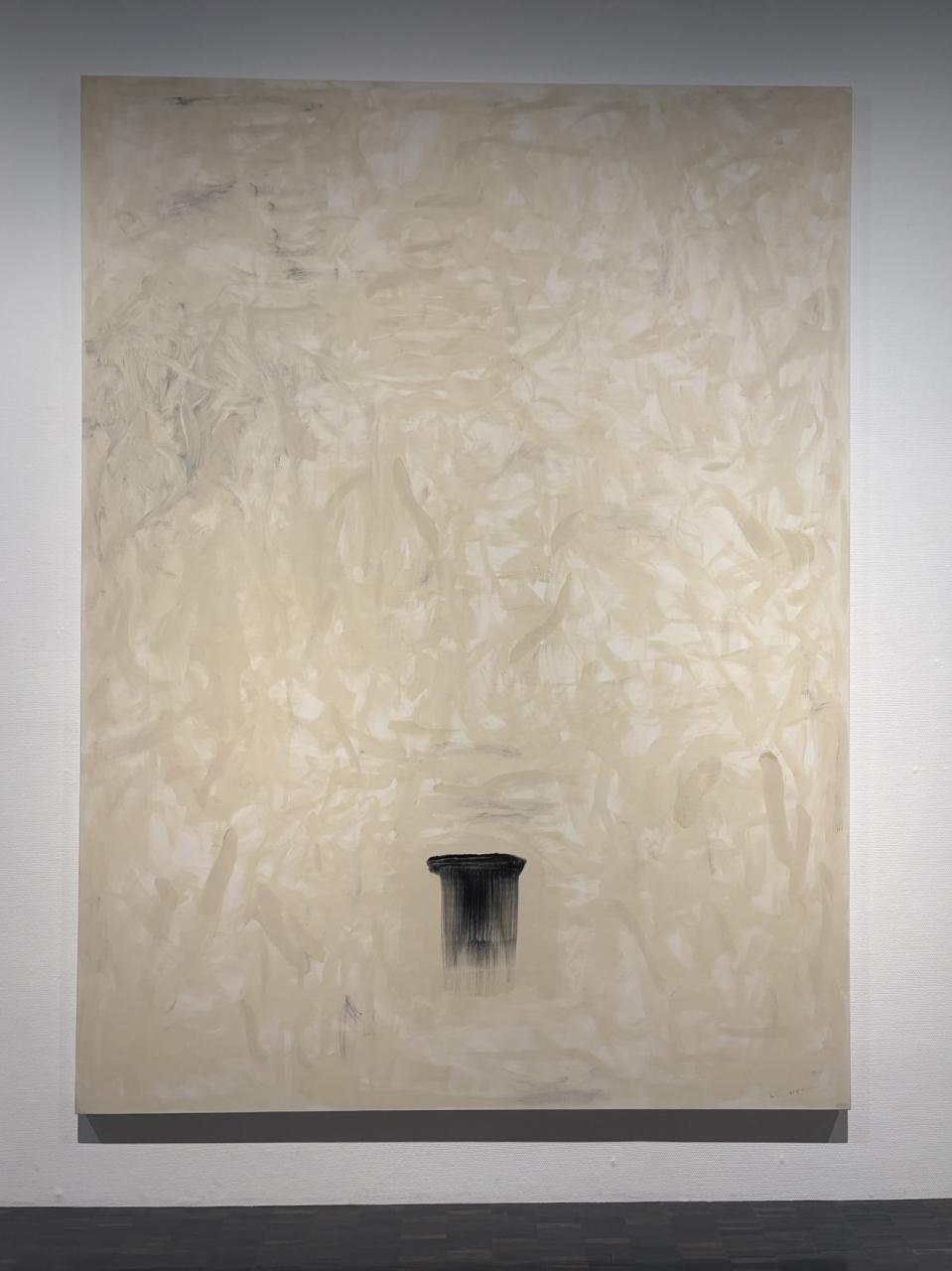
新収蔵作品
New Acquisition
李禹煥
LEE, Ufan
1936-
応答
Response
2022 令和4年
アクリリック・キャンバス acrylic on canvas
作者寄贈
Gift of the artist -
-
-
李禹煥
LEE, Ufan
1936-
風と共に
With Winds
1990 平成2年
油彩・キャンバス oil on canvas
購入
Purchased
李は基本的にシリーズで作品を制作します。
1970年代は「突きより」「刻みより」「点より」
「線より」。1980年代に入ると、「無題」と呼ばれる作品を経て、「東風」や「風より」、そしてさらに「風と共に」に変化していきます。90年代以降は、「照応」や「応答」などの連作へと続きます。
こうしてシリーズ名を書き連ねてみると、「風」という概念の異質性が見えてきます。画家の行為や絵画の要素とは異なりつつも、決して無縁とも言えず、見えないけれど感じられる現象、それが風なのですから。
Lee generally makes series.
In the '70s, these included Push Up, Cut Up, From Point, and From Line. After a period of works called Untitled in the 1980s, he began making East Wind and From Winds, and eventually With Winds. In the '90s, Lee began an ongoing series called Correspondence, or Response.
The titles of these series convey different qualities related to the concept of wind. While the artist's actions and elements in the paintings might differ, there is clearly some relation between them, as the wind is a phenomenon that can be felt even though it cannot be seen. -
李禹煥
LEE, Ufan
1936-
点より
From Point
1977 昭和52年
岩絵具、膠・キャンバス
Japanese pigment and glue on canvas
作者寄贈
Gift of the artist -
石内都
ISHIUCHI, Miyako
1947-
「連夜の街」より 洞泉寺
Tosenji from Endless Night
1978-80 (printed 1993) 昭和53-55年
ゼラチン・シルバー・プリント gelatin silver print
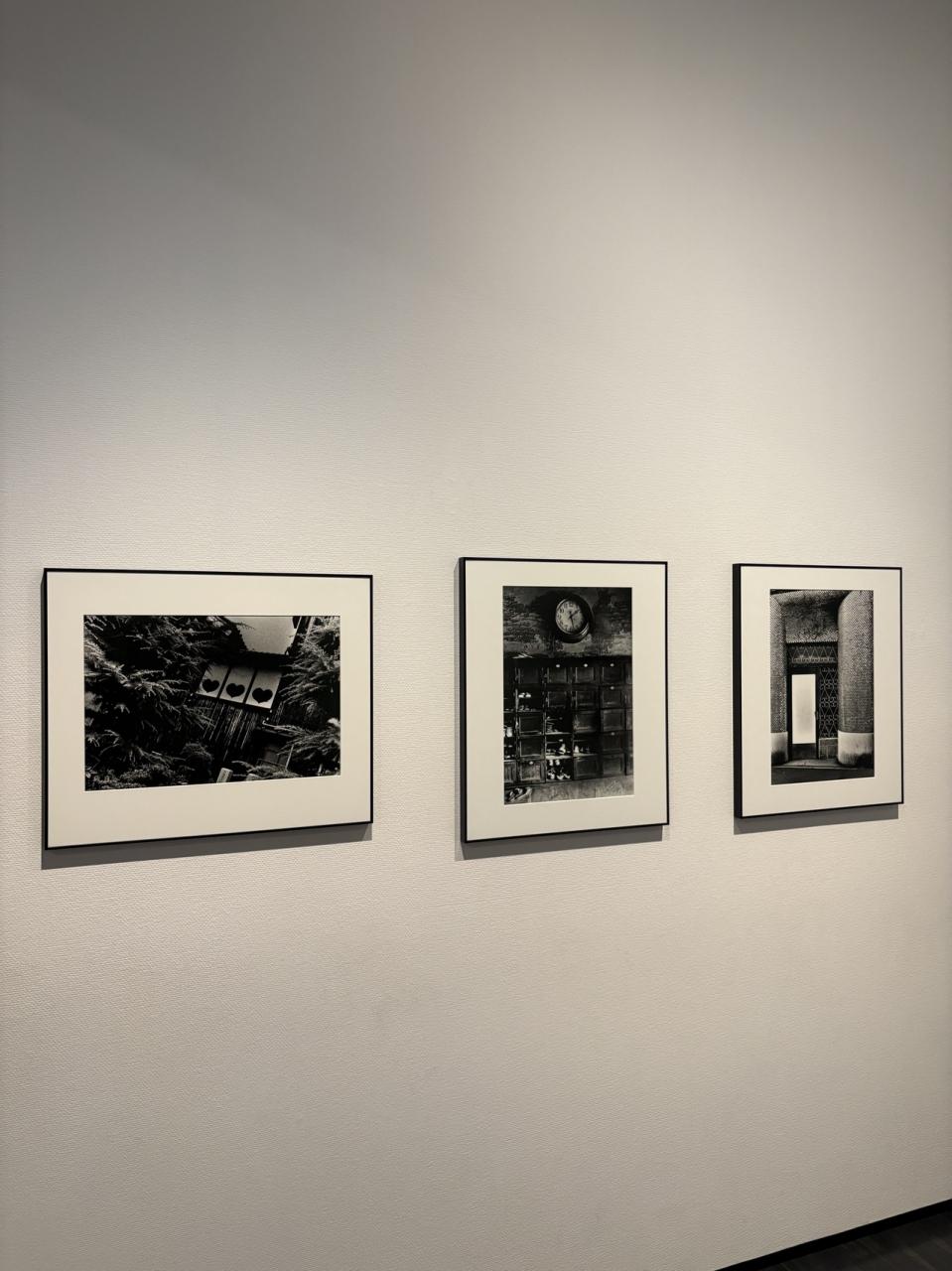
「連夜の街」は、全国各地の「赤線」跡を撮影したシリーズです。
赤線とは、GHQによって公娼廃止指令が出された1946年から売春防止法が施行された1958年までの間に、半ば公認で売春が行われた地域のことです。石内が「差別や戦争の荒んだ表情が、生きる営みのひとつとして、町のたたずまいの内側から染み出し溶けて、空気にまみれる」(『main」7号、1998年)と述べるように、寂れた街の情景には、赤線で生きた女性たちの気配が漂っています。
Endless Night is a photographic series that documents fading red-light districts nationwide.
In Japan these are known as "red line zones," the red lines being drawn around areas of semi-legal prostitution from 1946, following the Allied powers' directive to eliminate licensed prostitution, to 1958, with the introduction of the Prostitution Prevention Law.
Ishiuchi observed: "The ravaged visage of discrimination and war seeps out from the cityscape as a facet of daily life and blends into the surrounding atmosphere" (main, vol.7, 1998). Indeed, these desolate urban landscapes seem imbued with the spirits of women who lived inside these red lines.
「連夜の街」より飛田新地
Tobia-Shinchi from Endless Night
1978-80 (printed 1993) 昭和53-55年
ゼラチン・シルバー・ブリント gelatin silver print
「連夜の街」より真金町
Magane-cho from Endless Night
1978-80 (printed 1993) 昭和53-55年
ゼラチン・シルバー・プリントgelatin silver print
購入
Purchased -
-
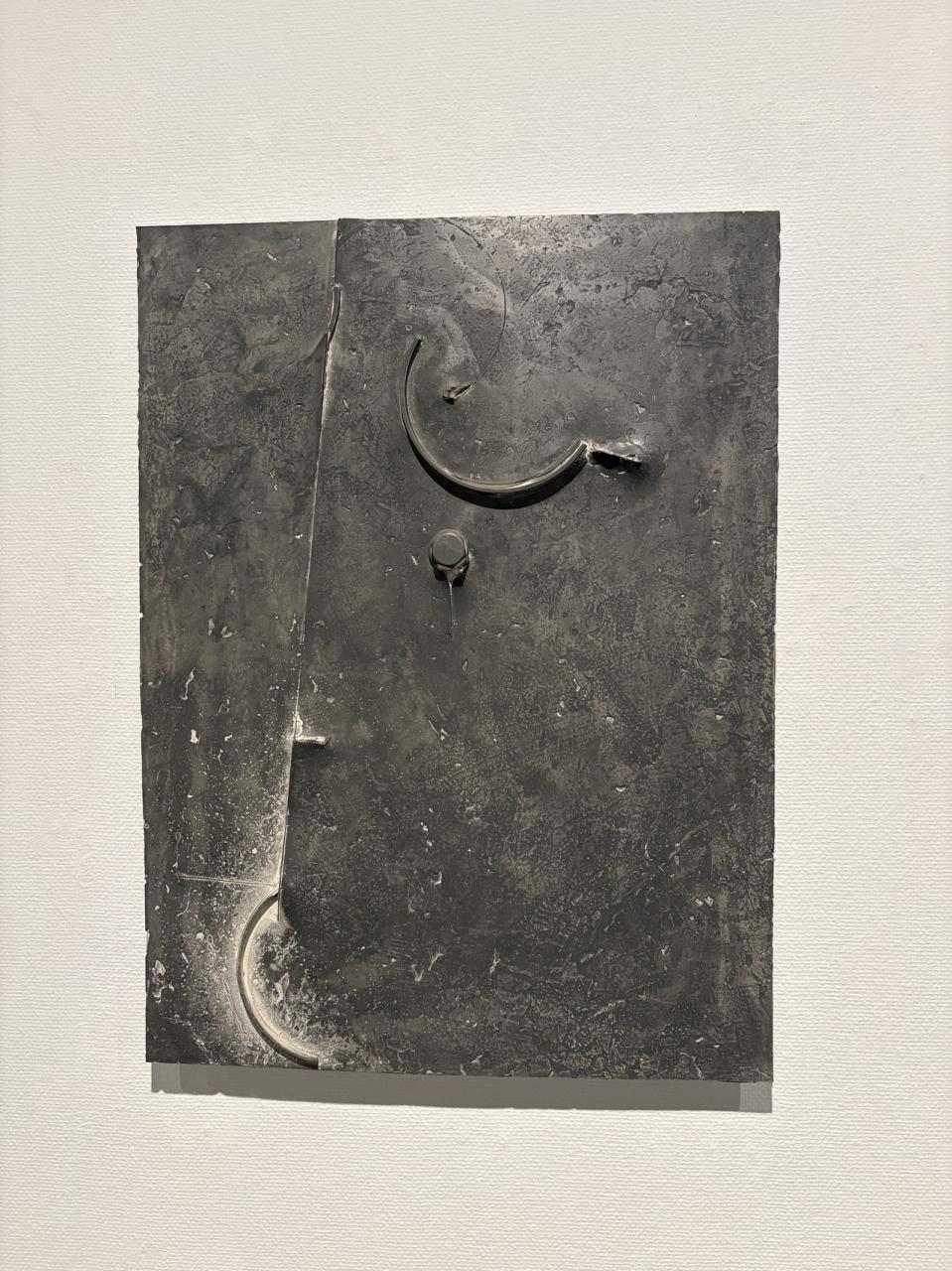
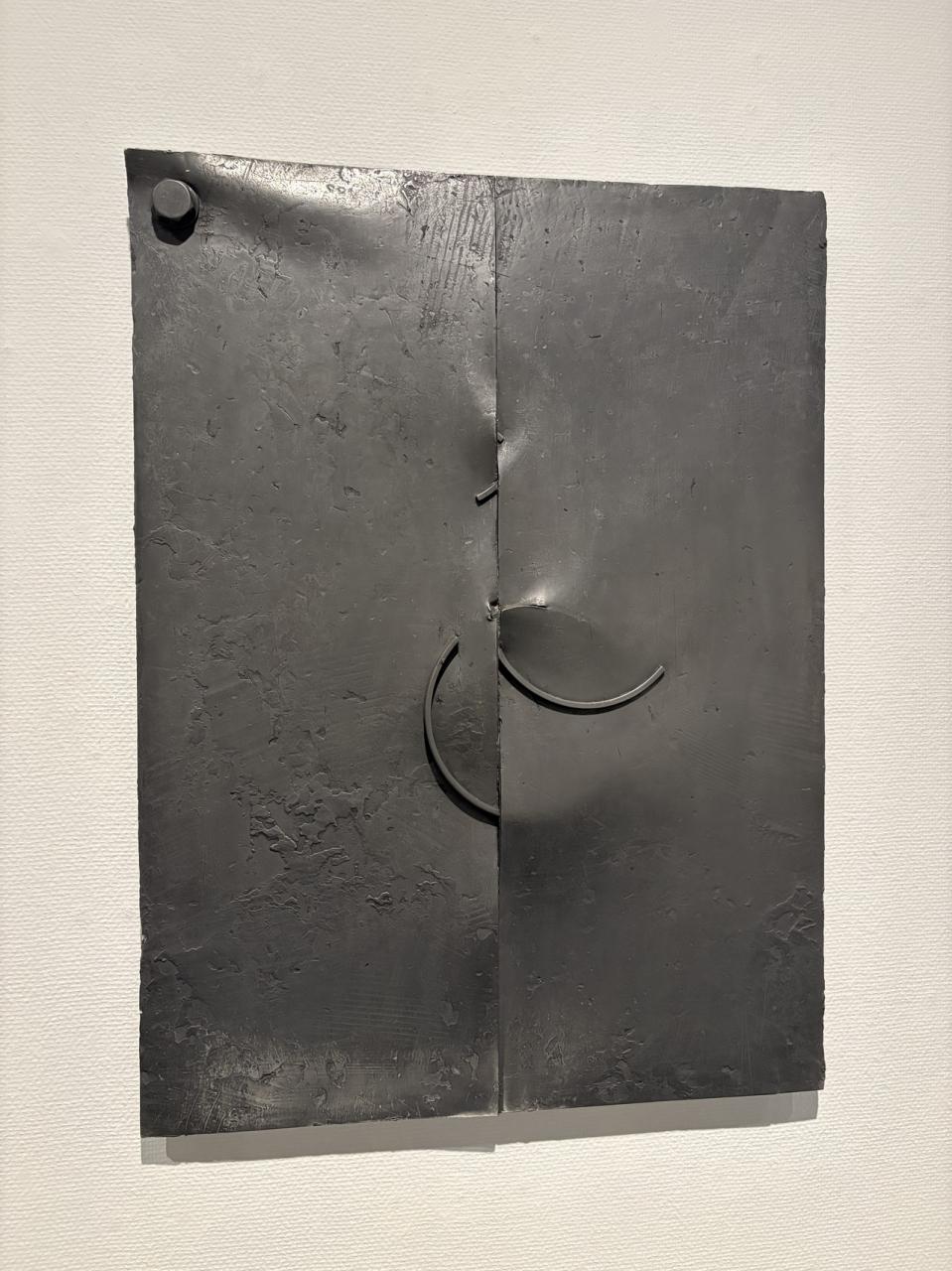
石内都
ISHIUCHI, Miyako
1947-
1• 9 •4 • 7 [#50] Artist
1988-89 (printed 1999) 昭和63-平成元年
ゼラチン・シルバー・プリント gelatin silver print
購入
Purchased



![石内都<br />ISHIUCHI, Miyako<br />1947-<br /><br />1• 9 •4 • 7 [#50] Artist<br />1988-89 (printed 1999) 昭和63-平成元年<br />ゼラチン・シルバー・プリント gelatin silver print<br /><br />購入<br />Purchased](https://cdn.4travel.jp/img/tcs/t/pict/src/89/29/88/src_89298841.jpg?1770519614)
この旅行記のタグ


利用規約に違反している投稿は、報告する事ができます。
-
前の旅行記

MOMAT コレクション(2025.7.15-10.26)11.揺れる境界 "石川真生、基地を取り巻く人々"
2025/08/07~
神田・神保町
-
次の旅行記

東京国立近代美術館 "新収蔵&特別公開 コレクションにみる日韓" (2025.7.15 - 10.26) "...
2025/08/07~
神田・神保町
-

MOMAT コレクション〔国立東京近代美術館 所蔵作品展〕(2025.7.15-10.26)1.ハイライト ...
2025/08/07~
神田・神保町
-

MOMAT コレクション〔国立東京近代美術館 所蔵作品展〕(2025.7.15-10.26)2.大正の個性派...
2025/08/07~
神田・神保町
-

MOMAT コレクション〔国立東京近代美術館 所蔵作品展〕(2025.7.15-10.26)3. 岸田劉生「...
2025/08/07~
神田・神保町
-

MOMAT コレクション〔国立東京近代美術館 所蔵作品展〕(2025.7.15-10.26)4.山と渓谷 "...
2025/08/07~
神田・神保町
-

MOMAT コレクション(2025.7.15-10.26)5.1930年代の絵画:現実の彼方へ、幻影の手前で...
2025/08/07~
神田・神保町
-

MOMAT コレクション(2025.7.15-10.26)6.1940年 "ハリー・K・シゲタ(重田放二)フ...
2025/08/07~
神田・神保町
-

MOMAT コレクション〔国立東京近代美術館 所蔵作品展〕(2025.7.15-10.26)7.戦後の女性画...
2025/08/07~
神田・神保町
-

MOMAT コレクション(2025.7.15-10.26)8.ジャンクとポップ "日比野克彦 LABYRIN...
2025/08/07~
神田・神保町
-

MOMAT コレクション〔国立東京近代美術館 所蔵作品展〕(2025.7.15-10.26)9.山村雅昭「ワ...
2025/08/07~
神田・神保町
-

MOMAT コレクション(2025.7.15-10.26)10.アルプのアトリエ/絵画と目的 "山口華楊、洋...
2025/08/07~
神田・神保町
-

MOMAT コレクション(2025.7.15-10.26)11.揺れる境界 "石川真生、基地を取り巻く人々"
2025/08/07~
神田・神保町
-

MOMAT コレクション〔国立東京近代美術館 所蔵作品展〕(2025.7.15-10.26)12.ヨコ軸・タ...
2025/08/07~
神田・神保町
-

東京国立近代美術館 "新収蔵&特別公開 コレクションにみる日韓" (2025.7.15 - 10.26) "...
2025/08/07~
神田・神保町
旅行記グループをもっと見る
コメントを投稿する前に
十分に確認の上、ご投稿ください。 コメントの内容は攻撃的ではなく、相手の気持ちに寄り添ったものになっていますか?
サイト共通ガイドライン(利用上のお願い)報道機関・マスメディアの方へ 画像提供などに関するお問い合わせは、専用のお問い合わせフォームからお願いいたします。






フォートラベル公式LINE@

おすすめの旅行記や旬な旅行情報、お得なキャンペーン情報をお届けします!
QRコードが読み取れない場合はID「@4travel」で検索してください。
\その他の公式SNSはこちら/




旅行記グループ MOMAT コレクション〔国立東京近代美術館 所蔵作品展〕(2025.7.15-10.26)
0
24