


2025/08/07 - 2025/08/07
47位(同エリア934件中)

旅熊 Kokazさん
- 旅熊 KokazさんTOP
- 旅行記1915冊
- クチコミ854件
- Q&A回答102件
- 1,700,956アクセス
- フォロワー753人
MOMAT コレクション〔国立東京近代美術館 所蔵作品展〕(2025.7.15-10.26)
https://www.momat.go.jp/exhibitions/r7-1
7.戦後の女性画家たち
- 旅行の満足度
- 5.0
-

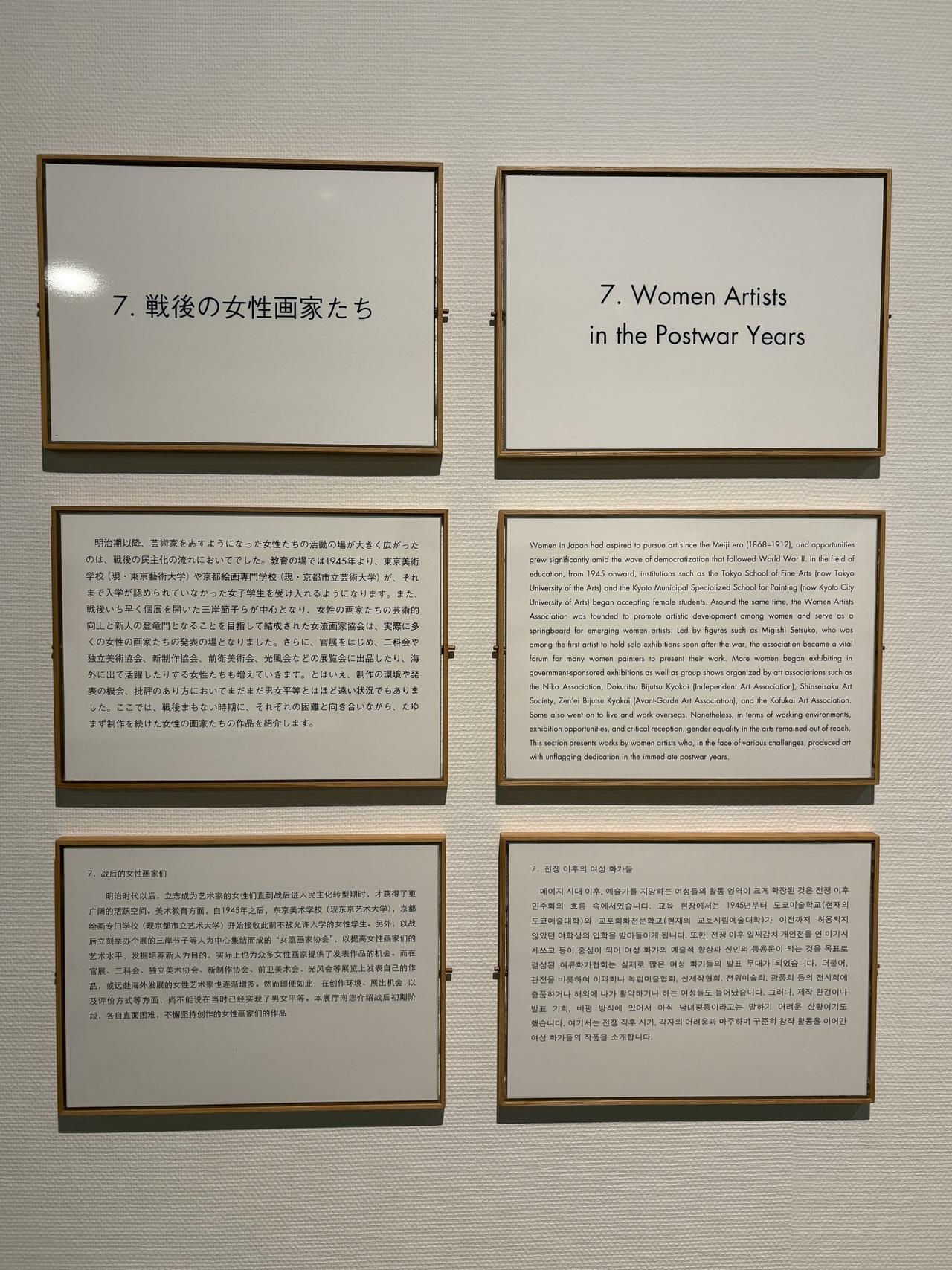
7. 戦後の女性画家たち
明治期以降、芸術家を志すようになった女性たちの活動の場が大きく広がったのは、戦後の民主化の流れにおいてでした。
教育の場では1945年より、東京美術学校(現・東京藝術大学)や京都絵画専門学校(現・京都市立芸術大学)が、それまで入学が認められていなかった女子学生を受け入れるようになります。また、戦後いち早く個展を開いた三岸節子らが中心となり、女性の画家たちの芸術的向上と新人の登竜門となることを目指して結成された女流画家協会は、実際に多くの女性の画家たちの発表の場となりました。
さらに、官展をはじめ、二科会や独立美術協会、新制作協会、前衛美術会、光風会などの展覧会に出品したり、海外に出て活躍したりする女性たちも増えていきます。
とはいえ、制作の環境や発表の機会、批評のあり方においてまだまだ男女平等とはほど遠い状況でもありました。ここでは、戦後まもない時期に、それぞれの困難と向き合いながら、たゆまず制作を続けた女性の画家たちの作品を紹介します。
7. Women Artists in the Postwar Years
Women in Japan had aspired to pursue art since the Meiji era (1868-1912), and opportunities grew significantly amid the wave of democratization that followed World War Il.
In the field of education, from 1945 onward, institutions such as the Tokyo School of Fine Arts (now Tokyo University of the Arts) and the Kyoto Municipal Specialized School for Painting (now Kyoto City University of Arts) began accepting female students. Around the same time, the Women Artists Association was founded to promote artistic development among women and serve as a springboard for emerging women artists. Led by figures such as Migishi Setsuko, who was among the first artist to hold solo exhibitions soon after the war, the association became a vital forum for many women painters to present their work.
More women began exhibiting in government-sponsored exhibitions as well as group shows organized by art associations such as the Nika Association, Dokuritsu Bijutsu Kyokai (Independent Art Association), Shinseisaku Art Society, Zen'ei Bijutsu Kyokai (Avant-Garde Art Association), and the Kofukai Art Association. Some also went on to live and work overseas.
Nonetheless, in terms of working environments, exhibition opportunities, and critical reception, gender equality in the arts remained out of reach. This section presents works by women artists who, in the face of various challenges, produced art with unflagging dedication in the immediate postwar years.東京国立近代美術館 美術館・博物館
-
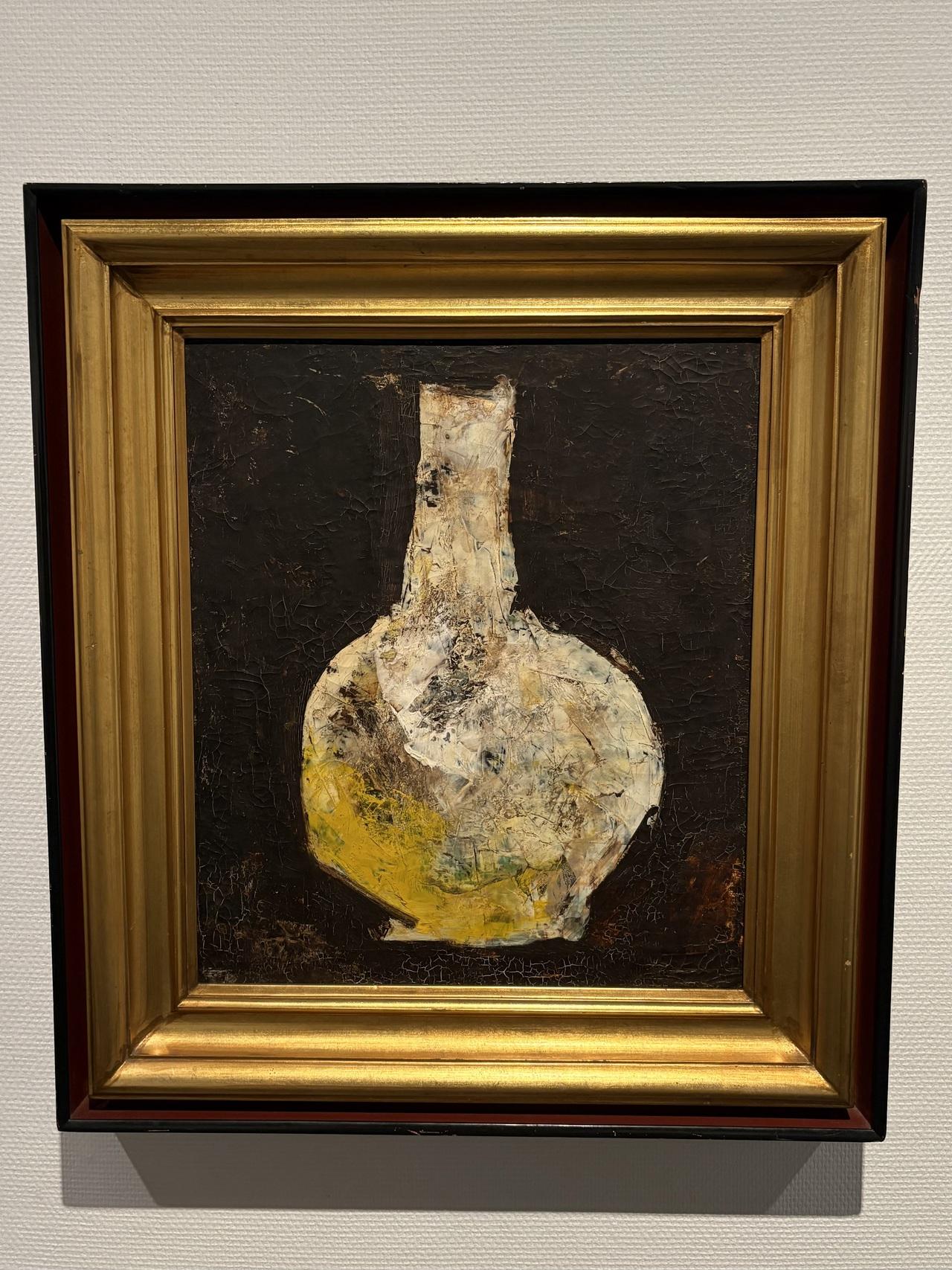
桜井浜江
SAKURAI, Hamae
1908-2007
壺
Vase
1946 昭和21年
油彩・キャンバス oil on canvas
田近三重子氏寄贈
Gift of Tajika Mieko
絵具に不自由し、発表の機会も減った戦時中を経て、小さなキャンバスの壺と花のシリーズが生まれました。ペインティングナイフで絵具を重ねた画面は、再現的な描写や作為的な痕跡を最小限にとどめ、抽象的な絵肌をあらわにしています。
1946年に現代女流画家展を訪れた美術評論家の田近憲三が、同展に出品されていた<壺>にいたく感動して購入、別の機会に得た<花>とともに長く愛蔵し、本人没後、夫人によって当館に寄贈されました。
From a period of scarce art supplies and fewer opportunities for public exhibitions during wartime, there emerged a series of small paintings on canvas depicting vases and flowers. These were made using a palette knife to layer paint on the canvas, minimizing figurative details and traces of the artist's hand while revealing abstract textures.
In 1946, the art critic Tajika Kenzo visited the Contemporary Women Artists Exhibition and was deeply moved by a painting displayed there, titled Vase. He purchased it, and on a different occasion also acquired another painting titled Flowers. Tajika cherished these works for many years, and after his death his wife gifted both paintings to the museum, preserving and sharing the artist's legacy. -
新収蔵作品
New Acquisition
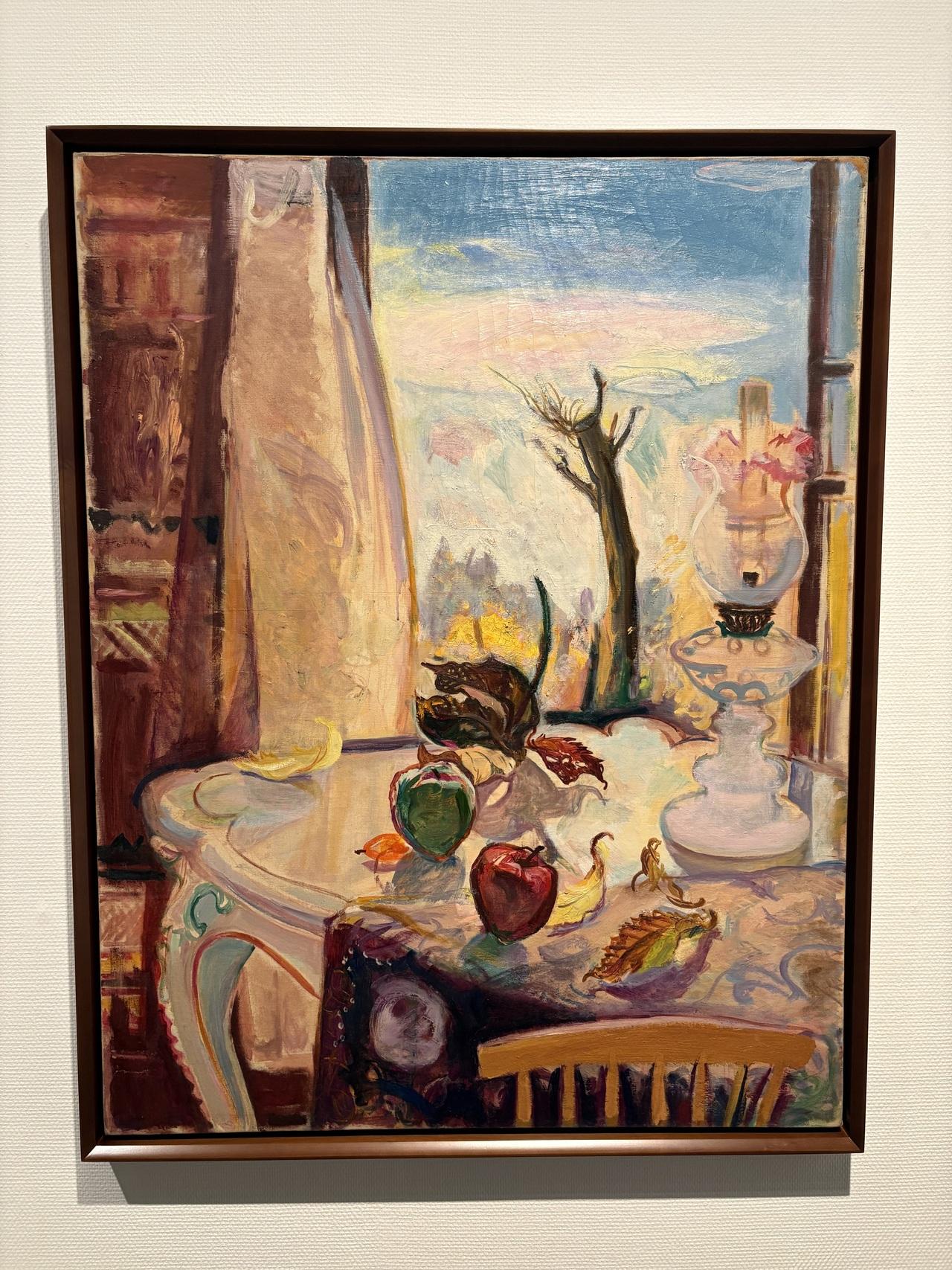
有馬さとえ(三斗枝)
ARIMA, Satoe
1893-1978
題名不詳
title unknown
c.1946-51 昭和21-26年頃
油彩・キャンバス oil on canvas
松田美枝子氏寄贈
Gift of Matsuda Mieko
鹿児島に生まれ、画家を志して1911(明治44)年に上京した有馬は、岡田三郎助に師事して画業に励み、1926年には帝展の洋画部門で女性初の特選に選ばれ、その後50年あまり画家一筋の生涯を送りました。この題名不詳の作品は、1945年の空襲で渋谷の自宅が焼けた後に、画家が身を寄せていた達の知人の2階の部屋からの眺めを描いたものと思われます。
戦前は暗い色調の作品が多かった有馬が、戦後明るい色彩とのびやかな筆触で描くようになった時期の作品で、影の部分にも青や緑、紫といった色彩が用いられています。
Born in Kagoshima, Arima moved to Tokyo in 1911 to pursue a career as a painter, initially studying under Okada Saburosuke. In 1926, she was the first woman to earn a special selection in the Western-style painting section of the Teiten (Imperial Art Academy Exhibition), and she went on to devote more than fifty years of her life to painting. This work, with no known title, is believed to depict the view from the second floor of a friend's house in Ogikubo, where she took refuge after her home in Shibuya was destroyed during the air raids of 1945.
Dating from a period of transition from the darker palettes of Arima's prewar work to brighter colors and more fluid brushwork, the painting is rich in hues of blue, green, and purple even in shadowed areas. -
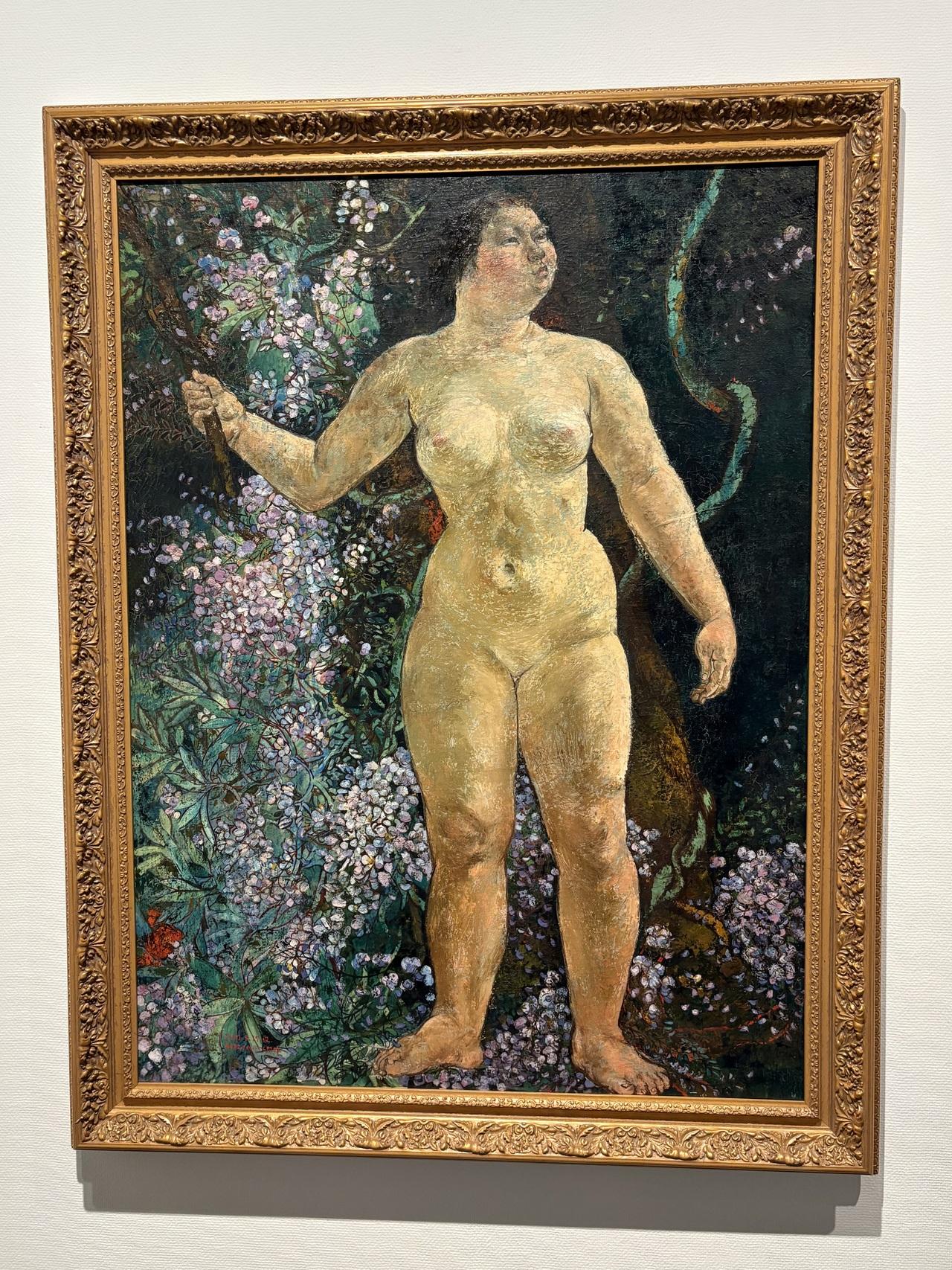
丸木俊(赤松俊子)
MARUKI, Toshi (AKAMATSU, Toshiko)
1912-2000
解放され行く人間性
Emancipation of Humanity
1947 昭和22年
油彩・キャンバス
oil on canvas
購入
Purchased
「解放され行く人間性」という言葉は、今日では少し観念的に思えるかもしれません。でもこの絵が発表された1947(昭和22)年当時は、切実な響きをもっていたことでしょう。たとえば敗戦後の1945年にGHQ(連合国軍最高司令官総司令部)が行った五大改革のひとつは、まさに女性の解放でしたから。
ただし丸木は、「女性」ではなくて「人間性」としています。描かれている女性の視線から推測すると、画家は未来におけるより大きな「解放」を見据えていたようにも思えます。
The phrase "emancipation of humanity" may today sound somewhat lofty and abstract, but in 1947 when this painting was first exhibited, it surely had a more urgent ring to it. For example, one of the five major reforms carried out under the auspices of the occupying Allied Powers in 1945 dealt with the emancipation of women.
However, Maruki's title speaks not of "women" but of "humanity." From the woman's gaze in this painting, we can sense that the artist had a greater, more universal future "emancipation" in mind. -
森田元子
MORITA, Motoko
1903-1969
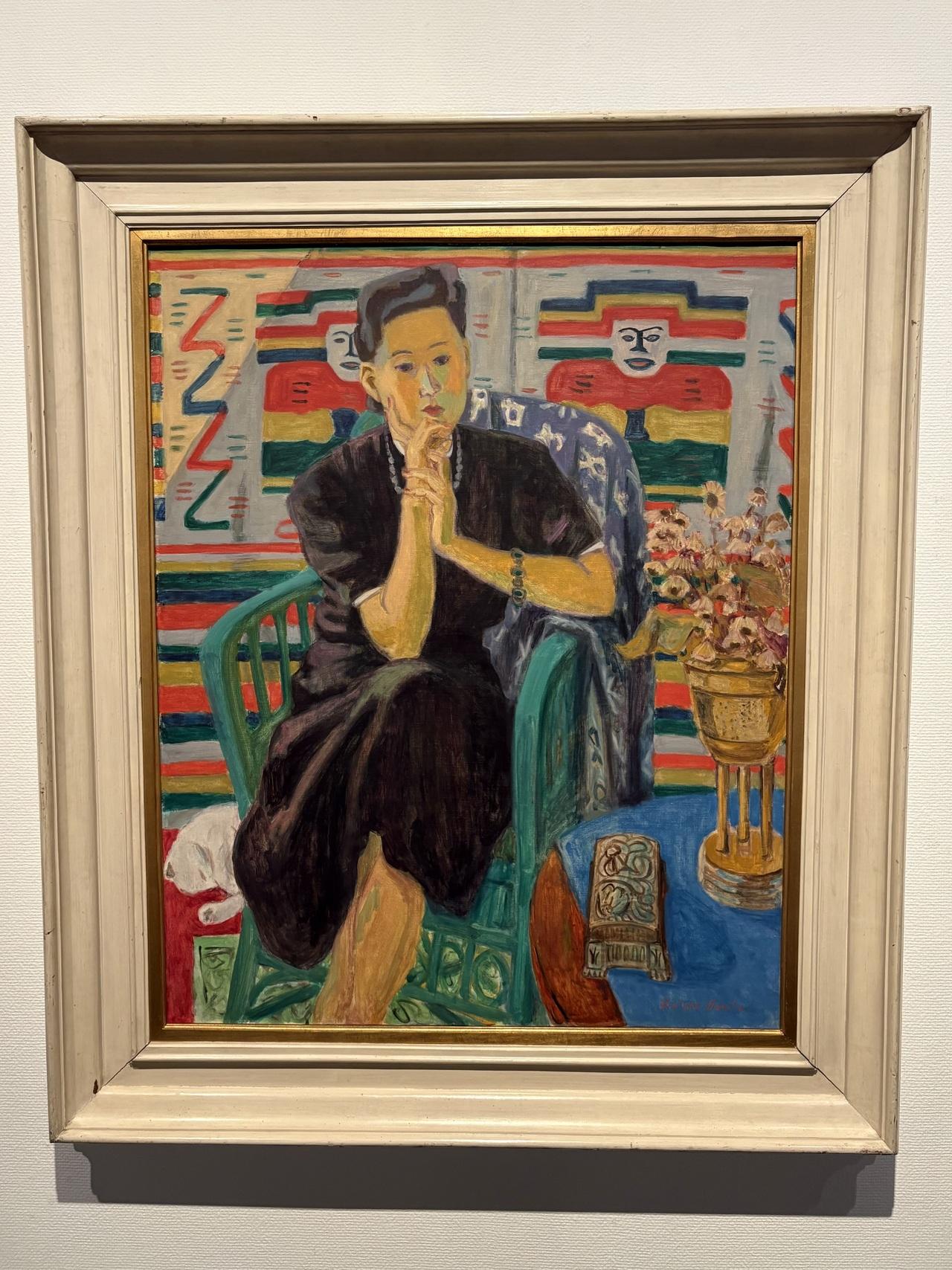
想い
Thinking
1947 昭和22年
油彩・キャンバス oil on canvas
文部省管理換
Transferred from Ministry of Education
東京に生まれ、幼時に父の仕事の関係で大阪へ転居。上村松園に憧れて日本画家を志し、やがて洋画家に転じます。1923年に岡田三郎助に師事して、女子美術学校西洋画科高等科に編入。卒業後は、主婦之友社の表紙絵で得たお金でフランスに渡り、ポスト印象派の流れに位置付けられる画家シャルル・ゲランに学びました。
帰国後に結婚し、家庭と両立しながら絵を描き続け、帝展や日展に入選を重ねます。明るい色彩と大胆な装飾的モチーフが眼を引く本作は、戦後間もない頃の作品で、第3回日展の出品作。戦後は女子美術学校の教授に就任して、後進の育成にも努めました。
Morita Motoko was born in Tokyo and moved to Osaka in early childhood due to her father's work. She admired the Nihonga (Japanese-style) painter Uemura Shoen and initially aspired to follow in her footsteps, but later shifted to Western-style painting. In 1923, she transferred to the Western painting course at Joshibi University of Art and Design and was a pupil of Okada Saburosuke. After graduation, she used money earned from cover illustrations for the women's magazine Shufu no tomo to go to France, where she studied under Charles Guérin, a painter associated with the Post-Impressionist movement.
After returning to Japan, she married and succeeded in balancing family life and her passion for painting. Her works were consistently selected for official exhibitions such as the Teiten (Imperial Fine Arts Exhibition) and the Nitten (Japan Fine Arts Exhibition). This painting, characterized by bright colors and bold decorative motifs, is from the early post-World War lI period and appeared in the 3rd Nitten. After the war, she became a professor at her alma mater Joshibi University of Art and Design and taught succeeding generations of artists. -
三岸節子
MIGISHI, Setsuko
1905-1999
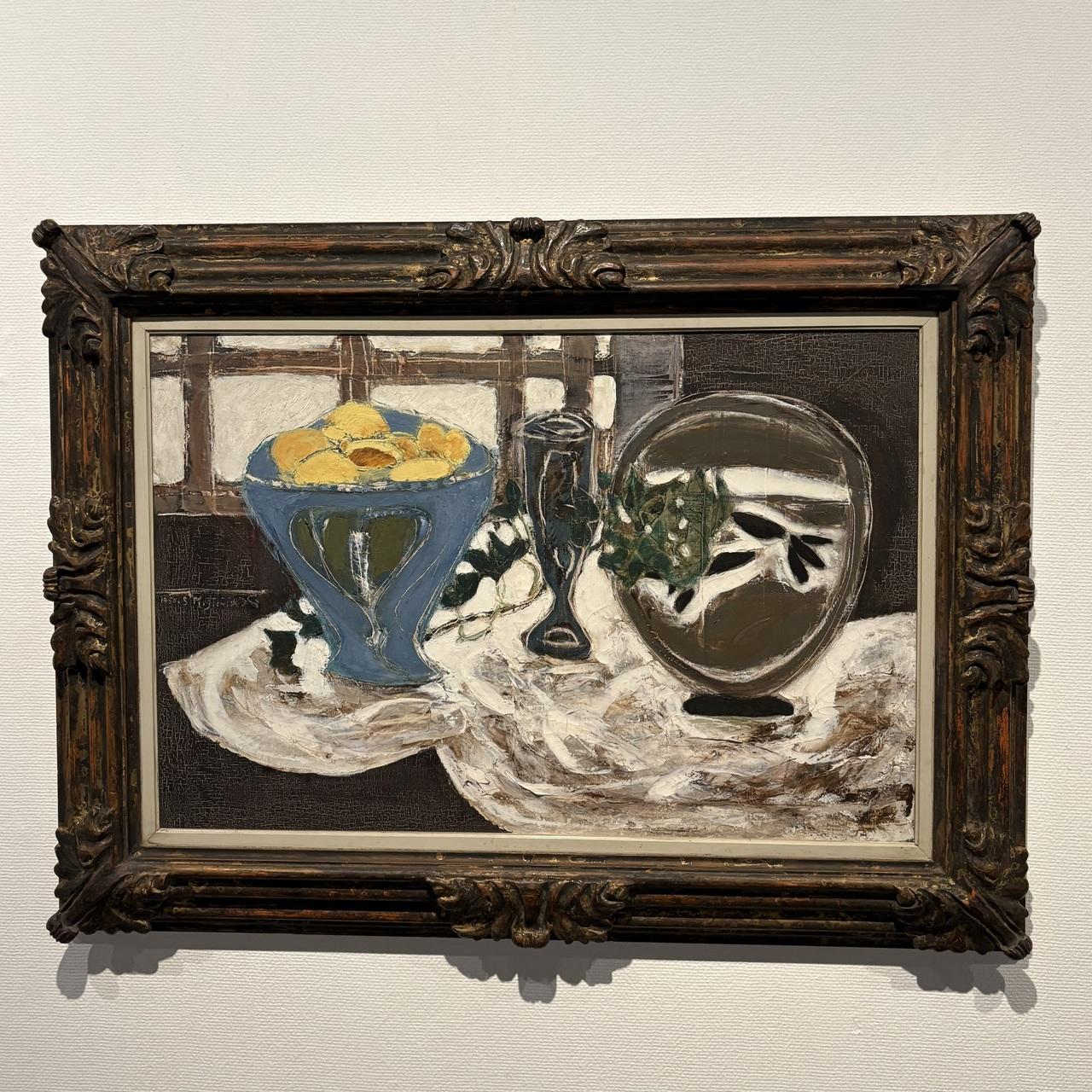
静物(金魚)
Still Life (Goldfish)
1950 昭和25年
油彩・キャンバス oil on canvas
文部省管理換
Transferred from Ministry of Education
戦時中、装飾的な室内画を描いていた三岸の画面は、1950年代になると、フォルムと構成を重視した画風へと変化します。<静物(金魚)>はまさにその時期の作品で、黒と白を背景に、モチーフの硬質な輪郭と鮮やかな色彩が浮かびあがります。また、厚く塗った絵具を引っかくなど、マチエールの変化にも富んだ作品です。三岸は20歳で画壇にデビューし、94歳で没するまでの70余年という長きにわたる画歴をもち、戦前から戦後にかけて、協会設立に関わるなど、女性画家の地位向上にも努めました。
Migishi Setsuko, who had painted decorative interior scenes during World War II, shifted in the 1950s to a style that emphasized form and composition. Still Life (Goldfish) is a work from that period, characterized by the crisp outlines of objects and vivid colors against a black and white background. The work is also rich in various forms of materiality, such as scratches in thickly applied paint. Migishi had her art-world debut at the age of 20 and lived to be 94, giving her an extraordinary long painting career of more than seven decades. Both before and after the war she worked to improve the status of female painters, such as through the establishment of a women's painting association. -
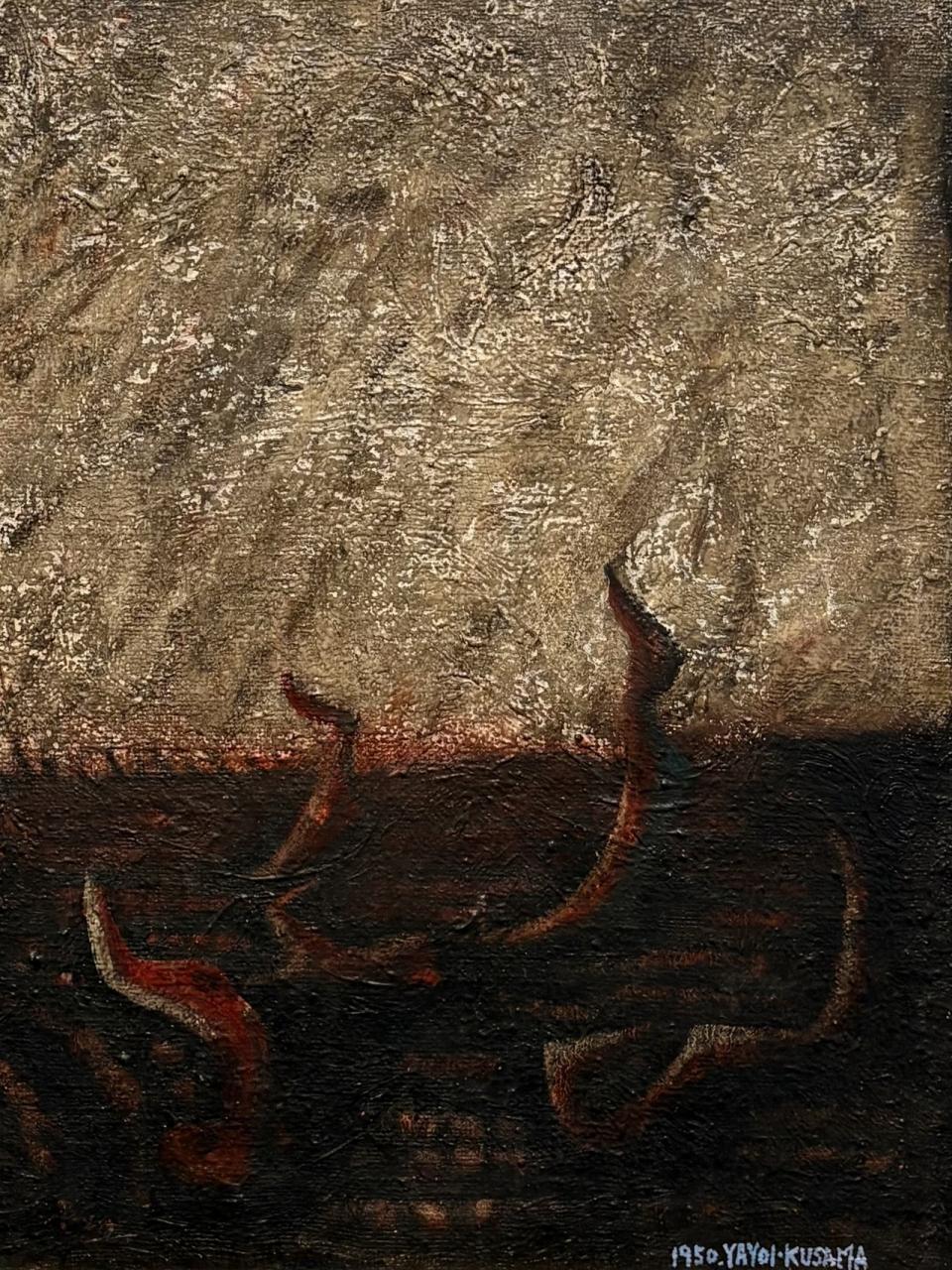
草間彌生
KUSAMA, Yayoi
1929-
集積の大地
Earth of Accumulation
1950 昭和25年
油彩、エナメル・麻布(種袋)
oil and enamel on seed sack
購入
Purchased
草間の初個展の出品作のひとつです。時は1952(昭和27)年、場所は松本市第一公民館、期間はたった2日間でした。この作品が描かれる前年までは、草間はまだ日本画の技法を用いていましたが、本作では、油絵具が使われています。支持体は、麻袋。種苗業を営む旧家に生まれ育った草間にとっては親しみのある素材だったでしょう。
1952年に彼女が地元の冊子『信州往来』に寄せたエッセイからは、アーティストとしての強い意志を読みとることができます。「文化は時代の新しい産物であり世界の空気を呼吸し世代を創造してゆくことを要請してゐる。これは画家の重要な便命である。現代を如何にして未来へときずきあげるか。歴史への批判と現在のポイントを踏み迷ってはならない。」
This was among the works shown at Kusama's first solo exhibition. The year was 1952, the venue the Matsumoto City Daiichi Public Hall, and the duration only two days. Until the year before she painted this, Kusama had studied Nihonga (Japanese-style painting), but here she used oil paint, on a burlap sack in place of a canvas. As she was born into a well-to-do family that ran a seed business, this must have been a familiar material.
An essay Kusama published in a local pamphlet called Shinshu orai [Shinshu Miscellany] that year conveys the artist's strong will. She wrote: "In any given era, culture is a product of the times. It demands that an artist breathe the air of the whole world, to create something that represents a new generation. A painter's mission is to create a future from the present. A painter must both accurately critique the past and correctly comprehend the present." -
-
新収蔵作品
New Acquisition
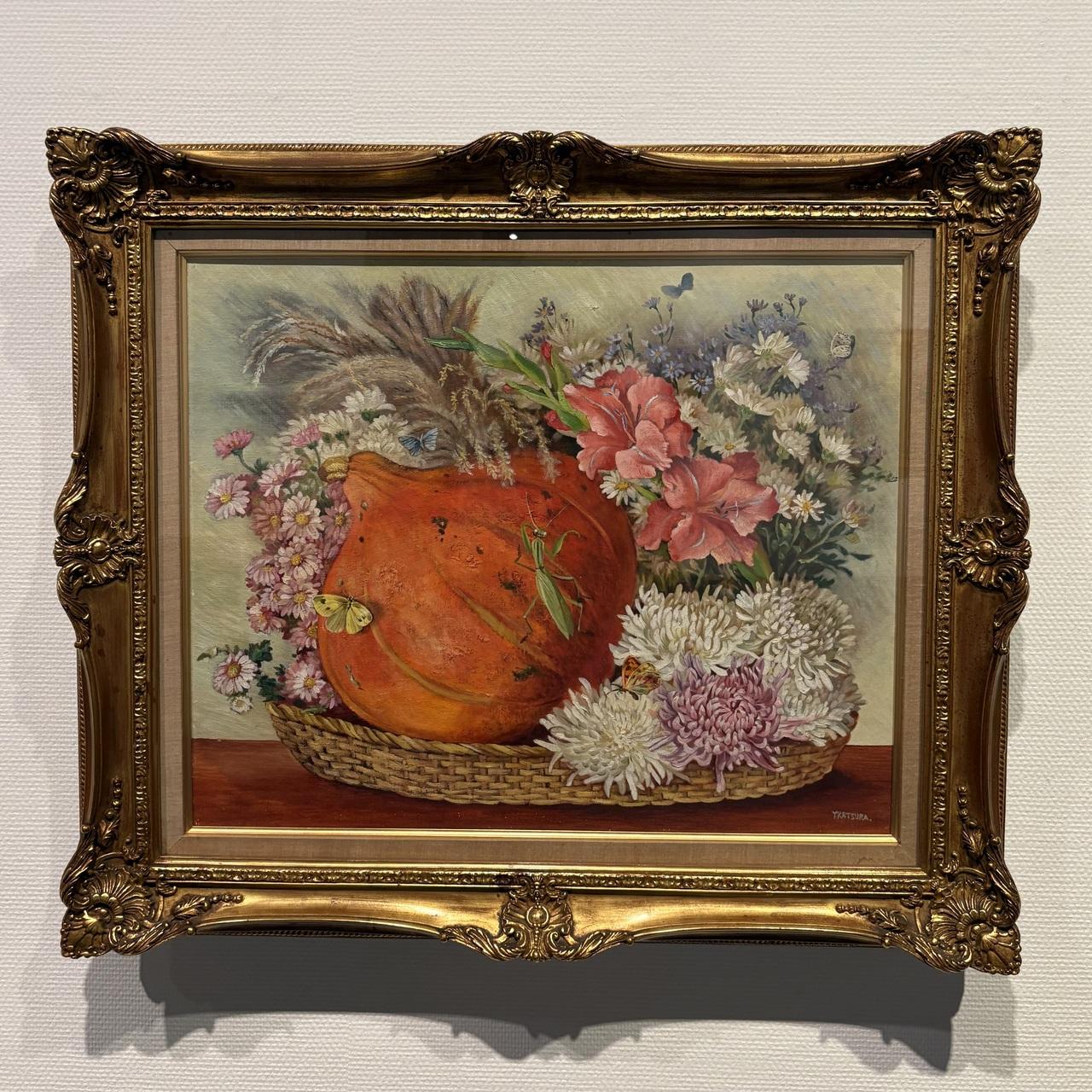
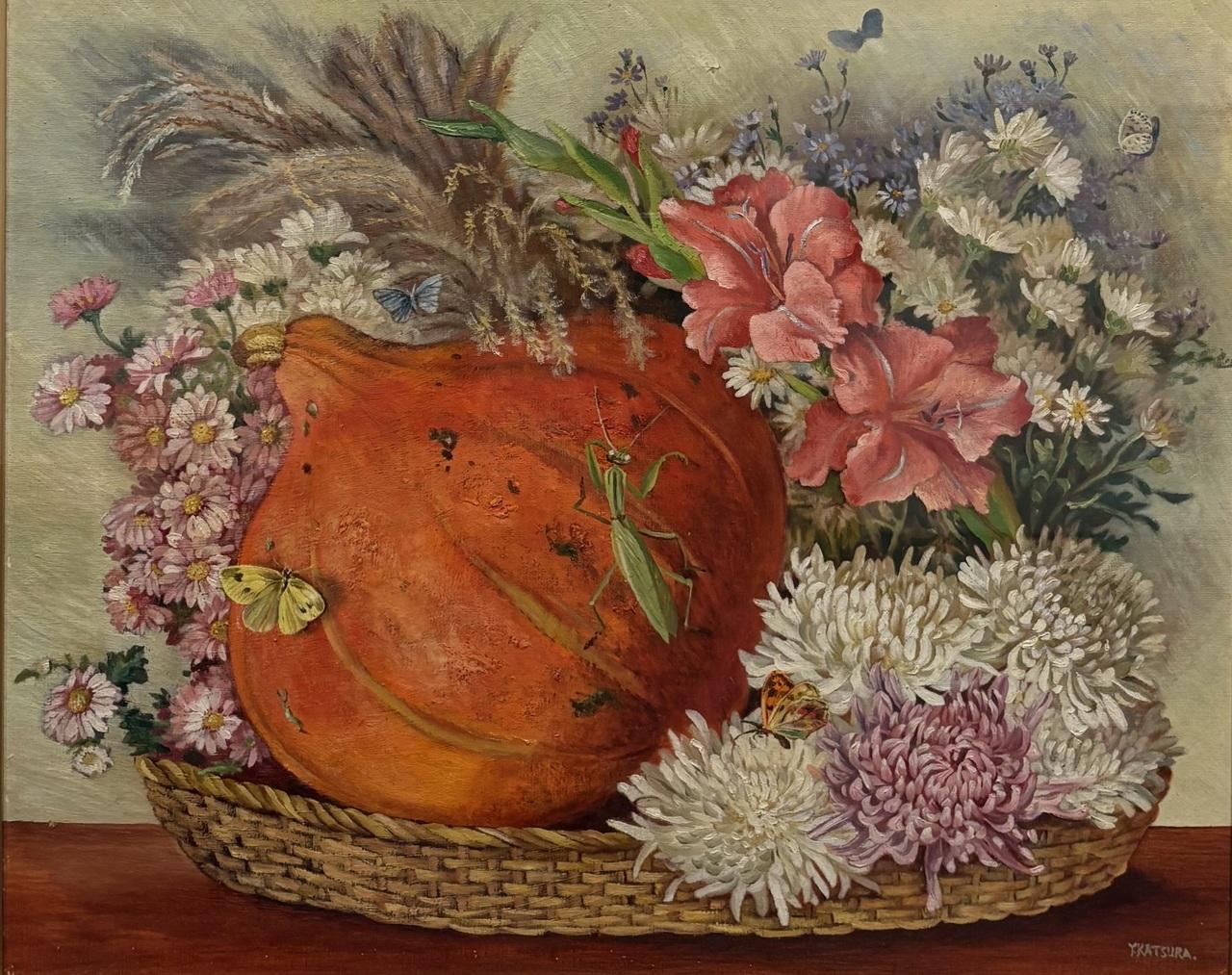
桂ゆき (ユキ子)
KATSURA, Yuki (Yukiko)
1913-1991
秋
Autumn
1955 昭和30年
油彩・キャンバス
oil on canvas
購入
Purchased -
-
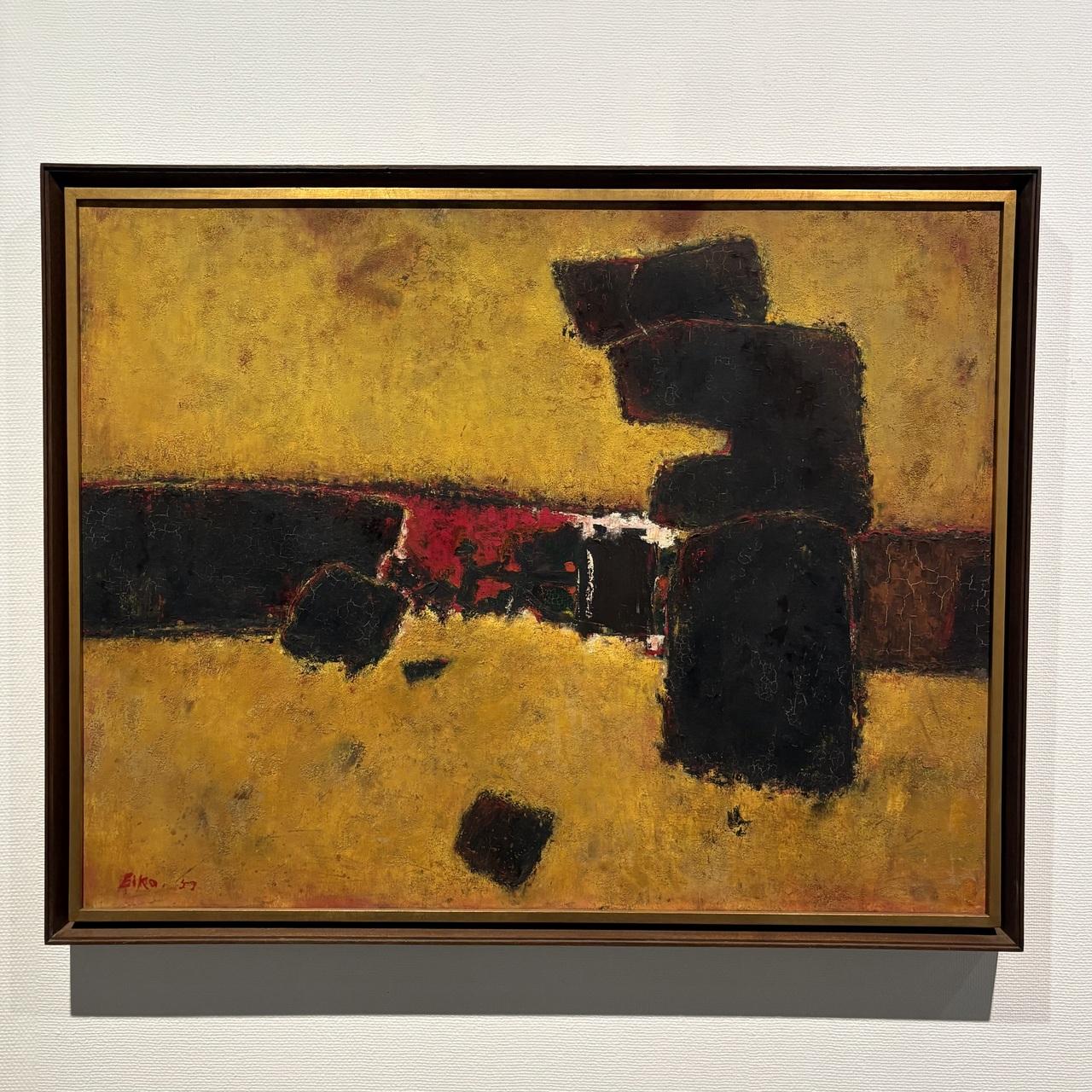
藤川栄子
FUJIKAWA, Eiko
1903-1983
塊
Mass
1959 昭和34年
油彩・キャンバス oil on canvas
文部省管理換
Transferred from Ministry of Education
キュビスムへの傾倒を経て、藤川は1959年から本格的に抽象的な表現に取り組むようになりました。すでに対象の形態の解体を推し進めたキュビスム期の作品に、抽象の萌芽は見られましたが、ここでは、く塊>というタイトルの通り、黄色みのある絵画空間の中に、独特のマチエールをもついくつかの黒い塊が浮遊しています。純粋な抽象に取り組んだのはわずか数年で、藤川はこの時期の探究を糧に、抽象と具象が入り混じった作風へと向かいました。
After a Cubism-influenced phase, Fujikawa began exploring abstraction in earnest in 1959. Hints of abstraction were already emerging during her Cubist period, in which she increasingly deconstructed the forms of the subjects. However, this painting ventures into purely abstract territory, its title Mass referring to several black masses with a distinctive materiality floating in a yellow-tinted pictorial space. Fujikawa's pursuit of pure abstraction lasted only a few years, and she later built on the explorations of this period to develop a style incorporating both abstract and figurative elements. -
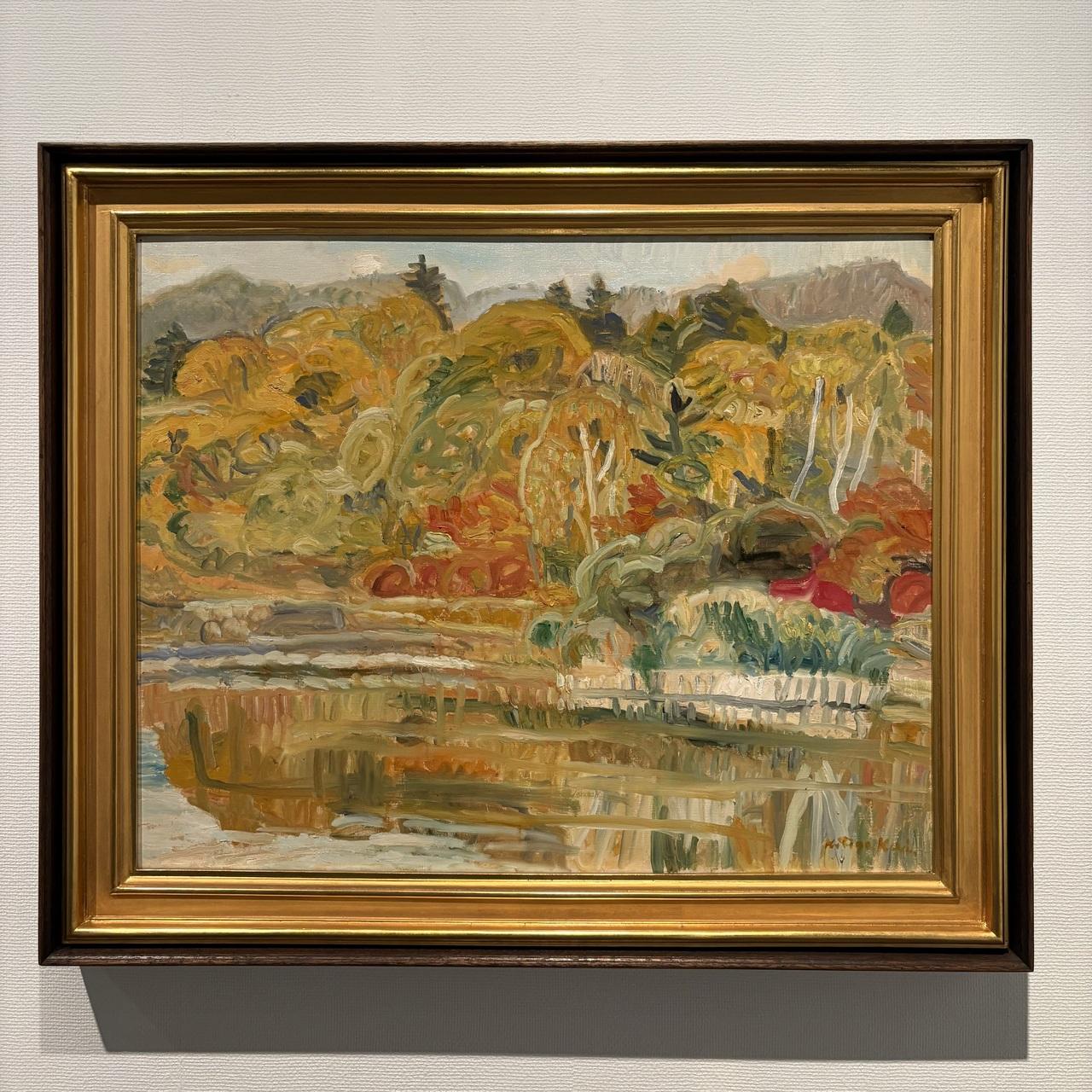
甲斐仁代
KAI, Hitoyo
1902-1963
秋のうた
Song of Autumn
1959 昭和34年
油彩・キャンバス oil on canvas
石橋正二郎氏寄贈
Gift of Ishibashi Shojiro -
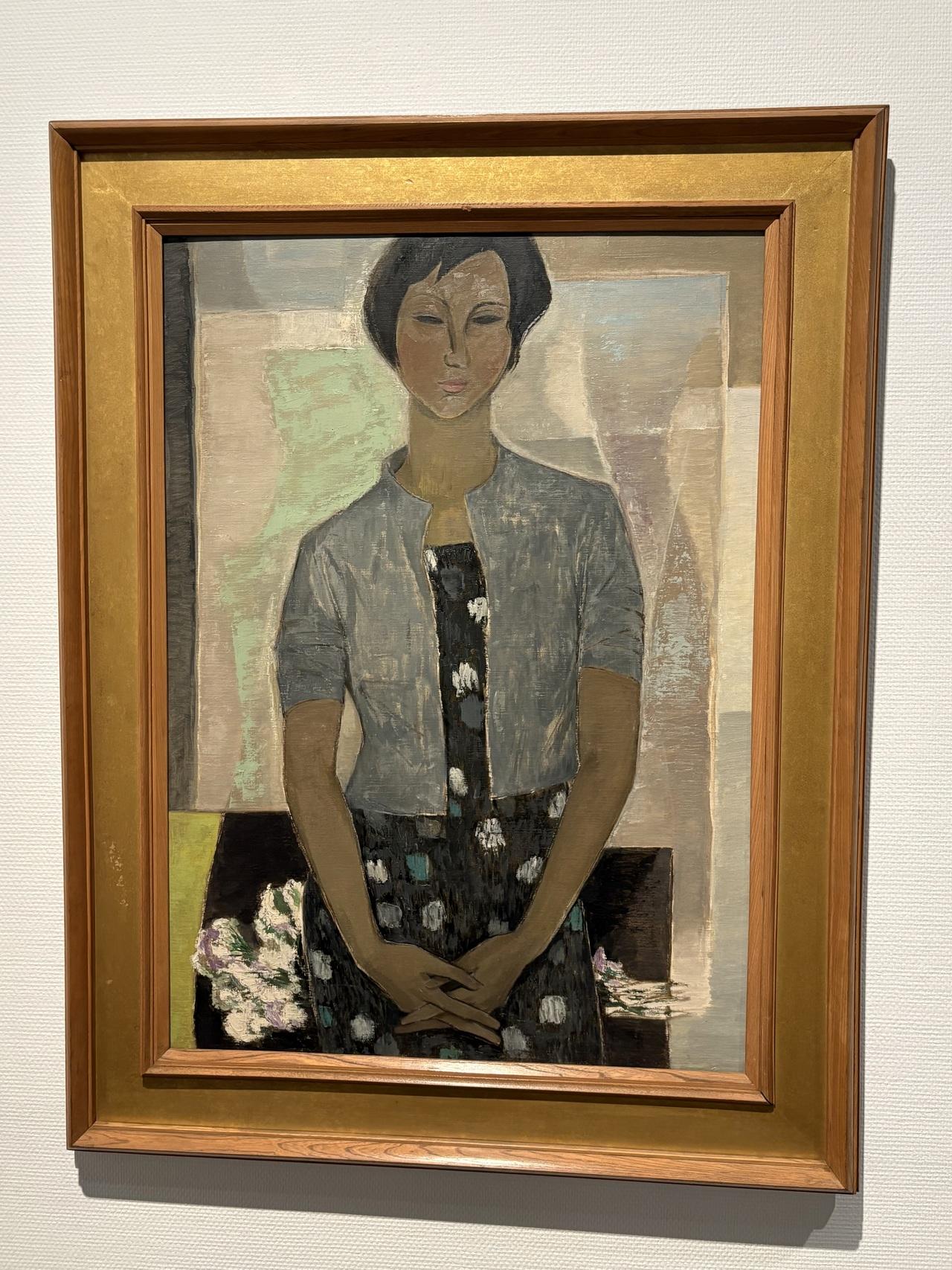
深沢紅子
FUKAZAWA, Koko
1903-1993
立てる少女
Girl Standing
1959 昭和34年
油彩・キャンバス oil on canvas
文部省管理換
Transferred from Ministry of Education
岩手県に生まれ、早くから日本画に親しみ、1919年に女子美術学校日本画科に入学。2年生の時、初めて日本にもたらされたゴッホのくひまわり>を見て、洋画科に転科を決意、岡田三郎助に事します。1925年は二科展に2点が入選して、大きな注目を集めました。その後も二料展に出品を続け、1937年からは有島生馬や安井曽太郎らが創設した一水会展へと活動の舞台を移します。本作は21回一水会展の出品作で、文部省の買上げとなった作品。ここにみられるように、繊細な色彩感覚と、独特の空間処理によって、女性と花を主題にした作品を多く描きました。
Fukazawa Koko was born in Iwate Prefecture, and was exposed to Nihon-ga (Japanese-style painting) from an early age. In 1919 she enrolled in the Nihon-ga department at Joshibi University of Art and Design. However, in her second year, upon seeing Van Gogh's Sunflowers during its first appearance in Japan she decided to transfer to the Western-style painting department, where she studied under Okada Saburosuke. In 1925, she drew much attention when two of her works were selected for the Nika Art Exhibition. She continued to exhibit with the Nika group, then in 1937 became affiliated with Issuikai, a group founded by such figures as Arishima Ikuma and Yasui Sotaro. This painting was shown in the 21st Issuikai Exhibition and was purchased by the Ministry of Education. As in this work, her subjects were often women and flowers, and her style was characterized by a delicate sense of color and unique handling of space. -
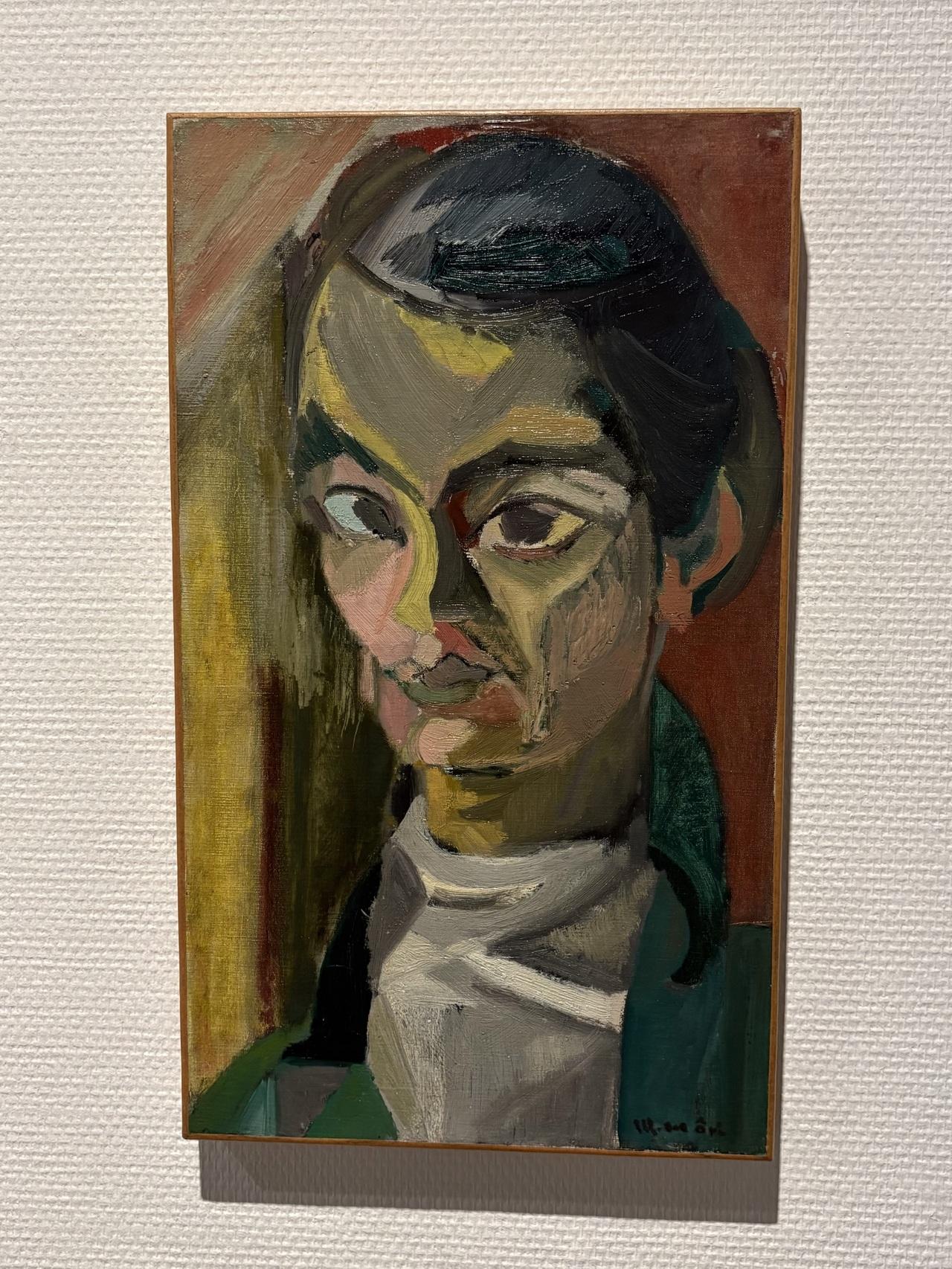
毛利眞美
MORI, Mami
1926-2022
自画像
Self-Portrait
c.1952 昭和27年頃
油彩・キャンバス oil on canvas
寄託
Long term loan
毛利は戦後まもない時期に女子美術専門学校西洋画科で学んだのち、まだ海外渡航に制限のあった1950年に渡仏してパリのアンドレ・ロートの画塾に学びました。キュビスムの画家であり理論家のロートは、優れた教育者としても知られており、1925年から戦後まで続いた彼の画塾には、世界中から多くの画家たちが集いました。この作品は、毛利の留学中、もしくは1952年に帰国した頃に制作され、1953年の資生堂ギャラリーでの個展に出品されました。幾何学的な色面によって構成されたその画面には、ロートの教えが色濃く反映されています。
After studying Western-style painting at the Women's Technical College of Fine Arts (now Joshibi University of Art and Design) in the early postwar years, Mori moved to France in 1950, at a time when overseas travel was still restricted, and studied in an art class taught by André Lhote. A Cubist painter and theorist, Lhote was also renowned as an educator. His class, which operated from 1925 through the postwar period, drew many painters from around the world. This work was produced either during Mori's time abroad or around the time of her return to Japan in 1952, and was shown in her solo exhibition at the Shiseido Gallery in 1953. Constructed with geometric planes of color, the painting bears the strong imprint of hote's teaching. -
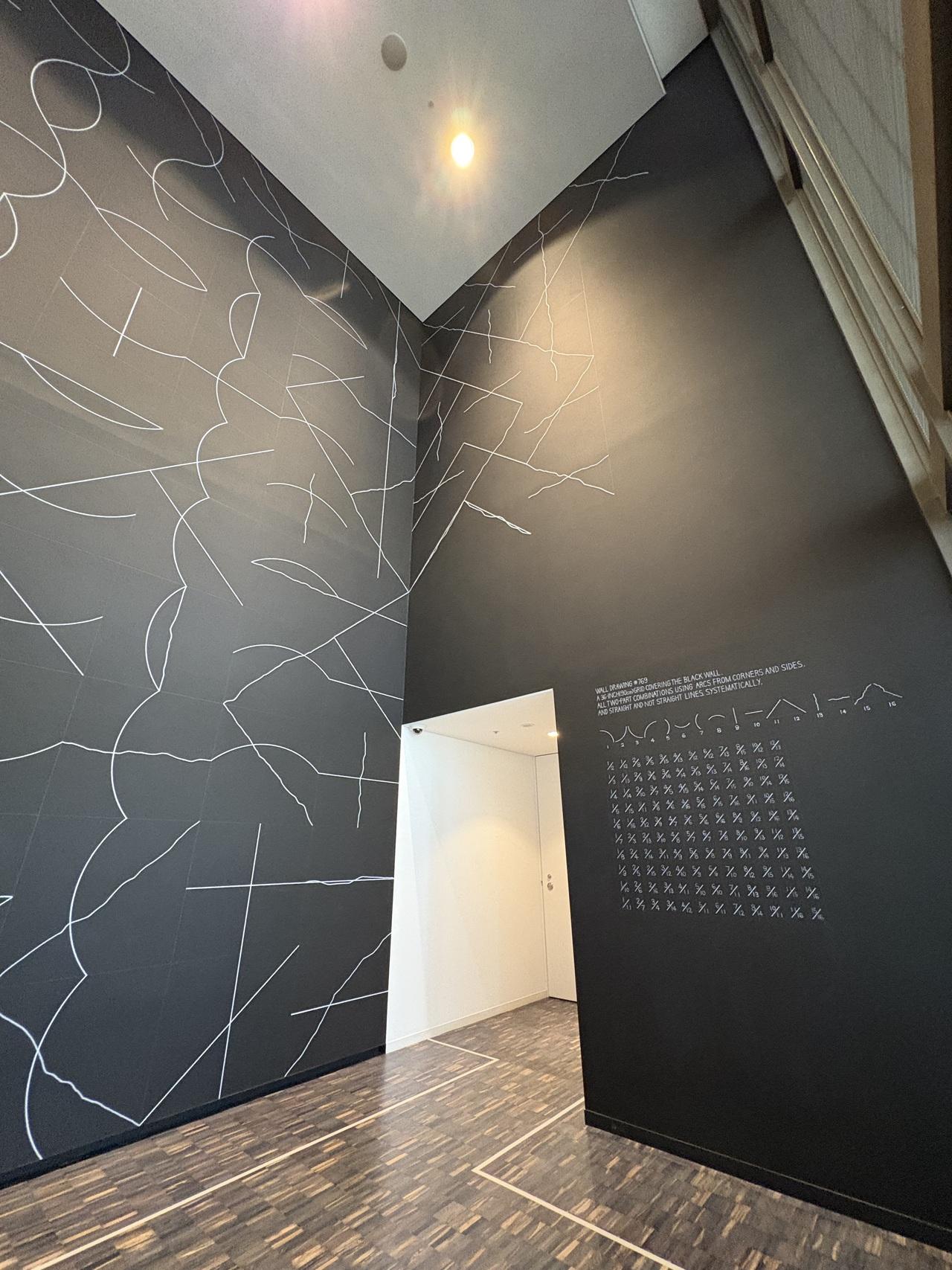
ソル・ルウィット
Sol Lewitt
1928-2007
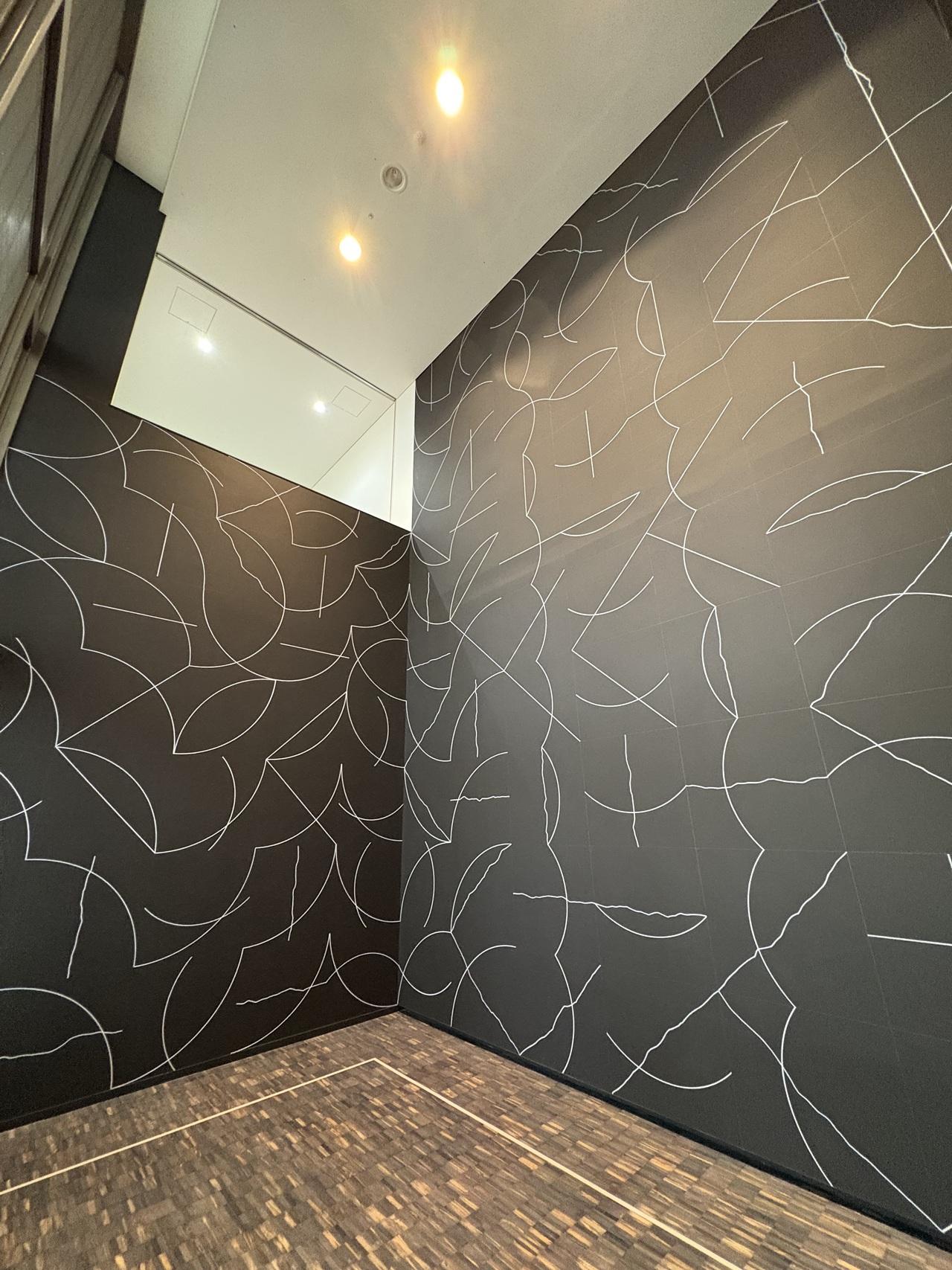
ウォール・ドローイング#769
黒い壁を覆う幅36インチ(90cm)のグリッド。
角や辺から発する円弧、直線、非直線から二種類を体系的に使った組み合わせ全部。
Wall Drawing#769: A 36-inch (90cm) grid covering the black wall. All two-part combinations using arcs from corners and sides, and straight and not straight lines, systematically.
1994 平成6年
水溶性パステル、水性塗料、鉛筆・壁
water soluble wax pastel, water based paint and pencil on wall
購入
Purchased -
-
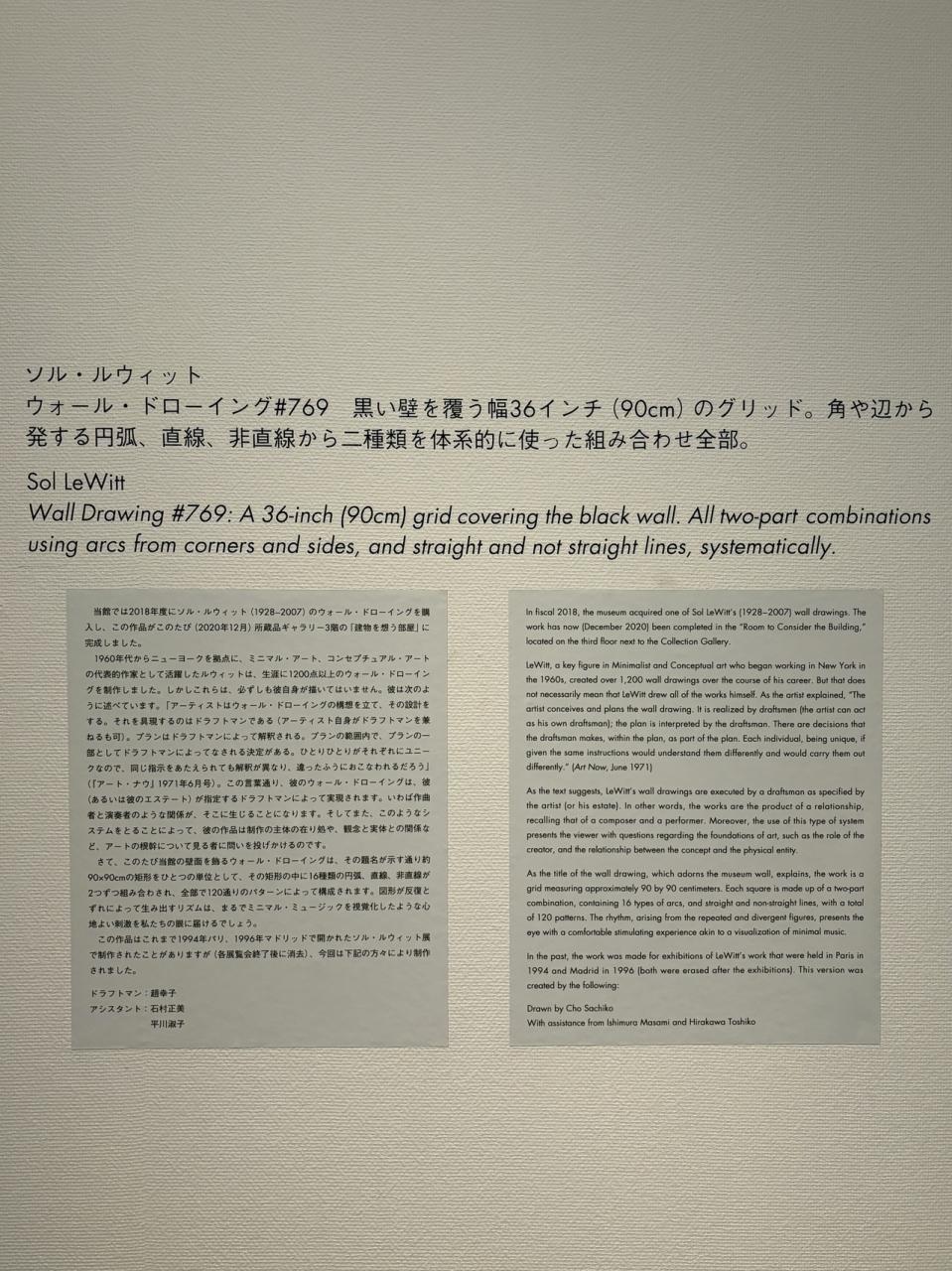
当館では2018年度にソル・ルウィット(1928-2007)のウォール・ドローイングを購入し、この作品がこのたび(2020年12月)所蔵品ギャラリー3階の「建物を想う部屋」に完成しました。
1960年代からニューヨークを拠点に、ミニマル・アート、コンセプチュアル・アートの代表的作家として活躍したルウィットは、生涯に1200点以上のウォール・ドローイングを制作しました。しかしこれらは、必ずしも彼自身が描いてはいません。彼は次のように述べています。「アーティストはウォール・ドローイングの構想を立て、その設計をする。それを具現するのはドラフトマンである(アーティスト自身がドラフトマンを兼ねるも可)。プランはドラフトマンによって解釈される。プランの範囲内で、プランの一部としてドラフトマンによってなされる決定がある。ひとりひとりがそれぞれにユニークなので、同じ指示をあたえられても解釈が異なり、違ったふうにおこなわれるだろう」(「アート・ナウ」1971年6月号)。この言葉通り、彼のウォール・ドローイングは、彼(あるいは彼のエステート)が指定するドラフトマンによって実現されます。いわば作曲者と演奏者のような関係が、そこに生じることになります。そしてまた、このようなシステムをとることによって、彼の作品は制作の主体の在り処や、観念と実体との関係など、アートの根幹について見る者に問いを投げかけるのです。
さて、このたび当館の壁面を飾るウォール・ドローイングは、その題名が示す通り約90x90cmの矩形をひとつの単位として、その短形の中に16種類の円弧、直線、非直線が2つずつ組み合わされ、全部で120通りのバターンによって構成されます。図形が反復とずれによって生み出すリズムは、まるでミニマル・ミュージックを視覚化したような心地よい刺激を私たちの眼に届けるでしょう。
この作品はこれまで1994年パリ、1996年マドリッドで開かれたソル・ルウィット展で制作されたことがありますが(各展覧会終了後に消去)、今回は下記の方々により制作されました。
ドラフトマン:趙幸子
アシスタント:石村正美
平川淑子
In fiscal 2018, the museum acquired one of Sol LeWitt's (1928-2007) wall drawings. The work has now (December 2020) been completed in the "Room to Consider the Building," located on the third floor next to the Collection Gallery.
LeWitt, a key figure in Minimalist and Conceptual art who began working in New York in the 1960s, created over 1,200 wall drawings over the course of his career. But that does not necessarily mean that LeWitt drew all of the works himself. As the artist explained, "The artist conceives and plans the wall drawing. It is realized by draftsmen (the artist can act as his own draftsman); the plan is interpreted by the draftsman. There are decisions that the draftsman makes, within the plan, as part of the plan. Each individual, being unique, if given the same instructions would understand them differently and would carry them out differently." (Art Now, June 1971)
As the text suggests, LeWitt's wall drawings are executed by a draftsman as specified by the artist (or his estate). In other words, the works are the product of a relationship, recalling that of a composer and a performer. Moreover, the use of this type of system presents the viewer with questions regarding the foundations of art, such as the role of the creator, and the relationship between the concept and the physical entity.
As the title of the wall drawing, which adorns the museum wall, explains, the work is a grid measuring approximately 90 by 90 centimeters. Each square is made up of a two-part combination, containing 16 types of arcs, and straight and non-straight lines, with a total of 120 patterns. The rhythm, arising from the repeated and divergent figures, presents the eye with a comfortable stimulating experience akin to a visualization of minimal music.
In the past, the work was made for exhibitions of LeWitt's work that were held in Paris in 1994 and Madrid in 1996 (both were erased after the exhibitions). This version was created by the following:
Drawn by Cho Sachiko
With assistance from Ishimura Masami and Hirakawa Toshiko
![草間彌生<br />KUSAMA, Yayoi<br />1929-<br /><br />集積の大地<br />Earth of Accumulation<br />1950 昭和25年<br />油彩、エナメル・麻布(種袋)<br />oil and enamel on seed sack<br /><br />購入<br />Purchased<br /><br />草間の初個展の出品作のひとつです。時は1952(昭和27)年、場所は松本市第一公民館、期間はたった2日間でした。この作品が描かれる前年までは、草間はまだ日本画の技法を用いていましたが、本作では、油絵具が使われています。支持体は、麻袋。種苗業を営む旧家に生まれ育った草間にとっては親しみのある素材だったでしょう。<br /><br />1952年に彼女が地元の冊子『信州往来』に寄せたエッセイからは、アーティストとしての強い意志を読みとることができます。「文化は時代の新しい産物であり世界の空気を呼吸し世代を創造してゆくことを要請してゐる。これは画家の重要な便命である。現代を如何にして未来へときずきあげるか。歴史への批判と現在のポイントを踏み迷ってはならない。」<br /><br />This was among the works shown at Kusama's first solo exhibition. The year was 1952, the venue the Matsumoto City Daiichi Public Hall, and the duration only two days. Until the year before she painted this, Kusama had studied Nihonga (Japanese-style painting), but here she used oil paint, on a burlap sack in place of a canvas. As she was born into a well-to-do family that ran a seed business, this must have been a familiar material.<br /><br />An essay Kusama published in a local pamphlet called Shinshu orai [Shinshu Miscellany] that year conveys the artist's strong will. She wrote: "In any given era, culture is a product of the times. It demands that an artist breathe the air of the whole world, to create something that represents a new generation. A painter's mission is to create a future from the present. A painter must both accurately critique the past and correctly comprehend the present."](https://cdn.4travel.jp/img/tcs/t/pict/src/89/17/79/src_89177967.jpg?1769592702)
この旅行記のタグ


利用規約に違反している投稿は、報告する事ができます。
-
前の旅行記

MOMAT コレクション(2025.7.15-10.26)6.1940年 "ハリー・K・シゲタ(重田放二)フ...
2025/08/07~
神田・神保町
-
次の旅行記

MOMAT コレクション(2025.7.15-10.26)8.ジャンクとポップ "日比野克彦 LABYRIN...
2025/08/07~
神田・神保町
-

MOMAT コレクション〔国立東京近代美術館 所蔵作品展〕(2025.7.15-10.26)1.ハイライト ...
2025/08/07~
神田・神保町
-

MOMAT コレクション〔国立東京近代美術館 所蔵作品展〕(2025.7.15-10.26)2.大正の個性派...
2025/08/07~
神田・神保町
-

MOMAT コレクション〔国立東京近代美術館 所蔵作品展〕(2025.7.15-10.26)3. 岸田劉生「...
2025/08/07~
神田・神保町
-

MOMAT コレクション〔国立東京近代美術館 所蔵作品展〕(2025.7.15-10.26)4.山と渓谷 "...
2025/08/07~
神田・神保町
-

MOMAT コレクション(2025.7.15-10.26)5.1930年代の絵画:現実の彼方へ、幻影の手前で...
2025/08/07~
神田・神保町
-

MOMAT コレクション(2025.7.15-10.26)6.1940年 "ハリー・K・シゲタ(重田放二)フ...
2025/08/07~
神田・神保町
-

MOMAT コレクション〔国立東京近代美術館 所蔵作品展〕(2025.7.15-10.26)7.戦後の女性画...
2025/08/07~
神田・神保町
-

MOMAT コレクション(2025.7.15-10.26)8.ジャンクとポップ "日比野克彦 LABYRIN...
2025/08/07~
神田・神保町
-

MOMAT コレクション〔国立東京近代美術館 所蔵作品展〕(2025.7.15-10.26)9.山村雅昭「ワ...
2025/08/07~
神田・神保町
-

MOMAT コレクション(2025.7.15-10.26)10.アルプのアトリエ/絵画と目的 "山口華楊、洋...
2025/08/07~
神田・神保町
-

MOMAT コレクション(2025.7.15-10.26)11.揺れる境界 "石川真生、基地を取り巻く人々"
2025/08/07~
神田・神保町
-

MOMAT コレクション〔国立東京近代美術館 所蔵作品展〕(2025.7.15-10.26)12.ヨコ軸・タ...
2025/08/07~
神田・神保町
-

東京国立近代美術館 "新収蔵&特別公開 コレクションにみる日韓" (2025.7.15 - 10.26) "...
2025/08/07~
神田・神保町
旅行記グループをもっと見る
コメントを投稿する前に
十分に確認の上、ご投稿ください。 コメントの内容は攻撃的ではなく、相手の気持ちに寄り添ったものになっていますか?
サイト共通ガイドライン(利用上のお願い)報道機関・マスメディアの方へ 画像提供などに関するお問い合わせは、専用のお問い合わせフォームからお願いいたします。
この旅行で行ったスポット






フォートラベル公式LINE@

おすすめの旅行記や旬な旅行情報、お得なキャンペーン情報をお届けします!
QRコードが読み取れない場合はID「@4travel」で検索してください。
\その他の公式SNSはこちら/




旅行記グループ MOMAT コレクション〔国立東京近代美術館 所蔵作品展〕(2025.7.15-10.26)
0
17