


2025/06/04 - 2025/06/04
81位(同エリア933件中)

旅熊 Kokazさん
- 旅熊 KokazさんTOP
- 旅行記1927冊
- クチコミ854件
- Q&A回答101件
- 1,710,113アクセス
- フォロワー752人
この旅行記のスケジュール
2025/06/04

この旅行記スケジュールを元に
MOMAT コレクション〔国立東京近代美術館 所蔵作品展〕(2025.2.11-6.15)
https://www.momat.go.jp/exhibitions/r6-3
12.美術家たちのダークツーリズム
- 旅行の満足度
- 5.0
-

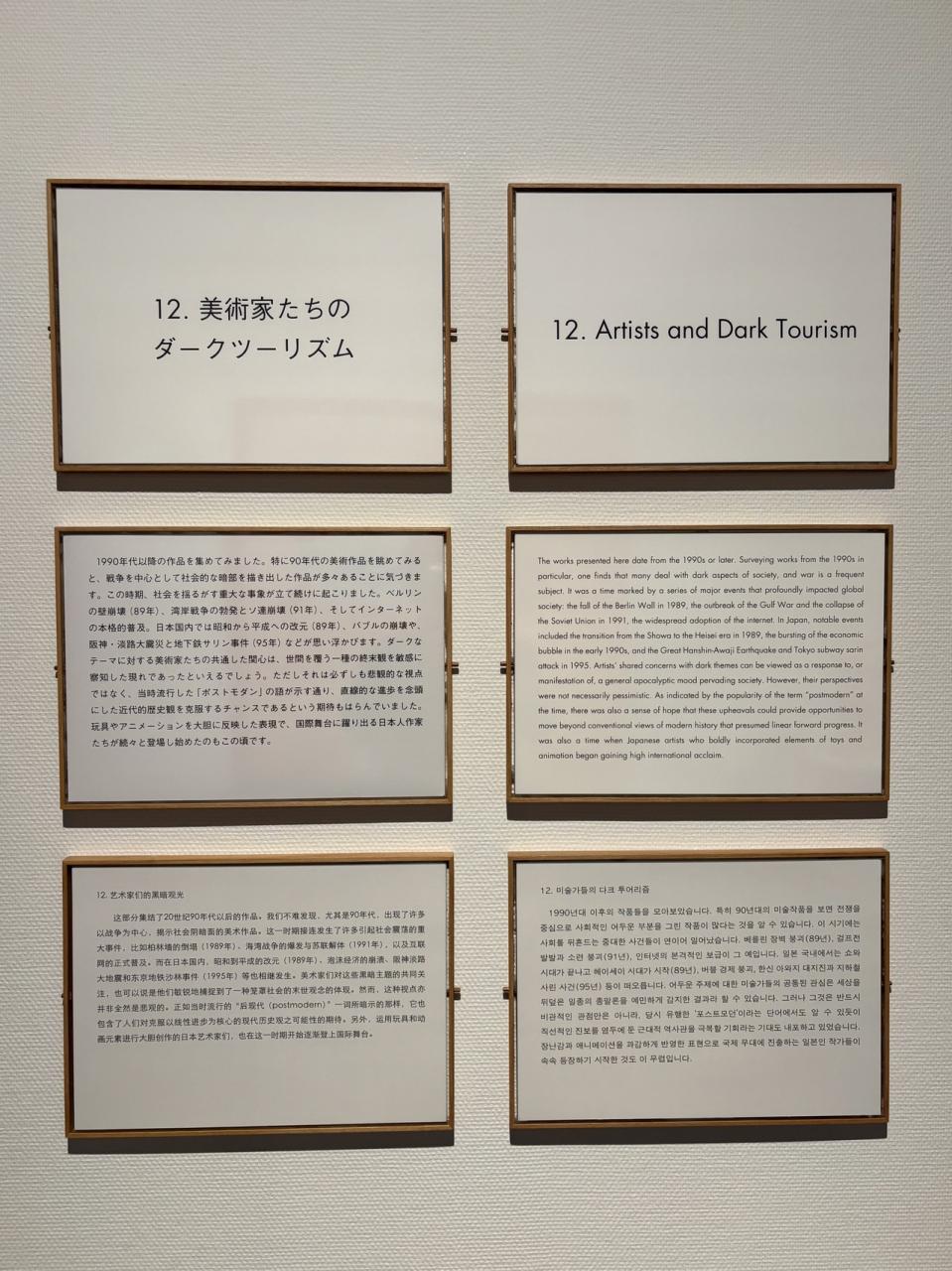
12. 美術家たちのダークツーリズム
1990年代以降の作品を集めてみました。
特に90年代の美術作品を眺めてみると、戦争を中心として社会的な暗部を描き出した作品が多々あることに気づきます。この時期、社会を揺るがす重大な事象が立て続けに起こりました。ベルリンの壁崩壊(89年)、湾岸戦争の発とソ連崩壊(91年)、そしてインターネットの本格的普及。日本国内では昭和から平成への改売(89年)、バブルの崩壊や、阪神・淡路大震災と地下鉄サリン事件(95年)などが思い浮かびます。ダークなテーマに対する美術家たちの共通した関心は、世間を覆う一種の終末観を敏感に察知した現れであったといえるでしょう。
ただしそれは必ずしも悲観的な視点ではなく、当時流行した「ポストモダン」の語が示す通り、直線的な進歩を念頭にした近代的歴史観を克服するチャンスであるという期待もはらんでいました。玩具やアニメーションを大胆に反映した表現で、国際舞台に躍り出る日本人作家たちが続々と登場し始めたのもこの頃です。
12. Artists and Dark Tourism
The works presented here date from the 1990s or later.
Surveying works from the 1990s in particular, one finds that many deal with dark aspects of society, and war is a frequent subject. It was a time marked by a series of major events that profoundly impacted global society: the fall of the Berlin Wall in 1989, the outbreak of the Gulf War and the collapse of the Soviet Union in 1991, the widespread adoption of the internet. In Japan, notable events included the transition from the Showa to the Heisei era in 1989, the bursting of the economic bubble in the early 1990s, and the Great Hanshin-Awaji Earthquake and Tokyo subway sarin attack in 1995. Artists' shared concerns with dark themes can be viewed as a response to, or manifestation of, a general apocalyptic mood pervading society.
However, their perspectives were not necessarily pessimistic. As indicated by the popularity of the term "postmodern" at the time, there was also a sense of hope that these upheavals could provide opportunities to move beyond conventional views of modern history that presumed linear forward progress. It was also a time when Japanese artists who boldly incorporated elements of toys and animation began gaining high international acclaim. -
-
森村泰昌
MORIMURA, Yasumasa
1951-
Brothers (A Late Autumn Prayer)
1991 平成3年
発色現像方式印画、透明メディウム
chromogenic print, transparent medium
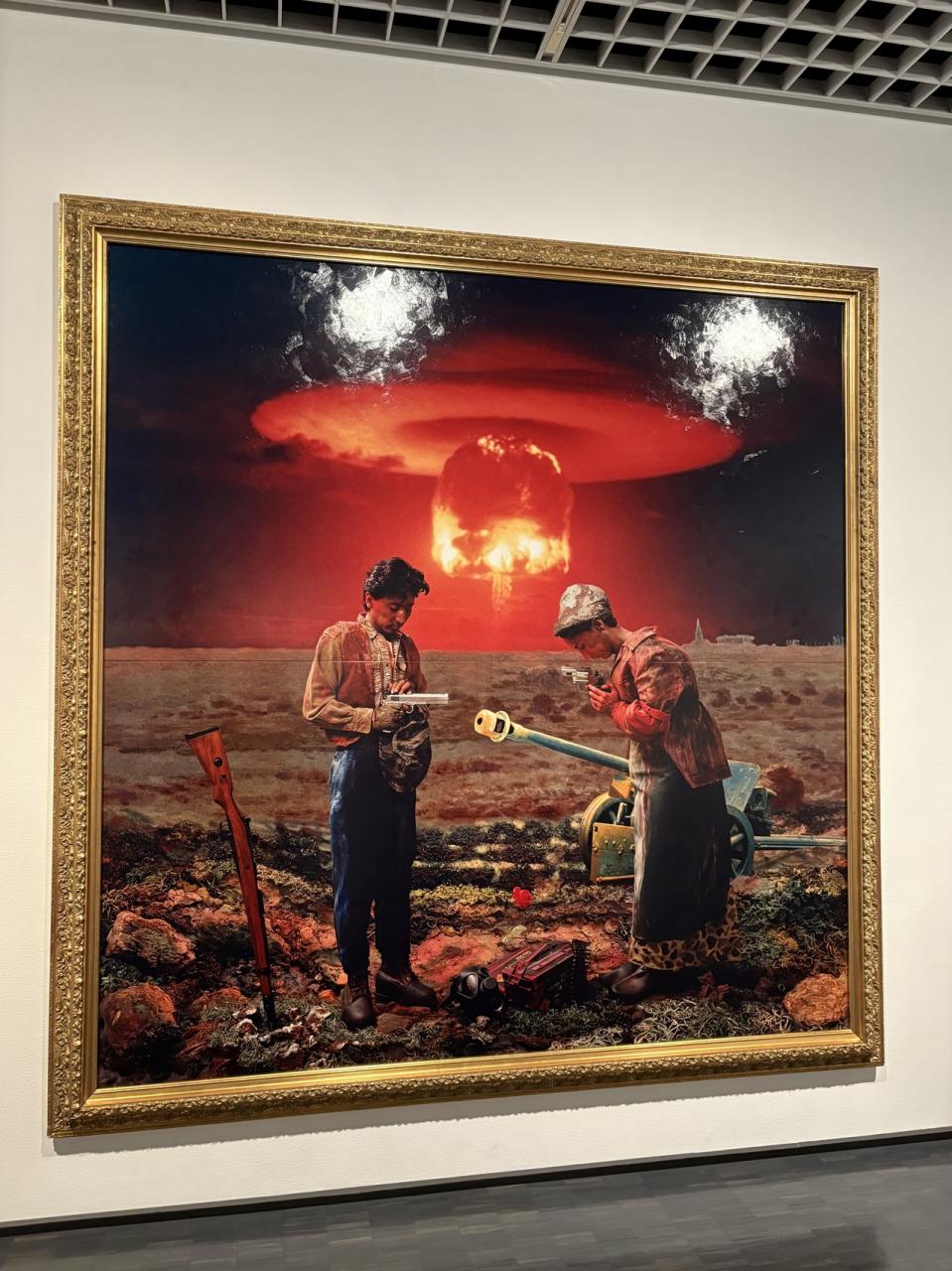
原爆のキノコ雲を背景に、男女が銃を向け合っています。でもこの構図、どこかで見覚えはないでしょうか。そうです。フランスの19世紀の画家ミレーのく晩鐘>がもとになっています。原作では、夕暮れの鐘の音を聞きながら男女が敬虔な祈りを捧げていましたが、それがどうしてこうなってしまったのでしょう。実はこの作品の生まれる少し前の1991年1月、湾岸戦争が勃発していました。1989年にベルリンの壁が壊され、冷戦構造が終結したかと思えば、世界はまた別の危機を迎えていたのです。森村はそれぞれの登場人物に扮し、人類をひとつの家族ととらえ、なぜ私たちは傷つけあうのかと問いかけます。
Against the backdrop of an atomic mushroom cloud, a man and woman are shown pointing guns at each other. But haven't you seen this composition somewhere before? That's right. The work is based on the 19th-century French painter Jean-François Millet's The Angelus. In the original, the man and woman are devoutly praying as they listen to the tolling of the evening bells. So what happened here? In January 1991, just before this work was made, the Gulf War broke out. Although the Cold War structure had come to an end after the fall of the Berlin Wall in 1989, the world was now confronted with a different kind of crisis. Dressed up as both figures in the work, Morimura asks why, if humankind is one family, we hurt each other. -
会田誠
AIDA, Makoto
1965-
美しい旗(戦争画RETURNS)
Beautiful Flag (War Picture Returns)
1995 平成7年
木炭、大和のりをメディウムにした自家製絵具、
アクリリック・紙(襖)、蝶番
charcoal, self-made paint with Japanese glue, acrylic on paper (fusuma, sliding door), hinges
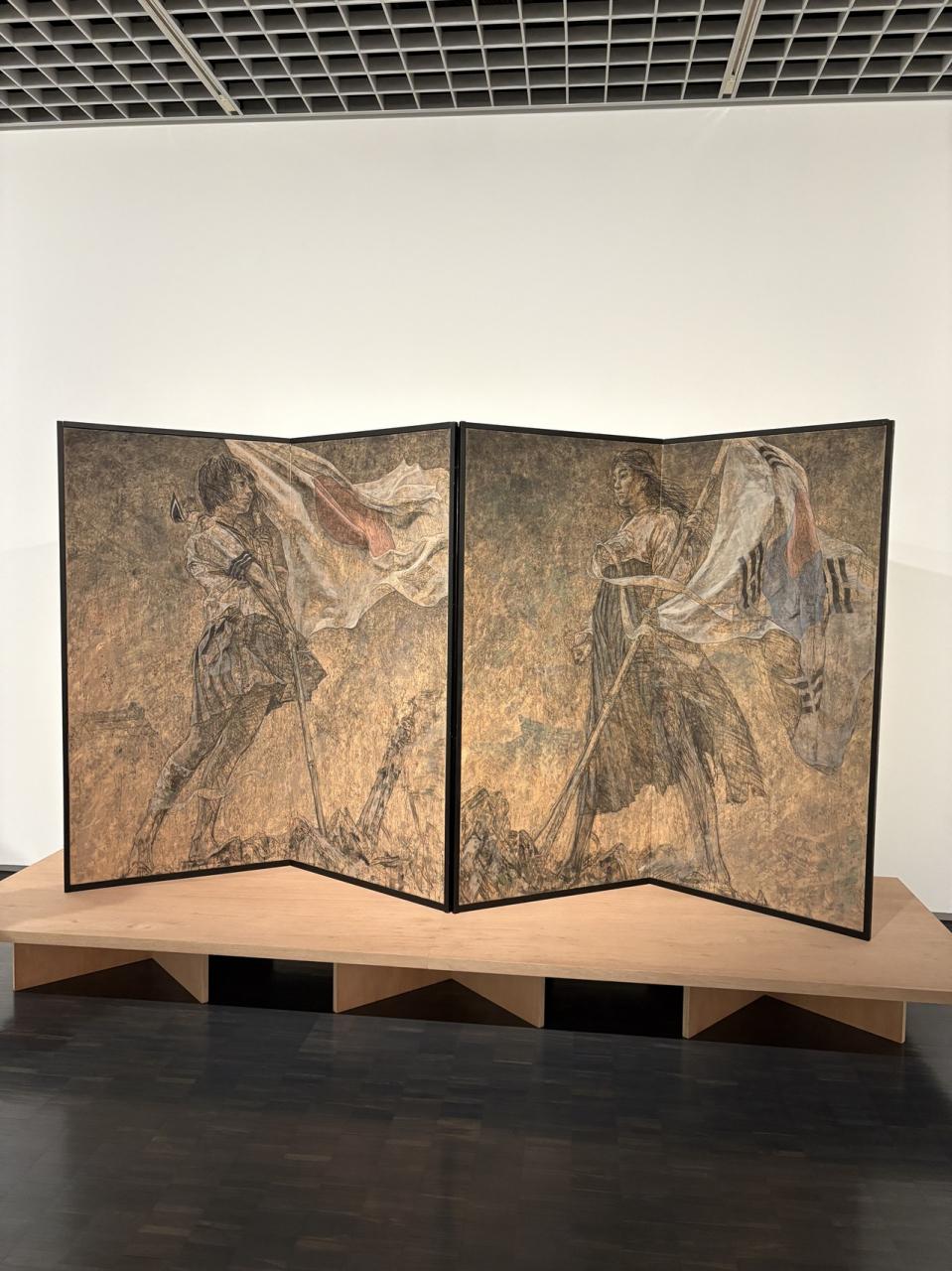
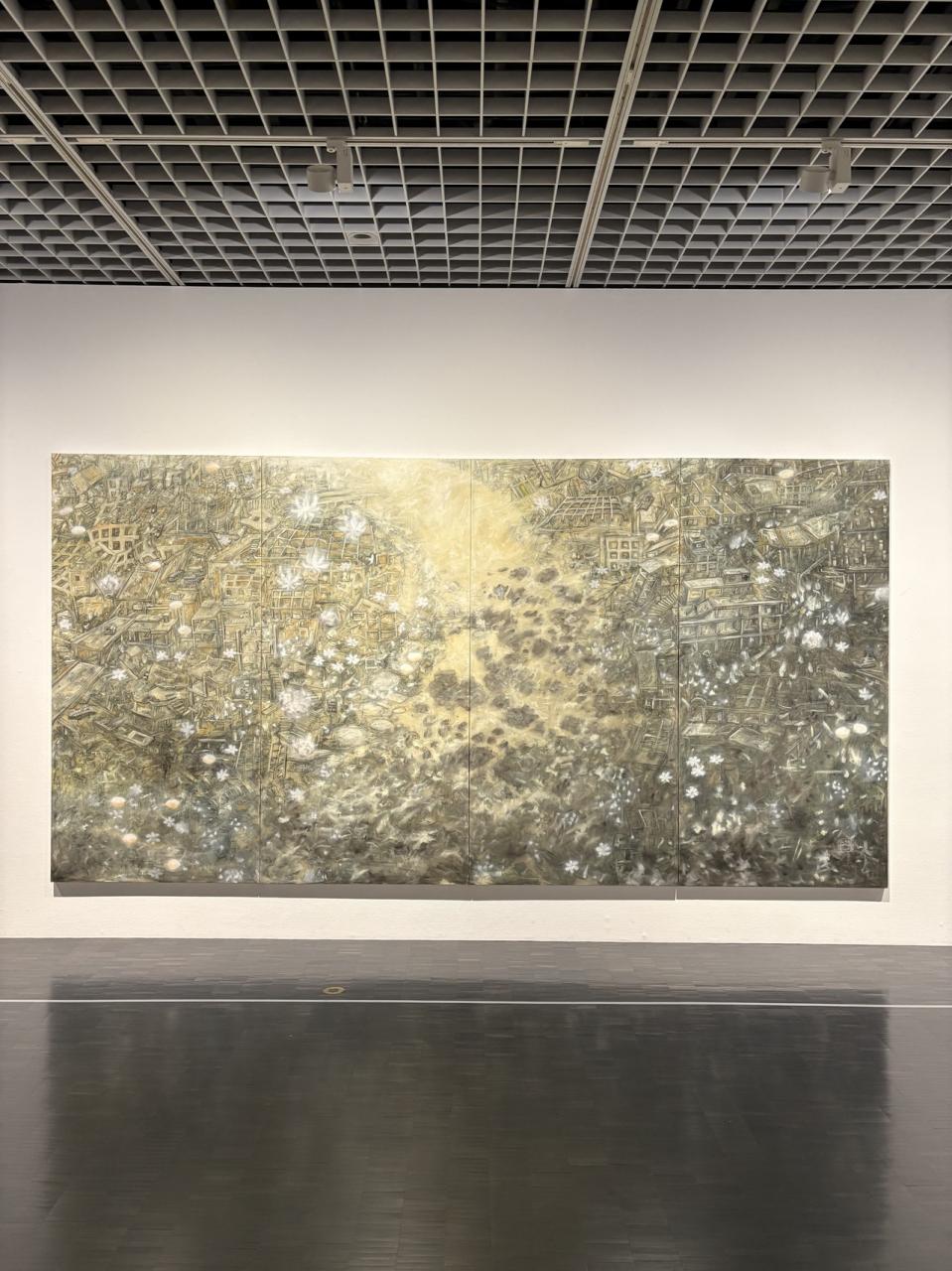
戦後50年を機に制作された「戦争画RETURNS」からの1点で、タイトルは太平洋戦争中に描かれた戦争記録画を念頭に置いたものです。日韓の女性がそれぞれ国旗を掲げ、向き合うように立っています。二人は左右の屏風(使い古しの襖を蝶番で留めたチープなつくりです)に分かたれているため、対立、対話のどちらを意味しているかは曖昧です。地面のがれきはバブル経済の崩壊や阪神・淡路大震災といった90年代の日本の状況を暗示しているのでしょうか?
戦争を経験していない世代である会田は、昭和天皇が亡くなって変化した時代の空気が制作のきっかけのひとつにあったと言い、またシリーズの特徴を「意味の真空状態」と形容しています。
This work is from the series War Picture Returns, which marked 50 years since the end of World War Il, and the title references the War Record Paintings that Japanese artists produced during the Pacific conflict. Two women, from Japan and South Korea, stand facing one another with their national flags raised. As they occupy two separate halves of a folding screen (cheaply made from worn-out sliding doors connected with hinges), it is unclear whether they signify confrontation or dialogue. Does the rubble on the ground symbolize the state of Japan in the 1990s, including the collapse of the economic bubble and the Great Hanshin-Awaji Earth-quake?
Aida, belonging to a generation that had not experienced the war, cited the changing atmosphere of the times after the death of the Showa-era Emperor Hirohito as one of his inspirations for this series, which he described as characterized by "a vacuum of meaning." -
杉戸洋
SUGITO, Hiroshi
1970-
the secret tower
1998 平成10年アクリリック、顔料・紙
acrylic and pigment on paper
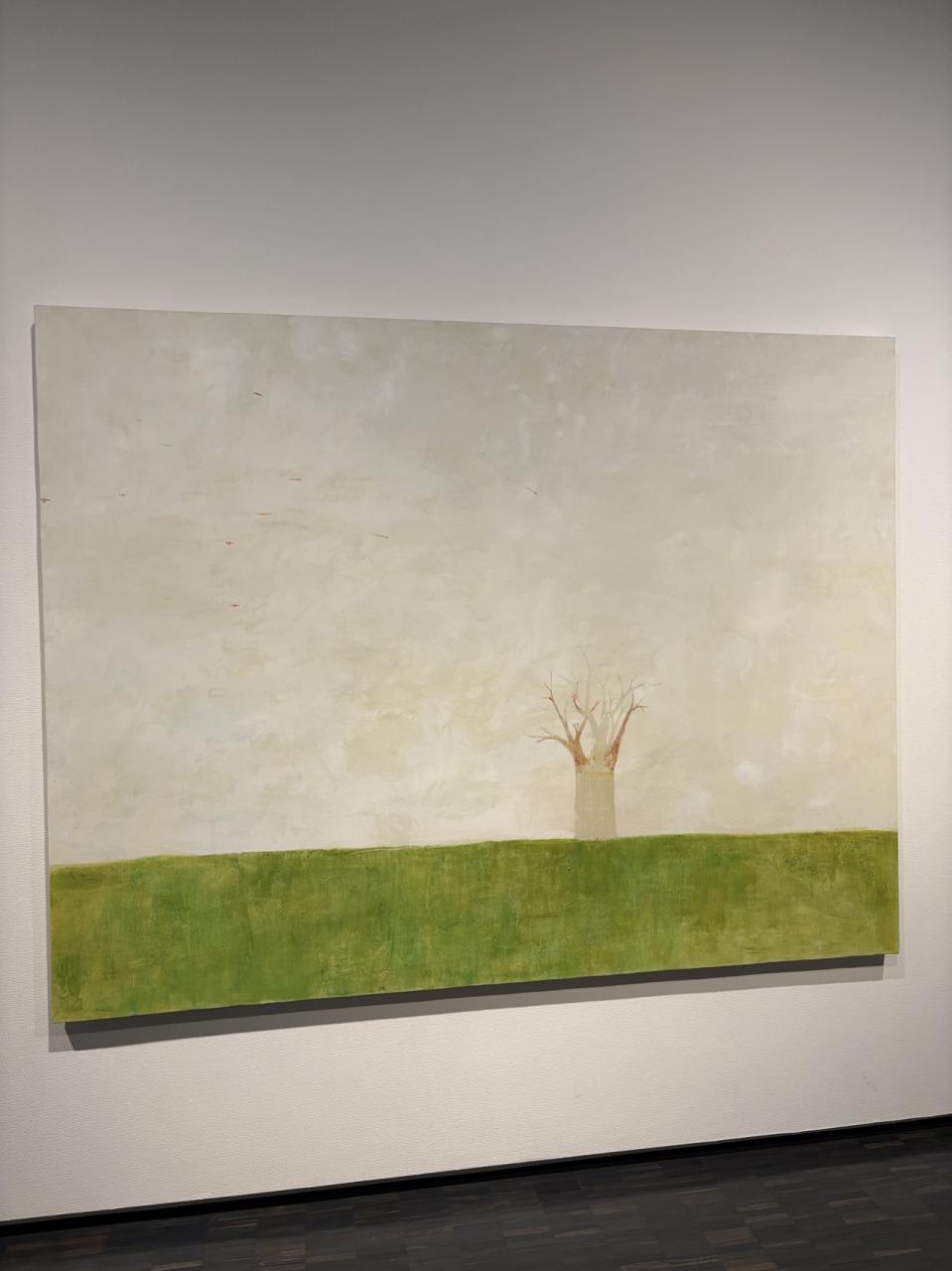
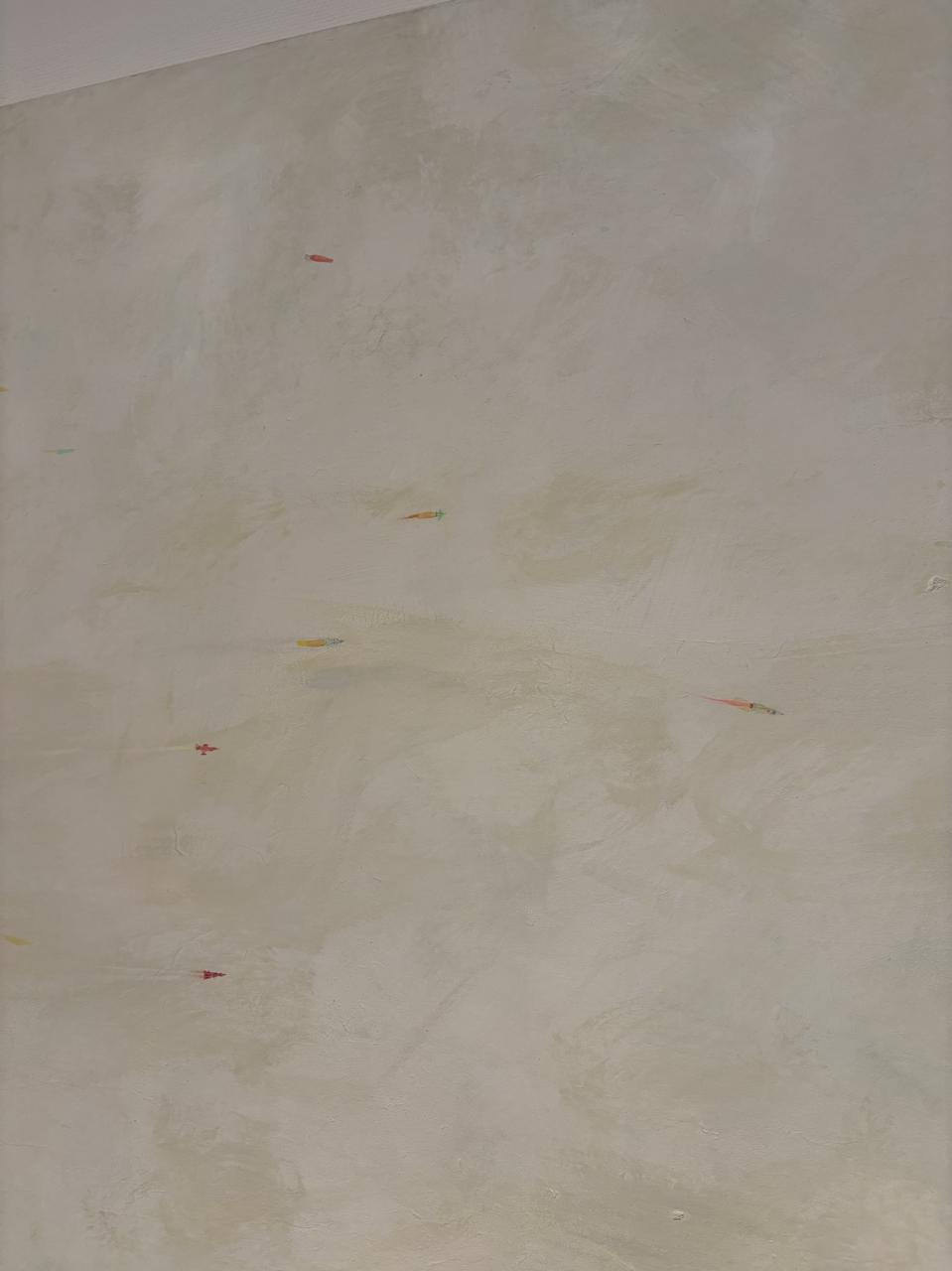
火を噴く戦闘機が、やさしい色彩できわめて小さく描かれています。緑の平原には、葉を落とした木が一本が立っています。意味もスケール感覚も不思議な絵。そして色もどこか不思議です。実は緑色のところには、天然岩絵具の方解末とアクリルエマルジョンとを混ぜたものが塗られています。いわゆる「日本画」で使われる材料が、やわらかな色彩を得るために(果敢に)用いられているのです。
Flaming fighter planes are painted in soft colors at minuscule size. A single tree that has lost its leaves stands on a flat green plain. The painting is cryptic in terms of both meaning and scale, and there is something unusual about the color as well. Actually, the green area is painted with a mixture of powdered calcite, a natural mineral pigment, and acrylic emulsion. A material traditionally used in Nihon-ga is (boldly) used to achieve a gentle palette. -
-
石田徹也
ISHIDA, Tetsuya
1973-2005
無題
Untitled
c.1997
平成9年頃
アクリリック・板 acrylic on board
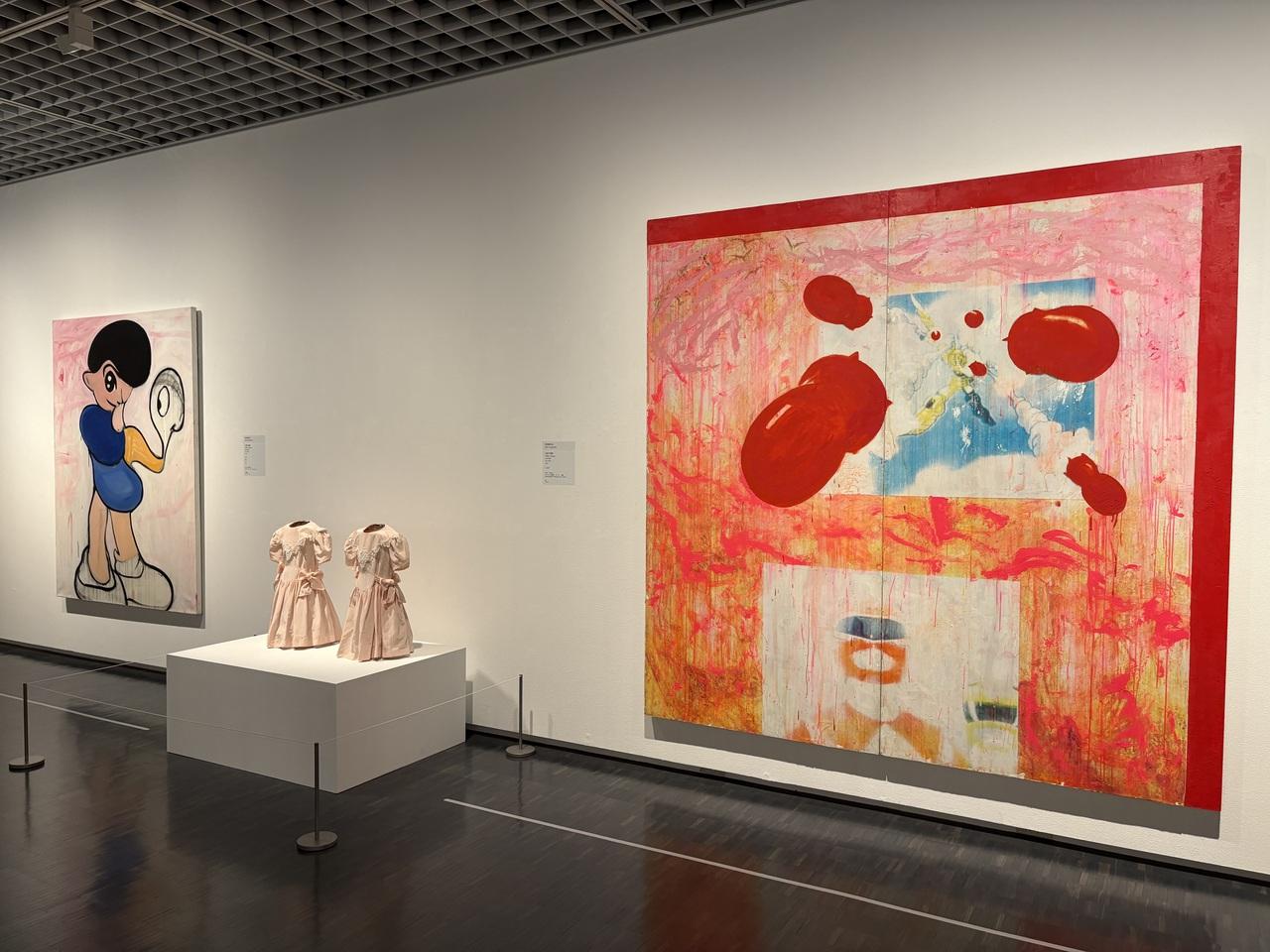
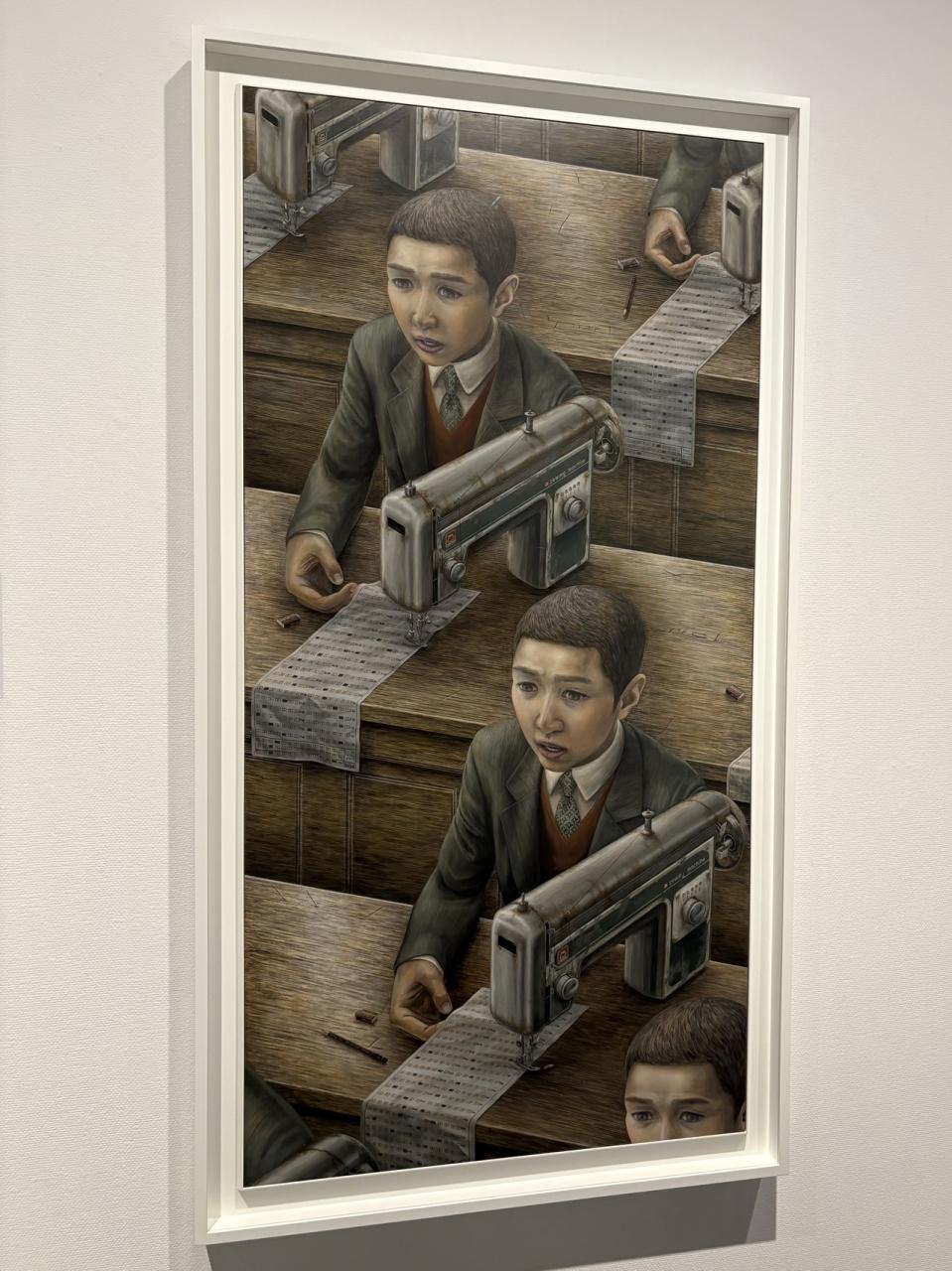
服装や髪型だけでなく、顔の造作も右手のポーズも一緒の男たち。表情は哀しげで、左腕はなぜかミシンとなってしまっています。なにを縫っているのかと手を見ても、記号的ななにかであるとしかわかりません。中身はおろか、重要かどうかもよくわからない仕事を機械的にやらされているということでしょうか。
「ミシン」の語源が、sewing machineであること、すなわち「マシン」がなまって「ミシン」となってしまったことが思い出されます。作者はもともと、大学卒業後すぐにイラストレーションの世界で高い評価を得ていましたが、1996年にある公募展でグランプリを受賞したことをきっかけに絵画のアーティストとしても注目を集めるようになりました。しかし2005年に急逝します。
In addition to having the same clothing and hairstyle, these men have the same facial features and their right hands are in the same position. They have mournful expressions and for some reason their left hands are sewing machines. When we try to figure out what they are sewing, all we can make out is a bunch of symbols. Aside from this, they seem to be mechanically engaged in a job that may or may not have any importance.
Mishin, the Japanese word for "sewing machine" seems to be a corruption of "machine." Although Ishida was highly acclaimed as an illustrator soon after finishing university, the grand prize he won in an exhibition for emerging artists in 1996 inspired him to become an esteemed painter. However, in 2005, Ishida abruptly died. -
石田徹也
ISHIDA, Tetsuya
1973-2005
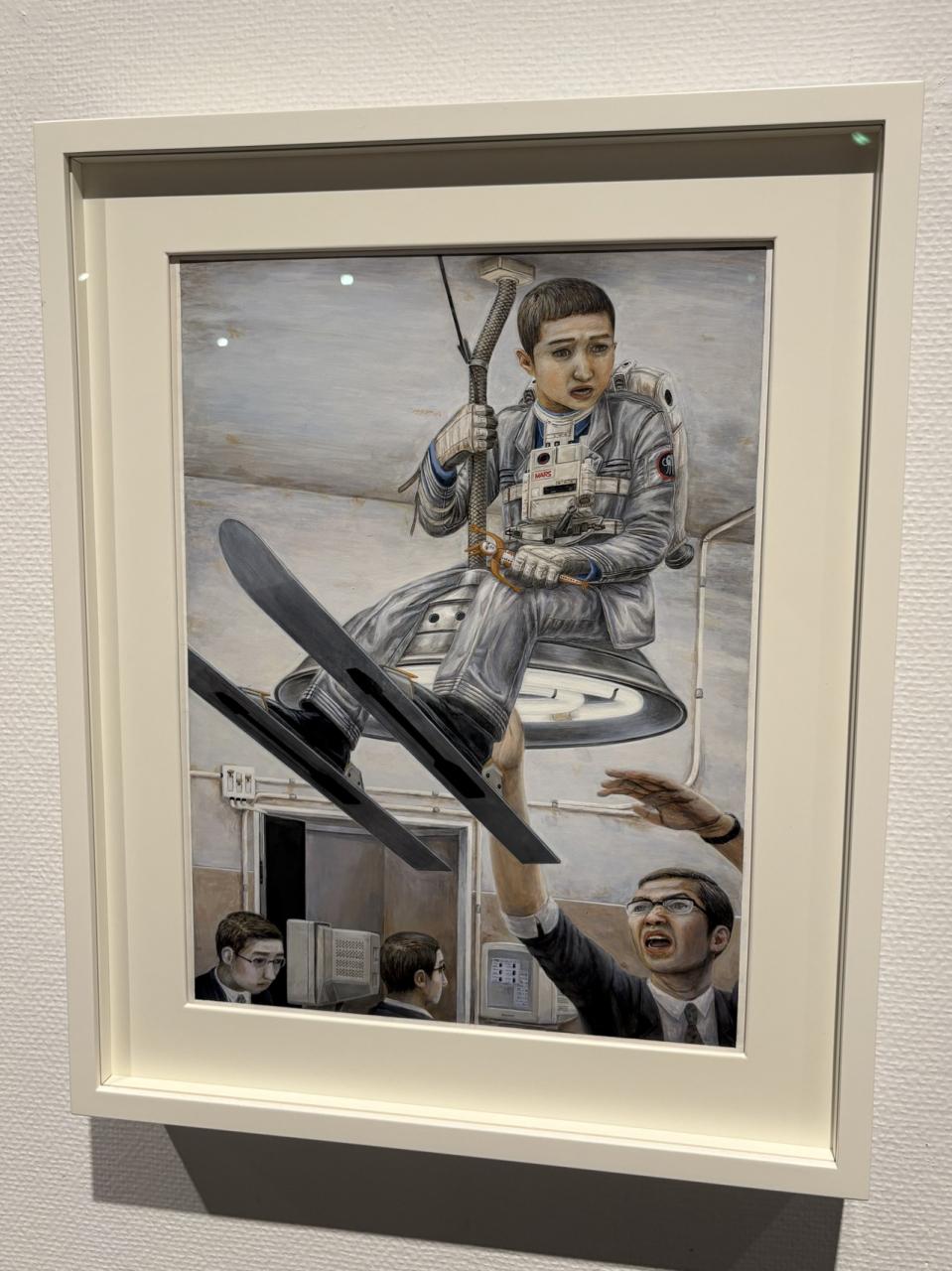
無題
Untitled
c. 1998
平成10年
アクリリック・板
acrylic on board -
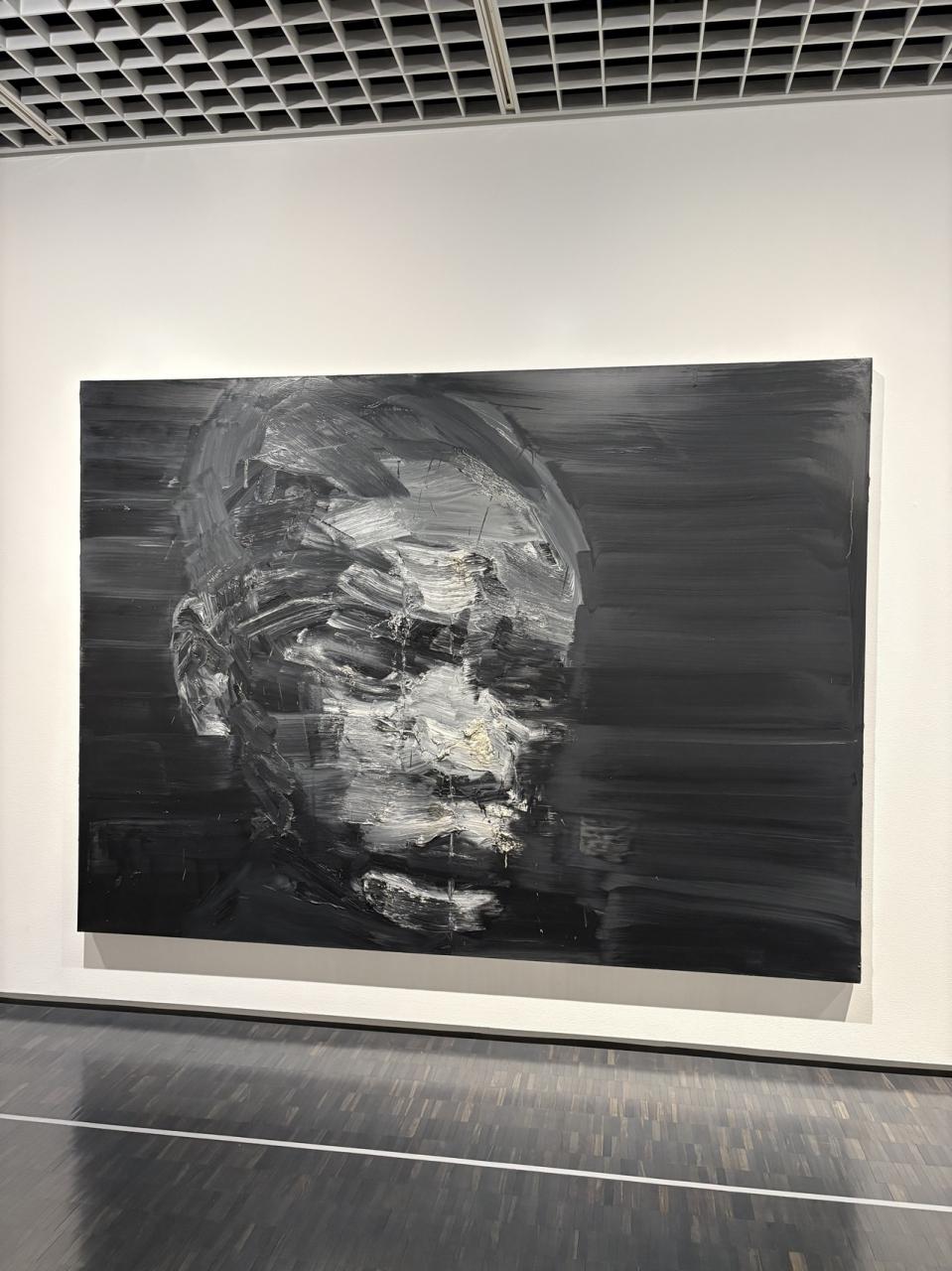
嚴培明
YAN, Pei-Ming
1960-
スーダンの少年
A Sudanese Boy
1998
平成10年
油彩・キャンバス oil on canvas
上海生れで1980年からフランスで暮らすヤン・ペイミンは、大きな画面にモノクロームで肖像を描くことで高い評価を受けている画家です。その肖像は、法王やオバマ大統領のように著名人のこともあれば、画家の友人であることも、またあるいは、匿名の人物のこともあります。本作は、雑誌の掲載写真をベースにしているそう。当時のスーダンは、1983年から続く内戦の真っ最中で、何万人もの子供が孤児となった挙句に集団避難民になるなど、世界的に大きな問題になっていました。なお内戦は2005年に終結しましたが、2011年7月には、スーダン南部の10州が独立して南スーダン共和国が生れています。
Born in Shanghai and a resident of France since 1980, Yan Pei-Ming is a highly acclaimed painter who makes monochrome portraits on large canvases. While some of Yan's portraits depict prominent figures like the Pope or President Obama, others show one of the artist's friends or an anonymous person. This work is based on a photograph that was published in a magazine. At the time, Sudan was in the midst of a civil war that had started in 1983. The conflict led to tens of thousands of orphans and a mass of refugees, causing a huge international dilemma. The civil war ended in 2005, and the ten states of South Sudan united to form an independent republic in July of 2011. -
-
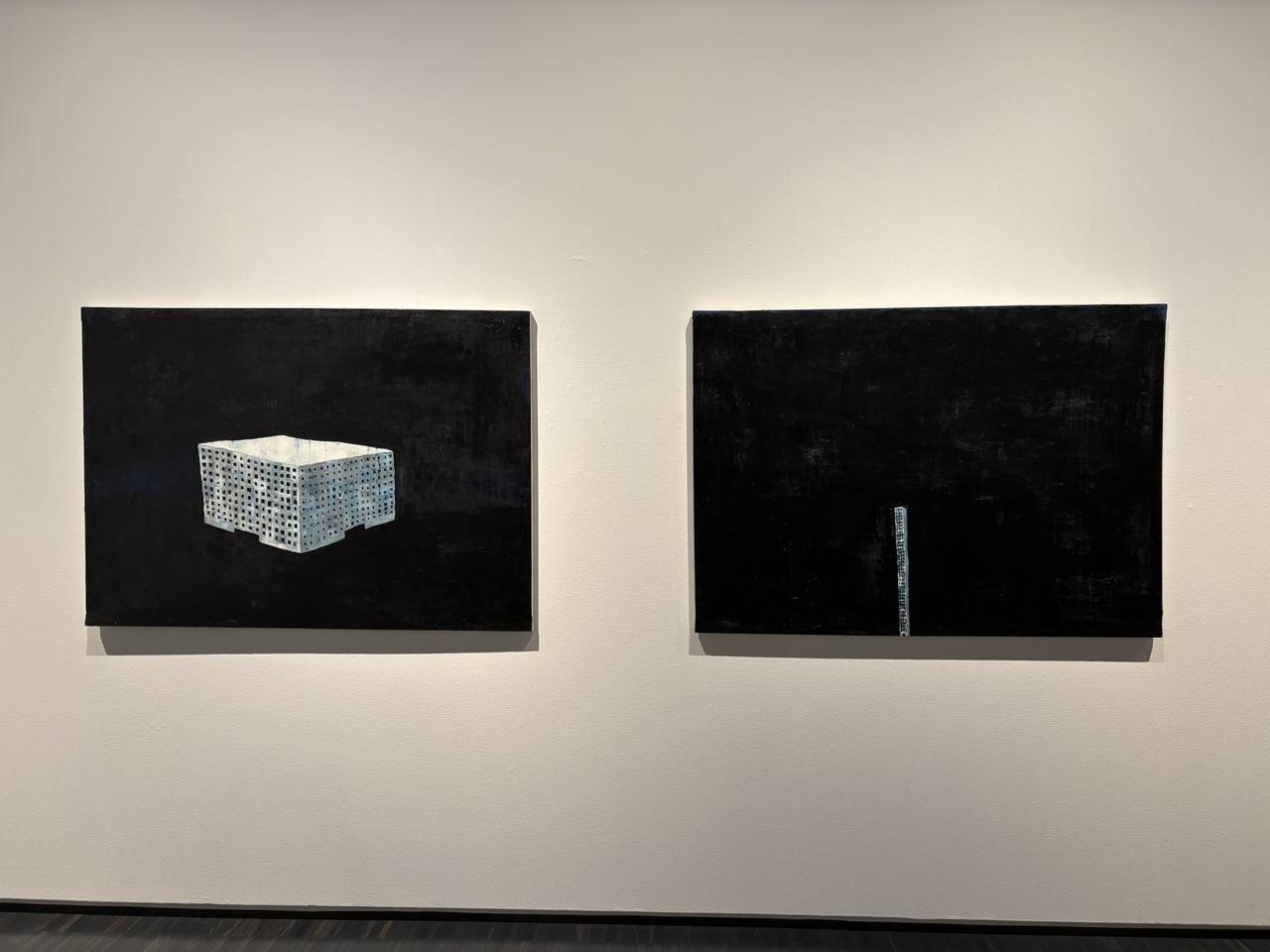
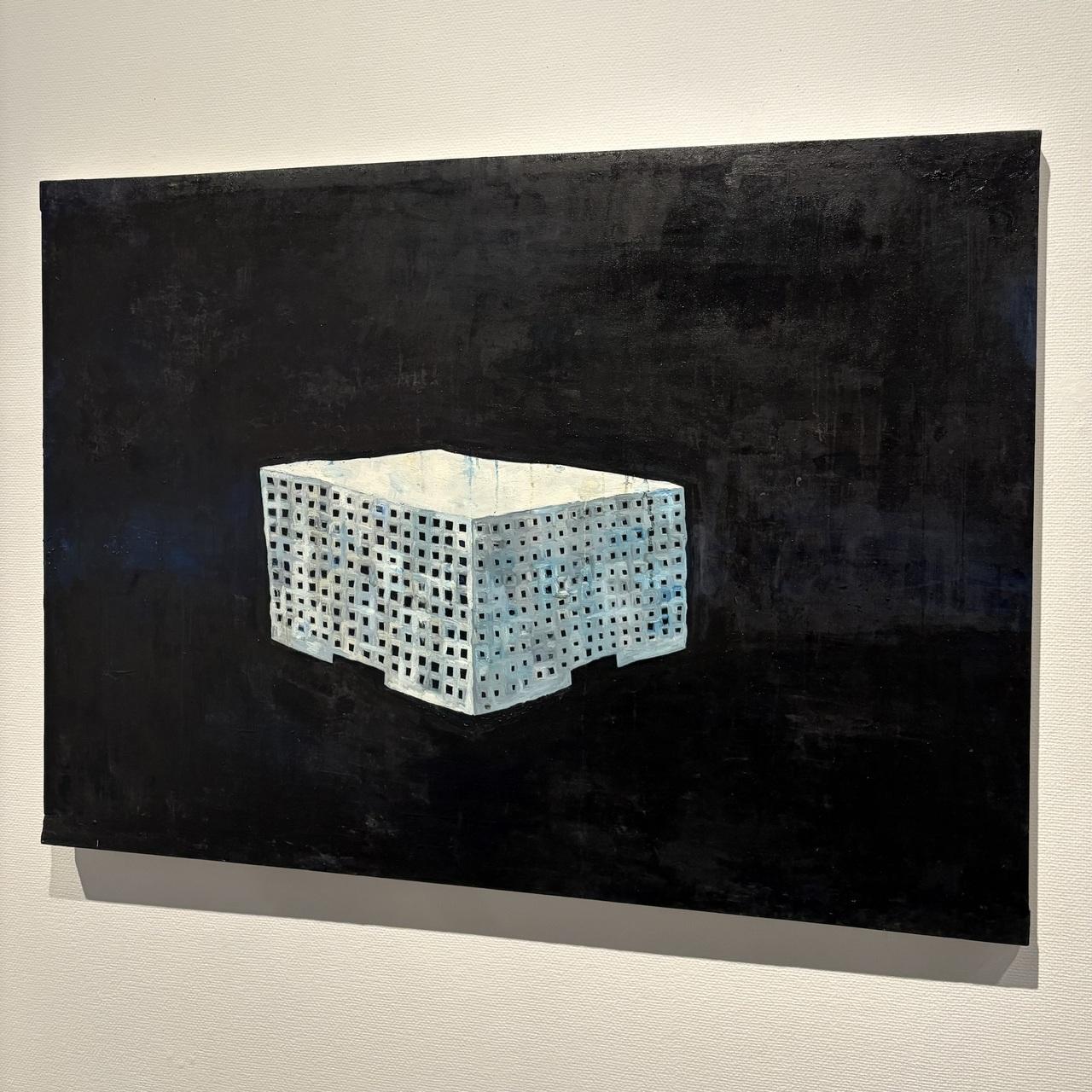
正木隆
MASAKI, Takashi
1971-2004
造形 00-3
Formation 00-3
2000 平成12年
油彩・綿布
oil on cotton -
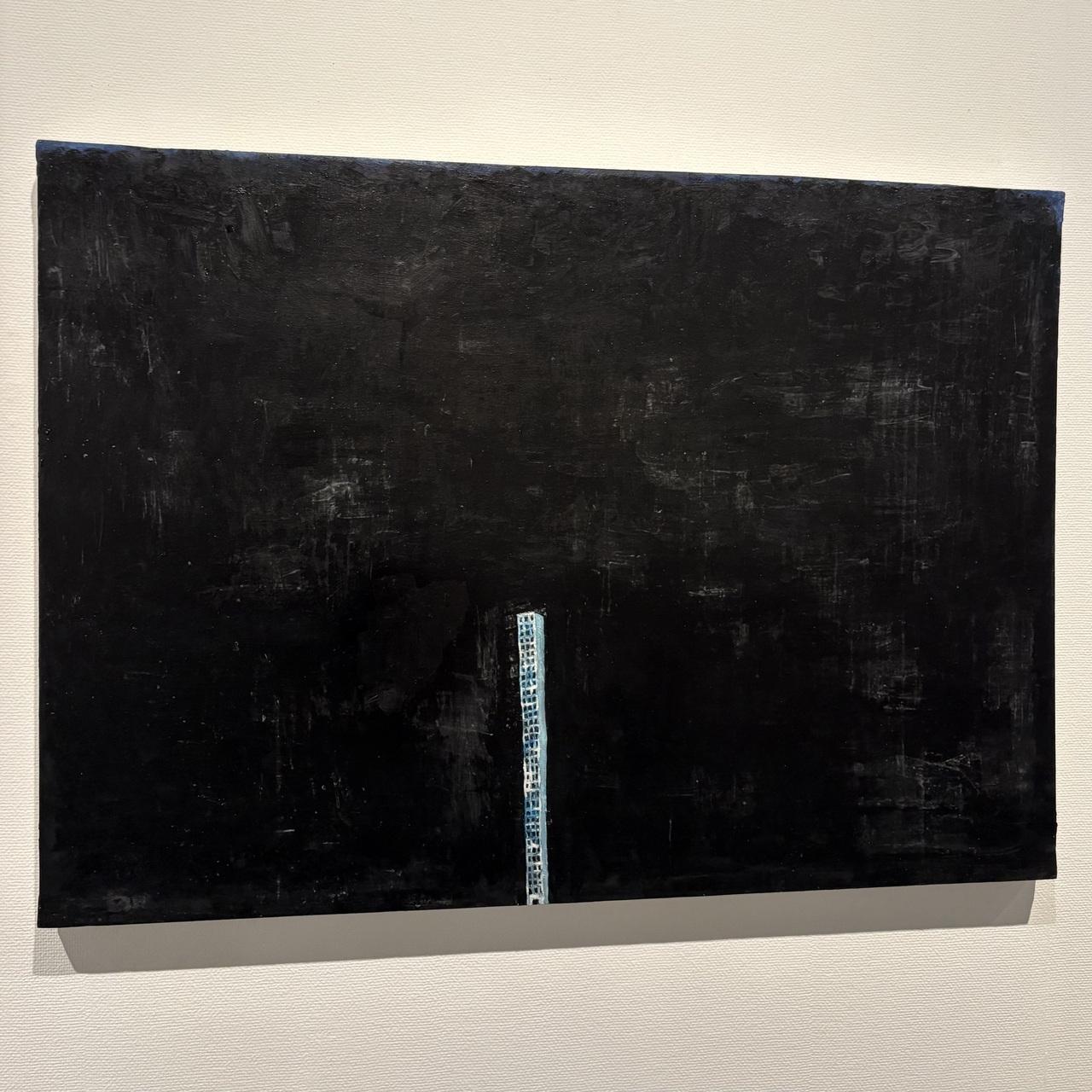
正木隆
MASAKI, Takashi
1971-2004
造形 00-1
Formation 00-1
2000 平成12年
油彩・綿布 oil on cotton -
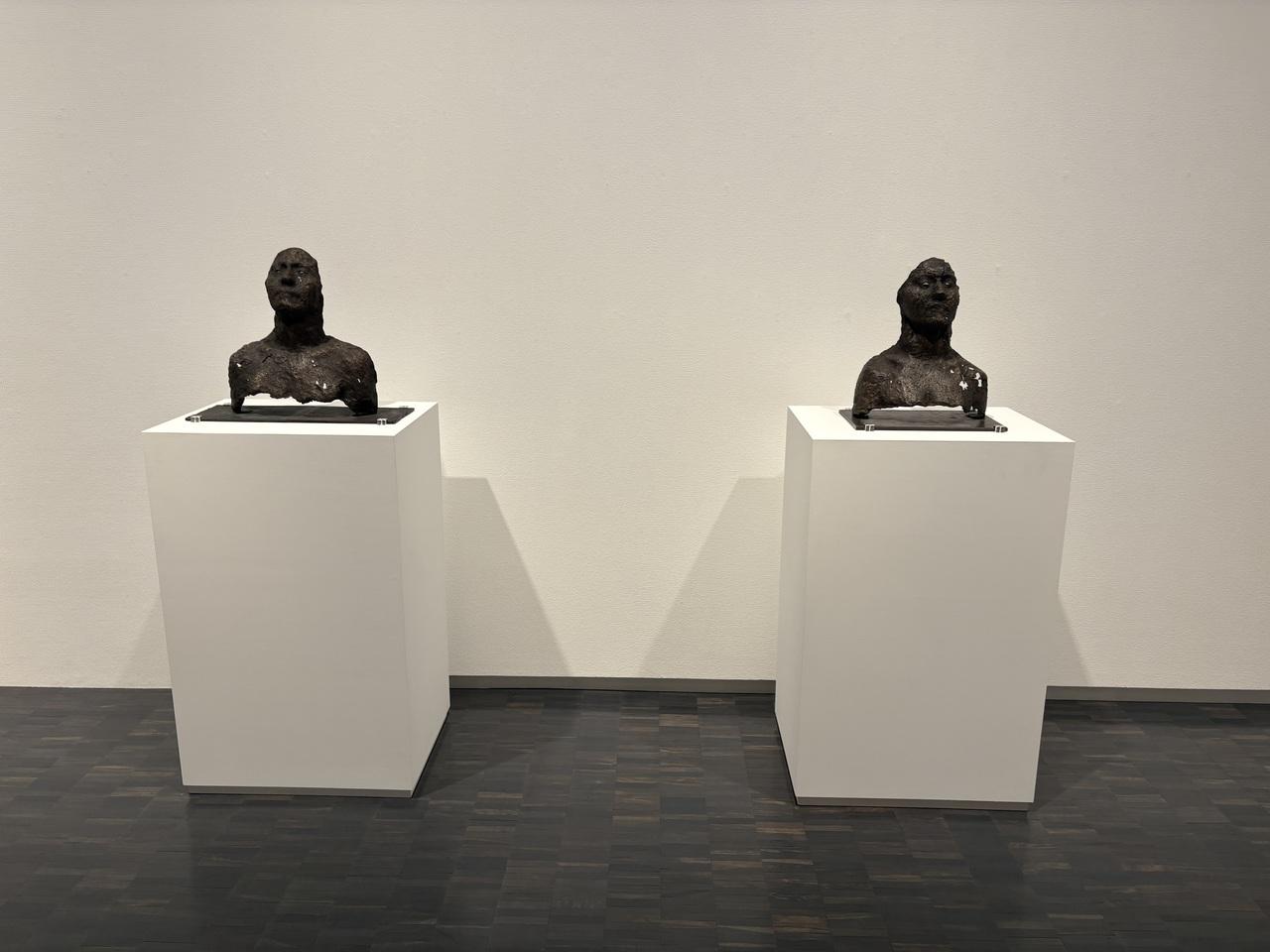
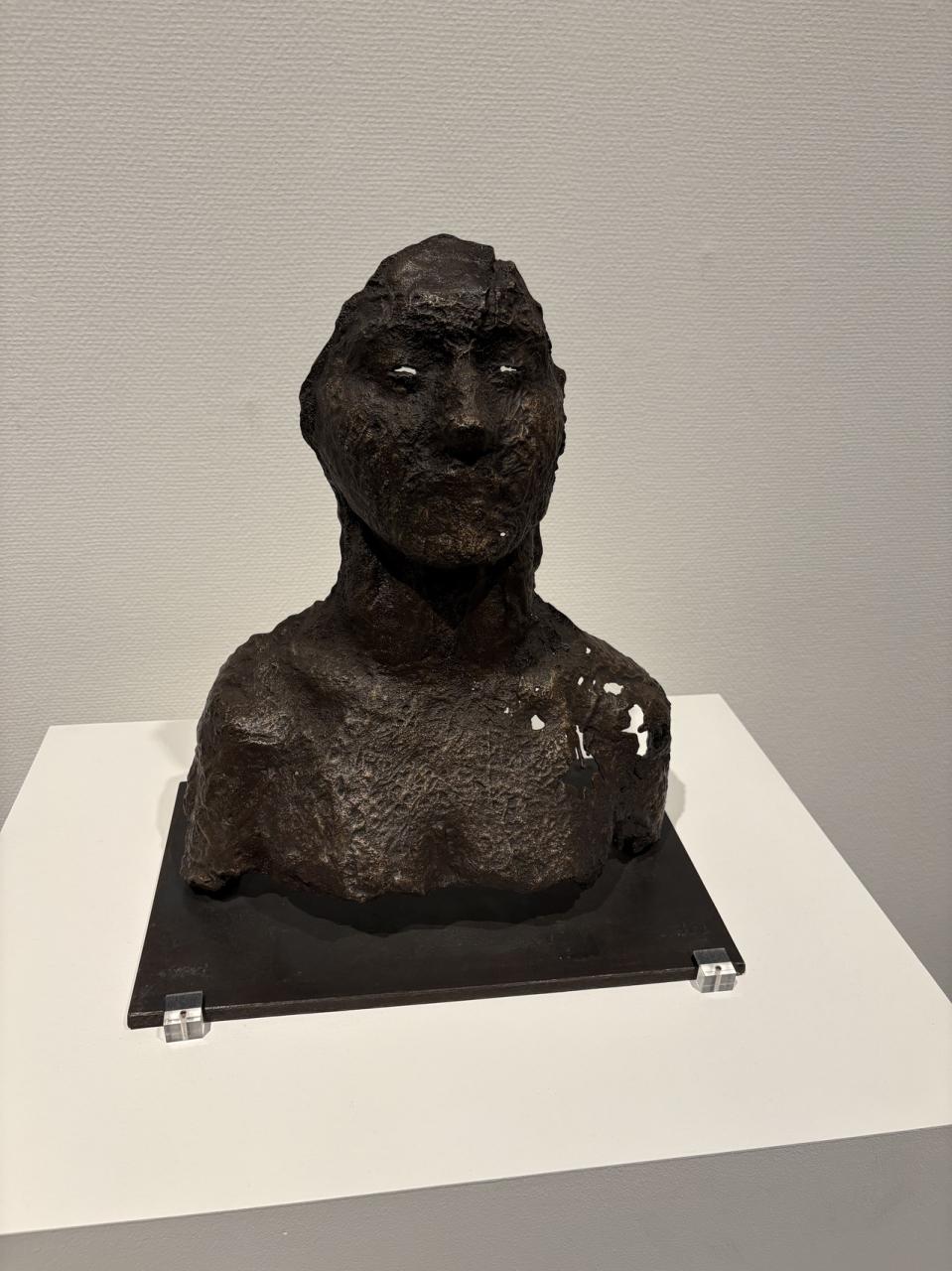
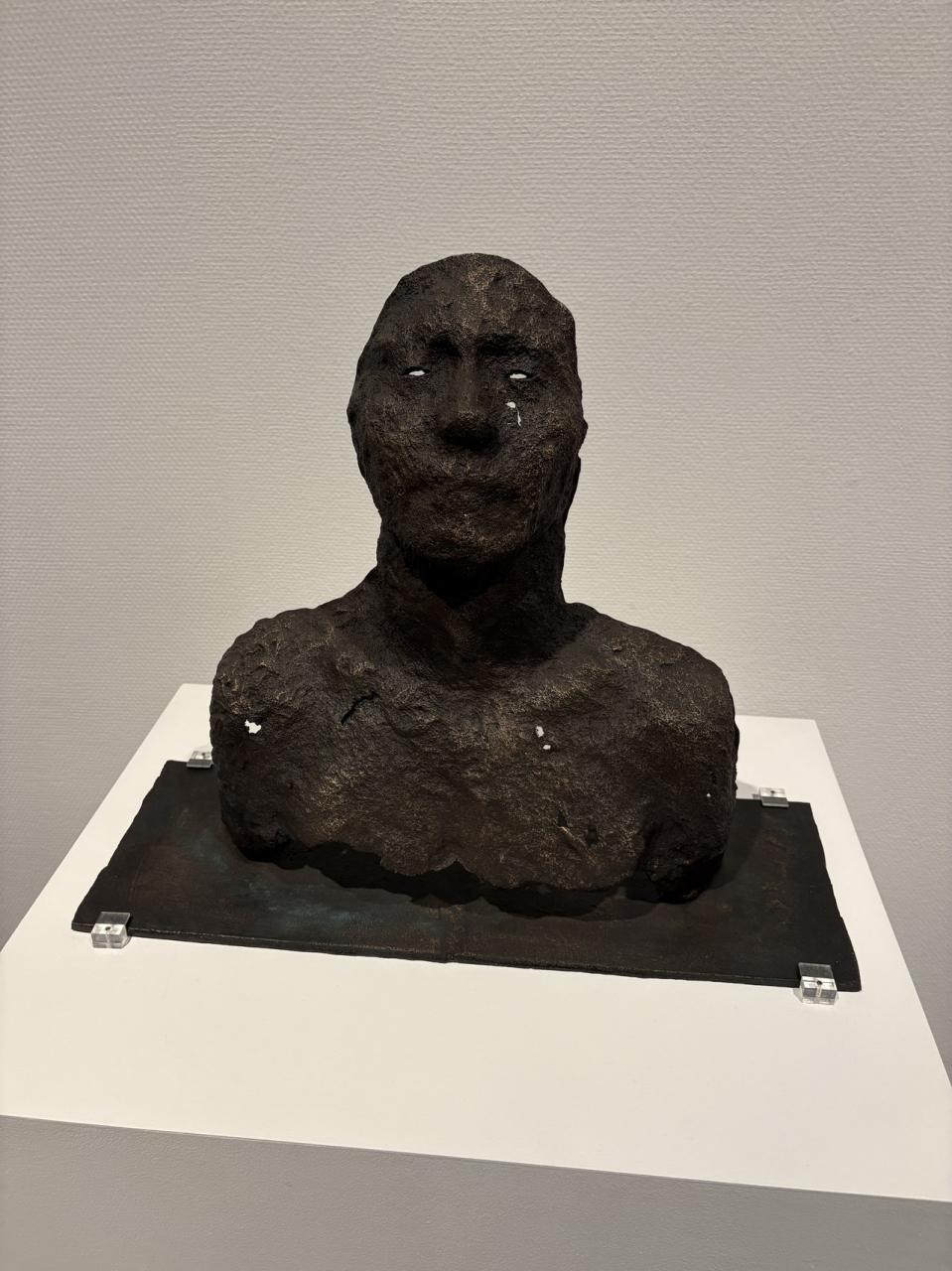
マグダレーナ・アバカノヴィッチ
Magdalena Abakanowicz
1930-2017
アナスタシヤ・セコンダ
Anastazia Seconda 2002-03 平成14-15年
ブロンズ bronze
アロエス
Aloes
2002-03 平成14-15年
ブロンズ bronze
アバカノヴィッチは戦後ポーランドを代表するアーティストの一人です。1960年代以降、黄麻布などの繊維素材を用いたファイバーワークによって国際的な地位を確立した彼女ですが、80年代半ばにブロンズを素材に作品を制作し始めます。それまでの柔軟で有機的な素材から堅固なブロンズへの展開について、本人は「私は永遠に人々に不安をかきたて続ける『しるし」を残したかったのかも」と述べています。一方で熱せられた際の液状のブロンズにもアバカノヴィッチは惹かれていて、ブロンズを用いて生き生きとした流動する感覚を表現しようとする意図が、この作品からもうかがえます。
Abakanowicz was among the most renowned postwar Polish artist. She established her international standing in the 1960s with fiber art employing materials such as burlap, but in the mid-1980s she began working with bronze. On the transition from the pliability of organic fibers to the rigid solidity of bronze,she reflected:
"Perhaps I wanted to leave 'marks' capable of unsettling viewers in perpetuity." At the same time, Abakanowicz was fascinated with the fluidity of molten bronze, and this work reflects her ambition to encapsulate dynamic movement and vitality through this ostensibly static medium. -
-
-
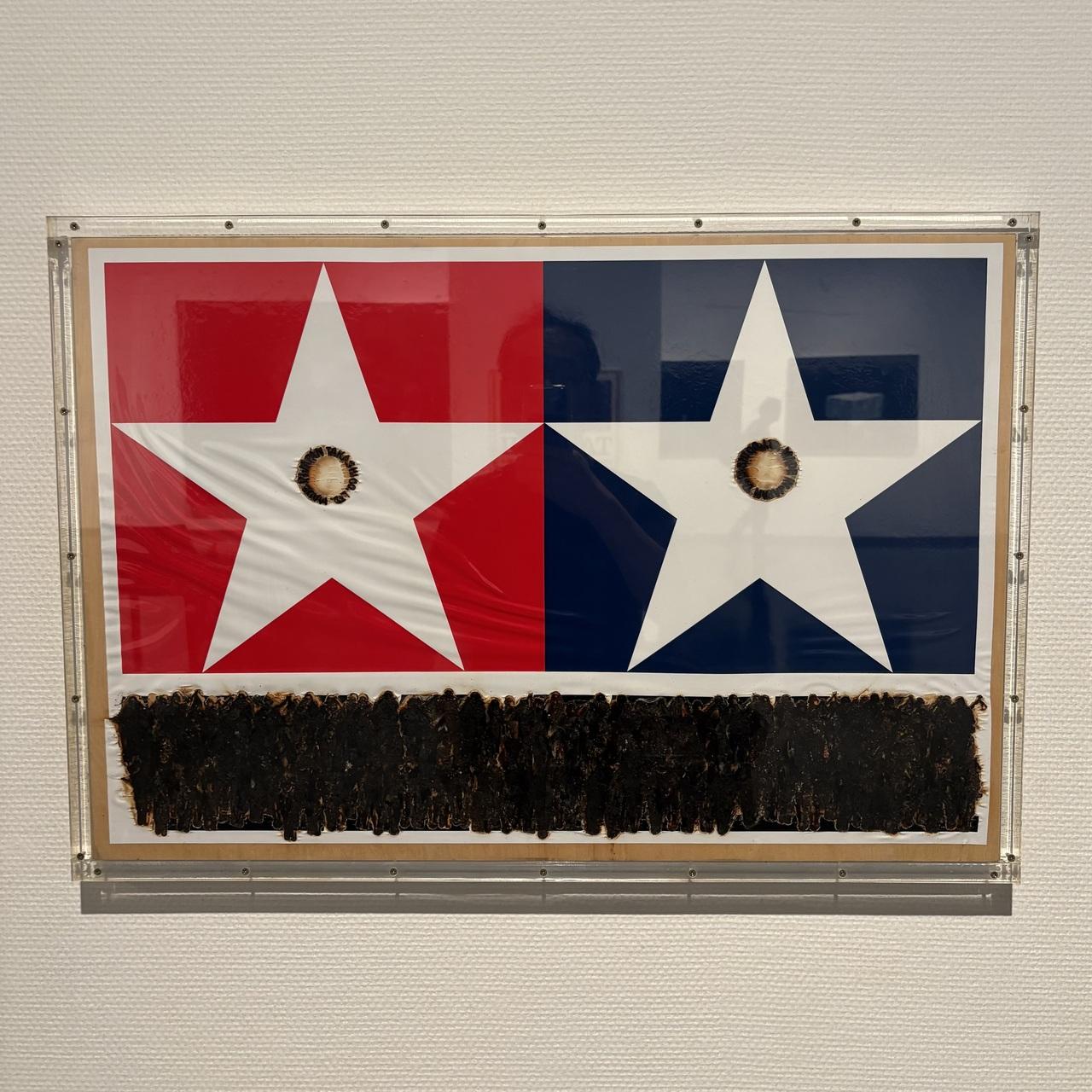
村上隆
MURAKAMI, Takashi
1962-
サインボード TAMIYA
Signboard TAMIYA
1992 平成4年
合板、ステッカー、焼印 plywood, sticker, brand
赤地と青地の四角に白抜きの星。世界的な模型メーカーであるタミヤのロゴマークです。赤の方は情熱を、青の方は精密を表していると言われていますが、多くの人は、アメリカの、いわゆる星条旗を思い出すのではないでしょうか。
星の下にあるはずの「TAMIYA」の文字はつぶされていますが、よく見ると、黒塗りではなくて、焼き印の跡、それも兵士の型の焼印だとわかります。もうひとつの作品では、タミヤの企業理念、「品質において世界一」の上に作家の名前が見えます。
Here we see stars outlined in white against a background of red and blue squares. This is the logo of the world-famous model maker Tamiya. It has been said that the red means passion and the blue precision, but many people are probably also reminded of the American flag - the Star and Stripes.
The letters in the word "TAMIYA," beneath the stars, are broken up. And on closer inspection, we see that instead of being painted black, it is made up of many brands, and that the brands are shaped like soldiers. In the second work, the artist's name is visible above Tamiya's corporate philosophy of providing customers with the best quality
products in the world. -
大岩オスカール
OIWA, Oscar
1965-
ガーデニング (平和への道)
Gardening (Way to Peace)
2003 平成15年
油彩・キャンバス
oil on canvas -
-
-
小泉明郎
KOIZUMI, Meiro
1976-
Battlelands
2018
平成30年
video, color, sound, 56'03
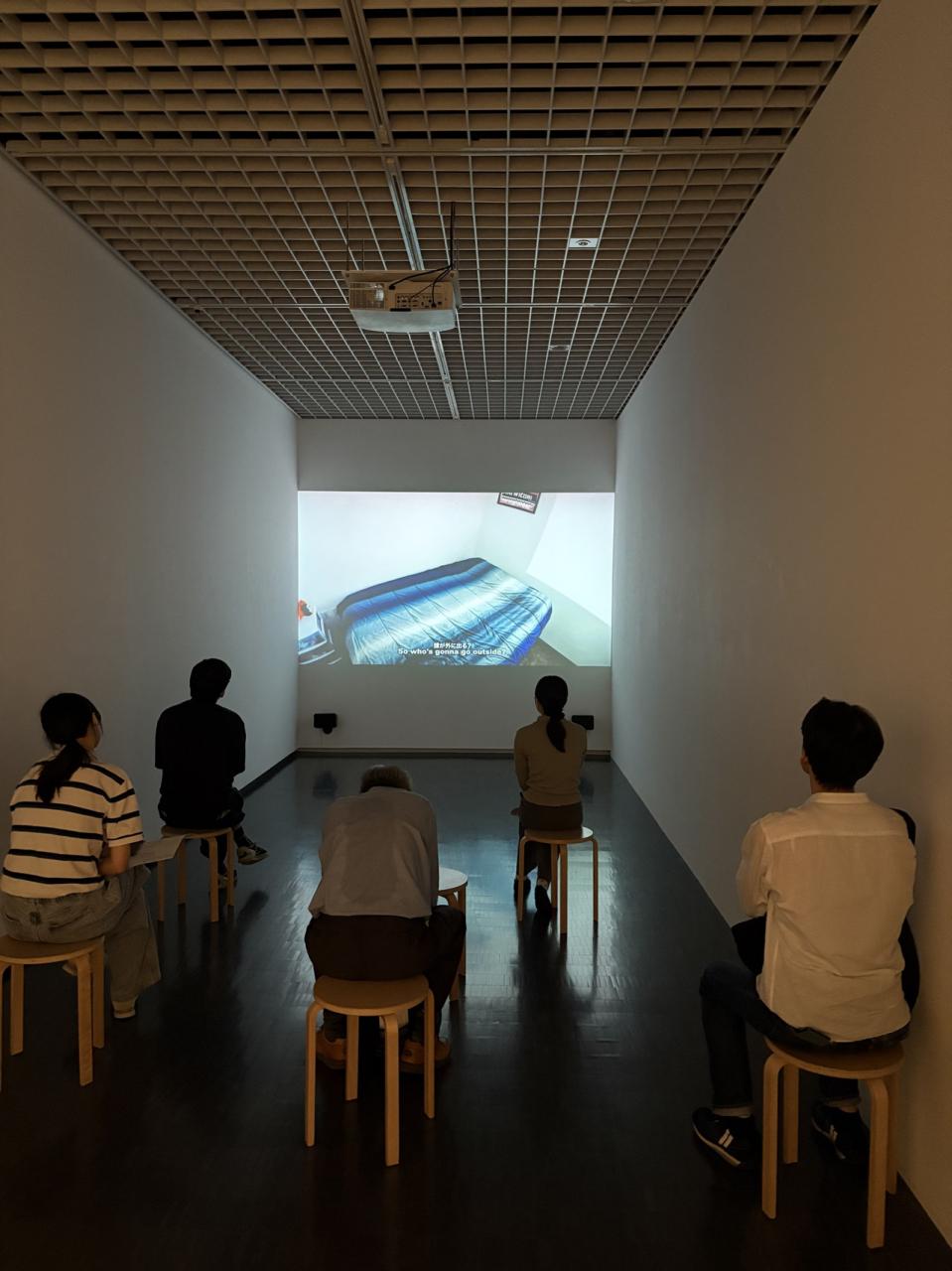
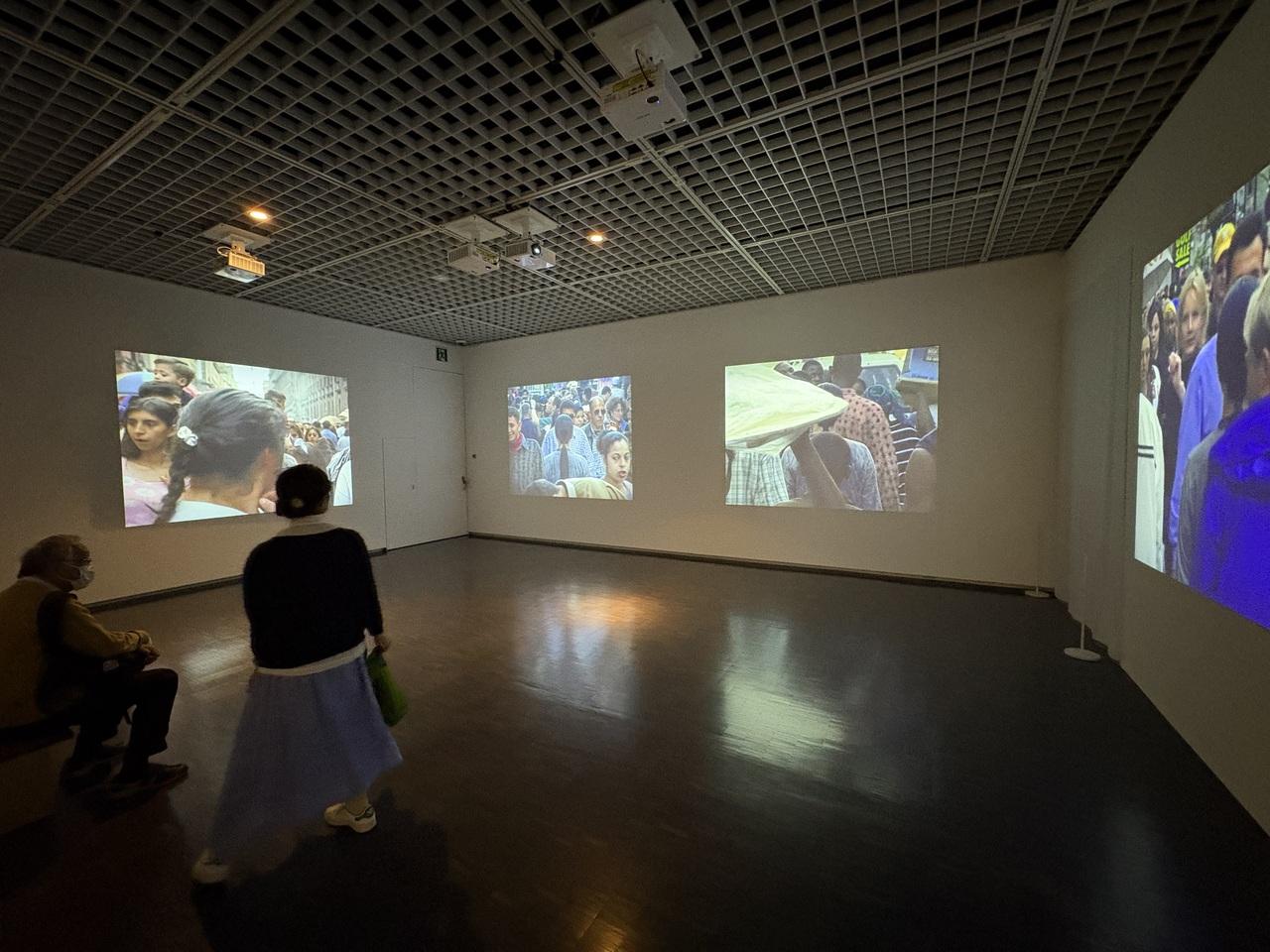
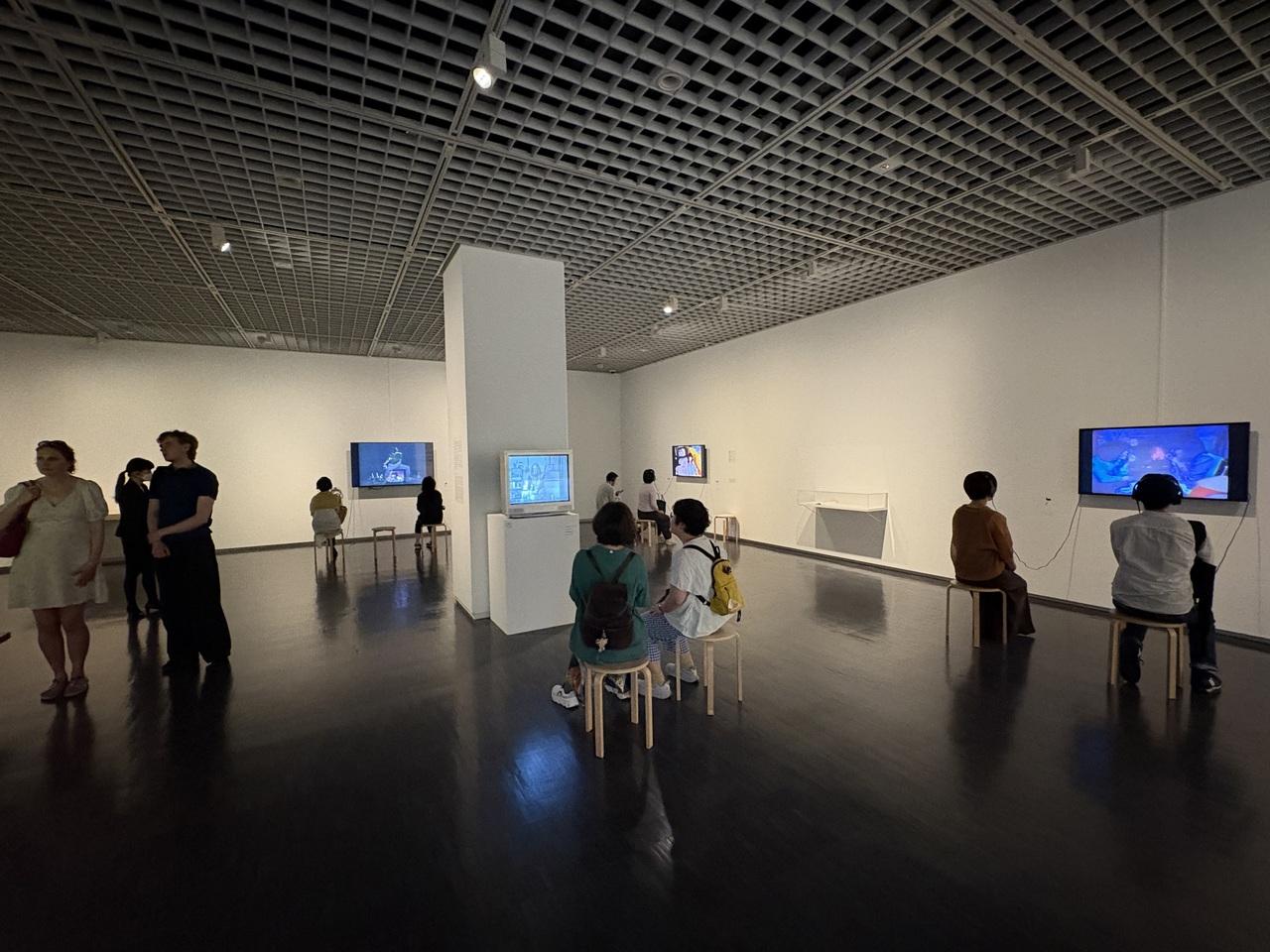
作者はまず、イラクおよびアフガニスタンでの戦争から帰還したアメリカの退役軍人5名に目隠しをしてもらい、小型カメラを頭に装着させた状態で、かれらの日常生活を言葉と映像で描写してもらいました。その次に描写してもらうのは、戦地で最もストレスを感じた瞬間の記憶。そうしてできた2種類の映像が、編集によって混ぜ合わされています。日常とシームレスにつながる戦争、あるいは、「Battlelands(戦場)」の中にある日常が、描き出されます。
The artist initially had five American veterans who had returned from the wars in Iraq and Afghanistan wear blindfolds, and equipped them with small cameras on their heads to document their daily lives through words and video. After this, they were asked to describe memories of the moments when they experienced the greatest stress during combat. The two types of footage were then edited so as to cut back and forth. The result is a portrayal of war seamlessly connected to everyday life, or perhaps, everyday life that exists even within "battlelands." -
-
-
-
-
-
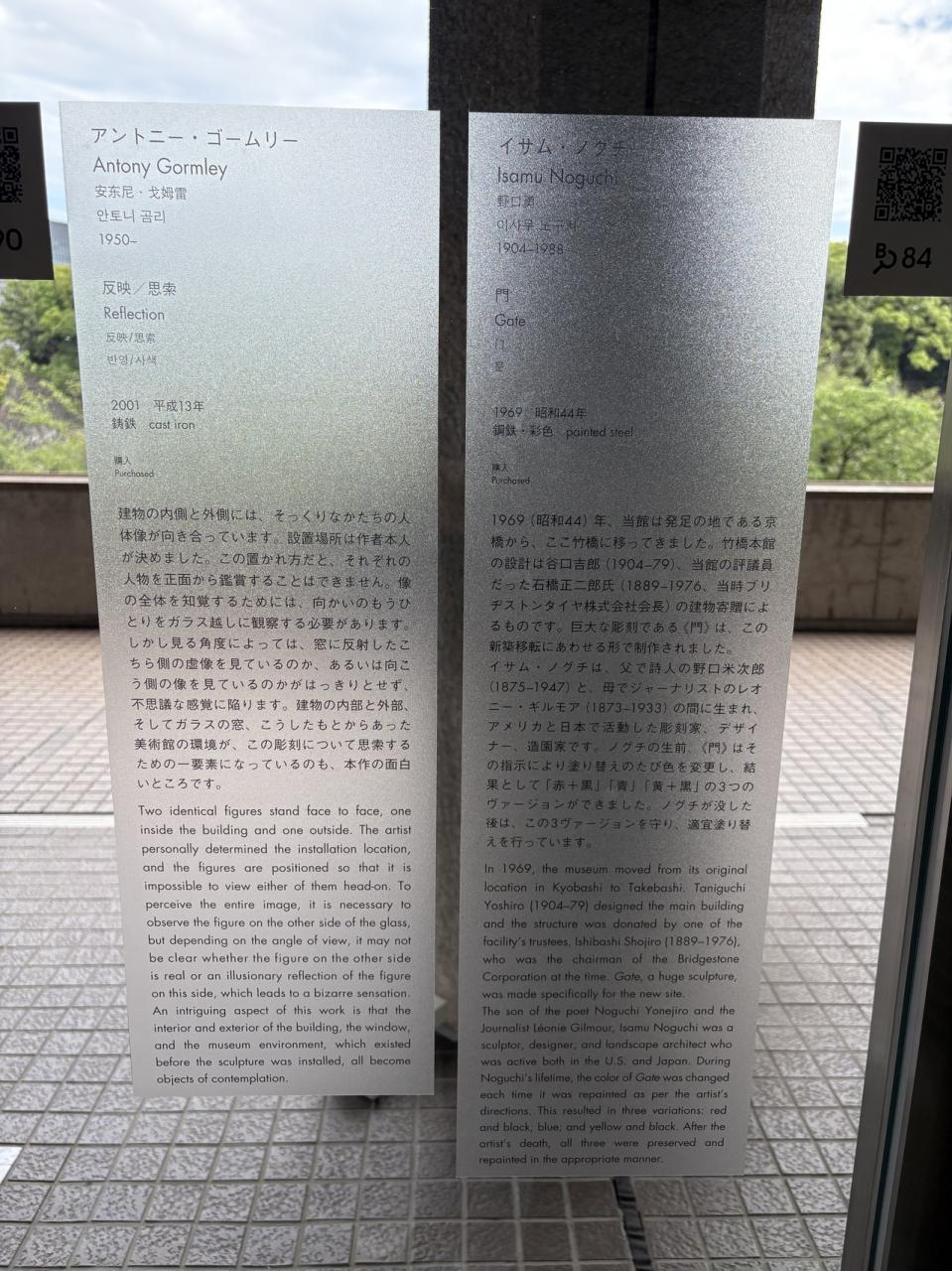
アントニー・ゴームリー
Antony Gormley
1950-
反映/思索
Reflection
2001平成13年
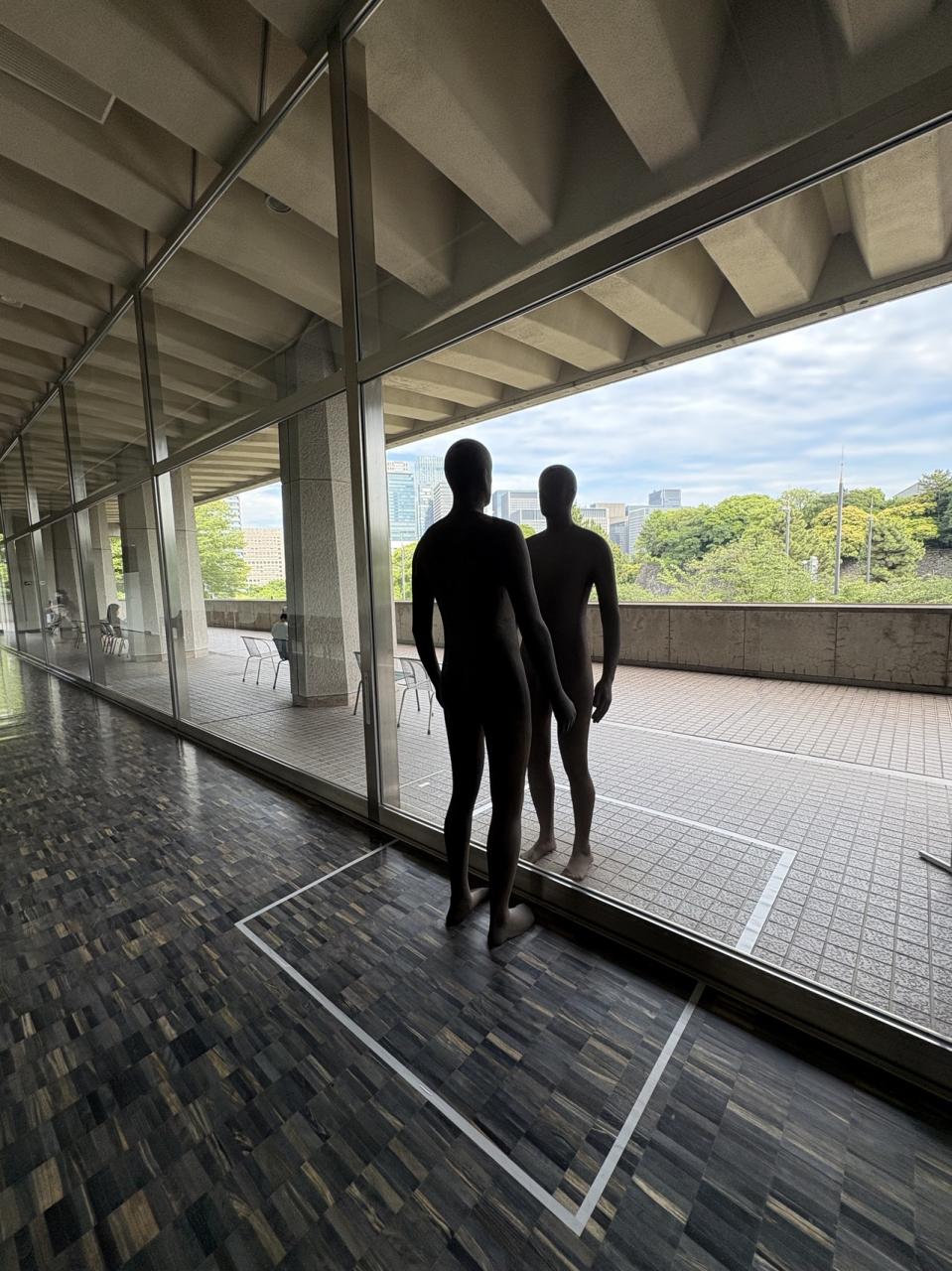
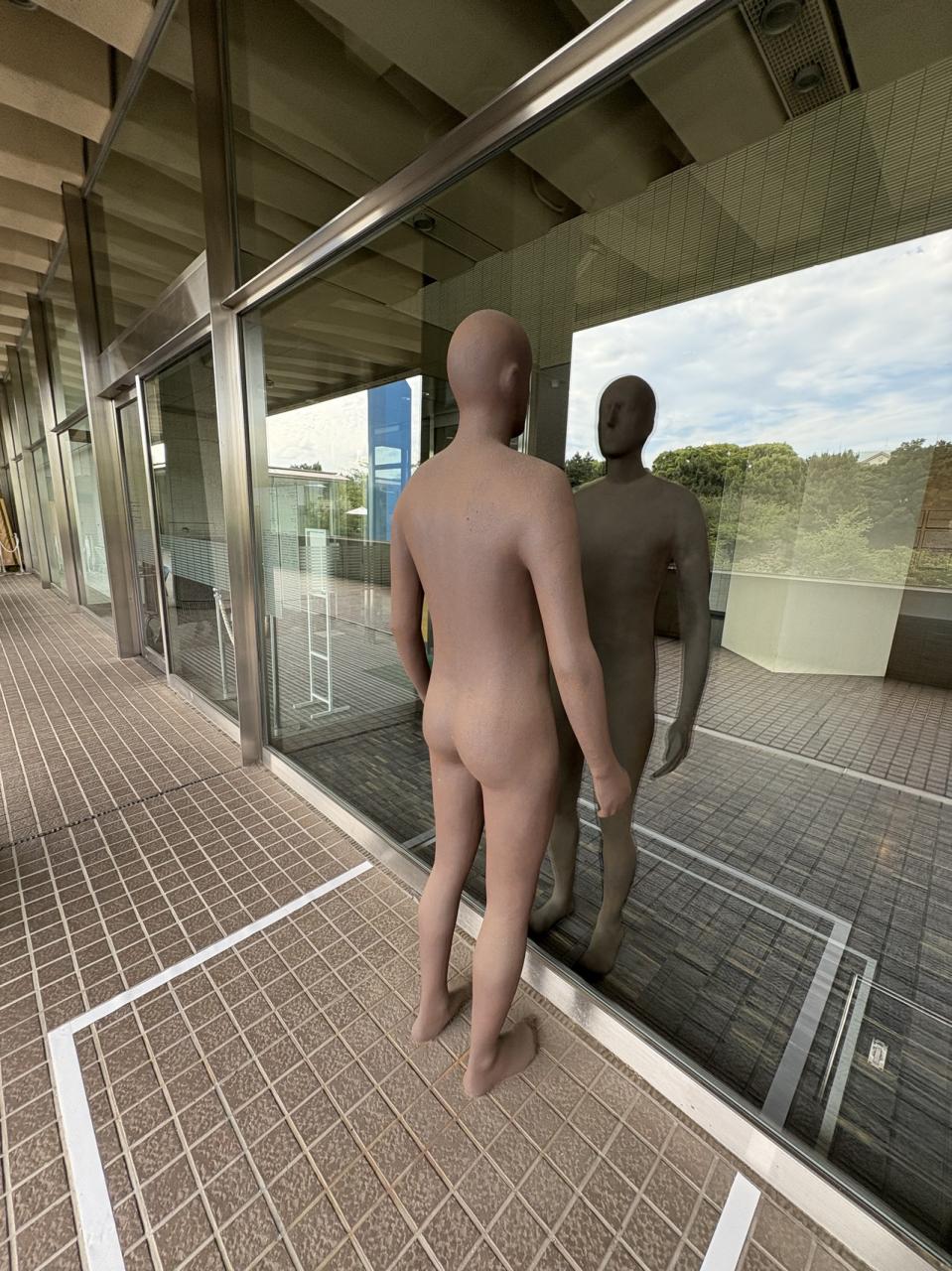
建物の内側と外側には、そっくりなかたちの人体像が向き合っています。設置場所は作者本人が決めました。この置かれ方だと、それぞれの人物を正面から鑑賞することはできません。像の全体を知覚するためには、向かいのもうひとりをガラス越しに観察する必要があります。
しかし見る角度によっては、窓に反射したこちら側の虚像を見ているのか、あるいは向こう側の像を見ているのかがはっきりとせず、不思議な感覚に陥ります。建物の内部と外部、そしてガラスの窓、こうしたもとからあった美術館の環境が、この彫刻について思索するための一要素になっているのも、本作の面白いところです。
Two identical figures stand face to face, one inside the building and one outside. The artist personally determined the installation location, and the figures are positioned so that it is impossible to view either of them head-on. To perceive the entire image, it is necessary to observe the figure on the other side of the glass, but depending on the angle of view, it may not be clear whether the figure on the other side is real or an illusionary reflection of the figure on this side, which leads to a bizarre sensation.
An intriguing aspect of this work is that the interior and exterior of the building, the window, and the museum environment, which existed before the sculpture was installed, all become objects of contemplation. -
-
-
-
イサム・ノグチ
Isamu Noguch
1904-1988
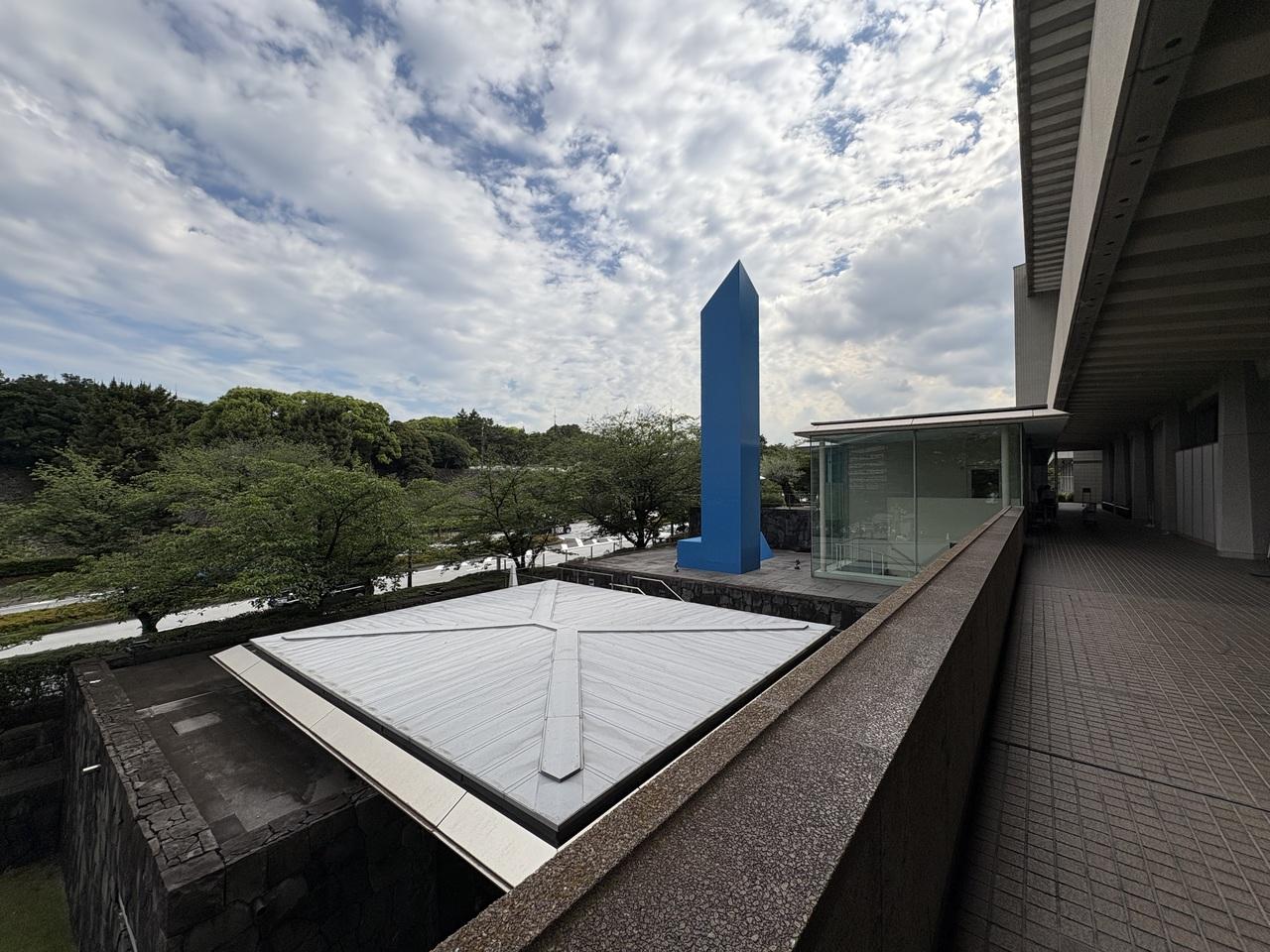
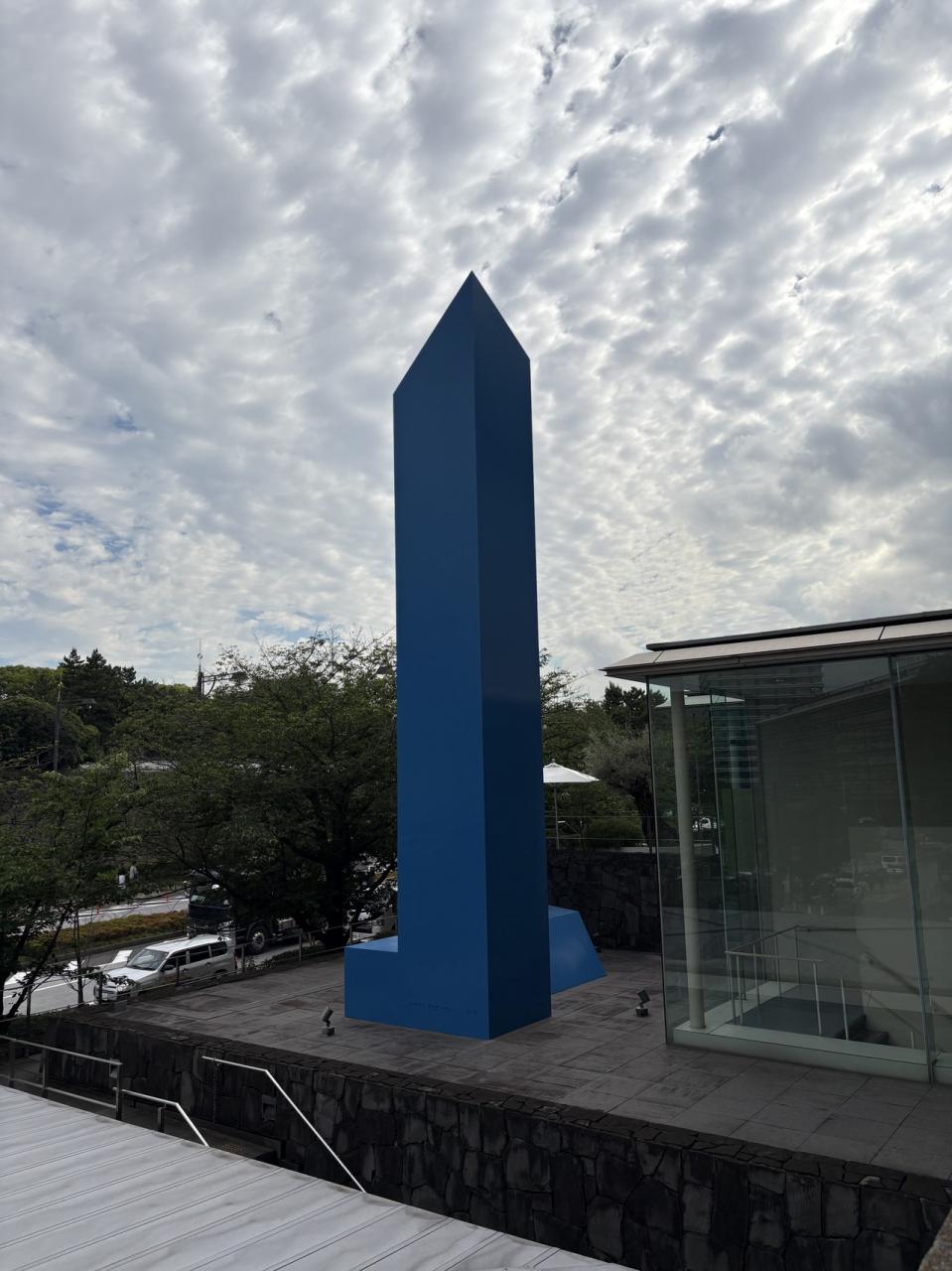
門
Gate
1969昭和44年
鋼鉄:彩色poinied stee!
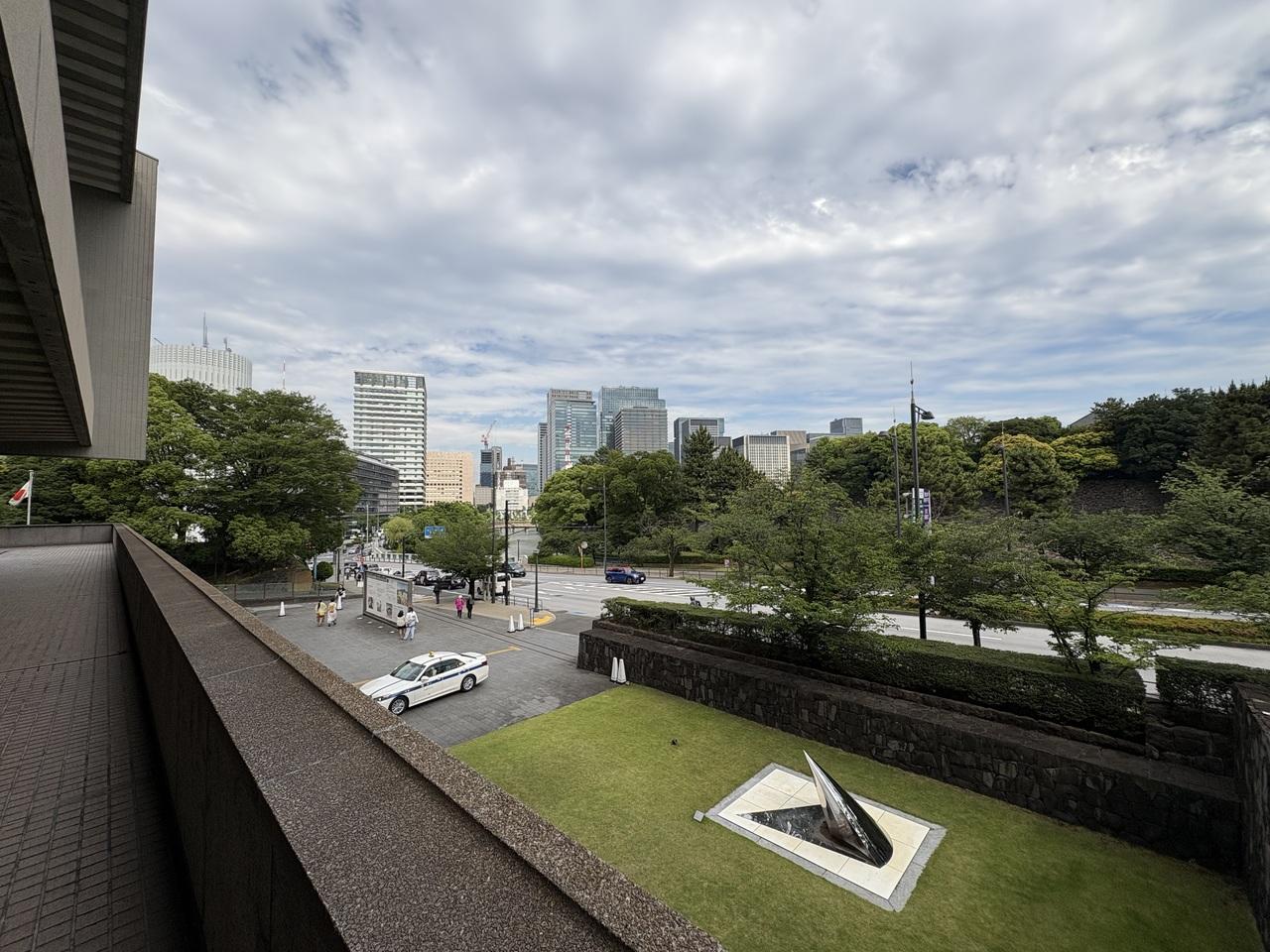
1969(昭和44)年、当館は発足の地である京橋から、ここ竹橋に移ってきました。竹橋本館の設計は谷口吉郎(1904-79)、当館の評議員だった石橋正二郎氏(1889-1976、当時ブリヂストンタイヤ株式会社会長)の建物寄贈によるものです。巨大な彫刻である<門>は、この新築移転にあわせる形で制作されました。
イサム・ノグチは、父で詩人の野口米次郎(1875-1947)と、母でジャーナリストのレオニー・ギルモア(1873-1933)の間に生まれ、アメリカと日本で活動した彫刻家、デザイナー、造園家です。ノグチの生前、<門)はその指示により塗り替えのたび色を変更し、結果として「赤+黒」「青」「黄+黒」の3つのヴァージョンができました。ノグチが没した後は、この3ヴァージョンを守り、適宜塗り替えを行っています。
In 1969, the museum moved from its original location in Kyobashi to Takebashi. Taniguchi Yoshiro (1904-79) designed the main building and the structure was donated by one of the facility's trustees, Ishibashi Shojiro (1889-1976), who was the chairman of the Bridgestone Corporation at the time. Gate, a huge sculpture, was made specifically for the new site.
The son of the poet Noguchi Yonejiro and the Journalist Léonie Gilmour, Isamu Noguchi was a sculptor, designer, and landscape architect who was active both in the U.S. and Japan. During Noguchi's lifetime, the color of Gate was changed each time it was repainted as per the artist's directions. This resulted in three variations: red and black; blue; and yellow and black. After the artist's death, all three were preserved and repainted in the appropriate manner. -
これにて鑑賞終了!
-
-
-
-
次回 "所蔵作品展 MOMATコレクション(2025.7.15~10.26)"
https://www.momat.go.jp/exhibitions/r7-1
前期(7月15日-8月31日)
後期(9月2日-10月26日) -


利用規約に違反している投稿は、報告する事ができます。
-

MOMAT コレクション〔国立東京近代美術館 所蔵作品展〕(2025.2.11-6.15)1.ハイライト "...
2025/06/04~
神田・神保町
-

MOMAT コレクション〔国立東京近代美術館 所蔵作品展〕(2025.2.11-6.15) 2.風景の発見。...
2025/06/04~
神田・神保町
-

MOMAT コレクション〔国立東京近代美術館 所蔵作品展〕(2025.2.11-6.15)3.抒情と頽廃。"...
2025/06/04~
神田・神保町
-

MOMAT コレクション〔国立東京近代美術館 所蔵作品展〕(2025.2.11-6.15) 4.モダニズムの...
2025/06/04~
神田・神保町
-

MOMAT コレクション〔国立東京近代美術館 所蔵作品展〕(2025.2.11-6.15) 5.シュルレアリ...
2025/06/04~
神田・神保町
-

MOMAT コレクション〔国立東京近代美術館 所蔵作品展〕(2025.2.11-6.15) 6.「相手」がい...
2025/06/04~
神田・神保町
-
![MOMAT コレクション〔国立東京近代美術館 所蔵作品展〕(25.2.11-6.15)8.反復がもたらすもの & 9.渡辺兼人[既視の街]](https://cdn.4travel.jp/img/thumbnails/imk/travelogue_album/11/98/67/240x180_11986732.jpg?updated_at=1752831110)
MOMAT コレクション〔国立東京近代美術館 所蔵作品展〕(25.2.11-6.15)8.反復がもたらすもの...
2025/06/04~
神田・神保町
-

MOMAT コレクション〔国立東京近代美術館 所蔵作品展〕(2025.2.11-6.15) 10.アルプのア...
2025/06/04~
神田・神保町
-

MOMAT コレクション〔国立東京近代美術館 所蔵作品展〕(2025.2.11-6.15) 11.(アン)バ...
2025/06/04~
神田・神保町
-

MOMAT コレクション〔国立東京近代美術館 所蔵作品展〕(2025.2.11-6.15) 12.美術家たち...
2025/06/04~
神田・神保町
旅行記グループをもっと見る
コメントを投稿する前に
十分に確認の上、ご投稿ください。 コメントの内容は攻撃的ではなく、相手の気持ちに寄り添ったものになっていますか?
サイト共通ガイドライン(利用上のお願い)報道機関・マスメディアの方へ 画像提供などに関するお問い合わせは、専用のお問い合わせフォームからお願いいたします。





フォートラベル公式LINE@

おすすめの旅行記や旬な旅行情報、お得なキャンペーン情報をお届けします!
QRコードが読み取れない場合はID「@4travel」で検索してください。
\その他の公式SNSはこちら/




旅行記グループ MOMAT コレクション〔国立東京近代美術館 所蔵作品展〕(2025.2.11-6.15)
0
36