


2025/06/04 - 2025/06/04
25位(同エリア933件中)

旅熊 Kokazさん
- 旅熊 KokazさんTOP
- 旅行記1927冊
- クチコミ854件
- Q&A回答101件
- 1,710,323アクセス
- フォロワー752人
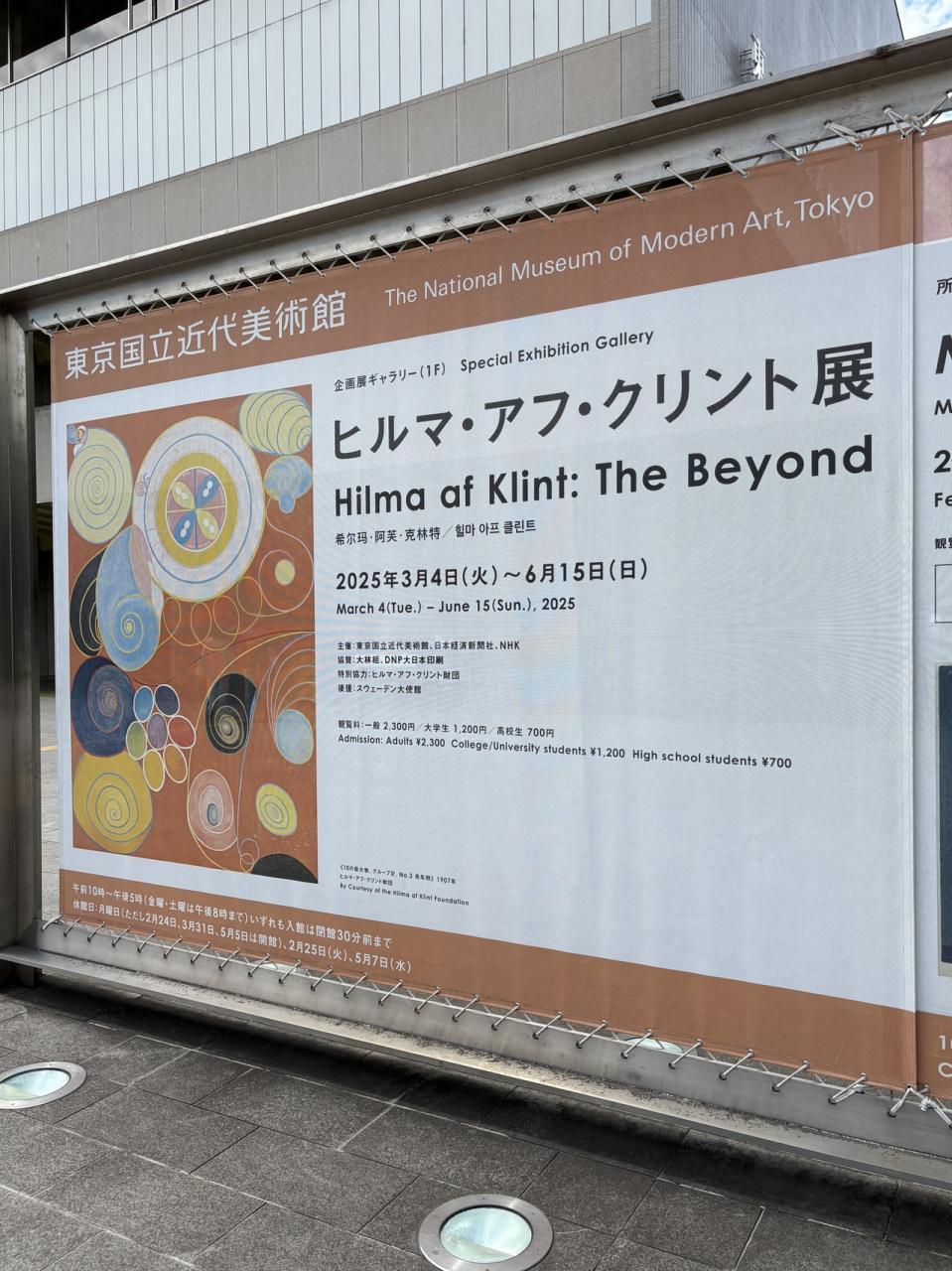
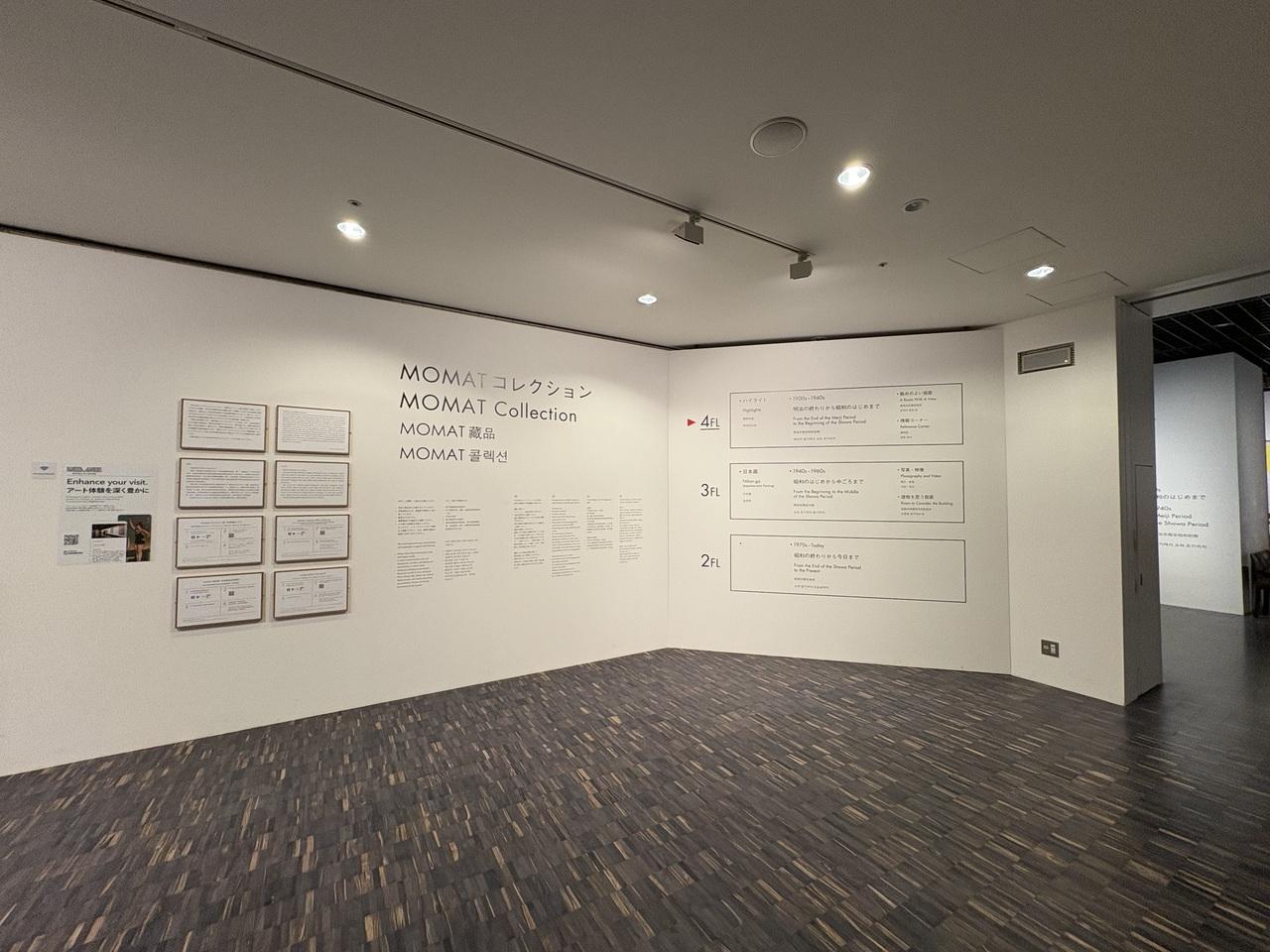
MOMAT コレクション〔国立東京近代美術館 所蔵作品展〕(2025.2.11-6.15)
https://www.momat.go.jp/exhibitions/r6-3
1.ハイライト
次回 "所蔵作品展 MOMATコレクション(2025.7.15~10.26)"
https://www.momat.go.jp/exhibitions/r7-1
前期(7月15日-8月31日)
後期(9月2日-10月26日)
- 旅行の満足度
- 5.0
-

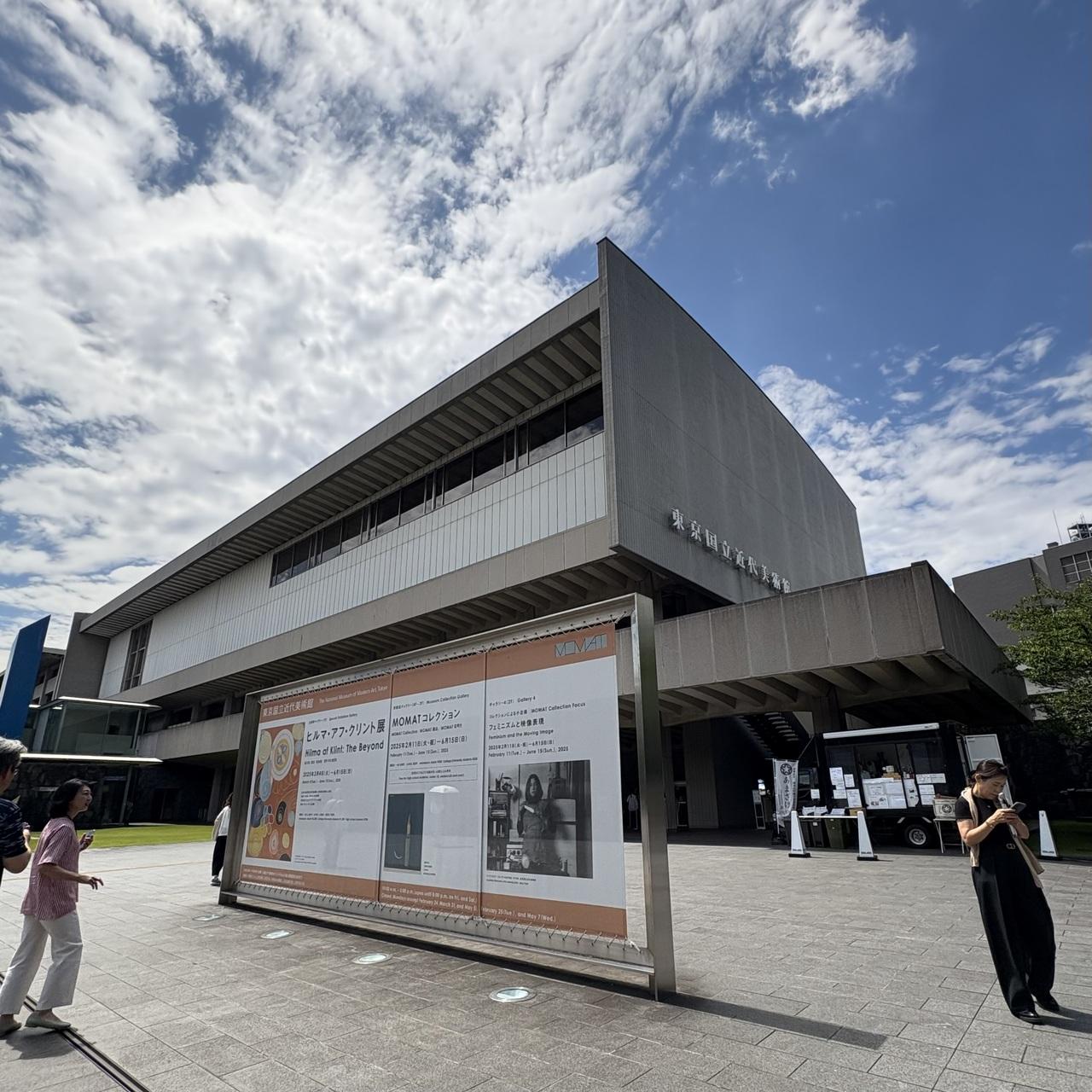
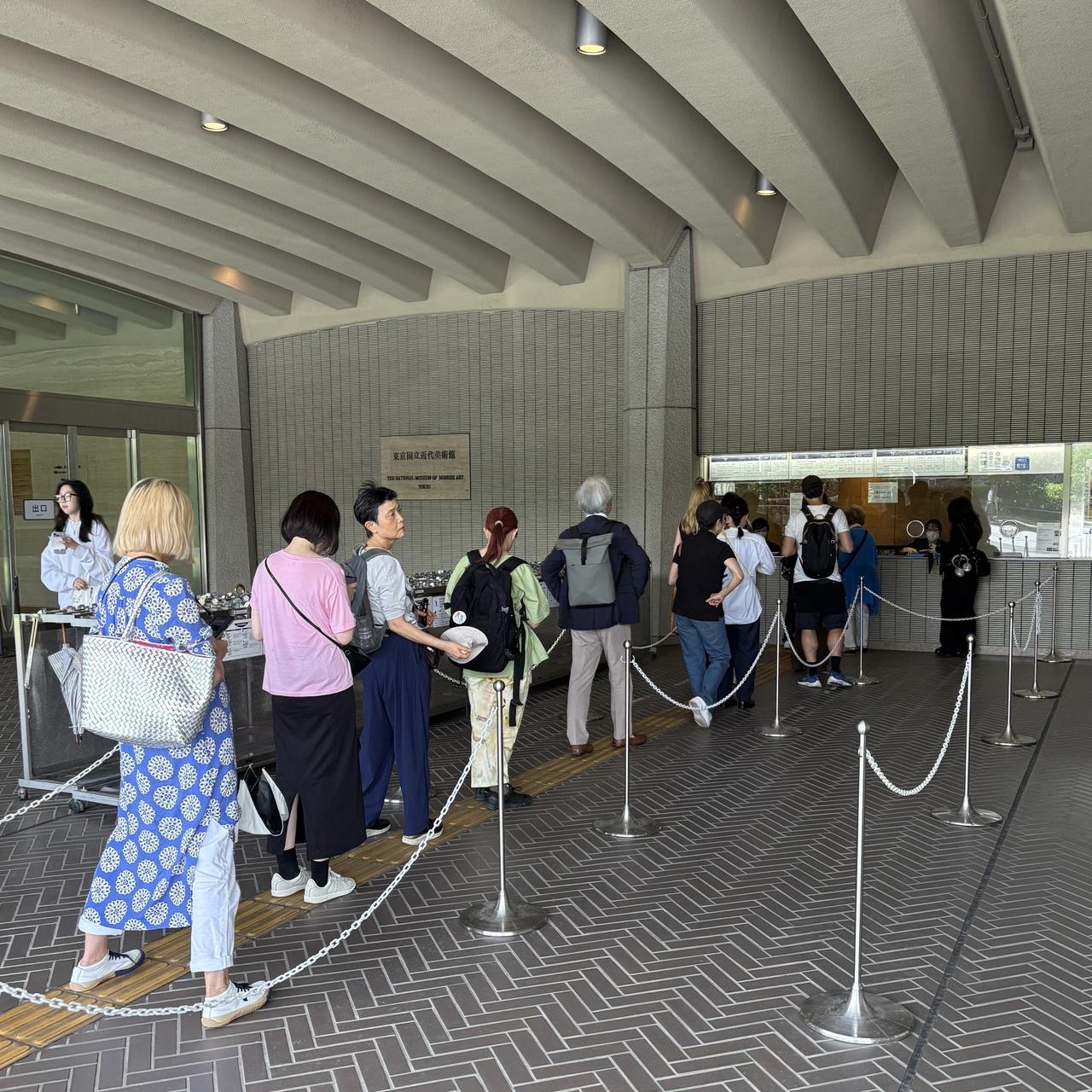
水曜日の午後の "東京国立近代美術館"
東京国立近代美術館 美術館・博物館
-
-
-
-
-
-
-
-
-
-
-
-
-
-
-
-
-
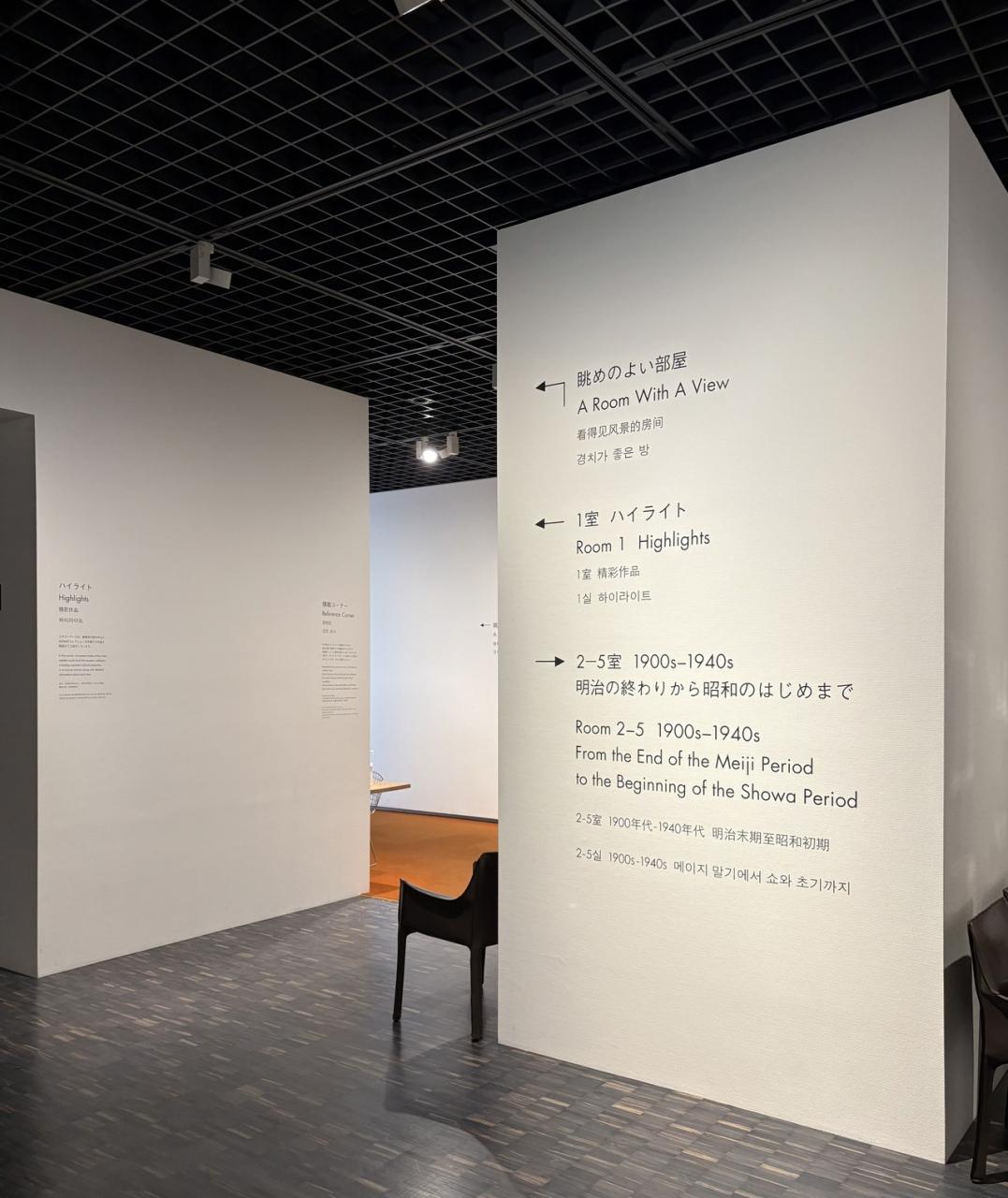
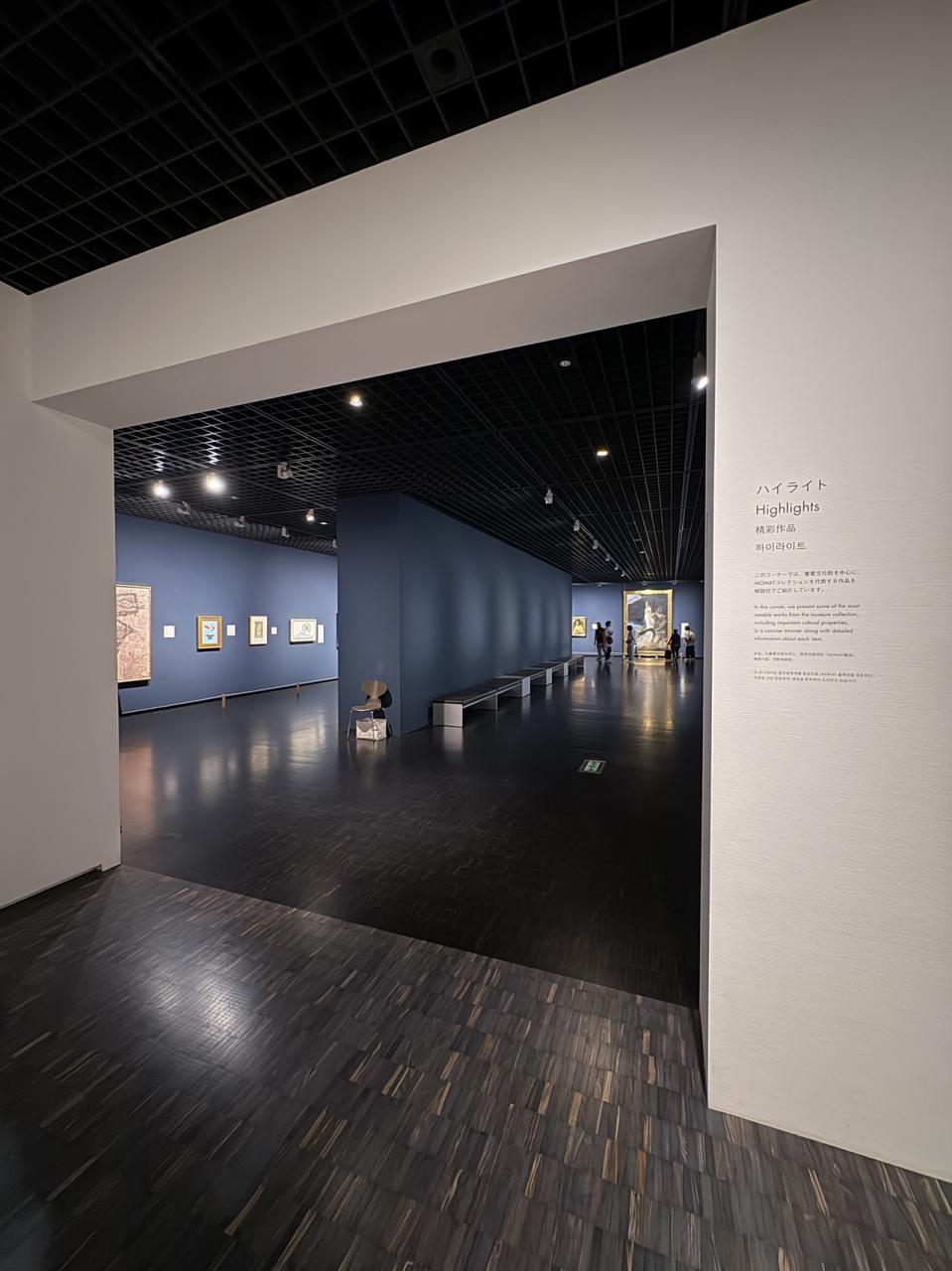
ハイライト
Highlights
このコーナーでは、重要文化財を中心に、MOMATコレクションを代表する作品を解説付でご紹介しています。
In this corner, we present some of the most notable works from the museum collection, including important cultural properties, in a concise manner along with detailed Information about each item. -
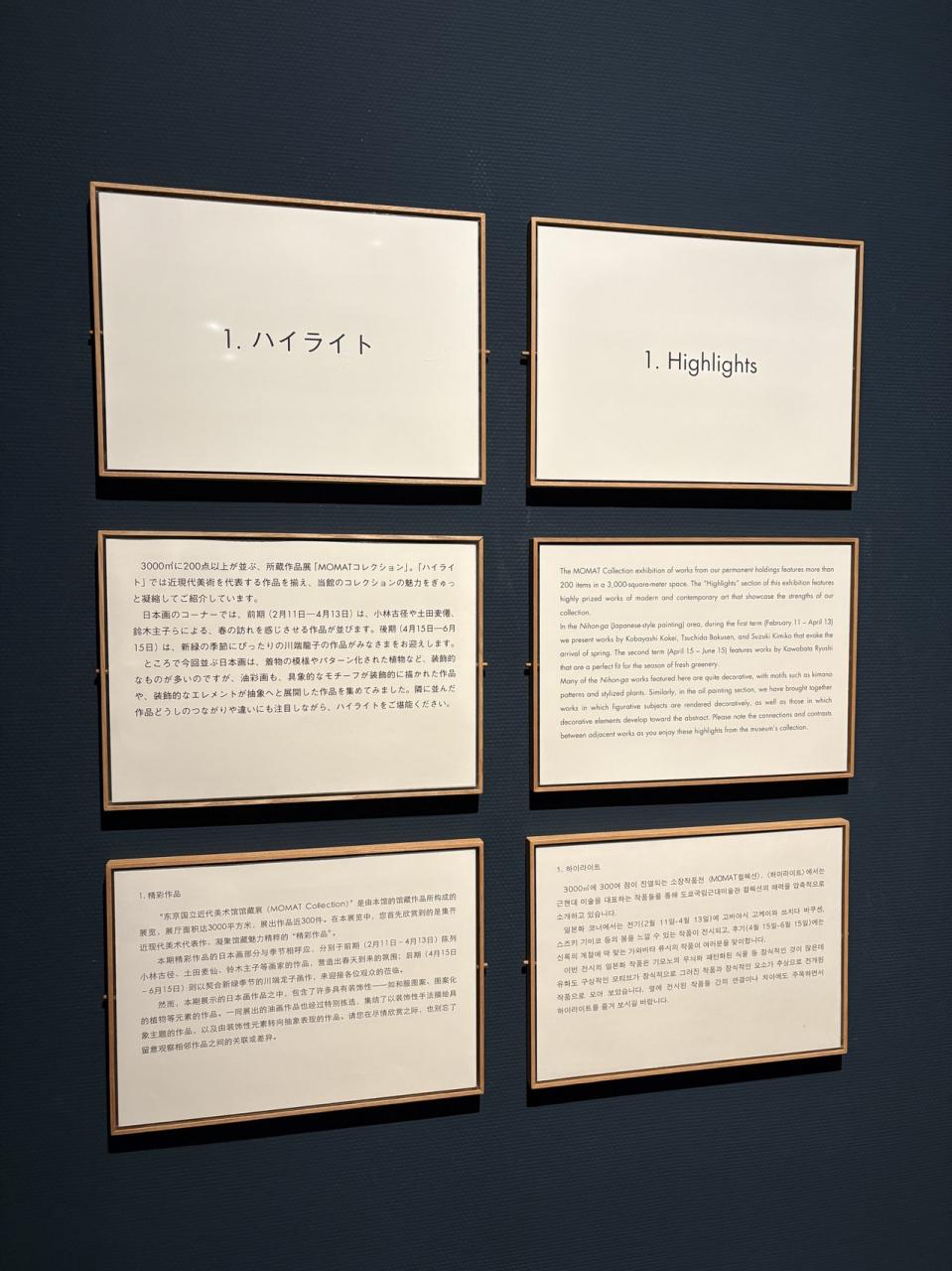
1.ハイライト
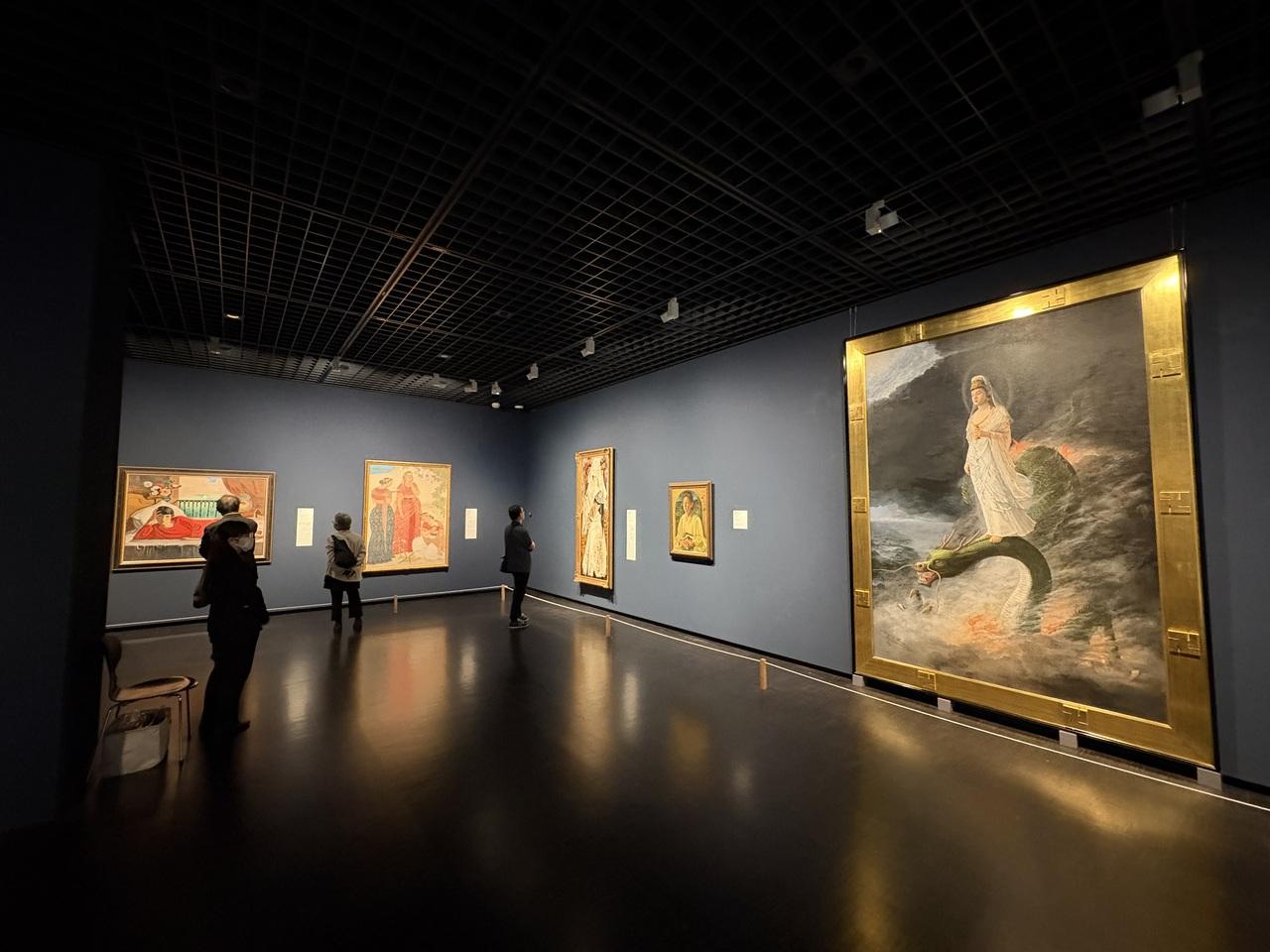
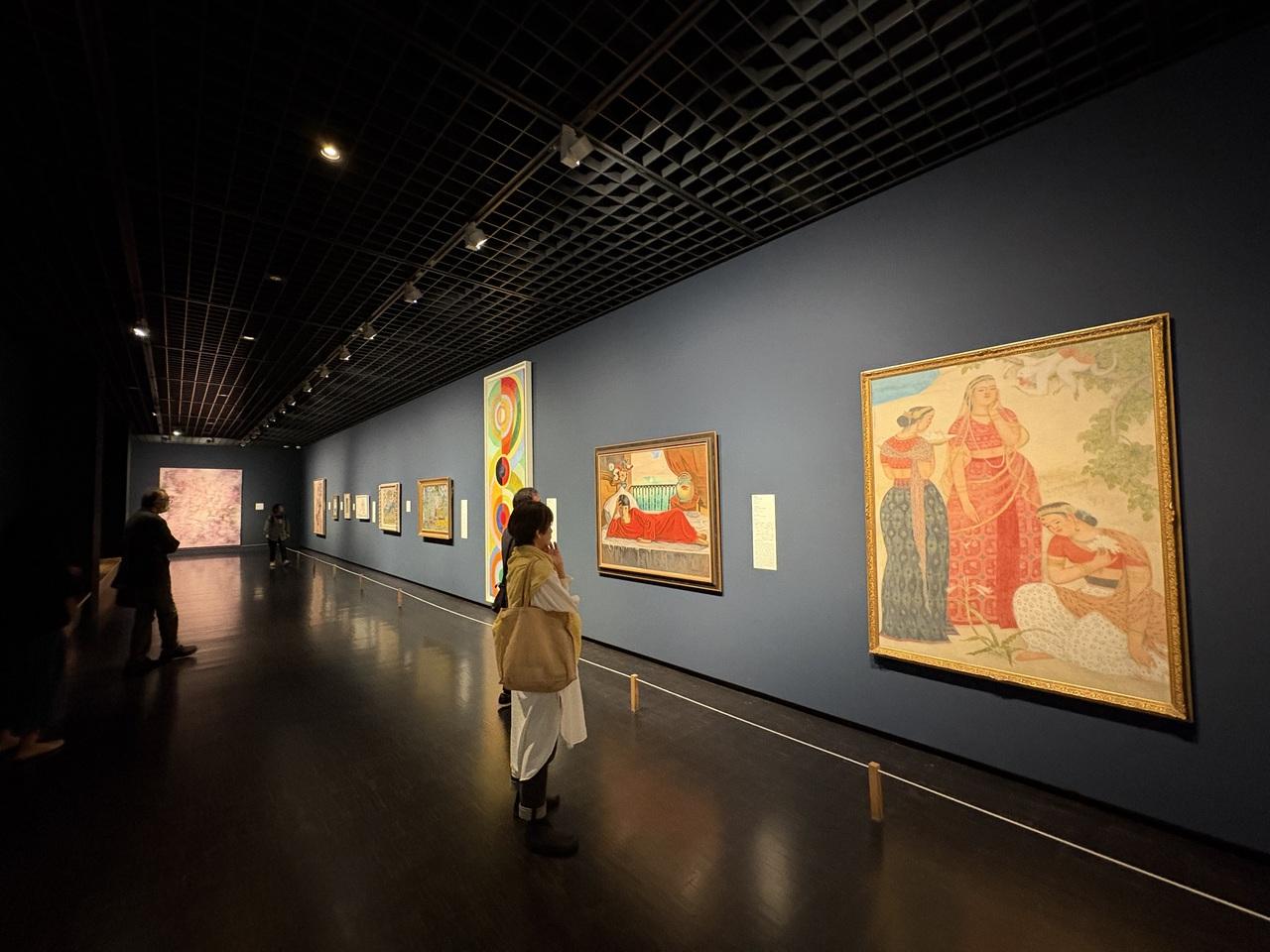
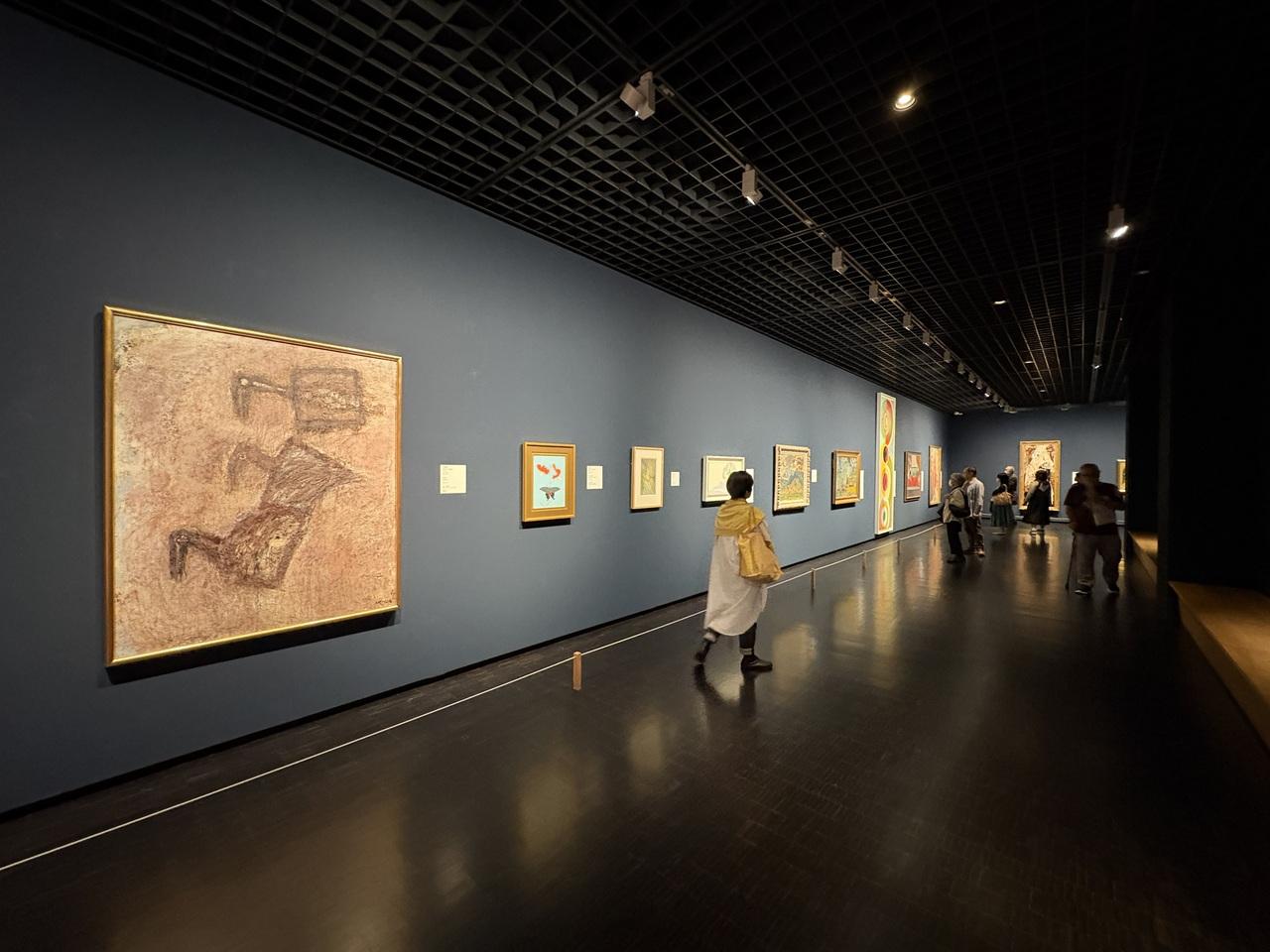
3000㎡に200点以上が並ぶ、所蔵作品展「MOMATコレクション」。「ハイライト」では近現代美術を代表する作品を揃え、当館のコレクションの魅力をぎゅっと凝縮してご紹介しています。
日本画のコーナーでは、前期(2月11日ー4月13日)は、小林古径や土田麦感、鈴木主子らによる、春の訪れを感じさせる作品が並びます。後期(4月15日6月15日)は、新緑の季節にぴったりの川端龍子の作品がみなさまをお迎えします。
ところで今回並ぶ日本画は、着物の模様やパターン化された植物など、装飾的なものが多いのですが、油彩画も、具象的なモチーフが装飾的に描かれた作品や、装飾的なエレメントが抽象へと展開した作品を集めてみました。隣に並んだ作品どうしのつながりや違いにも注目しながら、ハイライトをご堪能ください。
1. Highlights
The MOMAT Collection exhibition of works from our permanent holdings features more than 200 items in a 3,000 square-meter space. The "Highlights" section of this exhibition features highly prized works of modern and contemporary art that showcase the strengths of our collection.
In the Nihon-ga (Japanese-style painting) area, during the first term (February 11 - April 13) we present works by Kobayashi Kokei, Tsuchida Bakusen, and Suzuki Kimiko that evoke the arrival of spring. The second term (April 15 - June 15) features works by Kawabata Ryushil that are a perfect fit for the season of fresh greenery.
Many of the Nihon-ga works featured here are quite decorative, with motifs such as kimono patterns and stylized plants. Similarly, in the oil painting section, we have brought together works in which figurative subjects are rendered decoratively, as well as those in which decorative elements develop toward the abstract. Please note the connections and contrasts between adjacent works as you enjoy these highlights from the museum's collection. -
-
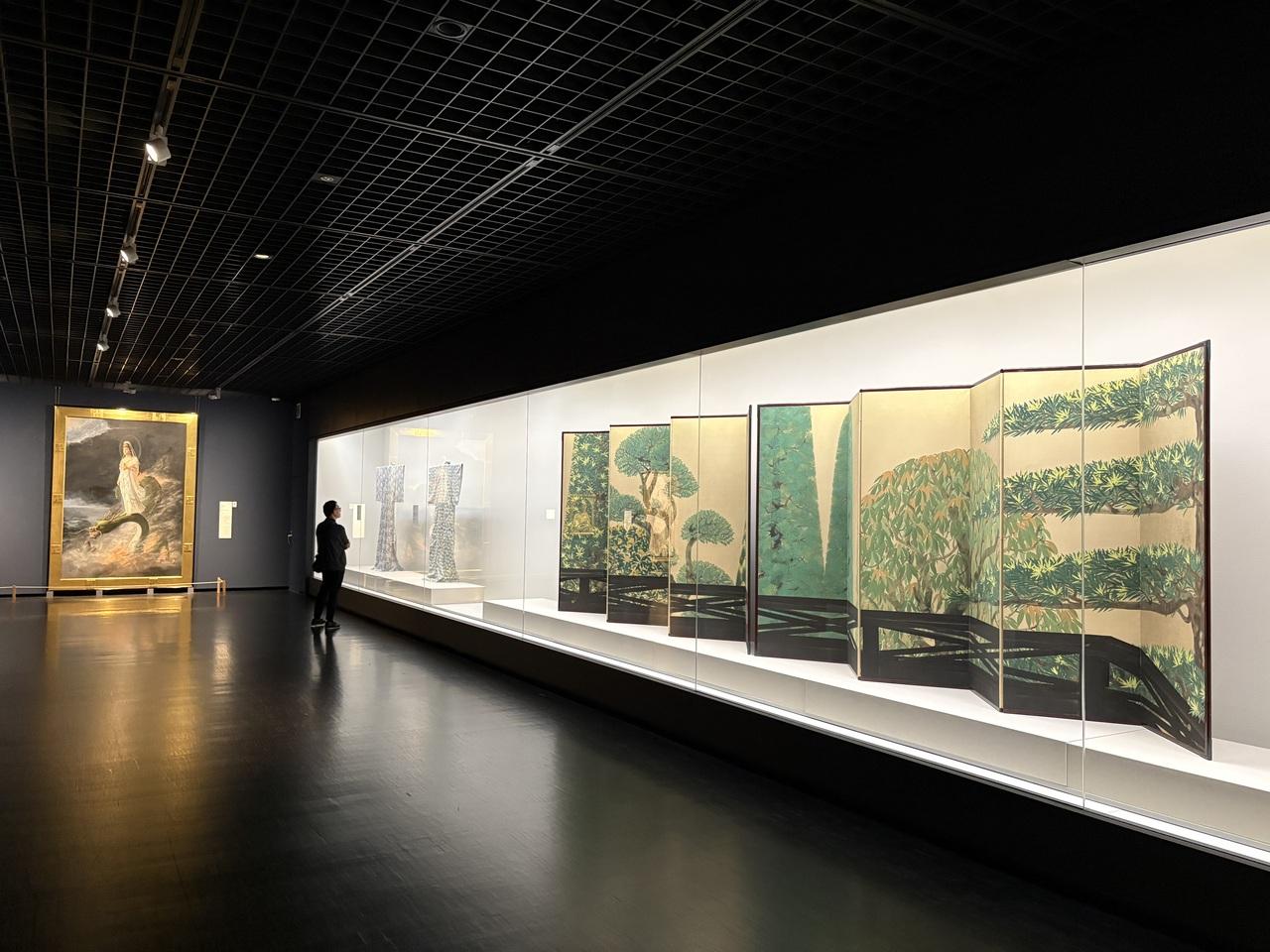
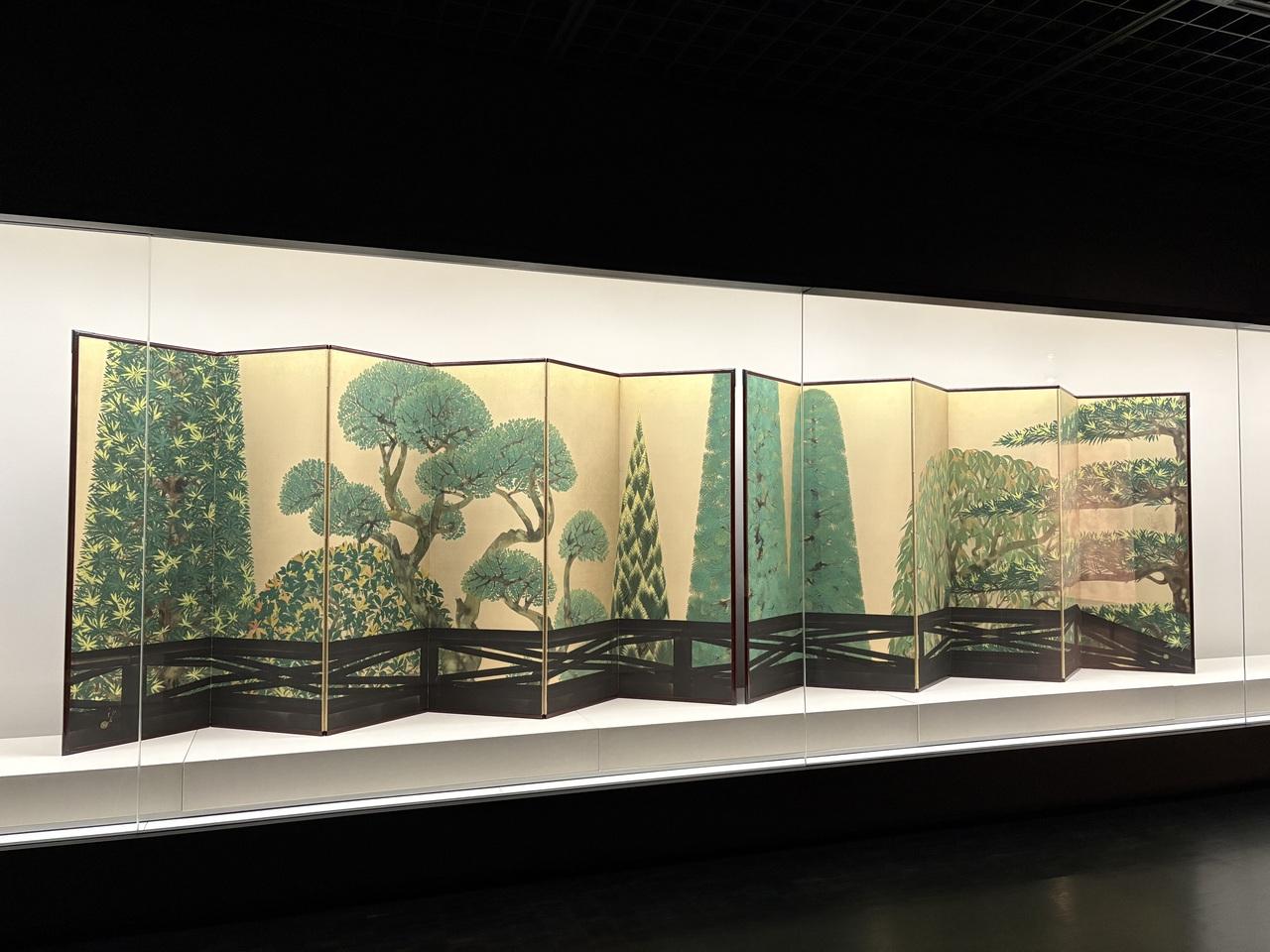
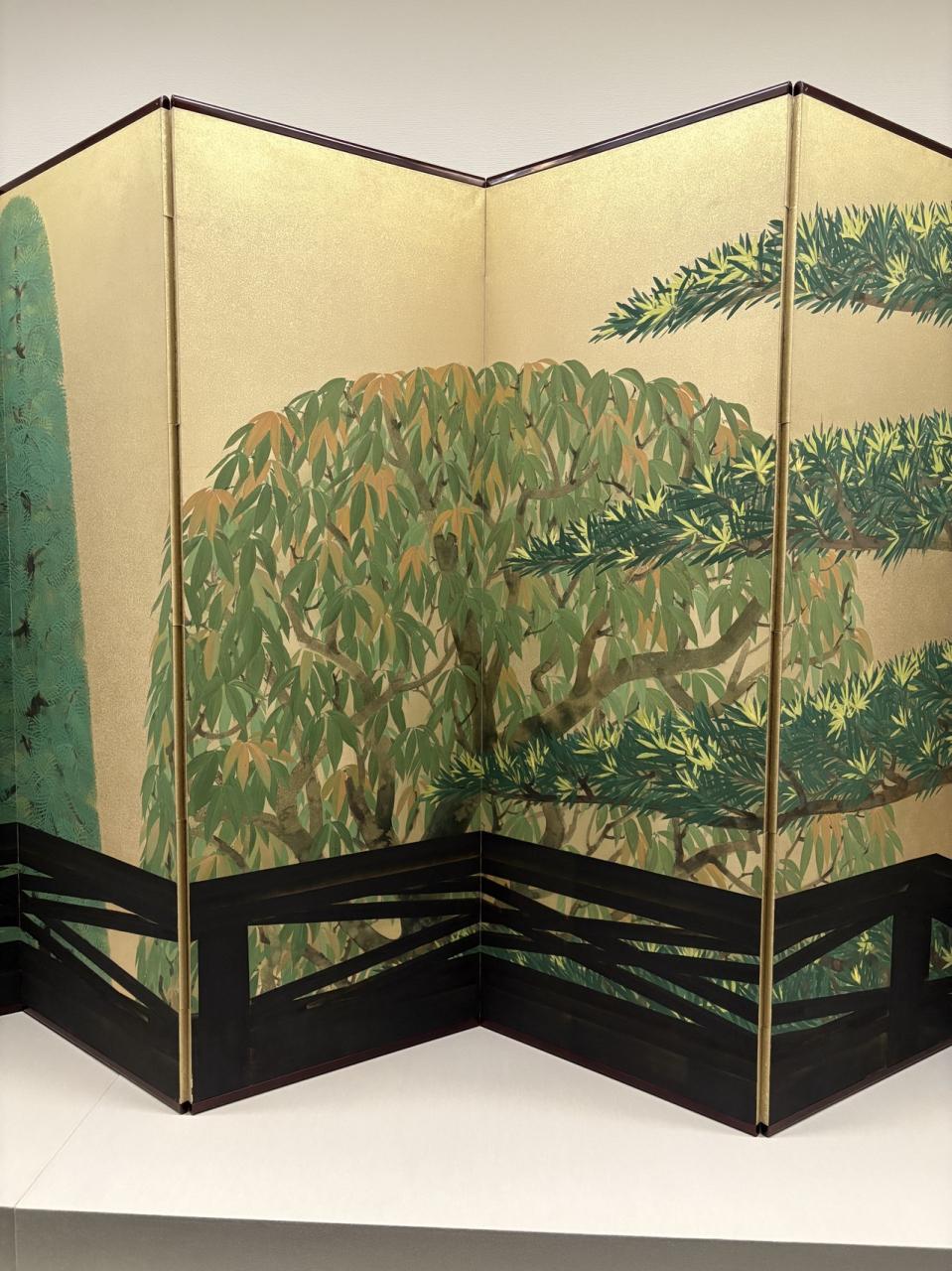
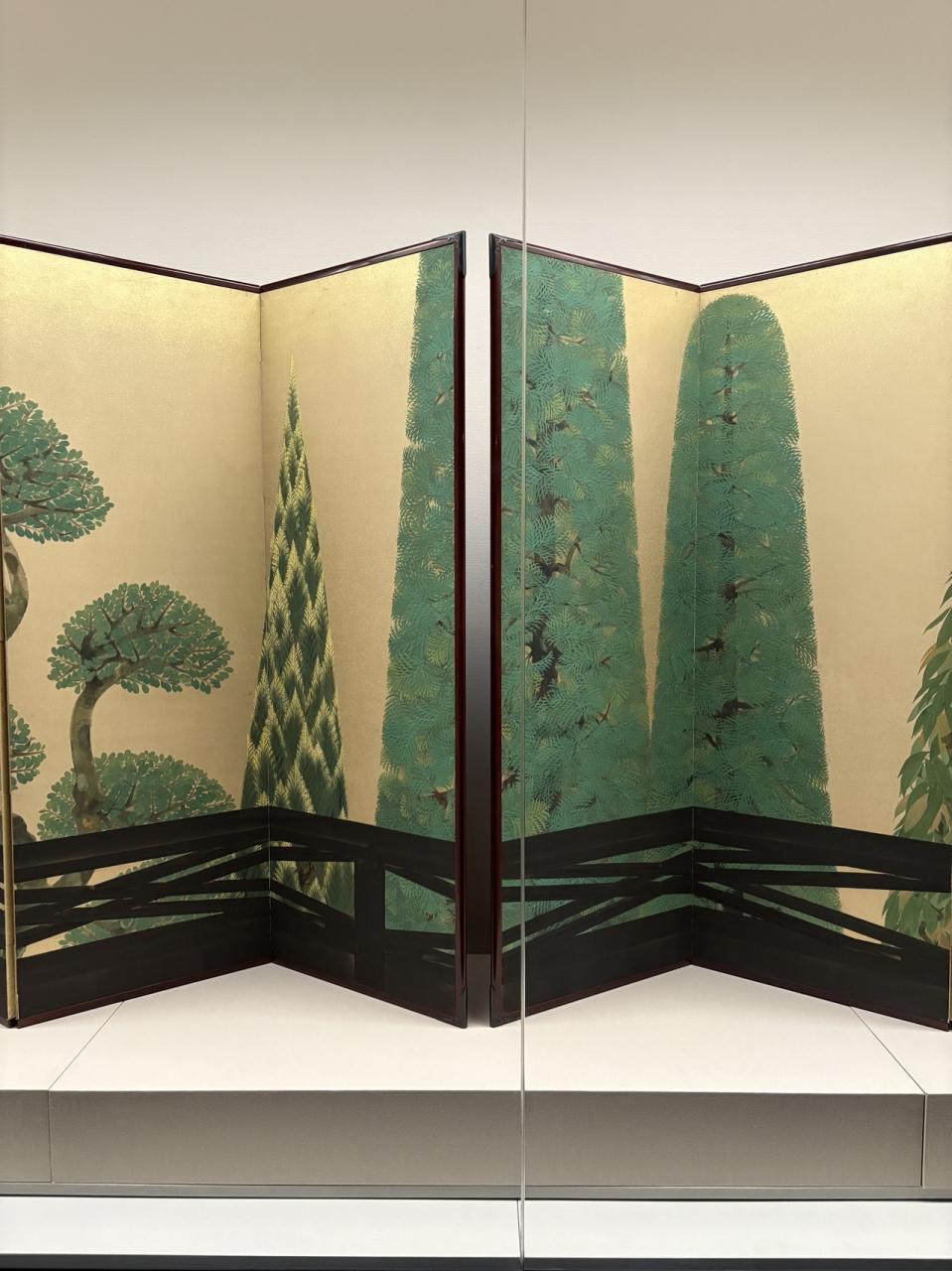
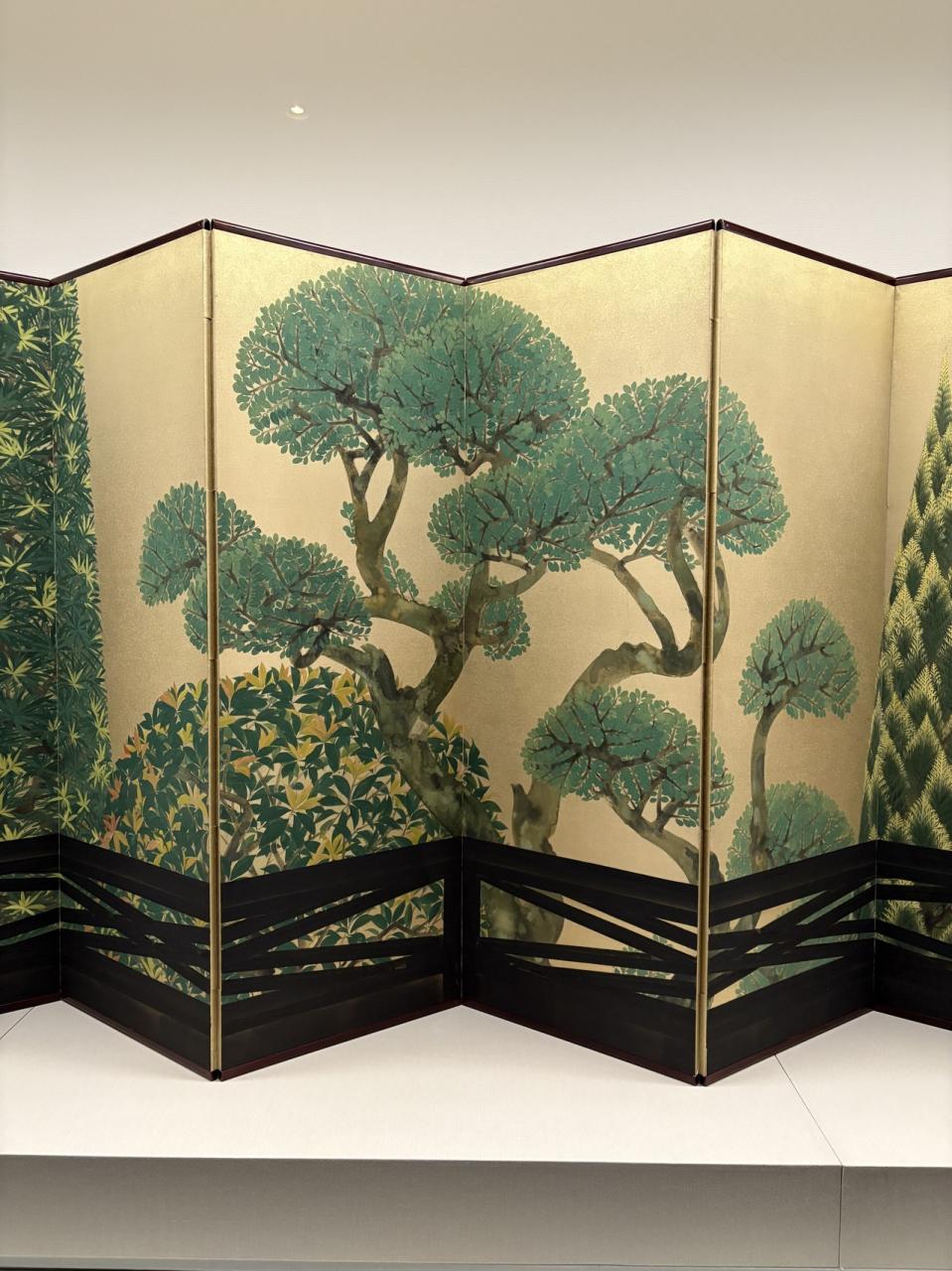
川端龍子
KAWABATA, Ryushi
1885-1966
新樹の曲
Song of Newly Green Trees
1932
昭和7年
絹本彩色 color on silk
川端捷良氏遺贈
Bequest of Kawabata Katsura
甲州街道沿いで見かけた庭を描いています。
ちょうど三男の嵩が東京高等造園学校を卒業した年の春に、造園家として独り立ちをする息子へのプレゼントとして制作した作品です。本作品にある新しさとは、ずばり、幾何学的な画面構成です。当然ながら、洋画のモダニズムからの影響を指摘することができます。一方で、実に巧みな筆技が表現に活かされています。
龍子は日本画に新しさを求めながら、筆技を捨てることはありませんでした。それが彼の日本画家としての信念だったといえます。
This is a depiction of a garden alongside the Koshu Highway.
Kawabata presented this work to his third son, Takashi, who had just graduated from Tokyo Engei High School (a specialty school for gardening) in the spring of this year, to celebrate the fact that Takashi was setting out on his own as a landscape gardener. What makes the work seem so fresh is its forthright geometrical composition. Naturally, we can also detect the influence of European modernism. At the same time, Kawabata brings the expression to life with his highly skilled brushwork.
While striving to introduce something new in Nihon-ga, Kawabata never renounced technique. You might say that this served as his core conviction as a Nihon-ga painter. -
-
-
-
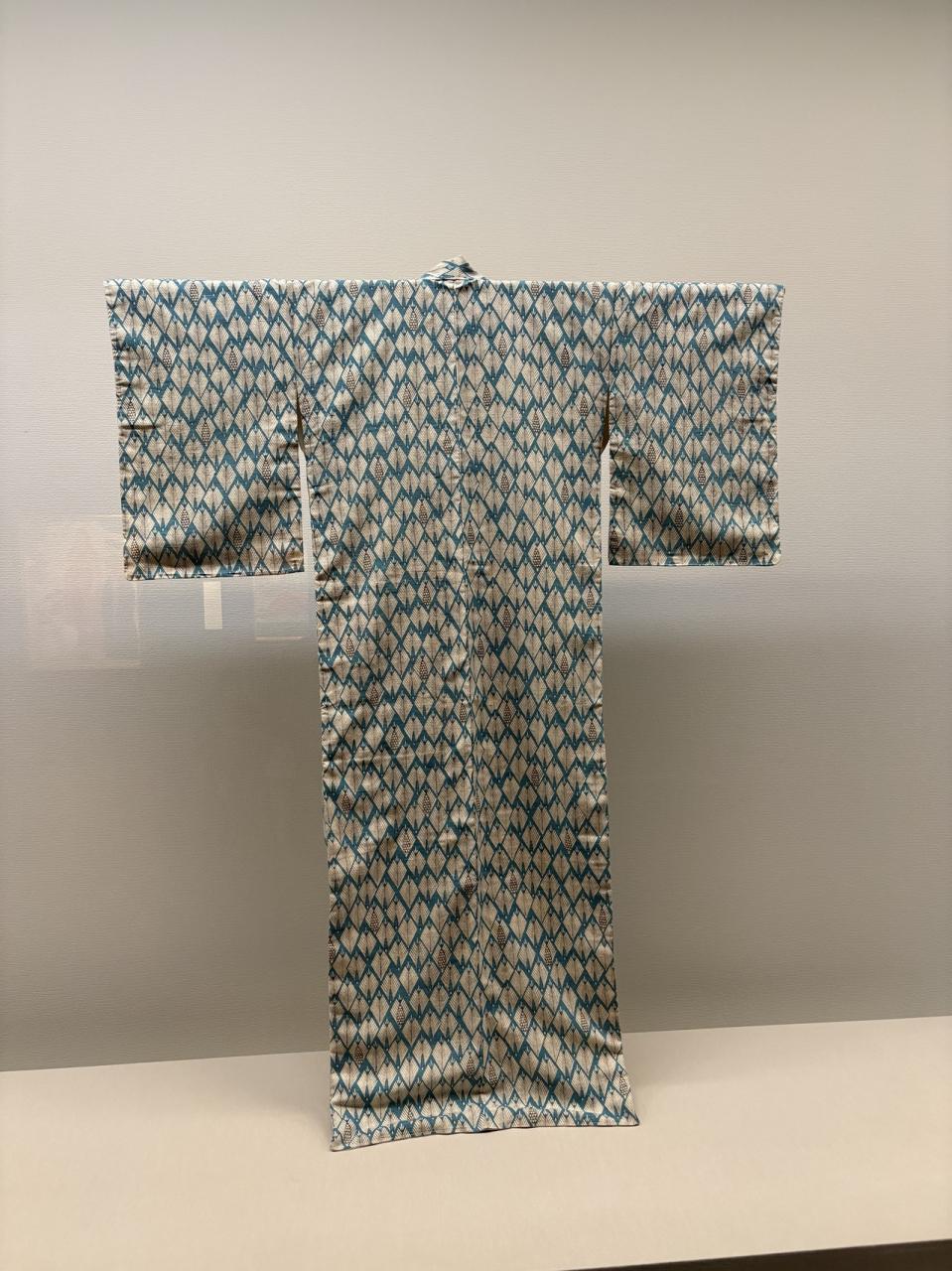
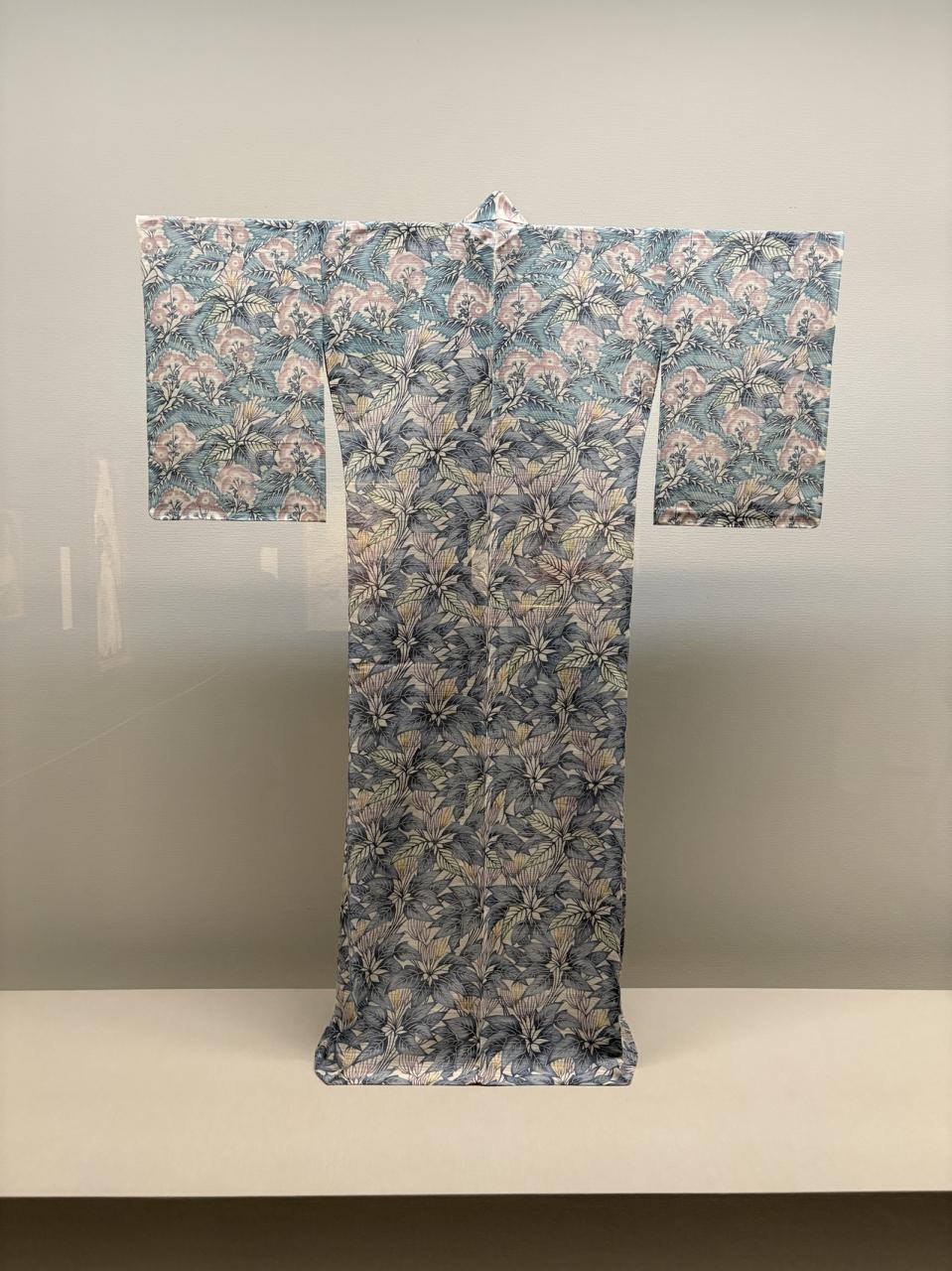
鈴田照次
SUZUTA, Teruji
1916-1981
紬地木版摺松文着物
Kimono, pine cone pattern, wood-block printing and stencil dyeing on tsumugi silk
1972 昭和47年
絹、木版染、型染 silk, wood-block printing -
釜我敏子
KAMAGA, Toshiko
1938-
型絵染着物「山滴る」
Kimono, "Mountain Dew", stencil dyeing
2013 平成25年
絹、型染
silk, stencil dyeing -
-
重要文化財
IMPORTANT CULTURAL PROPERTY
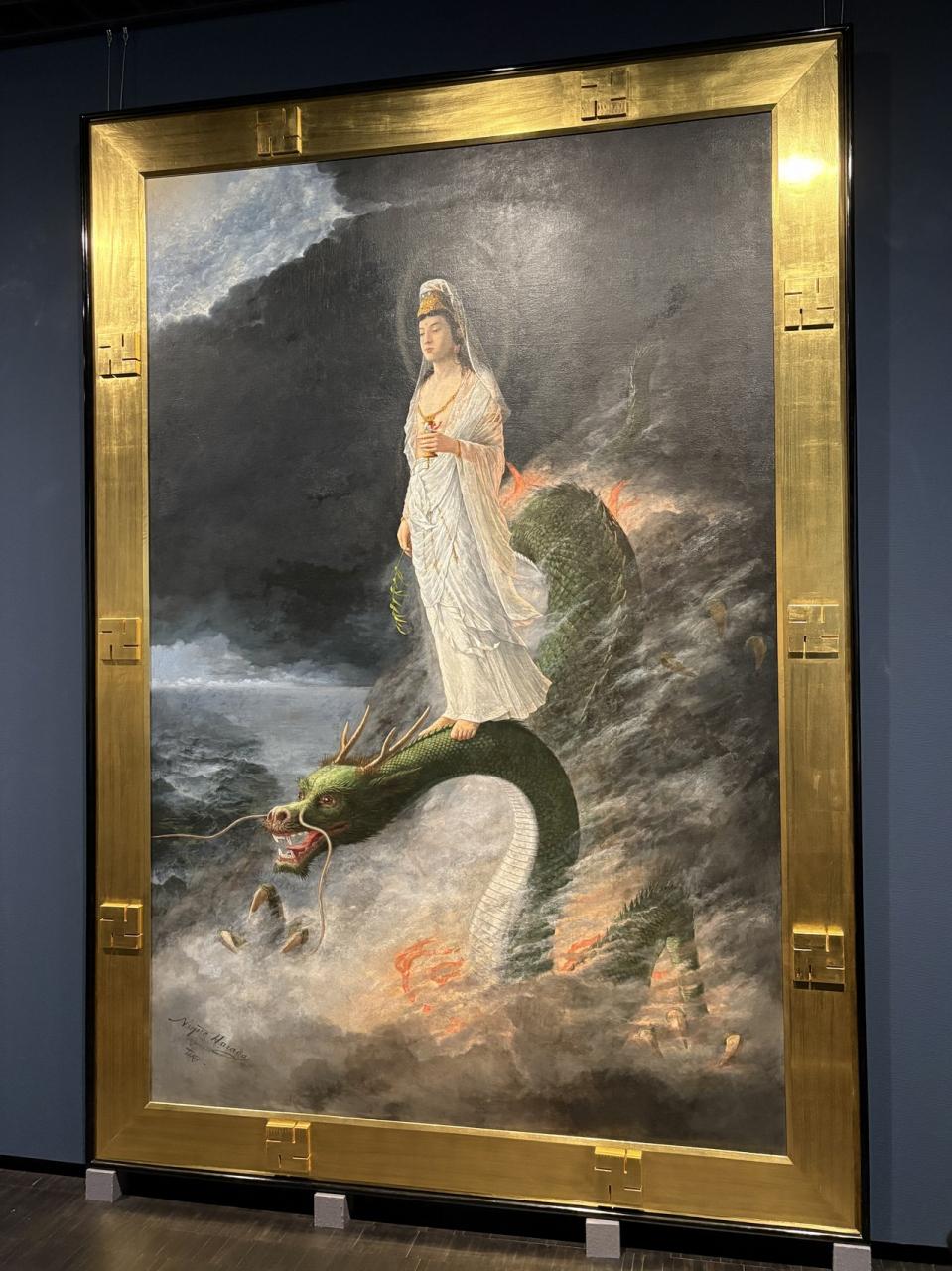
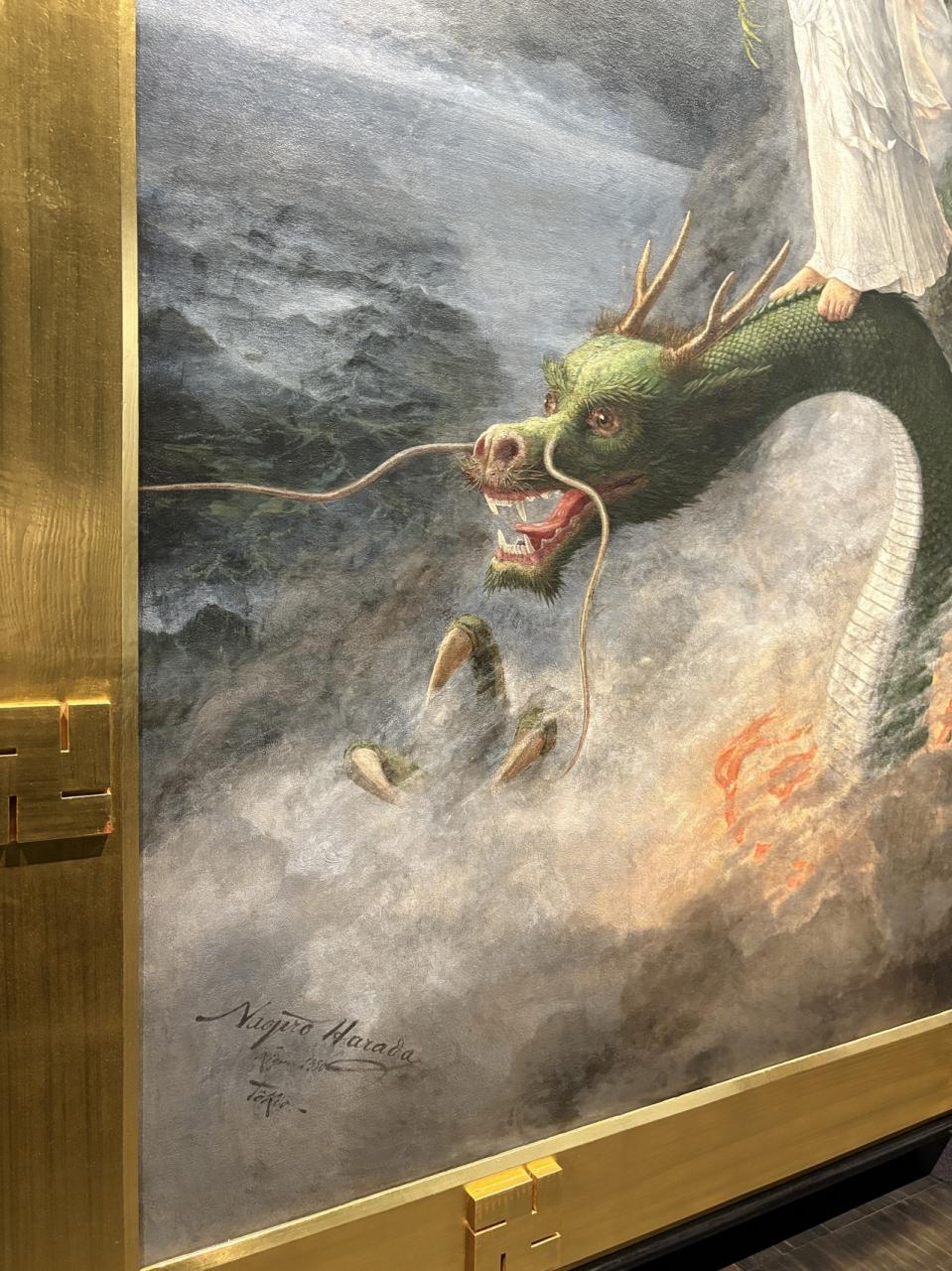
原田直次郎
HARADA, Naojiro
1863-1899
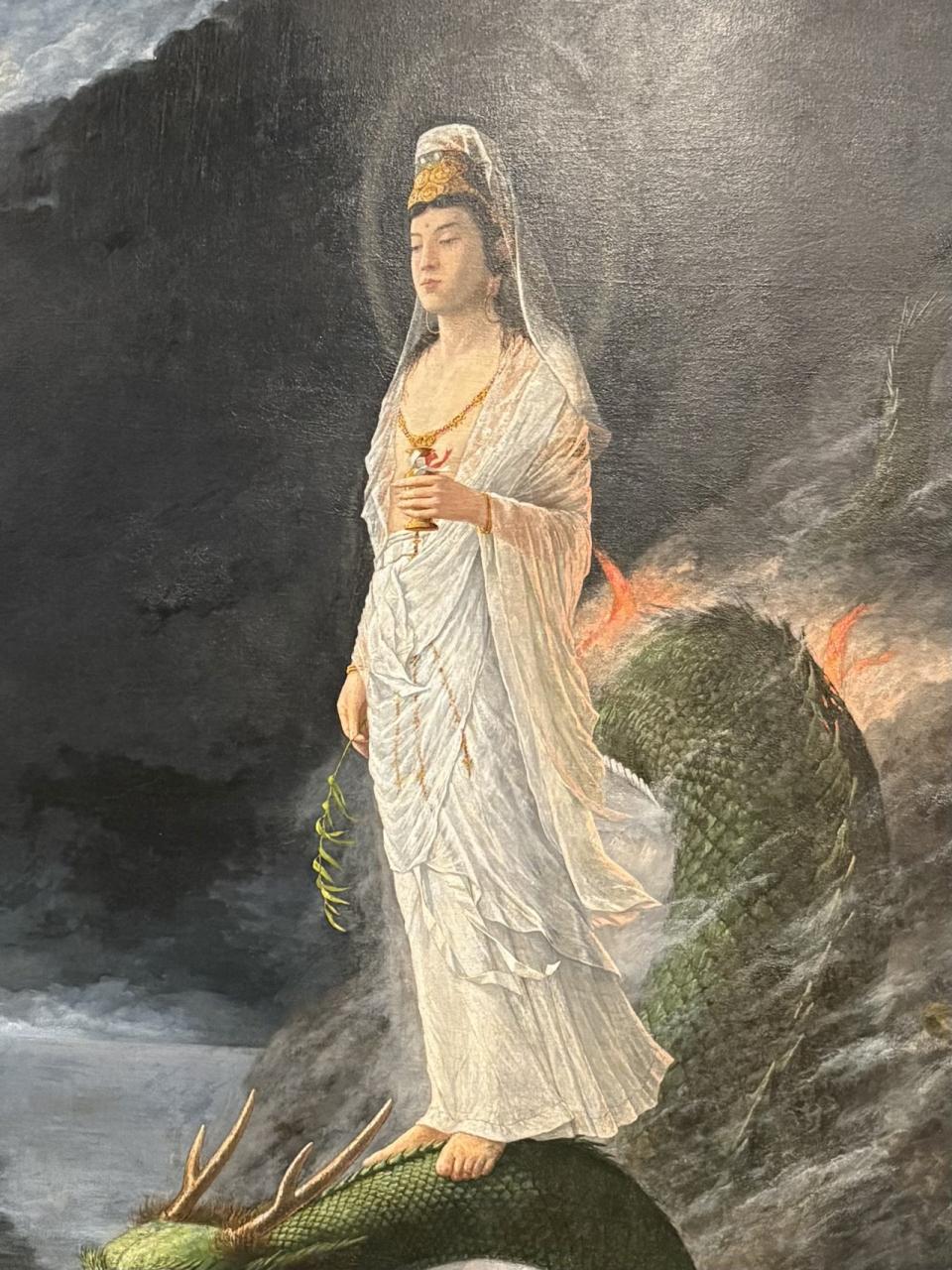
騎龍観音
Kannon Bodhisattva Riding the Dragon
1890明治23年
油彩・キャンバス
oil on canvas
寄託(護国寺蔵)
Long term loan (Collection of Gokokuji Temple)
明治になり、日本の絵画は、西洋の絵画に倣って遠近法や陰影描写を本格的に取り入れました。
原田はドイツで油彩画を学んだ画家で、この作品は、西洋絵画受容の初期の優れた作例として、重要文化財に指定されました。観音と龍という架空の存在をリアルに描くため、光と影を詳細に表し、また龍のスケッチには犬や鶏を用いています。しかし明治の人々には生々しく見えたのか、「サーカスの綱渡りのようだ」と不評で、失望した原田はこの作品を東京、護国寺に奉納しました。当館に寄託されるまで、この作品は長く本堂に掛けられていました。
In the Meiji era, Japanese painters began to imitate Western painting and earnestly adopted techniques like perspective and shading.
Harada studied oil painting in Germany and this work was designated as an Important Cultural Property as it is an excellent early example of the acceptance of Western painting in Japan. To depict the fictitious entities of Kannon and the dragon in a realistic manner, Harada expressed the light and shadows in great detail and used dogs and chickens for his sketches of the dragon. But contemporary viewers derided the vivid appearance of the work as "a circus high-wire act." Dejected, Harada made an offering of the painting to Gokoku-ji Temple in Tokyo. Until it was deposited in the museum, the work remained for many years in the temple's main hall. -
-
-
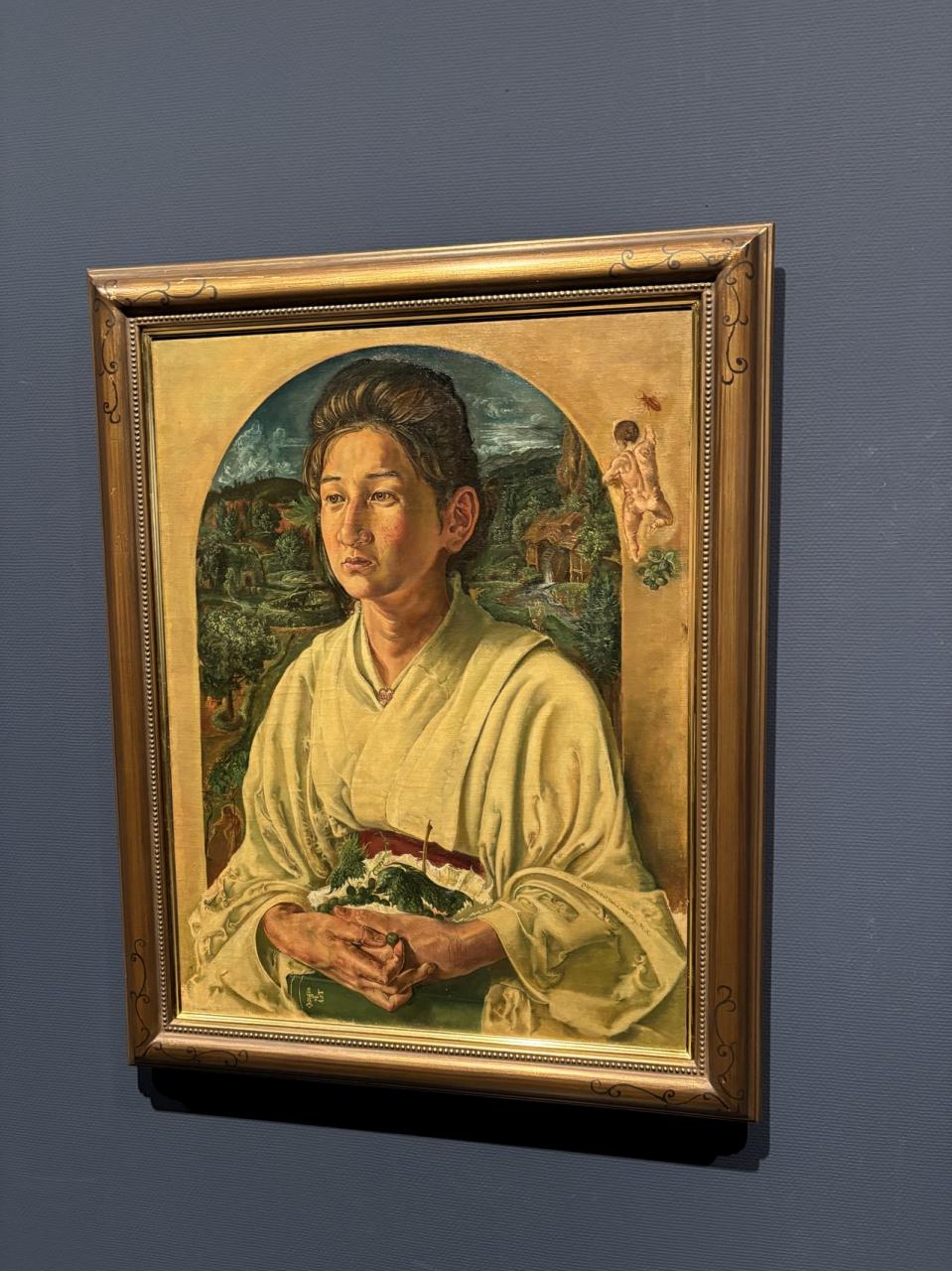
河野通勢
KONO, Michisei
1895-1950
好子像
Portrait of Yoshiko
1916 大正5年
油彩・キャンバス
oil on canvas -
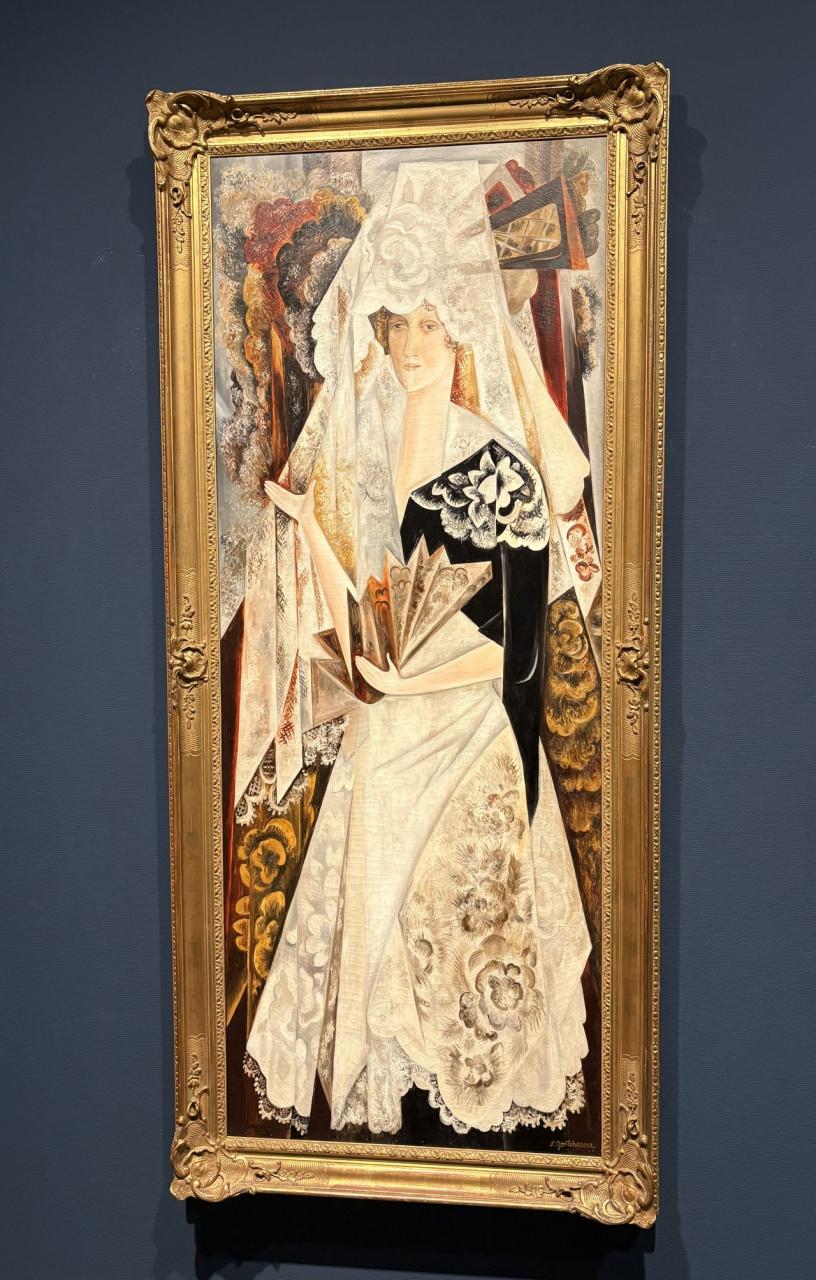
ナターリア・ゴンチャローヴァ
Natalia Gontcharova
1881-1962
スペイン女
Spanish Woman
C.1916-20 大正5-9年頃
油彩・キャンバス oil on canvas
ロシア出身のアーティスト、ゴンチャローヴァは、セルゲイ・ディアギレフの「バレエ・リュス」のための舞台美術を手がけたことでも知られます。ロシアで活動した初期には「光線主義(レイヨニスム)」、「立体未来主義(クボ・フトゥリズム)」と呼ばれる前衛運動に関わります。1919(大正8)年に拠点をパリに移し、38年にフランスに帰化、62年にパリで亡くなりました。
1916年、ゴンチャローヴァはディアギレフらとスペインを訪れます。ディアギレフはスペインをテーマにした舞台を計画し、その衣装などをゴンチャローヴァが担当します。結局、舞台は実現しませんでしたが、この経験から本作が生まれました。女性の身体は縦に引き伸ばされてモニュメンタルな雰囲気をたたえ、また幾何学的で平面的な処理をほどこされた白い
レースのスカーフ(マンティラ)や手にした扇の表現には、キュビスムからの影響がうかがえます。
The Russian-born artist Natalia Gotcharova is known for the stage sets she made for Sergei Diaghilev's Ballets Russes. While still in Russia, she also spearheaded avant-garde movements like Rayonism and Cubo-Futurism. In 1919, Gontcharova moved to Paris, became a French citizen in 1938, and died in Paris in 1962.
In 1916, Gotcharova traveled with Diaghilev and his company to Spain. Diaghilev had planned several ballets based on a Spanish theme and Gotcharova was in charge of the costumes and sets. The production was ultimately never realized, but the experience did inspire Gotcharova to make this painting. In addition to the monumental atmosphere, in which the woman's body is vertically elongated, the expression of her white, lace head-scarf (mantilla), with its flat and geometrical aspect, and the fan in her hand suggest the influence of Cubism. -
-
小杉放菴(未醒)
KOSUGI, Hoan (Misei)
1881-1964
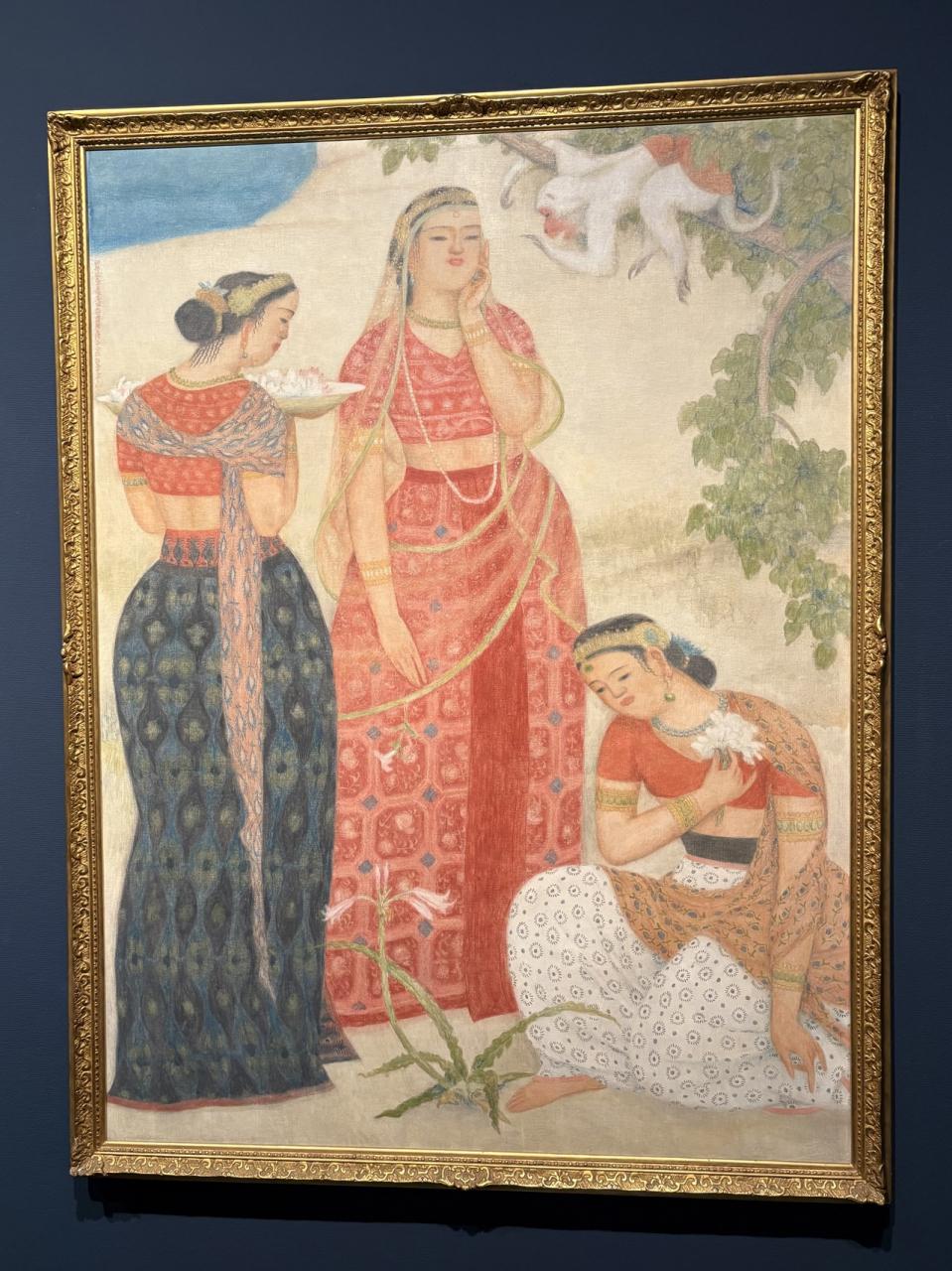
羅摩物語
Story of Ramayana
1928昭和3年
油彩・キャンバス oil on canvas
古代インドの叙事詩『ラーマーヤナ』の一場面。ラーマー王子の妻シーター妃は魔王に囚われランカー島に幽閉されますが、彼女のもとに白猿ハヌマットがやってきて、もうすぐ王子が猿の軍勢を率いて助けにくることを告げます。シーター妃は片手を頬にあてて喜びの表情を浮かべ、驚きのあまり手にしていた白い花を落としてしまいます。作者の関心は、異国情緒にあふれた更紗模様にも向けられており、草花や孔雀の羽、魚、星などさまざまな装飾モチーフにも目を凝らしてみてください。
In this scene from the ancient Indian epic the Ramayana, Princess Sita, wife of Prince Rama, is held captive by a demon king on the island of Lanka. However, the white monkey Hanumat arrives and informs her that the prince will soon come to her rescue with an army of monkeys.
With a joyous expression and one hand on her cheek, Sita lets a white flower fall from her other hand in surprise. The artist, Kosugi Hoan, also focuses considerably on the exotic patterns of the sarasa fabric of the women's clothing. Please note the variety of decorative motifs, such as flowers, peacock feathers, fish, and stars. -
-
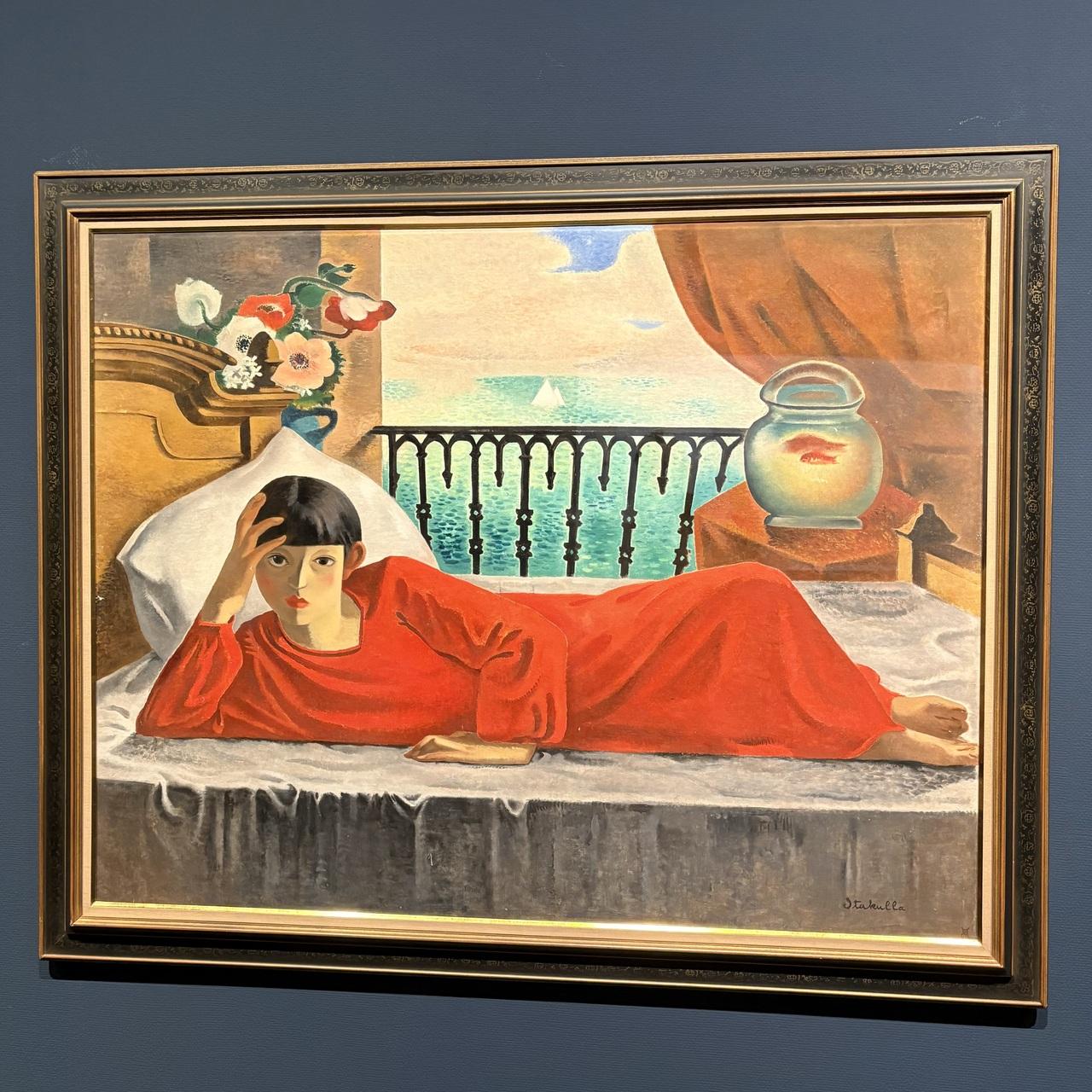
板倉鼎
ITAKURA, Kanae
1901-1929
休む赤衣の女
Reclining Woman in Red Dress
1929
昭和4年
油彩・キャンバス oil on canvas
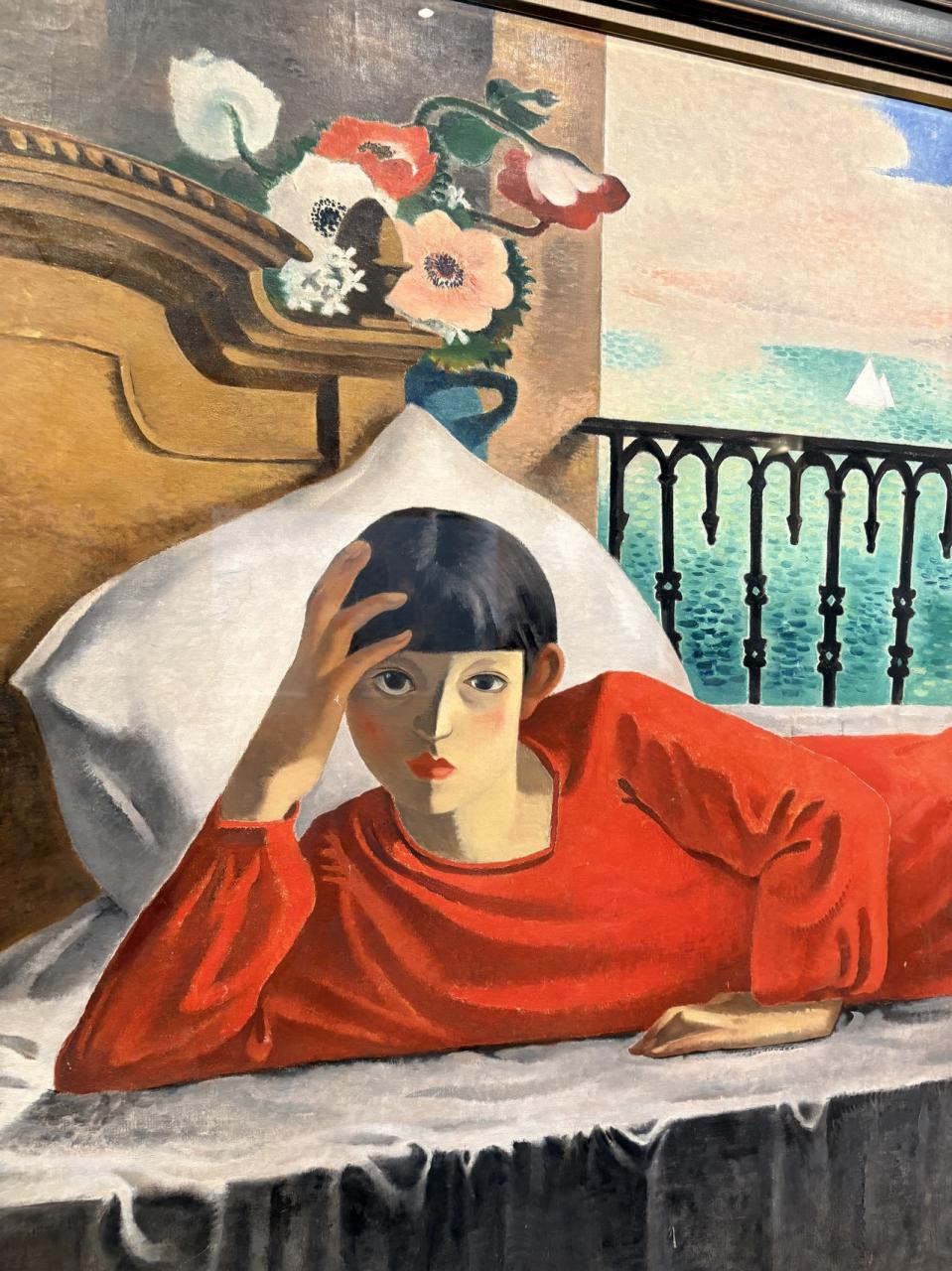
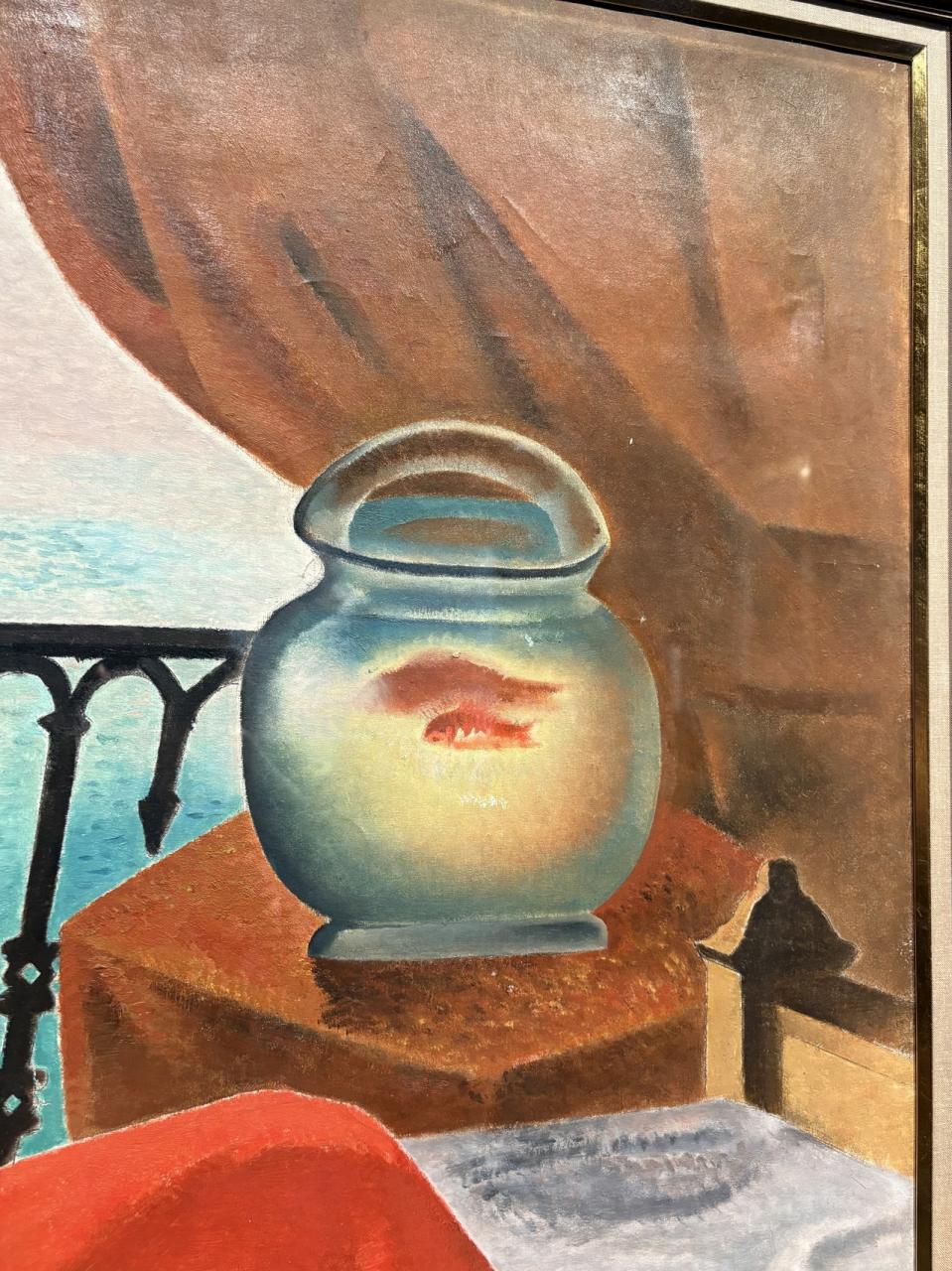
1926年に渡仏した画家の、パリでの2年半に及ぶ研鑽が実った作品です。赤い服を着て横たわるのは、同じく画家であった妻の須美子。ベッドの脇にはアネモネと金魚鉢が置かれ、窓の向こうにはエメラルドグリーンの海とピンクに染まった雲が広がります。当初サロン・デ・チュイルリーへの出品を目指していましたが、板倉は本作の完成から半年足らずで急逝したため、それは叶いませんでした。幾何学をベースにした構図の工夫もさることながら、光と影によって描き分けられた須美子の表情が目を引きます。
This work shows the fruits of Itakura Kanae's two and a half years of study in Paris, beginning in 1926. The model in a red garment is his wife, Sumiko, who was also an artist. Beside the bed are anemones and a goldfish bowl, while through the window an emerald green sea stretches into the distance under pink-tinged clouds. The painting was intended for submission to the Salon des Tuileries, but Itakura died suddenly less than six months after completing it, and it was never submitted. It is notable not only for its inventive composition based on geometric principles, but also for the striking portrayal of Sumiko's expression, marked by strong contrast of light and shadow. -
-
-
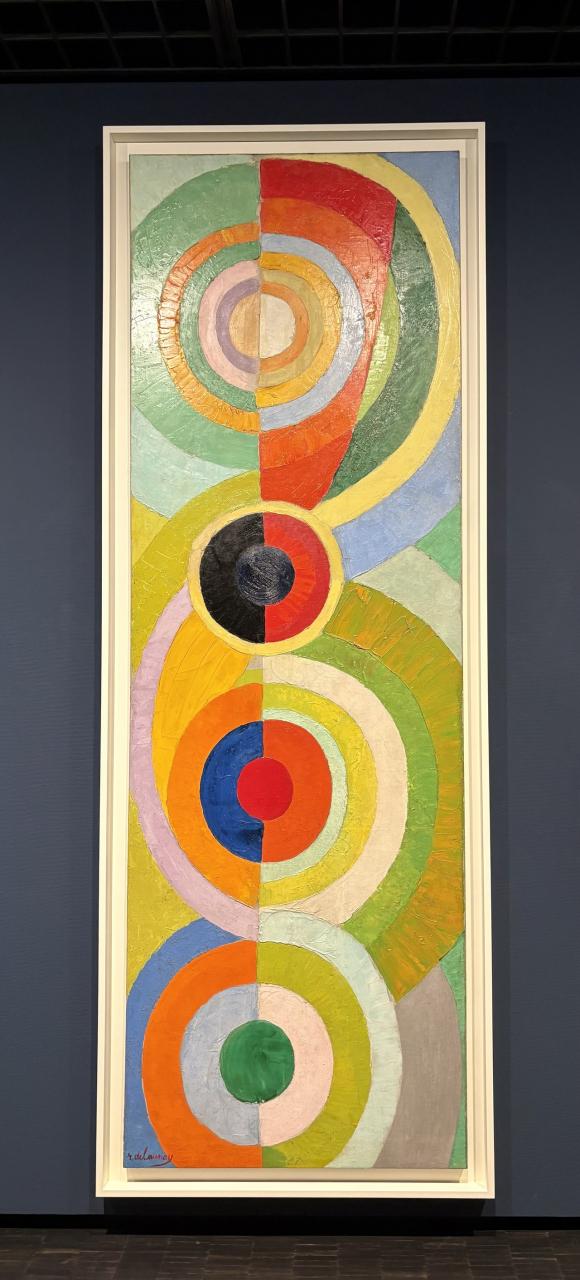
ロベール・ドローネー
Robert Delaunay
1885-1941
リズム 螺旋
Rhythm-Spiral
1935
昭和10年
油彩・キャンバス oil on canvas
ドローネーは現実の事物を再現的に描写するのではなく、色彩そのものの表現性を追求した画家です。ディスク状の同心円を縦に四つ並べた構成で、多様な色彩が配置されています。タイトルは「リズム螺旋」です。隣り合う色彩が相互に作用することで、あるいは同じ色彩が別々の円で反復されることで「リズム」が生まれ、また円と円をつなぐ二次売のS字状の曲線は、三次元的な奥行きをはらむ「螺旋」を描きます。
ドローネーが自身の色彩についての考えを記した論考「光」(1912年)は、パウル・クレーがドイツ語訳して発表されたもので、彼の色彩論はクレーをはじめ多くの画家に影響を与えました。
Robert Delaunay was a painter who explored the expressive power of color itself without realistically depicting objects from the actual world. This work, composed of four sets of concentric discs arranged vertically and rendered in a rich range of colors, is titled Rhythm-Spiral. The "rhythm" is generated by interactions among adjacent colors, or by repetition of the same color in different circles, and the two-dimensional S-shaped curves connecting the circles form a "spiral" that implies three-dimensional depth. Delaunay's treatise
"Light" (1912), which spelled out his ideas on color, was published in a translation from French to German by Paul Klee, and his chromatic theories influenced Klee and many other painters. -
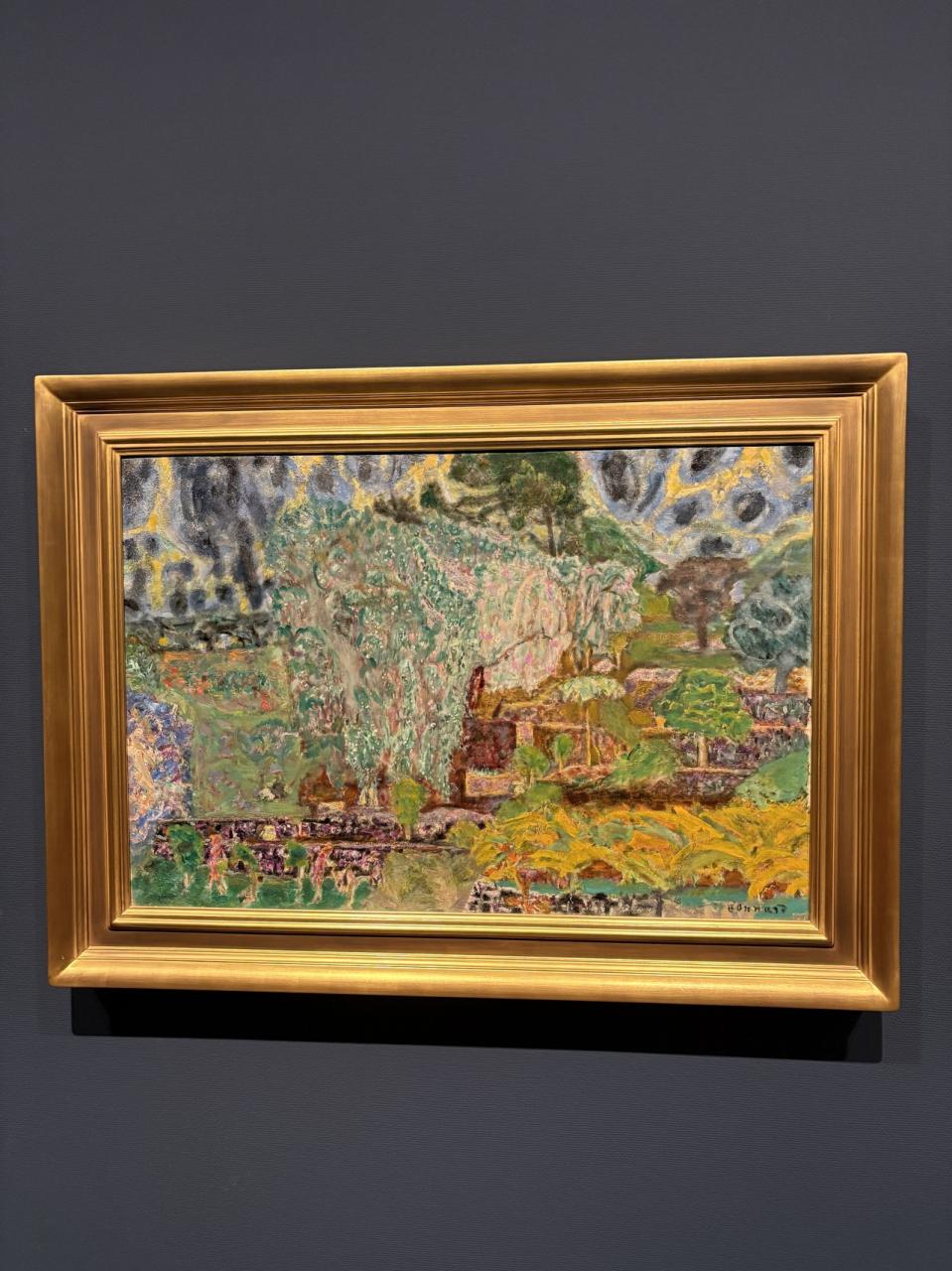
ピエール・ボナール
Pierre Bonnard
1867-1947
プロヴァンス風景
Landscape in Provence
1932昭和7年
油彩・キャンバス oil on canvas
描かれているのは南仏プロヴァンスの風景。光にあふれたこの地の環境が、ボナールの表現、とりわけ色彩に与えた影響ははかりしれません。ボナールが好んで用いた紫、黄色に加え、さまざまな階調の緑、ピンク、青、そして白など、震えるようにきらめく色彩が画面に散りばめられ、まるで宝石箱の中をのぞくかのようです。これだけの色数(実に多様な筆触にも注目)をひとつの画面に取り込み、なおかつ絵画が破綻せずに緊張感をもって成立しているのは驚嘆すべきことでしょう。ボナールが、20世紀絵画史において圧倒的な色彩の使い手であることを体現するような作品です。
The painting depicts scenery in Provence, in the south of France. The influence of the region's luminous environment on Bonnard's style, especially his use of color, is immeasur-able. In addition to purple and yellow, favorites of Bonnard's, the canvas is awash in various shimmering tones of green, pink, blue, and white, so it seems as if one were peering inside a jewel box. For this number of colors (also note the great diversity of brushstrokes) to be incorporated into a single painting, which maintains a sense of tension while maintaining its integrity as a whole, is an amazing feat. It is a work embodying Bonnard's status as one of the most outstanding users of color in the history of 20th-century painting. -
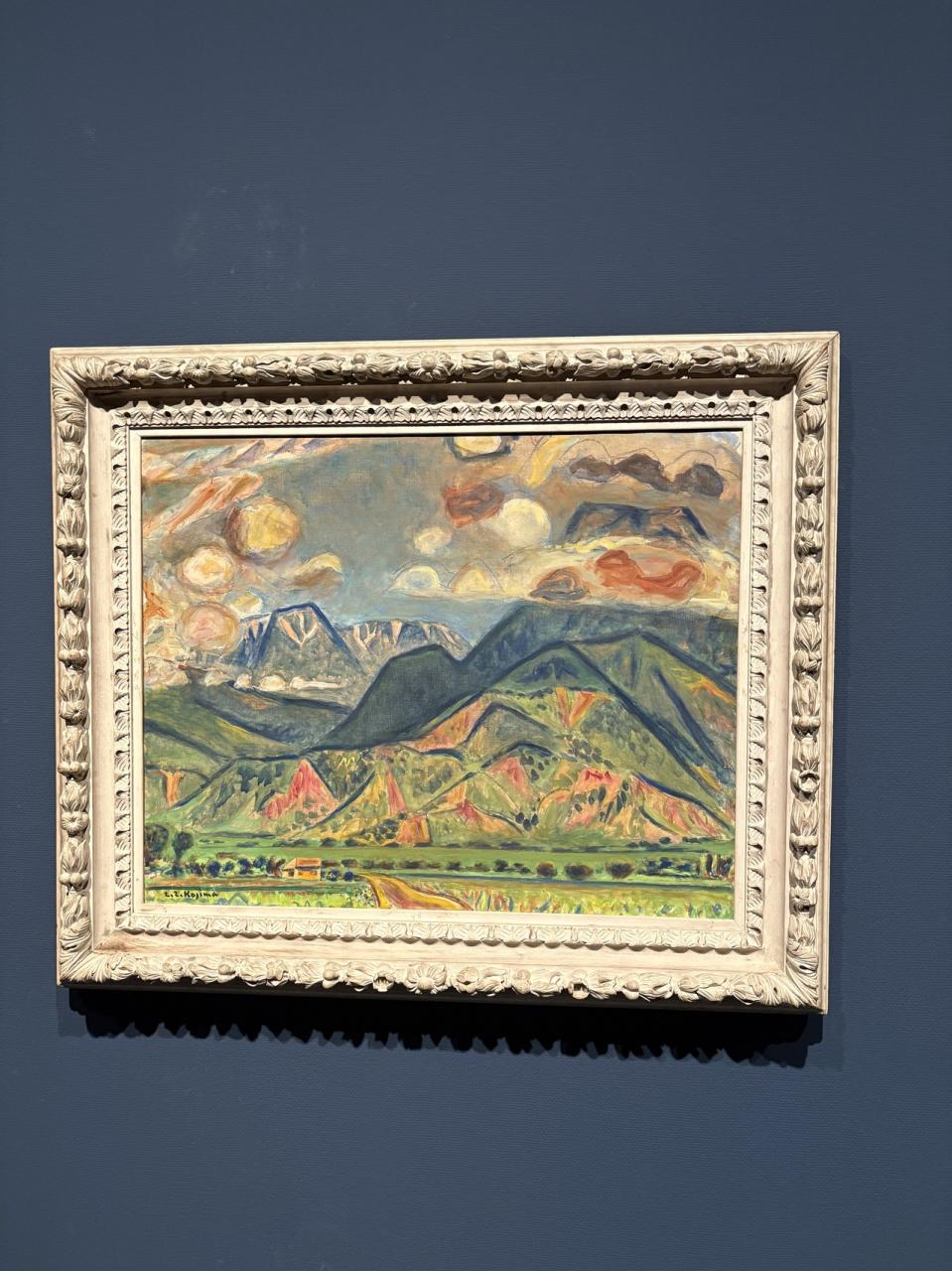
児島善三郎
KOJIMA, Zenzaburo
1893-1962
アルプスへの道
Route to the Japanese Alps
1951 昭和26年
油彩・キャンバス
oil on canvas -
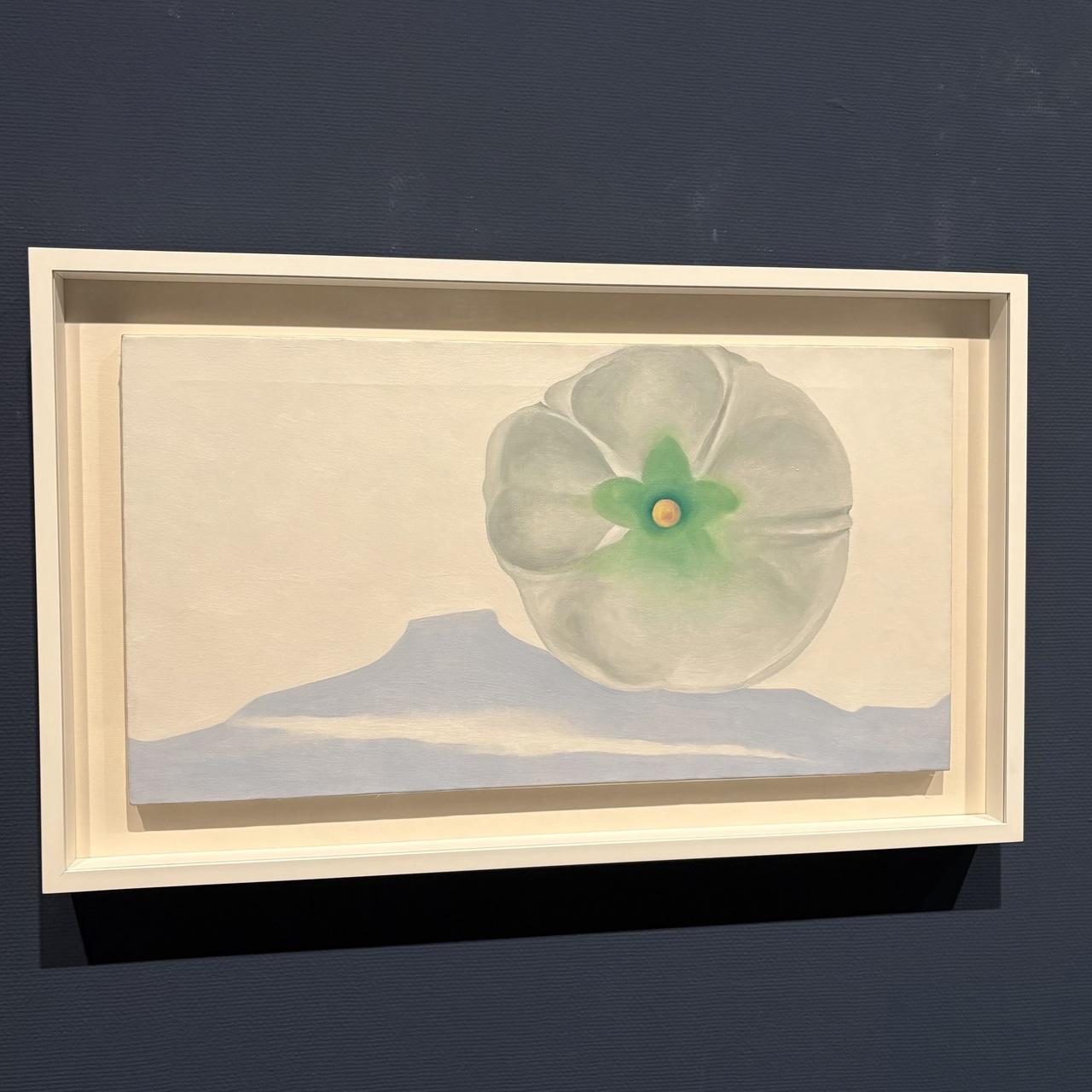
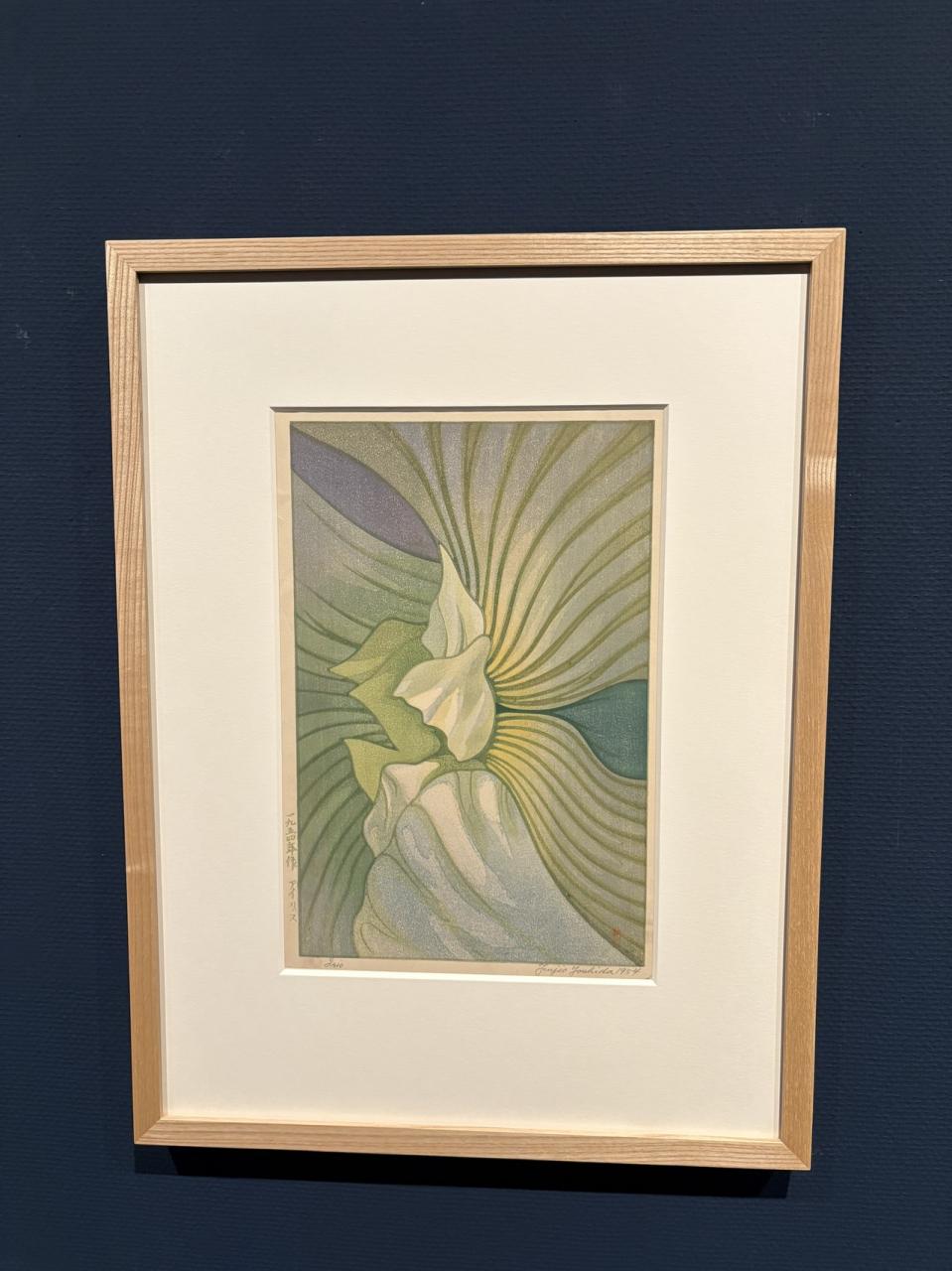
ジョージア・オキーフ
Georgia O'keeffe
1887-1986
タチアオイの白と緑ーペダーナル山の見える
Hollyhock White and Green with Pedernal
1937
暗和12年
油彩・キャンバス
oil on canvas
ジョージア・オキーフ財団寄贈
Gift of The Georgia O'Keeffe Foundation
ペダーナルとはアメリカ合衆国のニュー・メキシコ州にある、高さ3006メートルの卓状台地(mesa)のこと。作者にとってニュー・メキシコの自然と文化はインスピレーションの源泉で、1940年にはペダーナルの見える土地を購入し、アトリエを構えてもいます(ちなみに彼女の遺灰はこの山の上に撒かれました)。当館は1956年に、オキーフ本人から、彼女の夫であった写真家アルフレッド・スティーグリッツの作品を受贈してもいます。
Pedernal is a 3,006-meter-high mesa in the US state of New Mexico. The nature and culture of New Mexico were sources of inspiration for the artist, and in 1940 she purchased land with a view of Pedernal and established a studio there (incidentally, her ashes were also scattered on the mesa). In 1956, this museum also received a gift from O'Keeffe herself of work by her husband, the photographer Alfred Stieglitz. -
ジョージア・オキーフ
Georgia O'keeffe
1887-1986
タチアオイの白と緑ーペダーナル山の見える
Hollyhock White and Green with Pedernal
1937
暗和12年
油彩・キャンバス
oil on canvas
ジョージア・オキーフ財団寄贈
Gift of The Georgia O'Keeffe Foundation
ペダーナルとはアメリカ合衆国のニュー・メキシコ州にある、高さ3006メートルの卓状台地(mesa)のこと。作者にとってニュー・メキシコの自然と文化はインスピレーションの源泉で、1940年にはペダーナルの見える土地を購入し、アトリエを構えてもいます(ちなみに彼女の遺灰はこの山の上に撒かれました)。当館は1956年に、オキーフ本人から、彼女の夫であった写真家アルフレッド・スティーグリッツの作品を受贈してもいます。
Pedernal is a 3,006-meter-high mesa in the US state of New Mexico. The nature and culture of New Mexico were sources of inspiration for the artist, and in 1940 she purchased land with a view of Pedernal and established a studio there (incidentally, her ashes were also scattered on the mesa). In 1956, this museum also received a gift from O'Keeffe herself of work by her husband, the photographer Alfred Stieglitz. -
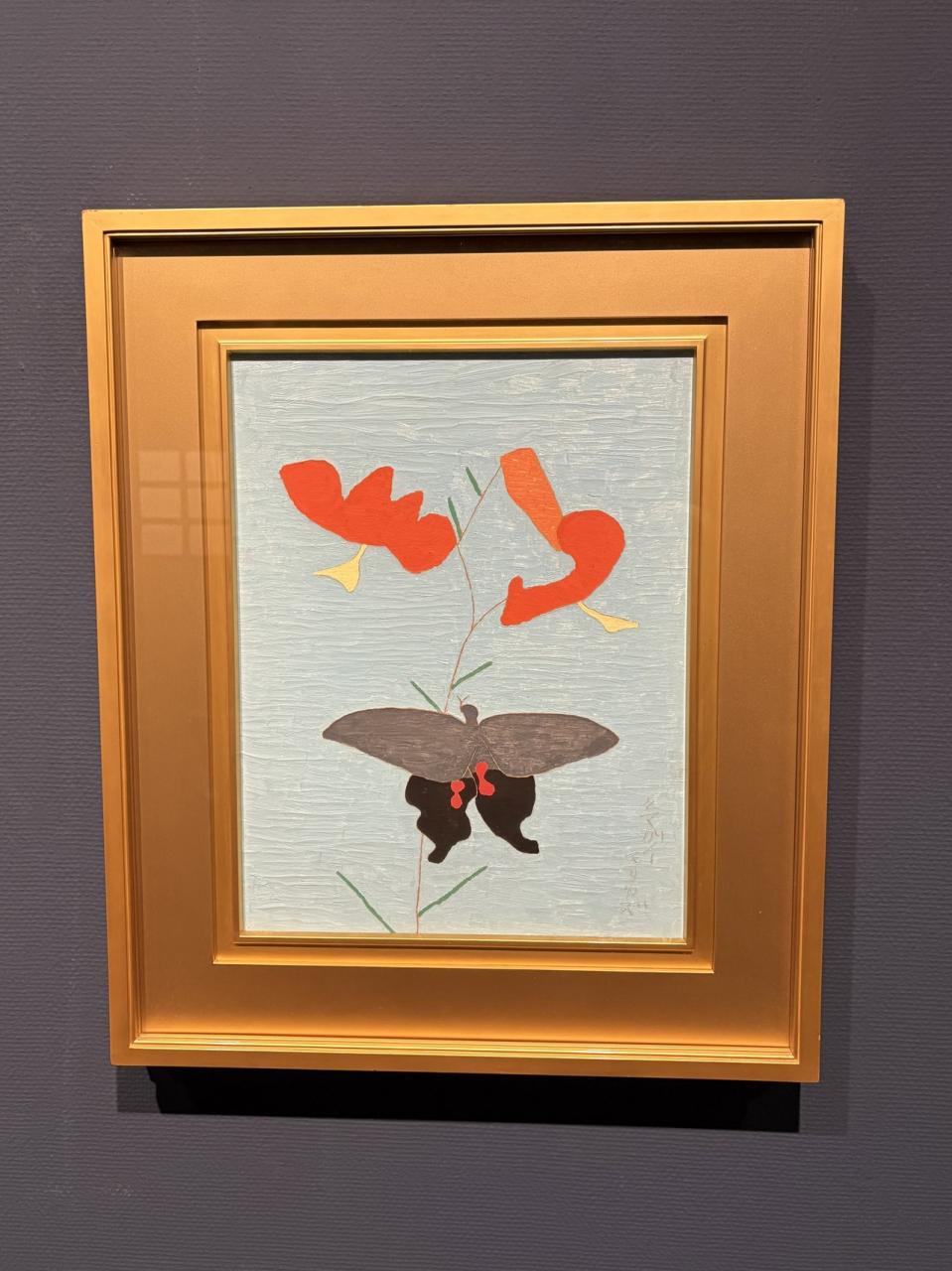
熊谷守一
KUMAGAl, Morikazu
1880-1977
鬼百合に揚羽蝶
Tiger Lilies and a Swallowtail
1959
昭和34年
油彩・紙(キャンバスに貼付)
oil on paper, mounted on canvas -
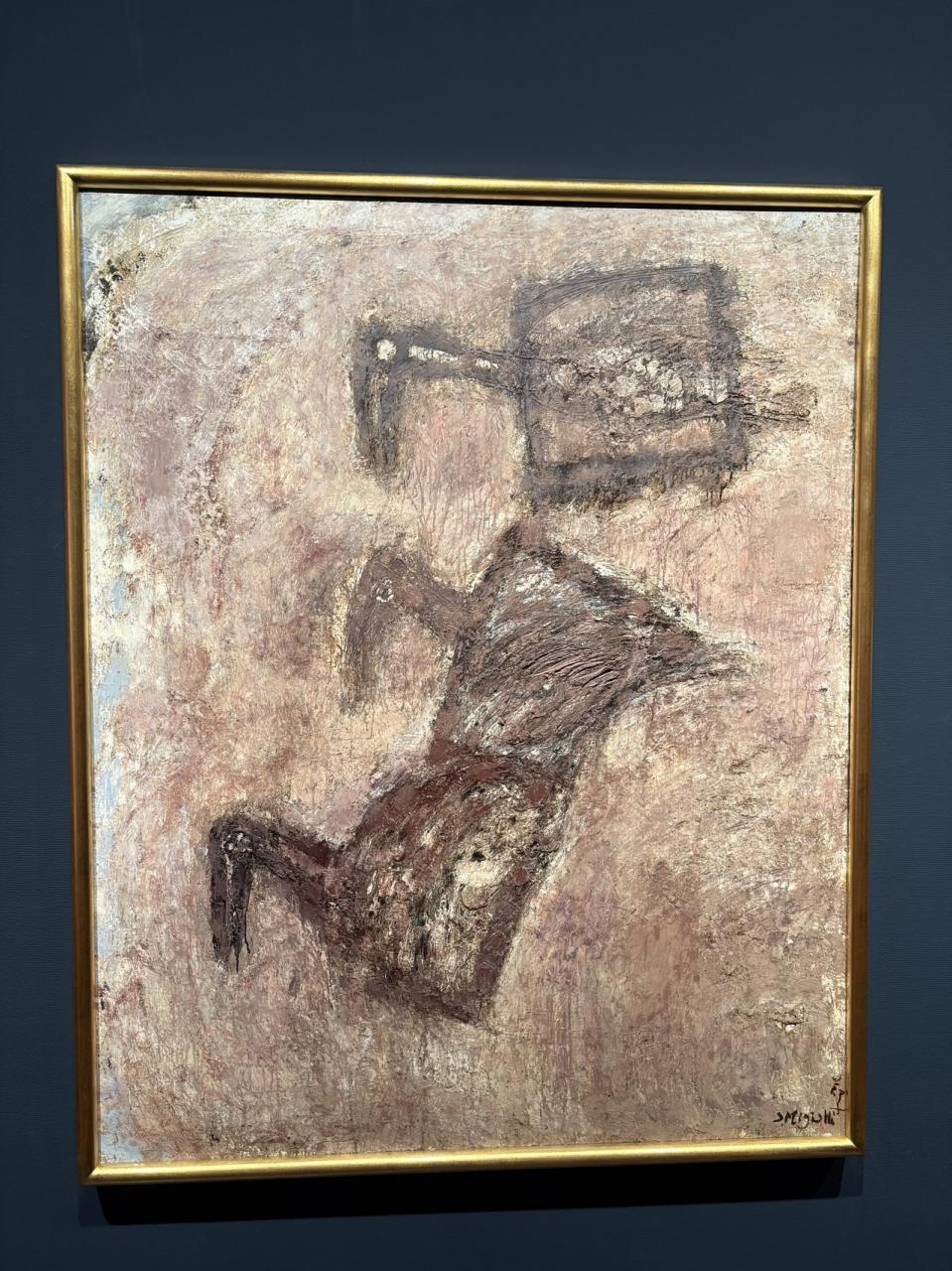
三岸節子
MIGISHI, Setsuko
1905-1999
飛ぶ鳥
Flying Birds
1962
昭和37年
油彩・キャンバス oil on canvas
作者寄贈
Gift of the artist -
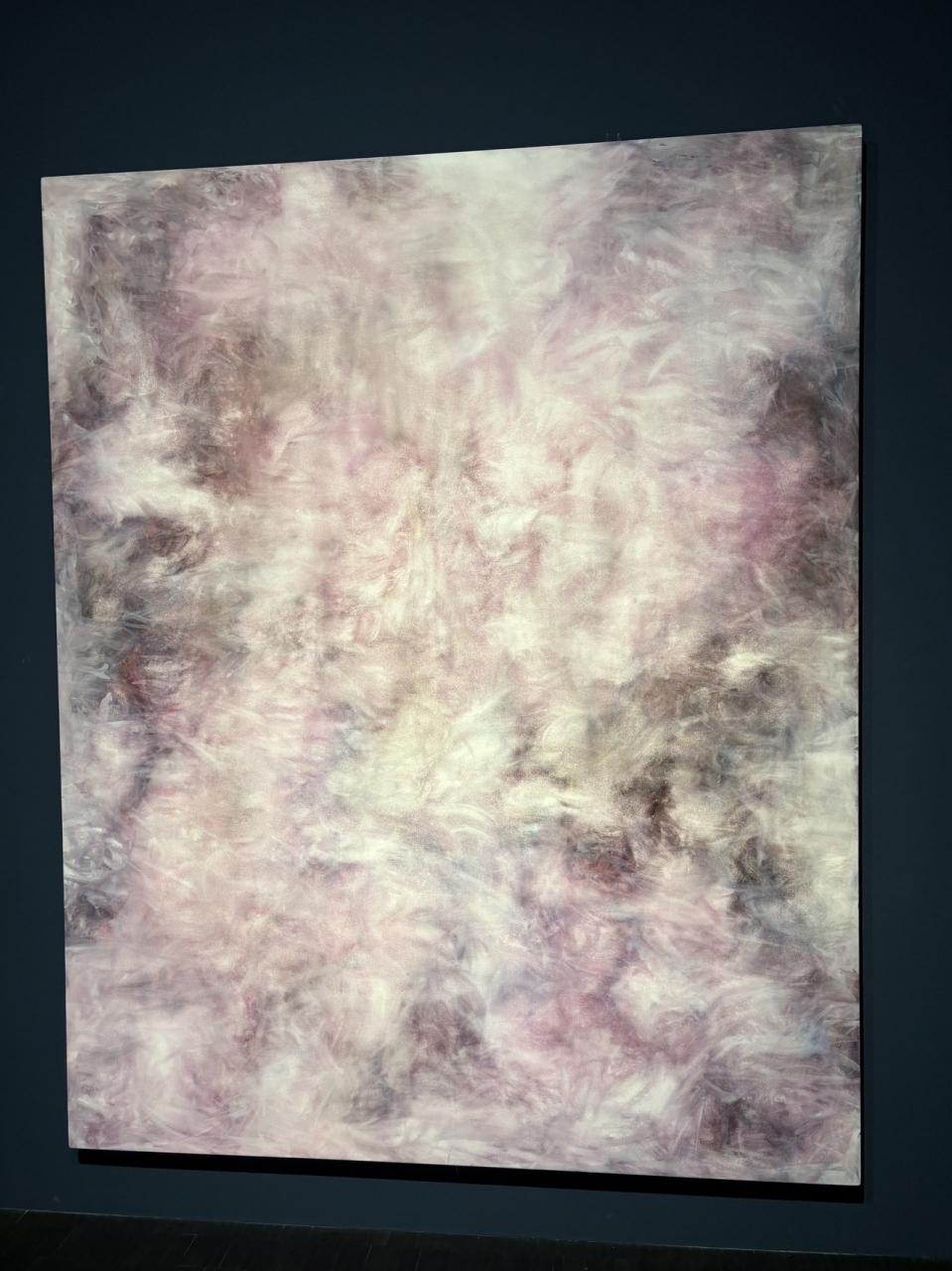
松本陽子
MATSUMOTO, Yoko
1936-
光は荒野の中に輝いている
The Light is Shining in the Wilderness
1993
平成5年
アクリリック・キャンバス
acrylic on canvas -
-
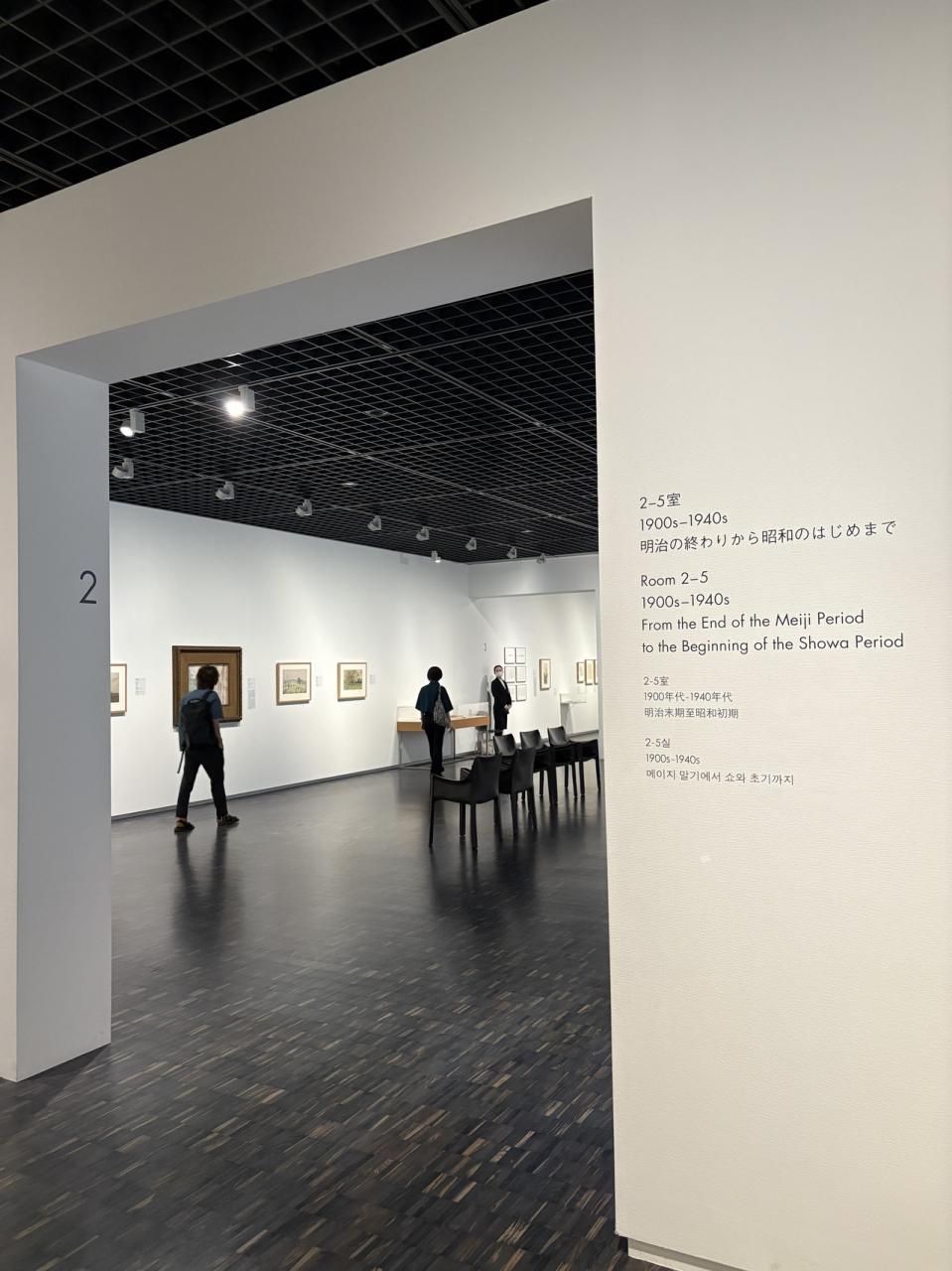
(『2-5室 1900s-1940s 明治の終わりから昭和のはじめまで』に続く・・・)




利用規約に違反している投稿は、報告する事ができます。
-

MOMAT コレクション〔国立東京近代美術館 所蔵作品展〕(2025.2.11-6.15)1.ハイライト "...
2025/06/04~
神田・神保町
-

MOMAT コレクション〔国立東京近代美術館 所蔵作品展〕(2025.2.11-6.15) 2.風景の発見。...
2025/06/04~
神田・神保町
-

MOMAT コレクション〔国立東京近代美術館 所蔵作品展〕(2025.2.11-6.15)3.抒情と頽廃。"...
2025/06/04~
神田・神保町
-

MOMAT コレクション〔国立東京近代美術館 所蔵作品展〕(2025.2.11-6.15) 4.モダニズムの...
2025/06/04~
神田・神保町
-

MOMAT コレクション〔国立東京近代美術館 所蔵作品展〕(2025.2.11-6.15) 5.シュルレアリ...
2025/06/04~
神田・神保町
-

MOMAT コレクション〔国立東京近代美術館 所蔵作品展〕(2025.2.11-6.15) 6.「相手」がい...
2025/06/04~
神田・神保町
-
![MOMAT コレクション〔国立東京近代美術館 所蔵作品展〕(25.2.11-6.15)8.反復がもたらすもの & 9.渡辺兼人[既視の街]](https://cdn.4travel.jp/img/thumbnails/imk/travelogue_album/11/98/67/240x180_11986732.jpg?updated_at=1752831110)
MOMAT コレクション〔国立東京近代美術館 所蔵作品展〕(25.2.11-6.15)8.反復がもたらすもの...
2025/06/04~
神田・神保町
-

MOMAT コレクション〔国立東京近代美術館 所蔵作品展〕(2025.2.11-6.15) 10.アルプのア...
2025/06/04~
神田・神保町
-

MOMAT コレクション〔国立東京近代美術館 所蔵作品展〕(2025.2.11-6.15) 11.(アン)バ...
2025/06/04~
神田・神保町
-

MOMAT コレクション〔国立東京近代美術館 所蔵作品展〕(2025.2.11-6.15) 12.美術家たち...
2025/06/04~
神田・神保町
旅行記グループをもっと見る
コメントを投稿する前に
十分に確認の上、ご投稿ください。 コメントの内容は攻撃的ではなく、相手の気持ちに寄り添ったものになっていますか?
サイト共通ガイドライン(利用上のお願い)報道機関・マスメディアの方へ 画像提供などに関するお問い合わせは、専用のお問い合わせフォームからお願いいたします。
この旅行で行ったスポット






フォートラベル公式LINE@

おすすめの旅行記や旬な旅行情報、お得なキャンペーン情報をお届けします!
QRコードが読み取れない場合はID「@4travel」で検索してください。
\その他の公式SNSはこちら/





旅行記グループ MOMAT コレクション〔国立東京近代美術館 所蔵作品展〕(2025.2.11-6.15)
0
48