


2024/12/18 - 2024/12/18
74位(同エリア935件中)

旅熊 Kokazさん
- 旅熊 KokazさんTOP
- 旅行記1932冊
- クチコミ857件
- Q&A回答101件
- 1,713,937アクセス
- フォロワー755人
国立東京近代美術館 所蔵作品展 MOMATコレクション(2024.9.3-12.22)
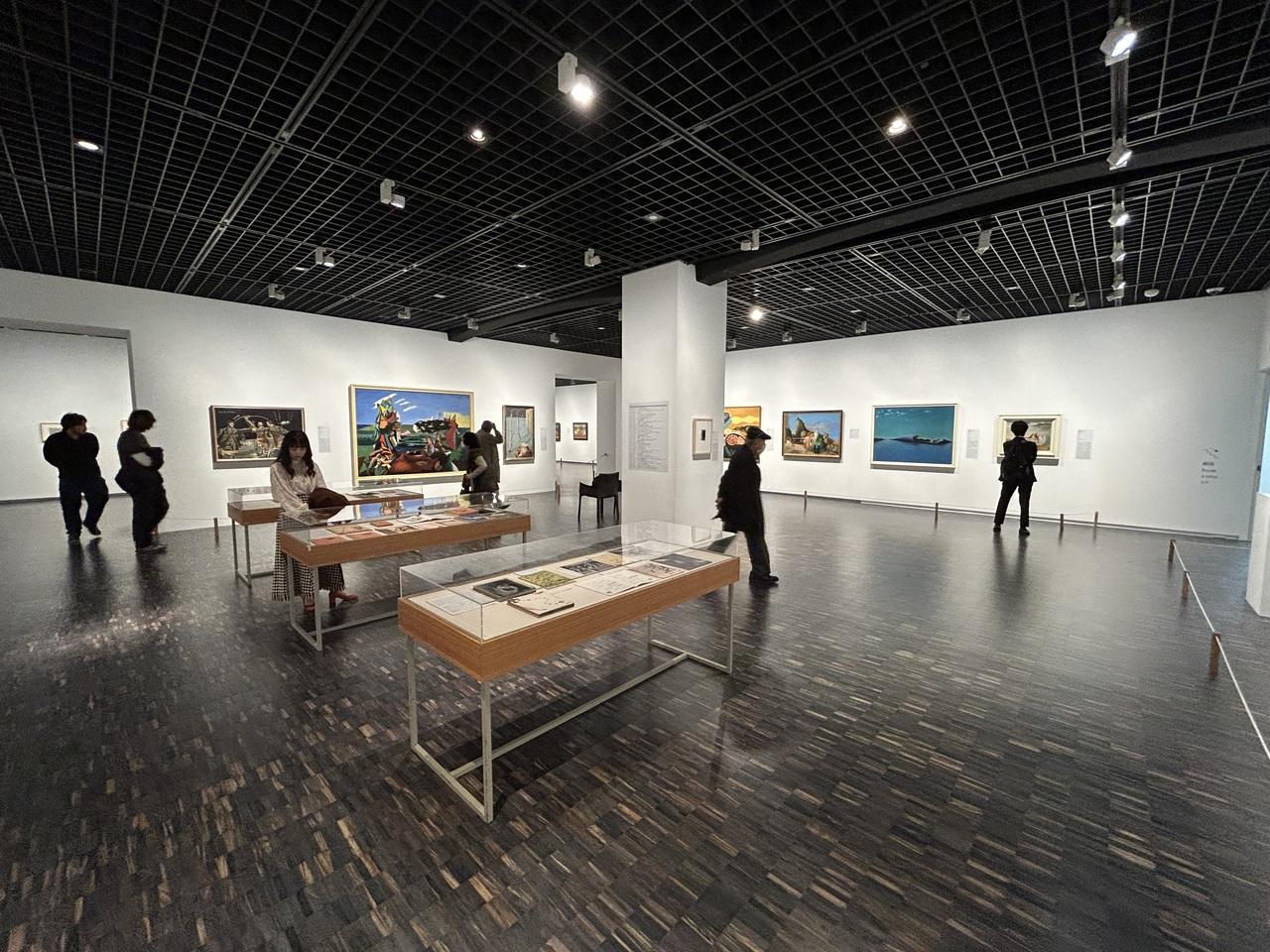
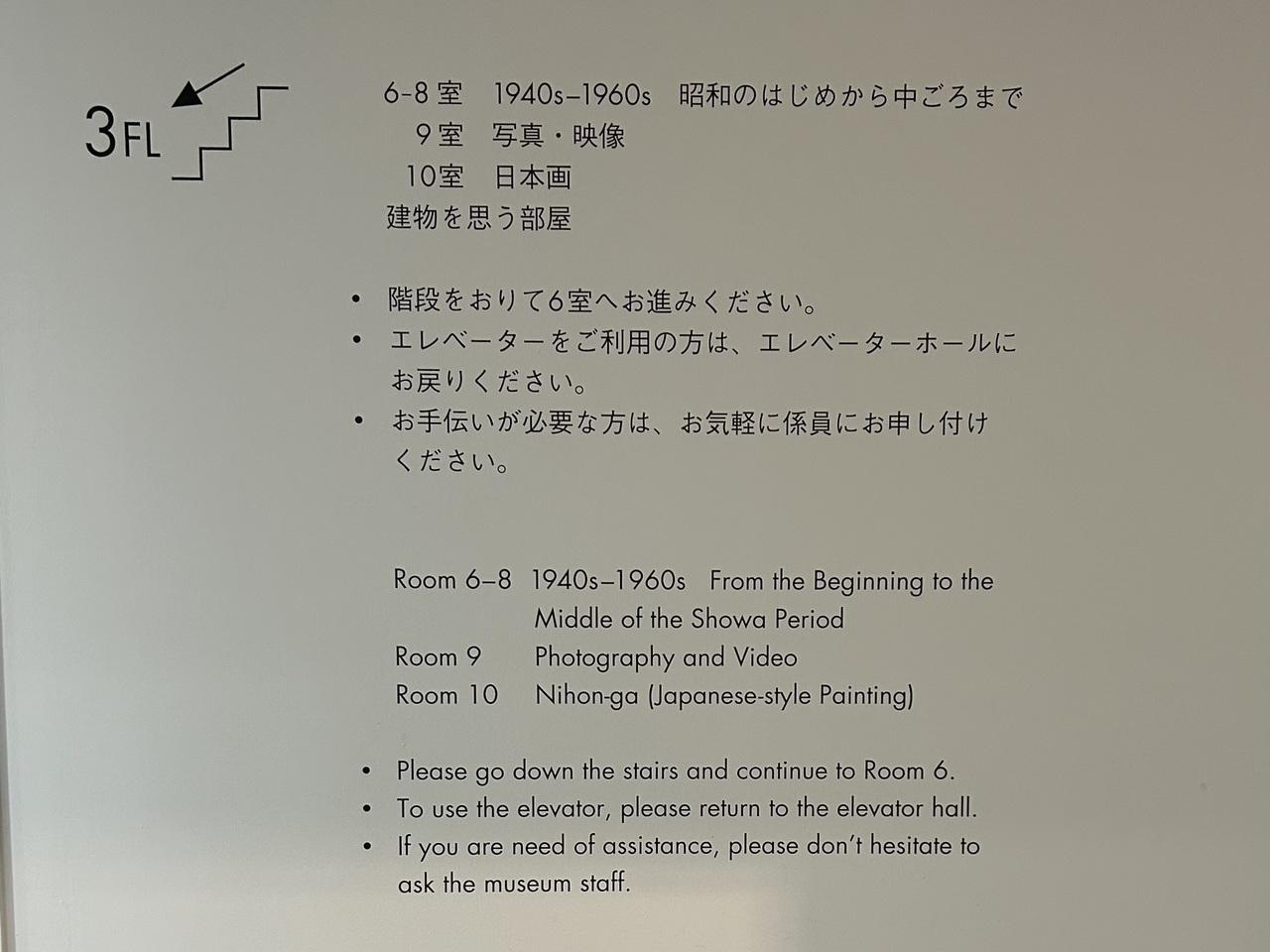
5室:シュルレアリスム100年
- 旅行の満足度
- 5.0
-

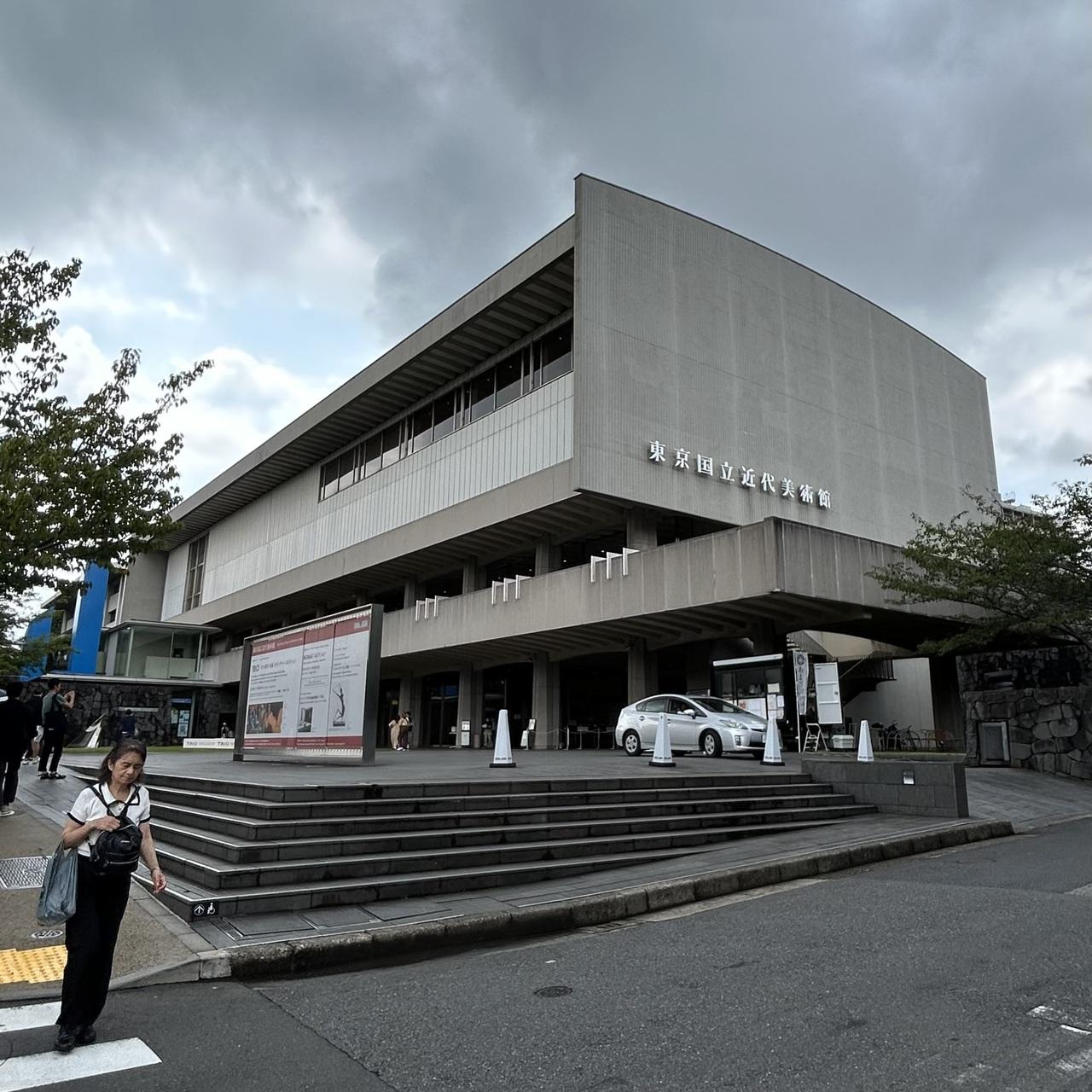
水曜日の午後、"東京国立近代美術館" へ
東京国立近代美術館 美術館・博物館
-
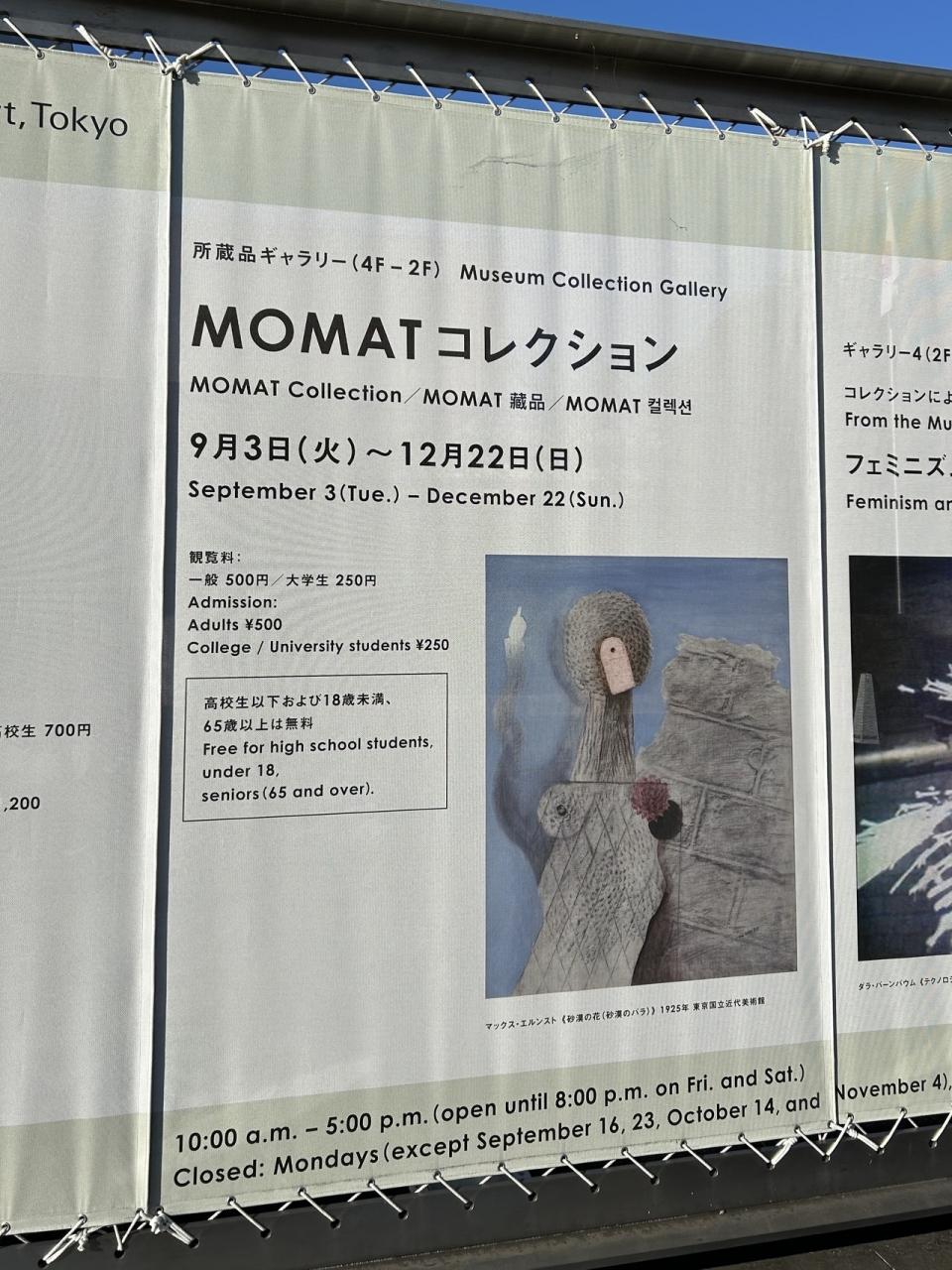
国立東京近代美術館 所蔵作品展 MOMATコレクション(2024.9.3-12.22)
https://www.momat.go.jp/exhibitions/r6-2 -
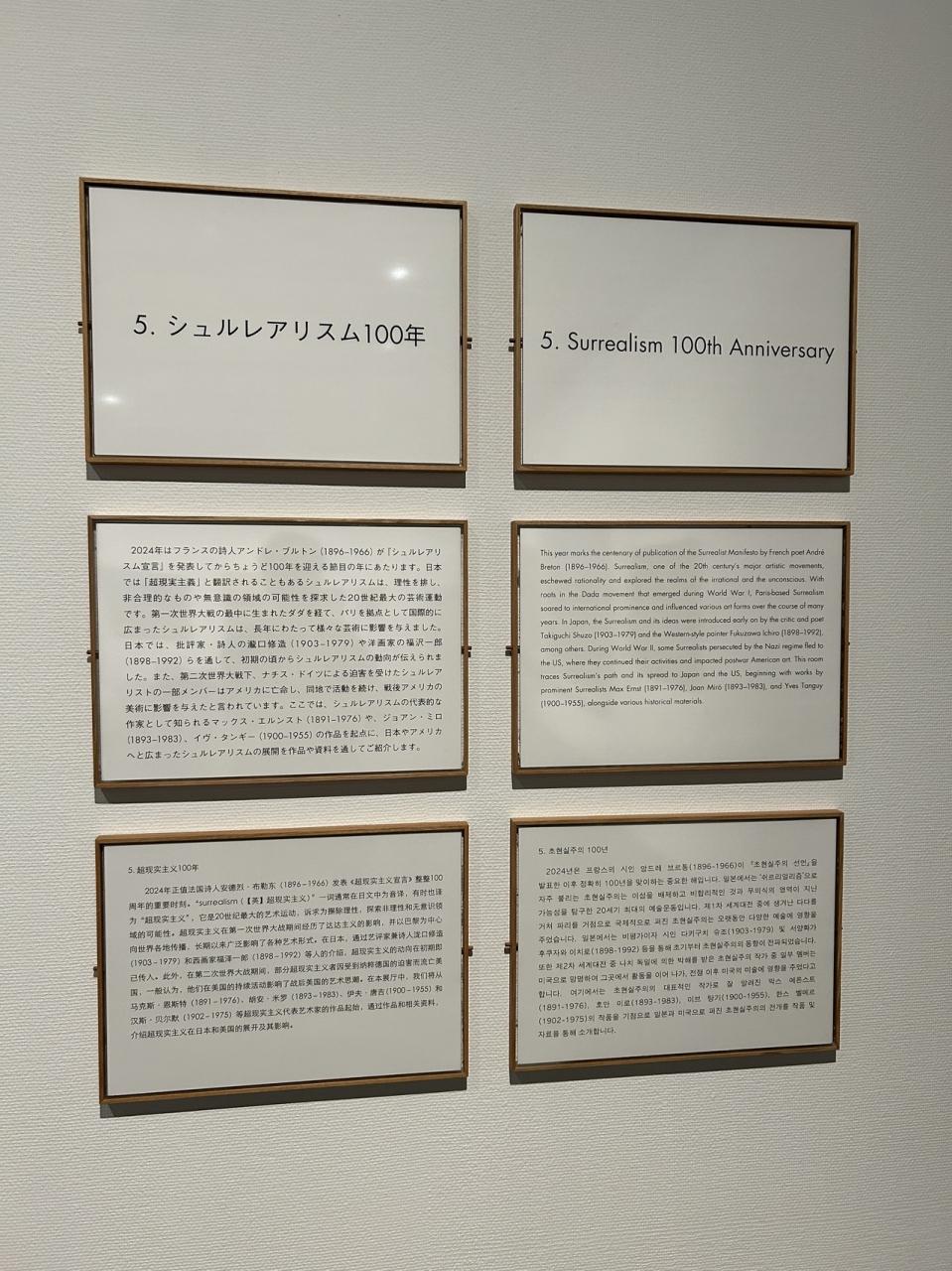
5. シュルレアリスム100年
Surrealism 100th Anniversary
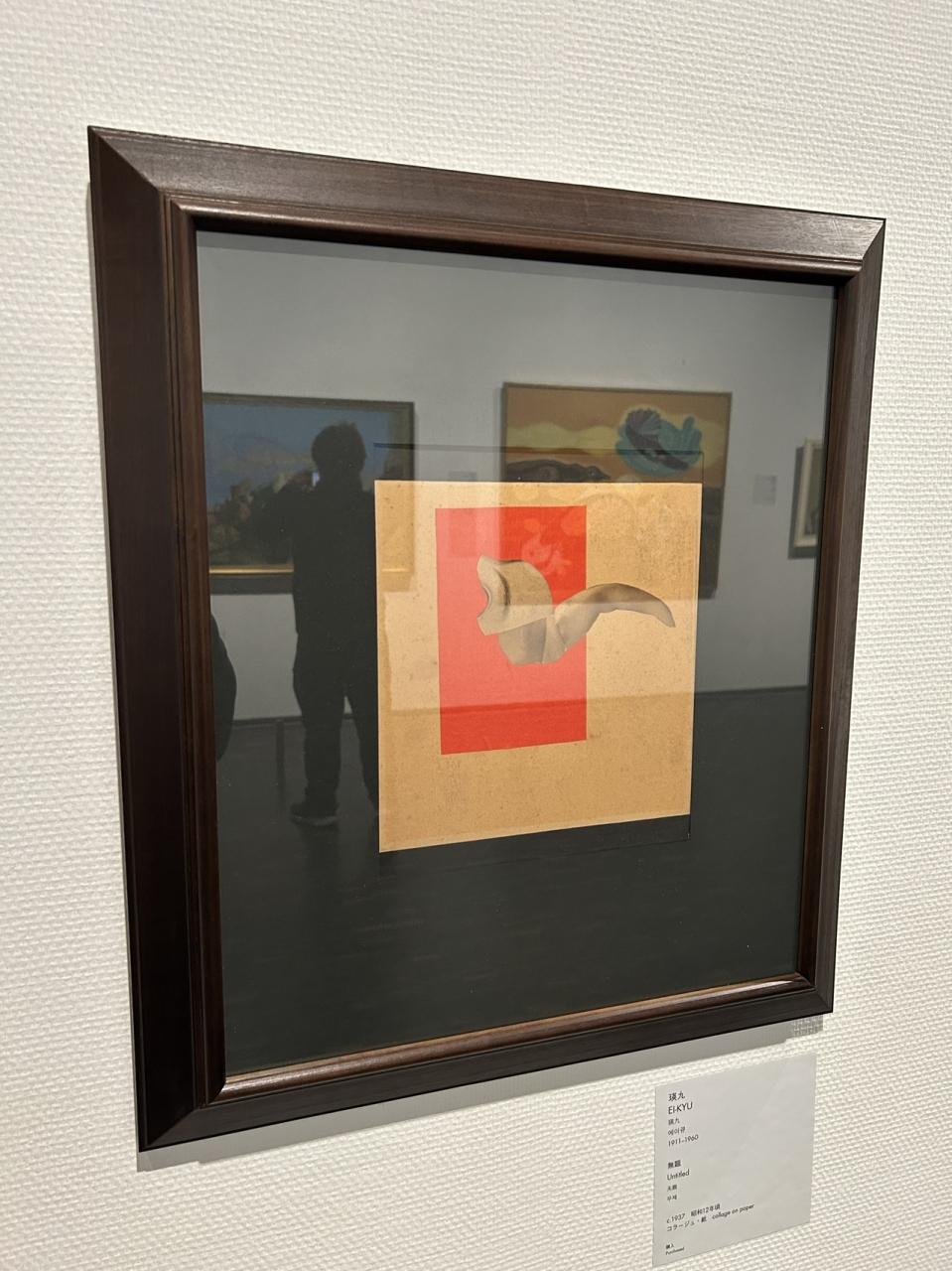
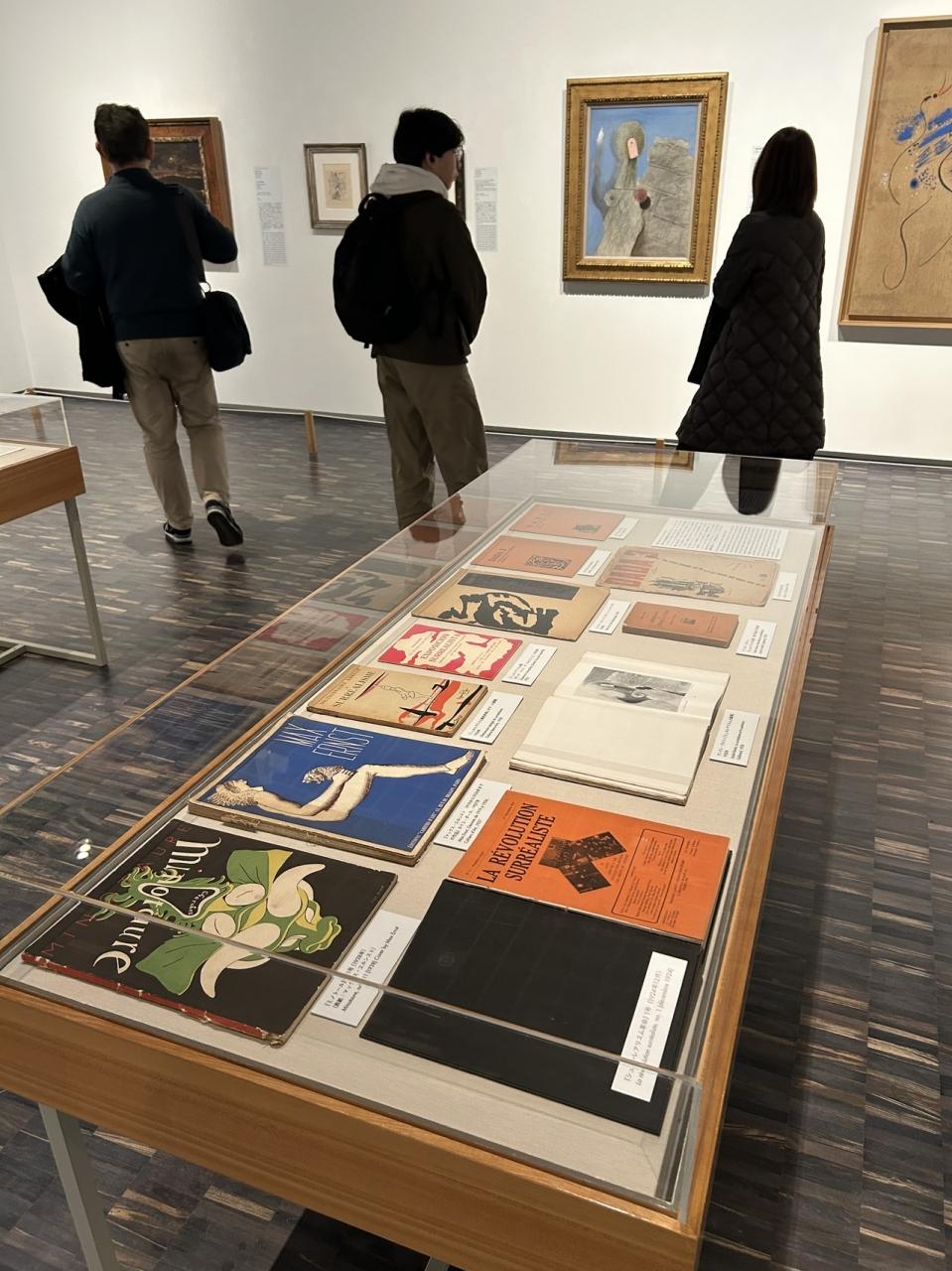
2024年はフランスの詩人アンドレ・ブルトン(1896-1966)が「シュルレアリスム宣言」を発表してからちょうど100年を迎える節目の年にあたります。日本では「超現実主義」と翻訳されることもあるシュルレアリスムは、理性を排し、非合理的なものや無意識の領域の可能性を探求した20世紀最大の芸術運動です。第一次世界大戦の最中に生まれたダダを経て、パリを拠点として国際的に広まったシュルレアリスムは、長年にわたって様々な芸術に影響を与えました。
This year marks the centenary of publication of the Surrealist Manifesto by French poet André Breton (1896-1966). Surrealism, one of the 20th century's major artistic movements, eschewed rationality and explored the realms of the irrational and the unconscious. With roots in the Dada movement that emerged during World War I, Paris-based Surrealism soared to international prominence and influenced various art forms over the course of many years.
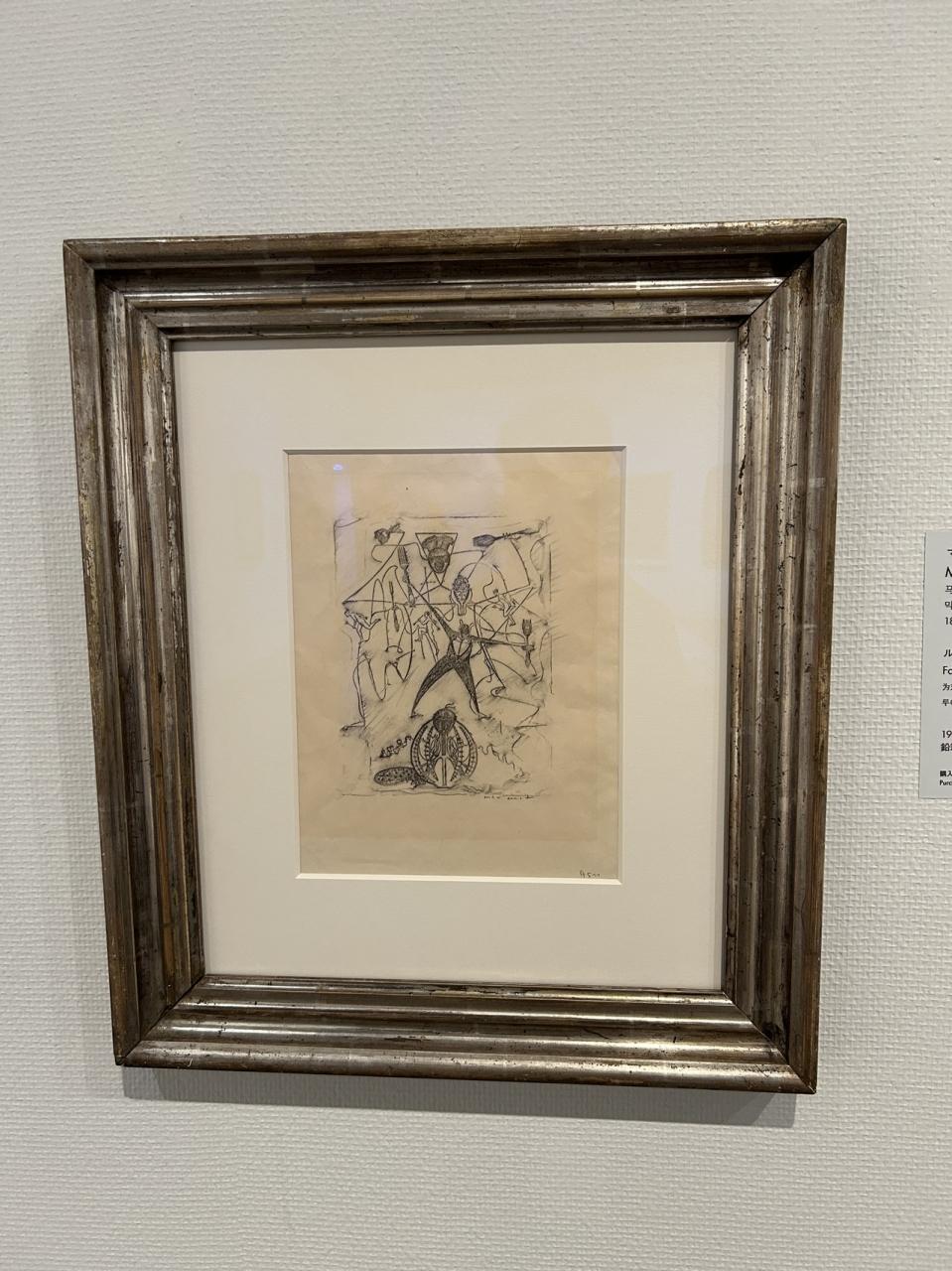
日本では、批評家・詩人の瀧口修造(1903-1979)や洋画家の福沢一郎(1898-1992)らを通して、初期の頃からシュルレアリスムの動向が伝えられました。また、第二次世界大戦下、ナチス・ドイツによる迫害を受けたシュルレアリストの一部メンバーはアメリカに亡命し、同地で活動を続け、戦後アメリカの美術に影響を与えたと言われています。ここでは、シュルレアリスムの代表的な作家として知られるマックス・エルンスト(1891-1976)や、ジョアン・ミロ(1893-1983)、イヴ・タンギー(1900-1955)の作品を起点に、日本やアメリカへと広まったシュルレアリスムの展開を作品や資料を通してご紹介します。
In Japan, the Surrealism and its ideas were introduced early on by the critic and poet Takiguchi Shuzo (1903-1979) and the Western-style painter Fukuzawa Ichiro (1898-1992), among others. During World War Il, some Surrealists persecuted by the Nazi regime fled to the US, where they continued their activities and impacted postwar American art. This room traces Surrealism's path and its spread to Japan and the US, beginning with works by prominent Surrealists Max Ernst (1891-1976), Joan Miró (1893-1983), and Yves Tanguy (1900-1955), alongside various historical materials. -
-
-
盛田良子コレクション
Morita Yoshiko Collection
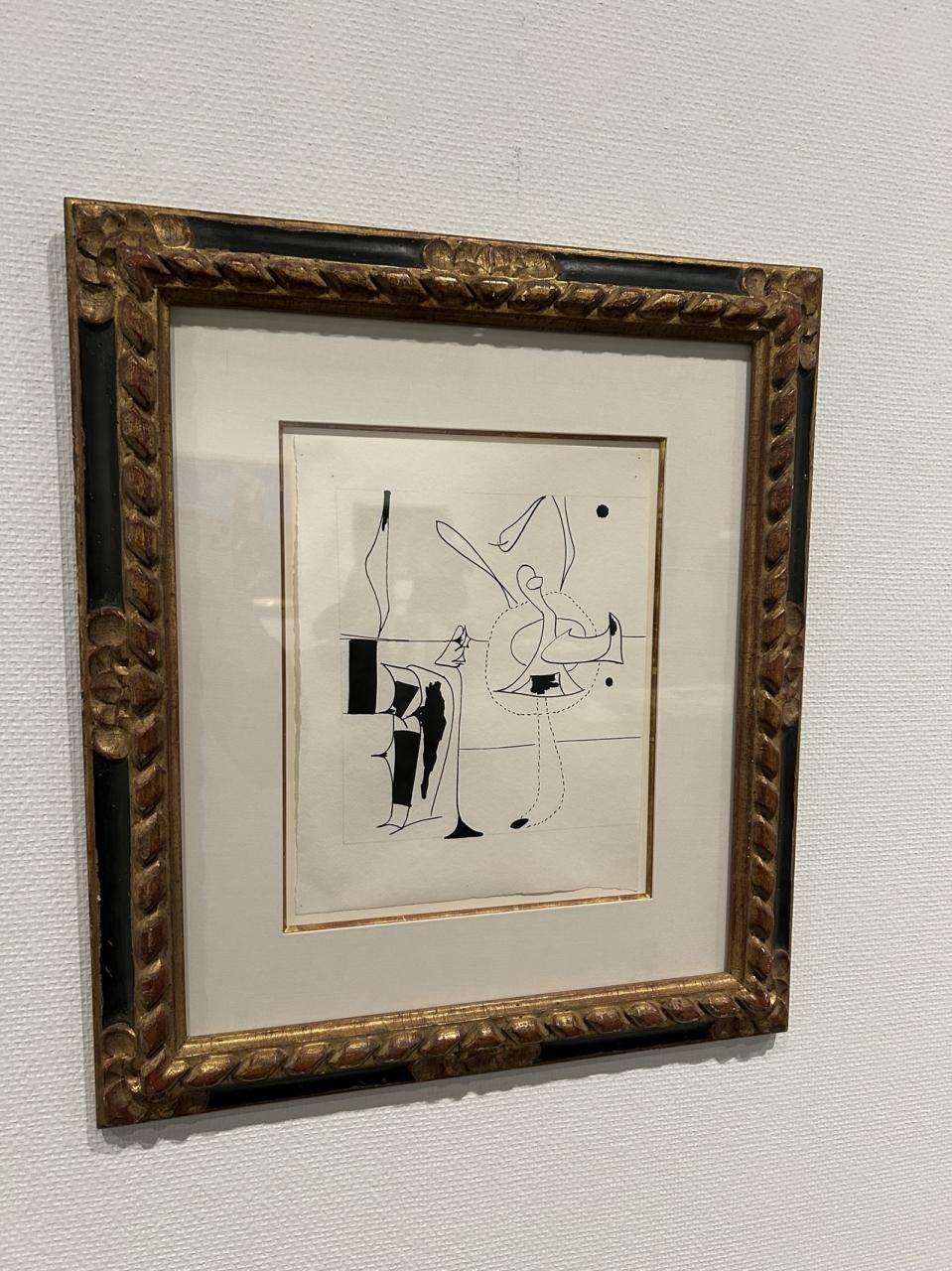
ジョアン・ミロ
Joan Miró
1893-1983
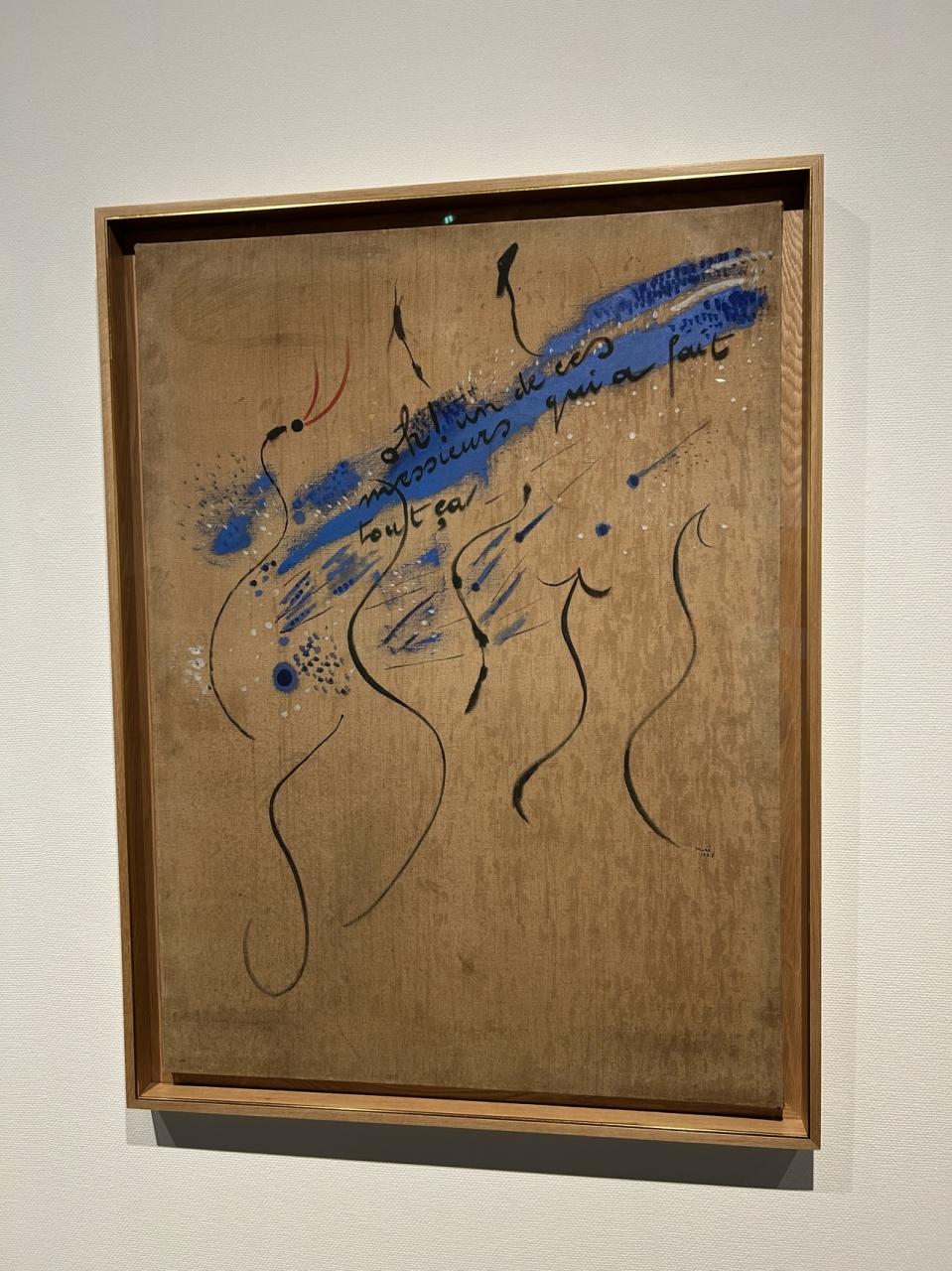
絵画詩(おお!あの人やっちゃったのね)
Painting-Poem:
Oh! One of Those Gentlemen who Did All That
1925
大正14年
油彩・キャンバス oil on canvas
ミロと言えば、生物のような形が浮遊する作風がよく知られますが、この作品は、その前の時期に描かれた「絵画詩」と呼ばれるシリーズに属するものです。画面にはフランス語で「Oh!Un de ces messieurs qui a fait tout sa (おお!あの人やっちゃったのね)」の文字が書かれ(描かれ?)、ここに絡みつくように人の身体を思わせる黒い線描が踊っています。しぶきのような青い絵具が鮮やかです。どのようにも読み取れる文字の内容と、文字の読み取り方に引っ張られていろいろなものに見える線と色。ちなみにミロ本人は、この作品を「おなら」を主題としたもの、と語っています。さて、あなたの解釈はいかがでしょう。
When you think of Miró, the image that immediately comes to mind are floating shapes with the appearance of living organisms, but this work is part of a series called Painting-Poems that predates that style. Along with the French sentence, "Oh! Un de ces messieurs qui a fait tout ça," which is written (painted?) on the picture plane, there is a scattering of entwined black lines resembling human forms. The splash of blue paint adds a brilliant touch. The work contains a text that can be interpreted in any number of ways and lines and colors that can also be interpreted in various ways depending on how one interprets the sentence. Incidentally, Miró himself claimed that the subject of the painting was "farting." Well, now it's your turn. How do you see the work? -
マックス・エルンスト
Max Ernst
1891-1976
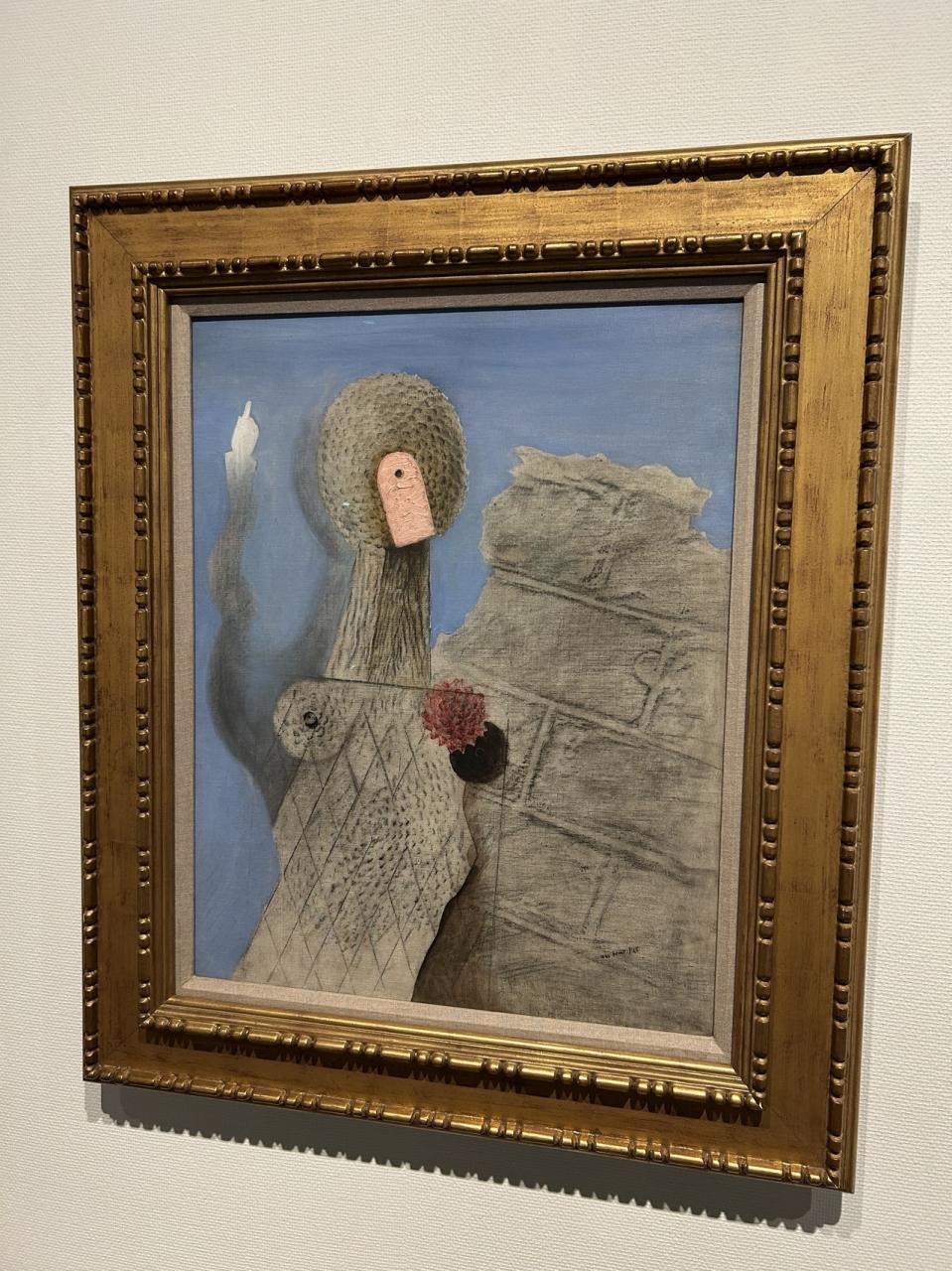
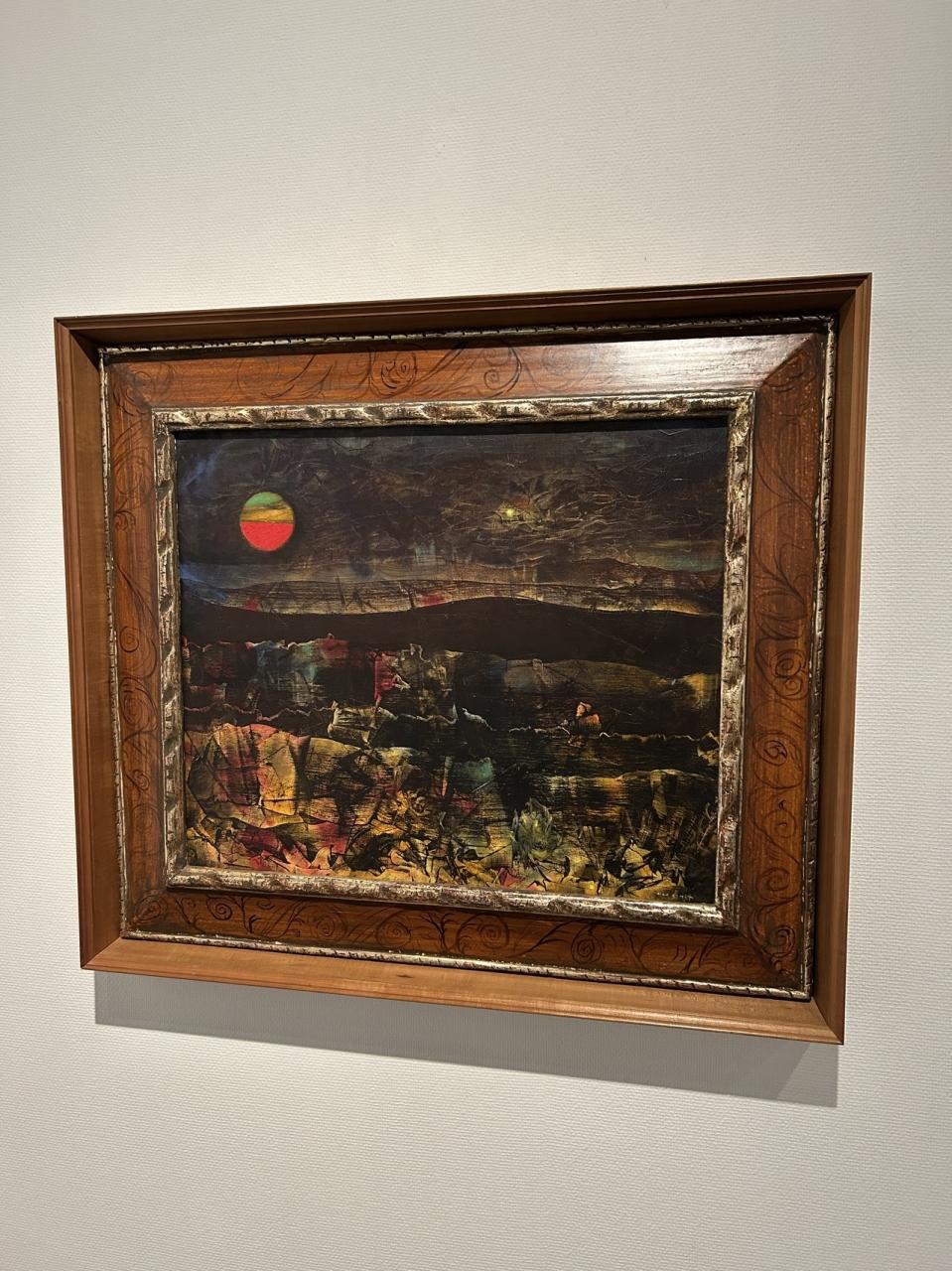
砂漠の花(砂漠のバラ)
Desert Flower (Desert Rose)
1925
大正14年
油彩、鉛筆・キャンバス oil and pencil on canvas
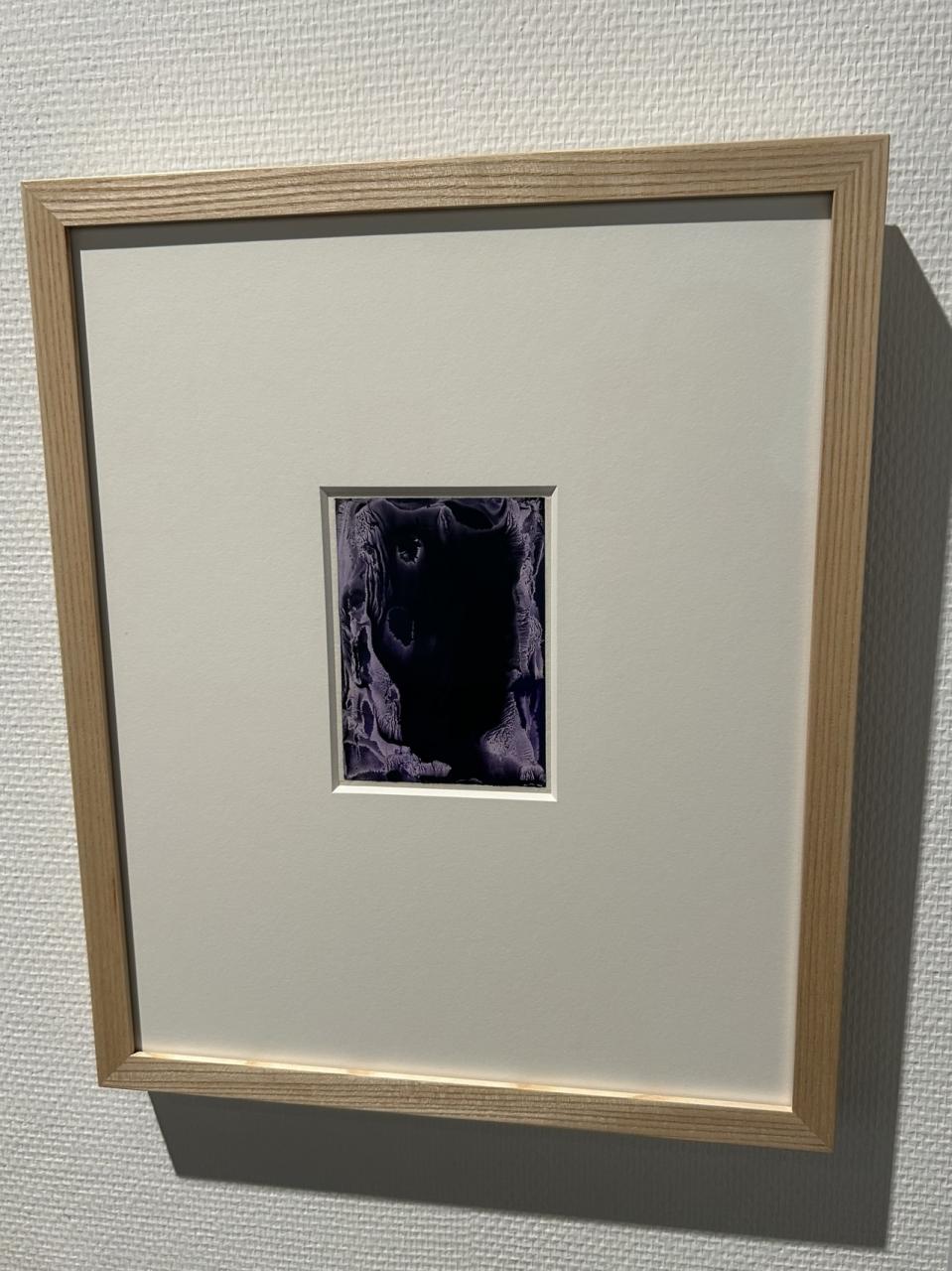
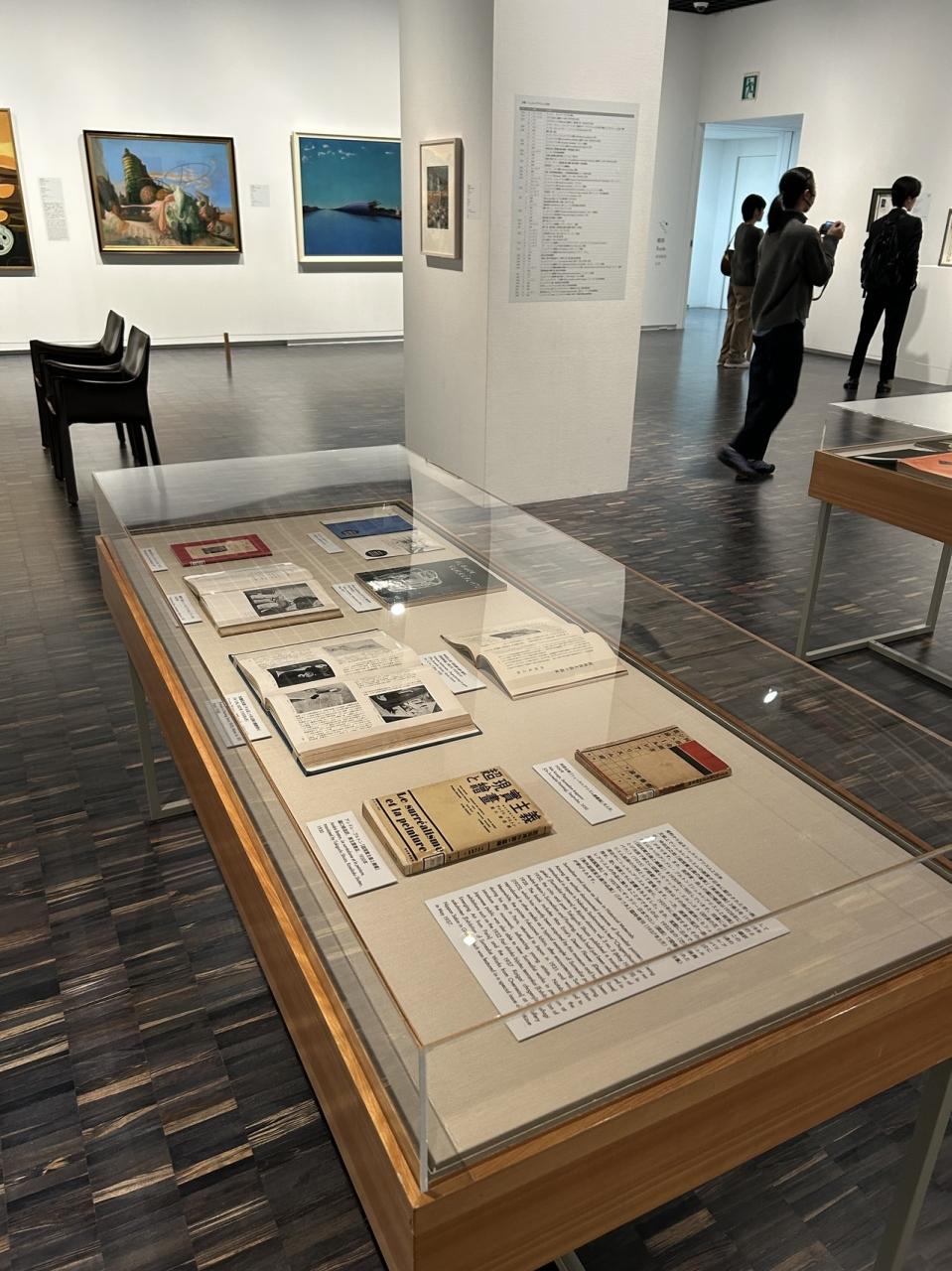
エルンストは、凹凸のある物質に紙を押し当てて擦り出し、無然に現れた形を通して無意識を表出させるフロッタージュという技法を用いたことで知られています。この技法は、フランスの詩人アンドレ・ブルトンが「シュルレアリスム宣言』において提唱した「理性によって行使されるどんな統制もなく、美学上ないし道徳上のどんな気づかいからもはなれた思考の書き取り」、いわゆるオートマティスムに応える絵画技法でもありました。画面向かって左側の人物のような姿やその背後の壁面らしきところに、フロッタージュが用いられています。また、本作はブルトンが著した「シュルレアリスムと絵画』(1928)をはじめ、様々な媒体に取り上げられた作品で、シュルレアリスムの絵画を代表する作例の一つと言えるでしょう。
Max Ernst is known for extensive use of frottage, a technique where paper is pressed against a textured material and rubbed to reveal shapes emerging by chance, thereby tapping into the unconscious.
This aligns with the concept of automatism advocated by French poet André Breton in the Surrealist Manifesto, which calls for art to be "dictated by thought, in the absence of any control exercised by reason, exempt from any aesthetic or moral concern." In this work, frottage has been applied to the figure on the left side and the wall-like background behind it. This image has been reproduced in diverse media, including Breton's book Surrealism and Painting (1928), and can be called a quintessential example of Surrealist painting. -
-
-
-
イヴ・タンギー
Yves Tanguy
1900-1955
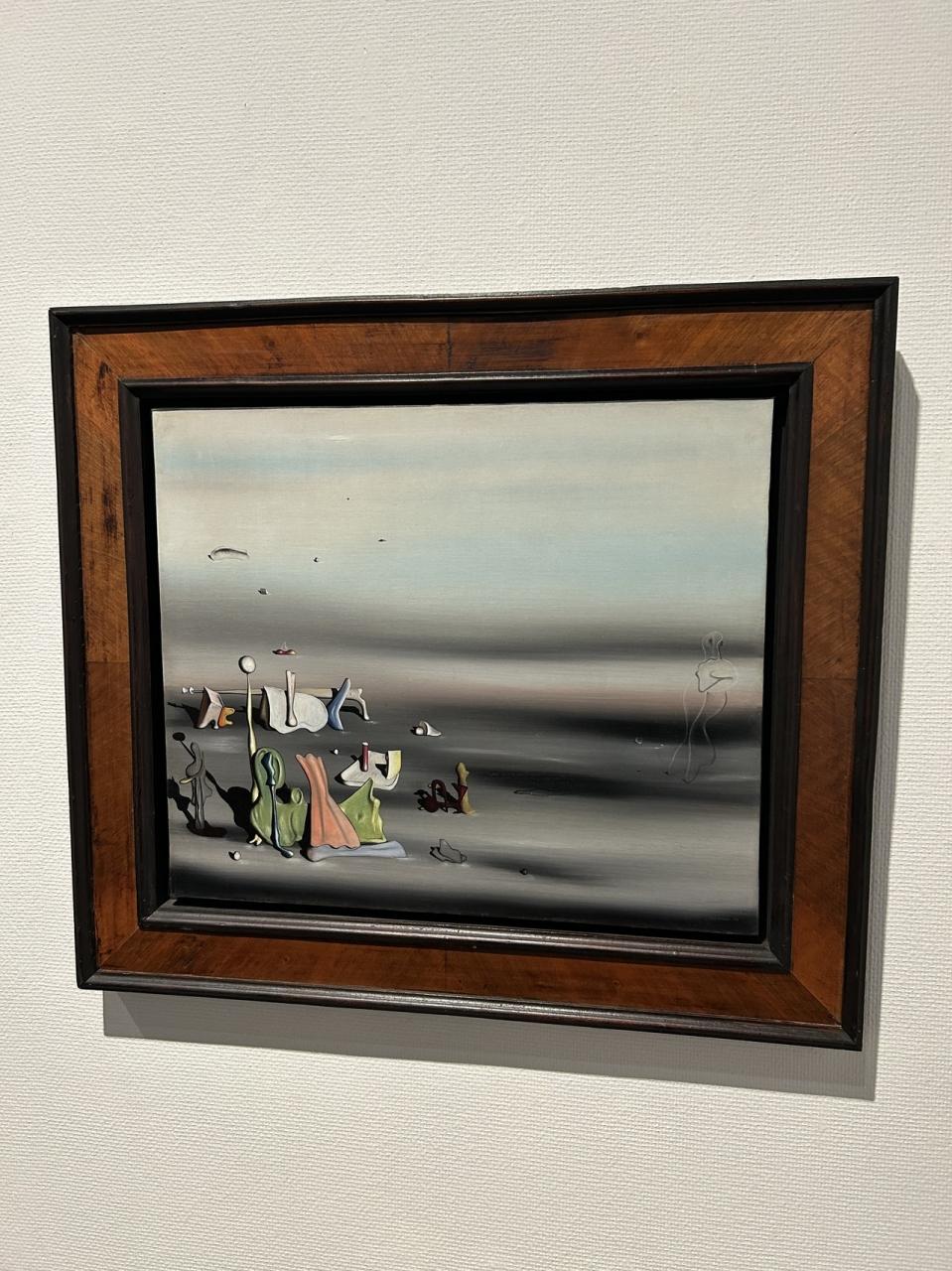
聾者の耳
The Ears of a Deaf
1938
昭和13年
油彩・キャンバス oil on canvas
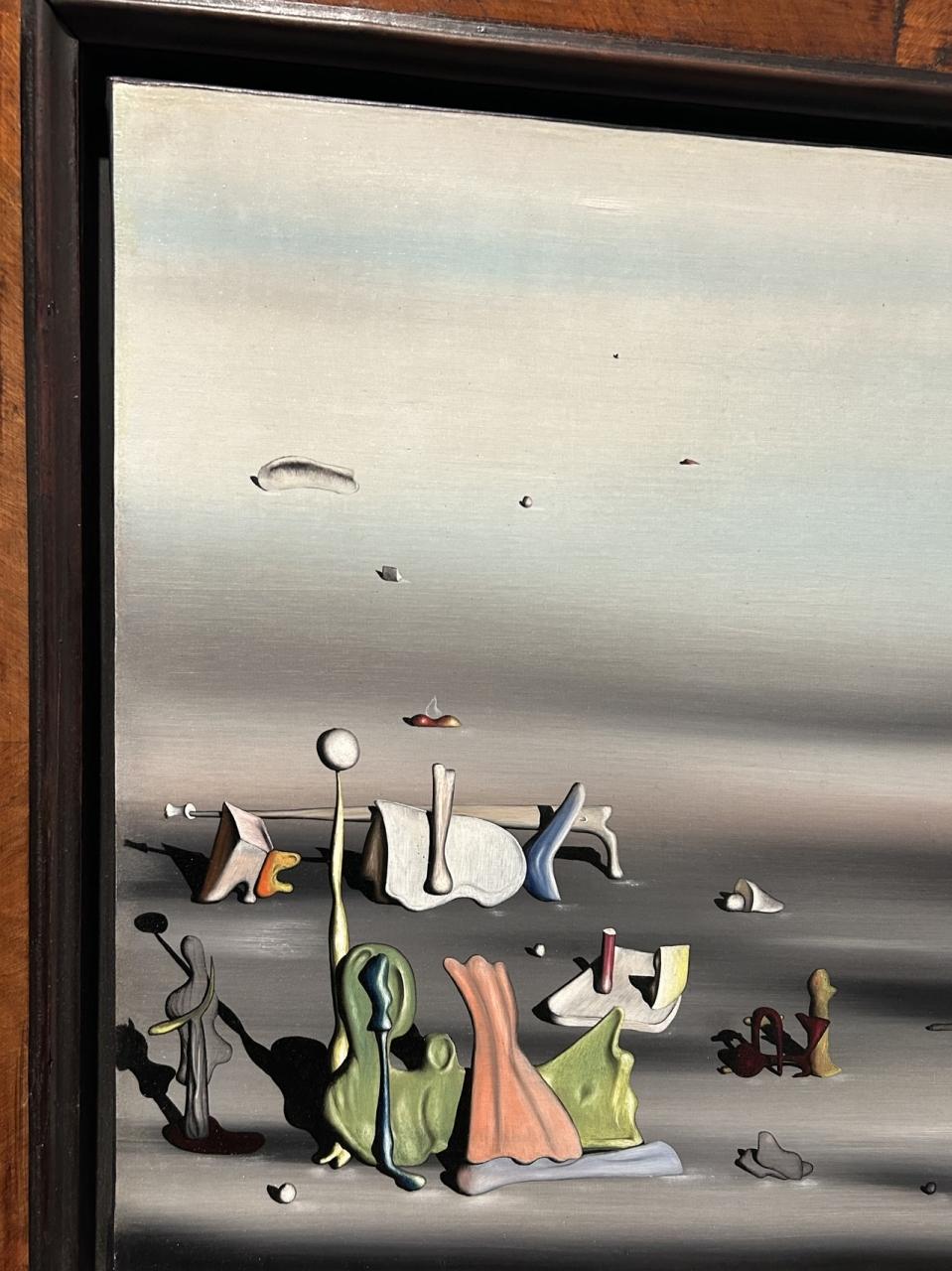
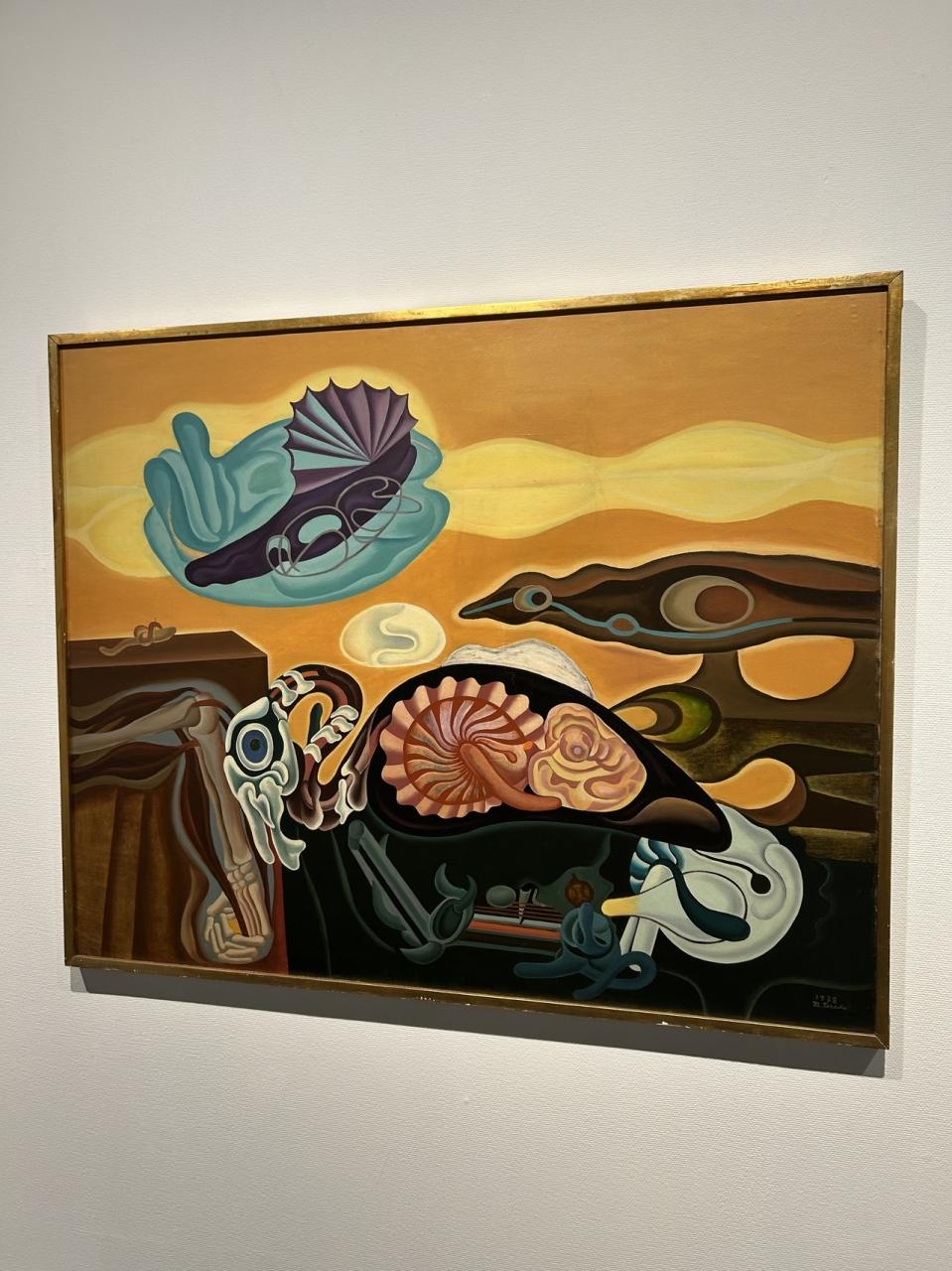
作者のタンギーは一風変わった経歴の持ち主です。商船の乗組員として南米はじめ世界各地を旅したり、志願兵として南チュニジアで軍務についていたり(最終的にはアメリカに帰化しています)。またパリの画廊に架けられていたジョルジュ・デ・キリコの作品をバスの車中から目にして衝撃を受け、画家を志したという逸話の持ち主でもあります。若漠とした空間(海底?)の中に、物とも生命ともつかぬ正体不明の形象が散在するこの作品は、1930年代のタンギーの典型作です。このような表現には、幼少を過ごしたフランス北西部のブルターニュ地方の荒涼とした風景や、アフリカを訪れた際に感銘を受けた砂漠の光景などからの影響があるとも言われています。
Yves Tanguy had a singular career. On the crew of a merchant ship he traveled to South America and all over the world, and he served as a volunteer soldier in South Tunisia, eventually becoming a naturalized American. According to an anecdote, he aspired to become a painter after seeing a Giorgio de Chirico painting hung in a gallery through the window of a bus he was taking.
This painting, in which unidentifiable objects, perhaps organic and perhaps inorganic, are scattered across a vast empty space (possibly the sea floor), is typical of Tanguy's work of the 1930's. These are believed to show the influence of the desolate landscape of the Brittany region of northwestern France, where Tanguy spent his childhood, and the desert that profoundly impressed him during his sojourn in Africa. -
-
-
-
-
-
-
-
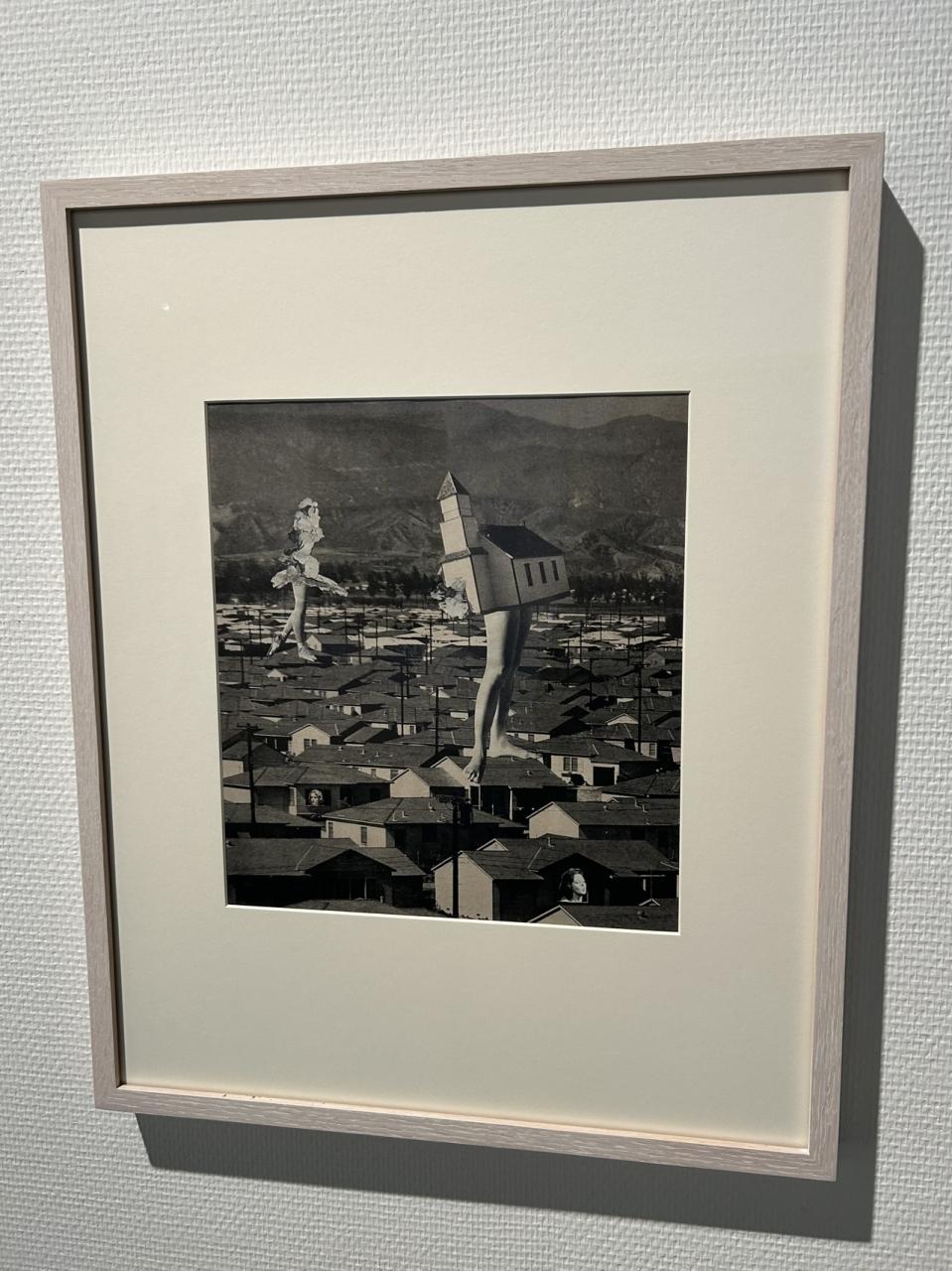
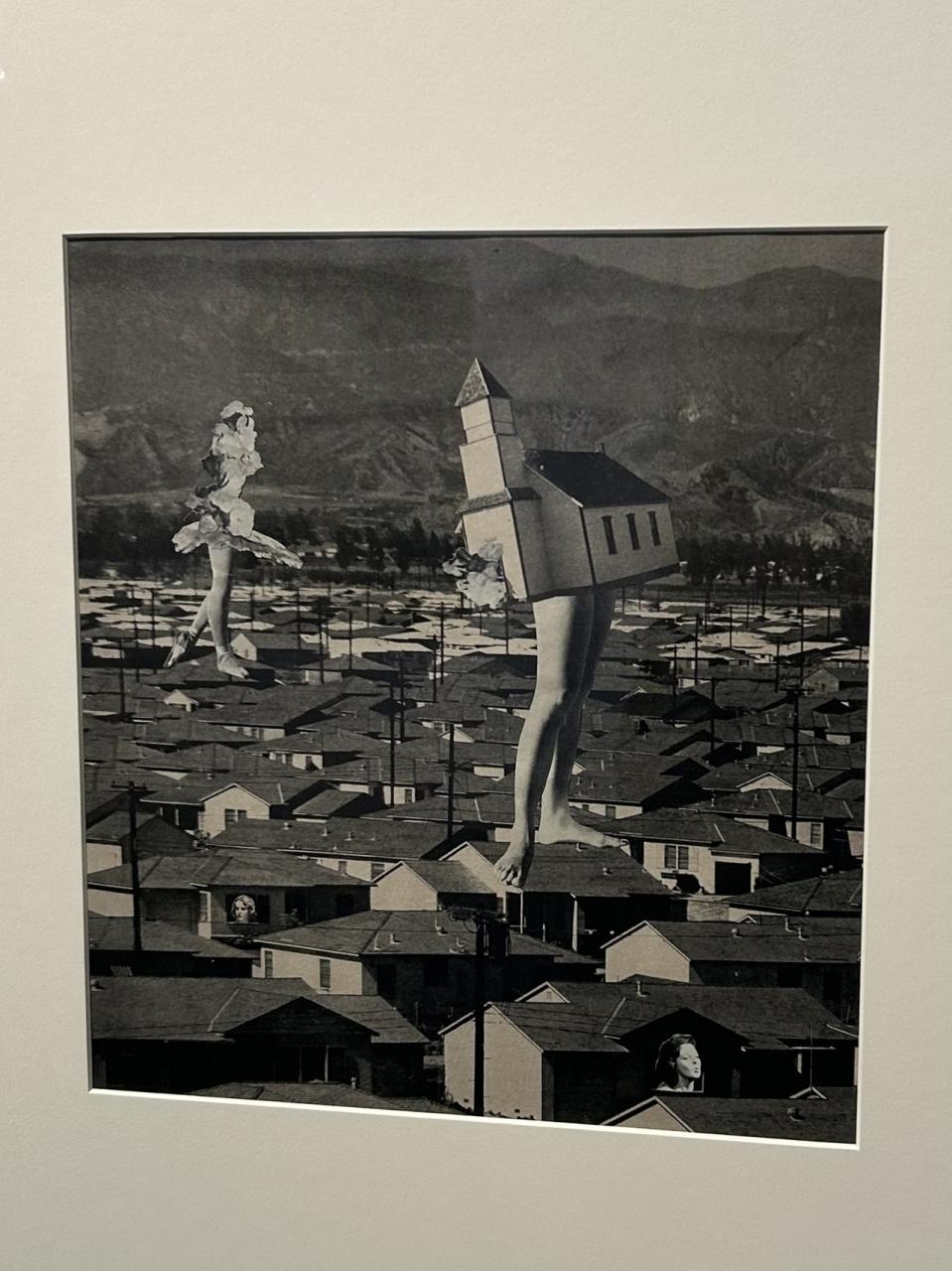
岡上淑子
OKANOUE, Toshiko
1928-
長い一日
A Long Day
1951
昭和26年
コラージュ・紙 collage on paper -
-
-
-
-
-
-
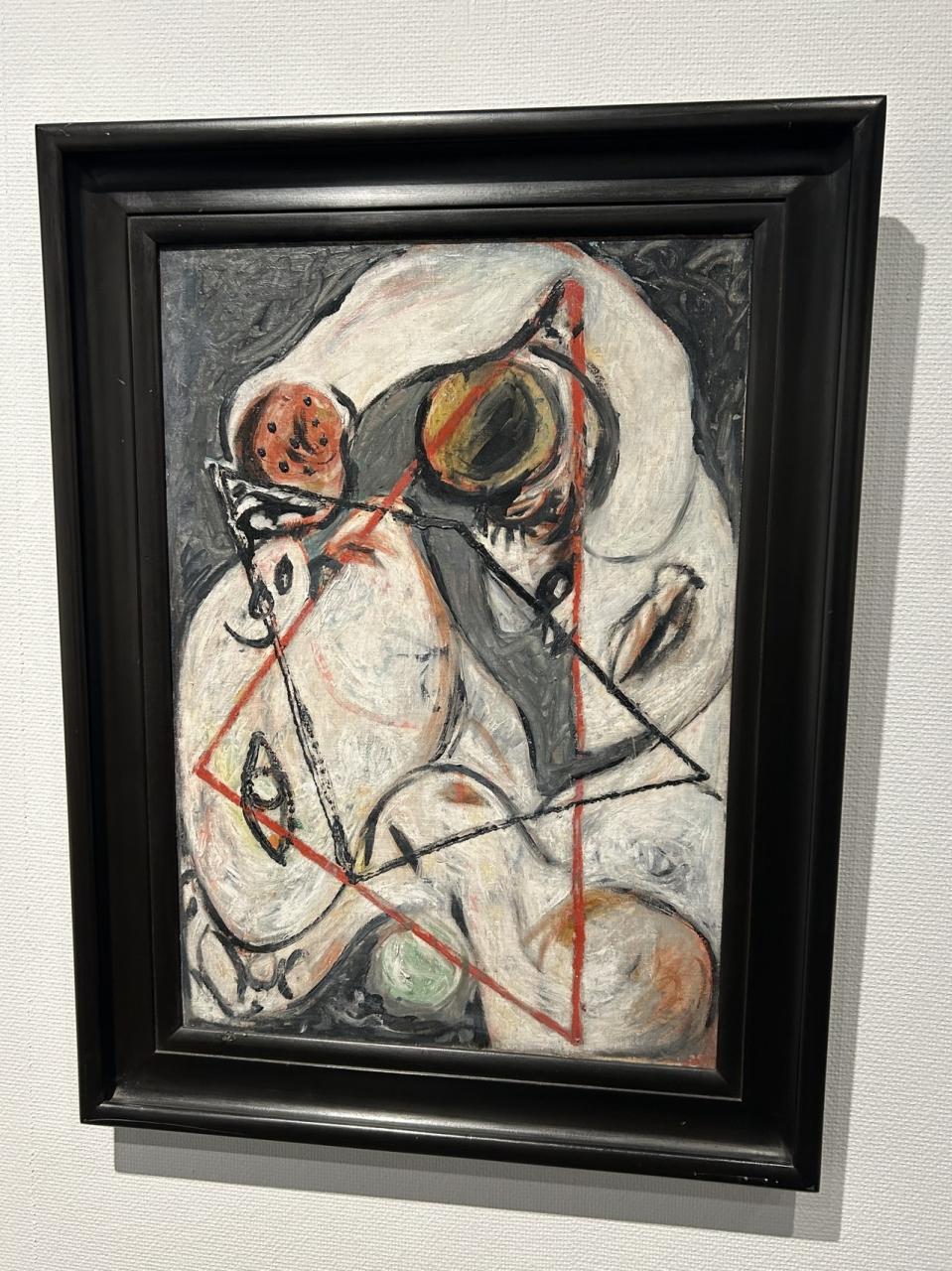
福沢一郎
FUKUZAWA, Ichiro
1898-1992
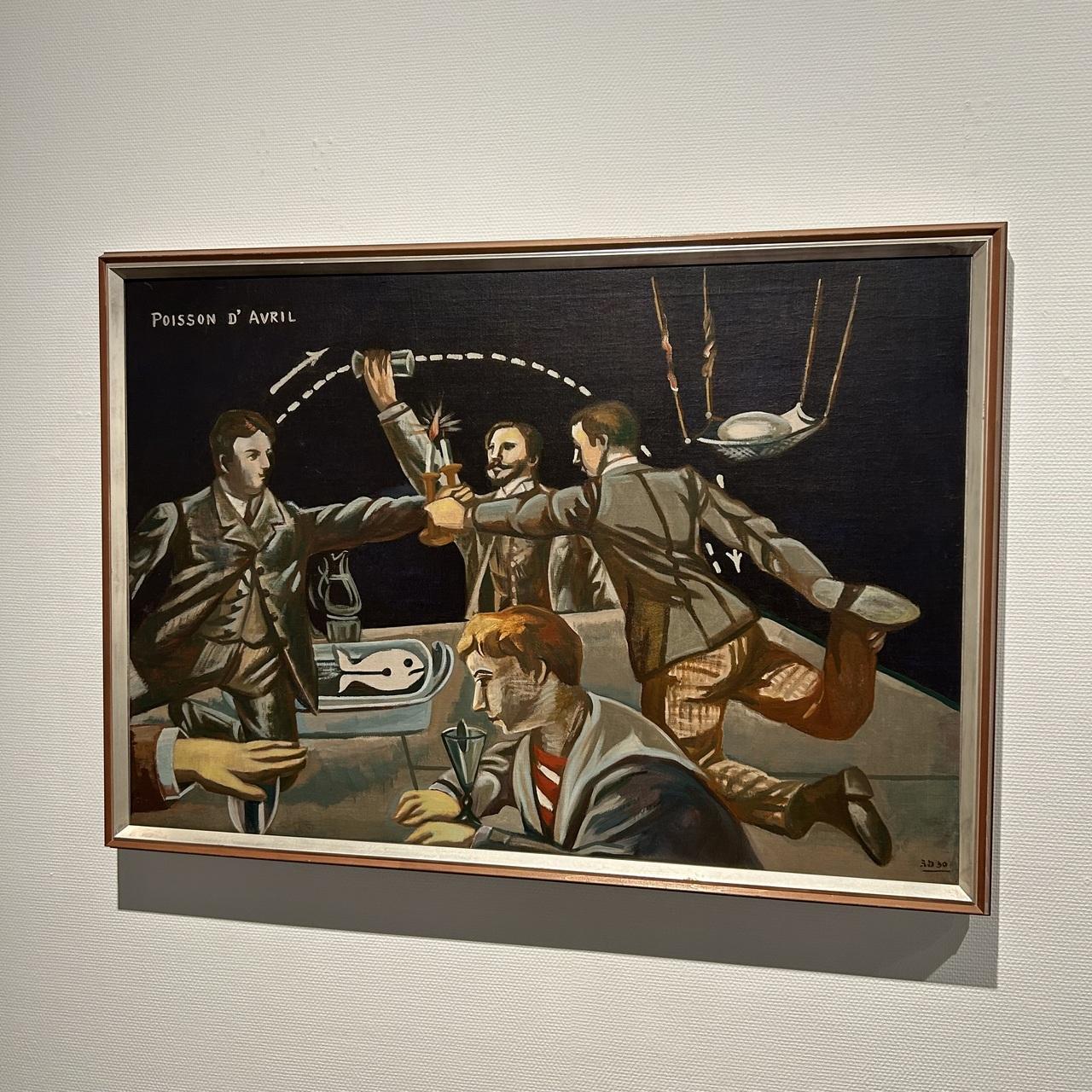
Poisson d'Avril (四月馬鹿)
April Fool
1930 昭和5年
油彩・キャンバス oil on canvas
密室の中で男たちは何をしているのでしょうか。実はひとつひとつのイメージは、19世紀の科学実験の本の挿絵から引用されています。それがでたらめに組み合わされているので、全体としておかしな情景になっているのです。紙でつくった魚を水の上で走らせる実験の挿絵が含まれているので、福沢はこの魚と、フランス語の「四月の魚」(4月1日のいたずらの風習)をかけて、おかしみをもった題名をつけました。
What are these men doing inside this closed room
? Each of the images was actually quoted from illustrations contained in a 19th-century book of scientific experiments. The random combination of images gives the overall scene a peculiar feel. And the inclusion of an illustration of a paper fish being guided across the water inspired Fukuzawa to give the work a funny title, which is a pun on the French version of April Fool's Day known as Poisson d'avril (April Fish). -
-
北脇昇
KITAWAKI, Noboru
1901-1951
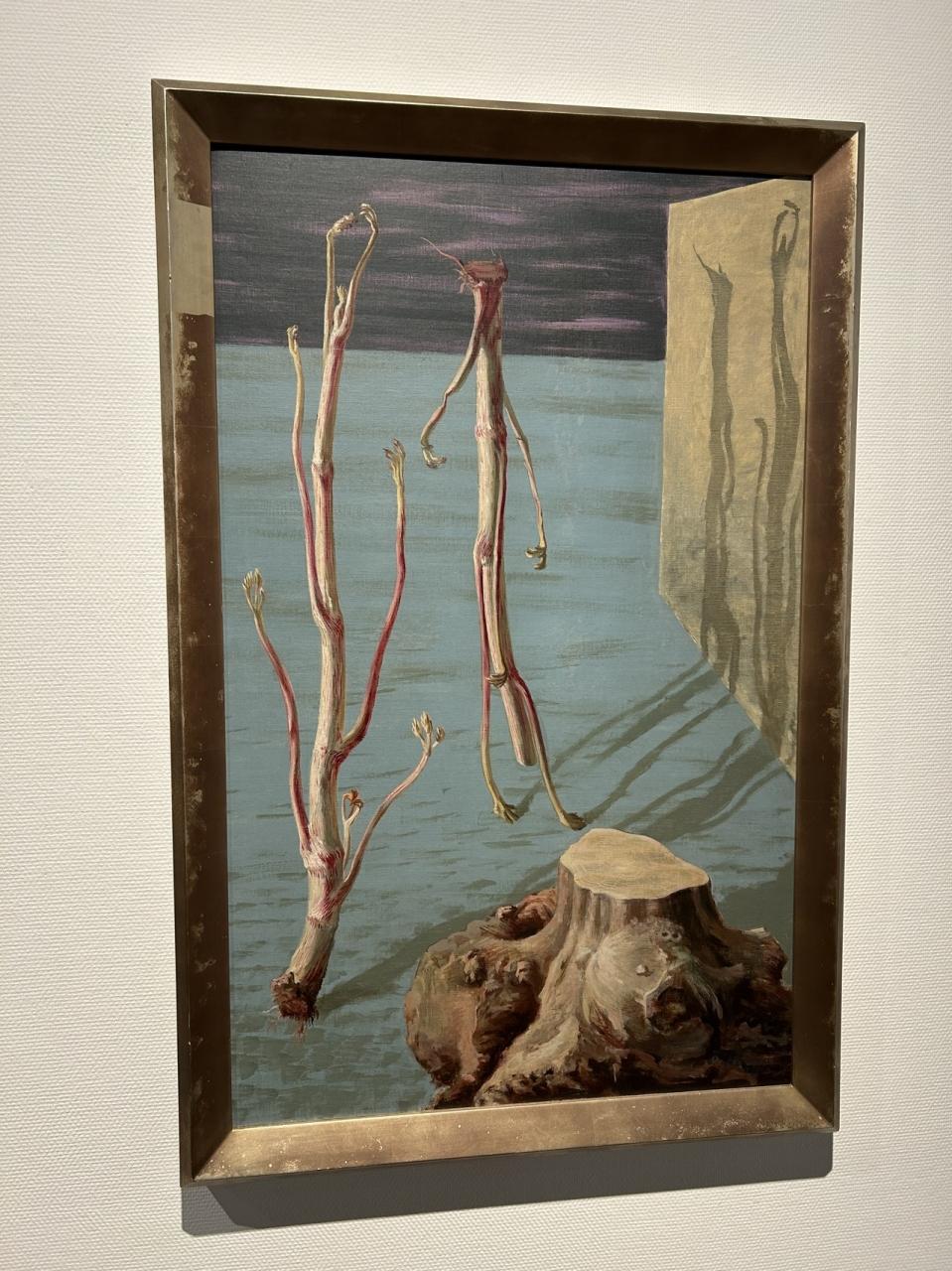
独活
Spikenards
1937 昭和12年
油彩・キャンバス oil on canvas
ひょろひょろと頼りなげに立つ2本のウド。北脇は、ウドを漢字で「独活」と書くことから、擬人化することを思いついたといいます。とくにウドそのものをデフォルメせず、片方を上下逆に立たせただけで、ウドがいかにも人の姿に見えてくるのはなぜでしょう。おそらく画面の左からウドを照らす強い光が、右側の壁へと長い影を落とすことで、あやしい存在感を与えているからにちがいありません。身近な植物の観察から幻想をふくらませていくことを得意にした北脇ならではの演出です。
Two spikenards (a wild plant known as udo in Japanese) adopt wobbly,
uncertain stances. Kitawaki inspired by the fact that udo is written in kanji as 独活 (lit. "independent activity"), conceived the idea of anthropomorphizing the plant. Without altering the form of the spikenard itself, simply turning one upside down makes it distinctly resemble a human figure. Here this resemblance is enhanced by strong light illuminating the plants from the left, causing them to cast long shadows on the right-hand wall and imbuing them with an eerie presence. This portrayal is characteristic of Kitawaki, who excelled at expanding observations of commonplace plants into fantastical flights of fancy. -
-
-
-
浅原清隆
ASAHARA, Kiyotaka
1915-1945
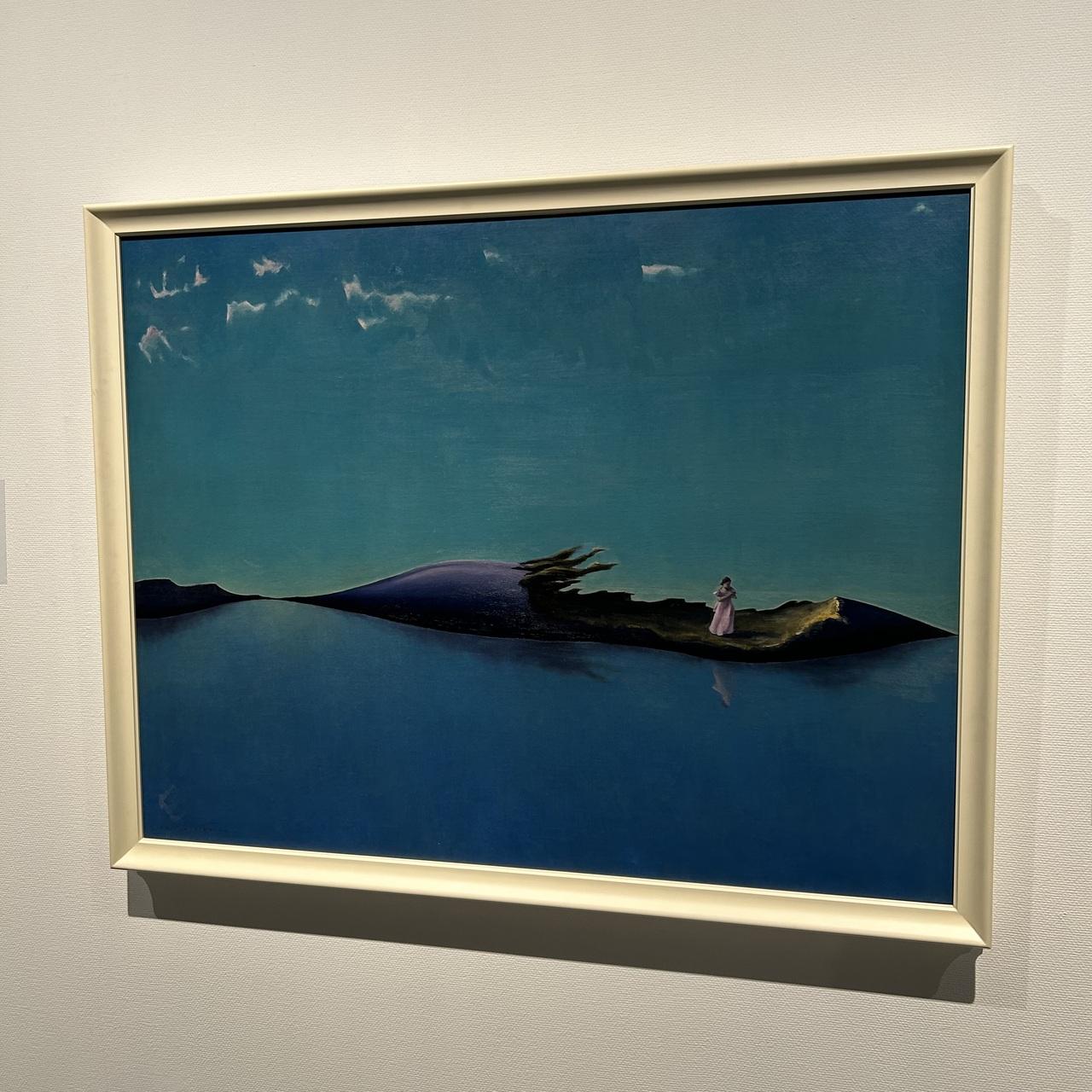
郷愁
Nostalgia
1938
昭和13年
油彩・キャンバス
oil on canvas
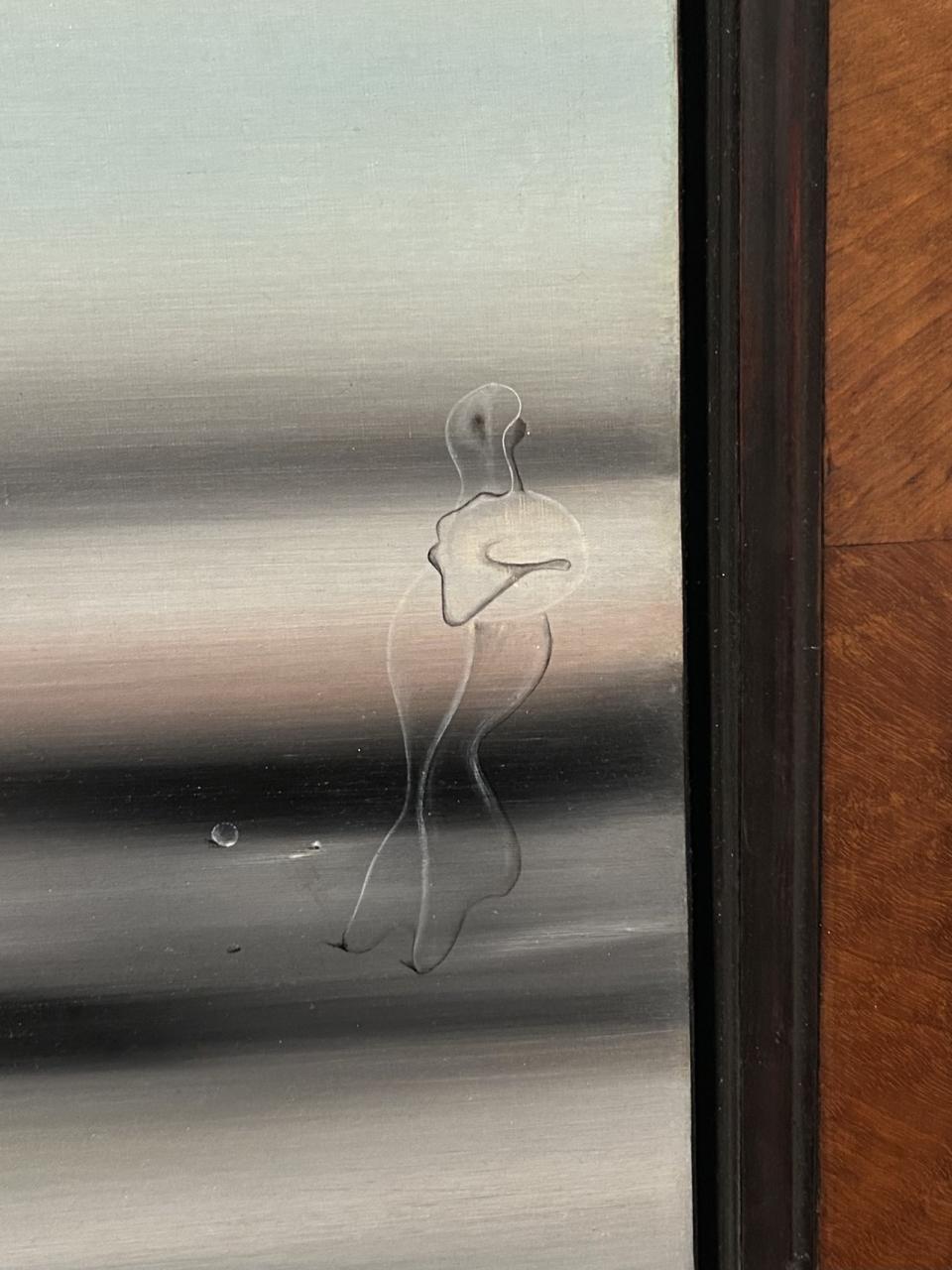
澄んだ青が画面を支配し、水平線のかなたに、わずかに光のさすのが感じられます。夢の中の景色のようですが、作者によれば、これは作者の故郷である兵庫県播磨の海岸の夜の情景で、そしてそこに母親の胎内のイメージを重ねようとしたといいます。絵を学ぶために上京していた浅原の、二重の意味での郷愁が、どこまでも安らかなものへの希求として表現されていますが、その裏には、卒業後には召集を受け戦地に送られることへの不安があったことも忘れてはなりません。
A limpid blue dominates this painting and beyond the horizon there is a slight hint of shining light. Although the scene looks like something out of a dream, Asahara said that it was actually a night view of his hometown of Harima, located on the coast of Hyogo Prefecture, juxtaposed with an image of the inside of his mother's womb. Asahara had left Harima to study painting in Tokyo, so this two-fold nostalgia suggests the extent of his desire for tranquility. We should also bear in the mind that after graduating from art school, Asahara was anxious about being drafted and sent to the front. -
浜田浜雄
HAMADA, Hamao
1915-1994
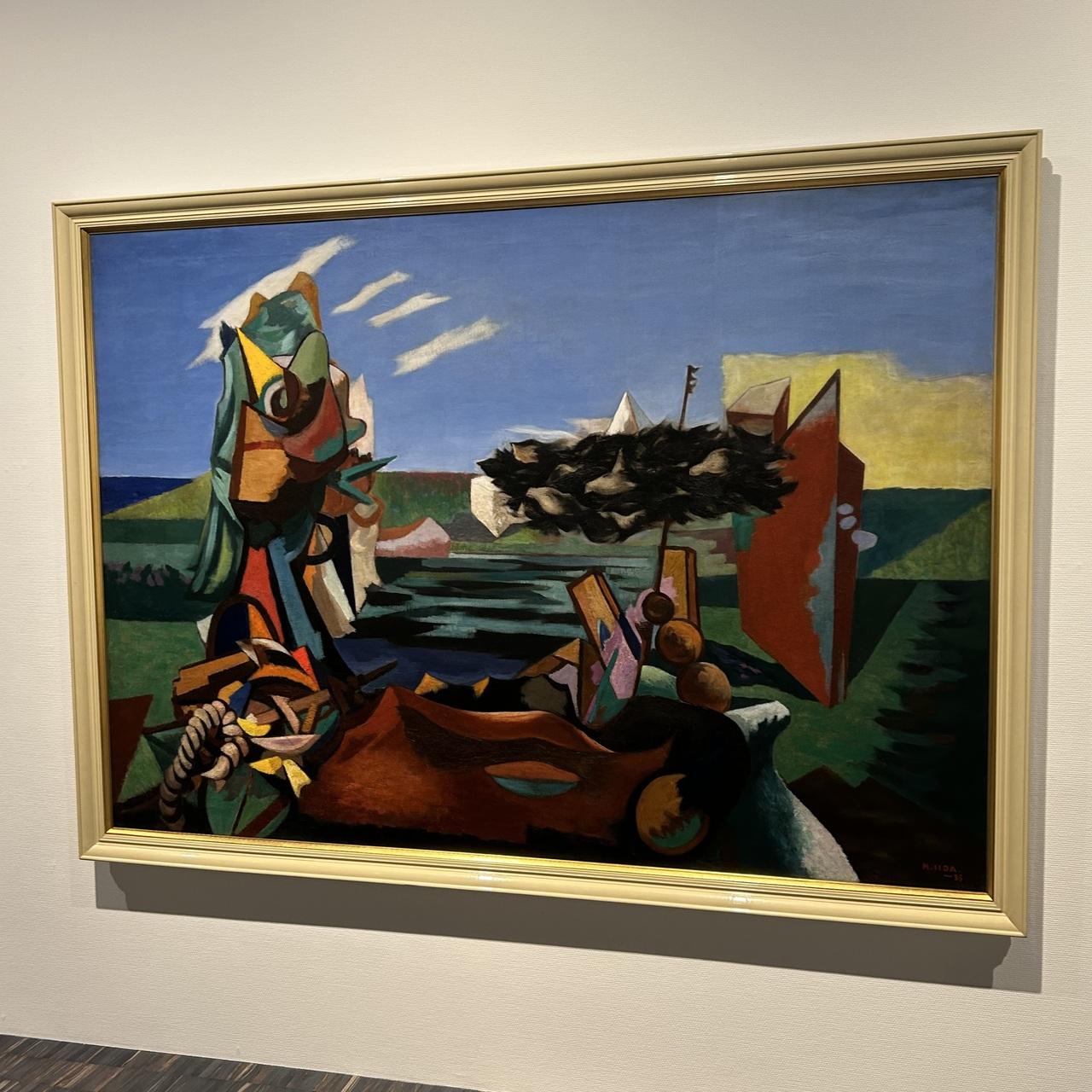
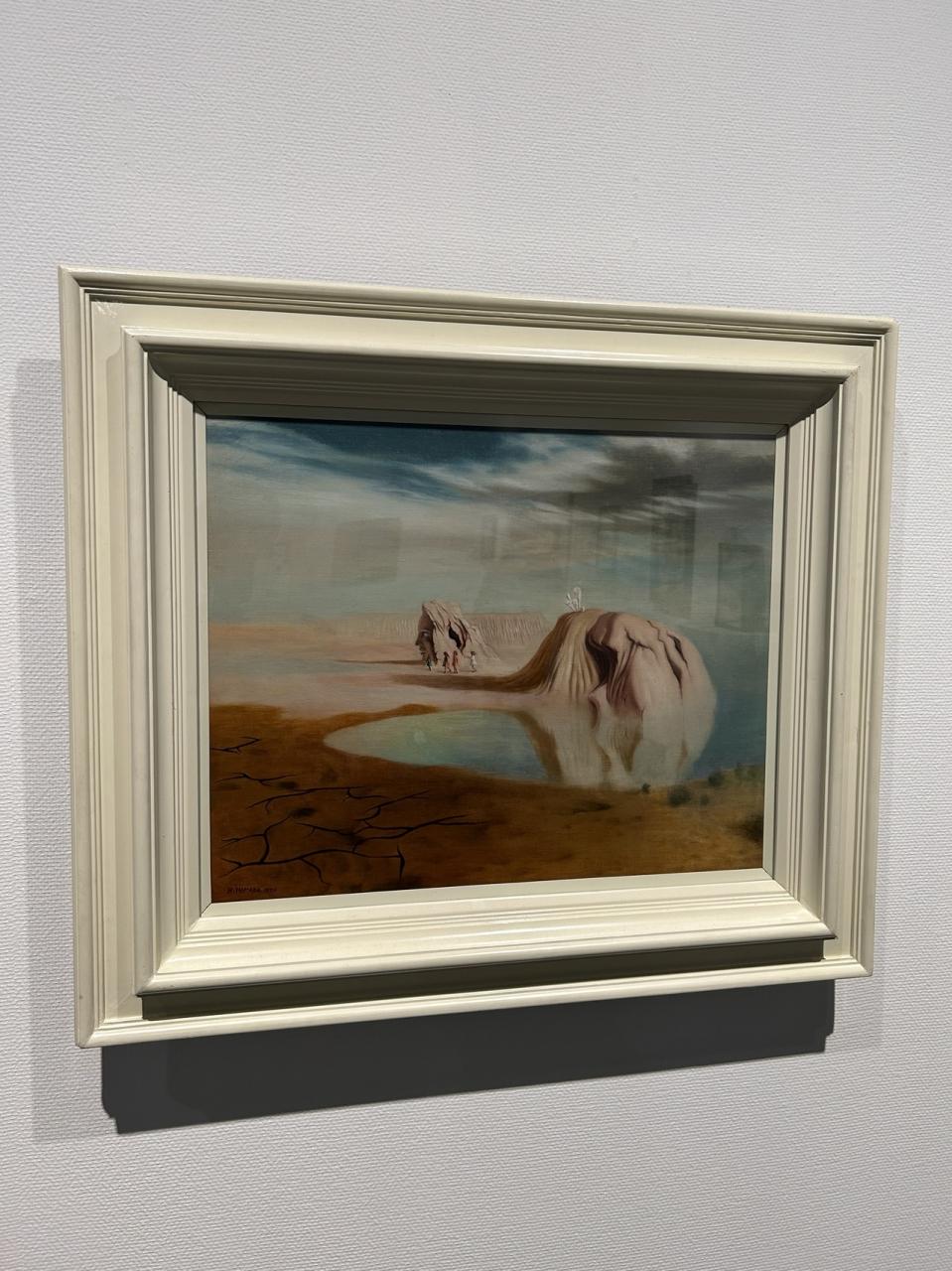
Upas
Upas
1939 昭和14年
油彩・キャンバス oil on canvas
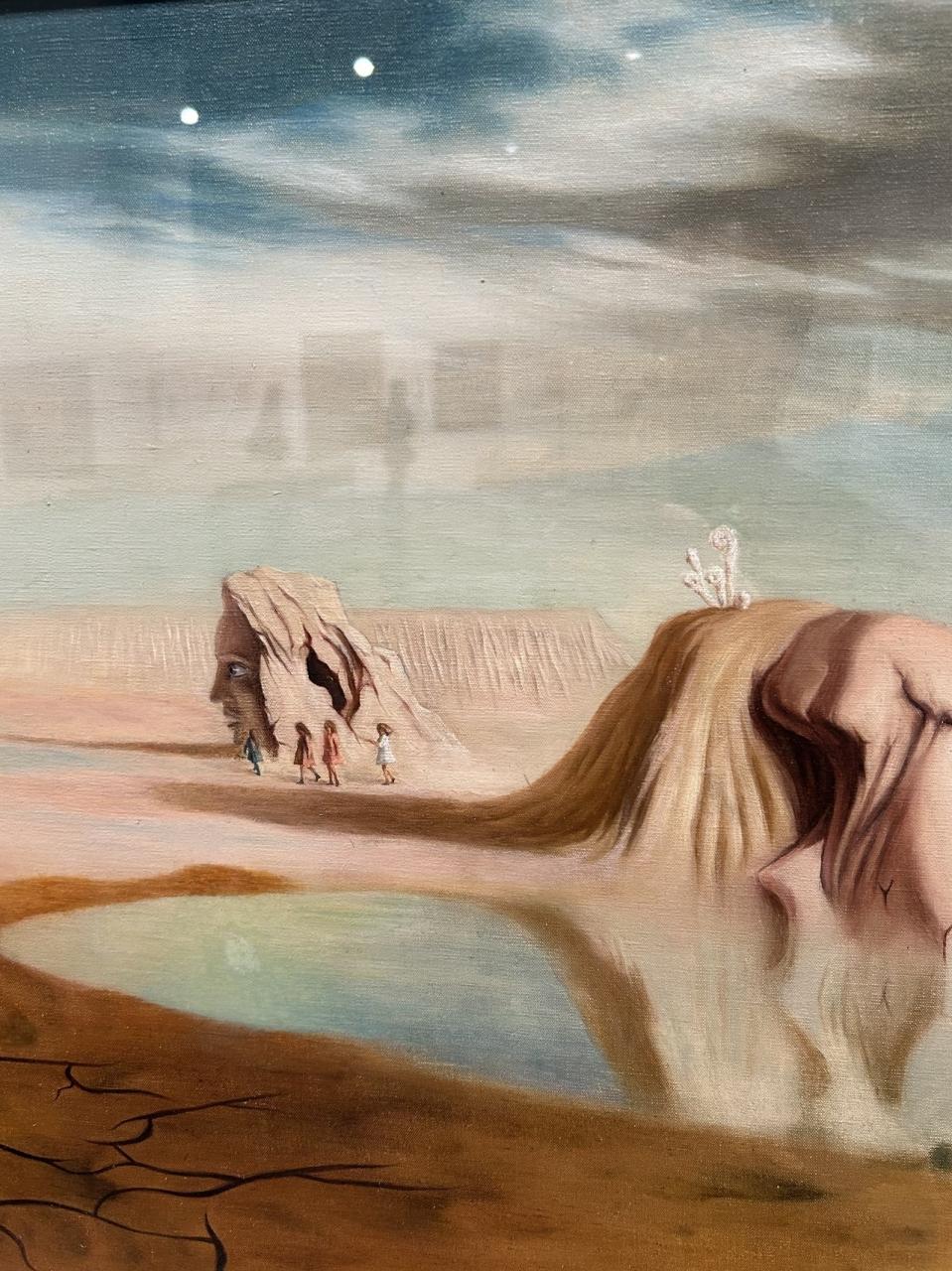
「ユパス」とは作者によればジャワ島原産の植物で猛毒をもち、この木の上を飛ぶ鳥は落ち、周囲は荒地と化すという言い伝えがあり、転じて害悪の比喩として用いられるといいます。岩の上にこのユパスが芽を出しており、つまりここでは災いもたらすものの誕生が象徴的に描かれているようです。子どもたちはどこかへ立ち去ろうとし、大地は干からびはじめています。戦争に対する画家の不安が婉曲的に表されているといえるでしょう。
The title of this work refers to a Javanese legend that if a bird flying above a upas tree (a highly poisonous species native to the region) falls to the ground, the area will be reduced to barren land. The artist apparently intended this as a metaphor for evil. With upas buds sprouting up from rocks, the work symbolically depicts the birth of some sort of calamitous event. Children attempt to escape the scene and the earth grows increasingly parched in this euphemistic depiction of the artist's anxieties about the war. -
-
(『6室「相手」がいる』へ続く・・・)



利用規約に違反している投稿は、報告する事ができます。
-
前の旅行記

MOMAT コレクション〔国立東京近代美術館 所蔵作品展〕(2024.9.3-12.22)③ 4室:夢想と自...
2024/12/18~
神田・神保町
-
次の旅行記

MOMAT コレクション(2024.9.3-12.22)⑤ 6室:「相手がいる」& 7室:プレイバック「日米...
2024/12/18~
神田・神保町
-

MOMAT コレクション〔国立東京近代美術館 所蔵作品展〕(2024.9.3-12.22)① 1室:モデルた...
2024/12/18~
神田・神保町
-

MOMAT コレクション〔国立東京近代美術館 所蔵作品展〕(2024.9.3-12.22)② 2室:明治時代...
2024/12/18~
神田・神保町
-

MOMAT コレクション〔国立東京近代美術館 所蔵作品展〕(2024.9.3-12.22)③ 4室:夢想と自...
2024/12/18~
神田・神保町
-

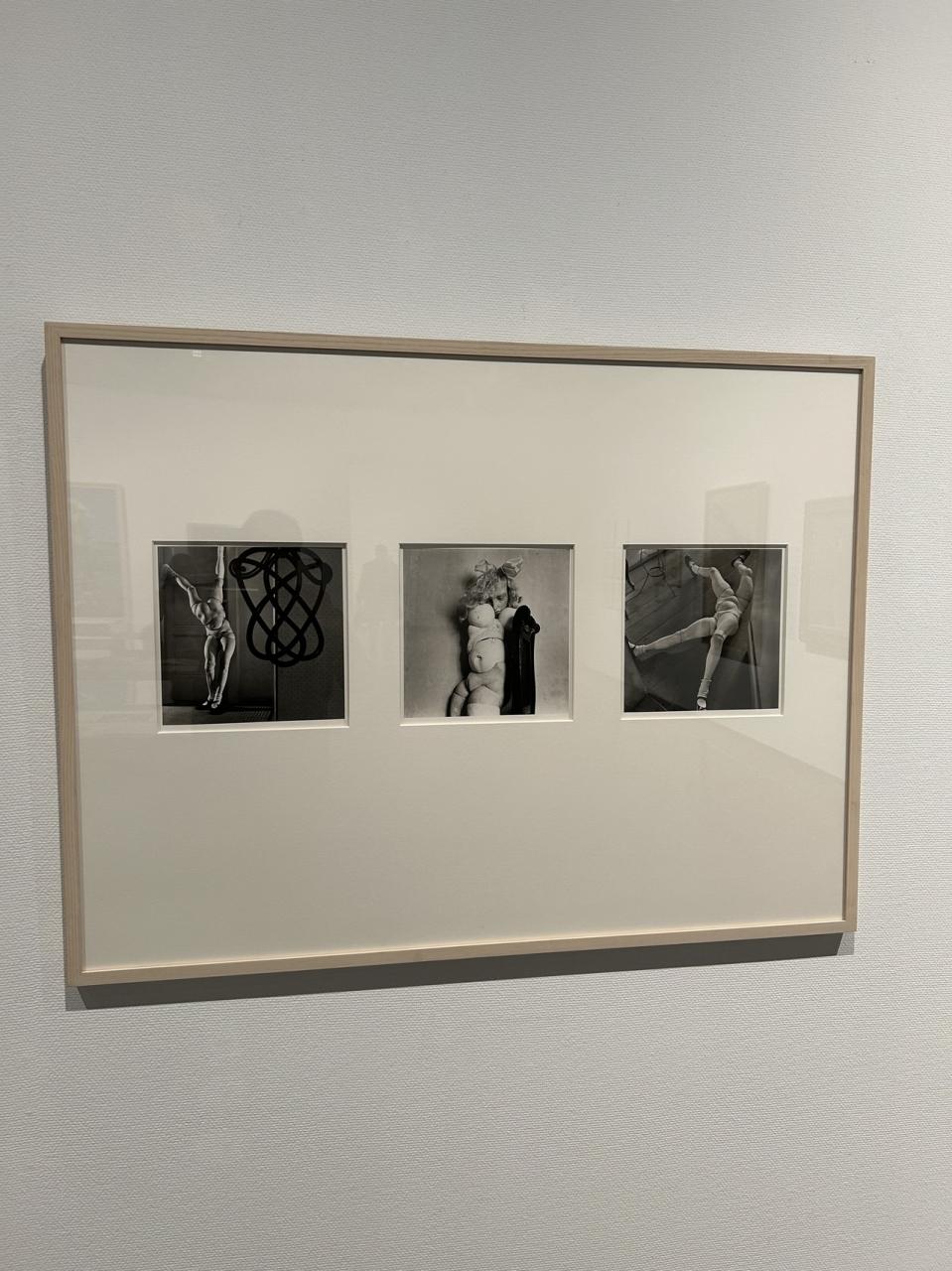
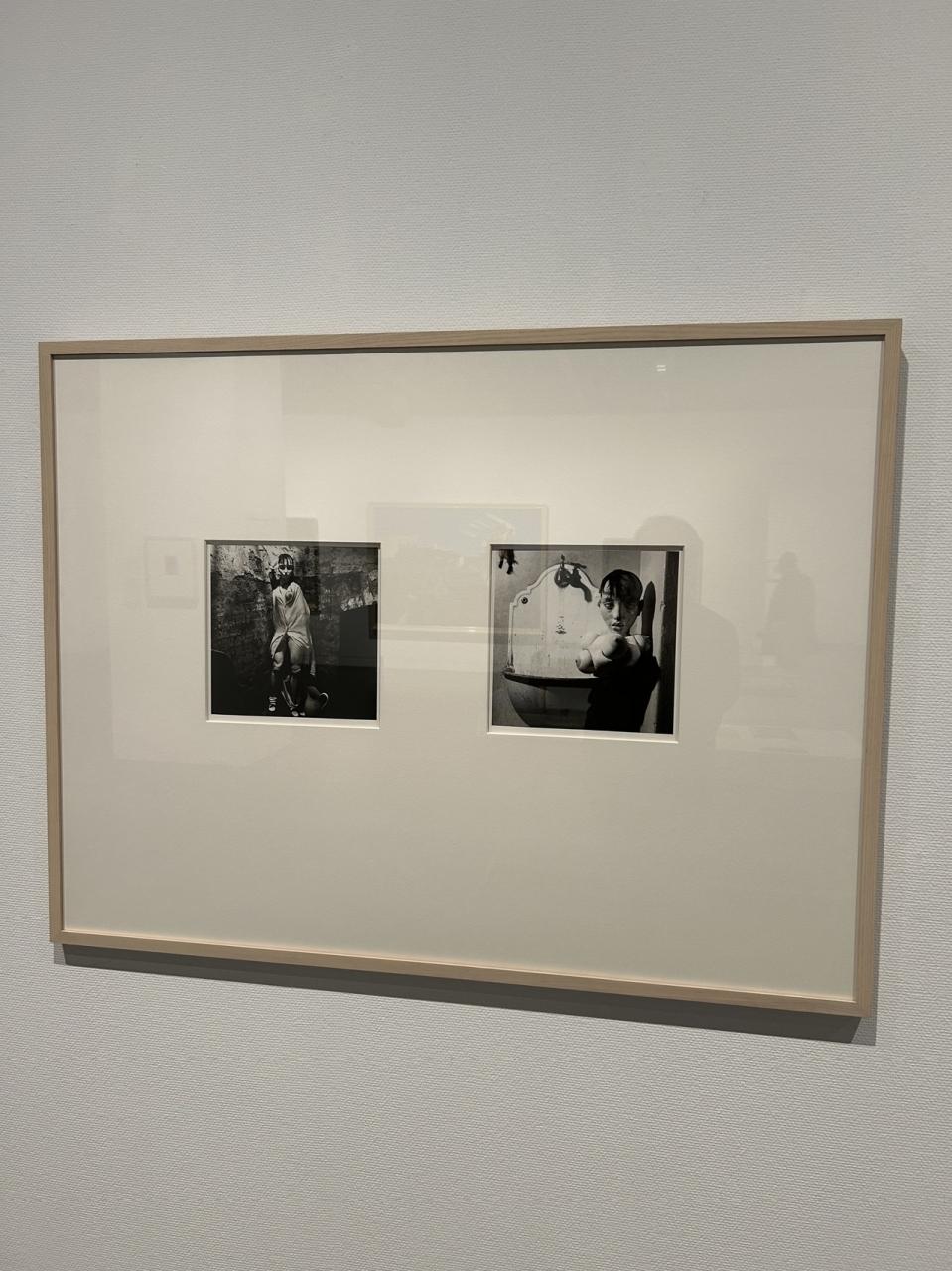
MOMAT コレクション展 ~2024.12.22:5.シュルレアリスム100年。"岡上淑子《長い一日》"
2024/12/18~
神田・神保町
-

MOMAT コレクション(2024.9.3-12.22)⑤ 6室:「相手がいる」& 7室:プレイバック「日米...
2024/12/18~
神田・神保町
-

MOMAT コレクション〔国立東京近代美術館 所蔵作品展〕(2024.9.3-12.22)⑥ 8室:生誕10...
2024/12/18~
神田・神保町
-

MOMAT コレクション ⑦ 9室:清野賀子 & 10室:アール・デコの精華/線にもいろいろある & 11室...
2024/12/18~
神田・神保町
-

MOMAT コレクション〔国立東京近代美術館 所蔵作品展〕(2024.9.3-12.22)⑧/完 12室:ド...
2024/12/18~
神田・神保町
旅行記グループをもっと見る
コメントを投稿する前に
十分に確認の上、ご投稿ください。 コメントの内容は攻撃的ではなく、相手の気持ちに寄り添ったものになっていますか?
サイト共通ガイドライン(利用上のお願い)報道機関・マスメディアの方へ 画像提供などに関するお問い合わせは、専用のお問い合わせフォームからお願いいたします。
この旅行で行ったスポット






フォートラベル公式LINE@

おすすめの旅行記や旬な旅行情報、お得なキャンペーン情報をお届けします!
QRコードが読み取れない場合はID「@4travel」で検索してください。
\その他の公式SNSはこちら/





旅行記グループ MOMAT コレクション〔国立東京近代美術館 所蔵作品展〕(2024.9.3-12.22)
0
35