


2024/12/18 - 2024/12/18
106位(同エリア935件中)

旅熊 Kokazさん
- 旅熊 KokazさんTOP
- 旅行記1931冊
- クチコミ854件
- Q&A回答101件
- 1,713,645アクセス
- フォロワー755人
国立東京近代美術館 所蔵作品展 MOMATコレクション(2024.9.3-12.22)
6室:「相手がいる」& 7室:プレイバック「日米抽象美術展」(1955)
- 旅行の満足度
- 5.0
-

国立東京近代美術館 所蔵作品展 MOMATコレクション(2024.9.3-12.22)
https://www.momat.go.jp/exhibitions/r6-2 -
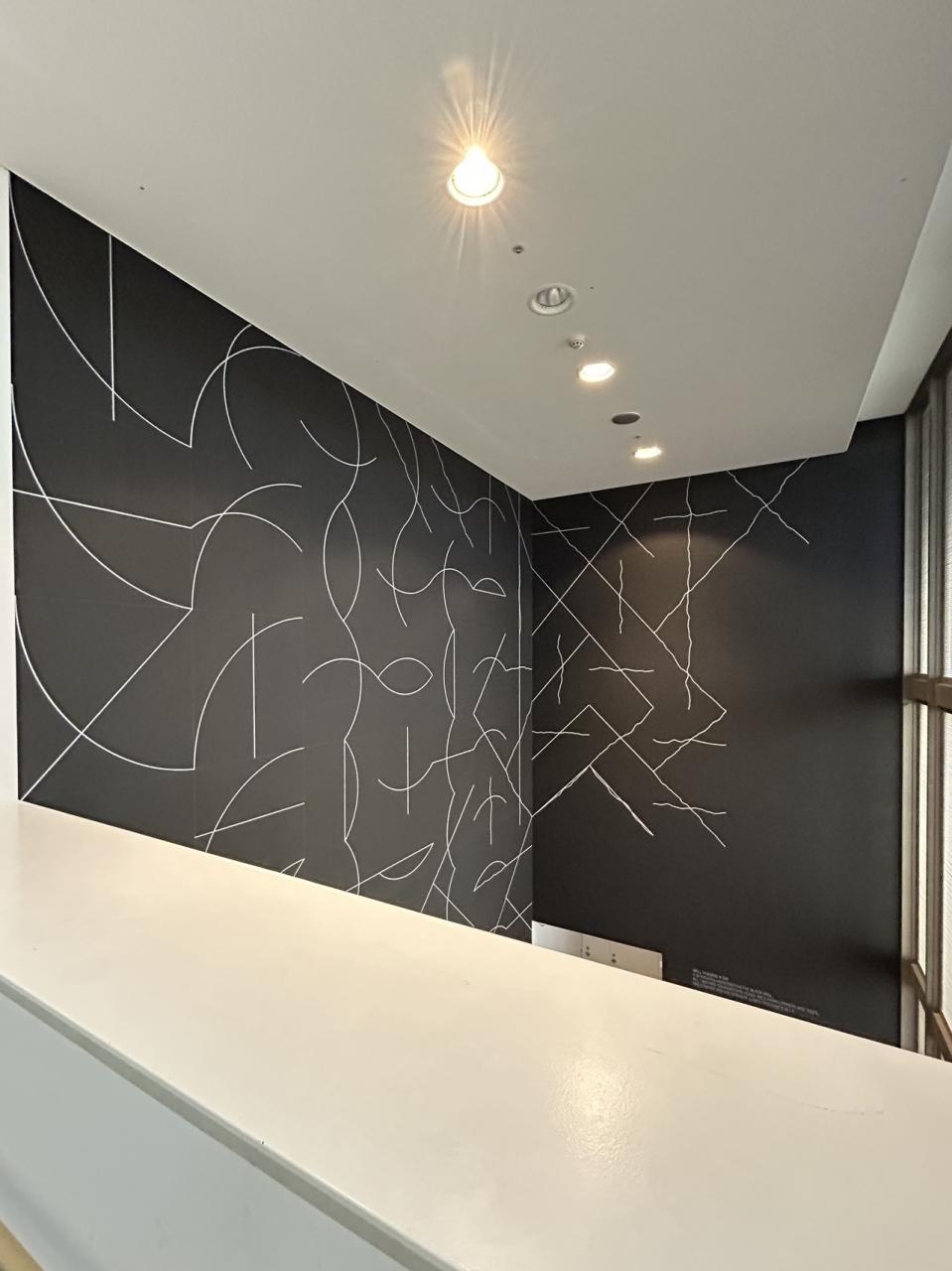
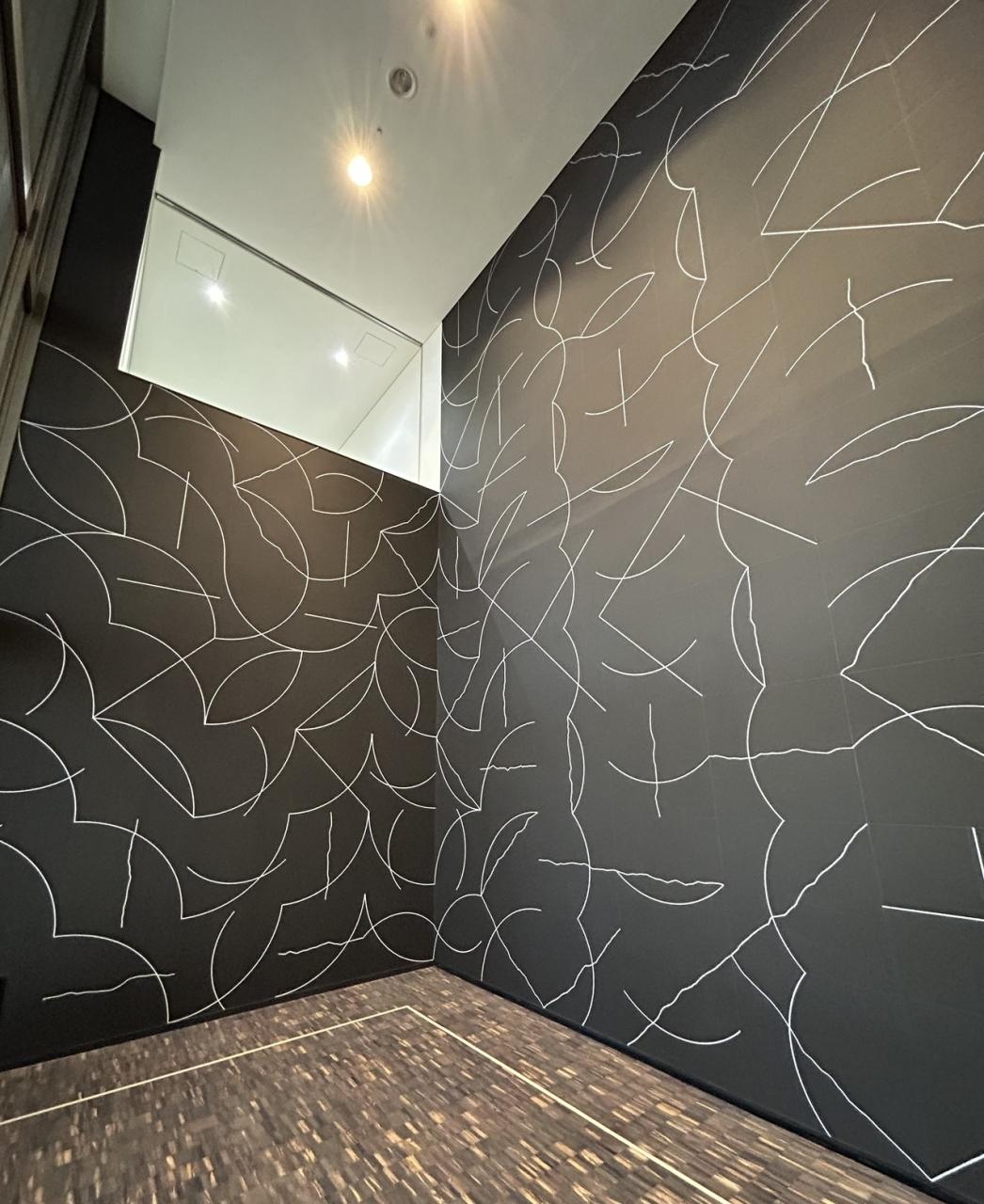
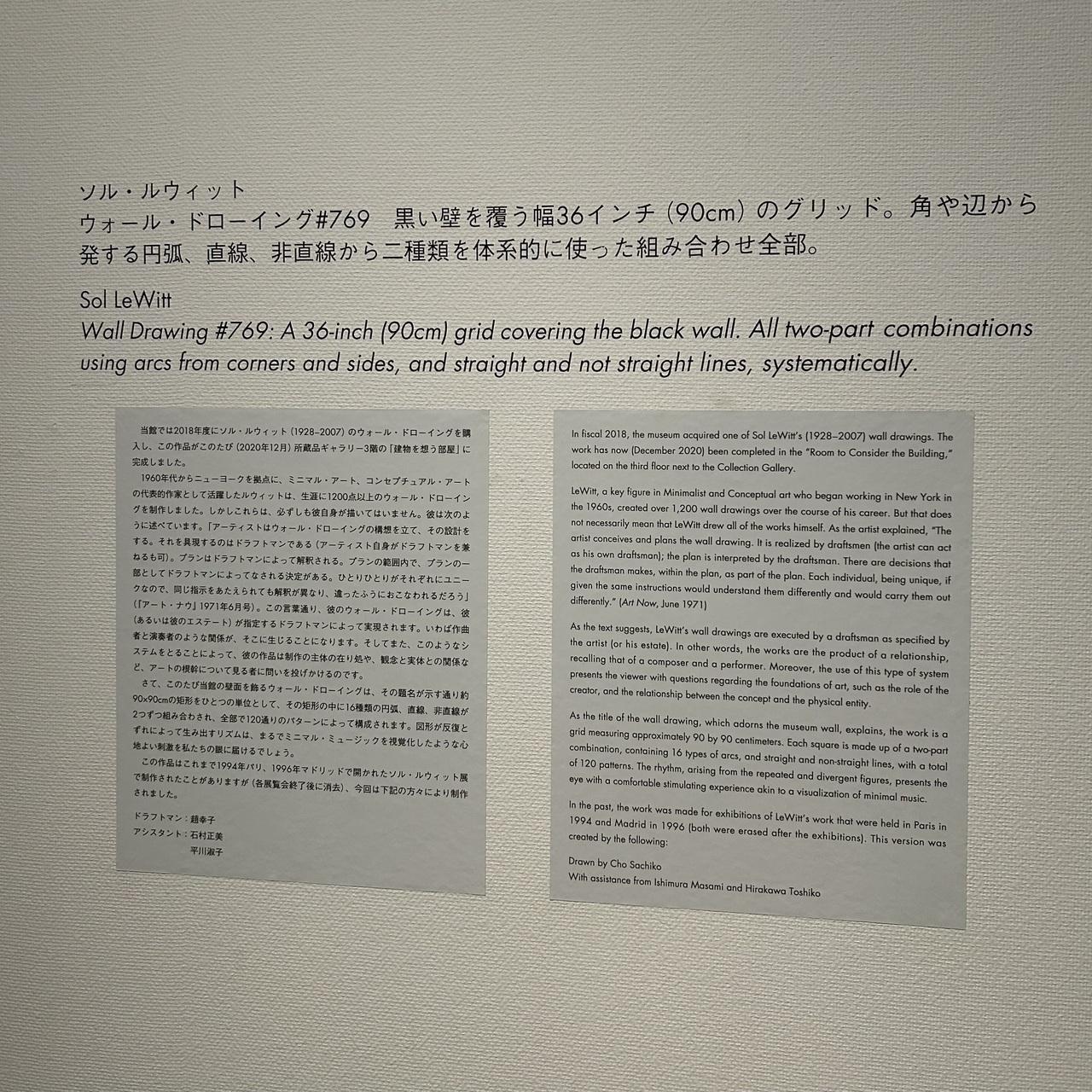
ソル・ルウィット
Sol Lewitt
1928-2007
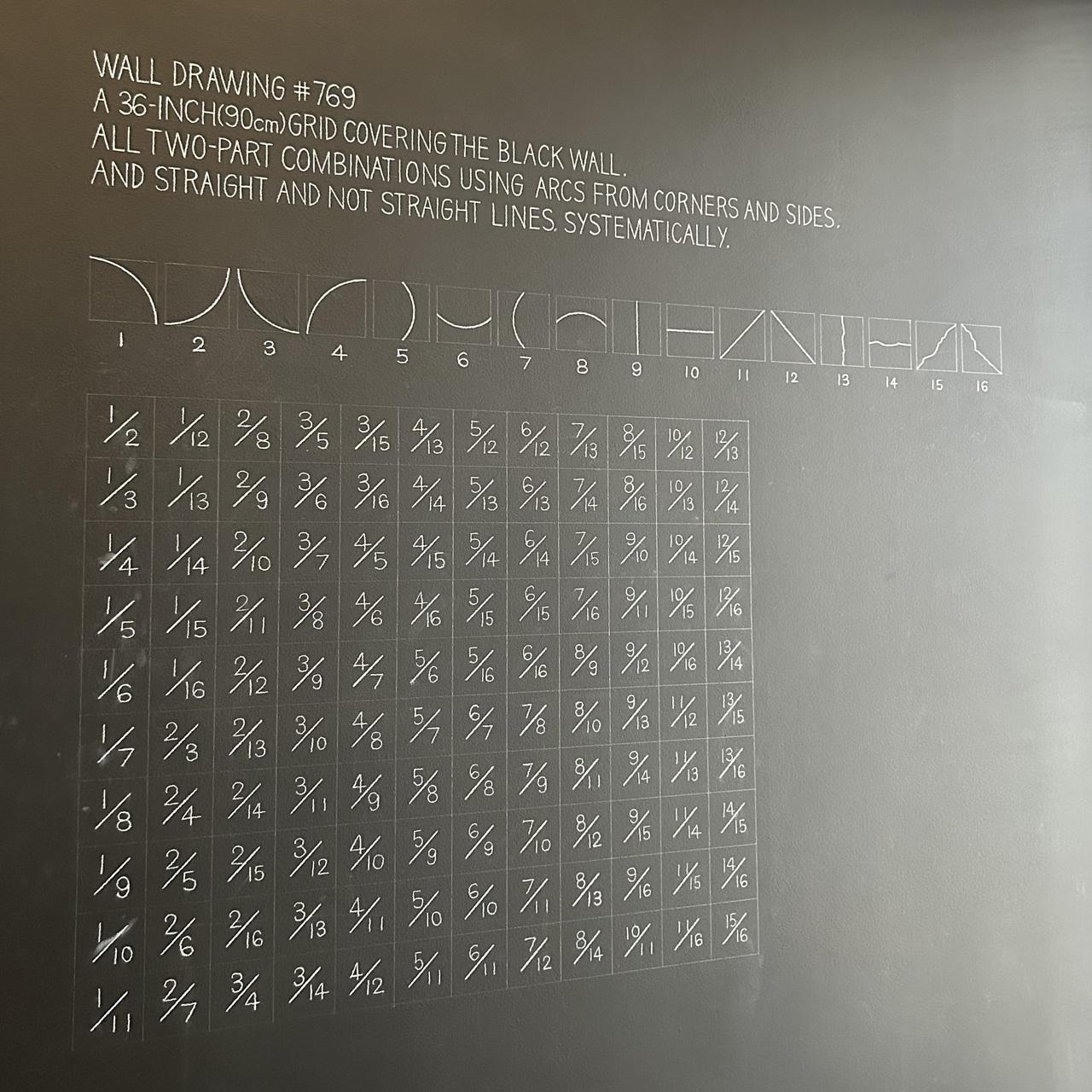
ウォール・ドローイング#769
黒い壁を覆う幅36インチ(90cm)のグリッド。
角や辺から発する円弧、直線、非直線から二種類を体系的に使った組み合わせ全部。
Wall Drawing#769: A 36-inch (90cm) grid covering the black wall. All two-part combinations using arcs from corners and sides, and straight and not straight lines, systematically.
1994 平成6年
水溶性パステル、水性塗料、鉛筆・壁
water soluble wax pastel, water based paint and pencil on wall -
-
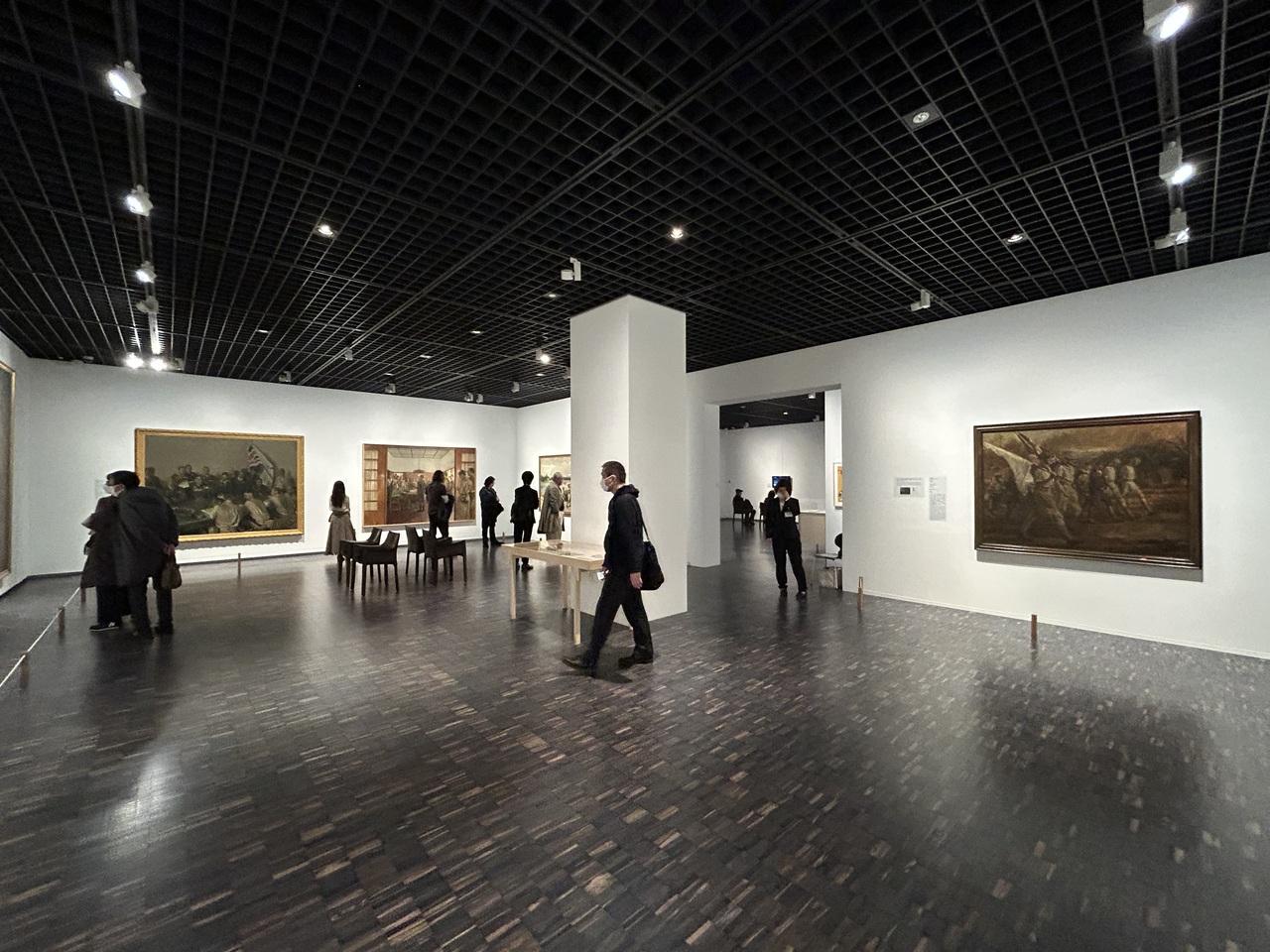
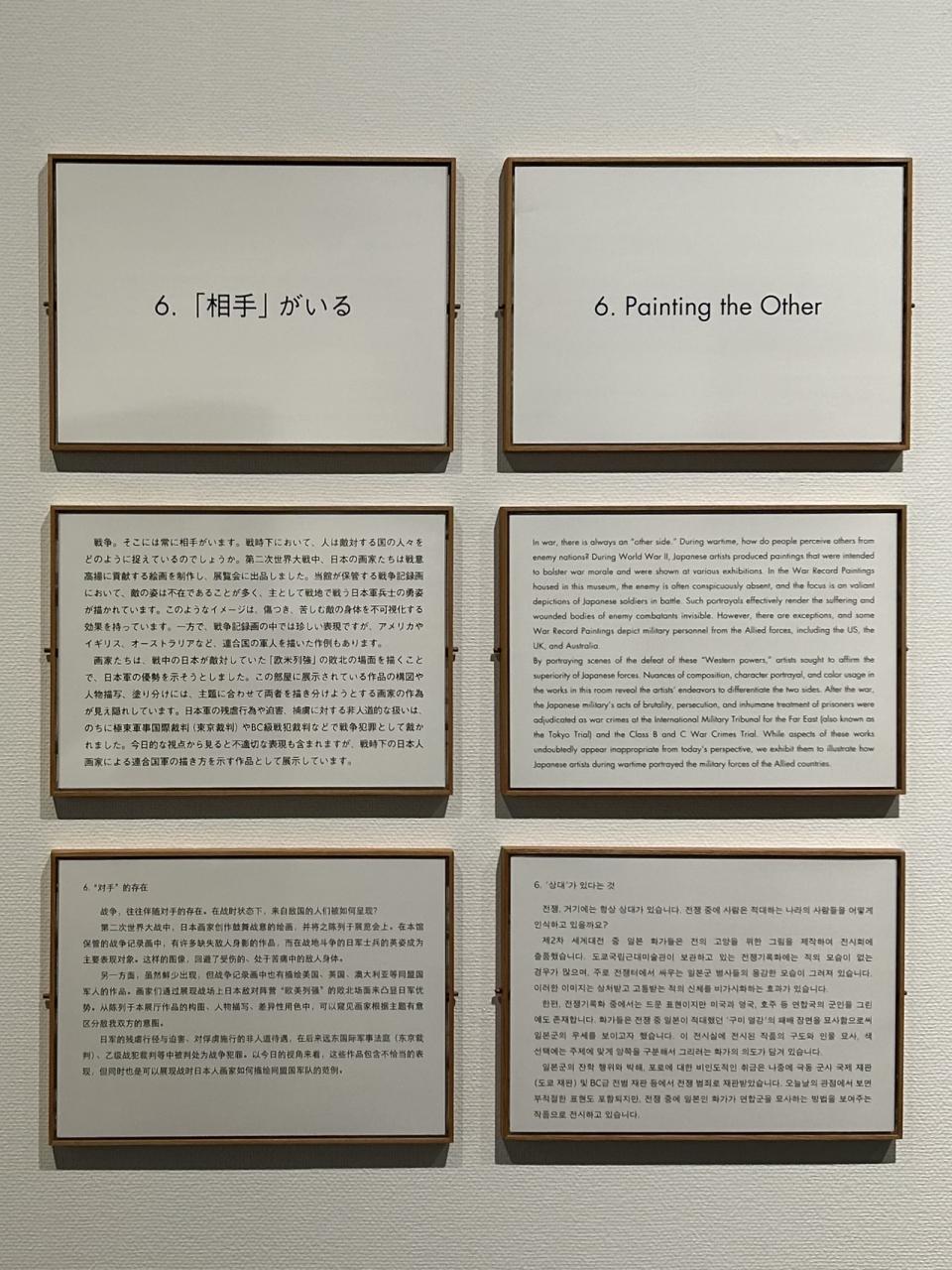
6.「相手」がいる
Painting the Other
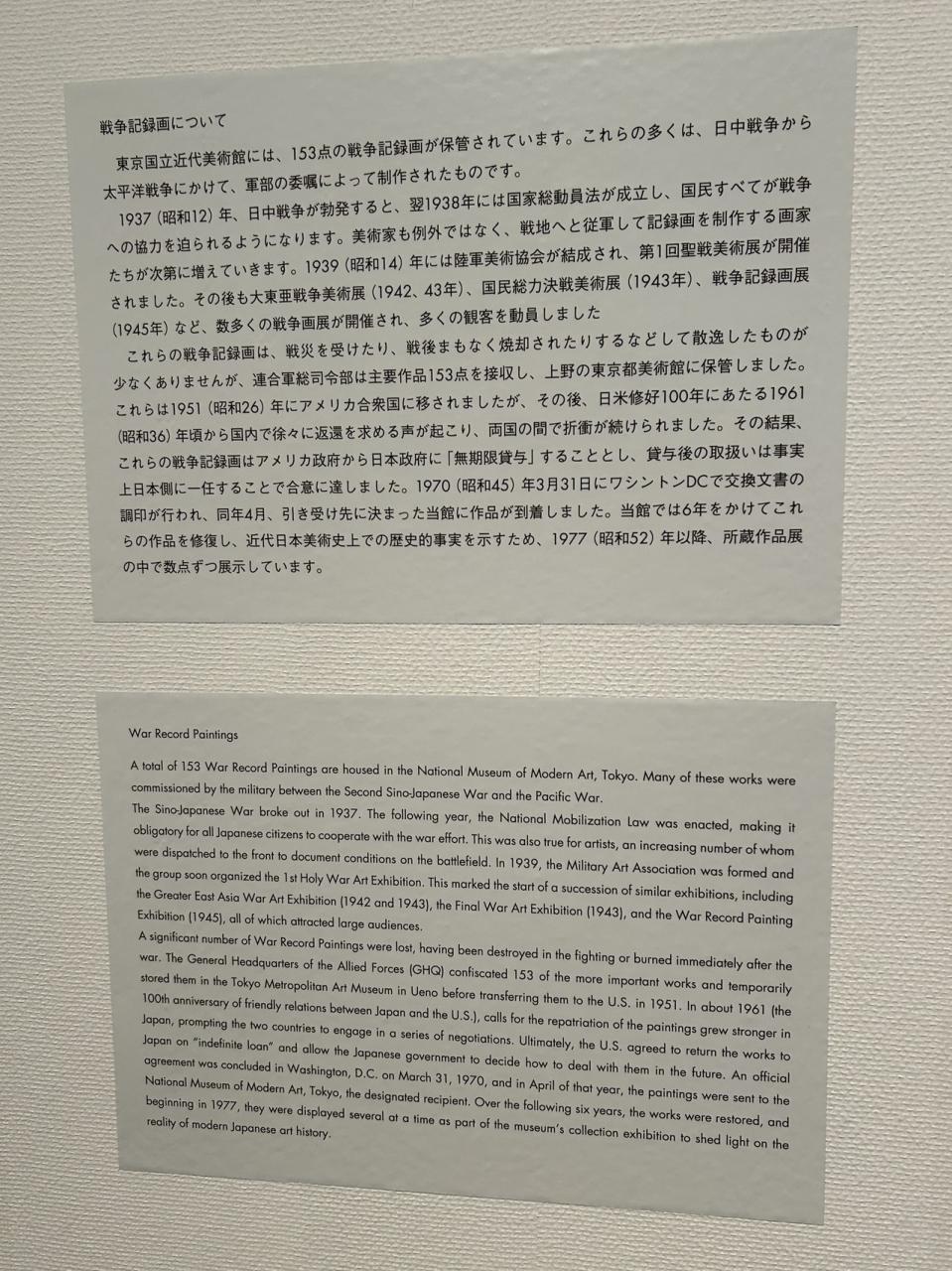
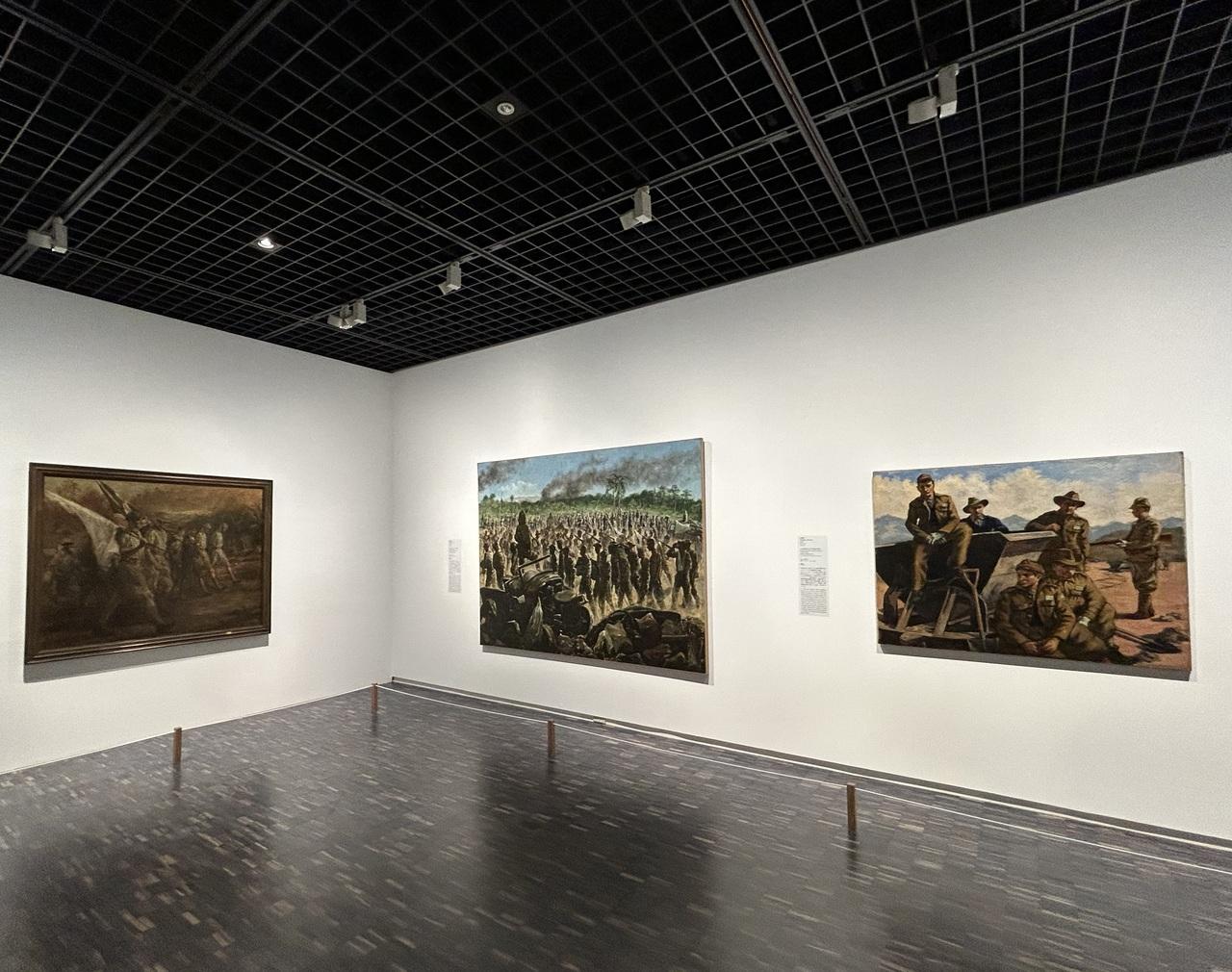
戦争。そこには常に相手がいます。戦時下において、人は敵対する国の人々をどのように提えているのでしょうか。第二次世界大戦中、日本の画家たちは戦意高揚に貢献する絵画を制作し、展覧会に出品しました。当館が保管する戦争記録画において、敵の姿は不在であることが多く、主として戦地で戦う日本軍兵士の姿が描かれています。このようなイメージは、傷つき、苦しむ敵の身体を不可視化する効果を持っています。一方で、戦争記録画の中では珍しい表現ですが、アメリカやイギリス、オーストラリアなど、連合国の軍人を描いた作例もあります。
In war, there is always an "other side." During wartime, how do people perceive others from enemy nations? During World War II, Japanese artists produced paintings that were intended to bolster war morale and were shown at various exhibitions. In the War Record Painting housed in this museum, the enemy is often conspicuously absent, and the focus is on valiant depictions of Japanese soldiers in battle. Such portrayals effectively render the suffering and wounded bodies of enemy combatants invisible. However, there are exceptions, and some War Record Paintings depict military personnel from the Allied forces, including the US, the UK, and Australia.
画家たちは、戦中の日本が敵対していた「欧米列強」の敗北の場面を描くことで、日本軍の優勢を示そうとしました。この部屋に展示されている作品の構図や人物描写、塗り分けには、主題に合わせて両者を描き分けようとする画家の作為が見え隠れしています。日本軍の残虐行為や迫害、捕虜に対する非人道的な扱いは、のちに極東軍事国際裁判(東京裁判)やBC級戦犯裁判などで戦争犯罪として数かれました。今日的な視点から見ると不適切な表現も含まれますが、戦時下の日本人画家による連合国軍の描き方を示す作品として展示しています。
By portraying scenes of the defeat of these "Western powers," artists sought to affirm the superiority of Japanese forces. Nuances of composition, character portrayal, end color usage in the works in this room reveal the artists' endeavors to differentiate the two sides. After the war the Japanese military's acts of brutality, persecution, and inhumane treatment of prisoners were adjudicated as war crimes at the International Military Tribunal for the Far East (also known as the Tokyo Trial) and the Class B and C War Crimes Trial. While aspects of these works undoubtedly appear inappropriate from today's perspective, we exhibit them to illustrate how Japanese artists during wartime portrayed the military forces of the Allied countries. -
-
-
7. プレイバック「日米抽象美術展」(1955)
Playback: Abstract Art Exhibition: Japan and U.S.A. (1955)
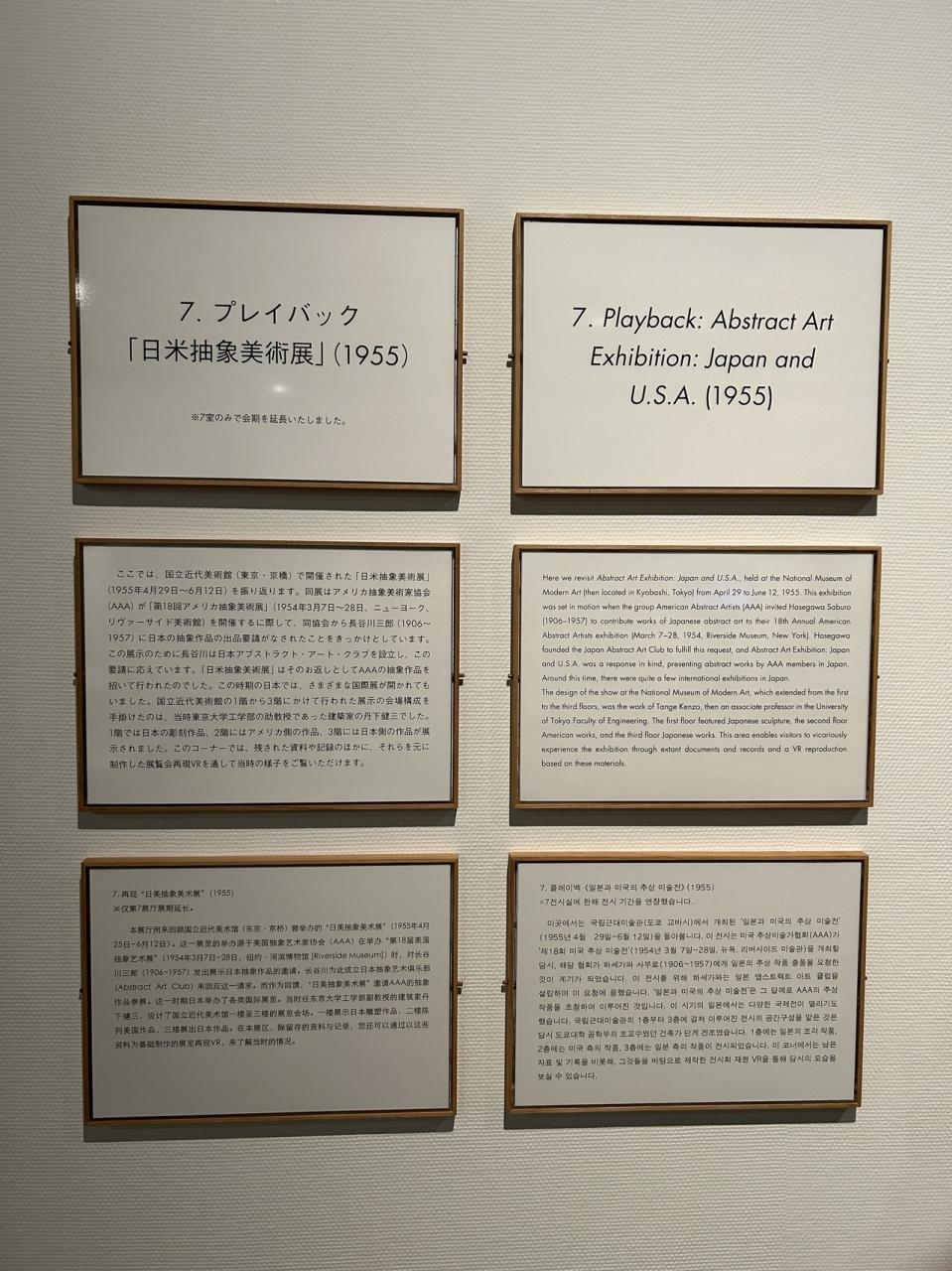
ここでは、国立近代美術館(東京・京橋)で開催された「日米抽象美術展」(1955年4月29日~6月12日)を振り返ります。同展はアメリカ抽象美術家協会(AAA)が「第18回アメリカ抽象美術展」(1954年3月7日~28日、ニューヨーク、リヴァーサイド美術館)を開催するに際して、同協会から長谷川三郎(1906~1957)に日本の抽象作品の出品要請がなされたことをきっかけとしています。この展示のために長谷川は日本アブストラクト・アート・クラブを設立し、この要請に応えています。「日米抽象美術展」はそのお返しとしてAAAの抽象作品を招いて行われたのでした。
Here we revisit Abstract Art Exhibition: Japan and U.S.A., held at the National Museum of Modern Art (then located in Kyobashi, Tokyo) from April 29 to June 12, 1955. This exhibition was set in motion when the group American Abstract Artists (AAA) invited Hasegawa Saburo (1906-1957) to contribute works of Japanese abstract art to their 18th Annual American Abstract Artists exhibition (March 7-28, 1954, Riverside Museum, New York). Hasegawa founded the Japan Abstract Art Club to fulfill this request, and Abstract Art Exhibition: Japan and U.S.A. was a response in kind, presenting abstract works by AAA members in Japan.
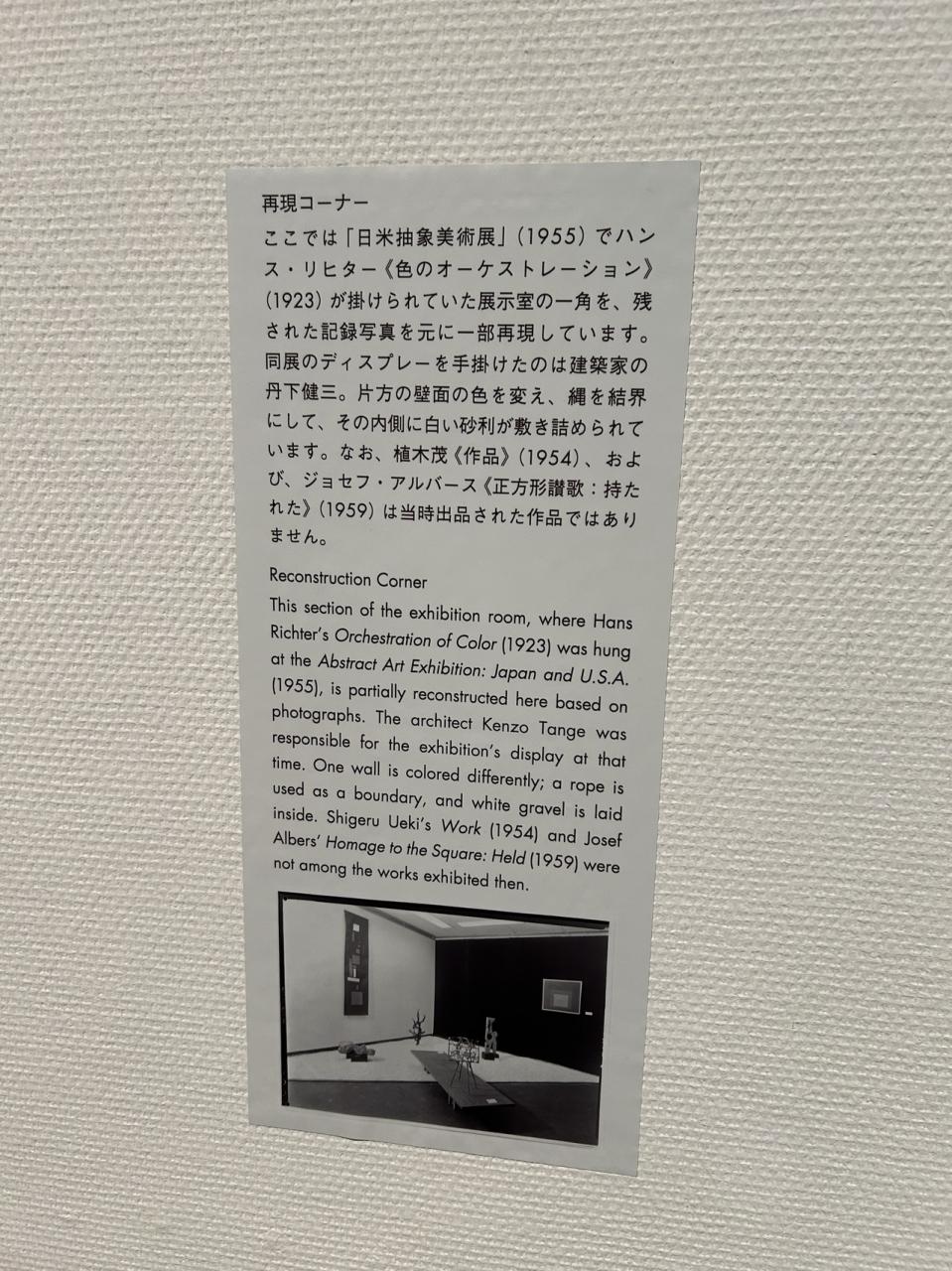
この時期の日本では、さまざまな国際展が開かれてもいました。国立近代美術館の1階から3階にかけて行われた展示の会場構成を手掛けたのは、当時東京大学工学部の助教授であった建築家の丹下健三でした。1階では日本の彫刻作品、2階にはアメリカ側の作品、3階には日本側の作品が展示されました。このコーナーでは、残された資料や記録のほかに、それらを元に制作した展覧会再現VRを通して当時の様子をご覧いただけます。
Around this time, there were quite a few international exhibitions in Japan.
The design of the show at the National Museum of Modern Art, which extended from the first to the third floors, was the work of Tange Kenzo, then an associate professor in the University of Tokyo Faculty of Engineering. The first floor featured Japanese sculpture, the second floor American works, and the third floor Japanese works. This area enables visitors to vicariously experience the exhibition through extant documents and records and a VR reproduction based on these materials. -
-
-
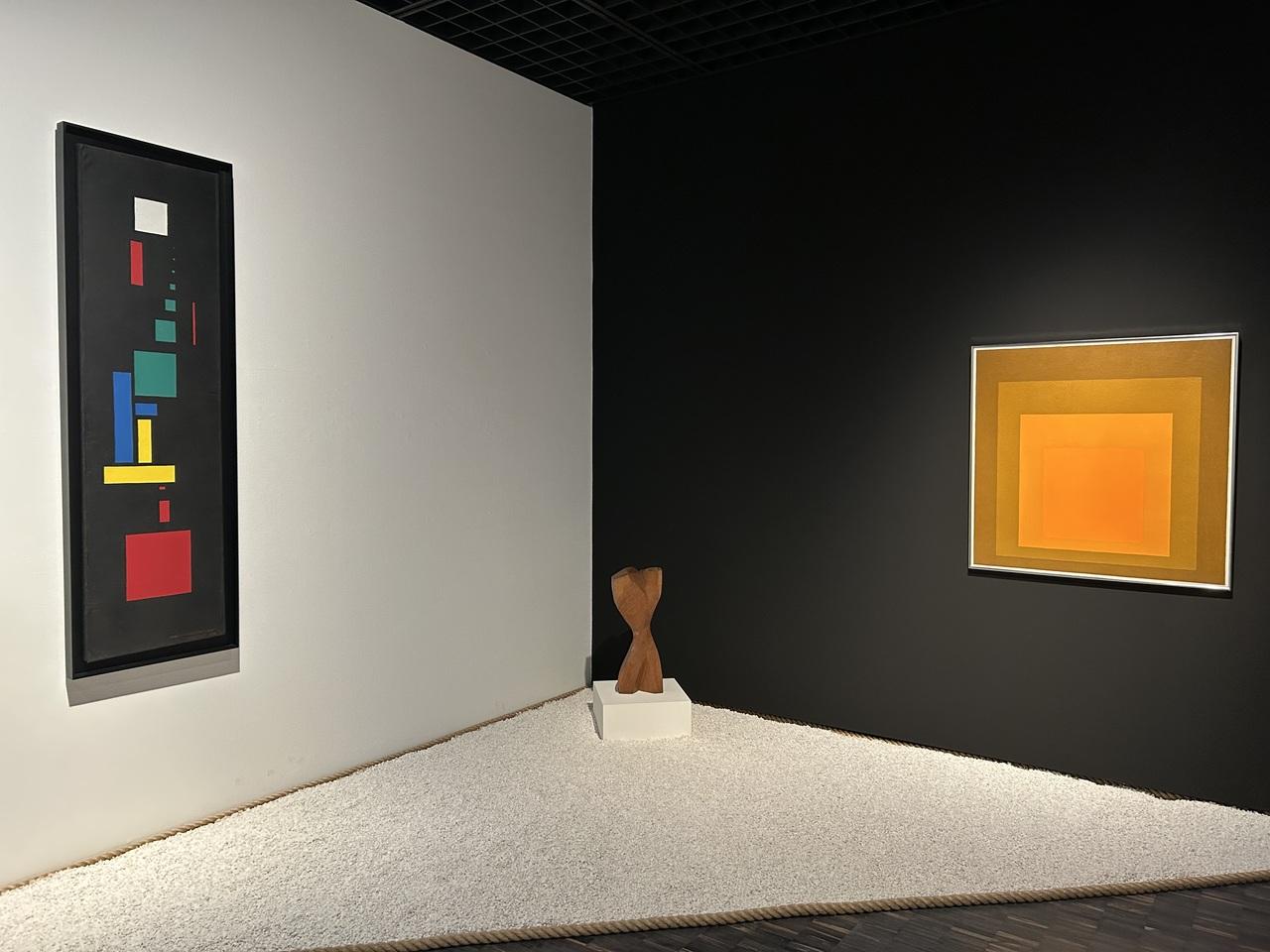
ハンス・リヒター
Hans Richter
1888-1976
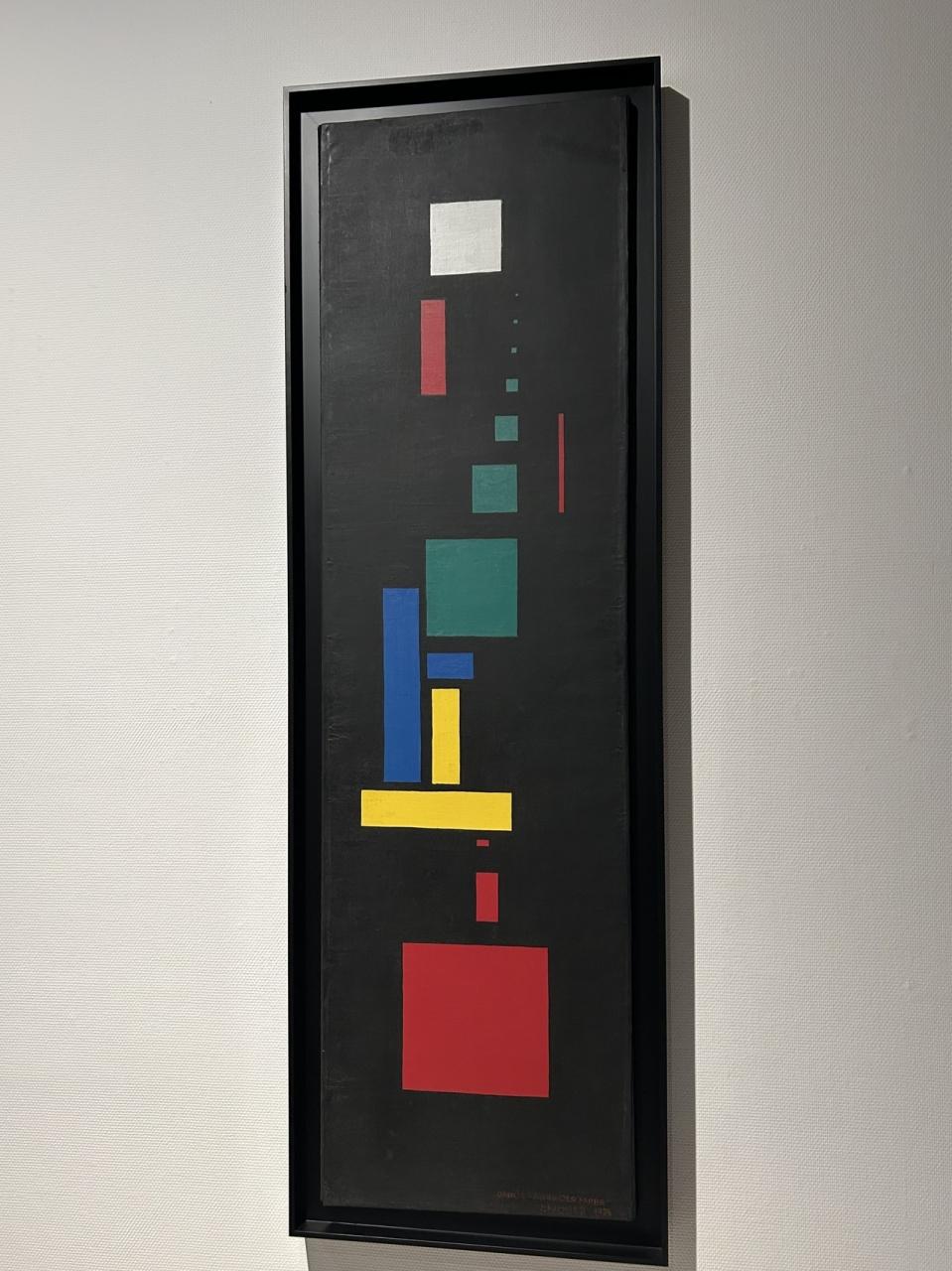
色のオーケストレーション
Orchestration of Color
1923
大正12年
油彩・キャンバス oil on canvas
この作品が制作された1923年は、リヒターが、オランダでピエト・モンドリアン、テオ・ファン・ドゥースブルフが主導した造形運動「デ・ステイル」(オランダ語で「様式」)に参加していた時期です。美術、建築、デザインなど活動範囲は多岐にわたる「デ・ステイル」ですが、絵画においては直線のみの使用、色数の限定などによって普遍的な表現様式を目指すものでした。ひとつ興味深いのは、リヒターが抽象的な実験映画を制作していて、映画にもこの作品と似たような画面構成が見られることです。たとえばこの作品では、緑色の矩形がサイズを変えながら縦に7つ並列されています。映画(『リズム21」)でも、矩形がサイズを変えていくシーンがあります。ただし映画では並列でなく、一つの矩形が連続的にだんだん小さくなっていくので、私たちは画面の奥へと遠ざかる矩形、つまり運動と奥行を感知します。そんなことを踏まえてこの絵を見てみると、静的に感じられた画面が動き始め、平面的に感じられた何もない黒の「地」が深さを持ち始めます。
In 1923, when this work was produced, Richter was part of the art movement De Stifl (Dutch for "the style"), spearheaded by Piet Mondrian and Theo van Doesburg in the Netherlands. Although it extended to diverse fields including art, architecture and design, in terms of painting De Stil aimed for a universal mode of expression using only straight lines, a limited number of colors, and other restrictions. It is intriguing that Richter also created abstract experimental films, which featured visual composition similar to this work. For example, here, seven green rectangles of different sizes are arrayed in a column. Meanwhile, in the film Rhythmus 21, there is a scene where rectangles change in size.
However, in this film rectangles are not shown side by side but rather a single rectangle gradually and continuously shrinks, drawing the viewer deep into the screen and creating a sense of motion and depth.
When we view this painting in light of the film's visual experiment, the static picture plane seems to begin moving, and the flat black ground comes to take on the depth of space. -
-
-
-
-
-


利用規約に違反している投稿は、報告する事ができます。
-
前の旅行記

MOMAT コレクション展 ~2024.12.22:5.シュルレアリスム100年。"岡上淑子《長い一日》"
2024/12/18~
神田・神保町
-
次の旅行記

MOMAT コレクション〔国立東京近代美術館 所蔵作品展〕(2024.9.3-12.22)⑥ 8室:生誕10...
2024/12/18~
神田・神保町
-

MOMAT コレクション〔国立東京近代美術館 所蔵作品展〕(2024.9.3-12.22)① 1室:モデルた...
2024/12/18~
神田・神保町
-

MOMAT コレクション〔国立東京近代美術館 所蔵作品展〕(2024.9.3-12.22)② 2室:明治時代...
2024/12/18~
神田・神保町
-

MOMAT コレクション〔国立東京近代美術館 所蔵作品展〕(2024.9.3-12.22)③ 4室:夢想と自...
2024/12/18~
神田・神保町
-

MOMAT コレクション展 ~2024.12.22:5.シュルレアリスム100年。"岡上淑子《長い一日》"
2024/12/18~
神田・神保町
-

MOMAT コレクション(2024.9.3-12.22)⑤ 6室:「相手がいる」& 7室:プレイバック「日米...
2024/12/18~
神田・神保町
-

MOMAT コレクション〔国立東京近代美術館 所蔵作品展〕(2024.9.3-12.22)⑥ 8室:生誕10...
2024/12/18~
神田・神保町
-

MOMAT コレクション ⑦ 9室:清野賀子 & 10室:アール・デコの精華/線にもいろいろある & 11室...
2024/12/18~
神田・神保町
-

MOMAT コレクション〔国立東京近代美術館 所蔵作品展〕(2024.9.3-12.22)⑧/完 12室:ド...
2024/12/18~
神田・神保町
旅行記グループをもっと見る
コメントを投稿する前に
十分に確認の上、ご投稿ください。 コメントの内容は攻撃的ではなく、相手の気持ちに寄り添ったものになっていますか?
サイト共通ガイドライン(利用上のお願い)報道機関・マスメディアの方へ 画像提供などに関するお問い合わせは、専用のお問い合わせフォームからお願いいたします。






フォートラベル公式LINE@

おすすめの旅行記や旬な旅行情報、お得なキャンペーン情報をお届けします!
QRコードが読み取れない場合はID「@4travel」で検索してください。
\その他の公式SNSはこちら/




旅行記グループ MOMAT コレクション〔国立東京近代美術館 所蔵作品展〕(2024.9.3-12.22)
0
16