


2024/12/18 - 2024/12/18
63位(同エリア935件中)

旅熊 Kokazさん
- 旅熊 KokazさんTOP
- 旅行記1931冊
- クチコミ854件
- Q&A回答101件
- 1,713,640アクセス
- フォロワー755人
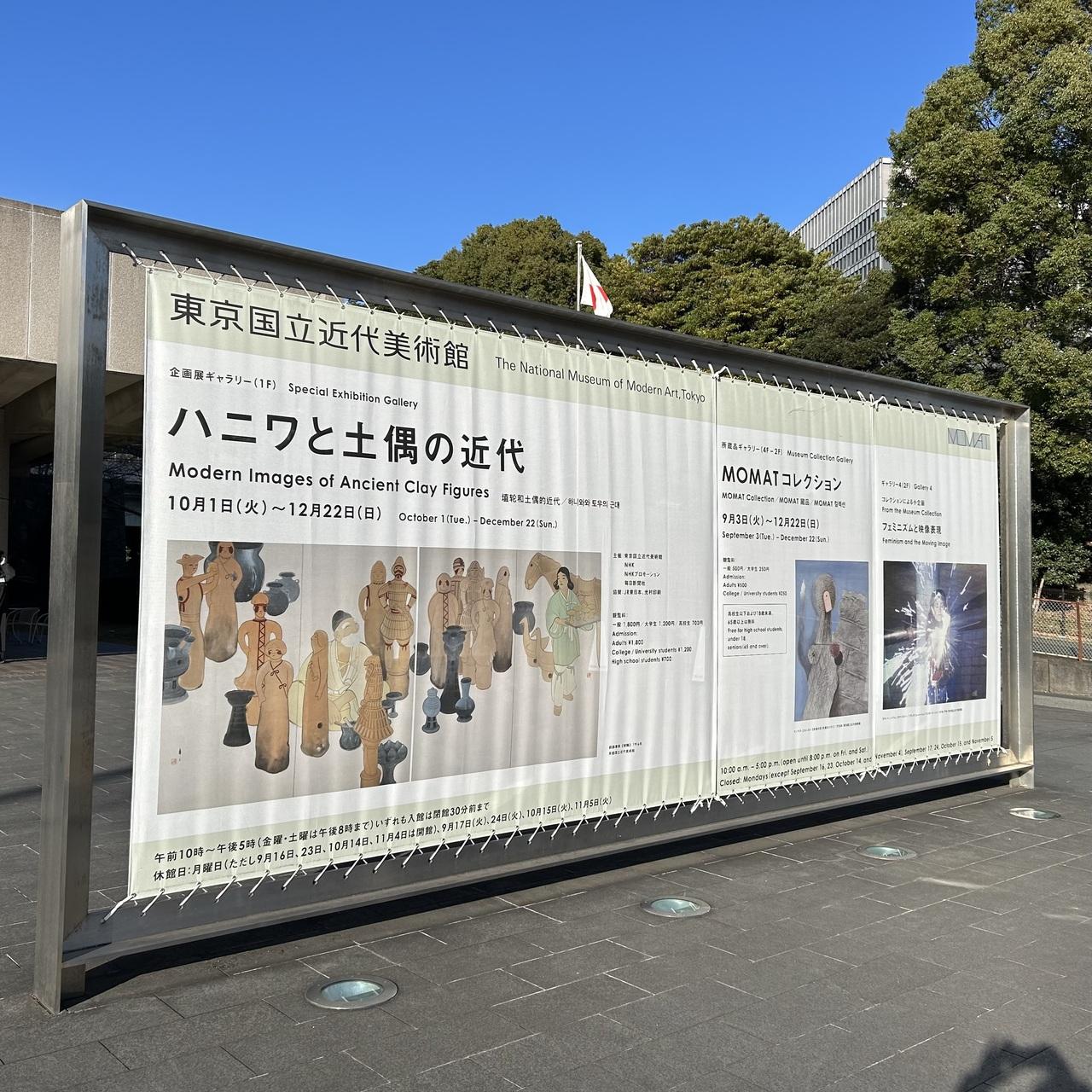
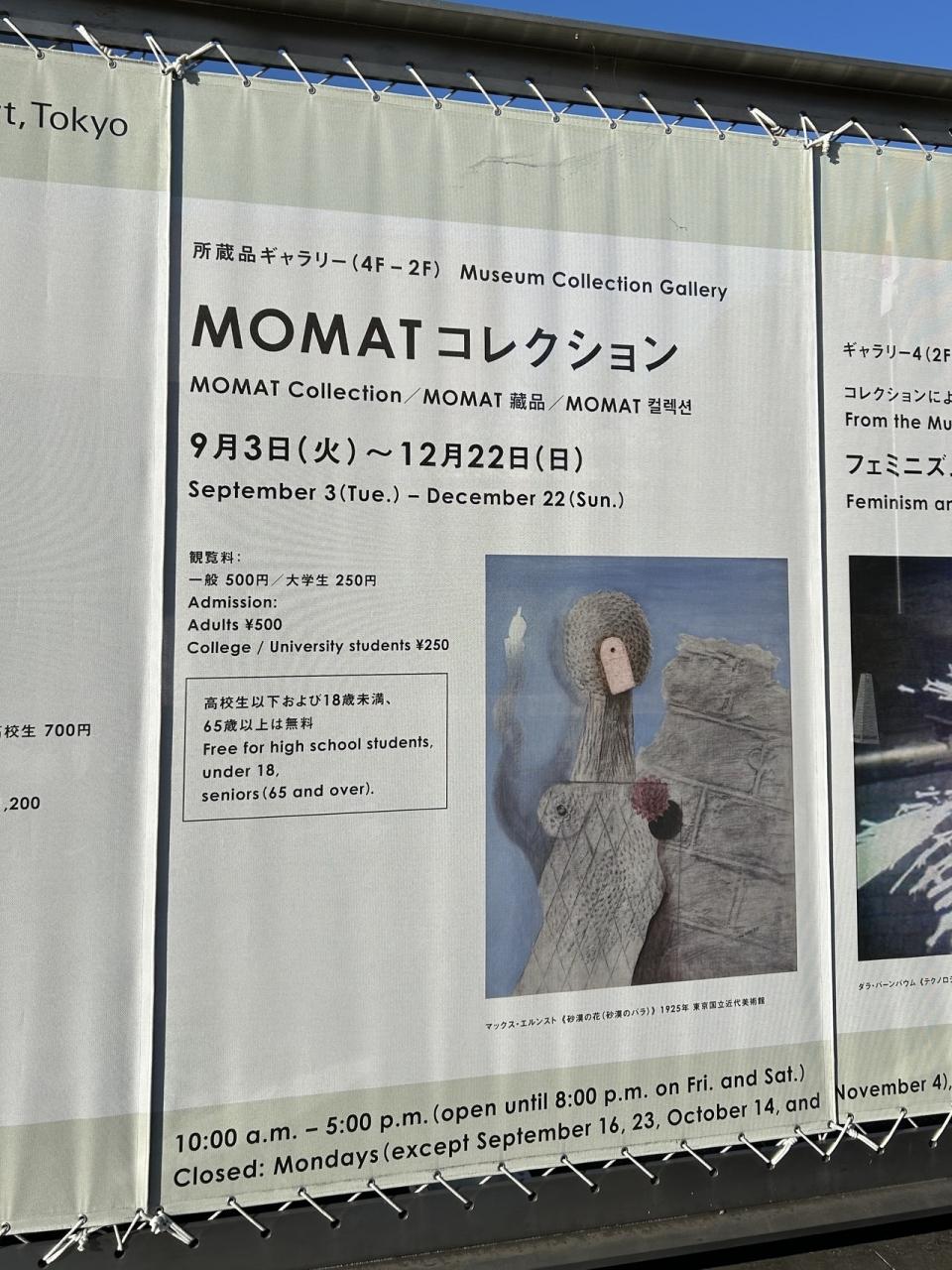
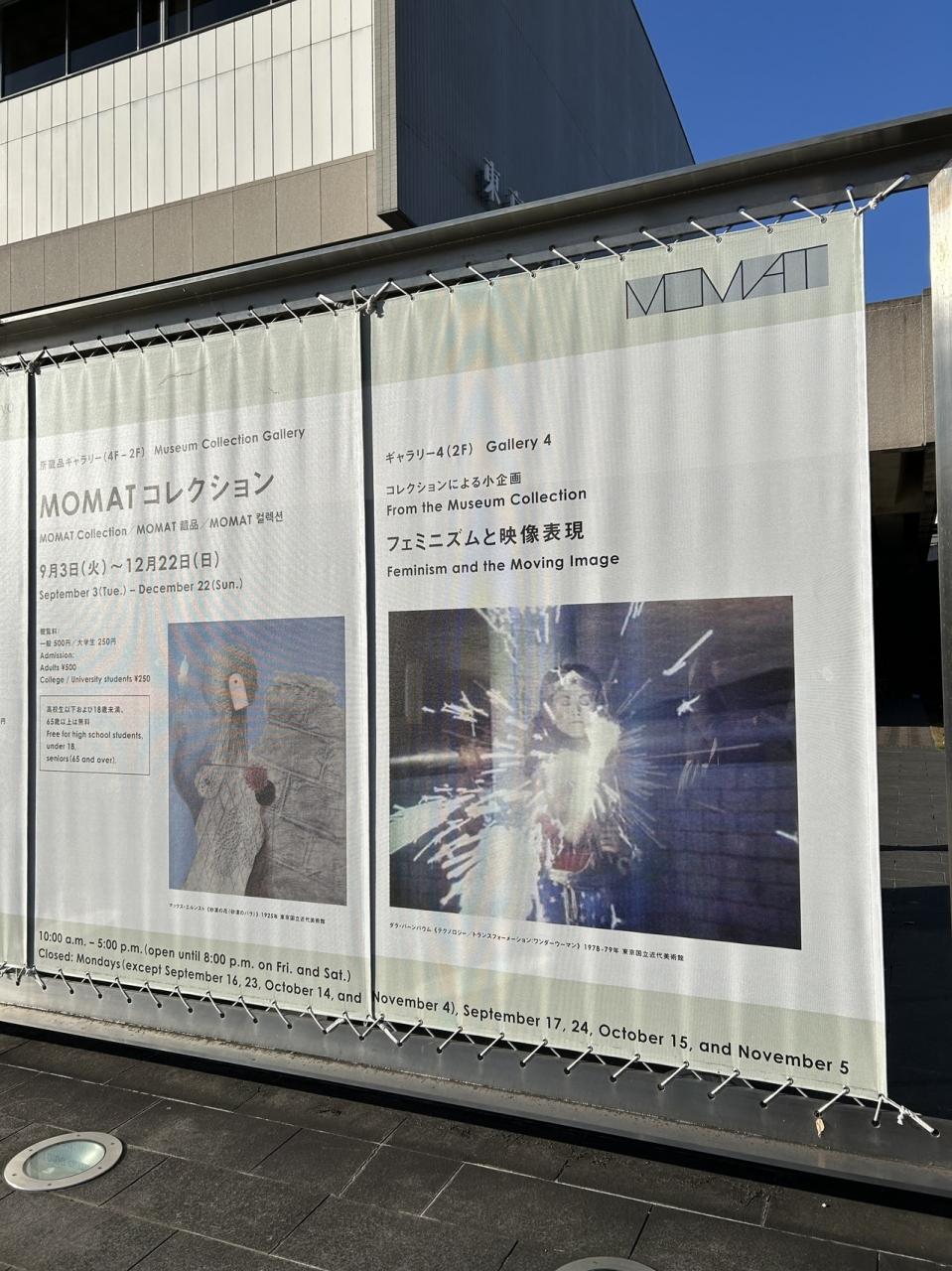
国立東京近代美術館 所蔵作品展 MOMATコレクション(2024.9.3-12.22)
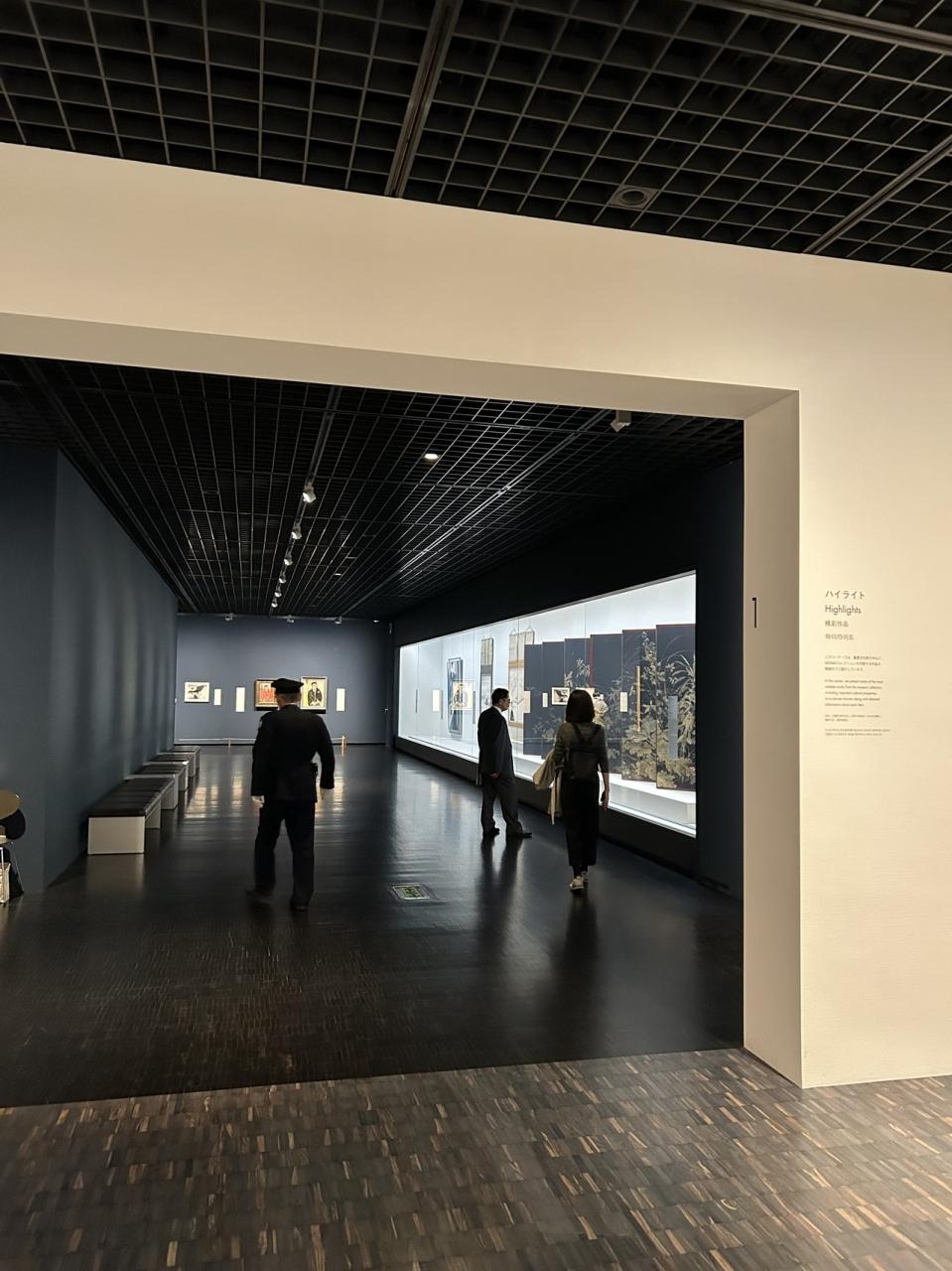
1室:モデルたちの生誕・没後数十年
- 旅行の満足度
- 5.0
-

水曜日の午後、"東京国立近代美術館" へ
東京国立近代美術館 美術館・博物館
-
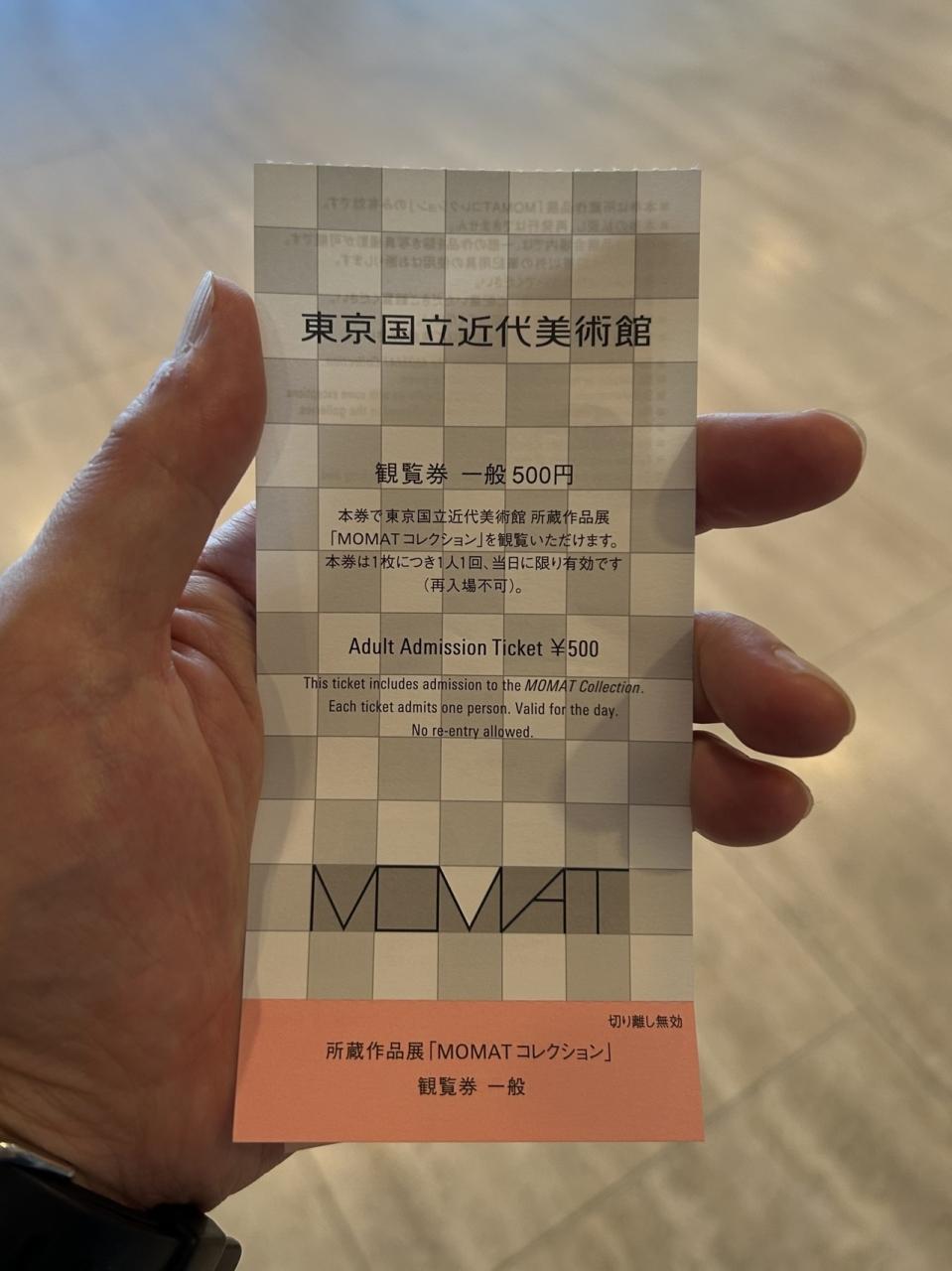
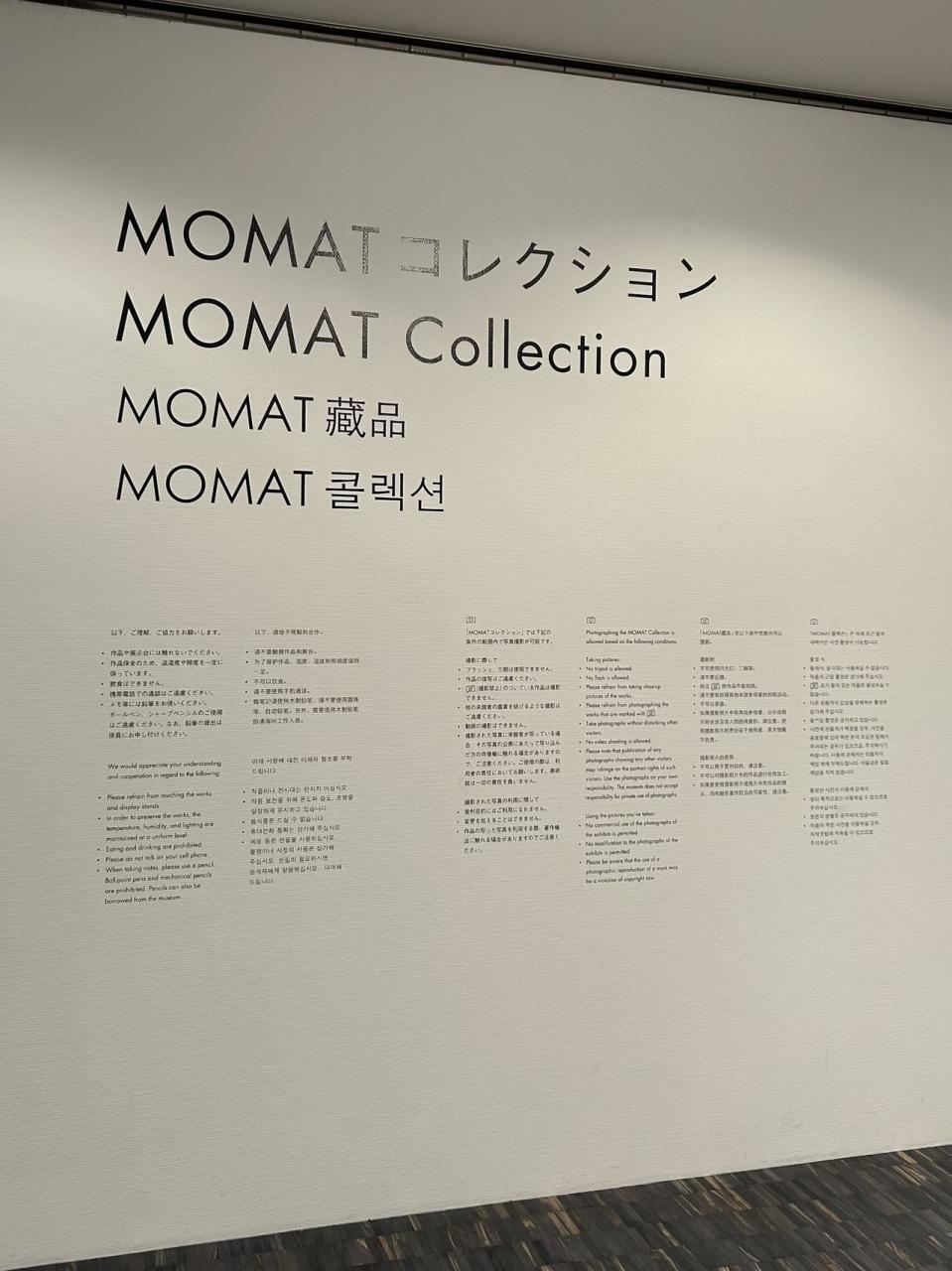
国立東京近代美術館 所蔵作品展 MOMATコレクション(2024.9.3-12.22)
https://www.momat.go.jp/exhibitions/r6-2 -
-
-
-
-
-
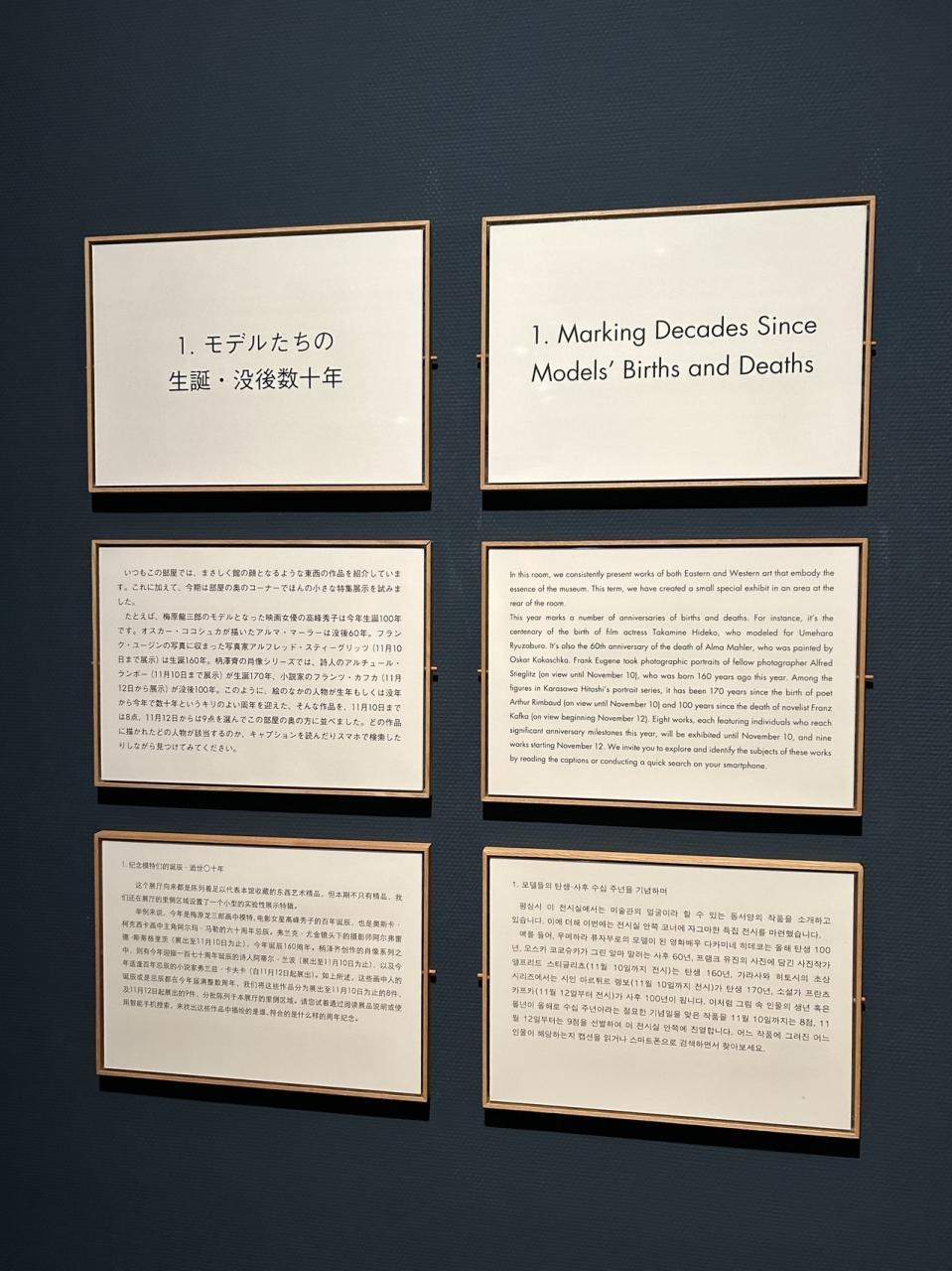
1.モデルたちの生誕・没後数十年
Marking Decades Since Models' Births and Deaths
いつもこの部屋では、まさしく館の顔となるような東西の作品を紹介しています。これに加えて、今期は部屋の奥のコーナーでほんの小さな特集展示を試みました。
In this room, we consistently present works of both Eastern and Western art that embody the essence of the museum. This term, we have created a small special exhibit in an area at the rear of the room
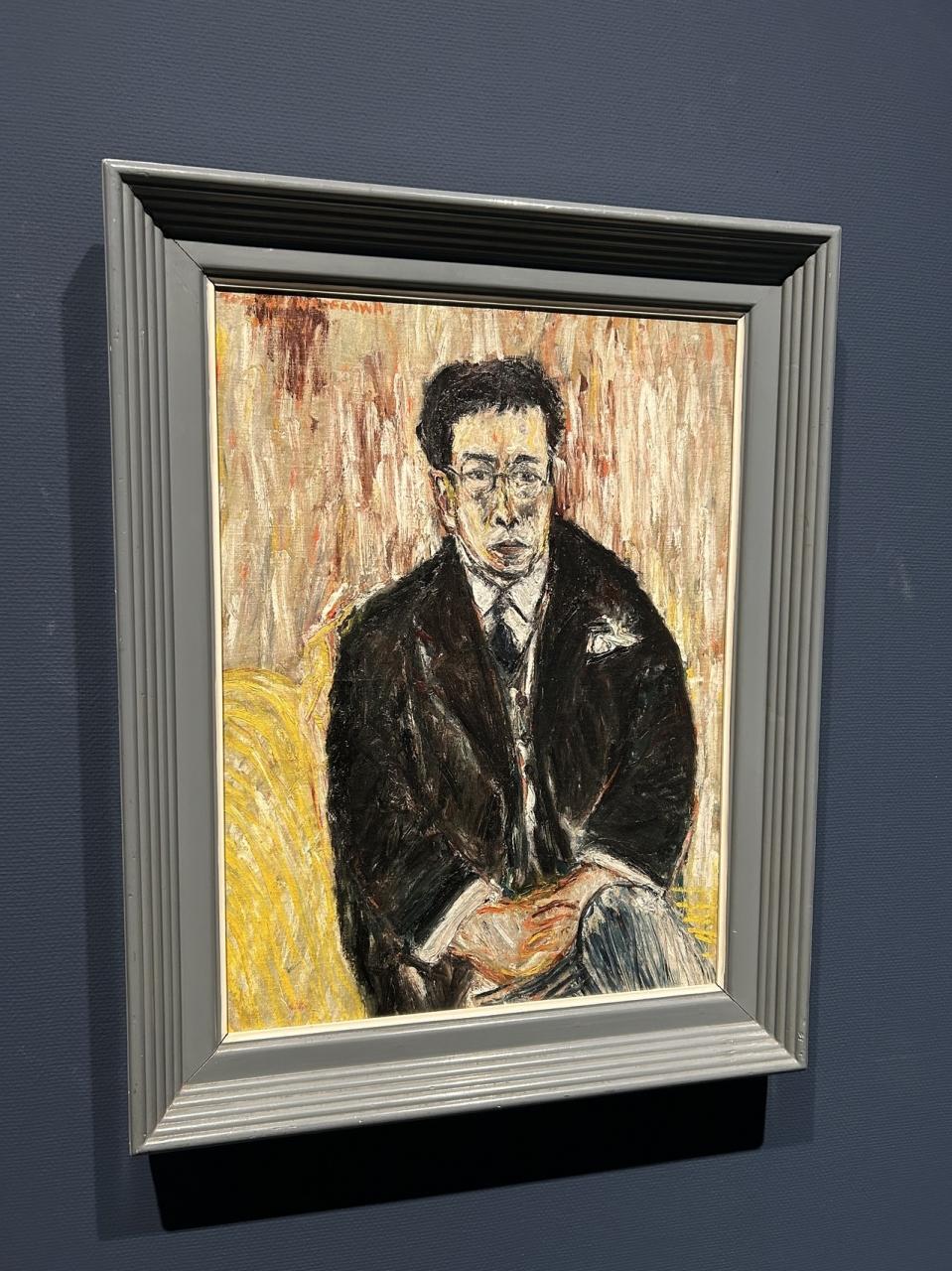
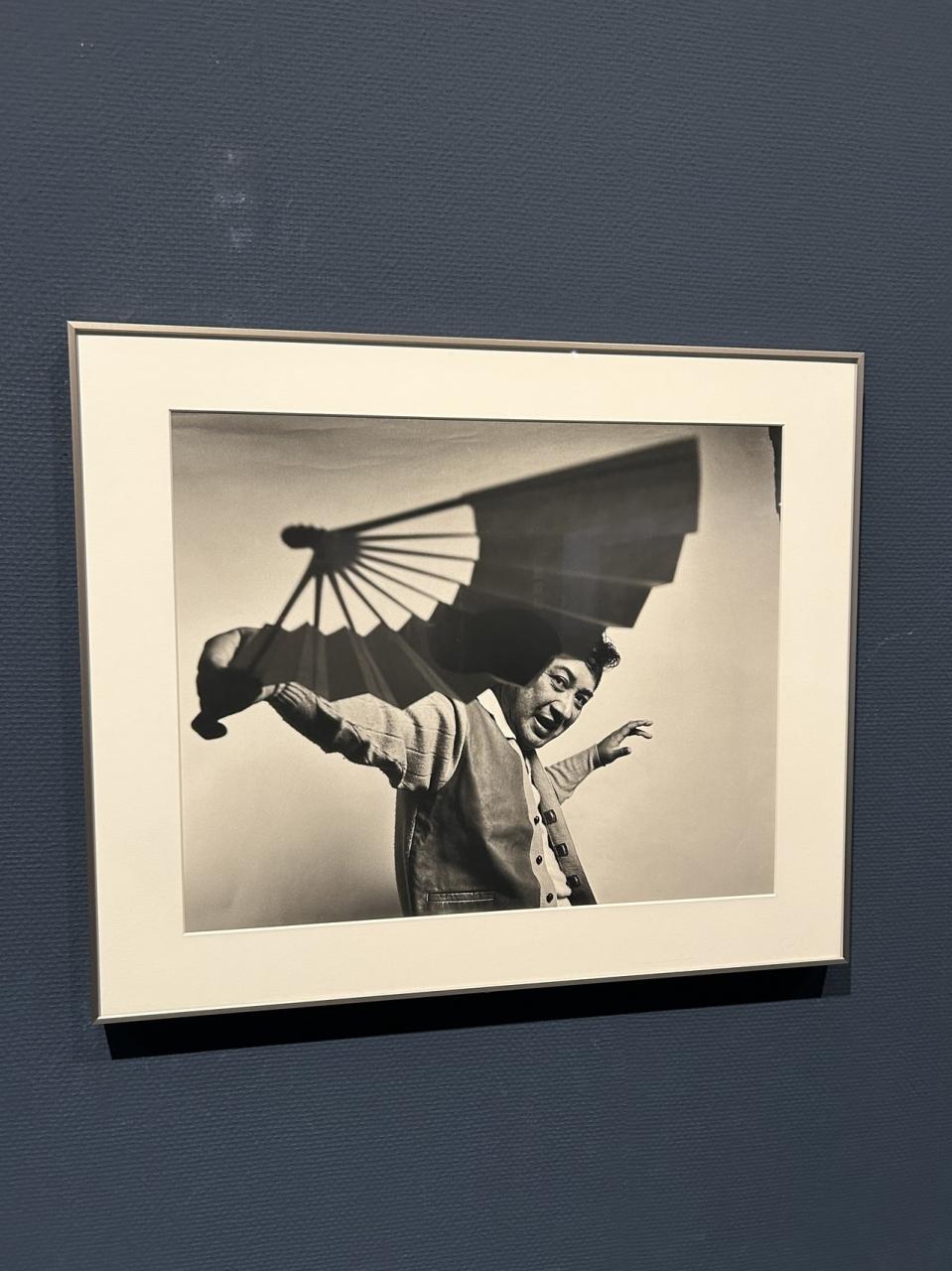
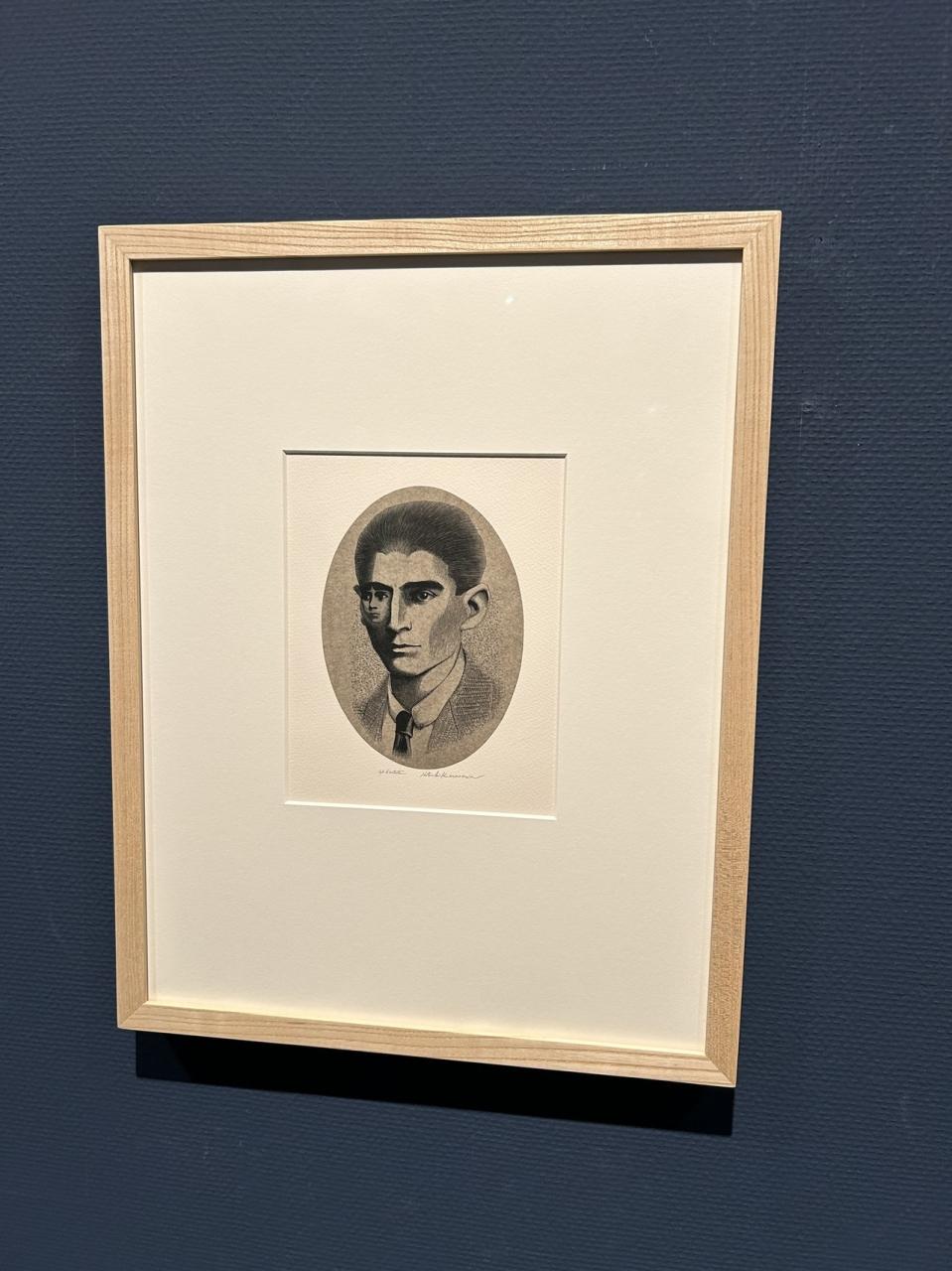
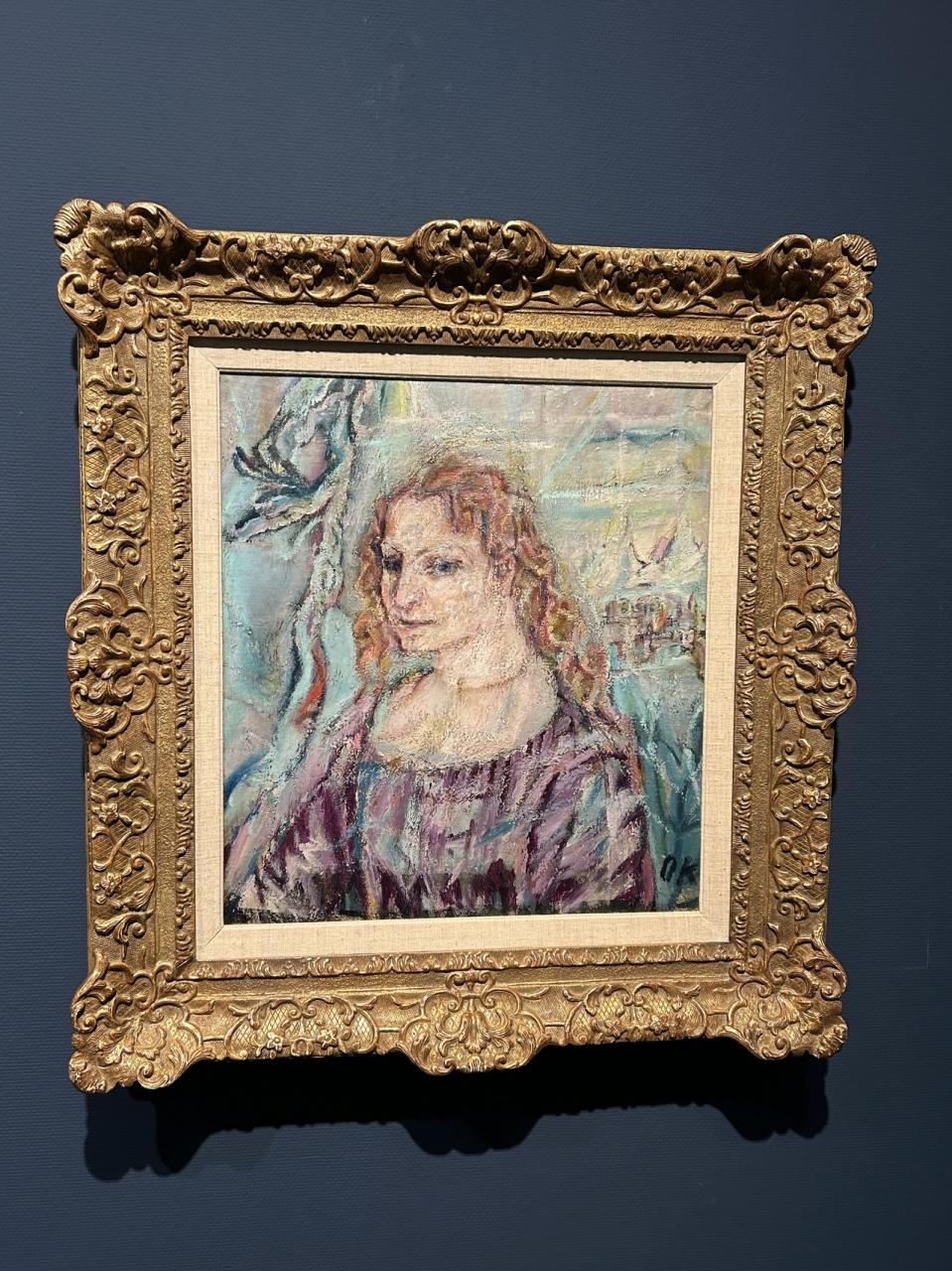
たとえば、梅原龍三郎のモデルとなった映画女優の高峰秀子は今年生100年です。オスカー・ココシュカが描いたアルマ・マーラーは没後60年。フランク・ユージンの写真に収まった写真家アルフレッド・スティーグリッツ(11月10日まで展示)は生誕160年。柄澤容の肖像シリーズでは、詩人のアルチュール・ランボー (11月10日まで展示)が生誕170年、小説家のフランツ・カフカ(11月12日から展示)が没後100年。このように、絵のなかの人物が生年もしくは没年から今年で数十年というキリのよい周年を迎えた、そんな作品を、11月10日までは8点、11月12日からは9点を選んでこの部屋の奥の方に並べました。との作品に描かれたとの人物が該当するのか、キャブションを読んだりスマホで検索したりしながら見つけてみてください。
This year marks a number of anniversaries of births and deaths. For instance, it's the centenary of the birth of film actress Takamine Hideko, who modeled for Umehara Ryuzaburo. It's also the 60th anniversary of the death of Alma Mahler, who was painted by Oskar Kokoschka. Frank Eugene took photographic portraits of fellow photographer Alfred Stieglitz (on view until November 10), who was born 160 years ago this year. Among the figures in Karasawa Hitoshi's portrait series, it has been 170 years since the birth of poet Arthur Rimbaud (on view until November 10) and 100 years since the death of novelist Franz Kafka (on view beginning November 12). Eight works, each featuring individuals who reach significant anniversary milestones this year, will be exhibited until November 10, and nine works starting November 12. We invite you to explore and identify the subjects of these works by reading the captions or conducting a quick search on your smartphone. -
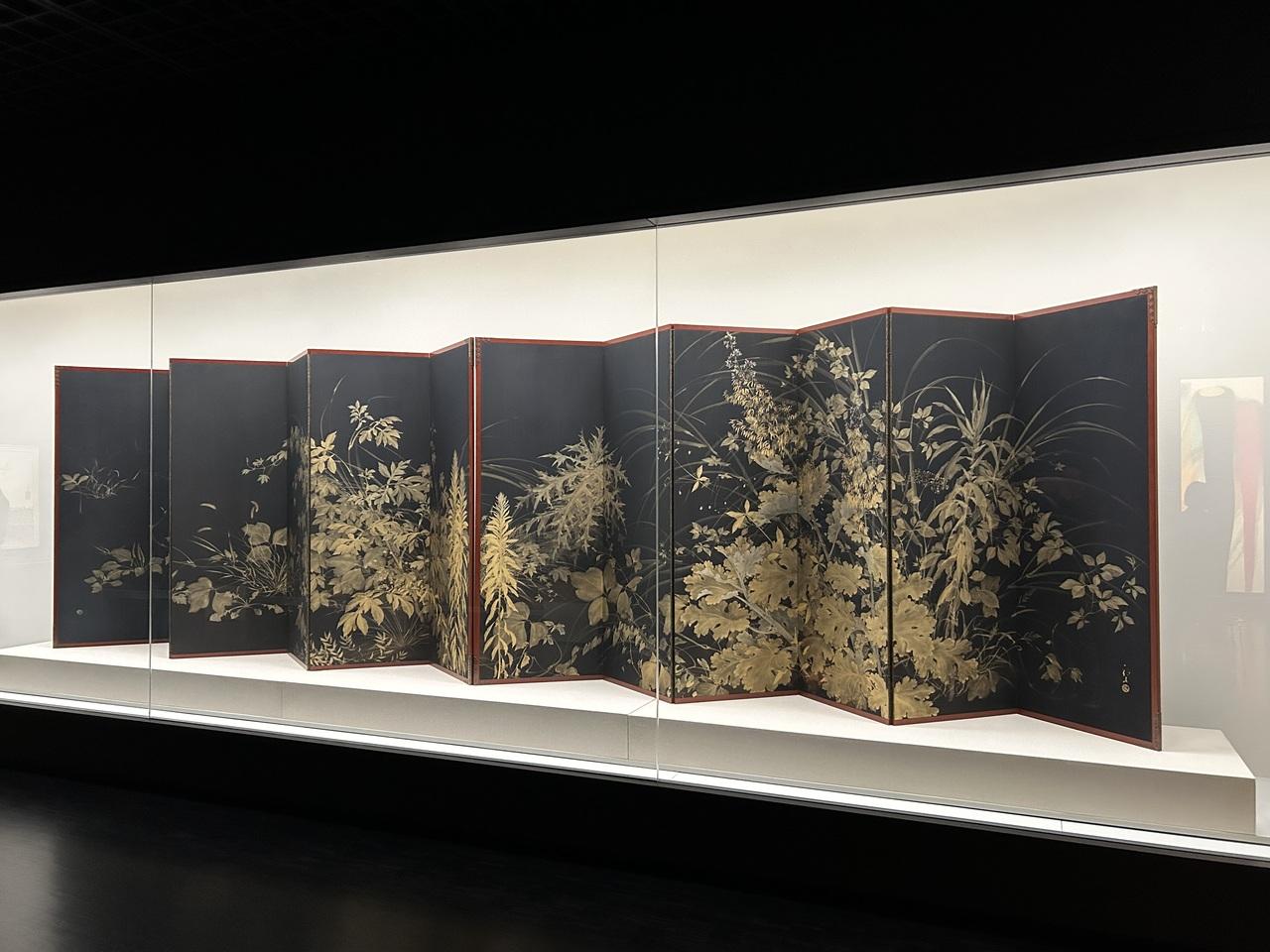
川端龍子
KAWABATA, Ryushi
1885-1966
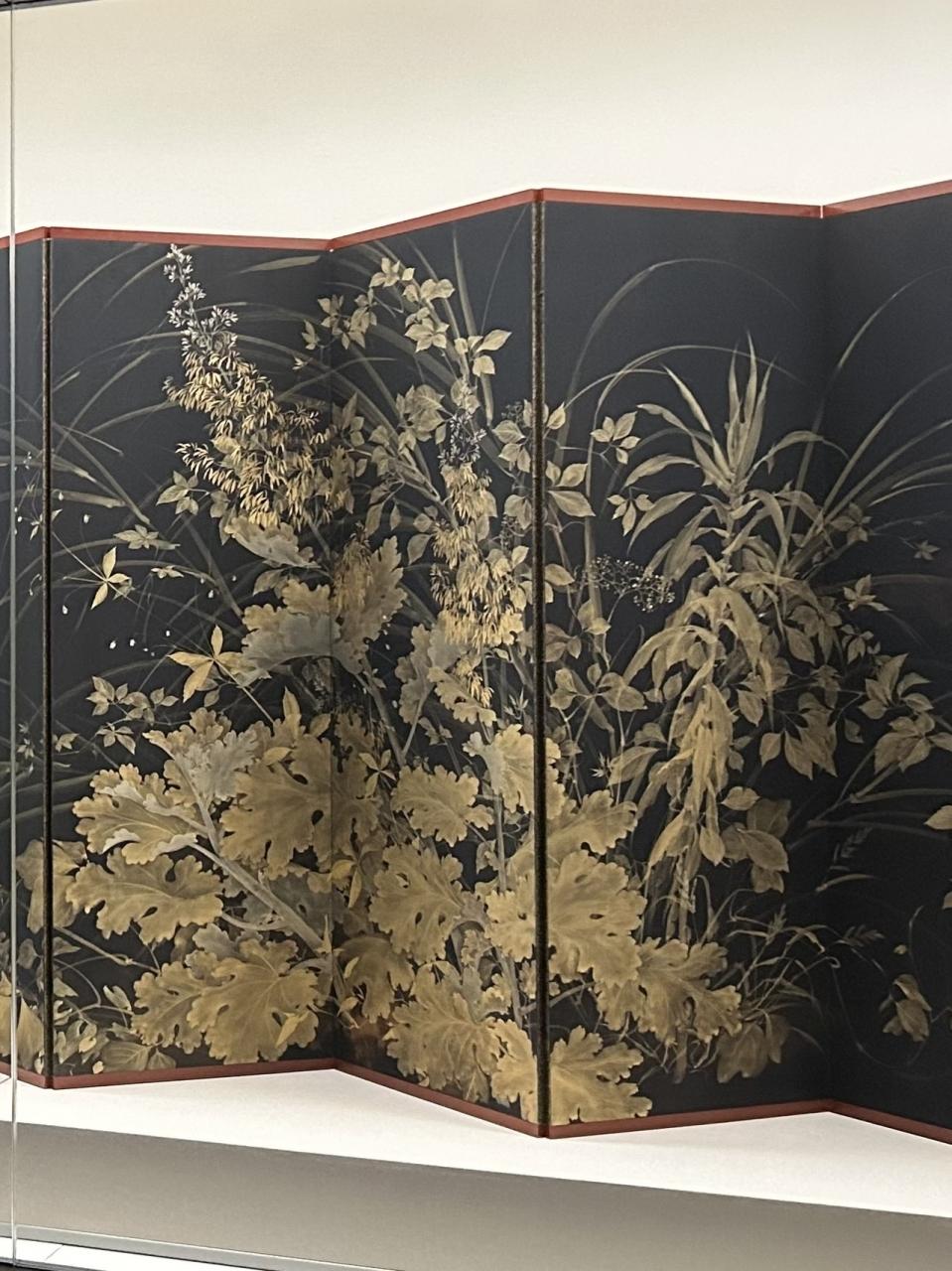
草炎
Flaming Grass
1930 昭和5年
絹本彩色 color on silk
紺地に金泥という取り合わせからは、紺紙金泥経が連想されます。平安時代や鎌倉時代に作例が残る、紺色に染めた料紙に金泥で経文や扉絵を書したおごそかな装飾経です。他にも、黒地に秋草の着物を連想する人や、漆器の蒔絵を思い浮かべる人もいるかもしれません。では質問です。描かれた光景は夜でしょうか?それとも灼熱の昼間でしょうか?正解はありません。見る人がこの作品から何を連想し、何と結びつけて理解したかによって、夜と見るか昼と見るかはっきり分かれるのが興味深いところです。
The use of gold paint on a midnight blue background in this work recalls the Konshikondei Hannya Shingyo (the Heart Sutra, written with similar materials and color scheme by Emperor Go-Nara), and example of solemnly beautiful Heian Period (794-1185) and Kamakura Period (1185-1333) decorative sutras with inscriptions and frontispieces in gold paint on material dyed midnight blue. For other viewers this work may evoke a black kimono with a pattern of autumn grasses, and others may be reminded of lacquer painting. Is it a nocturnal scene, or daytime under the scorching sun? There is no one right answer. Indeed, the fascinating thing about this work is that it is open to interpretation, with people seeing it as daytime or nighttime depending on their own personal associations. -
-
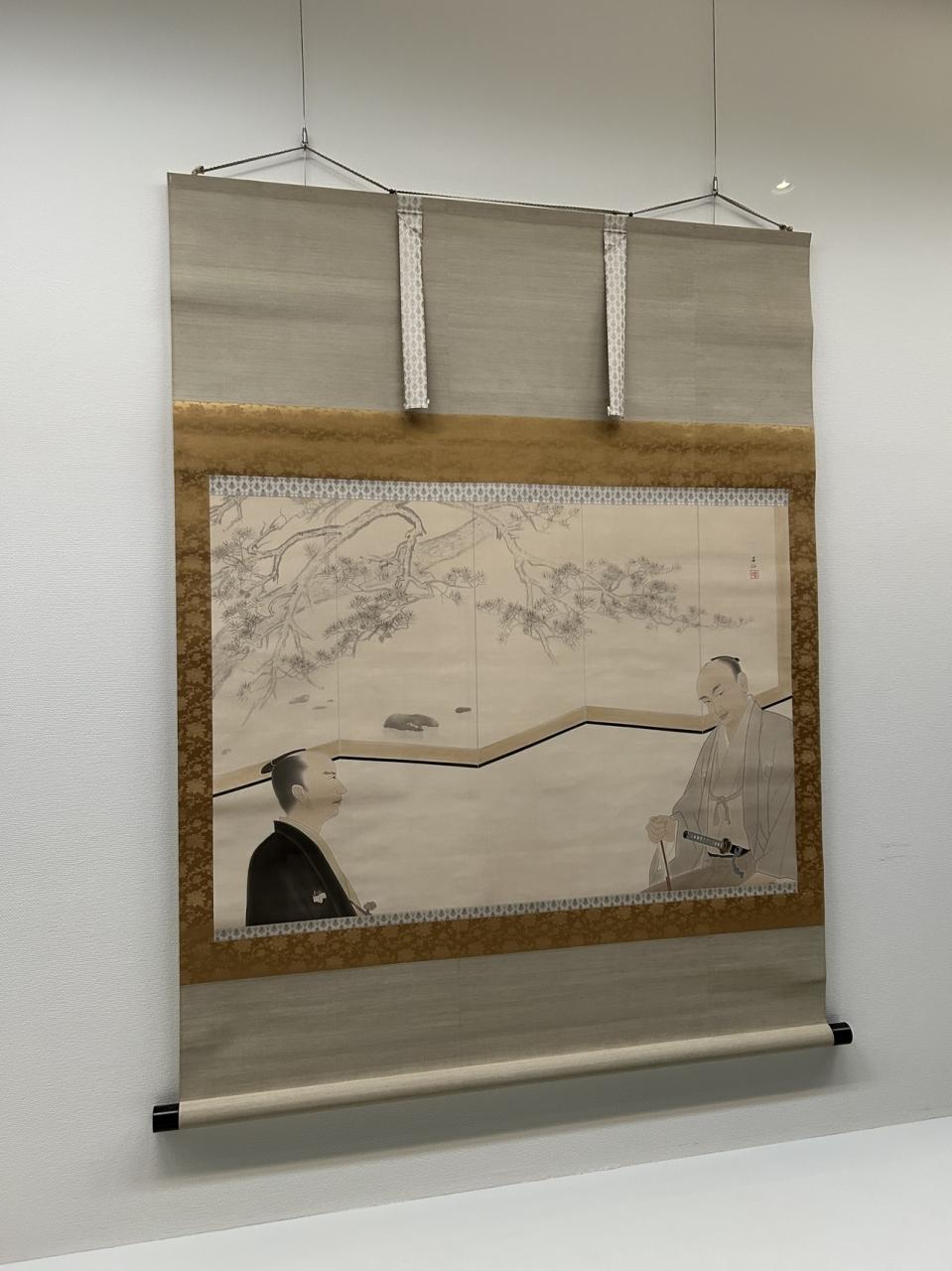
島田墨仙
SHIMADA, Bokusen
1867-1943
藤田東湖と橋本左内
Fujita Toko and Hashimoto Sanai
1938
昭和13年
絹本彩色 color on silk
作者の島田墨仙は、橋本雅に学んだ線描表現に重きをおき、清潔感のある画風で歴史人物画を描きました。この作品で描くのは、福井藩士の橋本左内(1834-1859)が水戸藩で藩政改革を推進した藤田東湖(1806-1855)を訪ね、教えを請う場面です。墨仙は、自分と同じように線描主体の表現で知られた吉川霊華(1875-1929)を意識していたようで、次のような文章を残しています。・・・・・・霊華のように筆を選べば美しい線はひける、自分は筆を選ばない、美しいだけでなく悲しいとか楽しいとか感情の滲む線がひきたいからだ・・・・・。
Having studied with Hashimoto Gaho and placing a special emphasis on linear expression, Shimada Bokusen painted pictures of historical figures with a clean, neat style. This work depicts Hashimoto Sanai (1834-1859), the feudal retainer of the Fukui Domain, visiting and asking for instruction from Fujita Toko (1806-1855), who had been working to reform the political system in the Mito Domain. Apparently making conscious reference to Kikkawa Reika (1875-1929), who was also known for his linear expressions, Shimada wrote the following: "If I chose brushes like Reika's, I could paint beautiful lines, but I didn't because I wanted to paint lines that were not only beautiful but that also expressed emotions like sadness and enjoyment..." -
-
橋本明治
HASHIMOTO, Meiji
1904-1991
女優
Actress
1967 昭和42年
紙本彩色 color on
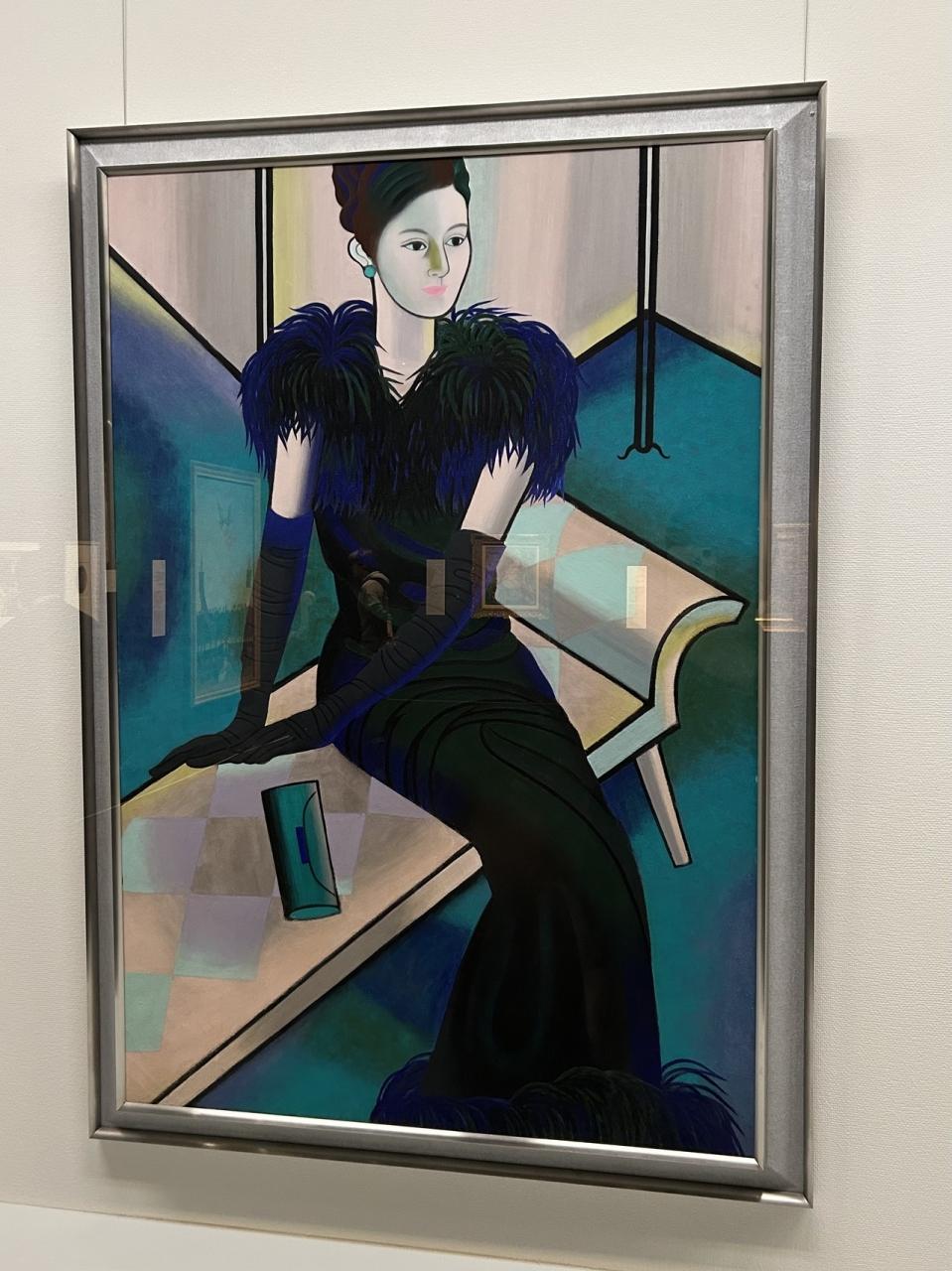
この作品が生まれたキーマンは映画監督の小津安二郎(1903-1963)でした。洗練された現代女性のモデルを探していた橋本に、小津が女優の司葉子(1934-)を紹介したのです。司は時東宝の清純派看板女優として森繁久彌(1913-2009)主演の「社長シリーズ」にレギュラー出演して人気でした。司はこの数年前に小津と知り合い、映画「秋日和」(1960年)、「小早川家の秋」(1961年)に出演しています。一方、橋本はその作品が、小道具に本物の美術作品を使うことで知られた小津映画の常連でした。
This painting owes its creation to the film director Ozu Yasujiro (1903-1963). Ozu introduced actress Tsukasa Yoko (b. 1934) to Hashimoto, who was seeking a sophisticated modern woman as a model. At the time, Tsukasa was celebrated for her pure and innocent roles in Toho's Shacho (Company President) Series, in which she co-starred with Morishige Hisaya (1913-2009). Tsukasa had first met Ozu a few years prior and appeared in his films Late Autumn (1960) and The End of Summer (1961).Meanwhile, Hashimoto was a regular contributor to Ozu's films, known for their use of real artworks as props. -
-
梅原龍三郎
UMEHARA, Ryuzaburo
1888-1986
高峰秀子孃
Portrait of Miss Takamine Hideko
1950 昭和25年
油彩・キャンバス oil on canvas
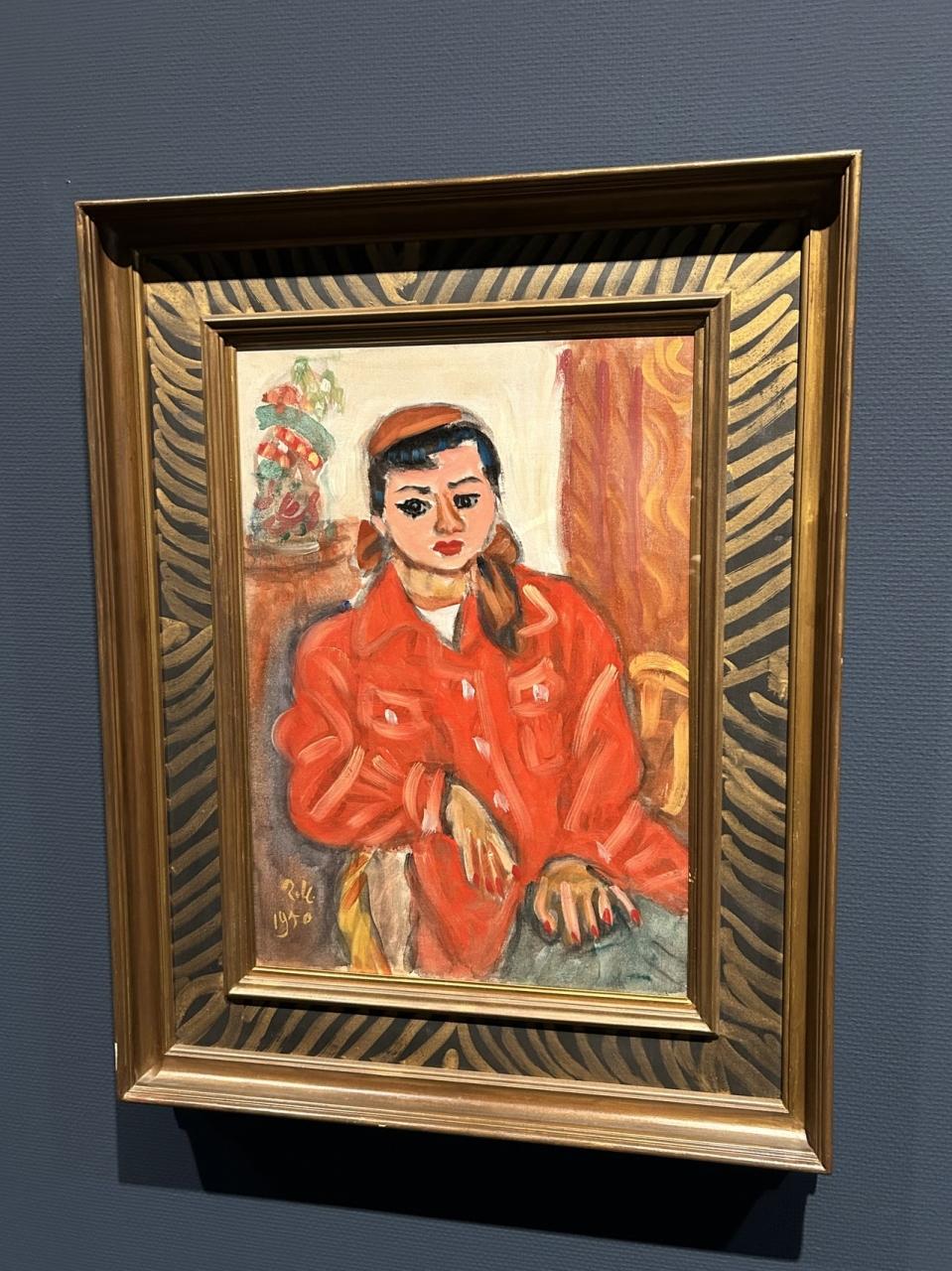
高峰秀子(1924-2010)は、日本の映画界を代表する大スターです。この絵が描かれた当時は、「銀座カンカン娘」(1949年)などに主演していました(「二十四の瞳」はもう少し後です)。高峰は、自らが創設に関わった日曜画家のグループ「チャーチル会」に「最高顧問には御大梅原能三郎までかつぎ出し」、それをきっかけにして二人の間には親交が生れました。
この絵は彼女がはじめて梅原のモデルをした際のもの。以下は、エッセイストとしても知られた高峰による『私の梅原龍三郎』からの引用です。「ついに完成した絵を見て、私は仰天した。黒くふちどられた眼窩から目玉がはみ出していたからである。(中略)梅原先生と私は、この絵を「カニ」と呼ぶようになった。」
Takamine Hideko (1924-2010) was one of the biggest stars in Japanese cinema. Around the time that this picture was painted, she appeared in movies like The Cancan Dancer of Ginza (1949) (the classic film Twenty-Four Eyes was still a few years off). Takamine "convinced the Boss, Mr.Umehara Ryuzaburo, to act as senior adviser" to the Churchill Association, a group of Sunday painters that she had helped establish, and this in turn led to a close friendship between the two.
This paintingwas the result of the first time Takamine modeled for Umehara. The following is a quote from Takamine's essay (she was also a noted essayist) "Umehara Ryuzaburo as I Knew Him": "When at long last the picture was finished, I was stunned. My eyeballs were protruding from their black-lined sockets.... Mr. Umehara and I referred to this picture as 'The Crab.'" -
-
-
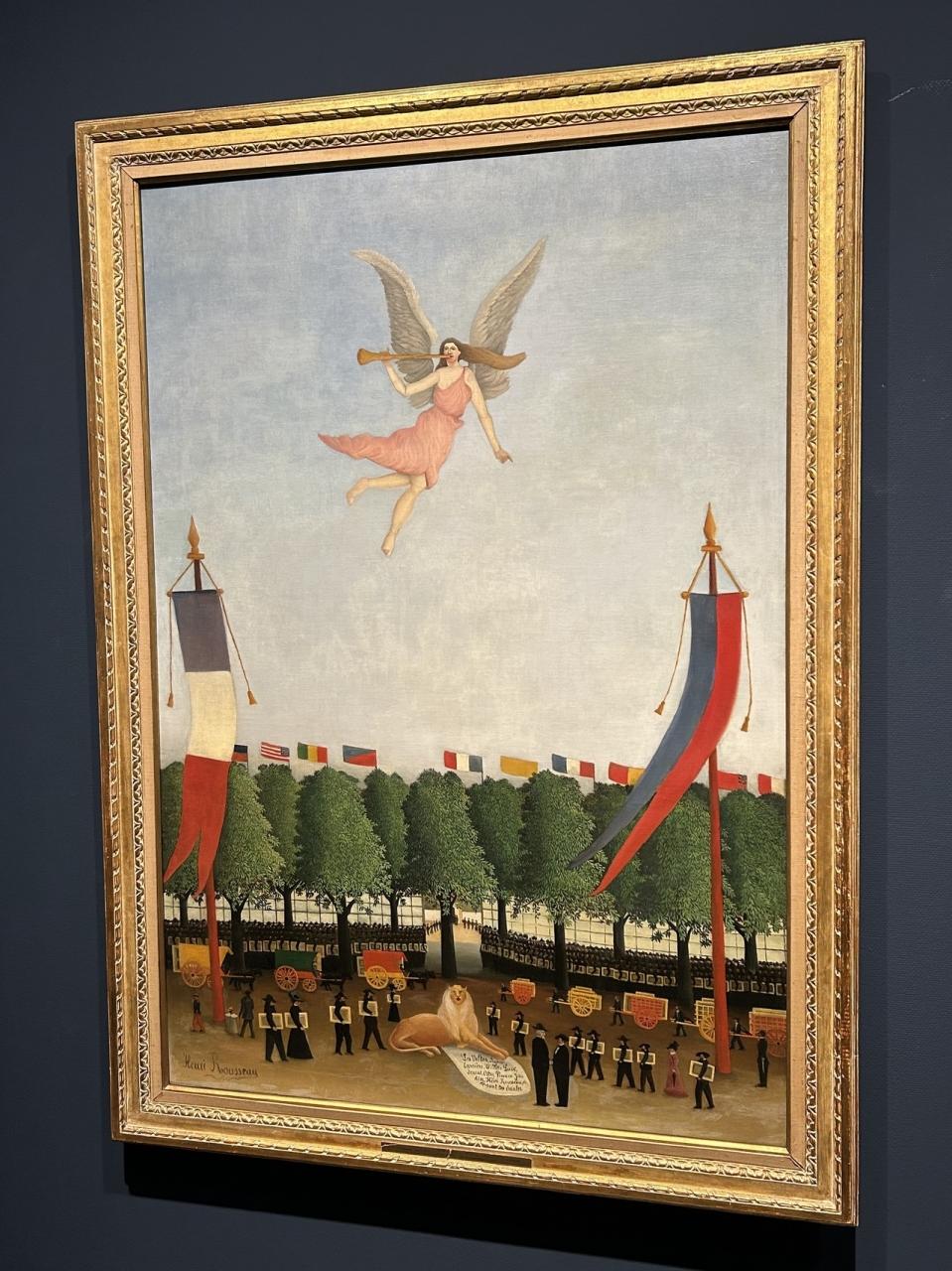
アンリ・ルソー
Henri Rousseau
1844-1910
第22回アンデパンダン展に参加するよう
芸術家達を導く自由の女神
Liberty Inviting Artists to Take Part in the 22nd Exhibition of the Société des Artistes Indépendants
1905-1906 明治38-39年
油彩・キャンバス oil on canvas
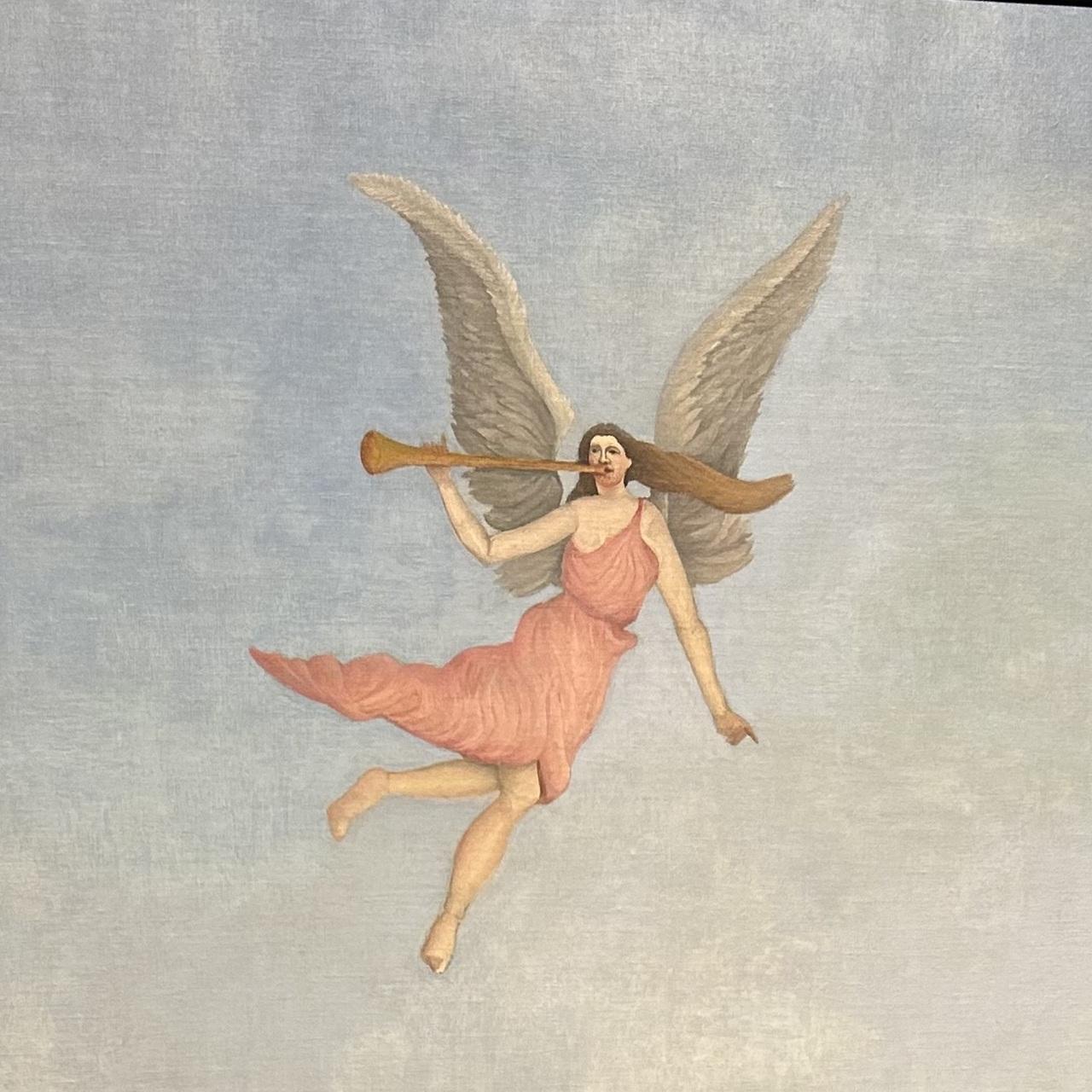
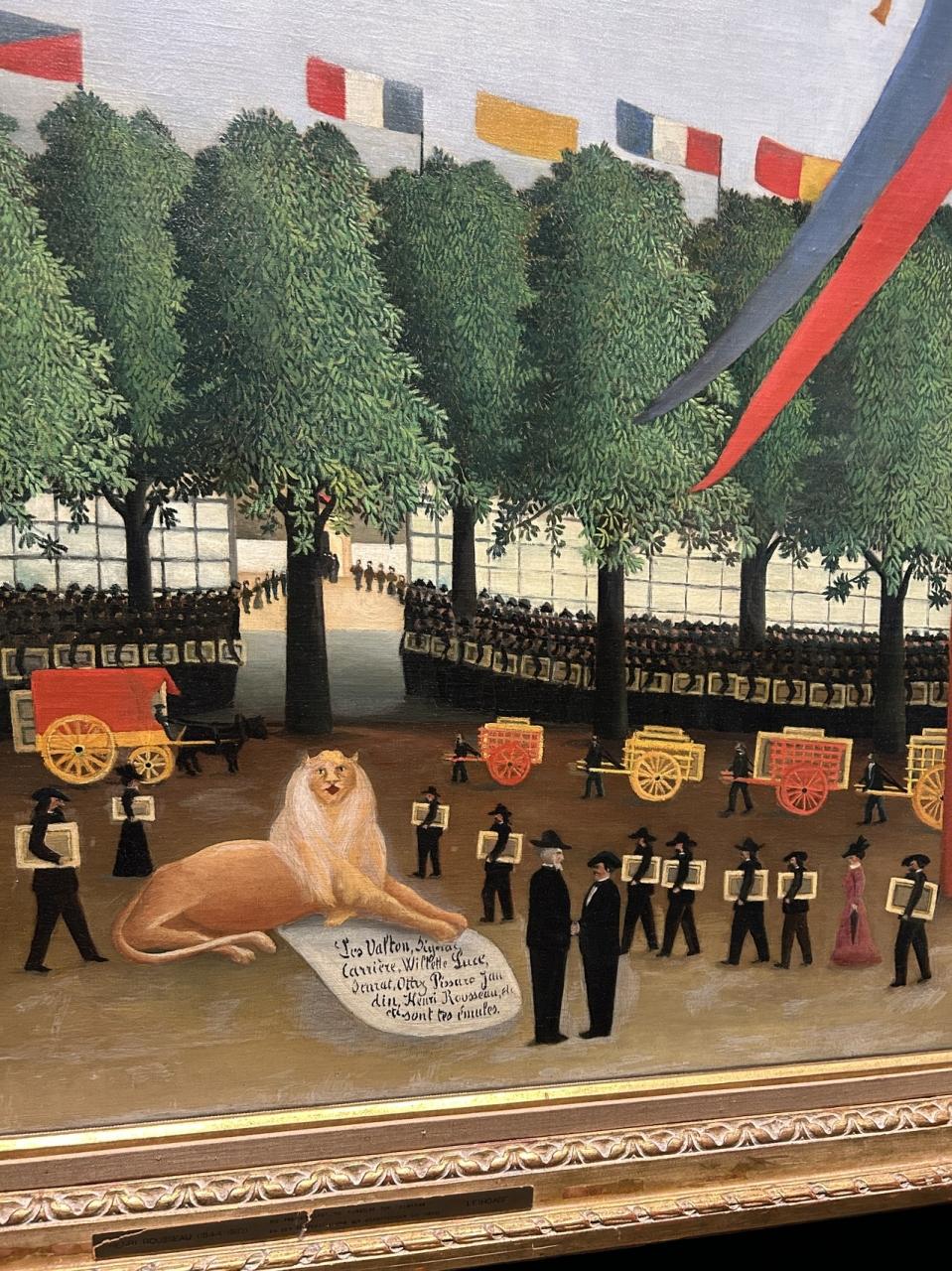
誰でも出品できる無審査の展覧会をアンデパンダン展といいます。正規の美術教育を受けていないルソーにとって、アンデパンダン展はかけがえのない活動の場でした。自由の女神が青空に舞うこの作品は、アンデパンダン展の「自由」を祝福する絵画なのです。展覧会場には、自作の絵画を抱えた大勢の画家が集まってきています。主要会員の名を記したプレートを示すライオンのとなりに、握手をする二人の人物が見えますが、左がアンデパンダン会長で、右がルソー自身です。
Exhibitions without any judges in which anyone could participate are known as "indépendant" exhibitions. Such events provided Henri Rousseau, who did not receive any formal artistic training, with an indispensable outlet for his work. This picture, depicting the goddess of Liberty fluttering through the blue sky, was intended to bless the free nature of indépendant exhibitions. In the exhibit hall, a huge group of artists have gathered, clutching their works. Next to the lion, displaying a plate inscribed with the names of central members of the organization, two figures can be seen shaking hands. The man on the left is the director of the exhibition, and the one on the right is Rousseau himself. -
-
-
-
盛田良子コレクション
Morita Yoshiko Collection
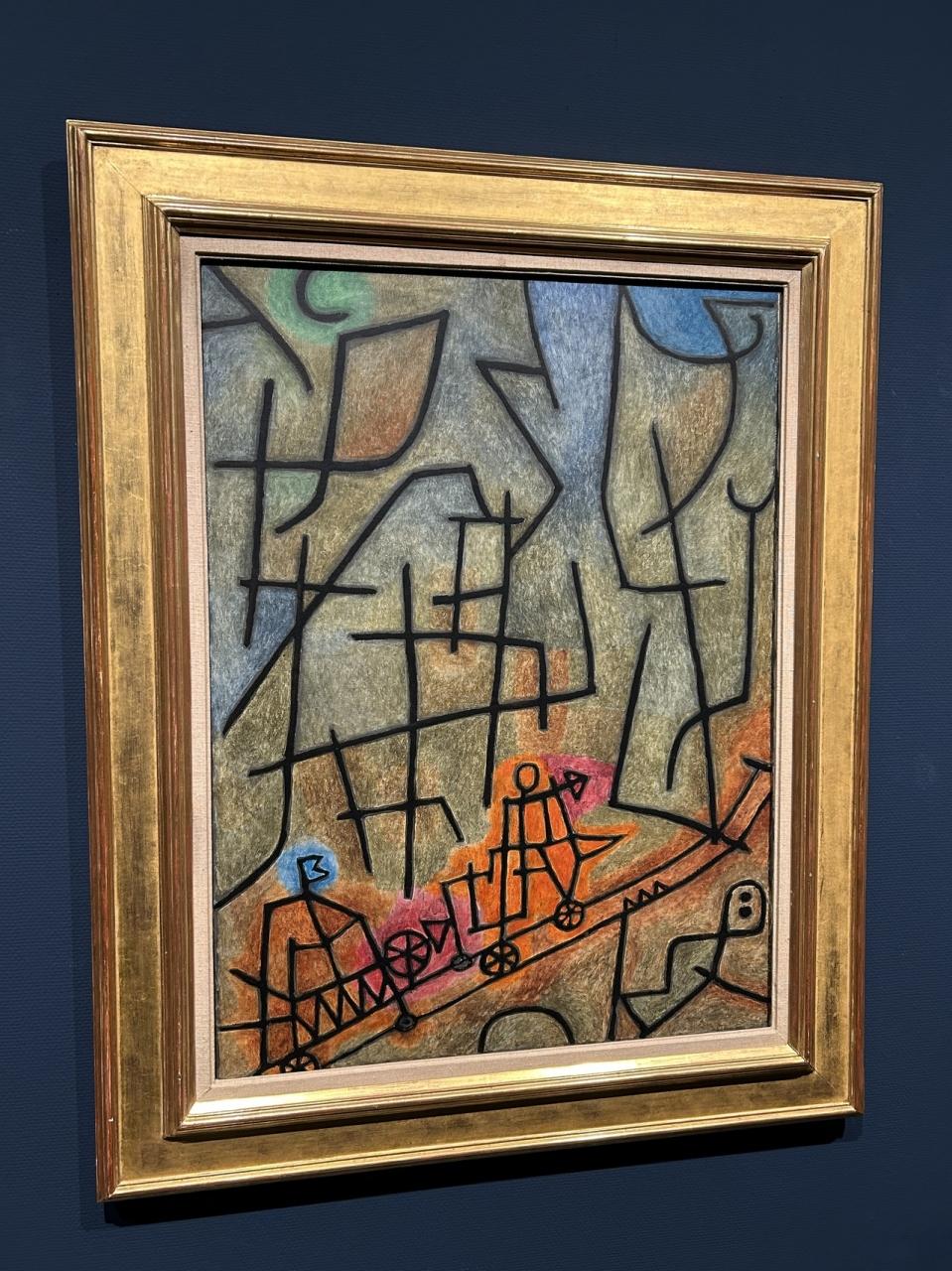
パウル・クレー
Paul Klee
1879-1940
山への衝動
Conquest of the Mountain
1939 昭和14年
油彩・綿布 oil on cotton
この作品は、最晩年に故郷であるスイスのベルンで描かれました。画面下部には登山列車戦車のような乗り物があり、下敷きになって倒れる人がいます。上部には絡み合った木々や山のような形が見えます。この時クレーは、長く過ごしたドイツからナチスの迫害を逃れて来ていました。画面に漂うどこかとげとげしい雰囲気は、時代の反映でしょうか。
Klee painted the picture in his later years in his hometown of Bern, Switzerland. The vehicle in the lower section of the work looks like an alpine train or a tank, and there is a person pinned beneath it. In the upper section, there are some shapes that look like intertwined trees and mountains. At this point, Klee had returned to Switzerland to escape Nazi persecution in Germany, where he had lived for many years. The vaguely hostile atmosphere that pervades the picture is perhaps a reflection of the times. -
-
盛田良子コレクション
Morita Yoshiko Collection
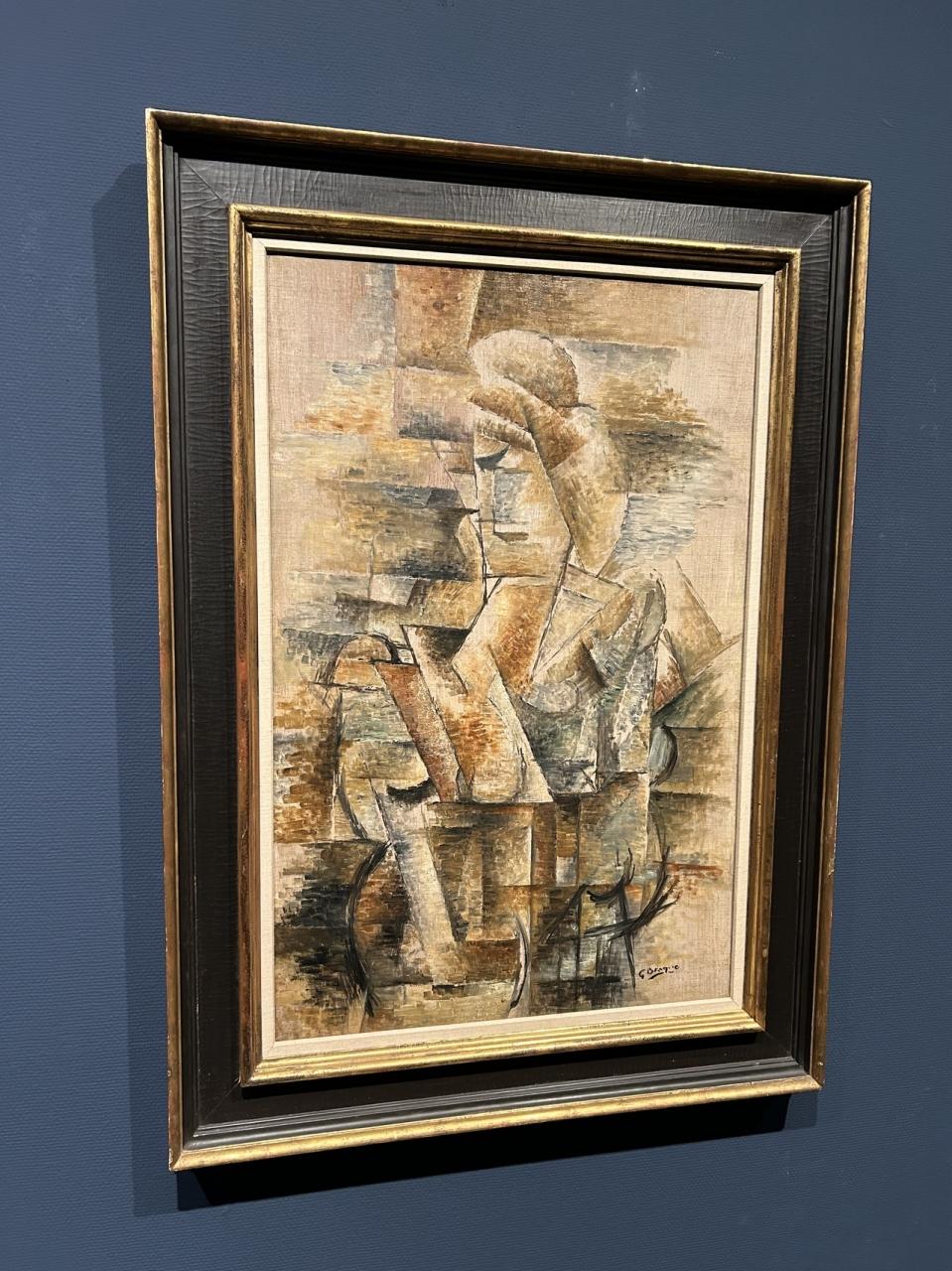
ジョルジュ・ブラック
Georges Braque
1882-1963
女のトルソ
Female Torso
1910-1911 明治43-44年
油彩・キャンバス oil on canvas
ブラックはピカソとともに、20世紀でもっとも重要な美術動向の一つ、「キュビスム」を創始しました。キュビスムは、二次元の絵画平面上に三次元の奥行きを表すヨーロッパ絵画の遠近法や明暗表現を、根本から問い直しました。この作品は、ブラックのキュビスム期の作品の中でももっとも充実したものの一つです。いくつもの開かれた面に分解された女性の上半身は、さまざまな角度から見た像をつなぎ合わせたように絶えず揺らいで見えます。
Along with Picasso, Braque originated Cubism, one of the most important trends in 20th century art. Cubism fundamentally reexamined the use of perspective and shading in European painting as ways of expressing three-dimensional depth in the two-dimensional plane of the painting. This work is one of the most substantial from Braque's Cubist period. The torso of the woman, divided up into several open surfaces, appears to be endlessly fluctuating as if images from a variety of angles have been pieced together. -
-
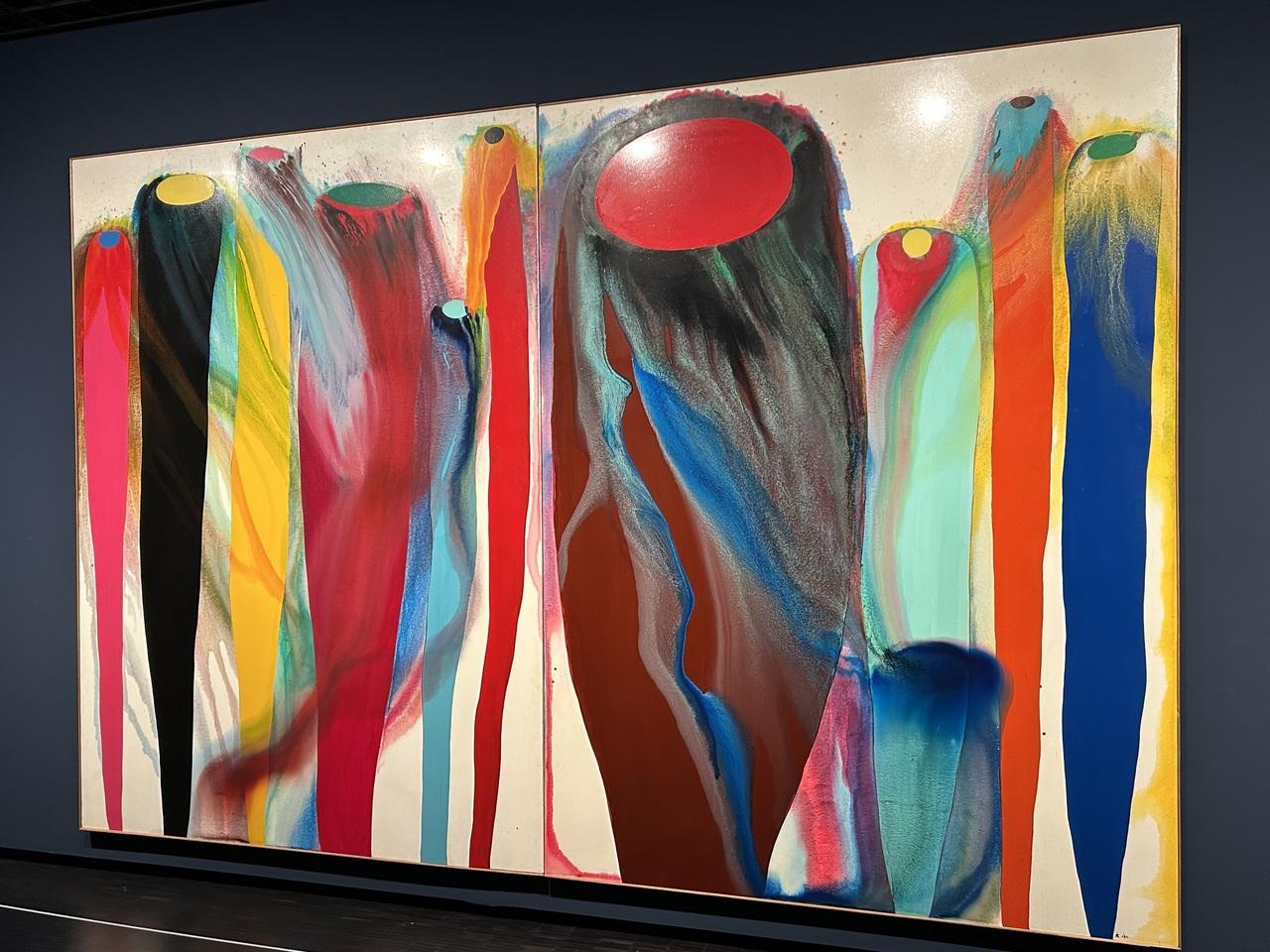
草間彌生
KUSAMA, Yayoi
1929-
集積の大地
Earth of Accumulation
1950 昭和25年
油彩、エナメル・麻布(種袋)
oil and enamel on seed sack
草間の初個展の出品作のひとつです。時は1952(昭和27)年、場所は松本市第一公民館、期間はたった2日間でした。この作品が描かれる前年までは、草間はまだ日本画の技法を用いていましたが、本作では、油絵具が使われています。支持体は、麻袋。種苗業を営む旧家に生まれ育った草間にとっては親しみのある素材だったでしょう。1952年に彼女が地の冊子「信州往来」に寄せたエッセイからは、アーティストとしての強い意志を読みとることができます。「文化は時代の新しい産物であり世界の空気を呼吸し世代を創造してゆくことを要請してゐる。これは画家の重要な使命である。現代を如何にして未来へときずきあげるか。歴史への批判と現在のポイントを踏み迷ってはならない。」
This was among the works shown at Kusama's first solo exhibition. The year was 1952, the venue the Matsumoto City Daiichi Public Hall, and the duration only two days. Until the year before she painted this, Kusama had studied Nihonga (Japanese-style painting), but here she used oil paint, on a burlap sack in place of a canvas. As she was born into a well-to-do family that ran a seed business, this must have been a familiar material. An essay Kusama published in a local pamphlet called Shinshu orai [Shinshu Miscellany] that year conveys the artist's strong will. She wrote: "In any given era, culture is a product of the times. It demands that an artist breathe the air of the whole world, to create something that represents a new generation. A painter's mission is to create a future from the present. A painter must both accurately critique the past and correctly comprehend the present." -
-
-
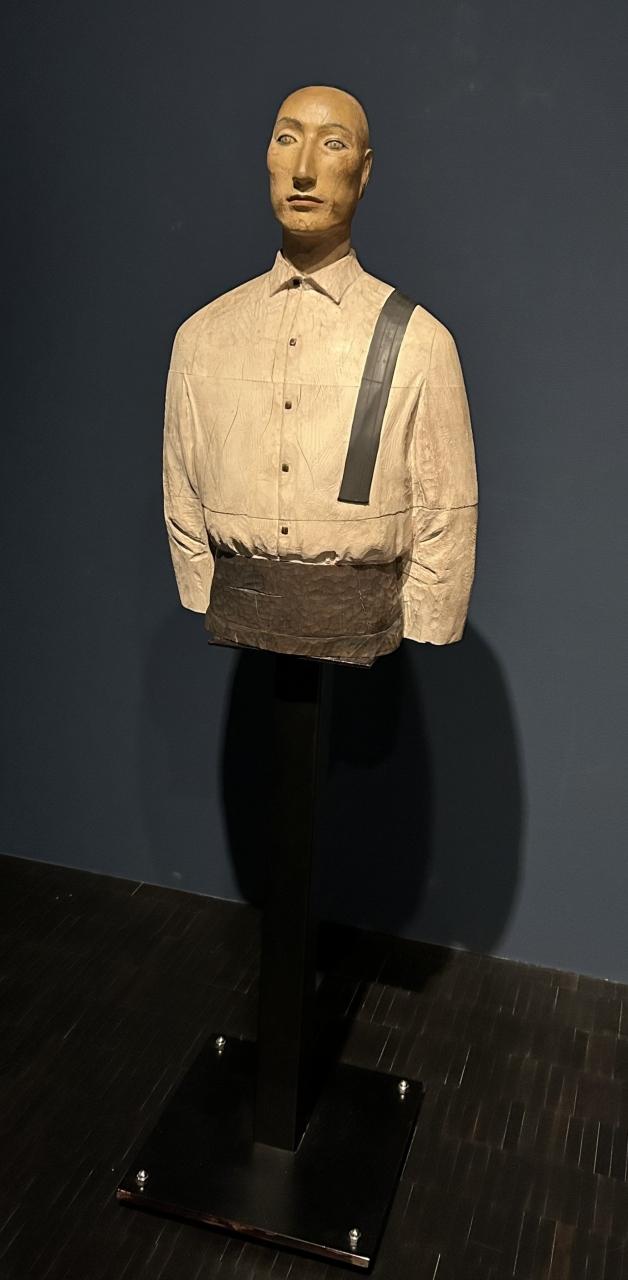
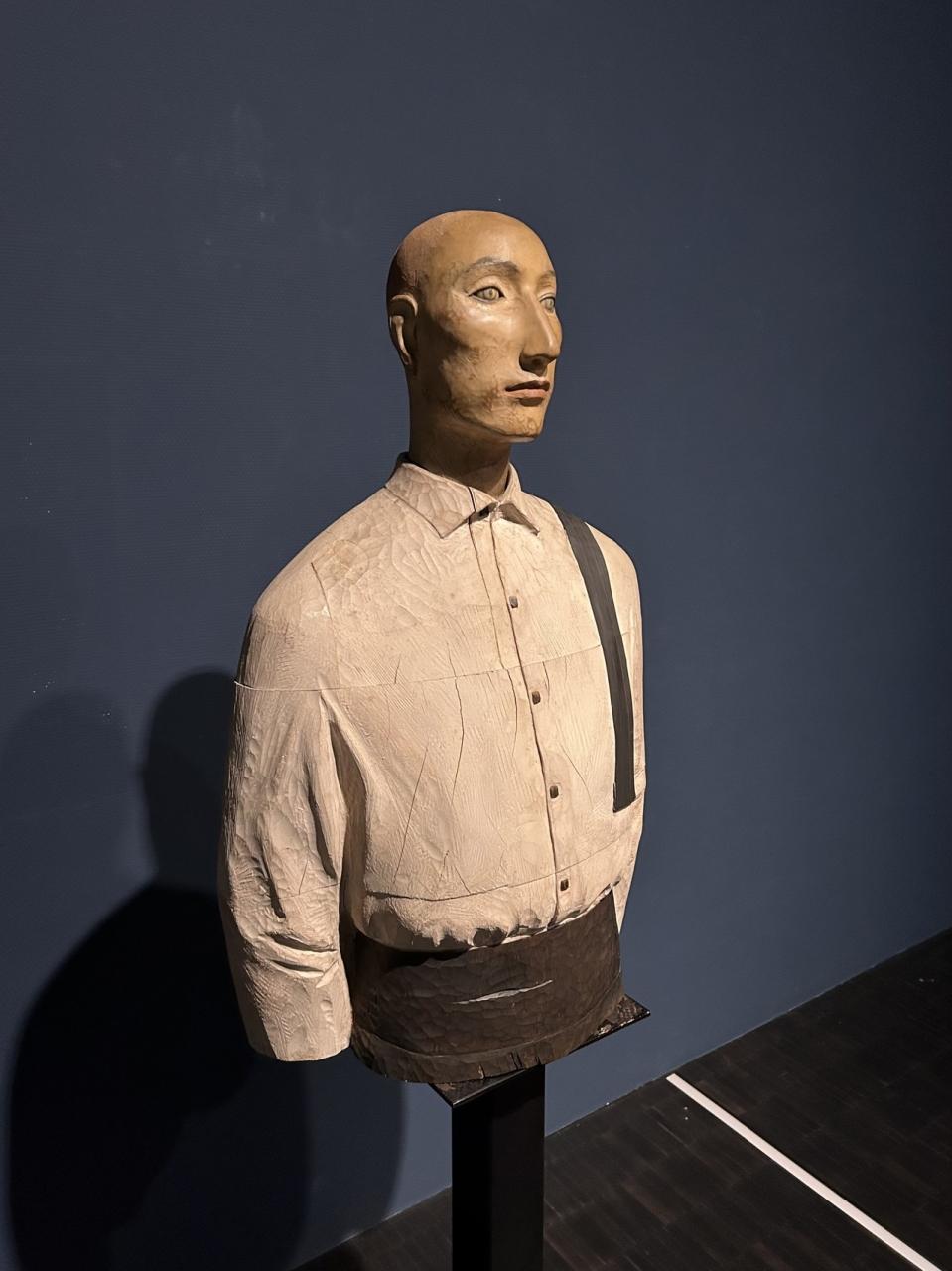
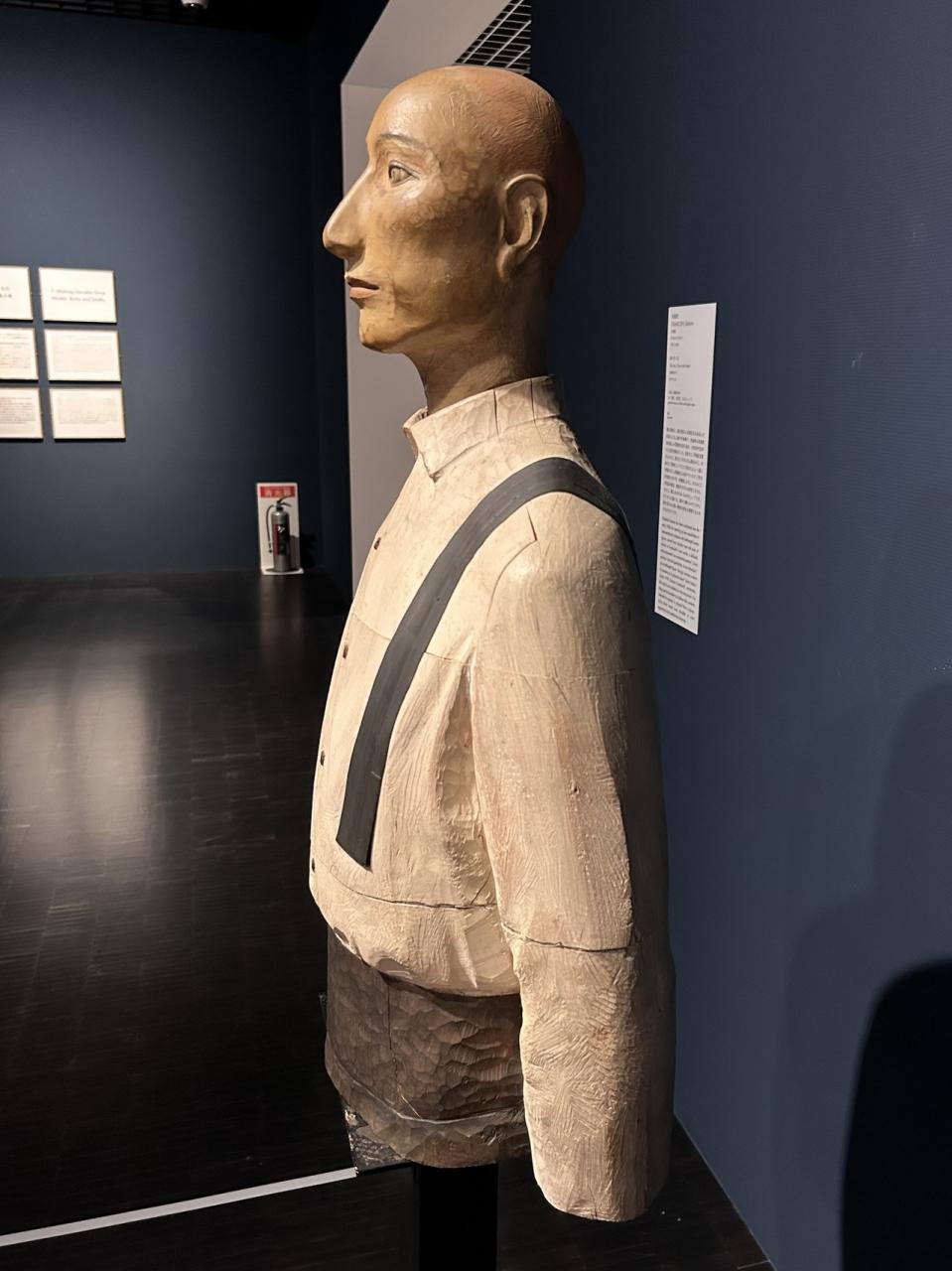
舟越桂
FUNAKOSHI, Katsura
1951-2024
森へ行く日
The Day I Go to the Forest
1984 昭和59年
木、彩色、大理石、ゴムチューブ
painted wood, marble and rubber tube
楠を素材に、眼の部分に大理石をはめ込んだ
技法による人物の半身像で、舟越桂は具象彫刻の新しい可能性を切り拓き、1980年代前半から注目を集めました。全身だと「不特定多数の人たち」、首だと「その人の人格ばかり」、半身だと「物体としてそこに存在するという感じが強まる」と舟越本人は述べています(「今日の作家たちV-93 舟越桂』より)。ちなみにこの作品の場合、特定のモデルは存在しません。それと、肩にあるのはゴムのチューブです。デッサンに描いた、肩から胸にかけてつやと粘り気のある黒い帯状の存在を表現するためのものだそうです。
Funakoshi Katsura has been acclaimed since the early 1980s for opening up new possibilities in representational sculpture with half-length human figures, carved from camphor tree with eyes of marble. In Funakoshi's own words, a full-body statue represents "any anonymous person," a bust portrays "only the specificities of one individual," but a half-length figure "strongly conveys a sense of presence as a physical object" (from Today's Artists V/93: Katsura Funakoshi). Incidentally, this work is not modeled on any one person. The thing over his shoulder is a rubber tube, evidently intended to express in physical form a glossy, sticky black band from shoulder to chest appearing in the preliminary drawing. -
-
(「2室 明治時代の美術」に続く・・・)
![草間彌生<br />KUSAMA, Yayoi<br />1929-<br /><br />集積の大地<br />Earth of Accumulation<br />1950 昭和25年<br />油彩、エナメル・麻布(種袋)<br />oil and enamel on seed sack<br /><br />草間の初個展の出品作のひとつです。時は1952(昭和27)年、場所は松本市第一公民館、期間はたった2日間でした。この作品が描かれる前年までは、草間はまだ日本画の技法を用いていましたが、本作では、油絵具が使われています。支持体は、麻袋。種苗業を営む旧家に生まれ育った草間にとっては親しみのある素材だったでしょう。1952年に彼女が地の冊子「信州往来」に寄せたエッセイからは、アーティストとしての強い意志を読みとることができます。「文化は時代の新しい産物であり世界の空気を呼吸し世代を創造してゆくことを要請してゐる。これは画家の重要な使命である。現代を如何にして未来へときずきあげるか。歴史への批判と現在のポイントを踏み迷ってはならない。」<br /><br />This was among the works shown at Kusama's first solo exhibition. The year was 1952, the venue the Matsumoto City Daiichi Public Hall, and the duration only two days. Until the year before she painted this, Kusama had studied Nihonga (Japanese-style painting), but here she used oil paint, on a burlap sack in place of a canvas. As she was born into a well-to-do family that ran a seed business, this must have been a familiar material. An essay Kusama published in a local pamphlet called Shinshu orai [Shinshu Miscellany] that year conveys the artist's strong will. She wrote: "In any given era, culture is a product of the times. It demands that an artist breathe the air of the whole world, to create something that represents a new generation. A painter's mission is to create a future from the present. A painter must both accurately critique the past and correctly comprehend the present."](https://cdn.4travel.jp/img/tcs/t/pict/src/84/86/90/src_84869017.jpg?1774730873)


利用規約に違反している投稿は、報告する事ができます。
-

MOMAT コレクション〔国立東京近代美術館 所蔵作品展〕(2024.9.3-12.22)① 1室:モデルた...
2024/12/18~
神田・神保町
-

MOMAT コレクション〔国立東京近代美術館 所蔵作品展〕(2024.9.3-12.22)② 2室:明治時代...
2024/12/18~
神田・神保町
-

MOMAT コレクション〔国立東京近代美術館 所蔵作品展〕(2024.9.3-12.22)③ 4室:夢想と自...
2024/12/18~
神田・神保町
-

MOMAT コレクション展 ~2024.12.22:5.シュルレアリスム100年。"岡上淑子《長い一日》"
2024/12/18~
神田・神保町
-

MOMAT コレクション(2024.9.3-12.22)⑤ 6室:「相手がいる」& 7室:プレイバック「日米...
2024/12/18~
神田・神保町
-

MOMAT コレクション〔国立東京近代美術館 所蔵作品展〕(2024.9.3-12.22)⑥ 8室:生誕10...
2024/12/18~
神田・神保町
-

MOMAT コレクション ⑦ 9室:清野賀子 & 10室:アール・デコの精華/線にもいろいろある & 11室...
2024/12/18~
神田・神保町
-

MOMAT コレクション〔国立東京近代美術館 所蔵作品展〕(2024.9.3-12.22)⑧/完 12室:ド...
2024/12/18~
神田・神保町
旅行記グループをもっと見る
コメントを投稿する前に
十分に確認の上、ご投稿ください。 コメントの内容は攻撃的ではなく、相手の気持ちに寄り添ったものになっていますか?
サイト共通ガイドライン(利用上のお願い)報道機関・マスメディアの方へ 画像提供などに関するお問い合わせは、専用のお問い合わせフォームからお願いいたします。
この旅行で行ったスポット






フォートラベル公式LINE@

おすすめの旅行記や旬な旅行情報、お得なキャンペーン情報をお届けします!
QRコードが読み取れない場合はID「@4travel」で検索してください。
\その他の公式SNSはこちら/




旅行記グループ MOMAT コレクション〔国立東京近代美術館 所蔵作品展〕(2024.9.3-12.22)
0
31