


2026/02/09 - 2026/02/09
281位(同エリア4691件中)

旅熊 Kokazさん
- 旅熊 KokazさんTOP
- 旅行記1927冊
- クチコミ854件
- Q&A回答102件
- 1,708,194アクセス
- フォロワー752人
国立西洋美術館
"オルセー美術館所蔵 印象派 室内をめぐる物語" の後の、常設展②
- 旅行の満足度
- 5.0
-

"オルセー美術館所蔵 印象派 室内をめぐる物語" の後の、常設展
国立西洋美術館 美術館・博物館
-
-
-
-
-
-
-
-
-
-
-
-
-
-
-
-
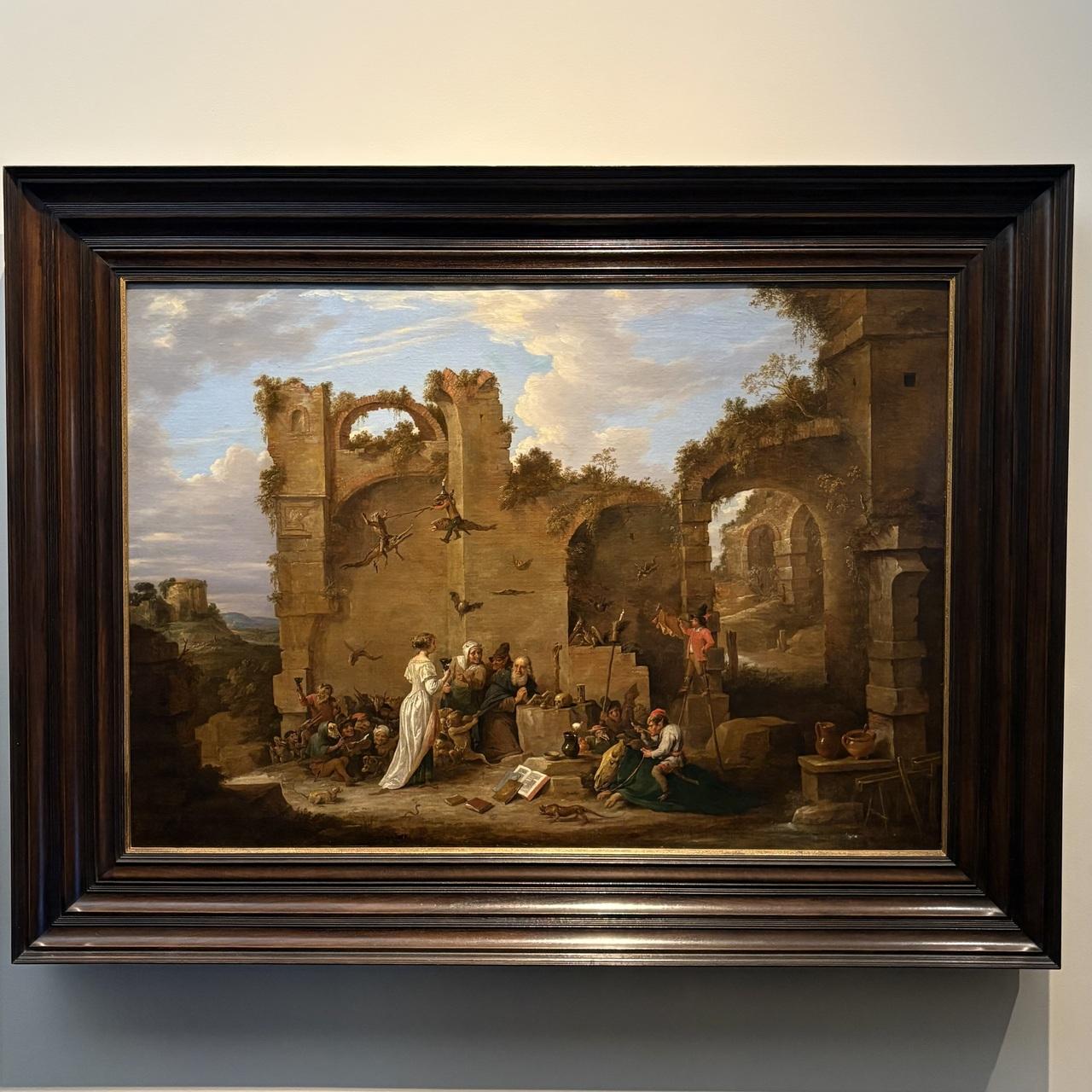
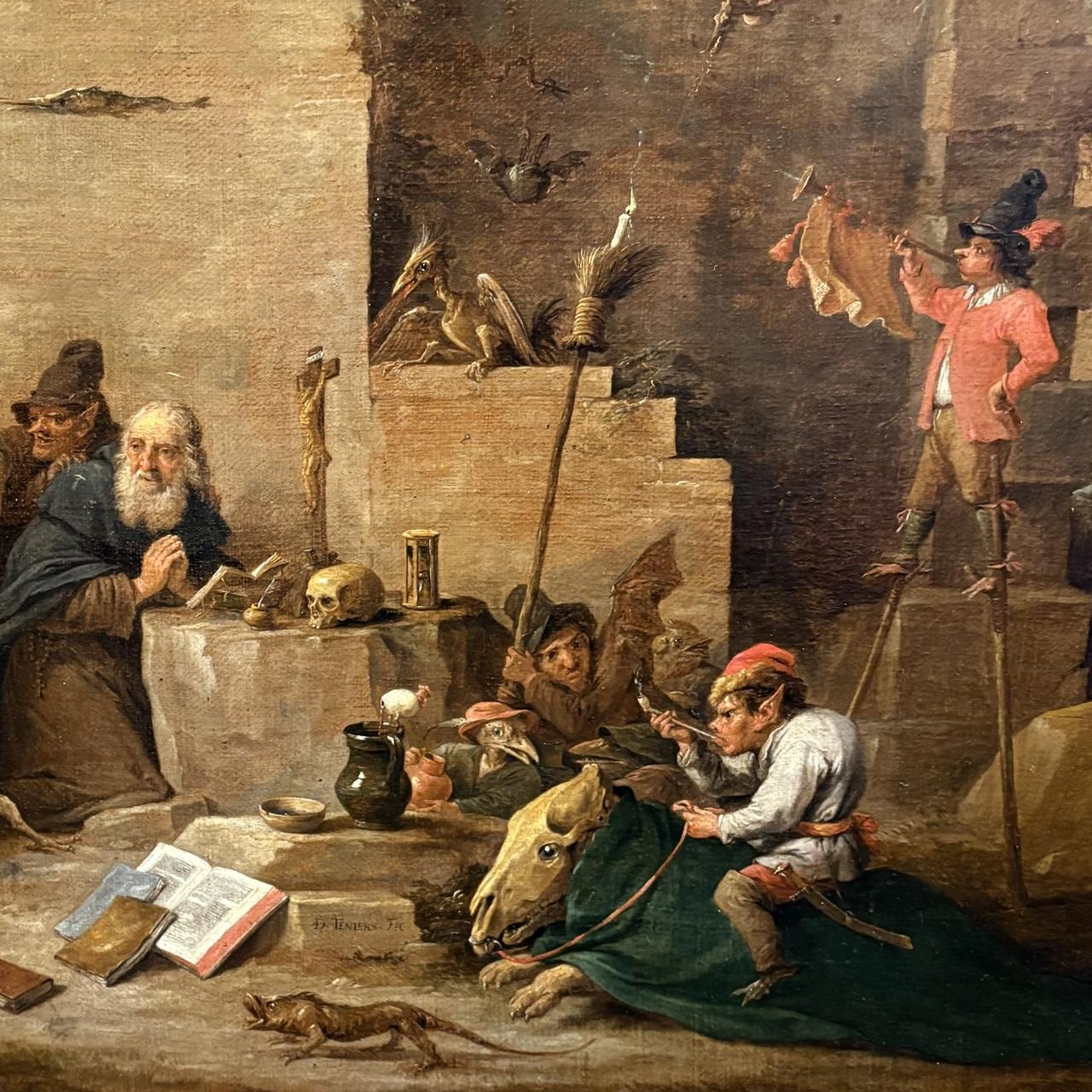
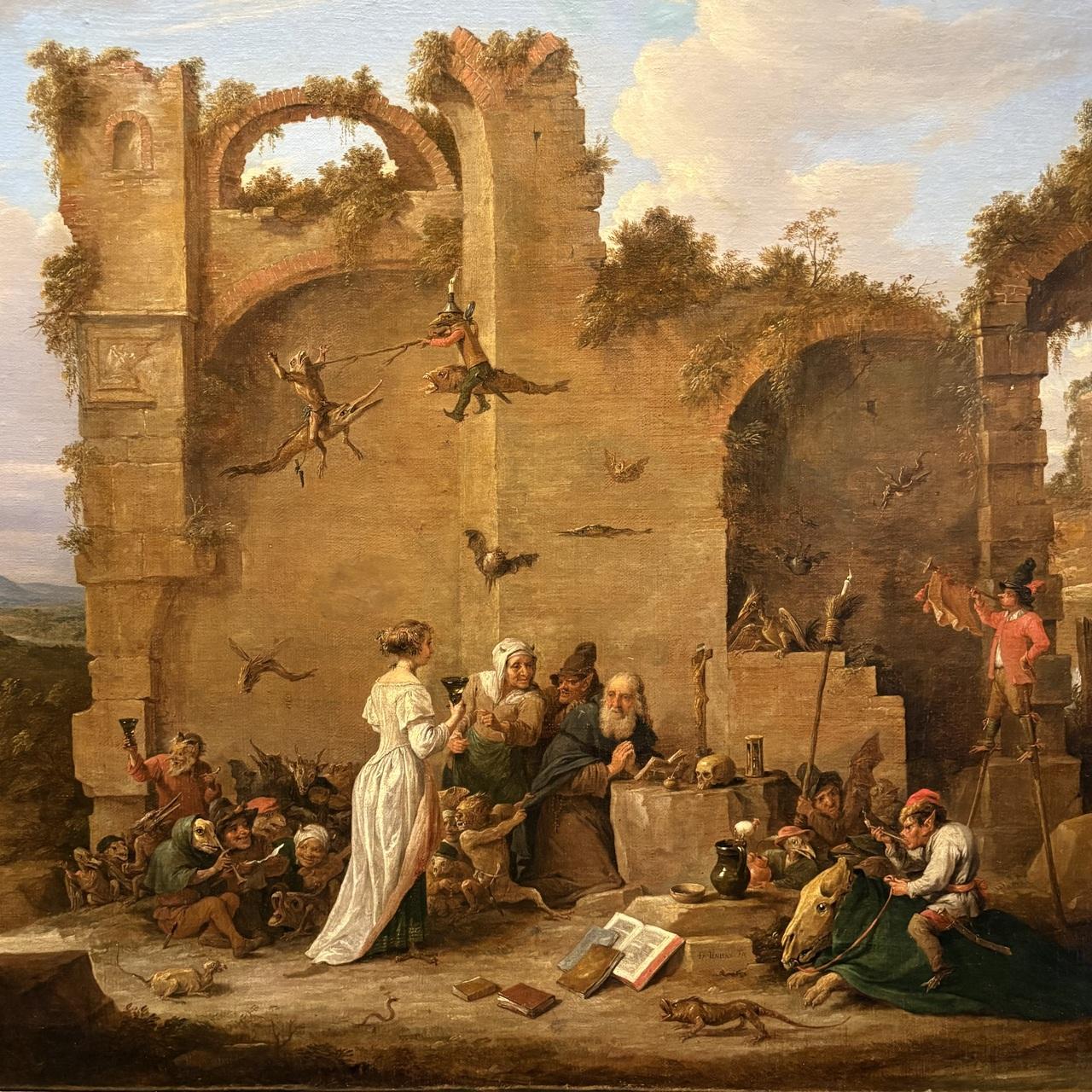
ダフィット・テニールス(子)(1610年-1690年)
聖アントニウスの誘惑
1660年代
油彩/カンヴァス
1991年度購入
David Teniers, the Younger (1610-1690)
The Temptation of St. Anthony
1660s
Oil on canvas
Purchased in 1991
17世紀のアントウェルペンを代表する画家、ダフィット・テニールス(子)ほどに「聖アントニウスの誘惑」をくりかえし描いた美術家もほかにいません。この主題を表わしたテニールス(子)の作品は、じつに何十点も知られています。そればかりか、彼の工房で制作された同主題の絵画や模倣者が手がけた作品も少なくありません。成熟期とされる1640年代にテニールス(子)が描いた数々のく聖アントニウスの誘惑>では、洞窟の内部で物語が展開されてましたが、より後期の絵画である本作においては場面が屋外に設定され、主人公は廃墟と化した建築物を背にして腰かけています。
David Teniers the Younger, a leading painter in 17th century Antwerp, painted more images of the Temptation of St. Anthony theme than any other artist. Indeed, dozens of images by Teners the Younger are known on this subject. There are also paintings of this subject by his workshop, and copyists. The many Temptations of St. Anthony painted in the 1640s during his mature period depict the narrative taking place in a cave. His later works, as seen in the MWA work, are set outdoors, with the saint seated, leaning against a ruined building. -
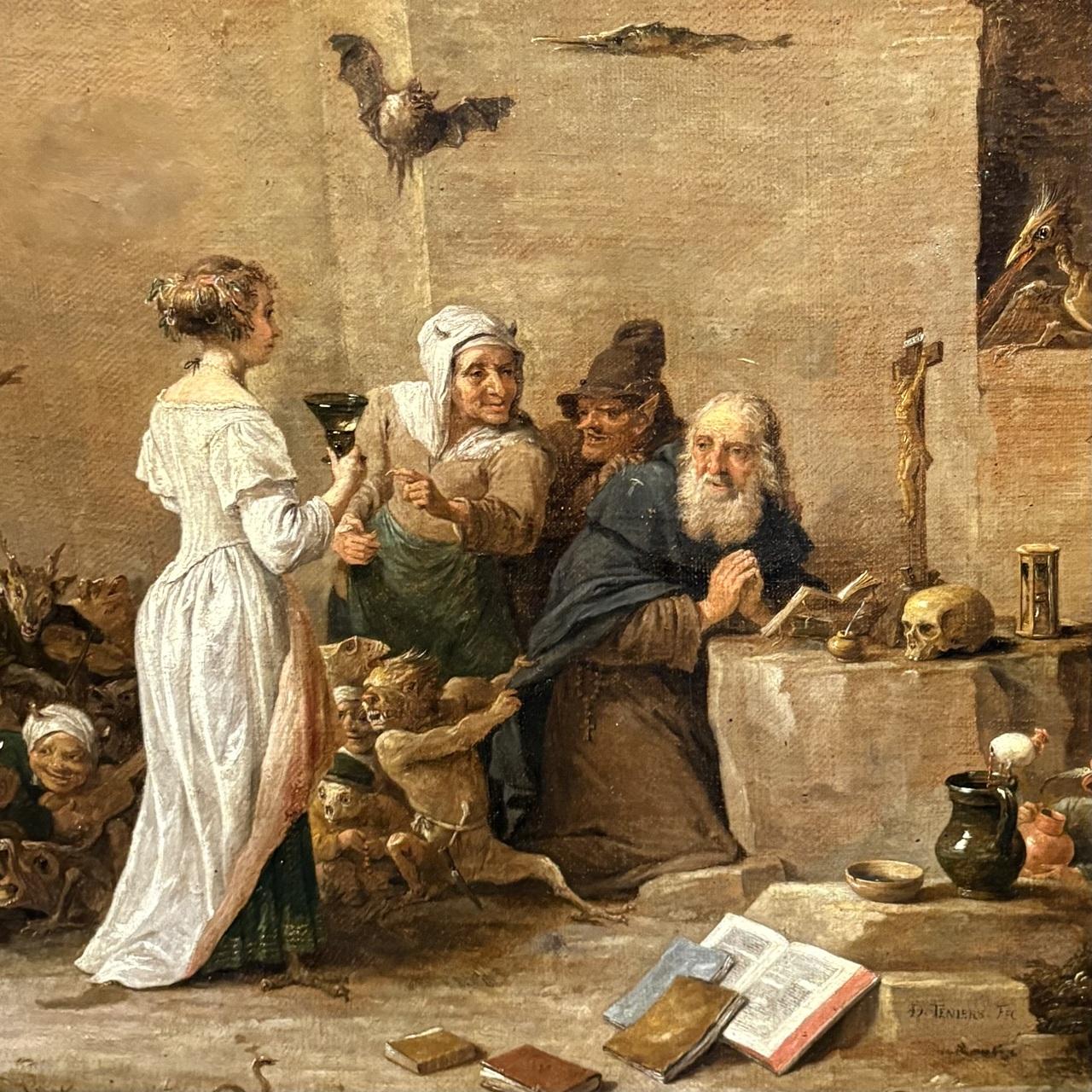
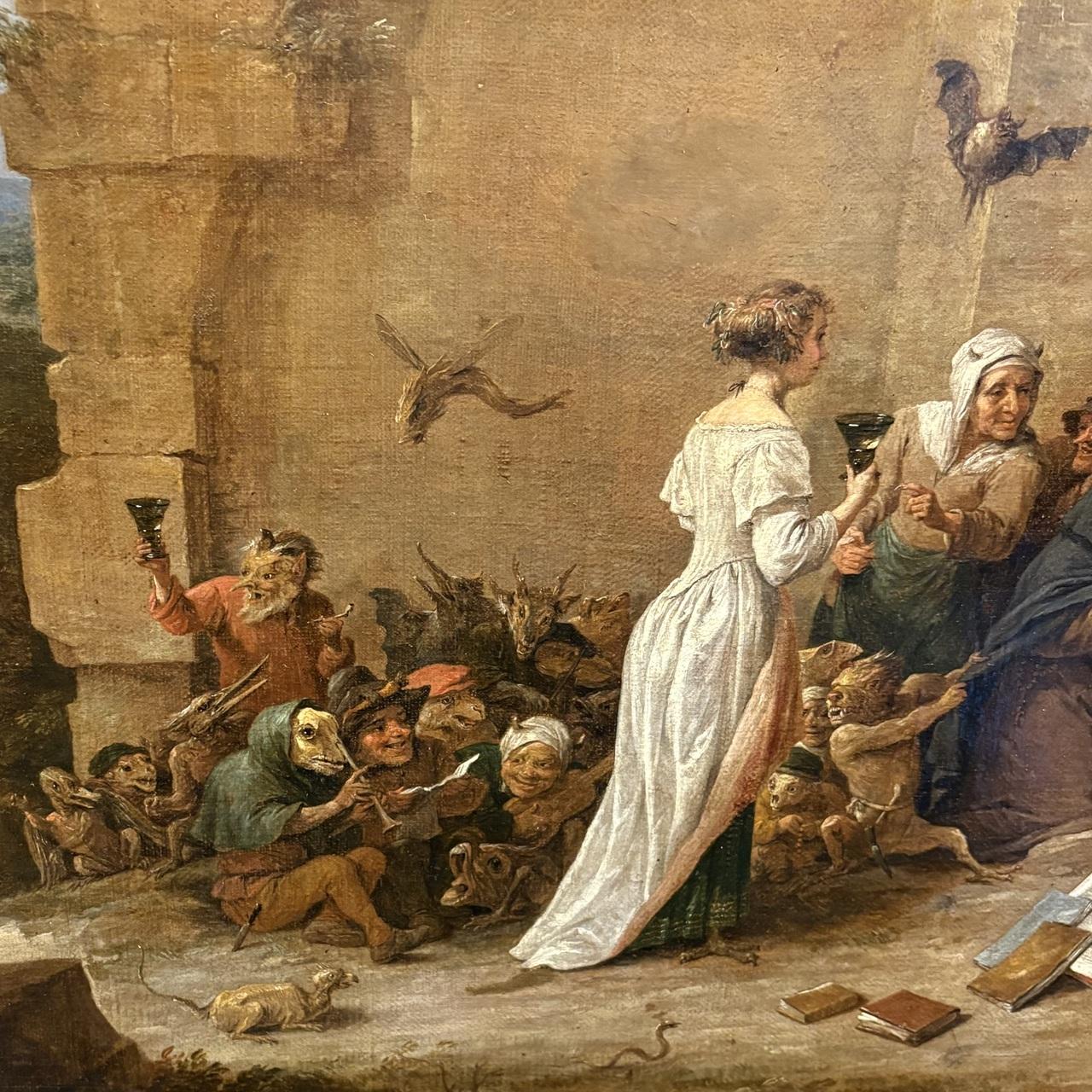
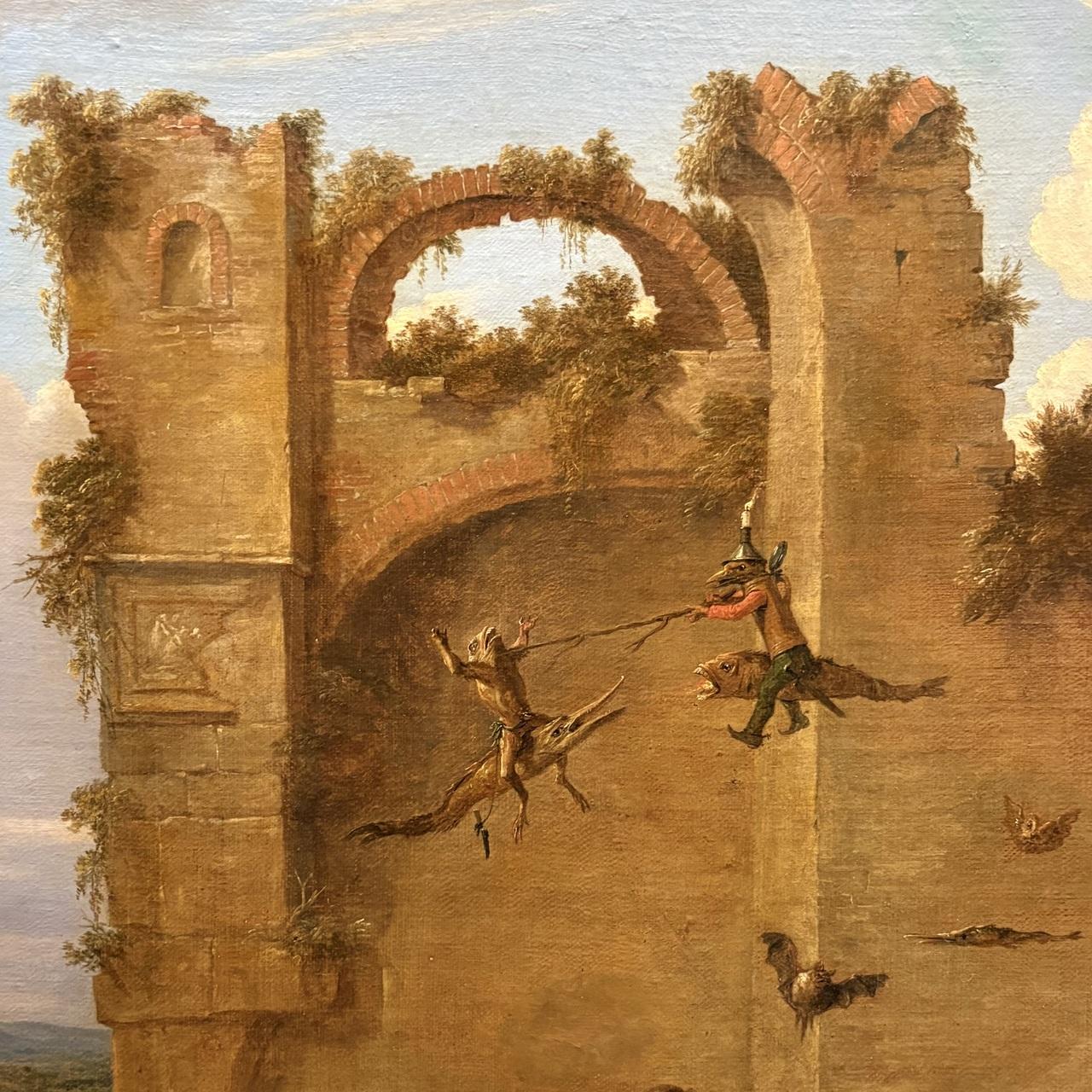
祈りの身ぶりをとる聖アントニウスの視線のさきには、白い衣服をまとった女性がグラスを片手に立っています。テニールス(子)はその女性像に、17世紀のフランドル絵画のなかでしばしば酒と結びつけられていたエロティックな誘惑を体現させているのです。よく見ると、彼女の足は鳥の鉤爪です。すなわち、この女性は変身した悪魔にほかなりません。そして周囲には、動物と人間の身体が混成された怪物たちが群がり、なかにはを舞っている者もいます。それらの表現には、細部にいたるまで、テニールス(子)の豊かな想像力がゆき渡っているでしょう。活況を呈するその光景は、みかたによっては風俗画を想起させもします。
The seated, priestly-robe-garbed St. Anthony gazes at a white-robed woman who holds up a glass in one hand. Here the painter uses that woman and glass motif as the personification of sexual temptation, which 17th century Flemish painting often linked with drinking. If you look closely, you can see that this woman has bird-claw feet instead of human feet. Clearly, this woman is a demon partially transformed into human form. All manner of strange beasts and human figures surround the pair, including some flying through the sky. These details show the rich breadth of the painter's imagination. Depending on how you look at it, that lively scene is reminiscent of genre paintings. -
-
-
-
テニールス(子)が描きだしたく聖アントニウスの誘惑)は宗教主題の作品でありながらも、たとえば「村の祭り」などをあつかった彼の風俗画とあいつうじるところがあるのです。いずれにしても、十字架と聖者、ヴァニタスを象徴する頭蓋骨と砂時計をまえに慄いた表情で女性にまなざしを向け、多くの幻影に囲まれている本作での聖アントニウスは、信仰と誘惑、禁欲と欲望との危ういはざまに身を置いています。
Although Teniers the Younger's Temptation of St. Anthony is a religious subject painting, it has something in common with his genre paintings depicting village festivals and other themes. In any case, St. Anthony is shown with a Cross, Bible, and the skull and hourglass symbols of vanity, gazing in horror at the woman, all while surrounded by myriad phantasms. He is thus placed at that dangerous junction between faith and temptation, the sacred and the profane. -
Collection in FOCUS
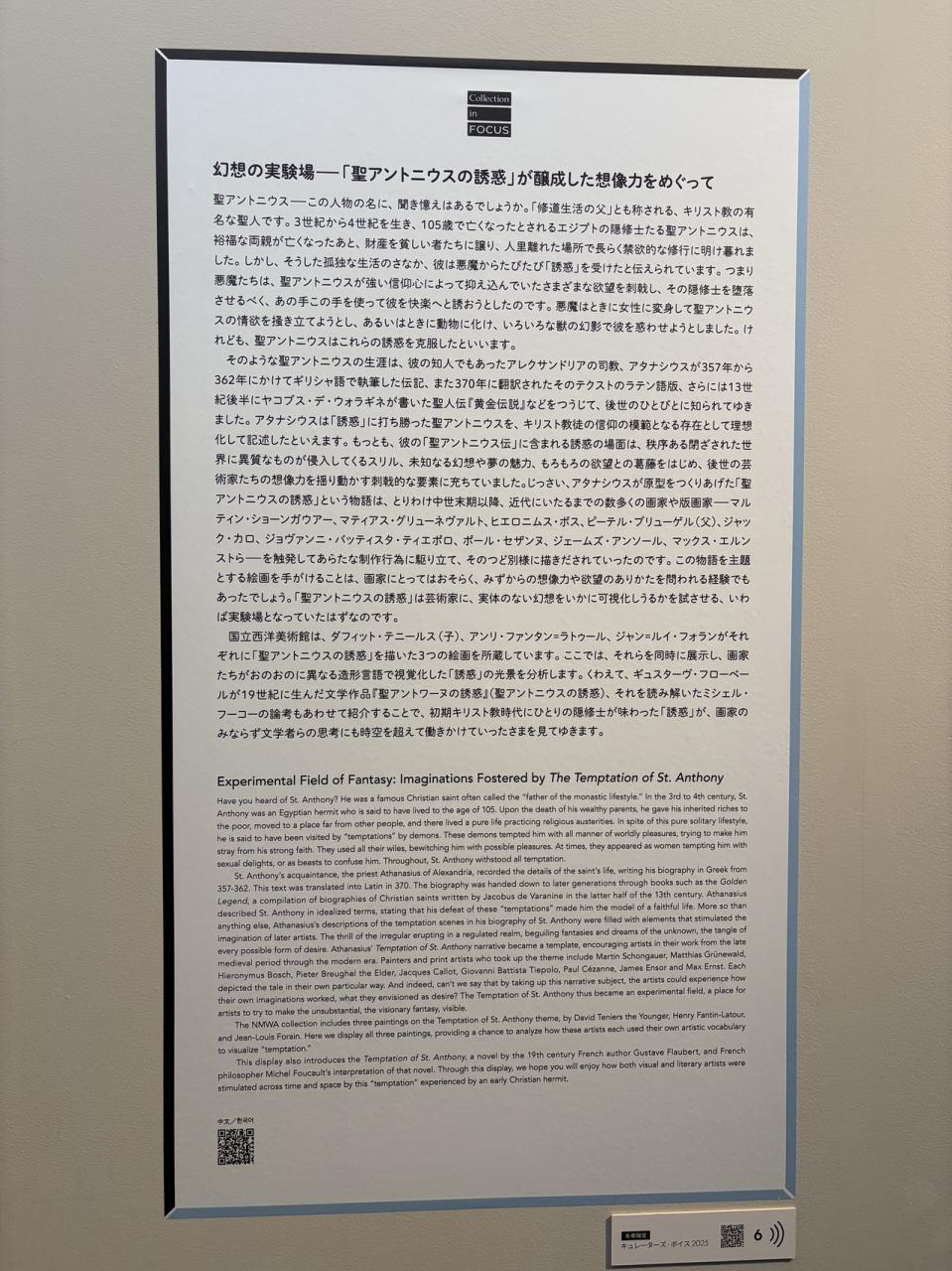
幻想の実験場一「聖アントニウスの誘惑」が醸成した想像力をめぐって
聖アントニウスーこの人物の名に、聞き憶えはあるでしょうか。「修道生活の父」とも称される、キリスト教の有名な聖人です。3世紀から4世紀を生き、105歳で亡くなったとされるエジプトの隠修士たる聖アントニウスは、裕福な両親が亡くなったあと、財産を貧しい者たちに譲り、人里離れた場所で長らく禁欲的な修行に明け暮れました。しかし、そうした孤独な生活のさなか、彼は悪魔からたびたび「誘惑」を受けたと伝えられています。つまり悪魔たちは、聖アントニウスが強い信仰心によって抑え込んでいたさまざまな欲望を刺載し、その隠修士を堕落させるべく、あの手この手を使って彼を快楽へと誘おうとしたのです。悪魔はときに女性に変身して聖アントニウスの情欲を掻き立てようとし、あるいはときに動物に化け、いろいろな獣の幻影で彼を惑わせようとしました。けれども、聖アントニウスはこれらの誘惑を克服したといいます。
そのような聖アントニウスの生涯は、彼の知人でもあったアレクサンドリアの司教、アタナシウスが357年から362年にかけてギリシャ語で執筆した伝記、また370年に翻訳されたそのテクストのラテン語版、さらには13世紀後半にヤコブス・デ・ウォラギネが書いた聖人伝『黄金伝説』などをつうじて、後世のひとびとに知られてゆきました。アタナシウスは「誘惑」に打ち勝った聖アントニウスを、キリスト教徒の信仰の模範となる存在として理想化して記述したといえます。もっとも、彼の「聖アントニウス伝」に含まれる誘惑の場面は、秩序ある閉ざされた世界に異質なものが侵入してくるスリル、未知なる幻想や夢の魅力、もろもろの欲望との葛藤をはじめ、後世の芸術家たちの想像力を揺り動かす刺載的な要素に充ちていました。じっさい、アタナシウスが原型をつくりあげた「聖アントニウスの誘惑」という物語は、とりわけ中世末期以降、近代にいたるまでの数多くの画家や版画家一マルティン・ショーンガウアー、マティアス・グリューネヴァルト、ヒエロニムス・ボス、ピーテル・ブリューゲル(父)、ジャック・カロ、ジョヴァンニ・バッティスタ・ティエポロ、ポール・セザンヌ、ジェームズ・アンソール、マックス・エルンストらーを触発してあらたな制作行為に駆り立て、そのつど別様に描きだされていったのです。この物語を主題とする絵画を手がけることは、画家にとってはおそらく、みずからの想像力や欲望のありかたを問われる経験でもあったでしょう。「聖アントニウスの誘惑」は芸術家に、実体のない幻想をいかに可視化しうるかを試させる、いわば実験場となっていたはずなのです。
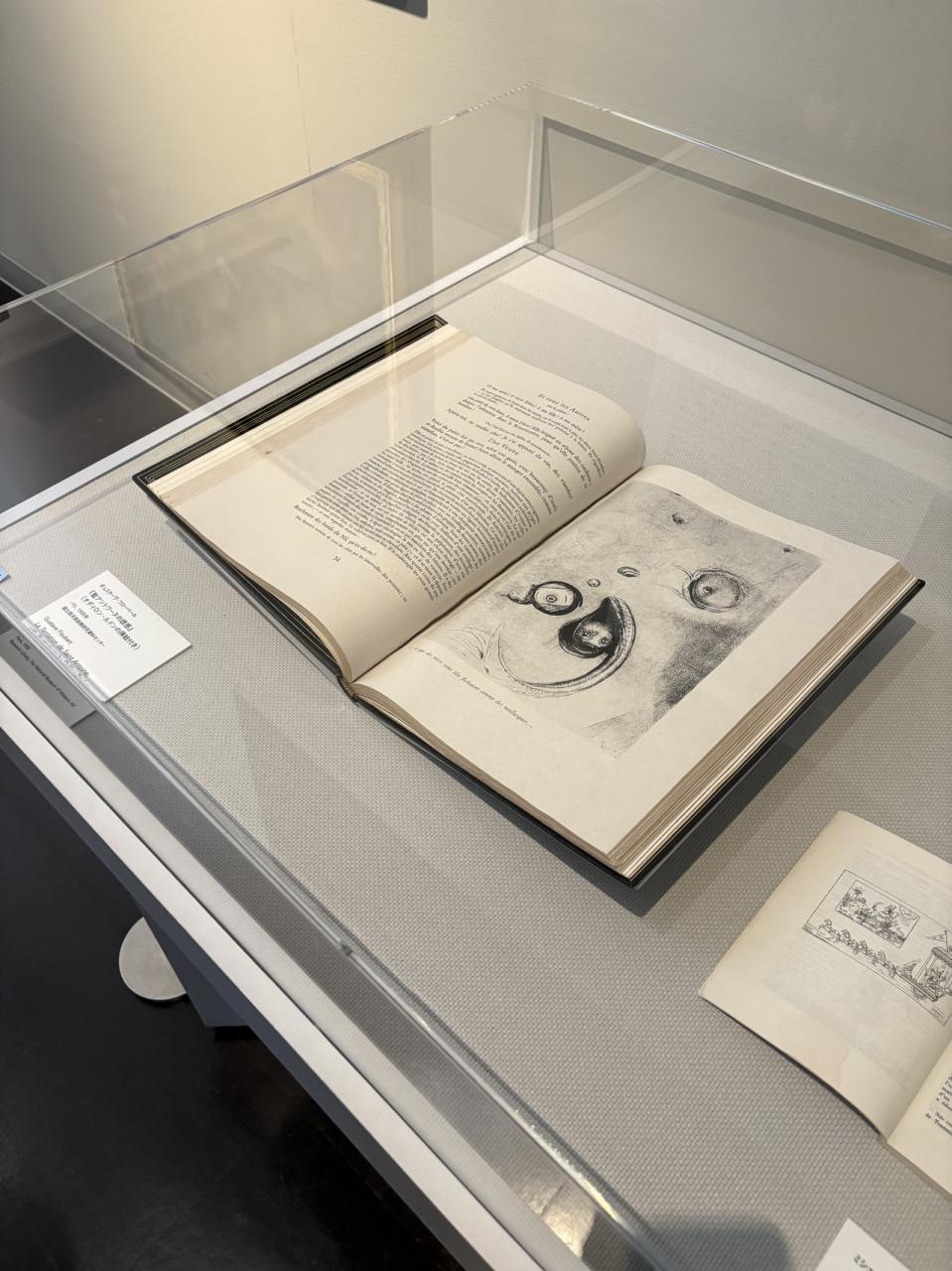
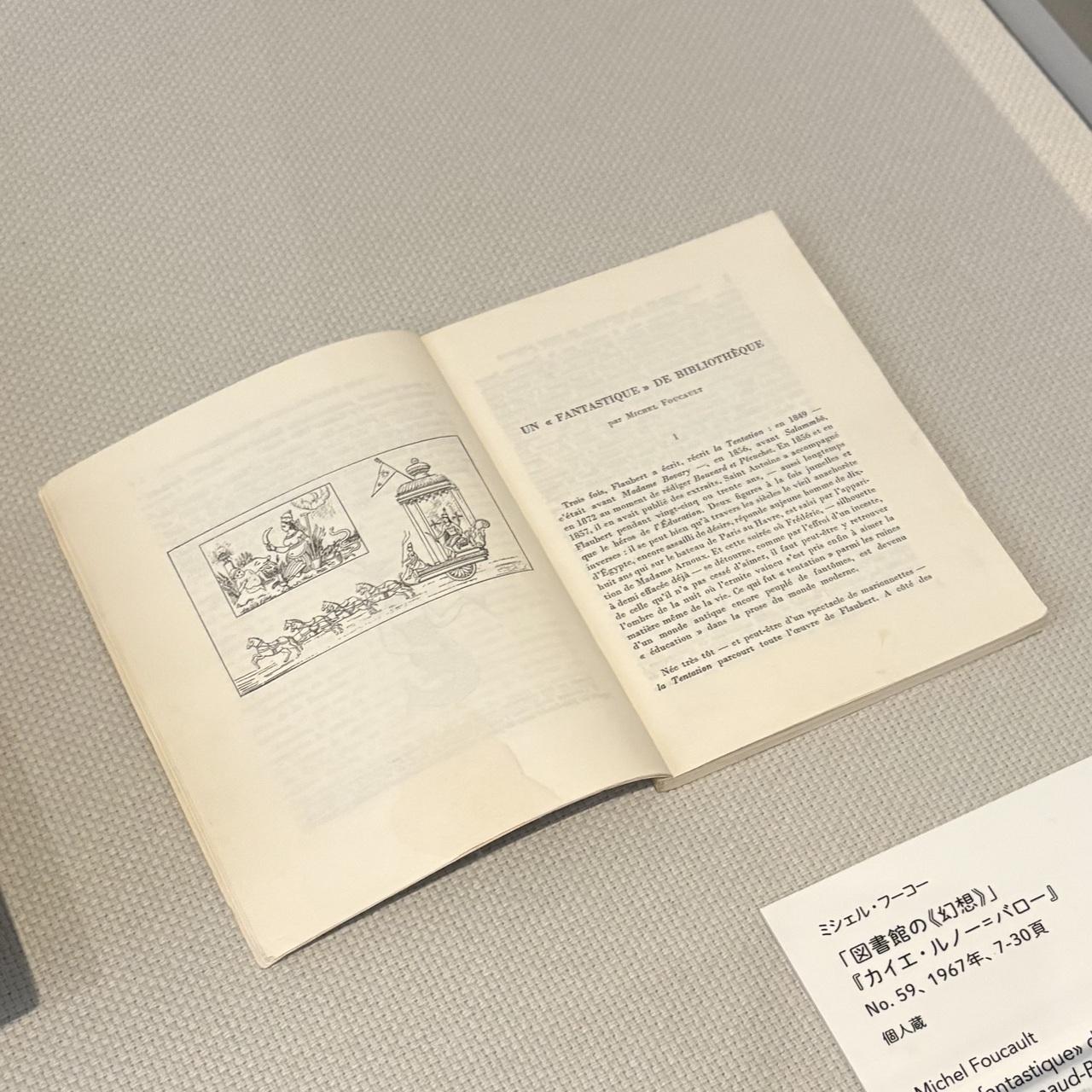
国立西洋美術館は、ダフィット・テニールス(子)、アンリ・ファンタン=ラトゥール、ジャン=ルイ・フォランがそれぞれに「聖アントニウスの誘惑」を描いた3つの絵画を所蔵しています。ここでは、それらを同時に展示し、画家たちがおのおのに異なる造形言語で視覚化した「誘惑」の光景を分析します。くわえて、ギュスターヴ・フローベールが19世紀に生んだ文学作品『聖アントワーヌの誘惑』(聖アントニウスの誘惑)、それを読み解いたミシェル・フーコーの論考もあわせて紹介することで、初期キリスト教時代にひとりの隠修士が味わった「誘惑」が、画家のみならず文学者らの思考にも時空を超えて働きかけていったさまを見てゆきます。
Experimental Field of Fantasy: Imaginations Fostered by The Temptation of St. Anthony
Have you heard of St. Anthony? He was a famous Christian saint often called the "father of the monastic lifestyle." In the 3rd to 4th century, St. Anthony was an Egyptian hermit who is said to have lived to the age of 105. Upon the death of his wealthy parents, he gave his inherited riches to the poor, moved to a place far from other people, and there lived a pure life practicing religious austerities. In spite of this pure solitary lifestyle, he is said to have been visited by "temptations" by demons. These demons tempted him with all manner of worldly pleasures, trying to make him stray from his strong faith. They used all their wiles, bewitching him with possible pleasures. At times, they appeared as women tempting him with sexual delights, or as beasts to confuse him. Throughout, St. Anthony withstood all temptation.
St. Anthony's acquaintance, the priest Athanasius of Alexandria, recorded the details of the saint's life, writing his biography in Greek from 357-362. This text was translated into Latin in 370. The biography was handed down to later generations through books such as the Golden Legend, a compilation of biographies of Christian saints written by Jacobus de Varanine in the latter half of the 13th century. Athanasius described St. Anthony in idealized terms, stating that his defeat of these "temptations" made him the model of a faithful life. More so than anything else, Athanasius's descriptions of the temptation scenes in his biography of St. Anthony were filled with elements that stimulated the imagination of later artists. The thrill of the irregular erupting in a regulated realm, beguiling fantasies and dreams of the unknown, the tangle of every possible form of desire. Athanasius' Temptation of St. Anthony narrative became a template, encouraging artists in their work from the late medieval period through the modern era. Painters and print artists who took up the theme include Martin Schongauer, Matthias Grünewald, Hieronymus Bosch, Pieter Breughel the Elder, Jacques Callot, Giovanni Battista Tiepolo, Paul Cézanne, James Ensor and Max Ernst. Each depicted the tale in their own particular way. And indeed, can't we say that by taking up this narrative subject, the artists could experience how their own imaginations worked, what they envisioned as desire? The Temptation of St. Anthony thus became an experimental field, a place for artists to try to make the unsubstantial, the visionary fantasy, visible.
The NMWA collection includes three paintings on the Temptation of St. Anthony theme, by David Teniers the Younger, Henry Fantin-Latour, and Jean-Louis Forain. Here we display all three paintings, providing a chance to analyze how these artists each used their own artistic vocabulary to visualize "temptation."
This display also introduces the Temptation of St. Anthony, a novel by the 19th century French author Gustave Flaubert, and French philosopher Michel Foucault's interpretation of that novel. Through this display, we hope you will enjoy how both visual and literary artists were stimulated across time and space by this "temptation" experienced by an early Christian hermit. -
Collection in FOCUS
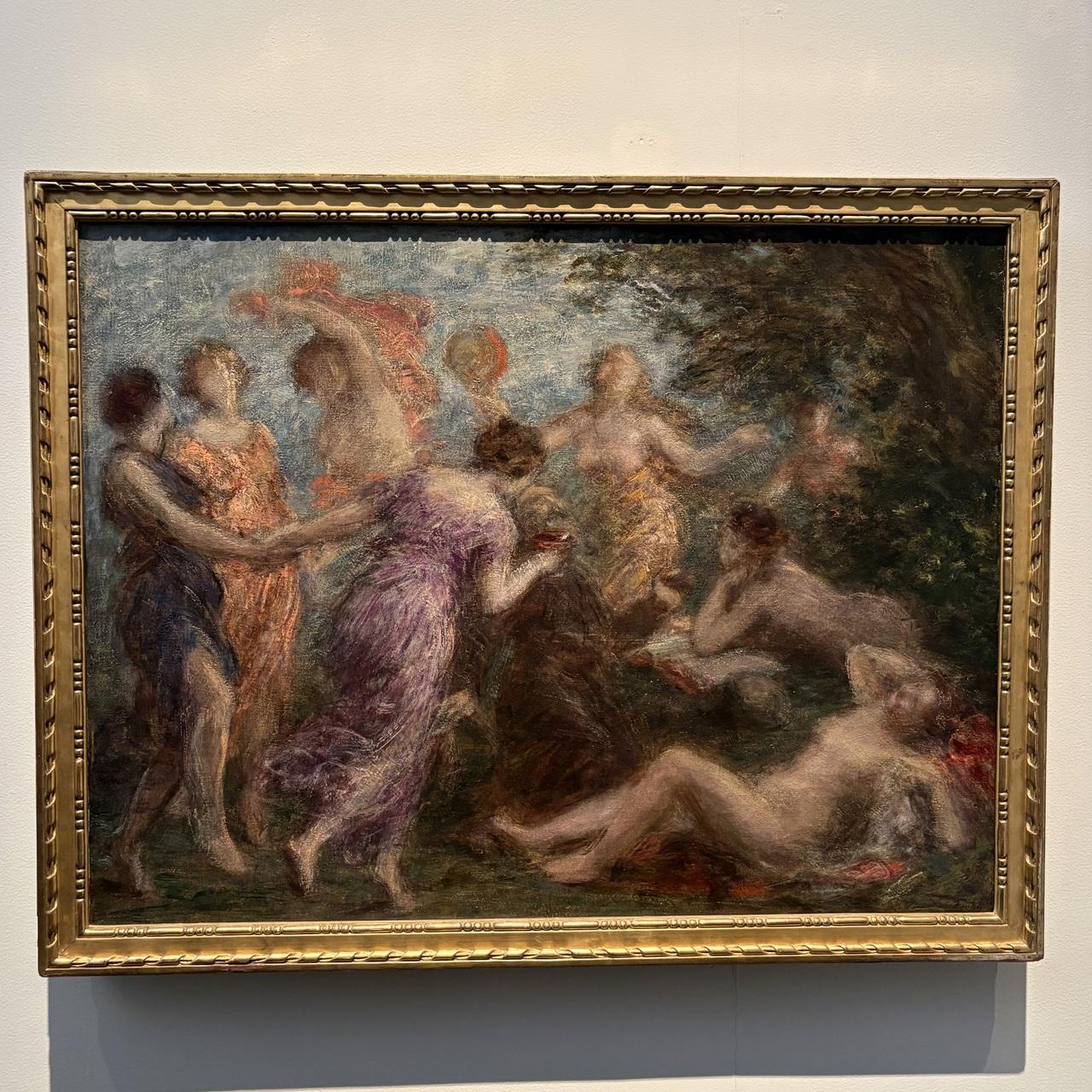
アンリ・ファンタン=ラトウール(1836年-1904年)
聖アントニウスの誘惑
油彩/カンヴァス
松方コレクション
Henri Fantin-Latour (1836-1904)
The Temptation of St. Anthony
Oil on canvas
Matsukata Collection
P.1959-0099
19世紀後半、とくにフランスではたくさんの芸術家が「聖アントニウスの誘惑」を描きました。のちに紹介するように、ギュスターヴ・フローベールの『聖アントワーヌの誘惑』(聖アントニウスの誘惑)が1874年に刊行され、その小説に触発された画家たちが少なくなかったためです。そうしたフランスの芸術家のなかでも、アンリ・ファンタン=ラトゥールは「聖アントニウスの誘惑」をもっとも頻繁に主題化し、それを題材とした約30点の絵画を残しました。
本作には、神に救いをもとめるかのごとく天を仰ぐ聖アントニウスをとり囲みながら舞い踊る、半裸ないしは着衣の女性たちが表わされており、なかには寝そべって裸身を曝けだしている者の姿もあります。ワイングラスを差しだす女性はおそらく、われわれがさきほど見た17世紀のダフィット・テニールス(子)の(聖アントニウスの誘惑>にしばしば登場する同様の人物像に着想を得て描かれました。それらの群像を動勢のある筆致と豊かな色彩で視覚化している本作は、孤独な際修士にたいする性的な誘惑を問題としています。ただし、ファンタン=ラトゥールのこの絵画は、前後する時代にほかの画家が手がけた同主題作品の多くとくらべれば、エロティシズムを過度に強調してはいません。また、幻想的であったりエキゾティックであったりするモティーフは、ここにはありません。幻想的なのはむしろ、われわれの眼前にある絵画そのもの、もしくはそれが造形的に呈示するヴィジョンだといえるでしょう。1871年6月にファンタン=ラトゥールは、修道士のような孤独は芸術活動の理想的な出発点であるとの考えを手紙に巻きつづっていました。彼にとっては聖アントニウスを描くこと自体が、絵画制作の根源的な動機につうじていたのかもしれません。
The latter half of the 19th century saw numerous artists, particularly in France, depict the Temptation of St. Anthony theme. As will be introduced later, Gustave Flaubert's novel of that title was published in 1874, influencing many of these artists. Henri Fantin-Latour was the most prolific French artist producer of this subject, with around 30 of his paintings on the theme extant today.
The NMWA Fantin-Latour painting shows St. Anthony gazing up at the sky as if imploring God to help him as he is surrounded by a bevy of half-naked dancing women. There is even a reclining nude woman in the lower right corner. The woman in the center offering a wine goblet to St. Anthony was probably inspired by figures that appear in Teniers the Younger's Temptation of St. Anthony paintings. Dynamic brushwork in a rich array of colored pigments visually enhances this scene of a solitary hermit male surrounded by sexual temptation. But Fantin-Latour does not overly emphasize eroticism, unlike the many other artists who depicted this subject in the preceding and succeeding periods. There are no fantastical or exotic motifs here. Rather, the painting itself is fantastical, or indeed, the artistic vision that it presents in its form and color. In June 1861, Fantin-Latour wrote a letter stating that he thought that monastic isolation was the ideal starting point for artistic activity. The act of depicting St. Anthony thus might be linked to the motivational forces behind Fantin-Latour's painting production. -
Collection in FOCUS
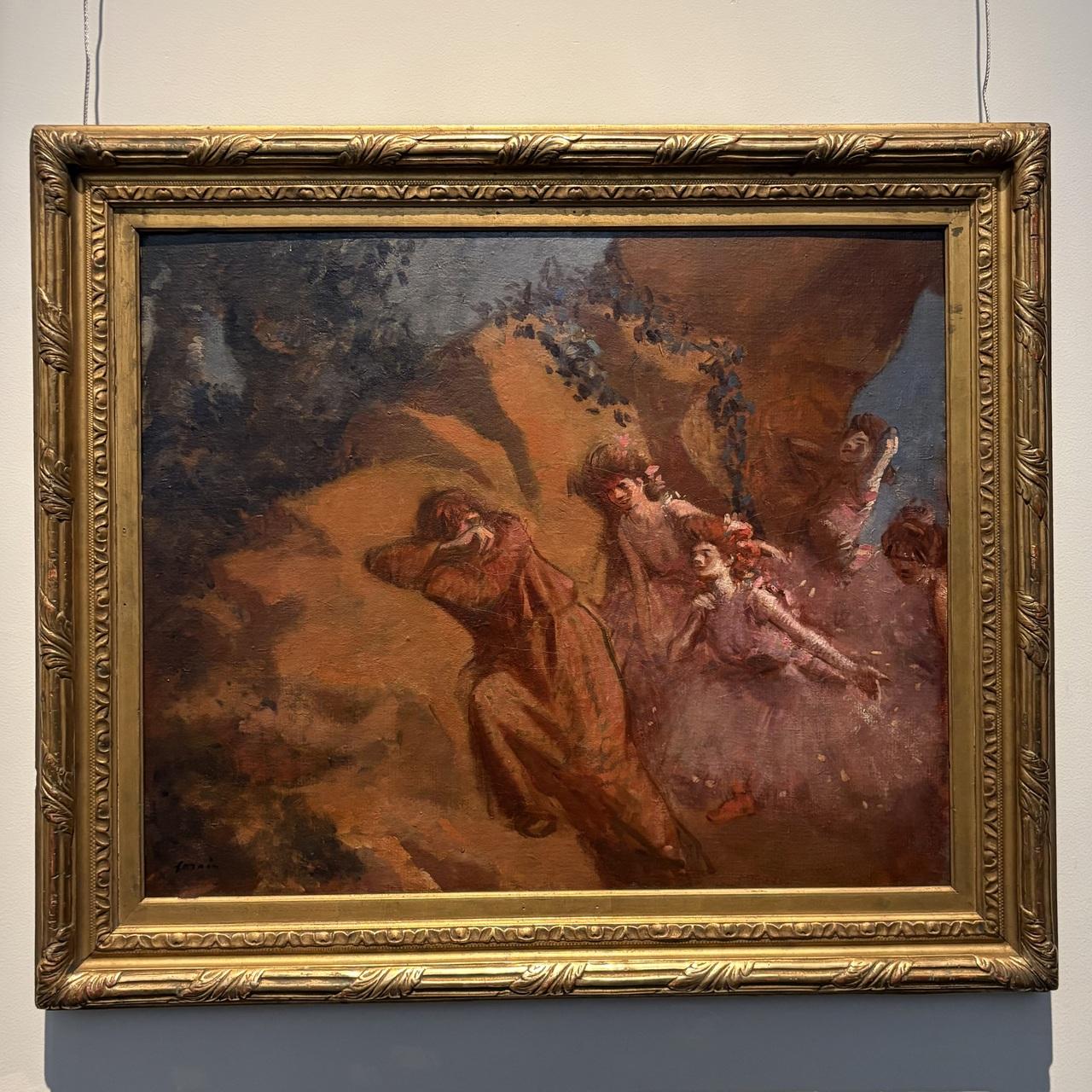
ジャンミルイ・フォラン(1852年-1931年)
聖アントニウスの誘惑
油彩/カンヴァス
松方コレクション
Jean-Louis Forain (1852-1931)
The Temptation of St. Anthony
Oil on canvas
Matsukata Collection
P.1959-0103
印象派のなかでもっとも若い画家だったともいわれるジャン=ルイ・フォランは、自身を印象派展にいてくれた親しい友人、エドガー・ドガから強い影響を受けました。ドガと同様にオペラ座の舞台裏などを表わす絵画や素描をさまざまに制作したフォランは本作で、あたかも近代のパリの踊り子たちが時間的/空間的な距離を超えて聖アントニウスのまえに現れ、その男性を誘惑しているかのごとき場面をつくりだしています。
4人の若い女性の衣裳や髪型は、フォランがくりかえし描いた踊り子のそれらとよく似ています。世紀転換期のパリの文化的なアイコンだった踊り子たちは、モダニティを表することを自身の課題とした芸術家には魅力的な主題でした。そういった当代の踊り子を思わせずにはいない女性像を「聖アントニウスの誘惑」という歴史的物語の舞台に上げることでフォランは、それを過去のものにとどめるのではなく、鑑賞者にとってアクチュアルな近代生活の要素が錯時的に入り混じった幻想の光景へと変容させようとしたのかもしれません。あるいは、ここに描かれている光景そのものが、現実の舞台の一場面であるのではないかとも思えてきます。
女性たちにたいして聖アントニウスは背を向け、右手で顔を覆っています。その身ぶりは、ドガやフォランの作品に踊り子とともにしばしば登場するオペラ座の定期会員(アボネ)であった男性の態度とは対照的です。フォランは、オペラ座の舞台裏への立ち入りを許可されていた富裕な定期会員の男性が踊り子にからだを寄せ、私的な関係を結ぼうとする姿を描いていました。いっぽう、本作に表わされた踊り子風の女性たちと彼女らの接近に怯える様子の聖アントニウスは、オペラ座の裏側にあった男女の力関係を皮肉なやりかたで覆しているようにも映ります。
Edgar Degas strongly influenced his close friend Jean-Louis Forain, said to be the youngest of the Impressionists, and invited him to participate in the Impressionists' exhibition. Like Degas, Forain produced various paintings and drawings of behind the scenes events at the Paris opera house. Here, Forain created a scene in which it seems as if four modern Parisian ballet dancers somehow transcend time and space to appear before St. Anthony and tempt him.
The garments and hairstyles of the four young women closely resemble those often seen in Forain's paintings and drawings. Ballet dancers, one of the cultural icons of Paris at the turn of the 19th to 20th century. were a fascinating subject for artists who sought to depict modernity.
By using contemporary dancers as the tempting women in the ancient narrative context, he may have transformed the Temptation of St.
Anthony into an anachronistic fantasy scene, a mixture of the ancient with elements of the viewer's actual modern life reality. Or indeed, he may have depicted an actual scene on a contemporary stage. Here St. Anthony turns his back on the women, covers his face with his right arm. That pose contrasts with the attitudes of the male season subscribers that frequently appeared with dancers in Degas and Forain's images of the Paris Opera. Forain produced images of the wealthy opera season subscribers who were allowed to go backstage and establish private, offstage relationships with dancers. Conversely. the dancers in front of that hillside, and St. Anthony who attempts to ward off their approach, seem to be ironically subverting the backstage male/female power relationships. -
-
-
-
-
-
(続く・・・)


利用規約に違反している投稿は、報告する事ができます。
旅行記グループ
国内の美術館・博物館巡り その4
-
前の旅行記

2026.2.9 国立西洋美術館② 常設展(その1)"ラビニィア・フォンターナ 《アントニエッタ・ゴンザレス...
2026/02/09~
上野・御徒町
-
次の旅行記

2026.2.9 国立西洋美術館④ 小企画展 "Black Lines Speak 物語る黒線たち ~デュー...
2026/02/09~
上野・御徒町
-

2025.9.20~12.14 "モーリス・ユトリロ展@SOMPO美術館"。"風景画の中の人物の後ろ姿" が...
2025/12/11~
新宿
-

マチュピチュ展【その1】"フクロウの神" @ 森アーツセンターギャラリー(2025.11.22~2026.3...
2026/01/12~
六本木
-

マチュピチュ展【その2】"シャーマンの変容" @ 森アーツセンターギャラリー(2025.11.22~2026...
2026/01/12~
六本木
-

マチュピチュ展【その3】"アイ・アパエックの顔を表した埋葬用仮面" @ 森アーツセンターギャラリー(2025...
2026/01/12~
六本木
-

マチュピチュ展【その4】"トカゲのモザイクの耳飾り" @ 森アーツセンターギャラリー(2025.11.22~...
2026/01/12~
六本木
-

マチュピチュ展【その5】"神話の豊穣の場面が描かれた儀礼用の杯"@ 森アーツセンターギャラリー(2025.1...
2026/01/12~
六本木
-

マチュピチュ展【その6】"戦闘と捕虜の捕獲" @ 森アーツセンターギャラリー(2025.11.22~2026...
2026/01/12~
六本木
-

マチュピチュ展【その7】"チムー帝国の装身具一式" @ 森アーツセンターギャラリー(2025.11.22~2...
2026/01/12~
六本木
-

マチュピチュ展【その8】"神格化された祖先とネコ科動物をモチーフにした冠" @ 森アーツセンターギャラリー(...
2026/01/12~
六本木
-

マチュピチュ展【その9】"カエルがモチーフの首飾り"@ 森アーツセンターギャラリー(2025.11.22~2...
2026/01/12~
六本木
-

マチュピチュ展【その10/完】"インカのキープ"@ 森アーツセンターギャラリー(2025.11.22~3.1...
2026/01/12~
六本木
-

"塩谷亮 刻を描くリアリズム" (@佐藤美術館 2026.1.8 ~2.15) で、初めて "写実絵画" を...
2026/01/28~
信濃町・千駄ヶ谷
-

2026.2.9 国立西洋美術館① "オルセー美術館所蔵 印象派 室内をめぐる物語"。"エドガー・ドガ《家族...
2026/02/09~
上野・御徒町
-

2026.2.9 国立西洋美術館② 常設展(その1)"ラビニィア・フォンターナ 《アントニエッタ・ゴンザレス...
2026/02/09~
上野・御徒町
-

2026.2.9 国立西洋美術館③ 常設展(その2)"ダフィット・テニールス(子)《聖アントニウスの誘惑》"
2026/02/09~
上野・御徒町
-

2026.2.9 国立西洋美術館④ 小企画展 "Black Lines Speak 物語る黒線たち ~デュー...
2026/02/09~
上野・御徒町
-

2026.2.9 国立西洋美術館⑤/完 常設展(その3)"ヴィルヘルム・ハンマースホイ《ピアノを弾く妻イーダ...
2026/02/09~
上野・御徒町
-

"スウェーデン絵画展" の後、"藝大アートプラザ"・"上野動物園" へ。京都市動物園の長男ゴリラ "ゲンタロ...
2026/04/12~
上野・御徒町
-

お嬢と行く "スウェーデン絵画 北欧の光、日常のかがやき" 2026.1.27~4.12 @ 東京都美術館
2026/04/12~
上野・御徒町
-

2026年2月7日~5月24日 お嬢と行く "クロード・モネ ~風景への問いかけ" @アーティゾン美術館
2026/04/29~
丸の内・大手町・八重洲
-

"アンドリュー・ワイエス展" の後、"藝大アートプラザ" へ。"佐治真理子《佇む -玉しめ-》" が、いい感...
2026/05/16~
上野・御徒町
-

お嬢と行く"アンドリュー・ワイエス展 ~境界に立つとき、心が動き出す。~" 2026.4/28~7/5 @ ...
2026/05/16~
上野・御徒町
-

2026.7.12① 上野の森美術館 "大ゴッホ展"。撮影可能だったのは、"夜のカフェテラス" 1点のみ・・...
2026/07/12~
上野・御徒町
-

2026.7.12② "大ゴッホ展"の後、東京国立博物館 "アイルランド チェスター・ビューティ・コレクショ...
2026/07/12~
上野・御徒町
-

2026.7.12④ "大ゴッホ展" の後、SOMPO美術館 "山口華揚展"。《青柿》は、諏訪湖のほとり"北...
2026/07/12~
新宿
-

2026.7.12 ⑤・完 "大ゴッホ展" の後、"東京オペラシティ" でクラシック鑑賞 。恵比寿の "ル・...
2026/07/12~
東京
旅行記グループをもっと見る
コメントを投稿する前に
十分に確認の上、ご投稿ください。 コメントの内容は攻撃的ではなく、相手の気持ちに寄り添ったものになっていますか?
サイト共通ガイドライン(利用上のお願い)報道機関・マスメディアの方へ 画像提供などに関するお問い合わせは、専用のお問い合わせフォームからお願いいたします。
この旅行で行ったスポット
上野・御徒町(東京) の旅行記






フォートラベル公式LINE@

おすすめの旅行記や旬な旅行情報、お得なキャンペーン情報をお届けします!
QRコードが読み取れない場合はID「@4travel」で検索してください。
\その他の公式SNSはこちら/






旅行記グループ 国内の美術館・博物館巡り その4
0
31