


2026/02/05 - 2026/02/05
71位(同エリア932件中)

旅熊 Kokazさん
- 旅熊 KokazさんTOP
- 旅行記1924冊
- クチコミ854件
- Q&A回答102件
- 1,705,789アクセス
- フォロワー752人
MOMAT コレクション〔国立東京近代美術館 所蔵作品展〕(2025.11.5-2026.2.8)
2025年11月5日-2026年2月8日の所蔵作品展のみどころ
当館コレクション展の特徴をご紹介します。まずはその規模。1952年の開館以来の活動を通じて収集してきたおよそ14,000点の所蔵作品から、会期ごとに約200点を展示する国内最大級のコレクション展です。そして、それぞれ小さなテーマが立てられた全12室のつながりによって、19世紀末から今日に至る日本の近現代美術の流れをたどることができる国内随一の展示です。
今期のみどころ紹介です。長らく国外への貸出が続いていた奈良美智《Harmless Kitty》(1994年)が、約2年ぶりにMOMATコレクションに帰ってきました。4階ハイライト・コーナーでご覧いただけます。3階9室では写真家の細江英公の初期代表作「薔薇刑」を展示します。2024年に逝去された細江の追悼と、被写体となった小説家三島由紀夫の生誕100年記念(2025年)を兼ねての紹介です。
今期も、新収蔵作品が多く展示されています(作品横に貼られた「新収蔵作品」マークが目印です)。長く館を代表してきた顔ぶれにフレッシュな新星と、盛りだくさんのMOMATコレクションをお楽しみください。
https://www.momat.go.jp/exhibitions/r7-2
-

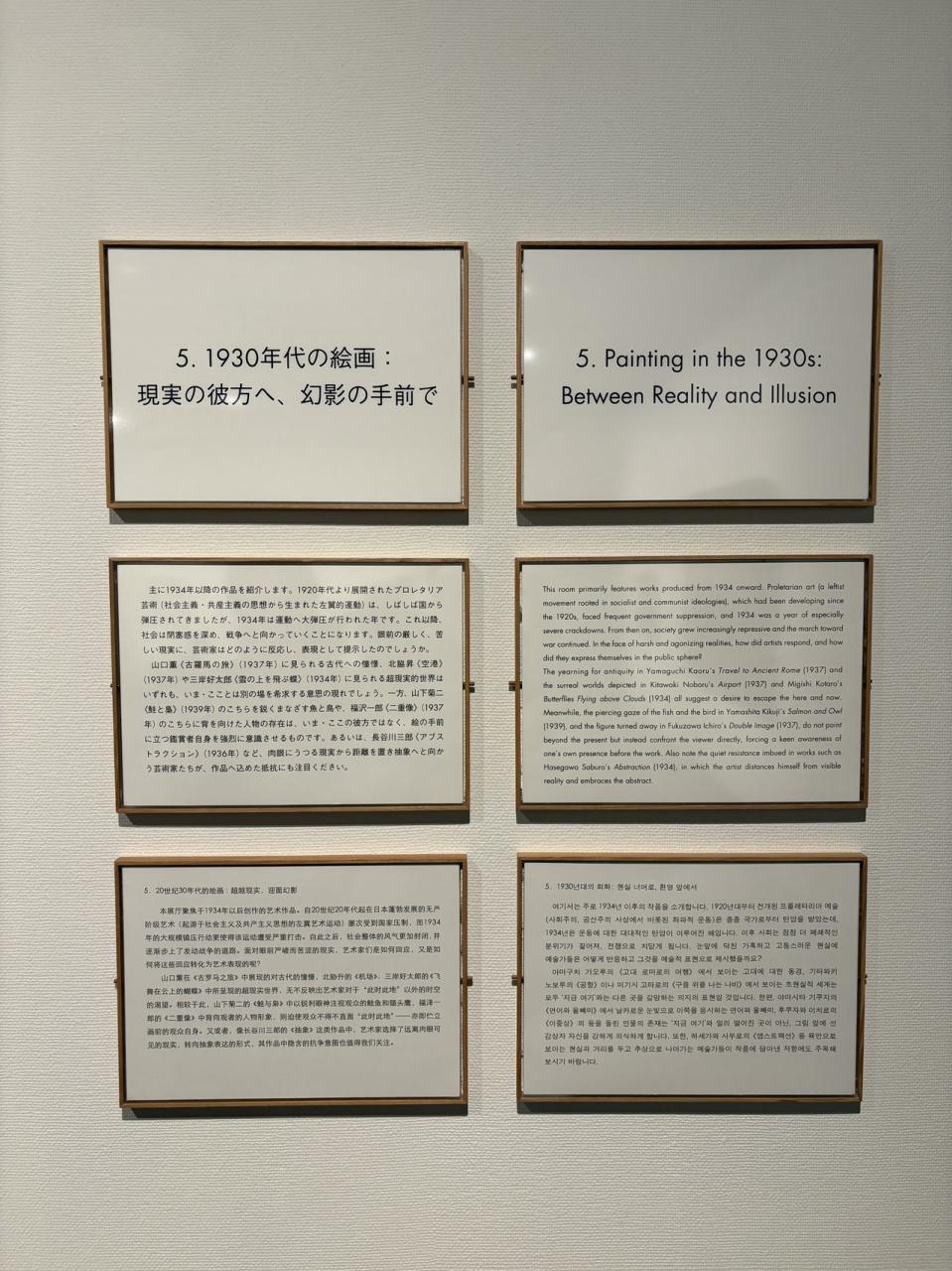
5.1930年代の絵画:現実の彼方へ、幻影の手前で
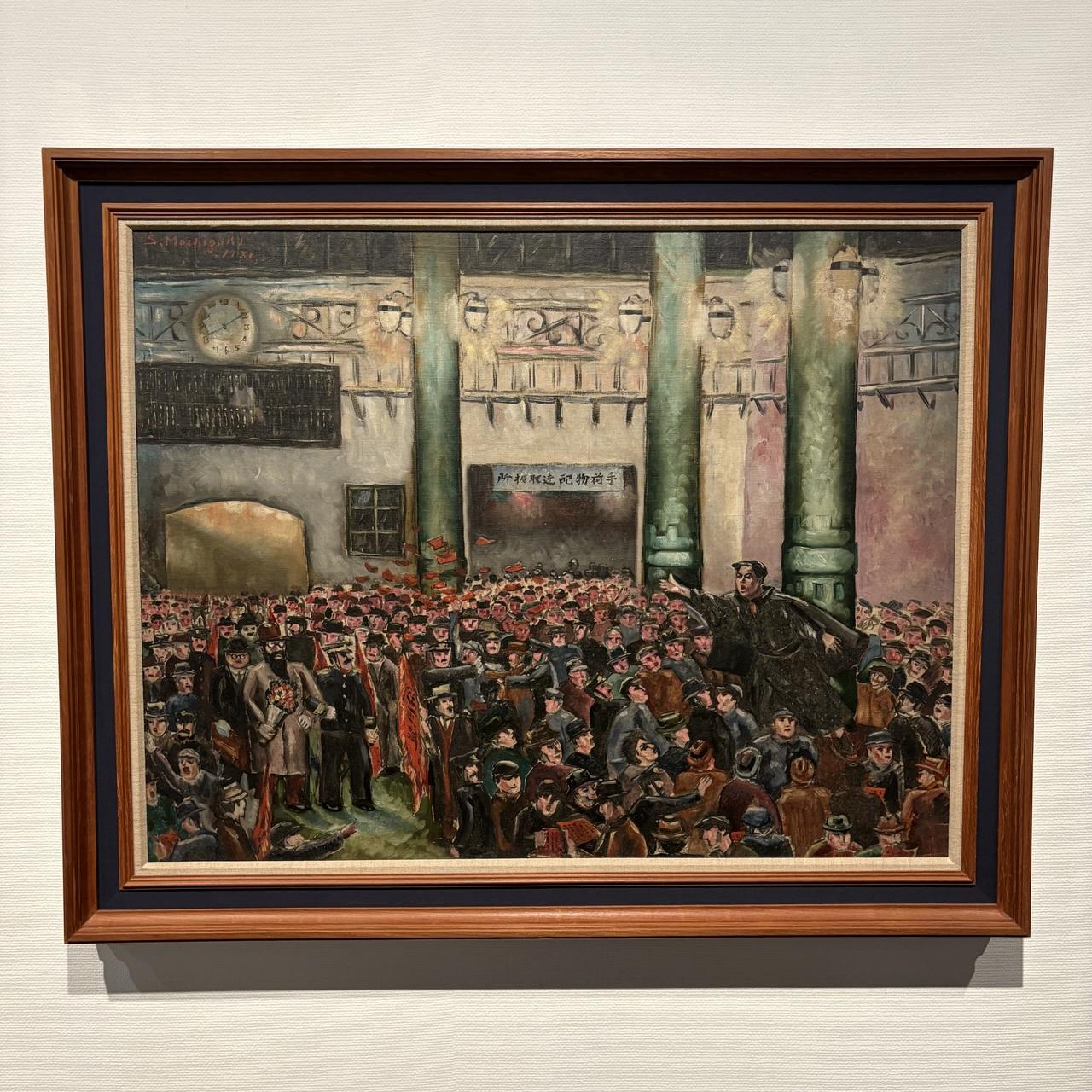
主に1934年以降の作品を紹介します。1920年代より展開されたプロレタリア芸術(社会主義・共産主義の思想から生まれた左翼的運動)は、しばしば国から弾圧されてきましたが、1934年は運動へ大弾圧が行われた年です。これ以降、社会は閉塞感を深め、戦争へと向かっていくことになります。眼前の厳しく、苦しい現実に、芸術家はどのように反応し、表現として提示したのでしょうか。
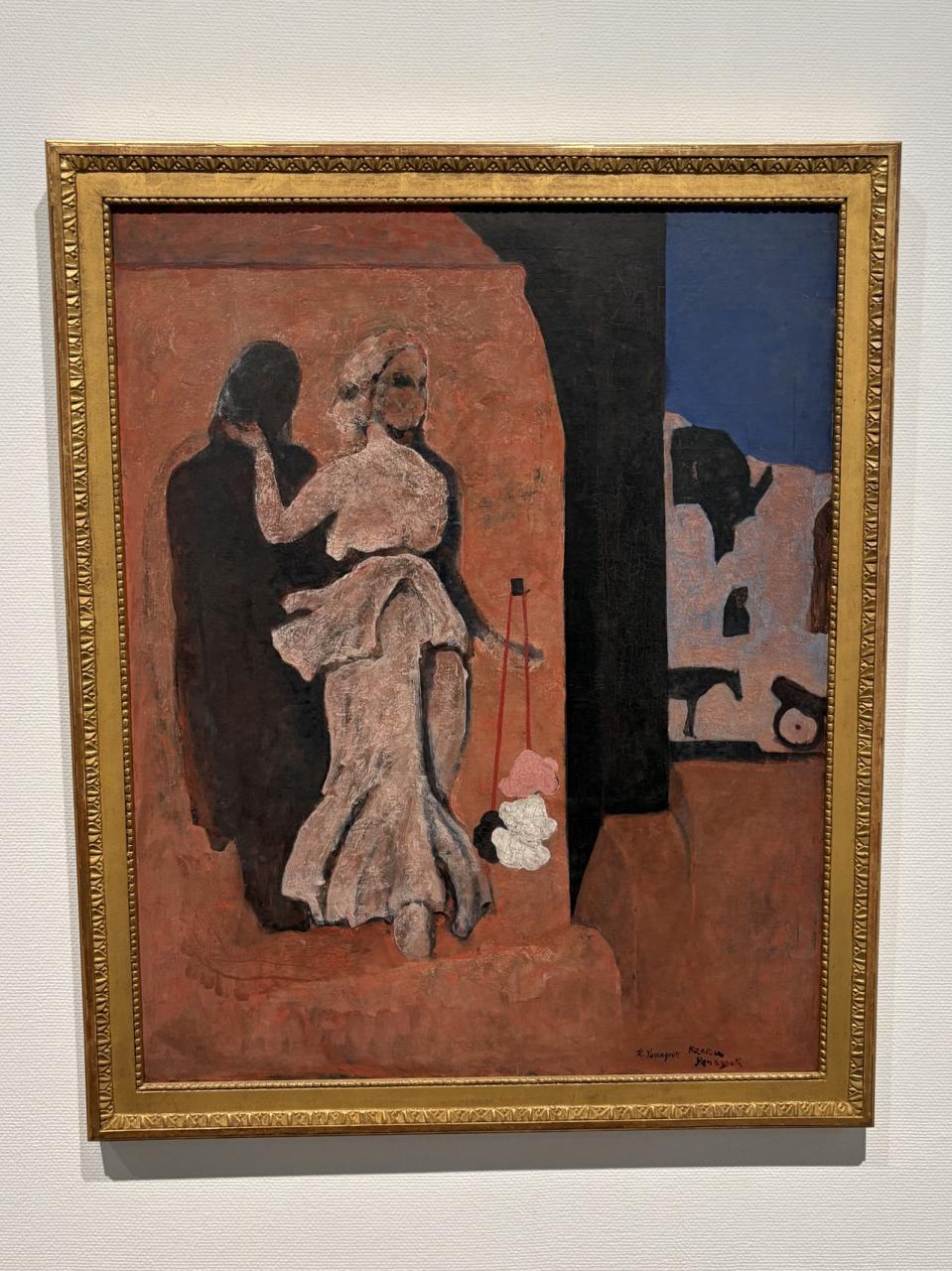
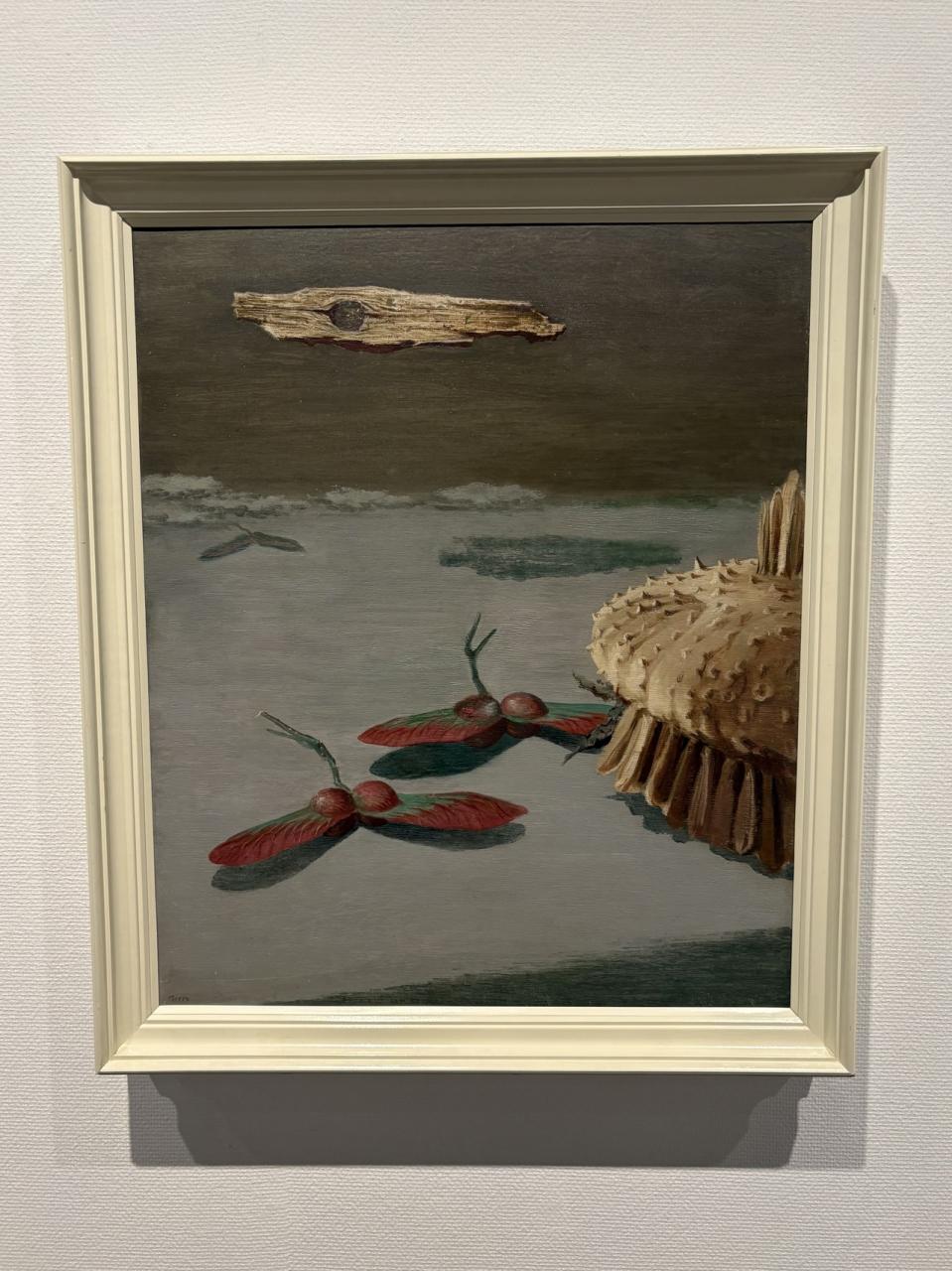
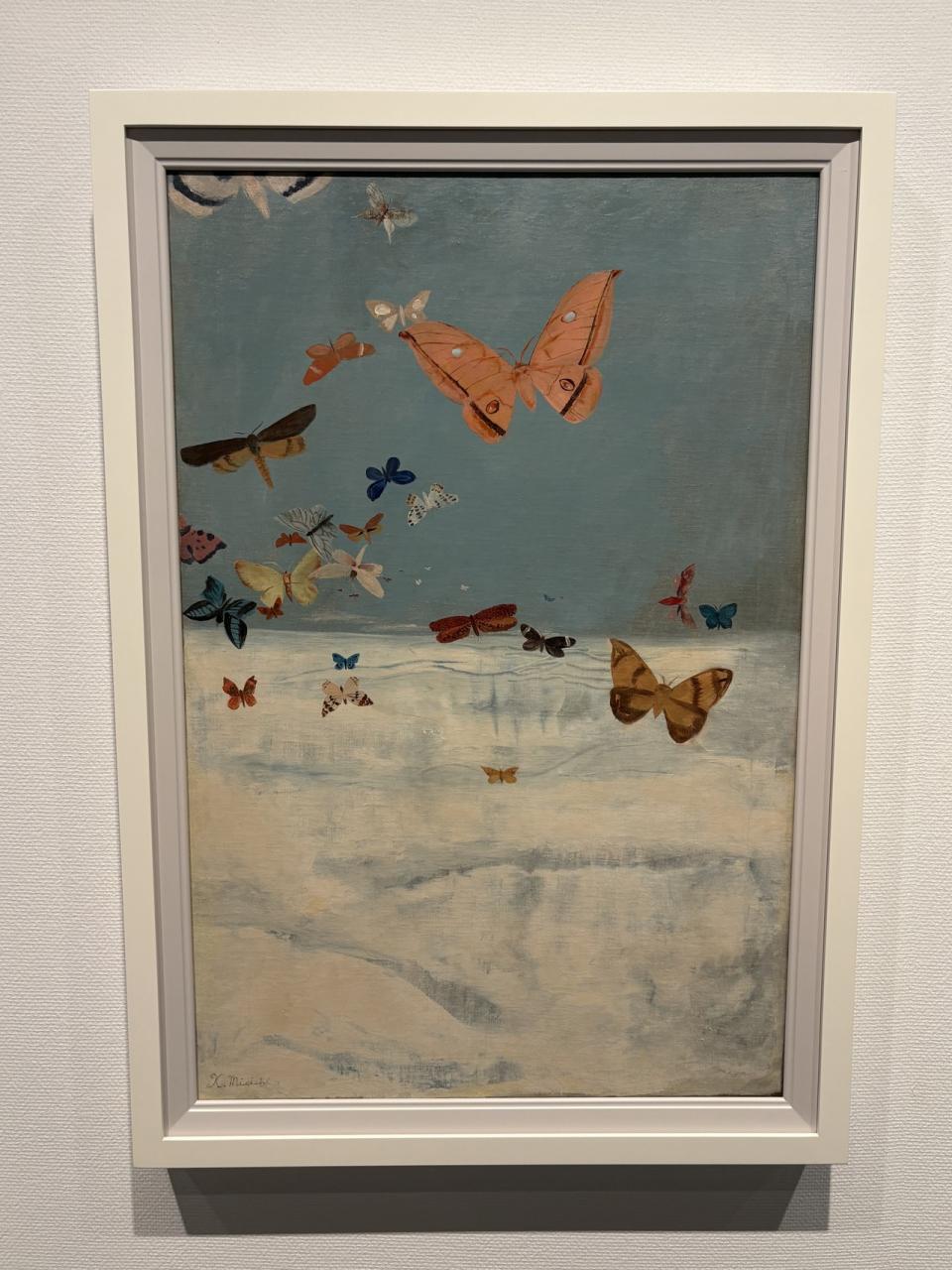
山口葉《古羅馬の旅》(1937年)に見られる古代への憧憬、北脇昇《空港》(1937年)や三岸好太郎《雲の上を飛ぶ蝶》(1934年)に見られる超現実的世界はいずれも、いま・こことは別の場を希求する意思の現れでしょう。
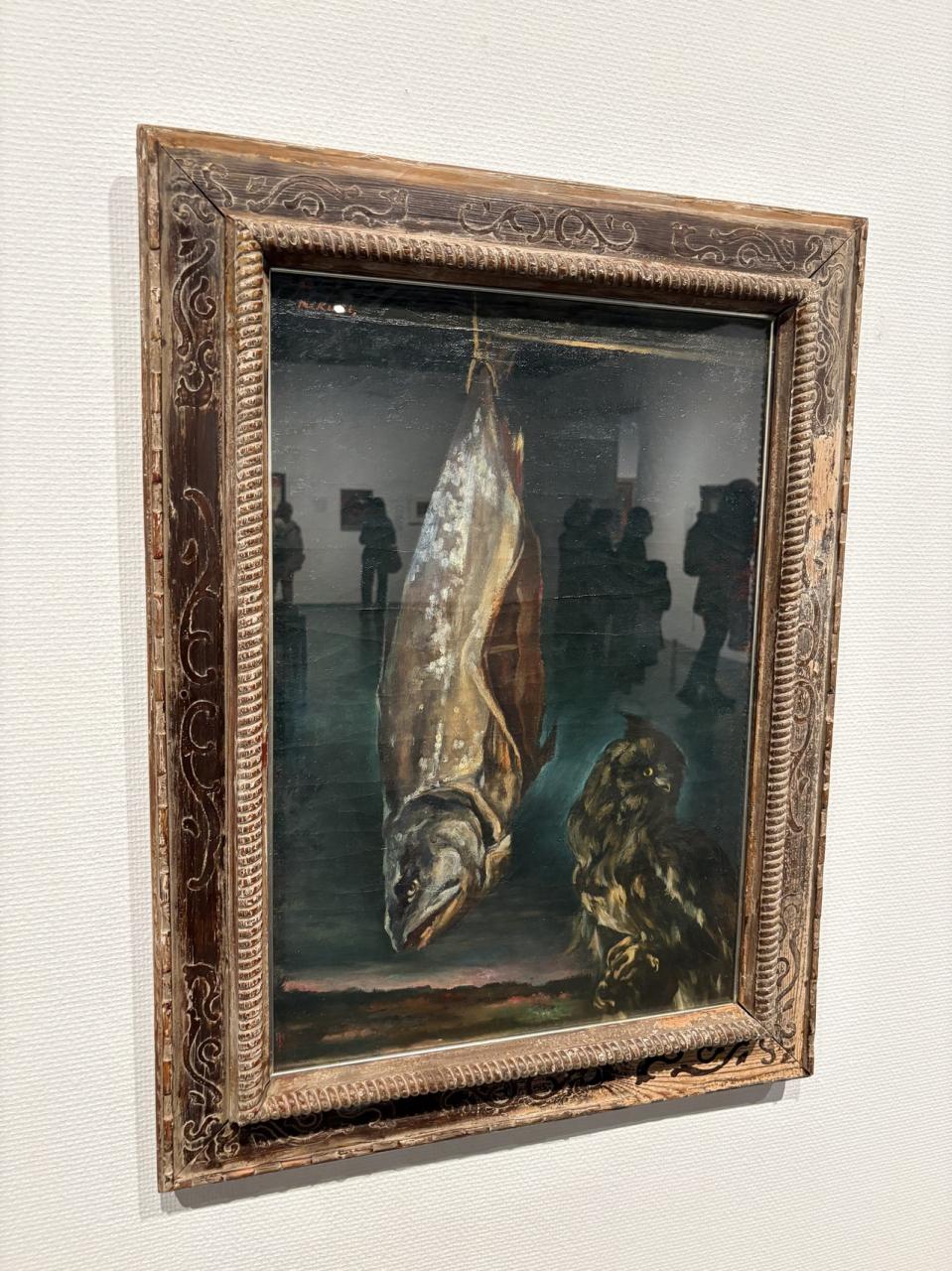
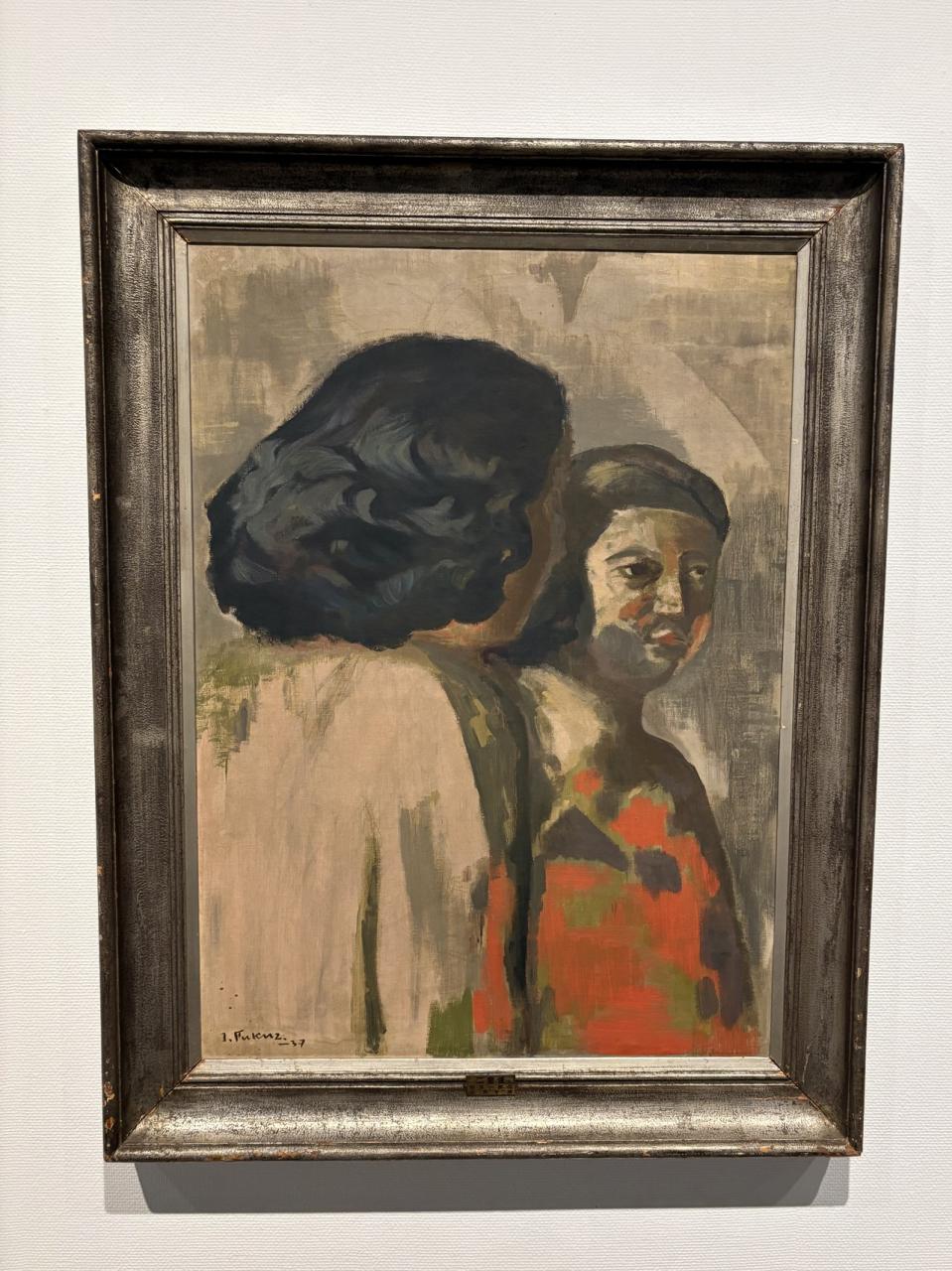
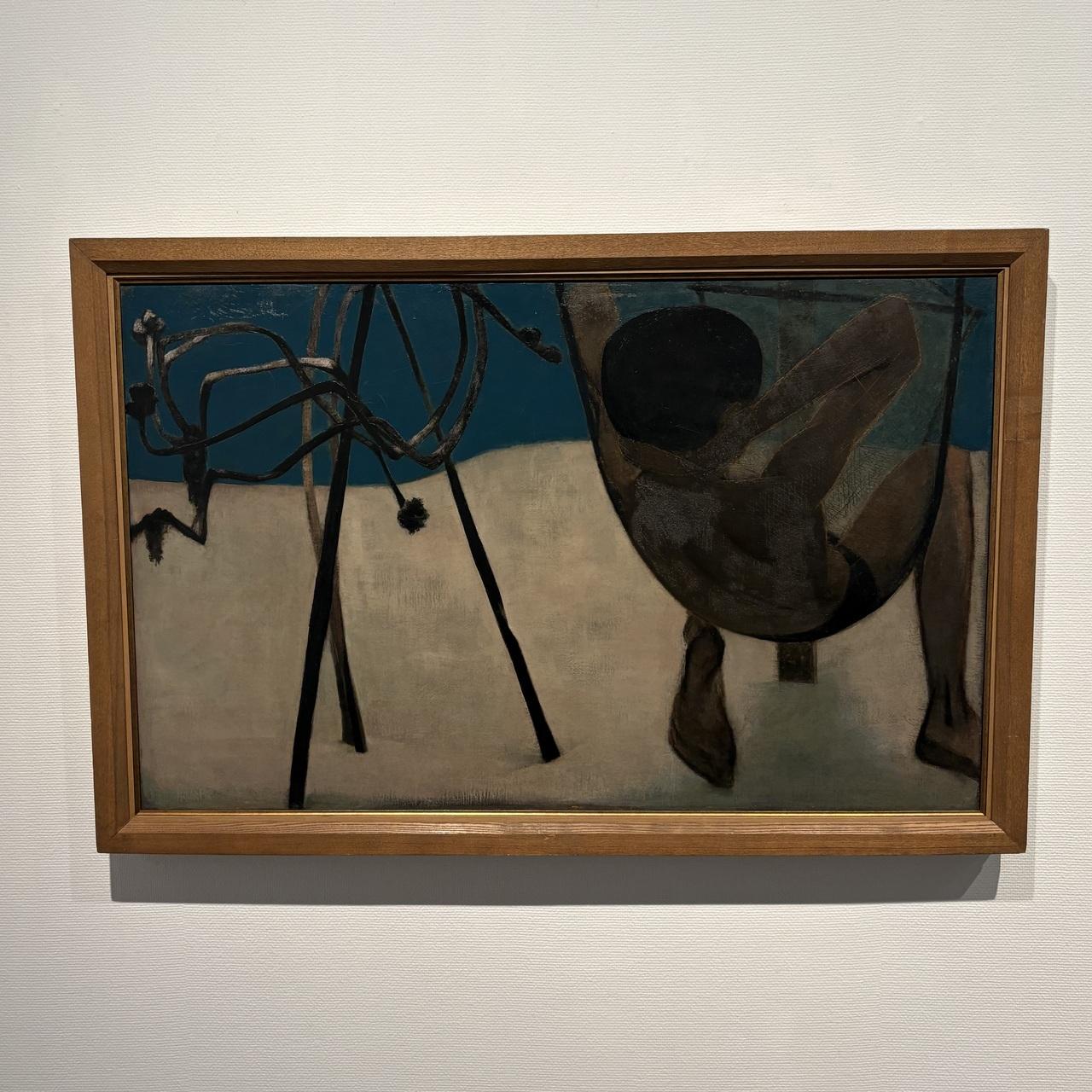
一方、山下菊二《鮭と梟》(1939年)のこちらを鋭くまなざす魚と鳥や、福沢一郎《三重像》(1937年)のこちらに背を向けた人物の存在は、いま・ここの彼方ではなく、絵の手前に立つ鑑賞者自身を強烈に意識させるものです。あるいは、長谷川三郎《アブストラクション》(1936年)など、肉眼にうつる現実から距離を置き抽象へと向かう芸術家たちが、作品へ込めた抵抗にも注目ください。
5. Painting in the 1930s: Between Reality and Illusion
This room primarily features works produced from 1934 onward. Proletarian art (a leftist movement rooted in socialist and communist ideologies), which had been developing since the 1920s, faced frequent government suppression, and 1934 was a year of especially severe crackdowns. From then on, society grew increasingly repressive and the march toward war continued. In the face of harsh and agonizing realities, how did artists respond, and how did they express themselves in the public sphere?
The yearning for antiquity in Yamaguchi Kaoru's Travel to Ancient Rome (1937) and the surreal worlds depicted in Kitawaki Nobor's Airport (1937) and Migishi Kotaro's Butterflies Flying above Clouds (1934) all suggest a desire to escape the here and now.
Meanwhile, the piercing gaze of the fish and the bird in Yamashita Kikuj's Salmon and Owl (1939), and the figure turned away in Fukuzawa Ichiro's Double Image (1937), do not point beyond the present but instead confront the viewer directly, forcing a keen awareness of one's own presence before the work. Also note the quiet resistance imbued in works such as Hasegawa Saburo's Abstraction (1934), in which the artist distances himself from visible reality and embraces the abstract. -
-
山下菊二
YAMASHITA, Kikuji
1919-1986
鮭と梟
Salmon and Owl
1939 昭和14年
油彩・キャンバス
oil on canvas
竹本實三氏遺贈
Bequest of Takemoto Jitsuzo -
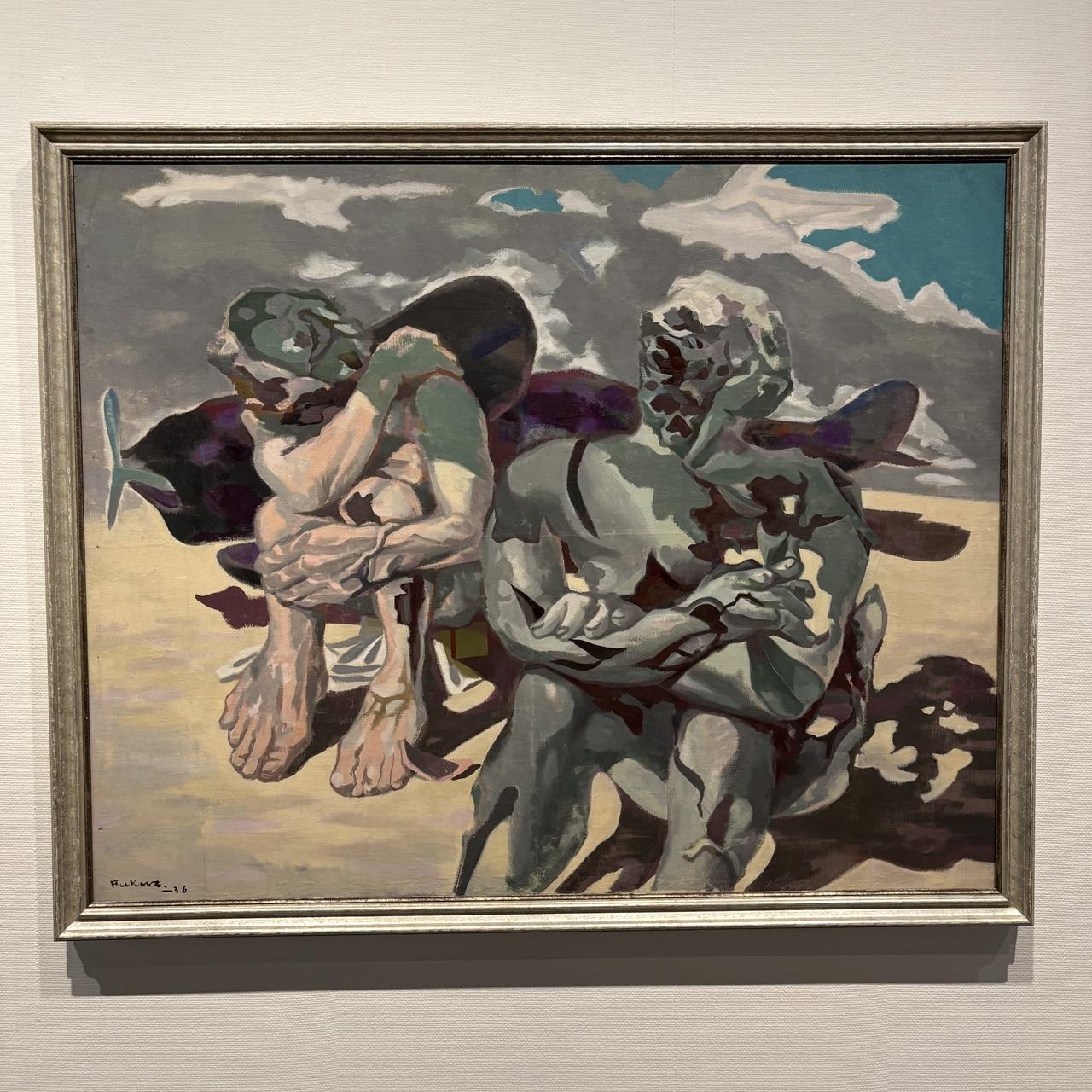
福沢一郎
FUKUZAWA, Ichiro
1898-1992
二重像
Double Image
1937 昭和12年
油彩・キャンバス
oil on canvas
国立国会?書館寄贈
Gift of National Diet Library
向かって右側の女性は、初期ルネサンスの画家マザッチョの壁画<共有財産の分配とアナニヤの死)の一部をもとにしています。神を欺いたことを聖ペテロに暴かれ息絶えたアナニヤを眺める、名もなき人です。けれど、壁画には左側の人物は描かれていません。であれば、この人物は壁画を眺める鑑賞者、あるいは現場にいながら描かれなかった、もう一人の目撃者なのかもしれません。そして、こちらに背を向けたその姿勢のためか、鑑賞者は、この人物に自分を重ね合わせるような感覚を抱くでしょう。作品タイトルの「二重像」は、この「見る者の二重化」とも関係しているのかもしれません。
The woman on the right is based on a figure from The Distribution of Alms and the Death of Ananias, a mural by the early Renaissance painter Masaccio. She is an anonymous onlooker, gazing at the disciple Ananias as he expires after Saint Peter exposes his deceptive withholding of alms in defiance of God's will. The figure on the left, however, does not appear in the original mural, suggesting that it may represent a viewer gazing at the painting, or perhaps a witness who was present at the scene but left unrecorded. With their back turned to us, this figure invites the viewer to project themselves into the image and identify with the figure. The title Double Image may allude to this psychological "doubling" of the viewer. -
-
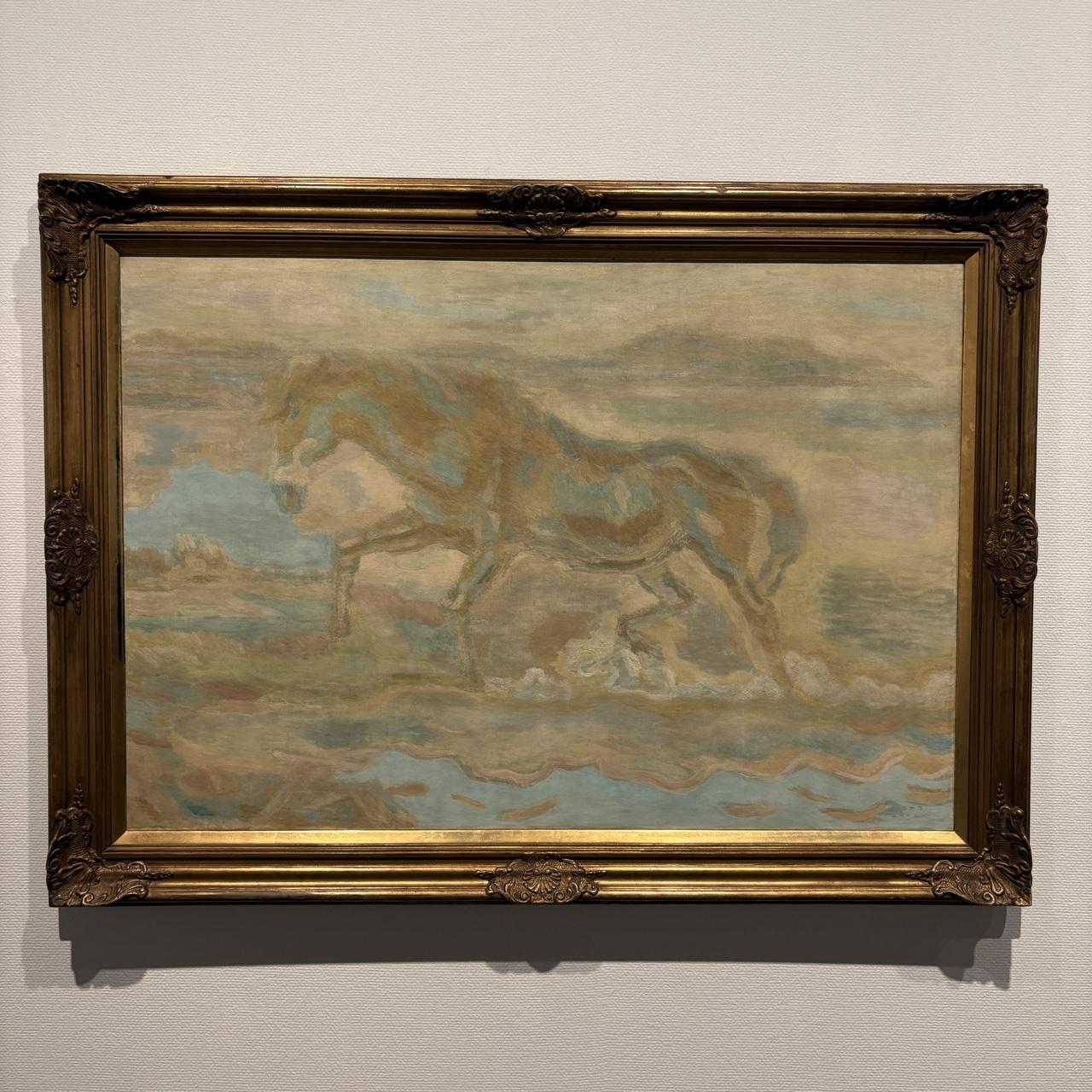
山口薫
YAMAGUCHI, Kaoru
1907-1968
古羅馬の旅
Travel to Ancient Rome
1937 昭和12年
油彩・キャンバス oil on canvas
川辺敏哉氏寄贈
Gift of Kawabe Toshiya
1930年代初頭の滞欧期、山口は古典作品に深い感銘を受け、自らの制作への消化を試みます。単純化された色面で構成される画面には、遠くに馬や荷車が見え、前景に人物が描かれています。人物は二人のようにも、一人とその影のようにも見えます。そのおぼろげな表情や輪郭のため、壁の前に立っているようにも、壁と一体化しているようにも見えます。昭和10年代(1935~1944年)の日本では、古代ギリシア・ローマ世界をユートピア(理想郷)として表現する絵画がしばしば制作されました。
During his stay in Europe in the early 1930s, Yamaguchi was profoundly moved by classical art and sought to infuse his own work with its essence. Composed of simplified color planes, this painting shows a horse and cart in the distance, with a figure - possibly two - in the foreground. Whether we are seeing two people, or one person and their shadow, remains ambiguous. With the blurred outlines and indistinct rendering, the figure(s) may be standing in front of a wall or merging into it. In Japan during the late 1930s and early 1940s, painters frequently depicted the world of ancient Greece and Rome as a kind of utopia. -
北脇昇
KITAWAKI, Noboru
1901-1951
空港
Airport
1937 昭和12年
油彩・キャンバス oil on canvas
購入
Purchased
シュルレアリスムの影響を受けた北脇は、日常生活の中から、あるいは植物図譜の中から見つけてきた植物の実や種、もしくは奇妙な形の枝や木片などをモチーフに幻想的な情景を描きだします。そこで北脇が駆使するのが見立ての極意。この作品では積の種子を飛行機になぞらえています。上空に浮かぶ木片とその節穴は、雲とその間から顔を覗かせる月のようにも見えるでしょう。一方で、この作品が描かれる直前に始まった日中戦争は、作品全体に重く不安な雰囲気をもたらしています。
Influenced by Surrealism, Kitawaki Noboru depicted fantastic scenes from everyday life and motifs such as nuts and seeds that he found in illustrated books of plants, and strangely-shaped branches and pieces of wood. He was a master at revealing the innermost secrets of a scene. In this work, Kitawaki likens maple seedpods to airplanes, while a chip of wood floating in the sky and a knothole in the wood resemble a cloud with the moon peeking through it. However, there is a heavy atmosphere of unease pervading the entire painting, reflecting the outbreak of the Second Sino-Japanese War just before it was produced. -
三岸好太郎
MIGISHI, Kotaro
1903-1934
雲の上を飛ぶ蝶
Butterflies Flying above Clouds
1934 昭和9年
油彩・キャンバス oil on canvas
購入
Purchased
作者によれば、ある昆虫学者から海を渡る習性をもつ蝶の話を聞いたことがきっかけで、この絵を構想したといいます。とはいえ、実際の蝶は、雲の上の高さまで飛ぶことはないでしょう。しかもこれらの蝶や蛾は、おそらく図鑑などをもとに、平面的に描かれています。平面の重なりとしてさまざまな向きで画面に散らばる蝶や蛾は、重力から自由になり、それを見る私たちの視線をも、ふわりと浮遊させてくれます。
According to Migishi, he was inspired to make this painting after an entomologist told him about a butterfly with a habit of flying over the sea. Be that as it may, a real butterfly would never be able to fly higher than the clouds. Moreover, the butterflies and moths in this picture have a flat appearance, suggesting that they were derived from a field guide. The insects, scattered across the painting at various angles in two-dimensional layers, are free from gravity and cause our gaze to gently float in the air. -
-
-
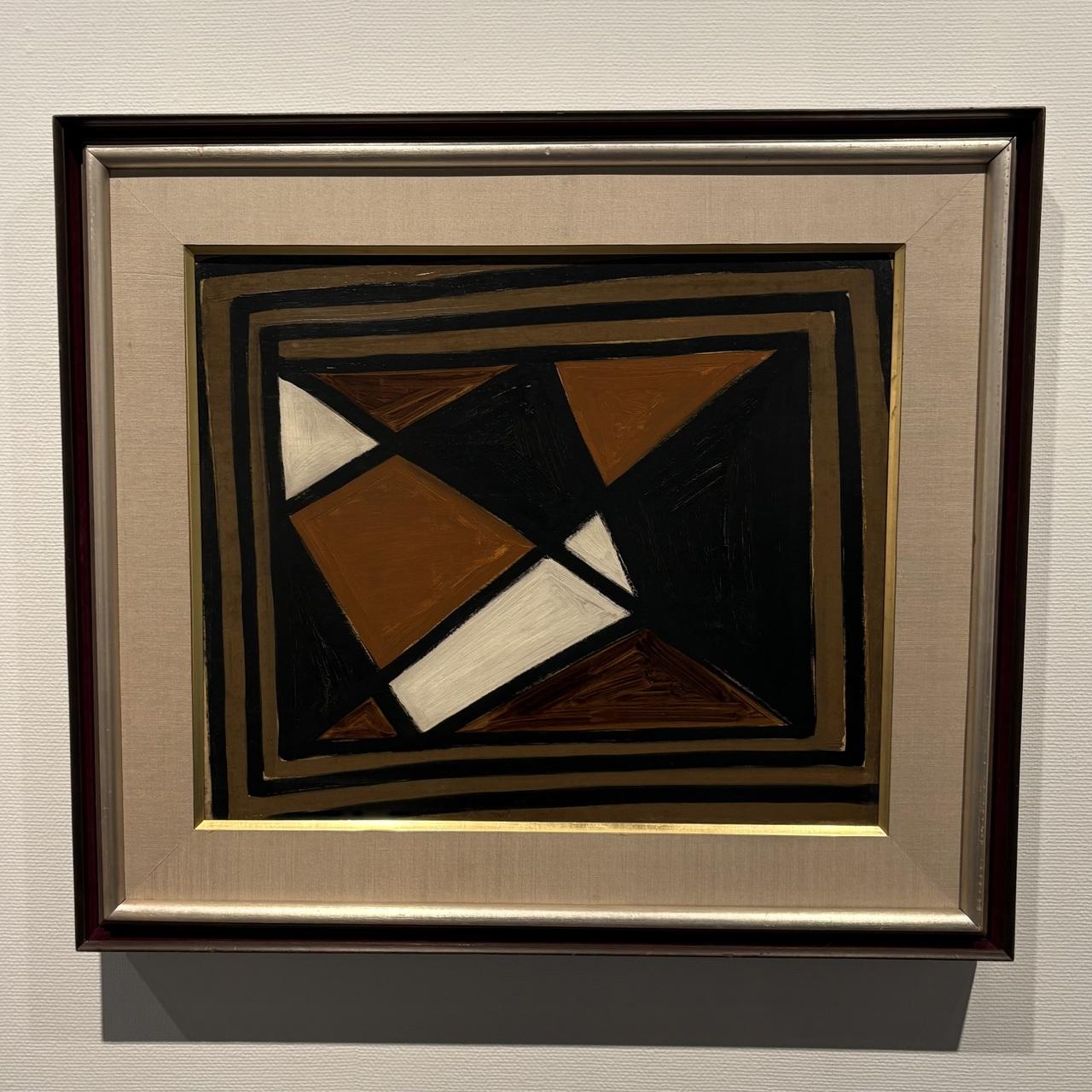
長谷川三郎
HASEGAWA, Saburo
1906-1957
アブストラクション
Abstraction
1936 昭和11年
油彩・キャンバス oil on canvas
購入
Purchased
入れ子状になった四角い枠が、物理的な四角い枠(キャンバス)から少し傾いているため、アンバランスな動きが生じています。幾何学的図形の配置も、この傾きによって決定されているようです。けれどよく見ると、茶色の線は枠として閉じておらず、左上から右回りに、一続きに画面の外へと延びていっています。この線が枠でないと気づくと、中央で色面を分割していた黒の線は、その上で茶や白の形が浮遊する背景の地の一部となり、それまでと異なる空間が出現します。現実世界にはあり得ない可変性に富んだ空間が、けれど、とても具体的に眼の前に現れる、抽象の重要なコンセプトです。
Slightly tilted in relation to the physical rectangle of the canvas, the nested rectangular frames generate a sense of unbalanced motion. The placement of geometric forms also seems to be guided by this tilt. On closer inspection, however, the brown line does not form closed frames, instead extending continuously from the upper left corner, rotating clockwise and moving past the edge of the canvas. Once it becomes clear that this line is not a frame, the black line dividing the colored planes at the center becomes part of the background against which the brown and white forms seem to float, and an entirely different spatial logic emerges. Richly variable and impossible in the real world, yet vividly present before our eyes, the space embodies key principles of abstraction. -
-
-
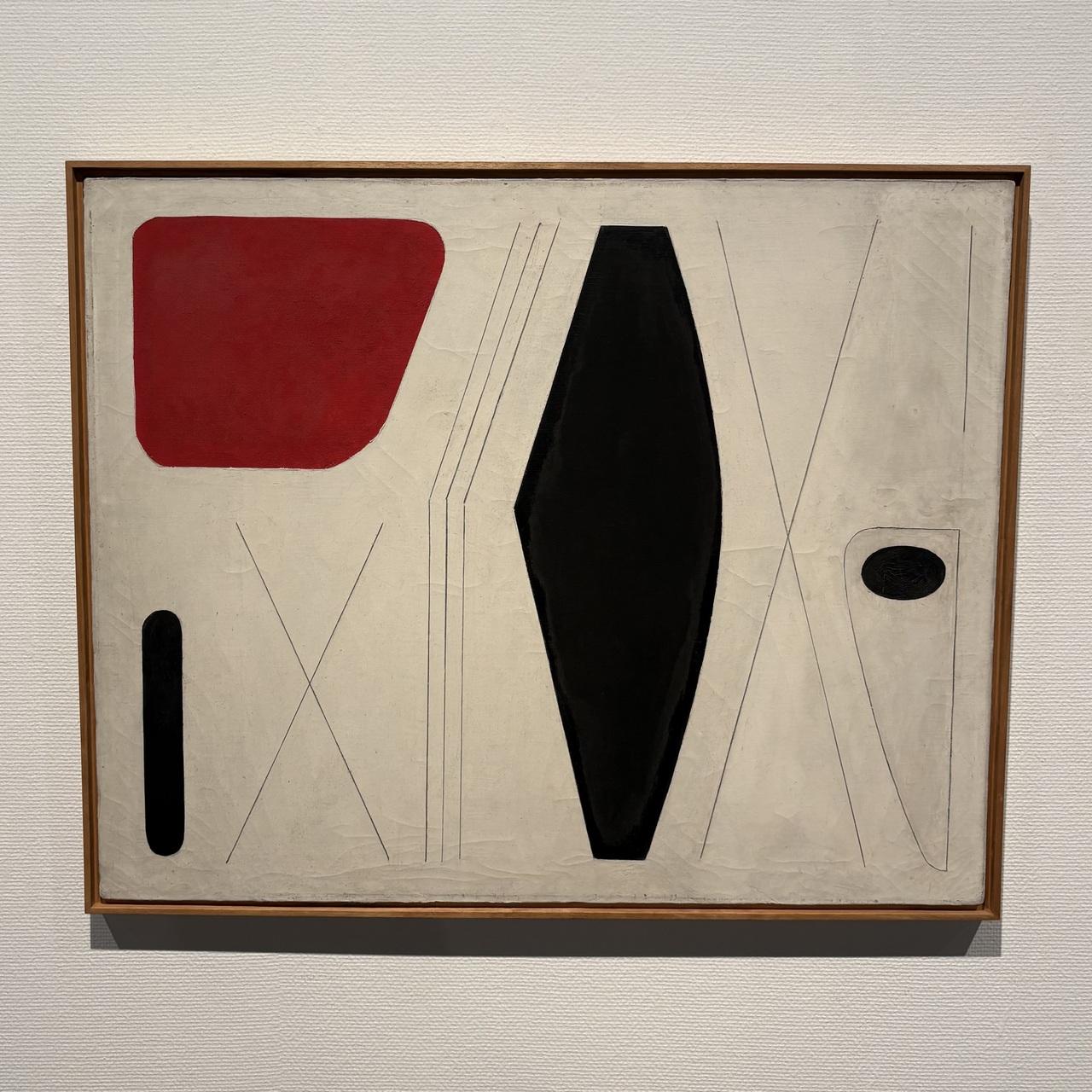
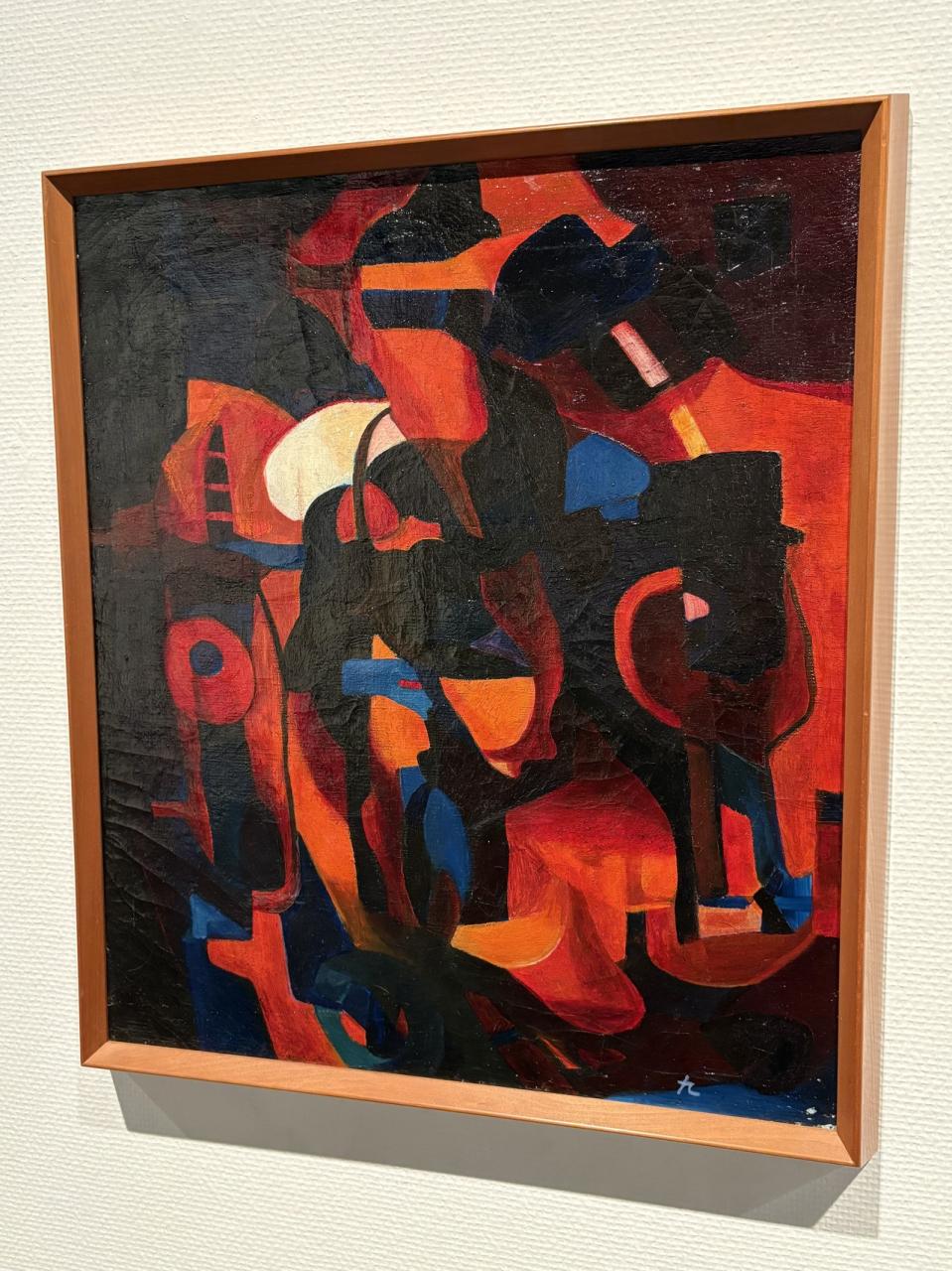
瑛九
EL-KYU
1911-1960
赤の中の小さな白
Small White in Red
c. 1937
昭和12年頃
油彩・キャンバス oil on canvas
購入
Purchased -
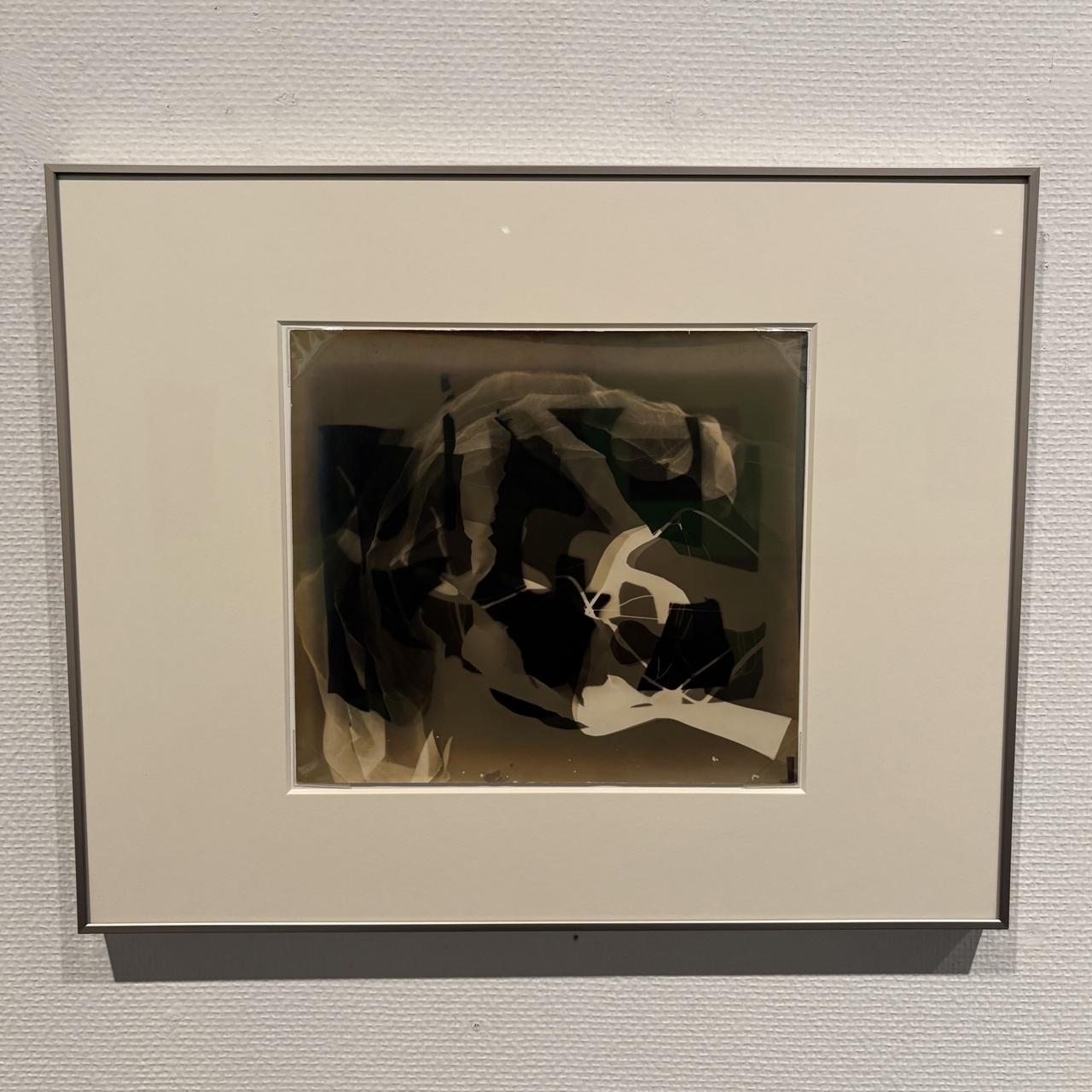
瑛九
EL-KYU
1911-1960
フォト・デッサン
Photo-Dessin
1930
昭和11年
ゼラチン・シルバー・プリント
gelatin silver print
購入
Purchased
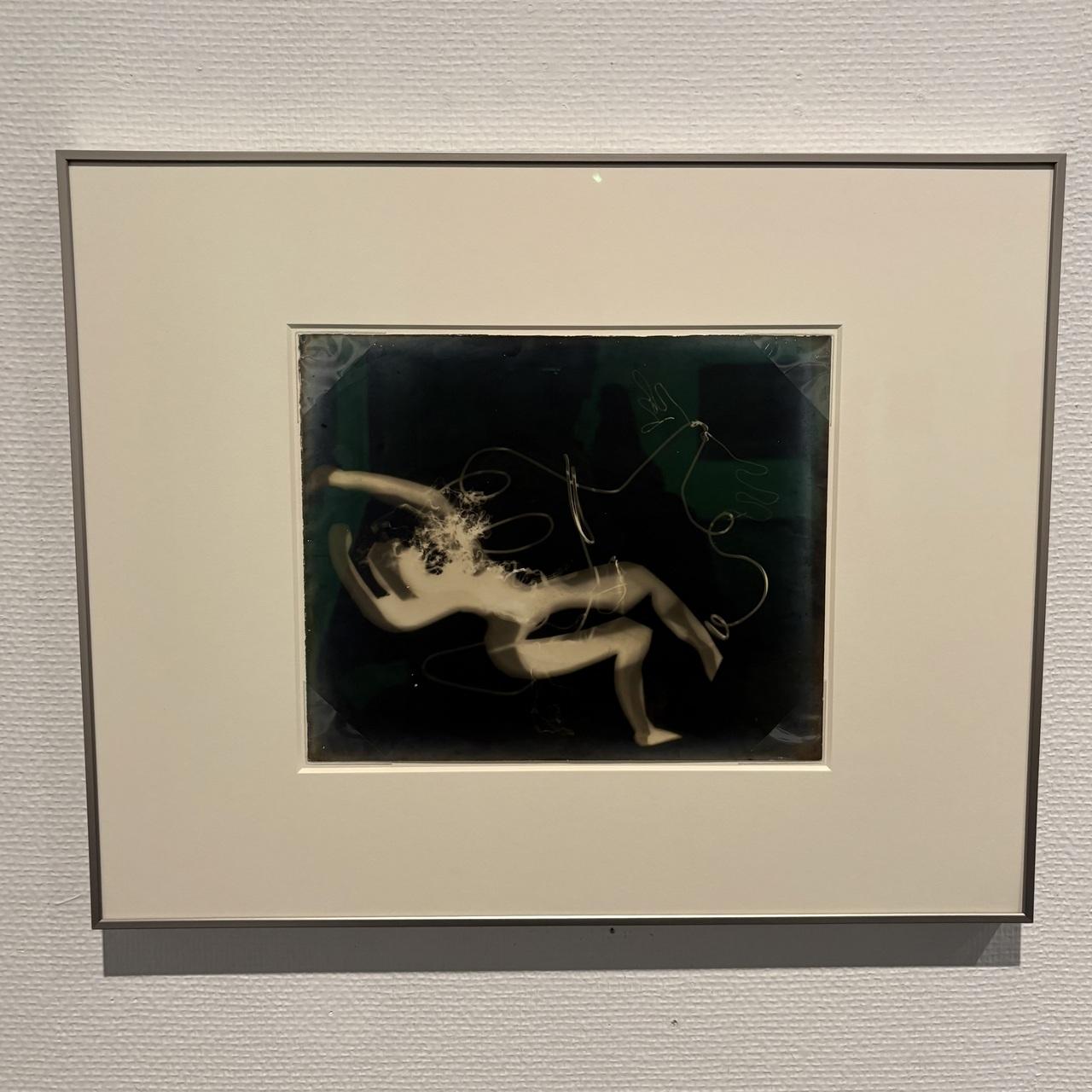
油彩、コラージュ、版画など多様な作品で知られる瑛力が1930年代に試みたシリーズです。
物体を印画紙の上に置いて感光させるフォトグラムと出会った九は、印画紙を新しい画用紙ととらえ、光で描き始めます。画家である彼が用いた型紙やセルロイドの描画などの絵画的要素は、印画紙の滑らかなマチェール(画面の肌)に総合され、写真とも絵画とも異なる独自のイメージとなっています。瑛九はそれをフォト・デッサンと呼びました。
This series was produced in the 1930s by Ei-Kyu, an artist known for diverse works including oil paintings, collages, and prints. After encountering photograms, in which objects are placed on photographic paper and exposed to light, Ei-Kyu began working with light, with photographic paper as a new kind of drawing surface.
Pictorial elements he used as a painter, such as stencils and celluloid drawings, were synthesized with the smooth material texture of photographic paper to create unique images distinct from both photography and painting.
He called these works photo-dessin (dessin is the French word for "drawing"). -
瑛九
EI-KYU
1911-1960
フォト・デッサン
Photo-Dessin
c.1936
昭和11年頃
ゼラチン・シルバー・プリント
gelatin silver print
購入
Purchased -
靉光
Al-MITSU
1907-1946
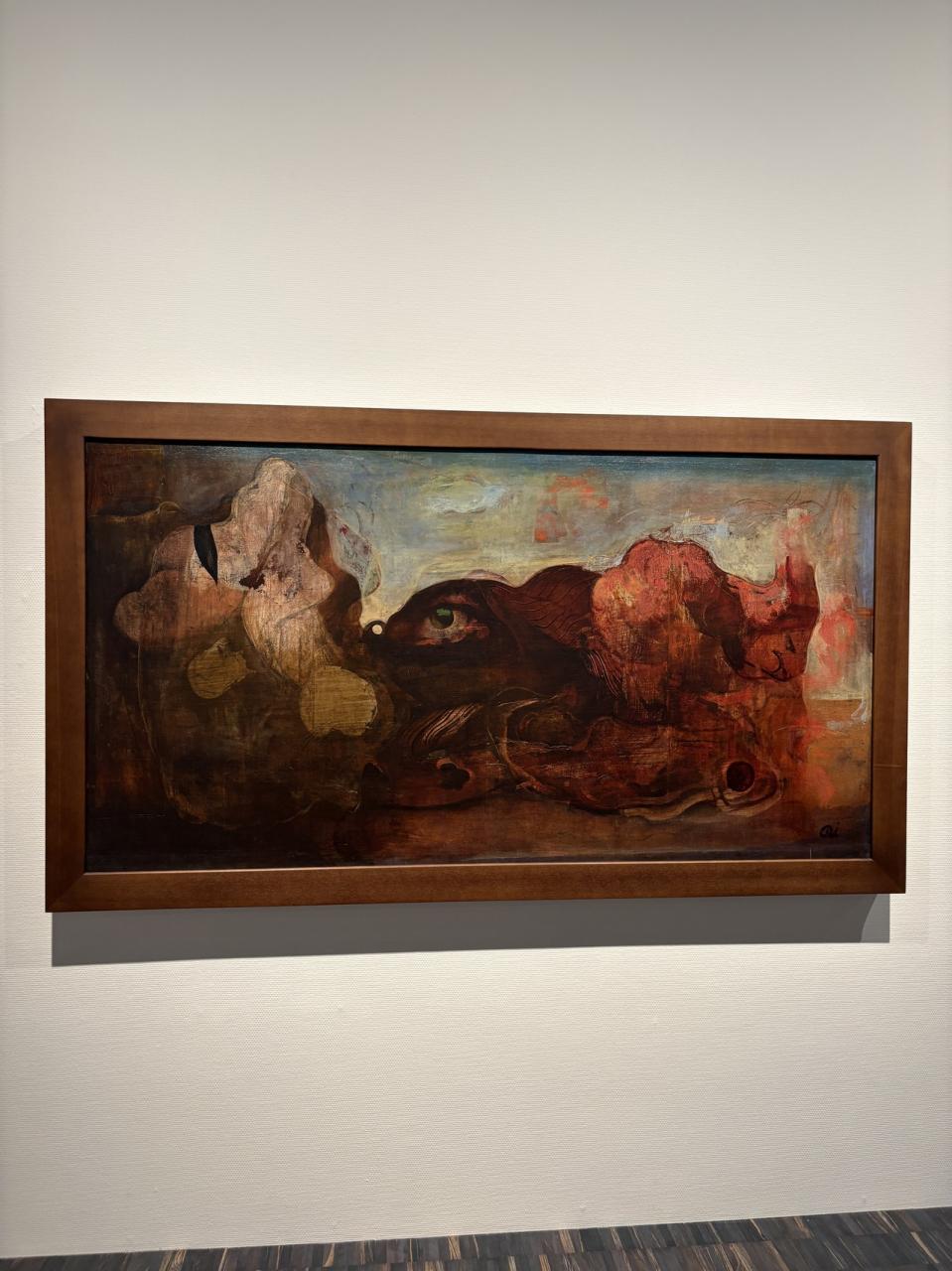
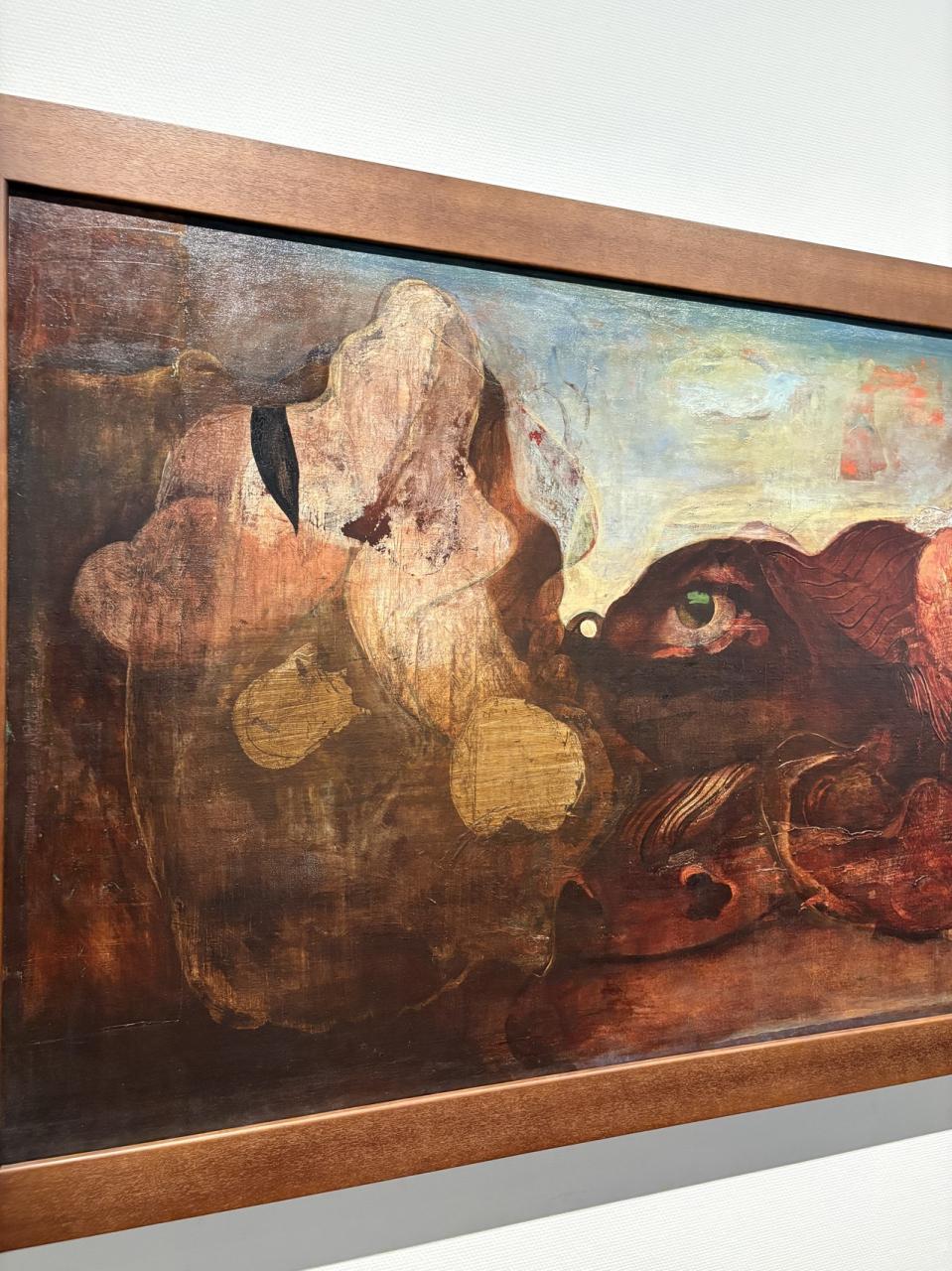
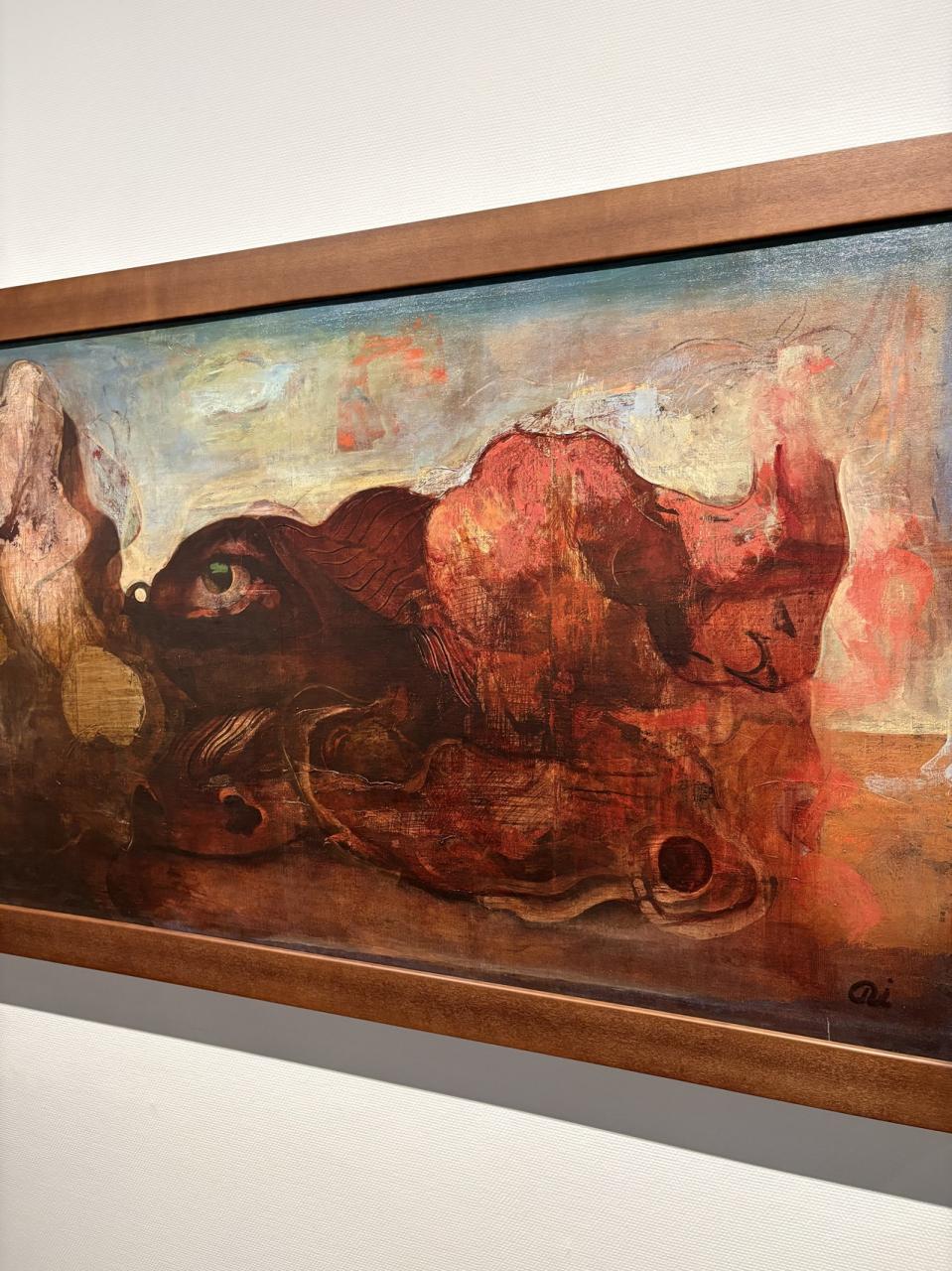
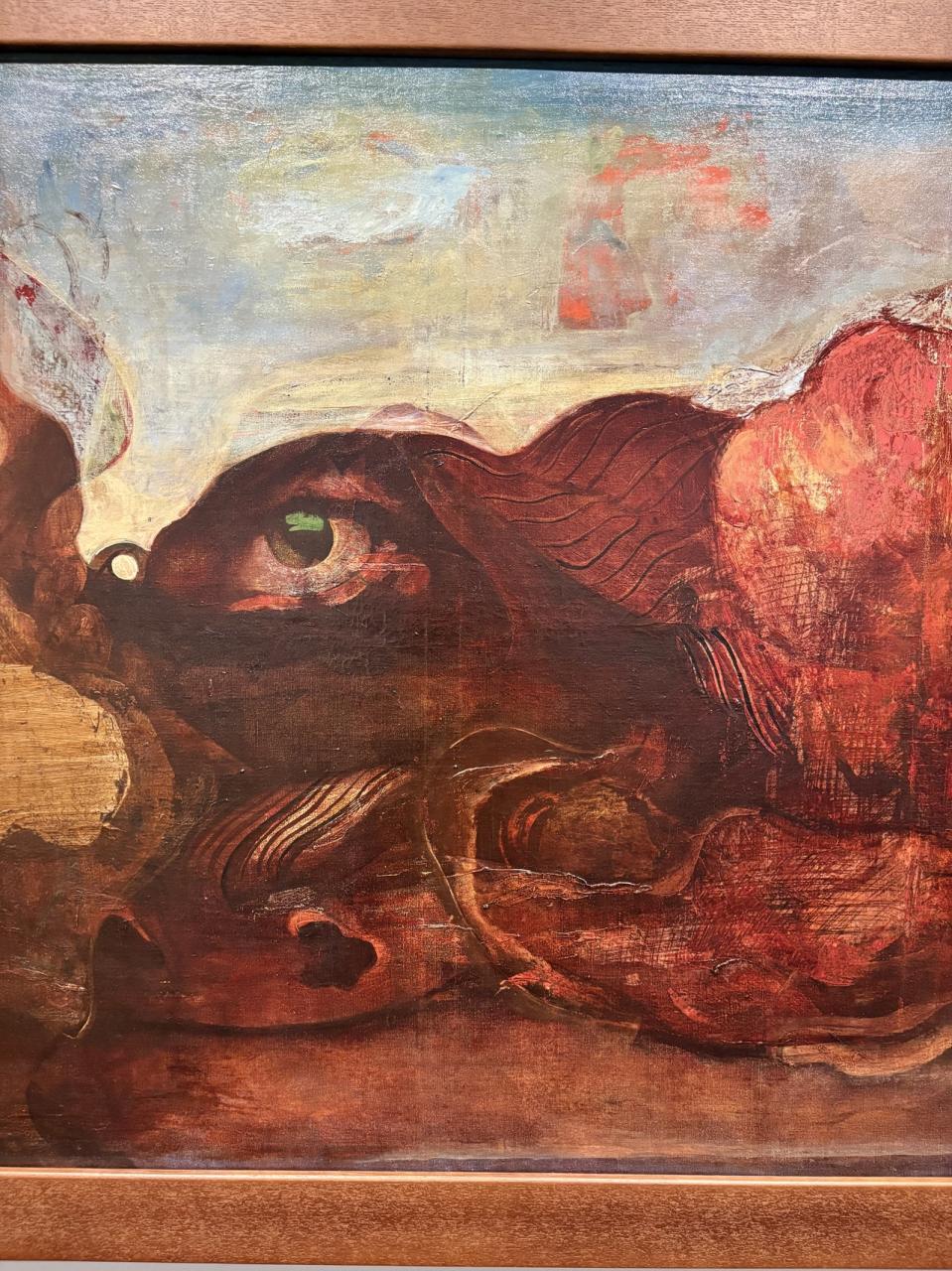
眼のある風景
Landscape with an Eye
1938 昭和13年
油彩・キャンバス oil on canvas
購入
Purchased
この印象的な眼をもつ塊は何でしょう。よく見ると、空との間の境界を何度も修整しているのがわかります。そして流れるような曲線の重なりや、絵具を削ったりした跡も認められるでしょう。描きかけのようにも見えるけれども、右下にサインが入っているので、作者にとっては、この形はまさにこうでなければならなかったのです。名づけることのできない「何か」。その正体を見極めようと、じっと画面を見つめていると、次第にいろいろなイマジネーションが湧いてくるでしょう。それは長時間にわたる作者と絵との格闘を追体験することでもあります。
What is this hulking mass with its striking single eye? A close look reveals that the boundary between it and the sky was corrected many times. Overlapping, flowing curved lines and vestiges of scraped-off paint can also be seen.The work may appear to be unfinished, but the artist has signed it on the lower right, indicating that this was the final form he intended. Here there is a nameless something that cannot be identified. Stare at it long enough in hopes of unraveling its mystery, and you may gradually begin imagining various things. In some ways this is a vicarious experience of the artist's protracted battle with the painting. -
-
-
-
-
-
(続く・・・)
この旅行記のタグ


利用規約に違反している投稿は、報告する事ができます。
-
前の旅行記

"MOMAT〔国立東京近代美術館〕コレクション展 ~2026.2.8" その4.『濹東綺譚』。"木村荘八 、...
2026/02/05~
神田・神保町
-
次の旅行記

MOMAT〔国立東京近代美術館〕コレクション展 ~2026.2.8: その6.戦時の女性たち。"『主婦之友』...
2026/02/05~
神田・神保町
-

"MOMAT〔国立東京近代美術館〕コレクション展 ~2026.2.8" その1.ハイライト。"奈良美智《Ha...
2026/02/05~
神田・神保町
-

"MOMAT〔国立東京近代美術館〕コレクション展 ~2026.2.8" その2.新か、旧か? "和田三造《南...
2026/02/05~
神田・神保町
-

"MOMAT〔国立東京近代美術館〕コレクション展~2026.2.8" その3.キュビスム再考 "ナターリア・...
2026/02/05~
神田・神保町
-

"MOMAT〔国立東京近代美術館〕コレクション展 ~2026.2.8" その4.『濹東綺譚』。"木村荘八 、...
2026/02/05~
神田・神保町
-

"MOMAT コレクション展 ~2026.2.8" その5.1930年代の絵画:現実の彼方へ、幻影の手前で。...
2026/02/05~
神田・神保町
-

MOMAT〔国立東京近代美術館〕コレクション展 ~2026.2.8: その6.戦時の女性たち。"『主婦之友』...
2026/02/05~
神田・神保町
-

MOMAT〔国立東京近代美術館〕コレクション展 ~2026.2.8: その7.アクション前夜。"朝倉摂 《黒...
2026/02/05~
神田・神保町
-

MOMAT コレクション展 ~2026.2.8:8.「・・・アクション!」&「・・・カット!」。"ルーチョ・...
2026/02/05~
神田・神保町
-

MOMAT〔国立東京近代美術館〕コレクション展 ~2026.2.8:その9."細江英公「薔薇刑」"
2026/02/05~
神田・神保町
-

MOMAT ~2026.2.8:その10.1950~60年代:有機的な彫刻/川端龍子と青龍社。"ジェルメーヌ...
2026/02/05~
神田・神保町
-

MOMAT〔国立東京近代美術館〕コレクション展 ~2026.2.8:その11.記憶と想起。"河原温《1966...
2026/02/05~
神田・神保町
-

MOMAT コレクション展 ~2026.2.8:12.入れ替わる世界、ひらかれる感覚。"冨井大裕《board...
2026/02/05~
神田・神保町
-

国立東京近代美術館 "コレクションによる小企画 没後30年 榎倉康二(~2026.2.8)"《 干渉(STO...
2026/02/05~
神田・神保町
旅行記グループをもっと見る
コメントを投稿する前に
十分に確認の上、ご投稿ください。 コメントの内容は攻撃的ではなく、相手の気持ちに寄り添ったものになっていますか?
サイト共通ガイドライン(利用上のお願い)報道機関・マスメディアの方へ 画像提供などに関するお問い合わせは、専用のお問い合わせフォームからお願いいたします。






フォートラベル公式LINE@

おすすめの旅行記や旬な旅行情報、お得なキャンペーン情報をお届けします!
QRコードが読み取れない場合はID「@4travel」で検索してください。
\その他の公式SNSはこちら/





旅行記グループ MOMAT コレクション〔国立東京近代美術館 所蔵作品展〕(2025.11.5-2026.2.8)
0
23