


2026/02/05 - 2026/02/05
71位(同エリア933件中)

旅熊 Kokazさん
- 旅熊 KokazさんTOP
- 旅行記1928冊
- クチコミ854件
- Q&A回答101件
- 1,711,279アクセス
- フォロワー752人
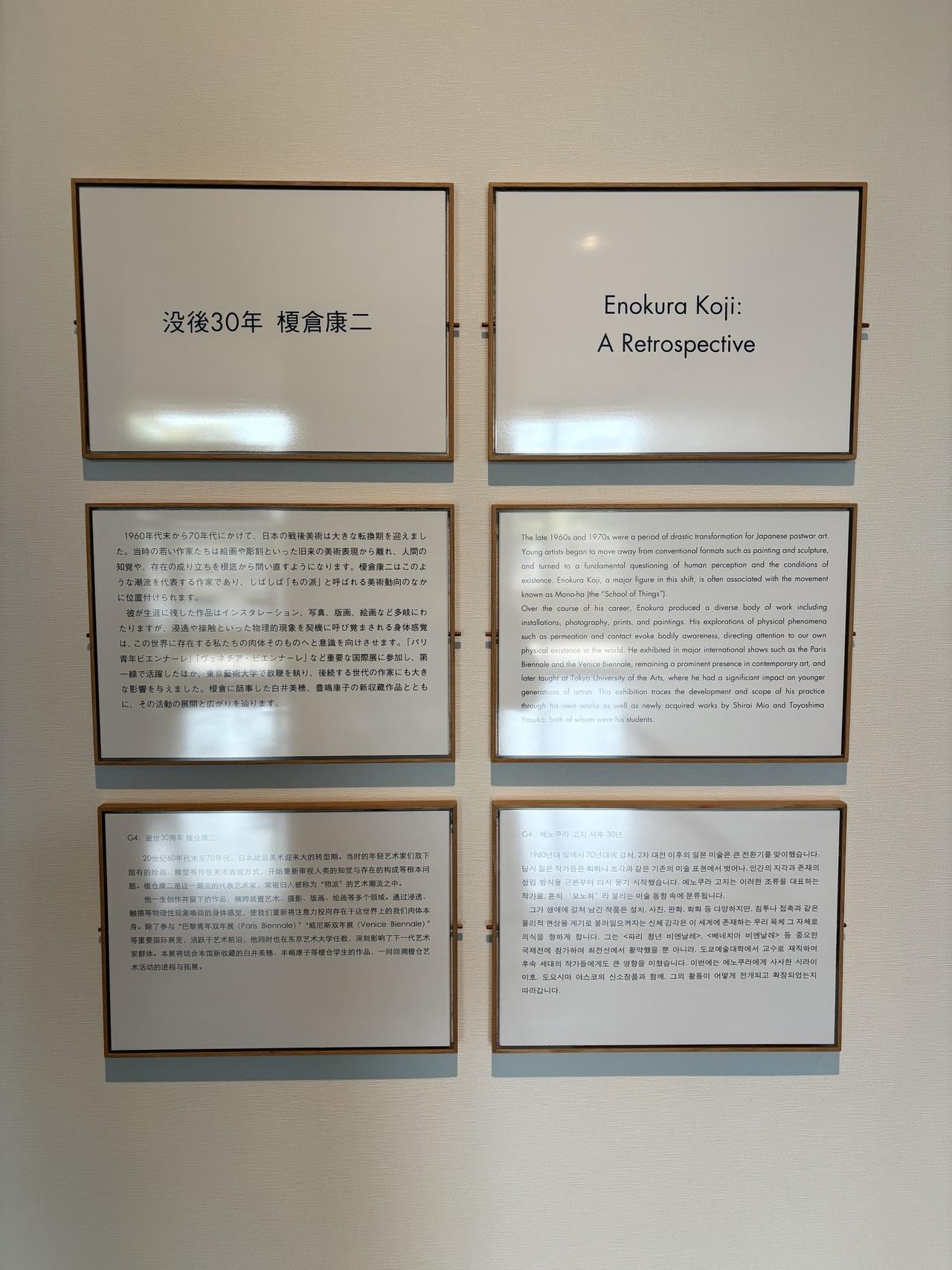
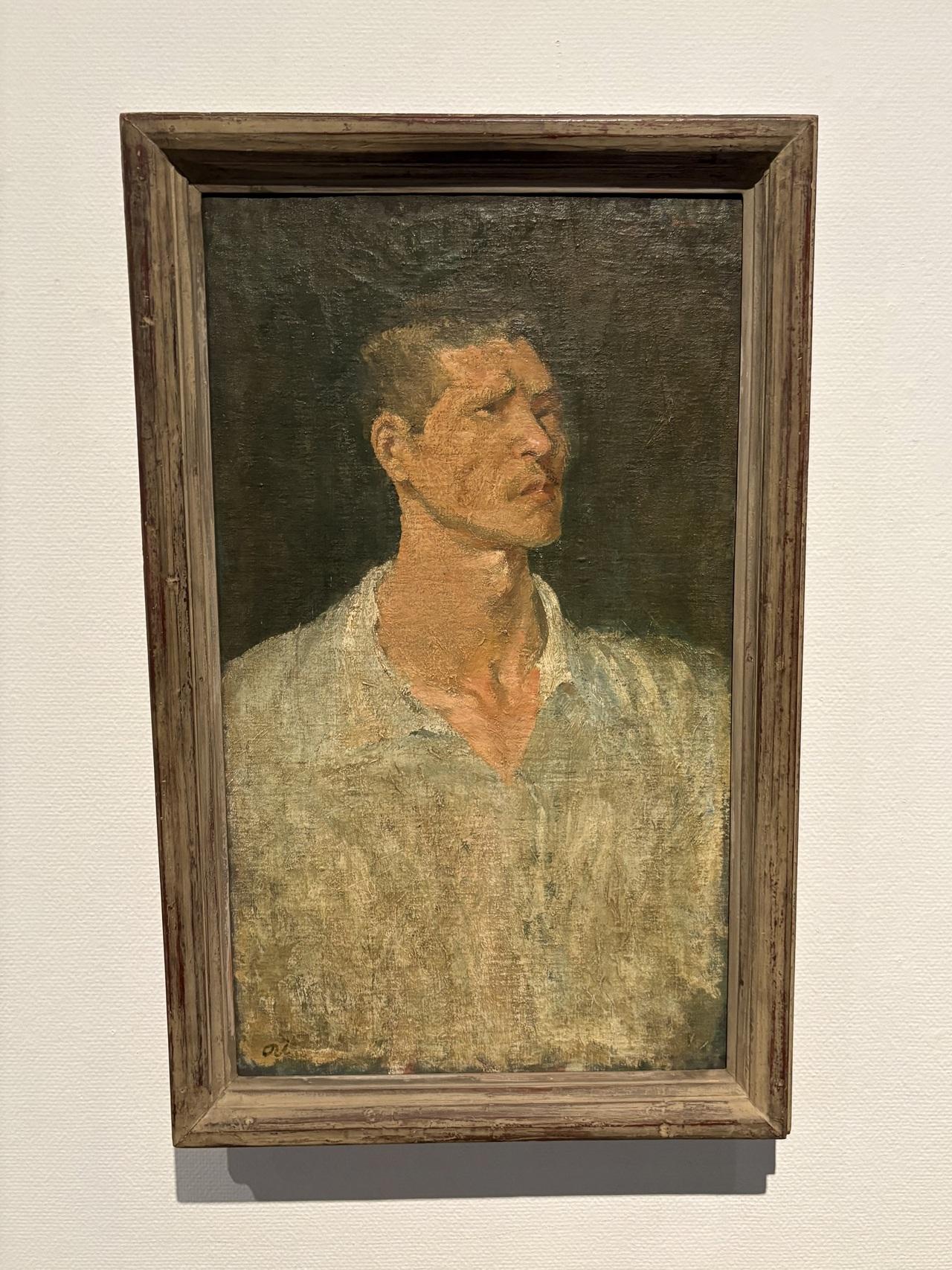
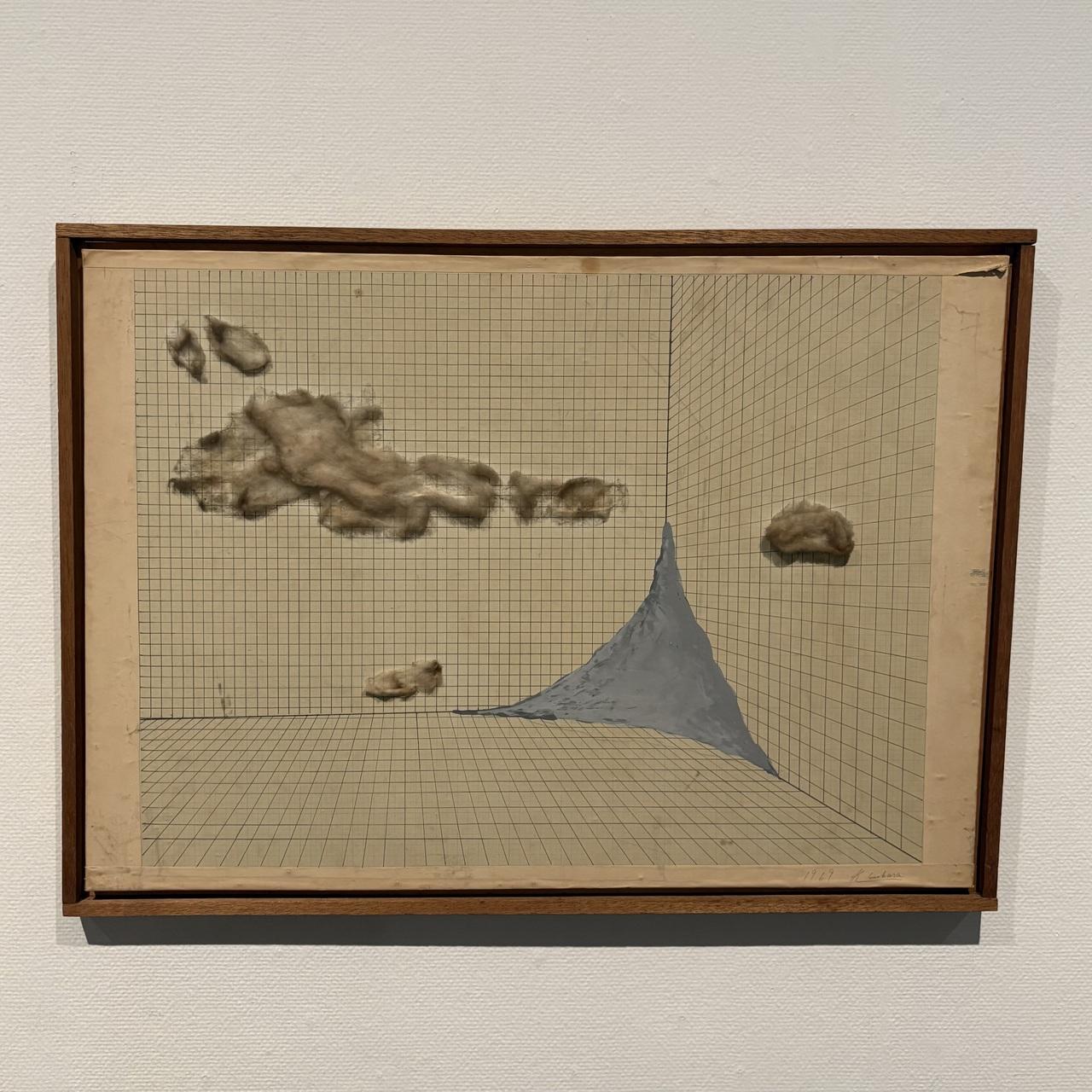
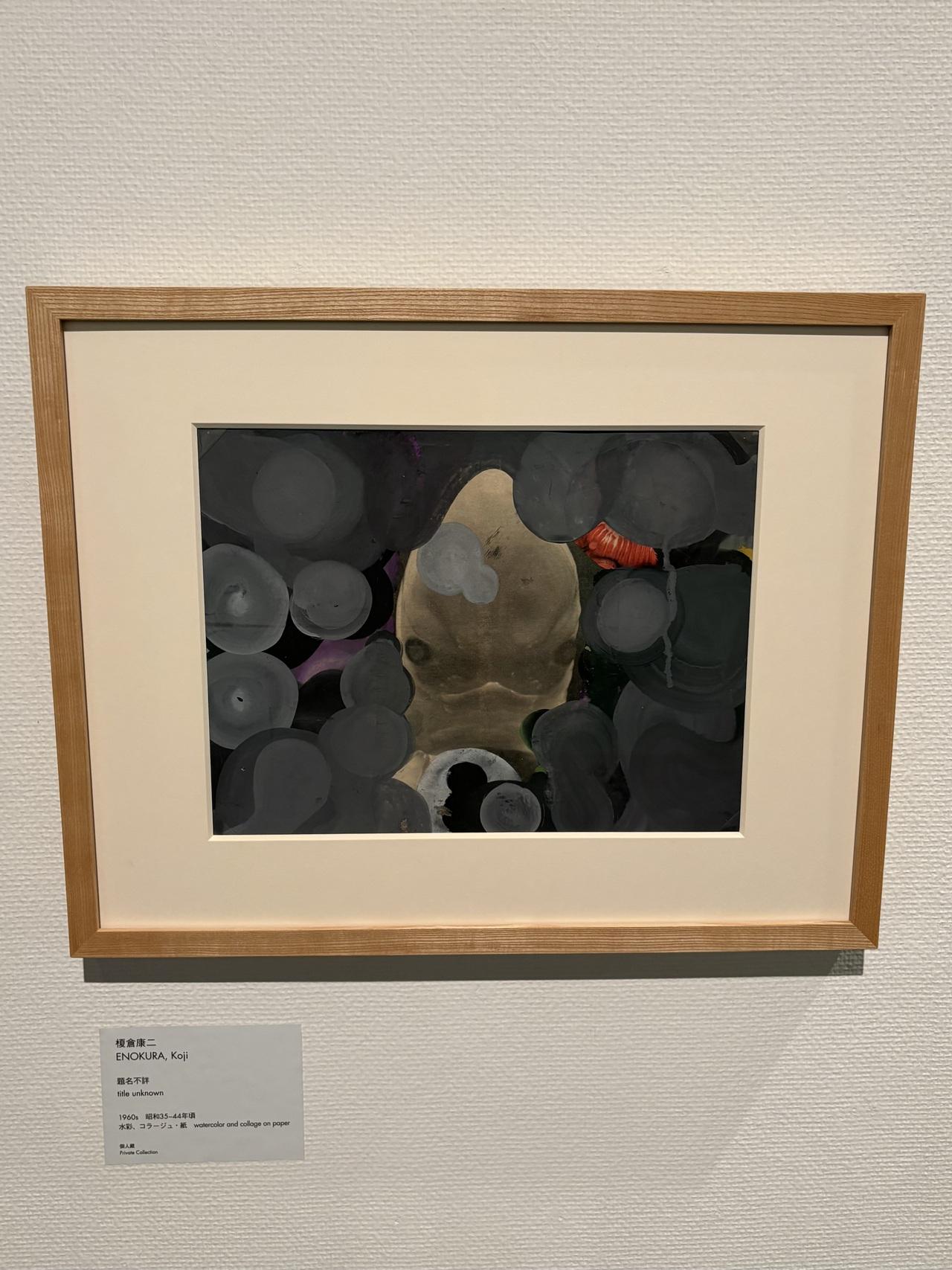
1960年代末から70年代にかけて、日本の戦後美術は大きな転換期を迎えました。当時の若い作家たちは絵画や彫刻といった旧来の美術表現から離れ、人間の知覚や、存在の成り立ちを根底から問い直すようになります。榎倉康二はこのような潮流を代表する作家であり、しばしば「もの派」と呼ばれる美術動向のなかに位置付けられます。
彼が生涯に残した作品はインスタレーション、写真、版画、絵画など多岐にわたりますが、浸透や接触といった物理的現象を契機に呼び覚まされる身体感覚は、この世界に存在する私たちの肉体そのものへと意識を向けさせます。「パリ青年ビエンナーレ」「ヴェネチア・ビエンナーレ」など重要な国際展に参加し、第一線で活躍したほか、東京藝術大学で教鞭を執り、後続する世代の作家にも大きな影響を与えました。
榎倉に師事した白井美穂、豊嶋康子の新収蔵作品とともに、その活動の展開と広がりを辿ります。
https://www.momat.go.jp/exhibitions/r7-2-g4
- 旅行の満足度
- 5.0
-

Enokura Koji:
A Retrospective
The late 1960s and 1970s were a period of drastic transformation for Japanese postwar art.
Young artists began to move away from conventional formats such as painting and sculpture, and turned to a fundamental questioning of human perception and the conditions of existence. Enokura Koji, a major figure in this shift, is often associated with the movement known as Mono-ha (the "School of Things").
Over the course of his career, Enokura produced a diverse body of work including installations, photography, prints, and paintings. His explorations of physical phenomena such as permeation and contact evoke bodily awareness, directing attention to our own physical existence in the world. He exhibited in major international shows such as the Paris Biennale and the Venice Biennale, remaining a prominent presence in contemporary art, and later taught at Tokyo University of the Arts, where he had a significant impact on younger generations of artists.
This exhibition traces the development and scope of his practice through his own works as well as newly acquired works by Shirai Mio and Toyoshima Yasuko, both of whom were his students.東京国立近代美術館 美術館・博物館
-
-
-
新収蔵作品
New Acquisition
豊嶋康子
TOYOSHIMA, Yasuko
1967-
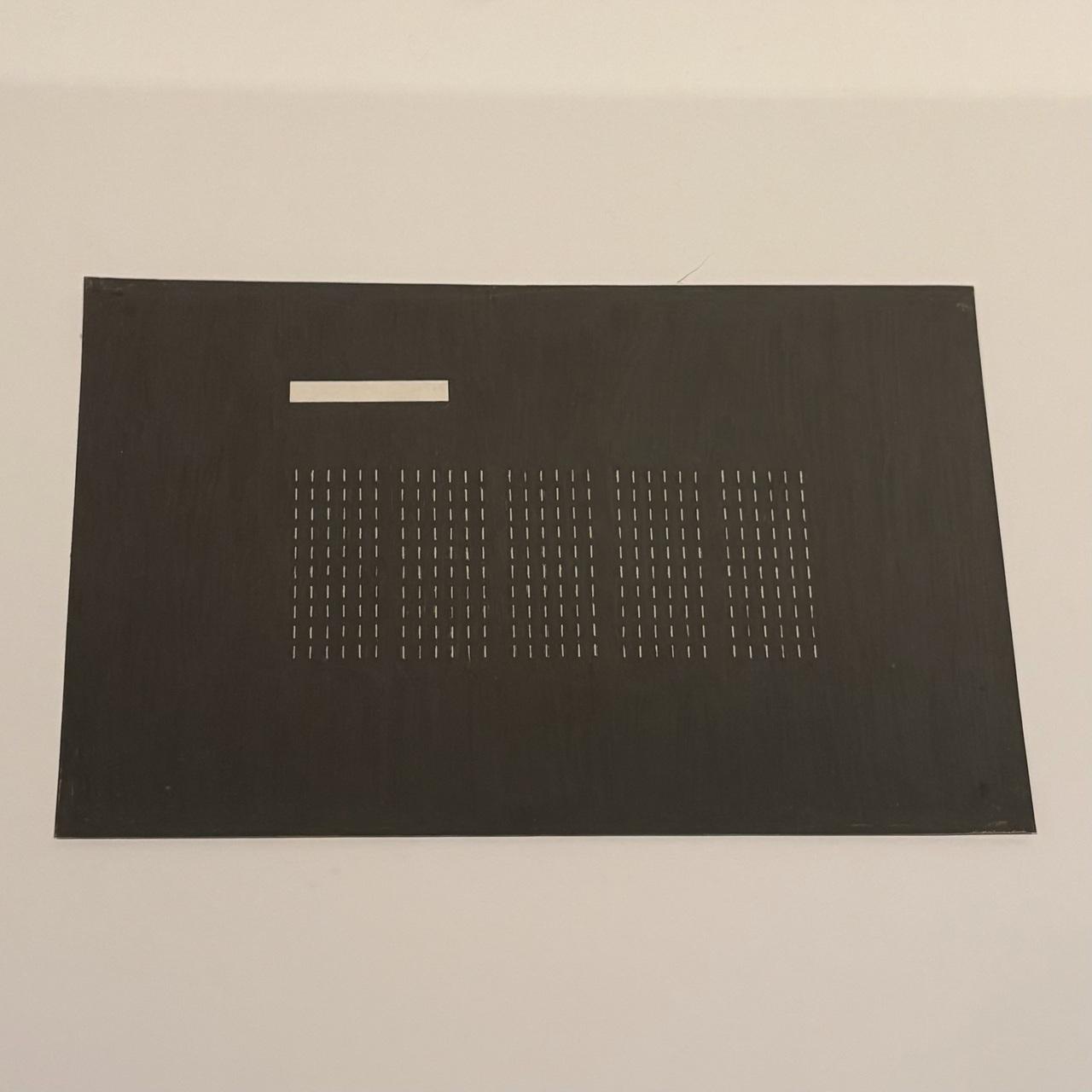
マークシート
Answer Sheet
1990 平成2年オフセット、鉛筆・紙
offset and pencil on paper
購入
Purchased
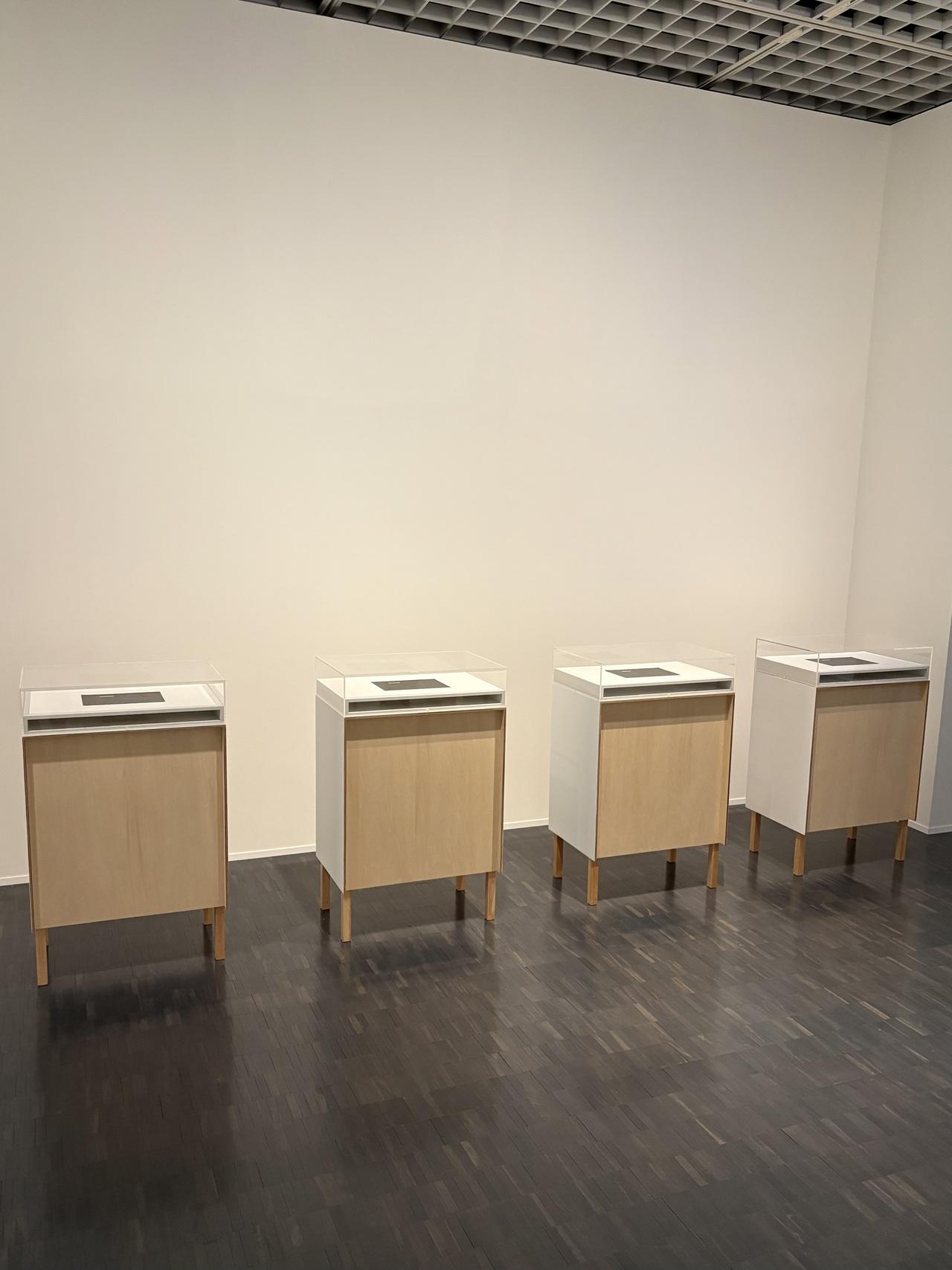
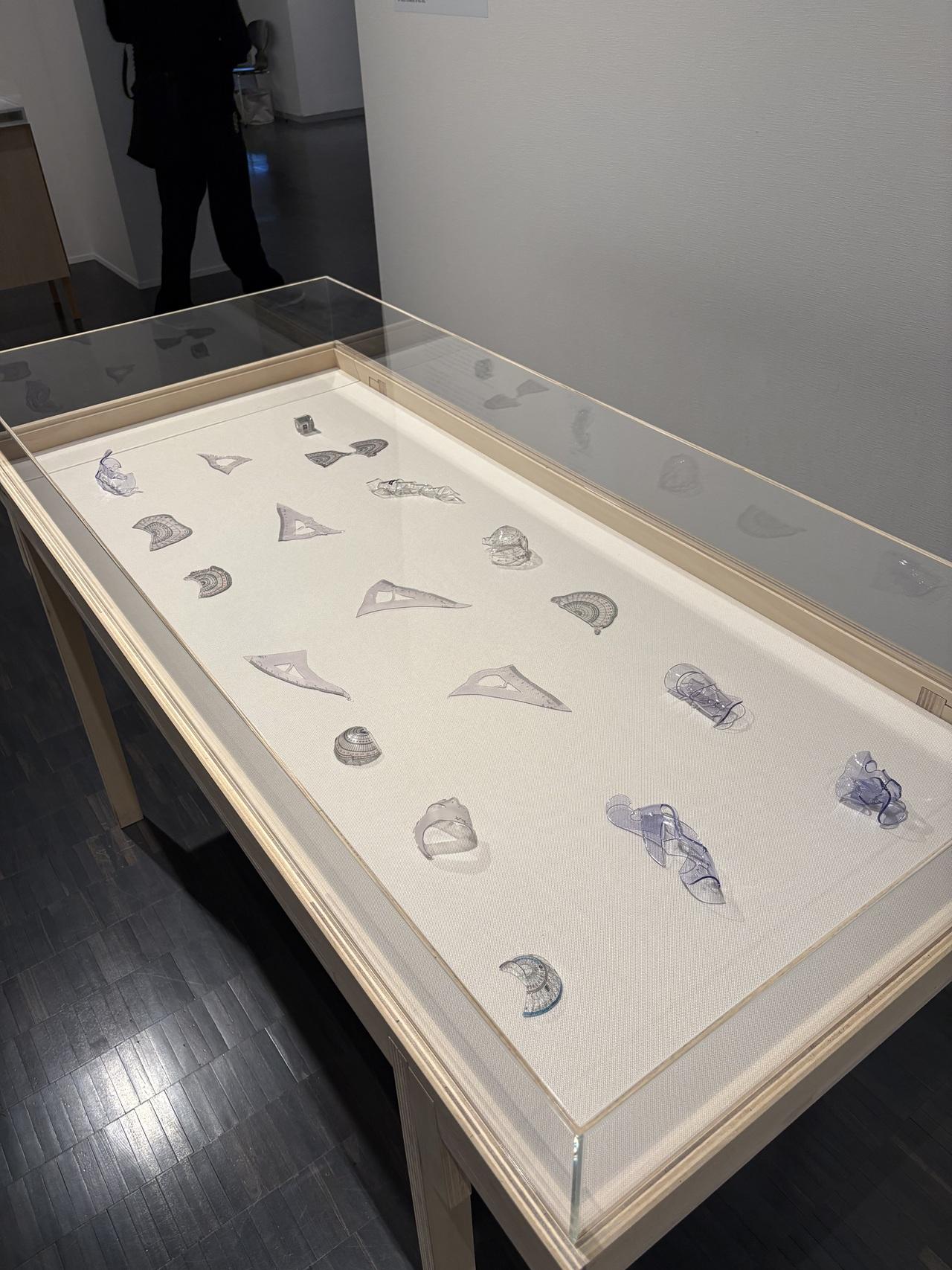
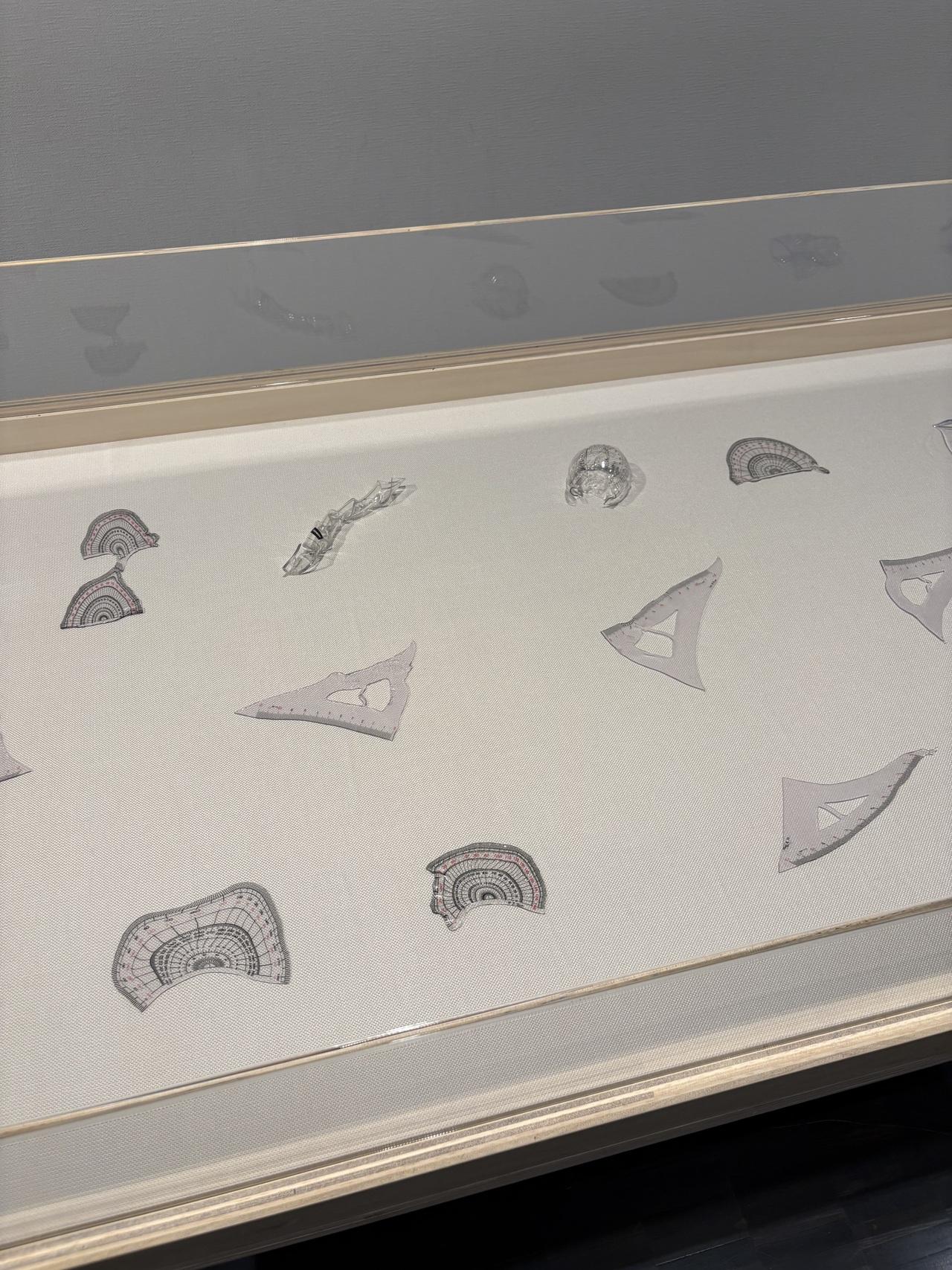
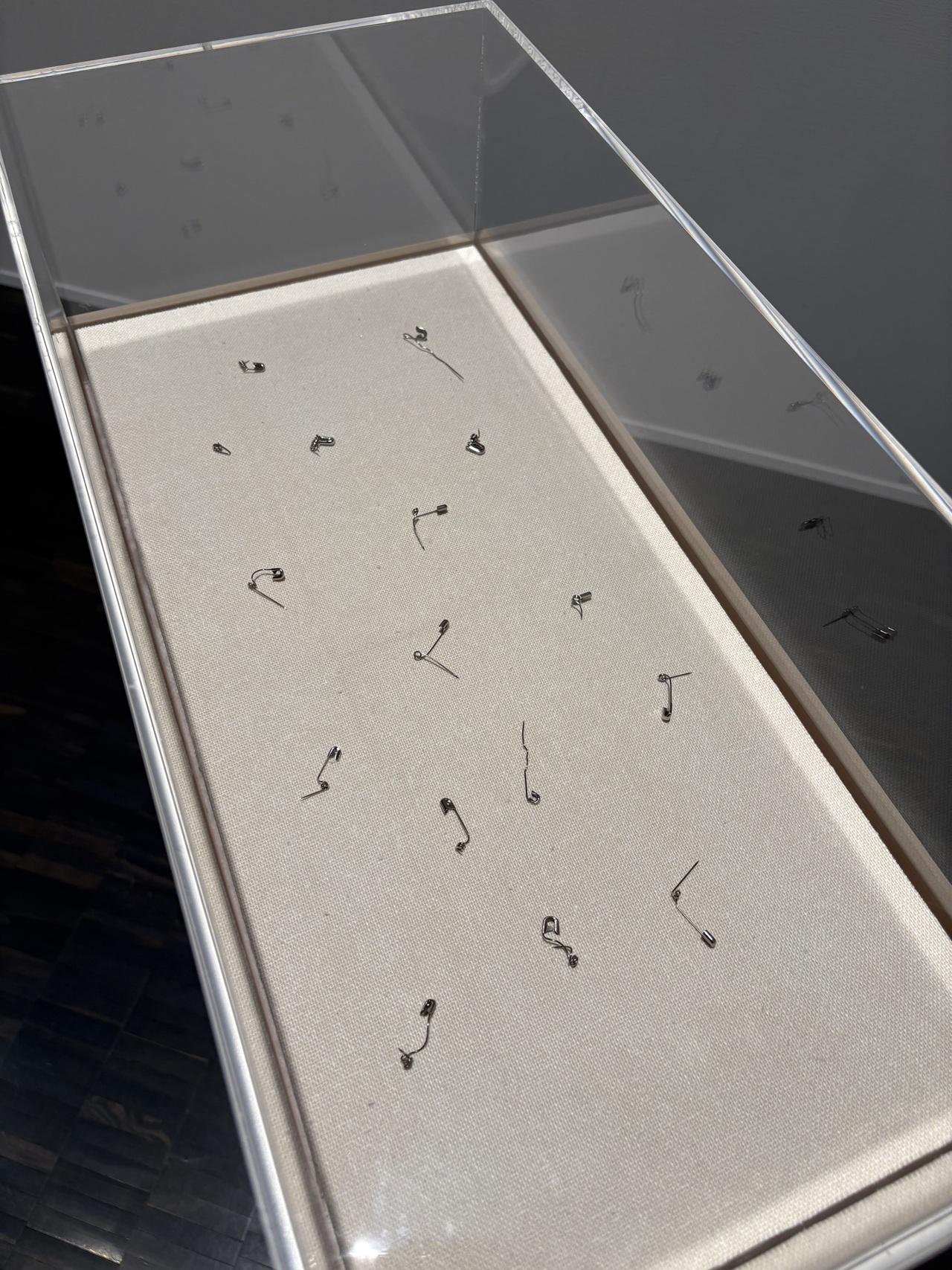
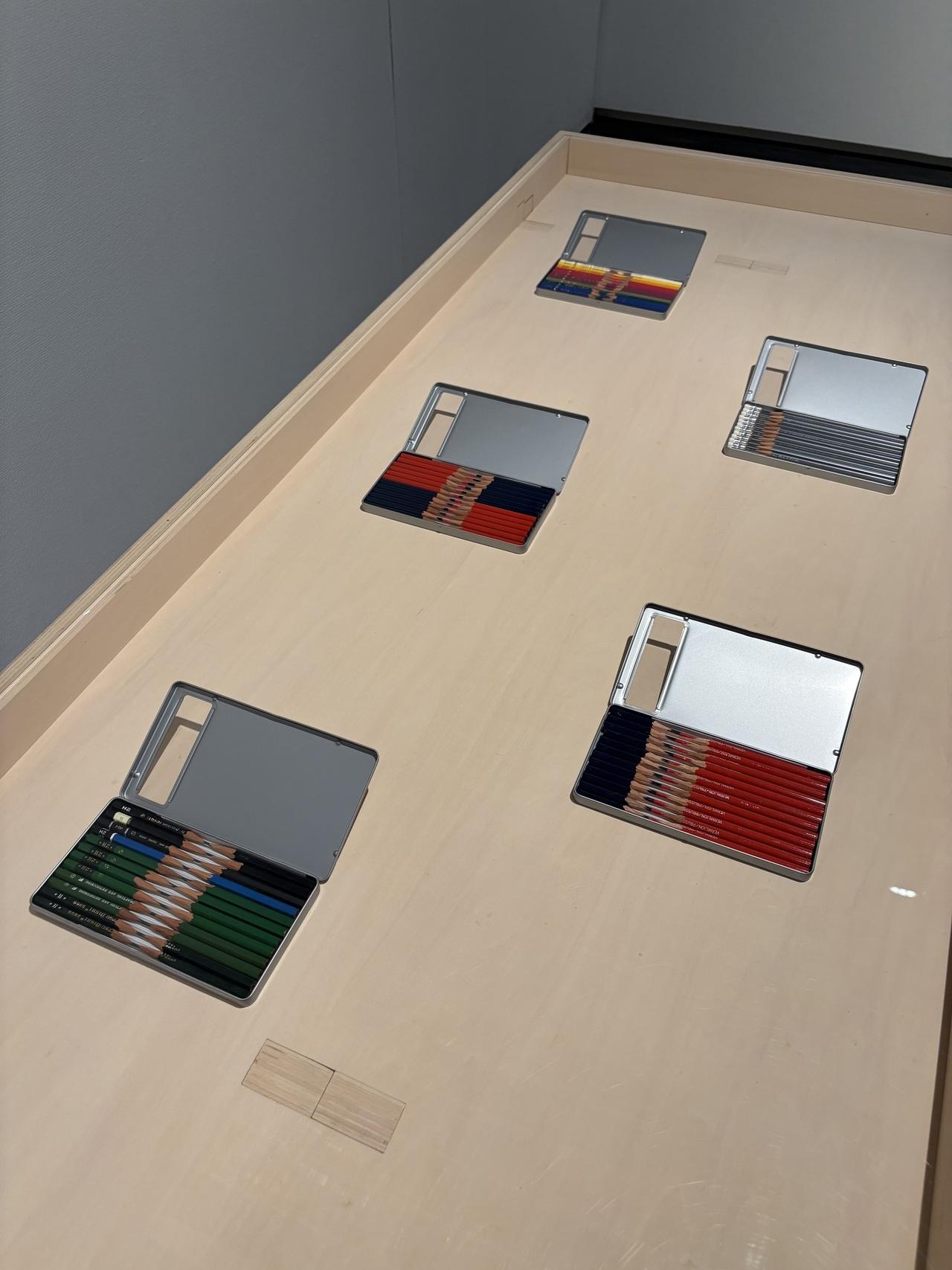
豊嶋康子は1990年代から社会の制度や日常生活に潜む約束事に対して、ユーモラスかつ批評的な介入を行う作品を発表してきました。ここに展示されているのは私たちにとって身近なアイテムばかりですが、どれも日常的な用途からは逸脱していますー解答欄以外の部分を塗りつぶしたマークシート、オーブントースターで加熱されて目盛りのゆがんだ定規、針先が様々な向きに変形された安全ピン、真ん中の部分が削られて、何も書くことができない鉛筆。豊嶋は工作のような軽やかな手つきによって、動かしがたく見える社会の常識を問い直します。1991年から93年にかけて東京藝術大学大学院の油画専攻で榎倉に事しました。
Since the 1990s, Toyoshima Yasuko has produced works that humorously yet incisively critique social systems and the unspoken rules that shape everyday life. The objects on display here are all familiar, but each has been altered to subvert its usual function: answer sheets blacked out except for the response fields, measuring implements drastically warped from being heated in a toaster oven, safety pins with needles bent in every direction, pencils hollowed out in the middle so they can no longer write. With a light, almost craft-like touch, Toyoshima probes the seeming immutability of social norms. From 1991 to 1993, she studied under Enokura in the graduate oil painting department at Tokyo University of the Arts. -
-
-
-
-
新収蔵作品
New Acquisition
白井美穗
SHIRAI, Mio
1962-
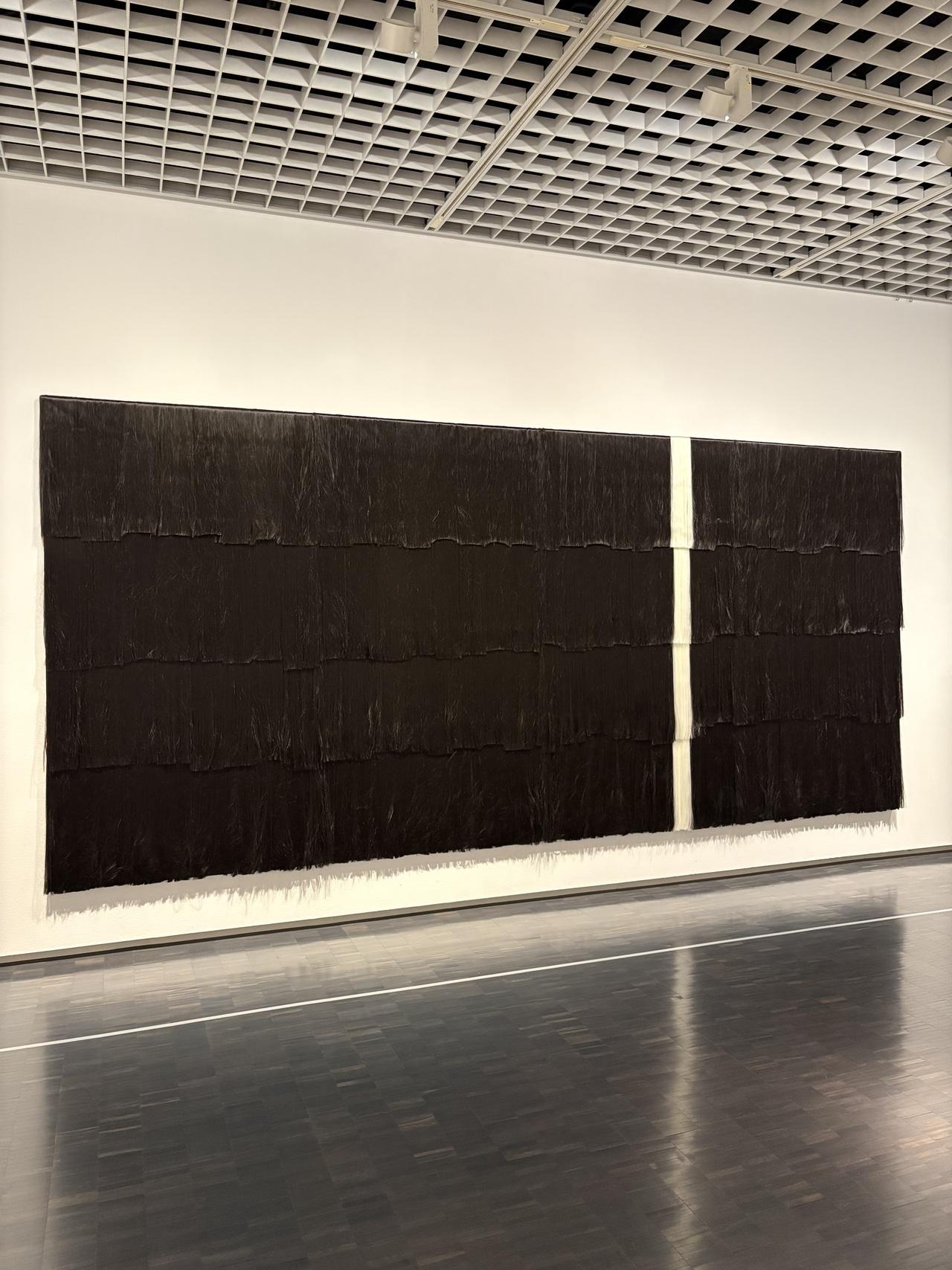
Waterfall (Why Are You Afraid of Black and White?)
1993 平成5年
人工毛髮、木
artificial hair, wood
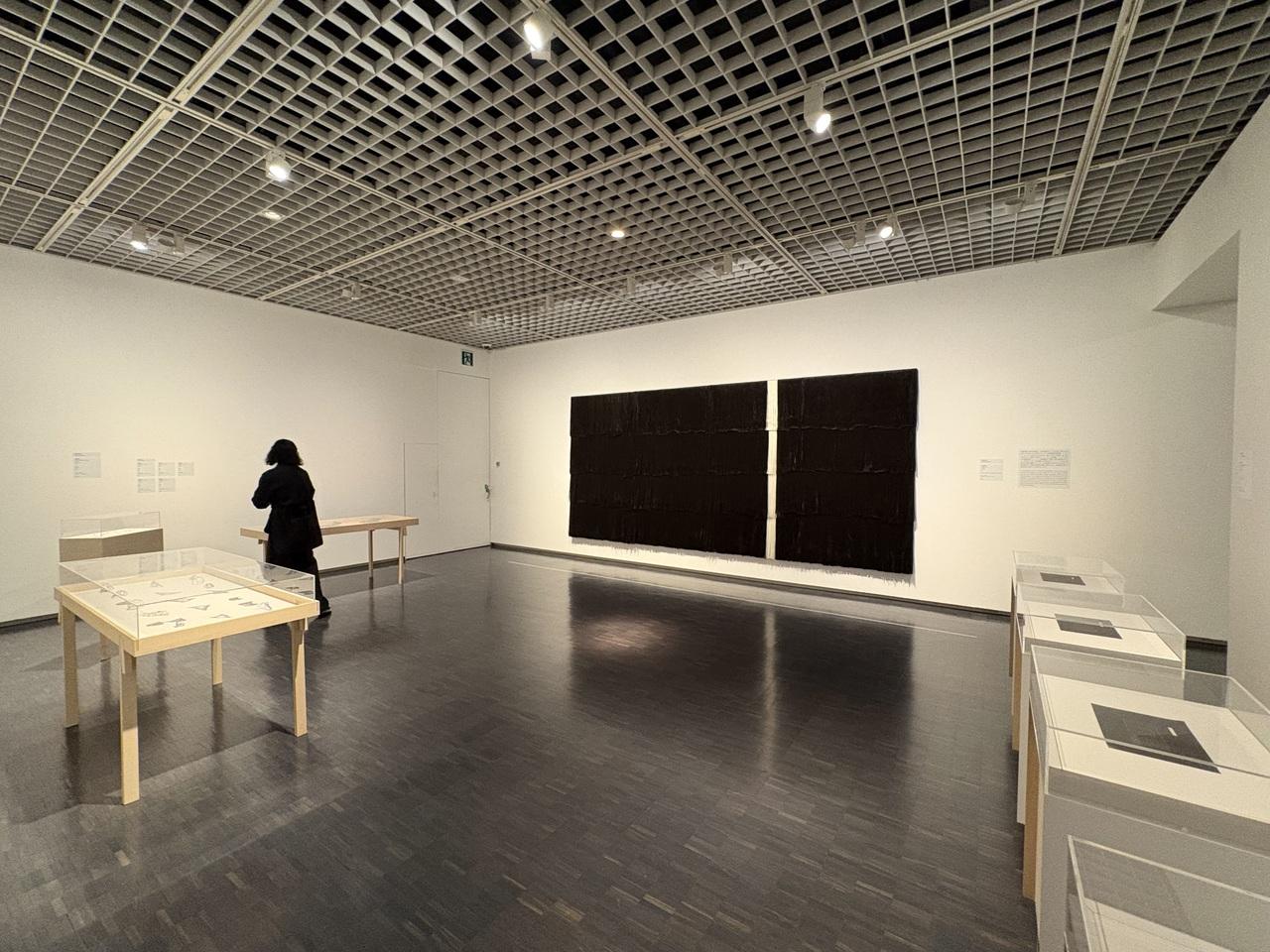
黒髪で覆われた巨大な色面に、一筋の白髪がのぞく《Waterfall(Why Are You
Afraid of Black and White?)》はアメリカの抽象表現主義の画家、バーネット・ニューマンの《Who's Afraid of Red, Yellow and Blue(誰が赤、黄、青を恐れるのか)》を参照した作品です。モノクロームの色面に「ジップ」と呼ばれる垂直線を配したニューマンの絵画構造を、黒髪と白髪に置き換えることで、女性の若さと老い、美の象徴である髪に対するフェティシズムなどへの批評的な洞察が展開されています。
白井美穂は1986年から88年にかけて東京藝術大学大学院の油画専攻で倉に事しました。油画専攻で初めて助手を務めた女性としても知られています。
In Waterfall (Why Are You Afraid of Black and White?), a single vertical stripe of white hair slices through a vast field of black hair. The work references Barnett Newman's Who's Afraid of Red, Yellow and Blue, replacing his monochrome color fields and signature "zips" (masked-off vertical lines) with locks of black and white synthetic hair. By reconfiguring Newman's visual language, the work pointedly reflects on youth and aging in women, and on the fetishization of hair as a symbol of beauty.
Shirai Mio was Enokura's student in the graduate oil painting department at Tokyo University of the Arts from 1986 to 1988, and was also the first woman to serve as an assistant in the department. -
榎倉康二
ENOURA, Koji
1942-1995
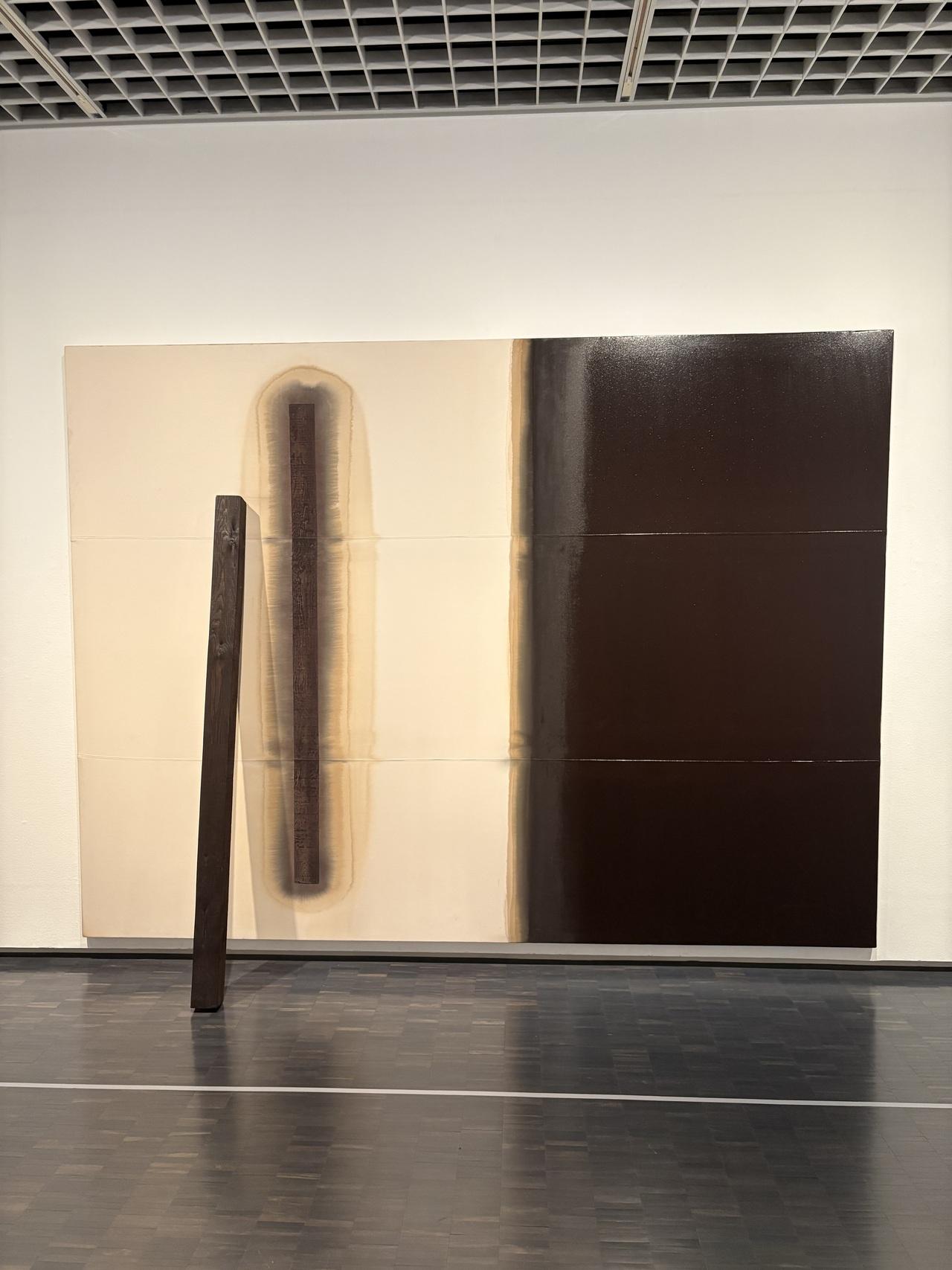
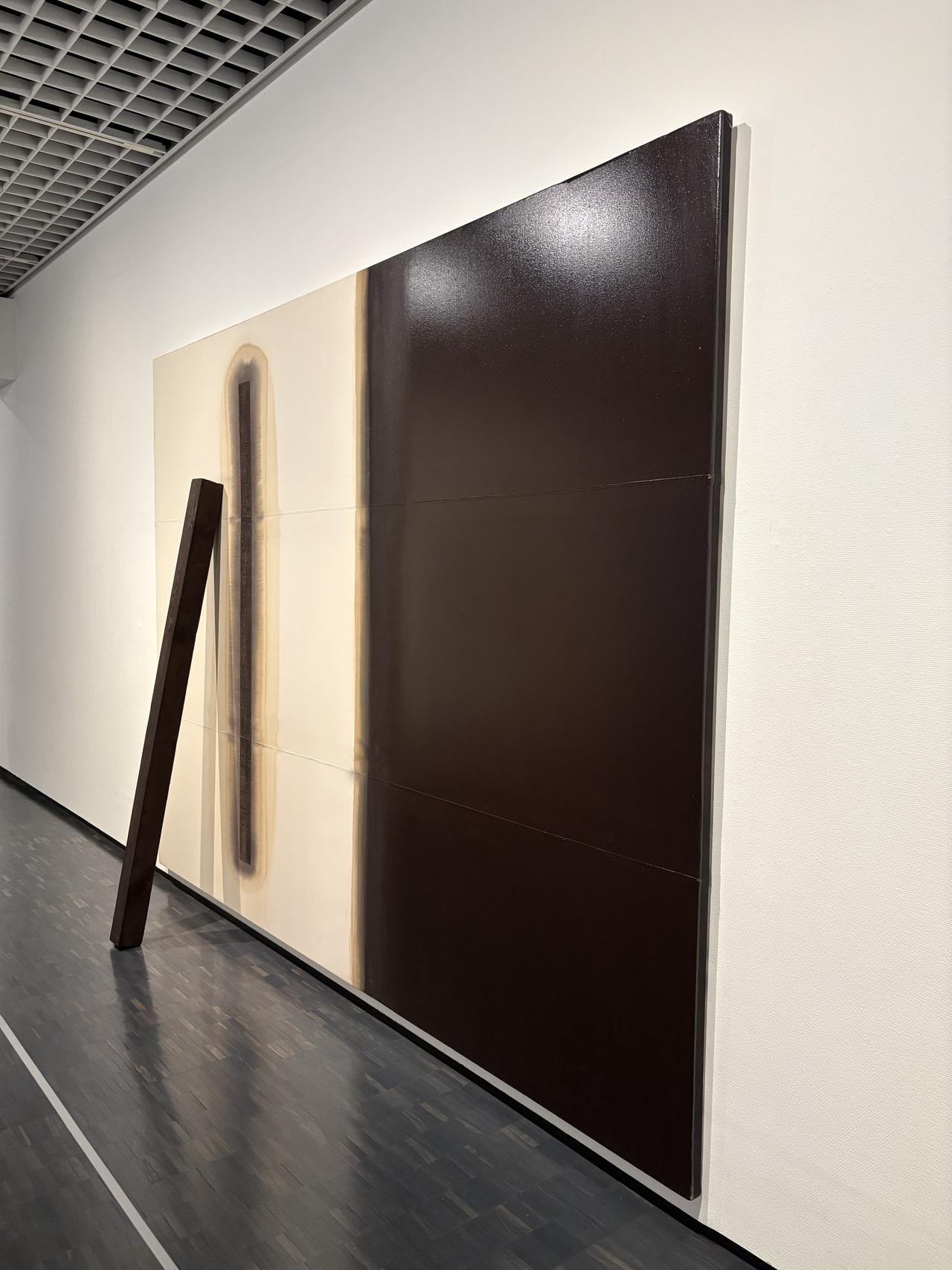
干渉(STORY-No.18)
Intervention (STORY-No. 18)
1991 平成3年
アクリリック・綿布、木 acrylic on cotton and wood
購入
Purchased
左側に立てかけられた角材と同じサイズのしみが綿布にじんわりと広がり、鑑賞者の身体感覚を刺激します。榎倉は「干渉」という概念について「わたし自身の肉体と、事物、環境との関係の在り方であり、それは観念的な思考方法で日常世界の体系をつかむのではなく、また情念的な感受性で世界を断ち切るものでもない、あくまで自己の肉体の感受性としてのアンテナを研ぎ澄まし日常世界と対して行きたい」(『現代の眼』451号、1992年6月)と語っています。
A stain, matching the wooden beam propped to its left in size and shape, gently bleeds across the cotton cloth, provoking a physical response in the viewer. Reflecting on the concept of "Intervention," Enokura wrote: "It is about how my own physical body relates to things and the environment. It is not about grasping the structure of the everyday world through conceptual thought, nor about cutting oneself off from it through emotion, but about honing the body's own sensitivity and engaging with the everyday world on that basis." (Gendai no me, no. 451, June 1992). -
-
-
榎倉康二
ENOKURA, Koji
初期作品スライドショー
Slideshow of Early Works
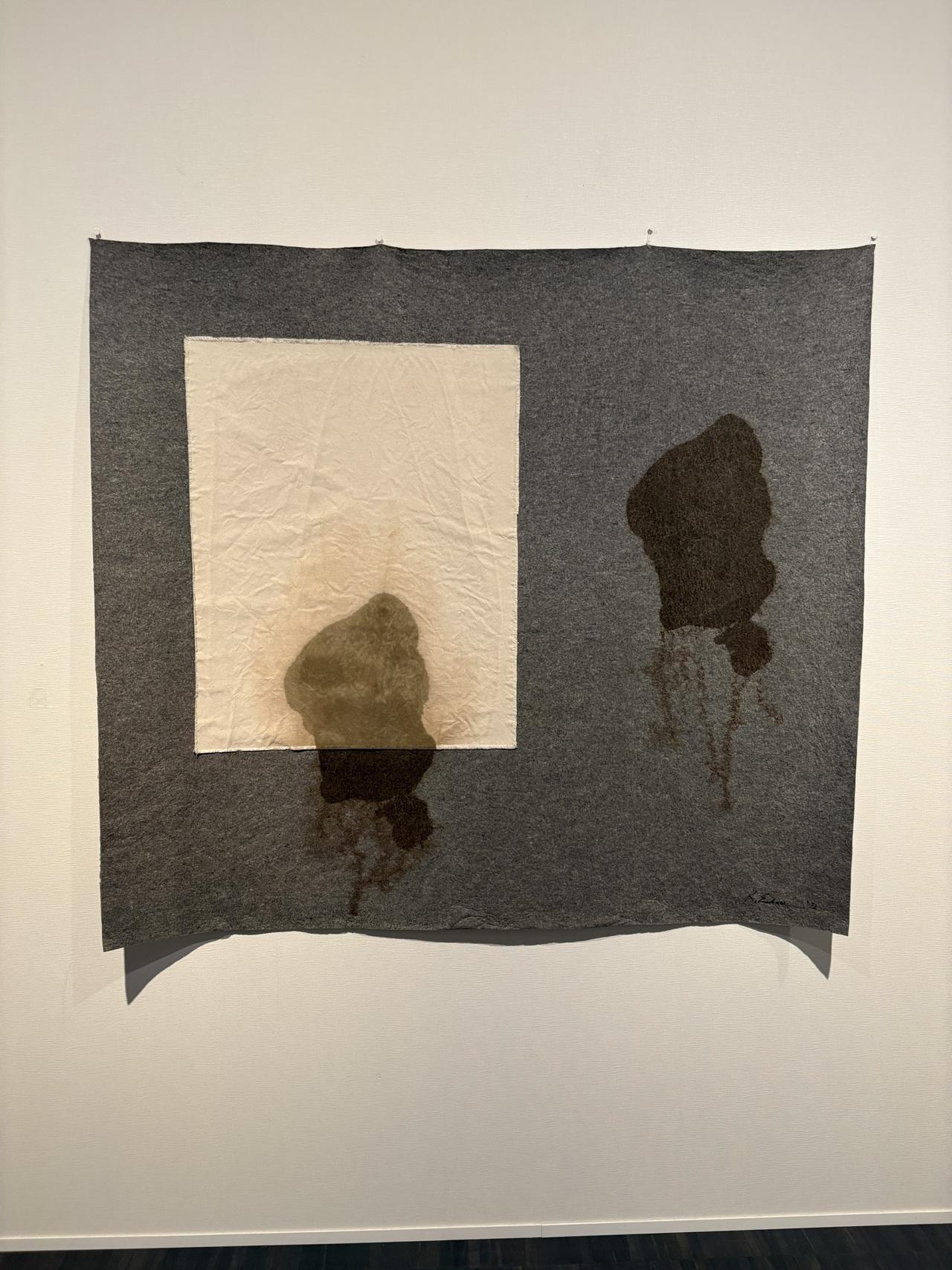
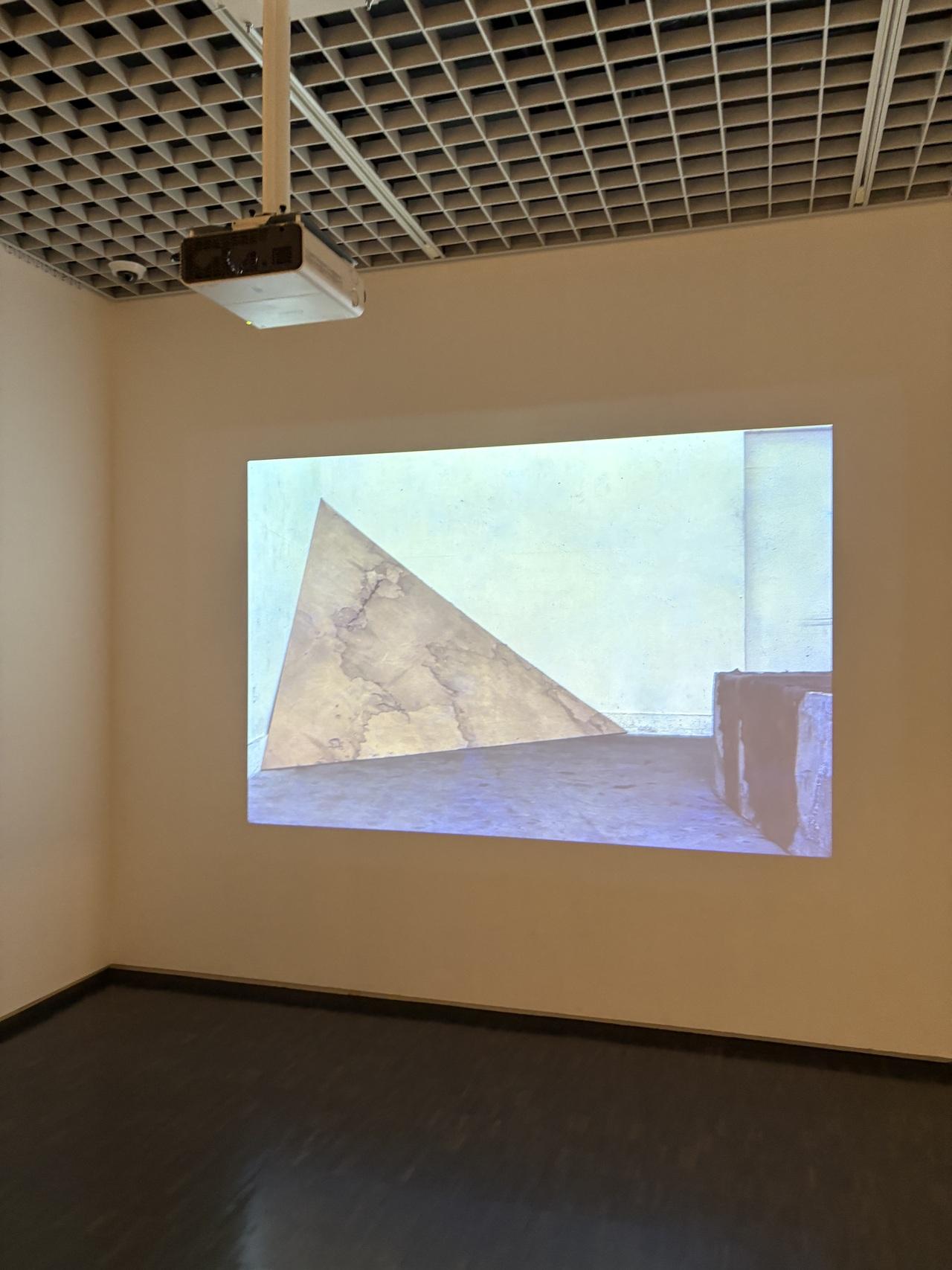
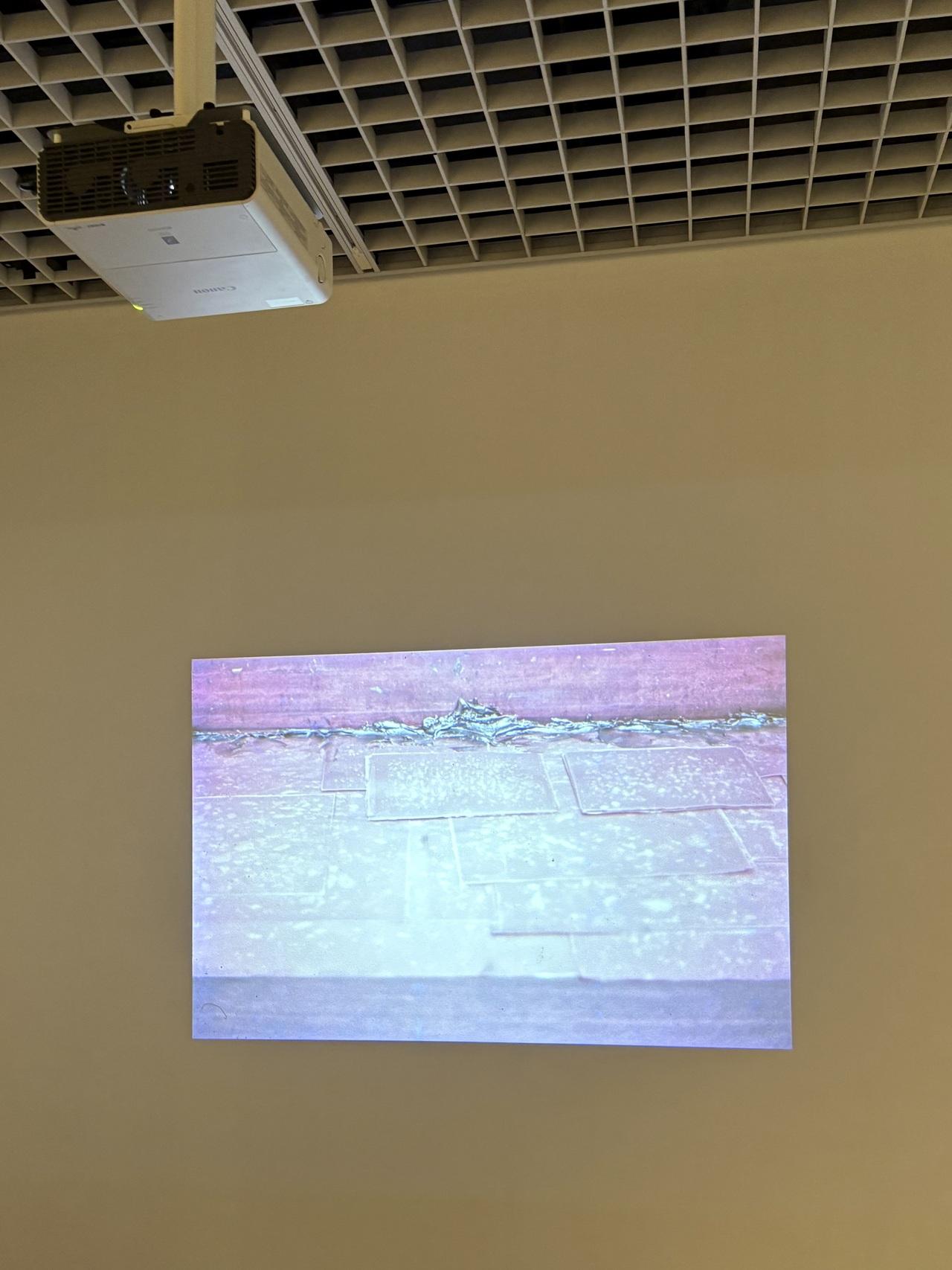
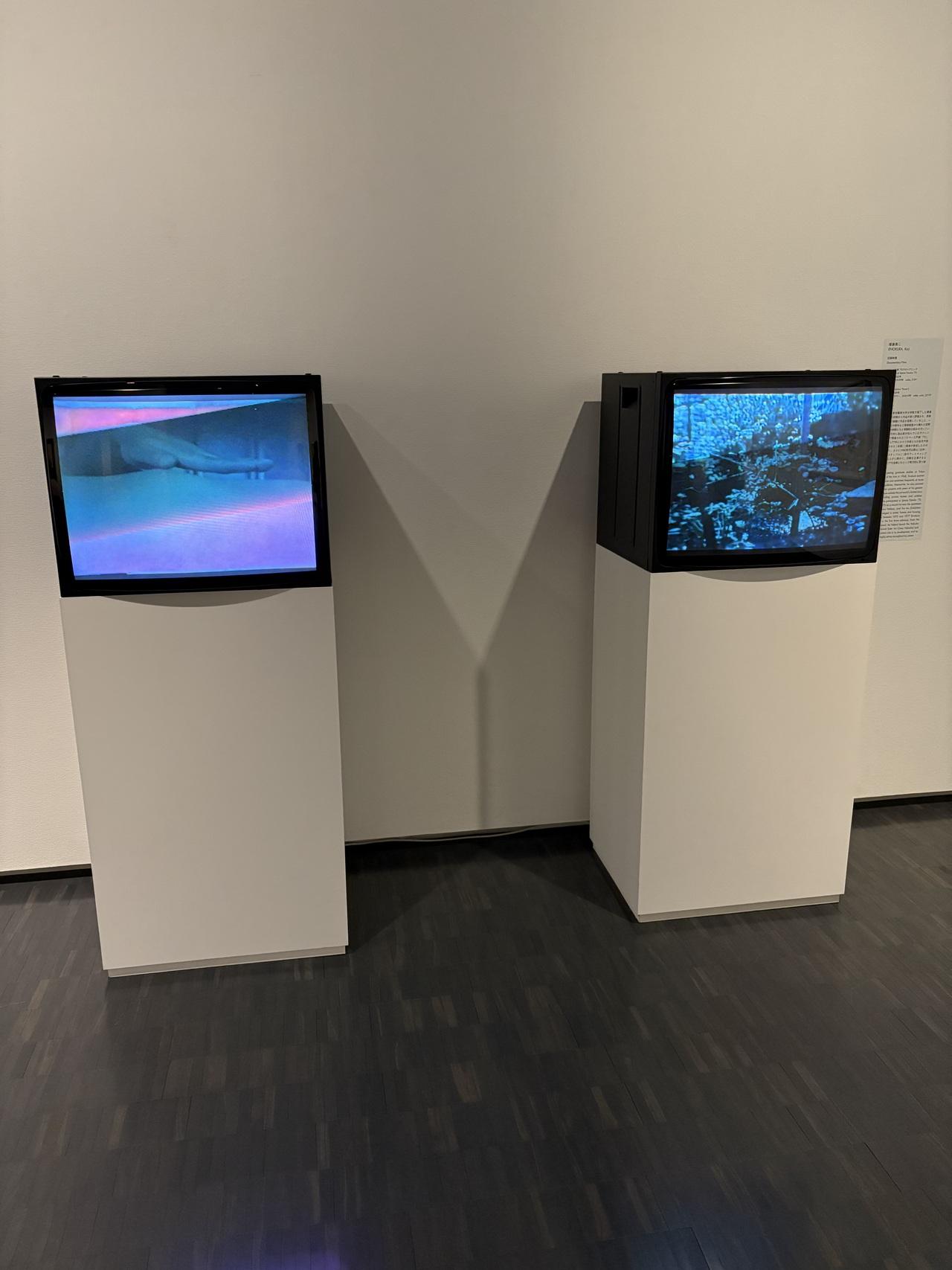
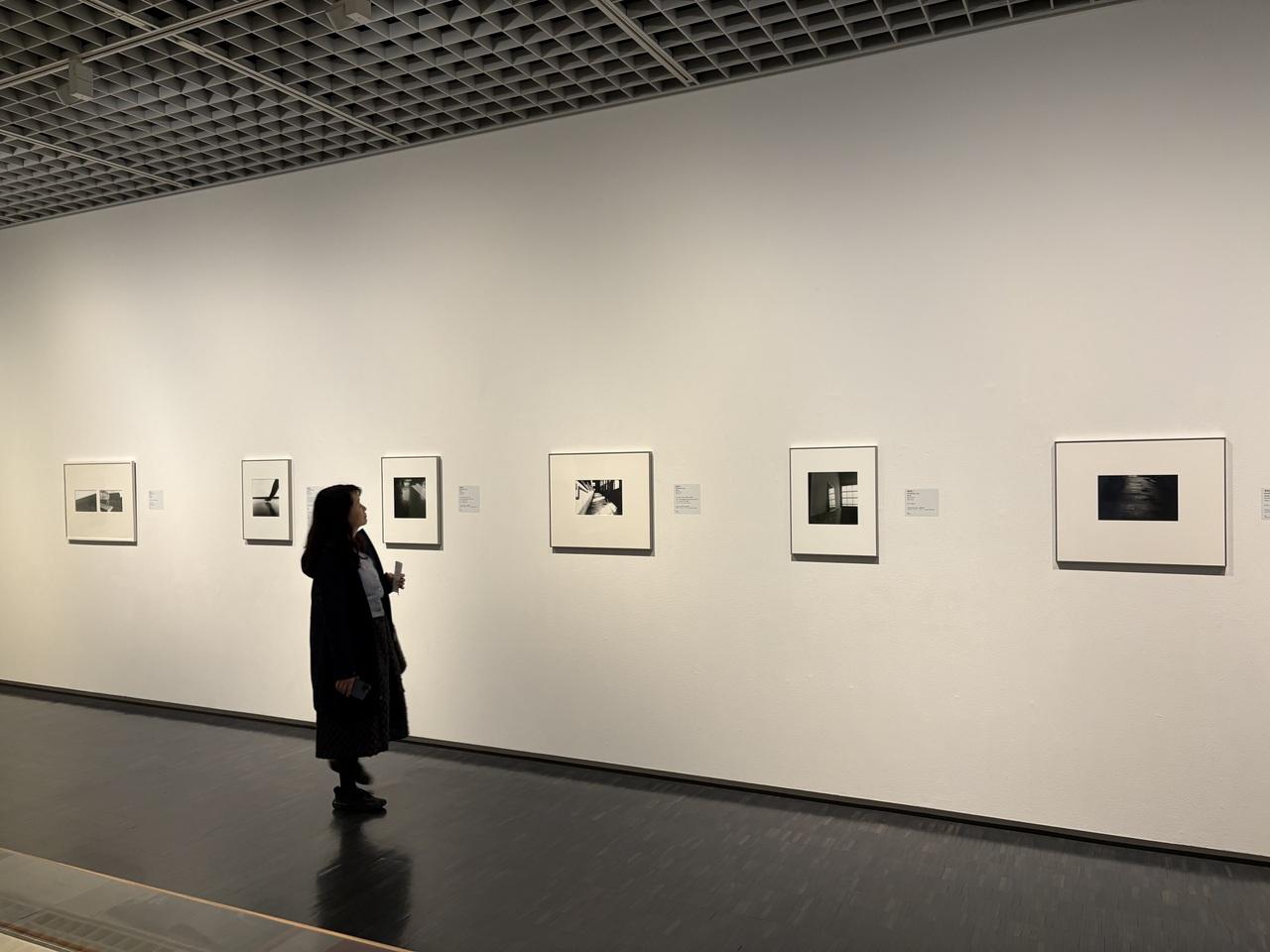
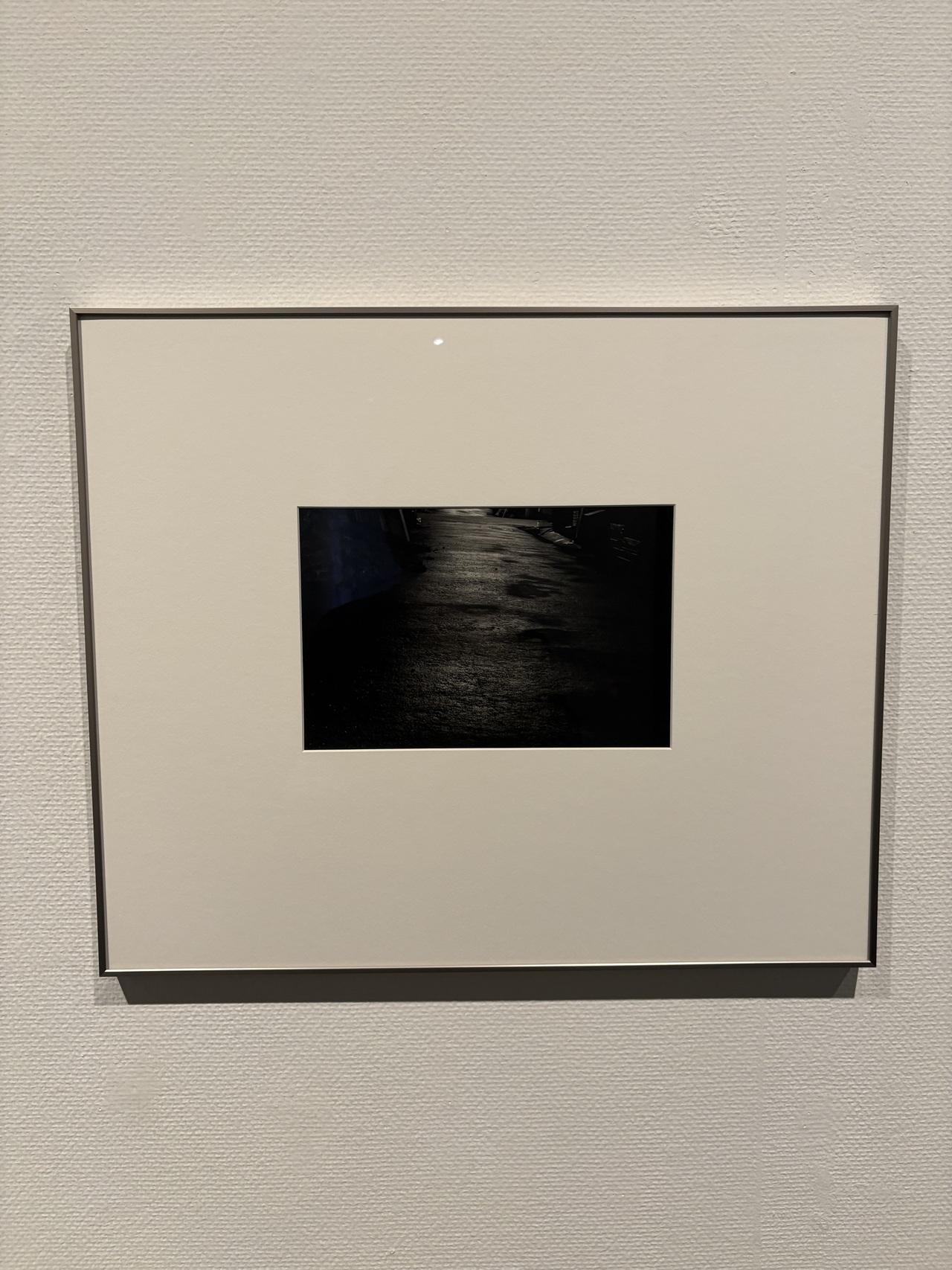
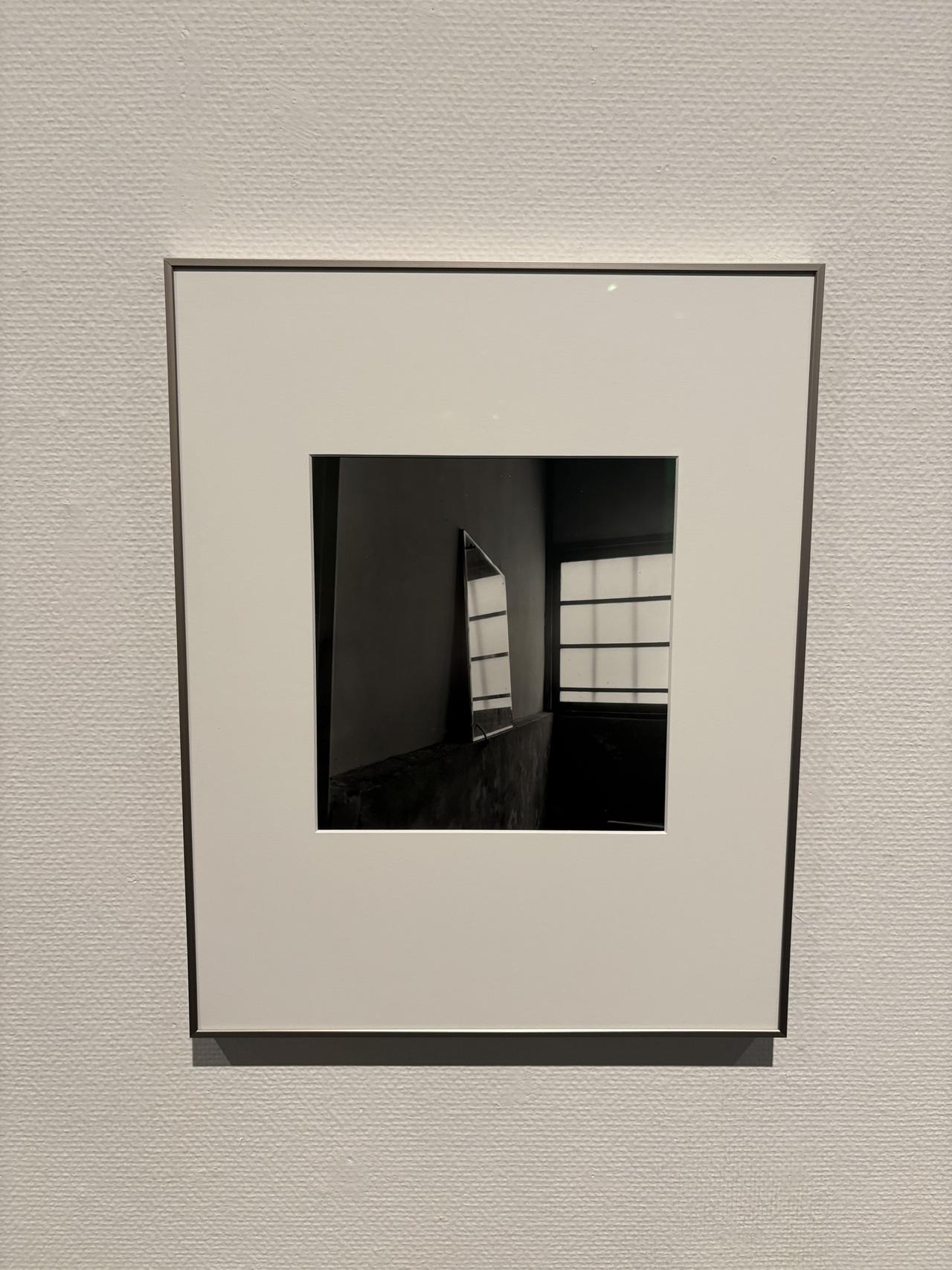
1970年、榎倉は「第10回日本国際美術展 人間と物質」で藁半紙に油を染み込ませたインスタレーション<場>を発表します。展示空間の中で成立する即物的な作品構成は、アルテ・ポーヴェラ、ミニマリズム、もの派といった作家たちの表現と共に、同時代的な美術動向の広がりとして認識されました。初期のインスタレーション形式の作品はいずれも現存しませんが、当時の記録写真を紹介します。
In 1970, Enokura presented the installation Place, created by soaking waste oil into coarse paper, at the 10th Tokyo Biennale: Between Man and Matter. Its direct, unadorned composition, constructed in response to the conditions of the exhibition space, was recognized as part of a broader current in contemporary art alongside the work of artists associated with Arte Povera, Minimalism, and Mono-ha. Although none of Enokura's early installation works survive, this slideshow presents documentary photographs from the time. -
-
-
-
-
-
-
-
-
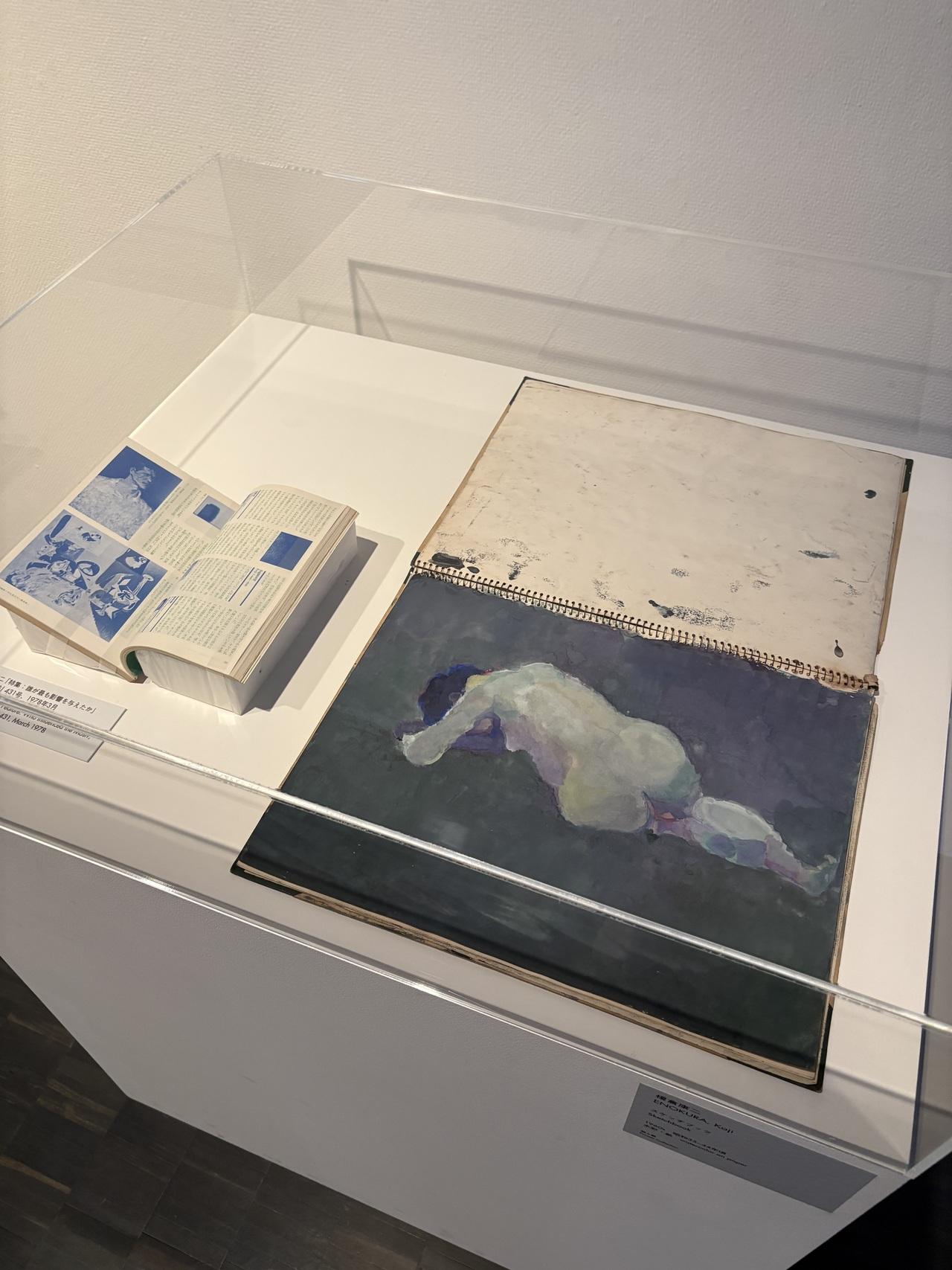
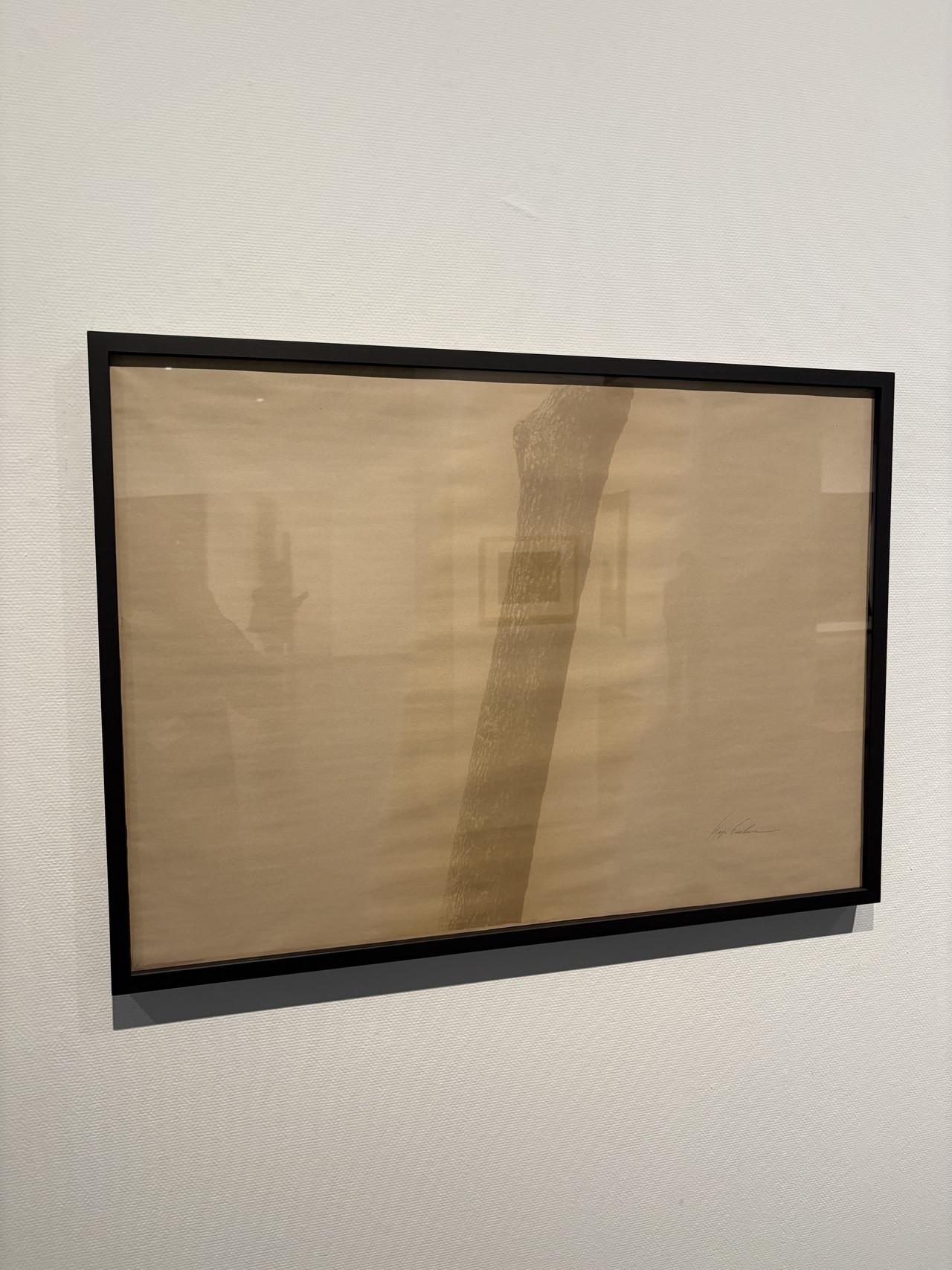
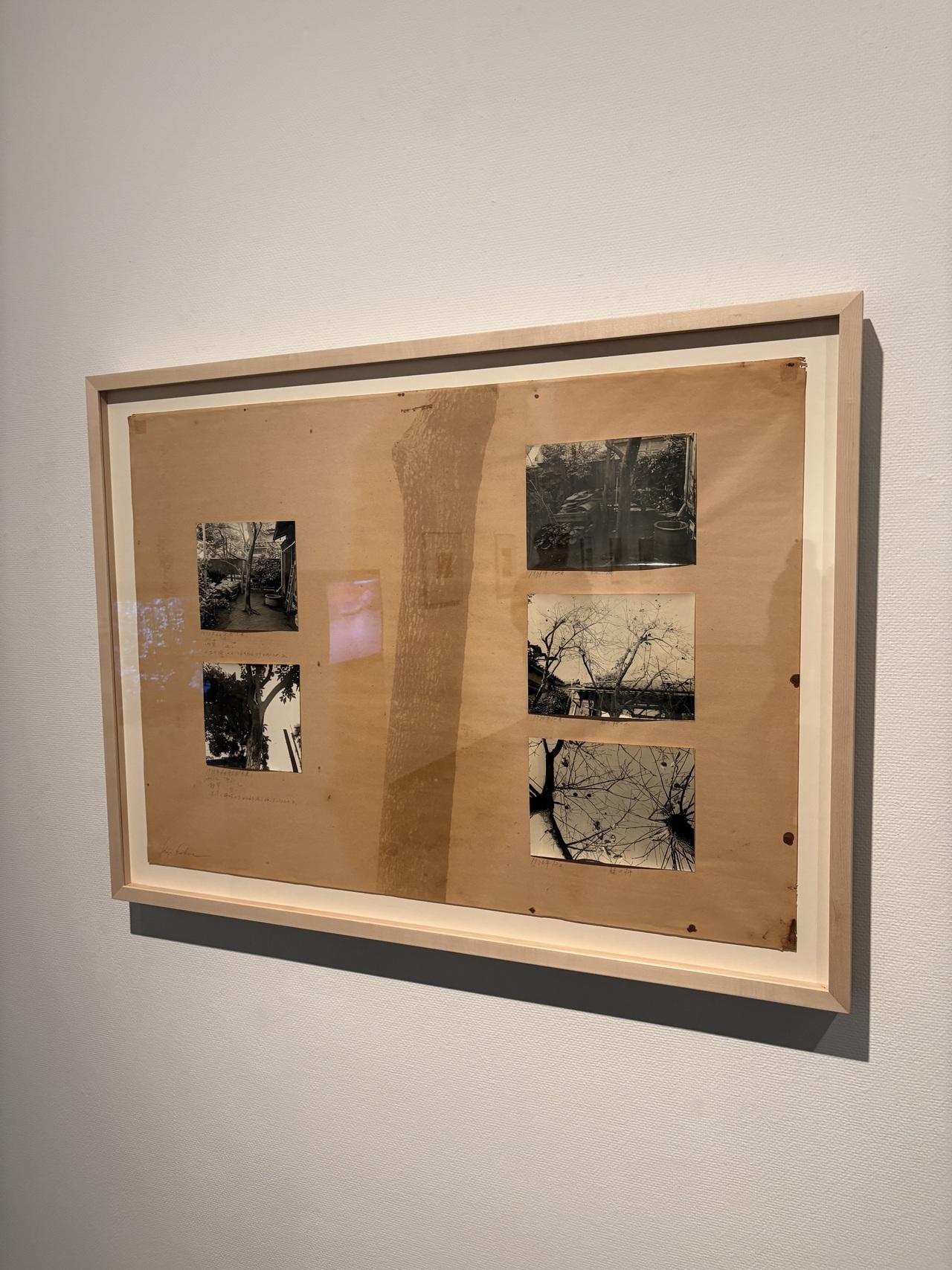
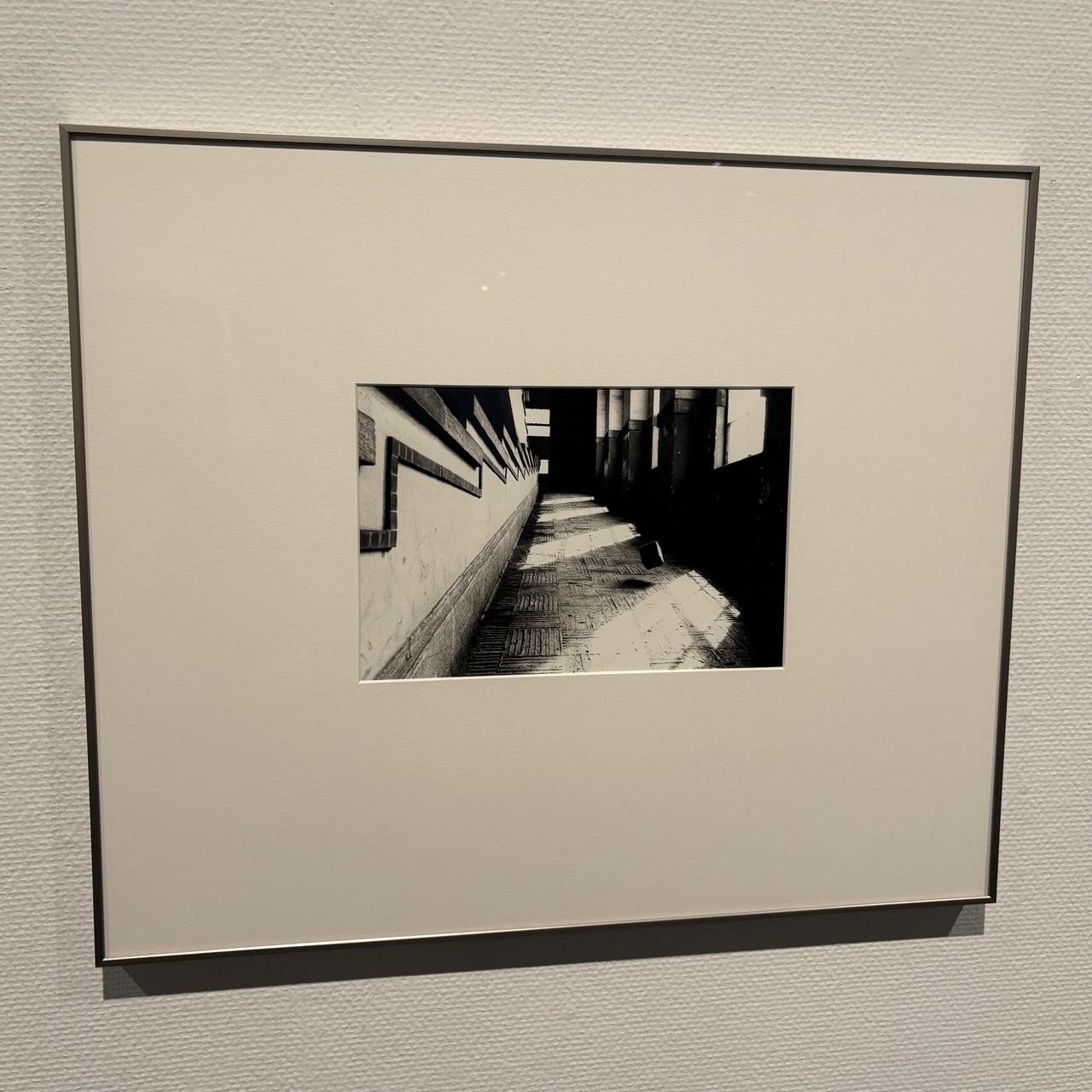
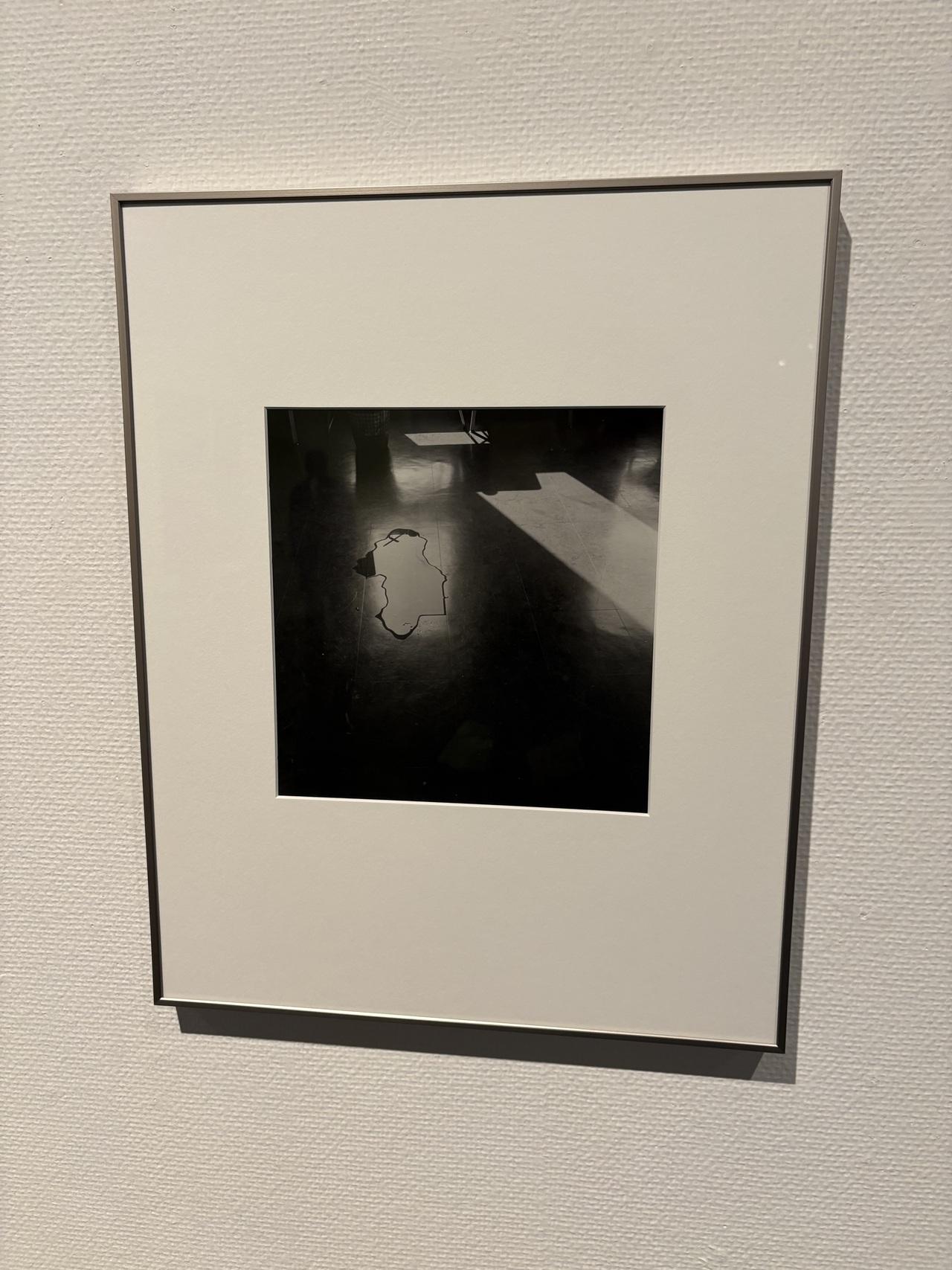
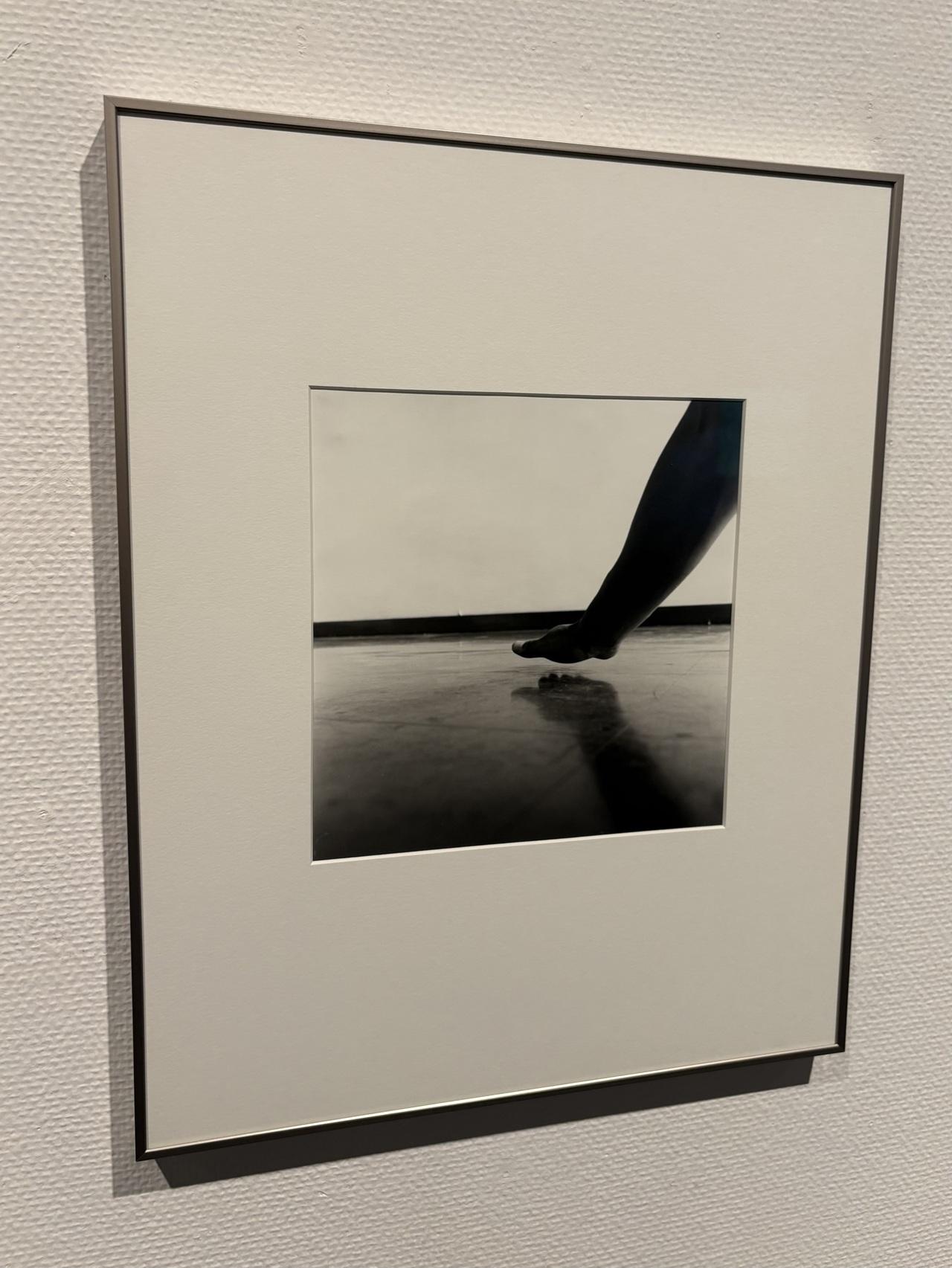
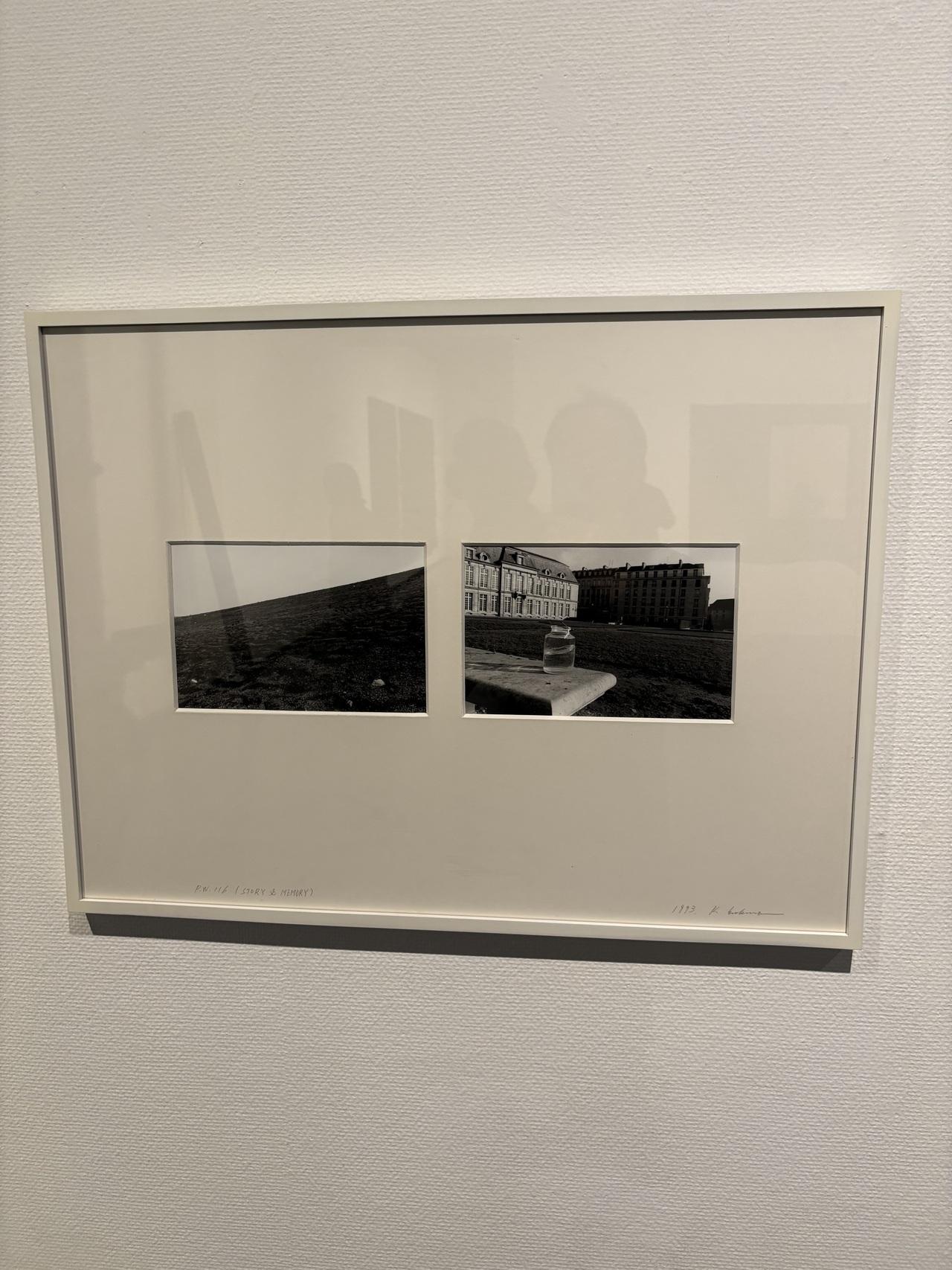
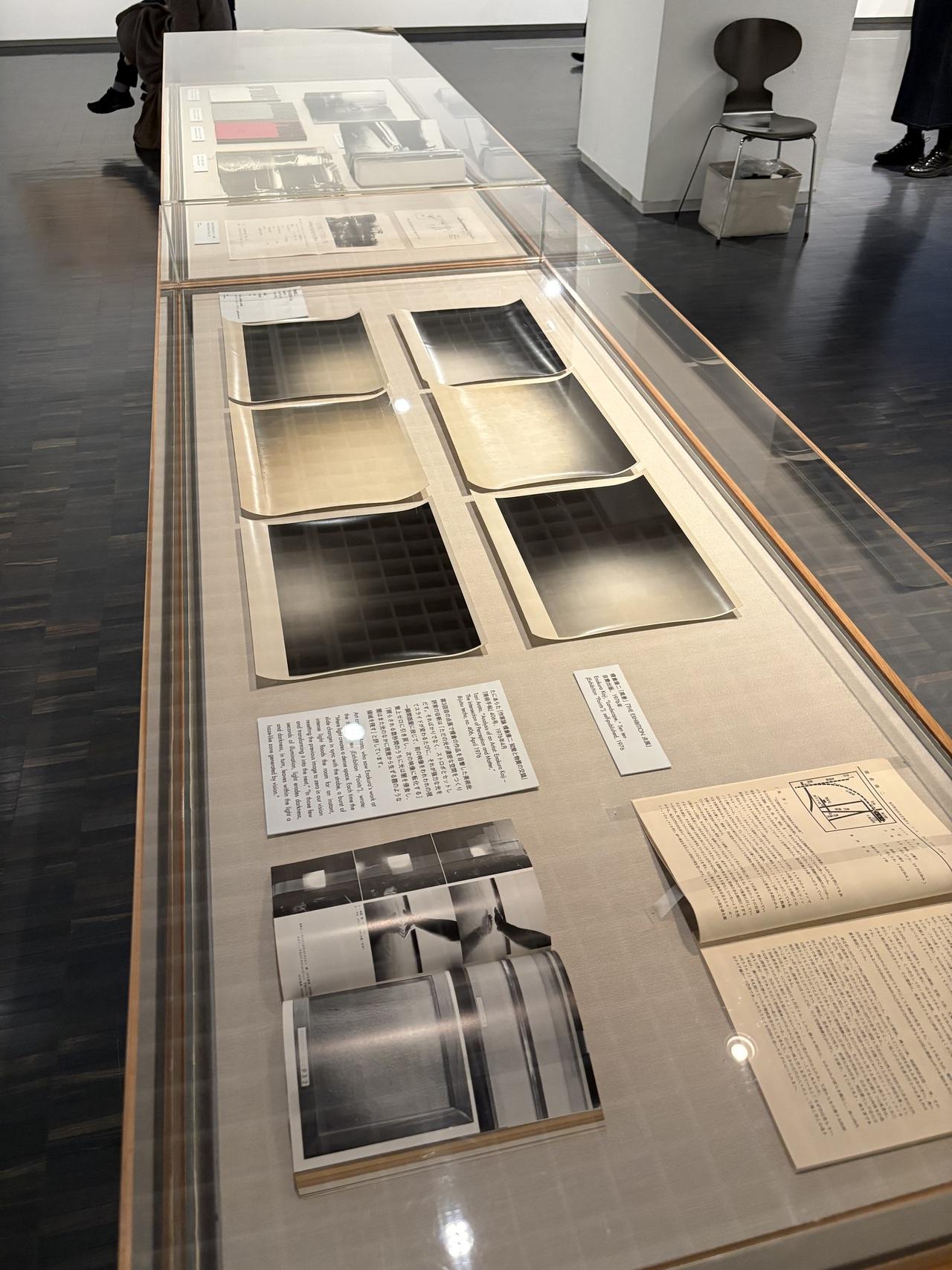
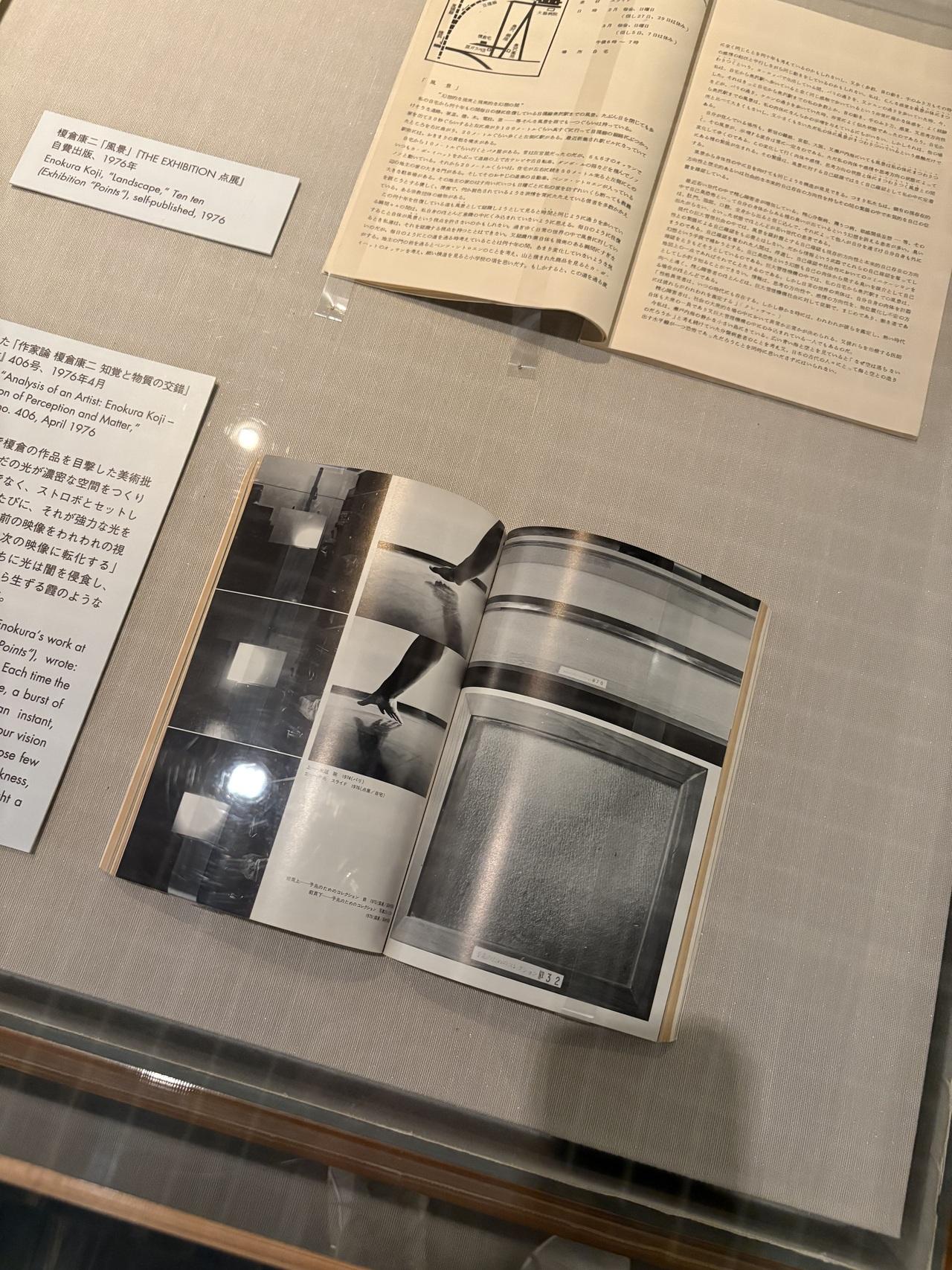
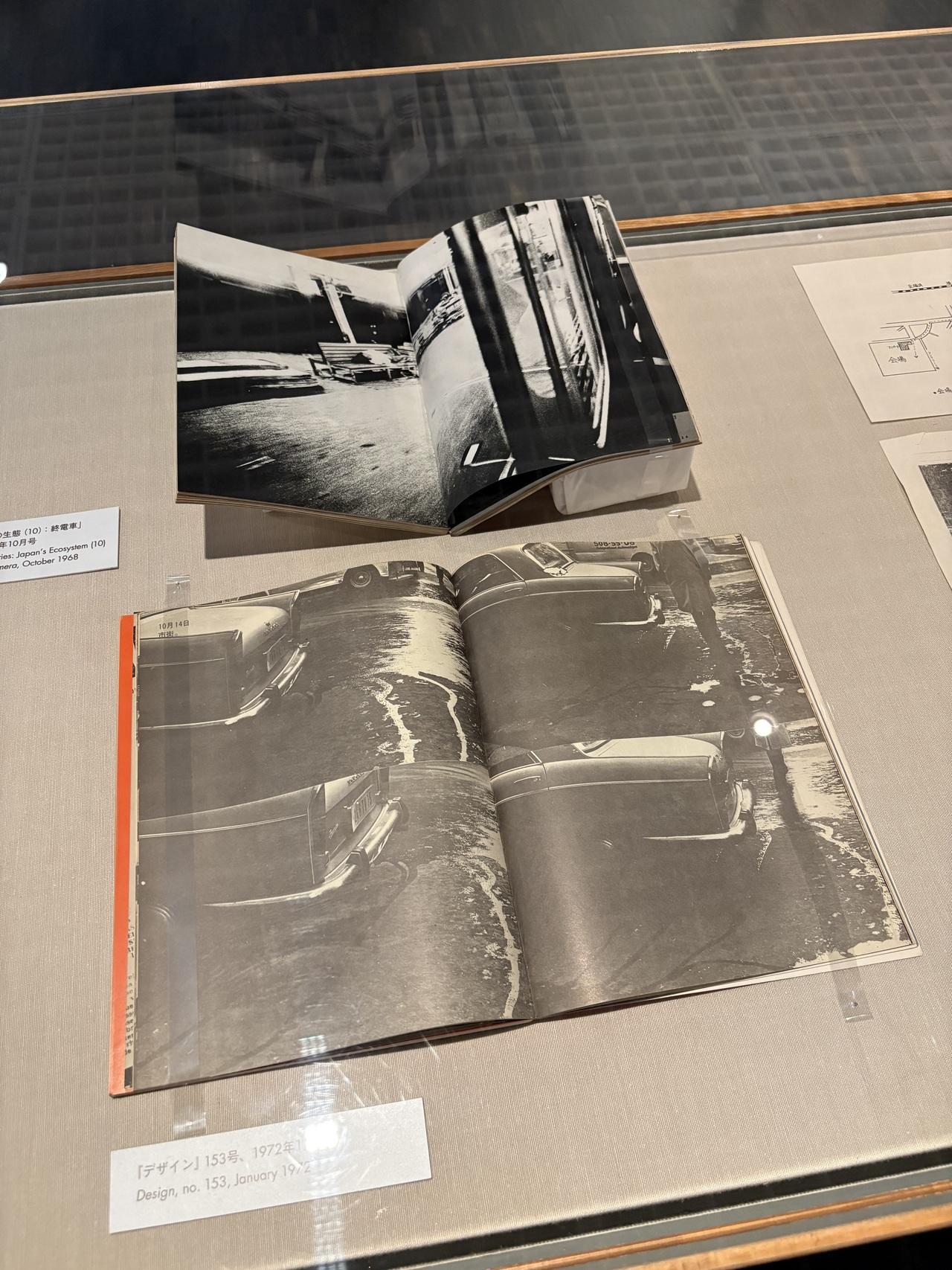
榎倉は1968年頃から写真を撮り始めました。最初はインスタレーション作品の記録を残すことが目的でしたが、徐々に写真という媒体に興味を持つようになったといいます。時の榎倉に大きな影響を与えたのが、多木浩二、中平卓馬、岡田隆彦、高梨豊、森山大道らによるプロヴォーク同人の存在でした。榎倉は彼らの活動を「『写真を写す』というイメージの世界から「写真が写る』という即物的な世界への展開」(『榎倉康二・写真のしごと1972-1994」斎藤記念川口現代美術館、1994年)と捉え、自らも写真を通じて外界と直接対峙しようと試みました。1971年の「パリ青年ビエンナーレ」には中平卓馬と共に参加し、中平の写真の展示作業を手伝ったといいます。
Enokura began taking photographs around 1968. Initially, his aim was to document his installation works, but he gradually became interested in photography as a medium in its own right. A major influence at the time was the work of the Provoke group (Taki Koji, Nakahira Takuma, Okada Takahiko, Takanashi Yutaka, and Moriyama Daido).
Enokura described their approach as "a shift from the image-based world of 'taking photographs to the material world of 'photographs being taken'" (Enokura Koji:
Photographic Work 1972-1994, Saito Memorial Kawaguchi Museum of Contemporary Art, 1994), and he too sought to confront the external world directly through photography. In 1971, he participated in the Paris Biennale alongside Nakahira Takuma and helped install Nakahira's photographic works in the exhibition. -
-
-
-
-
-
-
-
-
-
-
-
-
この旅行記のタグ


利用規約に違反している投稿は、報告する事ができます。
-

"MOMAT〔国立東京近代美術館〕コレクション展 ~2026.2.8" その1.ハイライト。"奈良美智《Ha...
2026/02/05~
神田・神保町
-

"MOMAT〔国立東京近代美術館〕コレクション展 ~2026.2.8" その2.新か、旧か? "和田三造《南...
2026/02/05~
神田・神保町
-

"MOMAT〔国立東京近代美術館〕コレクション展~2026.2.8" その3.キュビスム再考 "ナターリア・...
2026/02/05~
神田・神保町
-

"MOMAT〔国立東京近代美術館〕コレクション展 ~2026.2.8" その4.『濹東綺譚』。"木村荘八 、...
2026/02/05~
神田・神保町
-

"MOMAT コレクション展 ~2026.2.8" その5.1930年代の絵画:現実の彼方へ、幻影の手前で。...
2026/02/05~
神田・神保町
-

MOMAT〔国立東京近代美術館〕コレクション展 ~2026.2.8: その6.戦時の女性たち。"『主婦之友』...
2026/02/05~
神田・神保町
-

MOMAT〔国立東京近代美術館〕コレクション展 ~2026.2.8: その7.アクション前夜。"朝倉摂 《黒...
2026/02/05~
神田・神保町
-

MOMAT コレクション展 ~2026.2.8:8.「・・・アクション!」&「・・・カット!」。"ルーチョ・...
2026/02/05~
神田・神保町
-

MOMAT〔国立東京近代美術館〕コレクション展 ~2026.2.8:その9."細江英公「薔薇刑」"
2026/02/05~
神田・神保町
-

MOMAT ~2026.2.8:その10.1950~60年代:有機的な彫刻/川端龍子と青龍社。"ジェルメーヌ...
2026/02/05~
神田・神保町
-

MOMAT〔国立東京近代美術館〕コレクション展 ~2026.2.8:その11.記憶と想起。"河原温《1966...
2026/02/05~
神田・神保町
-

MOMAT コレクション展 ~2026.2.8:12.入れ替わる世界、ひらかれる感覚。"冨井大裕《board...
2026/02/05~
神田・神保町
-

国立東京近代美術館 "コレクションによる小企画 没後30年 榎倉康二(~2026.2.8)"《 干渉(STO...
2026/02/05~
神田・神保町
旅行記グループをもっと見る
コメントを投稿する前に
十分に確認の上、ご投稿ください。 コメントの内容は攻撃的ではなく、相手の気持ちに寄り添ったものになっていますか?
サイト共通ガイドライン(利用上のお願い)報道機関・マスメディアの方へ 画像提供などに関するお問い合わせは、専用のお問い合わせフォームからお願いいたします。
この旅行で行ったスポット






フォートラベル公式LINE@
おすすめの旅行記や旬な旅行情報、お得なキャンペーン情報をお届けします!
QRコードが読み取れない場合はID「@4travel」で検索してください。
\その他の公式SNSはこちら/



旅行記グループ MOMAT コレクション〔国立東京近代美術館 所蔵作品展〕(2025.11.5-2026.2.8)
0
35