


2026/02/05 - 2026/02/05
56位(同エリア933件中)

旅熊 Kokazさん
- 旅熊 KokazさんTOP
- 旅行記1928冊
- クチコミ854件
- Q&A回答101件
- 1,711,039アクセス
- フォロワー752人
MOMAT コレクション〔国立東京近代美術館 所蔵作品展〕(2025.11.5-2026.2.8)
2025年11月5日-2026年2月8日の所蔵作品展のみどころ
当館コレクション展の特徴をご紹介します。まずはその規模。1952年の開館以来の活動を通じて収集してきたおよそ14,000点の所蔵作品から、会期ごとに約200点を展示する国内最大級のコレクション展です。そして、それぞれ小さなテーマが立てられた全12室のつながりによって、19世紀末から今日に至る日本の近現代美術の流れをたどることができる国内随一の展示です。
今期のみどころ紹介です。長らく国外への貸出が続いていた奈良美智《Harmless Kitty》(1994年)が、約2年ぶりにMOMATコレクションに帰ってきました。4階ハイライト・コーナーでご覧いただけます。3階9室では写真家の細江英公の初期代表作「薔薇刑」を展示します。2024年に逝去された細江の追悼と、被写体となった小説家三島由紀夫の生誕100年記念(2025年)を兼ねての紹介です。
今期も、新収蔵作品が多く展示されています(作品横に貼られた「新収蔵作品」マークが目印です)。長く館を代表してきた顔ぶれにフレッシュな新星と、盛りだくさんのMOMATコレクションをお楽しみください。
https://www.momat.go.jp/exhibitions/r7-2
- 旅行の満足度
- 5.0
-

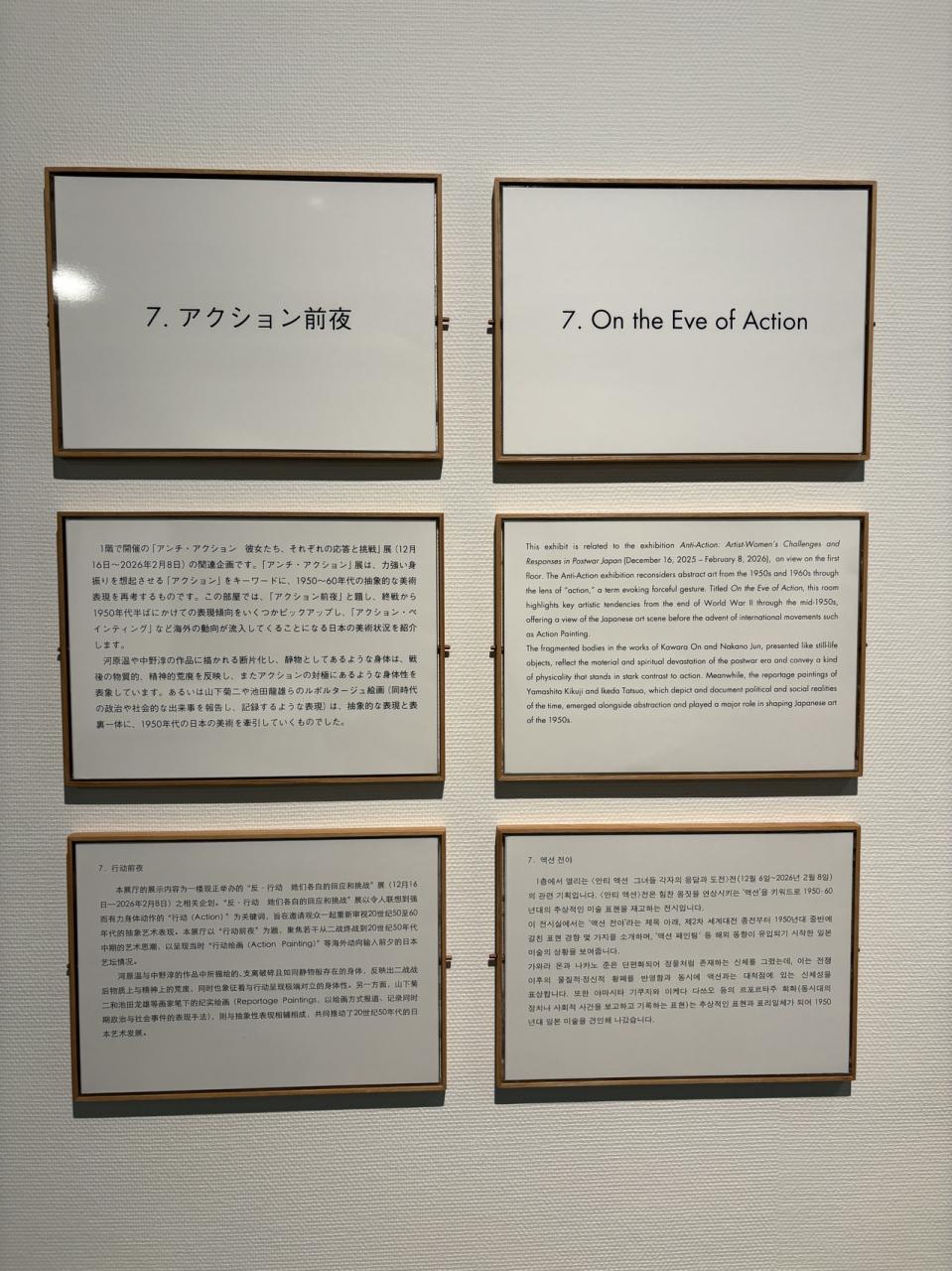
7. アクション前夜
1階で開催の「アンチ・アクション 彼女たち、それぞれの応答と挑戦」展(12月16日~2026年2月8日)の関連企画です。「アンチ・アクション」展は、力強い身振りを想起させる「アクション」をキーワードに、1950~60年代の抽象的な美術表現を再考するものです。この部屋では、「アクション前夜」と題し、終戦から1950年代半ばにかけての表現傾向をいくつかビックアップし、「アクション・ペインティング」など海外の動向が流入してくることになる日本の美術状況を紹介します。
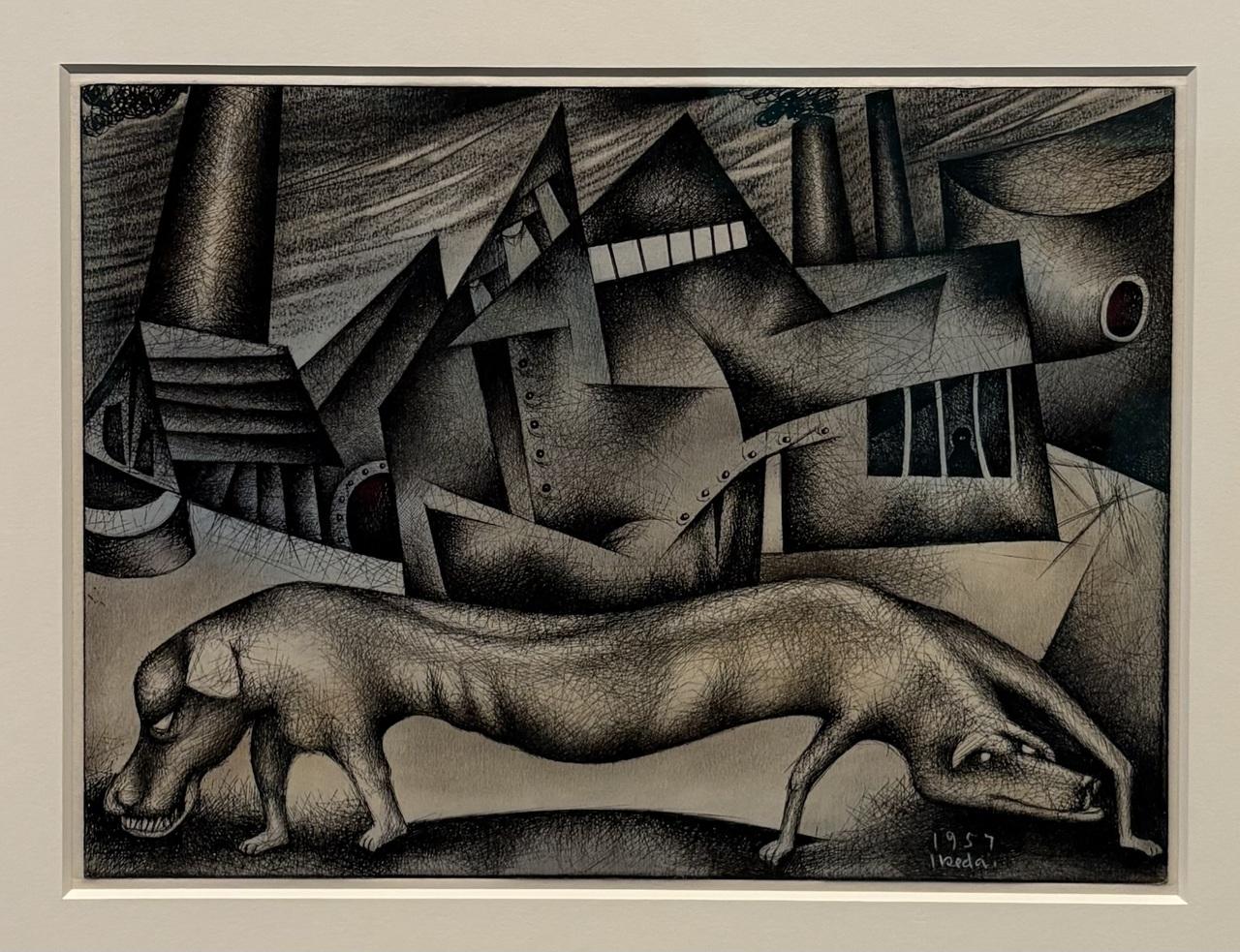
河原温や中野淳の作品に描かれる断片化し、静物としてあるような身体は、戦後の物質的、精神的荒廃を反映し、またアクションの対極にあるような身体性を表しています。あるいは山下菊ニや池田龍雄らのルポルタージュ絵画(同時代の政治や社会的な出来事を報告し、記録するような表現)は、抽象的な表現と表裏一体に、1950年代の日本の美術を牽引していくものでした。
7. On the Eve of Action
This exhibit is related to the exhibition Anti-Action: Artist-Women's Challenges and Responses in Postwar Japan (December 16, 2025 - February 8, 2026), on view on the first floor. The Anti-Action exhibition reconsiders abstract art from the 1950s and 1960s through the lens of "action," a term evoking forceful gesture. Titled On the Eve of Action, this room highlights key artistic tendencies from the end of World War Il through the mid-1950s, offering a view of the Japanese art scene before the advent of international movements such as Action Painting.
The fragmented bodies in the works of Kawara On and Nakano Jun, presented like stillife objects, reflect the material and spiritual devastation of the postwar era and convey a kind of physicality that stands in stark contrast to action. Meanwhile, the reportage paintings of Yamashita Kikuji and Ikeda Tatsuo, which depict and document political and social realities of the time, emerged alongside abstraction and played a major role in shaping Japanese art of the 1950s. -
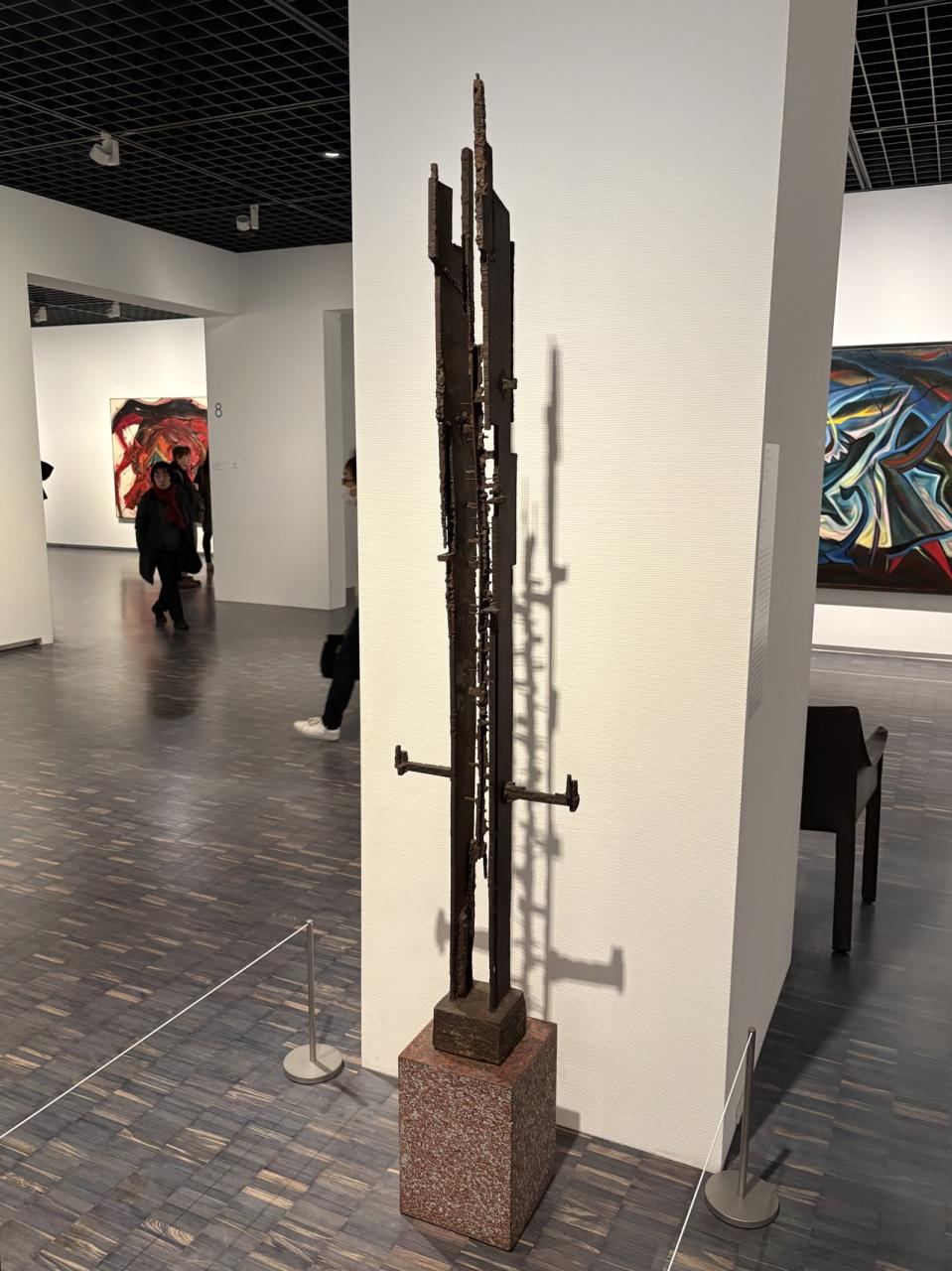
村岡三郎
MURAOKA, Saburo
1928-2013
1954年7月
July 1954
1954 昭和29年
鋼鉄 steel
購入
Purchased
村岡三郎は鉄、塩、酸素、熱など、自然界と人間の生双方に密接に関わる素材を用いて、むき出しの物質性から精神性が立ち上がるような作品を制作してきた作家です。この作品は、日本における溶接彫刻のもっとも早い例とされています。バーナーで鉄を焼き切る溶断の手法によって生まれる荒々しいマティエールは、「鉄」という素材の物質性と触覚性を直接的に提示します。一方で、垂直に伸びる中央の脊髄めいた部分と、それを覆うように配された2枚の板、そして横に突き出た腕の残滓のような突起を有する構造が、どこか身体を想起させる作品です。
Muraoka Saburo is known for works that invoke the spiritual within the raw materiality of substances and phenomena essential to both the natural world and human life, such as iron, salt, oxygen, and heat. This piece is considered to be the earliest example of welded sculpture made in Japan. The rough materiality generated by the oxy-fuel cutting technique of directly slicing through iron with a torch lays bare the physicality and tactility of iron. At the same time, with its central vertical part resembling a spine, two plates arrayed so as to shield it, and protrusions like stubs of arms jutting out at the side, the work's structure evokes the human body. -
-
新収蔵作品
New Acquisition
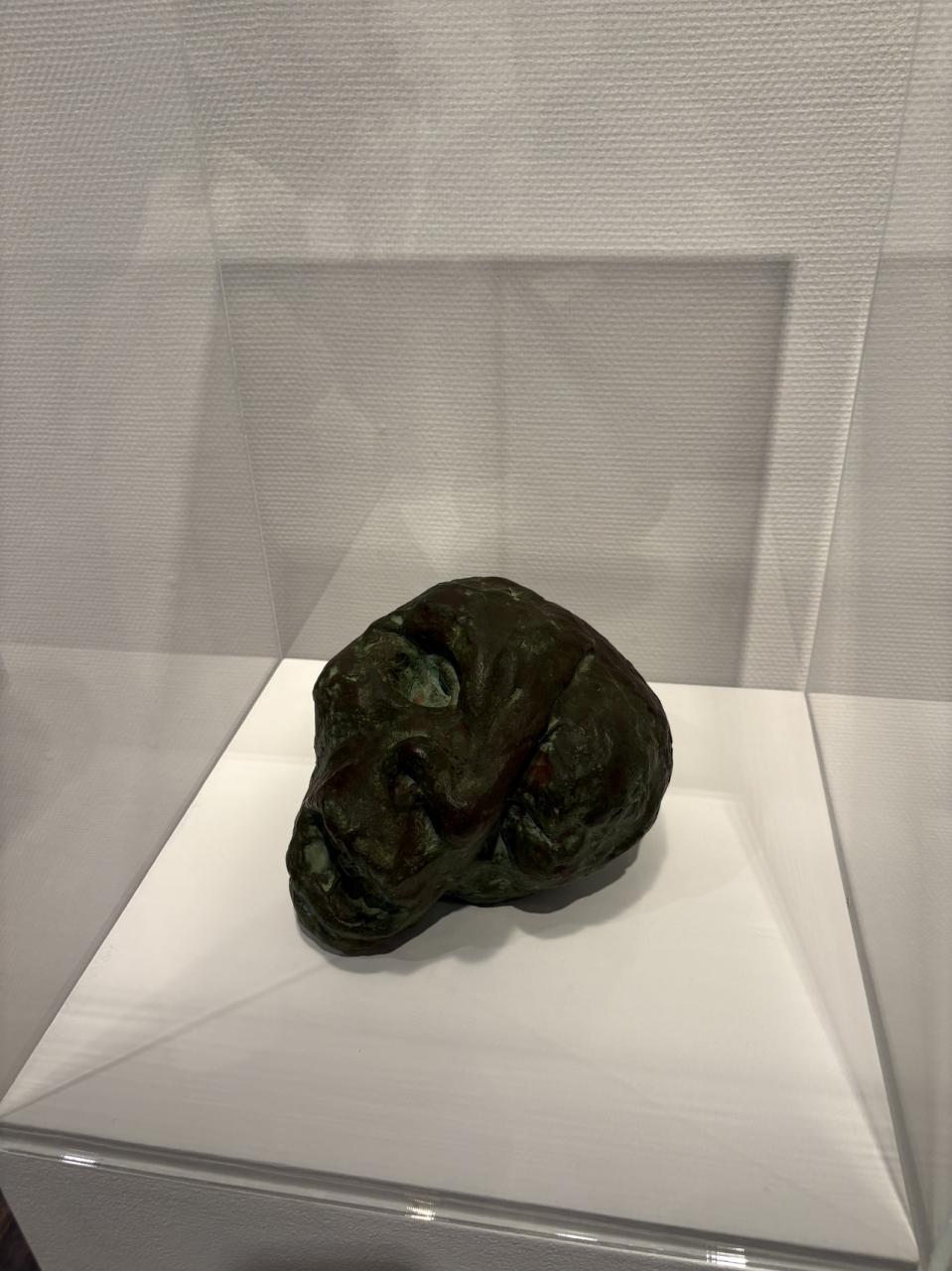
鶴岡政男
TSURUOKA, Masao
1907-1979
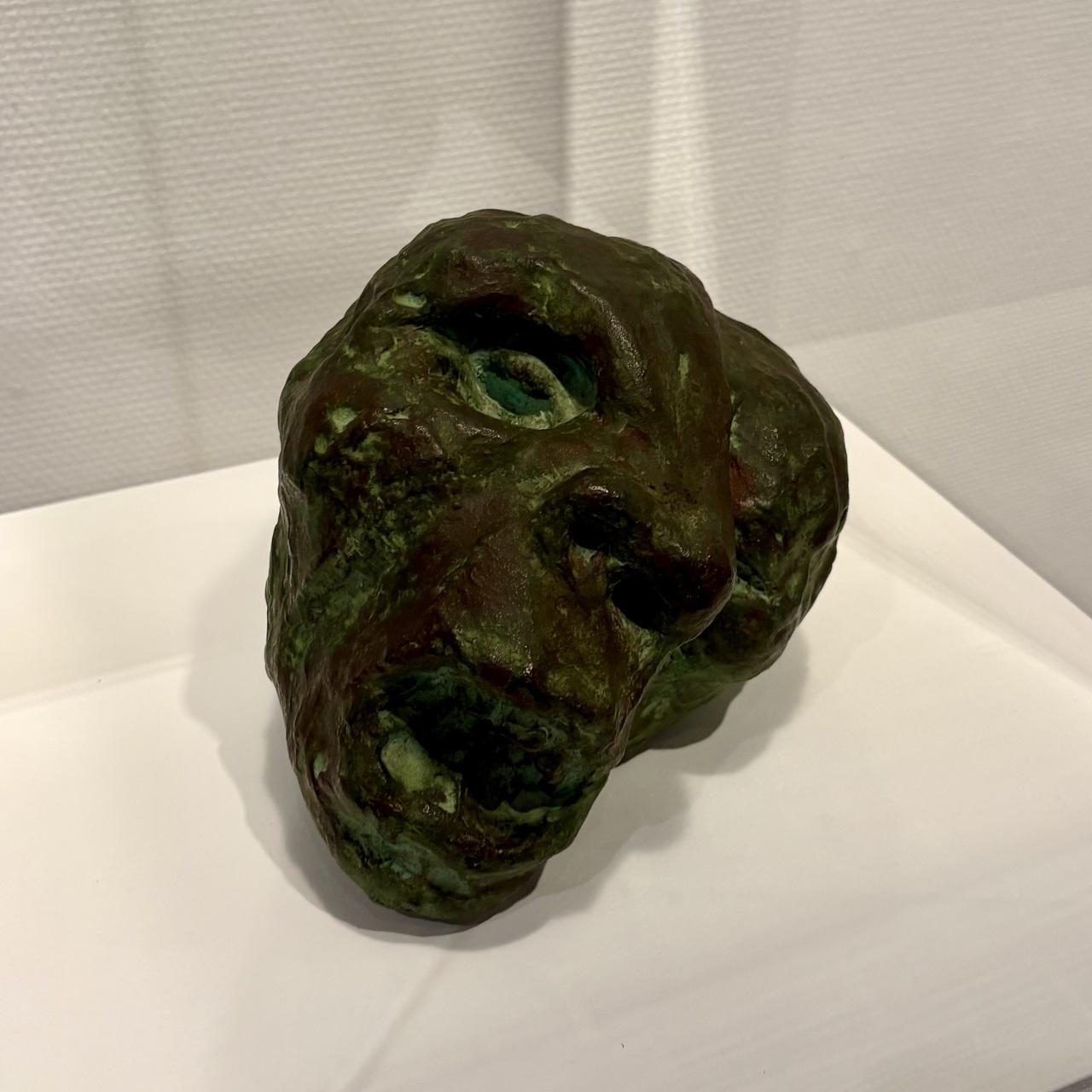
転がっている首
Lying Head
1950
昭和25年
ブロンズ bronze
購入
Purchased
戦後の不条理な現実とそれに向き合う人間存在をテーマにした絵画で知られる鶴岡ですが、1950年前後、彫刻家、木内に触発されて、彫刻を集中的に制作しました。大きくねじ曲がった鼻が特徴的なこの彫刻もそのひとつで、ごろりと横たわる無機質な物体は、死んだ人間の頭部のようにも見えます。1953~54年の座談会で、「自分の精神性というものを極力排除し」、「最後にどんづまりに残った、物としての人間、精神のない無機的な存在」への関心を語った鶴岡の直接的な表現とも見ることができます。
Tsurvoka is known for paintings that grapple with the absurdity of postwar realities and human existence in confrontation with them. Around 1950, however, he turned his attention to sculpture, inspired by sculptor Kinouchi Yoshi. This work, with its sharply twisted nose, is one such example. The inert, inorganic form lying on its side resembles the severed head of a corpse. It can also be seen as a direct expression of Tsurvoka's own ideas, as he stated in a 1953-54 roundtable that he was interested in "eliminating my own psychology to the greatest possible extent" and in "humans as objects, spiritless, inorganic beings reduced to their bare existence." -
-
中野淳
NAKANO, Jun
1925-2017
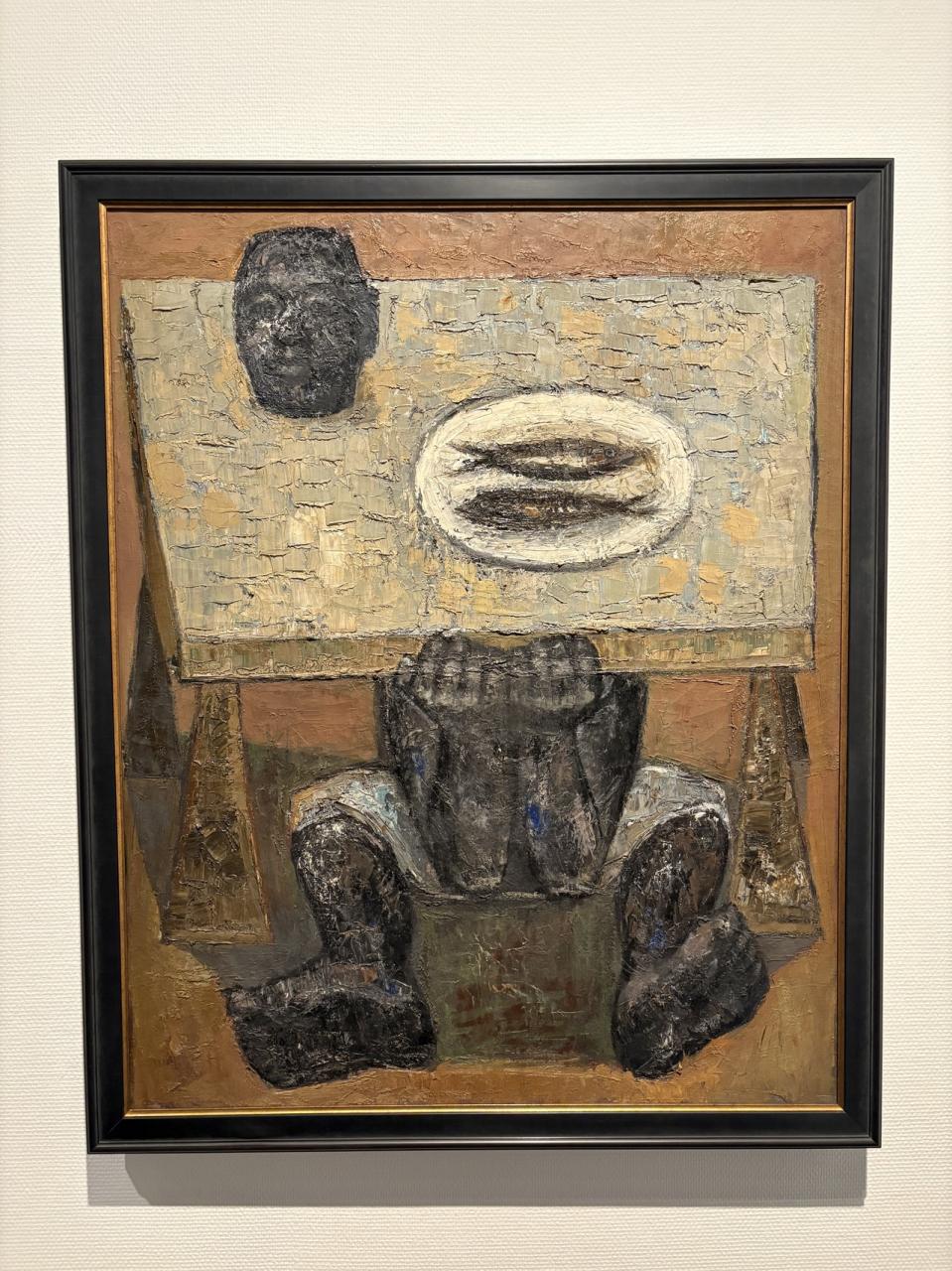
食卓
Dining Table
1956
昭和31年
油彩・キャンバス
oil on canvas
中野喜子氏寄贈
Gift of Nokano Yoko
タイトルに反してショッキングな作品です。胴体から分離した首も、皿の上の魚も、生気を失った「もの」として同じようにテーブルの上に鎮座する光景は、残酷さよりもむしろ、一種の悲哀さえ感じさせるようです。中野淳は、松本竣介と親しく交友して教えを受け、戦後間もない時期は、街の風景を情感こめて描いた作品を発表します。その後は時代の空気に反応しつつ作風を変え、多様な作品を残しました。その意味で、本作もまた、当時の生命観や社会像を反映した証言の一つととらえることができるでしょう。
Despite the unassuming title, this is a shocking work. The tabletop scene, which depicts a severed head and a fish on a plate as the same kind of lifeless objects, seems more sorrowful than cruel. Not long after the war, Nakano Jun, who was a close friend and student of Matsumoto Shunsuke's, painted emotionally charged street scenes. Later, he changed his style to reflect the mood of the times. In that sense, this work might be seen as a testimony to the view of life and social conditions that existed at the time. -
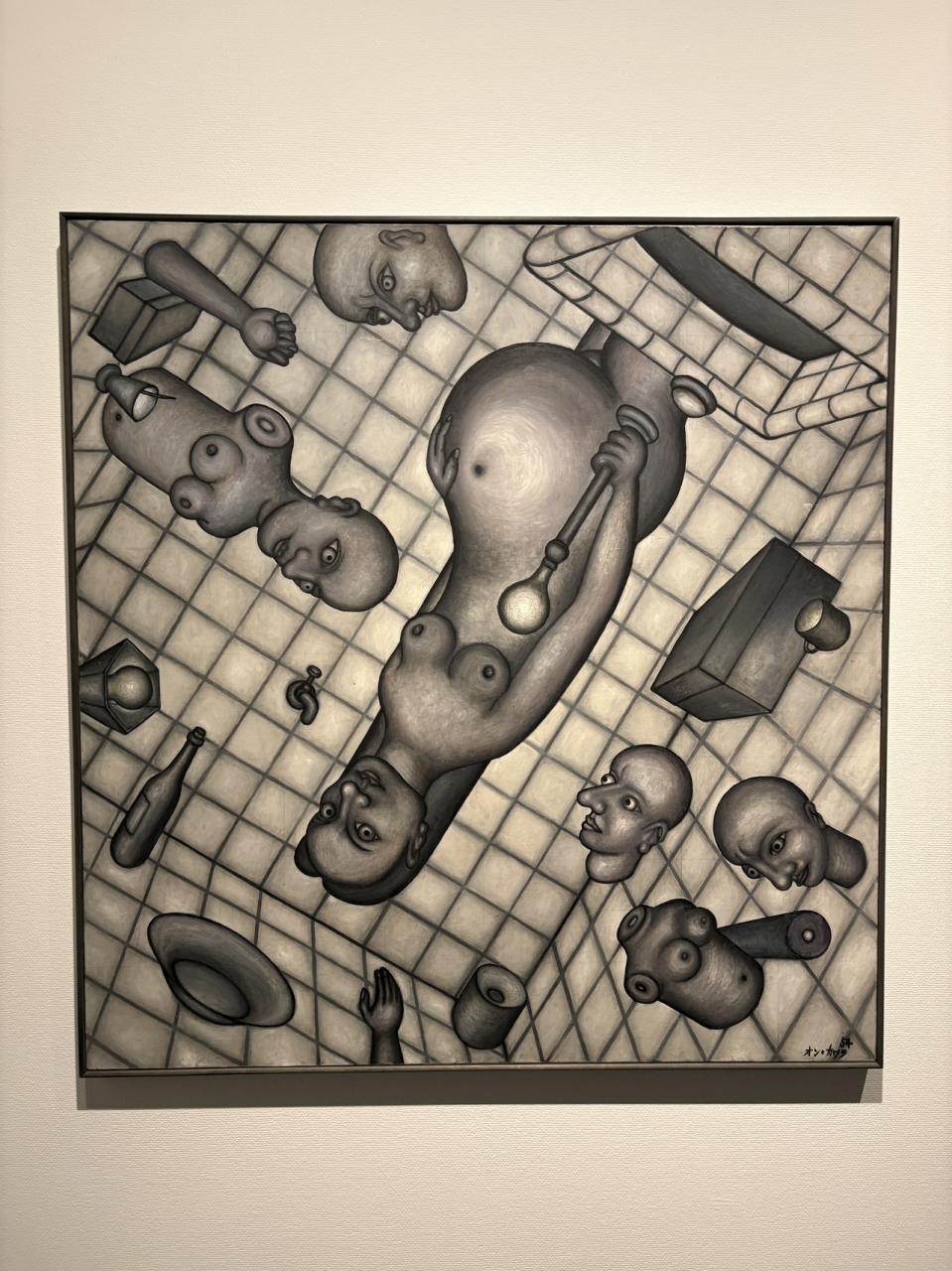
河原温
KAWARA, On
1933-2014
孕んだ女
Pregnant Woman
1954
昭和29年
油彩・キャンバス oil on canvas
作者寄赠
Gilt orine artist
お皿、瓶、腕や首が浴室の中を漂っています。上下左右もはっきりしない狭苦しい空間を見ていると、落ち着かない気分になります。その原因は、タイルの目にあります。人は、体のバランスを保つ平衡感覚に基づいて、垂直、水平な線に安定した心地よさを感じます。しかしここではタイルの目が作る縦、横の線が、絵のフレームの垂直、水平線から斜めにズレています。中央の妊婦が手にする器具の先端が特に明るく描かれています。この球を軸に絵の中の空間は回転し始め、人も物もばらばらにしてしまうかのよう。当時の社会が抱えていた精神状態を表現したとも言われる、この絵が呼び起こす不安さの裏には、こんな造形的工夫も隠されています。
Dishes, bottles, arms, and heads float through the air in a bathroom. The claustrophobic space in which all directions are ambiguous creates a sense of unease. The problem lies in the lines demarcating the tiles. We derive stability and comfort in vertical and horizontal lines based on the sense of balance that maintains our bodies' equilibrium. Here, however, the verticals and horizontals the tiles are diagonally shifted in relation to the lines of the picture's frame. The tip of the implement held by the pregnant woman in the center is particularly bright, and its spherical bulb seems to be the center around which the pictorial space begins to revolve, as if poised to scatter people and things to the four winds. Such is the formal ingenuity underlying the anxiety provoked by this work, said to express the mental condition of postwar Japanese society. -
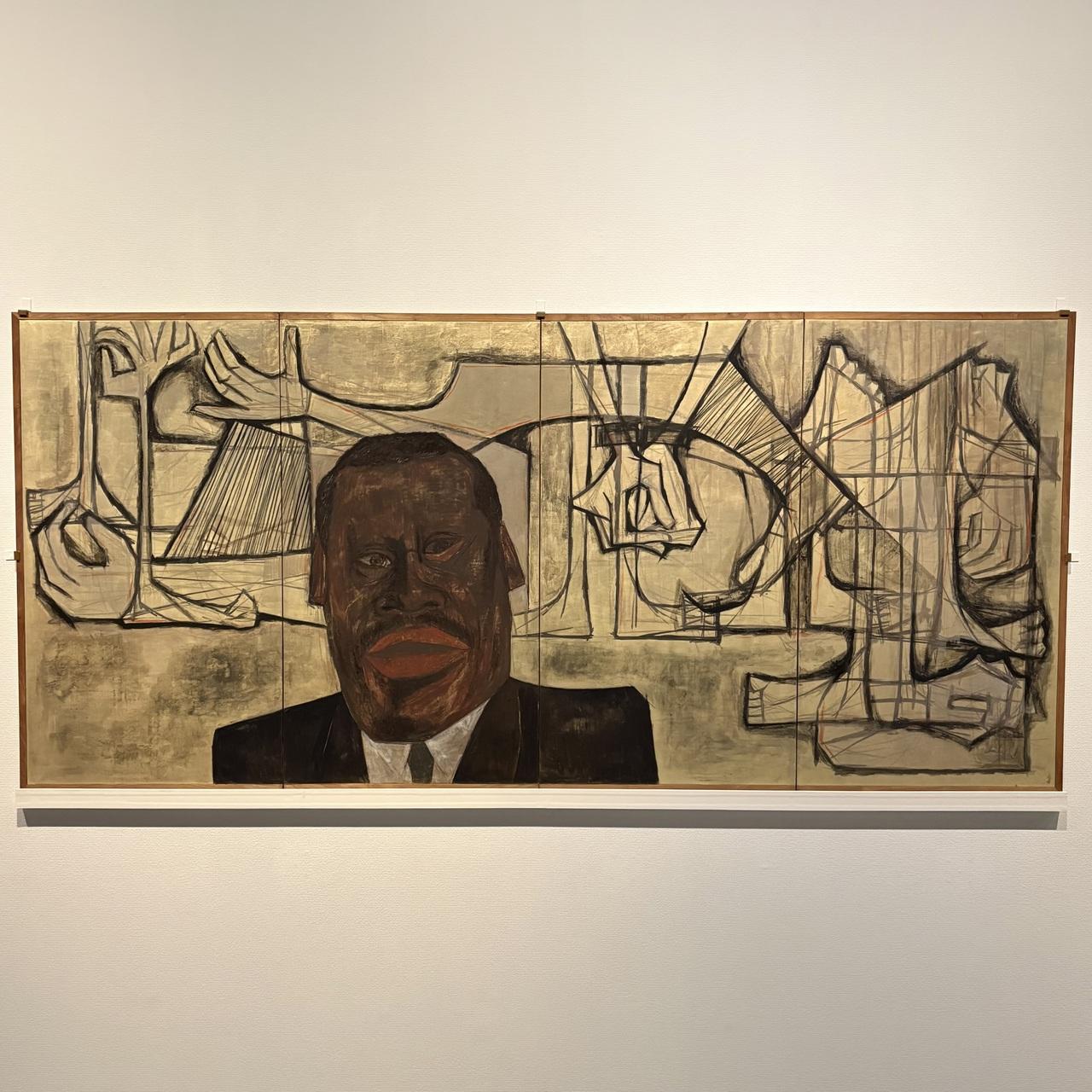
朝倉摂
ASAKURA, Setsu
1922-2014
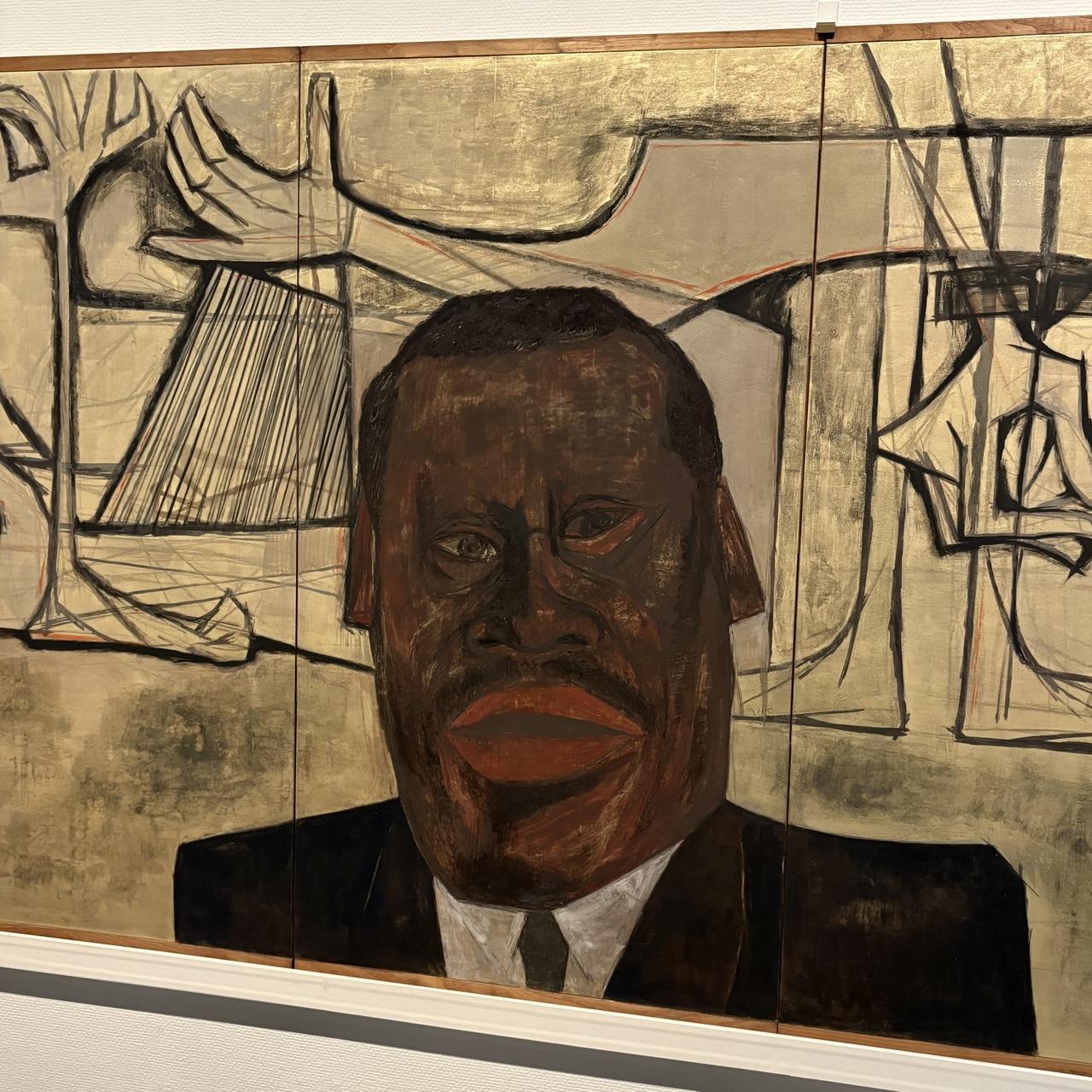
黒人歌手ポール・ロブソン
Paul Robeson, black Singer
1959昭和34年
紙本彩色 color on paper
作者寄贈
Gift of the artist
洗練された色彩感覚を見せるモダンな日本画で、朝倉摂は早くから注目を浴びましたが、戦後は新しい時代の絵画表現を追究し、働く人々や社会問題を積極的に扱いました。
1959年、ウィーンで開かれた第7回世界青年学生平和友好祭に参加した朝倉は、ポール・ロブソン(ロブスン)(アフリカ系アメリカ人の歌手、俳優で公民権活動家)の歌に感銘を受けこの作品を描きました。上半身を大きくクローズアップして描かれたロブソン。その背後の断片化された手足の表現は、困難な社会状況の反映と、世界の連帯の必要性を示しているように見えます。
Asakura Setsu earned acclaim at a young age with her modern Nihon-ga (Japanese-style painting), distinguished by a refined sense of color. In the postwar years, she pursued new forms of painting suited to a changing era, actively addressing themes of labor and social issues.
In 1959, Asakura participated in the 7th World Festival of Youth and Students in Vienna. Deeply moved by the performance of theAtrican American singer, actor and civil rights activist Paul Robeson, she produced this work. Robeson is depicted in a large close-up of his head and shoulders, while the fragmented hands and feet behind him seem to evoke the hardships of the oppressed and the urgent need for global solidarity. -
-
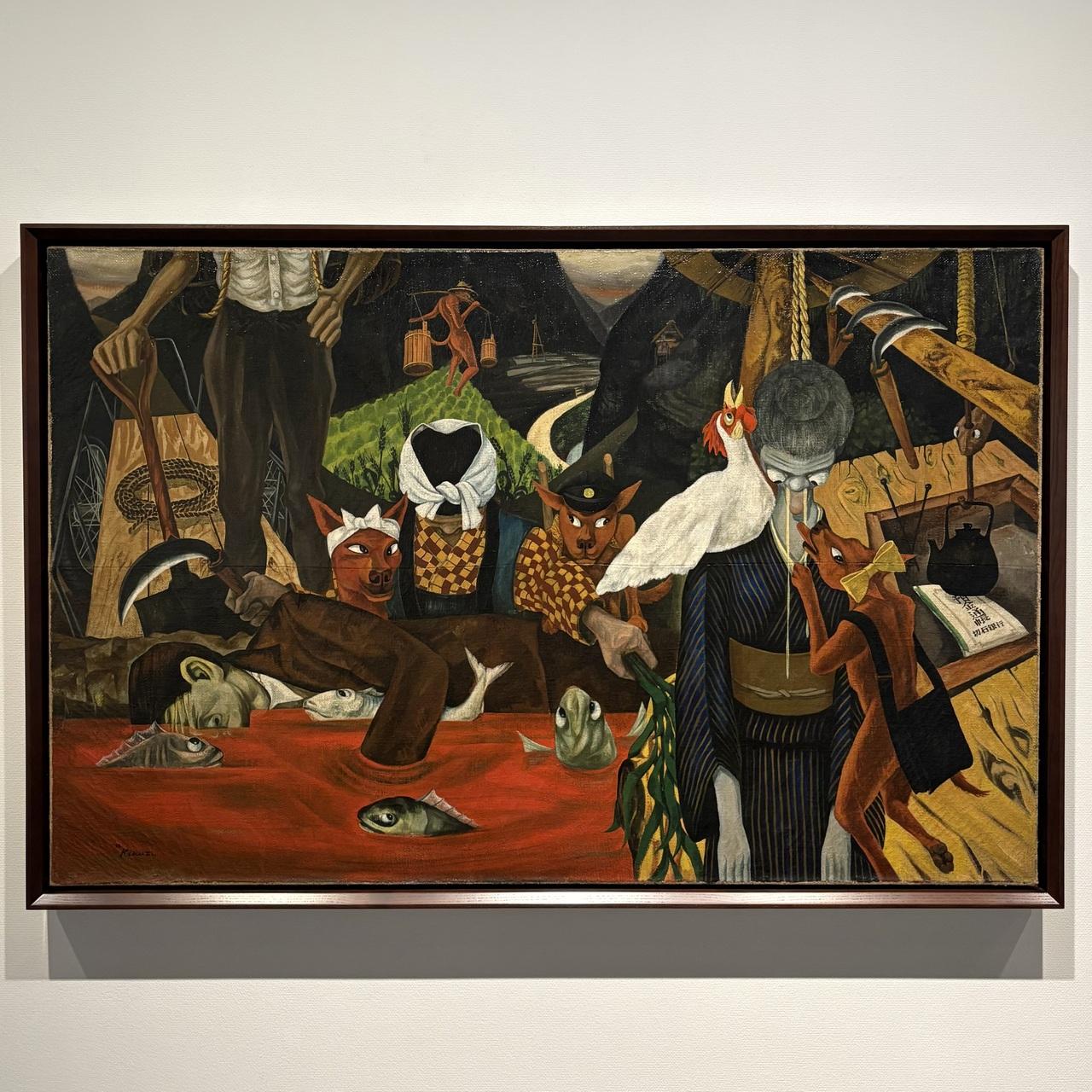
山下菊二
YAMASHITA, Kikuji
1919-1986
あけぽの村物語
The Tale of Akebono Village
1953
昭和28年
油彩・ドンゴロス oil on dungarees
購人
Purchased
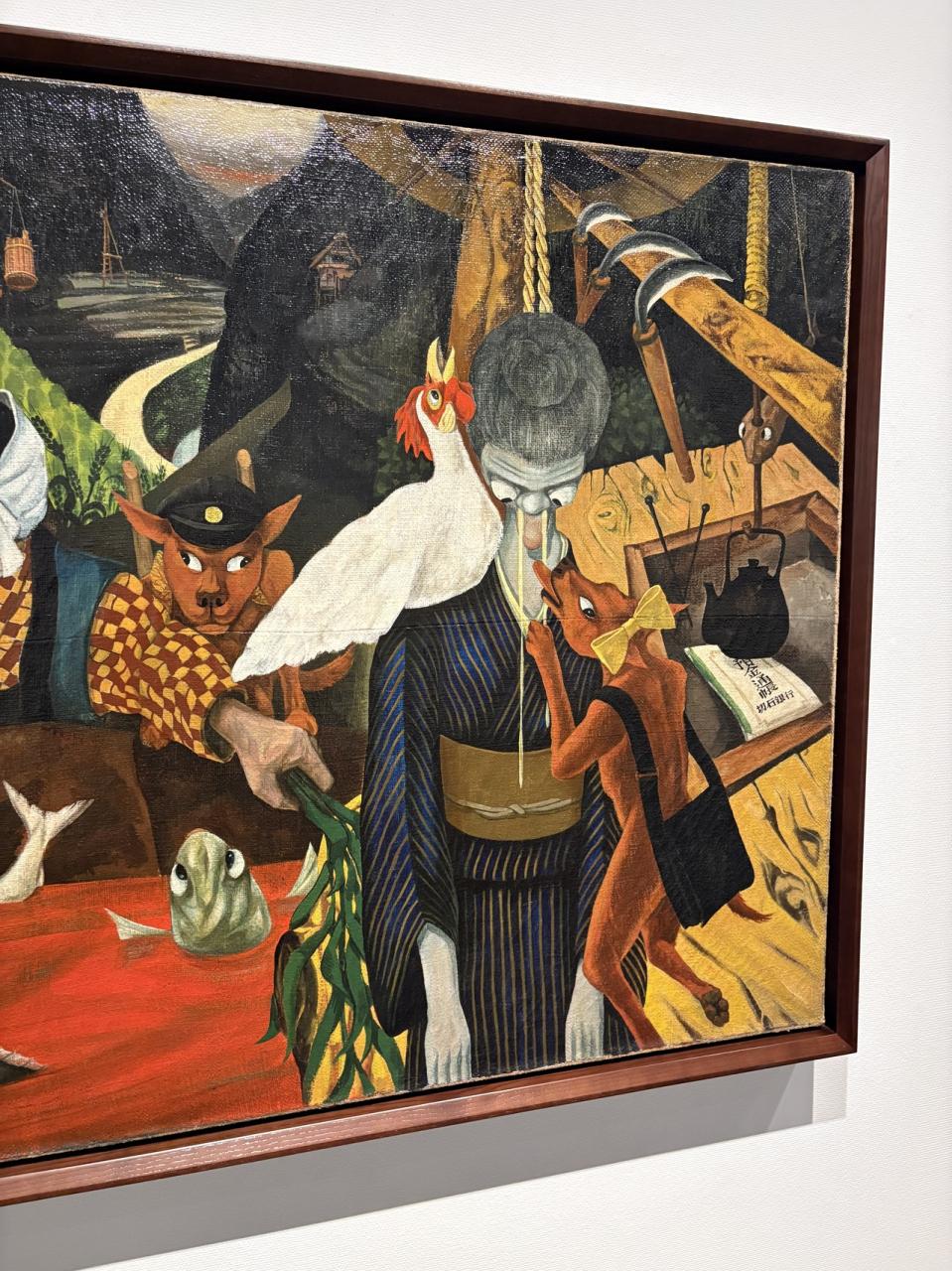
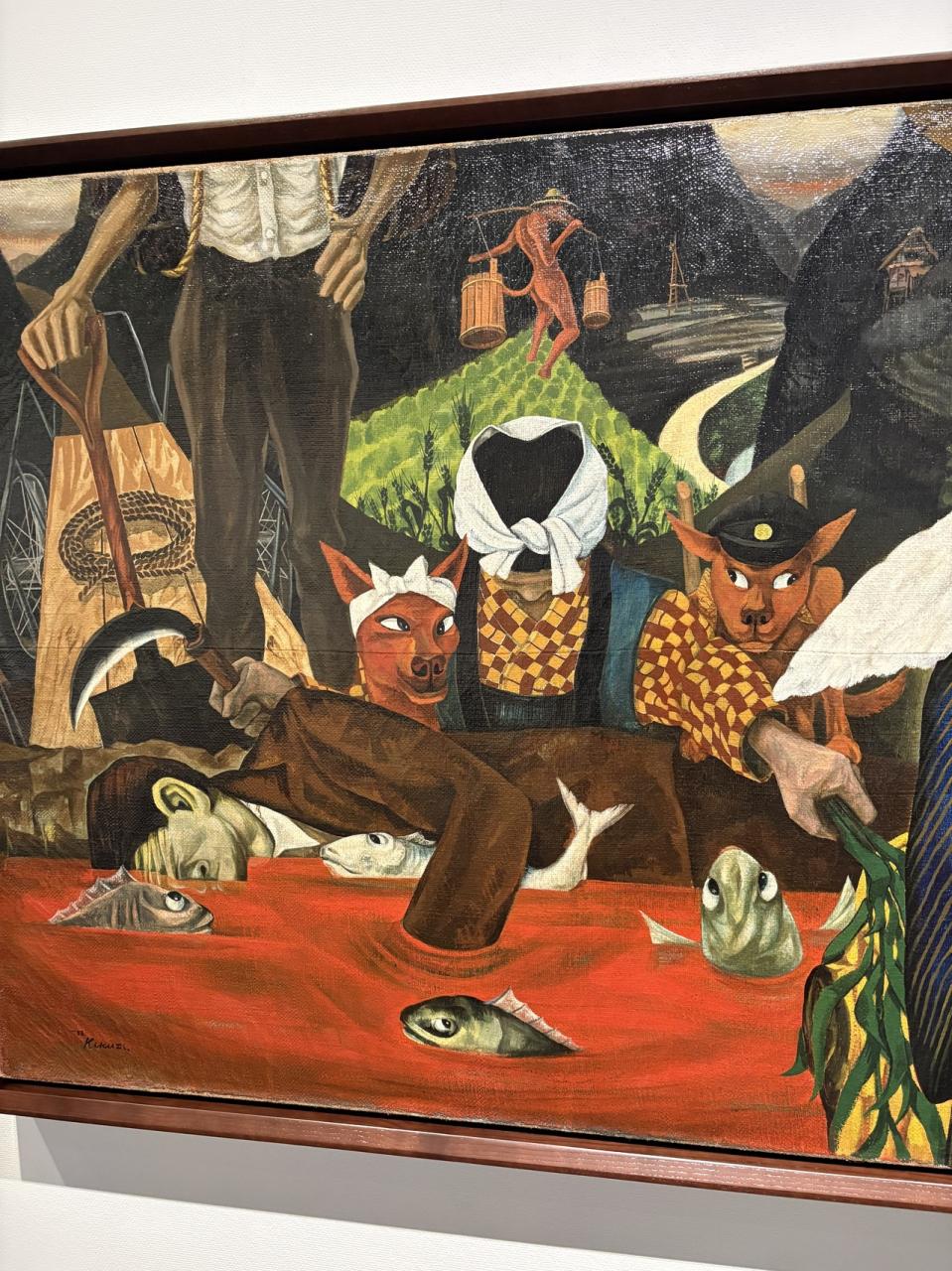
この作品は、山梨県で実際に起きた事件が主題です。3つの消失点に対応しつつ、場面は概ね4つに分けられます。画面右から、銀行倒産のために自殺した老婆とその孫娘、農道敷設によって自分の麦畑が潰されたことに抗議する村娘、地主への抗議及び襲撃の先導に立った人物を背負籠に入れて運ぶ男、そして画面の下辺には赤い川で溺死する事件の主導者が描かれています。圧政に耐えかねた村民たちが地主宅を襲撃したという事件そのものは描かれませんが、周辺事情を通じてその因果関係が浮かび上がります。寄り目や斜視の犬によって表された人物描写は、土俗的な雰囲気を高めています。
This work is based on an incident that actually occurred in Yamanashi Prefecture. With three parallel vanishing points, the scene is roughly divided into four parts. From right to left, there is a scene of an old woman who committed suicide following the failure of a bank, and her daughter; followed by one in which a village girl fights back against construction of a farm road that crushed her wheat field; a third in which a man carries a large basket on his back containing a human figure who is leading a rebellion and an assault against a landowner; and finally, one in the lower section of the painting in which the leader of the rebellion is shown drowned in a red river. Though the work does not depict the actual incident, in which the villagers, no longer to bear his tyranny, attacked the landowner's house, the viewer can surmise the causes and effects of the event from these peripheral events. The depiction of people as cross-eyed or squint-eyed dogs also enhances the folk-like atmosphere. -
-
-
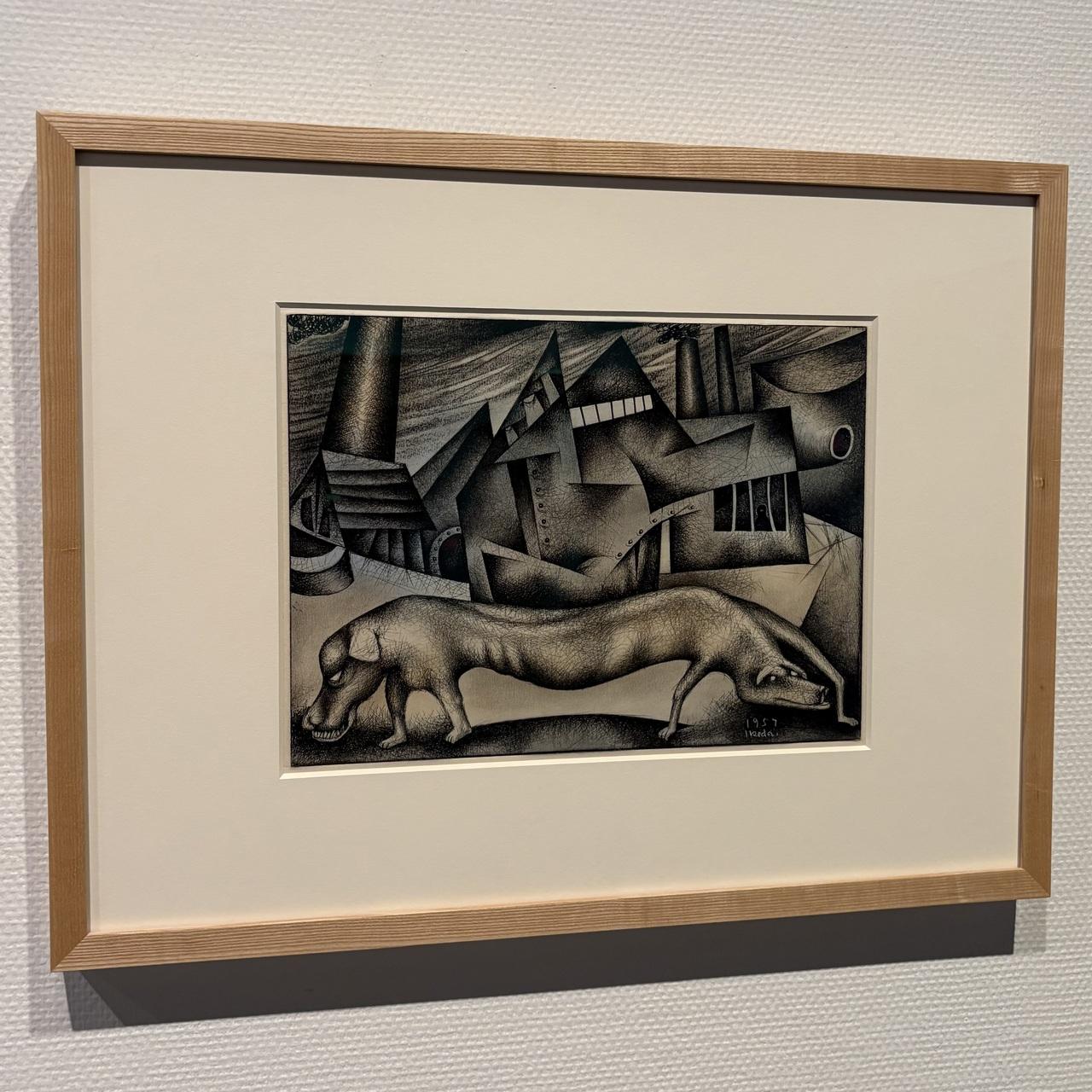
池田龍雄
IKEDA, Tatsuo
1928-2020
見張り(「禽獣記」シリーズ)
On Watch from Document of Birds and Beasts Series
1957 昭和32年
インク、コンテ、油彩、水彩・紙
ink, conté, oil and watercolor on paper
購入
Purchased -
-
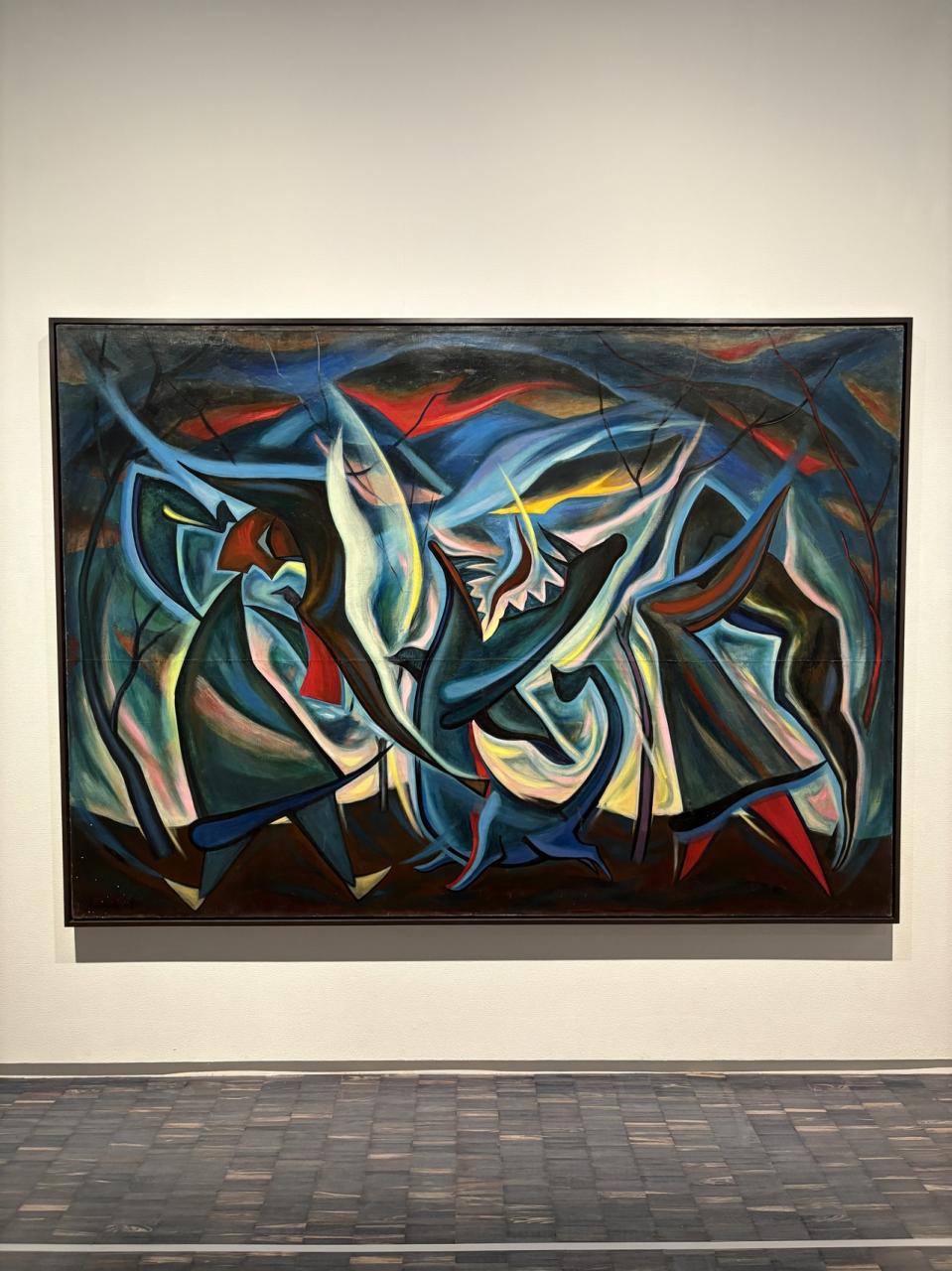
岡本太郎
OKAMOTO, Taro
1911-1996
夜明け
Dawn
1948
昭和23年
油彩・キャンバス
oil on canvas
作者寄贈
Gift of the artist
岡本太郎は、抽象と具象、美と醜など、さまざまな矛盾を矛盾のままに対決させる「対極主義」の制作理念を唱えて、第二次大戦後の美術界に旋風を巻き起こしました。《夜明け》は、その最初期の成果といえるでしょう。中央に天に向かって遠吠えする獣を配し、その左右には、長い髪を振り乱して耳をふさぐ人物や、頭巾のようなものをかぶった人物の姿が見えます。闇のなかに跋扈する不気味な集団の背後には、赤々とした光が覗きはじめています。
「夜明け」といって、未来へ向けて立ち上がろうというようなポジティブなイメージだけではなく、不気味な出来事のはじまりをも予感させる作品です。
Advocating "polarism," a creative principle based on confrontation between contradictory notions such as abstract and concrete, beautiful and ugly, Okamoto Taro caused a sensation in the postwar art world. Dawn is an early example of the artist's approach. In the center, there is a beast baying distantly at the sky, surrounded by human figures with long disheveled hair and covering their ears or wearing hood-like object on their head. Behind this weird group sprawled out in the darkness is a glimpse of the glowing dawn.
Here "dawn" conveys not only a positive image of rising up to greet the future, but also a premonition of some eerie event. -
草間彌生
KUSAMA, Yayoi
1929-
集積の大地
Earth of Accumulation
1950 昭和25年
油彩、エナメル・麻布(種袋)
oil and enamel on seed sack
購入
Purchased
草間の初個展の出品作のひとつです。時は1952(昭和27)年、場所は松本市第一公民館、期間はたった2日間でした。この作品が描かれる前年までは、草間はまだ日本画の技法を用いていましたが、本作では、油絵具が使われています。支持体は、麻袋。種苗業を営む旧家に生まれ育った草間にとっては親しみのある素材だったでしょう。
1952年に彼女が地元の冊子『信州往来』に寄せたエッセイからは、アーティストとしての強い意志を読みとることができます。「文化は時代の新しい産物であり世界の空気を呼吸し世代を創造してゆくことを要請してゐる。これは画家の重要な便命である。現代を如何にして未来へときずきあげるか。歴史への批判と現在のポイントを踏み迷ってはならない。」
This was among the works shown at Kusama's first solo exhibition. The year was 1952, the venue the Matsumoto City Daiichi Public Hall, and the duration only two days. Until the year before she painted this, Kusama had studied Nihonga (Japanese-style painting), but here she used oil paint, on a burlap sack in place of a canvas. As she was born into a well-to-do family that ran a seed business, this must have been a familiar material.
An essay Kusama published in a local pamphlet called Shinshu orai [Shinshu Miscellany] that year conveys the artist's strong will. She wrote: "In any given era, culture is a product of the times. It demands that an artist breathe the air of the whole world, to create something that represents a new generation. A painter's mission is to create a future from the present. A painter must both accurately critique the past and correctly comprehend the present." -
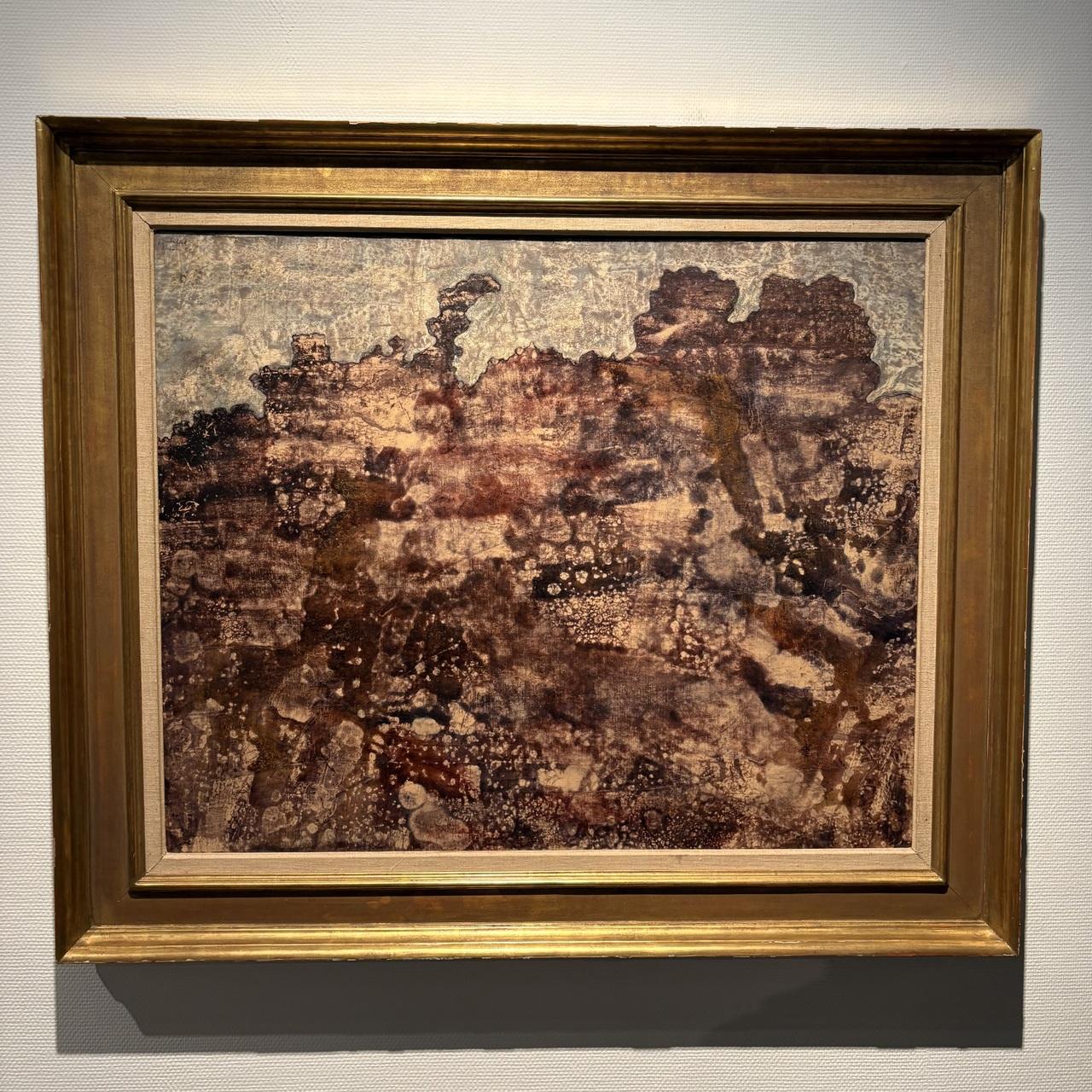
ジャン・デュビュッフェ
Jean Dubuffet
1901-1985
土星の風景
Saturian Landscape
1952 昭和27年
油彩・キャンバス oil on canvas
盛田良子氏寄贈
Gift of Morita Yoshiko
デュビュッフェは既成の芸術の権威を否定しつつ、自らの内的な欲求にしたがって独自の技法を創出しながら、変貌を続けたアーティストです。本作は1952~53年にかけて制作された「東の間の土地」シリーズからの一点。油絵具とラッカー塗料を混合して生まれた変化に富む色彩を効果的に用いたこの作品には、形と非・形との間を探究するデュビュッフェらしさが良く出ています。デュビュッフェといえば、絵具を厚く盛った大地そのもののような堅固な絵肌が、頻繁に見られる特徴なのですが、このシリーズでは珍しく物質性は控えめです(土星を構成する主要成分が水素とヘリウム、つまりガスであることをデュビュッフェは知っていたのでしょうか?)。
Dubuffet was an artist known for his continually evolving style, internally driven by a hunger for innovation and rejecting established artistic conventions. This work is from his Momentary Places series of 1952 and 1953. It powerfully employs a richly varied palette produced by mixing oil paint and lacquer, reflecting Dubuffet's longstanding exploration of the intermediate zone between form and non-form. Dubuffet's works are typically characterized by extremely thick impasto paint application, creating dense textures that evoke the surface of the earth itself. This series, however, features rare restraint in materiality (perhaps reflecting the artist's
awareness that Saturn is primarily composition of gases such as hydrogen and helium?) -
(続く・・・)

![草間彌生<br />KUSAMA, Yayoi<br />1929-<br /><br />集積の大地<br />Earth of Accumulation<br />1950 昭和25年<br />油彩、エナメル・麻布(種袋)<br />oil and enamel on seed sack<br /><br />購入<br />Purchased<br /><br />草間の初個展の出品作のひとつです。時は1952(昭和27)年、場所は松本市第一公民館、期間はたった2日間でした。この作品が描かれる前年までは、草間はまだ日本画の技法を用いていましたが、本作では、油絵具が使われています。支持体は、麻袋。種苗業を営む旧家に生まれ育った草間にとっては親しみのある素材だったでしょう。<br /><br />1952年に彼女が地元の冊子『信州往来』に寄せたエッセイからは、アーティストとしての強い意志を読みとることができます。「文化は時代の新しい産物であり世界の空気を呼吸し世代を創造してゆくことを要請してゐる。これは画家の重要な便命である。現代を如何にして未来へときずきあげるか。歴史への批判と現在のポイントを踏み迷ってはならない。」<br /><br />This was among the works shown at Kusama's first solo exhibition. The year was 1952, the venue the Matsumoto City Daiichi Public Hall, and the duration only two days. Until the year before she painted this, Kusama had studied Nihonga (Japanese-style painting), but here she used oil paint, on a burlap sack in place of a canvas. As she was born into a well-to-do family that ran a seed business, this must have been a familiar material.<br /><br />An essay Kusama published in a local pamphlet called Shinshu orai [Shinshu Miscellany] that year conveys the artist's strong will. She wrote: "In any given era, culture is a product of the times. It demands that an artist breathe the air of the whole world, to create something that represents a new generation. A painter's mission is to create a future from the present. A painter must both accurately critique the past and correctly comprehend the present."](https://cdn.4travel.jp/img/tcs/t/pict/src/89/94/44/src_89944480.jpg?1775566333)
この旅行記のタグ


利用規約に違反している投稿は、報告する事ができます。
-
前の旅行記

MOMAT〔国立東京近代美術館〕コレクション展 ~2026.2.8: その6.戦時の女性たち。"『主婦之友』...
2026/02/05~
神田・神保町
-
次の旅行記

MOMAT コレクション展 ~2026.2.8:8.「・・・アクション!」&「・・・カット!」。"ルーチョ・...
2026/02/05~
神田・神保町
-

"MOMAT〔国立東京近代美術館〕コレクション展 ~2026.2.8" その1.ハイライト。"奈良美智《Ha...
2026/02/05~
神田・神保町
-

"MOMAT〔国立東京近代美術館〕コレクション展 ~2026.2.8" その2.新か、旧か? "和田三造《南...
2026/02/05~
神田・神保町
-

"MOMAT〔国立東京近代美術館〕コレクション展~2026.2.8" その3.キュビスム再考 "ナターリア・...
2026/02/05~
神田・神保町
-

"MOMAT〔国立東京近代美術館〕コレクション展 ~2026.2.8" その4.『濹東綺譚』。"木村荘八 、...
2026/02/05~
神田・神保町
-

"MOMAT コレクション展 ~2026.2.8" その5.1930年代の絵画:現実の彼方へ、幻影の手前で。...
2026/02/05~
神田・神保町
-

MOMAT〔国立東京近代美術館〕コレクション展 ~2026.2.8: その6.戦時の女性たち。"『主婦之友』...
2026/02/05~
神田・神保町
-

MOMAT〔国立東京近代美術館〕コレクション展 ~2026.2.8: その7.アクション前夜。"朝倉摂 《黒...
2026/02/05~
神田・神保町
-

MOMAT コレクション展 ~2026.2.8:8.「・・・アクション!」&「・・・カット!」。"ルーチョ・...
2026/02/05~
神田・神保町
-

MOMAT〔国立東京近代美術館〕コレクション展 ~2026.2.8:その9."細江英公「薔薇刑」"
2026/02/05~
神田・神保町
-

MOMAT ~2026.2.8:その10.1950~60年代:有機的な彫刻/川端龍子と青龍社。"ジェルメーヌ...
2026/02/05~
神田・神保町
-

MOMAT〔国立東京近代美術館〕コレクション展 ~2026.2.8:その11.記憶と想起。"河原温《1966...
2026/02/05~
神田・神保町
-

MOMAT コレクション展 ~2026.2.8:12.入れ替わる世界、ひらかれる感覚。"冨井大裕《board...
2026/02/05~
神田・神保町
-

国立東京近代美術館 "コレクションによる小企画 没後30年 榎倉康二(~2026.2.8)"《 干渉(STO...
2026/02/05~
神田・神保町
旅行記グループをもっと見る
コメントを投稿する前に
十分に確認の上、ご投稿ください。 コメントの内容は攻撃的ではなく、相手の気持ちに寄り添ったものになっていますか?
サイト共通ガイドライン(利用上のお願い)報道機関・マスメディアの方へ 画像提供などに関するお問い合わせは、専用のお問い合わせフォームからお願いいたします。






フォートラベル公式LINE@
おすすめの旅行記や旬な旅行情報、お得なキャンペーン情報をお届けします!
QRコードが読み取れない場合はID「@4travel」で検索してください。
\その他の公式SNSはこちら/




旅行記グループ MOMAT コレクション〔国立東京近代美術館 所蔵作品展〕(2025.11.5-2026.2.8)
0
18