


2026/02/05 - 2026/02/05
62位(同エリア933件中)

旅熊 Kokazさん
- 旅熊 KokazさんTOP
- 旅行記1928冊
- クチコミ854件
- Q&A回答101件
- 1,711,253アクセス
- フォロワー752人
MOMAT コレクション〔国立東京近代美術館 所蔵作品展〕(2025.11.5-2026.2.8)
2025年11月5日-2026年2月8日の所蔵作品展のみどころ
当館コレクション展の特徴をご紹介します。まずはその規模。1952年の開館以来の活動を通じて収集してきたおよそ14,000点の所蔵作品から、会期ごとに約200点を展示する国内最大級のコレクション展です。そして、それぞれ小さなテーマが立てられた全12室のつながりによって、19世紀末から今日に至る日本の近現代美術の流れをたどることができる国内随一の展示です。
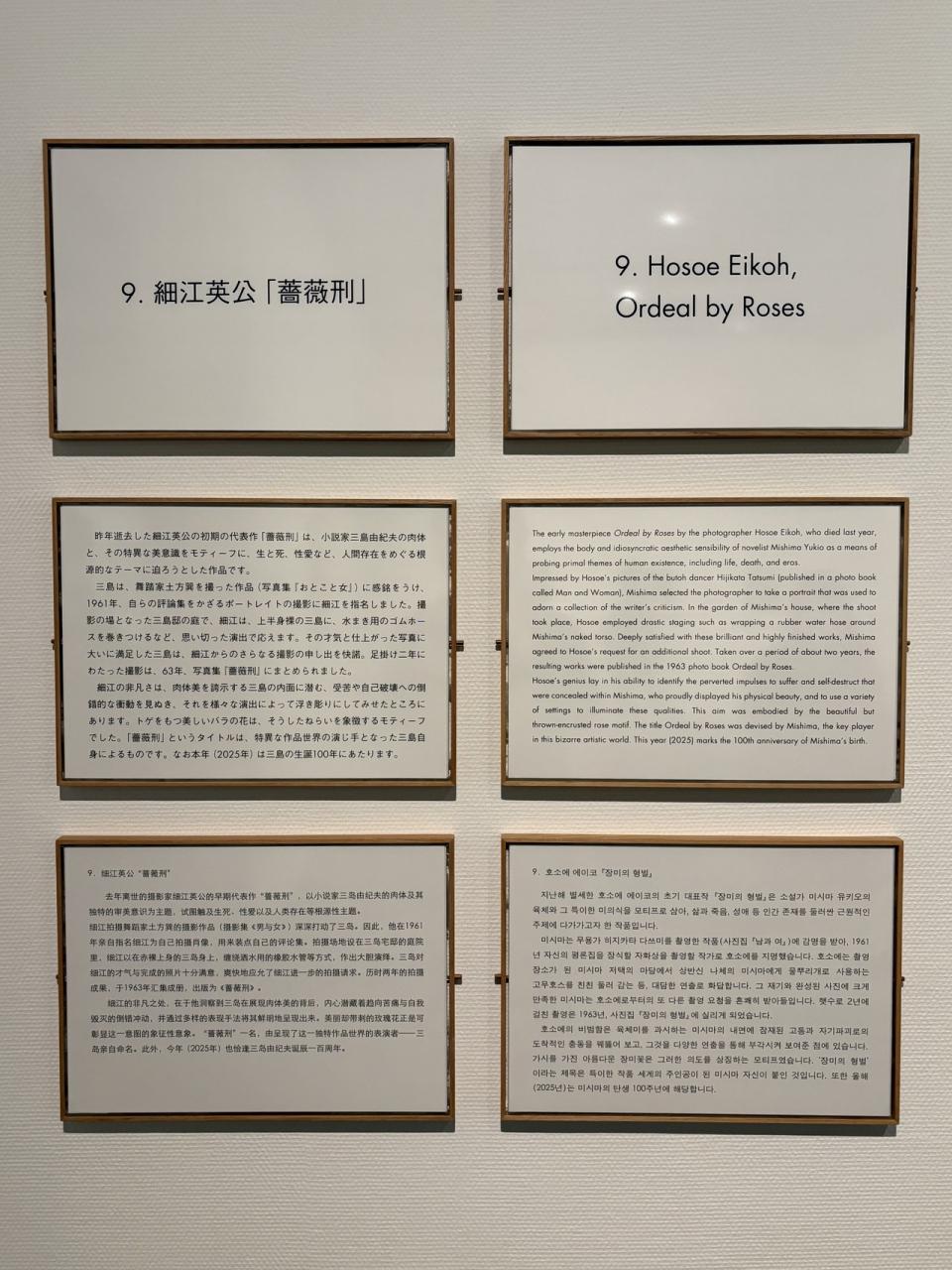
今期のみどころ紹介です。長らく国外への貸出が続いていた奈良美智《Harmless Kitty》(1994年)が、約2年ぶりにMOMATコレクションに帰ってきました。4階ハイライト・コーナーでご覧いただけます。3階9室では写真家の細江英公の初期代表作「薔薇刑」を展示します。2024年に逝去された細江の追悼と、被写体となった小説家三島由紀夫の生誕100年記念(2025年)を兼ねての紹介です。
今期も、新収蔵作品が多く展示されています(作品横に貼られた「新収蔵作品」マークが目印です)。長く館を代表してきた顔ぶれにフレッシュな新星と、盛りだくさんのMOMATコレクションをお楽しみください。
https://www.momat.go.jp/exhibitions/r7-2
- 旅行の満足度
- 5.0
-

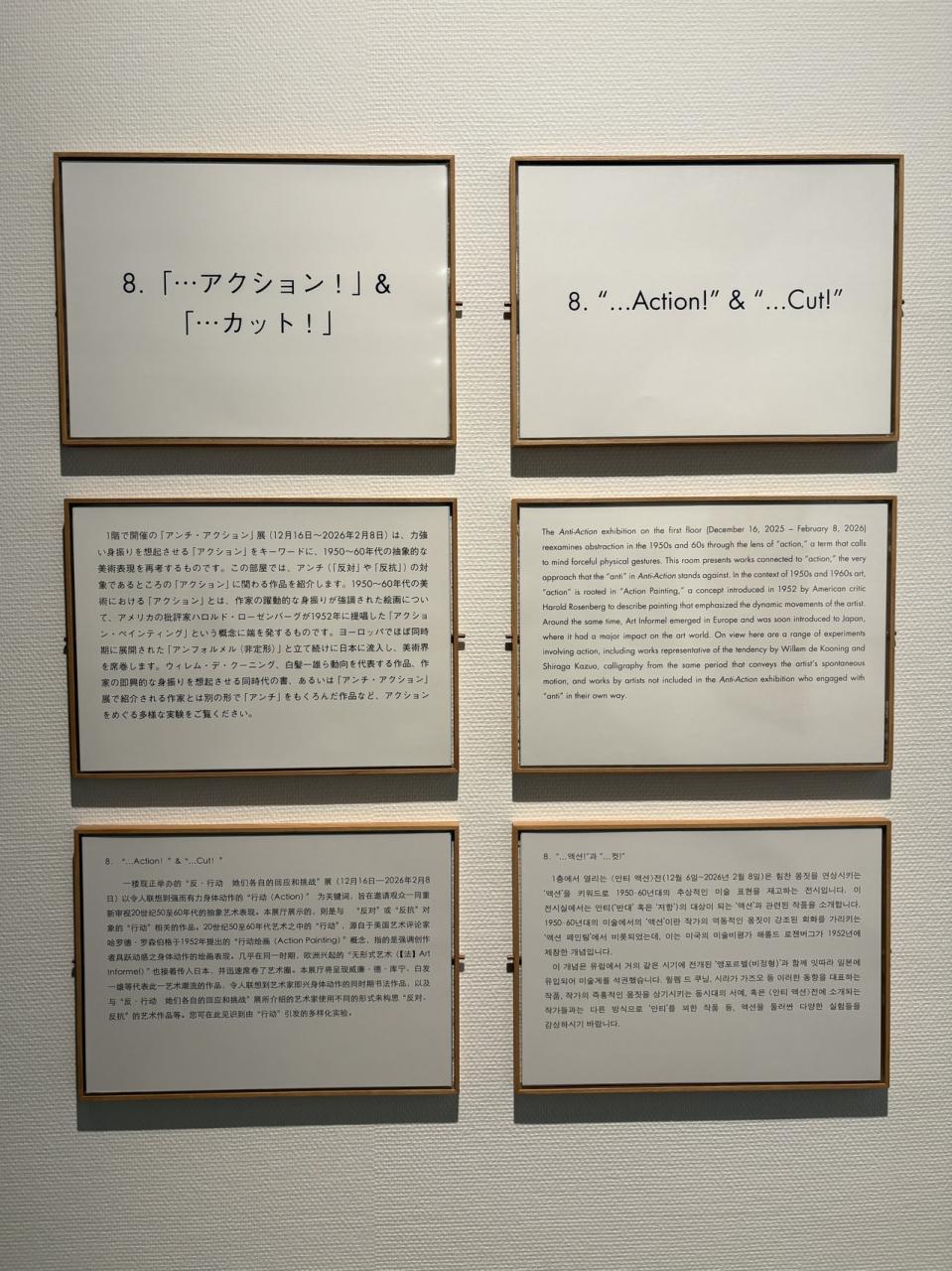
8.「・・・アクション!」&「・・・カット!」
1階で開催の「アンチ・アクション」展(12月16日~2026年2月8日)は、力強い身振りを想起させる「アクション」をキーワードに、1950~60年代の抽象的な美術表現を再考するものです。
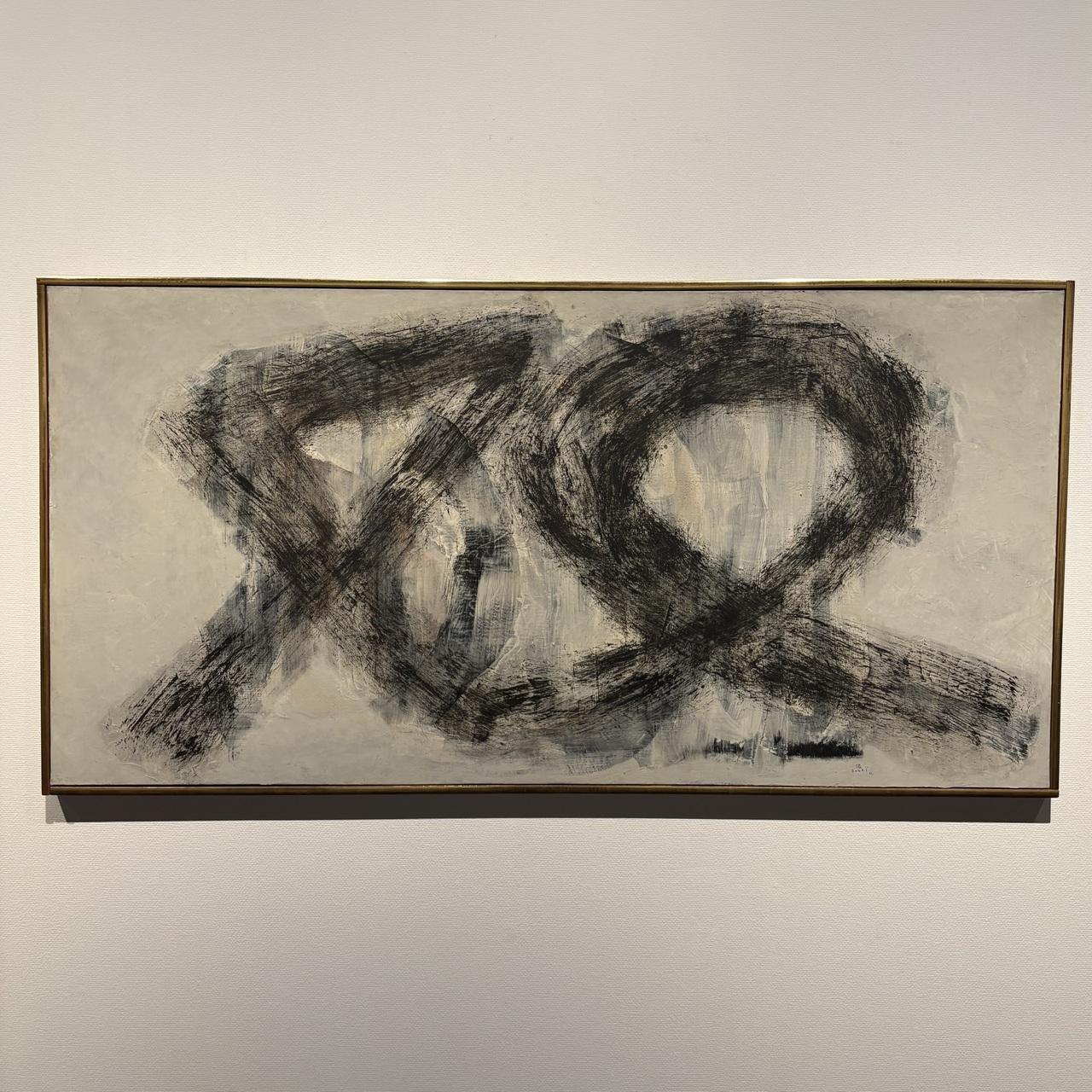
この部屋では、アンチ(「反対」や「反抗」)の対象であるところの「アクション」に関わる作品を紹介します。1950~60年代の美術における「アクション」とは、作家の躍動的な身振りが強調された絵画について、アメリカの批評家ハロルド・ローゼンバーグが1952年に提唱した「アクション・ペインティング」という概念に端を発するものです。ヨーロッパでほぼ同時期に展開された「アンフォルメル(非定形)」と立て続けに日本に流入し、美術界を席巻します。
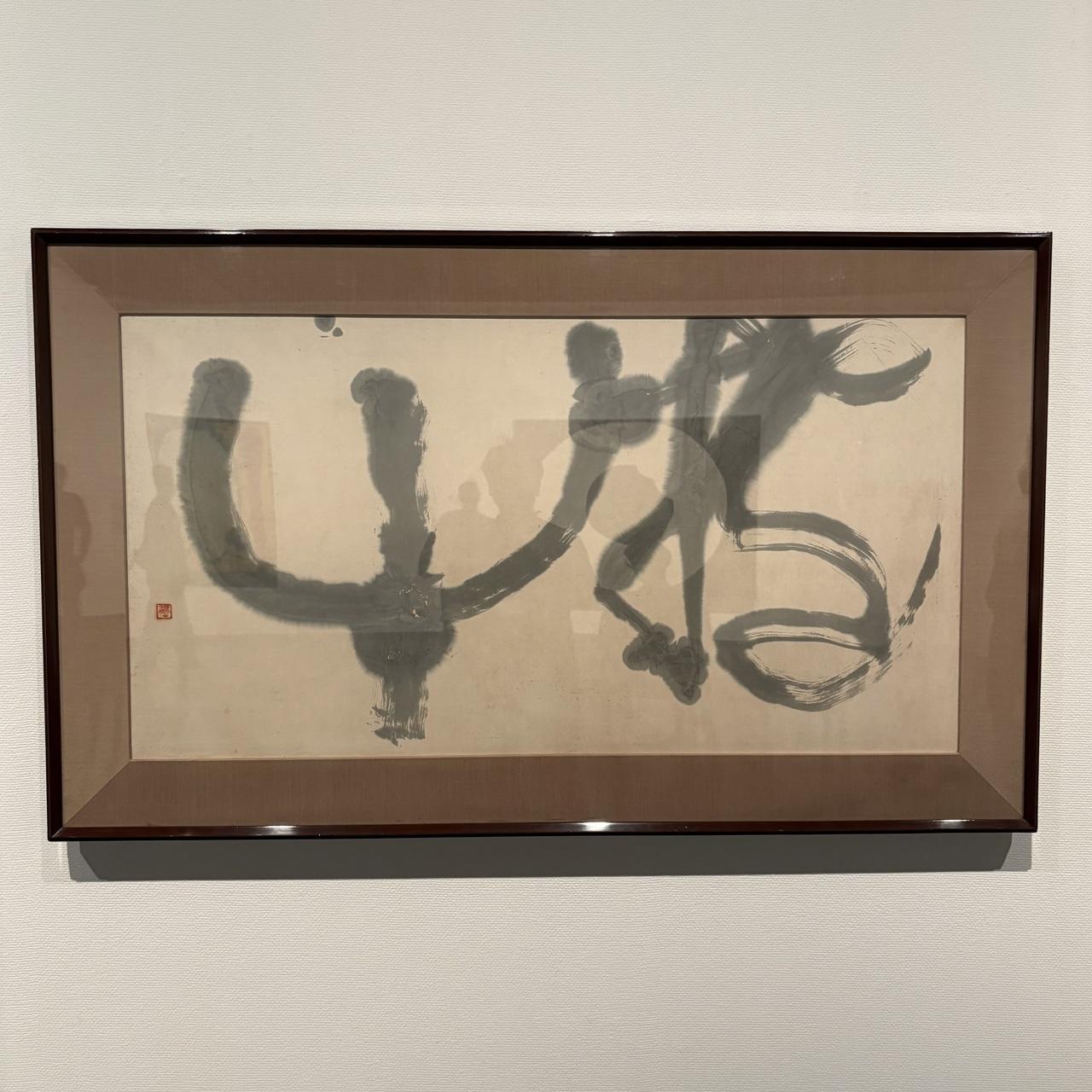
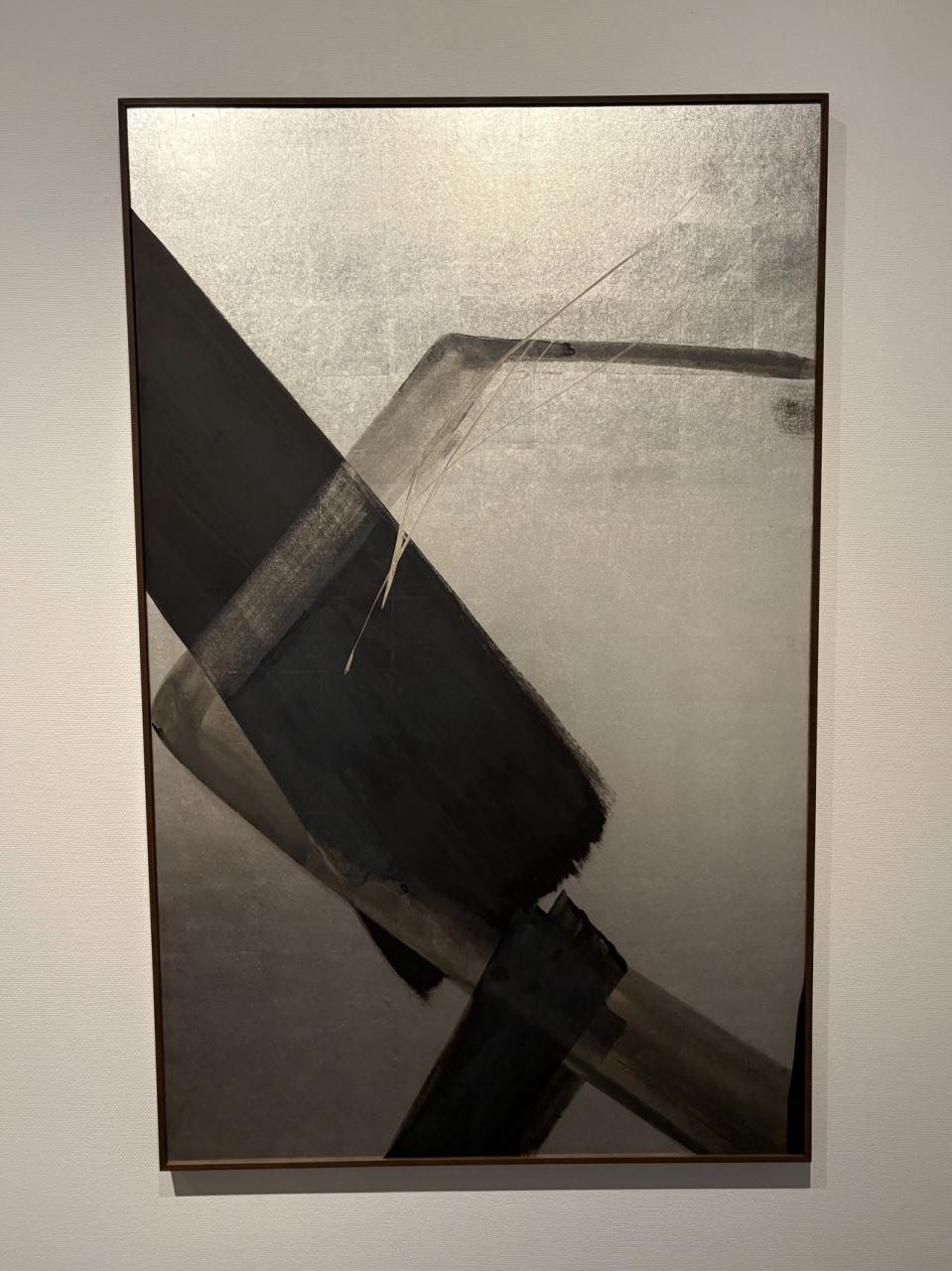
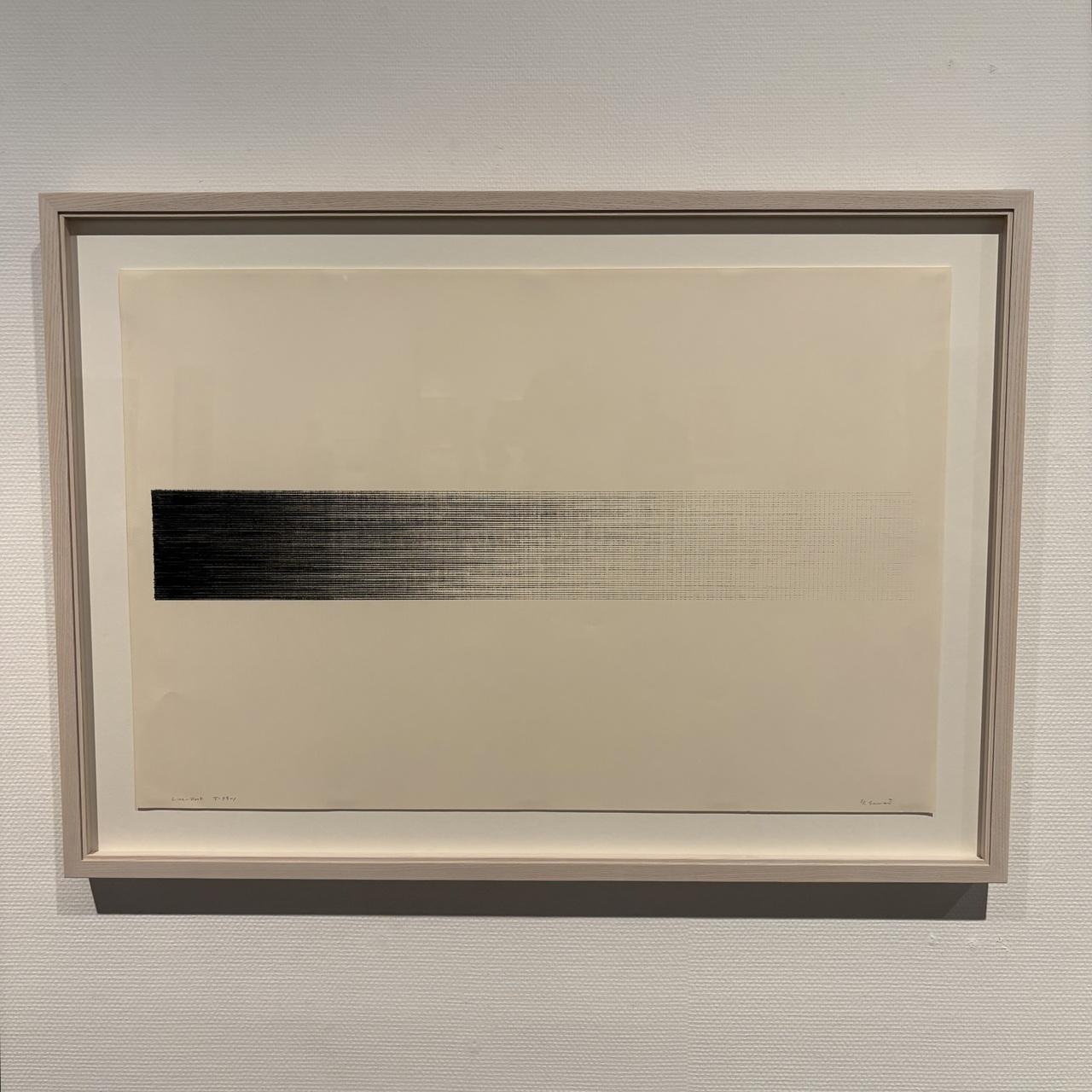
ウィレム・デ・クーニング、白髪一雄ら動向を代表する作品、作家の即興的な身振りを想起させる同時代の書、あるいは「アンチ・アクション」展で紹介される作家とは別の形で「アンチ」をもくろんだ作品など、アクションをめぐる多様な実験をご覧ください。
8. "...Action!" & "...Cut!"
The Anti-Action exhibition on the first floor (December 16, 2025 - February 8, 2026) reexamines abstraction in the 1950s and 60s through the lens of "action," a term that calls to mind forceful physical gestures.
This room presents works connected to "action," the very approach that the "anti" in Anti-Action stands against. In the context of 1950s and 1960s art, "action" is rooted in "Action Painting," a concept introduced in 1952 by American critic Harold Rosenberg to describe painting that emphasized the dynamic movements of the artist. Around the same time, Art Informel emerged in Europe and was soon introduced to Japan, where it had a major impact on the art world.
On view here are a range of experiments involving action, including works representative of the tendency by Willem de Kooning and Shiraga Kazuo, calligraphy from the same period that conveys the artist's spontaneous motion, and works by artists not included in the Anti-Action exhibition who engaged with "anti" in their own way. -
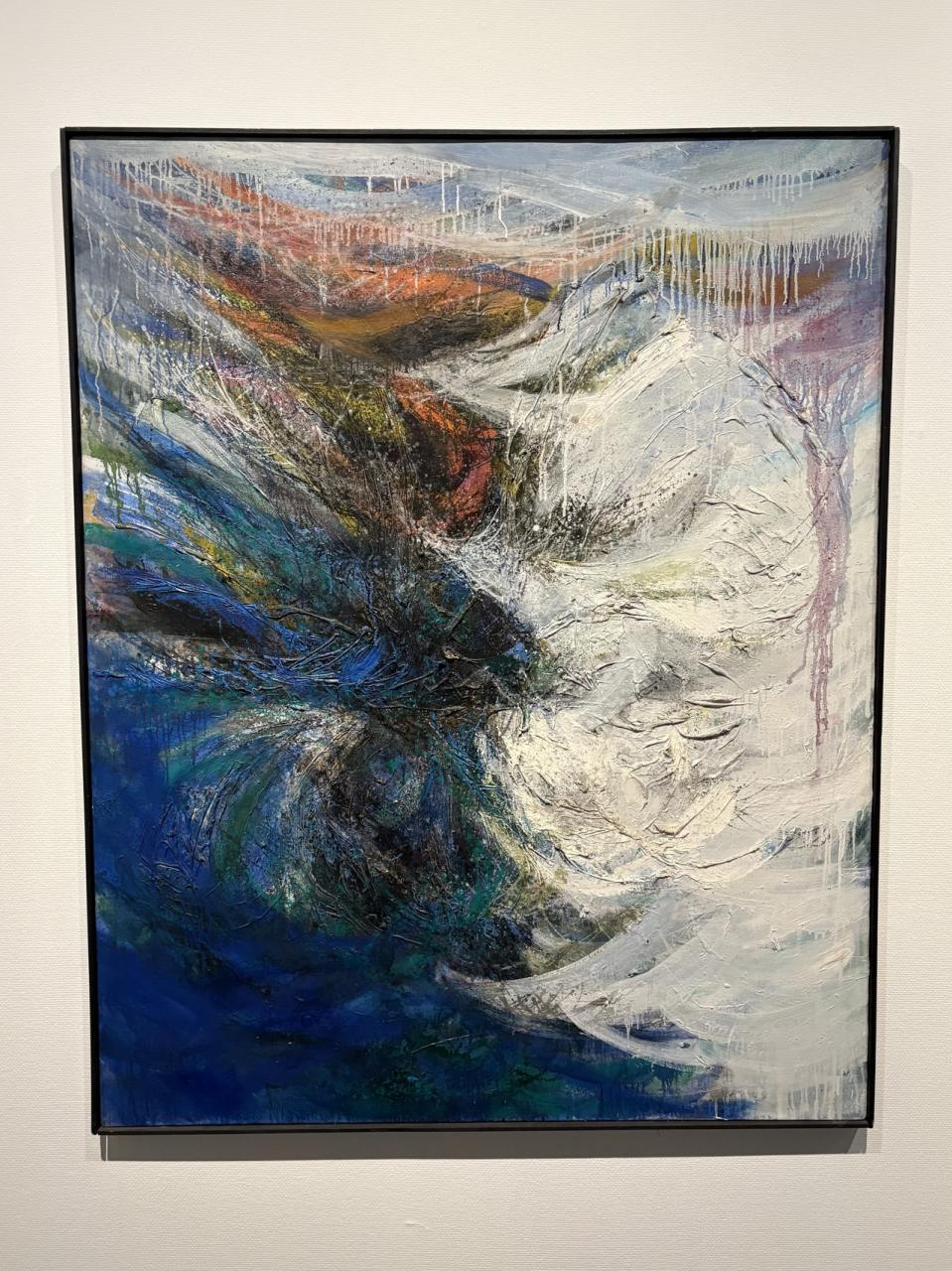
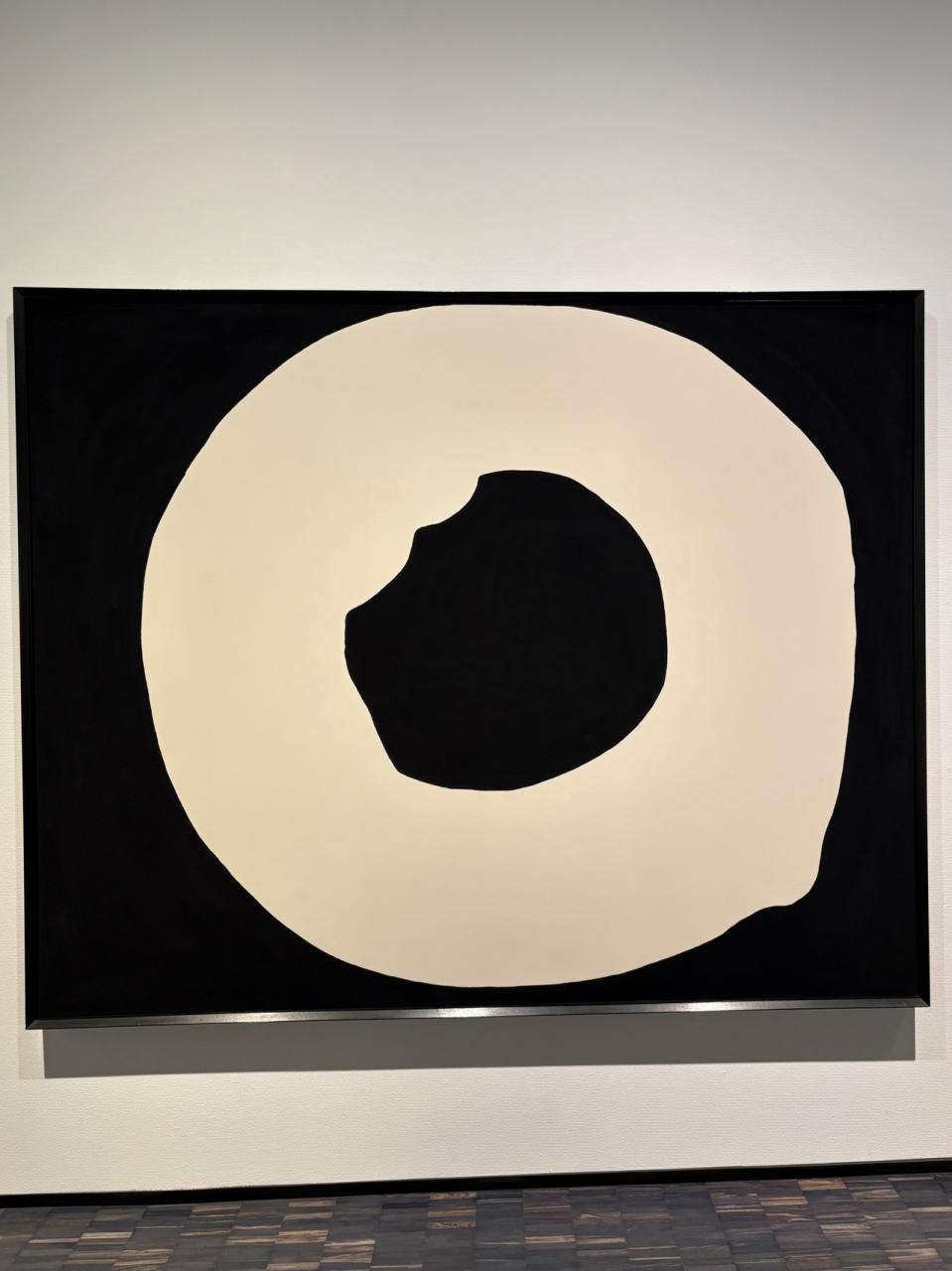
堂本尚郎
DOMOTO, Hisao
1928-2013
作品 60-2
Work 60-2
1960
昭和35年
油彩・キャンバス oil on canvas
購入
Purchased
堂本は京都市立美術工芸学校で日本画を学び、在学中から日展に入選します。1955(昭和30)年、フランスに留学。同地の乾燥した気候では、日本画の顔料をうまく使用できないため、油彩画家に転じました。
折しもパリでは、批評家ミシェル・タピエの主導するアンフォルメルと呼ばれた絵画運動が台頭しており、堂本はこの動向に呼応するかのように自らの絵画を一新していきます。
アンフォルメルとは、フランス語で「非定形」を意味します。絵具の物質性や描くという行為そのものを画面に表出させるスタイルから、しばしば「熱い抽象」などと呼ばれることもあります。
Domoto studied Nihon-ga (Japanese-style painting) at Kyoto City School of Art and Crafts, and while attending the school, his work was chosen for inclusion in the Nitten (Japan Fine Arts Exhibition). In 1955, he went to study in France. But because Nihon-ga pigments were not suited to the dry climate in Paris, Domoto switched to oil paint.
This happened to coincide with the emergence of a painting movement called Art Informel (led by the French critic Michel Tapié), which seemingly inspired Domoto to revolutionize his work.
In French, the term informel means "not fixed." The style, expressing the materiality of paint and the act of painting on the canvas, was also frequently referred to as "hot abstraction." -
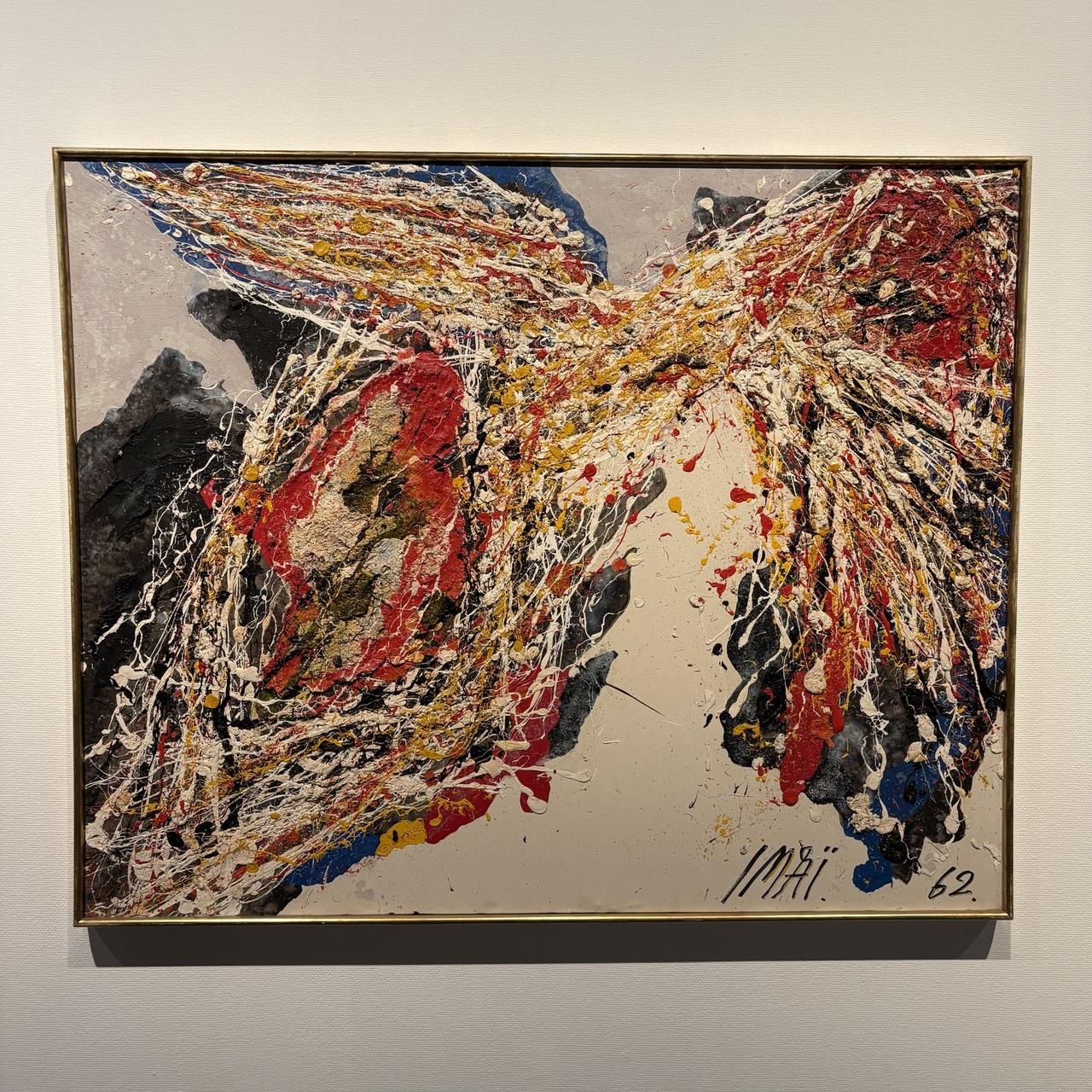
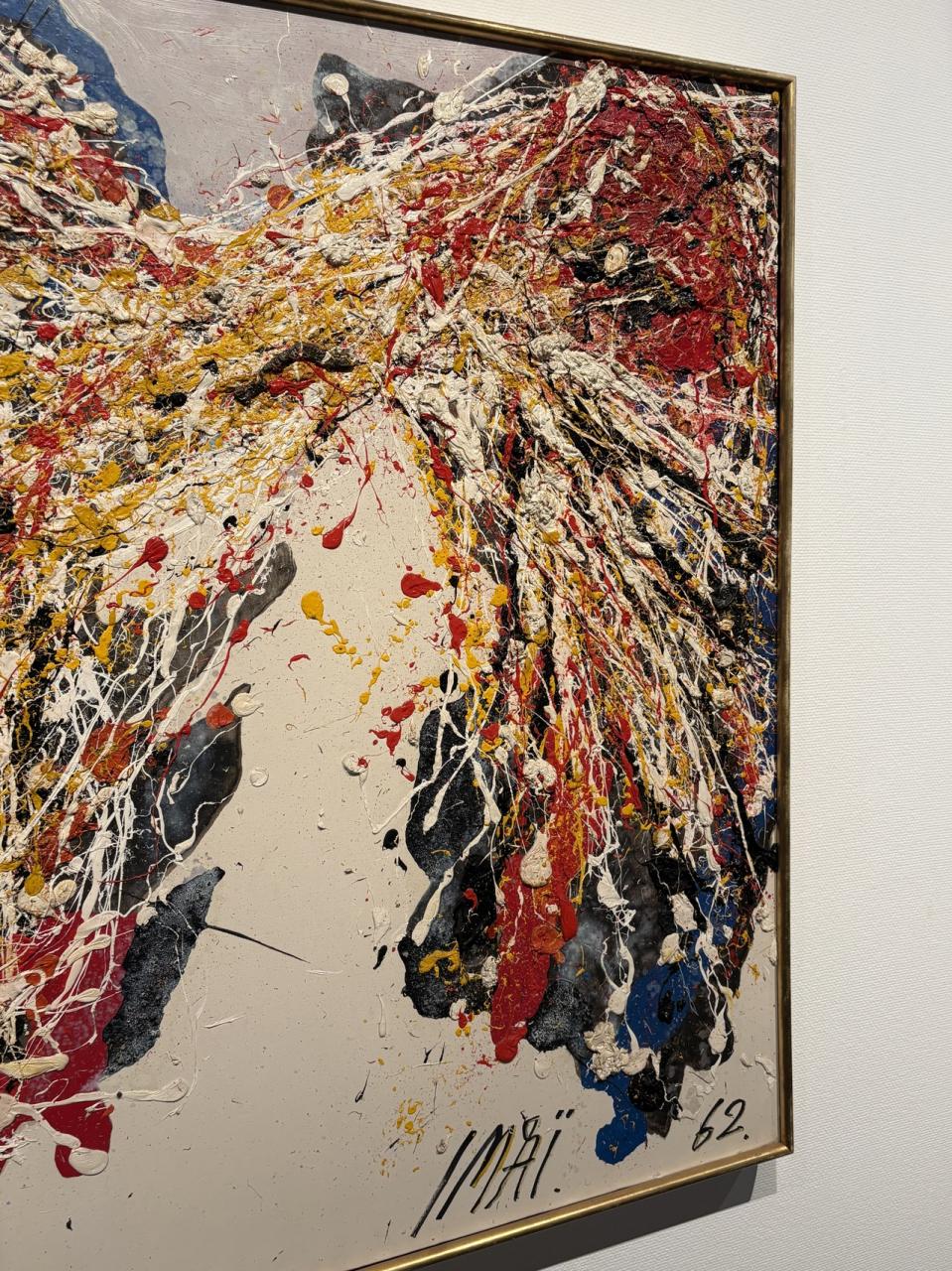
今井俊満
IMAI, Toshimitsu
1928-2002
作品
Work
1962
昭和37年
油彩・キャンバス oil on canvas
購入
Purchased
1952年にフランスに渡った今井俊満は、1955年画家サム・フランシスの紹介で、アンフォルメル(非定形)運動の提唱者でもある美術評論家ミシェル・タピエと出会います。そしてこの運動に参加するとともに、日本にも紹介しました。
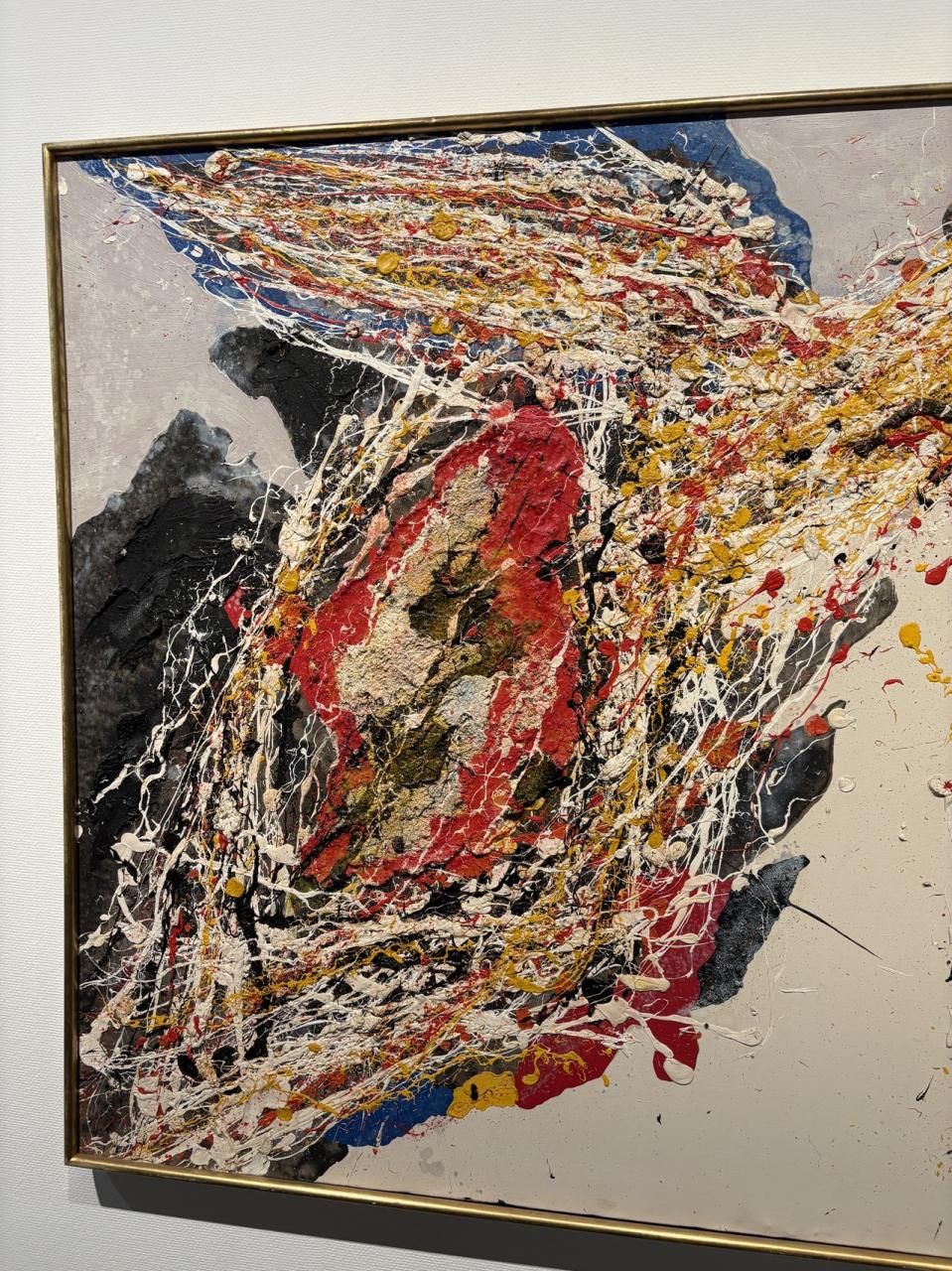
アンフォルメルは、作者の行為(アクション)を絵具の痕跡としてキャンバスに定着し、素材と画家の身体との直接的なつながりを回復することで、それまでと異なる絵画の成立の仕方を探る試みでした。この作品も、筆によって”描く”のでなく、絵具をキャンバスに直接叩きつけるかのような方法で制作されています。
In 1952, Imai Toshimitsu traveled to France, where he met art critic and Art Informel champion Michel Tapié in 1955 through the painter Sam Francis. He aligned himself with the movement and later helped introduce it to Japan.
Art Informel endeavored to redefine painting by capturing vestiges of the artist's gestures in paint on canvas, restoring a direct connection between the material and the body of the artist. This work was not painted with a brush, but made by flinging paint directly onto the canvas. -
-
-
-
-
-
-
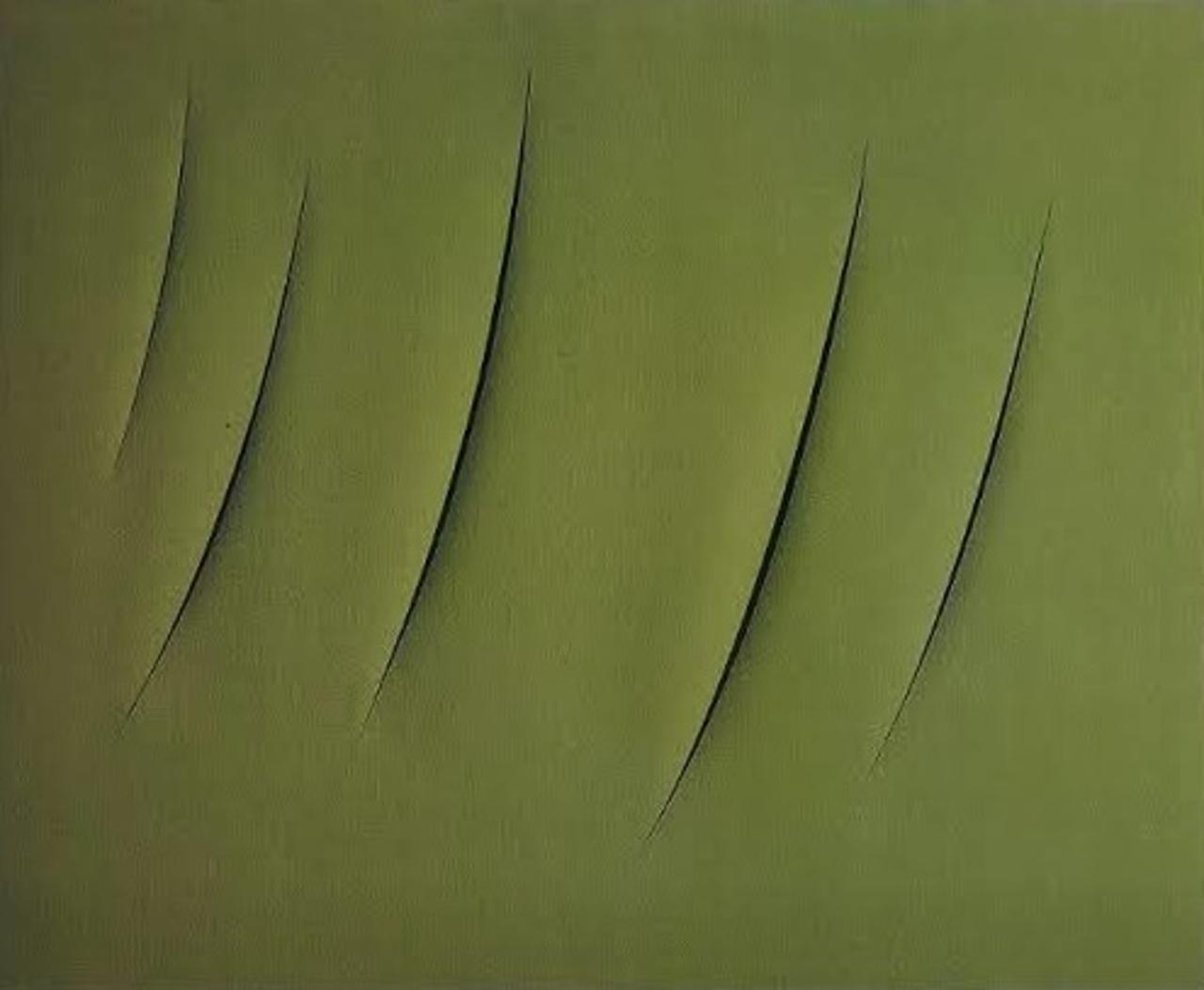
ルーチョ・フォンターナ
Lucio Fontana
1899-1968
空間概念 期待
Spatial Concept - Expectations
1961 昭和36年
水性塗料・キャンバス water-based paint on canvas
購入
Purchased
キャンバスを単色で平滑に塗り、その画面をカッターで切り裂いています。「キャンヴァスに穴を穿つ時、私は絵画を制作しようと思っているのではない。私は、それが絵画の閉鎖された空間を越えて無限に拡がるよう、空間をあけ、芸術に新しい次を生みだし、宇宙に結びつくことを願っている」。
フォンターナのこの言葉は、実は彼が具象彫刻からキャリアを始め、ネオン管を用いたインスタレーション、セラミックやテラコッタによる抽象彫刻へ向かうその展開を知ると、なるほどうなずけます。「芸術をやるとは[・・・]絵画でも彫刻でもなく、空間内に制約された線でもなく、物質のなかの空間の連続性ということなのだ」。
The canvas is smoothly and uniformly painted a single color, then slashed with a utility knife. Fontana asserted: "By cutting into the canvas, my intent is not to produce a painting. Rather, I am aiming to open up spaces, to introduce a novel dimension to art that transcends the finite confines of the canvas, thereby forging a connection with the infinite cosmos."
This statement makes sense when one learns that his career began with figurative sculpture, and subsequently evolved toward installations incorporating neon lights and abstract ceramic and terracotta sculpture. He also said: "Making art... transcends the media of painting or sculpture and the boundaries of delineated spaces. It embodies the essence of spatial continuity within matter." -
-
-
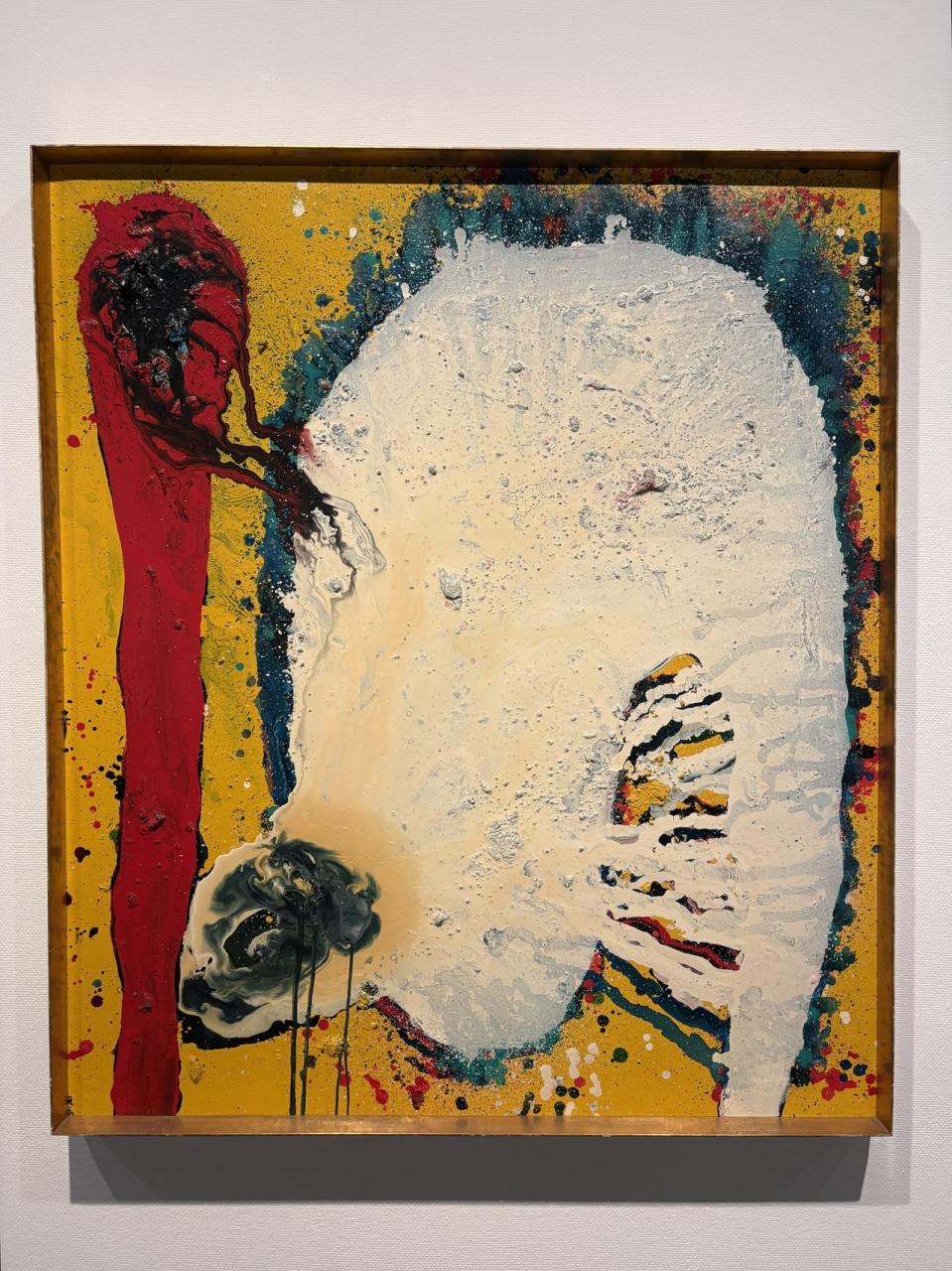
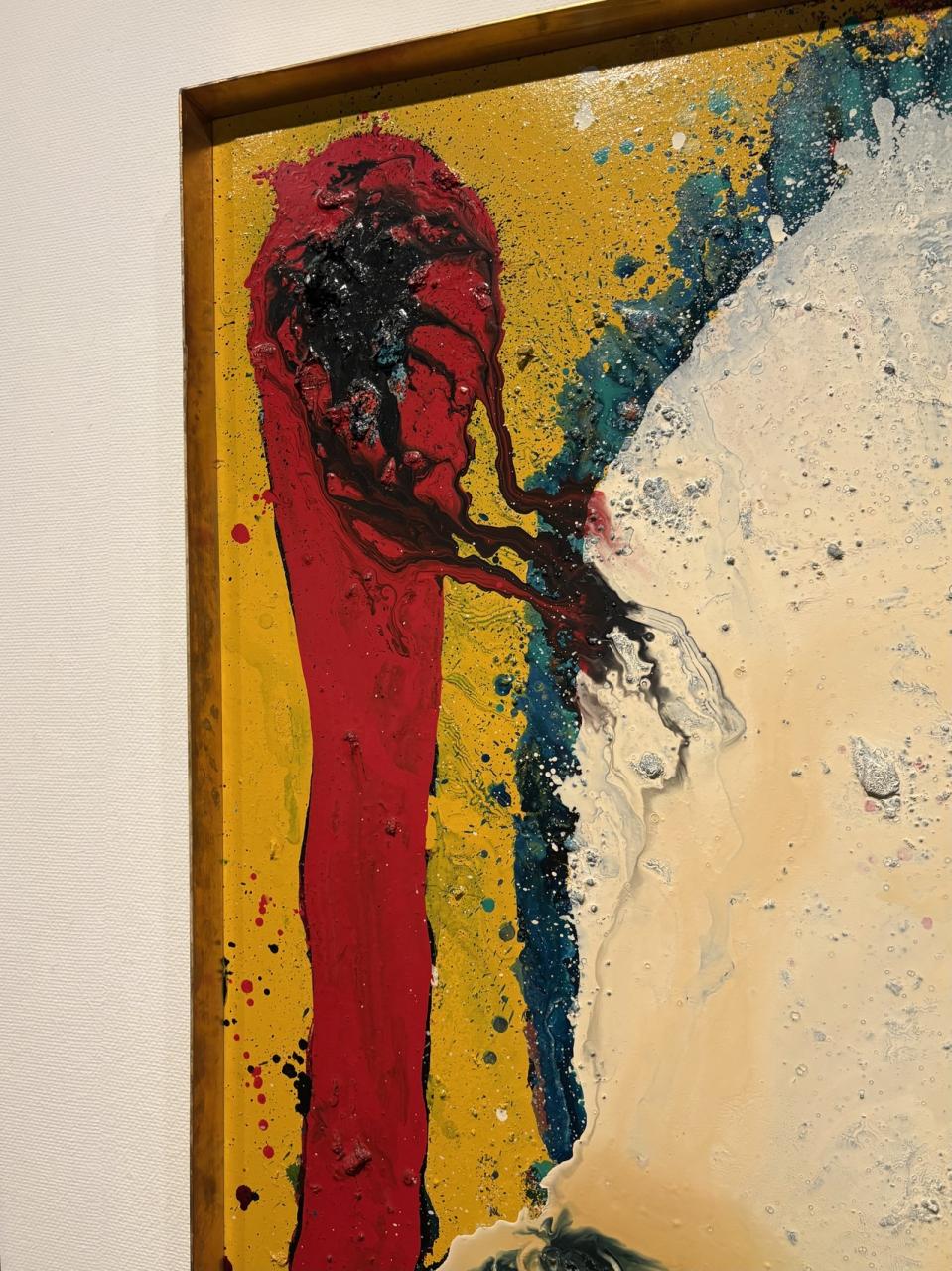
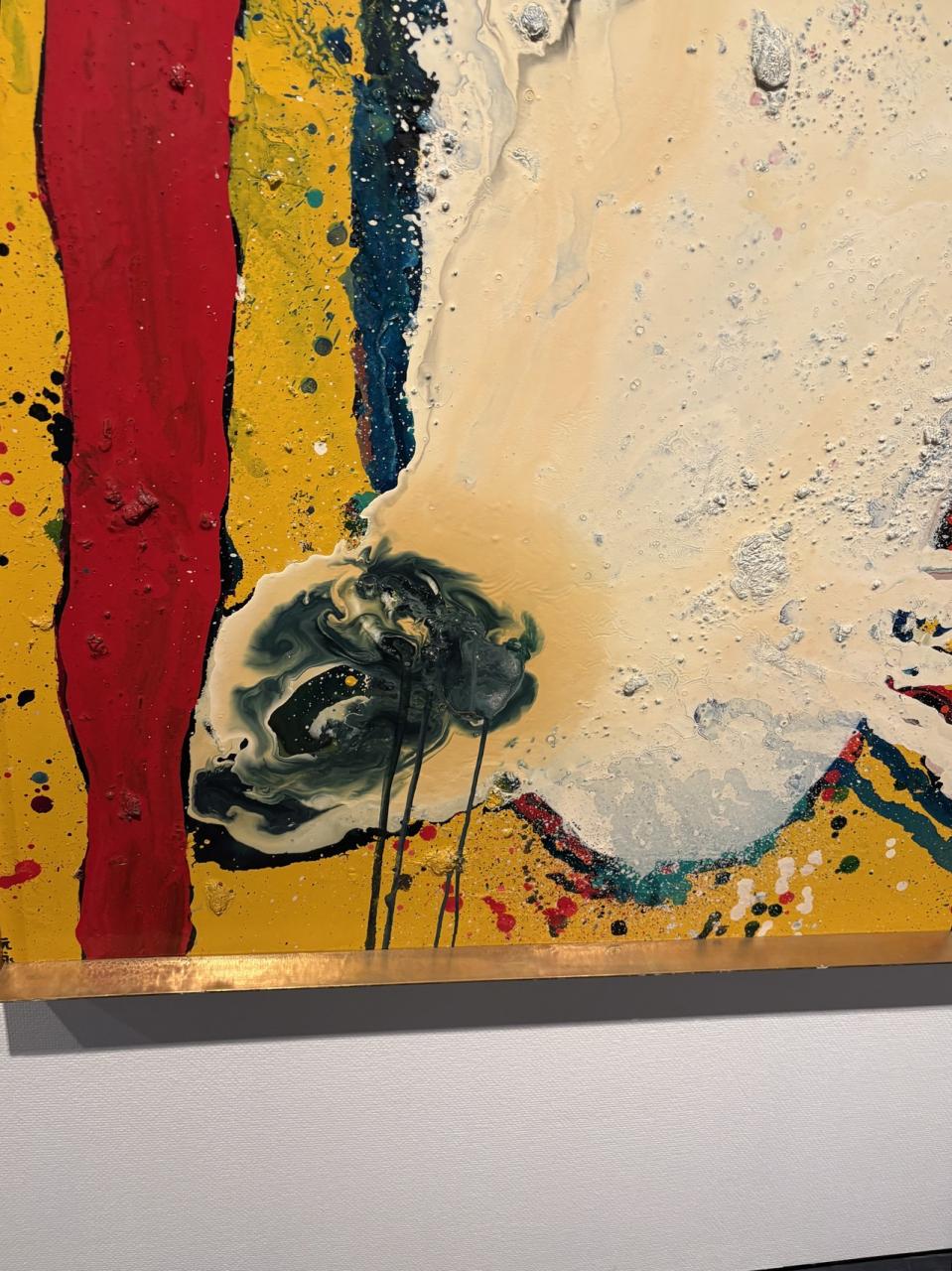
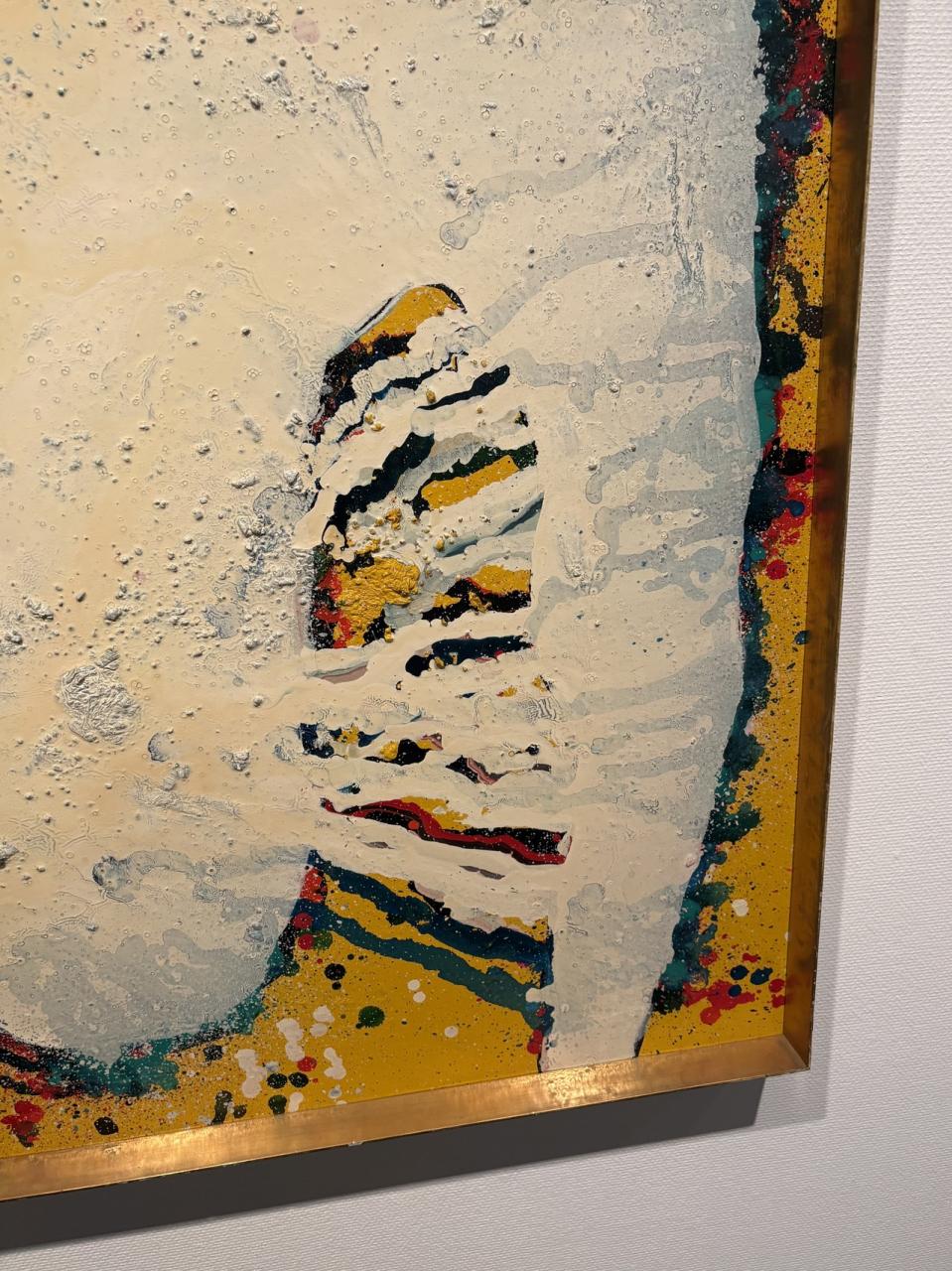
元永定正
MOTONAGA, Sadamasa
1922-2011
作品
Work
1961 昭和36年
アクリリック・キャンバス acrylic on canvas
購入
Purchased
キャンバスの上に絵具を流すことで、作家自身がコントロールに関与しない色のにじみが生み出されています。全くの偶然に任せているようですが、元永自身が平仮名で「かたち」と呼んでいた形象に関しては、独立したキャラクターのように注意深く画面上での配置が計画されていました。
本作では画面下から伸びる「かたち」。どこか人の姿を思わせる「かたち」は基本的な形を留めながらも、時間や経験を分かち合う他者との関係を示すようにいく重にも色が混じり合います。
The paint is sloshed onto the canvas, bleeding together in a manner not even the artist can control. The effect seems to be completely random, but in fact the shape was carefully positioned on the picture's surface to look like an independent character, which Motonaga described as katachi ("shape," but he wrote it in phonetic hiragana rather than ideographic kanji, altering the implication of the word.)
In this work, the katachi stretches upward from the bottom of the picture. While the basic shape of the katachi, somehow reminiscent of a human figure, is maintained, layers of color bleed together as if to manifest relationships with others who share our time and experiences. -
-
-
-
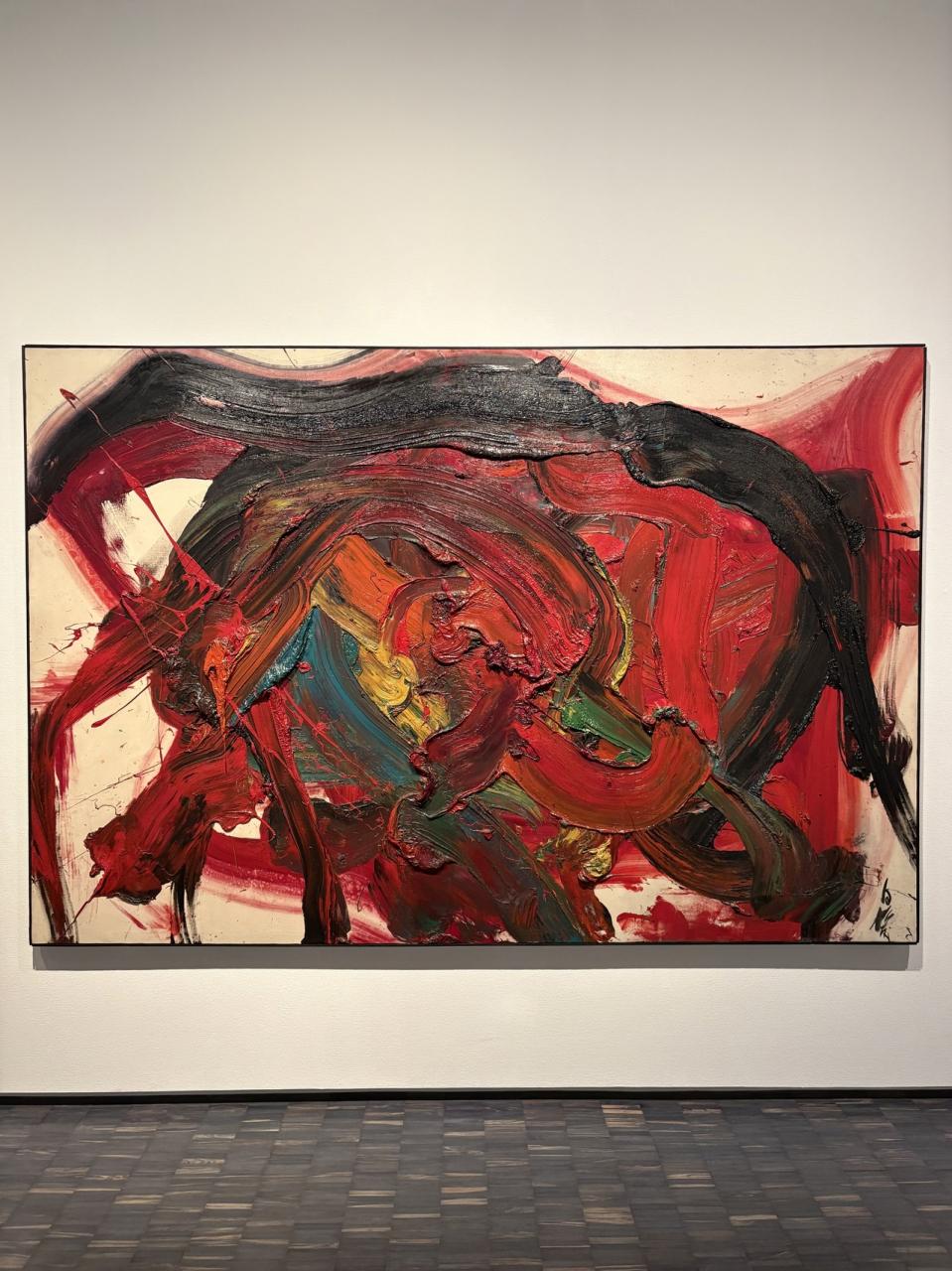
白髮一雄
SHIRAGA, Kazuo
1924-2008
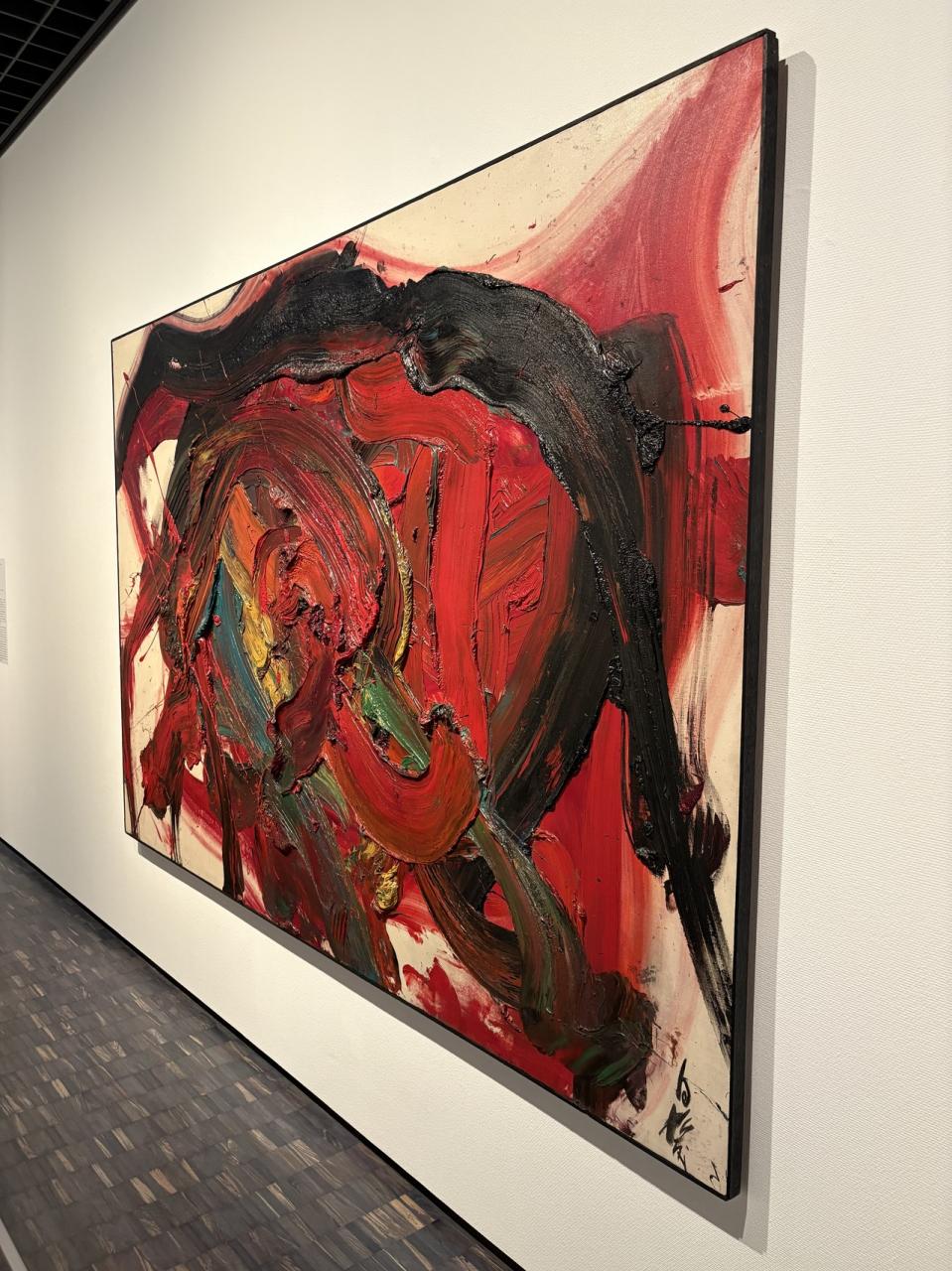
天慧星拚命三郎(水滸伝豪傑の内)
Hemmei Sanro, a hero of a Chinese story
1964 昭和39年
油彩・キャンバス oil on canvas
作者寄贈
Git of the arist
1954(昭和29)年に結成されたグループ、具体美術協会(いわゆる「具体」)の代表的なメンバーのひとり。
赤を基調とした絵具の躍動感が印象的ですが、それぞれの「幅」が太いわりには、筆に特有の刷毛目が見えません。実はこれ、天井から下ろしたロープにつかまり、床に敷いたキャンバスの上を、縦横に滑りながら足で描いた絵なのです。
印象的なタイトルは、作品の識別を容易にするために、「水滸伝』に出てくる豪傑の名前から事後的に選んだものなのだそう。とはいえ、血のような赤と「水滸伝』に描かれる世界は、無縁ではありません。画家自身はまた、自分が生まれ育った尼崎の「だんじり祭り」の壮さにも影響を受けていると語っています。
Shiraga Kazuo was a prominent member of the Gutai Art Association (or simply "Gutai"), which was formed in 1954 by a group of artists in the Kansai region.
In this work, his dynamic use of paint, with red as a keynote, is impressive, but despite the relatively wide strokes, there is no sign of the distinctive marks of a brush. As it turns out, Shiraga painted the work with his feet, slipping back and forth across a canvas spread out on the floor while holding onto a rope hanging down from the ceiling.
The memorable title - the name of a hero in the Chinese epic Shui hu zhuan (The Water Margin) - was apparently chosen after the fact to make it easier to distinguish between Shiraga's works. This is not, however, to suggest that there is no connection between the blood-like red color and the world depicted in the book. Shiraga also seems to have been influenced by the gallant Danjiri Festival, held in Amagasaki, the city where he was born and raised. -
-
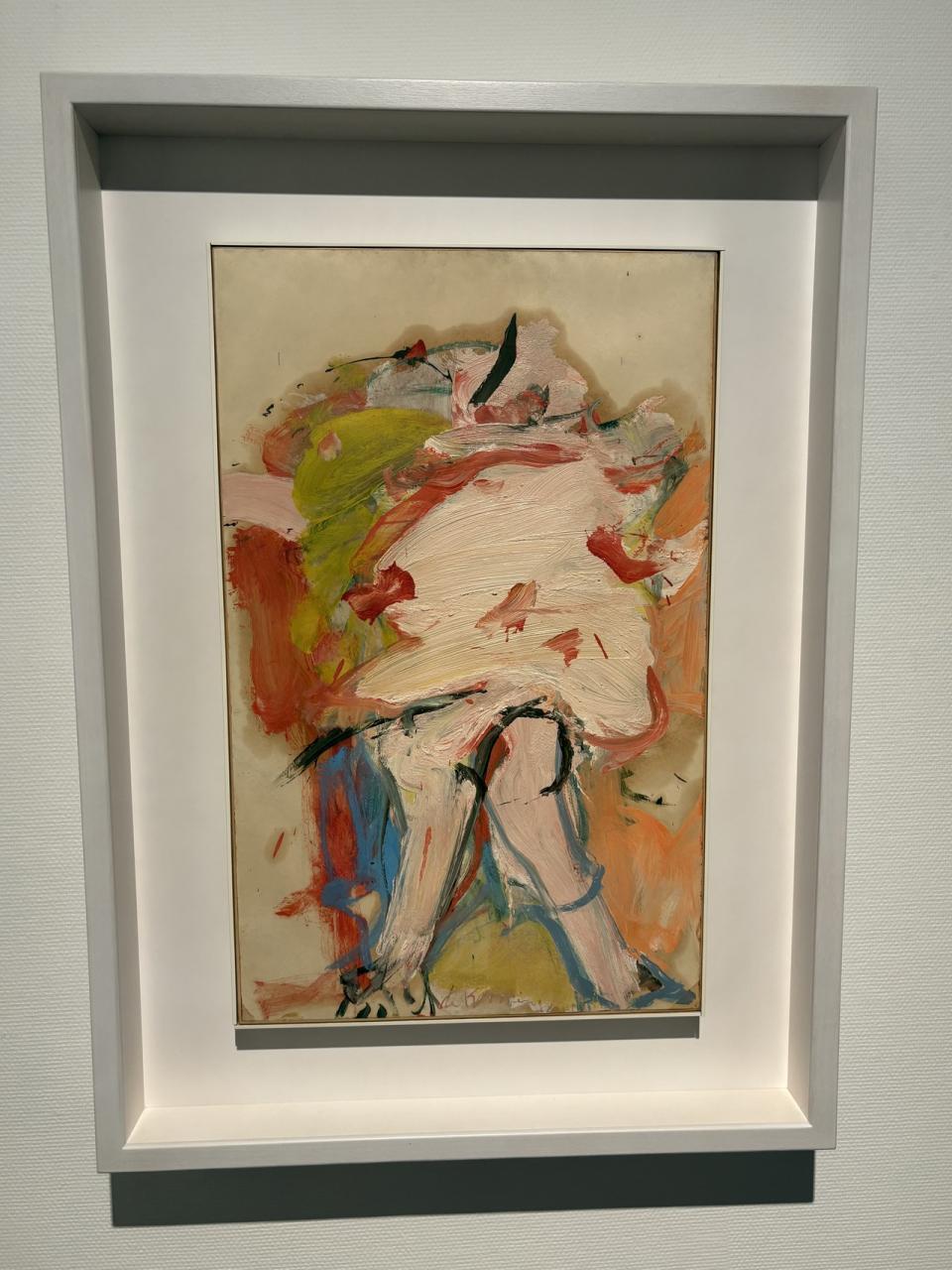
ウィレム・デ・クーニング
Willem de Kooning
1904-1997
風景の中の女
Woman in Landscape
1966 昭和41年
油彩・紙(キャンバスに貼付)
oil on paper mounted on canvas
購入
Purchased
アメリカの抽象表現主義を代表する画家、デ・クーニングが主要なテーマにしたのは「女性」と「水」でした。この作品は、1964(昭和39)年に移り住んだ海辺の町、ニューヨーク州イースト・ハンプトンの風土に影響を受けて描かれたものです。独自の調合によって流動性を高めた油絵具を使い、キャンバスではなく油のしみが広がる紙に描くことで、水の中にゆらめくような女性の像を出現させています。
顔を失い、脚の上にそのままピンク色の肉が積み重なったような不定形の姿は、均整の取れたかっちりとしたヌードを長く理想としてきた
ヨーロッパ絵画が心の底に抑圧していたものを、目の前に引き出し、突きつけるようです。
One of the most prominent American Abstract Expressionists, de Kooning dealt frequently with the themes of "women" and "water." This work is thought to have been influenced by the climate in the coastal town of East Hampton, New York, where the artist moved in 1964. De Kooning's use of specially-prepared oil paint with a highly-fluid quality and paper (not canvas) that maximizes oil blotting makes the woman look as if she is swaying back and forth in the water.
Lacking a face, the indeterminate figure, with piles of pink flesh layered on top of her legs, seems to draw out and confront the things that were concealed deep in the heart of European painting, which had long concealed nudes in a well-proportioned form. -
(続く・・・)
![ルーチョ・フォンターナ<br />Lucio Fontana<br />1899-1968<br /><br />空間概念 期待<br />Spatial Concept - Expectations<br />1961 昭和36年<br />水性塗料・キャンバス water-based paint on canvas<br /><br />購入<br />Purchased<br /><br />キャンバスを単色で平滑に塗り、その画面をカッターで切り裂いています。「キャンヴァスに穴を穿つ時、私は絵画を制作しようと思っているのではない。私は、それが絵画の閉鎖された空間を越えて無限に拡がるよう、空間をあけ、芸術に新しい次を生みだし、宇宙に結びつくことを願っている」。<br /><br />フォンターナのこの言葉は、実は彼が具象彫刻からキャリアを始め、ネオン管を用いたインスタレーション、セラミックやテラコッタによる抽象彫刻へ向かうその展開を知ると、なるほどうなずけます。「芸術をやるとは[・・・]絵画でも彫刻でもなく、空間内に制約された線でもなく、物質のなかの空間の連続性ということなのだ」。<br /><br />The canvas is smoothly and uniformly painted a single color, then slashed with a utility knife. Fontana asserted: "By cutting into the canvas, my intent is not to produce a painting. Rather, I am aiming to open up spaces, to introduce a novel dimension to art that transcends the finite confines of the canvas, thereby forging a connection with the infinite cosmos." <br /><br />This statement makes sense when one learns that his career began with figurative sculpture, and subsequently evolved toward installations incorporating neon lights and abstract ceramic and terracotta sculpture. He also said: "Making art... transcends the media of painting or sculpture and the boundaries of delineated spaces. It embodies the essence of spatial continuity within matter."](https://cdn.4travel.jp/img/tcs/t/pict/src/89/97/84/src_89978478.jpg?1775673621)
この旅行記のタグ


利用規約に違反している投稿は、報告する事ができます。
-
前の旅行記

MOMAT〔国立東京近代美術館〕コレクション展 ~2026.2.8: その7.アクション前夜。"朝倉摂 《黒...
2026/02/05~
神田・神保町
-
次の旅行記

MOMAT〔国立東京近代美術館〕コレクション展 ~2026.2.8:その9."細江英公「薔薇刑」"
2026/02/05~
神田・神保町
-

"MOMAT〔国立東京近代美術館〕コレクション展 ~2026.2.8" その1.ハイライト。"奈良美智《Ha...
2026/02/05~
神田・神保町
-

"MOMAT〔国立東京近代美術館〕コレクション展 ~2026.2.8" その2.新か、旧か? "和田三造《南...
2026/02/05~
神田・神保町
-

"MOMAT〔国立東京近代美術館〕コレクション展~2026.2.8" その3.キュビスム再考 "ナターリア・...
2026/02/05~
神田・神保町
-

"MOMAT〔国立東京近代美術館〕コレクション展 ~2026.2.8" その4.『濹東綺譚』。"木村荘八 、...
2026/02/05~
神田・神保町
-

"MOMAT コレクション展 ~2026.2.8" その5.1930年代の絵画:現実の彼方へ、幻影の手前で。...
2026/02/05~
神田・神保町
-

MOMAT〔国立東京近代美術館〕コレクション展 ~2026.2.8: その6.戦時の女性たち。"『主婦之友』...
2026/02/05~
神田・神保町
-

MOMAT〔国立東京近代美術館〕コレクション展 ~2026.2.8: その7.アクション前夜。"朝倉摂 《黒...
2026/02/05~
神田・神保町
-

MOMAT コレクション展 ~2026.2.8:8.「・・・アクション!」&「・・・カット!」。"ルーチョ・...
2026/02/05~
神田・神保町
-

MOMAT〔国立東京近代美術館〕コレクション展 ~2026.2.8:その9."細江英公「薔薇刑」"
2026/02/05~
神田・神保町
-

MOMAT ~2026.2.8:その10.1950~60年代:有機的な彫刻/川端龍子と青龍社。"ジェルメーヌ...
2026/02/05~
神田・神保町
-

MOMAT〔国立東京近代美術館〕コレクション展 ~2026.2.8:その11.記憶と想起。"河原温《1966...
2026/02/05~
神田・神保町
-

MOMAT コレクション展 ~2026.2.8:12.入れ替わる世界、ひらかれる感覚。"冨井大裕《board...
2026/02/05~
神田・神保町
-

国立東京近代美術館 "コレクションによる小企画 没後30年 榎倉康二(~2026.2.8)"《 干渉(STO...
2026/02/05~
神田・神保町
旅行記グループをもっと見る
コメントを投稿する前に
十分に確認の上、ご投稿ください。 コメントの内容は攻撃的ではなく、相手の気持ちに寄り添ったものになっていますか?
サイト共通ガイドライン(利用上のお願い)報道機関・マスメディアの方へ 画像提供などに関するお問い合わせは、専用のお問い合わせフォームからお願いいたします。






フォートラベル公式LINE@

おすすめの旅行記や旬な旅行情報、お得なキャンペーン情報をお届けします!
QRコードが読み取れない場合はID「@4travel」で検索してください。
\その他の公式SNSはこちら/




旅行記グループ MOMAT コレクション〔国立東京近代美術館 所蔵作品展〕(2025.11.5-2026.2.8)
0
20