


2026/02/05 - 2026/02/05
25位(同エリア932件中)

旅熊 Kokazさん
- 旅熊 KokazさんTOP
- 旅行記1924冊
- クチコミ854件
- Q&A回答102件
- 1,705,789アクセス
- フォロワー752人
MOMAT コレクション〔国立東京近代美術館 所蔵作品展〕(2025.11.5-2026.2.8)
2025年11月5日-2026年2月8日の所蔵作品展のみどころ
当館コレクション展の特徴をご紹介します。まずはその規模。1952年の開館以来の活動を通じて収集してきたおよそ14,000点の所蔵作品から、会期ごとに約200点を展示する国内最大級のコレクション展です。そして、それぞれ小さなテーマが立てられた全12室のつながりによって、19世紀末から今日に至る日本の近現代美術の流れをたどることができる国内随一の展示です。
今期のみどころ紹介です。長らく国外への貸出が続いていた奈良美智《Harmless Kitty》(1994年)が、約2年ぶりにMOMATコレクションに帰ってきました。4階ハイライト・コーナーでご覧いただけます。3階9室では写真家の細江英公の初期代表作「薔薇刑」を展示します。2024年に逝去された細江の追悼と、被写体となった小説家三島由紀夫の生誕100年記念(2025年)を兼ねての紹介です。
今期も、新収蔵作品が多く展示されています(作品横に貼られた「新収蔵作品」マークが目印です)。長く館を代表してきた顔ぶれにフレッシュな新星と、盛りだくさんのMOMATコレクションをお楽しみください。
https://www.momat.go.jp/exhibitions/r7-2
- 旅行の満足度
- 5.0
-

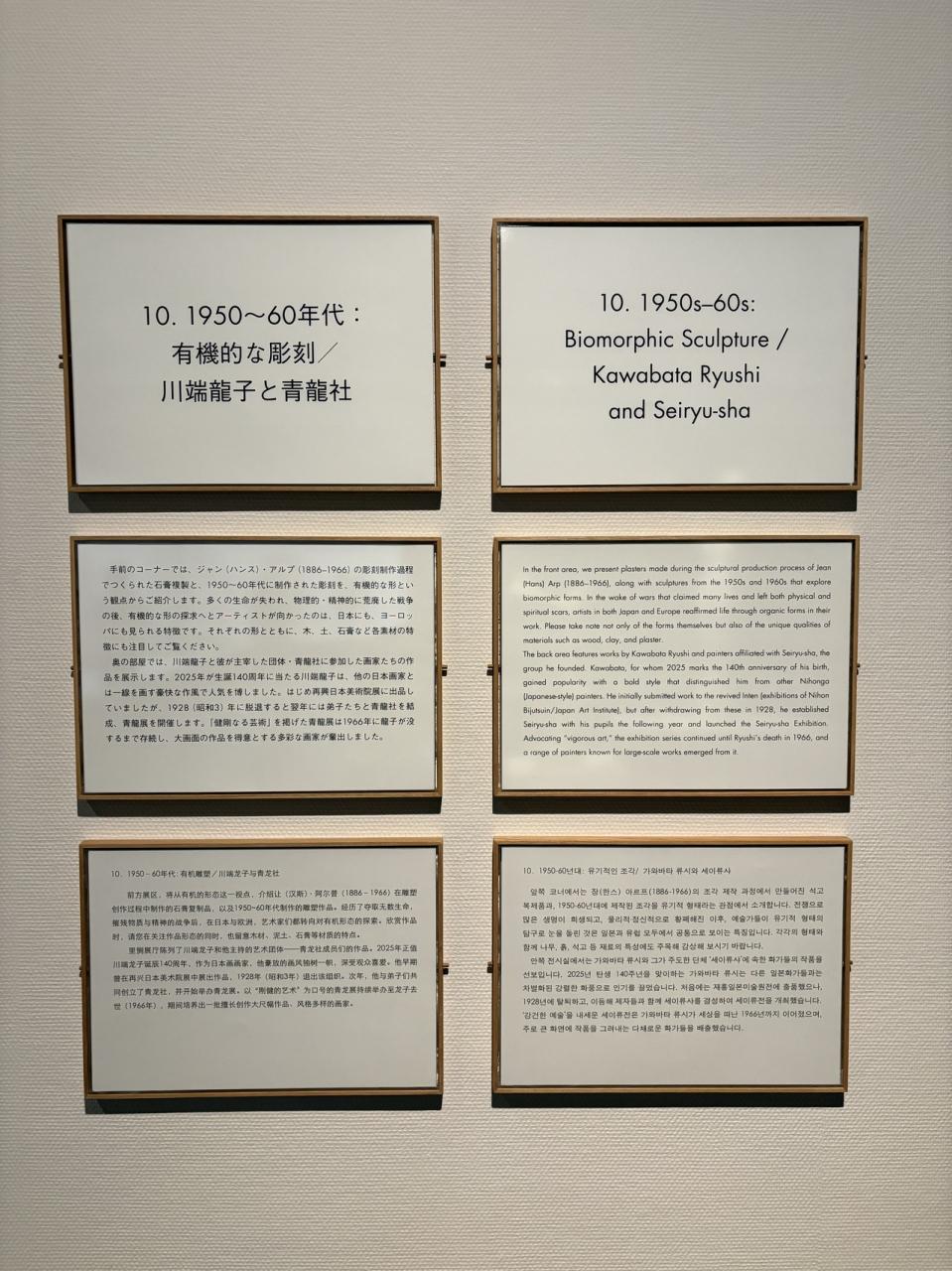
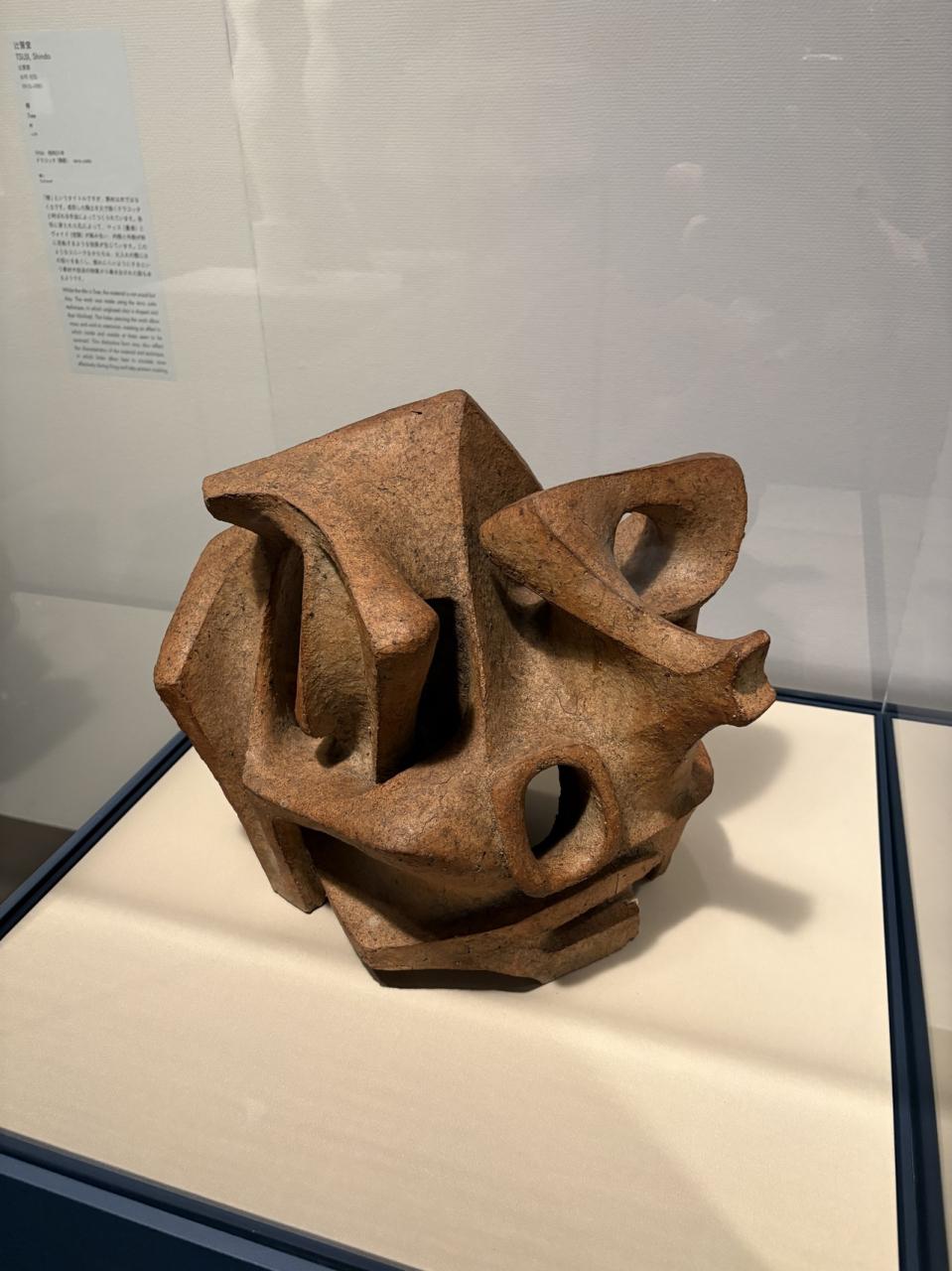
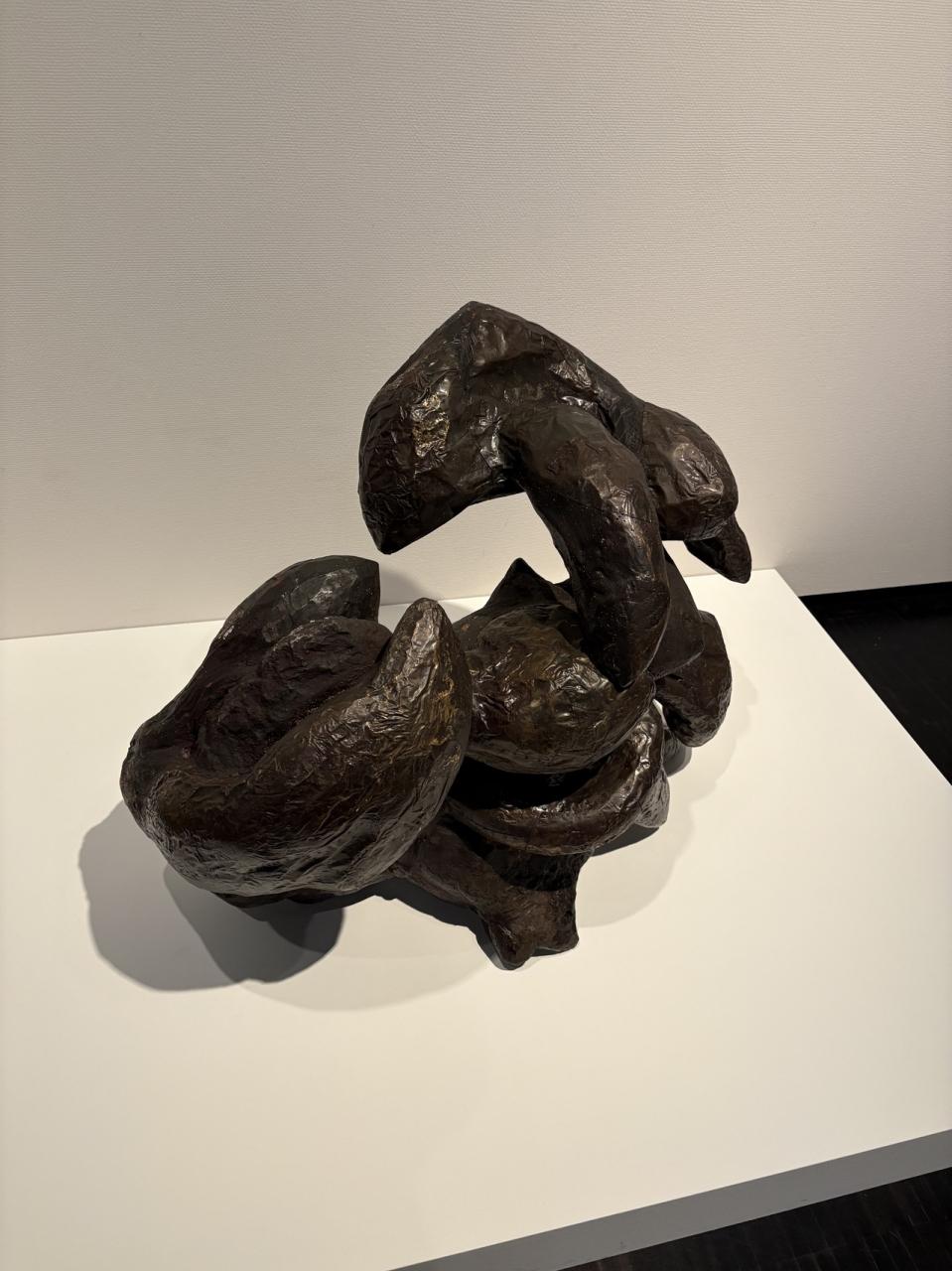
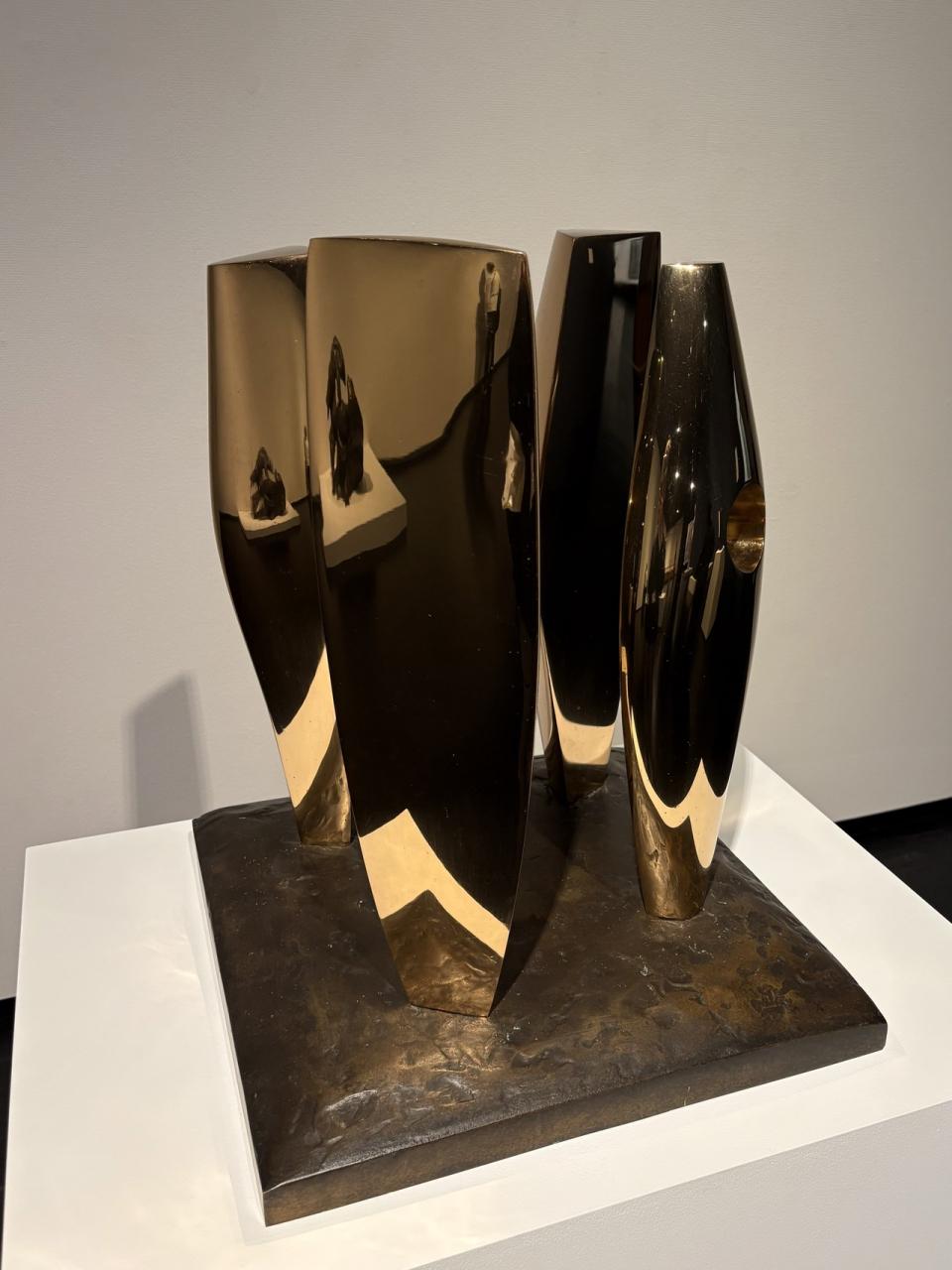
10.1950~60年代:有機的な彫刻/川端龍子と青龍社
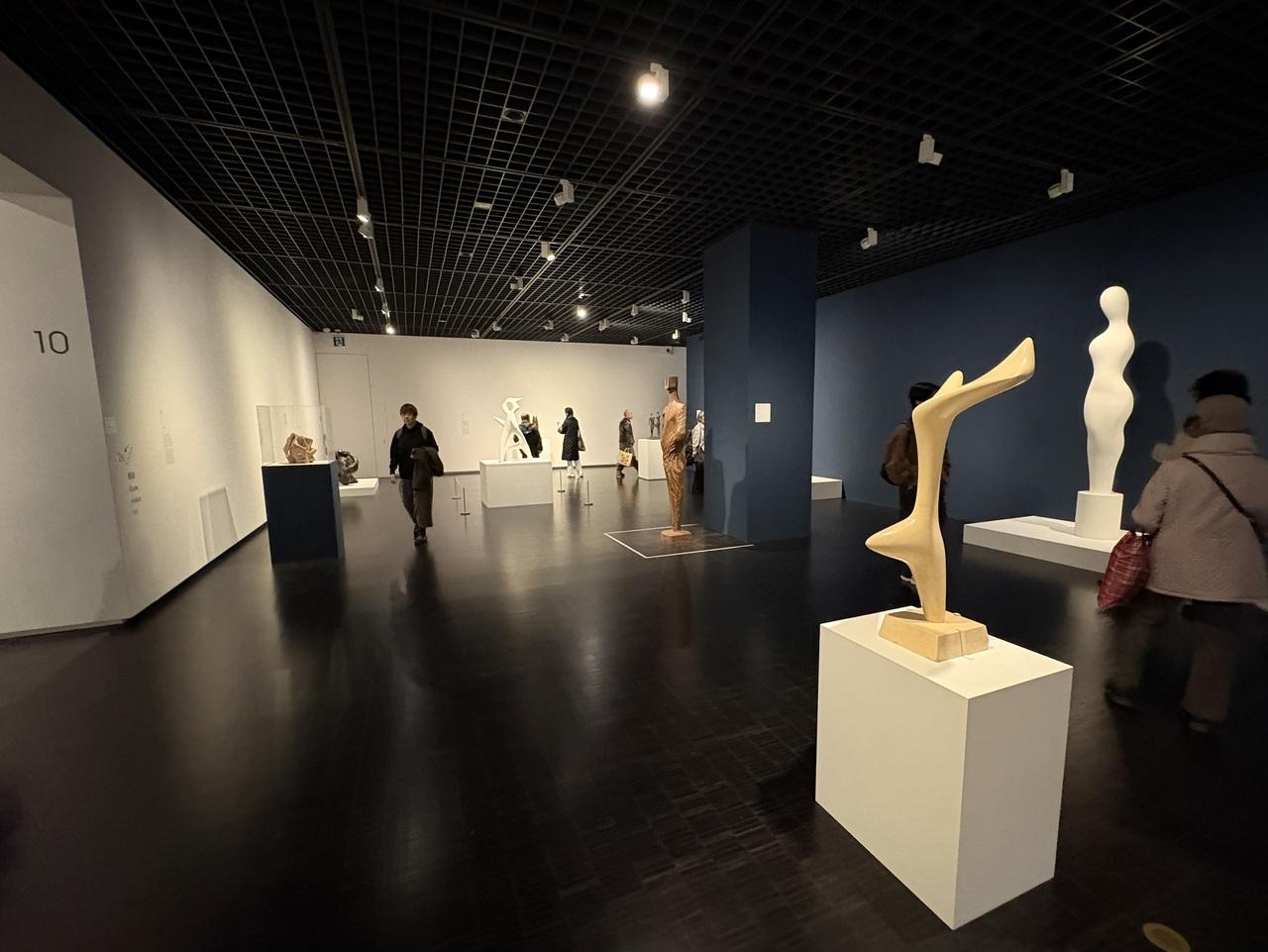
手前のコーナーでは、ジャン(ハンス)・アルプ(1886-1966)の彫刻制作過程でつくられた石音複製と、1950~60年代に制作された彫刻を、有機的な形という観点からご紹介します。多くの生命が失われ、物理的・精神的に荒廃した戦争の後、有機的な形の探求へとアーティストが向かったのは、日本にも、ヨーロッパにも見られる特徴です。それぞれの形とともに、木、土、石膏など各素材の特徴にも注目してご覧ください。
奥の部屋では、川端龍子と彼が主宰した団体・青龍社に参加した画家たちの作品を展示します。2025年が生誕140周年に当たる川端龍子は、他の日本画家とは一線を画す豪快な作風で人気を博しました。はじめ再興日本美術院展に出品していましたが、1928(昭和3)年に脱退すると翌年には弟子たちと青龍社を結成、青龍展を開催します。「健剛なる芸術」を掲げた青龍展は1966年に龍子が没するまで存続し、大画面の作品を得意とする多彩な画家が輩出しました。
Biomorphic Sculpture /Kawabata Ryushi and Seiryu-sha
In the front area, we present plasters made during the sculptural production process of Jean (Hans) Arp (1886-1966), along with sculptures from the 1950s and 1960s that explore biomorphic forms. In the wake of wars that claimed many lives and left both physical and spiritual scars, artists in both Japan and Europe reaffirmed life through organic forms in their work. Please take note not only of the forms themselves but also of the unique qualities of materials such as wood, clay, and plaster.
The back area features works by Kawabata Ryushi and painters affiliated with Seiryu-sha, the group he founded. Kawabata, for whom 2025 marks the 140th anniversary of his birth, gained popularity with a bold style that distinguished him from other Nihonga (apanese-style) painters. He initially submitted work to the revived Inten (exhibitions of Nihon Bijutsuin/Japan Art Institute, but after withdrawing from these in 1928, he established Seiryu-sha with his pupils the following year and launched the Seiryu-sha Exhibition.
Advocating "vigorous art," the exhibition series continued until Ryushi's death in 1966, and a range of painters known for large-scale works emerged from it. -
-
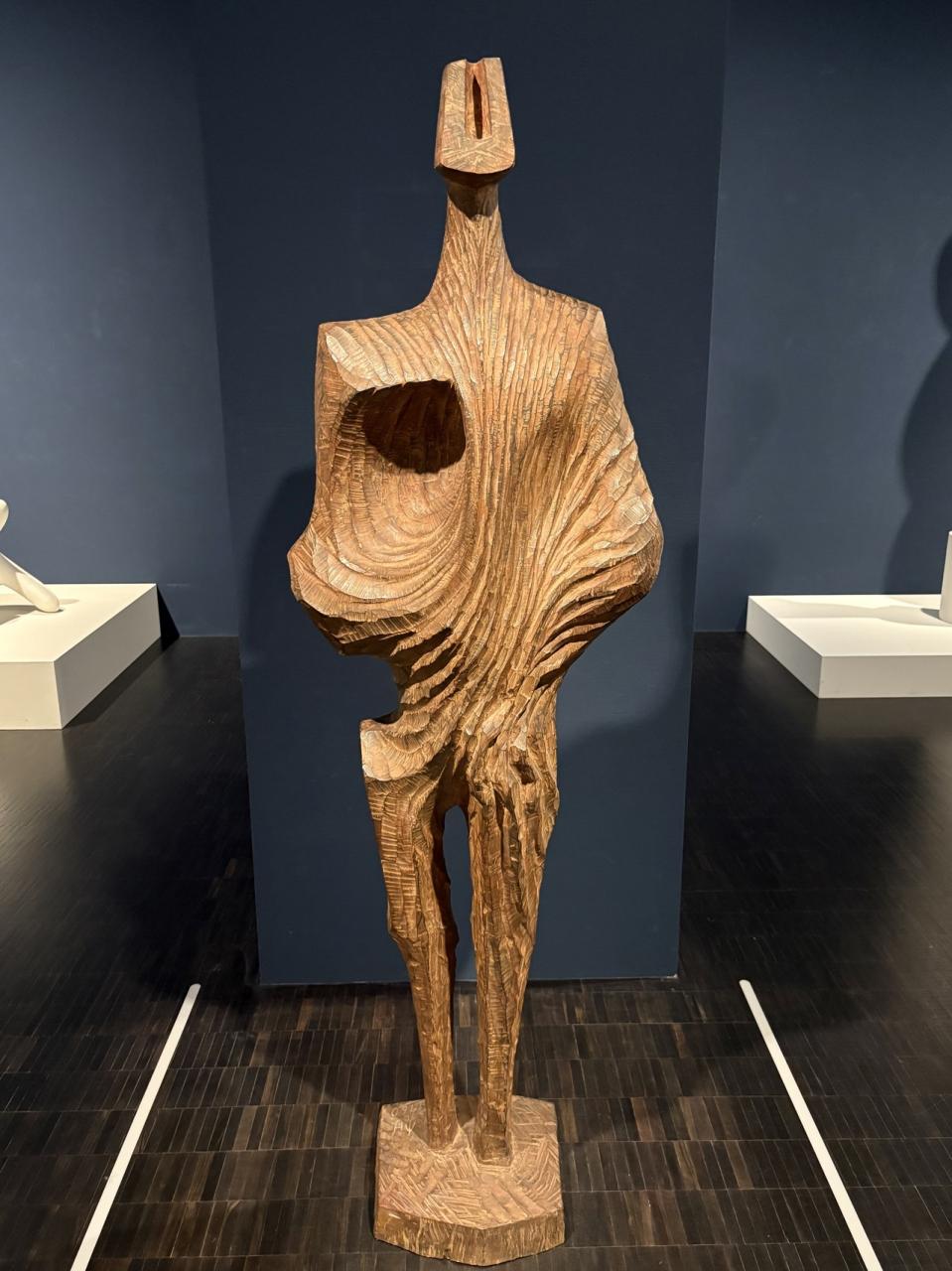
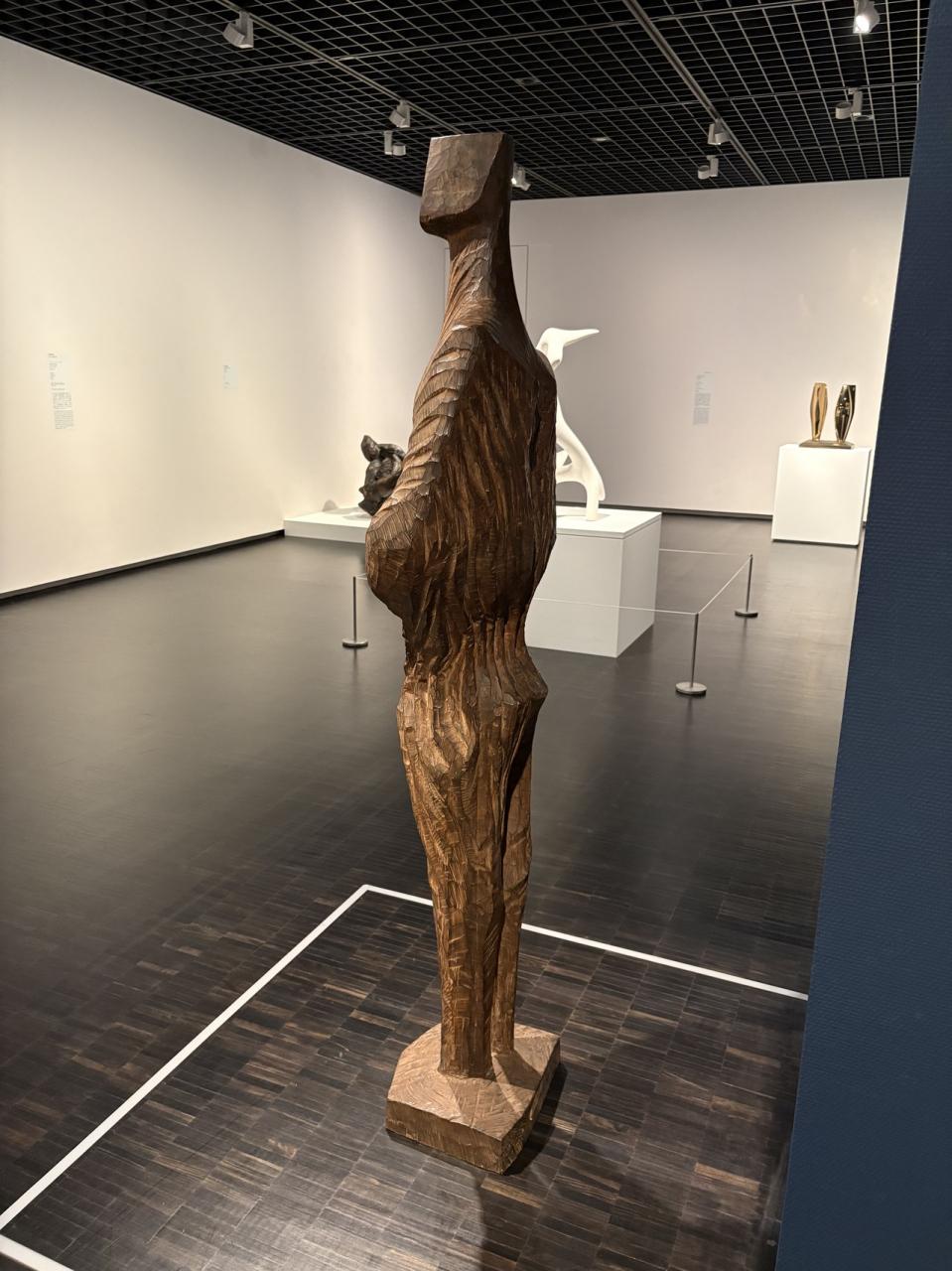
豊福知徳
TOYOFUKU, Tomonori
1925-2019
立像
Statue
1960
昭和35年
木 wood
文部省管理換
Transferred from Ministry of Education -
-
-
-
-
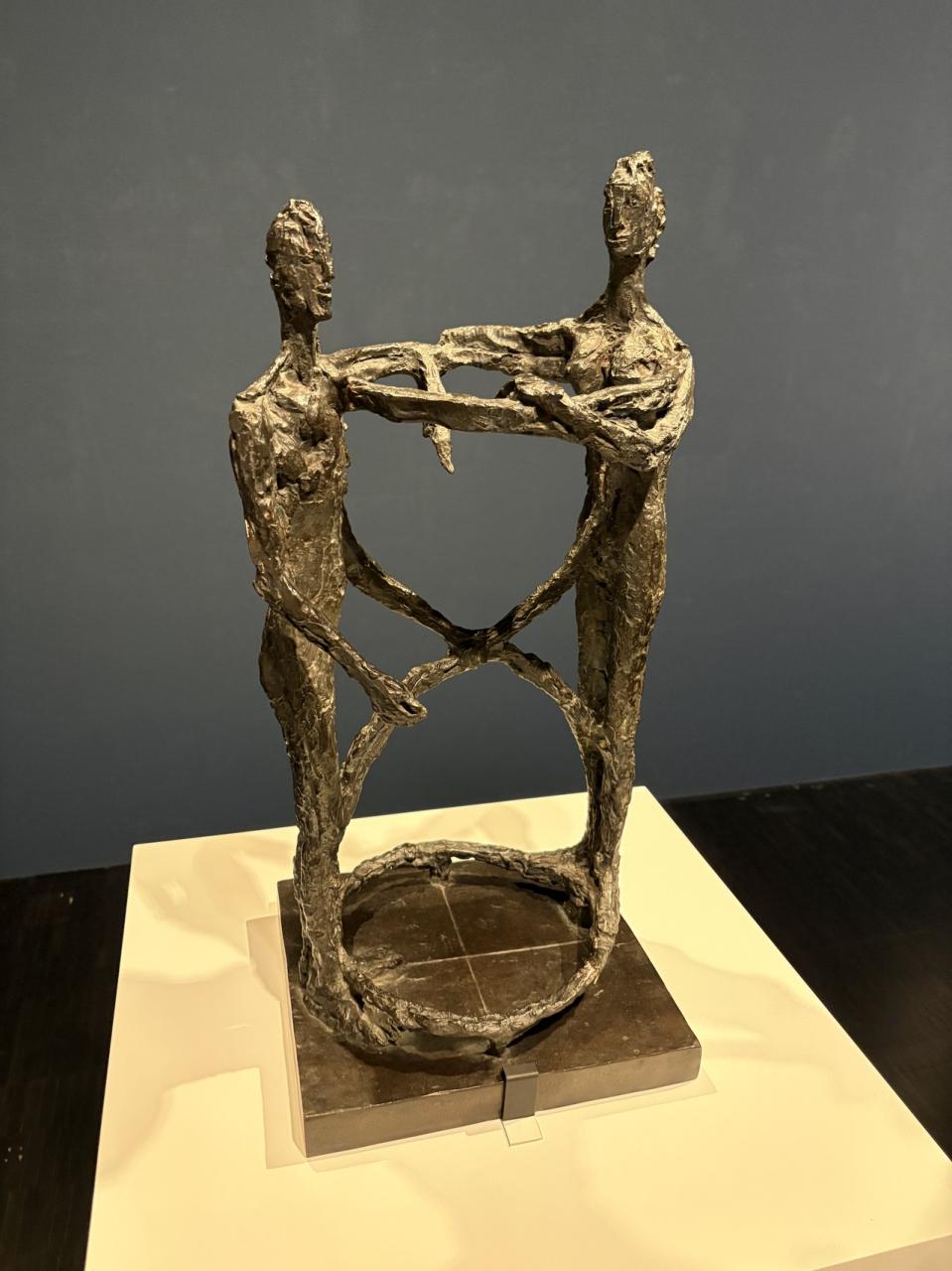
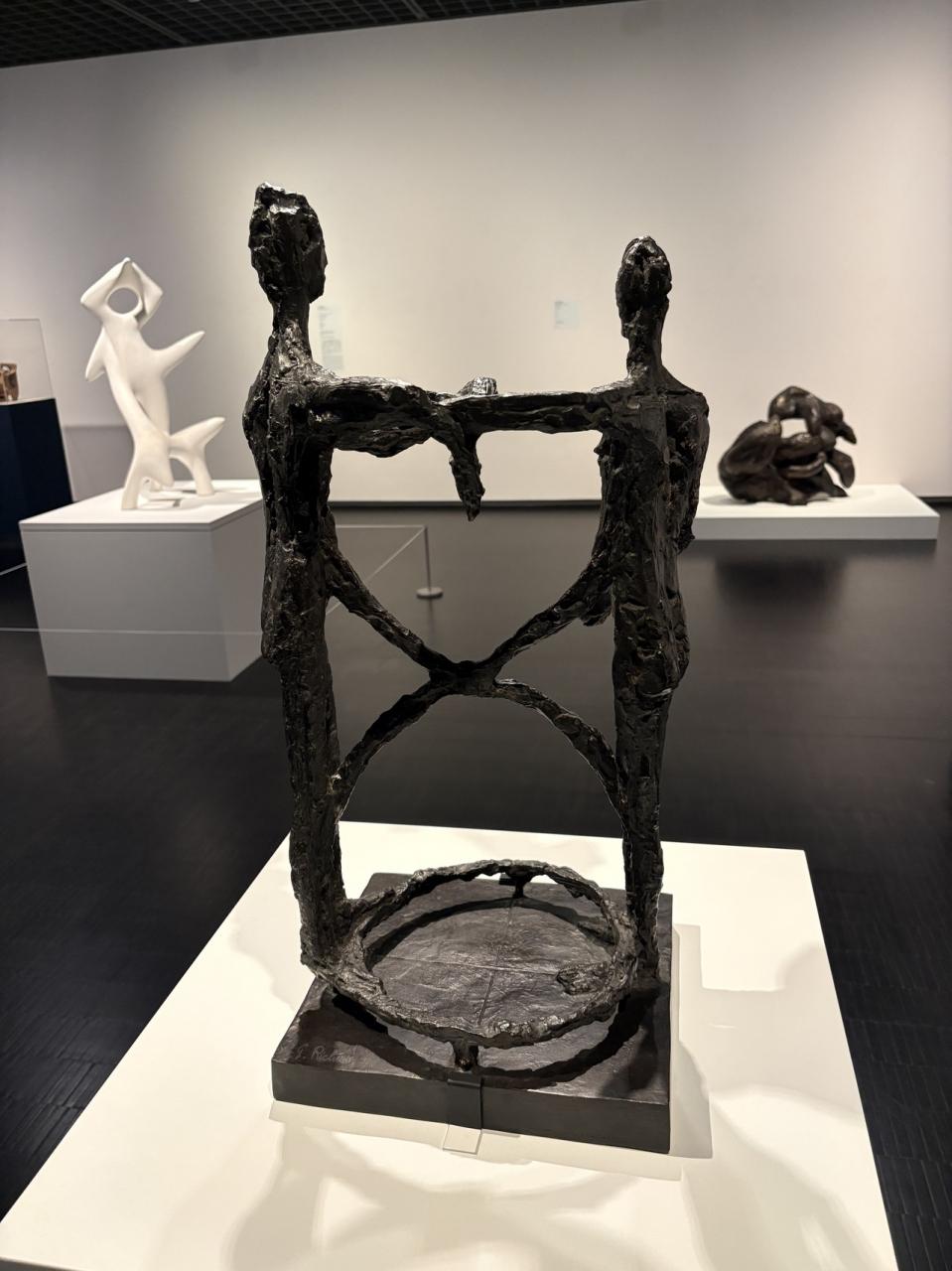
ジェルメーヌ・リシエ
Germaine Richier
1902-1959
砂時計 III
Hourglass III
1953 昭和28年
ブロンズ bronze
寄託
Long term loan -
-
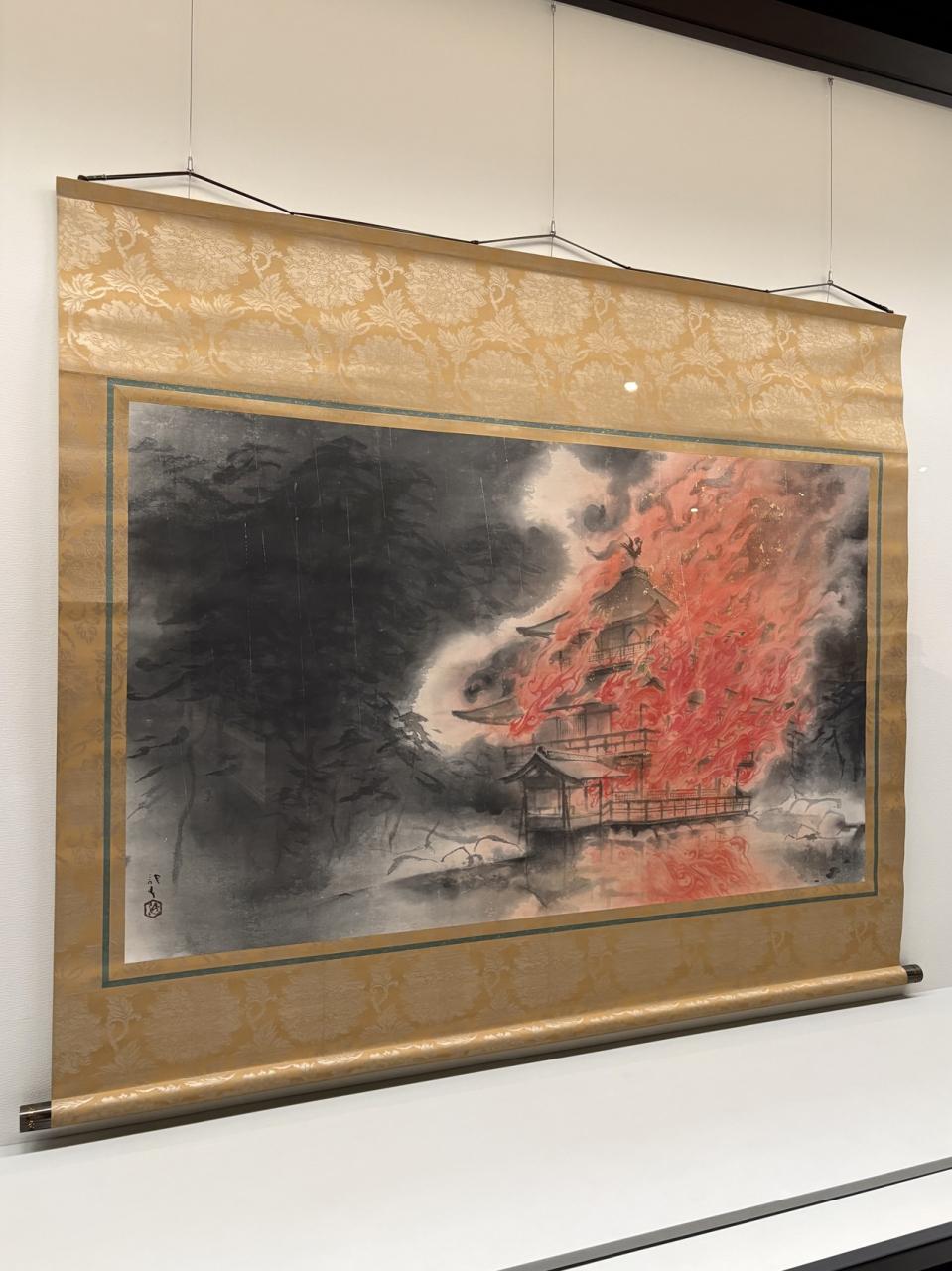
川端龍子
KAWABATA, Ryushi
1885-1966
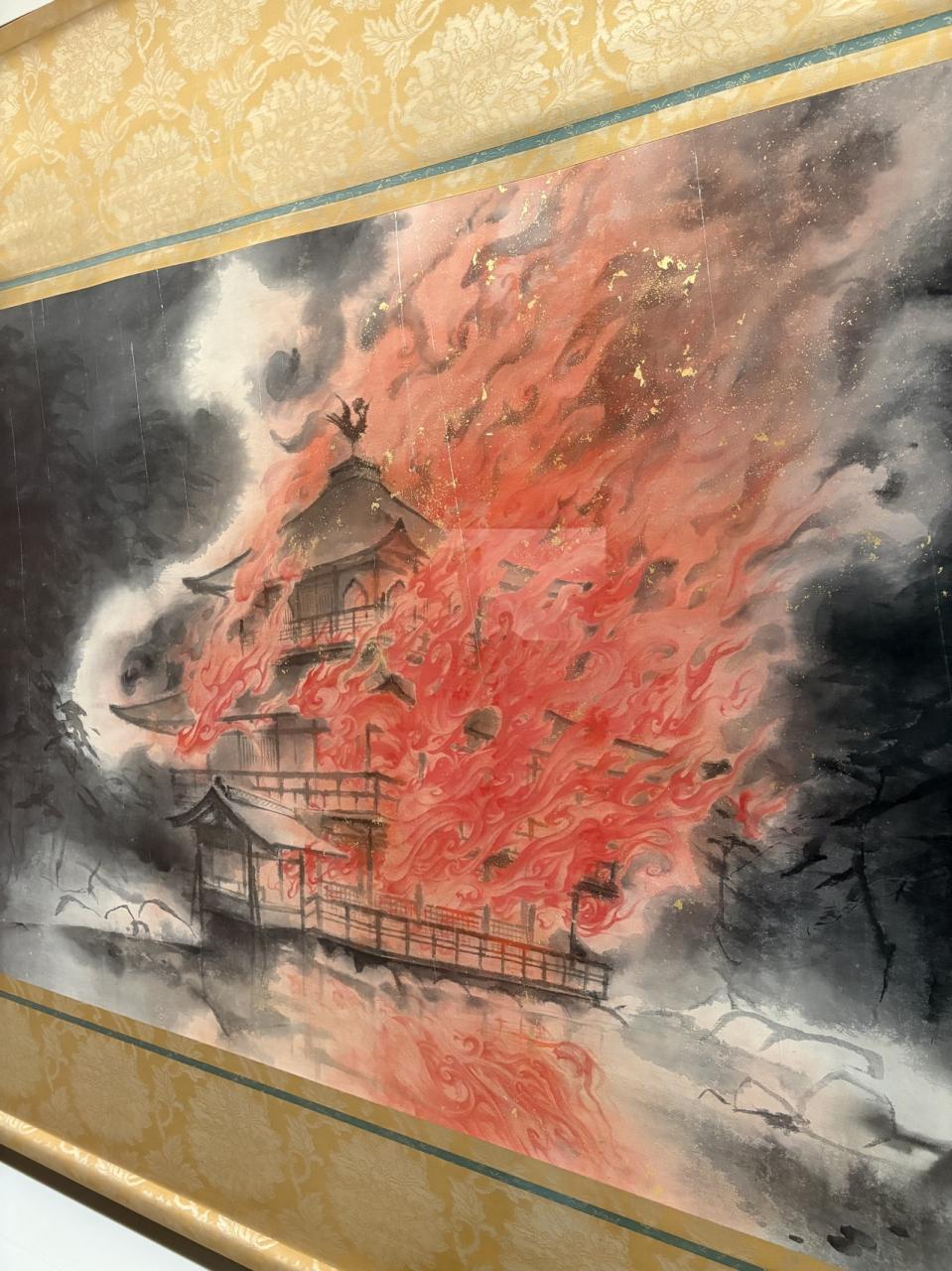
金閣炎上
Kinkakuji-Temple on Fire
1950
昭和25年
紙本彩色 color on paper
松田伊三雄氏寄贈
Gift of Matsuda Isao
金閣炎上といえば、三島由紀夫の小説「金閣寺」
(1956年)や水上勉「五番町夕霧楼』(1962年)、「金閣炎上』(1979年)によっても知られる歴史上の大事件です。1950(昭和25)年7月2日の未明、京都の鹿苑寺(通称・金閣寺)の国宝、舎利殿が同寺徒弟の放火によって全焼しました。龍子は翌日の新聞を参考に、わずか
2ヶ月後の22回青龍社展にこの作品を出品しています。こんなに生々しい大事件が日本画で描かれること自体が特異なこと。さらには、そうした主題選択が、彼の弟子たちに受け継がれていることも注目されます。
The burning of Kinkaku-ji Temple was a major historical incident, which is widely known through works such as Mishima Yukio's Kinkakuji (The Temple of the Golden Pavilion,1956), Minakami Tsutomu's Gobancho Yugiriro (District Five, Manor of Mists, 1962) and The Burning of Kinkaku-ji (1979). In the early hours of July 2, 1950, Rokuon-ji Temple (commonly known as Kinkaku-ji), a National Treasure, and Shari-den (a reliquary hall) were simultaneously set alight and burned to the ground by an apprentice monk. Made by referring to pictures in the newspaper, Kawabata showed this work a mere two months later at the 22nd Seiryu-sha Exhibition. The fact that such a vivid and important incident was depicted in Nihon-ga is in itself a very peculiar thing. It is also worth noting that Kawabata's choice of subject matter was passed down to his students. -
-
-
-
-
-
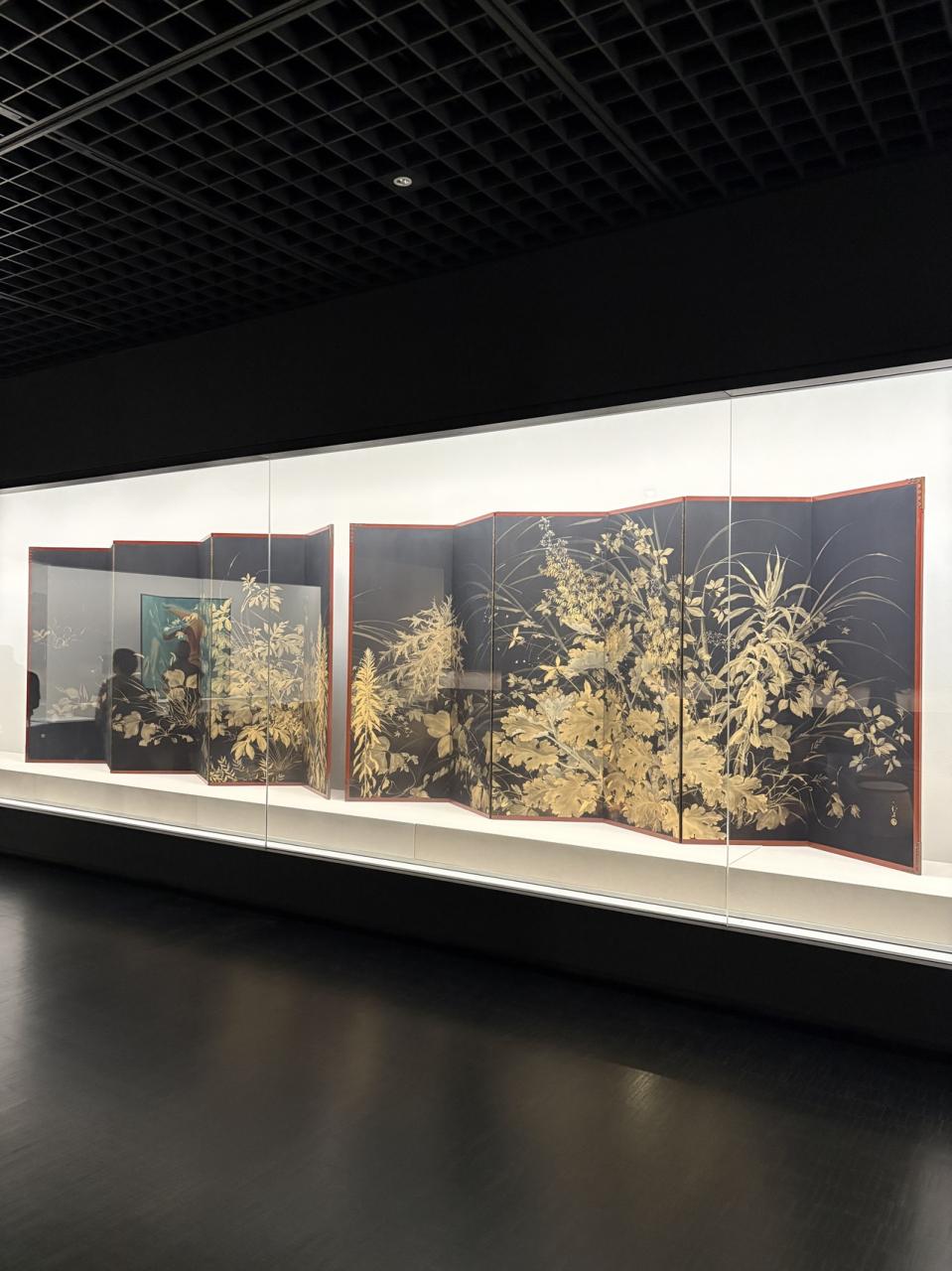
川端龍子
KAWABATA, Ryushi
1885-1966
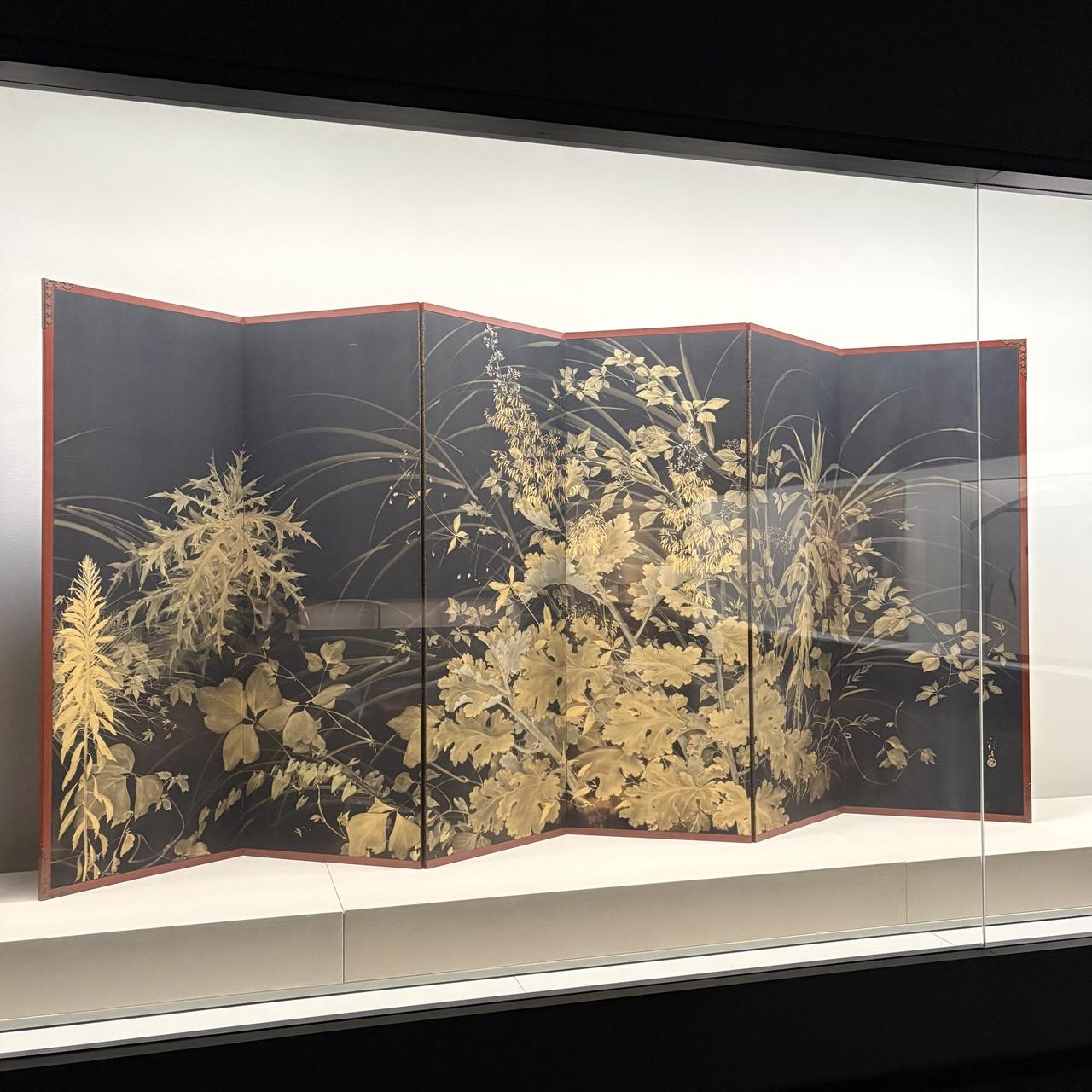
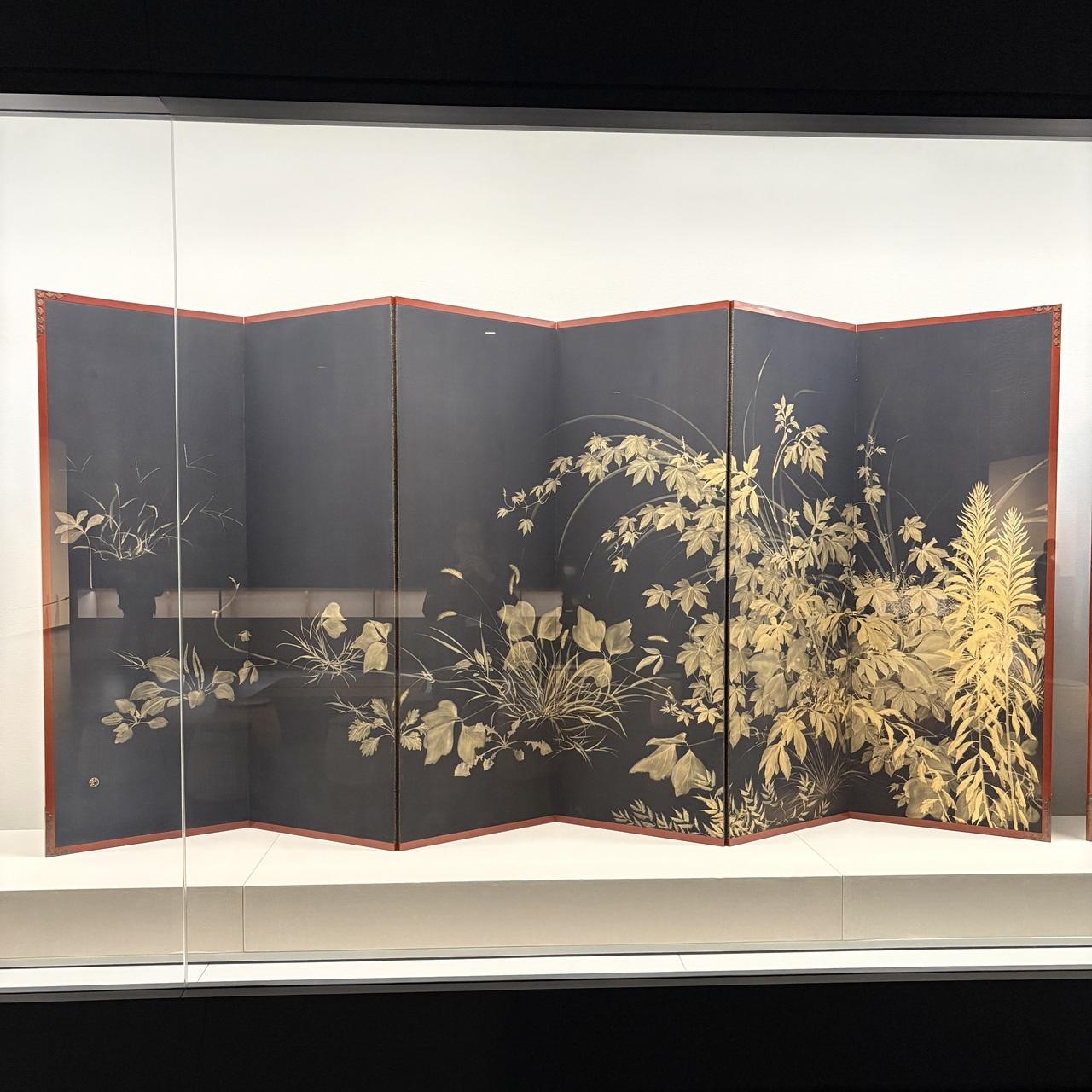
草炎
Flaming Grass
1930 昭和5年
絹本彩色 color on silk
文化庁管理換
Transferred from Agency for Cultural Affairs
紺地に金泥という取り合わせからは、紺紙金泥経が連想されます。平安時代や鎌倉時代に作例
が残る、紺色に染めた料紙に金泥で経文や扉絵を書したおごそかな装飾経です。他にも、黒地に秋草の着物を連想する人や、漆器の蒔絵を思い浮かべる人もいるかもしれません。では質問です。描かれた光景は夜でしょうか?それとも灼熱の昼間でしょうか?正解はありません。見る人がこの作品から何を連想し、何と結びつけて理解したかによって、夜と見るか昼と見るかはっきり分かれるのが興味深いところです。
The use of gold paint on a midnight blue background in this work recalls the Konshikondei Hannya Shingyo (the Heart Sutra, written with similar materials and color scheme by Emperor Go-Nara), and example of solemnly beautiful Heian Period (794-1185) and Kamakura Period (1185-1333) decorative sutras with inscriptions and frontispieces in gold paint on material dyed midnight blue. For other viewers this work may evoke a black kimono with a pattern of autumn grasses, and others may be reminded of lacquer painting. Is it a nocturnal scene, or daytime under the scorching sun? There is no one right answer.
Indeed, the fascinating thing about this work is that it is open to interpretation, with people seeing it as daytime or nighttime depending on their own personal associations. -
-
-
-
-
-
-
川端龍子
KAWABATA, Ryushi
1885-1966
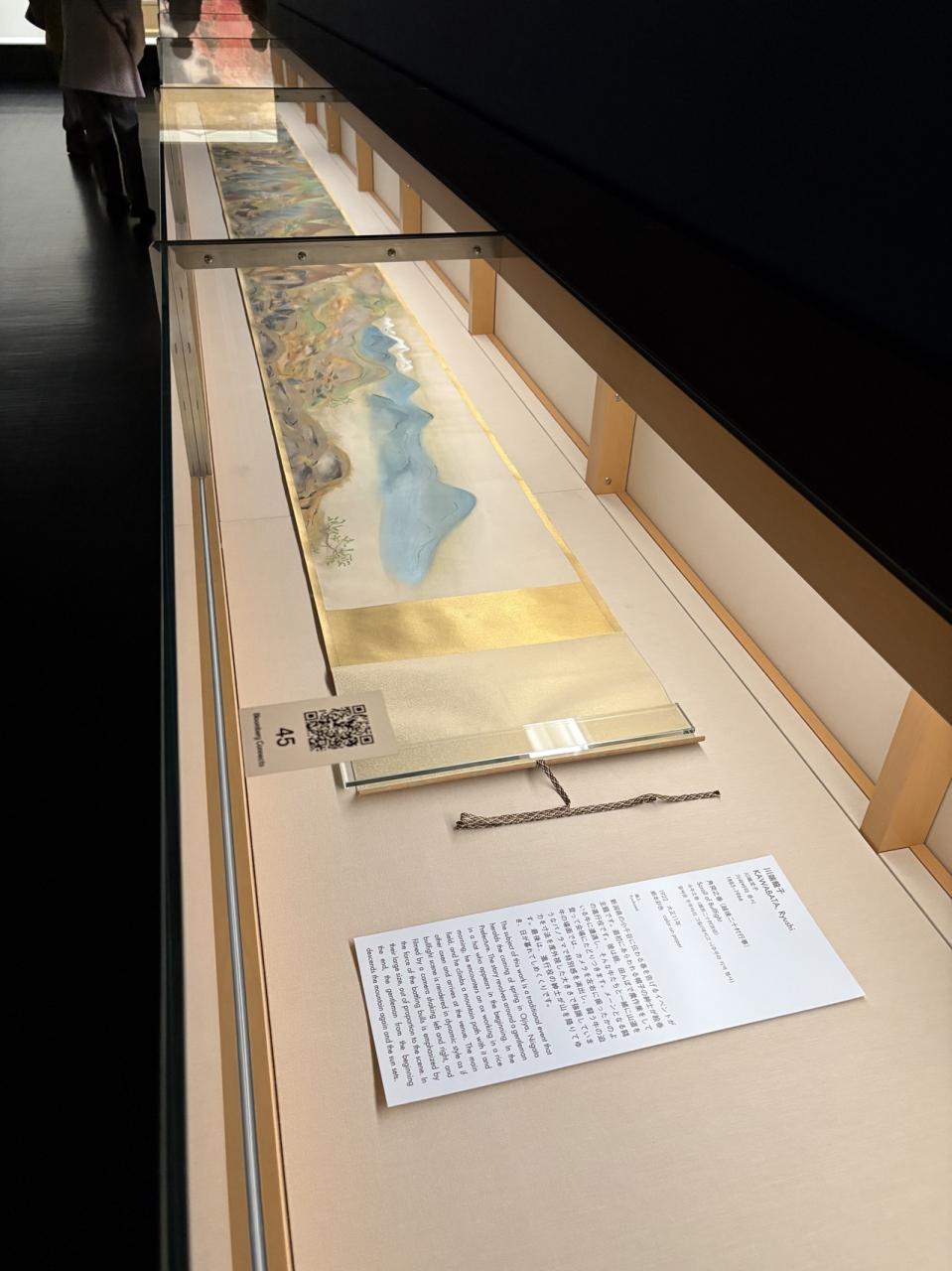
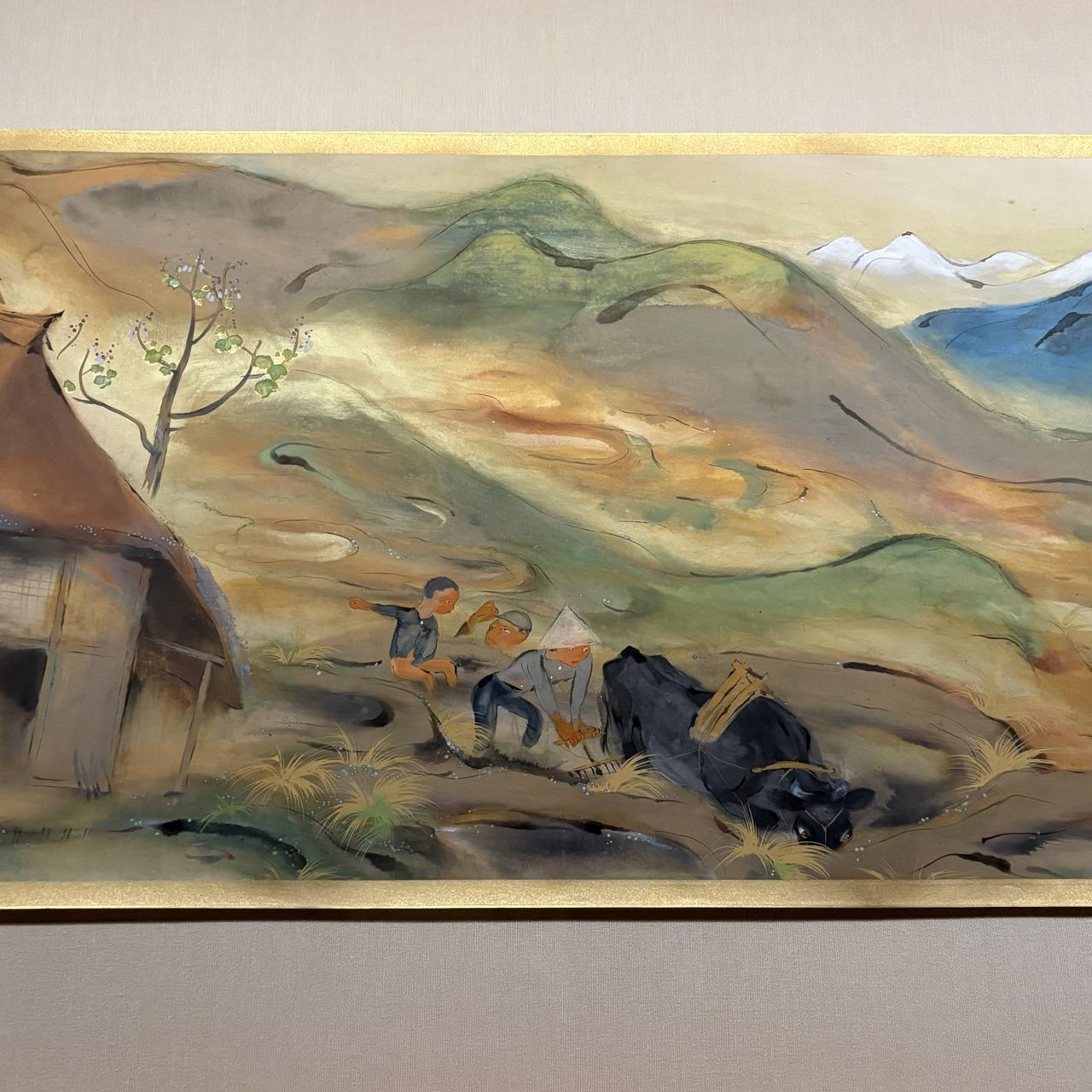
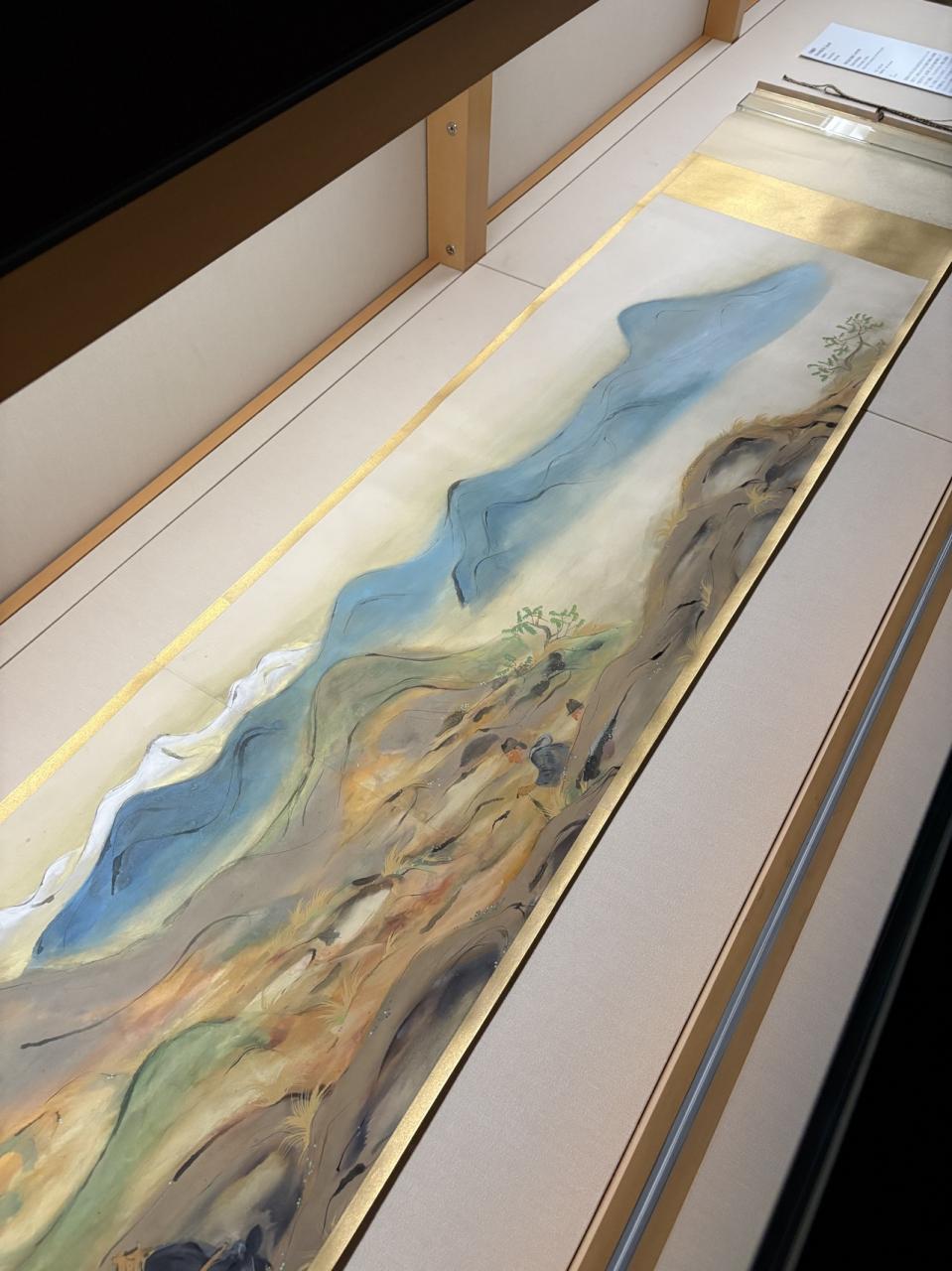
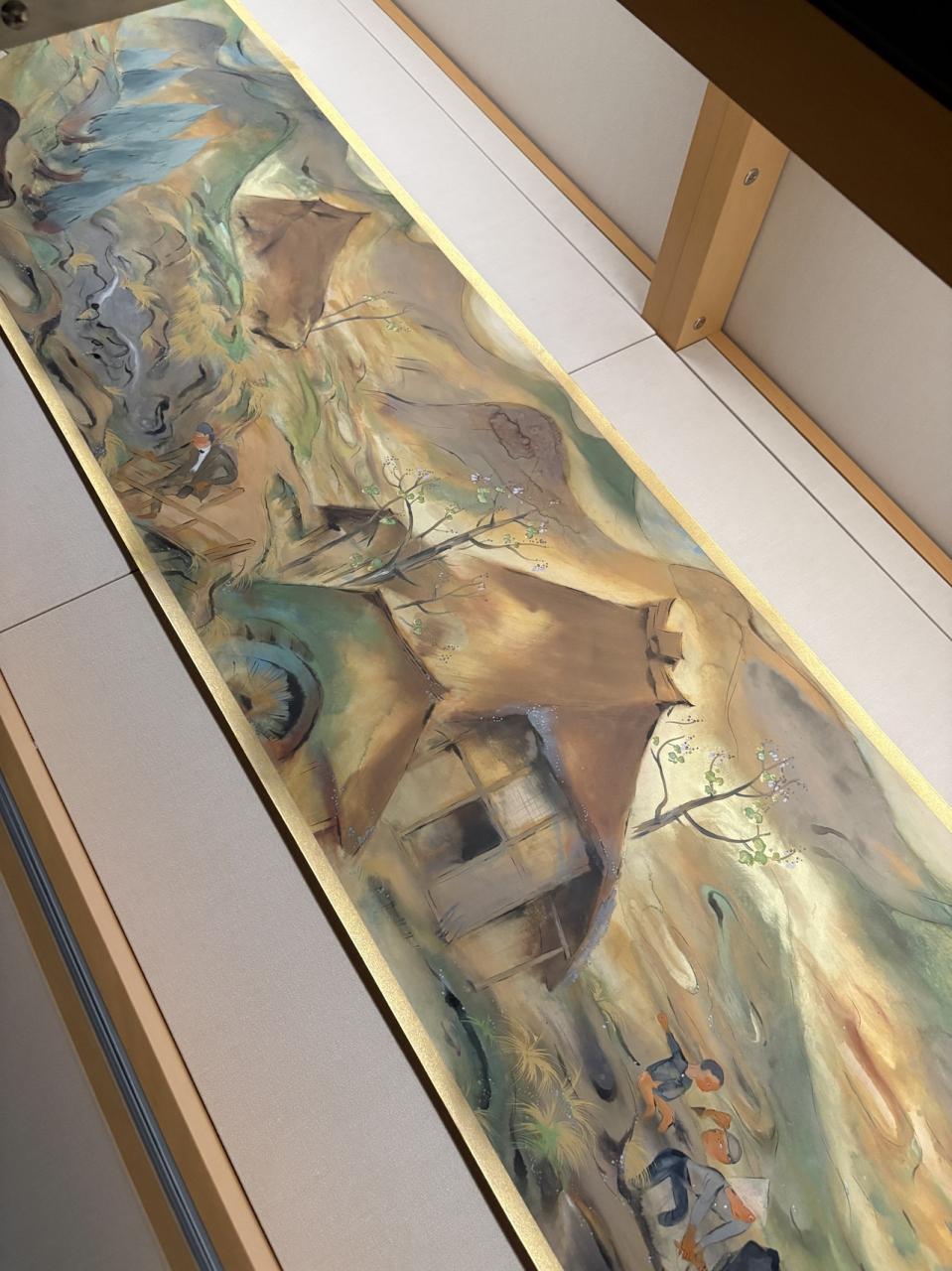
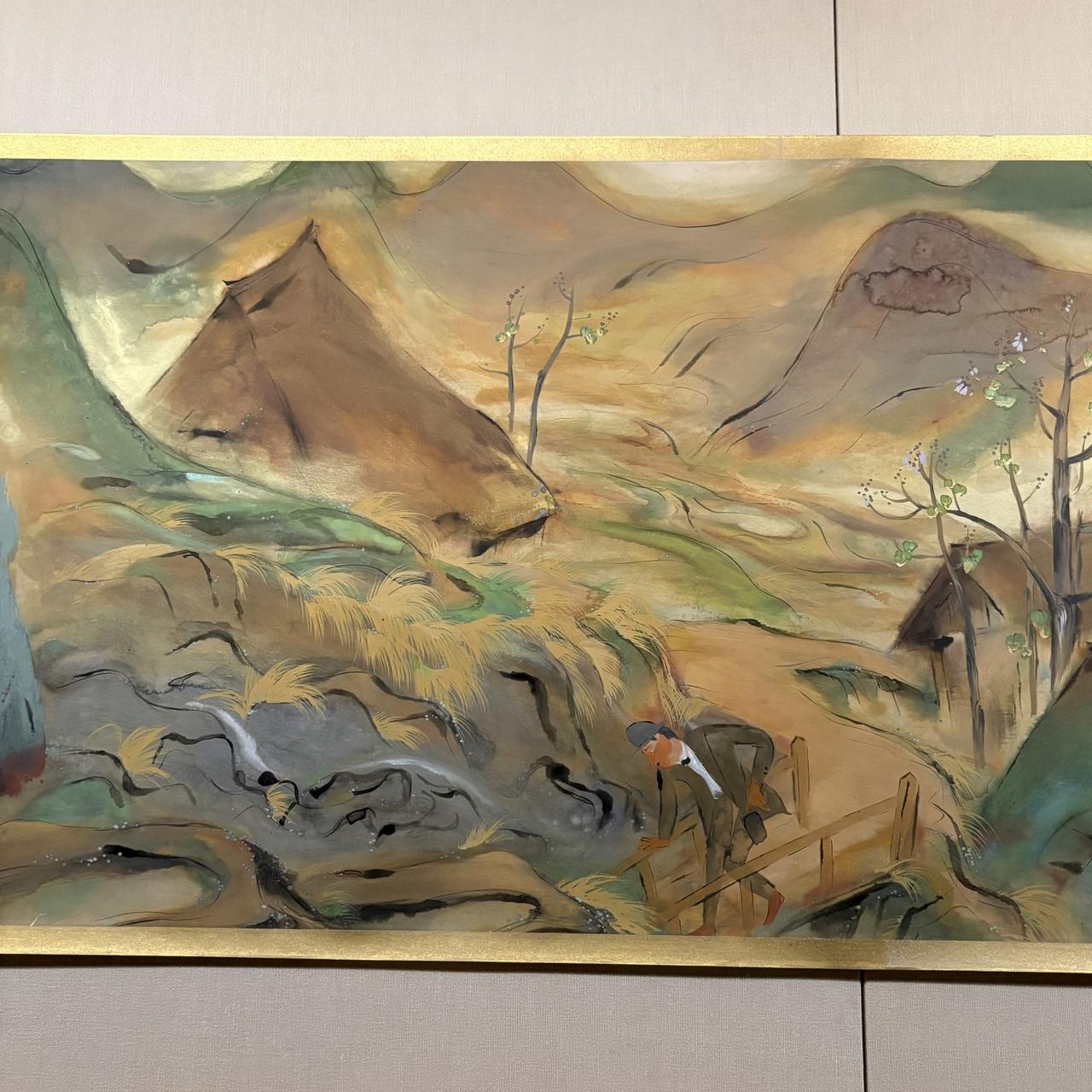
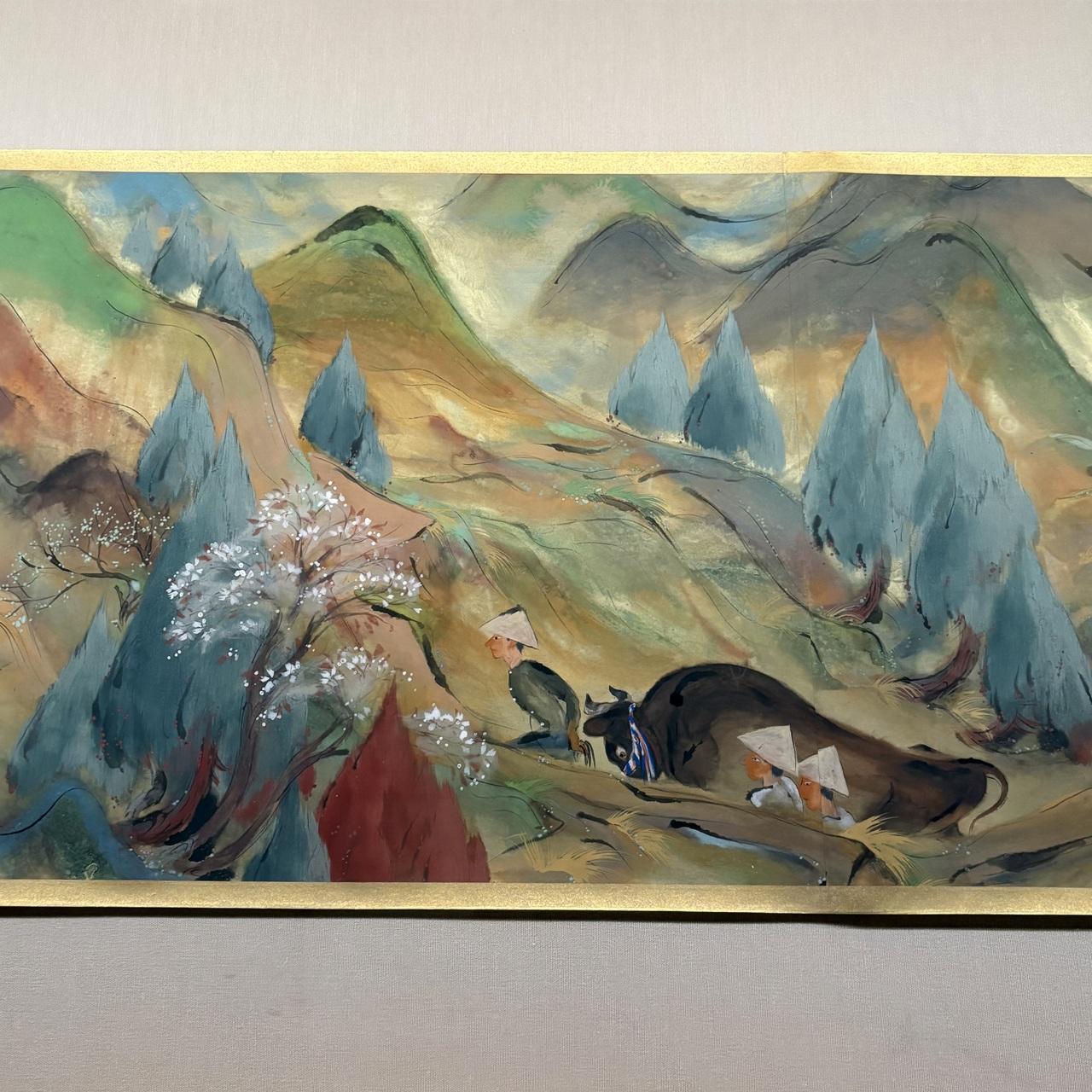
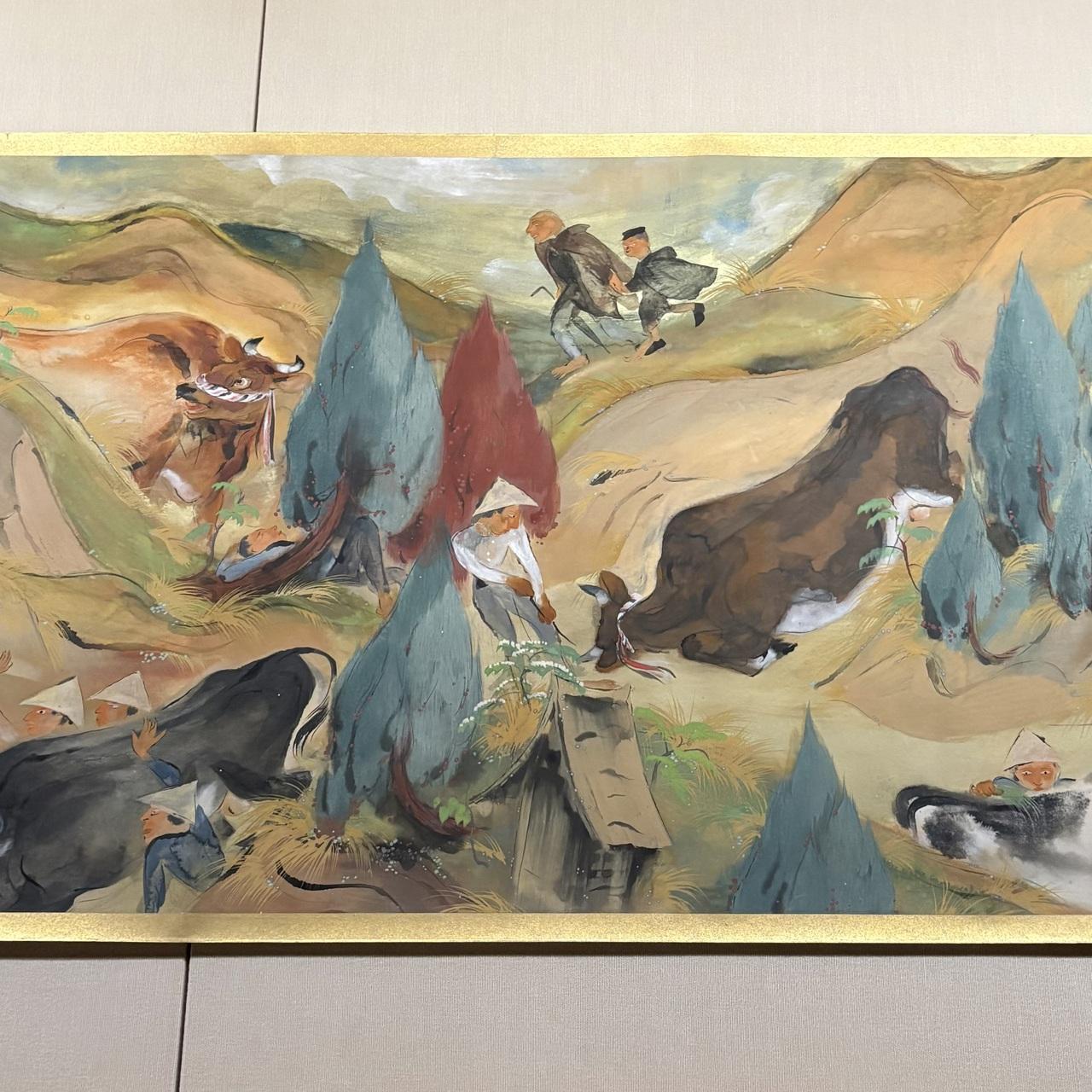
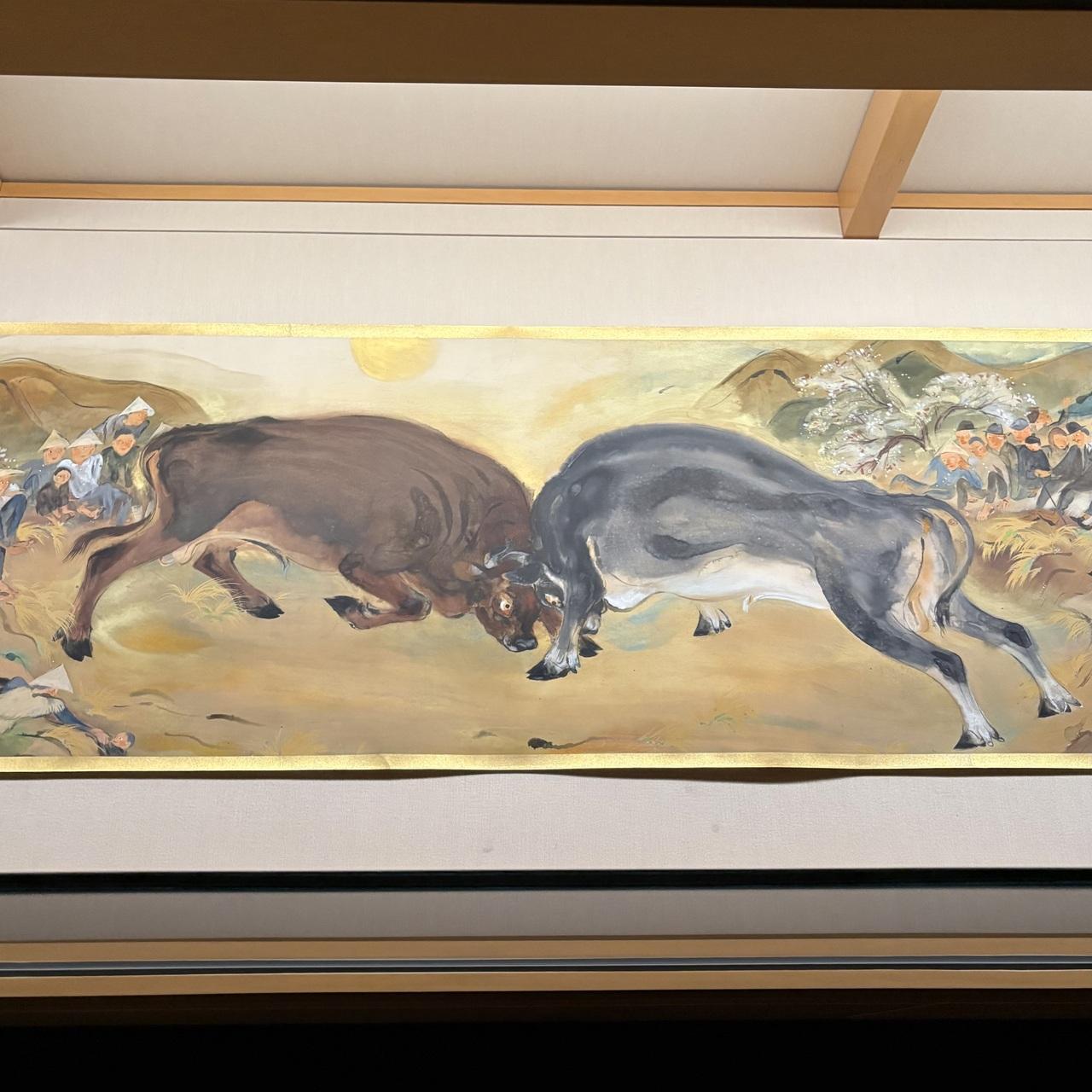
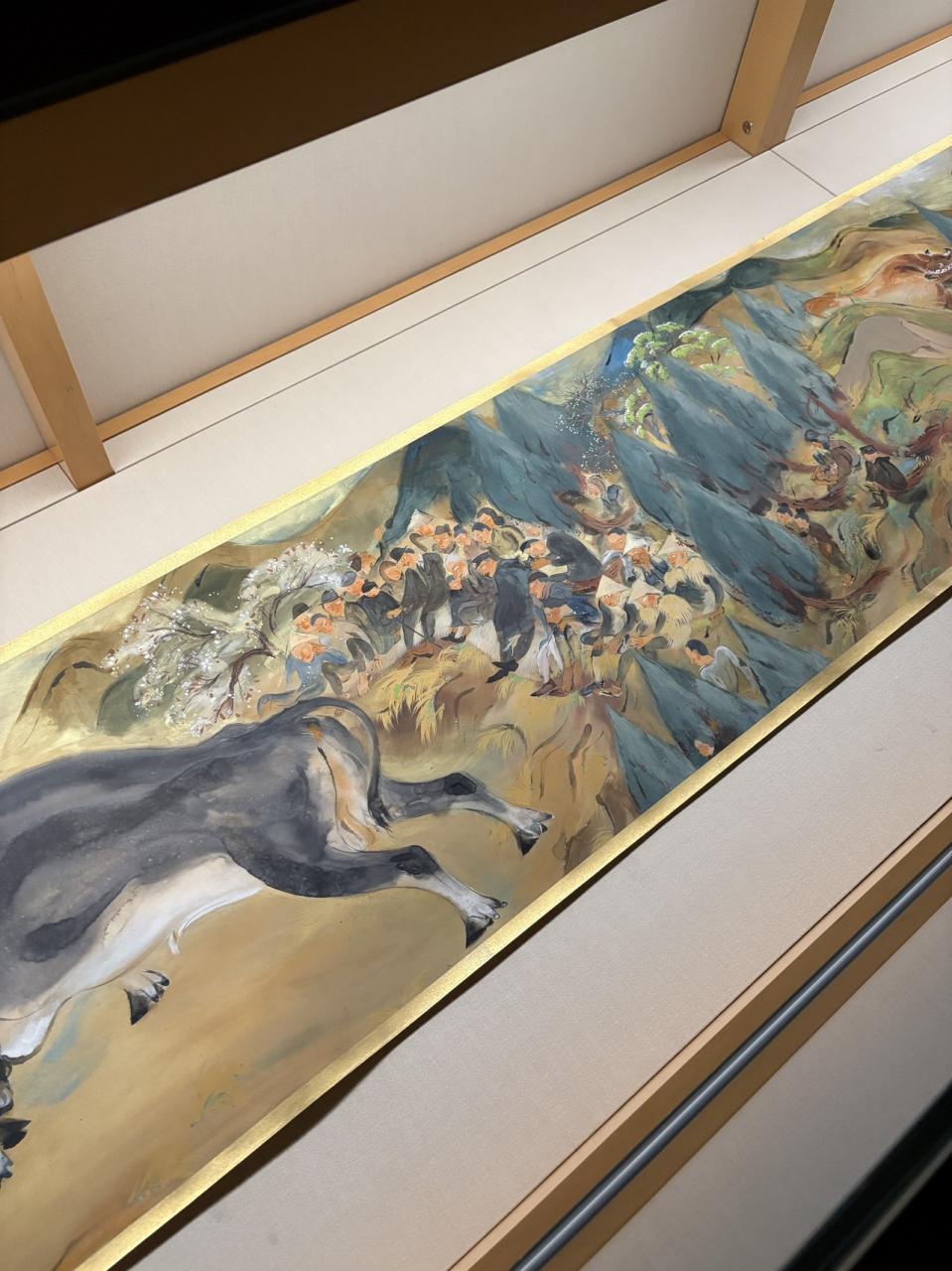
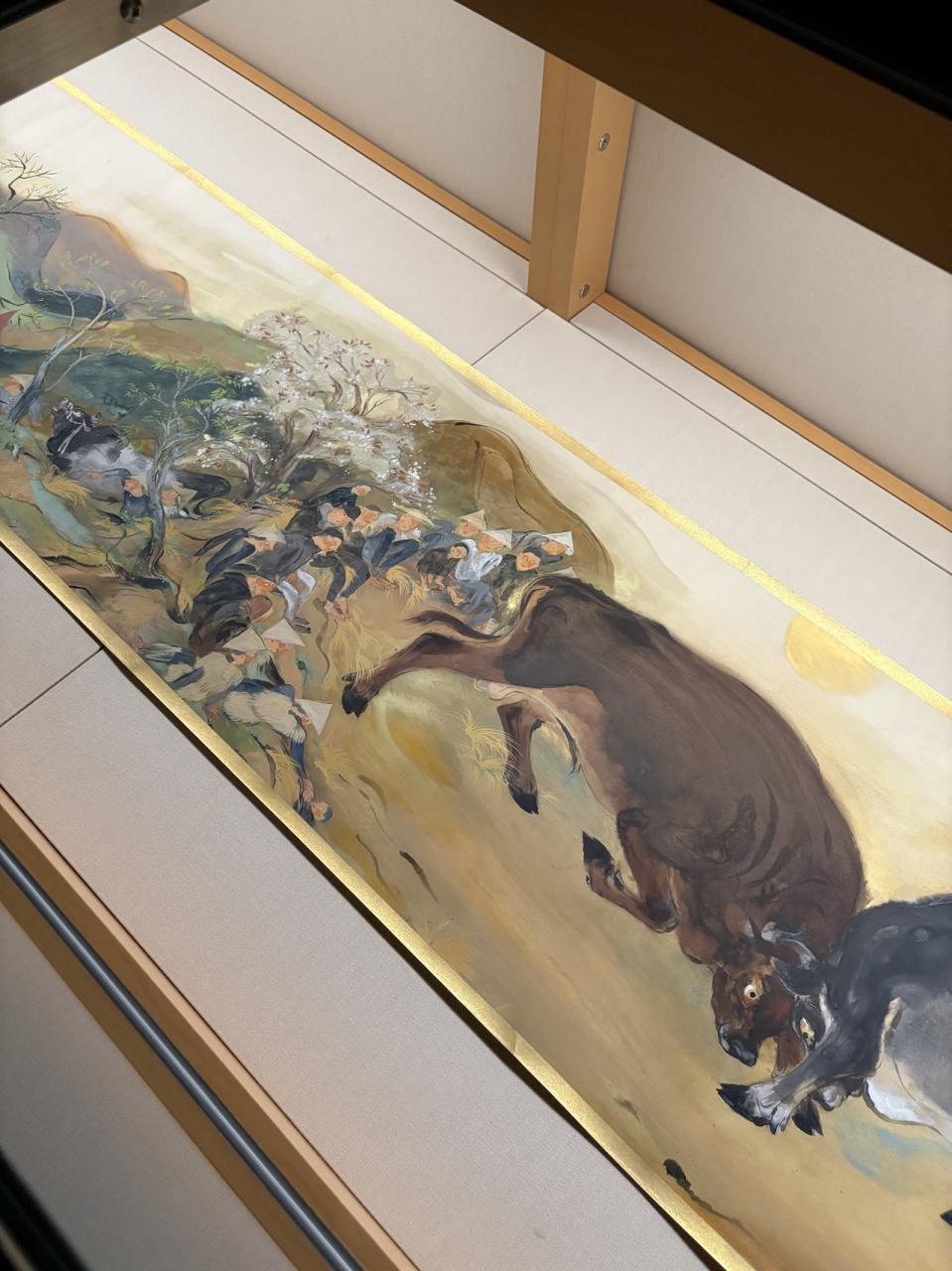
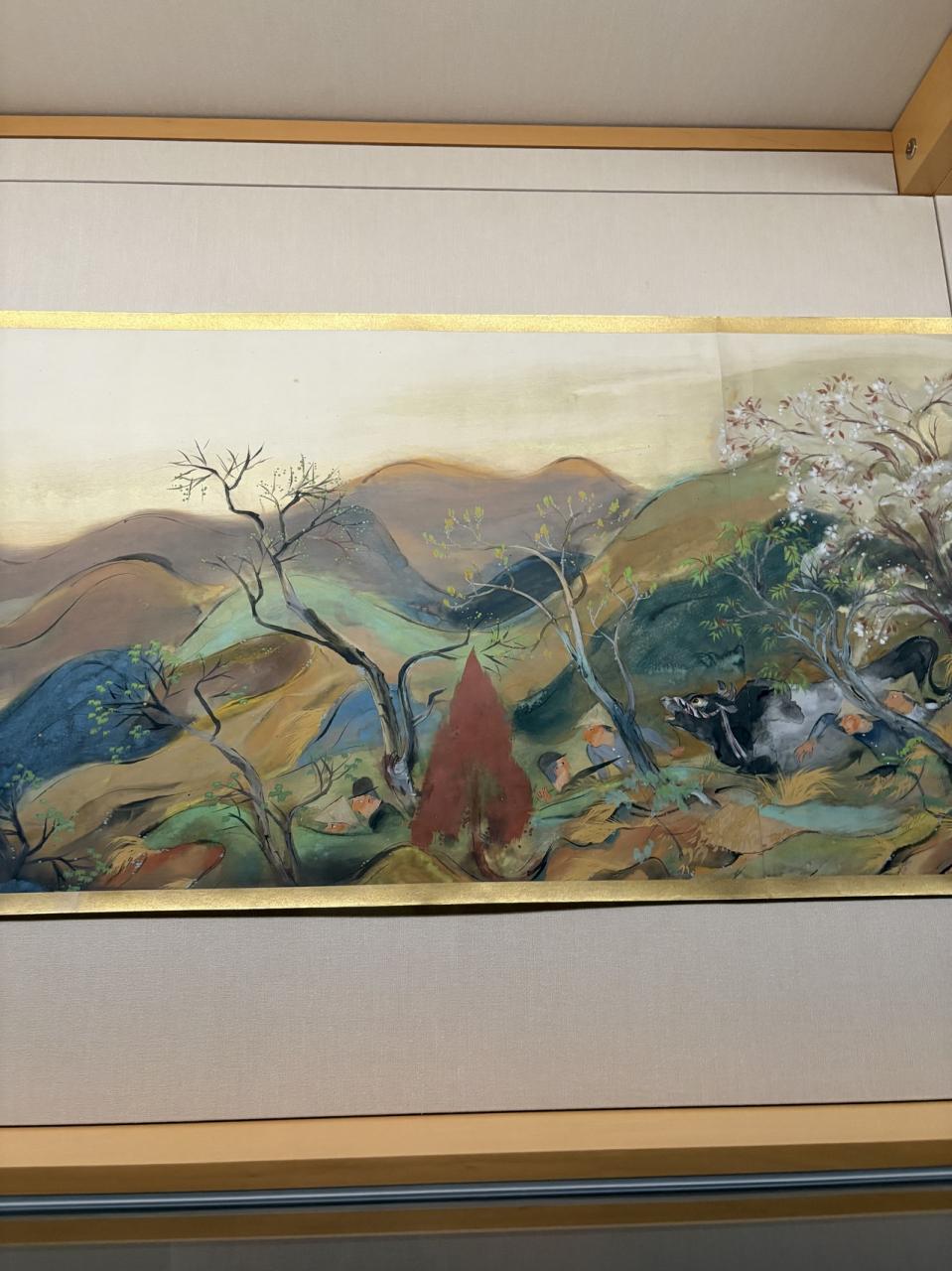
角突之巻(越後二十村行事)
Scroll of Bullfight
1922 大正11年
紙本彩色
color on paper
Purchased
新潟県の小千谷に伝わる春を告げるイベントが主題です。最初にあらわれる帽子の紳士が絵巻の進行役です。彼は朝、田んぽで農作業をしている牛に遭遇し、そんな牛たちと一緒に山道を登って会場にたどりつきます。メーンとなる闘牛の場面では、カメラを左右に振ったかのようなパノラマで特別感を演出し、闘う牛の迫力を寸法を度外視した大きさで強調しています。最後は、進行役の紳士が山を降りてゆき、日が暮れてしめくくりです。
The subject of this work is a traditional event that heralds the coming of spring in Ojiya, Niigata Prefecture. The story revolves around a gentleman in a hat who appears in the beginning. In the morning, he encounters an ox working in a rice field, and he climbs a mountain path with it and other oxen and arrives at the venue. The main bullfight scene is rendered in dynamic style as if filmed by a camera shaking left and right, and the force of the battling bulls is emphasized by their large size, out of proportion to the scene. In the end, the gentleman from the beginning descends the mountain again and the sun sets. -
-
-
-
-
-
-
-
-
-
-
(続く・・・)
この旅行記のタグ


利用規約に違反している投稿は、報告する事ができます。
-
前の旅行記

MOMAT〔国立東京近代美術館〕コレクション展 ~2026.2.8:その9."細江英公「薔薇刑」"
2026/02/05~
神田・神保町
-
次の旅行記

MOMAT〔国立東京近代美術館〕コレクション展 ~2026.2.8:その11.記憶と想起。"河原温《1966...
2026/02/05~
神田・神保町
-

"MOMAT〔国立東京近代美術館〕コレクション展 ~2026.2.8" その1.ハイライト。"奈良美智《Ha...
2026/02/05~
神田・神保町
-

"MOMAT〔国立東京近代美術館〕コレクション展 ~2026.2.8" その2.新か、旧か? "和田三造《南...
2026/02/05~
神田・神保町
-

"MOMAT〔国立東京近代美術館〕コレクション展~2026.2.8" その3.キュビスム再考 "ナターリア・...
2026/02/05~
神田・神保町
-

"MOMAT〔国立東京近代美術館〕コレクション展 ~2026.2.8" その4.『濹東綺譚』。"木村荘八 、...
2026/02/05~
神田・神保町
-

"MOMAT コレクション展 ~2026.2.8" その5.1930年代の絵画:現実の彼方へ、幻影の手前で。...
2026/02/05~
神田・神保町
-

MOMAT〔国立東京近代美術館〕コレクション展 ~2026.2.8: その6.戦時の女性たち。"『主婦之友』...
2026/02/05~
神田・神保町
-

MOMAT〔国立東京近代美術館〕コレクション展 ~2026.2.8: その7.アクション前夜。"朝倉摂 《黒...
2026/02/05~
神田・神保町
-

MOMAT コレクション展 ~2026.2.8:8.「・・・アクション!」&「・・・カット!」。"ルーチョ・...
2026/02/05~
神田・神保町
-

MOMAT〔国立東京近代美術館〕コレクション展 ~2026.2.8:その9."細江英公「薔薇刑」"
2026/02/05~
神田・神保町
-

MOMAT ~2026.2.8:その10.1950~60年代:有機的な彫刻/川端龍子と青龍社。"ジェルメーヌ...
2026/02/05~
神田・神保町
-

MOMAT〔国立東京近代美術館〕コレクション展 ~2026.2.8:その11.記憶と想起。"河原温《1966...
2026/02/05~
神田・神保町
-

MOMAT コレクション展 ~2026.2.8:12.入れ替わる世界、ひらかれる感覚。"冨井大裕《board...
2026/02/05~
神田・神保町
-

国立東京近代美術館 "コレクションによる小企画 没後30年 榎倉康二(~2026.2.8)"《 干渉(STO...
2026/02/05~
神田・神保町
旅行記グループをもっと見る
コメントを投稿する前に
十分に確認の上、ご投稿ください。 コメントの内容は攻撃的ではなく、相手の気持ちに寄り添ったものになっていますか?
サイト共通ガイドライン(利用上のお願い)報道機関・マスメディアの方へ 画像提供などに関するお問い合わせは、専用のお問い合わせフォームからお願いいたします。






フォートラベル公式LINE@

おすすめの旅行記や旬な旅行情報、お得なキャンペーン情報をお届けします!
QRコードが読み取れない場合はID「@4travel」で検索してください。
\その他の公式SNSはこちら/





旅行記グループ MOMAT コレクション〔国立東京近代美術館 所蔵作品展〕(2025.11.5-2026.2.8)
0
34