


2026/02/05 - 2026/02/05
78位(同エリア932件中)

旅熊 Kokazさん
- 旅熊 KokazさんTOP
- 旅行記1924冊
- クチコミ854件
- Q&A回答102件
- 1,705,789アクセス
- フォロワー752人
MOMAT コレクション〔国立東京近代美術館 所蔵作品展〕(2025.11.5-2026.2.8)
2025年11月5日-2026年2月8日の所蔵作品展のみどころ
当館コレクション展の特徴をご紹介します。まずはその規模。1952年の開館以来の活動を通じて収集してきたおよそ14,000点の所蔵作品から、会期ごとに約200点を展示する国内最大級のコレクション展です。そして、それぞれ小さなテーマが立てられた全12室のつながりによって、19世紀末から今日に至る日本の近現代美術の流れをたどることができる国内随一の展示です。
今期のみどころ紹介です。長らく国外への貸出が続いていた奈良美智《Harmless Kitty》(1994年)が、約2年ぶりにMOMATコレクションに帰ってきました。4階ハイライト・コーナーでご覧いただけます。3階9室では写真家の細江英公の初期代表作「薔薇刑」を展示します。2024年に逝去された細江の追悼と、被写体となった小説家三島由紀夫の生誕100年記念(2025年)を兼ねての紹介です。
今期も、新収蔵作品が多く展示されています(作品横に貼られた「新収蔵作品」マークが目印です)。長く館を代表してきた顔ぶれにフレッシュな新星と、盛りだくさんのMOMATコレクションをお楽しみください。
https://www.momat.go.jp/exhibitions/r7-2
-

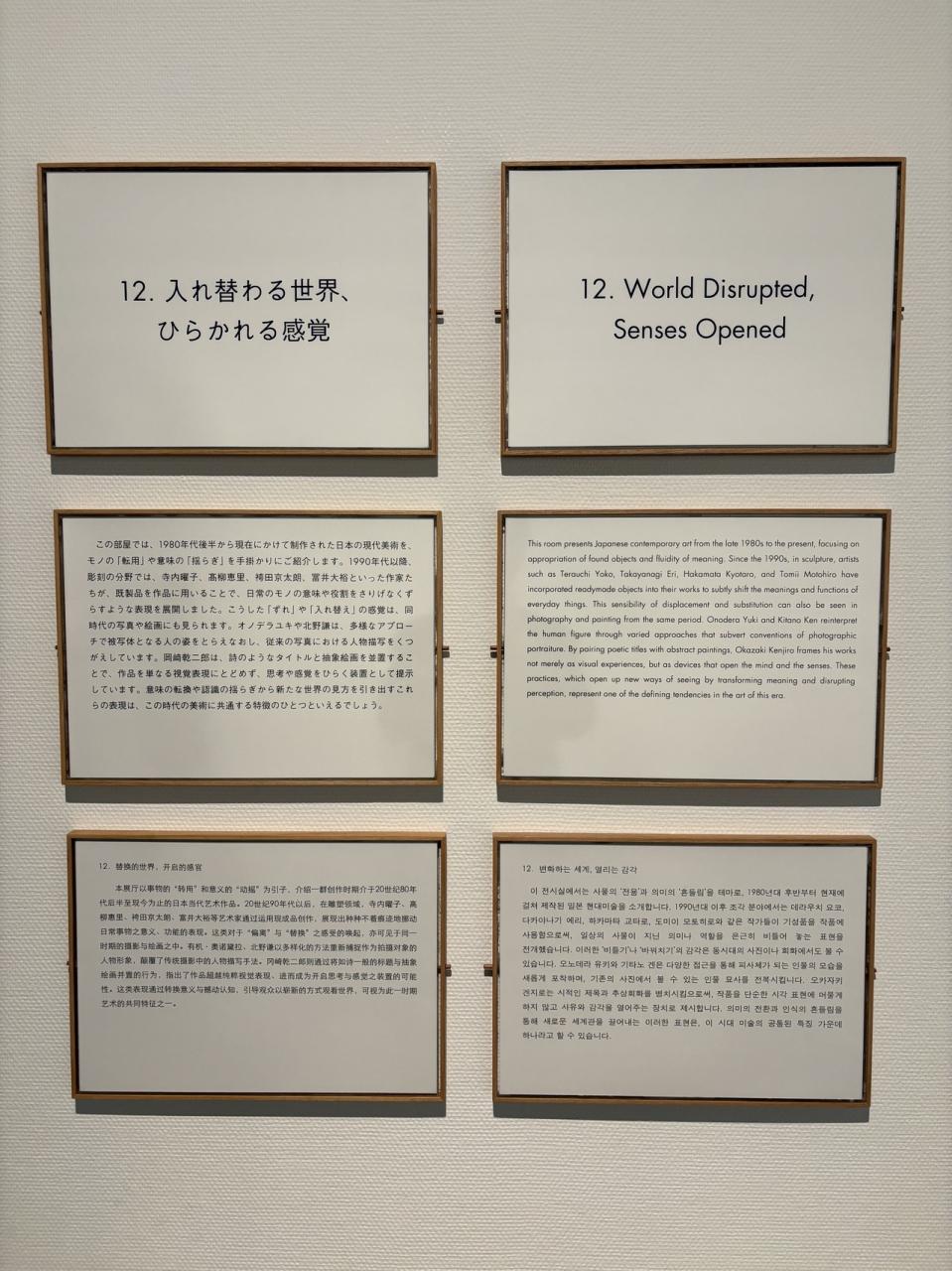
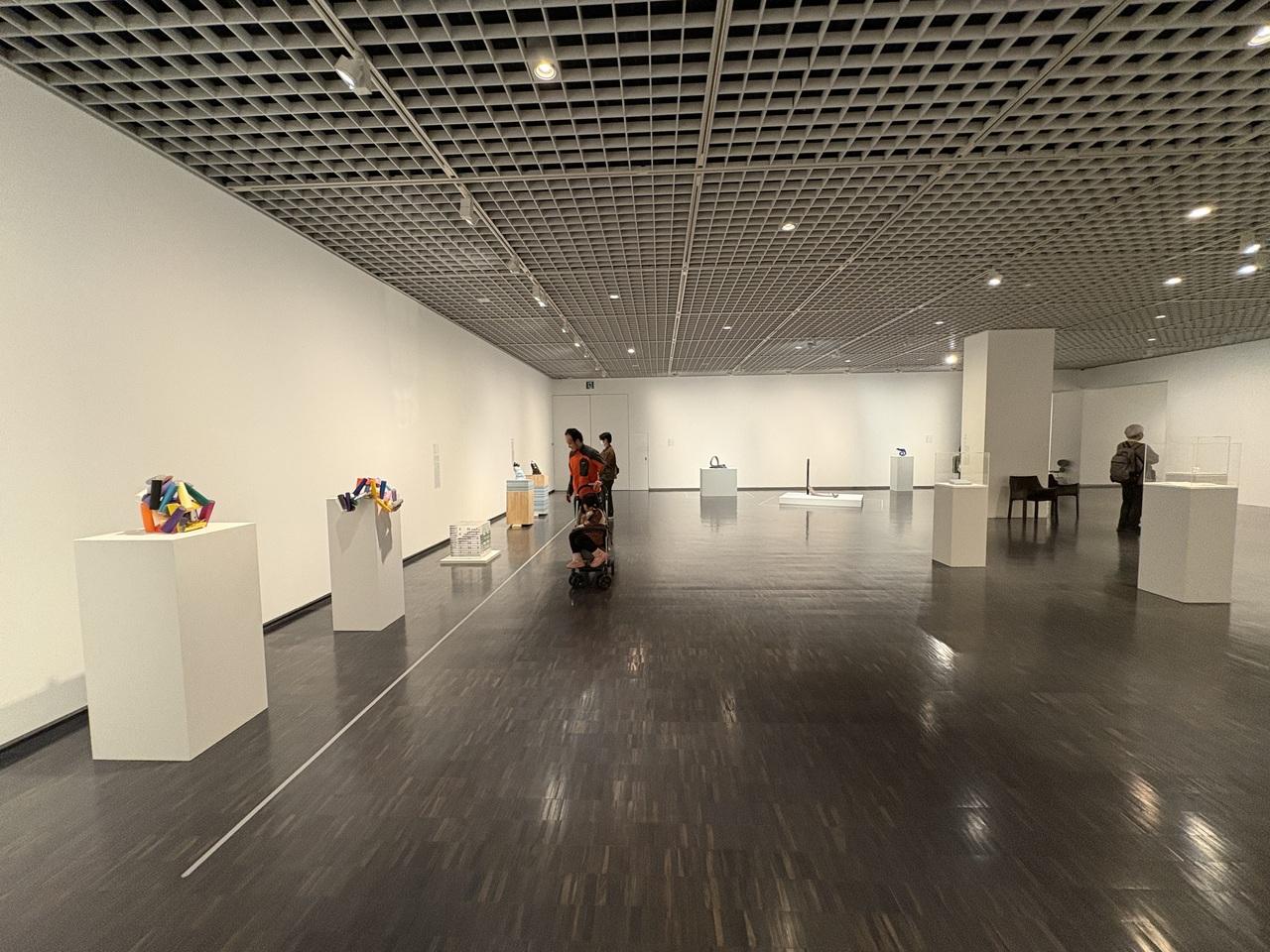
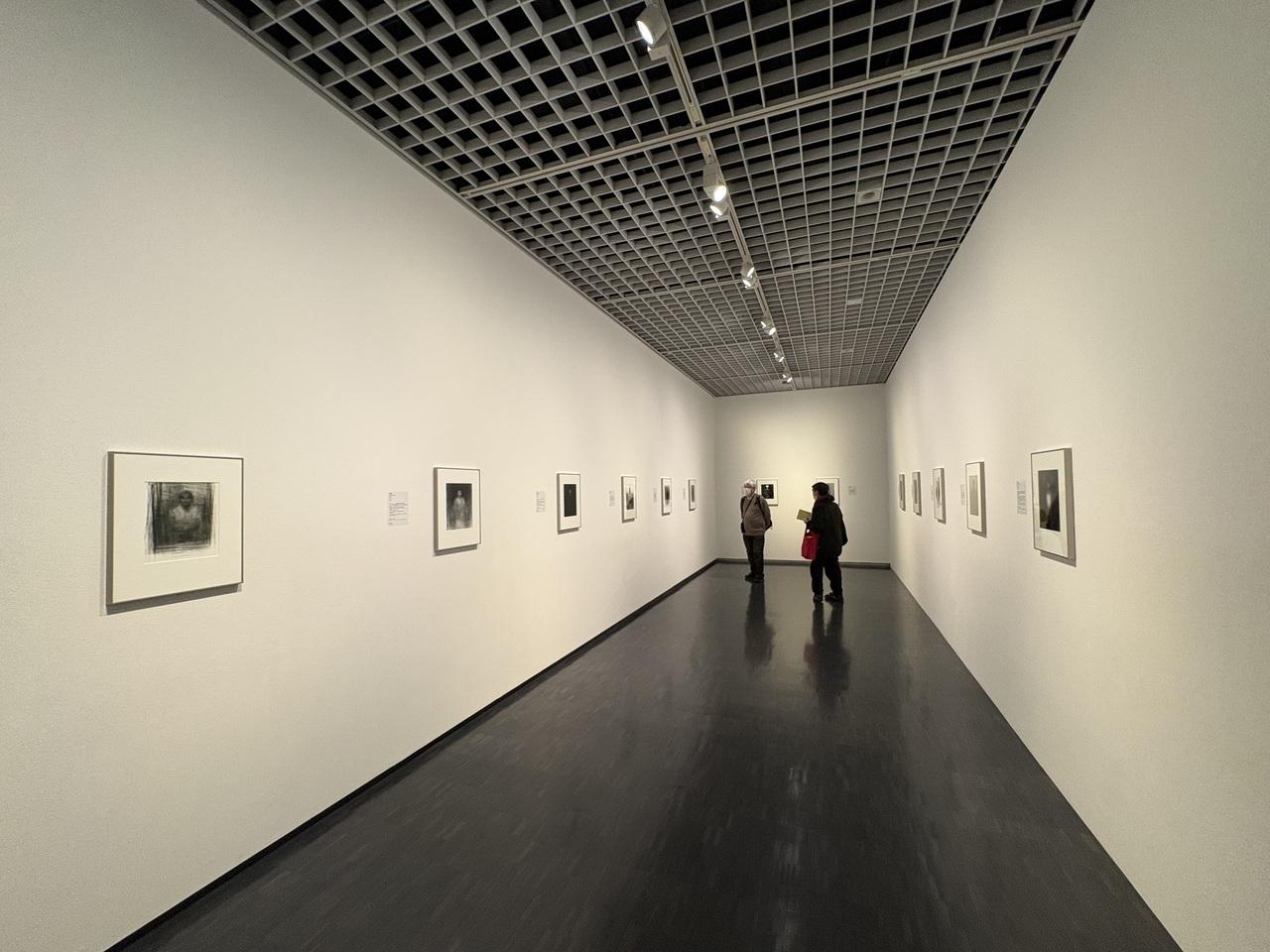
12.入れ替わる世界、ひらかれる感覚
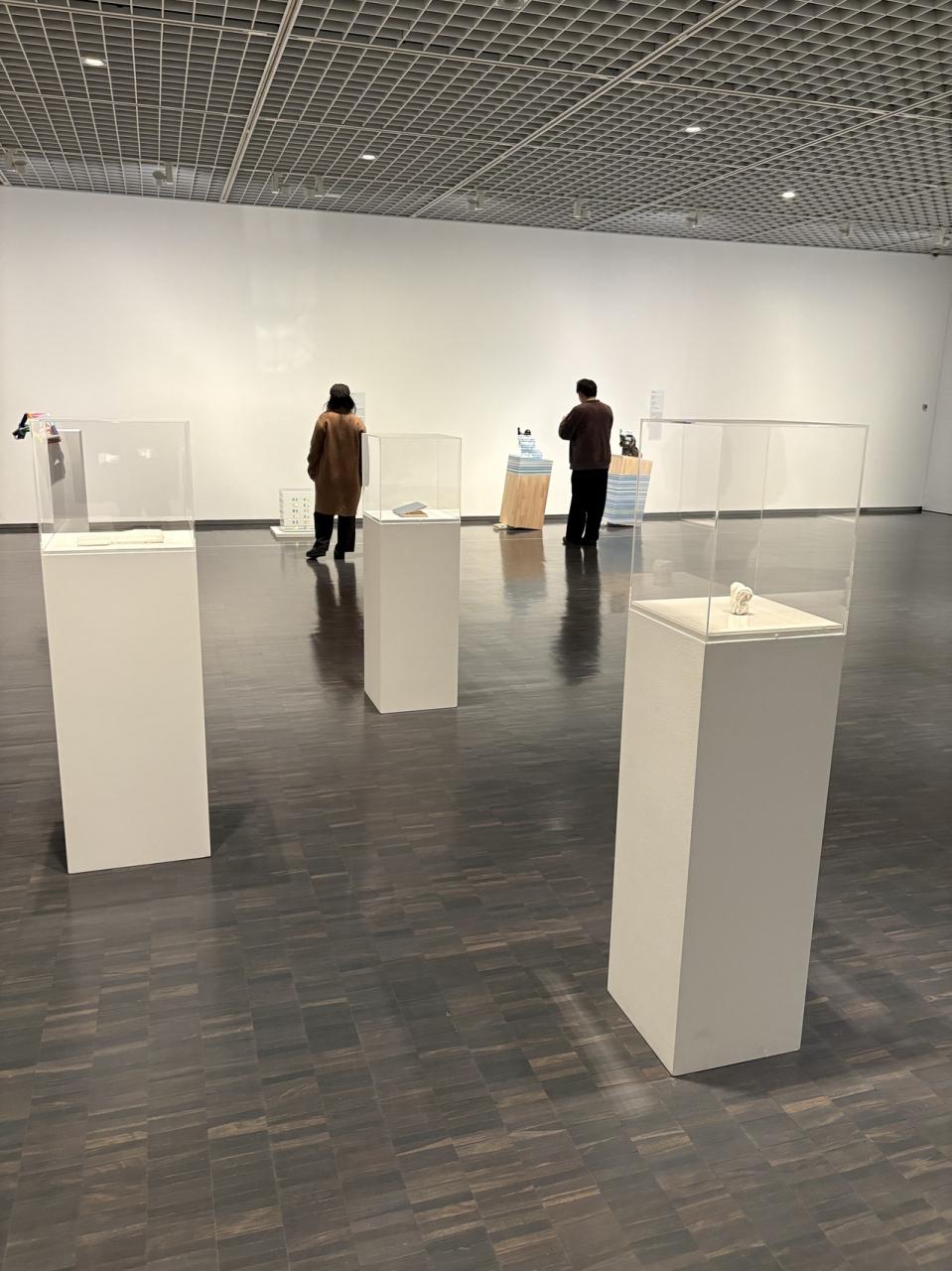
この部屋では、1980年代後半から現在にかけて制作された日本の現代美術を、モノの「転用」や意味の「揺らぎ」を手掛かりにご紹介します。
1990年代以降、彫刻の分野では、寺内曜子、高柳恵里、 袴田京太朗、冨井大裕といった作家たちが、既製品を作品に用いることで、日常のモノの意味や役割をさりげなくずらすような表現を展開しました。
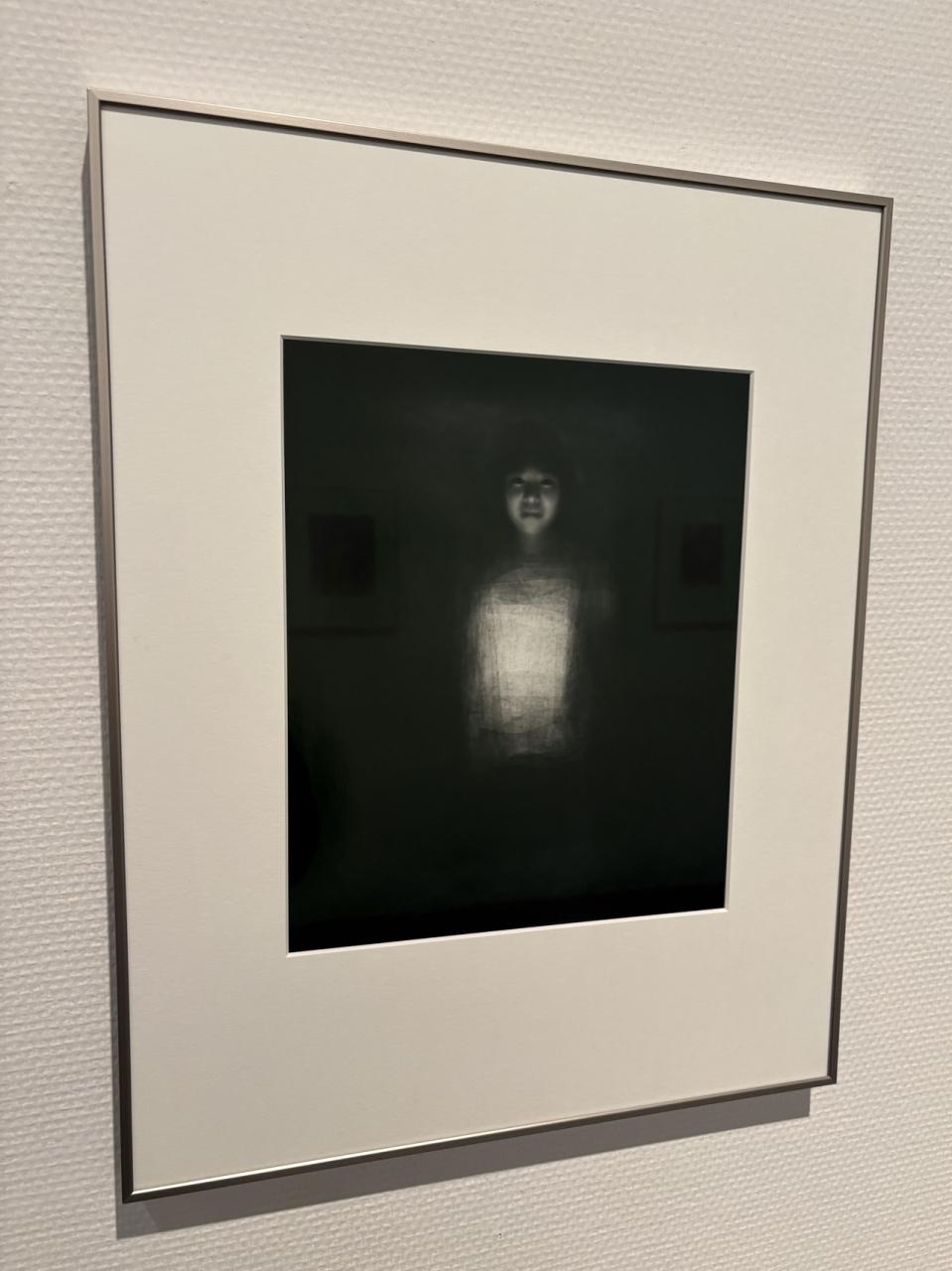
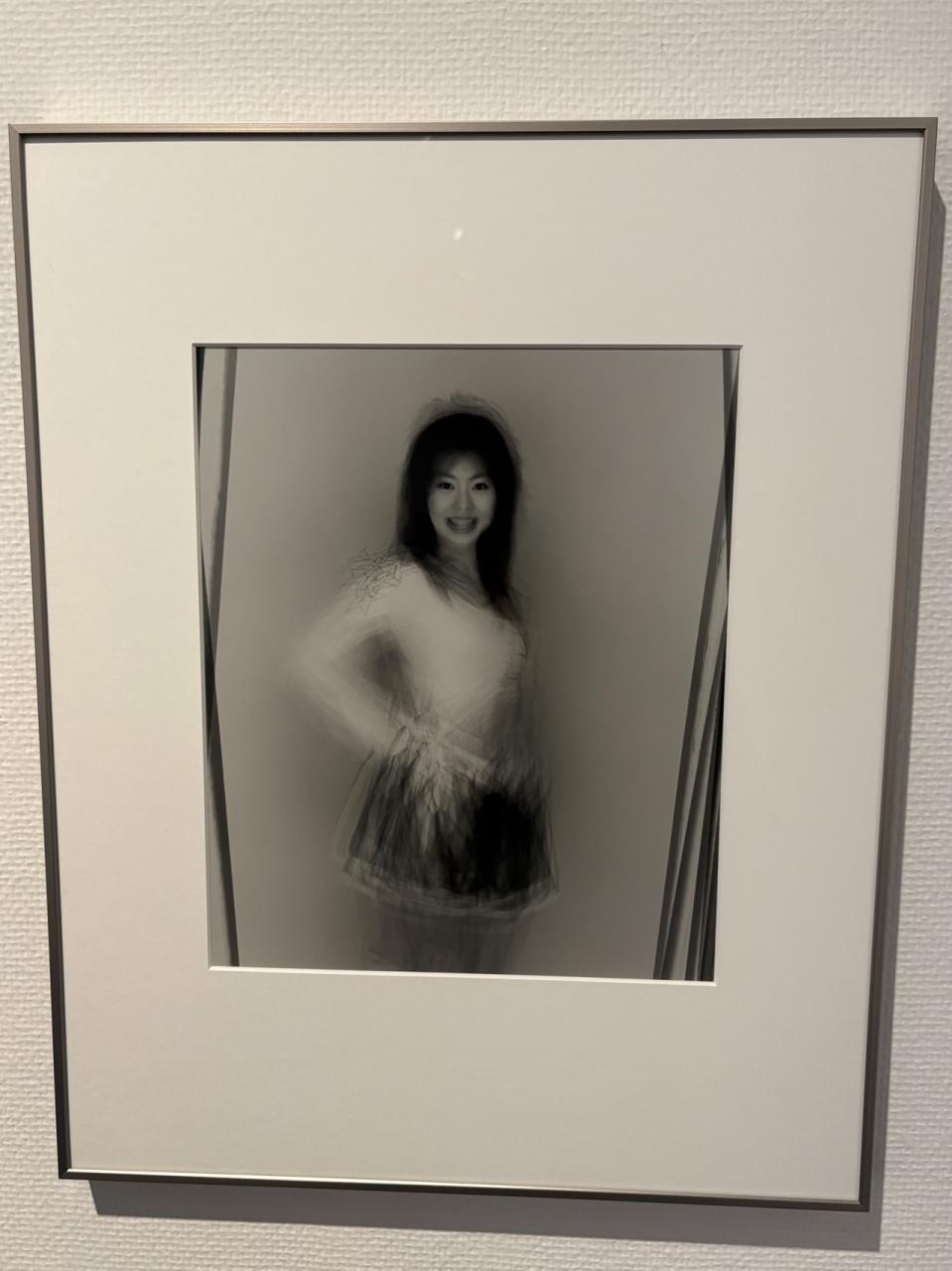
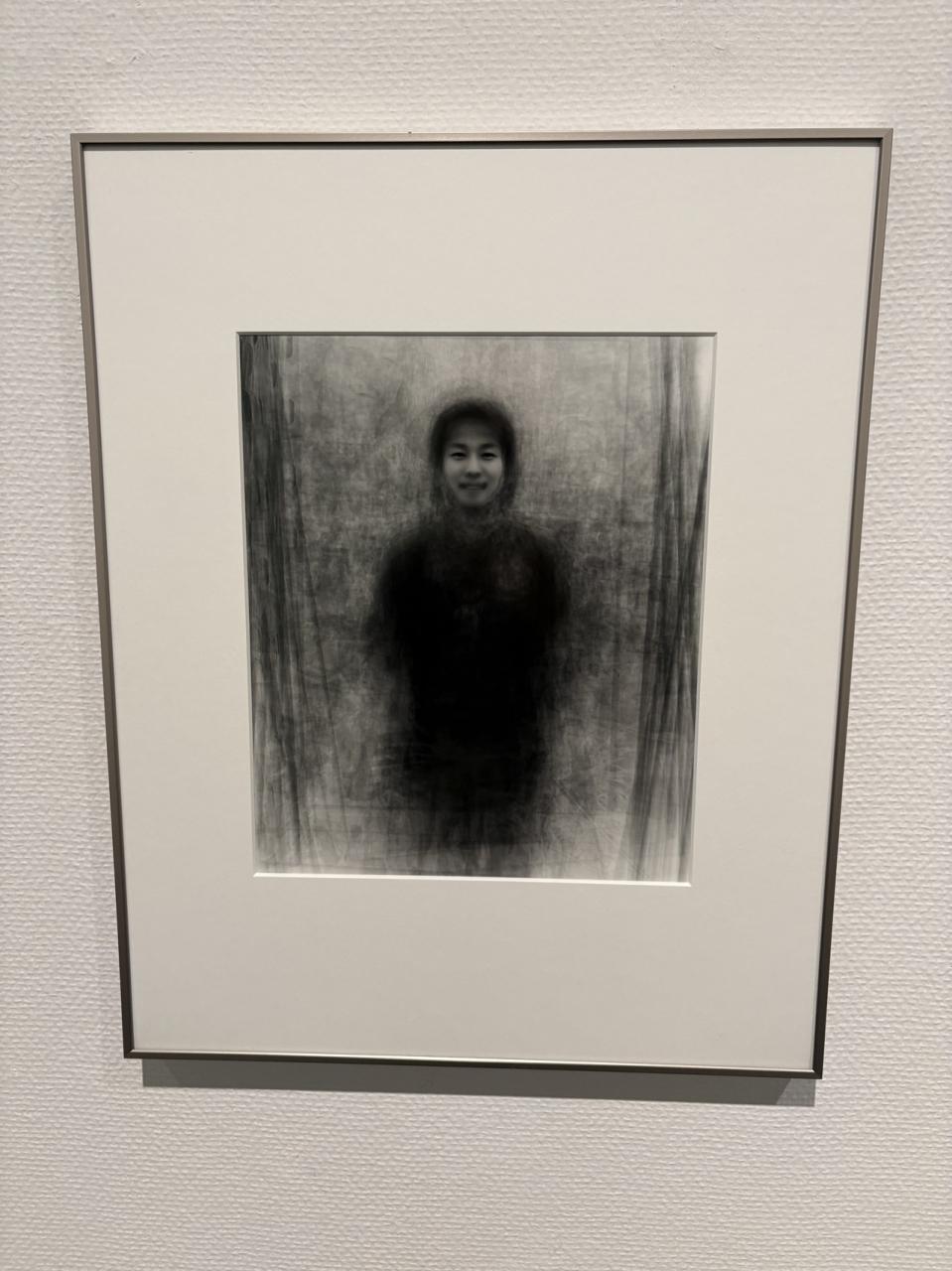
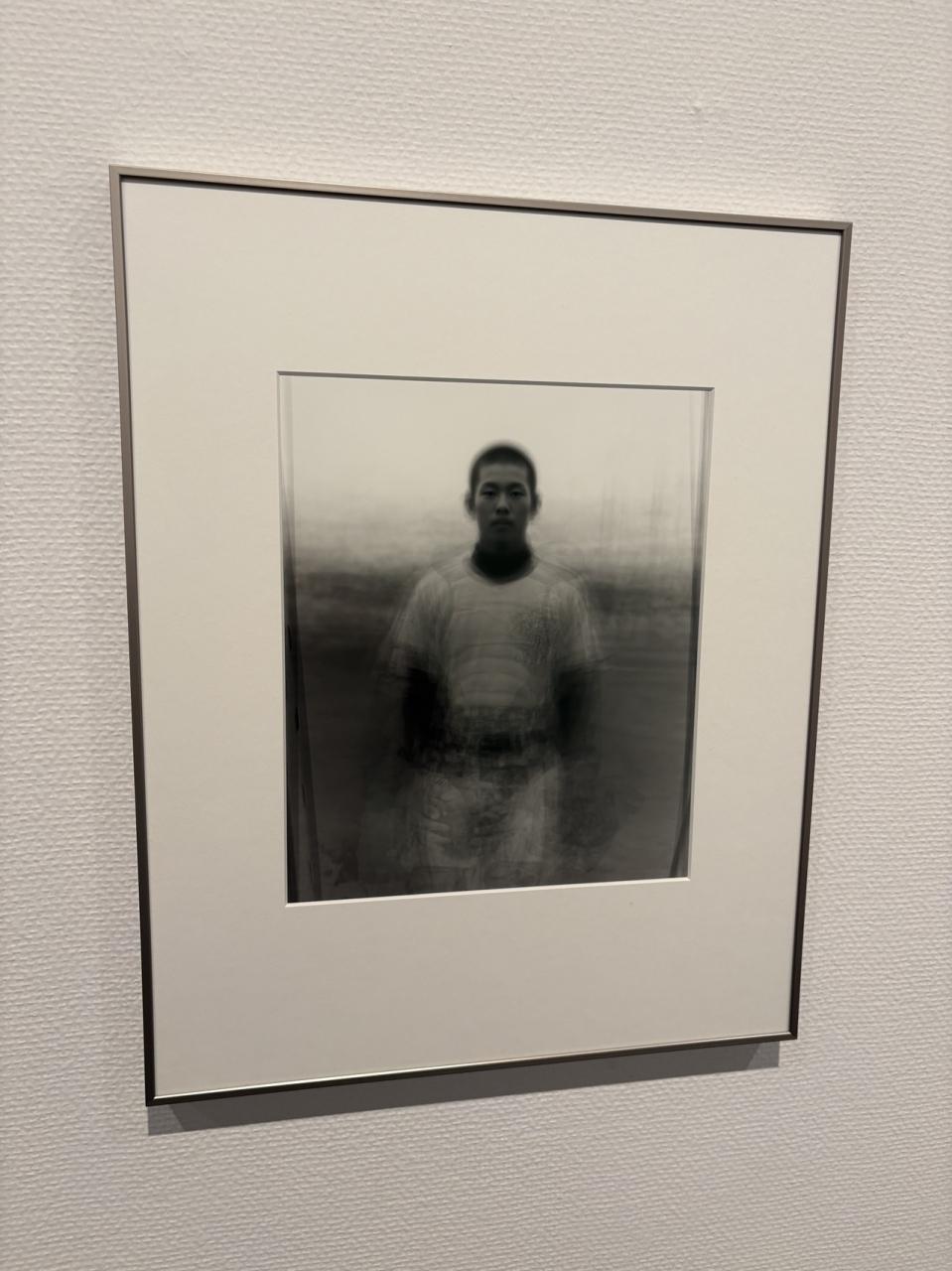
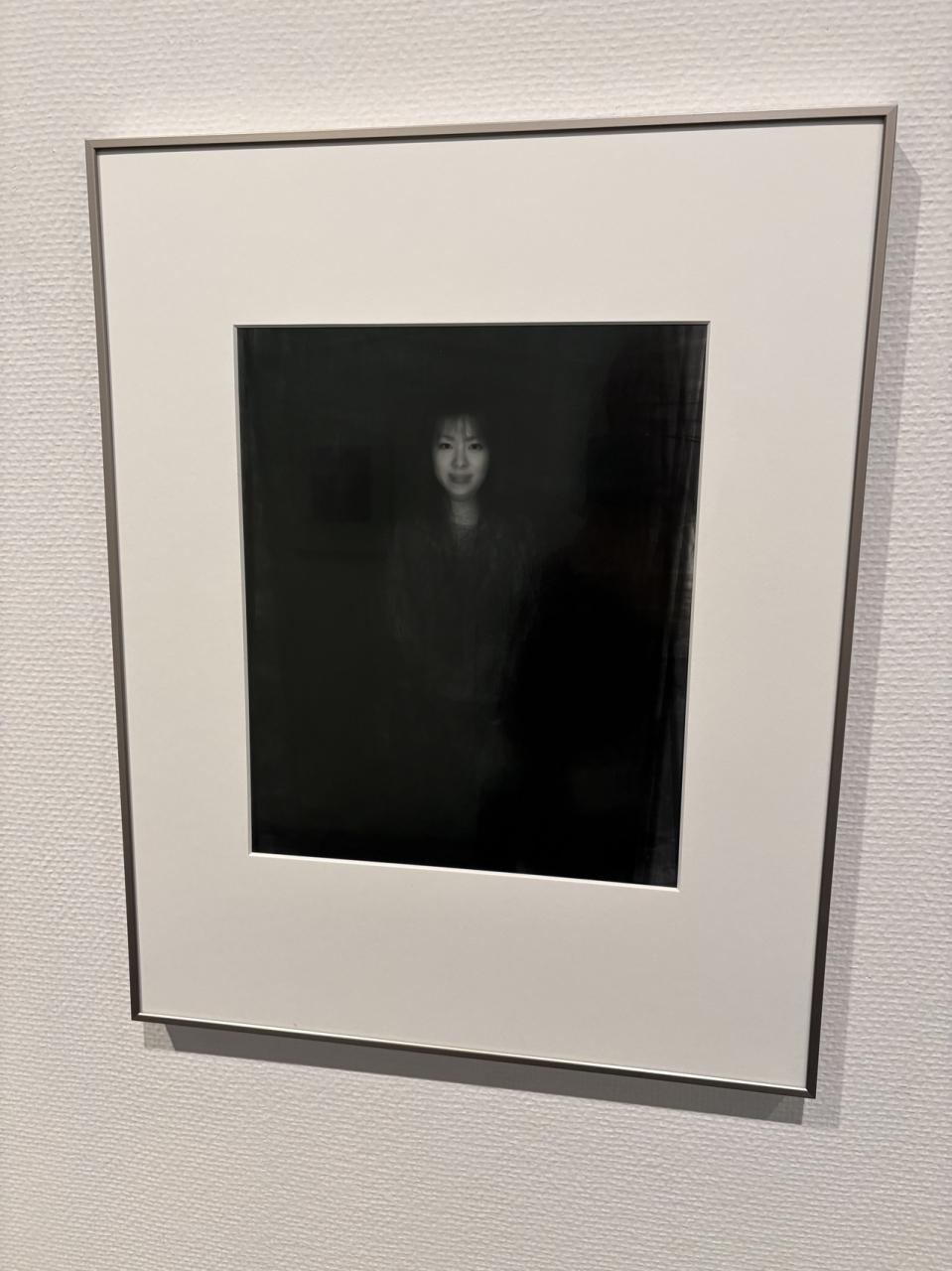
こうした「ずれ」や「入れ替え」の感覚は、同時代の写真や絵画にも見られます。オノデラユキや北野謙は、多様なアプロー手で被写体となる人の姿をとらえなおし、従来の写真における人物描写をくつがえしています。岡崎乾二郎は、詩のようなタイトルと抽象絵画を並置することで、作品を単なる視覚表現にとどめず、思考や感覚をひらく装置として提示しています。意味の転換や認識の揺らきから新たな世界の見方を引き出すこれらの表現は、この時代の美術に共通する特徴のひとつといえるでしょう。
12. World Disrupted, Senses Opened
This room presents Japanese contemporary art from the late 1980s to the present, focusing on appropriation of found objects and fluidity of meaning.
Since the 1990s, in sculpture, artists such as Terauchi Yoko, Takayanagi Eri, Hakamata Kyotaro, and Tomii Motohiro have incorporated readymade objects into their works to subtly shift the meanings and functions of everyday things.
This sensibility of displacement and substitution can also be seen in photography and painting from the same period. Onodera Yuki and Kitano Ken reinterpret the human figure through varied approaches that subvert conventions of photographic portraiture. By pairing poetic titles with abstract paintings, Okazaki Kenjiro frames his works not merely as visual experiences, but as devices that open the mind and the senses. These practices, which open up new ways of seeing by transforming meaning and disrupting perception, represent one of the defining tendencies in the art of this era.東京国立近代美術館 美術館・博物館
-
新収蔵作品
New Acquisition
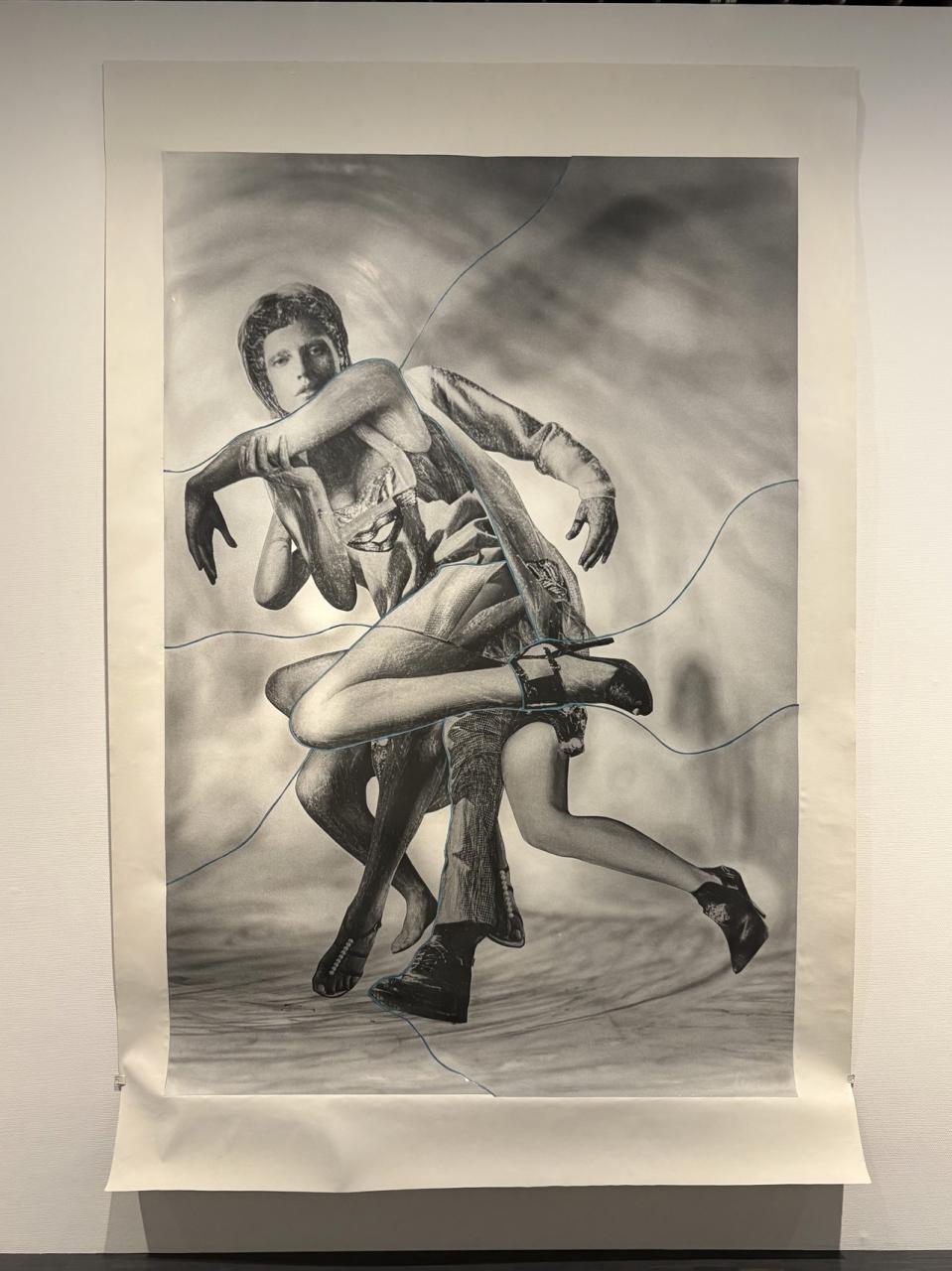
オノデラユキ
ONODERA, Yuki
1962-
Muybridge's Twist No. 21
2019 令和元年
木炭、パステル、クレヨン、写真コラージュ・キャンバス
charcoal, pastel, crayon, photograph collage on canvas
Purchased
エドワード・マイブリッジは、独自の撮影装置で動物や人の動きを連続撮影した、19世紀の写真家です。彼は身体の運動を、何枚もの連続するイメージに分解することで、肉眼ではとらえることのできない世界の様子を明らかにしてみせたのです。オノデラはこの作品で、それをひとひねりした作業に挑んでいます。すなわち人の動きを、それも一人ではなく複数の人の動きを、一枚のイメージに定着してみようという試みです。撮影、デッサン、コラージュというプロセスを何度も繰り返し、巨大な画面に、動く身体をめぐる奇妙にねじ曲げられた時空が出現しています。
Eadweard Muybridge was a 19th-century photographer who used his own specially designed equipment to capture continuous sequences of animal and human movement. By breaking bodily notion down into numerous sequential images, he revealed aspects of the world imperceptible to the naked eye. In this work, Onodera Yuki twists that idea in a different direction, capturing the movements of not one person but several within a single image. Through repeated cycles of photography, drawing, and collage, she has produced a huge composition in which a bizarrely twisted space-time field seems to swirl around the moving bodies. -
-
新収蔵作品
New Acquisition
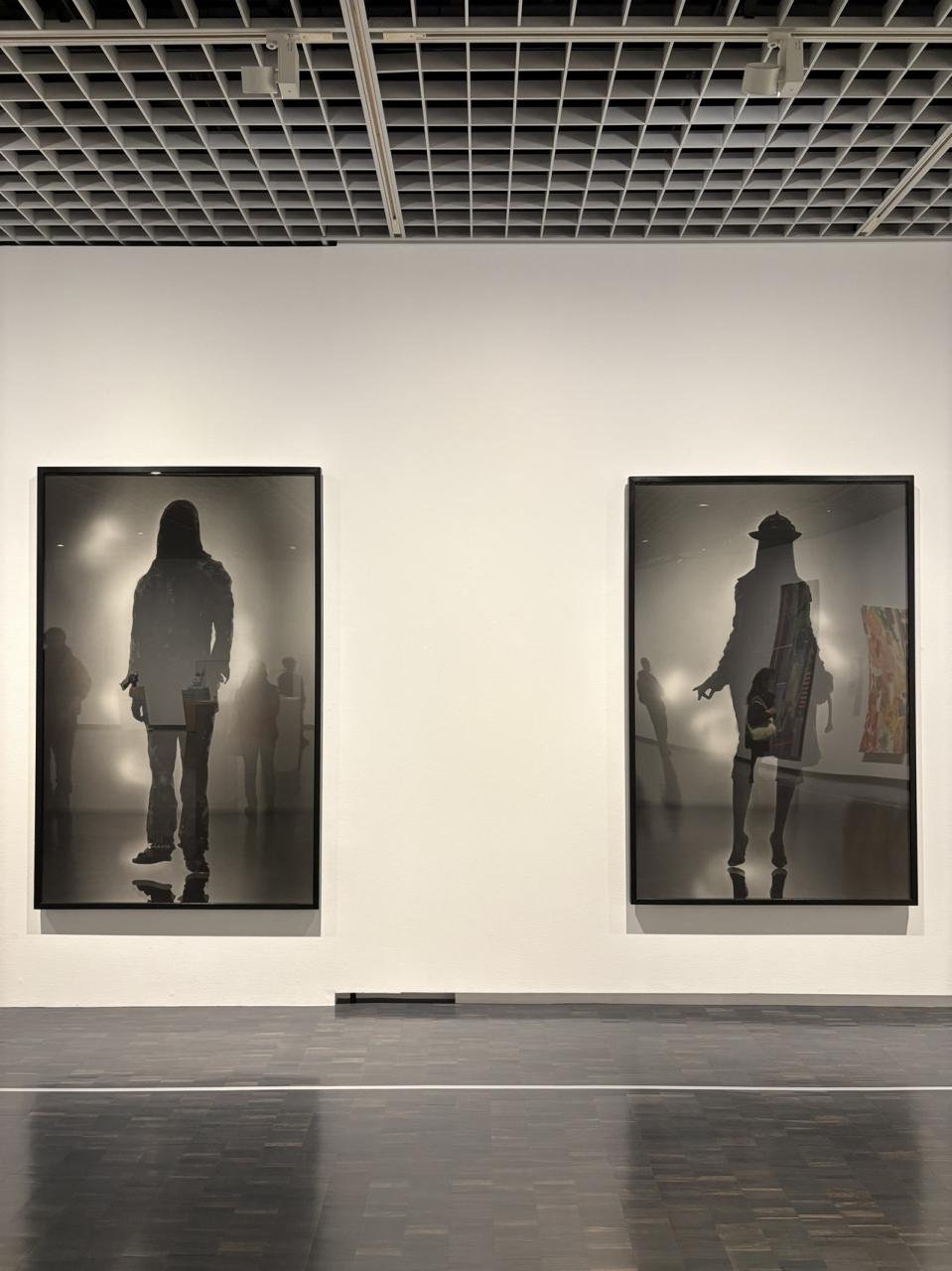
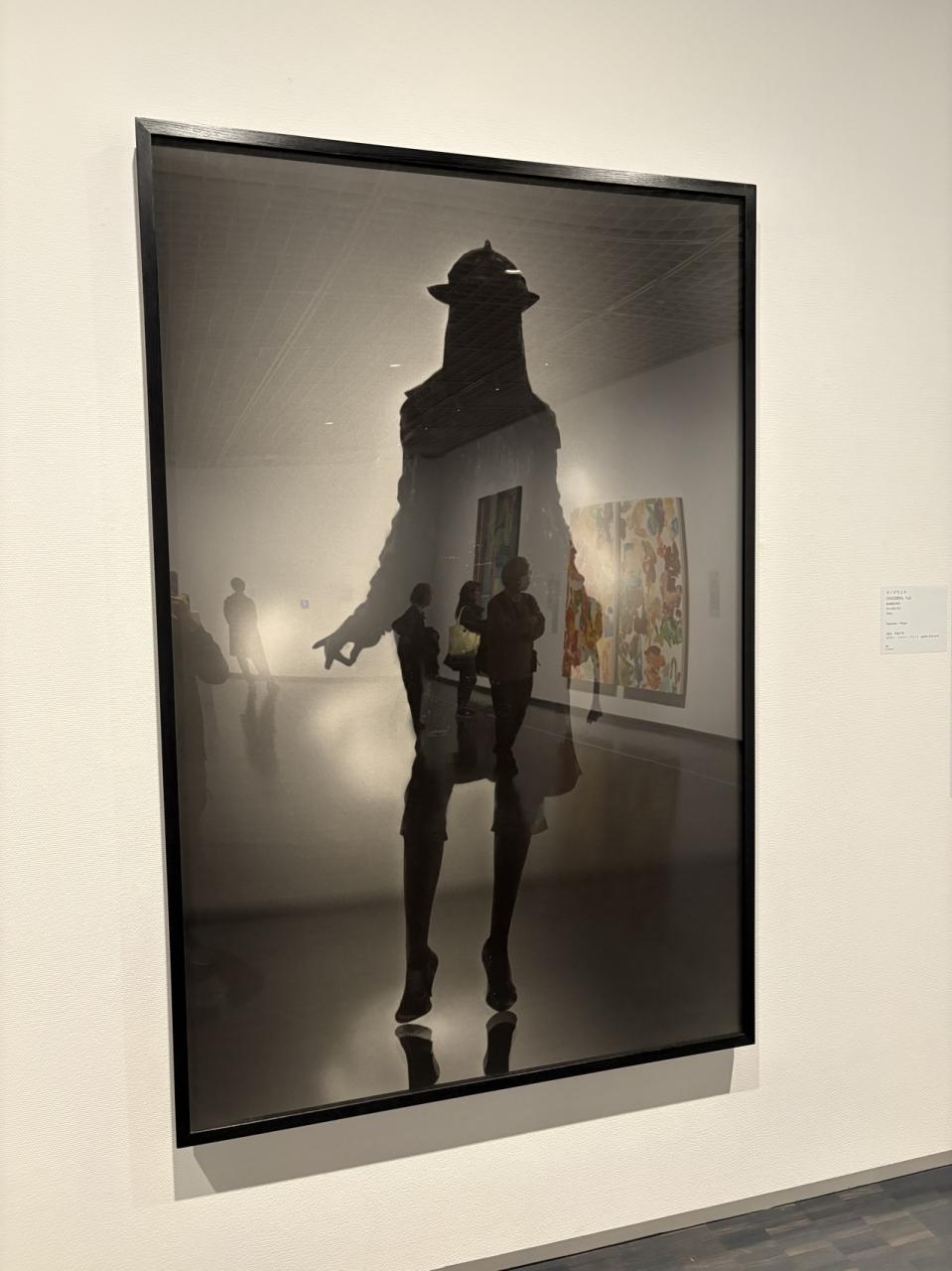
オノデラユキ
ONODERA, Yuki
1962-
Transvest - David
2005 平成17年
ゼラチン・シルバー・プリント
gelatin silver print
購入
Purchased
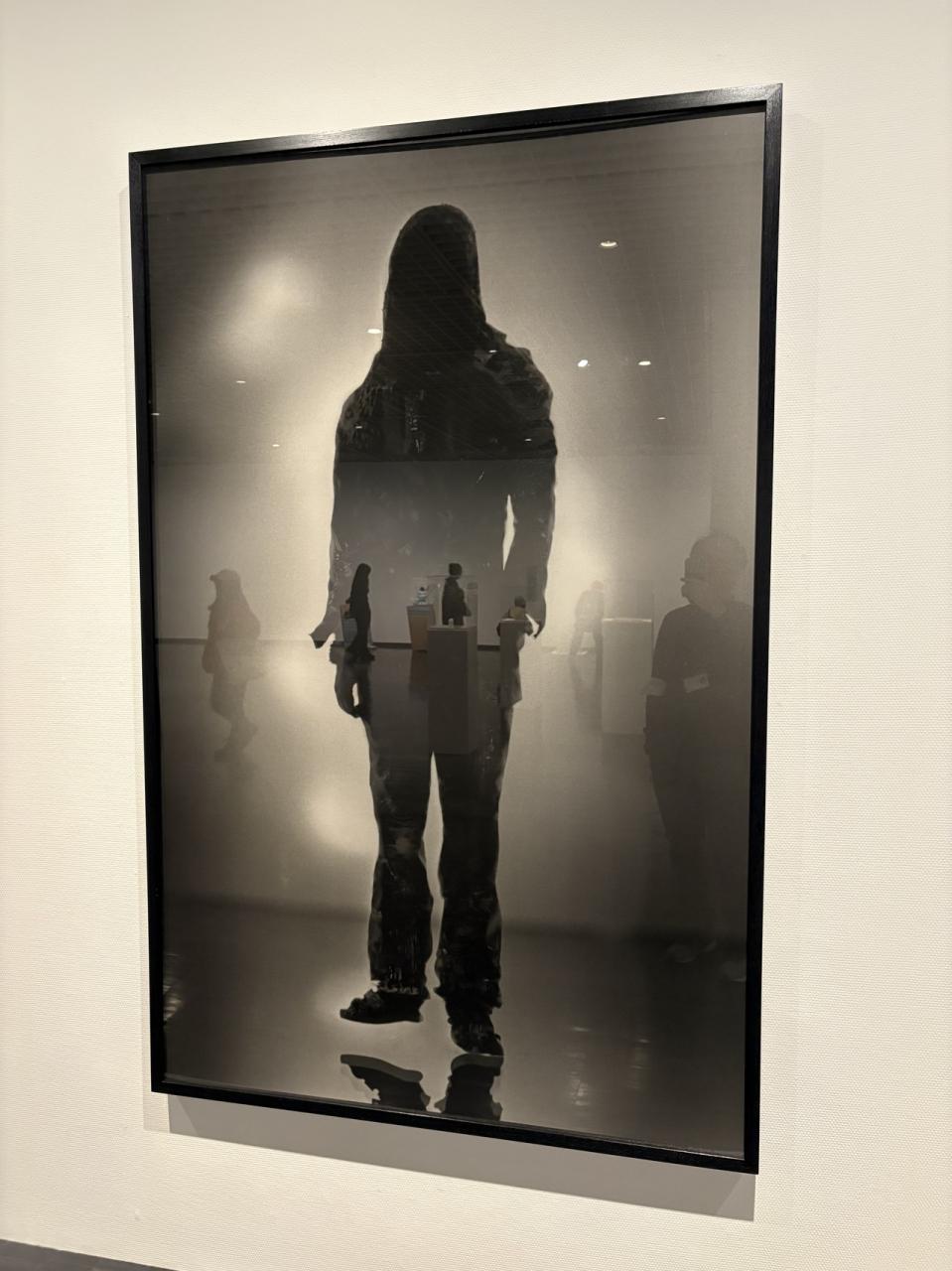
Transvestとは、異性の服を着る嗜好性のこと。
たしかに写っている「人物」は女性のようですが、Davidは男性の名前です。等身大のシルエットに目を凝らすと、身体の表面には風景やモノのかたちのようなイメージがうっすら浮かびあがります。実はこれ、雑誌などで見つけたイメージを切り貼りしてつくられた、厚みも重さもない「人がた」なのです。少し浮かんでいるように見えるのもそのためです。ヒトを擬態したイメージの集積。見れば見るほど、最初の印象を裏切ってふわふわと逃げていく、その浮遊感をしばしお楽しみください。
The "Transvest" of the title refers to transvestism, a preference for wearing clothing associated with the opposite sex. At first glance, the person in this photograph appears to be a woman, but David is a man's name. On closer inspection of the life-sized silhouette, faint images of landscapes and objects can be seen emerging on the body's surface. In fact, this is a flat cutout with no thickness or weight, produced by assembling images
clipped from magazines and other sources. This is also what makes it appear to be floating slightly above the ground. An accumulation of images mimicking the human form, it increasingly subverts your first impression the longer you look, evading your gaze while inviting you to enjoy its weightlessly suspended state. -
オノデラユキ
ONODERA, Yuki
1962-
Transvest - Wyan
2005 平成17年
ゼラチン・シルバー・プリント
gelatin silver print
購入
Purchased -
-
岡埼乾二郎
OKAZAKI, Kenjiro
1955-
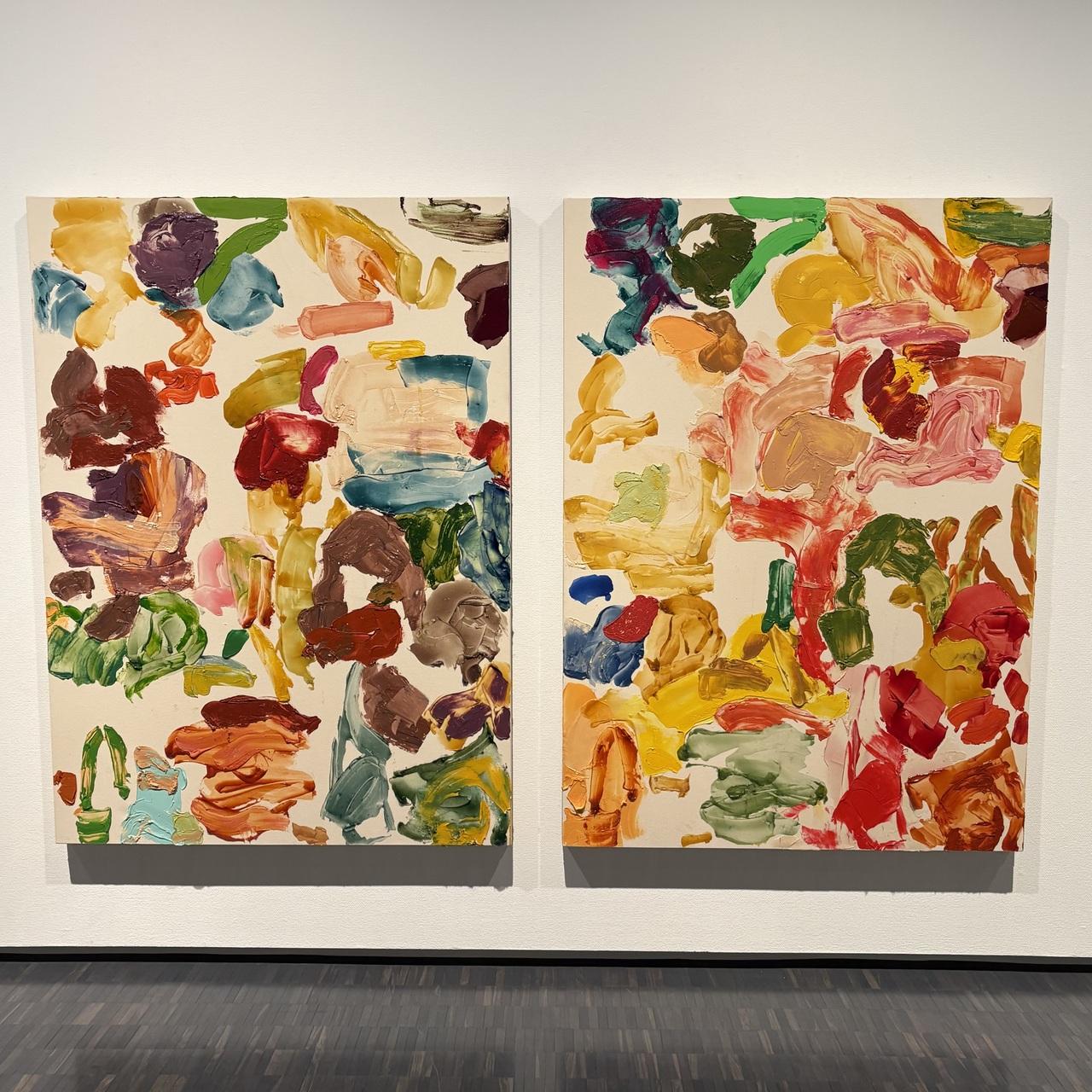
屋根の熱気に吹きつけられ、祖父の顔は頭蓋骨のようにもう色褪せて見える。ところで彼は何といったのでしたっけ?灼熱の焼きごてを眼に入れられようとしたときに。「僕の美しいお友達、火よ。もう少しやさしくお願いします」。大丈夫。安心なさって。姉は日傘を取りにいき、祖父は指先をまるく尖った舌で冷やしていた。
Blown by the heat of the roof, Grandfather's head already seemed pale like a skull. Well, I'm not sure...do you remember what he said, when the red-hot iron was about to be put into his eyes? "O Fire, my beautiful friend, be a little more gentle, please." Don't worry. Take it easy. Big sister went for a parasol, and Grandfater was cooling his fingertips with the round tip of his tongue.
2002
平成14年
アクリリック・キャンバス
acrylic on canvas
購入
Purchased
背後から火事が迫ってきたとでもいうの、この顔の青さは普通じゃないわ、どうしたの?ぽつりと答えます。「惜しいと思うほどの物は捉まえようと追いかけず、一生惜しんで思い出せるようにしておいたほうがいいんだよ」。そうか。胡瓜の漬け方を、老婦人から習ったときみたいに、熟した実がひとりでに落ちる音を聞いた。
You look like getting chased by a fire. How pale you are...you aren't yourself. What's the matter? It's not good to chase after what you think to be precious, I answered muttering, you'd better leave it alone so that you can remember it for life." I see. Just like when I learned how to pickle cucumbers from an old woman, I heard a ripe fruit drop off of itself.
2002
平成14年
アクリリック・キャンバス
acrylic on canvas
購入
Purchased
2枚の画面を、時間をかけて眺めてみましょう。たとえば画面上辺中央の緑の「7」のような形。どちらの画面にもそっくりなものがあります。あるいは画面向かって左下隅の糸切はさみのような形。色やタッチや背景をなす別のタッチは違っても、やはり同じ形をしています。こうして、色やタッチ、タッチ同士の分割を変えながら、2枚の画面がほぼ同じ構図を持っていることが徐々にわかってきます。ここでは勢いのあるタッチは、決して「激情」で描かれたものではなく、じっくりと思考された未に生み出されたものなのです。タイトルはどうでしょう?違う話を語っているのに、火、熱、老人など共通する要素があります。また、地の文→「セリフ」→地の文という構成も一緒です。つまり、絵画面もタイトルも、似ているようで異なる二つの要素間の関係で出来ているのです。最終的に、つやつやとした絵具の盛り上がりを持つ、物質感のあるこの絵画の本当の経験は、2枚の画面と二つのタイトルの間を忙しく往復する、見る者の視線の運動(当然まった物質感を持ちません)の中にしか立ち現われて来ないのかも知れません。
Take a long close look at these two pictures. Look, for example, at the form resembling a green number "7" in the center of the upper part of the works. There are identical elements like this in both paintings. Or look at the shape that recalls a pair of sewing scissors in the bottom left-hand corner of both works. Although the color, texture, and the division of the backgrounds differ, they both have the same basic shapes. By dividing up these elements in different ways, we gradually realize that both pictures have a nearly identical composition. The vigorous strokes are by no means a product of passion; they are the result of careful consideration. How about the titles? Despite relating two different stories, they share some of the same elements, such as fire, heat, and old people. They also share the same structure - they begin with narrative, continue with speech, and conclude with narrative. Thus, a relationship is formed between two similar but different elements in both the pictures and titles. In the end, the real experience of these paintings, with thick layers of lustrous paint and a strong sense of materiality, may only truly arise out of the movement (which, of course, is completely devoid of material qualities) of our eyes as they busily move back and forth between the two pictures and titles. -
石川順惠
ISHIKAWA, Yukie
1961-
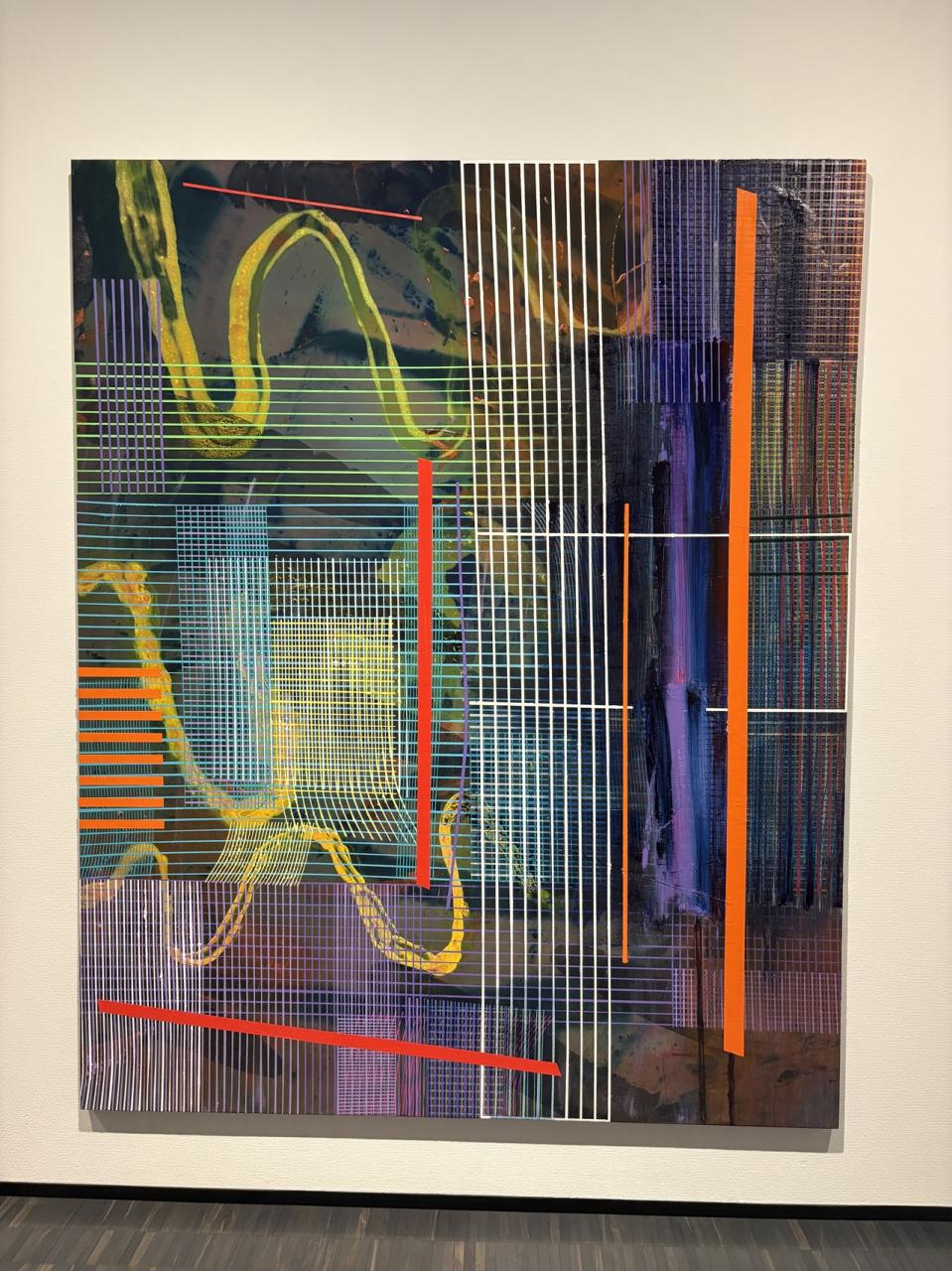
Impermanence 青女
Impermanence: Seijo
2014 平成26年
アクリリック・キャンバス
acrylic on canvas
購入
Purchased
「Impermanence」は、仏教の用語である「無常」の英訳として使われている言葉。「青女」は、前漢時代の論集からとられた言葉で、着や雪を降らす女神、転じて霜や雪のことを意味するそうです。作品は大きく言って、キャンバスに絵の具を染みこませた層、蛇行する線の層、グリッドの層の三つに分かれています。制作年は2014年と書かれていますがそれはあくまでも完成年で、実際の制作は大きな間隔を挟みながら20年近くにもわたっています。
"Impermanence" is a common English translation of the Buddhist term mujo. "Seijo" (lit. "blue woman") comes from a Han Dynasty (206 BC-220 AD) Chinese text, and refers to a female deity believed to cause frost and snow to fall, and by extension, to frost and snow itself. The work is roughly divided into three layers: a layer of paint permeating and staining the canvas, a layer of meandering lines, and a grid layer. The work is dated 2014, but this is the year it was completed, and the artist actually worked on it for nearly 20 years, with lengthy periods of inactivity. -
-
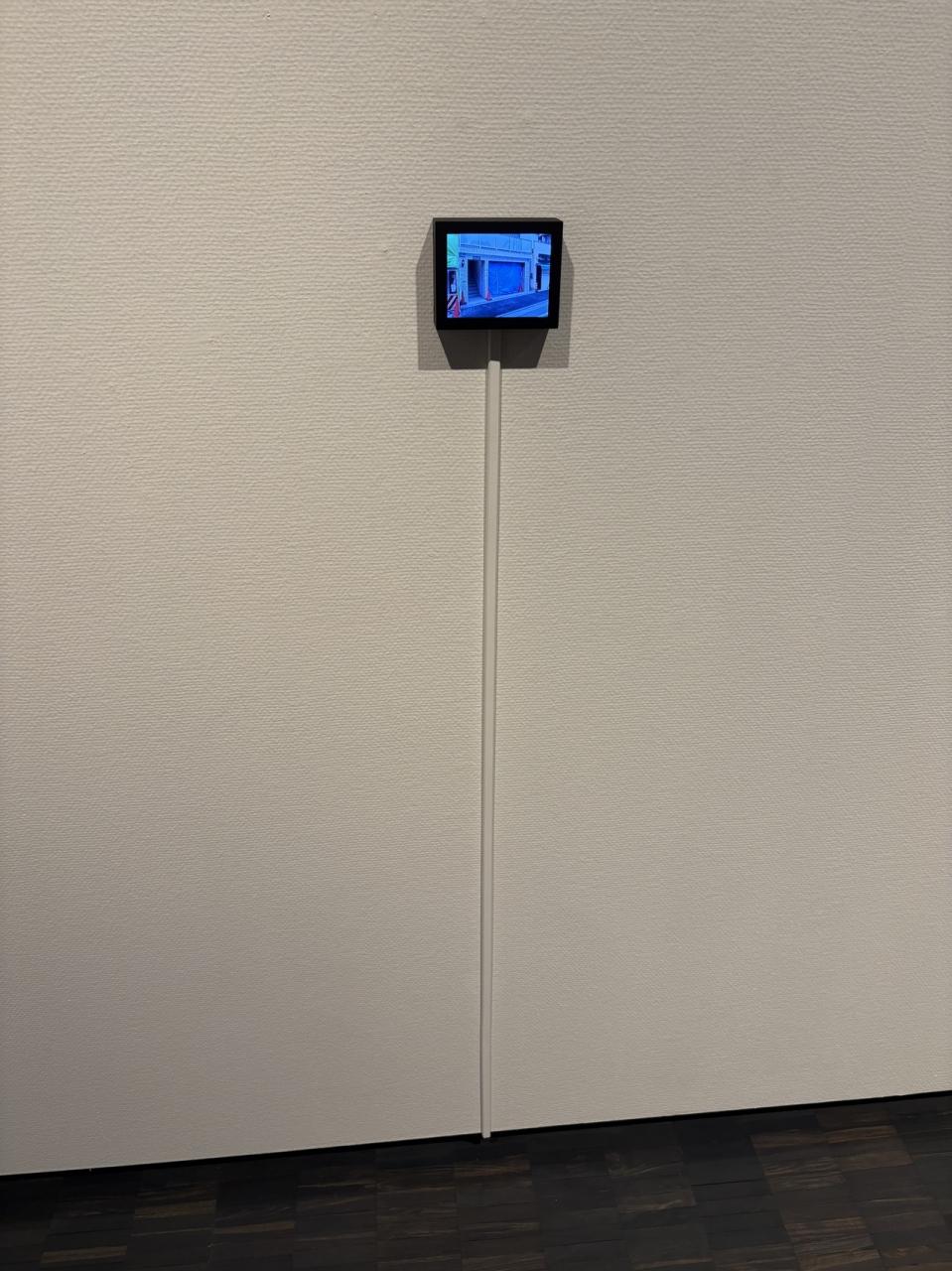
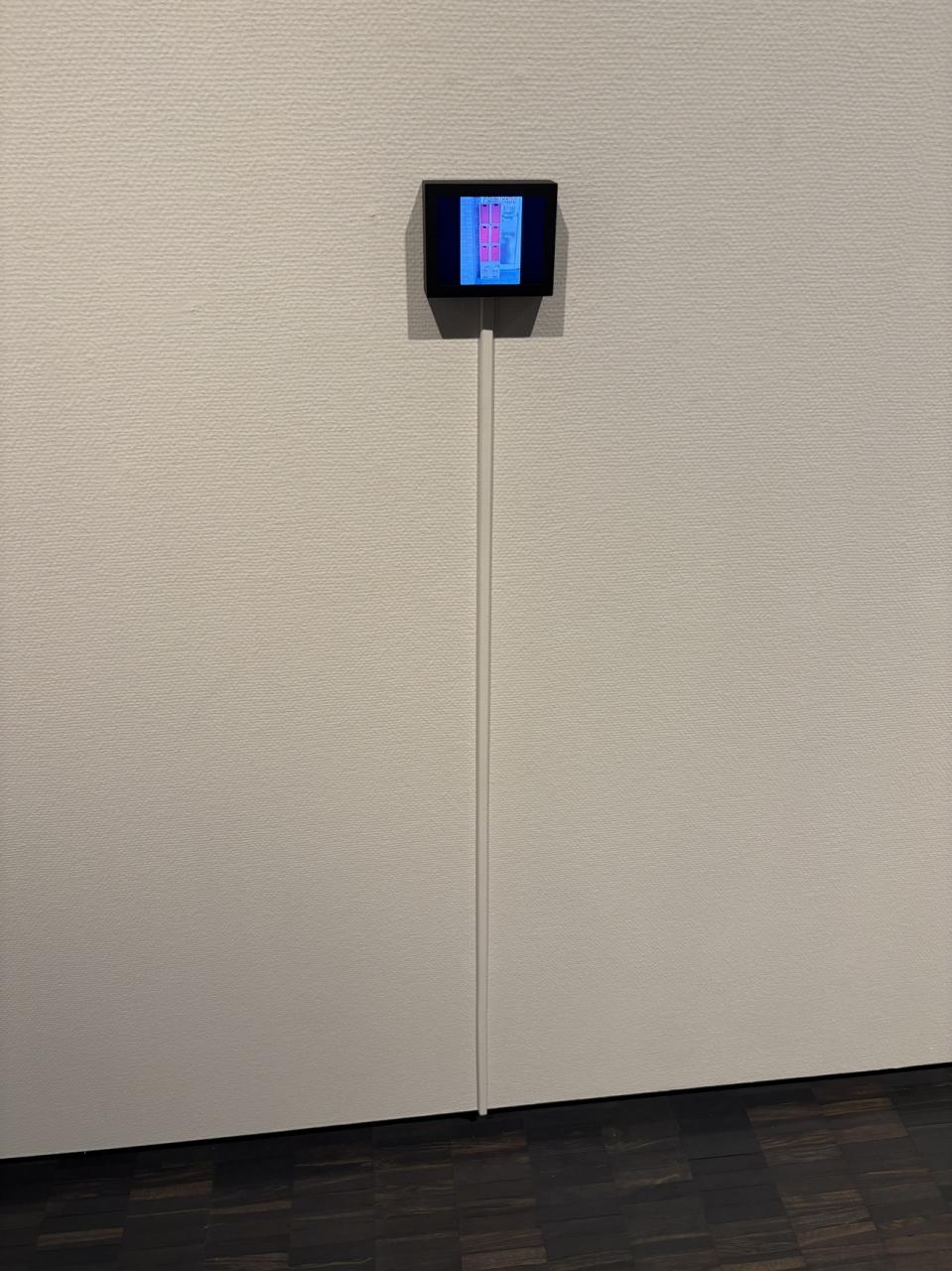
冨井大裕
TOMII, Motohiro
1973-
今日の彫刻(110908-160908)
Today's Sculpture (110908-160908)
2011-2016 平成23-28年
デジタル画像(1612枚、スライドショー形式)、モニター
digital slideshow (1612 images) and monitor
ユミコチバアソシエイツ (有)寄贈
Gift of Yumiko Chiba Associates -
-
-
-
-
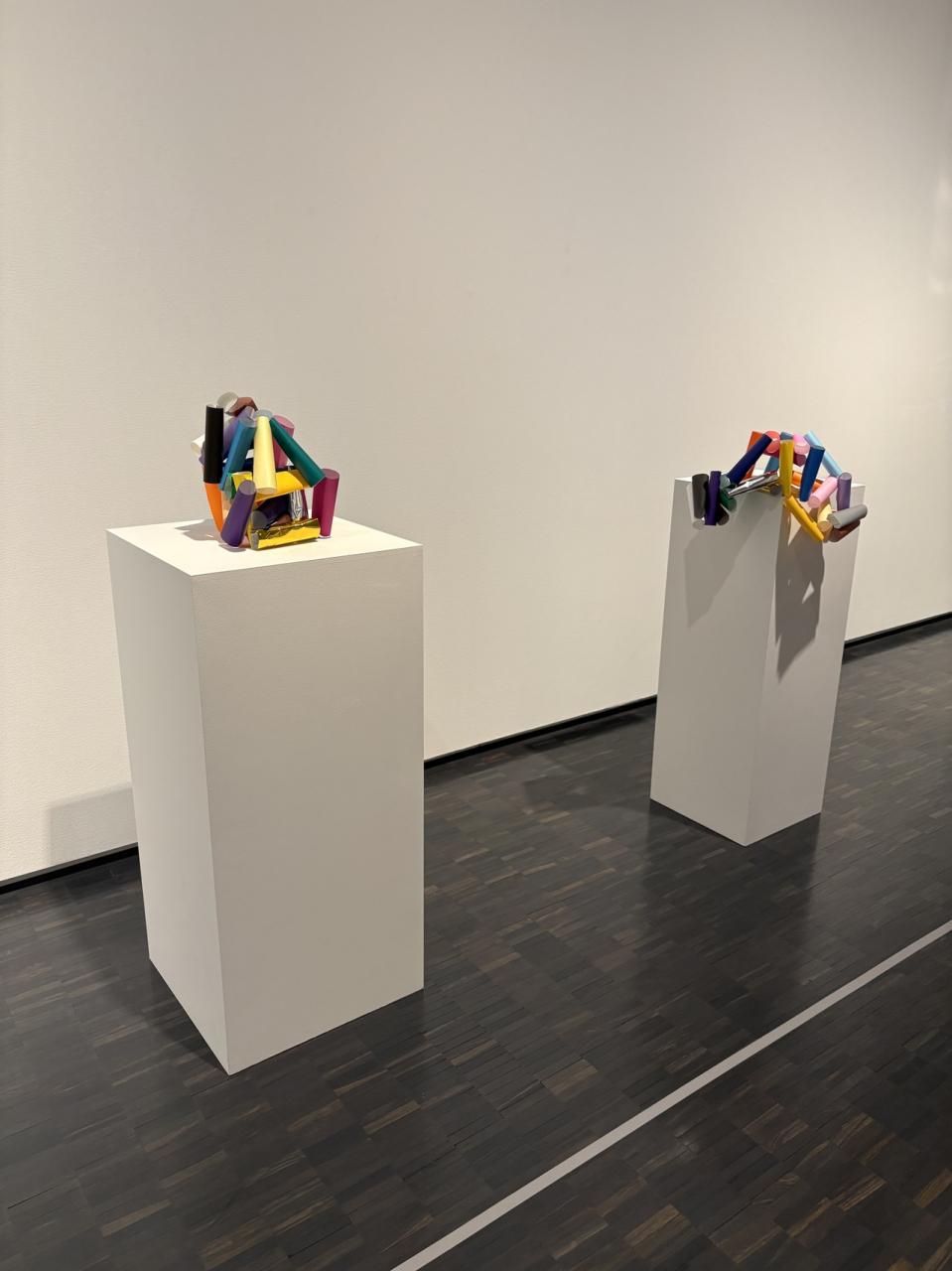
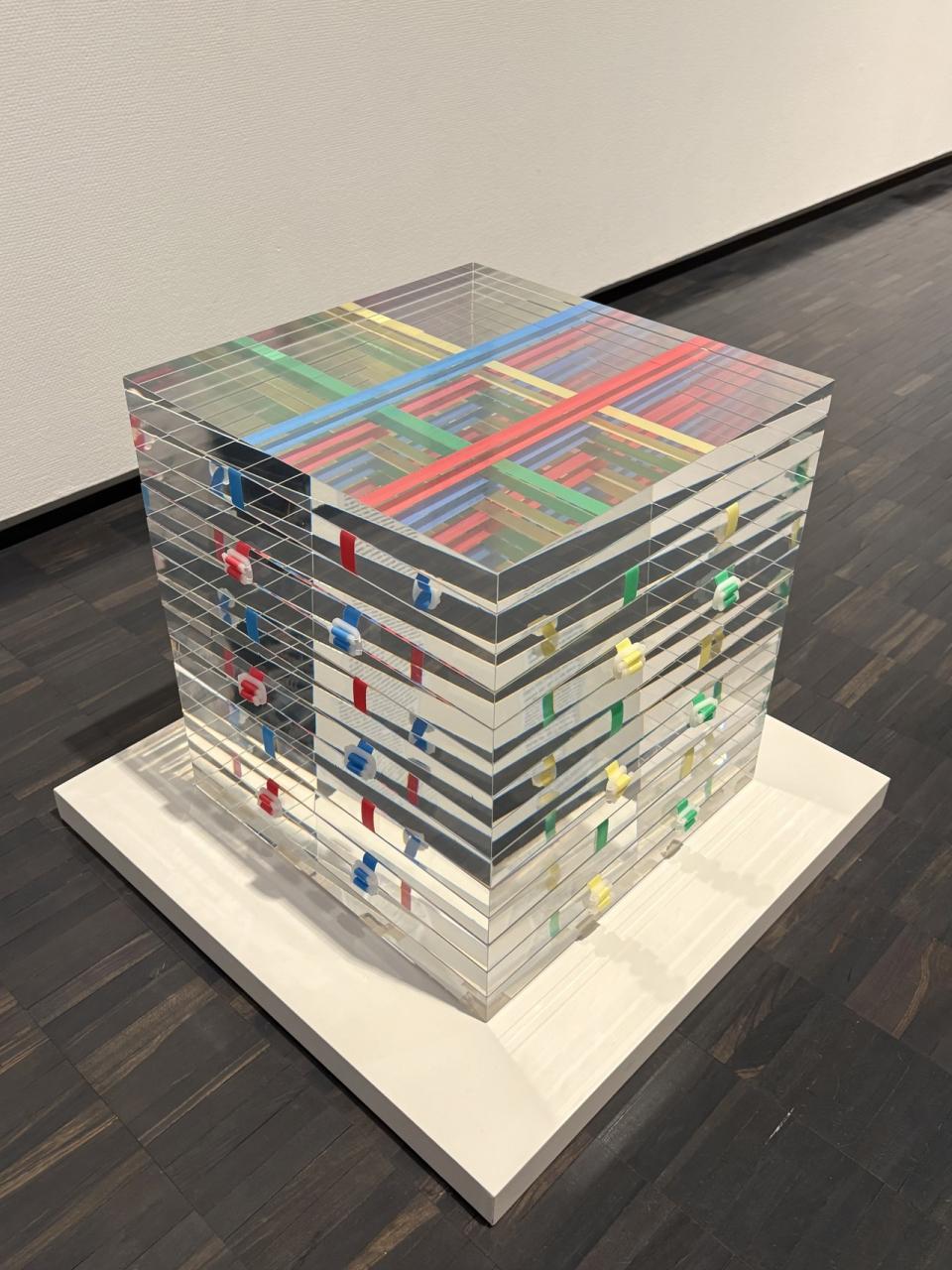
冨井大裕
TOMII, Motohiro
1973-
board band board #2
2014 平成26年
アクリル板、ポリプロピレンバンド
acrylic board, polypropylene band
購入
Purchased
冨井大裕は、既製品を用いて立体作品を構築します。同サイズのアクリル板が複数枚、このような形状を見ると、冨井でなくとも人はきれいに積み重ねたくなるのではないでしょうか。板にはそれぞれ二本のバンドが巻いてあります。このバンドはいろいろなものをしばる梱包資材ですから、さもありなん、というところでしょう。
このように宮井の作品で使われる既製品は、それ自体が有する「条件(サイズ、素材、重さ、形、一般的に持っているイメージなど)」から導き出される、並べる、重ねる、束ねる、折り曲げるといった、ごくシンプルな方法と構造で提示されます。にもかかわらず(であるからこそ?)、「既製品=モノ」は潜在的に秘めていた新たな「使用法」を顕在化させます。その秘密は、宮井の選択と手続きの妙にありそうです。
Tomii Motohiro constructs sculptural works using readymade items. Here, his neat stacking of numerous acrylic boards of the same size and shape seems to be a natural instinct that anyone might follow. Around each board are wrapped sets of two bands, packing materials used to bind all manner of objects, making them appear a reasonable choice for this task. As in this case, the readymade products used in Tomil's works are selected based on their own intrinsic "conditions (size, material, weight, shape, general image conveyed, etc.)," and then presented with very simple approaches and structures such as laying side by side, stacking. bundling, and folding. Despite this (or because of it?), they reveal new, latent functions concealed within "readymade objects." The secret of Tomil's work lies in the exquisite delicacy of his selection of objects and the means and methods of combining them. -
新収蔵作品
New Acquisition
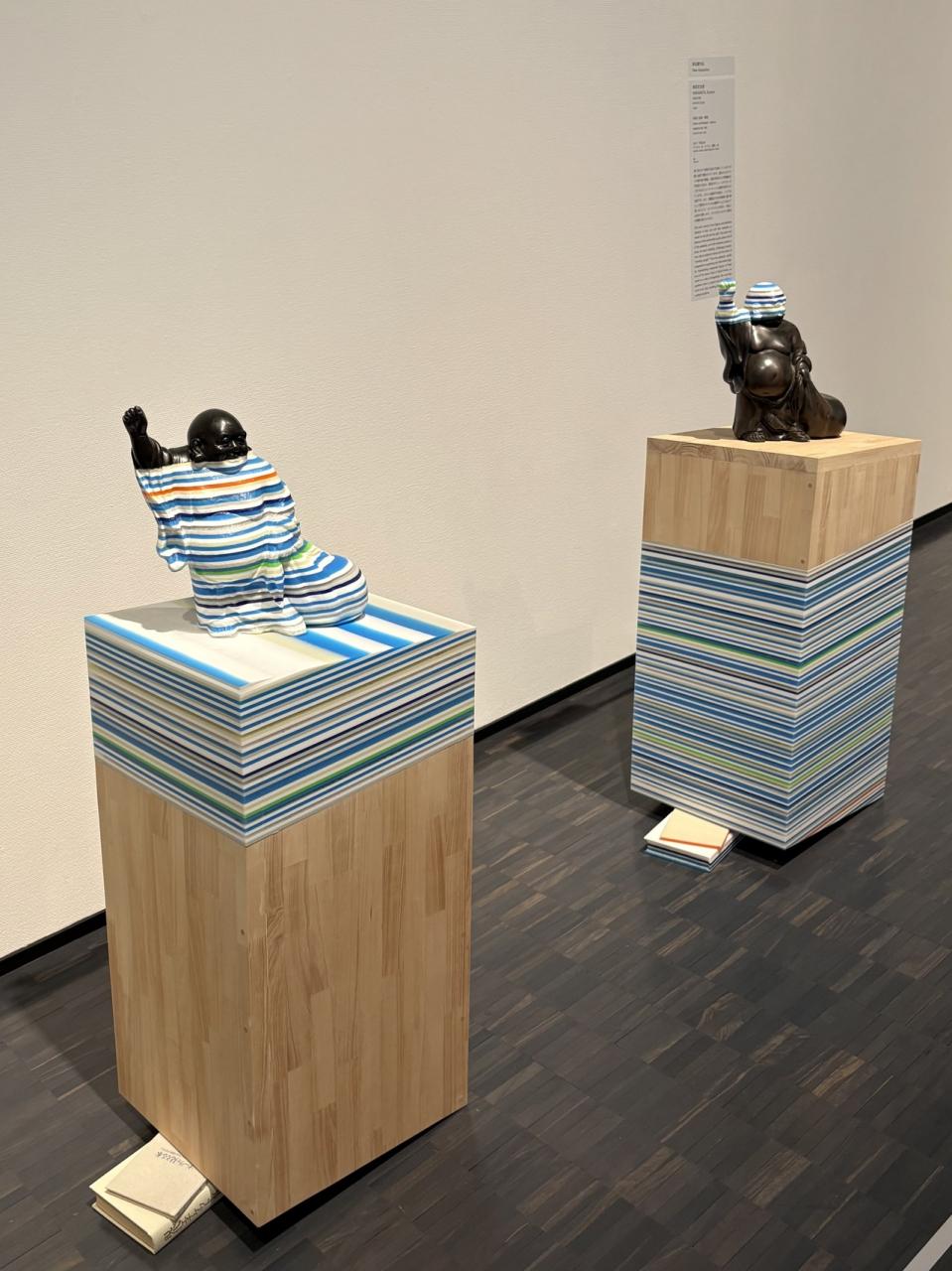
袴田京太朗
HAKAMATA, Kyotaro
1963-
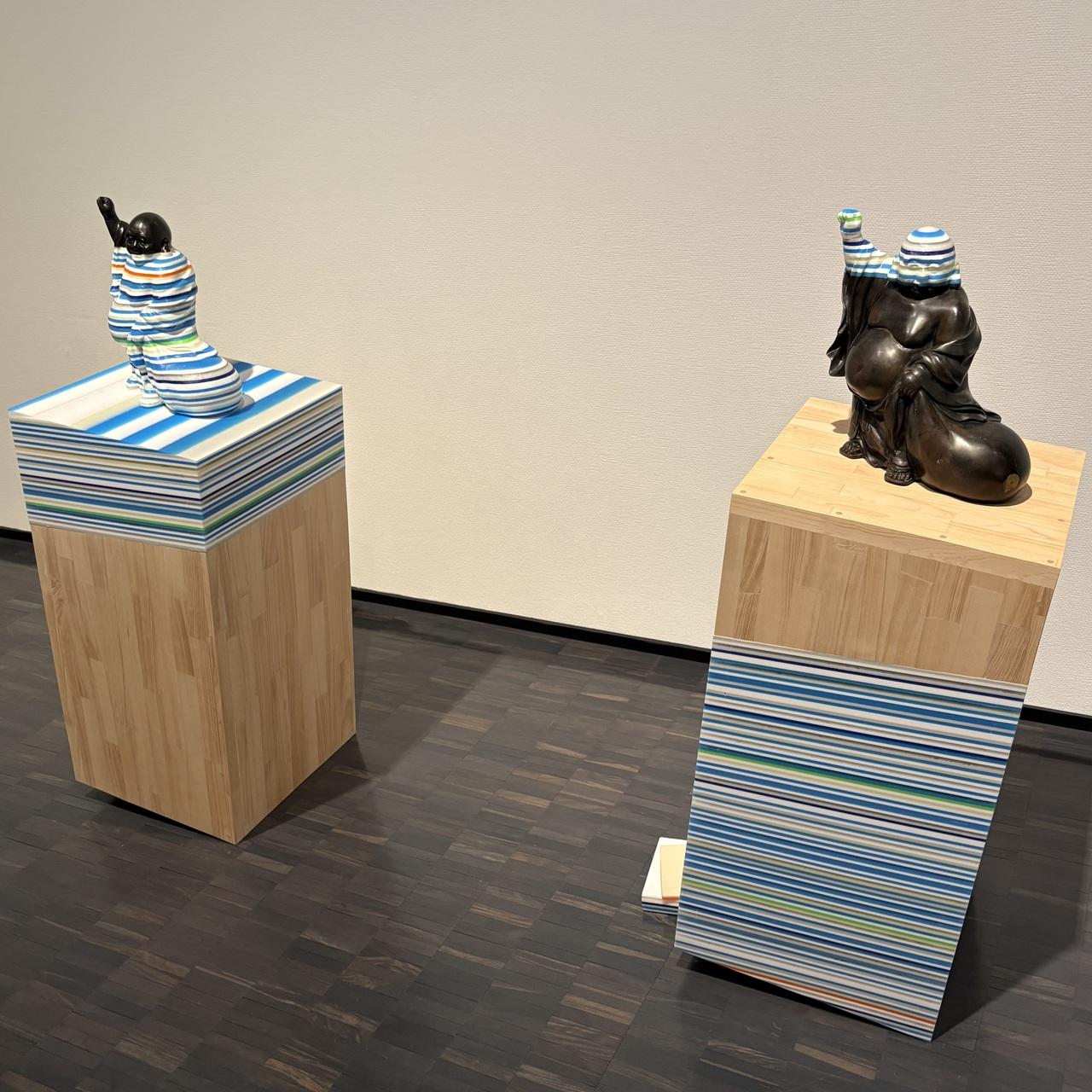
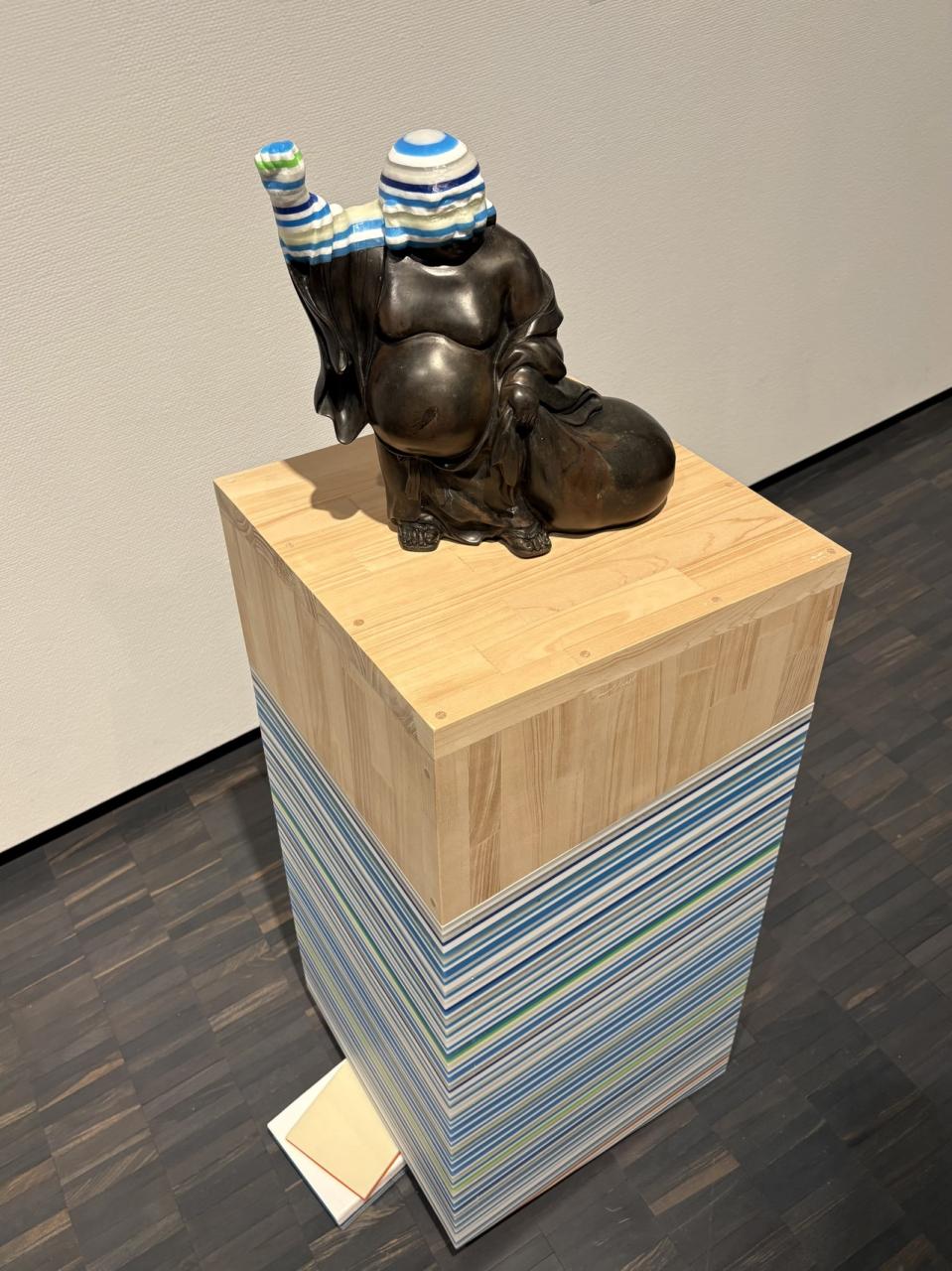
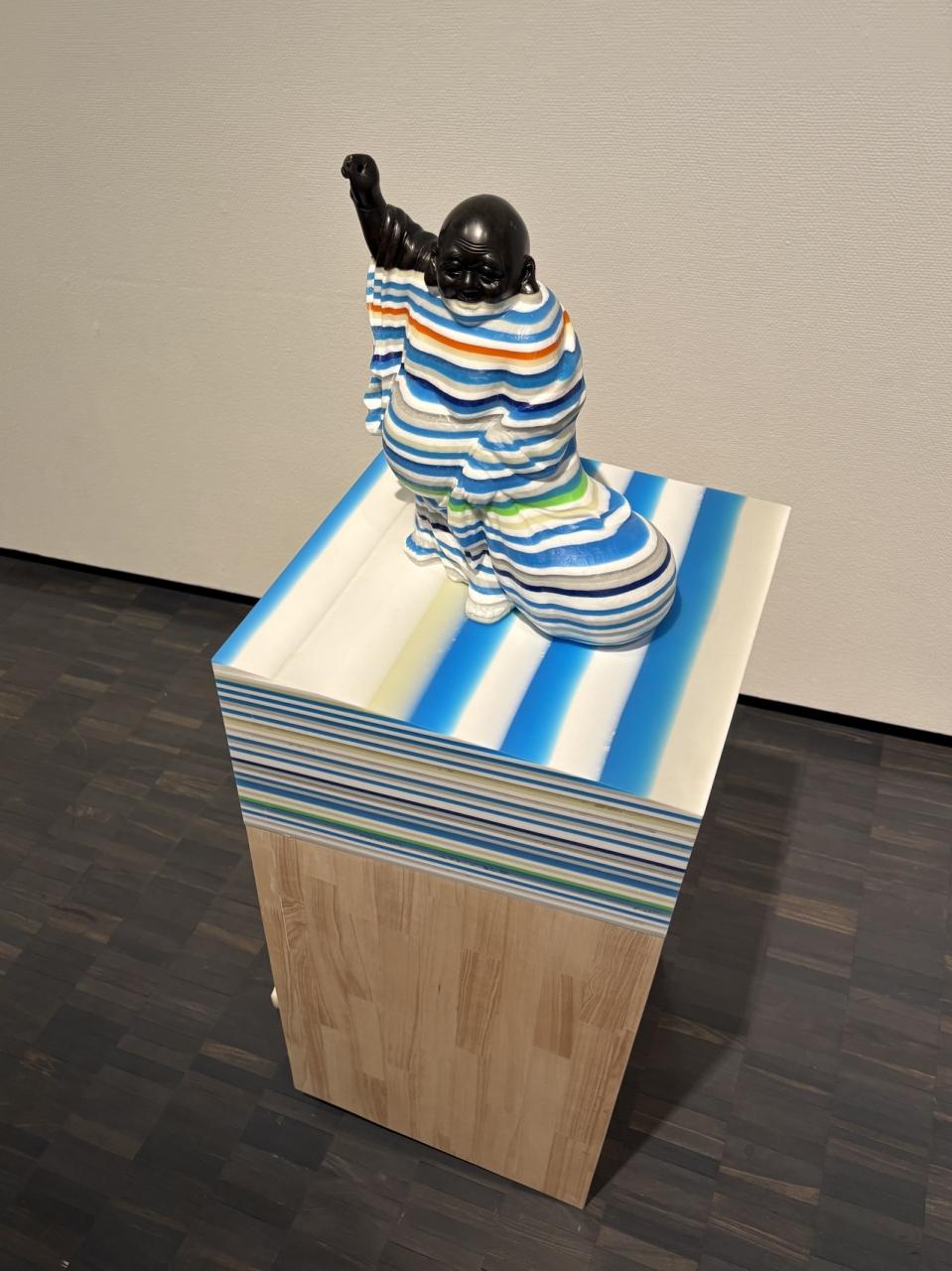
布袋と台座一複製
Hotei and Pedestal - Replica
2012 平成24年
アクリル、木、オブジェ(置物、本)
acrylic, wood, object (figurine, book)
購入
Purchased
同じ形ながら素材が左右で反転している2つの像と台座で構成されています。重ねられたアクリル板の色や質感、台座の傾きなどが視覚的な不安定さを生み、彫刻のボリュームや「まっすぐ立つもの」というイメージに疑問を投げかけています。ふだんは脇役の台座も、ここでは主役です。また、既製品である布袋像(福の神として仰されている七福神の一人)をあえて用いることで、オリジナルとは何か、作品とは何かを問いかけ、さりげないかたちで彫刻の常識を揺さぶります。
This work consists of two figures and pedestals identical in form, but with their materials reversed on the left and the right. The colors and textures of the sandwiched acrylic plates, the tilt of the pedestals, and other elements produce a sense of visual instability, challenging assumptions about sculptural volume and the notion of
"standing upright." Here the pedestals, usually relegated to a supporting role, take center stage.
By incorporating readymade figures of Hotei lone of the Seven Gods of Good Fortune, revered as a deity of happiness, the work also questions what is original and what defines a work of art, slyly unsettling the conventions that underpin sculpture. -
-
-
-
新収蔵作品
New Acquisition
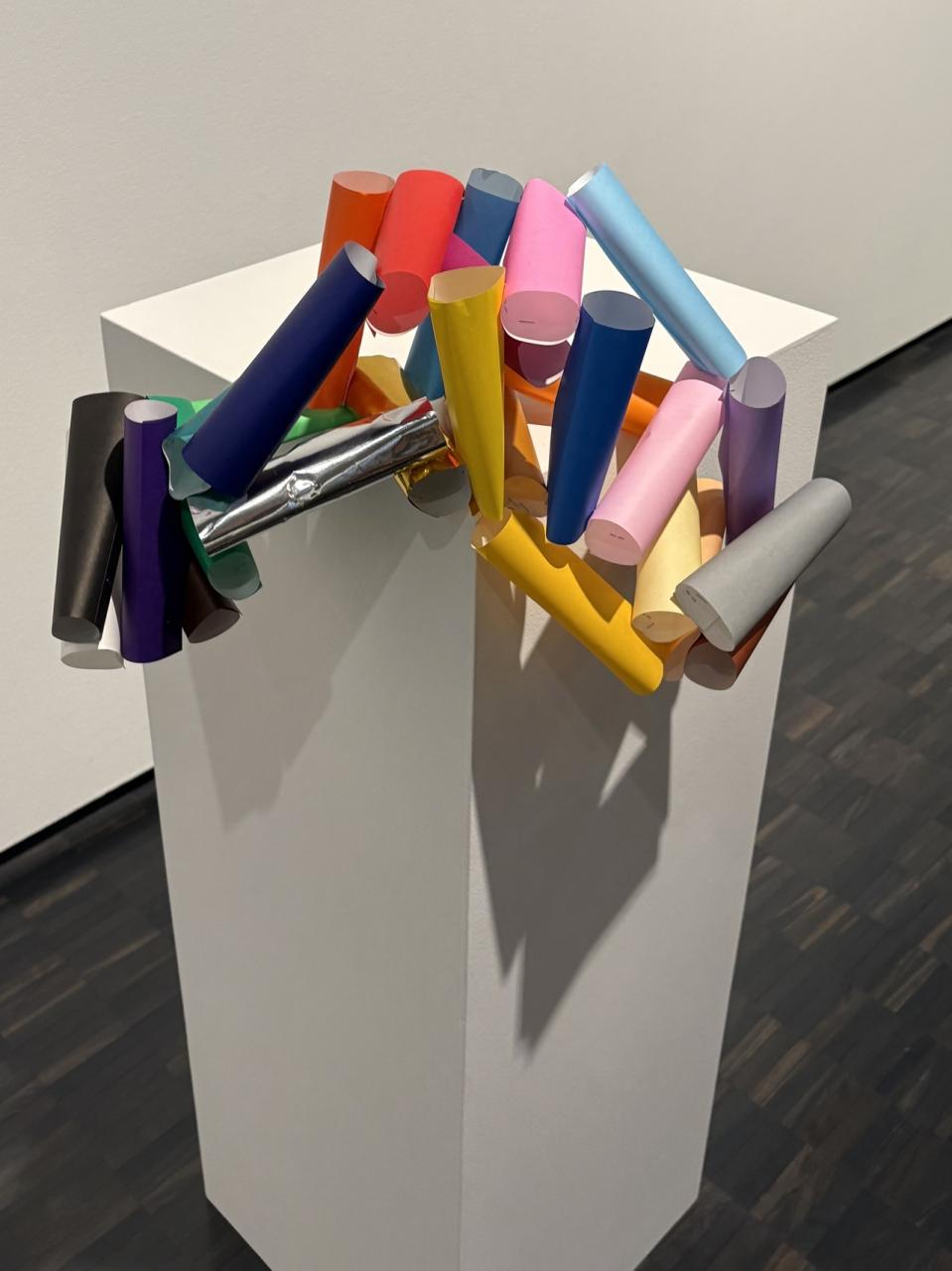
寺内曜子
TERAUCHI, Yoko
1954-
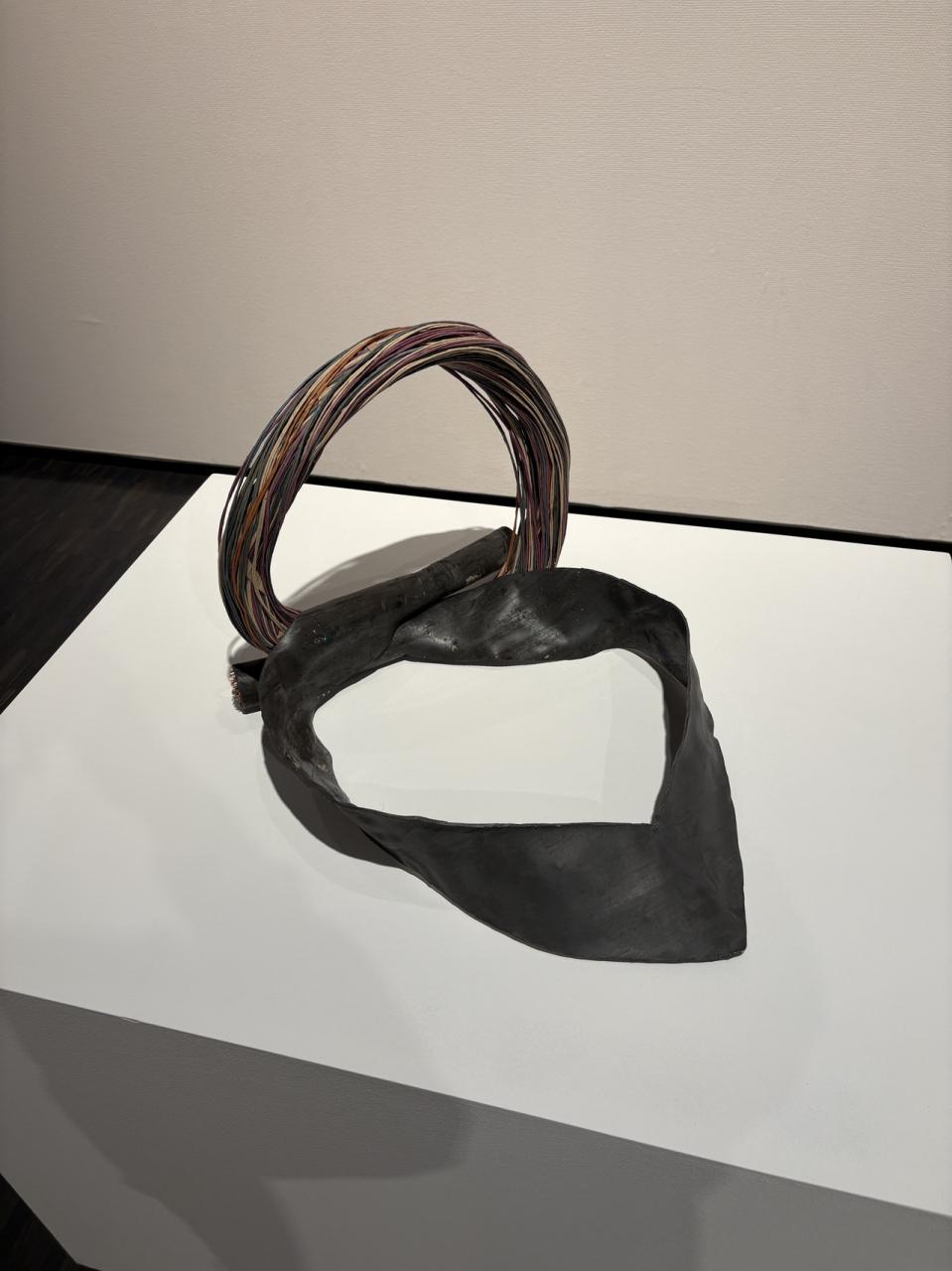
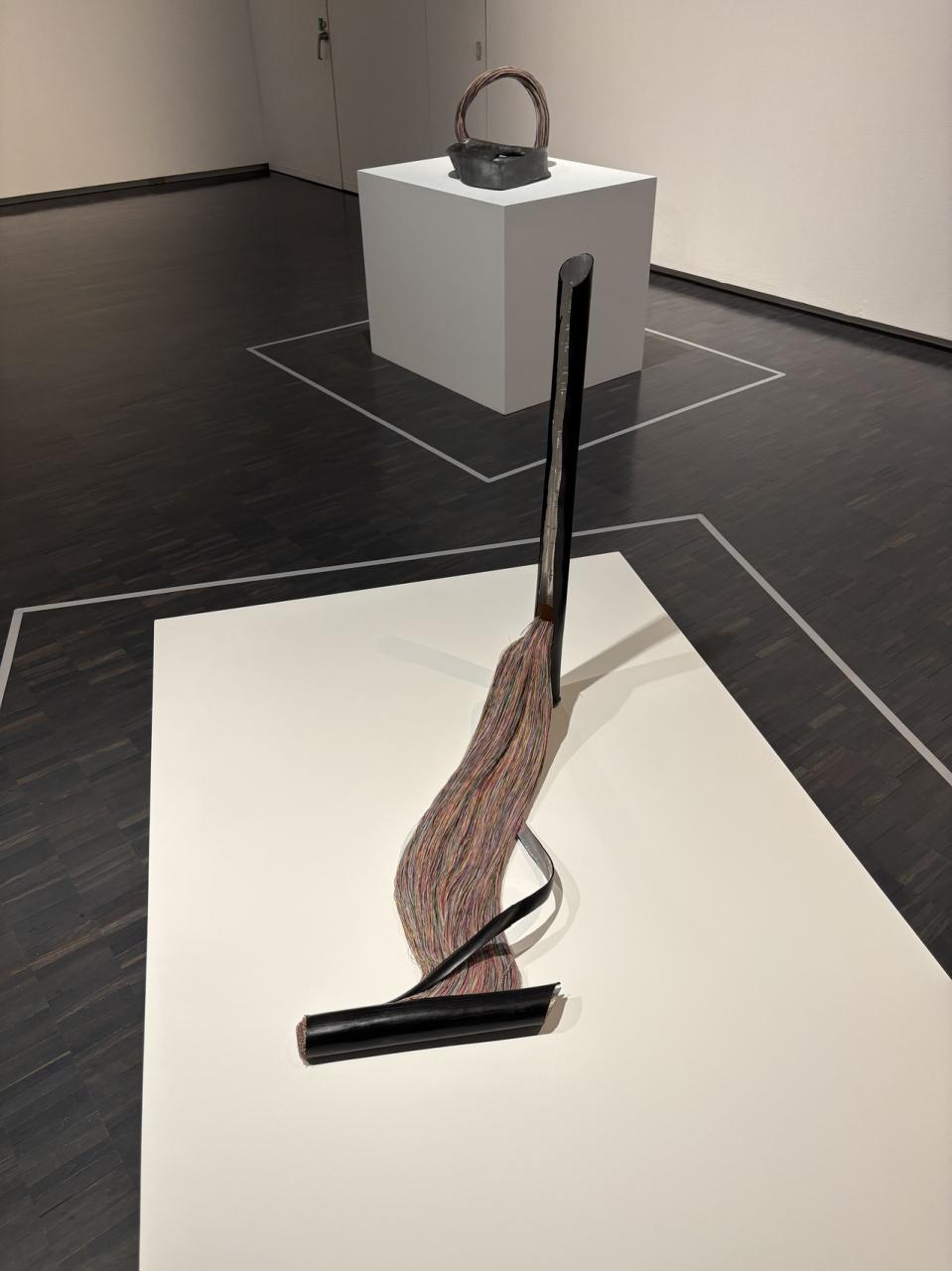
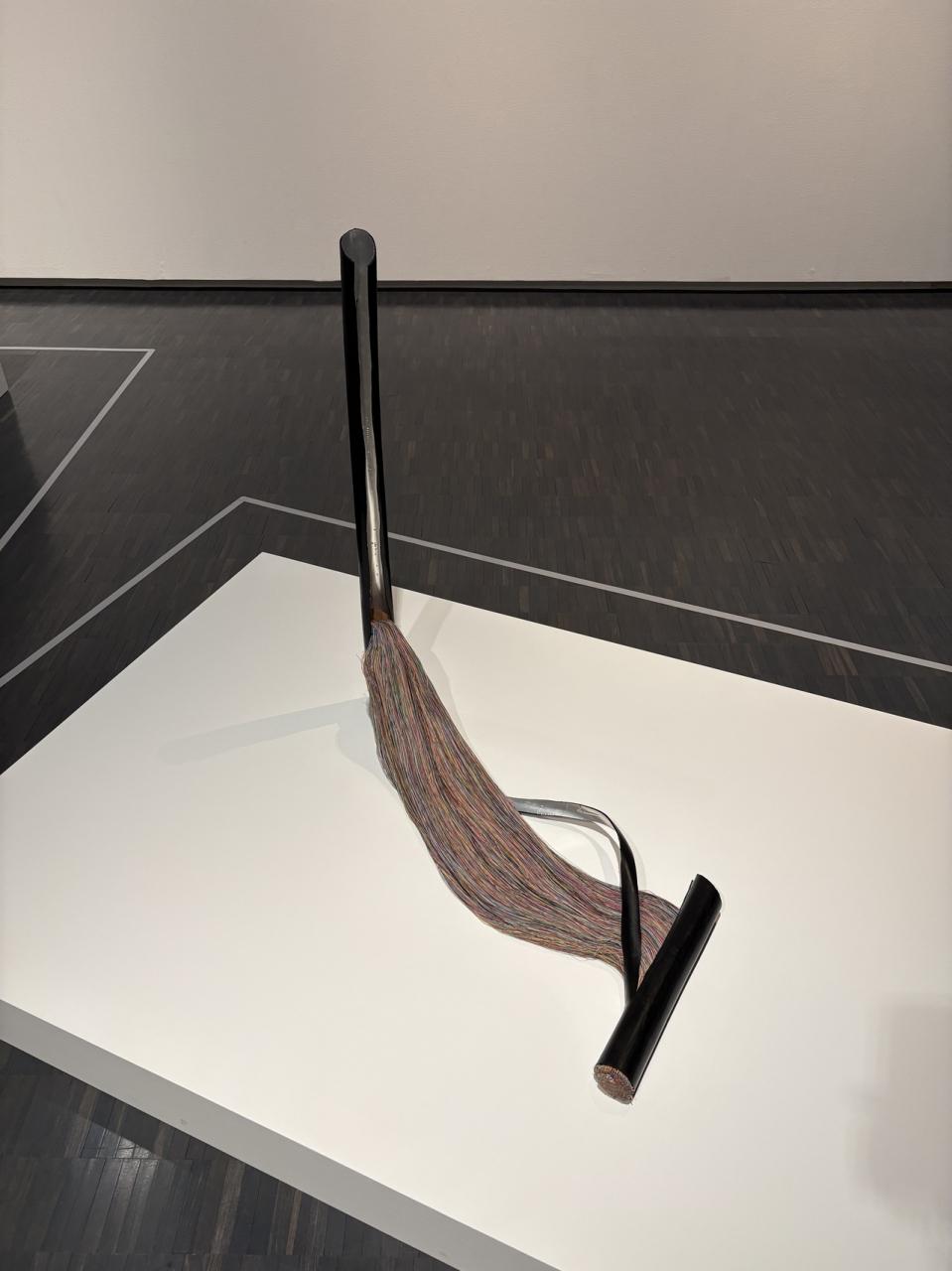
Hot-Line 85
1987 昭和62年
電話ケーブル Telephone cable
購入
Purchased -
-
-
-
-
-
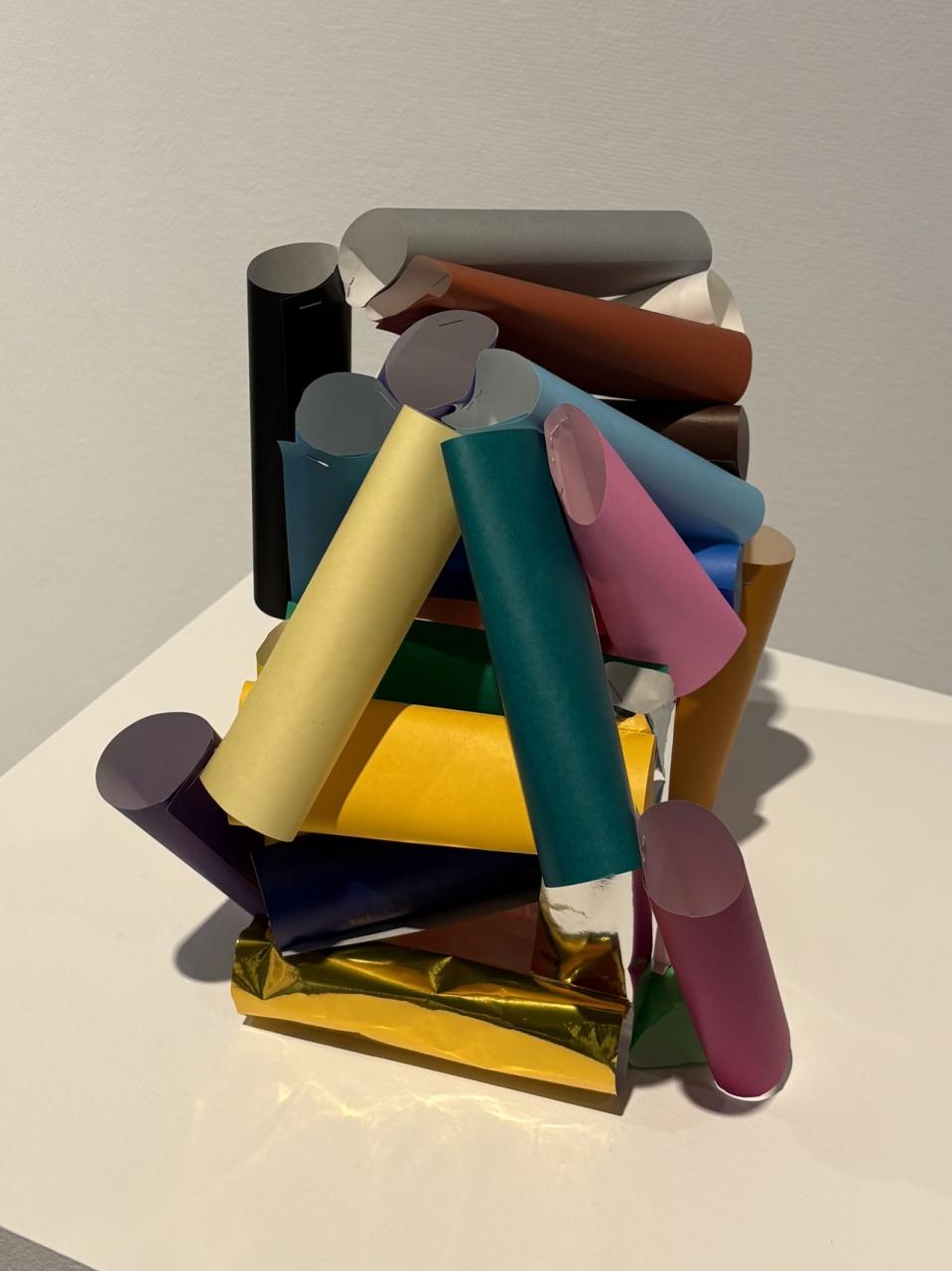
高柳恵里
TAKAYANAGI, Eri
1962-
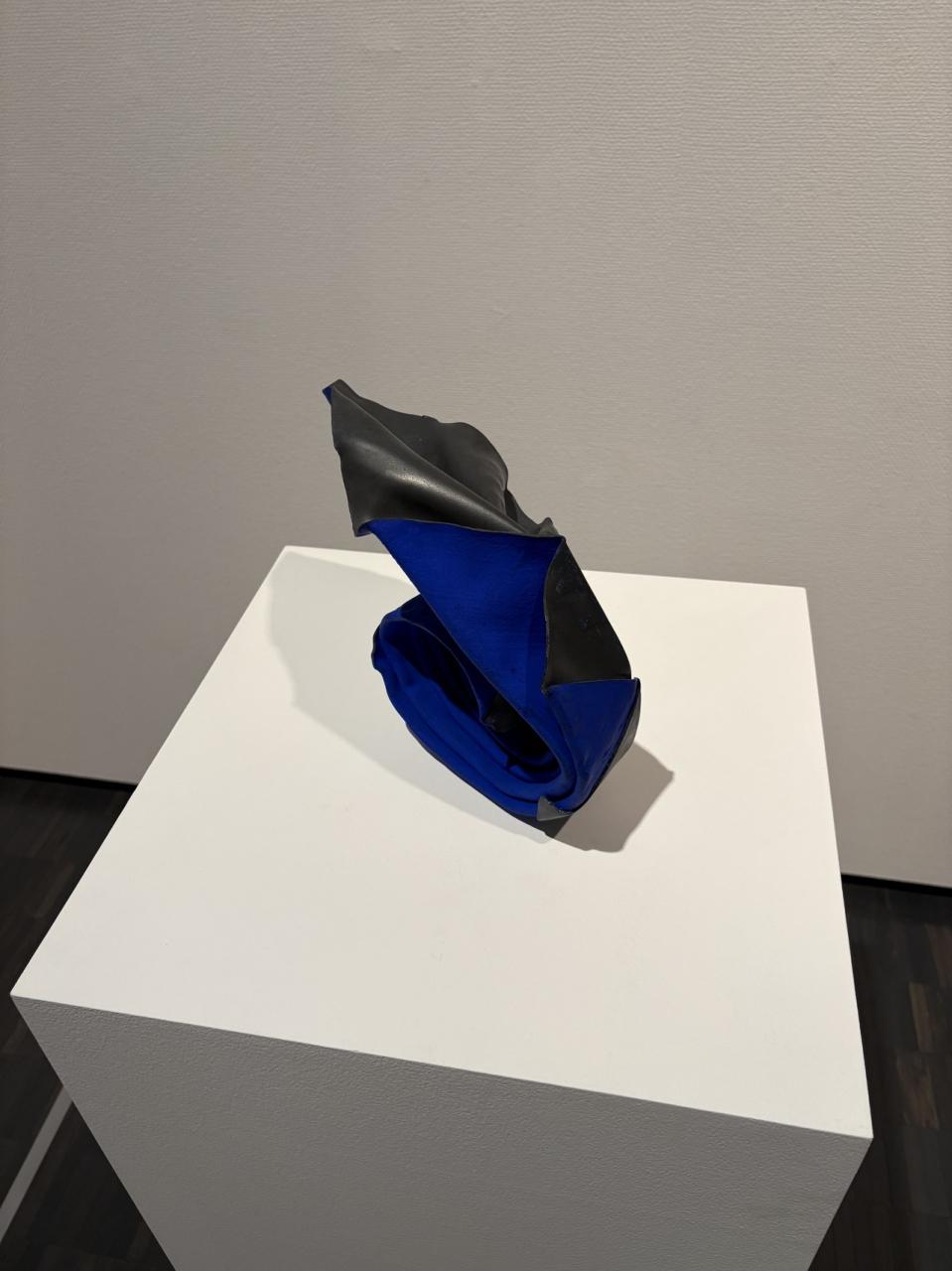
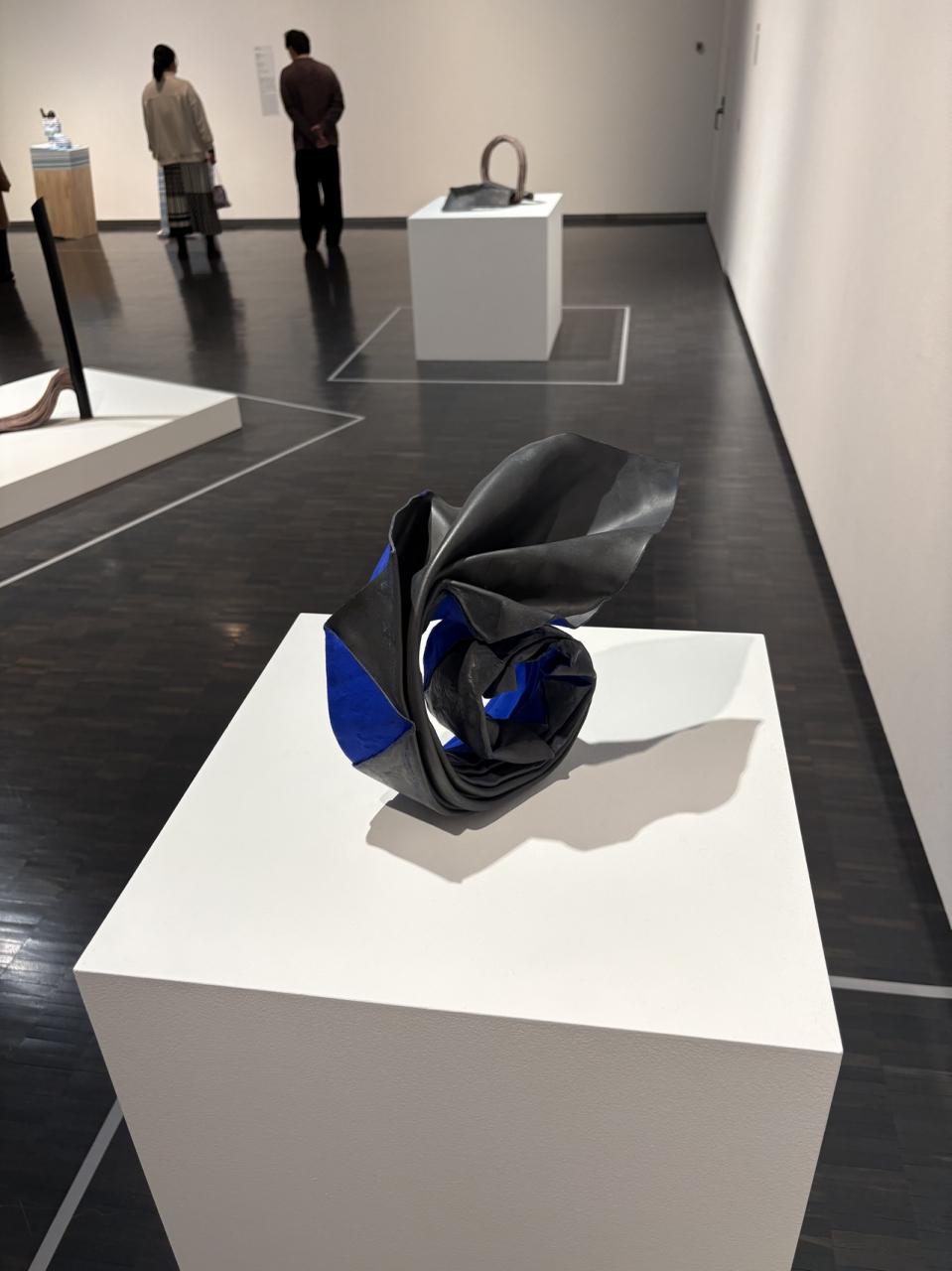
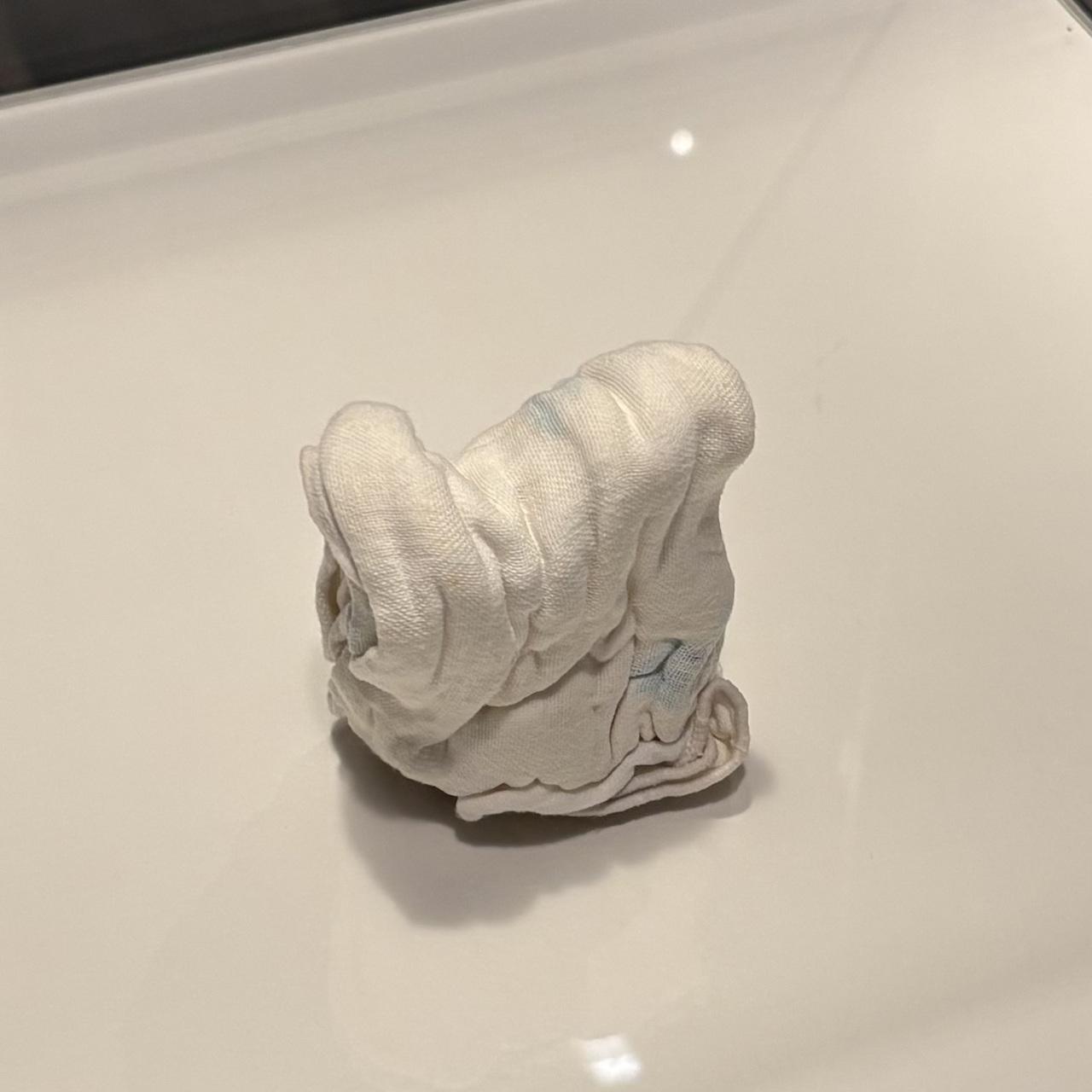
ポケットガーゼ
Pocket-gauze
1998 平成10年
布(ガーゼハンカチ) cloth (gauze handkerchief)
一杉徹氏寄贈
Gift of Hitosugi Tohru
これは、水で濡らしたガーゼを適当な形にした上で乾かしてできた塊にすぎません。けれど、様々な問いを引き起こします。「人為を感じさせない適当さとはどのようにしたら成立するのか?」「これが粘土だったら彫刻として認めやすくなるのか?」「これはどれくらい堅いのか?見ためと違うとしたら、その理由はなにか?」等々。
This work is only a mass made by wetting gauze with water, drying it and molding its form in a seemingly random manner. However, it raises various questions. "How is the piece formed randomly so it does not convey human intent?" "Would we be more likely to recognize this as 'sculpture' if it was made of clay?" "How hard is this object, and if its hardness differs from how it appears, then why?" -
-
-
-
北野謙
KITANO, Ken
1968-
「our face」より 2004年8月6日「平和記念日」
広島市元安川に慰霊の灯籠を流す人々39人を重ねた肖像
Piling Portraits of 39 People Floating Lanterns down the River Motoyasu in Memory of Atomic Bomb Victims on August 6, 2004, Hiroshima from our face
2004 平成16年
ゼラチン・シルバー・プリント gelatin silver print
購人
Purchased -
-
-
-
-
(続く・・・)
この旅行記のタグ


利用規約に違反している投稿は、報告する事ができます。
-
前の旅行記

MOMAT〔国立東京近代美術館〕コレクション展 ~2026.2.8:その11.記憶と想起。"河原温《1966...
2026/02/05~
神田・神保町
-
次の旅行記

国立東京近代美術館 "コレクションによる小企画 没後30年 榎倉康二(~2026.2.8)"《 干渉(STO...
2026/02/05~
神田・神保町
-

"MOMAT〔国立東京近代美術館〕コレクション展 ~2026.2.8" その1.ハイライト。"奈良美智《Ha...
2026/02/05~
神田・神保町
-

"MOMAT〔国立東京近代美術館〕コレクション展 ~2026.2.8" その2.新か、旧か? "和田三造《南...
2026/02/05~
神田・神保町
-

"MOMAT〔国立東京近代美術館〕コレクション展~2026.2.8" その3.キュビスム再考 "ナターリア・...
2026/02/05~
神田・神保町
-

"MOMAT〔国立東京近代美術館〕コレクション展 ~2026.2.8" その4.『濹東綺譚』。"木村荘八 、...
2026/02/05~
神田・神保町
-

"MOMAT コレクション展 ~2026.2.8" その5.1930年代の絵画:現実の彼方へ、幻影の手前で。...
2026/02/05~
神田・神保町
-

MOMAT〔国立東京近代美術館〕コレクション展 ~2026.2.8: その6.戦時の女性たち。"『主婦之友』...
2026/02/05~
神田・神保町
-

MOMAT〔国立東京近代美術館〕コレクション展 ~2026.2.8: その7.アクション前夜。"朝倉摂 《黒...
2026/02/05~
神田・神保町
-

MOMAT コレクション展 ~2026.2.8:8.「・・・アクション!」&「・・・カット!」。"ルーチョ・...
2026/02/05~
神田・神保町
-

MOMAT〔国立東京近代美術館〕コレクション展 ~2026.2.8:その9."細江英公「薔薇刑」"
2026/02/05~
神田・神保町
-

MOMAT ~2026.2.8:その10.1950~60年代:有機的な彫刻/川端龍子と青龍社。"ジェルメーヌ...
2026/02/05~
神田・神保町
-

MOMAT〔国立東京近代美術館〕コレクション展 ~2026.2.8:その11.記憶と想起。"河原温《1966...
2026/02/05~
神田・神保町
-

MOMAT コレクション展 ~2026.2.8:12.入れ替わる世界、ひらかれる感覚。"冨井大裕《board...
2026/02/05~
神田・神保町
-

国立東京近代美術館 "コレクションによる小企画 没後30年 榎倉康二(~2026.2.8)"《 干渉(STO...
2026/02/05~
神田・神保町
旅行記グループをもっと見る
コメントを投稿する前に
十分に確認の上、ご投稿ください。 コメントの内容は攻撃的ではなく、相手の気持ちに寄り添ったものになっていますか?
サイト共通ガイドライン(利用上のお願い)報道機関・マスメディアの方へ 画像提供などに関するお問い合わせは、専用のお問い合わせフォームからお願いいたします。
この旅行で行ったスポット





フォートラベル公式LINE@
おすすめの旅行記や旬な旅行情報、お得なキャンペーン情報をお届けします!
QRコードが読み取れない場合はID「@4travel」で検索してください。
\その他の公式SNSはこちら/





旅行記グループ MOMAT コレクション〔国立東京近代美術館 所蔵作品展〕(2025.11.5-2026.2.8)
0
35