


2025/06/27 - 2025/06/28
52位(同エリア1951件中)

旅熊 Kokazさん
- 旅熊 KokazさんTOP
- 旅行記1931冊
- クチコミ854件
- Q&A回答101件
- 1,712,635アクセス
- フォロワー754人
大阪市立東洋陶磁美術館
2025.4.19~11.24
特別展 "CELADON-東アジアの青磁のきらめき"
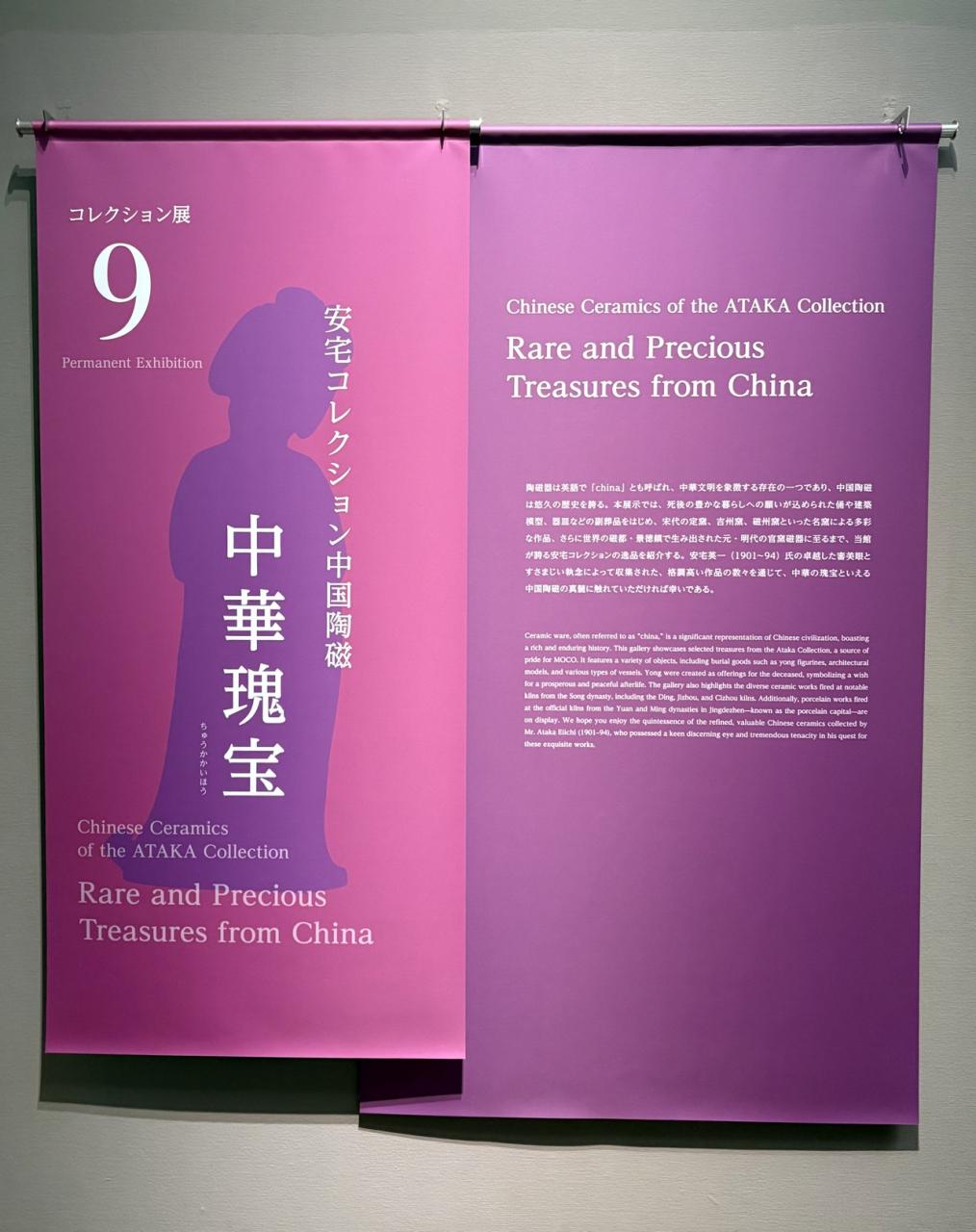
(展示9)コレクション展 "中華瑰宝 安宅コレクション中国陶磁"
- 旅行の満足度
- 5.0
-

Chinese Ceramics of the ATAKA Collection
Rare and Precious
Treasures from China
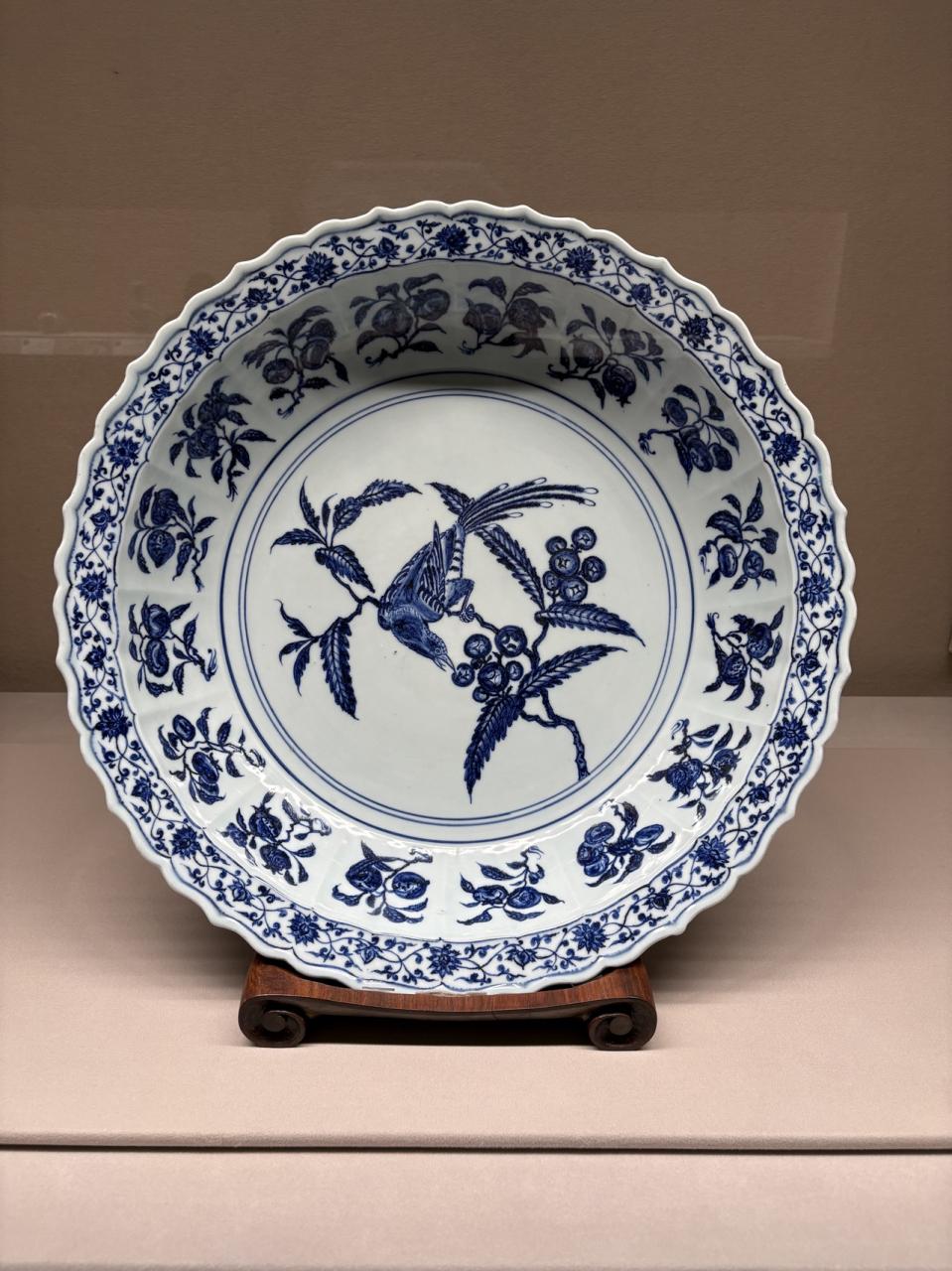
陶磁器は英語で「china」とも呼ばれ、中華文明を象徴する存在の一つであり、中国陶磁は悠久の歴史を誇る。
本展示では、死後の豊かな暮らしへの願いが込められた俑や建築模型、器皿などの副葬品をはじめ、宋代の定窯、吉州窯、磁州窯といった名窯による多彩な作品、さらに世界の都・景徳鎖で生み出された元・明代の官窯器に至るまで、当館が誇る安宅コレクションの逸品を紹介する。
安宅英一(1901~94)氏の車越した審美眼とすさまじい執念によって収集された、格闘高い作品の数々を通じて、中華の瑰宝といえる中国陶磁の真髄に触れていただければ幸いである。
Ceramic ware, often referred to as "china", is a significant representation of Chinese civilization, boasting a rich and enduring history.
This gallery showcases selected treasures from the Ataka Collection, a source of pride for MOCO. It features a variety of objects, including burial goods such as yong figurines,arcehitectural models, and various types of vessels. Yong were created as offerings for the deceased, symbolizing a wish for a prosperous and peaceful afterlife. The gallery also highlights the diverse ceramic works fired at notable kilns from the Song dynasty, including the Ding, Jizhou, and Cizhou kilns. Additionally porcelain works fired at the official kilns from the Yuan and Ming dynasties in Jingdezhen-known as the porcelain capital-are on display.
We hope you enjoy the quintessence of the refined, valuable Chinese ceramics collected by Mr. Ataka Elichi (1901-94), who possessed a keen discerning eye and tremendous tenacity in his quest for these exquisite works. -
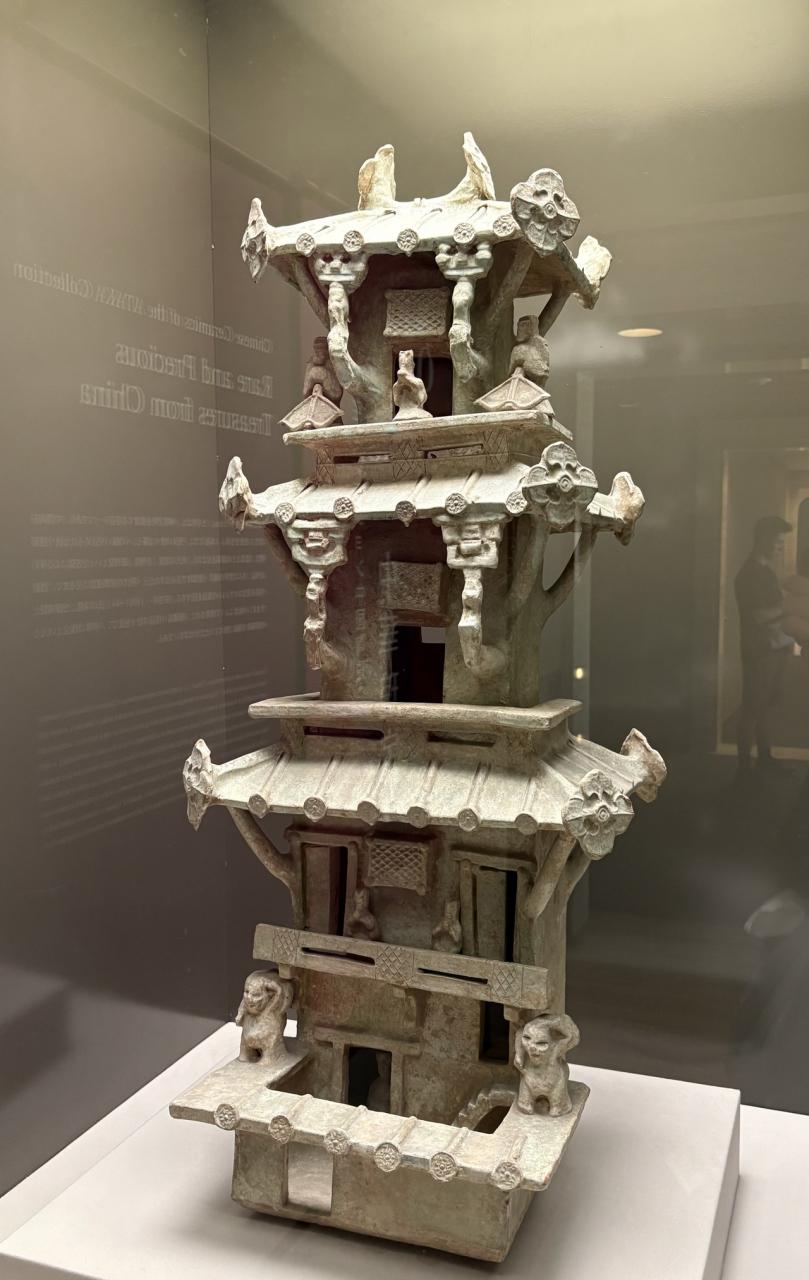
緑釉 楼閣
後漢時代・2-3世紀/住友グループ寄贈(安宅コレクション)
来世でも現世と変わらぬ暮らしを願い、権力者たちは模型や俑(よう)などの明器を基に副葬した。四階建てのこの機閣は物見やぐらも兼ね、当時の最先端の木造高層建築である。低火度焼成のである緑釉は、明器を彩る釉薬として当時さかんに用いられた。
TOWERED PAVILION Earthenware with green glaze
Eastern Han dynasty, 2nd-3rd century / Gift of SUMITOMO Group (The ATAKA Collection)
Rulers and people of power were buried with various funerary objects called mingqi, such as miniature buildings and human figures, as a wish that the afterlife would not be so different from life in this world. This four-story pavilion also functioned as a watchtower, a cutting-edge high-rise building of the time. The green lead glaze was used extensively for decorating funerary objects.
h: 104.5cm w: 44.5cm
登録番号 00185 -
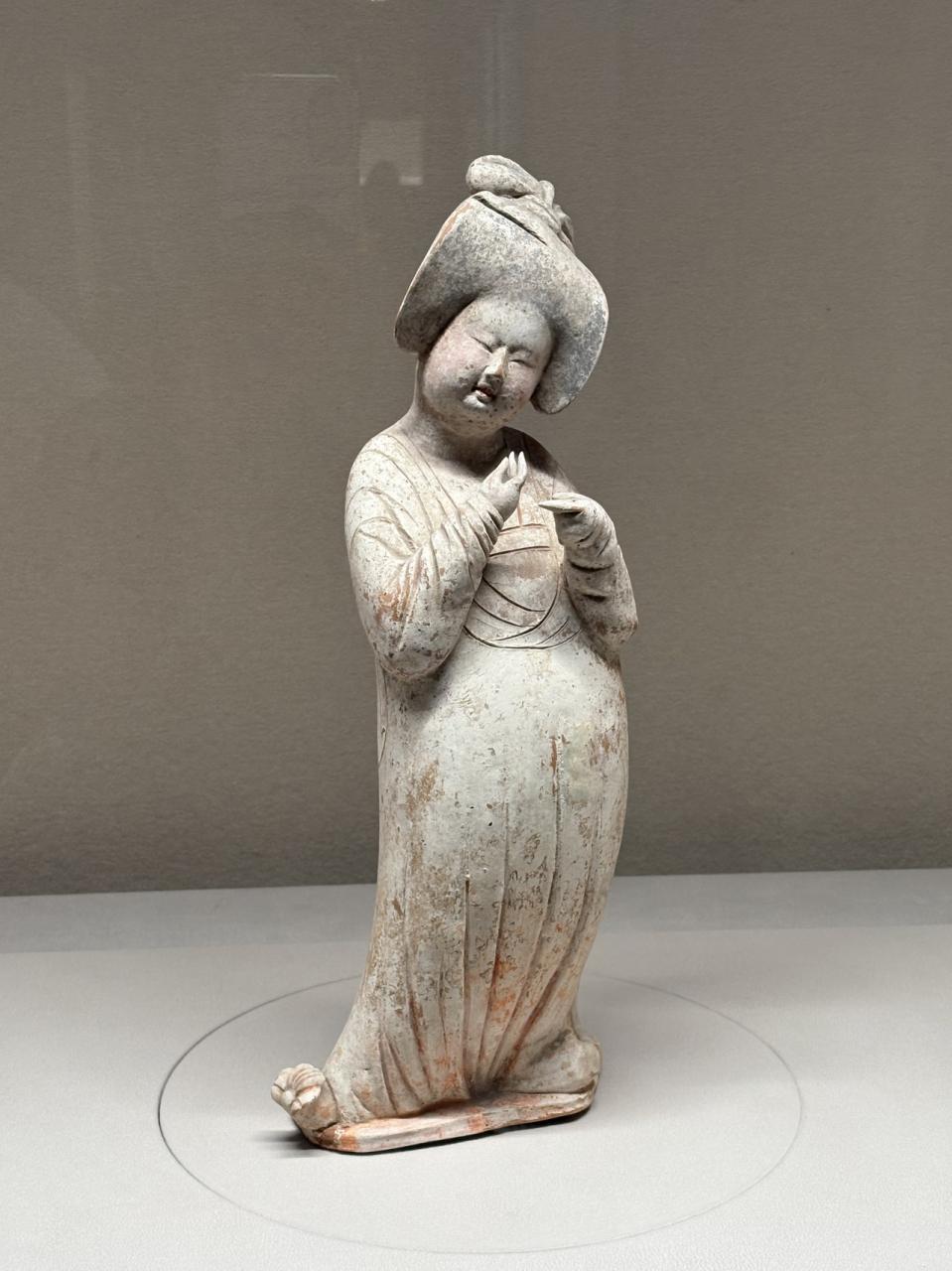
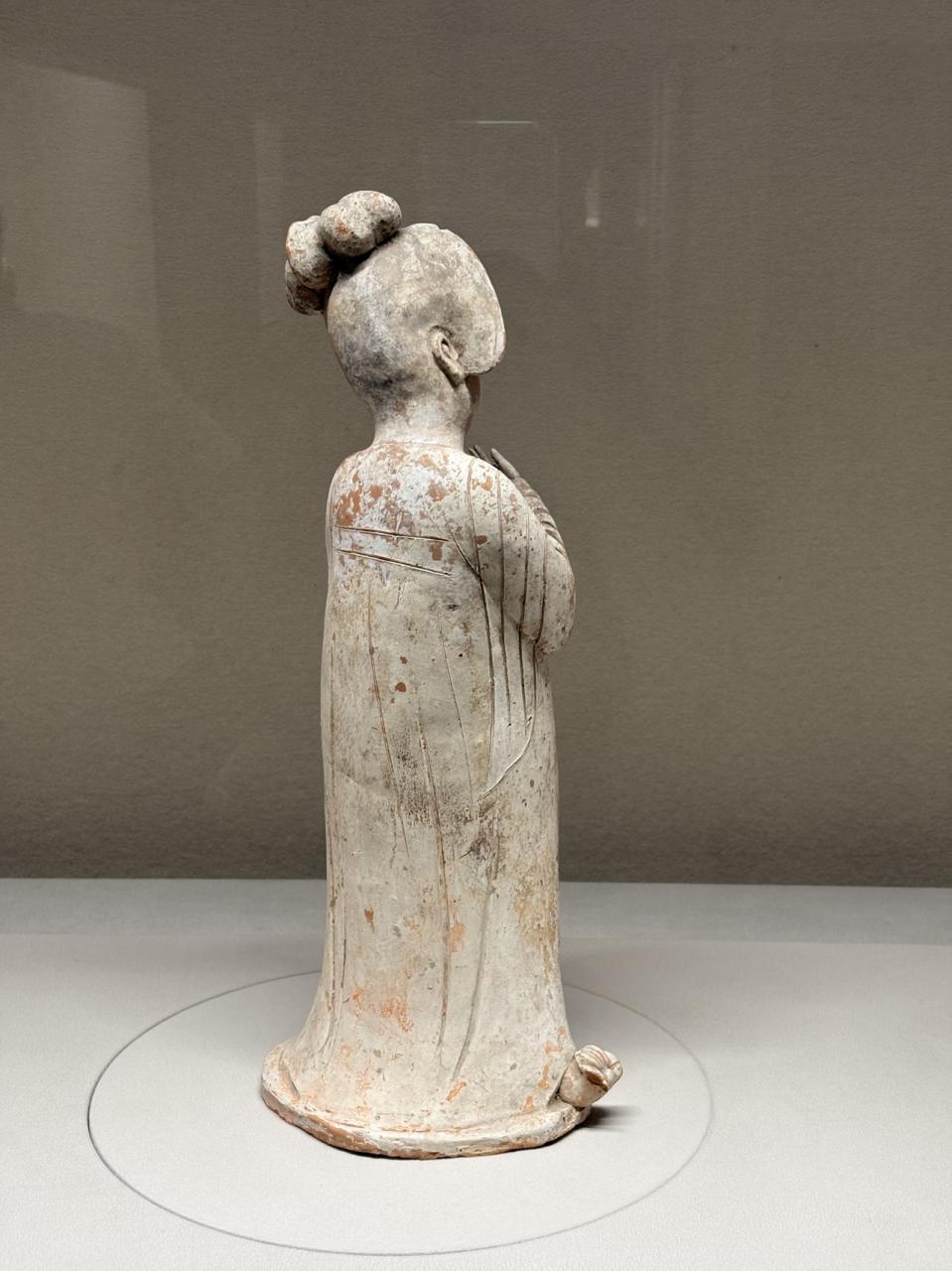
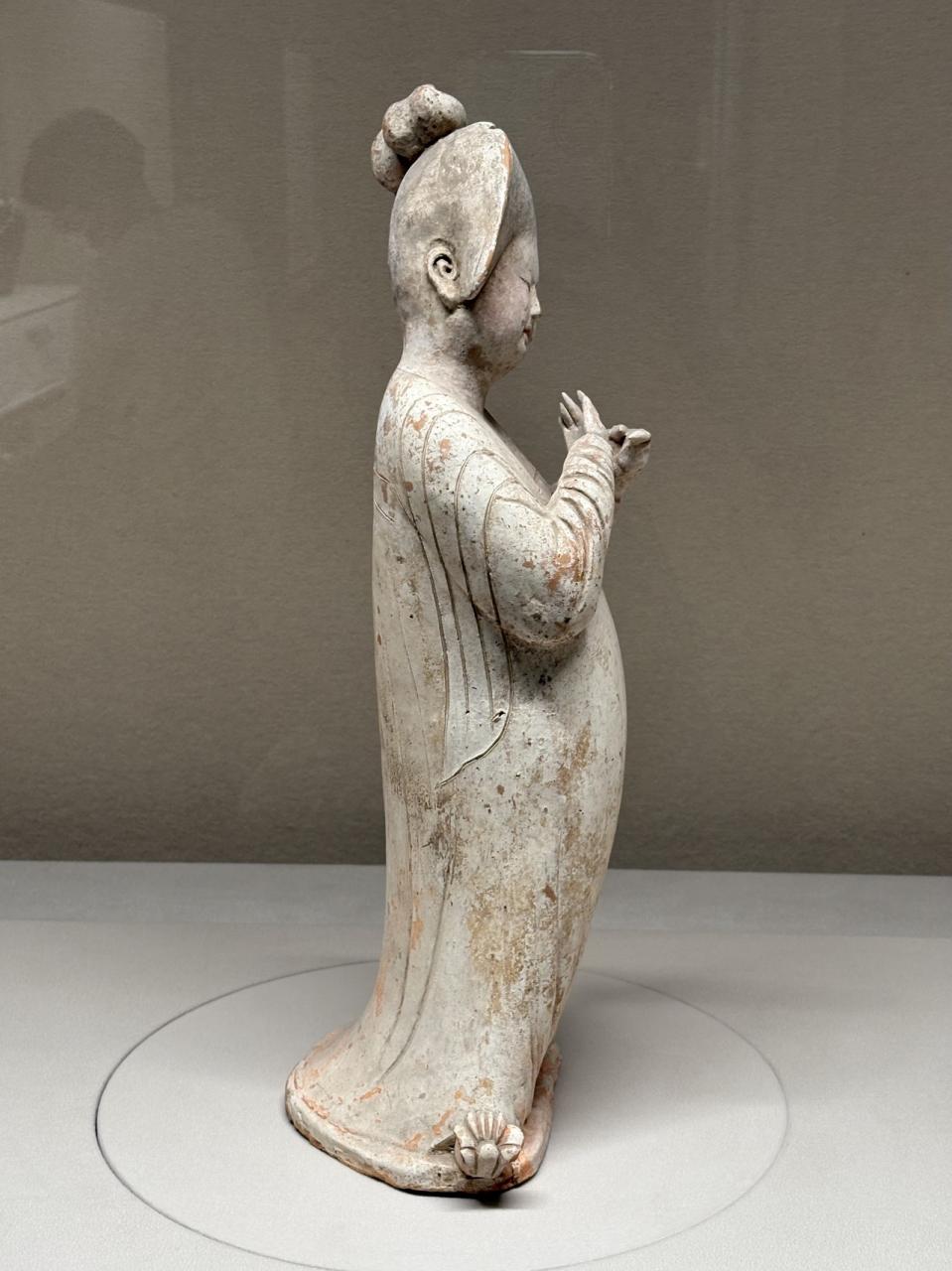
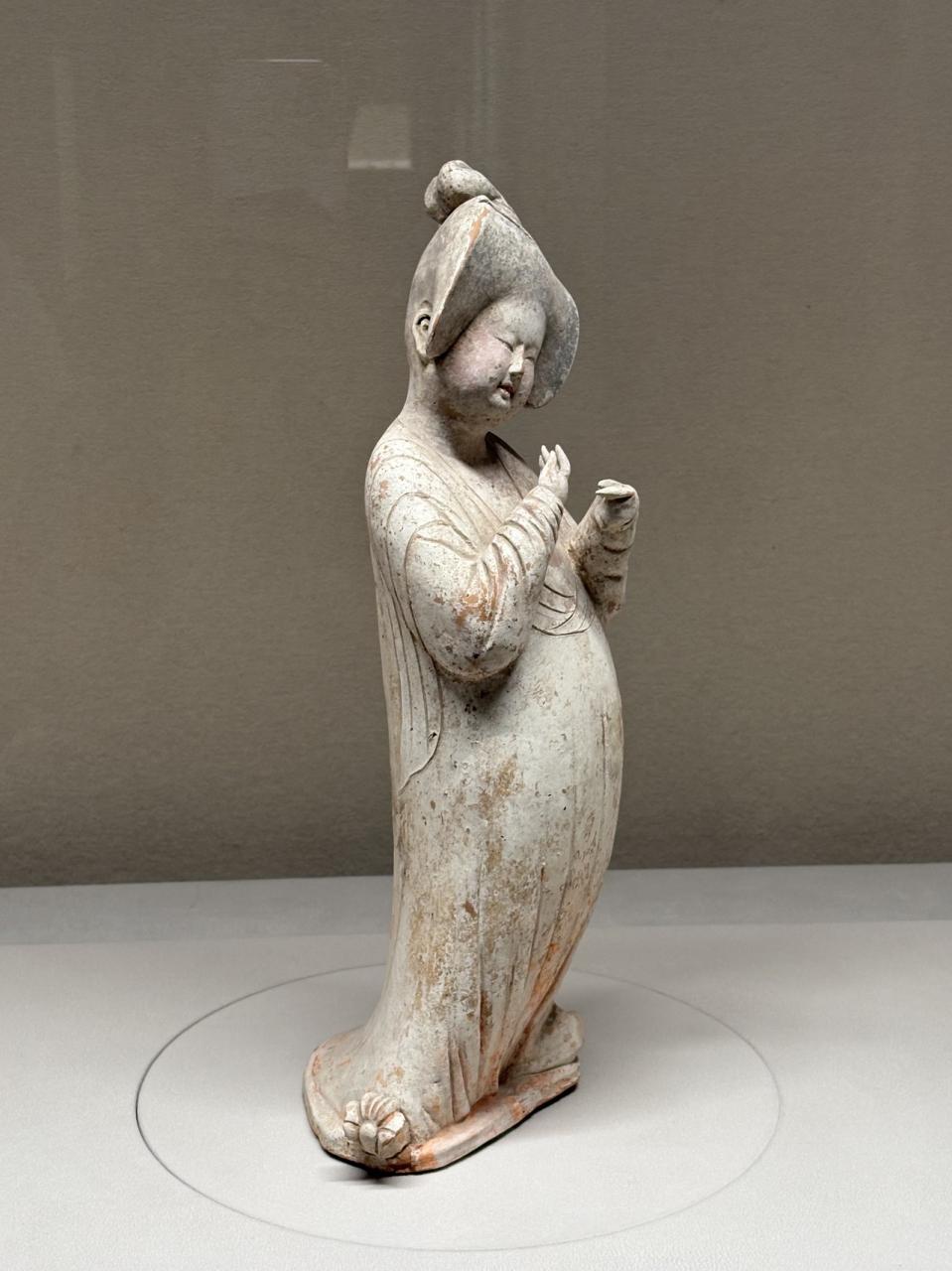
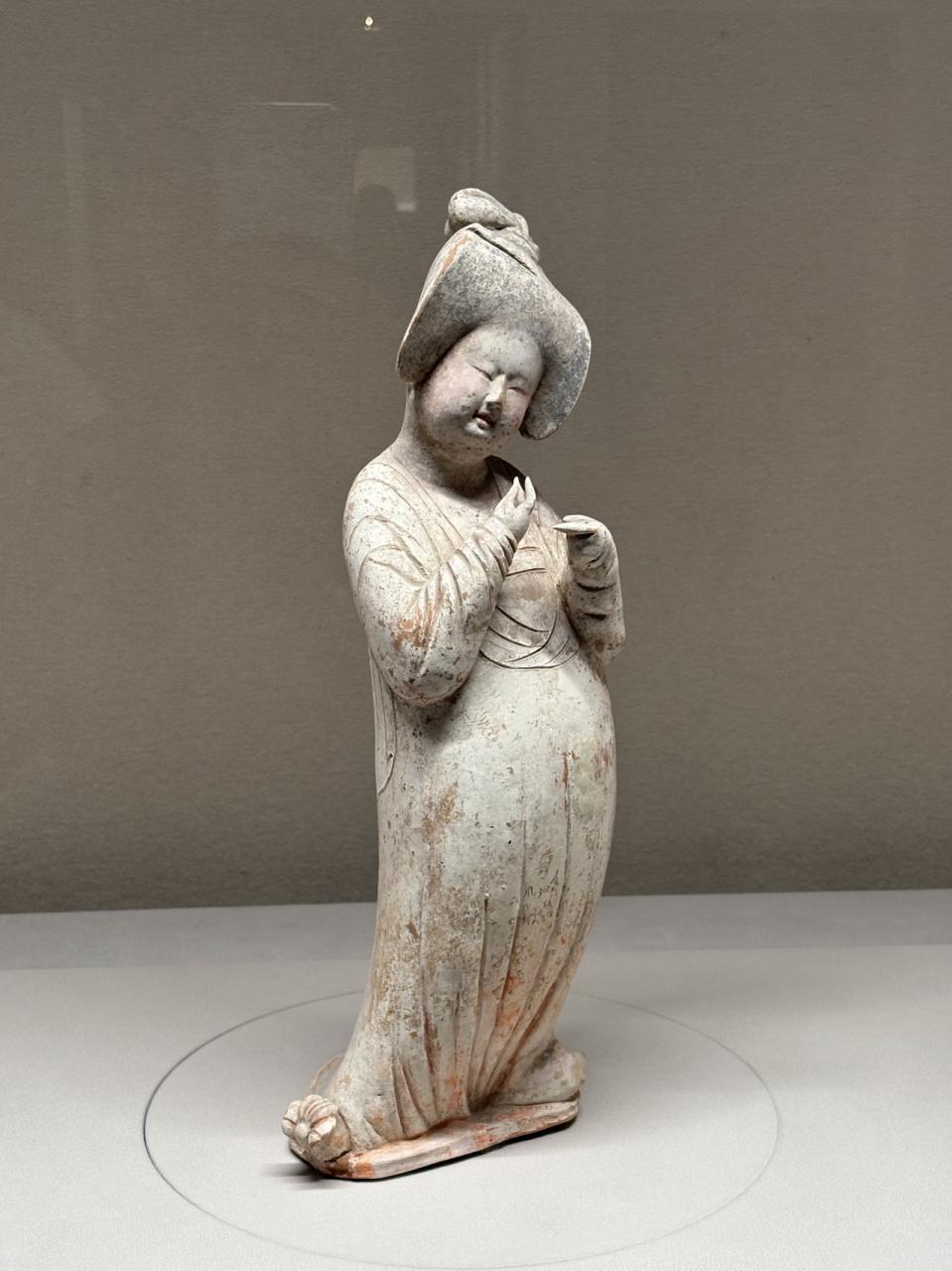
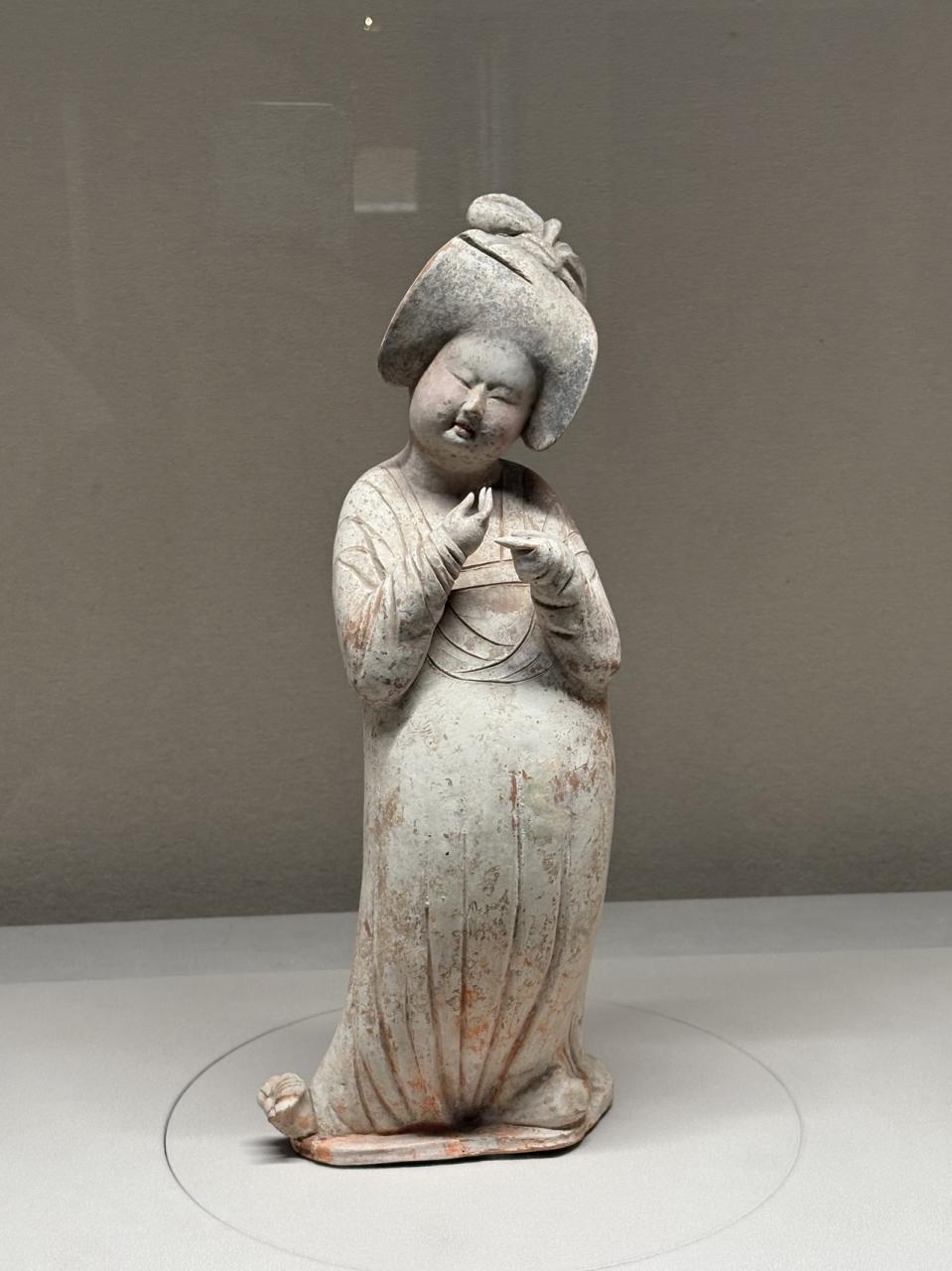
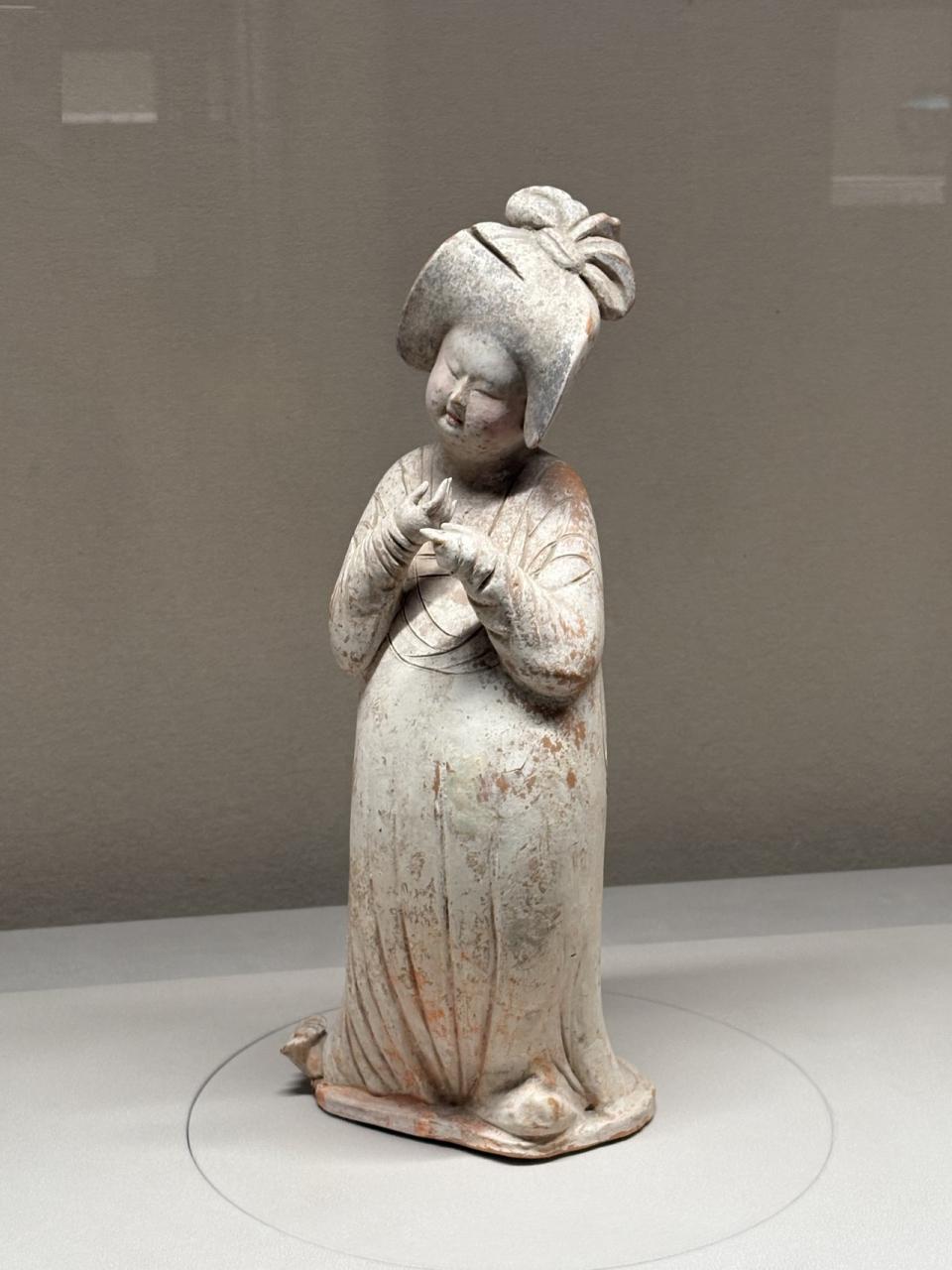
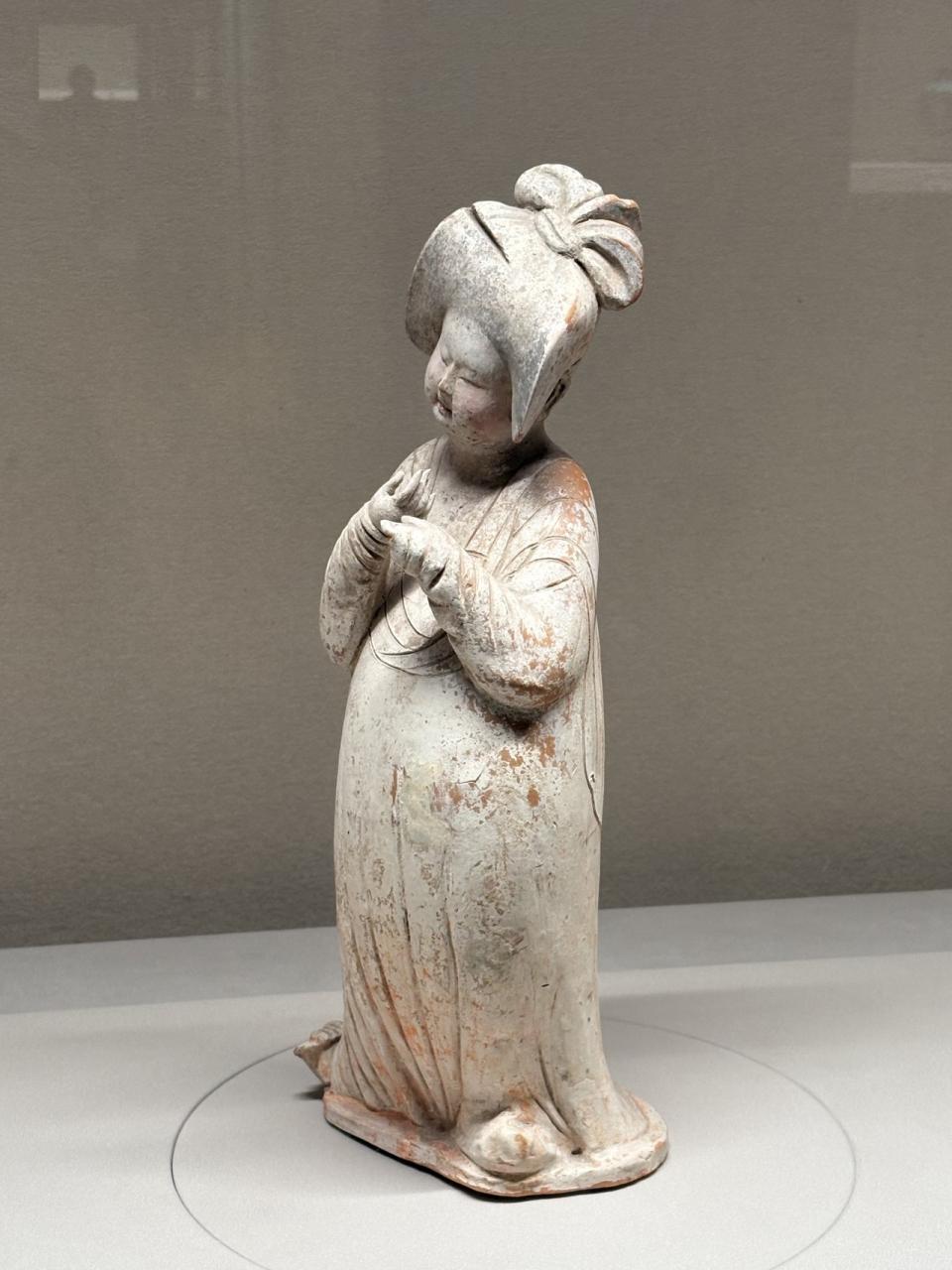
加彩 婦女俑
唐時代・8世紀/住友グループ寄贈(安宅コレクション)
8世紀の盛唐、ふっくらと豊満なスタイルの女性像が主流となった。左手には本来小鳥が止まっていたようで、そのさえずりに耳を傾けるように首をややかしげている。彩色はほとんど落ちてしまったが、かえって造形の美しさが際立つ。婦女俑屈指の名品である。
FIGURINE OF A LADY
Earthenware with painted decoration
Tang dynasty, 8th century / Gift of SUMITOMO Group (The ATAKA Collection)
During the 8th century, which was the most flourishing time of the Tang dynasty, plump-style female figures became the mainstream. This piece might have had a little bird perched on the lady's left hand, which can be surmised from the way she tilts her head as if listening to the bird chirping. It was initially decorated with colorful pigments, most of which have faded. However, the absence of colors draws attention to the beauty of the form. It is a preeminent masterpiece of yong female figures.
h: 49.0cm w: 20.3cm
登録番号 00794 -
-
-
-
-
-
-
-
-
-
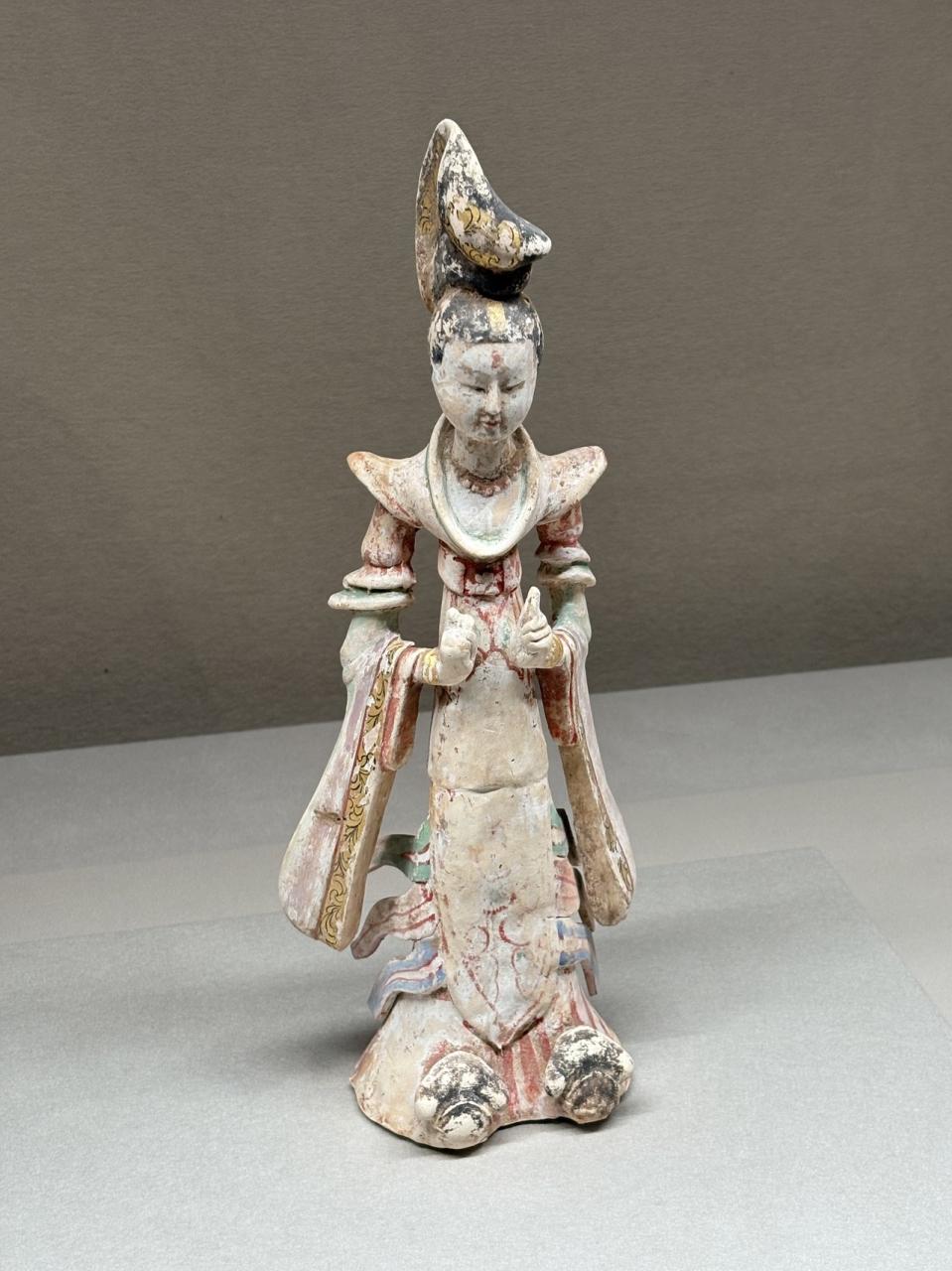
加彩 宮女俑
唐時代・7世紀/住友グループ寄贈(安宅コレクション)
極端なまでにスリムなプロポーションは、当時の理想的な女性像を反映したもので、高く結い上げた髪型も当時の流行だった。
衣裳や装身具には色とりどりの彩色や金が施され華麗である。両手の所作は不明だが、気品ある面持ちは、宮中の高貴な女性を思わせる。
FIGURINE OF A COURT LADY
Earthenware with painted and gilt decoration
Tang dynasty, 7th century / Gift of SUMITOMO Group (The ATAKA Collection)
The extremely slim body of this female figure reflects the ideal physical appearance of a woman at that time. The hairstyle, tied in a high position, was also a popular fashion.
The elegant costume and jewelry are decorated using colorful pigments and gilt. While the meaning of the hand gesture is unknown, the graceful look suggests that she is a noblewoman.
h: 37.8cm w: 13.9cm
登録番号 00668 -
-
-
-
-
-
-
重要文化財
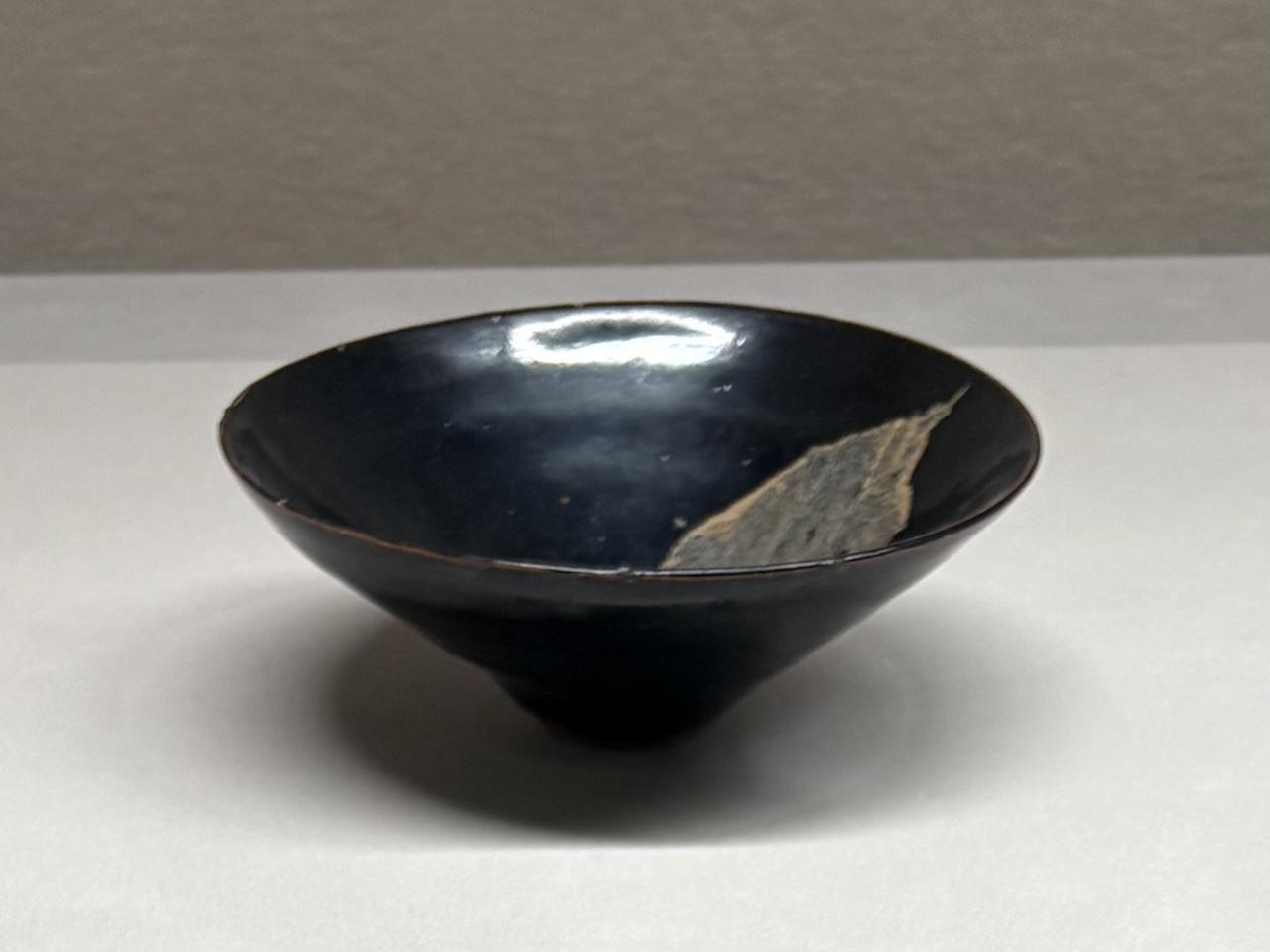
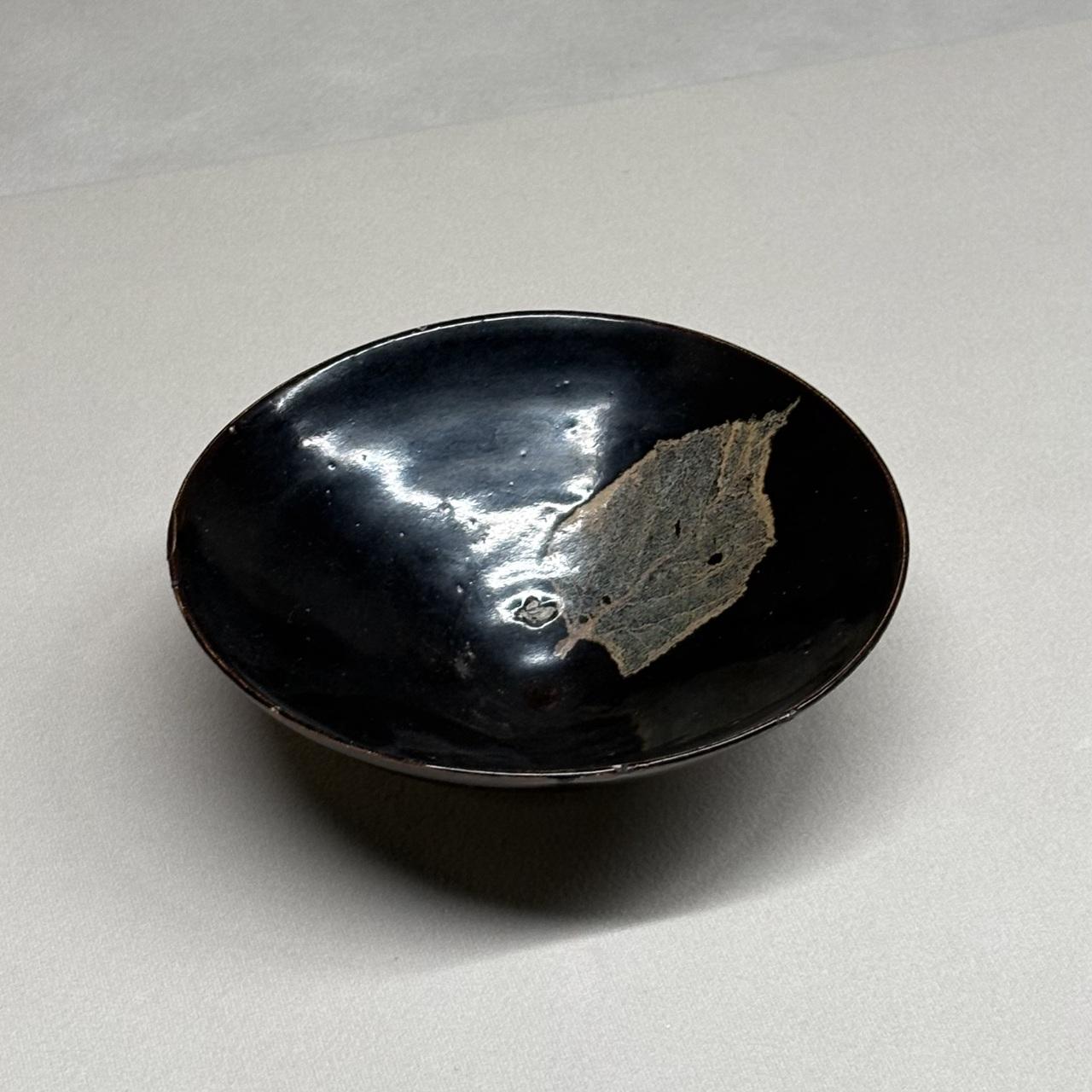
木葉天目 茶碗
南未時代・12-13世紀/吉州窯/住友グループ寄贈(安宅コレクション)
内面には本物の不葉が焼き付けられており、日本では「木葉天目」と呼ばれる。木葉は桑の枯葉が用いられ、桑の葉が禅に通じるという時の詩の一句から、禅との関連がうかがえる。黒釉上には金彩の梅花文の痕跡も一部確認できる。加賀前田家伝来品。
important cultural rroperty
TEA BOWL
Tenmoku glaze with leaf design
Southern Song dynasty, 12th-13th century / Jizhou ware / Gift of SUMITOMO Group (The ATAKA Collection)
The leaf design imprinted in the interior during firing gave this tea bowl the name konoha or leaf tenmoku. A poem contemporary to this tea bowl alludes to the mulberry leaf, which was used for this decoration, being associated with Zen Buddhism at that time, suggestive of the close relation of this bowl to Zen. The opposite side of the interior wall reveals a faint trace of a gilt decoration of a plum blossom. This work was formerly owned by the Maeda family of Kaga Domain (present-day Ishikawa Prefecture).
h: 5.3cm d: 14.7 cm
登録番号 00598 -
-
-
-
-
-
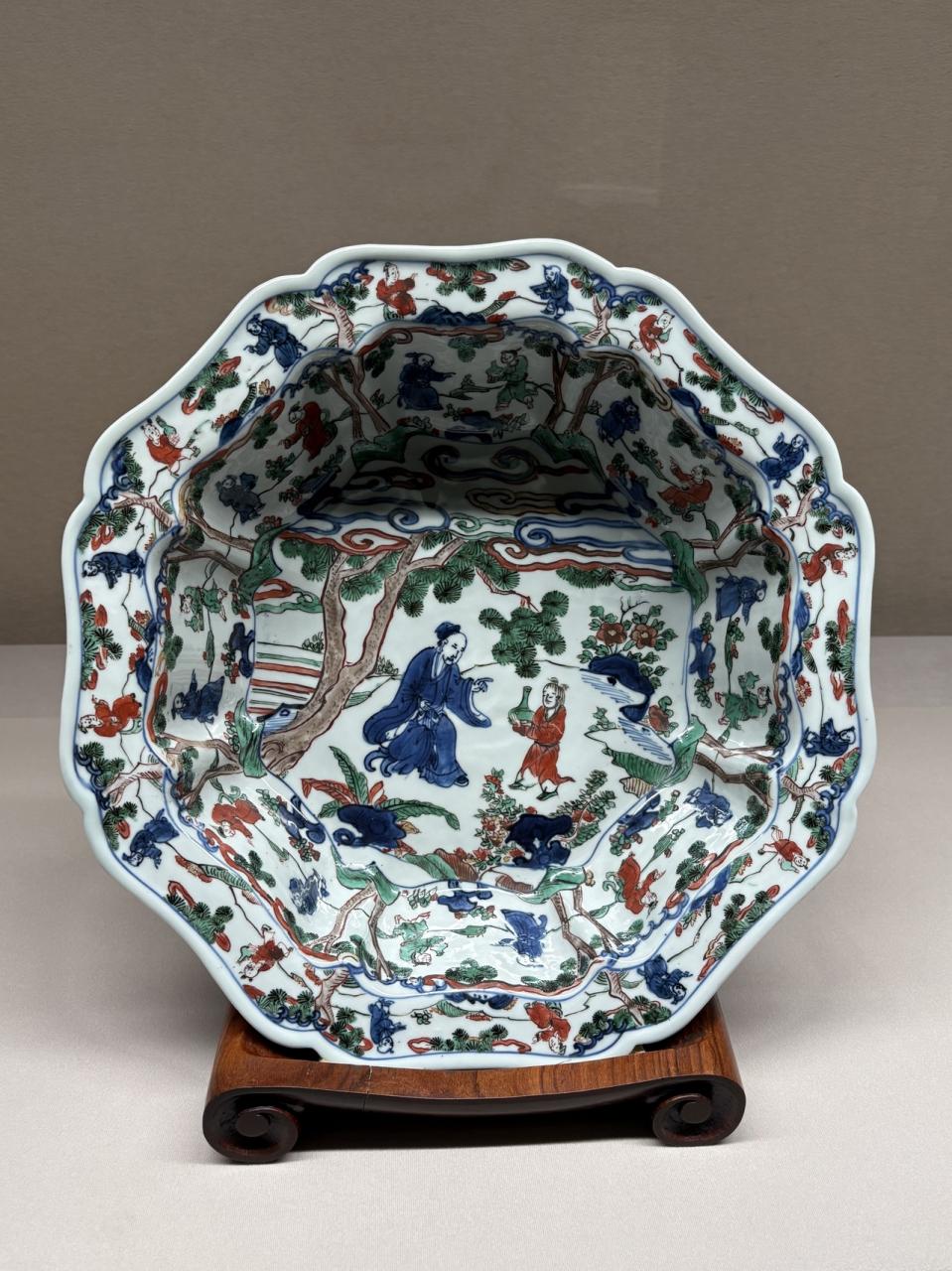
五彩 松下高士図面盆(「大明萬暦年製」銘)
明時代・万暦(1573-1620)/景徳鎮窯/住友グループ寄贈(安宅コレクション)
面盆とは顔や手を洗うための容器である。内面中央には、松街下に高士(高潔な文人)と童子が描かれ、空には彩雲がたなびく。
青花の青色に加え、釉上彩の赤・黄・緑などの五彩技法により、縁と内側面にも高士と童子のモチーフが繰り返し描かれ、幻想的な世界が広がる。
BASIN
Porcelain with design of literati under a pine tree in underglaze blue and overglaze enamels
Ming dynasty, Wanli mark and period (1573-1620) / Jingdezhen ware / Gift of SUMITOMO Group (The ATAKA Collection)
This vessel, called "mianpen" in Chinese, was used as a wash basin. The center of the interior bears a literati and a child under a pine tree, with colorful clouds floating in the sky. The motif is repeated on the interior walls and the flattened rim, producing a transcendent atmosphere. The colors were applied using the wucai technique, which combines underglaze blue decoration with overglaze red, yellow, and green enamels.
h: 9.9cm d: 36.8cm
登録番号 00496 -
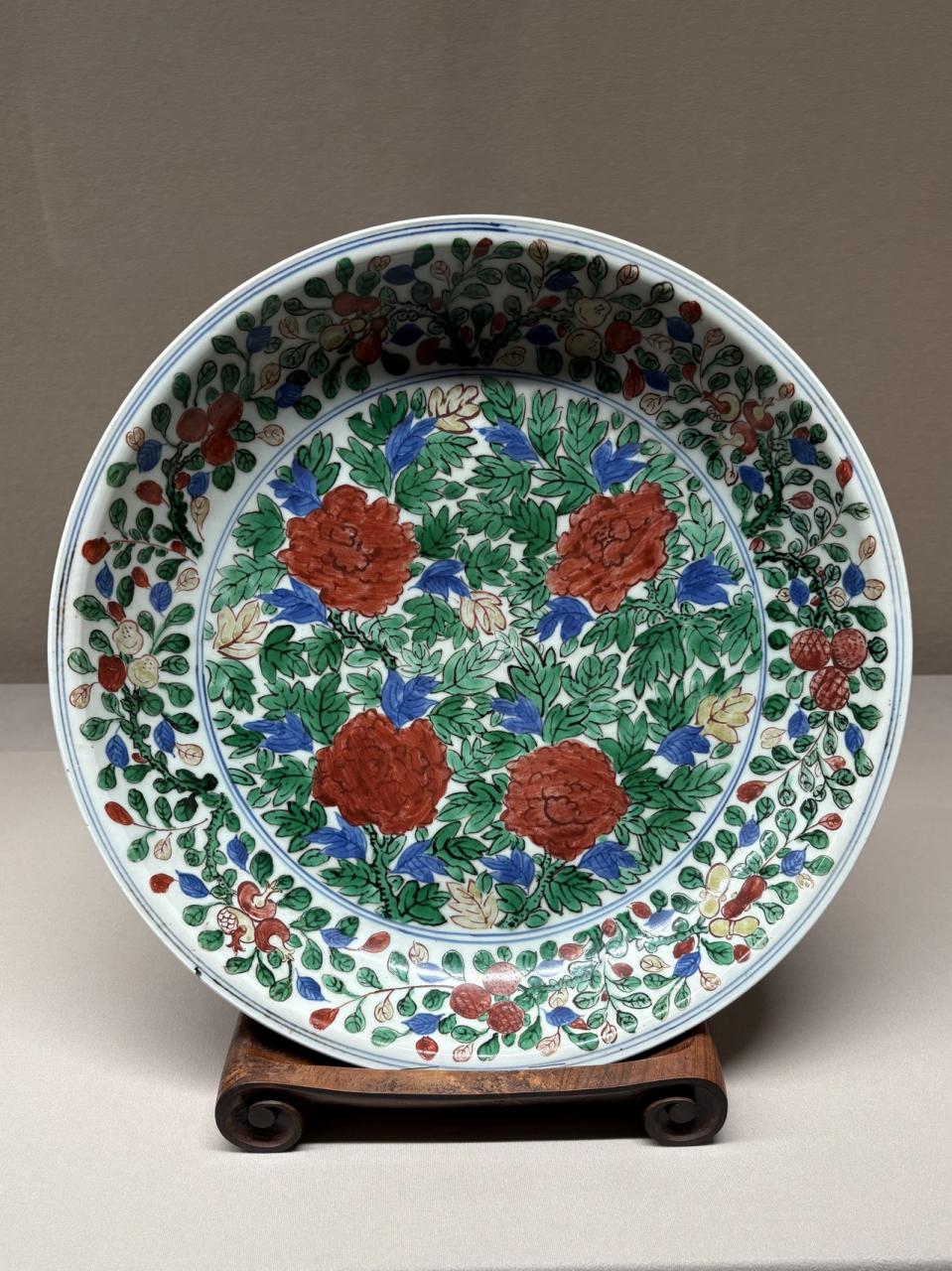
五彩 牡丹文 盤(「大明萬暦年製」銘)
明時代・万暦(1573-1620)/景徳窯/住友グループ寄贈(安宅コレクション)
青花磁器を焼成後に、赤・緑・黄などの上絵具で絵付けをして再度焼成する五彩の技法が盛行した万暦官窯の優品である。
内面中央には緑や青などの葉で埋め尽くされた中に鮮やかな紅色の牡丹の花四輪が花開く。周囲には希や弱校などの瑞花も見られる。色の配置が絶妙である。
DISH
Porcelain with peony design in underglaze blue and overglaze enamels
Ming dynasty, Wanli mark and period (1573-1620) / Jingdezhen ware / Gift of SUMITOMO Group (The ATAKA Collection)
This outstanding work was fired at the Wanli imperial kiln and decorated using the "wucai" technique. Overglaze enamel decoration was applied onto the blue-and-white porcelain body in red, green, and yellow colors. The charm of this dish lies in the exquisite arrangement of colors. The center of the interior features four vivid crimson peony blossoms on a background intricately covered with foliage painted in blue and green. Pomegranates and lychee branches decorate the rim.
h: 7.1cm d: 38.5cm
登録番号 00678 -
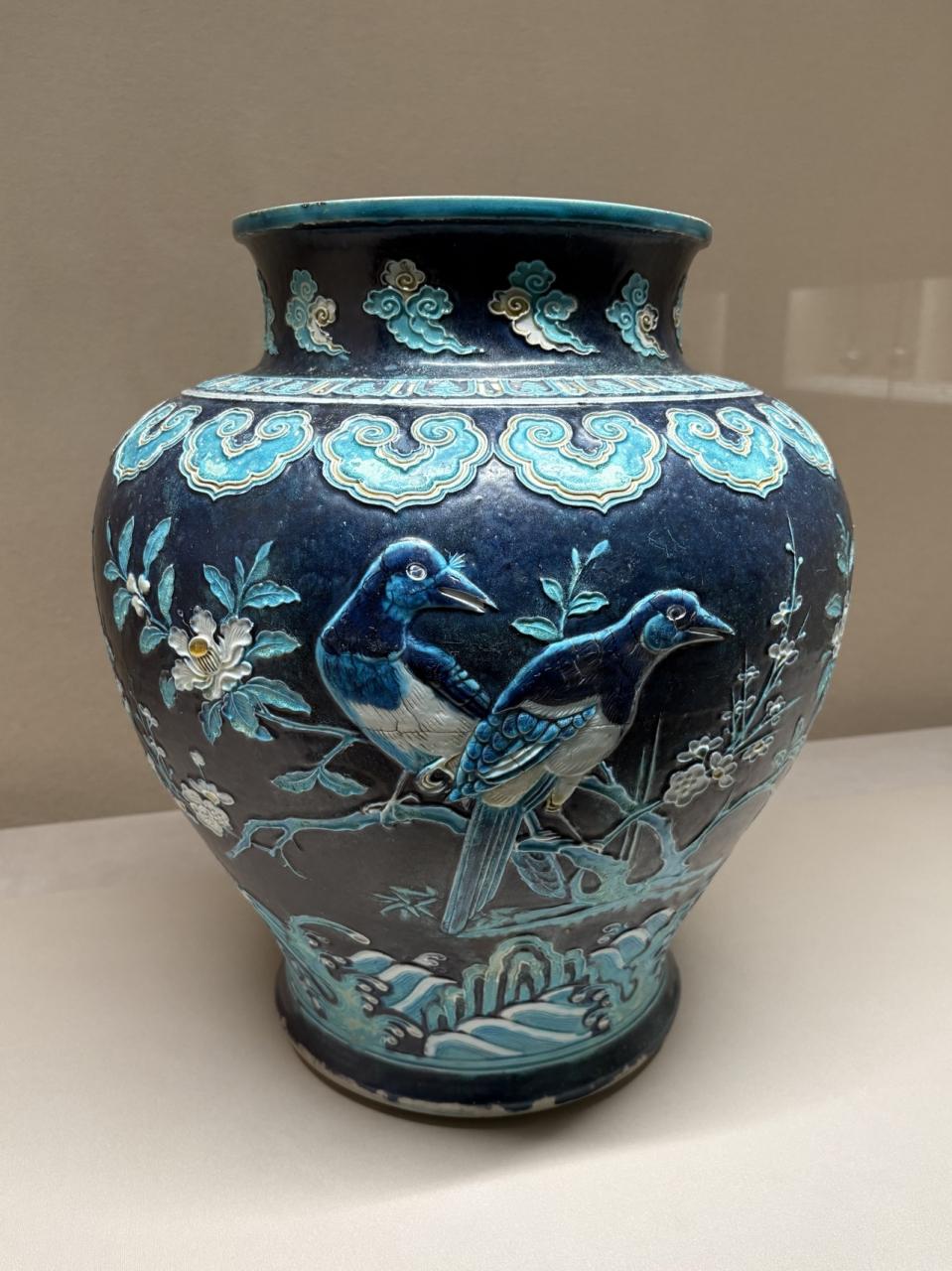
重要文化財
法花 花鳥文壷
明時代・15世紀/住友グループ寄贈(安宅コレクション)
法花とは凸起状に盛り上げた輪郭線をつくり、藍・白・黄・緑・紫などの低火度を塗り分け文様を立体的に表す技法である。
胴の両面には花材に止まるつがいのが浮き彫り風に表されている。華やかな合いと優美な文様が印象的な、法花として最大級の作例である。
Important Cultural Property
JAR Porcelain with flower-and-bird design in cloisonné style (fahua ware)
Ming dynasty, 15th century / Gift of SUMITOMO Group (The ATAKA Collection)
Fahua is a decorative technique in which lead glazes of various colors are filled into the motifs with raised outlines, producing a three-dimensional effect.
This jar is one of the largest among fahua wares. On both sides of the body, elegant decorations of a pair of birds perching on a flowering tree are executed in a relief-like manner. The exquisite combination of graceful motifs and vivid tones enhances the gorgeousness and elegance of this jar.
h: 44.5cm d: 39.4cm
登録番号 00561 -
(展示10に続く・・・)


利用規約に違反している投稿は、報告する事ができます。
旅行記グループ
2025年6月 奥方と行くんだけど、ほぼ野放しの京都・大阪・奈良
-
前の旅行記

奥方と行ったけど、ほぼ野放しの京都・大阪・奈良【東洋陶磁美術館⑩】(展示8)"現代陶芸コレクション" &(特...
2025/06/27~
心斎橋・淀屋橋
-
次の旅行記

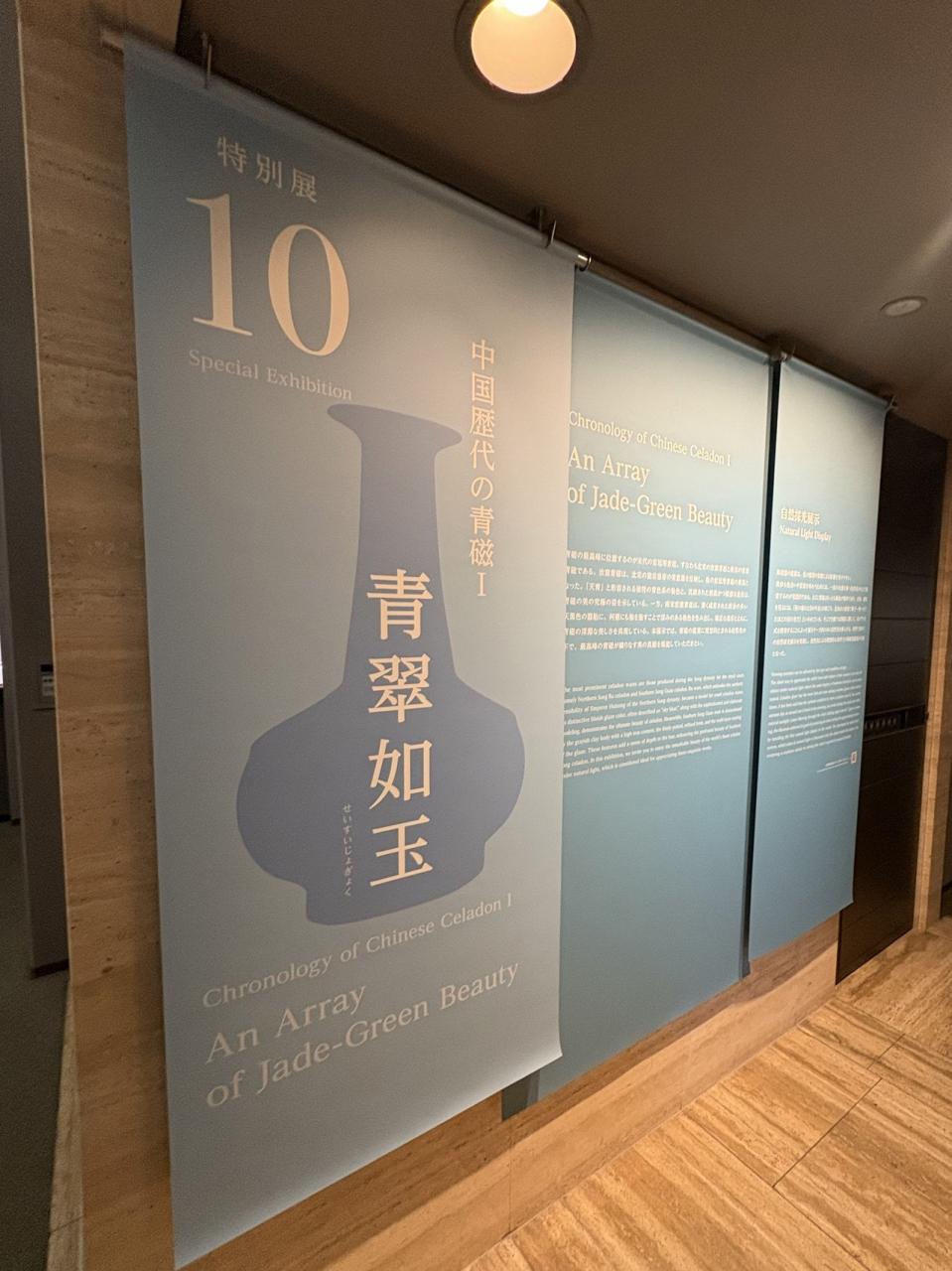
奥方と行ったけど、ほぼ野放しの京都・大阪・奈良【東洋陶磁美術館⑫】(展示10&11)特別展 "青翠如玉 中国...
2025/06/27~
心斎橋・淀屋橋
-

奥方と行くんだけど、ほぼ野放しの京都・大阪・奈良 〔現地速報①〕EXPO 2025 "万博会場に大曲の花火"...
2025/06/27~
大阪市
-

奥方と行ったけど、ほぼ野放しの京都・大阪・奈良【東洋陶磁美術館①】"妙に近代化した淀屋橋" から、"螺旋階段...
2025/06/27~
心斎橋・淀屋橋
-

奥方と行ったけど、ほぼ野放しの京都・大阪・奈良【東洋陶磁美術館②】(展示1) 特別展 "青磁至宝 中国・韓国...
2025/06/27~
心斎橋・淀屋橋
-

奥方と行ったけど、ほぼ野放しの京都・大阪・奈良【東洋陶磁美術館③】(特別展示1) "国宝 油滴天目茶碗"
2025/06/27~
心斎橋・淀屋橋
-

奥方と行ったけど、ほぼ野放しの京都・大阪・奈良【東洋陶磁美術館④】(展示2) 特別展 "翡色玲瓏 高麗青磁の...
2025/06/27~
心斎橋・淀屋橋
-

奥方と行ったけど、ほぼ野放しの京都・大阪・奈良【東洋陶磁美術館⑤】(展示3) 特別展 "翡色玲瓏 高麗青磁の...
2025/06/27~
心斎橋・淀屋橋
-

奥方と行ったけど、ほぼ野放しの京都・大阪・奈良【東洋陶磁美術館⑥】(展示4)コレクション展 "清廉尚白 安宅...
2025/06/27~
心斎橋・淀屋橋
-

奥方と行ったけど、ほぼ野放しの京都・大阪・奈良【東洋陶磁美術館⑦】(展示5)コレクション展 "純真之美 李秉...
2025/06/27~
心斎橋・淀屋橋
-

奥方と行ったけど、ほぼ野放しの京都・大阪・奈良【東洋陶磁美術館⑧】(展示6)コレクション展 "陶魂無比 日本...
2025/06/27~
心斎橋・淀屋橋
-

奥方と行ったけど、ほぼ野放しの京都・大阪・奈良【東洋陶磁美術館⑨】(展示7)特別展 "青磁脈脈 日本の青磁"
2025/06/27~
心斎橋・淀屋橋
-

奥方と行ったけど、ほぼ野放しの京都・大阪・奈良【東洋陶磁美術館⑩】(展示8)"現代陶芸コレクション" &(特...
2025/06/27~
心斎橋・淀屋橋
-

奥方と行ったけど、ほぼ野放しの京都・大阪・奈良【東洋陶磁美術館⑪】(展示9)コレクション展 "中華瑰宝 安宅...
2025/06/27~
心斎橋・淀屋橋
-

奥方と行ったけど、ほぼ野放しの京都・大阪・奈良【東洋陶磁美術館⑫】(展示10&11)特別展 "青翠如玉 中国...
2025/06/27~
心斎橋・淀屋橋
-

奥方と行ったけど、ほぼ野放しの京都・大阪・奈良【東洋陶磁美術館⑬完】(展示12)沖正一郎コレクション鼻煙壺&...
2025/06/27~
心斎橋・淀屋橋
-

奥方と行ったけど、ほぼ野放しの京都・大阪・奈良【万博①】大阪メトロで、"北浜" から "夢洲" へ。"ミャク...
2025/06/28~
大阪市
-

奥方と行ったけど、ほぼ野放しの京都・大阪・奈良【万博②】入場まで45分。"ミャクミャクのこれは、しっぽではな...
2025/06/28~
大阪ベイエリア
-

奥方と行ったけど、ほぼ野放しの京都・大阪・奈良【万博③】"これまで唯一の20万人超えの入場者" の間を、ハン...
2025/06/28~
大阪ベイエリア
-

奥方と行ったけど、ほぼ野放しの京都・大阪・奈良【万博④】コロナで行けずの "ハンガリー" にリベンジも、"豪...
2025/06/28~
ハンガリー
-

奥方と行ったけど、ほぼ野放しの京都・大阪・奈良【万博⑤】"大屋根リング"は、花火待ちで大混雑。"モナコ公国館...
2025/06/28~
大阪ベイエリア
-

奥方と行ったけど、ほぼ野放しの京都・大阪・奈良【万博⑥】"コモンズ-A館" で、"イエメンおじさんたちの商売...
2025/06/28~
大阪ベイエリア
-

奥方と行ったけど、ほぼ野放しの京都・大阪・奈良【万博⑦/完】"東ゲート" から退場。直後に打ち上がった "大...
2025/06/28~
大阪市
-

奥方と行ったけど、ほぼ野放しの京都・大阪・奈良【心斎橋を夜の街歩き①】"玉屋町筋" はグルメなお店多数、路上...
2025/06/28~
心斎橋・淀屋橋
-

奥方と行ったけど、ほぼ野放しの京都・大阪・奈良【心斎橋を夜の街歩き②】串かつ だるまの "二度づけ禁止おじさ...
2025/06/28~
心斎橋・淀屋橋
-

奥方と行ったけど、ほぼ野放しの京都・大阪・奈良【心斎橋を夜の街歩き③】ボート行き交う "道頓堀" は、バンコ...
2025/06/28~
心斎橋・淀屋橋
-

奥方と行くんだけど、ほぼ野放しの京都・大阪・奈良 〔現地速報②〕"奈良県立万葉文化館" で食べた "あら川の...
2025/06/29~
飛鳥
-

奥方と行ったけど、ほぼ野放しの京都・大阪・奈良【大阪ミナミ朝の街歩き①】"千日前商店街"で見かけたポスター。...
2025/06/29~
心斎橋・淀屋橋
-

奥方と行ったけど、ほぼ野放しの京都・大阪・奈良【大阪ミナミ朝の街歩き②】これぞ、お笑いの殿堂 "なんばグラン...
2025/06/29~
ミナミ(難波・天王寺)
-

奥方と行ったけど、ほぼ野放しの京都・大阪・奈良【大阪ミナミ朝の街歩き③】大阪 日本橋(にっぽんばし)、この界...
2025/06/29~
ミナミ(難波・天王寺)
-

奥方と行ったけど、ほぼ野放しの京都・大阪・奈良【大阪ミナミ朝の街歩き④】"通天閣を真下から見る" と、こんな...
2025/06/29~
ミナミ(難波・天王寺)
-

奥方と行ったけど、ほぼ野放しの京都・大阪・奈良【大阪ミナミ朝の街歩き⑤/完】"あべのハルカス19階" から、...
2025/06/29~
ミナミ(難波・天王寺)
旅行記グループをもっと見る
コメントを投稿する前に
十分に確認の上、ご投稿ください。 コメントの内容は攻撃的ではなく、相手の気持ちに寄り添ったものになっていますか?
サイト共通ガイドライン(利用上のお願い)報道機関・マスメディアの方へ 画像提供などに関するお問い合わせは、専用のお問い合わせフォームからお願いいたします。
心斎橋・淀屋橋(大阪) の旅行記





フォートラベル公式LINE@
おすすめの旅行記や旬な旅行情報、お得なキャンペーン情報をお届けします!
QRコードが読み取れない場合はID「@4travel」で検索してください。
\その他の公式SNSはこちら/



旅行記グループ 2025年6月 奥方と行くんだけど、ほぼ野放しの京都・大阪・奈良
0
29