


2026/05/08 - 2026/05/09
-位(同エリア932件中)

旅熊 Kokazさん
- 旅熊 KokazさんTOP
- 旅行記1926冊
- クチコミ854件
- Q&A回答102件
- 1,707,381アクセス
- フォロワー752人
この旅行記のスケジュール
2026/05/09

この旅行記スケジュールを元に
『MOMATコレクションにようこそ!
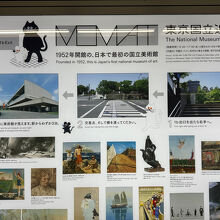
当館コレクション展の特徴をご紹介します。まずはその規模。1952年の開館以来の活動を通じて収集してきたおよそ14,000点の所蔵作品から、会期ごとに約200点を展示する国内最大級のコレクション展です。そして、それぞれ小さなテーマが立てられた全12室のつながりによって、19世紀末から今日に至る日本の近現代美術の流れをたどることができる国内随一の展示です。
今期の見所紹介です。4階2室は、当館と金沢の国立工芸館とのコラボレーション企画。鈴木長吉《十二の鷹》(重要文化財)や、新収蔵の金森宗七《花鳥文様象耳付大花瓶》など名品が目白押しです。
また毎年恒例の「美術館の春まつり」にちなみ、川合玉堂《行く春》、跡見玉枝《桜花図巻》など人気作品を惜しげもなくお見せします(3月3日―4月12日)。「春まつり」後(4月14日―5月10日)も豪華です。1階で開催の「下村観山展」(3月17日から)にちなみ、横山大観、菱田春草など観山をとりまく芸術家による素晴らしい作品群を集めました。
今期も盛りだくさんのMOMATコレクション、どうぞお楽しみください。』とのこと・・・
https://www.momat.go.jp/exhibitions/r7-3
日付はダミーで、5月9日(土)訪問
-

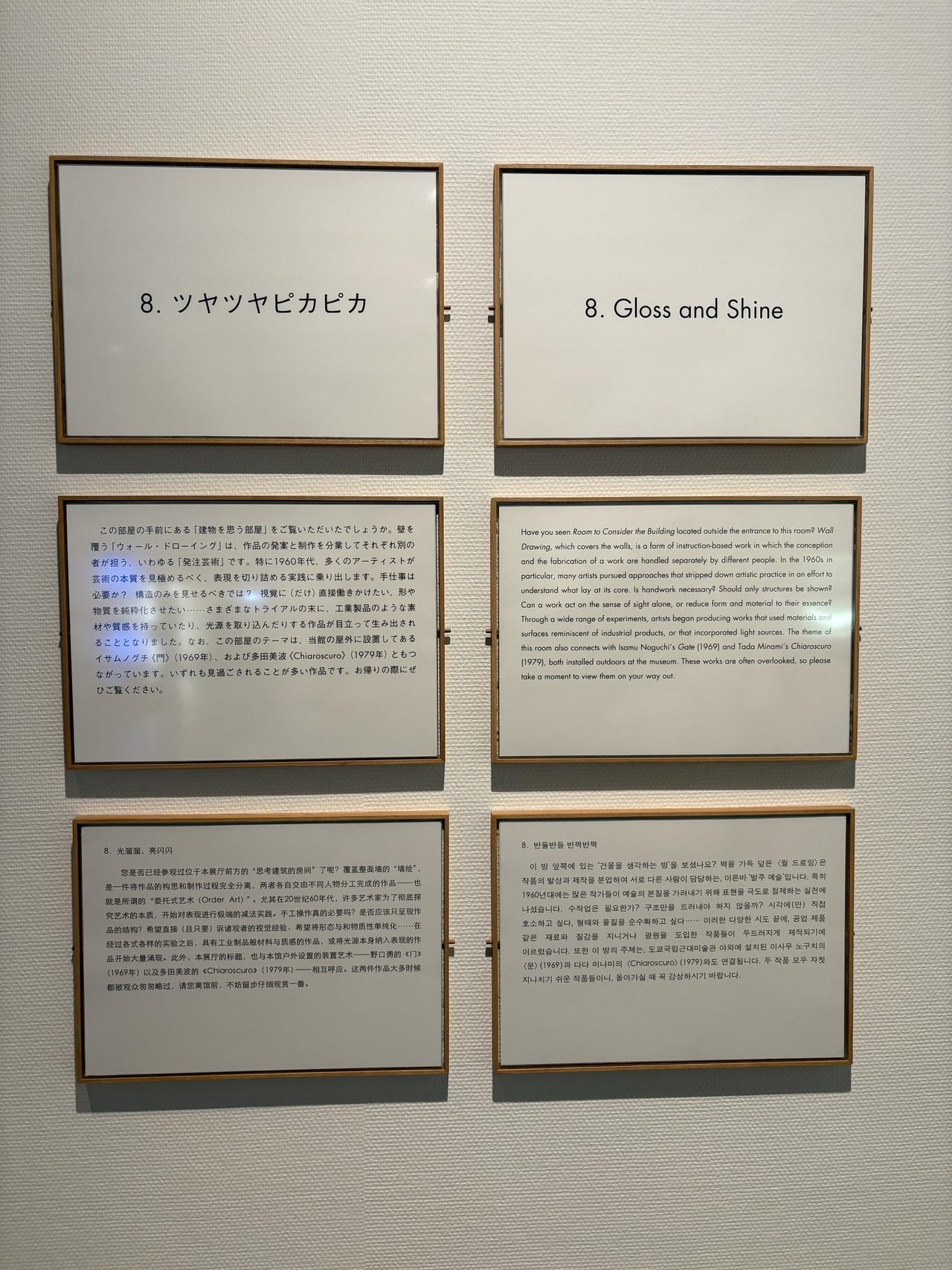
8. ツヤツヤピカピカ
この部屋の手前にある「建物を思う部屋」をご覧いただいたでしょうか。壁を覆う「ウォール・ドローイング」は、作品の発案と制作を分業してそれぞれ別の者が担う、いわゆる「発注芸術」です。特に1960年代、多くのアーティストが芸術の本質を見極めるべく、表現を切り詰める実践に乗り出します。手仕事は必要か? 構造のみを見せるべきでは? 視覚に(だけ)直接働きかけたい、形や物質を純粋化させたい……さまざまなトライアルの末に、工業製品のような素材や質感を持っていたり、光源を取り込んだりする作品が目立って生み出されることとなりました。なお、この部屋のテーマは、当館の屋外に設置してあるイサムノグチ《門》(1969年)、および多田美波《Chiaroscuro》(1979年)ともつながっています。いずれも見過ごされることが多い作品です。お帰りの際にぜひご覧ください。
8. Gloss and Shine
Have you seen Room to Consider the Building located outside the entrance to this room? Wall Drawing, which covers the walls, is a form of instruction-based work in which the conception and the fabrication of a work are handled separately by different people. In the 1960s in particular, many artists pursued approaches that stripped down artistic practice in an effort to understand what lay at its core. Is handwork necessary? Should only structures be shown?
Can a work act on the sense of sight alone, or reduce form and material to their essence?
Through a wide range of experiments, artists began producing works that used materials and surfaces reminiscent of industrial products, or that incorporated light sources. The theme of this room also connects with Isamu Noguchi's Gate 1969) and Tada Minami's Chiaroscuro (1979), both installed outdoors at the museum. These works are often overlooked, so please take a moment to view them on your way out.東京国立近代美術館 美術館・博物館
-
伊藤隆康
ITO, Takayasu
1934-1985
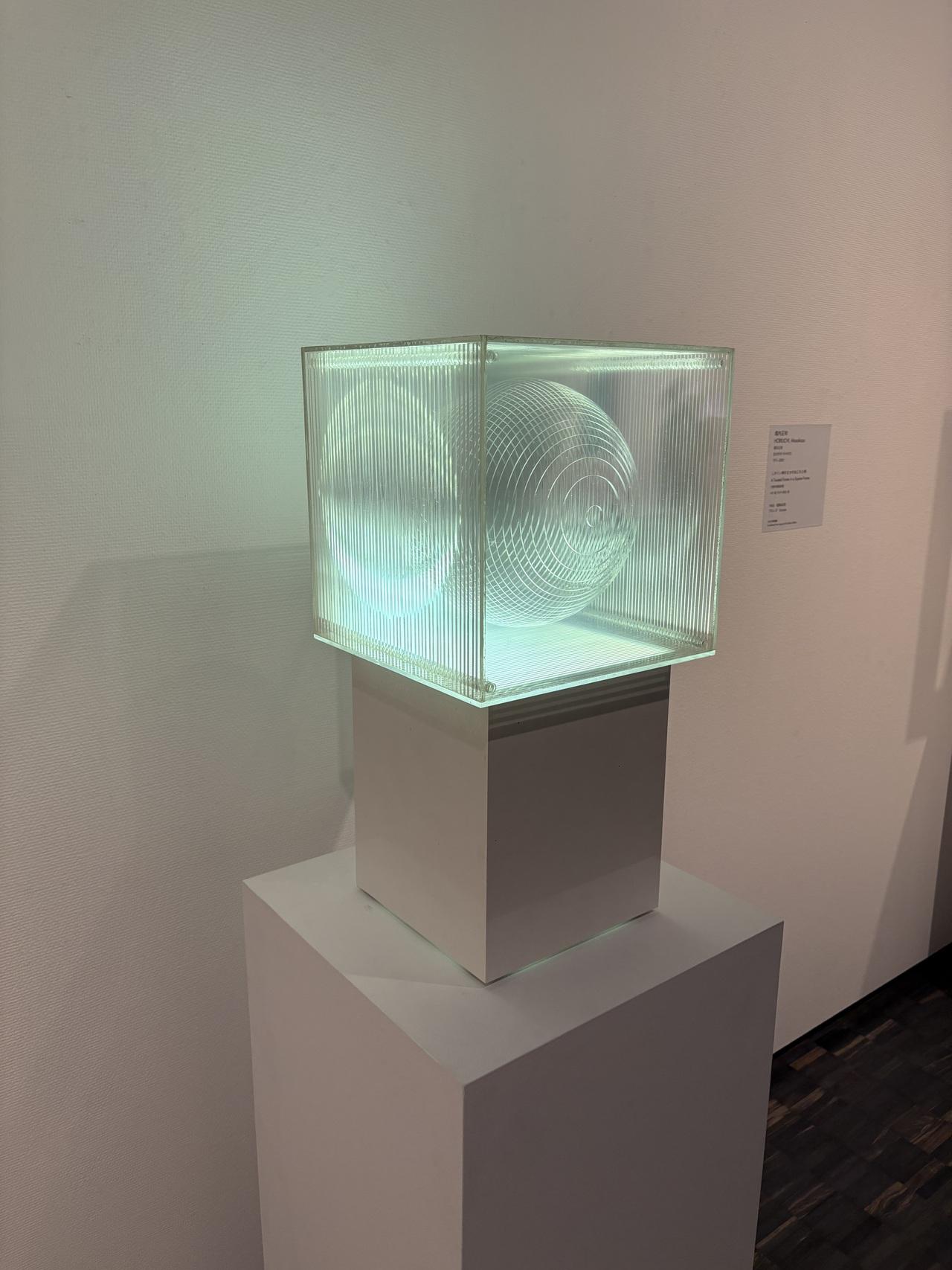
負の球
Negative Sphere
1968
昭和43年
プラスチック、蛍光灯 plastic and fluorescent lights
伊藤倫子氏寄贈
Gift of Ito Michiko -
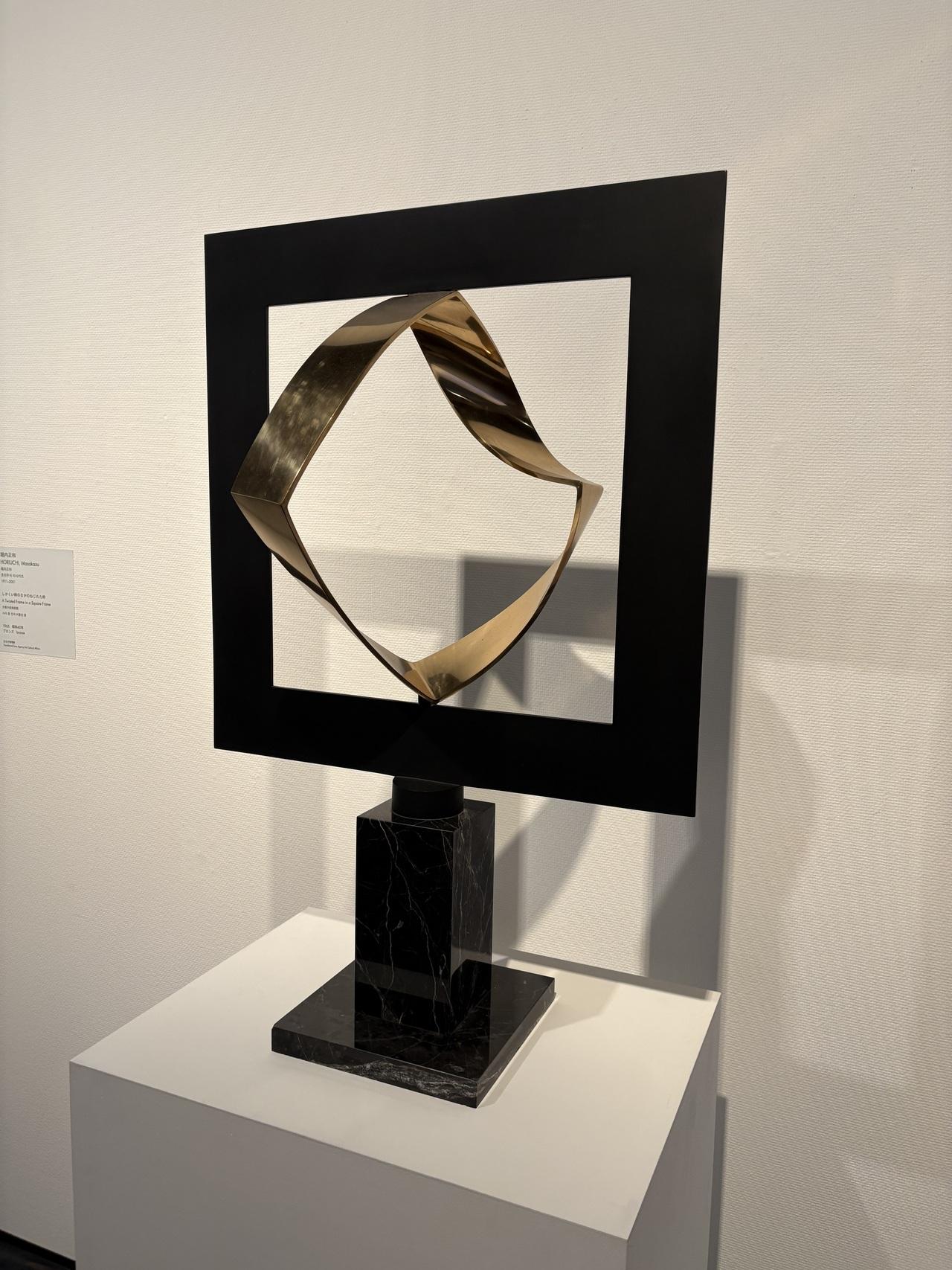
堀内正和
HORIUCHI, Masakazu
1911-2001
しかくい枠のなかのねじれた枠
A Twisted Frame in a Square Frame
1965 昭和40年
ブロンズ bronze
文化庁管理換
Transferred from Agency for Cultural Affairs -
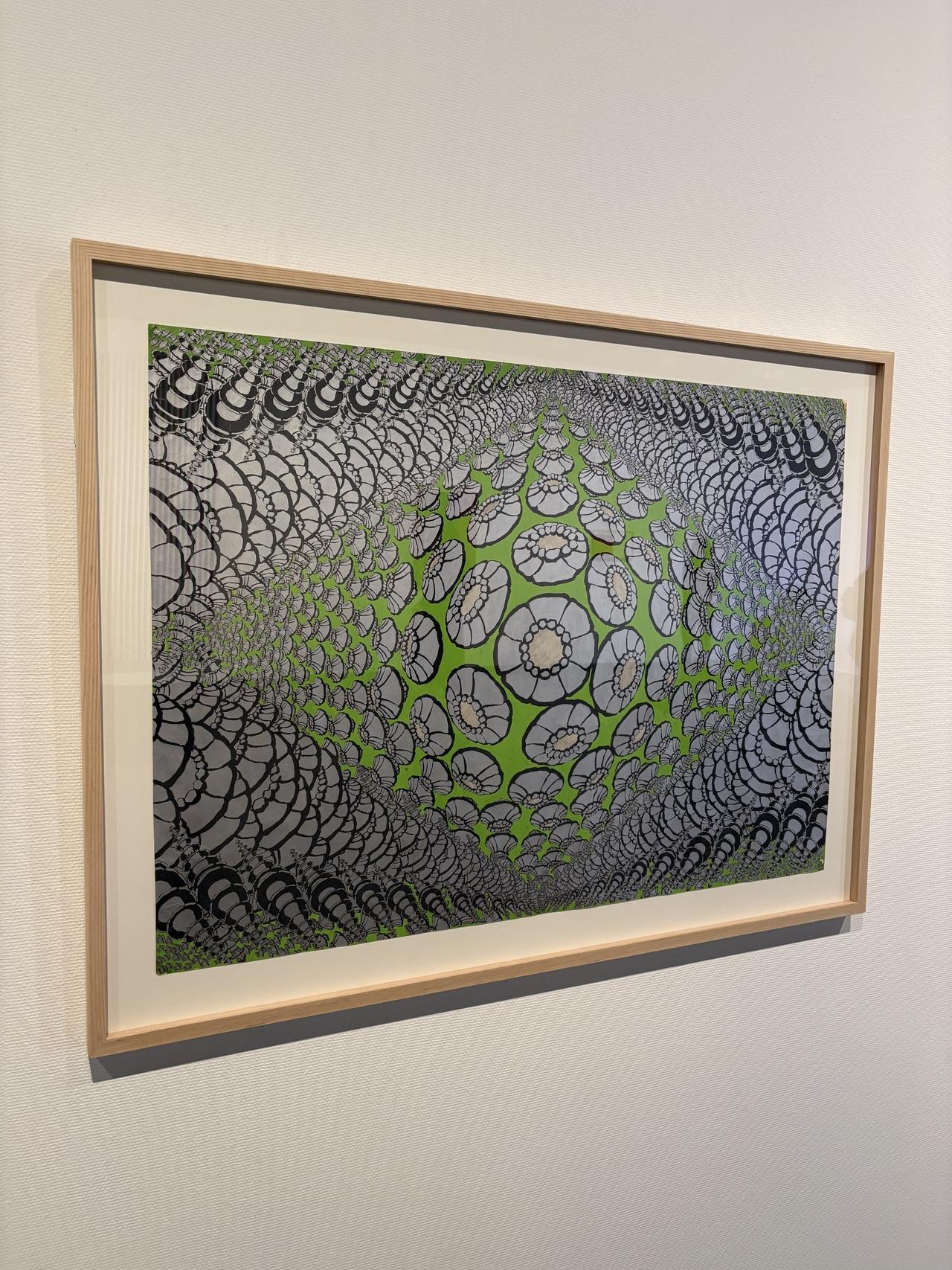
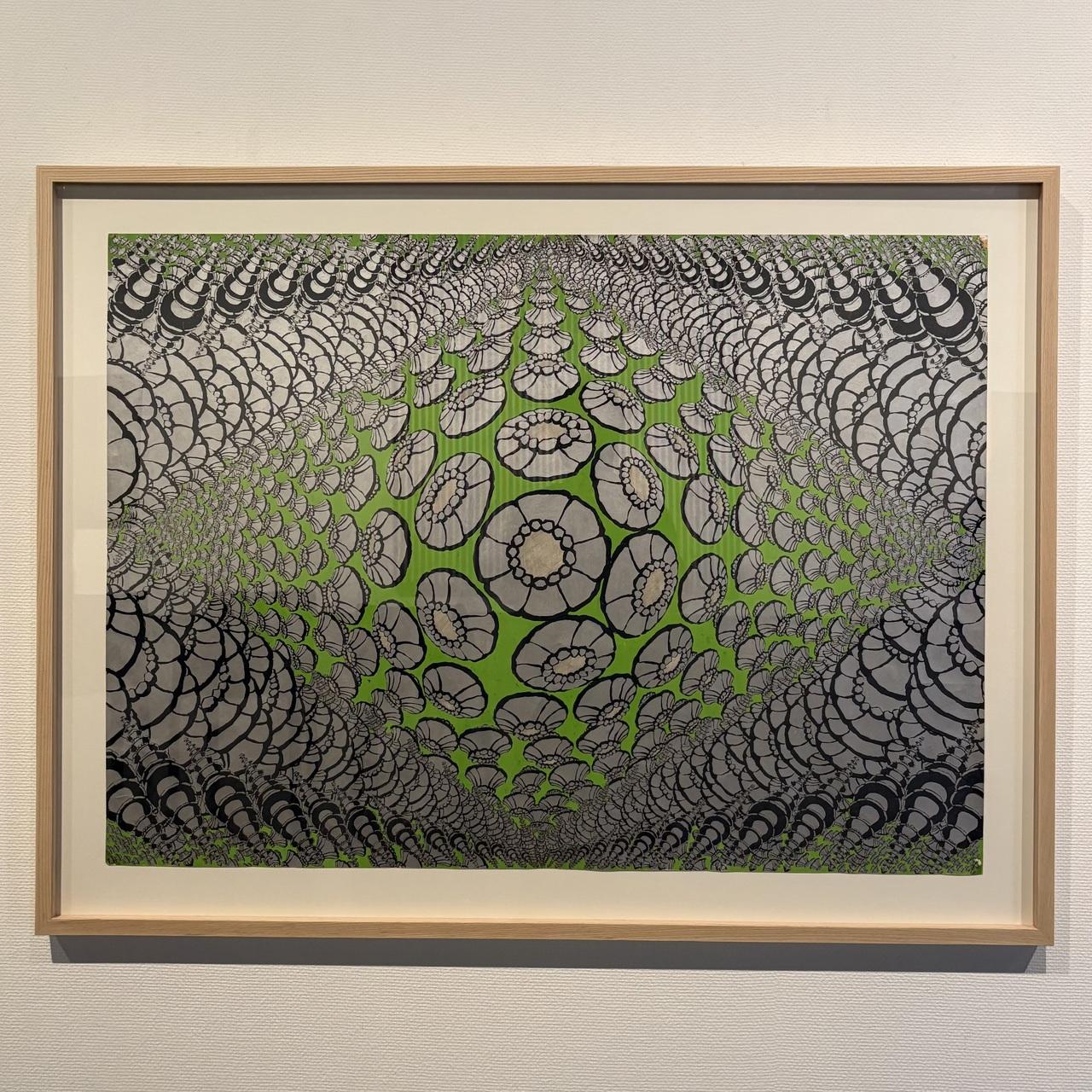
上村次敏
UEMURA, Tsugutoshi
1934-1998
作品
Work
1964
昭和39年
グアッシュ、鉛筆・紙 gouache and pencil on paper
作者寄贈
Gift of the artist -
-
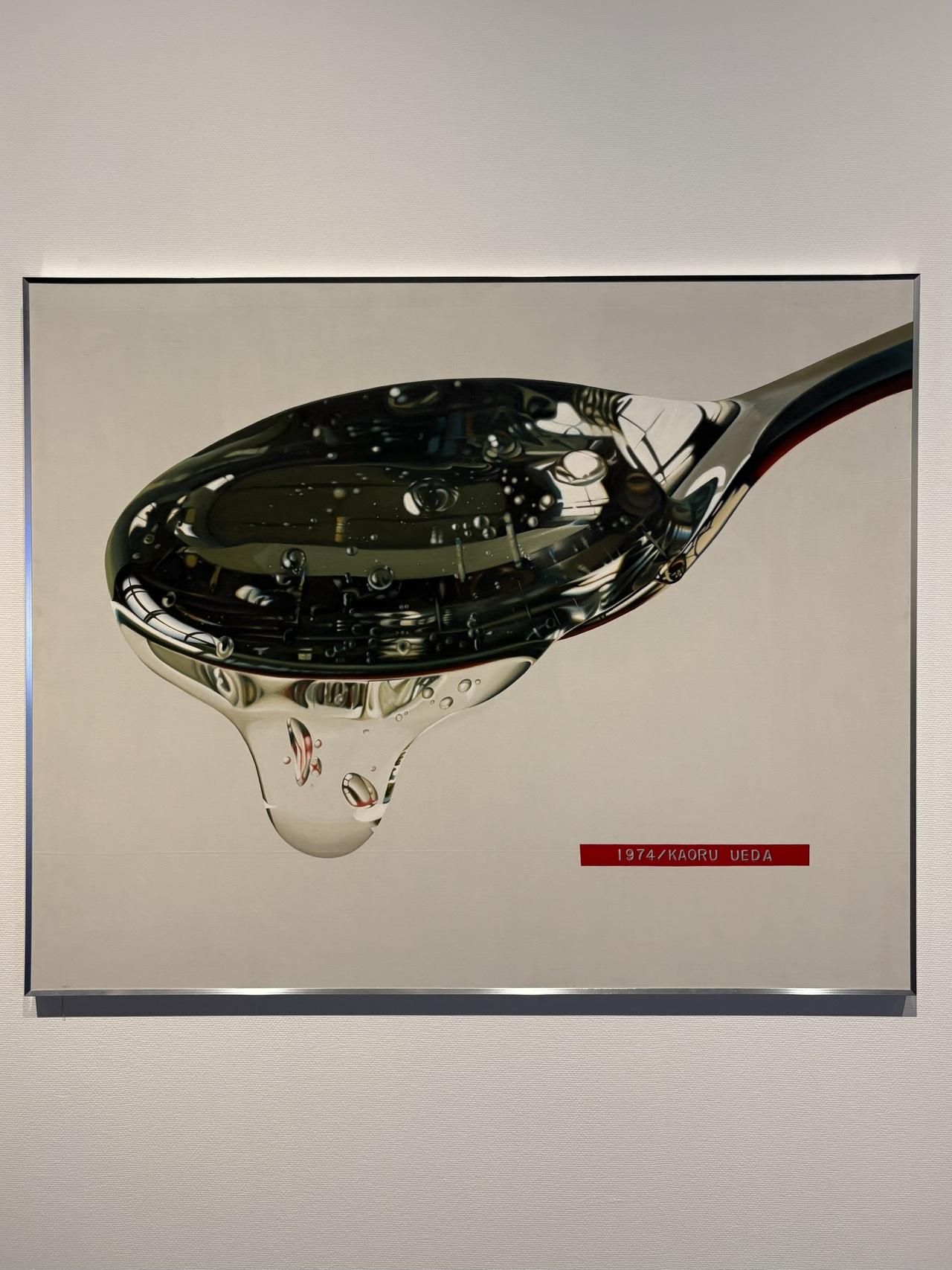
上田薫
VEDA, Kaoru
1928-2025
スプーンに水あめ
Spoon and Millet Jelly
1974 昭和49年
油彩・キャンバス oil on canvas
購入
Purchased
1960年代中頃から現われた、写実性を強調するスーパーリアリズム(ハイパーリアリズム、フォトリアリズムとも)。上田薫はこの動向の日本における代表的な実践者です。20世紀以来の美術が「写真みたい」な図を離れた歴史にあえて逆行して、没個性的なモチーフを選び、筆跡を見せず、金属や液体の反射で無機質さをさらに誇張しています。ところが、徹底した写実の追求はかえって視覚を裏切るようです。描きとられた細部は、ほんとうに無機質でしょうか?
Superrealism (also known as hyperrealism or photorealism), which emerged in the mid-1960s, emphasized an extreme degree of realism. Ueda Kaoru was a leading Japanese practitioner of this style. In deliberate contrast to the broader 20th-century rejection of painting that "looks like a photograph," he chose impersonal subjects, concealed any trace of brushwork, and intensified an inorganic feel through reflections on metal and liquid surfaces. However, this meticulous pursuit of realism actually seems to disrupt our perception. Are the details he depicts truly inorganic? -
-
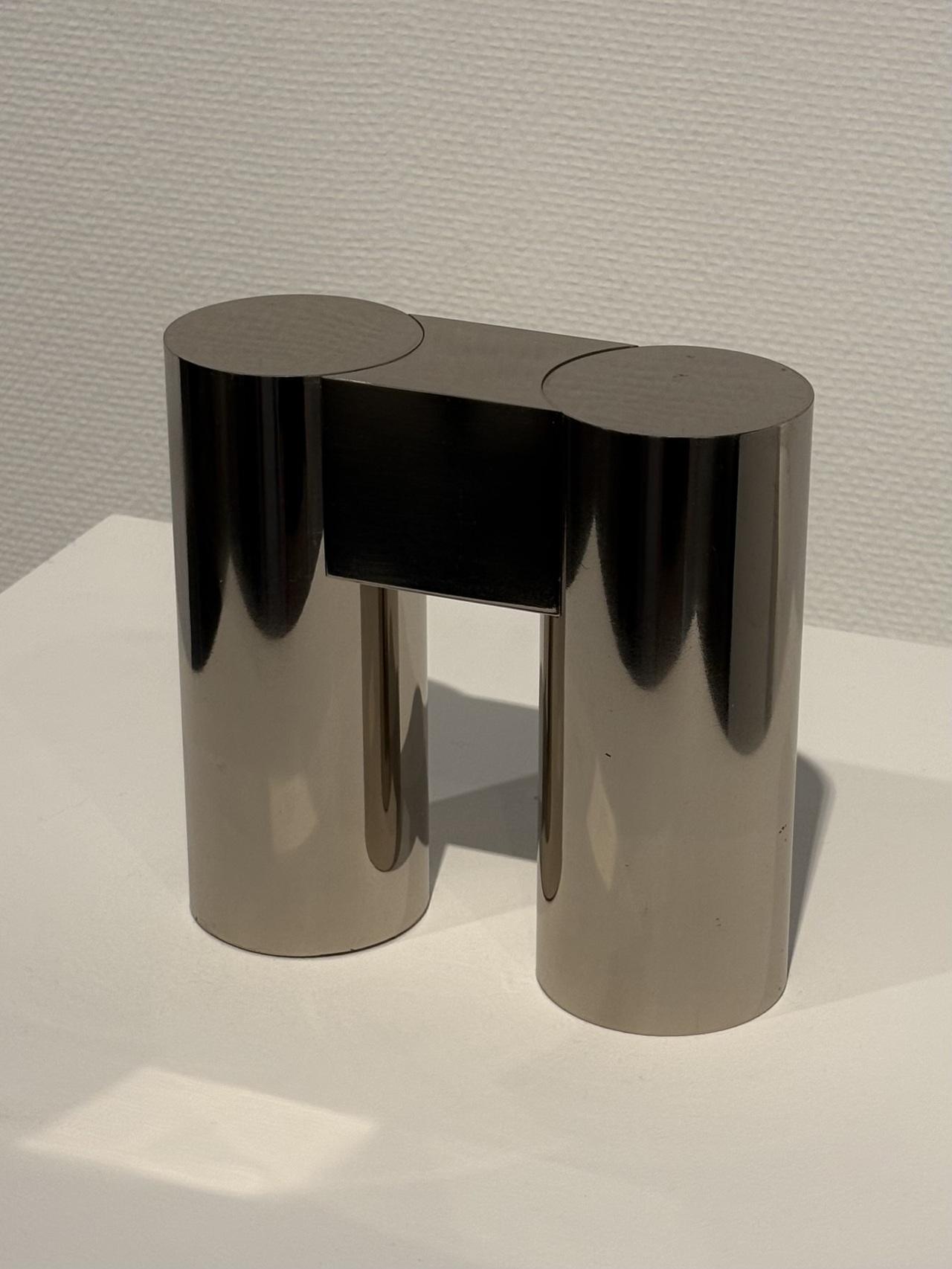
湯原和夫
YUHARA, Kazuo
1930-
無題 No.3-71
Untitled No.3-71
1971 昭和46年
真鍮、ニッケル・メッキ brass and nickel plate
作者寄贈
Gift of the artist
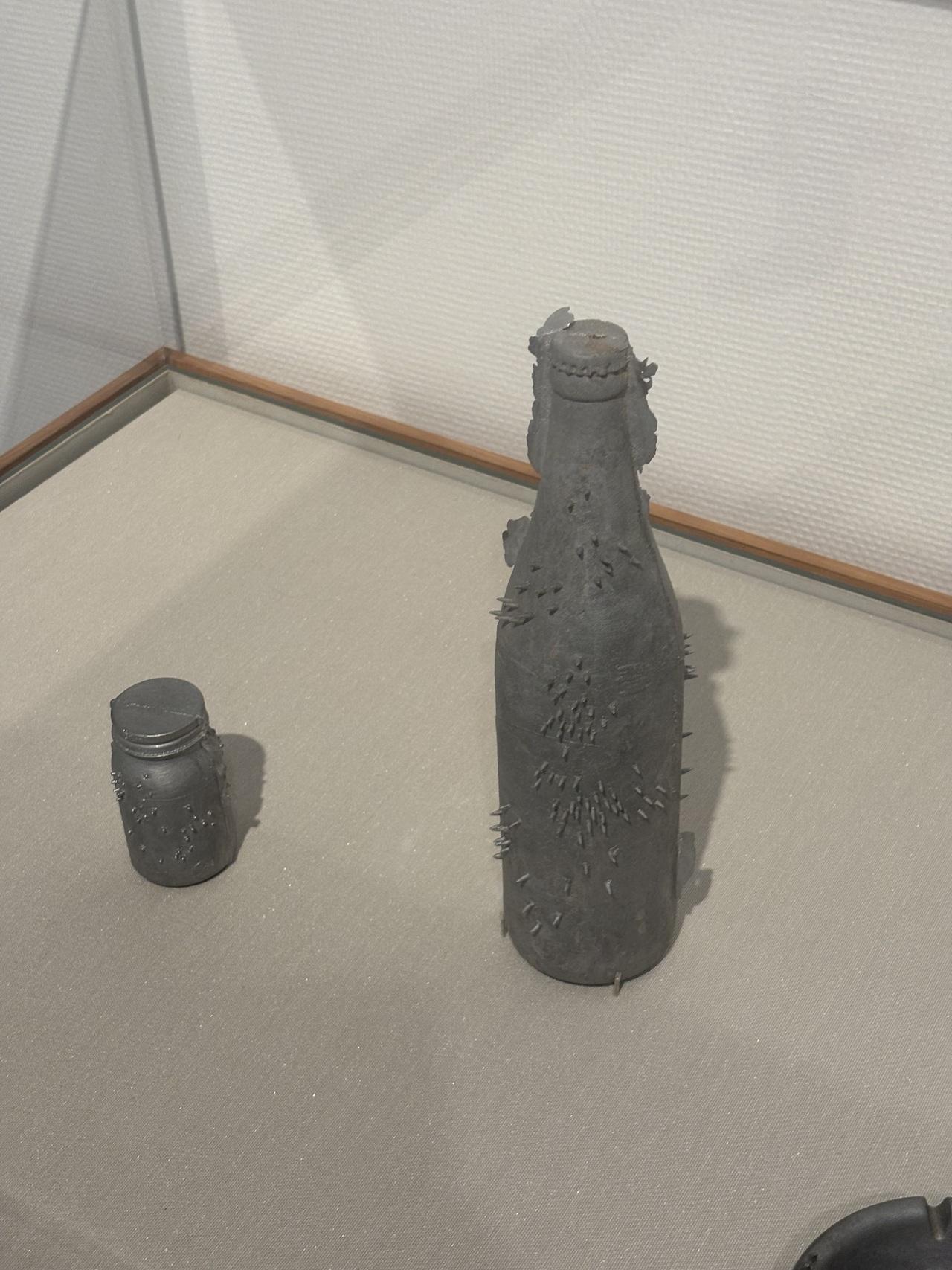
彫刻にも模型にも見える作品です。模型だとした場合、「元」の大きさはどれくらいでしょう。鳥居くらい?巨大なビル?そうやって想像しながらこの門をくぐることを思い描いてみてください。両側に自分の姿が見えませんか?
鏡面加工を施された門というのは、通常の結界以上の不思議な感覚を、そこを通る者に与えそうです。この頃の作者はパリ在住で、大阪万博に出品したりパリのソナベント画廊で個展をしたりと注目を集めていました。
This looks like it could be a either sculpture or an architectural model. If it is a model, how big is the actual structure? The size of a torii shrine gate? Or is it a massive building?
As you consider this, imagine going through the gate. Can you see yourself on both sides of it? The mirror-finished gate promises to give people who pass through it a mysterious sensation, beyond what a normal boundary-line would. When he produced it, Yuhara was living in Paris, and was earning acclaim with work exhibited at Expo 70 Osaka and in a solo exhibition at the Sonnabend Gallery in Paris. -
湯原和夫
YUHARA, Kazuo
1930-
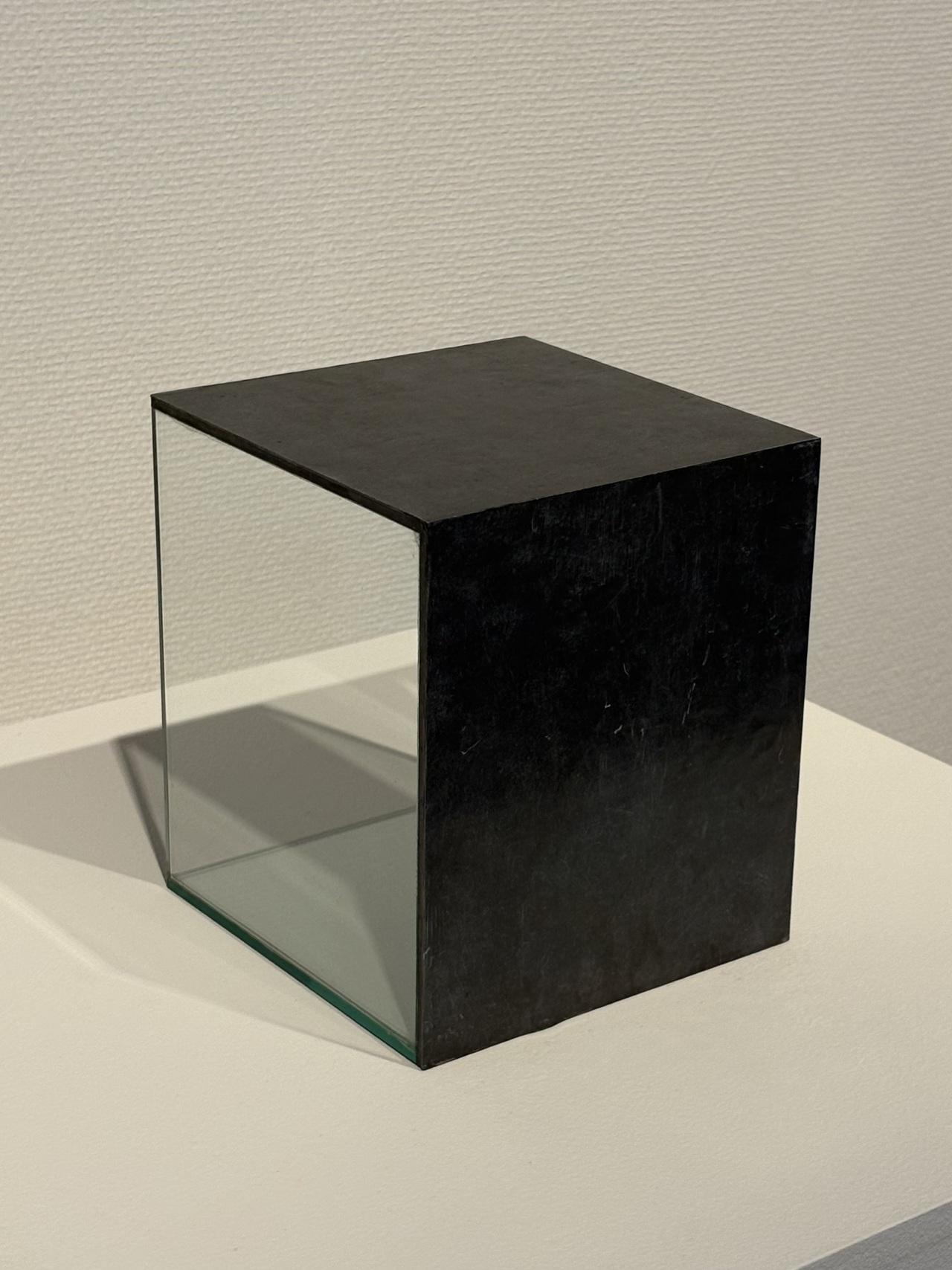
作品 No.3-77
Work No.3-77
1977 昭和52年
鉛、ガラス lead and glass
作者寄贈
Gift of the artist -
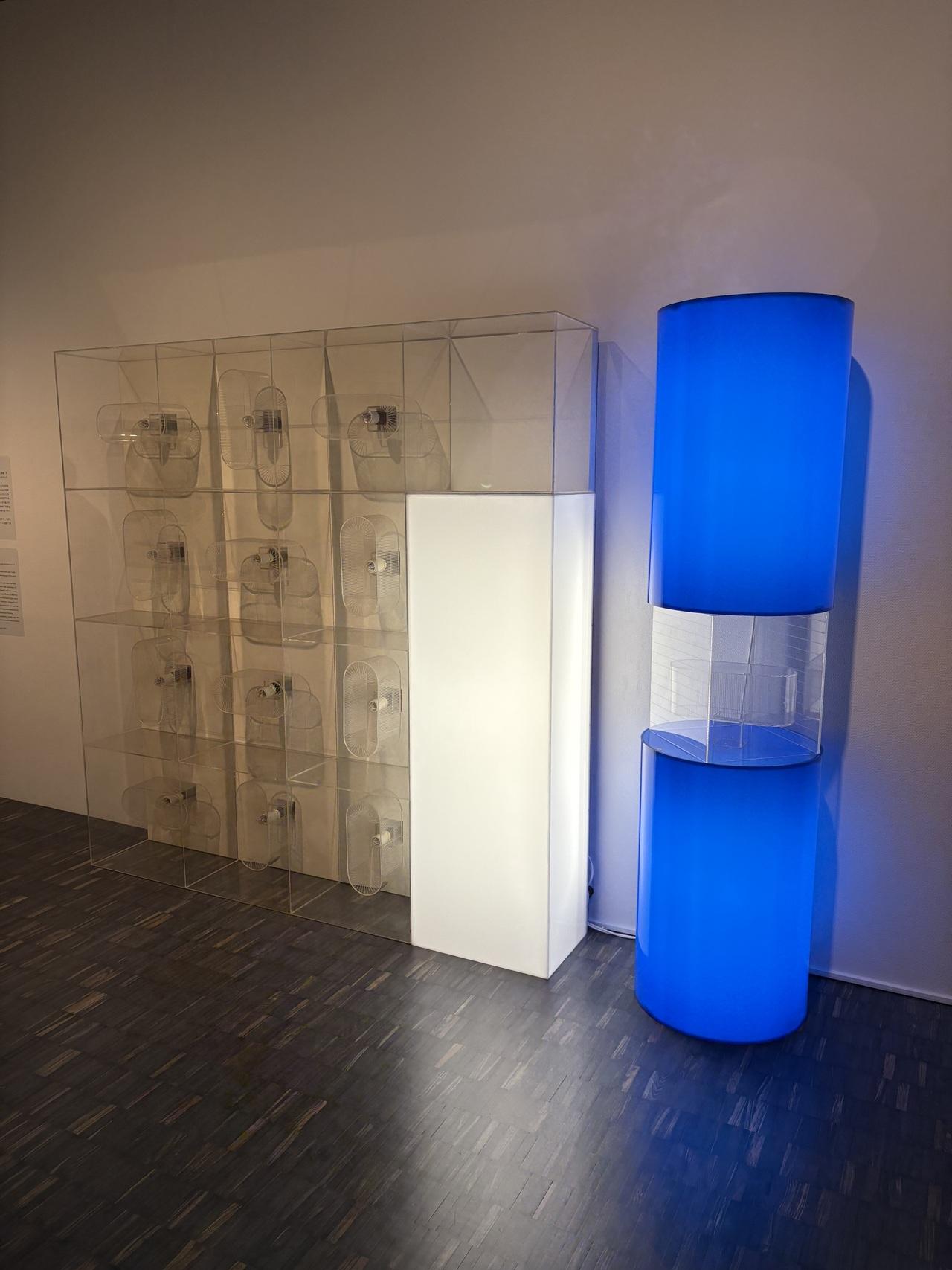
山口勝弘
YAMAGUCHI, Katsuhiro
1928-2018
ユニヴァース
Universe
1968 昭和43年
プラスチック、ライト、その他
plastic and light, etc.
購入
Purchased
この作品は、ふたつの大きな特徴を持っています。ひとつは発注芸術であること。つまり、設計図を作るのは作家ですが、事物自体は工業製品であるかのように他人の手に任せて作られています。もうひとつは、合成構脂や電灯といったテクノロジーを作品の構成要素とすることで、私たちの鑑賞体験が、それを見るというだけではなく、それの置かれる場(=環境)を体験することへ拡張されている点です。環境(エンバイラメント)は、1960年代半ばごろから大阪万博の開催された70年頃にかけて流行したキーコンセプトで、美術のみならず建築や音楽、デザインといったジャンルでも広く共有されました。
This work is distinctive for two reasons. First, it is an example of Order Art. In other words, though it was the artist who designed the work, the actual object was created by another person in the manner of an industrial product. Secondly, because it consists of technological elements (synthetic resin and electric light), the viewer's experience is not merely limited to looking at the work but extends to an experience of the place (environment) that it occupies. "Environment" was a key concept in art from the mid.'60s to about 1970, the year of the Osaka Expo, and extended into other genres such as architecture, music, and design. -
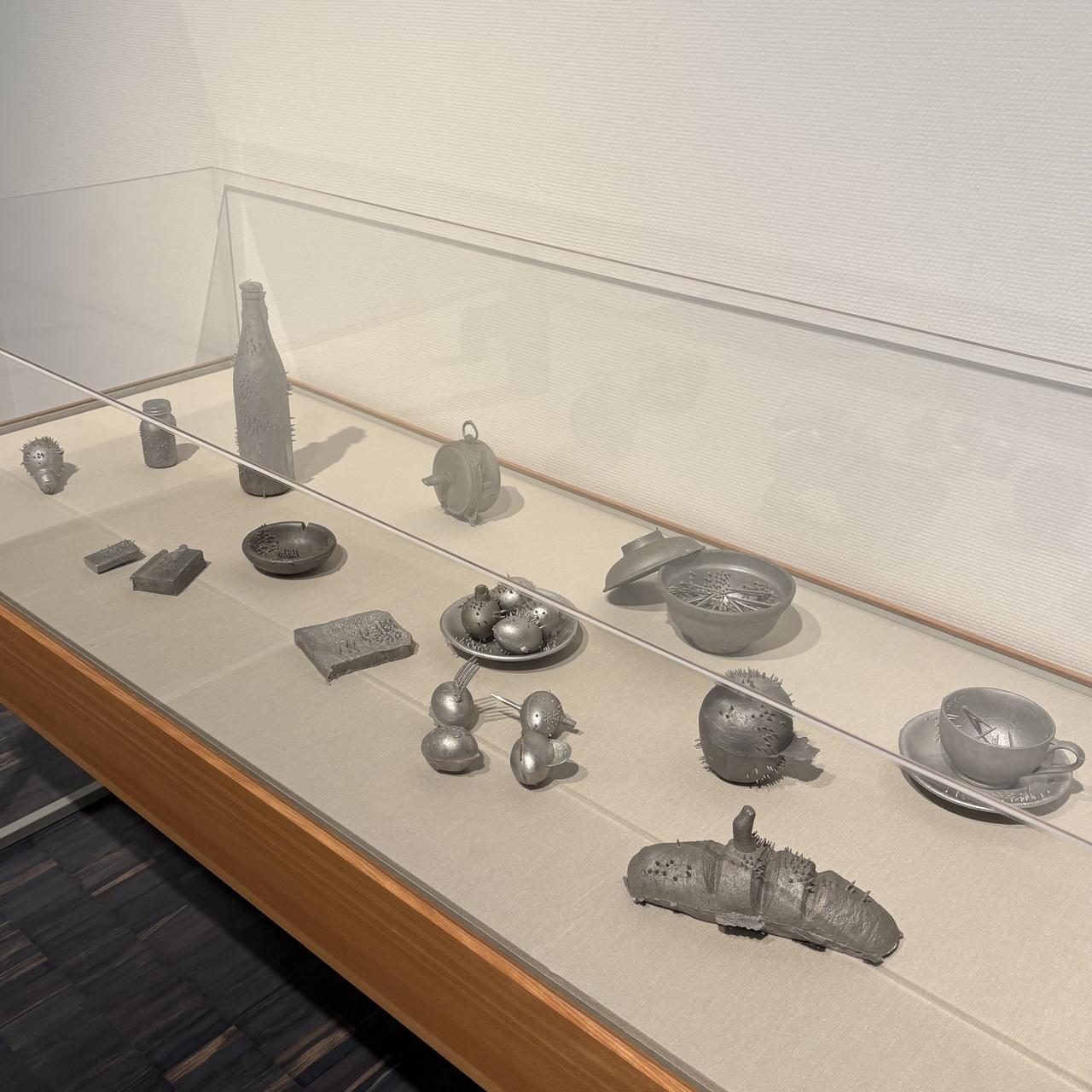
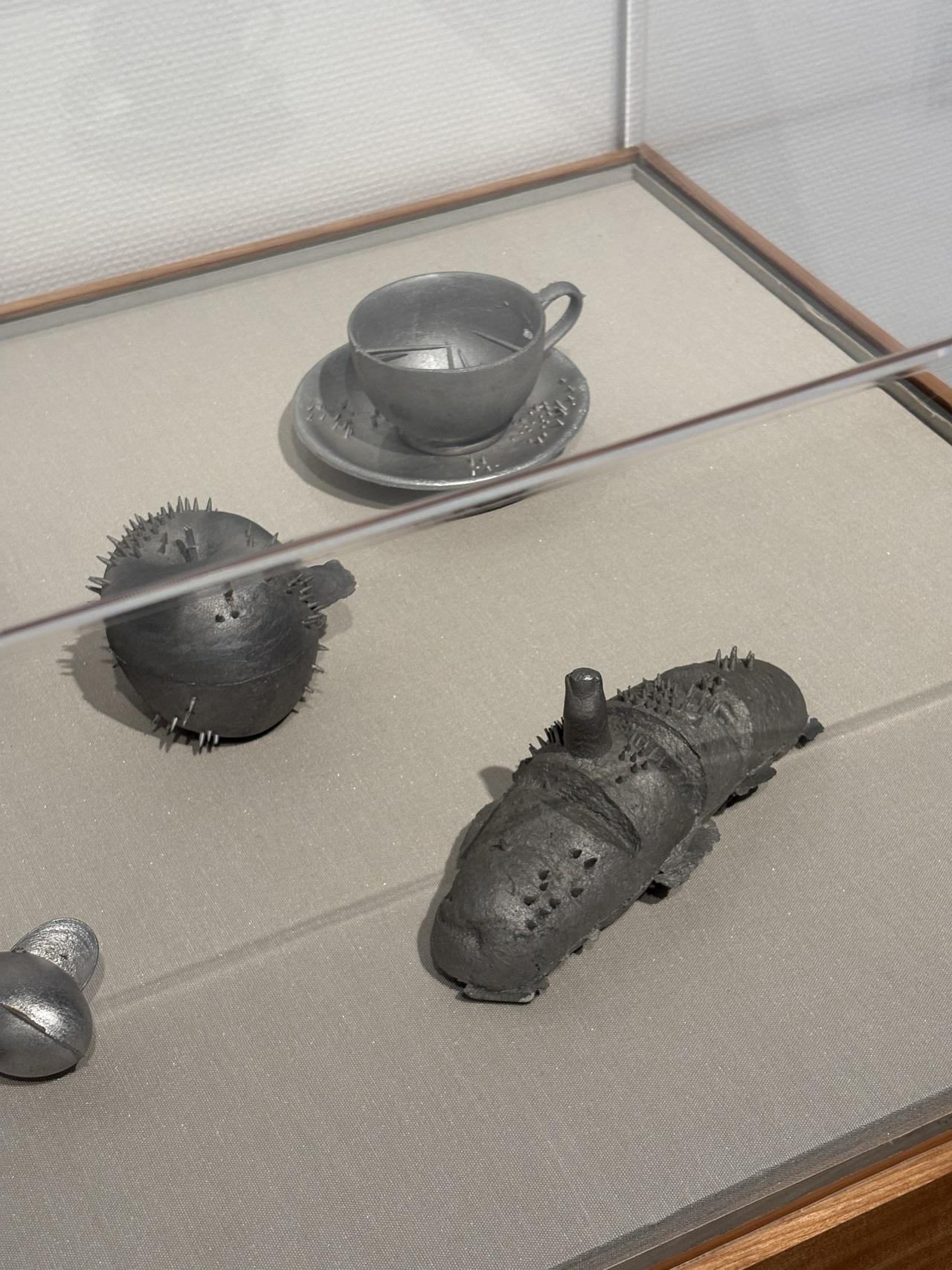
伊藤隆康
ITO, Takayasu
1934-1985
アルミオブジェ
Aluminum Objects
1965-85 昭和40-60年
アルミニウム aluminum
伊藤倫子氏寄贈
Gift of Ito Michiko -
-
-
桑山忠明
KUWAYAMA, Tadaaki
1932-2023
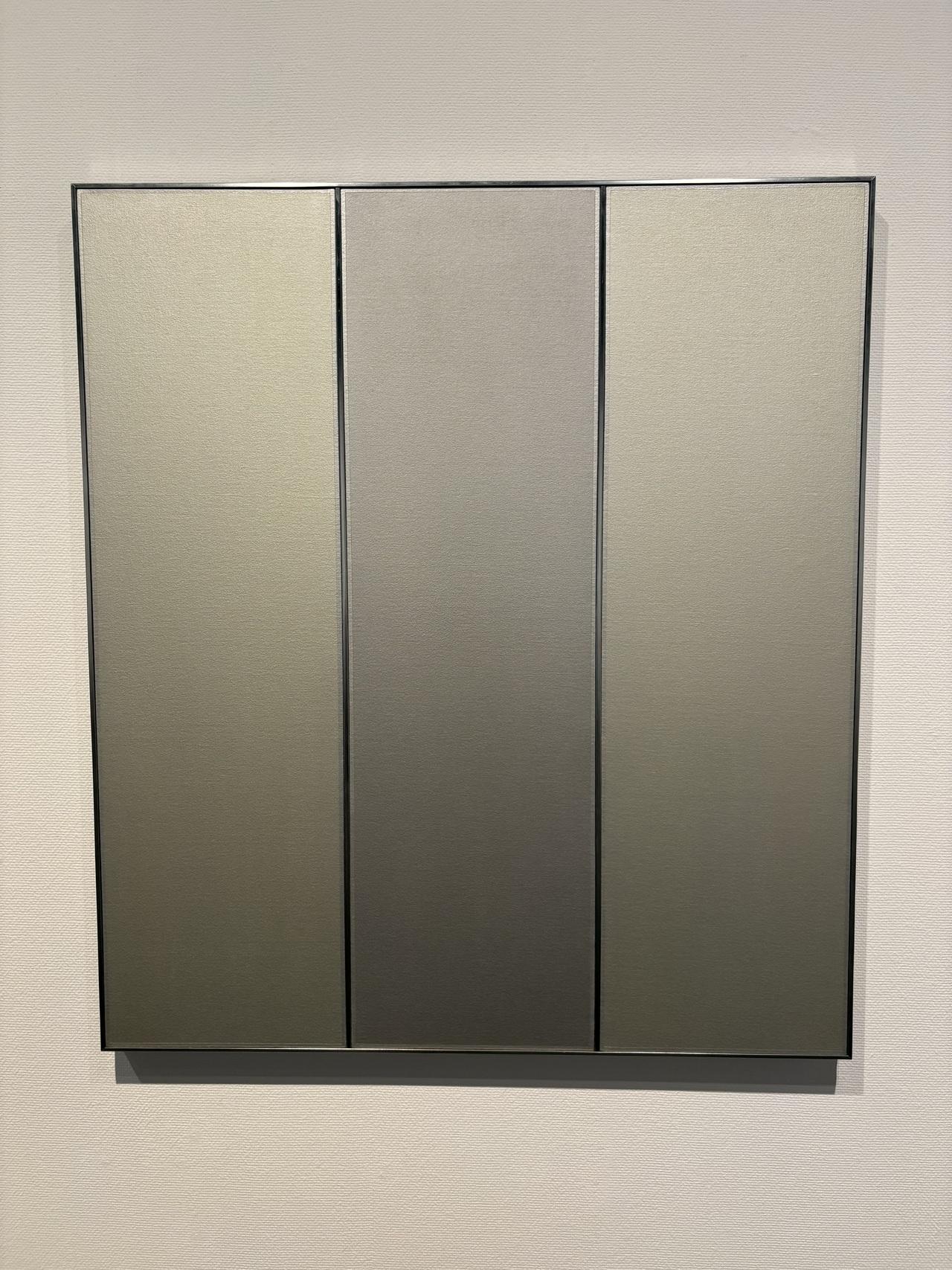
GOLD, SILVER AND GOLD
1975 昭和50年
アクリリック・綿布 acrylic on cotton canvas
購入
Purchased
「観念も思想も哲学も意味も、また画家の人間性さえも私の作品の中には入っていない。アートそのものがあるだけである。ただそれだけなのだ」と薬山忠明は言います。縦長の三つの綿布がクローム製の細枠で連結され、鈍く光るメタリックの金と銀がスプレーガンで吹きつけられています。制作時の作家の姿を想起させたり、個性を示したりする筆触はまったく認められません。工業製品のようなたたずまいに近づく危うさをはらみつつ、画面外のあらゆる時間、空間から切り離され自律する、「物体=アート」を提示しようとする禁欲的な試みと言えるかもしれません。
According to Kuwayama Tadaaki, "My work contains no idea, thought, philosophy, meaning, or even my own nature. There is only the art itself." Here, three tall vertical pieces of cotton fabric, enclosed in a thin chrome frame, are coated with dull glowing metallic gold and silver applied with a spray gun.
We see no brushstrokes that evoke the artist at work or hint at an individual human being. It might be called an ascetic attempt to present "the object as art," conscious of the danger of resembling an industrial product, while standing independent of the flow of space and time outside the work. -
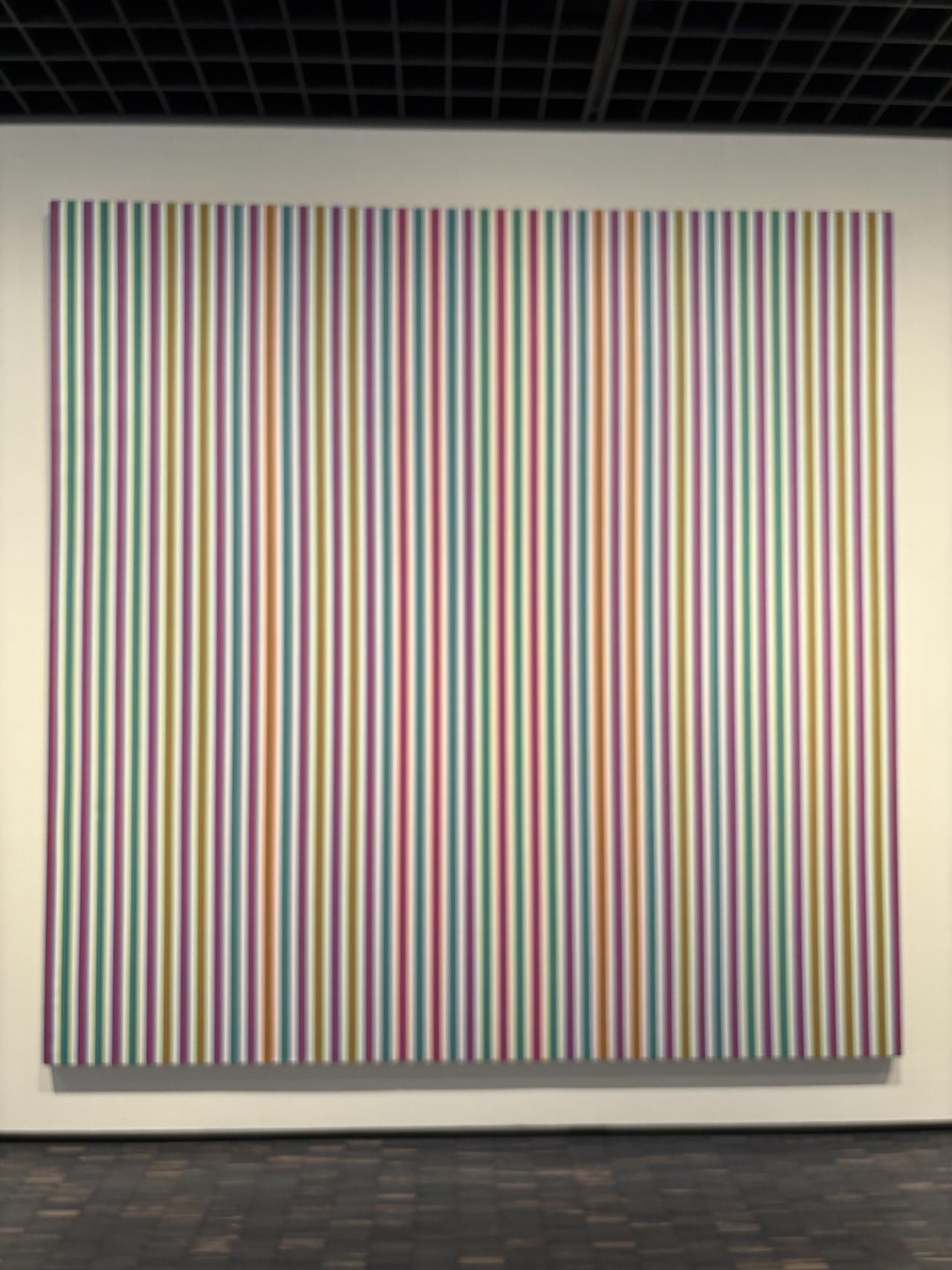
ブリジット・ライリー
Bridget Riley
1931-
讚歌
Paean
1973 昭和48年
アクリリック・キャンバス acrylic on canvas
購入
Purchased
1970(昭和45)年前後の7年間、ライリーは色彩の探求に適した形式として、ストライプのシリーズを制作します。制作プロセスは独特で、色の選択や組み合わせなどを緻密に検証する習作を本人が繰り返した後、できあがった構図をもとにアシスタントがキャンバスに描くというものです。機械のように、とでも形容したくなる規則正しさで描かれたまっすぐなストライブにもかかわらず、赤、青、緑の三色の組み合わせや並びを変化させることで、色の帯は波打ち、脈打つように動きだします。さらにオレンジ、黄緑、灰色といった、物理的には存在しないはずの色が、ヴァーチャルな奥行のなかに出現してきます。
For seven years, beginning around 1970, Riley produced a series of paintings employing stripes as a means of exploring color. Her unique working process involved carrying out repeated studies to carefully determine colors and combinations, then creating a final composition that assistants painted on canvas. Despite a regularity and accuracy one might describe as machine-like, her alterations of the combinations and arrangements of the three colors red, blue, and green, produced seas of bands that undulate and pulsate. They also create the illusion of orange, yellow-green, gray, and other colors not actually present that appear in virtual space. -
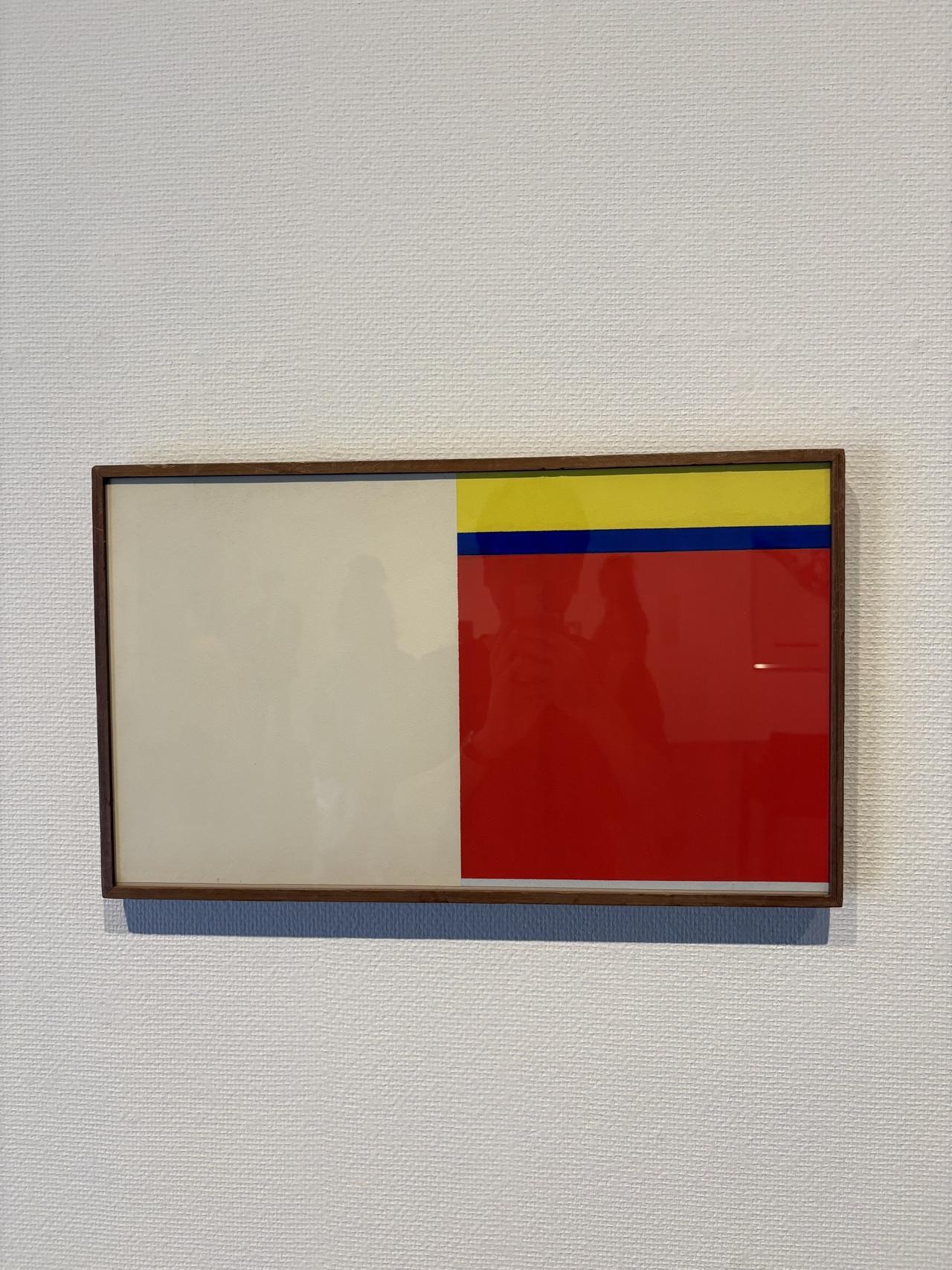
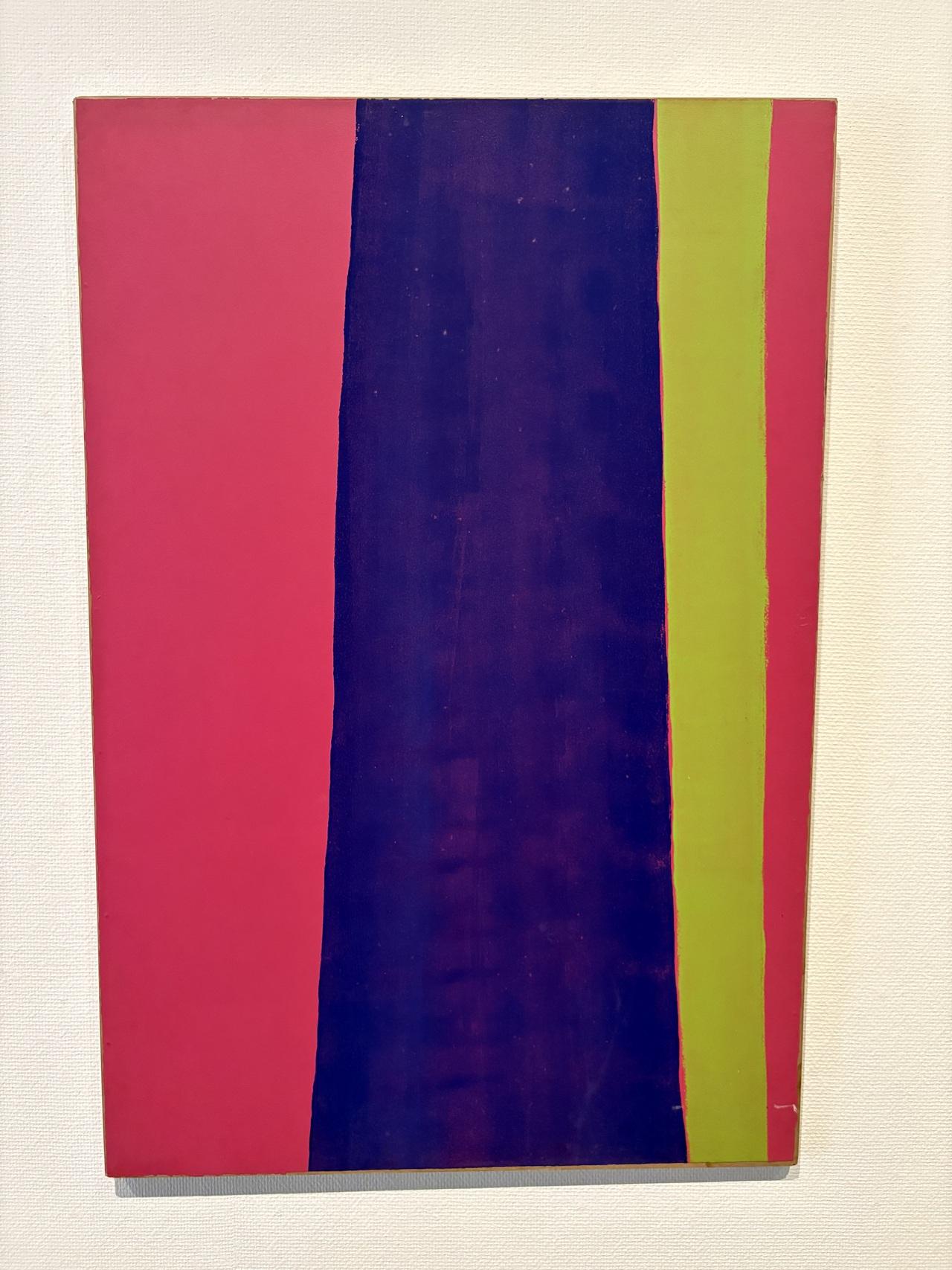
アン・トウルイット
Anne Truitt
1921-2004
無題
Untitled
1967
昭和42年
アクリリック・紙
acrylic on paper
購入
Purchased
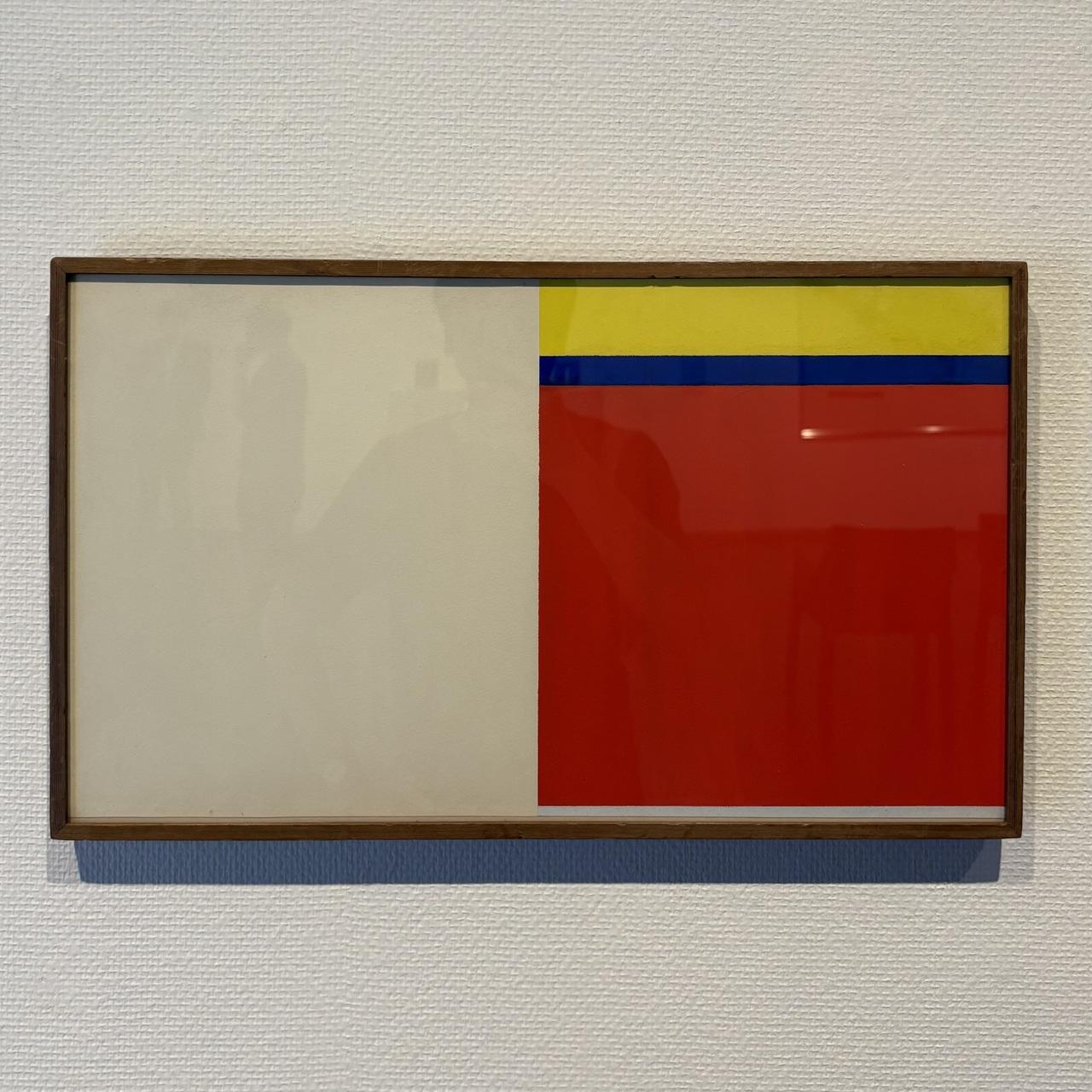
柱状の彫刻でよく知られるアン・トゥルイットは、ミニマリズムと呼ばれる1960年代の美術動向における重要作家の一人とされます。彼女は夫の仕事の関係で1964(昭和39)年から67年まで東京に滞在、南画廊で2回の個展(64、67年)を行っています。この作品はもともとトゥルイットが東京で制作し、離日時に知人ヘプレゼントしたものです。出品作品であったか同定はできていませんが、67年の個展に出品された作品と良く似た特徴を持っています。色彩の支持体への染み込みと色彩同士の重なり合いによって、画面には繊細な奥行きが生まれています。
Anne Truitt, well-known for her columnar sculpture, is considered one of the most important artists involved with the 1960s art movement Minimalism. She lived in Tokyo from 1964 to 1967 due to her husband's work and held two solo exhibitions (1964 and 1967) at Minami Gallery. This painting was originally made by Truitt in Tokyo and presented to an acquaintance when she left Japan. While it is not currently known whether this painting was shown, it is quite similar to those shown in her 1967 solo exhibition. The colors stain the canvas and overlap with one another so as to give the picture a delicate sense of depth. -
アン・トゥルイット
Anne Truitt
1921-2004
無題
Untitled
1966 昭和41年
アクリリック・紙 acrylic on paper
石川忠夫氏寄贈
Gift of Ishikawa Tadao -
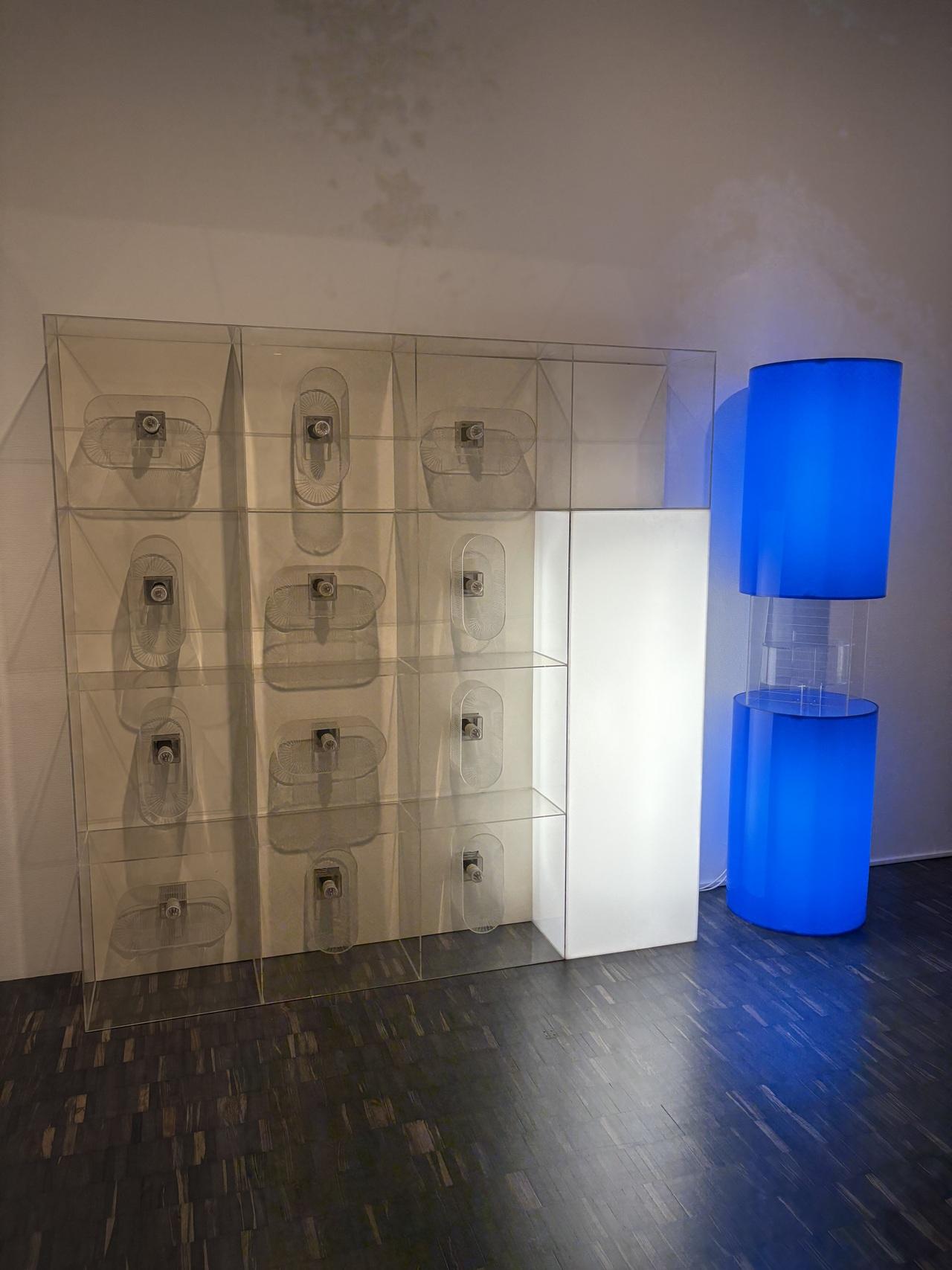
山口勝弘
YAMAGUCHI, Katsuhiro
1928-2018
ユニヴァース
Universe
1968 昭和43年
プラスチック、ライト、その他 plastic and light, etc.
購入
Purchased
この作品は、ふたつの大きな特徴を持っています。ひとつは発注芸術であること。つまり、設計図を作るのは作家ですが、事物自体は工業製品であるかのように他人の手に任せて作られています。もうひとつは、合成脂や電灯といったテクノロジーを作品の構成要素とすることで、私たちの鑑賞体験が、それを見るというだけではなく、それの置かれる場(=環境)を体験することへ拡張されている点です。環境(エンバイラメント)は、1960年代半ばごろから大阪万博の開催された70年頃にかけて流行したキーコンセプトで、美術のみならず建築や音楽、デザインといったジャンルでも広く共有されました。
This work is distinctive for two reasons. First, it is an example of Order Art. In other words, though it was the artist who designed the work, the actual object was created by another person in the manner of an industrial product. Secondly, because it consists of technological elements (synthetic resin and electric light), the viewer's experience is not merely limited to looking at the work but extends to an experience of the place (environment) that it occupies. "Environment" was a key concept in art from the mid.60s to about 1970, the year of the Osaka Expo, and extended into other genres such as architecture, music, and design. -
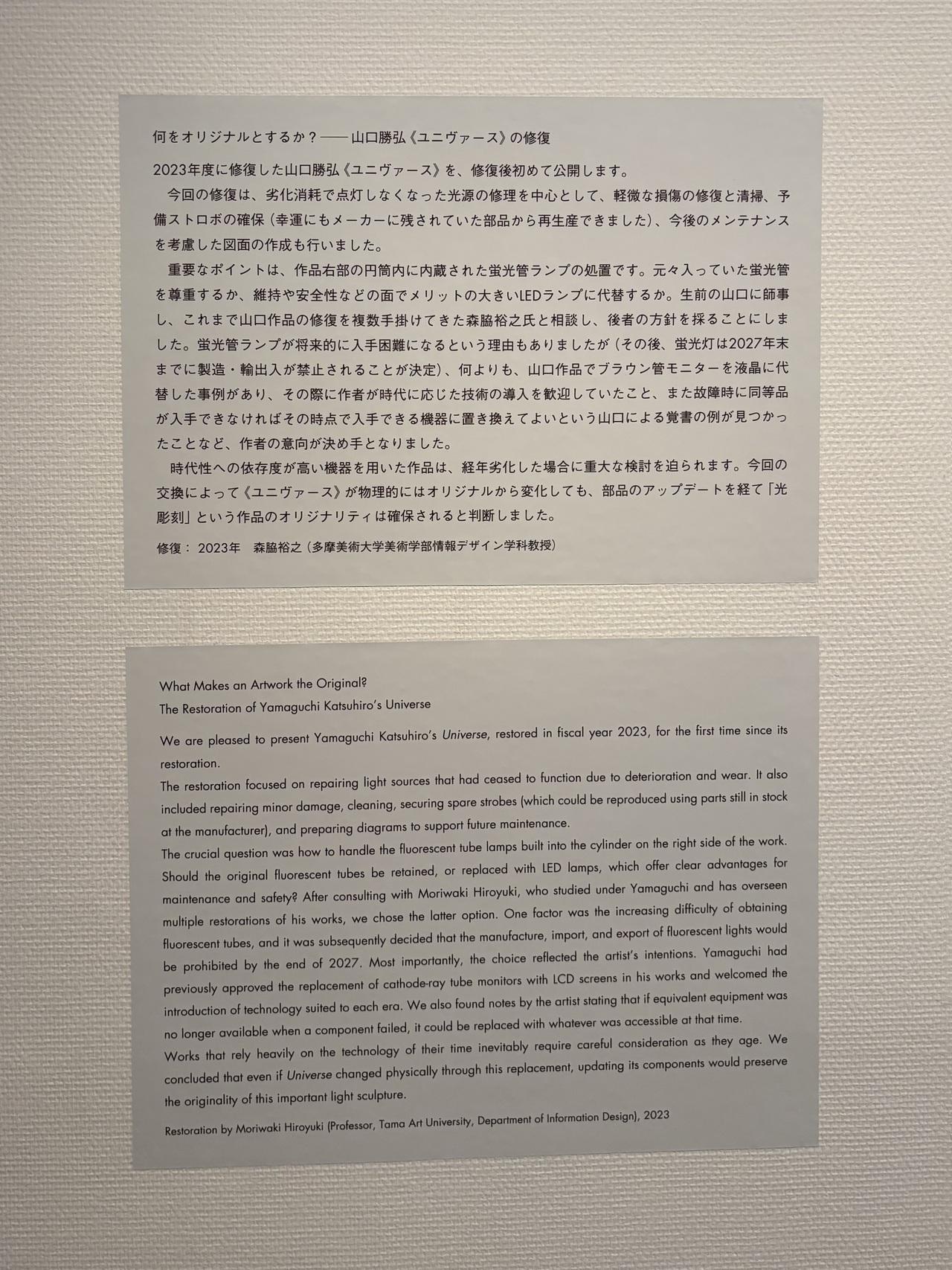
何をオリジナルとするか?一山口勝弘<ユニヴァース)の修復
2023年度に修復した山口勝弘<ユニヴァース)を、修復後初めて公開します。
今回の修復は、劣化消耗で点灯しなくなった光源の修理を中心として、軽微な損傷の修復と清掃、予備ストロボの確保(幸運にもメーカーに残されていた部品から再生産できました)、今後のメンテナンスを考慮した図面の作成も行いました。
重要なポイントは、作品右部の円筒内に内蔵された蛍光管ランプの処置です。元々入っていた蛍光管を尊重するか、維持や安全性などの面でメリットの大きいLEDランプに代替するか。生前の山口に節事し、これまで山口作品の修復を複数手掛けてきた森脇裕之氏と相談し、後者の方針を採ることにしました。蛍光管ランプが将来的に入手困難になるという理由もありましたが(その後、蛍光灯は2027年末までに製造・輸出入が禁止されることが決定)、何よりも、山口作品でブラウン管モニターを液晶に代替した事例があり、その際に作者が時代に応じた技術の導入を歓迎していたこと、また故障時に同等品が入手できなければその時点で入手できる機器に置き換えてよいという山口による覚書の例が見つかったことなど、作者の意向が決め手となりました。
時代性への依存度が高い機器を用いた作品は、経年劣化した場合に重大な検討を迫られます。今回の交換によって<ユニヴァース>が物理的にはオリジナルから変化しても、部品のアップデートを経て「光彫刻」という作品のオリジナリティは確保されると判断しました。
修復:2023年 森脇裕之(多摩美術大学美術学部情報デザイン学科教授)
What Makes an Artwork the Original?
The Restoration of Yamaguchi Katsuhiro's Universe
We are pleased to present Yamaguchi Katsuhiro's Universe, restored in fiscal year 2023, for the first time since its restoration.
The restoration focused on repairing light sources that had ceased to function due to deterioration and wear. It also included repairing minor damage, cleaning, securing spare strobes (which could be reproduced using parts still in stock at the manufacturer), and preparing diagrams to support future maintenance.
The crucial question was how to handle the fluorescent tube lamps built into the cylinder on the right side of the work.
Should the original fluorescent tubes be retained, or replaced with LED lamps, which offer clear advantages for maintenance and safety? After consulting with Moriwaki Hiroyuki, who studied under Yamaguchi and has overseen multiple restorations of his works, we chose the latter option. One factor was the increasing difficulty of obtaining Huorescent tubes, and it was subsequently decided that the manufacture, import, and export of fluorescent lights would be prohibited by the end of 2027. Most importantly, the choice reflected the artist's intentions. Yamaguchi had previously approved the replacement of cathode-ray tube monitors with LCD screens in his works and welcomed the introduction of technology suited to each era. We also found notes by the artist stating that if equivalent equipment was no longer available when a component failed, it could be replaced with whatever was accessible at that time.
Works that rely heavily on the technology of their time inevitably require careful consideration as they age. We concluded that even if Universe changed physically through this replacement, updating its components would preserve the originality of this important light sculpture.
Restoration by Moriwaki Hiroyuki (Professor, Tama Art University, Department of Information Design), 2023 -


利用規約に違反している投稿は、報告する事ができます。
-
前の旅行記
![MOMAT コレクション展 ~2026.5.10 ⑦今井壽恵と岡上淑子。"今井壽惠 《「オフェリアその後」より[1]》"](https://cdn.4travel.jp/img/thumbnails/imk/travelogue_album/12/06/97/650x_12069709.jpg?updated_at=1788062966)
MOMAT コレクション展 ~2026.5.10 ⑦今井壽恵と岡上淑子。"今井壽惠 《「オフェリアその後」よ...
2026/05/07~
神田・神保町
-
次の旅行記

MOMAT コレクション展 ~2026.5.10 ⑨ "植田正治 砂丘劇場 《パパとママと子供たち》"
2026/05/09~
神田・神保町
-

MOMAT コレクション展 ~2026.5.10 ③花ひらく大正。"藤島武二《匂い》"
2026/05/03~
神田・神保町
-

MOMAT コレクション展 ~2026.5.10 ④能楽と歌舞伎。"鳥居忠雅《「隅取十八番より」赤塗筋隈 ...
2026/05/04~
神田・神保町
-

MOMAT コレクション展 ~2026.5.10 ⑤戦間期のコントルポアン。"浅原清隆 《多感な地上》"
2026/05/05~
神田・神保町
-

MOMAT コレクション展 ~2026.5.10 ⑤~⑥ ソル・ルウィット| ウォール・ドローイング#769...
2026/05/05~
神田・神保町
-

MOMAT コレクション展 ~2026.5.10 ⑥1941-1945|戦争/美術。"国吉康雄 《誰かが私の...
2026/05/06~
神田・神保町
-
![MOMAT コレクション展 ~2026.5.10 ⑦今井壽恵と岡上淑子。"今井壽惠 《「オフェリアその後」より[1]》"](https://cdn.4travel.jp/img/thumbnails/imk/travelogue_album/12/06/97/240x180_12069709.jpg?updated_at=1788062966)
MOMAT コレクション展 ~2026.5.10 ⑦今井壽恵と岡上淑子。"今井壽惠 《「オフェリアその後」よ...
2026/05/07~
神田・神保町
-

MOMAT コレクション展 ~2026.5.10 ⑧ツヤツヤピカピカ。"上田薫 《スプーンに水あめ》"
2026/05/08~
神田・神保町
-

MOMAT コレクション展 ~2026.5.10 ⑨ "植田正治 砂丘劇場 《パパとママと子供たち》"
2026/05/09~
神田・神保町
-

MOMAT コレクション展 ~2026.5.10 ⑪描くことと見えるものの間一1990年代以降の絵画表現 "...
2026/05/11~
神田・神保町
旅行記グループをもっと見る
コメントを投稿する前に
十分に確認の上、ご投稿ください。 コメントの内容は攻撃的ではなく、相手の気持ちに寄り添ったものになっていますか?
サイト共通ガイドライン(利用上のお願い)報道機関・マスメディアの方へ 画像提供などに関するお問い合わせは、専用のお問い合わせフォームからお願いいたします。
この旅行で行ったスポット






フォートラベル公式LINE@
おすすめの旅行記や旬な旅行情報、お得なキャンペーン情報をお届けします!
QRコードが読み取れない場合はID「@4travel」で検索してください。
\その他の公式SNSはこちら/




旅行記グループ MOMAT コレクション〔国立東京近代美術館 所蔵作品展〕(2026.3.3-5.10)
0
20