


2026/05/05 - 2026/05/09
-位(同エリア933件中)

旅熊 Kokazさん
- 旅熊 KokazさんTOP
- 旅行記1916冊
- クチコミ854件
- Q&A回答102件
- 1,699,217アクセス
- フォロワー754人
MOMAT〔国立東京近代美術館〕コレクション展 ~2026.5.10
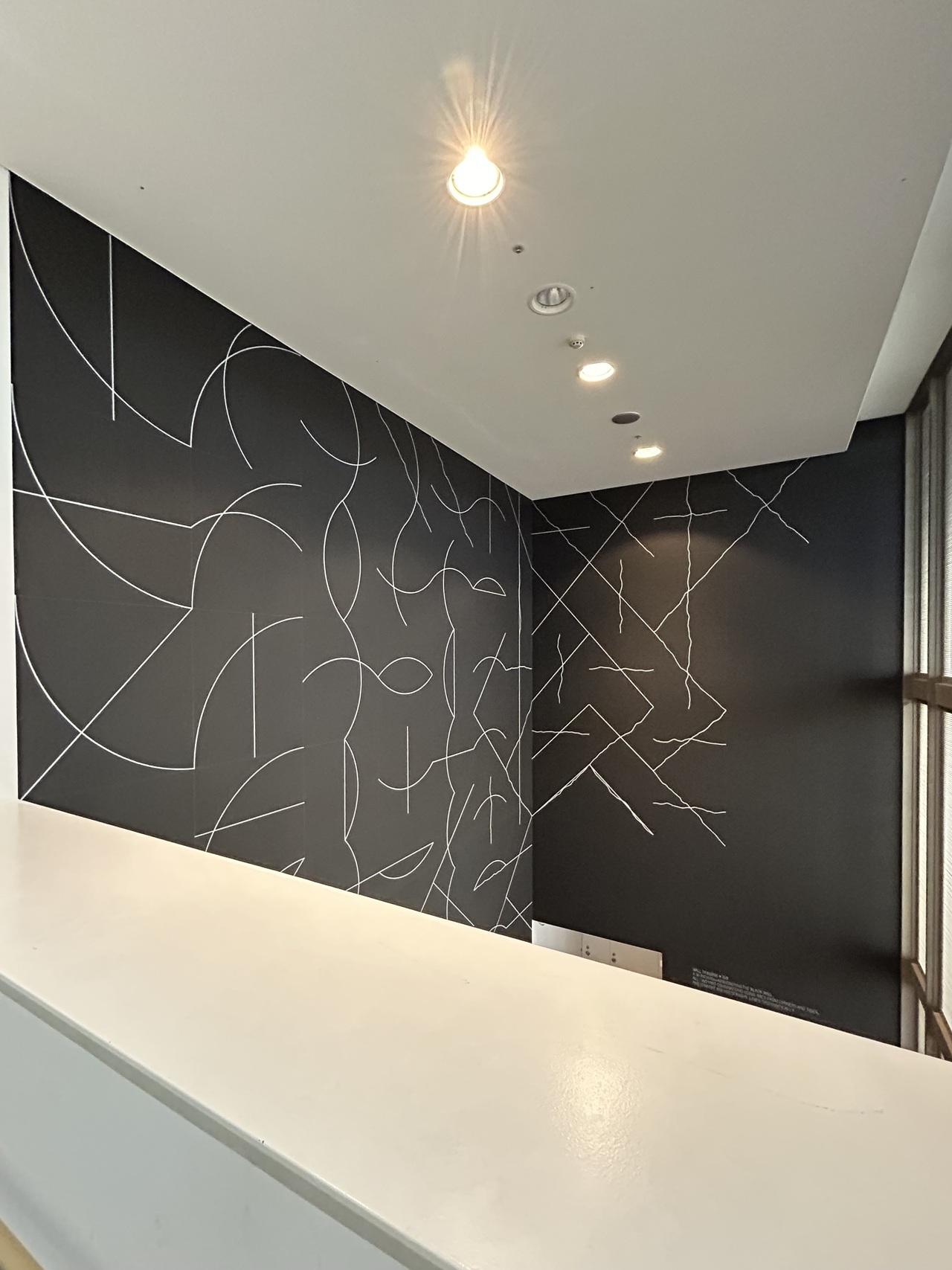
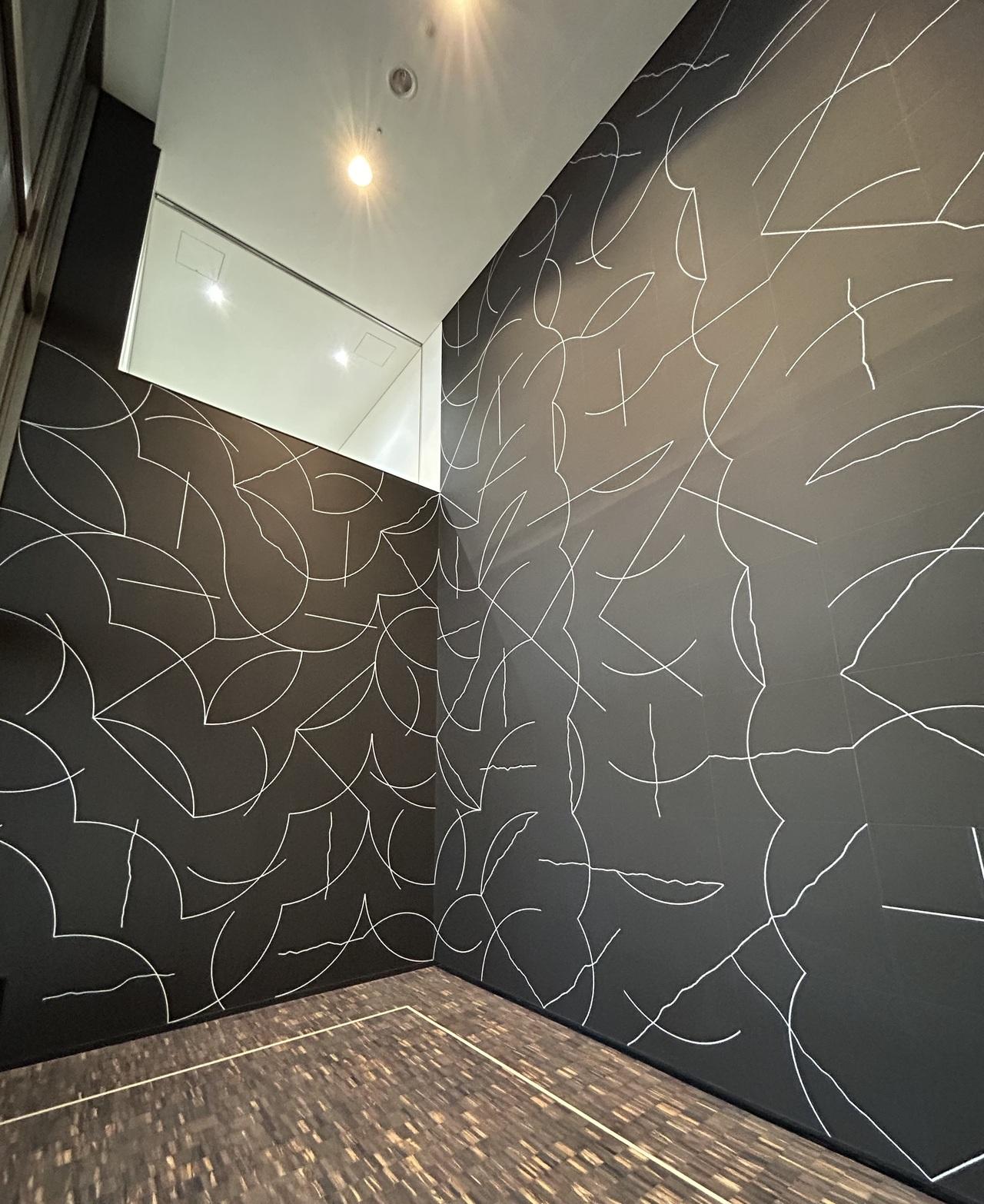
ソル・ルウィット| ウォール・ドローイング#769
日付はダミーで、5月9日(土)訪問
- 旅行の満足度
- 5.0
-

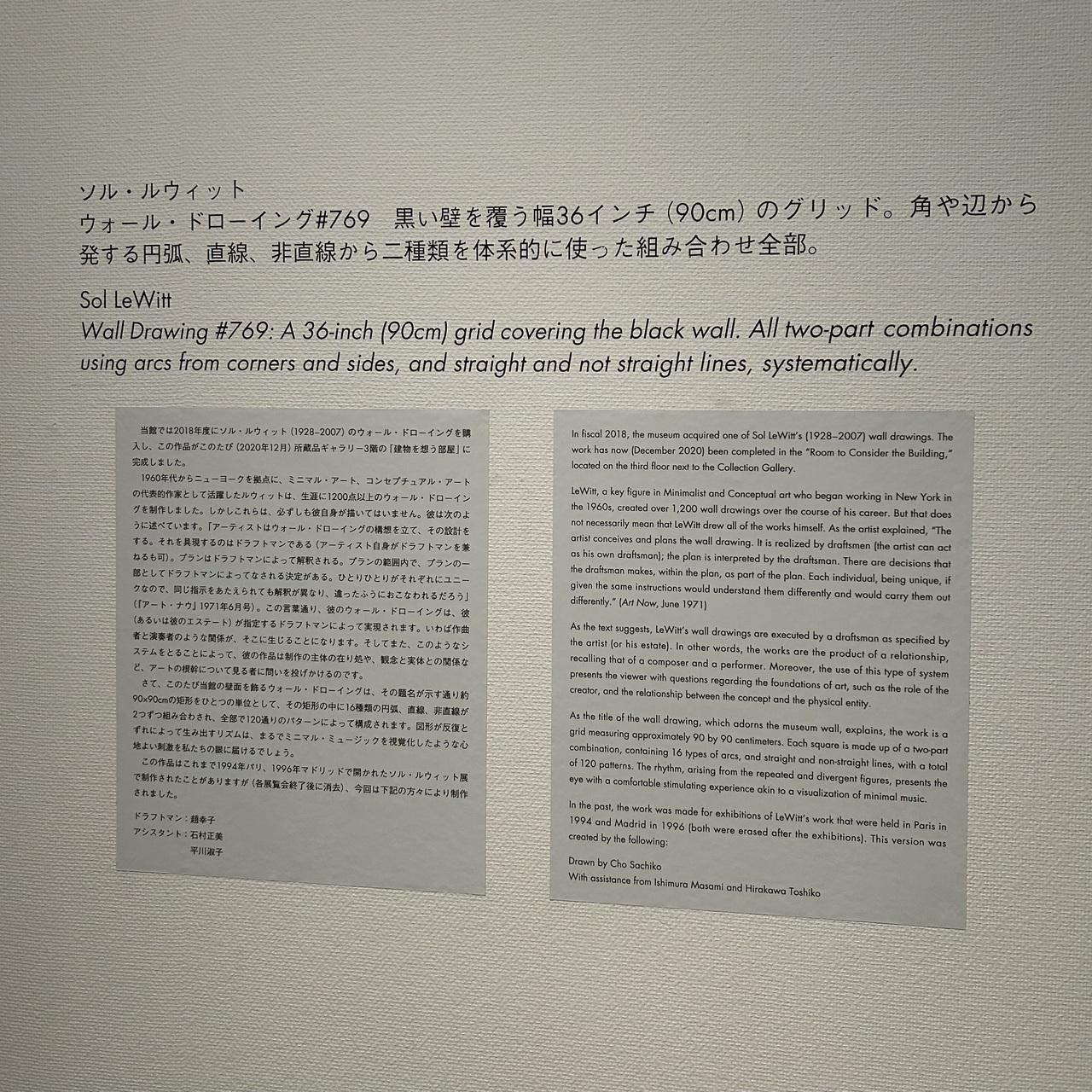
ソル・ルウィット
Sol Lewitt
1928-2007
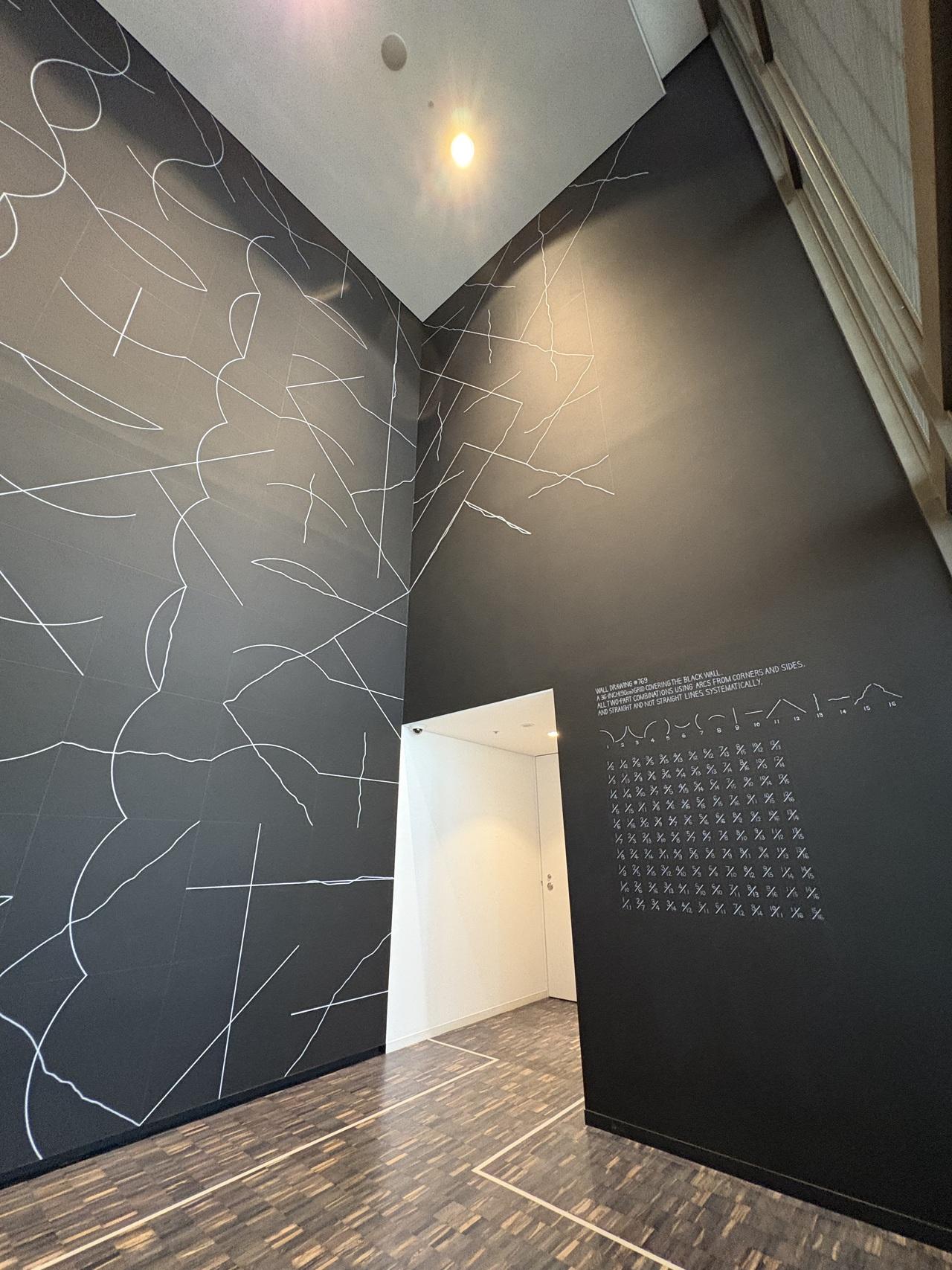
ウォール・ドローイング#769
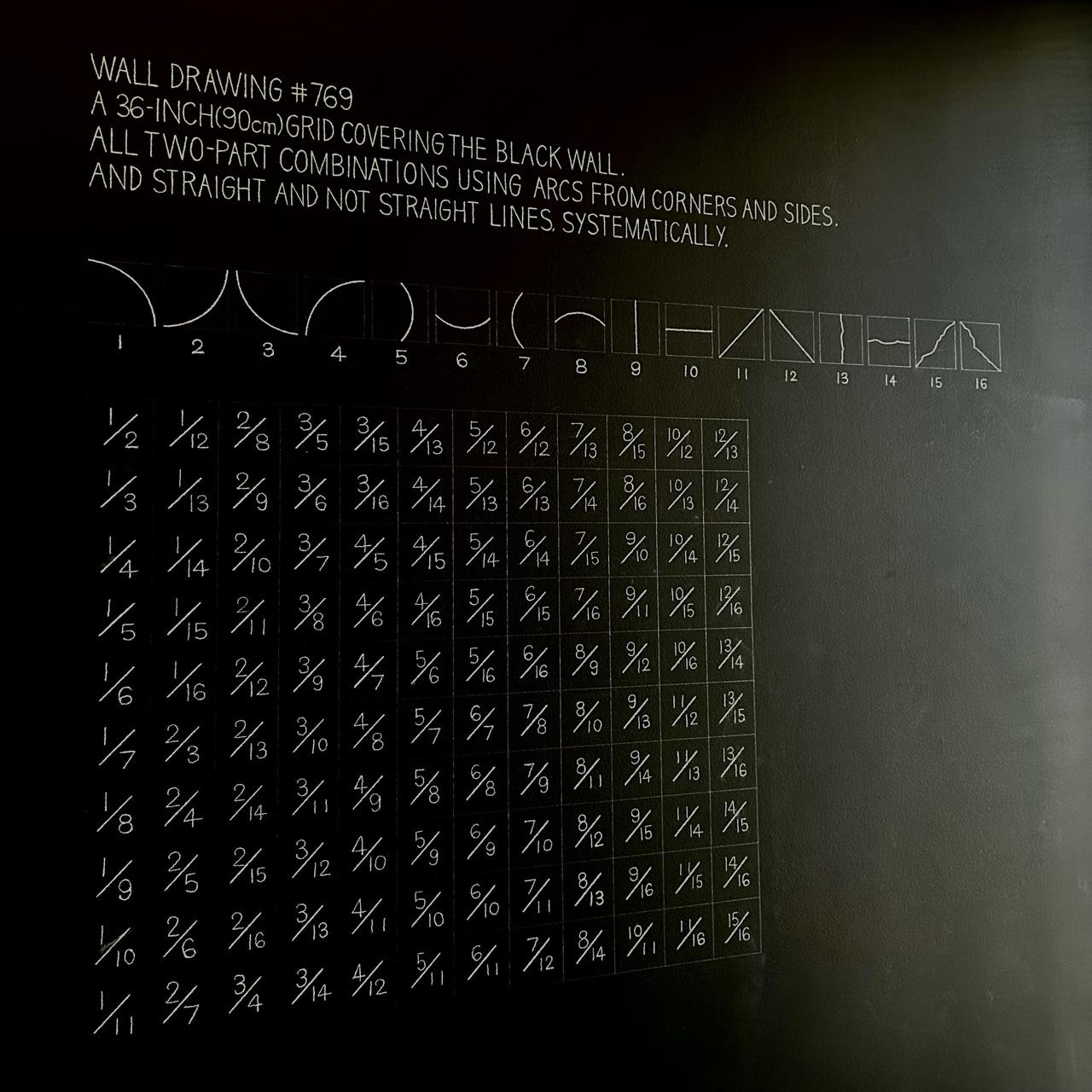
黒い壁を覆う幅36インチ(90cm)のグリッド。
角や辺から発する円弧、直線、非直線から二種類を体系的に使った組み合わせ全部。
Wall Drawing#769: A 36-inch (90cm) grid covering the black wall. All two-part combinations using arcs from corners and sides, and straight and not straight lines, systematically.
1994 平成6年
水溶性パステル、水性塗料、鉛筆・壁
water soluble wax pastel, water based paint and pencil on wall東京国立近代美術館 美術館・博物館
-
-
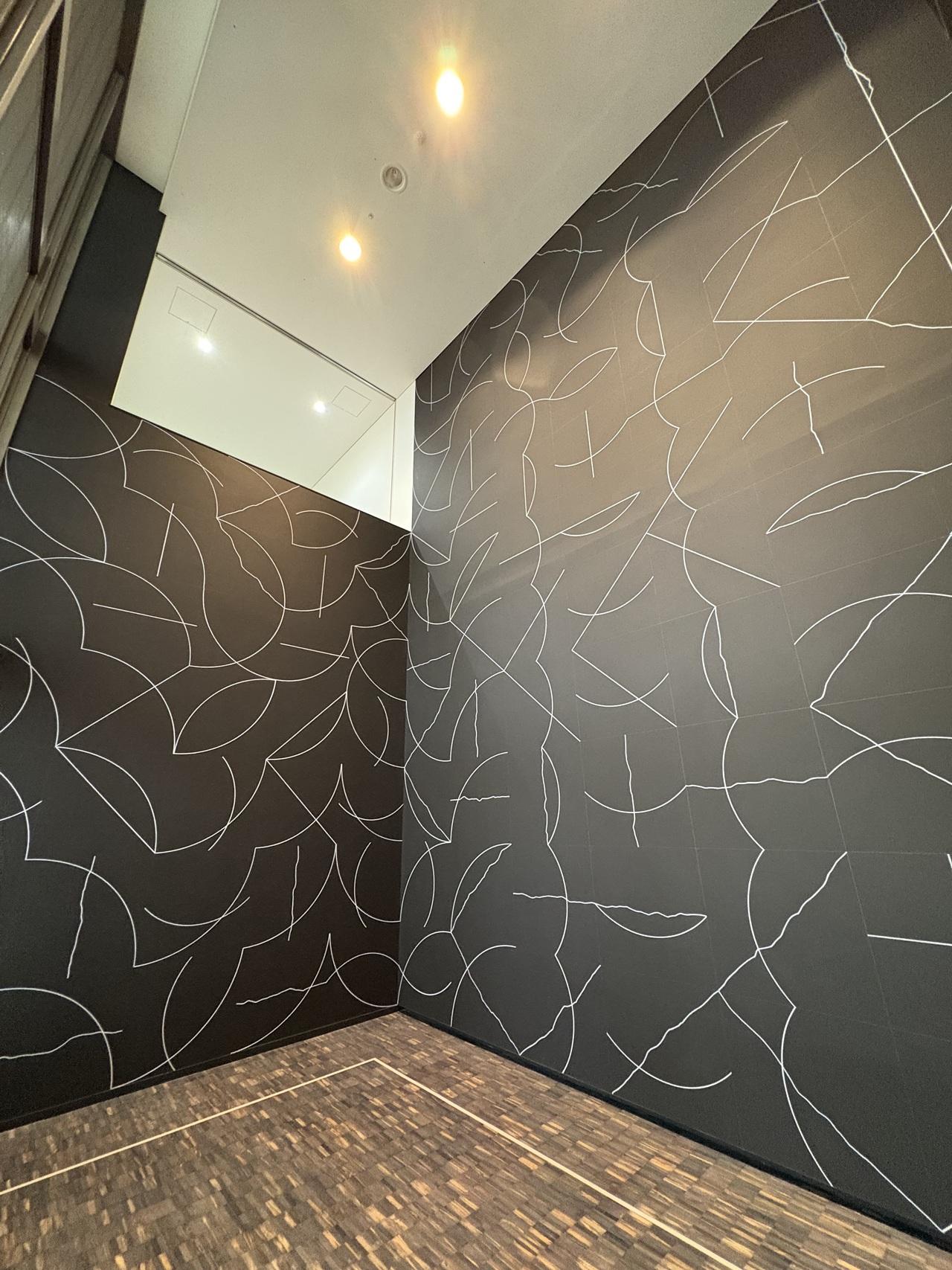
当館では2018年度にソル・ルウィット(1928-2007)のウォール・ドローイングを購入し、この作品がこのたび(2020年12月)所蔵品ギャラリー3階の「建物を想う部屋」に完成しました。
1960年代からニューヨークを拠点に、ミニマル・アート、コンセプチュアル・アートの代表的作家として活躍したルウィットは、生涯に1200点以上のウォール・ドローイングを制作しました。しかしこれらは、必ずしも彼自身が描いてはいません。彼は次のように述べています。「アーティストはウォール・ドローイングの構想を立て、その設計をする。それを具現するのはドラフトマンである(アーティスト自身がドラフトマンを兼ねるも可)。プランはドラフトマンによって解釈される。プランの範囲内で、プランの一部としてドラフトマンによってなされる決定がある。ひとりひとりがそれぞれにユニークなので、同じ指示をあたえられても解釈が異なり、違ったふうにおこなわれるだろう」(「アート・ナウ」1971年6月号)。この言葉通り、彼のウォール・ドローイングは、彼(あるいは彼のエステート)が指定するドラフトマンによって実現されます。いわば作曲者と演奏者のような関係が、そこに生じることになります。そしてまた、このようなシステムをとることによって、彼の作品は制作の主体の在り処や、観念と実体との関係など、アートの根幹について見る者に問いを投げかけるのです。
さて、このたび当館の壁面を飾るウォール・ドローイングは、その題名が示す通り約90x90cmの矩形をひとつの単位として、その短形の中に16種類の円弧、直線、非直線が2つずつ組み合わされ、全部で120通りのバターンによって構成されます。図形が反復とずれによって生み出すリズムは、まるでミニマル・ミュージックを視覚化したような心地よい刺激を私たちの眼に届けるでしょう。
この作品はこれまで1994年パリ、1996年マドリッドで開かれたソル・ルウィット展で制作されたことがありますが(各展覧会終了後に消去)、今回は下記の方々により制作されました。
ドラフトマン:趙幸子
アシスタント:石村正美
平川淑子
In fiscal 2018, the museum acquired one of Sol LeWitt's (1928-2007) wall drawings. The work has now (December 2020) been completed in the "Room to Consider the Building," located on the third floor next to the Collection Gallery.
LeWitt, a key figure in Minimalist and Conceptual art who began working in New York in the 1960s, created over 1,200 wall drawings over the course of his career. But that does not necessarily mean that LeWitt drew all of the works himself. As the artist explained, "The artist conceives and plans the wall drawing. It is realized by draftsmen (the artist can act as his own draftsman); the plan is interpreted by the draftsman. There are decisions that the draftsman makes, within the plan, as part of the plan. Each individual, being unique, if given the same instructions would understand them differently and would carry them out differently." (Art Now, June 1971)
As the text suggests, LeWitt's wall drawings are executed by a draftsman as specified by the artist (or his estate). In other words, the works are the product of a relationship, recalling that of a composer and a performer. Moreover, the use of this type of system presents the viewer with questions regarding the foundations of art, such as the role of the creator, and the relationship between the concept and the physical entity.
As the title of the wall drawing, which adorns the museum wall, explains, the work is a grid measuring approximately 90 by 90 centimeters. Each square is made up of a two-part combination, containing 16 types of arcs, and straight and non-straight lines, with a total of 120 patterns. The rhythm, arising from the repeated and divergent figures, presents the eye with a comfortable stimulating experience akin to a visualization of minimal music.
In the past, the work was made for exhibitions of LeWitt's work that were held in Paris in 1994 and Madrid in 1996 (both were erased after the exhibitions). This version was created by the following:
Drawn by Cho Sachiko
With assistance from Ishimura Masami and Hirakawa Toshiko -
-
-
この旅行記のタグ


利用規約に違反している投稿は、報告する事ができます。
-
前の旅行記

MOMAT コレクション展 ~2026.5.10 ⑤戦間期のコントルポアン。"浅原清隆 《多感な地上》"
2026/05/05~
神田・神保町
-
次の旅行記
![MOMAT コレクション展 ~2026.5.10 ⑦今井壽恵と岡上淑子。"今井壽惠 《「オフェリアその後」より[1]》"](https://cdn.4travel.jp/img/thumbnails/imk/travelogue_album/12/06/97/650x_12069709.jpg?updated_at=1788062966)
MOMAT コレクション展 ~2026.5.10 ⑦今井壽恵と岡上淑子。"今井壽惠 《「オフェリアその後」よ...
2026/05/07~
神田・神保町
-

MOMAT コレクション展 ~2026.5.10 ③花ひらく大正。"藤島武二《匂い》"
2026/05/03~
神田・神保町
-

MOMAT コレクション展 ~2026.5.10 ④能楽と歌舞伎。"鳥居忠雅《「隅取十八番より」赤塗筋隈 ...
2026/05/04~
神田・神保町
-

MOMAT コレクション展 ~2026.5.10 ⑤戦間期のコントルポアン。"浅原清隆 《多感な地上》"
2026/05/05~
神田・神保町
-

MOMAT コレクション展 ~2026.5.10 ⑤~⑥ ソル・ルウィット| ウォール・ドローイング#769...
2026/05/05~
神田・神保町
-
![MOMAT コレクション展 ~2026.5.10 ⑦今井壽恵と岡上淑子。"今井壽惠 《「オフェリアその後」より[1]》"](https://cdn.4travel.jp/img/thumbnails/imk/travelogue_album/12/06/97/240x180_12069709.jpg?updated_at=1788062966)
MOMAT コレクション展 ~2026.5.10 ⑦今井壽恵と岡上淑子。"今井壽惠 《「オフェリアその後」よ...
2026/05/07~
神田・神保町
-

MOMAT コレクション展 ~2026.5.10 ⑨ "植田正治 砂丘劇場 《パパとママと子供たち》"
2026/05/09~
神田・神保町
-

MOMAT コレクション展 ~2026.5.10 ⑪描くことと見えるものの間一1990年代以降の絵画表現 "...
2026/05/11~
神田・神保町
旅行記グループをもっと見る
コメントを投稿する前に
十分に確認の上、ご投稿ください。 コメントの内容は攻撃的ではなく、相手の気持ちに寄り添ったものになっていますか?
サイト共通ガイドライン(利用上のお願い)報道機関・マスメディアの方へ 画像提供などに関するお問い合わせは、専用のお問い合わせフォームからお願いいたします。
この旅行で行ったスポット






フォートラベル公式LINE@

おすすめの旅行記や旬な旅行情報、お得なキャンペーン情報をお届けします!
QRコードが読み取れない場合はID「@4travel」で検索してください。
\その他の公式SNSはこちら/





旅行記グループ MOMAT コレクション〔国立東京近代美術館 所蔵作品展〕(2026.3.3-5.10)
0
6