


2026/05/09 - 2026/05/09
104位(同エリア933件中)

旅熊 Kokazさん
- 旅熊 KokazさんTOP
- 旅行記1927冊
- クチコミ854件
- Q&A回答101件
- 1,710,837アクセス
- フォロワー752人
MOMAT〔国立東京近代美術館〕コレクション展 ~2026.5.10
⑨ "植田正治 砂丘劇場"
日付はダミーで、5月9日(土)訪問
MOMATコレクションにようこそ!
当館コレクション展の特徴をご紹介します。まずはその規模。1952年の開館以来の活動を通じて収集してきたおよそ14,000点の所蔵作品から、会期ごとに約200点を展示する国内最大級のコレクション展です。そして、それぞれ小さなテーマが立てられた全12室のつながりによって、19世紀末から今日に至る日本の近現代美術の流れをたどることができる国内随一の展示です。
今期の見所紹介です。4階2室は、当館と金沢の国立工芸館とのコラボレーション企画。鈴木長吉《十二の鷹》(重要文化財)や、新収蔵の金森宗七《花鳥文様象耳付大花瓶》など名品が目白押しです。
また毎年恒例の「美術館の春まつり」にちなみ、川合玉堂《行く春》、跡見玉枝《桜花図巻》など人気作品を惜しげもなくお見せします(3月3日―4月12日)。「春まつり」後(4月14日―5月10日)も豪華です。1階で開催の「下村観山展」(3月17日から)にちなみ、横山大観、菱田春草など観山をとりまく芸術家による素晴らしい作品群を集めました。
今期も盛りだくさんのMOMATコレクション、どうぞお楽しみください。
https://www.momat.go.jp/exhibitions/r7-3
- 旅行の満足度
- 5.0
-

9.植田正治 砂丘劇場
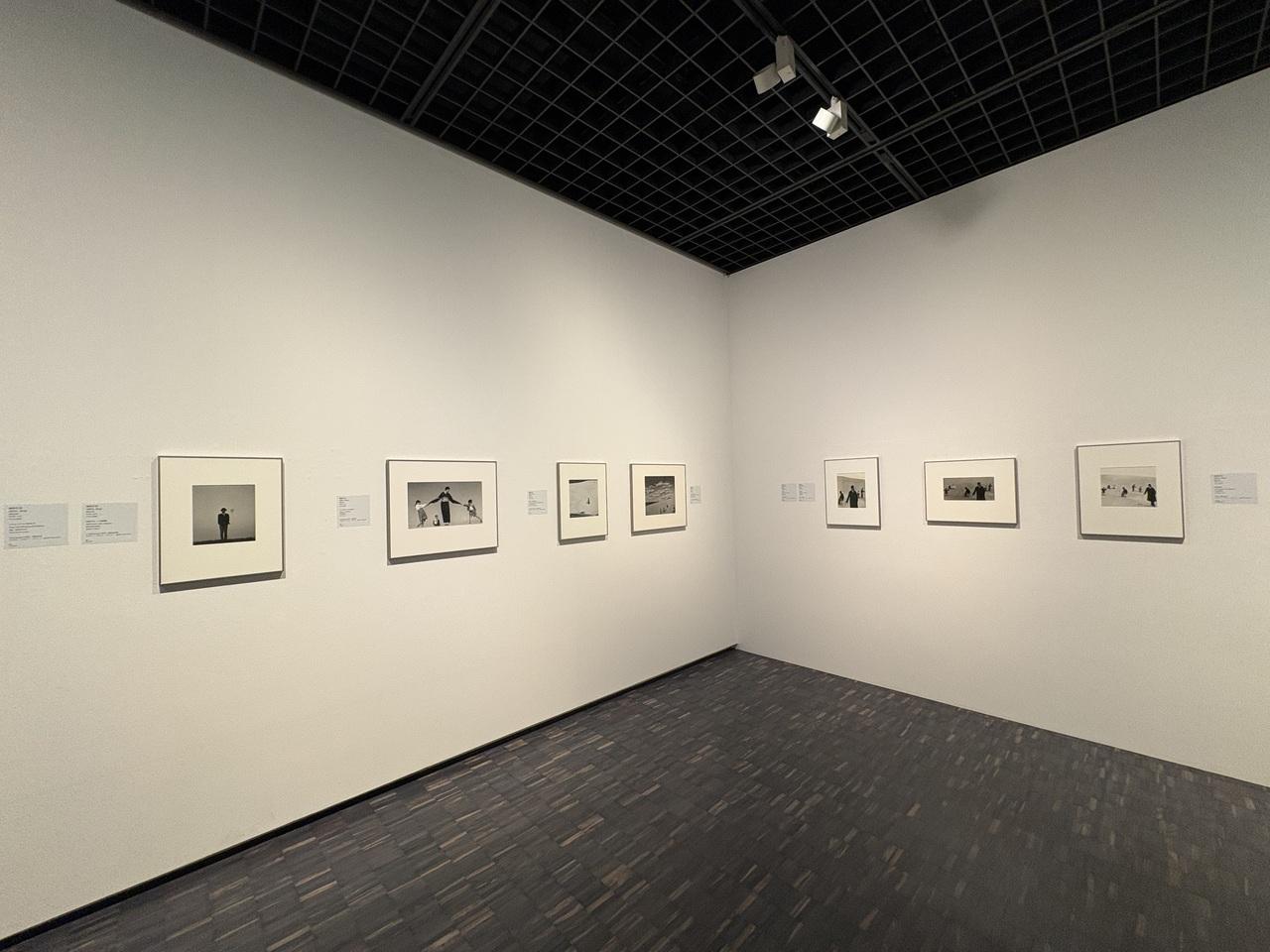
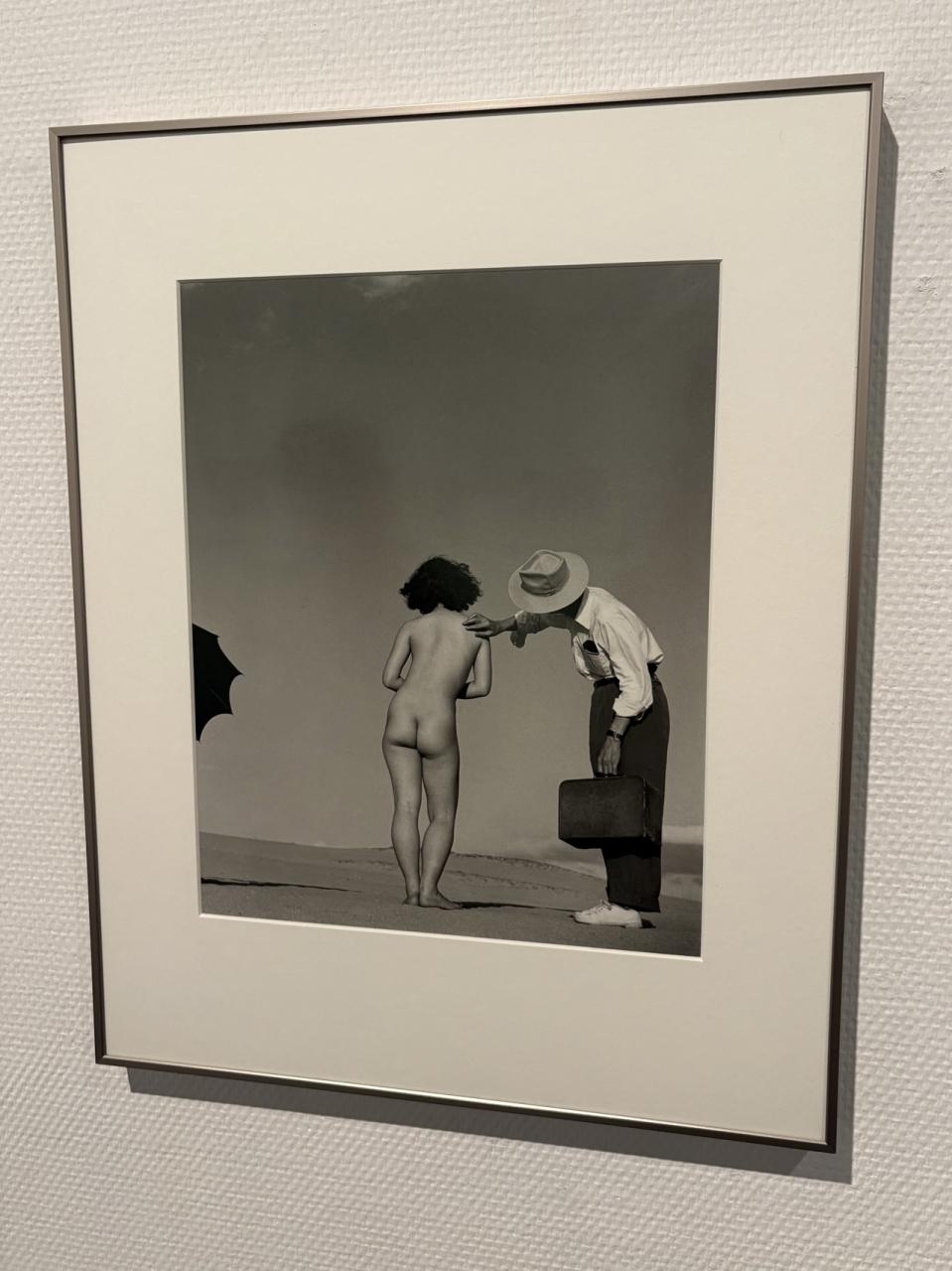
植田正治は、故郷である鳥取県境港を拠点に活動し、モダニズムに立脚した作風で国際的にも高い評価を受けた写真家です。1913(大正2)年生まれ、旧制中学時代にカメラを手にした植田は、カメラ店を営むかたわら、1930年代から2000年に亡くなるまで約70年にわたってさまざまな作品を発表しつづけました。
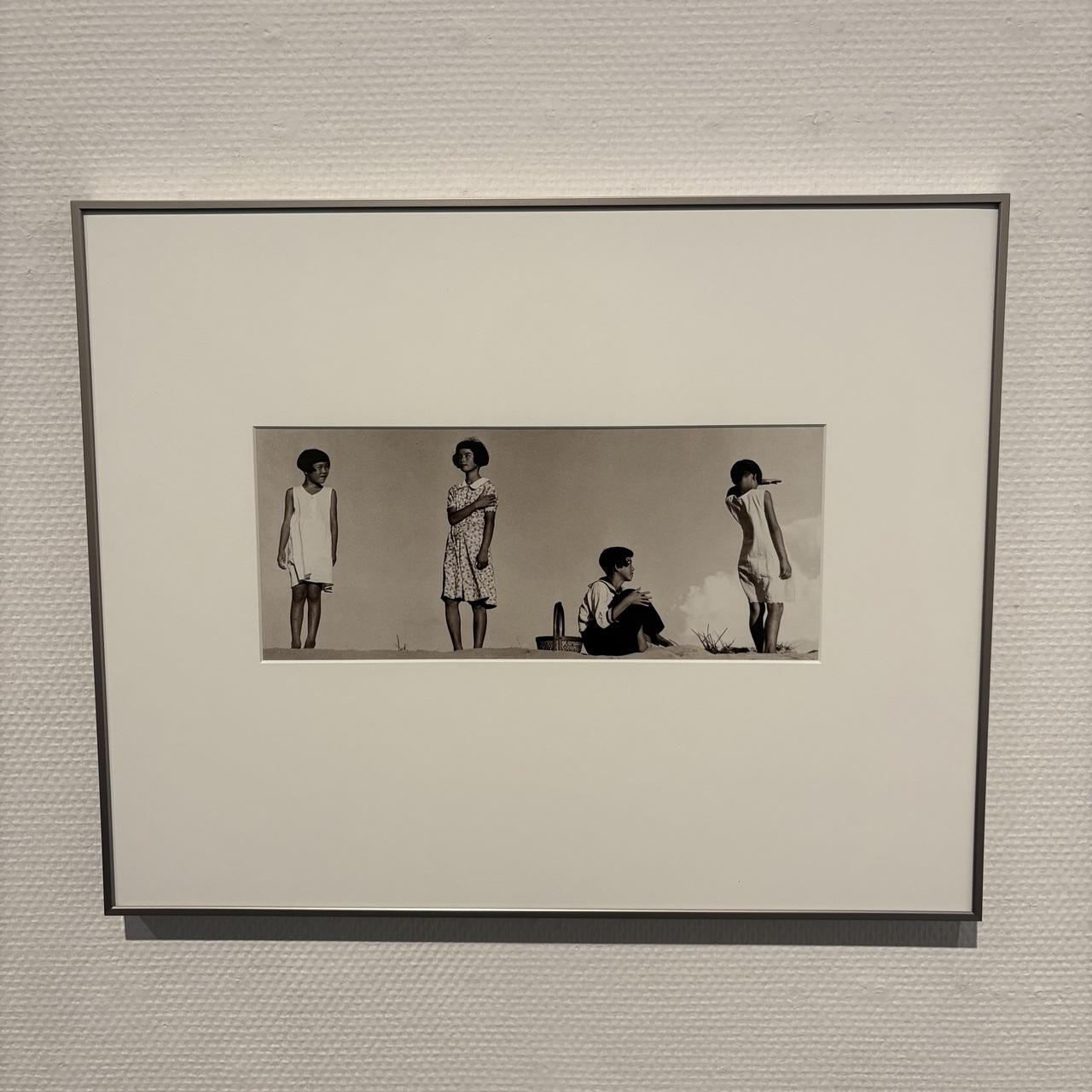
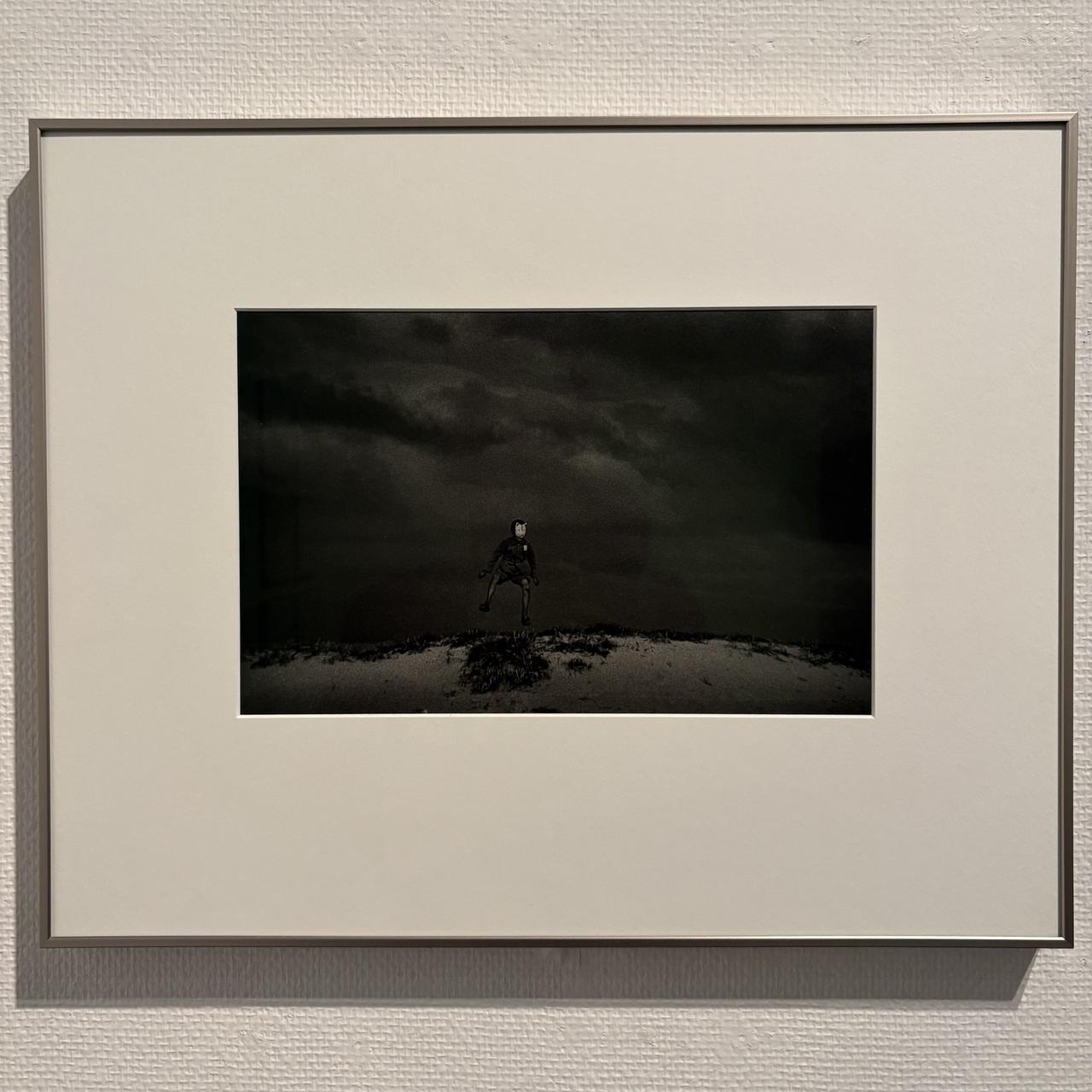
今回展示しているのは、植田の代名詞とも言うべき、自宅近くの砂浜や鳥取砂丘を舞台にした演出写真のシリーズです。その中心となっているのは、1948(昭和23)年から50年にかけての作品。山陰地方特有のやわらかい光と、広々とした砂丘の空間を背景に、独特の画面構成のセンスとユーモラスな感覚が発揮された作風は、「植田調」として知られています。
戦後間もない、社会的現実を見据えたリアリズム写真が隆盛していく時代にあって、戦争で中断された写真制作の再開を率直に喜ぶように、自由な感性で展開されたその作品世界は、当時の日本の写真界にたいして「山陰に植田あり」という新鮮な印象を与えるものでした。
9. Ueda Shoji: Sand Dune Theatre
Based in his hometown of Sakaiminato, Tottori Prefecture, Ueda was an internationally renowned photographer, whose style was rooted in modernism. Born in 1913, Ueda started taking pictures in junior high school. While running a camera shop, he made a wide range of works for some 70 years, from the 1930s to the 2000s.
Here, we present a series of staged photographs, set on the beach near Uda's house and the Tottori Sand Dunes, which is synonymous with the artist. The series centers on the pictures taken between 1948 and 1950. Known as "Ueda-cho," the artist's style can be defined as a unique sense of composition and humor against a backdrop of the Sanin Region's characteristically soft sunlight and expansive sand dunes.
Not long after World War Il, photorealism, rooted in social realism, began to flourish. It was at this time that Uda's free-wheeling artistic outlook, which seemed to express the joy that he felt at being able to resume his photographic practice at war's end, created a vivid impression (In Sanin, we have Ueda") in the Japanese photography world. -
植田正治
UEDA, Shoji
1913-2000
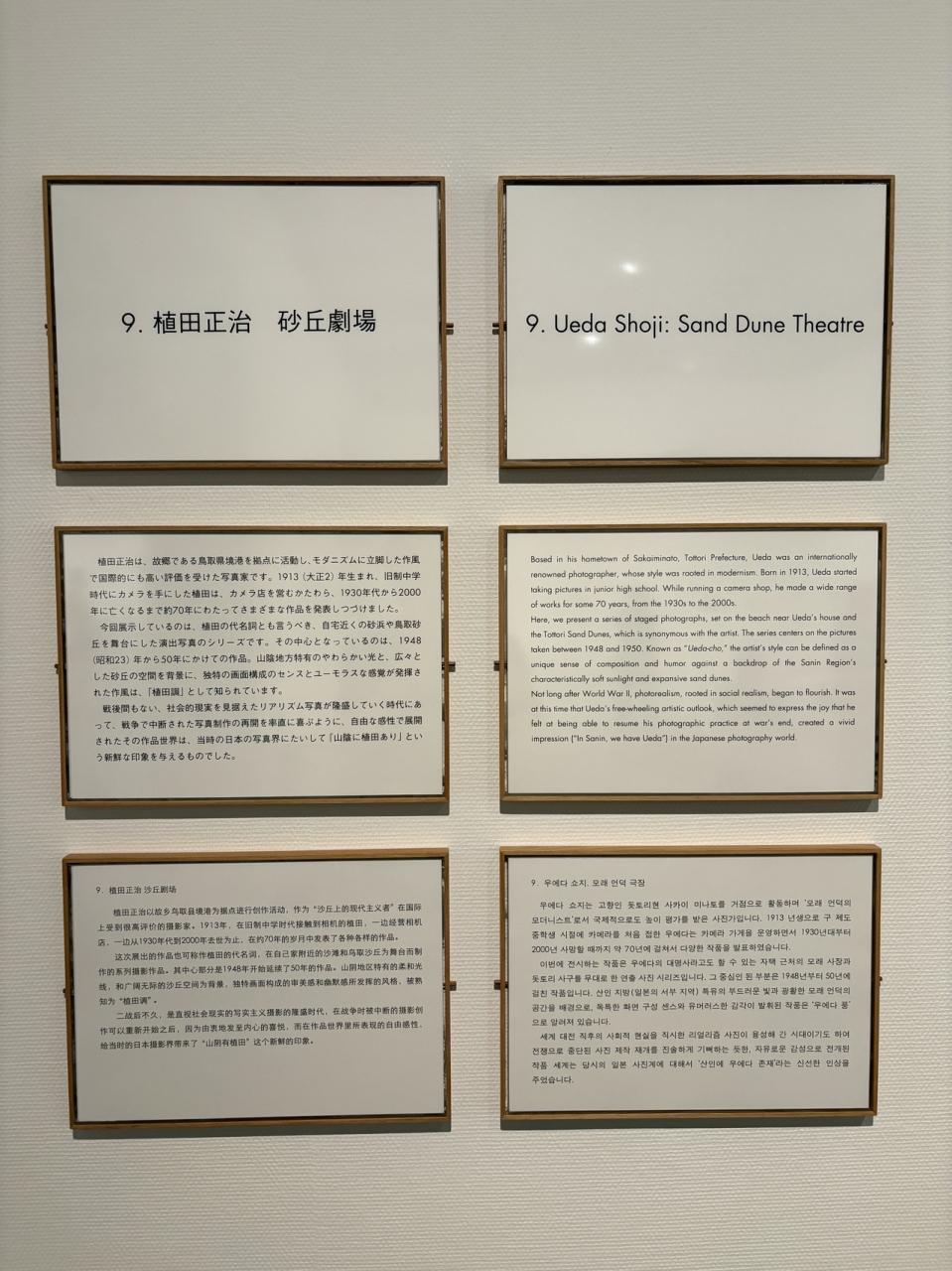
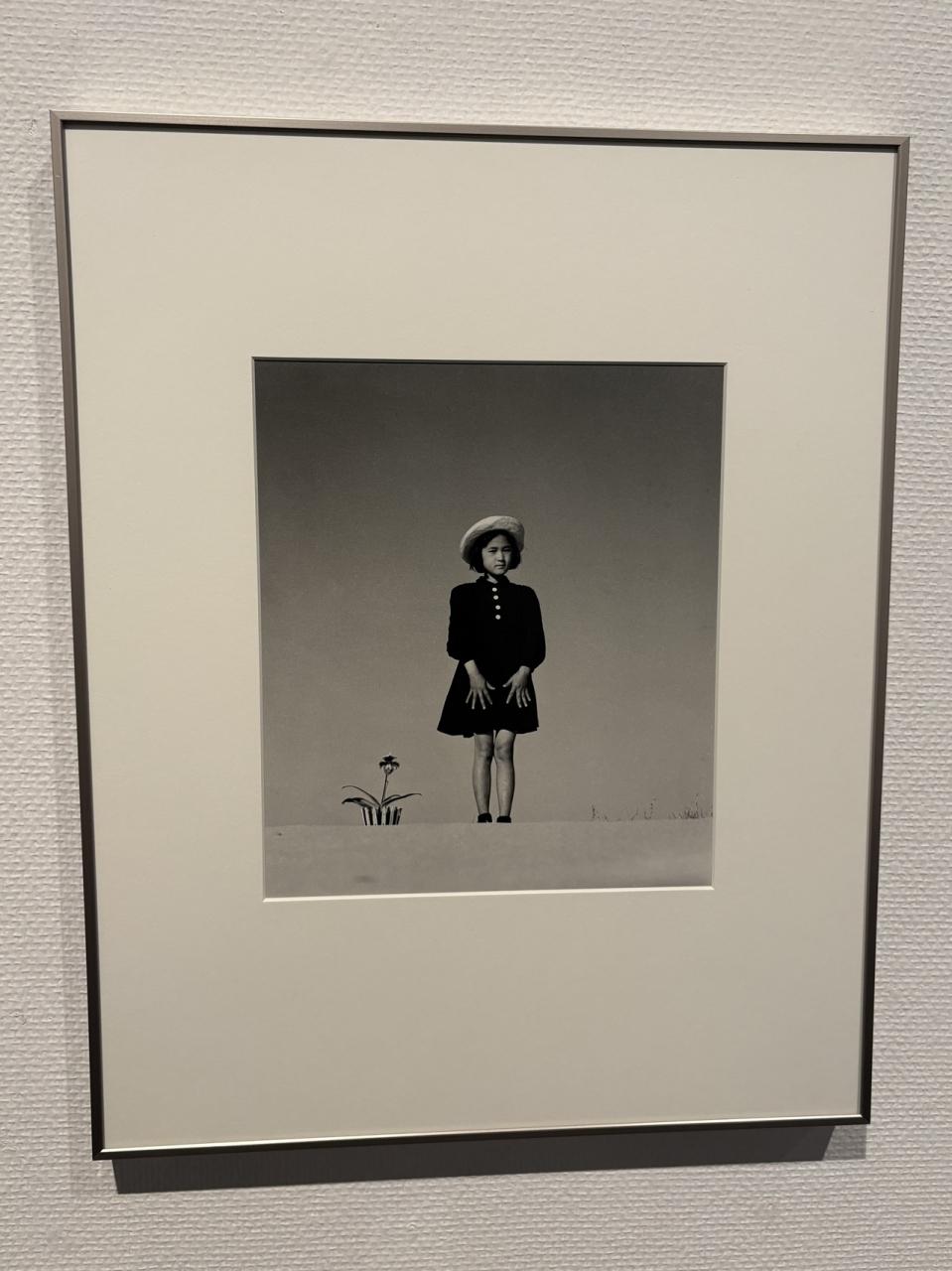
少女四態
Four Girls, Four Positions
1939 (printed later) 昭和14年
ゼラチン・シルバー・プリント
gelatin silver print
作者寄贈
Gift of the artist
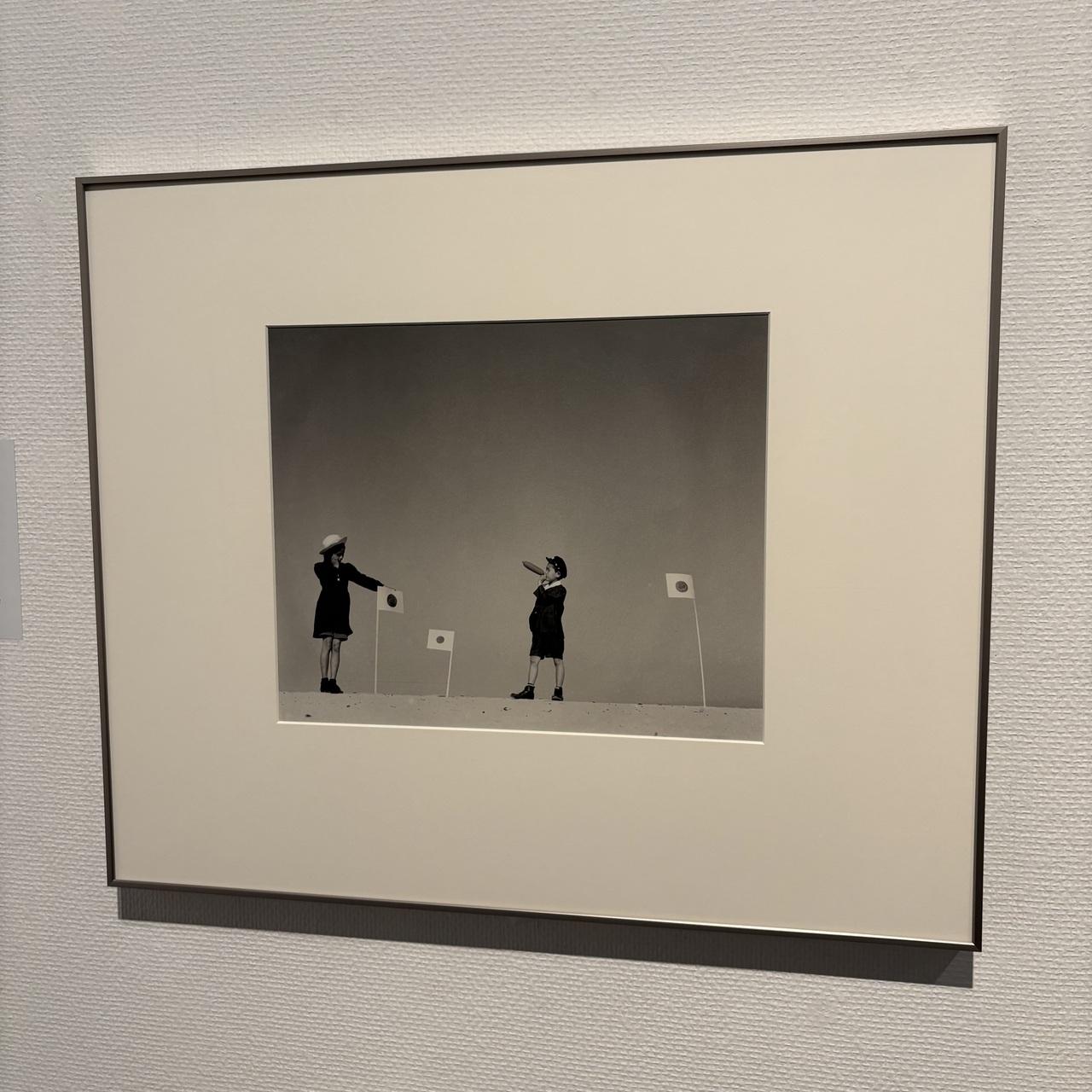
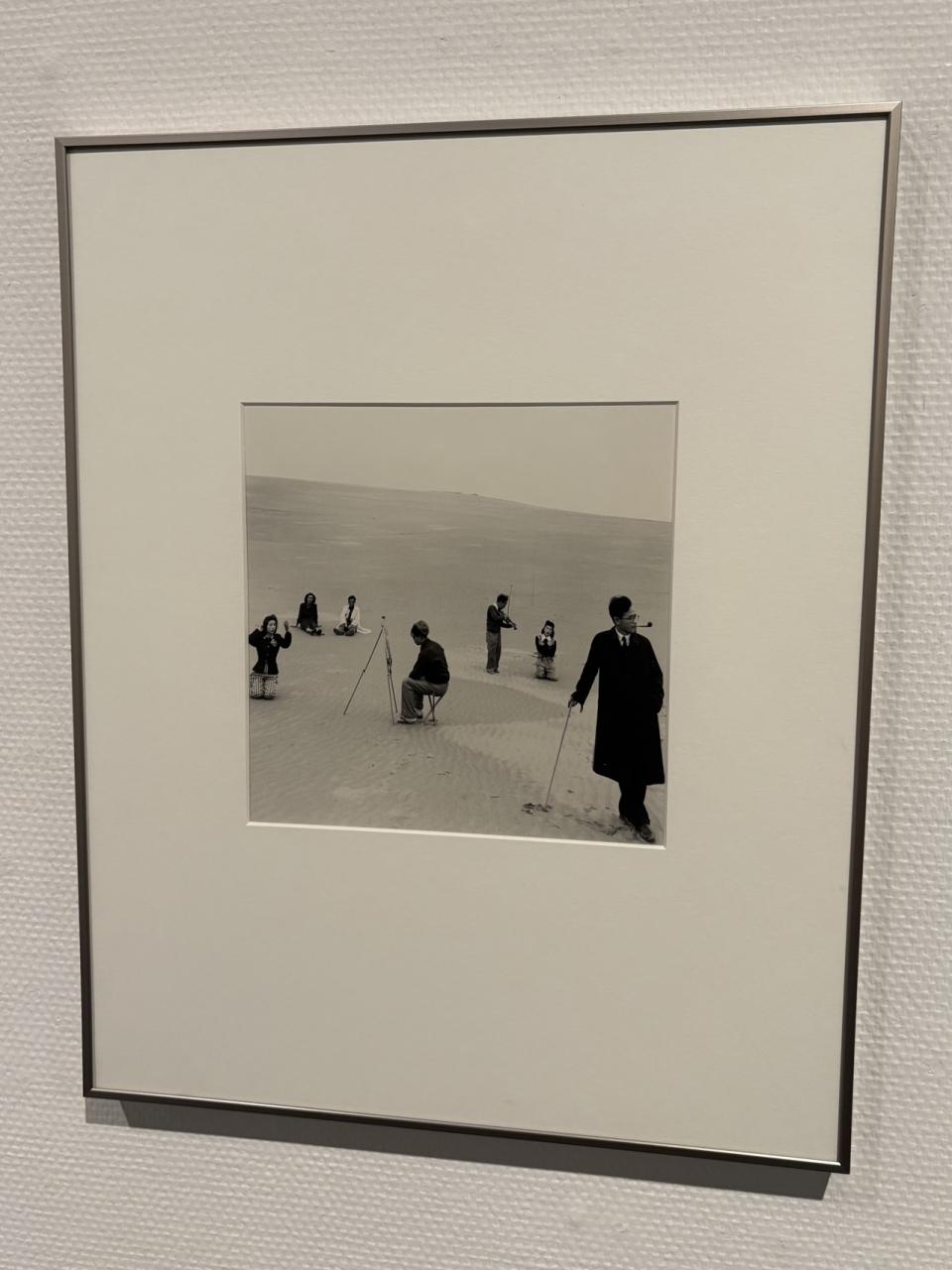
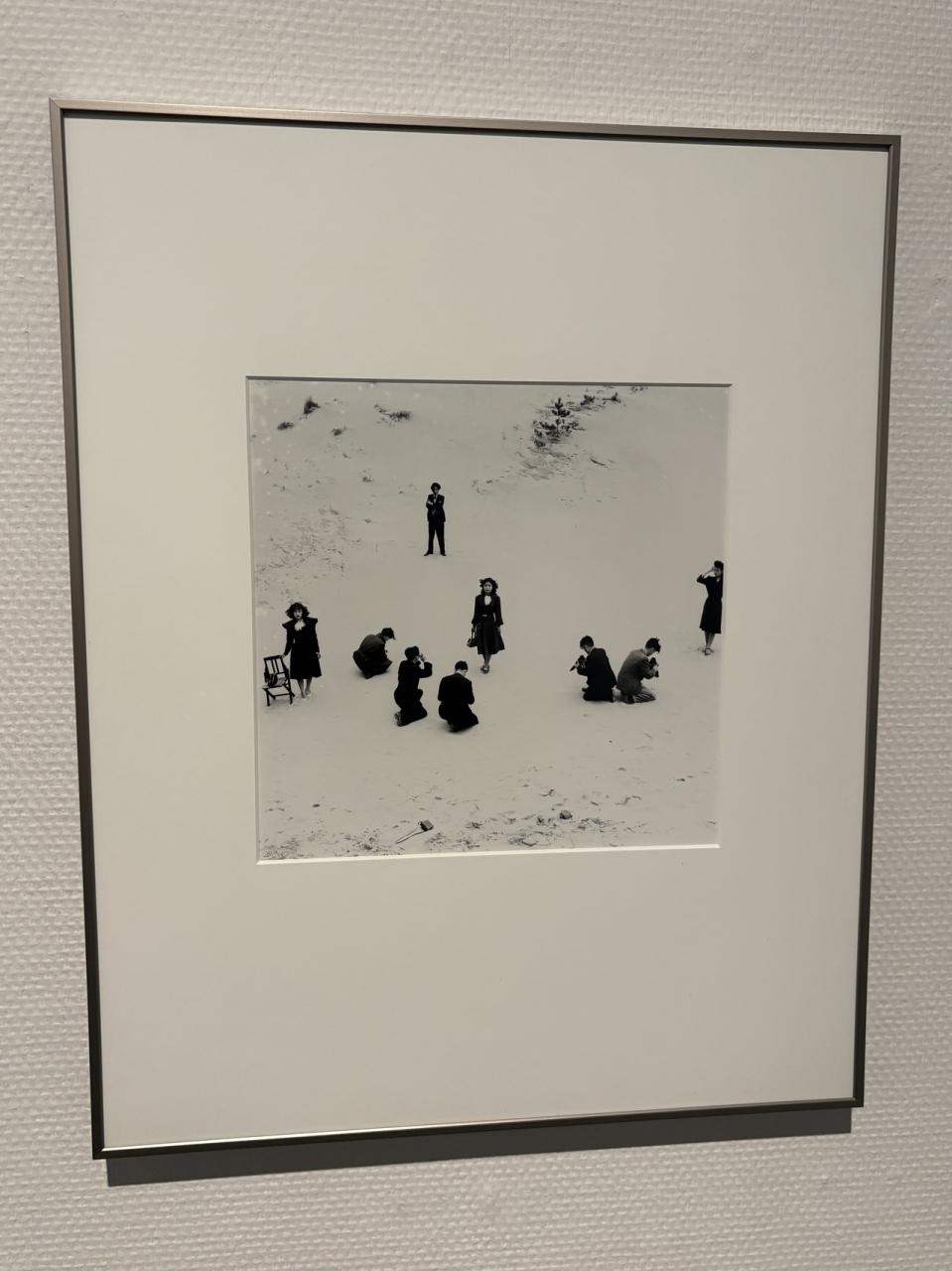
境港の自宅の近くにあった砂浜は、戦前から戦後にかけて植田正治の数多い作品の舞台となっています。中でも独特の画面構成による群像写真は、植田の評価を早くから高めることになりました。こうした海岸や砂丘での群像作品について、植田は後に次のように記しています。「これら一連の群像モノは、すべて正面光で撮ることにしていました。背景は空か海か砂山のいずれで、極力、単純になることを心がけ、例えば空にしても雲を入れることは避けて、奥行きのない平面的な構成を心がけていたことを思いだします」。(「アマチュア諸君!」「カメラ毎日」1978年2月号)
The beach near Ueda's house in Sakaiminato were the setting for many of the photographer's works from before and after the war. Of these, Veda's depictions of groups of people, based on a distinctive composition, quickly established his reputation. In reference to these works, shot on the beach or sand dunes, Ueda said, "I took all of the pictures in this group series with a front light. Whether the sky, sea, or sand dunes were in the background, I set out to make the picture as simple as I could. For example, I remember trying to avoid showing any clouds in the sky and making flat compositions without any depth." ('Hey, Amateursl", Kamera Mainichi, Feb. 1978). -
-
植田正治
UEDA, Shoji
1913-2000
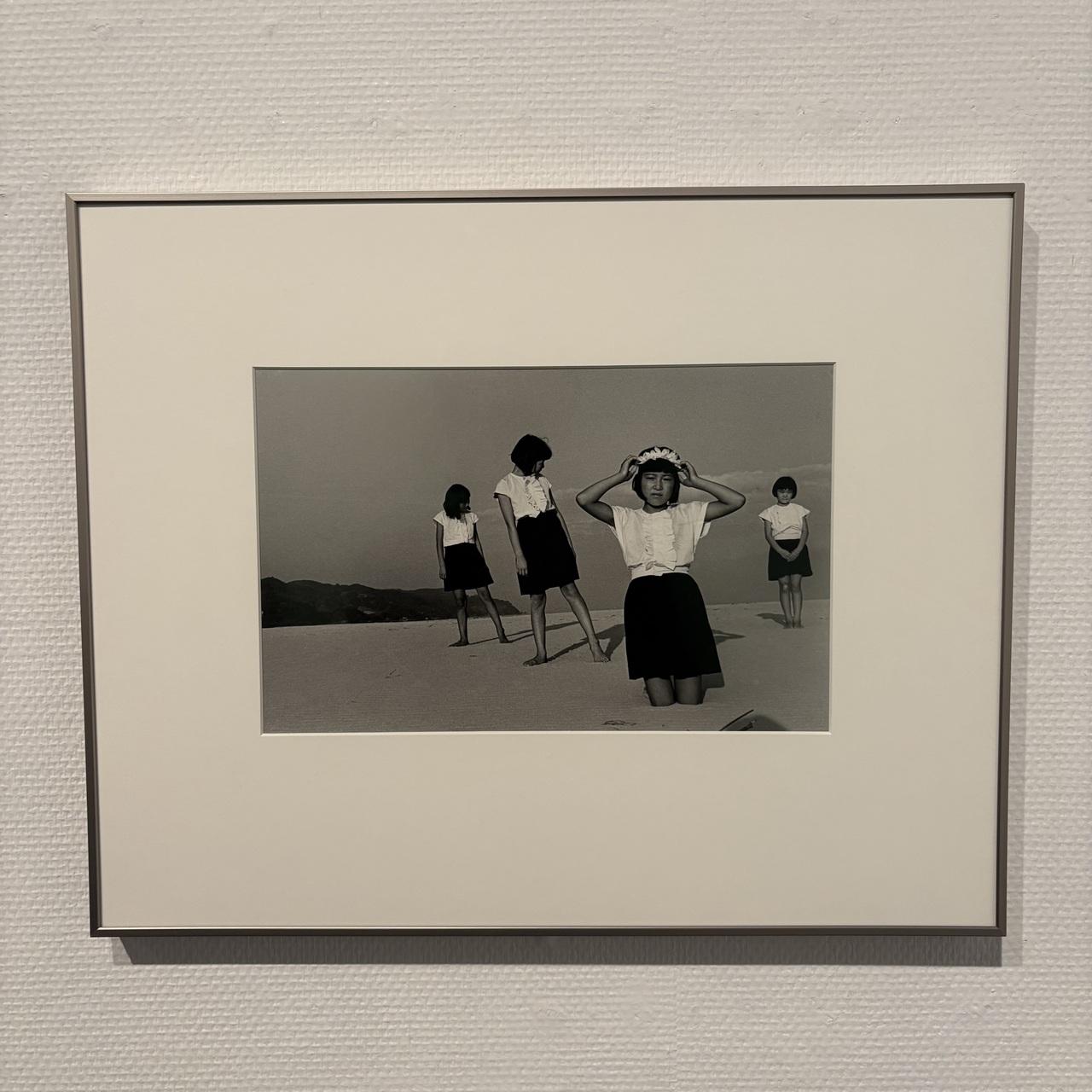
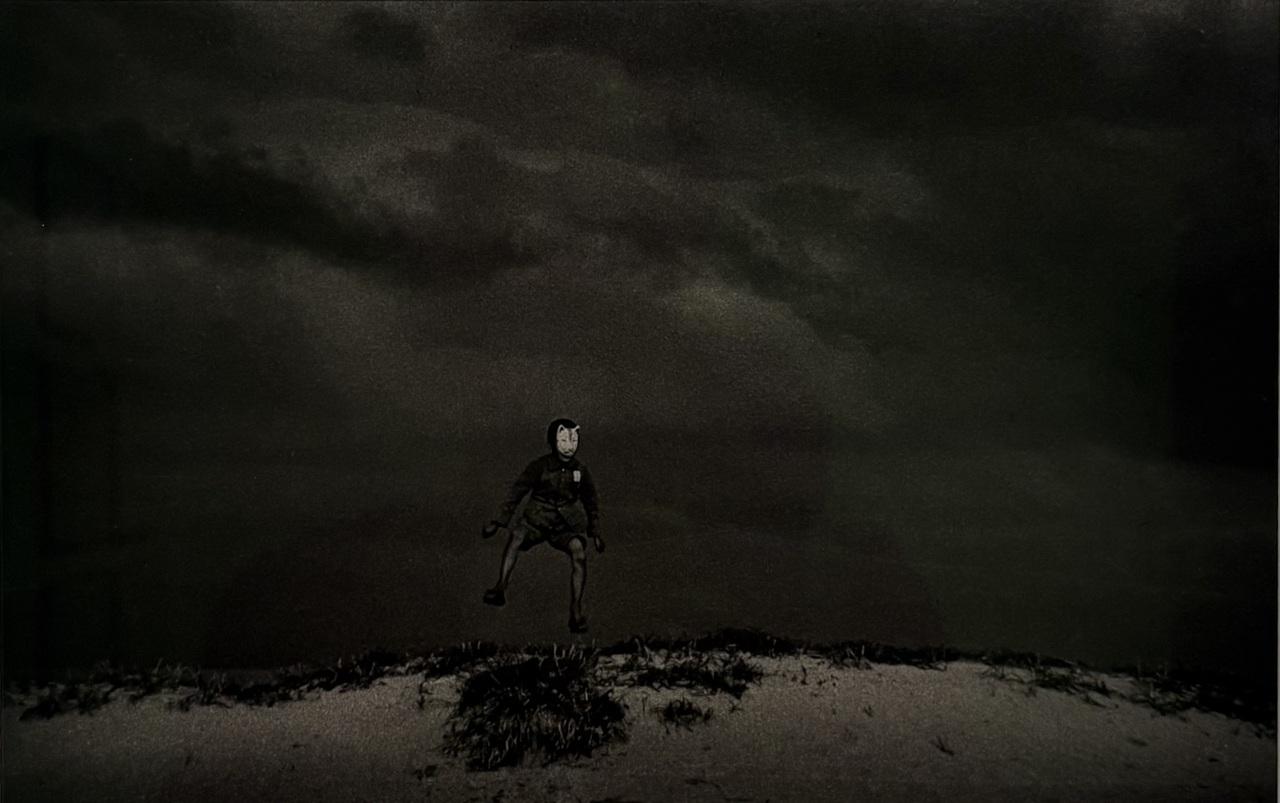
小狐登場
Now the Little Fox Arrives!
1948 (printed later) 昭和23年
ゼラチン・シルバー・プリント
gelatin silver print
購入
Purchased -
-
-
-
植田正治
UEDA, Shoji
1913-2000
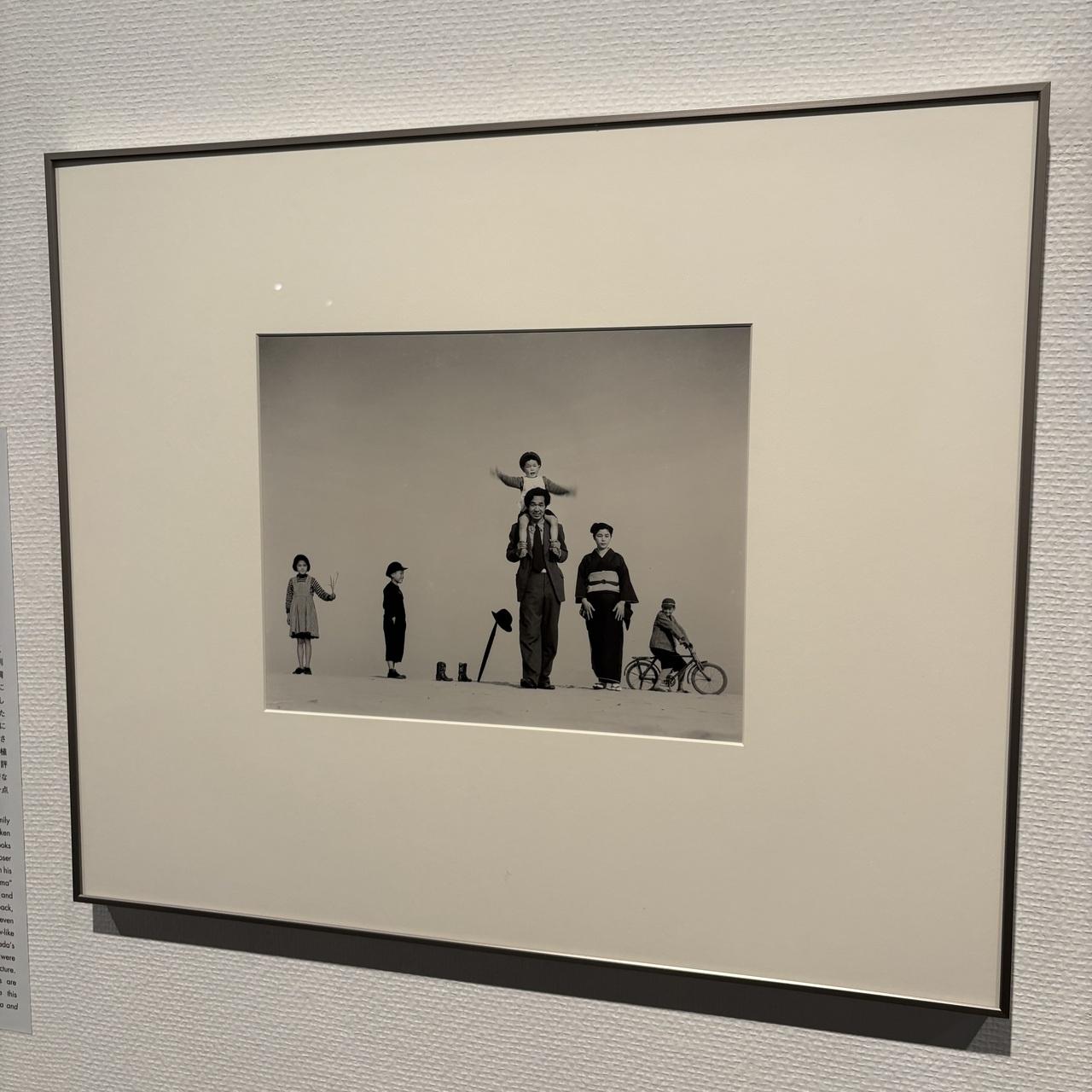
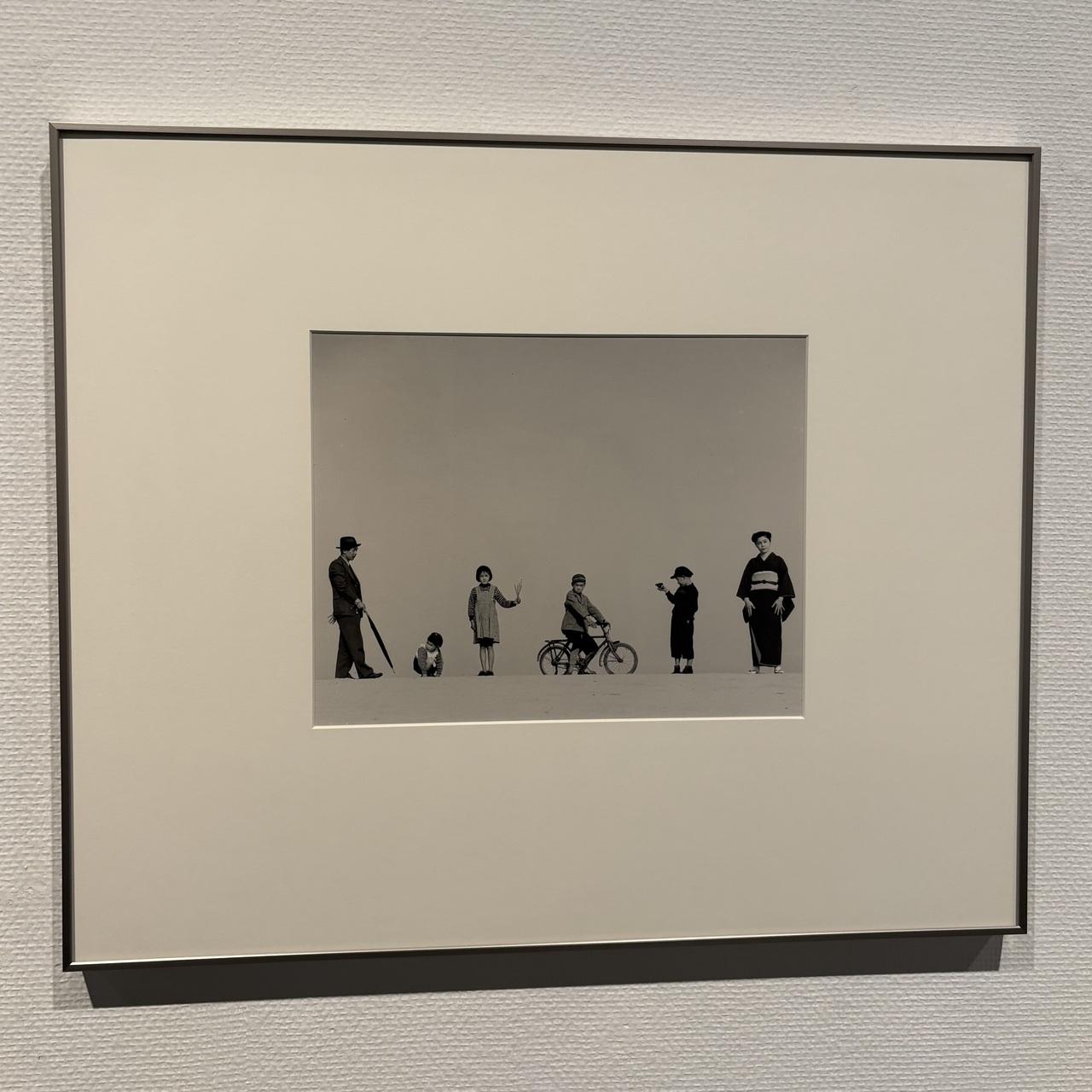
パパとママと子供たち
Papa and Mama and Children
1949 (printed 1993) 昭和24年
ゼラチン・シルバー・プリント
gelatin silver print
購入
Purchased
植田家の親子6人が勢揃いした作品。自宅近くの砂浜で撮影されました。家族は一見、横一列に並んでいるようですが、よく見ると三男を肩車したパパ(写真家自身)とママが一番手前に立ち、左側に立つ長女と二男はそれよりも少し後ろ、そしていちばん右の自転車にまたがった長男がさらに下がった位置にいます。それによって画面に右向きの矢印のかたちが作りだされています。人物が横並びになることの多い植田の演出写真は「平行、並列、平面構成」と評されましたが、シンプルなようでいて、緻密な計算が働いています。同じタイトルのもう一点の作品とも比較してみてください。
In this work, the six members of the Ueda family are assembled in full force. The picture was taken on the beach near Ueda's house. At first, it looks as if the family is in a single line, but on closer examination, "Papa" (the photographer), with his youngest son on his shoulders, and "Mama" (Veda's wife) are standing in front, the girl and boy on the left are standing a little further back, and the boy on the right on his bicycle is even further back. This gives the picture an arrow-like shape, leaning to the right. Many of Ueda's staged photographs using lines of people were criticized for their "parallel, linear, flat" structure. They might seem simple, but the works are meticulously calculated. Please compare this picture with Ueda's other work titled Papa and Mama and Children. -
植田正治
UEDA, Shoji
1913-2000
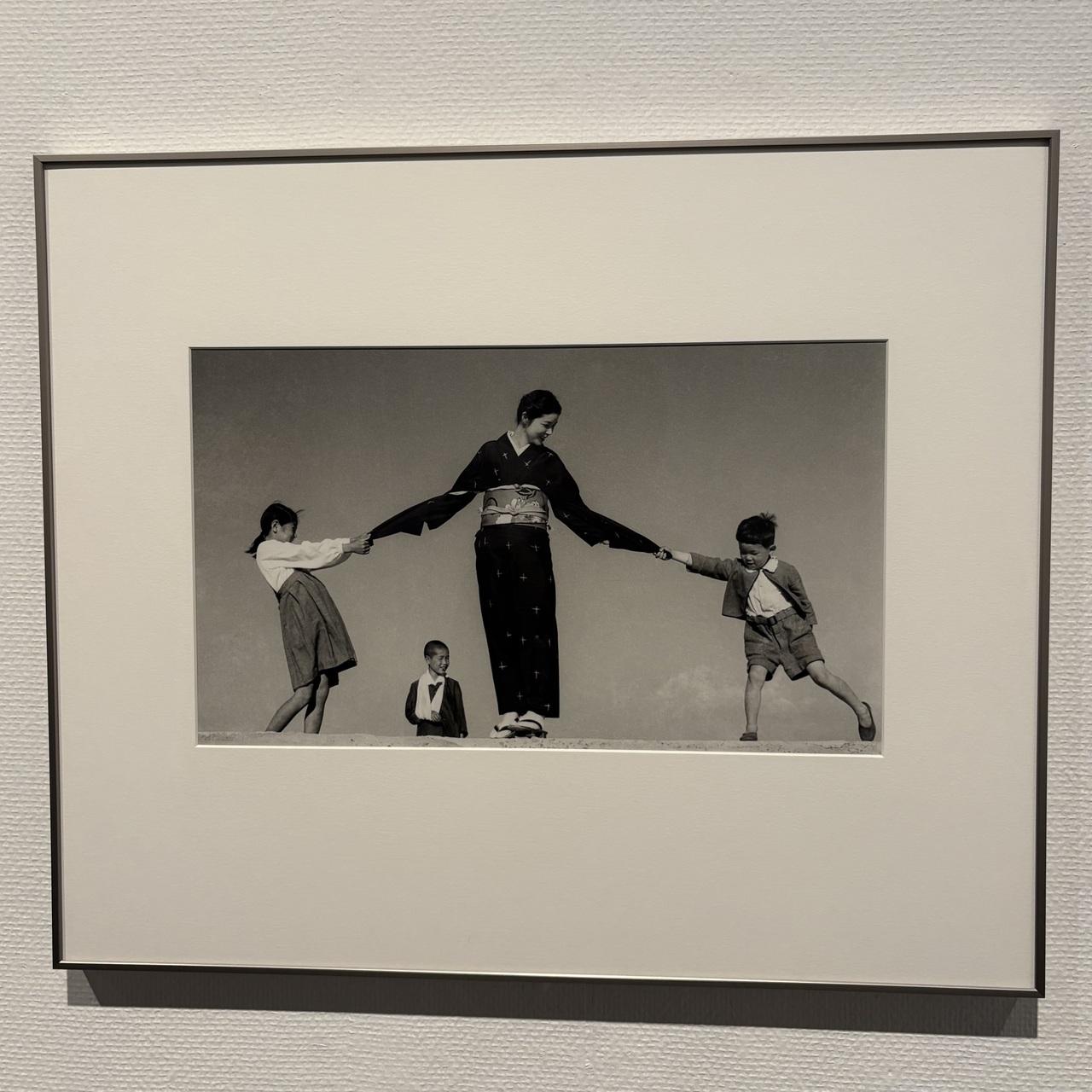
パパとママと子供たち
Papa and Mama and Children
1949 (printed 1993) 昭和24年
ゼラチン・シルバー・プリント
gelatin silver print
購入
Purchased -
-
-
-
-
-
-
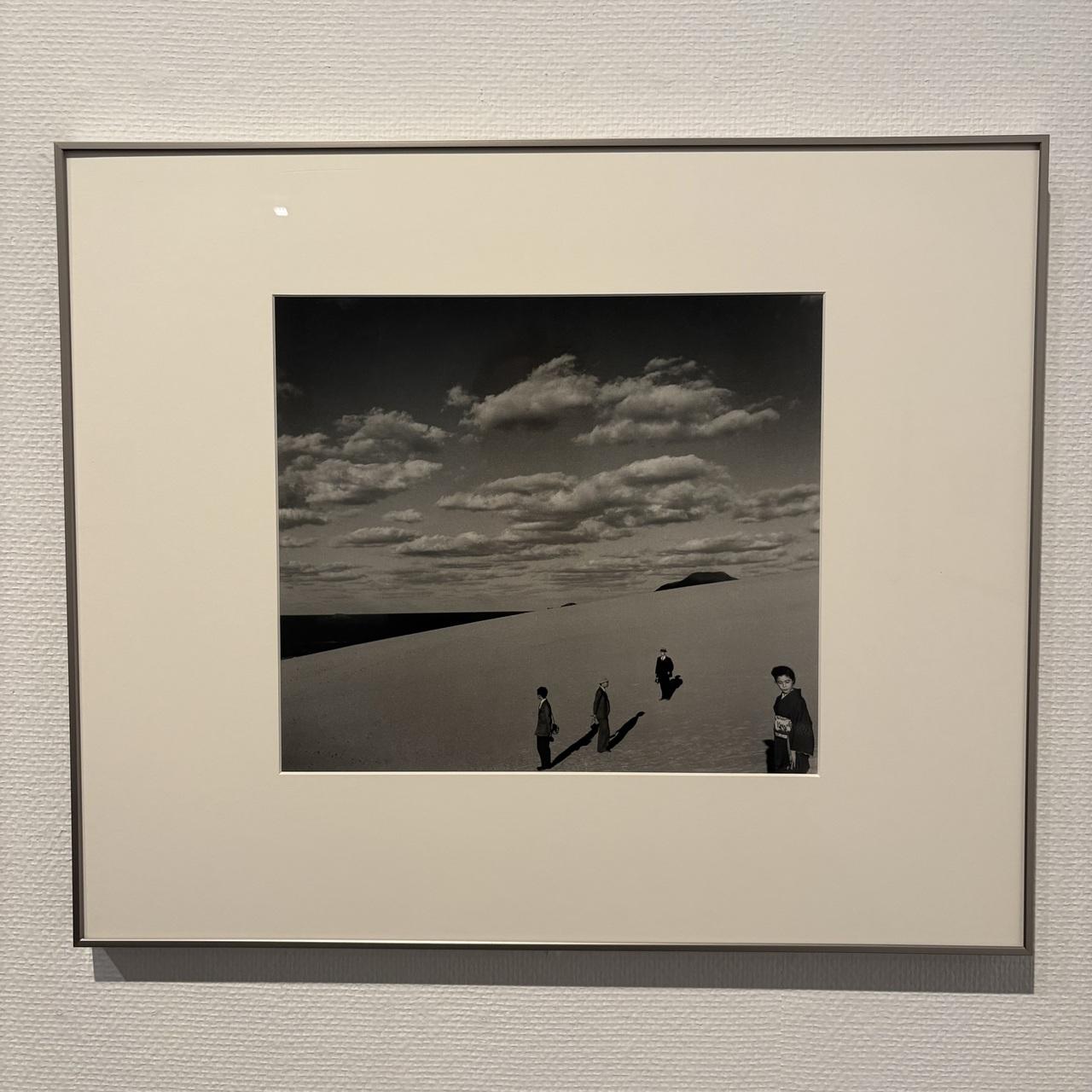
植田正治
UEDA, Shoji
1913-2000
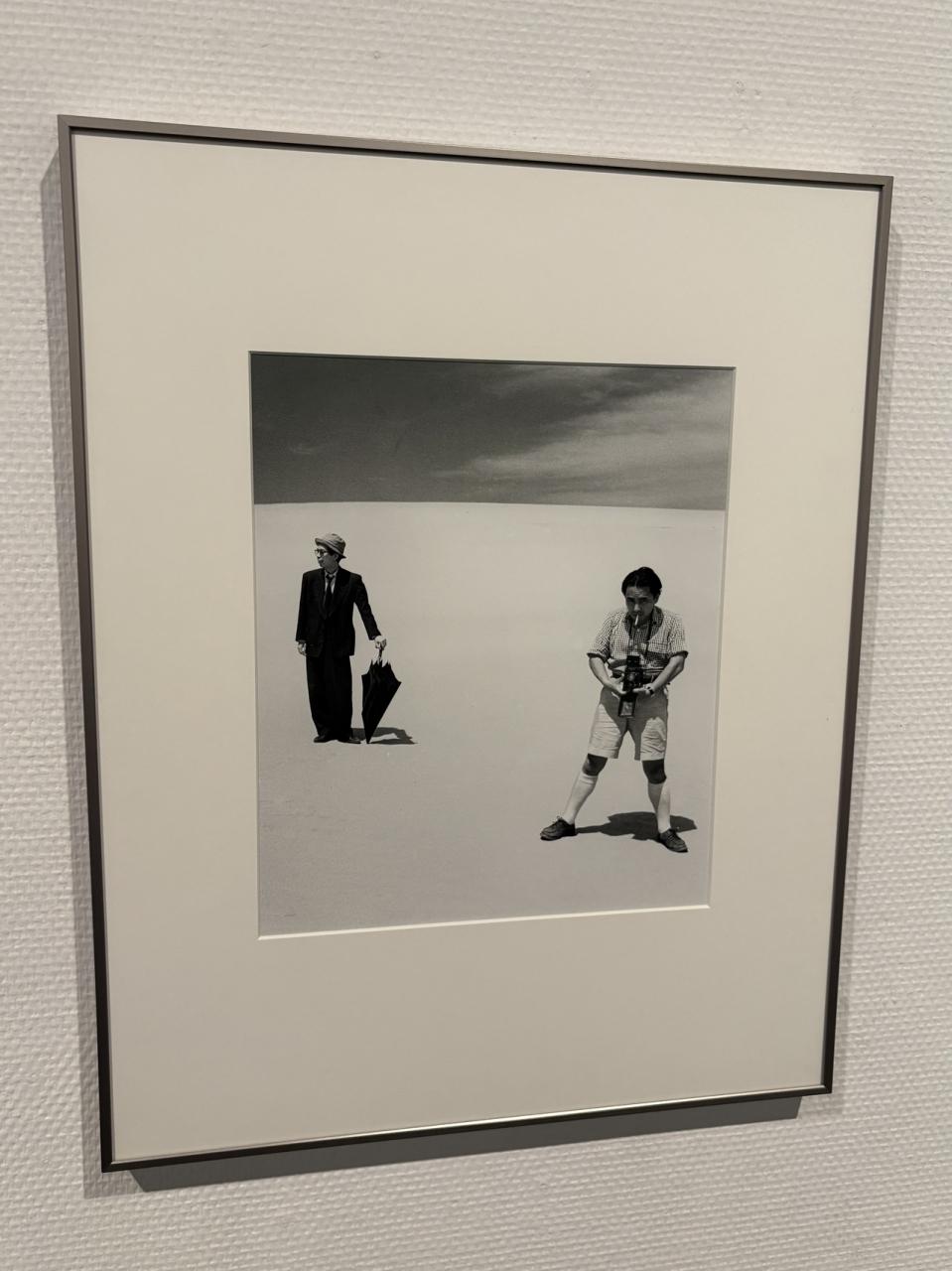
土門拳と石津良介
Domon Ken and Ishizu Ryosuke
1949 (printed 1993)
昭和24年
ゼラチン・シルバー・プリント
gelatin silver print
購入
Purchased
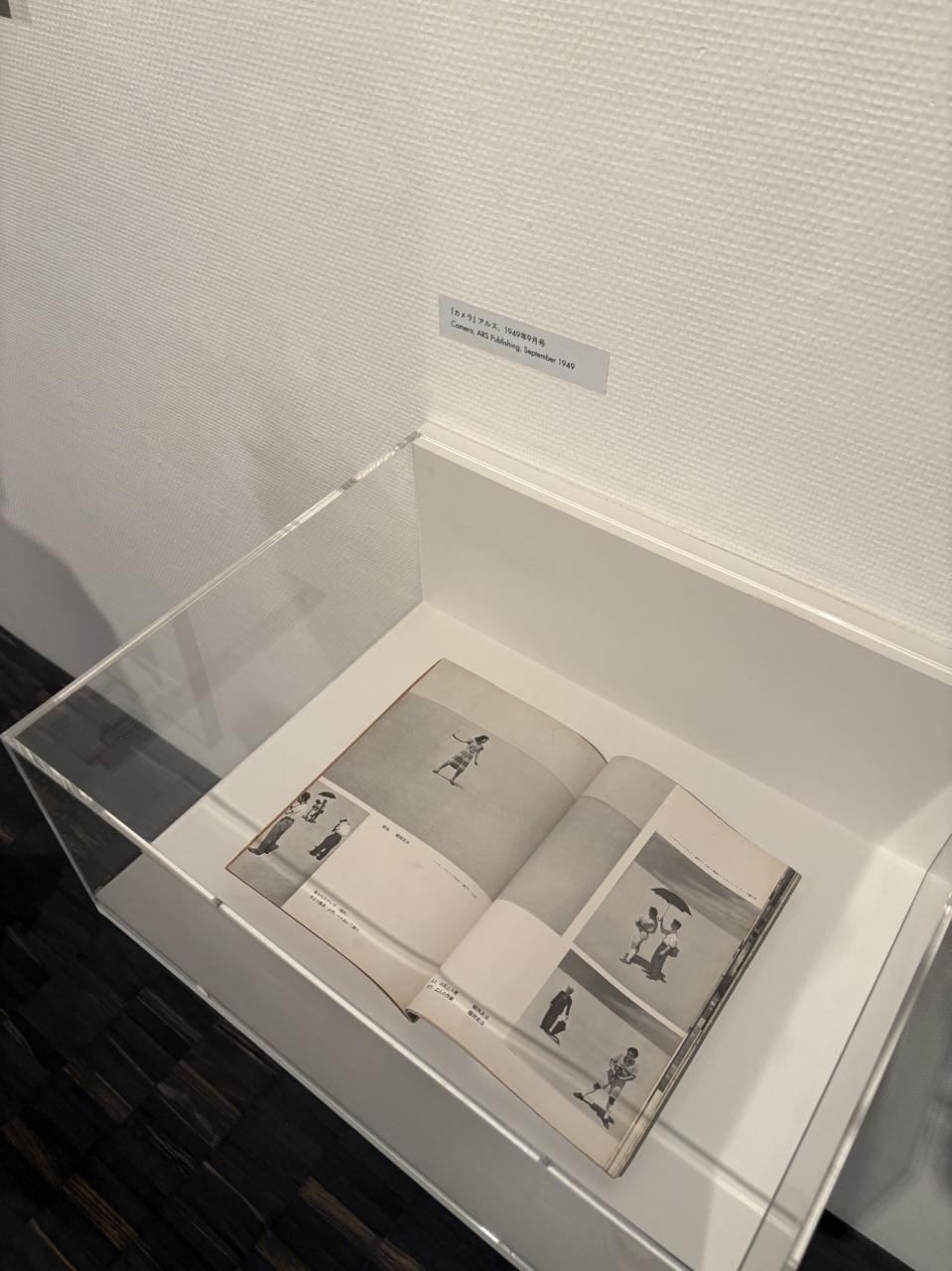
写真雑誌『カメラ』1949(昭和24)年9月号に掲載された作品。土門拳、植田正治、緑川洋一の三人の写真家が鳥取砂丘で競作するという企画で、ともに写真家で、時の『カメラ」誌編集長桑原甲子雄とかつて同誌編集部にいた石津良介が「立会人」として同行していました。土門は翌年から同誌の月例コンテストの評者としてリアリズム写真運動を展開、「絶対非演出の絶対スナップ」といった強い言葉でアマチュア写真家たちを指導していったことで知られますが、天然のスタジオのような砂丘では、すっかり植田調の演出写真の世界に引き込まれているようです。
This work was published in the September 1949 issue of Camera, a photography magazine.
This work was part of a competition between three photographers, Domon Ken, Ueda Shoji, and Midorikawa Yoichi, to take pictures in the Tottori Sand Dunes. The magazine's chief editor Kuwabara Kineo, and Ishizu Ryosuke, part of the editorial staff, served as "iudges." The following year, Domon spearheaded the realistic photography movement as a judge in a monthly contest organized by the magazine. He is remembered for exhorting amateur photographers to pursue "the absolutely pure snapshot, absolutely unstaged." In the sand dunes, a kind of natural studio, we are completely drawn into the staged photographic world of Ueda-cho (Ueda-style). -
『カメラ』アルス、1949年9月号
Camera, ARS Publishing, September 1949
この旅行記のタグ


利用規約に違反している投稿は、報告する事ができます。
-
前の旅行記

MOMAT コレクション展 ~2026.5.10 ⑧ツヤツヤピカピカ。"上田薫 《スプーンに水あめ》"
2026/05/08~
神田・神保町
-
次の旅行記

MOMAT コレクション展 ~2026.5.10 ⑪描くことと見えるものの間一1990年代以降の絵画表現 "...
2026/05/11~
神田・神保町

-

MOMAT コレクション展 ~2026.5.10 ③花ひらく大正。"藤島武二《匂い》"
2026/05/03~
神田・神保町
-

MOMAT コレクション展 ~2026.5.10 ④能楽と歌舞伎。"鳥居忠雅《「隅取十八番より」赤塗筋隈 ...
2026/05/04~
神田・神保町
-

MOMAT コレクション展 ~2026.5.10 ⑤戦間期のコントルポアン。"浅原清隆 《多感な地上》"
2026/05/05~
神田・神保町
-

MOMAT コレクション展 ~2026.5.10 ⑤~⑥ ソル・ルウィット| ウォール・ドローイング#769...
2026/05/05~
神田・神保町
-

MOMAT コレクション展 ~2026.5.10 ⑥1941-1945|戦争/美術。"国吉康雄 《誰かが私の...
2026/05/06~
神田・神保町
-
![MOMAT コレクション展 ~2026.5.10 ⑦今井壽恵と岡上淑子。"今井壽惠 《「オフェリアその後」より[1]》"](https://cdn.4travel.jp/img/thumbnails/imk/travelogue_album/12/06/97/240x180_12069709.jpg?updated_at=1788062966)
MOMAT コレクション展 ~2026.5.10 ⑦今井壽恵と岡上淑子。"今井壽惠 《「オフェリアその後」よ...
2026/05/07~
神田・神保町
-

MOMAT コレクション展 ~2026.5.10 ⑧ツヤツヤピカピカ。"上田薫 《スプーンに水あめ》"
2026/05/08~
神田・神保町
-

MOMAT コレクション展 ~2026.5.10 ⑨ "植田正治 砂丘劇場 《パパとママと子供たち》"
2026/05/09~
神田・神保町
-

MOMAT コレクション展 ~2026.5.10 ⑪描くことと見えるものの間一1990年代以降の絵画表現 "...
2026/05/11~
神田・神保町
旅行記グループをもっと見る
コメントを投稿する前に
十分に確認の上、ご投稿ください。 コメントの内容は攻撃的ではなく、相手の気持ちに寄り添ったものになっていますか?
サイト共通ガイドライン(利用上のお願い)報道機関・マスメディアの方へ 画像提供などに関するお問い合わせは、専用のお問い合わせフォームからお願いいたします。






フォートラベル公式LINE@

おすすめの旅行記や旬な旅行情報、お得なキャンペーン情報をお届けします!
QRコードが読み取れない場合はID「@4travel」で検索してください。
\その他の公式SNSはこちら/




旅行記グループ MOMAT コレクション〔国立東京近代美術館 所蔵作品展〕(2026.3.3-5.10)
0
17