


2026/05/05 - 2026/05/09
113位(同エリア935件中)

旅熊 Kokazさん
- 旅熊 KokazさんTOP
- 旅行記1932冊
- クチコミ857件
- Q&A回答101件
- 1,714,146アクセス
- フォロワー756人
MOMAT〔国立東京近代美術館〕コレクション展 ~2026.5.10
⑤戦間期のコントルポアン
日付はダミーで、5月9日(土)訪問
MOMATコレクションにようこそ!
当館コレクション展の特徴をご紹介します。まずはその規模。1952年の開館以来の活動を通じて収集してきたおよそ14,000点の所蔵作品から、会期ごとに約200点を展示する国内最大級のコレクション展です。そして、それぞれ小さなテーマが立てられた全12室のつながりによって、19世紀末から今日に至る日本の近現代美術の流れをたどることができる国内随一の展示です。
今期の見所紹介です。4階2室は、当館と金沢の国立工芸館とのコラボレーション企画。鈴木長吉《十二の鷹》(重要文化財)や、新収蔵の金森宗七《花鳥文様象耳付大花瓶》など名品が目白押しです。
また毎年恒例の「美術館の春まつり」にちなみ、川合玉堂《行く春》、跡見玉枝《桜花図巻》など人気作品を惜しげもなくお見せします(3月3日―4月12日)。「春まつり」後(4月14日―5月10日)も豪華です。1階で開催の「下村観山展」(3月17日から)にちなみ、横山大観、菱田春草など観山をとりまく芸術家による素晴らしい作品群を集めました。
今期も盛りだくさんのMOMATコレクション、どうぞお楽しみください。
https://www.momat.go.jp/exhibitions/r7-3
- 旅行の満足度
- 5.0
-

5. 戦間期のコントルポアン
この部屋に展示した岡本太郎の作品タイトル「コントルポアン」は、音楽用語で「対位法」を意味します。複数の独立した旋律を重ねて響き合わせる方法です。戦間期、すなわち第一次世界大戦終結から第二次大戦勃発までの1920-30年代には、ヨーロッパを中心に、シュルレアリスムと抽象美術という二つの潮流が時代を動かしていました。それぞれ精神分析学と自然科学の最新動向を汲んで、シュルレアリスムは抑圧された無意識の世界を探求し、抽象美術は現実のより真なる表象の創出に挑みます。「非合理」と「合理」として対置されるこれらの潮流ですが、岡本がどちらにも属さない表現を模索していることが示すように、まさしく互いに醬き合う動きが明確に意識されていたからこそ、美術界は新たな芸術が切り拓かれる予感に満ちていました。そして、これら二つの「旋律」は、台頭するファシズムに覆われつつある同時期の政治状況に対する抵抗の歌でもありました。
5. Counterpoint in the Interwar Period
Counterpoint, the title of Okamoto Taro's work on view in this room, is a musical term that refers to the technique of layering multiple independent melodies to produce harmonic interplay. During the years between the end of World War I and the outbreak of World War Il, in the 1920s and 1930s, two major movements, Surrealism and abstraction, came to the fore, especially in Europe. Drawing on developments in psychoanalysis and the natural sciences respectively, Surrealism probed the subconscious mind, while abstract art pursued a form of representation that aimed for truths beyond the visible world. Although they are often framed as a dichotomy between the "irrational" and the "rational," Okamoto's search for an art that belonged to neither shows that many artists were aware of how the two movements echoed one another, creating a sense that new artistic possibilities were opening up. These two "melodies" were also battle songs of opposition to the political climate of the period, which was increasingly overshadowed by the rise of fascism.東京国立近代美術館 美術館・博物館
-
-
-
-
-
吉原治良
YOSHIHARA, Jiro
1905-1972
海辺の静物
Still Life by the Sea
1931
昭和6年
油彩・キャンバス oil on canvas
購入
Purchased -
-
北脇昇
KITAWAKI, Noboru
1901-1951
空の訣別
Perishing in the Sky
1937 昭和12年
油彩・キャンバス oil on canvas
北脇かね氏寄贈
Gift of Kitawaki Kane
1937(昭和12)年8月、南京渡洋爆撃に参加した梅林孝次中尉の乗る攻撃機が被弾し、墜落した出来事が主題です。梅林は別れに白いハンカチを振り、パラシュートを使わず自爆したと伝えられ、当時は「あ、梅林中尉」という歌が作られるほどの人気でした。ここでは戦闘機はカエデの種に、ハンカチを振る梅林の手は赤いサンゴに、それぞれ見立てられています。
なんとも不思議な作品ですが、北脇は遠くで起きている戦争を身近なものにたとえて表すことで何とか自分の実感に引き寄せ、来るべき未来を予見しようとしていたのではないでしょうか。
This work deals with an incident that occurred in August 1937 in which a fighter plane, piloted by Lieutenant Umebayashi Koji, was shot down in a bombing raid on Nanjing. Umebayashi is said to have waved a white handkerchief in a farewell gesture and crashed without attempting to use his parachute. He became popular enough to inspire a song called "Oh, Lt. Umebayashi." Here, his plane is a maple-seed pod and his hand and handkerchief a piece of red coral.
Though the work remains mysterious, we can imagine that by comparing the war that was raging faraway to these familiar things, Kitawaki was drawing on his own feelings in an effort to foresee a future, which was expected to arrive very soon. -
-
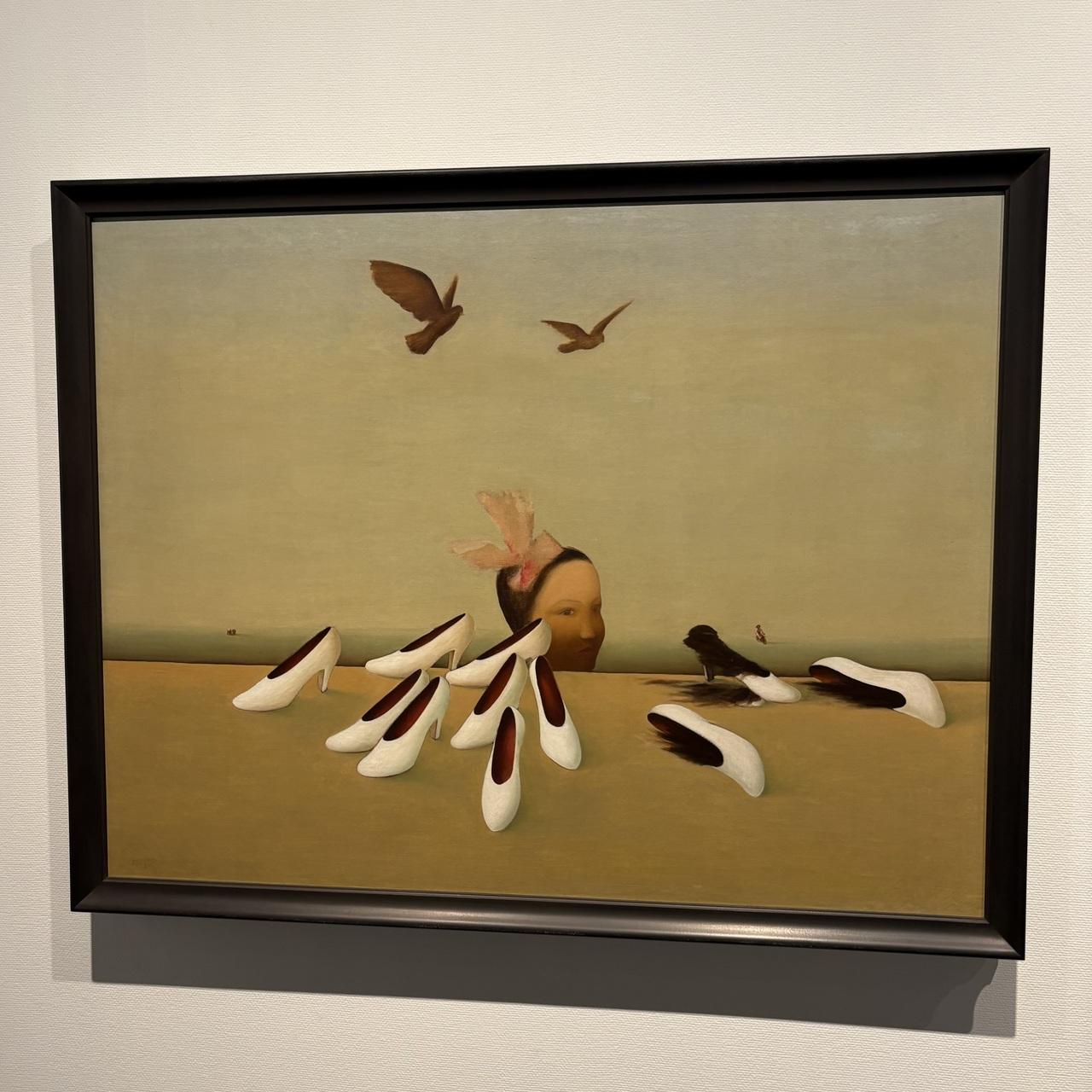
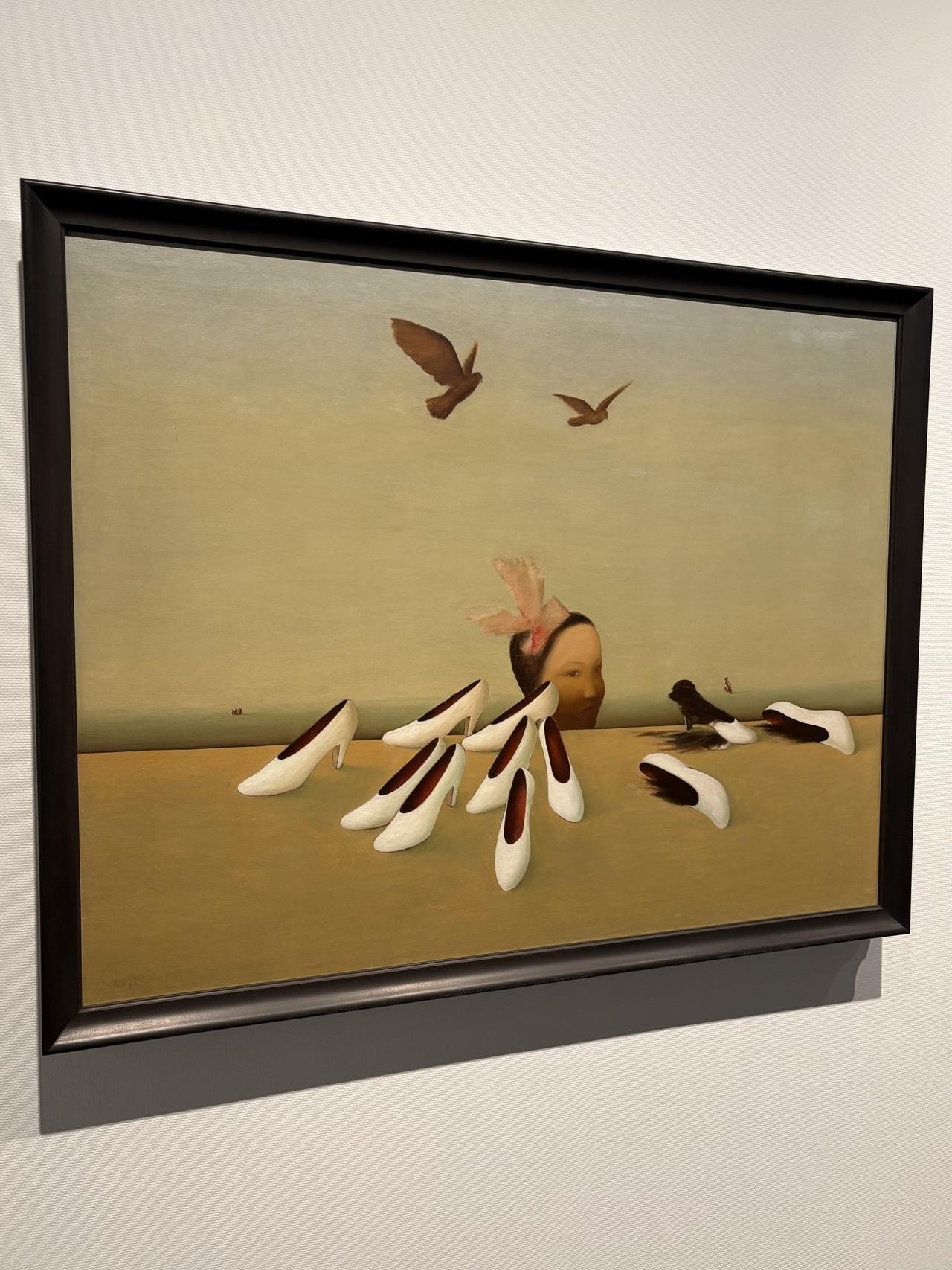
浅原清隆
ASAHARA, Kiyotaka
1915-1945
多感な地上
This World of Emotions
1939 昭和14年
油彩・キャンバス oil on canvas
渡辺美枝子氏寄贈
Gift of Watanabe Mieko
少女の手前にはたくさんのハイヒール。そのうちのひとつは、子犬に姿を変えつつあります。遠くには自転車に乗る子供と二匹の犬。遠景は彼女の幼い頃の記憶、そして手前のハイヒールは彼女が大人になる未来を暗示しているのかもしれません。彼女の物憂げな表情は、過去への郷愁と未来への不安のせいでしょうか。浅原は美術学校の卒業直前にこの絵を描きました。そのときの心境が、この少女の表情に反映しているようにも見えます。彼はその後、戦地へ送られ、消息を絶ちました。
A young girl is surrounded by high-heel shoes, one of which is in the process of turning into a puppy. Off in the distance, there is a child riding a bicycle and two other dogs. The background seems to be derived from the girl's childhood memories and the shoes in the foreground seems to suggest her impending adulthood. Perhaps her languid expression is rooted in her nostalgia for the past and anxiety about the future. Asahara painted the picture just prior to graduating from art school. The girl's expression seems to reflect his state of mind at the time. Asahara was later sent to the battlefront, where disappearedwithout a trace. -
-
-
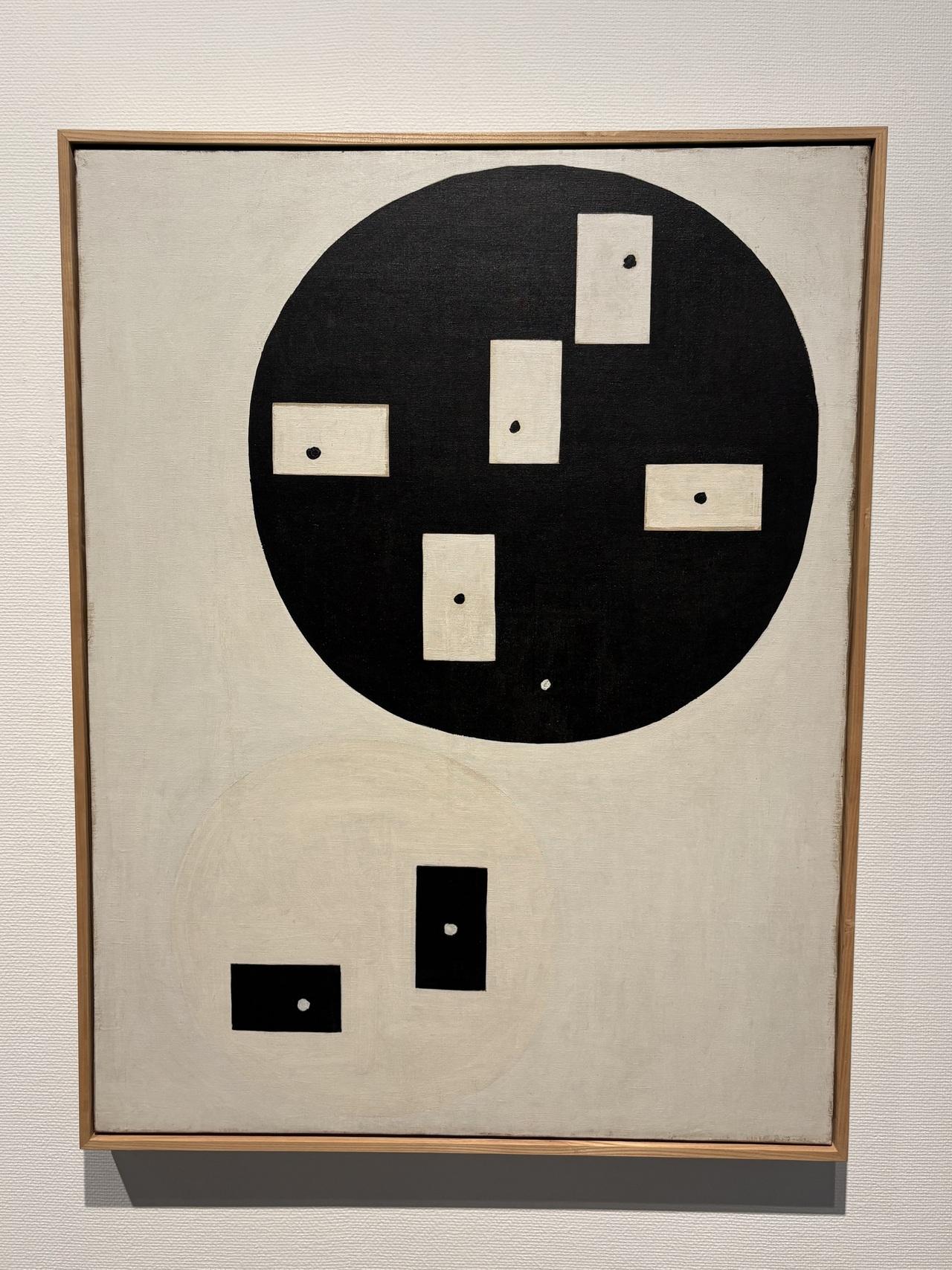
オノサト・トシノブ(小野里利)
ONOSATO, Toshinobu
1912-1986
黒白の丸
Circles in Black and White
1940 昭和15年
油彩・キャンパス
oil on canvas
購入
Purchased -
村井正誠
MURAI, Masanari
1905-1999
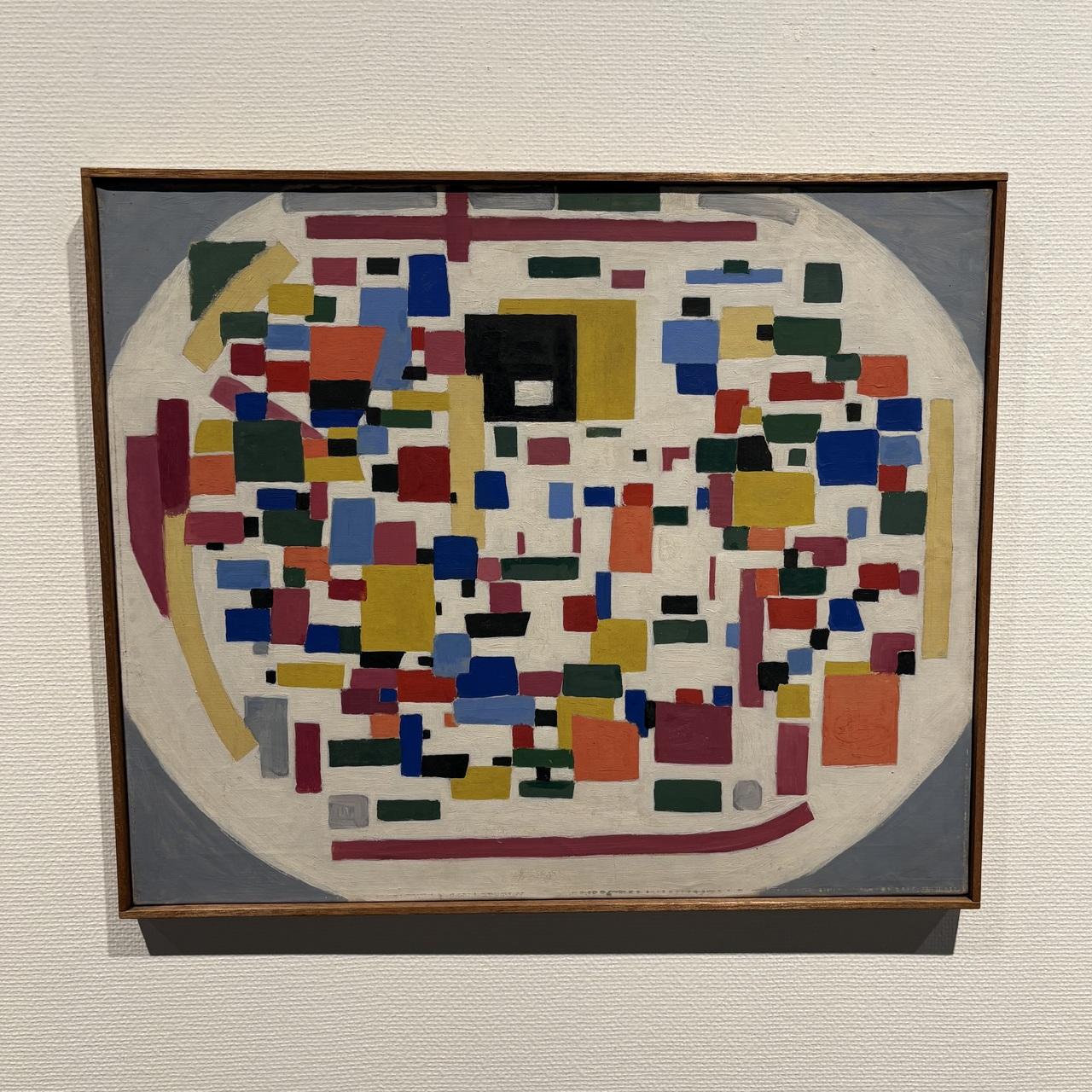
CITÉ
City
1938 昭和13年
油彩・キャンバス oil on canvas
購入
Purchased
シテ(フランス語で「都市」)と題された本作は、1930年代に内モンゴルの自治を目指す運動で注目されていた中国の都市、百霊を撮影した航空写真をヒントに描かれました。俯瞰した道路や集落の形をリズムとみなし、白黒の写真を赤、黄、青、緑などの鮮やかな色面の集合に変換しています。奥行きのある空間を浅い面に還示し、さらに四隅のブルーグレーで景色を丸く枠づけることで、画家は従来の絵画から抜け出そうと試みているようです。
This work, titled Cité (French for "city"), is based on an aerial photograph of the Chinese city of Bailingmiao, which drew attention in the 1930s amid a movement advocating autonomy for Inner Mongolia. Viewing the roads and clusters of dwellings from above as a visual rhythm, the artist reimagined the black-and-white photograph as an arrangement of vivid color planes in red, yellow, blue, green, and other hues. By reducing deep space to a shallow pictorial surface and rounding the view with blue-gray passages in the four corners, the painter appears to be looking for a way to move beyond the limits of conventional painting. -
山口長男
YAMAGUCHI, Takeo
1902-1983
池
Pond
1936
昭和11年
油彩・キャンバス
oil on canvas
購入
Purchased -
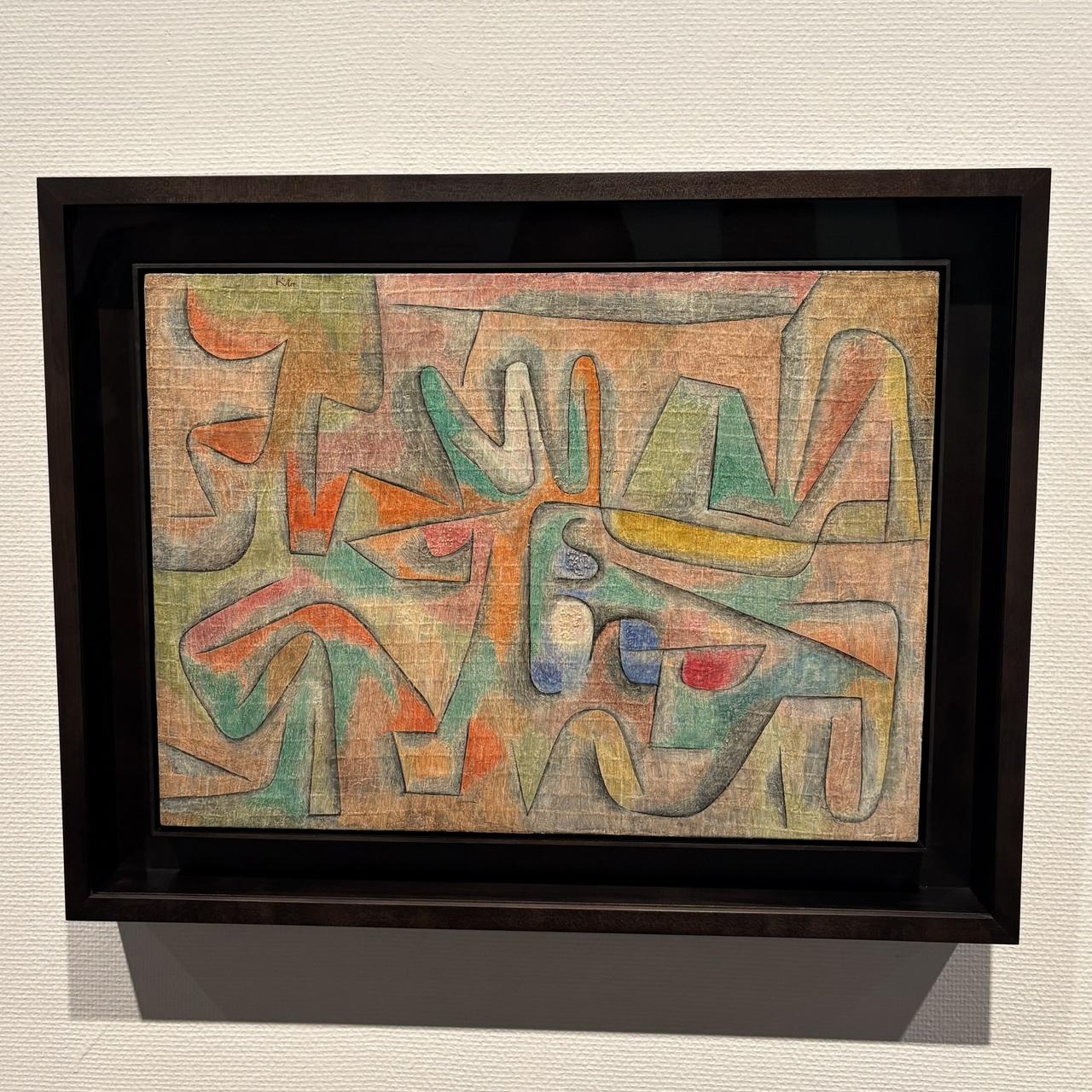
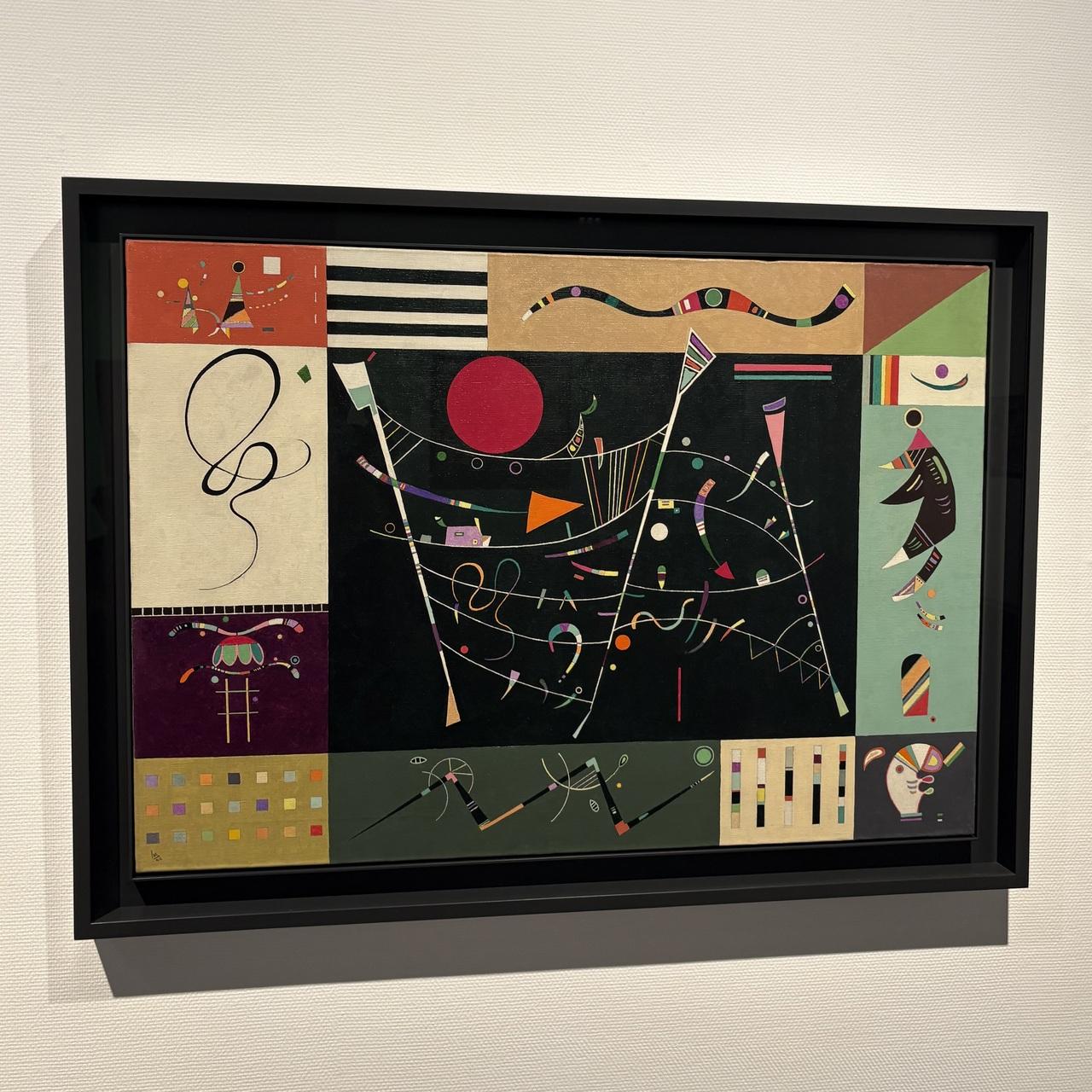
パウル・クレー
Paul Klee
1879-1940
花のテラス
Flower Terrace
1937昭和12年
水彩・綿布(合板に貼付)
watercolor on cotton mounted on plywood
購入
Purchased
どれか線をひとつ、目で追ってみましょう。線がどこかで閉じると、その内側に人は形を認識します(たとえば丸や四角)。けれどこの作品では、線はほとんど閉じることがありません。そして線につけられた陰影もあいまって、線の内側と思った領域は、いつのまにか外側にくるりと変化したりします。線のどちら側にイメージはあるのでしょう?また豊かな色彩が、線とは別のルールで各所にイメージを発生させています。多彩なイメージが次々に生まれ出てくる絵画という場を、クレーは「花のテラス」と名づけたのかもしれません。
Try letting your eye follow one of the lines. If at some point the line forms an enclosure, one perceives a shape (such as a circle or a square) inside the enclosed area. However, in this work there is virtually no point at which lines intersect to form closed shapes. And with shading added to the lines, areas that one might think are inside lines can suddenly appear to be outside them. Which side of the line is the figure, and which is the ground? Meanwhile, vivid colors generate images at various points according to rules that differ from those of the lines. Klee may have titled this work Flower Terrace in reference to the art of painting itself, as the fertile source of myriad images. -
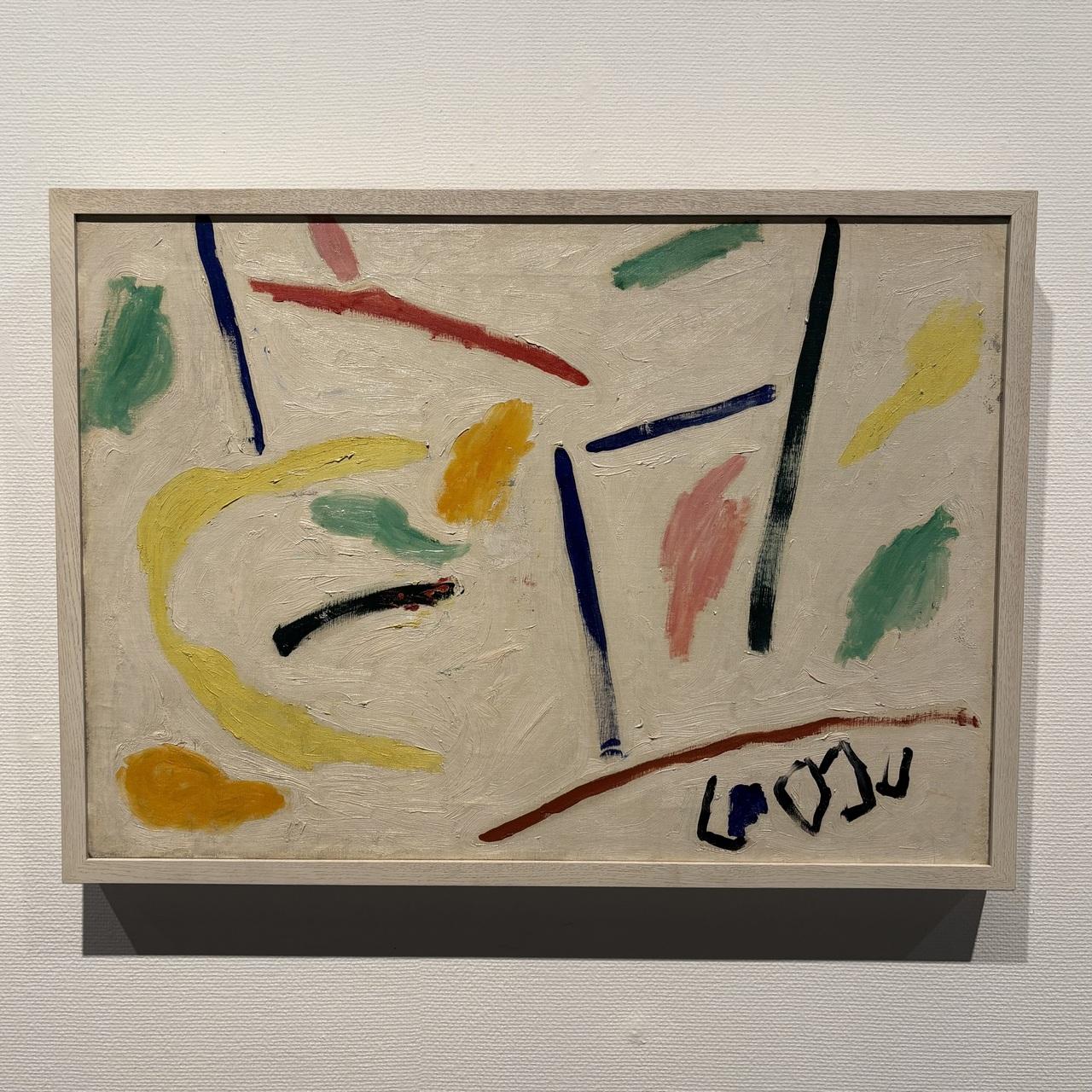
吉原治良
YOSHIHARA, Jiro
1905-1972
作品2
Work 2
c.1934
昭和9年頃
油彩・キャンバス oil on canvas
購入
Purchased -
-
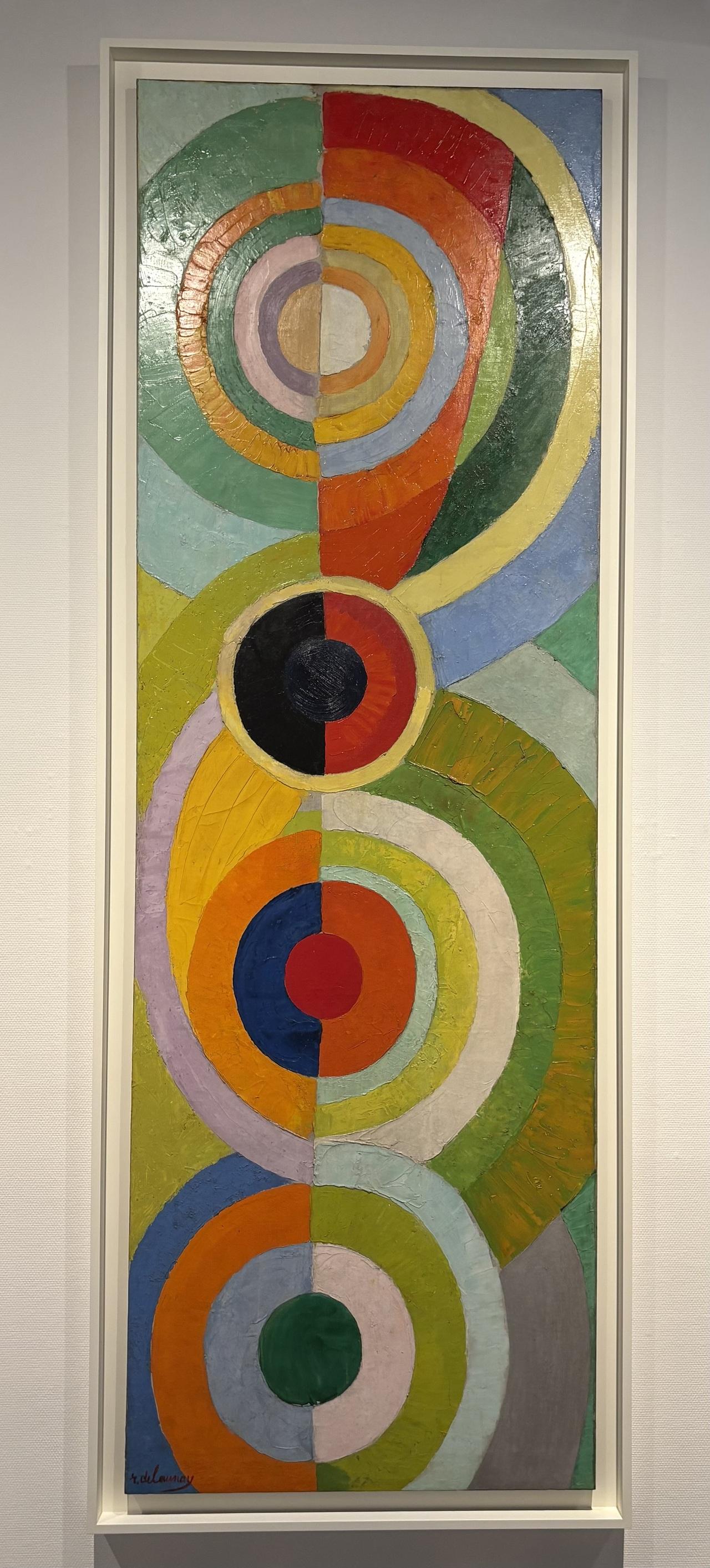
ロベール・ドローネー
Robert Delaunay
1885-1941
リズム 螺旋
Rhythm-Spiral
1935昭和10年
油彩・キャンバス oill on canyas
賜入
Purchased
ドローネーは現実の事物を再現的に描写するのではなく、色彩そのものの表現性を追求した画家です。ディスク状の同心円を縦に四つ並べた構成で、多様な色彩が配置されています。タイトルは「リズム螺旋」です。隣り合う色彩が相互に作用することで、あるいは同じ色彩が別々の円で反復されることで「リズム」が生まれ、また円と円をつなぐ二次元のS字状の曲線は、三次元的な奥行きをはらむ「螺旋」を描きます。
ドローネーが自身の色彩についての考えを記した論考「光」(1912年)は、パウル・クレーがドイツ語訳して発表されたもので、彼の色彩論はクレーをはじめ多くの画家に影響を与えました。
Robert Delaunay was a painter who explored the expressive power of color itself without realistically depicting objects from the actual world. This work, composed of four sets of concentric discs arranged vertically and rendered in a rich range of colors, is titled Rhythm-Spiral. The "rhythm" is generated by interactions among adjacent colors, or by repetition of the same color in different circles, and the two-dimensional S-shaped
curves connecting the circles form a "spiral" that implies three dimensional depth.
Delaunay's treatise "Light" (1912), which spelled out his ideas on color, was published in a translation from French to German by Paul Klee, and his chromatic theories influenced Klee and many other painters. -
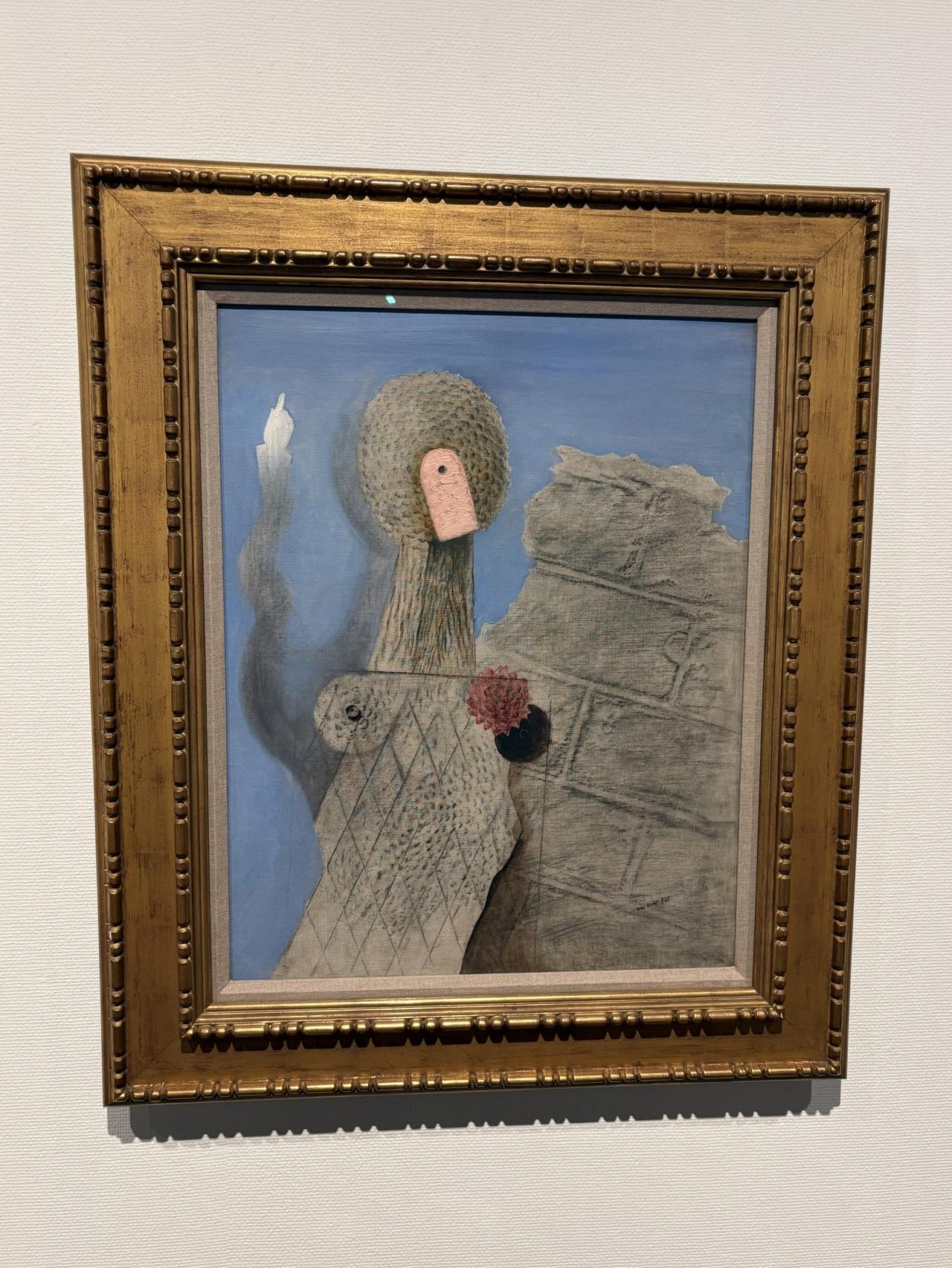
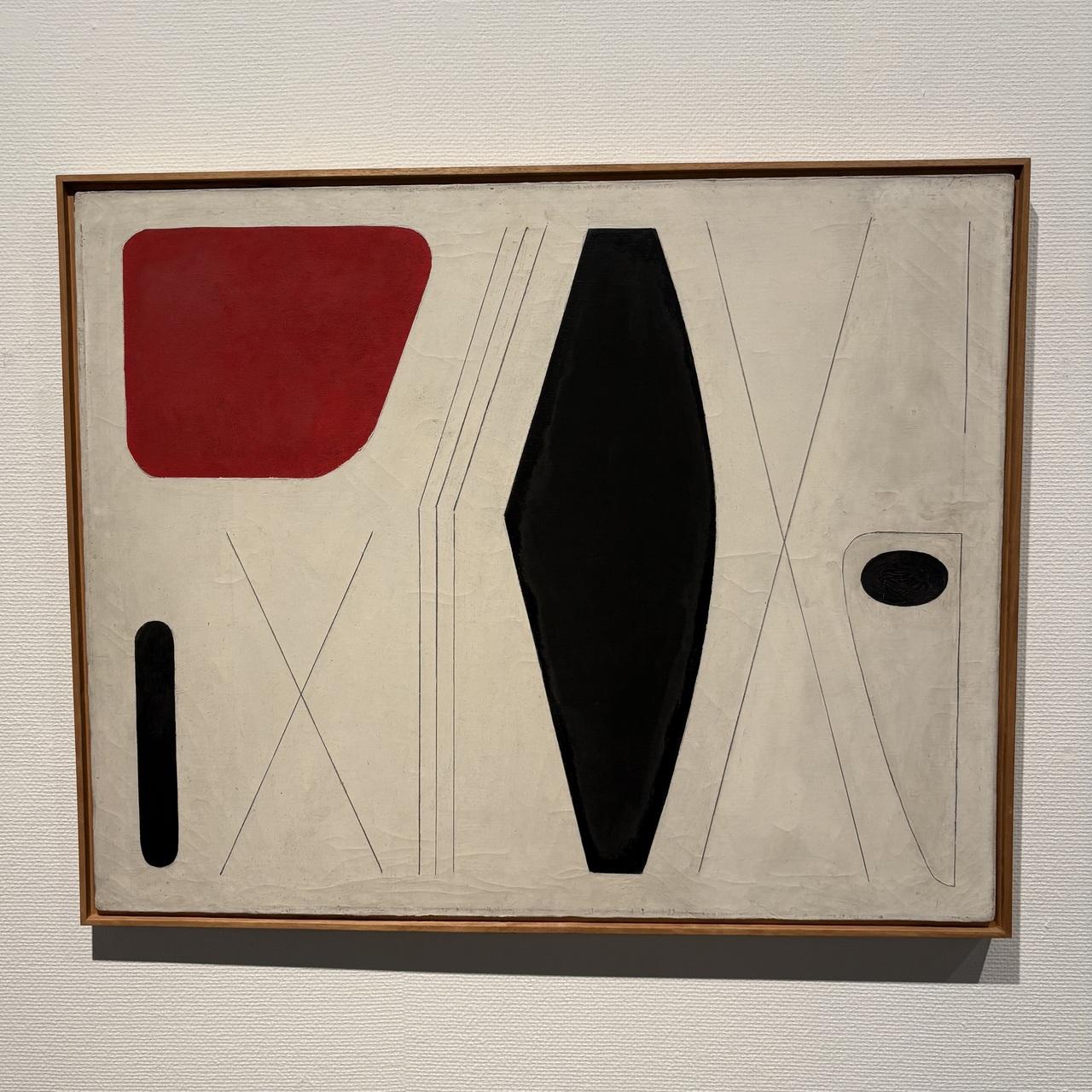
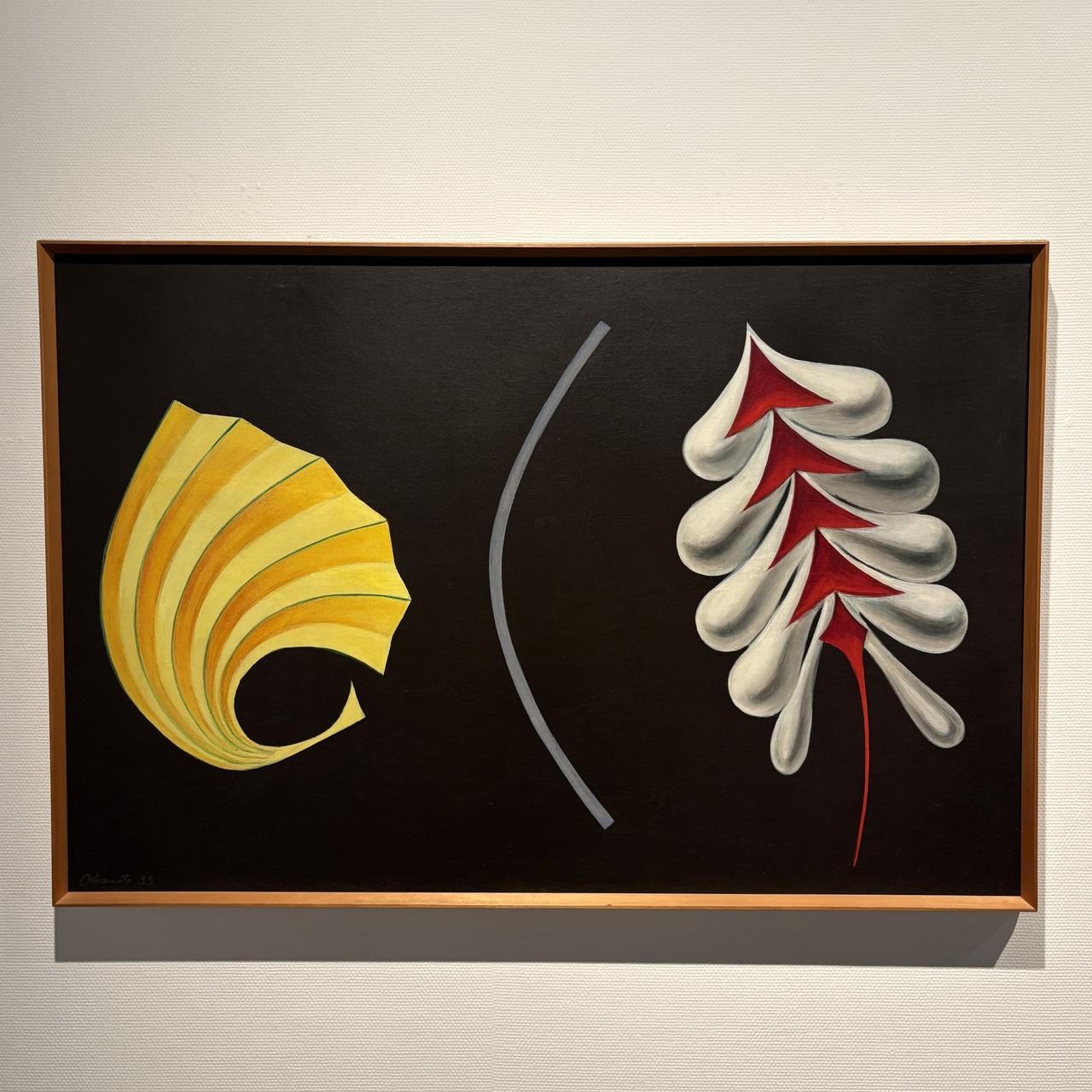
岡本太郎
OKAMOTO, Taro
1911-1996
コントルポアン
Counterpoint
1935/54 昭和10/29年
油彩・キャンバス oil on canvas
購入
Purchased
タイトルの<コントルポアン)とは、フランス語で音楽理論の用語です。旋律どうしを同時に組み合わせる作曲技法を意味しています。この作品の原作は戦災に遭い消失、1954(昭和29)年に再制作されました。1935(昭和10)年当時の太郎はアプストラクシオン・クレアシオン
(抽象・創造協会)に参加しながらも抽象表現に限界を感じ始め、翌1936年に脱会。特異なオブジェや幻想的な絵画を制作したクルト・セリグマン(1900-62)とともに手に届く実感のあるものを追究する「ネオ・コンクレティスム(新具体主義)」を唱え始めました。この作品に描かれた生き物を思わせる左右の二つのモチーフは、太郎自身が語った「パルパーブル=手に触れ得るもの」へと新たな表現を探っているようにも見えます。
The title, Counterpoint, is a term from music theory referring to a compositional technique of combining two melodies. The original work was destroyed during World War II, and Okamoto recreated it in 1954. In 1935, when he first produced it, he still belonged to the Abstraction-Création circle but was starting to perceive the limitations of abstract art, and he withdrew from the group the following year. Along with Kurt Seligmann (1900-62), who produced bizarre sculptural objects and fantastical paintings, Okamoto began advocating Neo-Concretism, a movement involving pursuit of the tangible rather than pure form or rationality. This painting, with two forms on the left and right resembling primi. tive organisms, appears to be part of a new avenue of expression toward what Okamoto himself called "the palpable." -
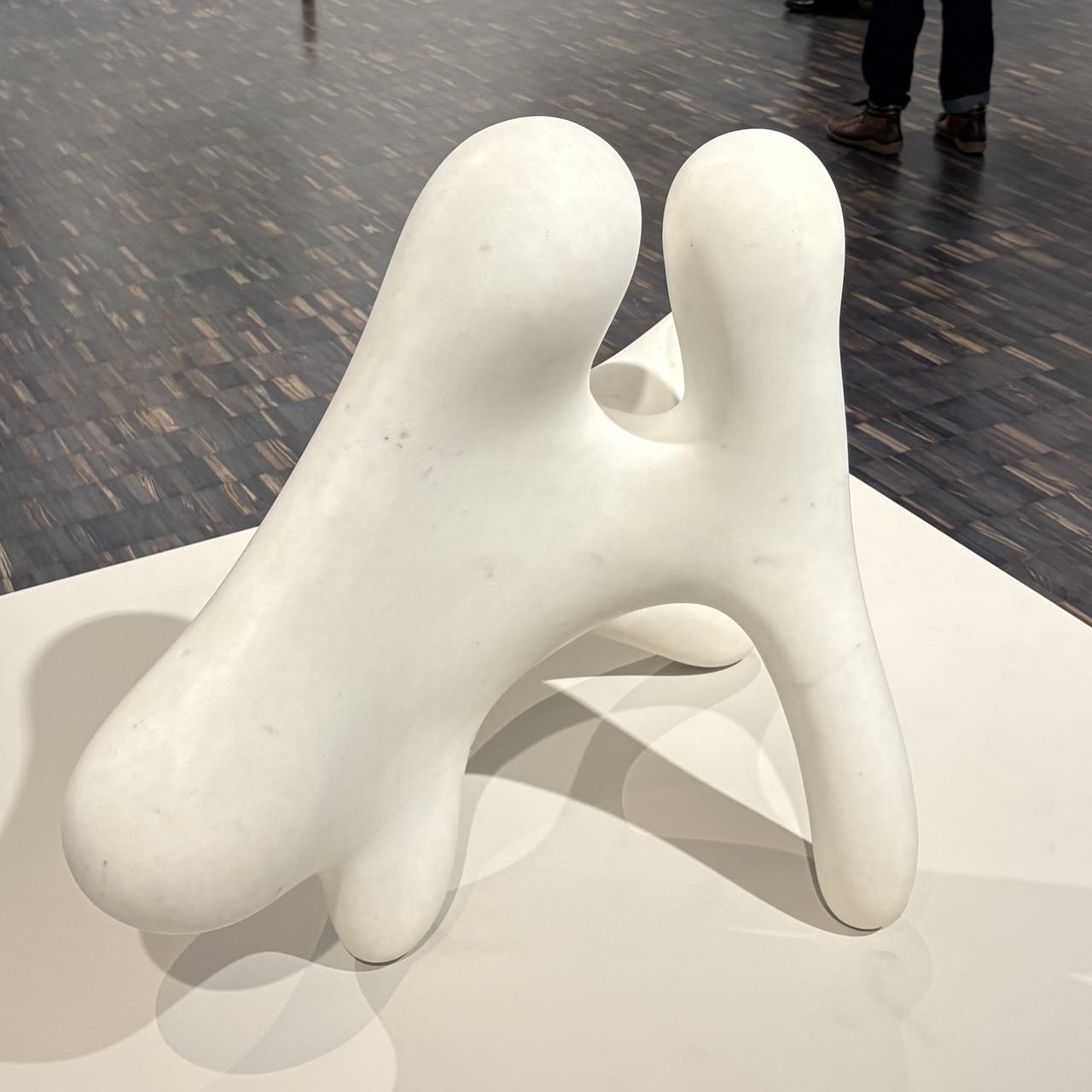
ジャン(ハンス)・アルプ
Jean (Hans) Arp
1886-1966
地中海群像
Mediterranean Group
1941/65
昭和16/40年
大理石 marble
購入
Purchased
アルプは、人のかたちの表現を追求した作家です。ただ、人のかたちとして表現された作品はどれも抽象的で、見た目にはどの部分が何のかたちを示しているのか、必ずしも明快ではありません。あえて具象的な表現をとらないことで、未分化で未成熟な存在、成長していく途上の存在、いわば「こども」の姿を示唆しています。そのように考えると、<地中海群像)は、一つの塊ではなく、手を組んで踊る人々の姿にも見えてきます。1941(昭和16)年にブロンズで作られたものを原型とし、それを後に拡大して、大理石を素材として作られたのが本作です。ブロンズ像よりも柔らかな質感で、軽やかな印象をもたらします。
The artist Jean (Hans) Arp pursued representation of the human form. However, all of his works dealing with the human figure are abstract, and it is not always clear to the eye which forms represent which parts of the body. His deliberate avoidance of figurative representation hints at humans as undifferentiated and unformed beings, still maturing and growing, and this description could equally apply to children. With that in mind, Mediterranean Group might be seen not as a single mass, but as a group of people dancing with joined hands. This sculpture is based on a prototype for a bronze made in 1941, and he later made it larger and produced it in marble, the version that is shown here. It has a softer texture than the bronze and gives an impression of lightness. -
-




この旅行記のタグ


利用規約に違反している投稿は、報告する事ができます。
-
前の旅行記

MOMAT コレクション展 ~2026.5.10 ④能楽と歌舞伎。"鳥居忠雅《「隅取十八番より」赤塗筋隈 ...
2026/05/04~
神田・神保町
-
次の旅行記

MOMAT コレクション展 ~2026.5.10 ⑤~⑥ ソル・ルウィット| ウォール・ドローイング#769...
2026/05/05~
神田・神保町
-

MOMAT コレクション展 ~2026.5.10 ③花ひらく大正。"藤島武二《匂い》"
2026/05/03~
神田・神保町
-

MOMAT コレクション展 ~2026.5.10 ④能楽と歌舞伎。"鳥居忠雅《「隅取十八番より」赤塗筋隈 ...
2026/05/04~
神田・神保町
-

MOMAT コレクション展 ~2026.5.10 ⑤戦間期のコントルポアン。"浅原清隆 《多感な地上》"
2026/05/05~
神田・神保町
-

MOMAT コレクション展 ~2026.5.10 ⑤~⑥ ソル・ルウィット| ウォール・ドローイング#769...
2026/05/05~
神田・神保町
-

MOMAT コレクション展 ~2026.5.10 ⑥1941-1945|戦争/美術。"国吉康雄 《誰かが私の...
2026/05/06~
神田・神保町
-
![MOMAT コレクション展 ~2026.5.10 ⑦今井壽恵と岡上淑子。"今井壽惠 《「オフェリアその後」より[1]》"](https://cdn.4travel.jp/img/thumbnails/imk/travelogue_album/12/06/97/240x180_12069709.jpg?updated_at=1788062966)
MOMAT コレクション展 ~2026.5.10 ⑦今井壽恵と岡上淑子。"今井壽惠 《「オフェリアその後」よ...
2026/05/07~
神田・神保町
-

MOMAT コレクション展 ~2026.5.10 ⑧ツヤツヤピカピカ。"上田薫 《スプーンに水あめ》"
2026/05/08~
神田・神保町
-

MOMAT コレクション展 ~2026.5.10 ⑨ "植田正治 砂丘劇場 《パパとママと子供たち》"
2026/05/09~
神田・神保町
-

MOMAT コレクション展 ~2026.5.10 ⑪描くことと見えるものの間一 1990年代以降の絵画表現【...
2026/05/10~
神田・神保町
-

MOMAT コレクション展 ~2026.5.10 ⑪描くことと見えるものの間一1990年代以降の絵画表現【2...
2026/05/11~
神田・神保町
旅行記グループをもっと見る
コメントを投稿する前に
十分に確認の上、ご投稿ください。 コメントの内容は攻撃的ではなく、相手の気持ちに寄り添ったものになっていますか?
サイト共通ガイドライン(利用上のお願い)報道機関・マスメディアの方へ 画像提供などに関するお問い合わせは、専用のお問い合わせフォームからお願いいたします。
この旅行で行ったスポット






フォートラベル公式LINE@

おすすめの旅行記や旬な旅行情報、お得なキャンペーン情報をお届けします!
QRコードが読み取れない場合はID「@4travel」で検索してください。
\その他の公式SNSはこちら/





旅行記グループ MOMAT コレクション〔国立東京近代美術館 所蔵作品展〕(2026.3.3-5.10)
0
23