


2026/05/10 - 2026/05/10
-位(同エリア933件中)

旅熊 Kokazさん
- 旅熊 KokazさんTOP
- 旅行記1928冊
- クチコミ854件
- Q&A回答101件
- 1,711,485アクセス
- フォロワー752人
MOMAT コレクション展 ~2026.5.10 ⑪
『MOMATコレクションにようこそ!
当館コレクション展の特徴をご紹介します。まずはその規模。1952年の開館以来の活動を通じて収集してきたおよそ14,000点の所蔵作品から、会期ごとに約200点を展示する国内最大級のコレクション展です。そして、それぞれ小さなテーマが立てられた全12室のつながりによって、19世紀末から今日に至る日本の近現代美術の流れをたどることができる国内随一の展示です。
今期の見所紹介です。4階2室は、当館と金沢の国立工芸館とのコラボレーション企画。鈴木長吉《十二の鷹》(重要文化財)や、新収蔵の金森宗七《花鳥文様象耳付大花瓶》など名品が目白押しです。
また毎年恒例の「美術館の春まつり」にちなみ、川合玉堂《行く春》、跡見玉枝《桜花図巻》など人気作品を惜しげもなくお見せします(3月3日―4月12日)。「春まつり」後(4月14日―5月10日)も豪華です。1階で開催の「下村観山展」(3月17日から)にちなみ、横山大観、菱田春草など観山をとりまく芸術家による素晴らしい作品群を集めました。
今期も盛りだくさんのMOMATコレクション、どうぞお楽しみください。』とのこと・・・
https://www.momat.go.jp/exhibitions/r7-3
日付はダミーで、5月9日(土)訪問
- 旅行の満足度
- 5.0
-

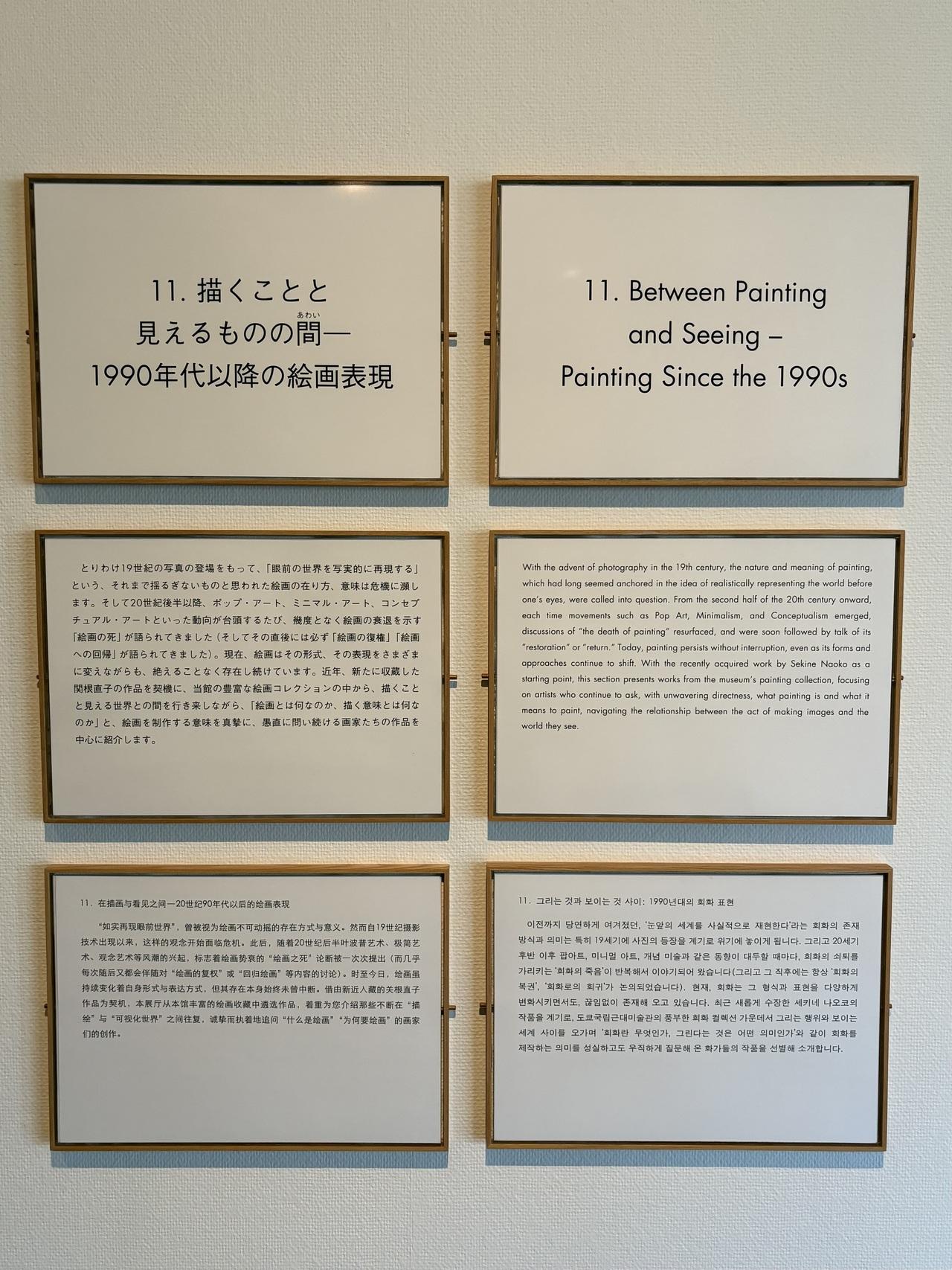
11. 描くことと見えるものの間一
1990年代以降の絵画表現
とりわけ19世紀の写真の登場をもって、「眼前の世界を写実的に再現する」という、それまで揺るきないものと思われた絵画の在り方、意味は危機に瀕します。そして20世紀後半以降、ポップ・アート、ミニマル・アート、コンセプチュアル・アートといった動向が台頭するたび、幾度となく絵画の衰退を示す「絵画の死」が語られてきました(そしてその直後には必ず「絵画の復権」「絵画への回帰」が語られてきました)。現在、絵画はその形式、その表現をさまざまに変えながらも、絶えることなく存在し続けています。近年、新たに収蔵した関根直子の作品を契機に、当館の豊富な絵画コレクションの中から、描くことと見える世界との間を行き来しながら、「絵画とは何なのか、描く意味とは何なのか」と、絵画を制作する意味を真摯に、愚直に問い続ける画家たちの作品を中心に紹介します。
11. Between Painting and Seeing -
Painting Since the 1990s
With the advent of photography in the 19th century, the nature and meaning of painting which had long seemed anchored in the idea of realistically representing the world before one's eyes, were called into question. From the second half of the 20th century onward each time movements such as Pop Art, Minimalism, and Conceptualism emerged, discussions of "the death of painting" resurfaced, and were soon followed by talk of its "restoration" or "return." Today, painting persists without interruption, even as its forms and approaches continue to shift. With the recently acquired work by Sekine Naoko as a starting point, this section presents works from the museum's painting collection, focusing on artists who continue to ask, with unwavering directness, what painting is and what it means to paint, navigating the relationship between the act of making images and the world they see. -
新収蔵作品
New Acquisition
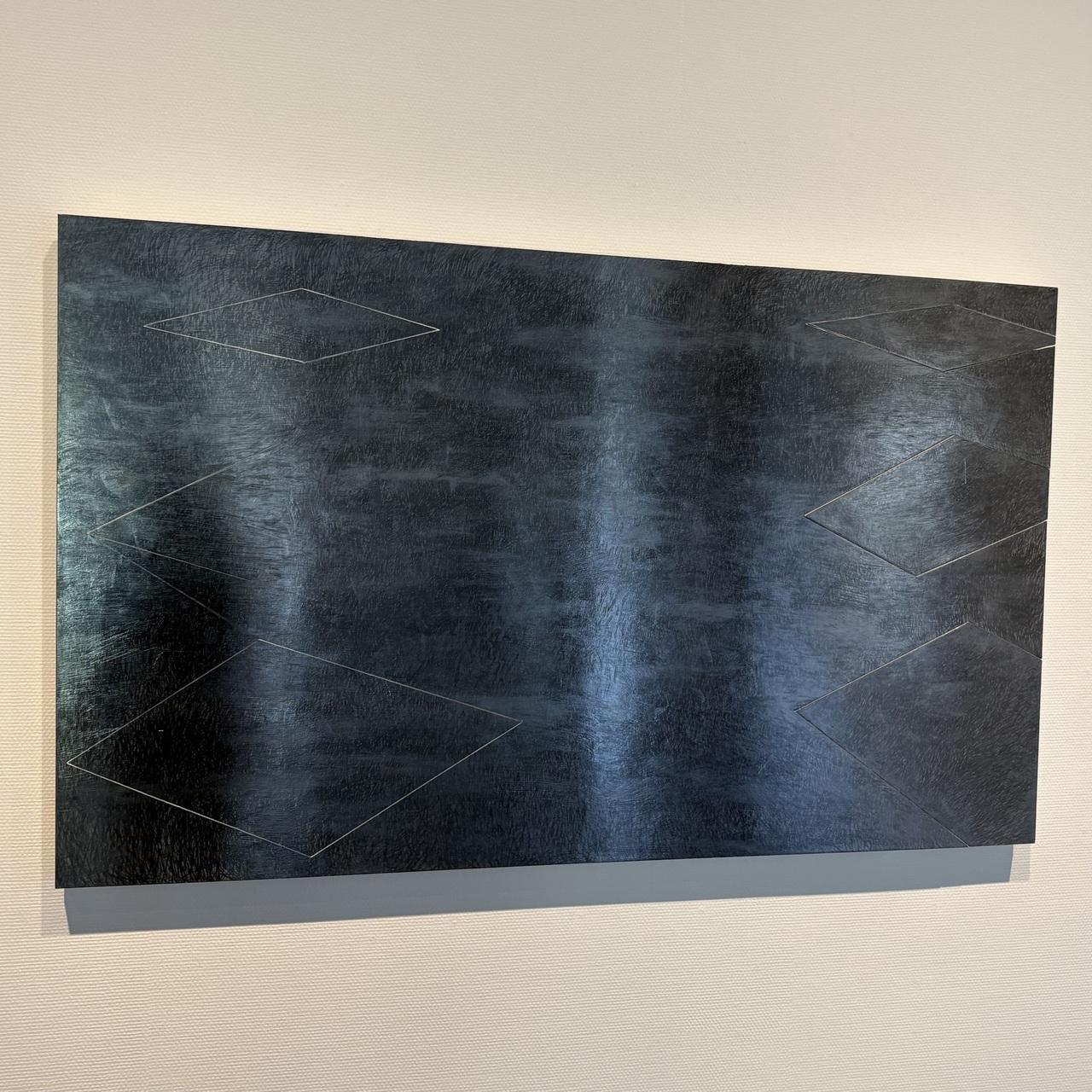
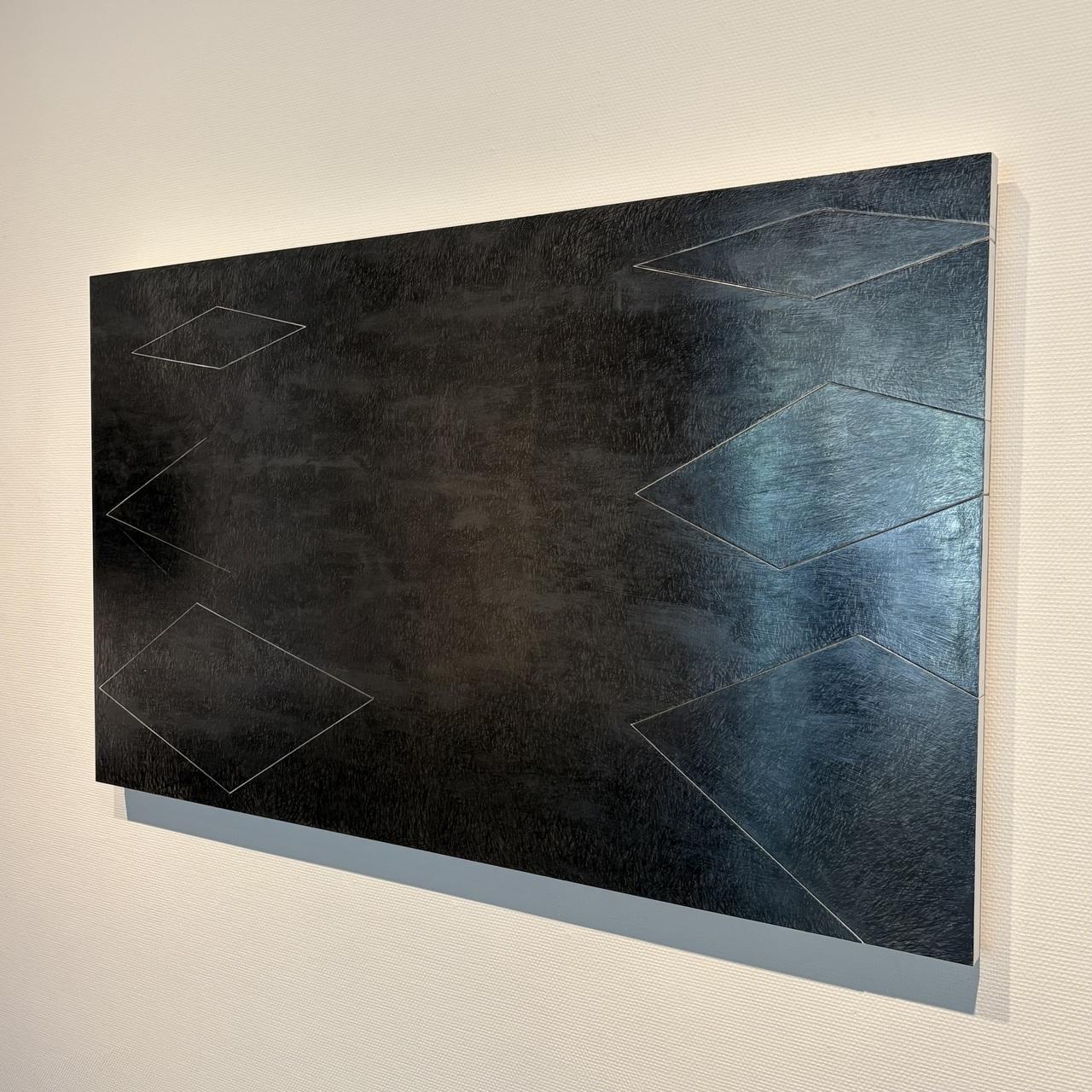
関根直子
SEKINE, Naoko
1977-
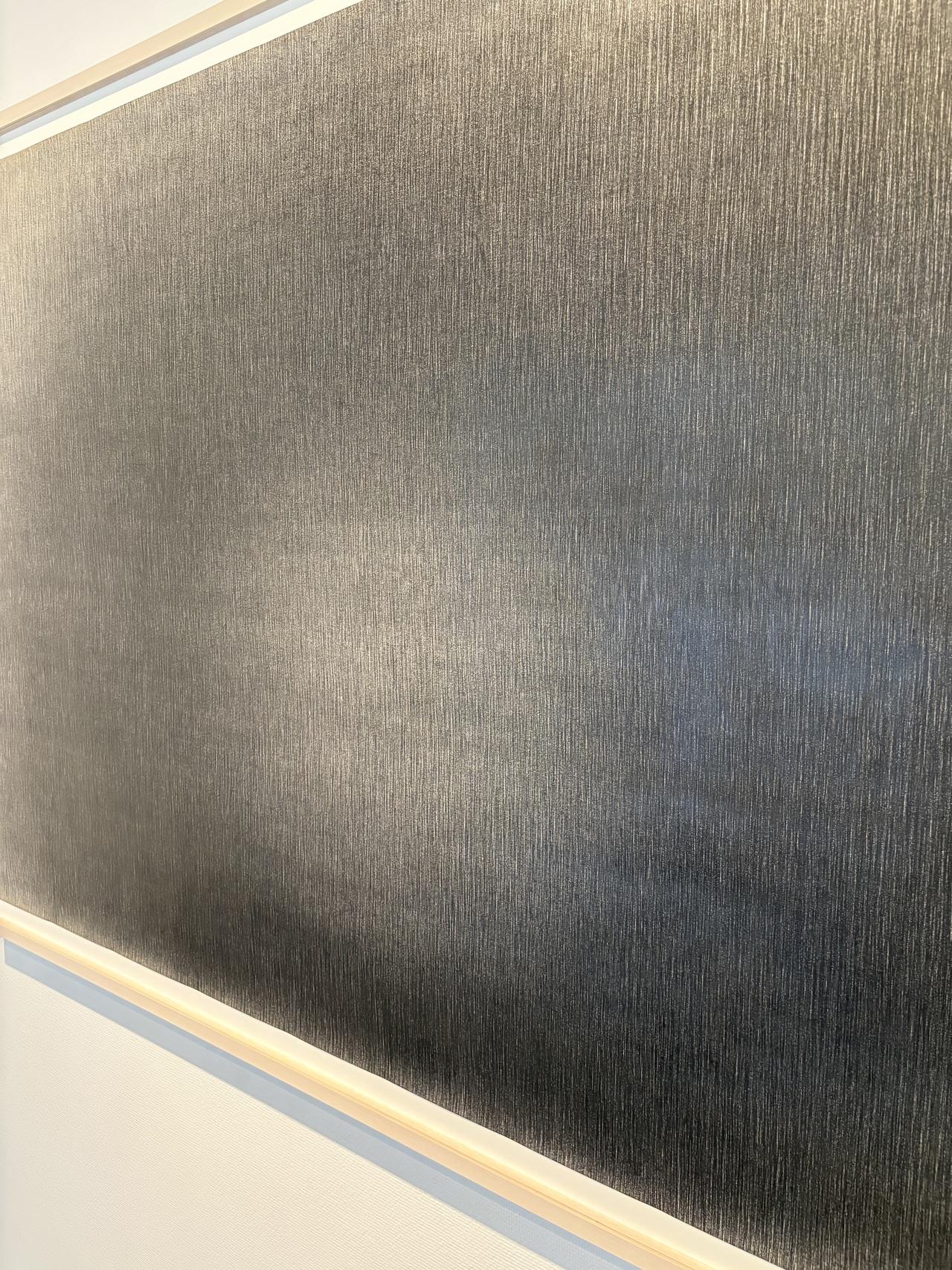
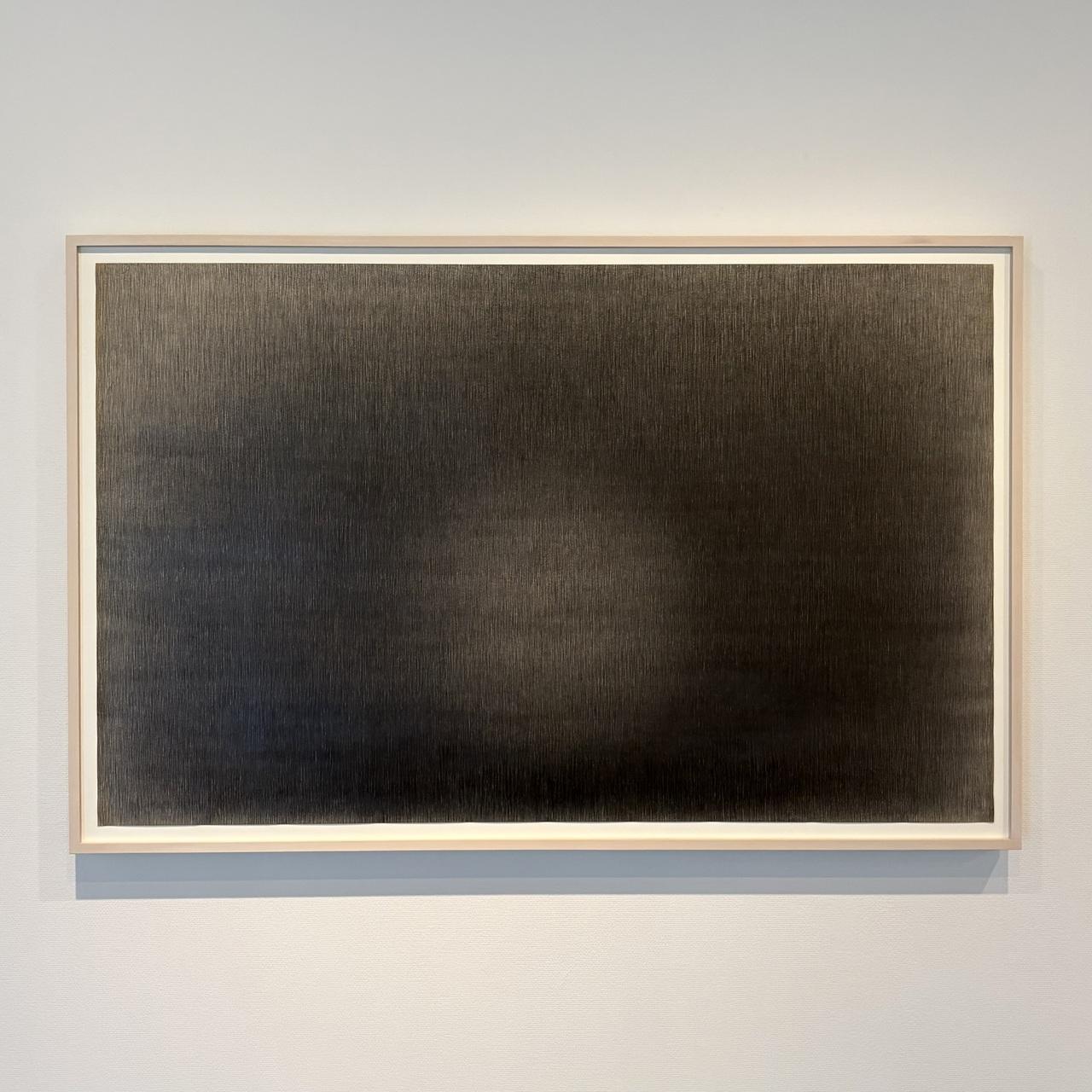
Stacks (382)
2023 和5年
グラファイト、グアッシュ、インク・板
graphite, gouache and ink on board
購入
Purchased
作者は、アメリカの画家マーク・ロスコ(1903-70)の巨大な壁画が自然光に包まれているのを見て、色彩が変化し、呼吸しているような感覚を覚えたといいます。この体験を機に生まれたのが、鉛筆のドローイングを上から陶片でこすって光沢を出した「ミラー・ドローイング」シリーズです。鏡面化した画面は、周囲の光景や見る人を映し込みます。描かれた画面内で自立するのでもなく、その空間を取り巻<環境に依存するのでもなく、両者が等しく世界に存在し、その間で成立する絵画とはどんなものなのかを関根は追求しているのかもしれません。
The artist recalls sensing the colors shift and seem to breathe when she saw large murals by American painter Mark Rothko illuminated by natural light. This experience led to her Mirror Drawing series, in which pencil drawings are
rubbed with pottery shards to produce a glossy surface. The mirrored surface reflects both the surrounding environment and the viewer. Sekine may be pursuing a form of painting that exists between these two realms, neither sealed within the painted surface nor determined only by its surroundings, but arising in the interplay between them. -
-
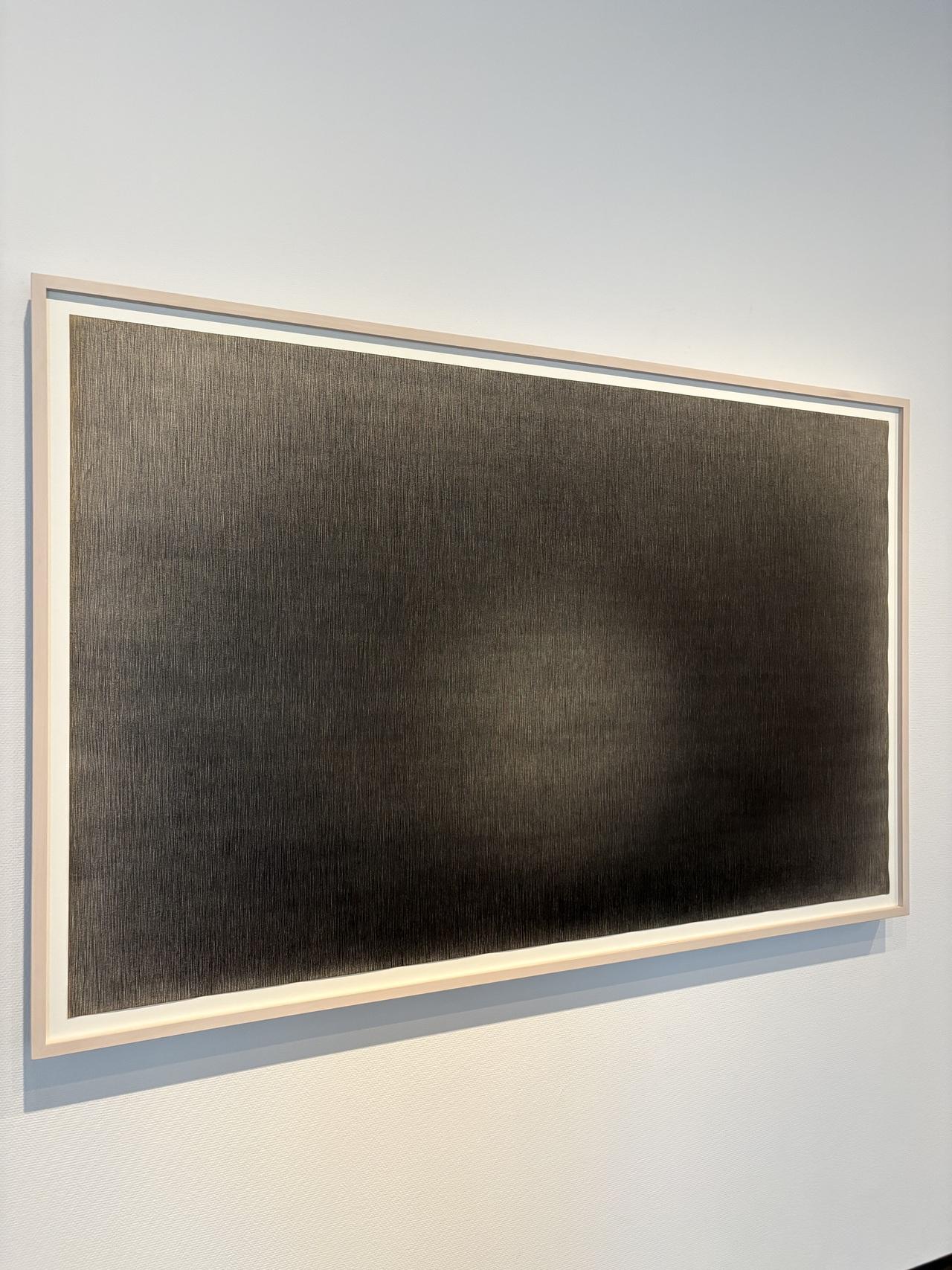
エミコ・サワラギ・ギルバート
Emiko Sawaragi Gilbert
1947-
ソクラテスに会いに行って
Going to See Socrates
1995
平成7年
チャコールペンシル・紙
charcoal pencil on paper
作者寄贈
Gift of the artist -
-
-
辰野登恵子
TATSUNO, Toeko
1950-2014
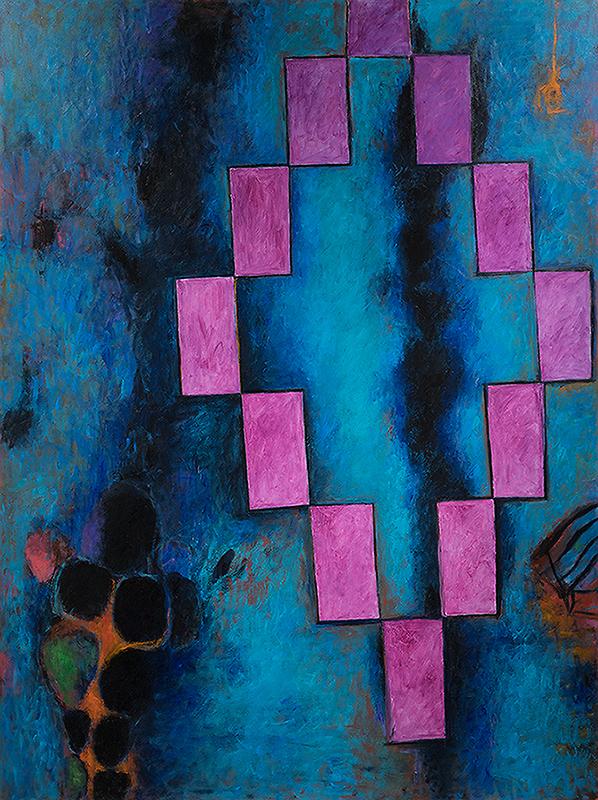
UNTITLED 94-6
1994 平成6年
油彩・キャンバス oil on canvas
作者寄贈
Gift of the artist
2つ暗い帯が縦に走る青い空間に、紫色の矩形が菱形に連なりながら浮遊しています(菱形の上部と右とが、キャンバスの枠にひっかかるように描かれているので、画面より手前には出てきません)。茫洋とした背景の上に、明快な形態を描き入れることで生じる3次元的なイリュージョンが、この時期の辰野の絵画の特徴です。油絵具ならではの鮮やかな色彩と重厚なテクスチャーとは、「絵画とは何か」、「抽象とは何か」を問うべく、かたちを描いては消し、また塗り重ねる行為を辰野が粘り強く繰り返した末に獲得されたものです。
Two dark bands run vertically through a blue field, where purple rectangles float in a diamond-shaped chain of forms. With the top and right edges of the diamond meeting the canvas frame, the forms stay anchored to the surface rather than projecting outward. The illusion of three-dimensionality that emerges when crisp shapes are set against a diffuse background is a hallmark of Tatsuno Toeko's work from this period. The vivid colors and dense textures only achievable with oil paint emerged from her persistent, repeated process of painting a form, wiping it out, and painting over it again as she pursued the questions "What is painting?" and "What is abstraction?" -
石川順惠
ISHIKAWA, Yukie
1961-
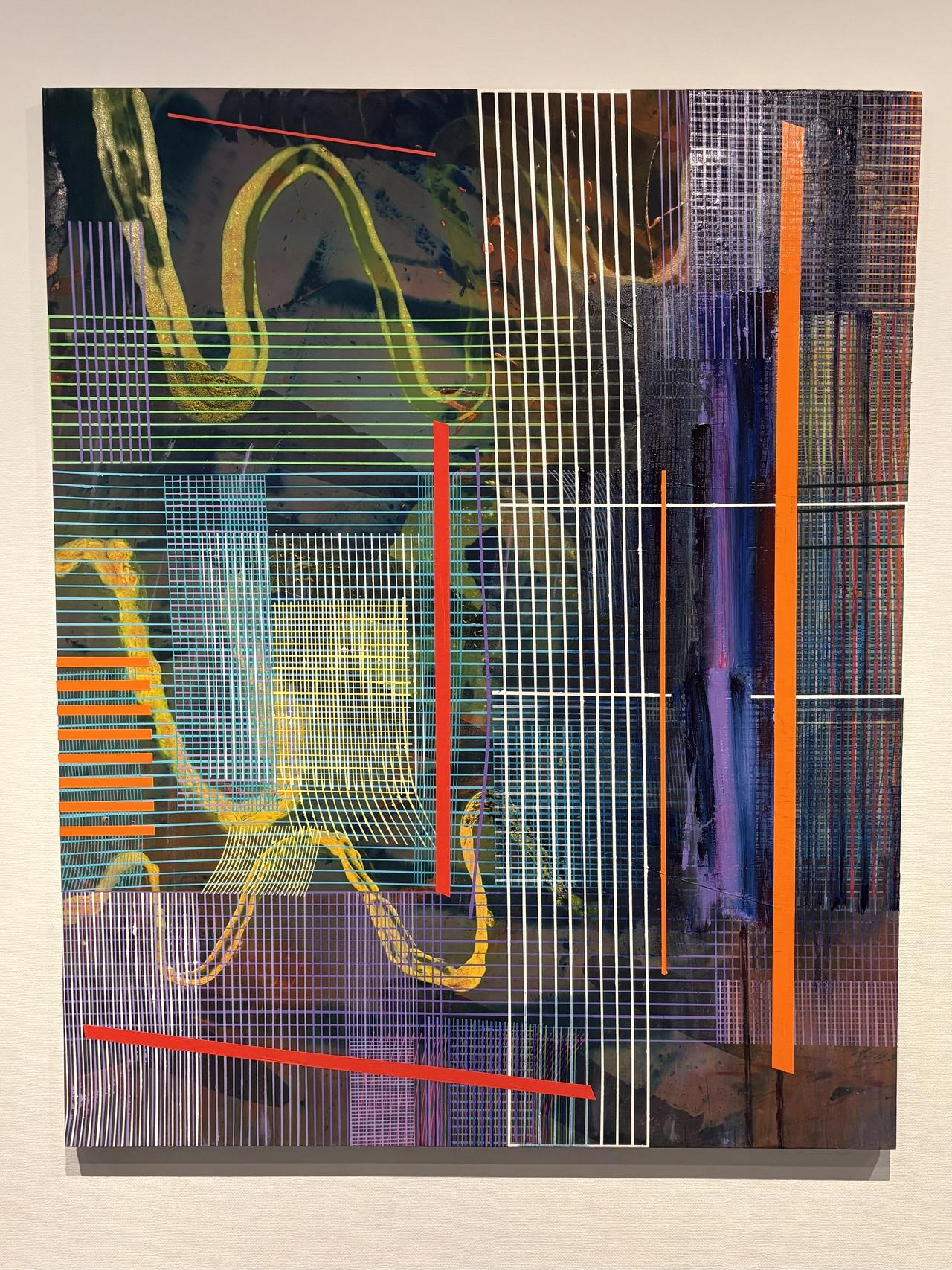
Impermanence 青女
Impermanence: Seijo
2014 平成26年
アクリリック・キャンバス acrylic on canvas
購入
Purchased
「Impermanence」は、仏教の用語である「無常」の英訳として使われている言葉。「青女」は、前漢時代の論集からとられた言葉で、霜や雪を降らす女神、転じて霜や雪のことを意味するそうです。作品は大きく言って、キャンバスに絵の具を染みこませた層、蛇行する線の層、グリッドの層の三つに分かれています。
制作年は2014年と書かれていますがそれはあくまでも完成年で、実際の制作は大きな間隔を挟みながら20年近くにもわたっています。
"Impermanence" is a common English translation of the Buddhist term mujo. "Seijo" (lit. "blue woman") comes from a Han Dynasty 1206
BC-220 AD) Chinese text, and refers to a female deity believed to cause frost and snow to fall, and by extension, to frost and snow itself. The work is roughly divided into three layers: a layer of paint permeating and staining the canvas, a layer of meandering lines, and a grid layer. The work is dated 2014, but this is the year it was completed, and the artist actually worked on it for nearly 20 years, with lengthy periods of inactivity. -
津上みゆき
TSUGAMI, Miyuki
1973-
View, the trace of time, Narutakigawa River,
2:52pm 6 Oct 18/2019
2019 令和元年
顔料、アクリリック、その他・キャンバス
pigment, acrylic and etc. on canvas
購入
Purchased
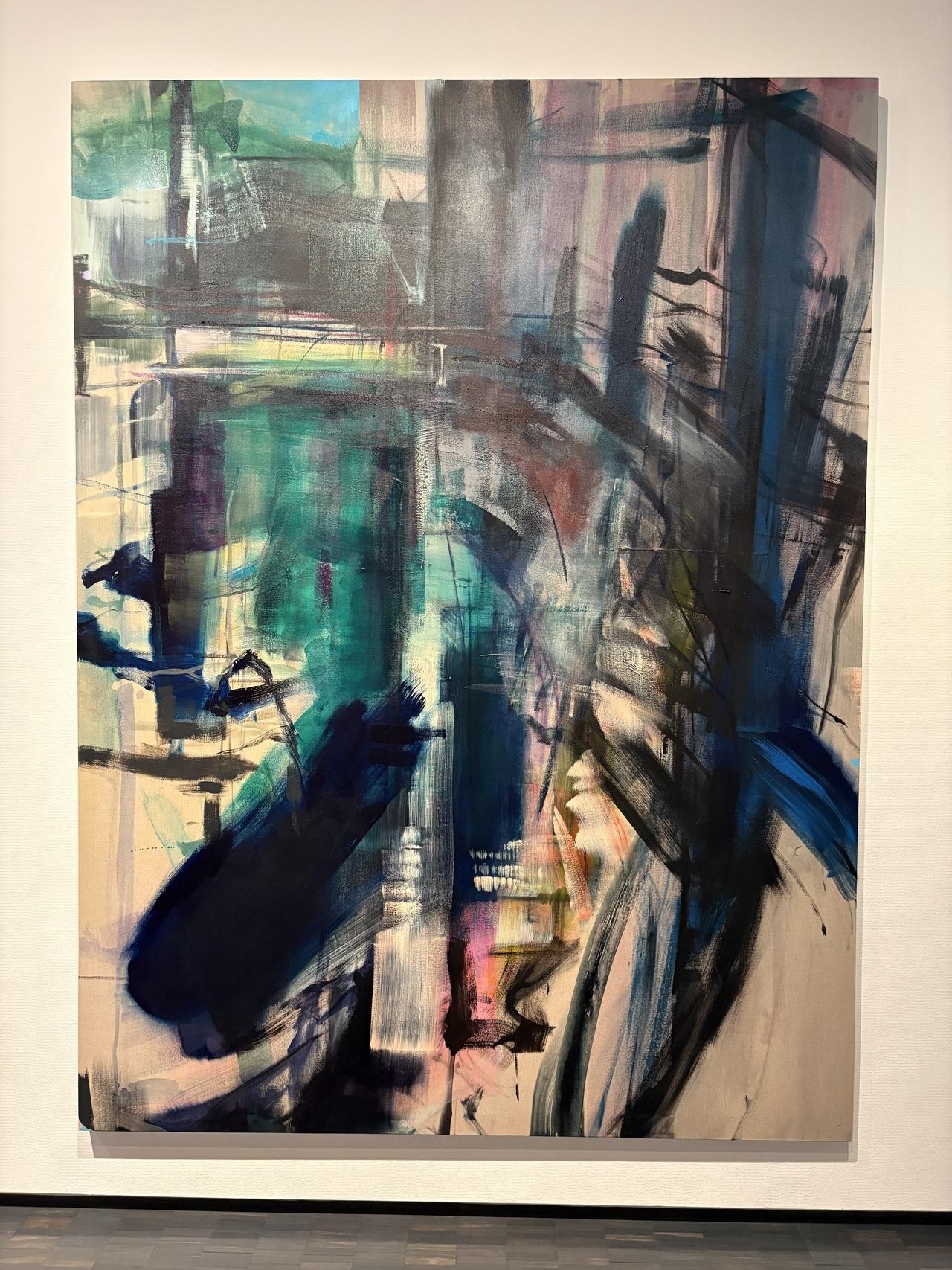
画面にはさまざまな色、そして筆触が散りばめられています。津上が1990年代後半以降取り組むシリーズ「View」(註:「眺め」、「視界」の意)の一点で、長崎県の鳴滝川に取材した作品です。作者にとって、このシリーズは抽象画ではなく、あくまで風景画なのだといいます。
津上は、実際にその場所を訪れ、スケッチに留め、時間や記憶の重なり(the trace of timeとは時間の痕跡、とでもいった意味でしょう)のなかからイメージをキャンバスに描き出します。じっくり見ていると、やや左へカーヴしながら画面の奥へと流れていく小さな川の流れを、ちょうど橋の上に立って見下ろすような「眺め」が広がってきます。
A variety of colors and extraordinarily diverse brushstrokes fills the canvas. Part of the View series on which Tsugami has been working since the 1990s, this painting is based on a visit to the Narutakigawa River in Nagasaki Prefecture.
According to the artist, this is a series not of abstractions, but of landscape paintings. Tsugami visits sites in person, makes sketches, and produces images on canvas through superimposition of time and memory (as in the title's reference to "the trace of time"). Gaze at the painting, and behold a "view" as if standing on a bridge looking down at a small river, curving gradually to the left as it flows into the depths of the canvas. -
秋岡美帆
AKIOKA, Miho
1952-2018
光の間 02-5-17-5
Inter Lucem 02-5-17-5
2002 平成14年
NECO ? FREE NECO on paper
作者寄贈
Git of the arist
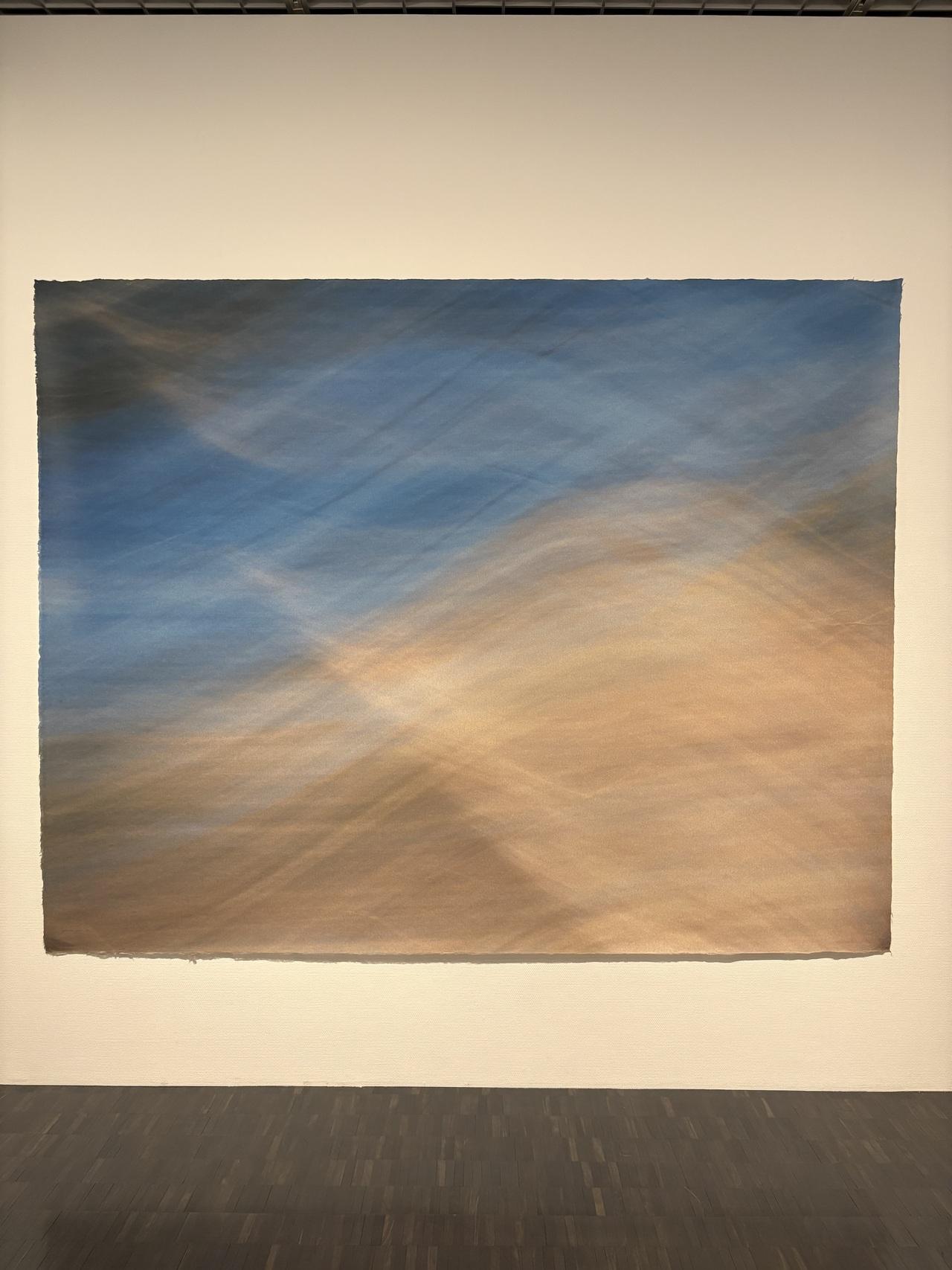
秋岡の制作は写真から始まります。被写体は、木洩れ日や地面に映る影などです。シャッタースピードを遅くしたり、自らが動きながら撮影したりすることで、ブレが強調されたり、ピンボケになったりします。その写真はNECO (拡大作画機)によって4色分解された色の斑点となり、麻紙に拡大・転写されます。奥深い山林で撮影し始めた1995年以降、光、影、風、作家の身体といった「動き」は、より複雑に重なり合っていきました。「その時、その場。いま、ここという生成の流動的な一環一瞬を紙と水性絵具は自在に受け止め自然に展開してくれる素材である」と作家は述べています。
Akioka's process begins with photography. Her subjects include dappled sunlight filtering through trees and shadows cast on the ground. By using slow shutter speeds or moving while taking the photographs, she produces images marked by pronounced blur or intentional softness. These photographs are then separated into four-color dots using the NECO (New Enlarging Color Operation) process, enlarged, and transferred onto hemp paper. Since she began photographing in deep mountain forests in 1995, movement involving light, shadow, wind, and the motions of her own body has intersected in increasingly complex ways. The artist writes,
"In each moment and each place, paper and water-based pigments take in and unfold the fluid presence of the here and now."
この旅行記のタグ


利用規約に違反している投稿は、報告する事ができます。
-
前の旅行記

MOMAT コレクション展 ~2026.5.10 ⑨ "植田正治 砂丘劇場 《パパとママと子供たち》"
2026/05/09~
神田・神保町
-
次の旅行記

MOMAT コレクション展 ~2026.5.10 ⑪描くことと見えるものの間一1990年代以降の絵画表現【2...
2026/05/11~
神田・神保町
-

MOMAT コレクション展 ~2026.5.10 ③花ひらく大正。"藤島武二《匂い》"
2026/05/03~
神田・神保町
-

MOMAT コレクション展 ~2026.5.10 ④能楽と歌舞伎。"鳥居忠雅《「隅取十八番より」赤塗筋隈 ...
2026/05/04~
神田・神保町
-

MOMAT コレクション展 ~2026.5.10 ⑤戦間期のコントルポアン。"浅原清隆 《多感な地上》"
2026/05/05~
神田・神保町
-

MOMAT コレクション展 ~2026.5.10 ⑤~⑥ ソル・ルウィット| ウォール・ドローイング#769...
2026/05/05~
神田・神保町
-

MOMAT コレクション展 ~2026.5.10 ⑥1941-1945|戦争/美術。"国吉康雄 《誰かが私の...
2026/05/06~
神田・神保町
-
![MOMAT コレクション展 ~2026.5.10 ⑦今井壽恵と岡上淑子。"今井壽惠 《「オフェリアその後」より[1]》"](https://cdn.4travel.jp/img/thumbnails/imk/travelogue_album/12/06/97/240x180_12069709.jpg?updated_at=1788062966)
MOMAT コレクション展 ~2026.5.10 ⑦今井壽恵と岡上淑子。"今井壽惠 《「オフェリアその後」よ...
2026/05/07~
神田・神保町
-

MOMAT コレクション展 ~2026.5.10 ⑧ツヤツヤピカピカ。"上田薫 《スプーンに水あめ》"
2026/05/08~
神田・神保町
-

MOMAT コレクション展 ~2026.5.10 ⑨ "植田正治 砂丘劇場 《パパとママと子供たち》"
2026/05/09~
神田・神保町
-

MOMAT コレクション展 ~2026.5.10 ⑪描くことと見えるものの間一 1990年代以降の絵画表現【...
2026/05/10~
神田・神保町
-

MOMAT コレクション展 ~2026.5.10 ⑪描くことと見えるものの間一1990年代以降の絵画表現【2...
2026/05/11~
神田・神保町
旅行記グループをもっと見る
コメントを投稿する前に
十分に確認の上、ご投稿ください。 コメントの内容は攻撃的ではなく、相手の気持ちに寄り添ったものになっていますか?
サイト共通ガイドライン(利用上のお願い)報道機関・マスメディアの方へ 画像提供などに関するお問い合わせは、専用のお問い合わせフォームからお願いいたします。






フォートラベル公式LINE@

おすすめの旅行記や旬な旅行情報、お得なキャンペーン情報をお届けします!
QRコードが読み取れない場合はID「@4travel」で検索してください。
\その他の公式SNSはこちら/





旅行記グループ MOMAT コレクション〔国立東京近代美術館 所蔵作品展〕(2026.3.3-5.10)
0
10