


2024/06/18 - 2024/08/22
173位(同エリア4787件中)

旅熊 Kokazさん
- 旅熊 KokazさんTOP
- 旅行記1913冊
- クチコミ854件
- Q&A回答102件
- 1,697,045アクセス
- フォロワー752人
この旅行記のスケジュール
2024/06/18

この旅行記スケジュールを元に
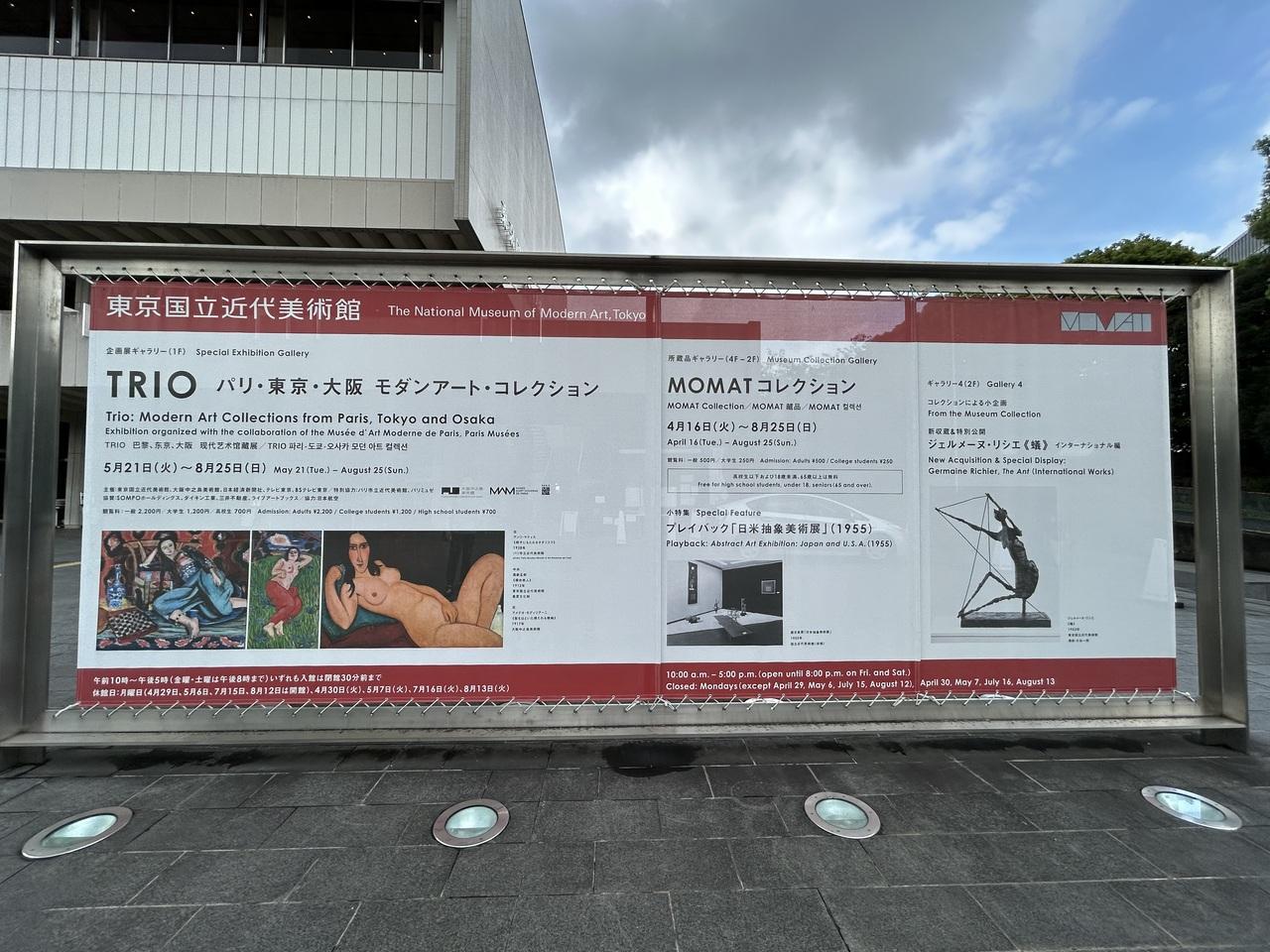
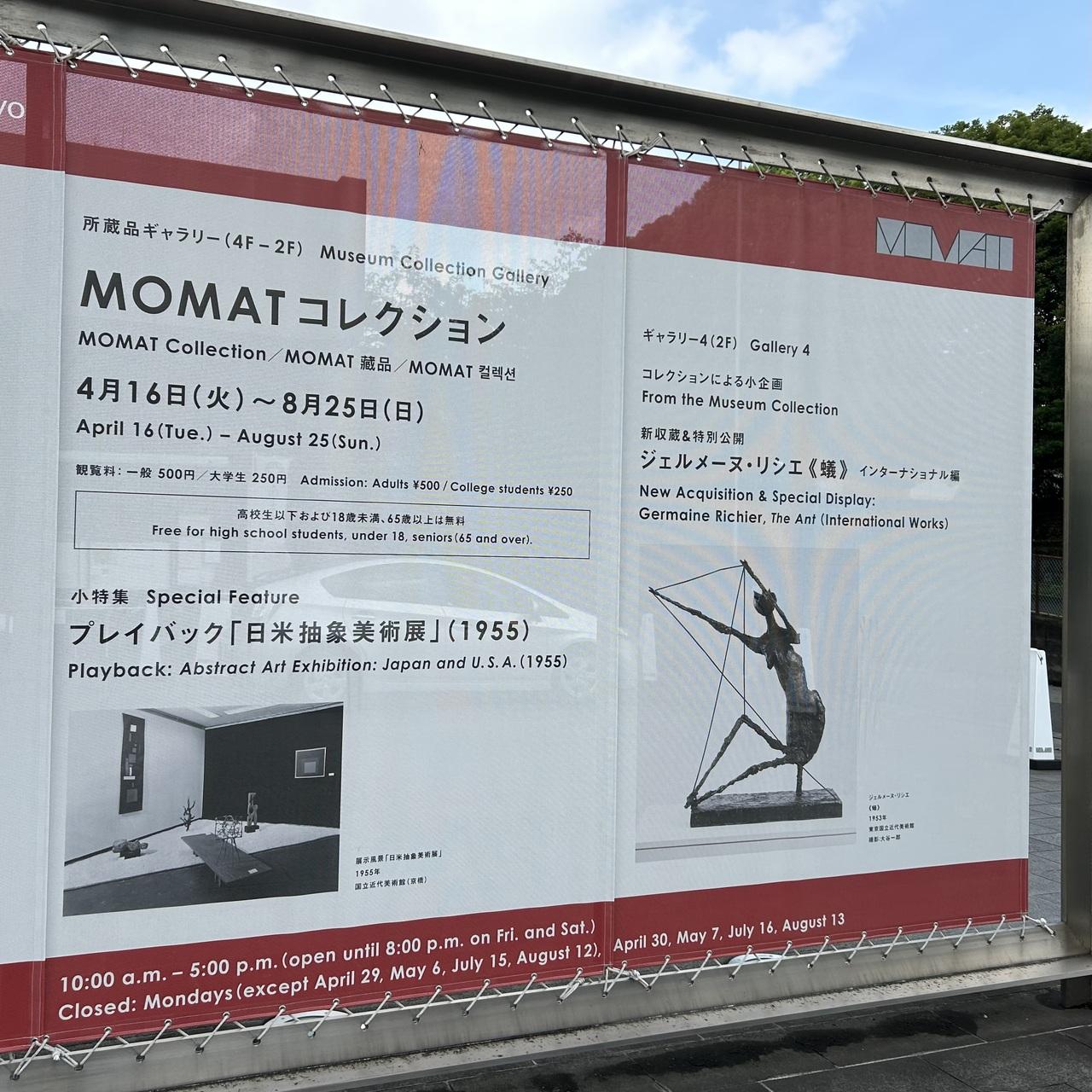
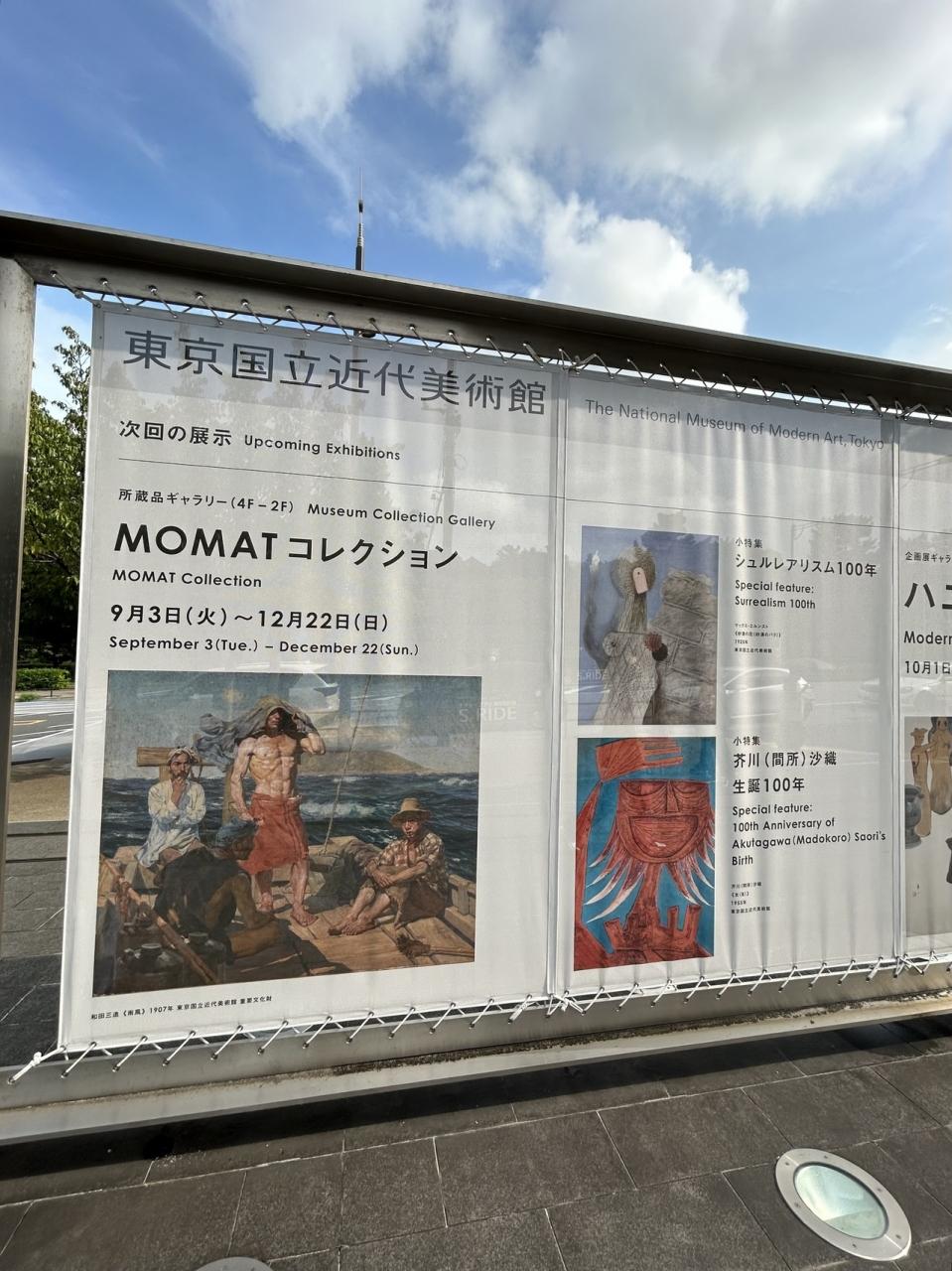
国立東京近代美術館 MOMAT Collection
https://www.momat.go.jp/exhibitions/r6-1
6月18日TRIO展の後、1回目の鑑賞
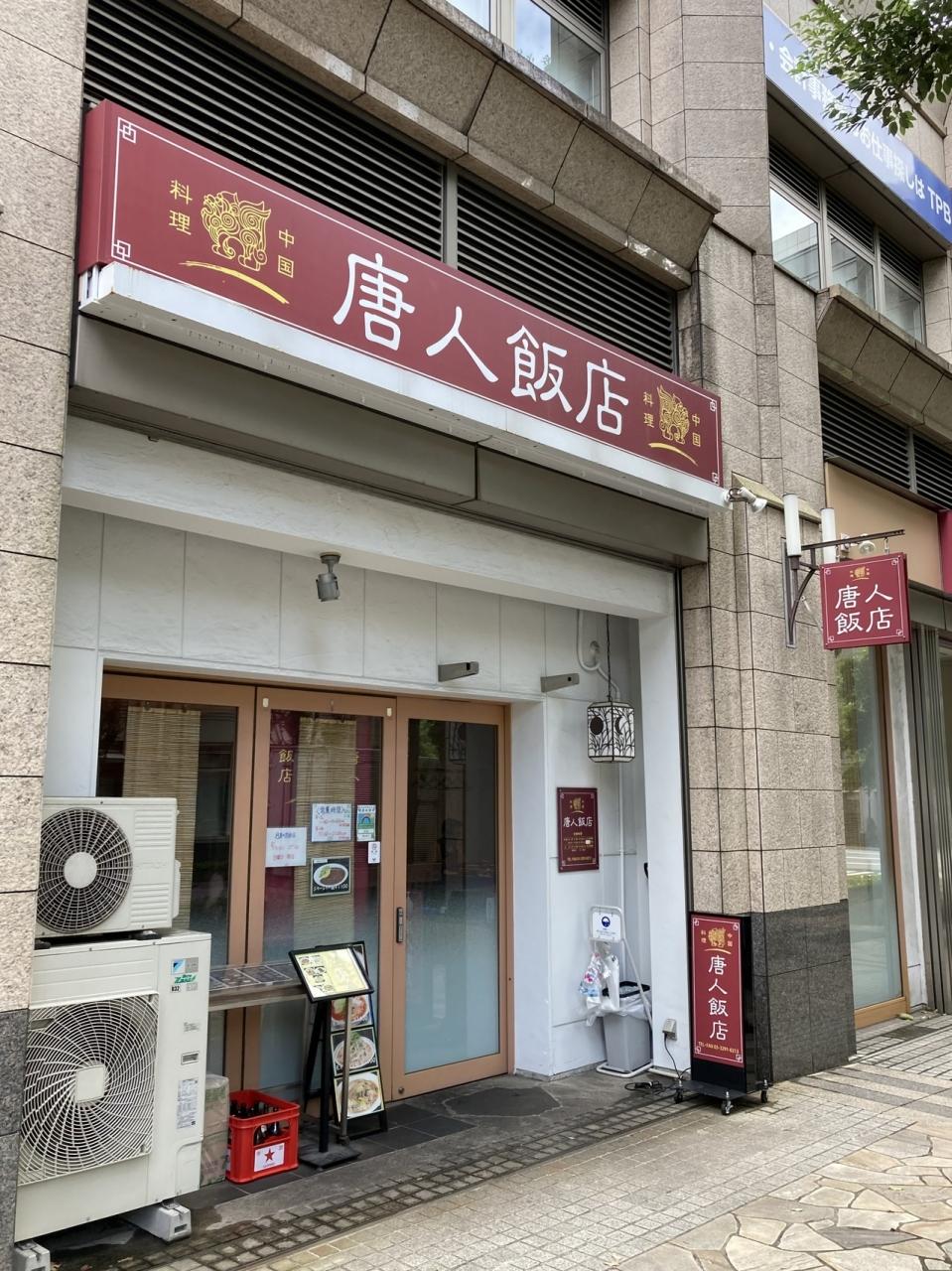
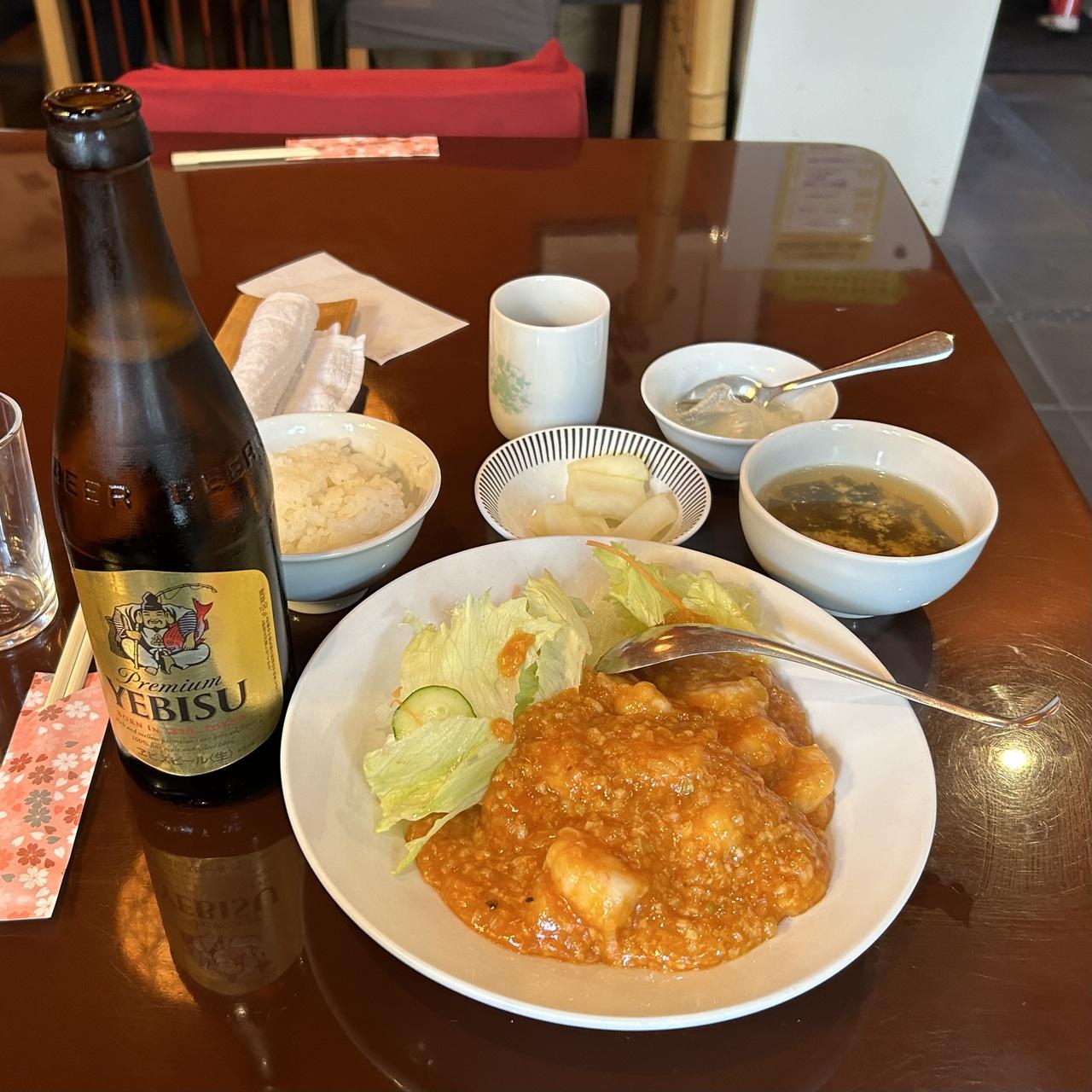
8月22日に神保町 "唐人飯店" で海老チリを食べた後に再訪
- 旅行の満足度
- 5.0
-

-
-
-
-
-
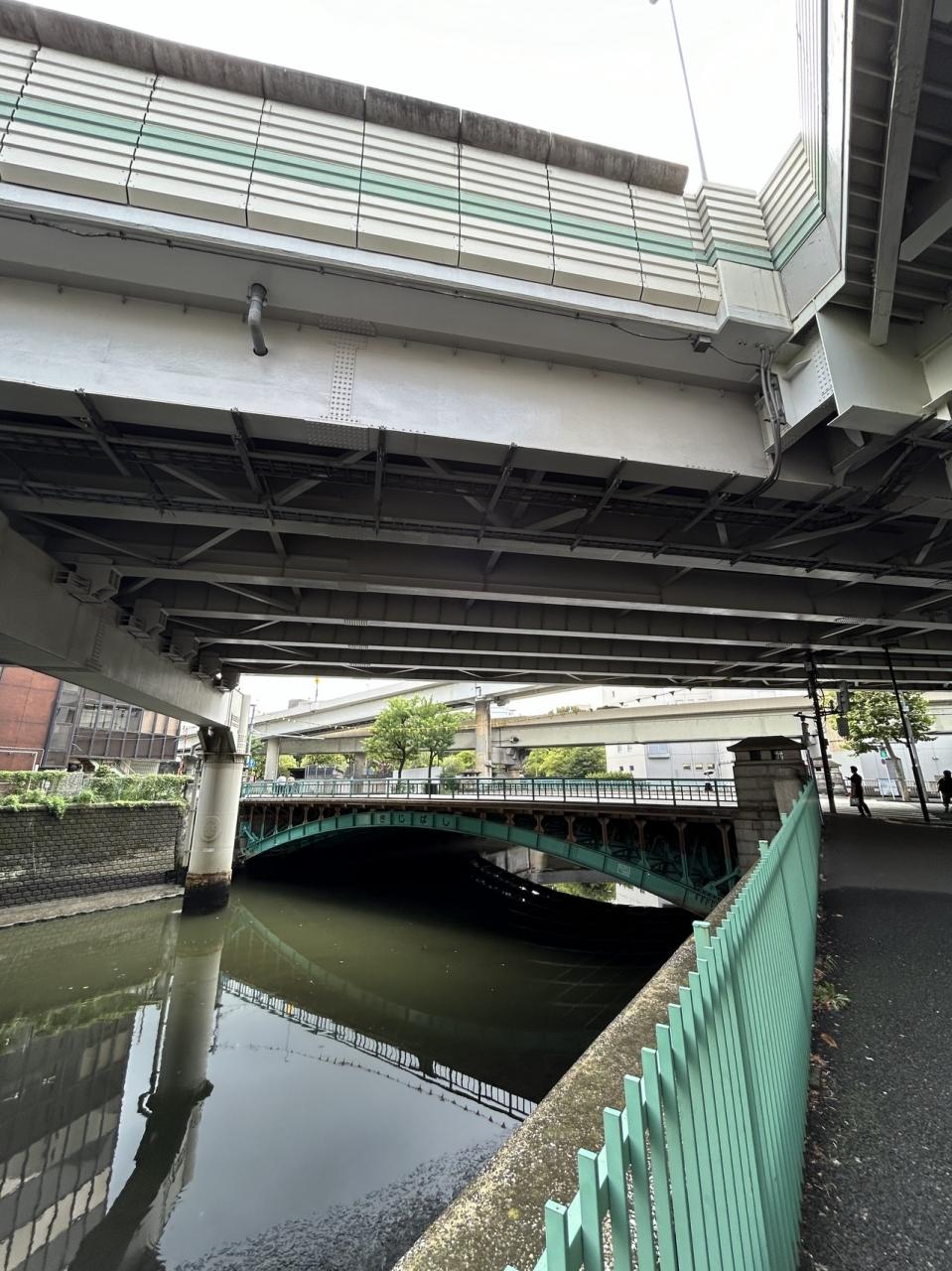
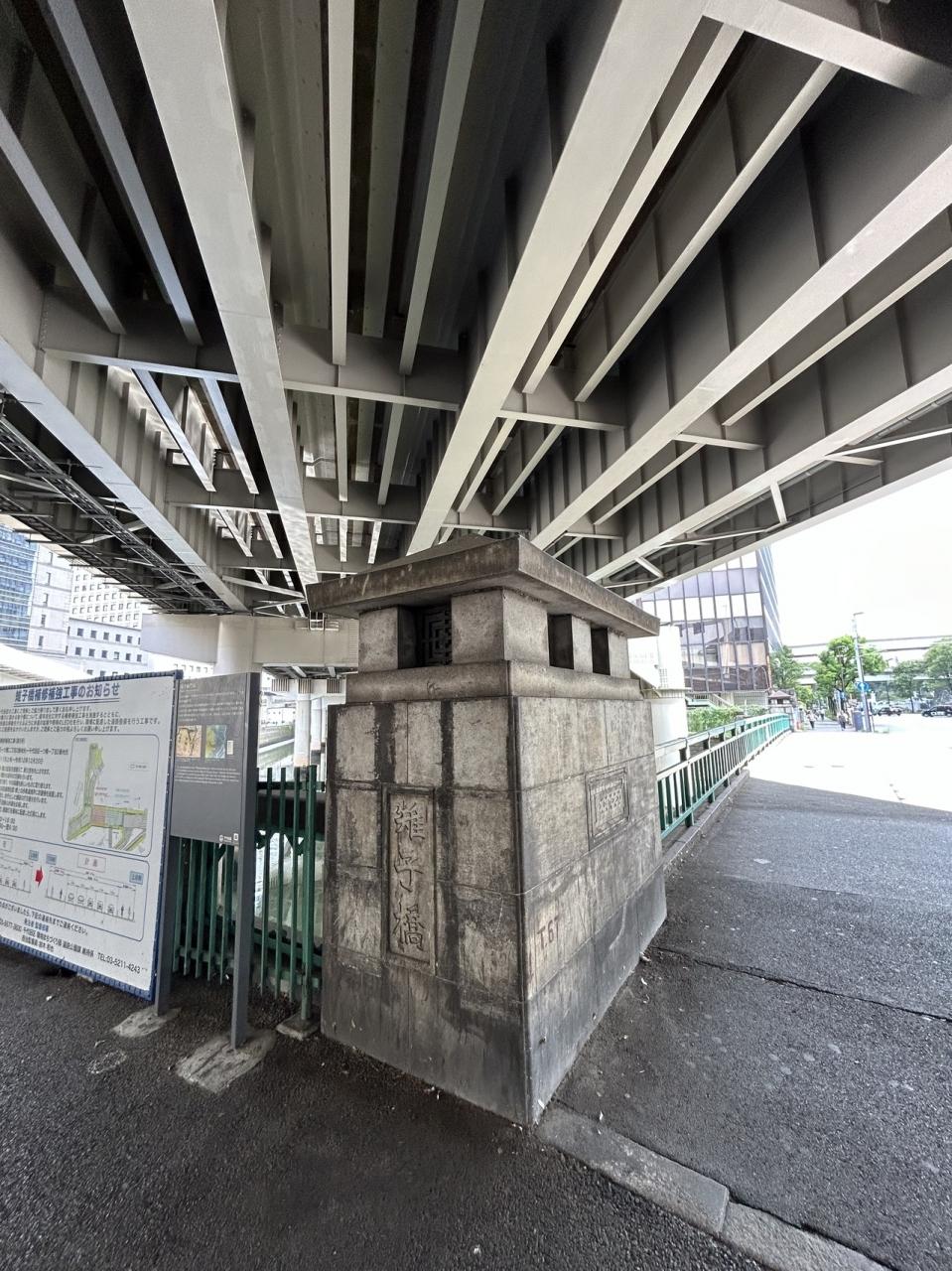
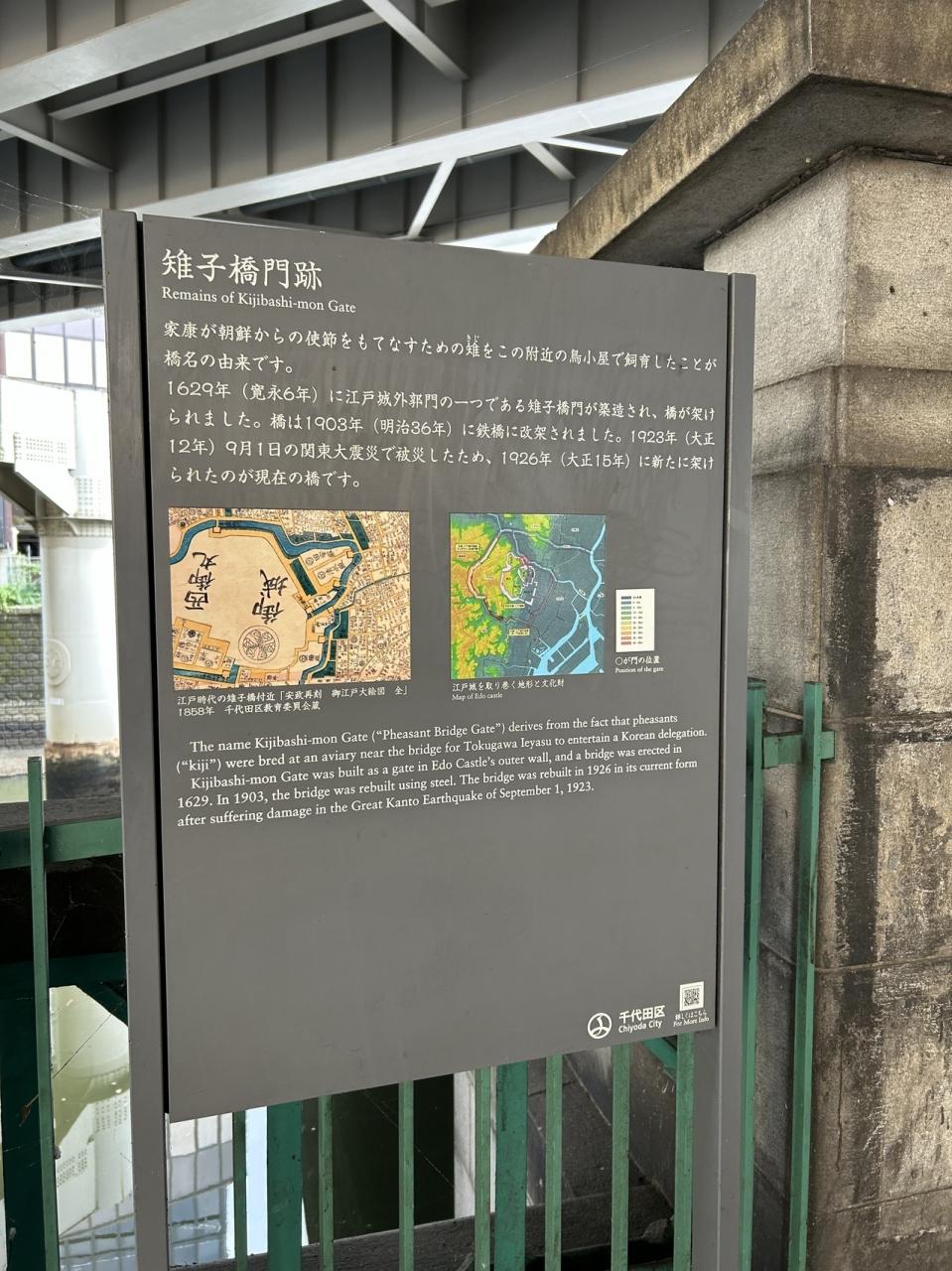
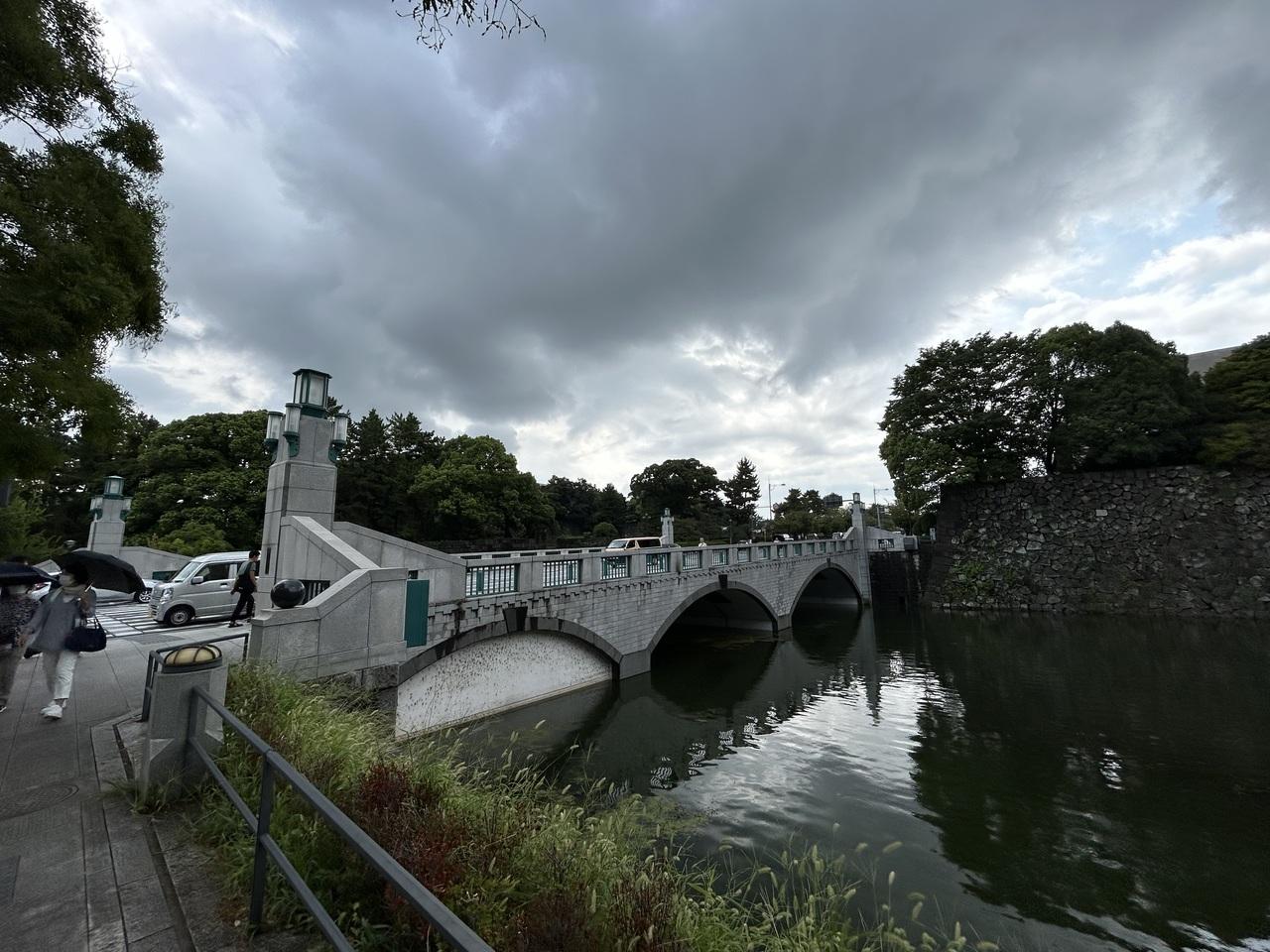
雉子橋門跡
Remains of Kijibashi-mon Gate
家康が朝鮮からの使節をもてなすための雑をこの附近の鳥小屋で飼育したことが橋名の由来です。
1629年(寛永6年)に江戸城外郭門の一つである雉子橋門が築造され、橋が突けられました。橋は1903年(明治36年)に鉄橋に改架されました。1923年(大正12年)9月1日の関東大震災で被災したため、1926年(大正15年)に新たに突けられたのが現在の橋です。
The name Kijibashi-mon Gate ("Pheasant Bridge Gate") derives from the fact that pheasants ("kiji") were bred at an aviary near the bridge for Tokugawa leyasu to entertain a Korean delegation.
Kifibashi-mon Gate was built as a gate in Edo Castle's outer wall, and a bridge was erected in 1629. In 1903, the bridge was rebuilt using steel. The bridge was rebuilt in 1926 in its current form after suffering damage in the Great Kanto Earthquake of September 1, 1923.
千代田区
Chiyoda City -
-
-
-
-
-
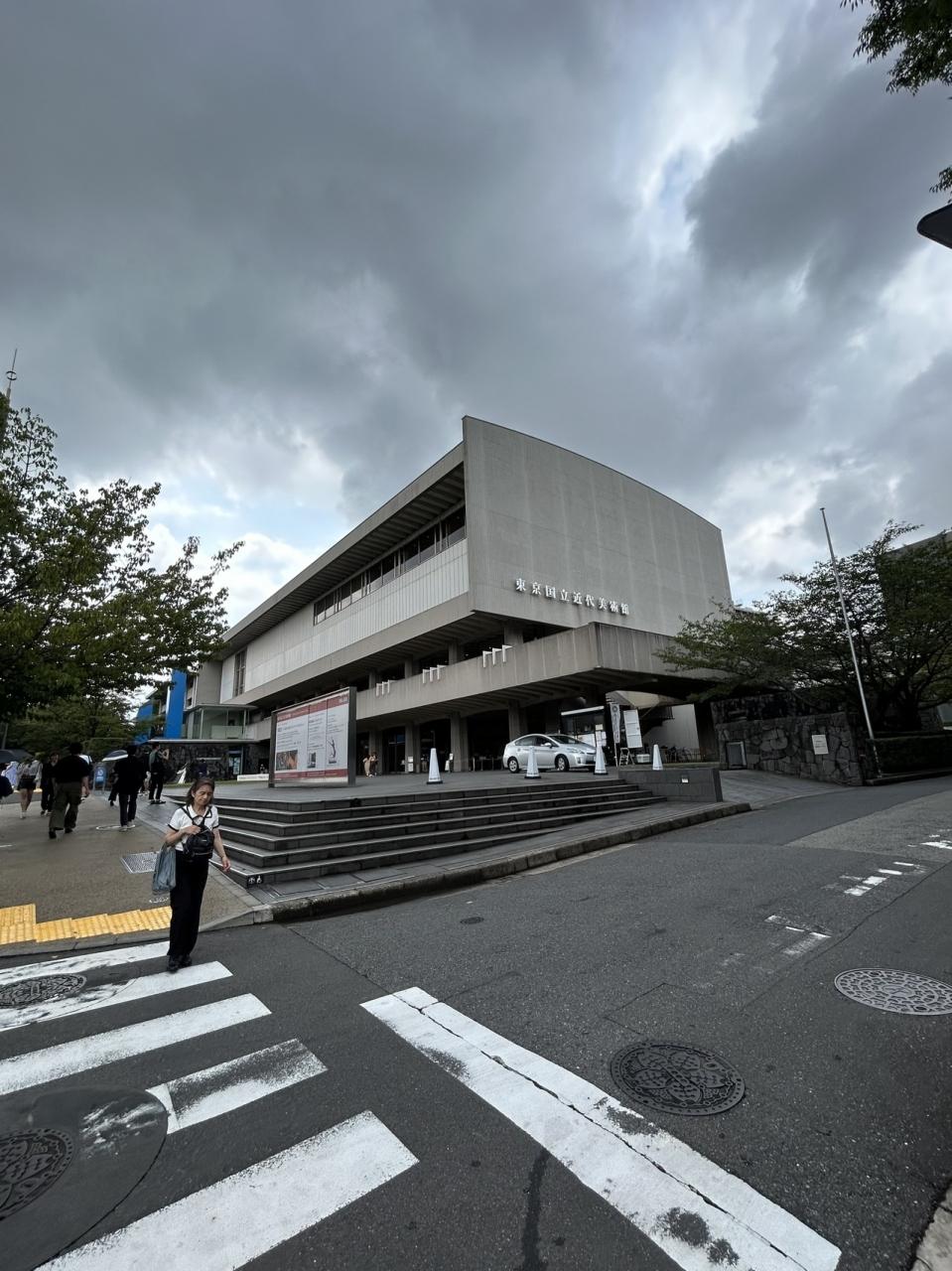
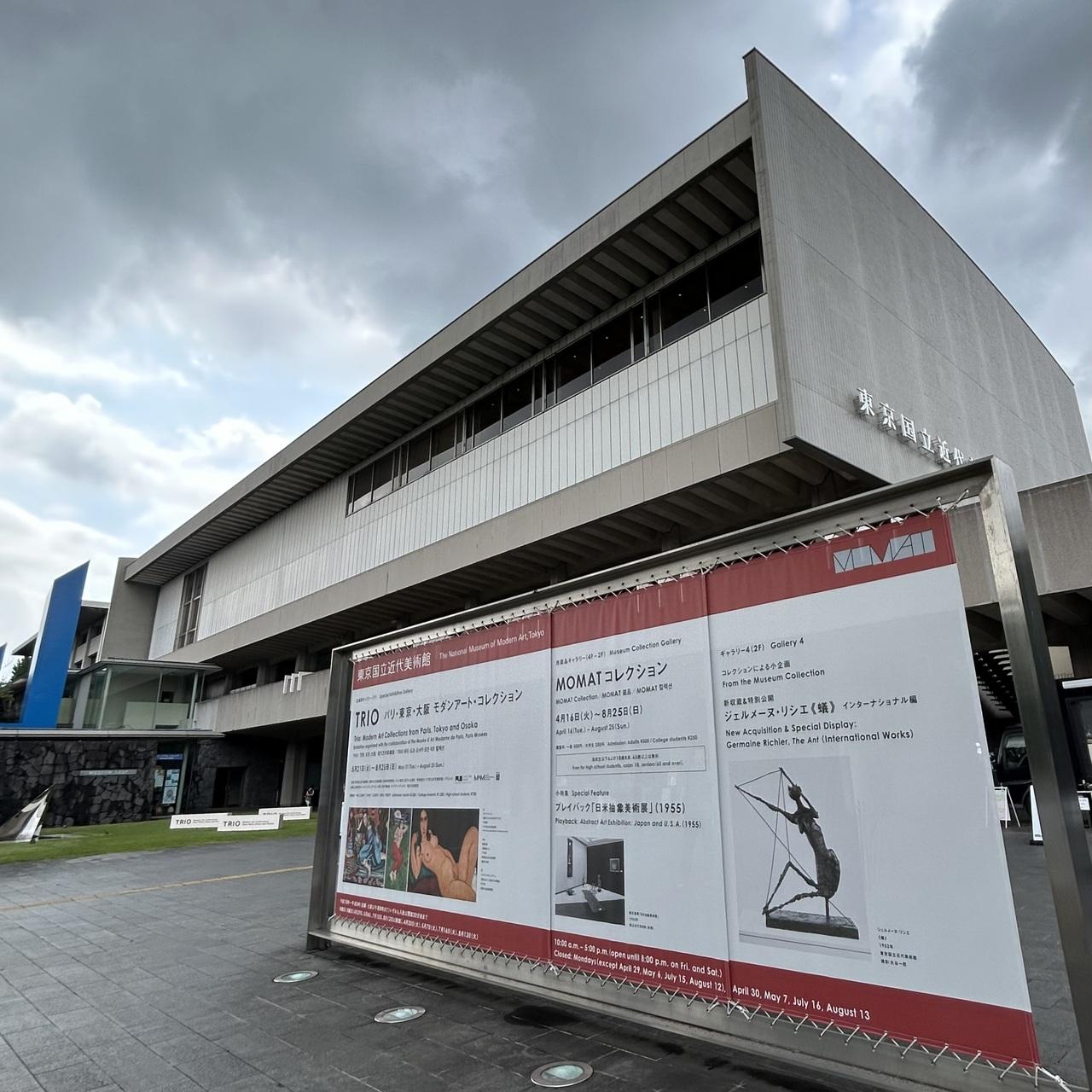
東京国立近代美術館 美術館・博物館
-
国立東京近代美術館 MOMAT Collection
https://www.momat.go.jp/exhibitions/r6-1 -
-
-
-
-
-
-
-
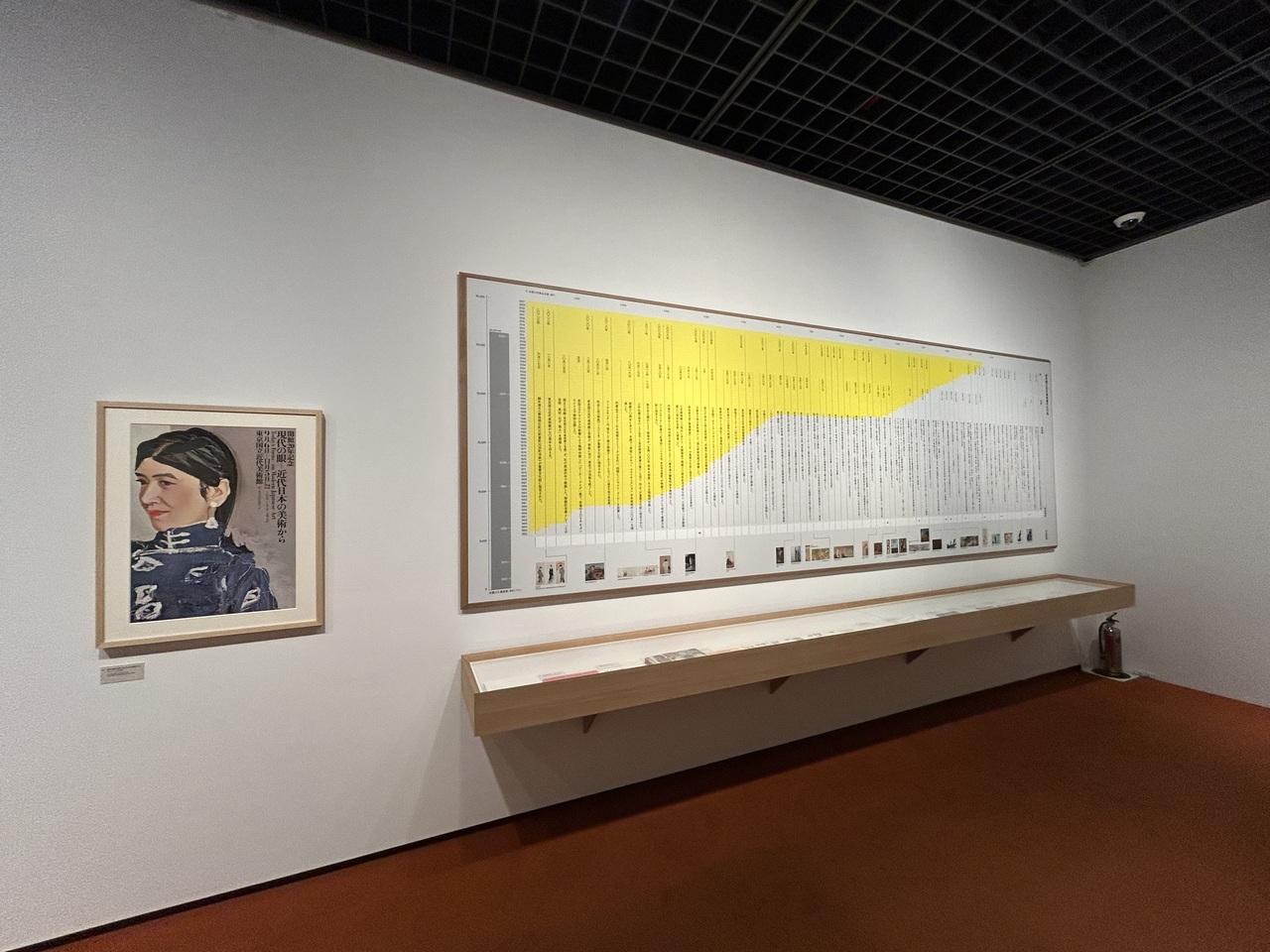
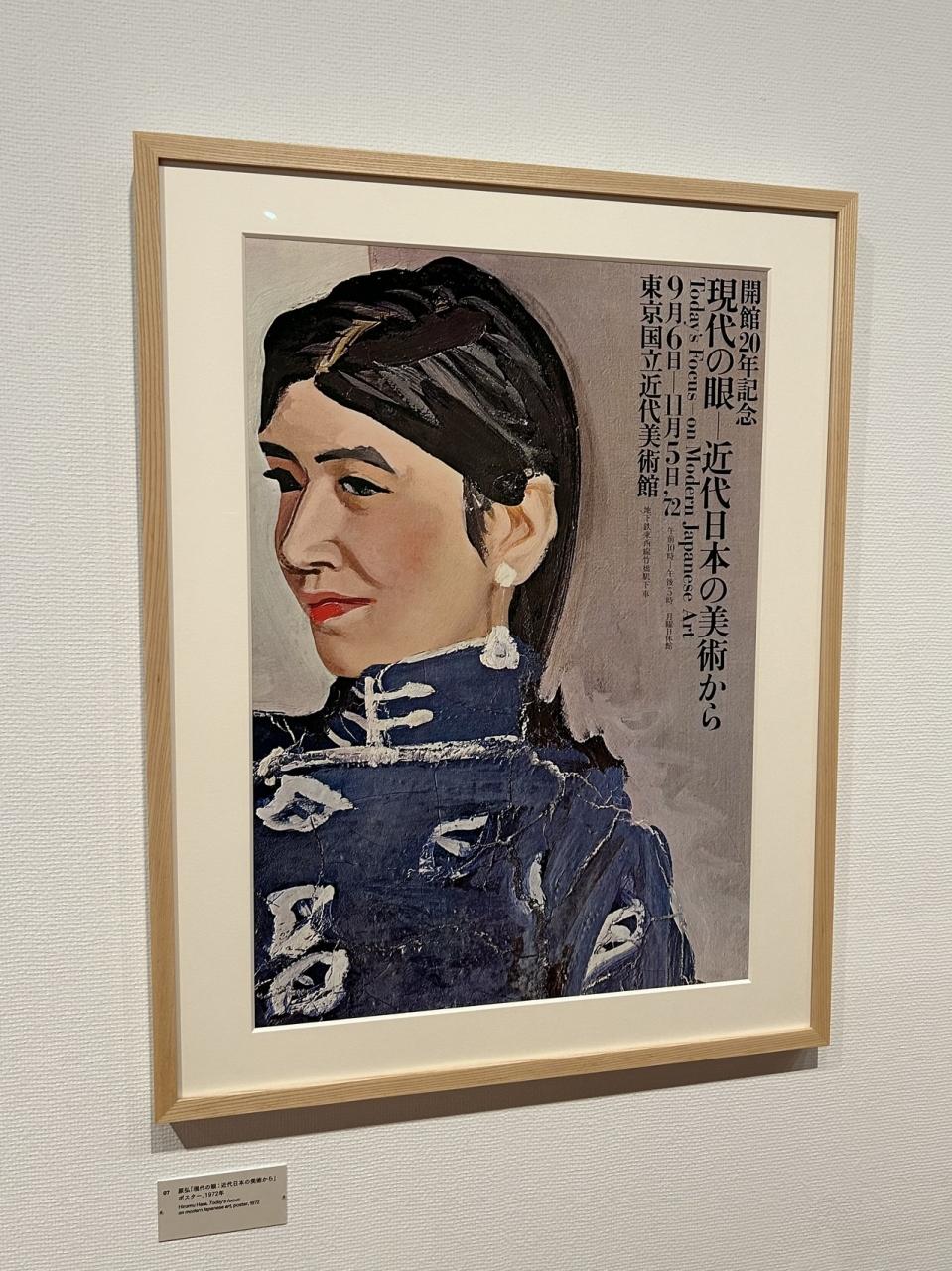
原弘「現代の眼:近代日本の美術から」
ポスター、1972年 -
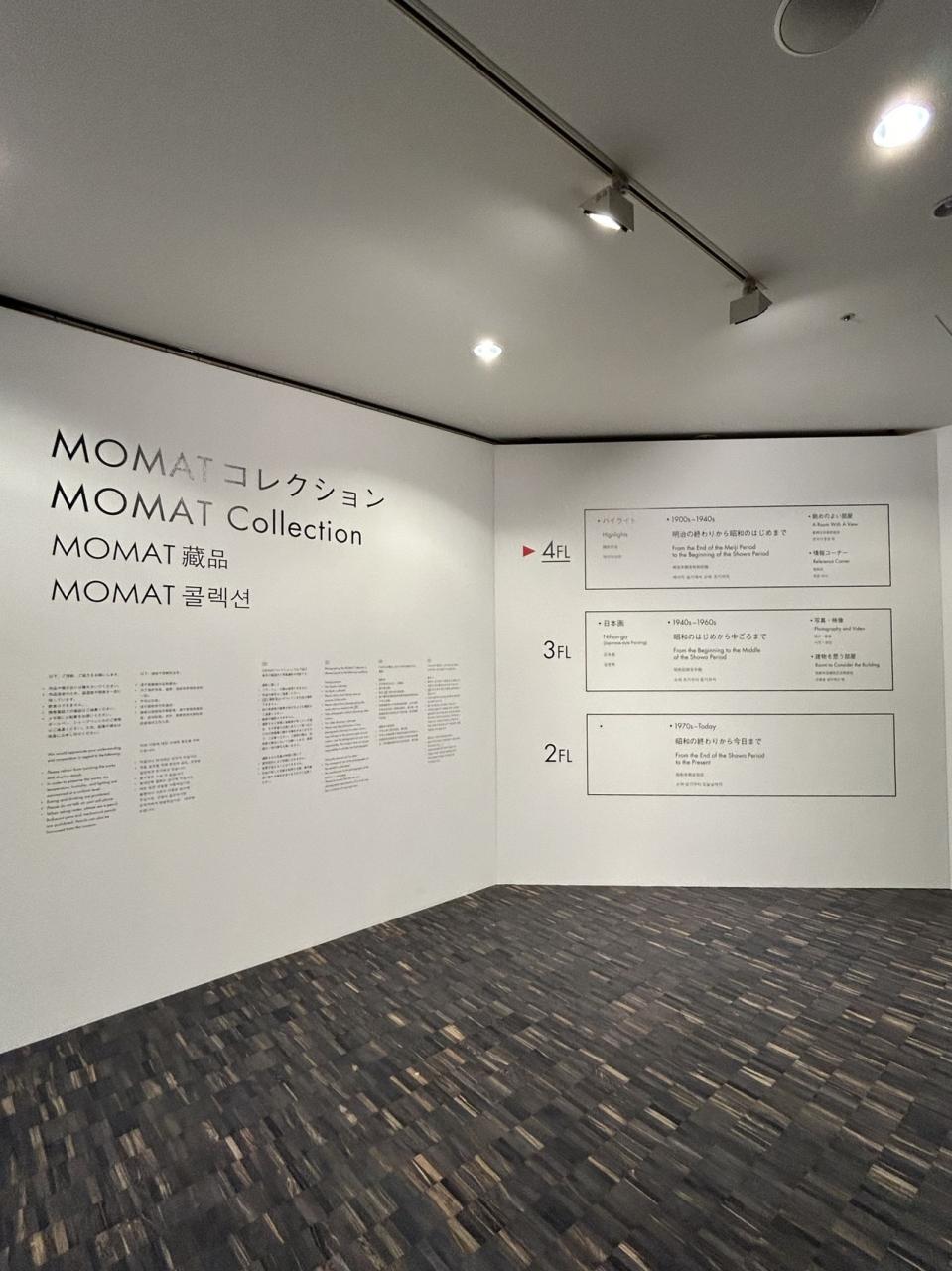
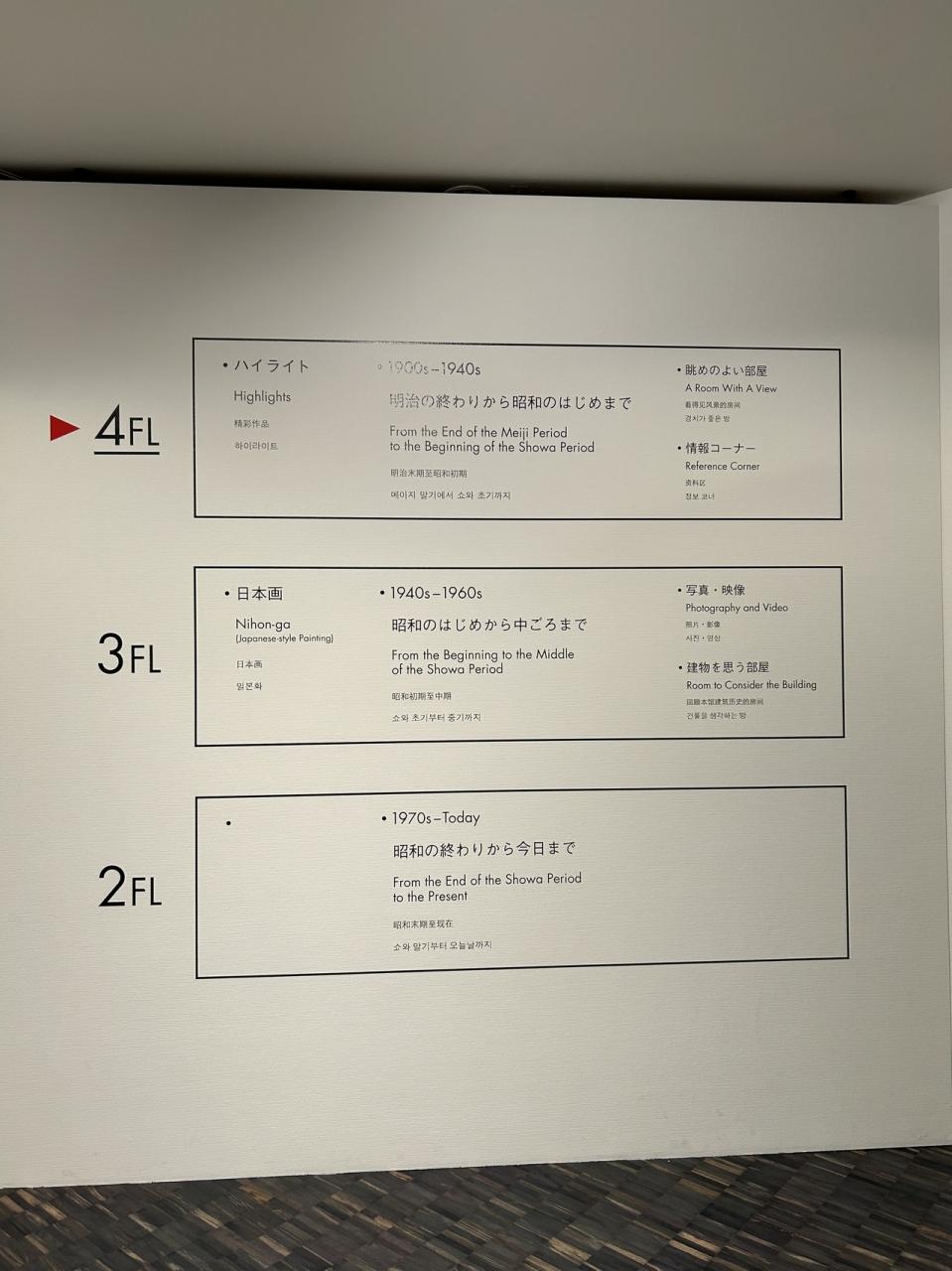
4階
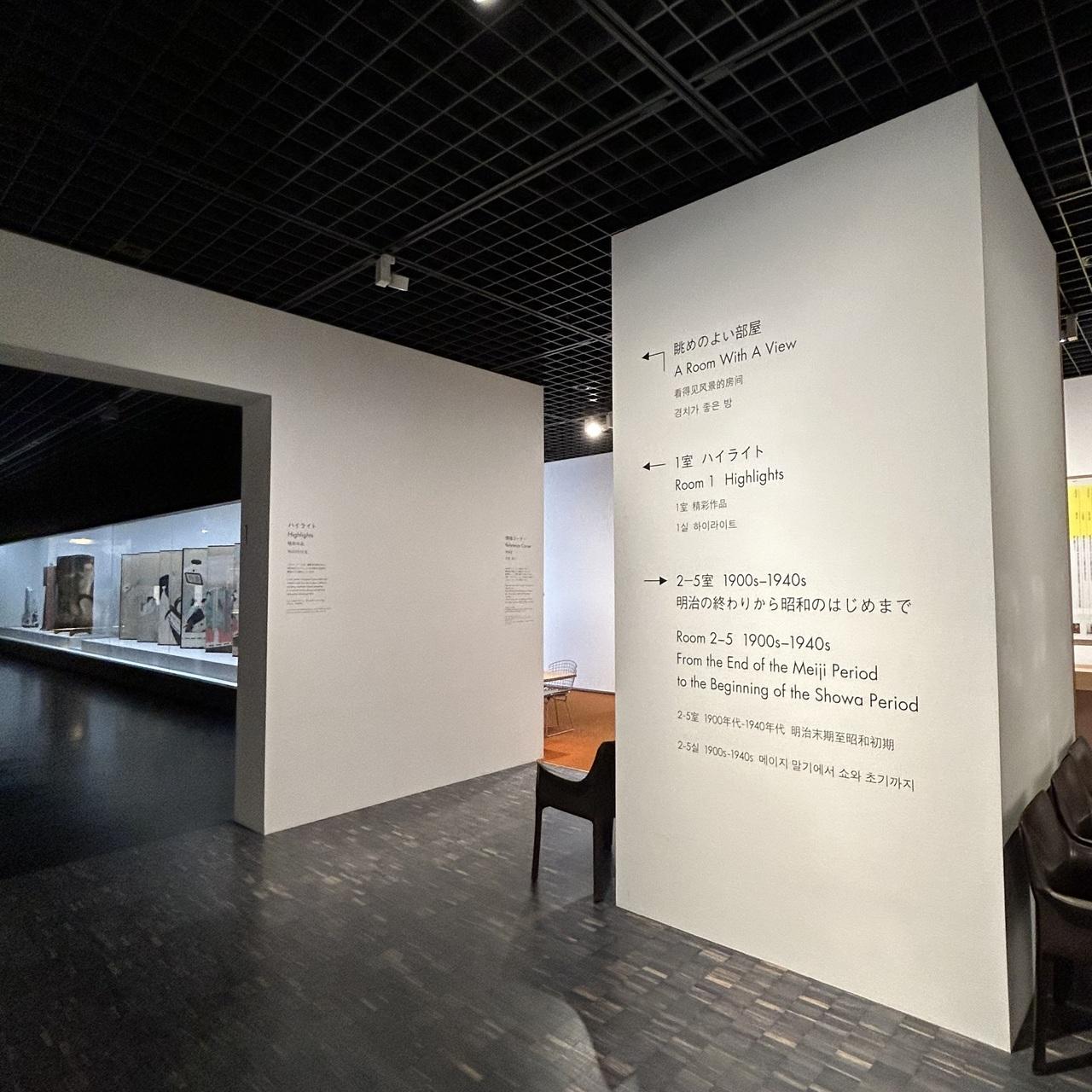
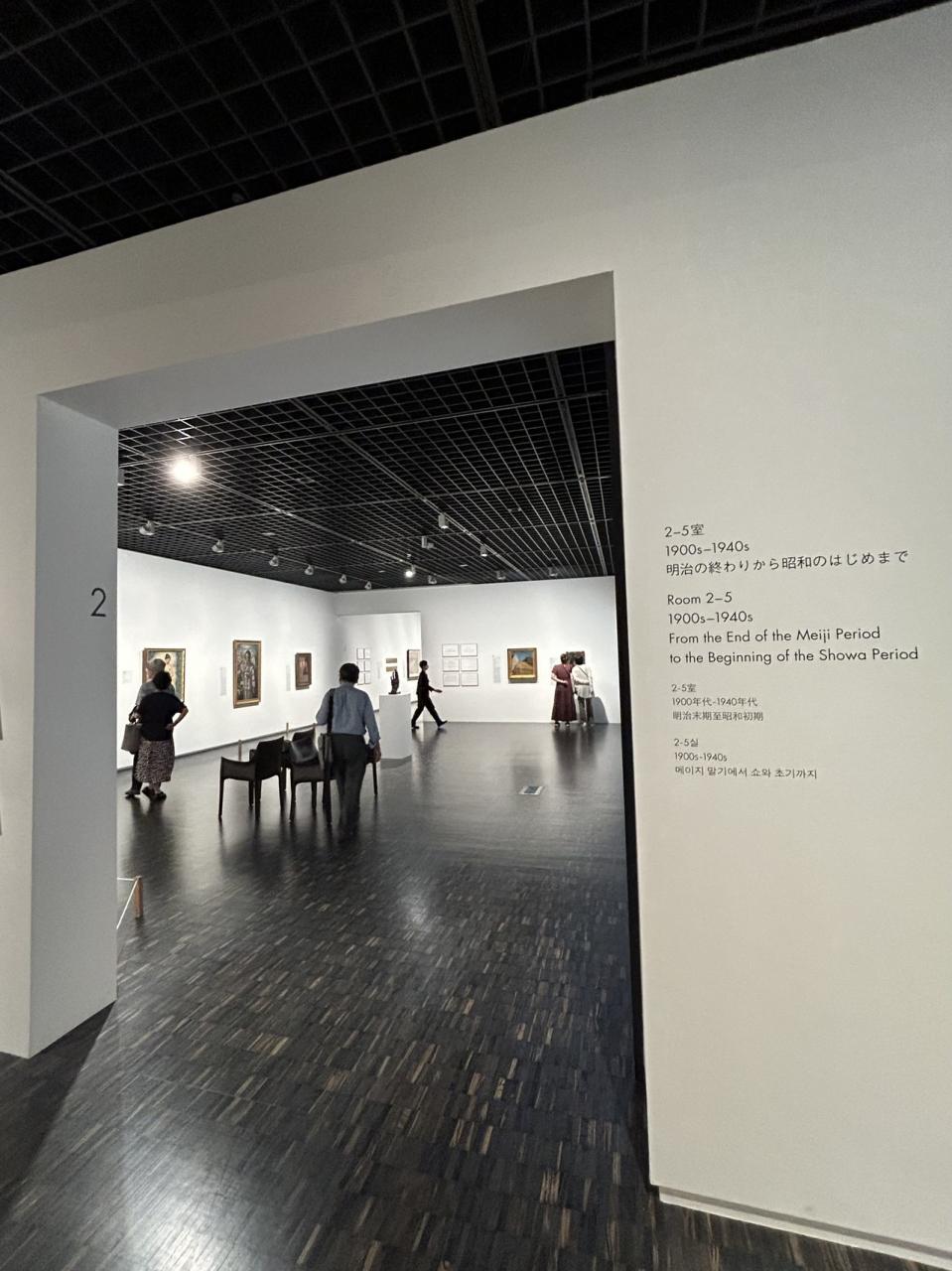
1-5室 1880s-1940s 明治の中ごろから昭和のはじめまで
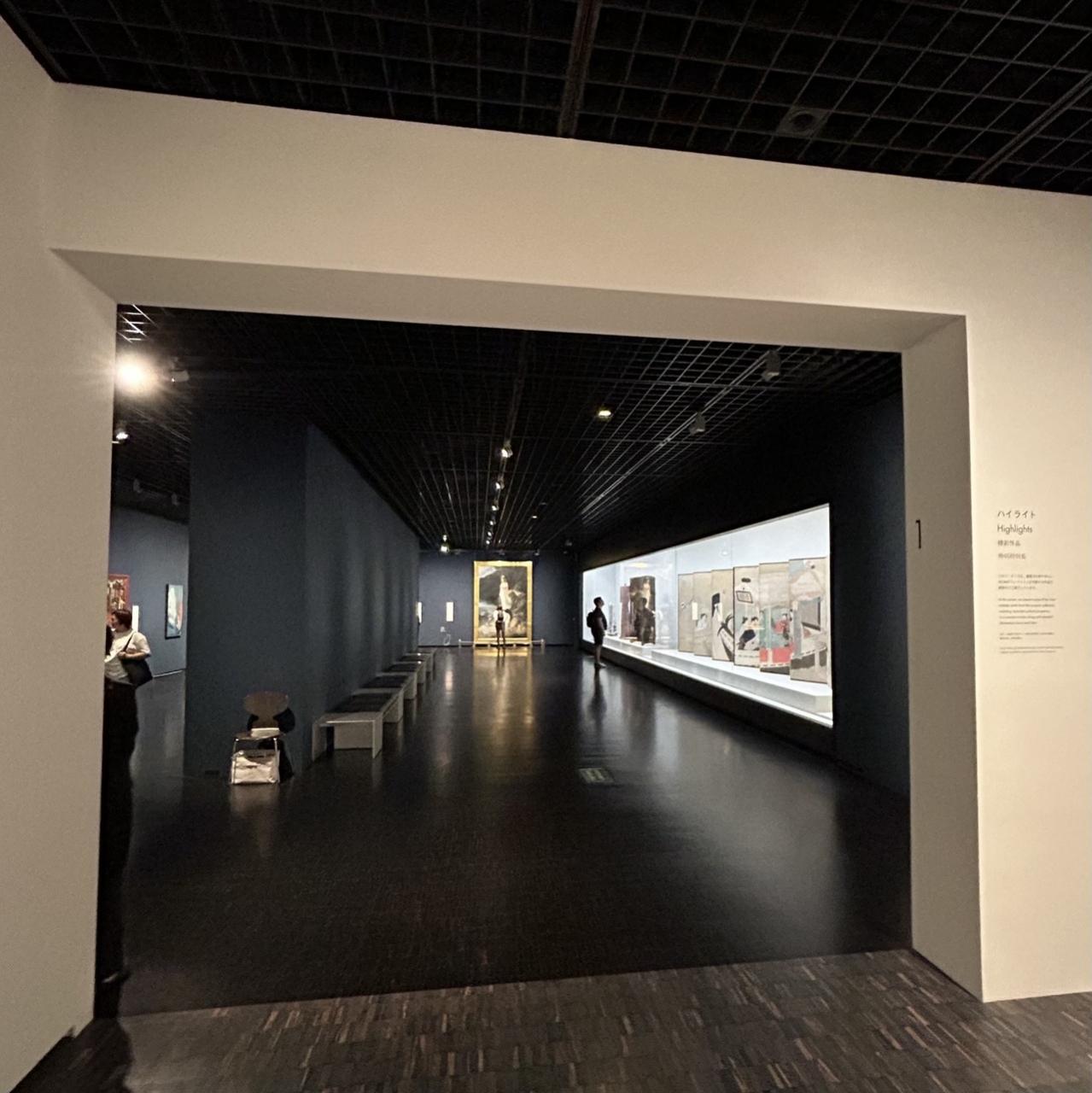
1室 ハイライト
3000㎡に200点近くが並ぶ、所蔵作品展「MOMATコレクション」。
「ハイライト」では近現代美術を代表する作品を揃え、当館のコレクションの魅力をぎゅっと凝縮してご紹介しています。日本画のコーナーでは、前期(4月16日―6月16日)は加山又造の《千羽鶴》を、後期(6月18日―8月25日)は鏑木清方の《墨田河舟遊》を展示します。ガラスケースの中では、新収蔵品《渡船・雨宿芝山象嵌屏風》をはじめとする国立工芸館の名品も合わせてご覧いただけます。ケースの外には、重要文化財の原田直次郎《騎龍観音》、和田三造《南風》のほか、日本近代洋画の人気作品や日本の前衛美術に大きな影響をもたらした西洋の作家たちの作品を並べました。
今回はいつもの作品解説のほかに、鑑賞のきっかけとなるような問いかけを示しました。これらの問いかけは、子どもから大人まで多くの方々が参加してきた当館の鑑賞プログラムでの実践をもとに選んでいます。MOMATコレクションと初めて出会う方も、すでに顔なじみの方も、さまざまな視点から作品をじっくり眺めて、肩の力を抜いて鑑賞をお楽しみください。 -
鏑木清方
KABURAKI, Kiyokata
1878-1972
墨田河舟遊
Boating-Excursion on the Sumida River
1914 大正3年
絹本彩色
color on silk
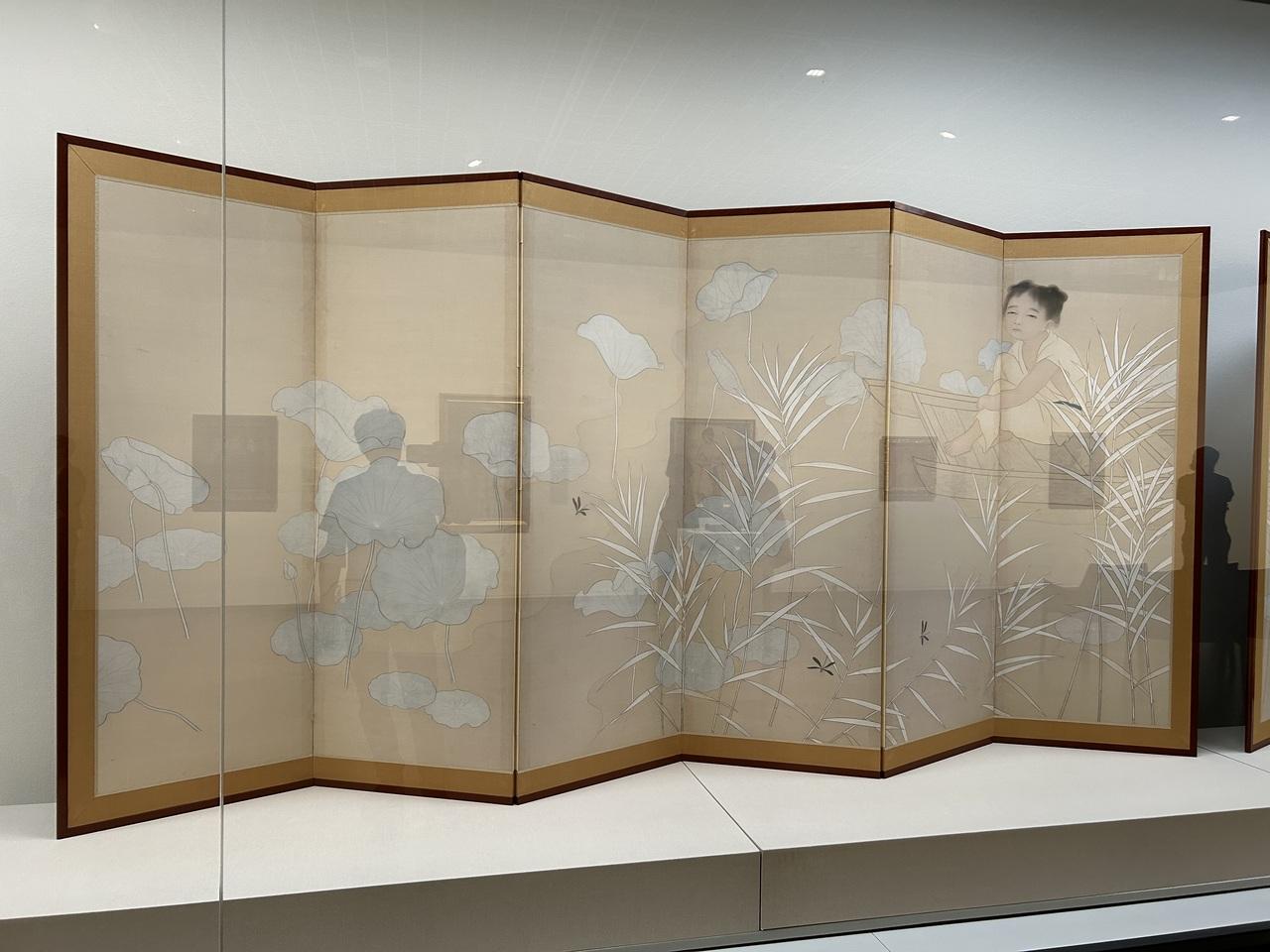
挿絵画家でもあった清方ですが、本作品は文展の出品作として六曲一双の大画面に挑んだもの。江戸時代後期の隅田川の舟遊びの情景が描かれています。右に描かれた屋形船の中では女達によって華やかに人形舞の宴が開かれており、向かって左手の屋根舟には旗本の若と歌妓が遊んでいます。船頭の操る竹の方向や風をはらんだ衣の表現が川面を滑る船の動きを暗示し、賑やかな江戸庶民の風俗描写にさらに活気を添えています。
In this work, Kaburaki, who was also active as an illustrator, set out to realize a single large-format painting across this pair of six-fold screens for the Bunten exhibition (held under the auspices of the Ministry of Education). The scene shows several pleasure boats on the Sumida River in the late Edo Period. On the houseboat on the right, a group of women are having a party with gorgeous dancing dolls. Meanwhile, on the roofed boat on the left, a young samurai is enjoying himself with two female entertainers.
The angle of the boatmen's bamboo poles and wind-filled clothing suggests the movement of the boat as it glides across the surface of the water and adds life to the animated depiction of common people's everyday pursuits in the Edo Period. -
新収蔵作品
New Acquisition
不詳
Unknown
渡船・雨宿芝山象嵌屏風
Folding screen, ferryboat and shelter-from-rain design, Shibayama inlay
漆、芝山象嵌(象牙、貝)
lacquer, Shibayama inlay with ivory and shells
黄金色の光に満ちた屏風の表面には、水面を行き交う選船や、船着き場に集まる男女の姿が描かれています。一方、裏面の「雨宿」図では、夕立に見舞われた人々が軒下に駆け込む様子が生き生きと捉えられています。象牙や貝などの多様な素材を嵌め込み、蒔絵を施した漆工芸の技法を「芝山象嵌」といいます。この技法は江戸時代にはじまり、幕末には西欧への豪華絢爛な輸出工芸として発展しました。日本の風俗を華麗な装飾によって表した本作品は、芝山象嵌興隆期の貴重な作例です。
The surface of the luminous golden folding screen depicts the bustle of ferryboats on the water and men and women gathering at a ferry landing. On the reverse side, the "shelter-from-rain" scene vividly portrays a throng of people rushing to take cover under eaves during a sudden evening shower. The technique of inlaying various materials such as ivory and seashell and applying lacquerware decoration is known as "Shibayama inlay." This process originated in the Edo period (1603-1868) and developed by the end of that period into a luxurious and splendid craft aimed at Western markets. This work, which elegantly conveys Japanese customs in an exquisitely decorative style, is a precious example from the height of the Shibayama inlay's popularity. -
小宮康孝
KOMIYA, Yasutaka
1925-2017
縮緬地江戸小紋着物 梨の切口
Kimono, Edo komon, Pear Section, stencil dyeing on crepe silk
1976 昭和51年
絹、型染
silk, stencil dyeing
遠くから見ると色無地の着物、ぐっと近づいてみると絹地に型で染めた細かい模様があらわれるのが江戸小紋です。武士が着るに多く用いられ、江戸時代の豊かな町人文化から多くの模様が生まれました。道具彫りで表された幾何学模様の連続は、梨を横二つに切ってすき間なく並べた様子に見えてきます。1センチ角に100個の点を彫れるほど緻密な型彫りと、その型紙を使って布に糊を置く型付けの正確さ。気が遠くなるような技の結集であることを感じさせない、さりげなさも江戸小紋の粋なところです。
Edo Komon refers to a style of kimono that appears solidly colored from a distance, but upon closer inspection, reveals intricate patterns dyed onto the silk fabric with stencils. It was frequently used for the Kamishimo garments worn by samurai, and many patterns developed in the context of the rich merchant culture of the Edo period (1603-1868). The continuous geometric pattern appears as if pears have been cut horizontally into halves and arranged side by side without any gaps. The meticulousness required to carve 100 dots per square centimeter for the stencils, and the precision of paste application for resist dyeing, are indicative of the stunning craftsmanship involved. The understated elegance that belies the complexity of the technique is a hallmark of the sophistication of Edo Komon. -
十三代三輪休雪(和彦)
MIWA, Kyusetsu XIII (Kazuhiko)
1951-
花冠
KAKAN
2003
陶器
平成15年
stoneware
刀でそぎ落として大きな塊から成形した土に、白い釉薬をまとわせた特大の花器です。作者は江戸時代から続く萩焼の名門として知られる三輪窯の13代目。萩焼は柔らかな土を生かした温雅な風合いで、茶の湯のうつわとしても親しまれてきました。本作に使われている釉薬はしらはぎゆう三輪家伝統の純白の「白」で、作者の伯父にあたる10代休雪と父の11代休が作りあげました。素地とした負富と笑玉や、チリチリとした梅花度の表情にしっかりと教焼の伝統を受け継ぎつつ、荒々しい冬の大地を思わせる力強く新しい造形を示しています。
This large vase was shaped from a large mass of clay pared down with a blade and coated with a white glaze. The creator is the 13th-generation head of the Miwa kiln, distinguished makers of Hagi ware continuously since the Edo period. Hagi ware is made with soft clay and cherished for its gentle, elegant texture, causing it to be favored for tea ceremony utensils. The glaze
used in this work is the Miwa kiln's traditional pure white Shirahagi glaze,
developed by the creator's uncle, the Kyusetsu X, and his father, Kyusetsu XI. While carrying on the traditions of Hagi ware, with Mishima and Daido clays as the base and a distinctive kairagi texture (wrinkling of the glaze surface), it presents a robust, innovative reminiscent of the rugged winter earth. -
-
原田直次郎
HARADA, Naojiro
1863-1899
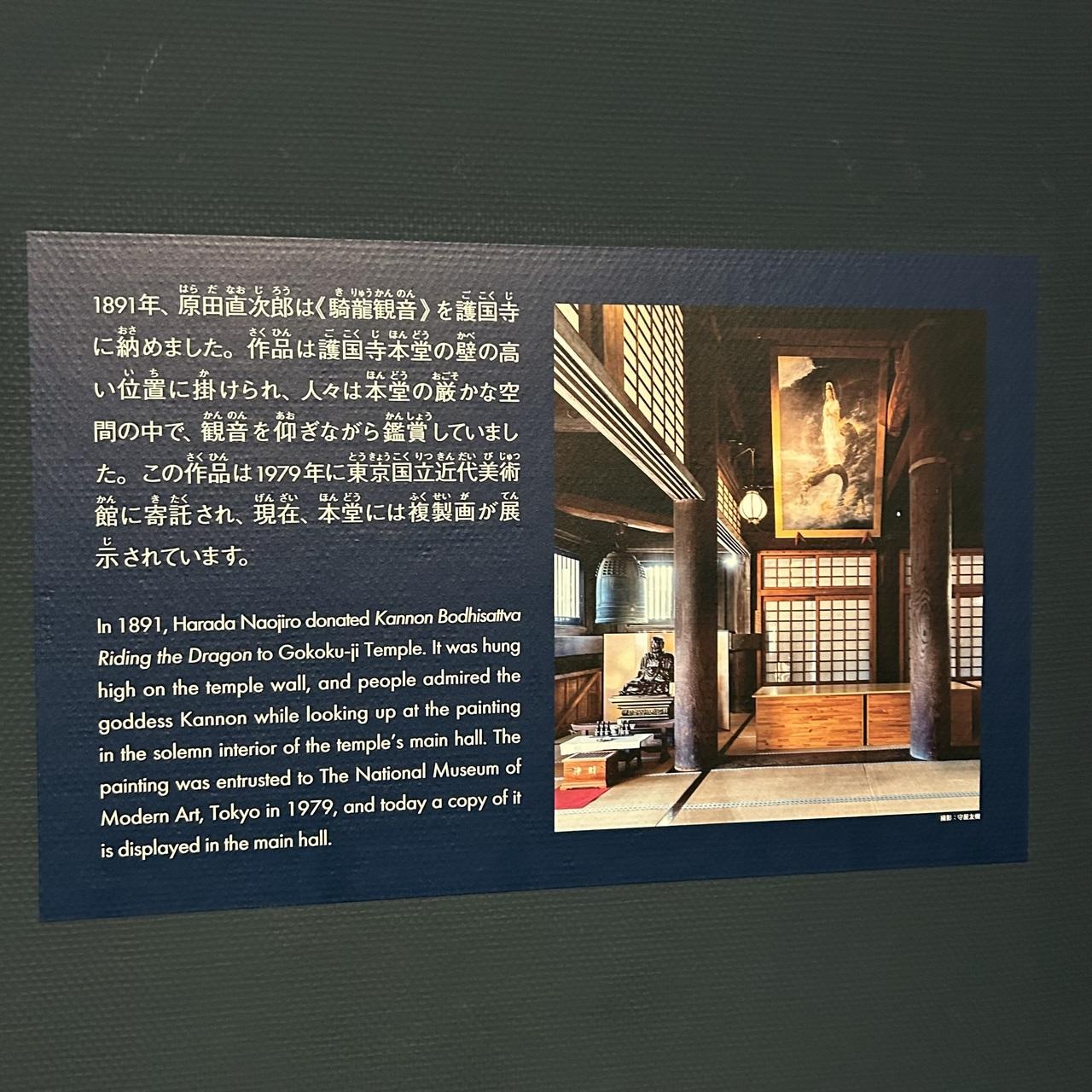
騎龍観音
Kannon Bodhisattva Riding the Dragon
1890 明治23年
油彩・キャンバス
oil on canvas
暗雲たなびく空の上、龍の背に立つ観音が描かれています。右手に柳の枝、左手に水瓶を持つ姿から、人々を病から救う楊柳観音であることがわかります。東洋的なモチーフを、西洋的な絵画技法によって精緻にとらえた本作は、架空の存在を描きながらも、その質感を想像させるような生々しさを併せ持っています。明治時代にドイツに留学した原田は、西洋で学んだ油彩の技術を総動員してこの作品を描きました。発表当時は賛否両論ありましたが、日本の西洋絵画受容期の優れた初期作例として重要文化財に指定されました。
In the sky amid looming dark storm clouds, the bodhisativa Kannon stands on the back of a dragon. From the willow branch in her right hand and the bottle in her left, it is clear that this is a manifestation of "Kannon with a willow branch," known for healing the sick. The painting treats an East Asian theme in great detail with Western painting techniques, which convey the subjects' textures and bring vivid realism to a depiction of a mythical being. Harada, who studied in Germany during the Meiji era (1868-1912), applied all the oil painting skills he acquired in the West to produce this work. When it was first unveiled there were mixed opinions, but it was designated as an Important Cultural Property as it is an excellent early example of the acceptance of Western painting in Japan. -
-
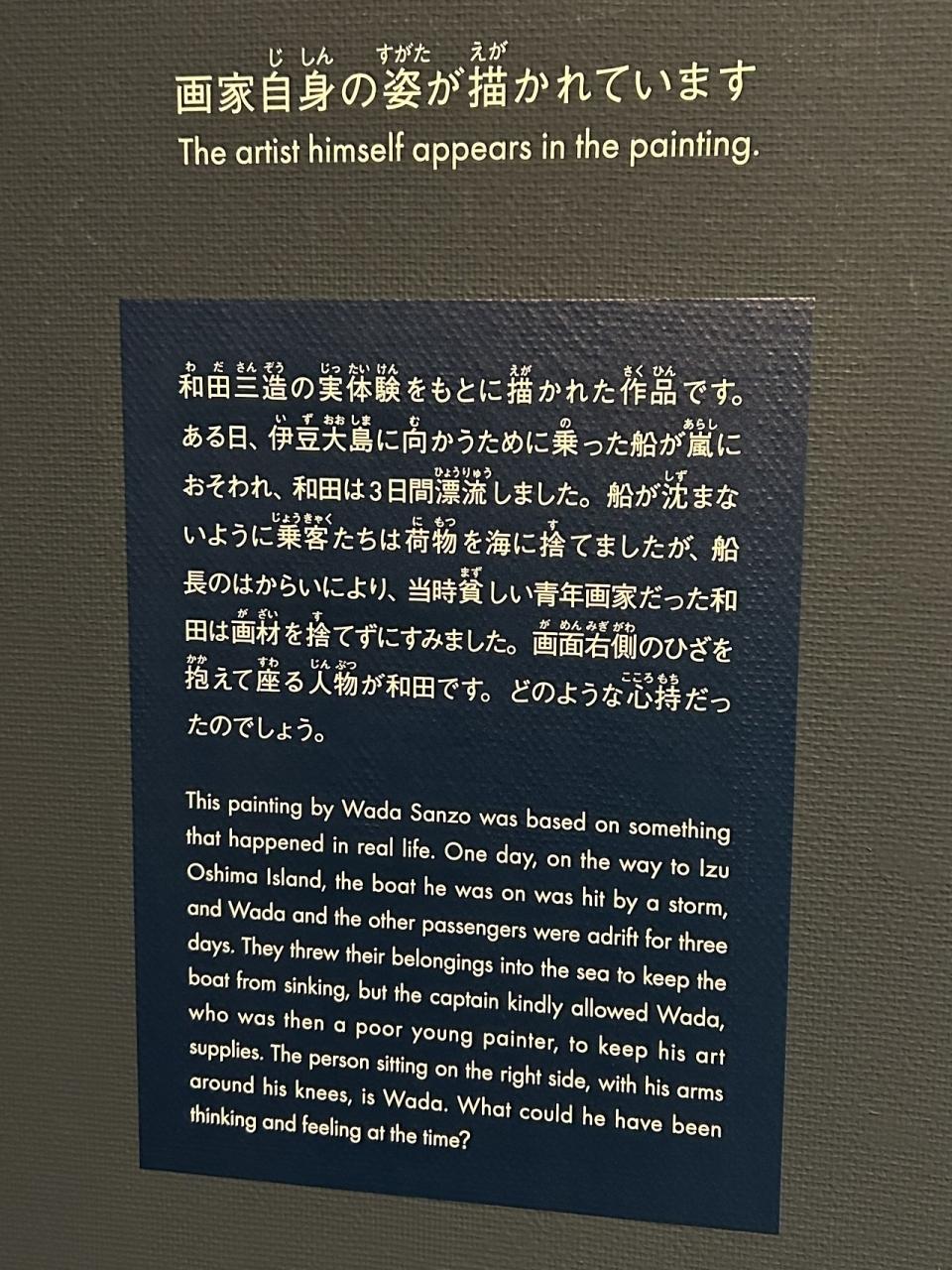
和田三造
WADA, Sanzo
1883-1967
南風
South Wind
1907 明治40年
油彩・キャンバス
oil on canvas
上着を頭に掛け遠くを見据える中央の男性は、日本人離れをした筋肉隆々の体つきです。理想的人体を描こうとする西洋絵画のアカデミズムの思想が、当時24歳の青年であった和田三造にもしっかりと浸透していたことがわかります。描かれるのは遭難した船乗りたち。そんな事態に遭遇しながらも勇壮な男たちの姿は、日露戦争後の高揚した気分に合い、観衆の評判を呼んだと伝えられます。ドラマチックな主題を強いコントラストで表現した作風は、従来のおだやかな外光表現を塗りかえるもので、以降の文部省美術展覧会の定番となりました。平成30年度に重要文化財に指定されました。
Gazing off into the distance with his shirt over his head, the man in the center of this painting has a muscular physique that is markedly un-Japanese.It is clear that Wada Sanzo, who was a young man of only 24 at the time, was quite taken with the Western academic notion of depicting an idealized human form. The figures are sailors who have suffered an accident. Despite the situation, the form of the heroic men fits the exalted mood that followed the Russo-Japanese War, and the painting was apparently greeted with a positive response from contemporary viewers. Wada's style, which expresses the dramatic theme through strong contrasts, replaced the gentle natural light expressions that had been common until that point, and the work became a staple of the Bunten exhibition (sponsored by the Ministry of Education). It was designated as an Important Cultural Property in fiscal 2018. -
-
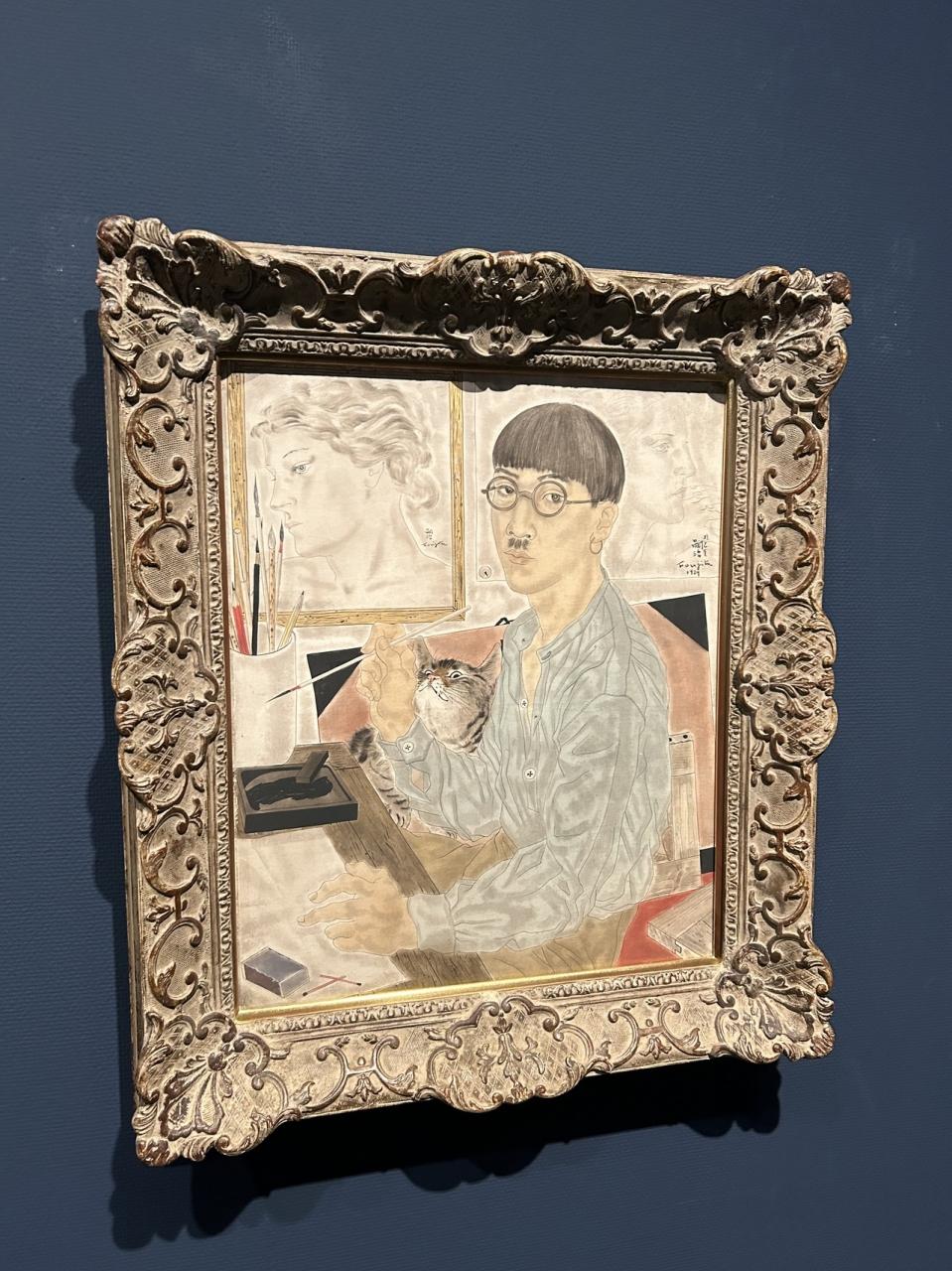
藤田嗣治
FUJITA, Tsuguharu
1886-1968
自画像
Self-Portrait
1929 昭和4年
油彩・キャンバス oil on canvas
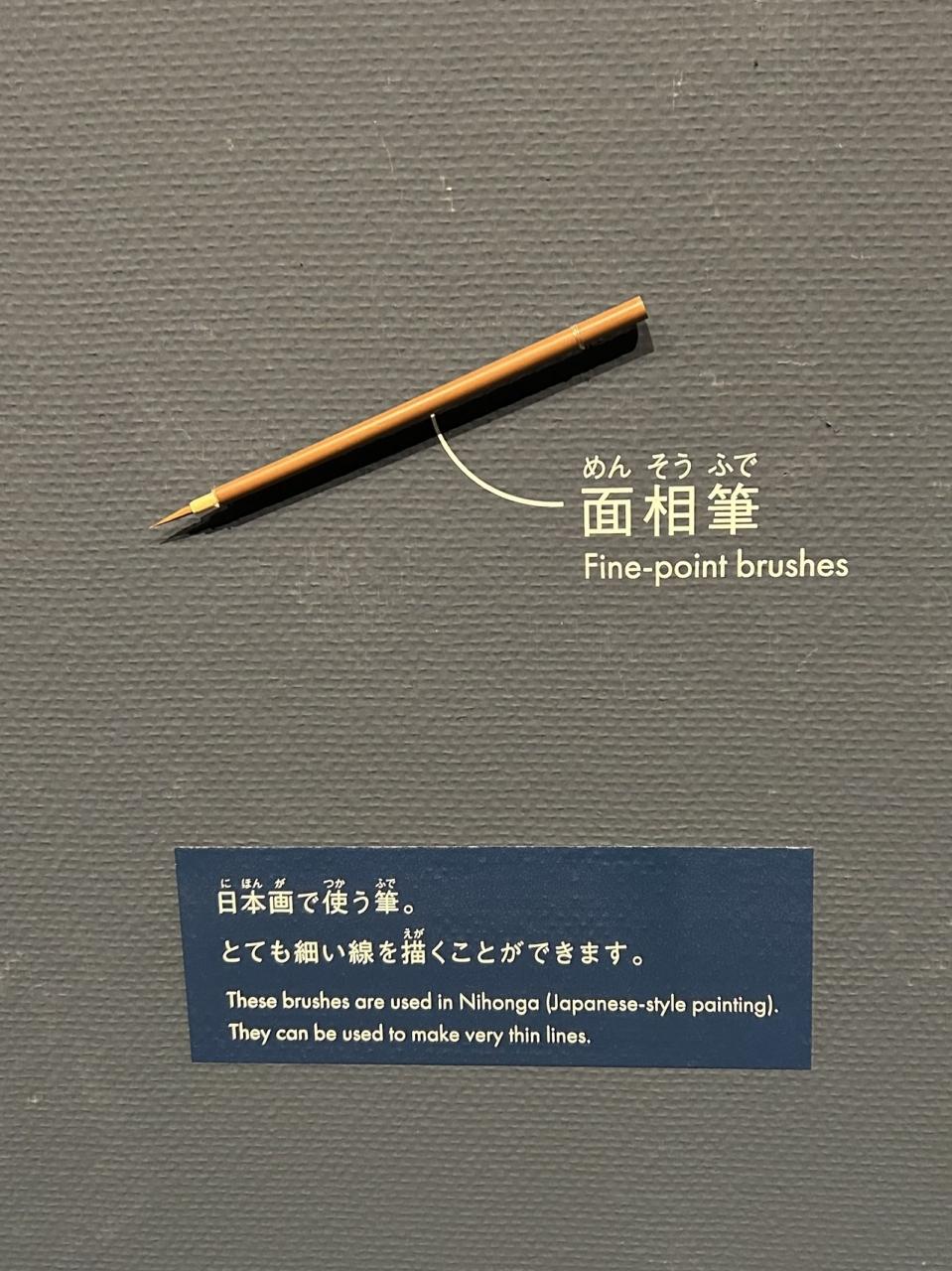
黒髪のおかっぱ頭に丸眼鏡、右手に筆を持った人物がこちらを見つめています。1920年代からパリで売れっ子画家として活躍した藤田自身の姿です。アトリエでの自画像は西洋絵画において長い歴史を持ち、芸術家の知性や威厳を示す主題として知られています。画面に描き込まれた日本画用の筆や硯からは、西洋の伝統的な主題を参照しつつ、日本人画家としてのアイデンティティを戦略的にアピールする藤田の自負を読み取ることができます。
The man with dark hair in a bowl cut, round glasses, and a brush in his right hand gazing out at the viewer is the artist himself, Fujita, who became a highly sought-after artist in Paris in the 1920s. Self-portraits in the studio have a long history in Western painting, and are known as subjects that highlight artists' intellect and dignity. From the Japanese-style paintbrushes and sumi inkstone depicted here, one can infer Fujita's pride in strategically asserting his identity as a Japanese painter while referencing a traditional Western theme. -
-
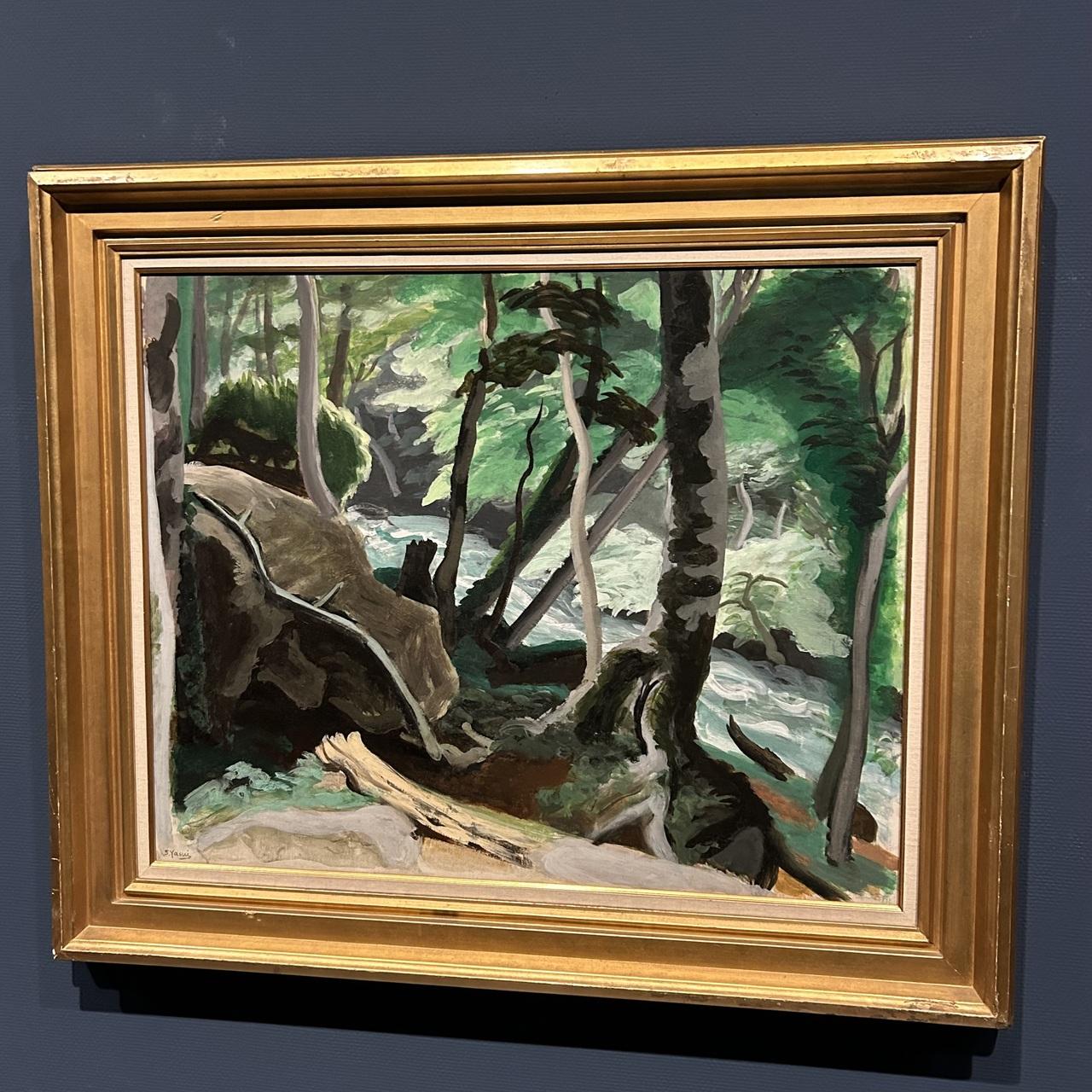
安井曽太郎
YASUI, Sotaro
1888-1955
奥入瀬の溪流
Oirase Stream
1933
昭和8年
油彩・キャンバス
oil on canvas
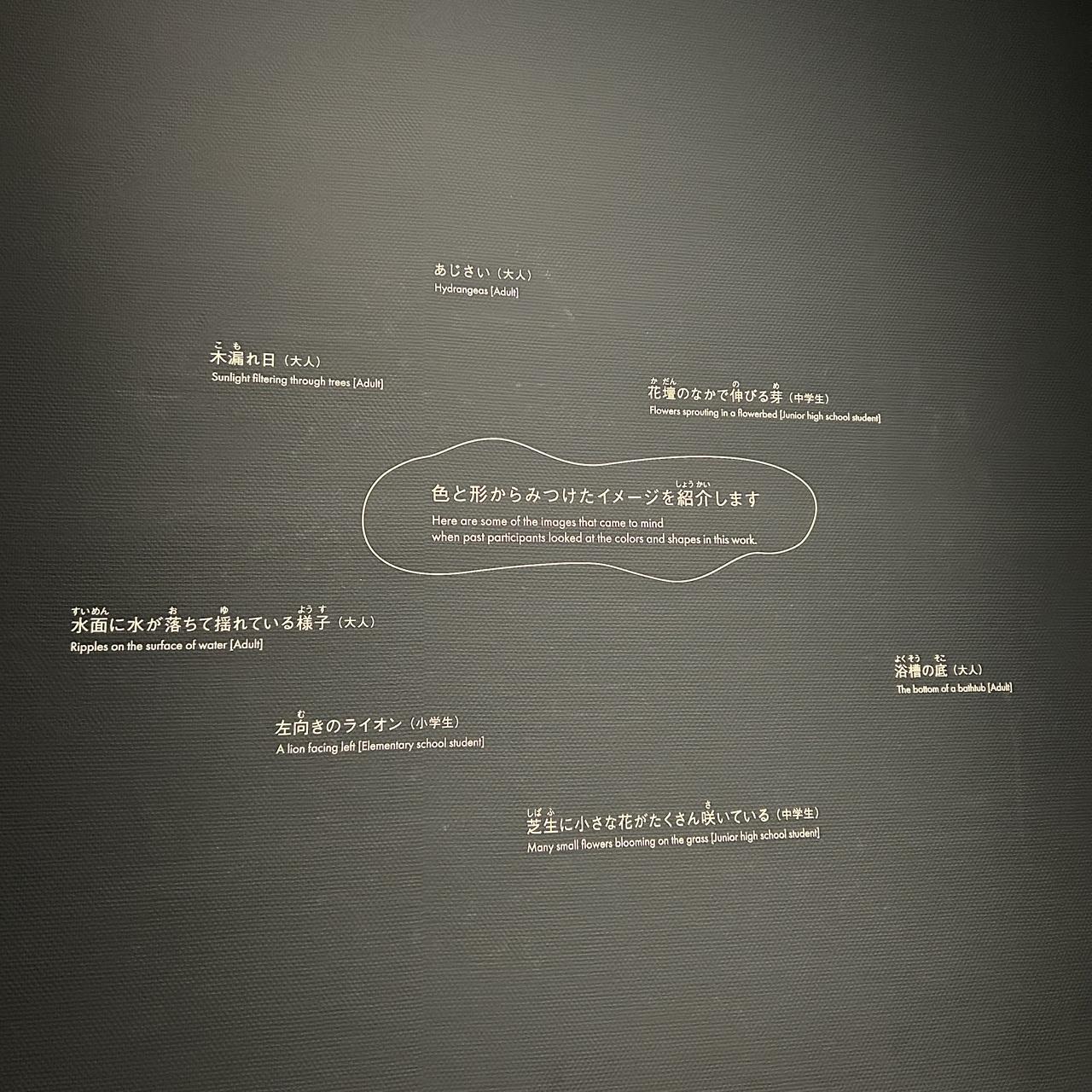
安井が青森県の十和田湖と奥入瀬を訪れたのは1932(昭和7)年のことです。奥入瀬では「かなり自分のそばから景色がはじまっているので、前景、中景、後景の変化に苦心しました」と言っています。本作を見ると、確かに、線遠近法を使わず平板となった画面の中で、明(前景)、暗(中景)、明(後景)と切り替えるなど、なかなかチャレンジングです。ちなみに安井が十和田を訪問したのは、国立公園協会に招かれたためで、34年には日本で最初の国立公園が誕生し、36年には十和田も指定されました。
In 1932, Yasui visited Lake Towada and Oirase Stream in Aomori Prefecture. Of the trip, Yasui wrote, "Because the scenery began almost right beside me, I had trouble dealing with the difference between the foreground, middle ground, and background." In looking at the work, one senses these rather challenging circumstances in the shift between bright (foreground), dark (middle ground), and bright (background). It is also interesting to note that Yasui's visit to the lake was the result of an invitation from the National Park Association of Japan. The first national park was created two years later in 1934, and the Towada area was also designated as one in 1936. -
-
-
北脇昇
KITAWAKI, Noboru
1901-1951
空の訣別
Perishing in the Sky
1937 昭和12年
油彩・キャンバス
oil on canvas
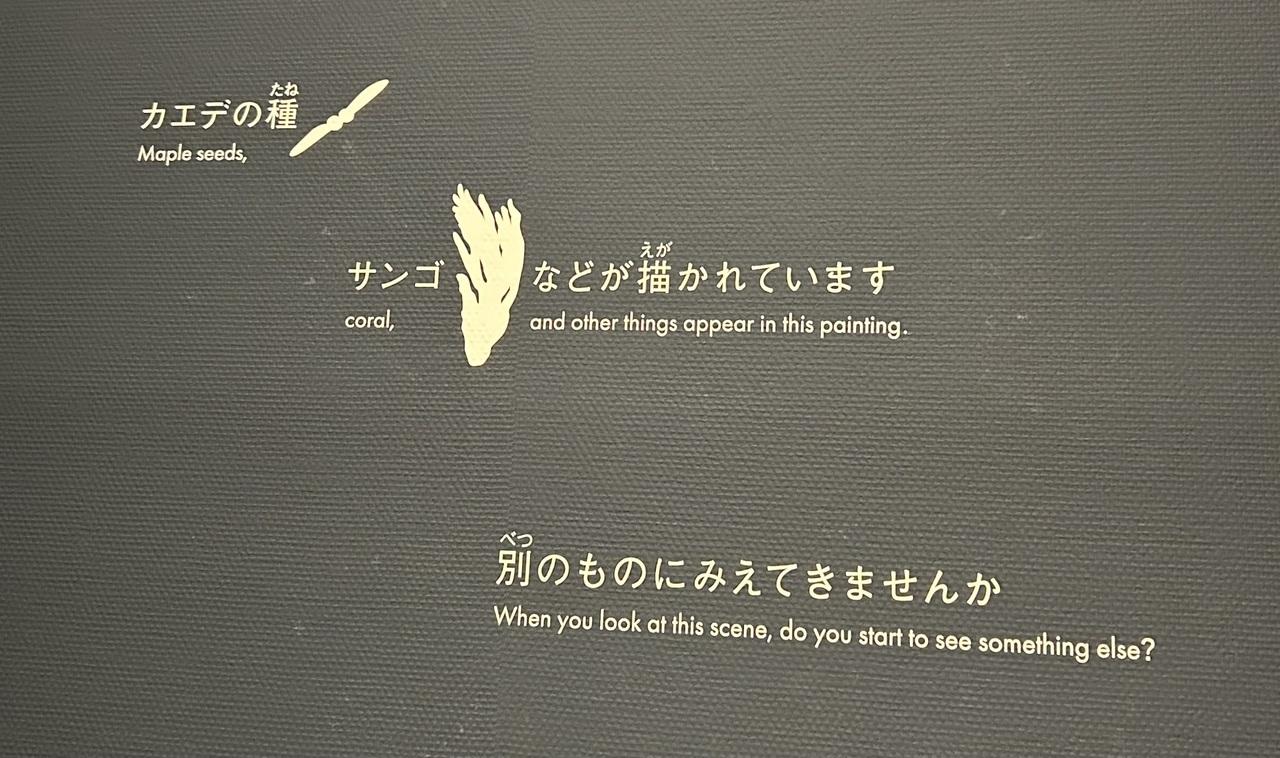
1937(昭和12)年8月、南京渡洋爆撃に参加した梅林孝次中尉の乗る攻撃機が被弾し、墜落した出来事が主題です。梅林は別れに白いハンカチを振り、パラシュートを使わず自爆したと伝えられ、当時は「あ>梅林中尉」という歌が作られるほどの人気でした。ここでは戦闘機はカエデの種に、ハンカチを振る梅林の手は赤いサンゴに、それぞれ見立てられています。なんとも不思議な作品ですが、北脇は遠くで起きている戦争を身近なものにたとえて表すことで何とか自分の実感に引き寄せ、来るべき未来を予見しようとしていたのではないでしょうか。
This work deals with an incident that occurred in August 1937 in which a fighter plane, piloted by Lieutenant Umebayashi Koji, was shot down in a bombing raid on Nanjing. Umebayashi is said to have waved a white handkerchief in a farewell gesture and crashed without attempting to use his parachute. He became popular enough to inspire a song called "Oh, Lt. Umebayashi." Here, his plane is a maple-seed pod and his hand and handkerchief a piece of red coral. Though the work remains mysterious, we can imagine that by comparing the war that was raging faraway to these familiar things, Kitawaki was drawing on his own feelings in an effort to foresee a future, which was expected to arrive very soon. -
-
清水登之
SHIMIZU, Toshi
1887-1945
チャイナタウン
Chinatown
1928 昭和3年
油彩・キャンバス
oil on canvas
ニューヨークのチャイナタウンの賑やかな光景が、画面いっぱいに描き込まれています。清水は20歳で単身渡米し、1917年からニューヨークで美術を学びました。バスの乗客や、バルコニーで演奏する楽師たち、車を走って追いかける人々など、臨場感あふれるディテールには、日常的にチャイナタウンに通っていた清水の生活者としての視点が反映されています。本作は<ニューヨーク、夜のチャイナタウン>(1922年、栃木県立美術館蔵)を、清水がほぼ同一の構図で描き直したものです。
A busy, elaborately detailed scene of New York's Chinatown covers the entire canvas. Shimizu moved to the United States alone at the age of 20 and studied art in New York from 1917. The painting is brimming with lively details, such as bus passengers, musicians performing on a balcony, and people chasing after cars, reflecting Shimizu's perspective as a resident who frequently visited Chinatown. This work is a reimagining of Shimizu's Chinatown at Night, New York (1922, collection of the Tochigi Prefectural Museum of Fine Arts), which features almost the same composition. -
-
パウル・クレー
Paul Klee
1879-1940
花ひらく木をめぐる抽象
Abstraction with Reference to a Flowering Tree
1925 大正14年
油彩・厚紙
oil on carton
色とりどりの四角形で構成された、四角い画面。ですが、響き合う色の美しさだけが追求されているわけではありません。微妙に揺らぎながら周囲に向かって大きく、そして暗くなっていく四角形の連なりを見ていると、現実世界にある特定の花の色や形よりも、ゆっくりと開こうとする花の「動き」が感じられませんか?この絵が描かれた頃、クレーはヴァルター・グロピウスに招かれ、バウハウスで教類をとっていました。時、画家としてすでに高い評価を得ていたクレーや同僚のカンディンスキーは、それぞれが独自の造形論や色彩論を学生たちに伝えました。バウハウスの各工房で制作された作品には、そうした影響が反映されています。
This square painting is composed of many colorful squares, but there is more to it than the striking beauty of the colors' relationships. Look at the patchwork of squares subtly fluctuating and growing larger and darker as they move toward the edges-can you sense slow movement, like a flower about to open, though not specifically referencing the color and shape of any specific flower in the real world? Around the time he produced this work, Klee was invited by Walter Gropius and began teaching at the Bauhaus. Klee, already highly regarded as a painter at that time, and his colleague Wassily Kandinsky both shared their unique personal theories of modeling and color with students, and their influence is clearly reflected in the output of the Bauhaus workshops -
-
アド・ラインハート
Ad Reinhardt
1913-1967
抽象絵画
Abstract Painting
1958
昭和33年
油彩・キャンバス oil on canvas
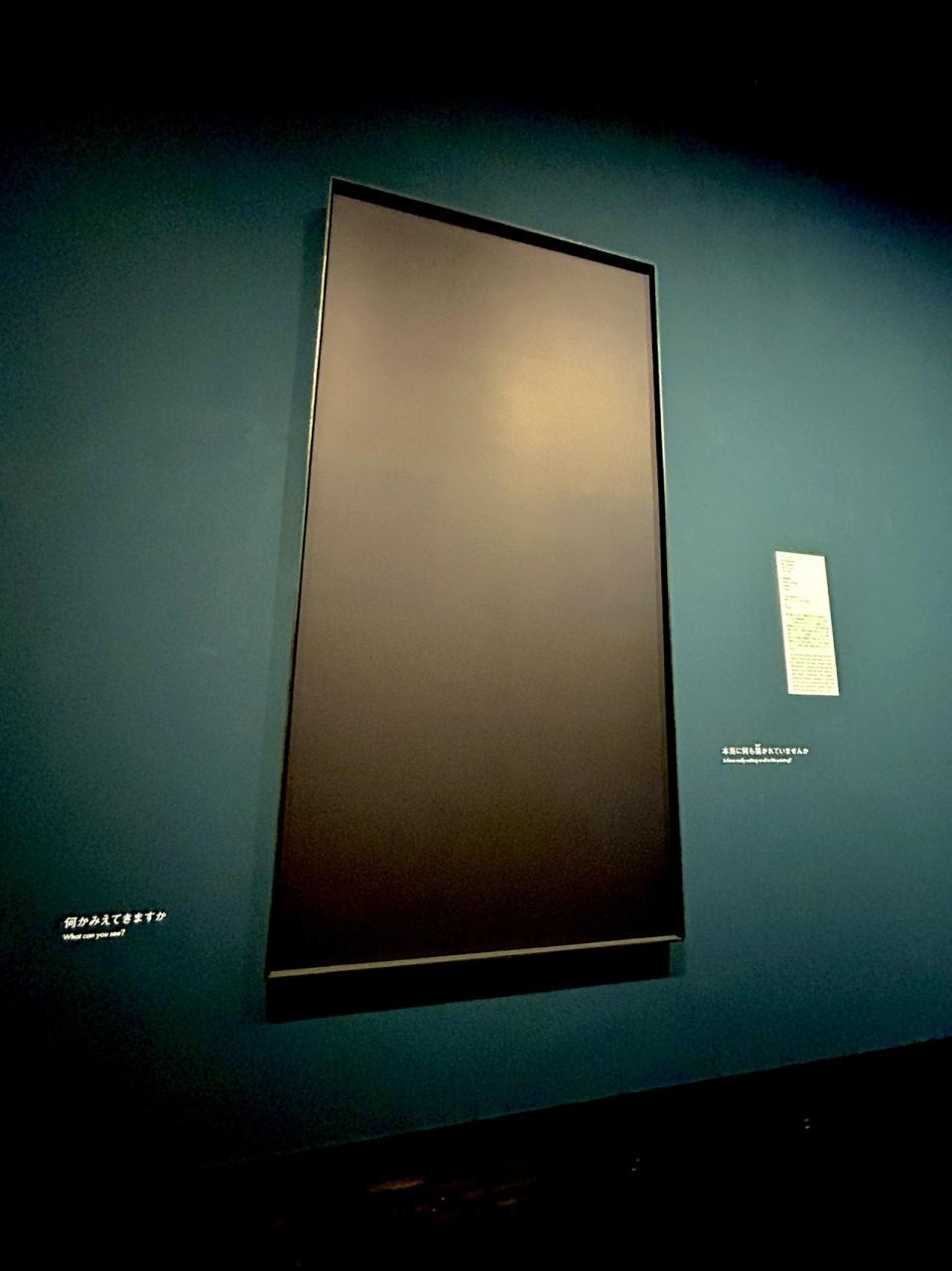
黒に覆われた均一な画面が広がるこの作品のタイトルは「抽象絵画」。ラインハートは「芸術としての芸術(art as art)」という理念のもと、絵画制作におけるアーティストの自己表現を徹底的に否定し、芸術の自律性を訴えました。絵具のテクスチャーや筆触、イメージなどが排除された画面は無機質な印象を与えますが、時間をかけて作品を眺めると、十字に交差するトーンの異なる黒い色面が浮かび上がってきます。
This solid black painting is titled simply Abstract Painting. Championing a philosophy of "art as art," Reinhardt thoroughly rejected artists' self-expression in painting and advocated the autonomy of art. While the canvas, devoid of paint texture, brushstrokes, and imagery, produces an inorganic impression, if you look at it for a while you will see that the black if not uniform, but is composed of planes of color in varying tones that intersect to form a cross. -
-
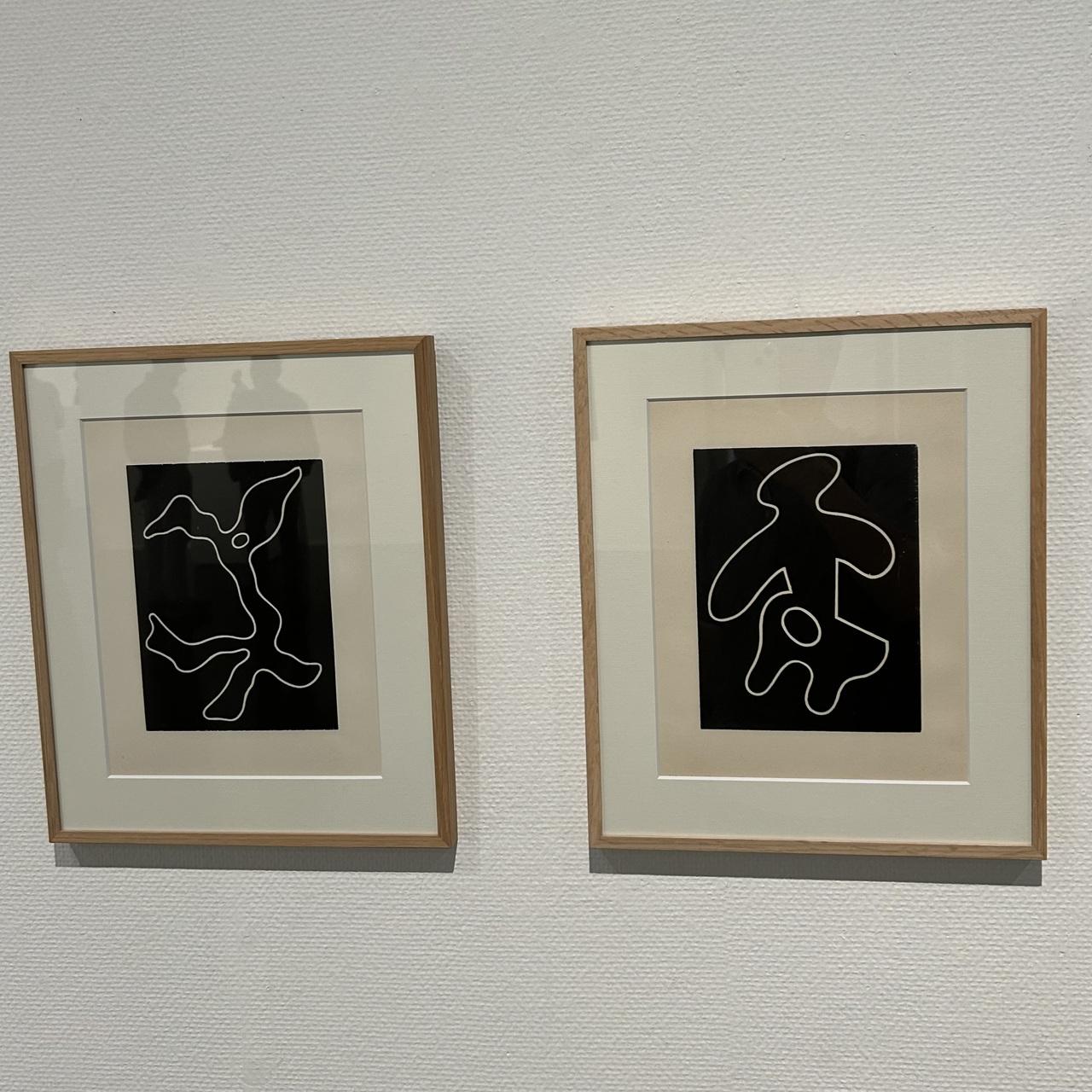
ジャン(ハンス)・アルプ
Jean (Hans) Arp
1886-1966
地中海群像
Mediterranean Group
1941/65 昭和16/40年
大理石
marble
アルプは、人のかたちの表現を追求した作家です。ただ、人のかたちとして表現された作品はどれも抽象的で、見た目にはどの部分が何のかたちを示しているのか、必ずしも明快ではありません。あえて具象的な表現をとらないことで、未分化で未成熟な存在、成長していく途上の存在、いわば「こども」の姿を示唆しています。そのように考えると、<地中海群像>は、一つの塊ではなく、手を組んで踊る人々の姿にも見えてきます。1941(昭和16)年にブロンズで作られたものを原型とし、それを後に拡大して、大理石を素材として作られたのが本作です。ブロンズ像よりも柔らかな質感で、軽やかな印象をもたらします。
The artist Jean (Hans) Arp pursued representation of the human form. However, all of his works dealing with the human figure are abstract, and it is not always clear to the eye which forms represent which parts of the body. His deliberate of figurative representation hints at
humans as undifferentiated and unformed beings, still maturing and growing, and this description could equally apply to children mind, Mediterranean Group might be seen not as a single mass, but as a group of people dancing with joined hands. This sculpture is based on a
prototype for a bronze made in later made it larger and produced it in marble, the version that is shown here. It has a softer texture than the bronze and gives an impression of lightness. -
-
-
-
2室 1910年代―個への目覚めと多様性
ヨーロッパで学んだ美術家たちが相次いで帰国し、美術・文芸雑誌が次々と創刊されて、ヨーロッパの新しい美術や考えが盛んに紹介された明治時代の末、1910年頃。しかしこの時代は、海外からの刺激に共感しながらも、同時に自分自身のものの見方や考えに基づいた自己表現を追究した時代でもありました。 既成概念にとらわれず、芸術家が自己表現を追い求める自由をよしとした、高村光太郎の「人が『緑色の太陽』を画いても僕はこれを非なりと言わないつもりである」(1910年)は、そうした大正時代の個性主義の幕開けを象徴する言葉として知られています。日本画においても、伝統や様々な過去の作品のとらえ直しや研究の中から、画家個人の資質を活かした題材や表現の探究がみられます。こうして1910年代は、個への意識にうながされた多様な表現が生み出されることになりました。 -
-
山下新太郎
靴の女 -
梅原龍三郎
UMEHARA, Ryuzaburo
1888-1986
黄金の首飾り
Gold Necklace
1913 大正2年
油・キャンバス oll on canvas
「黄金の首飾り」という題名ですが、最初に目をひくのはむしる、株婦の背景に塗られた赤ではないでしょうか。フランスでルノワールに師事した梅原は、ルノワールから「名は色を持つ、デッサンは勉強で補うことのできるものだ色彩はタンベラマン(本質)によるものだ、それがあるのがはなはたよい」と褒められたそうです。そう言われてみると、この赤は、ルノワールの影響から脱した後年の作品にも、しばしば効果的に用いられていることに気づかされます。
Despite the title, the first thing that attracts the viewer's attention is the red backdrop behind the nude figure. Umehara, who studied with Renoir in France, apparently received these words of praise from the French painter: "You have a good sense of color. You can supplement your drawing skills by studying, but color is rooted in temperament, so having that is a great thing.
With this in mind, we see that Umehara did indeed make effective use of this red in later works after he had distanced himself from Renoir's influence. -
-
-
関根正二
SEKINE, Shoji
1899-1919
三星(さんせい)
Three Stars
1919 大正8年
油・キャンパス oil on canvas
「三星」とは冬の星座、オリオン座の中央に並ぷ三つの星のこと。三人は左が姉、右が恋人、中央は関根自身とも言われます。関根が巻く白い布については、直前の手術跡を示す、耳を切ったファン・ゴッホへのあこがれを表すなど、諸説あります。ほぼ独学だった関根の絵は不器用で、決して巧みではありません。しかし大正期には、うまいことより切実な心情が表されていることを重視する風潮が生じていました。懸命にヨーロッパ絵画を学んだ明治とはだいぶ異なる美術の考え方が、社会に広まっていたのです。
The file of this work refers to the bell of three stars in the center of Orion, a winter constellation in the Northern Hemisphere. It is said that the woman on the left is Sekine's older sister, the one on the right his lover, and the man in the middle the artist himself. There are many other theories about the picture. Some say, for example, that the white cloth wrapped around Sekine's head refers to an operation he had had not long before making this work, while others argue that it represents the artist's fondness for van Gogh, who famously cut off his own ear. Largely selftaught, Sekine's paintings are awkward and decidedly lacking in dexterity. But in the Taisho Period, the prevailing trend tavored the earnest expression of emotion over skill. This notion of art differed considerably from the Meiji Period, an era in which many Japanese artists diligently studied European painting. -
-
-
-
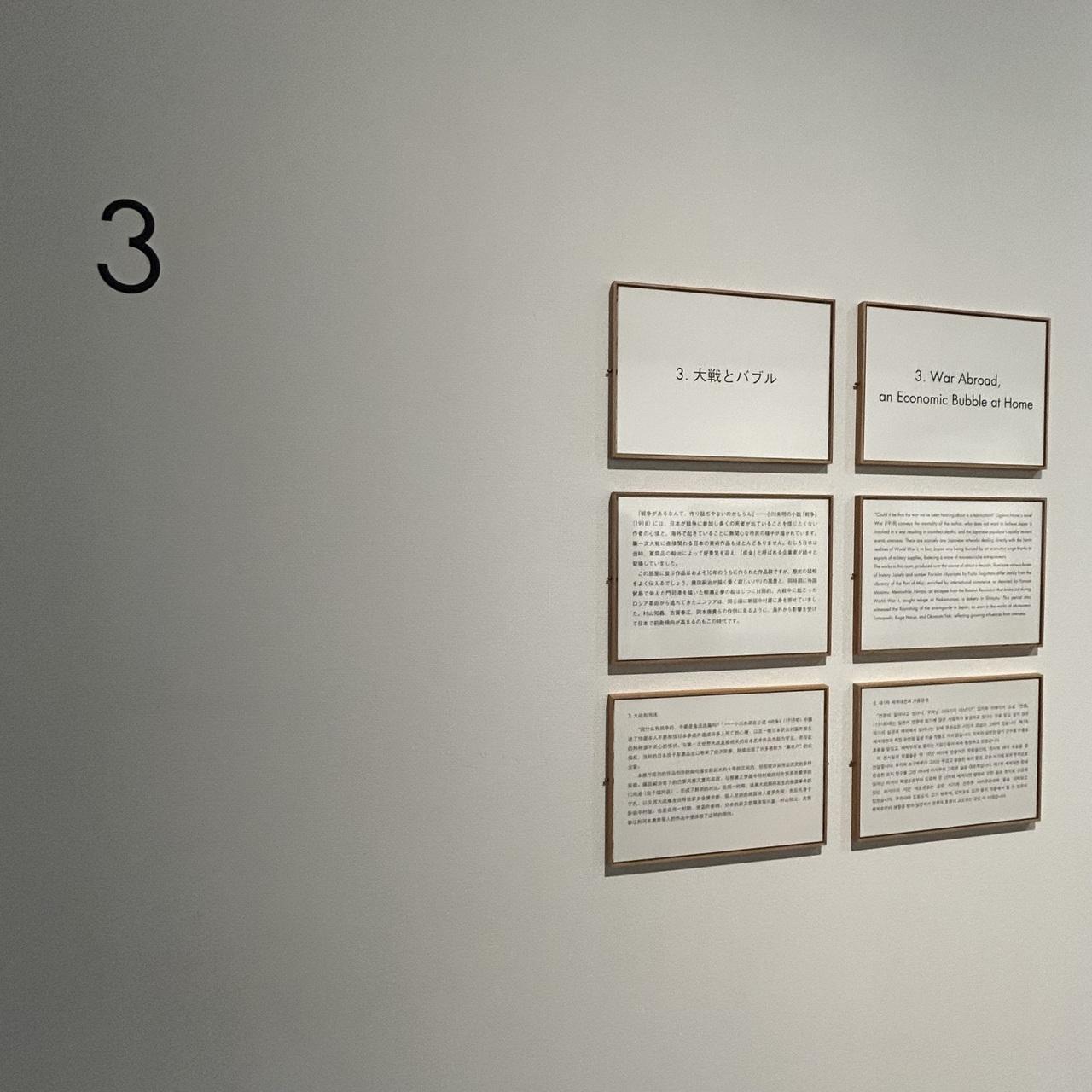
3室 大戦とバブル
「戦争があるなんて、作り話ぢやないのかしらん」―小川未明の小説『戦争』(1918年)には、日本が戦争に参加し多くの死者が出ていることを信じたくない作者の心境と、海外で起きていることに無関心な市民の様子が描かれています。
第一次世界大戦に直接関わる日本の美術作品もほとんどありません。むしろ日本は当時、軍需品の輸出によって好景気を迎え、「成金」と呼ばれる企業家が続々と登場していました。
この部屋に並ぶ作品はおよそ10年のうちに作られた作品群ですが、歴史の諸相をよく伝えるでしょう。藤田嗣治が描く重く寂しいパリの風景と、同時期に外国貿易で栄えた門司港を描いた柳瀬正夢の絵はじつに対照的。大戦中に起こったロシア革命から逃れてきたニンツアは、同じ頃に新宿中村屋に身を寄せていました。村山知義、古賀春江、岡本唐貴らの作例に見るように、海外から影響を受けて日本で前衛傾向が高まるのもこの時代です。 -
津田青楓
TSUDA, Seitu
1880-1978
婦人と金絲雀鳥
Lady and Canaries
1920 大正9年
油彩・キャンバス
oil on canyas -
-
-
パウル・クレー
Paul Klee
1879-1940
破壊された村
Destroyed Village
1920 大正9年
油彩・厚紙にアスファルト下地
oil on cardboard, asphalt ground
この作品が制作された1920年は、社会的には第一次世界大戦終結間もない時期であり、クレー個人にとっては、ミュンヘンで初めての大規模な個展を開催し、またヴァイマール州立バウハウスに教授として着任した重要な年です。画面には中央の黒い十字架を掲げた教会のほか、いくつかの白い建物、大きな赤い太陽、燭台などが描かれています。円、矩形、三角形といった幾何学形態を用いてまず画面を構成することから始め、ある段階に達したときにそれらが具体物に「変化」する、その瞬間を捉えようとするのがクレーの造形手法の一つです。円は、時に「太陽」と成り、時に「火の消えた蠟燭を載せる燭台」と成る。そんな造形が、暗い破滅のなかとも、生成の途上とも見える画面を作り出しています。
In 1920, when Klee painted it, World War I had just recently ended, and Klee's personal life was marked by the milestones of his first large-scale solo exhibition in Munich and appointment to a professorship at the Weimar Staatliches Bauhaus, the school of art and design (commonly known simply as Bauhaus).
In addition to the church with its central black cross, the painting depicts a few white buildings, a large red sun, and a candlestick. Klee's process involved first configuring the picture with geometric forms such as circles, rectangles, and triangles, then once it had reached a certain degree of completeness, seeking to capture the moment these figures transform into recognizable images. A circle may become the sun, or it may become a candlestick after the candle has gone out. This working method gives rise to a picture that can be interpreted as representing the darkness of destruction, or the unfolding process of creation. -
アレクセイ・フォン・ウレンスキー
Alexei von Jawlensky
1864-1941
救世主の顏
Saviour's Face
c.1921 大正10年頃
油彩・キャンバス
oil on canvas -
-
岡本唐貴
OKAMOTO, Toki
1903-1986
制作
Work
1924 大正13年
油彩、デトランプ・綿布
oil and détrempe on cotton -
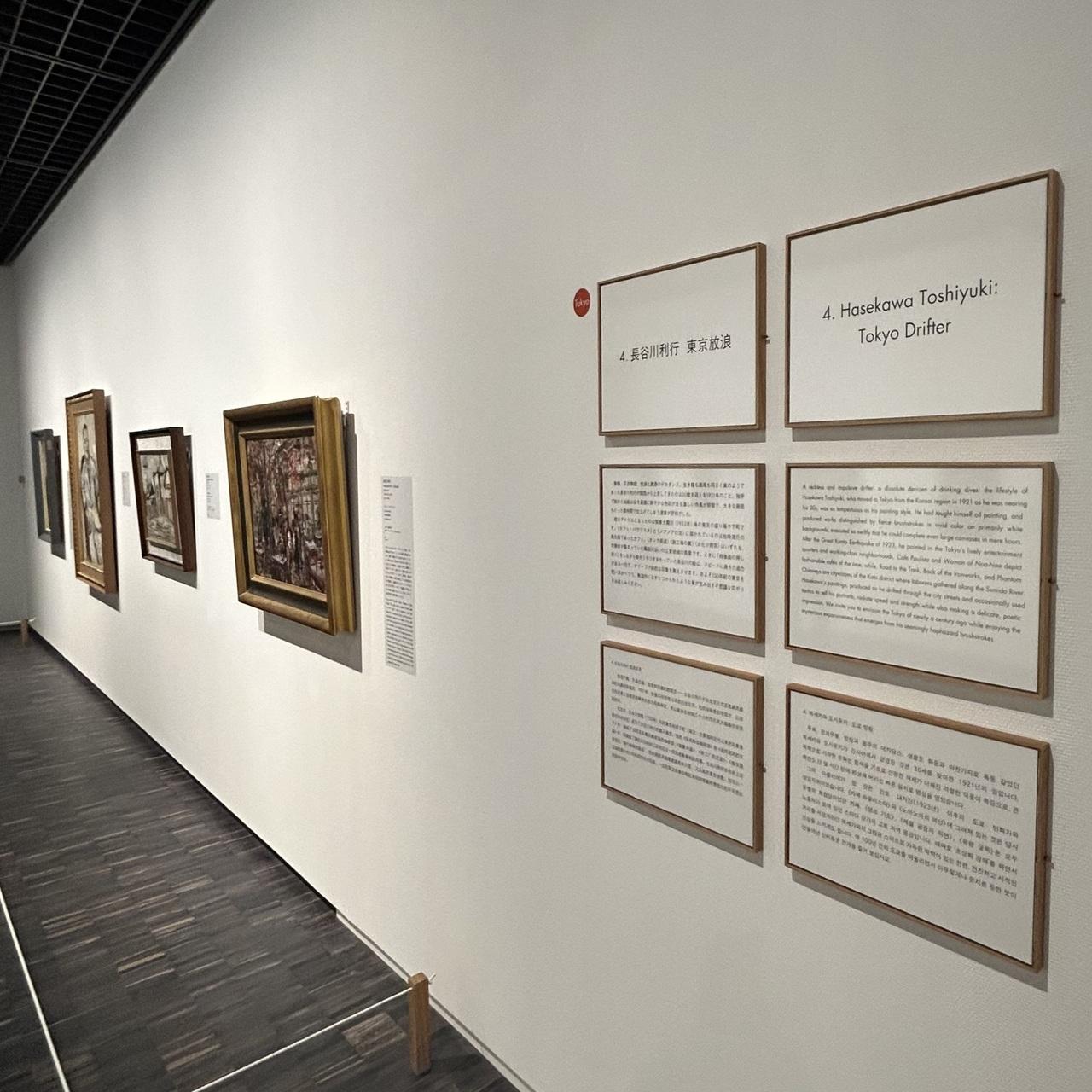
4室 長谷川利行 東京放浪
無頼、天衣無縫、放浪と飲酒のデカダンス。生き様も画風も同じく嵐のようであった長谷川利行が関西から上京してきたのは30歳を迎える1921年のこと。独学で始めた油絵は白を基調に鮮やかな色彩が走る激しい作風が特徴で、大きな画面もたった数時間で仕上げてしまう速筆が評判でした。
彼のアトリエとなったのは関東大震災(1923年)後の東京の盛り場や下町です。《カフェ・パウリスタ》と《ノアノアの女》に描かれているのは当時流行の最先端であったカフェ。《タンク街道》《鉄工場の裏》《お化け煙突》はいずれも、労働者が集まっていた隅田川沿いの江東地域の風景です。ときに「肖像画の押し売り」をしながら街をうろつきまわっていた長谷川の絵は、スピードに満ちた迫力がある一方で、ナイーブで詩的な印象を覚えさせます。およそ100年前の東京を思い浮かべつつ、無造作になすりつけられたような筆が生み出す不思議な広がりをお楽しみください。 -
HASEKAWA, Toshiyuki
1891-1940
カフェ・パウリスタ
Cafe Paulista
1928昭和3年
油彩・キャンバス
oil on canvas
パウリスタとは「サンパウロっ子」の意。1911(明治44)年にオープンし今も続く銀座店をはじめ、浅草、神田などにも店のあるカフェでした。利行は時には行列ができるほど人気だったそのカフェの室内を、女給だけが立つ風景として描いています。静けさが、色彩の鮮やかさをさらに引きだしています。本作は、利行が1931(昭和6)年頃に滞在していた台東区谷中の下宿屋に、家賃代わりにおいていったもの。長く行方不明でしたが、下宿屋のご子息がテレビ番組に鑑定に出したことをきっかけに、2009年度、当館が購入しました。
The word "Paulista" means "resident of São Paulo." The café, which opened its Ginza outlet in 1911 and is still in operation, also had branches in Asakusa, Kanda, and other places. Hasekawa depicted the interior of the café, which was so popular that lines would sometimes form outside it, as a landscape populated only by standing waitresses. The quiet atmosphere is further accentuated by the saturation of color. The painting was used in lieu of rent when Hasekawa was living in a boarding house in the Yanaka district of Tokyo's Taito Ward. Though its whereabouts were long unknown, the museum acquired the work in 2009 after the son of the building's owner submitted the painting to a TV program for appraisal. -
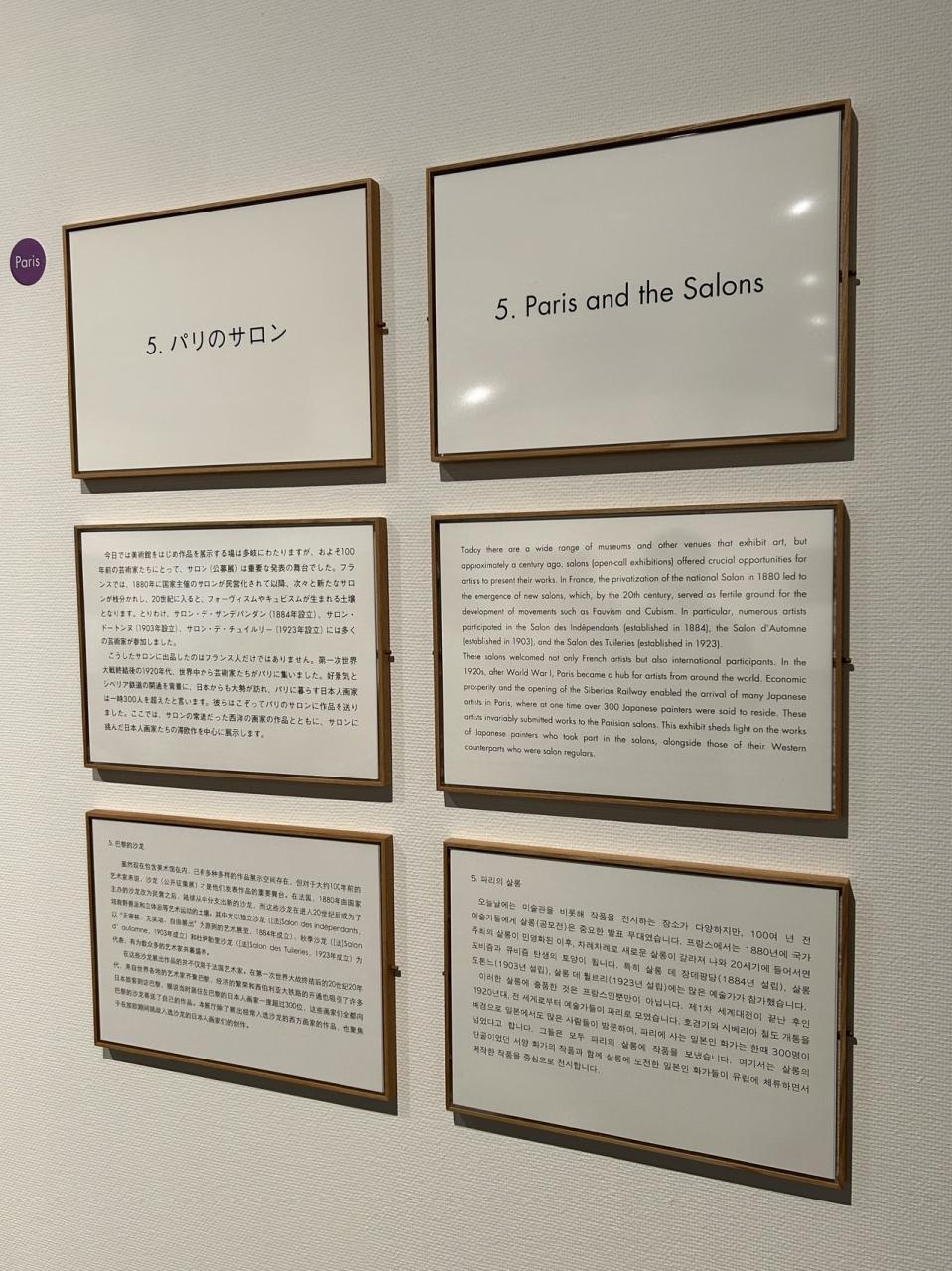
5室 パリのサロン
今日では美術館をはじめ作品を展示する場は多岐にわたりますが、およそ100年前の芸術家たちにとって、サロン(公募展)は重要な発表の舞台でした。フランスでは、1880年に国家主催のサロンが民営化されて以降、次々と新たなサロンが枝分かれし、20世紀に入ると、フォーヴィスムやキュビスムが生まれる土壌となります。とりわけ、サロン・デ・ザンデパンダン(1884年設立)、サロン・ドートンヌ(1903年設立)、サロン・デ・チュイルリー(1923年設立)には多くの芸術家が参加しました。
こうしたサロンに出品したのはフランス人だけではありません。第一次世界大戦終結後の1920年代、世界中から芸術家たちがパリに集いました。好景気とシベリア鉄道の開通を背景に、日本からも大勢が訪れ、パリに暮らす日本人画家は一時300人を超えたと言います。彼らはこぞってパリのサロンに作品を送りました。ここでは、サロンの常連だった西洋の画家の作品とともに、サロンに挑んだ日本人画家たちの滞欧作を中心に展示します。 -
清水登之
SHIMIZU, Toshi
1887-1945
街の掃除夫
Scavengers
1925 大正14年
油彩・キャンバス
oil on canvas -
福沢一郎
FUKUZAWA, Ichiro
1898-1992
Poisson d'Avril(四月馬鹿)
April Foli
1930
昭和5年
油彩・キャンバス
oil on canvas
密室の中で男たちは何をしているのでしょうか。実はひとつひとつのイメージは、19世紀の科学実験の本の挿絵から引用されていますそれがでたらめに組み合わされているので、全体としておかしな情景になっているのです。紙でつくった魚を水の上で走らせる実験の挿絵が含まれているので、福沢はこの魚と、フランス語の「四月の魚」(4月1日のいたずらの風習)をかけて、おかしみをもった題名をつけました。
What are these men doing inside this closed room? Each of the images was actually quoted from illustrations contained in a 19th-century book of scientific experiments. The random combination of images gives the overall scene a peculiar feel. And the inclusion of an illustration of a paper fish being guided across the water inspired Fukuzawa to give the work a funny title, which is a pun on the French version of April Fool's Day known as Poisson d'avril (April Fish). -
-
マルク・シャガール
Marc Chagall
1887-1985
ふたり
The Couple
1976-77
昭和51-52年
油彩・キャンバス
oil on canvas -
アンリ・マティス
Henri Matisse
1869-1954
ルネ、緑のハーモニー
Renée, Green Harmony
1923
大正12年
油彩・キャンバス ail on canvas
注目していただきたいのは、顔、椅子の背、左手、右肩などにみられる描き直しの跡です。不明瞭なままに放置されたように見える左手、線描と色彩が不一致を残す左袖、衣服の形態に呼応する掻き落としの線、などなど。マティスはこれらを、自身の「制作プロセス」を示すものとして意図的に残し、その重要性を次のように説明しています。
「ある発展段階の反応は主題と同じように重要です。なぜなら、この反応は私から発するのであって、主題からではないからです。自分の解釈から出発して、作品が自分自身と調和するようになるまでたえず私は反応するわけです。文章を作る人のように私は描き直しをやり、新たに発見し直します。」(アンリ・マティス「画家のノート』より)
In this painting, please note the traces of redrawing visible in the face, the back of the chair, the left hand, and the right shoulder. The left hand appears to have been left intentionally vague, the outline and color of the left sleeve are left inconsistent, and the outlines of clothes are etched in scratched lines. Matisse deliberately left these as evidence of the creative process, and explained their importance as follows: "The artist's reactions during each stage of the painting's development are as important as the subject matter, because these reactions originate from me, not from the subject. When working, I begin with my own interpretations and there is a constant back-and-forth until the work and I are in harmony. Like a writer, I am always revising, going back and making new discoveries." (Henri Matisse, Notes of a Painter) -
ホアン・グリス
Juan Gris
1887-1927
円卓
The Gueridon
1921
大正10年
油彩・キャンバス oil on canvas -
小磯良平
KOISO, Ryohei
1903-1988
肩掛けの女
Woman with a Shawl
1929
昭和4年
油彩・キャンバス
oil on canvas -
海老原喜之助
EBIHARA, Kinosuke
1904-1970
姉妹ねむる
Sleeping Sisters
1927
昭和2年
油彩・キャンバス
oil on canvas
鹿児島に生まれ、画家を志して上京した海老原は、弱冠18歳でパリに出て、モンパルナスの藤田嗣治の門を叩きます。早くも渡仏2年目から春のサロン・デ・ザルティスト・ザンデパンダンと秋のサロン・ドートンヌに出品、1927年にはサロン・ド・レスカリエに招待されて14点を展示しました。本作はその出品作のひとつ。同サロンの目録の序文で、作家で美術評論家のフランソワ・フォスカは、海老原の描いた眠る女性の顔のうちに、「(日本が)同化してしまったヨーロッパの絵画から極東を救い出す」可能性を垣間見たと讃えています。
Born in Kagoshima Prefecture, Ebihara Kinosuke aspired to be a painter and moved to Tokyo. At the young age of 18, he went to Paris and sought instruction from Fujita
Tsuguharu in Montparnasse. In only his second year in France, he began exhibiting at the spring Salon des artistes indépendants and the autumn Salon d'automne. In 1927 he was invited to participate in the Salon de l'escalier, where he showed 14 works, including this painting. In his introduction for the exhibition catalogue of that salon, the author and art critic François Fosca praised Ebihara's depiction of sleeping women's faces, suggesting that he saw in it a glimpse of potential
"rescue the Far East from the European painting that Japan has now assimilated." -
金山康喜
KANAYAMA, Yasuki
1926-1959
アイロンのある静物
Still Life with Irons
1952
昭和27年
油彩・キャンバス
oil on canvas
大学で経済学を学びながら、絵画制作にも取り組んだ金山は、美術の本場で制作をしたいという思いもあり、1951年にフランスに渡りました。パリではサロン・ドートンヌなどの展覧会に出品し、藤田嗣治や野見山暁治ら画家たちとも交流。33歳で天折するまで、抒情性をたたえた静物や室内を描きました。
アイロン台、ワイシャツ、アイロン、瓶、帽子、ハサミなどが置かれ、天井から裸電球がぶら下がっています。奥にせりあがるアイロン台に瓶が置かれるなどの不安定な物の配置と、絵具を薄く塗り重ねた、青を基調とする静かな室内に眼が留まるこの作品から、人の気配はほとんど感じられません。そのなかで夕陽を浴びて光輝くガラス瓶が、妙に印象的です。
While studying economics at university, Kanayama also engaged in painting. Hoping to create art in one of the art world's global hubs, he moved to France in 1951. In Paris, he showed work in exhibitions including the Salon d'automne and interacted with painters such as Fujita Tsuguharu and Nomiyama Gyoji. He continued to paint still lifes and interiors imbued with lyricism until his untimely death at the age of 33.
In this painting, objects such as an ironing board, a dress shirt, an iron, a bottle, a hat, and scissors are placed in a room with bare light bulbs hanging from the ceiling. The arrangement of items is unstable, as in the bottle sitting on an ironing board that rises as it recedes. One's eyes are drawn to the tranquil interior dominated by shades of blue, rendered by repeatedly applying thin layers of paint. Virtually no trace of human presence can be felt in this work, but a glass bottle bathed in the glow of the setting sun stands out as a strangely powerful presence. -
長谷川潔
HASEGAWA, Kiyoshi
1891-1980
チュウリップと三蝶
A Tulip and Three Butterfies
1960 昭和35年
銅版
mezzohnt -
-
-
-
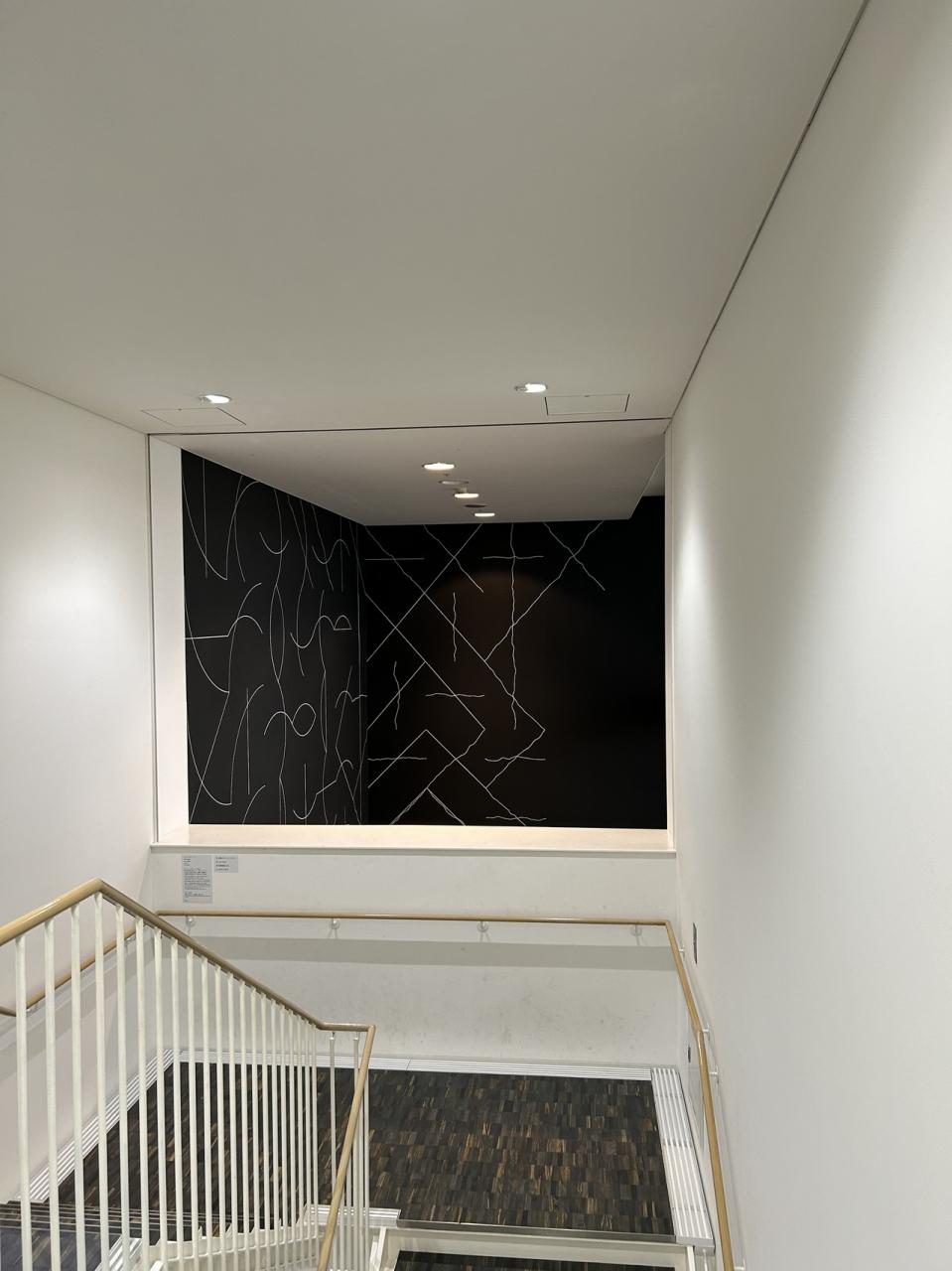
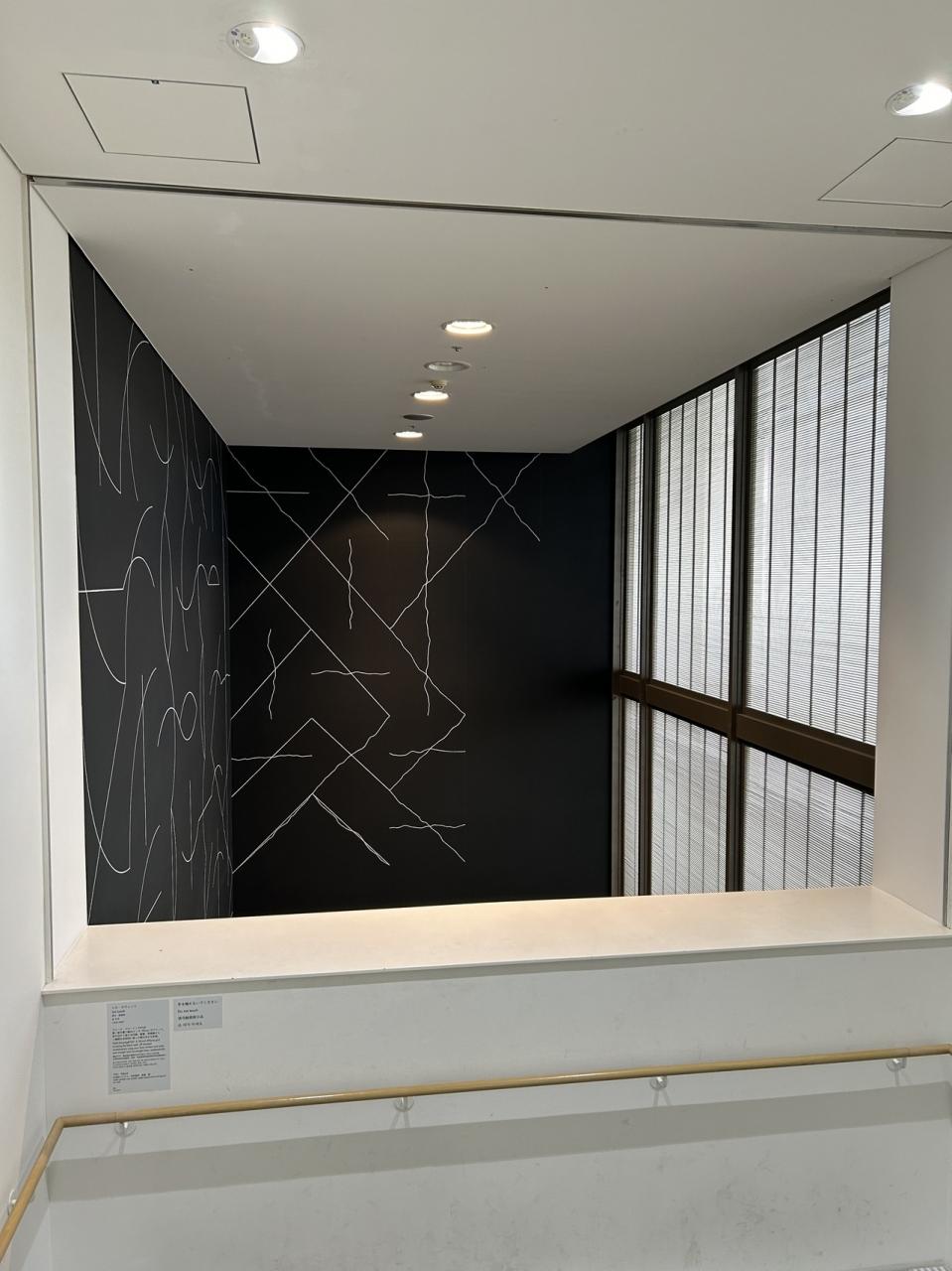
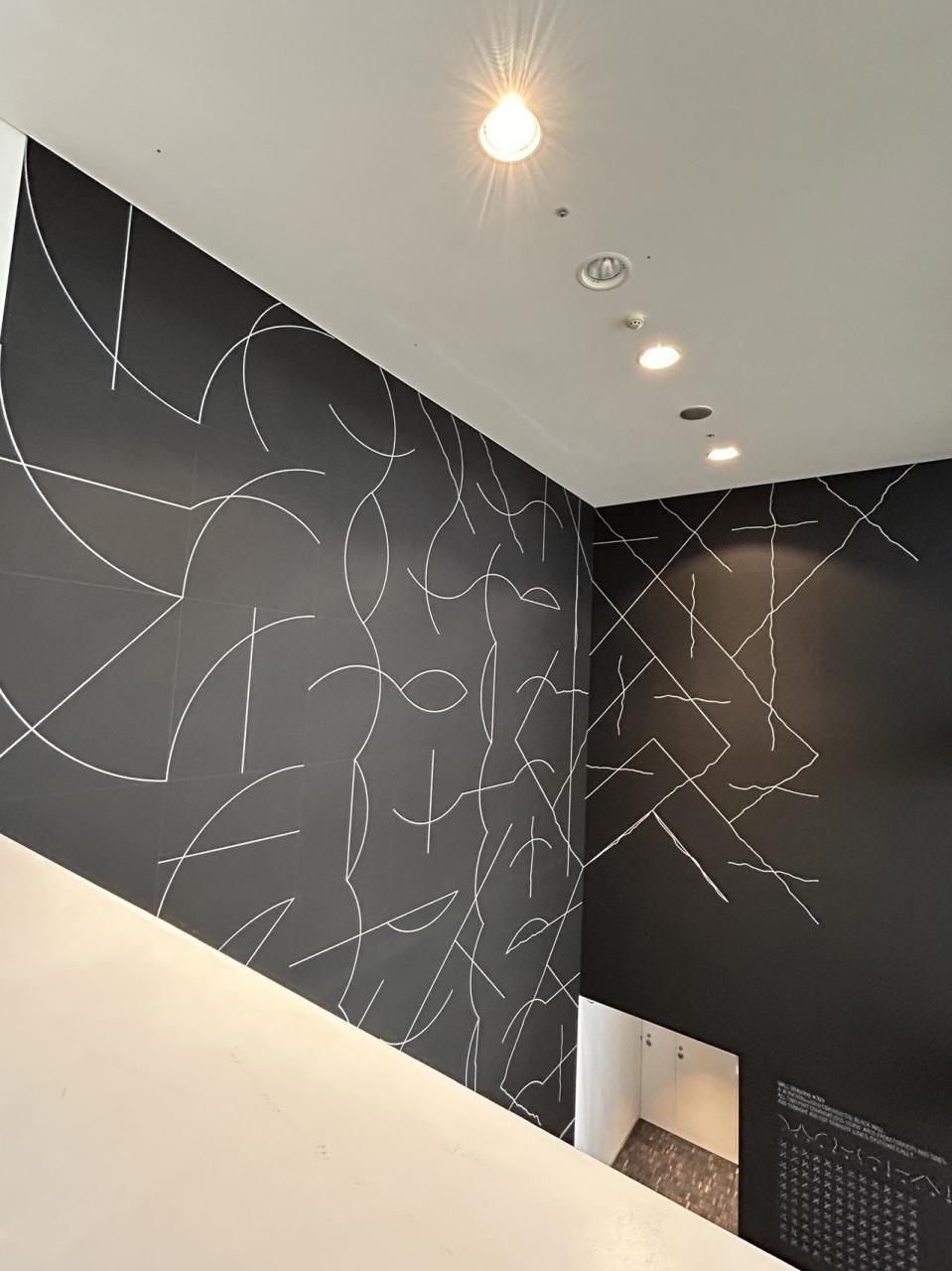
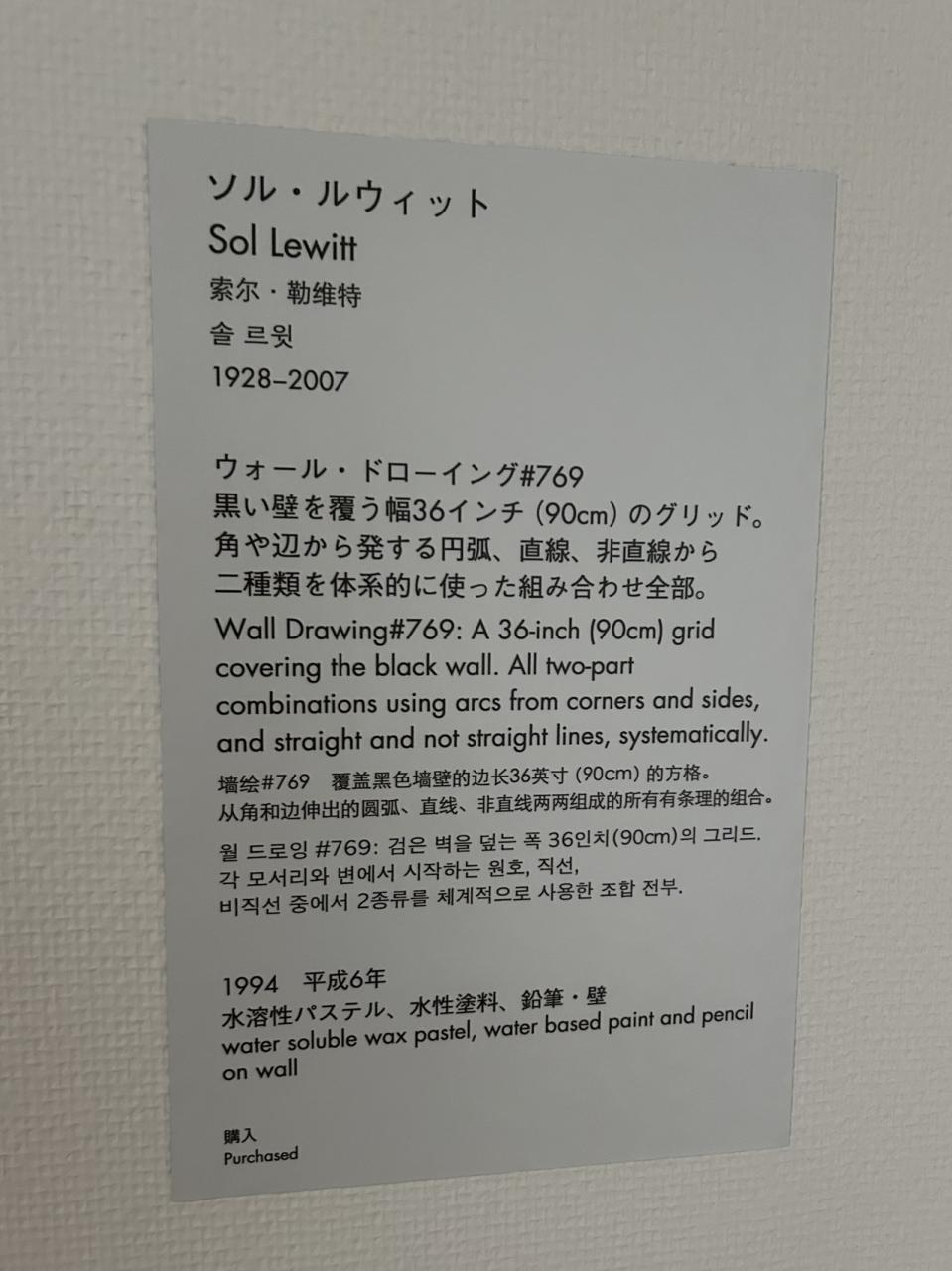
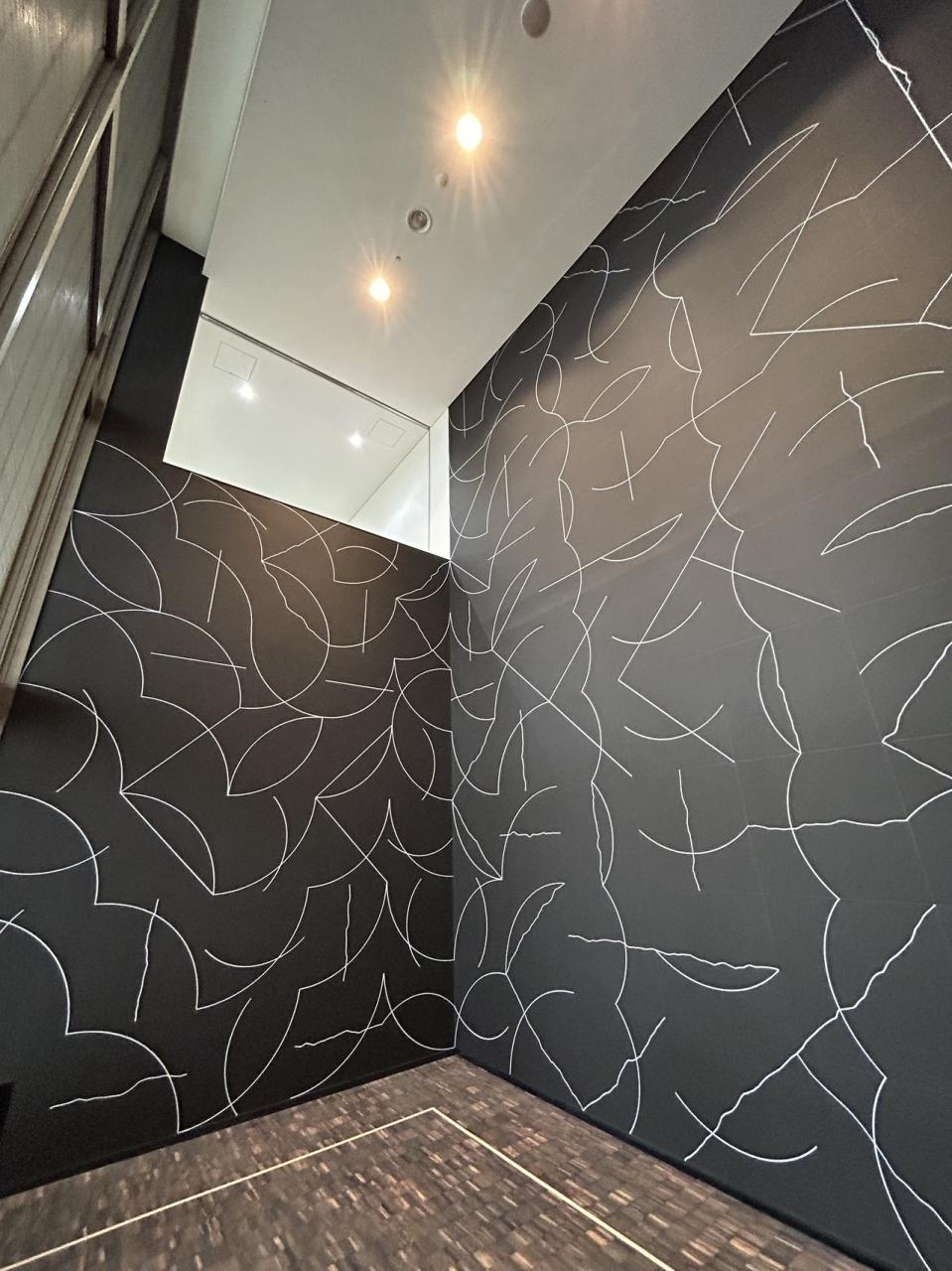
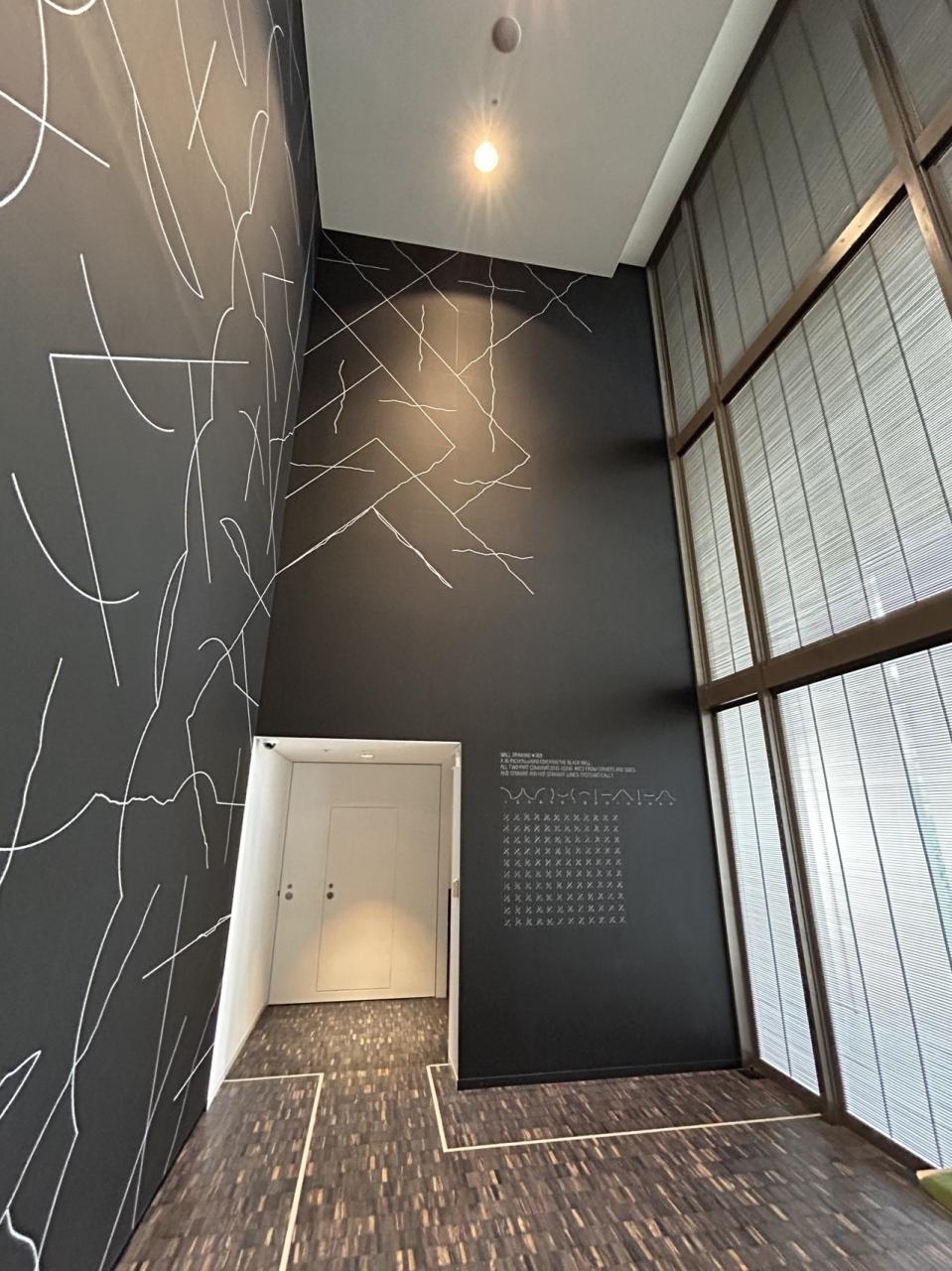
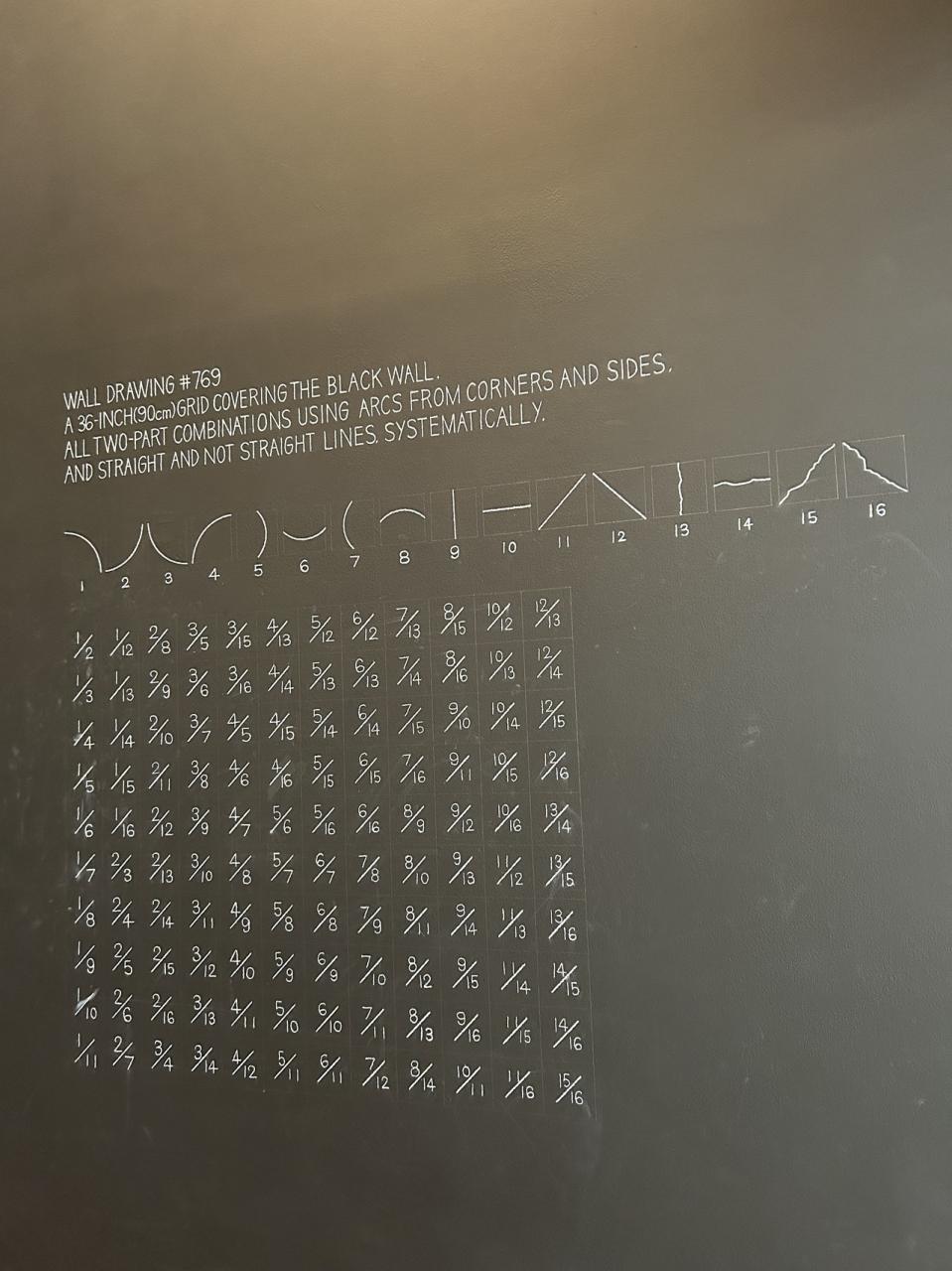
当館では2018年度にソル・ルウィット(1928-2007)のウォール・ドローイングを購入し、この作品がこのたび(2020年12月)所蔵品ギャラリー3階の「建物を想う部屋」に完成しました。
1960年代からニューヨークを拠点に、ミニマル・アート、コンセプチュアル・アートの代表的作家として活躍したルウィットは、生活に1200点以上のウォール・ドローイングを制作しました。しかしこれらは、必ずしも彼自身が描いてはいません。彼は次のようにべています。「アーティストはウォール・ドローイングの構想を立て、その設計をする。それを具現するのはドラフトマンである(アーティスト自身がドラフトマンを兼ねるも可)。プランはドラフトマンによって解釈される。プランの範囲内で、プランの一部としてドラフトマンによってなされる決定がある。ひとりひとりがそれぞれにユニークなので、同じ指示をあたえられても解釈が異なり、違ったふうにおこなわれるだろう」(「アート・ナウ」1971年6月号)。
この言葉通り、彼のウォール・ドローイングは、彼(あるいは彼のエステート)が定するドラフトマンによって実現されます。いわば作曲者と液者のような関係が、そこに生じることになります。そしてまた、このようなシステムをとることによって、彼の作品は制作の主体の在り処や、観念と実体との関係なと、アートの根幹について見る者に問いを投げかけるのです。
さて、このたび館の面を飾るウォール・ドローイングは、その題名が示す通り約90x90cmの短形をひとつの単位として、その短形の中に16種類の円強、直線、非直線が2つずつ組み合わされ、全部で120通りのバターンによって構成されます。図形が反復とずれによって生み出すリズムは、まるでミニマル・ミュージックを視覚化したような心地よい刺を私たちの眼に届けるでしょう。
この作品はこれまで1994年パリ、1996年マドリッドで開かれたソル・ルウィット展で割作されたことがありますが(各展覧会終了後に消去)、今回は下記の方々により制作されました。
ドラフトマン:麺辛子
アシスタント:石村正美
平川淑子
In fiscal 2018, the museum acquired one of Sol LeWitt's (1928-2007) wall drawings. The work has now (December 2020) been completed in the "Room to Consider the Building," located on the third floor next to the Collection Gallery.
LeWitt, a key figure in Minimalist and Conceptual art who began working in New York in the 1960s, created over 1,200 wall drawings over the course of his career. But that does not necessarily mean that LeWitt drew all of the works himself. As the artist explained, "The artist conceives and plans the wall drawing. It is realized by draftsmen (the artist can act as his own draftsman); the plan is interpreted by the draftsman. There are decisions that the draftsman makes, within the plan, as part of the plan. Each individual, being unique, if given the same instructions would understand them differently and would carry them out differently." (Art Now, June 1971)
As the text suggests, LeWitt's wall drawings are executed by a draftsman as specified by the artist (or his estate). In other words, the works are the product of a relationship, recalling that of a composer and a performer. Moreover, the use of this type of system presents the viewer with questions regarding the foundations of art, such as the role of the creator, and the relationship between the concept and the physical entity.
As the title of the wall drawing, which adorns the museum wall, explains, the work is a grid measuring approximately 90 by 90 centimeters. Each square is made up of a two-part combination, containing 16 types of arcs, and straight and non-straight lines, with a total of 120 patterns. The rhythm, arising from the repeated and divergent figures, presents the eye with a comfortable stimulating experience akin to a visualization of minimal music.
In the past, the work was made for exhibitions of LeWitt's work that were held in Paris in 1994 and Madrid in 1996 (both were erased after the exhibitions). This version was created by the following:
Drawn by Cho Sachiko
With assistance from Ishimura Masami and Hirakawa Toshiko -
-
-
-
3階
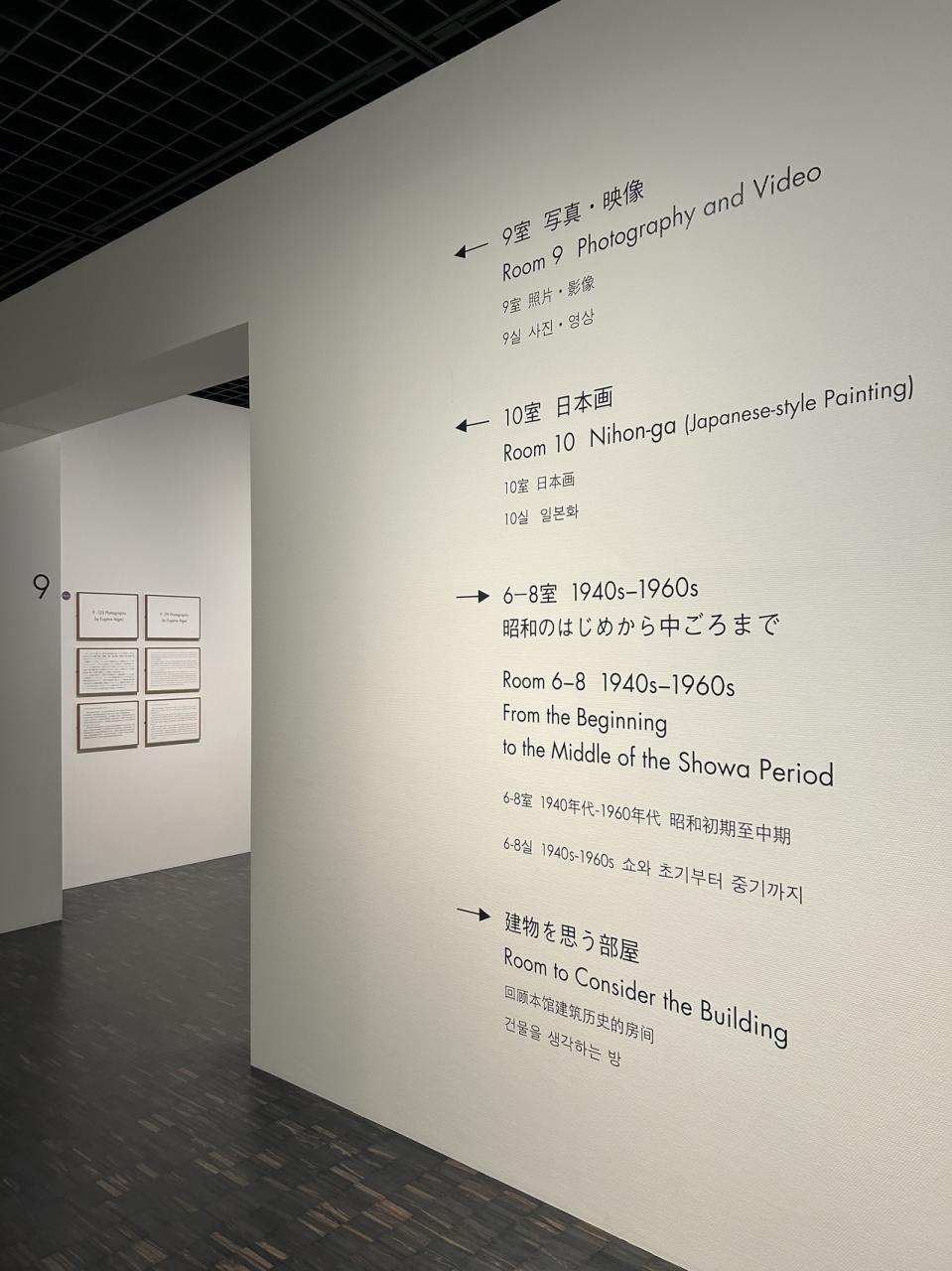
6-8室 1940s-1960s 昭和のはじめから中ごろまで
6室 興亜のまぼろし
第二次世界大戦下の日本は、欧米列強の支配からアジアを解放するというビジョン―和田三造の《興亜曼荼羅》に示されるような、いわゆる「大東亜共栄圏」構想を掲げ、インドネシアやフィリピン、ビルマ(現在のミャンマー)など南方に進出しました。その背景には、石油や鉄鋼などの資源や航空基地の獲得といった戦争遂行上の目的がありました。占領地域では日本語教育などの皇民化政策がとられ、現地の人々は日本の戦時体制に組み込まれていきます。
画家たちは「彩管報国」(絵筆で国に報いること)の理念のもと、戦争画を描きました。軍から委嘱された画家もいれば、自ら志願して現地に赴いた画家もいます。各地の戦闘場面や風俗を描いた絵画は、観衆の領土拡大への意欲を後押しし、戦意高揚に貢献しました。描かれた人々の表情には、画家たちのどのような眼差しが込められているのでしょうか。 -
-
橋本関雪
HASHIMOTO, Kansetsu
1883-1945
防空壕
Air-raid Shelter
1942 昭和17年
絹本彩色
color on silk
1942(昭和17)年の夏、関雪は従軍画家としてインドネシア・ジャワ島西部にあるバンドンを訪れ、防空壕から猫が飛び出す瞬間を目にします。本作はその猫を女性の姿に変えて描かれたものです。この年、日本軍はジャワ島に上陸し、連合軍を降伏に追い込みました。現地の女性や白い花に異国趣味の眼差しが注がれる一方で、出来たばかりの防空壕の真っ白な壁面は、ジャワが「戦地」に組み込まれたことを物語っています。
In the summer of 1942, Kansetsu traveled to Bandung in western Java, Indonesia to document the war in paintings. There, he happened to see a cat dart out from an air-raid shelter, and in this painting he replaced the cat with the figure of a woman. That same year, Japanese forces landed on Java and compelled the Allied forces to surrender. In Kansetsu's rendering, the exotic allure of the local woman and white flowers is juxtaposed with the stark white walls of a newly constructed air-raid shelter, conveying the fact that Java was a conflict zone. -
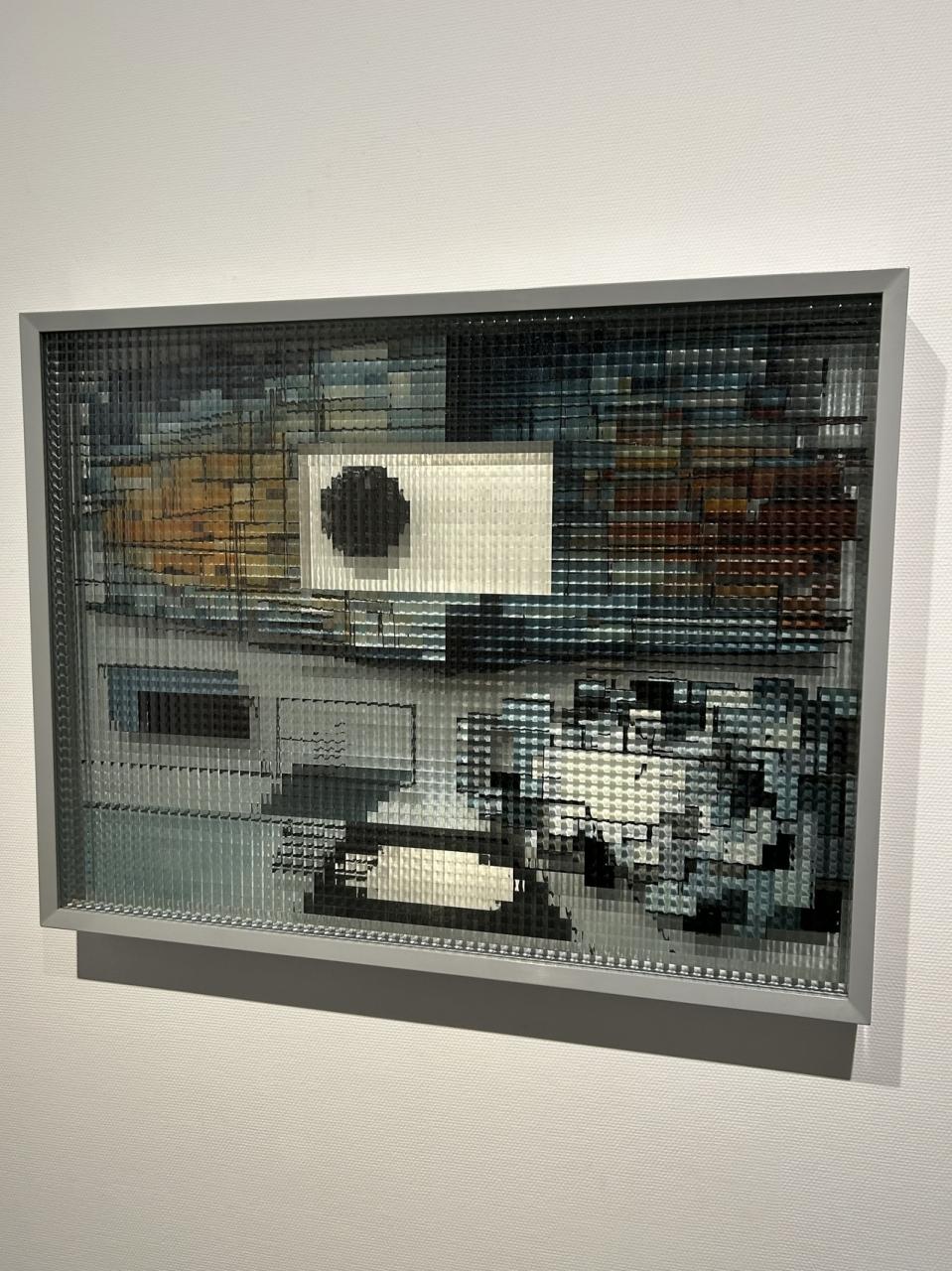
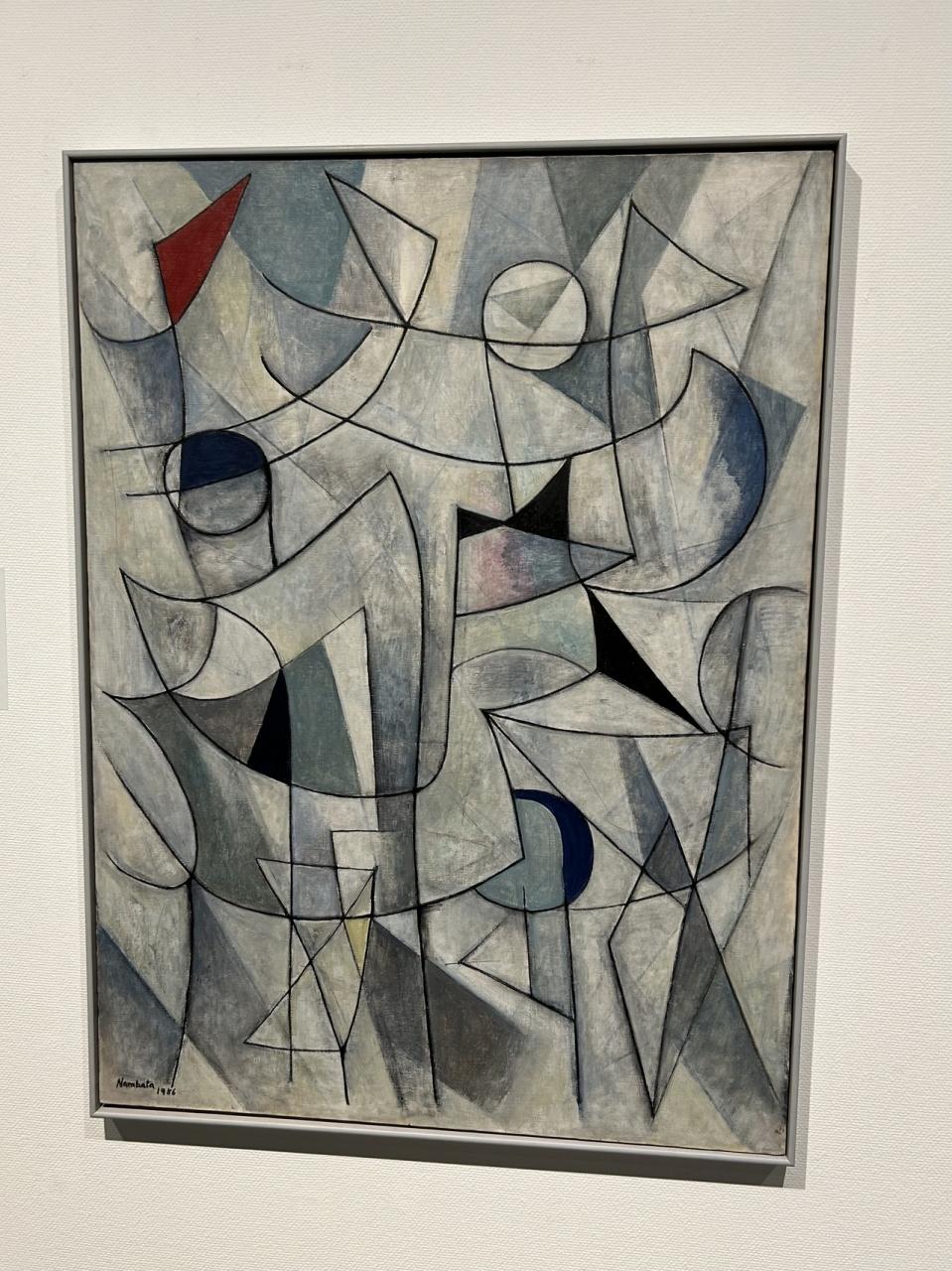
8室 プレイバック「日米抽象美術展」(1955)②
8室では、所蔵品の中から「日米抽象美術展」の出品作家による作品を展示しています。同展で実際に展示された作品は、山口勝弘《ヴィトリーヌ No.47(完全分析方法による風景画)》(1955年)と、ハンス・リヒター《色のオーケストレーション》(1923年)の2点になります。「日米抽象美術展」は、日本とアメリカの抽象美術を並べて展示するのではなく、3階と2階のフロアにそれぞれ分けて展示することで、両国の抽象美術の今を対比的に検証する構成となっていました。
ハンス・リヒター
Hans Richter
1888-1976
色のオーケストレーション
Orchestration of Color
1923 大正12年
油彩・キャンバス oil on canvas
この作品が制作された1923年は、リヒターが、オランダでピエト・モンドリアン、テオ・ファン・ドゥースブルフが主導した造形運動「デ・ステイル」(オランダ語で「様式」)に参加していた時期です。美術、建築、デザインなど活動範囲は多にわたる「デ・ステイル」ですが、絵画においては直線のみの使用、色数の限定などによって普遍的な表現様式を目指すものでした。ひとつ興味深いのは、リヒターが抽象的な実験映画を制作していて、映画にもこの作品と似たような画面構成が見られることです。たとえばこの作品では、緑色の矩形がサイズを変えながら縦に7つ並列されています。映画(「リズム21」)でも、矩形がサイズを変えていくシーンがあります。ただし映画では並列でなく、一つの短形が連続的にだんだん小さくなっていくので、私たちは画面の奥へと遠ざかる短形、つまり運動と奥行を感知します。そんなことを踏まえてこの絵を見てみると、静的に感じられた画面が動き始め、平面的に感じられた何もない黒の「地」が深さを持ち始めます。
In 1923, when this work was produced, Richter was part of the art movement De Stijl (Dutch for
"the style"), spearheaded by Piet Mondrian and Theo van Doesburg in the Netherlands. Although it extended to diverse fields including art, architecture and design, in terms of painting De Stil aimed for a universal mode of expression using only straight lines, a limited number of colors, and other restrictions. It is intriguing that Richter also created abstract experimental films, which featured visual composition similar to this work. For example, here, seven green rectangles of different sizes are arrayed in a column. Meanwhile, in the film Rhythmus 21, there is a scene where rectangles change in size
However, in this film rectangles are not shown side by side but rather a single rectangle gradually and continuously shrinks, drawing the viewer deep into the screen and creating a sense of motion and depth. When we view this painting in light of the film's visual experiment, the static picture plane seems to begin moving, and the flat black ground comes to take on the depth of space. -
山口勝弘
YAMAGUCHI, Katsuhiro
1928-2018
ヴィトリーヌ No.47
(完全分析方法による風景画)
Vitrine No.47
(Landscape Analyzed by a Perfect Method)
1955
昭和30年
油彩、水彩・紙、ガラス、木
oil, water color, paper, glass and wood
「ヴィトリーヌ」は「ショーケース」を意味するフランス語。批評家の瀧口修造によって命名された山口勝弘の1950年代を代表する連作の一つです。前面のモールガラスによって、鑑賞する位置でイメージが変化する特徴があります。
第一層目にモールガラス、第二層目に木箱の中ほどに装着されたガラスに描かれた画像、第三層目に木箱基底部に貼られた紙に描かれた画像(一部は彩色した画像のコラージュ)の三つの層から構成されています。
Vitrine means "a store's display window" in French. This name was given by the critic Takiguchi Shuzo to a series of works that are among Katsuhiro Yamaguchi's best known of the 1950s. The polarizing glass covering the front of the piece has the property of causing images to change depending on the viewer's position. The work is comprised of three layers: the first layer of polarizing glass, the second of an image painted on glass mounted in the middle of a wooden box, and the third of an image painted on paper affixed to the bottom of the box lin some cases, collage with color applied). -
建畠覚造
TATEHATA, Kakuzo
1919-2006
貌(かお)
Figure
1955
昭和30年
セメント
cement -
難波田龍起
NAMBATA, Tatsuoki
1905-1997
天体の運行
Movement of Heavenly Body
1956
昭和31年
油彩・キャンバス
oil on canvas -
-
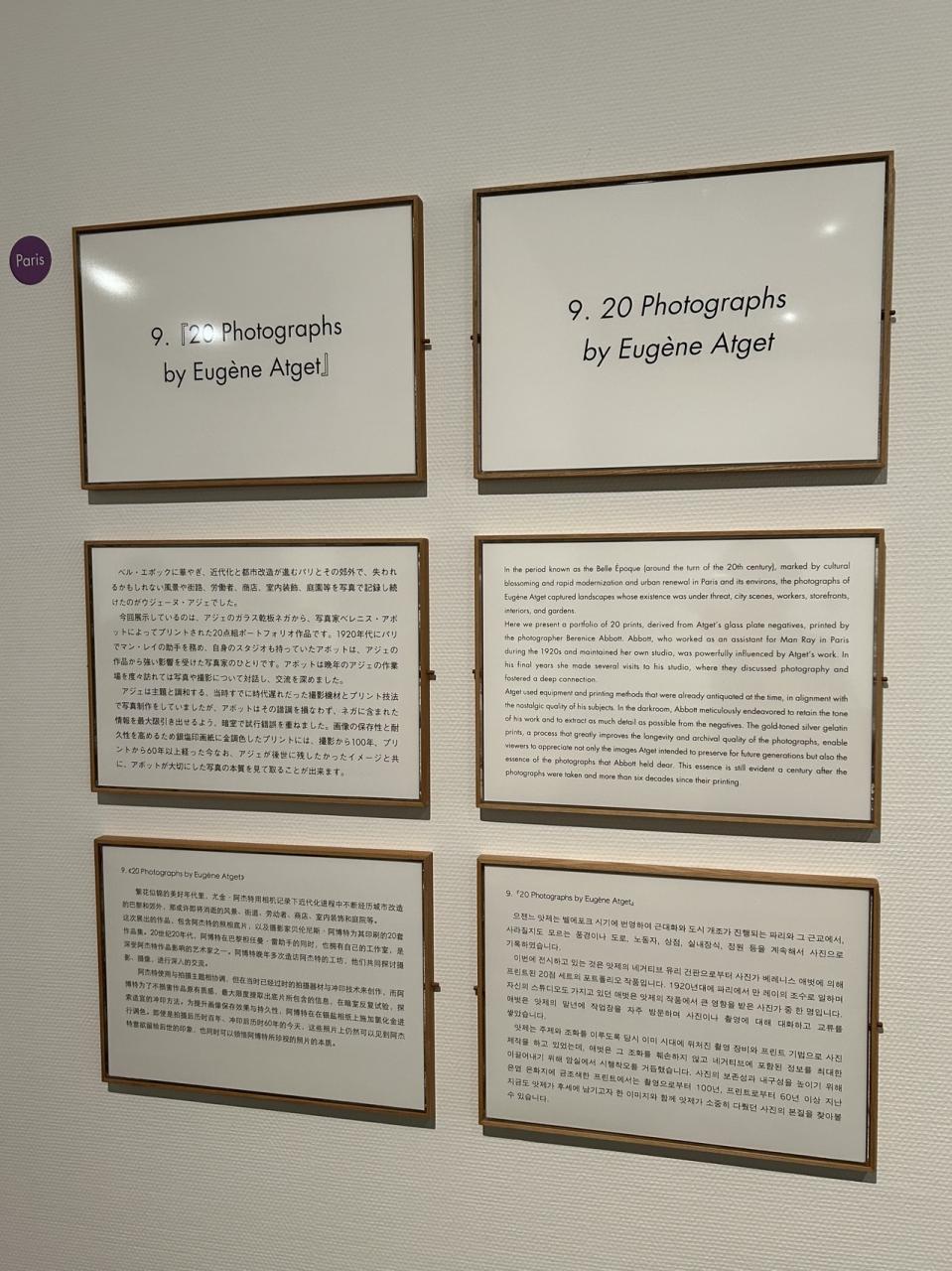
9室 『 20 Photographs by Eugène Atget』
ベル・エポックに華やぎ、近代化と都市改造が進むパリとその郊外で、失われるかもしれない風景や街路、労働者、商店、室内装飾、庭園等を写真で記録し続けたのがウジェーヌ・アジェでした。
今回展示しているのは、アジェのガラス乾板ネガから、写真家ベレニス・アボットによってプリントされた20点組ポートフォリオ作品です。1920年代にパリでマン・レイの助手を務め、自身のスタジオも持っていたアボットは、アジェの作品から強い影響を受けた写真家のひとりです。アボットは晩年のアジェの作業場を度々訪れては写真や撮影について対話し、交流を深めました。
アジェは主題と調和する、当時すでに時代遅れだった撮影機材とプリント技法で写真制作をしていましたが、アボットはその諧調を損なわず、ネガに含まれた情報を最大限引き出せるよう、暗室で試行錯誤を重ねました。画像の保存性と耐久性を高めるため銀塩印画紙に金調色したプリントには、撮影から100年、プリントから60年以上経った今なお、アジェが後世に残したかったイメージと共に、アボットが大切にした写真の本質を見て取ることが出来ます。 -
-
-
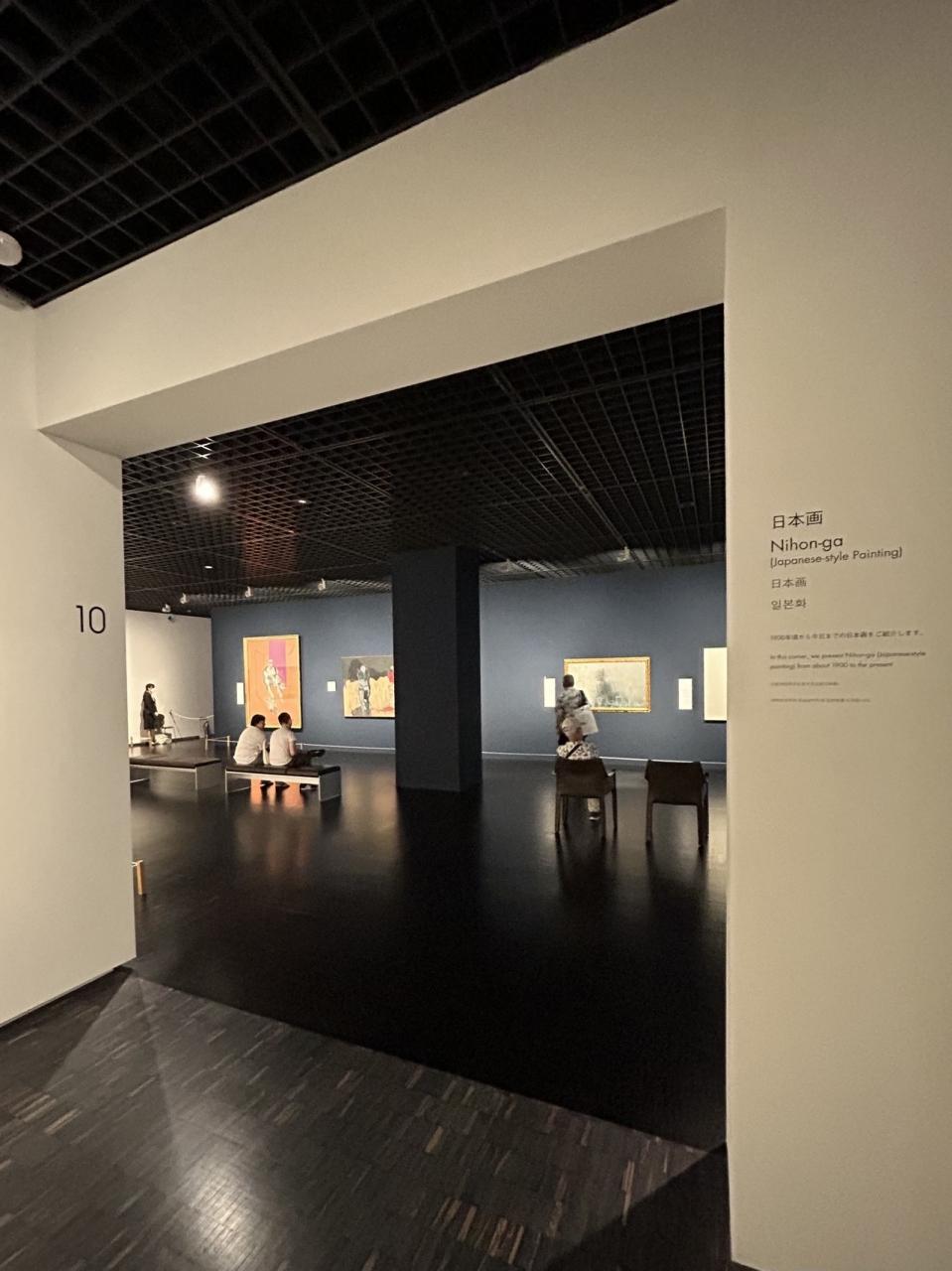
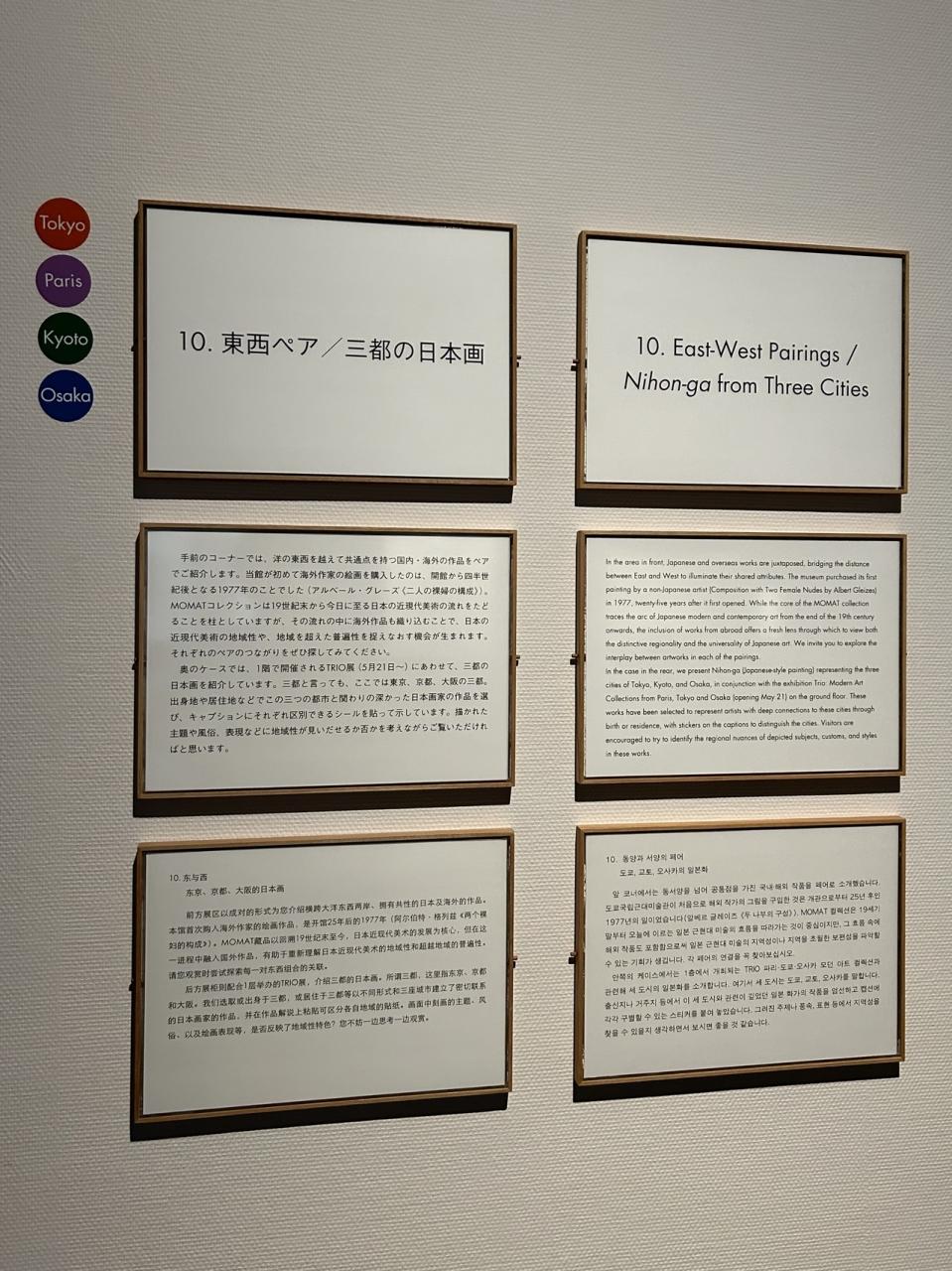
10室 東西ペア/三都の日本画
手前のコーナーでは、洋の東西を越えて共通点を持つ国内・海外の作品をペアでご紹介します。当館が初めて海外作家の絵画を購入したのは、開館から四半世紀後となる1977年のことでした(アルベール・グレーズ《二人の裸婦の構成》)。
MOMATコレクションは19世紀末から今日に至る日本の近現代美術の流れをたどることを柱としていますが、その流れの中に海外作品も織り込むことで、日本の近現代美術の地域性や、地域を超えた普遍性を捉えなおす機会が生まれます。それぞれのペアのつながりをぜひ探してみてください。
奥のケースでは、1階で開催されるTRIO展(5月21日~)にあわせて、三都の日本画を紹介しています。三都と言っても、ここでは東京、京都、大阪の三都。
出身地や居住地などでこの三つの都市と関わりの深かった日本画家の作品を選び、キャプションにそれぞれ区別できるシールを貼って示しています。描かれた主題や風俗、表現などに地域性が見いだせるか否かを考えながらご覧いただければと思います。 -
-
-
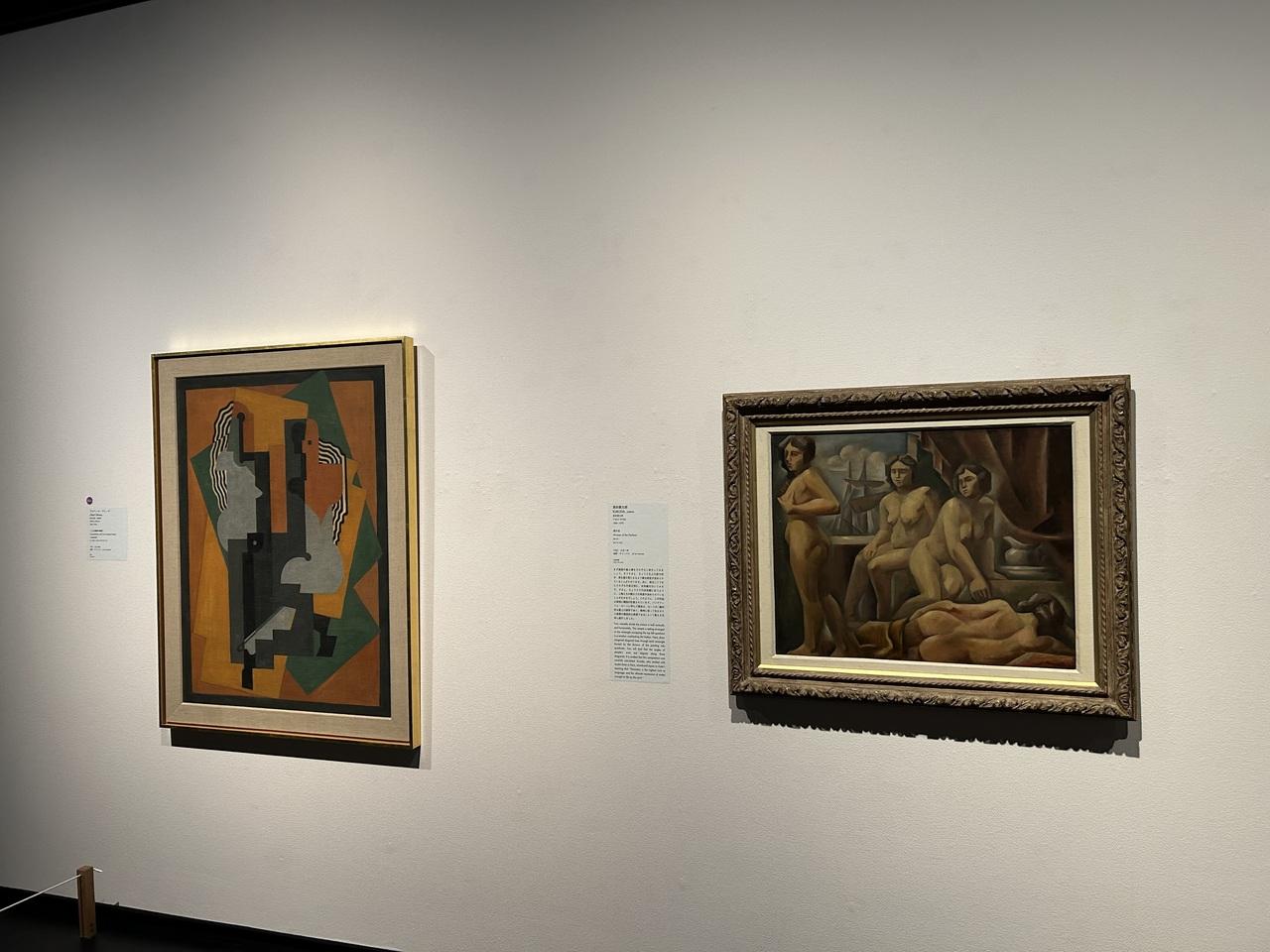
アルベール・グレーズ
Albert Gleizes
1881-1953
二人の裸婦の構成
Composition with Two Female Nudes
1921大正10年
油彩・キャンバス
oil on canvas -
黒田重太郎
KURODA, Jutaro
1887-1970
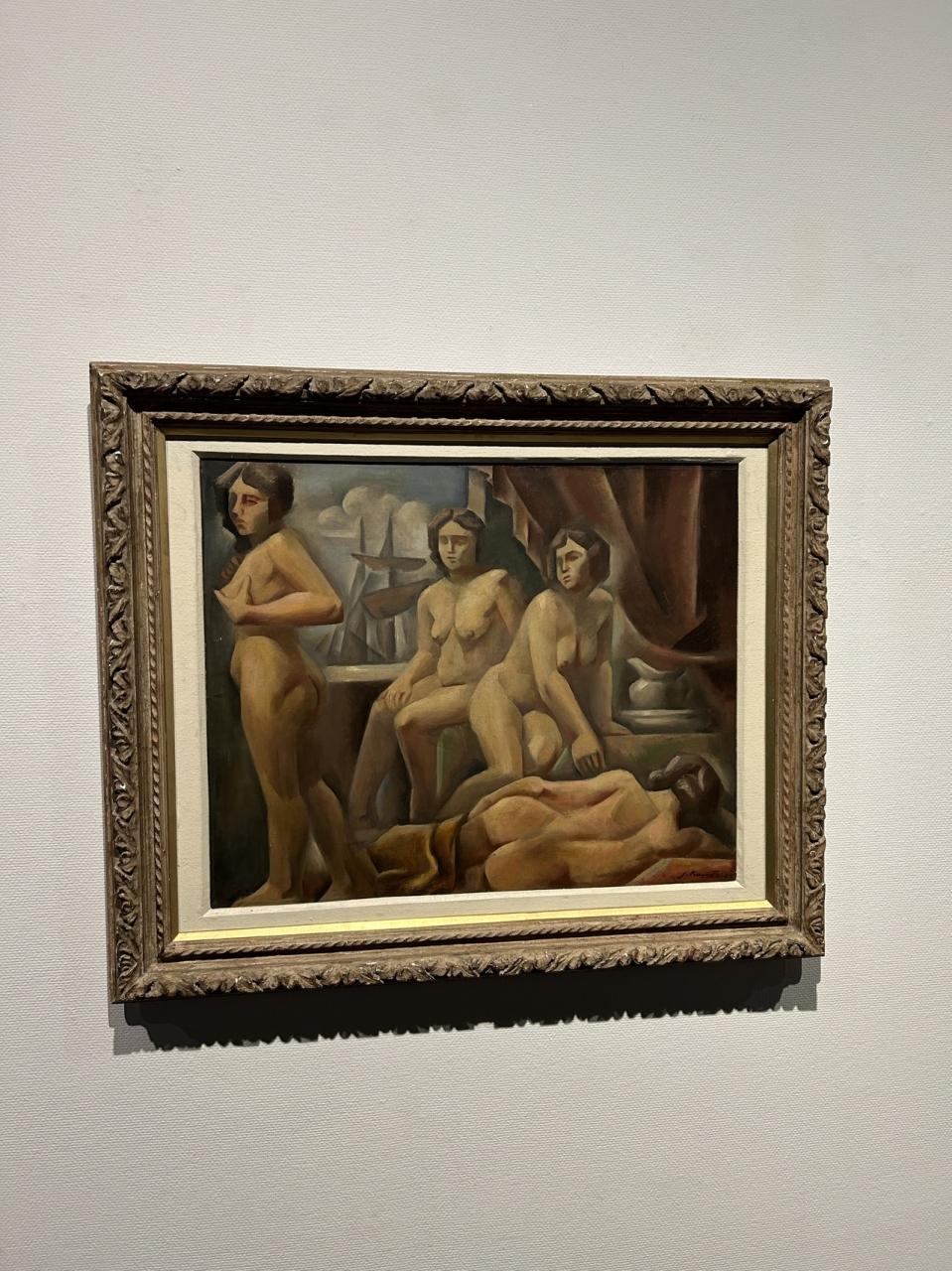
港の女
Women of the Harbour
1922 大正11年
油彩・キャンバス
oil on canvas
まず画面の縦と横をそれぞれ二等分してみましょう。そうすると、ちょうど左上の長方形が、港を望む窓となるよう舞台設定が決められていることがわかります。次に、等分してできたそれぞれの長方形に、対角線を引いてみます。すると、ちょうどその対角線に沿うように、人物たちの腕などの角度が決められていることがわかるでしょう。このように、この作品は周到に構図が計算されています。パリでアンドレ・ロートに学んだ黒田は、ロートの「幾何学は最上の語学であり、精神に依って生かされた物質の徹底的な表現である」という教えを日本に紹介しました。
First, mentally divide the picture in half vertically and horizontally. This reveals a setting arranged so the rectangle occupying the top left quadrant is a window overlooking the harbor. Next, draw imagined diagonal lines through each rectangle formed by the division of the painting into quadrants. You will find that the angles of people's arms are aligned along these diagonals. It is evident that this composition was carefully calculated. Kuroda, who studied with André Lhote in Paris, introduced Japan to Lhote's teaching that "Geometry is the highest form of language, and the ultimate expression of matter brought to life by the spirit." -
Paris
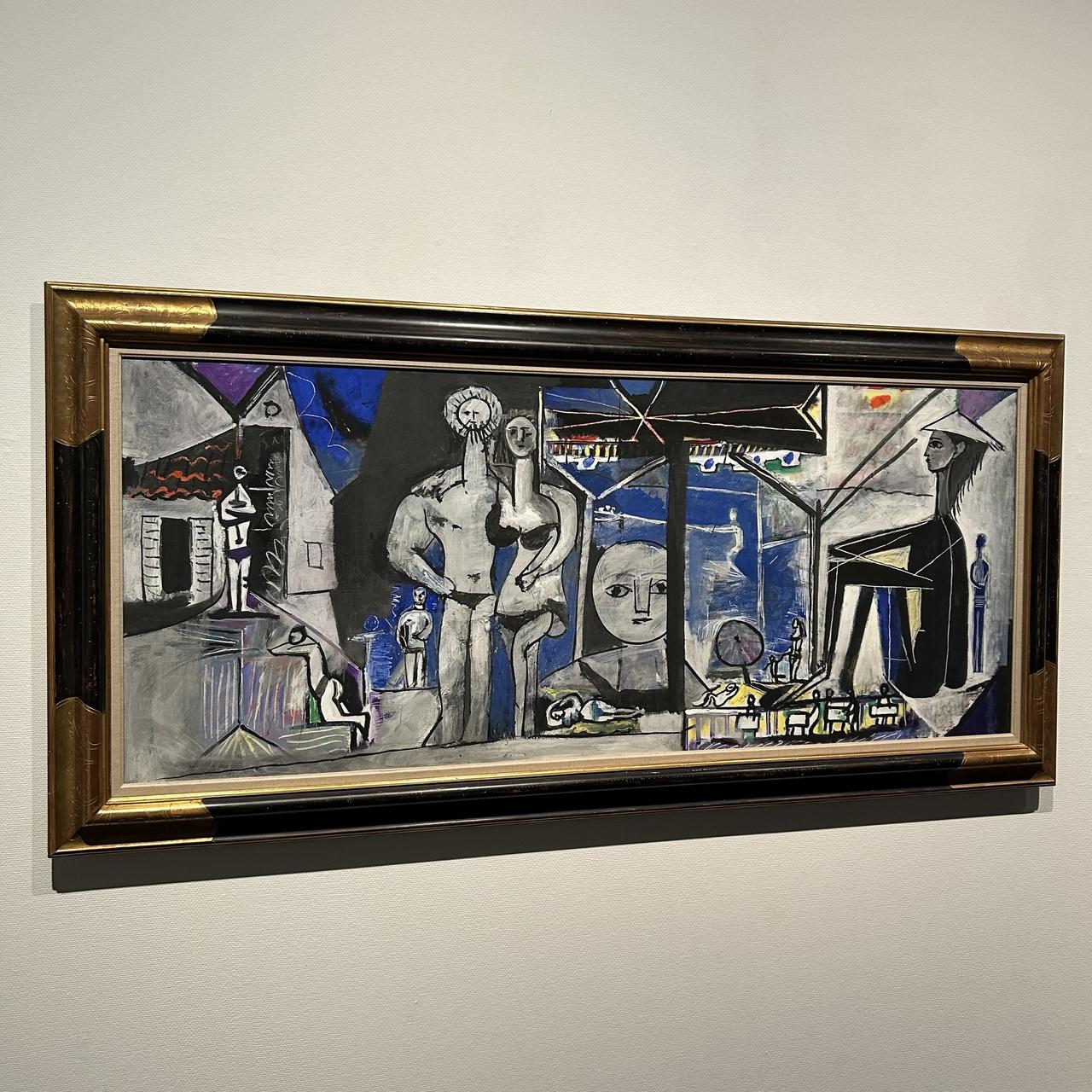
パブロ・ピカソ
Pablo Picasso
1881-1973
ラ・ガループの海水浴場
Beach at La Garoupe
1955
昭和30年
油彩・キャンバス
oil on canvas
1955(昭和30)年、南仏ニースで映画「ミステリアス・ピカソー天才の秘密」(アンリ=ジョルジュ・クルーゾー監督)が撮影されます。映画終盤、ピカンがカメラの前で描いてみせたのがこの作品です。極端に横長なのはスクリーンの画面比を意識したものです。映画の中で、描き始めから完成まで驚くべきスピードで変容を見せるこの作品、よく見ると荒々しい描き直し、キャンバスの破れ跡、ピン穴など生々しい痕跡が随所に認められます。この画面の千変万化は、イメージが即興的に、あるいは天啓のように次々沸き上がる「天才の秘密」を印象づけようとする、(監督の?画家の?)演出的な意図もあったのかもしれません。
In 1955, the film The Mystery of Picasso (directed by Henri-Georges Clouzot) was filmed in Nice in the south of France. Near the end of the film, Picasso paints this picture in front of the camera. Its extreme horizontal elongation takes the movie screen's aspect ratio into account. In the film, this work evolves from start to completion at an astounding speed, and close examination reveals raw vestiges of action such as rough repainting, rips in the canvas, and pin holes. The eternally shifting nature of the picture may have been the result of directorial intent (on the part of the director, or the painter?) to convey the mysteries of genius through images that are improvised, or emerge one after another like revelations. -
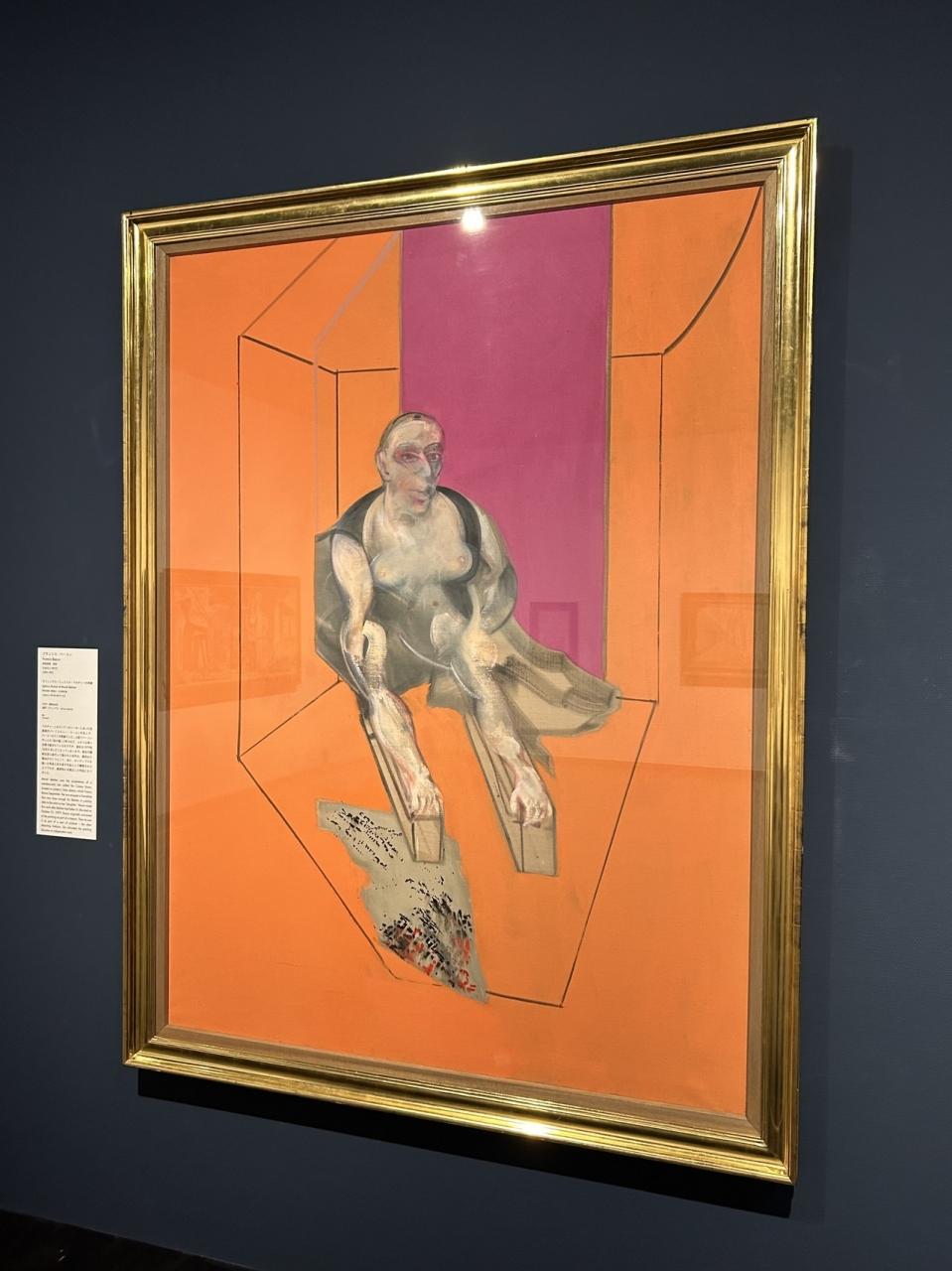
フランシス・ベーコン
Francis Bacon
1909-1992
スフィンクスーミュリエル・ベルチャーの肖像
Sphinx-Portrait of Muriel Belcher
1979
昭和54年
油彩・キャンバス
oil on canvas
ベルチャーとはロンドンのソーホーにあった会員制のバー「コロニー・ルーム」の主人で、ベーコンはそこの常連でした。人前でベーコンのことを「私の娘」と呼ぶほど、ふたりは深い友情で結ばれていたのですが、彼女は1979年10月31日に亡くなってしまいます。彼女の闘病生活と並行して描かれた本作は、最初は三幅対のひとつとして、次に、オイディプスを描いた作品と対を成す作品として構想されたようですが、最終的には独立した作品となりました。
Muriel Belcher was the proprietress of a members-only bar called the Colony Room, located in London's Soho district, which Francis Bacon frequented. The two enjoyed a friendship that was close enough for Belcher to publicly refer to the artist as her "daughter." Bacon made this work after Belcher had fallen ill. She died on October 31, 1979. Bacon originally conceived of the painting as part of a triptych. Then he saw it as part of a pair of pictures - the other depicting Oedipus. But ultimately the painting became an independent work. -
-
吉岡堅二
YOSHIOKA, Kenji
1906-1990
椅子による女
Woman Sitting on a Chair
1931 昭和6年
紙本彩色
color on paper
線の木蔭で椅子に腰掛ける女性が一人。このモダン・ガールのモデルは吉岡の妻の奈良江で、彼女が着ている洋服は、デザインから縫製まで吉岡が自分で作ったといいます。硬質で機械的な鋼管椅子やソーダサイフォンは、新しい時代を象徴する生活用品として、吉岡の作品にしばしば登場します。具体的な物を描いているのに、遠くまで何もない芝生の上の光景は現実味に欠けているようにも見える、不思議な絵です。本作では女性の服や靴、そして身体に沿う鋼管の曲線に白色が効果的に用いられ、生命感や情趣を重視してきたそれまでの日本画と一線を画す理知的な画面を構成しています。
A woman sits on a chair in the shade of a Japanese horse chestnut. The model for this "modern girl," as young women adopting Western styles were called at the time, is Yoshioka's wife Narae, and evidently the artist both designed and sewed the clothes she wears.
Rigid, mechanical items such as steel pipe chairs and soda syphons often appear in Yoshioka's work as everyday items that symbolize the new modern age. There is something deliberately unnatural and mysterious about this painting, with its background consisting only of lawn stretching into the distance. White highlights are deployed with elegant efficiency on the woman's clothing and shoes and the curves of the steel pipe that echoes the body's shape, and the painting has a cerebral quality that sets it apart from earlier Nihon-ga (modern Japanese-style painting) emphasizing vitality and emotion. -
-
安田靫彦
YASUDA, Yukihiko
1884-1978
鴻門会
Meeting at Hong Men
1955
昭和30年
紙本彩色 color on paper -
山口華楊
YAMAGUCHI, Kayo
1899-1984
洋犬図
Dogs
1937
昭和12年
絹本彩色 color on silk
描かれているのはボルゾイ犬。戦前から日本にも輸入されていました。華は、この作品を描くにあたり、東京の飼育家を訪ねて写生したと記しています。毛描きに注目すると、ウェーブのかかった長い体毛が一本一本丁寧に描かれていますが、実感的な再現性を重んじる岡山四条派の毛描きとは異なり、むしろデザイン的に処理され、実物から離れて別種のリズムを生み出しているように見えます。こうした試みやすっきりとした構図が、画面に洗練された印象をもたらしているのです。
The dogs depicted in this painting are Borzois, a breed which was first imported to Japan before World War II. Yamaguchi noted that he visited a breeder in Tokyo to make sketches in preparation for this work. A close look at the fine lines reveals long wavy fur that was meticulously painted one hair at a time. But unlike the fine lines favored by the Maruyama-Shijo School, which stressed realistic reproduction, Yamaguchi adopted a design-like approach and created a distinct rhythm unlike that of real fur. This neat, experimental composition imbues the picture with an air of refinement. -
三谷十糸子
MITANI, Toshiko
1904-1992
夕
Evening
1934
絹本彩色
昭和9年
color on silk -
-
北野恒富
KITANO, Tsunetomi
1880-1947
戯れ
For Fun
1929 昭和4年
絹本彩色 color on silk
カメラをのぞきこむ若い芸妓の上半身だけを画面下半分に切り取り、上半分は鮮やかな新緑で埋め尽くすという大胆な構成。モチーフにおいても構図においても旧来の美人画とは一線を画す作品です。芸妓が集中してカメラを見つめるのと同様に、この絵の前に立つ者は、いつしか生い茂る葉の密度と着物の細密描写に目を奪われてしまいます。一方、この絵には、女性と新緑によって「若さ」を象徴する意図もありそうです。
The lower half of this bold composition consists solely of the upper body of a young geisha peering down at a camera while the upper half is filled with a snatch of fresh, brilliant greenery. In terms of both motif and structure, the work is a clear departure from conventional bijin-ga. Just as the geisha is staring intently at
her camera, our attention is unknowingly captured by the thick growth of leaves and the detailed depiction of the pattern on the woman's kimono. At the same time, Kitano's intention in the picture seems to be to symbolize "youth" with the woman and the fresh greenery. -
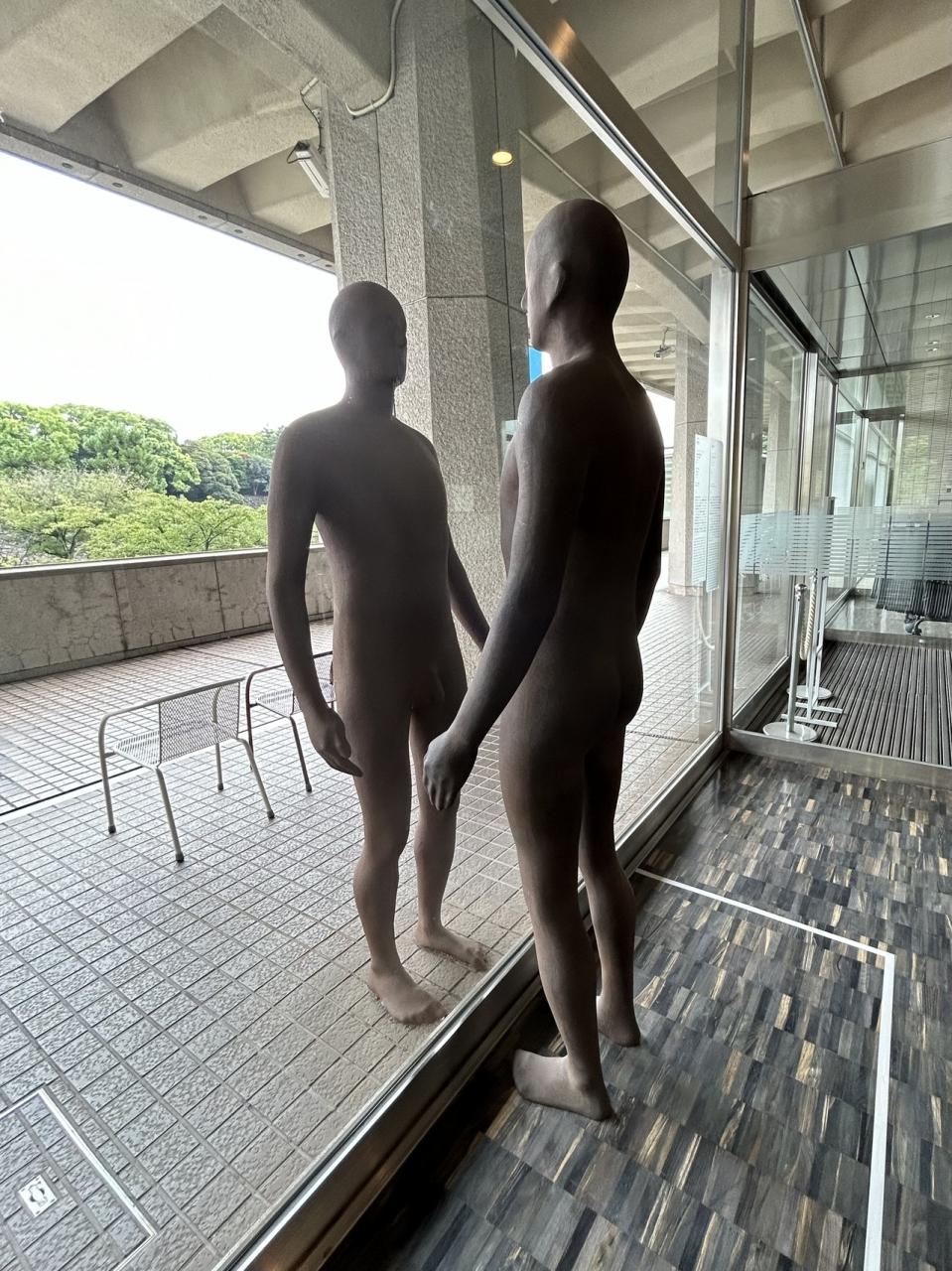
アントニー・ゴームリー
Antony Gormley
1950-
反映/思索
Reflection
2001
平成13年
鋳鉄 cast iron
建物の内側と外側には、そっくりなかたちの人体像が向き合っています。設置場所は作者本人が決めました。この置かれ方だと、それぞれの人物を正面から鑑賞することはできません。像の全体を知覚するためには、向かいのもうひとりをガラス越しに観察する必要があります。しかし見る角度によっては、窓に反射したこちら側の虚像を見ているのか、あるいは向こう側の像を見ているのかがはっきりとせず、不思議な感覚に陥ります。建物の内部と外部、そしてガラスの窓、こうしたもとからあった美術館の環境が、この彫刻について思索するための一要素になっているのも、本作の面白いところです。
Two identical figures stand face to face, one inside the building and one outside. The artist personally determined the installation location, and the figures are positioned so that it is impossible to view either of them head-on. To perceive the entire image, it is necessary to observe the figure on the other side of the glass, but depending on the angle of view, it may not be clear whether the figure on the other side is real or an illusionary reflection of the figure on this side, which leads to a bizarre sensation. An intriguing aspect of this work is that the interior and exterior of the building, the window, and the museum environment, which existed before the sculpture was installed, all become objects of contemplation. -
-
-
-
-
-
-
-
-
ヘンリー・ムーア
Henry Moore
1898-1986
横たわる人物
Reclining Figure
1977 昭和52年
ブロンズ bronze
20世紀イギリスを代表する彫刻家、ヘンリー・ムーアは、抽象的でありつつ、生命感に満ちた人体像で良く知られます。なかでも「横たわる人体」は、全作品の半分以上を占めていると本人が言う通り、彼のトレードマーク的なモチーフです。このモチーフについて本人はこんな言葉で説明しています。「…・・・・・横たわる人体像は、構成や空間を考えるのにもっとも自由がきく」、「横たわる人体像はどんな面の上にも横たわることができる。自由でもあるし安定してもいる。これは、彫刻は恒久的で、永遠に向かって持続すべきだとする私の条にあっている」。
Henry Moore, among the most renowned 20th-century British sculptors, is known for works that are largely abstract yet brim with the vital energy of living things. The reclining figure is his trademark motif, and the artist himself said that it accounts for more than half of his ouevre: In Moore's own words: "The reclining figure gives the mast freedom, compositionally and spatially... A reclining figure can recline on any surface, It is free and stable at the same time. It fits in with my belief that sculpture should be permanent, should last for eternity." -
-
-
-
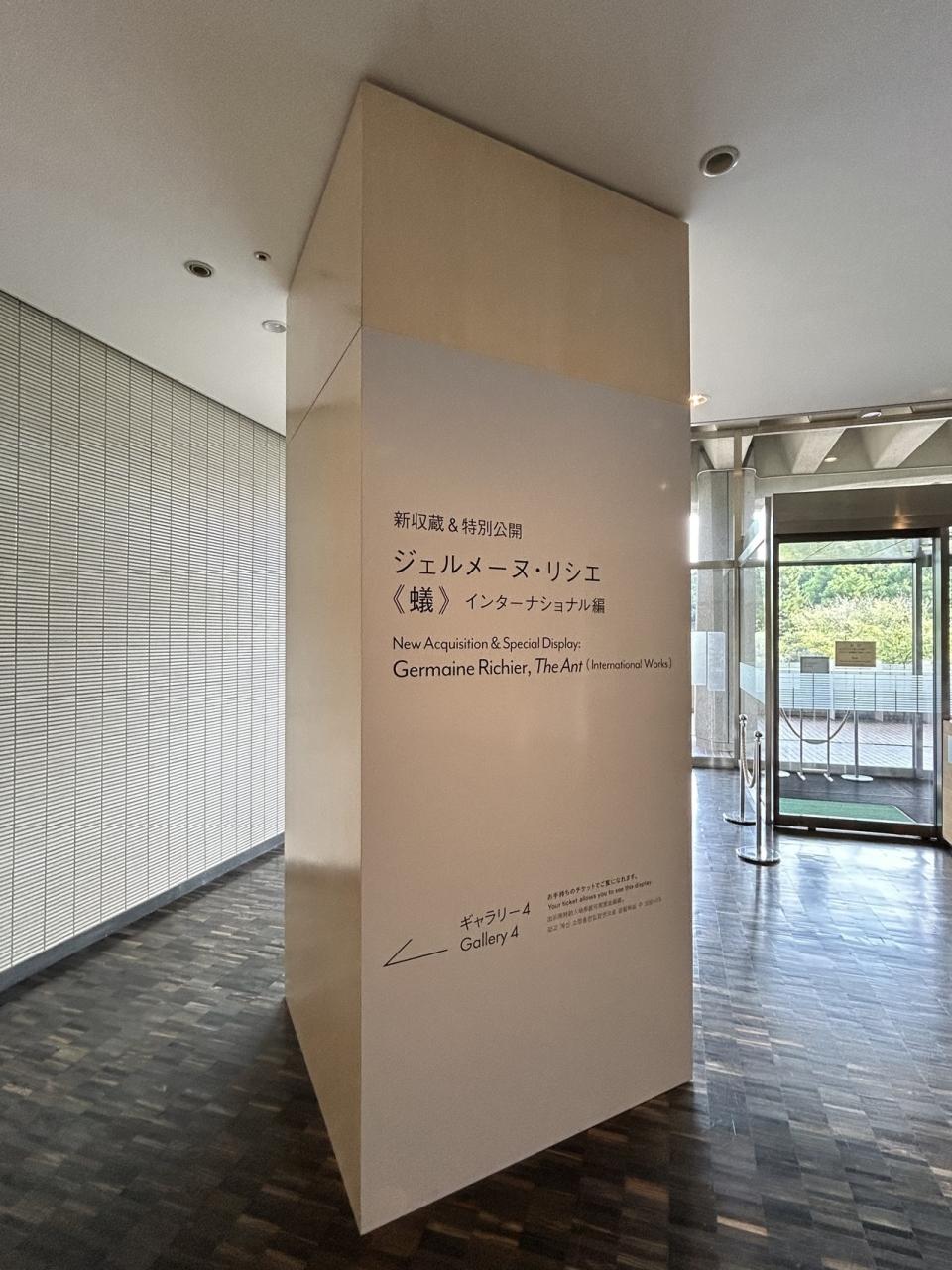
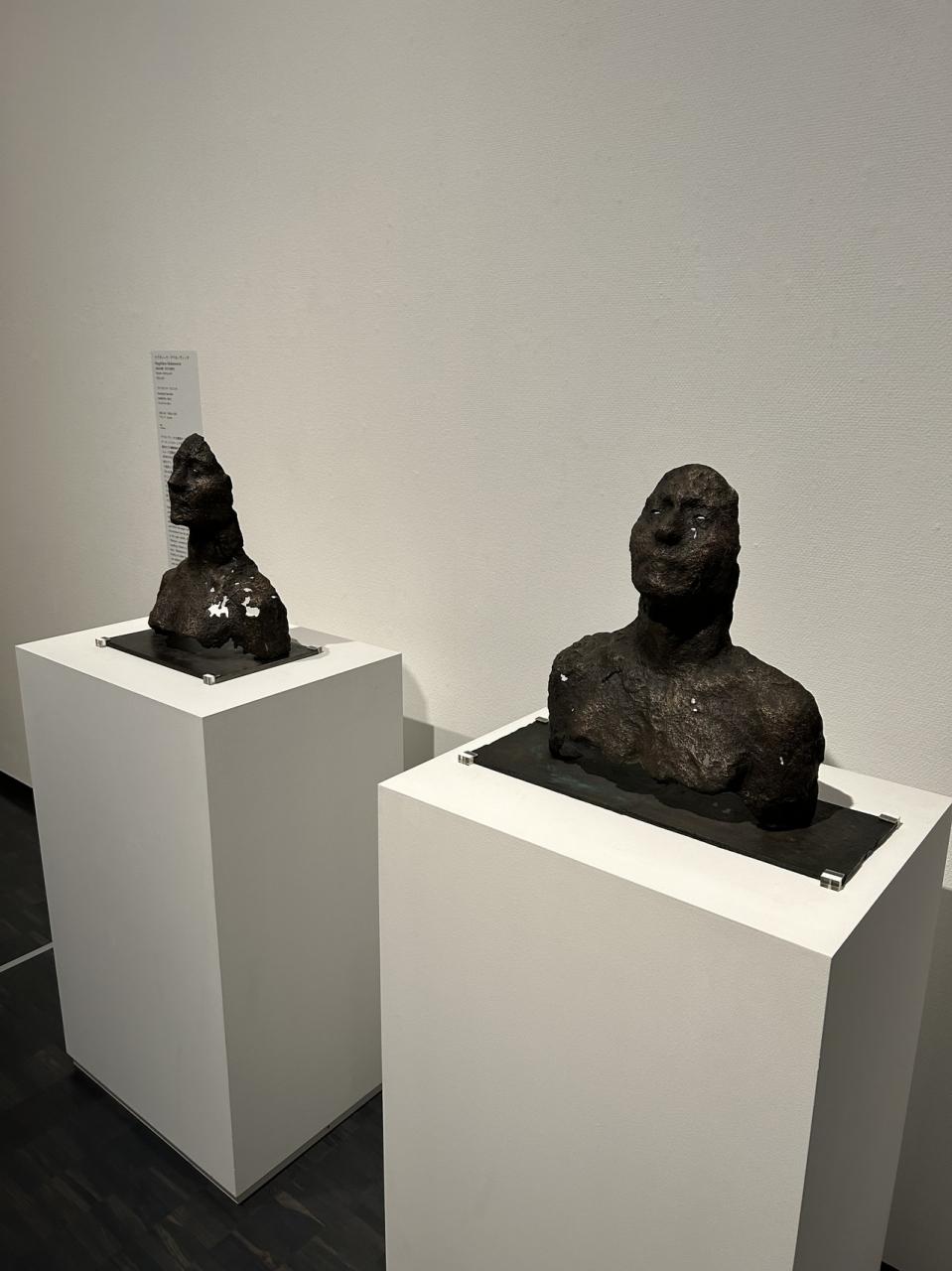
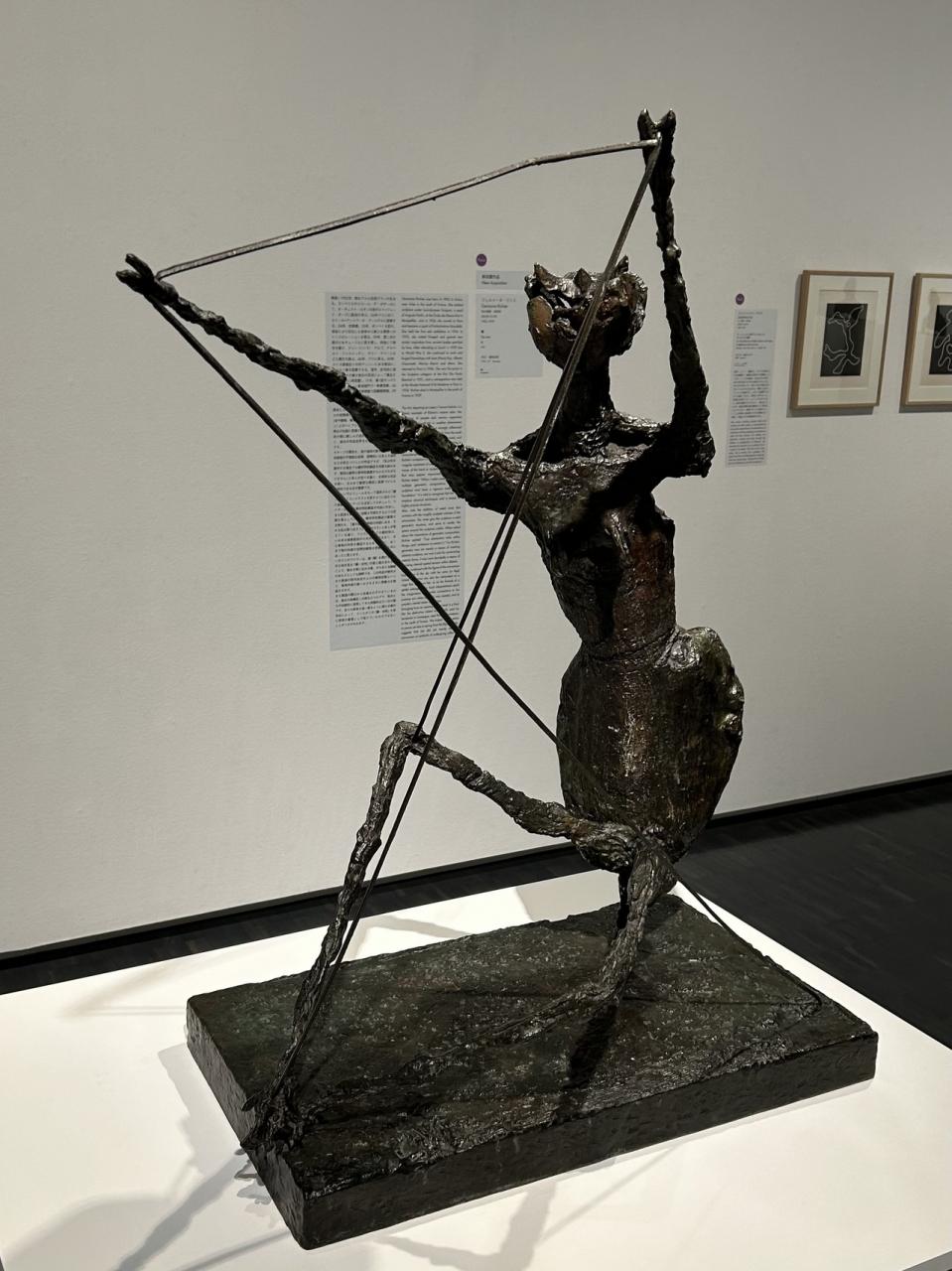
新収蔵作品
New Acquisition
ジェルメーヌ・リシエ
Germaine Richier
1902-1959
蟻
The Ant
1953
昭和28年
ブロンズ bronze -
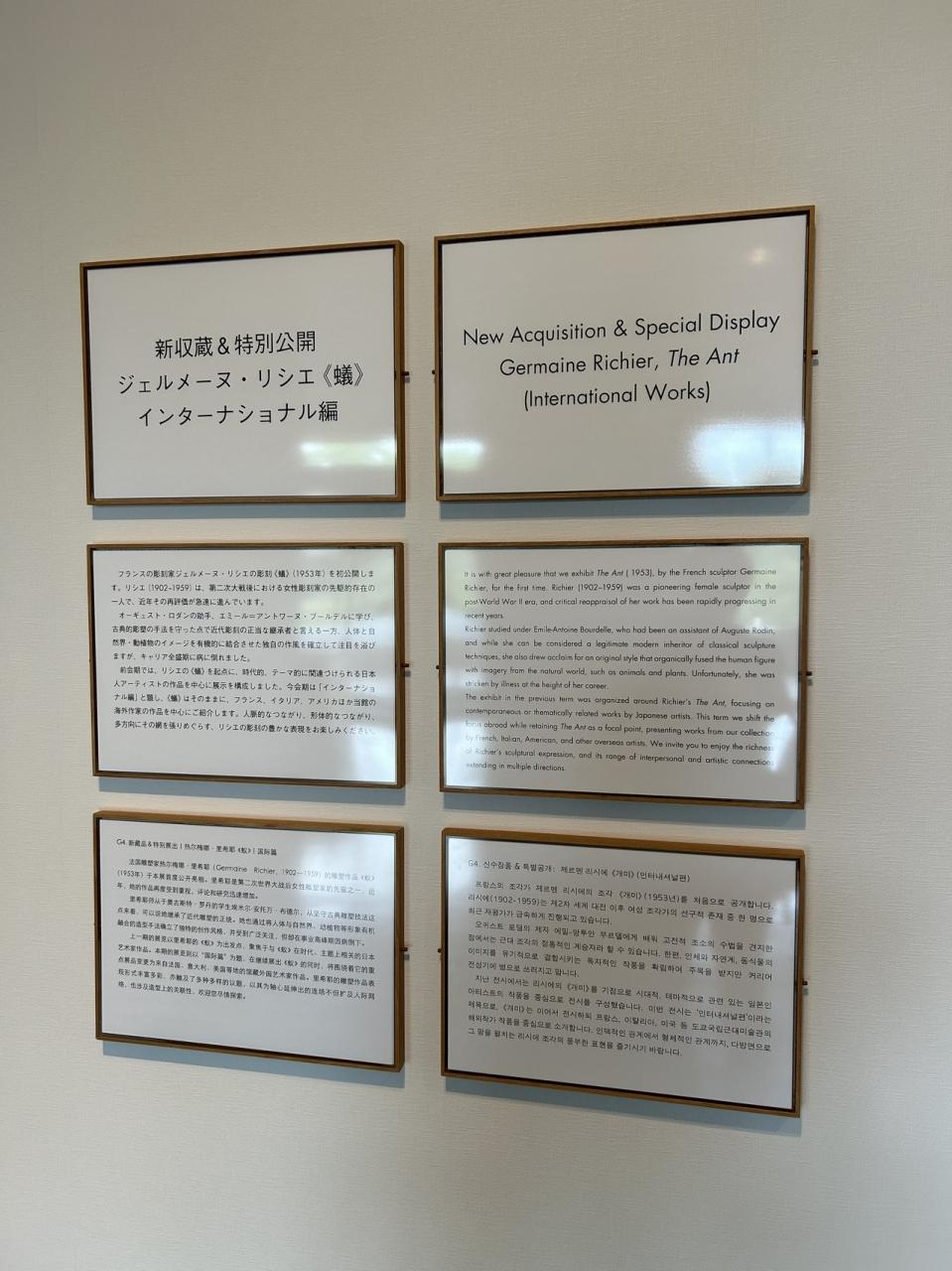
略歴|1902年、南仏アルル近郊グランの生まれ。モンペリエのエコール・デ・ボザールにて、オーギュスト・ロダンの弟子ルイ=ジャック・ギーグに彫刻を学ぶ。26年パリに出て、エミール=アントワーヌ・ブールデルに師事する。34年、初個展。35年、ポンペイを訪れ、溶岩により石化した身体から新たな表現へのインスピレーションを得る。39年、第二次大戦のためチューリヒに居を移し、同地にて制作を続け、ジャン(ハンス)・アルブ、アルベルト・ジャコメッティ、マリノ・マリーニなどと親交を結ぶ。46年、パリに戻る。50年、スイス国境近くの村アッシーにある教会に、キリスト像を設置するも、翌年、記号的に表現されたその像は地元の反対によって撤去される(71年に再設置)。51年、第1回サンパウロ・ビエンナーレ彫刻部門で一等賞受賞。56年、バリの国立現代美術館で回顧展開催。59年、南仏モンベリエで死去。
Germaine Richier was born in 1902 in Grans, near Arles in the south of France. She studied sculpture under Louis-Jacques Guigues, a pupil of Auguste Rodin, at the École des Beaux-Arts in Montpellier, and in 1926 she moved to Paris and became a pupil of Emile-Antoine Bourdelle. She held her first solo exhibition in 1934. In 1935, she visited Pompeii and gained new artistic inspiration from ancient bodies petrified by lava. After relocating to Zurich in 1939 due to World War Il, she continued to work and forged friendships with Jean (Hans) Arp, Alberto Giacometti, Marino Marini and others. She returned to Paris in 1946. She won first prize in the Sculpture category at the first São Paulo Biennial in 1951, and a retrospective was held at the Musée National d'Art Moderne in Paris in 1956. Richier died in Montpellier in the south of France in 1959. -
昆虫と人間の混成/交雑である<蟻>は、リシエの成期を代表する一点です。人間と生物(虫や動物、植物)あるいは気象(嵐やハリケーン)とのハイブリッドは、リシエの故郷である南仏の伝説に登場する幻想的生き物、あるいは幼少期に親しんだ自然などからの影響が色濃く、彼女の作品世界を大きく特徴づける表現です。
モチーフの異形さ、指や道具の跡を強く残す彫刻表面の不規則な処理、即興的にも見える造形などが目立つリシェの作品ですが、「私は何を製作する場合でも機何学的構成を何度も試みます、彫刻は厳密な数学的基礎をもたなければなりません」と本人が述べる通り、古典的な技法を用い、きわめて厳密な構成に基礎づけられた制作である点が重要です。生々しいヴォリュームをもって造形された「蟻一女性」とコントラストを成すように加えられた金風のワイヤーにも注目してみましょう。ワイヤーは堅固な幾何学的構造を作品に付与し、また彫刻を取り巻く空間を可視化するような役割を果たしています。何学的構成の重要さを問われ、「真の抽象は事物の内部にある、それを私は取り出そうとするのです」と本人が答えている通り、リシエにとっての機何学は、いわゆる抽象脱刻のための手段でもなく、また事物の外形を構成するためでもなく、あくまで物の内部の空間的緊張を把提するためにあったと言えます。一方でこのワイヤーは、腕(脚)を揚げながら天を仰ぎ見る「蟻一女性」の姿と組み合わさることで、彼女を閉じ込める檻、からめとる蛛の糸などとしても解釈でき、この作品が制作された後の時代状況や人々の精神状態といった、意味内容の面へもさまさまに想像力を喚起させます。また頭部の開口から先端をのぞかせているのは、彼女の故郷近くの南仏カマルグで、牧夫たちが伝統的に使用してきた特徴的な三つ又の槍です。自らの身体を食い破るように現れる槍の存在によって、リシェがこの「蟻一女性」を単に受の象徴として捉えていたわけではないことがうかがわれます。
The Ant, depicting an insect / human hybrid, is a classic example of Richier's mature style. Her syntheses of people and various organisms (bugs, animals, plants) or weather phenomena (storms or hurricanes) were strongly influenced by fantastical creatures in legends from the south of France, where she was born and raised, and by the natural environment that surrounded her in childhood, and these inspirations distinctly characterize her oeuvre.
Richier's sculpture is known for its peculiar motifs, irregular treatment of surfaces that clearly retain traces of the hand or sculpting tools, and forms that may appear improvisational. However, Richier stated: "When I make something I try out multiple geometric compositions, and the sculpture must have a rigorous mathematical foundation." It is vital to recognize that her work employs classical techniques and is based on highly precise structures. Also, note the addition of metal wires that contrast with the roughly sculpted volumes of the ant-woman. The wires give the sculpture a solid geometric structure, and serve to render the space around the sculpture visible. When asked about the importance of geometric composition, Richier replied: "True abstraction lurks within things, and I endeavor to extract it." For Richier, geometry was not merely a means of creating abstract sculpture, nor was it only for constructing exterior forms. It was most decidedly a means of grasping internal spatial tension within objects. When combined with the figure of the ant-woman looking up to the sky with her arms (or legs) raised, the wires can also be interpreted as a cage that imprisons her, or as the threads of a spider entangling her. Such interpretations spark the imagination and evoke connections to the postwar era when the work was created, and to people's mental states at the time. Emerging from an opening in the head is a form like the distinctive trident traditionally used by herdsmen in Camargue, near Richier's hometown in the south of France. This trident, which seems to pierce yet also to spring from the figure's body, suggests that she did not merely see this ant-woman as symbolic of undergoing suffering. -
ジャクソン・ポロック
Jackson Pollock
1912-1956
無題(多角形のある頭部)
Untitled [Head with Polygons]
1938-41 昭和13-16年
油彩・キャンバス(パネルに貼付)
oil on canvas mounted on board
アメリカの画家、ジャクソン・ポロックは、今日よく知られる絵具をまき散らす技法(ドリッ
ピングまたはポーリングと呼ばれます)に移行する以前、ピカソの影響の下に、人物像を描いていました。この作品では、女性と思しき人物の身体が、画面の四角い枠にぎゅっと押し込めたように変形されています。上げた片腕には、別の人物の横顔のようなものが寄生しています。さらに、これらの人物像を否定するかのように、上から赤と黒でくっきりとした図形が描き重ねられています。作品の意味ははっきりとは解明されていませんが、不穏な雰囲気は見る者の心をかき乱します。
Prior to adopting the technique of scattering paint (often called "dripping" or "pouring") for which he is known today, the American artist Jackson Pollock depicted Picasso-influenced human forms. This figure, which is presumably that of a woman, has a distorted appearance as if she has been packed into the picture's square frame. On her raised left arm, there is a parasitic growth that looks like another person's profile. And as if to negate the figures of both the woman and the arm, a distinct red and black graphic has been painted on top of them. The meaning of the work remains unclear, but the viewer is left with a distinct sense of disquiet. -
盛田良子コレクション
Morita Yoshiko Collection
アレクサンダー・カルダー
Alexander Calder
1898-1976
モンスター
The Monster
C.1939 昭和14年頃
金属板、針金、塗料
sheet metal, steel wire and paint
カルダーは幾何学的な抽象画で知られるピエト・モンドリアンのアトリエを訪れた際、壁に貼られた矩形の厚紙に目を止めます。これらのかたちが動いたらどうなるだろう?このような思いつきからモビールは生まれました。カルダーのモビールには様々な種類がありますが、<モンスター>は床置きのタイプです。吊り下げられた棒の両端には三角形や円形の鉄片が取り付けられ、バランスの変化によって動きが生じます。こうした「動き」が本来無機質な物体に生命感を与えることに、カルダーは着目したのです。
While visiting the studio of Piet Mondrian, known for his rigorous geometric abstractions, Calder noticed some rectangular pieces of cardboard attached to the wall. What would happen if these shapes were to move? Calder's mobiles emerged from these musings. These mobiles take diverse forms, and The Monster is one of the floor-standing type. Triangular or circular sheets of steel are attached to each end of the suspended rods, and changes in balance generate movement. Calder realized that such movement imbues what had been an inorganic object with a sense of life. -
-
マリノ・マリーニ
Marino Marini
1901-1980
小さな裸婦
Small Nude
1943 昭和18年
ブロンズ bronze
作者寄贈
Gift of the artist
マリノ・マリーニは戦後イタリアを代表彫刻家の一人です。「私の裸婦像の性格はギリシアに帰せられる」と本人は述べますが、ギリシア彫刻から思い浮かべる優美さよりも、無骨なたくましさを感じさせます。ギリシアからの影響は、様式的なものではなさそうです。
彼はこんな言葉も残しています。「私の裸婦像もまた古典的かつ無名性の特徴を持っていると思う。私は裸婦にある主観的感情をことごとく抑えてきたからだ」。近代の男性芸術家の多くが、しばしば自らが愛する特定の女性をモデルに制作したことを意識しているのでしょう。素朴で普遍的なマリーニの彫刻の特徴をつかむヒントが、この言葉のなかにありそうです。
Marino Marini was one of Italy's preeminent postwar sculptors. He remarked that
"the
character of my female nudes can be traced back to Greece," but rather than embodying the elegance typically
associated with Greek
sculpture, his nudes exhibit a rugged strength.
The Greek influence on his work appears not to be formal in nature. Marini also said, "I believe my female nudes have classical and anonymous qualities. This is because I have made efforts to suppress any subjective emotions in the nudes." This seems to be a conscious response to the tendency of many male modern artists to depict specific women they were enamored with. His words hint at the distinctive attributes of his sculpture, which emphasizes simplicity and universality. -
ルーチョ・フォンターナ
Lucio Fontana
1899-1968
空間概念 期待
Spatial Concept - Expectations
1961
昭和36年
水性塗料・キャンバス water-based paint on canvas
キャンバスを単色で平滑に塗り、その画面をカッターで切り裂いています。「キャンヴァスに穴を穿つ時、私は絵画を制作しようと思っているのではない。私は、それが絵画の閉鎖された空間を越えて無限に拡がるよう、空間をあけ、芸術に新しい次元を生みだし、宇宙に結びつくことを願っている」。フォンターナのこの言葉は、実は彼が具象彫刻からキャリアを始め、ネオン管を用いたインスタレーション、セラミックやテラコッタによる抽象彫刻へ向かうその展開を知ると、なるほどうなずけます。「芸術をやるとは[・・・]絵画でも彫刻でもなく、空間内に制約された線でもなく、物質のなかの空間の連続性ということなのだ」。
The canvas is smoothly and uniformly painted a single color, then slashed with a utility knife.
Fontana asserted: "By cutting into the canvas, my intent is not to produce a painting. Rather, I am aiming to open up spaces, to introduce a novel dimension to art that transcends the finite confines of the canvas, thereby forging a connection with the infinite cosmos." This statement makes sense when one learns that his career began with figurative sculpture, and subsequently evolved toward installations incorporating neon lights and abstract ceramic and terracotta sculpture. He also said: "Making art... transcends the media of painting or sculpture and the boundaries of delineated spaces. It embodies the essence of spatial continuity within matter." -
-
-
-
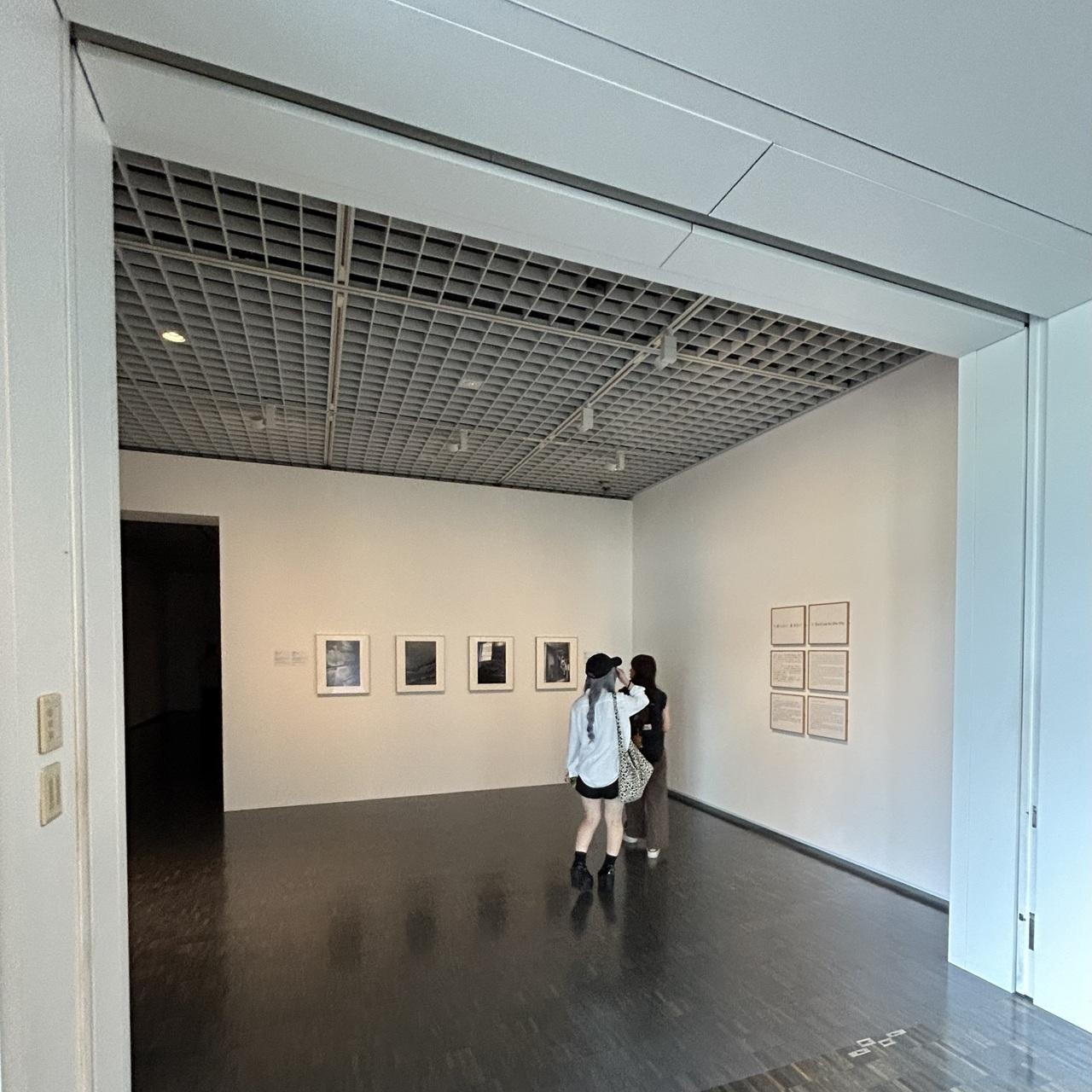
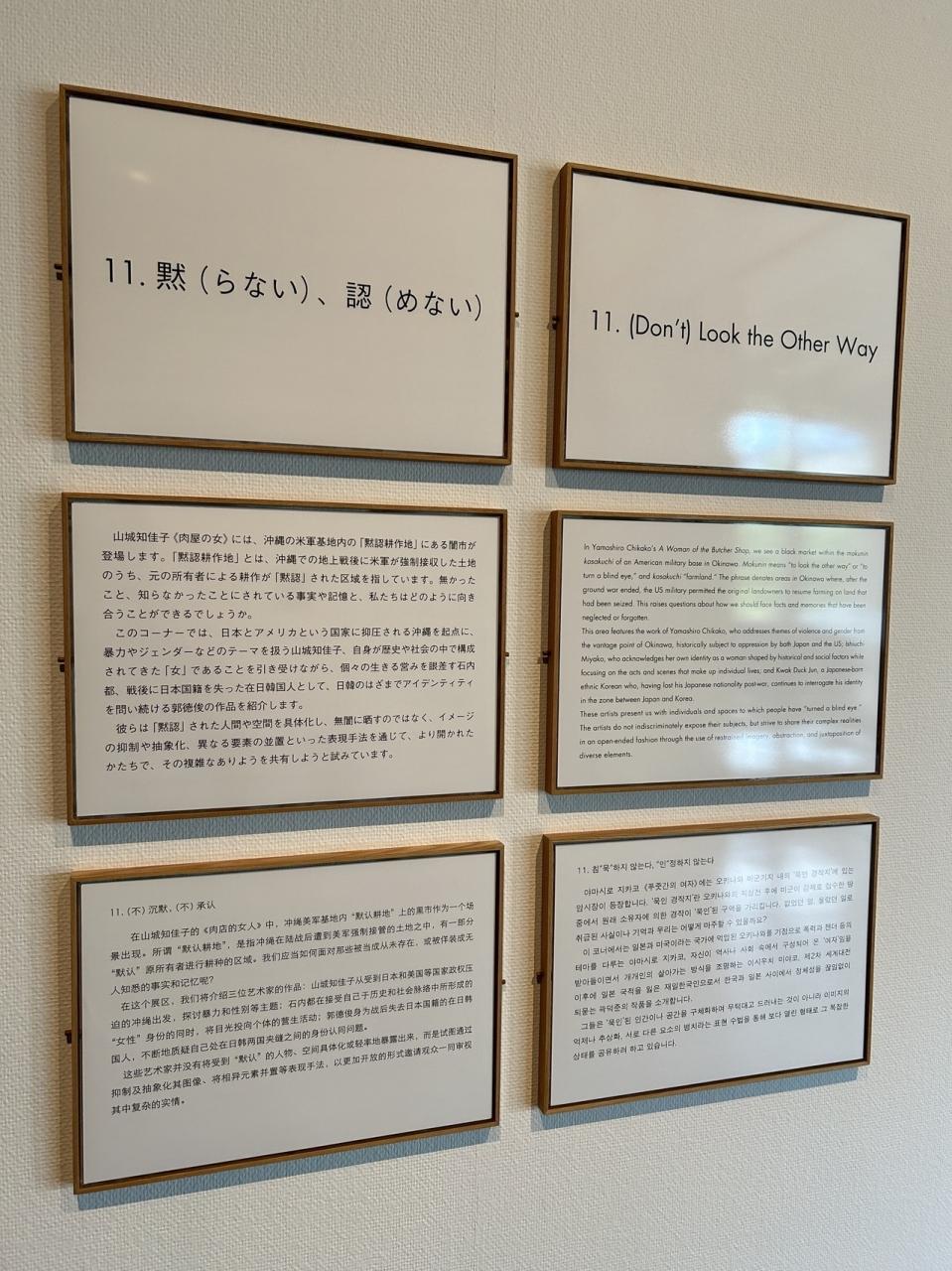
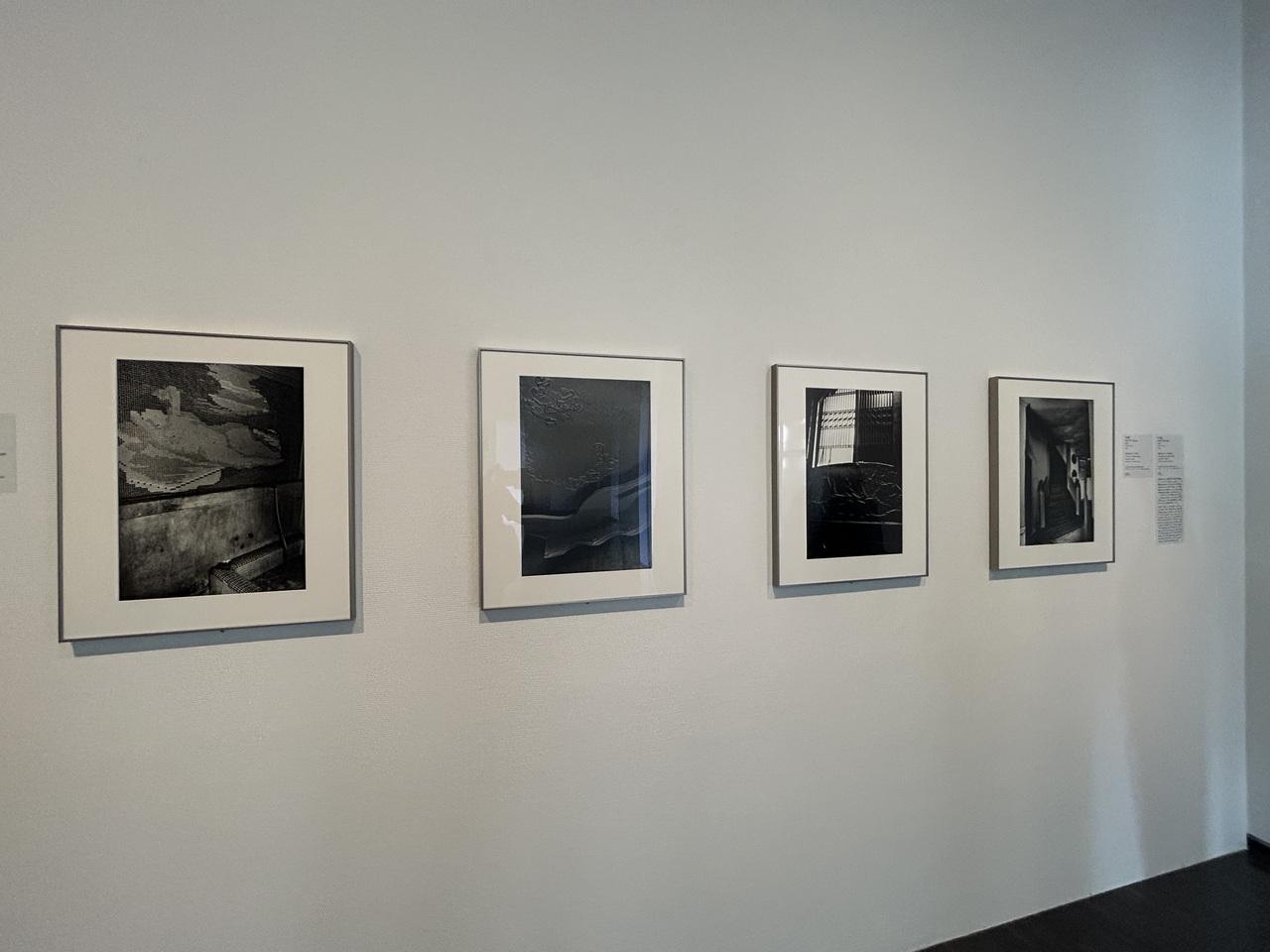
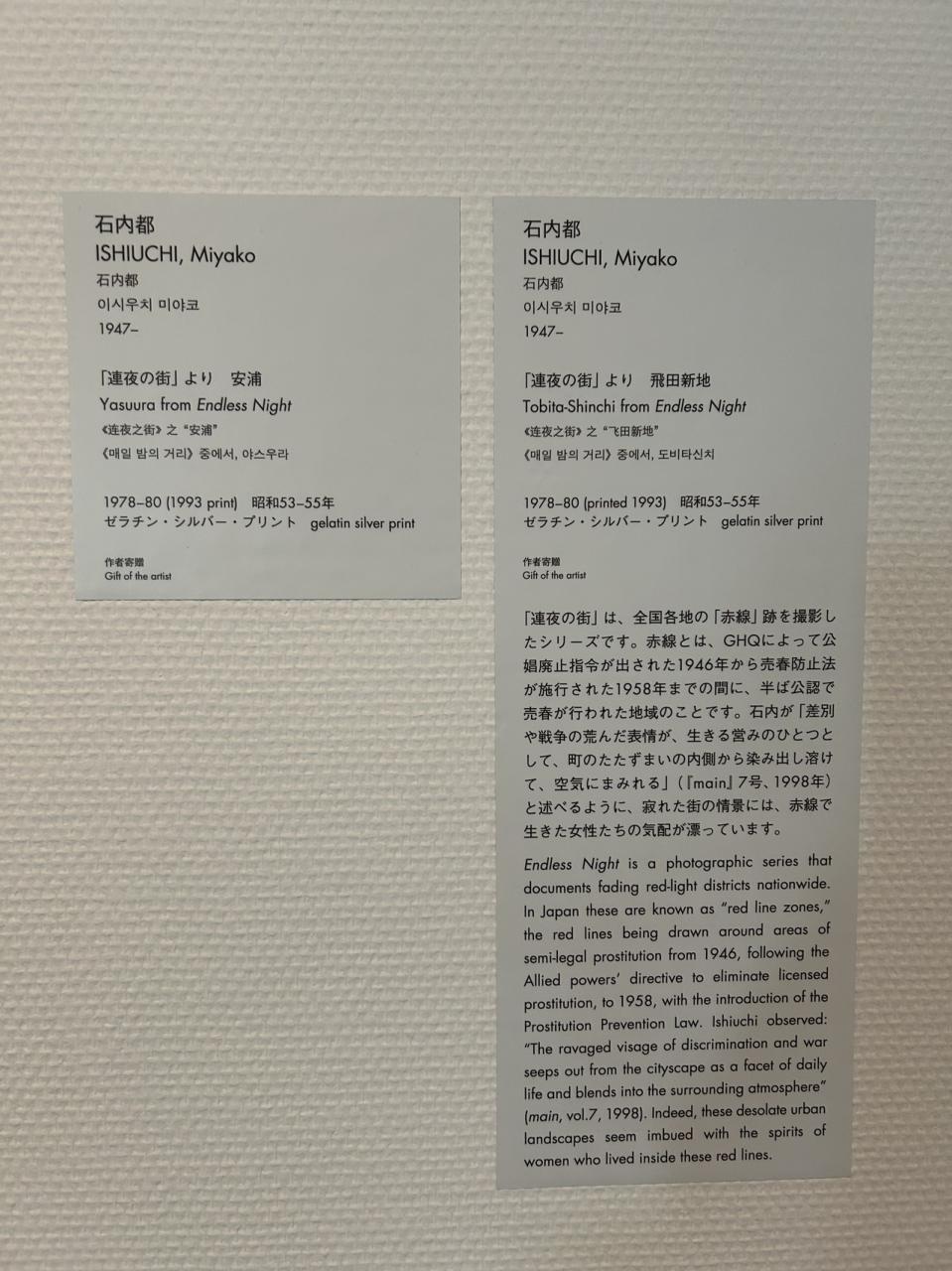
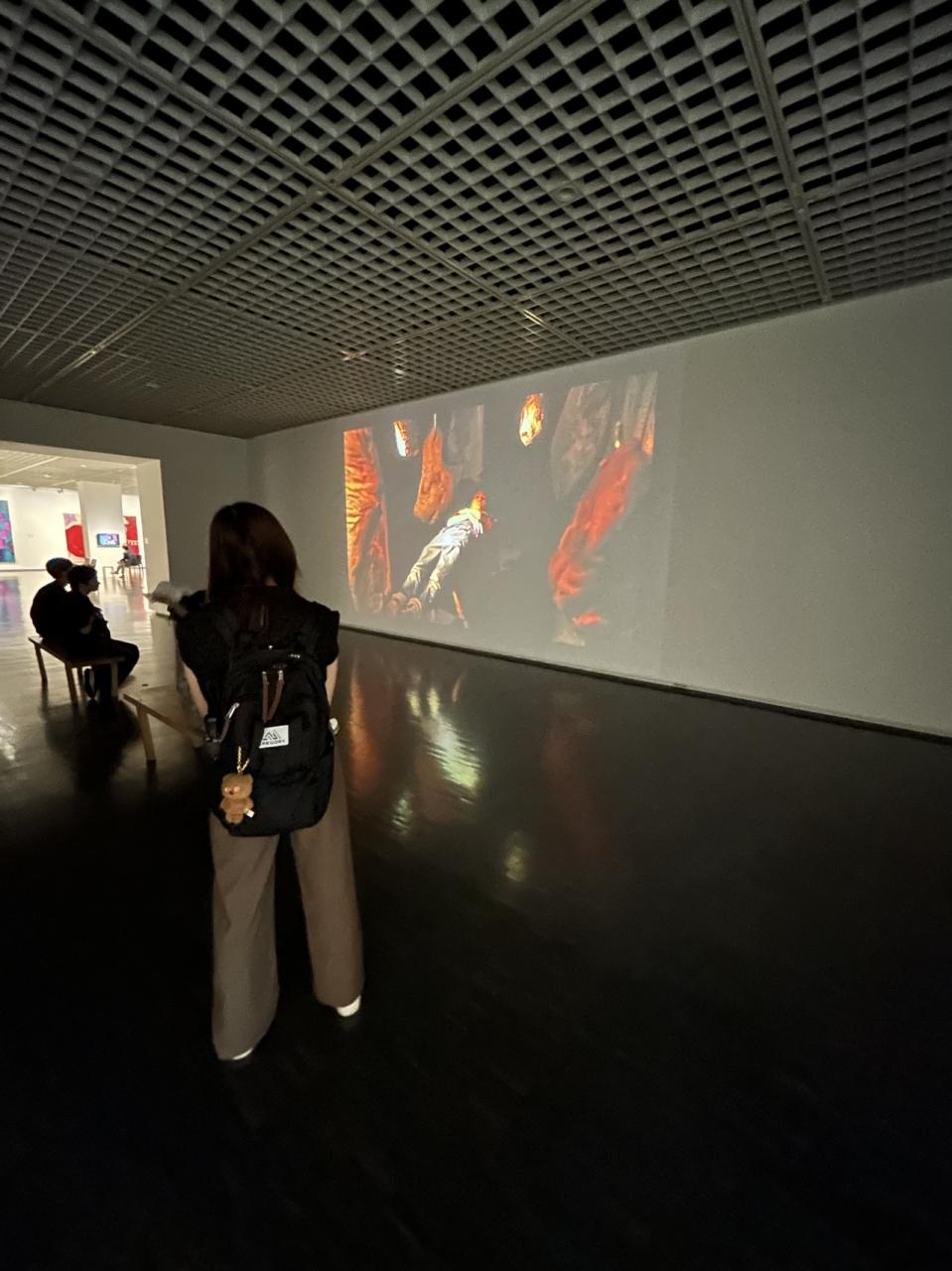
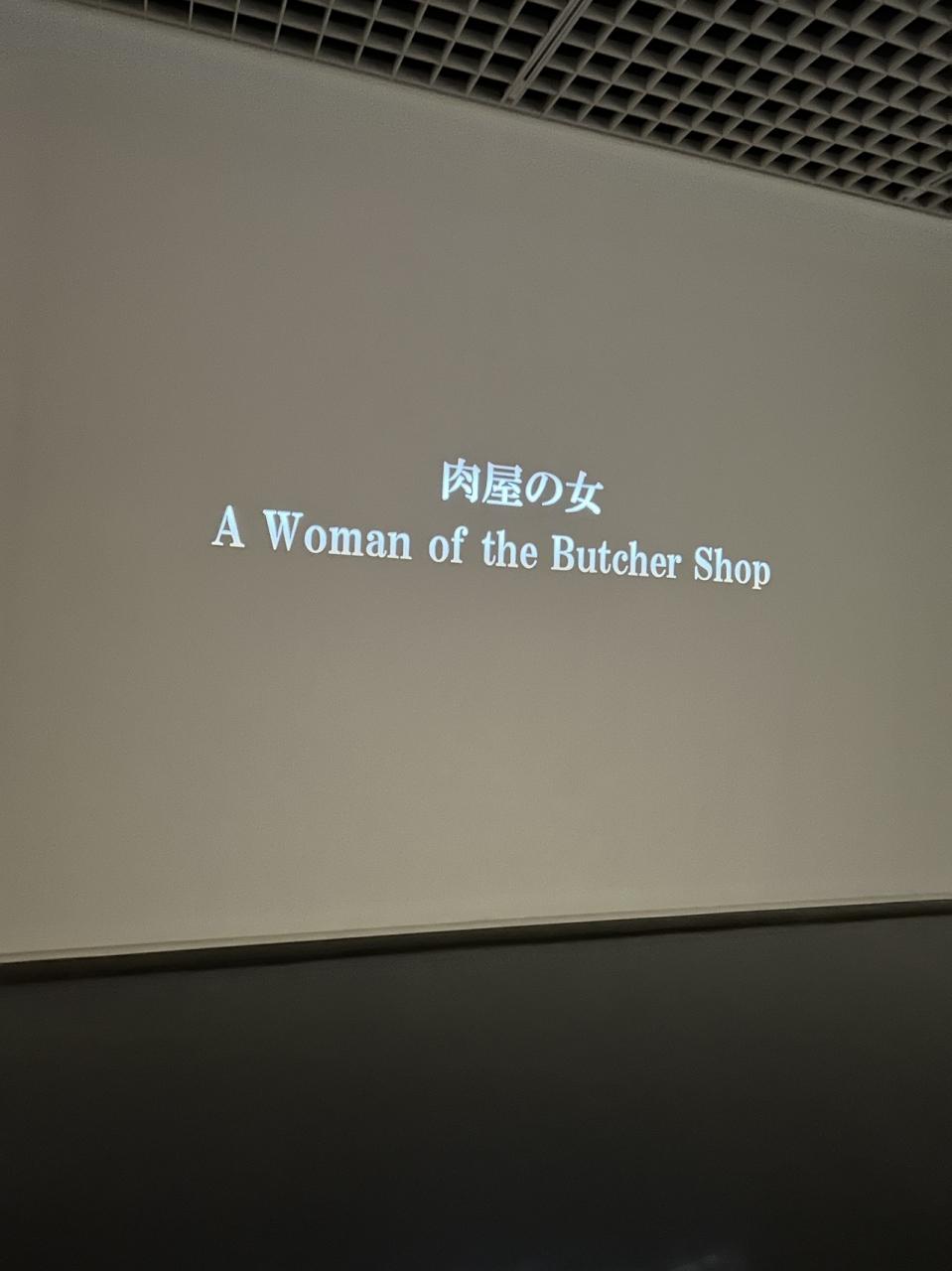
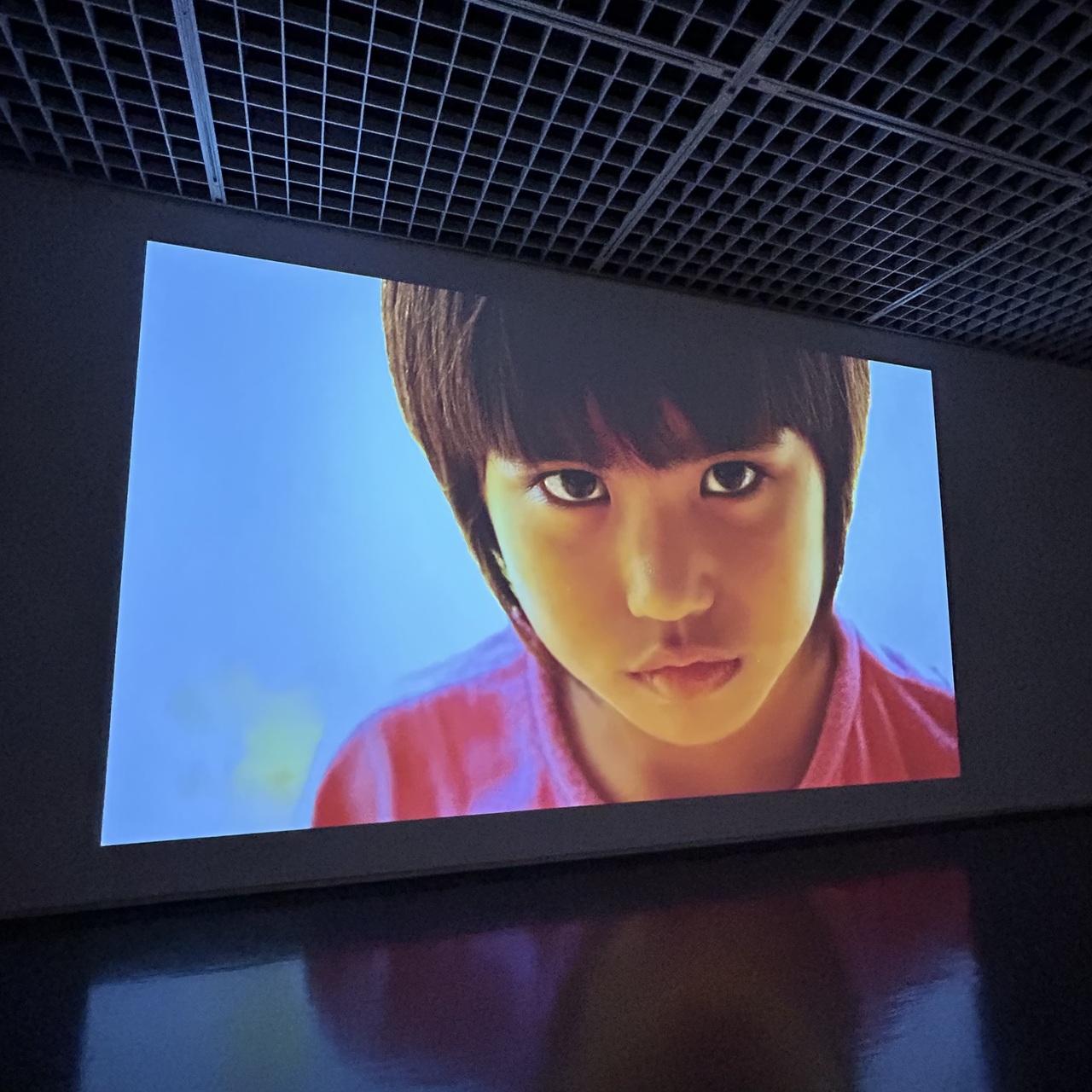
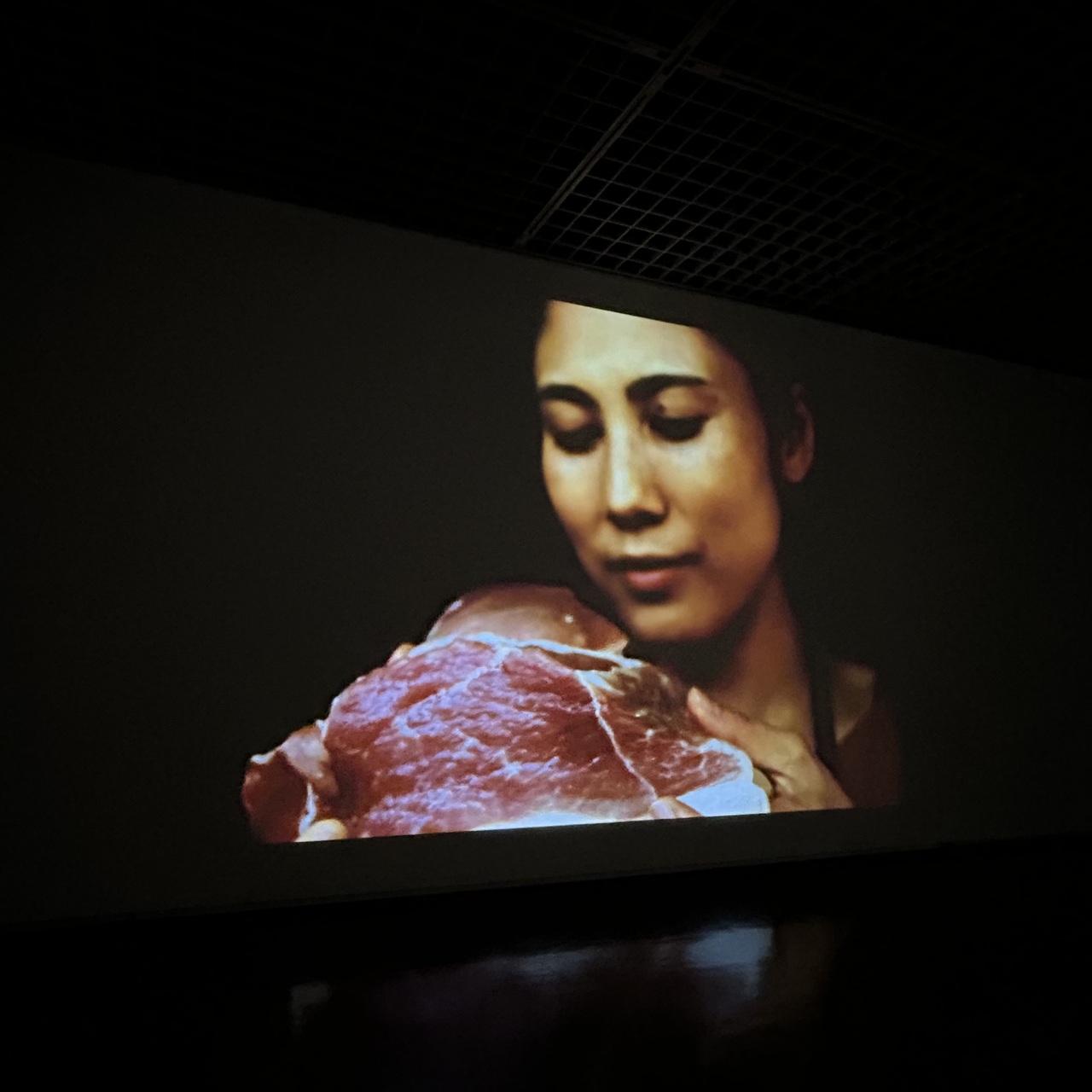
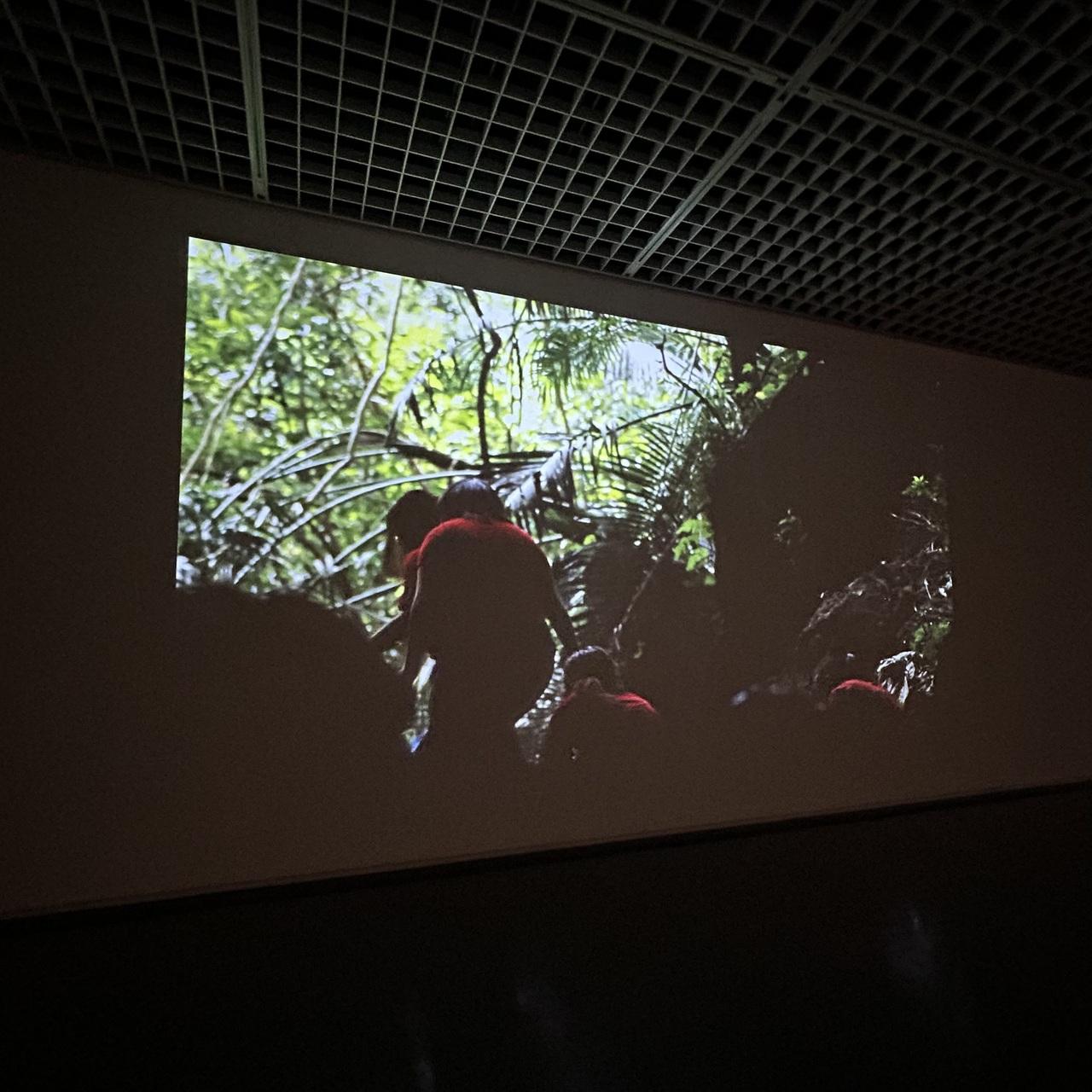
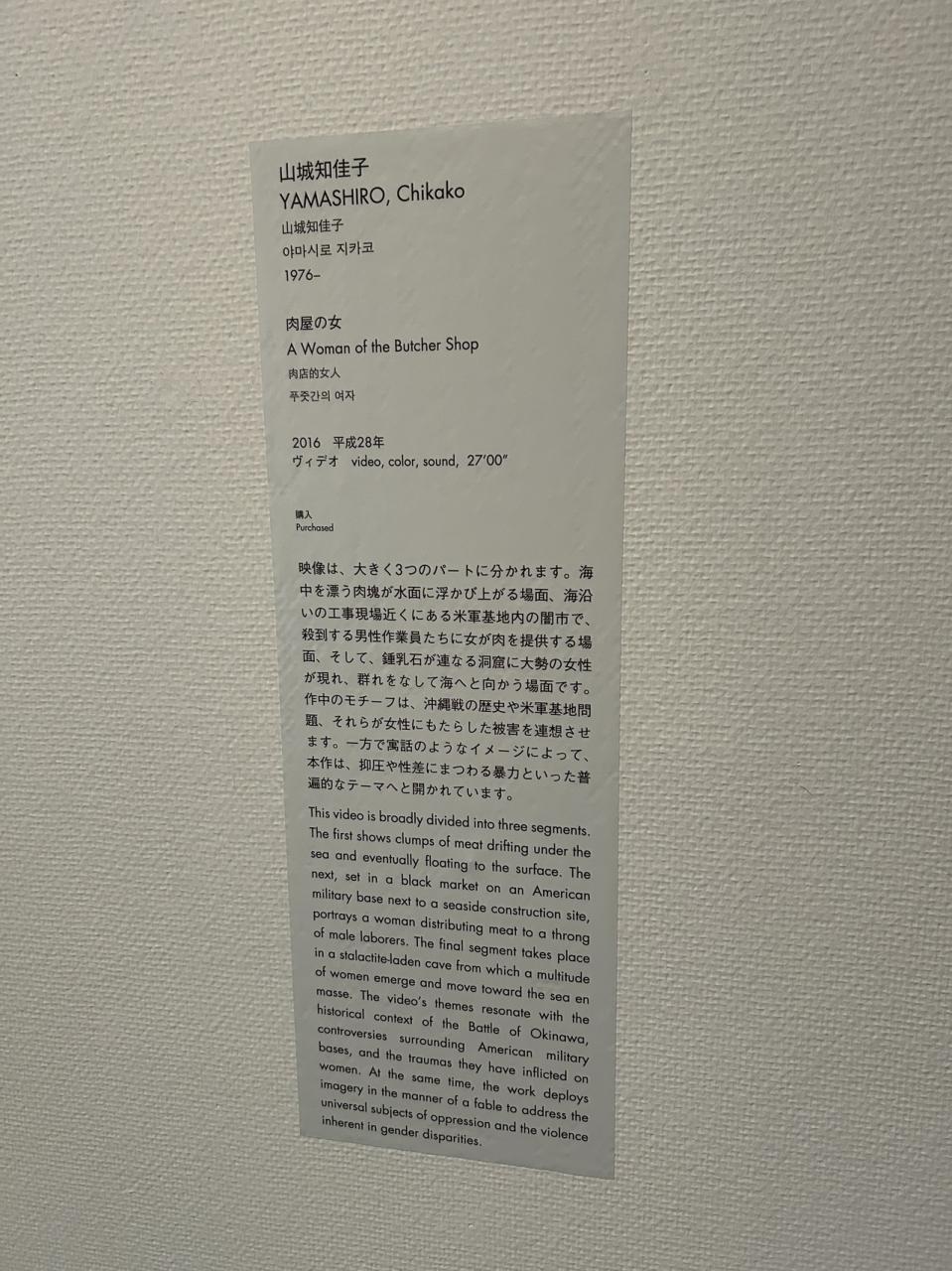
山城知佳子《肉屋の女》には、沖縄の米軍基地内の「黙認耕作地」にある闇市が登場します。「黙認耕作地」とは、沖縄での地上戦後に米軍が強制接収した土地のうち、元の所有者による耕作が「黙認」された区域を指しています。無かったこと、知らなかったことにされている事実や記憶と、私たちはどのように向き合うことができるでしょうか。
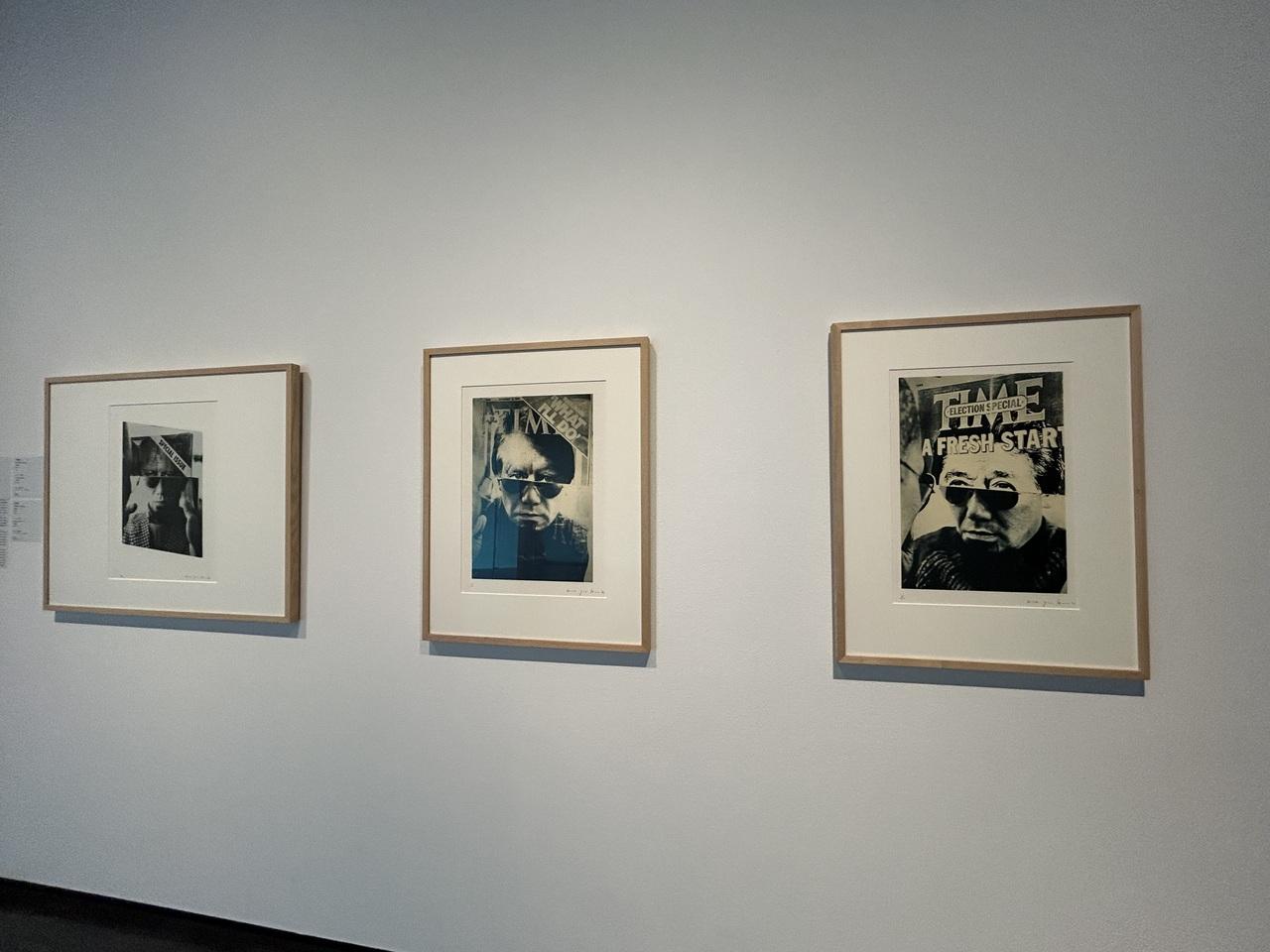
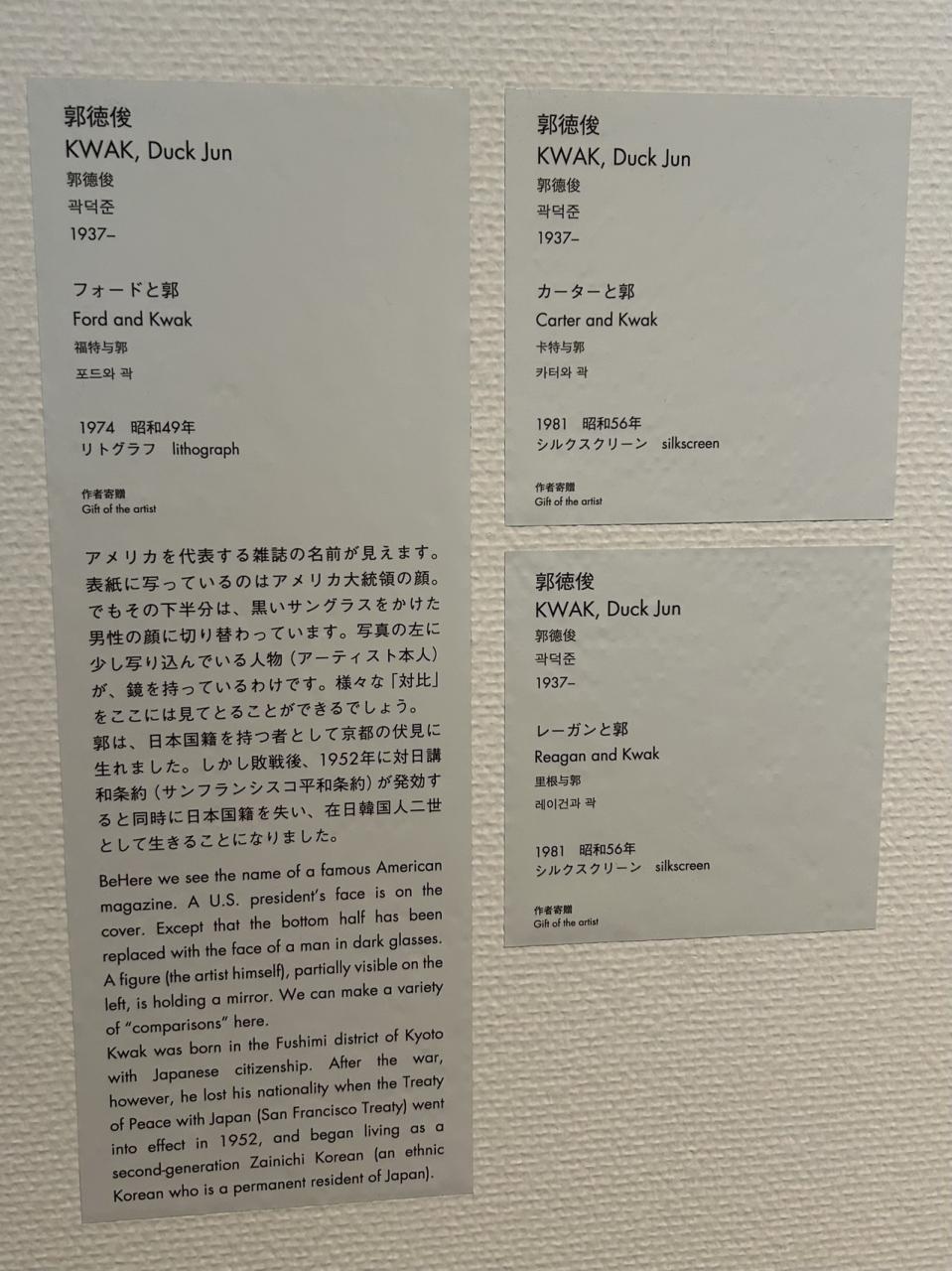
このコーナーでは、日本とアメリカという国家に抑圧される沖縄を起点に、暴力やジェンダーなどのテーマを扱う山城知佳子、自身が歴史や社会の中で構成されてきた「女」であることを引き受けながら、個々の生きる営みを眼差す石内都、戦後に日本国籍を失った在日韓国人として、日韓のはざまでアイデンティティを問い続ける郭徳俊の作品を紹介します。
彼らは「黙認」された人間や空間を具体化し、無闇に晒すのではなく、イメージの抑制や抽象化、異なる要素の並置といった表現手法を通じて、より開かれたかたちで、その複雑なありようを共有しようと試みています。 -
-
-
-
-
-
-
-
-
-
-
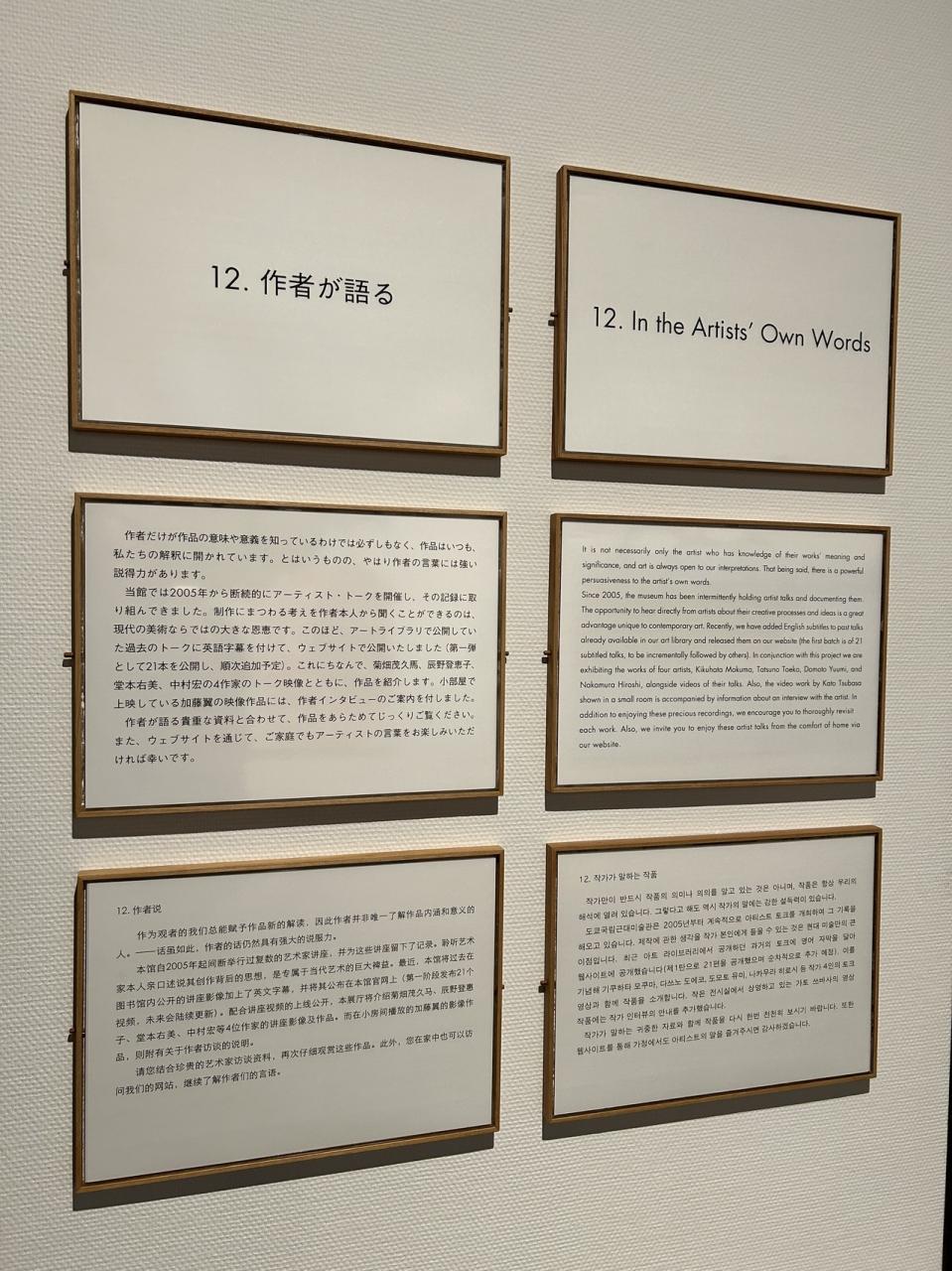
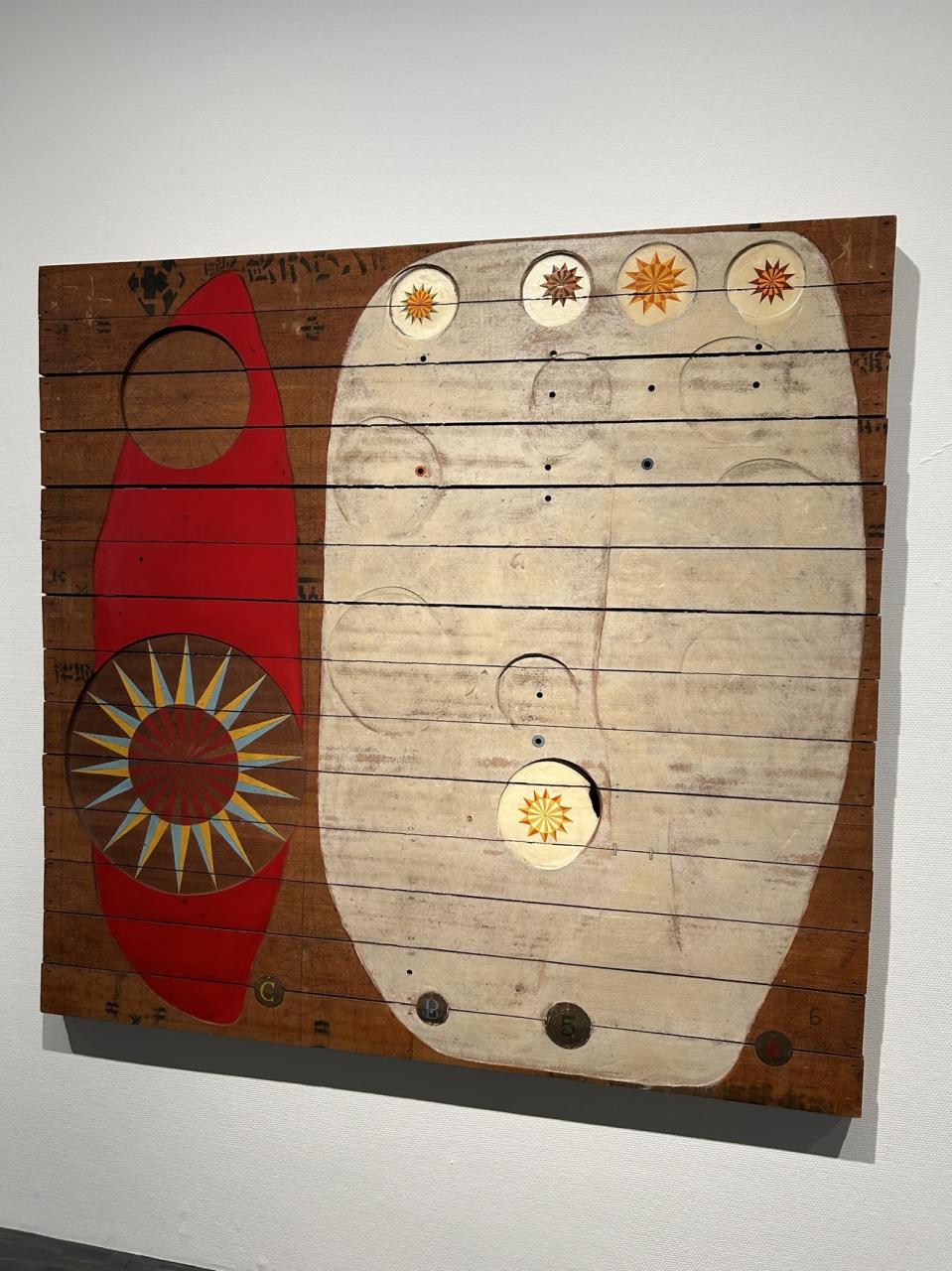
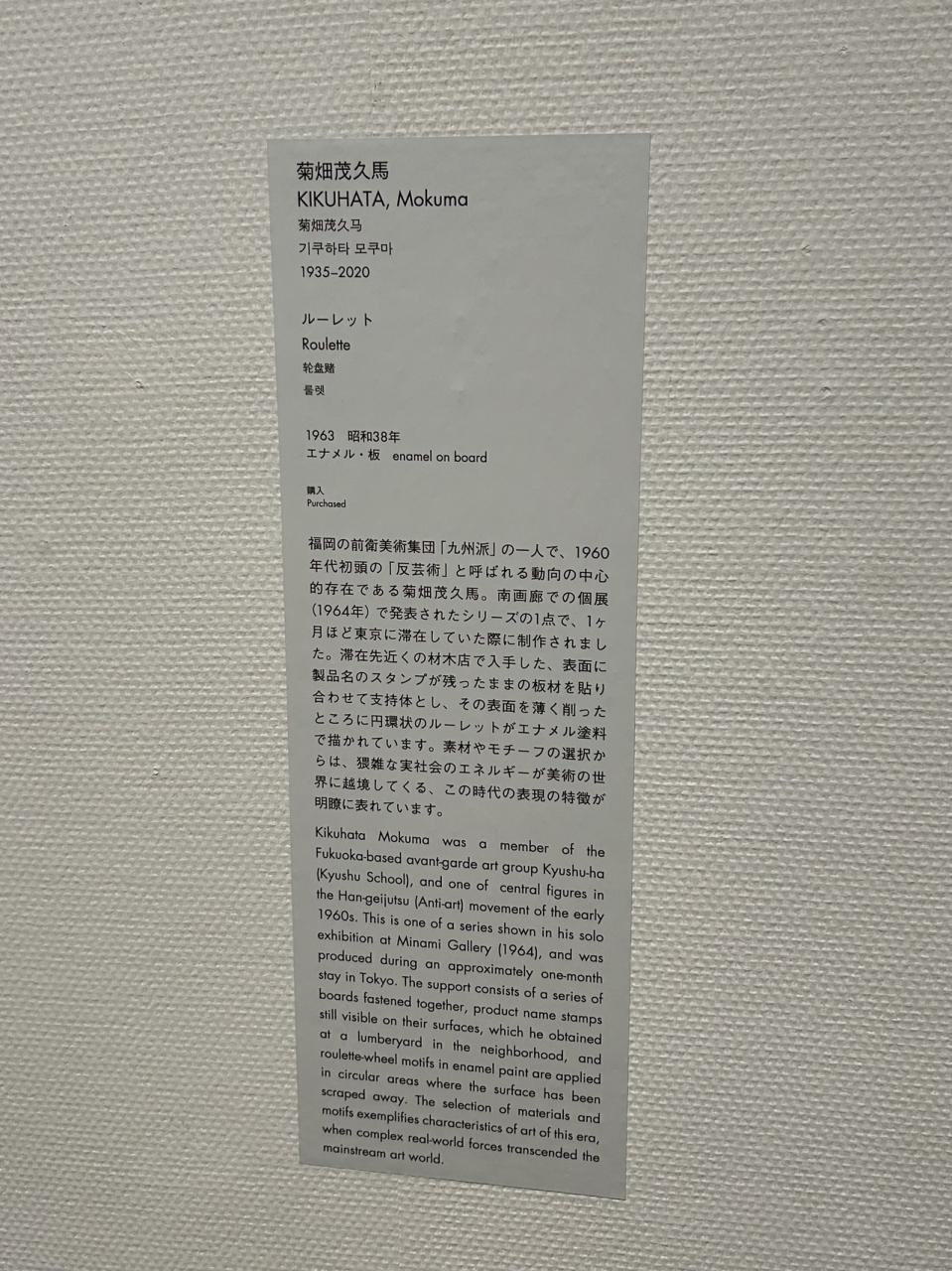
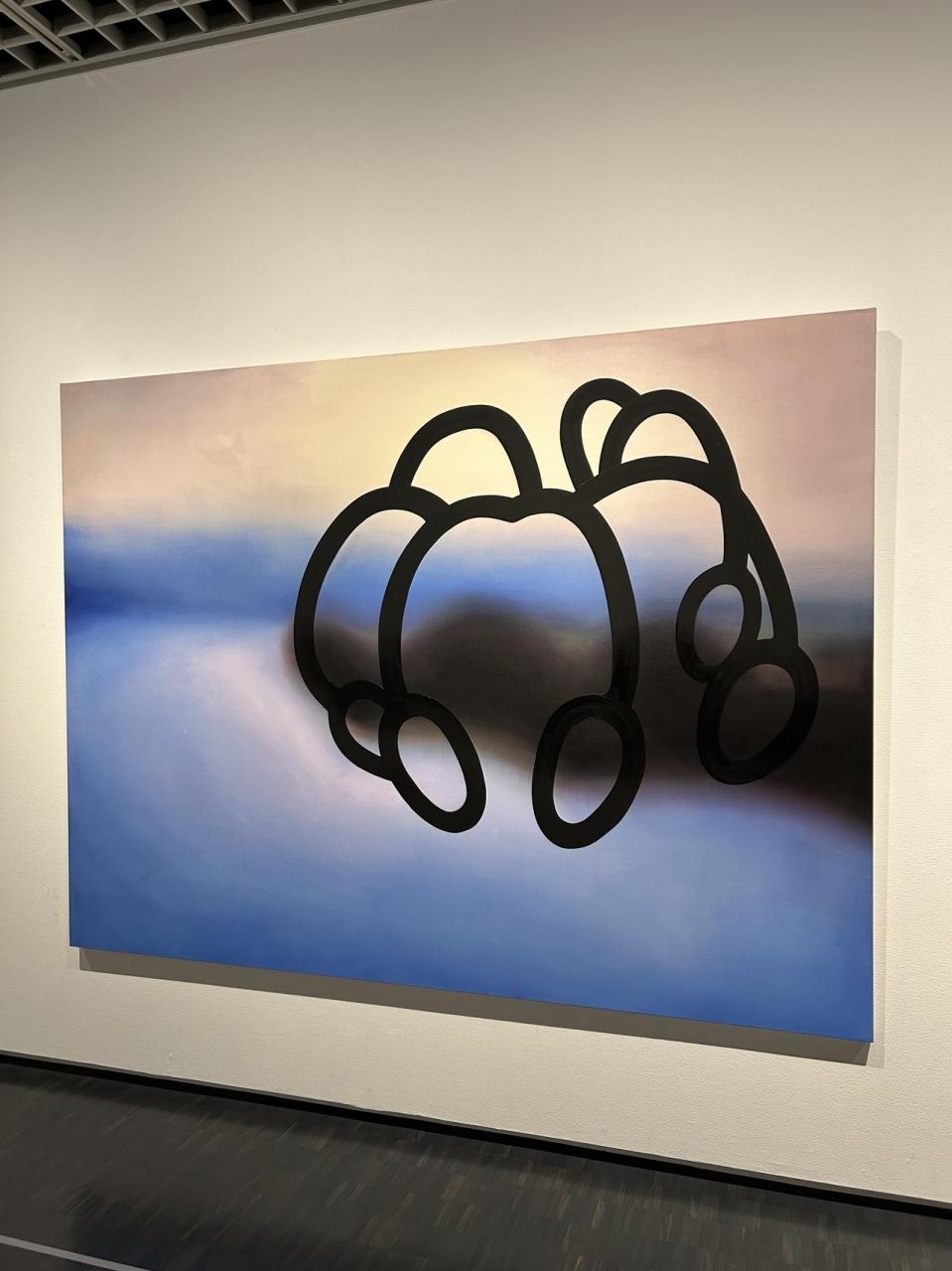
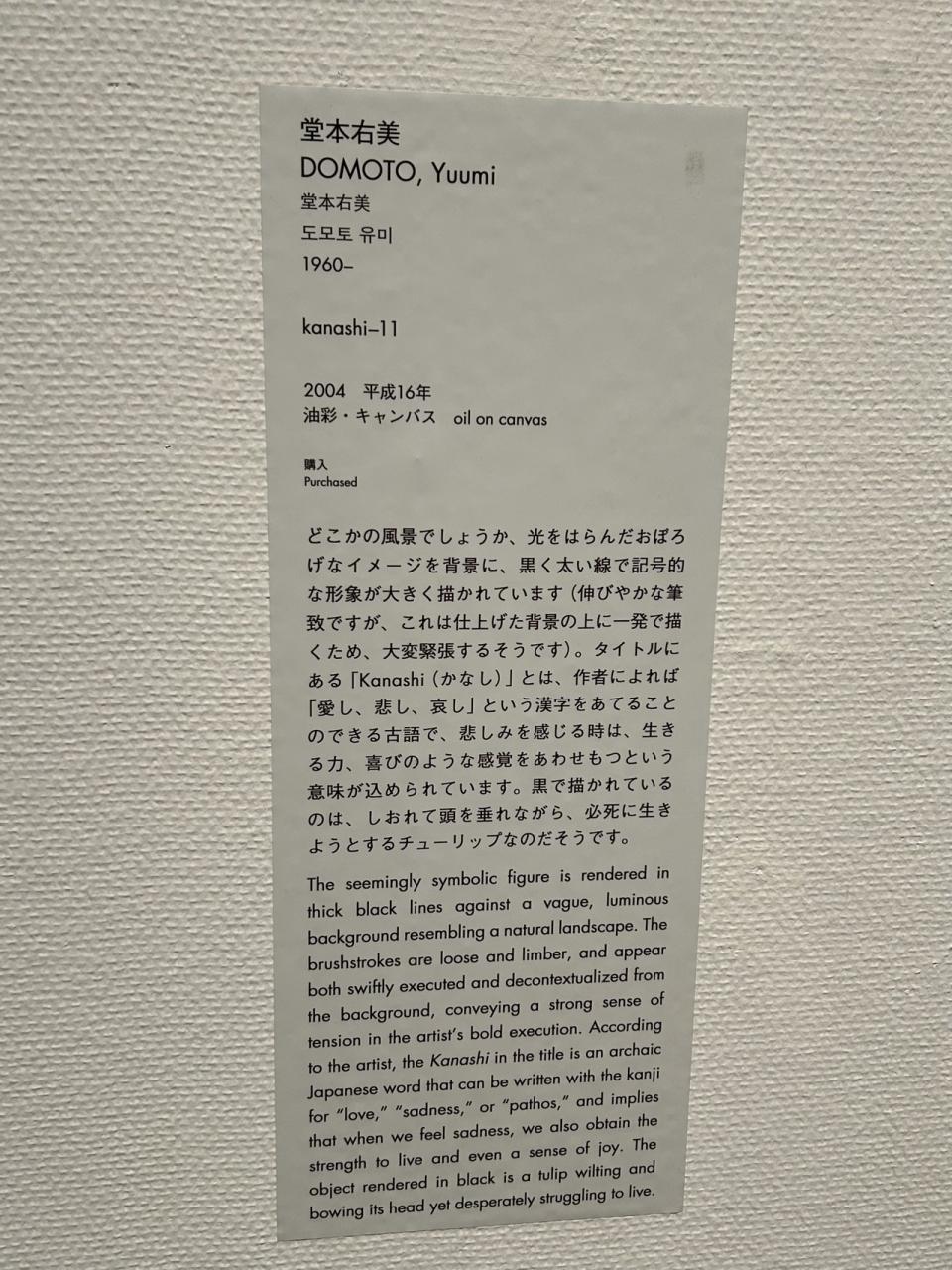
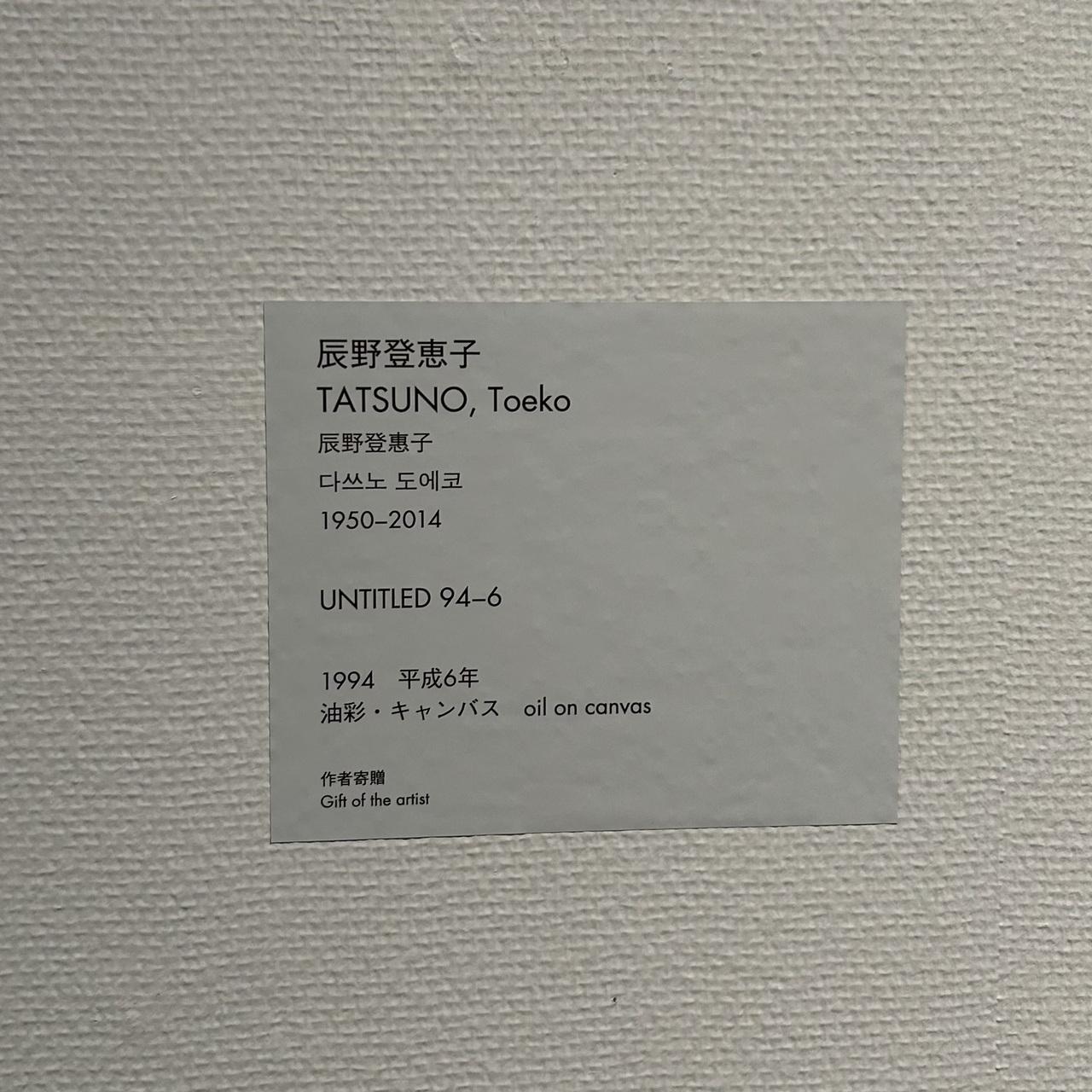
12室 作者が語る
作者だけが作品の意味や意義を知っているわけでは必ずしもなく、作品はいつも、私たちの解釈に開かれています。とはいうものの、やはり作者の言葉には強い説得力があります。
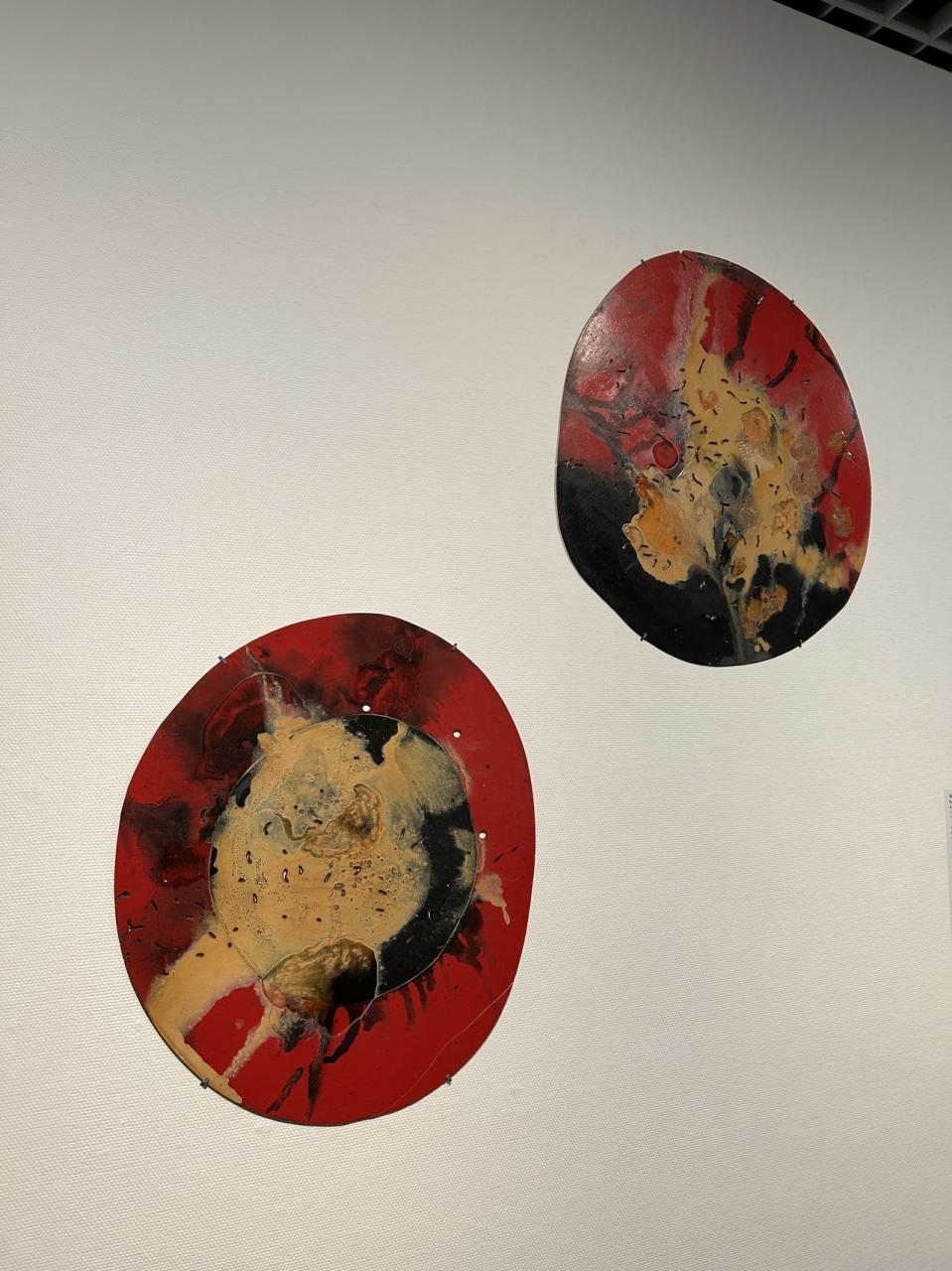
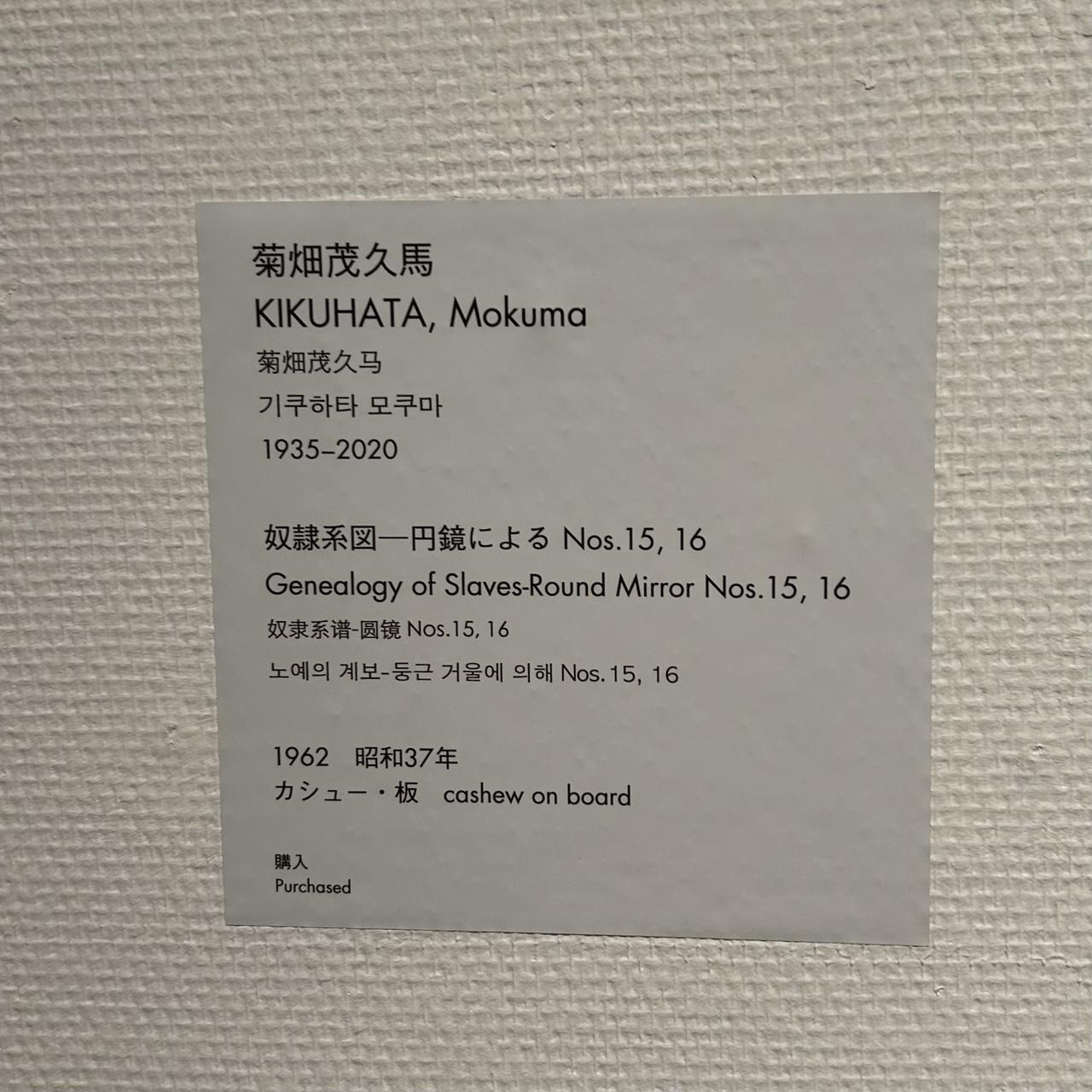
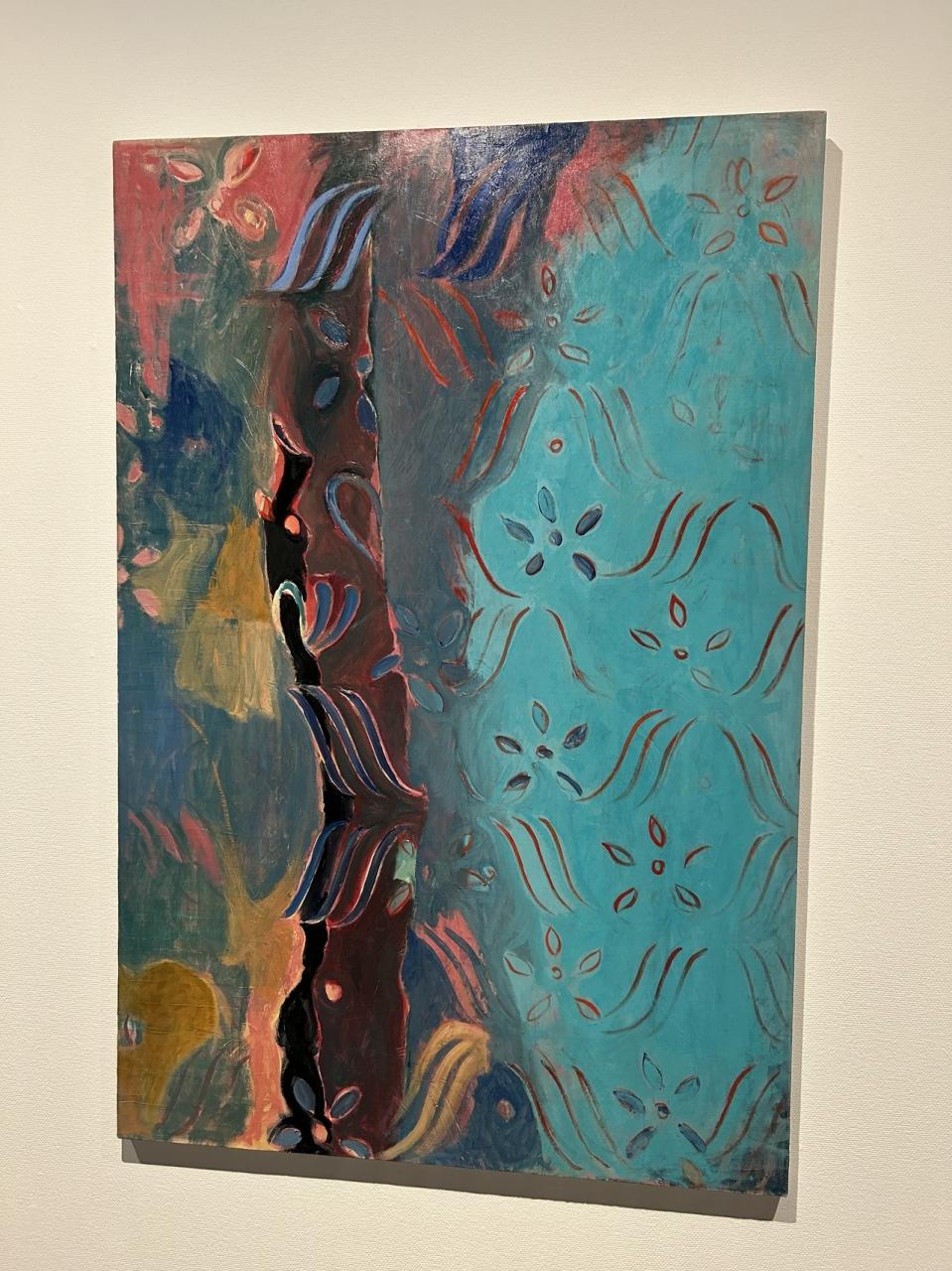
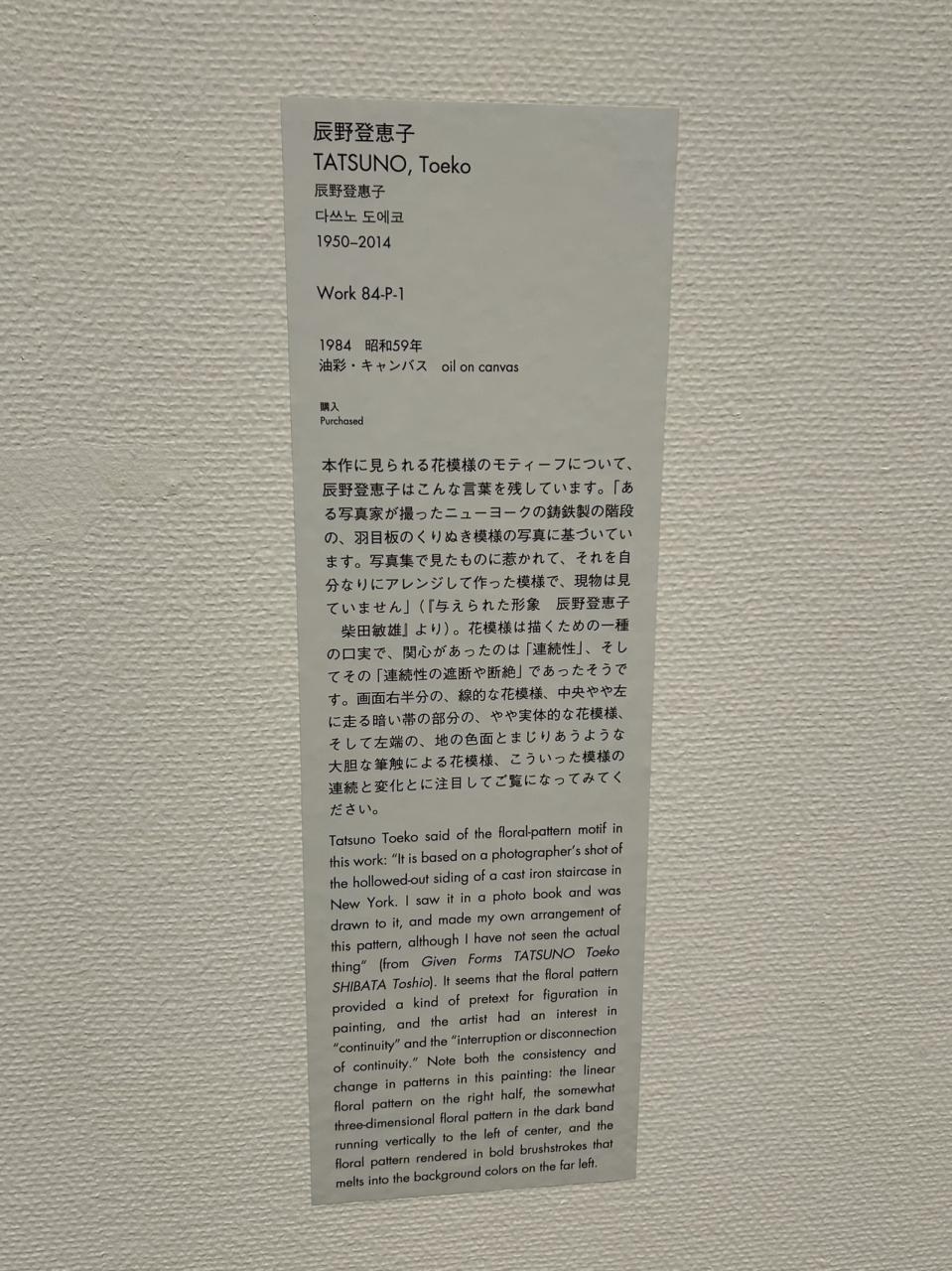
当館では2005年から断続的にアーティスト・トークを開催し、その記録に取り組んできました。制作にまつわる考えを作者本人から聞くことができるのは、現代の美術ならではの大きな恩恵です。このほど、アートライブラリで公開していた過去のトークに英語字幕を付けて、ウェブサイトで公開いたしました(第一弾として21本を公開し、順次追加予定)。これにちなんで、菊畑茂久馬、辰野登恵子、堂本右美、中村宏の4作家のトーク映像とともに、作品を紹介します。小部屋で上映している加藤翼の映像作品には、作者インタビューのご案内を付しました。 作者が語る貴重な資料と合わせて、作品をあらためてじっくりご覧ください。
また、ウェブサイトを通じて、ご家庭でもアーティストの言葉をお楽しみいただければ幸いです。 -
-
-
-
-
-
-
-
-
-
-
-
-
-
-
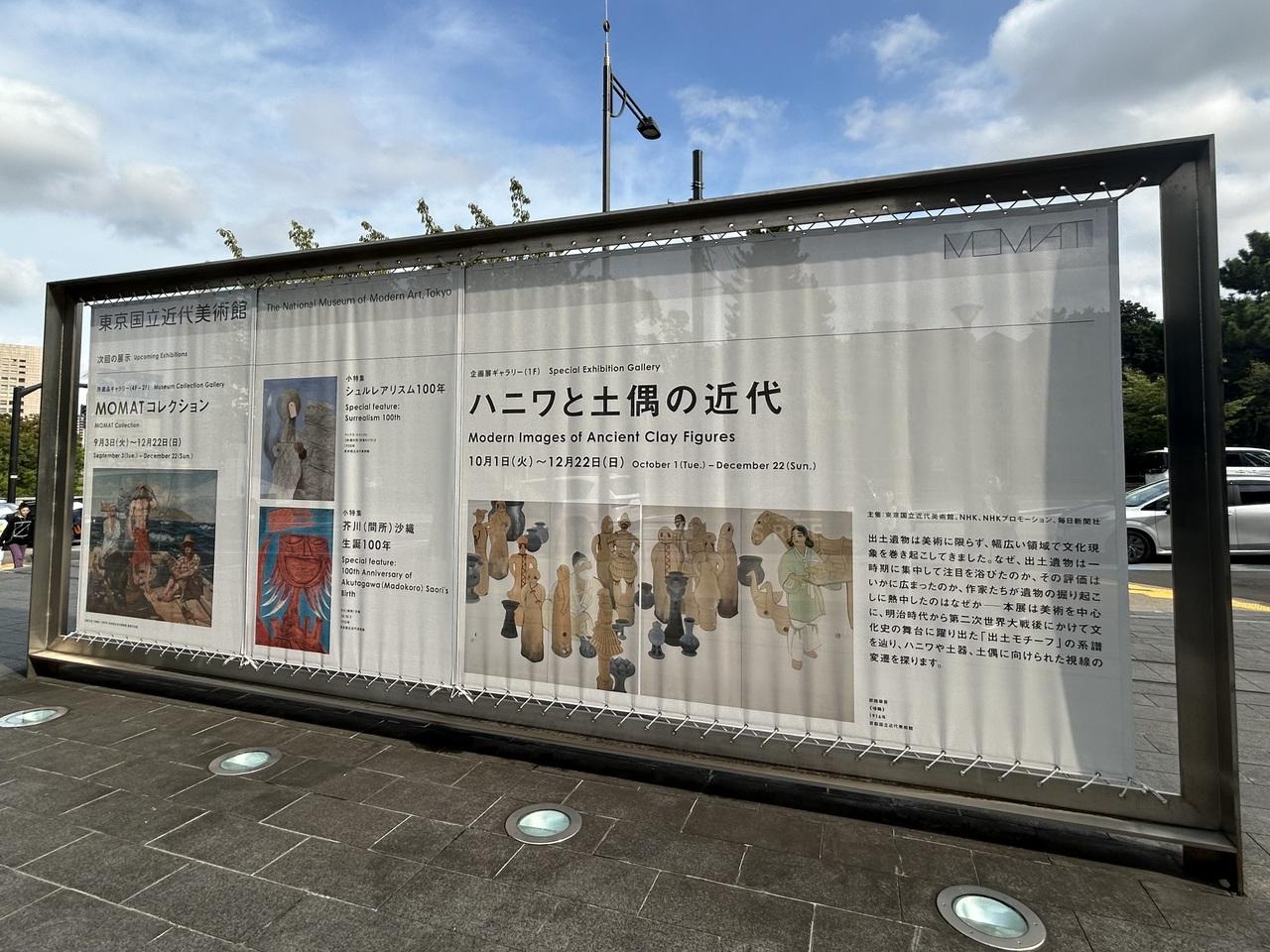
次回特別展は、"ハニワと土偶の近代" 10月1日~12月22日
https://haniwadogu-kindai.jp/ -


































![ジャクソン・ポロック<br />Jackson Pollock<br />1912-1956<br /><br />無題(多角形のある頭部)<br />Untitled [Head with Polygons]<br />1938-41 昭和13-16年<br />油彩・キャンバス(パネルに貼付)<br />oil on canvas mounted on board<br /><br />アメリカの画家、ジャクソン・ポロックは、今日よく知られる絵具をまき散らす技法(ドリッ<br />ピングまたはポーリングと呼ばれます)に移行する以前、ピカソの影響の下に、人物像を描いていました。この作品では、女性と思しき人物の身体が、画面の四角い枠にぎゅっと押し込めたように変形されています。上げた片腕には、別の人物の横顔のようなものが寄生しています。さらに、これらの人物像を否定するかのように、上から赤と黒でくっきりとした図形が描き重ねられています。作品の意味ははっきりとは解明されていませんが、不穏な雰囲気は見る者の心をかき乱します。<br /><br />Prior to adopting the technique of scattering paint (often called "dripping" or "pouring") for which he is known today, the American artist Jackson Pollock depicted Picasso-influenced human forms. This figure, which is presumably that of a woman, has a distorted appearance as if she has been packed into the picture's square frame. On her raised left arm, there is a parasitic growth that looks like another person's profile. And as if to negate the figures of both the woman and the arm, a distinct red and black graphic has been painted on top of them. The meaning of the work remains unclear, but the viewer is left with a distinct sense of disquiet.](https://cdn.4travel.jp/img/tcs/t/pict/src/82/82/43/src_82824363.jpg?1725188753)


![ルーチョ・フォンターナ<br />Lucio Fontana<br />1899-1968<br /><br />空間概念 期待<br />Spatial Concept - Expectations<br />1961<br />昭和36年<br />水性塗料・キャンバス water-based paint on canvas<br /><br />キャンバスを単色で平滑に塗り、その画面をカッターで切り裂いています。「キャンヴァスに穴を穿つ時、私は絵画を制作しようと思っているのではない。私は、それが絵画の閉鎖された空間を越えて無限に拡がるよう、空間をあけ、芸術に新しい次元を生みだし、宇宙に結びつくことを願っている」。フォンターナのこの言葉は、実は彼が具象彫刻からキャリアを始め、ネオン管を用いたインスタレーション、セラミックやテラコッタによる抽象彫刻へ向かうその展開を知ると、なるほどうなずけます。「芸術をやるとは[・・・]絵画でも彫刻でもなく、空間内に制約された線でもなく、物質のなかの空間の連続性ということなのだ」。<br /><br />The canvas is smoothly and uniformly painted a single color, then slashed with a utility knife.<br />Fontana asserted: "By cutting into the canvas, my intent is not to produce a painting. Rather, I am aiming to open up spaces, to introduce a novel dimension to art that transcends the finite confines of the canvas, thereby forging a connection with the infinite cosmos." This statement makes sense when one learns that his career began with figurative sculpture, and subsequently evolved toward installations incorporating neon lights and abstract ceramic and terracotta sculpture. He also said: "Making art... transcends the media of painting or sculpture and the boundaries of delineated spaces. It embodies the essence of spatial continuity within matter."](https://cdn.4travel.jp/img/tcs/t/pict/src/82/82/43/src_82824368.jpg?1725188753)



この旅行記のタグ


利用規約に違反している投稿は、報告する事ができます。
旅行記グループ
国内の美術館・博物館巡り(その2)
-
前の旅行記

国立東京近代美術館 TRIO: Modern Art Collections from Paris, Tok...
2024/06/18~
丸の内・大手町・八重洲
-
次の旅行記

『そ、それウチの子です~!』 "リト@葉っぱ切り絵展" 。丸の内OAZO・丸善で、8月6日(火)まで開催中!
2024/07/30~
丸の内・大手町・八重洲
-
初めて "原宿駅" に降り立ち、"太田記念美術館" へ。"ポール・ジャクレー ~フランス人が挑んだ新版画~"...
2023/07/25~
表参道
-

東京国立博物館 "特別展 古代メキシコ ~マヤ・アステカ・テオティワカン~" ① "アイーン" ではなく、"...
2023/08/14~
上野・御徒町
-

東京国立博物館 "特別展 古代メキシコ ~マヤ・アステカ・テオティワカン~" ② 沈んだ(=死んだ)太陽を表...
2023/08/14~
上野・御徒町
-

東京国立博物館 "特別展 古代メキシコ ~マヤ・アステカ・テオティワカン~" ③ 本邦初公開 "Reina ...
2023/08/14~
上野・御徒町
-

東京国立博物館 "特別展 古代メキシコ ~マヤ・アステカ・テオティワカン~" ④ なかなかの迫力、170㎝×...
2023/08/14~
上野・御徒町
-
東京国立博物館 "特別展 古代メキシコ" のついでに、"考古展示室" と 厳かな内装の "本館(日本ギャラリ...
2023/08/14~
上野・御徒町
-
新宿 "コクーンタワー" の斜め向かい "SOMPO美術館" で、"生誕100年 山下清展" 鑑賞。"裸の大...
2023/08/17~
新宿
-
"山梨県立美術館 テルマエ展 ~お風呂でつながる古代ローマと日本~" 11月5日まで開催中。"カラカラ浴場の...
2023/10/05~
甲府
-
府中市美術館 "インド細密画" 展へ。府中は "東京競馬場" 以外にも、"大國魂神社" とか、"馬場大門欅並...
2023/11/25~
国立・府中・稲城
-
いやぁ~、いいもの見させて頂きました(しかも無料)。25日(月)まで開催中、"国立新美術館" にて "大巻伸...
2023/12/20~
六本木
-
国立西洋美術館 "パリ ポンピドゥーセンター キュビスム展 ~美の革命 ピカソ、ブラックからドローネー、シャ...
2023/12/26~
上野・御徒町
-
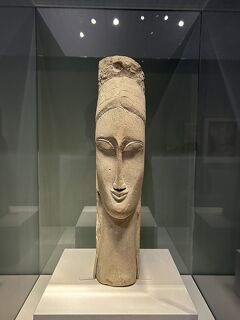
国立西洋美術館 "キュビスム展 ~美の革命~"② "モディリアーニ《女性の頭部》" の印象が鮮烈だった!
2023/12/26~
上野・御徒町
-
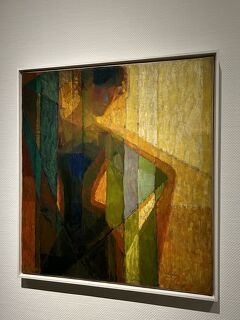
国立西洋美術館 "キュビスム展 ~美の革命~"③ 彫刻の森美術館の "ブランクーシ《接吻》" 、撮影禁止でし...
2023/12/26~
上野・御徒町
-
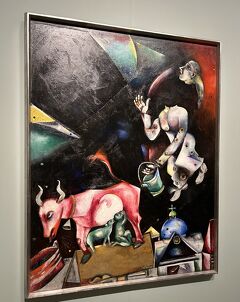
国立西洋美術館 "キュビスム展 ~美の革命~"④ 昔、稲垣閏一がロングバージョンで「コピーのシャガール、壁に...
2023/12/26~
上野・御徒町
-
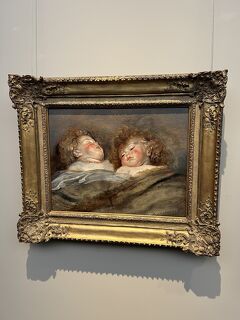
ルーベンスのこんな作品も。"パリ ポンピドゥーセンター キュビスム展 ~美の革命~" のついでに、"国立西洋...
2023/12/26~
上野・御徒町
-

東京国立博物館 "中尊寺金色堂" 展の後、"東洋館" に寄ってみた。あ~あっ、南インド行きたい!そろそろ海外...
2024/04/05~
上野・御徒町
-

12月~3月は冬季休館。"アフリカンアートミュージアム" @ 山梨県北斗市で、"アフリカンアートの動物たち"...
2024/05/11~
長坂・白州
-

7月7日まで開催中 "ブランクーシ 本質を象る" @ 京橋 アーティゾン美術館へ "接吻" を見に行ってみ...
2024/05/24~
丸の内・大手町・八重洲
-

7月7日まで開催中 "ブランクーシ 本質を象る" @ 京橋 アーティゾン美術館へ "接吻" を見に行ってみた...
2024/05/24~
丸の内・大手町・八重洲
-

国立東京近代美術館 TRIO: Modern Art Collections from Paris, Tok...
2024/06/18~
丸の内・大手町・八重洲
-

国立東京近代美術館 MOMAT Collection(2024年4月16日~8月25日の所蔵作品展)
2024/06/18~
丸の内・大手町・八重洲
-

『そ、それウチの子です~!』 "リト@葉っぱ切り絵展" 。丸の内OAZO・丸善で、8月6日(火)まで開催中!
2024/07/30~
丸の内・大手町・八重洲
-

"皇居三の丸尚蔵館 いきもの賞玩" (その1) 初めて見た "伊藤若冲" 。"動植綵絵 池辺群虫図" には、...
2024/08/28~
丸の内・大手町・八重洲
-

"皇居三の丸尚蔵館 いきもの賞玩" (その2・完) この "兎(by 杉田禾堂 & 工芸成形社)"、アングル...
2024/08/28~
丸の内・大手町・八重洲
-

トルクメニスタン大使館・ペルー大使館経由で、"山種美術館 東山魁夷と日本の夏" へ。"渋谷駅東口の変貌ぶり"...
2024/09/21~
渋谷
-

"オタケ・インパクトー 越堂・竹坡・国観 小竹三兄弟の日本画アナキズムー" @泉屋博古館東京で、『絵踏み』鑑...
2024/12/15~
六本木
-

"アイルトン・セナ没後30周年"。泉屋博古館に向かうため "青山一丁目" で下車、"Honda本社" では ...
2024/12/15~
赤坂
-

"オタケ・インパクトー 越堂・竹坡・国観 小竹三兄弟の日本画アナキズムー" @泉屋博古館東京。国観の『絵踏み...
2024/12/15~
六本木
旅行記グループをもっと見る
この旅行記へのコメント (2)
-

- arfaさん 2024/08/25 13:08:41
- TRIO展いいですね。
- 熊さん、こんにちは。
TRIO展は次は大阪なので楽しみに待ってます。
しかし、9月も10月も暑いみたいで茹で上がりますね🐙
幸いこちらは大雨は降ってないですが、今日も朝からポイラー入れずに34度もある水道水の水シャワーを2回も浴びて耐え忍んでます(笑)
猛暑と台風、大雨のローテーションの天気が続きますが体調に留意してくださいね。
- 旅熊 Kokazさん からの返信 2024/08/28 03:08:00
- RE: TRIO展いいですね。
- afraさん、おはようございます。
TRIO展、よかったですよ。大阪開催もうすぐですね。
酷暑の後は台風到来のようで、辟易としております・・・
ご自愛くださいませ。
コメントを投稿する前に
十分に確認の上、ご投稿ください。 コメントの内容は攻撃的ではなく、相手の気持ちに寄り添ったものになっていますか?
サイト共通ガイドライン(利用上のお願い)報道機関・マスメディアの方へ 画像提供などに関するお問い合わせは、専用のお問い合わせフォームからお願いいたします。
この旅行で行ったスポット
丸の内・大手町・八重洲(東京) の旅行記





フォートラベル公式LINE@

おすすめの旅行記や旬な旅行情報、お得なキャンペーン情報をお届けします!
QRコードが読み取れない場合はID「@4travel」で検索してください。
\その他の公式SNSはこちら/


旅行記グループ 国内の美術館・博物館巡り(その2)
2
164