


2026/04/19 - 2026/04/19
126位(同エリア6147件中)

旅熊 Kokazさん
- 旅熊 KokazさんTOP
- 旅行記1927冊
- クチコミ854件
- Q&A回答102件
- 1,708,560アクセス
- フォロワー752人
大阪出張のついでに、お嬢と京都・奈良【37】
奈良⑳
- 旅行の満足度
- 5.0
-

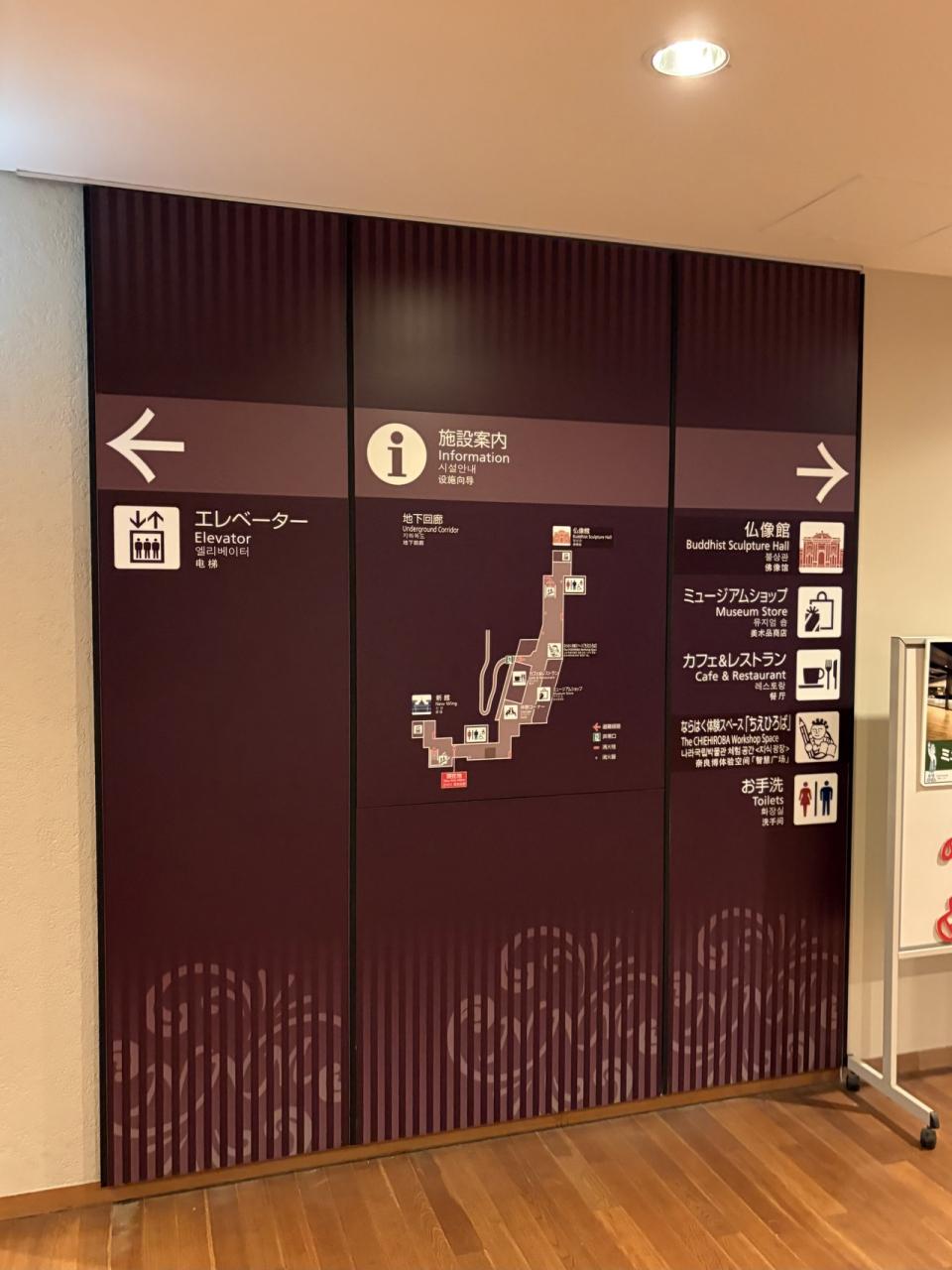
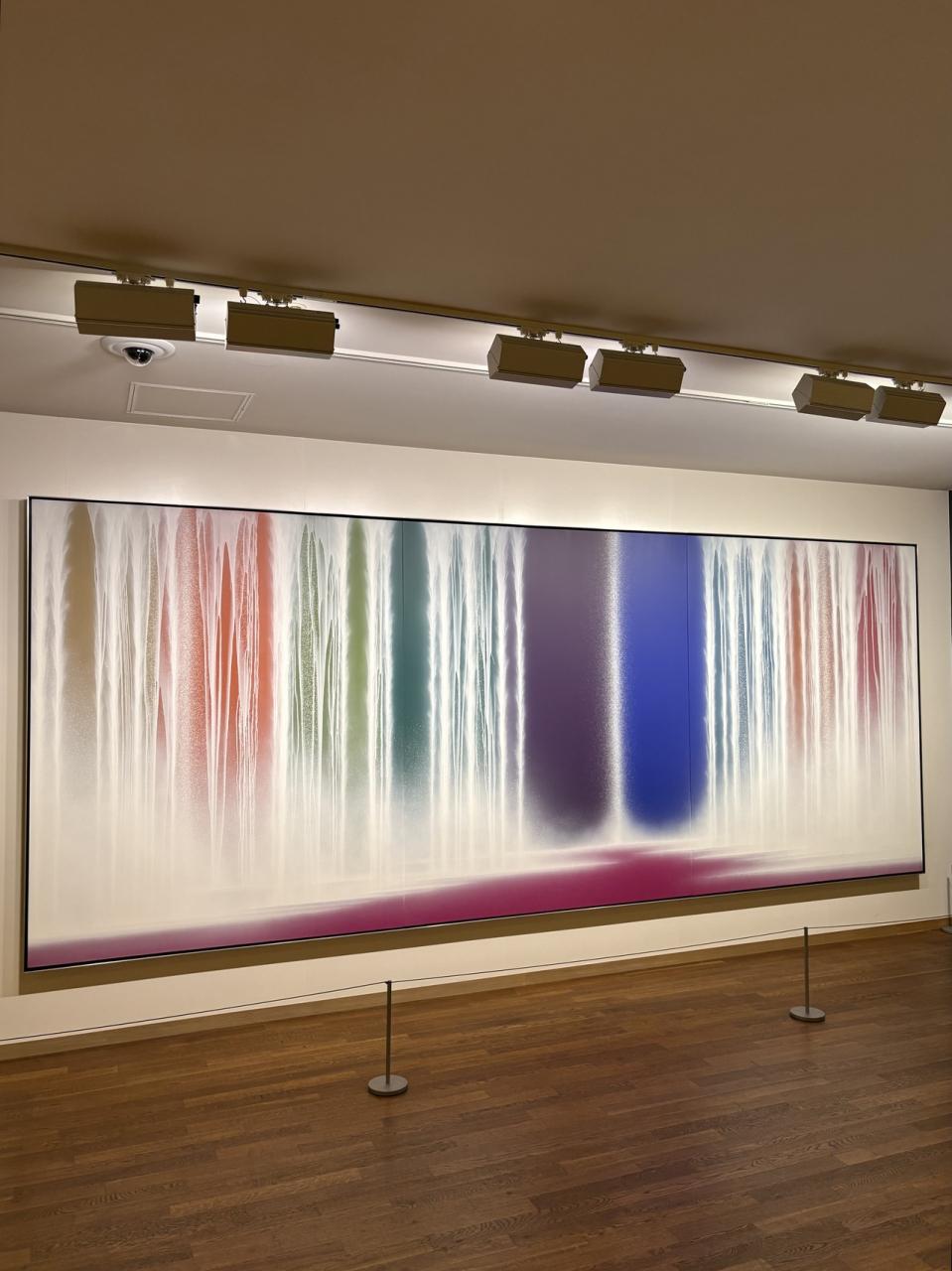
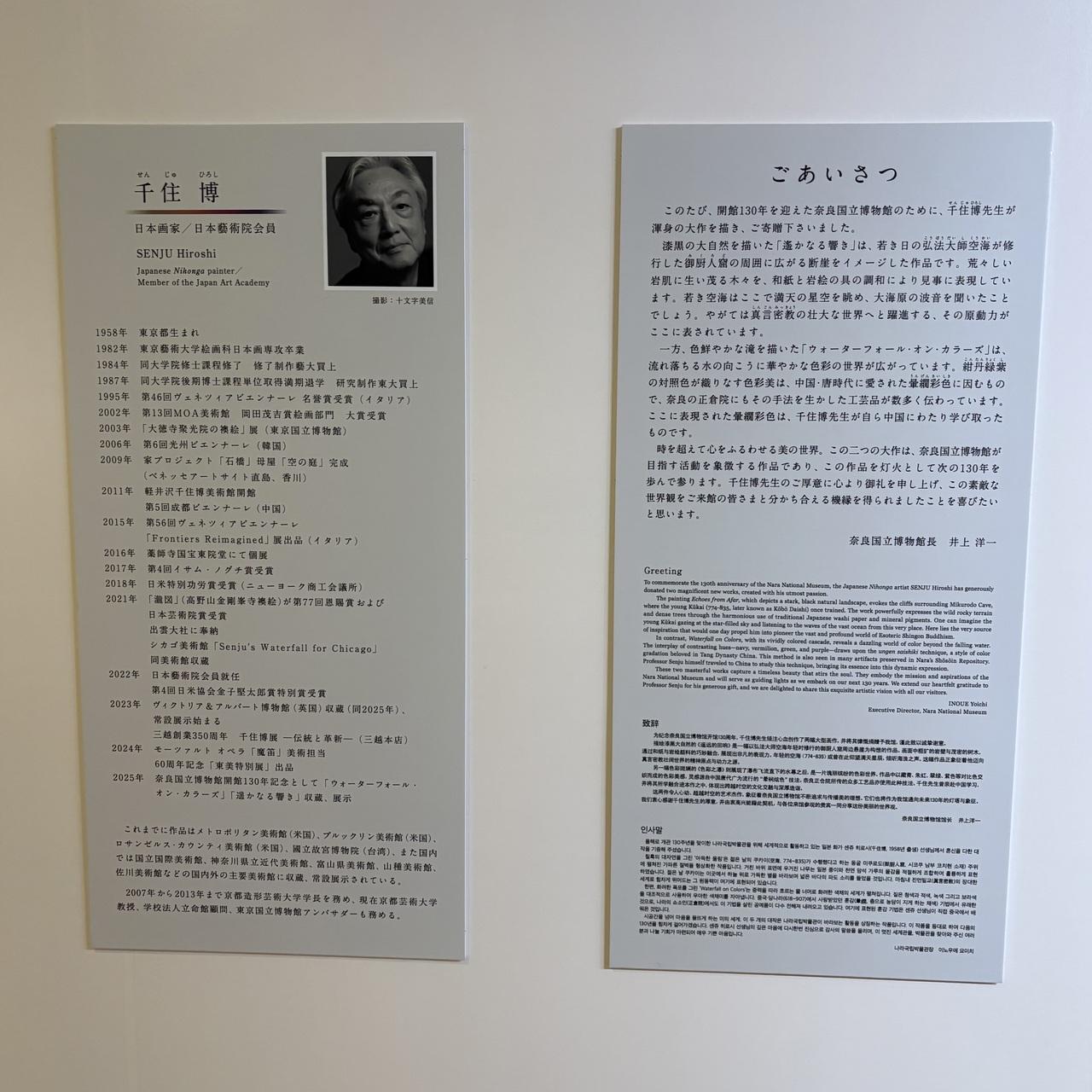
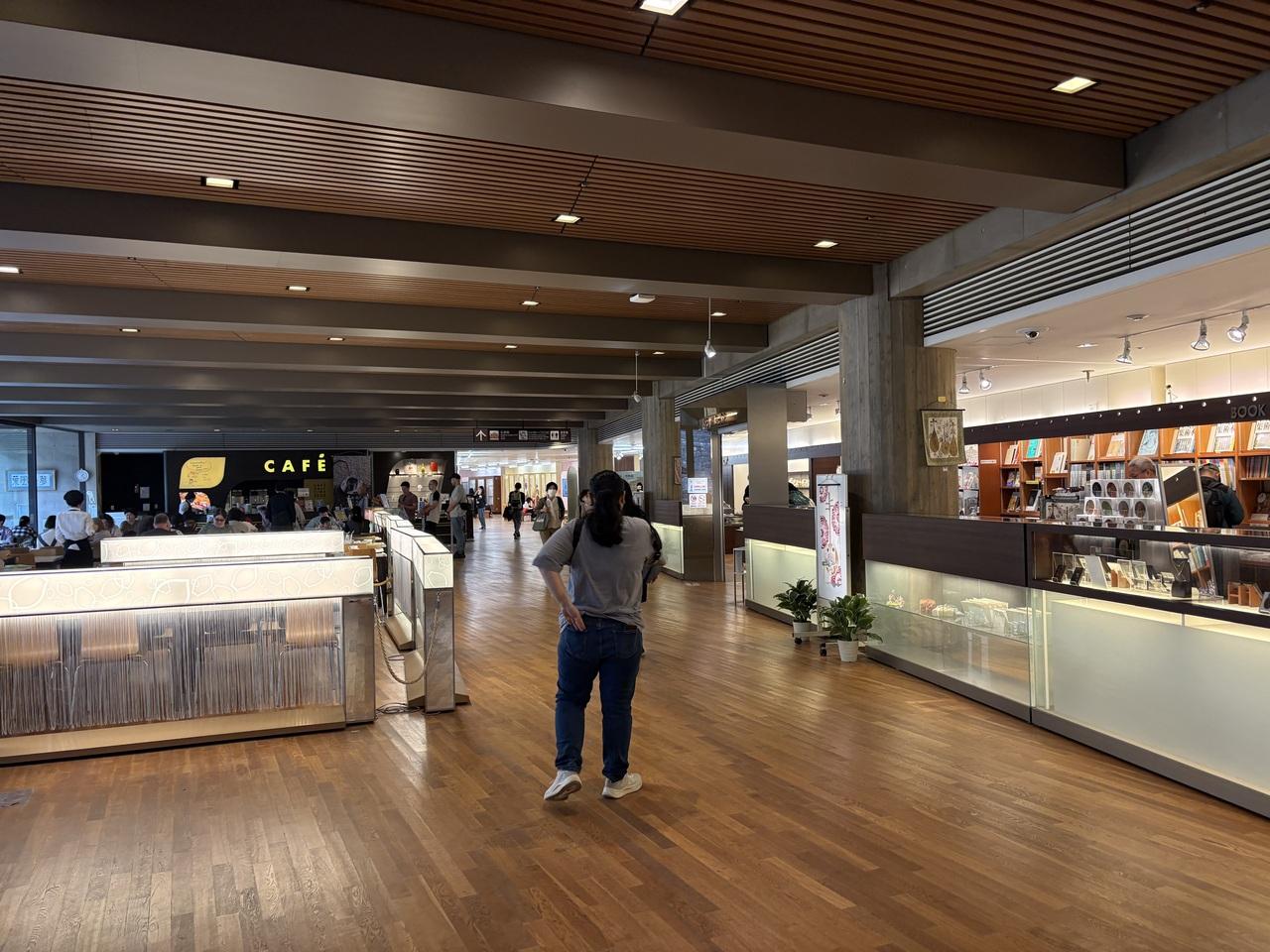
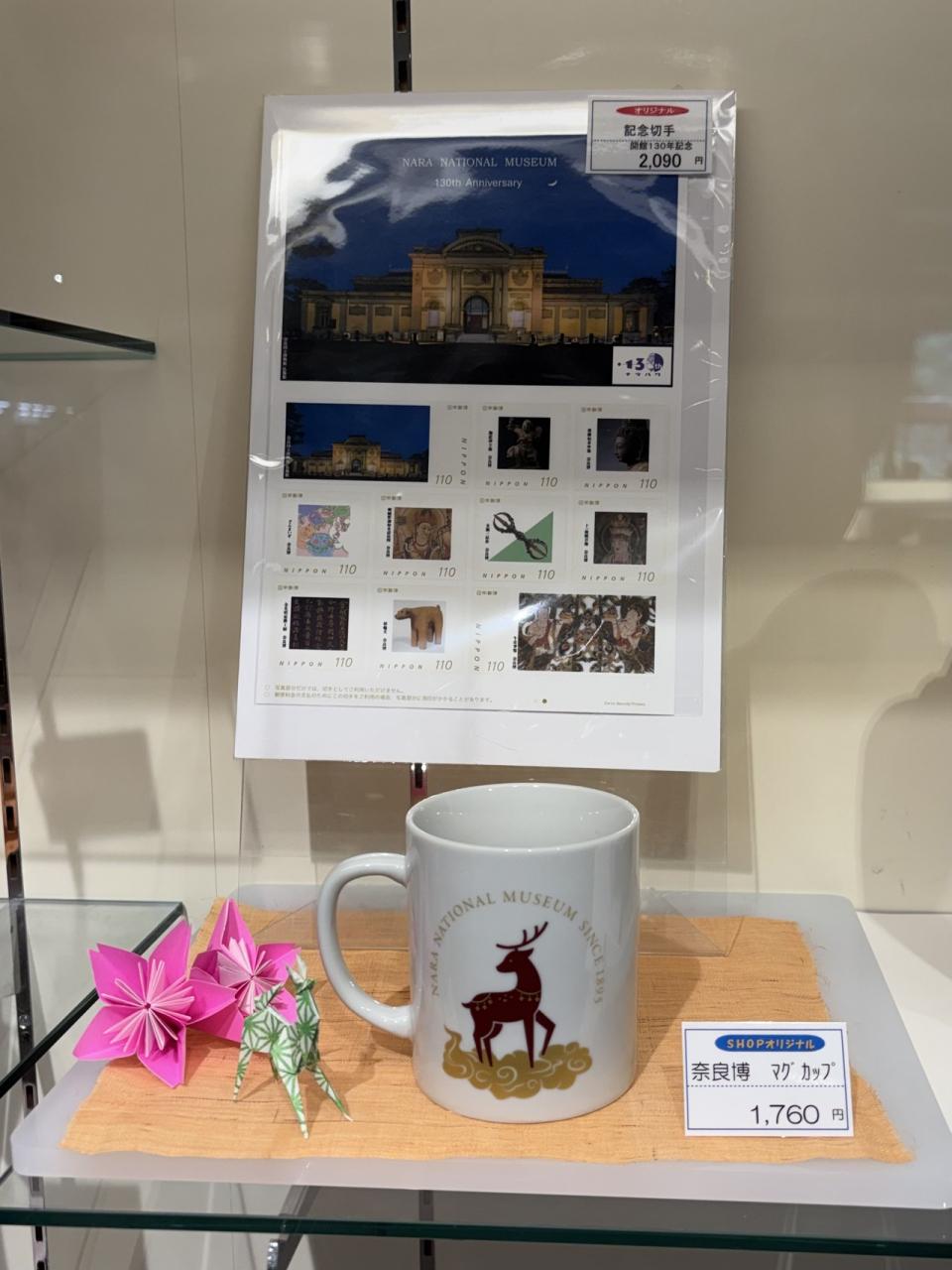
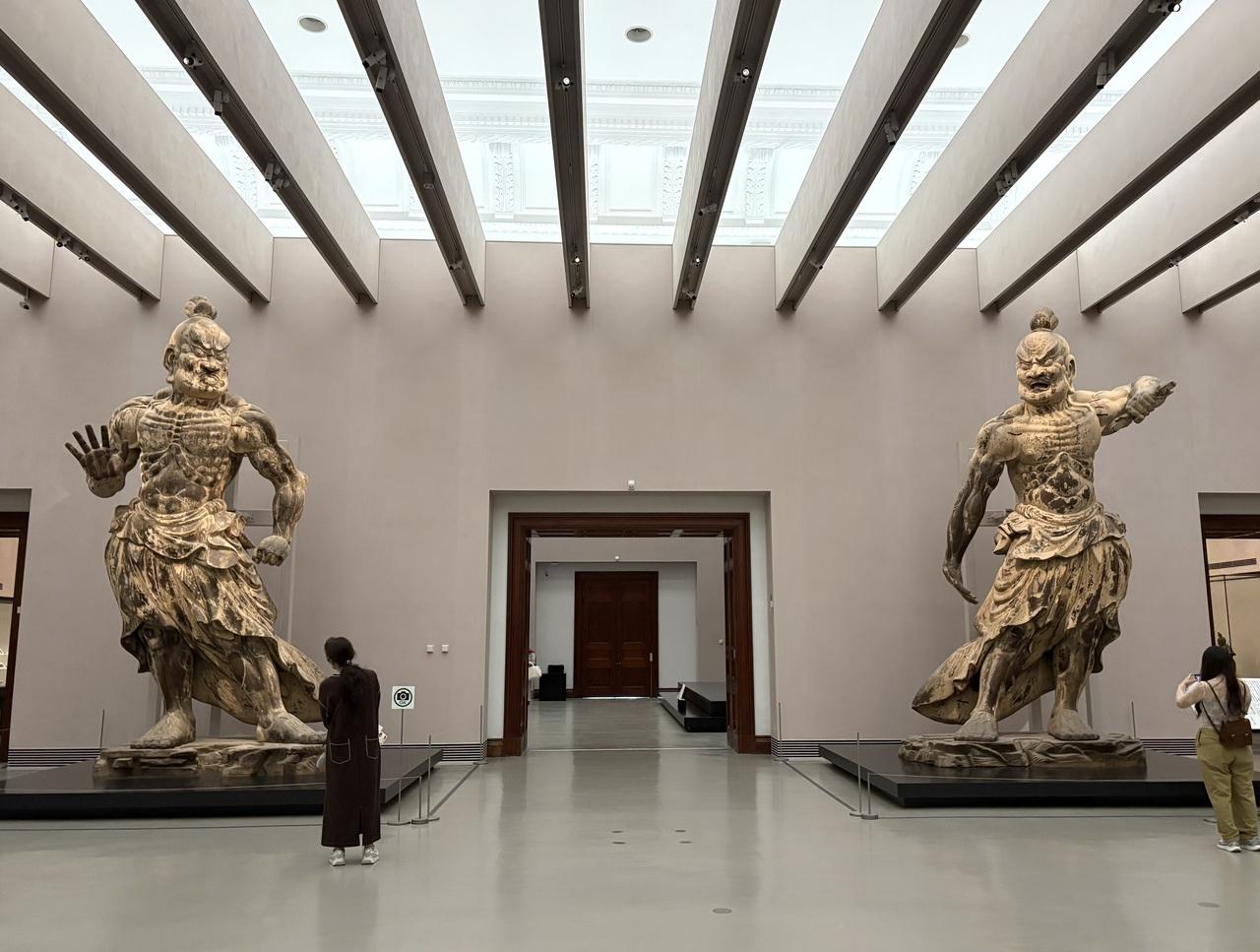
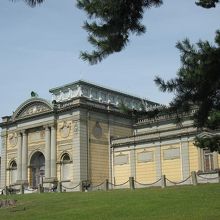
この日2度目の "奈良国立博物館" 、ミュージアムショップへ
奈良国立博物館 美術館・博物館
-
-
-
-
この後、仏像ワールドへ突入!
-
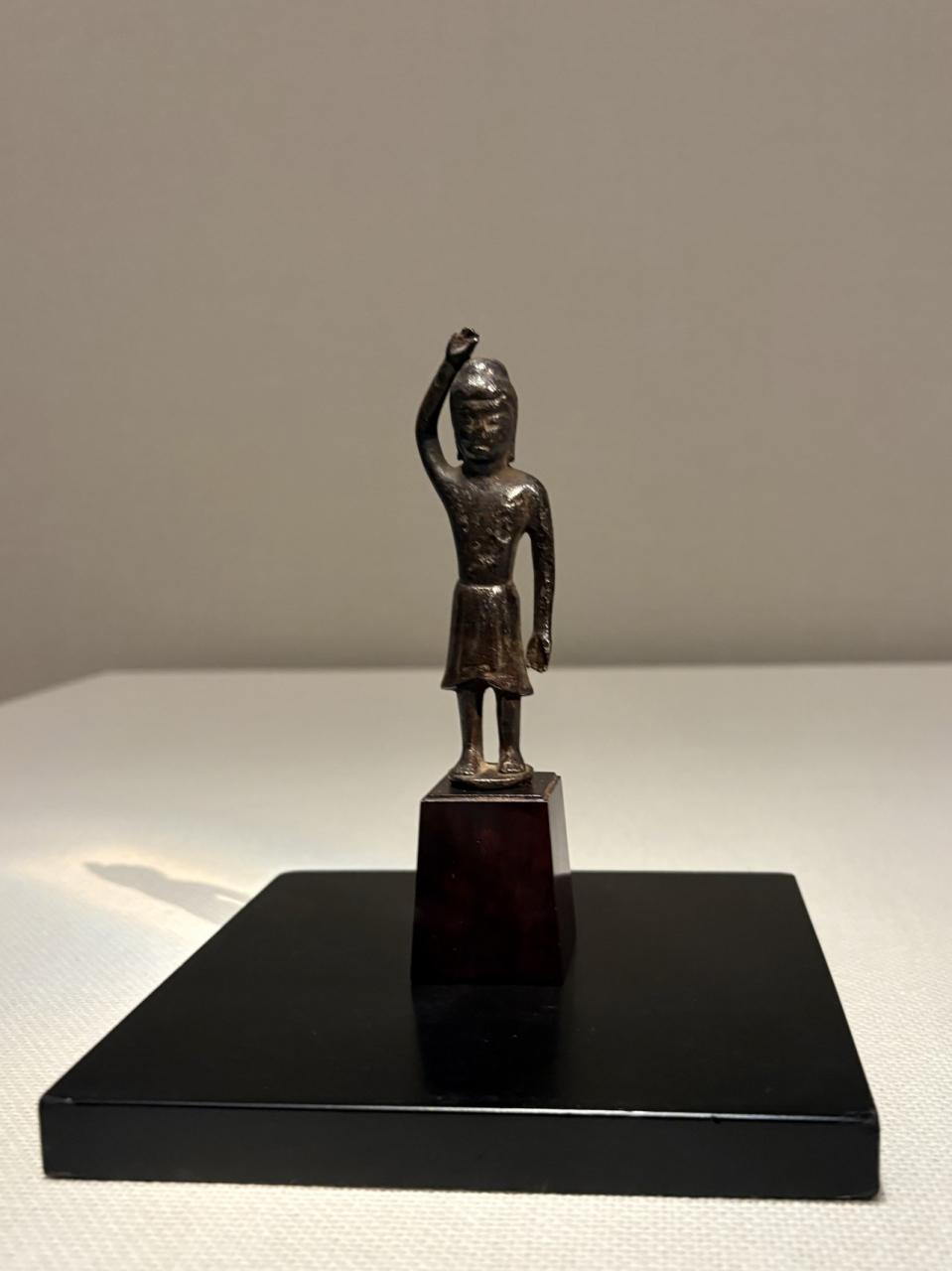
誕生釈迦仏立像
当館
銅造 飛鳥時代(七世紀)
右手が湾曲して頭に触れている。大きめの肉髻(にくけい)と大ぶりの目鼻立ちや、肩幅が広く肉身の抑揚をあまりつくらない点は、朝鮮半島・三国時代の金銅仏を思わせる。素朴な小像ながら存在感を放つ。
Standing Shakamuni (Skt. Sakyamuni) at Birth
Asuka period, 7th century
Bronze
Nara National Museum
Sakyamuni's right arm curves with his hand touches his head. Rarely seen elements such as the large-scale hairstyle and prominent facial features, as well as the body with its lack of modulation and broad shoulders, are reminiscent of the gilt-bronze buddhas created on the Korean peninsula during the Three Kingdoms period. The work evokes an unmistakable presence despite its small size and simple style. -
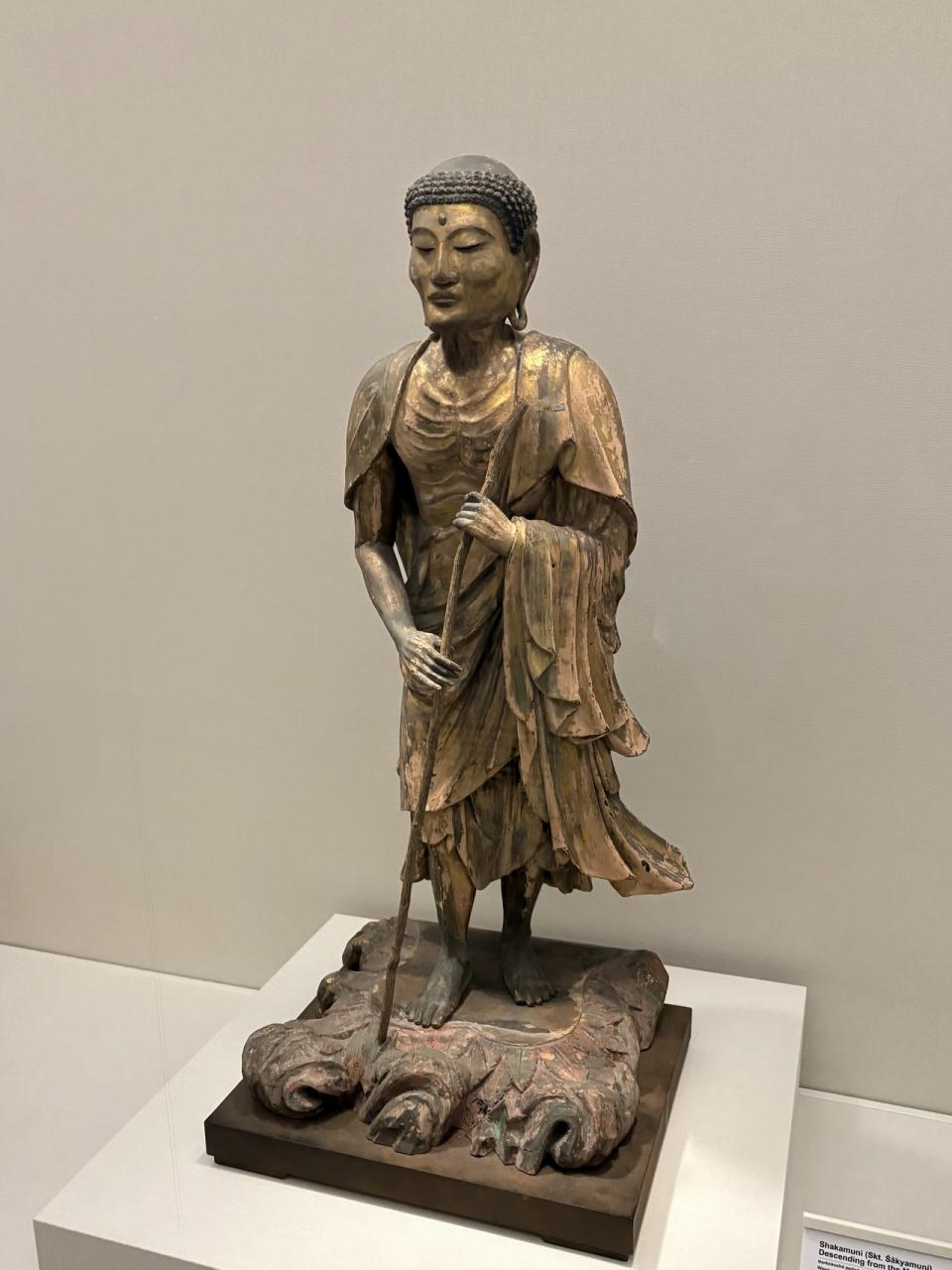
出世釈迦立像
当館
木造 金泥塗 南北朝時代(十四世紀)
釈迦は六年にわたる修行の末、山を降りた。その時のやせこけた姿を表す。禅宗で重要視され、釈迦の成道(じょうどう、さとりを開くこと)を記念する成道会(じょうどうえ)の本尊とされた。絵画作品は多いが彫像は珍しい。
Shakamuni (Skt. Śakyamuni)
Descending from the Mountains
Nanbokucho period, 14th century
Wood with gold paint
Nara National Museum
After six years of ascetic practices, Säkyamuni came down from the mountains having realized the futility of this path to enlightenment. Here we see his emaciated form borne of those austerities. This iconography is prevalent in Zen contexts, one widespread in paintings but rare in sculpture. The statue is thought to have been the principal image of worship at the Jödõe, a ritual commemorating Säkyamuni's awakening. -
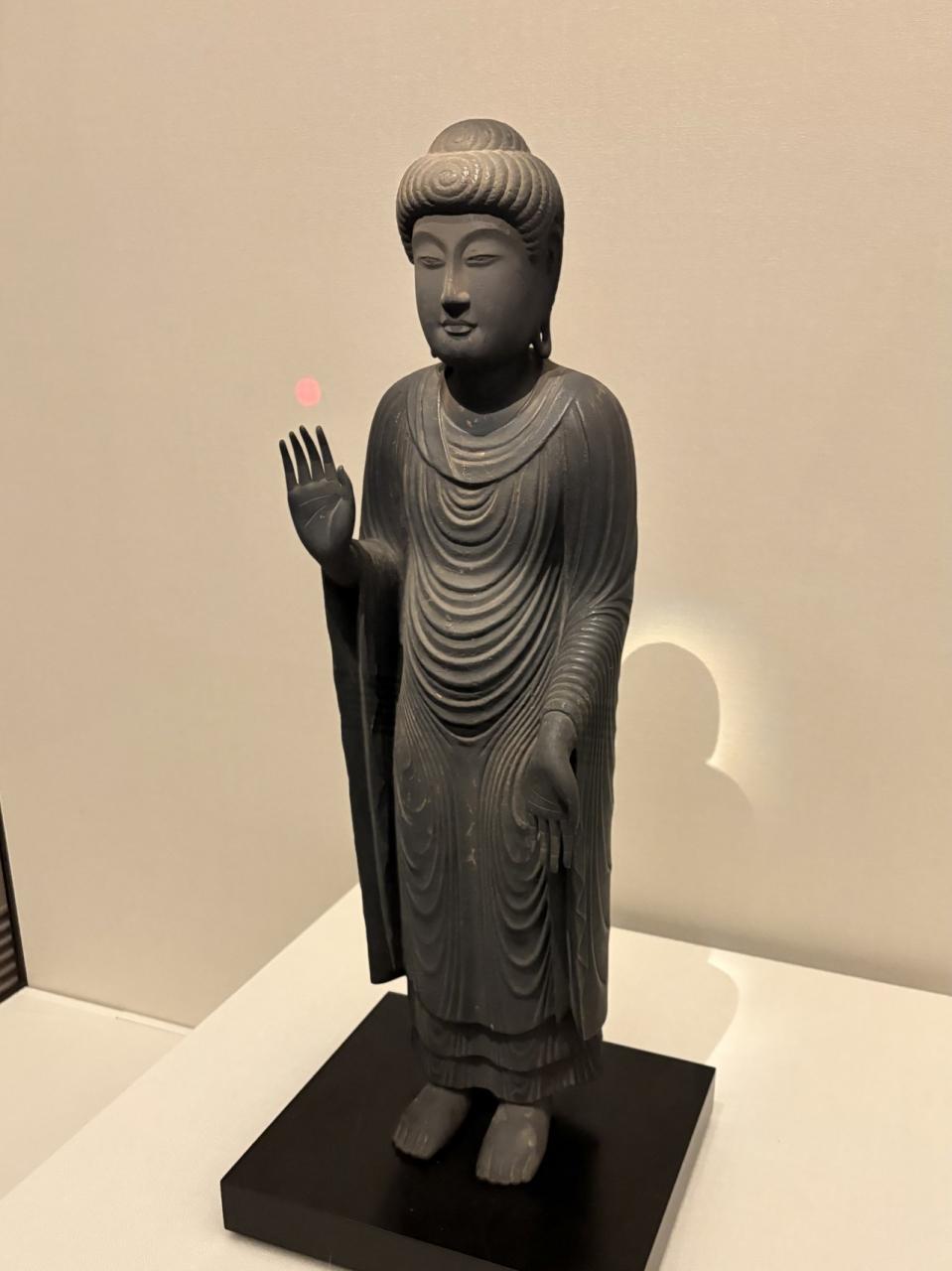
釈迦如来立像
奈良 長谷寺
木造 古色(現状)
鎌倉時代(十三世紀)
釈迦生前の姿を写したという京都・清涼寺の本尊を模した像。縄目状の頭髪や同心円状の衣文など、その特徴をよく写している。清涼寺像に対する信仰の高まりにより模像制作が流行した鎌倉時代の佳品。
Standing Shakamuni (Skt. Säkyamuni)
Kamakura period, 13th century
Wood with weathered appearance (J. koshoku) (present state)
Hasedera Temple, Nara
This sculpture is a replica of the principal image of
Seiryoji Temple in Kyoto, which is said to be a portrait of the historical Shakamuni made during his lifetime. It faithfully reproduces kay features such as the rope like hair and the circular folds of the robe. This is a fine example from the Kamakura period (1185-1333), when devotional replicas of the Seiryoji image became popular due to increasing reverence for the original. -
重要文化財
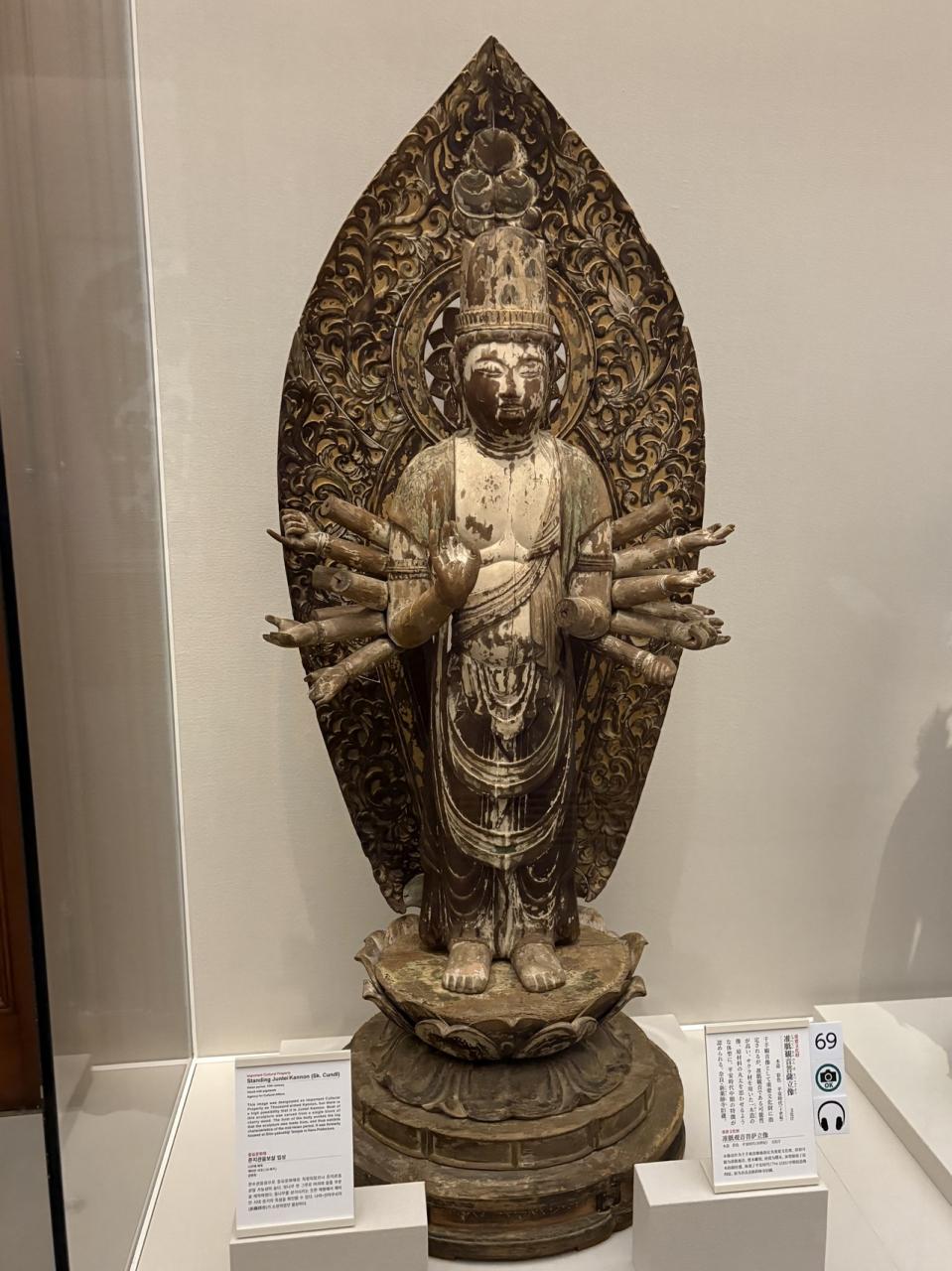
准胝観音菩薩立像(じゅんていかんのんぼさつりゅうぞう)
文化庁
木造彩色平安時代(十世紀)
千手観音像として重要文化財に指定されるが、准胝観音である可能性が高い。サクラ材を用いた一木造の像。原材料の丸太を思わせるような体型に、平安時代中期の徴が認められる。奈良・新薬師寺旧蔵。
Important Cultural Property
Standing Juntei Kannon (Sk. Cundi)
Heian period, 10th century
Wood with pigments
Agency for Cultural Affairs
This image was designated an Important Cultural Property as Thousand-armed Kannon, but there is a high possibility that it is Juntei Kannon. Most of this sculpture was carved from a single block of cherry wood. The form of the body evokes the log that the sculpture was made from, and thus exhibits characteristics of the mid-Heian period. It was formerly housed at Shin-yakushiji Temple in Nara Prefecture. -
-
-
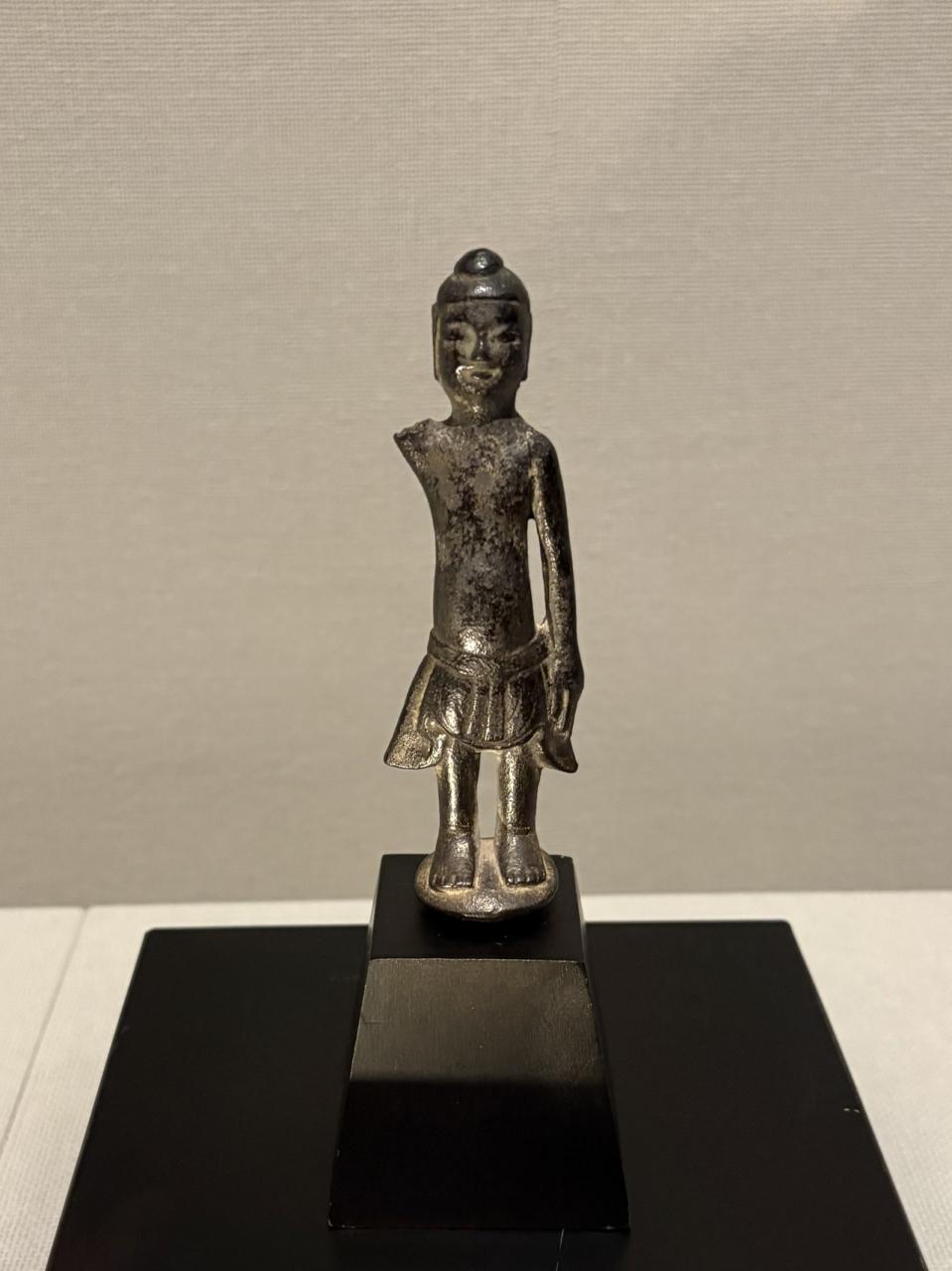
誕生釈迦仏立像
奈良国立博物館
銅造 飛鳥時代(七世紀)
腹の出た胴長の体部と、裾が広がった短い裙に短い足のアンバランスな体型がユーモラスである。朝鮮半島の三国時代・新彫刻の流れを汲むか。右手の失は惜しまれるが、明るい表情が魅力的な作品。
収蔵品番号一三一三彩一二七
Standing Shaka
(Skt. Sakyamuni) at Birth
Asuka period, 7th century
Bronze
Nara National Museum
Unfortunately, the right arm of this buddha has been lost, but its bright expression evokes delight. The long torso being off-balance and the protruding belly with the widely spread hem of the short skirt and short legs lends it humor. This work incorporates the sculptural style of the Silla kingdom during the Korean Three Kingdoms period (4th c.-668).
Accession No. 1313, Sculpture No. 127 -
重要文化財
観音菩薩立像
大阪 金剛寺
銅造 飛鳥時代(七世紀)
三面頭飾と大きめの化仏(けぶつ)を表す観音像。顔の特徴が、丙寅(へいいん)年(六六六)銘をもつ大阪・野中寺(やちゅうじ)の弥勒菩薩半跏像(みろくぼさつはんかぞう)に類似する。腰をひねった動きのある姿勢や肉身のやわらかみある表現が特徴。
Important Cultural Property
Standing Kannon Bosatsu (Skt. Avalokiteśvara)
Asuka period, 7th century
Bronze
Kongo-ji Temple, Osaka
This Kannon features a tripartite headdress with a large transformation buddha in the central panel. The facial features are similar to those of the Miroku Bosatsu in the half-lotus pose (inscribed with the year 666) enshrined at Yachü-ji Temple in Osaka Prefecture. Distinctive characteristics of this sculpture are its soft fleshiness and the twist of its hips that impart a sense of movement. -
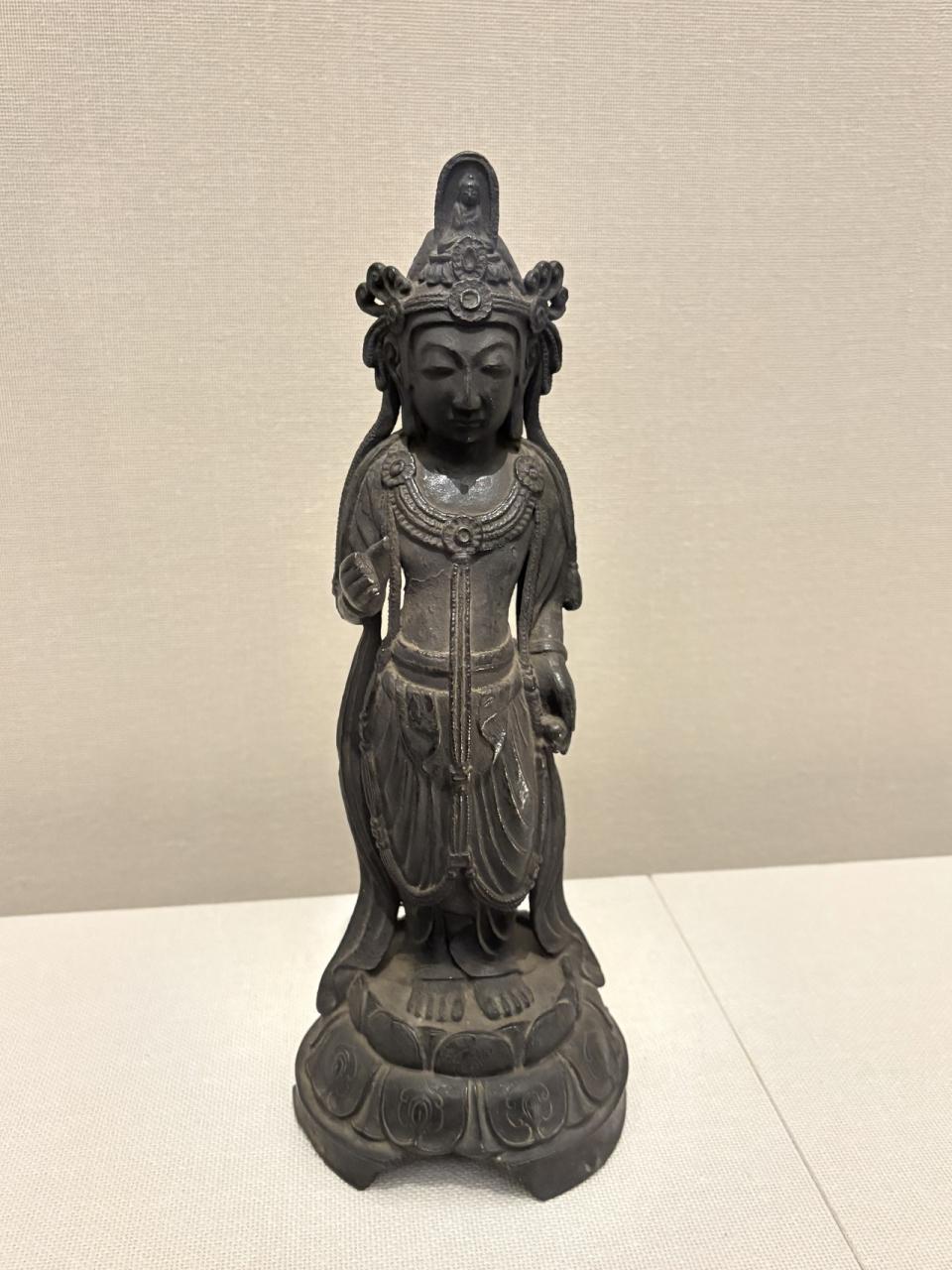
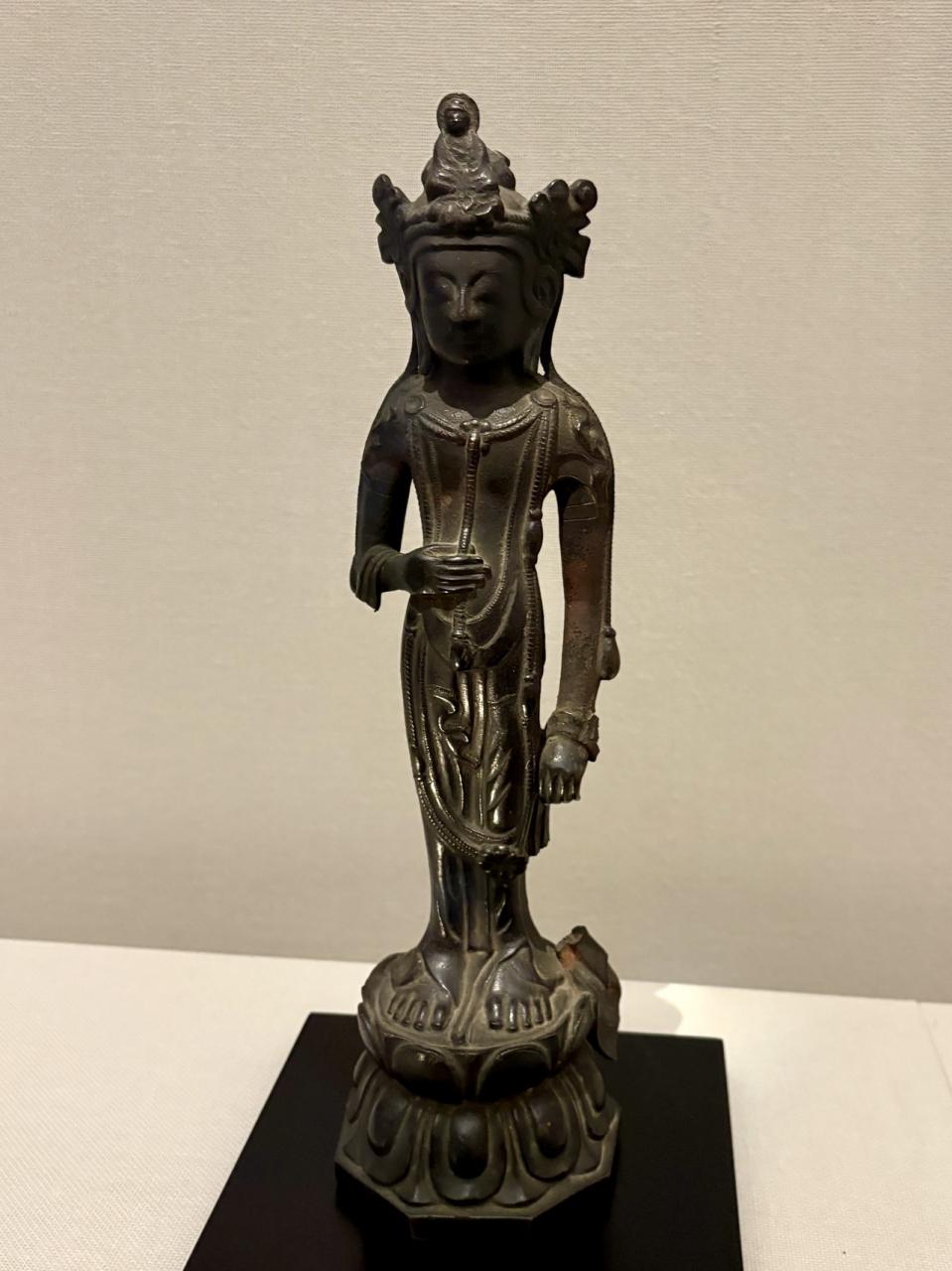
観音菩薩立像
当館
銅造 飛鳥時代(七世紀)
頭上の化仏(けぶつ)から観音菩薩とわかり、すらりとした姿が目をひく。右手で胸飾りの端をはさむ仕草が特徴的で、類似作品がほかに三例ある。何らかの特別な由緒をもつ像が複数制作され、広まりをみせたと推測される。
Standing Kannon (Skt. Avalokiteśvara)
Asuka period, 7th century
Bronze
Nara National Museum
This strikingly elegant and slender statue can be identified as the bodhisattva Kannon (Skt. Avalokiteśvara) on the basis of the prominent transformation Buddha (kebutsu) at the top of its head.
It stands with its right hand to the ornament at its torso, an unusual pose. There are three other known statues in the same form. It is presumed that these were made with in the same religious and geographic context and then disseminated. -
仏手(ぶっしゅ)
奈良 新薬師寺
銅造 鍍金 飛鳥時代(七世紀)
昭和十八年(一九四三)に盗難に遭い、行方不明となった薬師如来像(通称香薬師〔こうやくし])の右手である。間接をはっきりとあらわさず、指先に向かって細くなり、爪先を少し反らせた、繊細な造形。
Hand of a Buddha
Asuka period, 7th century
Gilt bronze
Shin-yakushi-ji Temple, Nara
This is the right hand from a statue of Yakushi Nyorai (Skt. Bhaişajyaguru)
known as the Fragrant Yakushi (J. Kõ Yakushi). The statue was stolen from the temple where it had been enshrined in 1943 (Showa 18) and never recovered. Its whereabouts are still unknown. The hand is rendered with detail but there is a softness to it: the joints are not clearly delineated, the fingers
delicately taper at the nails, and the fingertips bow, backwards ever so
slightly. -
-
-
-
-
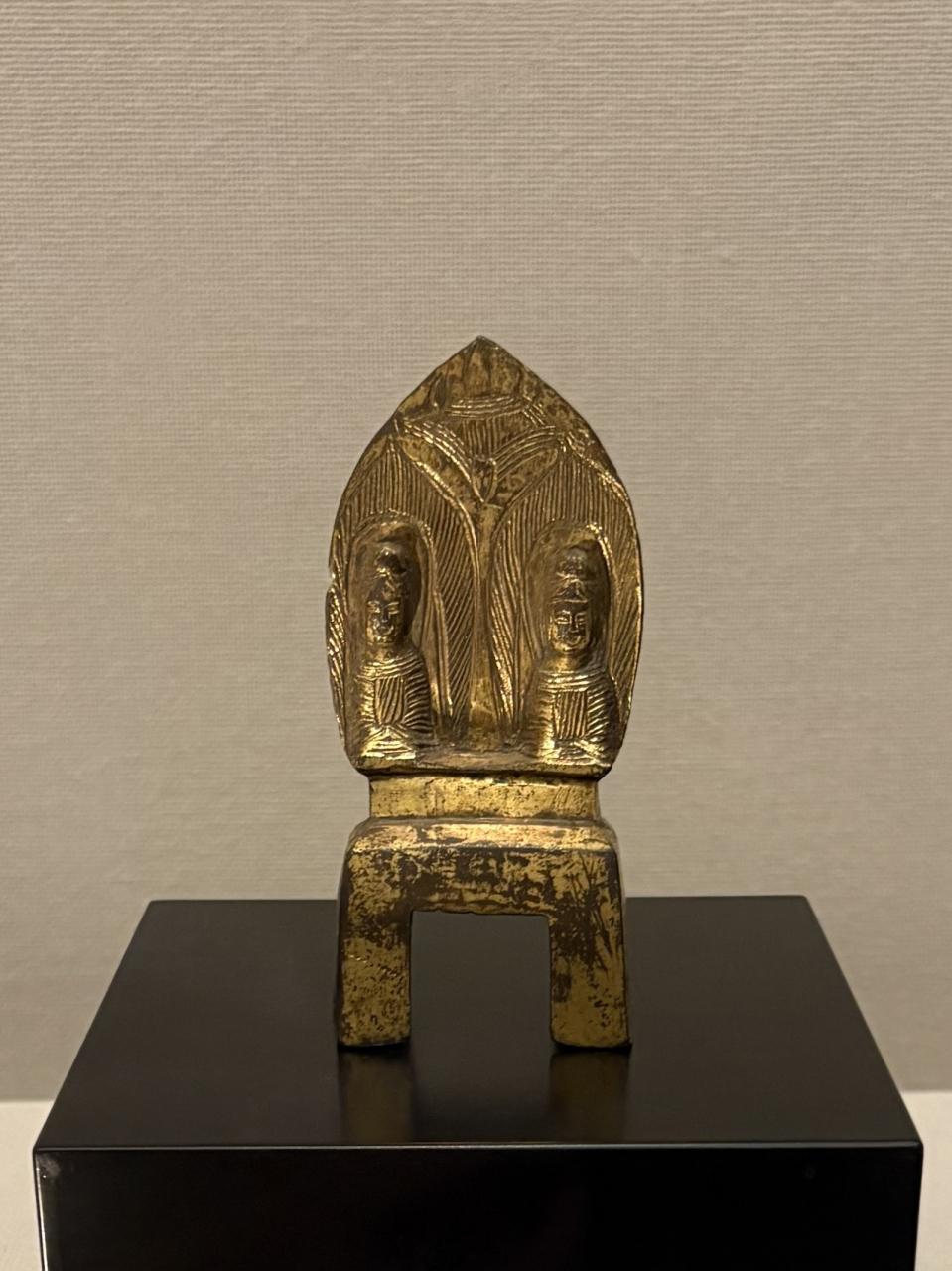
二仏並坐像(にぶつびょうざぞう)
当館(鈴木光寄贈)
銅造 鍍金 中国 北魏 正始元年(五〇四)
通肩(つうけん)・禅定印(ぜんしょういん)の坐仏二体を並置した像で、『法華経』見宝塔品(けんぼんとうぼん)に説く、釈迦仏と多宝仏が並坐した物語を表現する。素朴な造形だが、精彩ある刻線と鮮やかな鍍金が印象的な、北魏小金銅仏の佳品。
収蔵品番号一二七一 彫一二〇
Two Seated Buddhas
China; Northern Wei dynasty, 504 (Zhengshi 1)
Gilt bronze
Nara National Museum
Donated by Ms. Suzuki Mitsu
This sculpture depicts a scene from the "Vision of the Jewelled Pagoda" chapter (J.Kenhötöhon) of the Lotus Sutra in which the buddhas Śakyamuni and Prabhütaratna are seated side-by-side in a pagoda that hes emerged out of the earth. The form is simple, but the finely chiseled lines are powerful. The work is thought to have been created by a commoner.
Accession No. 1271, Sculpture No. 120 -
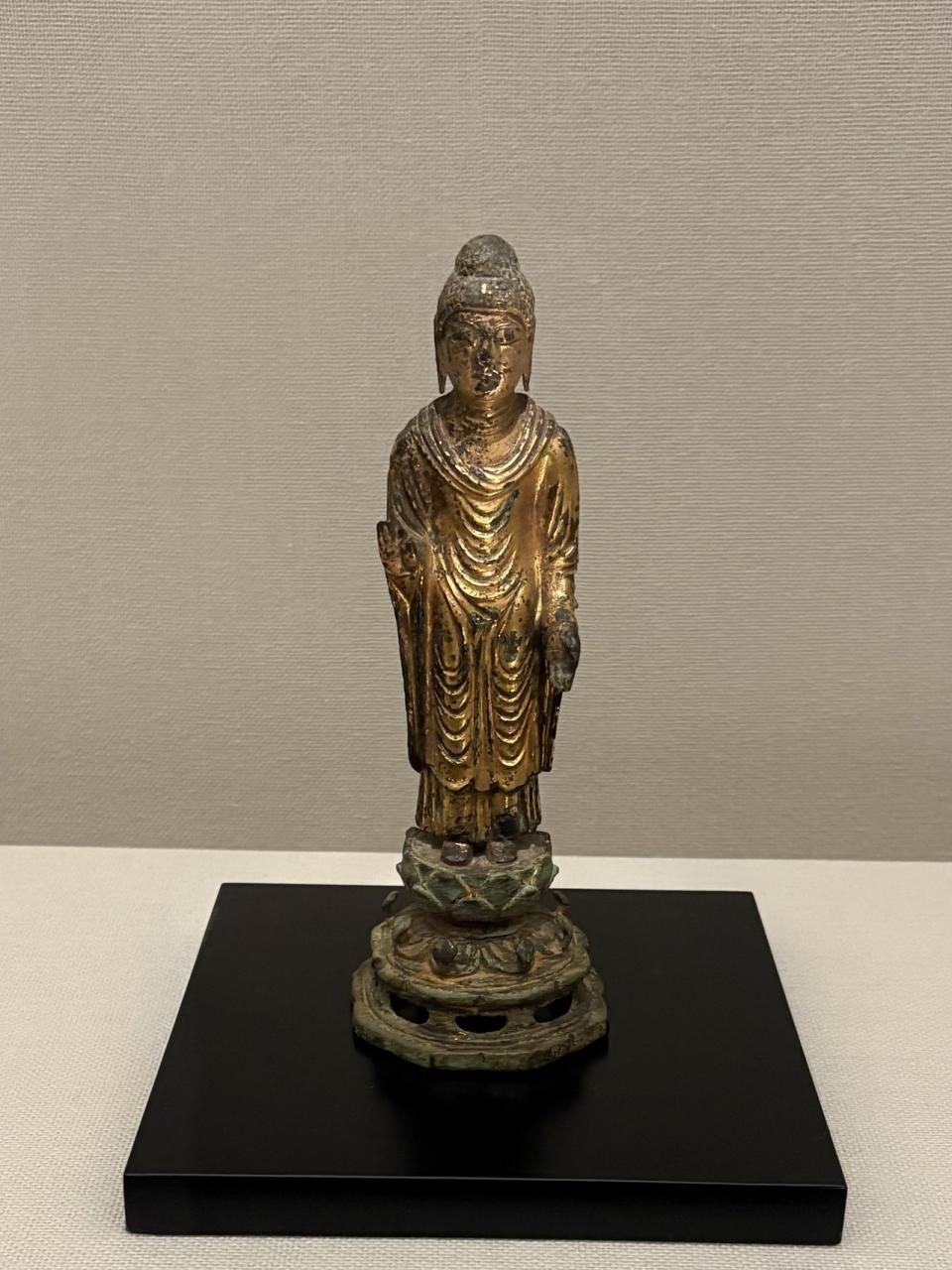
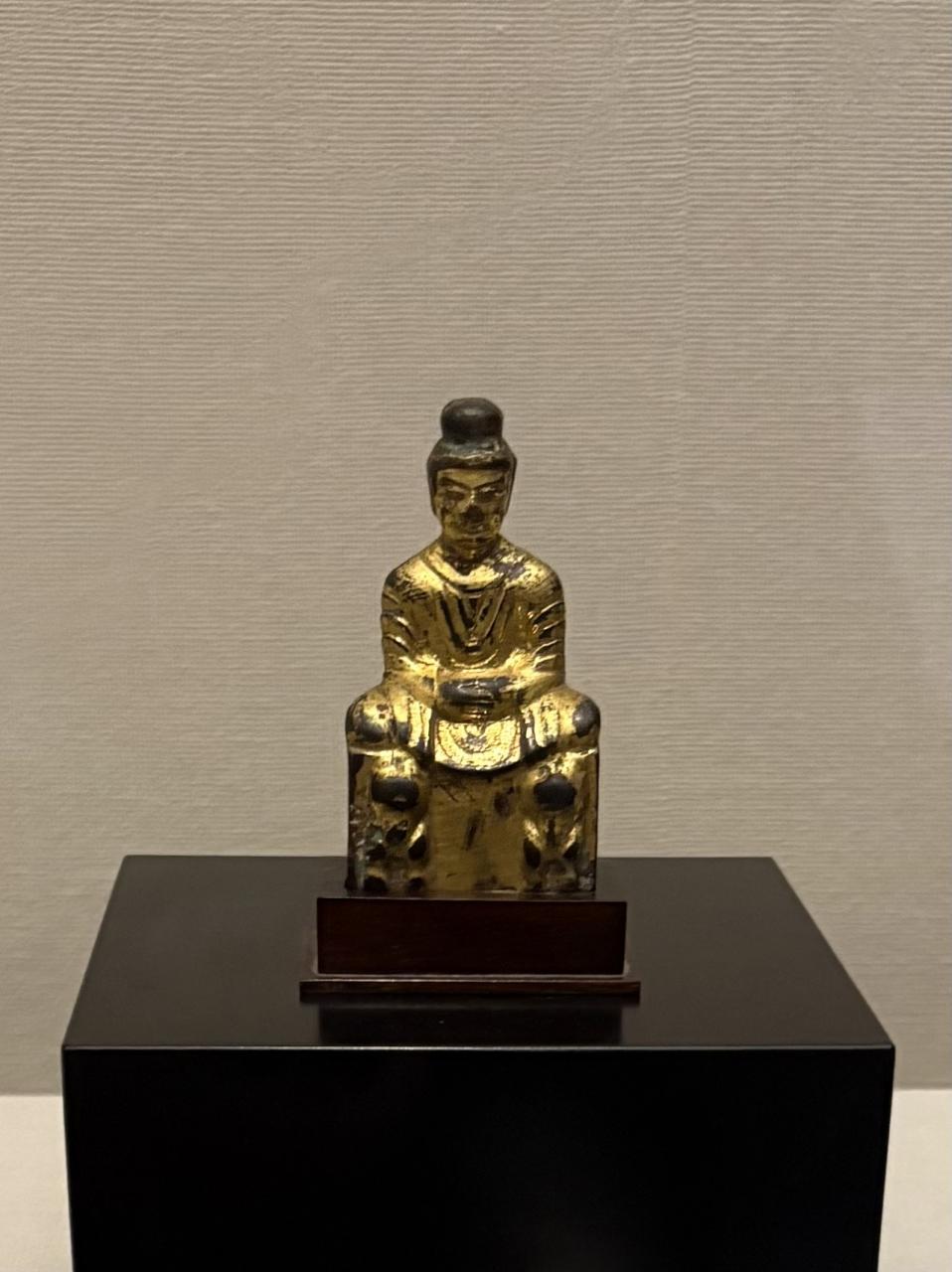
如来坐像
奈良国立博物館(川上宗雪氏 寄贈)
銅造 鍍金 中国・五胡十六国(四~五世紀)
中国で造立された初期の金銅仏。西域を経て伝えられたガンダーラの仏像様式を源流としつつも、左右対称の衣文(えもん)構成や、拱手(きょうしゅ)するような印相(いんぞう)など、中国の神仙の姿を思わせるような趣がある。
収蔵品番号一五二二彫一五一
Seated Nyorai (Skt. Tathagata)
China; Sixteen Kingdoms, 4th-5th century
Gilt bronze
Nara National Museum
Donated by Mr. Kawakami Sösetsu
This gilt-bronze icon was cast during the early stages of this technique's use in China. The style can be traced back to Gandhara by way of Central Asia, but the left-right symmetry of the design of the robe and the symbolic hand gesture, or mudra, evoke a sinified style and iconography. Some view this figure of a man with folded arms with one hand resting upon the other as a representation of a Chinese immortal.
Accession No. 1522, Sculpture No. 151 -
(続く・・・)
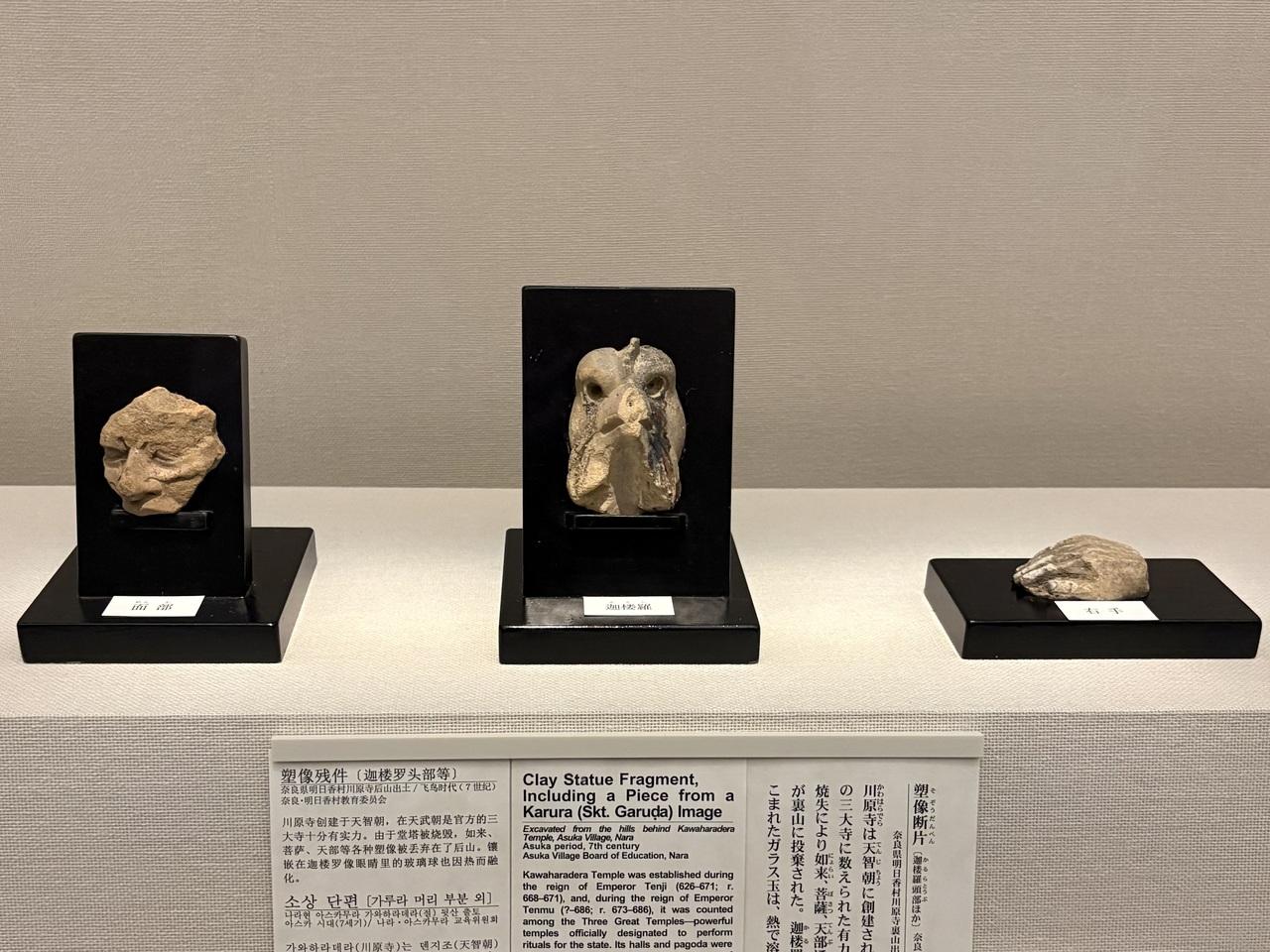
![仏手(ぶっしゅ)<br />奈良 新薬師寺<br />銅造 鍍金 飛鳥時代(七世紀)<br /><br />昭和十八年(一九四三)に盗難に遭い、行方不明となった薬師如来像(通称香薬師〔こうやくし])の右手である。間接をはっきりとあらわさず、指先に向かって細くなり、爪先を少し反らせた、繊細な造形。<br /><br />Hand of a Buddha <br />Asuka period, 7th century<br />Gilt bronze<br />Shin-yakushi-ji Temple, Nara<br /><br />This is the right hand from a statue of Yakushi Nyorai (Skt. Bhaişajyaguru)<br />known as the Fragrant Yakushi (J. Kõ Yakushi). The statue was stolen from the temple where it had been enshrined in 1943 (Showa 18) and never recovered. Its whereabouts are still unknown. The hand is rendered with detail but there is a softness to it: the joints are not clearly delineated, the fingers<br />delicately taper at the nails, and the fingertips bow, backwards ever so<br />slightly.](https://cdn.4travel.jp/img/tcs/t/pict/src/91/08/59/src_91085949.jpg?1783971393)


利用規約に違反している投稿は、報告する事ができます。
-
前の旅行記

大阪出張のついでに、お嬢と京都・奈良【36】奈良⑲ 再び、"奈良国立博物館" へ。特別展 "神仏の山 吉野・...
2026/04/19~
奈良市
-
次の旅行記

大阪出張のついでに、お嬢と京都・奈良【38】奈良(21) "仏像ワールド" は奥が深い② @奈良国立博物館。...
2026/04/19~
奈良市
-

大阪出張のついでに、お嬢と京都・奈良【18】奈良① 観光特急 "あをによし" で、"奈良" へ!乗車時間33...
2026/04/18~
奈良市
-

大阪出張のついでに、お嬢と京都・奈良【19】奈良② 鹿モチーフの雑貨屋さん "je êt nous" に行っ...
2026/04/18~
奈良市
-

大阪出張のついでに、お嬢と京都・奈良【20】奈良③ "柿の葉すし本舗 たなか なら本店"。特製木箱入り60個...
2026/04/18~
奈良市
-

大阪出張のついでに、お嬢と京都・奈良【21】奈良④ 名もない路地を街歩き。奈良だけど、ここだけ欧米か!
2026/04/18~
奈良市
-

大阪出張のついでに、お嬢と京都・奈良【22】奈良⑤ "ならまち" を街歩き!
2026/04/18~
奈良市
-

大阪出張のついでに、お嬢と京都・奈良【23】奈良⑥ "奈良料理 mikado"。奈良から始まる、自由で新しい...
2026/04/18~
奈良市
-

大阪出張のついでに、お嬢と京都・奈良【24】奈良⑦ 朝の出勤か?日の出直後、"鹿の集団" が興福寺から猿沢池...
2026/04/18~
奈良市
-

大阪出張のついでに、お嬢と京都・奈良【25】奈良⑧ "一の鳥居前" から、"春日大社" 本殿へ。これが、"飛...
2026/04/18~
奈良市
-

大阪出張のついでに、お嬢と京都・奈良【26】奈良⑨ "春日大社" で、"鹿モチーフの絵馬" に驚いた!
2026/04/18~
奈良市
-

大阪出張のついでに、お嬢と京都・奈良【27】奈良⑩ "奈良公園"。"鹿が芝を食むブチブチ音" は、海亀が岩か...
2026/04/19~
奈良市
-

大阪出張のついでに、お嬢と京都・奈良【28】奈良⑪ "東大寺大仏殿"。お嬢、この日1人目の "穴くぐり" チ...
2026/04/19~
奈良市
-

大阪出張のついでに、お嬢と京都・奈良【29】奈良⑫ "東大寺大仏殿"。172cm・68㎏の親父はこれが限界、...
2026/04/19~
奈良市
-

大阪出張のついでに、お嬢と京都・奈良【30】奈良⑬ "東大寺大仏殿"。自宅で留守番の奥方・還暦犬の分も含め、...
2026/04/19~
奈良市
-

大阪出張のついでに、お嬢と京都・奈良【31】奈良⑭ "バスターミナル屋上庭園" は思いのほかの絶景。修復後の...
2026/04/19~
奈良市
-

大阪出張のついでに、お嬢と京都・奈良【32】奈良⑮ "奈良国立博物館 特別展 神仏の山 吉野・大峰"。この ...
2026/04/19~
奈良市
-

大阪出張のついでに、お嬢と京都・奈良【33】奈良⑯ お嬢、東大寺大仏殿バス亭で "鹿に狙われ、『鹿せんべい』...
2026/04/19~
奈良市
-

大阪出張のついでに、お嬢と京都・奈良【34】奈良⑰ "鹿の舟 竈" は、立派な竈(かまど)のあるレストラン。...
2026/04/19~
奈良市
-

大阪出張のついでに、お嬢と京都・奈良【35】奈良⑱ "ならまち" を街歩き。"奈良元興寺郵便局" には、そこ...
2026/04/19~
奈良市
-

大阪出張のついでに、お嬢と京都・奈良【36】奈良⑲ 再び、"奈良国立博物館" へ。特別展 "神仏の山 吉野・...
2026/04/19~
奈良市
-

大阪出張のついでに、お嬢と京都・奈良【37】奈良(20) "仏像ワールド" は奥が深い① @奈良国立博物館。...
2026/04/19~
奈良市
-

大阪出張のついでに、お嬢と京都・奈良【38】奈良(21) "仏像ワールド" は奥が深い② @奈良国立博物館。...
2026/04/19~
奈良市
-

大阪出張のついでに、お嬢と京都・奈良【39】奈良(22) "奈良国立博物館" では、"青銅器" も鑑賞できる...
2026/04/19~
奈良市
-

大阪出張のついでに、お嬢と京都・奈良【40】奈良(23) 京都に移動。"近鉄奈良線は、平城京跡を横切って走る...
2026/04/19~
奈良市
-

大阪出張のついでに、お嬢と京都・奈良【41/完】新幹線で帰還。"JR伊勢丹京都" で買った、"近江 団十郎名...
2026/04/19~
京都駅周辺
旅行記グループをもっと見る
コメントを投稿する前に
十分に確認の上、ご投稿ください。 コメントの内容は攻撃的ではなく、相手の気持ちに寄り添ったものになっていますか?
サイト共通ガイドライン(利用上のお願い)報道機関・マスメディアの方へ 画像提供などに関するお問い合わせは、専用のお問い合わせフォームからお願いいたします。
この旅行で行ったスポット
奈良市(奈良) の旅行記




フォートラベル公式LINE@
おすすめの旅行記や旬な旅行情報、お得なキャンペーン情報をお届けします!
QRコードが読み取れない場合はID「@4travel」で検索してください。
\その他の公式SNSはこちら/



旅行記グループ 2026年4月 大阪出張のついでに、お嬢と京都・奈良(その2)奈良編
0
22