


2026/04/19 - 2026/04/19
115位(同エリア6147件中)

旅熊 Kokazさん
- 旅熊 KokazさんTOP
- 旅行記1914冊
- クチコミ854件
- Q&A回答102件
- 1,698,761アクセス
- フォロワー753人
この旅行記のスケジュール
2026/04/19

この旅行記スケジュールを元に
大阪出張のついでに、お嬢と京都・奈良【36】
奈良⑲
- 旅行の満足度
- 5.0
-

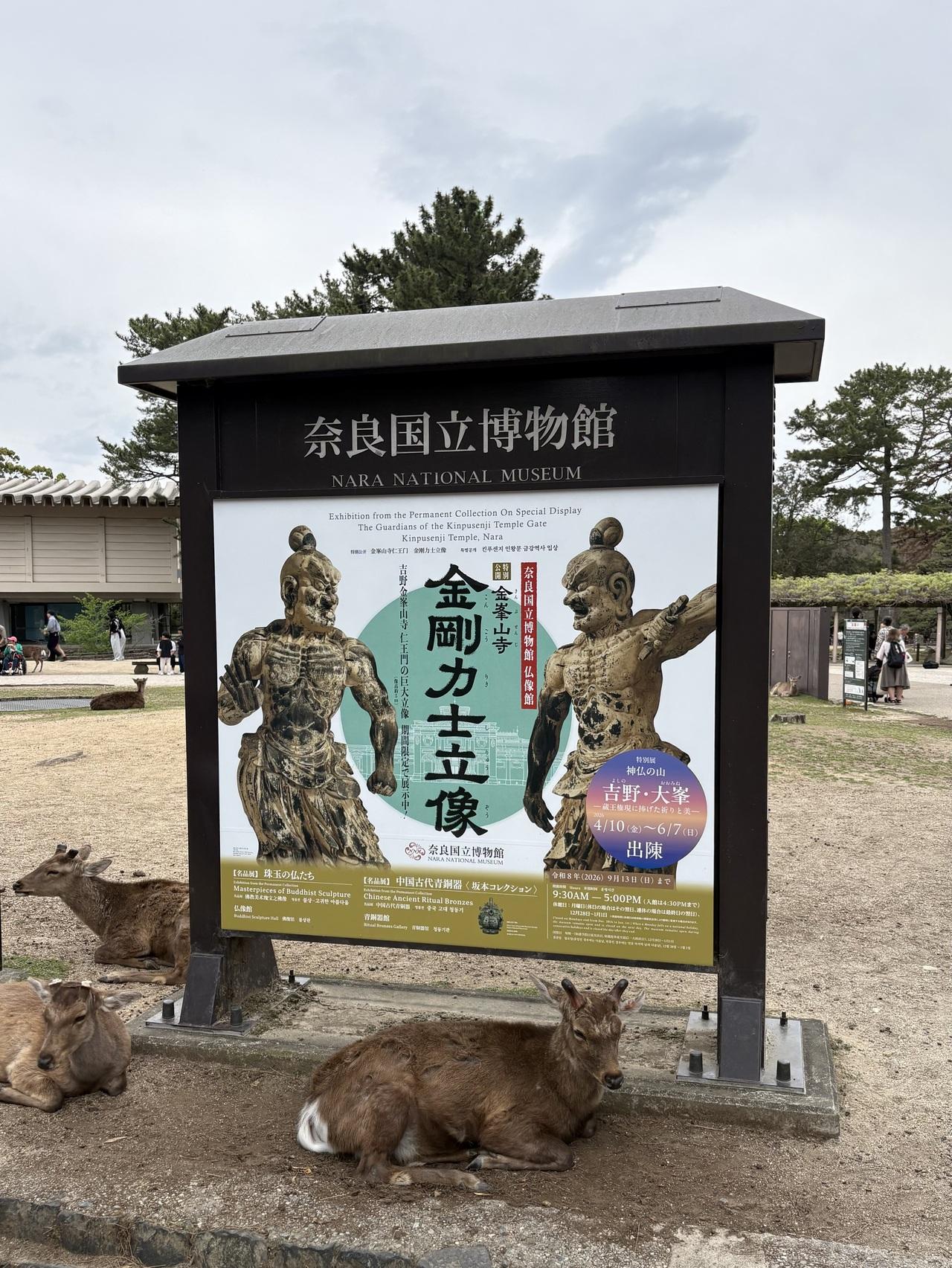
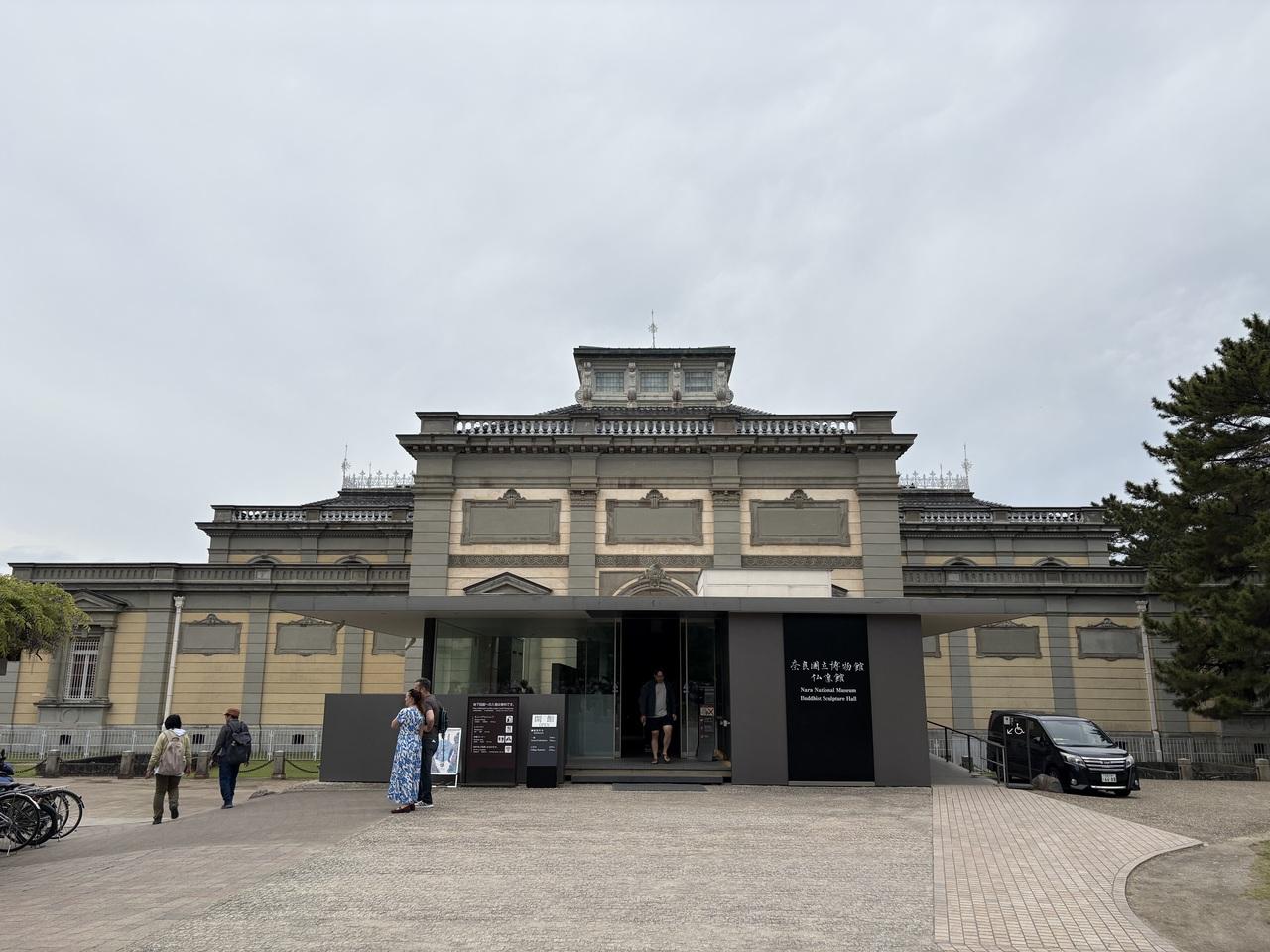
"ならまち" から、奈良公園ぐるっとバスで移動して、本日2度目の "奈良国立博物館"
京都までの移動時間まで、仏像見学!奈良国立博物館 美術館・博物館
-
-
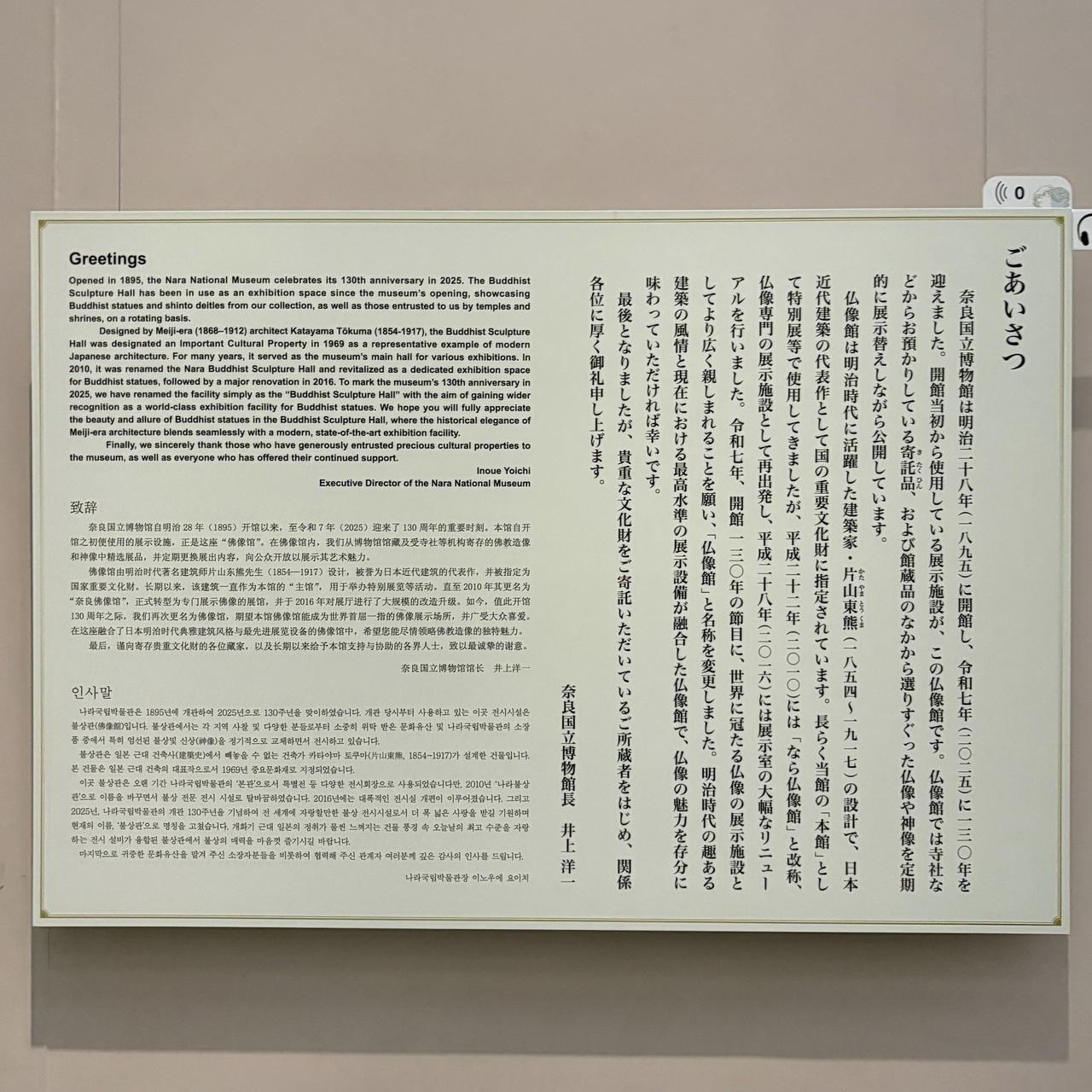
ごあいさつ
奈良国立博物館は明治二十八年(一八九五)に開館し、令和七年(二〇二五)に一三〇年を迎えました。開館当初から使用している展示施設が、この仏像館です。仏像館では寺社などからお預かりしている寄託品、および館蔵品のなかから選りすぐった仏像や神像を定期的に展示替えしながら公開しています。
仏像館は明治時代に活躍した建築家・片山東熊(一八五四~一九一七)の設計で、日本近代建築の代表作として国の重要文化財に指定されています。長らく当館の「本館」として特別展等で使用してきましたが、平成二十二年(二〇一〇)には「なら仏像館」と改称、仏像専門の展示施設として再出発し、平成二十八年(二〇一六)には展示室の大幅なリニューアルを行いました。令和七年、開館一三〇年の節目に、世界に冠たる仏像の展示施設としてより広く親しまれることを願い、「仏像館」と名称を変更しました。明治時代のある建築の風情と現在における最高水準の展示設備が融合した仏像館で、仏像の魅力を存分に味わっていただければ幸いです。
最後となりましたが、貴重な文化財をご寄託いただいているご所蔵者をはじめ、関係各位に厚く勧礼申し上げます。
奈良国立博物館長 井上洋一
Greetings
Opened in 1895, the Nara National Museum celebrates its 130th anniversary in 2025. The Buddhist Sculpture Hall has been in use as an exhibition space since the museum's opening, showcasing Buddhist statues and shinto deitles from our collection, as well as those entrusted to us by temples and shrines, on a rotating basis.
Designed by Meiji-era (1868-1912) architect Katayama Tökuma (1854-1917), the Buddhist Sculpture Hall was designated an Important Cultural Property in 1969 as a representative example of modern Japanese architecture. For many years, it served as the museum's main hall for various exhibitions. In 2010, it was renamed the Nara Buddhist Sculpture Hall and revitalized as a dedicated exhibition space for Buddhist statues, followed by a major renovation in 2016. To mark the museum's 130th anniversary in 2025, we have renamed the facility simply as the "Buddhist Sculpture Hall" with the aim of gaining wider recognition as a world-class exhibition facility for Buddhist statues. We hope you will fully appreciate the beauty and allure of Buddhist statues in the Buddhist Sculpture Hall, where the historical elegance of Meiji-era architecture blends seamlessly with a modern, state-of-the-art exhibition facility.
Finally, we sincerely thank those who have generously entrusted precious cultural properties to
the museum, as well as everyone who has offered their continued support.
Inoue Yoichi
Executive Director of the Nara National Museum -
-
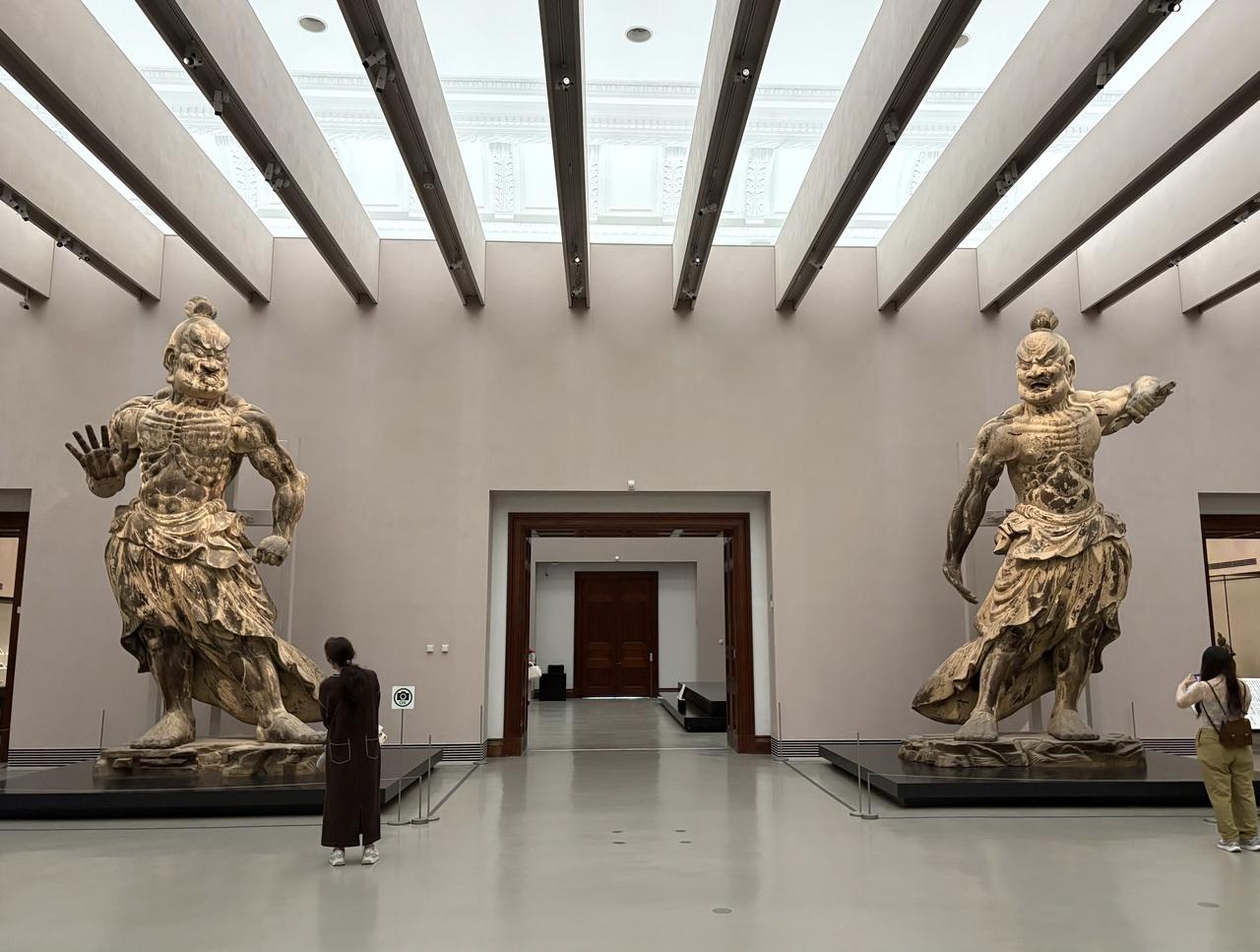
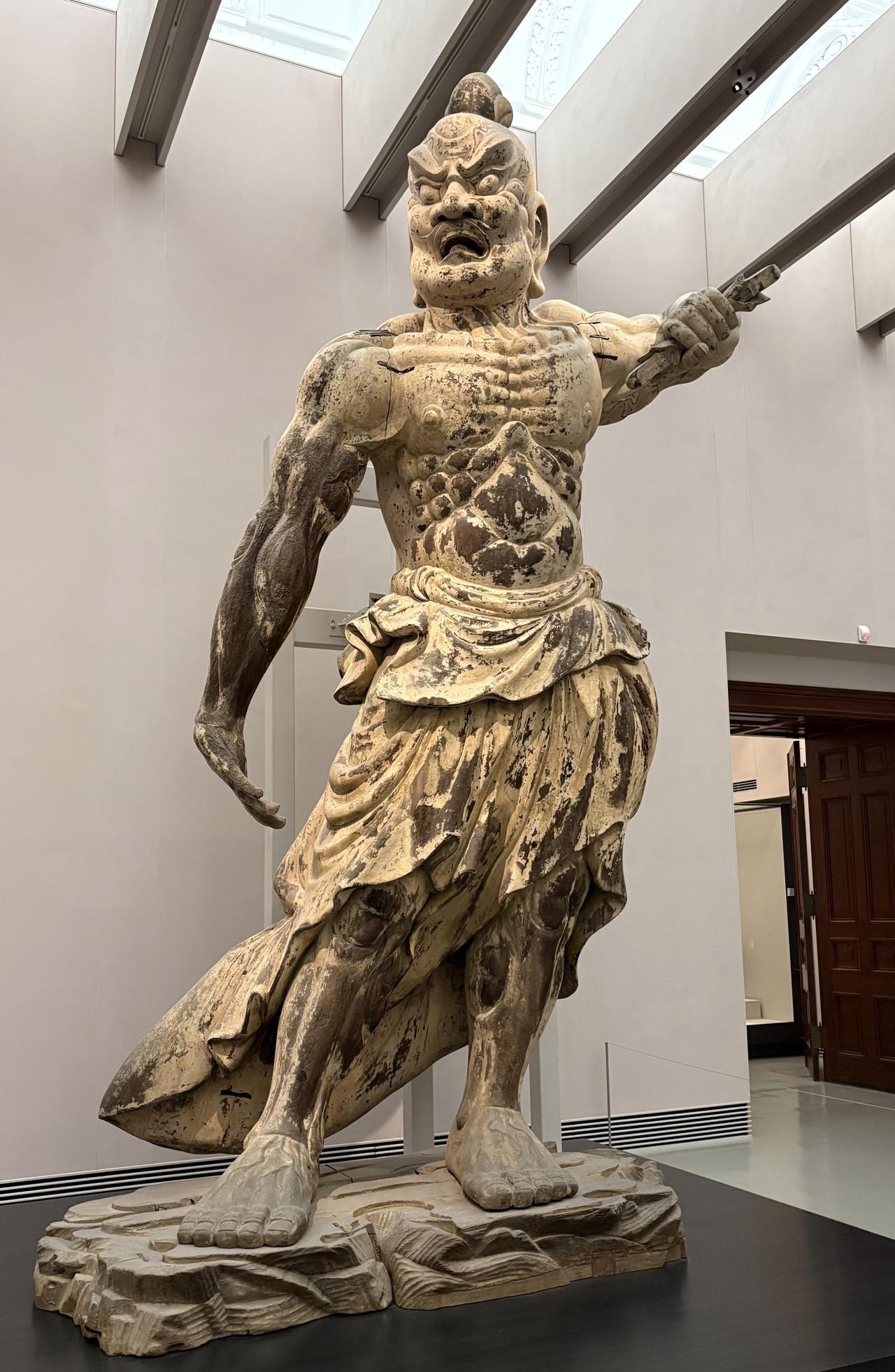
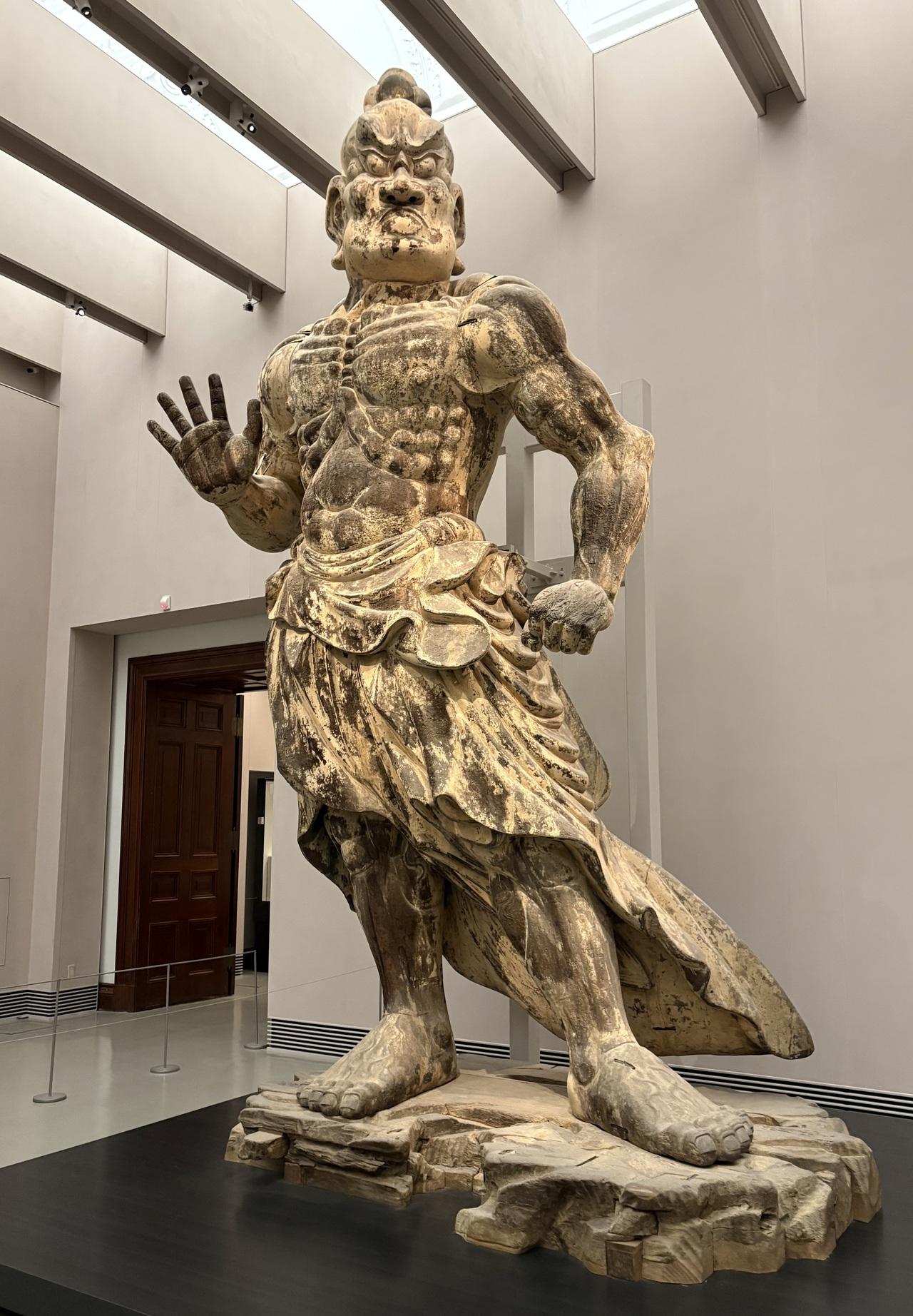
この作品は、東新館・西新館で開催中の特別展「神仏の山吉野・大峯 ~ 蔵王権現に捧げた祈りと美 ~」の出陳作品です(展示番号137)
特別公開
重要文化財
奈良 金峯山寺
金剛力士立像(こんごうりきしりゅうぞう)
康成(こうじょう)作
像高[阿形]五〇五・八cm [吽形]五〇六・二cm
木造 彩色 南北朝時代 延元四年(1339)
吉野郡吉野町に位置する金峰山寺(金峰山修験本宗の総本山)の仁王門(国宝)に安置される金剛力士像。仁王門は平成三十年(2018)度より大規模な修理が開始され、これと並行して金剛力士像も翌年度から二か年をかけて、公益財団法人美術院により彩色や漆下地の剥落止め、矧目(はぎめ)など変色簡所の修整、足元や台座の材質強化などを主とする保存修理が実施された。
像内の銘文により、南北朝時代の延元三年(1338)から翌年にかけて、大仏師康成により造られたことがわかる。見上げるばかりの巨像で、劇的な憤怒相と全身にみなぎる力動感は圧巻であり、鎌倉時代の金曜力士像にみる無爽とした姿を基本としつつ、丈六(じょうろく)の巨像を破綻なくまとめあげた点に康成の優れた技量がうかがえる。建仁三年(1203)に運慶・快慶らが造立した奈良・東大寺南大門像に次ぐ大作として、また当代を代表する金剛力士像としてもきわめて高い価値を有している。
Important Cultural Property
Standing Kongö Rikishi
By Köjo (dates unknown)
Nanbokucho period, 1339 (Engen 4)
Wood with pigments
Height 505.8 cm (Open-mouthed Agyo), 506.2 cm (Closed-mouthed Ungyõ)
Kinpusen-ji Temple, Nara
These monumental statues of Kongö Rikishi, a pair of guardian kings (J. Nio) believed to be manifestations of the Buddhist deity Vajrapăni, are usually installed at the National Treasure Niömon Gate at Kinpusen-ji Temple in Nara's Yoshino. This temple serves as the headquarters for the Kinpusen Shugen-honshü sect of mountain ascetics. Since 2018, the temple gate has been undergoing a major restoration. Coinciding with this, these statues were repaired in a two-year conservation project that began in 2019. In this project, which was carried out by Bijyutsuin, peeling pigment and base lacquer were stabilized; discoloration in such areas as the statues' joins was remedied; and their feet and pedestals were reinforced.
Inscriptions on the interior surfaces reveal that these towering statues were created by the Nara-based master Buddhist sculptor Köjö (dates unknown) during the Nanbokucho period (1333-1392), and that they were begun in 1338 (Engen 3) and completed the following year. One gets lost in looking up at their dramatically glowering expressions and their forms that brim with a sense of dynamism from head to toe. They exemplify Köjö's exceptional abilities: even working in a dauntingly colossal scale, he managed to emulate the dashing forms of Kongö Rikishi statues from the Kamakura period (1185-1333). Only the Kongö Rikishi installed in the Nandaimon at Tödai-ji Temple eclipse Köjo's statues in size. These were completed by the renowned Unkei (?-1223), Kaikei (?-prior to 1227), and other members of the Kei-ha School in 1203 (Ken'nin 3).
Finally, the Kinpusen-ji Kongö Rikishi are significant for perfectly embodying the styles and techniques of Nanbokucho-period Buddhist sculpture. -
阿形 (Open-mouthed Agyo)
-
吽形 (Closed-mouthed Ungyõ)
(続く・・・)
![この作品は、東新館・西新館で開催中の特別展「神仏の山吉野・大峯 ~ 蔵王権現に捧げた祈りと美 ~」の出陳作品です(展示番号137)<br /><br />特別公開<br />重要文化財<br />奈良 金峯山寺<br />金剛力士立像(こんごうりきしりゅうぞう)<br />康成(こうじょう)作<br /><br />像高[阿形]五〇五・八cm [吽形]五〇六・二cm<br />木造 彩色 南北朝時代 延元四年(1339)<br />吉野郡吉野町に位置する金峰山寺(金峰山修験本宗の総本山)の仁王門(国宝)に安置される金剛力士像。仁王門は平成三十年(2018)度より大規模な修理が開始され、これと並行して金剛力士像も翌年度から二か年をかけて、公益財団法人美術院により彩色や漆下地の剥落止め、矧目(はぎめ)など変色簡所の修整、足元や台座の材質強化などを主とする保存修理が実施された。<br /><br />像内の銘文により、南北朝時代の延元三年(1338)から翌年にかけて、大仏師康成により造られたことがわかる。見上げるばかりの巨像で、劇的な憤怒相と全身にみなぎる力動感は圧巻であり、鎌倉時代の金曜力士像にみる無爽とした姿を基本としつつ、丈六(じょうろく)の巨像を破綻なくまとめあげた点に康成の優れた技量がうかがえる。建仁三年(1203)に運慶・快慶らが造立した奈良・東大寺南大門像に次ぐ大作として、また当代を代表する金剛力士像としてもきわめて高い価値を有している。<br /><br />Important Cultural Property<br />Standing Kongö Rikishi<br />By Köjo (dates unknown)<br />Nanbokucho period, 1339 (Engen 4)<br />Wood with pigments<br />Height 505.8 cm (Open-mouthed Agyo), 506.2 cm (Closed-mouthed Ungyõ)<br />Kinpusen-ji Temple, Nara<br /><br />These monumental statues of Kongö Rikishi, a pair of guardian kings (J. Nio) believed to be manifestations of the Buddhist deity Vajrapăni, are usually installed at the National Treasure Niömon Gate at Kinpusen-ji Temple in Nara's Yoshino. This temple serves as the headquarters for the Kinpusen Shugen-honshü sect of mountain ascetics. Since 2018, the temple gate has been undergoing a major restoration. Coinciding with this, these statues were repaired in a two-year conservation project that began in 2019. In this project, which was carried out by Bijyutsuin, peeling pigment and base lacquer were stabilized; discoloration in such areas as the statues' joins was remedied; and their feet and pedestals were reinforced.<br /><br />Inscriptions on the interior surfaces reveal that these towering statues were created by the Nara-based master Buddhist sculptor Köjö (dates unknown) during the Nanbokucho period (1333-1392), and that they were begun in 1338 (Engen 3) and completed the following year. One gets lost in looking up at their dramatically glowering expressions and their forms that brim with a sense of dynamism from head to toe. They exemplify Köjö's exceptional abilities: even working in a dauntingly colossal scale, he managed to emulate the dashing forms of Kongö Rikishi statues from the Kamakura period (1185-1333). Only the Kongö Rikishi installed in the Nandaimon at Tödai-ji Temple eclipse Köjo's statues in size. These were completed by the renowned Unkei (?-1223), Kaikei (?-prior to 1227), and other members of the Kei-ha School in 1203 (Ken'nin 3).<br /><br />Finally, the Kinpusen-ji Kongö Rikishi are significant for perfectly embodying the styles and techniques of Nanbokucho-period Buddhist sculpture.](https://cdn.4travel.jp/img/tcs/t/pict/src/91/07/90/src_91079025.jpg?1783733079)


利用規約に違反している投稿は、報告する事ができます。
-
前の旅行記

大阪出張のついでに、お嬢と京都・奈良【35】奈良⑱ "ならまち" を街歩き。"奈良元興寺郵便局" には、そこ...
2026/04/19~
奈良市
-
次の旅行記

大阪出張のついでに、お嬢と京都・奈良【37】奈良(20) "仏像ワールド" は奥が深い① @奈良国立博物館。...
2026/04/19~
奈良市
-

大阪出張のついでに、お嬢と京都・奈良【18】奈良① 観光特急 "あをによし" で、"奈良" へ!乗車時間33...
2026/04/18~
奈良市
-

大阪出張のついでに、お嬢と京都・奈良【19】奈良② 鹿モチーフの雑貨屋さん "je êt nous" に行っ...
2026/04/18~
奈良市
-

大阪出張のついでに、お嬢と京都・奈良【20】奈良③ "柿の葉すし本舗 たなか なら本店"。特製木箱入り60個...
2026/04/18~
奈良市
-

大阪出張のついでに、お嬢と京都・奈良【21】奈良④ 名もない路地を街歩き。奈良だけど、ここだけ欧米か!
2026/04/18~
奈良市
-

大阪出張のついでに、お嬢と京都・奈良【22】奈良⑤ "ならまち" を街歩き!
2026/04/18~
奈良市
-

大阪出張のついでに、お嬢と京都・奈良【23】奈良⑥ "奈良料理 mikado"。奈良から始まる、自由で新しい...
2026/04/18~
奈良市
-

大阪出張のついでに、お嬢と京都・奈良【24】奈良⑦ 朝の出勤か?日の出直後、"鹿の集団" が興福寺から猿沢池...
2026/04/18~
奈良市
-

大阪出張のついでに、お嬢と京都・奈良【25】奈良⑧ "一の鳥居前" から、"春日大社" 本殿へ。これが、"飛...
2026/04/18~
奈良市
-

大阪出張のついでに、お嬢と京都・奈良【26】奈良⑨ "春日大社" で、"鹿モチーフの絵馬" に驚いた!
2026/04/18~
奈良市
-

大阪出張のついでに、お嬢と京都・奈良【27】奈良⑩ "奈良公園"。"鹿が芝を食むブチブチ音" は、海亀が岩か...
2026/04/19~
奈良市
-

大阪出張のついでに、お嬢と京都・奈良【28】奈良⑪ "東大寺大仏殿"。お嬢、この日1人目の "穴くぐり" チ...
2026/04/19~
奈良市
-

大阪出張のついでに、お嬢と京都・奈良【29】奈良⑫ "東大寺大仏殿"。172cm・68㎏の親父はこれが限界、...
2026/04/19~
奈良市
-

大阪出張のついでに、お嬢と京都・奈良【30】奈良⑬ "東大寺大仏殿"。自宅で留守番の奥方・還暦犬の分も含め、...
2026/04/19~
奈良市
-

大阪出張のついでに、お嬢と京都・奈良【31】奈良⑭ "バスターミナル屋上庭園" は思いのほかの絶景。修復後の...
2026/04/19~
奈良市
-

大阪出張のついでに、お嬢と京都・奈良【32】奈良⑮ "奈良国立博物館 特別展 神仏の山 吉野・大峰"。この ...
2026/04/19~
奈良市
-

大阪出張のついでに、お嬢と京都・奈良【33】奈良⑯ お嬢、東大寺大仏殿バス亭で "鹿に狙われ、『鹿せんべい』...
2026/04/19~
奈良市
-

大阪出張のついでに、お嬢と京都・奈良【34】奈良⑰ "鹿の舟 竈" は、立派な竈(かまど)のあるレストラン。...
2026/04/19~
奈良市
-

大阪出張のついでに、お嬢と京都・奈良【35】奈良⑱ "ならまち" を街歩き。"奈良元興寺郵便局" には、そこ...
2026/04/19~
奈良市
-

大阪出張のついでに、お嬢と京都・奈良【36】奈良⑲ 再び、"奈良国立博物館" へ。特別展 "神仏の山 吉野・...
2026/04/19~
奈良市
-

大阪出張のついでに、お嬢と京都・奈良【37】奈良(20) "仏像ワールド" は奥が深い① @奈良国立博物館。...
2026/04/19~
奈良市
-

大阪出張のついでに、お嬢と京都・奈良【38】奈良(21) "仏像ワールド" は奥が深い② @奈良国立博物館。...
2026/04/19~
奈良市
-

大阪出張のついでに、お嬢と京都・奈良【39】奈良(22) "奈良国立博物館" では、"青銅器" も鑑賞できる...
2026/04/19~
奈良市
-

大阪出張のついでに、お嬢と京都・奈良【40】奈良(23) 京都に移動。"近鉄奈良線は、平城京跡を横切って走る...
2026/04/19~
奈良市
-

大阪出張のついでに、お嬢と京都・奈良【41/完】新幹線で帰還。"JR伊勢丹京都" で買った、"近江 団十郎名...
2026/04/19~
京都駅周辺
旅行記グループをもっと見る
コメントを投稿する前に
十分に確認の上、ご投稿ください。 コメントの内容は攻撃的ではなく、相手の気持ちに寄り添ったものになっていますか?
サイト共通ガイドライン(利用上のお願い)報道機関・マスメディアの方へ 画像提供などに関するお問い合わせは、専用のお問い合わせフォームからお願いいたします。
この旅行で行ったスポット
奈良市(奈良) の旅行記




フォートラベル公式LINE@
おすすめの旅行記や旬な旅行情報、お得なキャンペーン情報をお届けします!
QRコードが読み取れない場合はID「@4travel」で検索してください。
\その他の公式SNSはこちら/





旅行記グループ 2026年4月 大阪出張のついでに、お嬢と京都・奈良(その2)奈良編
0
7