


2010/01 - 2010/01
5597位(同エリア7387件中)

ドクターキムルさん
- ドクターキムルさんTOP
- 旅行記7577冊
- クチコミ134件
- Q&A回答247件
- 7,725,441アクセス
- フォロワー42人
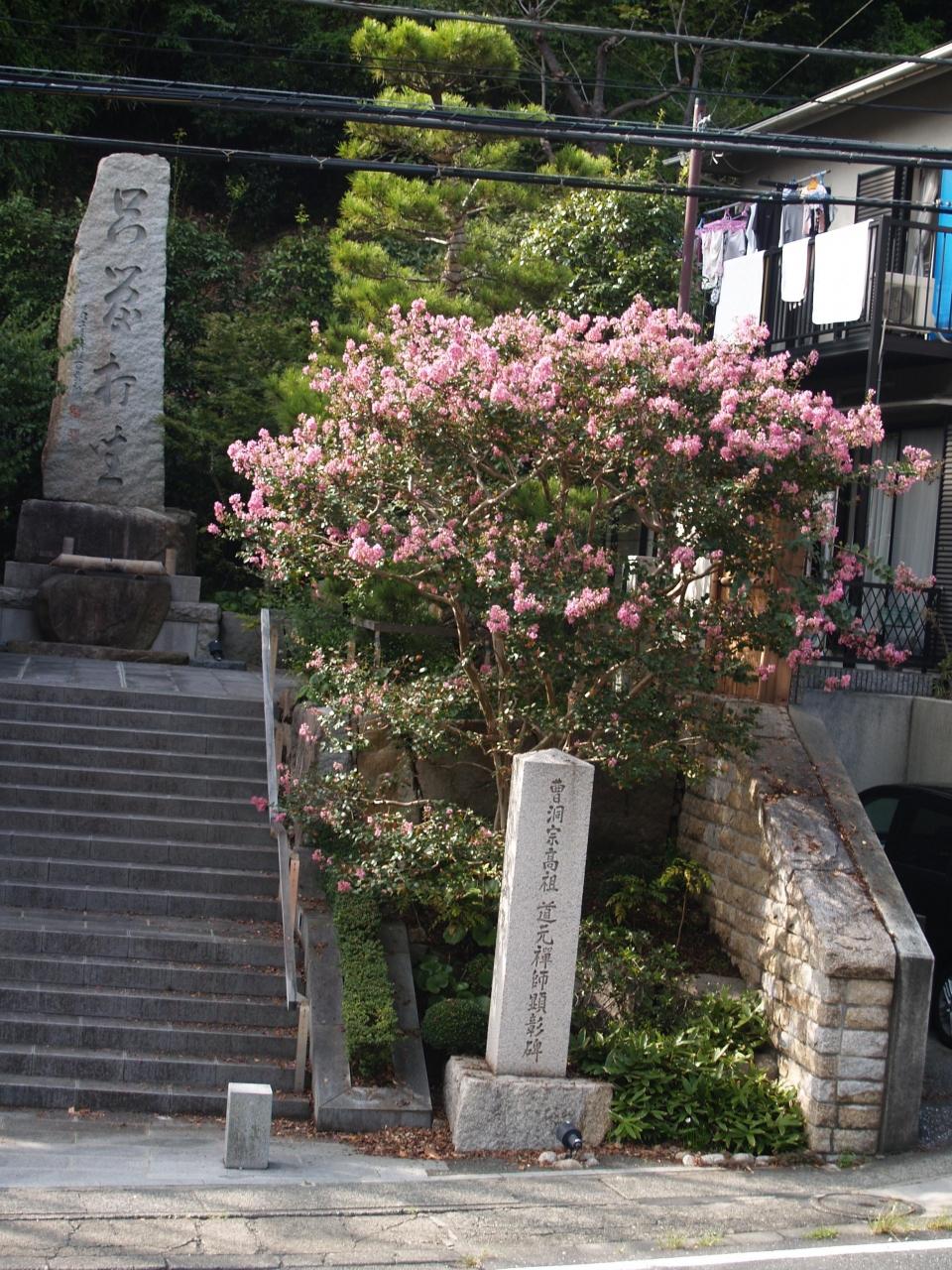
鶴岡八幡宮横に曹洞宗高祖道元禅師顕彰碑が建っている。曹洞宗開祖道元禅師(1200年〜1253年)の750回大遠忌を記念して、平成14年(2002年)3月には落慶除幕式が挙行されている。
道元禅師は、寛元2年(1244年)に越前大仏寺を開山し、2年後に永平寺に名を改めている。宝治元年(1247年)8月に、波多野義重らの招きに応じて鎌倉を訪れ、半年ほど滞在をして、その間に三代将軍源実朝の供養や、執権北条時頼などに法談をした。時頼は禅師から菩薩戒を受け、さらに一寺を建立して開山に迎えたいと申し出たが固辞されたと伝えられている。高祖道元禅師鎌倉御行化顕彰碑とも言われている。
(表紙写真は曹洞宗高祖道元禅師顕彰碑)
-

サルスベリ(百日紅)の花が咲く。
-
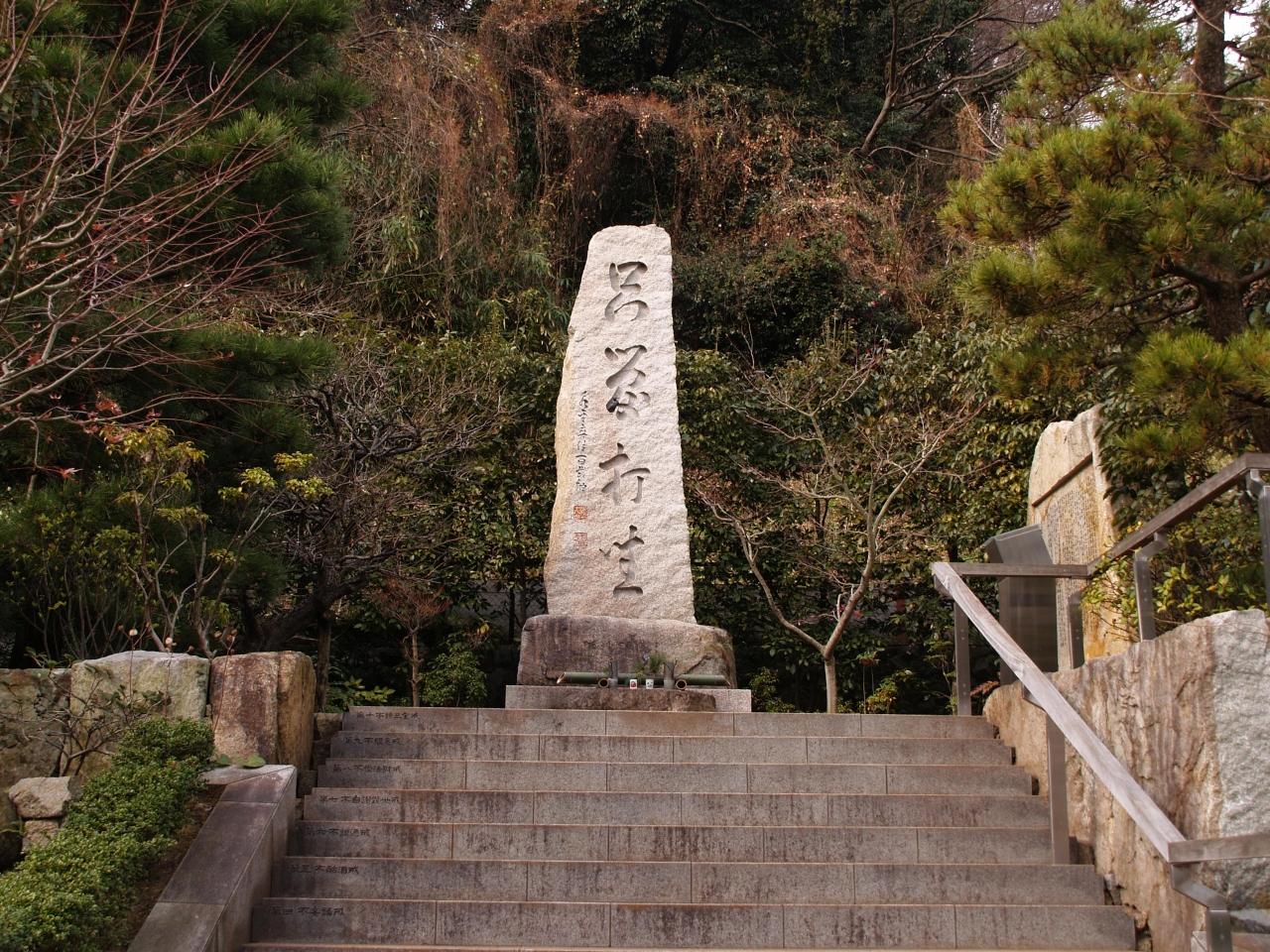
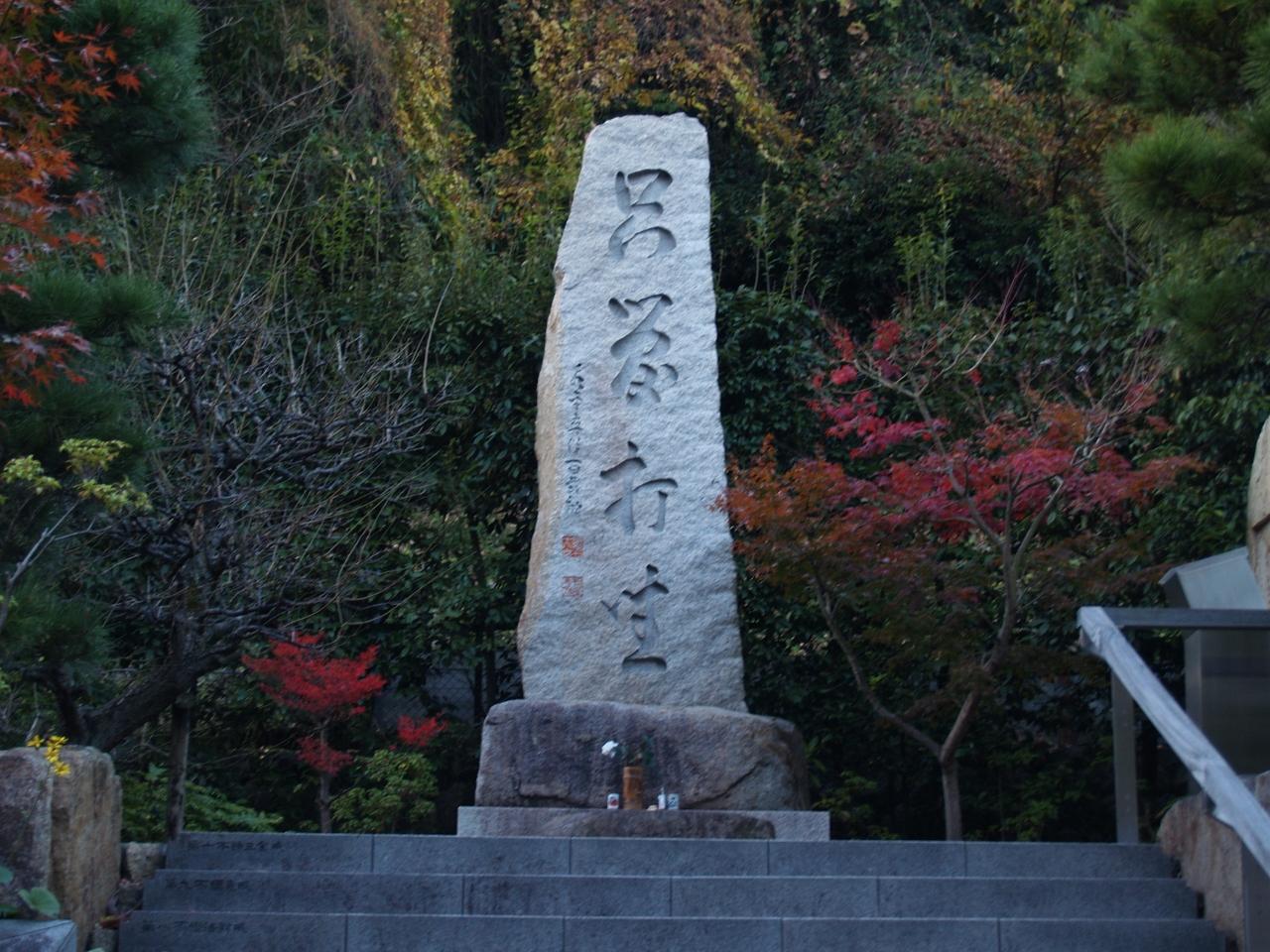
「只管打座(しかんたざ)」と彫られている。
-
「只管打座(しかんたざ)」石塔。
-
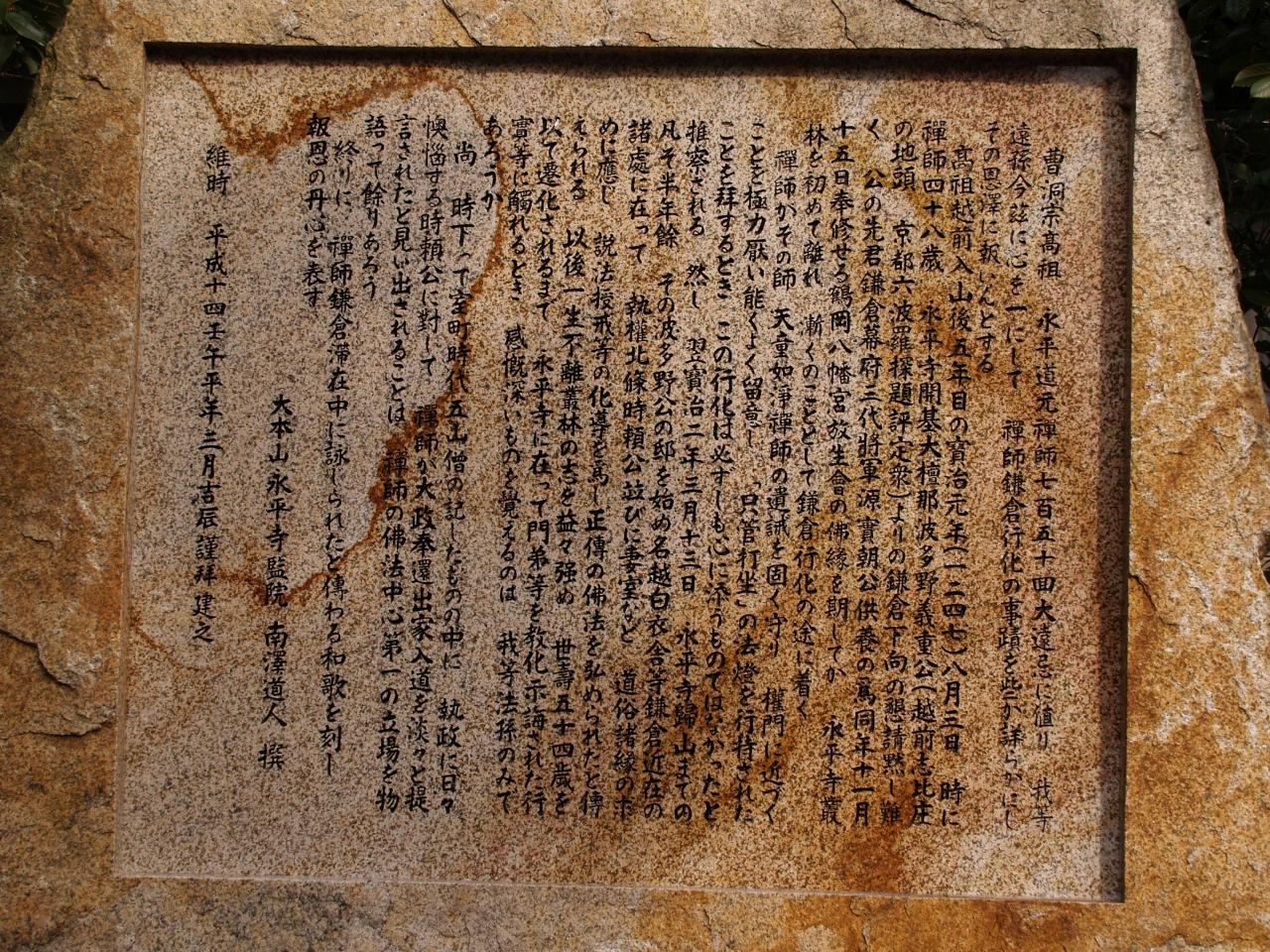
曹洞宗高祖永平道元禅師略歴。
「 曹洞宗高祖 永平道元禅師七百五十回大遠忌に値り、我等遠孫今茲に心を一にして、禅師鎌倉行化の事蹟を些か詳らかにし、その恩澤に報いんとする。
高祖越前入山後五年目の宝治元年(一二四七)八月三日、時に禅師四十八歳、永平寺開基大檀那波多野義重公(越前志比庄の地頭、京都六波羅探題評定衆)より鎌倉下向の懇請黙し難く、公の先君鎌倉幕府三代将軍源実朝公供養の為同年十一月十五日奉修せる鶴岡八幡宮放生会の彿縁を期してか、永平寺叢林を初めて離れ、漸くのこととして鎌倉行化の途に着く。
禅師がその師天童如浄禅師の遺誡を固く守り、権門に近づくことを極力厭い能くよく留意し、「只管打坐」の法燈を行持されたことを拝するとき、この行化は必ずしも心に添うものではなかったと推察される。然し、翌宝治二年三月十三日、永平寺帰山までの凡そ半年余、その波多野公の邸を始め名越白衣舎等鎌倉近在の諸処に在って、執権北条時頼公並びに妻室など、道俗諸緑の求めに応じ、説法授戒等の化導を為し正伝の彿法を弘められたと伝えられる。
以後一生不離叢林の志を益々強め、世寿五十四歳を以て遷化されるまで、永平寺に在って門弟等を教化示誨された行實等に触れるとき、感慨深いものを覚えるのは、我等法孫のみであろうか。
尚、時下って室町時代五山僧の記したものの中に、執政に日々懊悩する時頼公に対して、禅師が大政奉還出家入道を淡々と提言されたと見い出されることは、禅師の彿法中心第一の立場を物語って余りあろう。
終りに、禅師鎌倉滞在中に詠じられたと伝わる和歌を刻し、報恩の丹心を表す。
大本山永平寺監院 南澤道人 撰
維時 平成十四壬午平年三月吉辰謹拝建之」。 -
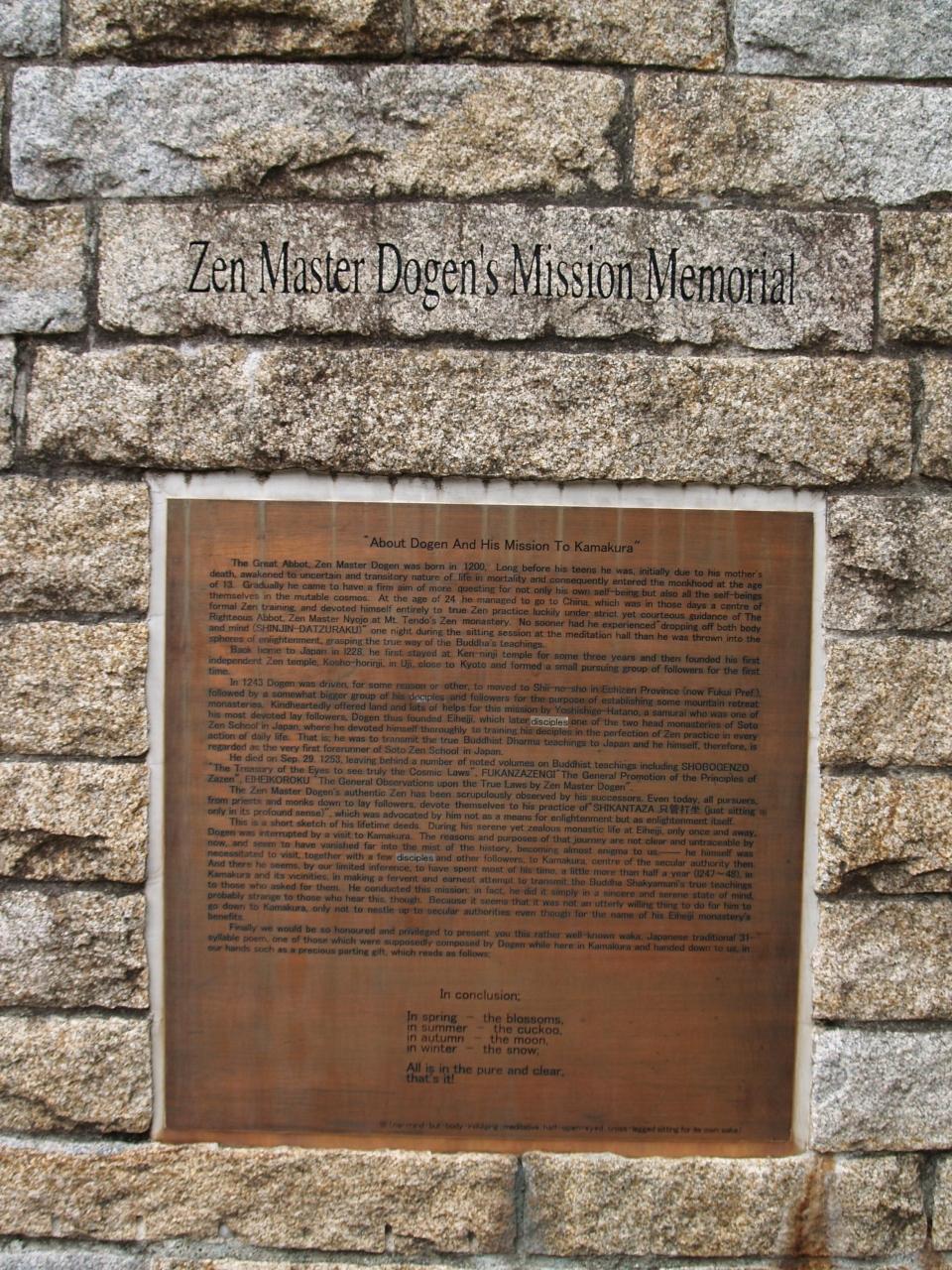
Zen Master Dogen's Mission Memorial.
"About Dogen And His Mission To Kamakura"
The Great Abbot, Zen Master Dogen was born in 1200. Long before his teens he was, initially due to his mother's death, awakened to uncertain and transitory nature of life in mortality and consequently entered the monkhood at the age of 13. Gradually he came to have a firm aim of more guesting for not only his own self-being but also all the self-beings themselves in the mutable cosmos. At the age of 24 he managed to go to China, which was in those days a centre of formal Zen training, and devoted himself entirely to true Zen practice luckily under strict yet courteous guidance of The Righteous Abbot, Zen Master Nyojo at Mt. Tendo's Zen monastery.
No sooner had he experienced "dropping off both body and mind (SHINJIN-DATZURAKU)" one night during the sitting session at the meditation hall than he was thrown into the spheres of enlightenment, grasping the true way of the Buddha's teachings.
Back home to Japan in 1228, he first stayed at Ken-ninji temple for some three years and then founded his first independent Zen temple, Kosho-horinji, in Uji, close to Kyoto and formed a small pursuing group of followers for the first time.
In 1243 Dogen was driven, for some reason or other, to moved to Shii-no-sho in Echizen Province (now Fukui Pref.), followed by a somewhat bigger group of his deciples and followers for the purpose of establishing some mountain retreat monasteries. Kindheartedly offered land and lots of helps for this mission by Yoshishige-Hatano, a samurai who was one of his most devoted lay followers, Dogen thus founded Eiheiji, which later deciples one of the two head monasteries of Soto Zen School in Japan, where he devoted himself thoroughly to training his deciples in the perfection of Zen practice in every action of daily life.
That is; he was to transmit the true Buddhist Dharma teachings to Japan and he himself, therefore, is regarded as the very first forerunner of Soto Zen School in Japan.
He died on Sep. 29. 1253, leaving behind a number of noted volumes on Buddhist teachings including SHOBOGENZO "The Treasury of the Eyes to see truly the Cosmic Laws", FUKANZAZENGI "The General Promotion of the Principles of Zazen", EIHEIKOROKU "The General Observations upon the True Laws by Zen Master Dogen".
The Zen Master Dogen's authentic Zen has been scrupulously observed by his successors. Even today, all pursuers, from priests and monks down to lay followers, devote themselves to his practice of "SHIKANTAZA 只管打坐 (just sitting only in its profound sense)",Which was advocated by him not as a means for enlightenment but as enlightenment itself.
This is a short sketch of his lifetime deeds. During his serene yet zealous monastic life at Eiheiji, only once and away, Dogen was interrupted by a visit to Kamakura. The reasons and purposes of that journey are not clear and untraceable by now, and seem to have vanished far into the mist of the history, becoming almost enigma to us,- he himself was necessitated to visit, together with a few deciples and other followers, to Kamakura, centre of secular authority then.
And there he seems, by our limited inference, to have spent most of his time, a little more than half a year (1247-1248), in Kamakura and its vicinities, in making a fervent and earnest attempt to transmit the Buddha Shakyamuni's true teachings to those who asked for them.
He conducted this mission; in fact, he did it simply in a sincere and serene state of mind, probably strange to those who hear this, though.
Because it seems that it was not an utterly willing thing to do for him to go down to Kamakura, only not to nestle up to secular authorities even though for the name of his Eiheiji monastery's benefits.
Finally we would be so honoured and privileged to present you this rather well-known waka, Japanese traditional 31-syllable poem, one of those which were supposedly composed by Dogen while here in Kamakura and handed down to us, in our hands such as a precious parting gift, which reads as follows;
In conclusion;
In spring - the blossoms,
in summer - the cuckoo,
in autumn - the moon,
in winter - the snow;
All is in the pure and clear,
that'sit!
この旅行記のタグ


利用規約に違反している投稿は、報告する事ができます。
コメントを投稿する前に
十分に確認の上、ご投稿ください。 コメントの内容は攻撃的ではなく、相手の気持ちに寄り添ったものになっていますか?
サイト共通ガイドライン(利用上のお願い)報道機関・マスメディアの方へ 画像提供などに関するお問い合わせは、専用のお問い合わせフォームからお願いいたします。

鎌倉(神奈川) の旅行記





フォートラベル公式LINE@

おすすめの旅行記や旬な旅行情報、お得なキャンペーン情報をお届けします!
QRコードが読み取れない場合はID「@4travel」で検索してください。
\その他の公式SNSはこちら/



0
5