ロンドン旅行記(ブログ) 一覧に戻る
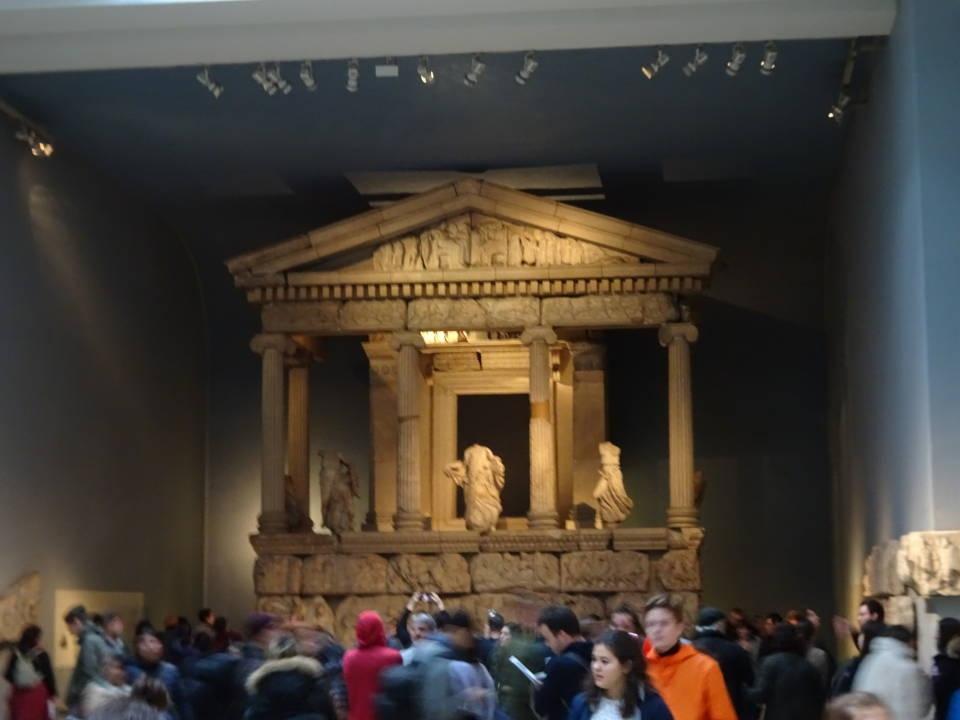
ヨーロッパに住んでいて今更、ロンドン観光。いつでも行けると思っていると結局行っていない典型的な例。<br />この旅行記は2020年2月のもの。見どころ満載の大英博物館にほぼ終日いました。(雨も降っていたこともあるけど)<br /><br />2日目 ウェストミンスター大聖堂、大英博物館(中編)<br /><br />大英博物館、ギリシャ・ローマ関連の展示です。<br />表紙の写真はネレイデス・モニュメント(Room 17)<br />

ロンドン(London) 2日目 大英博物館(中編)

6いいね!

2020/02/08 - 2020/02/11

6305位(同エリア10328件中)

0

61

something like that

something like thatさん

ヨーロッパに住んでいて今更、ロンドン観光。いつでも行けると思っていると結局行っていない典型的な例。
この旅行記は2020年2月のもの。見どころ満載の大英博物館にほぼ終日いました。(雨も降っていたこともあるけど)

2日目 ウェストミンスター大聖堂、大英博物館(中編)

大英博物館、ギリシャ・ローマ関連の展示です。
表紙の写真はネレイデス・モニュメント(Room 17)

旅行の満足度
4.5
観光
4.5
同行者
一人旅
交通手段
徒歩
旅行の手配内容
個別手配
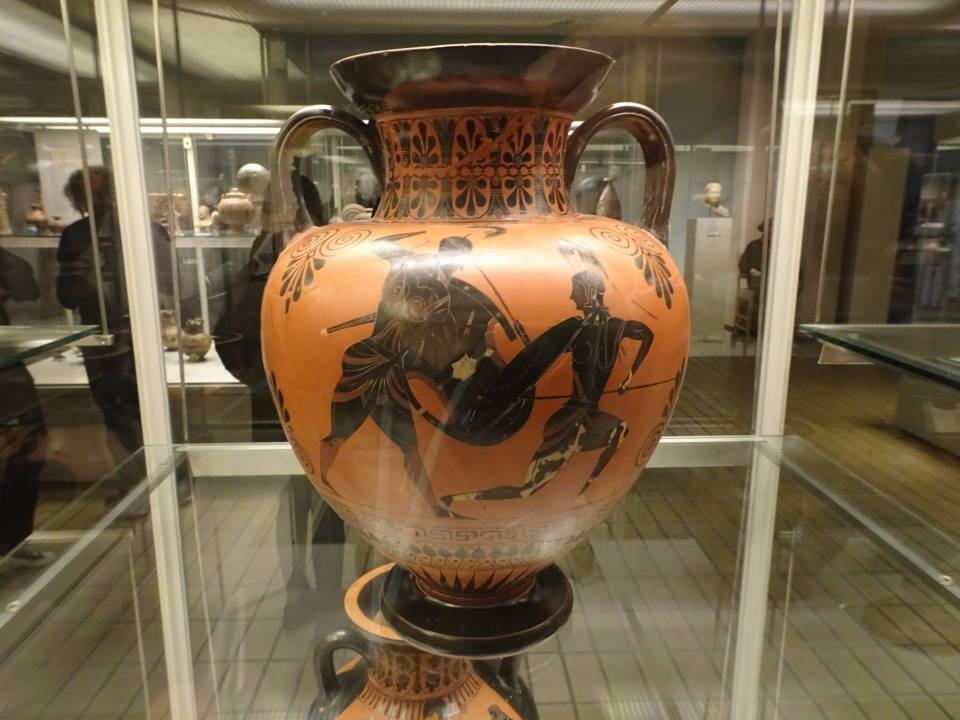
  • Black-figured amphora(アンフォラ)(jar) with Achilles and Penthesileia<br />(Made in Athens about 540-530BC)<br />attributed to the painter Exekias<br /><br />https://www.britishmuseum.org/collection/object/G_1849-0518-10<br /><br />ペンテシレイア(Penthesileia)<br />ギリシャ神話に登場するアマゾン族の女王。トロイア戦争でトロイア方に加勢した。描かれているのは、英雄アキレウスが女王ペンテシレイアを恋に落ちながらも槍で突き殺している場面。<br /><br />作者エクセキアスExekias<br />Exekias (Ancient Greek: ?ξηκίας, Exēkías) was an ancient Greek vase painter and potter who was active in Athens between roughly 545 BC and 530 BC.Exekias worked mainly in the black-figure technique, which involved the painting of scenes using a clay slip that fired to black, with details created through incision. Exekias is regarded by art historians as an artistic visionary whose masterful use of incision and psychologically sensitive compositions mark him as one of the greatest of all Attic vase painters. The Andokides painter and the Lysippides Painter are thought to have been students of Exekias.(From Wiki)

    Black-figured amphora(アンフォラ)(jar) with Achilles and Penthesileia
    (Made in Athens about 540-530BC)
    attributed to the painter Exekias

    https://www.britishmuseum.org/collection/object/G_1849-0518-10

    ペンテシレイア(Penthesileia)
    ギリシャ神話に登場するアマゾン族の女王。トロイア戦争でトロイア方に加勢した。描かれているのは、英雄アキレウスが女王ペンテシレイアを恋に落ちながらも槍で突き殺している場面。

    作者エクセキアスExekias
    Exekias (Ancient Greek: ?ξηκίας, Exēkías) was an ancient Greek vase painter and potter who was active in Athens between roughly 545 BC and 530 BC.Exekias worked mainly in the black-figure technique, which involved the painting of scenes using a clay slip that fired to black, with details created through incision. Exekias is regarded by art historians as an artistic visionary whose masterful use of incision and psychologically sensitive compositions mark him as one of the greatest of all Attic vase painters. The Andokides painter and the Lysippides Painter are thought to have been students of Exekias.(From Wiki)

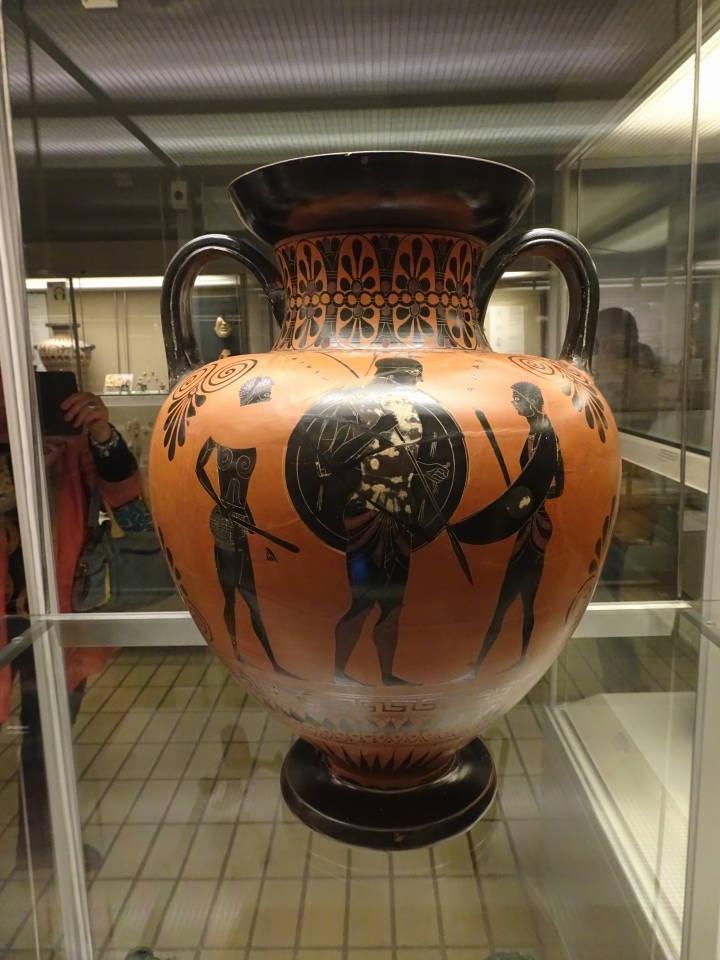
  • Black-figure amphora(jar)<br />Made in Athens, about 540-530BC,<br />attributed to the painter Exekias<br /><br />A warrior with two black African attendants: he is Memnon, mythical king of Ethiopia, who was later killed in the Trojan war. A painted inscription identifies one of the attendants as &#39;Amasis&#39;, the name of the then reigning Egyption pharaoh.

    Black-figure amphora(jar)
    Made in Athens, about 540-530BC,
    attributed to the painter Exekias

    A warrior with two black African attendants: he is Memnon, mythical king of Ethiopia, who was later killed in the Trojan war. A painted inscription identifies one of the attendants as 'Amasis', the name of the then reigning Egyption pharaoh.

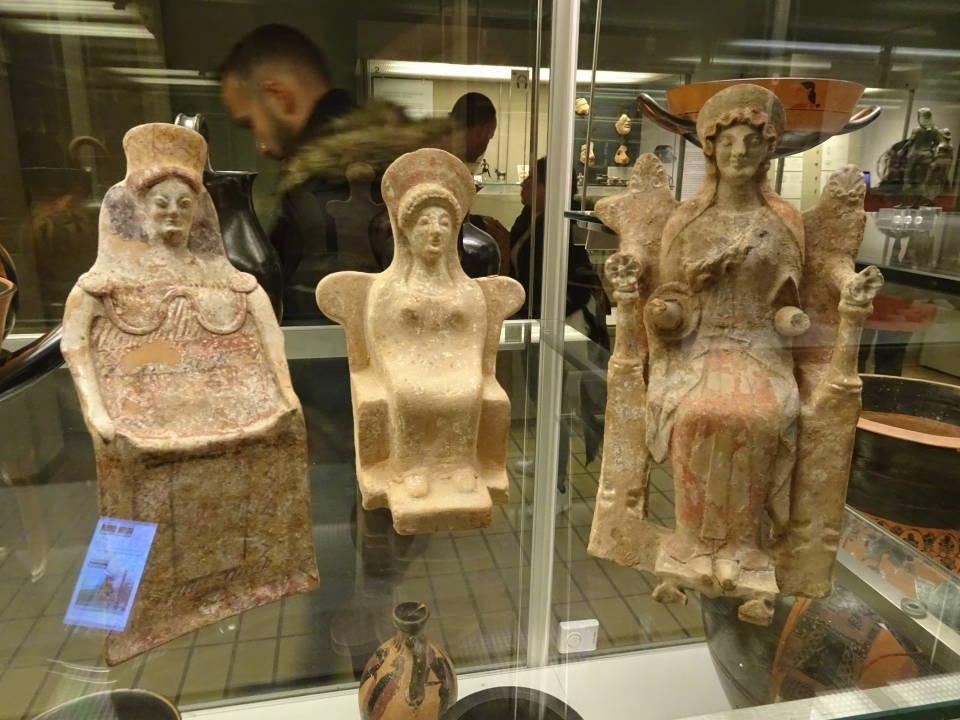
  • Room13<br />Greece<br />1050?520 BC<br />Following the collapse of Mycenaean palace society and a period of relative poverty and isolation, Greece experienced a cultural and political renaissance.<br /><br /><br />Terracotta figures of women or goddesses seateed on thrones<br />Made in Athens, about530-500BC<br /><br />Left: about 530BC, said to be from Thebes<br />Middle: possibly the goddess Athena, about 500BC<br />Right: possibly the goddess Hera or Demeter, about 500BC<br /><br />Room13↓<br />https://artsandculture.google.com/streetview/british-museum/AwEp68JO4NECkQ?sv_h=7.451739270497562&amp;sv_p=-6.059186142328258&amp;sv_pid=3ZYo17kvN9l4bCB0BK6Rmw&amp;sv_lid=3582009757710443819&amp;sv_lng=-0.1273871346515421&amp;sv_lat=51.51856938917452&amp;sv_z=0.6158686808497829<br /><br />

    Room13
    Greece
    1050?520 BC
    Following the collapse of Mycenaean palace society and a period of relative poverty and isolation, Greece experienced a cultural and political renaissance.


    Terracotta figures of women or goddesses seateed on thrones
    Made in Athens, about530-500BC

    Left: about 530BC, said to be from Thebes
    Middle: possibly the goddess Athena, about 500BC
    Right: possibly the goddess Hera or Demeter, about 500BC

    Room13↓
    https://artsandculture.google.com/streetview/british-museum/AwEp68JO4NECkQ?sv_h=7.451739270497562&sv_p=-6.059186142328258&sv_pid=3ZYo17kvN9l4bCB0BK6Rmw&sv_lid=3582009757710443819&sv_lng=-0.1273871346515421&sv_lat=51.51856938917452&sv_z=0.6158686808497829

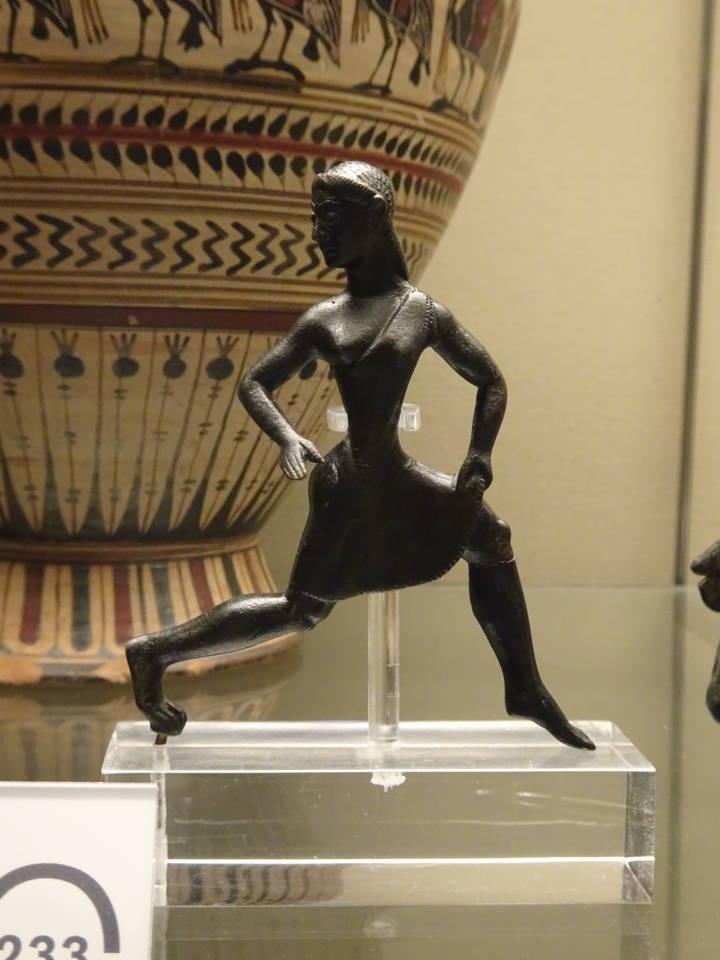
  • 見た目がちょっと面白い銅像<br /><br />Bronze running girl<br />Greek, perhaps Laconian, 6th century BC<br />Said to be from Prizren in Yugoslavia<br /><br />上の説明文は博物館にあったものだが、ユーゴスラビア自体が解体しており、随分と古い。プリズレン(Prizren)は現在のコソボ。南部に位置する歴史的な都市。

    見た目がちょっと面白い銅像

    Bronze running girl
    Greek, perhaps Laconian, 6th century BC
    Said to be from Prizren in Yugoslavia

    上の説明文は博物館にあったものだが、ユーゴスラビア自体が解体しており、随分と古い。プリズレン(Prizren)は現在のコソボ。南部に位置する歴史的な都市。

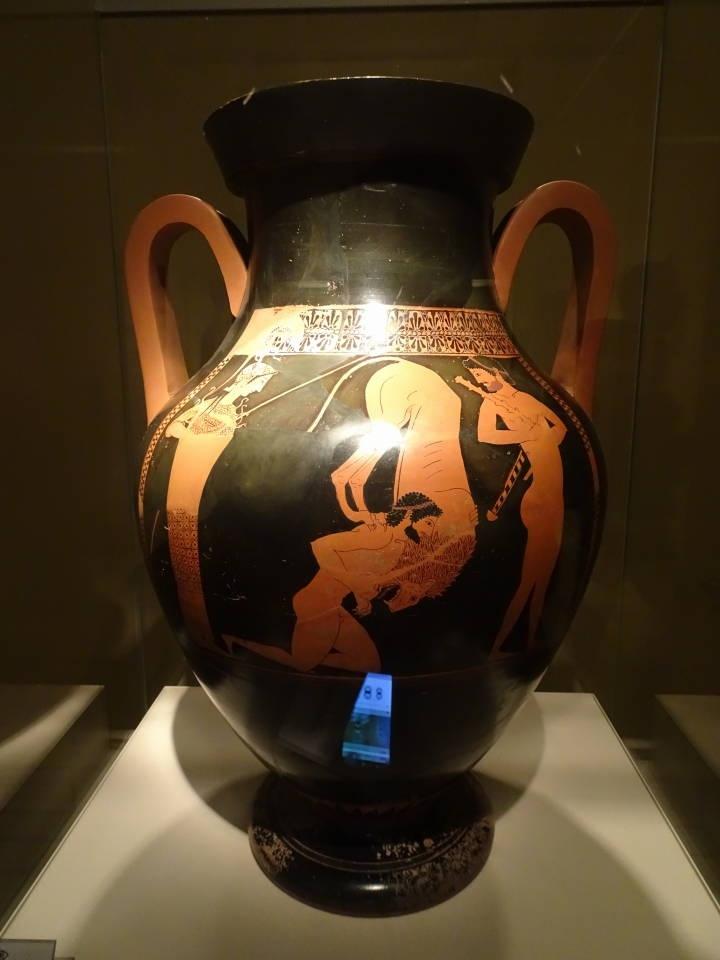
  • &#39;Bilingual&#39; amphora(jar):<br />Herakles fights the Nemean Lion, watched by Athena and Iolaos<br /><br />Made in Athens about 520-500BC; this side of the vase is attributed to the Andokides Painter, the black-figured scene on he reverse (Ajax and Achilles playing dice) to the Lysippides Painter(sorry, no picture)

    'Bilingual' amphora(jar):
    Herakles fights the Nemean Lion, watched by Athena and Iolaos

    Made in Athens about 520-500BC; this side of the vase is attributed to the Andokides Painter, the black-figured scene on he reverse (Ajax and Achilles playing dice) to the Lysippides Painter(sorry, no picture)

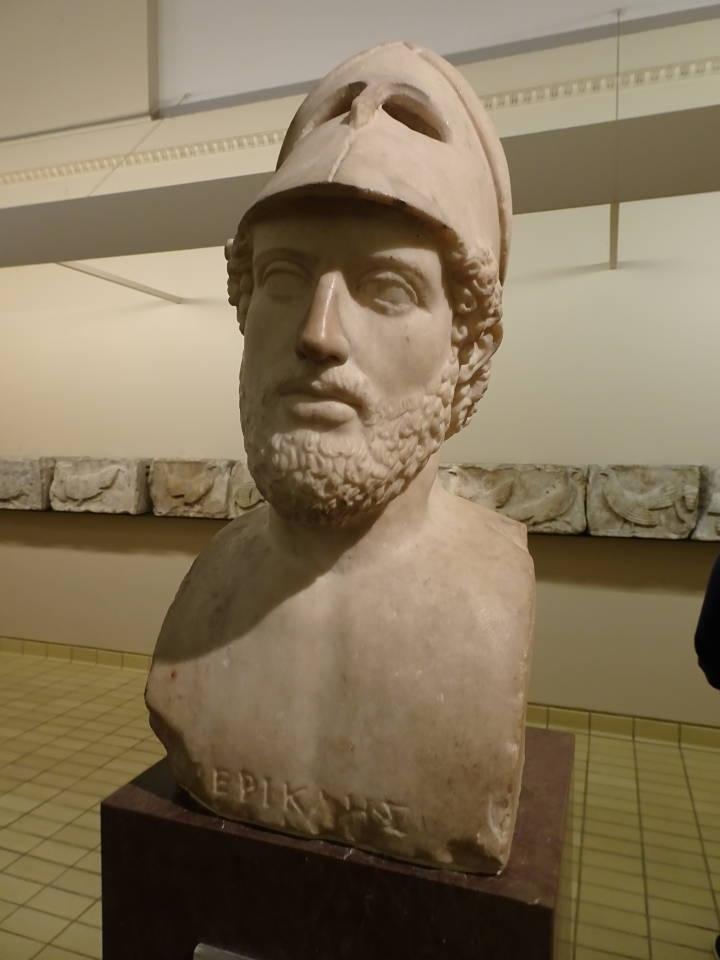
  • Room 15<br />Greece: Athens and Lycia<br />Following the defeat of the Persian invasion of Greece in 480?479 BC, democratic Athens built up a powerful maritime empire.<br /><br />Perikles, citizen and soldier<br /><br />Perikles(died 429BC) was famous for his public speaking, which enabled him to rule Athens at the height of her empire. With a military helmet pushed back on the head, Perikles is the model of a citizen soldier. This idealised image presents him as &#39;fair of face and sound of heart&#39;(Kalos kai agathos).<br /><br />Roman, 2nd century AD copy of a lost Greek original of around 440-430BC<br /><br />ペリクレス(ペリクレース、古希: Περικλ?ς、紀元前495年? - 紀元前429年)は、古代アテナイの政治家・将官であり、アテナイの最盛期を築き上げた重鎮として有名である。また、彼と愛人アスパシアとの間に生まれた庶子で、後に軍人になった小ペリクレス(英語版)と区別して大ペリクレスとも呼ばれる。<br />ペリクレスは紀元前495年頃にアテナイで生まれた。父は紀元前479年のミュカレの戦いの指揮官クサンティッポス、母はクレイステネスの姪であり、アナクサゴラスの弟子でもあった。紀元前462年、ペリクレスは貴族派のキモンが出征中の不在を狙って、民主派のエフィアルテスとともにアレオパゴス会議の実権を奪って、全アテナイ市民による政治参加を促進した。翌年、キモンが陶片追放によって正式に国外追放されると、以後アテナイの最高権力者の地位を独占した。<br />前444年から430年までの15年間、ペリクレスは毎年連続ストラテゴス=「将軍職」に選出され、アテナイに全盛時代をもたらした。また、キモンが古くからの領地による富の再配分を行なっていたのに対し、ペリクレスは自ら積極的にアゴラでの売買を行い、アテナイが商業的なアゴラを推進するきっかけともなった。<br />この頃、ペルシア戦争に勝利したアテナイは全盛時代を迎えていた。大国ペルシアの脅威が薄れると、デロス同盟の盟主であったアテナイはその同盟資金を自己の繁栄のために流用するようになった。デロス同盟は対ペルシア防衛機関という本来の主旨を失い、いわゆる「アテナイ帝国」を支える機関へと変質を遂げていたのである。ペリクレスはデロス島において管理していた同盟資金をアテナイでの管理に移し、パルテノン神殿などの公共工事に同盟資金を積極的に流用しアテナイ市民の懐を潤した。アテナイが同盟内のポリスに対して専制的に振る舞うようになると、同盟から離脱しようとするポリスとの間に対立が生じるようになる。また、ペルシア戦争の勝利に大きな貢献をしたもう一つの有力ポリススパルタもアテナイの動きを冷ややかに見ていた。スパルタがデロス同盟から離反したポリスを支援するようになると、紀元前431年、両者の間に戦争が勃発した(ペロポネソス戦争)。ペリクレスは強力なスパルタ陸軍に対し籠城策をとり、海上決戦の機会を狙っていたが、翌年にアテナイの疫病が発生したことで多くの市民が犠牲となって急速に市民の支持を失った。この時に取った戦争方針から「防御的な行動で敵の疲弊を待ち、現状維持を狙う戦略」をペリクレス戦略と呼ぶことがある。<br />自らもアテナイの疫病に罹って没した。死の直前、アテナイの法律の変更により、アスパシアとの半分アテナイ人の息子・小ペリクレスにアテナイ市民権を与え、正当な相続人とした。これは、ペリクレス自身が市民権を両親がアテナイ人の人に限定する法律を提案したため、衝撃的な決断であった。<br /><br />ペリクレスは弁舌に優れた政治家であった。格調高いペリクレスの演説は現代にまで伝えられ、欧米の政治家の手本となっている。1954年に発行されたギリシャの旧50ドラクマ紙幣の肖像に使用されている。紀元前432年に、ペリクレスが3人の女が拉致されたのを受けてメガラに対して交易を禁止する「メガラ法令」を発したので、経済制裁の父とも言われる。(Wikiより)<br /><br />最近頻繁に耳にする「経済制裁」を最初に行った人らしい。

    Room 15
    Greece: Athens and Lycia
    Following the defeat of the Persian invasion of Greece in 480?479 BC, democratic Athens built up a powerful maritime empire.

    Perikles, citizen and soldier

    Perikles(died 429BC) was famous for his public speaking, which enabled him to rule Athens at the height of her empire. With a military helmet pushed back on the head, Perikles is the model of a citizen soldier. This idealised image presents him as 'fair of face and sound of heart'(Kalos kai agathos).

    Roman, 2nd century AD copy of a lost Greek original of around 440-430BC

    ペリクレス(ペリクレース、古希: Περικλ?ς、紀元前495年? - 紀元前429年)は、古代アテナイの政治家・将官であり、アテナイの最盛期を築き上げた重鎮として有名である。また、彼と愛人アスパシアとの間に生まれた庶子で、後に軍人になった小ペリクレス(英語版)と区別して大ペリクレスとも呼ばれる。
    ペリクレスは紀元前495年頃にアテナイで生まれた。父は紀元前479年のミュカレの戦いの指揮官クサンティッポス、母はクレイステネスの姪であり、アナクサゴラスの弟子でもあった。紀元前462年、ペリクレスは貴族派のキモンが出征中の不在を狙って、民主派のエフィアルテスとともにアレオパゴス会議の実権を奪って、全アテナイ市民による政治参加を促進した。翌年、キモンが陶片追放によって正式に国外追放されると、以後アテナイの最高権力者の地位を独占した。
    前444年から430年までの15年間、ペリクレスは毎年連続ストラテゴス=「将軍職」に選出され、アテナイに全盛時代をもたらした。また、キモンが古くからの領地による富の再配分を行なっていたのに対し、ペリクレスは自ら積極的にアゴラでの売買を行い、アテナイが商業的なアゴラを推進するきっかけともなった。
    この頃、ペルシア戦争に勝利したアテナイは全盛時代を迎えていた。大国ペルシアの脅威が薄れると、デロス同盟の盟主であったアテナイはその同盟資金を自己の繁栄のために流用するようになった。デロス同盟は対ペルシア防衛機関という本来の主旨を失い、いわゆる「アテナイ帝国」を支える機関へと変質を遂げていたのである。ペリクレスはデロス島において管理していた同盟資金をアテナイでの管理に移し、パルテノン神殿などの公共工事に同盟資金を積極的に流用しアテナイ市民の懐を潤した。アテナイが同盟内のポリスに対して専制的に振る舞うようになると、同盟から離脱しようとするポリスとの間に対立が生じるようになる。また、ペルシア戦争の勝利に大きな貢献をしたもう一つの有力ポリススパルタもアテナイの動きを冷ややかに見ていた。スパルタがデロス同盟から離反したポリスを支援するようになると、紀元前431年、両者の間に戦争が勃発した(ペロポネソス戦争)。ペリクレスは強力なスパルタ陸軍に対し籠城策をとり、海上決戦の機会を狙っていたが、翌年にアテナイの疫病が発生したことで多くの市民が犠牲となって急速に市民の支持を失った。この時に取った戦争方針から「防御的な行動で敵の疲弊を待ち、現状維持を狙う戦略」をペリクレス戦略と呼ぶことがある。
    自らもアテナイの疫病に罹って没した。死の直前、アテナイの法律の変更により、アスパシアとの半分アテナイ人の息子・小ペリクレスにアテナイ市民権を与え、正当な相続人とした。これは、ペリクレス自身が市民権を両親がアテナイ人の人に限定する法律を提案したため、衝撃的な決断であった。

    ペリクレスは弁舌に優れた政治家であった。格調高いペリクレスの演説は現代にまで伝えられ、欧米の政治家の手本となっている。1954年に発行されたギリシャの旧50ドラクマ紙幣の肖像に使用されている。紀元前432年に、ペリクレスが3人の女が拉致されたのを受けてメガラに対して交易を禁止する「メガラ法令」を発したので、経済制裁の父とも言われる。(Wikiより)

    最近頻繁に耳にする「経済制裁」を最初に行った人らしい。

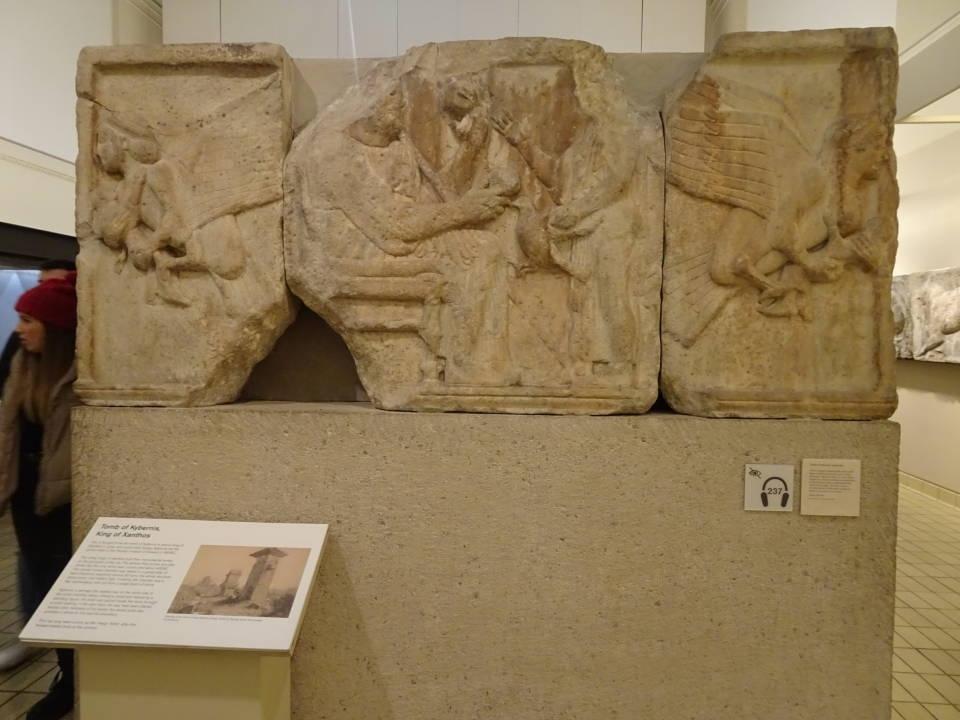
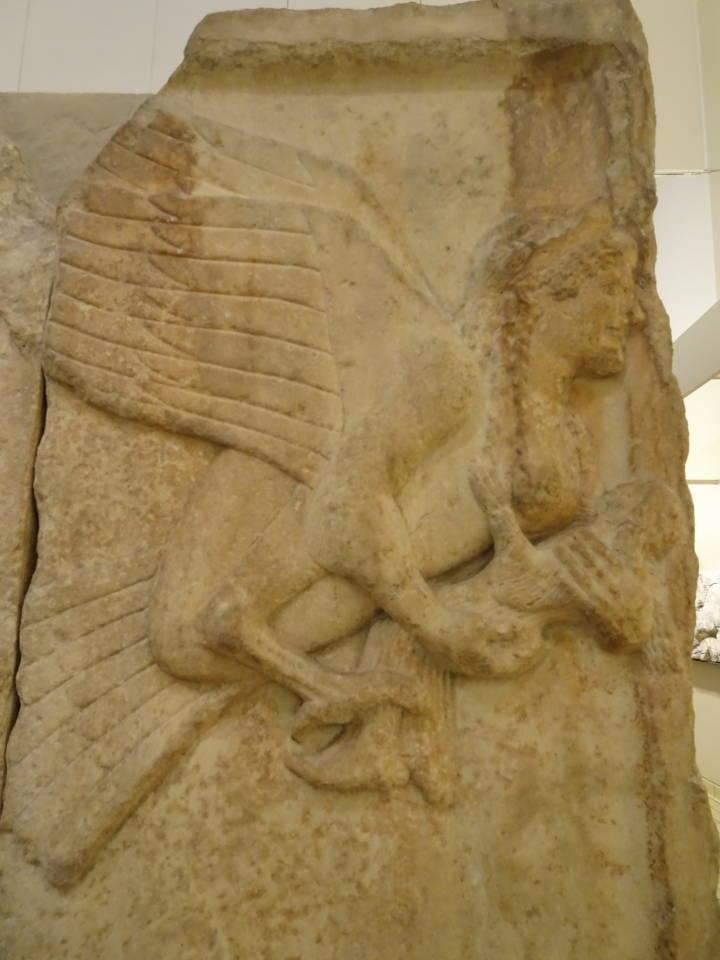
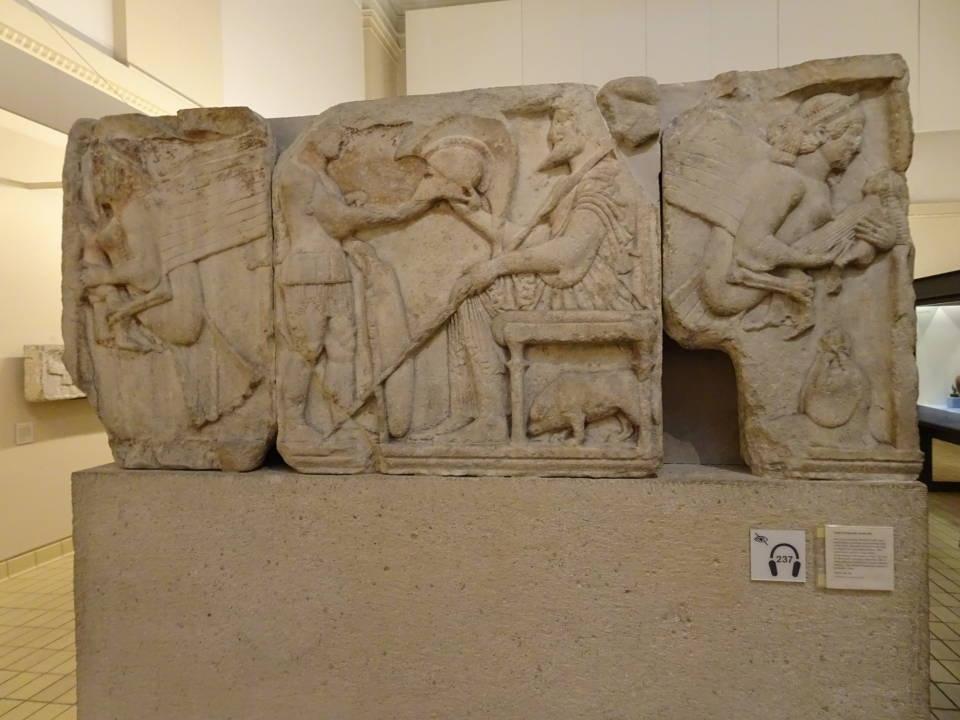
  • Room 15<br />Greece: Athens and Lycia<br /><br />Tomb of Kybernis, King of Xanthos: south side(南面)<br /><br />This is thought to be the tomb of Kybernis, a warrior king of Xanthos in Lycia(リキアのザントス), now south-west Turky. Kybernis or Kubernis (ruled 520-480 BCE), also abbreviated KUB on his coins in Lycian, called Cyberniscus son of Sicas by Herodotus(ヘロドトス), was a dynast of Lycia, at the beginning of the time it was under the domination of the Achaemenid Empire(アケメネス朝ペルシア). Kybernis led the Lycian ships in the Persian invasion of Greece in 480BC.<br /><br />The ruling kings of Xanthos built their monumental tombs on the acropolis of the city. The earliest that survive are pillar tombs like this one, which was constructed about 480BC. The carved marble chamber was raised on a great pillar of dark limestone weighting around 80 tons: the whole structure stood some nine meters high. Covering the chamber was a flat, overhanging roof, cut from a single block of stone.<br /><br />Kybernis is perhaps the seated man on the north side of the tomb chamber, being offered a shield and helmet by a standing figure. His body was placed inside the tomb through a small opening in the west face. He may have been placed beside other members of his family: the whole tomb was probably a shrine to him and his ancestors.<br /><br />This has log been known as the &#39;Harpy Tomb&#39;, after the famale-headed birds at the corners.<br /><br />Xanthos ザントス、クサントス<br />Lycia リキア、リュキア<br /><br />https://artsandculture.google.com/streetview/british-museum/AwEp68JO4NECkQ?sv_h=349.86086848194736&amp;sv_p=-8.242474376556615&amp;sv_pid=oKtDTX0r2nUcko-uHWi9fg&amp;sv_lid=3582009757710443819&amp;sv_lng=-0.1275615147935696&amp;sv_lat=51.51872880545051&amp;sv_z=0.7264665122163256

    Room 15
    Greece: Athens and Lycia

    Tomb of Kybernis, King of Xanthos: south side(南面)

    This is thought to be the tomb of Kybernis, a warrior king of Xanthos in Lycia(リキアのザントス), now south-west Turky. Kybernis or Kubernis (ruled 520-480 BCE), also abbreviated KUB on his coins in Lycian, called Cyberniscus son of Sicas by Herodotus(ヘロドトス), was a dynast of Lycia, at the beginning of the time it was under the domination of the Achaemenid Empire(アケメネス朝ペルシア). Kybernis led the Lycian ships in the Persian invasion of Greece in 480BC.

    The ruling kings of Xanthos built their monumental tombs on the acropolis of the city. The earliest that survive are pillar tombs like this one, which was constructed about 480BC. The carved marble chamber was raised on a great pillar of dark limestone weighting around 80 tons: the whole structure stood some nine meters high. Covering the chamber was a flat, overhanging roof, cut from a single block of stone.

    Kybernis is perhaps the seated man on the north side of the tomb chamber, being offered a shield and helmet by a standing figure. His body was placed inside the tomb through a small opening in the west face. He may have been placed beside other members of his family: the whole tomb was probably a shrine to him and his ancestors.

    This has log been known as the 'Harpy Tomb', after the famale-headed birds at the corners.

    Xanthos ザントス、クサントス
    Lycia リキア、リュキア

    https://artsandculture.google.com/streetview/british-museum/AwEp68JO4NECkQ?sv_h=349.86086848194736&sv_p=-8.242474376556615&sv_pid=oKtDTX0r2nUcko-uHWi9fg&sv_lid=3582009757710443819&sv_lng=-0.1275615147935696&sv_lat=51.51872880545051&sv_z=0.7264665122163256

  • Room 15<br />Greece: Athens and Lycia<br /><br />Tomb of Kybernis, King of Xanthos: south side(南面)<br />(写真は前写真の右側拡大)<br /><br />Sirens, female-headed birds, hold small figures which may be the souls of the deceased. Between them is male figure seated on a throne holding a pomegranate(ザクロの木、実) in his left hand and an indeterminable object in his right. In front of him a woman carries a bird while raising her hand in a gesture of reverence(敬意). About 480BC

    Room 15
    Greece: Athens and Lycia

    Tomb of Kybernis, King of Xanthos: south side(南面)
    (写真は前写真の右側拡大)

    Sirens, female-headed birds, hold small figures which may be the souls of the deceased. Between them is male figure seated on a throne holding a pomegranate(ザクロの木、実) in his left hand and an indeterminable object in his right. In front of him a woman carries a bird while raising her hand in a gesture of reverence(敬意). About 480BC

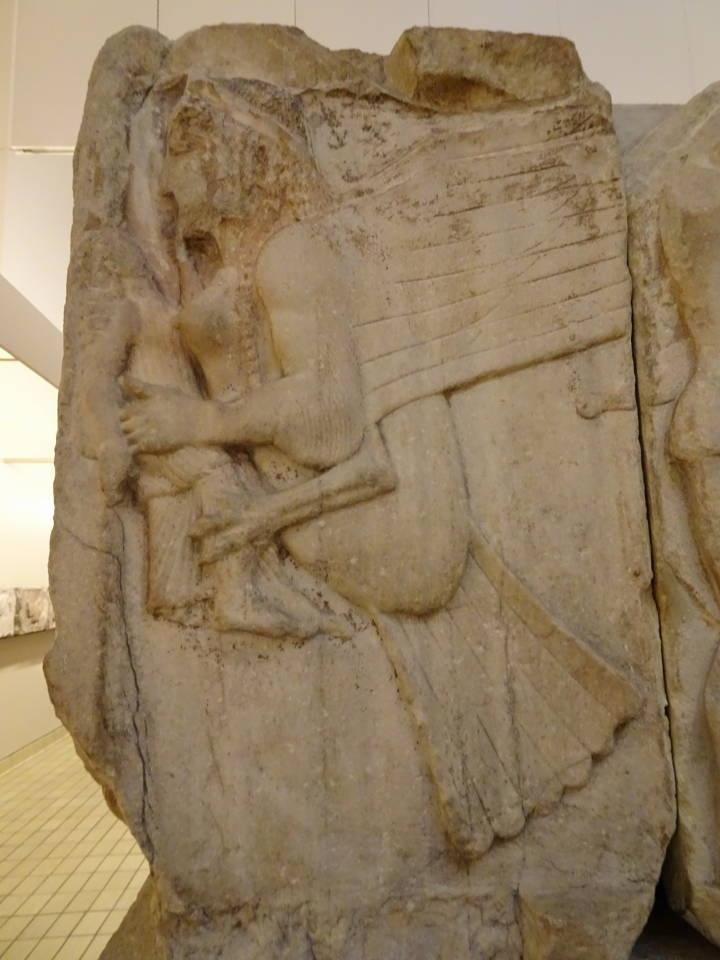
  • Room 15<br />Greece: Athens and Lycia<br /><br />Tomb of Kybernis, King of Xanthos: North side(北面)<br /><br />Two sirens(human-headed birds) carry small figures, perhaps representing souls of the dead. Beneath the one on the right is a figure of a mouring woman. The seated man carries a long sceptre terminating in the head of a bird. He may be the tomb&#39;s occupant, Kybernis, who is being offered a helmet by a youth wearing armour. The animal beneath the throne is probably a bear. About 480BC<br /><br />

    Room 15
    Greece: Athens and Lycia

    Tomb of Kybernis, King of Xanthos: North side(北面)

    Two sirens(human-headed birds) carry small figures, perhaps representing souls of the dead. Beneath the one on the right is a figure of a mouring woman. The seated man carries a long sceptre terminating in the head of a bird. He may be the tomb's occupant, Kybernis, who is being offered a helmet by a youth wearing armour. The animal beneath the throne is probably a bear. About 480BC

  • Room 15<br />Greece: Athens and Lycia<br /><br />Tomb of Kybernis, King of Xanthos: North side(北面)<br />(左側のセイレーンの拡大)

    Room 15
    Greece: Athens and Lycia

    Tomb of Kybernis, King of Xanthos: North side(北面)
    (左側のセイレーンの拡大)

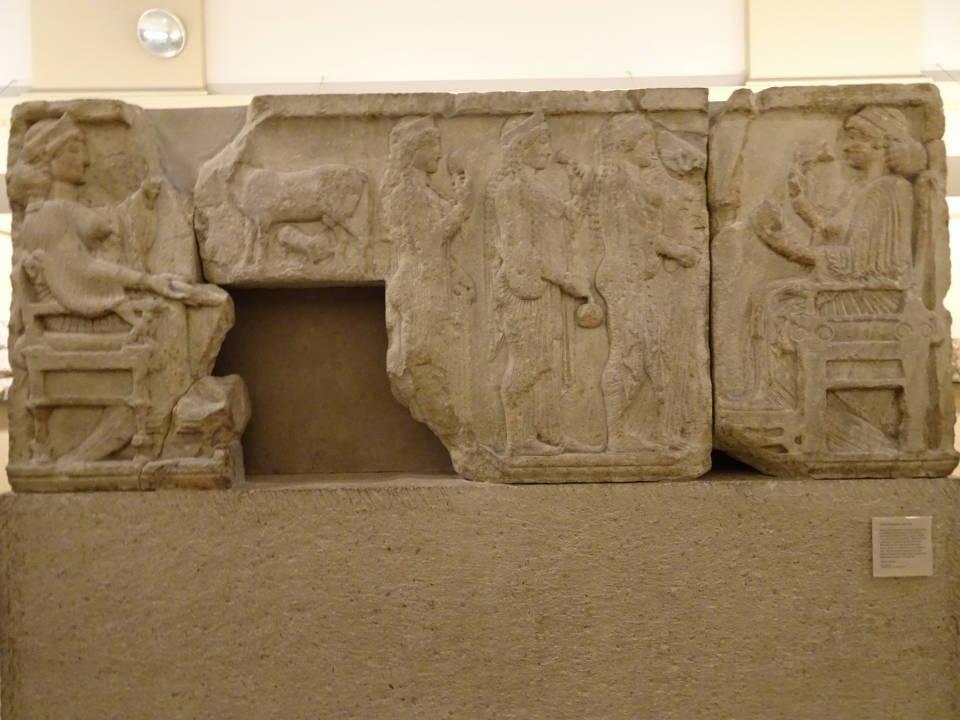
  • Room 15<br />Greece: Athens and Lycia<br /><br />Tomb of Kybernis, King of Xanthos: West side(西面)<br /><br />Three girls approach a seated woman who is holding a pomegranate and a flower, while behind them another woman holds out a libation bowl(phiale)(献酒). This may be a ceremony for gods or deified ancestors. This side has the opening of the tomb above which is a relief of the tomb above which is a relief of a cow suckling a calf. The same motif appears on coins minted during the reign of the Lycian ruler Sppndaza between 475-469BC.

    Room 15
    Greece: Athens and Lycia

    Tomb of Kybernis, King of Xanthos: West side(西面)

    Three girls approach a seated woman who is holding a pomegranate and a flower, while behind them another woman holds out a libation bowl(phiale)(献酒). This may be a ceremony for gods or deified ancestors. This side has the opening of the tomb above which is a relief of the tomb above which is a relief of a cow suckling a calf. The same motif appears on coins minted during the reign of the Lycian ruler Sppndaza between 475-469BC.

  • Room 15<br />Greece: Athens and Lycia<br /><br />Tomb of Kybernis, King of Xanthos: East side(東面)<br /><br />A man with a long beard is seated on a throne. The arm of his throne is supported by a miniature, fish-tailed triton. The man is approached by a boy holding a cockerel(若いおんどり) and a youth with his dog. Behind the throne two further figures hold offerings. The seated man may be Harpagus(メディアのハルパゴス), founder of the Xanthian dynasty, and the scene may represent offerings being brought to deceased ancestors. About 480BC<br /><br />ハルパゴス(希:?ρπαγος、ラテン文字転写:Harpagos、紀元前6世紀)はメディア王国およびアケメネス朝ペルシア王国の将軍である。メディアに反旗を翻したキュロス2世に協力し、同国を滅ぼした。

    Room 15
    Greece: Athens and Lycia

    Tomb of Kybernis, King of Xanthos: East side(東面)

    A man with a long beard is seated on a throne. The arm of his throne is supported by a miniature, fish-tailed triton. The man is approached by a boy holding a cockerel(若いおんどり) and a youth with his dog. Behind the throne two further figures hold offerings. The seated man may be Harpagus(メディアのハルパゴス), founder of the Xanthian dynasty, and the scene may represent offerings being brought to deceased ancestors. About 480BC

    ハルパゴス(希:?ρπαγος、ラテン文字転写:Harpagos、紀元前6世紀)はメディア王国およびアケメネス朝ペルシア王国の将軍である。メディアに反旗を翻したキュロス2世に協力し、同国を滅ぼした。

  • Room 15<br />Greece: Athens and Lycia<br /><br />Hero shrines on the acropolis of Xanthos<br /><br />The sculpture on the walls of this gallery come from the acropolis(citadel) of the Lycian city of Xanthos. This was rebuilt during the reign of Kuprlli, king of Xanthos (480-440BC), with richly sculptured shrines of Lycian heroes.<br />

    Room 15
    Greece: Athens and Lycia

    Hero shrines on the acropolis of Xanthos

    The sculpture on the walls of this gallery come from the acropolis(citadel) of the Lycian city of Xanthos. This was rebuilt during the reign of Kuprlli, king of Xanthos (480-440BC), with richly sculptured shrines of Lycian heroes.

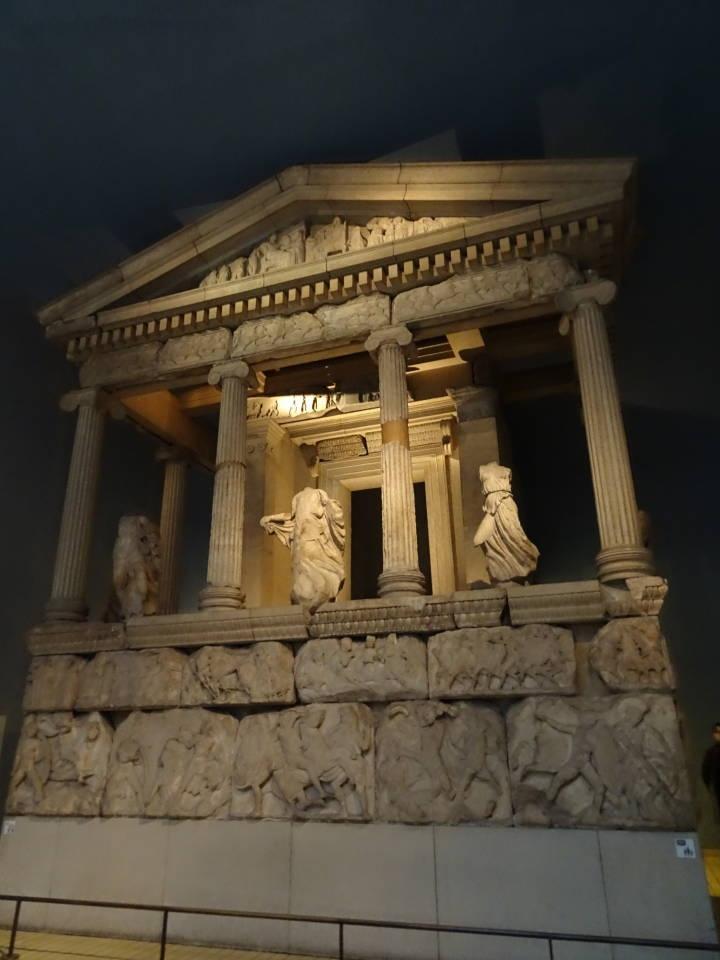
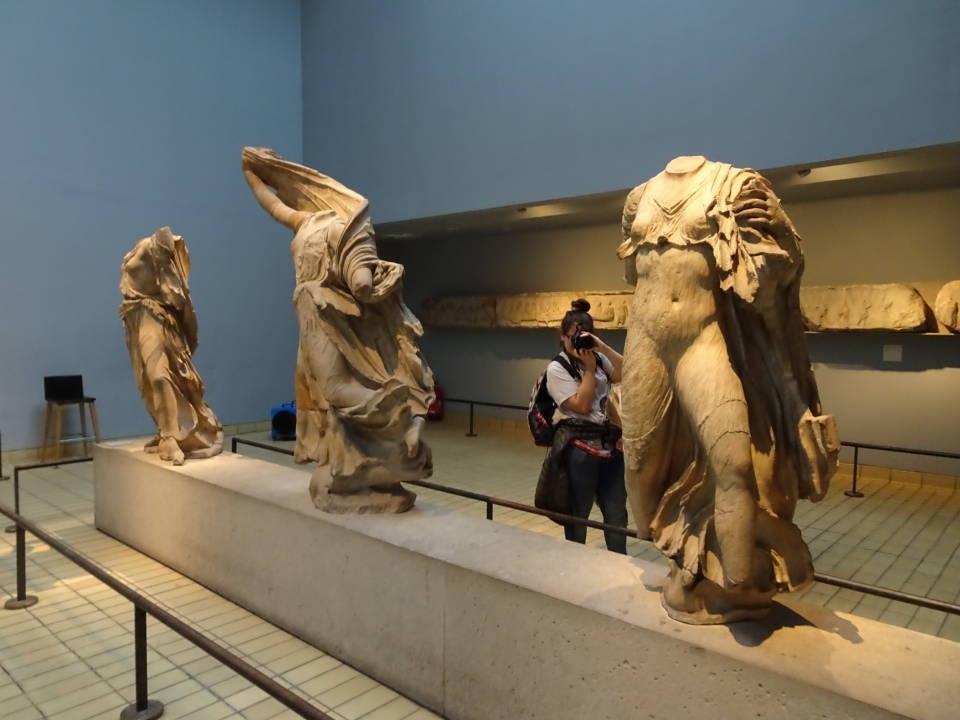
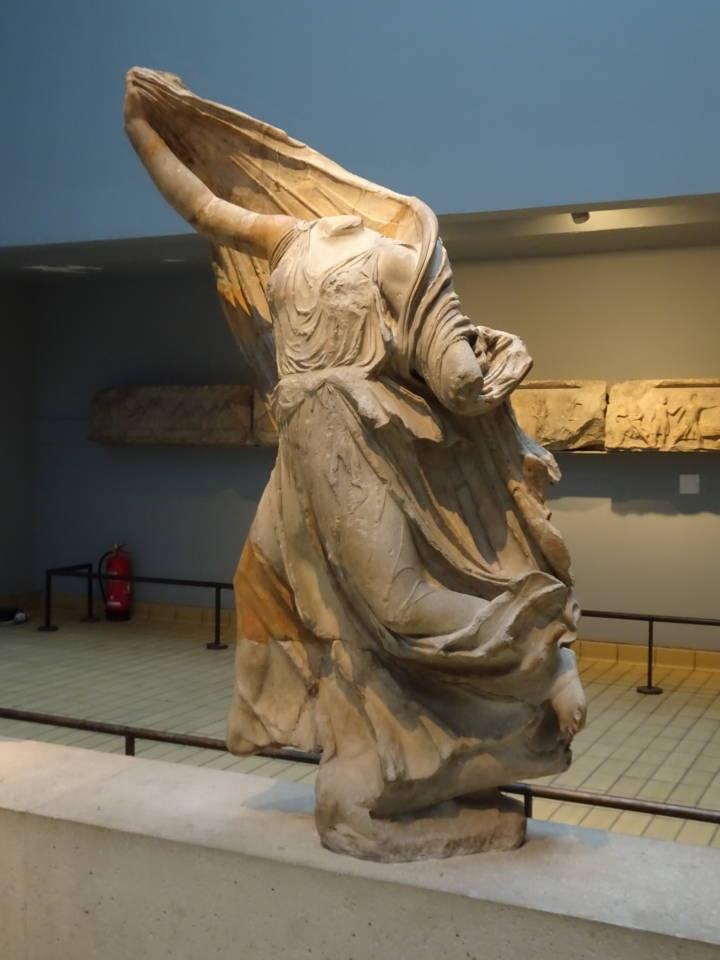
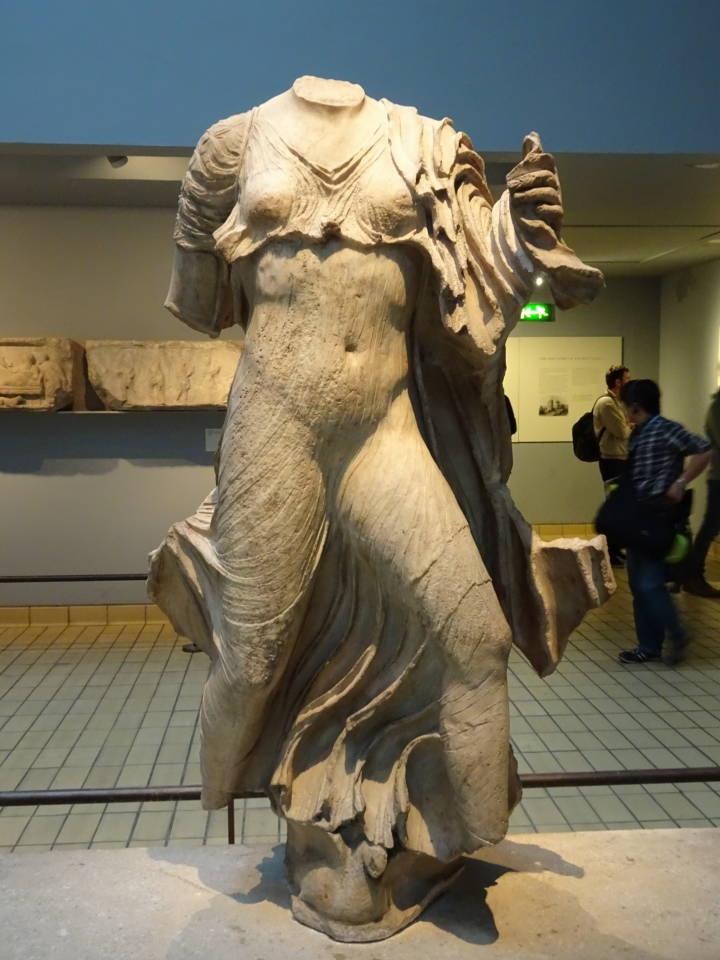
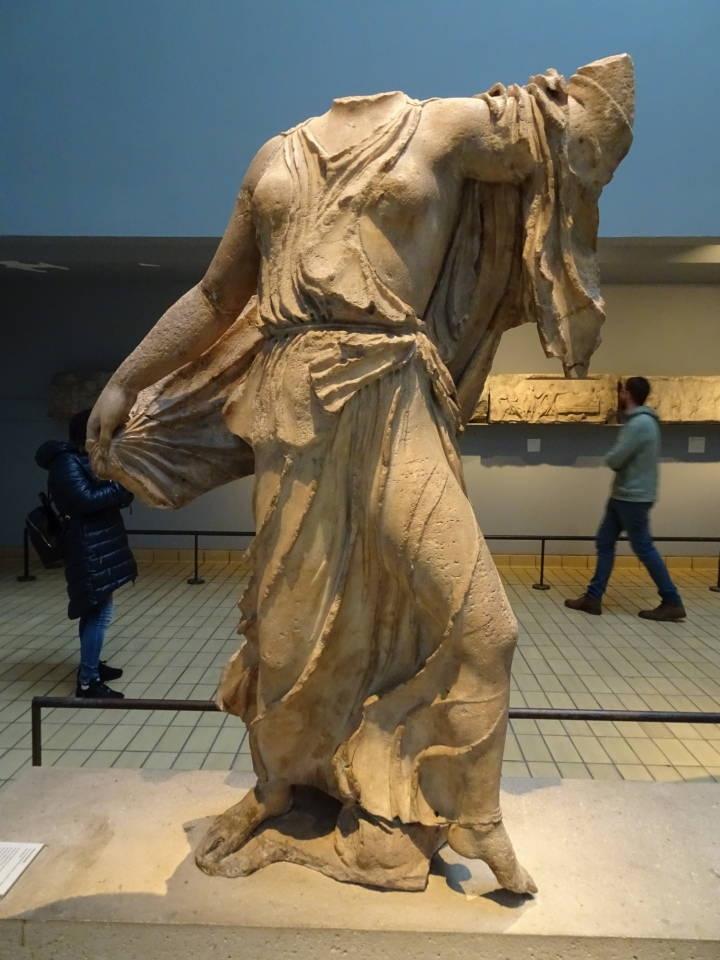
  • Room 17<br />ネレイデス・モニュメント<br />the Nereid monument<br /><br />現在のアナトリア地方(小アジア)、トルコ南部にあったリュキアの古都クサントスを統治した権力者の墓廟で、紀元前400年頃にギリシャ神殿を模して造られる。柱の間に海神ネレウスの娘たちの像が並んでいることから、名づけられました。当時は東方からのアケメネス朝ペルシアの支配下になったところ。次のイベントは、紀元前330年頃、マケドニアのアレキサンダー大王の東方遠征によりアケメネス朝は滅亡する。<br /><br />Room17の様子は以下のリンクをみてもらうとわかりやすい。<br />https://www.britishmuseum.org/collection/galleries/nereid-monument

    Room 17
    ネレイデス・モニュメント
    the Nereid monument

    現在のアナトリア地方(小アジア)、トルコ南部にあったリュキアの古都クサントスを統治した権力者の墓廟で、紀元前400年頃にギリシャ神殿を模して造られる。柱の間に海神ネレウスの娘たちの像が並んでいることから、名づけられました。当時は東方からのアケメネス朝ペルシアの支配下になったところ。次のイベントは、紀元前330年頃、マケドニアのアレキサンダー大王の東方遠征によりアケメネス朝は滅亡する。

    Room17の様子は以下のリンクをみてもらうとわかりやすい。
    https://www.britishmuseum.org/collection/galleries/nereid-monument

  • Room 17<br />ネレイデス・モニュメント<br />the Nereid monument<br /><br />The Nereid Monument takes its name from the Nereids, the most likely identity of the statues placed between the columns of this monumental tomb.<br />

    Room 17
    ネレイデス・モニュメント
    the Nereid monument

    The Nereid Monument takes its name from the Nereids, the most likely identity of the statues placed between the columns of this monumental tomb.

  • Room 17<br />ネレイデス・モニュメント<br />the Nereid monument<br /><br />Three Nereids<br />From the Nereid Monument, Xanthos, about 390-380BC<br /><br />The three figures are sea nymphs, daughters of the sea god Nereus, riding over the waves on sea creatures. They are thought to have escorted the soul of the deceased on its journey to the afterlife. A sea bird is visible under the feet of the nymph to the far right and partially preserved dolphins support the others. Their dramatic, wind-blown drapery is clinging and almost transparent, wet with sea spray. They were originally placed beween the columns of the tomb.

    Room 17
    ネレイデス・モニュメント
    the Nereid monument

    Three Nereids
    From the Nereid Monument, Xanthos, about 390-380BC

    The three figures are sea nymphs, daughters of the sea god Nereus, riding over the waves on sea creatures. They are thought to have escorted the soul of the deceased on its journey to the afterlife. A sea bird is visible under the feet of the nymph to the far right and partially preserved dolphins support the others. Their dramatic, wind-blown drapery is clinging and almost transparent, wet with sea spray. They were originally placed beween the columns of the tomb.

  • Room 17<br />ネレイデス・モニュメント<br />the Nereid monument<br />

    Room 17
    ネレイデス・モニュメント
    the Nereid monument

  • Room 17<br />ネレイデス・モニュメント<br />the Nereid monument<br />

    Room 17
    ネレイデス・モニュメント
    the Nereid monument

  • Room 17<br />ネレイデス・モニュメント<br />the Nereid monument<br />

    Room 17
    ネレイデス・モニュメント
    the Nereid monument

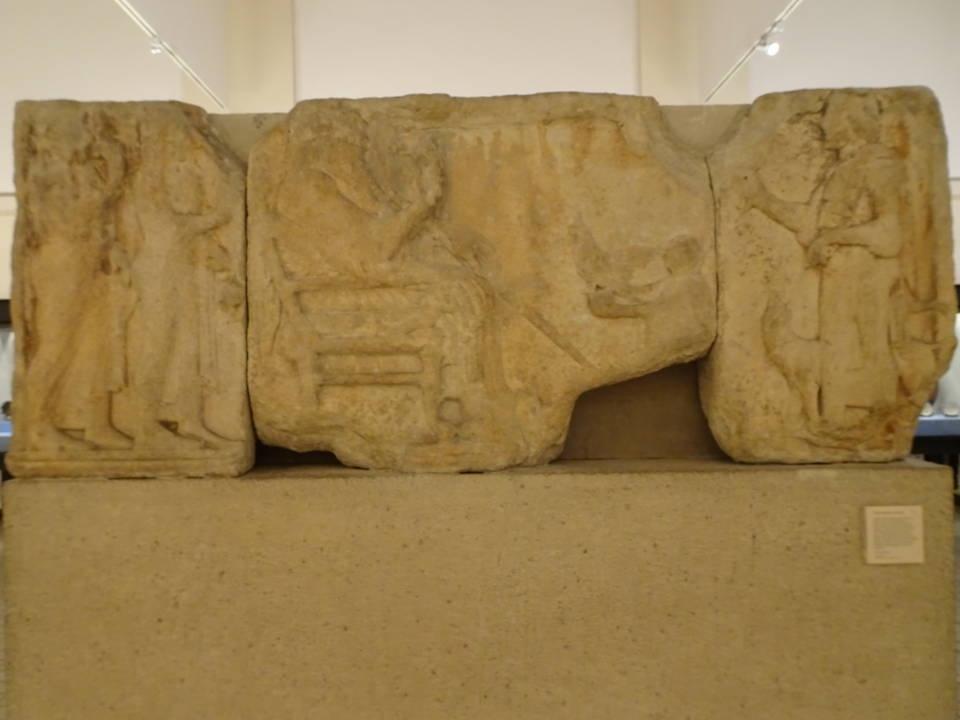
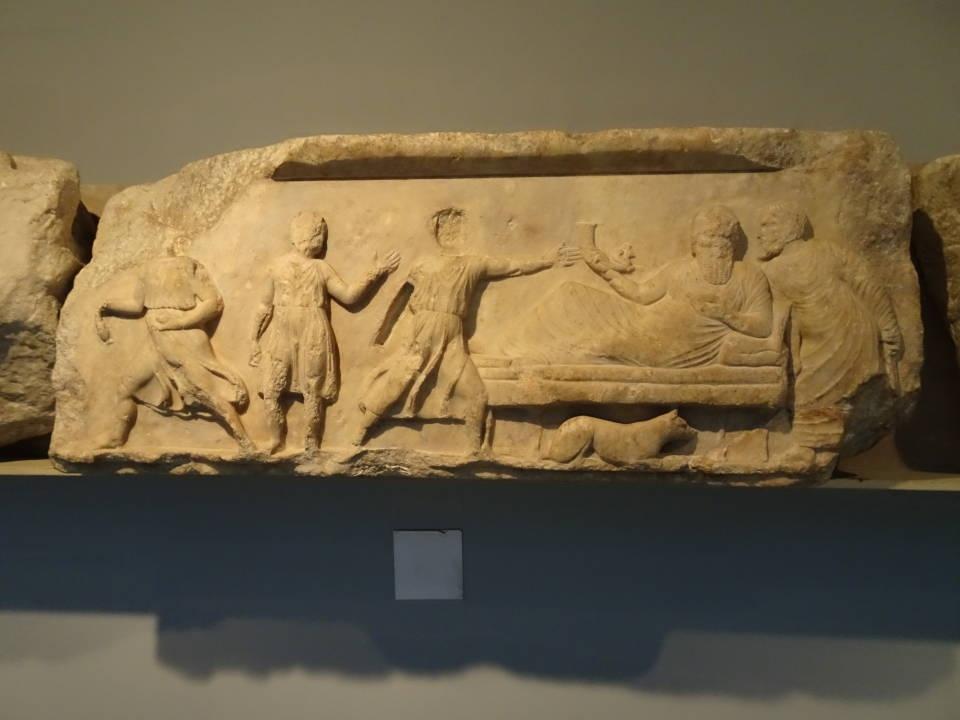
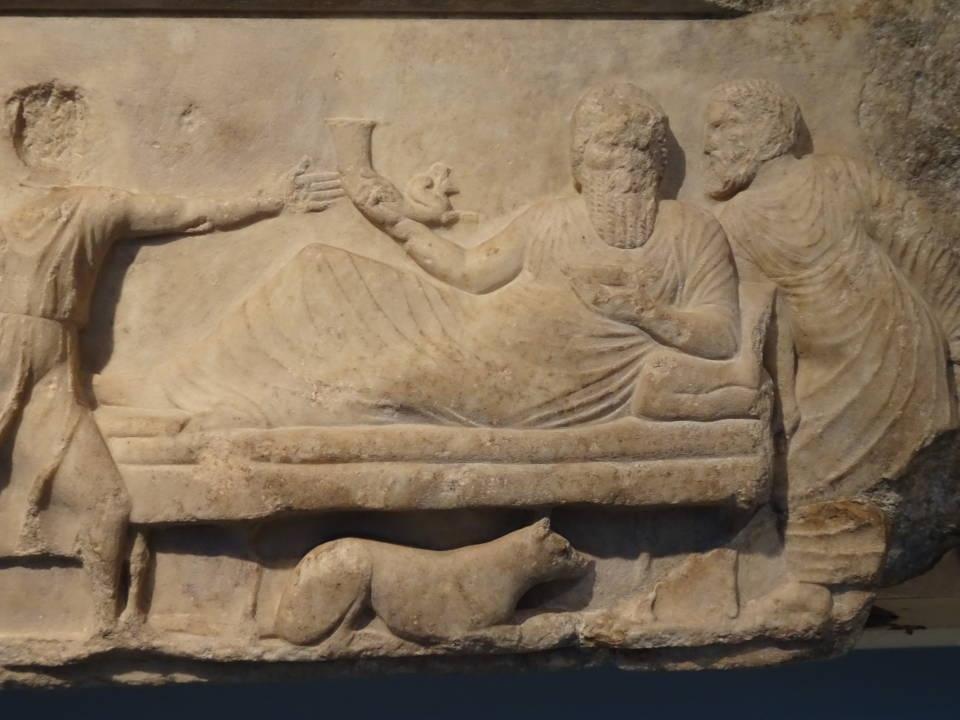
  • Room 17<br />ネレイデス・モニュメント<br />the Nereid monument<br /><br />Part of the fourth frieze<br /><br />Description<br />Part of the fourth frieze, which surmounts the cella of the Nereid monument. It contains scenes of banqueting and sacrifice.<br />This slab shows a banquet scene. A bearded man, facing front, wearing a broad taenia, reclines on a couch with a cushion under his left elbow. He holds a rhyton, terminating in the forepart of a winged ibex, in his right hand. In his left hand he holds a bowl. He probably represents King Arbinas, depicted as an Oriental. An elderly, bearded man, standing near the head of the couch, whispers into his ear. There are three attendants: on the far left one carries a small bowl and a jug; the middle one extends his left hand to the right; the third extends his hand towards the rhyton. A dog lies beneath the couch. Three holes are visible where a cavity piece is missing.<br /><br />390BC-380BC

    Room 17
    ネレイデス・モニュメント
    the Nereid monument

    Part of the fourth frieze

    Description
    Part of the fourth frieze, which surmounts the cella of the Nereid monument. It contains scenes of banqueting and sacrifice.
    This slab shows a banquet scene. A bearded man, facing front, wearing a broad taenia, reclines on a couch with a cushion under his left elbow. He holds a rhyton, terminating in the forepart of a winged ibex, in his right hand. In his left hand he holds a bowl. He probably represents King Arbinas, depicted as an Oriental. An elderly, bearded man, standing near the head of the couch, whispers into his ear. There are three attendants: on the far left one carries a small bowl and a jug; the middle one extends his left hand to the right; the third extends his hand towards the rhyton. A dog lies beneath the couch. Three holes are visible where a cavity piece is missing.

    390BC-380BC

  • Room 17<br />ネレイデス・モニュメント<br />the Nereid monument<br /><br />Part of the fourth frieze<br />(中央部拡大)

    Room 17
    ネレイデス・モニュメント
    the Nereid monument

    Part of the fourth frieze
    (中央部拡大)

  • Room 17<br />ネレイデス・モニュメント<br />the Nereid monument<br />

    Room 17
    ネレイデス・モニュメント
    the Nereid monument

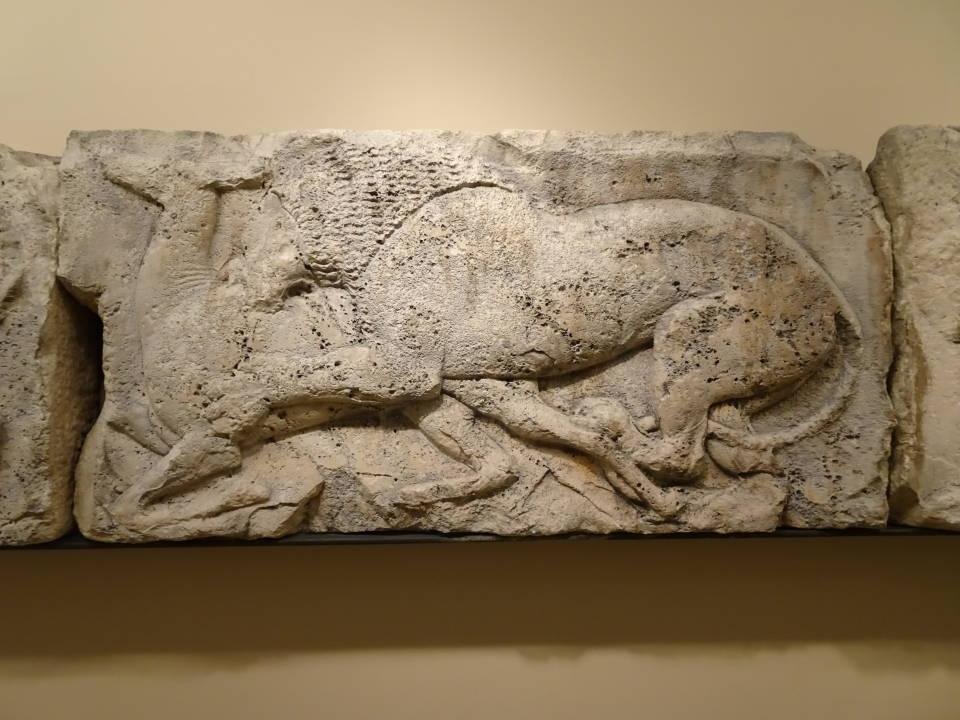
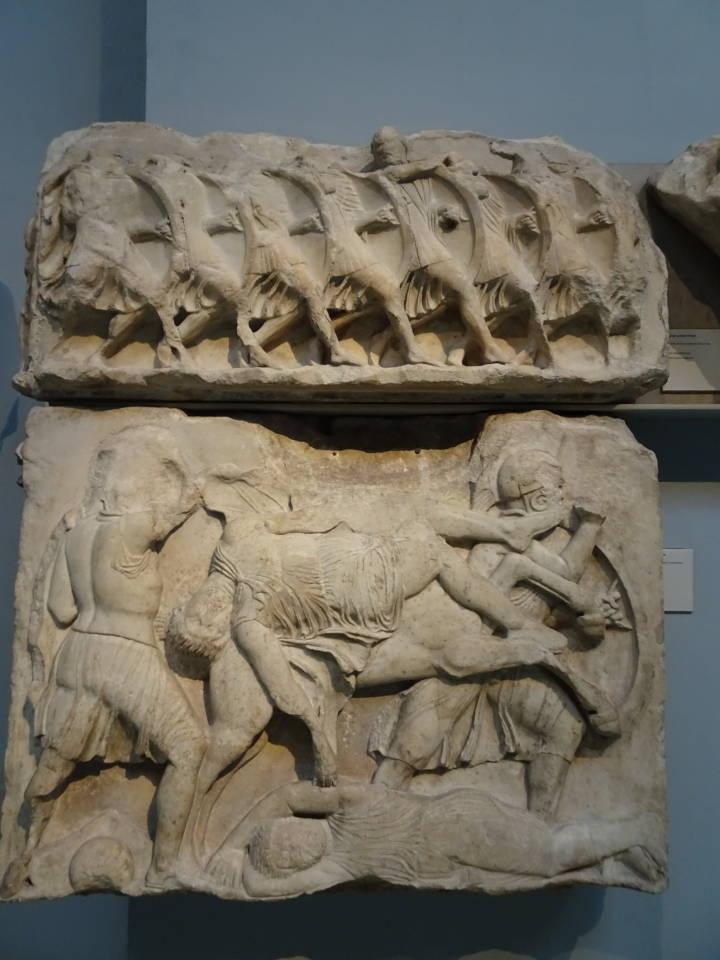
  • Room 17<br />ネレイデス・モニュメント<br />the Nereid monument<br /><br />The horsemen of the North Frieze<br /><br />The horsemen are arranged in a less uniform pattern than those of the south. Nevertheless, as on the south, there were sixty riders in all, arranged into ten ranks. Each rank is marked by a figure placed nearest you and not overlapped by another(see video in adjoining gallery).<br />

    Room 17
    ネレイデス・モニュメント
    the Nereid monument

    The horsemen of the North Frieze

    The horsemen are arranged in a less uniform pattern than those of the south. Nevertheless, as on the south, there were sixty riders in all, arranged into ten ranks. Each rank is marked by a figure placed nearest you and not overlapped by another(see video in adjoining gallery).

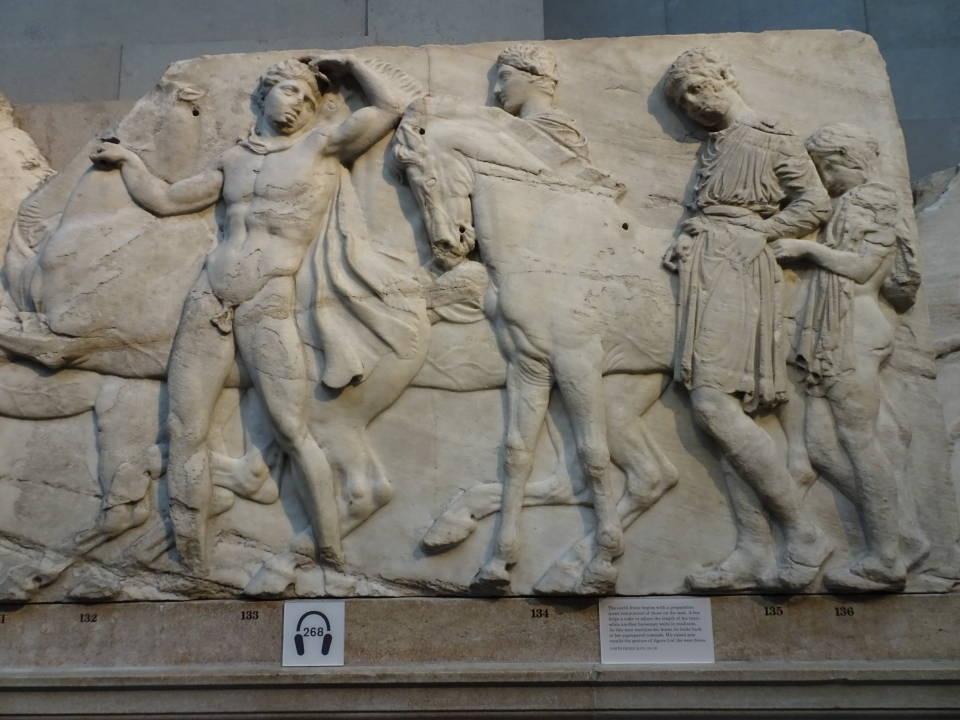
  • Room 17<br />ネレイデス・モニュメント<br />the Nereid monument<br /><br />North Frieze XLVII, 132-136<br /><br />The north frieze begins with a preparation scene reminiscent of those on the west. A boy helps a rider to adjust the length of his tunic, while another horseman waits in readiness. As this man restrains his horse, he looks back at his unpreprared comrade. His raised arm recalls gesture of figure 2 of the west frieze. <br />

    Room 17
    ネレイデス・モニュメント
    the Nereid monument

    North Frieze XLVII, 132-136

    The north frieze begins with a preparation scene reminiscent of those on the west. A boy helps a rider to adjust the length of his tunic, while another horseman waits in readiness. As this man restrains his horse, he looks back at his unpreprared comrade. His raised arm recalls gesture of figure 2 of the west frieze.

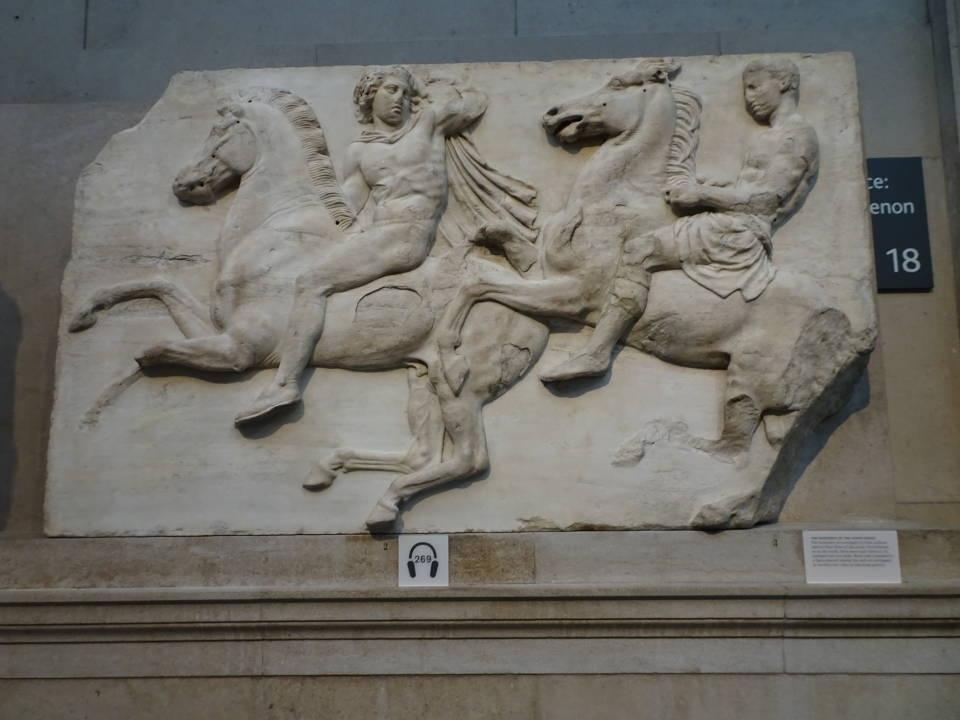
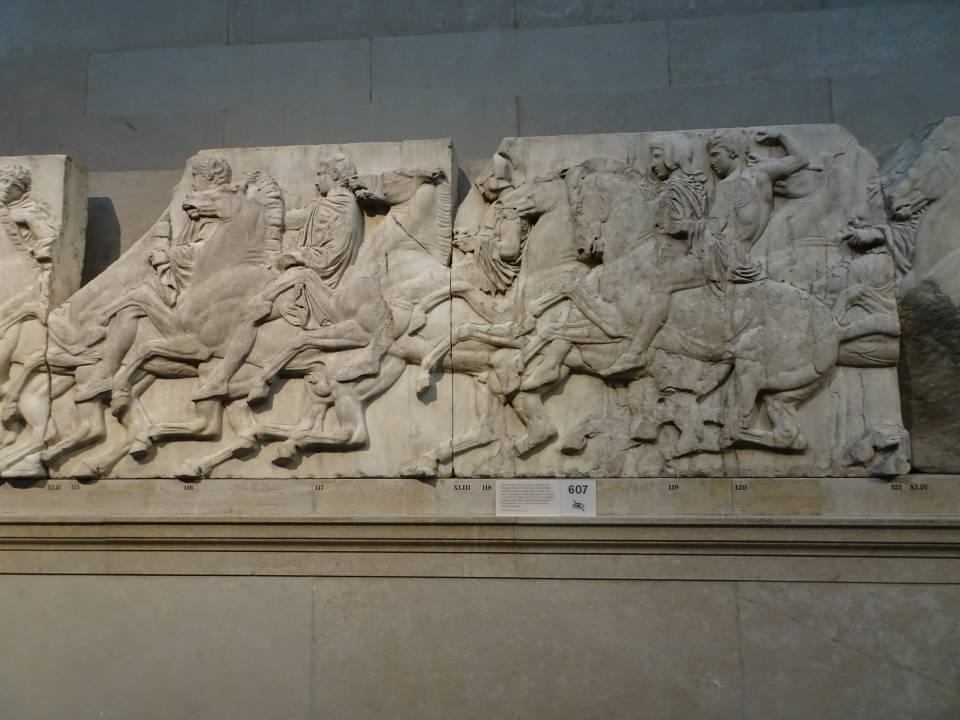
  • Room 17<br />ネレイデス・モニュメント<br />the Nereid monument<br /><br />North Frieze XLIII 118-121<br /><br />The horsemen wear a variety of dress and headgear. Figure118 wears a crested helmet and body armour, draped with a cloak. 119 wears a cloak with deep folds, and on his head a cap with ear flaps and a neck-piece(compare to figure 122). Figure120 rides bare-headed and naked but for a cloak that has fallen around his waist.<br />(画像を小さくしているので、それぞれの人物に割り振られた番号が見えずらいかもしれませんが、中央の割れているところにいる人物が118、その右、ちょっと変わったヘルメットをかぶっているのが119、さらにその右、ヘルメットをかぶらず服も腰まで落ちてはだけているのが120。ひとりひとり描き分けることで躍動感がでています。)

    Room 17
    ネレイデス・モニュメント
    the Nereid monument

    North Frieze XLIII 118-121

    The horsemen wear a variety of dress and headgear. Figure118 wears a crested helmet and body armour, draped with a cloak. 119 wears a cloak with deep folds, and on his head a cap with ear flaps and a neck-piece(compare to figure 122). Figure120 rides bare-headed and naked but for a cloak that has fallen around his waist.
    (画像を小さくしているので、それぞれの人物に割り振られた番号が見えずらいかもしれませんが、中央の割れているところにいる人物が118、その右、ちょっと変わったヘルメットをかぶっているのが119、さらにその右、ヘルメットをかぶらず服も腰まで落ちてはだけているのが120。ひとりひとり描き分けることで躍動感がでています。)

  • Room 17<br />ネレイデス・モニュメント<br />the Nereid monument<br />

    Room 17
    ネレイデス・モニュメント
    the Nereid monument

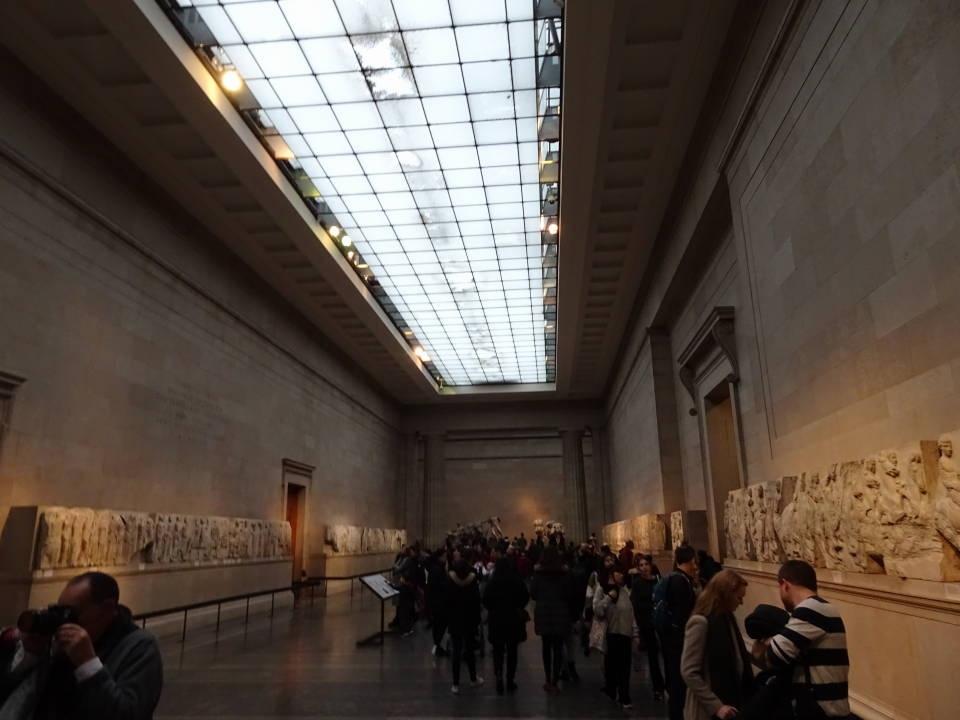
  • Room 18<br />Greece: Parthenon<br />447-432 BC<br /><br />一番、奥までやってきました。ここにはアテネにあるパルテノン神殿の装飾が展示されています。アテネのパルテノン神殿とその博物館に行ったことがあるが、本物はここにあるという、少し違和感がある。ギリシャ政府から返還要求があることでも知られている、ある意味いわくつきの展示品。まあ、入場料取っていないので、個人的には許します。(ギリシャで展示したら、入場料取ると思いますので。)<br /><br />アテナ(Athena) 2日目(古代アゴラ、ローマン・アゴラ、アレオパゴス、アテナイのアクロポリス、新アクロポリス美術館)<br />2018/11/01 - 2018/11/04<br />https://4travel.jp/travelogue/11695987<br /><br />

    Room 18
    Greece: Parthenon
    447-432 BC

    一番、奥までやってきました。ここにはアテネにあるパルテノン神殿の装飾が展示されています。アテネのパルテノン神殿とその博物館に行ったことがあるが、本物はここにあるという、少し違和感がある。ギリシャ政府から返還要求があることでも知られている、ある意味いわくつきの展示品。まあ、入場料取っていないので、個人的には許します。(ギリシャで展示したら、入場料取ると思いますので。)

    アテナ(Athena) 2日目(古代アゴラ、ローマン・アゴラ、アレオパゴス、アテナイのアクロポリス、新アクロポリス美術館)
    2018/11/01 - 2018/11/04
    https://4travel.jp/travelogue/11695987

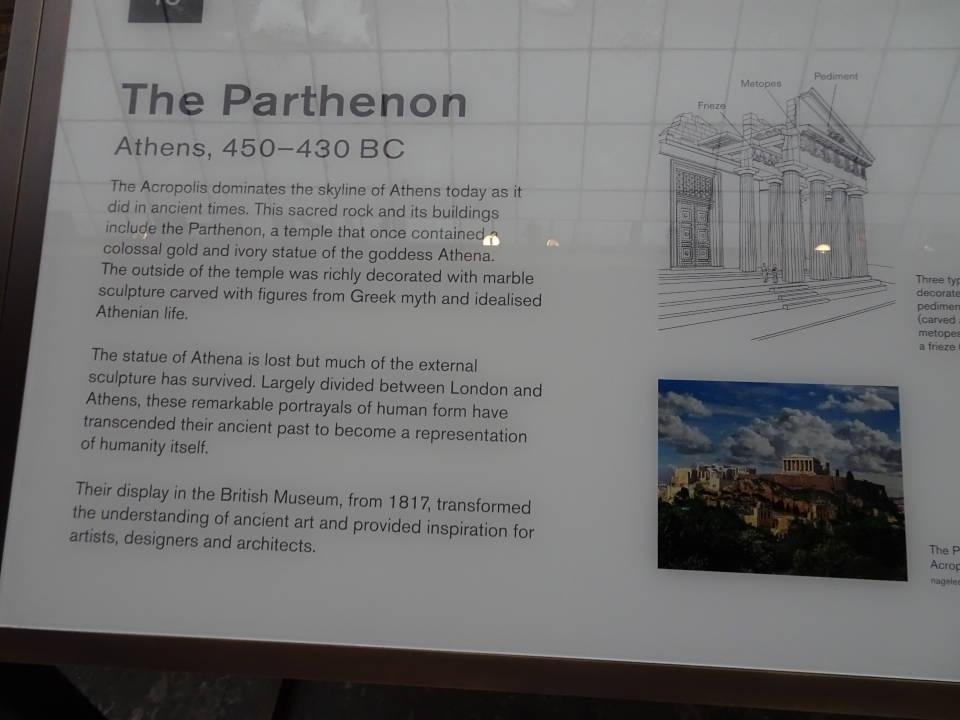
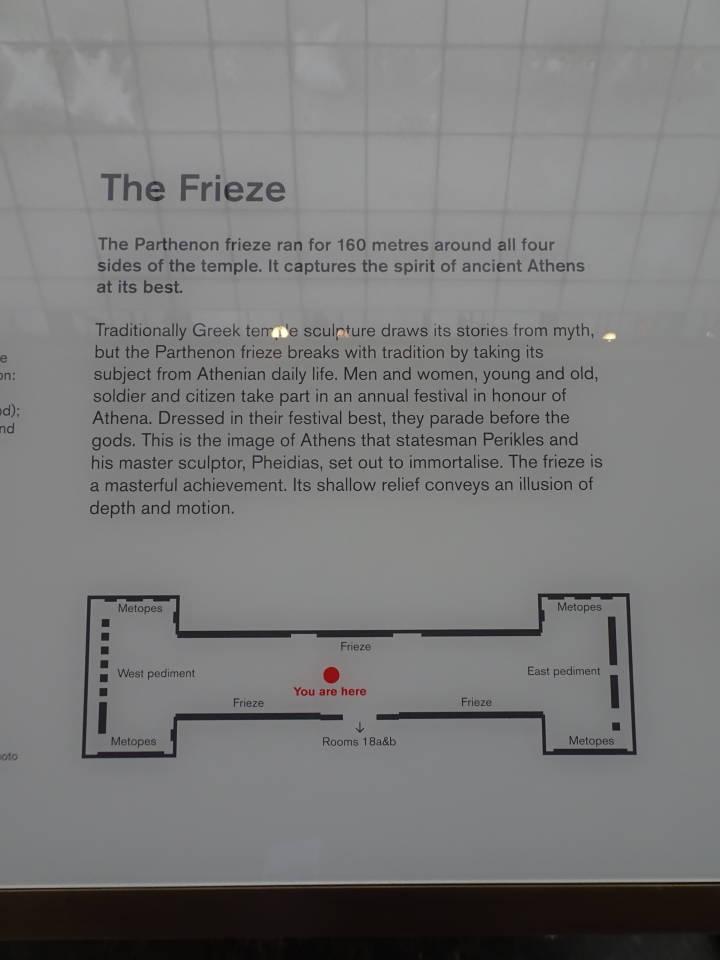
  • Room 18<br />Greece: Parthenon<br />447-432 BC<br /><br />展示室にある説明板。ここは転記せずに写真のままで。最後の3行が少し白々しいか。<br /><br />

    Room 18
    Greece: Parthenon
    447-432 BC

    展示室にある説明板。ここは転記せずに写真のままで。最後の3行が少し白々しいか。

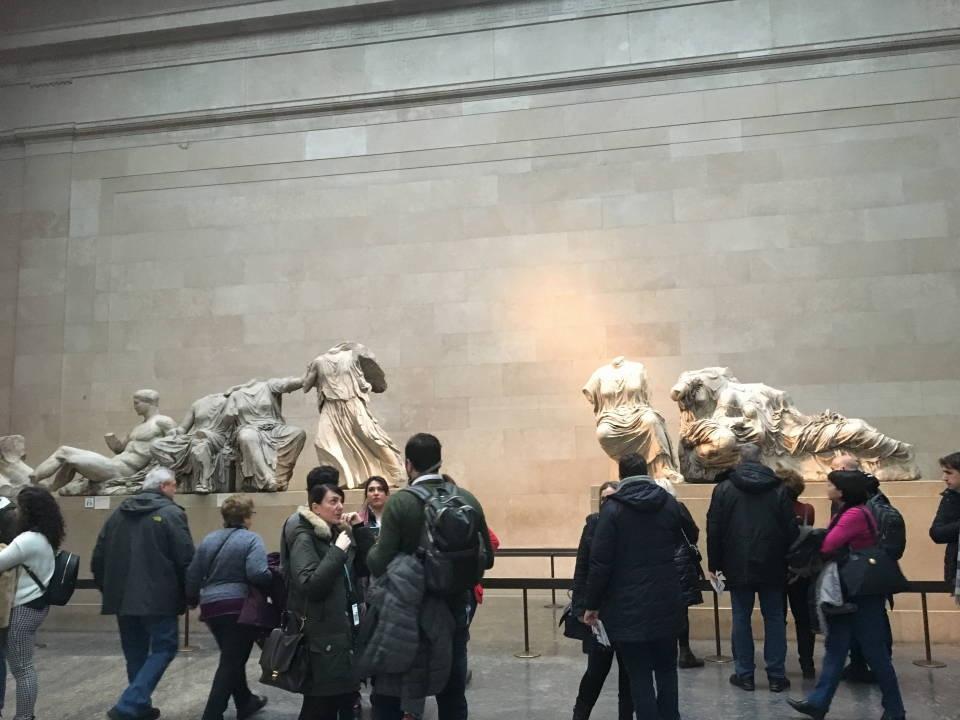
  • Room 18<br />Greece: Parthenon<br />447-432 BC<br /><br />部屋の両端にペディメントPediment(柱の上部の水平部分と斜めの2面の屋根に囲まれた三角形の切妻)、壁にはFiezeフリーズ(帯状装飾)が展示されています。

    Room 18
    Greece: Parthenon
    447-432 BC

    部屋の両端にペディメントPediment(柱の上部の水平部分と斜めの2面の屋根に囲まれた三角形の切妻)、壁にはFiezeフリーズ(帯状装飾)が展示されています。

  • Room 18<br />Greece: Parthenon<br />447-432 BC<br /><br />East Pediment

    Room 18
    Greece: Parthenon
    447-432 BC

    East Pediment

  • Room 18<br />Greece: Parthenon<br />447-432 BC

    Room 18
    Greece: Parthenon
    447-432 BC

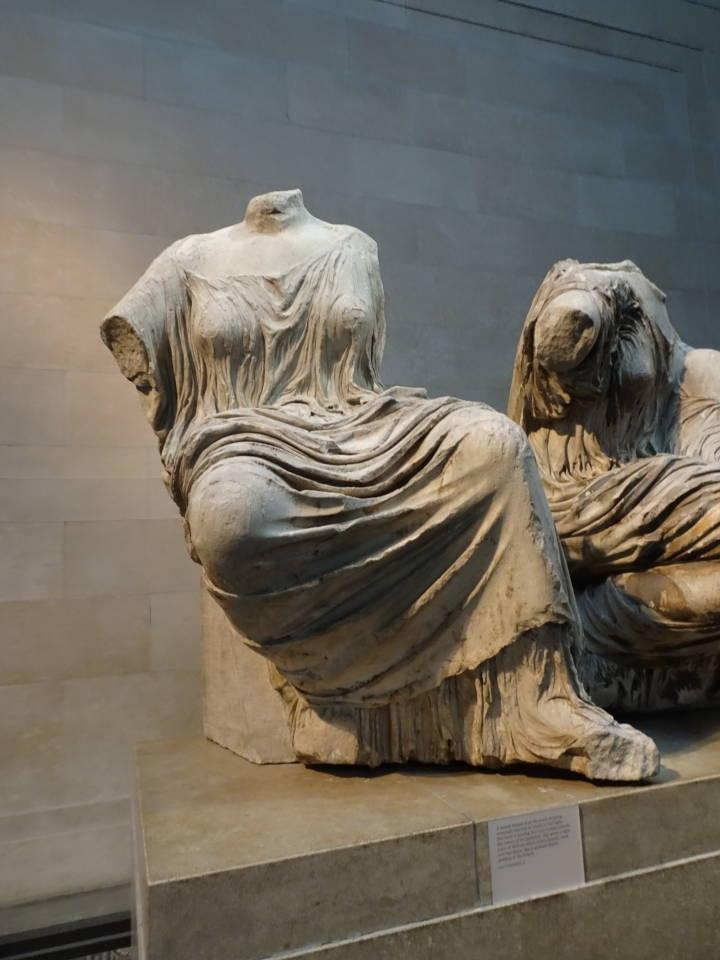
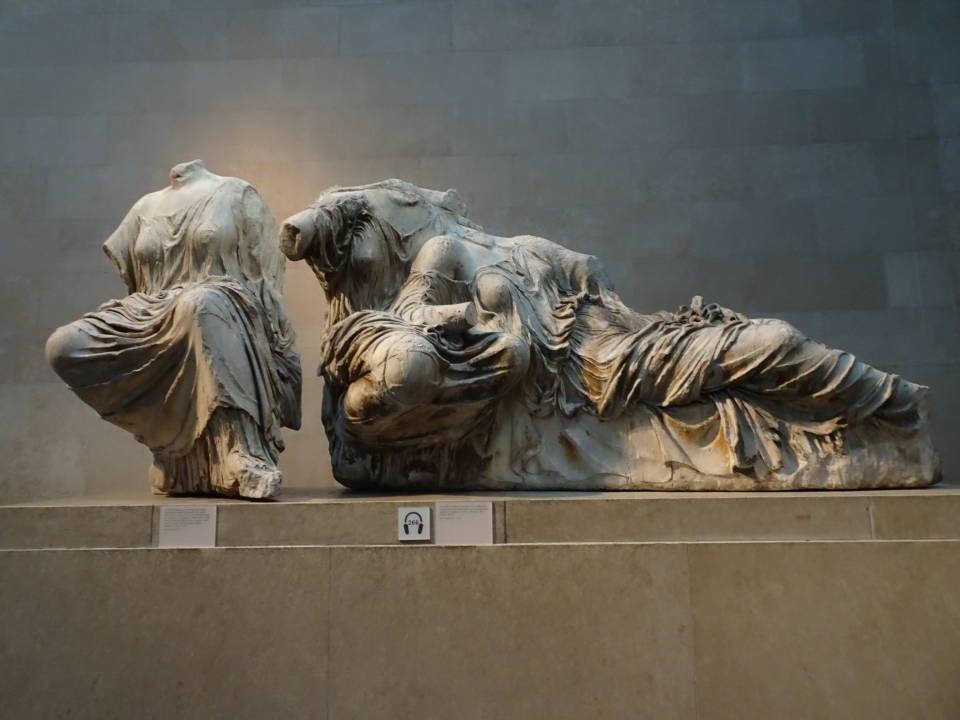
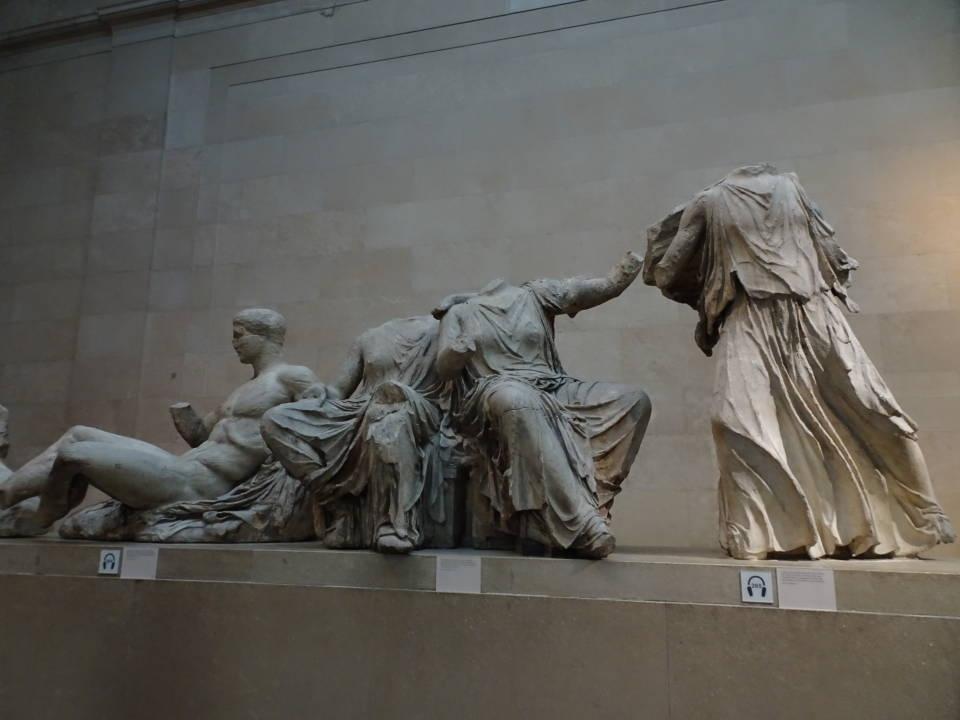
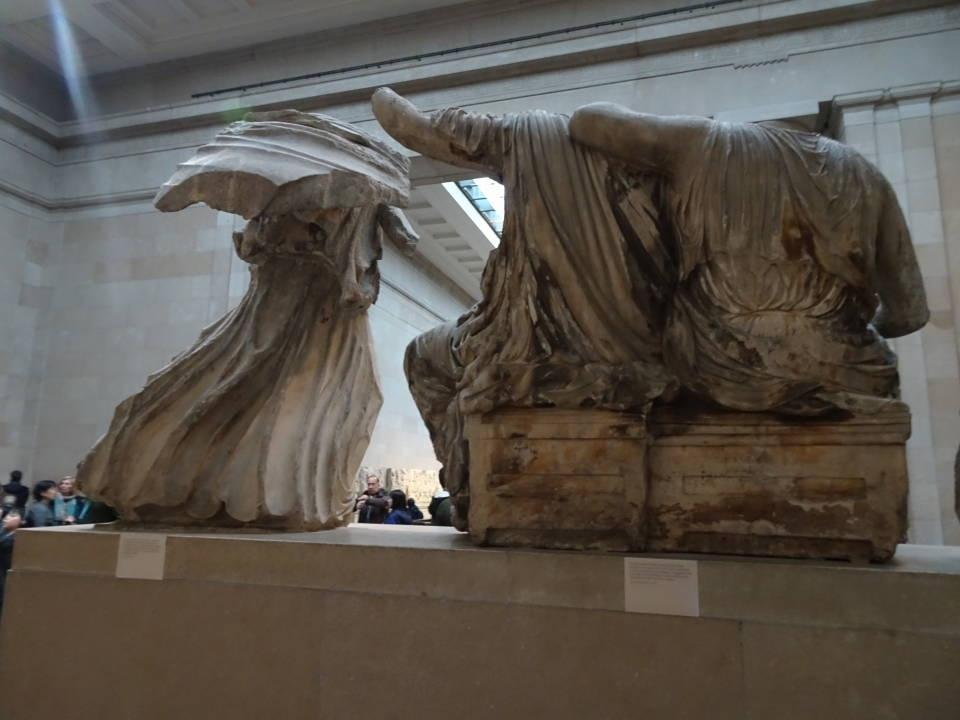
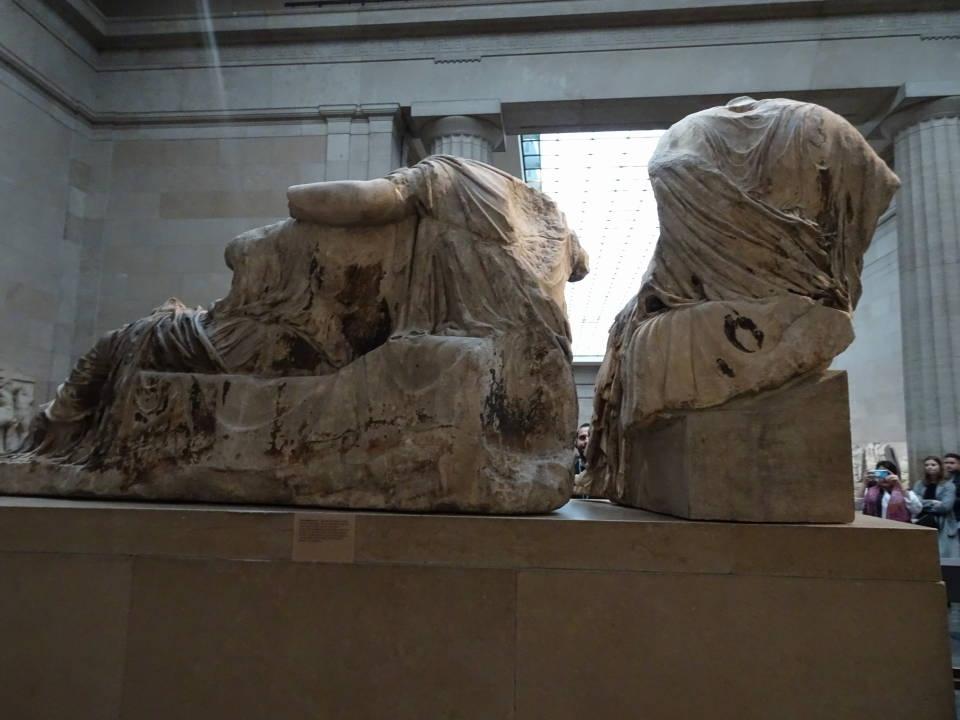
  • Room 18<br />Greece: Parthenon<br />447-432 BC<br /><br />East Pediment L and M<br /><br />A woman reclines in the lap of her companion. Carved from one block, these two may represent Aphrodite, goddess of love in the lap of her mother Dione.(266)

    Room 18
    Greece: Parthenon
    447-432 BC

    East Pediment L and M

    A woman reclines in the lap of her companion. Carved from one block, these two may represent Aphrodite, goddess of love in the lap of her mother Dione.(266)

  • Room 18<br />Greece: Parthenon<br />447-432 BC

    Room 18
    Greece: Parthenon
    447-432 BC

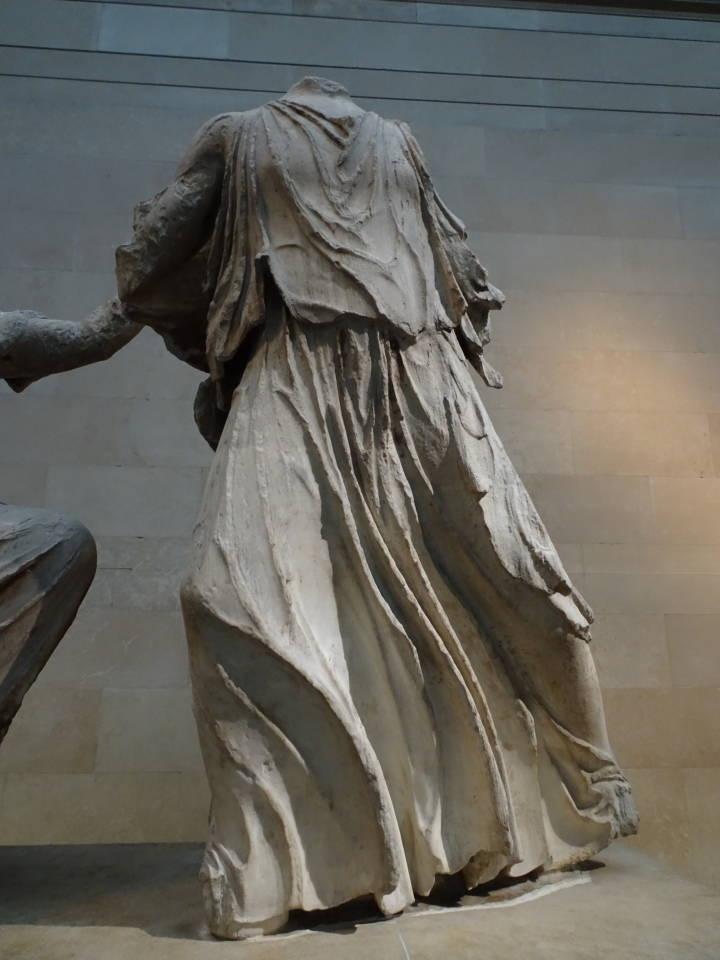
  • Room 18<br />Greece: Parthenon<br />447-432 BC<br /><br />East Pediment G<br />へーベー(へべ) Hebe<br /><br />A girl moves rapidly away from the centre, her drapery flying out behind. She may represent Hebe, cup-bearer of Zeus, who was shown on the middle of the pediment.(265)<br /><br />この彫像は、ペディメントの中央には(今はないが)ゼウスがいて、ゼウスに酒を給仕するへーべだとされている。彼女は永遠の若さ、青春を司る、主神ゼウスとヘラの愛娘。ヘラと和解し、天界に昇ったヘラクレスの妻となる。<br />オリュンポス12柱に数えられることもある重要な女神。<br /><br />ちなみに日本語のひどく酒に酔って正体を無くしたさまを表す「へべれけ」は、「ヘベのお酌」の意味の「Hebe erryeke(ヘベ・エリュエーケ)」が語源らしい。<br />(しかし、定説のごとく言われているが正確には確証はない。)

    Room 18
    Greece: Parthenon
    447-432 BC

    East Pediment G
    へーベー(へべ) Hebe

    A girl moves rapidly away from the centre, her drapery flying out behind. She may represent Hebe, cup-bearer of Zeus, who was shown on the middle of the pediment.(265)

    この彫像は、ペディメントの中央には(今はないが)ゼウスがいて、ゼウスに酒を給仕するへーべだとされている。彼女は永遠の若さ、青春を司る、主神ゼウスとヘラの愛娘。ヘラと和解し、天界に昇ったヘラクレスの妻となる。
    オリュンポス12柱に数えられることもある重要な女神。

    ちなみに日本語のひどく酒に酔って正体を無くしたさまを表す「へべれけ」は、「ヘベのお酌」の意味の「Hebe erryeke(ヘベ・エリュエーケ)」が語源らしい。
    (しかし、定説のごとく言われているが正確には確証はない。)

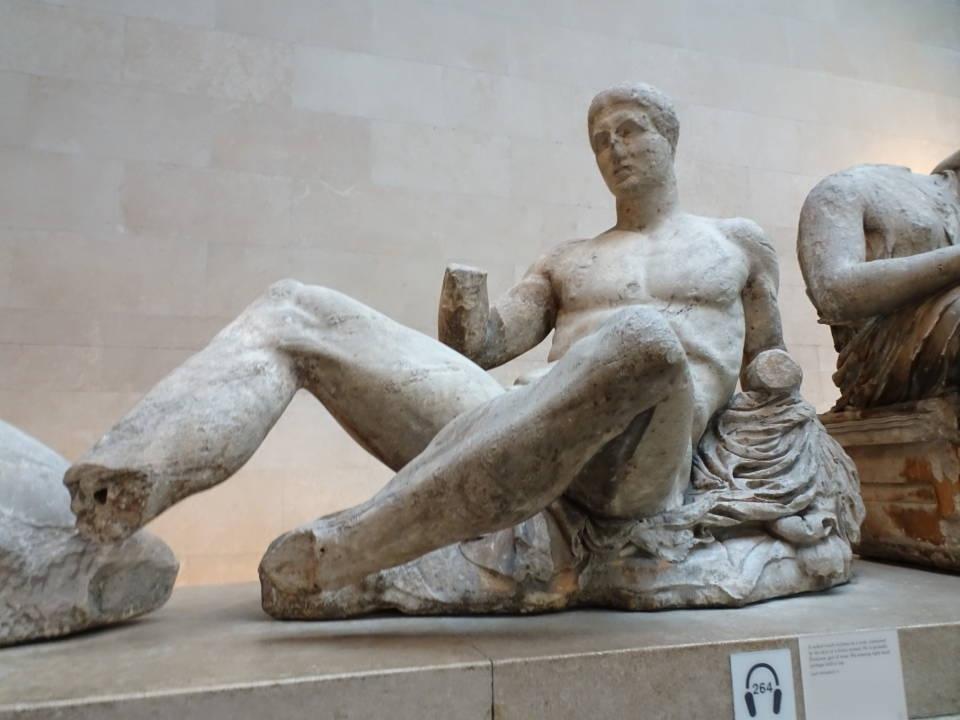
  • Room 18<br />Greece: Parthenon<br />447-432 BC<br /><br />East Pediment D<br />ディオニソス Dionysos<br /><br />A naked youth reclines on a rock, cushioned by the skin of a feline animal. He is probably Dionysos, god of wine. His missing right hand perhaps held a cup(264).

    Room 18
    Greece: Parthenon
    447-432 BC

    East Pediment D
    ディオニソス Dionysos

    A naked youth reclines on a rock, cushioned by the skin of a feline animal. He is probably Dionysos, god of wine. His missing right hand perhaps held a cup(264).

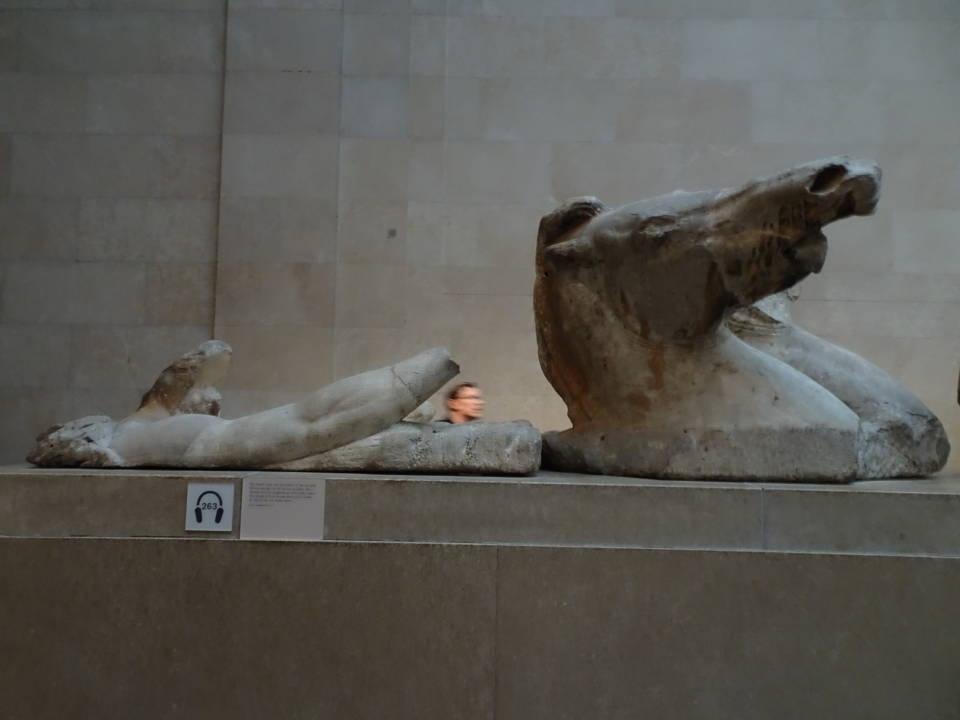
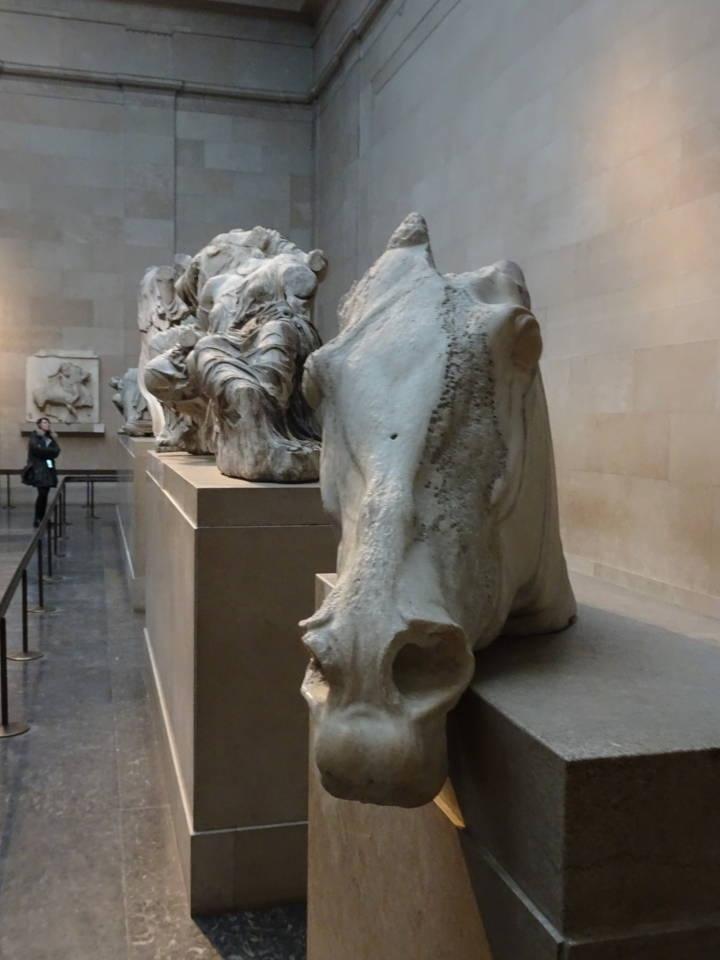
  • Room 18<br />Greece: Parthenon<br />447-432 BC<br /><br />East Pediment A-C<br />ヘリオス Helios<br /><br />The head, arms and shoulders of the sun-god Helios emerge out of the sea at dawn. His chariot is to be imagined as still under water. The heads of four horses were once visible, of which two are shown here(263).<br />

    Room 18
    Greece: Parthenon
    447-432 BC

    East Pediment A-C
    ヘリオス Helios

    The head, arms and shoulders of the sun-god Helios emerge out of the sea at dawn. His chariot is to be imagined as still under water. The heads of four horses were once visible, of which two are shown here(263).

  • Room 18<br />Greece: Parthenon<br />447-432 BC<br /><br /><br /><br />https://artsandculture.google.com/streetview/british-museum/AwEp68JO4NECkQ?sv_h=3.656354574048102&amp;sv_p=0.6446988133429699&amp;sv_pid=NH7eJxyFuHq1IJvG6ti-jQ&amp;sv_lid=3582009757710443819&amp;sv_lng=-0.1284279997271085&amp;sv_lat=51.51907905423855&amp;sv_z=0.6158686808497829

    Room 18
    Greece: Parthenon
    447-432 BC


    https://artsandculture.google.com/streetview/british-museum/AwEp68JO4NECkQ?sv_h=3.656354574048102&sv_p=0.6446988133429699&sv_pid=NH7eJxyFuHq1IJvG6ti-jQ&sv_lid=3582009757710443819&sv_lng=-0.1284279997271085&sv_lat=51.51907905423855&sv_z=0.6158686808497829

  • Room 18<br />Greece: Parthenon<br />447-432 BC<br /><br />Eest Pediment<br />あまり見ることができない裏側に回ります。。。

    Room 18
    Greece: Parthenon
    447-432 BC

    Eest Pediment
    あまり見ることができない裏側に回ります。。。

  • Room 18<br />Greece: Parthenon<br />447-432 BC<br /><br />Eest Pediment

    Room 18
    Greece: Parthenon
    447-432 BC

    Eest Pediment

  • Room 18<br />Greece: Parthenon<br />447-432 BC<br /><br />Eest Pediment

    Room 18
    Greece: Parthenon
    447-432 BC

    Eest Pediment

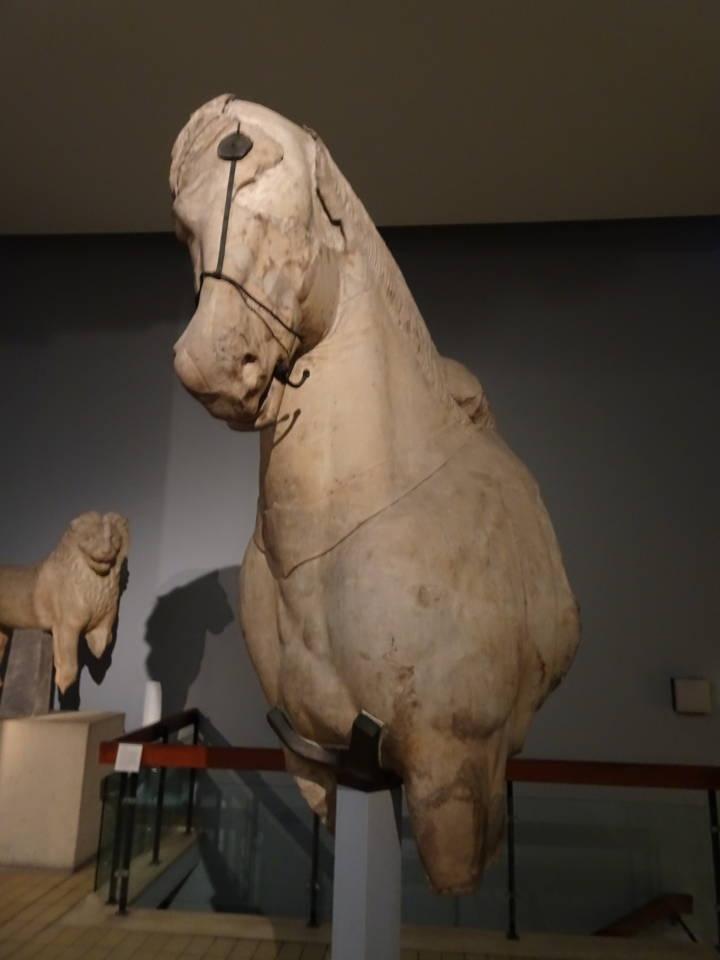
  • Room 18<br />Greece: Parthenon<br />447-432 BC<br /><br />Eest Pediment<br />右端の馬の首ははみ出しています。

    Room 18
    Greece: Parthenon
    447-432 BC

    Eest Pediment
    右端の馬の首ははみ出しています。

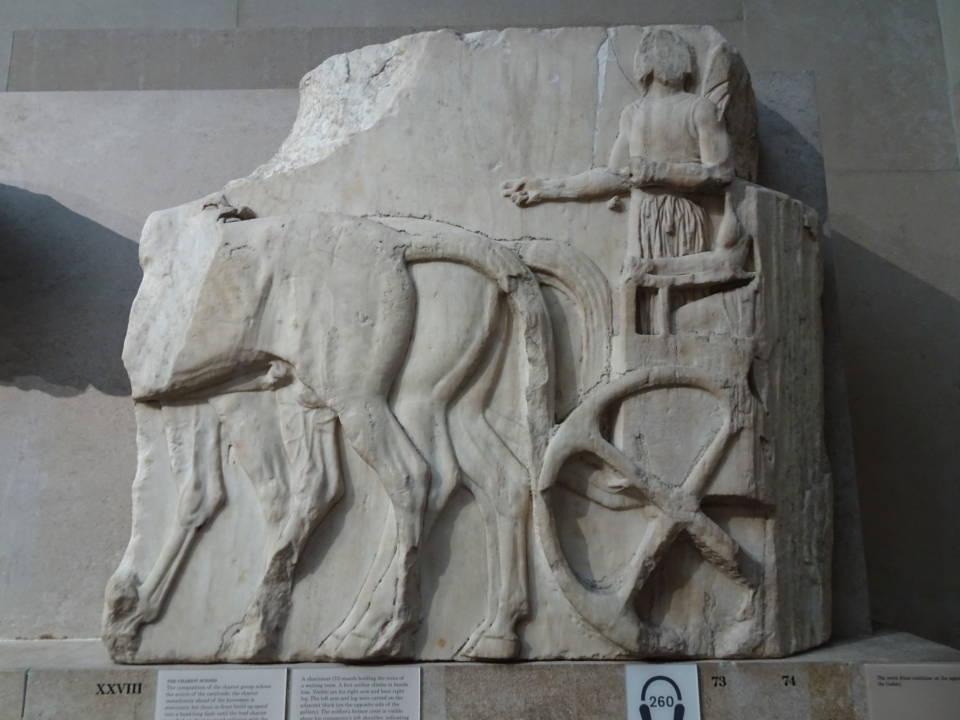
  • Room 18<br />Greece: Parthenon<br />447-432 BC<br /><br />North Frieze XXVIII, 73-74<br />The Chariot Scenes<br /><br />

    Room 18
    Greece: Parthenon
    447-432 BC

    North Frieze XXVIII, 73-74
    The Chariot Scenes

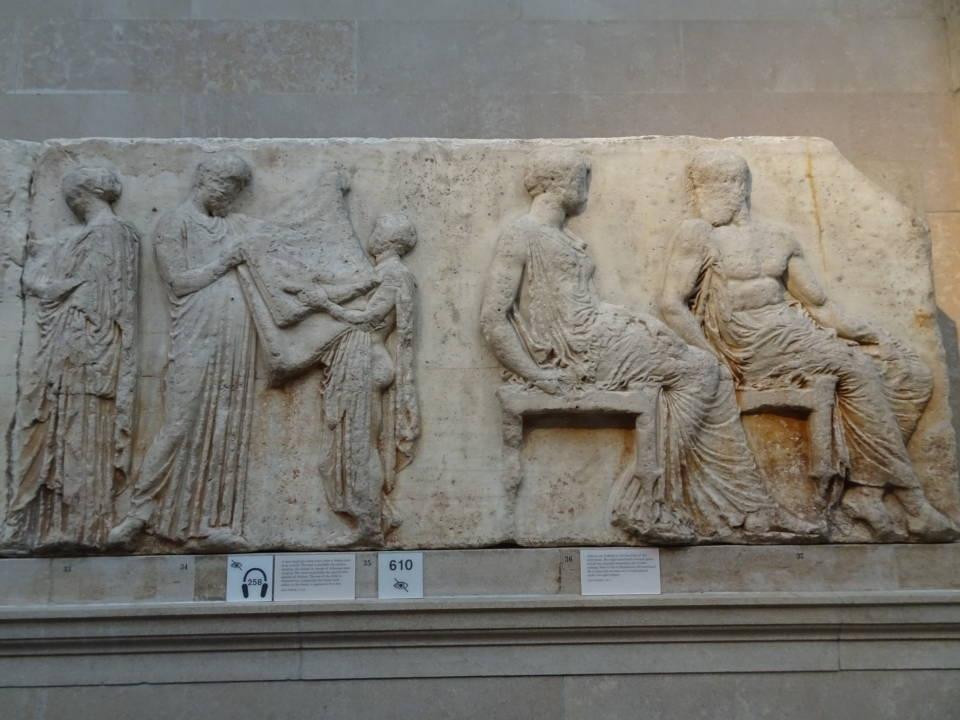
  • Room 18<br />Greece: Parthenon<br />447-432 BC<br /><br />East Frieze V, 34-35<br /><br />

    Room 18
    Greece: Parthenon
    447-432 BC

    East Frieze V, 34-35

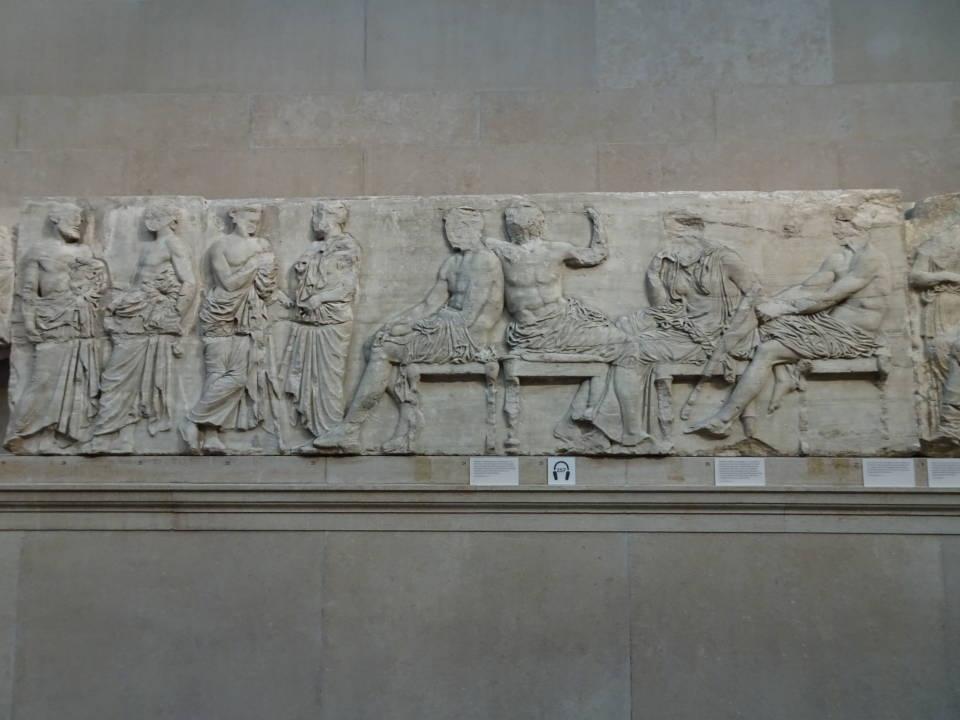
  • Room 18<br />Greece: Parthenon<br />447-432 BC<br /><br />East Frieze IV, 24-25<br /><br />Hermes, a messenger god, sits looking in the direction of the procession. He wears sandals, and a traveller&#39;s hat(petasos) rests on his knee. The figure who leans on his shoulder is probably Dionysos, god of wine. His left arm was supported by a staff(thyrsos).

    Room 18
    Greece: Parthenon
    447-432 BC

    East Frieze IV, 24-25

    Hermes, a messenger god, sits looking in the direction of the procession. He wears sandals, and a traveller's hat(petasos) rests on his knee. The figure who leans on his shoulder is probably Dionysos, god of wine. His left arm was supported by a staff(thyrsos).

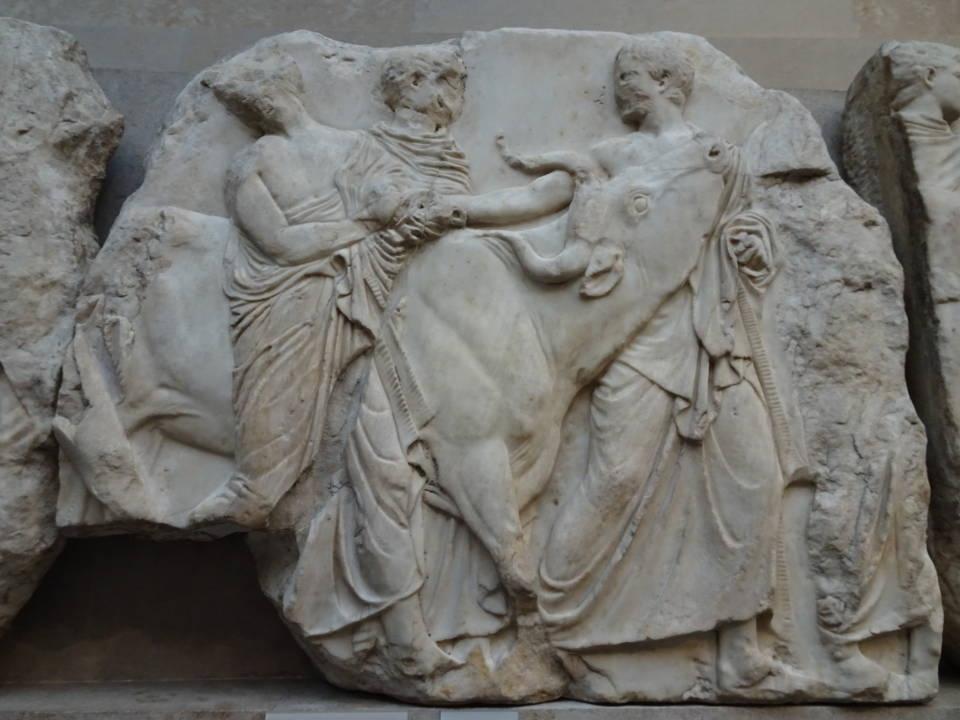
  • Room 18<br />Greece: Parthenon<br />447-432 BC<br /><br />South Frieze XLIV, 132-136<br />

    Room 18
    Greece: Parthenon
    447-432 BC

    South Frieze XLIV, 132-136

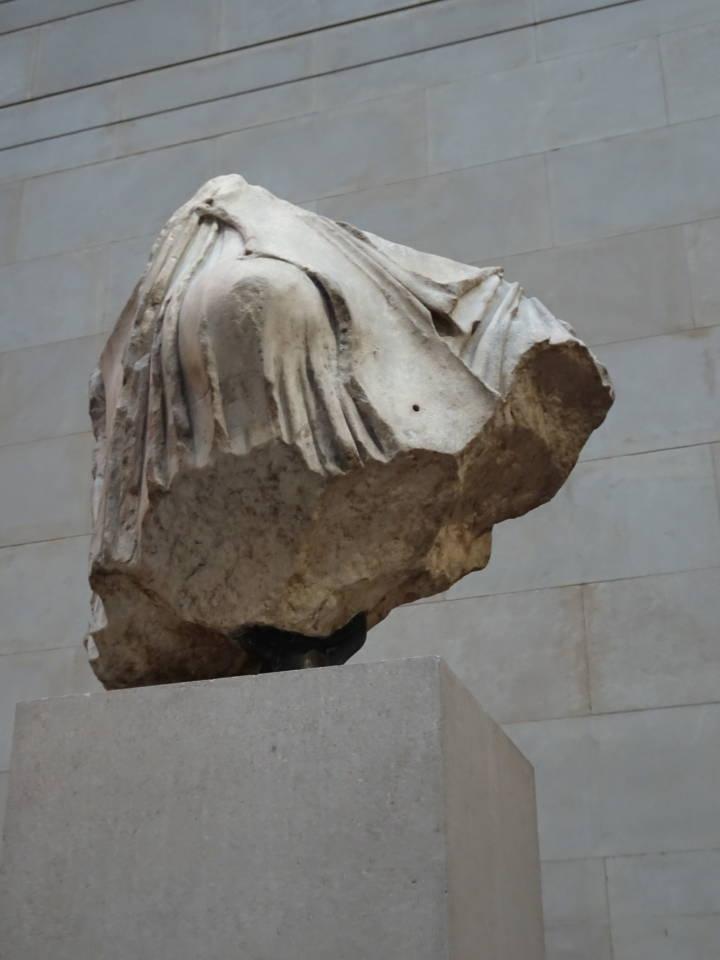
  • Room 18<br />Greece: Parthenon<br />447-432 BC<br /><br />West Pediment<br /><br />Pediments are the triangular gable ends of a Greek temple, which were often filled with sculpture carved all the way around.<br /><br />Jacques Carrey made drawings of the Parthenon&#39;s west pediment in 1674. They show that the sculptures had largely survived until this time before an explosion in 1687 destroyed much of the Parthenon.(1687年9月26日、オスマン帝国によって火薬庫として使われていた神殿はヴェネツィア共和国の攻撃によって爆発炎上し、神殿建築や彫刻などはひどい損傷を受けた。→神殿を火薬庫にするなよと思いますが。。。)<br /><br />The west pediment showed the contest between Athena and Poseidon, god of the sea, for divine patronage of Athens. The gods stand at the centre. They have just raced to the Acropolis in their chariots, each heralded by a messenger. As part od the contest, they have both worked a miracle - Poseidon caused a salt spring to gush from a rock, while Athena created the first olive tree.<br />The sculptors have cleverly srranged the figures to fit into the triangular pediment while retaining their scale - they move from reclining postures in the corners to seated and standing poses in the centre.<br /><br /><br />West Pediment L<br />アテナ Athena<br /><br />Athena was shown springing away from the centre of the composition. She wears her aegis, a goatskin garment with a fringe of snakes. A fragment of helmeted head is in Athens.<br /><br />この破片からでもこれがアテナの一部だとわかるのは、過去に書き写した人がいるからなのね。

    Room 18
    Greece: Parthenon
    447-432 BC

    West Pediment

    Pediments are the triangular gable ends of a Greek temple, which were often filled with sculpture carved all the way around.

    Jacques Carrey made drawings of the Parthenon's west pediment in 1674. They show that the sculptures had largely survived until this time before an explosion in 1687 destroyed much of the Parthenon.(1687年9月26日、オスマン帝国によって火薬庫として使われていた神殿はヴェネツィア共和国の攻撃によって爆発炎上し、神殿建築や彫刻などはひどい損傷を受けた。→神殿を火薬庫にするなよと思いますが。。。)

    The west pediment showed the contest between Athena and Poseidon, god of the sea, for divine patronage of Athens. The gods stand at the centre. They have just raced to the Acropolis in their chariots, each heralded by a messenger. As part od the contest, they have both worked a miracle - Poseidon caused a salt spring to gush from a rock, while Athena created the first olive tree.
    The sculptors have cleverly srranged the figures to fit into the triangular pediment while retaining their scale - they move from reclining postures in the corners to seated and standing poses in the centre.


    West Pediment L
    アテナ Athena

    Athena was shown springing away from the centre of the composition. She wears her aegis, a goatskin garment with a fringe of snakes. A fragment of helmeted head is in Athens.

    この破片からでもこれがアテナの一部だとわかるのは、過去に書き写した人がいるからなのね。

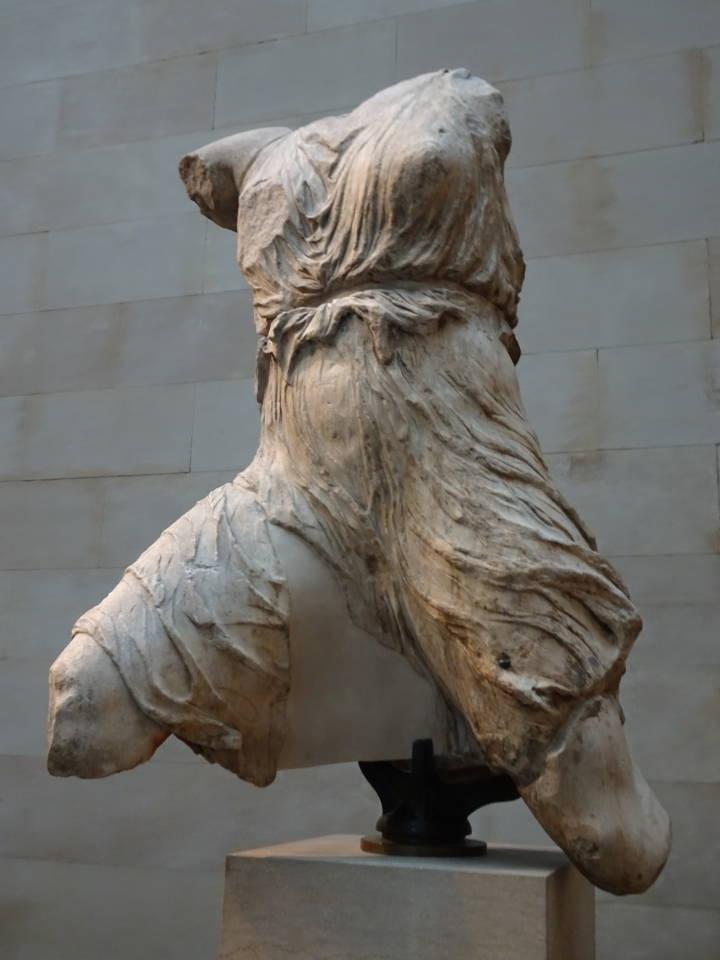
  • Room 18<br />Greece: Parthenon<br />447-432 BC<br /><br />West Pediment N<br />イーリス(アイリス) Iris<br />Iris is a messenger god and corresponds with Hermes in the left half of the pediment. She was winged, and her drapery was carved to suggest the rush of wind against her body during flight. <br /><br />イーリス(古希: ?ρις, Īris)は、ギリシア神話に登場する虹の女神である。英語読みではアイリス (Iris) となる。日本語では長母音を省略してイリスとも表記される。イーリスはギリシア語で虹を意味する。英語では虹彩も「iris」という。また、イーリスの聖花はアヤメ(アイリス)だが、この名もイーリスに由来する。<br /><br />タウマースとオーケアノスの娘エーレクトラーの娘で、ハルピュイアの姉。ゼピュロスの妻であり子供には、ポートス(あるいはエロース)がいる。美術において背中に翼を持った姿で描かれる場合が多い。<br />天地を結ぶ虹として、疾速で知られ、遠くの土地や海底でも瞬く間に移動することが出来る。そのためヘルメースがゼウスの腹心の部下であるように、イーリスはヘーラーの忠実な部下としてヘーラーの伝令使を務める。ただし『イーリアス』においてはその区別は厳密ではなく、しばしばゼウスのために伝令使として行動している。

    Room 18
    Greece: Parthenon
    447-432 BC

    West Pediment N
    イーリス(アイリス) Iris
    Iris is a messenger god and corresponds with Hermes in the left half of the pediment. She was winged, and her drapery was carved to suggest the rush of wind against her body during flight.

    イーリス(古希: ?ρις, Īris)は、ギリシア神話に登場する虹の女神である。英語読みではアイリス (Iris) となる。日本語では長母音を省略してイリスとも表記される。イーリスはギリシア語で虹を意味する。英語では虹彩も「iris」という。また、イーリスの聖花はアヤメ(アイリス)だが、この名もイーリスに由来する。

    タウマースとオーケアノスの娘エーレクトラーの娘で、ハルピュイアの姉。ゼピュロスの妻であり子供には、ポートス(あるいはエロース)がいる。美術において背中に翼を持った姿で描かれる場合が多い。
    天地を結ぶ虹として、疾速で知られ、遠くの土地や海底でも瞬く間に移動することが出来る。そのためヘルメースがゼウスの腹心の部下であるように、イーリスはヘーラーの忠実な部下としてヘーラーの伝令使を務める。ただし『イーリアス』においてはその区別は厳密ではなく、しばしばゼウスのために伝令使として行動している。

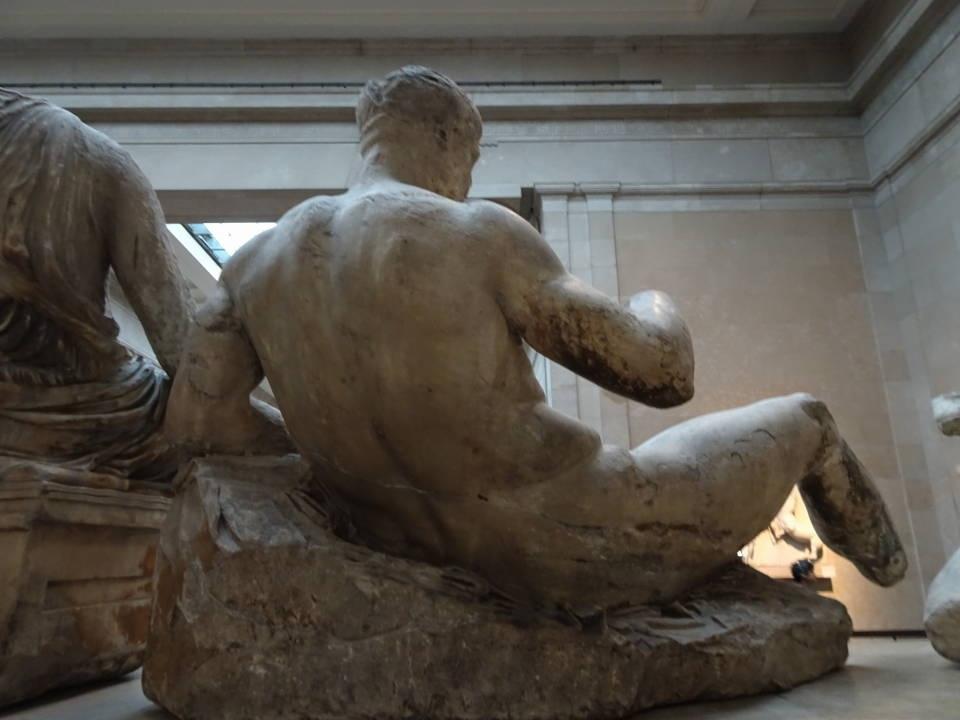
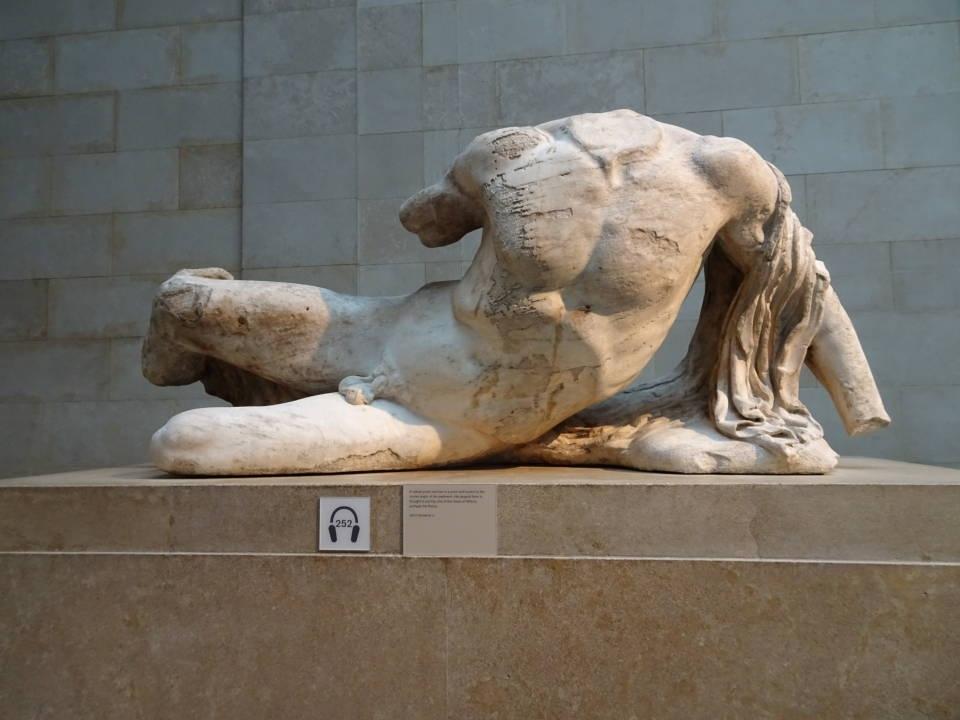
  • Room 18<br />Greece: Parthenon<br />447-432 BC<br /><br />West Pediment A<br />イリソス Illisos<br /><br />A naked youth reclines in a pose well suited to the corner angle of the pediment. His languid(もの憂い、元気のな) form is thought to portray one of the rivers of Athens, perhaps the Ilissos.

    Room 18
    Greece: Parthenon
    447-432 BC

    West Pediment A
    イリソス Illisos

    A naked youth reclines in a pose well suited to the corner angle of the pediment. His languid(もの憂い、元気のな) form is thought to portray one of the rivers of Athens, perhaps the Ilissos.

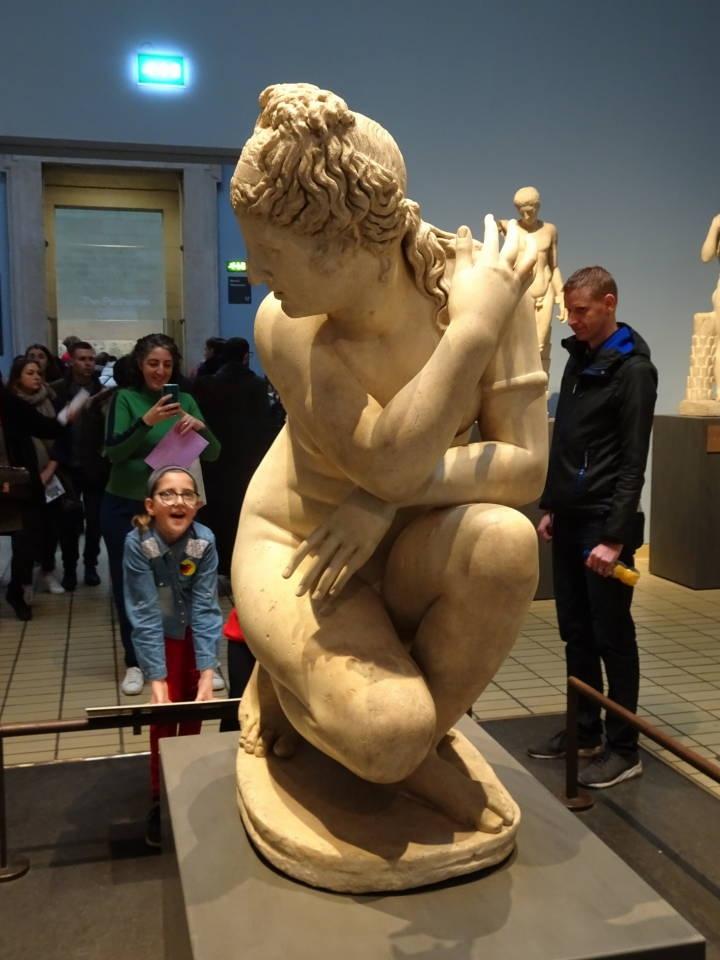
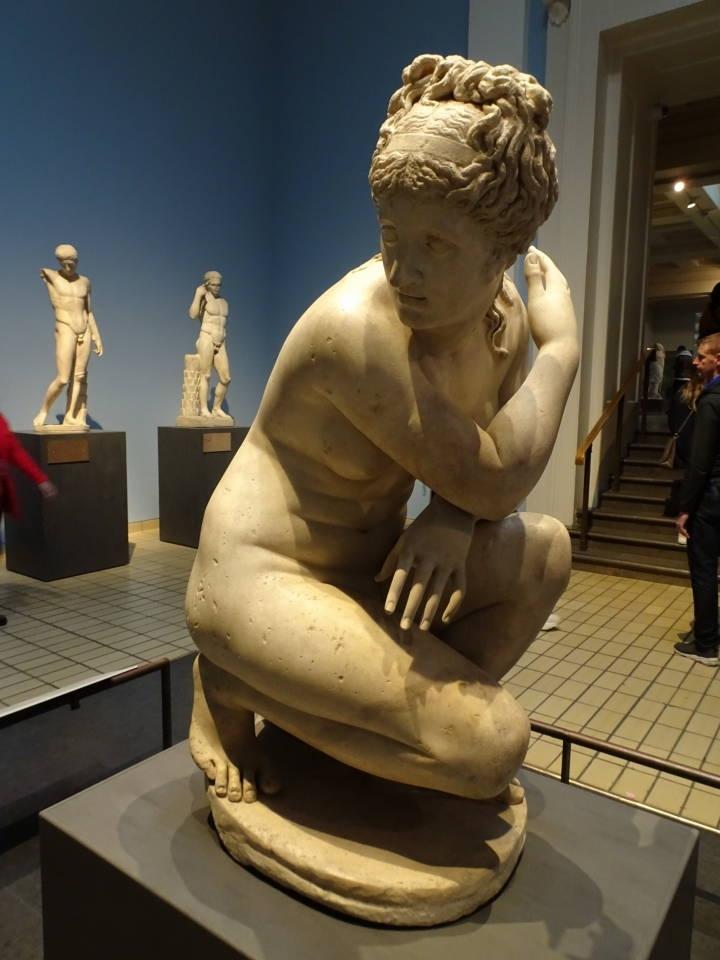
  • Room 23<br />Greek and Roman sculpture<br /><br />Lely&#39;s Venus(Aphrodite)<br /><br />部屋の中央に置かれたこの入浴中のアフロディーテ。ギリシャ時代のものを後世のローマ時代の彫刻家がコピーしたもの。侵入者に驚き身を隠したところか。普通は旅行記の写真からは省きますのが、おんなのこの表情が良かったのでそのまま、掲載しています。(許可は取っていませんが、クレームは来ないと思う。)<br /><br />https://artsandculture.google.com/streetview/british-museum/AwEp68JO4NECkQ?sv_h=236.1486701130749&amp;sv_p=3.038482260219439&amp;sv_pid=6NL7LiZ1lgnAM6AGrACYyw&amp;sv_lid=3582009757710443819&amp;sv_lng=-0.1276368701633146&amp;sv_lat=51.51911671684061&amp;sv_z=0.6911292499459276

    Room 23
    Greek and Roman sculpture

    Lely's Venus(Aphrodite)

    部屋の中央に置かれたこの入浴中のアフロディーテ。ギリシャ時代のものを後世のローマ時代の彫刻家がコピーしたもの。侵入者に驚き身を隠したところか。普通は旅行記の写真からは省きますのが、おんなのこの表情が良かったのでそのまま、掲載しています。(許可は取っていませんが、クレームは来ないと思う。)

    https://artsandculture.google.com/streetview/british-museum/AwEp68JO4NECkQ?sv_h=236.1486701130749&sv_p=3.038482260219439&sv_pid=6NL7LiZ1lgnAM6AGrACYyw&sv_lid=3582009757710443819&sv_lng=-0.1276368701633146&sv_lat=51.51911671684061&sv_z=0.6911292499459276

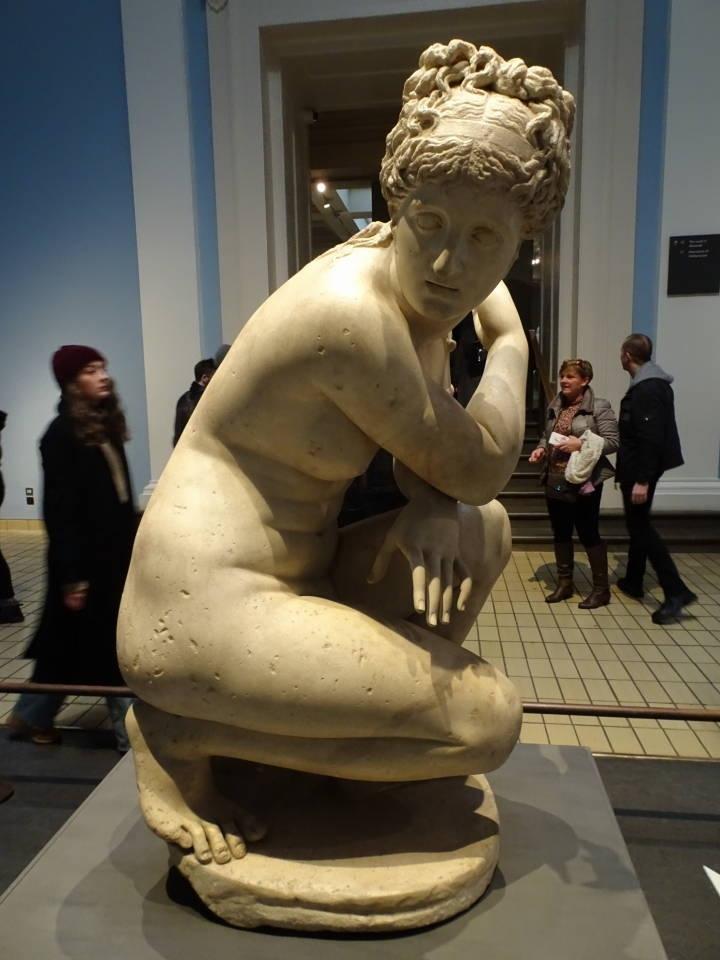
  • Room 23<br />Greek and Roman sculpture<br /><br />Lely&#39;s Venus(Aphrodite)<br /><br />今にも動き出しそう。。。

    Room 23
    Greek and Roman sculpture

    Lely's Venus(Aphrodite)

    今にも動き出しそう。。。

  • Room 23<br />Greek and Roman sculpture<br /><br />Lely&#39;s Venus(Aphrodite)<br /><br />目が合うと少し照れてしまう。<br />入浴中にごめん、のぞくつもりはなかったんだ。<br />はやく出ていってよ。

    Room 23
    Greek and Roman sculpture

    Lely's Venus(Aphrodite)

    目が合うと少し照れてしまう。
    入浴中にごめん、のぞくつもりはなかったんだ。
    はやく出ていってよ。

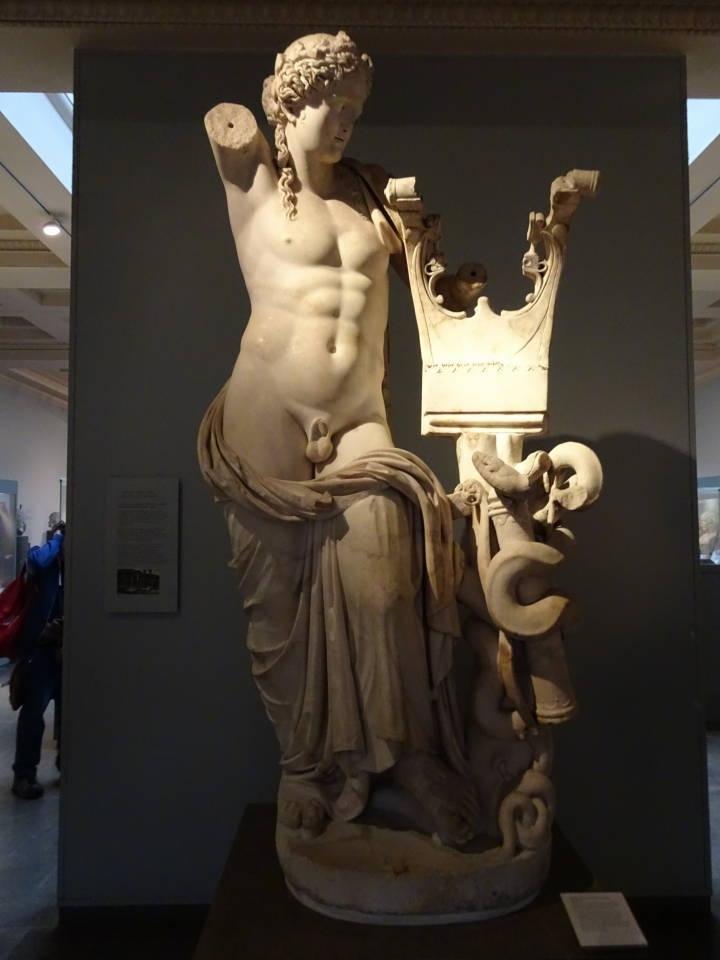
  • Room 22<br />The world of Alexander<br />Alexander the Great was a king of the ancient Greek kingdom of Macedon, located in northern Greece and adjacent countries.<br /><br />Marble statue of Apollo holding a kithara<br /><br />Roman copy of the 2nd century AD of a Hellenistic original of about 200-150 BC From the temple of Apollo, Cyrene(キュレネ は、現リビア領内にあった古代ギリシャ都市)。<br /><br />In this elaborately carved figure, the iconographical features of both Apollo and Dionysos, the wine-god, have been fused; the slipping himation and the sensual treatment of the flesh are typical of Dionysos, while the kithara and quiver characterise Apollo.<br /><br />https://artsandculture.google.com/streetview/british-museum/AwEp68JO4NECkQ?sv_h=322.2682560631503&amp;sv_p=-11.440685784659294&amp;sv_pid=fAzPrITVCnsYP4ve2YktiQ&amp;sv_lid=3582009757710443819&amp;sv_lng=-0.1278427710738868&amp;sv_lat=51.5191840355497&amp;sv_z=0.6911292499459276

    Room 22
    The world of Alexander
    Alexander the Great was a king of the ancient Greek kingdom of Macedon, located in northern Greece and adjacent countries.

    Marble statue of Apollo holding a kithara

    Roman copy of the 2nd century AD of a Hellenistic original of about 200-150 BC From the temple of Apollo, Cyrene(キュレネ は、現リビア領内にあった古代ギリシャ都市)。

    In this elaborately carved figure, the iconographical features of both Apollo and Dionysos, the wine-god, have been fused; the slipping himation and the sensual treatment of the flesh are typical of Dionysos, while the kithara and quiver characterise Apollo.

    https://artsandculture.google.com/streetview/british-museum/AwEp68JO4NECkQ?sv_h=322.2682560631503&sv_p=-11.440685784659294&sv_pid=fAzPrITVCnsYP4ve2YktiQ&sv_lid=3582009757710443819&sv_lng=-0.1278427710738868&sv_lat=51.5191840355497&sv_z=0.6911292499459276

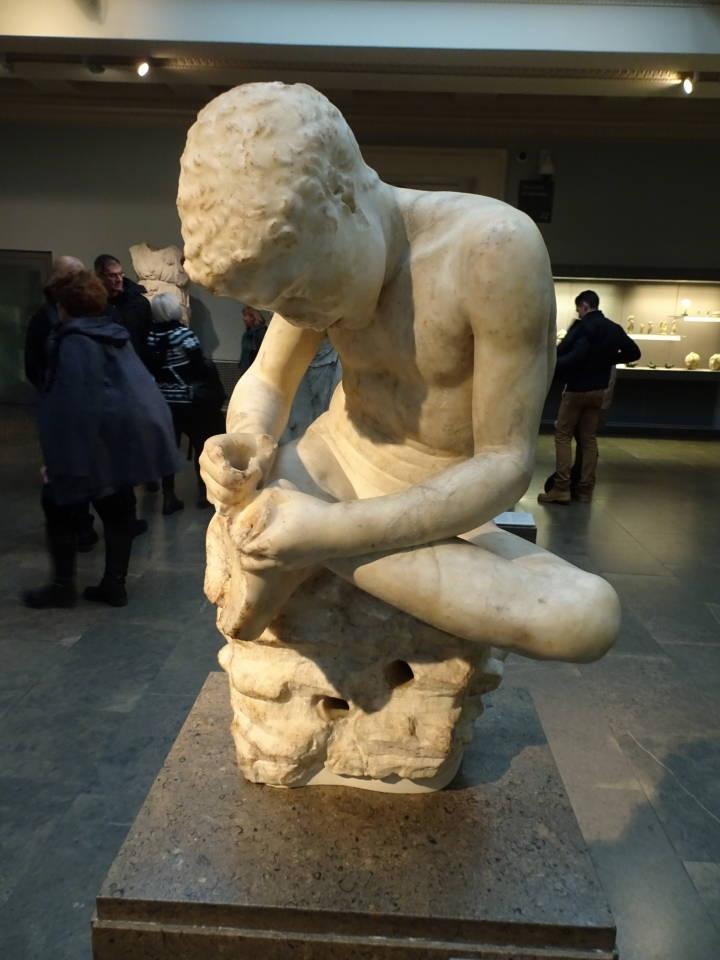
  • Room 22<br />The world of Alexander<br />Alexander the Great was a king of the ancient Greek kingdom of Macedon, located in northern Greece and adjacent countries.<br /><br />Marble statue of a boy, the so-called &#39;spinario&#39;(thorn-puller)<br />Hellenistic, about 200-100BC<br /><br />A boy is shown concentrating whilst he attempts to remove a thorn from the sole of his foot. The base of the statue is worked as a rock, drilled to accommodate a pipe for a fountain at some later date.

    Room 22
    The world of Alexander
    Alexander the Great was a king of the ancient Greek kingdom of Macedon, located in northern Greece and adjacent countries.

    Marble statue of a boy, the so-called 'spinario'(thorn-puller)
    Hellenistic, about 200-100BC

    A boy is shown concentrating whilst he attempts to remove a thorn from the sole of his foot. The base of the statue is worked as a rock, drilled to accommodate a pipe for a fountain at some later date.

  • Room 22<br />The world of Alexander<br />Alexander the Great was a king of the ancient Greek kingdom of Macedon, located in northern Greece and adjacent countries.

    Room 22
    The world of Alexander
    Alexander the Great was a king of the ancient Greek kingdom of Macedon, located in northern Greece and adjacent countries.

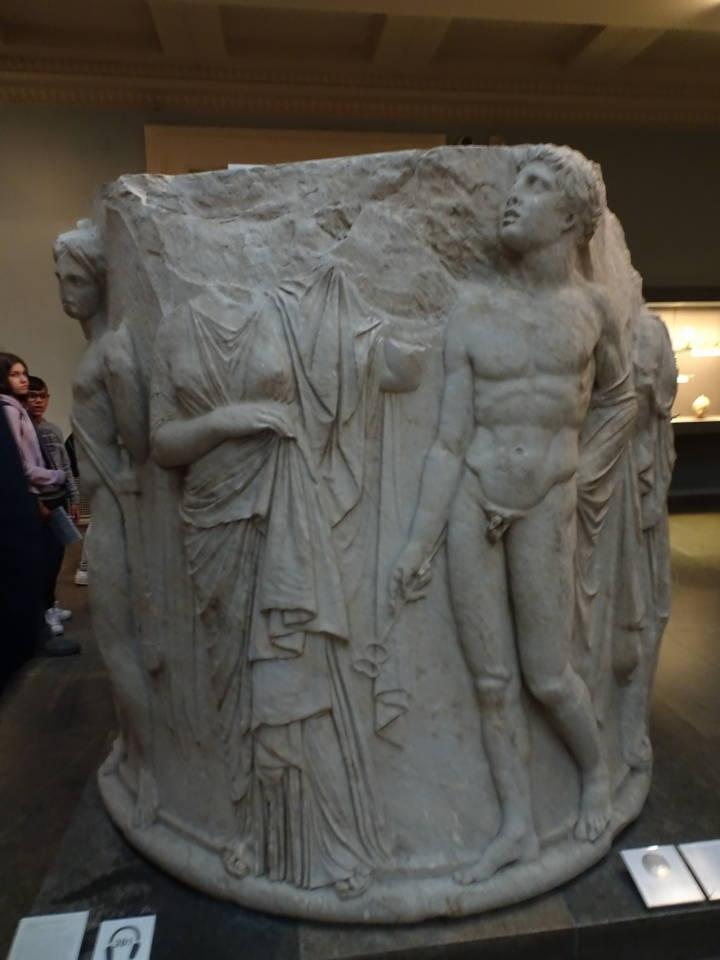
  • Room 22<br />The world of Alexander<br />Alexander the Great was a king of the ancient Greek kingdom of Macedon, located in northern Greece and adjacent countries.<br /><br />Sculpted marble column drum<br />325-300BC<br />Found at the south-west corner of the later temple of Artemis at Ephesos(エフェソス、トルコ西部).<br /><br />This is the best preserved of the column drums carved in relief. It shows a youthful winged Thanatos(death), a draped woman, a figure of Hermes Psychopompos(leader of souls into the underworld), a standing woman and a seated man, identified as Persephone and Plouton(Hades), gods of the underworld. The female figure has been tentatively identified as either Alkestis leaving the underworld, or Eurydike, wife of Orpheos.

    Room 22
    The world of Alexander
    Alexander the Great was a king of the ancient Greek kingdom of Macedon, located in northern Greece and adjacent countries.

    Sculpted marble column drum
    325-300BC
    Found at the south-west corner of the later temple of Artemis at Ephesos(エフェソス、トルコ西部).

    This is the best preserved of the column drums carved in relief. It shows a youthful winged Thanatos(death), a draped woman, a figure of Hermes Psychopompos(leader of souls into the underworld), a standing woman and a seated man, identified as Persephone and Plouton(Hades), gods of the underworld. The female figure has been tentatively identified as either Alkestis leaving the underworld, or Eurydike, wife of Orpheos.

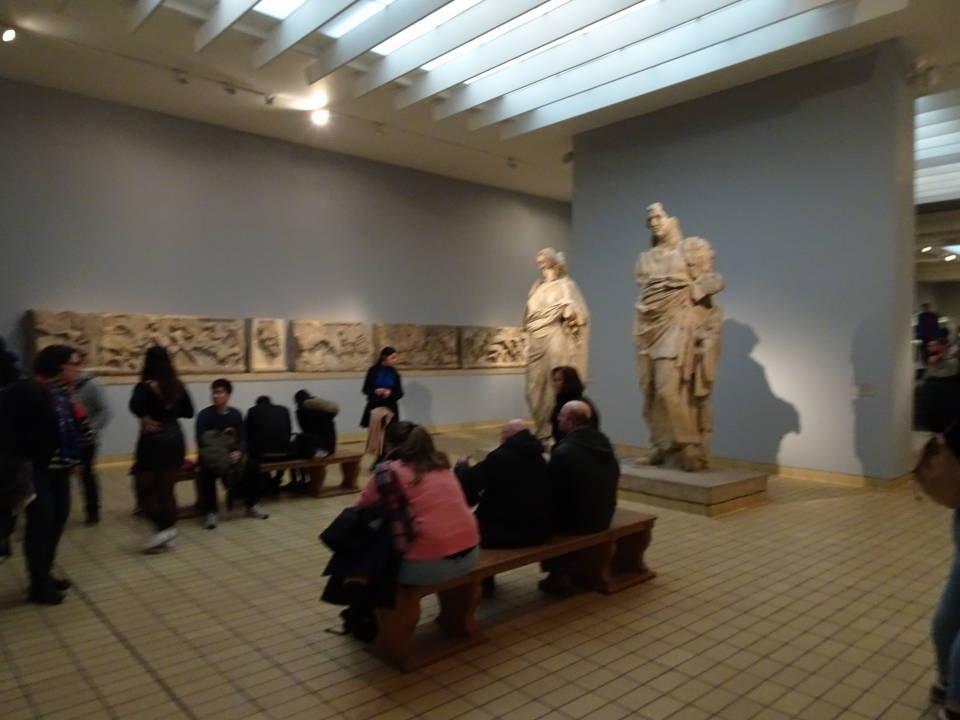
  • Room 21<br />Mausoleum of Halikarnassos<br />ハリカルナッソスのマウソロス霊廟<br />About 350 BC<br /><br />マウソロス霊廟は、カリアを支配したヘカトムノス朝のマウソロスとその妻アルテミシアの遺体を安置するために造られた霊廟である。ギリシア人建築家のプリエネのピュティオスとサテュロスによって設計され、スコパス、レオカレス、ブリュアクシス、ティモテオスという4人の高名な彫刻家によってフリーズ(彫刻帯)が施された。その壮麗さから、世界の七不思議のひとつに選ばれている。また、ヨーロッパ圏で使用される単語「マウソレウム(一般に巨大な墓の意、英語: mausoleum)」はこの霊廟に由来する。<br />マウソロスは、カリア国の首都をハリカルナッソス(現在のトルコ共和国ボドルム)に定め、周囲の地域も支配下に置いた。この霊廟は、マウソロスの死後に妃アルテミシアが夫のために建造したといわれているが、実際にはマウソロスの生存中に建造が開始されたと考えられている。マウソロスの死から3年後、アルテミシアの死から1年後にあたる紀元前350年に完成したといわれている。(wikiより)<br /><br />

    Room 21
    Mausoleum of Halikarnassos
    ハリカルナッソスのマウソロス霊廟
    About 350 BC

    マウソロス霊廟は、カリアを支配したヘカトムノス朝のマウソロスとその妻アルテミシアの遺体を安置するために造られた霊廟である。ギリシア人建築家のプリエネのピュティオスとサテュロスによって設計され、スコパス、レオカレス、ブリュアクシス、ティモテオスという4人の高名な彫刻家によってフリーズ(彫刻帯)が施された。その壮麗さから、世界の七不思議のひとつに選ばれている。また、ヨーロッパ圏で使用される単語「マウソレウム(一般に巨大な墓の意、英語: mausoleum)」はこの霊廟に由来する。
    マウソロスは、カリア国の首都をハリカルナッソス(現在のトルコ共和国ボドルム)に定め、周囲の地域も支配下に置いた。この霊廟は、マウソロスの死後に妃アルテミシアが夫のために建造したといわれているが、実際にはマウソロスの生存中に建造が開始されたと考えられている。マウソロスの死から3年後、アルテミシアの死から1年後にあたる紀元前350年に完成したといわれている。(wikiより)

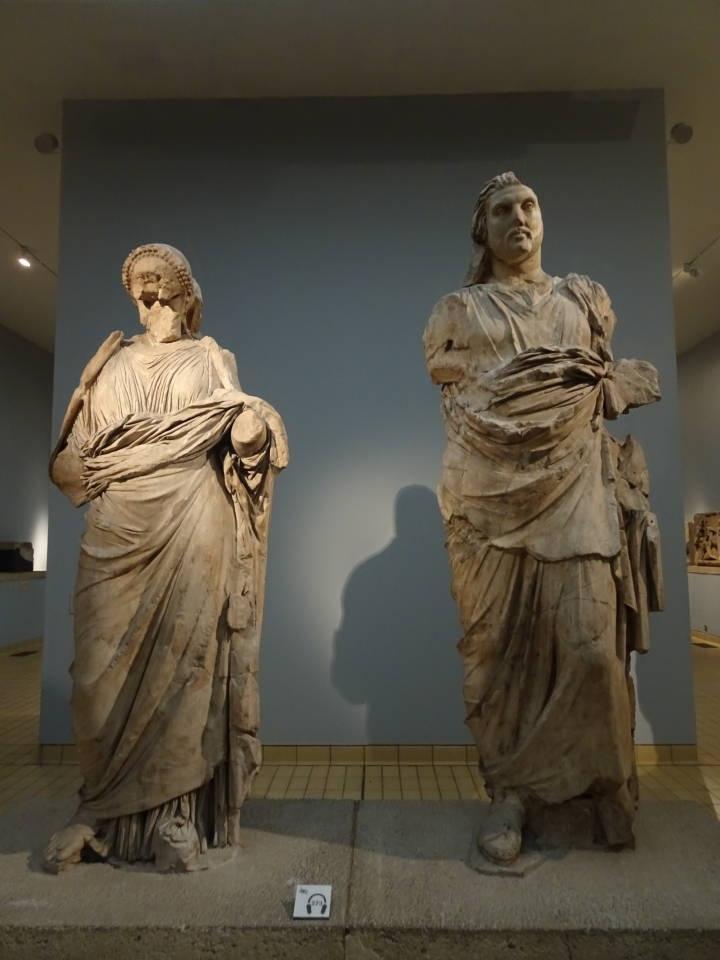
  • Room 21<br />Mausoleum of Halikarnassos<br />ハリカルナッソスのマウソロス霊廟<br />About 350 BC<br /><br />Colossal statues of a man and a woman from the Mausoleum at Halicarnassus, traditionally identified as Mausollos and Artemisia II, Marble, around 350 BC

    Room 21
    Mausoleum of Halikarnassos
    ハリカルナッソスのマウソロス霊廟
    About 350 BC

    Colossal statues of a man and a woman from the Mausoleum at Halicarnassus, traditionally identified as Mausollos and Artemisia II, Marble, around 350 BC

  • Room 21<br />Mausoleum of Halikarnassos<br />ハリカルナッソスのマウソロス霊廟<br />About 350 BC

    Room 21
    Mausoleum of Halikarnassos
    ハリカルナッソスのマウソロス霊廟
    About 350 BC

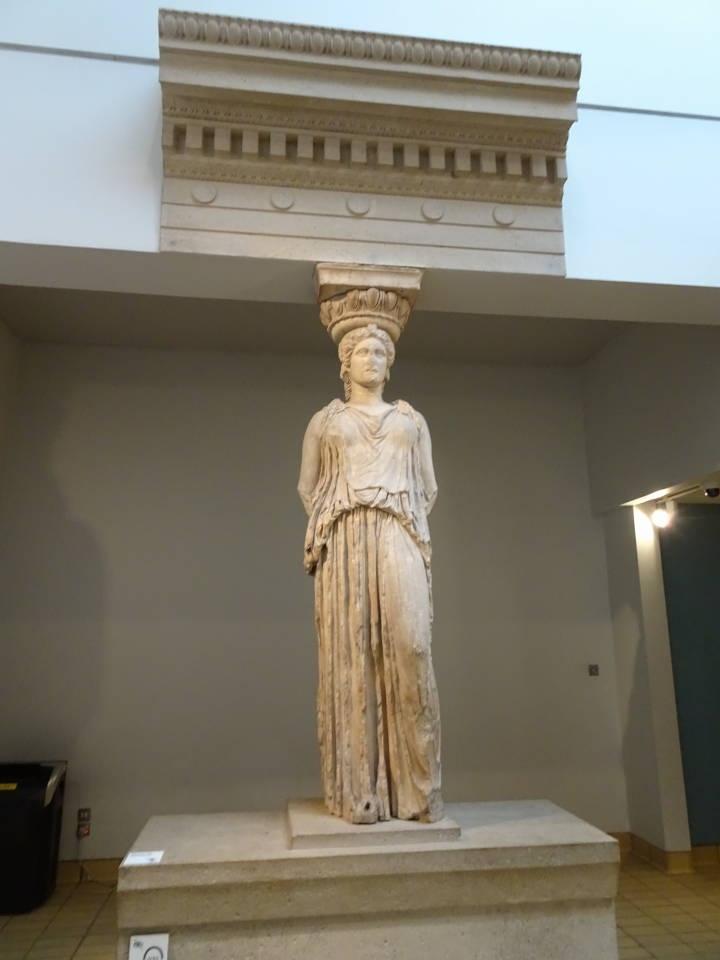
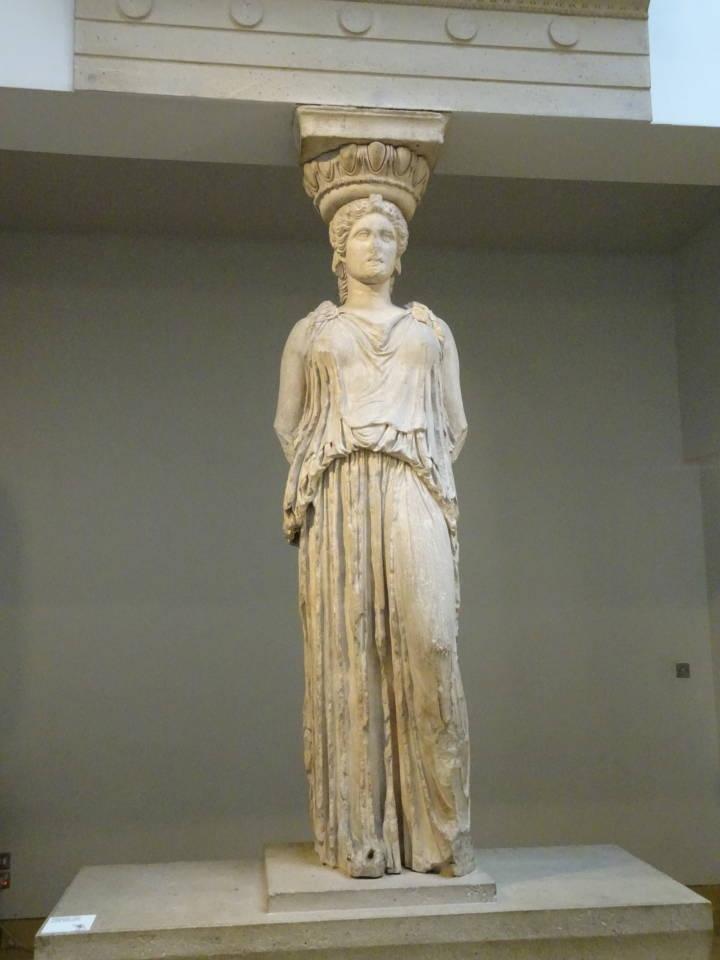
  • Room 19<br />Greece: Athens<br />430?400 BC<br /><br />The Erechtheum Caryatid<br />エレクテイオン カリアティード<br /><br />アテネのアクロポリスにある現在、現地にあるものは全て複製で、本物の5体は新アクロポリス美術館、そして、のこり1体はここ、大英博物館にある。<br />ここに1体だけあるのは少し寂しく可哀そうな感じ。<br /><br />https://artsandculture.google.com/streetview/british-museum/AwEp68JO4NECkQ?sv_h=262.1792699779833&amp;sv_p=6.367488317173425&amp;sv_pid=eypGO5CD3CS4Co2oKTjTmw&amp;sv_lid=3582009757710443819&amp;sv_lng=-0.1280708726823434&amp;sv_lat=51.51918658633588&amp;sv_z=0.7264665122163256

    Room 19
    Greece: Athens
    430?400 BC

    The Erechtheum Caryatid
    エレクテイオン カリアティード
    アテネのアクロポリスにある現在、現地にあるものは全て複製で、本物の5体は新アクロポリス美術館、そして、のこり1体はここ、大英博物館にある。
    ここに1体だけあるのは少し寂しく可哀そうな感じ。

    https://artsandculture.google.com/streetview/british-museum/AwEp68JO4NECkQ?sv_h=262.1792699779833&sv_p=6.367488317173425&sv_pid=eypGO5CD3CS4Co2oKTjTmw&sv_lid=3582009757710443819&sv_lng=-0.1280708726823434&sv_lat=51.51918658633588&sv_z=0.7264665122163256

  • Room 19<br />Greece: Athens<br />430?400 BC<br /><br />The Erechtheum Caryatid<br />エレクテイオン カリアティード<br /><br />参考)過去の旅行記<br />アテナ(Athena) 2日目(古代アゴラ、ローマン・アゴラ、アレオパゴス、アテナイのアクロポリス、新アクロポリス美術館)<br />https://4travel.jp/travelogue/11695987

    Room 19
    Greece: Athens
    430?400 BC

    The Erechtheum Caryatid
    エレクテイオン カリアティード
    参考)過去の旅行記
    アテナ(Athena) 2日目(古代アゴラ、ローマン・アゴラ、アレオパゴス、アテナイのアクロポリス、新アクロポリス美術館)
    https://4travel.jp/travelogue/11695987

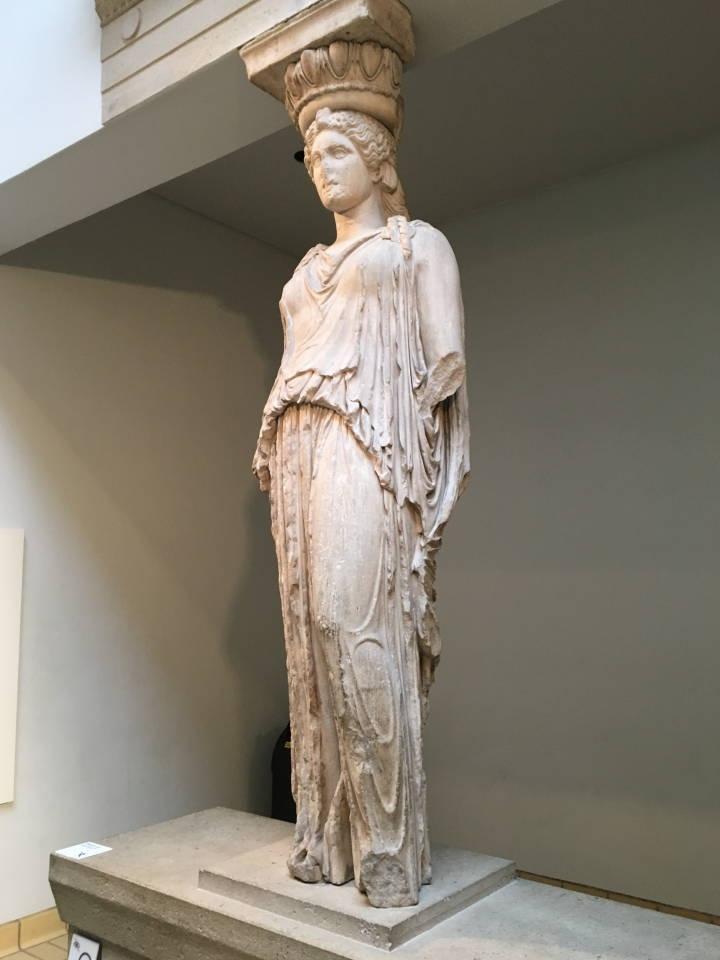
  • Room 19<br />Greece: Athens<br />430?400 BC<br /><br />The Erechtheum Caryatid<br />エレクテイオン カリアティード<br />

    Room 19
    Greece: Athens
    430?400 BC

    The Erechtheum Caryatid
    エレクテイオン カリアティード
6いいね!

利用規約に違反している投稿は、報告する事ができます。 問題のある投稿を連絡する

コメントを投稿する前に

十分に確認の上、ご投稿ください。 コメントの内容は攻撃的ではなく、相手の気持ちに寄り添ったものになっていますか?

サイト共通ガイドライン(利用上のお願い)

報道機関・マスメディアの方へ 画像提供などに関するお問い合わせは、専用のお問い合わせフォームからお願いいたします。

旅の計画・記録

マイルに交換できるフォートラベルポイントが貯まる
フォートラベルポイントって?

イギリスで使うWi-Fiはレンタルしましたか?

フォートラベル GLOBAL WiFiなら
イギリス最安 382円/日~

  • 空港で受取・返却可能
  • お得なポイントがたまる

イギリスの料金プランを見る

フォートラベル公式LINE@

おすすめの旅行記や旬な旅行情報、お得なキャンペーン情報をお届けします!
QRコードが読み取れない場合はID「@4travel」で検索してください。

\その他の公式SNSはこちら/
タグから海外旅行記(ブログ)を探す

この旅行記の地図

拡大する

PAGE TOP