出雲市旅行記(ブログ) 一覧に戻る
出雲旅の2回目は出雲大社について書いてみました。今では「縁結びの神様」として有名ですが、日本の国造り神話のメインステージでもあります。「古事記」以前の弥生時代から続く出雲と日本の歴史の一部を感じられた旅になりました。

神話と日本刀の故郷、出雲へ②「出雲大社」/Journey in Izumo, hometown of Mythology and Samurai Sword②“Izumo Taisha Shrine”

12いいね!

2018/03/18 - 2018/03/20

1009位(同エリア2317件中)

0

13

edamann

edamannさん

出雲旅の2回目は出雲大社について書いてみました。今では「縁結びの神様」として有名ですが、日本の国造り神話のメインステージでもあります。「古事記」以前の弥生時代から続く出雲と日本の歴史の一部を感じられた旅になりました。

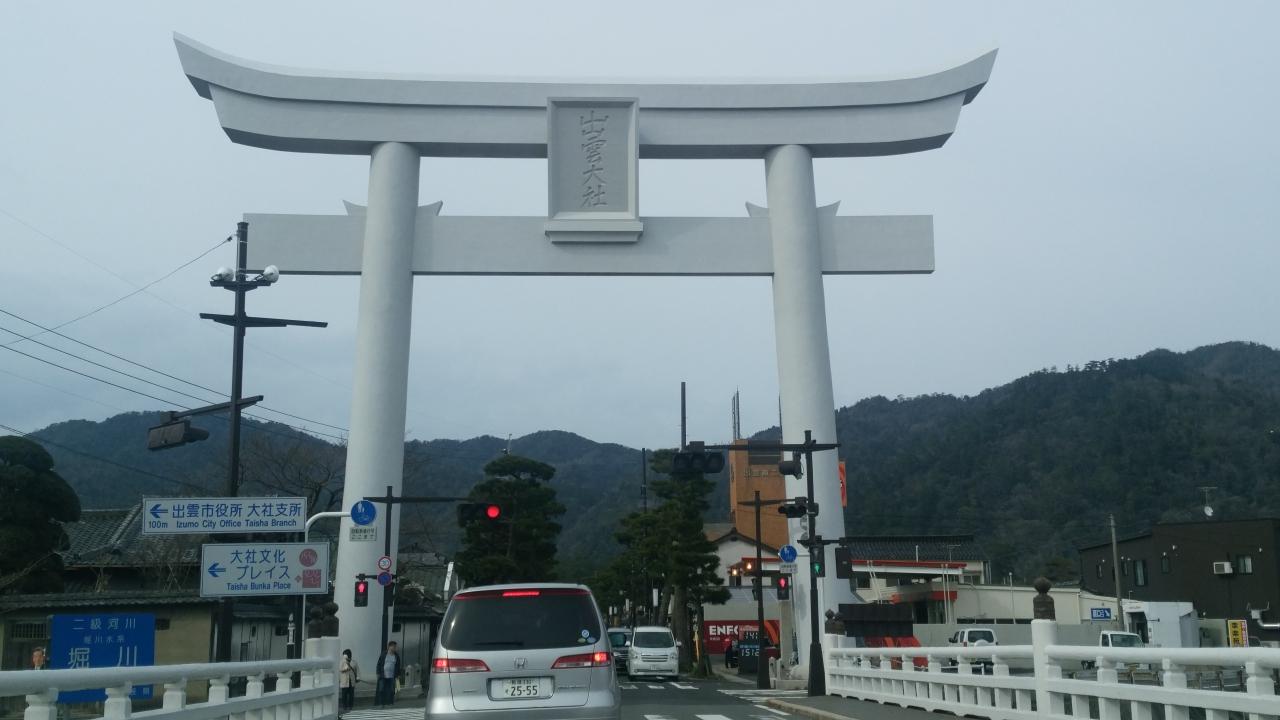
  • 国造りの神話の里、出雲大社へ<br /><br /> 出雲旅の初日、日本刀の源流を奥出雲に訪ねた後は出雲大社まで車を走らせます。島根県に来てここはどうしても外せないところ。出雲大社は今でこそ「縁結びの神様」としての観光地の側面が目立っていますが、もともとは日本の国造り神話の中心、高天原から出雲に降り立った神々を祀る日本でも最古クラスの神社。少なくとも659年に社殿を修復させた記録が残っているので、建立はそれ以前に遡ります。もともと出雲大社の建つ場所は古代には八雲山を背後に控え二つの川が交わるという自然崇拝の人々にとっても一種の聖地の構造になっていたので、はるか昔から祭祀場として機能していたのではないかと想像されます。そして日本最初の公式歴史書である「古事記」が720年に成立し、出雲大社に国造り神話の舞台としてのお墨付きがついた格好です。<br /><br /> <br />車で大きな鳥居をくぐります。前方に見えるのが八雲山で、その麓が出雲大社。<br /><br /><br />Izumo Taisha Shrine: The origin of Land creation mythology<br /><br />    I headed for Izumo Taisha Shrine after visiting the original stream of Samurai swords in Oku-Izumo. Nobody can avoid Izumo Taisha, when you visit Shaimane. Although Izumo Taisha is known as a “Power spot for marriage” nowadays, it is one of the oldest shrine in Japan. The record says renovation was made in 659 which means the inception was before this. In ancient time the place of Izumo Taisha was the meeting point of 2 rivers on the back of Mt. Yakumo which seems like to be a sacred place for pagans. I imagine this place was probably used for ritual field since long time ago. And “Kojiki”, the first official history book in Japan, was issued in 720 which gave an official endorsement as the stage of Land creation.<br /><br /> <br />This is the first shrine arch. Mt. Yakumo is in front. Izumo Taisha Shrine is based on the foot of the mountain.<br />

    国造りの神話の里、出雲大社へ

     出雲旅の初日、日本刀の源流を奥出雲に訪ねた後は出雲大社まで車を走らせます。島根県に来てここはどうしても外せないところ。出雲大社は今でこそ「縁結びの神様」としての観光地の側面が目立っていますが、もともとは日本の国造り神話の中心、高天原から出雲に降り立った神々を祀る日本でも最古クラスの神社。少なくとも659年に社殿を修復させた記録が残っているので、建立はそれ以前に遡ります。もともと出雲大社の建つ場所は古代には八雲山を背後に控え二つの川が交わるという自然崇拝の人々にとっても一種の聖地の構造になっていたので、はるか昔から祭祀場として機能していたのではないかと想像されます。そして日本最初の公式歴史書である「古事記」が720年に成立し、出雲大社に国造り神話の舞台としてのお墨付きがついた格好です。


    車で大きな鳥居をくぐります。前方に見えるのが八雲山で、その麓が出雲大社。


    Izumo Taisha Shrine: The origin of Land creation mythology

    I headed for Izumo Taisha Shrine after visiting the original stream of Samurai swords in Oku-Izumo. Nobody can avoid Izumo Taisha, when you visit Shaimane. Although Izumo Taisha is known as a “Power spot for marriage” nowadays, it is one of the oldest shrine in Japan. The record says renovation was made in 659 which means the inception was before this. In ancient time the place of Izumo Taisha was the meeting point of 2 rivers on the back of Mt. Yakumo which seems like to be a sacred place for pagans. I imagine this place was probably used for ritual field since long time ago. And “Kojiki”, the first official history book in Japan, was issued in 720 which gave an official endorsement as the stage of Land creation.


    This is the first shrine arch. Mt. Yakumo is in front. Izumo Taisha Shrine is based on the foot of the mountain.

  • ここから参道が始まります。<br /><br />Abbey load starts here.

    ここから参道が始まります。

    Abbey load starts here.

  • 本宮まで一直線に続く参道ですが、この時は松の根っこの養生のために入れず、脇道を通る形になっていました。<br /><br /><br />This is the abbey road straight to the main shrine. At moment abbey load was traffic ban to take care of pine tree roots.

    本宮まで一直線に続く参道ですが、この時は松の根っこの養生のために入れず、脇道を通る形になっていました。


    This is the abbey road straight to the main shrine. At moment abbey load was traffic ban to take care of pine tree roots.

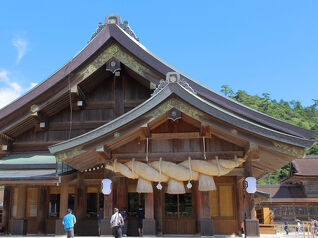
  • これは拝殿。ご本殿の正面に位置します。<br /><br /><br />This is front shrine which stands in front of the main shrine.

    これは拝殿。ご本殿の正面に位置します。


    This is front shrine which stands in front of the main shrine.

  • ここがご本殿。もちろん中に入ることはできず門前からお参りします。<br /><br /><br />This is the main shrine. Inside is off course keep out. People worship from the gate.

    ここがご本殿。もちろん中に入ることはできず門前からお参りします。


    This is the main shrine. Inside is off course keep out. People worship from the gate.

  • ご本殿の真後ろ、八雲山を背に立つのが「須佐之男命(すさのおのみこと)」を祀る社です。須佐之男命は高天原(たかまがはら)に住んでいた神様の一人でしたが、粗暴な行いを繰り返したために高天原を追い出されて奥出雲の船通山に降り立ち、八岐大蛇(やまたのおろち)を退治して櫛名田比売(くしなだひめ)を娶り出雲の地に勢力を築きます。その子孫の大国主命大神(おおくにぬしのみこと)を祀るのが出雲大社。その大国主は築き上げた出雲の国を高天原に譲った「国譲りの神」として知られています。<br /> さてここで言う神々の棲み処「高天原」は具体的にどの地域を指しているのか。日本人がどこからどのようにやってきたのかについては、中国大陸からの騎馬民族の侵略や、南洋の海洋民族の移住など、いまだに多くの学説があります。ただ出雲(現在の島根県)は対馬を挟んで朝鮮半島の目の前、神話に出てくる様々なエピソードに馬をモチーフにしたものもあり、どうしても大陸系の騎馬民族をイメージしてしまいます。特に須佐之男命の物語はサラリーマンとしての観点からみると、本社で使いあぐねた癖の強い社員を海外に赴任させたらそこで新しいマーケットを切り開いて我が物顔で振舞っていたところ、結局本社の意向を受けた若いマネージャーが赴任してきて権限剥奪されてしまうというドラマを思い起こさせます。高天原はこの場合には、大陸のどこかにある騎馬民族の本拠地なのか、とも考えられます。<br /><br /><br /><br />This is small shrine for venerating Susanoo-no-Mikoto standing just behind the main shrine. Susanoo had been one of Gods living in Takama-ga-hara (meaning High heaven field) but he was kicked out from Takama-ga-hara due to his violent behavior. He came down to the earth on the peak of Mt. Sentsuu in Oku-Izumo. He busted Yamata-no Orochi (Dragon serpent monster having 8 heads) there and built up his force in the region. His descendant is Ookuninushi-no-Mikoto which is venerated in Izumo-Taisha. He is known as “Kuni-yuzuri no Kami (God of Land transfer)” who gave up Izumo land to Takama-ga-hara.<br />    Then where was Takama-ga-hara on the earth? There are so many academic disputes from where and how Japanese people came to this Japan islands. One says it was an invasion of equestrian people from China continent and another says it was an immigration of maritime people in Polynesia. However Izumo (presently Shimane prefecture) is just across the Japan sea from Korean peninsula and some of anecdotes of mythology were related to horses. I cannot help feeling Susanoo and his races were nomad people in the continent. Moreover the episode of Susanoo reminds me, a company employee, the story of the employee having strong and spooky character who was kicked out from the main office and sent to a branch office abroad. He explored new market in the region and started behaving as if he owns everything. Finally the manager came to the branch from the main office to fire him. I imagine Takama-ga-hara was nomad people’s headquarter somewhere in the continent.<br />

    ご本殿の真後ろ、八雲山を背に立つのが「須佐之男命(すさのおのみこと)」を祀る社です。須佐之男命は高天原(たかまがはら)に住んでいた神様の一人でしたが、粗暴な行いを繰り返したために高天原を追い出されて奥出雲の船通山に降り立ち、八岐大蛇(やまたのおろち)を退治して櫛名田比売(くしなだひめ)を娶り出雲の地に勢力を築きます。その子孫の大国主命大神(おおくにぬしのみこと)を祀るのが出雲大社。その大国主は築き上げた出雲の国を高天原に譲った「国譲りの神」として知られています。
     さてここで言う神々の棲み処「高天原」は具体的にどの地域を指しているのか。日本人がどこからどのようにやってきたのかについては、中国大陸からの騎馬民族の侵略や、南洋の海洋民族の移住など、いまだに多くの学説があります。ただ出雲(現在の島根県)は対馬を挟んで朝鮮半島の目の前、神話に出てくる様々なエピソードに馬をモチーフにしたものもあり、どうしても大陸系の騎馬民族をイメージしてしまいます。特に須佐之男命の物語はサラリーマンとしての観点からみると、本社で使いあぐねた癖の強い社員を海外に赴任させたらそこで新しいマーケットを切り開いて我が物顔で振舞っていたところ、結局本社の意向を受けた若いマネージャーが赴任してきて権限剥奪されてしまうというドラマを思い起こさせます。高天原はこの場合には、大陸のどこかにある騎馬民族の本拠地なのか、とも考えられます。


    This is small shrine for venerating Susanoo-no-Mikoto standing just behind the main shrine. Susanoo had been one of Gods living in Takama-ga-hara (meaning High heaven field) but he was kicked out from Takama-ga-hara due to his violent behavior. He came down to the earth on the peak of Mt. Sentsuu in Oku-Izumo. He busted Yamata-no Orochi (Dragon serpent monster having 8 heads) there and built up his force in the region. His descendant is Ookuninushi-no-Mikoto which is venerated in Izumo-Taisha. He is known as “Kuni-yuzuri no Kami (God of Land transfer)” who gave up Izumo land to Takama-ga-hara.
    Then where was Takama-ga-hara on the earth? There are so many academic disputes from where and how Japanese people came to this Japan islands. One says it was an invasion of equestrian people from China continent and another says it was an immigration of maritime people in Polynesia. However Izumo (presently Shimane prefecture) is just across the Japan sea from Korean peninsula and some of anecdotes of mythology were related to horses. I cannot help feeling Susanoo and his races were nomad people in the continent. Moreover the episode of Susanoo reminds me, a company employee, the story of the employee having strong and spooky character who was kicked out from the main office and sent to a branch office abroad. He explored new market in the region and started behaving as if he owns everything. Finally the manager came to the branch from the main office to fire him. I imagine Takama-ga-hara was nomad people’s headquarter somewhere in the continent.

  • 「因幡の白兎」の伝説からでしょう、出雲大社の境内にはそこら中に白兎のオブジェがあります。<br /><br />出雲大社は古代の摩天楼だった!<br /><br /> 出雲大社の建物自体は伊勢神宮と同じく、「ご遷宮」という名のもと、数十年の周期で建直されています。そのため古代の出雲大社がどのような外見だったのか確認することは出来ませんが、かつては日本中どこの神社にも例を見ないような天を突くような社殿が聳えていたという伝説がありました。ところが2000年になって杉の大木を3本束ねた直径3mを超える宇豆柱(うずばしら)が発見されました。<br /><br /><br />Everywhere in Izumo Taisha is statues of white rabbits. <br /><br />Izumo Taisha was an ancient skyscraper!<br /><br />    Shrine buildings of Izumo Taisha are rebuilt in every 6 decades. So nobody has ever seen how the Shrine looked in the past. But there had been a legend that ancient Izumo Taisha was so tall like heaven. Then huge pillar over 3 meter which 3 cedar trees are bundled into one in 2000-2001.<br />

    「因幡の白兎」の伝説からでしょう、出雲大社の境内にはそこら中に白兎のオブジェがあります。

    出雲大社は古代の摩天楼だった!

     出雲大社の建物自体は伊勢神宮と同じく、「ご遷宮」という名のもと、数十年の周期で建直されています。そのため古代の出雲大社がどのような外見だったのか確認することは出来ませんが、かつては日本中どこの神社にも例を見ないような天を突くような社殿が聳えていたという伝説がありました。ところが2000年になって杉の大木を3本束ねた直径3mを超える宇豆柱(うずばしら)が発見されました。


    Everywhere in Izumo Taisha is statues of white rabbits.

    Izumo Taisha was an ancient skyscraper!

    Shrine buildings of Izumo Taisha are rebuilt in every 6 decades. So nobody has ever seen how the Shrine looked in the past. But there had been a legend that ancient Izumo Taisha was so tall like heaven. Then huge pillar over 3 meter which 3 cedar trees are bundled into one in 2000-2001.

  • これが発見された柱の一部。この直径から類推される社殿の規模は約48mと現代の15階建てのビルに匹敵します。<br /><br /><br />This is a part of the pillar. This size of pillar indicates the shrine was as high as 48 meter which is equivalent of 15 stories building in modern days.

    これが発見された柱の一部。この直径から類推される社殿の規模は約48mと現代の15階建てのビルに匹敵します。


    This is a part of the pillar. This size of pillar indicates the shrine was as high as 48 meter which is equivalent of 15 stories building in modern days.

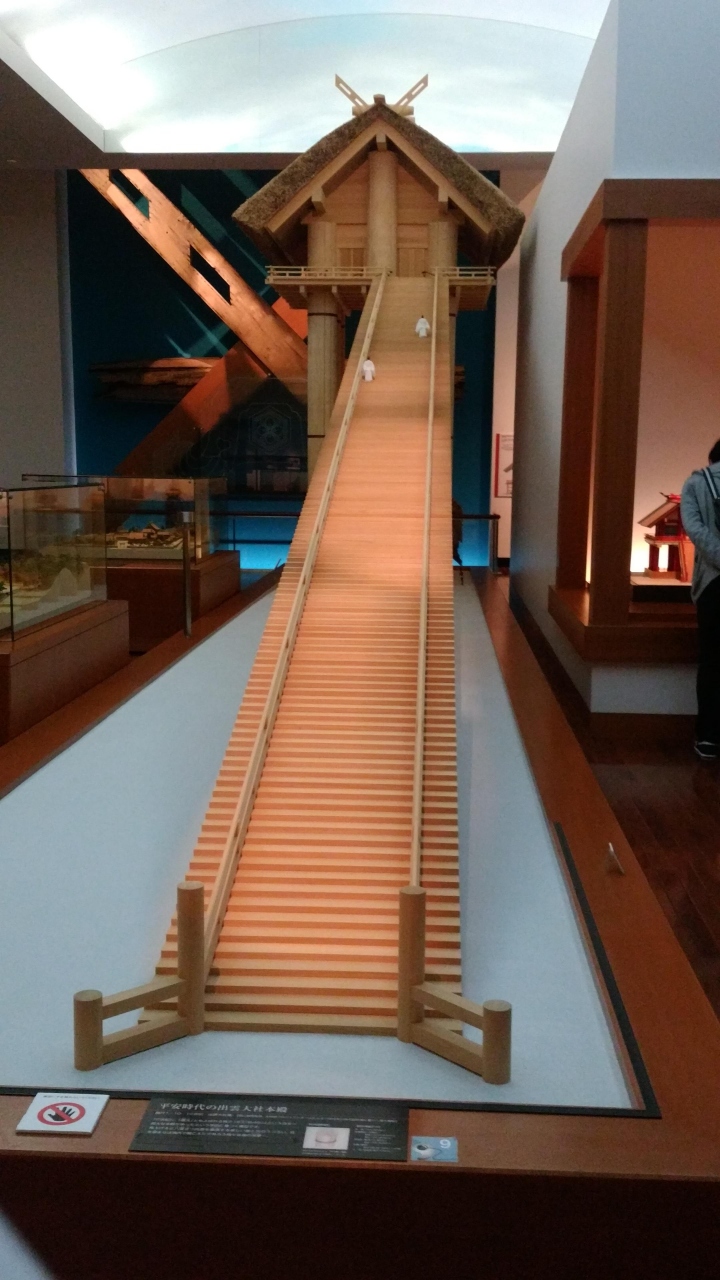
  • 古代出雲歴史博物館が復元した鎌倉時代初期(13世紀前半)の出雲大社。階段の途中に小さく白衣の人影がありますので、そのスケールを想像してください。<br /><br /><br />This is the model of Izumo Taisha in early 13th century. You can compare human figures on the step.

    古代出雲歴史博物館が復元した鎌倉時代初期(13世紀前半)の出雲大社。階段の途中に小さく白衣の人影がありますので、そのスケールを想像してください。


    This is the model of Izumo Taisha in early 13th century. You can compare human figures on the step.

  • 大陸からの鉄剣と日本刀独自の進化<br /><br /> <br /> 同じく古代出雲歴史博物館に展示されている銅剣。オリジナルのものと製造当時の色合いを復元したレプリカを並べて展示されています。この膨大な量の銅剣は近くの荒神谷遺跡から1984年に発見されたもの。それまでに日本での銅剣の出土数は全国で300本程度だったのが、この荒神谷遺跡からは一気に358本の銅剣が見つかるという世紀の発見になりました。2-3世紀頃の出雲がいかに力のあった地域だったかがわかります。なぜこれほど大量の銅剣が同じところに埋められていたのかについて、博物館では祭祀に利用されたのではないかとの解釈でしたが、自分がふと思ったのは、戦乱の弥生時代の中でひょっとしたら地域内の平和を実現するために「古代の軍縮」が行われた可能性もあるのでは、というものでした。<br /><br /><br /><br />Iron made swords from the continent before Japanese original swords<br /> <br /> <br />The photo above is bronze swords in 2-3rd century (original one and replica). This huge number of swords were discovered at Kojindani remain. Before this total number of bronze swords in these ages had been 300 at most. But 358 swords were discovered all at once at Kojindani remain. The museum explains the burial of huge number of swords might have been a part of ritual event. But I imagined there might have been “disarmament” in war period.<br />

    大陸からの鉄剣と日本刀独自の進化


     同じく古代出雲歴史博物館に展示されている銅剣。オリジナルのものと製造当時の色合いを復元したレプリカを並べて展示されています。この膨大な量の銅剣は近くの荒神谷遺跡から1984年に発見されたもの。それまでに日本での銅剣の出土数は全国で300本程度だったのが、この荒神谷遺跡からは一気に358本の銅剣が見つかるという世紀の発見になりました。2-3世紀頃の出雲がいかに力のあった地域だったかがわかります。なぜこれほど大量の銅剣が同じところに埋められていたのかについて、博物館では祭祀に利用されたのではないかとの解釈でしたが、自分がふと思ったのは、戦乱の弥生時代の中でひょっとしたら地域内の平和を実現するために「古代の軍縮」が行われた可能性もあるのでは、というものでした。


    Iron made swords from the continent before Japanese original swords


    The photo above is bronze swords in 2-3rd century (original one and replica). This huge number of swords were discovered at Kojindani remain. Before this total number of bronze swords in these ages had been 300 at most. But 358 swords were discovered all at once at Kojindani remain. The museum explains the burial of huge number of swords might have been a part of ritual event. But I imagined there might have been “disarmament” in war period.

  • 制作当時の銅剣を再現したもの(下は銅鐸)。この武器では「金属の棒でぶっ叩く」ことはできても「斬る」ことはできなかったろうな、と想像します。もしもこの銅剣による「斬首の刑」があったとしたら、なかなか首が斬れなくて痛かったろうと思います。<br /><br /><br />These are replica of ancient bronze swords. I imagined this sought of swords can strike enemies but never cut them. If there were beheading by this sword, It must have been extremely painful.

    制作当時の銅剣を再現したもの(下は銅鐸)。この武器では「金属の棒でぶっ叩く」ことはできても「斬る」ことはできなかったろうな、と想像します。もしもこの銅剣による「斬首の刑」があったとしたら、なかなか首が斬れなくて痛かったろうと思います。


    These are replica of ancient bronze swords. I imagined this sought of swords can strike enemies but never cut them. If there were beheading by this sword, It must have been extremely painful.

  • これは(恐らく大陸からの輸入による)鉄の剣。後世の日本刀のような「反り」はまだなく、「直刀」の様式。日本刀の作刀における最大のイノベーションは「反り」の発明です。日本刀はその性質上、叩いただけでは斬れず、手元に刀身を引く時に斬れます。絶妙な反りがあると、相手の体に刀が触れた直後に自動的に刃が引かれる形になり、これが日本刀の切断力を生み出します。こうした「反り」を持った日本刀の出現は12世紀後半まで待たねばなりません。<br /><br />今回は出雲大社だけで話を締めます。次回は石見銀山から話が始まります。<br /><br /><br /><br />These are iron swords (probably import from the continent). It is the stile of “straight sword” without unique curve of the blade like samurai sword. The most significant innovation in Japanese sword is “curve” of the blade. Japanese sword cannot cut the object only by strike but it can cut very sharp when you pull the blade. With the exquisite curve the blade is pulled right after the strike and it produces cutting force of the sword. You have to wait the birth of this curve until later 12th century.<br /><br />I conclude only Izumo Taisha. Next article will start from Iwami silver mine, a world heritage.<br />

    これは(恐らく大陸からの輸入による)鉄の剣。後世の日本刀のような「反り」はまだなく、「直刀」の様式。日本刀の作刀における最大のイノベーションは「反り」の発明です。日本刀はその性質上、叩いただけでは斬れず、手元に刀身を引く時に斬れます。絶妙な反りがあると、相手の体に刀が触れた直後に自動的に刃が引かれる形になり、これが日本刀の切断力を生み出します。こうした「反り」を持った日本刀の出現は12世紀後半まで待たねばなりません。

    今回は出雲大社だけで話を締めます。次回は石見銀山から話が始まります。


    These are iron swords (probably import from the continent). It is the stile of “straight sword” without unique curve of the blade like samurai sword. The most significant innovation in Japanese sword is “curve” of the blade. Japanese sword cannot cut the object only by strike but it can cut very sharp when you pull the blade. With the exquisite curve the blade is pulled right after the strike and it produces cutting force of the sword. You have to wait the birth of this curve until later 12th century.

    I conclude only Izumo Taisha. Next article will start from Iwami silver mine, a world heritage.
12いいね!

利用規約に違反している投稿は、報告する事ができます。 問題のある投稿を連絡する

コメントを投稿する前に

十分に確認の上、ご投稿ください。 コメントの内容は攻撃的ではなく、相手の気持ちに寄り添ったものになっていますか?

サイト共通ガイドライン(利用上のお願い)

報道機関・マスメディアの方へ 画像提供などに関するお問い合わせは、専用のお問い合わせフォームからお願いいたします。
旅の計画・記録

マイルに交換できるフォートラベルポイントが貯まる
フォートラベルポイントって?

フォートラベル公式LINE@

おすすめの旅行記や旬な旅行情報、お得なキャンペーン情報をお届けします!
QRコードが読み取れない場合はID「@4travel」で検索してください。

\その他の公式SNSはこちら/
タグから国内旅行記(ブログ)を探す

価格.com旅行・トラベルホテル・旅館を比較

PAGE TOP