


2014/03/22 - 2014/04/26
459位(同エリア2993件中)
のまどさん
Fragrance of lilac and jasmine tempted me to an Art Nouveau promenade. I would like to introduce 25 townhouses from the book below with my compact camera. Each house uniquely presents the architect's originality and the owner's preference.
Majority of tourists seem to stay in Brussels for only one night, but I would rather propose to visit (2) Music Instrumental Museum or (18) Horta museum at least.
Please note that I omitted accent marks used in original languages to prevent garbling.
<Reference>
Louis Meers 'Art Nouveau Wandelingen in Brussel'
-

<<Part 1 Brussels Centre>>
My trip starts in the city centre where you cannot miss well-known sites such as Grand Place and Mannekin Pis.
Art Nouveau which means 'new art' in French became a fashion in Europe between 1890 and 1914. It's an art style applying decorative straight lines and curves illustrating organic creatures or geometric designs.
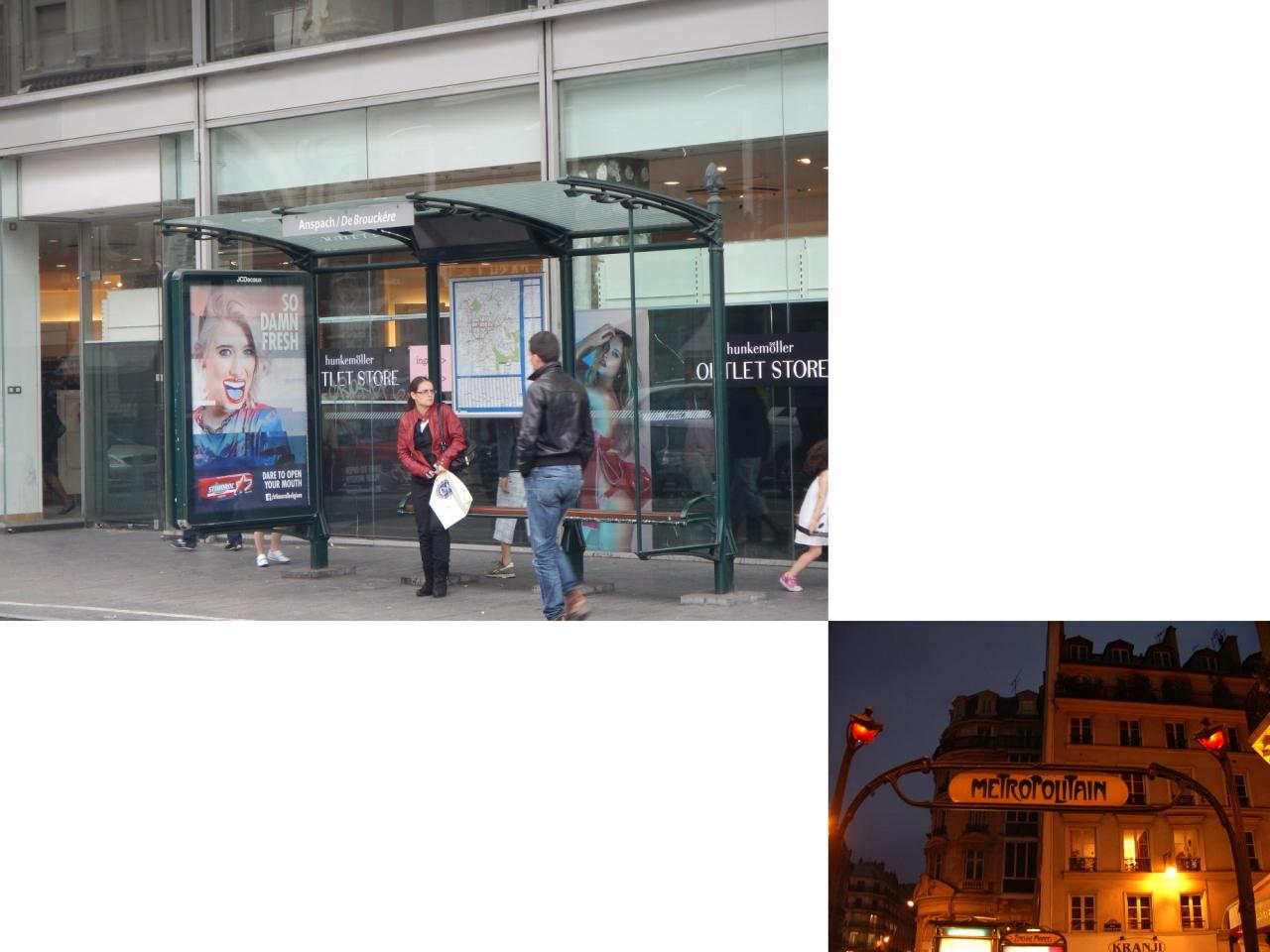
There are no less than 500 Art Nouveau buildings in Brussels, many of which are recognized by UNESCO as world heritage. Art Nouveau-like style is applied to signs of bus stops, however, the attempt in Paris(see small photo) seems more successful.
This bus stop De Brouckere is our starting point today. I will also give a tip how to access 3 other areas by public transport.
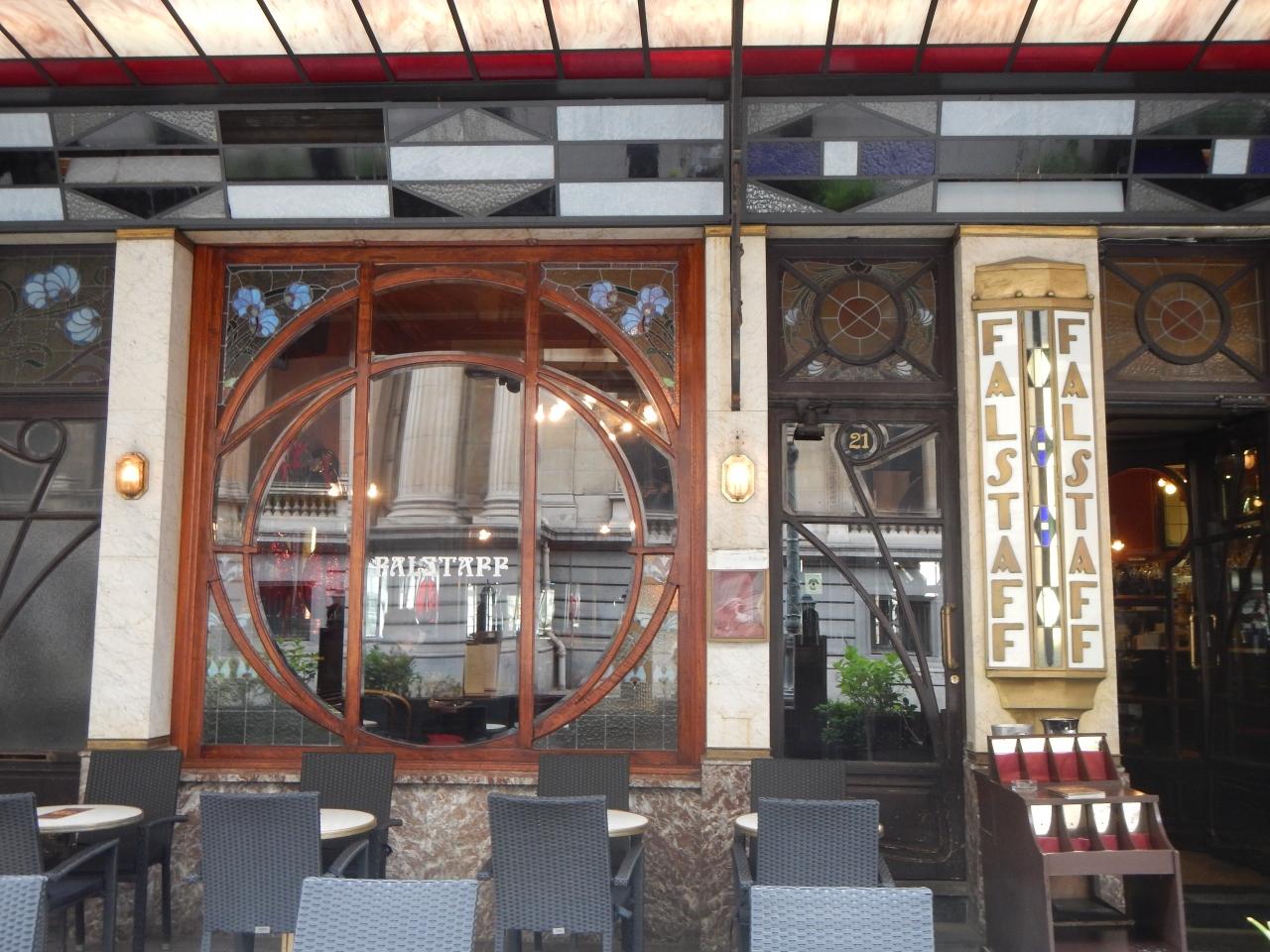
First, let's drop by an Art Nouveau restaurant which is 2 minutes walk from Grand Place and 5 minutes from the bus stop. I would like to present my ideas over an early lunch. -
(1)'Taverne Falstaff'
1904(finishing year) by Houbion
-Publicity ★★★
-Strikingness ★
-Distance ★★★
-Current usage: restaurant
-Admission: possible
-Interior: http://www.lefalstaff.be/gallery/galerij-4/
Having an omelet and croquettes, I will briefly explain the situations in 1890 when Art Nouveau was about to come into vogue. -
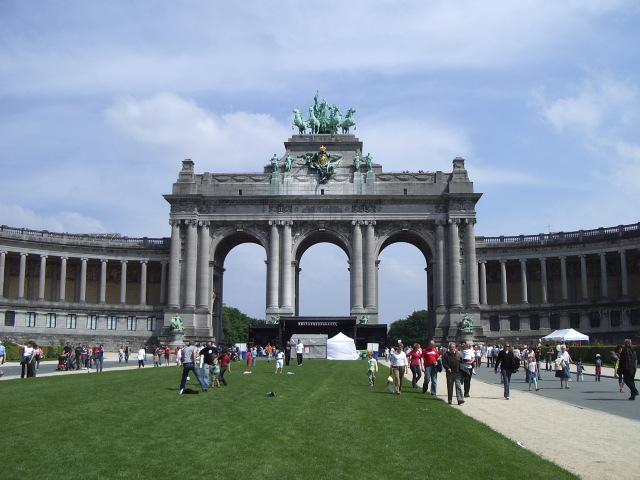
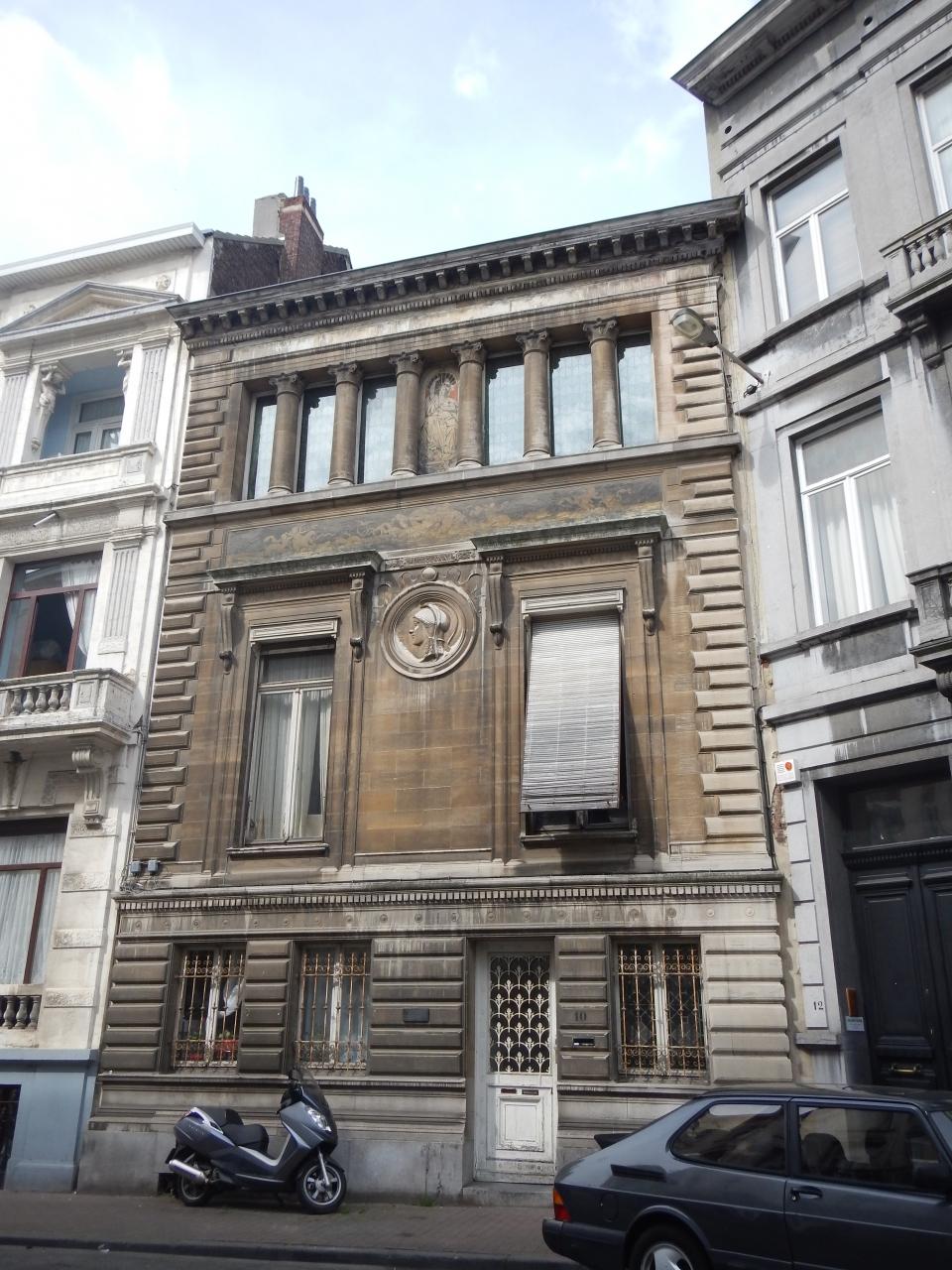
At the 60 year-anniversary of independence Belgium already went through the industrial revolution after Britain, expanding its industry by coral mines in south. Under the rule of an extreme king Leopold II, who promoted industrialization, Belgium colonized Congo to join imperialism. The king showed his power by constructing Neoclassical monuments such as this photo. But I myself do not appreciate the style.
Meanwhile, the bourgeois who benefited from the industrial revolution developed new political ideas which led to democratic movements.
This was the historical background when Horta and other great architects lit up Art Nouveau. -
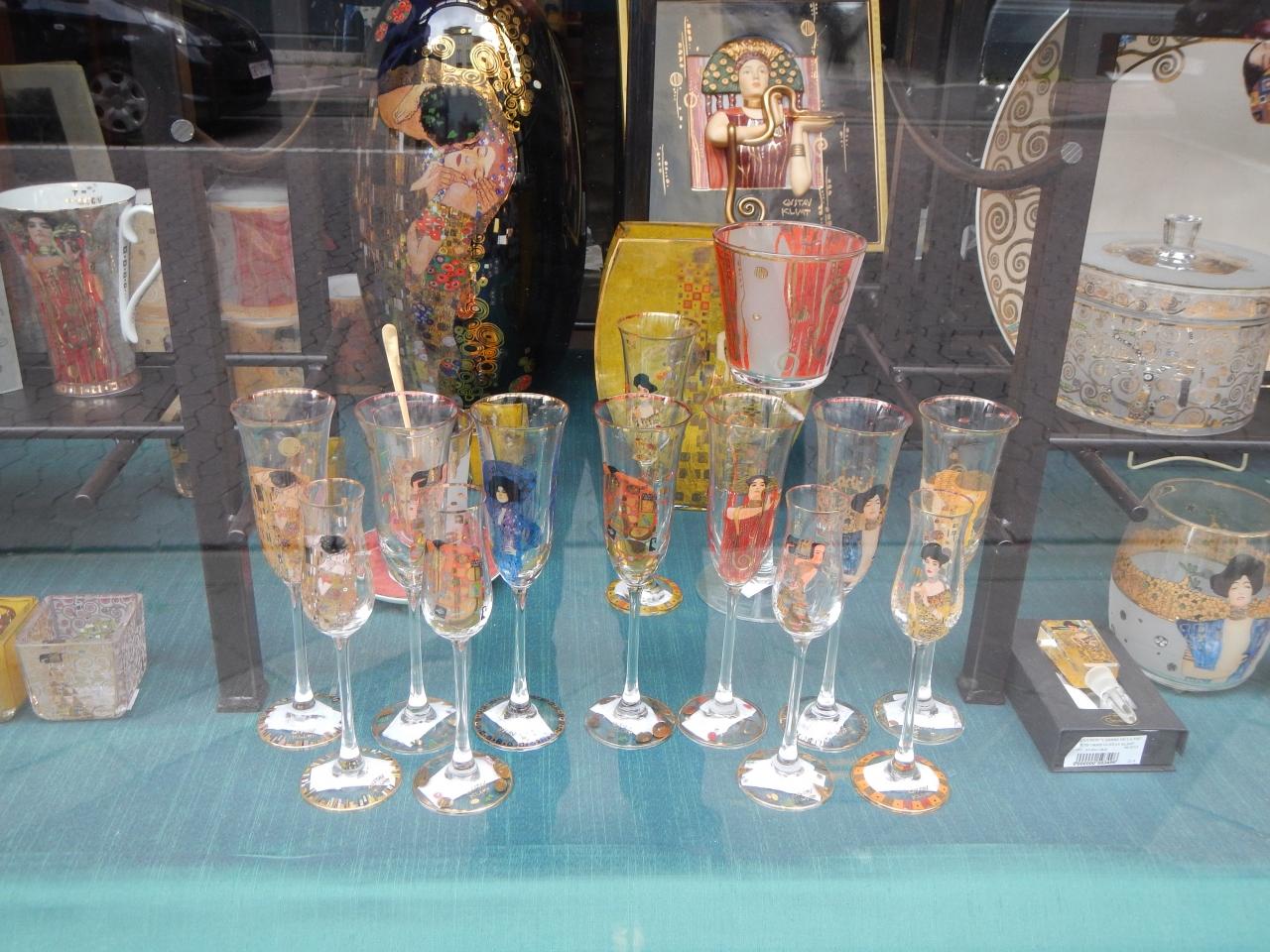
Art Nouveau architecture reminds me of Klimt's paintings such as 'Kissing.' Klimt's career peak, between the end of 19th and the beginning of 20th century overlaps the Art Nouveau period. In his hometown Vienna 'Jugendstil' Art Nouveau style in German speaking countries was in trend then.
According to the author of the book Louis Meers, Art Nouveau and Secessionism founded by Klimt influenced each other. Thus I was not totally wrong. Precisely floral arabesques were a main element of Art Nouveau in French speaking countries while geometric art form was adopted very often in Jugendstil.
The common feature is lethargic sensuality like a drowse in a depressing autumn evening. That must have been esthetics in the decadent period. -
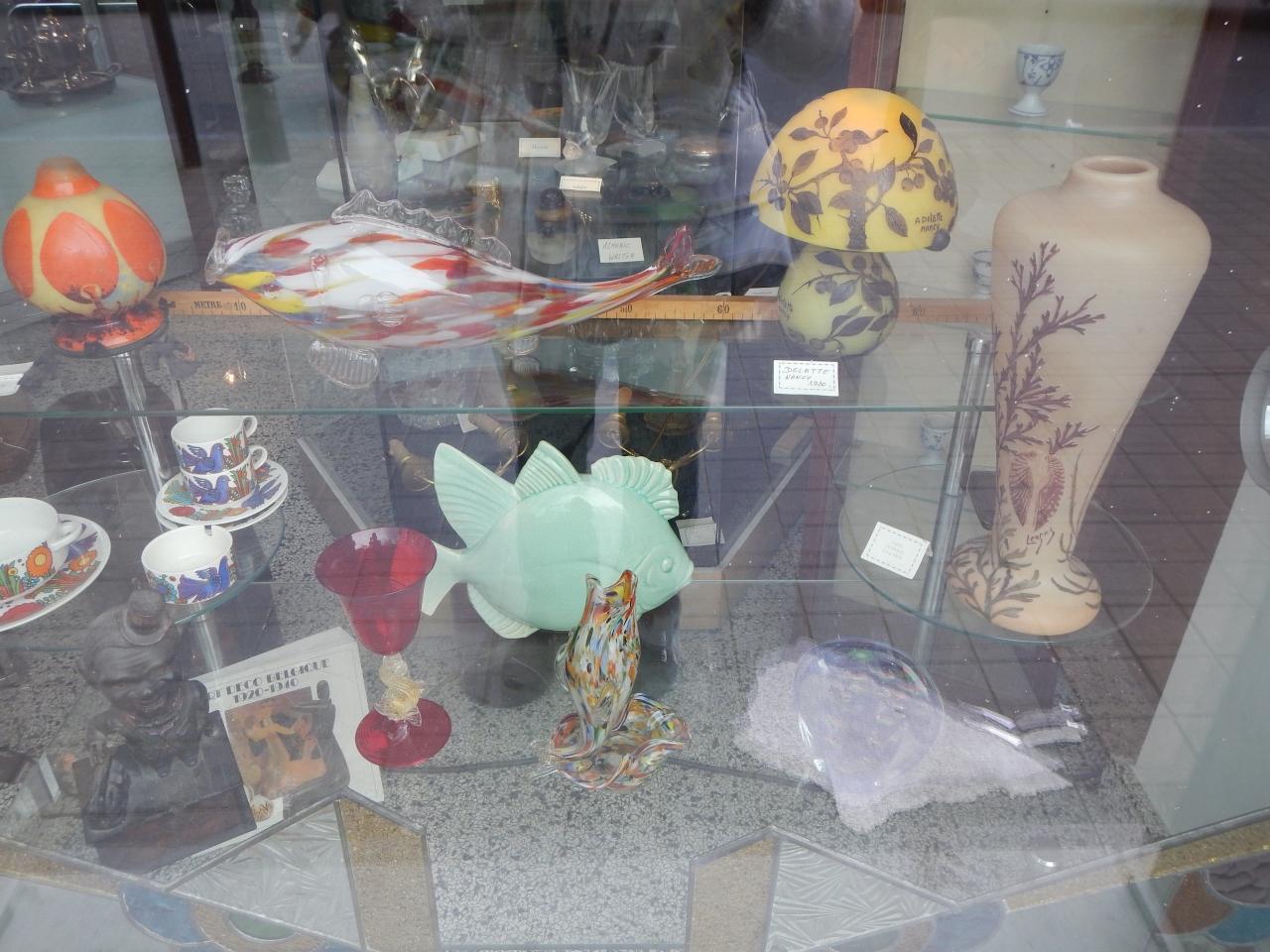
Glass artists such as Galle and Tiffany are categorized in Art Nouveau as well.
Before heading off, let me underline that Art Nouveau is influenced by Japonism. Between 1860's and 80's wood engravings from Japan gave an enormous impact on European artists principally impressionists. Art Nouveau is in the same stream in terms of soft curves and tints.
I would insist that Japonism at that time founded a value of contemporary Japanese culture in Europe.
Now my introduction is over. Let's head for a landmark on the hill very close to the centre. -
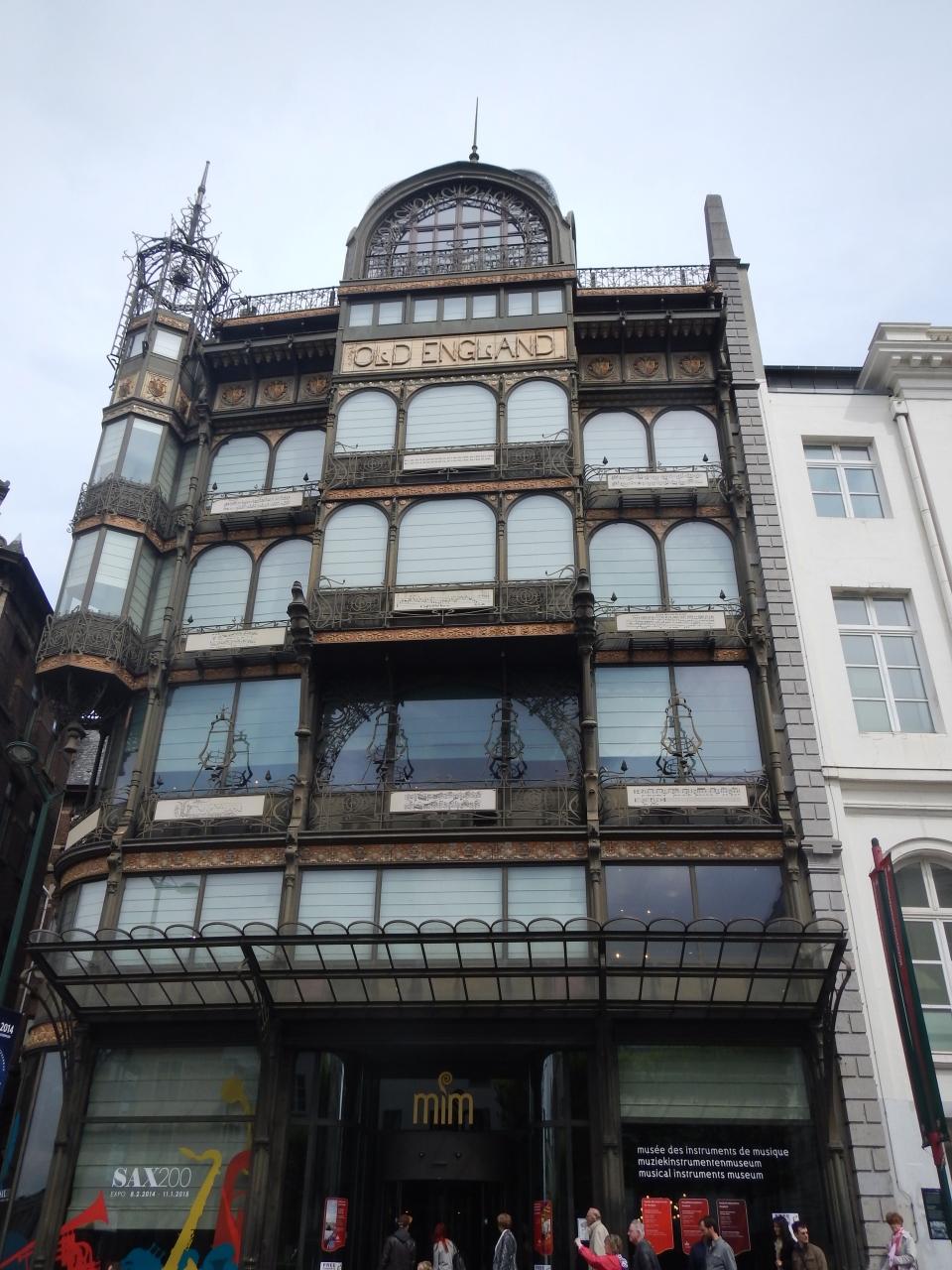
(2) 'Old England'
1899 by P. Saintenoy
-Publicity ★★★
-Strikingness ★★★
-Distance ★★(Bus 38・71 from De Brouckere, get off at Royal)
-Current usage: music instrumental museum
-Admission: possible
-Interior: http://chambredescouleurs.france-i.com/5296
Saintenoy renovated a warehouse owned by the king. The nickname 'Old England' was given after a department store which occupied this building before the current museum. You can enjoy a great view on the terrace at the top floor. -
<<Part 2 Square Amibiorix>>
A number of upper class built Art Nouveau houses in this posh residential area which is currently the EU quarter.
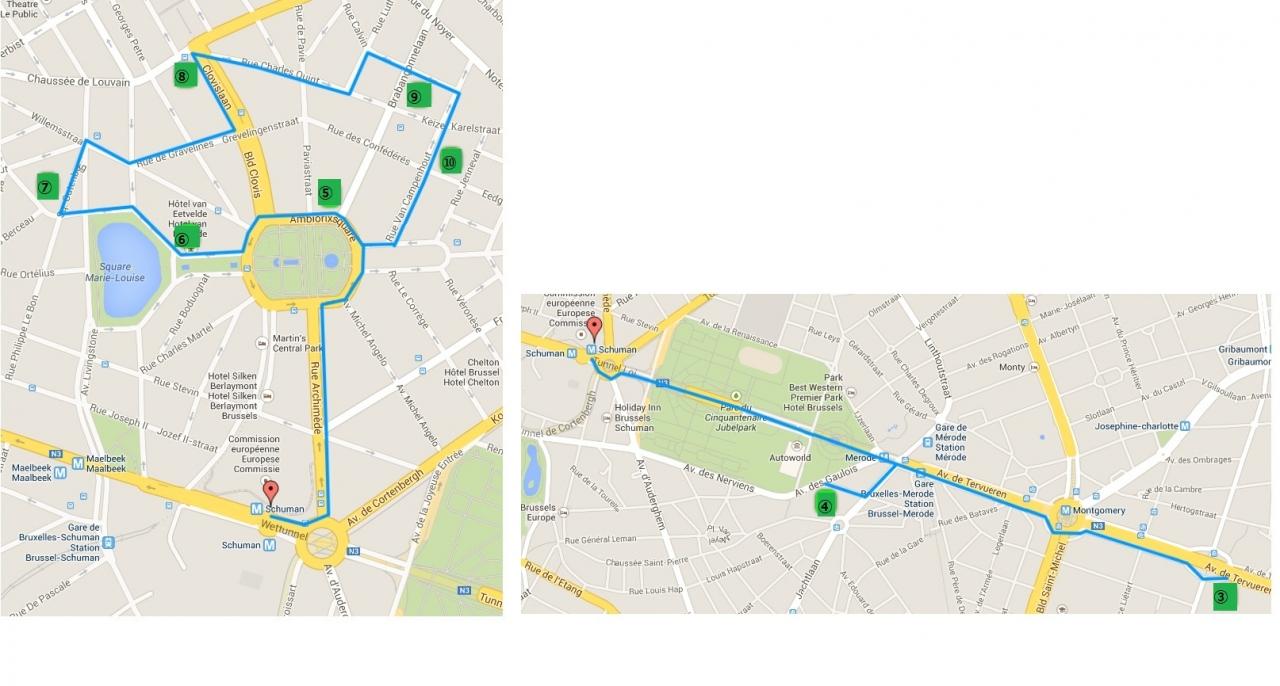
<Access>
Get on: De Brouckere(metro station) by M1 Stockel/M5 Hermann-Debroux
Get off: Schuman -
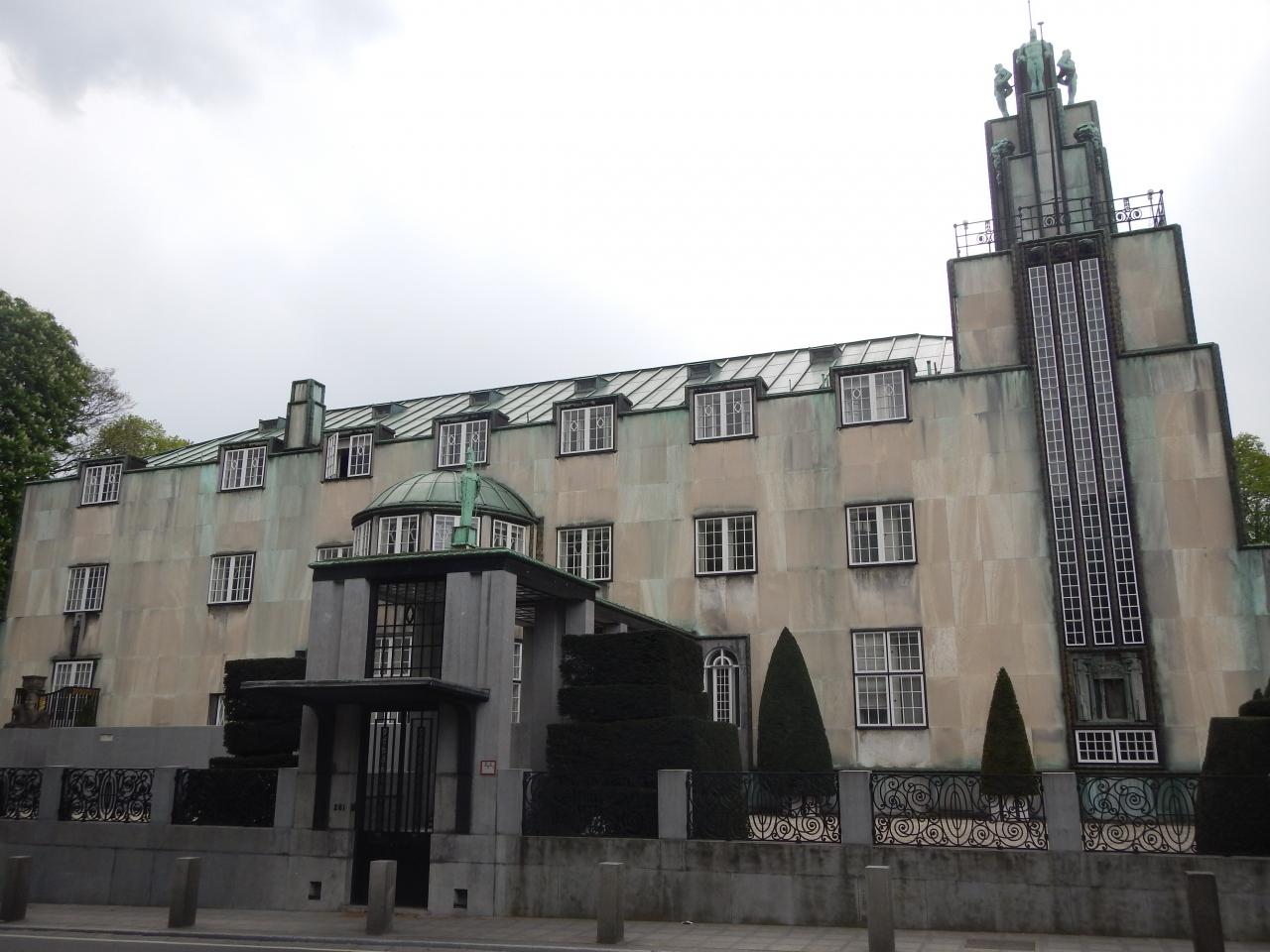
(3) 'Palais Stoclet'
1911 by J.Hoffman
-Publicity ★★
-Strikingness ★★★
-Distance ★(Take the same metro line to Montgomery. Then change to tram 39 or 44 and get off at the 2nd stop Leopold II)
-Current usage: residence
-Admission: impossible
-Interior: http://girot.arch.ethz.ch/old/research-theorylab-general/stoclet-house.htm
Since his stay in Vienna Stoclet longed for the city which led him to assign this Jugendstil architecture to a Wiener architect. It has full of symmetric and geometric aspects, and remarkably Klimt designed some part of interior including 2 paintings. Meers bitterly describes that this house 'lacks humane warmth'. I agree, it looks distant (see the link.) -
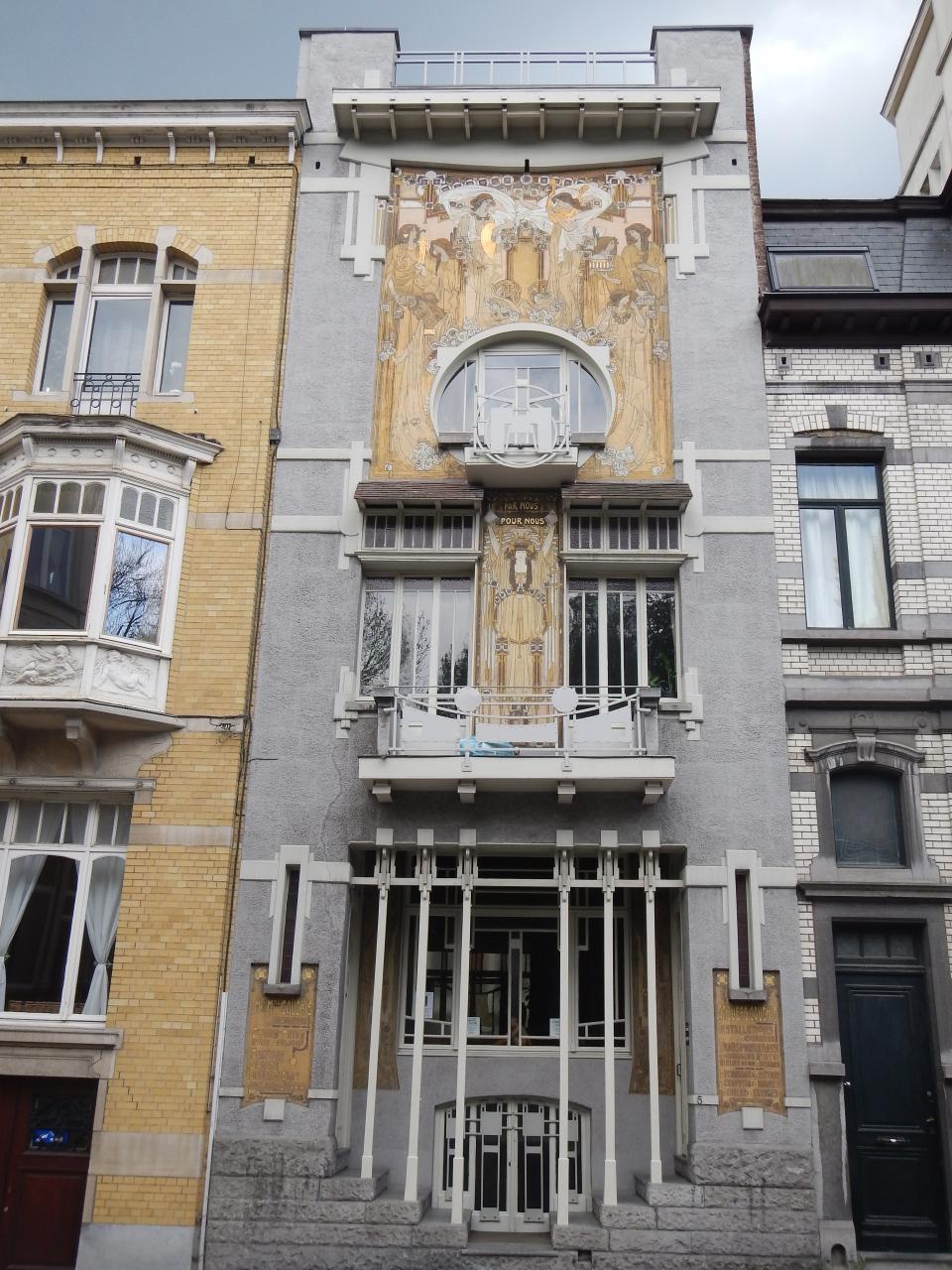
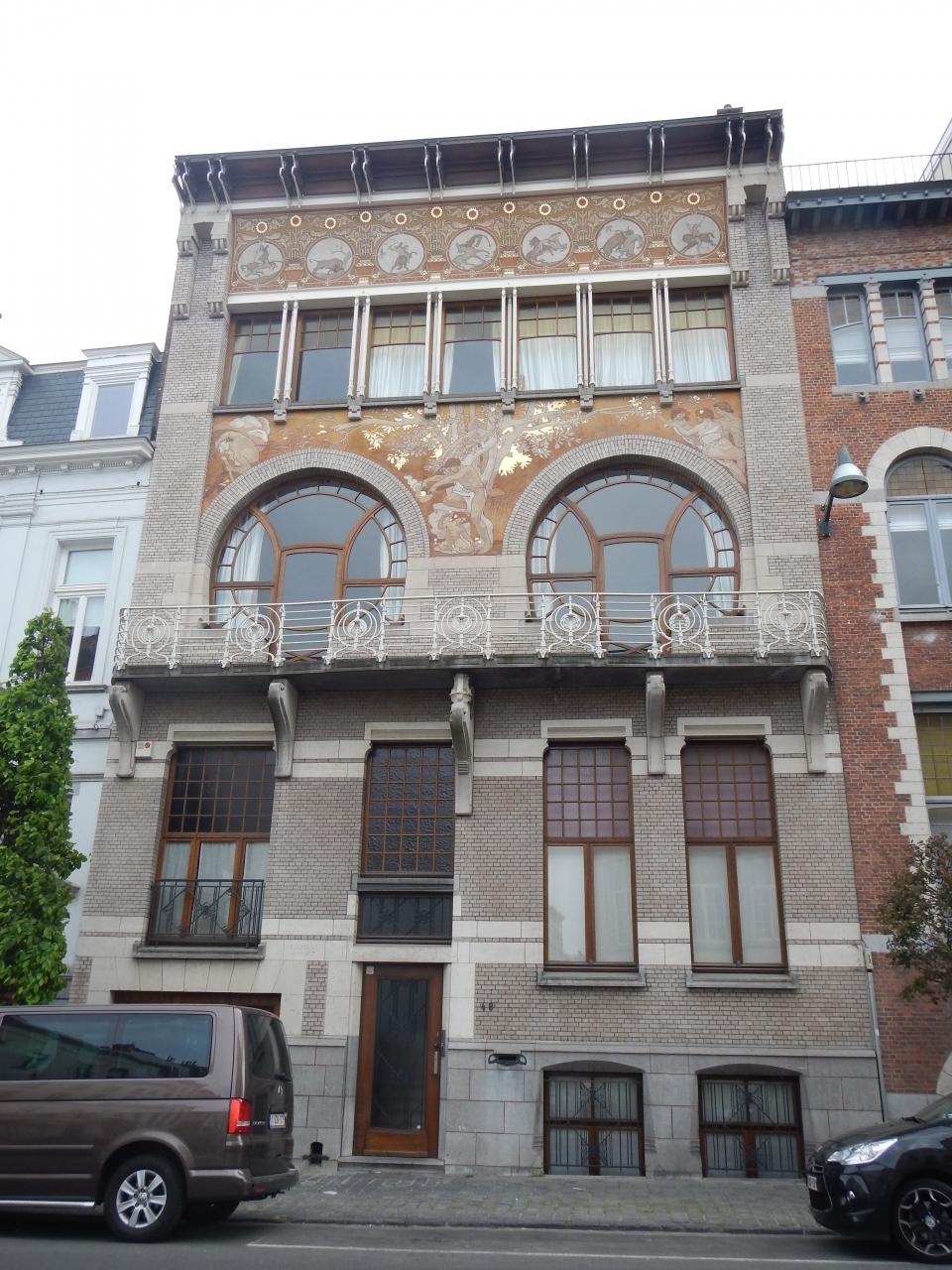
(4) 'Maison Cauchie'
1905 by P.Cauchie
-Publicity ★★★
-Strikingness ★★★
-Distance ★
-Current usage: gallery
-Admission: possible http://www.cauchie.be/cauchie-house/contact
-Interior: http://www.cauchie.be/cauchie-house/house-total-art/furniture
A painter and designer Cauchie designed his home and atelier. The Entrance porch with 3 doors and sgraffiti on the top wall depicting music gods are characteristic. Cauchie actually preferred Glasgow style to Belgian Art Nouveau.
As we saw 2 exceptions, let's carry on to see orthodox Brussels townhouses. -
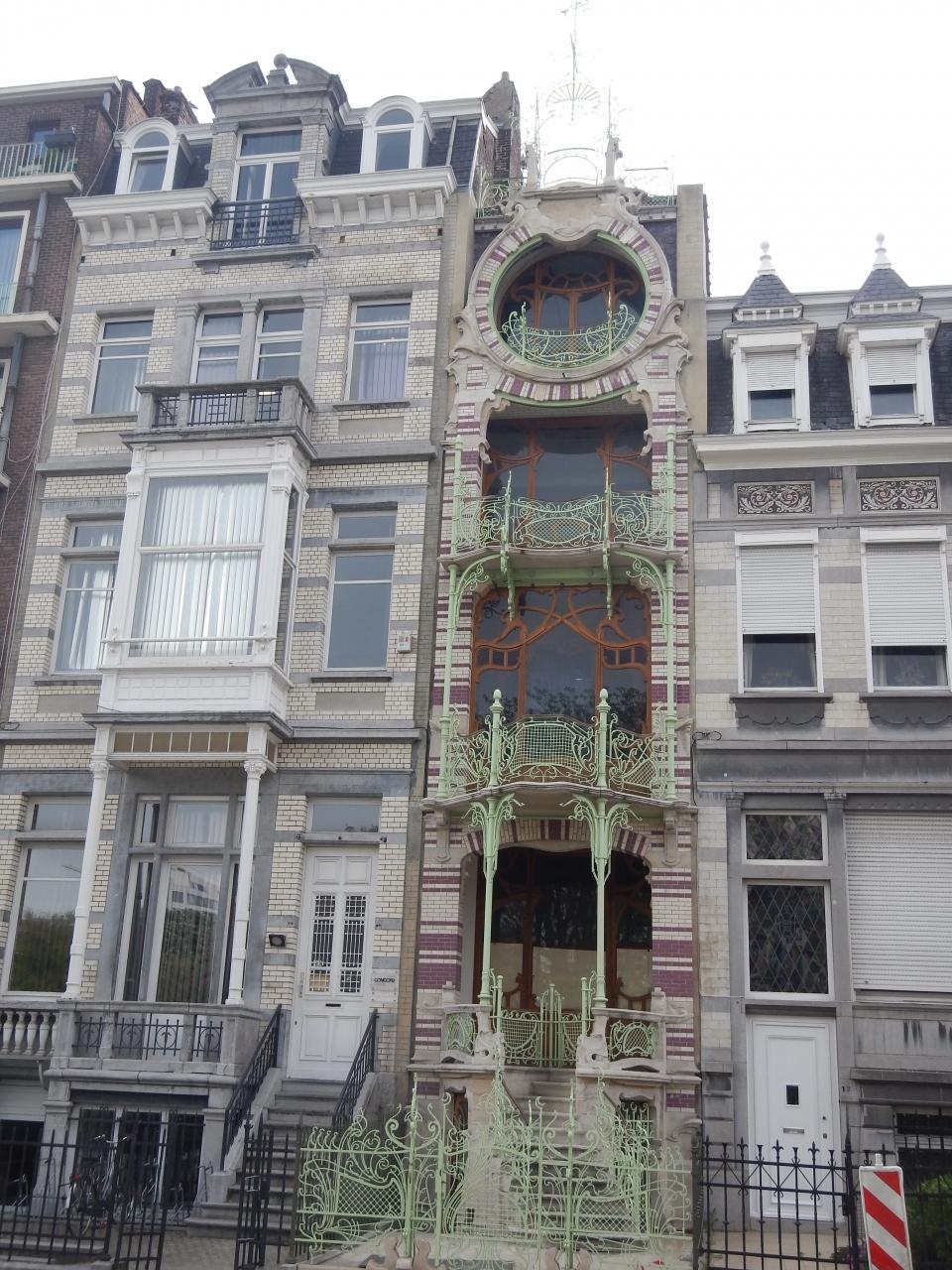
(5) 'Maison Saint Cyr'
1903 by G.Strauven
-Publicity ★★★
-Strikingness ★★★
-Distance ★★★
-Current usage: residence
-Admission: impossible
-Interior: http://www.immorp.com/Documents/Biens/ambio.htm
'The most fantasy-like townhouse,' states Meers. All the steel ornaments are expressive and meticulously made. Most of Strauven's works are memorable as his clients tend to be flamboyant bourgeois like those who run a shiny red Ferrari in downtown in these days. I always wonder how come it's possible to live in the 4-meter width house? -
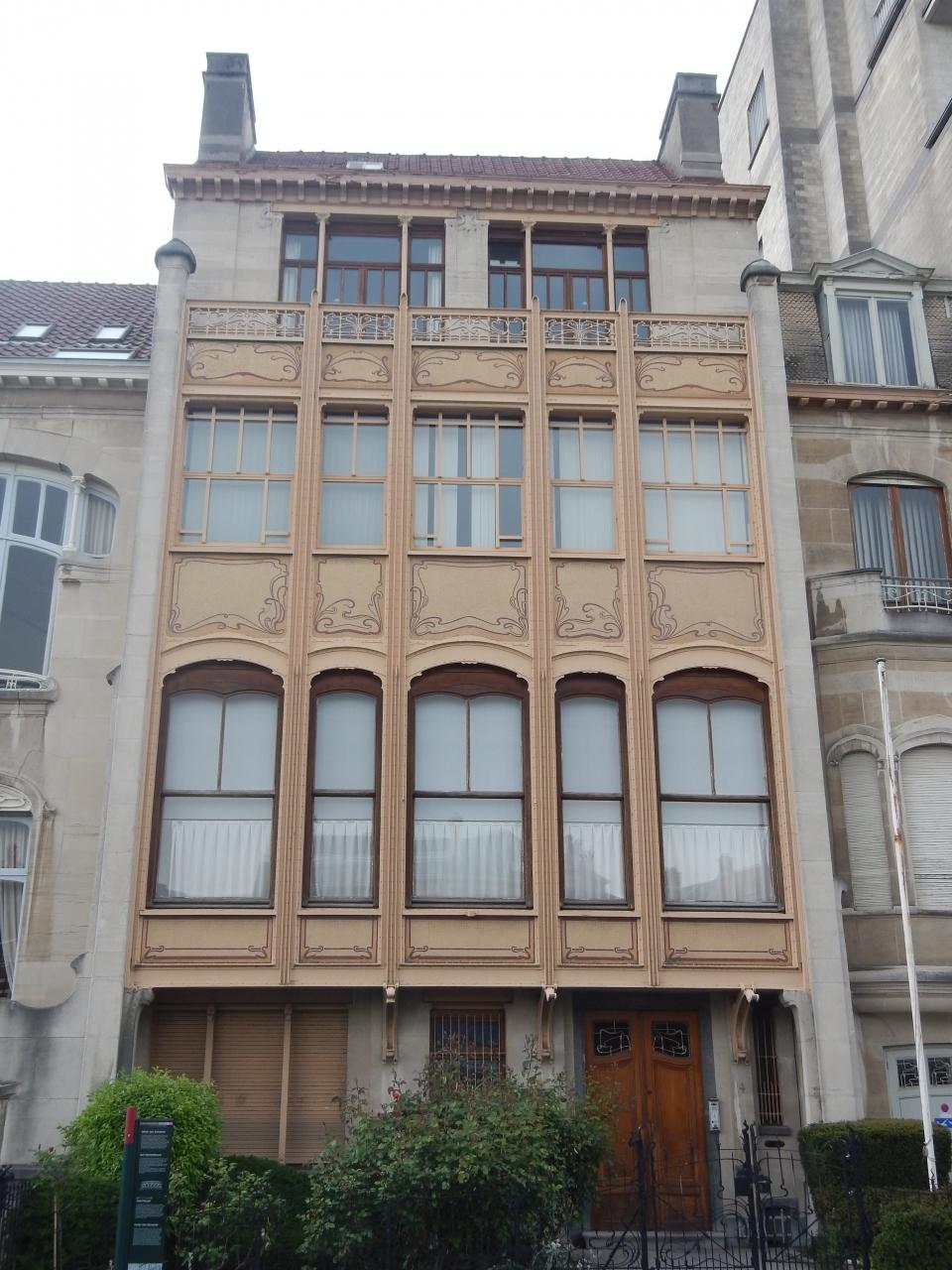
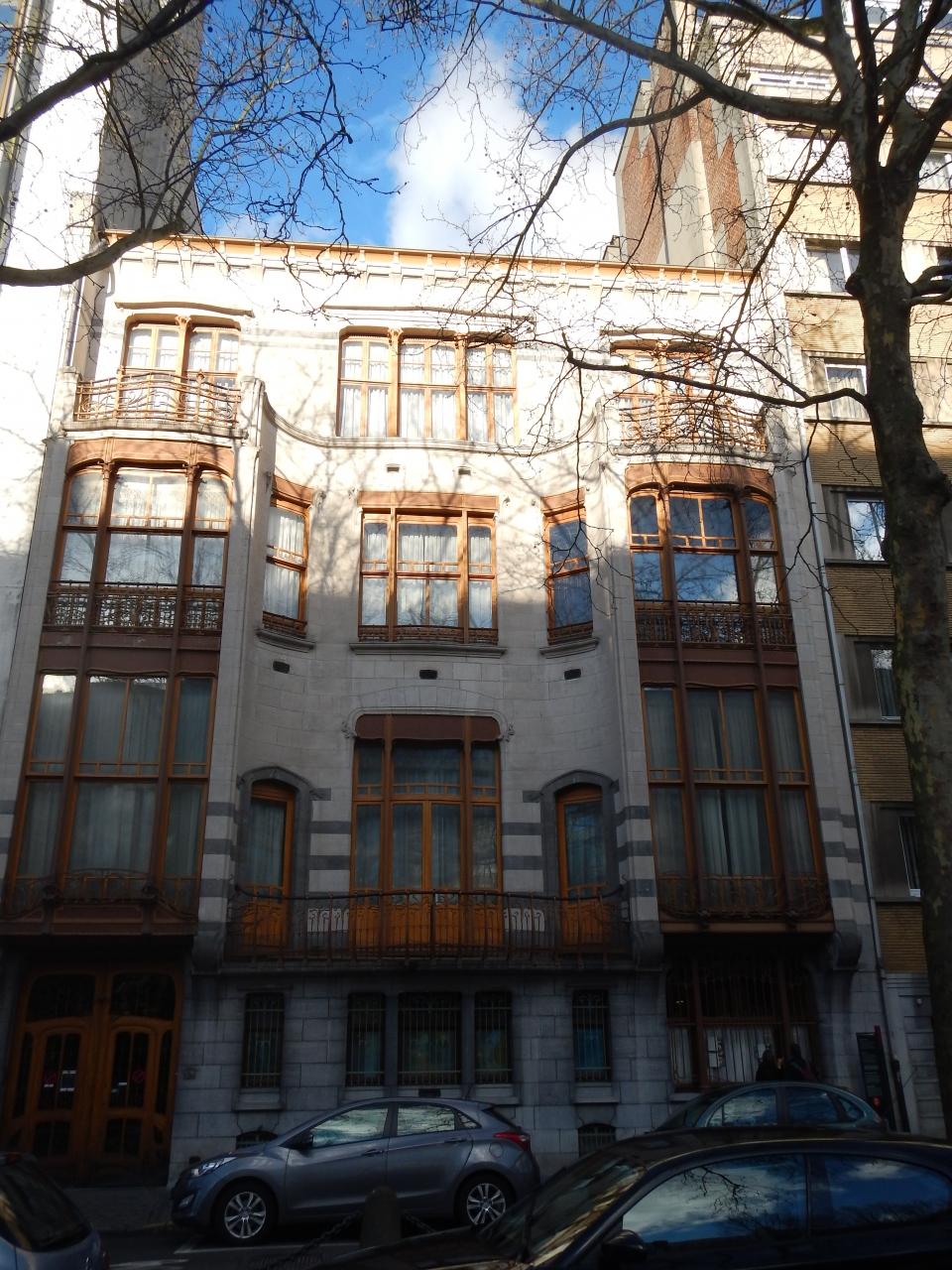
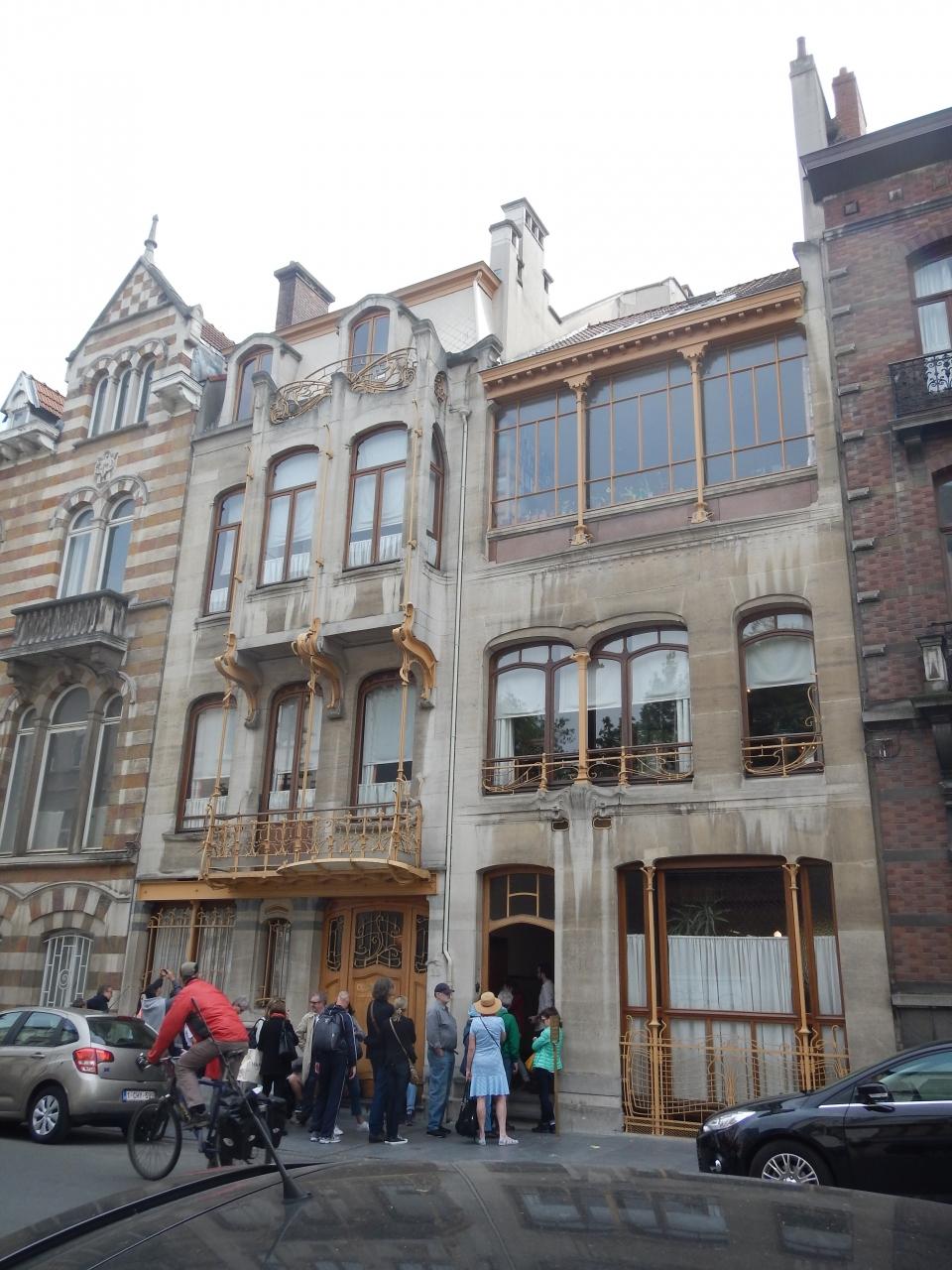
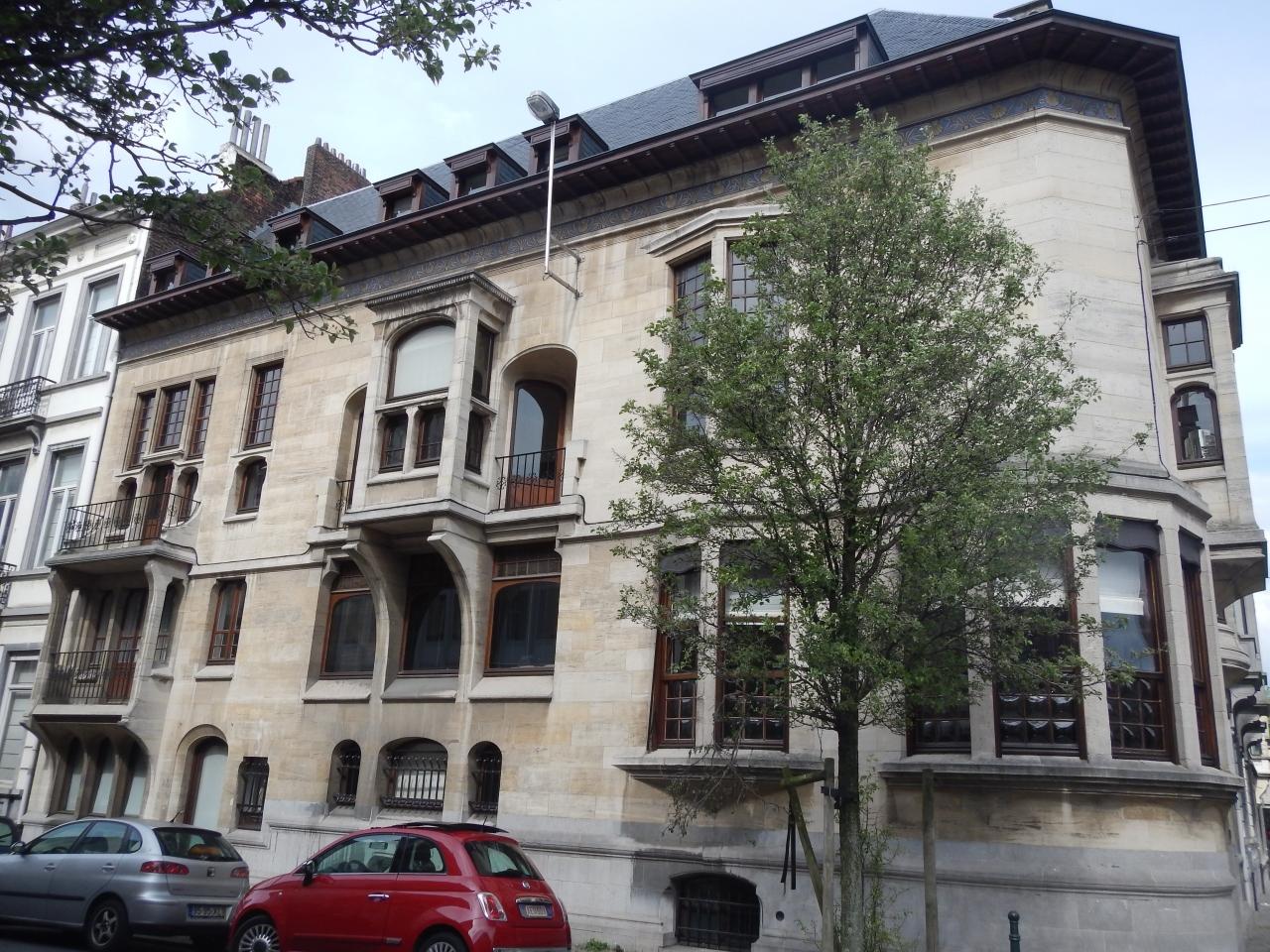
(6) Hotel van Eetvelde
1897 by V. Horta
-Publicity ★★★
-Strikingness ★★★
-Distance ★★★
-Current usage: residence
-Admission: impossible
-Interior: http://www.irismonument.be/nl.Brussel_Uitbreiding_Oost.Palmerstonlaan.2.html
It was an assignment from the Secretary General of Congo, Baron Van Eetvelde. He fancied the house so much that Horta got another order for the adjacent house. Horta dealt light as interior. But strong sun shine from the wide windows causes damage on the wooden floor. -
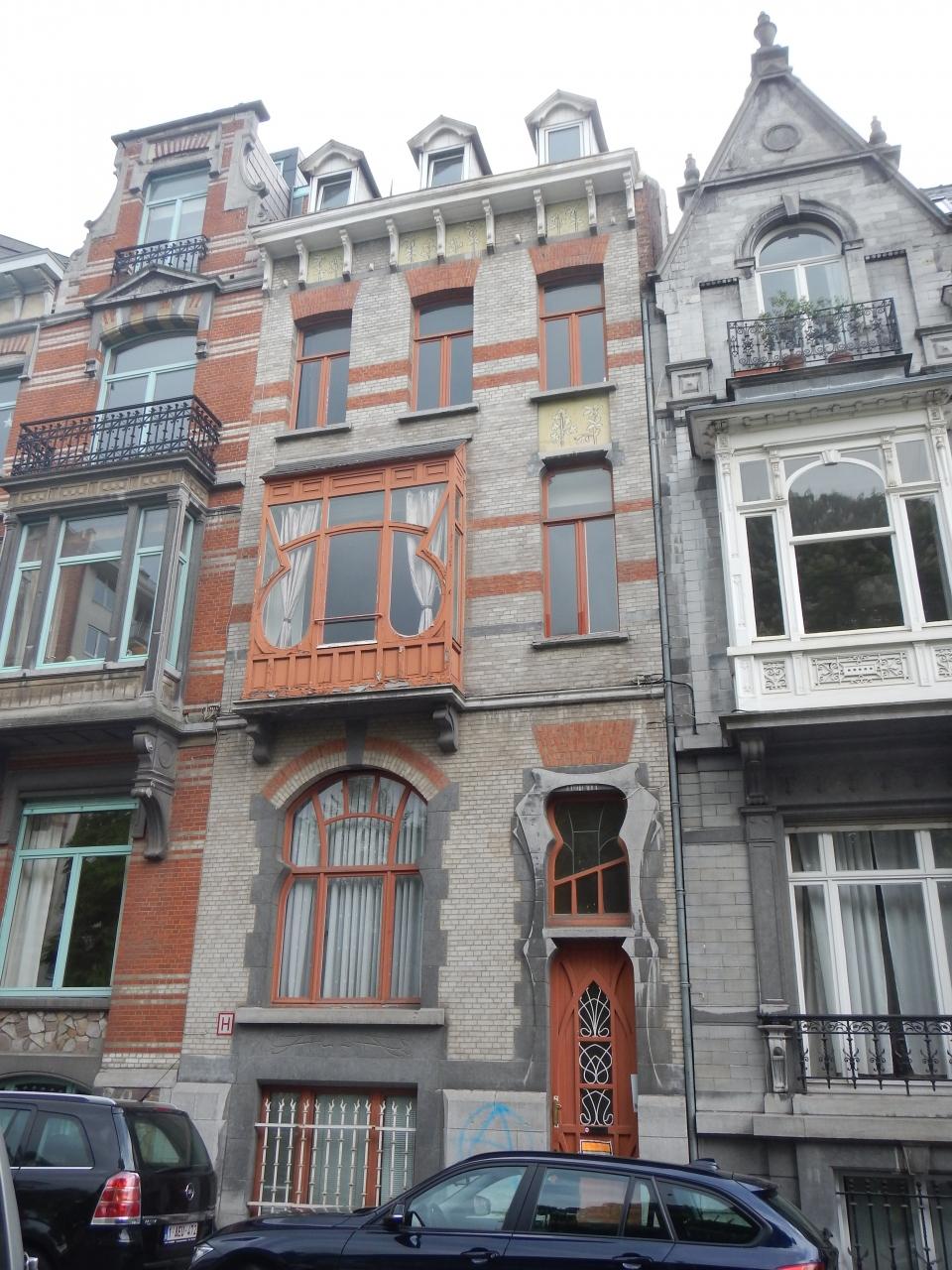
(7)
1898 by A. van Waesberghe
-Publicity ★
-Strikingness ★
-Distance ★
-Current usage: residence
-Admission: impossible
Van Waesberghe is not a well-known architect. He attempted to compound Gothic straight lines into Art Nouveau. Three bay windows on top are his symbolic technique. Bricks were the cheapest material, frequently used for middle class houses. Sand stone was more expensive followed by lime, granite, marble. -
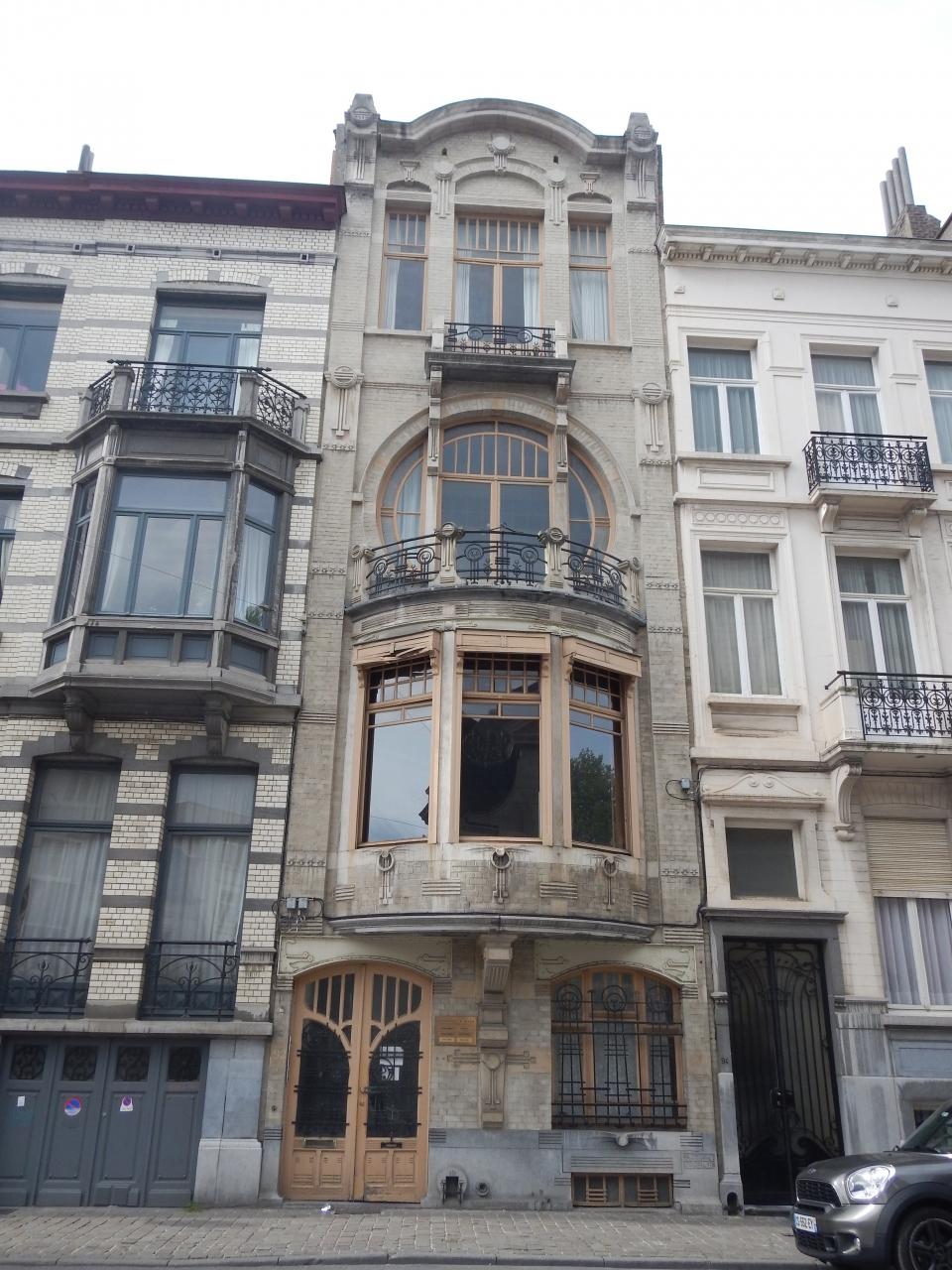
(8) 'Maison Van Dyck'
1903 by G.Strauven
-Publicity ★★
-Strikingness ★★
-Distance ★★
-Current usage: residence
-Admission: impossible
Fancy structure is that the first floor and above diagonally face the street. The verticality is characterized by Gothic style. Strauven was Horta's student, and his influence can be seen from the circular wide windows and the balcony ornaments. When I looked inside, people were working on renovation. -
(9) 'Maison-Atelier du sculpteur Pierre Braecke'
1901 by V.Horta
-Publicity ★
-Strikingness ★★
-Distance ★★
-Current usage: residence
-Admission: impossible
Horta designed this house for his friend. Unlike majority of his upper class clients, a sculptor Braecke had a limited budget to build his house. Nonetheless, Meers rates that the house features refinement. Indeed Horta's esthetic can be observed in this small humble house as well as his other works. -
(10)
1901 by G.Strauven
-Publicity ★
-Strikingness ★★
-Distance ★★
-Current usage: residence
-Admission: impossible
This brilliant house is called 'House of Glass Windows'. The bird motifs on the glass resemble Folon's paintings. Presumably the house underwent renovation works already. Brick colours look sophisticated. As we already saw from (5) Maison Saint-Cyr and (8) Maison Van Dyck, Strauven devoted his ephemeral but keen passion in his 6-year career in architecture. -
<<Part 3 Ixelles>>
Ixelles, particularly around the ponds(Etangs d'Ixelles) is a class residential area. Quite a few ambassadors' residences are located here.
<Access>
Get on: De Brouckere by bus 38
Get off: Vleurgat -
(11) 'Hotel Solvay'
1893 by V. Horta
-Publicity ★★★
-Strikingness ★★★
-Distance ★★★
-Current usage: event venue
-Admission: possible(only with reservation)
-Interior: http://cityzenart.blogspot.be/2010/09/lhotel-solvay.html
One of Horta's masterpieces, outstanding with dynamic curves. It was innovative that Horta applied steel which had been used only for basic construction to decoration. Meers describes terrace rails as 'snake lines' and small ornaments as 'whiplash lines.' Snake and whiplash may be terms but do not create a romantic atmosphere to me though... -
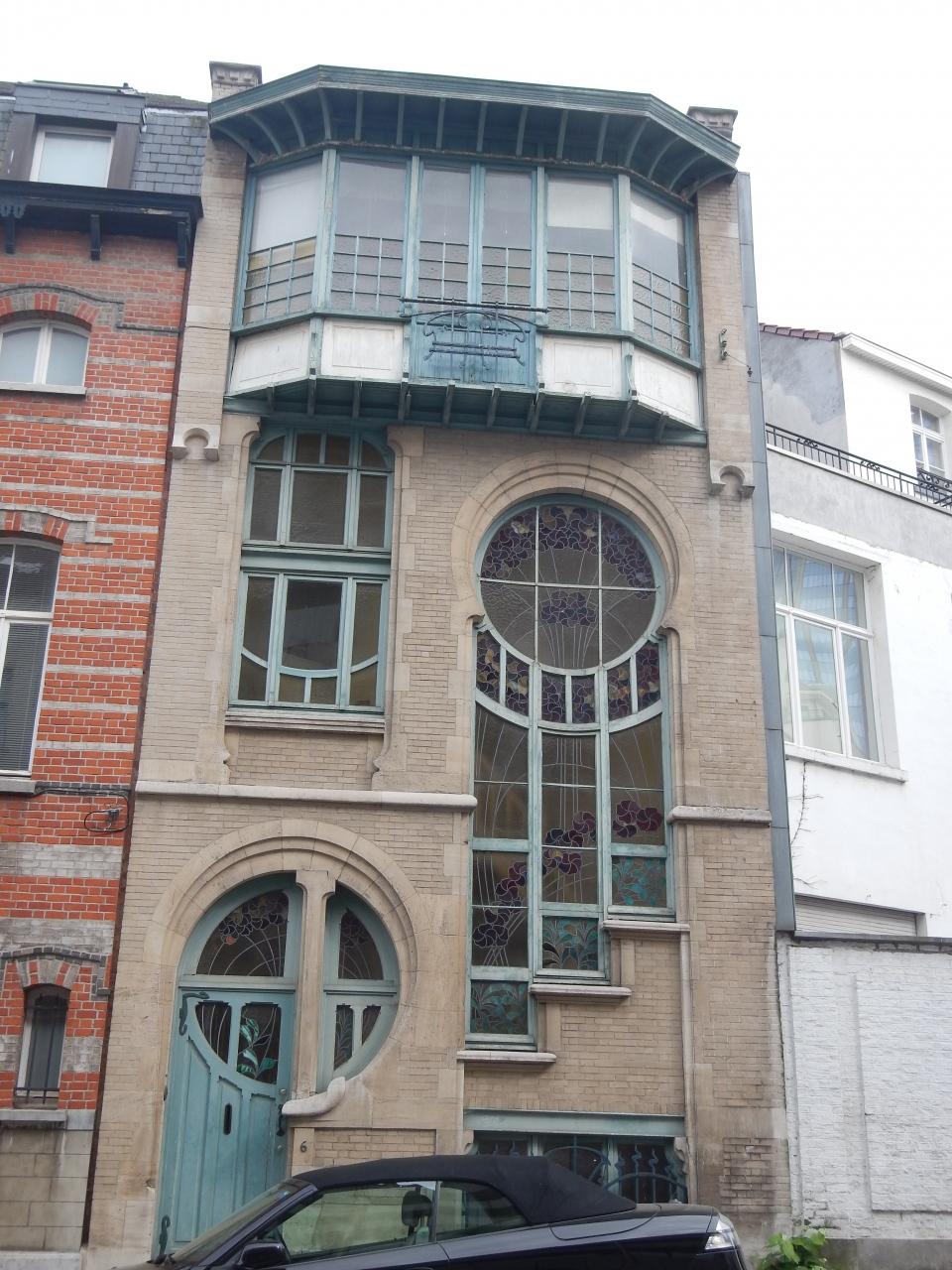
(12) 'Atelier du Maitre-verrier Sterner'
1904 by L. Delune
-Publicity ★★
-Strikingness ★★
-Distance ★★
-Current usage: residence
-Admission: impossible
-Interior: http://magical-art-nouveau-johannel.blogspot.be/2013/09/maison-delune.html
Red flowers are depicted on the circular windows. Since Delune means moon in French, Meers poetically illustrates the windows 'Crescent, half moon, full moon, all the different features of the moon are depicted here just as the architect's name.' Personally I presume that Art Deco features which comes after Art Nouveau are seen here. -
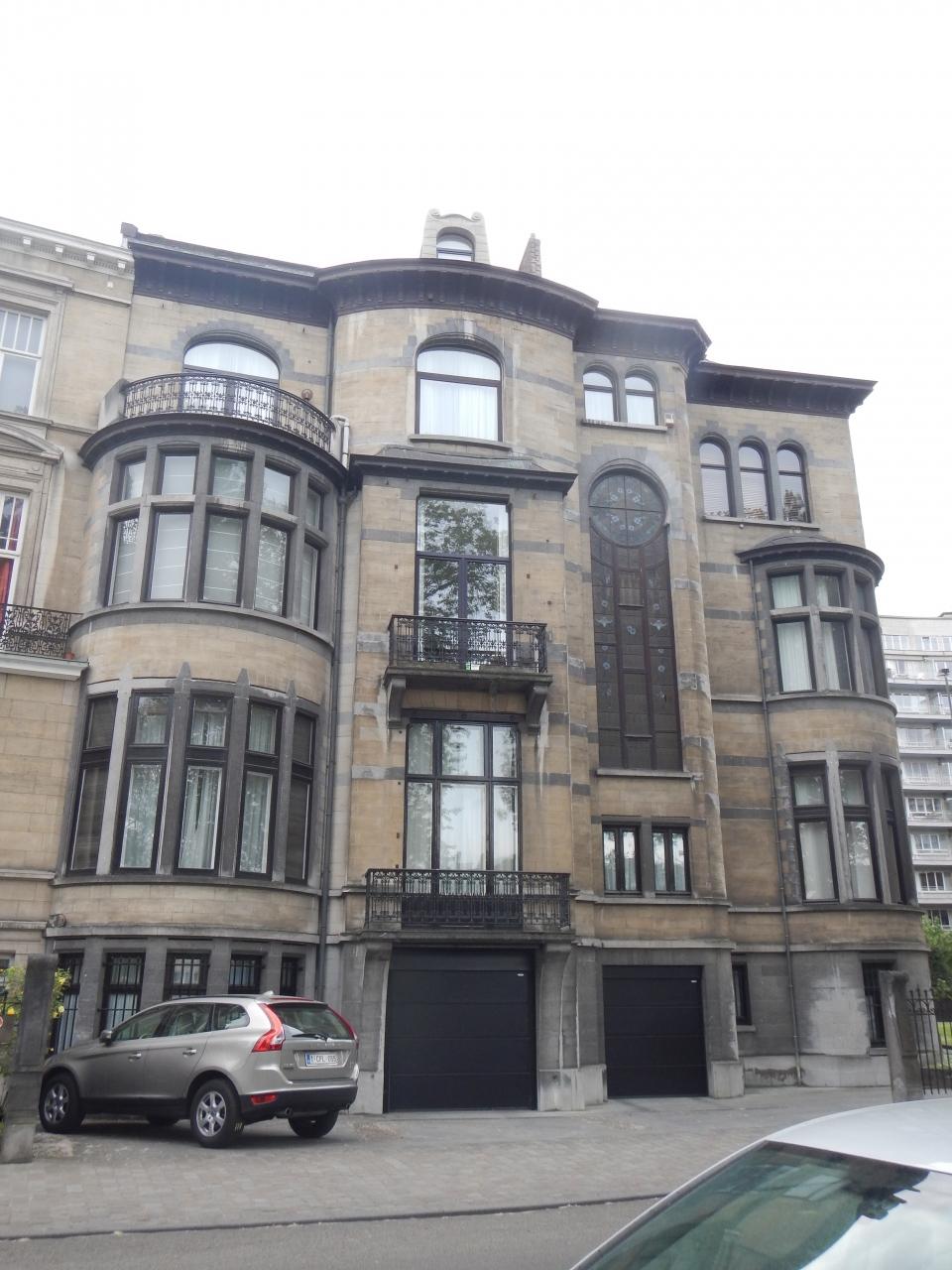
(13)
Delune brothers
-Publicity ★
-Strikingness ★★
-Distance ★★
-Current usage: embassy related?
-Admission: impossible
On the street behind (12) Atelier de Sterner Delune brothers designed more than 10 townhouses. This is the biggest one among them. The client may have been an aristocrat. Same red flowers as (12) are depicted on the long window. -
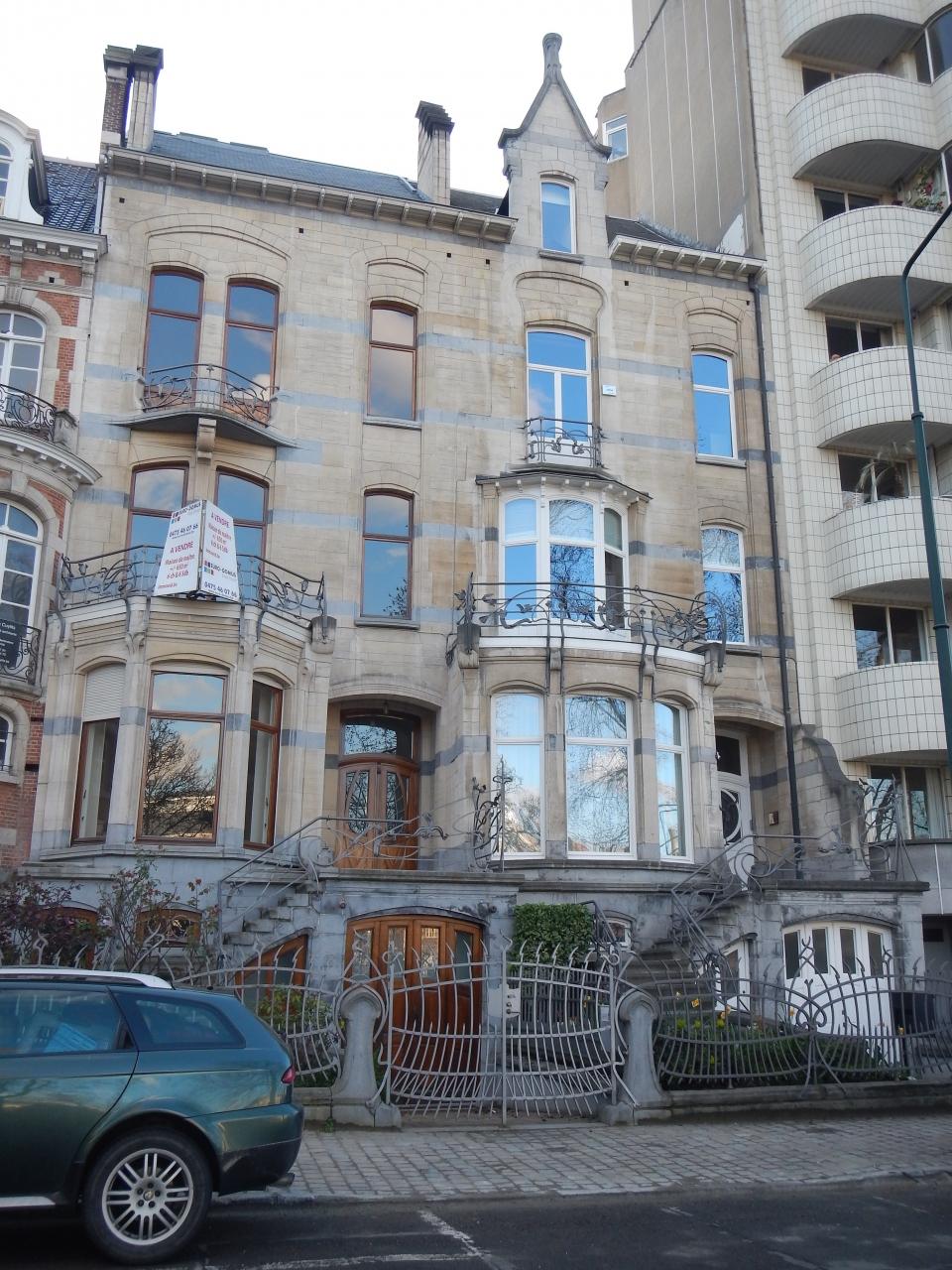
(14)
1904 by E. Blerot
-Publicity ★★
-Strikingness ★
-Distance ★★
-Current usage: residence
-Admission: impossible
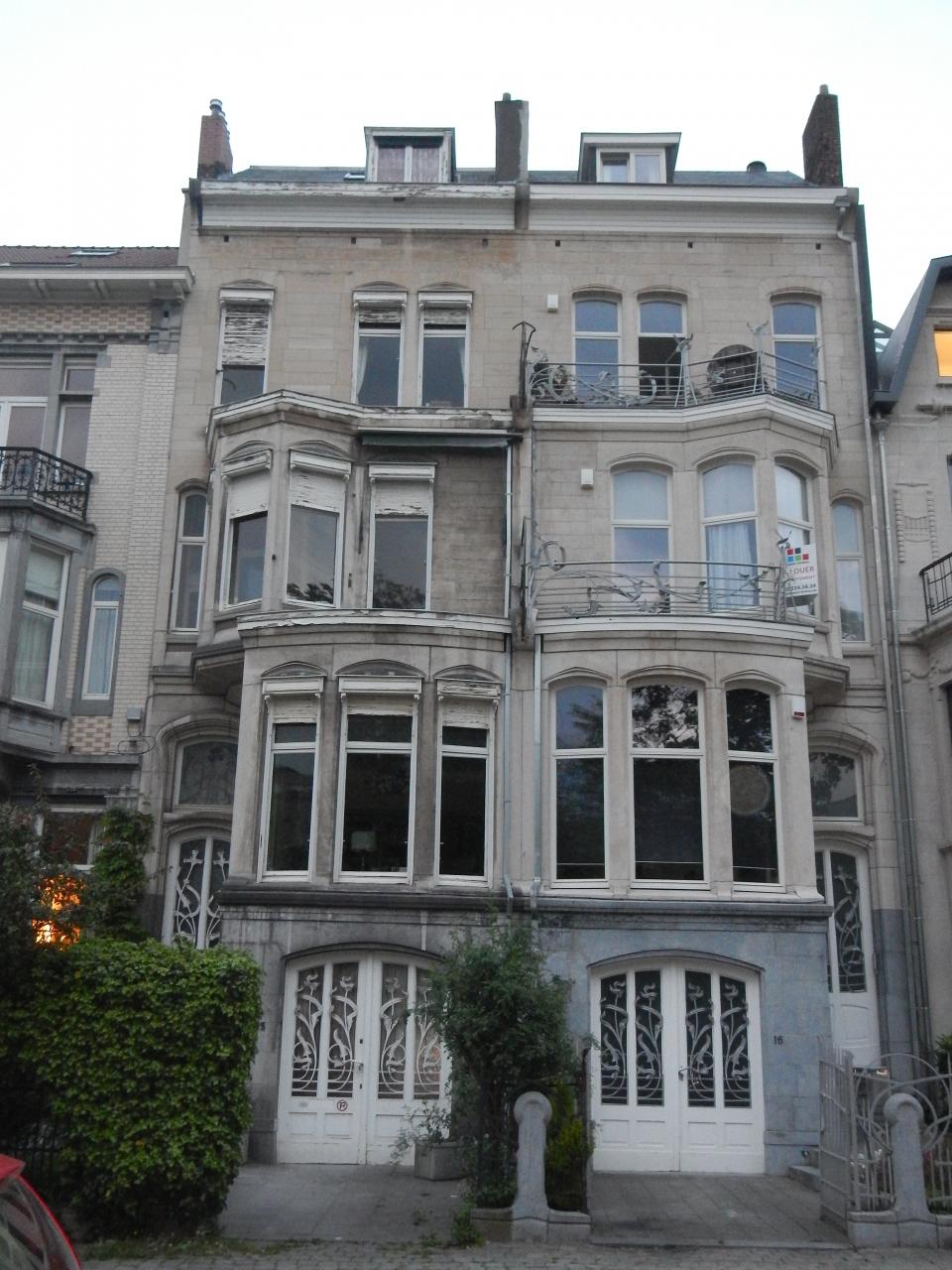
It's for sale at the moment. The price is 2.9 million. 650 m2 inside is renovated. Authentic Art Nouveau is definitely worth investing. The housing price around Ixelles ponds is raising enormously. Don't miss this chance! (Contact the agency, not me.) -
(15)
1903 by E. Blerot
-Publicity ★
-Strikingness ★
-Distance ★★
-Current usage: residence
-Admission: impossible
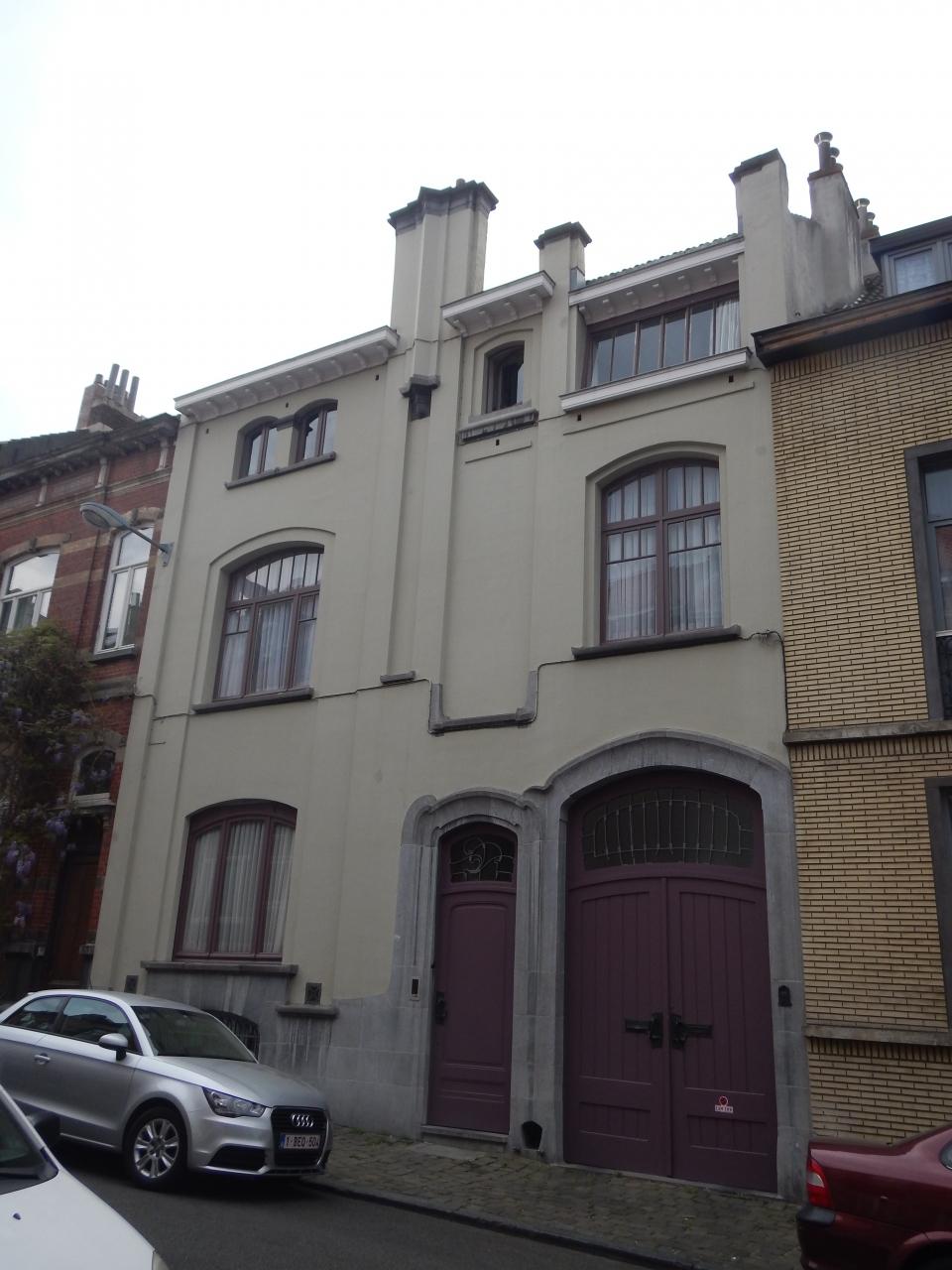
One after another Blerot's work. This house was also for sale about 4 years ago. The flower motif on the door is impressive. Blerot standardized the interior of most houses and order-made the facade, which attracted the second biggest number of clients after Horta with his low costs. -
(16)
by E. Blerot
-Publicity ★
-Strikingness ★★
-Distance ★
-Current usage: residence
-Admission: impossible
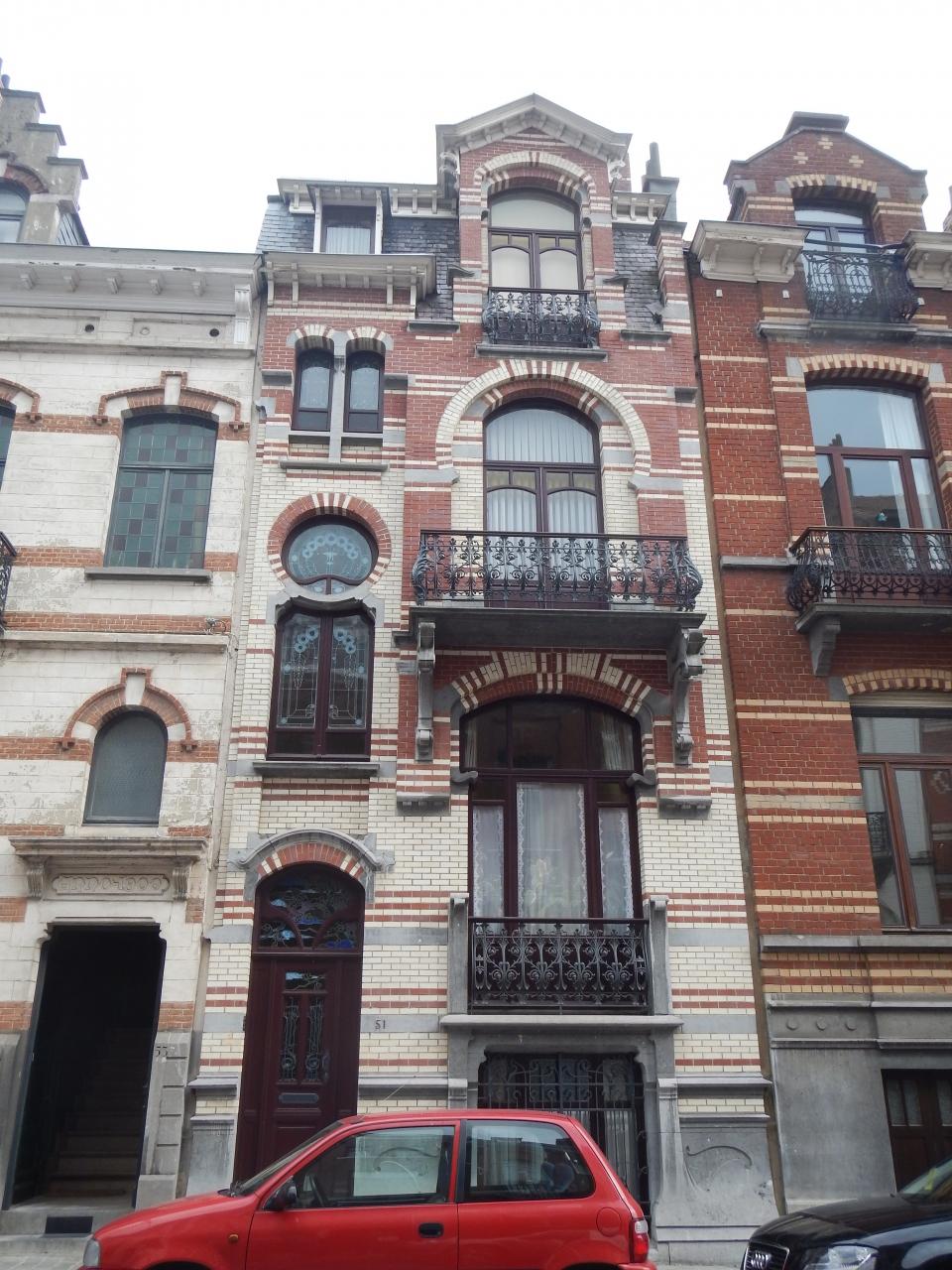
This nameless house shows Blerot's foot-on-earth graceful taste. The structure is similar to (11) Hotel Solvay, especially the technique of convexo-concave on the second floor was used in Horta's interior designing. All the walls have window to view the pond. -
(17)
by E. Blerot
-Publicity ★
-Strikingness ★★
-Distance ★
-Current usage: residence
-Admission: impossible
-Interior: http://magical-art-nouveau-johannel.blogspot.be/2013/09/rue-belle-vue-trois-maisons-dernest.html
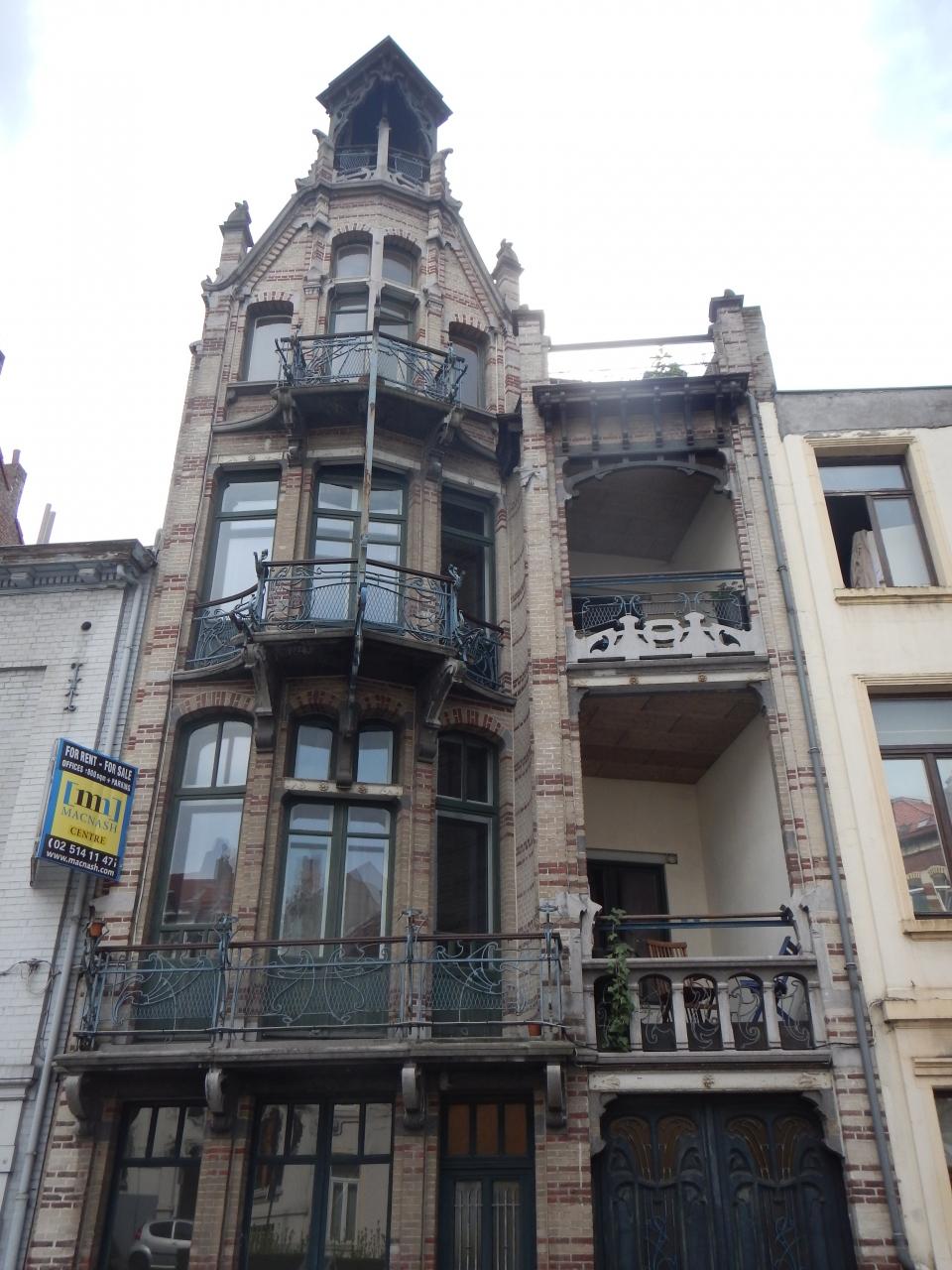
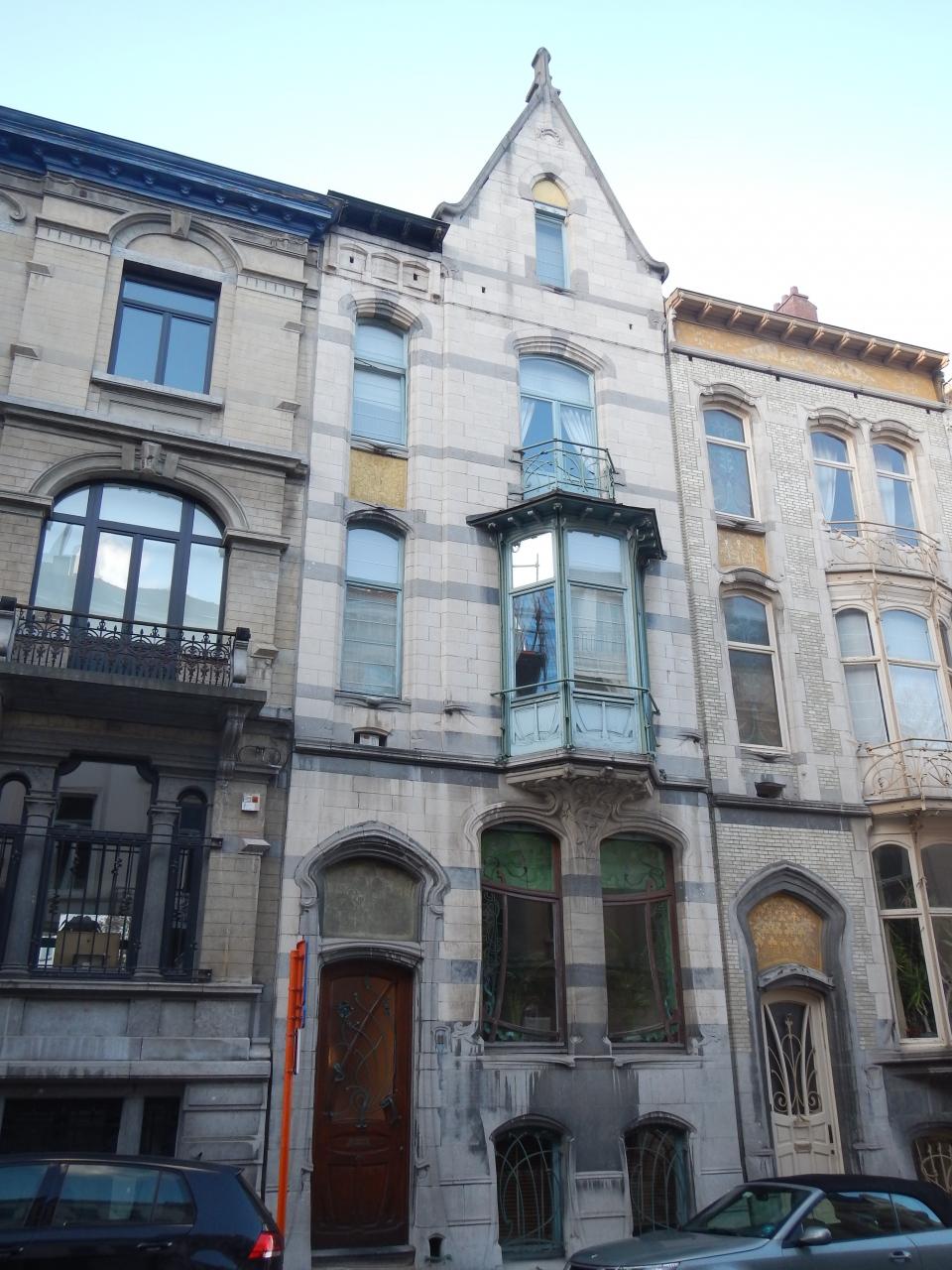
Blue tone of the façade and the flower motif on the door are eye-catching . 2 houses on its right are Blerot's projects as well. As he applied Gothic style which reminds cathedral towers, Blerot was supported by the conservatives. -
<<Part 4 Saint Gilles>>
Saint Gilles is a cultured district in these days. There are interesting shops if you look for antique furniture.
<Access>
Get on: De Brouckere by tram 3 direction Churchill/ tram 4 Stalle
Get off: Horta(5 minutes walk)
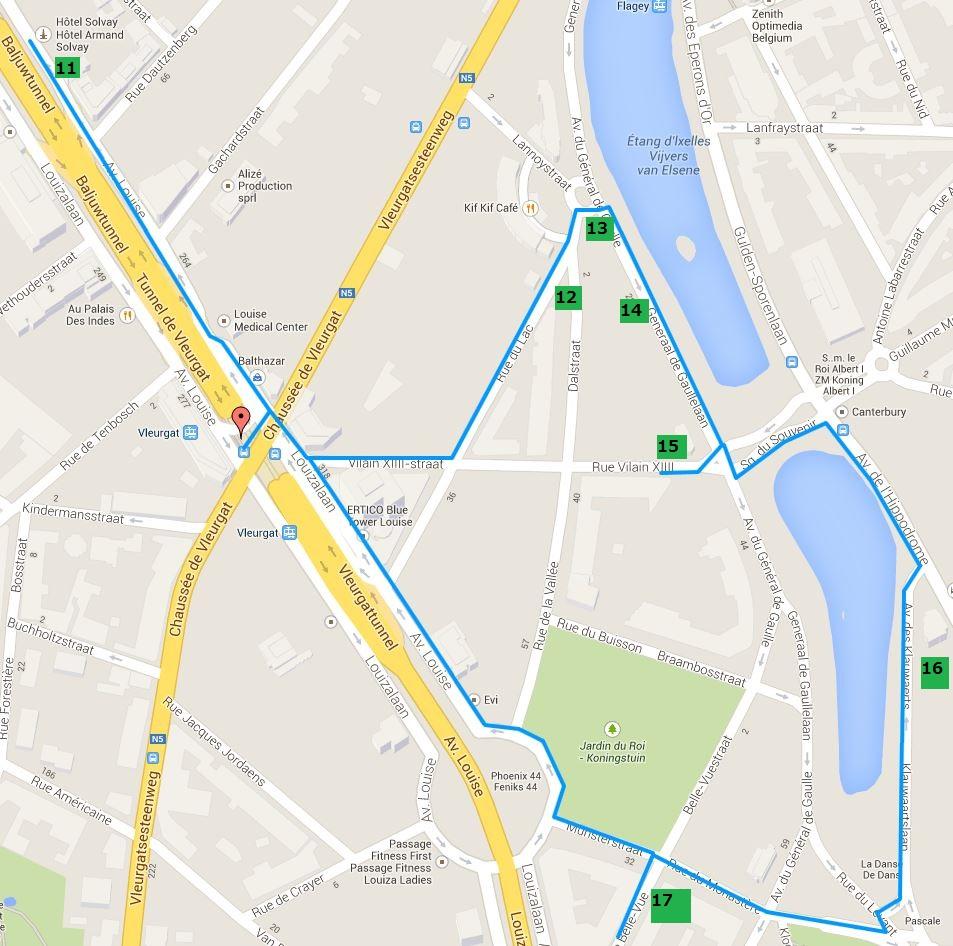
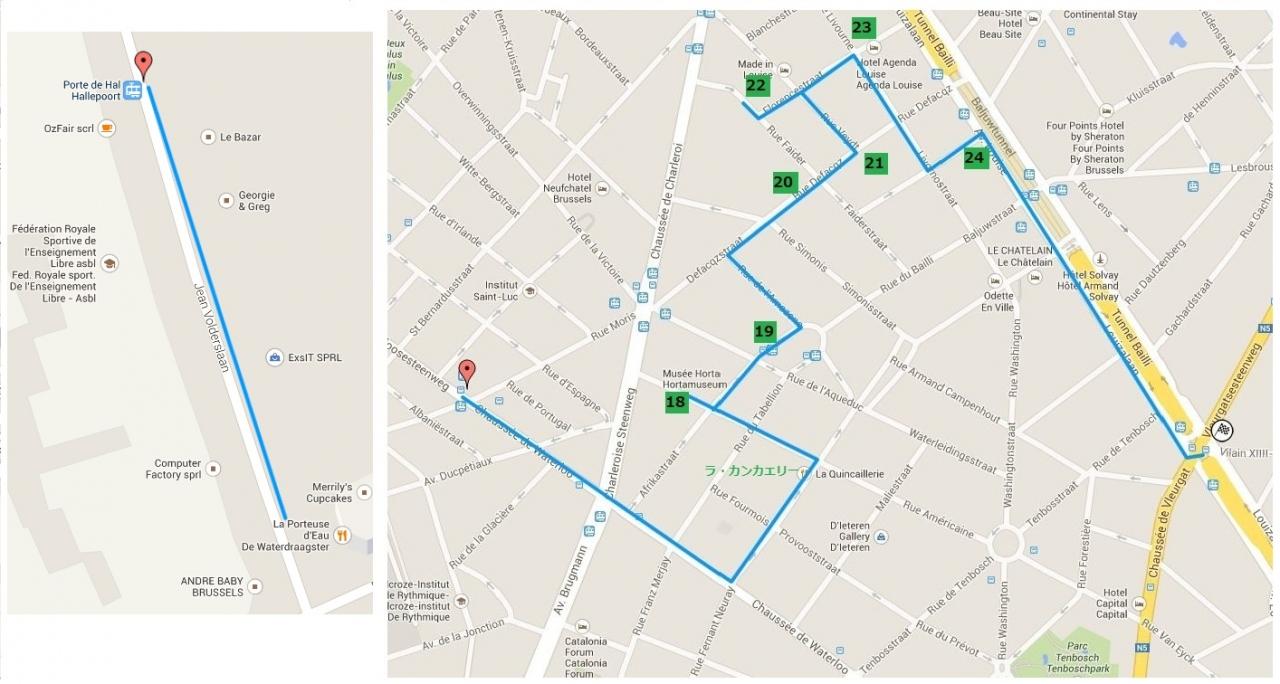
#Adjacent of Part 3. The route in the map finishes where you started Part 3. -
Shall we have a break here?
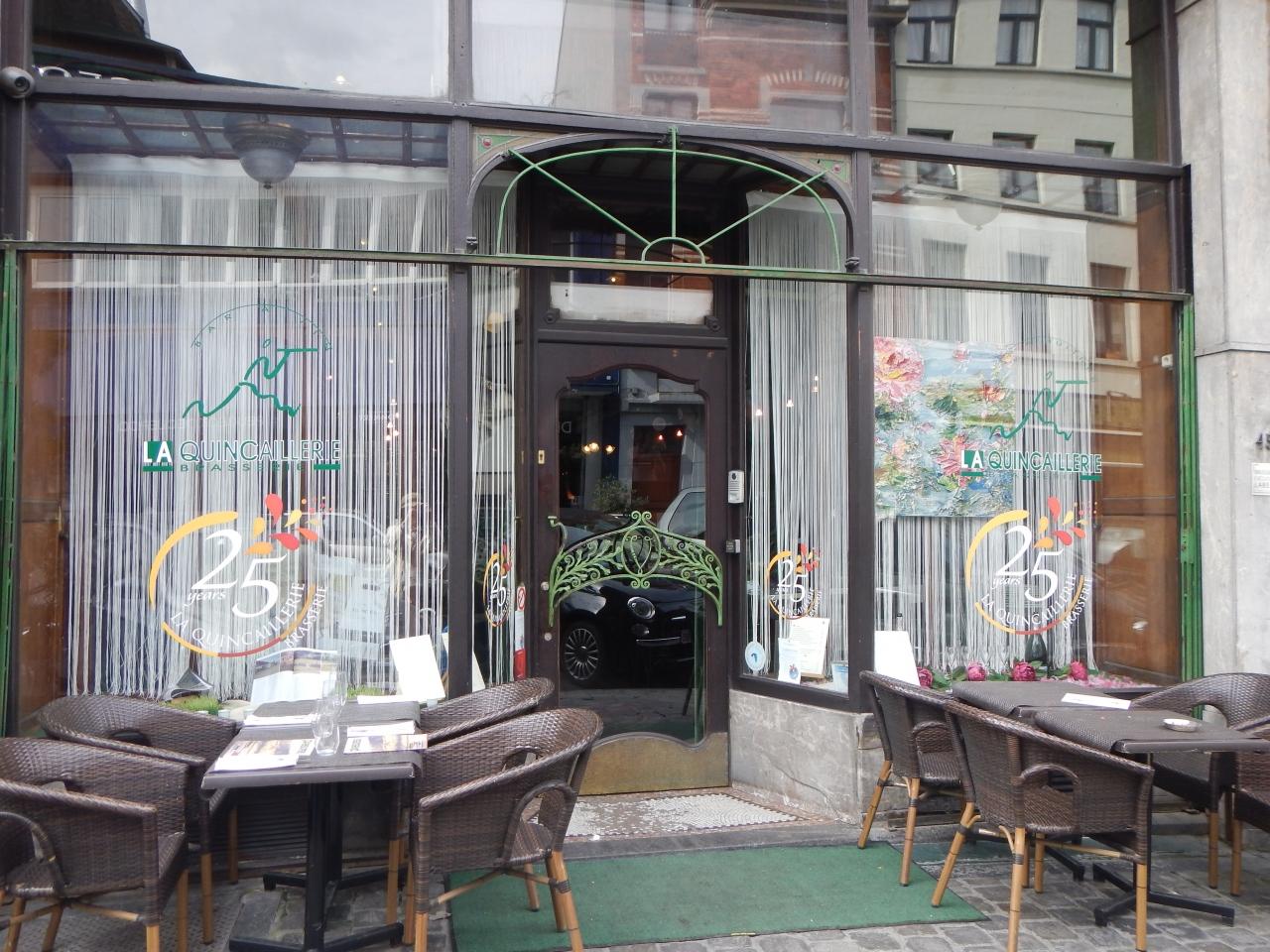
La Quincaillerie
http://www.quincaillerie.be/
This was built in 1903 originally as a tool shop. It's not Art Nouveau but has a retro atmosphere created principally by a classical big clock (see website). Oysters and seafood plates are available.
I am going to have a white beer and bisque soup. -
(18)'Maison Horta'
1901 by V.Horta
-Publicity ★★★
-Strikingness ★★★
-Distance ★★★
-Current usage: museum
-Admission: possible
-Interior: http://architecturalmoleskine.blogspot.be/2012/05/victor-horta-house-studio-in-brussels.html
I should have introduced earlier that Horta is the father of Belgian Art Nouveau. At his peak he got no less than 17 orders a year, but the projects often exceeded the budget due to his perfectionism. He couldn't pay back his mortgage for this house within 10 years. Those who are able to pursue supremacy without concerning practical problems might be a genius. -
(19)
1905 by B. De Lestre de Fabribeckers
-Publicity ★
-Strikingness ★★
-Distance ★★★
-Current usage: residence
-Admission: impossible
Meers considers that the finishing year 1905 is a turning point of Art Nouveau. De Lestre adopted Jugendstil-like solemn geometric ornaments as you see on the door and windows. On the other hand, he was turning to Neoclassicism. -
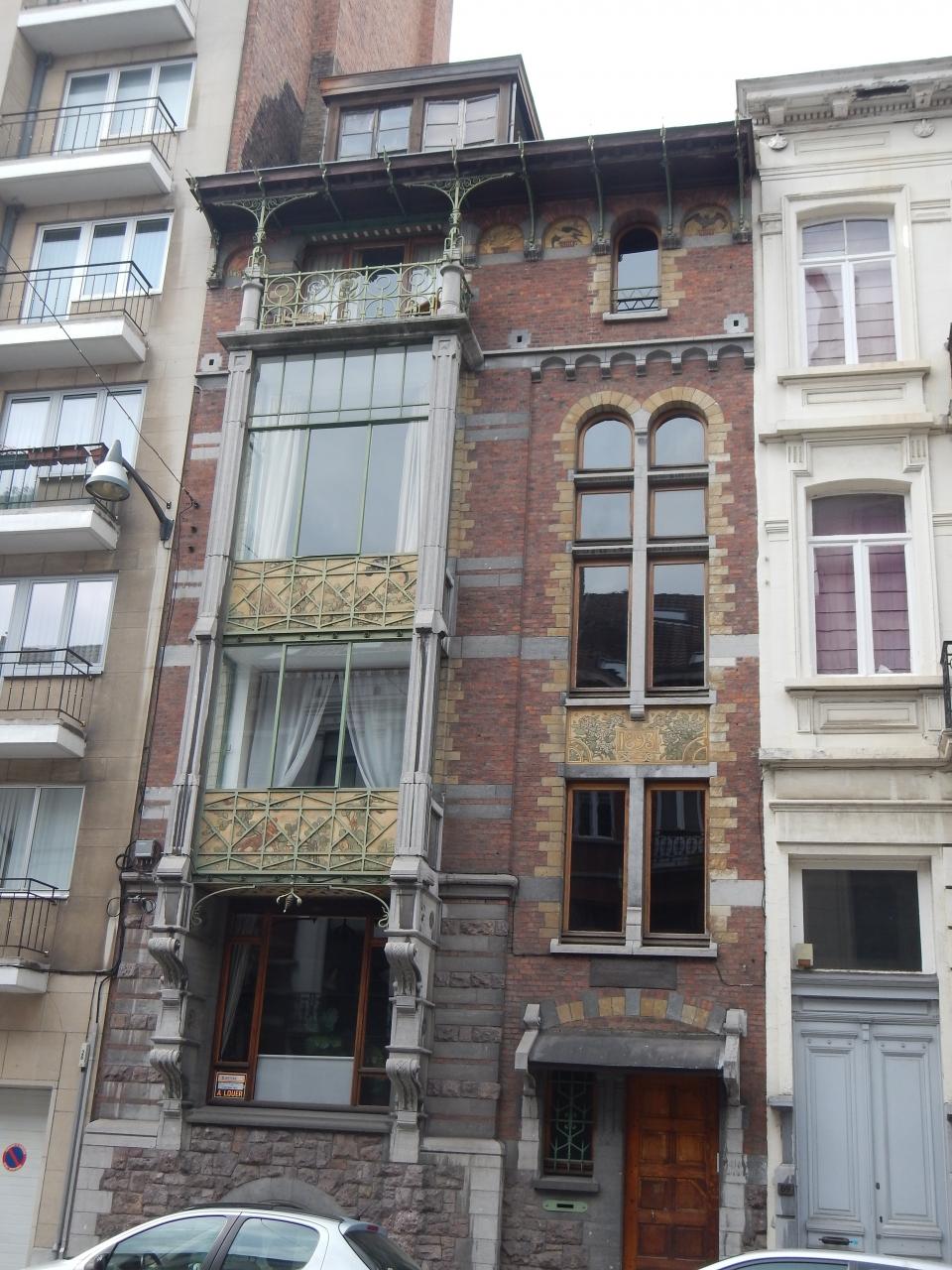
(20)'Maison Hankar'
1893 by P. Hanakar
-Publicity ★★
-Strikingness ★★
-Distance ★★
-Current usage: residence
-Admission: impossible
Hankar was only 42 year old when he passed away. Meers criticizes that Hankar's works are 'cold,' however, their elaboration and intelligence are highly valued. Japonism influence is to be seen in the bow window beams and sgraffiti of birds and hydrangea with golden background. -
(21) 'Hotel Ciamberlani'
1897 by G. Strauven
-Publicity ★★★
-Strikingness ★★★
-Distance ★★
-Current usage: residence
-Admission: impossible
-Interior: http://www.dayoff.be/en/the-ciamberlani-house
An Italian mamma's assignment on behalf of her mature son, a painter who was working for the royal family. This is similar to (4) Maison Cauchie in terms of the sgraffiti. But Hotel Ciamberlani was one of the first private houses in Brussels which adopted dynamic sgraffiti. The house on the left side was also designed by Hankar. -
(22) 'Hotel Goblet d'Alveilla'
1882 by O. Rysselberghe
-Publicity ★★
-Strikingness ★★
-Distance ★★
-Current usage: residence
-Admission: impossible
1882 is too early for Art Nouveau... Meers seems to categorize this house as an Art Nouveau pioneer for 2 reasons; 1) after this work Rysselberghe started to design Art Nouveau houses: 2) it was one of first private residences which applied decorations. The client Count Golet d'Alveilla was a university professor who had abundant knowledge of art. -
(23) 'Maison Paul Otlet'
1898 by O. Rysselberghe
-Publicity ★★
-Strikingness ★★★
-Distance ★★
-Current usage: residence
-Admission: impossible
-Interior: http://www.irismonument.be/fr.Bruxelles_Extension_Sud.Rue_de_Florence.13.html
Father Otlet was successful in railway business. His dreaming 26 year-old son invested his father's assets to build this house. Meers admires Rysselberghe's skills and personality. He was influenced by Italian culture, and this house looks like a Renaissance castle. Afterwards, he designed another house in the same street for his younger brother painter. -
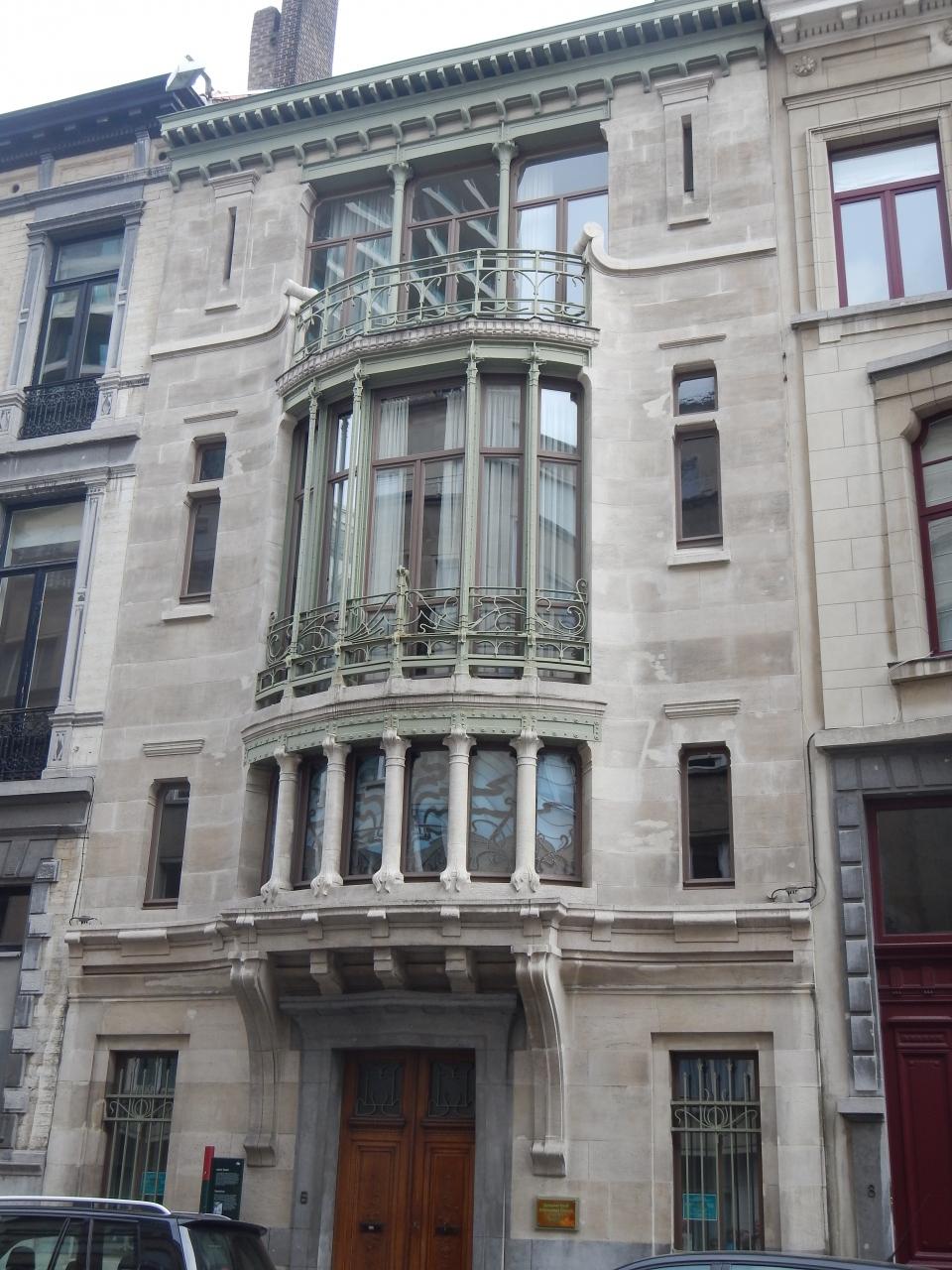
(24) 'Hotel Tassel'
1894 by V.Horta
-Publicity ★★★
-Strikingness ★★
-Distance ★
-Current usage: office
-Admission: possible(a reservation is required http://www.arau.org/)
-Interior: http://19thcentury.wordpress.com/2007/11/18/victor-horta-architect-of-the-art-nouveau/
Meers excitedly expresses that this is a 'manifest,' first Art Nouveau townhouse. Unlike (11) Hotel Solvay showy ornaments were not used for the exterior of this modest-looking house. However, a big bow window on the 2nd floor is outstanding. Placing a door in the centre of the building was a new concept then. The staircase inside is marvelous and fantastic(see link). -
<Access>
Get on: De Brouckere by tram 3 Churchill/ tram 4 Stalle
Get off: Port de Halle
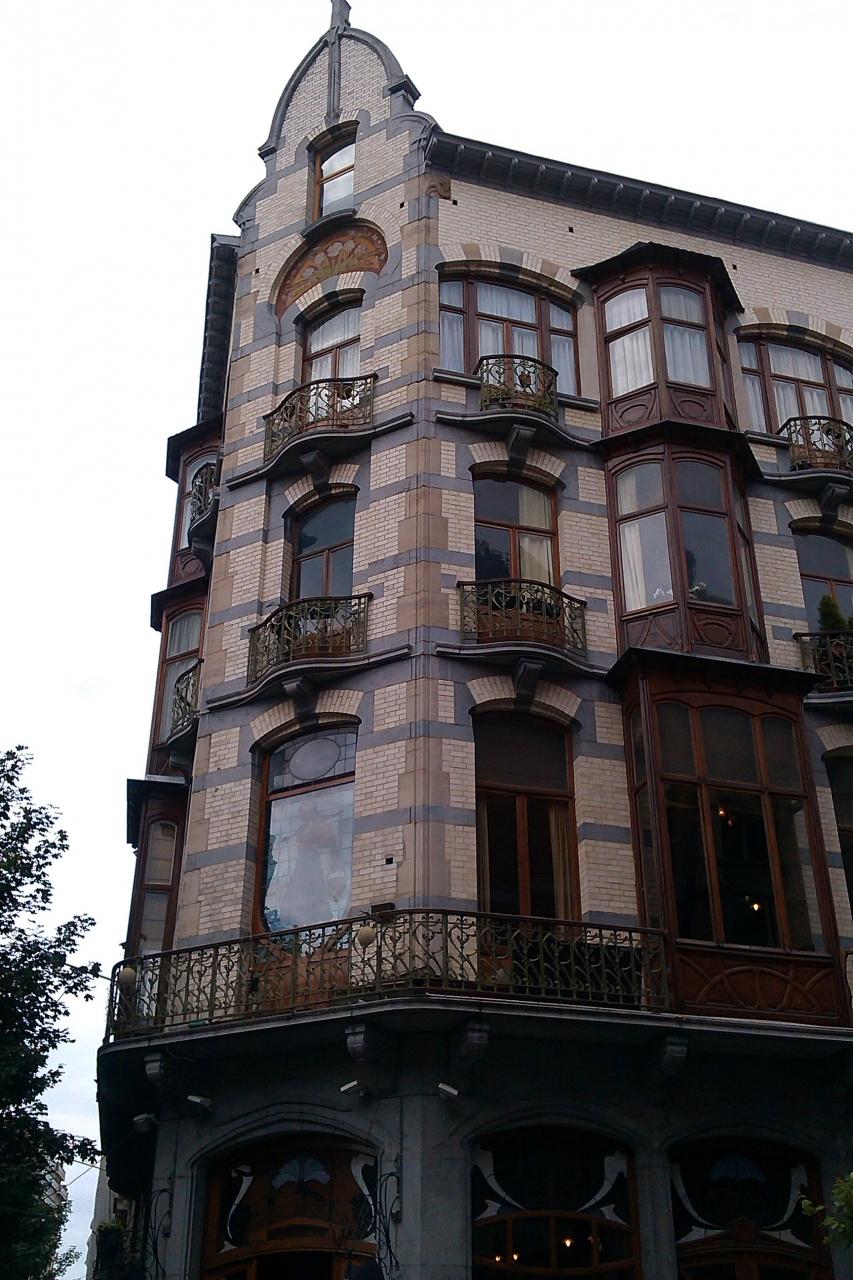
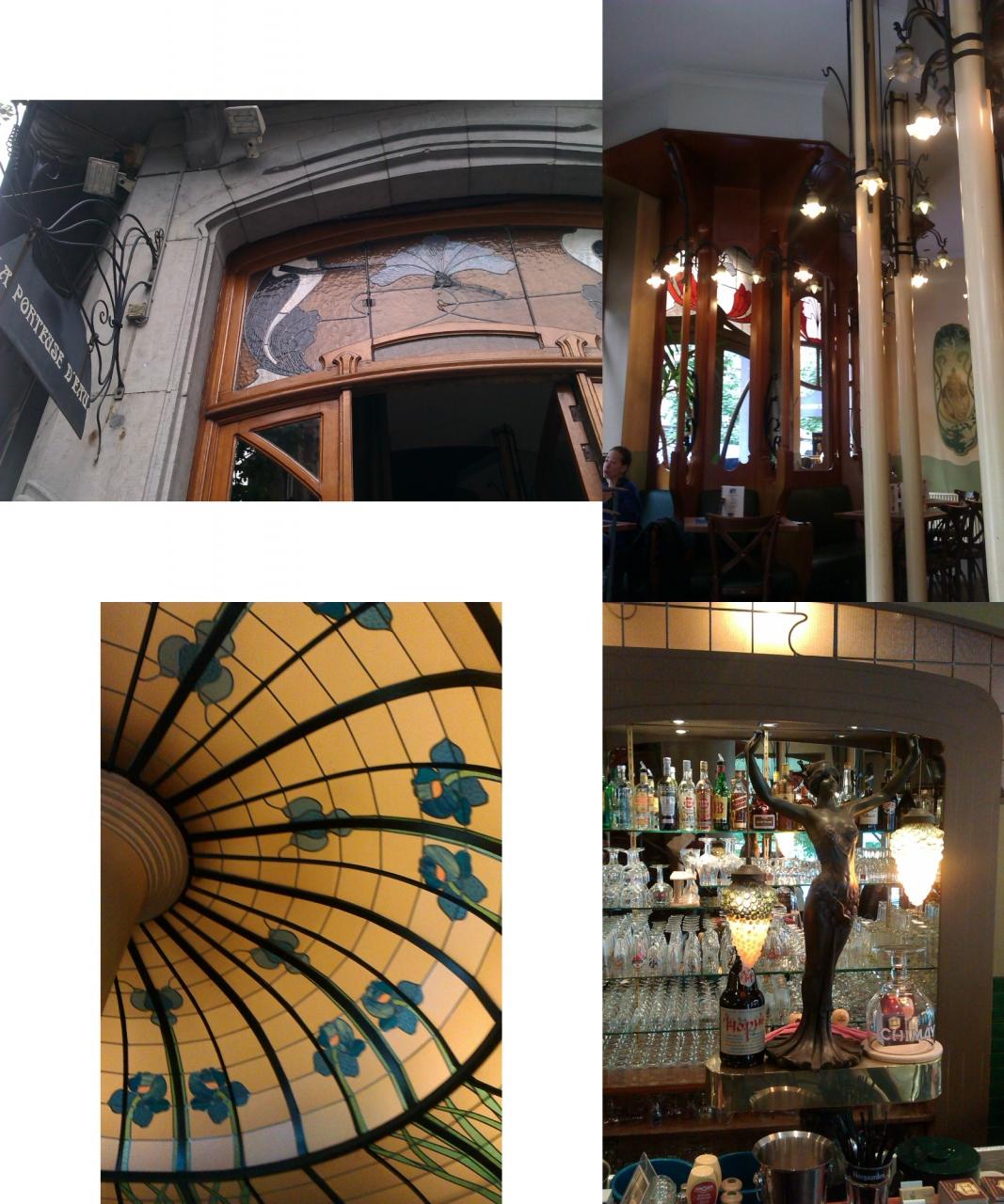
(25)
1903 by E. Blerot
-Publicity ★★
-Strikingness ★
-Distance ★
-Current usage: brasserie http://www.laporteusedeau.be/
-Admission: possible
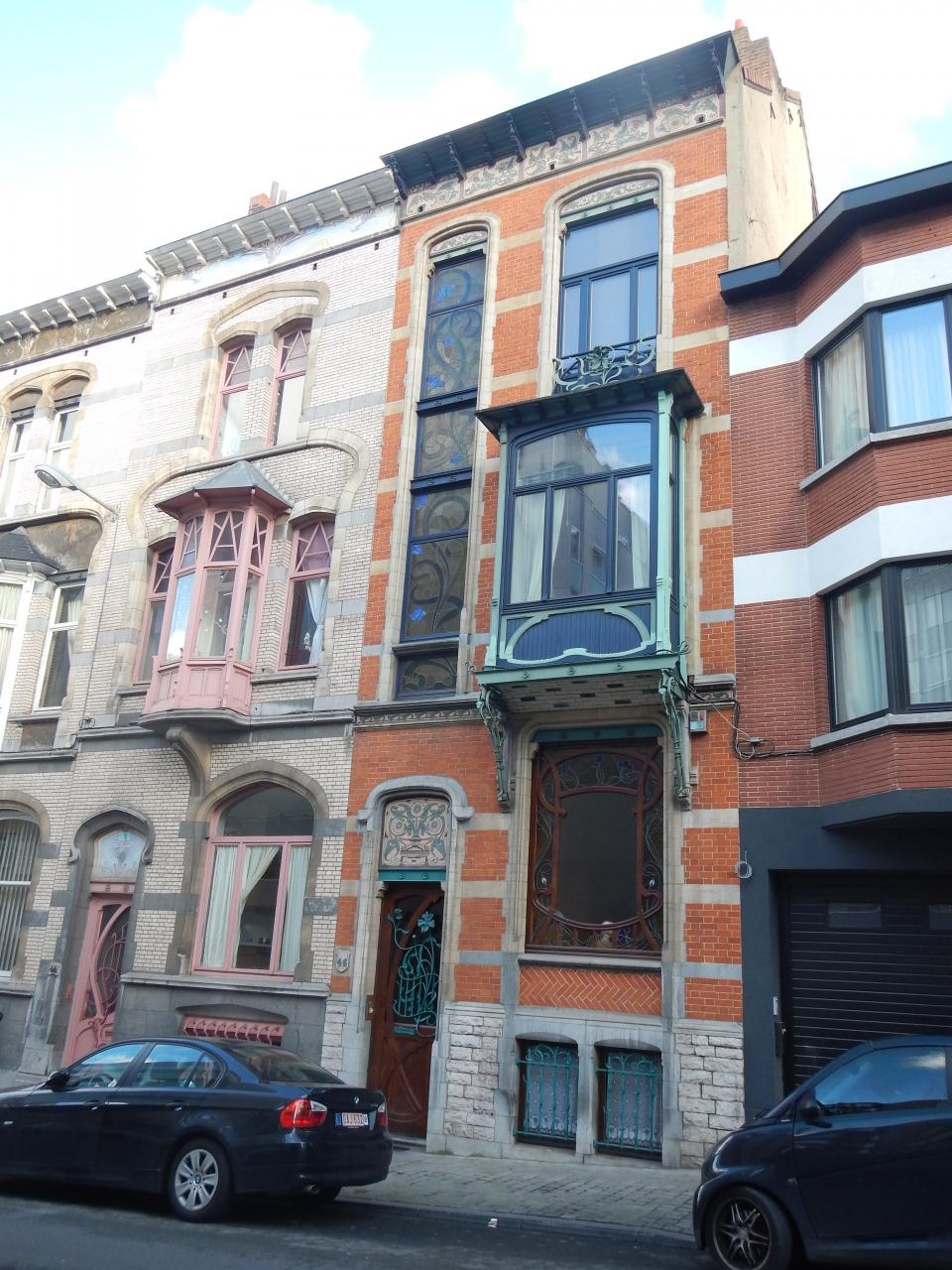
I would like to finish this promenade with Blerot's building. If you stand in front of the entrance, you see a tower in the middle. This stretch is a typical Blerot's Gothic interpretation. Sand stone and bricks are used in layers, wooden bay windows and small sgraffiti create a harmony.
Shall we go inside the brasserie? There are quite a few Belgian special beers here. -
I visited most of symbolic Art Nouveau townhouses in this trip. On the other hand, there are numerous other houses not introduced here.
Which townhouse did you fancy? I would like to listen to your comments over a beer.
If you actually visit Brussels, there are French and English speaking Art Nouveau and Art Deco tours.
http://www.arau.org/en/tours/art-nouveau
この旅行記のタグ


利用規約に違反している投稿は、報告する事ができます。
コメントを投稿する前に
十分に確認の上、ご投稿ください。 コメントの内容は攻撃的ではなく、相手の気持ちに寄り添ったものになっていますか?
サイト共通ガイドライン(利用上のお願い)報道機関・マスメディアの方へ 画像提供などに関するお問い合わせは、専用のお問い合わせフォームからお願いいたします。


ブリュッセル(ベルギー) の旅行記


ブリュッセル(ベルギー) の人気ホテル

フォートラベル公式LINE@

おすすめの旅行記や旬な旅行情報、お得なキャンペーン情報をお届けします!
QRコードが読み取れない場合はID「@4travel」で検索してください。
\その他の公式SNSはこちら/
0
34