ゴゾ島旅行記(ブログ) 一覧に戻る
3日目⑦ジュガンティーヤ後編<br /><br />Hop-on Hop-off バス利用してのゴゾ島観光<br />クレンディのあとは本命のジュガンティーヤ<br />it-Tempji tal-Ġgantija<br />この旅行記では後半、遺跡です。<br /><br />-----------------------------<br />3日目①ゴゾ島へ<br />ゴゾ海峡フェリー Gozo Channel Ferry<br /> フェリー乗り場(Cirkewwa、サークァ)<br /> フェリー乗り場(Mgarr、ムガー)<br />ゴゾ島<br />Gozo<br />Għawdex<br /><br />ヴィクトリア<br />Victoria<br />Ir-Rabat Għawdex<br />-----------------------------<br />3日目②ヴィクトリア・チタデル・ゴゾ大聖堂<br />ヴィクトリア<br />Victoria<br />Ir-Rabat Għawdex<br /><br />チタデラ(チタデル)<br />Cittadella<br /><br />ゴゾ大聖堂<br />Il-Katidral ta&#39; Għawdex<br /><br />Cathedral Museum<br />-----------------------------<br />3日目③アズール・ウィンドウ<br />アズール・ウィンドウ<br />It-Tieqa tad-Dwejra<br />=Blue Hole/Blue Window<br />※現在は2017年の嵐で崩れて穴を見ることはできない。<br />-----------------------------<br />3日目④タ・ピーヌ聖堂<br />タ・ピーヌ聖堂<br />Bażilika Tal-Madonna Ta&#39; Pinu Mill Gharb<br />-----------------------------<br />3日目⑤クレンディ<br />クレンディ<br />Xlendi<br />-----------------------------<br />3日目⑥ジュガンティーヤ前編<br />ジュガンティーヤ博物館<br />Ggantija Museum<br />-----------------------------<br />3日目⑦ジュガンティーヤ後編<br />ジュガンティーヤ<br />it-Tempji tal-Ġgantija<br />-----------------------------<br />3日目⑧タ・コーラ風車とラムラビーチ<br />タ・コーラ風車<br />Il-Mitħna ta&#39; Kola<br /><br />ラムラビーチ<br />Ramla Beach<br />ir-Ramla l-Ħamra<br />赤茶色の砂浜ビーチ<br />-----------------------------<br />3日目⑨ヴァレッタへの帰途<br /><br />

マルタ(Malta) 3日目ゴゾ島⑦ジュガンティーヤ後編

18いいね!

2020/01/30 - 2020/02/02

101位(同エリア358件中)

0

54

something like that

something like thatさん

3日目⑦ジュガンティーヤ後編

Hop-on Hop-off バス利用してのゴゾ島観光
クレンディのあとは本命のジュガンティーヤ
it-Tempji tal-Ġgantija
この旅行記では後半、遺跡です。

-----------------------------
3日目①ゴゾ島へ
ゴゾ海峡フェリー Gozo Channel Ferry
 フェリー乗り場(Cirkewwa、サークァ)
 フェリー乗り場(Mgarr、ムガー)
ゴゾ島
Gozo
Għawdex

ヴィクトリア
Victoria
Ir-Rabat Għawdex
-----------------------------
3日目②ヴィクトリア・チタデル・ゴゾ大聖堂
ヴィクトリア
Victoria
Ir-Rabat Għawdex

チタデラ(チタデル)
Cittadella

ゴゾ大聖堂
Il-Katidral ta' Għawdex

Cathedral Museum
-----------------------------
3日目③アズール・ウィンドウ
アズール・ウィンドウ
It-Tieqa tad-Dwejra
=Blue Hole/Blue Window
※現在は2017年の嵐で崩れて穴を見ることはできない。
-----------------------------
3日目④タ・ピーヌ聖堂
タ・ピーヌ聖堂
Bażilika Tal-Madonna Ta' Pinu Mill Gharb
-----------------------------
3日目⑤クレンディ
クレンディ
Xlendi
-----------------------------
3日目⑥ジュガンティーヤ前編
ジュガンティーヤ博物館
Ggantija Museum
-----------------------------
3日目⑦ジュガンティーヤ後編
ジュガンティーヤ
it-Tempji tal-Ġgantija
-----------------------------
3日目⑧タ・コーラ風車とラムラビーチ
タ・コーラ風車
Il-Mitħna ta' Kola

ラムラビーチ
Ramla Beach
ir-Ramla l-Ħamra
赤茶色の砂浜ビーチ
-----------------------------
3日目⑨ヴァレッタへの帰途

旅行の満足度
4.5
観光
4.5
同行者
一人旅
交通手段
徒歩
旅行の手配内容
個別手配
  • ジュガンティーヤ<br />it-Tempji tal-Ġgantija<br /><br />15:24<br />

    ジュガンティーヤ
    it-Tempji tal-Ġgantija

    15:24

  • ジュガンティーヤ<br />it-Tempji tal-Ġgantija

    ジュガンティーヤ
    it-Tempji tal-Ġgantija

  • ジュガンティーヤ<br />it-Tempji tal-Ġgantija

    ジュガンティーヤ
    it-Tempji tal-Ġgantija

  • ジュガンティーヤ<br />it-Tempji tal-Ġgantija

    ジュガンティーヤ
    it-Tempji tal-Ġgantija

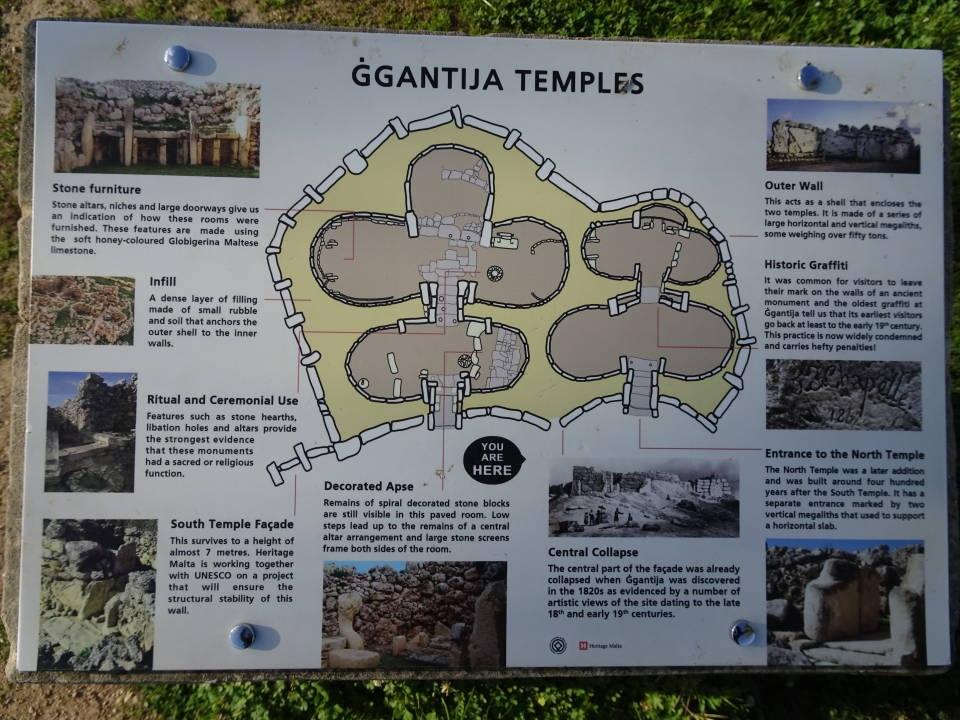
  • ジュガンティーヤ<br />it-Tempji tal-Ġgantija<br /><br />The North Cave

    ジュガンティーヤ
    it-Tempji tal-Ġgantija

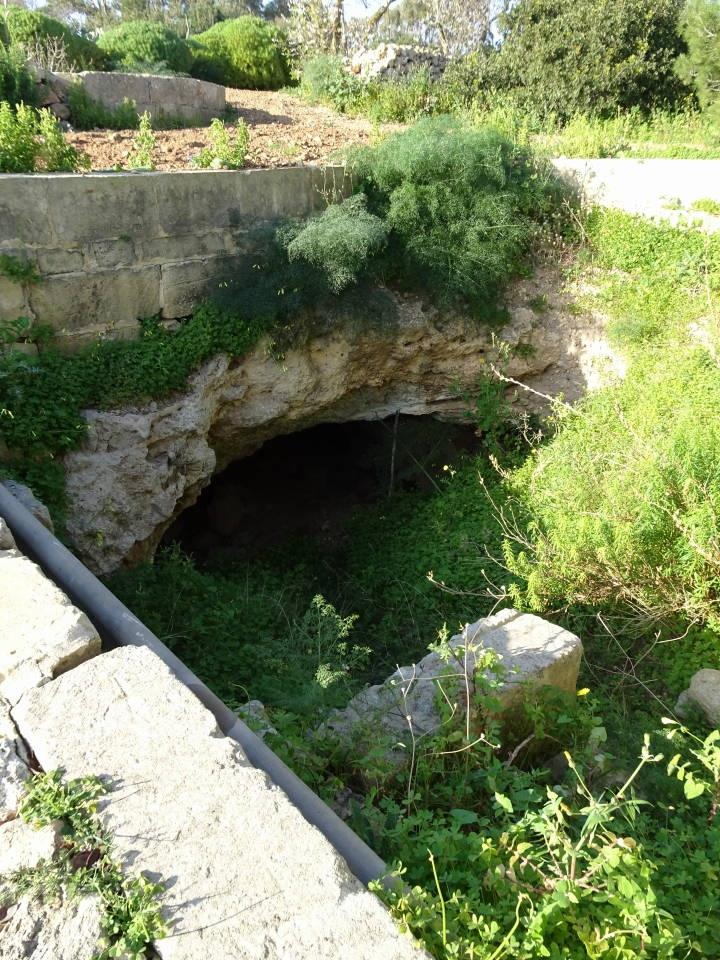
    The North Cave

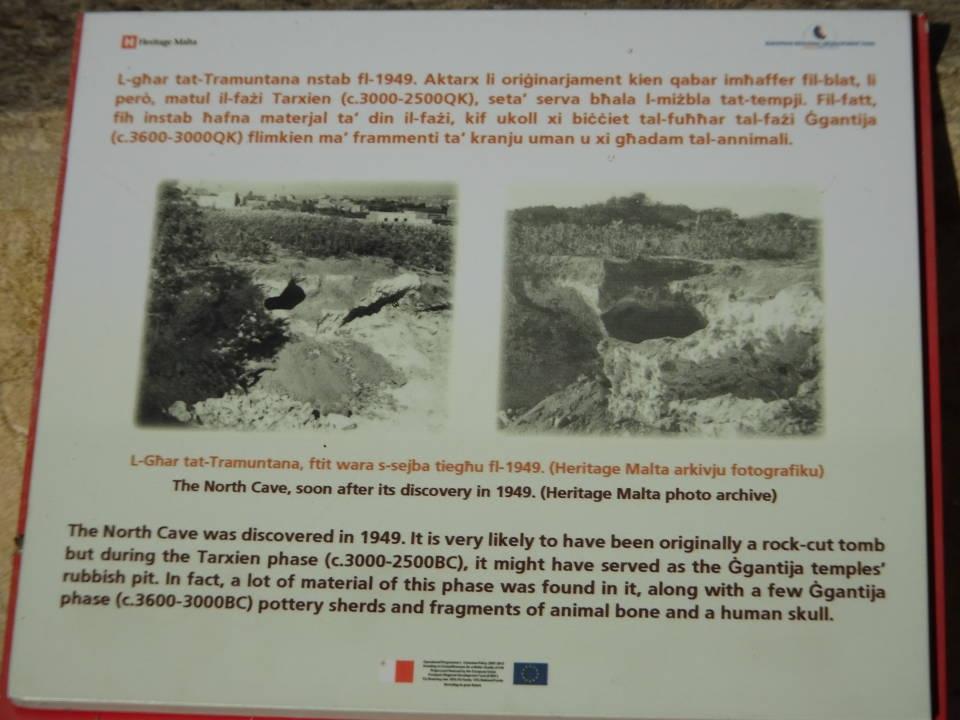
  • ジュガンティーヤ<br />it-Tempji tal-Ġgantija<br /><br />The North Cave, soon after its discovery in 1949<br /><br />The North Cave was discovered in 1949. It is very likely to have been originally a rock-cut tomb but during the Tarxien phase(c.3000-2500BC), it might have served as the Ggantija temples&#39; rubbish pit. In fact, a lot of material of this phase was found in it, along with a few Ggantija phase(c3600-3000BC) pottery sherds and fragments of animal bone and a human skull.<br /><br />ゴミ捨て場だったかも。

    ジュガンティーヤ
    it-Tempji tal-Ġgantija

    The North Cave, soon after its discovery in 1949

    The North Cave was discovered in 1949. It is very likely to have been originally a rock-cut tomb but during the Tarxien phase(c.3000-2500BC), it might have served as the Ggantija temples' rubbish pit. In fact, a lot of material of this phase was found in it, along with a few Ggantija phase(c3600-3000BC) pottery sherds and fragments of animal bone and a human skull.

    ゴミ捨て場だったかも。

  • ジュガンティーヤ<br />it-Tempji tal-Ġgantija<br /><br />The main entrance to the North Temple

    ジュガンティーヤ
    it-Tempji tal-Ġgantija

    The main entrance to the North Temple

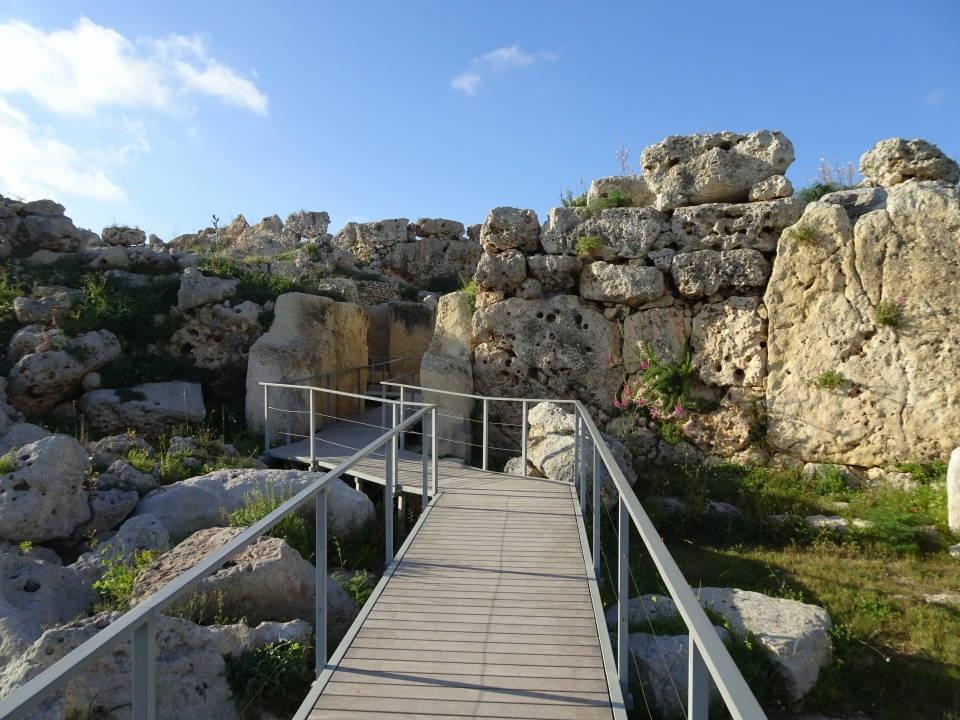
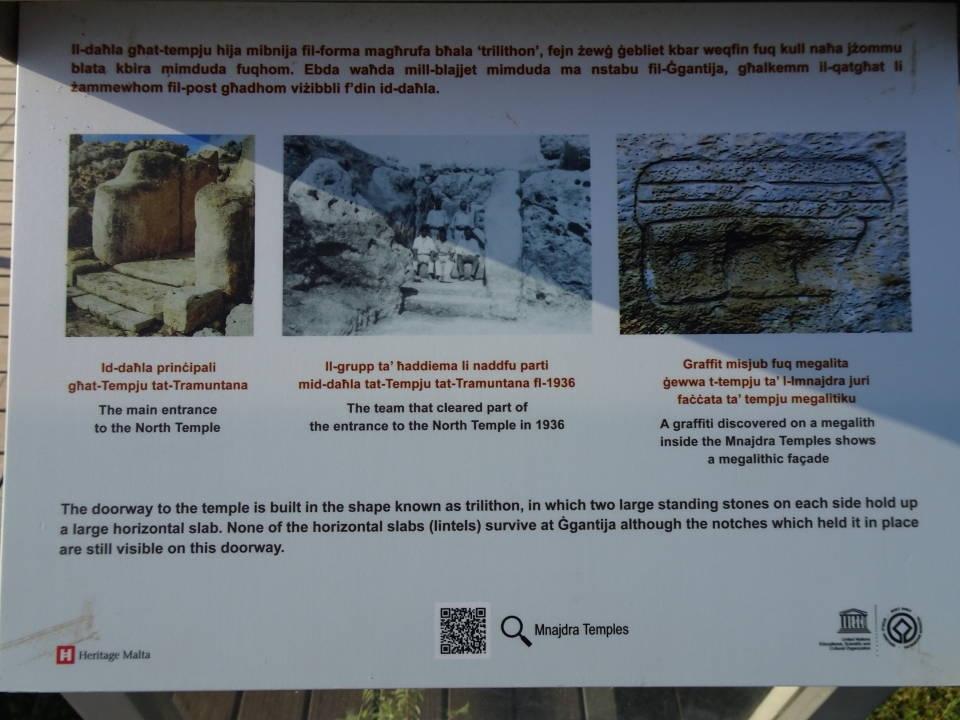
  • ジュガンティーヤ<br />it-Tempji tal-Ġgantija<br /><br />The main entrance to the North Temple<br /><br />The doorway to the temple is built in the shape known as trilithon, in which two large standing stones on each side hold up a large horizontal slab. None of the horizontal slabs(lintels) survive at Ggantija although the notches which held it in place are still visible on this doorway.<br /><br />両側の立てた石の上に水平に平の石板が置かれていたらしいが、残っていない。<br /><br />slab:(石・木・金属などの四角く幅の広い)厚板、石板<br /><br />

    ジュガンティーヤ
    it-Tempji tal-Ġgantija

    The main entrance to the North Temple

    The doorway to the temple is built in the shape known as trilithon, in which two large standing stones on each side hold up a large horizontal slab. None of the horizontal slabs(lintels) survive at Ggantija although the notches which held it in place are still visible on this doorway.

    両側の立てた石の上に水平に平の石板が置かれていたらしいが、残っていない。

    slab:(石・木・金属などの四角く幅の広い)厚板、石板

  • ジュガンティーヤ<br />it-Tempji tal-Ġgantija

    ジュガンティーヤ
    it-Tempji tal-Ġgantija

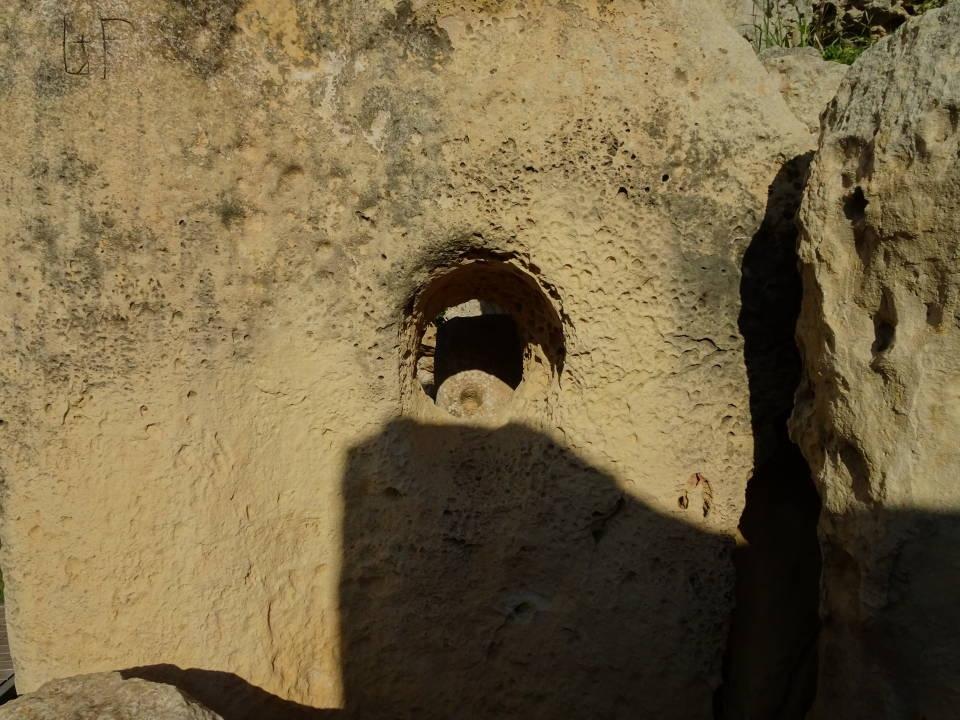
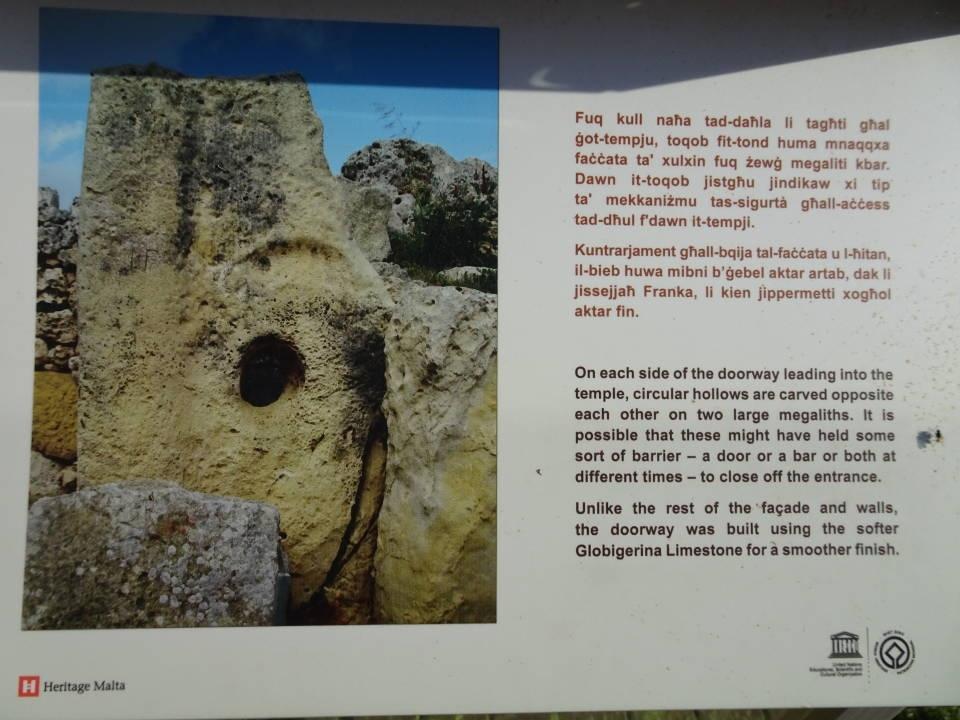
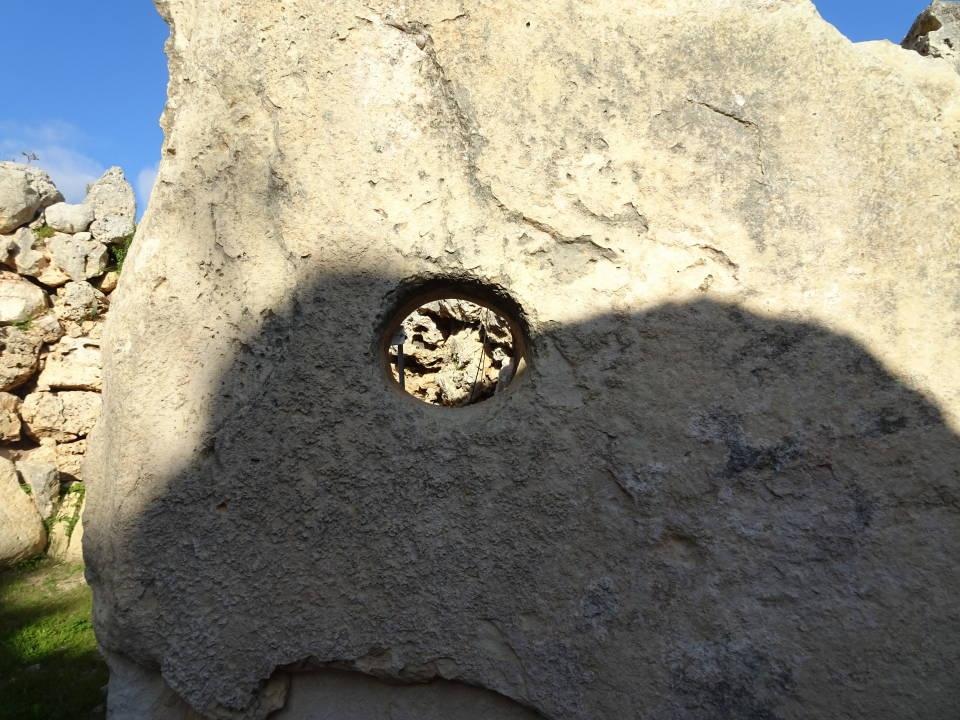
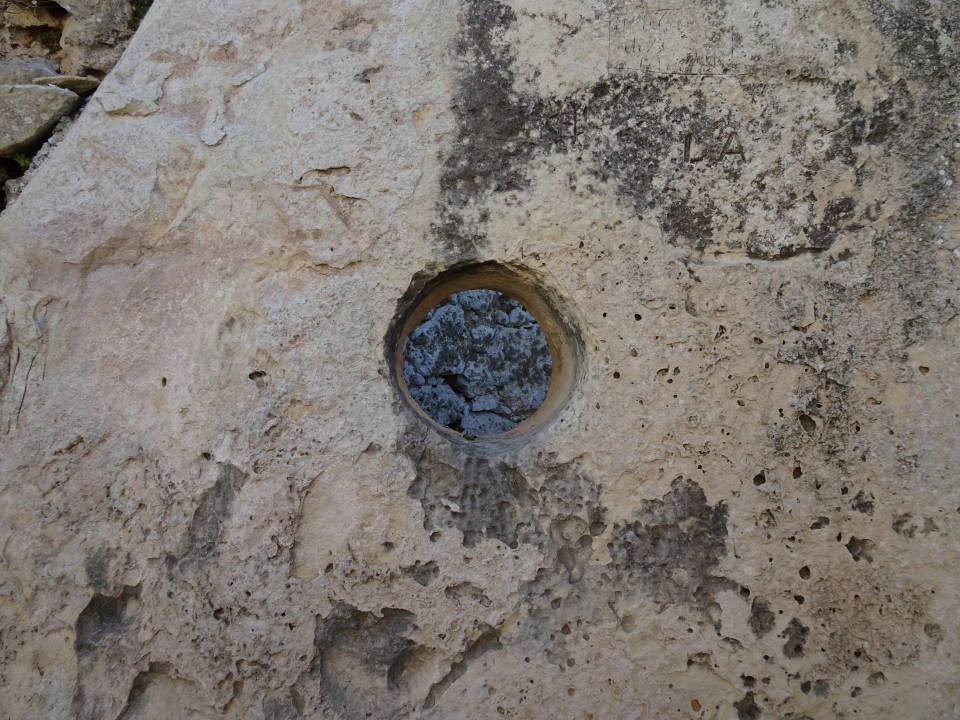
  • ジュガンティーヤ<br />it-Tempji tal-Ġgantija<br /><br />入り口に石に向かうあうように掘られた穴。入り口にドアか、横木などの仕切りを設けるためと考えられている。この入り口の石(グロビゲリナ由来の石灰岩)は他の場所に使用されている石と異なり、より柔らかく(加工がしやすく)表面が滑らかである。

    ジュガンティーヤ
    it-Tempji tal-Ġgantija

    入り口に石に向かうあうように掘られた穴。入り口にドアか、横木などの仕切りを設けるためと考えられている。この入り口の石(グロビゲリナ由来の石灰岩)は他の場所に使用されている石と異なり、より柔らかく(加工がしやすく)表面が滑らかである。

  • ジュガンティーヤ<br />it-Tempji tal-Ġgantija<br /><br />On each side of the doorway leading into the temple, circular hollows are carved opposite each other on two large megaliths. It is possible that these might have held some sort of barrier - a door or a bar or both at different times - to close off the entrance.<br /><br />Unlike the rest of the facede and walls, the doorway was built using the softer Globigerina Limestone for a smoother finish.<br /><br />Globigerina:グロビゲリナ(有孔虫の一種。石灰質の球状の殻をもち、多数の小穴から針状の仮足を伸ばして浮遊する。広く世界中の海に分布。)<br />Globigerina Limestone:グロビゲリナ由来の石灰岩<br />

    ジュガンティーヤ
    it-Tempji tal-Ġgantija

    On each side of the doorway leading into the temple, circular hollows are carved opposite each other on two large megaliths. It is possible that these might have held some sort of barrier - a door or a bar or both at different times - to close off the entrance.

    Unlike the rest of the facede and walls, the doorway was built using the softer Globigerina Limestone for a smoother finish.

    Globigerina:グロビゲリナ(有孔虫の一種。石灰質の球状の殻をもち、多数の小穴から針状の仮足を伸ばして浮遊する。広く世界中の海に分布。)
    Globigerina Limestone:グロビゲリナ由来の石灰岩

  • ジュガンティーヤ<br />it-Tempji tal-Ġgantija

    ジュガンティーヤ
    it-Tempji tal-Ġgantija

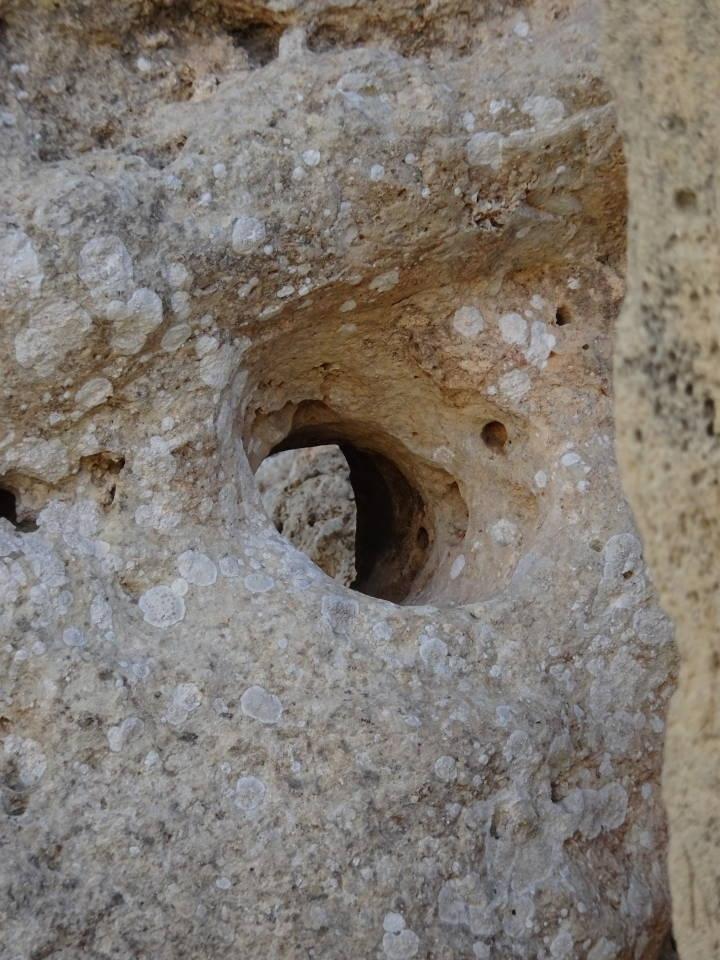
  • ジュガンティーヤ<br />it-Tempji tal-Ġgantija<br /><br />2つの性質の異なる岩が用いられている。穴が複数開けられており、目的は不明だが、ロープを結んでいたと思われる。

    ジュガンティーヤ
    it-Tempji tal-Ġgantija

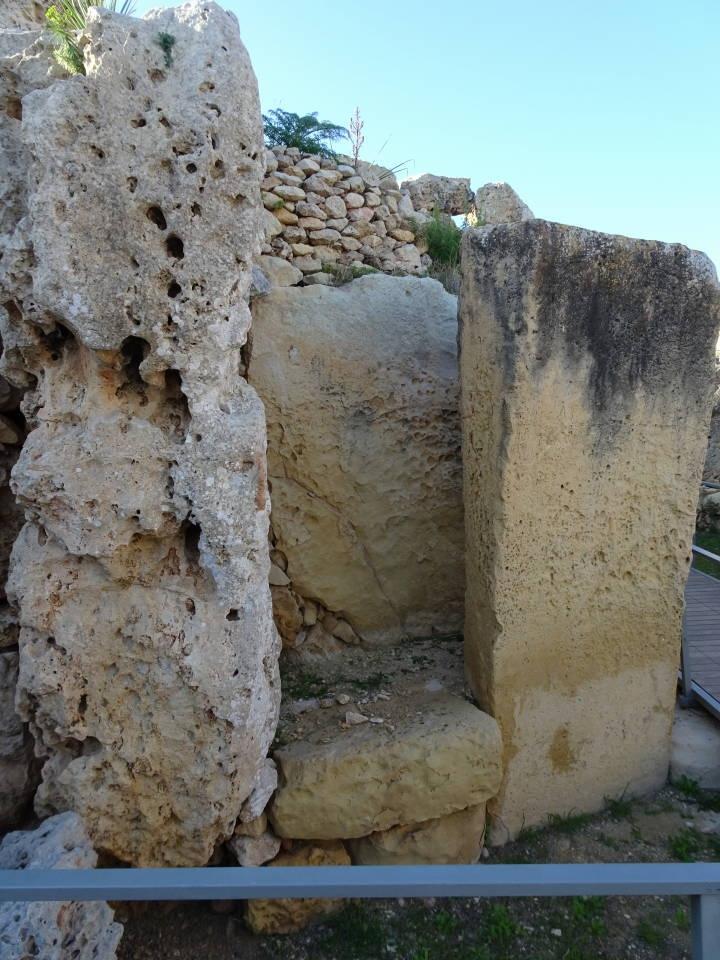
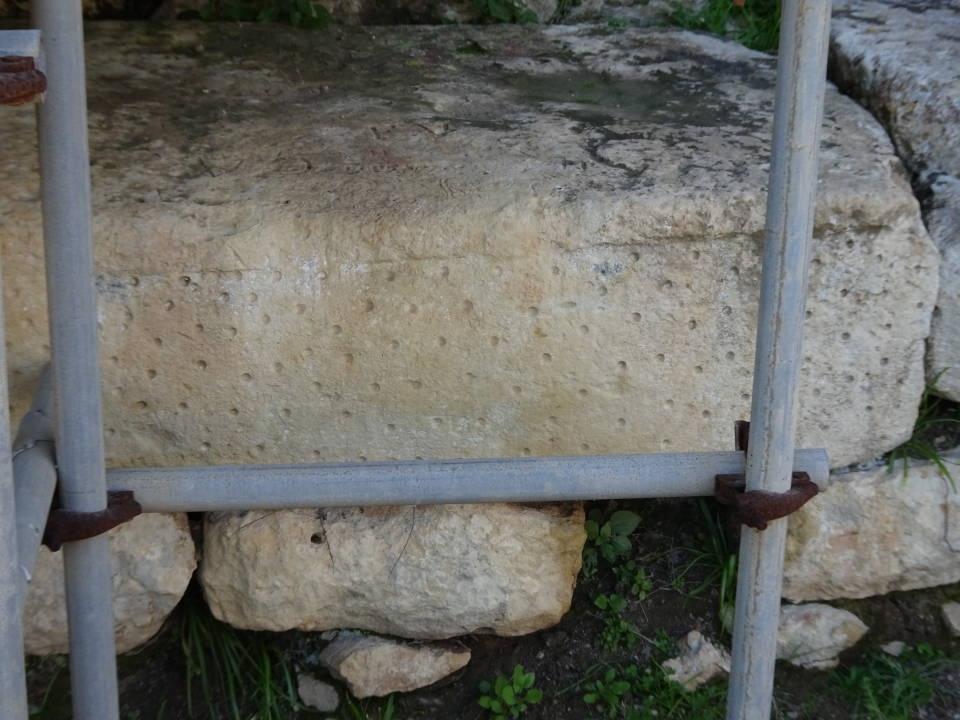
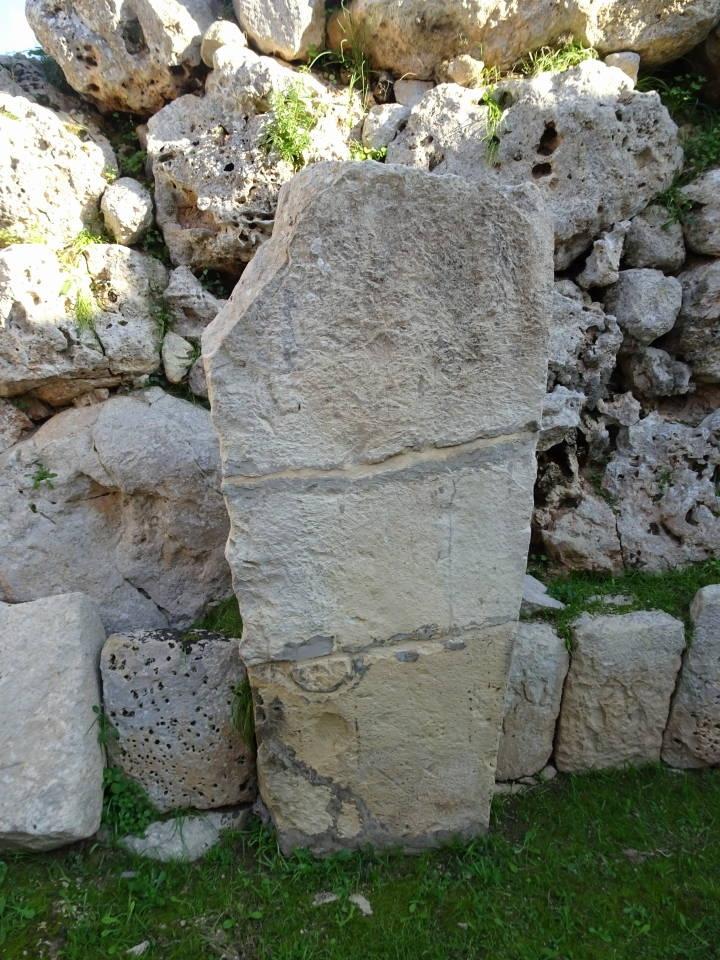
    2つの性質の異なる岩が用いられている。穴が複数開けられており、目的は不明だが、ロープを結んでいたと思われる。

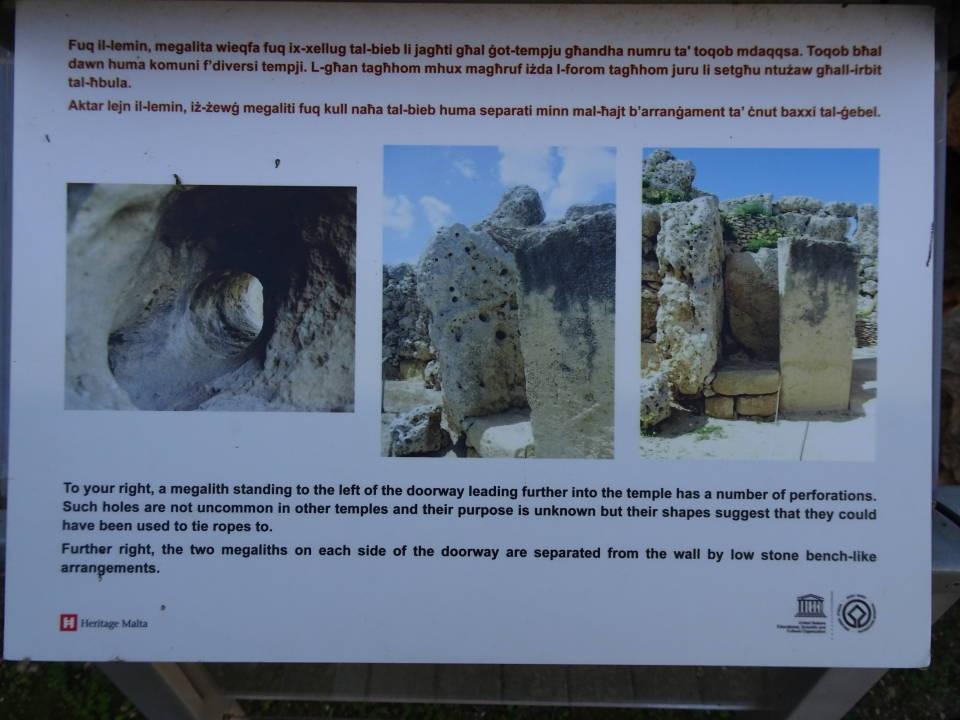
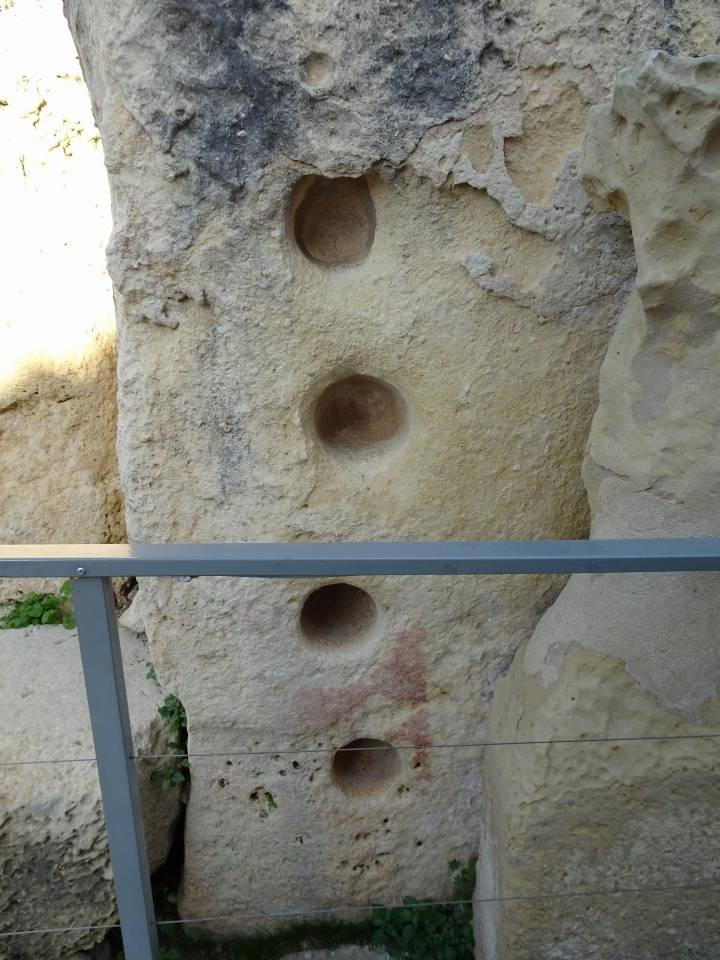
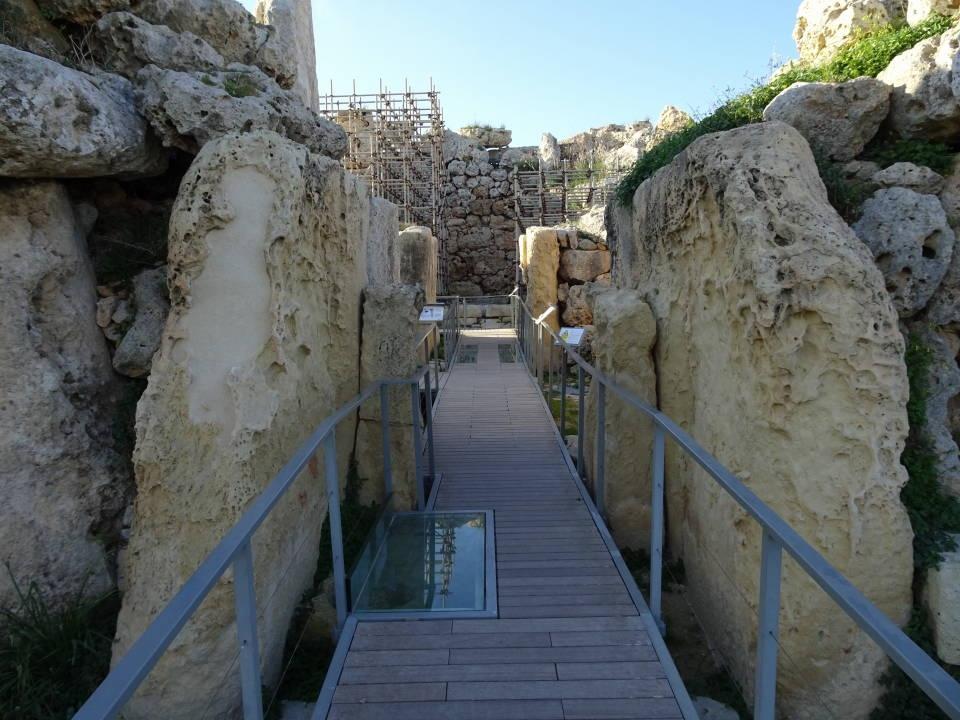
  • ジュガンティーヤ<br />it-Tempji tal-Ġgantija<br /><br />To your light, a megalith standing to the left of the doorway leading further into the temple has a number of perforations. Such holes are not uncommon in other temples and their purpose is unknown but their shapes suggest that they could have been used to tie ropes to.<br />Further right, the two megaliths on each side of the doorway are separated from the wall by low stone bench-like arrangements.<br /><br />perforation:穴をあけること、穿孔(せんこう)、貫通、打抜き穴、穿孔<br />not uncommon:珍しくない<br />

    ジュガンティーヤ
    it-Tempji tal-Ġgantija

    To your light, a megalith standing to the left of the doorway leading further into the temple has a number of perforations. Such holes are not uncommon in other temples and their purpose is unknown but their shapes suggest that they could have been used to tie ropes to.
    Further right, the two megaliths on each side of the doorway are separated from the wall by low stone bench-like arrangements.

    perforation:穴をあけること、穿孔(せんこう)、貫通、打抜き穴、穿孔
    not uncommon:珍しくない

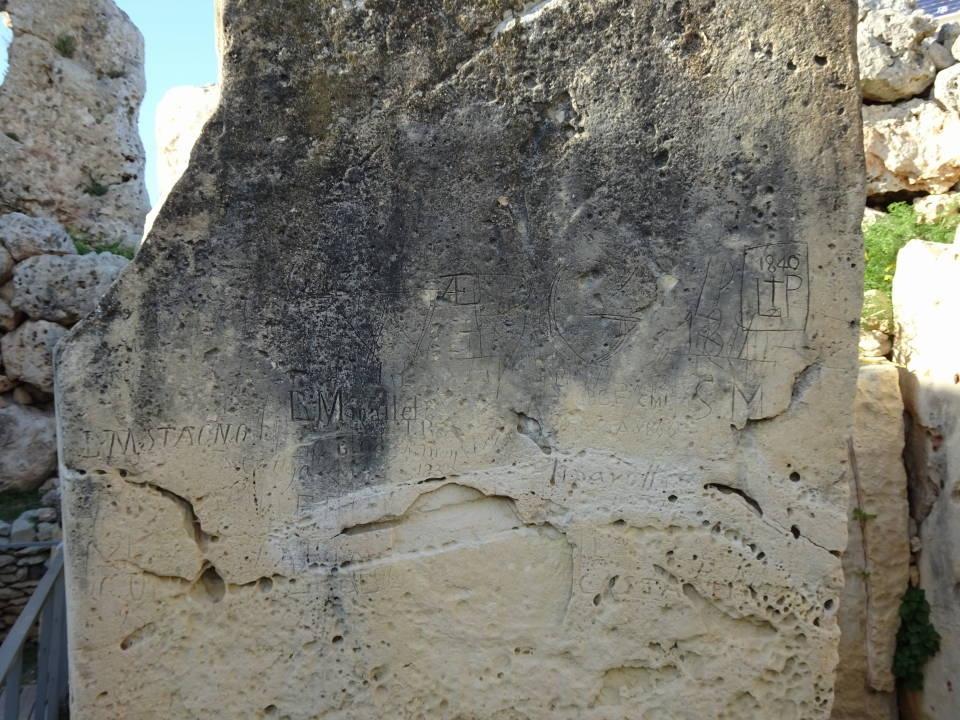
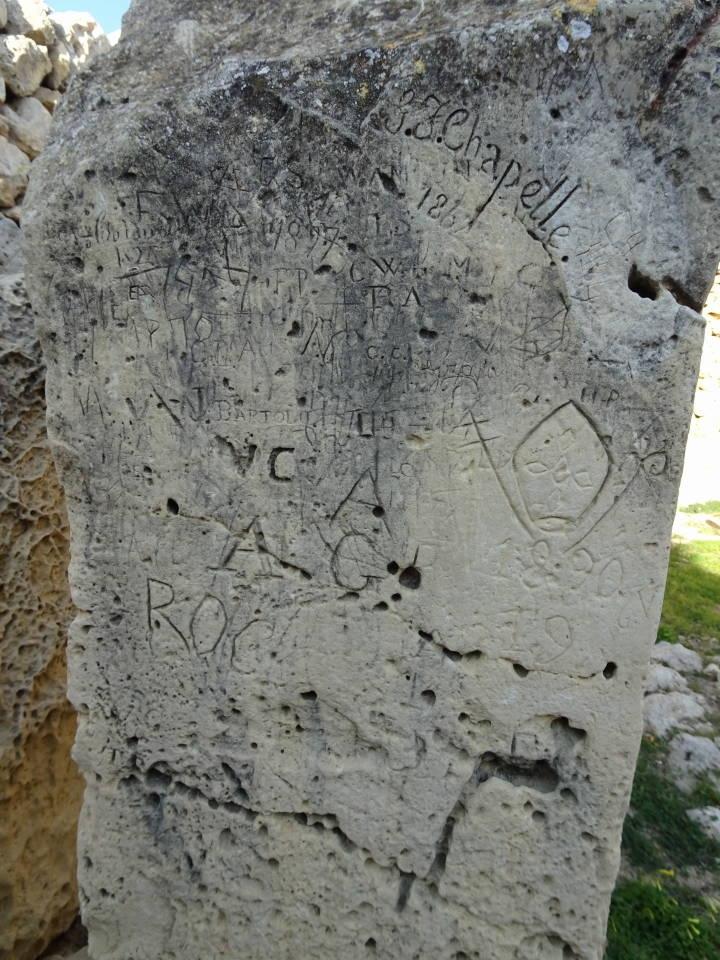
  • ジュガンティーヤ<br />it-Tempji tal-Ġgantija<br /><br />悲しい落書き。刻まれている数字から19世紀後半のもの。

    ジュガンティーヤ
    it-Tempji tal-Ġgantija

    悲しい落書き。刻まれている数字から19世紀後半のもの。

  • ジュガンティーヤ<br />it-Tempji tal-Ġgantija

    ジュガンティーヤ
    it-Tempji tal-Ġgantija

  • ジュガンティーヤ<br />it-Tempji tal-Ġgantija

    ジュガンティーヤ
    it-Tempji tal-Ġgantija

  • ジュガンティーヤ<br />it-Tempji tal-Ġgantija

    ジュガンティーヤ
    it-Tempji tal-Ġgantija

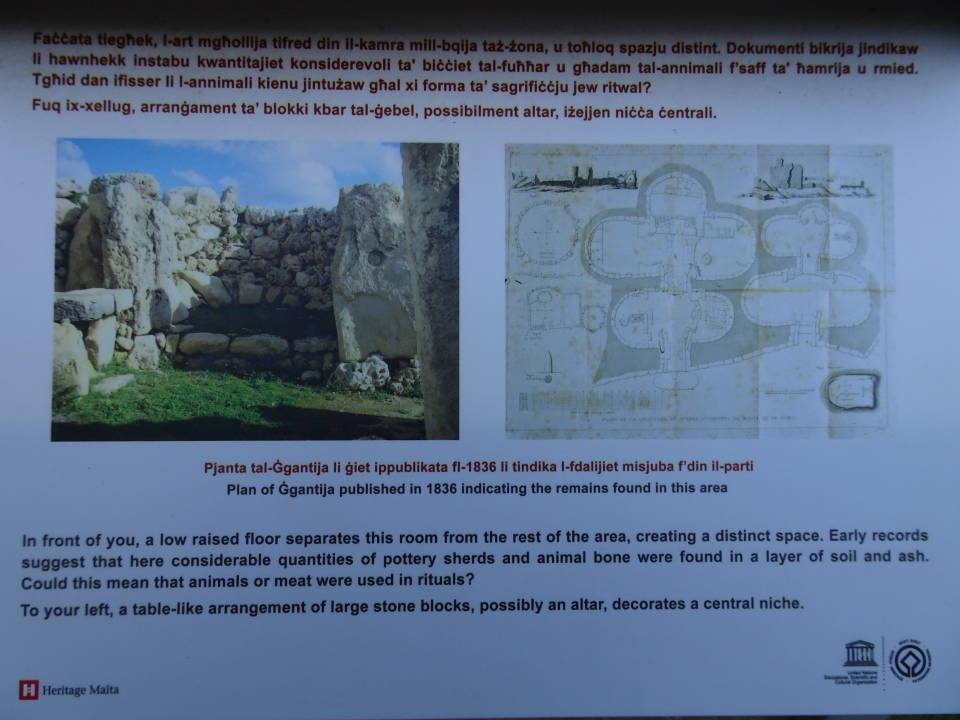
  • ジュガンティーヤ<br />it-Tempji tal-Ġgantija<br /><br />Plan of Ggantija published in 1836 lidicating the remains found in this area<br /><br />1836年に作成された平面図では、このエリアから遺物(土器の破片や動物の骨)が発見されたことを示している。

    ジュガンティーヤ
    it-Tempji tal-Ġgantija

    Plan of Ggantija published in 1836 lidicating the remains found in this area

    1836年に作成された平面図では、このエリアから遺物(土器の破片や動物の骨)が発見されたことを示している。

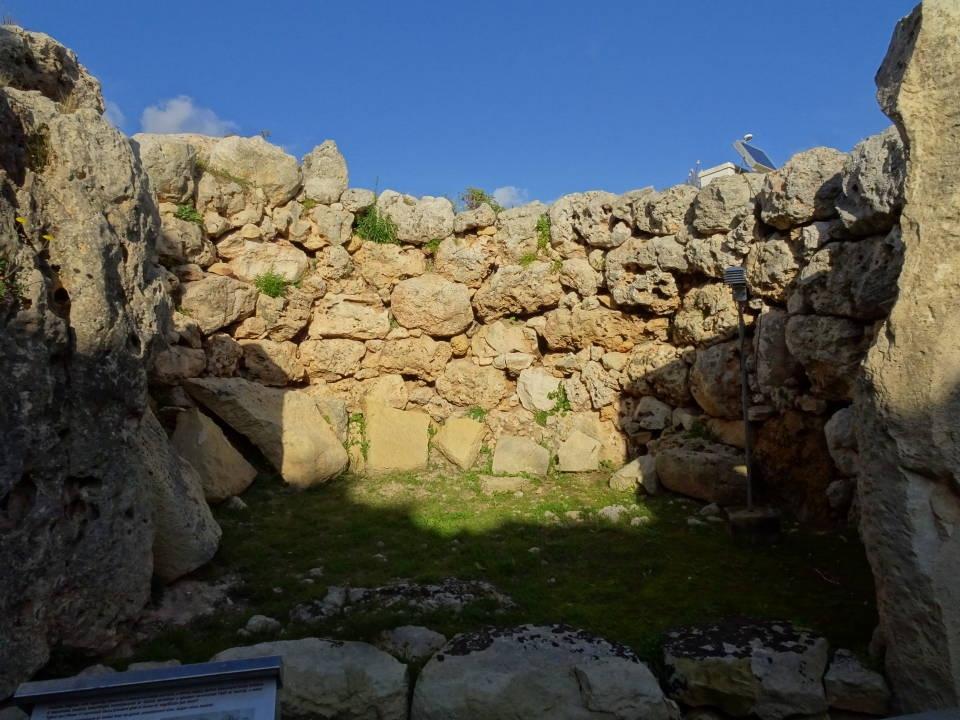
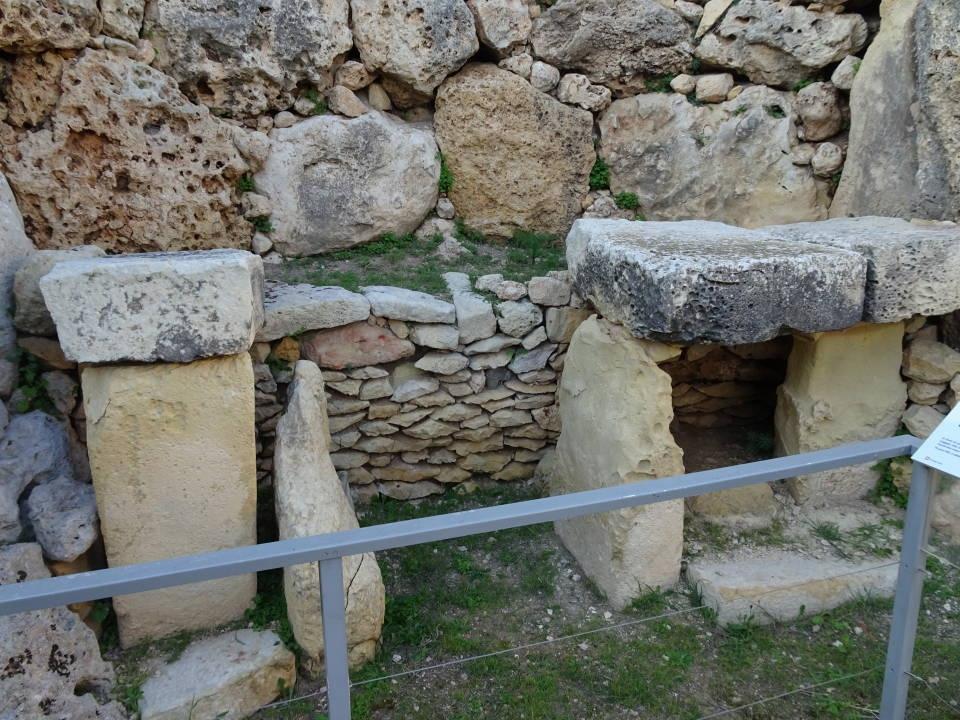
  • ジュガンティーヤ<br />it-Tempji tal-Ġgantija<br /><br />Plan of Ggantija published in 1836 lidicating the remains found in this area<br /><br />In front of you, a low raised floor separates this room from the rest of the area, creating a distinct space. Early records suggest that here considerable quantities of pottery sherds and animal bone were found in a layer of soil and ash. Could this mean that animals or meat were used in rituals?<br /><br />To your left, a table-like arrangement of large stone blocks, possibly an alter, decorates a center niche.<br /><br />ritual:儀式

    ジュガンティーヤ
    it-Tempji tal-Ġgantija

    Plan of Ggantija published in 1836 lidicating the remains found in this area

    In front of you, a low raised floor separates this room from the rest of the area, creating a distinct space. Early records suggest that here considerable quantities of pottery sherds and animal bone were found in a layer of soil and ash. Could this mean that animals or meat were used in rituals?

    To your left, a table-like arrangement of large stone blocks, possibly an alter, decorates a center niche.

    ritual:儀式

  • ジュガンティーヤ<br />it-Tempji tal-Ġgantija<br /><br />祭壇<br /><br /><br />

    ジュガンティーヤ
    it-Tempji tal-Ġgantija

    祭壇


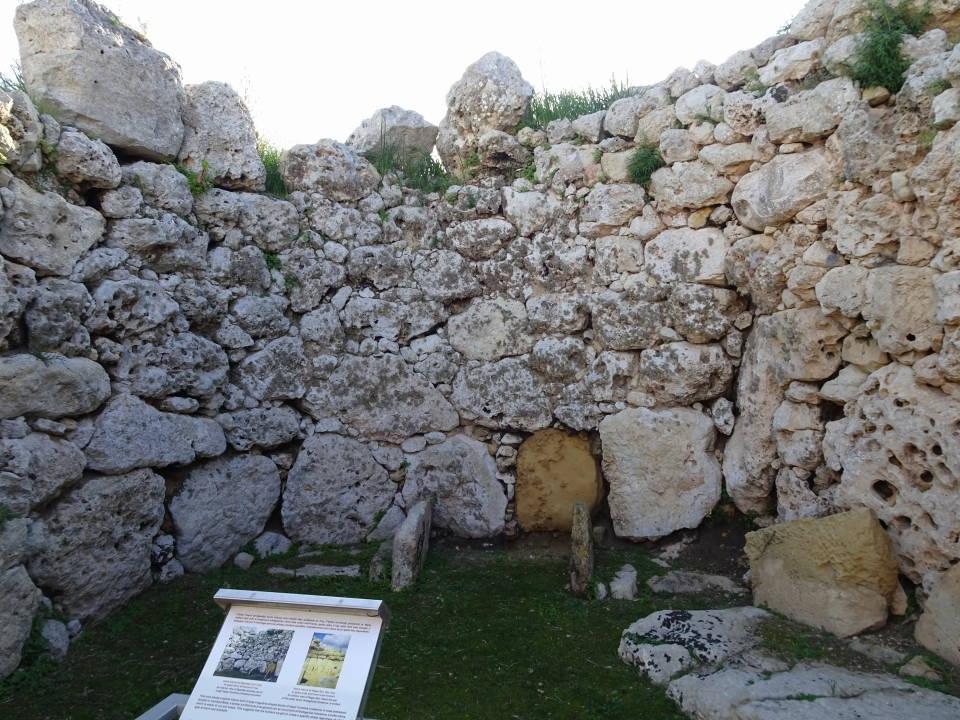
  • ジュガンティーヤ<br />it-Tempji tal-Ġgantija<br /><br />An interior view of Ggantija showing use of rough Upper Coralline Limestone boulders<br />

    ジュガンティーヤ
    it-Tempji tal-Ġgantija

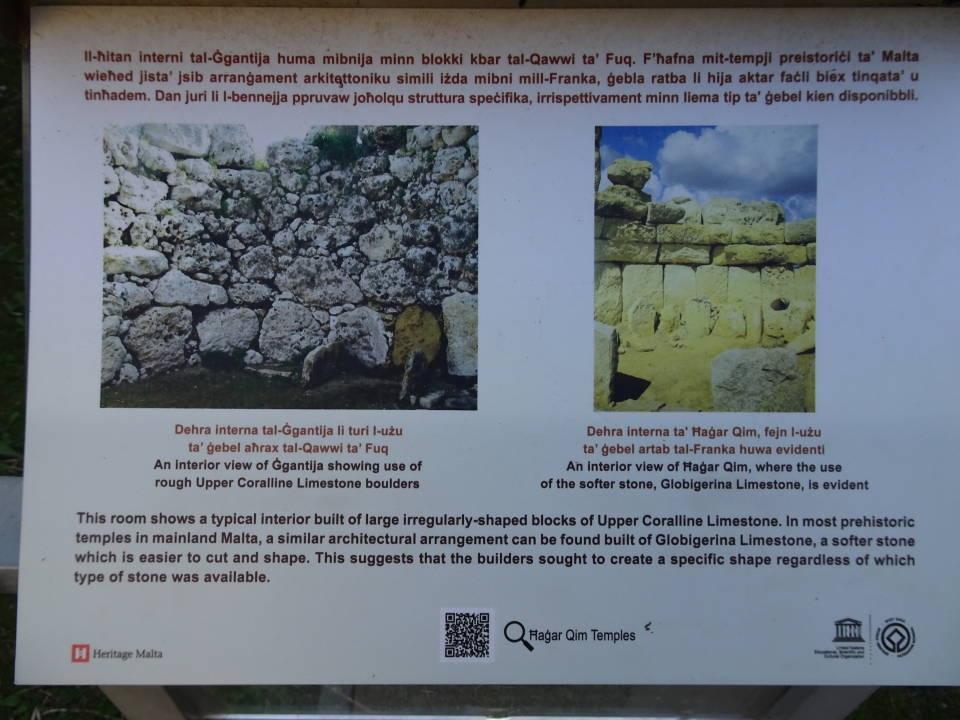
    An interior view of Ggantija showing use of rough Upper Coralline Limestone boulders

  • ジュガンティーヤ<br />it-Tempji tal-Ġgantija<br /><br />An interior view of Ggantija showing use of rough Upper Coralline Limestone boulders<br /><br />This room shows a typical interior built of large irregularly-shaped blocks of Upper Coralline Limestone. In most prehistric temples in mainland Malta, a similar architectural arrangement can be found built of Globigerina Limestone, a softer stone which is easier to cut and shape. This suggest s that the builders sought to create a specific shape regardless of which type of stone was available.<br /><br />Coralline Limestone:サンゴ由来の石灰岩

    ジュガンティーヤ
    it-Tempji tal-Ġgantija

    An interior view of Ggantija showing use of rough Upper Coralline Limestone boulders

    This room shows a typical interior built of large irregularly-shaped blocks of Upper Coralline Limestone. In most prehistric temples in mainland Malta, a similar architectural arrangement can be found built of Globigerina Limestone, a softer stone which is easier to cut and shape. This suggest s that the builders sought to create a specific shape regardless of which type of stone was available.

    Coralline Limestone:サンゴ由来の石灰岩

  • ジュガンティーヤ<br />it-Tempji tal-Ġgantija

    ジュガンティーヤ
    it-Tempji tal-Ġgantija

  • ジュガンティーヤ<br />it-Tempji tal-Ġgantija

    ジュガンティーヤ
    it-Tempji tal-Ġgantija

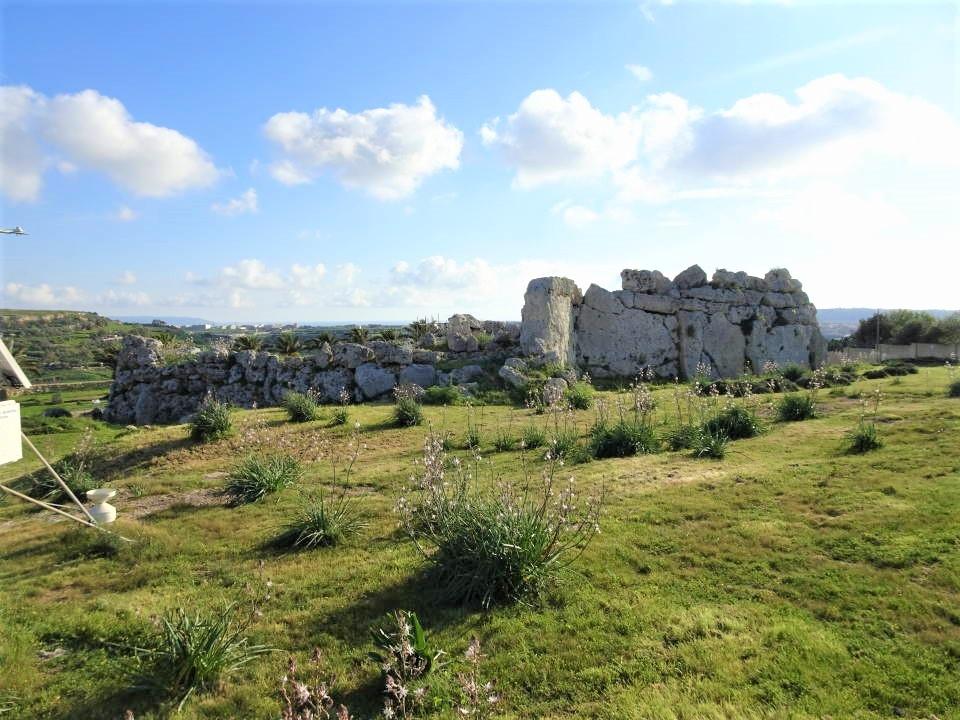
  • ジュガンティーヤ<br />it-Tempji tal-Ġgantija<br /><br />右がNorth、左がSouth。<br /><br />15:36<br /><br />

    ジュガンティーヤ
    it-Tempji tal-Ġgantija

    右がNorth、左がSouth。

    15:36

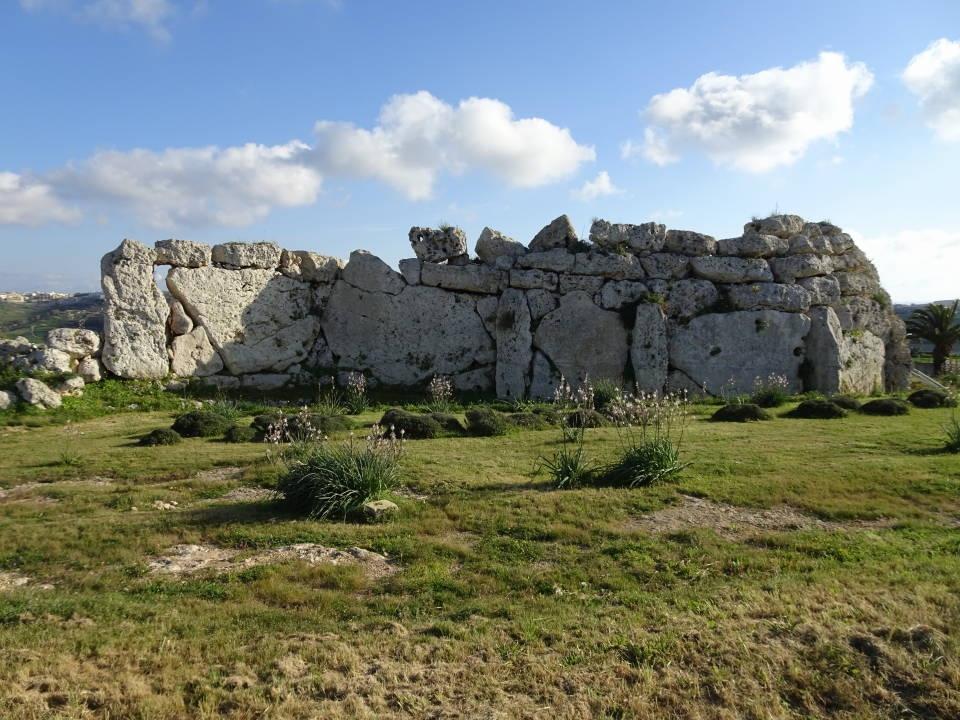
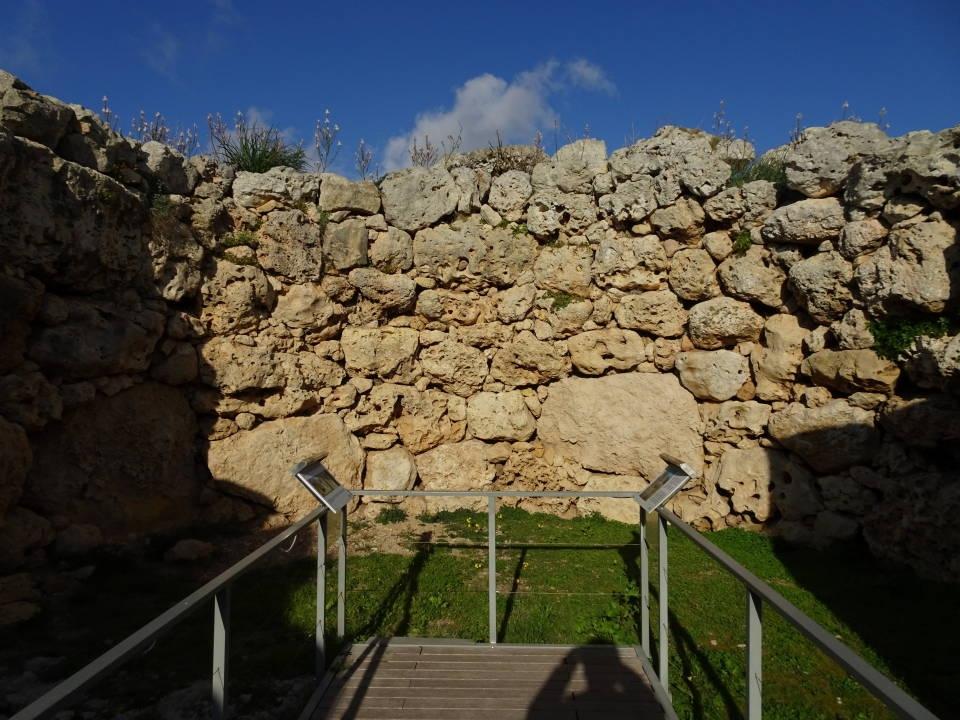
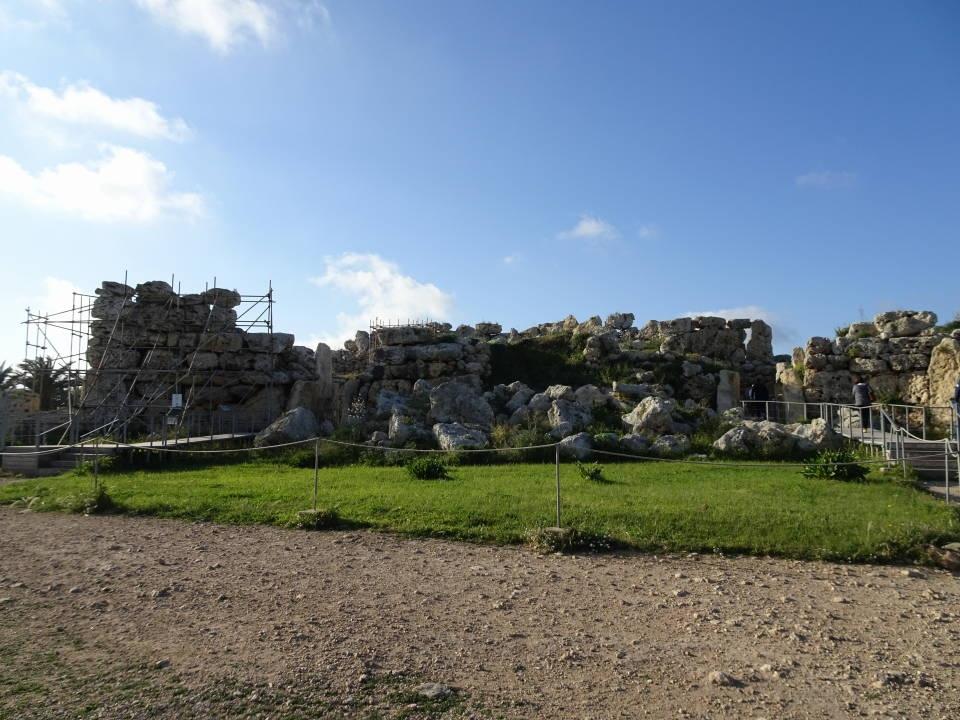
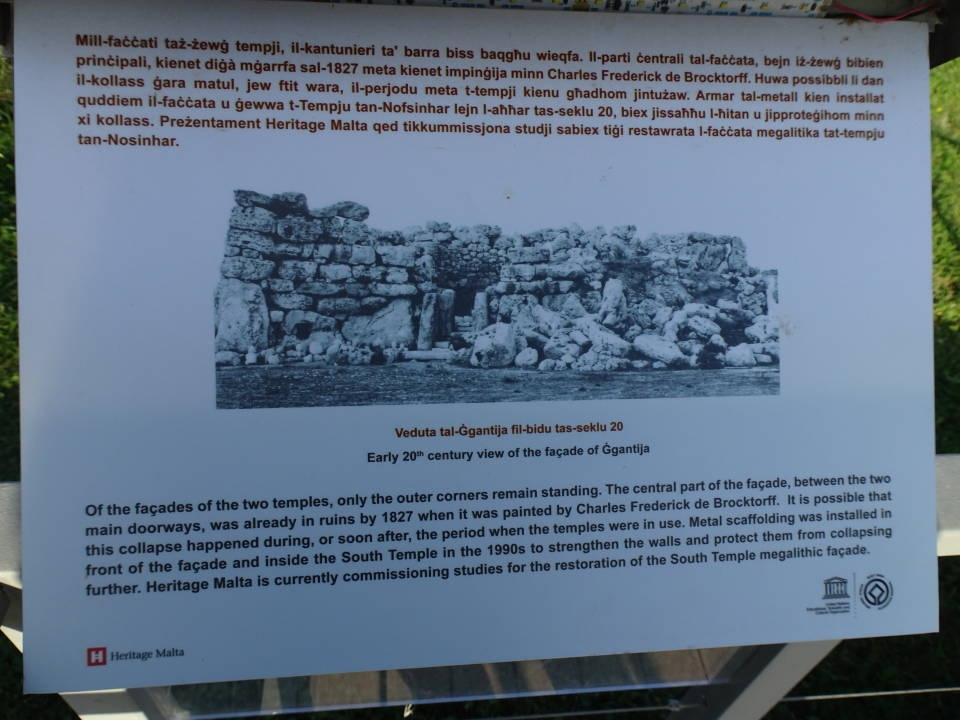
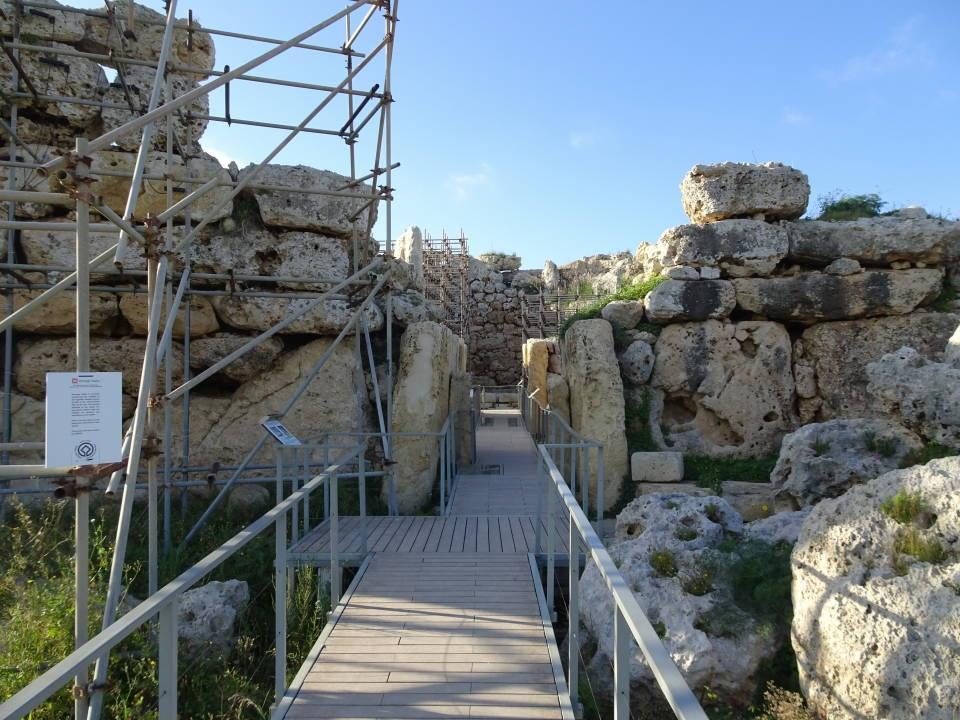
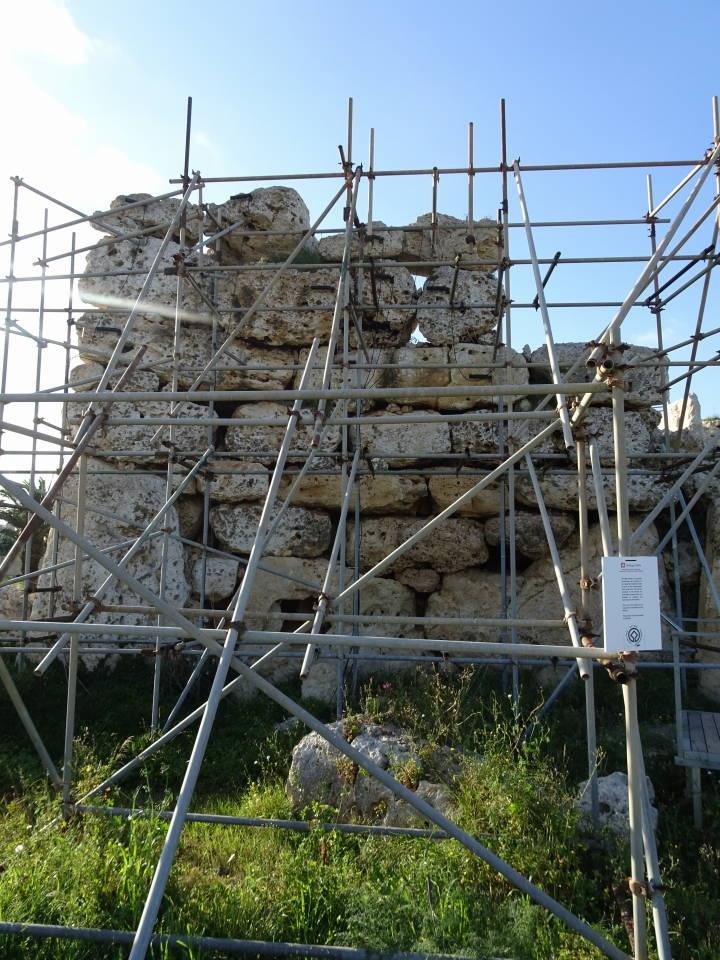
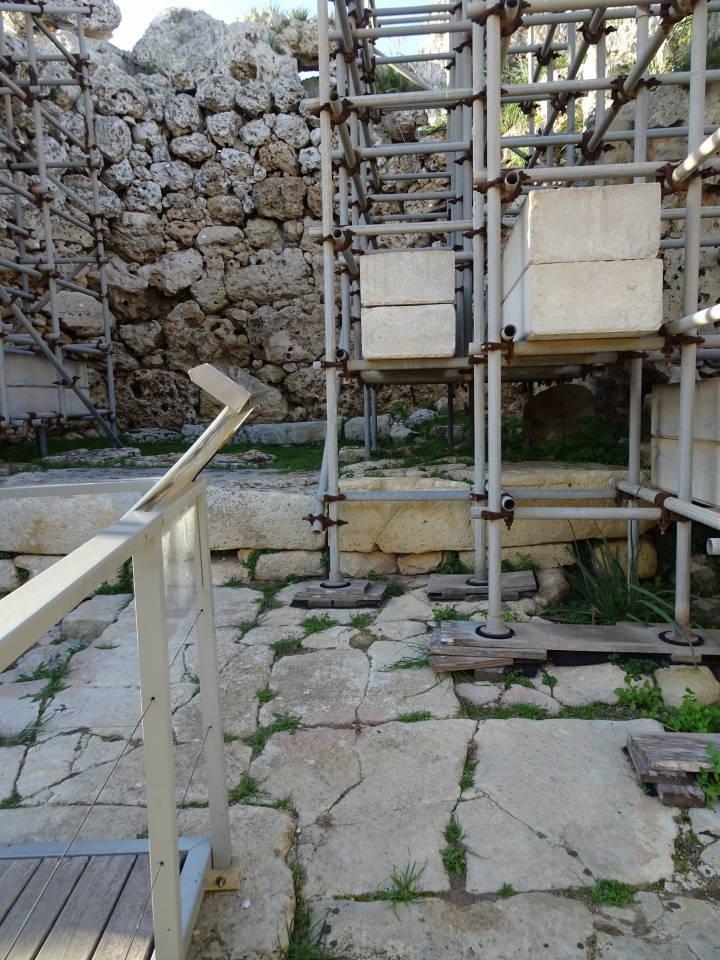
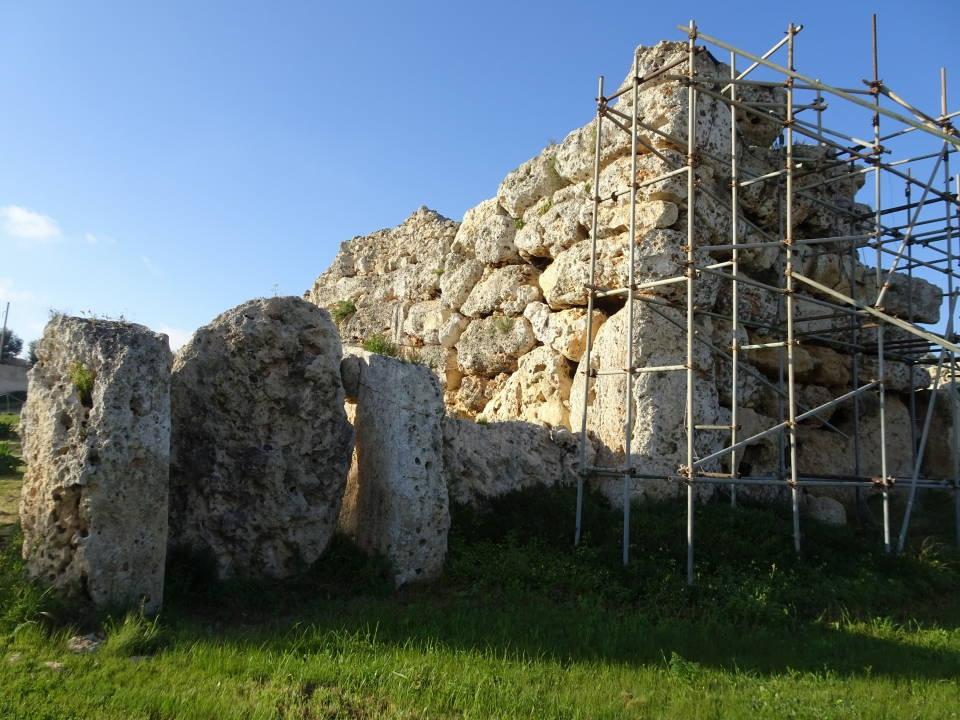
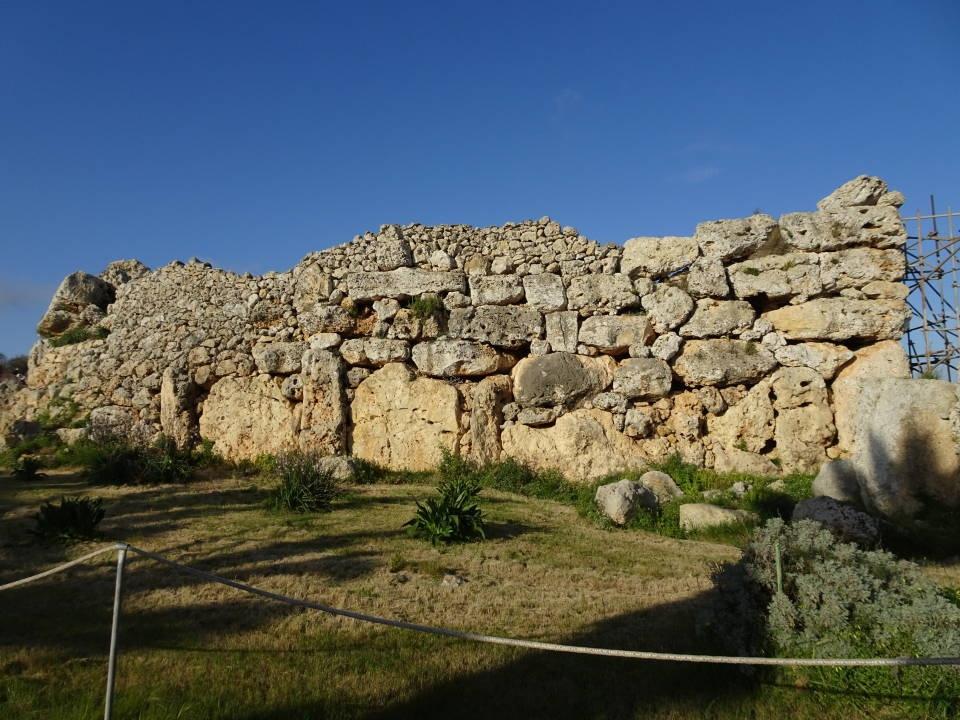
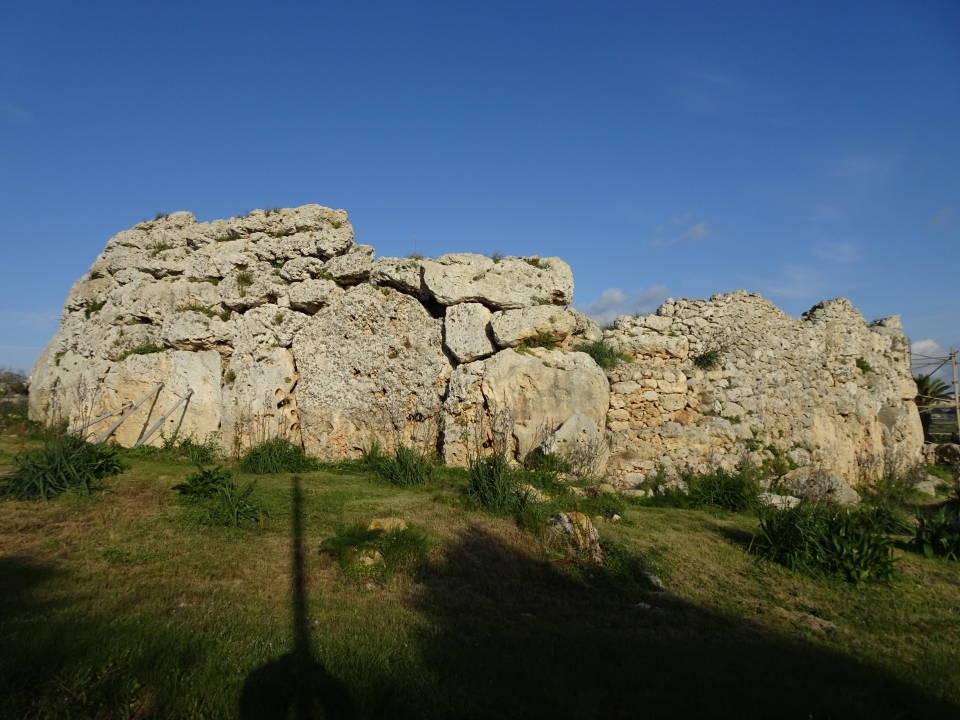
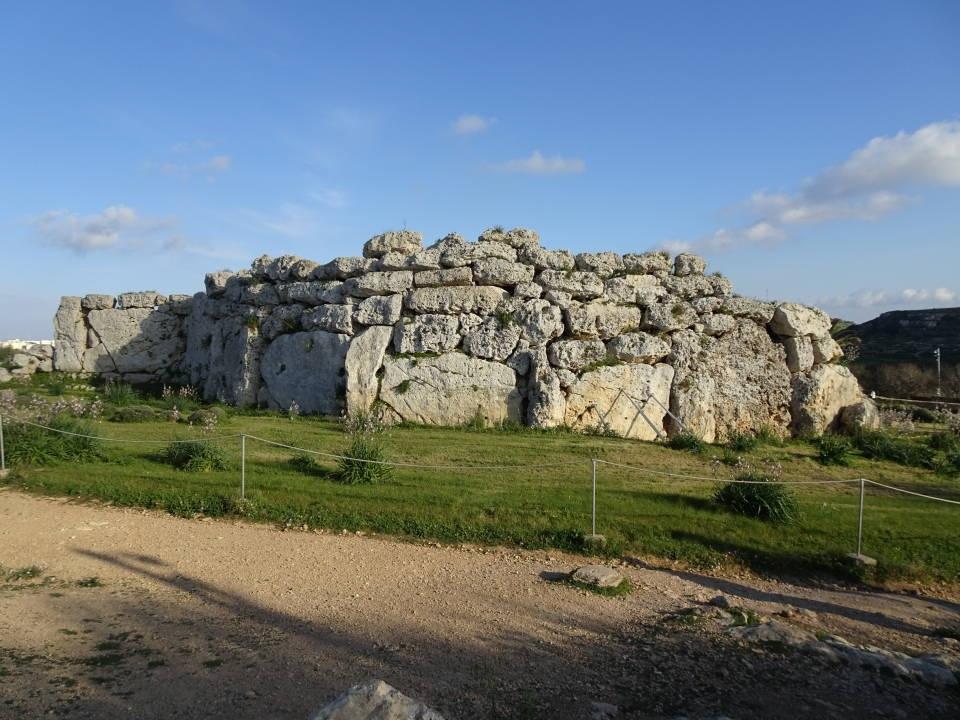
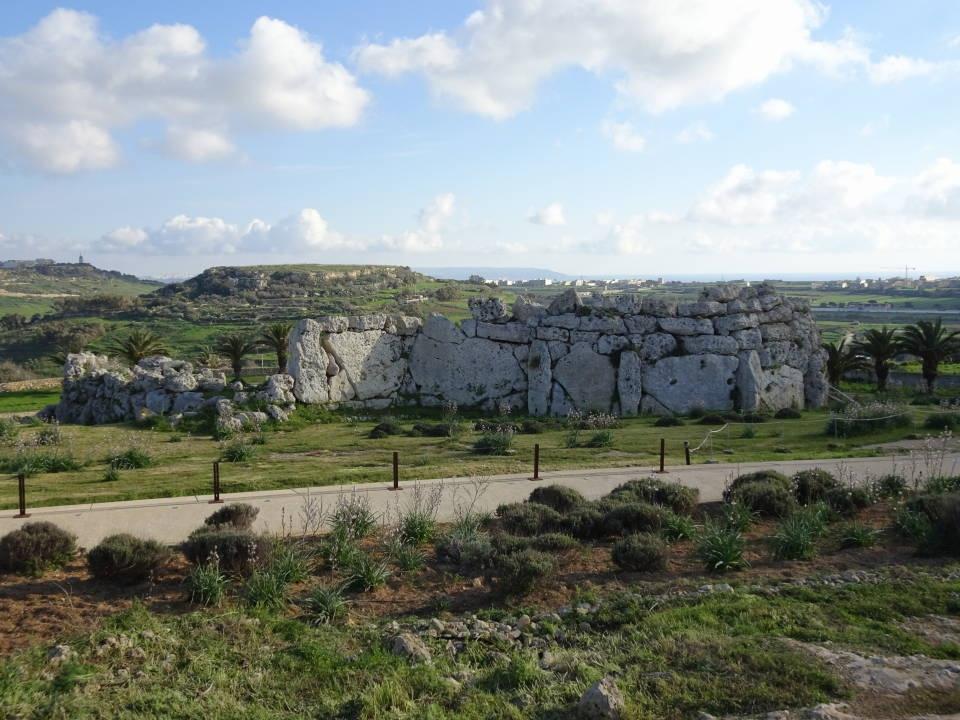
  • ジュガンティーヤ<br />it-Tempji tal-Ġgantija<br /><br />Early 20th century view of the facade of Ggantija<br /><br />Of the facedes of the two temples, only the outer corners remain standing. The central part of the facade, between the two main doorways, was already in ruins by 1827 when it was painted by Charles Frederick de Brocktorff. It is possible that this collapse happened during, or soon after, the period when the temples were in use. Metal scaffolding was installed in front of the facade and inside the South Temple in the 1990s to strengthen the walls and protect them from collapsing further. Heritage Malta is currently commissioning studies for the restoration of the South Temple megalithic facade.

    ジュガンティーヤ
    it-Tempji tal-Ġgantija

    Early 20th century view of the facade of Ggantija

    Of the facedes of the two temples, only the outer corners remain standing. The central part of the facade, between the two main doorways, was already in ruins by 1827 when it was painted by Charles Frederick de Brocktorff. It is possible that this collapse happened during, or soon after, the period when the temples were in use. Metal scaffolding was installed in front of the facade and inside the South Temple in the 1990s to strengthen the walls and protect them from collapsing further. Heritage Malta is currently commissioning studies for the restoration of the South Temple megalithic facade.

  • ジュガンティーヤ<br />it-Tempji tal-Ġgantija<br /><br />The South Temple

    ジュガンティーヤ
    it-Tempji tal-Ġgantija

    The South Temple

  • ジュガンティーヤ<br />it-Tempji tal-Ġgantija<br /><br />補強されていますが、今にも崩れそう。。。

    ジュガンティーヤ
    it-Tempji tal-Ġgantija

    補強されていますが、今にも崩れそう。。。

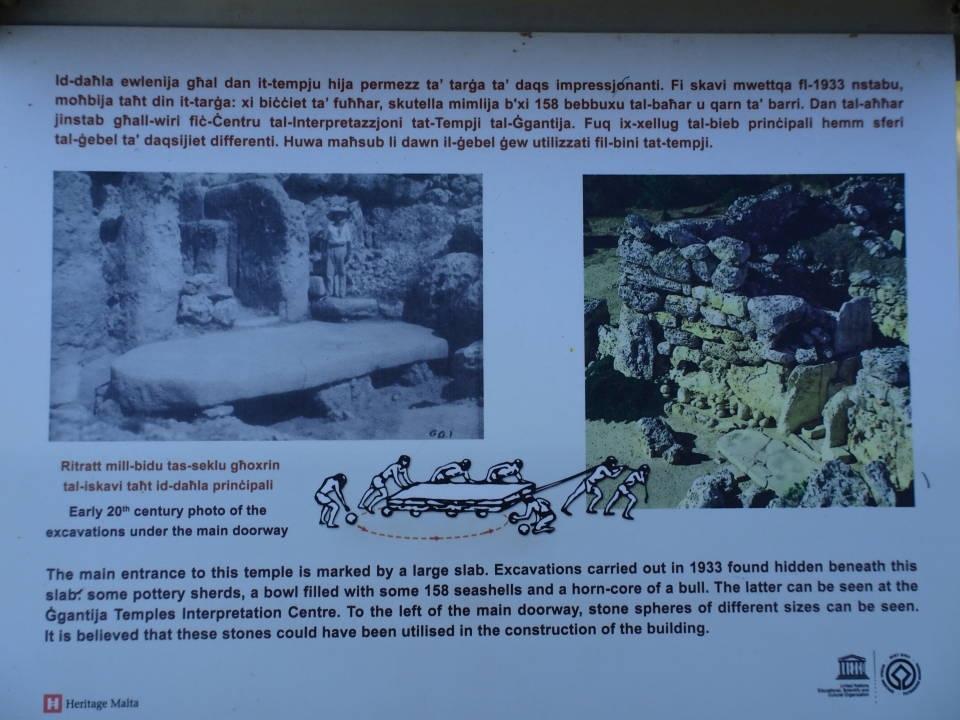
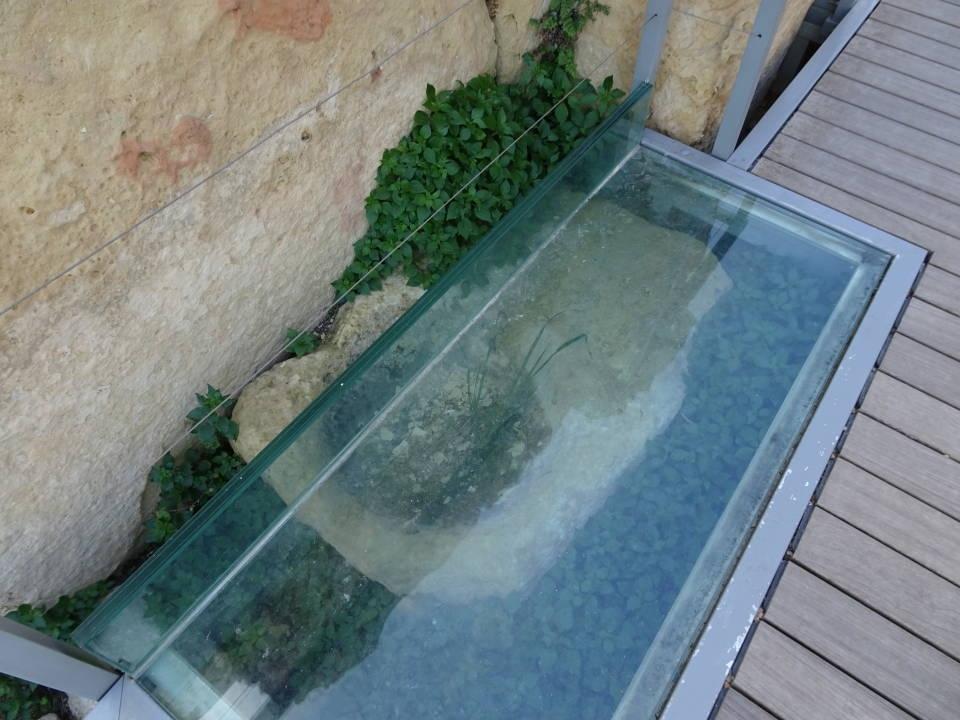
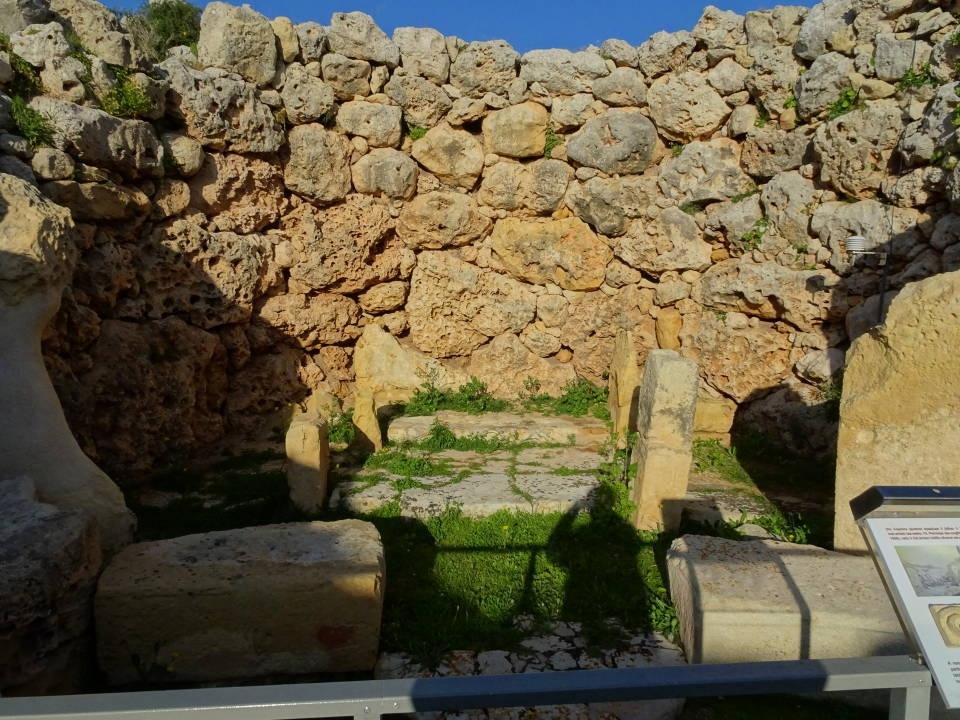
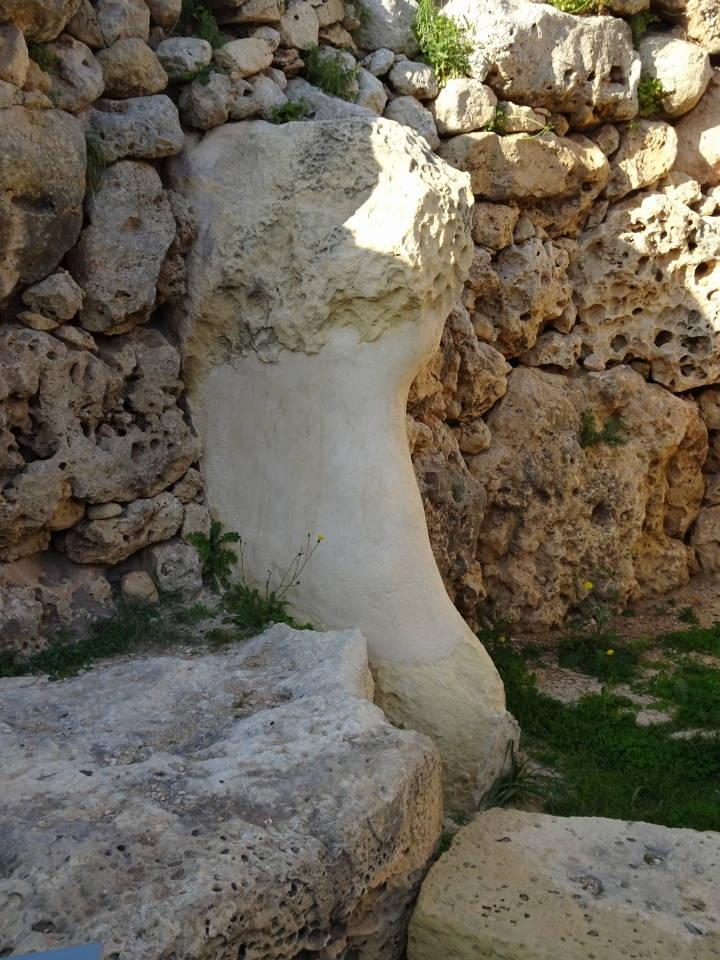
  • ジュガンティーヤ<br />it-Tempji tal-Ġgantija<br /><br />The main entrance to this temple is marked by a large slab. Excavations carried out in 1933 found hidden beneath this slab. some pottery sherds, a bowl filled with some 158 seashells and a horn-core of a bull. The latter can be seen at the Ggantija Temples Interpretation Centre. To the left of the main doorway, stone spheres of different sizes can be seen. It is believed that these stones could have been utilised in the construction of the building.

    ジュガンティーヤ
    it-Tempji tal-Ġgantija

    The main entrance to this temple is marked by a large slab. Excavations carried out in 1933 found hidden beneath this slab. some pottery sherds, a bowl filled with some 158 seashells and a horn-core of a bull. The latter can be seen at the Ggantija Temples Interpretation Centre. To the left of the main doorway, stone spheres of different sizes can be seen. It is believed that these stones could have been utilised in the construction of the building.

  • ジュガンティーヤ<br />it-Tempji tal-Ġgantija

    ジュガンティーヤ
    it-Tempji tal-Ġgantija

  • ジュガンティーヤ<br />it-Tempji tal-Ġgantija

    ジュガンティーヤ
    it-Tempji tal-Ġgantija

  • ジュガンティーヤ<br />it-Tempji tal-Ġgantija

    ジュガンティーヤ
    it-Tempji tal-Ġgantija

  • ジュガンティーヤ<br />it-Tempji tal-Ġgantija

    ジュガンティーヤ
    it-Tempji tal-Ġgantija

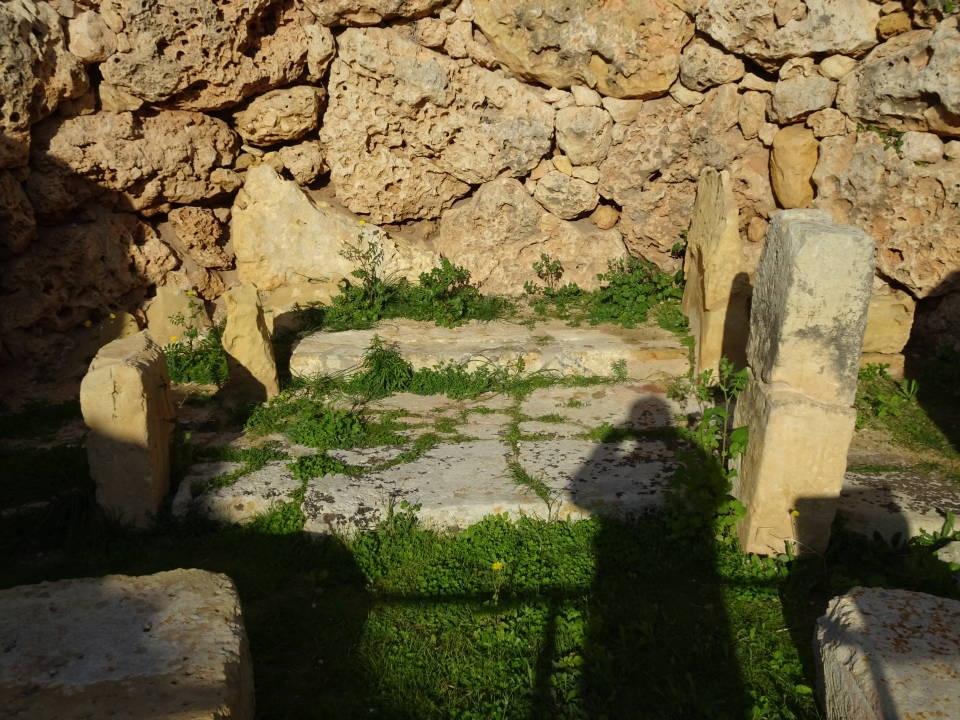
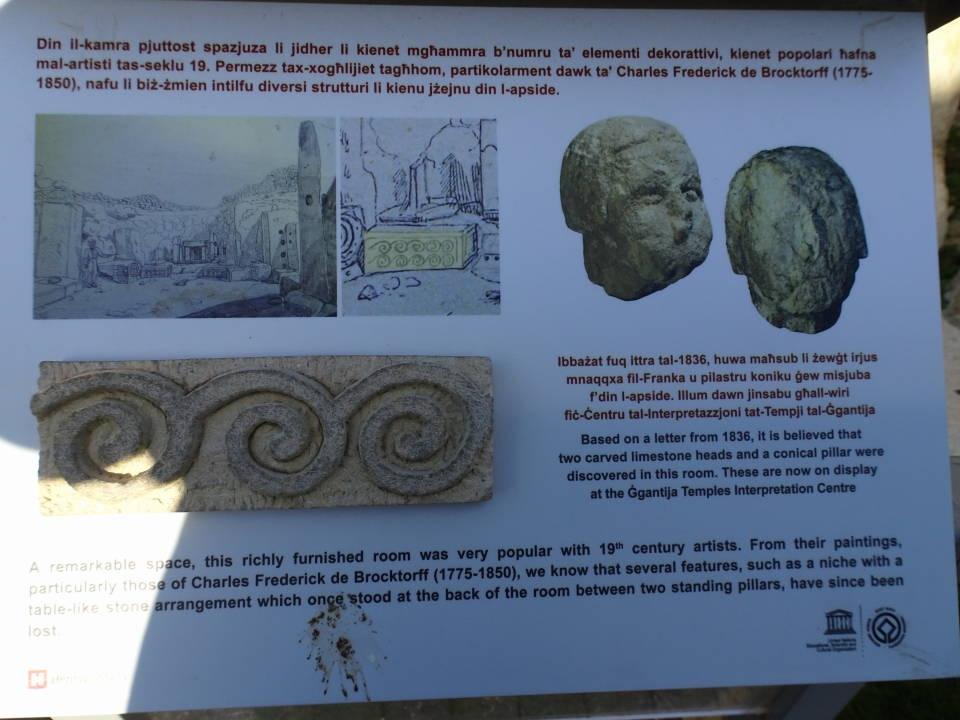
  • ジュガンティーヤ<br />it-Tempji tal-Ġgantija<br /><br />Based on a letter from 1836, it is believed that two carved limestone heads and a conical pillar were discovered in this room. These are now on display at the Ggantija Temples Interpretation Centre.<br /><br />A remarkable space, this richly furnished room was very popular with 19th century artists. From their paintings, particularly those of Charles Frederick de Brocktorff(1775-1850), we know that several features, such as a niche with a table-like stone arrangement which onece stood at the back of the room between two standing pillars, have since been lost.<br /><br />当時の画家によって、19世紀までは部屋の奥にテーブル状の石が横たわっていたことがわかる。

    ジュガンティーヤ
    it-Tempji tal-Ġgantija

    Based on a letter from 1836, it is believed that two carved limestone heads and a conical pillar were discovered in this room. These are now on display at the Ggantija Temples Interpretation Centre.

    A remarkable space, this richly furnished room was very popular with 19th century artists. From their paintings, particularly those of Charles Frederick de Brocktorff(1775-1850), we know that several features, such as a niche with a table-like stone arrangement which onece stood at the back of the room between two standing pillars, have since been lost.

    当時の画家によって、19世紀までは部屋の奥にテーブル状の石が横たわっていたことがわかる。

  • ジュガンティーヤ<br />it-Tempji tal-Ġgantija

    ジュガンティーヤ
    it-Tempji tal-Ġgantija

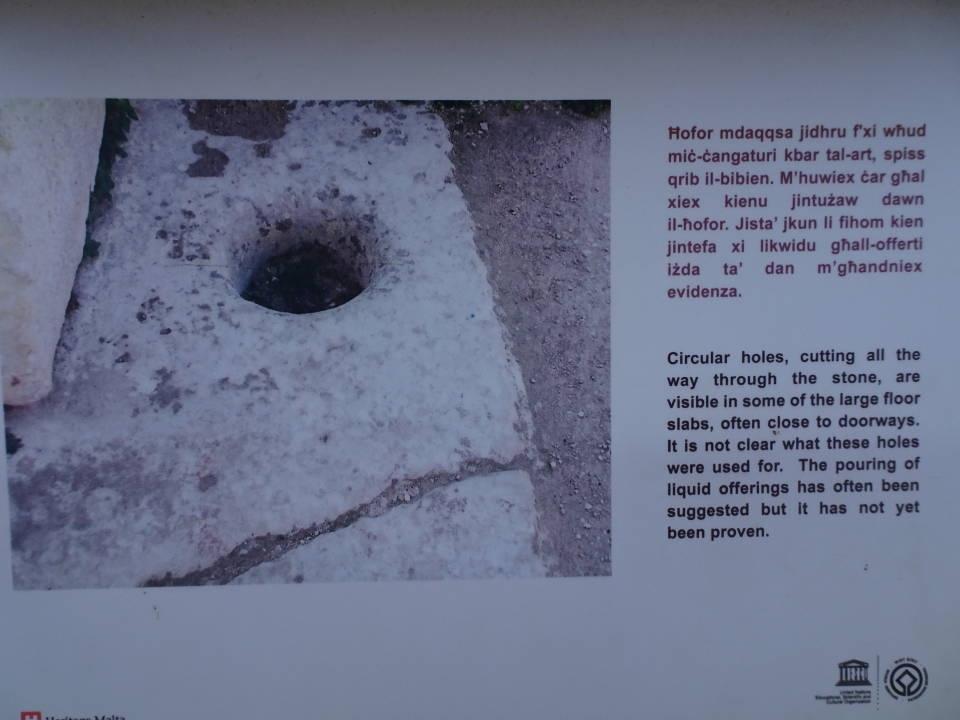
  • ジュガンティーヤ<br />it-Tempji tal-Ġgantija<br /><br />Circular holes, cutting all the way through the stone, are visible in some of the large floor slabs, often close to doorways. It is not clear what these holes were used for. The pouring of liquid offerings has often been suggested but it has not yet been proven.

    ジュガンティーヤ
    it-Tempji tal-Ġgantija

    Circular holes, cutting all the way through the stone, are visible in some of the large floor slabs, often close to doorways. It is not clear what these holes were used for. The pouring of liquid offerings has often been suggested but it has not yet been proven.

  • ジュガンティーヤ<br />it-Tempji tal-Ġgantija<br /><br />正体不明の床に掘られた穴。

    ジュガンティーヤ
    it-Tempji tal-Ġgantija

    正体不明の床に掘られた穴。

  • ジュガンティーヤ<br />it-Tempji tal-Ġgantija

    ジュガンティーヤ
    it-Tempji tal-Ġgantija

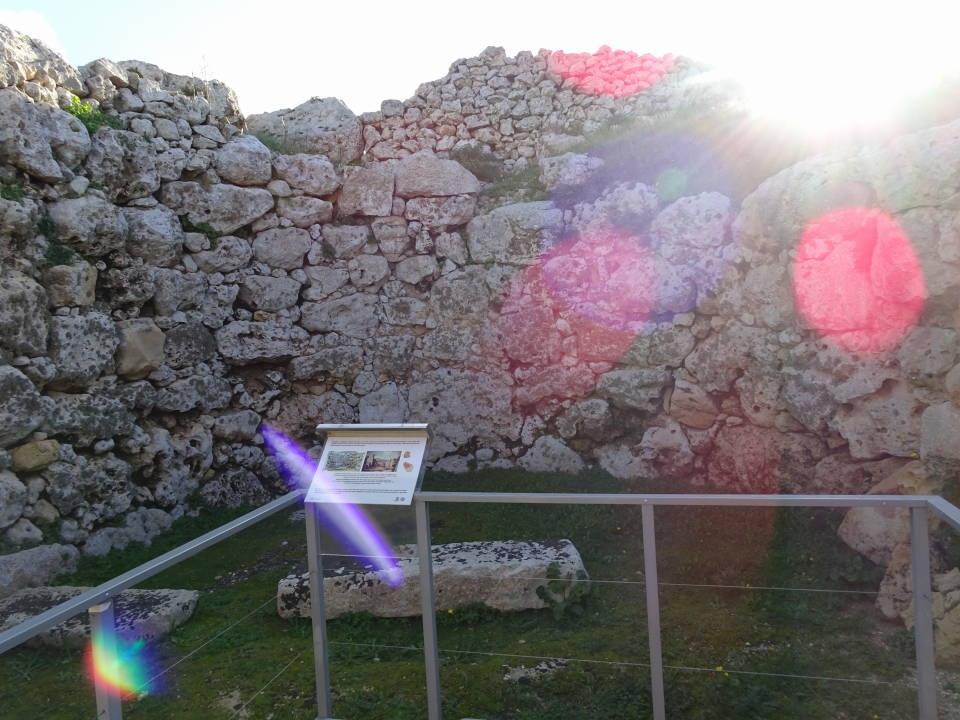
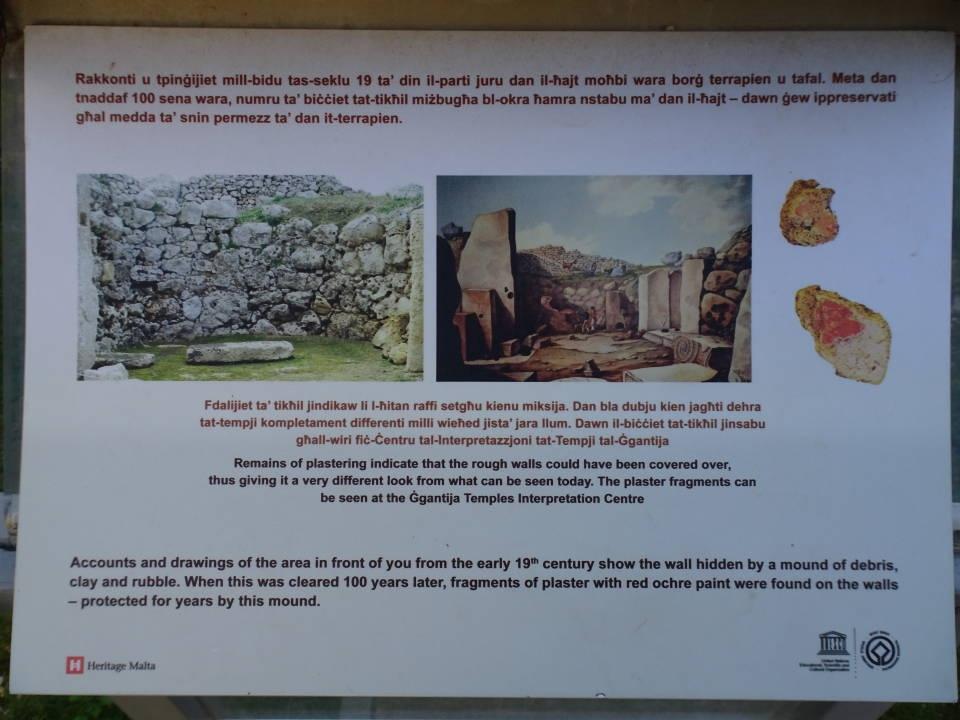
  • ジュガンティーヤ<br />it-Tempji tal-Ġgantija<br /><br />Remains of plastering indicate that the rough walls could have been covered over, thus giving it a very different look from what can be seen today. The plaster fragments can be seen at the Ggantija Temples Interpretation Centre.<br /><br />Accounts and drawings of the area in front of  you from the early 19th century show the wall hidden by a mound of debris, clay and rubble. When this was cleared 100years later, fragments of plaster with red ochre paint were found on the walls - protected for years by this mound.

    ジュガンティーヤ
    it-Tempji tal-Ġgantija

    Remains of plastering indicate that the rough walls could have been covered over, thus giving it a very different look from what can be seen today. The plaster fragments can be seen at the Ggantija Temples Interpretation Centre.

    Accounts and drawings of the area in front of you from the early 19th century show the wall hidden by a mound of debris, clay and rubble. When this was cleared 100years later, fragments of plaster with red ochre paint were found on the walls - protected for years by this mound.

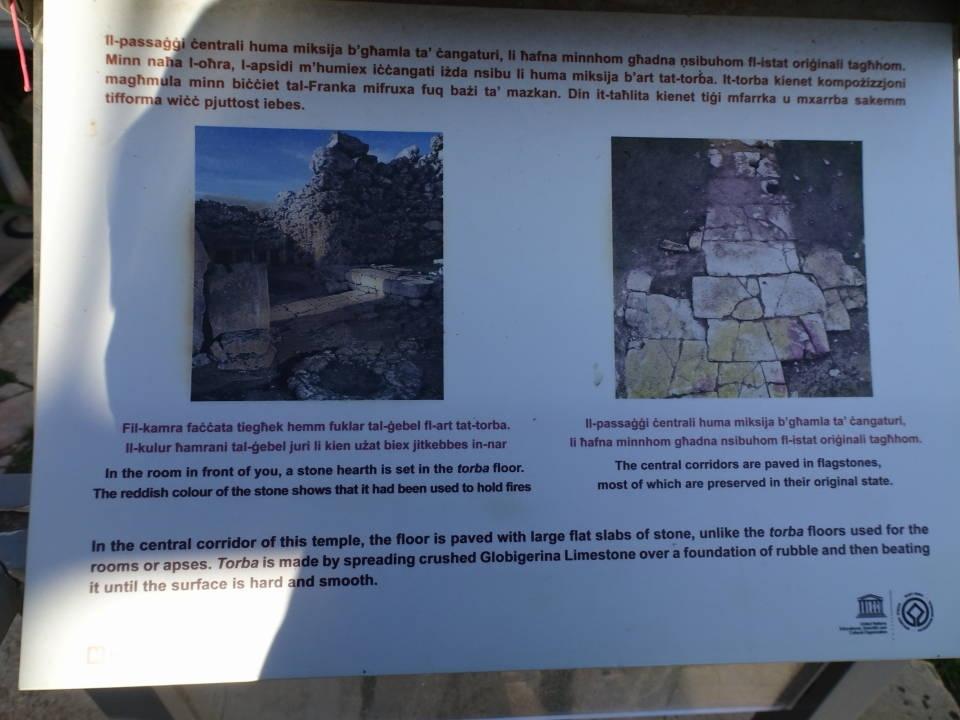
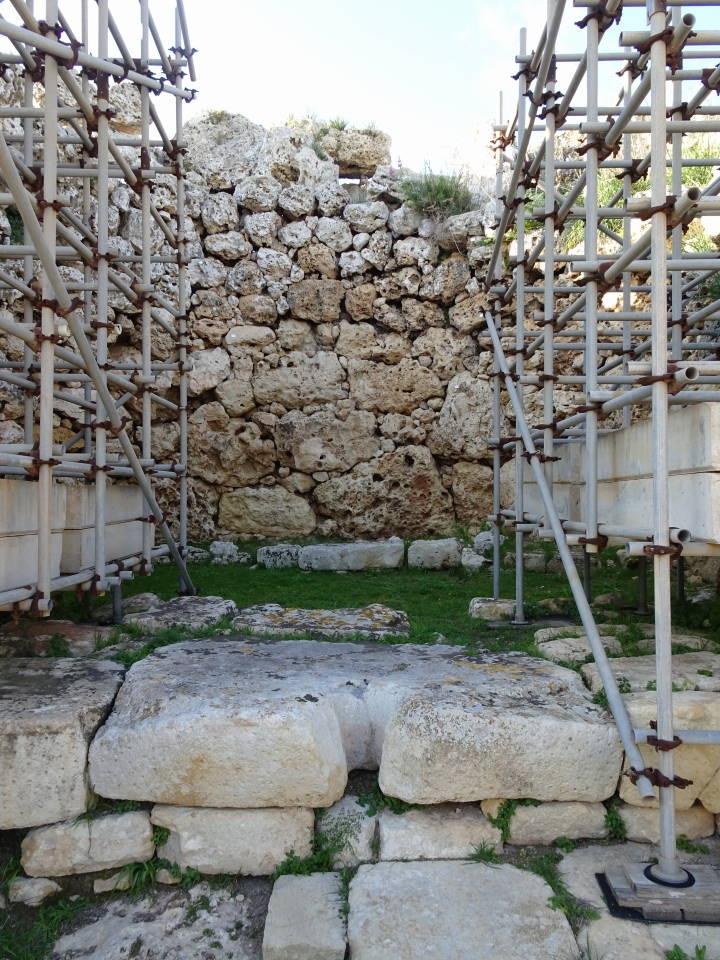
  • ジュガンティーヤ<br />it-Tempji tal-Ġgantija<br /><br />In the room in front of you, a stone hearth is set in the torba floor. The reddish colour of the stone shows that it had been used to hold fires.<br /><br />a stone hearth:石でできた炉床<br /><br />The central corridors are paved in flagstones, most of which are preserved in their original state.<br /><br />In the central corridor of this temple, the floor is paved with large flat slabs of stone, unlike the torba floors used for the rooms or apses. Torba is made by spreading crushed Globigerina Limestone over a foundation of rubble and then beating it until the surface is hard and smooth.<br /><br />Torbaの意味不明? 袋?

    ジュガンティーヤ
    it-Tempji tal-Ġgantija

    In the room in front of you, a stone hearth is set in the torba floor. The reddish colour of the stone shows that it had been used to hold fires.

    a stone hearth:石でできた炉床

    The central corridors are paved in flagstones, most of which are preserved in their original state.

    In the central corridor of this temple, the floor is paved with large flat slabs of stone, unlike the torba floors used for the rooms or apses. Torba is made by spreading crushed Globigerina Limestone over a foundation of rubble and then beating it until the surface is hard and smooth.

    Torbaの意味不明? 袋?

  • ジュガンティーヤ<br />it-Tempji tal-Ġgantija<br /><br />炉床

    ジュガンティーヤ
    it-Tempji tal-Ġgantija

    炉床

  • ジュガンティーヤ<br />it-Tempji tal-Ġgantija

    ジュガンティーヤ
    it-Tempji tal-Ġgantija

  • ジュガンティーヤ<br />it-Tempji tal-Ġgantija

    ジュガンティーヤ
    it-Tempji tal-Ġgantija

  • ジュガンティーヤ<br />it-Tempji tal-Ġgantija

    ジュガンティーヤ
    it-Tempji tal-Ġgantija

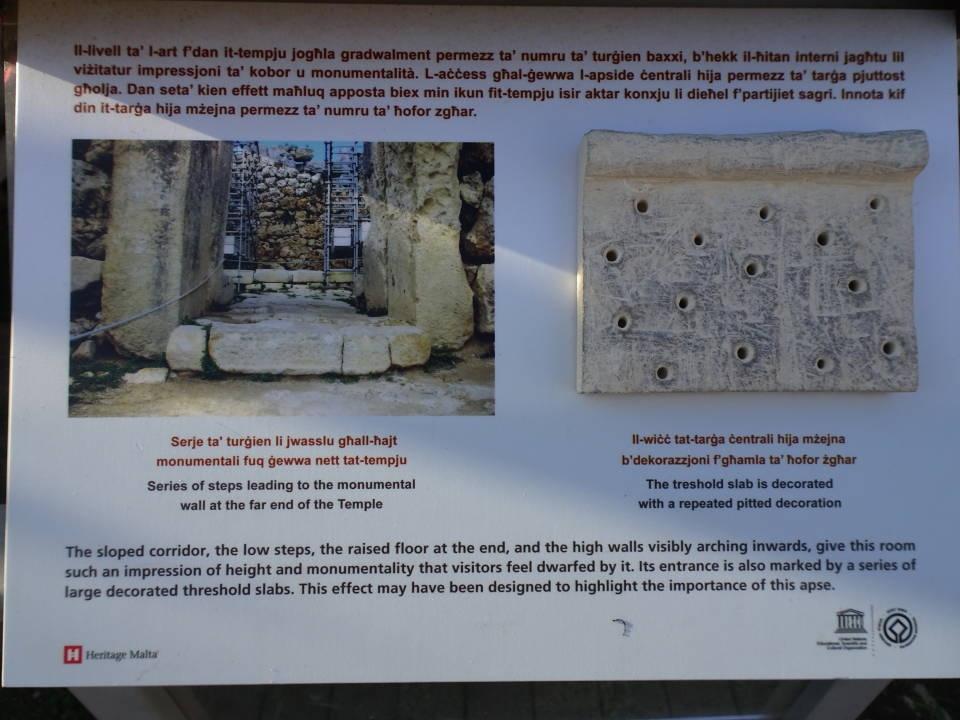
  • ジュガンティーヤ<br />it-Tempji tal-Ġgantija<br /><br />The sloped corridor, the low steps, the raised floor at the end, and the high walls visibly arching inwards, give this room such an impression of height and monumentality that visitors feel dwarfed by it. its entrance is also marked by a series of large decorated threshold slabs. This effect may have been designed to highlight the importance of this apse.<br /><br />”visitors feel dwarfed”なんてイギリス英語っぽい。

    ジュガンティーヤ
    it-Tempji tal-Ġgantija

    The sloped corridor, the low steps, the raised floor at the end, and the high walls visibly arching inwards, give this room such an impression of height and monumentality that visitors feel dwarfed by it. its entrance is also marked by a series of large decorated threshold slabs. This effect may have been designed to highlight the importance of this apse.

    ”visitors feel dwarfed”なんてイギリス英語っぽい。

  • ジュガンティーヤ<br />it-Tempji tal-Ġgantija

    ジュガンティーヤ
    it-Tempji tal-Ġgantija

  • ジュガンティーヤ<br />it-Tempji tal-Ġgantija

    ジュガンティーヤ
    it-Tempji tal-Ġgantija

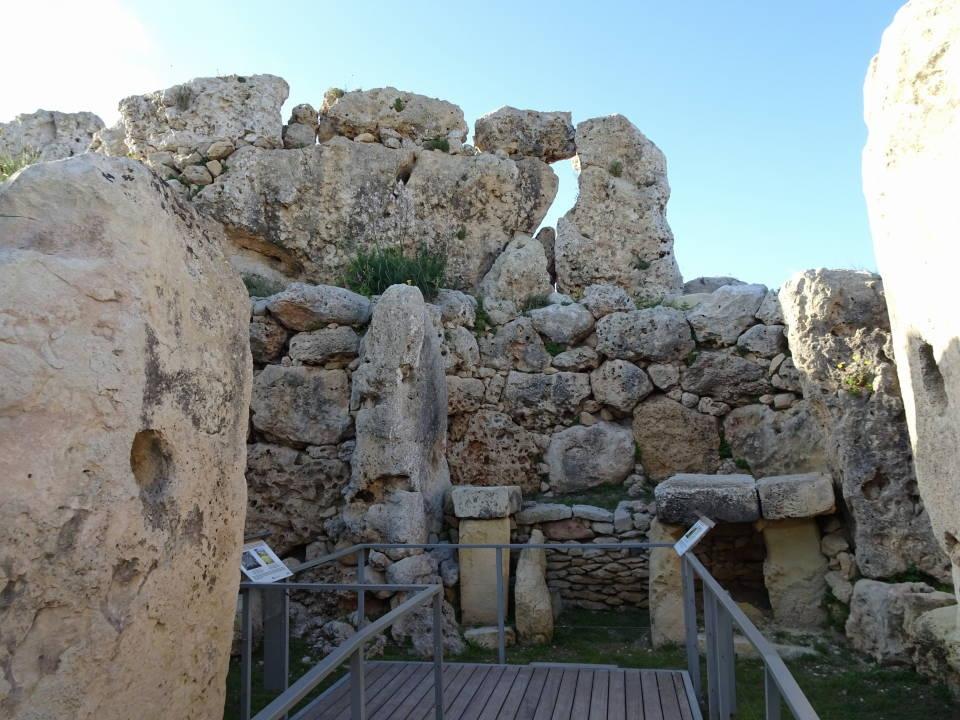
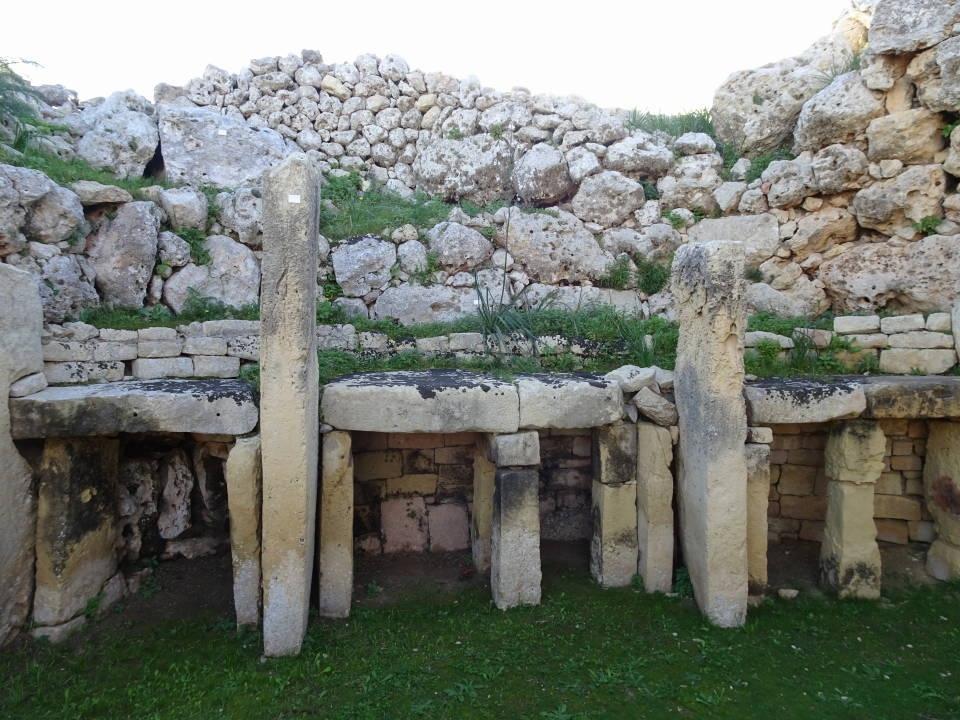
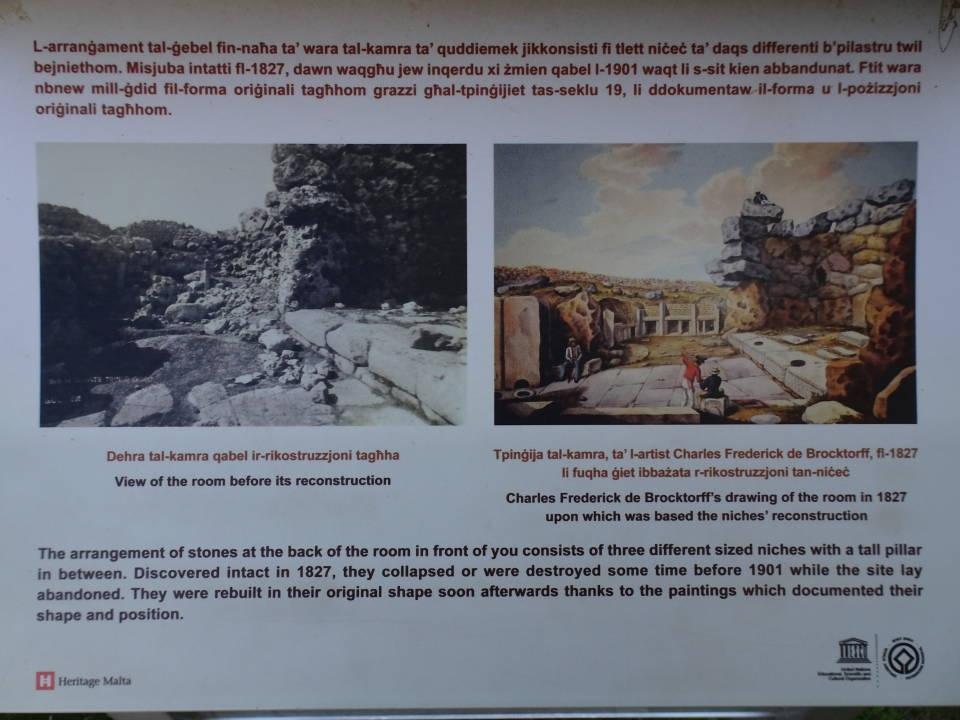
  • ジュガンティーヤ<br />it-Tempji tal-Ġgantija<br /><br />The arrangement of stones at the back of the room in front of you consists of three different sized niches with a tall pillar in between. Discovered intact in 1827, they collapsed or were destroyed some time before 1901 while the site lay abandoned. They were rebuilt in their original shape soon afterwards thanks to the paintings which documented their shape and position.<br /><br />

    ジュガンティーヤ
    it-Tempji tal-Ġgantija

    The arrangement of stones at the back of the room in front of you consists of three different sized niches with a tall pillar in between. Discovered intact in 1827, they collapsed or were destroyed some time before 1901 while the site lay abandoned. They were rebuilt in their original shape soon afterwards thanks to the paintings which documented their shape and position.

  • ジュガンティーヤ<br />it-Tempji tal-Ġgantija

    ジュガンティーヤ
    it-Tempji tal-Ġgantija

  • ジュガンティーヤ<br />it-Tempji tal-Ġgantija

    ジュガンティーヤ
    it-Tempji tal-Ġgantija

  • ジュガンティーヤ<br />it-Tempji tal-Ġgantija

    ジュガンティーヤ
    it-Tempji tal-Ġgantija

  • ジュガンティーヤ<br />it-Tempji tal-Ġgantija

    ジュガンティーヤ
    it-Tempji tal-Ġgantija

  • ジュガンティーヤ<br />it-Tempji tal-Ġgantija<br /><br />帰りは別の出口から出ます。<br /><br />15:45<br /><br />

    ジュガンティーヤ
    it-Tempji tal-Ġgantija

    帰りは別の出口から出ます。

    15:45
18いいね!

利用規約に違反している投稿は、報告する事ができます。 問題のある投稿を連絡する

コメントを投稿する前に

十分に確認の上、ご投稿ください。 コメントの内容は攻撃的ではなく、相手の気持ちに寄り添ったものになっていますか?

サイト共通ガイドライン(利用上のお願い)

報道機関・マスメディアの方へ 画像提供などに関するお問い合わせは、専用のお問い合わせフォームからお願いいたします。

something like thatさんの関連旅行記
something like thatさんの旅行記一覧

旅の計画・記録

マイルに交換できるフォートラベルポイントが貯まる
フォートラベルポイントって?

マルタで使うWi-Fiはレンタルしましたか?

フォートラベル GLOBAL WiFiなら
マルタ最安 394円/日~

  • 空港で受取・返却可能
  • お得なポイントがたまる

マルタの料金プランを見る

フォートラベル公式LINE@

おすすめの旅行記や旬な旅行情報、お得なキャンペーン情報をお届けします!
QRコードが読み取れない場合はID「@4travel」で検索してください。

\その他の公式SNSはこちら/

この旅行記の地図

拡大する

PAGE TOP