


2004/05 - 2004/05
4186位(同エリア7049件中)
MKさん
ローマ :
世界遺産となっている多くの文化財があるローマを訪れた主な目的は、古代ローマの遺跡を見ることでした。その日は晴れて暑かった。パラティーノの丘やローマ・フォーラムやチルコ・マッシモは芝生や木々の緑におおわれ、遺跡を見る目に心地良さを与えてくれました。
Roma (Rome) :
The major purpose of my visit to Rome, which has many cultural properties included in as the World Heritage, was to see ruins of the ancient Rome. It was sunny and hot. Il Palatino, Foro Romano, and Circo Massimo were lush with grasses and trees, pleasant to the eye seeing the ruins.
-

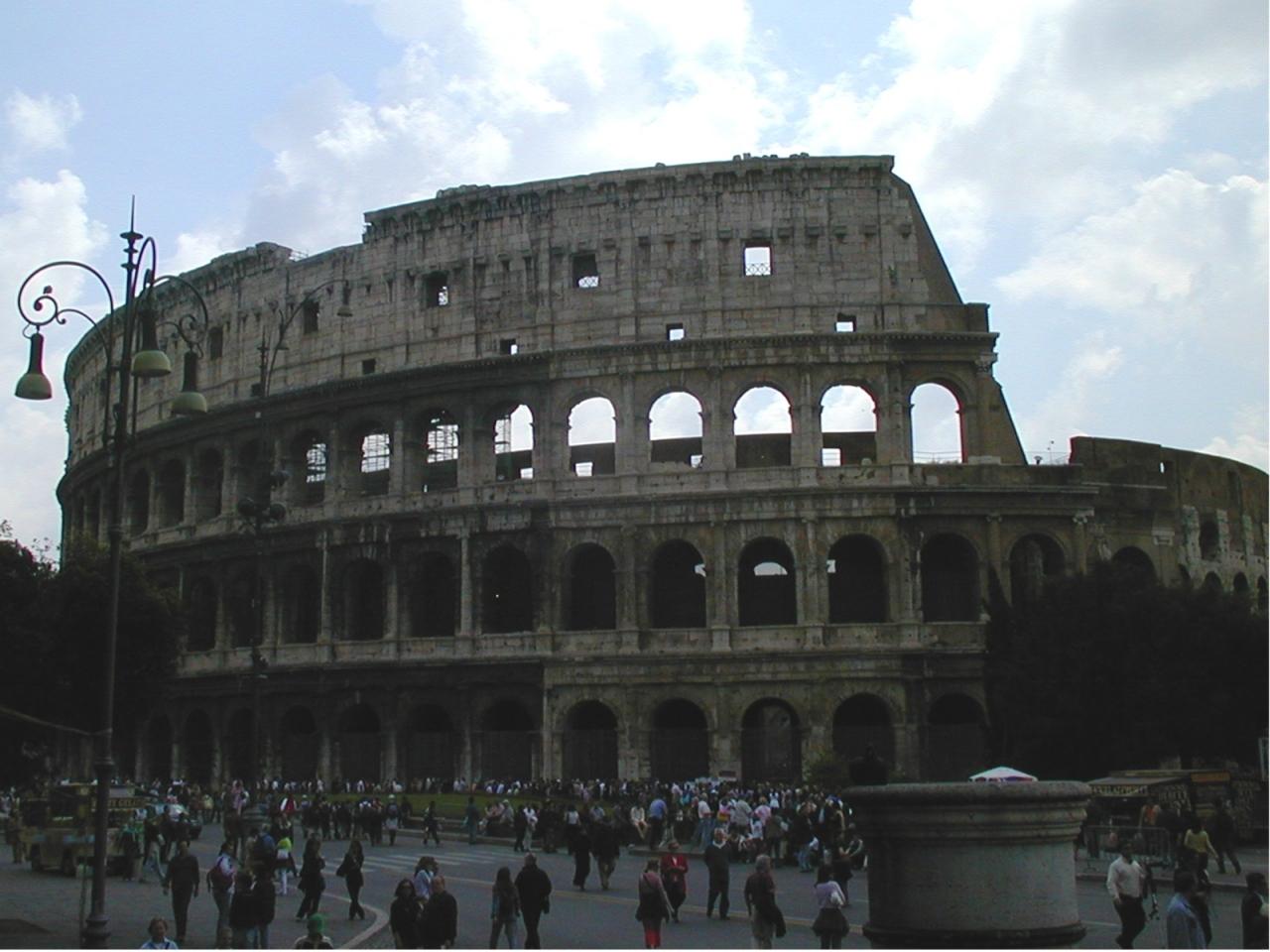
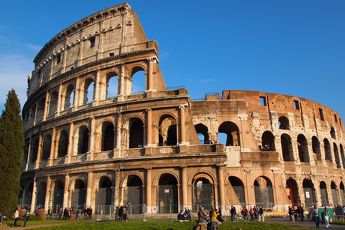
コロッセオ :
コロッセオは西暦80年に皇帝ティトゥスによって開幕され、グラディエータや野獣による試合やショーが行われた。5万人以上の観客を収容できた。大理石で仕上げられていたが、コロッセオが使用されなくなってからかなり後には、それらの大理石は宮殿や教会を建てるのに使用するために取られ持ち去られた。
Colosseo (Colosseum) :
Colosseo was inaugurated by Titus (Tito) in 80 AD, and games and shows by gladiators and wild beasts were held. It could accommodate more than fifty thousands spectators. It was built with marble facings, but those marble pieces were ripped away to be used to build palaces and churches long after Colosseo became unused. -
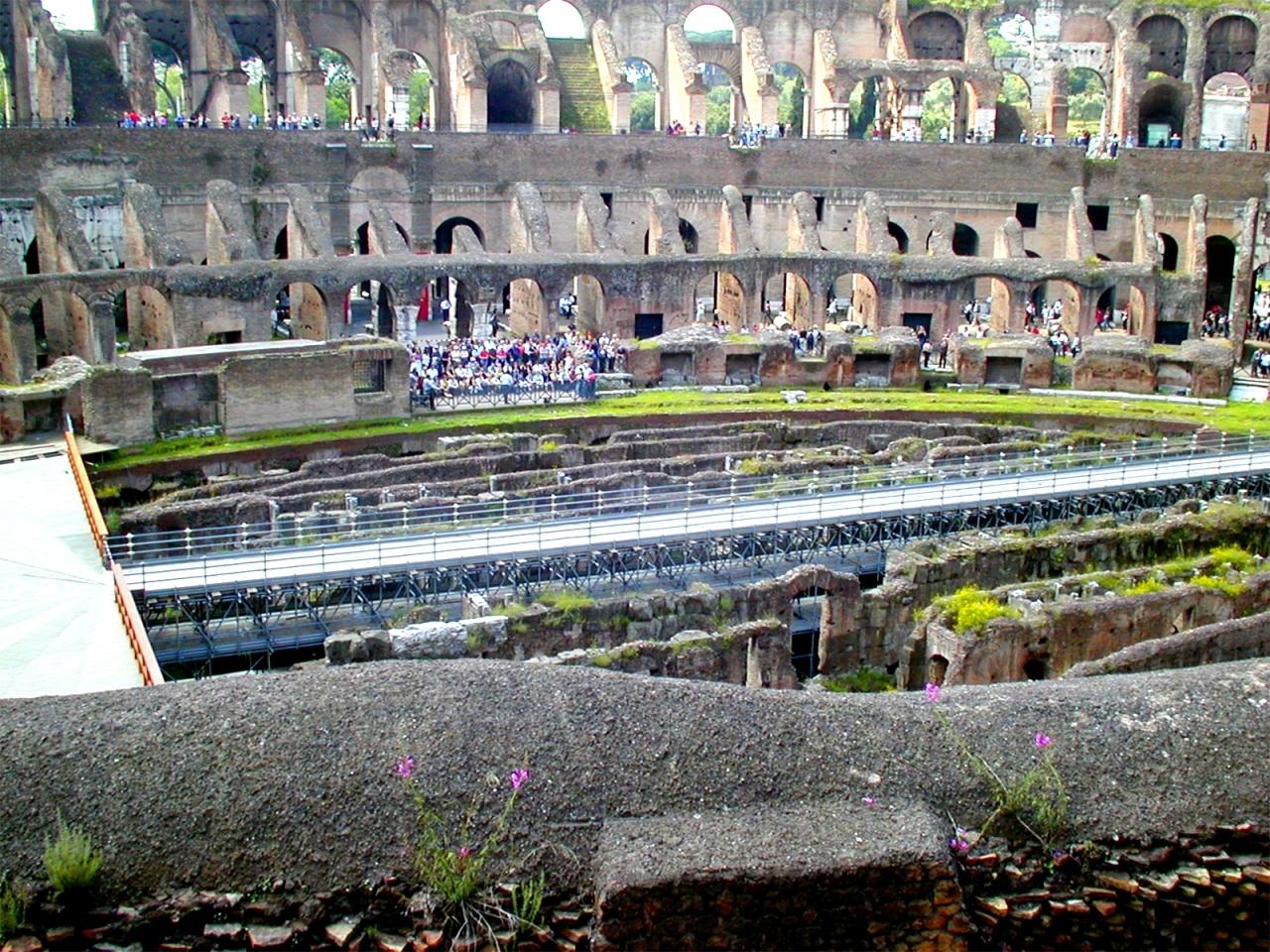
コロッセオの内部
Inside of Colosseo -
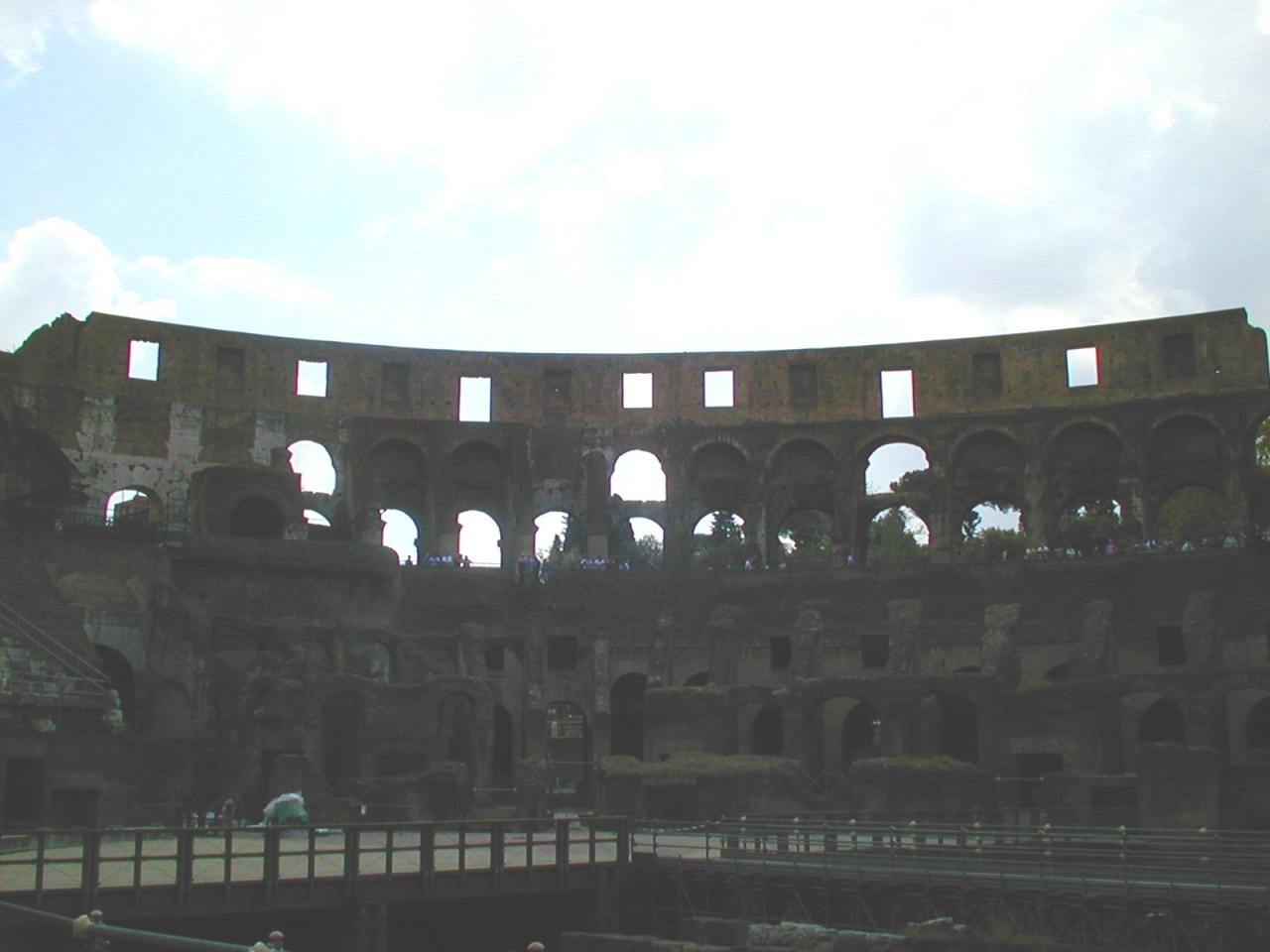
コロッセオの内部
Inside of Colosseo -
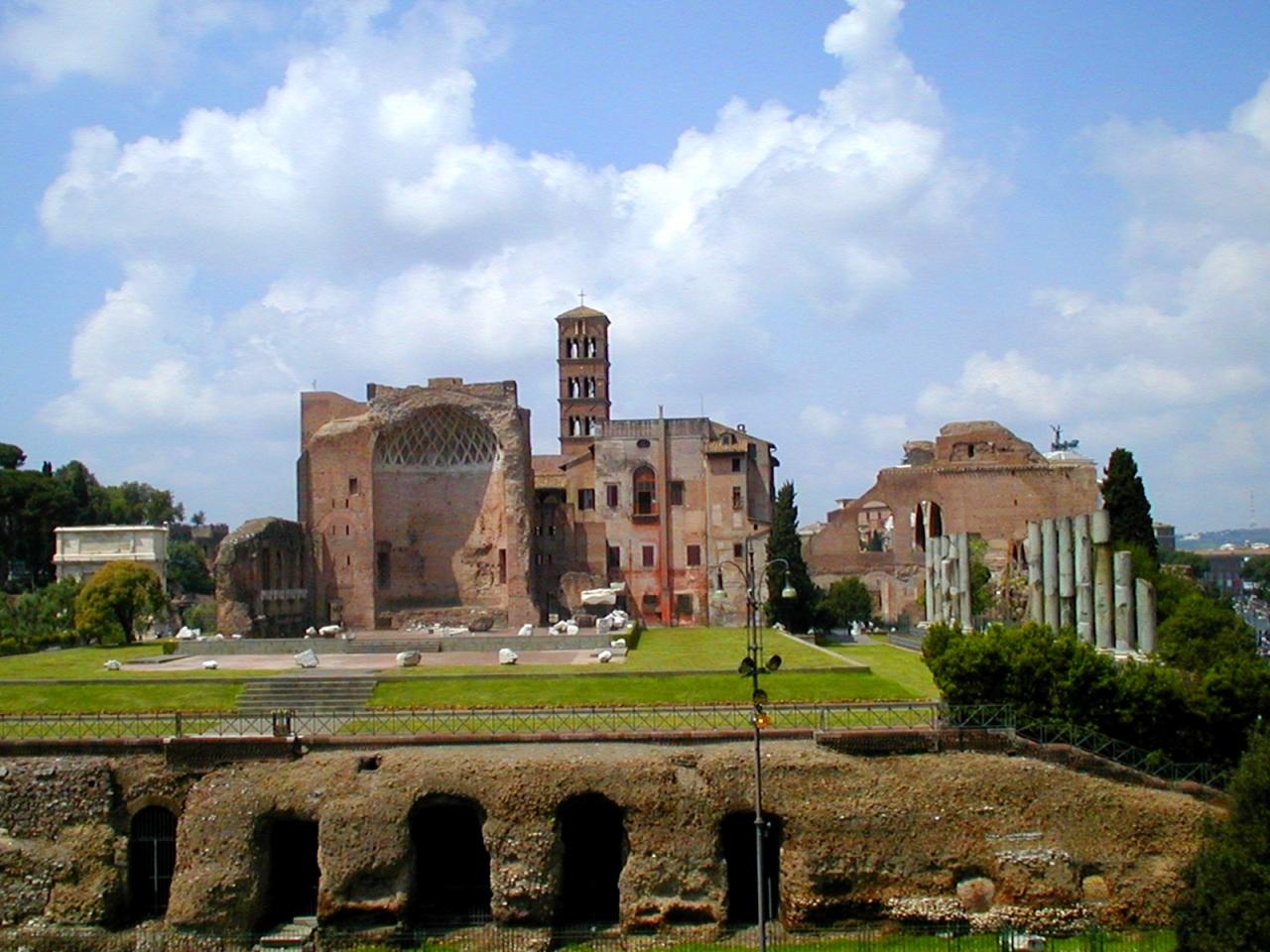
コロッセオから見たヴィーナスとローマの神殿 (ビーナスとローマの神殿) :
神殿は女神ヴィーナス (ビーナス) を敬神して西暦121年に建てられた。
Tempio di Venere e Roma (Temple of Venus and Rome), seen from Colosseo :
The temple was built in 121 AD to honour the goddess Venus. -
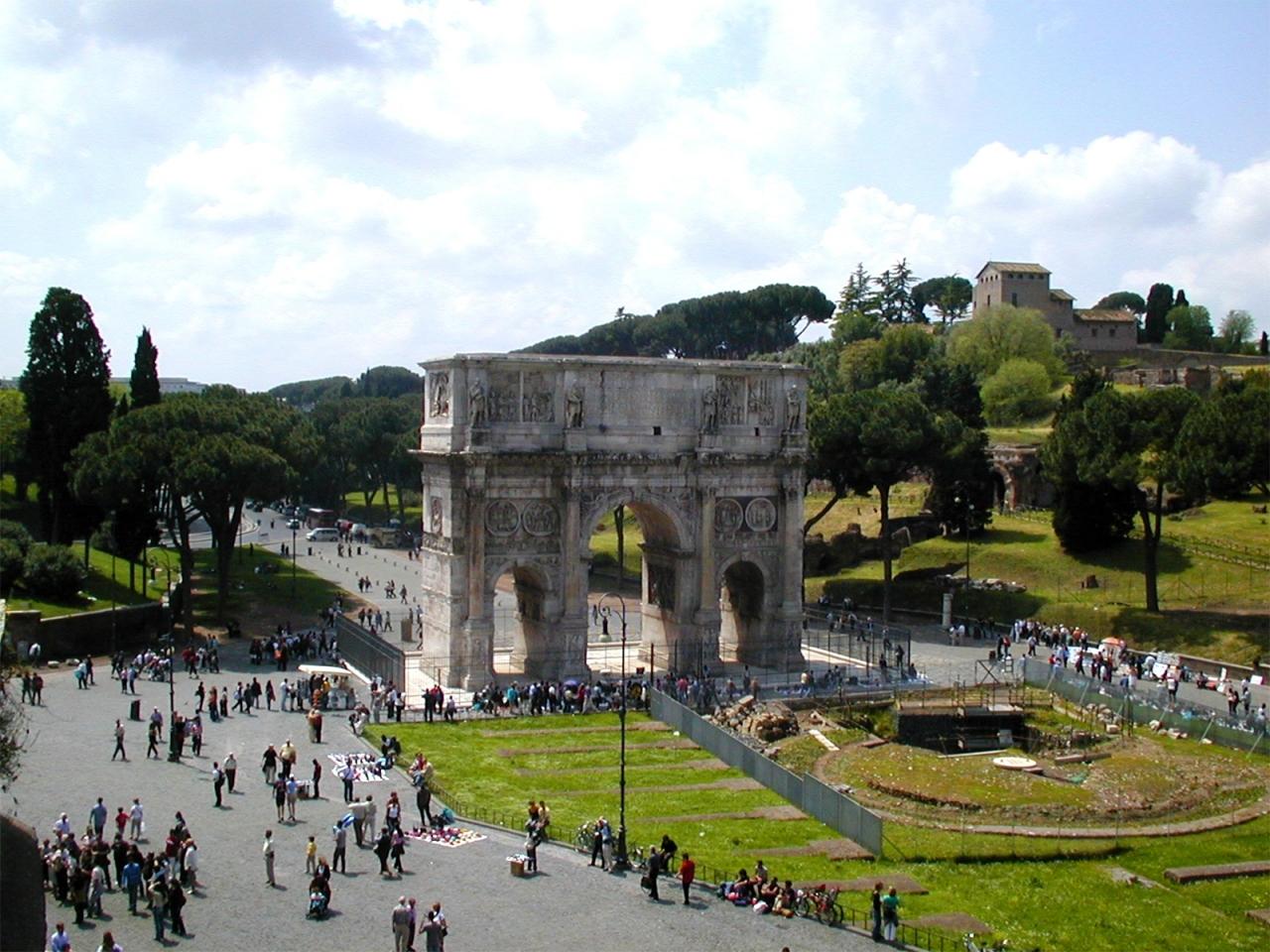
コロッセオから見たコンスタンティヌスの門 :
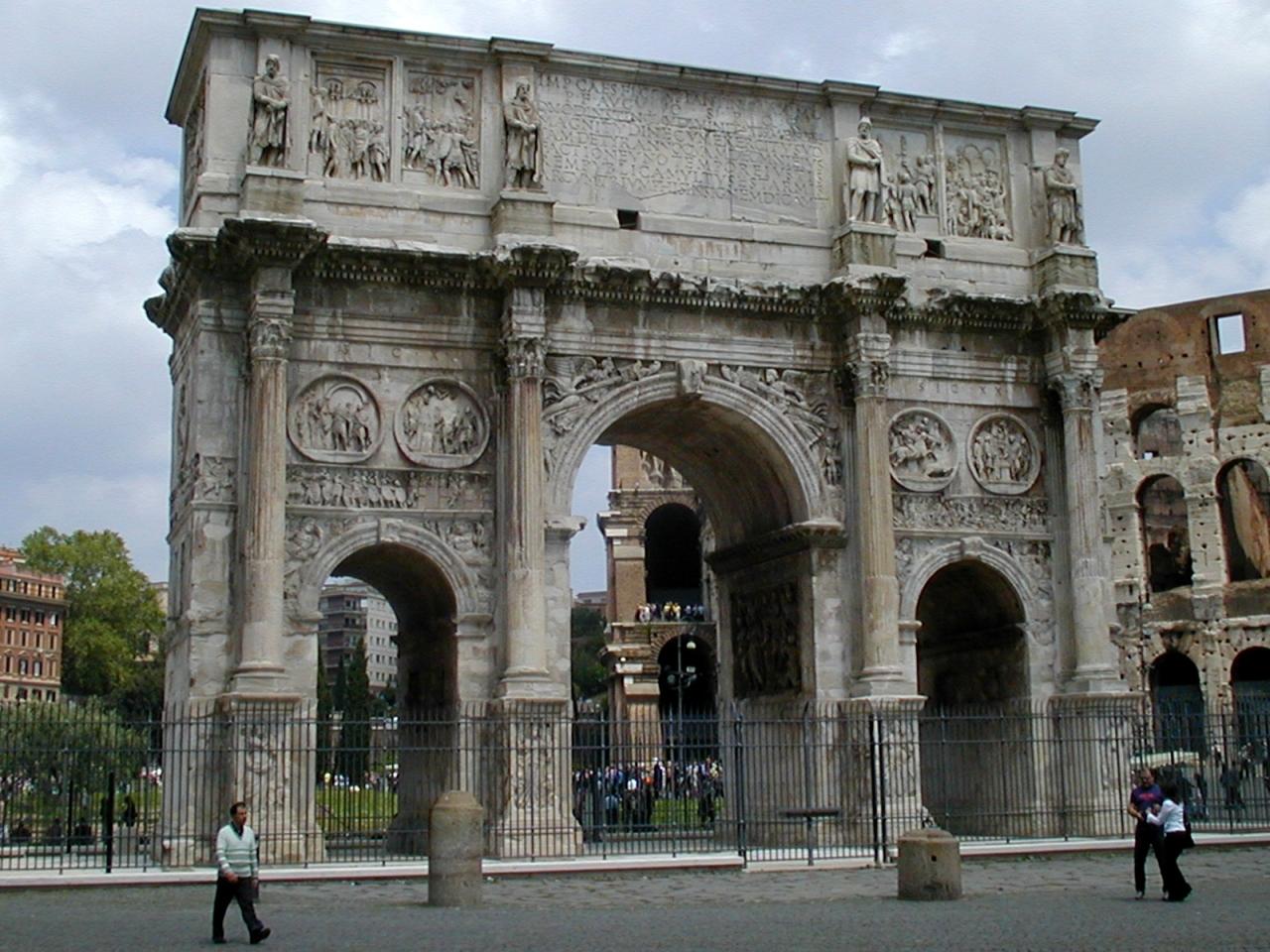
この門はマクセンティウスに対する皇帝コンスタンティヌスの勝利を記念して西暦315年に建てられた。
Arco di Costantino (Arch of Constantine), seen from Colosseo :
The arch was built in 315 AD to commemorate the victory of Constantine over Maxentius. -
コンスタンティヌスの門
Arco di Costantino -
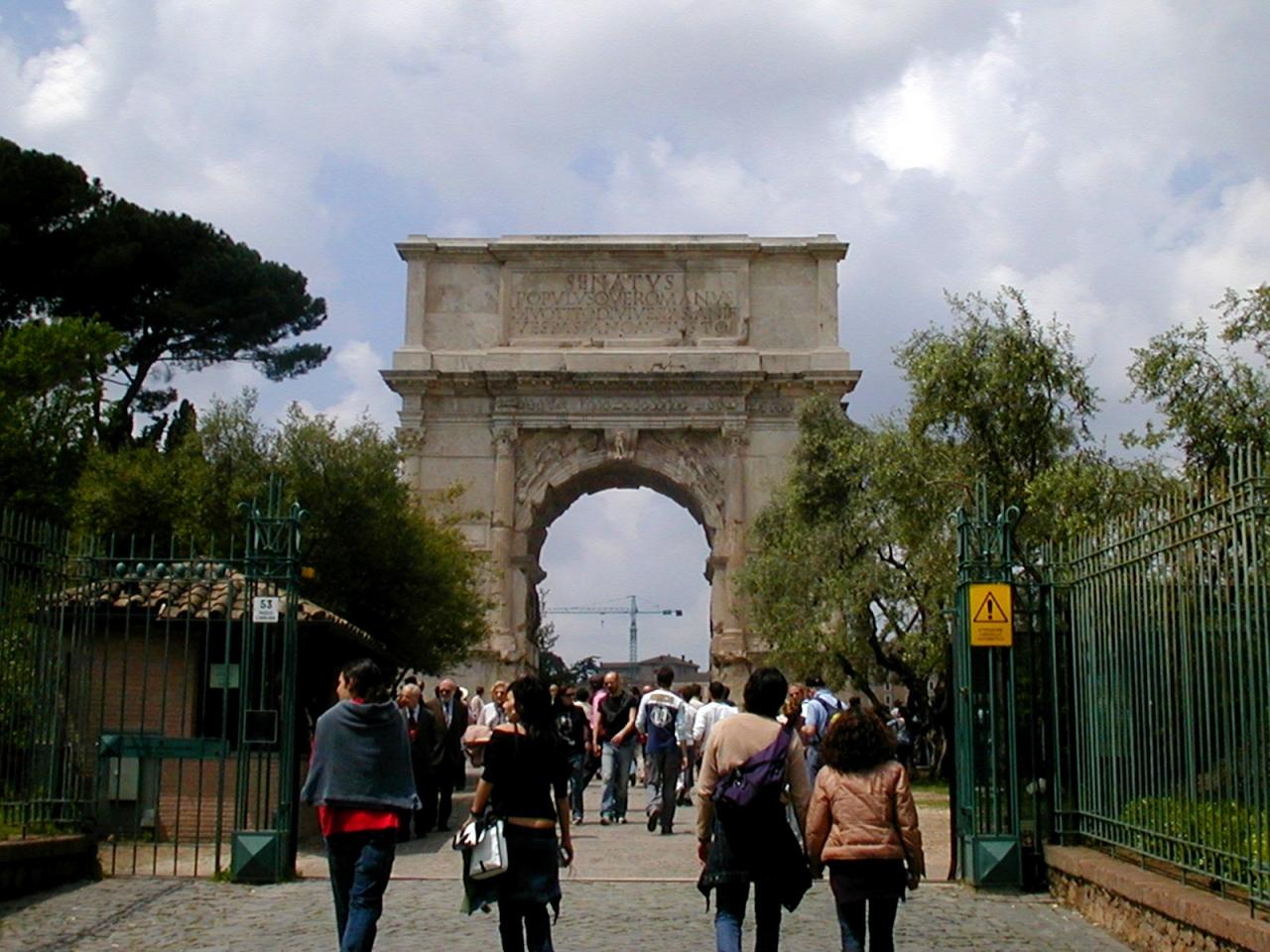
ティトゥスの門 :
エルサレム制覇をもたらすことになった、皇帝ウェスパシアヌスと皇帝ティトゥスのユダヤ人に対する西暦70年の勝利を記念して、西暦81年に建てられた。
Arco di Tito (Arch of Titus) :
It was built in 81 AD to commemorate the victory of the emperors Vespasian and Titus in 70 AD in Judea, which lead to the conquest of Jerusalem. -
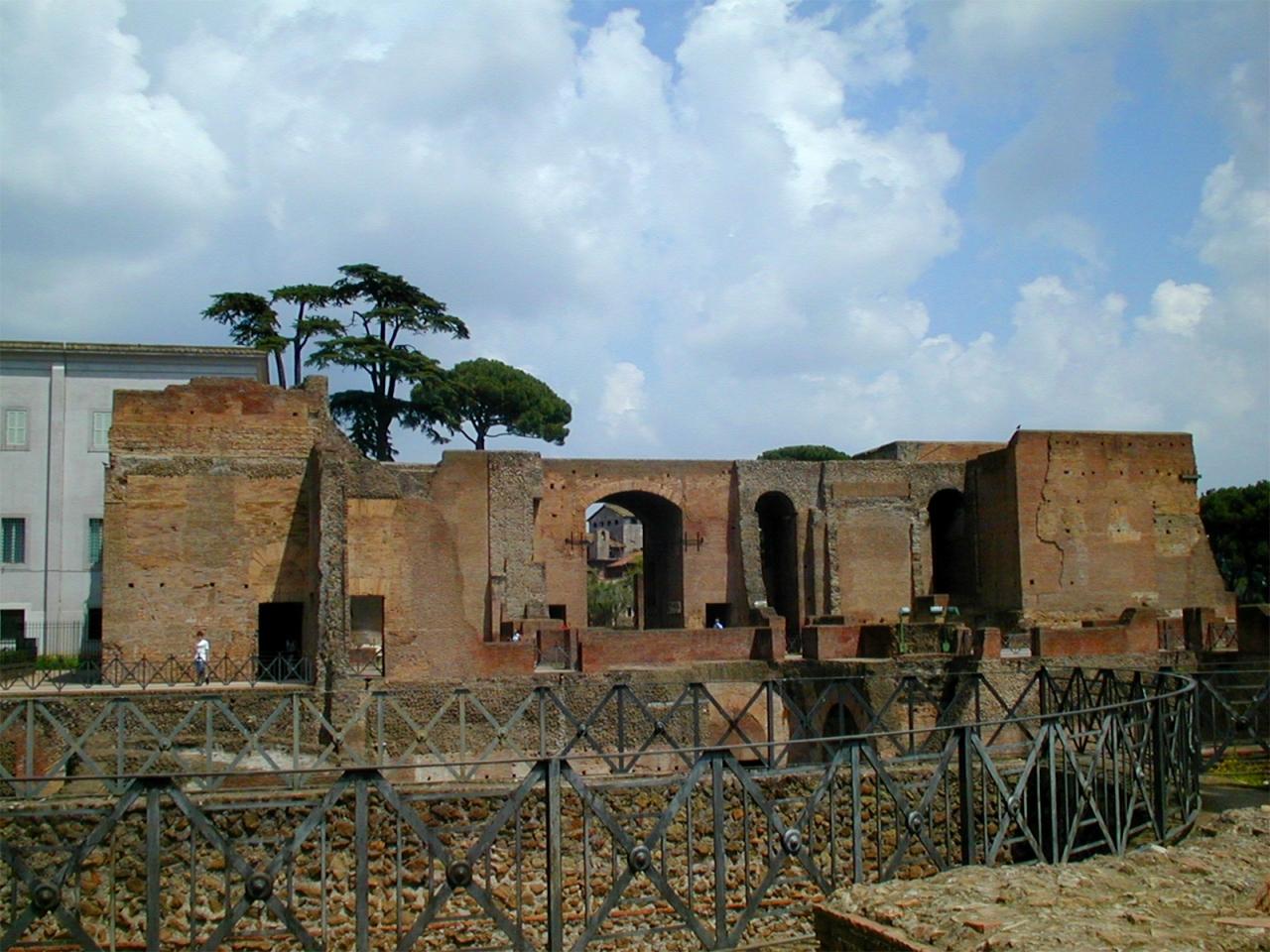
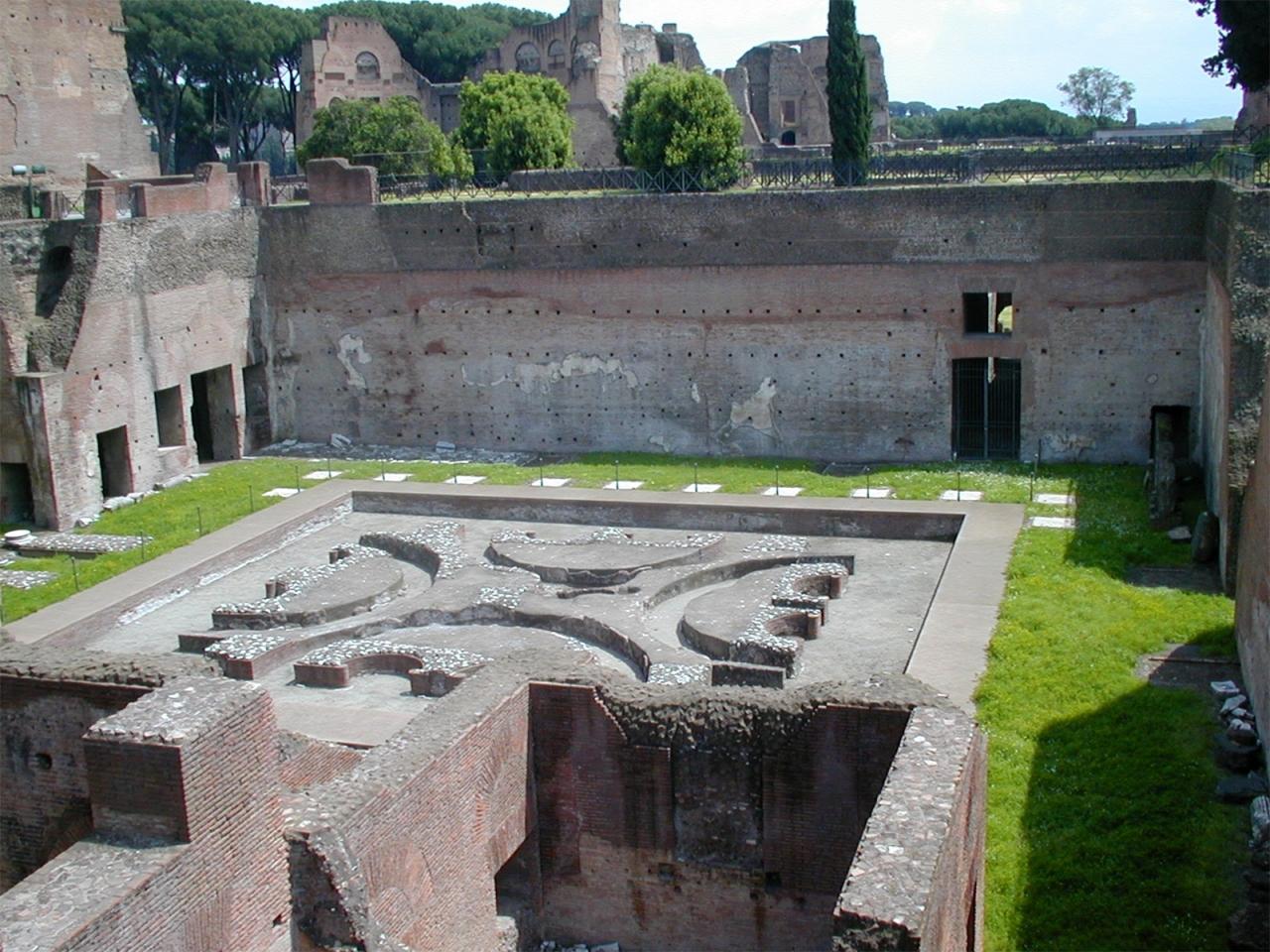
パラティーノの丘、ドームス・アウグスタナ (宮殿) :
パラティーノの丘の皇帝宮殿区域は西暦90年ごろに完成して、帝国が終わるまで皇帝の宮殿として使用された。
ドームス・アウグスタナは皇帝の居住宮殿で、皇帝は家族と共にそこで暮らしていた。
Domus Augustana (il Palazzo) (the Palace), il Palatino (Palatine Hill) :
The district of the imperial palace in Palatine Hill was completed around 90 AD and used as the palace of the emperors until the end of the empire.
Domus Augustana was the residence of the emperors, and the emperors lived there with their own families. -
パラティーノの丘、ドームス・アウグスタナ (中庭)
Domus Augustana (il peristillo) (the courtyard), il Palatino -
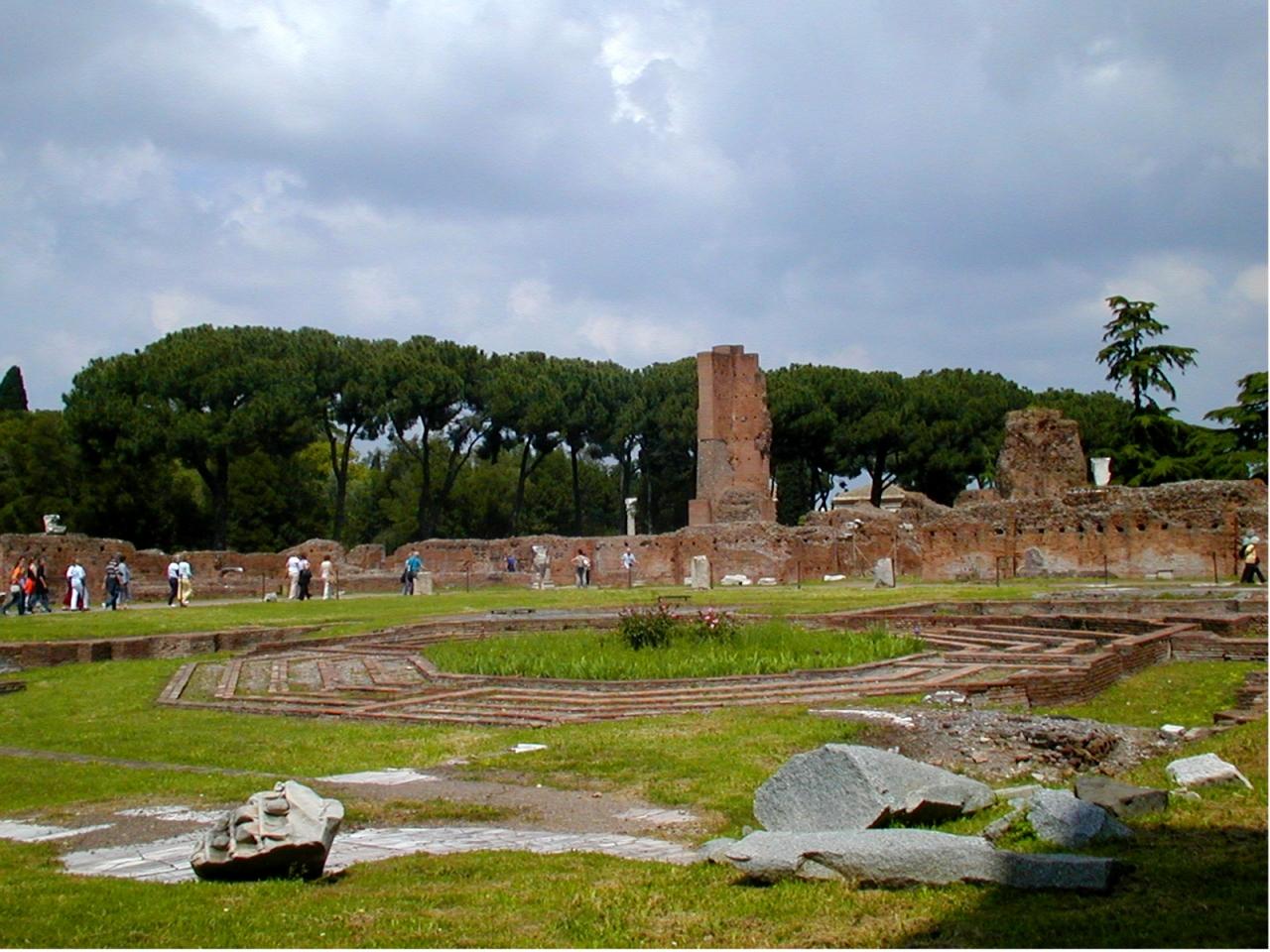
パラティーノの丘、ドームス・フラヴィア (ドームス・フラビア) :
ドームス・フラヴィアは皇帝宮殿の公的な場所で、公的な役割はそこで行われた。
Domus Flavia, il Palatino :
Domus Flavia was the public place of the imperial palace, and public functions were carried out there. -
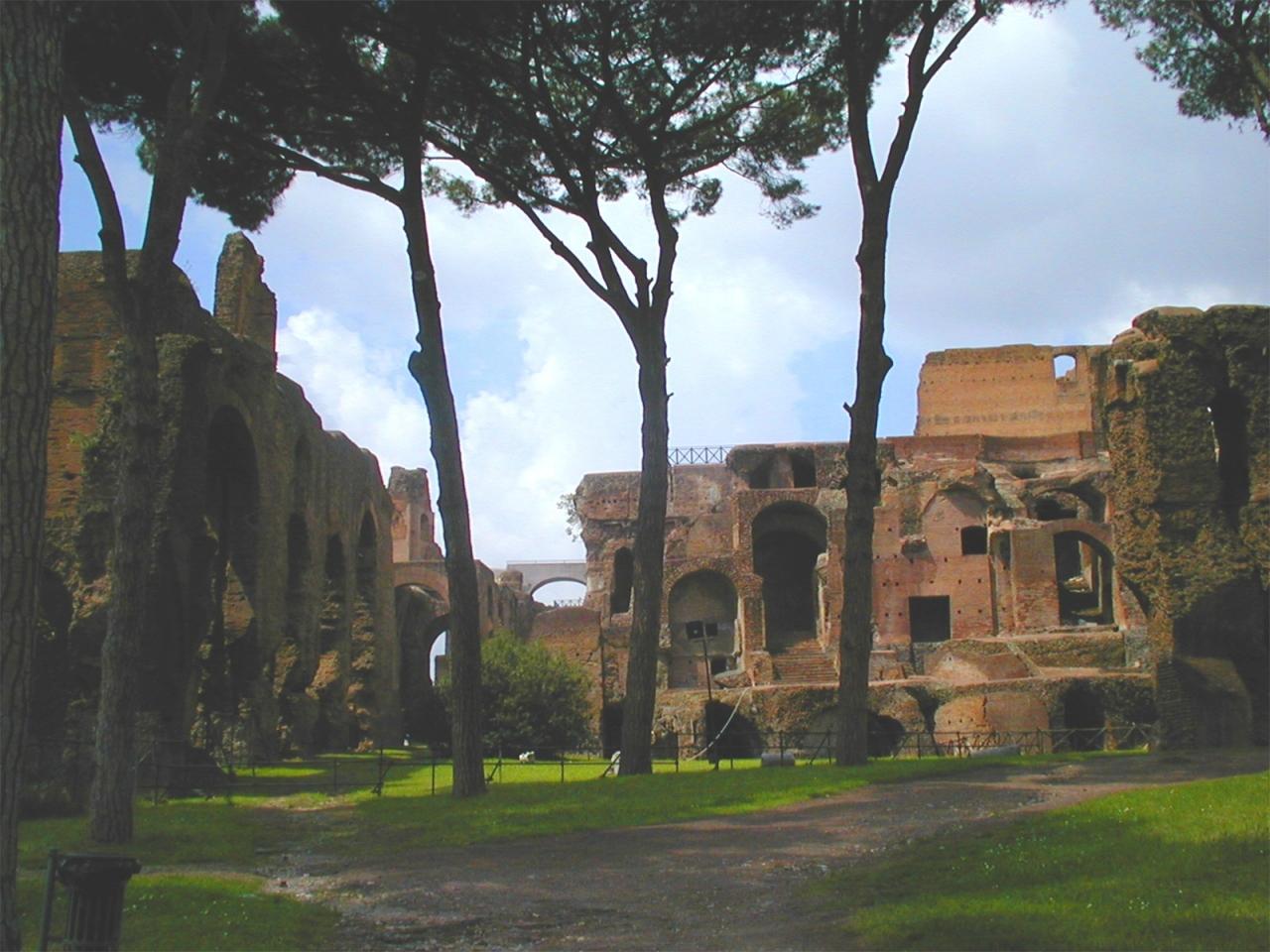
パラティーノの丘、ドームス・セヴェリアーナ (ドームス・セベリアーナ) :
ドームス・セヴェリアーナは皇帝セプティミウス・セヴェルスの命によりドームス・アウグスタナを拡張する形として建てられた。
Domus Severiana, il Palatino :
Domus Severiana was built by the order of the emperor Septimius Severus (Settimio Severo) as an extension of Domus Augustana. -
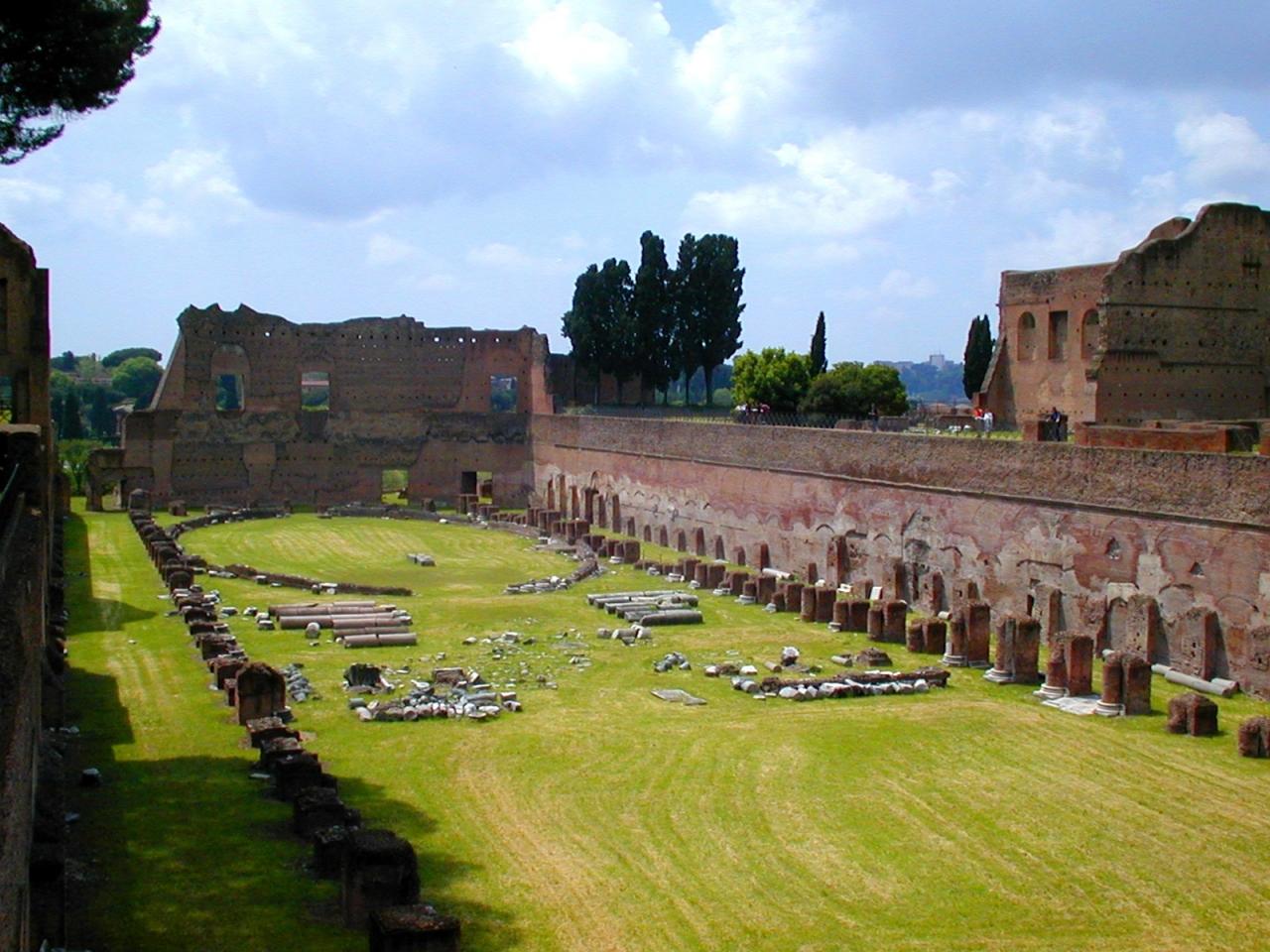
パラティーノの丘、ドミチアノのスタジアム :
ドミチアノのスタジアムは皇帝の宮殿の敷地内のスタジアムであった。
Stadio di Domiziano, il Palatino :
Stadio di Domiziano was the stadium inside the property of the imperial palace. -
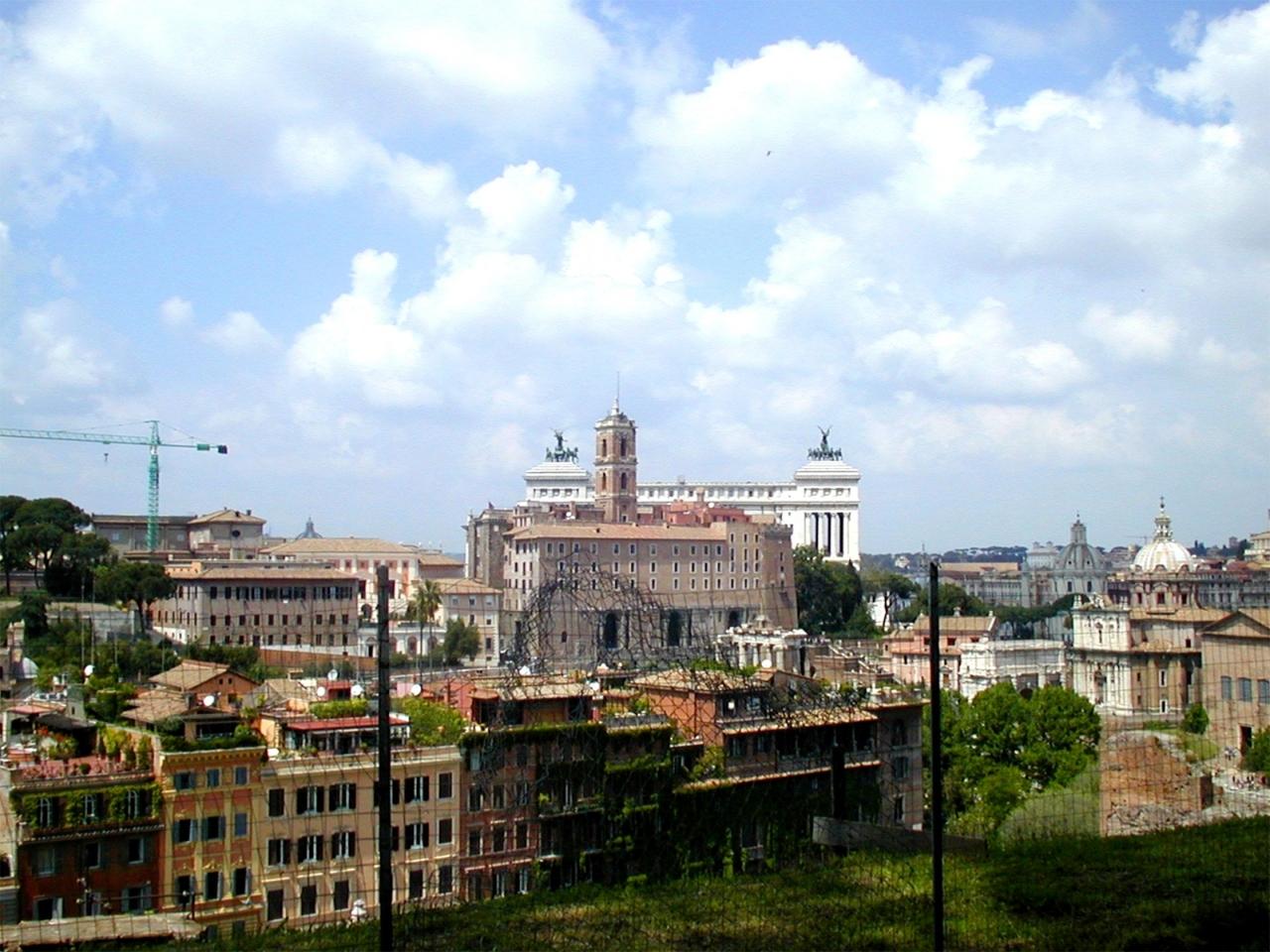
パラティーノの丘から見たローマ市街の一部
Part of the city of Rome, seen from Palatine Hill -
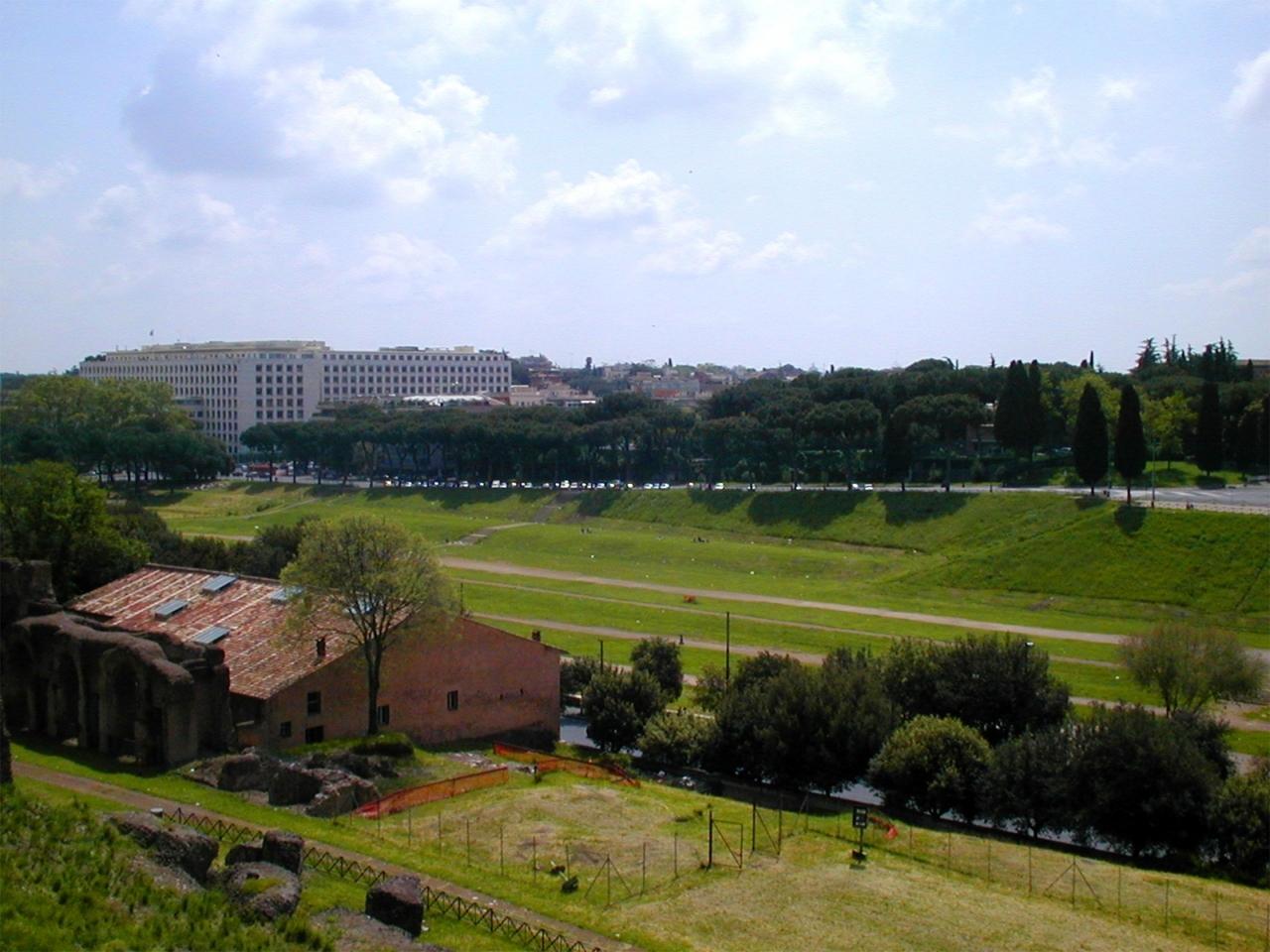
パラティーノの丘から見たチルコ・マッシモ
Circo Massimo, seen from Palatine Hill -
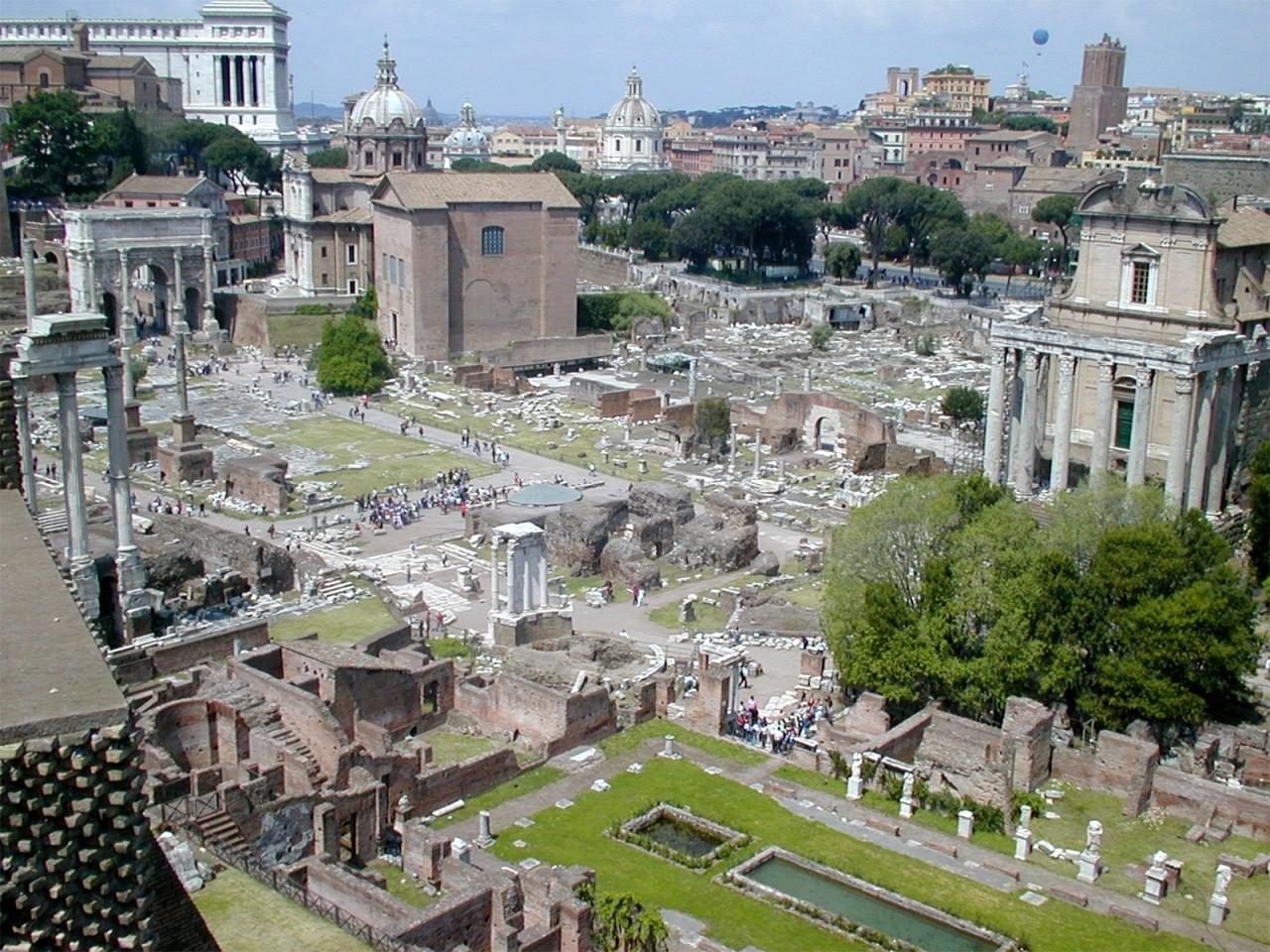
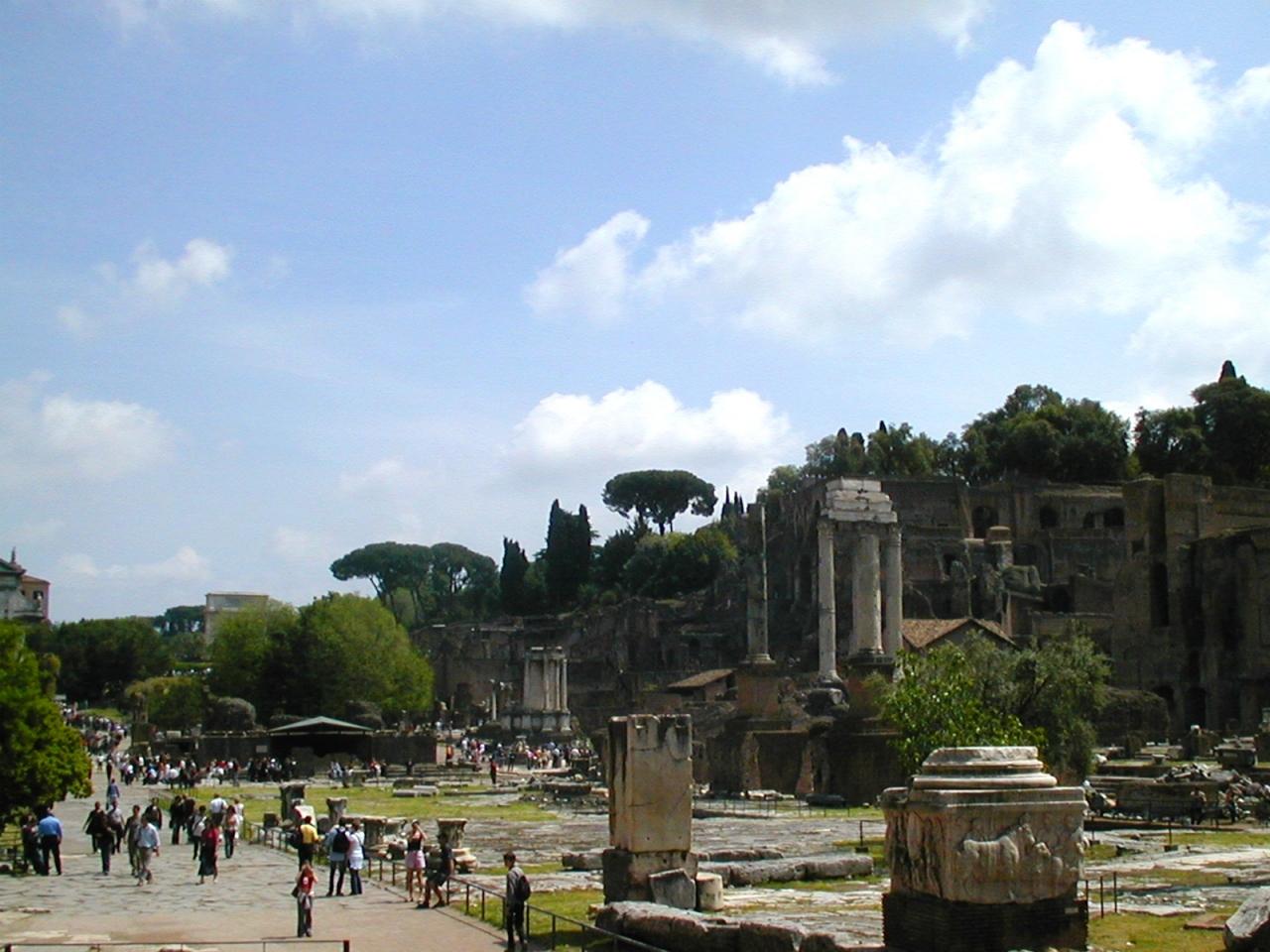
パラティーノの丘から見たフォロ・ローマノ (ローマ・フォーラム) :
フォロ・ローマノはローマの社会生活の中心場所で、神殿や店や宮殿が並んで世界のあらゆる所から来た人々で混んでいた。現在では、ほとんど900年間 (およそ紀元前500年〜西暦400年まで) の遺跡があり、大理石の破片、円柱、門などがある。
Foro Romano (Roman Forum), seen from Palatine Hill :
Foro Romano used to be the centre of civic lives in Rome, filled with temples, shops, and palaces, and crowded with people from all parts of the world. Today, there are ruins of almost 900 years: from about 500 BC to 400 AD, with marble fragments, columns, arches, and etc. -
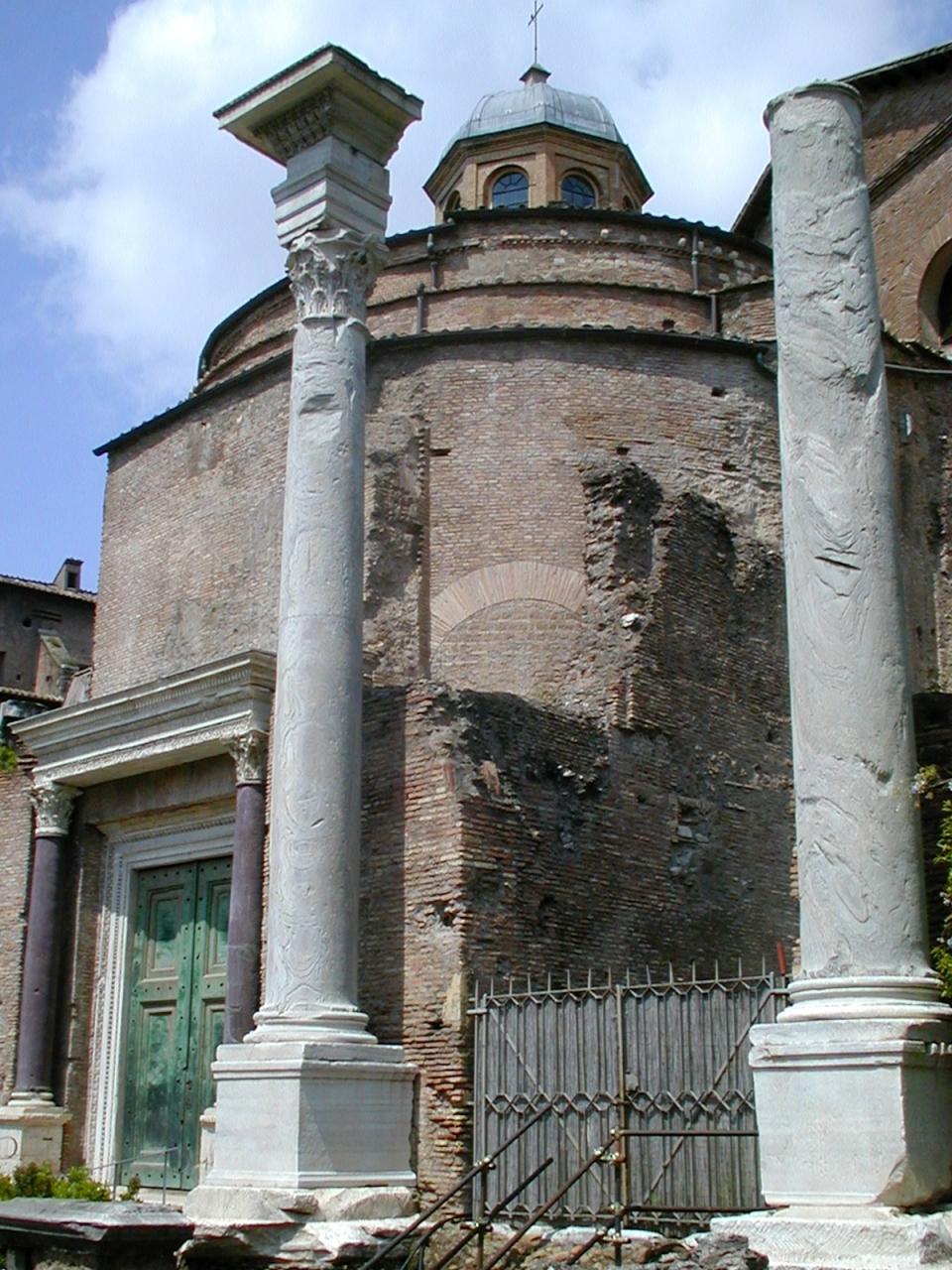
フォロ・ローマノ、ロムルスの神殿 :
この神殿は4世紀の初期に皇帝マクセンティウスの息子であったディヴス・ロムルスに捧げられたものと言われている。中世には聖コスマと聖ダミアノ教会の一部となった。
Tempio di Romolo (Temple of Romulus), Foro Romano :
It is said that this temple was dedicated to Divus Romulus, the son of the Emperor Maxentius, in the early 4th century. In the Middle Ages, it became part of the church of St. Cosma and St. Damiano. -
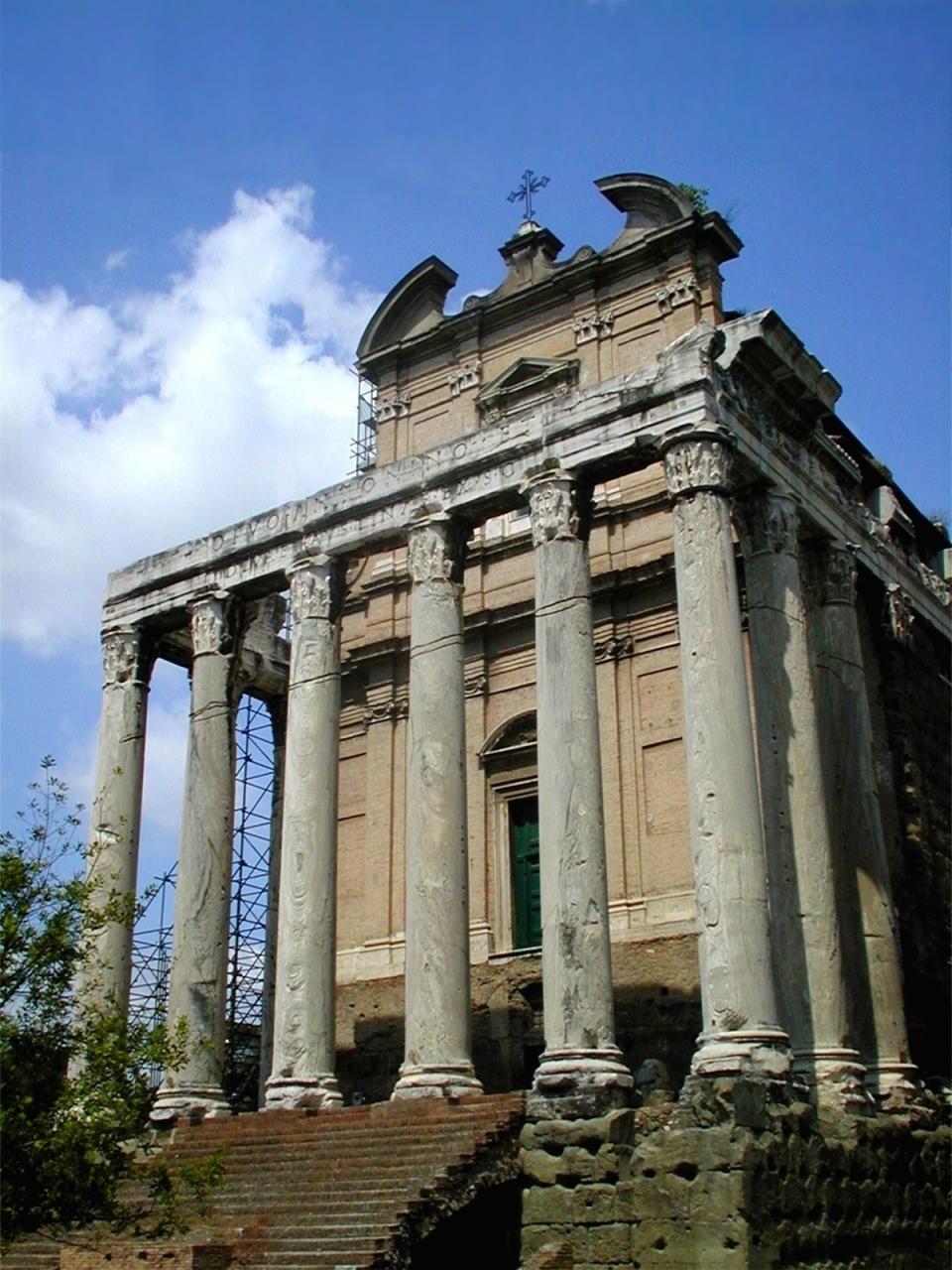
フォロ・ローマノ、アントニウスとファウスティーナの神殿 :
この神殿は、夫である皇帝アントニウス・ピウスが神格化したファウスティーナを敬して西暦141年に建てられた。後に聖ロレンゾ・イン・ミランダ教会に転用された。
Tempio di Antonino e Faustina (Temple of Antoninus and Faustina), Foro Romano :
The temple was build in 141 AD in honour of Faustina, whom her husband, Emperor Antoninus Pius, deified. Later, it was transformed into the church of San Lorenzo in Miranda. -
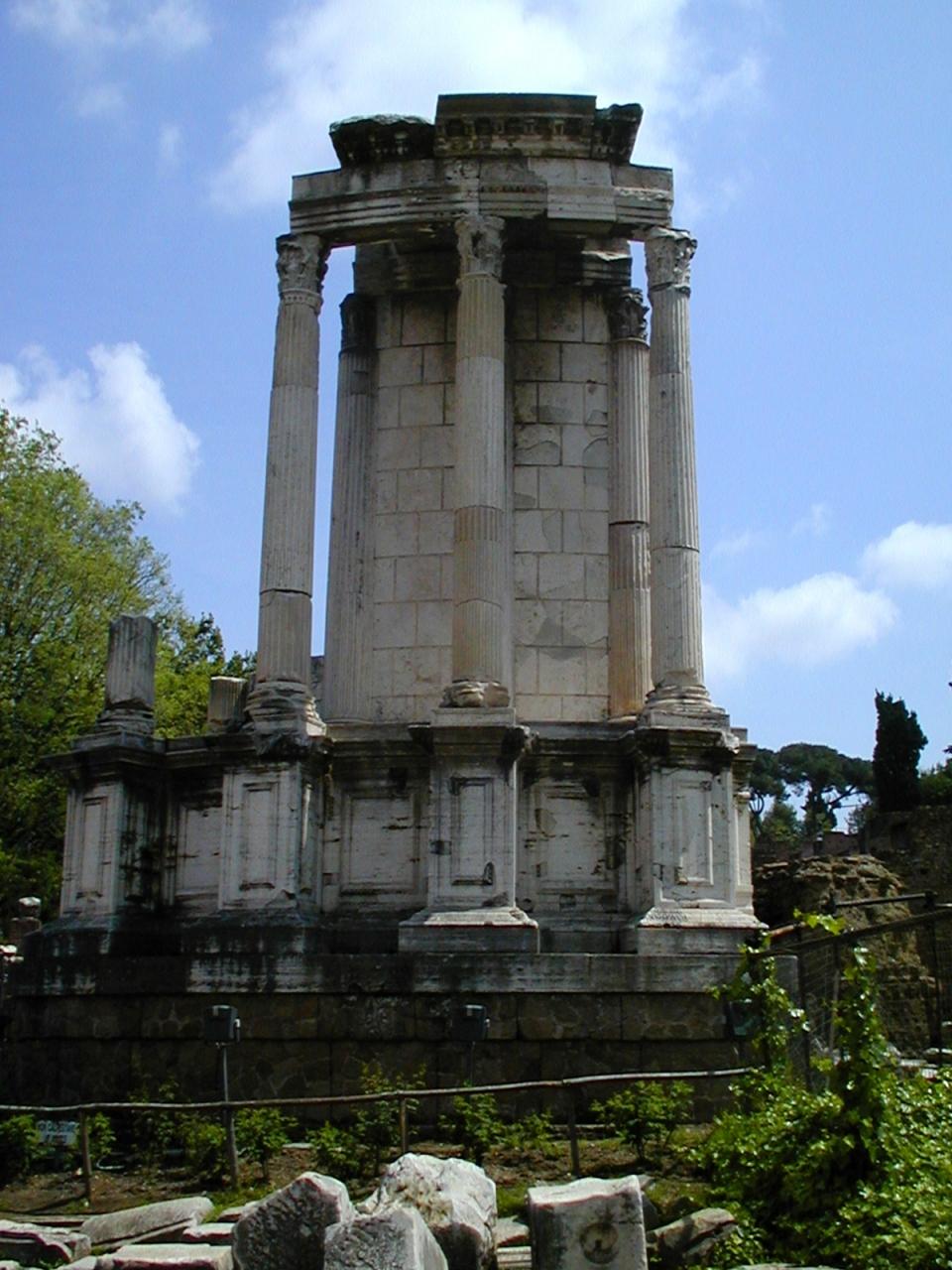
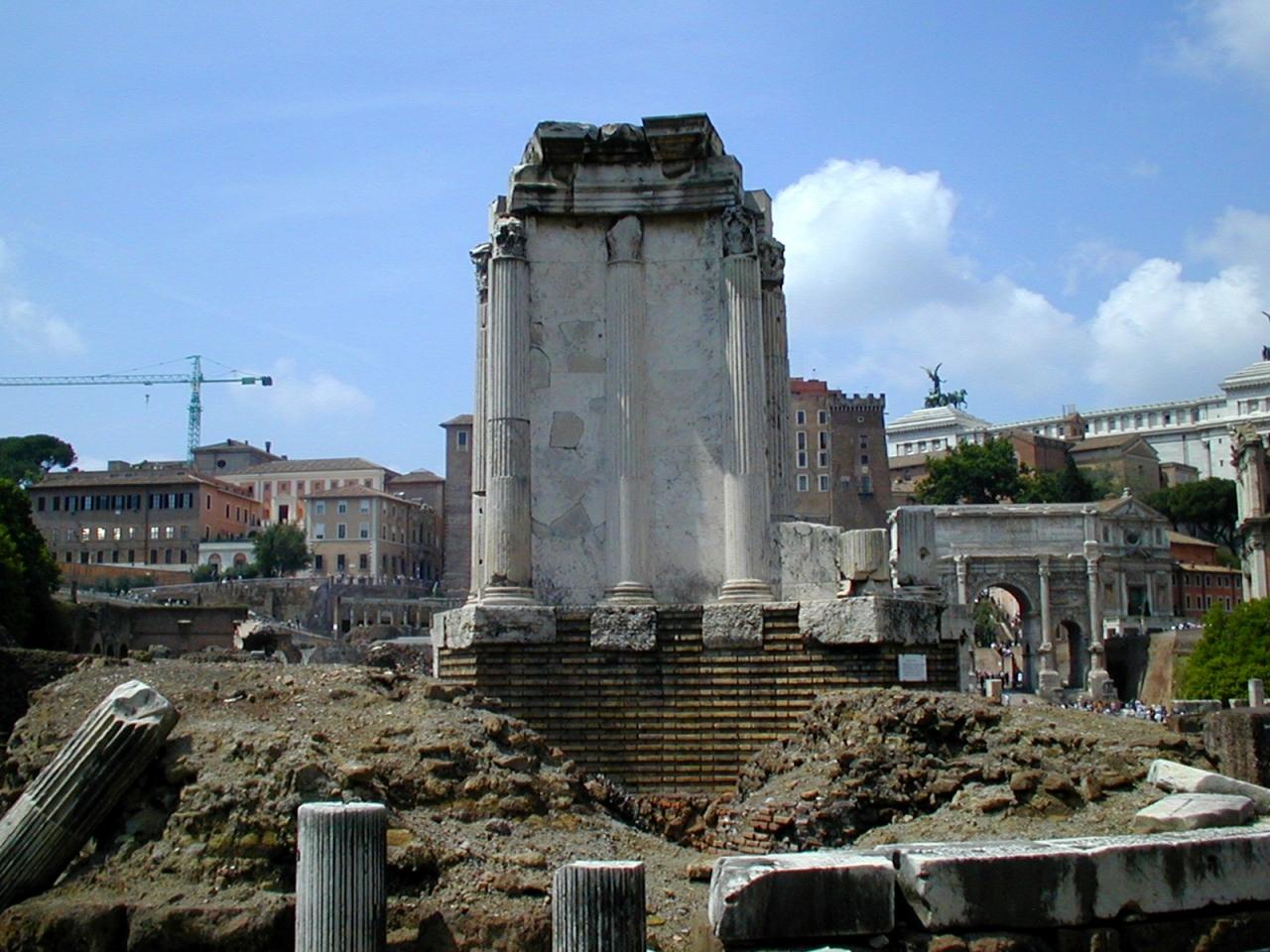
フォロ・ローマノ、ヴェスタの神殿 (ベスタの神殿) :
ヴェスタ (ベスタ) はかまどとその炎の女神で、ローマを守護している信じられていた。ヴェスタは紀元前7世紀に王ヌマ・ポムピリウスが導入して、聖火を守るためにヴェスタの神殿が建てられたと考えられている。当時の神殿は草ぶき屋根で網代と泥で造られた簡素な小屋であったと言われている。何回か焼けて再び建てられた。2世紀の終わりごろ、皇帝セプティミウス・セヴェルスの妻のユリア・ドムナが白い大理石で神殿を再建させた。
Aedes Vestae (Tempio di Vesta) (Temple of Vesta), Foro Romano :
Vesta is the goddess of the hearth and its flame, and was believed to protect Rome. It is supposed that, in the 7th century BC, Vesta was introduced by the king Numa Pompilius, and Temple of Vesta was built to keep the sacred fire there. It is said that the temple in those times was a simple hut made of wattle and daub with a thatched roof. It was burnt and rebuilt several times. Around the end of 2nd century, Julia Domna, the wife of the emperor Septimius Severus, had the temple rebuild with white marble. -
フォロ・ローマノ、ヴェスタの神殿
Tempio di Vesta, Foro Romano -
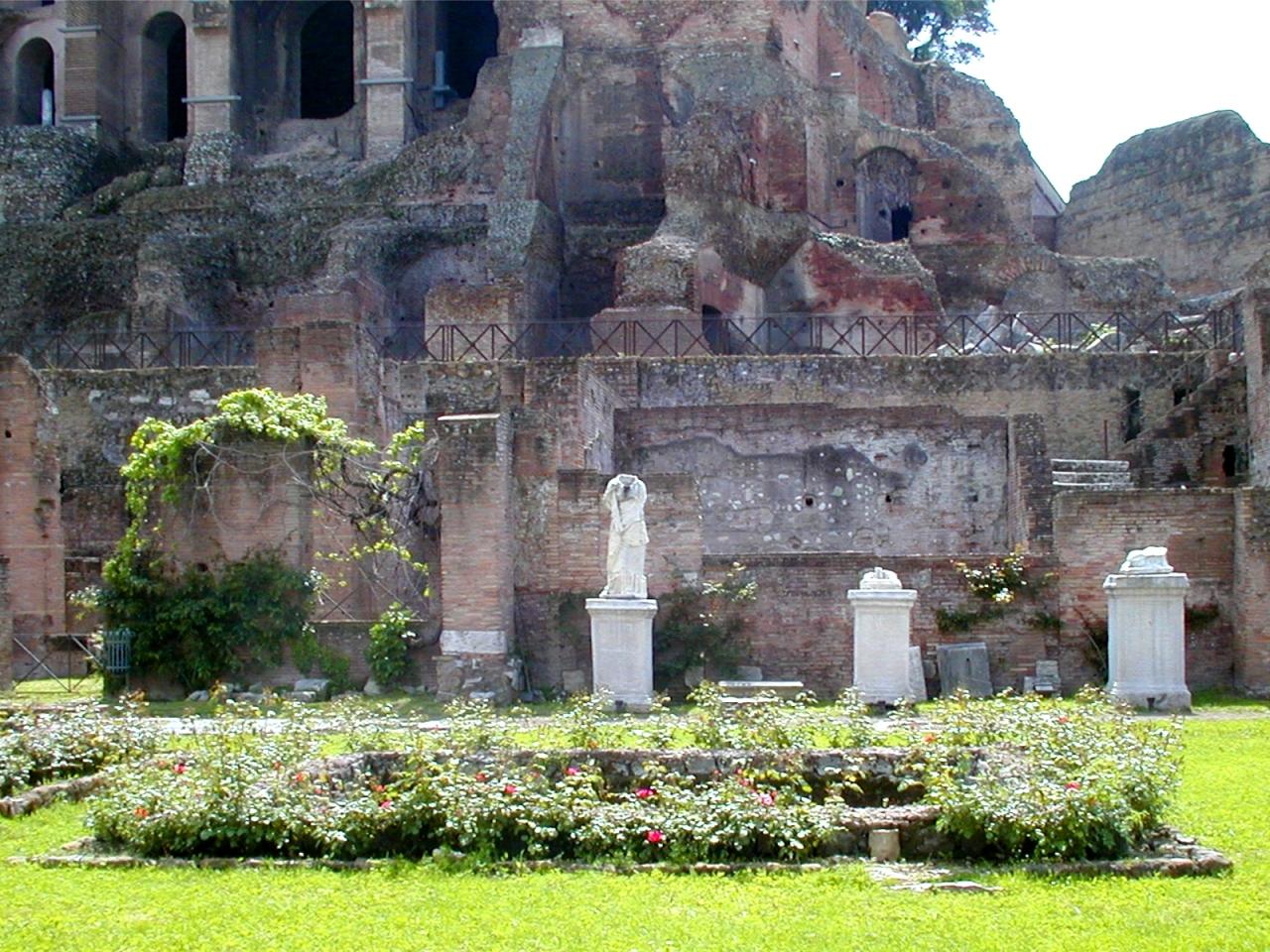
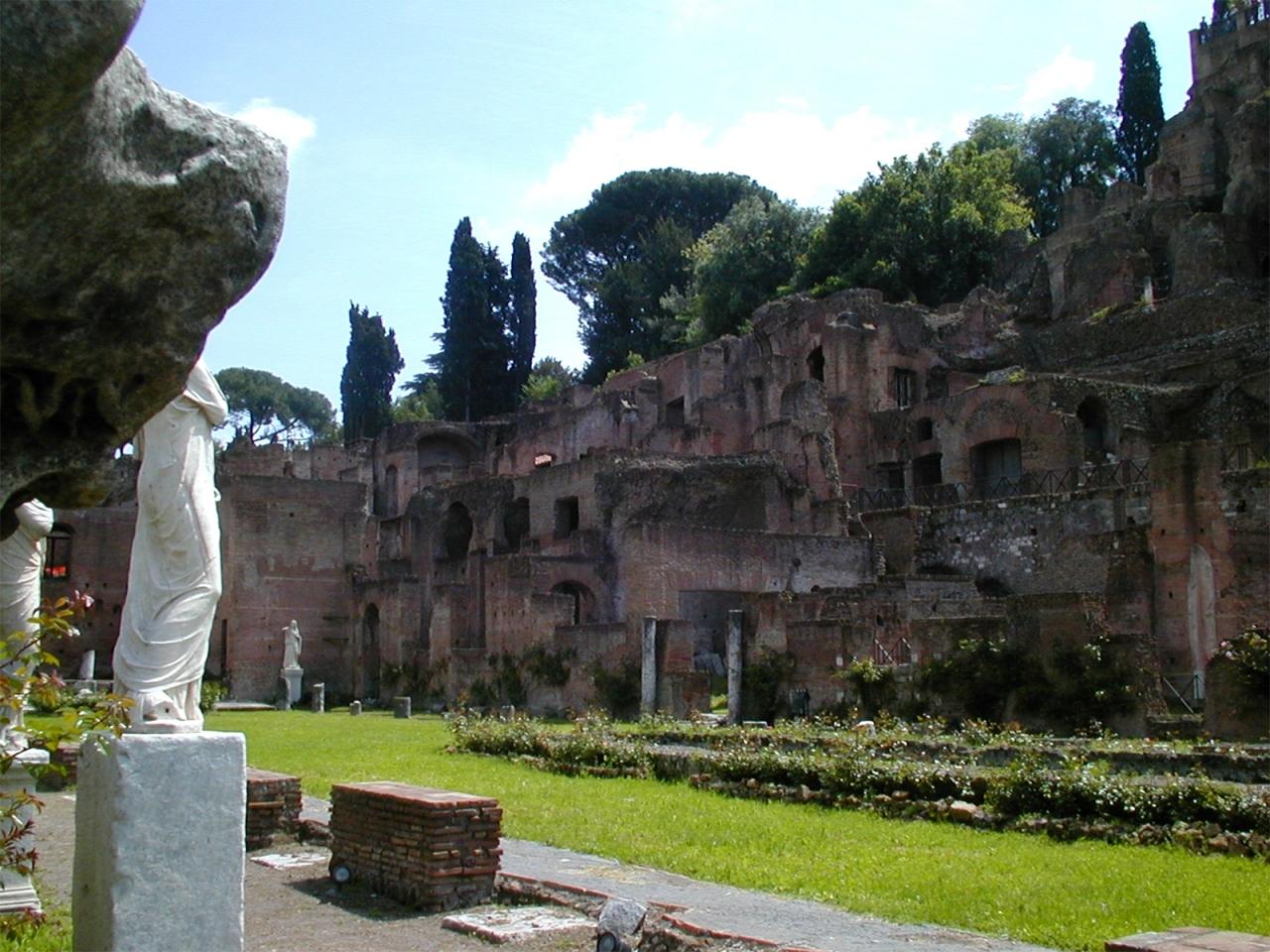
フォロ・ローマノ、ヴェスタのアトリウム (ベスタのアトリウム) (巫女 (乙女祭司) の邸宅) :
ヴェスタの巫女 (乙女祭司) は貴族の家庭から選ばれた乙女で、ヴィスタの神殿の聖火の番に担っていた。また公的な宗教儀式でもある役割を持っていて、社会的特権が与えられていた。彼女達は、ヴェスタのアトリウム (巫女の邸宅) に住んでいた。彼女達の居住場所は輝く水場がありポルチコに囲まれた中庭のわきにあった。現在は中庭にヴェスタの巫女の像が並べられている。
Atrium Vestae (la casa delle Vestali) (the house of the Vestal Virgins), Foro Romano :
Vestali were maidens chosen from patrician families, and were in charge of tending the sacred fire in the Aedes Vestae. They also had some roles in public religious events, and were given some social privileges. They used to live in Atrium Vestae (the house of Vestal Virgins). Their living quarters were along the side of the courtyard with gleaming basin and surrounded with porticoes. Today, the statues of Vestali are aligned in the courtyard. -
フォロ・ローマノ、ヴェスタのアトリウム
Atrium Vestae, Foro Romano -
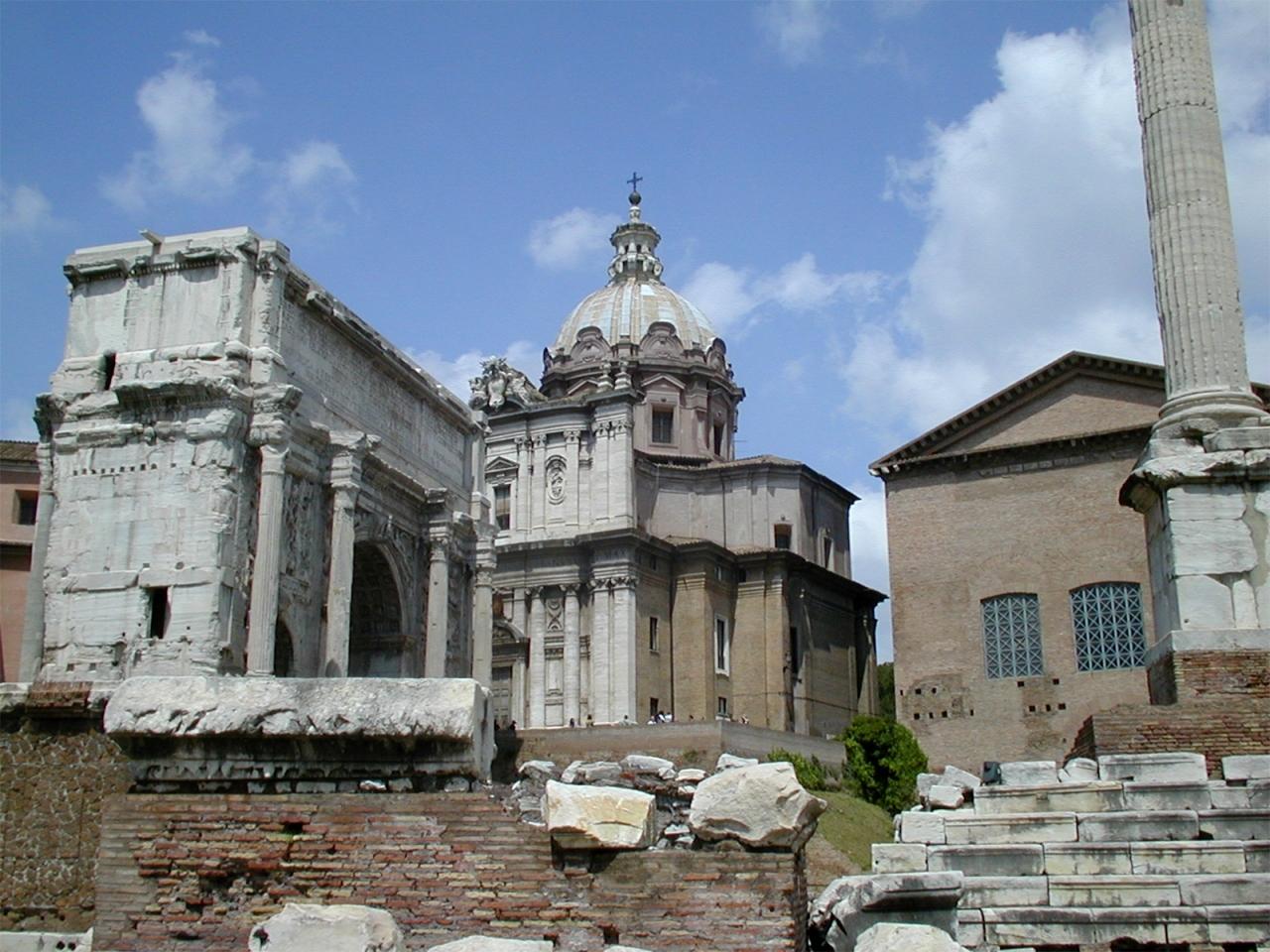
フォロ・ローマノ、セプティミウス・セヴェルスの門 (左)、クーリア (元老院) (右) (と中央後ろにルーカ・エ・マルティーナ教会が見える) :
クーリアはローマの議員の会議場であった。最初のクーリアはローマが共和制の時代の紀元前8世紀に王トゥルス・ホスティリウスによって建てられた。紀元前1世紀には再建され、焼失して、また再建された。現在の建物は3世紀の後期に以前のものが焼失した後に建てられた。後には教会に転用された。
Arco di Settimio Severo (Arch of Septimius Severus) (left) and Curia (the Senate House) (right), Foro Romano (and Chiesa dei Santi Luca e Martina, seen in the centre back) :
Curia is the meeting place of the senate of Rome. It is said that the first Curia was built by the king Tullus Hostilius in the 7th century BC. It was rebuilt, burnt, and rebuilt again in the 1st century BC. The current building was built after the previous one was burnt in the late 3rd century AD. Later, it was transformed into a church. -
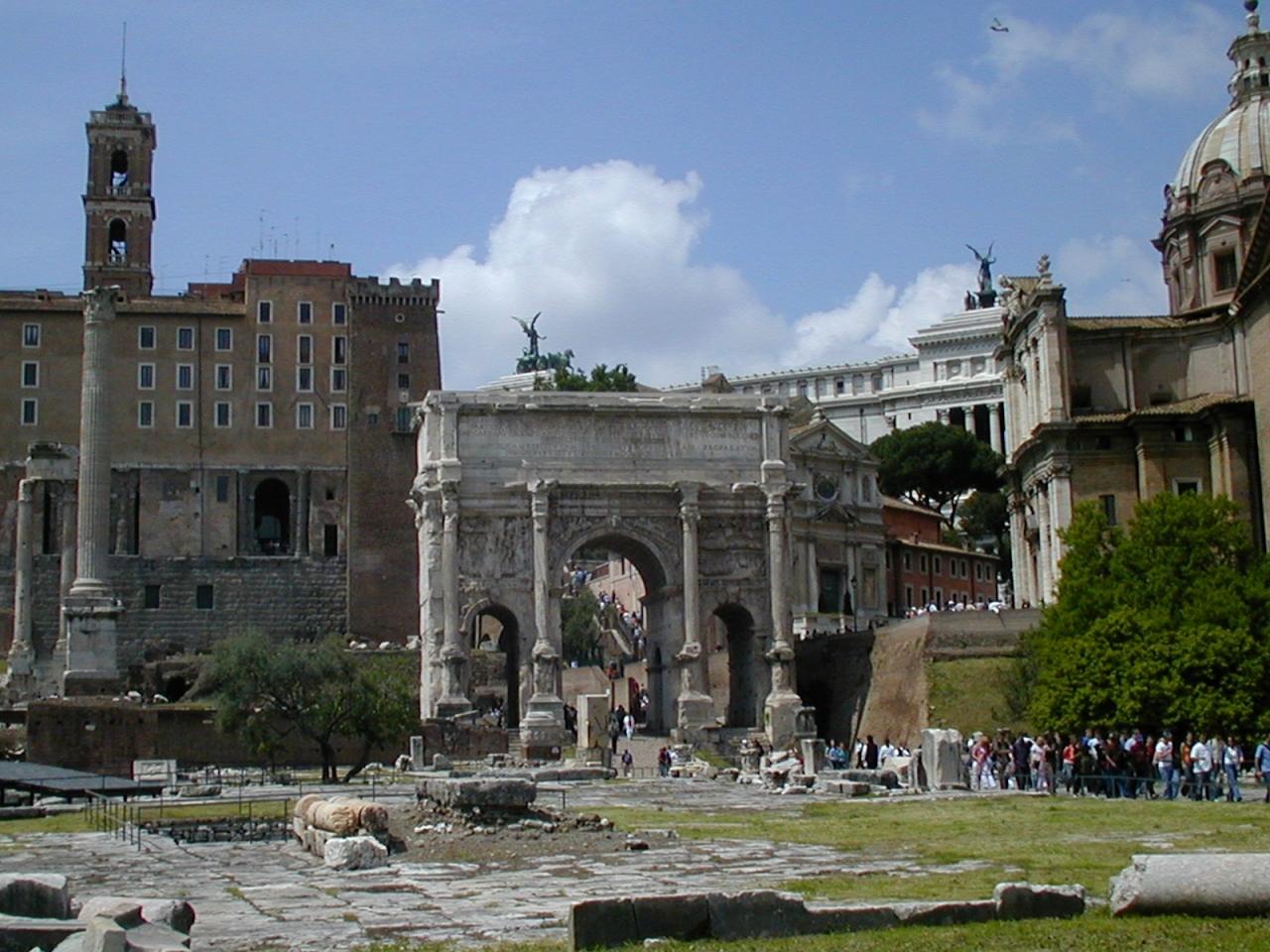
フォロ・ローマノ、セプティミウス・セヴェルスの門 (セプティミウス・セベルスの門) :
皇帝セプティミウス・セヴェルス (皇帝セプティミウス・セベルス) と彼の息子達を敬して西暦203年に建てられた。小さいアーチ上の刻文字やレリーフは皇帝と彼の息子達の東方での勝利を記念している。
Arco di Settimio Severo (Arch of Septimius Severus), Foro Romano :
It was erected in 203 AD in honour of the emperor Settimius Severus and his sons. The inscriptions and relieves on the minor arches commemorate the victories of the emperor and his sons in the East. -
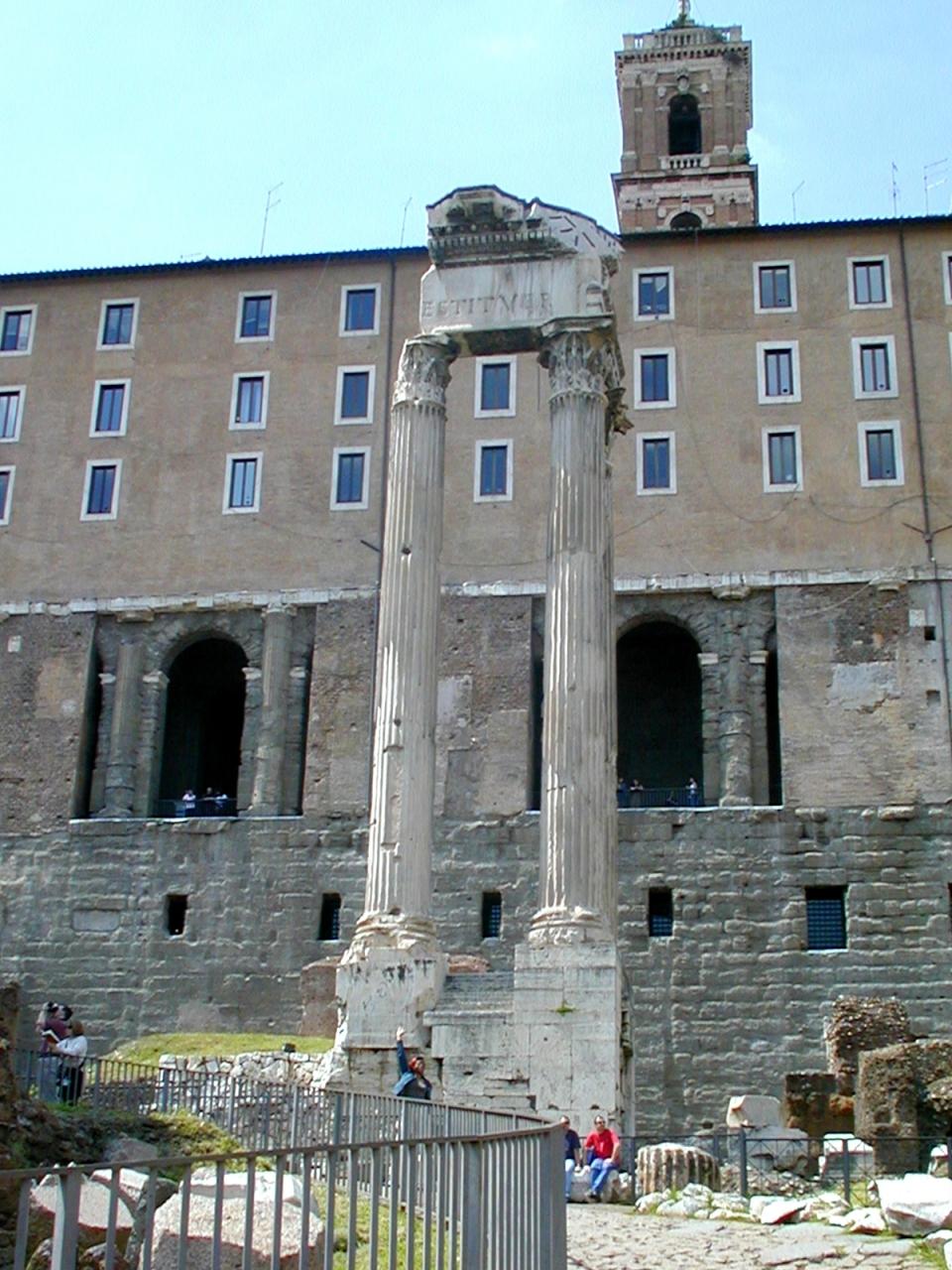
フォロ・ローマノ、ウェスパシアヌスとティトゥスの神殿 (手前) :
この神殿は西暦80年代に建てられ、皇帝ウェスパシアヌスと皇帝ティトゥスの捧げられた。
Tempio di Vespasiano e Tito (Temple of Vespasian and Titus) (in the front), Foro Romano :
The temple was built in 80s AD to dedicated to the emperors Vespasian and Titus. -
セプティミウス・セヴェルスの門から見たフォロ・ローマノ
Foro Romano, seen from Arco di Settimio Severo -
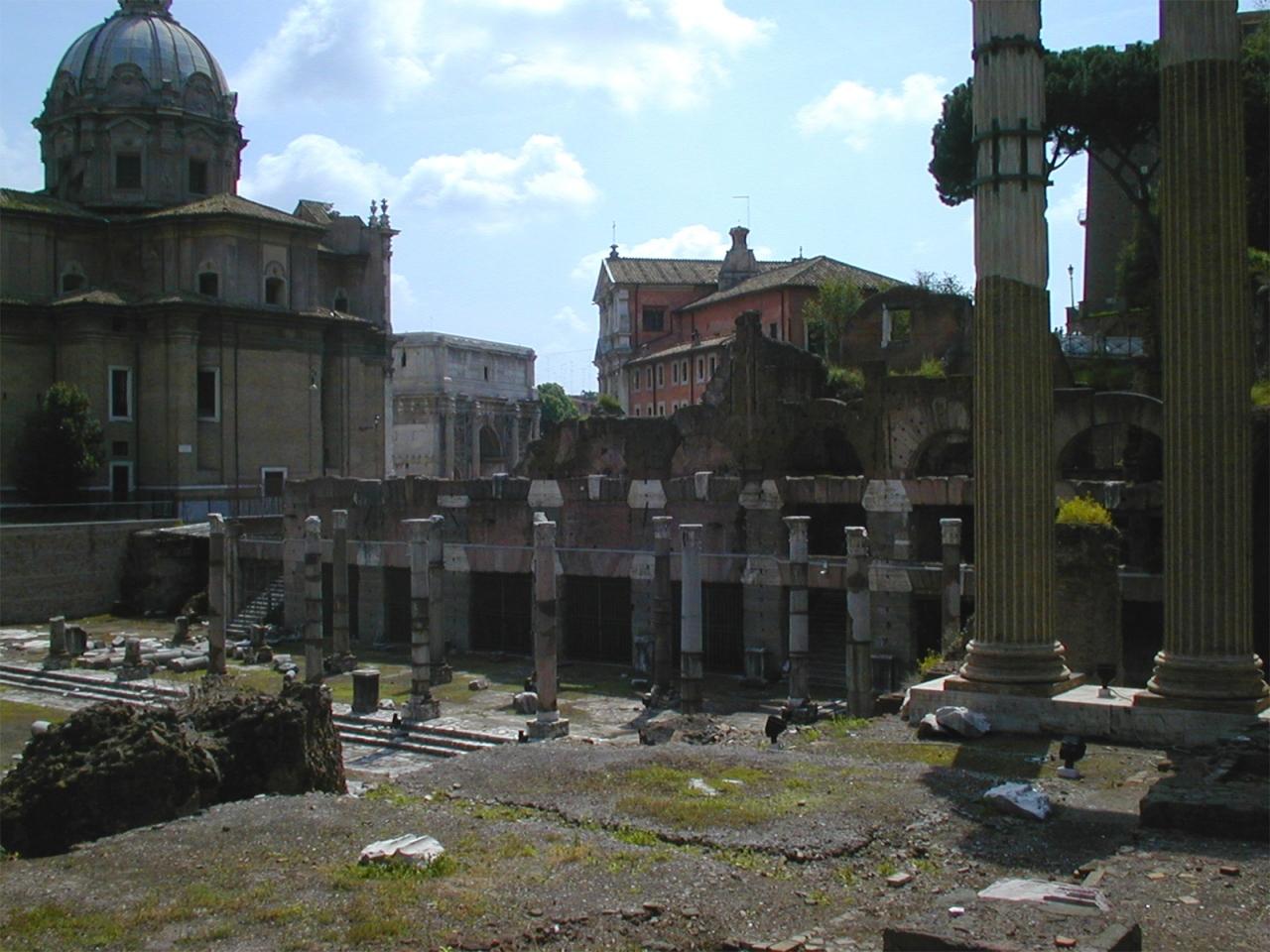
シーザーのフォーラム (フォロ・ディ・シーザー) :
紀元前50年代にジュリアス・シーザー (ユリウス・カエサル) がフォーラムの計画を思いつき首都の中心地をその場所に選んだ。西暦46年に神聖化され、その後、皇帝アウグストゥス (シーザーの養子、ローマ帝国初代皇帝) によって完成した。シーザーのフォーラムがインペリアル・フォーラム (皇帝のフォーラム) の最初のフォーラムであった。
Foro di Cesare (Caesar’s Forum) :
In 50s BC, Julius Caesar (Giulio Cesare) conceived the plan of the forum and chose the central place of the capital for it. It was consecrated in 46 BC and later completed by the emperor Augustus (Augusto) (Caesar’s adopted son and the first Roman emperor). It was the first forum of the Imperial Forums (Fori Imperiali). -
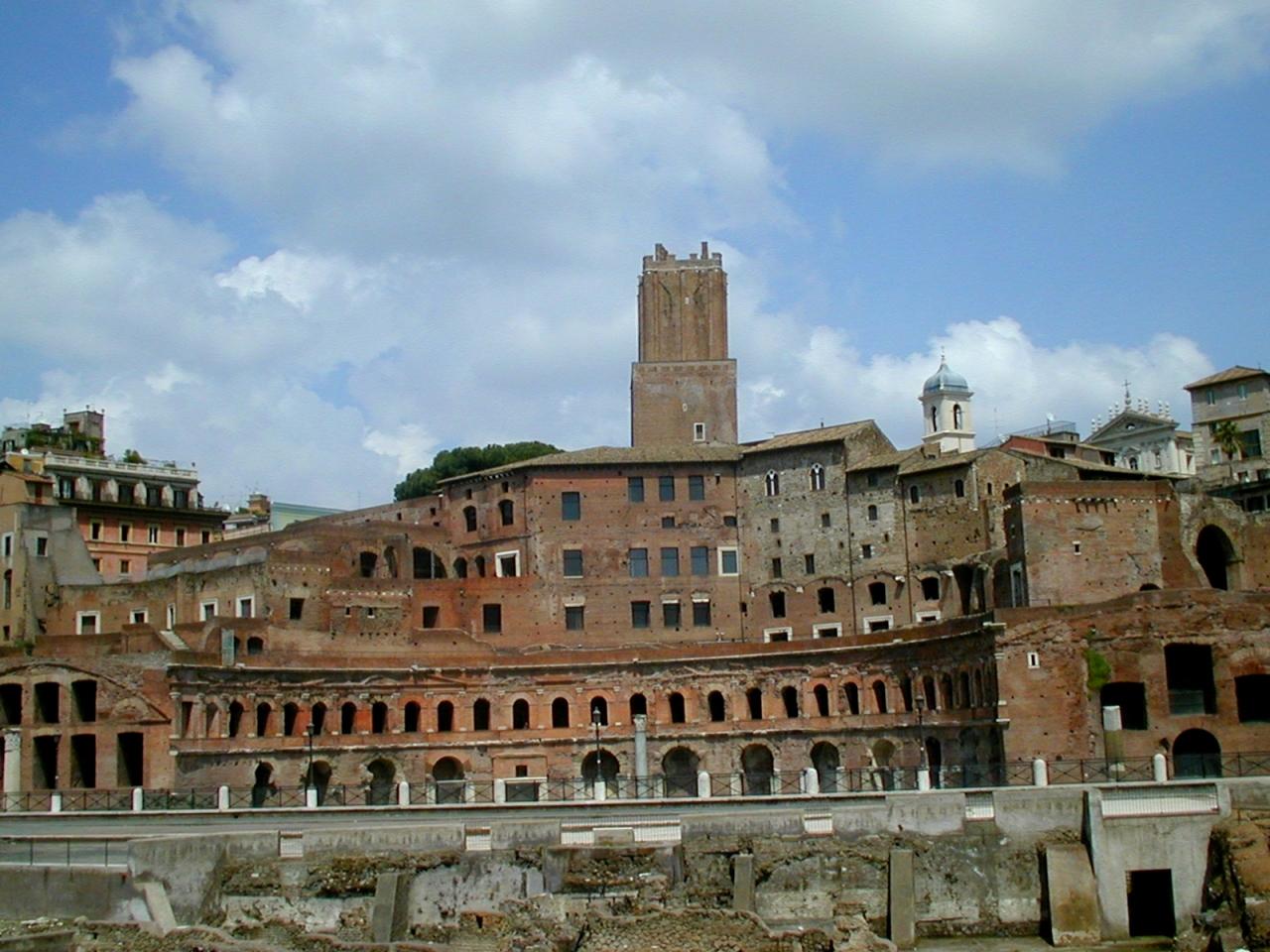
トライアヌスの市場 :
半円形の建物は古代ローマのコンプレックスであった。西暦2世紀に設計され建てられた。コンプレックスには商店や居酒屋やギャラリーなどを含む約150店舗が入っていた。
Mercati di Traiano (Trajan Markets) :
The semi-circular building was an Ancient Roman complex. It was designed and constructed in the 2nd century. There were about 150 premises in the complex, including shops, taverns, galleries, and etc. -
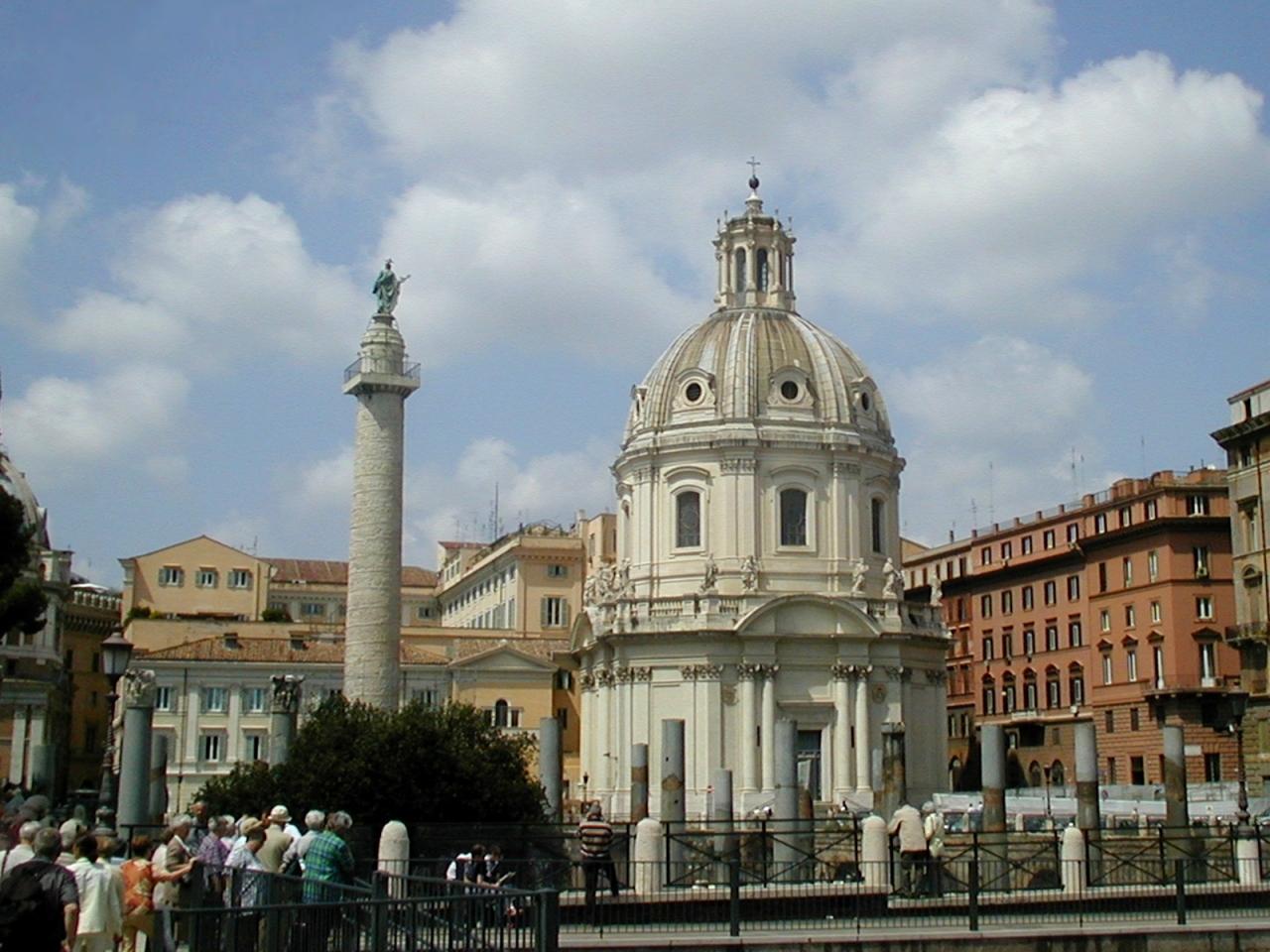
トライアヌスの記念柱 (左)、サンティシモ・ノーメ・ディ・マリア教会 (右) :
この記念柱は皇帝トライアヌスのダキア人に対する勝利を記念して西暦2世紀にトライアヌスのフォーラムに建てられた。
Colonna Traiana (Trajan Column) (left), Chiesa del Santissimo Nome di Maria (right) :
The monument was erected in Trajan’s Forum in the 2nd century AD to commemorate the victory of the emperor Trajan over the Dacians. -
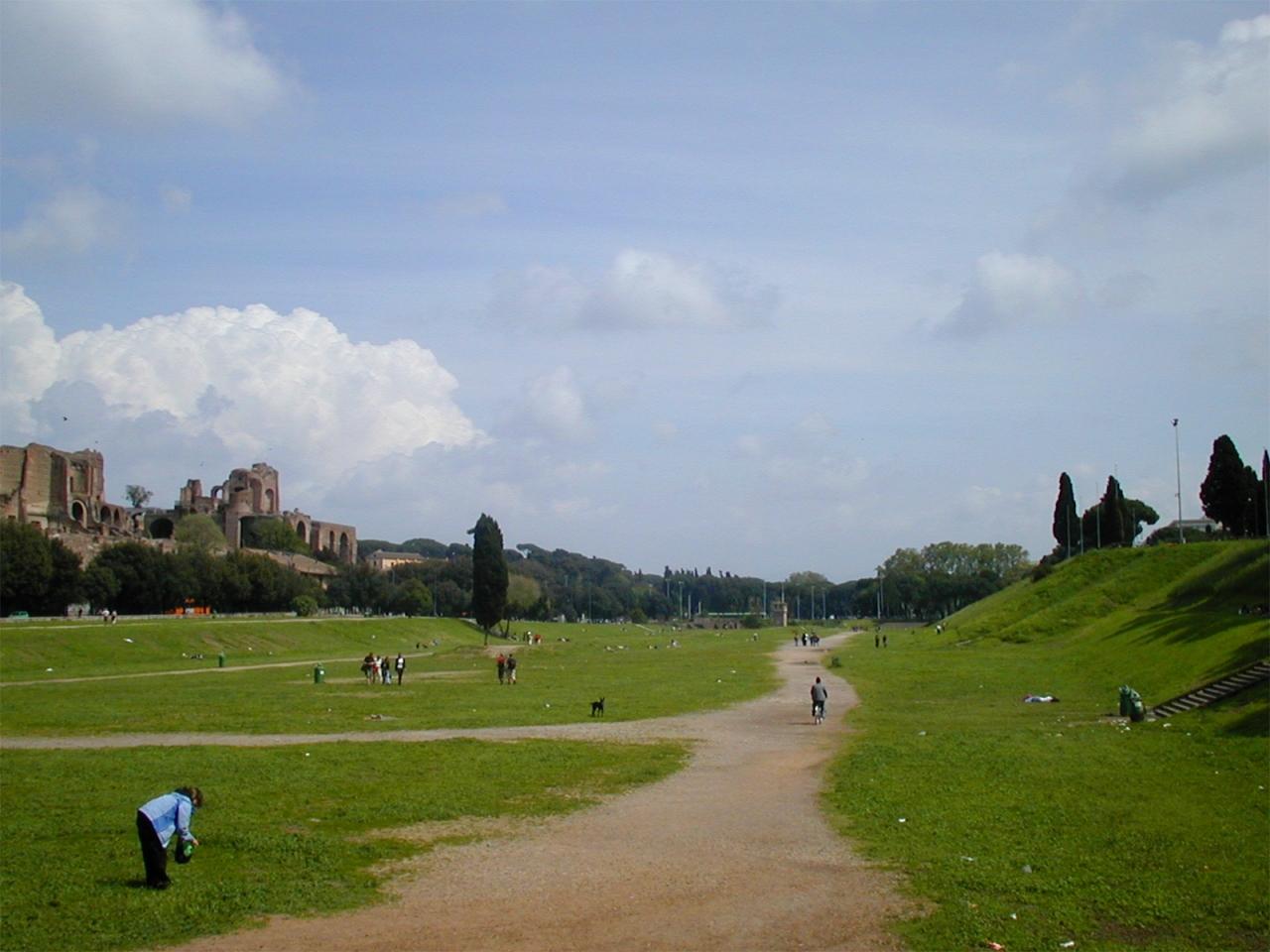
チルコ・マッシモ :
巨大な楕円形のスタジアムで、主にローマのチャリオット (馬引き二輪戦車) のレースが行われた。元は紀元前4世紀の建てられ、繰返し改築された。約30万人の観客を収容できた。中世やルネッサンス時代に建物の大理石や石材が奪い去られ、今日では姿形のない遺跡となっている。
Circo Massimo (Circus Maximus) :
It was the enormous oval stadium used mainly for the Roman chariot race. It was originally built in the 4th century BC, and repeatedly renovated. It could accommodate about three hundred thousand spectators. Today, only a formless ruin remains as marble and stones of the structure were pilfered during medieval and Renaissance times. -
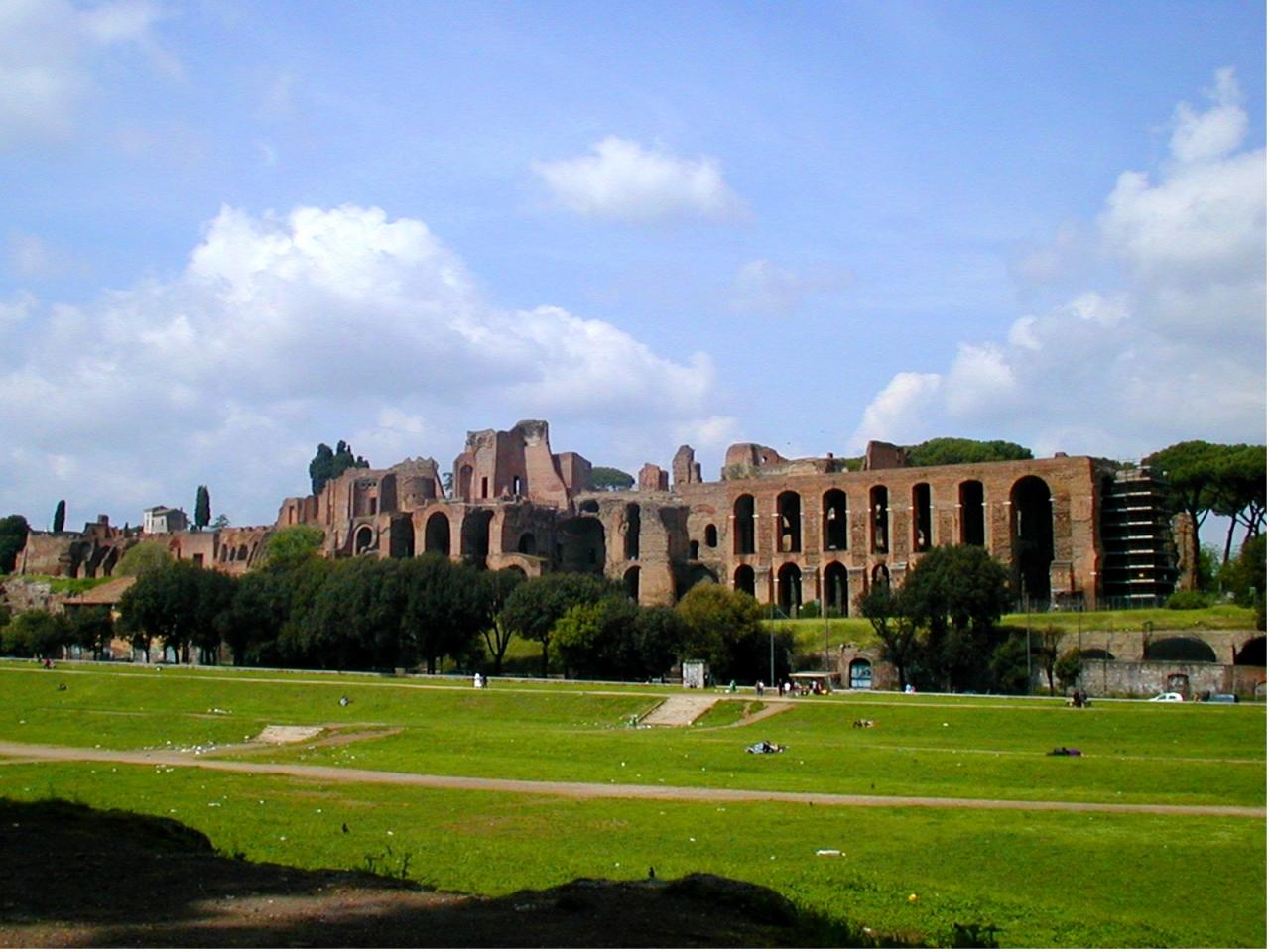
チルコ・マッシモから見たパラティーノの丘
Palatine Hill seen from Circo Massimo -
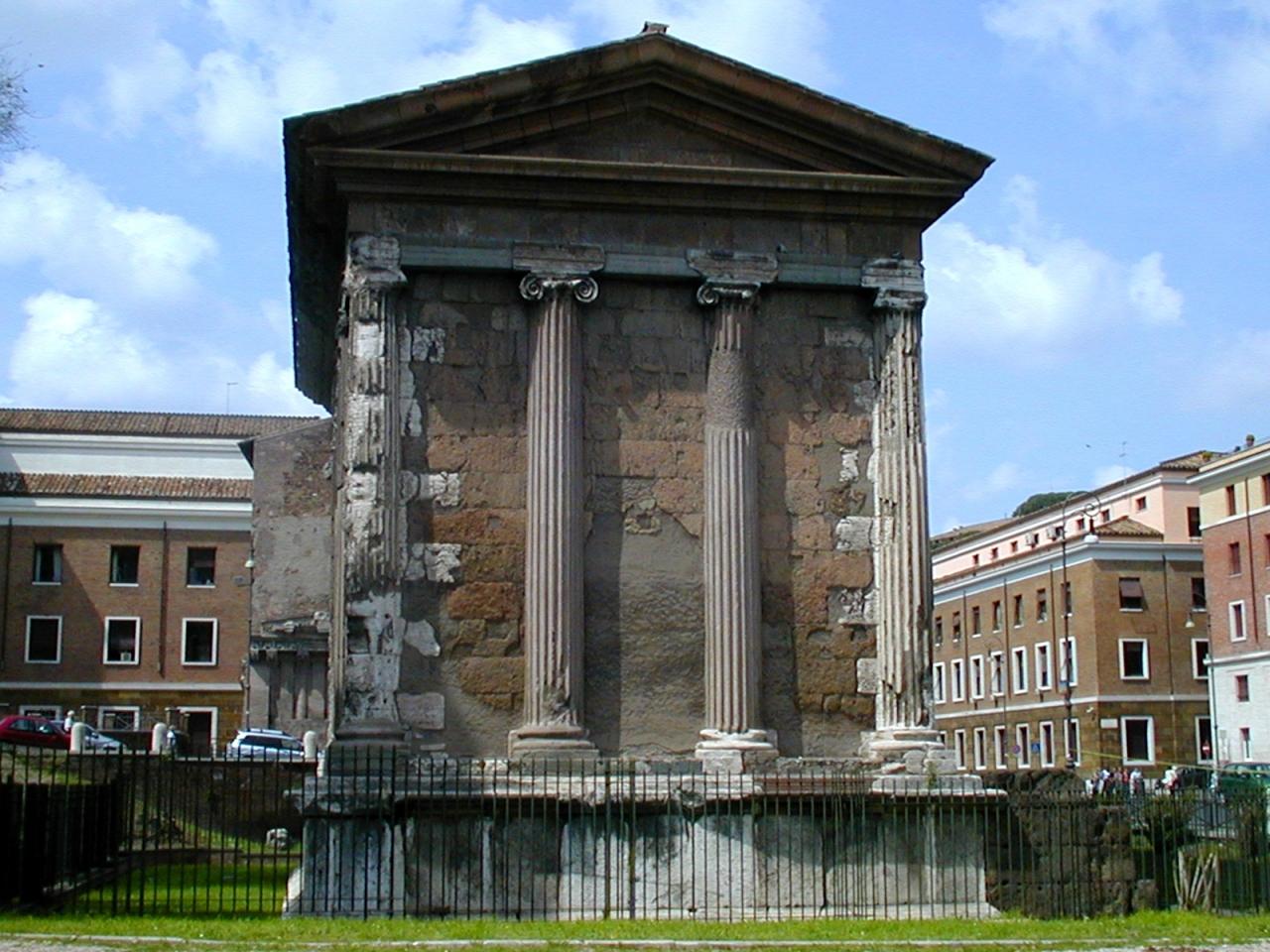
ボアリウム・フォーラム (フォロ・ボアティオ)、ポルトゥヌスの神殿 (フォルトゥーナ・ウィリリスの神殿) :
この神殿は、紀元前2世紀の建物のように見えるが、紀元前6世紀に建てられたとされている。古代の港が近くにあり、この神殿は川と港の神のポルトゥヌスに捧げられた。ギリシャ−ローマ建築の典型的な例となっている。後に教会として使われた。
Tempio di Portunus (Tempio della Fortuna Virilis) (Temple of Portunus (Temple of the Fortuna Virilis)), Foro Boatio (Forum Boarium) :
It is supposed that the temple was built in the 6th century BC though it looks like a building in the 2nd century BC. It is dedicated to Portunus, the god of river and port, as the ancient port was located nearby. It is a typical example of combination of Greek and Roman architecture. Later, it was used as a church. -
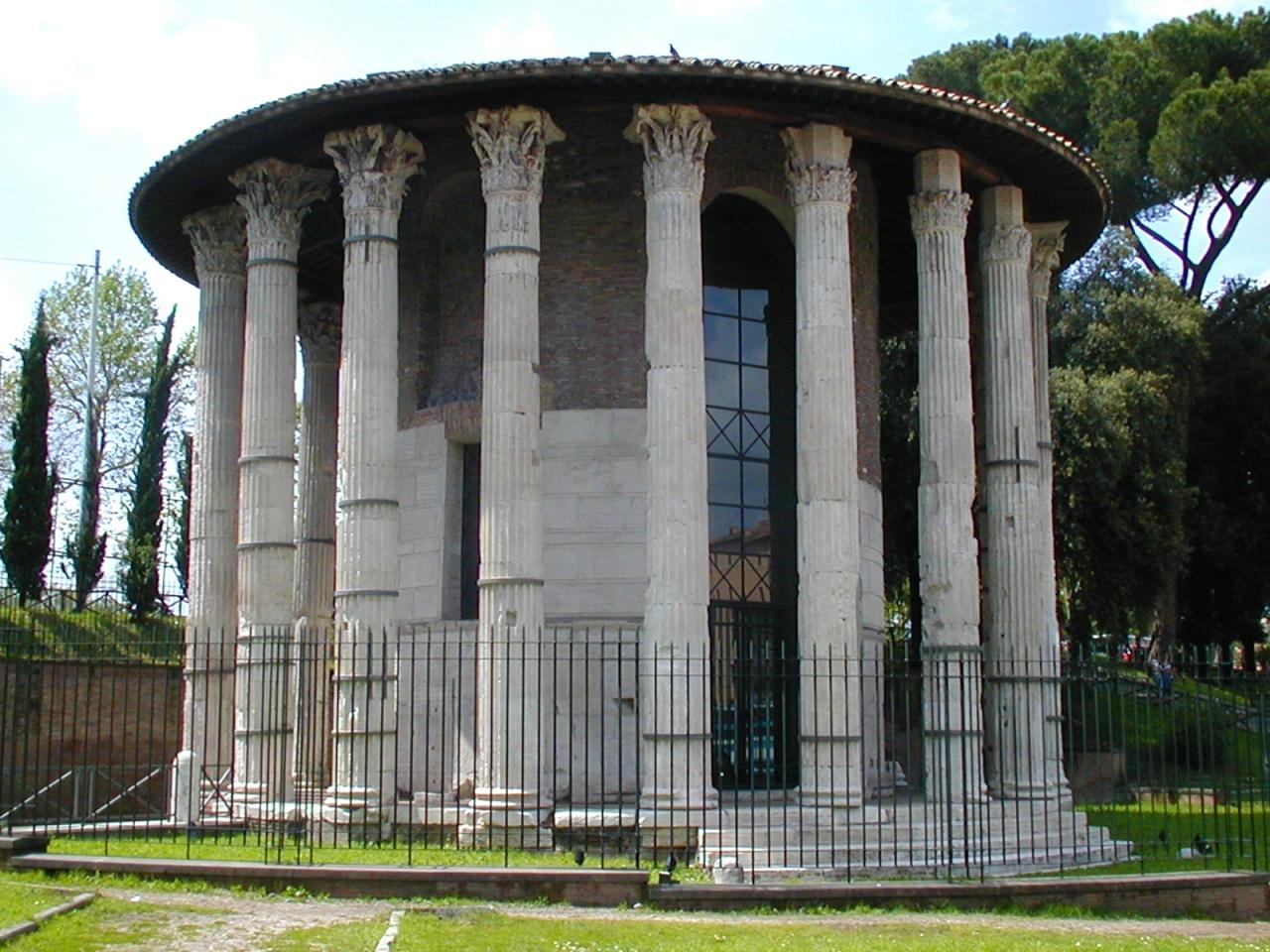
ボアリウム・フォーラム (フォロ・ボアティオ)、ヘラクレスの神殿 :
紀元前2世紀後期にローマの商人によってテヴェレ川の古代の港の近くに建てられ、伝説のヒーローのヘラクレスに捧げられた。ギリシャ−ローマ建築の一例となっている。後に教会として使われた。
Tempio di Ercole Vincitore (Temple of Hercules Victor), Foro Boatio (Forum Boarium) :
It was built in the late 2nd century BC by a Roman merchant near the ancient port on the River Tiber (il fiume Tevere) and dedicated to Hercules, the mythological hero. It is an example of Greek-Roman architecture. Later, it was used as a church. -
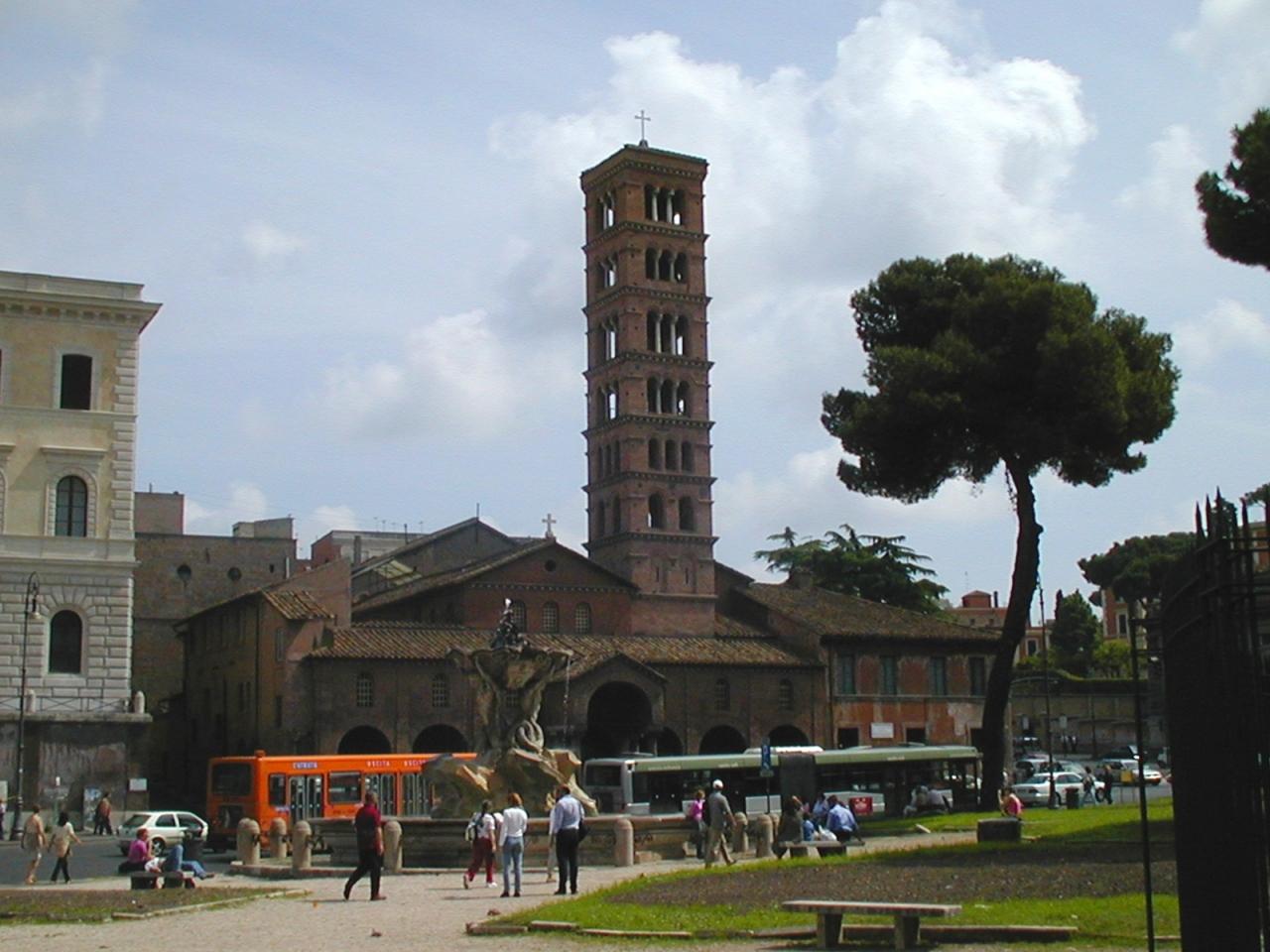
サンタマリア・イン・コスメディン教会 :
6世紀に建てられ、数回破壊されて再建された。ロマネスク様式の鐘楼は11世紀後半に追加された。映画「ローマの休日」に教会のポルティコの左端にある「真実の口」が登場して、この教会の名が脚光を浴びるようになった。
Chiesa di Santa Maria in Cosmedin :
It was built in the 6th century, and was destroyed and rebuilt several times. Romanesque bell tower was added in the late 11th century. The name of the church came up in lights when ”Bocca della Verità” (”Mouth of Truth”) on the left side of its portico was introduced in the film ”Roman Holiday”. -
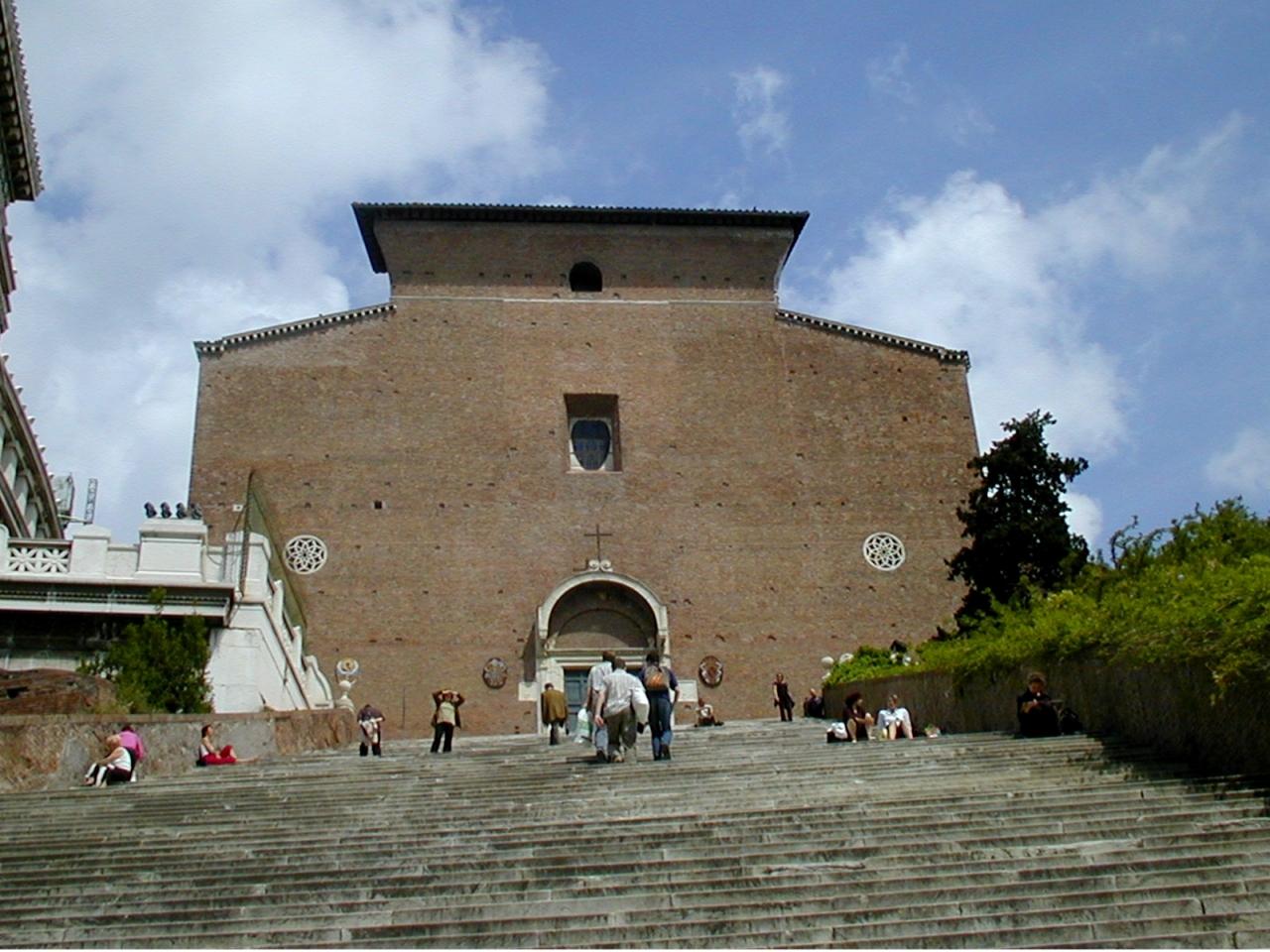
サンタ・マリア・イン・アラコエリ教会 :
13世紀にカンピドーリオの丘に、ジュノーの神殿があったところにロマネスク様式の教会が建てられた。
Chiesa di Santa Maria in Aracoeli :
In the 13th century on il Campidoglio (the Capitoline Hill), the Romanesque church was built in the place where the temple of Juno had been there. -
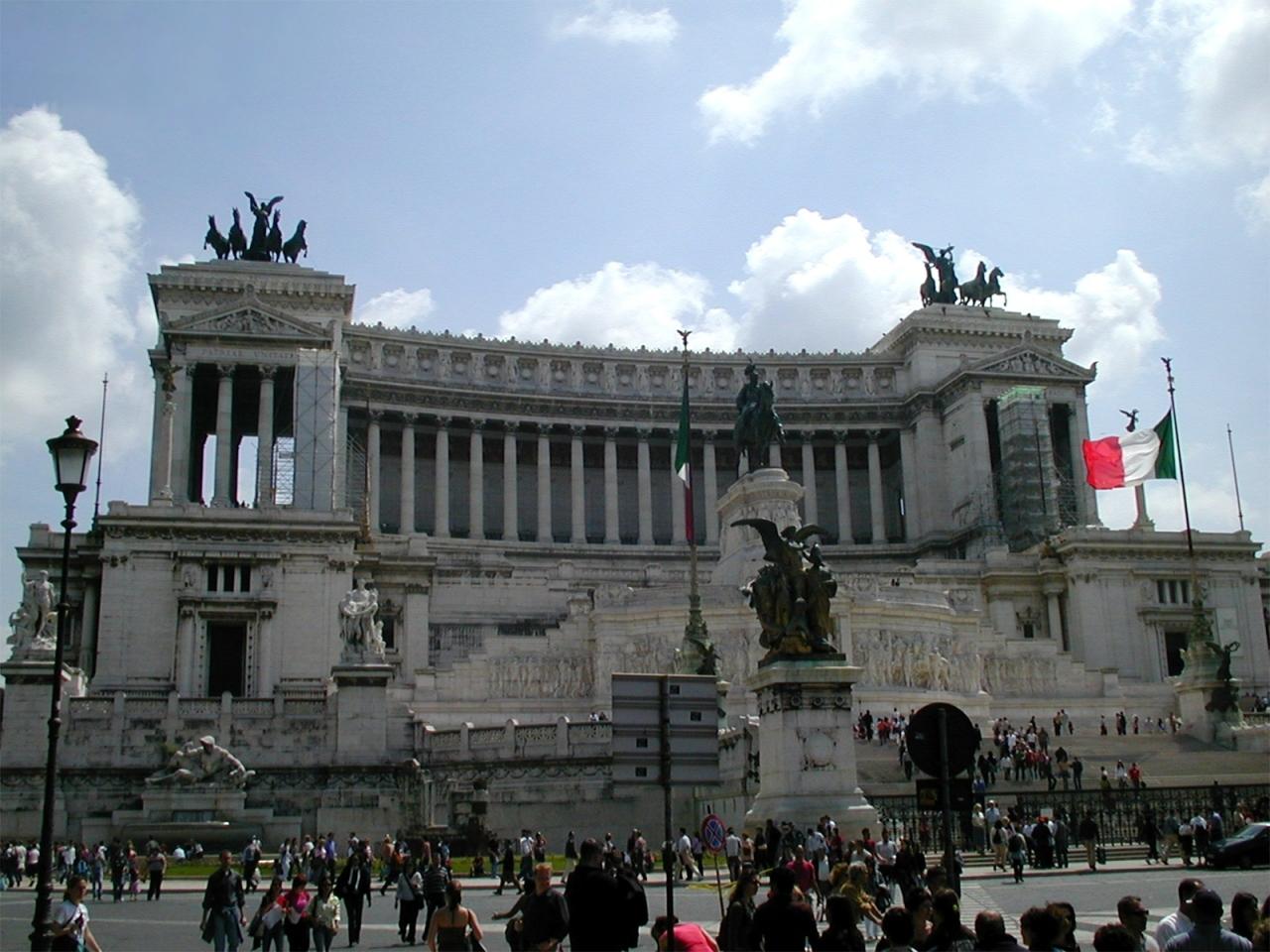
ヴィットリオ・エマヌエーレ2世記念堂 (ビットリオ・エマヌエーレ2世記念堂) :
1861年にイタリアを統一したヴィットリオ・エマヌエーレ2世 (ビットリオ・エマヌエーレ2世) を称えて建てられた。19世紀終わりごろに建設がはじまり、1911年に完成した。
Vittoriano (Vittorio Emanuele II Monument) :
It was erected in honour of King Vittorio Emanuele II, who unified Italy in 1861. The construction started around the end of 19th century and it was completed in 1911. -
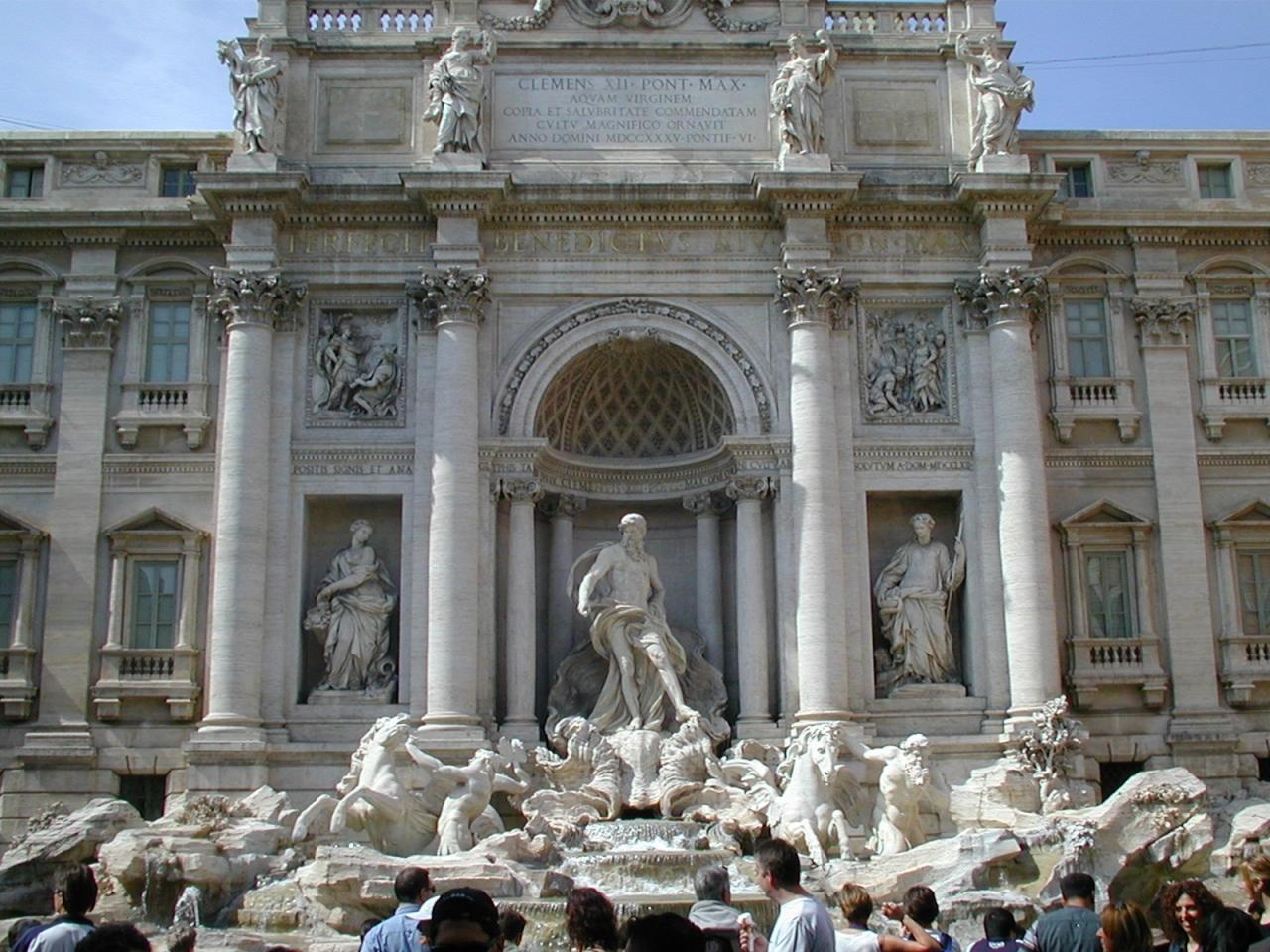
トレヴィの泉 (トレビの泉) :
バロック様式の泉は18世紀中期に建てられた。2人のトリトーンに誘導され2頭の翼のある馬引かれた貝殻のチャリオットに立っているネプチューンの像がある。
Fontana di Trevi (Fountain of Trevi) :
The baroque fountain was built in the mid 18th century. There is a statue of Neptune standing on a shell chariot drawn by two winged horses and led by two tritons. -
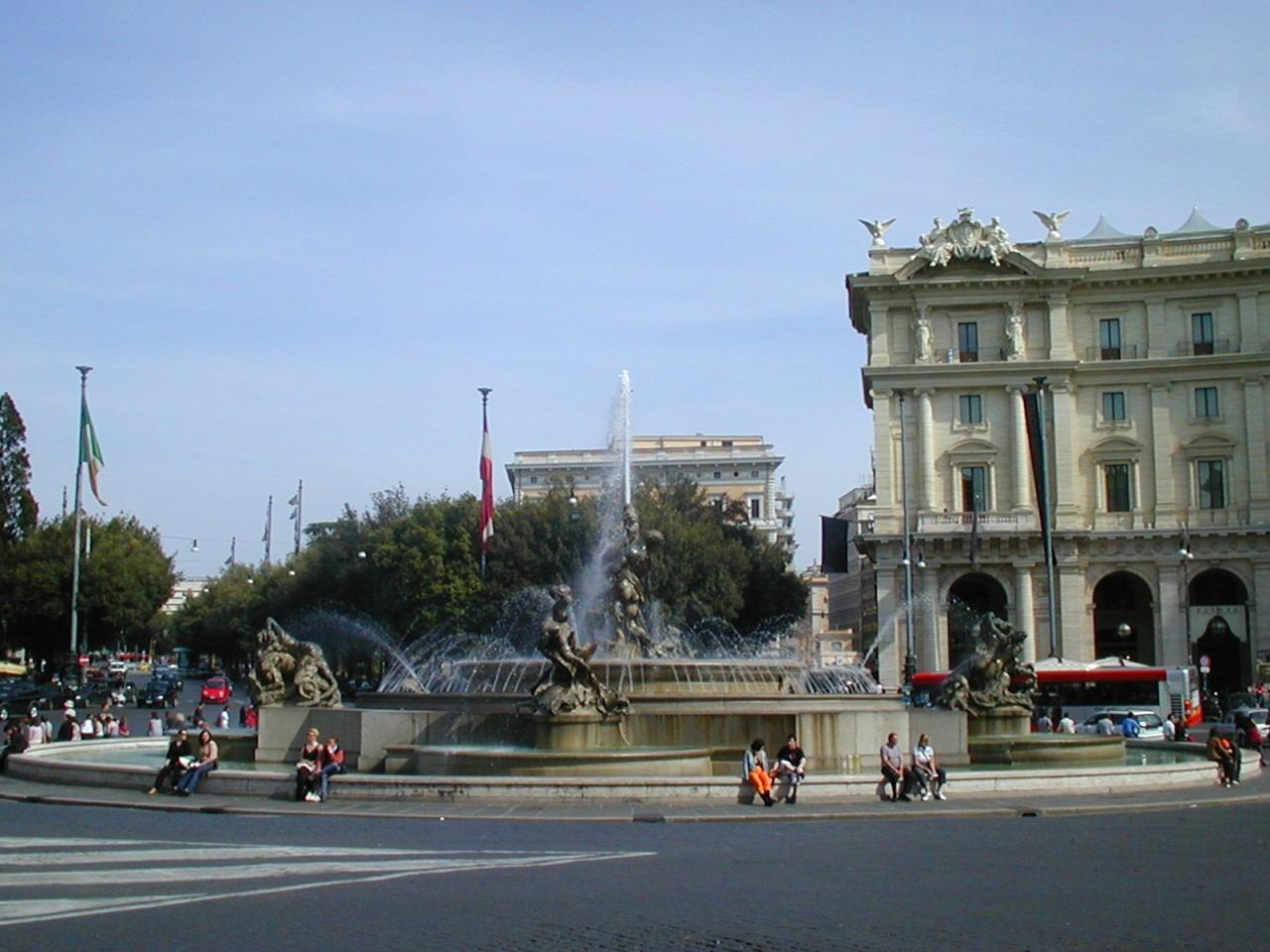
レプッブリカ (共和国) 広場、ナイアディの泉 :
広場の中央にはナイアディの泉があり、そこには4人のニンフのブロンズ像がある。ローマがイタリアの首都になった20世紀の初めに建てられた。
Fontana delle Naiadi (Fountain of Naiads), Piazza della Repubblica :
In the centre of the piazza, there is Fontana delle Naiadi with bronze statues of four nymphs. It was built in the beginning of 20th century, when Rome became the capital of Italy. -
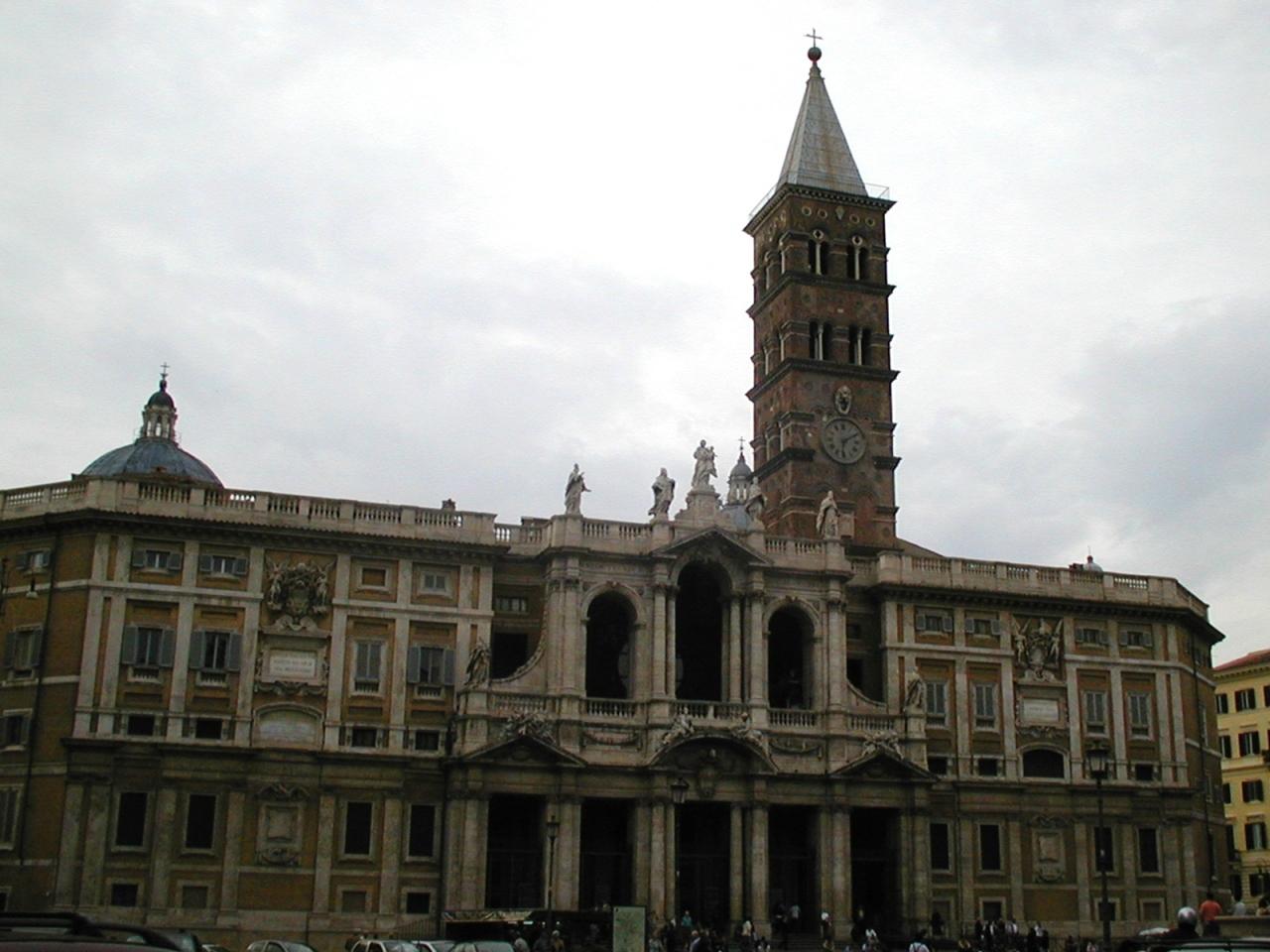
サンタ・マリア・マジョーレ教会 :
元は4世紀中期に聖マリアを称えて建てられた。伝説によると8月4日の夜に教皇リベリウスが、聖母マリアがあくる日の朝エスクイリーノの丘の上で降った新雪が見つかったところに教会を建てることを頼む夢を見た。教会は5世紀中期に再建された。ロマネスク様式の鐘楼は14世紀後期に建てられた。
Basilica di Santa Maria Maggiore :
It was originally built in the mid 4th century in honour of Santa Maria (Saint Mary). The legend had it that, in the night of 4th of August, the Pope Liberius had a dream in which la Vergine Maria (the Virgin Mary) asked him to build a church on a spot where newly fallen snow was found on Esquiline hill in the following morning. It rebuilt in the mid 5th century. The Romanesque bell tower was erected in the late 14th century. -
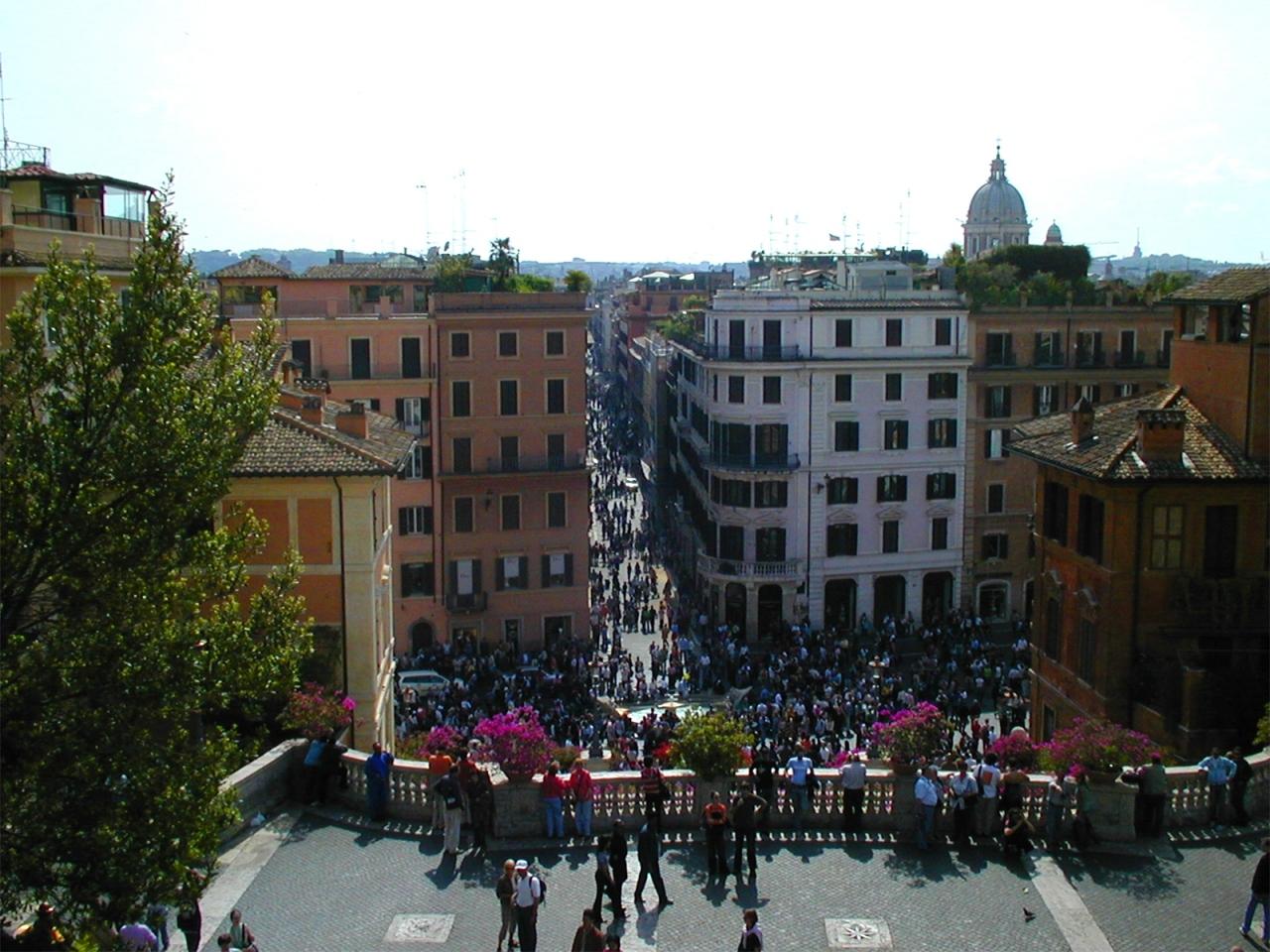
スペイン広場 :
スペイン広場から始まりトリニタ・ディ・モンティ教会があるトリニタ・ディ・モンティ広場まで上るスペイン階段という有名な階段がある。広場も階段も以前そこにあったスペイン大使館から名前を取った。しかし、その階段は18世紀前期にフランスの資金で建設された。
私が訪れたときは階段にはつつじが咲いていました。
Piazza di Spagna :
There is a famous steps, called Scalinata di Spagna (Spanish Steps), starting from Piazza di Spagna and climing up to Piazza Trinità dei Monti where Chiesa di Trinità dei Monti stands. The piazza and the steps took their names from the Spanish Embassy, which used to be there. But the steps were built with French funds in the early 18th century.
Azaleas bloomed on the steps when I visited there. -
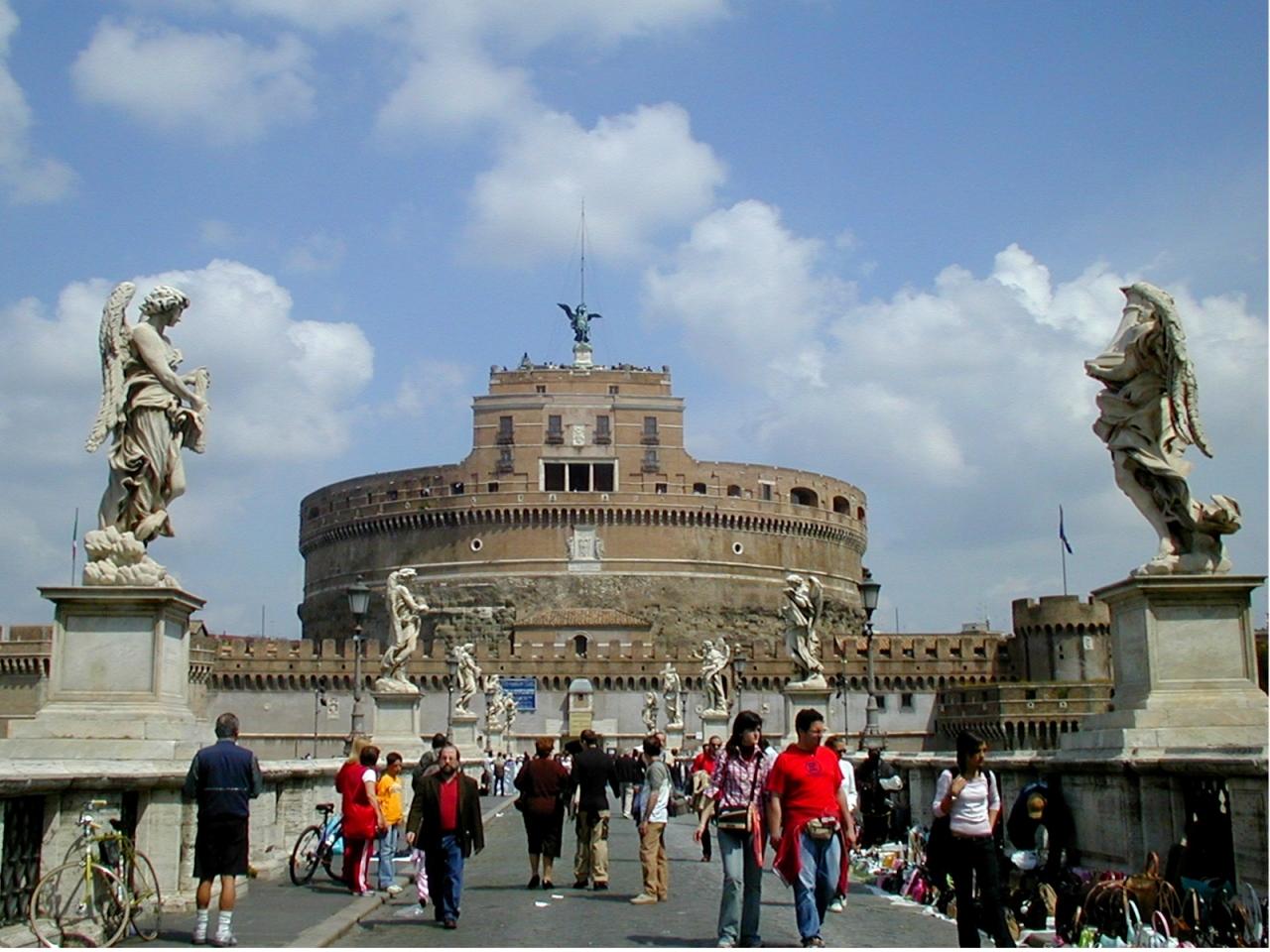
サンタンジェロ城 :
この城は西暦2世紀中期に皇帝ハドリアヌスの墓として建てられた。ローマの城壁に建てられ、6世紀からは要塞と牢獄として使用された。14世紀には教皇の居城となった。城はヴァチカン (バチカン) と地下道で繋がっていた。
Castel Sant’Angelo :
The castle was built in the mid 2nd century AD as a tomb for the Emperor Hadrian. It was built over the Roman walls, and it was used as a fortress and dungeon from the 6th century. It became a papal residence in the 14th century. The castle was linked to the Vatican through an underground passage.
この旅行記のタグ


利用規約に違反している投稿は、報告する事ができます。
この旅行記へのコメント (5)
-

- Rika3さん 2004/09/05 11:46:52
- 素敵な旅行記ありがとう!
- はじめまして。とても素敵な旅行記ですね。興味深く見させていただきました。私もローマに観光で行ってローマの遺跡も見ましたが、こんなにすばらしいことを改めて見ることができました。巫女の遺跡の写真とお話興味深く読ませていただきました。
- MKさん からの返信 2004/09/05 23:28:10
- RE: 素敵な旅行記ありがとう!
- Rika3さん、
はじめまして。私の旅行記を見ていただいて書き込みありがとうございます。
このときは、ローマで古代ローマの遺跡を見ることを主な目的として行って、フォロ・ローマノについても、行く前にインタネットのあちこちで調べて、色々な情報を得ました。実は英語の幾つかのウェブサイトで、Temple of Vesta (ヴェスタの神殿) と Vestal Virgins を知りました。ヴェスタの神殿の写真は、インタネットの幾つかのウェブサイトでも見ましたが、the house of the Vestal Virgins の写真は無かったと思いました。Vestal Virgins とthe house of the Vestal Virgins についての解説は幾つか見つかりましたので、これは、是非 the house of the Vestal Virgins の跡の写真を撮って、ここに載せようと思いました。興味を持っていただいてありがとうございます。
- Rika3さん からの返信 2004/09/06 23:40:45
- RE: RE: 素敵な旅行記ありがとう!
- MKさん。ご返事ありがとうございます。MKさんはアメリカに住んでいるのですか?アメリカではやはり英語の情報が中心になるのですか?今度アメリカの旅行記もゆっくり見て見たいと思います。
- MKさん からの返信 2004/09/07 22:57:14
- RE: RE: RE: 素敵な旅行記ありがとう!
- Rika3さん、
こんばんは。
私は約1年半前まではアメリカに住んでいましたが、今は日本に住んでいます。
アメリカにいても日本にいても世界中どこでもインタネットがつながっているところなら、インタネット上で一般に公開されている情報ならどこの国の情報も見られるようになっていますが、例えばアメリカから日本のインタネットのウェブサイトをアクセスしても、アメリカに住んでいる日本人が良く見るホームページなら、アメリカにある ISP (インタネット・サービス・プロバイダー) などのサーバーなどにキャッシング (データ貯蔵) されているようで、日本からアクセスするのと大差無い速さでアクセスできると思います。また日本のウェブサイトでも実は日本以外の国に大元のデータがある場合もあるようなので、日本の誰かが運営しているホームぺージも、どこの国からアクセスするのが速いのかは一概に言えないようです。普通は日本の誰かが運営している日本語のホームページなら日本からのアクセスが圧倒的に多いので日本にある ISP などがいつも最新のデータをキャッシングしていることが多いので、日本国内からアクセスするほうが少し速いことがあると思います。同じ理由で、アメリカの誰かが運営している英語のホームページなら、アメリカ国内からアクセスするほうが少し速いことがあると思います。自分のPCでアクセスしたウェブサイトは自分のPCにもキャッシングしていることが多いので、次回から高速でアクセスできるようになると思います。それはPCで使用しているOSや色々な設定によっても異なると思います。大元のページが変更されれば、そのページの変更された部分だけが大元から転送されることになり、ISP などのキャッシングや自分のPCのキャッシングもその部分が更新されることになるのが一般的と思います。
旅行ガイドブックについては、アメリカでも日本人が多く住んでいる都市では日本人用の日本語の本を販売している本屋がありますので、そういう本屋に行けば、日本語で書かれたアメリカやその他の色々な国の旅行ガイドブックもある場合もあります。ただ、あっても種類が少ないことや、日本から輸入しているため割高になっていました。アメリカと比べて一般的に本の値段が高い日本の本がさらに割高になっているという状態でした。私は、アメリカに住んでいたときには AAA (日本の JAF に相当するもの) に加入していましたし、AAA の会員なら AAA のオフィスに行けばアメリカの各州の旅行ガイドブックと各州の地図やアメリカの主な都市の地図は無料でもらうことができました。そのためそれを利用していました。また、ヨーロッパの国などの旅行ガイドブックは、アメリカの大きい本屋で、英語で書かれた旅行ガイドブックを買いました。そのため、私の場合はアメリカに住んでいたときは確かに旅行ガイドブックからの情報は英語の情報を使用していました。ガイドブックからの情報が英語だと、それを基にインタネットでキーワード検索すると英語の情報が見つかることになりましたので、インタネットからの情報も英語の情報を使用することが多かったと思います。
- Rika3さん からの返信 2004/09/08 19:43:07
- RE: RE: RE: RE: 素敵な旅行記ありがとう!
- MKさん。ご親切な説明いただきありがとうございました。私は海外で暮らしたことないので、そのようなことを教えてもらって大変ためになりました。またよろしくお願いします。
コメントを投稿する前に
十分に確認の上、ご投稿ください。 コメントの内容は攻撃的ではなく、相手の気持ちに寄り添ったものになっていますか?
サイト共通ガイドライン(利用上のお願い)報道機関・マスメディアの方へ 画像提供などに関するお問い合わせは、専用のお問い合わせフォームからお願いいたします。



ローマ(イタリア) の人気ホテル

フォートラベル公式LINE@
おすすめの旅行記や旬な旅行情報、お得なキャンペーン情報をお届けします!
QRコードが読み取れない場合はID「@4travel」で検索してください。
\その他の公式SNSはこちら/

5
40